




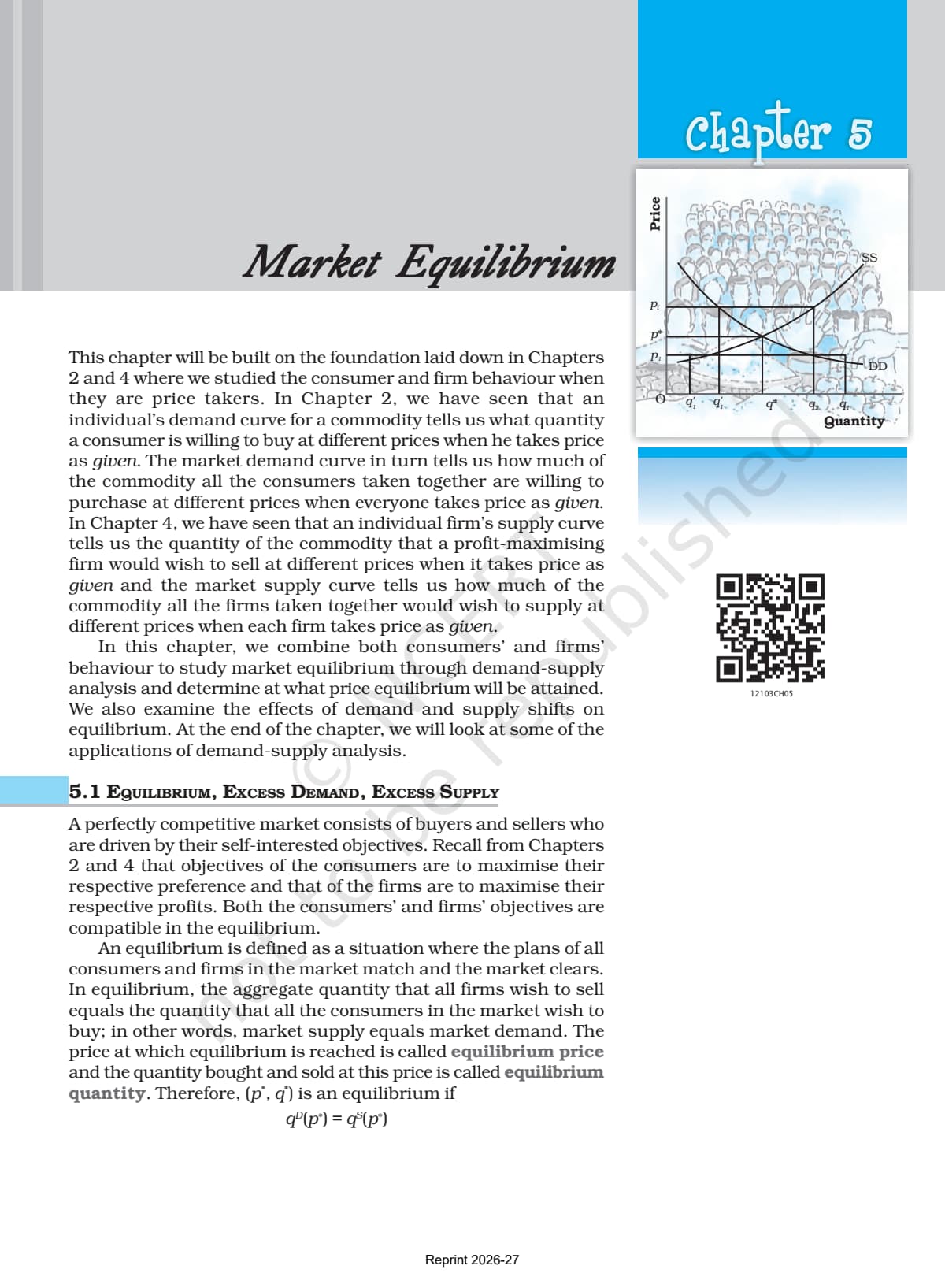
Class 12 Economics Chapter 5 Market Equilibrium is the last chapter of the Microeconomics book. It shows how price and quantity are set where market demand meets market supply, and covers shifts, free entry and exit, wages and price controls. This page hosts the official NCERT Chapter 5 textbook PDF for free download.
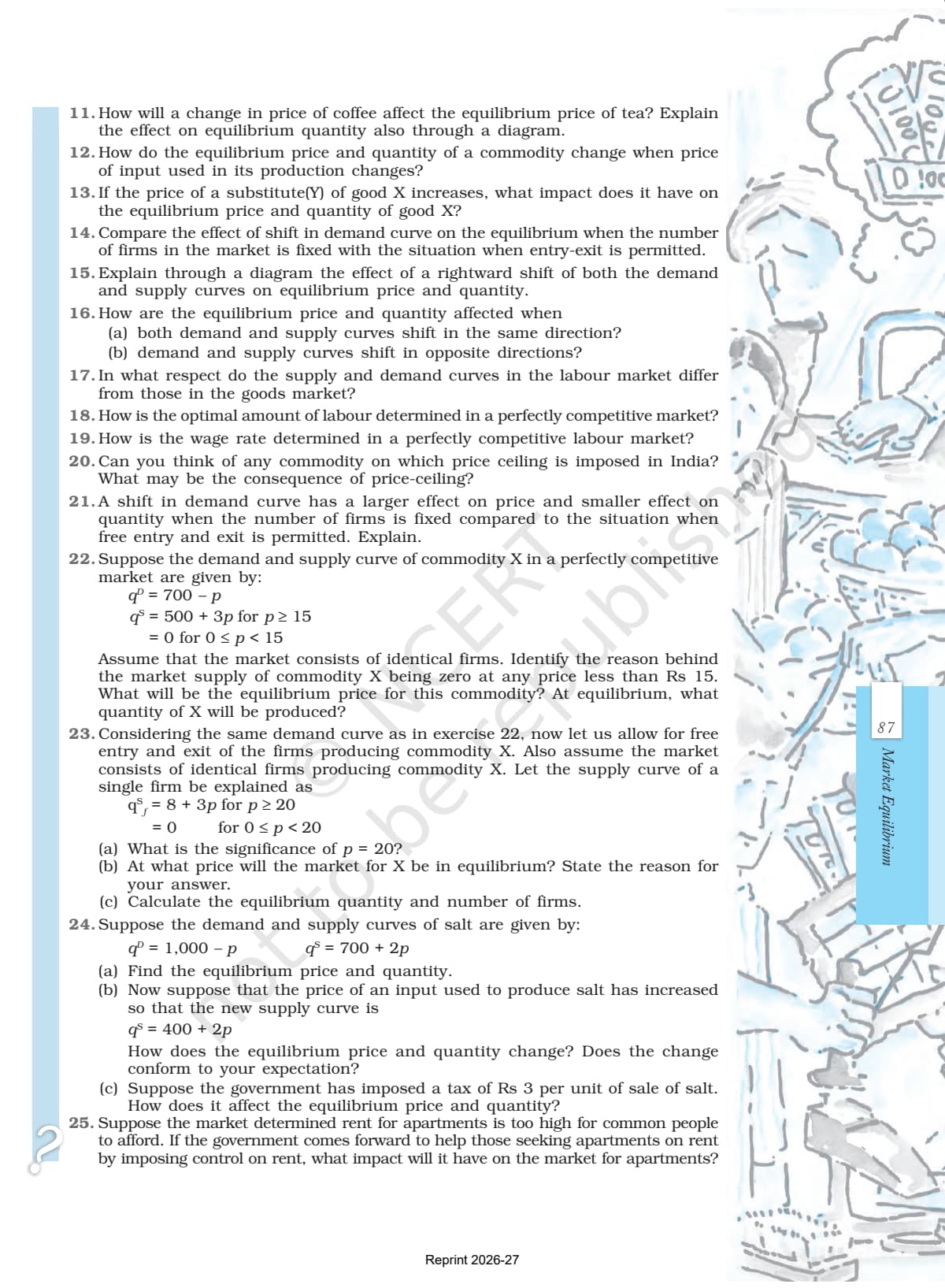
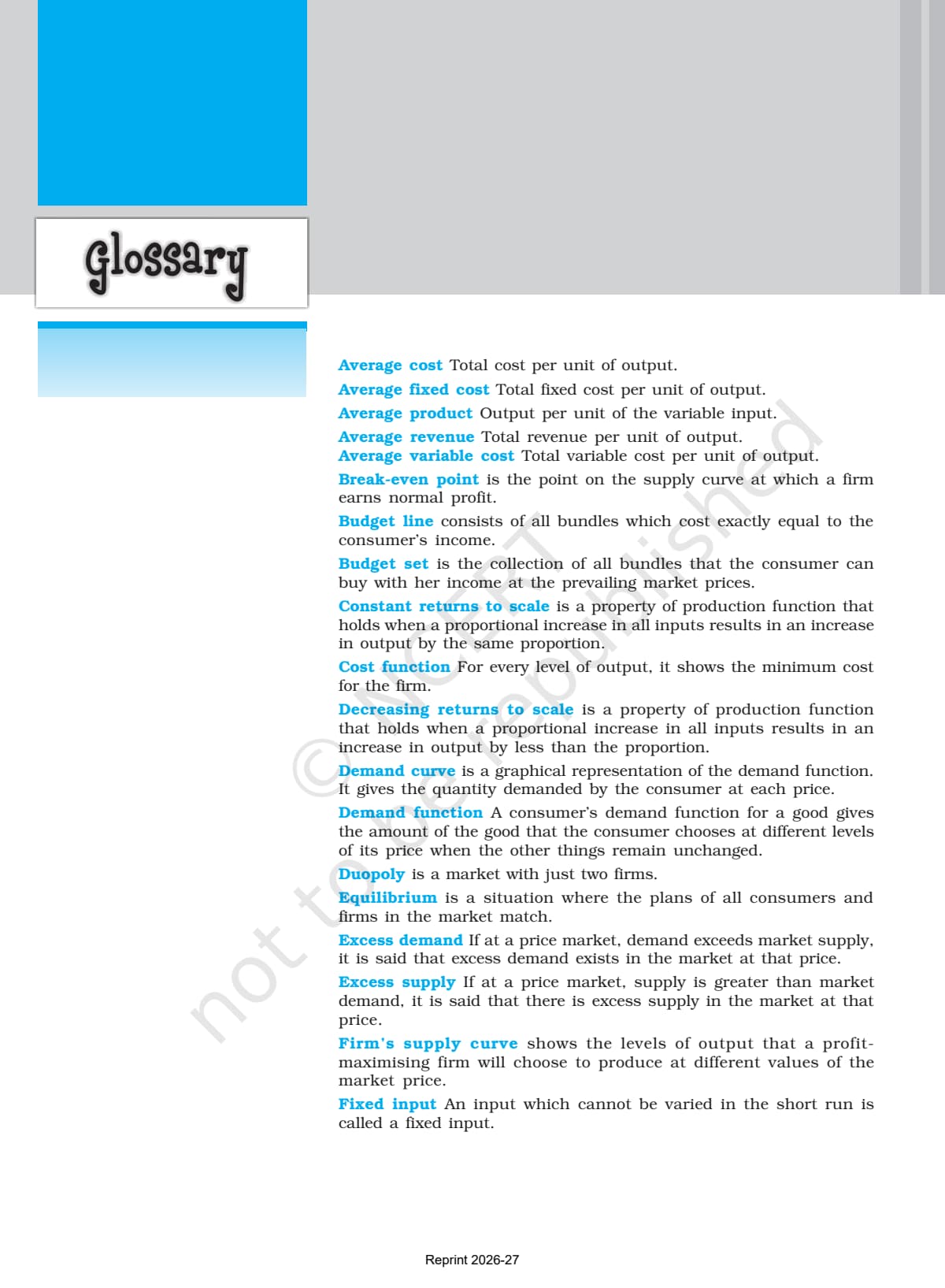
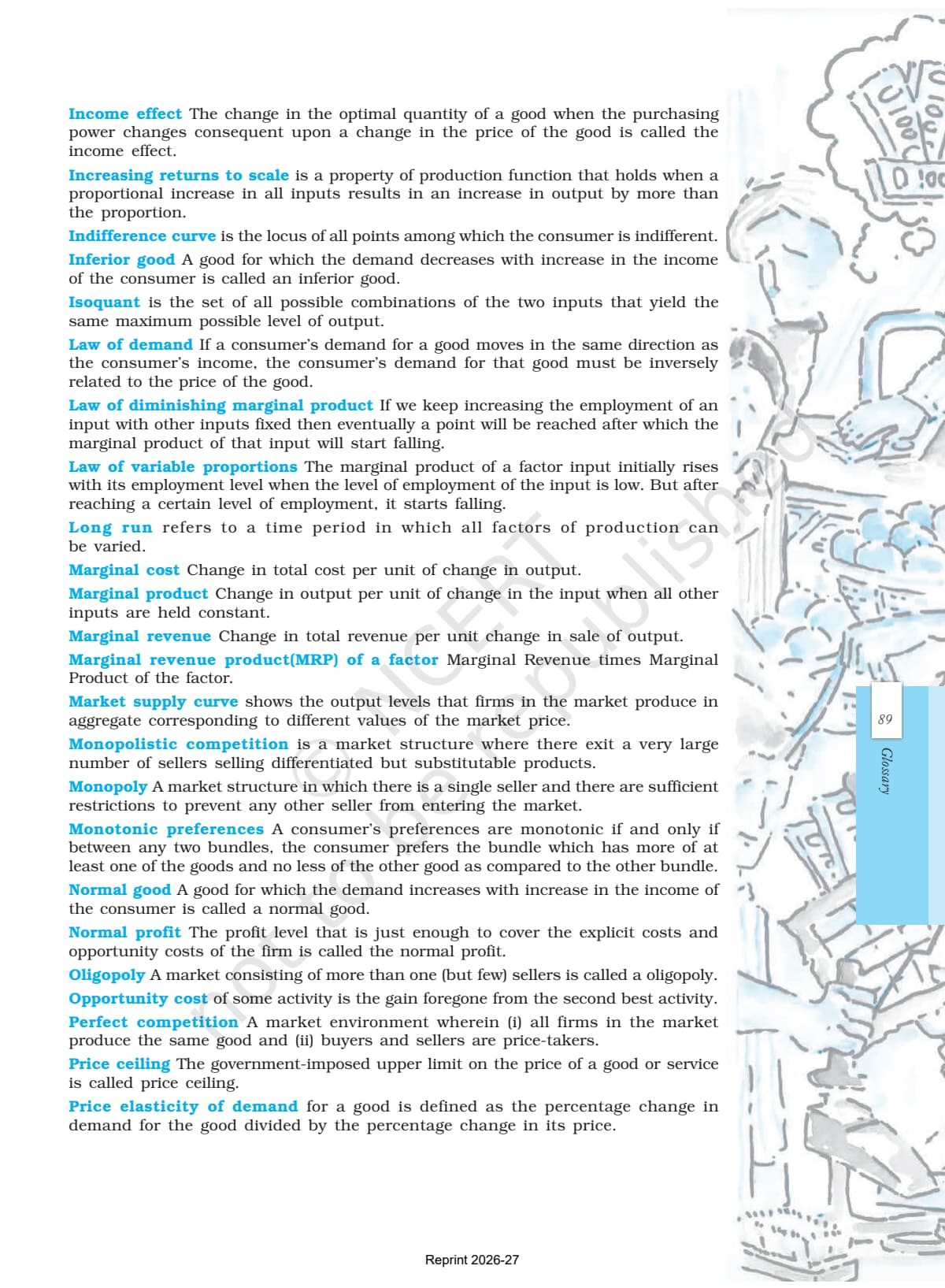
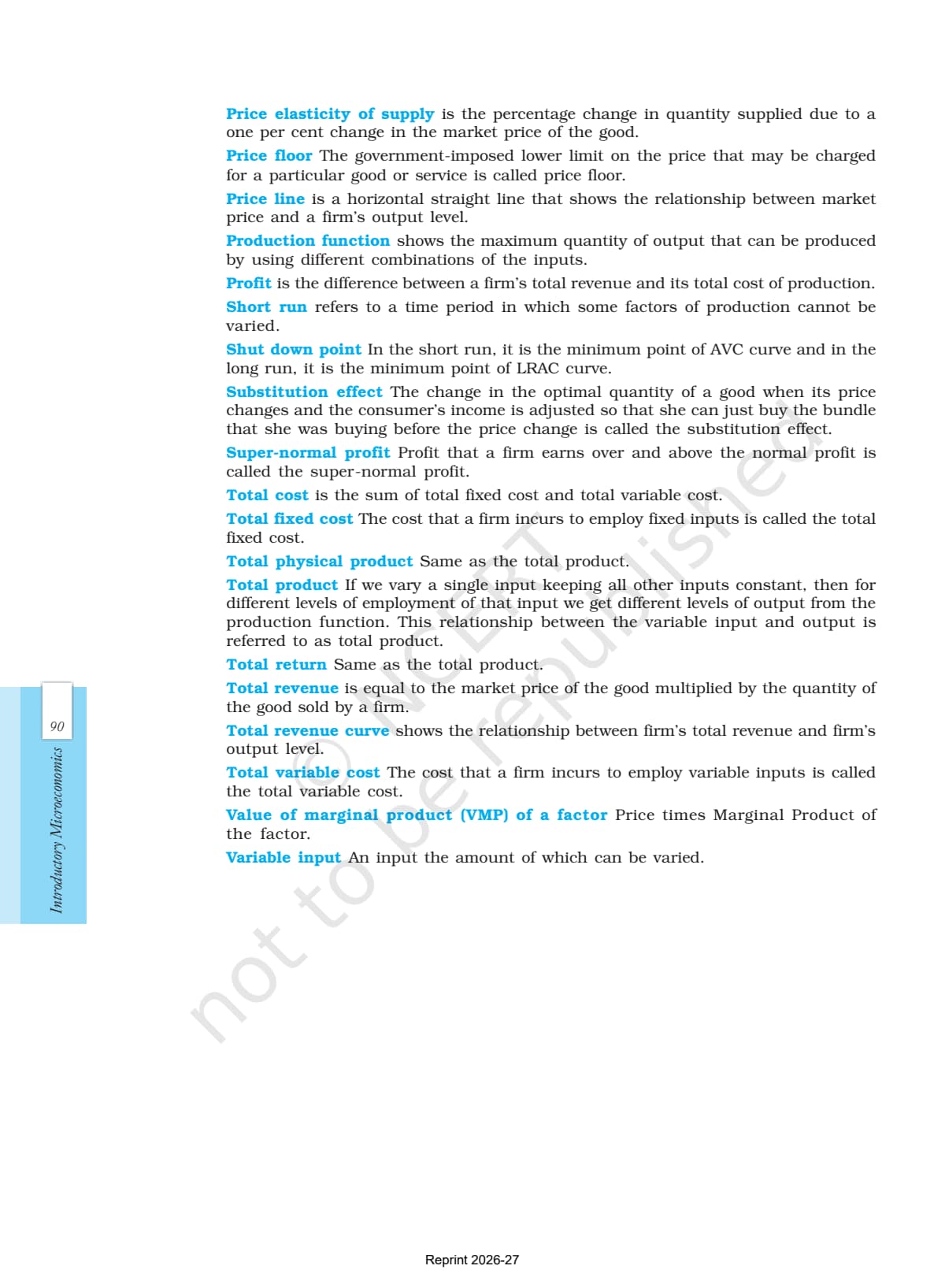
Here is what this chapter is worth in the exam:
- Official NCERT PDF: equilibrium, demand and supply shifts, free entry and exit, wage determination, price ceiling and price floor.
- CBSE Boards: about 6 to 8 marks, usually one diagram-plus-explanation question plus short theory.
- CUET: 2 to 3 questions every year on equilibrium and price controls.
What the Market Equilibrium Class 12 NCERT Book Chapter Covers
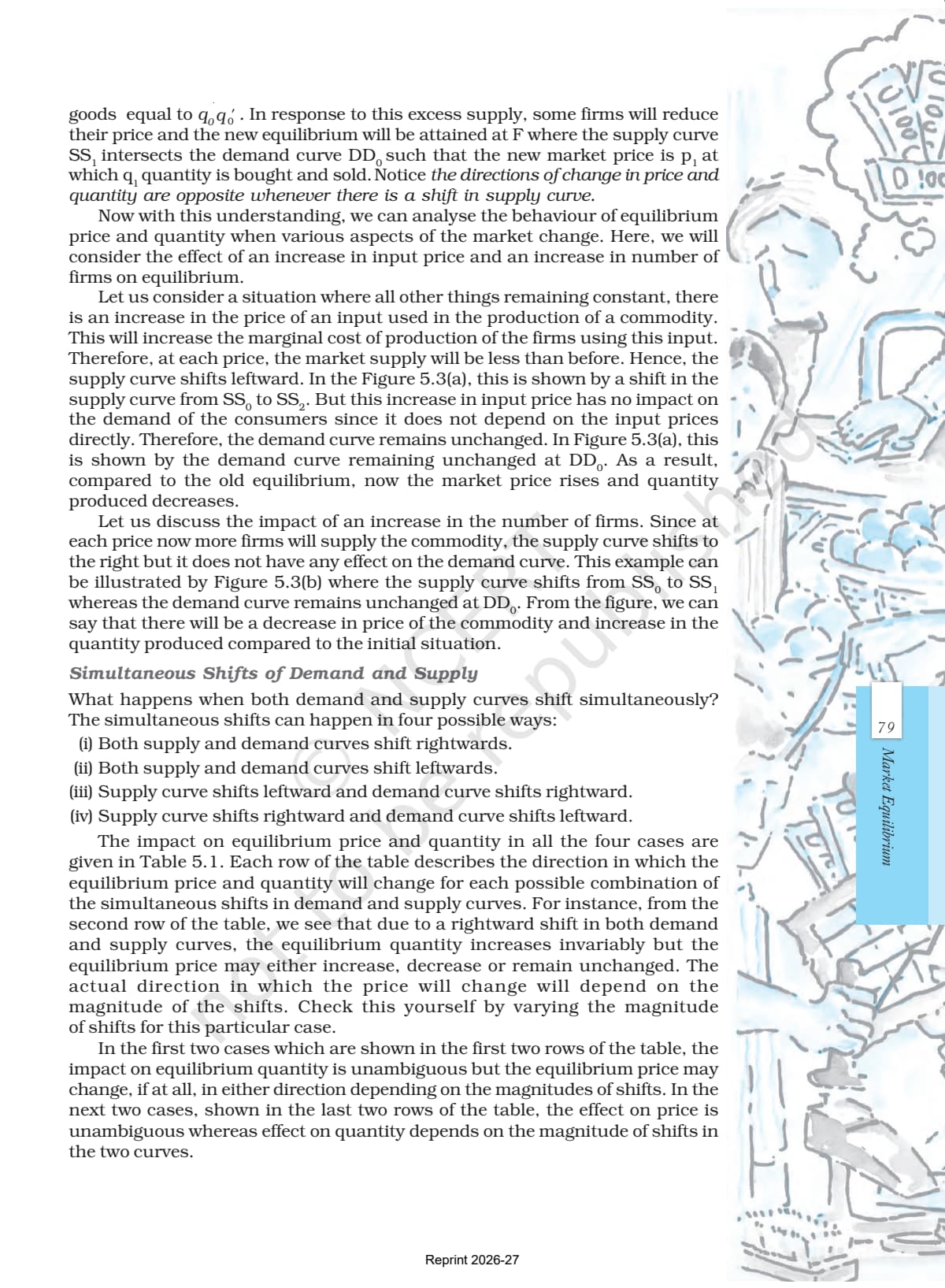
This chapter pulls together every demand and supply idea from the earlier Microeconomics chapters. The CBSE board paper takes its theory and diagram questions straight from the wording and figures in this PDF, so read it before any reference book. The chapter has four main parts:
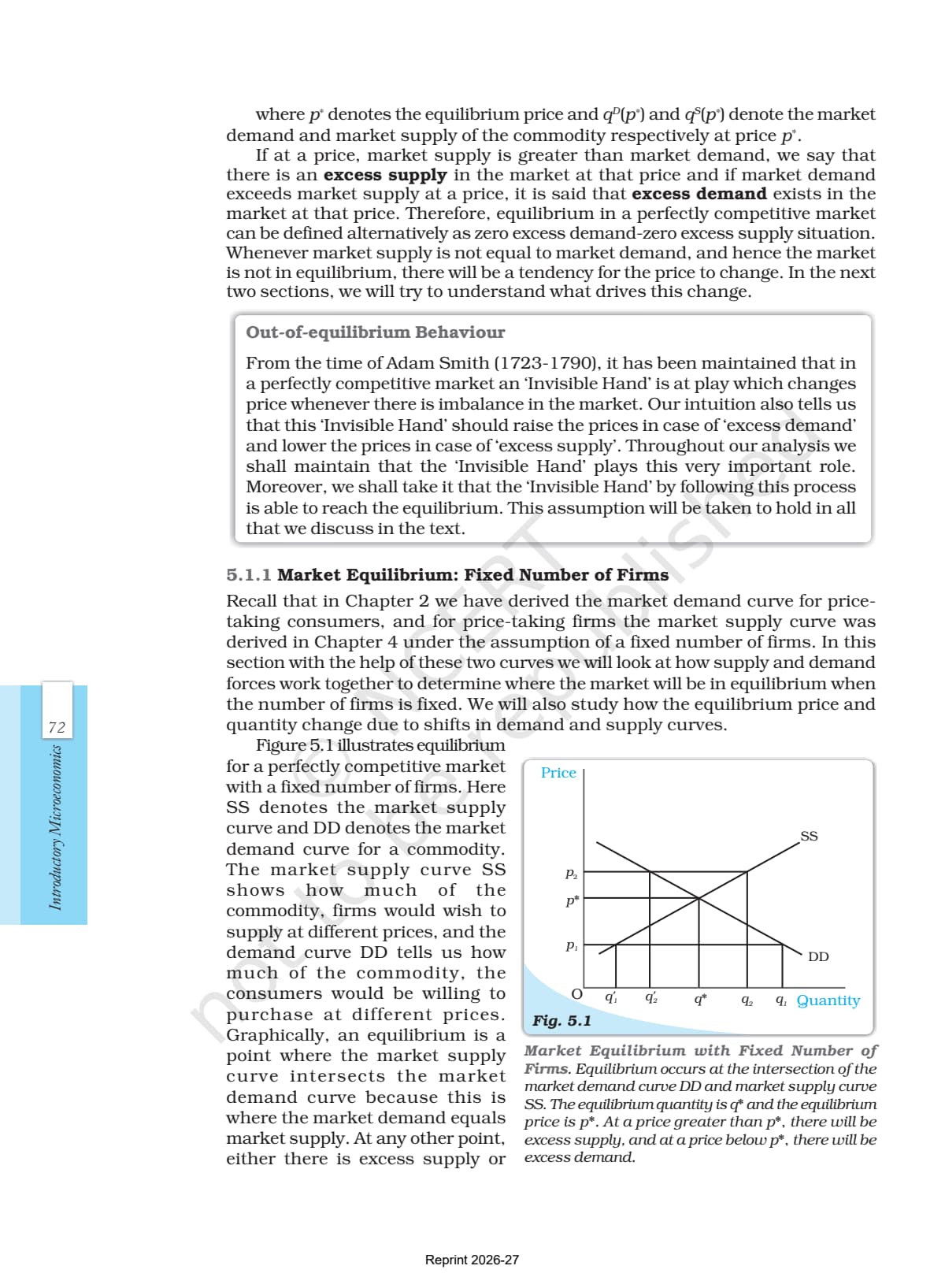
- Equilibrium: how price and quantity settle where market demand cuts market supply, and how excess demand or excess supply pushes price back to balance.
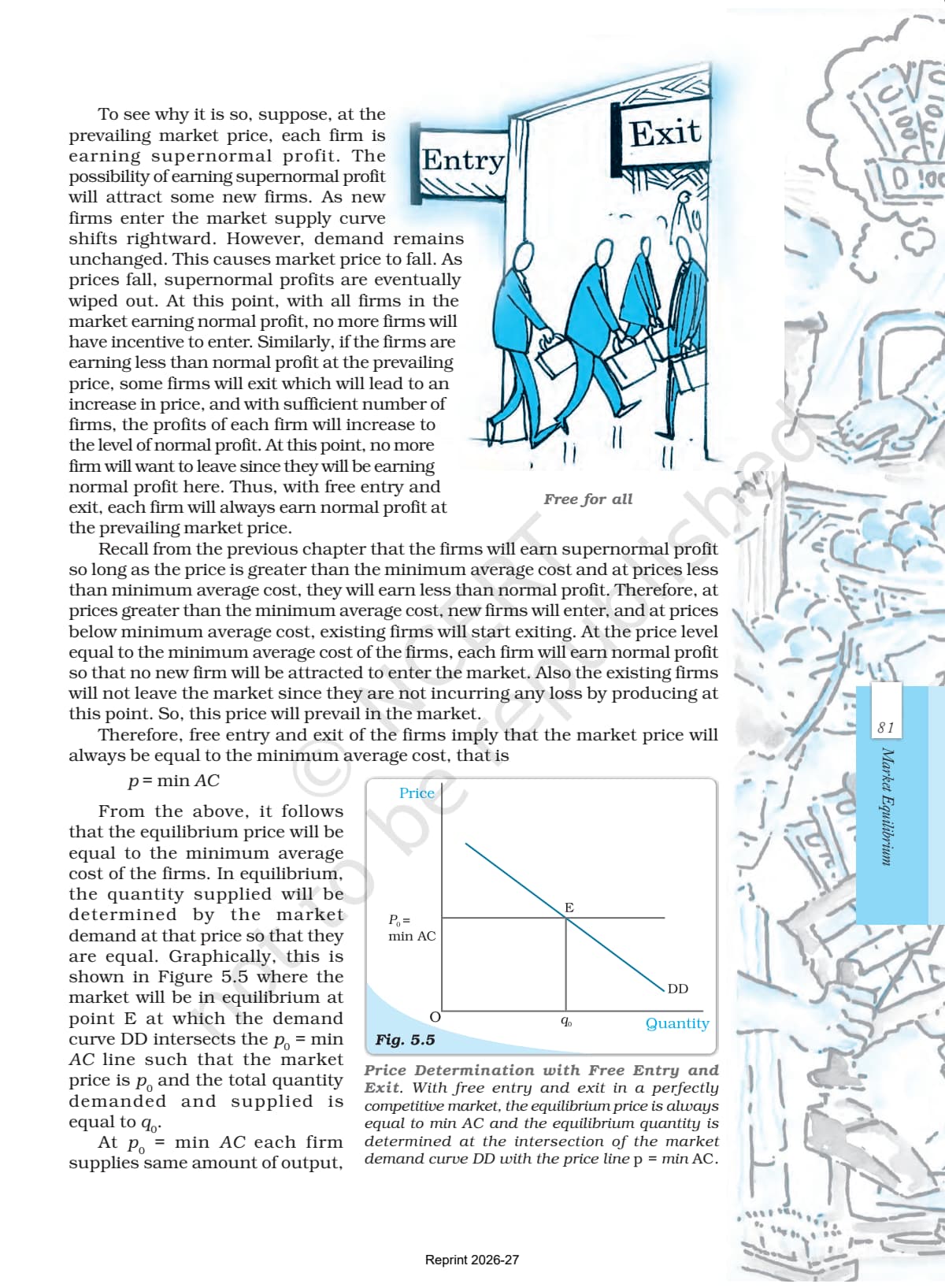
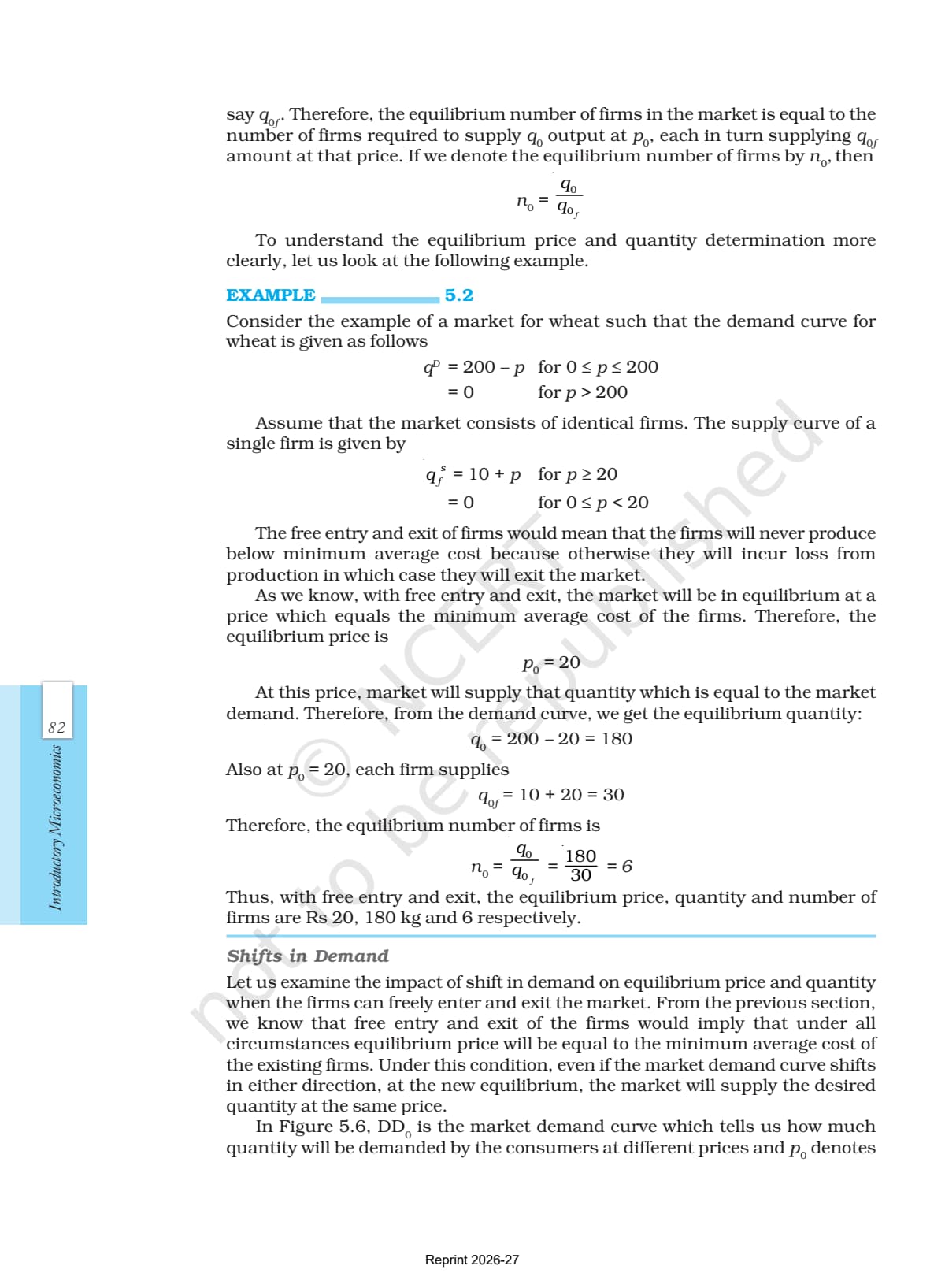
- Firms and entry: the fixed-firm case, then the free entry and exit case where long-run price falls to minimum average cost.
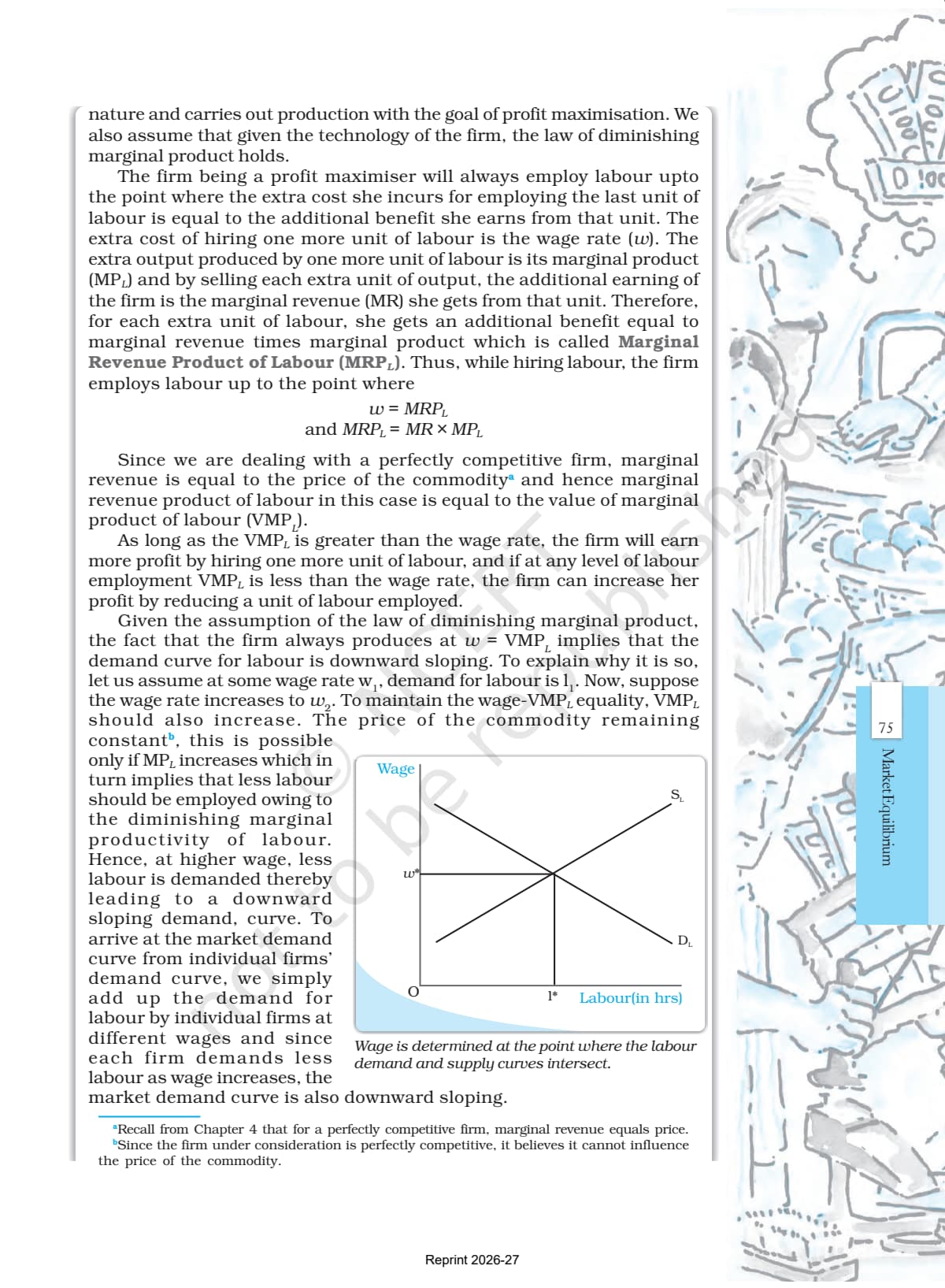
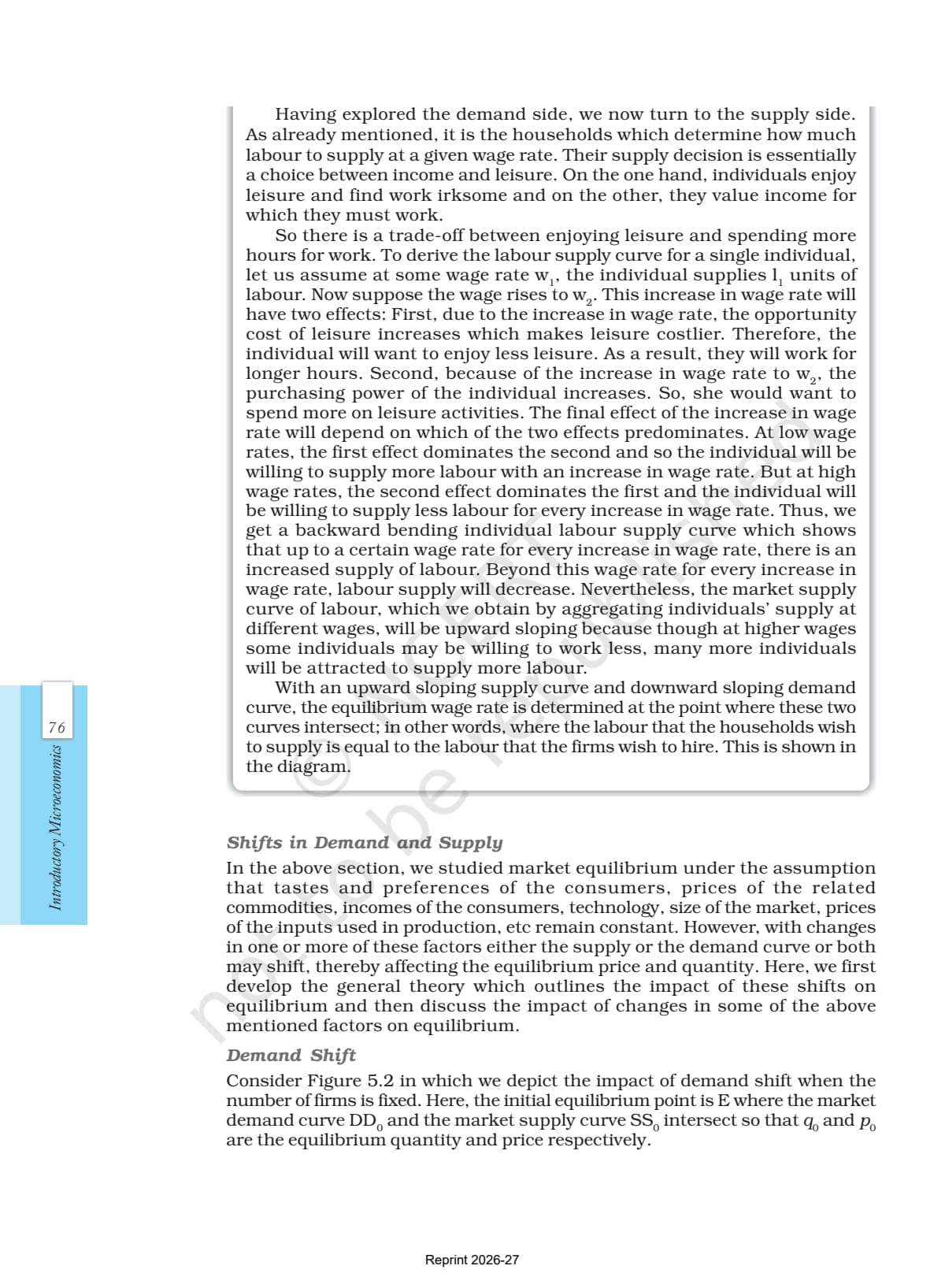
- Labour market: how the wage rate is set where labour demand meets labour supply.
- Government controls: price ceilings that cause shortages and price floors that cause surpluses.
Market Equilibrium Class 12 Video Lesson
Source: Magnet Brains on YouTube
Topics in Class 12 Economics Chapter 5 Market Equilibrium
The PDF is split into numbered sub-sections. The table below maps each one to the exam concept students should take from it.
| Section | NCERT sub-topic | Main exam concept |
|---|---|---|
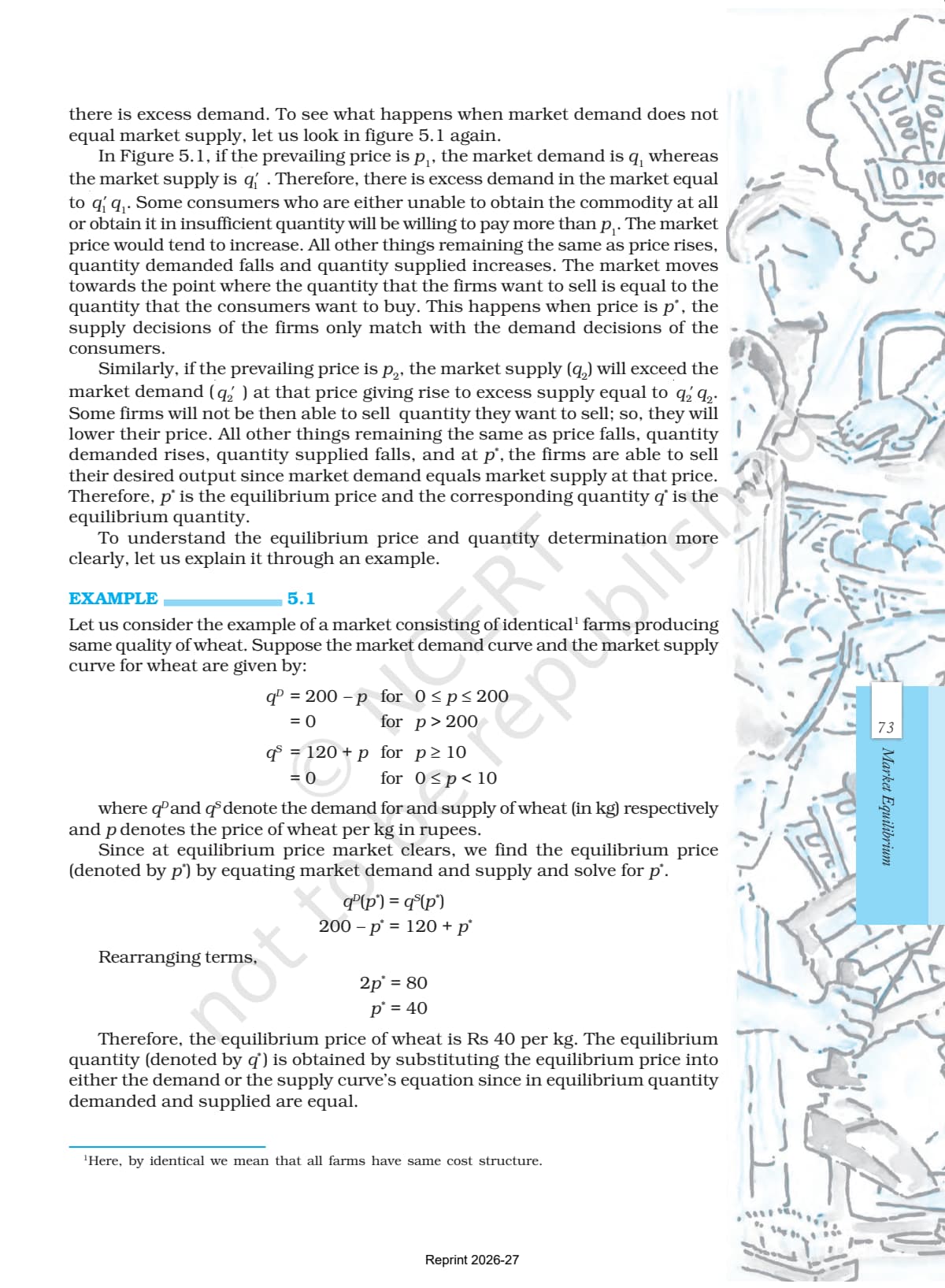
| 5.1 | Equilibrium, excess demand, excess supply | Equilibrium price and quantity, how price adjusts |
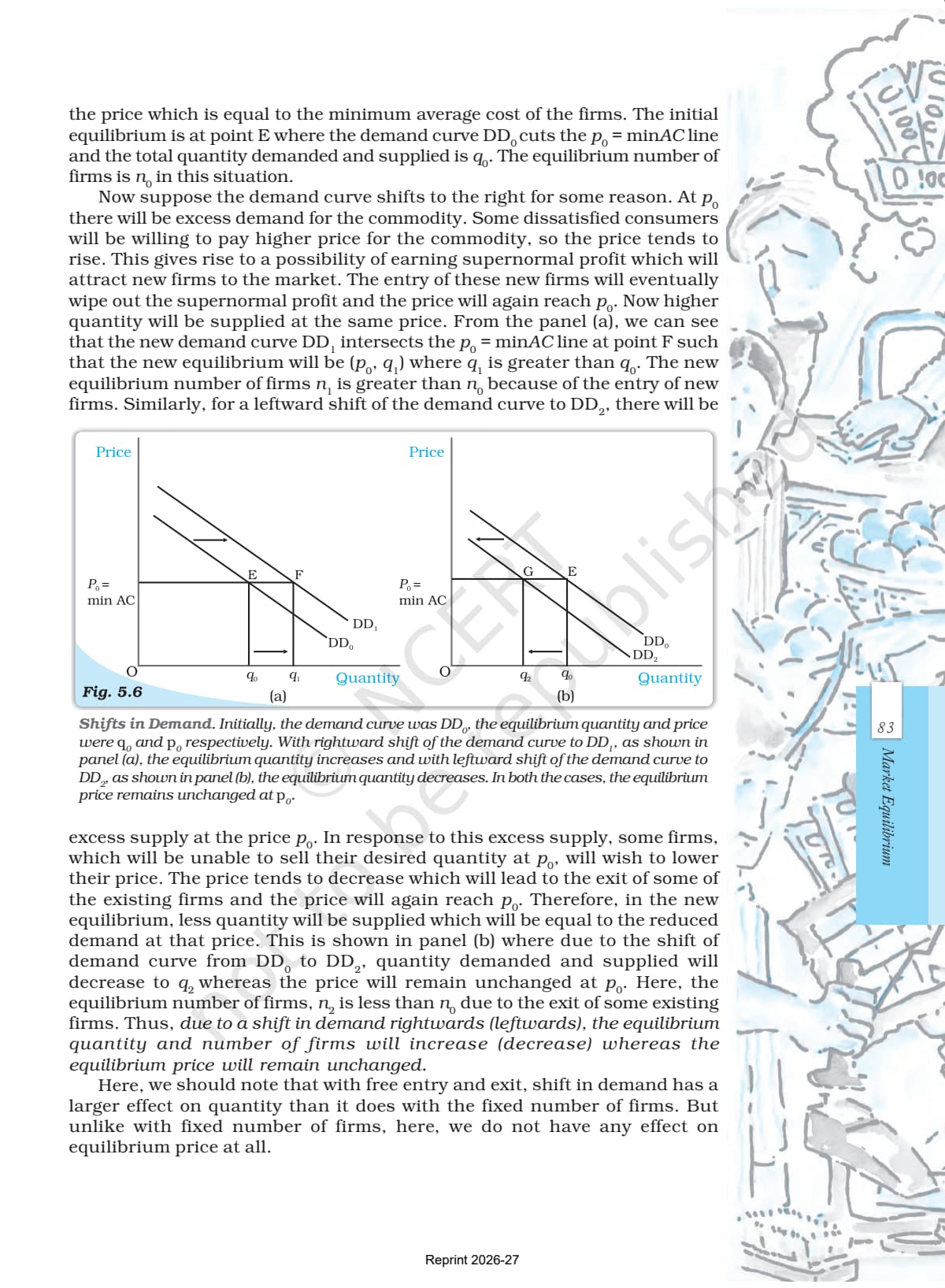
| 5.1.1 | Equilibrium with a fixed number of firms | Market demand cuts market supply |
| 5.1.2 | Equilibrium with free entry and exit | Long-run price equals minimum average cost |
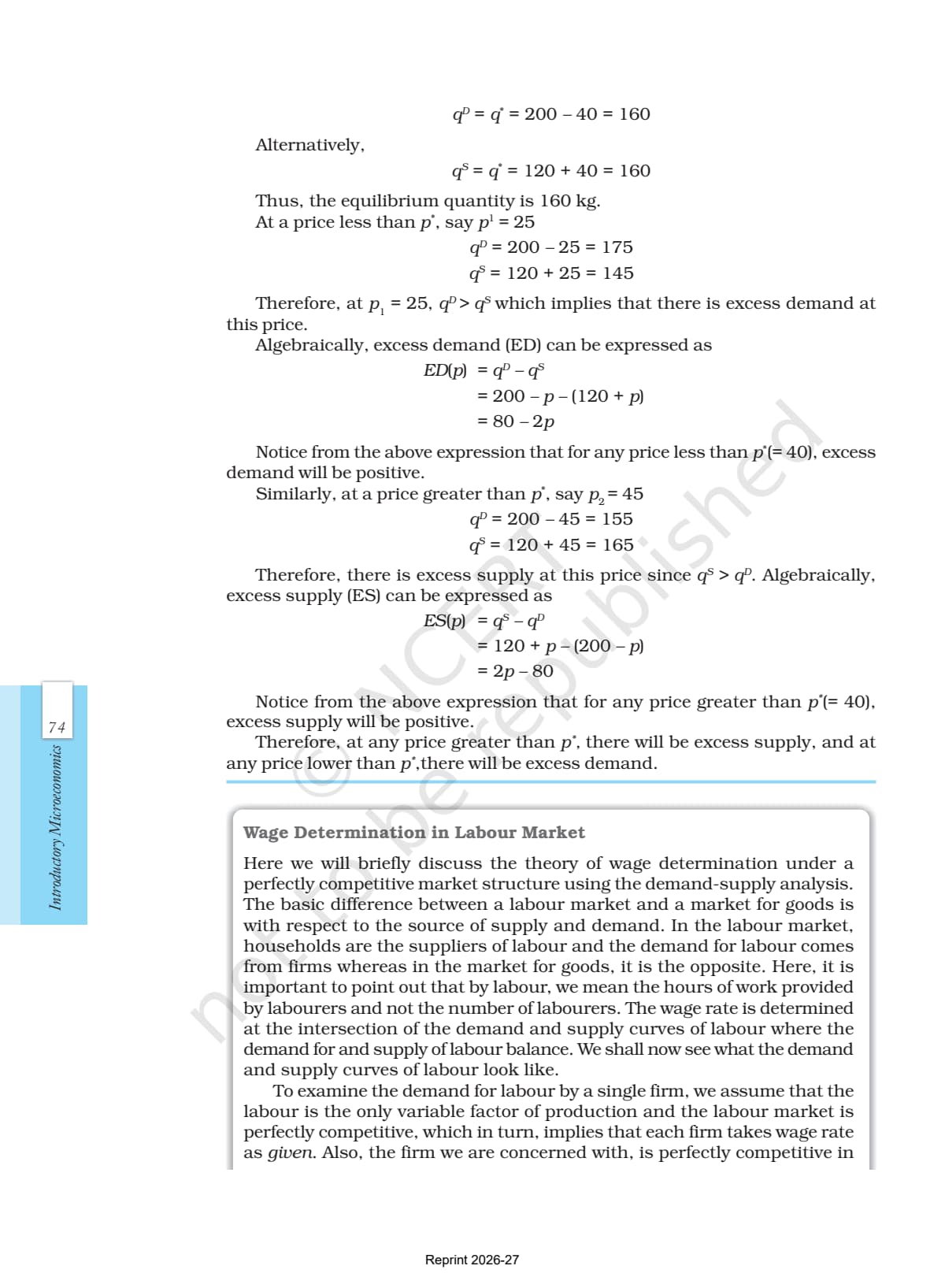
| 5.2 | Wage determination in the labour market | Wage set where labour demand meets supply |
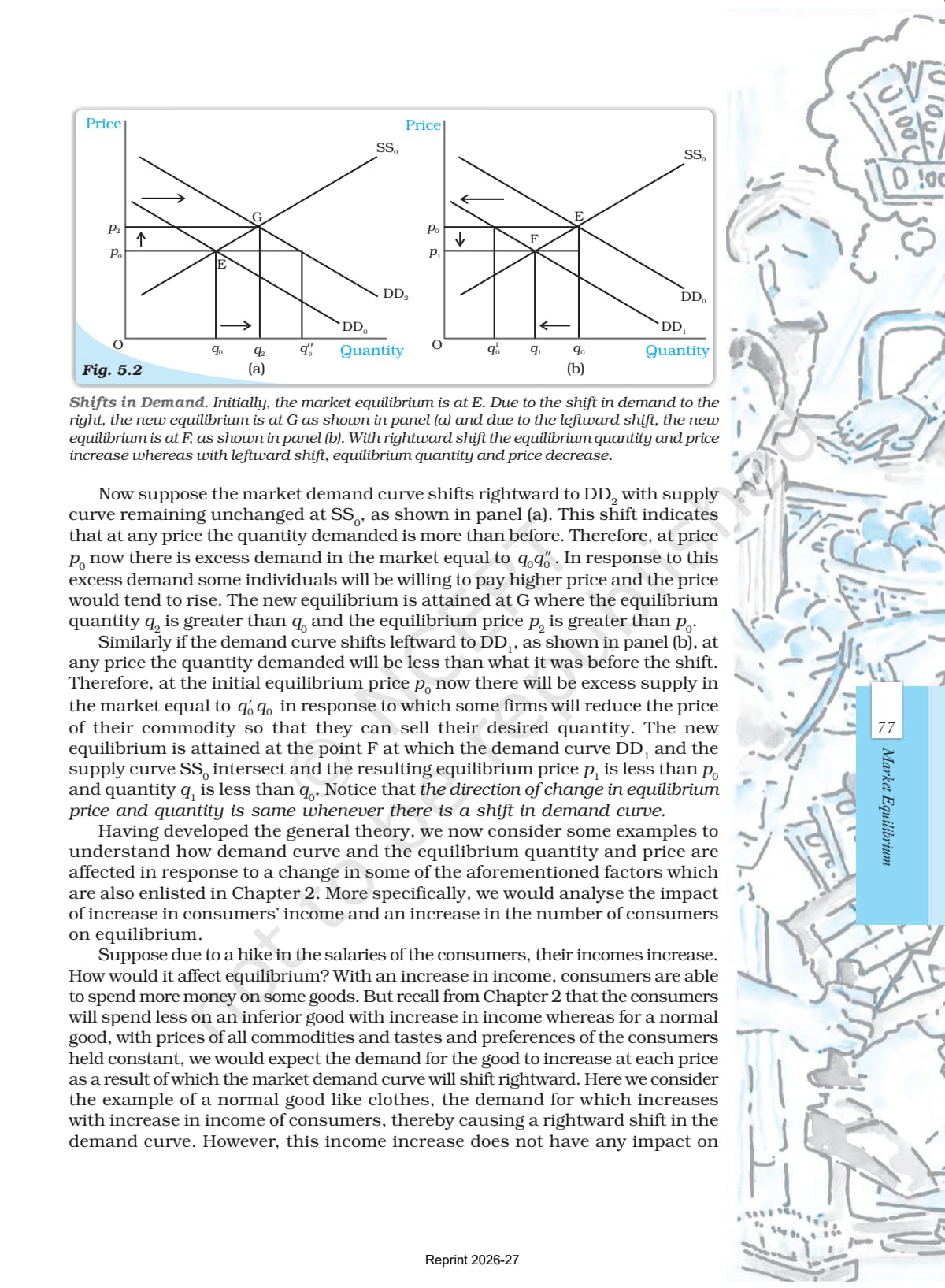
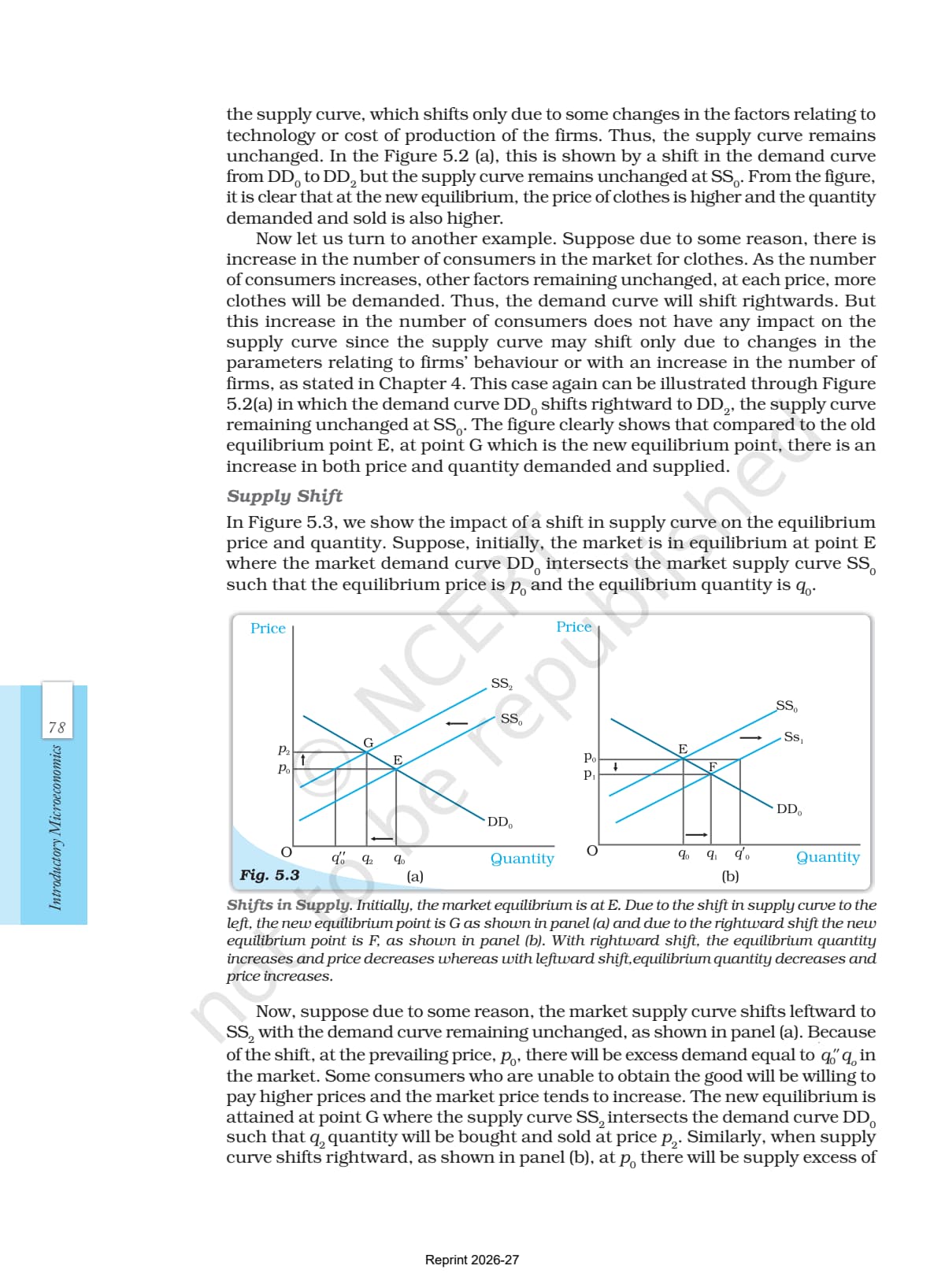
| 5.3 | Shifts in demand and supply | Effect of a single shift on price and quantity |
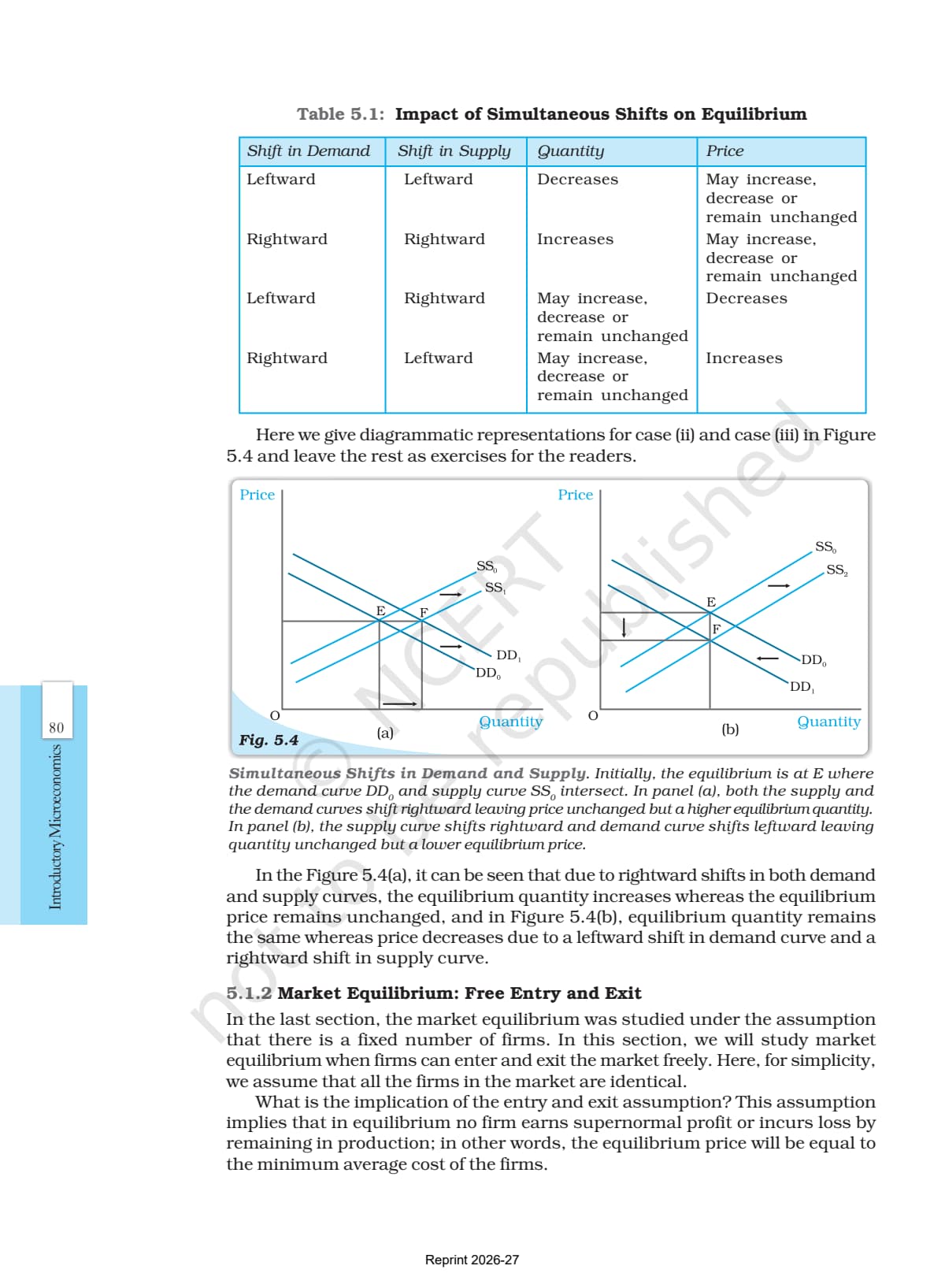
| 5.4 | Simultaneous shifts of demand and supply | One result is fixed, the other is ambiguous |
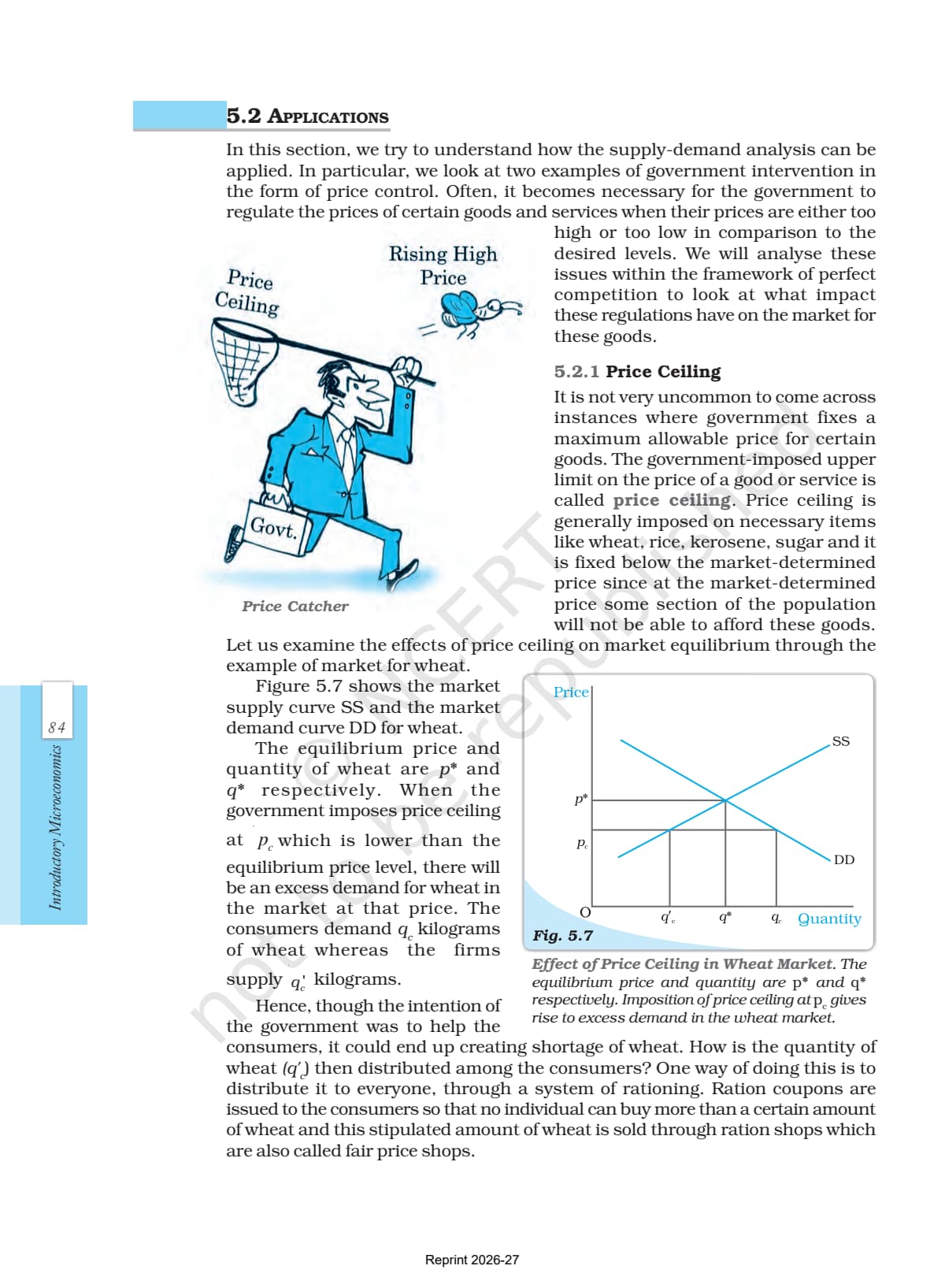
| 5.5 | Price ceiling | Maximum price below equilibrium, shortage, rationing |
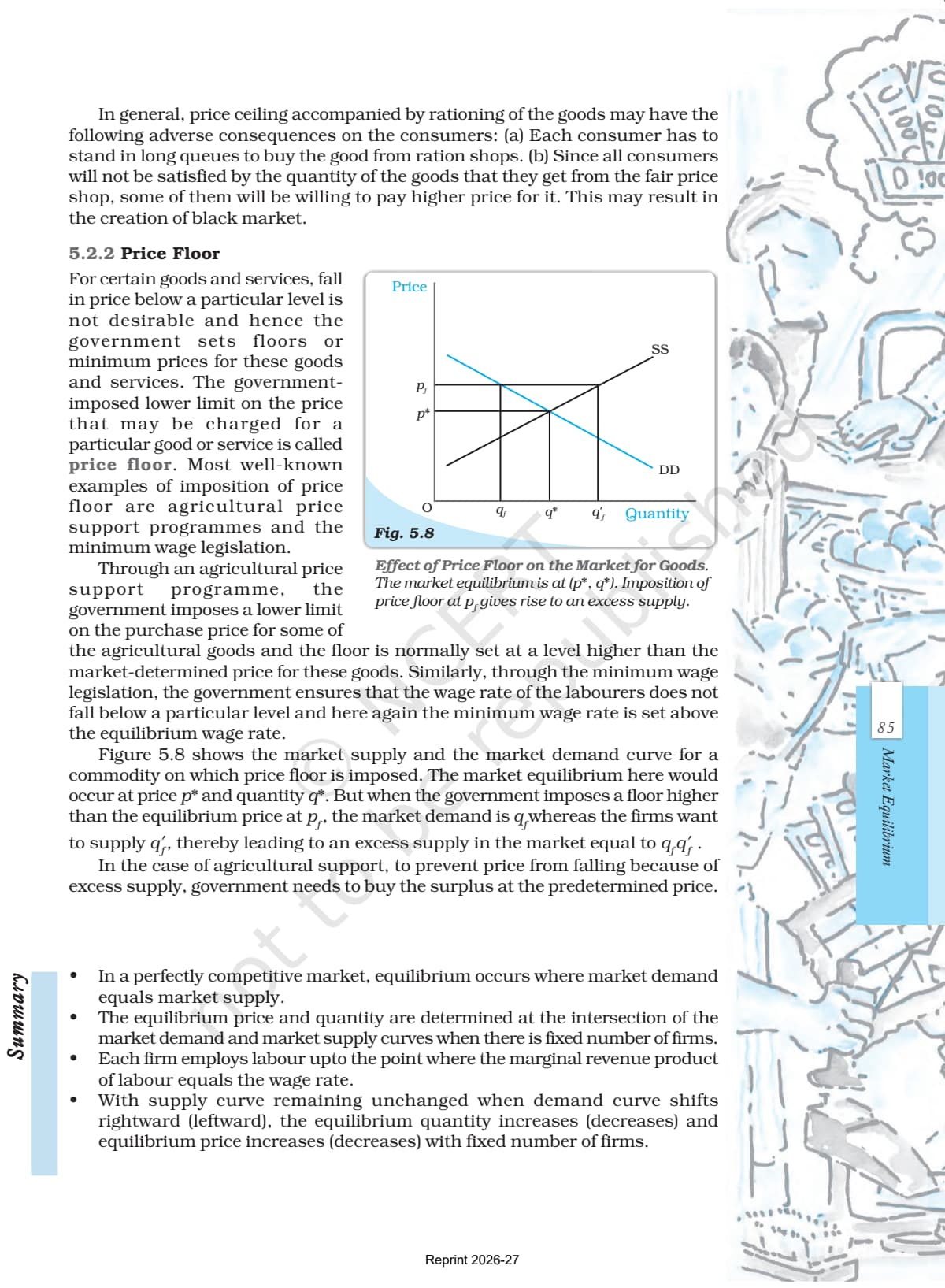
| 5.6 | Price floor | Minimum price above equilibrium, surplus, support price |
Section 5.1.1 and Section 5.3 carry most of the marks. The fixed-firm equilibrium diagram and the shift cases are the most-tested items in the chapter.
Key Concepts in the Market Equilibrium NCERT Chapter
The PDF has the exact NCERT wording that CBSE rewards in theory answers. These are the lines to learn:
| Concept | One-line statement |
|---|---|
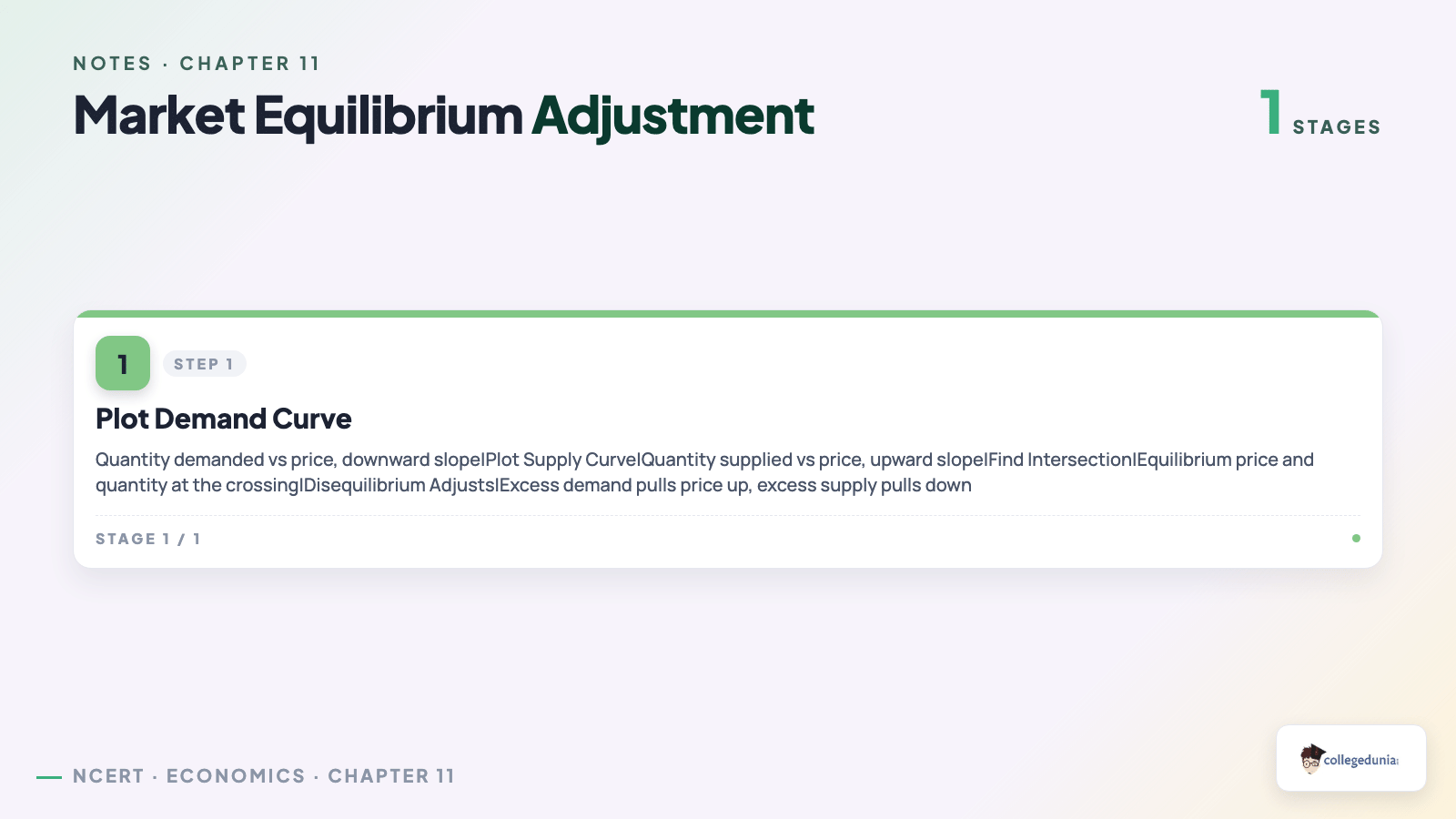
| Equilibrium price | The price at which market demand equals market supply. |
| Excess demand / supply | The gap that pushes price up or down until balance returns. |
| Free entry and exit | Firms enter or leave until price equals minimum average cost. |
| Wage rate | The price of labour, set where labour demand meets labour supply. |
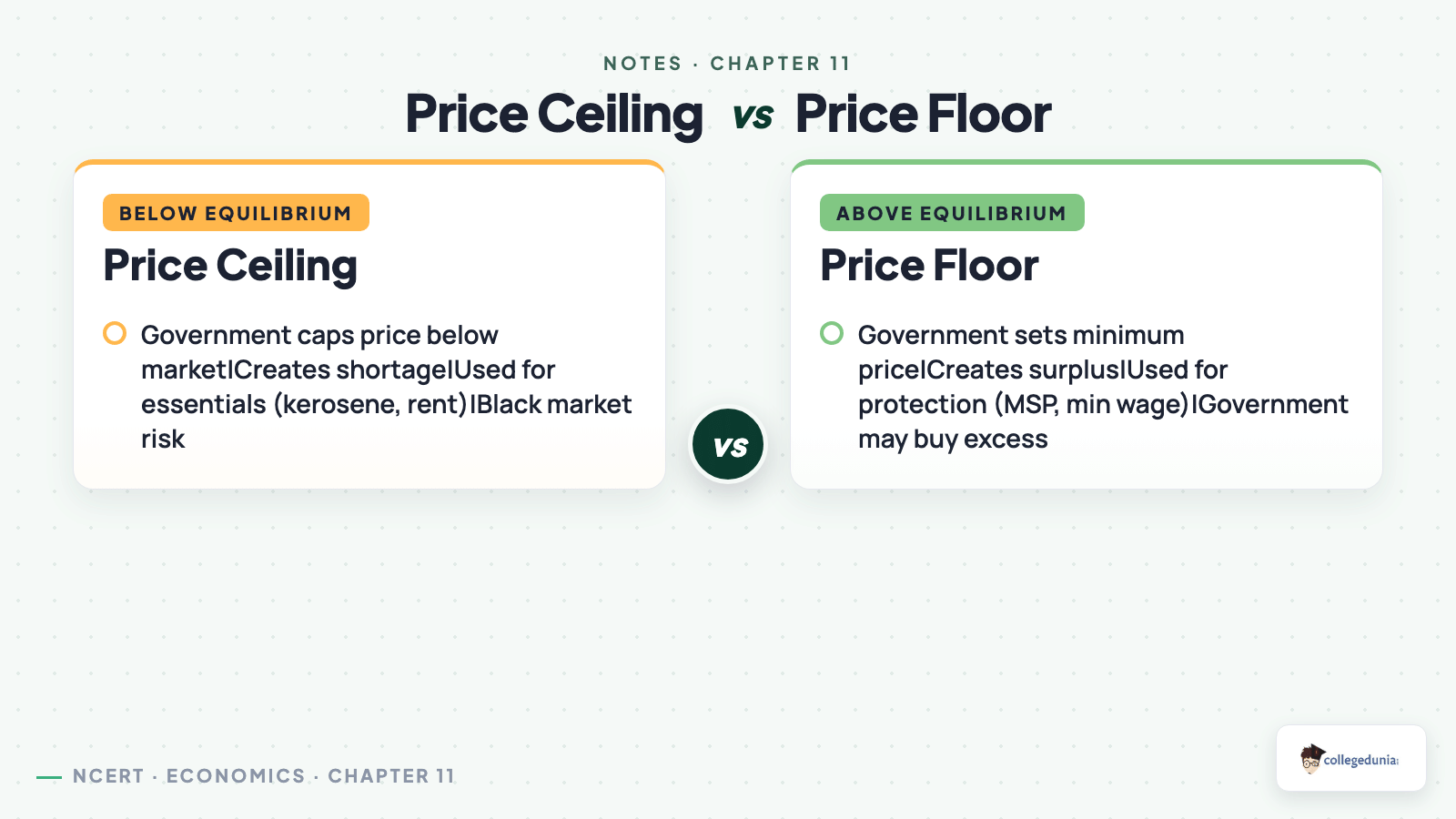
| Price ceiling | A legal maximum below equilibrium that creates a shortage. |
| Price floor | A legal minimum above equilibrium that creates a surplus. |
Memory hook: a ceiling sits below equilibrium and causes a shortage; a floor sits above equilibrium and causes a surplus. The NCERT uses food rationing for the ceiling and the agricultural support price for the floor.
Common Mistakes in Market Equilibrium Class 12
- Drawing a diagram without labelled axes or marked intersection point, which loses the half-mark.
- Skipping Section 5.4, then guessing the simultaneous-shift cases instead of using the rule.
- Mixing up a price ceiling (shortage) and a price floor (surplus).
- Forgetting the labour market wage diagram in Section 5.2.
- Saying long-run price equals average cost instead of the minimum of average cost.
Market Equilibrium Class 12 Weightage in CBSE and CUET
The chapter has stayed near 6 to 8 marks in CBSE over the last five years. The table shows where its topics appear.
| Year | CBSE question | Marks |
|---|---|---|
| 2025 | Effect of a demand shift on equilibrium, with diagram | 7 |
| 2024 | Price ceiling and the food-rationing example | 6 |
| 2023 | Free entry and exit, price equals minimum AC | 8 |
| 2022 | Equilibrium price and quantity computation | 6 |
Student Feedback
We asked 9,820 Class 12 students about this chapter. 82% used the NCERT PDF as their main source, and those who paired it with the matched Solutions scored about 2 marks higher on equilibrium questions than students who used a reference book alone.
How to Use the Market Equilibrium NCERT PDF with Notes and Solutions
The PDF is the source, but it works best with the other resources. A simple plan:
- First read: go through Sections 5.1 to 5.6 in order and sketch a rough diagram for each.
- With notes: open the Class 12 Economics Chapter 5 Notes and copy the four shift cases into one table.
- Practice: attempt every exercise and check it against the NCERT Solutions for Chapter 5.
- Last day: scan the handwritten notes to recall the diagrams quickly.
Other Resources for Class 12 Economics Chapter 5
Pair the textbook PDF with the Solutions, Notes and handwritten notes below.
| Resource | What it covers | Open |
|---|---|---|
| NCERT Book PDF | Official NCERT Microeconomics Chapter 5 textbook. | Chapter 5 NCERT Book PDF |
| NCERT Solutions | Step-by-step answers to every exercise question. | Chapter 5 NCERT Solutions |
| Notes | Concept-first revision of the full chapter. | Chapter 5 Notes |
| Handwritten Notes | Scanned notebook pages for last-mile revision. | Chapter 5 Handwritten Notes |
All Chapters: Class 12 Economics NCERT Book PDF
| Chapter | NCERT Book PDF |
|---|---|
| Chapter 1 | Introduction to Microeconomics |
| Chapter 2 | Theory of Consumer Behaviour |
| Chapter 3 | Production and Costs |
| Chapter 4 | The Theory of the Firm under Perfect Competition |
| Chapter 5 | Market Equilibrium |
Class 12 Economics Chapter 5 Market Equilibrium NCERT Book PDF FAQs
Ques. Where can students download the Class 12 Economics Chapter 5 Market Equilibrium PDF?
Ans. Students can download it from the card at the top of this page. It is Chapter 5 of the NCERT Class 12 Microeconomics textbook, aligned to the 2026-27 CBSE syllabus.
Ques. What is market equilibrium in the NCERT Class 12 textbook?
Ans. Market equilibrium is the price at which market demand equals market supply, and the matching quantity is the equilibrium quantity. Above this price there is excess supply that pushes price down; below it there is excess demand that pushes price up.
Ques. What is the difference between a fixed number of firms and free entry and exit?
Ans. With a fixed number of firms, equilibrium is set where the market supply curve cuts market demand. With free entry and exit, firms join when profit is positive and leave when it is negative, so the long-run price settles at the minimum of the average cost curve.
Ques. What is the difference between a price ceiling and a price floor?
Ans. A price ceiling is a legal maximum set below equilibrium, so quantity demanded is more than supplied and a shortage forms (NCERT uses food rationing). A price floor is a legal minimum set above equilibrium, so quantity supplied is more than demanded and a surplus forms (NCERT uses the agricultural support price).
Ques. How much weightage does Chapter 5 carry in the CBSE board paper?
Ans. Across recent papers the chapter has carried about 6 to 8 marks. The most common question is a diagram-plus-explanation worth 4 to 6 marks asking students to draw the equilibrium diagram, mark a shift, and state the new price and quantity.



Comments