




Class 12 Economics Chapter 3 Production and Costs is the third chapter of the Microeconomics book. It explains the production function, total, average and marginal product, returns to scale, isoquants and the full set of cost curves. This page hosts the official NCERT chapter PDF for a free download.
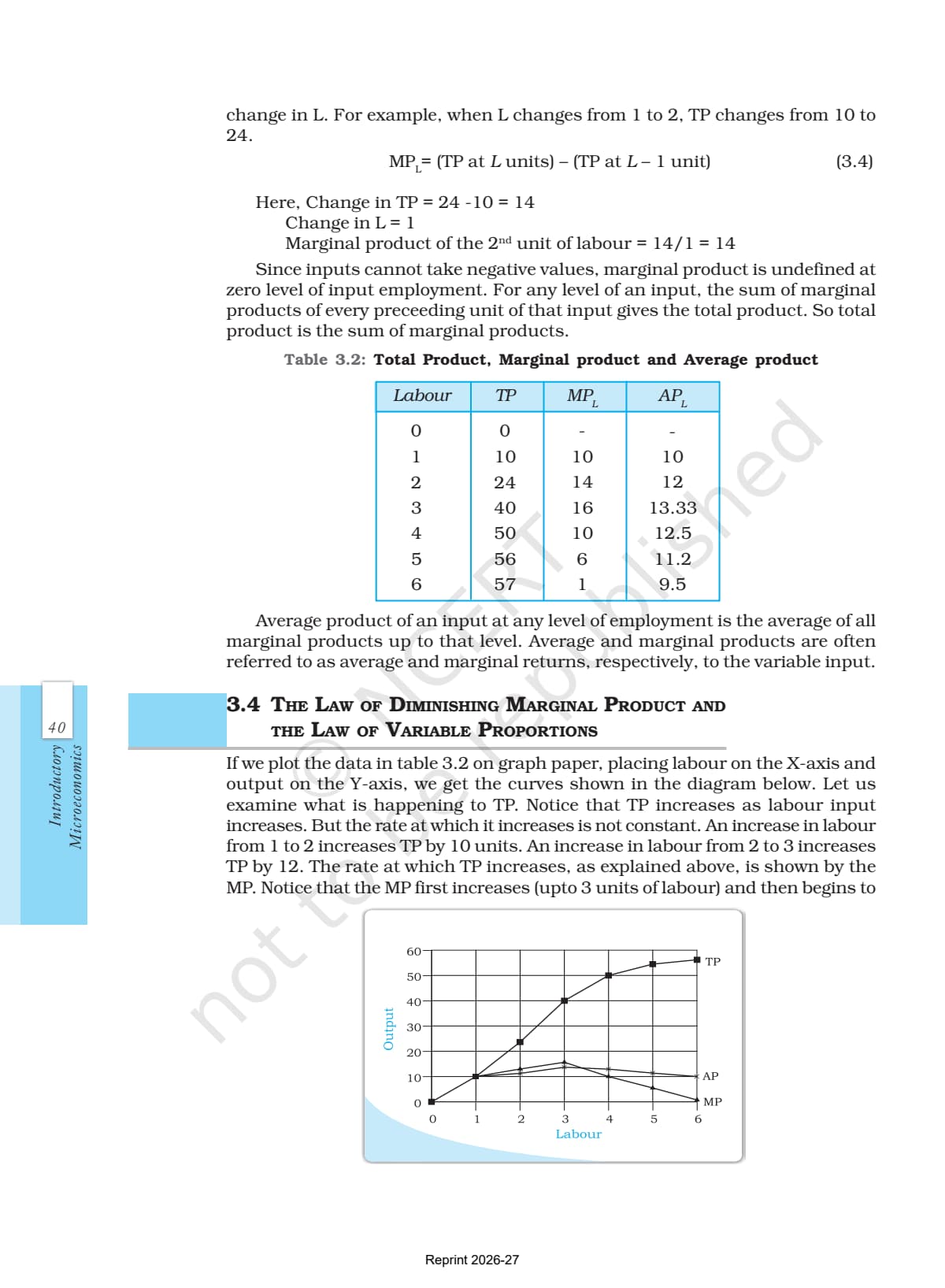
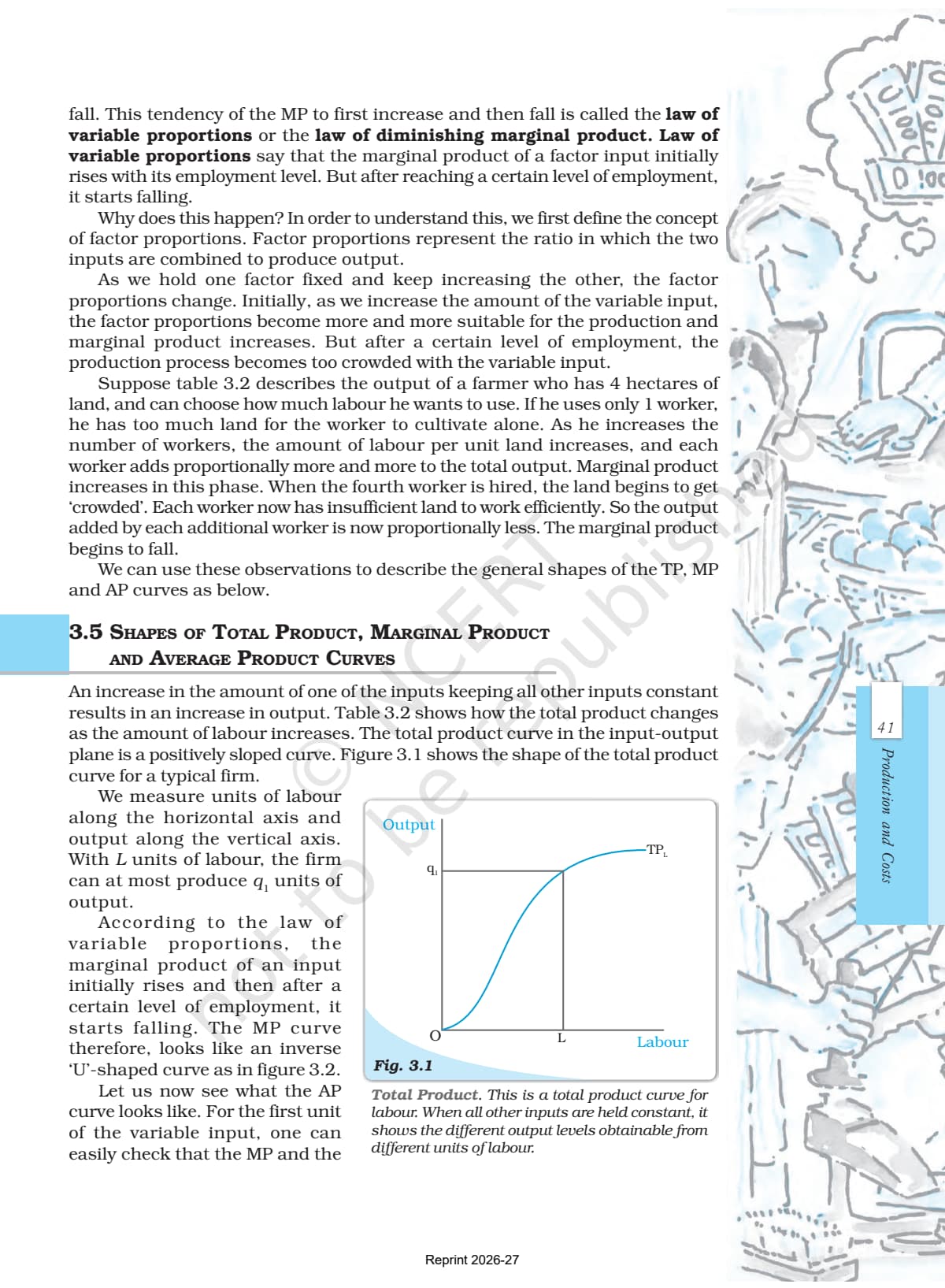
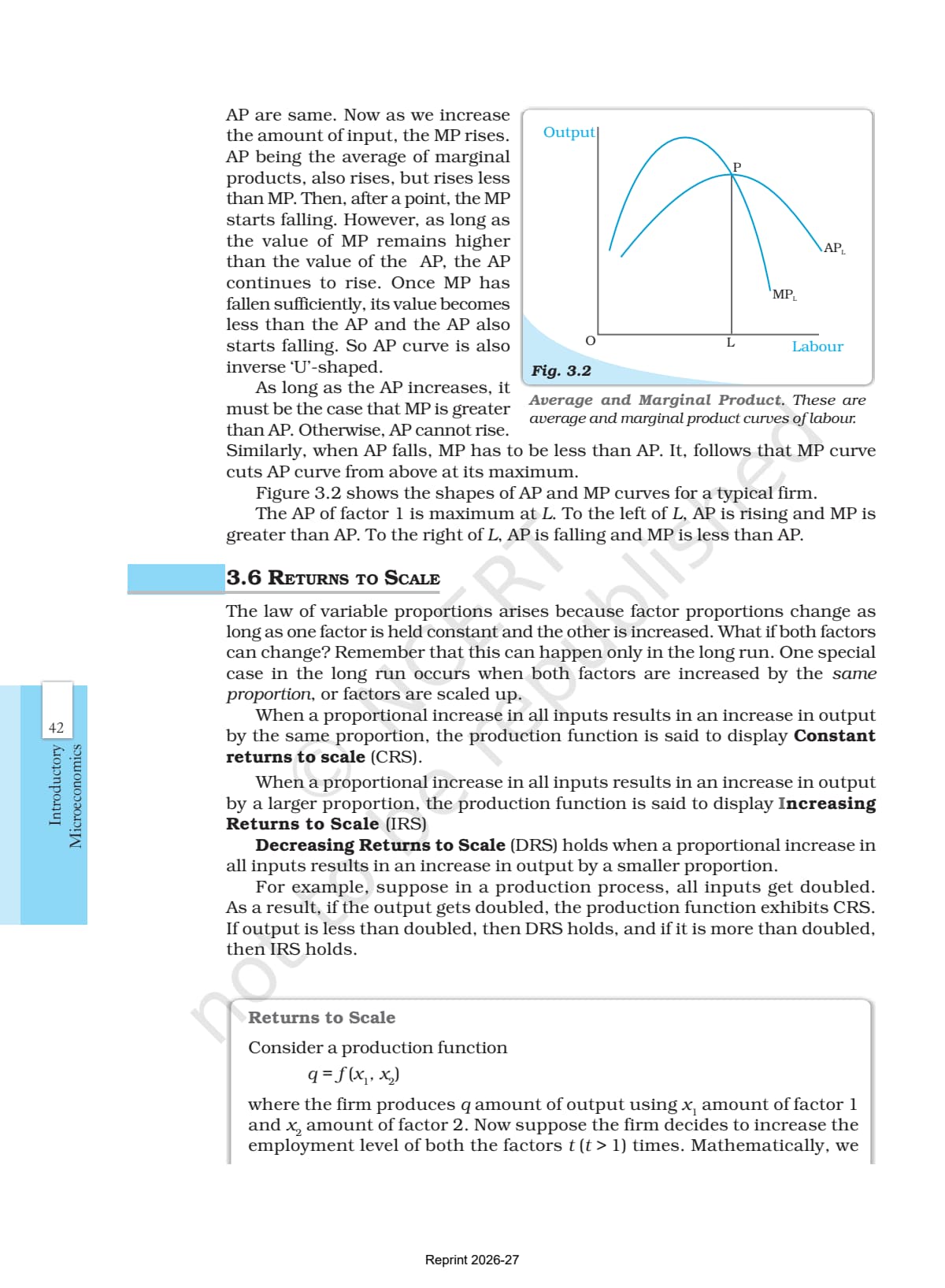
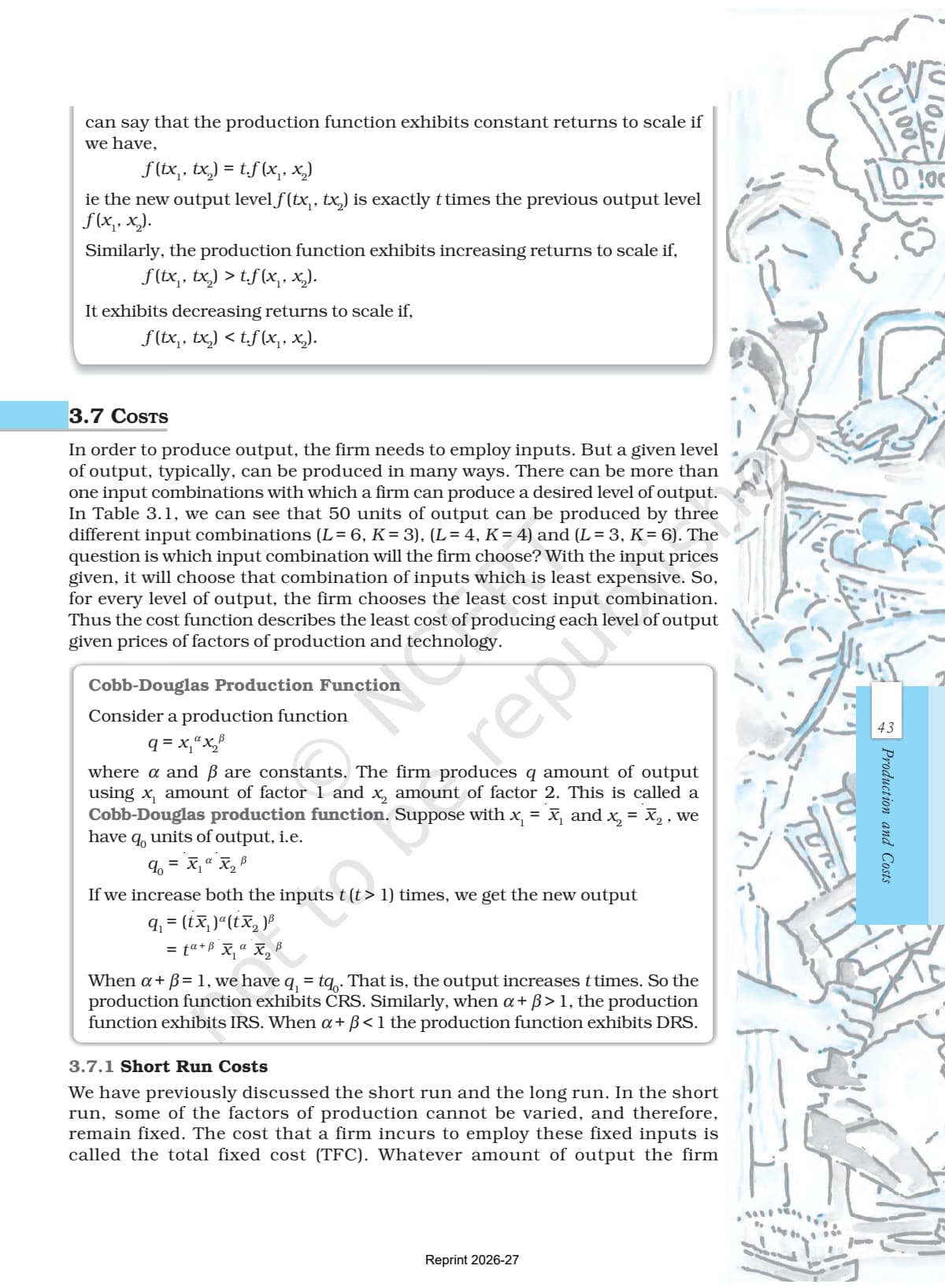
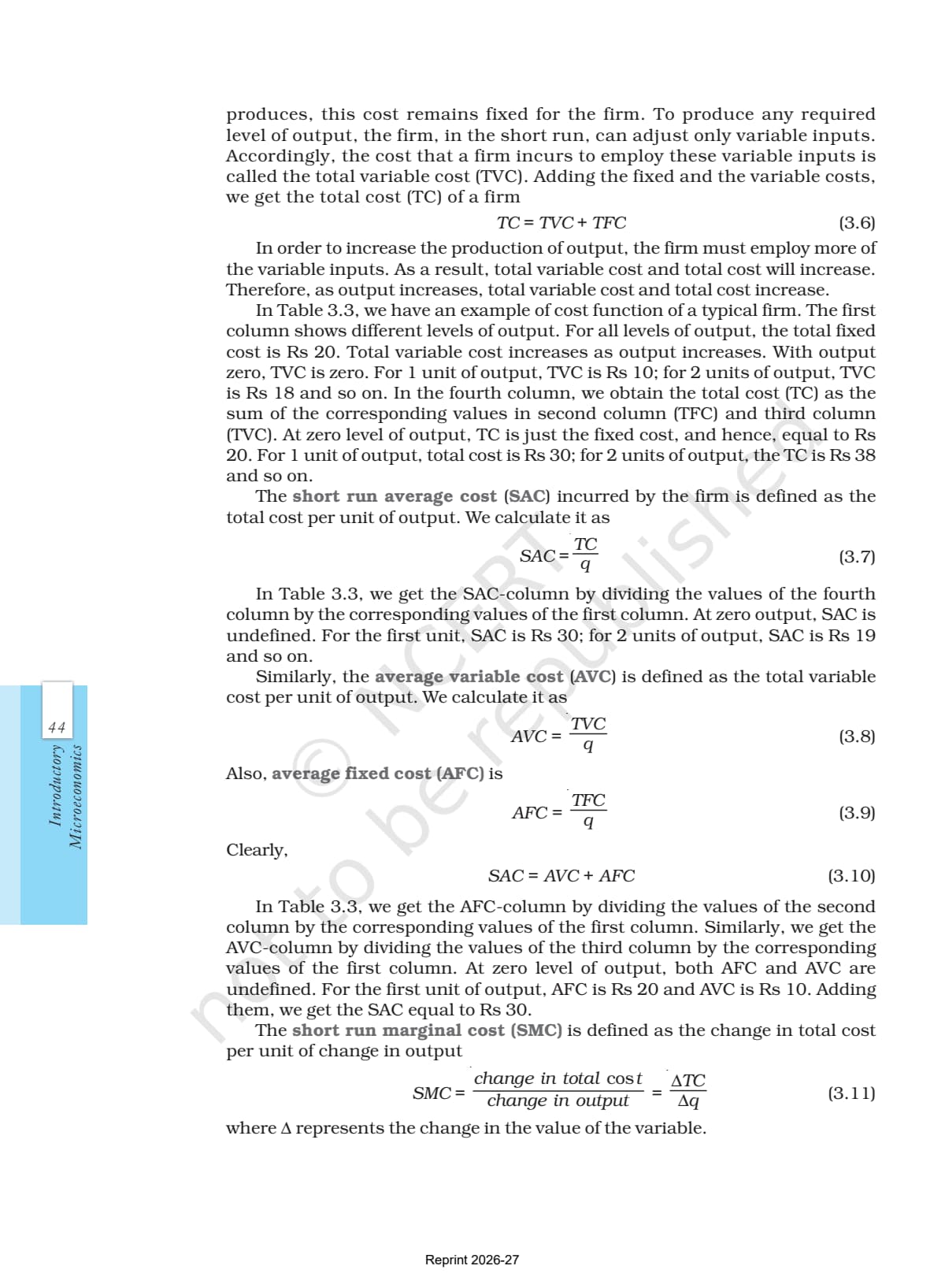
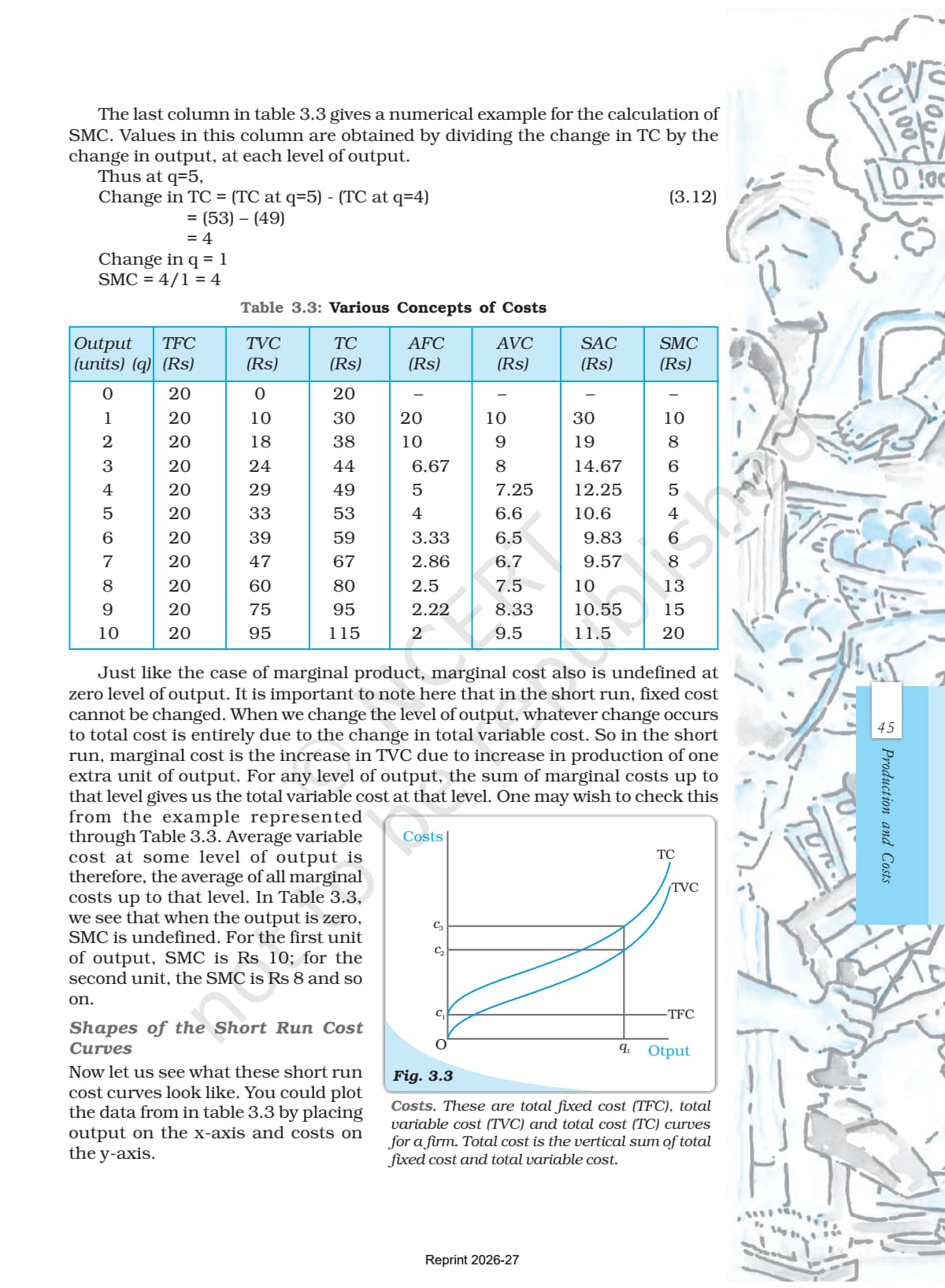
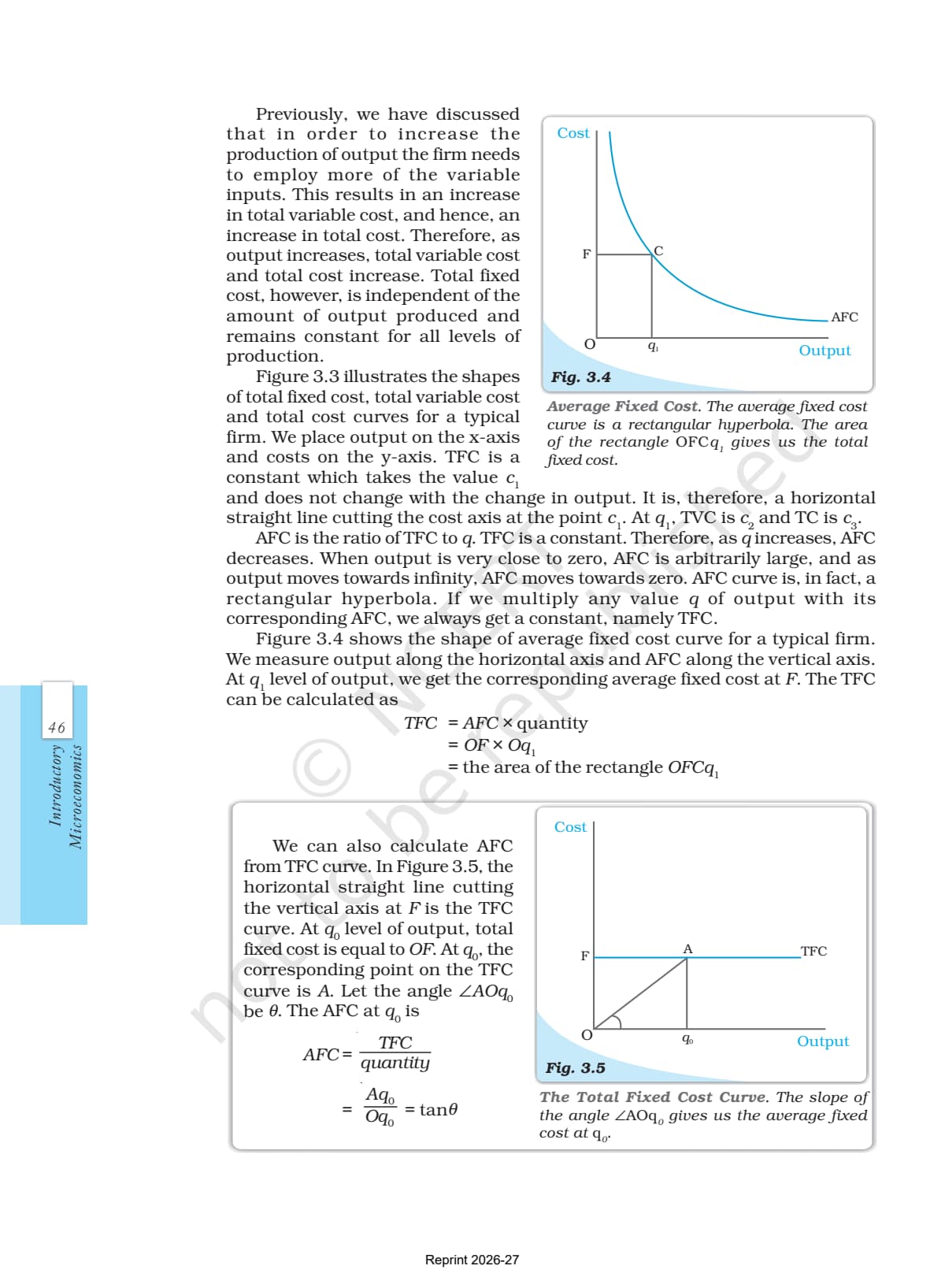
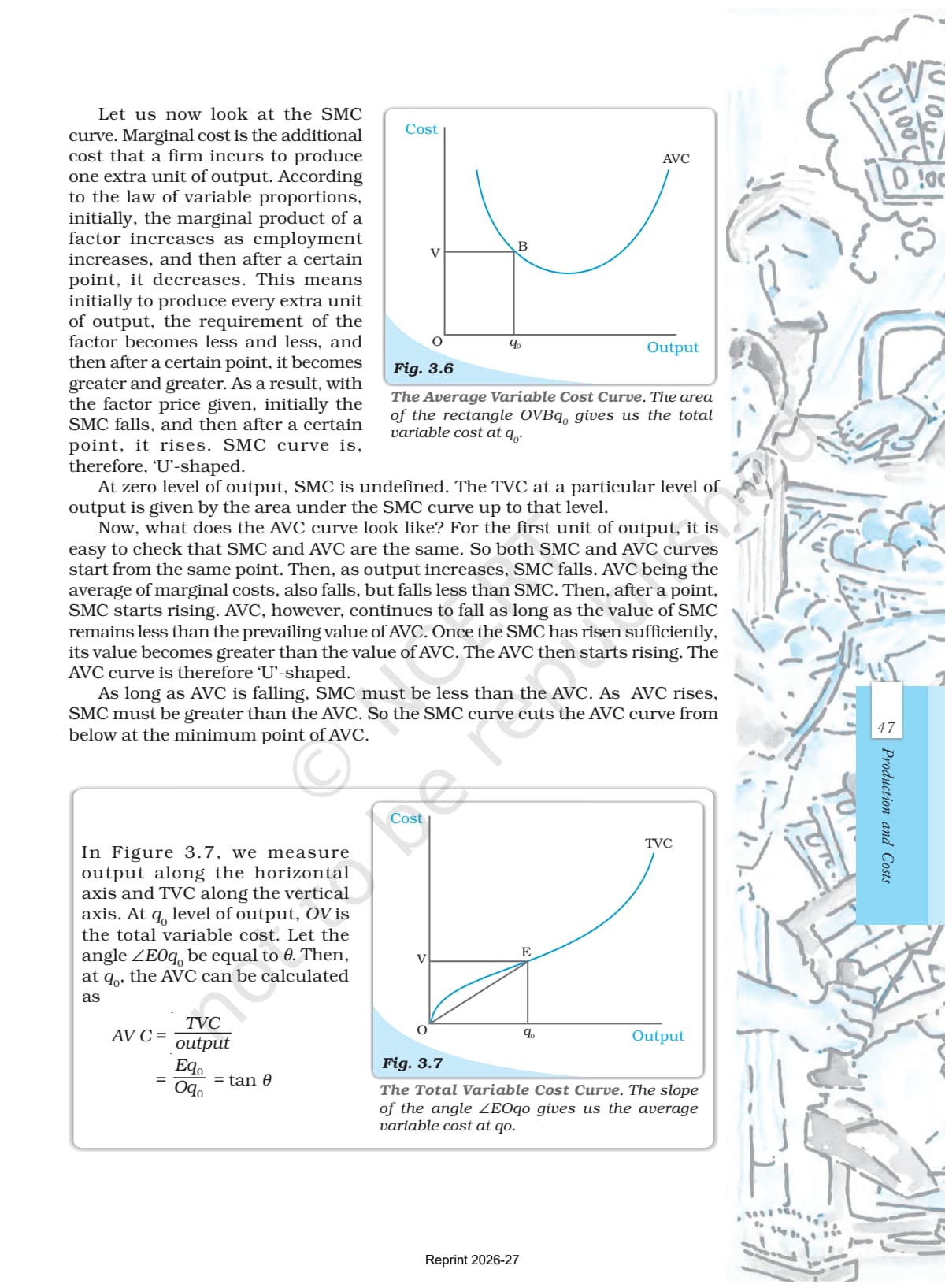
Here is what this chapter is worth in the exam:
- CBSE Boards: about 8 to 10 marks, mostly TP-AP-MP tables and cost-curve questions.
- CUET: 2 to 3 questions every year on cost concepts and returns to scale.
- Download: the official NCERT Microeconomics Chapter 3 PDF (file leec203), aligned to the 2026-27 syllabus.
What the NCERT Class 12 Economics Chapter 3 PDF Covers
This chapter shows how a firm turns inputs like labour and capital into output. It then builds the cost side of the firm step by step. The official PDF is the source CBSE uses to set every theory and numerical question on this chapter, so students should read it first.
The chapter runs in a fixed order. The table below maps each section to the concept students must take from it.
| Section | NCERT sub-topic | What to learn |
|---|---|---|
| 3.1 | Production function | Definition q = f(L, K) and what it means. |
| 3.2 | Short run and long run | Fixed input versus all inputs variable. |
| 3.3 | TP, AP and MP | The three product measures and how they link. |
| 3.3.3 | Law of variable proportions | The three stages of production. |
| 3.4 | Returns to scale | Increasing, constant and decreasing returns. |
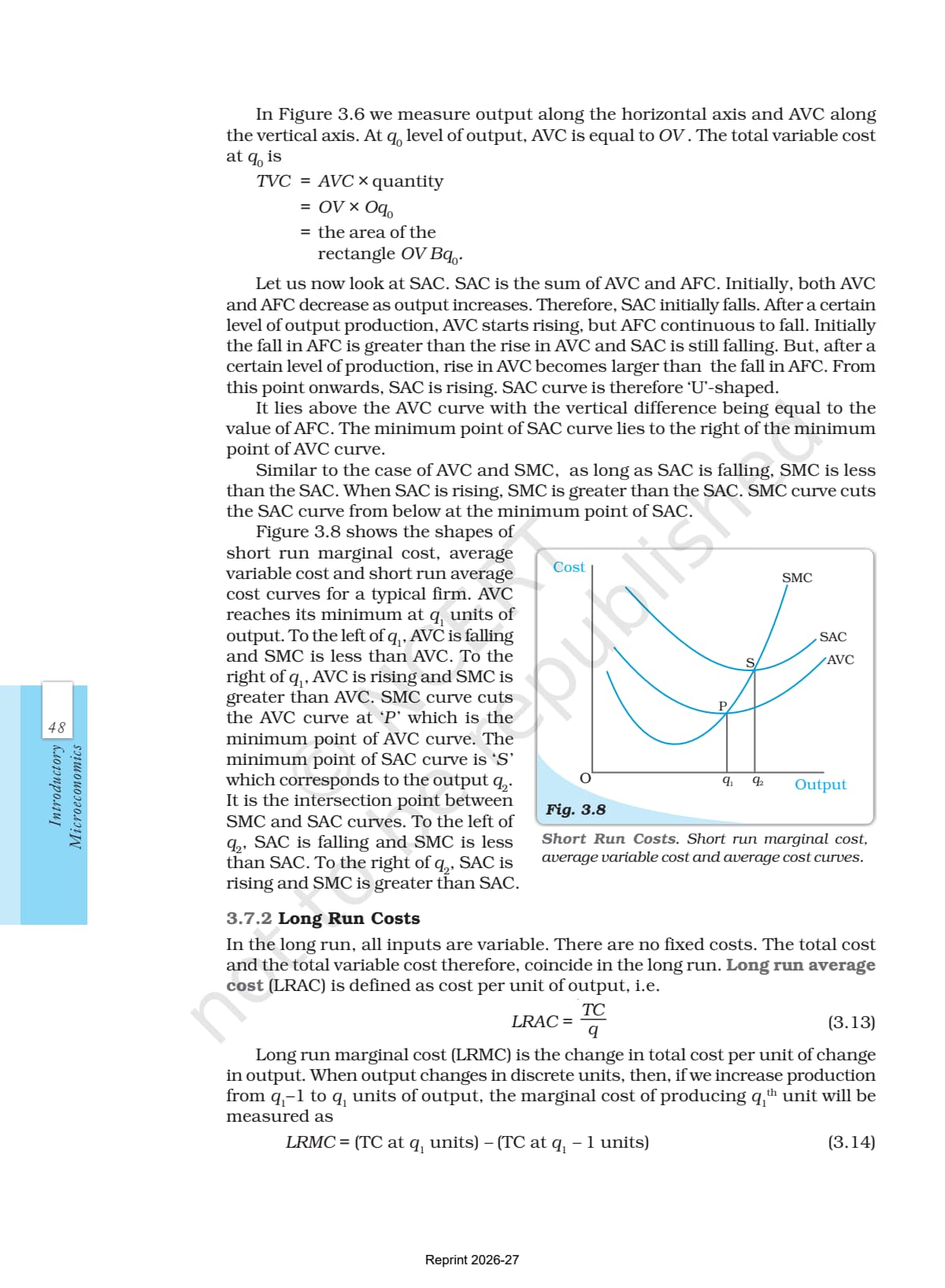
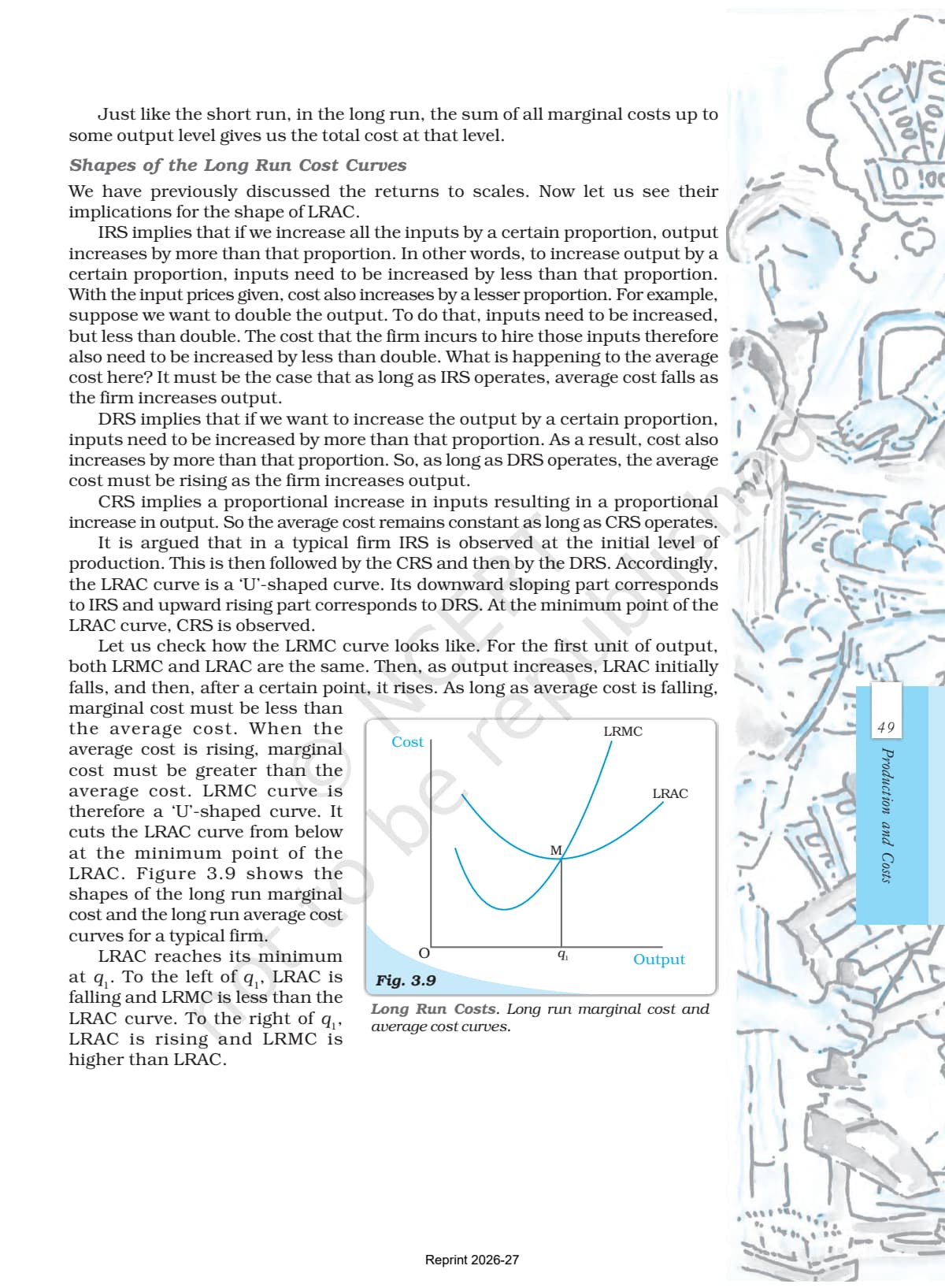
| 3.5 | Costs | The seven short-run cost curves and the LRAC. |
Sections 3.3 and 3.5 carry most of the marks. The TP-AP-MP link and the cost curves are the two blocks the board paper tests most often.
Production and Costs Class 12 Video Lesson
Source: Magnet Brains on YouTube
Key Concepts in Production and Costs Class 12
The PDF gives the exact phrasing CBSE rewards in theory answers. These are the ideas students must be able to state in one or two lines:
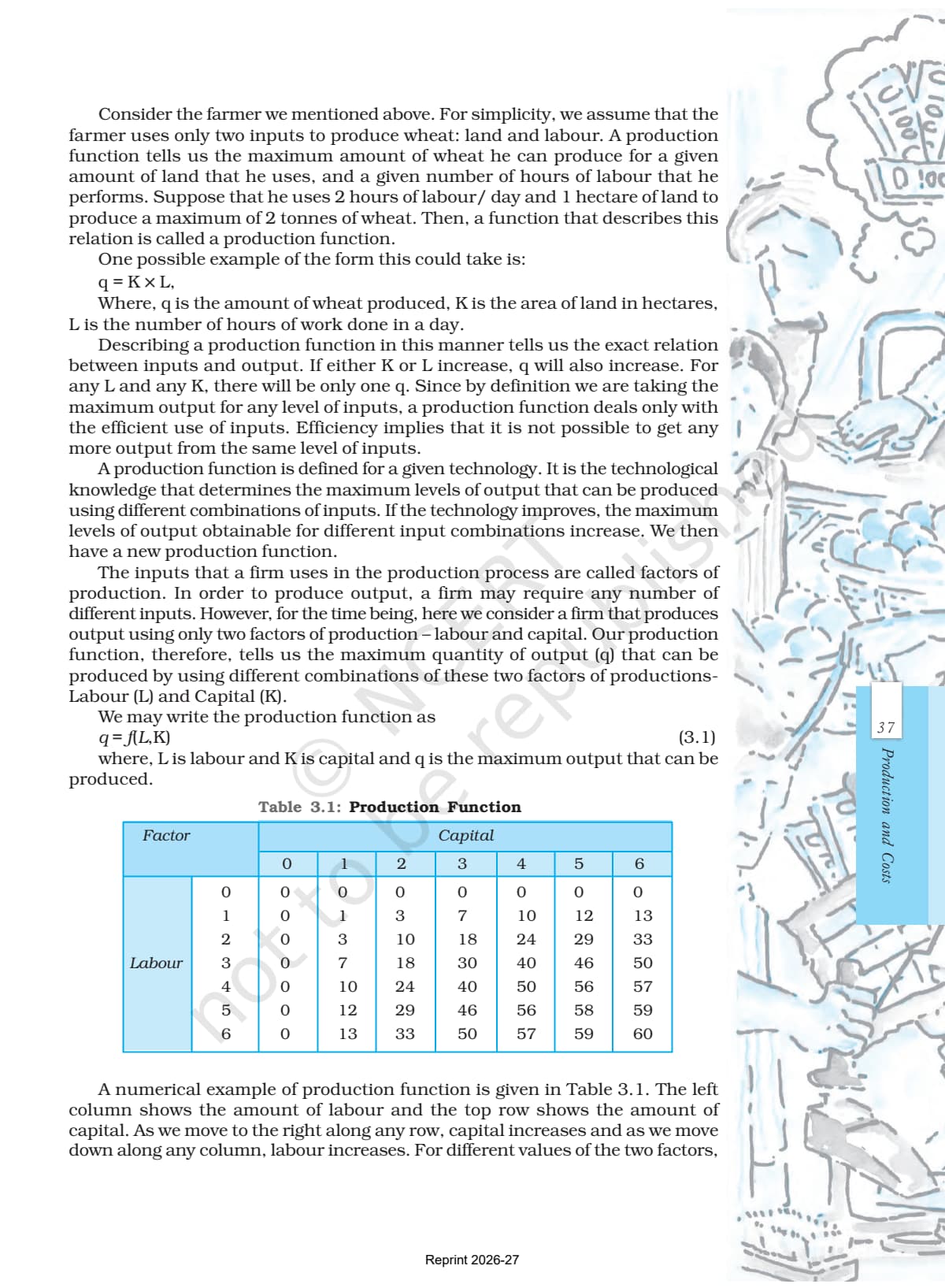
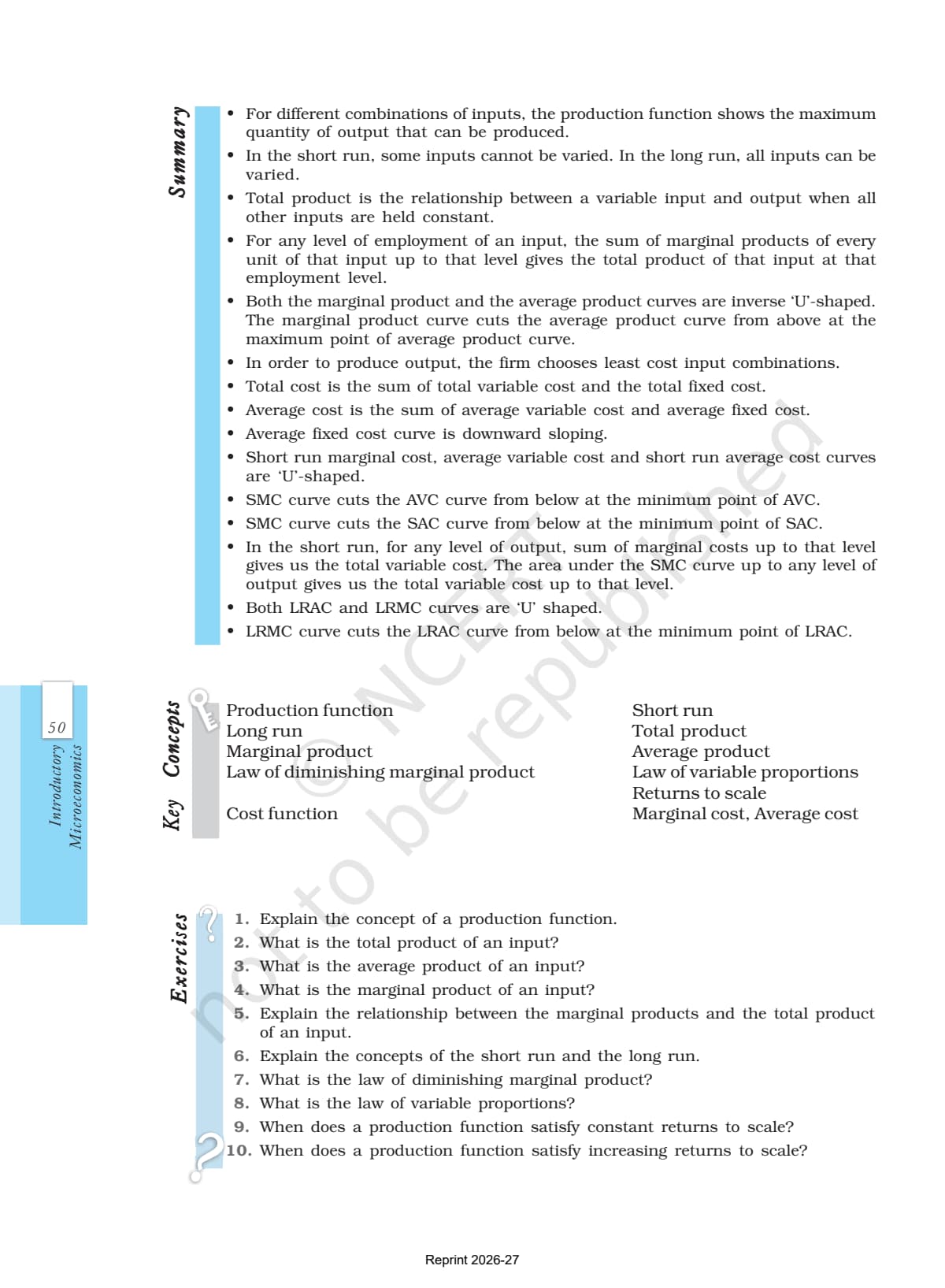
- Production function: the most output a firm can make from given inputs, written q = f(L, K).
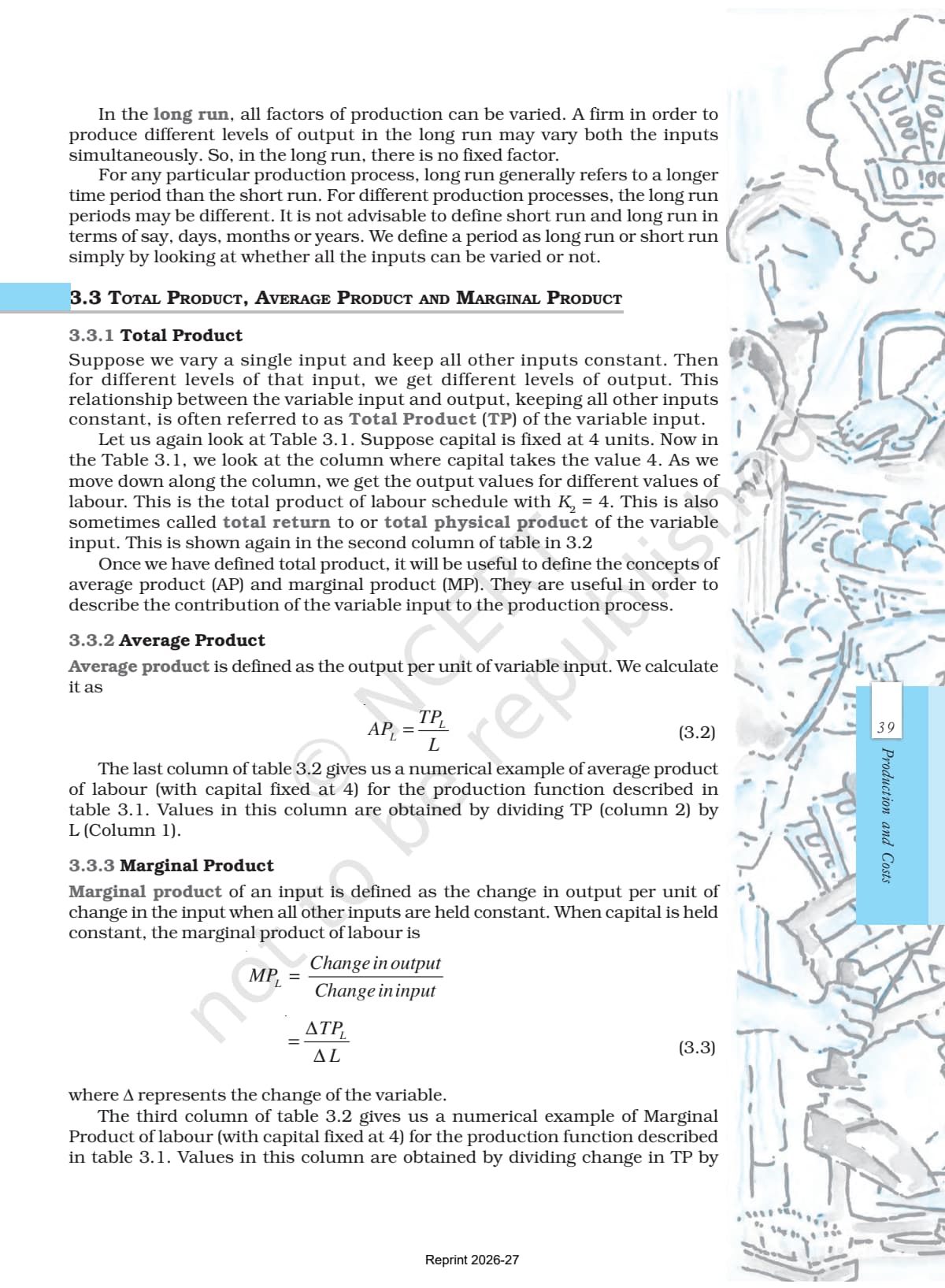
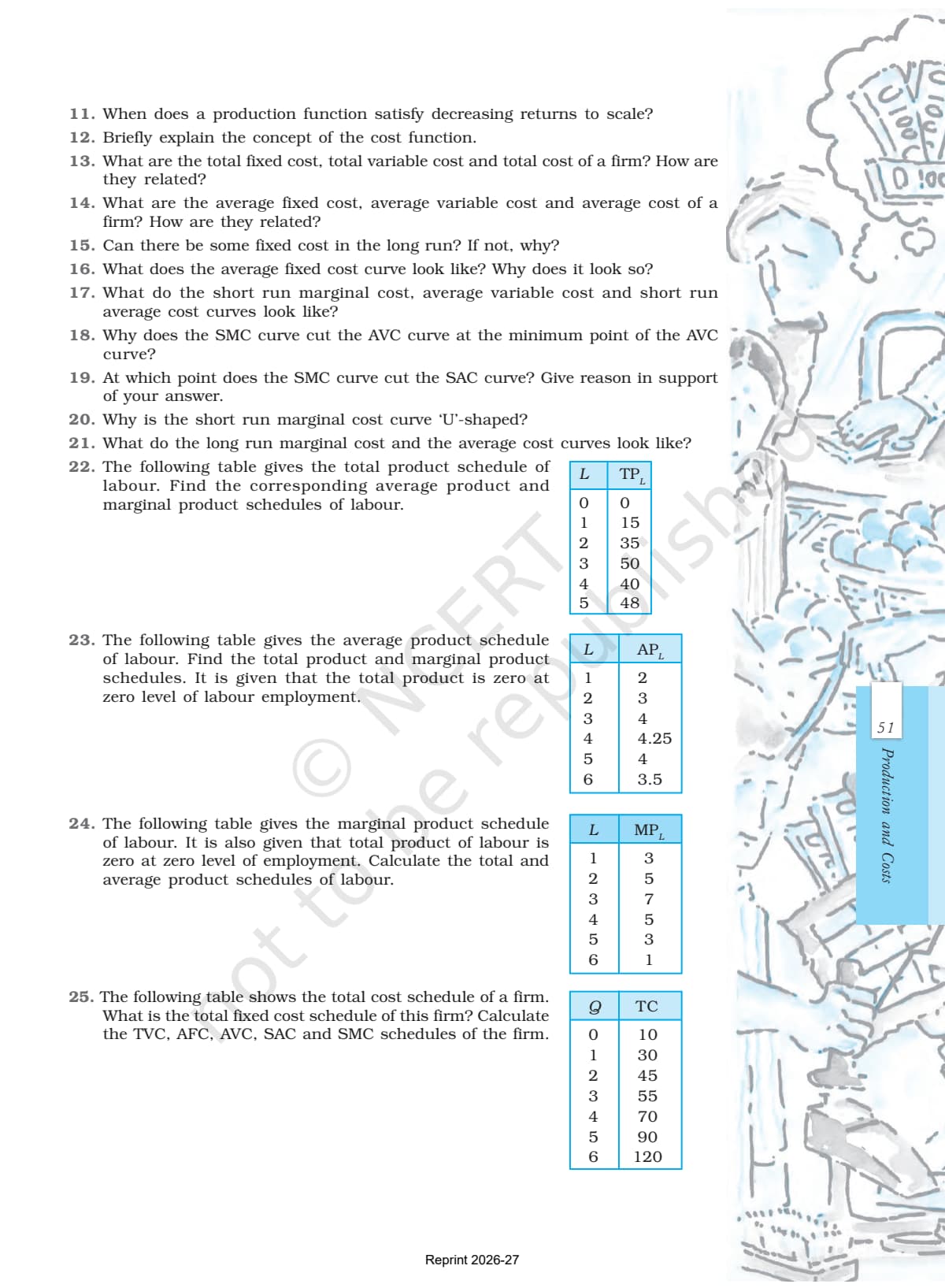
- TP, AP, MP: total output, output per unit of input (AP = TP/L), and the change in output from one more unit (MP).
- Returns to scale: how output changes when all inputs rise in the same proportion.
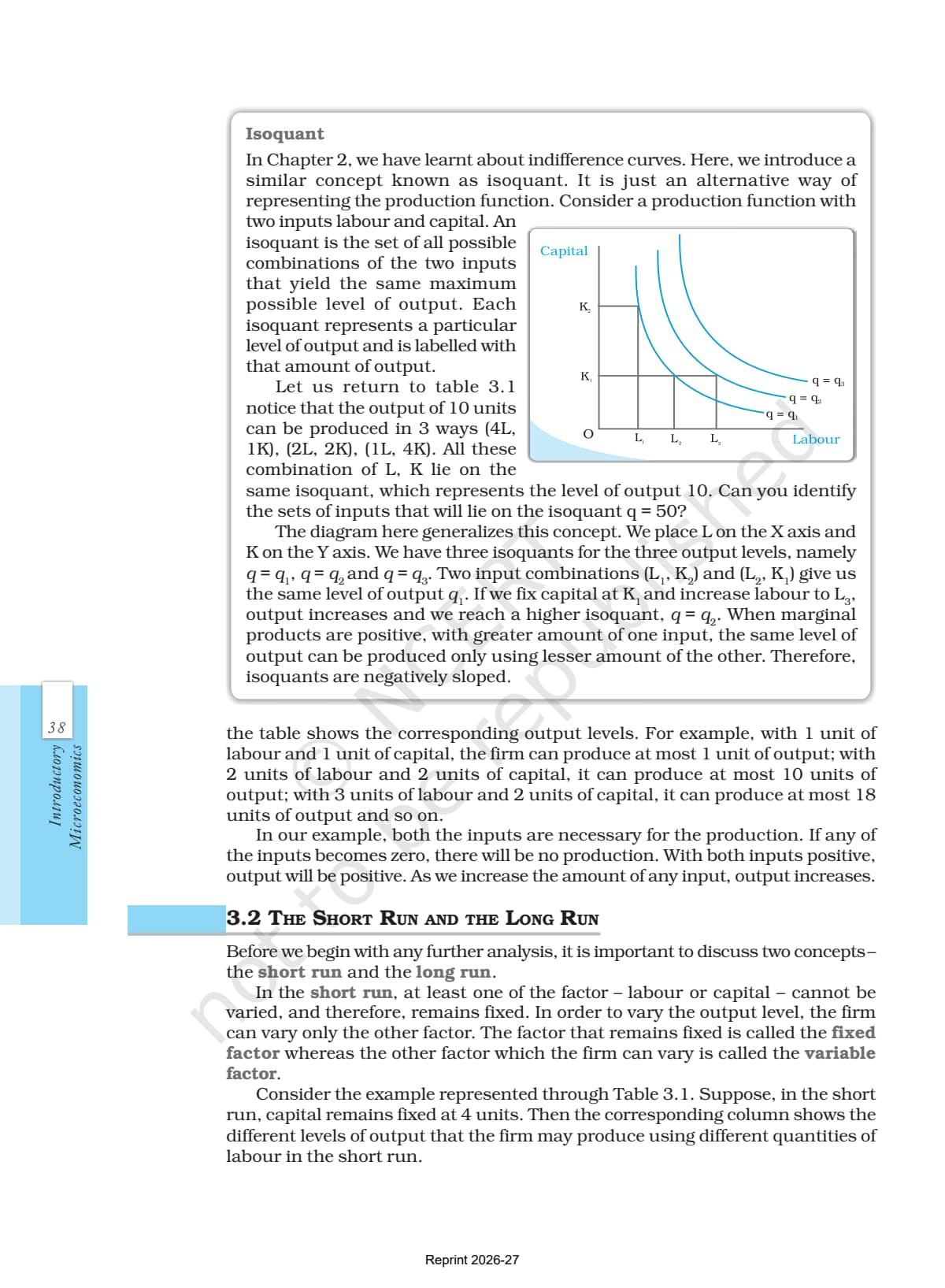
- Isoquants: all input pairs that give the same output level.
- Seven cost curves: TC, TFC, TVC, AC, AVC, AFC and MC, plus the long-run average cost curve.
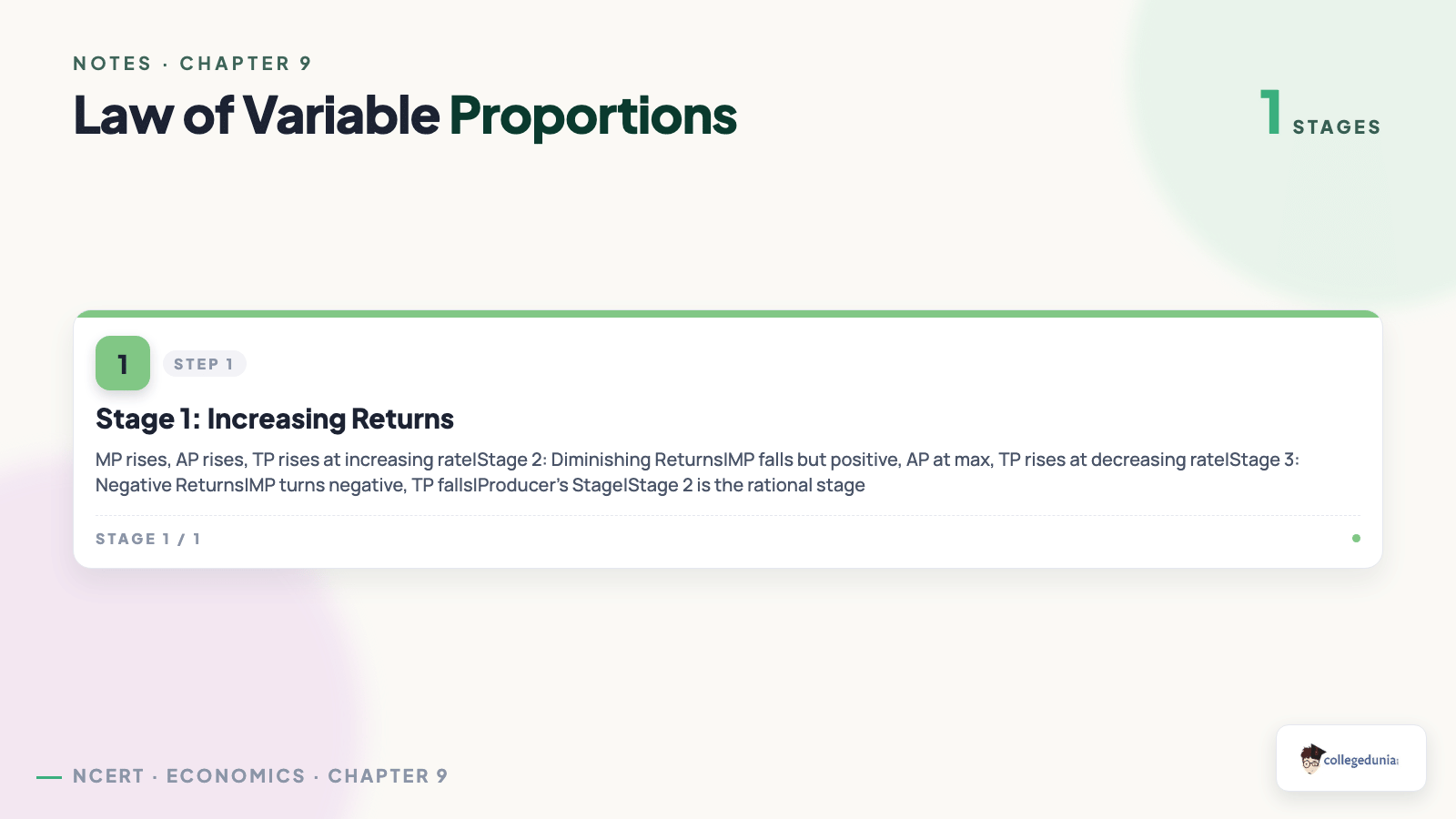
The most-drawn diagram is the law of variable proportions, shown below with its three stages.
Law of Variable Proportions in Class 12 Economics Chapter 3
This is a short-run idea. As one input rises while the others stay fixed, the marginal product first rises, then falls, then turns negative. That gives three stages of production. A firm always works in Stage II, where MP is falling but still positive. Do not mix this short-run law with returns to scale, which is a long-run idea.
How to Read the Production and Costs NCERT PDF with Other Resources
The PDF is the source, but it works best with three other pages. Read in this order:
- First read: go through sections 3.1 to 3.5 in order and mark new terms.
- With notes: open the Class 12 Economics Chapter 3 Notes and copy the seven cost curves into your own book.
- Practice: attempt every TP-AP-MP table and check it against the NCERT Solutions.
- Last revision: scan the handwritten notes the day before the exam.
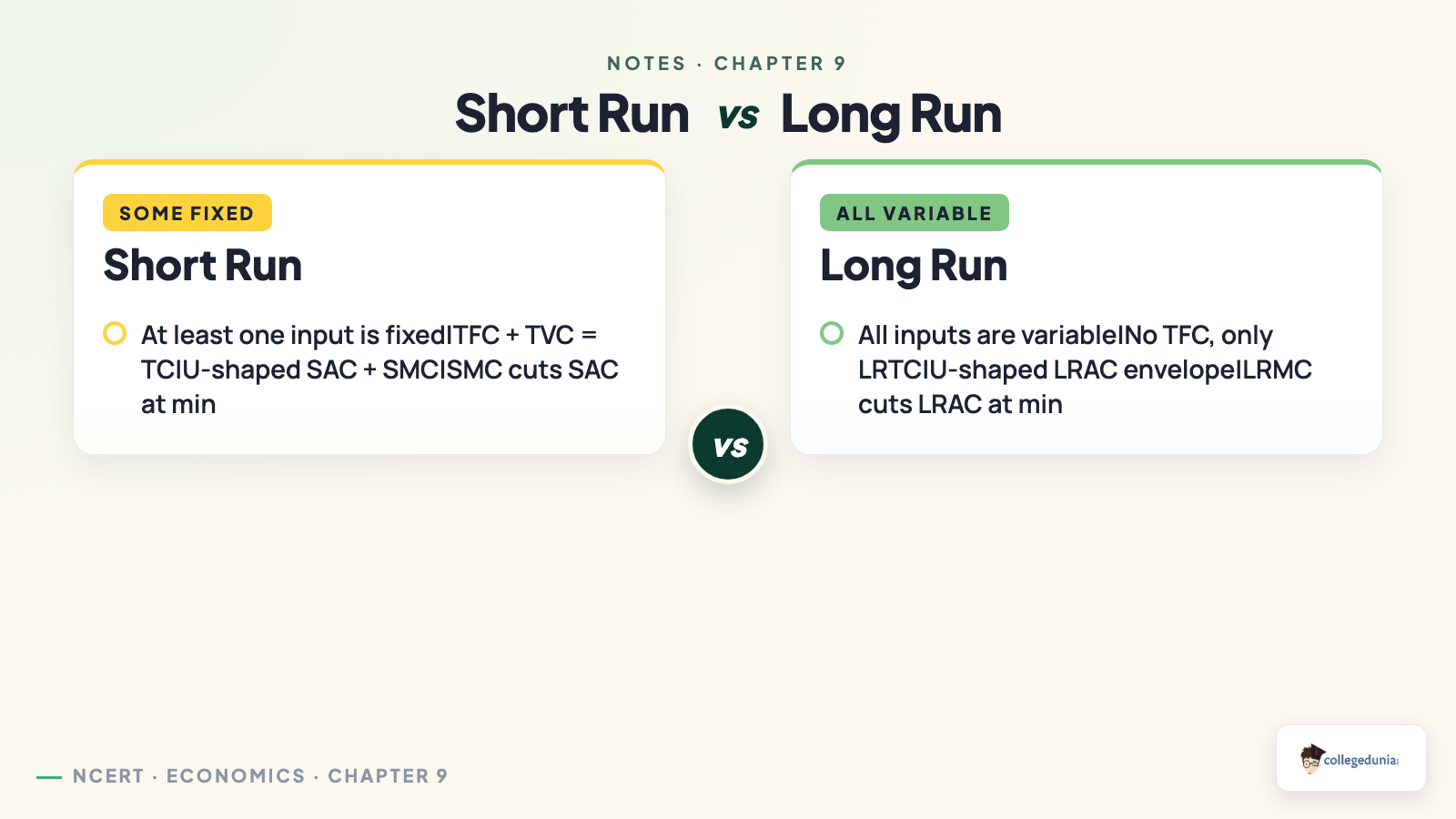
The chapter is graph-heavy, so a wrong shape early on leads to wrong answers later. The short run and long run are compared in the figure below.
Previous Year Question Trends for Class 12 Economics Chapter 3
The chapter has averaged about 8 marks across the last five board papers. The table shows where the marks came from.
| Year | Marks | Main question type |
|---|---|---|
| 2025 | 8 | MCQ plus a cost-curve sketch on MC, AVC and AC. |
| 2024 | 10 | A long numerical: complete a TP-AP-MP table. |
| 2023 | 8 | Long answer on the law of variable proportions. |
| 2022 | 6 | Short and graphical question on returns to scale. |
| 2020 | 10 | Long numerical plus the seven cost curves. |
The common pattern is a five-mark question that asks students to finish a TP-AP-MP table or sketch the cost curves and explain where MC cuts AVC and AC.
Student Feedback
We asked 12,200 Class 12 students about this chapter. 83% used the NCERT PDF as their main source, and those who paired it with the matched Solutions scored about 3 marks higher on cost-curve questions than students who used only a reference book.
Other Resources for Class 12 Economics Chapter 3
Pair this PDF with the Notes, Solutions and handwritten notes for full chapter coverage.
| Resource | What it covers | Open |
|---|---|---|
| NCERT Book PDF | Official NCERT Microeconomics Chapter 3 textbook. | Chapter 3 NCERT Book PDF |
| NCERT Solutions | Step-by-step answers to every exercise question. | Chapter 3 NCERT Solutions |
| Revision Notes | Concept-first revision of the full chapter. | Chapter 3 Notes |
| Handwritten Notes | Scanned notebook pages for last-mile revision. | Chapter 3 Handwritten Notes |
All Chapters: Class 12 Economics NCERT Book PDF
| Chapter | NCERT Book PDF |
|---|---|
| Chapter 1 | Introduction to Microeconomics |
| Chapter 2 | Theory of Consumer Behaviour |
| Chapter 3 | Production and Costs |
| Chapter 4 | The Theory of the Firm under Perfect Competition |
| Chapter 5 | Market Equilibrium |
Class 12 Economics Chapter 3 Production and Costs NCERT Book PDF FAQs
Ques. Where can students download the NCERT Class 12 Economics Chapter 3 Production and Costs PDF?
Ans. Students can download the official PDF from the download card at the top of this page. It is the single-chapter file leec203 from the NCERT Introductory Microeconomics textbook, aligned to the 2026-27 CBSE syllabus.
Ques. What is the production function in the NCERT Class 12 textbook?
Ans. The production function is the most output a firm can make from given inputs, written q = f(L, K), where q is output, L is labour and K is capital. It covers only technically efficient input-output combinations.
Ques. What is the law of variable proportions?
Ans. As the variable input rises while other inputs stay fixed, marginal product first rises, then falls, then turns negative. This gives three stages of production. A rational firm operates in Stage II.
Ques. What are the seven short-run cost curves in this chapter?
Ans. They are Total Cost (TC), Total Fixed Cost (TFC), Total Variable Cost (TVC), Average Cost (AC), Average Variable Cost (AVC), Average Fixed Cost (AFC) and Marginal Cost (MC). The MC curve cuts AVC and AC at their minimum points.
Ques. How much weightage does Chapter 3 carry in the CBSE board paper?
Ans. Across the last five board papers, the chapter has averaged about 8 marks. The common question is a five-mark numerical or graphical one on the cost curves or the TP-AP-MP relationship.



Comments