




Class 12 Economics Chapter 2 Theory of Consumer Behaviour is the second chapter of the Introductory Microeconomics book. It explains utility, indifference curves, the budget line, consumer equilibrium, demand and elasticity. This page hosts the official NCERT chapter PDF for free download.
Here is what this chapter is worth in the exam:
- Official NCERT PDF: the chapter file leec202 from the Microeconomics textbook, aligned to the 2026-27 syllabus.
- CBSE Boards: about 6 to 8 marks, mostly the consumer equilibrium diagram and one elasticity numerical.
- CUET: 2 to 3 questions every year on the budget line, MRS and price elasticity.
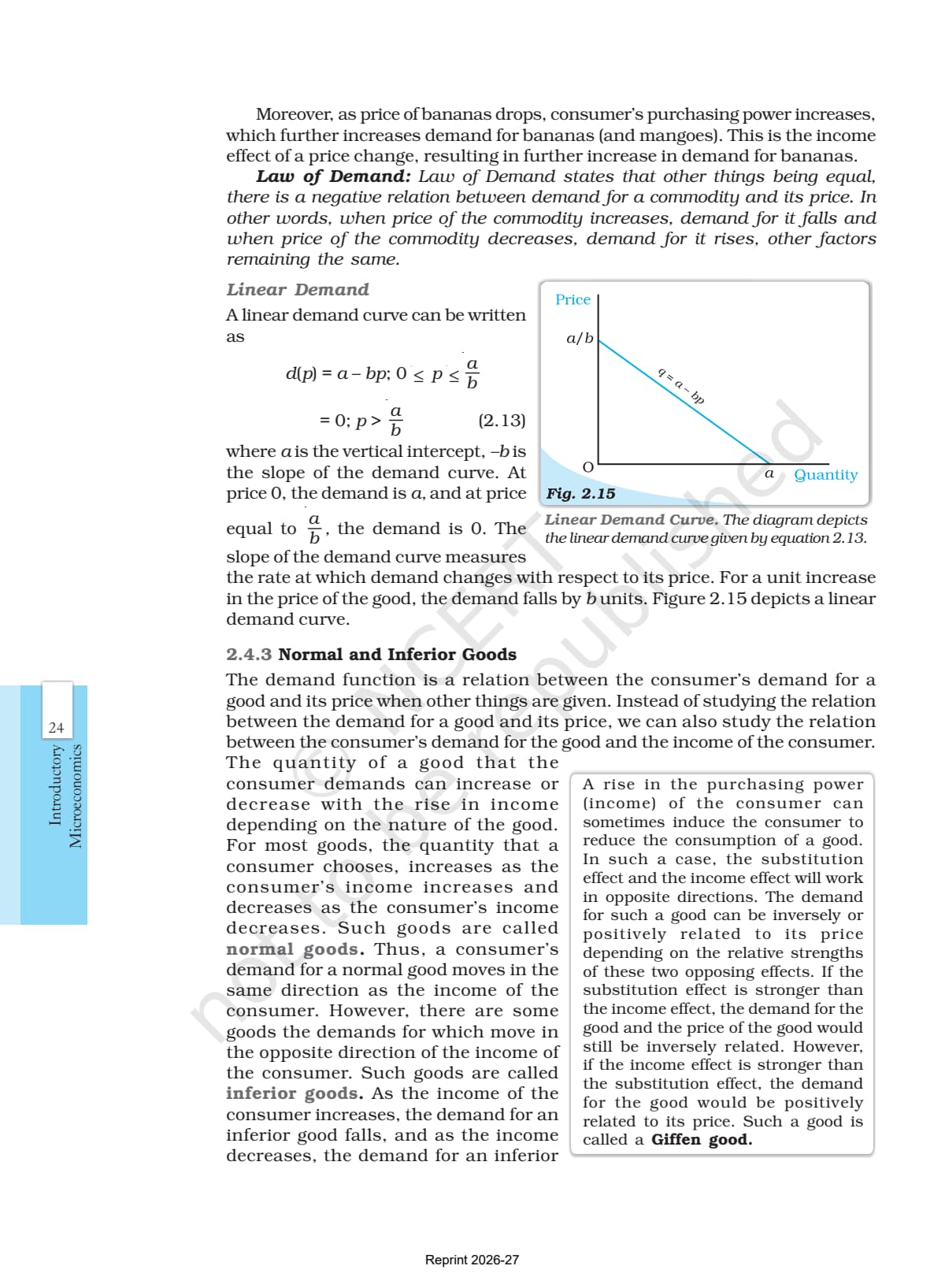
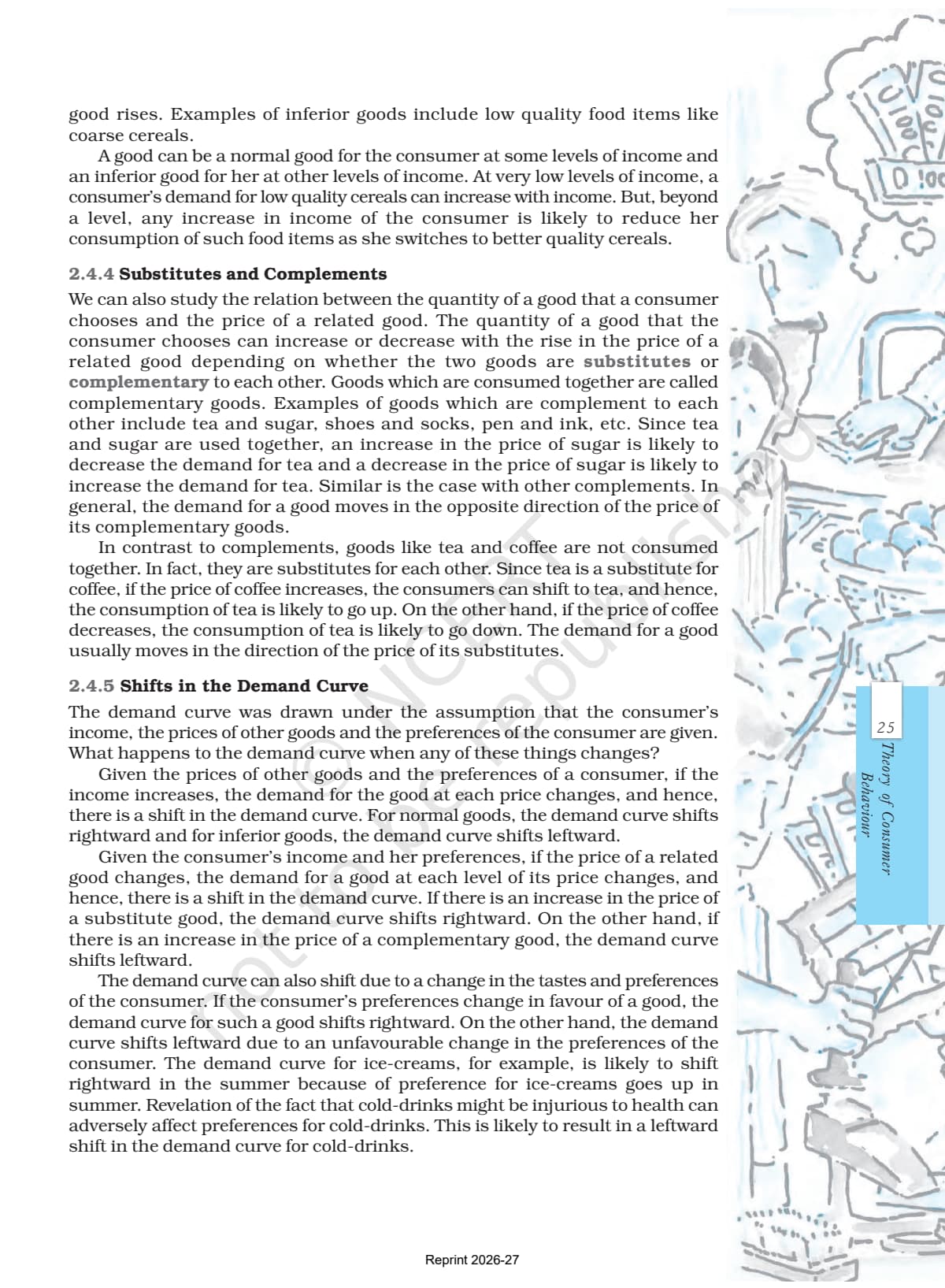
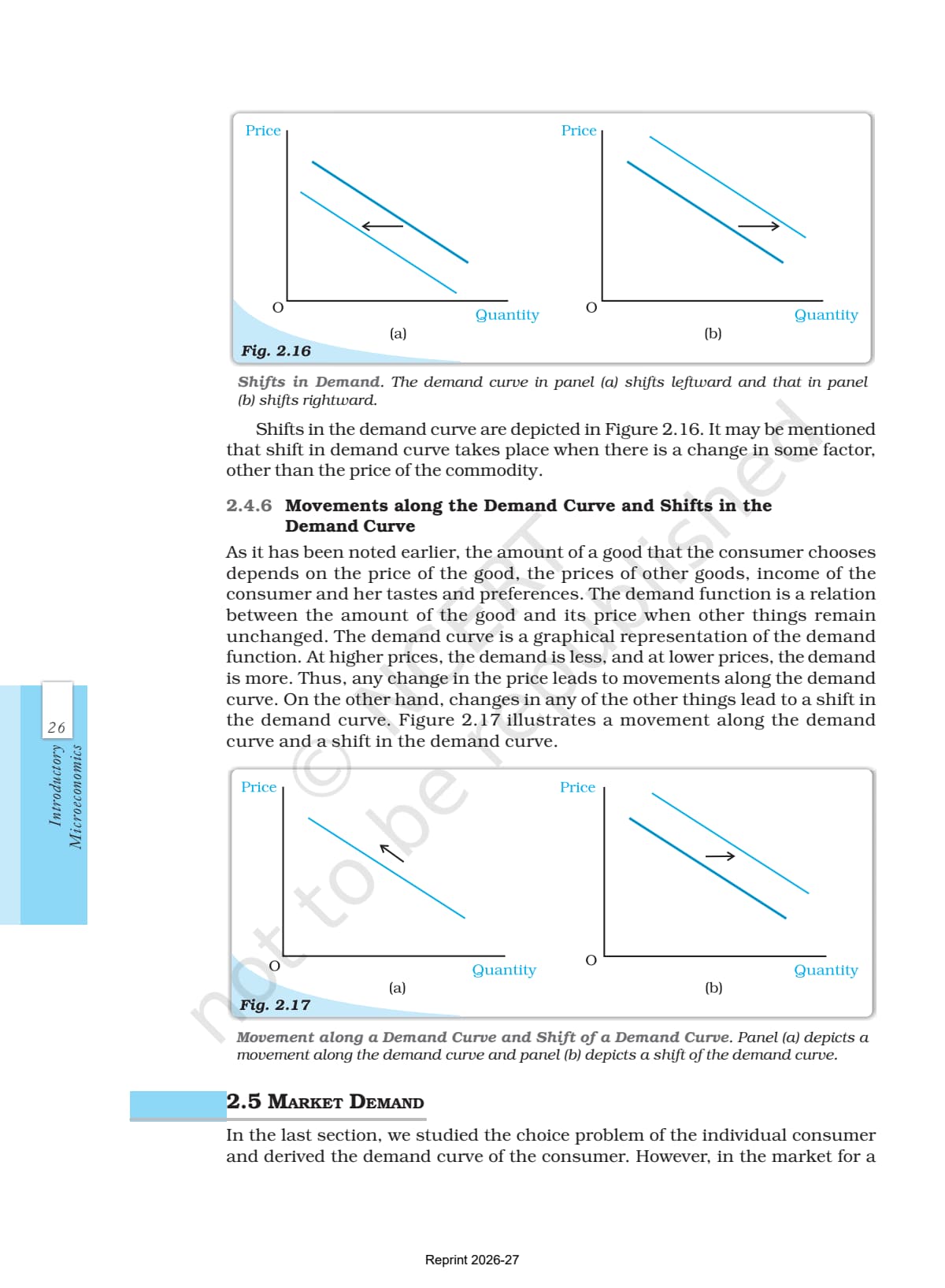
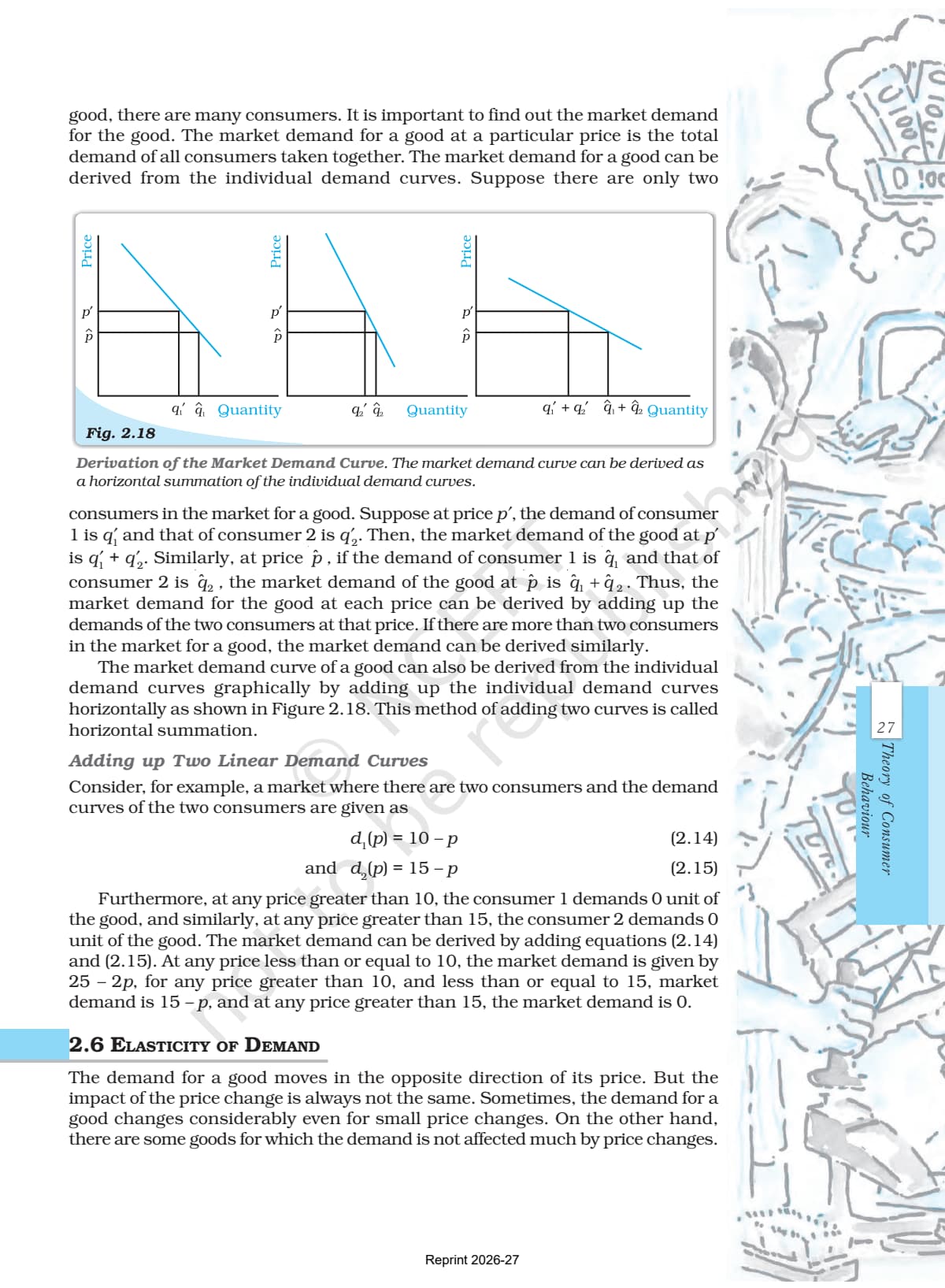
What the Class 12 Economics Chapter 2 Theory of Consumer Behaviour PDF Covers
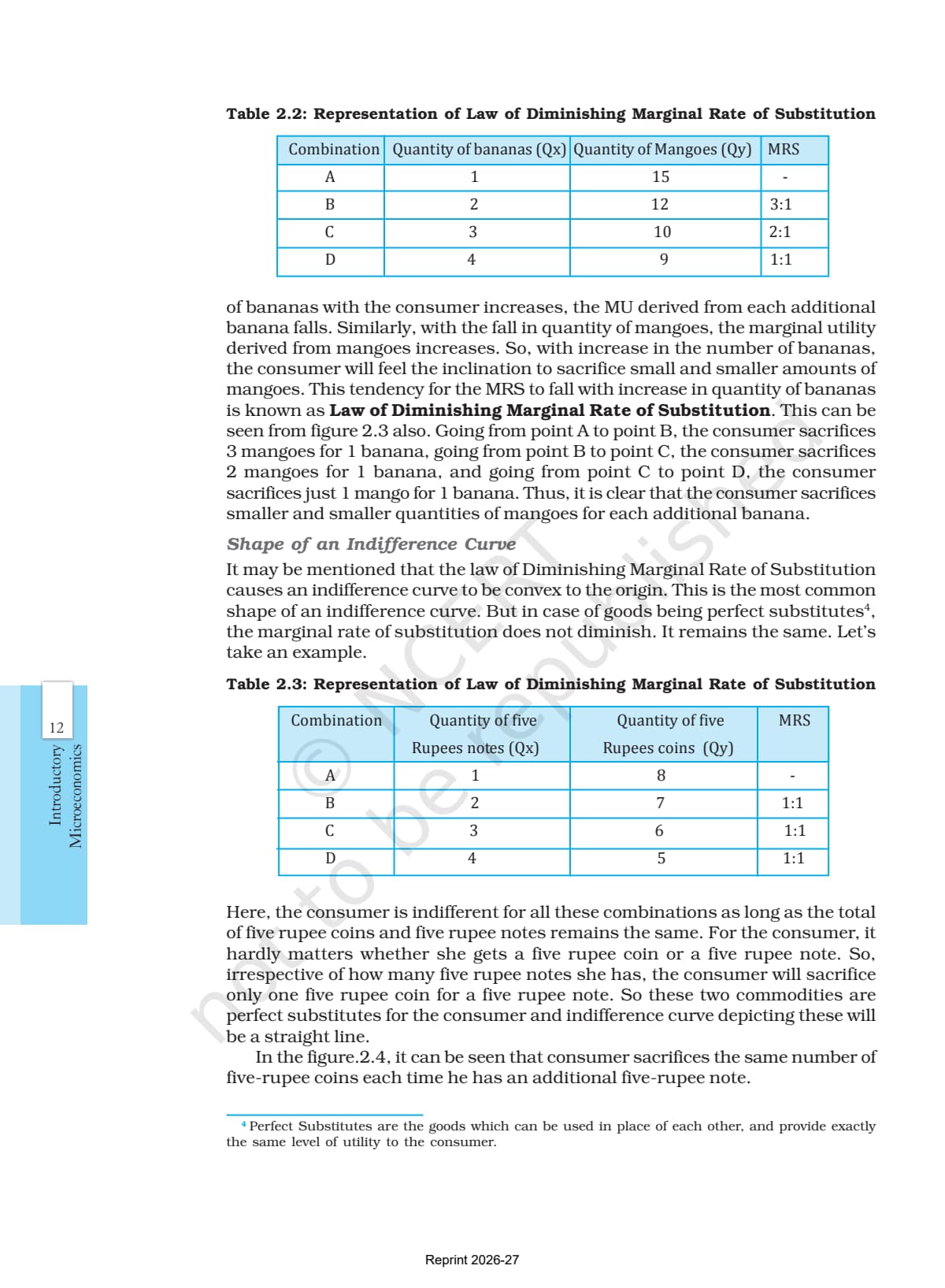
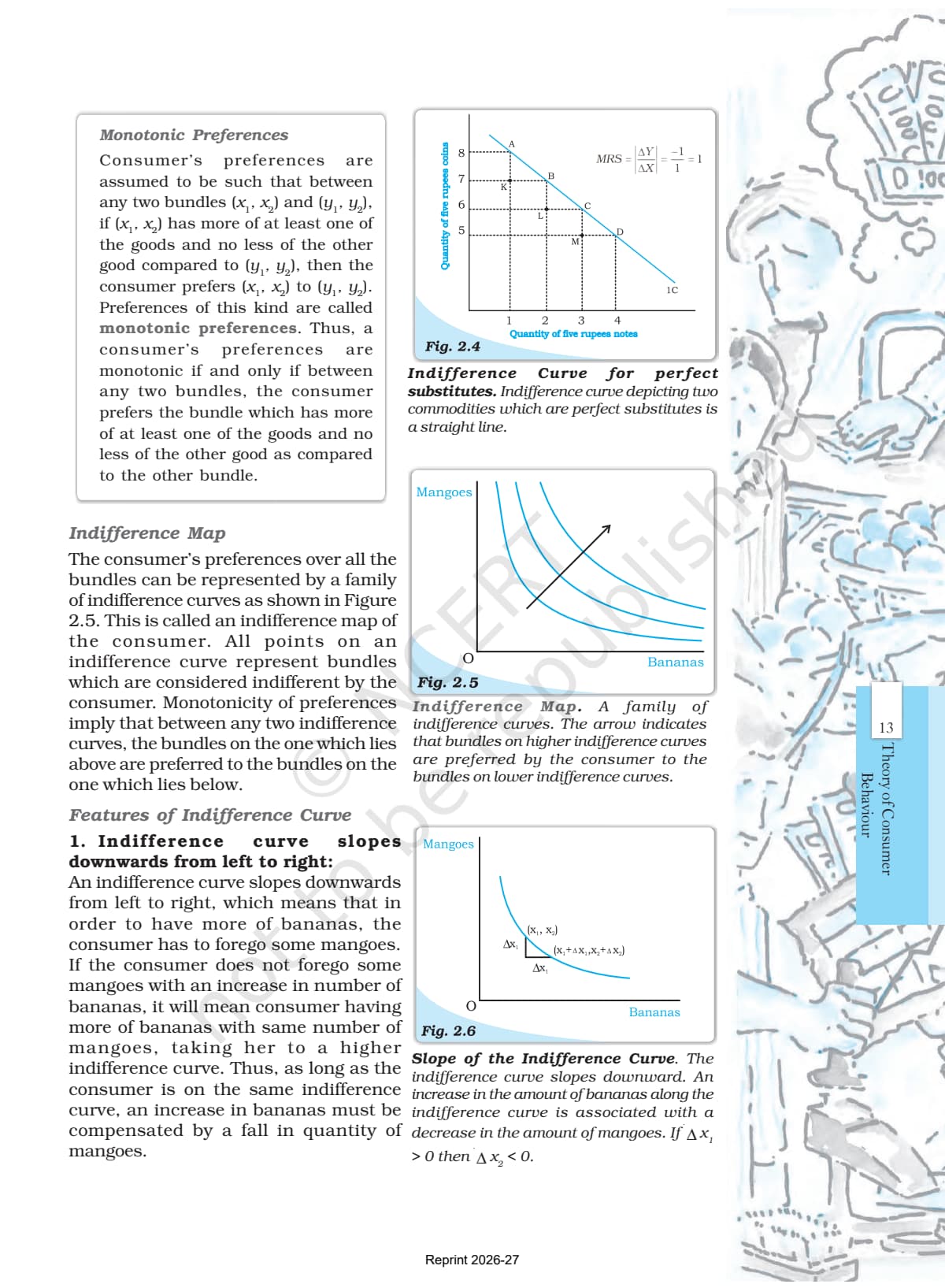
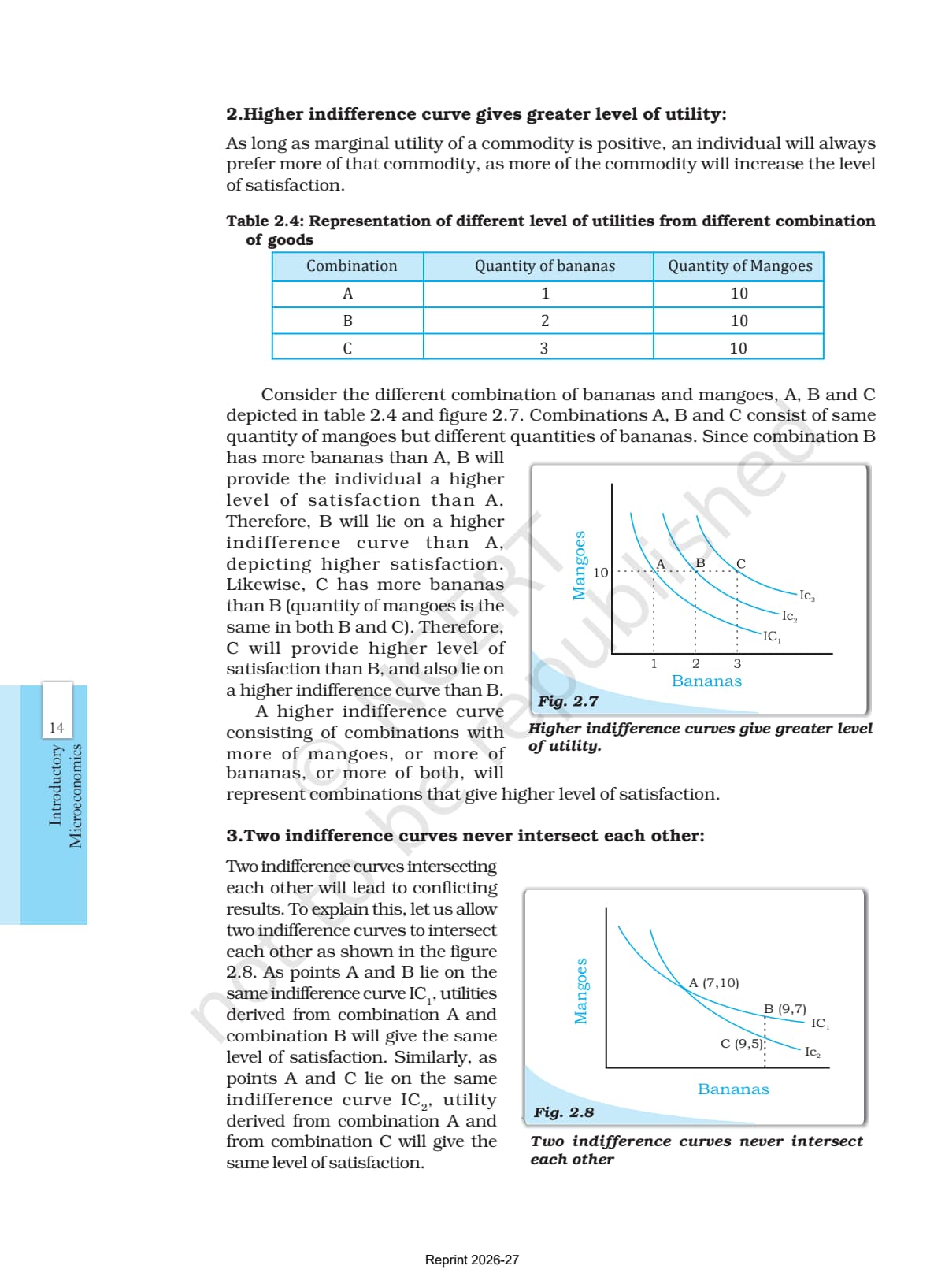
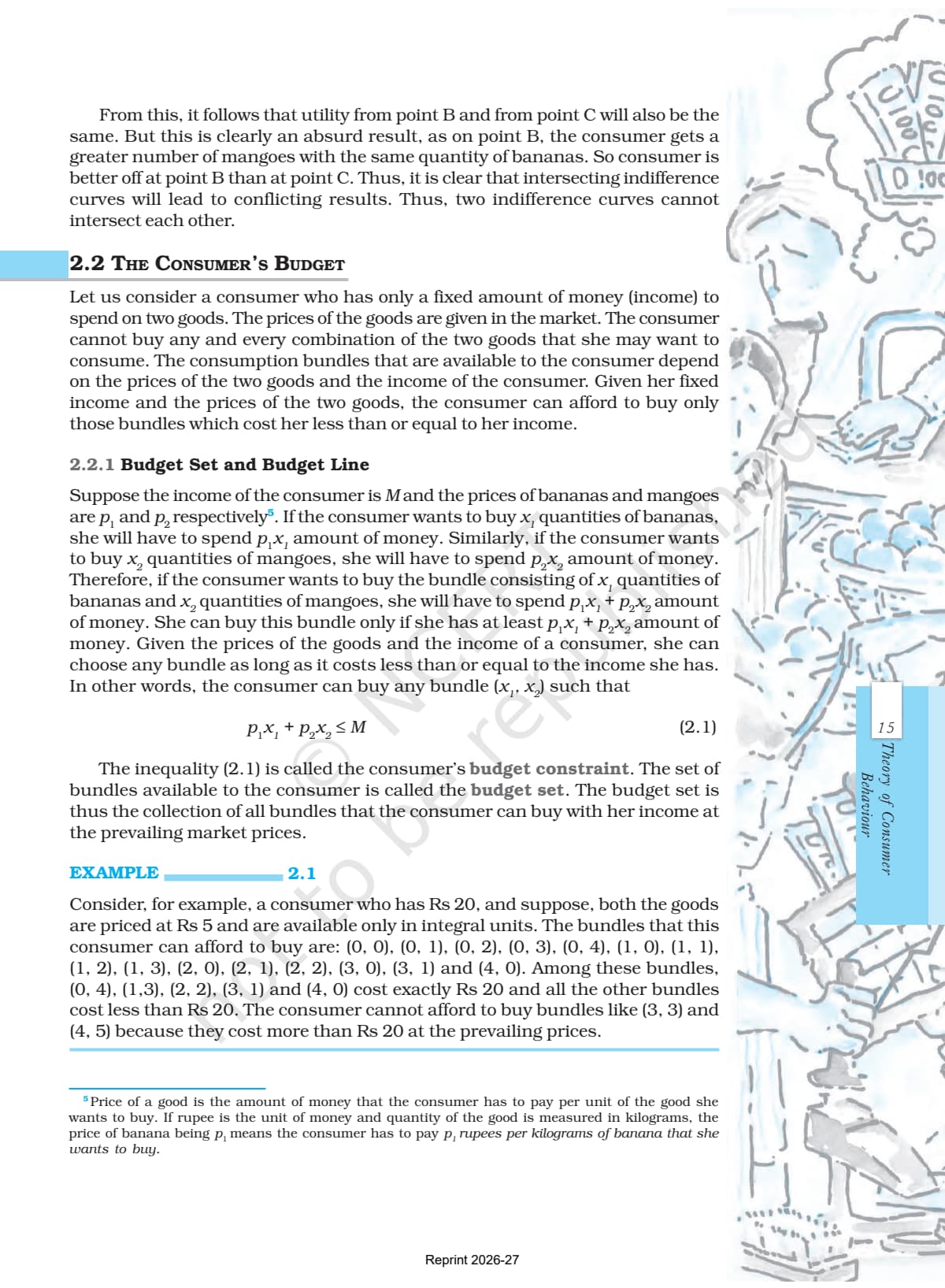
This is the official Microeconomics textbook chapter. CBSE sets every theory and diagram question on consumer choice from this PDF, so it is the one document to read first. The chapter moves in a clear line: from utility, to indifference curves, to the budget line, to consumer equilibrium, and finally to demand and elasticity.
The PDF splits into six numbered sections. The table below maps each section to the concept it is tested on.
| Section | NCERT sub-topic | Main exam concept |
|---|---|---|
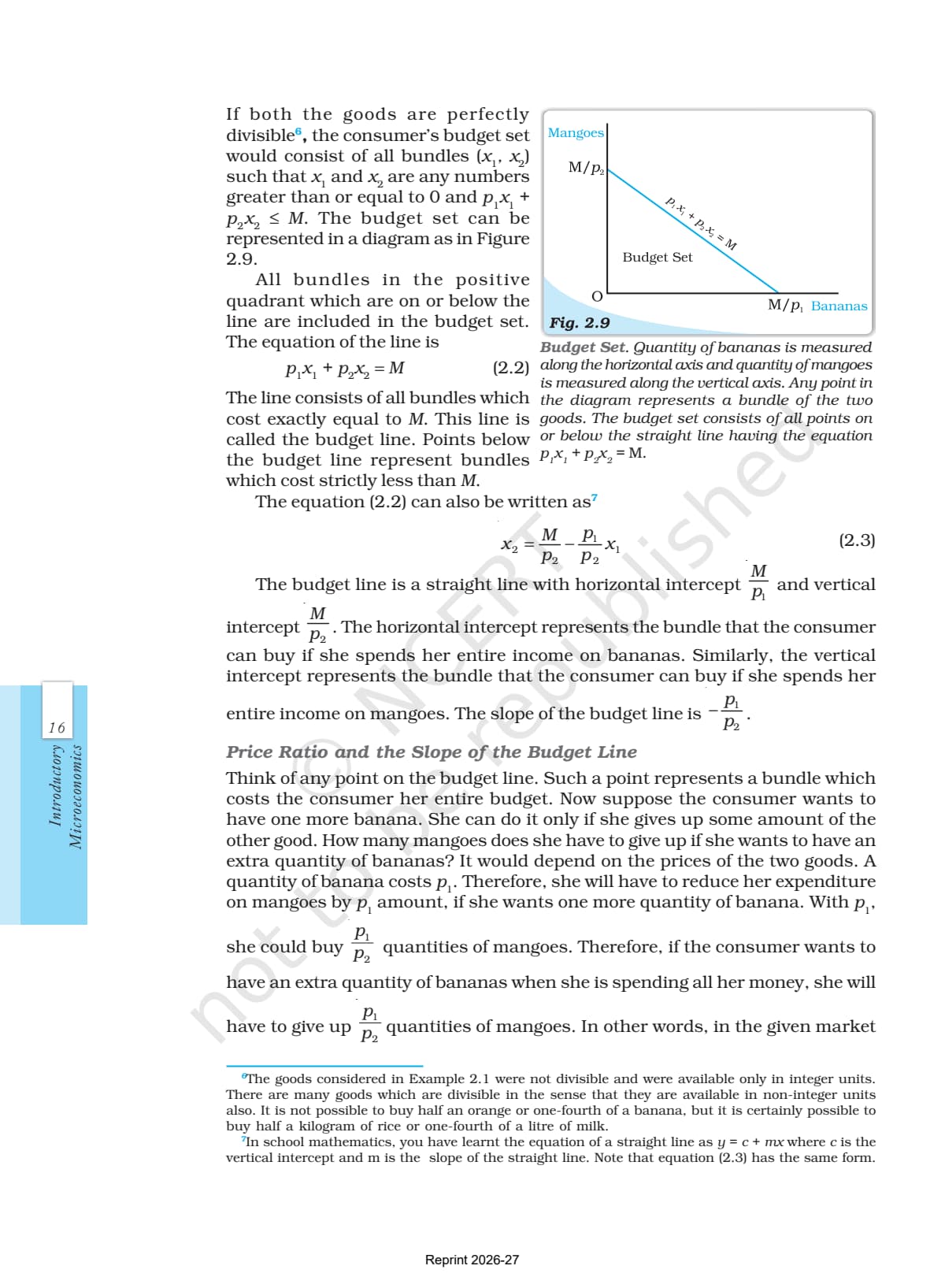
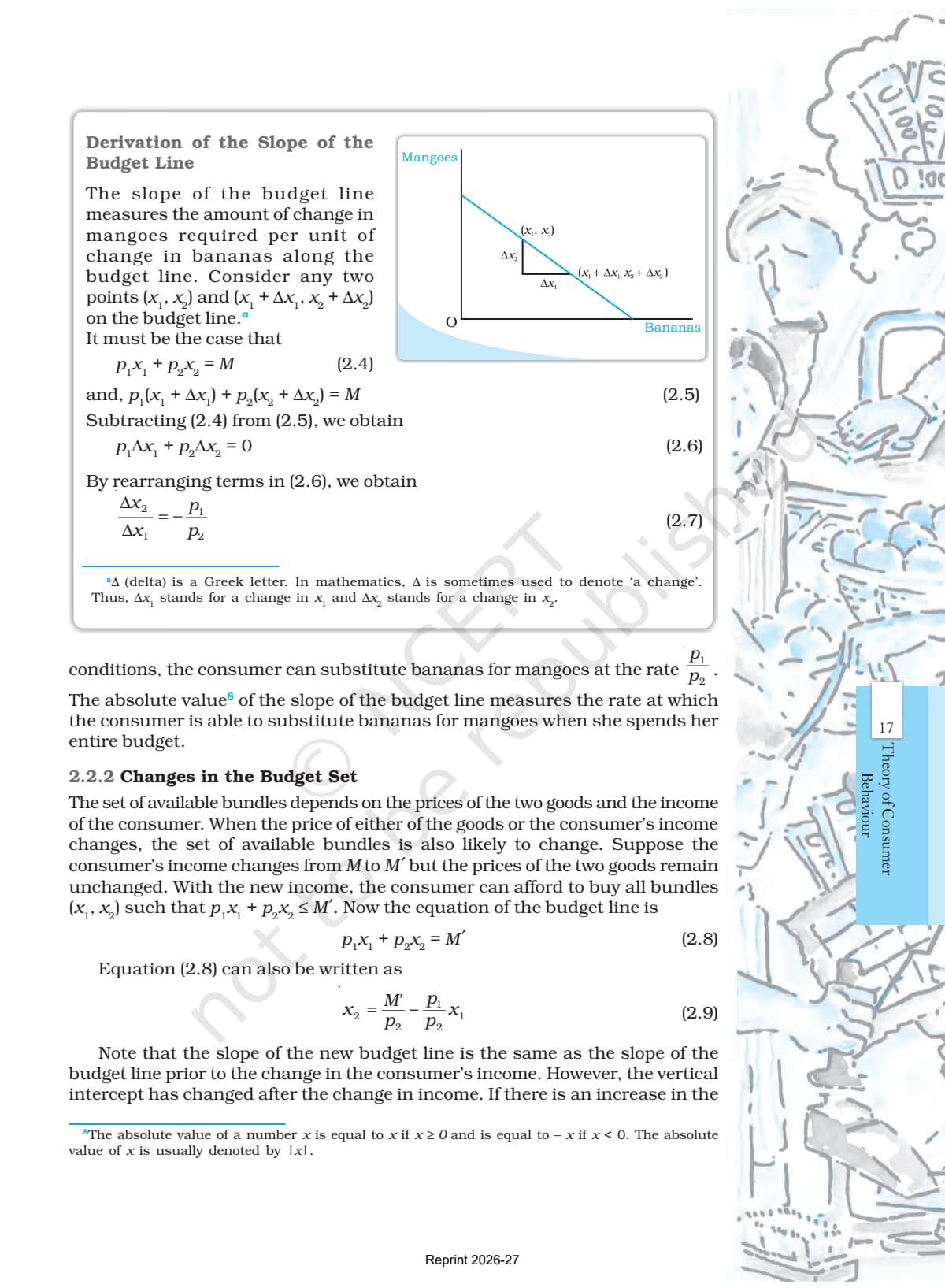
| 2.1 | The Consumer's Budget | Budget line P1 x1 + P2 x2 = M, slope -P1/P2 |
| 2.2 | Preferences of the Consumer | Indifference curve, marginal rate of substitution (MRS) |
| 2.2.4 | Shape of the Indifference Curve | Convex to origin, diminishing MRS |
| 2.3 | Optimal Choice | Tangency: MRS = P1/P2 |
| 2.4 | Demand | Individual demand curve, normal vs inferior goods |
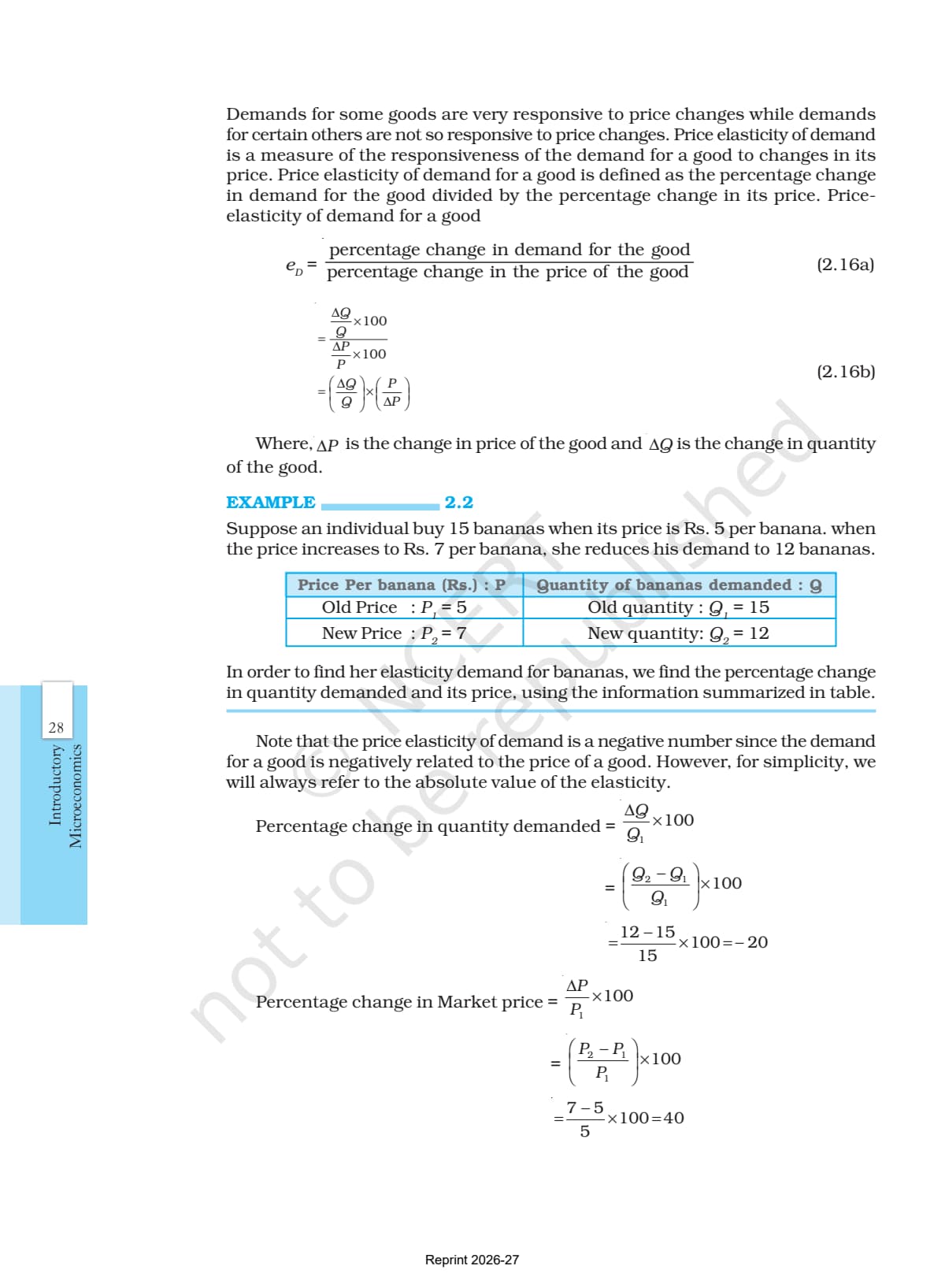
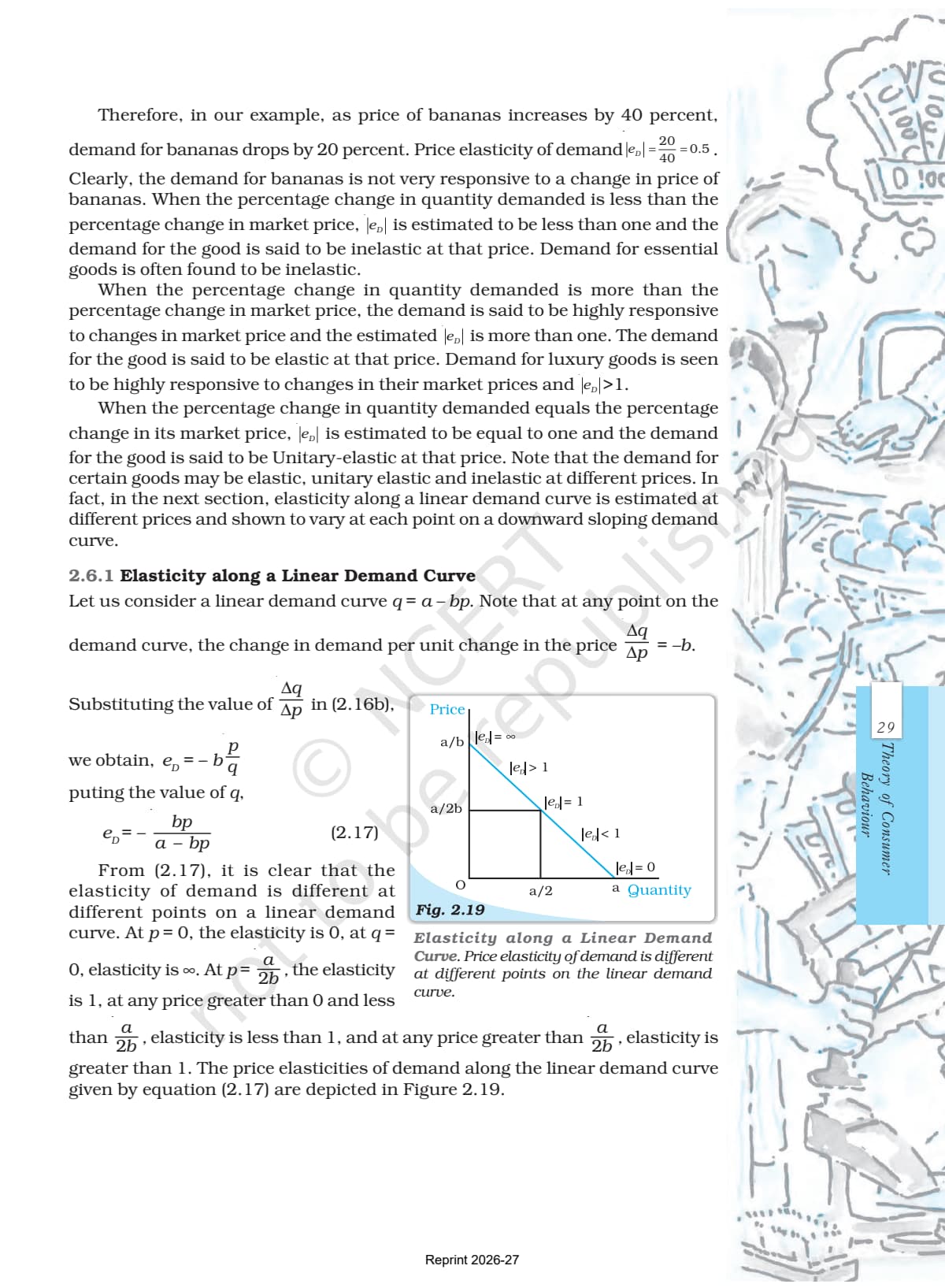
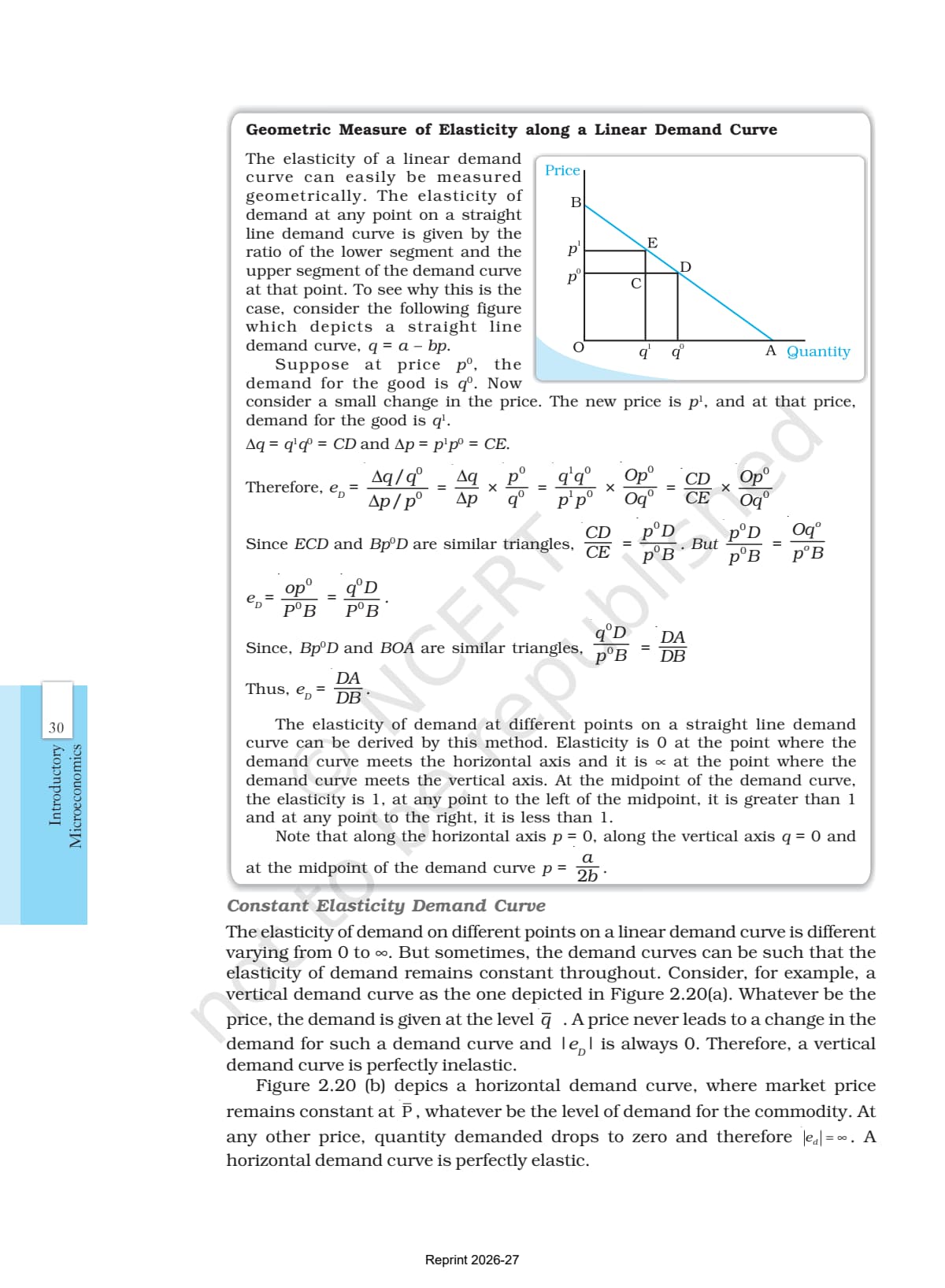
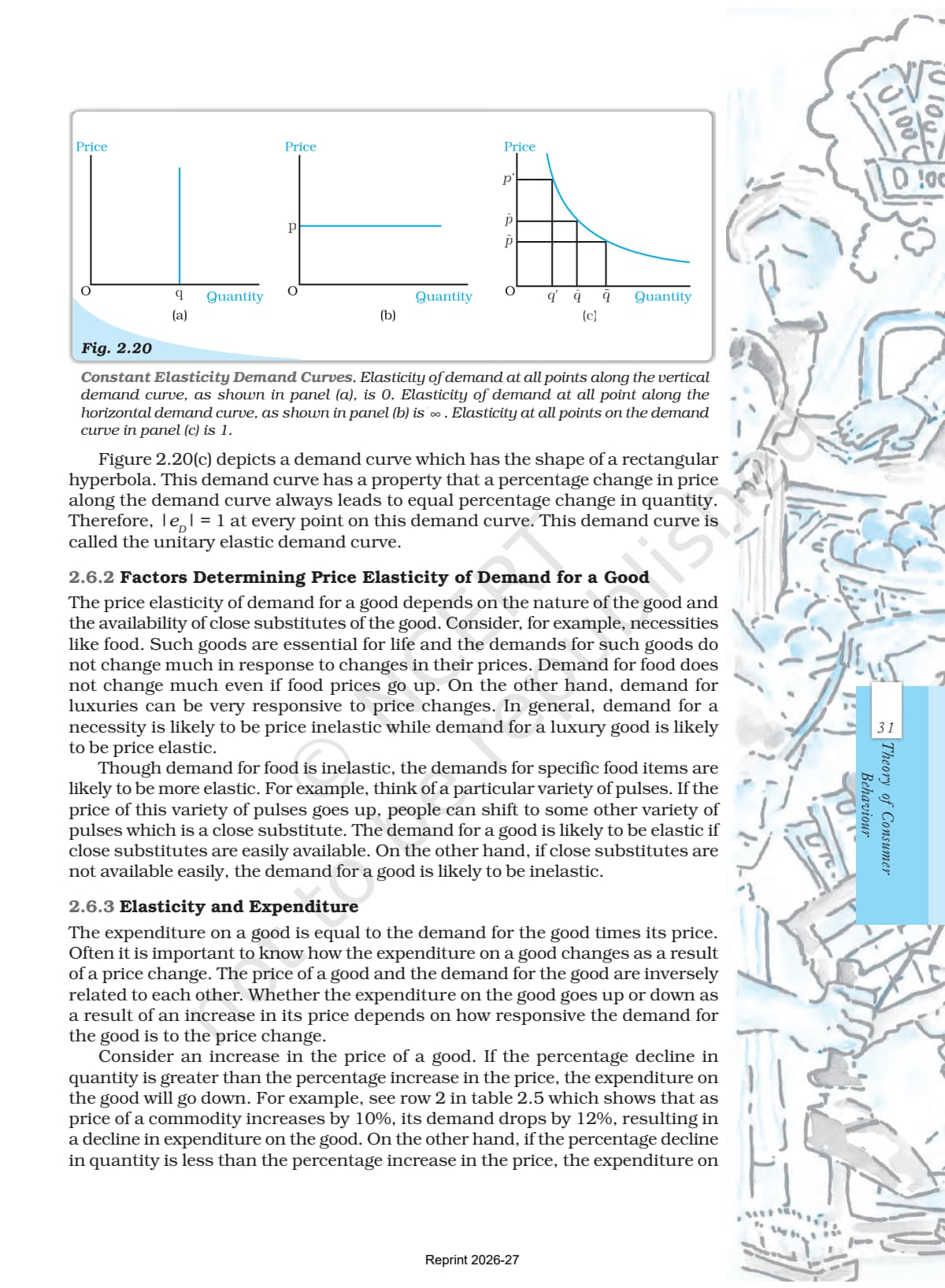
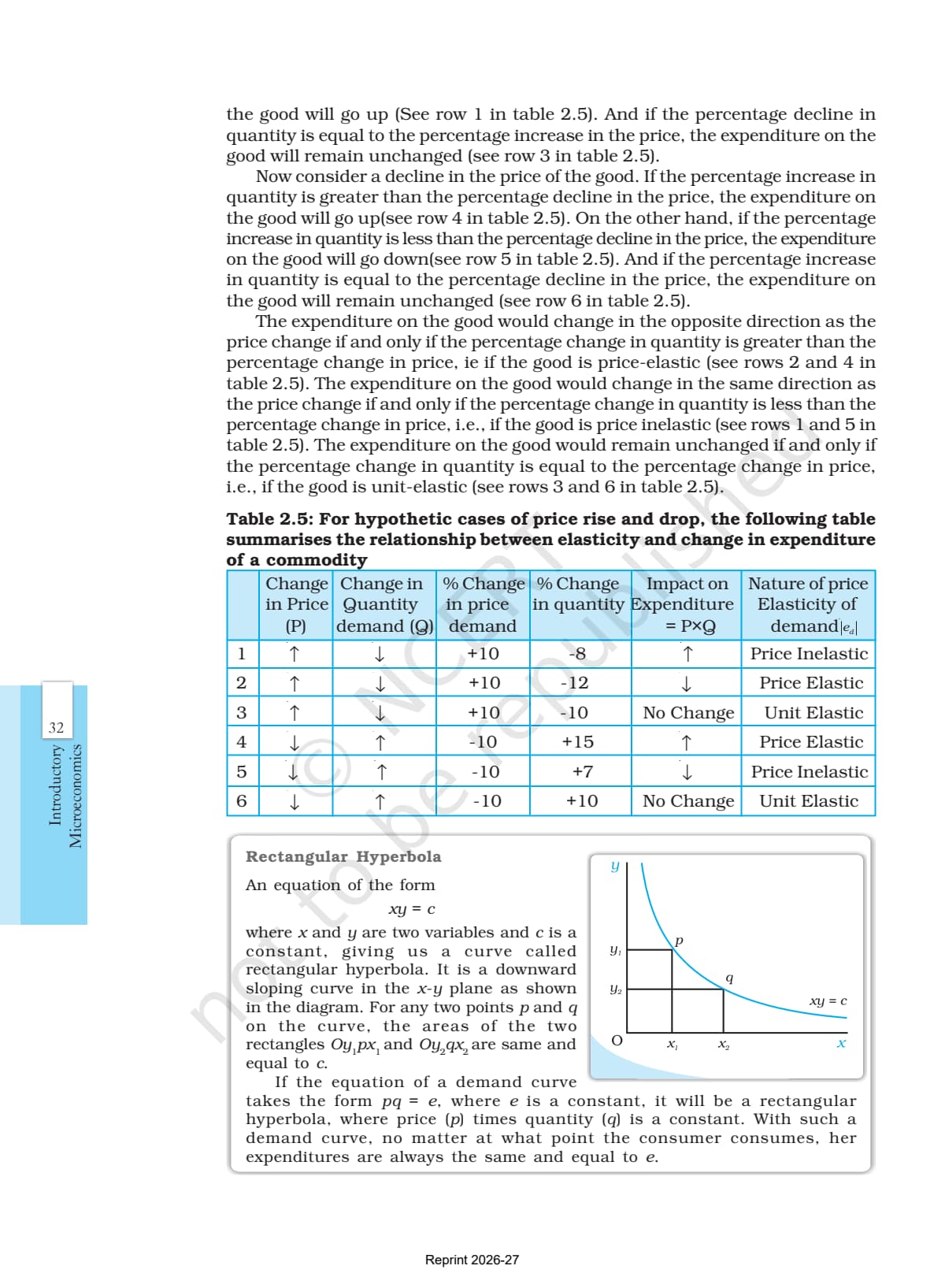
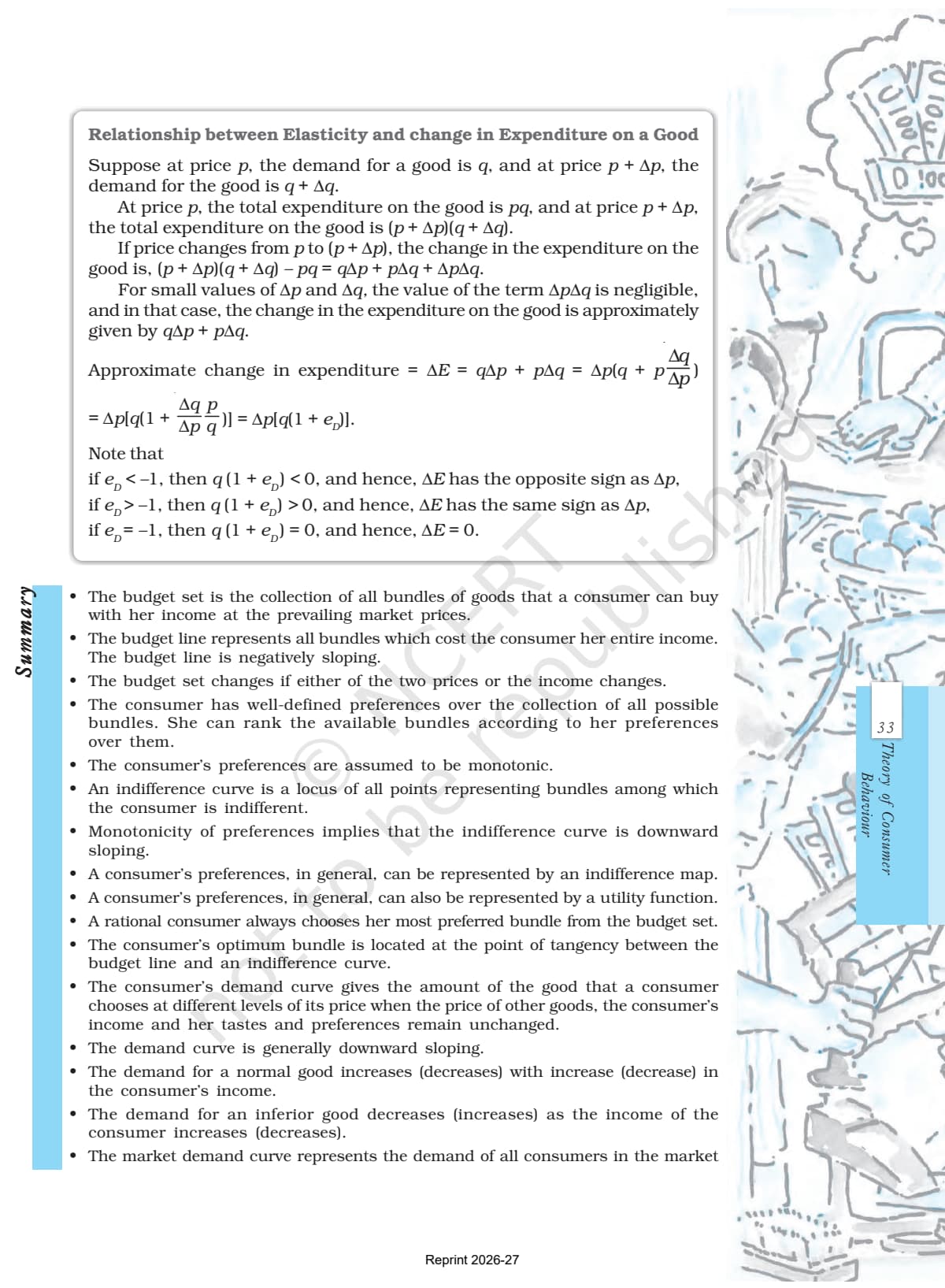
| 2.6 | Elasticity of Demand | Price elasticity formula and its five determinants |
Sections 2.3 and 2.6 carry most of the marks. The tangency diagram and the elasticity numerical are the two items the board paper tests almost every year.
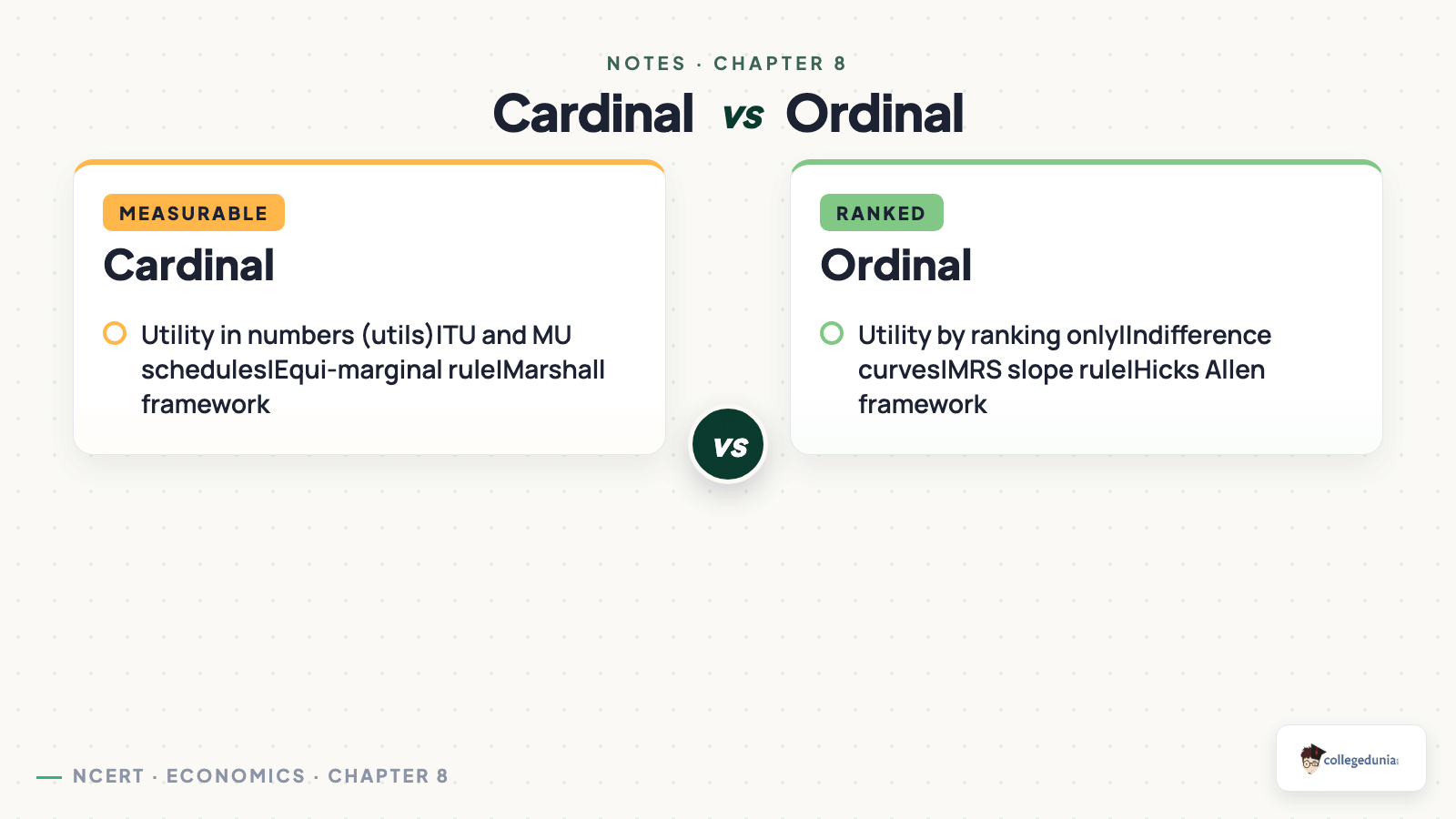
Key Concepts in the Theory of Consumer Behaviour NCERT Chapter
Four ideas carry the chapter. Learn the exact NCERT phrasing for each, since CBSE rewards textbook language in theory answers.
- Budget line: all bundles that just use up income, P1 x1 + P2 x2 = M. Its slope is -P1/P2, the negative of the price ratio.
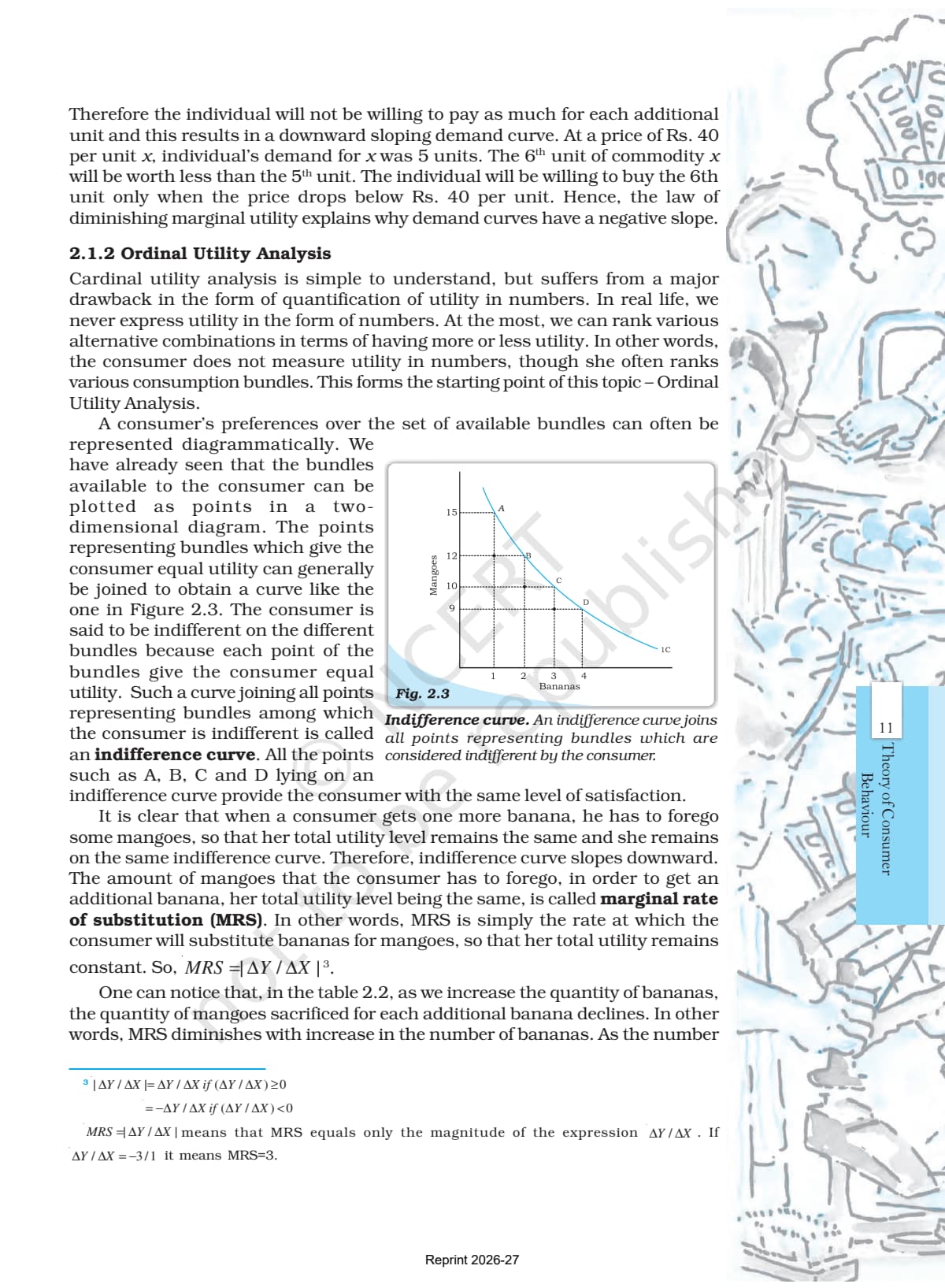
- Indifference curve: the set of bundles that give equal satisfaction. It is downward sloping and convex to the origin because the MRS falls as you move down it.
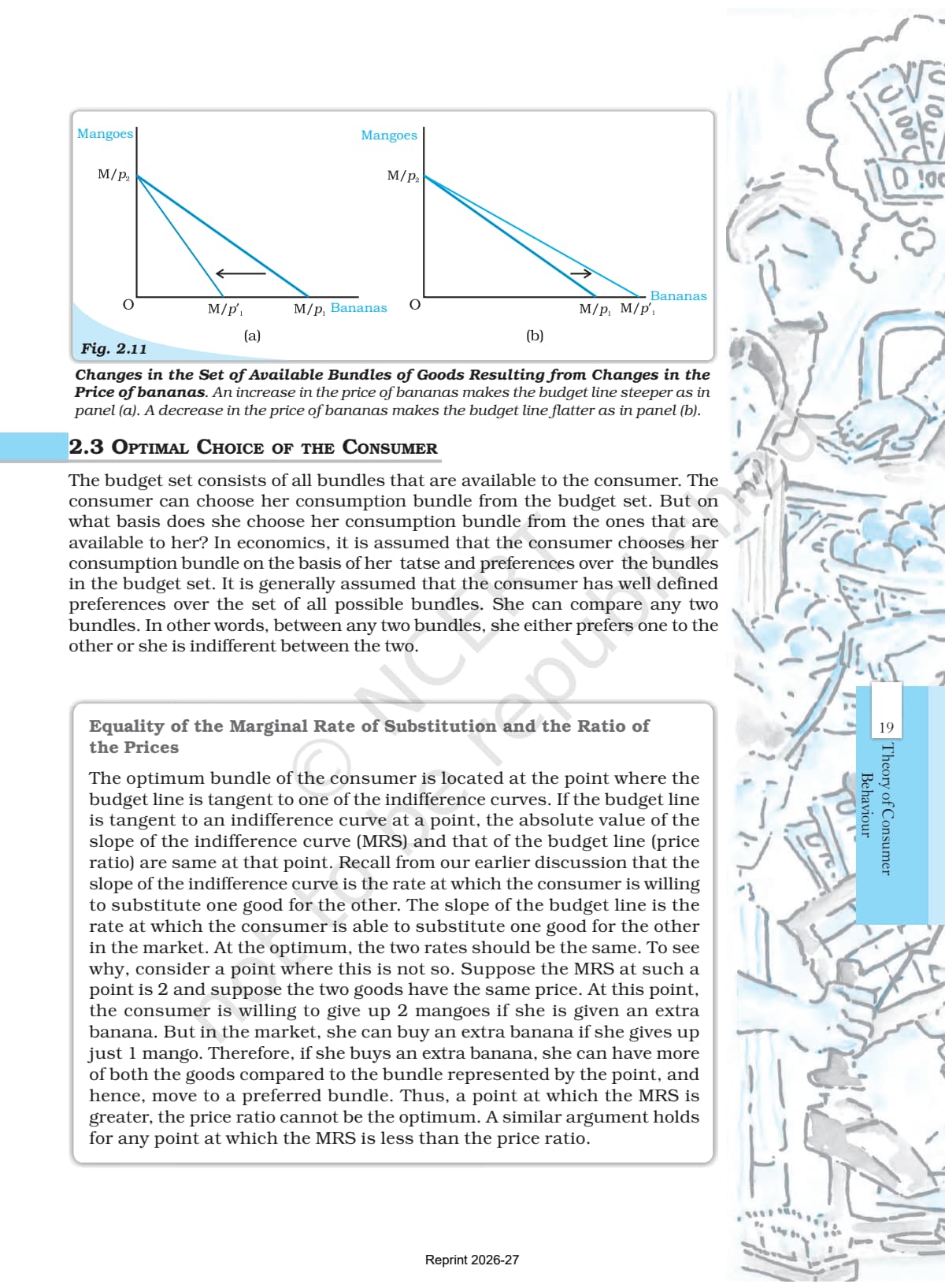
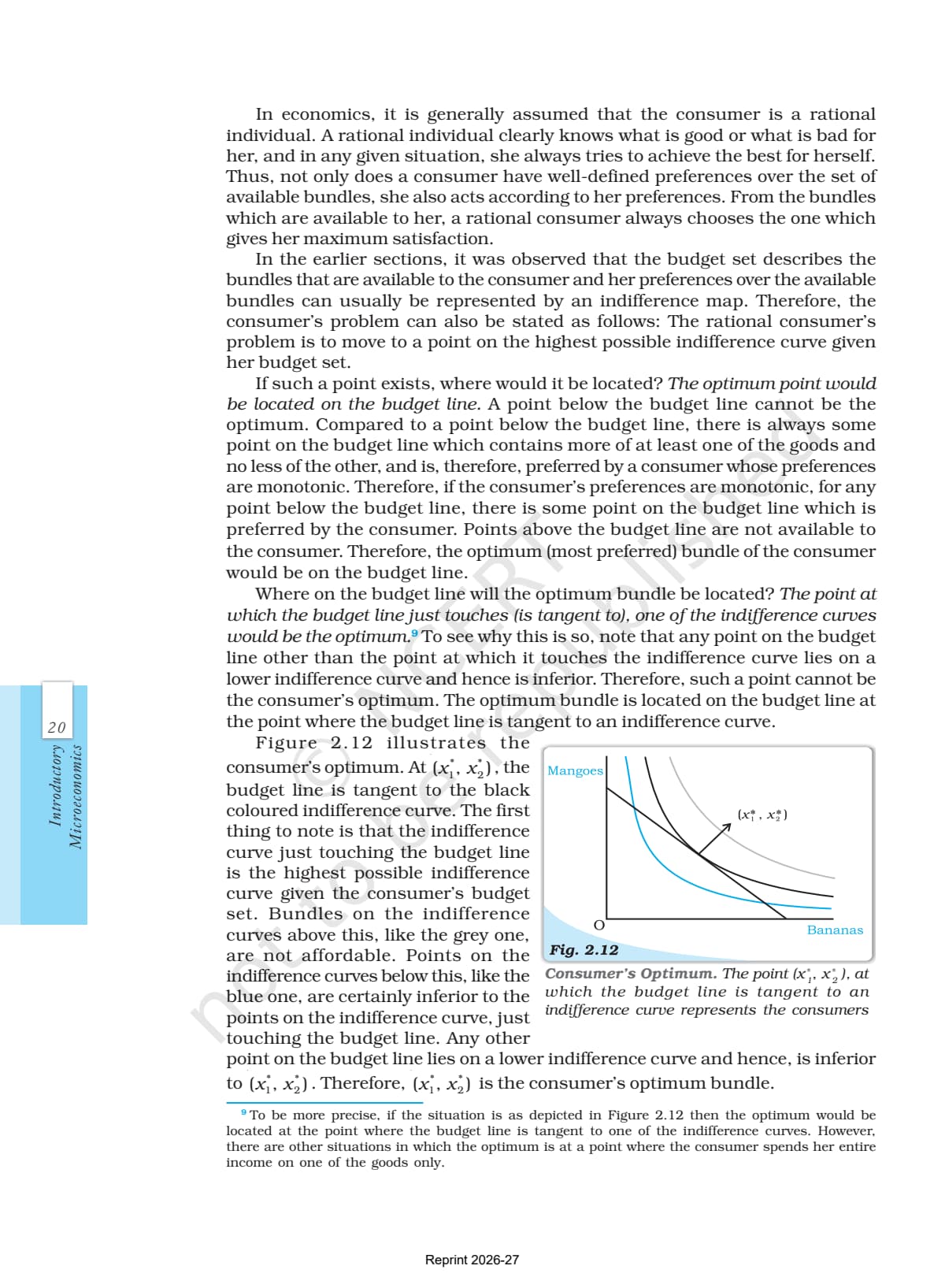
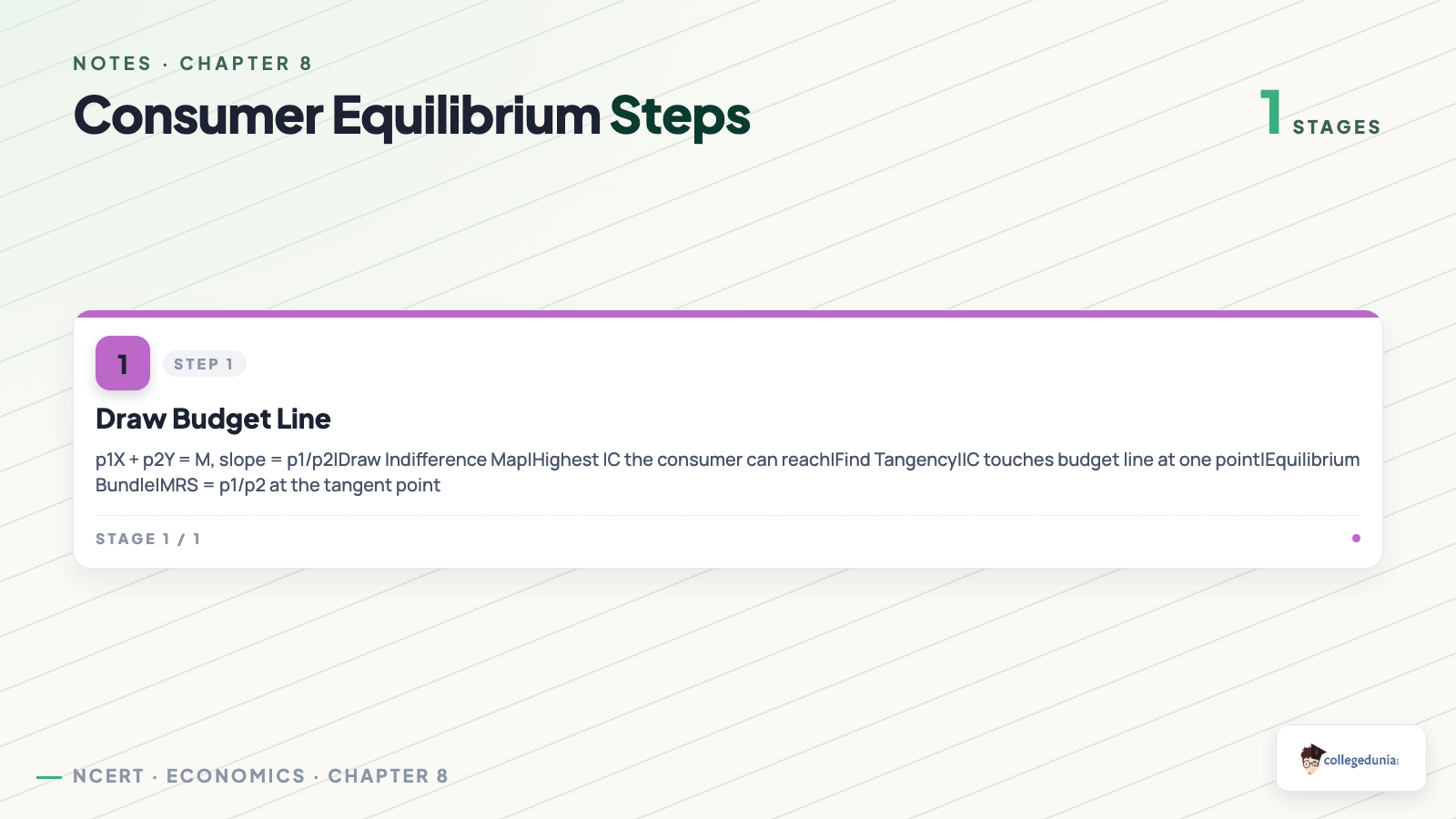
- Consumer equilibrium: the highest indifference curve that just touches the budget line, where MRS = P1/P2.
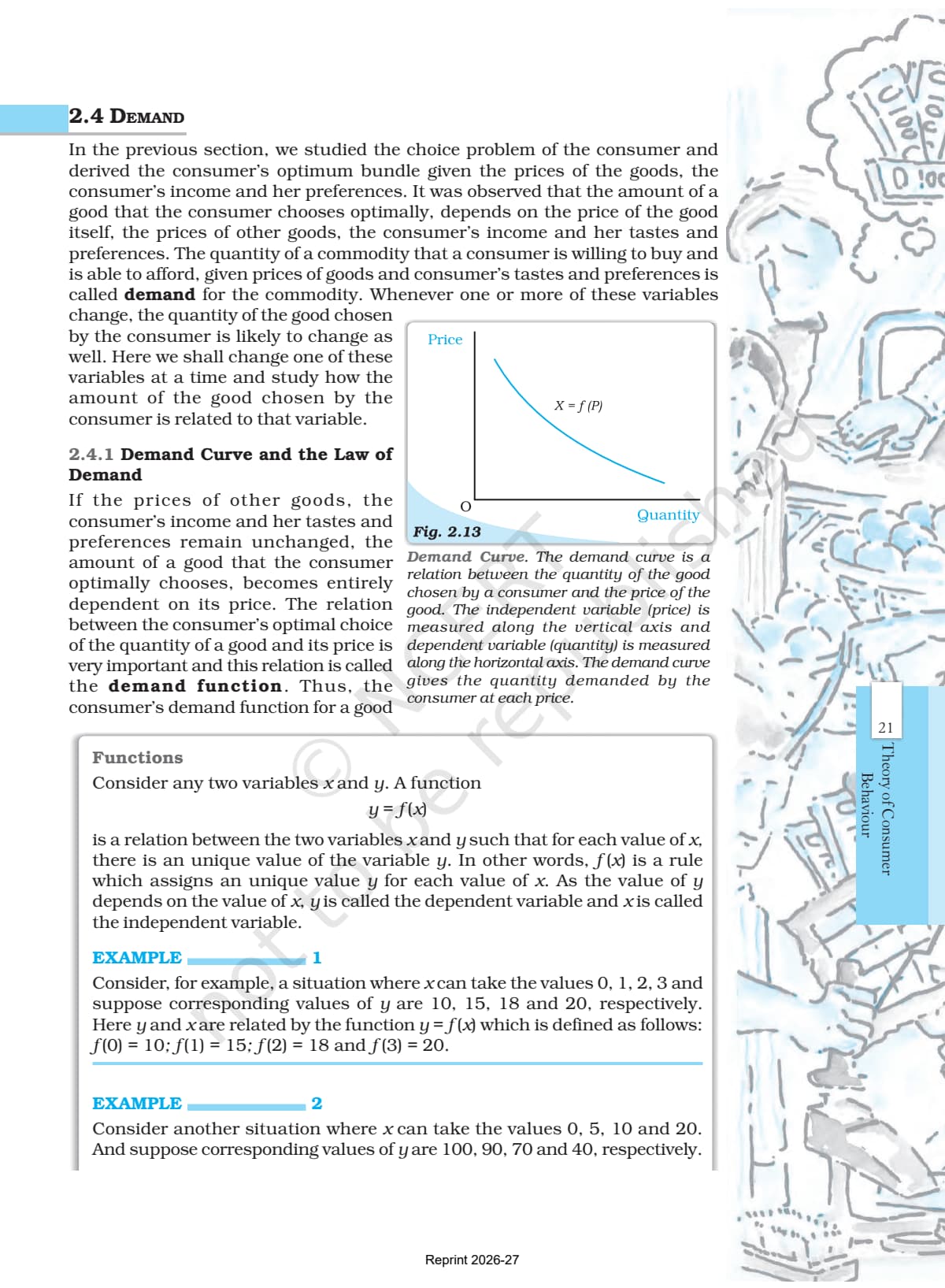
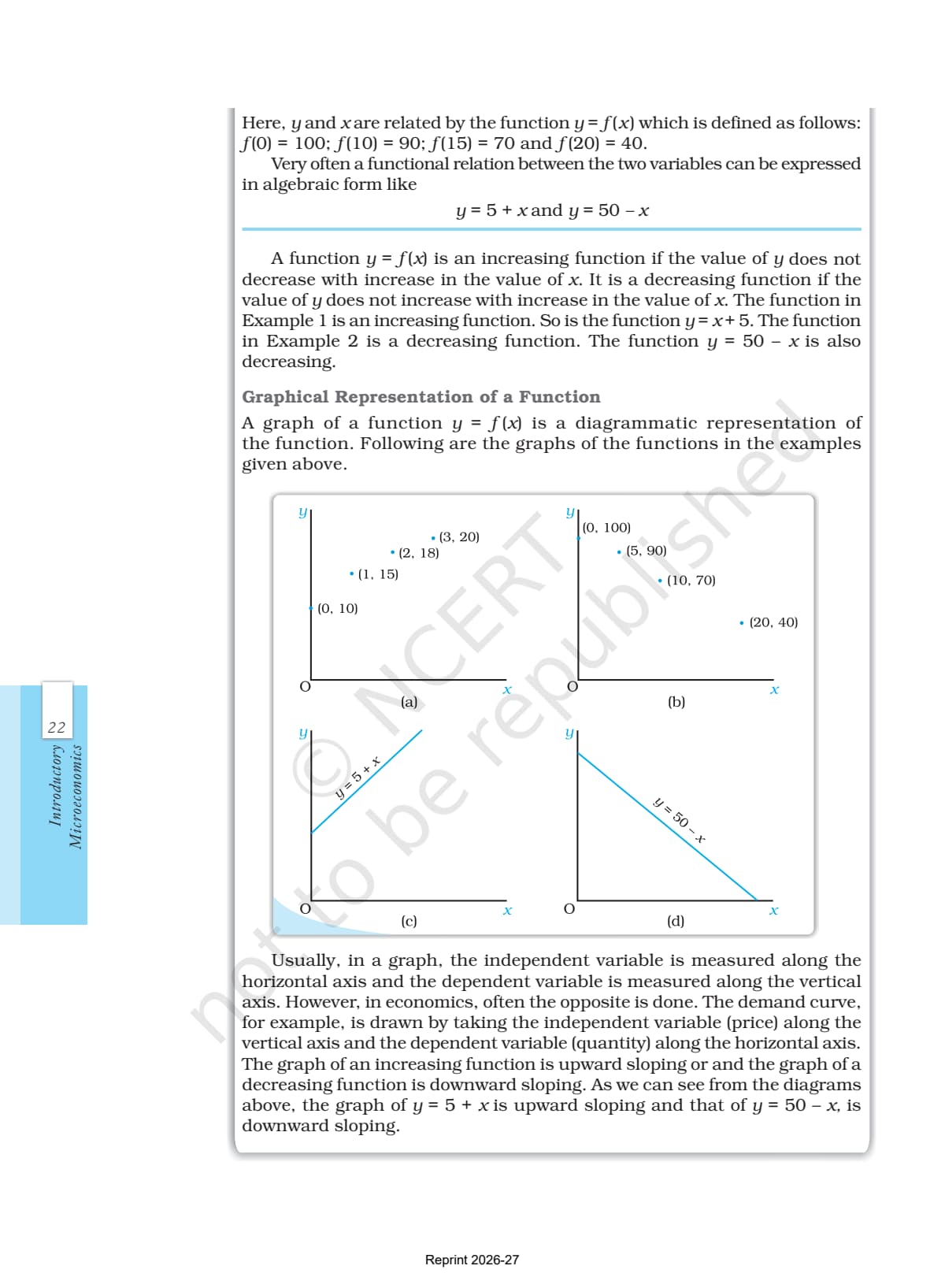
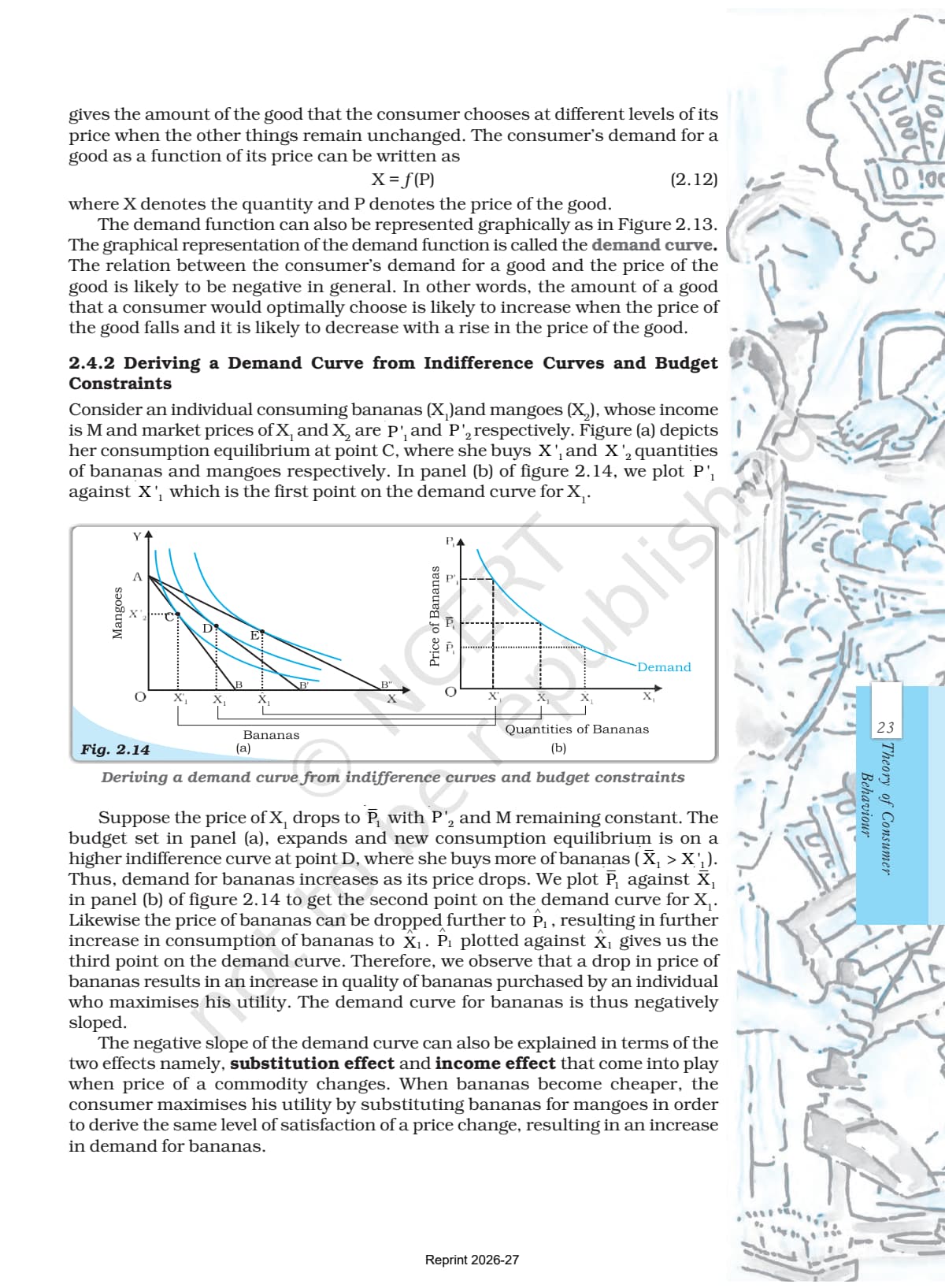
- Demand and elasticity: the demand curve comes from changing one price and re-solving equilibrium. Price elasticity is ed = % change in Q% change in P.
Theory of Consumer Behaviour Class 12 Video Lesson
Source: Magnet Brains on YouTube
The figure below shows the goal of the chapter: the consumer settles at the point where the budget line just touches the highest possible indifference curve.
How to Use the Theory of Consumer Behaviour NCERT Book PDF
The PDF is the source, but it works best with the other resources. Read it once cold, then revise with notes, then test yourself against the worked solutions.
- First read: go through Sections 2.1 to 2.6 in order. Mark new terms like MRS, monotonic and budget set.
- With notes: open the matching Chapter 2 Notes and copy the budget line and indifference curve into your own notebook.
- Practice: attempt every in-text exercise, then check each one against the NCERT Solutions.
- Last day: scan the handwritten notes for the tangency condition and the five determinants of elasticity.
The chapter is diagram-heavy, so re-draw each figure by hand. Always label both axes, mark the intercepts M/P1 and M/P2 on the budget line, and show the equilibrium point clearly. Missing intercept labels is the most common reason students lose diagram marks.
Theory of Consumer Behaviour Class 12 Weightage in CBSE and CUET
The chapter has stayed at a steady 6 to 8 marks in CBSE. The table maps where its topics show up.
| Year | CBSE question | Marks |
|---|---|---|
| 2025 | Consumer equilibrium tangency, plus one MCQ | 6 |
| 2024 | Price elasticity by the percentage method | 8 |
| 2023 | Slope of the budget line and two MCQs | 6 |
| 2022 | Indifference curve shape and MRS | 6 |
| 2020 | Tangency proof and determinants of elasticity | 8 |
Student Feedback
We asked 11,400 Class 12 students about this chapter. 84% said the NCERT PDF was their main source, and those who paired it with the matching Solutions averaged about 2.5 marks more than students who used a reference book alone.
Other Resources for Class 12 Economics Chapter 2
Pair the official PDF with the Solutions, Notes and handwritten notes below.
| Resource | What it covers | Open |
|---|---|---|
| NCERT Book PDF | Official NCERT Microeconomics Chapter 2 textbook. | Chapter 2 NCERT Book PDF |
| NCERT Solutions | Step-by-step answers to every exercise question. | Chapter 2 NCERT Solutions |
| Notes | Concept-first revision of the full chapter. | Chapter 2 Notes |
| Handwritten Notes | Scanned notebook pages for last-mile revision. | Chapter 2 Handwritten Notes |
All Chapters: Class 12 Microeconomics NCERT Book PDF
| Chapter | NCERT Book PDF |
|---|---|
| Chapter 1 | Introduction to Microeconomics |
| Chapter 2 | Theory of Consumer Behaviour |
| Chapter 3 | Production and Costs |
| Chapter 4 | Theory of the Firm Under Perfect Competition |
| Chapter 5 | Market Equilibrium |
Class 12 Economics Chapter 2 Theory of Consumer Behaviour PDF FAQs
Ques. Where can students download the Class 12 Economics Chapter 2 Theory of Consumer Behaviour PDF?
Ans. Students can download it from the card at the top of this page. It is the single-chapter file leec202 from the NCERT Introductory Microeconomics textbook, aligned to the 2026-27 CBSE syllabus.
Ques. What is the budget line in this NCERT chapter?
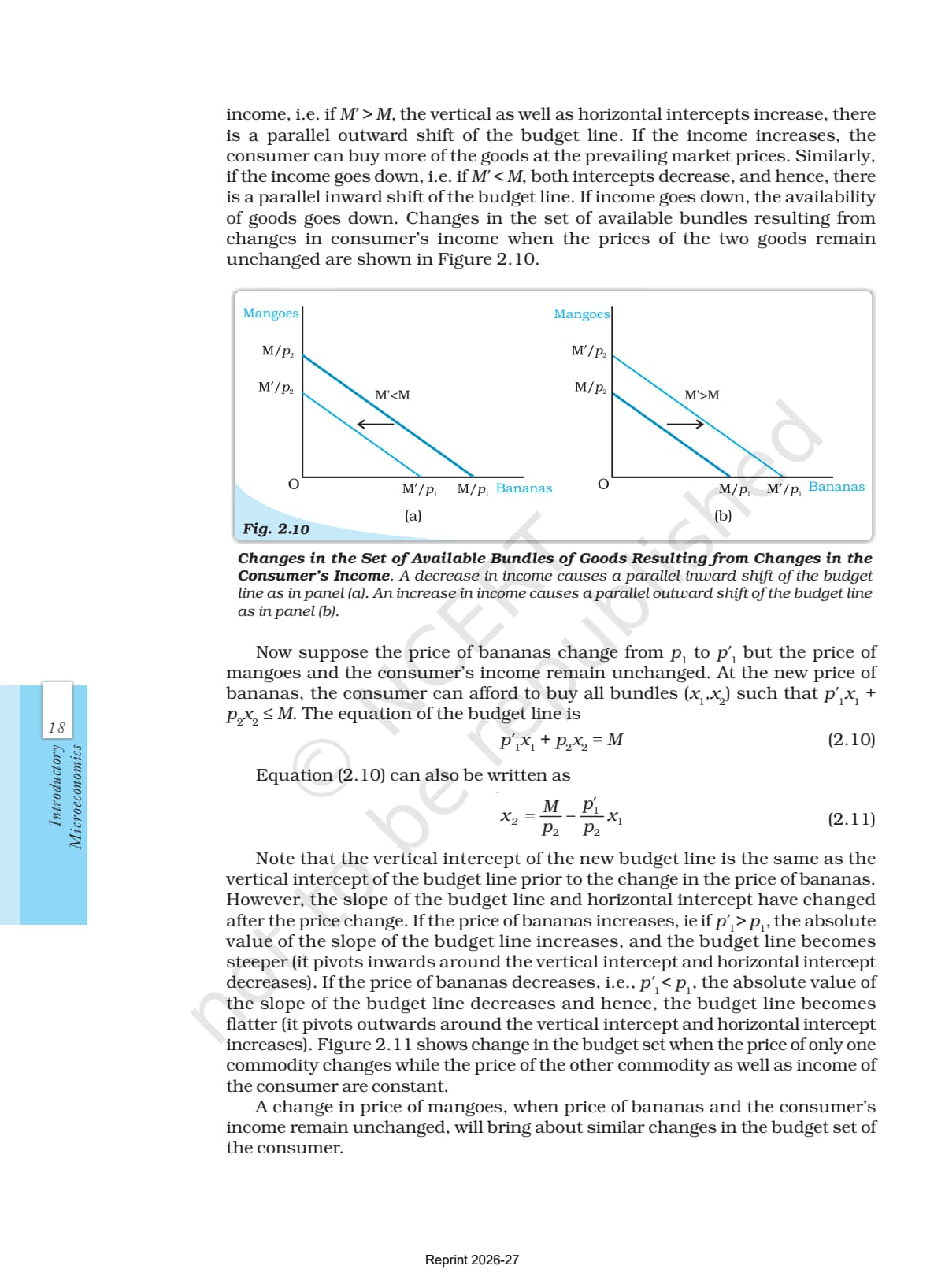
Ans. The budget line is the set of bundles (x1, x2) that exactly use up the consumer's income, given by P1 x1 + P2 x2 = M. Its slope is -P1/P2. It shifts out parallel when income rises and rotates when one price changes.
Ques. What is the consumer equilibrium condition?
Ans. Consumer equilibrium is where the highest indifference curve just touches the budget line, which gives MRS = P1/P2. At this bundle no other point on the budget line gives higher satisfaction. The proof is in Section 2.3.
Ques. Why are indifference curves convex to the origin?
Ans. Because of a diminishing marginal rate of substitution under monotonic preferences. As the consumer moves down the curve, the units of good 2 given up for one more unit of good 1 fall, which gives the bowed-toward-origin shape. See Section 2.2.4.
Ques. How much weightage does Chapter 2 carry in the CBSE board paper?
Ans. Across the last five board papers it has averaged about 6 to 8 marks. The most common question is a 6-mark consumer-equilibrium diagram or a 4 to 6 mark price-elasticity numerical solved by the percentage method.



Comments