




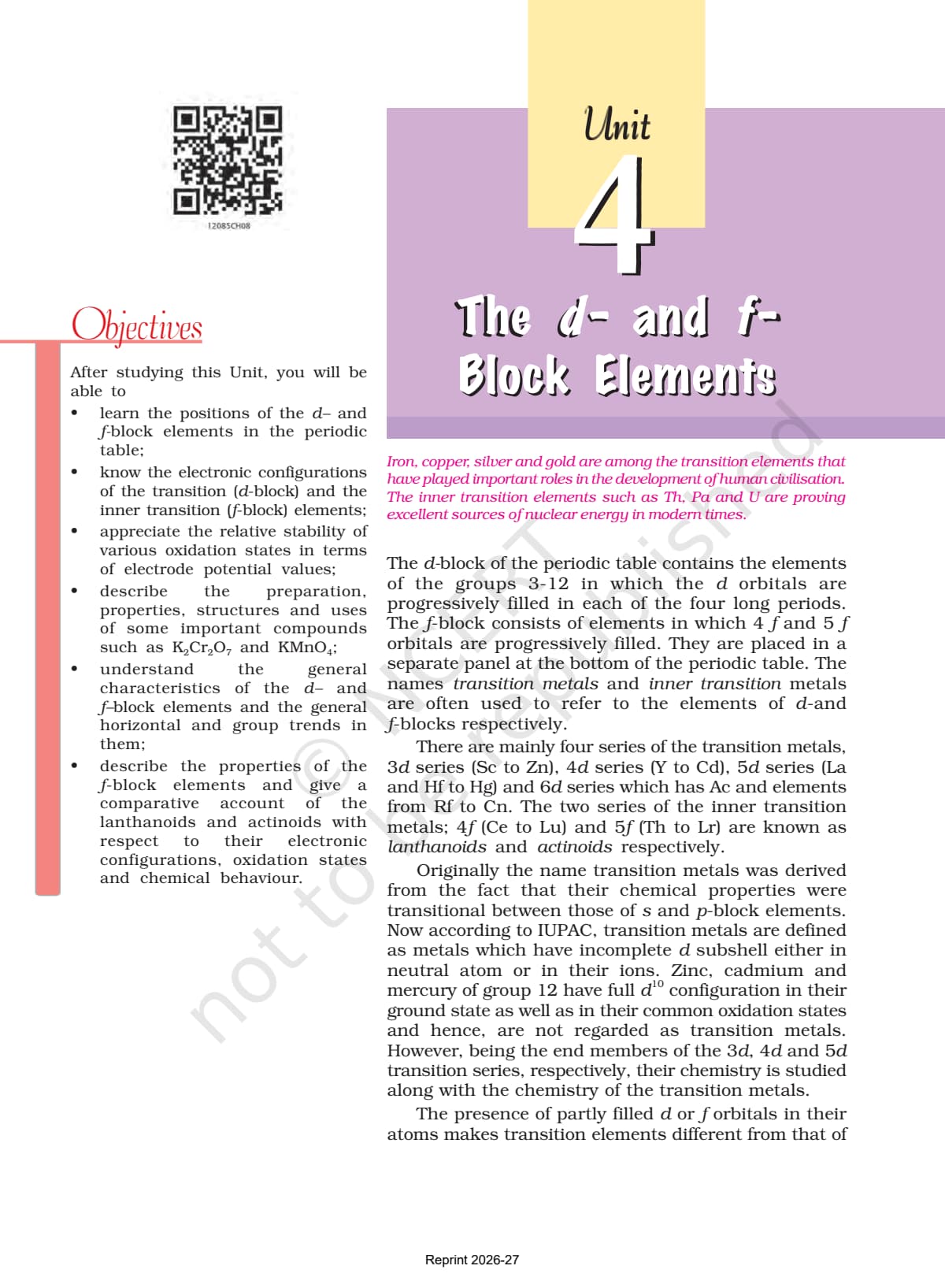
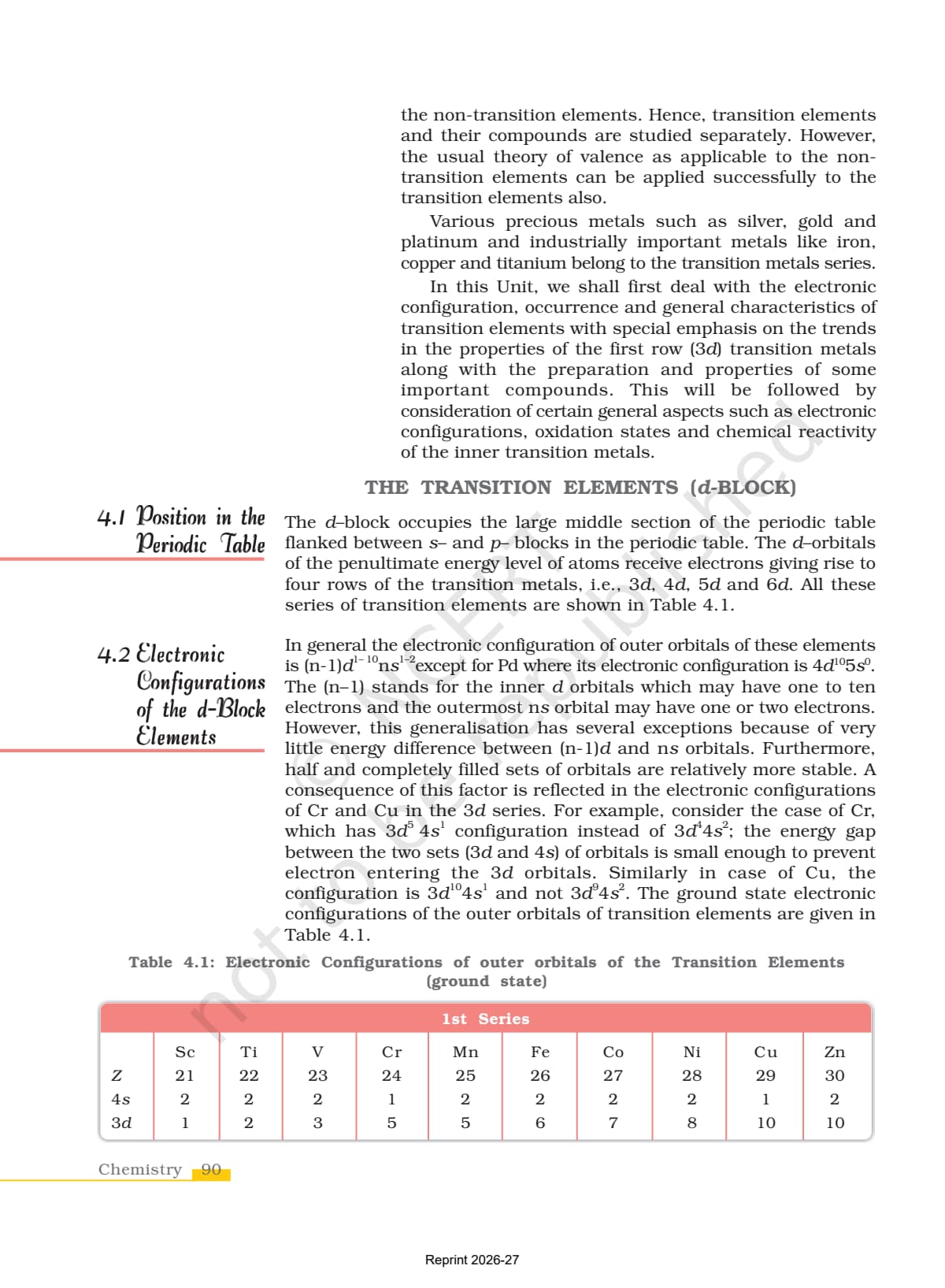
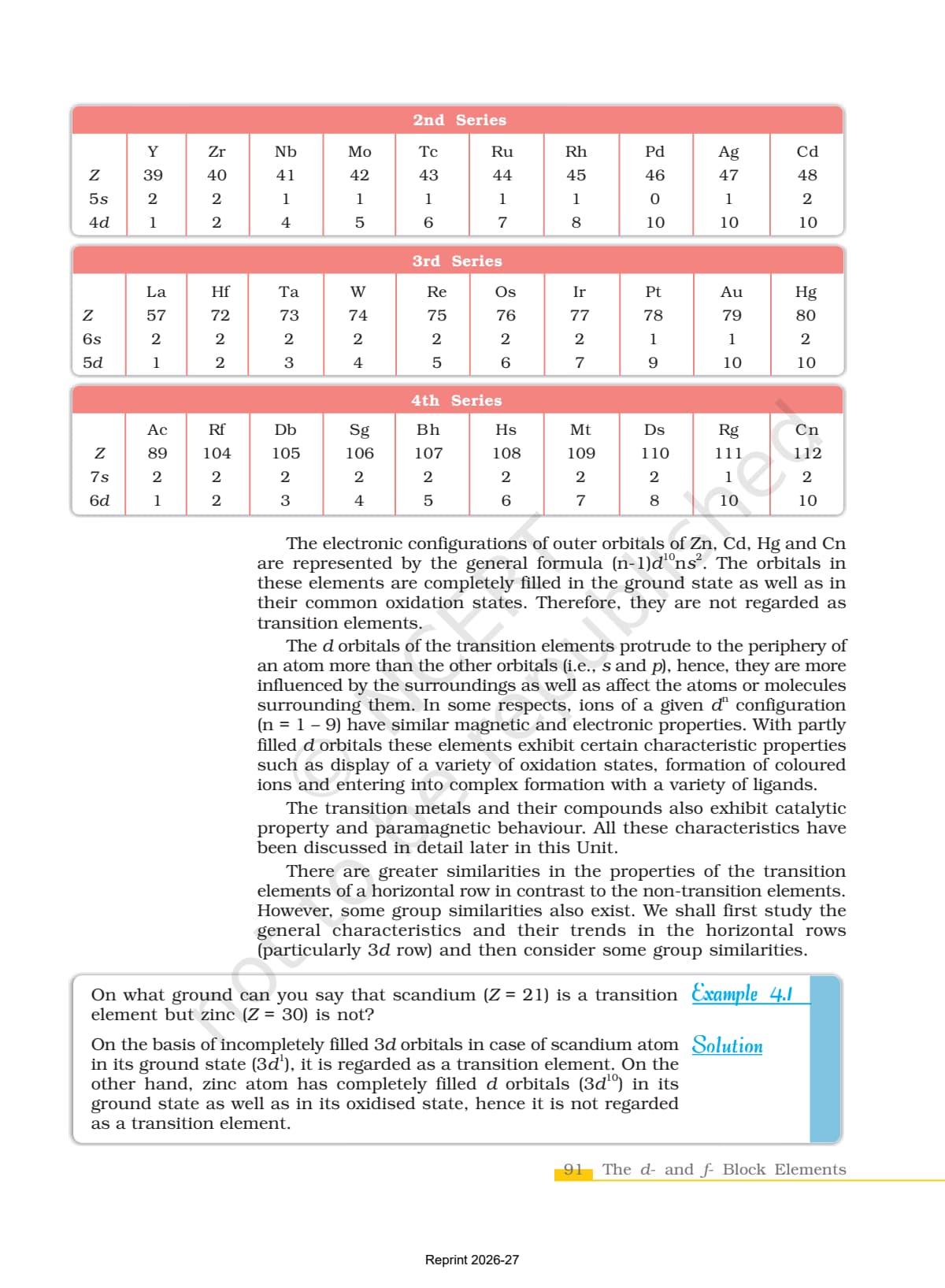
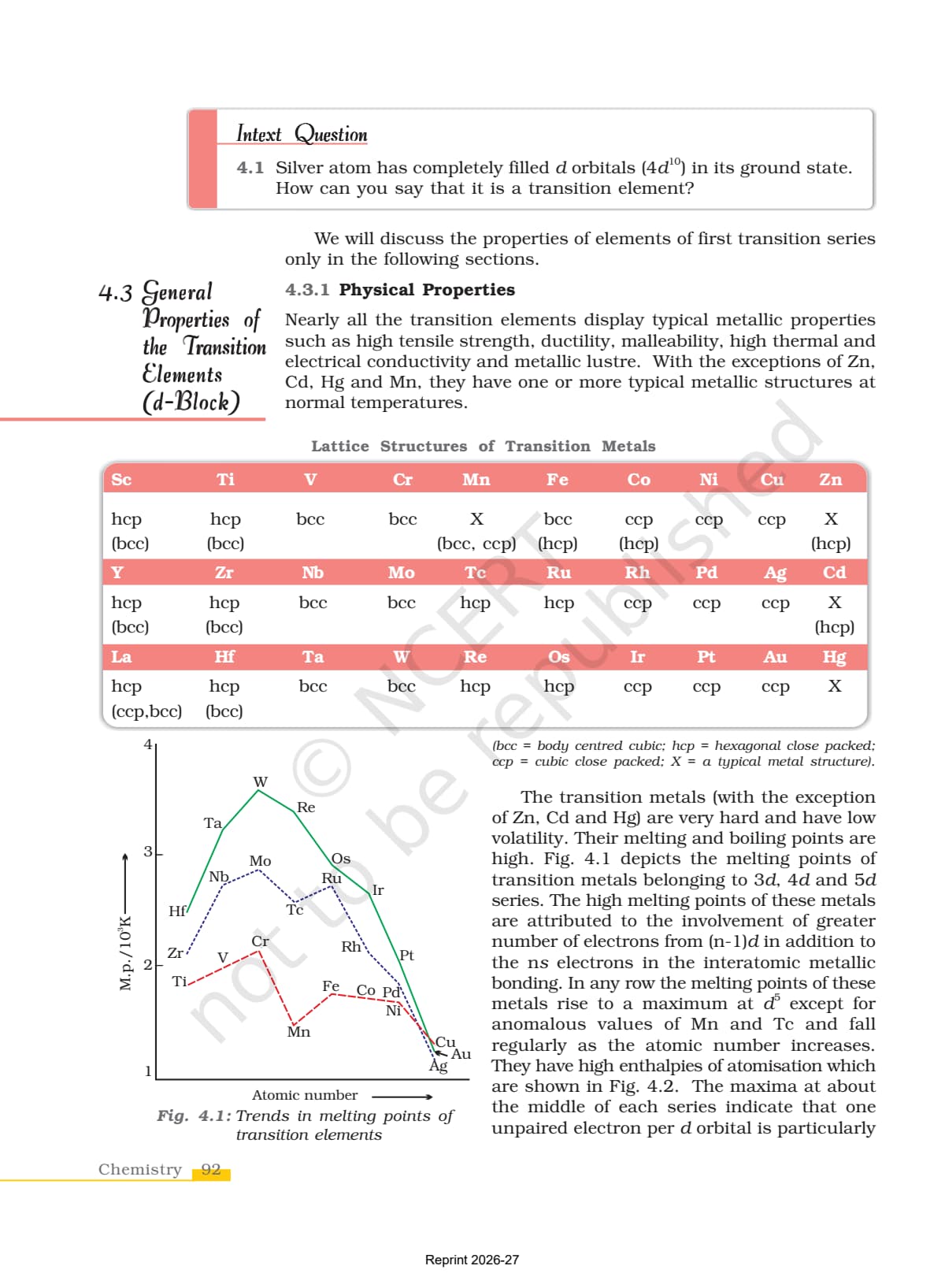
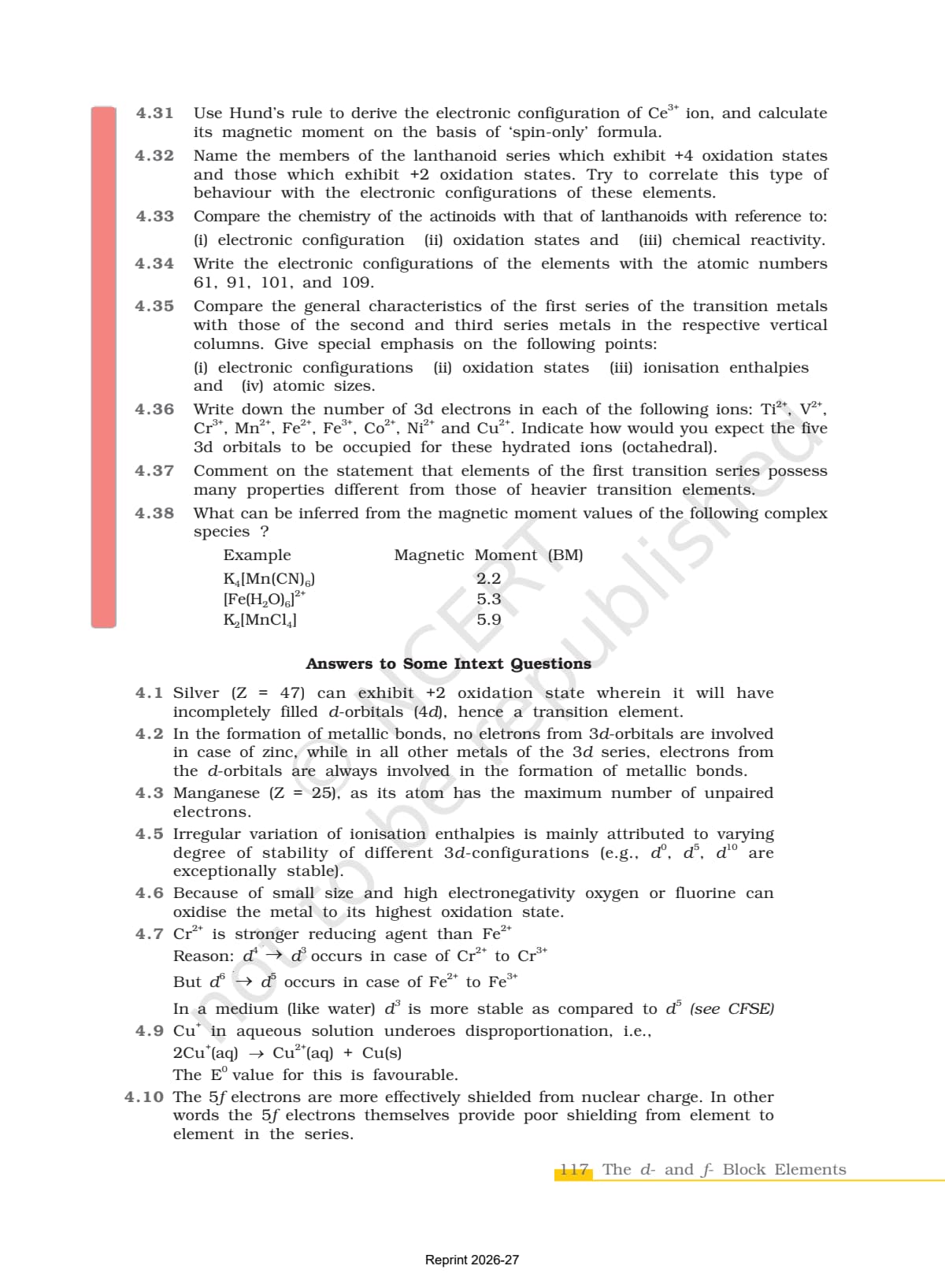
Download the official 2026-27 NCERT PDF for The d- and f-Block Elements, Chapter 4 of Class 12 Chemistry. This is the only descriptive-inorganic chapter in the book.
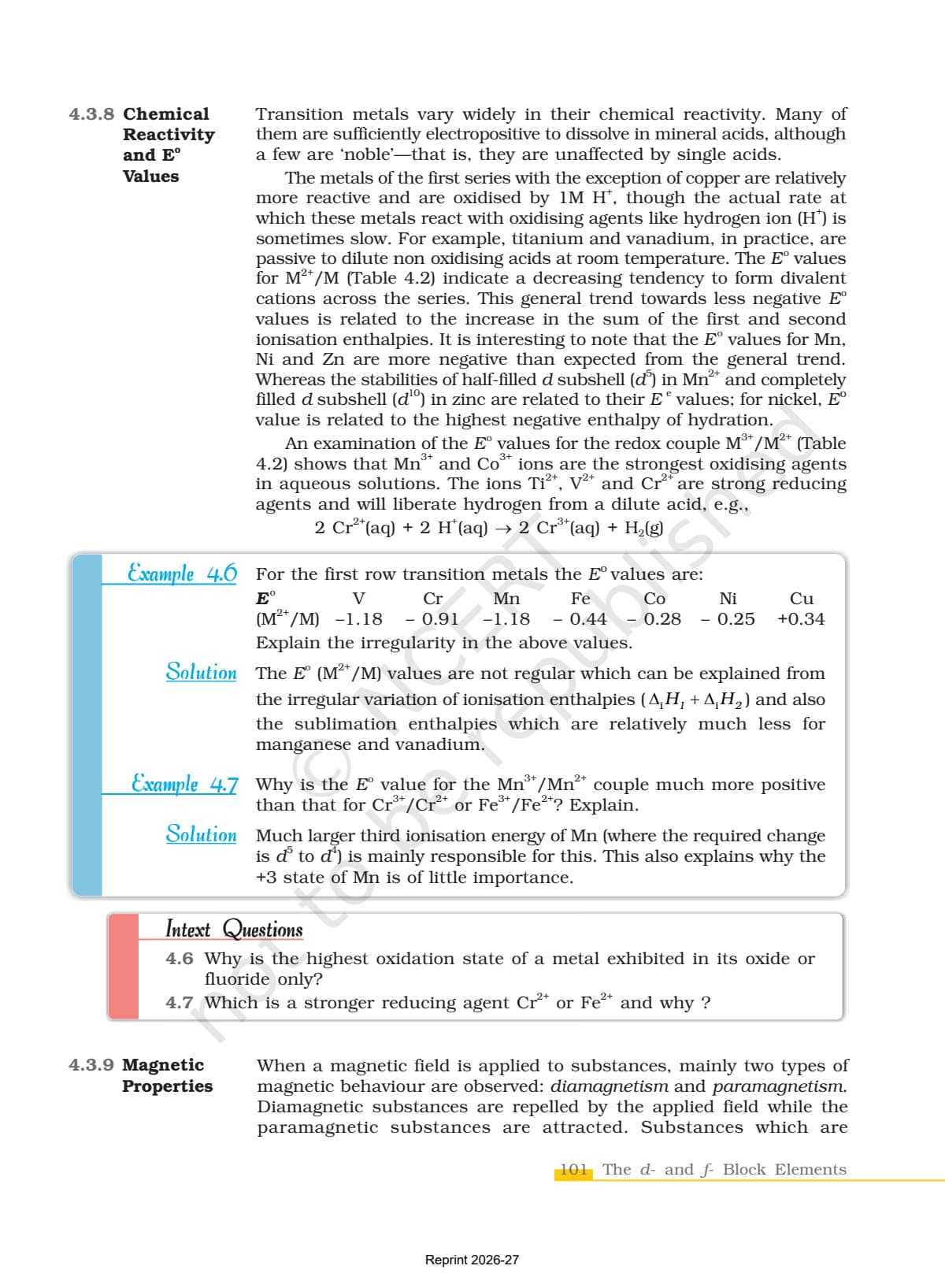
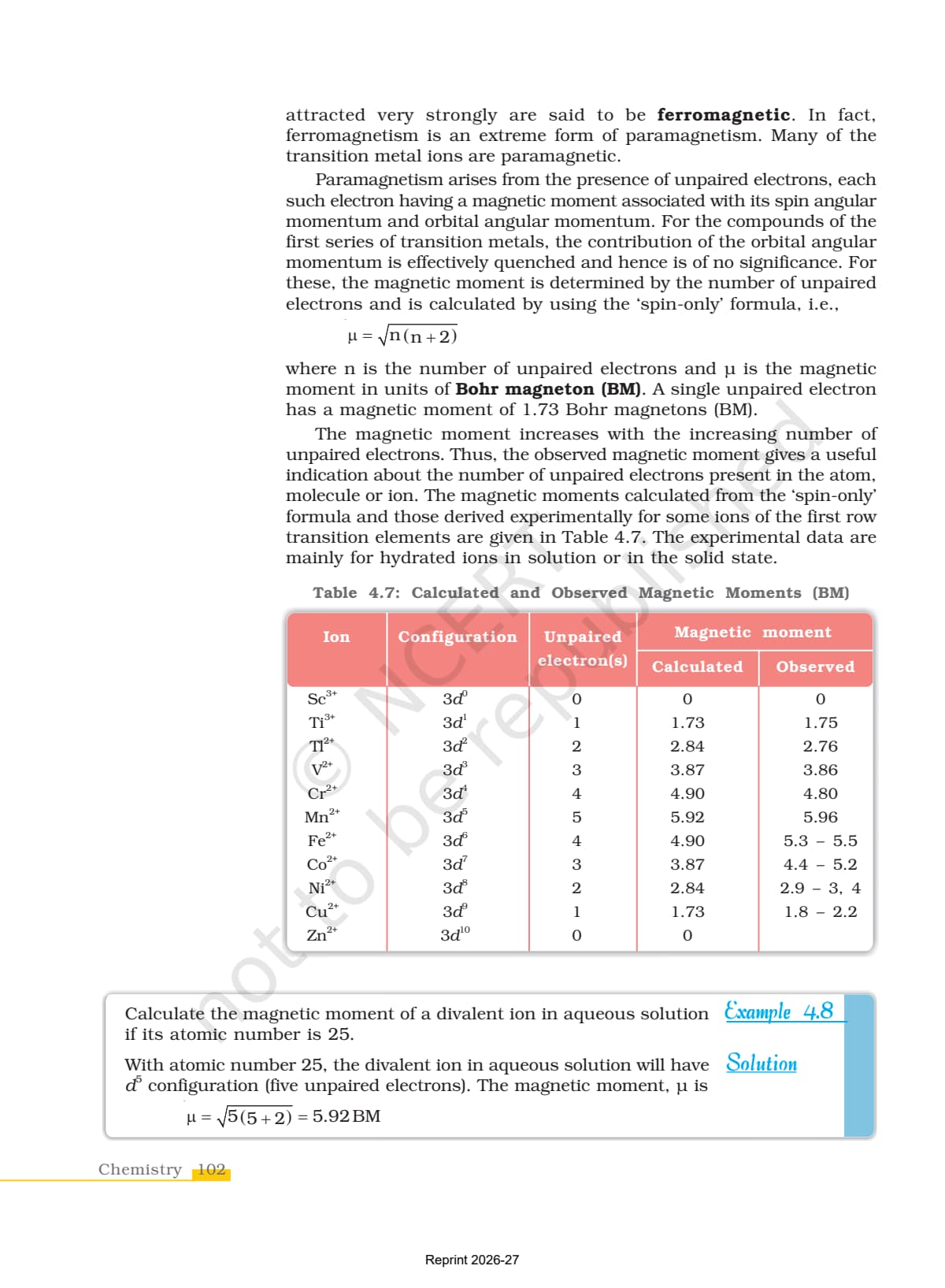
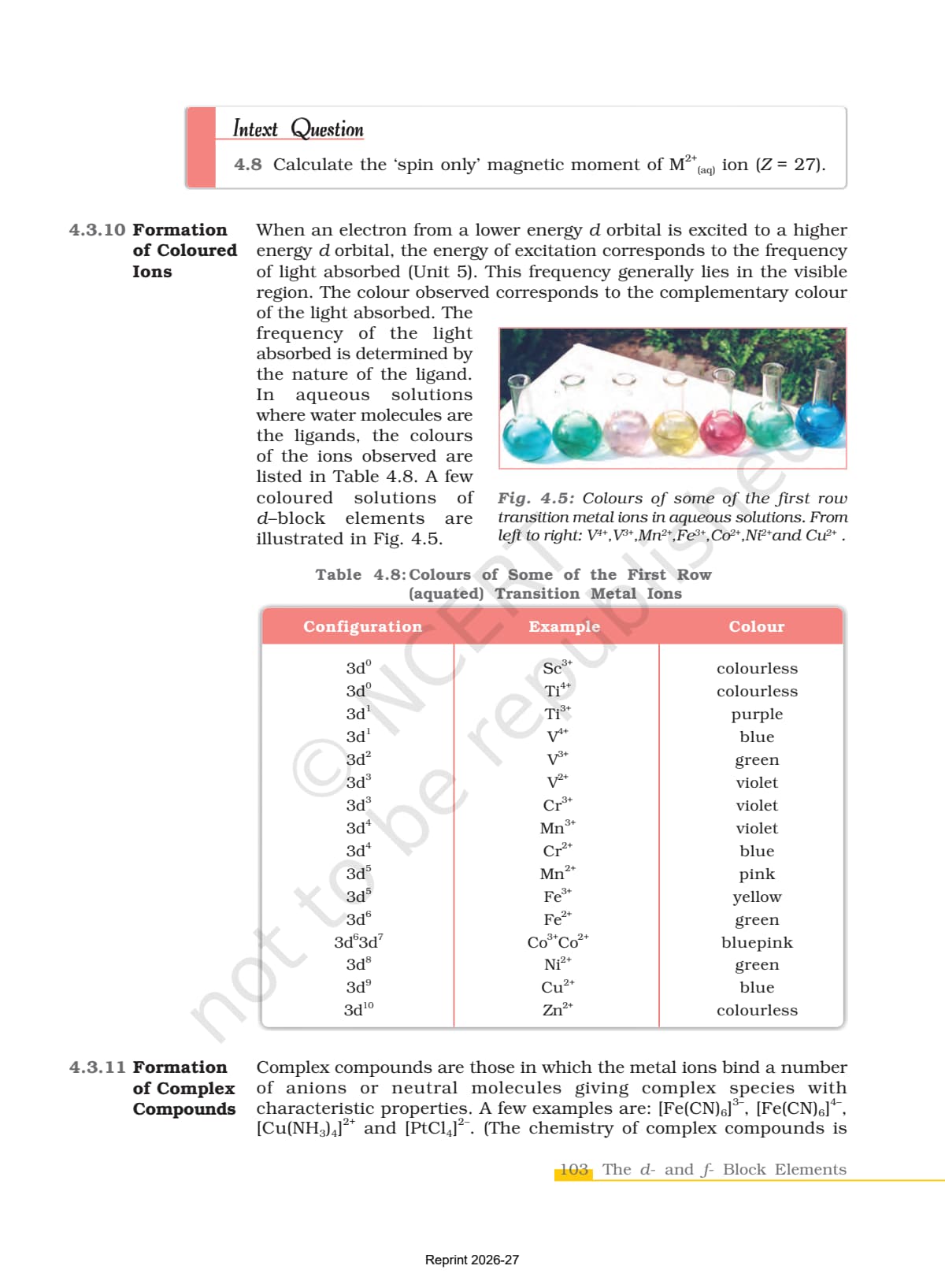
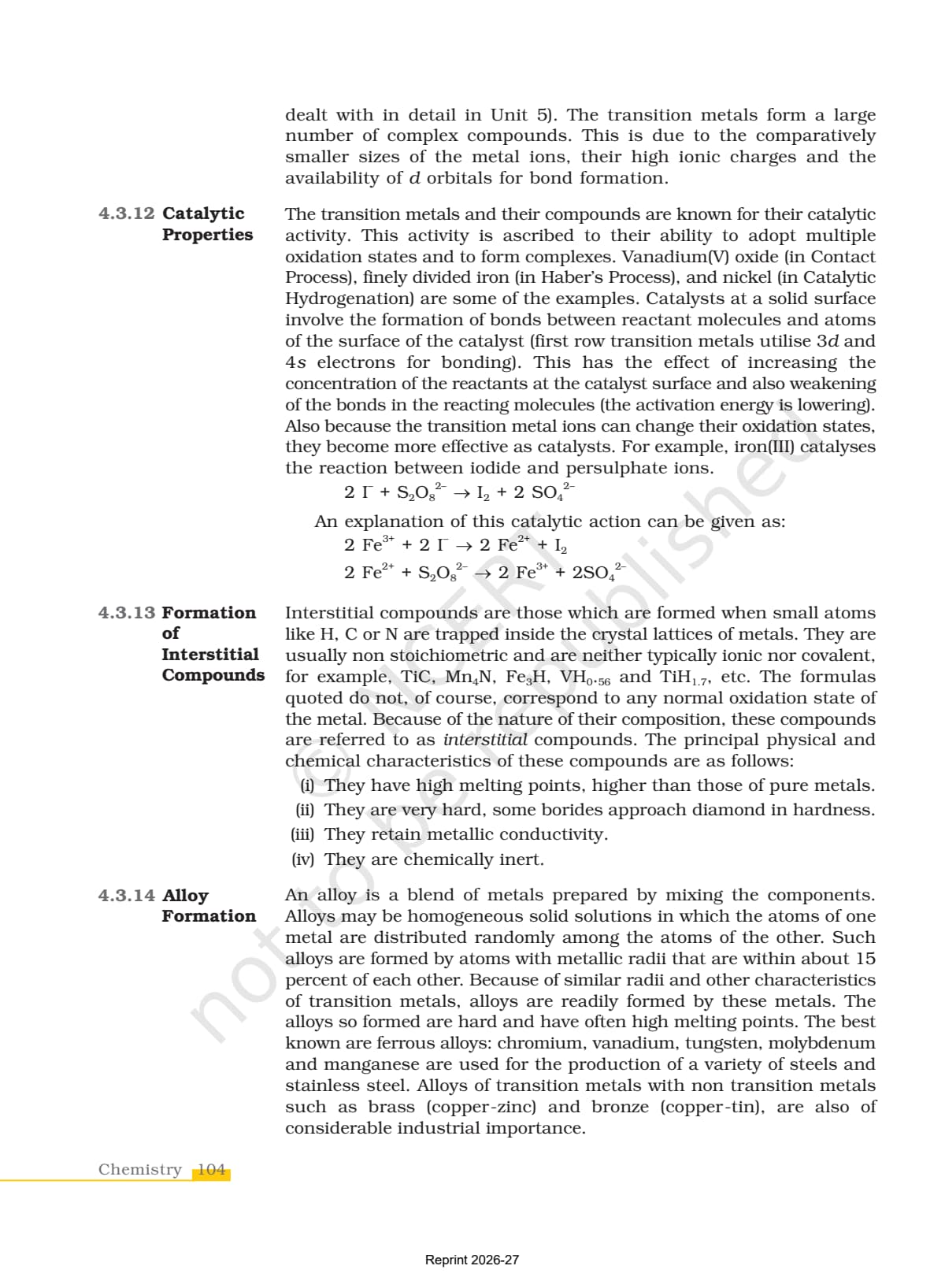
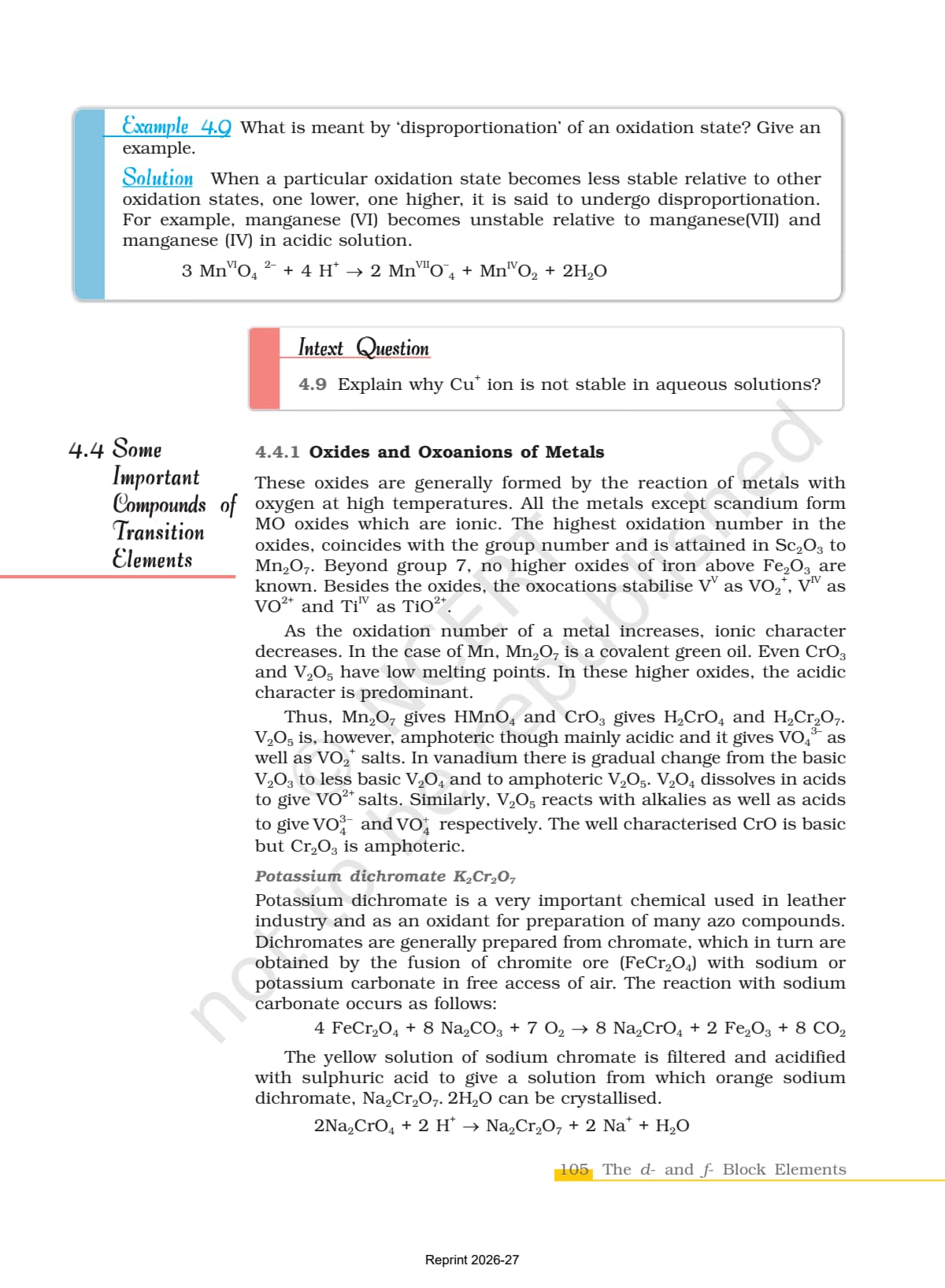
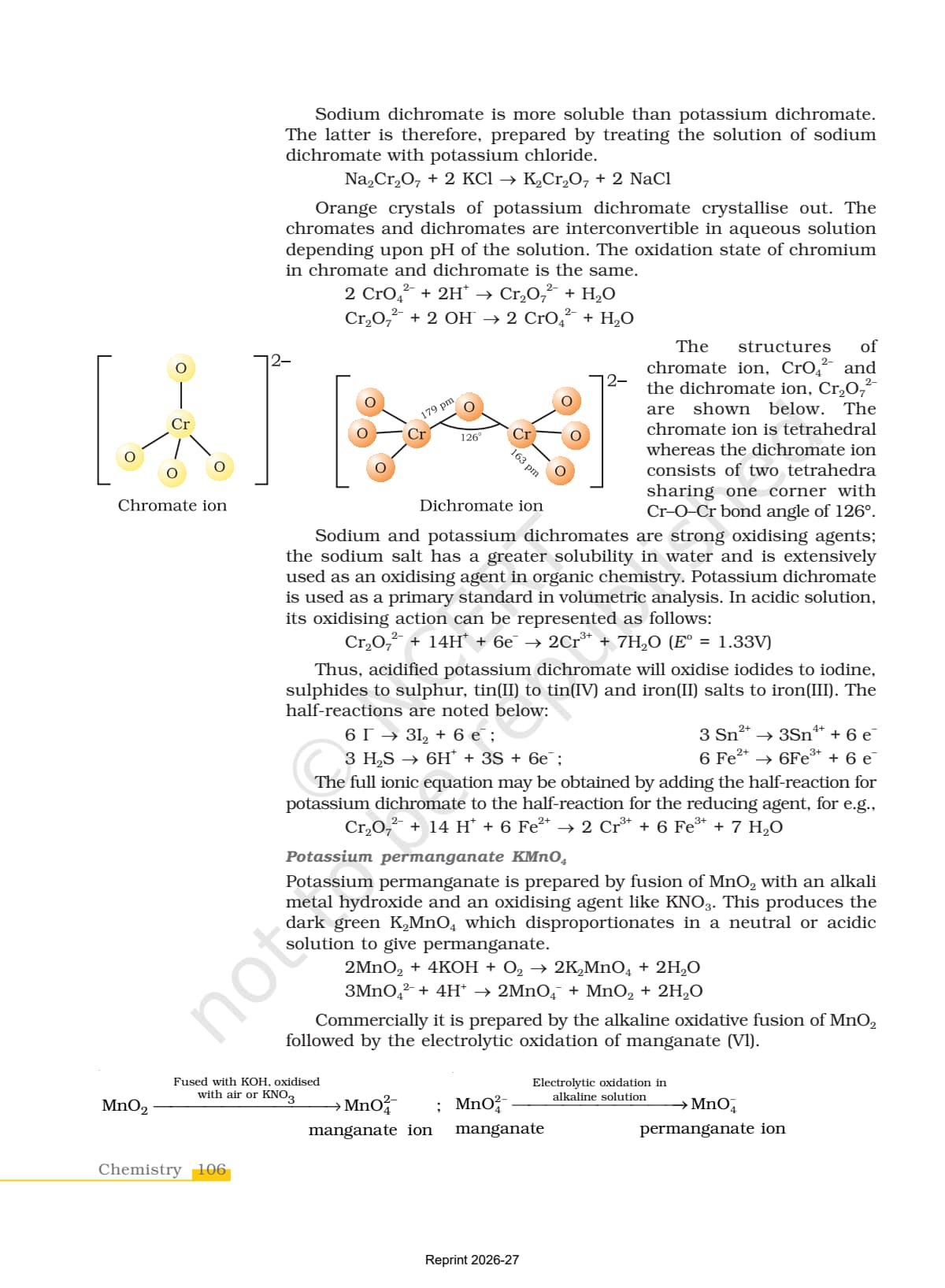
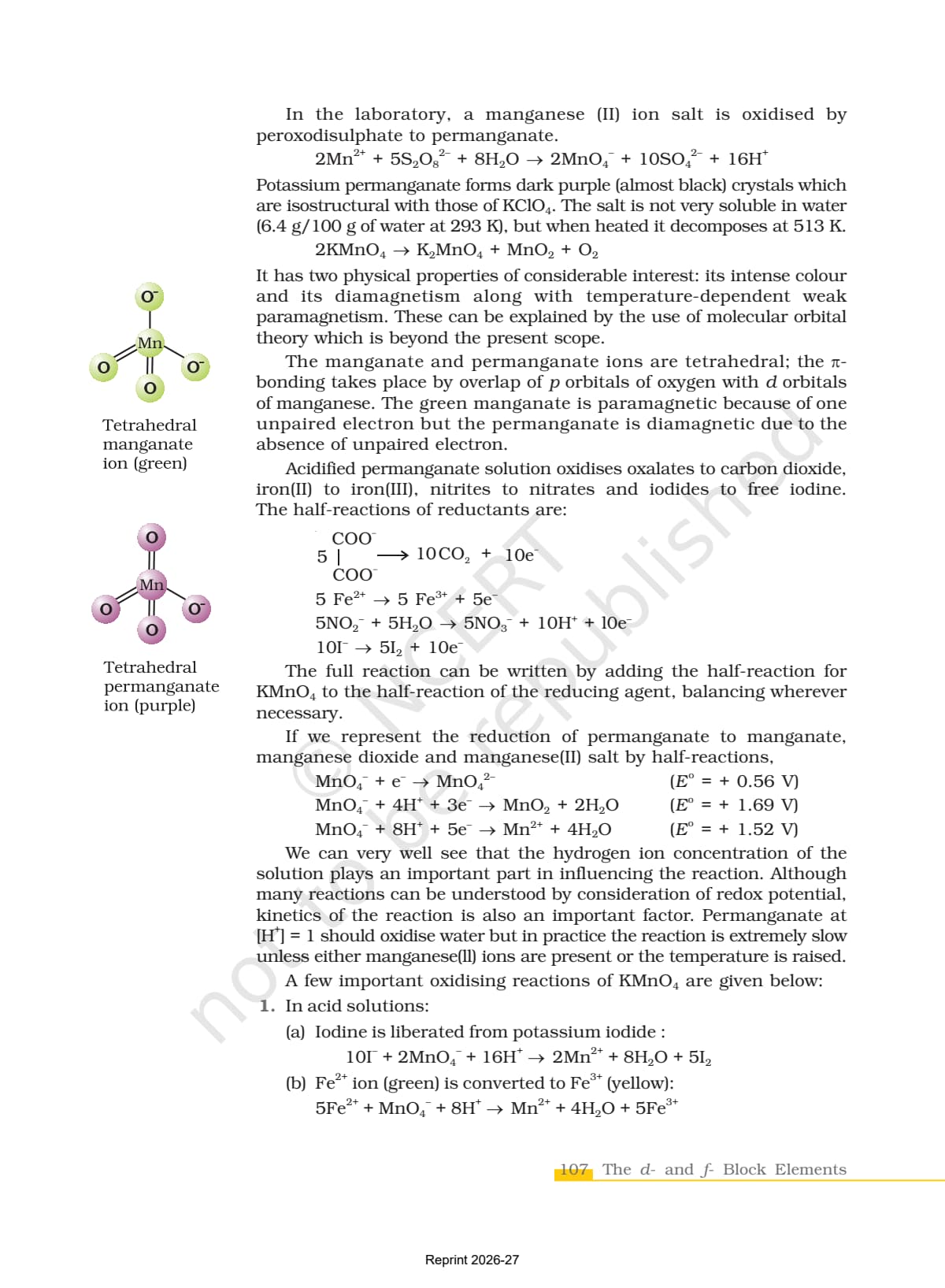
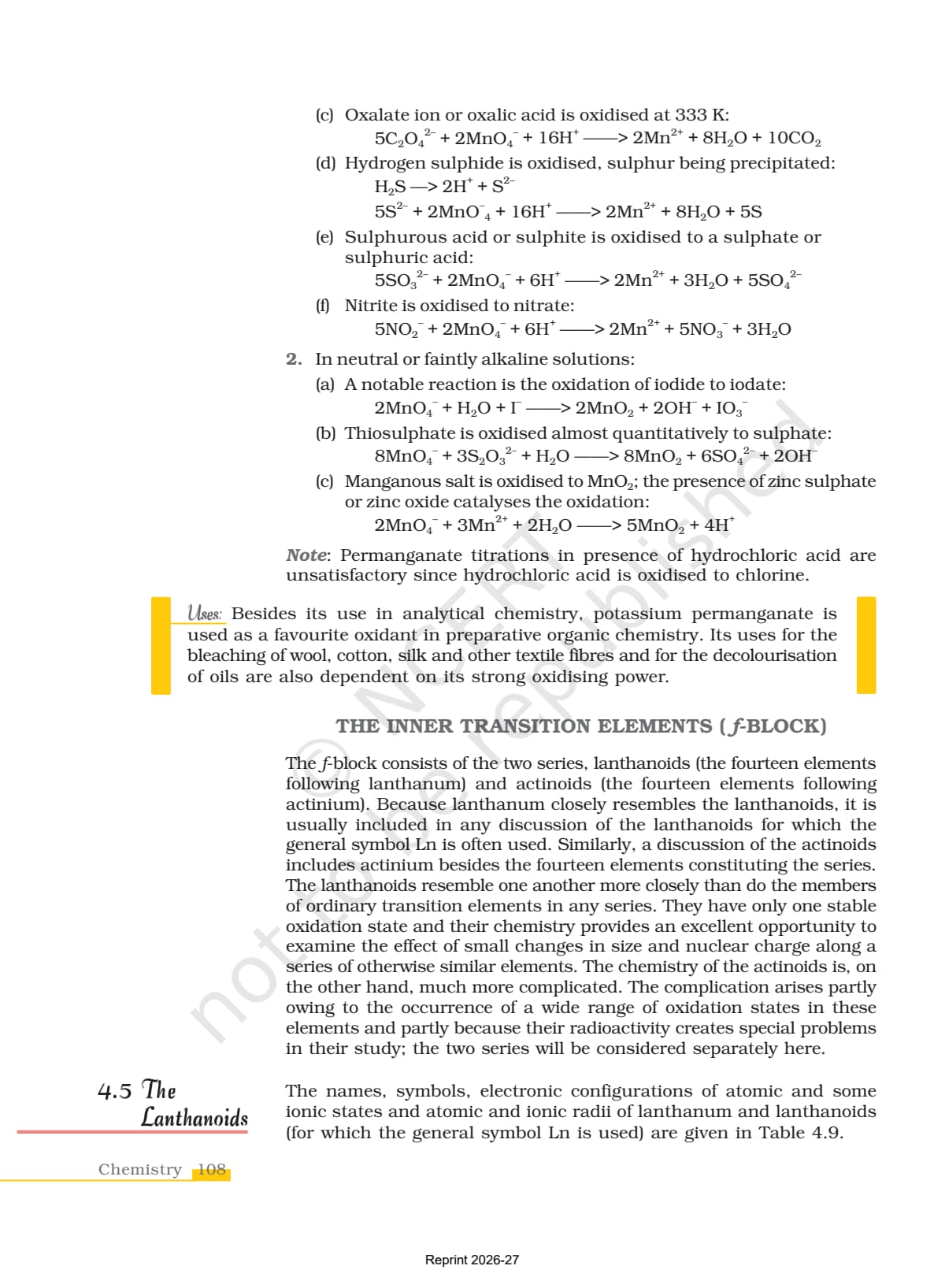
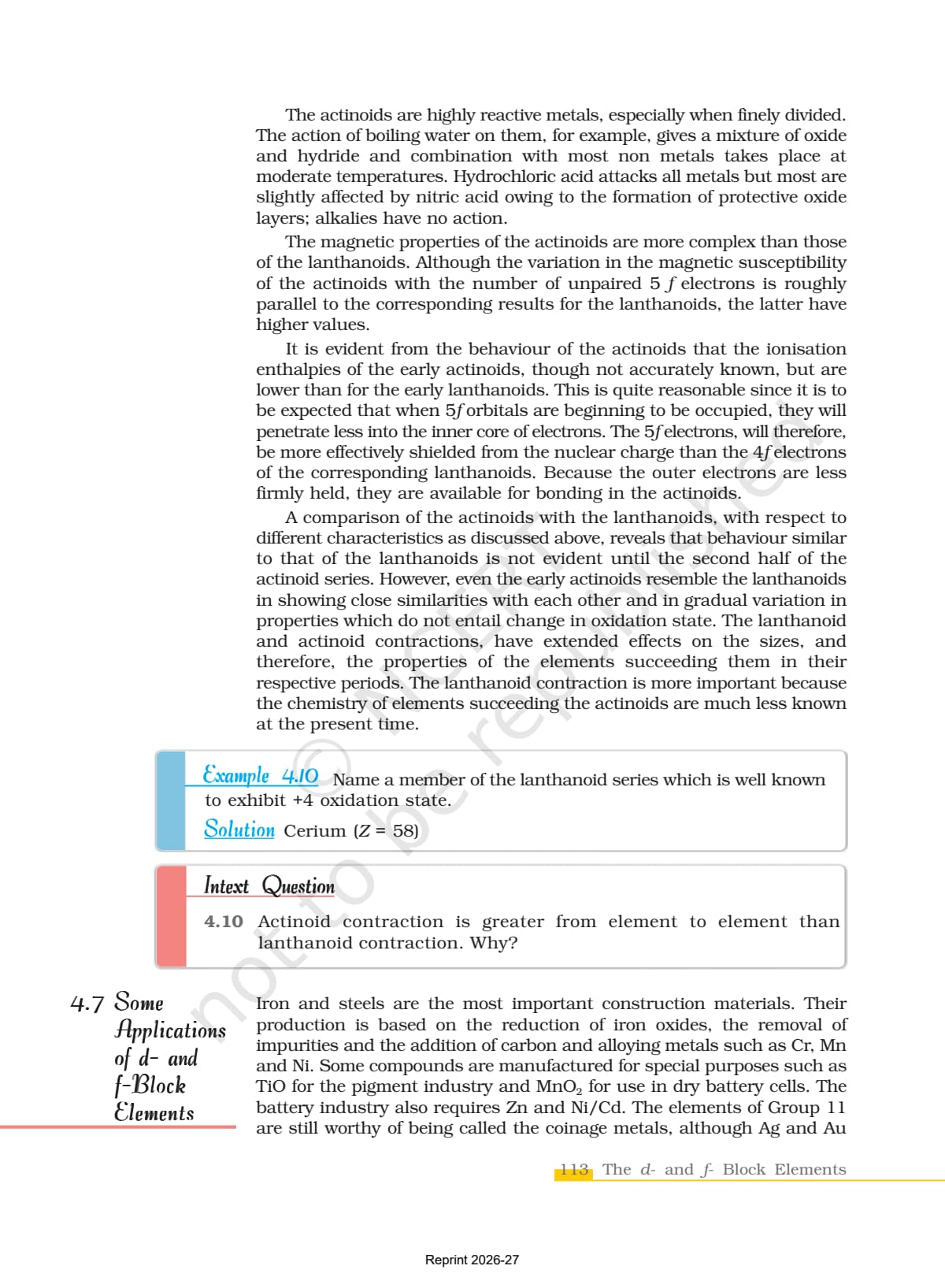
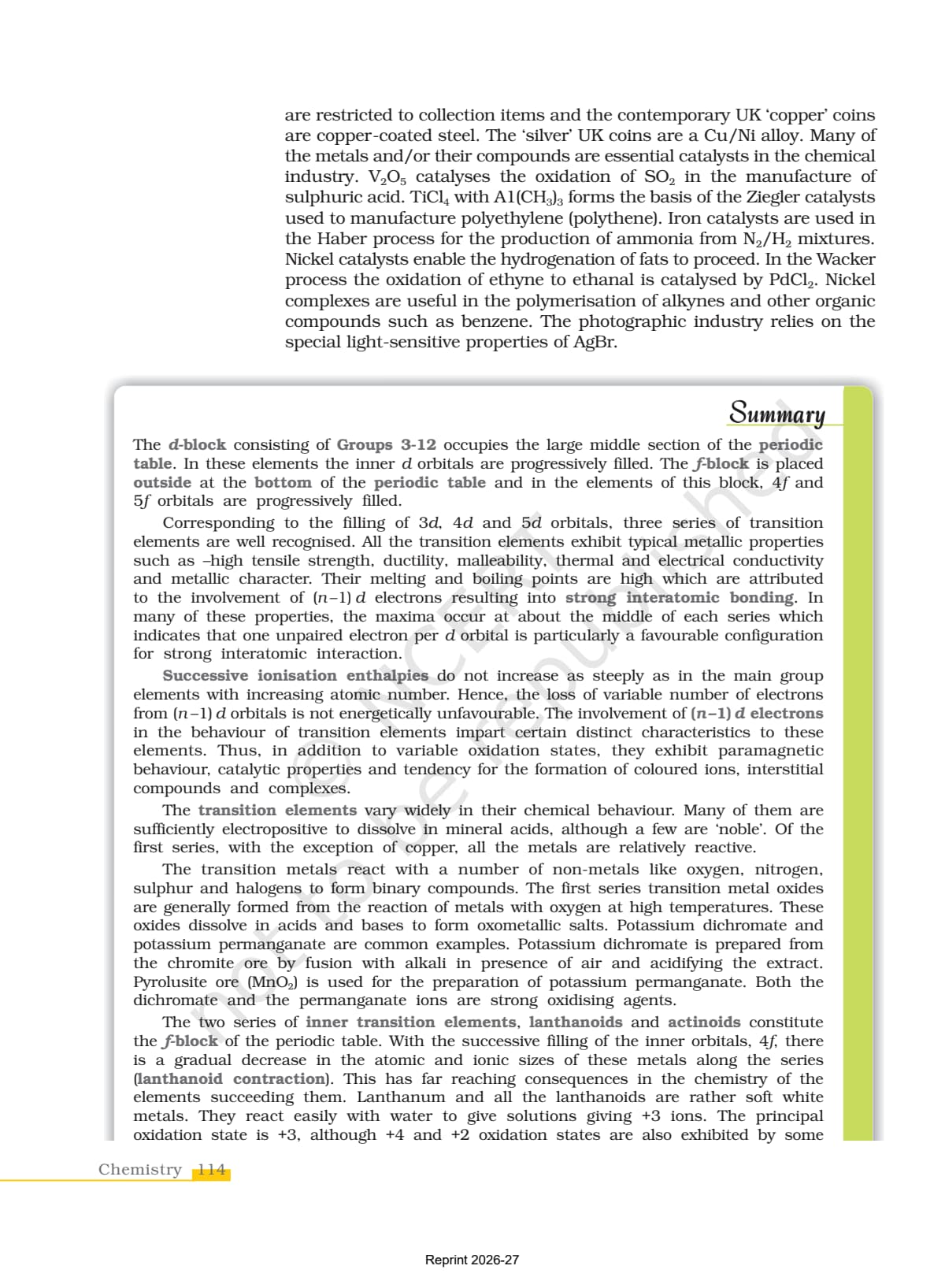
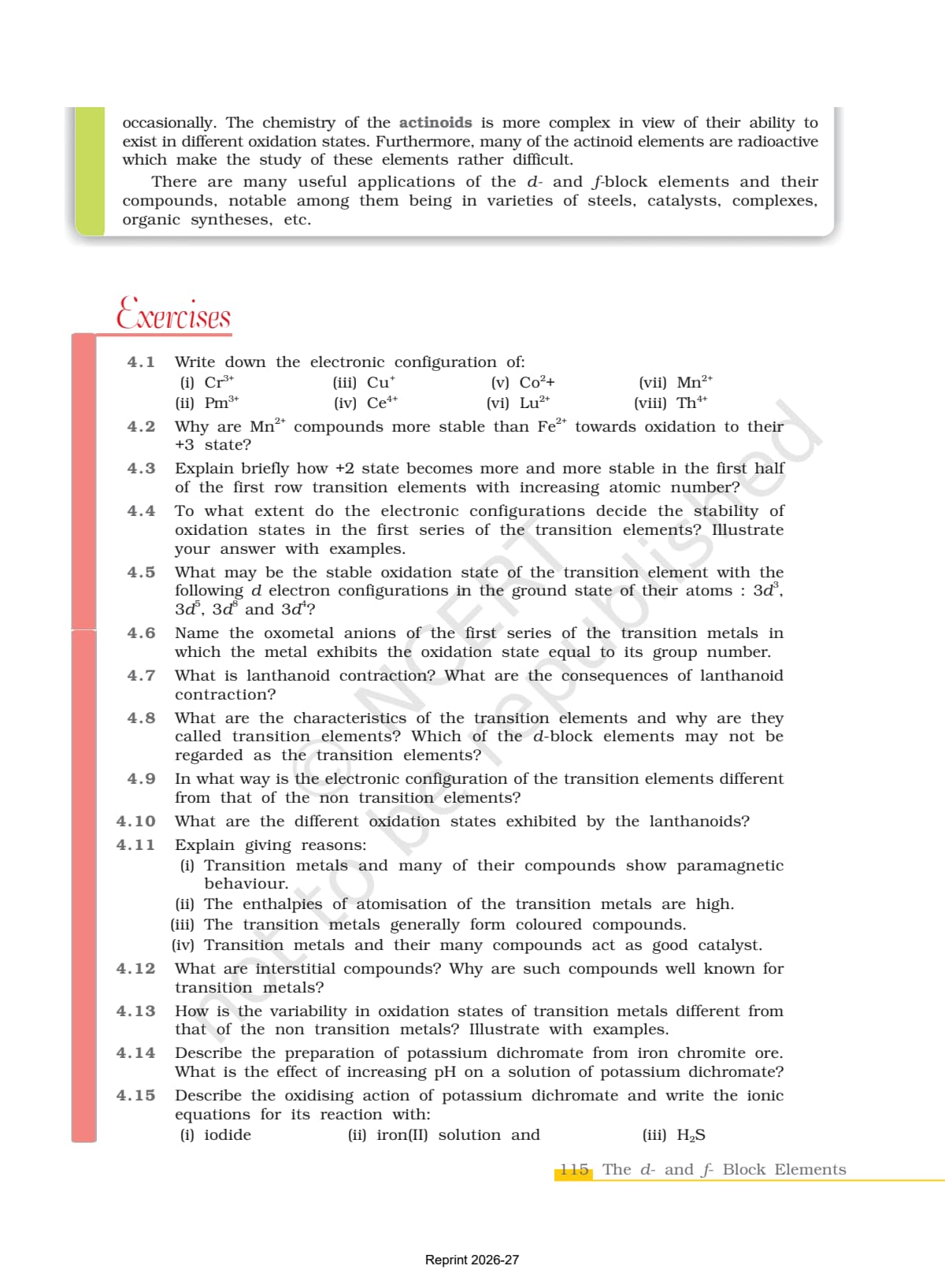
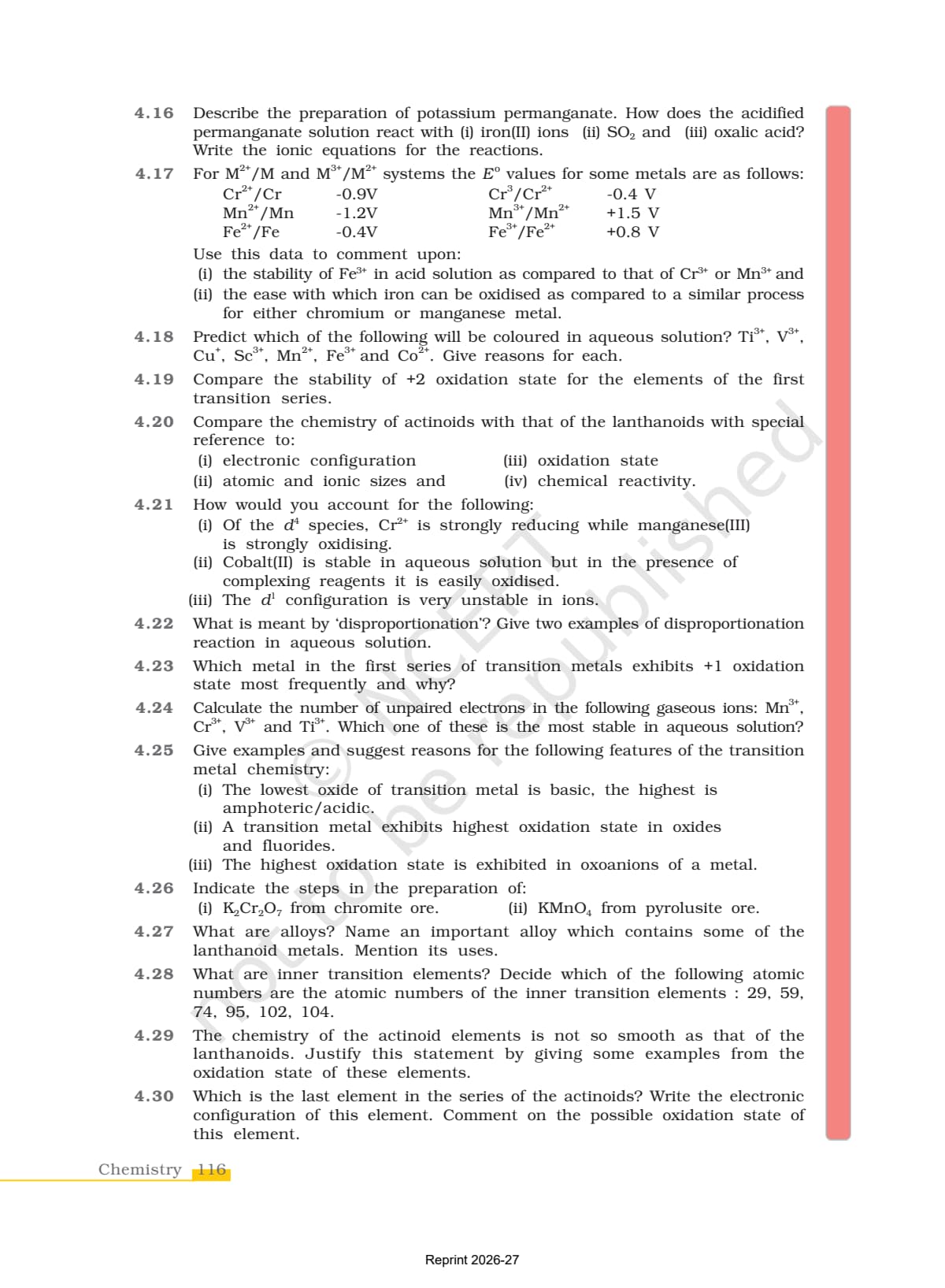
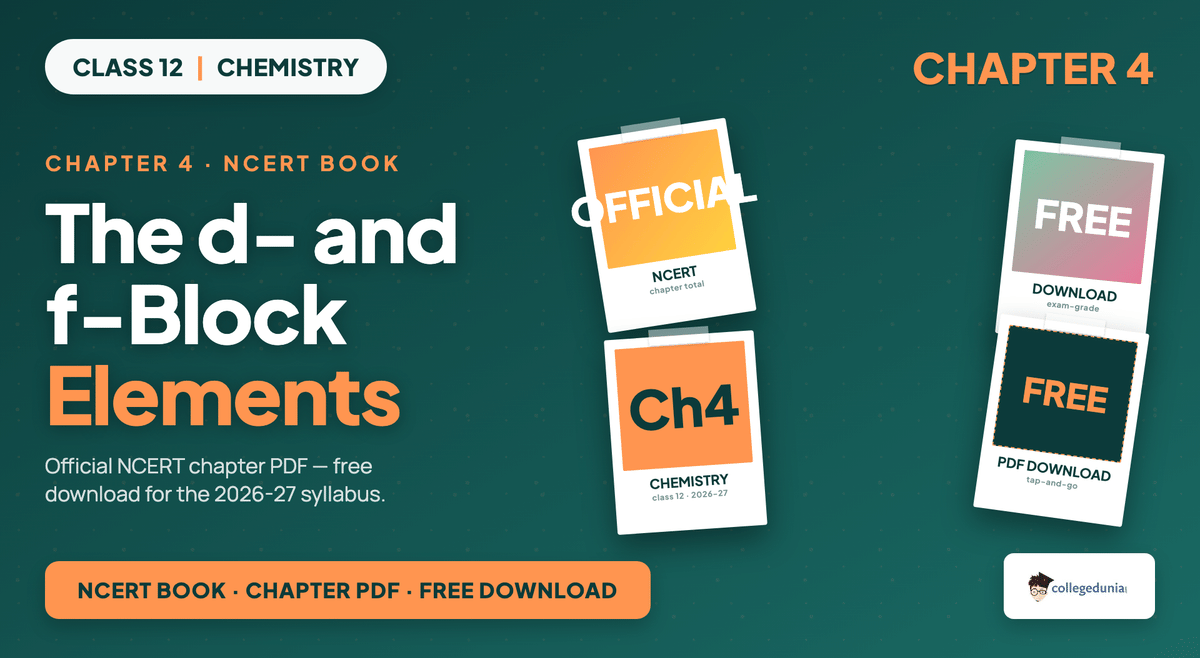
- CBSE Weightage: 4 to 6 marks (Class 12 Chemistry Boards, one short-answer concept plus one preparation/property question)
- JEE Main Weightage: 2 to 3% (around 1 to 2 questions per shift on lanthanoid contraction, KMnO4/K2Cr2O7, oxidation states)
- NEET Weightage: 2 to 3 question(s) per year, primarily configuration and colour
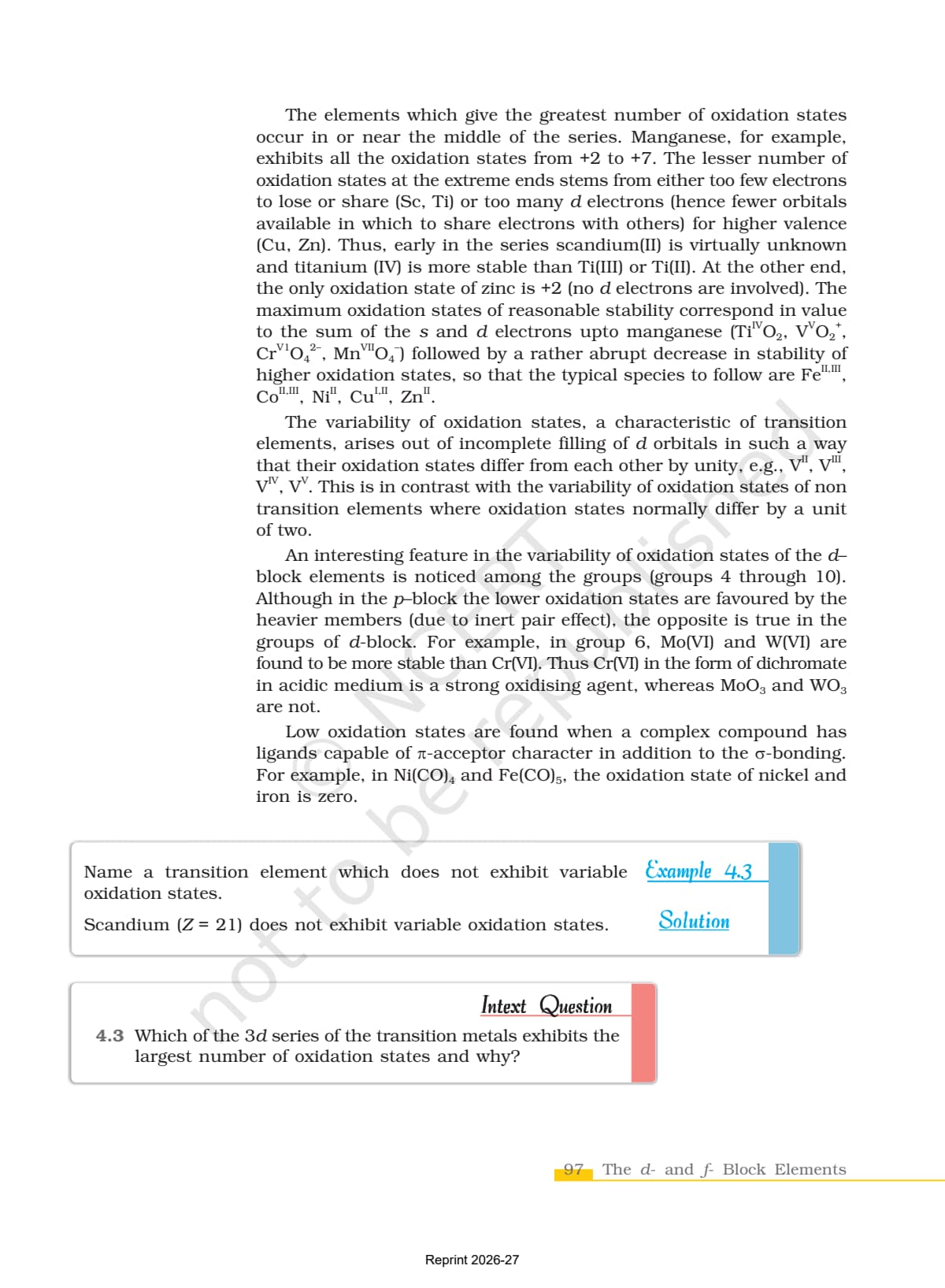
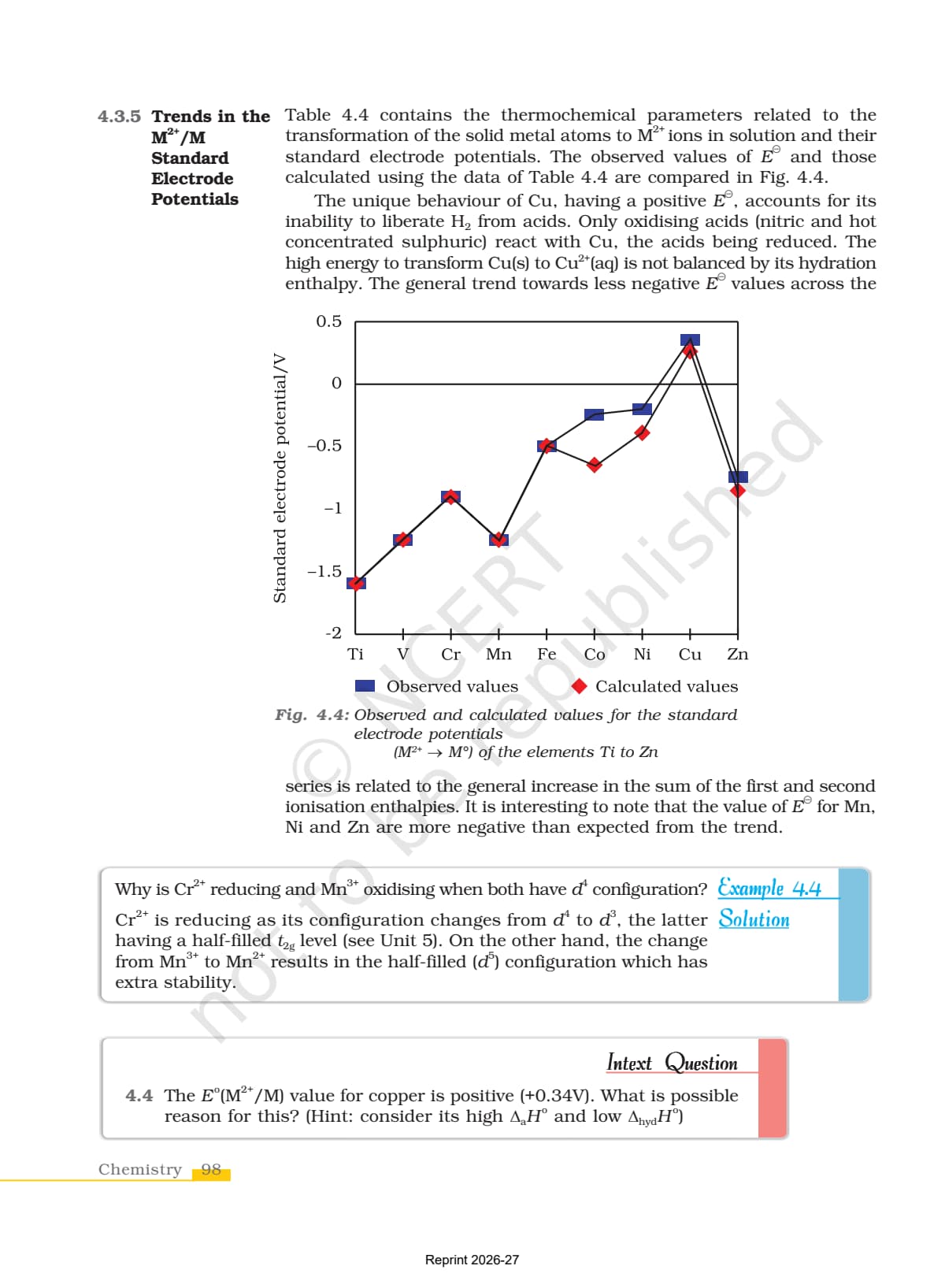
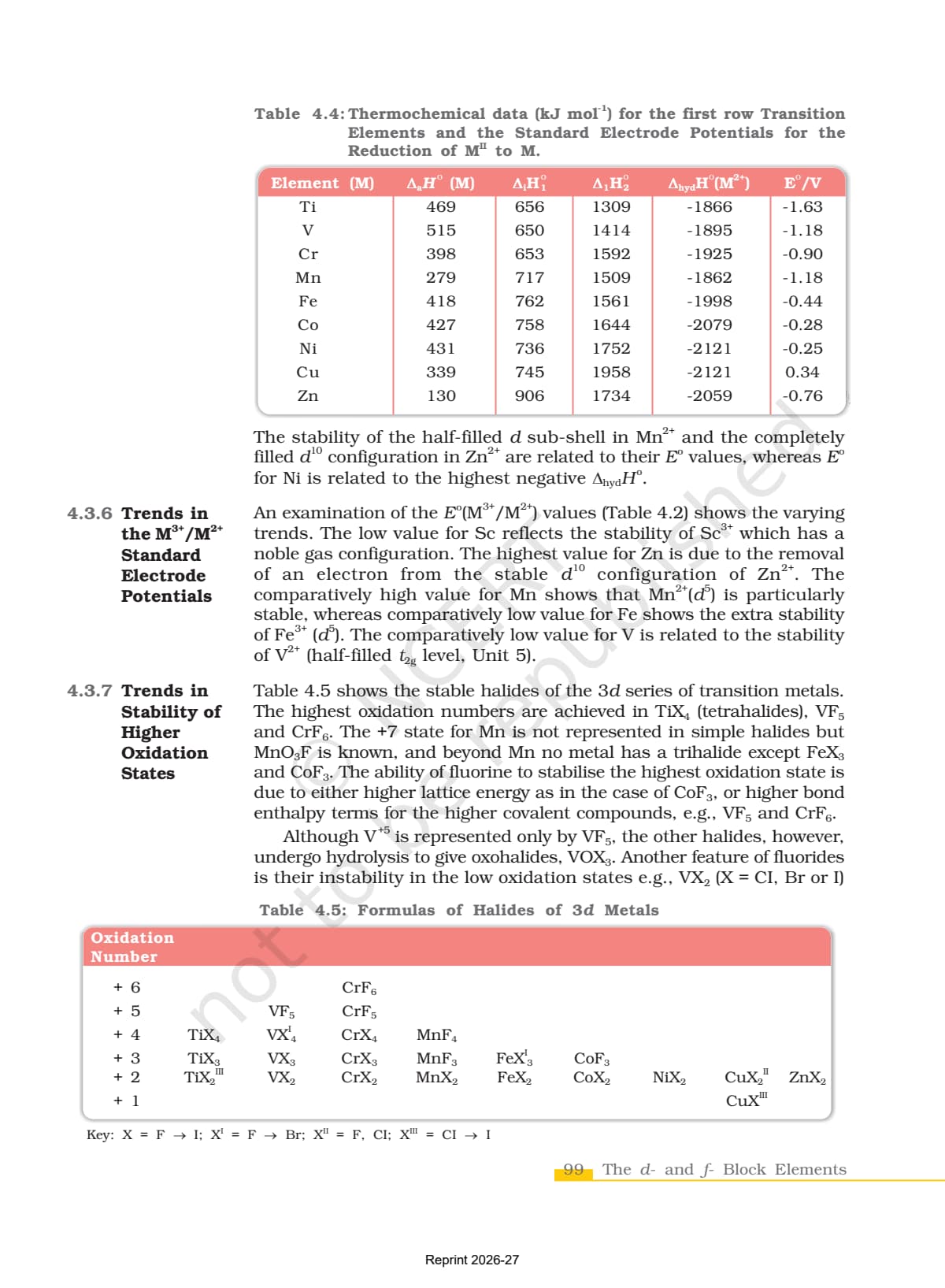
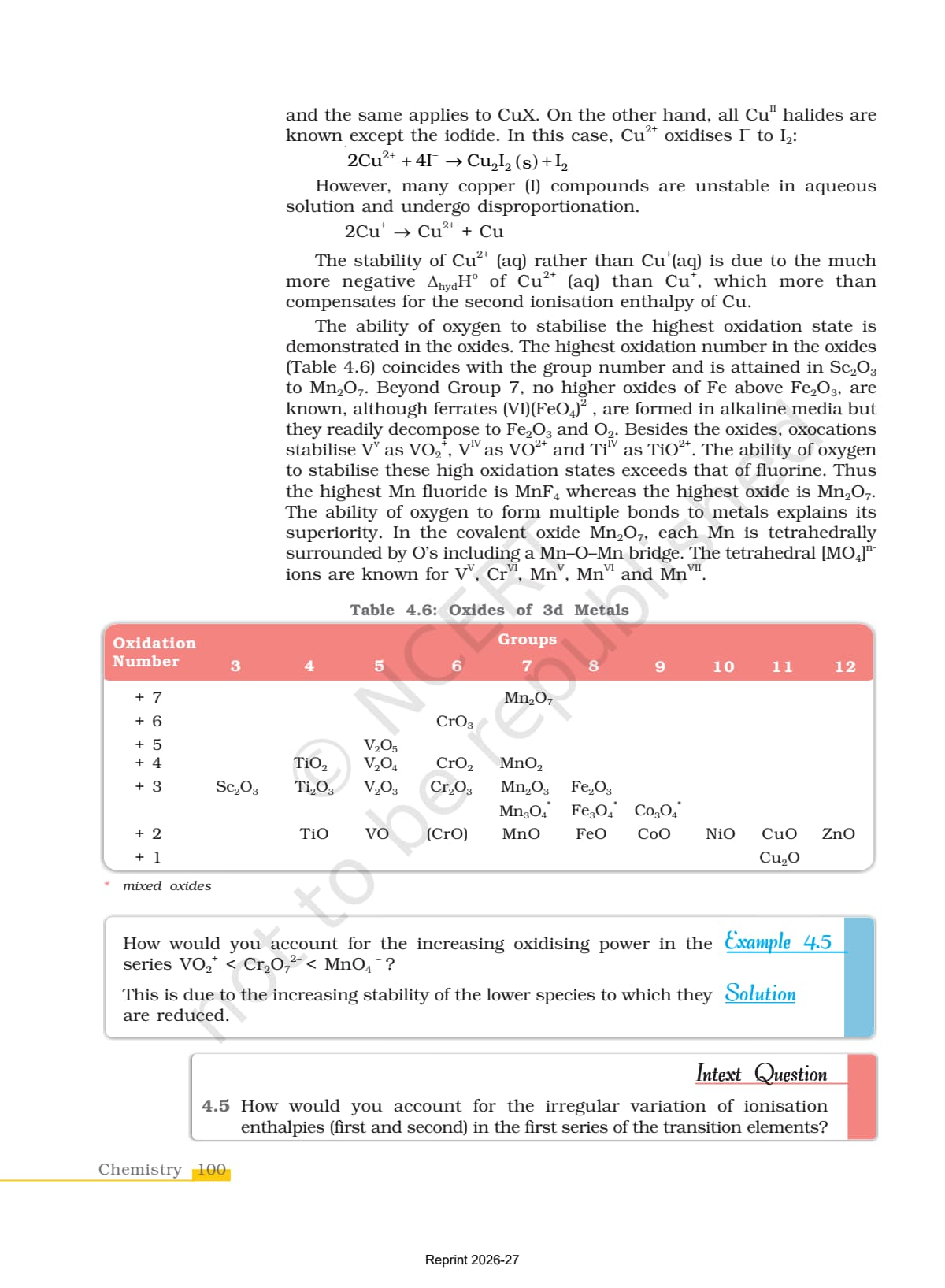
The PDF above is the full official NCERT print for Chapter 4. The reading map and rationalisation notes below turn the dense prose into a board-ready plan.
This NCERT Book PDF is sourced from the official NCERT 2026-27 edition and matches the CBSE Class 12 Chemistry syllabus for the 2026 Board exam.
Also Check:
- Class 12 Chemistry Chapter 3 Chemical Kinetics NCERT Book PDF
- Class 12 Chemistry Chapter 5 Coordination Compounds NCERT Book PDF
- CBSE Class 12 Chemistry Syllabus 2026-27
Why d- and f-Block Elements Earn Their Slot in Class 12 Chemistry
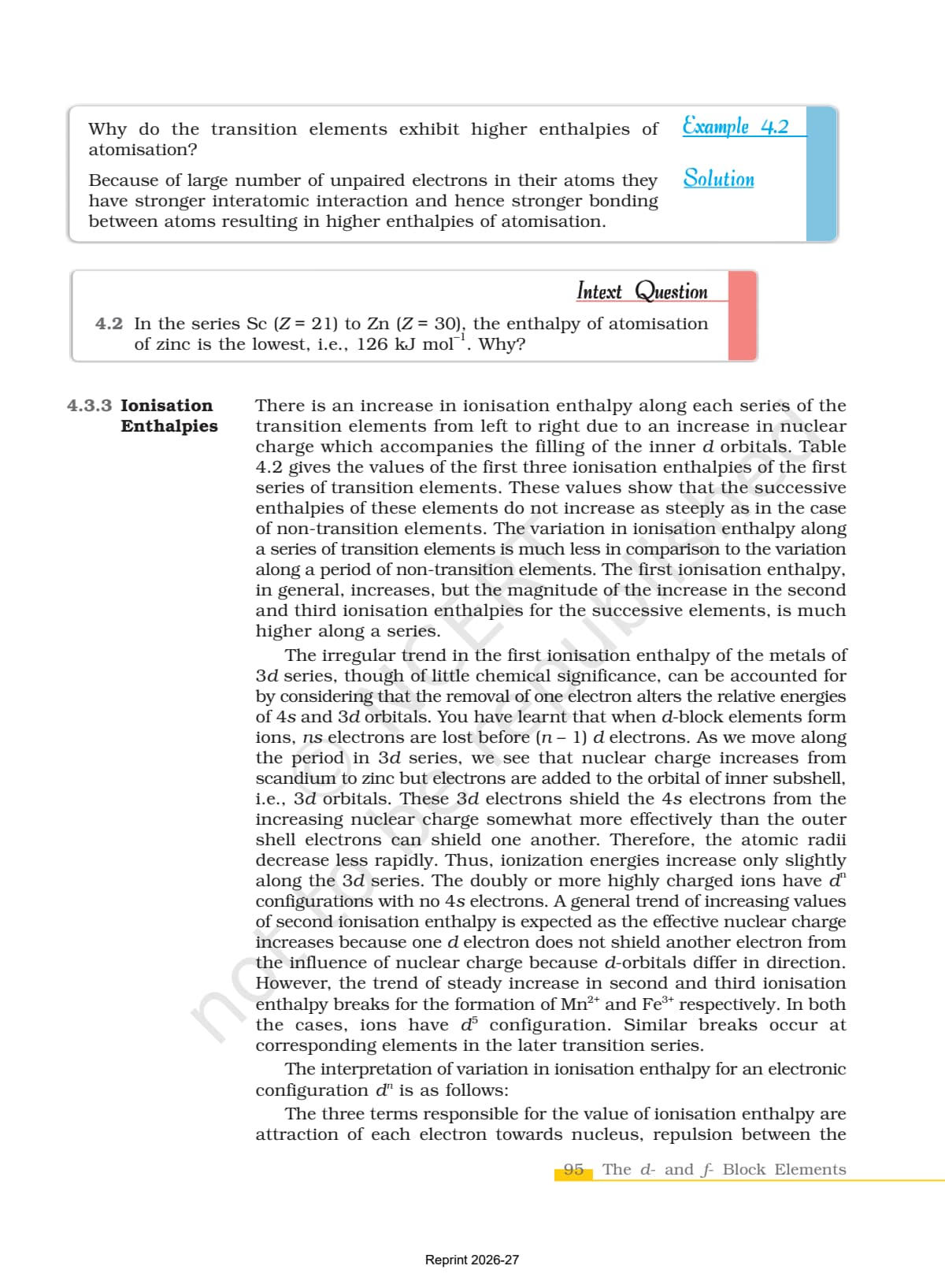
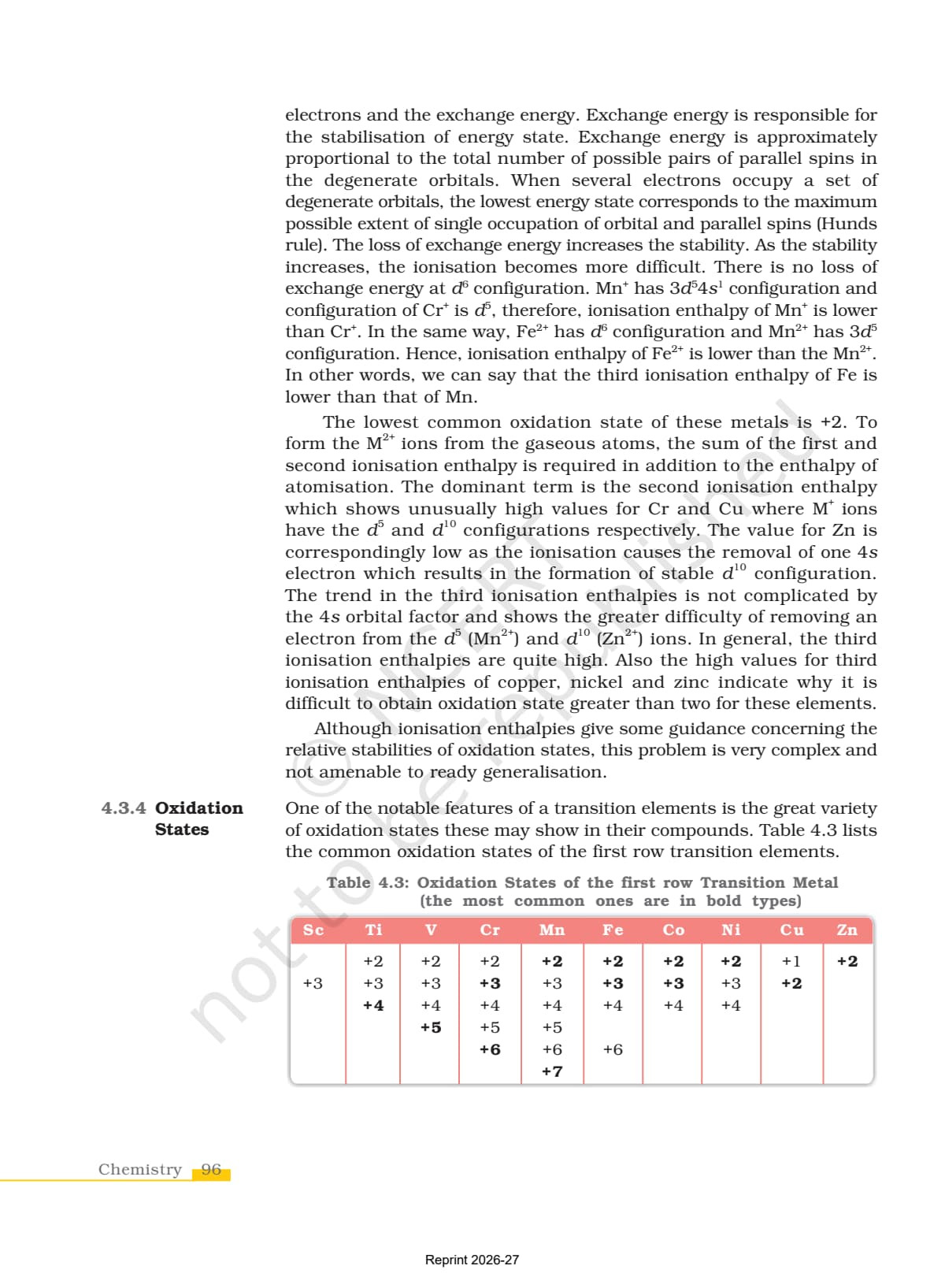
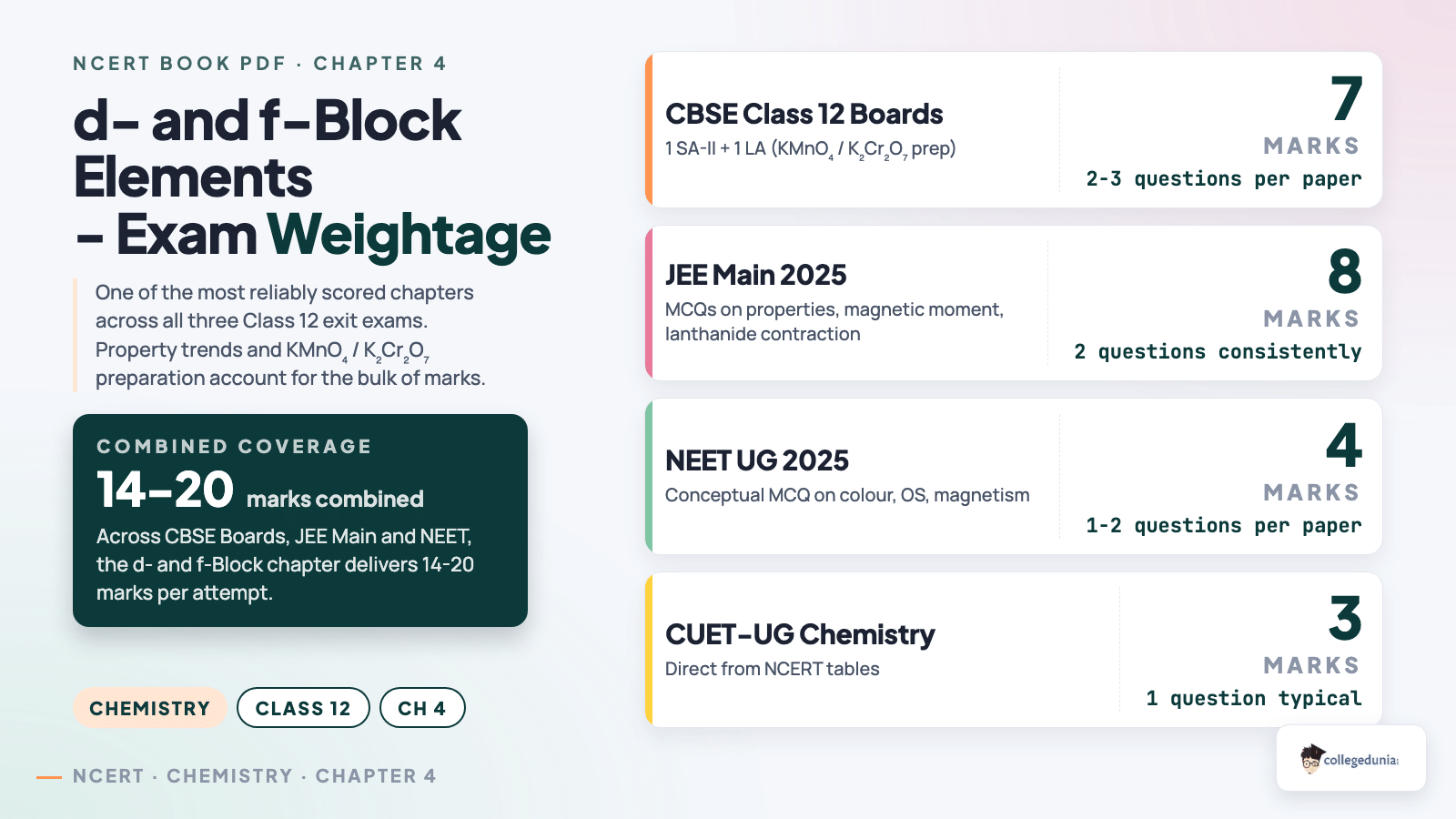
The d-block (groups 3 to 12) and f-block (lanthanoids and actinoids) carry the transition-metal properties students meet again in Coordination Compounds (Ch 5). Most board answers trace back to the (n-1)d and 4f electronic configuration, so read the PDF with that lens.
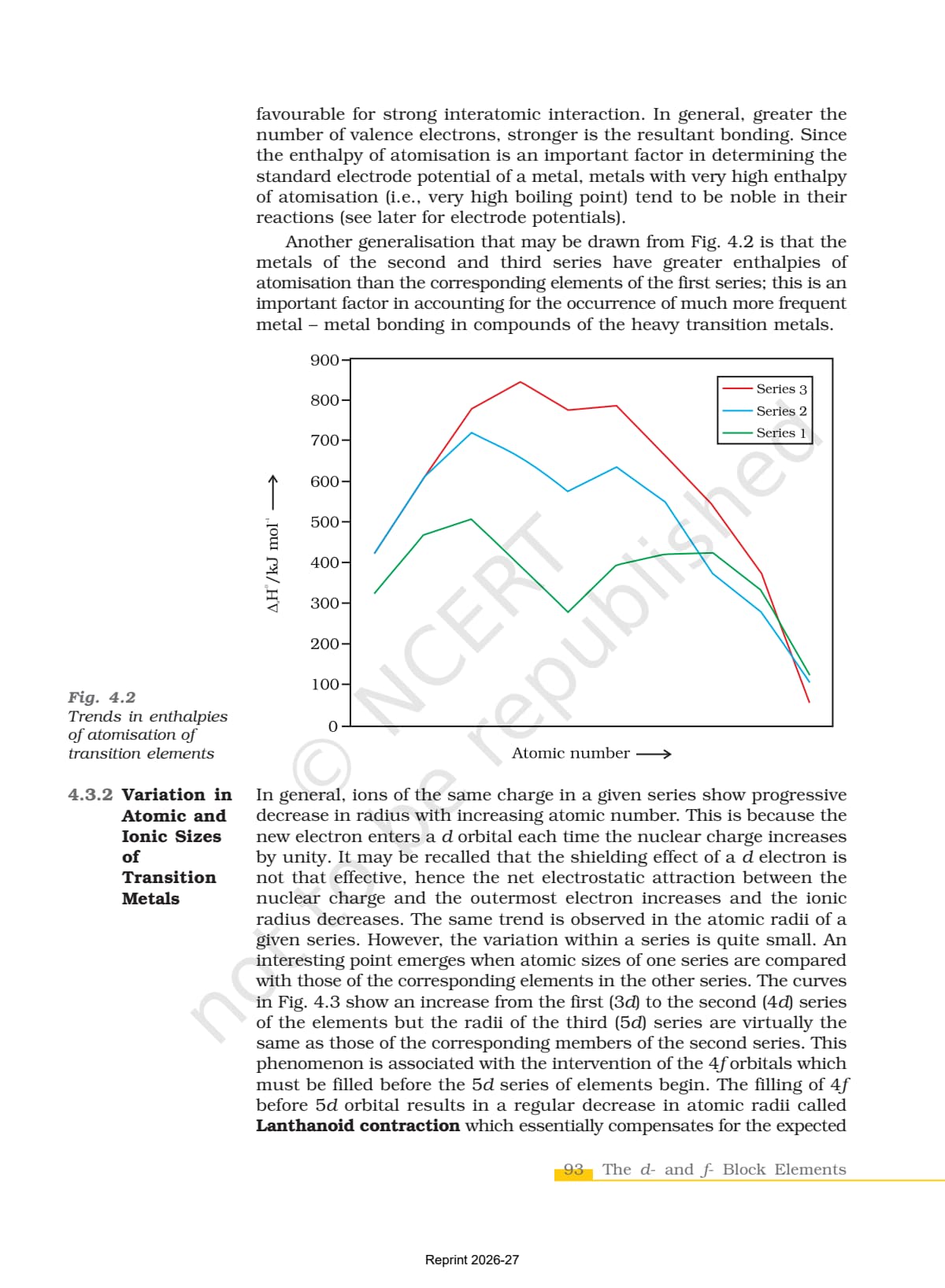
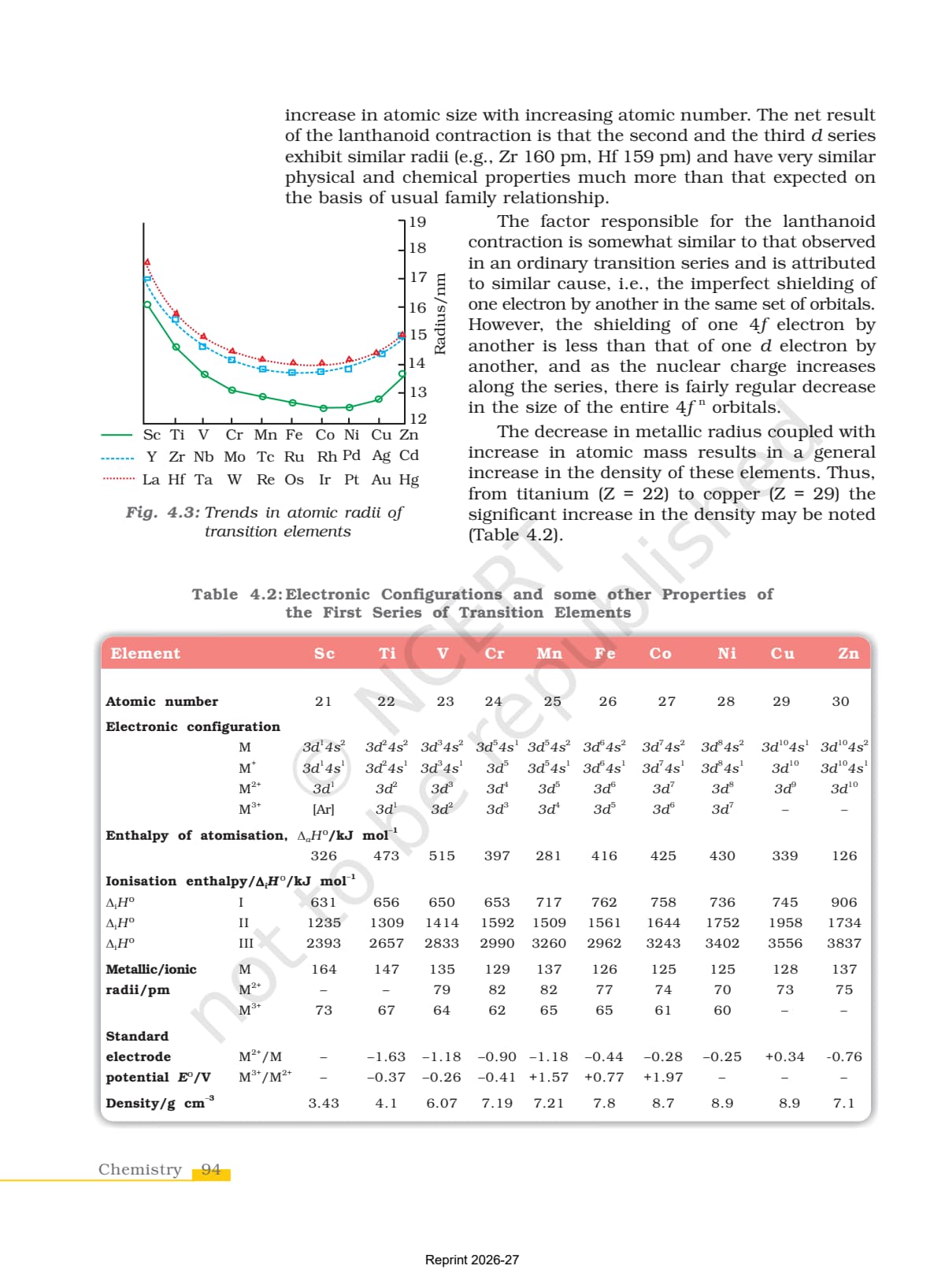
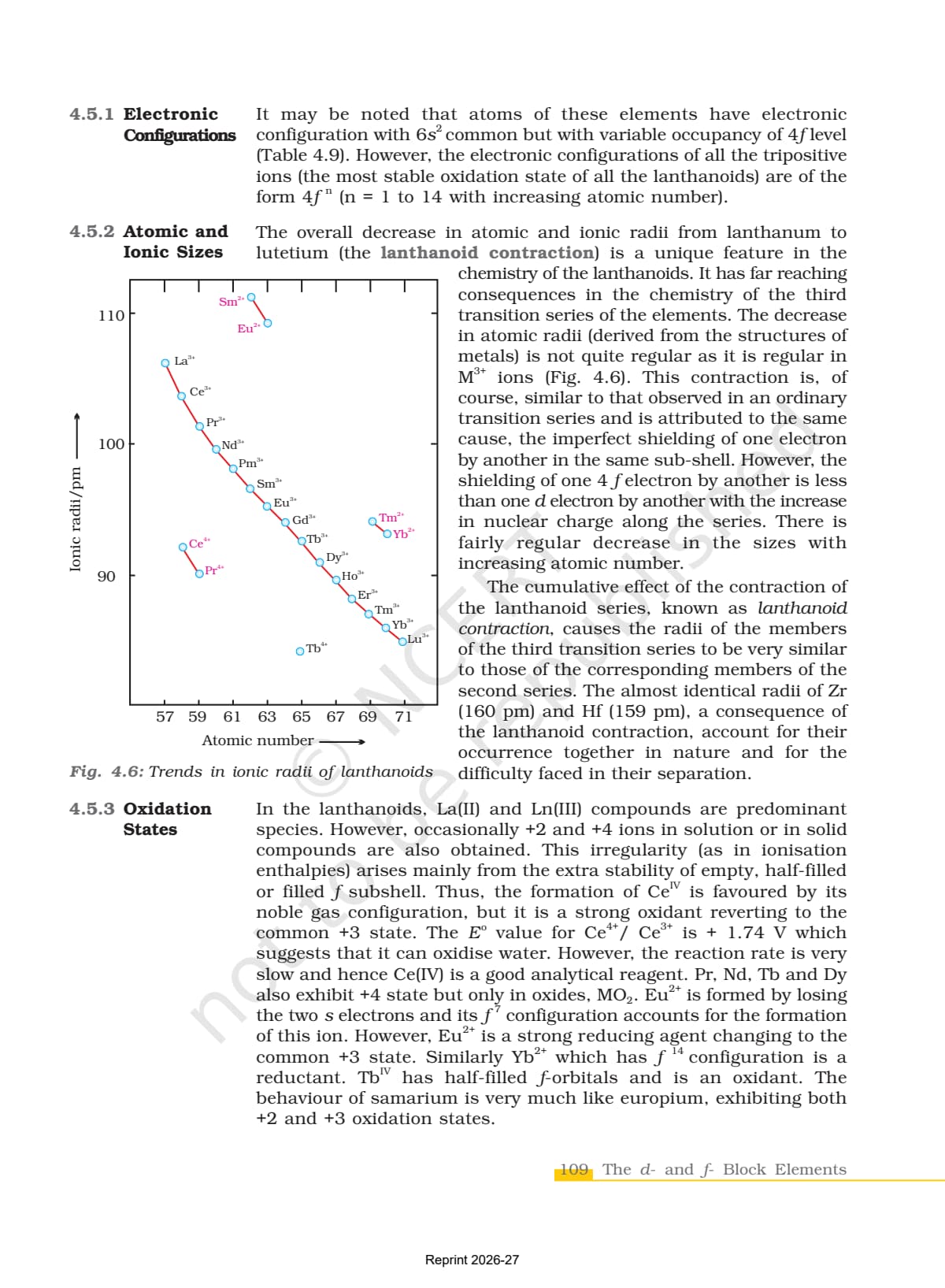
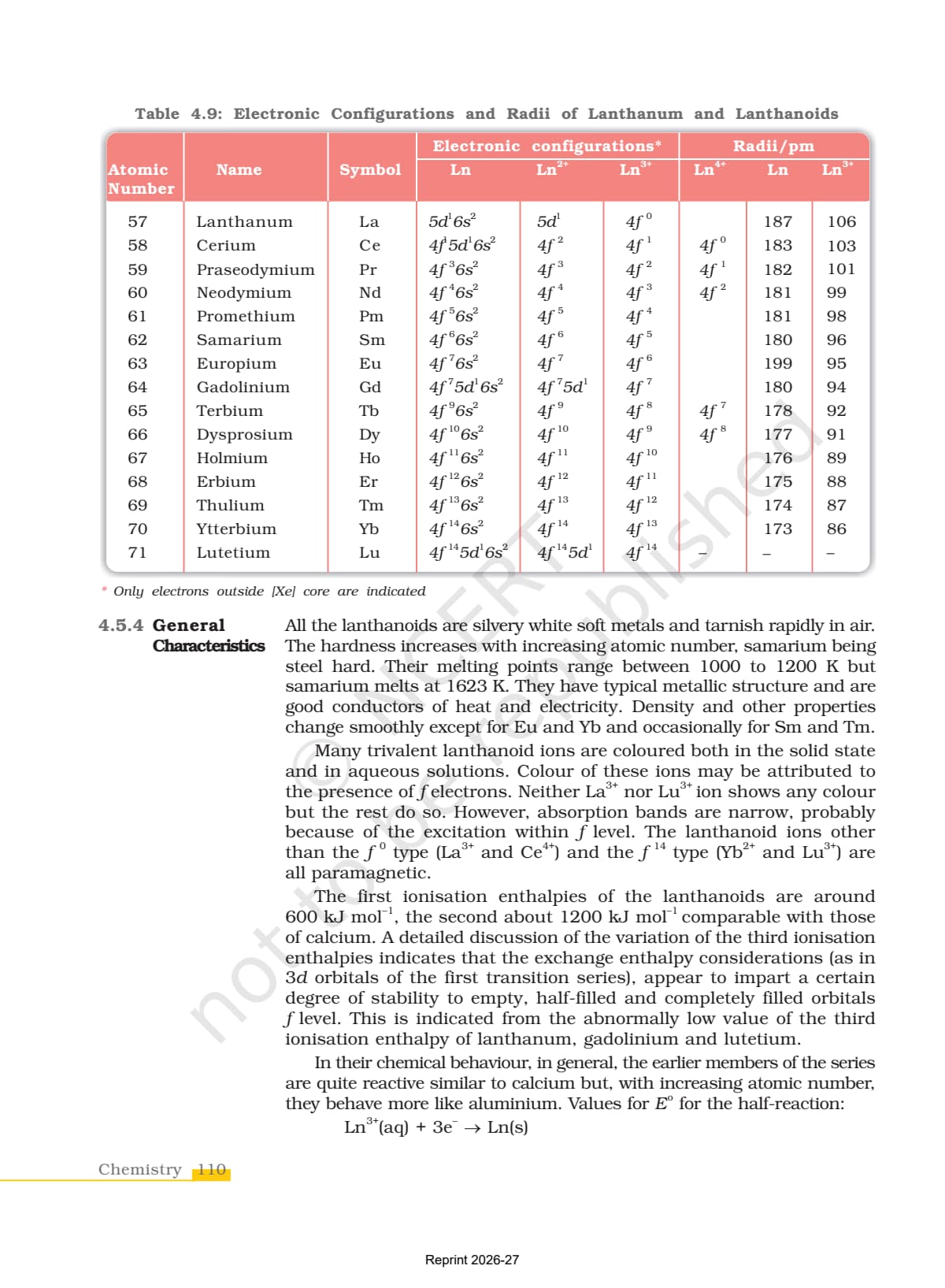
Lanthanoid contraction is the highest-yield idea here. It explains the near-equal radii of 4d and 5d metals, the basicity of lanthanoid hydroxides, and why the lanthanoids are hard to separate.
The d- and f-Block Elements Class 12 Chemistry Explained
Source: NCERT Wallah on YouTube
How will Collegedunia's NCERT Book PDF Help You with The d- and f-Block Elements?
This page wraps the official NCERT print with navigation aids the raw PDF lacks.
- 2026-27 alignment: the latest NCERT print, with every edition change flagged below.
- Property-vs-configuration map: each trend linked to its electronic-configuration cause.
- Reading sequence: which sections and intext examples to attempt first.
Class 12th Chemistry d and f Block Elements: Section-by-Section Breakdown with Page Numbers
The table maps each section to its page range and scope. Sections 4.3 and 4.4 carry more than half of all CBSE questions here.
| Section | Title | Pages | What it covers |
|---|---|---|---|
| 4.1 | Position in the Periodic Table | 1-3 | Where d-block sits; why Zn/Cd/Hg are not typical transition elements |
| 4.2 | Electronic Configurations of the d-Block Elements | 3-5 | (n-1)d ns configurations; Cr and Cu half-filled/fully-filled exceptions |
| 4.3 | General Properties of the Transition Elements (d-Block) | 5-15 | Radius, ionisation enthalpy, oxidation states, electrode potentials, colour, magnetism, catalysis |
| 4.4 | Some Important Compounds of Transition Elements | 15-19 | Preparation and properties of KMnO4 and K2Cr2O7 |
| 4.5 | The Inner Transition Elements (f-Block) | 19-22 | Lanthanoid contraction, oxidation states, colour, magnetism |
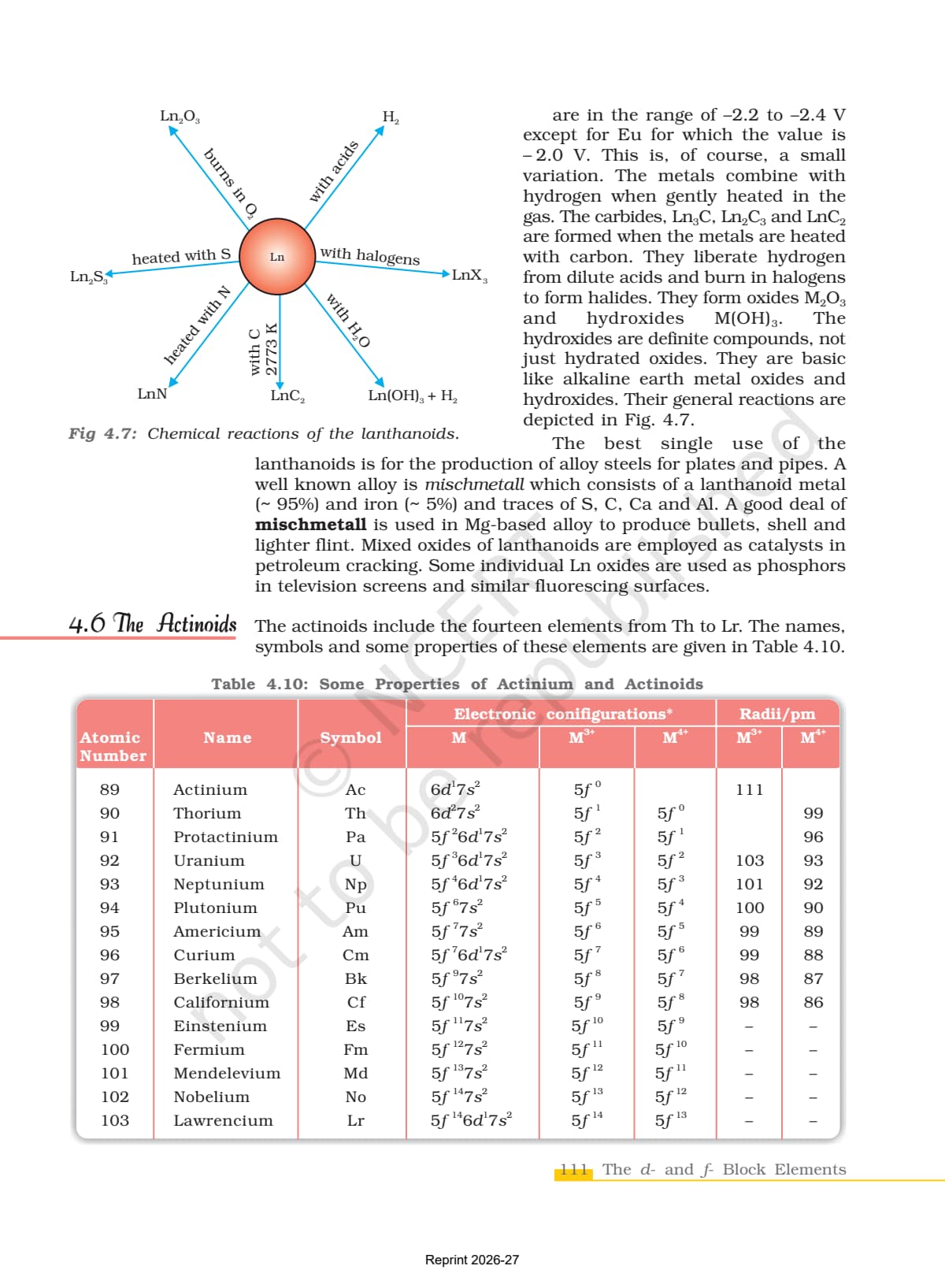
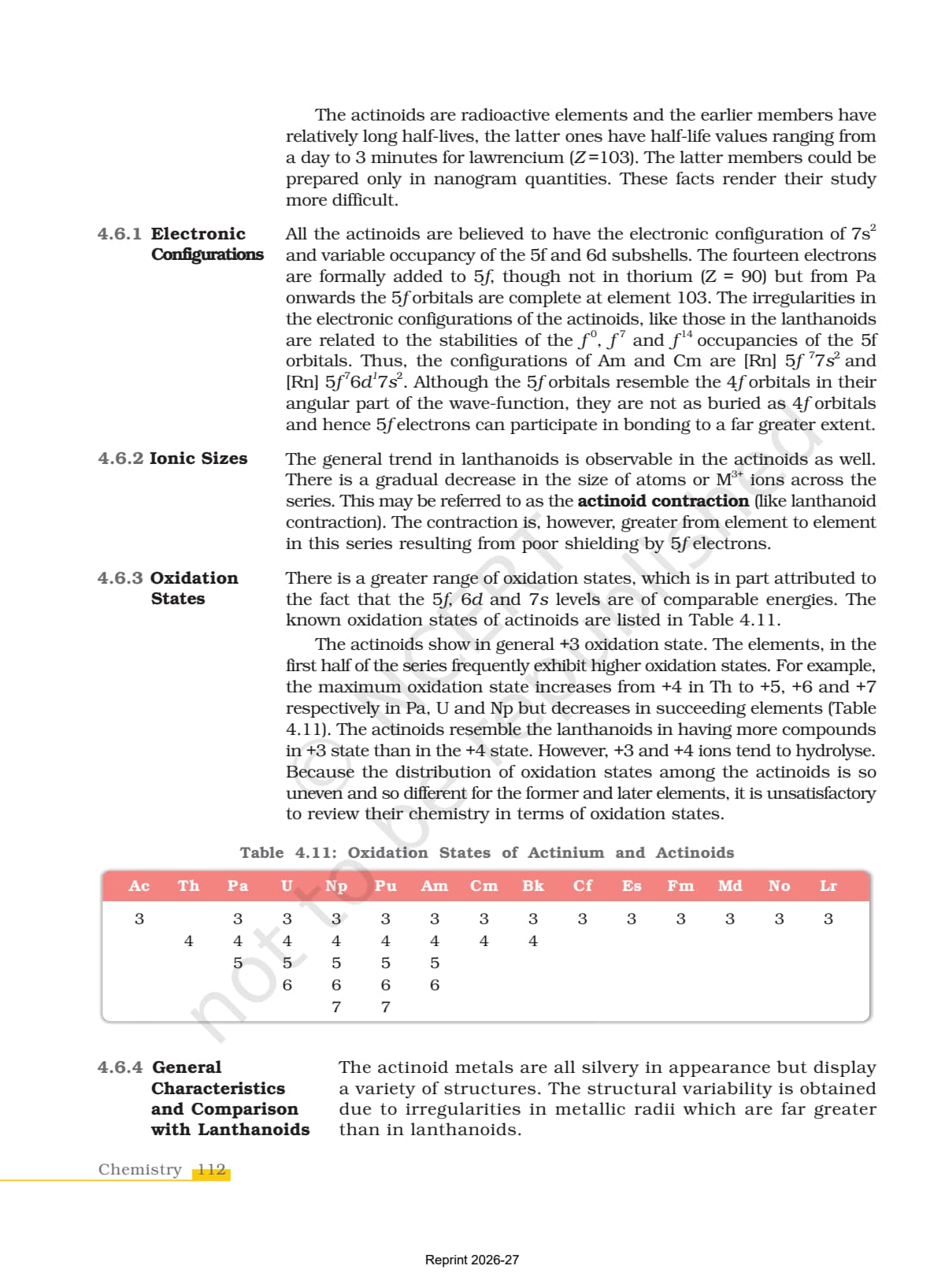
| 4.6 | The Actinoids | 22-24 | Configuration, oxidation states, comparison with lanthanoids |
| 4.7 | Some Applications of d- and f-Block Elements | 24-25 | Catalysts, alloys, pigments, nuclear use |
| - | Summary, Exercises (36 Qs) | 25-26 | End-of-chapter problems for board-level practice |
The 36 exercises split into roughly 22 conceptual items, 8 on KMnO4 and K2Cr2O7, and 6 on lanthanoid contraction and actinoids.
The d- and f-Block Elements NCERT Intext Examples and Their Sub-Topics
Chapter 4 carries 8 solved intext examples, each tagged below with its sub-topic and skill.
| Example | Sub-topic | Skill tested |
|---|---|---|
| 4.1 | Electronic configuration of Cr and Cu | Apply half-filled and fully filled stability rule |
| 4.2 | Why Mn(II) is the most stable oxidation state | Configuration-driven stability reasoning |
| 4.3 | Calculate spin-only magnetic moment | Use s = √n(n+2) BM where n = number of unpaired electrons |
| 4.4 | Colour of Cu2+ in aqueous solution | d-d transition explanation |
| 4.5 | Oxidising action of KMnO4 in acidic medium | Balanced half-reaction to Mn(II) |
| 4.6 | Preparation of K2Cr2O7 from chromite ore | Three-reaction sequence with conditions |
| 4.7 | Effect of pH on chromate-dichromate equilibrium | Le Chatelier reasoning on 2CrO42- + 2H+ Cr2O72- + H2O |
| 4.8 | Why is the radius of Nd3+ nearly equal to that of Y3+? | Apply lanthanoid contraction to explain 4d-5d radius similarity |
What Changed in The d- and f-Block Elements for 2026-27 NCERT (Rationalisation Note)
The 2026-27 NCERT renumbered this unit from Chapter 8 to Chapter 4 and pruned a few sub-sections. Knowing what stayed saves study time.
| Sub-topic | Status in 2026-27 | Notes |
|---|---|---|
| Electronic configuration of d-block | Kept | Core section, unchanged |
| General properties (radius, IE, oxidation states, colour, magnetism) | Kept | Core section, unchanged |
| KMnO4 and K2Cr2O7 preparation and reactions | Kept | Core section, unchanged |
| Lanthanoid contraction and consequences | Kept | Core section, unchanged |
| Actinoid chemistry, comparison with lanthanoids | Kept | Core section, unchanged |
| Detailed alloy formation and named alloys | Trimmed | Reduced to a one-paragraph mention under applications |
| Detailed catalytic role with named industrial processes | Trimmed | Vanadium-pentoxide example kept; iron Haber-Bosch table dropped |
| Interstitial compounds (detailed treatment) | Trimmed | Single-paragraph treatment retained |
The older 2022 print carries about 3 extra pages no longer on the board paper. The PDF here is the latest 2026-27 NCERT.
How to Read The d- and f-Block Elements from the NCERT Class 12 Chemistry Book
The PDF rewards a three-pass read. Passive reading is a trap; turn the prose into your own trend tables.
- Pass 1 - Skim: read the headings, the page-25 summary, and the property-trend tables in section 4.3.
- Pass 2 - Deep read: read 4.1 to 4.7 in order, building a trend table for each property. Solve every intext example first.
- Pass 3 - Practice: attempt the 36 exercises, then check the Collegedunia NCERT Solutions.
The d- and f-Block Elements CBSE Marks Weightage Across Class 12 Chemistry Chapters
The visual maps typical CBSE marks across all 10 chapters. The d- and f-Block Elements sits mid-table.
Author, Edition and Publisher Information for the d- and f-Block Elements NCERT PDF
The PDF here is the official publication, not a reprint. Always study from the latest print.
- Book: Chemistry Part-I, Class 12
- Chapter: 4 - The d- and f-Block Elements (renumbered from Ch 8)
- Publisher: NCERT
- Edition: 2026-27 reprint (post-rationalisation)
- Pages: 26, including summary and exercises
- Languages: English, Hindi (Rasayan Vigyan Bhag-I)
Related Links:
- Class 12 Chemistry NCERT Book PDF (All Chapters)
- CBSE Class 12 Chemistry Sample Papers 2026
- CBSE Class 12 Chemistry Previous Year Question Papers
Student Feedback
In a Collegedunia poll of 900 Class 12 students, 78% said reading Chapter 4 straight from this NCERT PDF while building their own trend tables made lanthanoid contraction far easier to recall.
Other Resources for The d- and f-Block Elements Class 12 Chemistry
- The d- and f-Block Elements Class 12 Chemistry NCERT Book PDF
- The d- and f-Block Elements Class 12 Chemistry NCERT Solutions
- The d- and f-Block Elements Class 12 Chemistry Notes
- The d- and f-Block Elements Class 12 Chemistry Formula Sheet
- The d- and f-Block Elements Class 12 Chemistry NCERT Exemplar Book PDF
- The d- and f-Block Elements Class 12 Chemistry NCERT Exemplar Solutions
- The d- and f-Block Elements Class 12 Chemistry Handwritten Notes
NCERT Book PDF for Class 12 Chemistry: All Chapters
The table lists every chapter of the Class 12 Chemistry 2026-27 NCERT, each linking to its dedicated Collegedunia NCERT Book PDF page.
| Chapter | Resource |
|---|---|
| Chapter 1 | Solutions NCERT Book PDF |
| Chapter 2 | Electrochemistry NCERT Book PDF |
| Chapter 3 | Chemical Kinetics NCERT Book PDF |
| Chapter 5 | Coordination Compounds NCERT Book PDF |
| Chapter 6 | Haloalkanes and Haloarenes NCERT Book PDF |
| Chapter 7 | Alcohols, Phenols and Ethers NCERT Book PDF |
| Chapter 8 | Aldehydes, Ketones and Carboxylic Acids NCERT Book PDF |
| Chapter 9 | Amines NCERT Book PDF |
| Chapter 10 | Biomolecules NCERT Book PDF |
The d- and f-Block Elements Class 12 Chemistry NCERT Book PDF FAQs
Ques. Where can I download the Class 12 Chemistry Chapter 4 The d- and f-Block Elements NCERT Book PDF?
Ans. You can download The d- and f-Block Elements Class 12 Chemistry NCERT Book PDF directly from this page. Both the Normal and HD versions are available and both are free, with no registration required.
Ques. Is The d- and f-Block Elements chapter aligned with the 2026-27 NCERT?
Ans. Yes. The PDF reflects the current 2026-27 syllabus for Class 12 Chemistry. The chapter retains every core section on electronic configuration, general properties, KMnO4 and K2Cr2O7, lanthanoid contraction, and actinoid chemistry. The detailed alloy and named-catalyst treatments have been trimmed in the new edition.
Ques. Was this chapter renumbered for the new NCERT?
Ans. Yes. The d- and f-Block Elements was Chapter 8 in the older 2022 print and is now Chapter 4 in the 2026-27 syllabus, because three earlier inorganic chapters (Surface Chemistry, General Principles of Isolation, p-Block Elements) were removed. The chapter content itself is largely unchanged.
Ques. How many pages is the Class 12th Chemistry d and f Block Elements NCERT Book PDF?
Ans. The chapter runs roughly 26 pages, including the 7 numbered sections, 8 intext examples, the summary, and the 36 end-of-chapter exercises.
Ques. How many marks does The d- and f-Block Elements carry in the CBSE Class 12 Chemistry Board exam?
Ans. The d- and f-Block Elements typically carries 4 to 6 marks in the Class 12 Chemistry Board exam. The marks are usually split as one 3-mark preparation-of-KMnO4-or-K2Cr2O7 answer plus one short conceptual question on lanthanoid contraction or magnetic moment.
Ques. Which intext examples in The d- and f-Block Elements are most important for Boards?
Ans. Examples 4.3 (spin-only magnetic moment), 4.5 (KMnO4 oxidising action), 4.6 (K2Cr2O7 preparation from chromite), and 4.8 (lanthanoid contraction) are the highest-yield. Practise each at least twice before the exam.
Ques. Has any topic been removed from The d- and f-Block Elements in the latest NCERT edition?
Ans. Yes. The detailed treatment of alloy formation with named alloys and the named-industrial-catalyst section have been trimmed in the current 2026-27 NCERT. The interstitial compounds section was also reduced to a single paragraph. The core property trends, KMnO4 and K2Cr2O7 chemistry, lanthanoid contraction, and actinoid material are all retained.
Ques. How long should I take to complete The d- and f-Block Elements NCERT chapter?
Ans. A three-day plan of about 9 to 10 hours total is realistic, one day for sections 4.1 to 4.3, one for the KMnO4 and K2Cr2O7 chemistry in section 4.4, and one for the inner-transition elements in sections 4.5 to 4.7 plus full revision. The Collegedunia multi-day study plan further up on this page breaks the hours down section by section.



Comments