




The Class 12 Business Studies Chapter 2 Principles of Management NCERT Book PDF covers Fayol's 14 principles and Taylor's scientific management, straight from the official 2026-27 textbook. Read it online below or download the PDF.
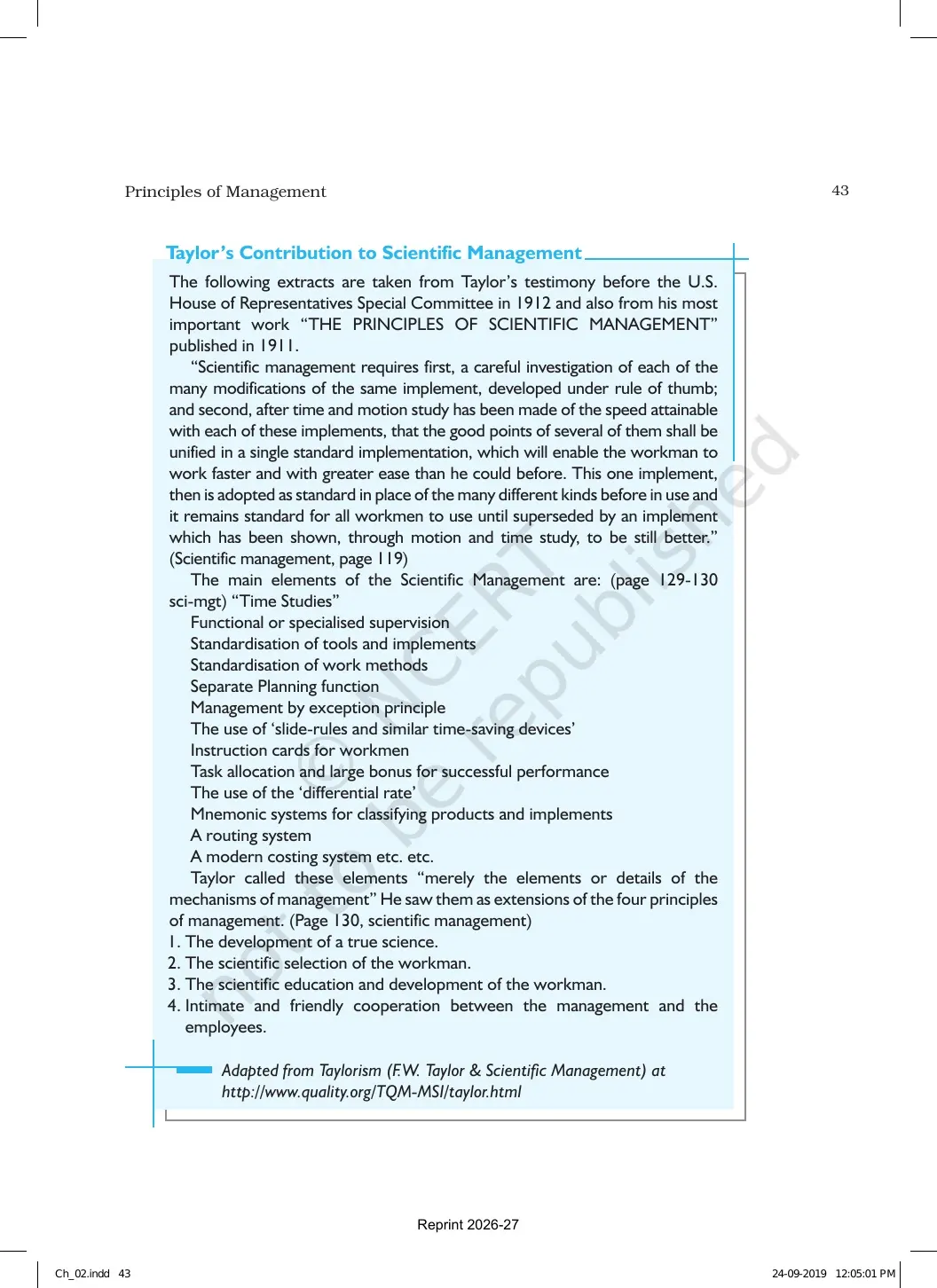
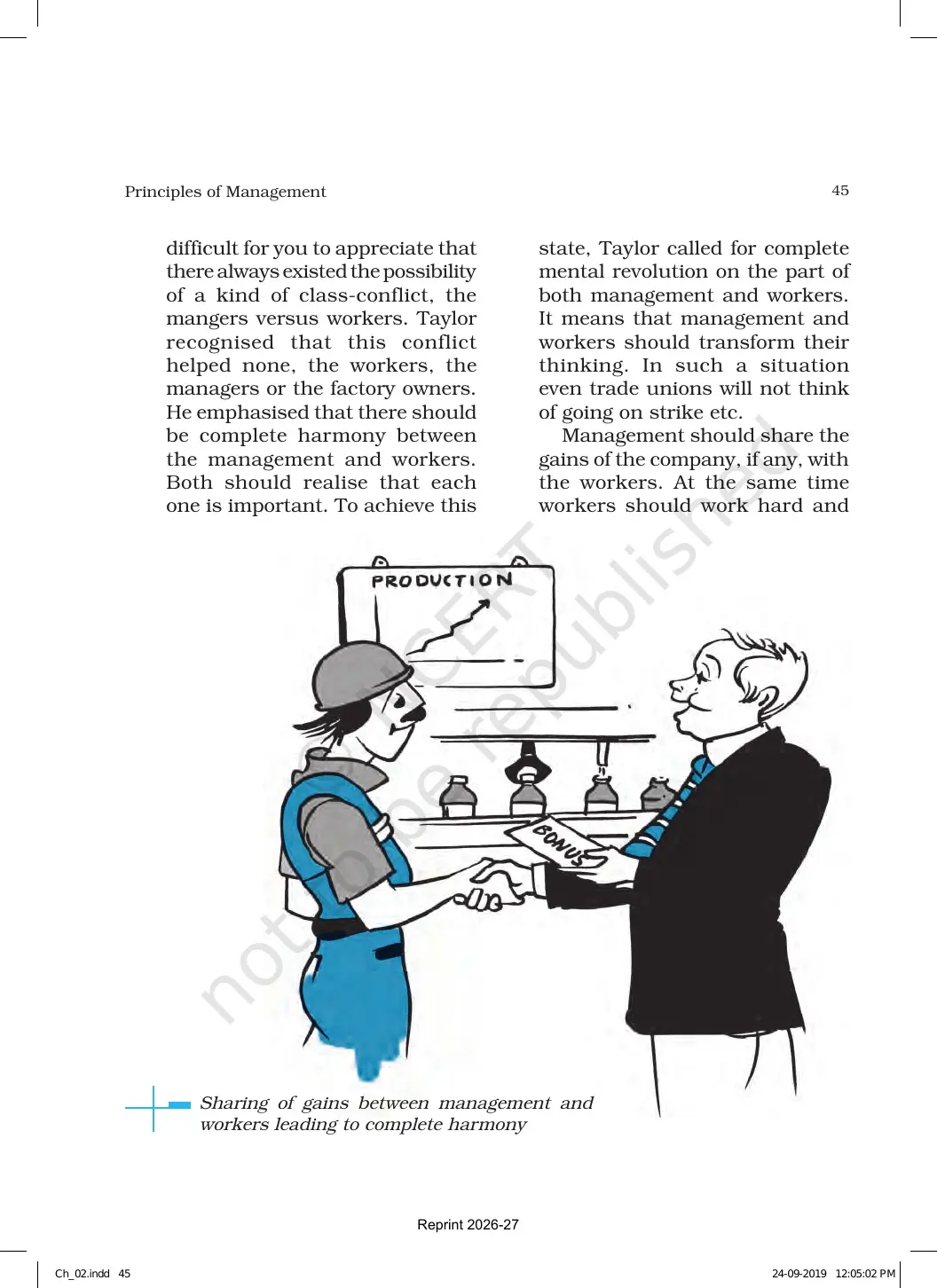
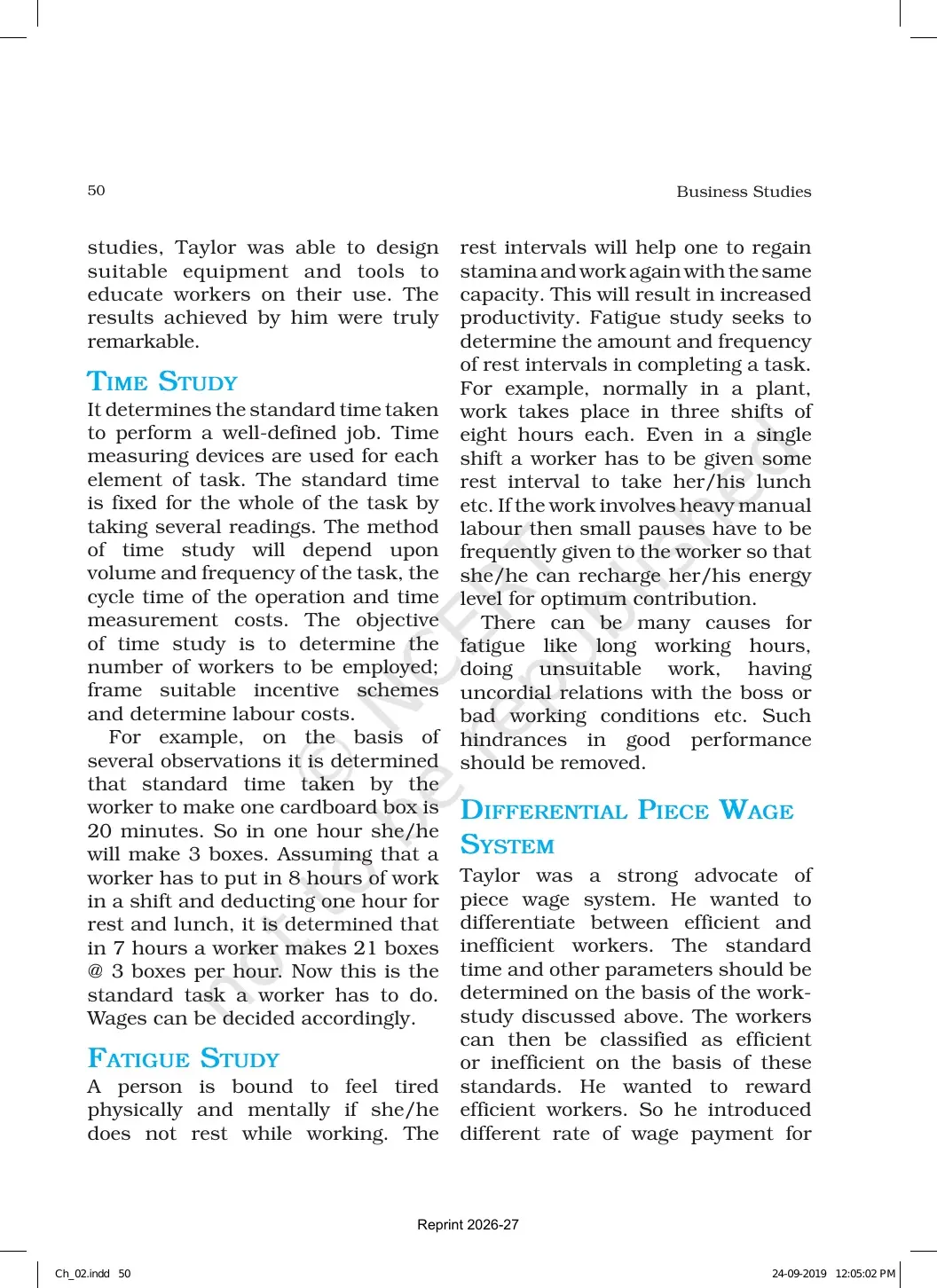
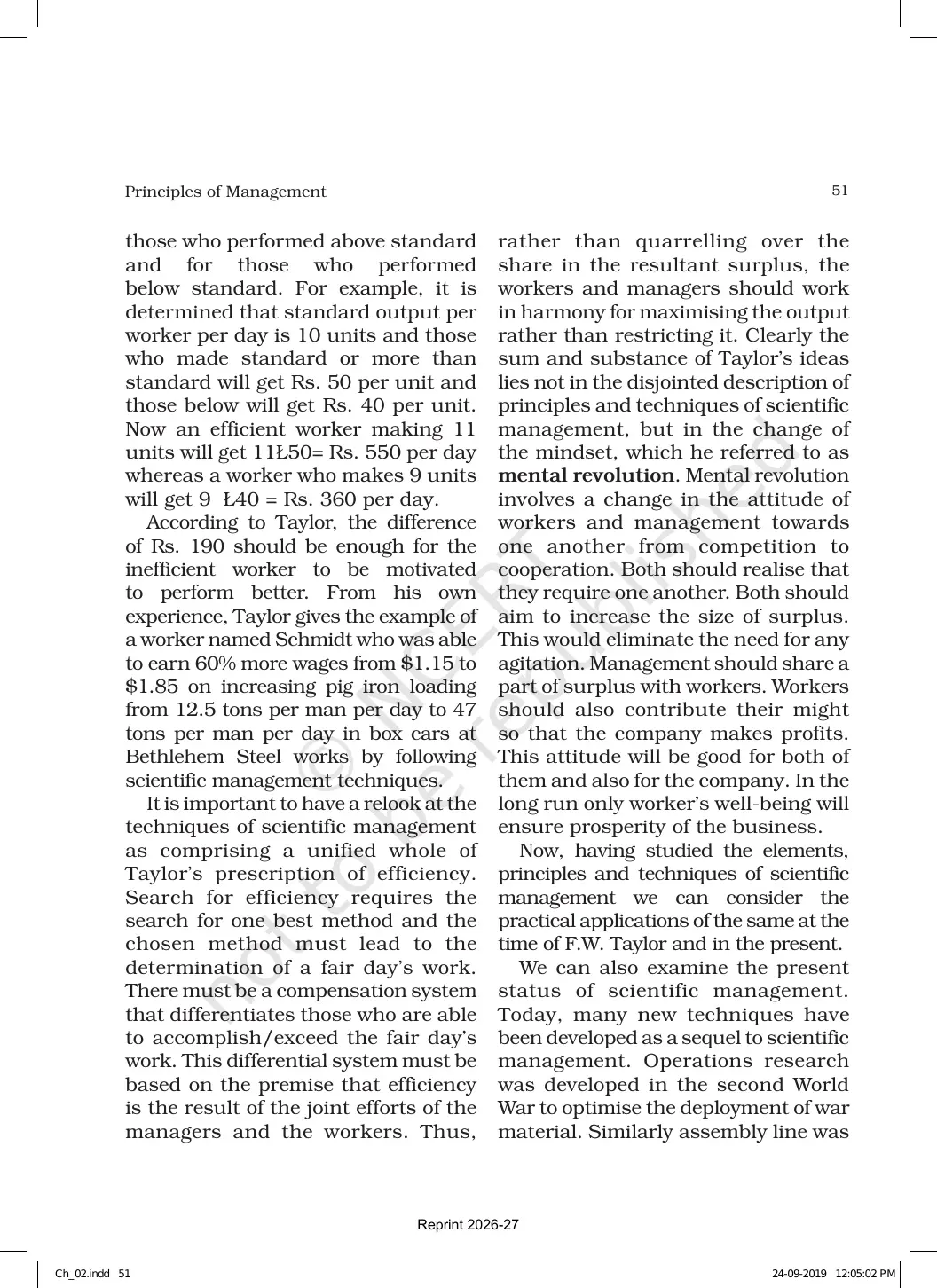
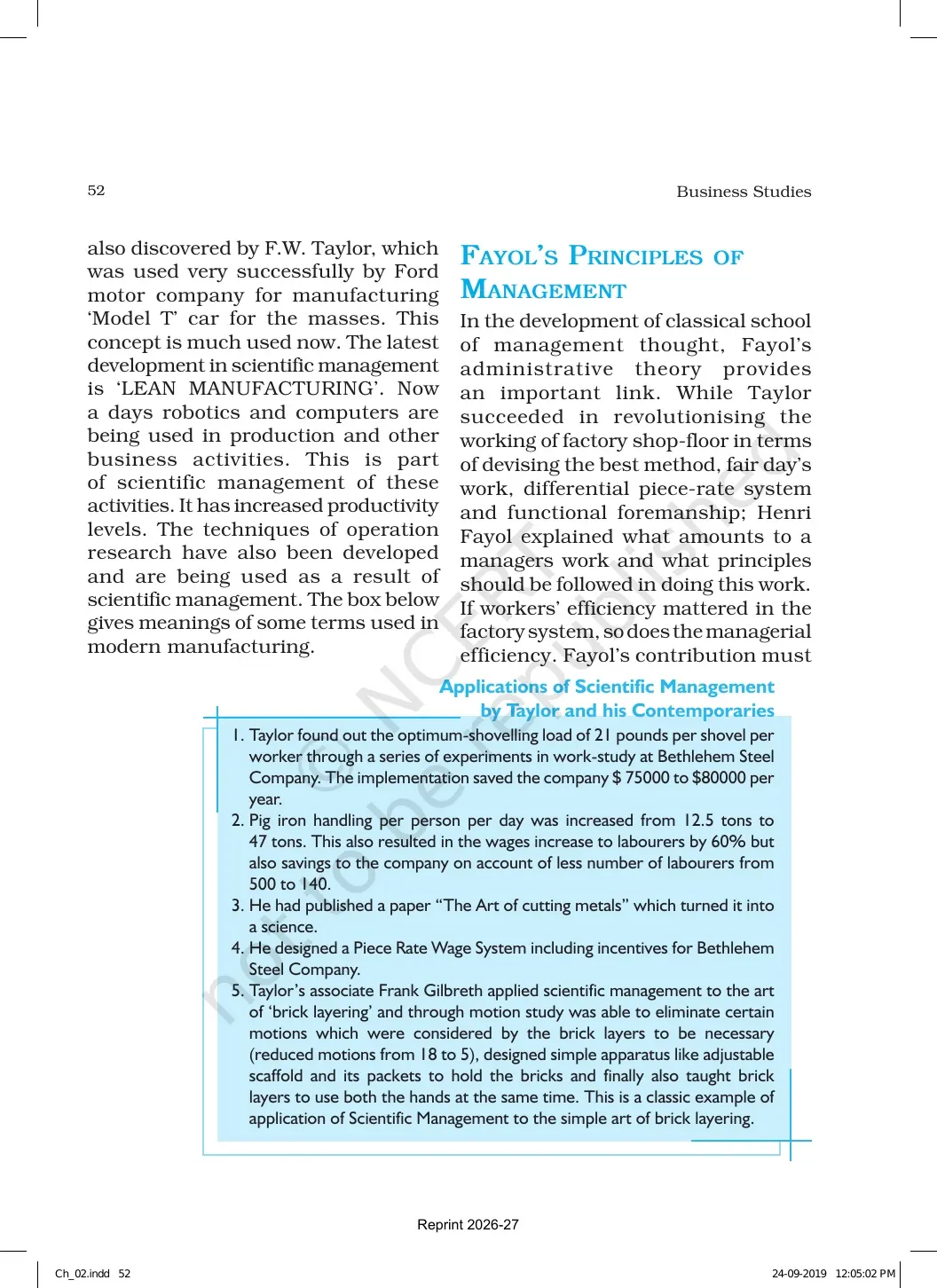
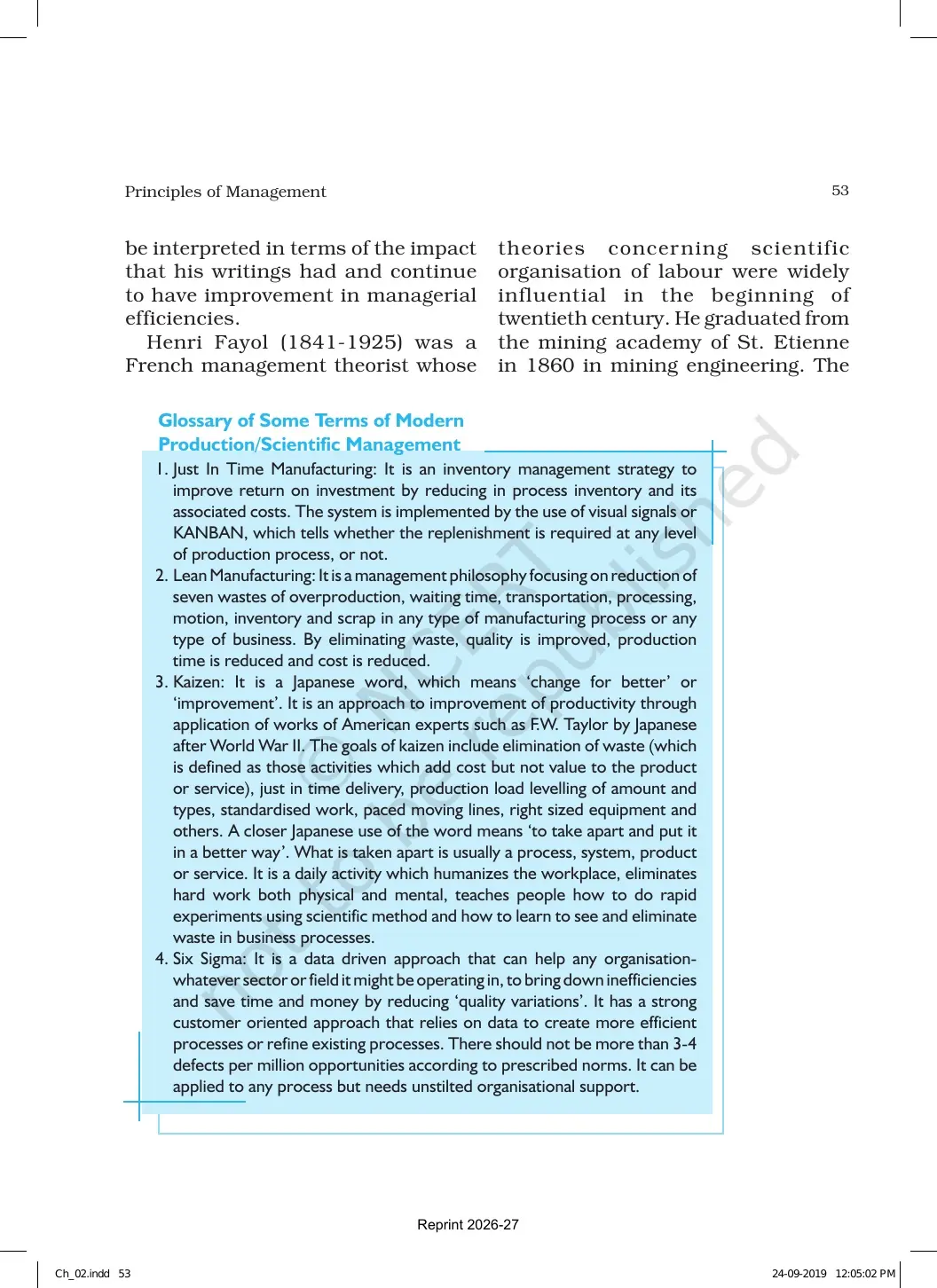
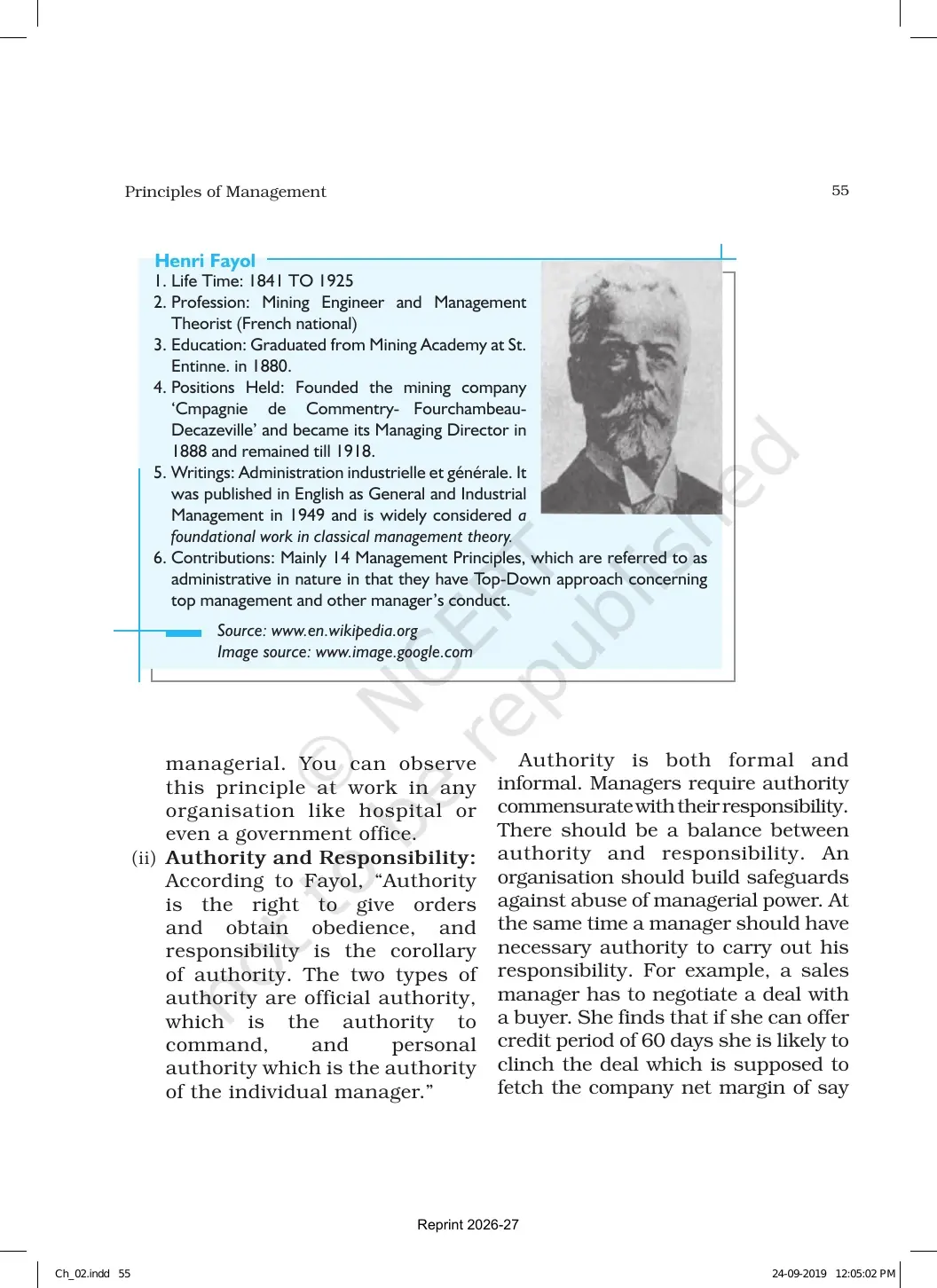
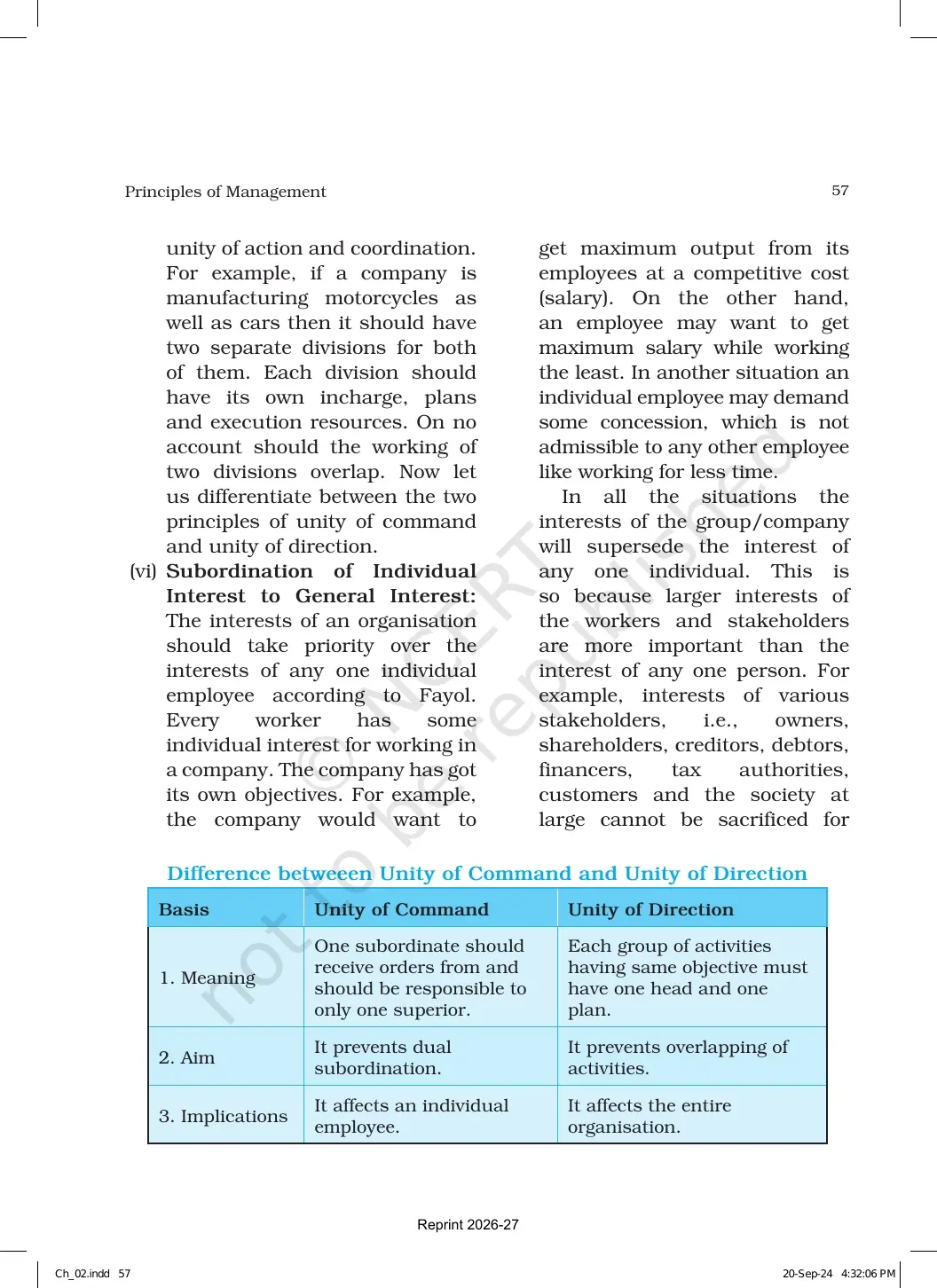
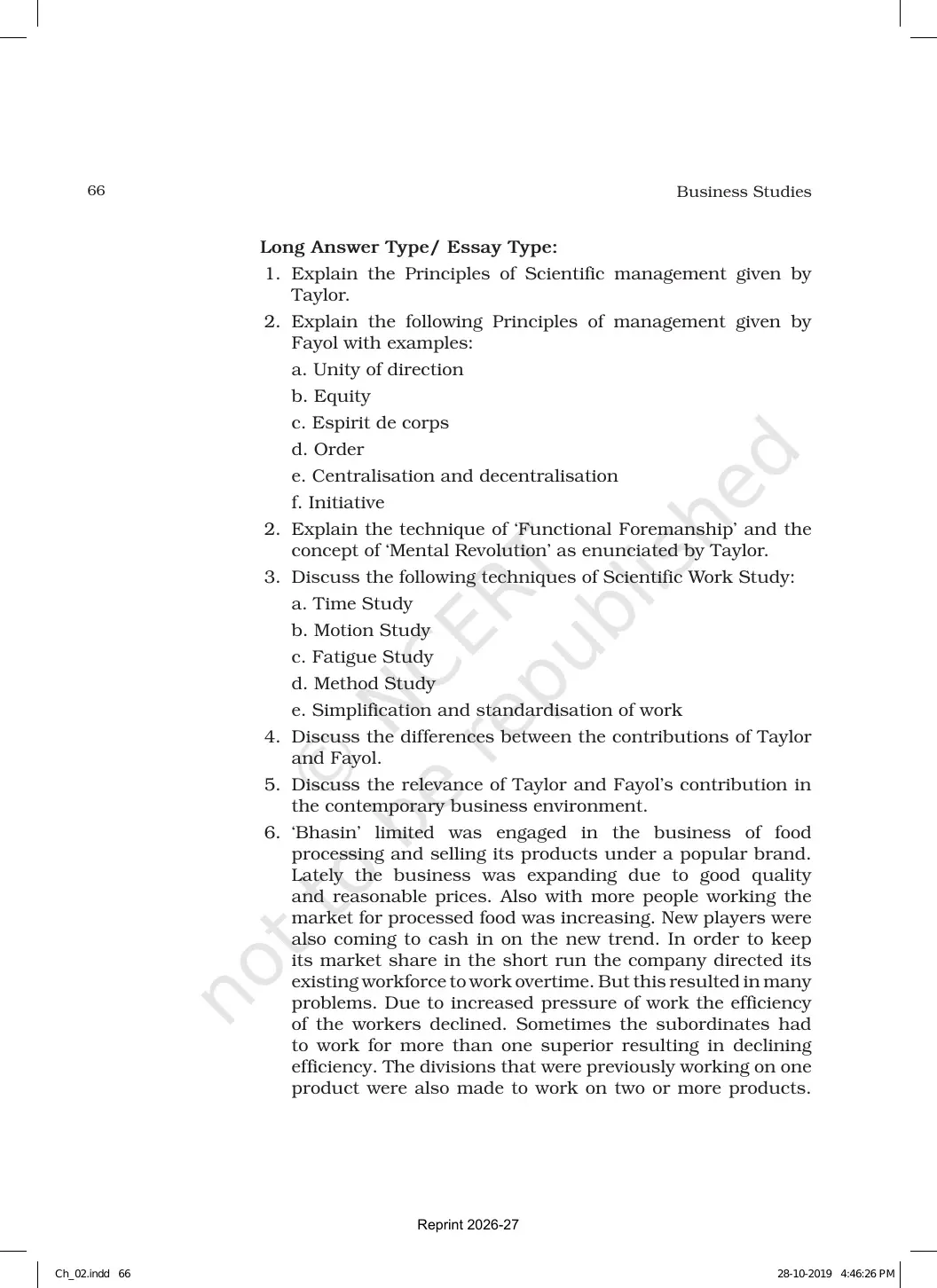
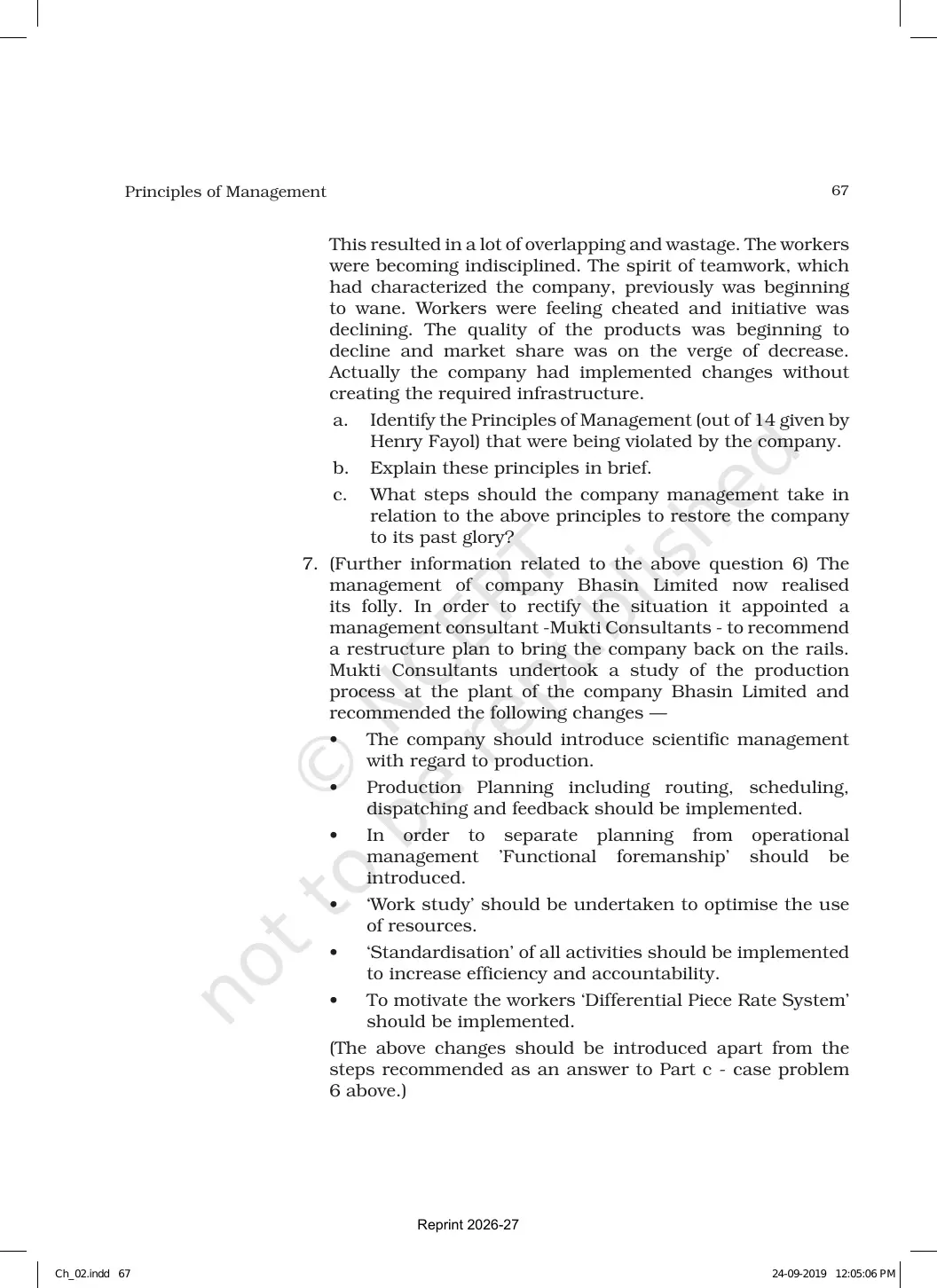
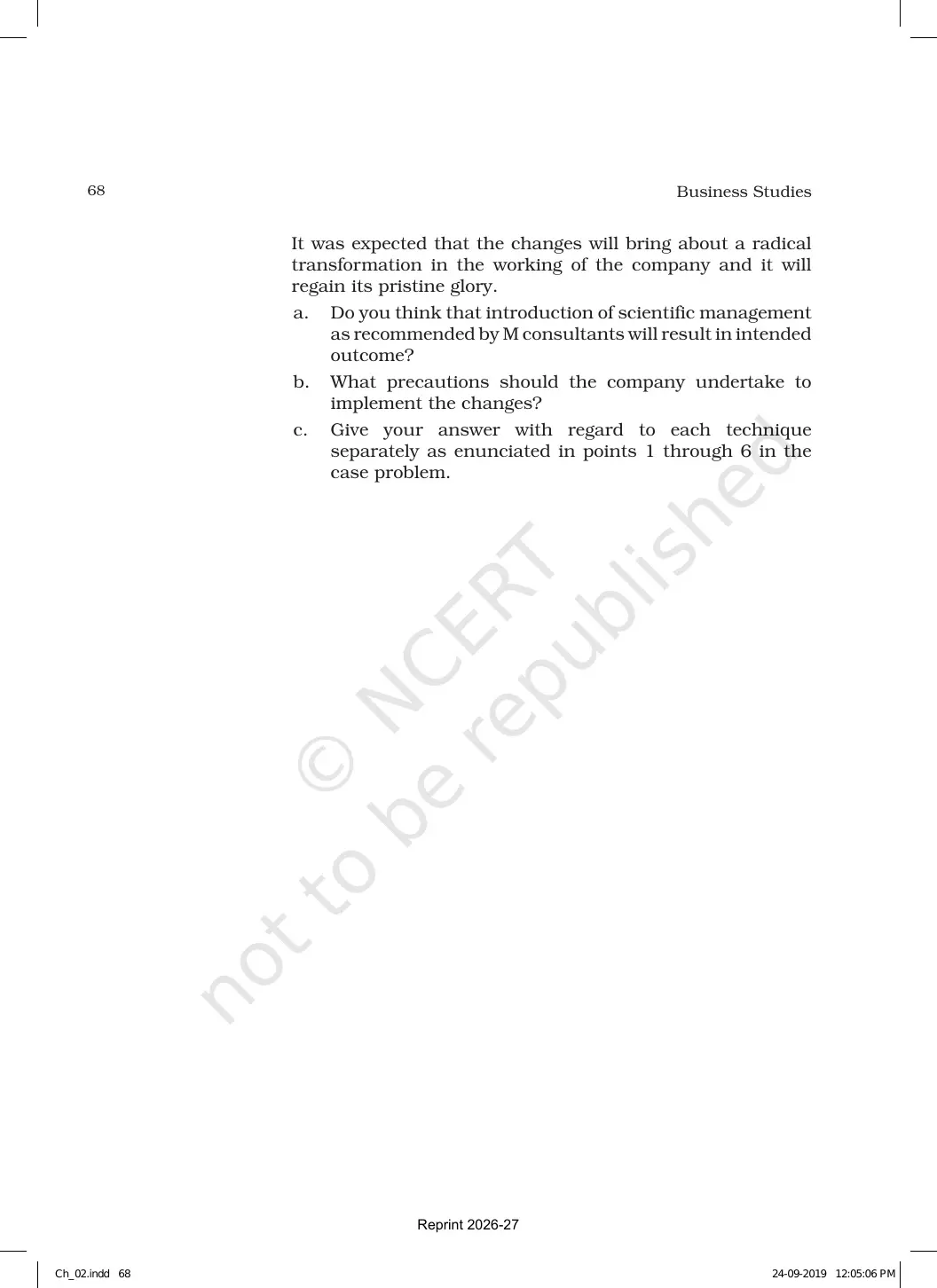
- Publisher: NCERT, Government of India (2026-27 reprint)
- Unit: Unit 1 - Principles and Functions of Management
Principles of Management Chapter 2 Content Overview
| Section | Topics Covered |
|---|---|
| Fayol's 14 principles | Definitions, examples, application to cases |
| Taylor's 4 principles of scientific management | Science not Rule of Thumb, Harmony, Cooperation, Development |
| Techniques of scientific work study | Time, Motion, Fatigue, Method, Simplification + Standardisation |
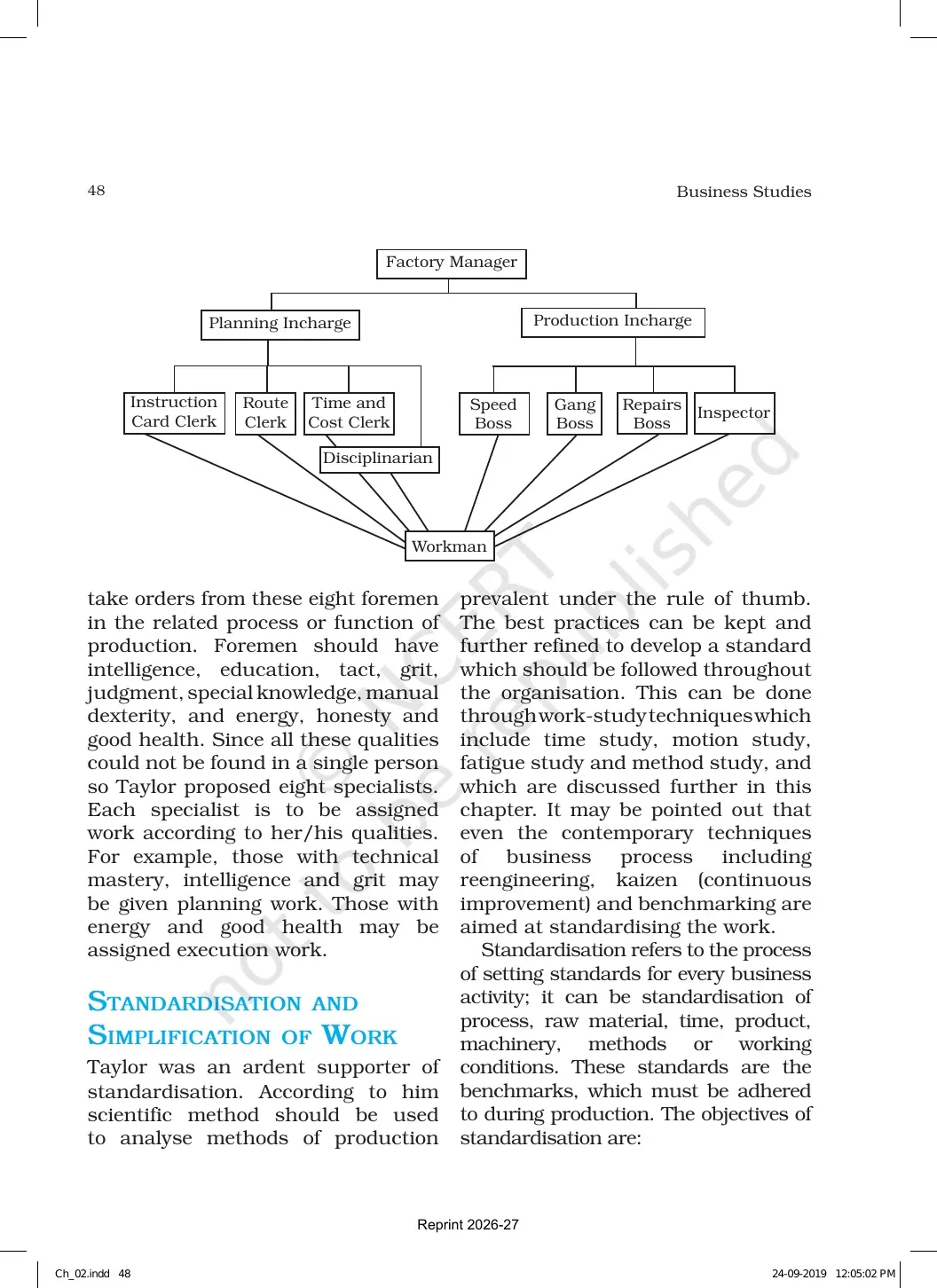
| Functional Foremanship | Eight specialised foremen (4 planning + 4 production) |
| Mental Revolution | Complete attitude shift on both sides |
| Differential Piece Rate System | Two-tier wage rate |
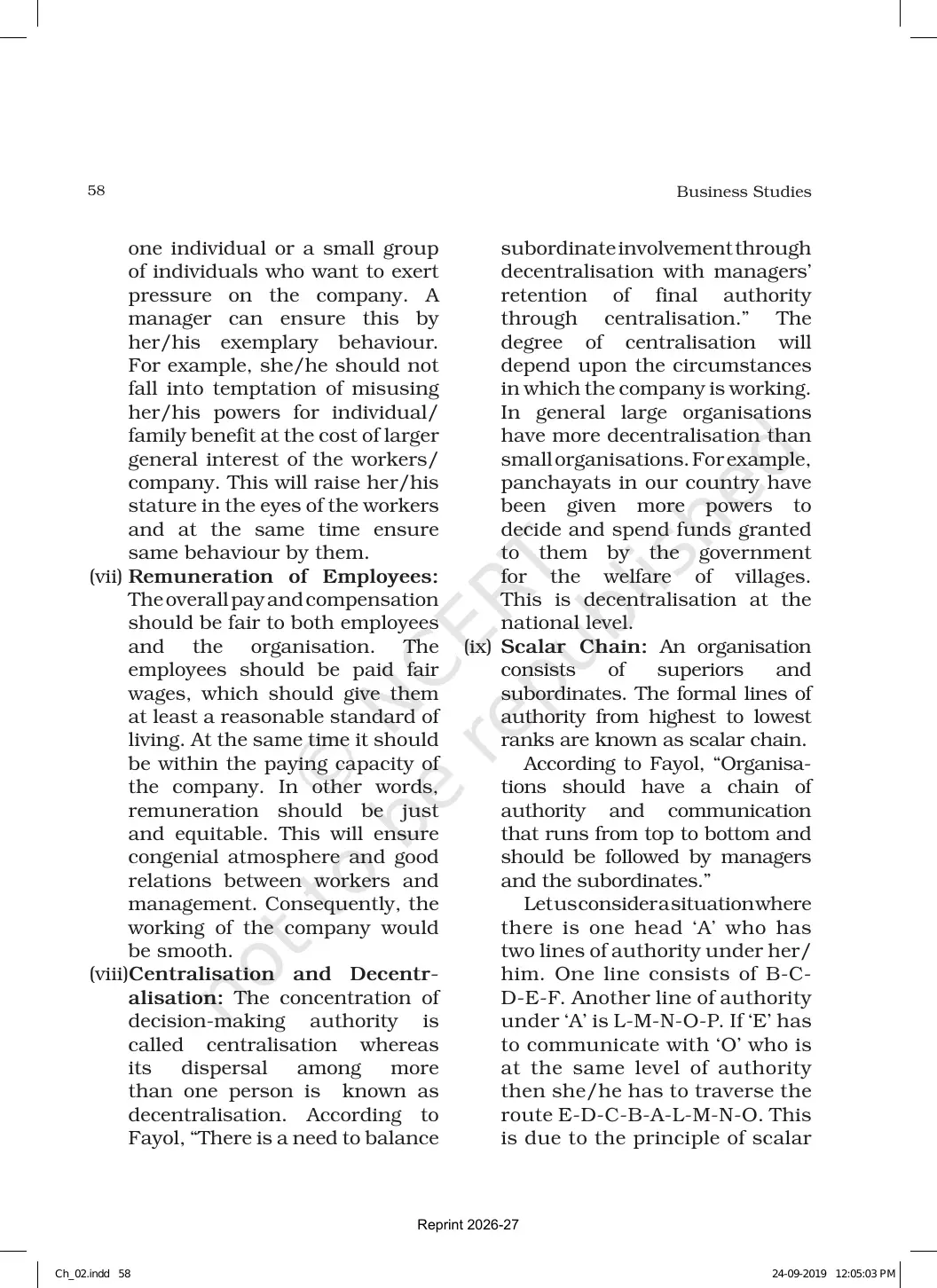
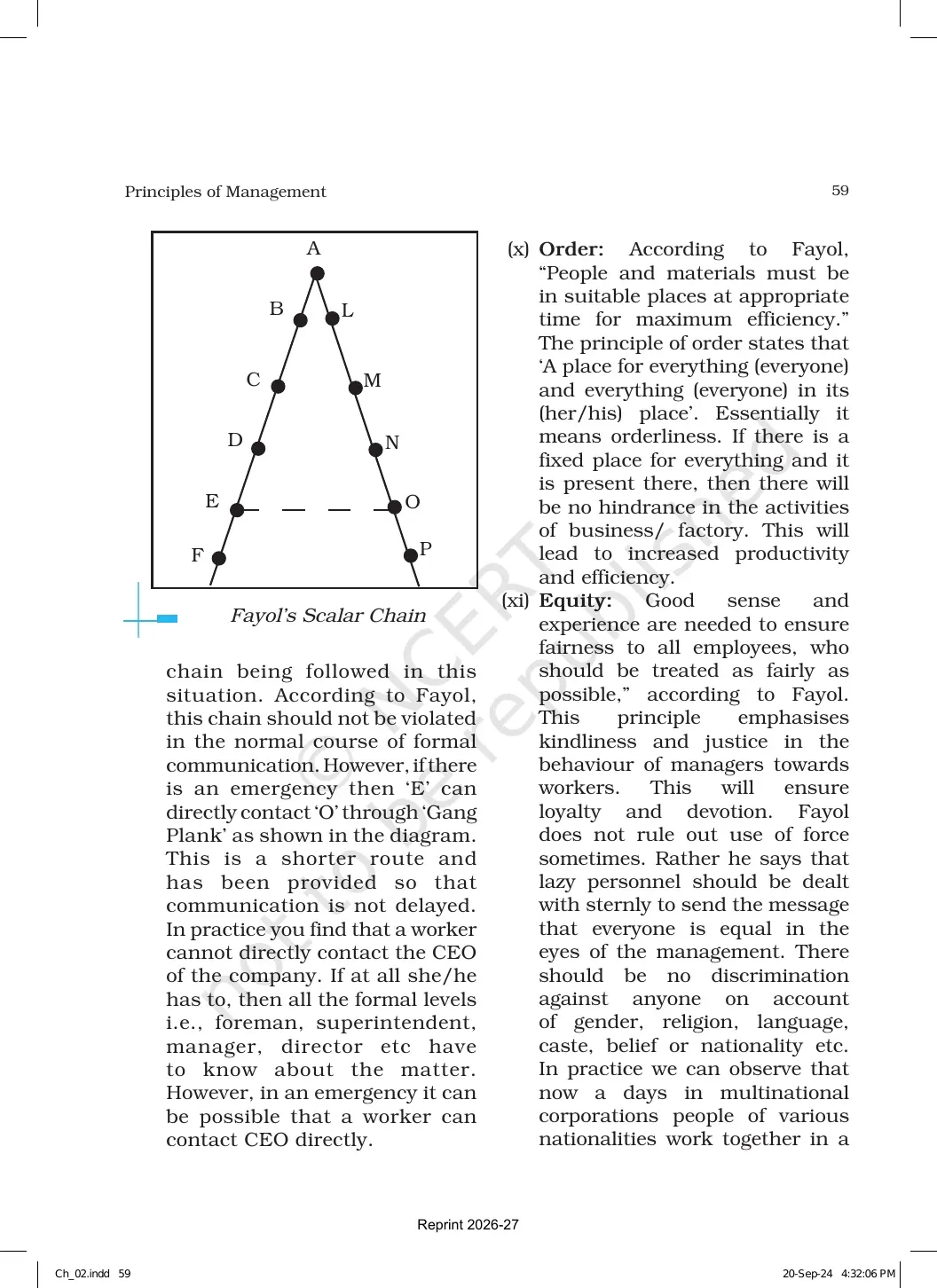
| Scalar Chain and Gang Plank | Vertical authority line + lateral emergency exception |
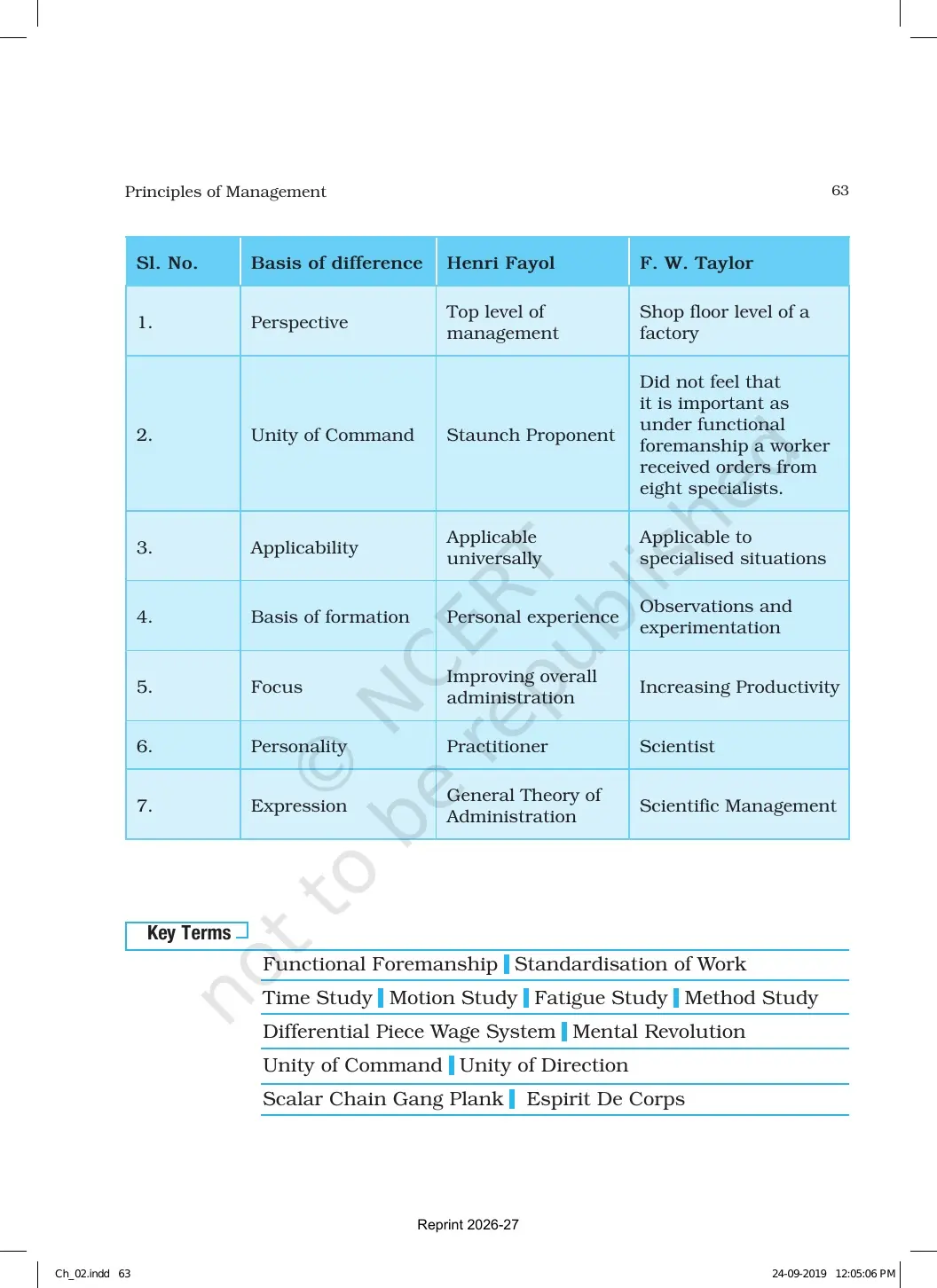
| Taylor vs Fayol | Six-point comparison: perspective, focus, unity emphasis, personality, applicability, methodology |
| Case-based questions | Bhasin Limited (six violations) + Mukti Consultants (six techniques) |
Principles of Management Video Chapter Walkthrough
Source: Magnet Brains on YouTube
This video walks through Fayol's 14 principles and Taylor's scientific management with simple classroom examples, useful for quick revision before your Class 12 exam.
Student Feedback
In a Collegedunia poll of 420 Class 12 Commerce students, 81% said the Fayol vs Taylor comparison chart in this chapter helped them the most in exams. 3 in 4 said reading the original NCERT PDF alongside the video cleared their doubts on Functional Foremanship faster than the textbook alone.
Other Resources for Class 12 Business Studies Chapter 2 Principles of Management
| Resource | Link |
|---|---|
| NCERT Solutions | Principles of Management NCERT Solutions |
| Revision Notes | Principles of Management Class 12 Notes |
| Handwritten Notes | Principles of Management Handwritten Notes |
| NCERT Book PDF | Principles of Management NCERT Book PDF |
FAQs on Class 12 Business Studies Chapter NCERT Book PDF
FAQs on Class 12 Business Studies Chapter NCERT Book PDF
What are the 14 principles of management by Fayol?
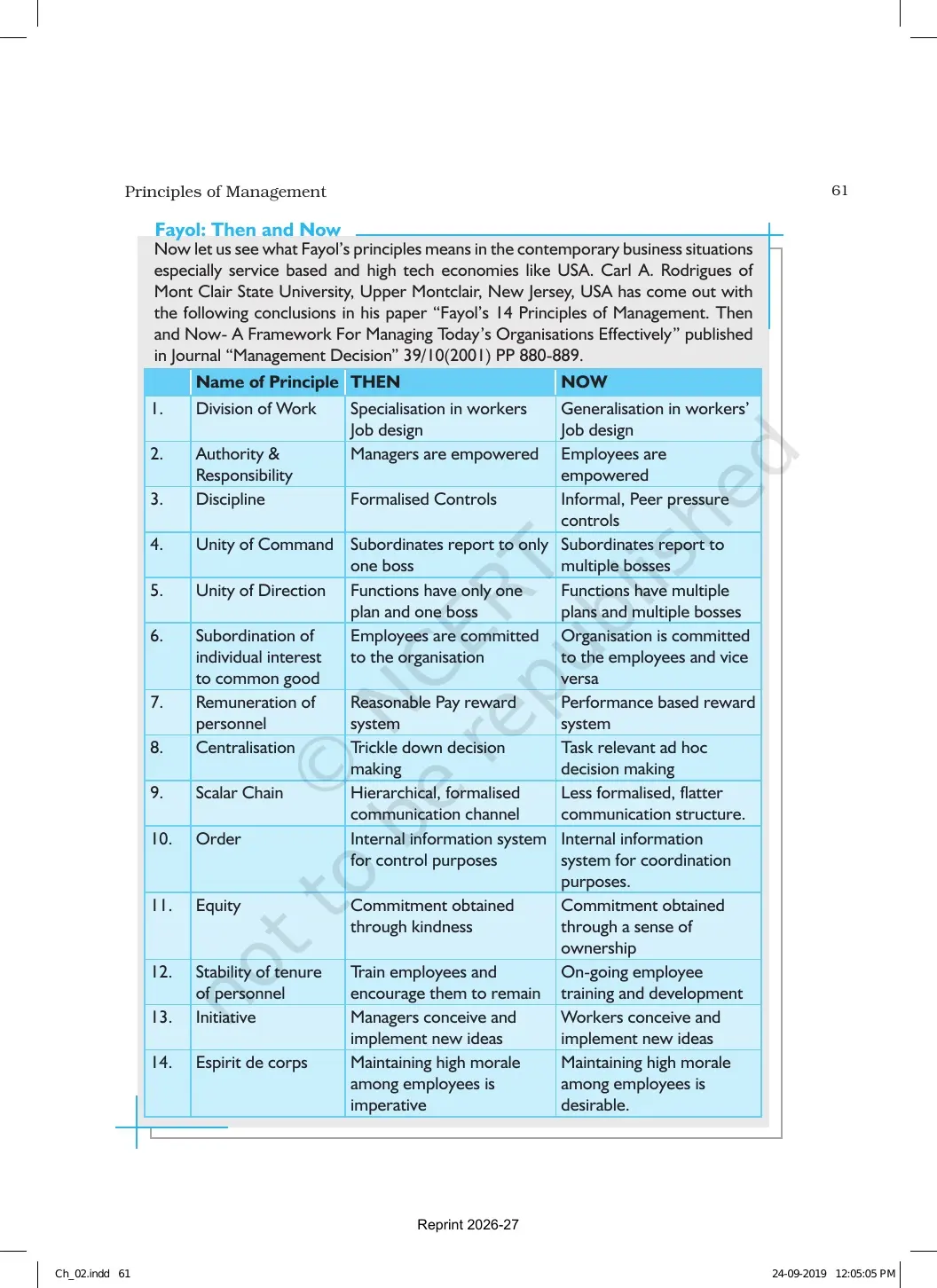
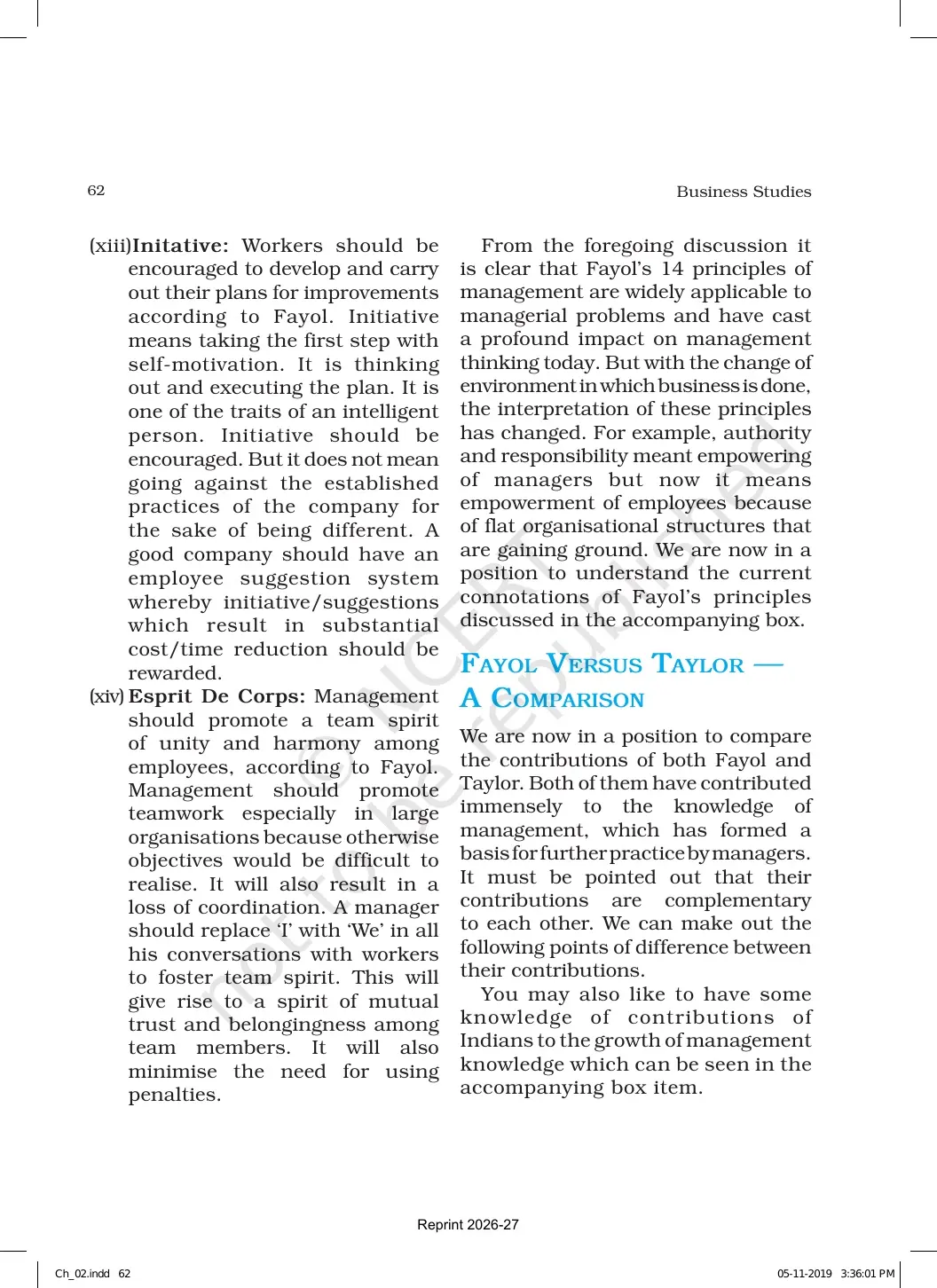
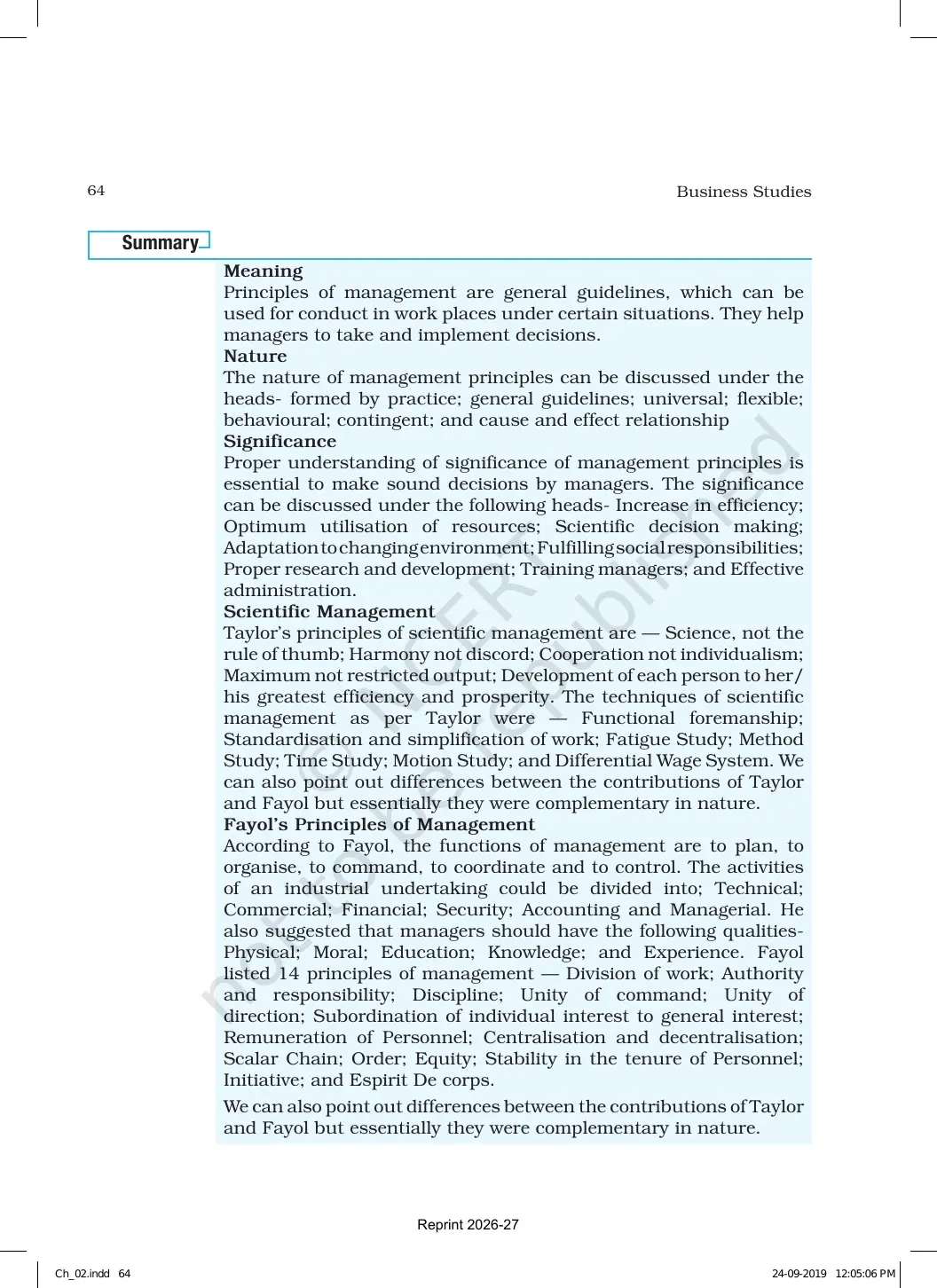
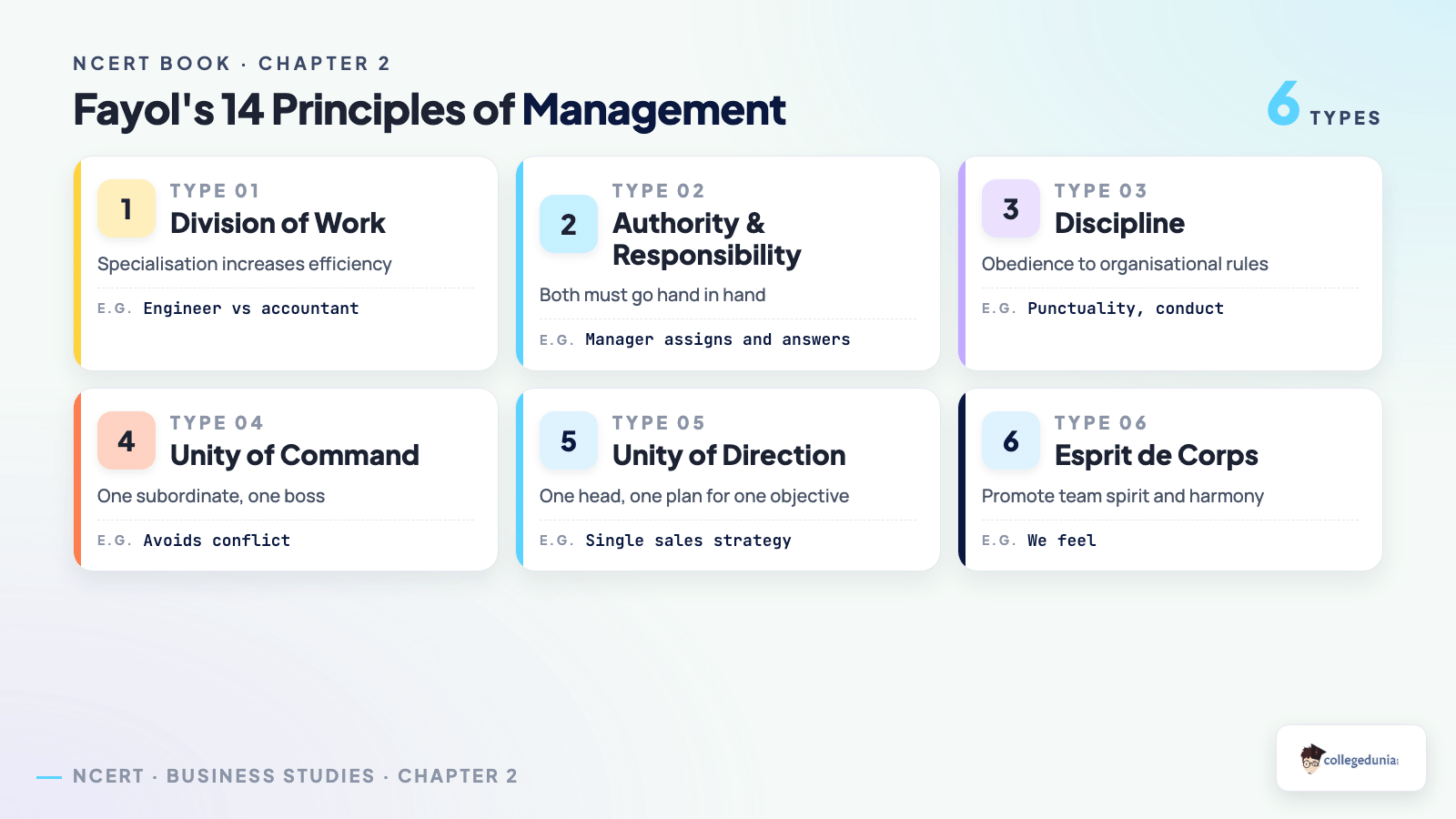
Fayol's 14 principles are: (1) Division of Work, (2) Authority and Responsibility, (3) Discipline, (4) Unity of Command, (5) Unity of Direction, (6) Subordination of Individual Interest to General Interest, (7) Remuneration of Personnel, (8) Centralisation and Decentralisation, (9) Scalar Chain, (10) Order, (11) Equity, (12) Stability of Personnel, (13) Initiative, (14) Esprit de Corps.
What are Taylor's four principles of scientific management?
Taylor's four principles are: (1) Science, not Rule of Thumb, (2) Harmony, not Discord, (3) Cooperation, not Individualism, (4) Development of each person to his/her greatest efficiency and prosperity.
What is Functional Foremanship?
Functional Foremanship is Taylor's technique of dividing supervisory authority among eight specialised foremen instead of one general foreman. Four are in the planning section (Route Clerk, Instruction Card Clerk, Time and Cost Clerk, Disciplinarian) and four are on the production floor (Speed Boss, Gang Boss, Repair Boss, Inspector).
What is Mental Revolution in Taylor's scientific management?
Mental Revolution is Taylor's call for a complete change of attitude on the part of both management and workers. Management must stop treating workers as wage-greedy and workers must stop treating management as profit-greedy. Both must commit to mutual cooperation and shared gains.
What is the difference between Scalar Chain and Gang Plank?
Scalar Chain is the formal vertical line of authority from the top to the bottom of the organisation. Gang Plank is an exception that allows two employees at the same level in different departments to communicate directly with each other in an emergency, bypassing the chain to save time, with their superiors' knowledge.



Comments