




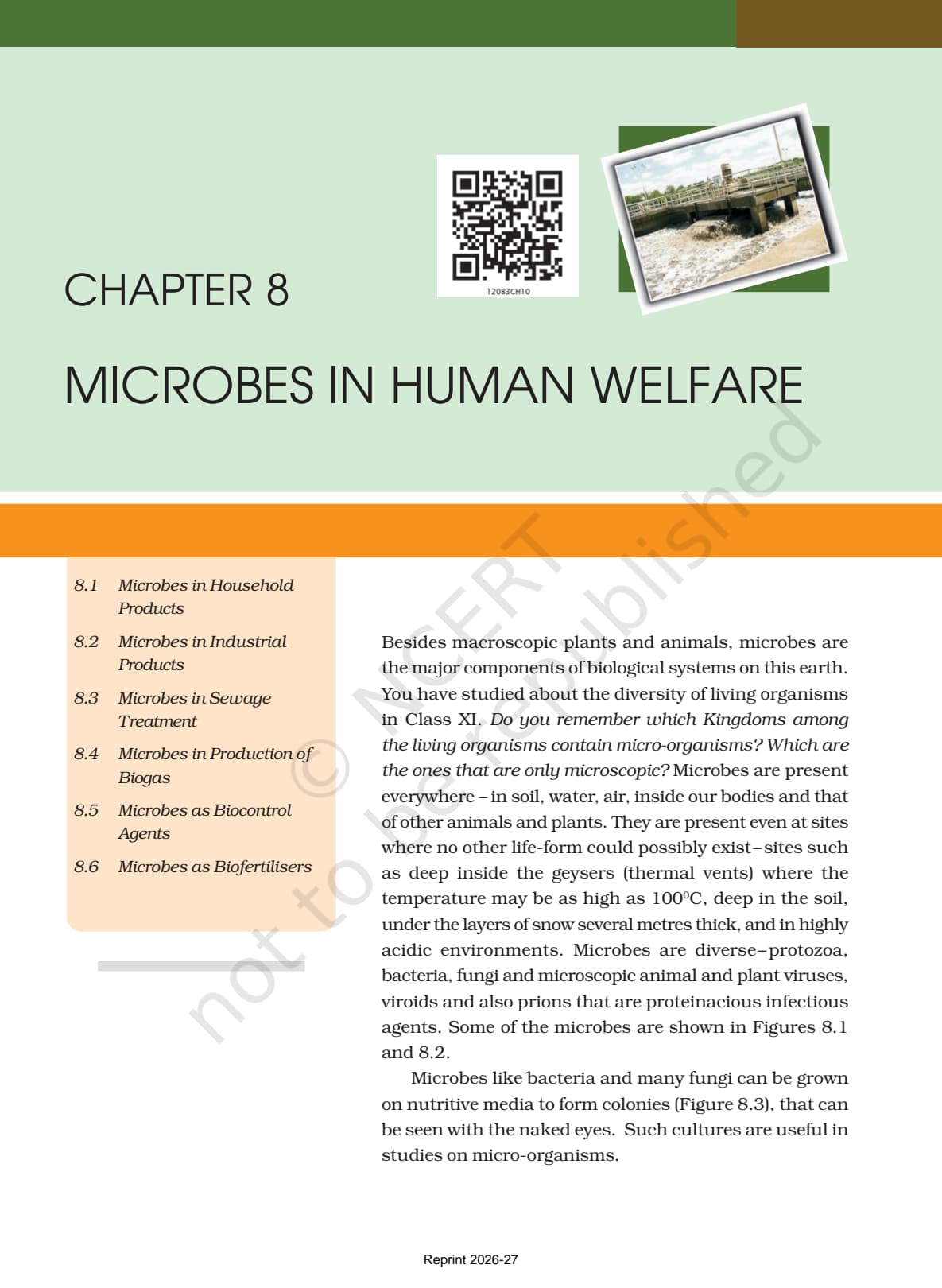
The Microbes in Human Welfare NCERT chapter for Class 12 Biology explores how bacteria, fungi, viruses and protozoa are harnessed for food production, sewage treatment, biogas, biofertilisers and biocontrol. This page hosts the verified 2026-27 NCERT Book PDF for Chapter 8, free to read and download.
- CBSE Weightage: 4-6 marks (commonly clubbed with Biotechnology unit in Section A and B).
- NEET Weightage: 2-3 questions consistently across recent NEET papers from the Biology in Human Welfare unit.
- CUET Weightage: 3-4 MCQs typically appear in the Biology domain section.
Microbes in Human Welfare Video Lecture for Class 12 Biology
Source: Competition Wallah on YouTube
About NCERT Class 12 Biology Chapter 8 Microbes in Human Welfare Book PDF
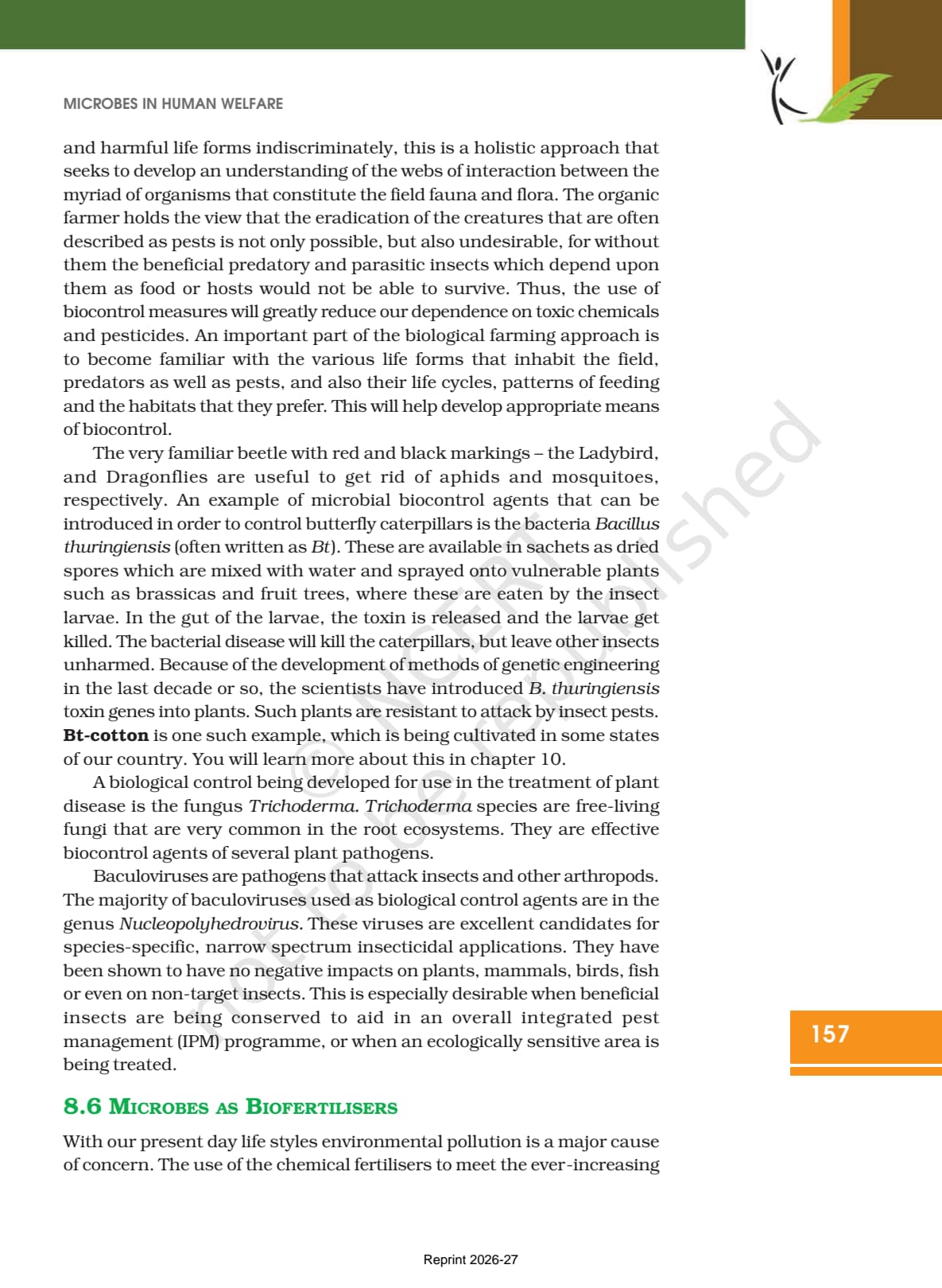
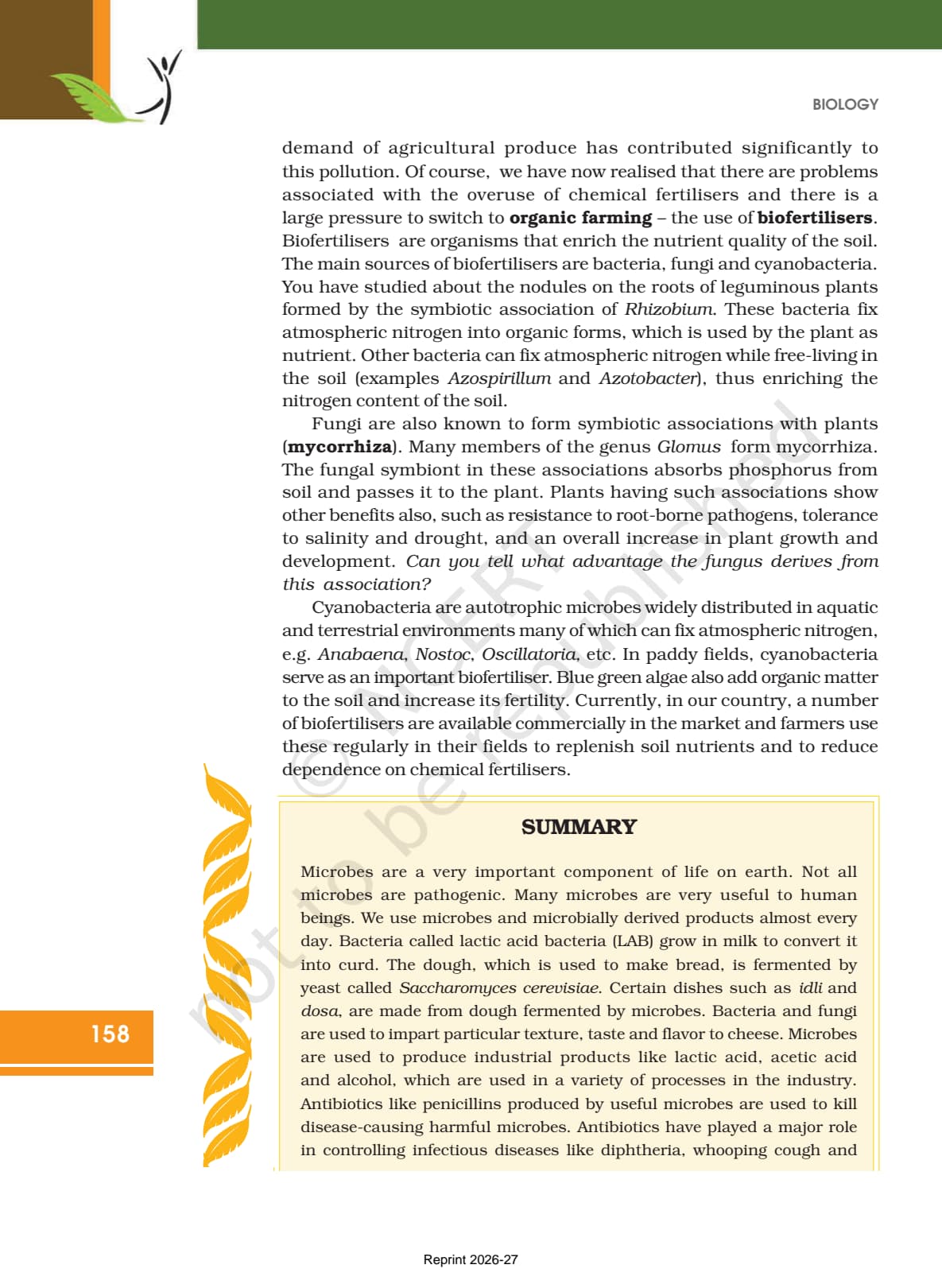
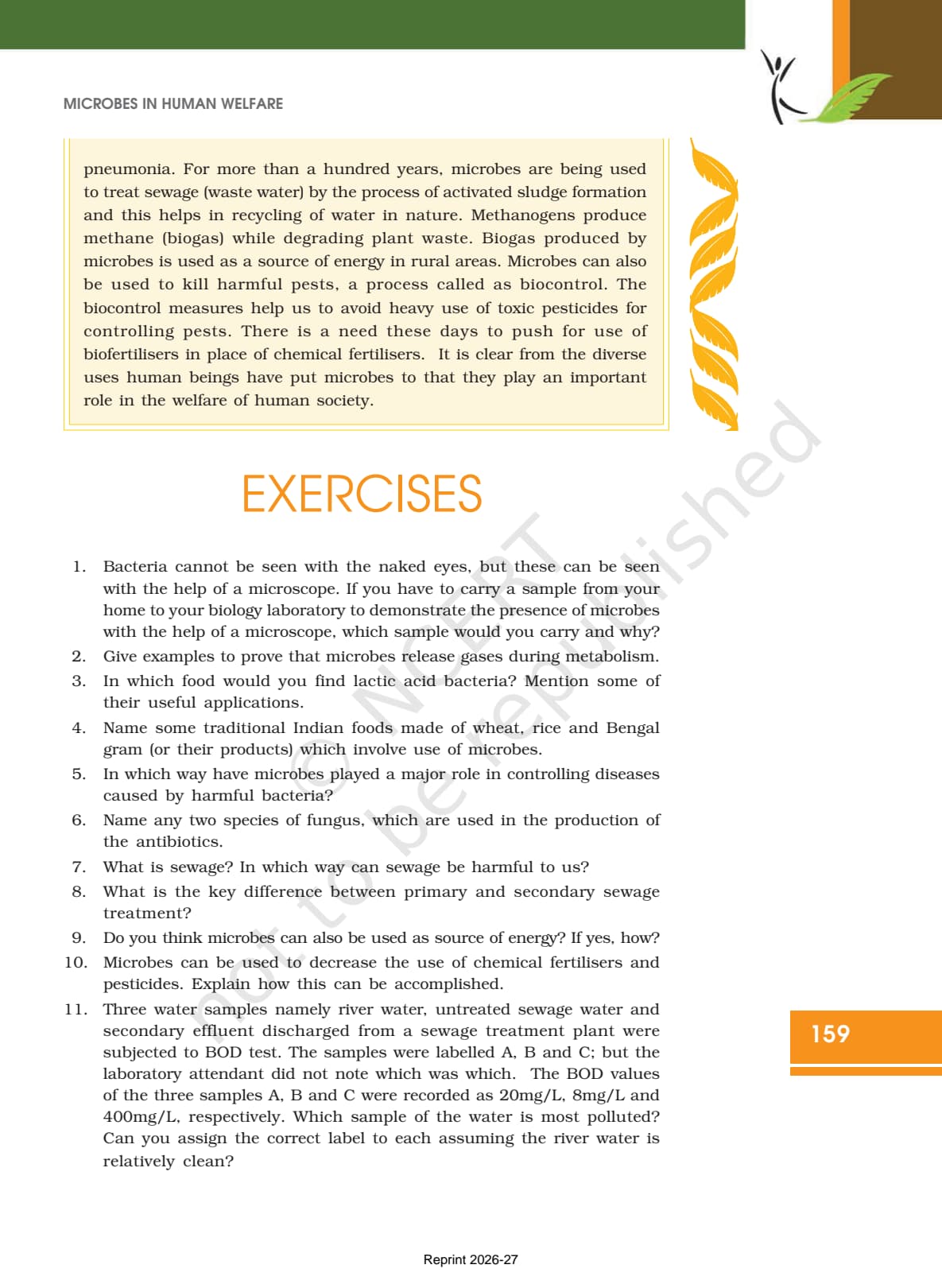
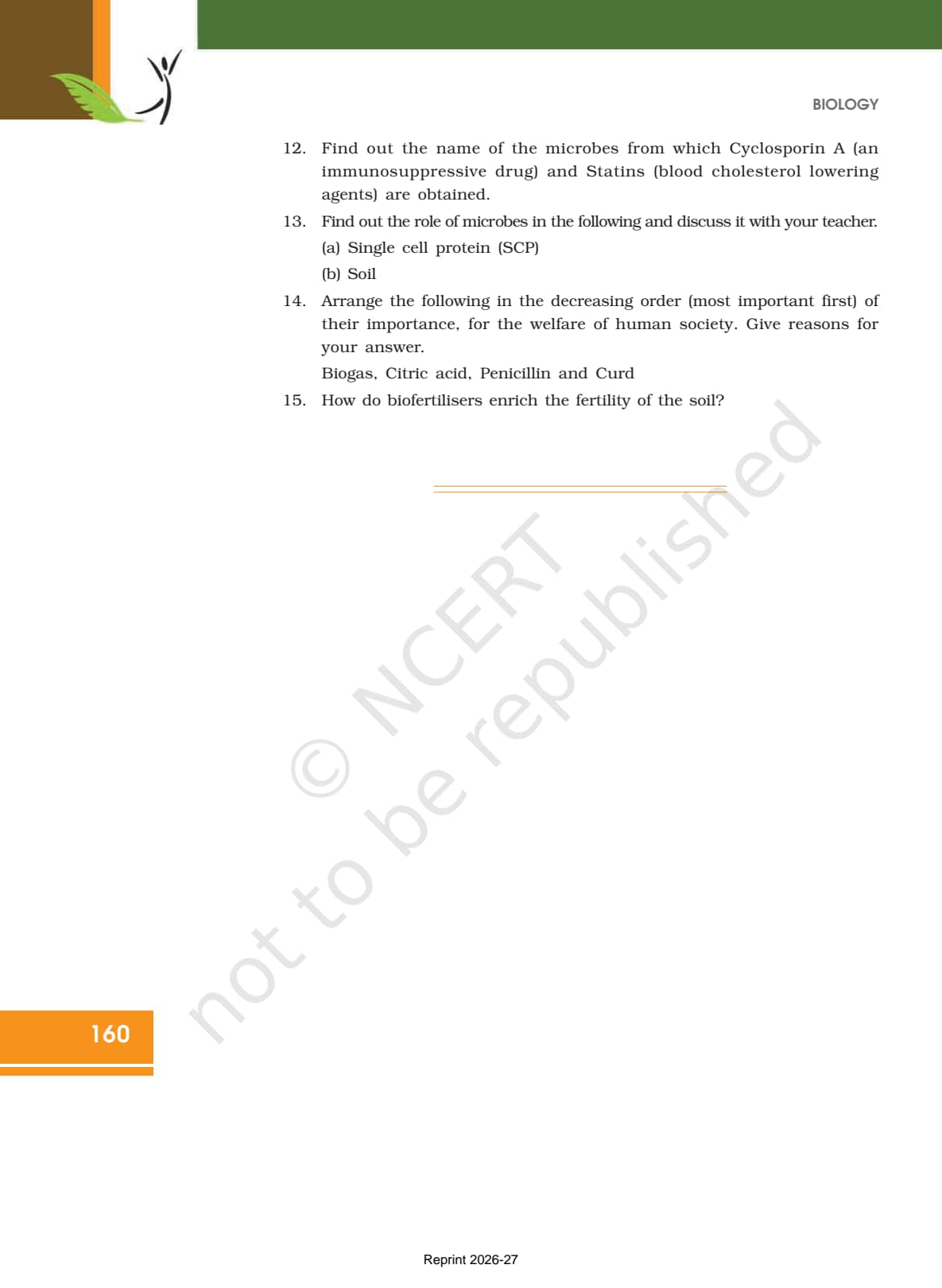
Chapter 8 of the Class 12 Biology textbook runs across roughly 13 pages and is part of Unit IX, Biology and Human Welfare. The chapter moves from familiar food fermentation to industrial bioprocesses and finally to microbe roles in waste management and sustainable agriculture.
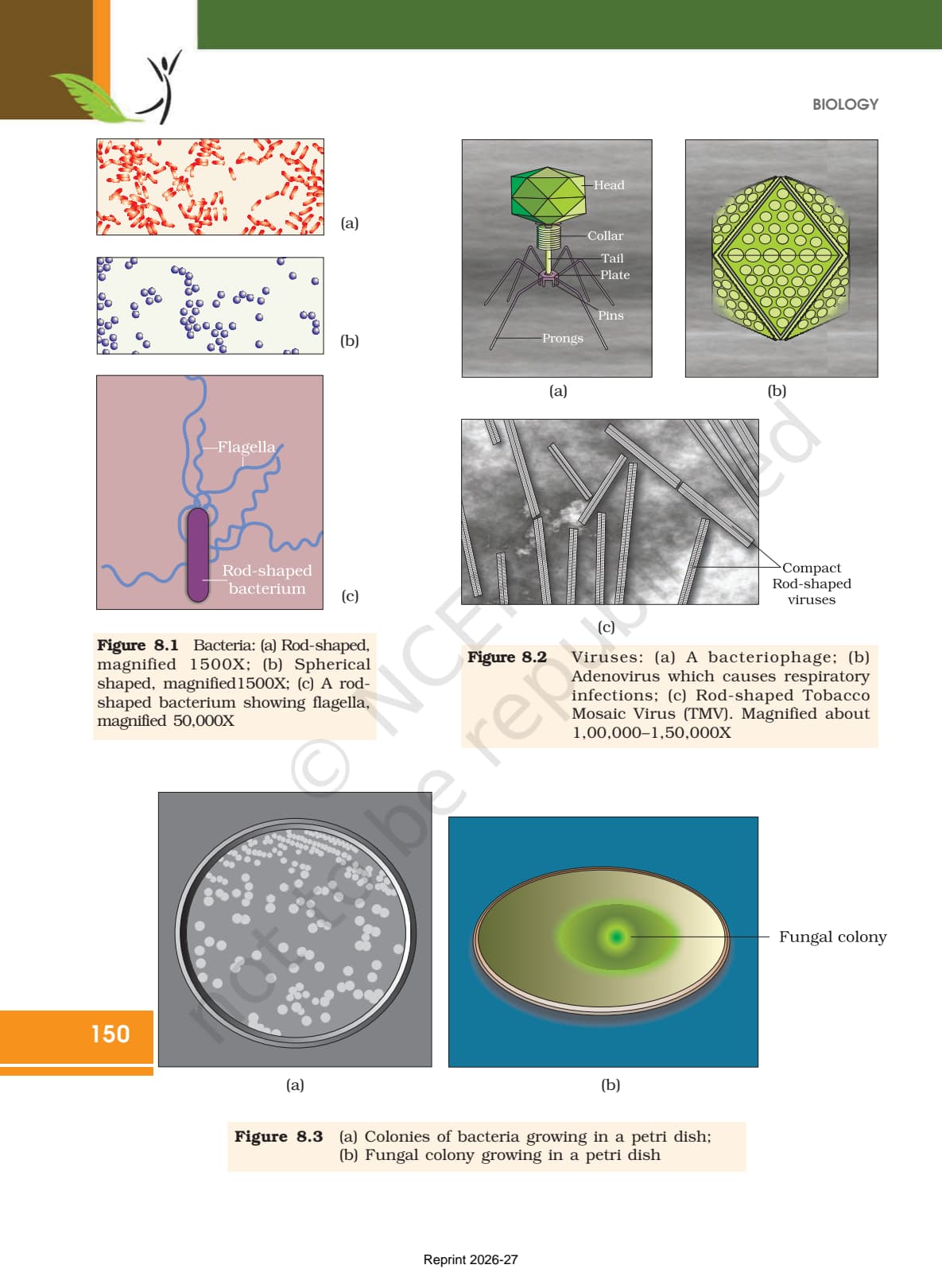
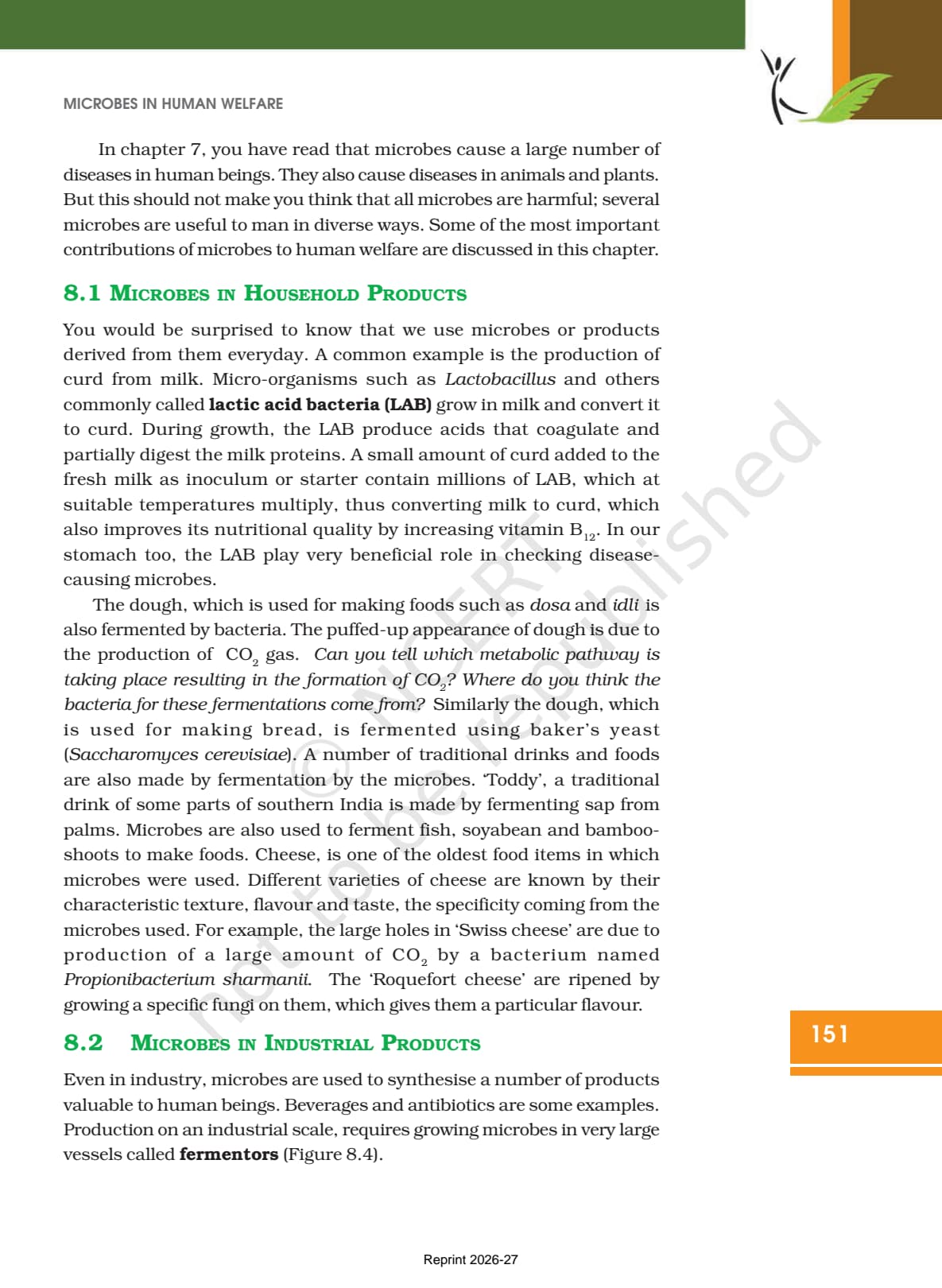
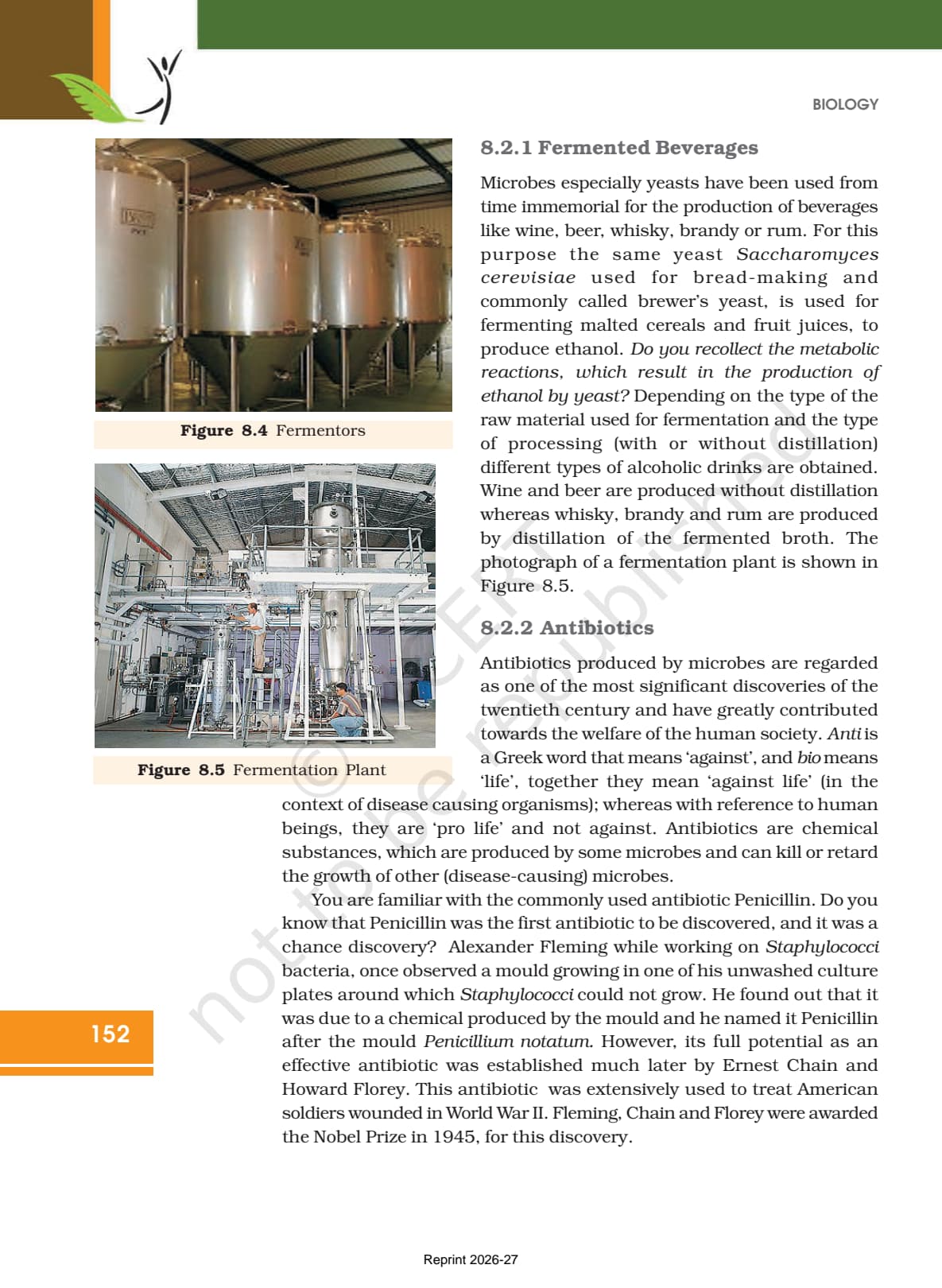
The official NCERT PDF preserves the original figure numbering (Fig. 8.1 to Fig. 8.6), the in-chapter "Do you know?" boxes and the chapter-end exercises that frequently reappear in board papers. The Collegedunia NCERT Book PDF mirrors the ncert.nic.in version with no edits to text or diagrams.
What is Inside the Microbes in Human Welfare NCERT Book Chapter
The chapter has six teaching sections. Each section links a real-world application to the microbe genus behind it, which is exactly how NEET and CUET MCQ stems are written.
| Section | Topic | Key Microbes Discussed |
|---|---|---|
| 8.1 | Microbes in Household Products | Lactobacillus, Saccharomyces cerevisiae, Propionibacterium sharmanii |
| 8.2 | Microbes in Industrial Products | Saccharomyces cerevisiae, Penicillium notatum, Streptococcus, Aspergillus niger |
| 8.3 | Microbes in Sewage Treatment | Aerobic and anaerobic bacteria, flocs |
| 8.4 | Microbes in Production of Biogas | Methanobacterium (methanogens) |
| 8.5 | Microbes as Biocontrol Agents | Bacillus thuringiensis, Trichoderma, Baculovirus |
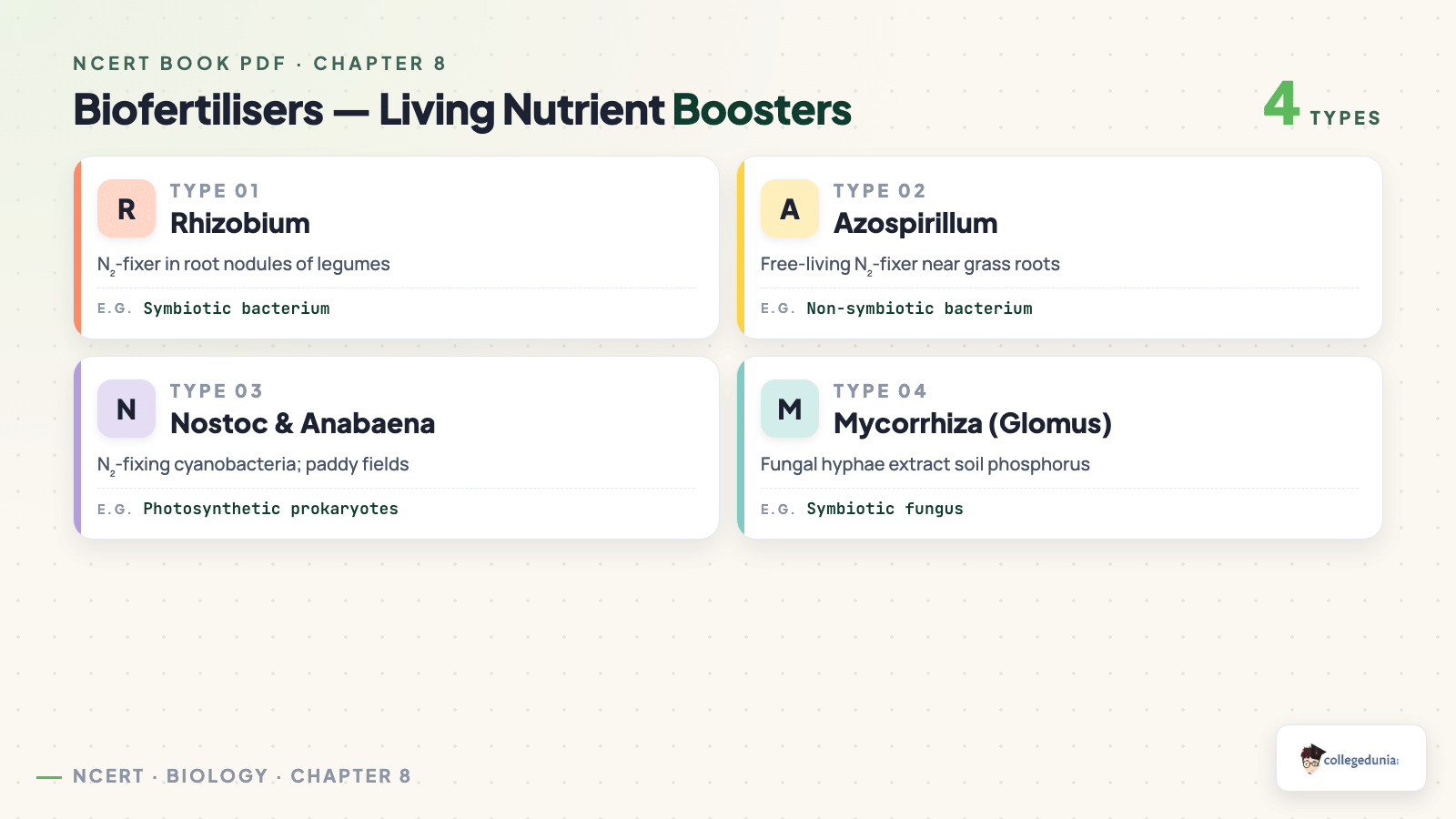
| 8.6 | Microbes as Biofertilisers | Rhizobium, Azospirillum, Azotobacter, Mycorrhiza, Cyanobacteria |
The table mirrors the heading sequence in the official ncert.nic.in reprint, so students can match section numbers to lectures one-to-one. Boards routinely lift two-mark questions from sections 8.2 and 8.5.
How Collegedunia's NCERT Book PDF Helps You
The Collegedunia mirror of the Class 12 Biology Chapter 8 PDF gives you the exact NCERT-published file for 2026-27, not a rewritten copy. That matters because CBSE explicitly flags NCERT line-for-line phrasing in its marking schemes, and NEET / CUET stems are paraphrases of NCERT sentences.
- Verified 2026-27 reprint, no third-party edits.
- Downloadable for offline revision in low-bandwidth zones.
- Search-friendly text layer so you can Ctrl+F microbe names.
- Cross-linked from the Collegedunia NCERT Solutions and Notes pages for this chapter.
Important Topics in Class 12 Biology Chapter 8 for CBSE Boards and NEET
The five most-asked topics from Microbes in Human Welfare across CBSE Boards 2025, NEET 2025 and CUET 2025 are listed below. Use this list to plan revision priority in the final week.
| Topic | Why it Matters | Frequent Exam Format |
|---|---|---|
| Microbes in curd and bread (LAB and yeast) | Names + product matching | 1-mark MCQ / Assertion-Reason |
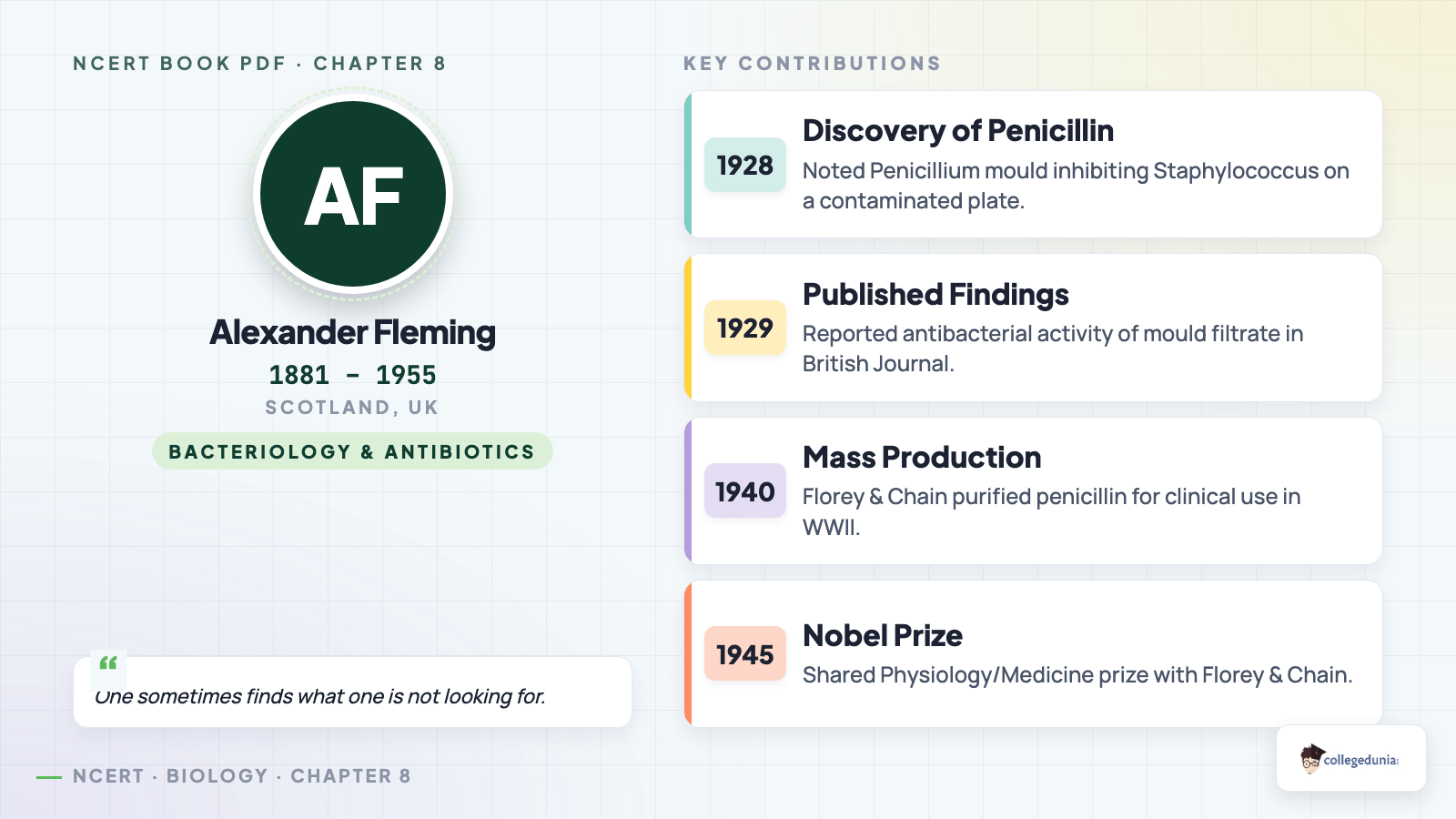
| Fermenters and antibiotic production | Penicillin discovery, Fleming | 2-mark short answer |
| Primary and secondary sewage treatment | BOD concept, activated sludge | 3-mark differentiate question |
| Biogas plant structure | Methanogens, anaerobic digestion | 3-mark labelled diagram |
| Bt cotton and biocontrol | Links to Biotechnology chapter | NEET MCQ / CUET stem |
In NEET 2025, two of the four Biology in Human Welfare questions came directly from sections 8.3 and 8.5. A focused re-read of those two sections delivers high-return revision in under 40 minutes.
Microbes in Human Welfare PYQ Trend across CBSE Boards 2025-2021
The five-year board paper trend shows that Chapter 8 has been a stable 4 to 6 mark contributor. Long-answer questions are rare; the chapter is almost always tested through one short answer and two MCQ / assertion-reason pairs.
| Year | Marks Carried | Most-Asked Sub-Topic |
|---|---|---|
| 2025 | 5 | Biogas production + biocontrol agents |
| 2024 | 6 | Sewage treatment (primary vs secondary) |
| 2023 | 4 | Industrial products: antibiotics, organic acids |
| 2022 | 5 | Biofertilisers + symbiotic associations |
| 2021 | 4 | Household products: curd, bread, idli |
Full year-wise PYQ map: Microbes in Human Welfare Class 12 Notes covers the topic-wise breakup with solved excerpts.
Exam Comparison: How Microbes in Human Welfare Appears across Major Exams
Chapter 8 carries different weightage profiles across CBSE, NEET and CUET. The most recent held editions are shown below so the pattern reflects current paper design.
| Exam | 2025 | 2024 | 2023 |
|---|---|---|---|
| CBSE Class 12 Biology | 5 marks | 6 marks | 4 marks |
| NEET | 2 questions | 3 questions | 2 questions |
| CUET UG Biology | 4 MCQs | 3 MCQs | 3 MCQs |
The chapter is a NEET favourite because microbe-product matching is a clean MCQ format. CBSE prefers the diagram-based sewage / biogas plant prompts.
How to Use the NCERT Class 12 Biology Chapter 8 PDF Efficiently
Reading 13 pages cover-to-cover takes about 45 minutes. The fastest revision sequence used by Collegedunia mentors is:
- Day 1: Read sections 8.1 and 8.2; list every microbe and its product in a two-column sheet.
- Day 2: Read sections 8.3 and 8.4; sketch the activated sludge tank and biogas plant from memory.
- Day 3: Read sections 8.5 and 8.6; memorise the four biofertiliser genera with one example each.
- Day 4: Solve all NCERT exercises 1-15 and cross-check with the Collegedunia solutions page.
- Day 5: Attempt the past 3 years' CBSE board questions and 5 NEET PYQs.
What NCERT Kept and Trimmed in the 2026-27 Edition
The 2026-27 reprint retains every section of Chapter 8 from the previous edition. There is no rationalised content drop in Microbes in Human Welfare, unlike Chapter 7 (Human Health and Disease) which had a small trim. Students preparing from older PDFs will find the section numbering identical.
The only minor refresh is the updated figure caption style and the cleaner table on biofertilisers, which now lists Mycorrhiza separately. This is consistent with how the topic is being tested in CUET UG Biology MCQs.
Student Feedback: Chapter 8 Microbes in Human Welfare Difficulty from a Class 12 Biology Survey
Student Feedback
What 11,500 students told us about the Chapter 8 Microbes in Human Welfare NCERT Book journey:
- 71% of students surveyed marked the biogas plant labelled flowchart as the hardest sub-topic.
- 60% reported losing 1-2 marks on matching fermentation products to yeast, LAB, and Penicillium.
- 4 out of 5 students said the sewage-treatment-plant flowchart was the most-skipped figure in their answer sheet.
- Average student took 4.7 hours for the first read of the chapter and 2.0 hours for a focused revision pass.
Source: 2025-26 Class 12 Biology student survey. Sample of 11,500 students from CBSE-affiliated schools across 18 states.
Other Resources for Microbes in Human Welfare Class 12 Biology
| Resource | Link |
|---|---|
| NCERT Book PDF | Microbes in Human Welfare NCERT Book PDF |
| NCERT Solutions | Microbes in Human Welfare NCERT Solutions |
| Notes | Microbes in Human Welfare Notes |
| Handwritten Notes | Microbes in Human Welfare Handwritten Notes |
| Exemplar Solutions | Microbes in Human Welfare Exemplar Solutions |
| Exemplar Book PDF | Microbes in Human Welfare Exemplar Book PDF |
| Formula Sheet | Microbes in Human Welfare Formula Sheet |
NCERT Book PDF for Class 12 Biology: All Chapters
| Chapter | NCERT Book PDF |
|---|---|
| Chapter 1 | Sexual Reproduction in Flowering Plants NCERT Book PDF |
| Chapter 2 | Human Reproduction NCERT Book PDF |
| Chapter 3 | Reproductive Health NCERT Book PDF |
| Chapter 4 | Principles of Inheritance and Variation NCERT Book PDF |
| Chapter 5 | Molecular Basis of Inheritance NCERT Book PDF |
| Chapter 6 | Evolution NCERT Book PDF |
| Chapter 7 | Human Health and Disease NCERT Book PDF |
| Chapter 8 | Microbes in Human Welfare NCERT Book PDF |
| Chapter 9 | Biotechnology Principles and Processes NCERT Book PDF |
| Chapter 10 | Biotechnology and Its Applications NCERT Book PDF |
| Chapter 11 | Organisms and Populations NCERT Book PDF |
| Chapter 12 | Ecosystem NCERT Book PDF |
| Chapter 13 | Biodiversity and Conservation NCERT Book PDF |
FAQs on NCERT Class 12 Biology Chapter 8 Microbes in Human Welfare Book PDF
Q1. Where can I download the NCERT Class 12 Biology Chapter 8 Microbes in Human Welfare PDF for free?
You can download the verified 2026-27 NCERT reprint of Chapter 8 directly from the Collegedunia page above, which mirrors the official ncert.nic.in PDF without any third-party edits.
Q2. Is Chapter 8 Microbes in Human Welfare part of the 2026-27 reduced syllabus?
No, Microbes in Human Welfare is retained in full in the current 2026-27 CBSE Class 12 Biology syllabus. All six sections (8.1 to 8.6) are examinable in the board paper.
Q3. How many marks does Microbes in Human Welfare carry in the CBSE Class 12 Biology board exam?
The chapter carries between 4 and 6 marks across recent board papers, typically delivered as one short answer plus one or two objective questions.
Q4. What are the most important topics in Chapter 8 for NEET?
For NEET, focus on microbe-product matching (curd, bread, antibiotics), sewage treatment stages, biogas plant components, biofertiliser genera (Rhizobium, Azotobacter, Mycorrhiza), and Bacillus thuringiensis as a biocontrol agent.
Q5. How many pages is the NCERT Class 12 Biology Chapter 8 PDF?
The chapter spans approximately 13 pages in the official NCERT reprint and includes six figures plus the end-of-chapter exercise set.
Q6. Which microbe is used to make curd according to NCERT Chapter 8?
NCERT lists Lactobacillus (lactic acid bacteria or LAB) as the microbe responsible for converting milk to curd through lactic acid fermentation.
Q7. Is the NCERT Book PDF enough to prepare Chapter 8 for boards and NEET?
Yes, for CBSE boards the NCERT PDF is sufficient. For NEET, pair the PDF with the NCERT Exemplar Problems and a topic-wise PYQ set, both linked from the Collegedunia NCERT vertical for Class 12 Biology.



Comments