




The Molecular Basis of Inheritance NCERT PDF for Class 12 Biology spans 30 pages (78 to 107) across ten sections, from DNA as the genetic material to DNA fingerprinting and the Human Genome Project. Chapter 5 is the highest-yield NEET Biology chapter, with steady CBSE returns from replication, transcription, and the lac operon.
- CBSE Weightage: 8 to 10 marks (typically one 3-mark short-answer on the genetic code or lac operon plus one 5-mark long-answer on replication or transcription)
- NEET Weightage: 5 to 7 questions per year (the most weighted Class 12 Biology chapter in NEET)
- AIIMS / CUET Weightage: Molecular biology topics appear every year; DNA replication and the lac operon are the most tested areas
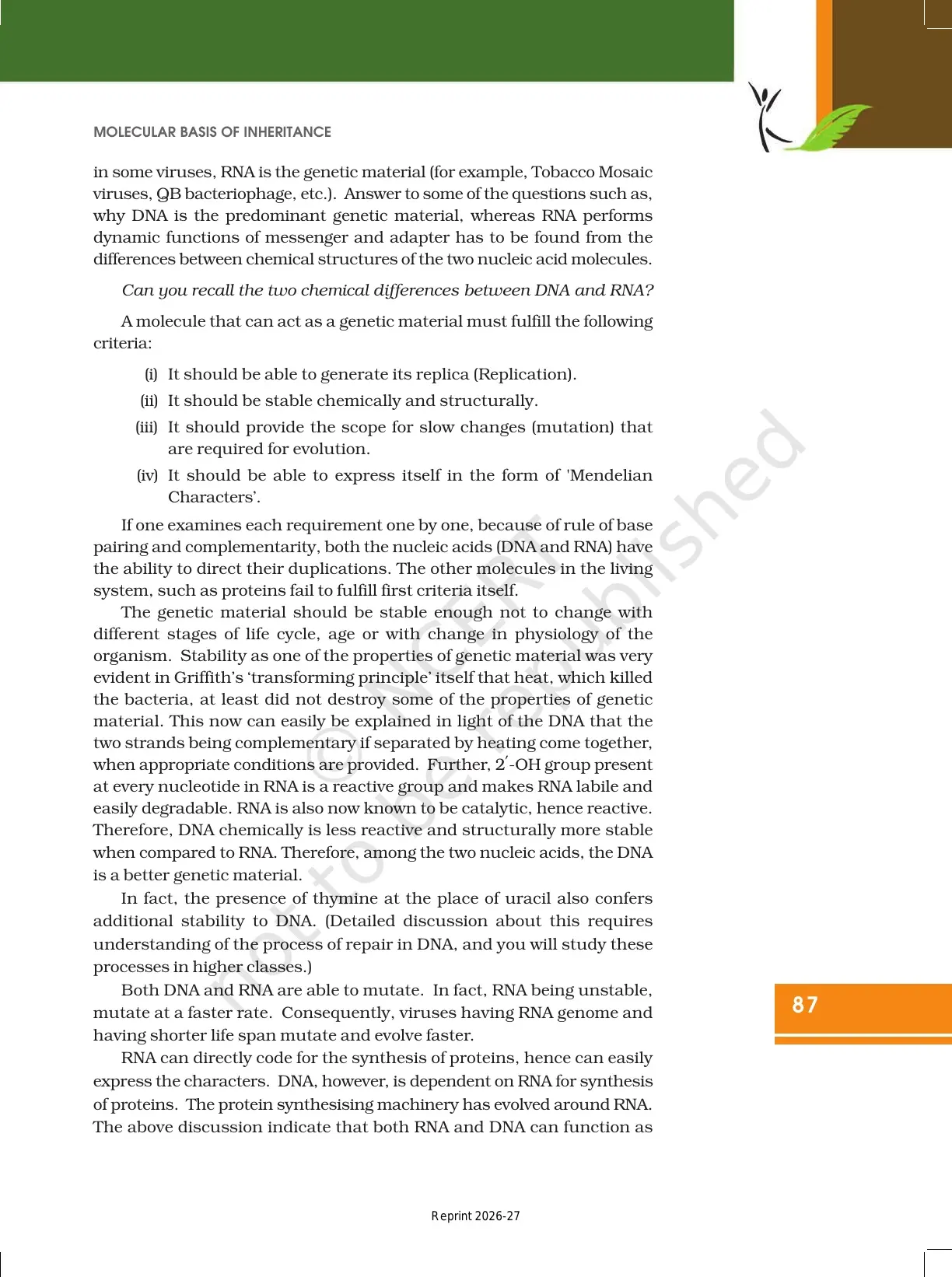
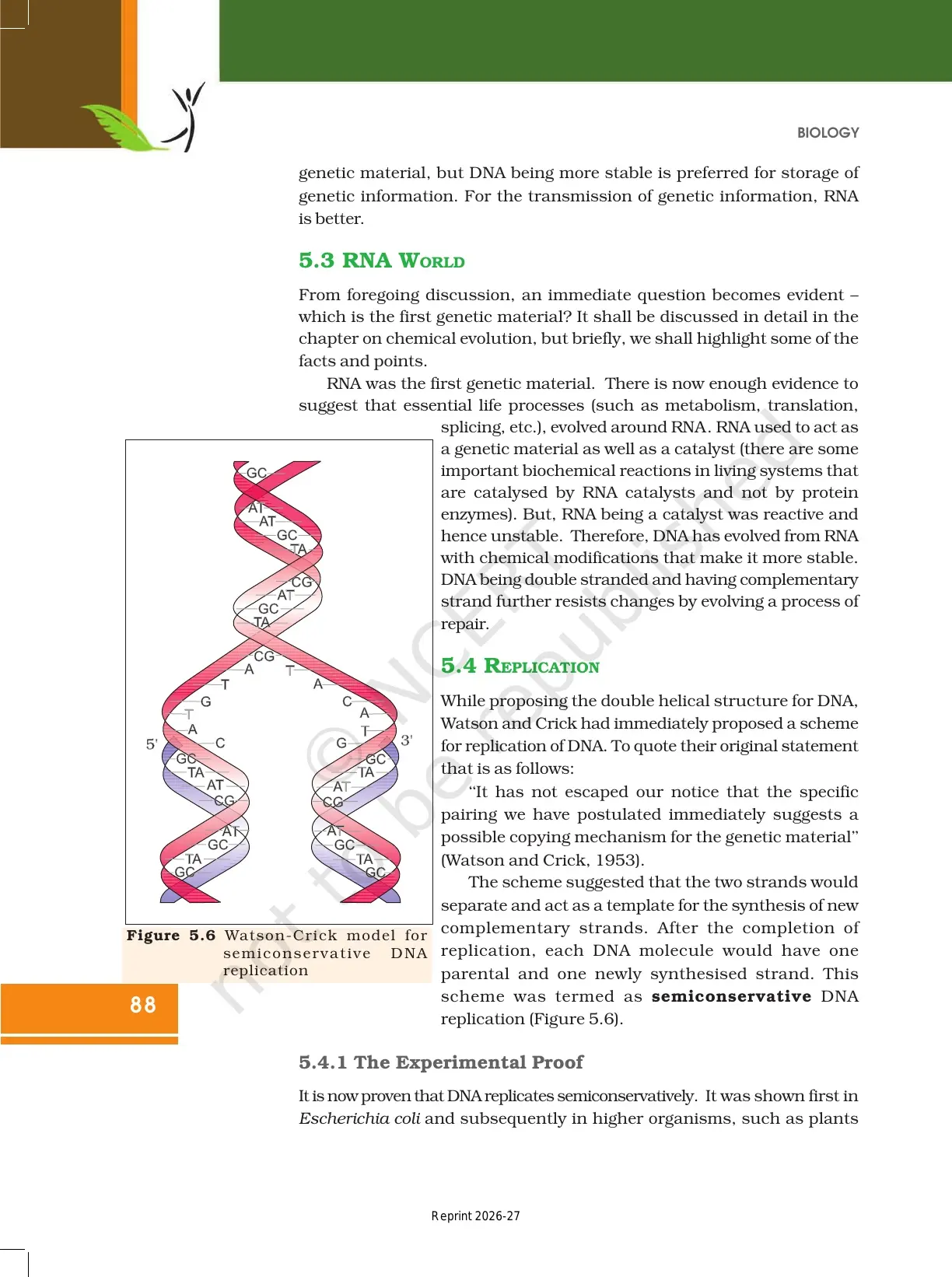
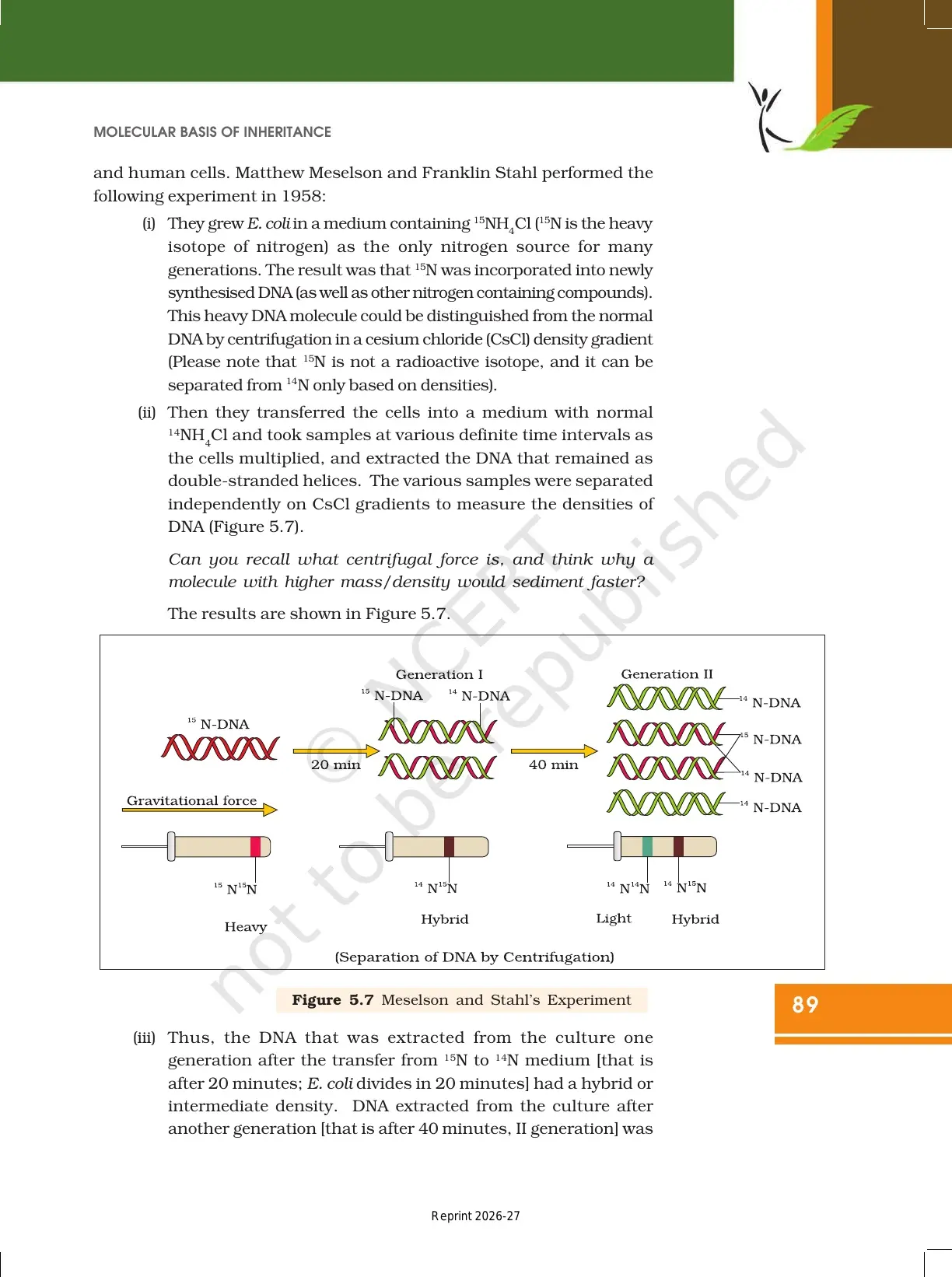
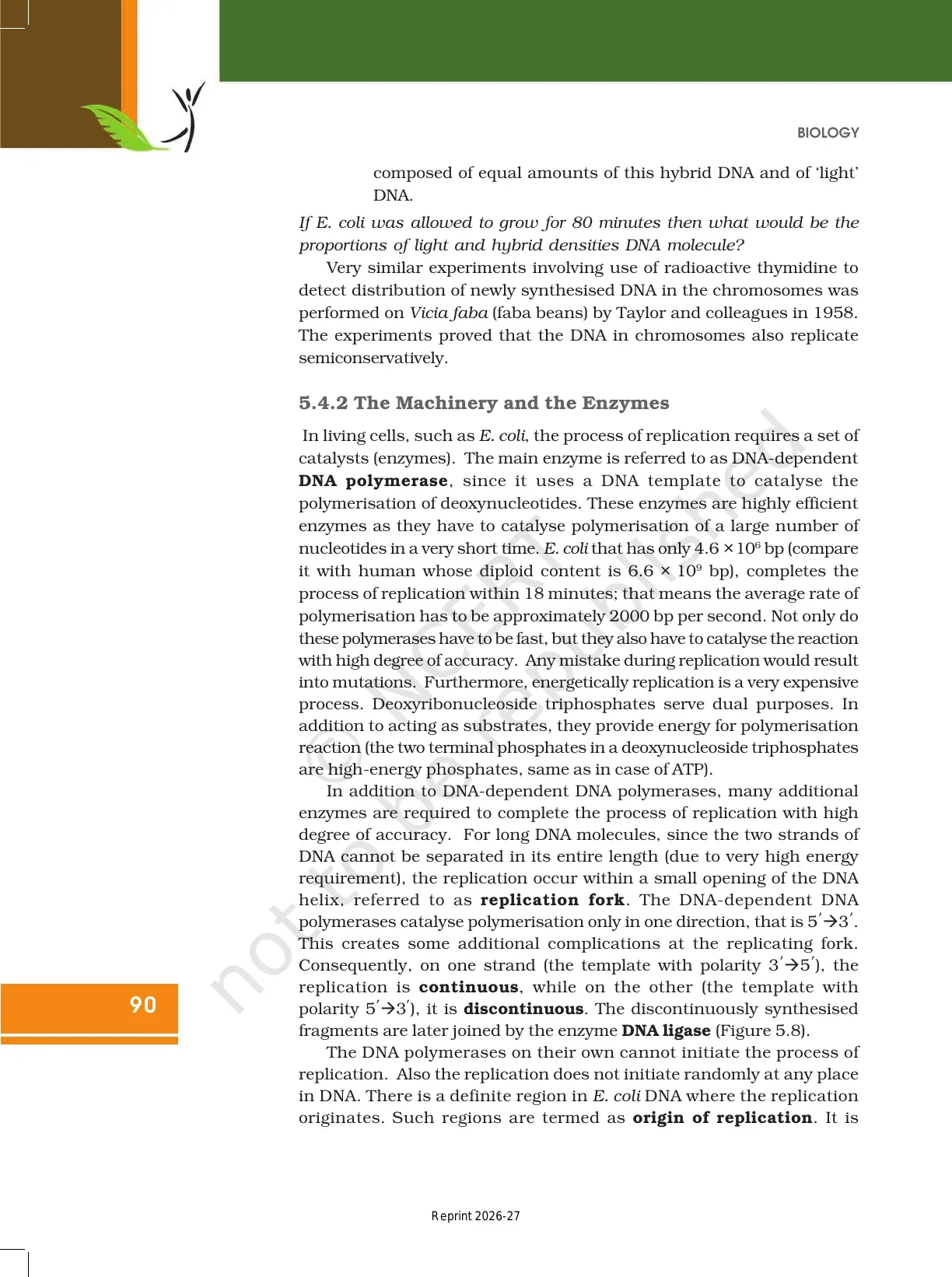
The PDF above is the official NCERT print for Chapter 5 (internal code lebo105). Use the section index, reading plan, and figure inventory below to decide what to read deeply.
Molecular Basis of Inheritance Video Lecture for Class 12 Biology
Source: PW NEET on YouTube
Why Molecular Basis of Inheritance is the Highest-Yield NEET Biology Chapter
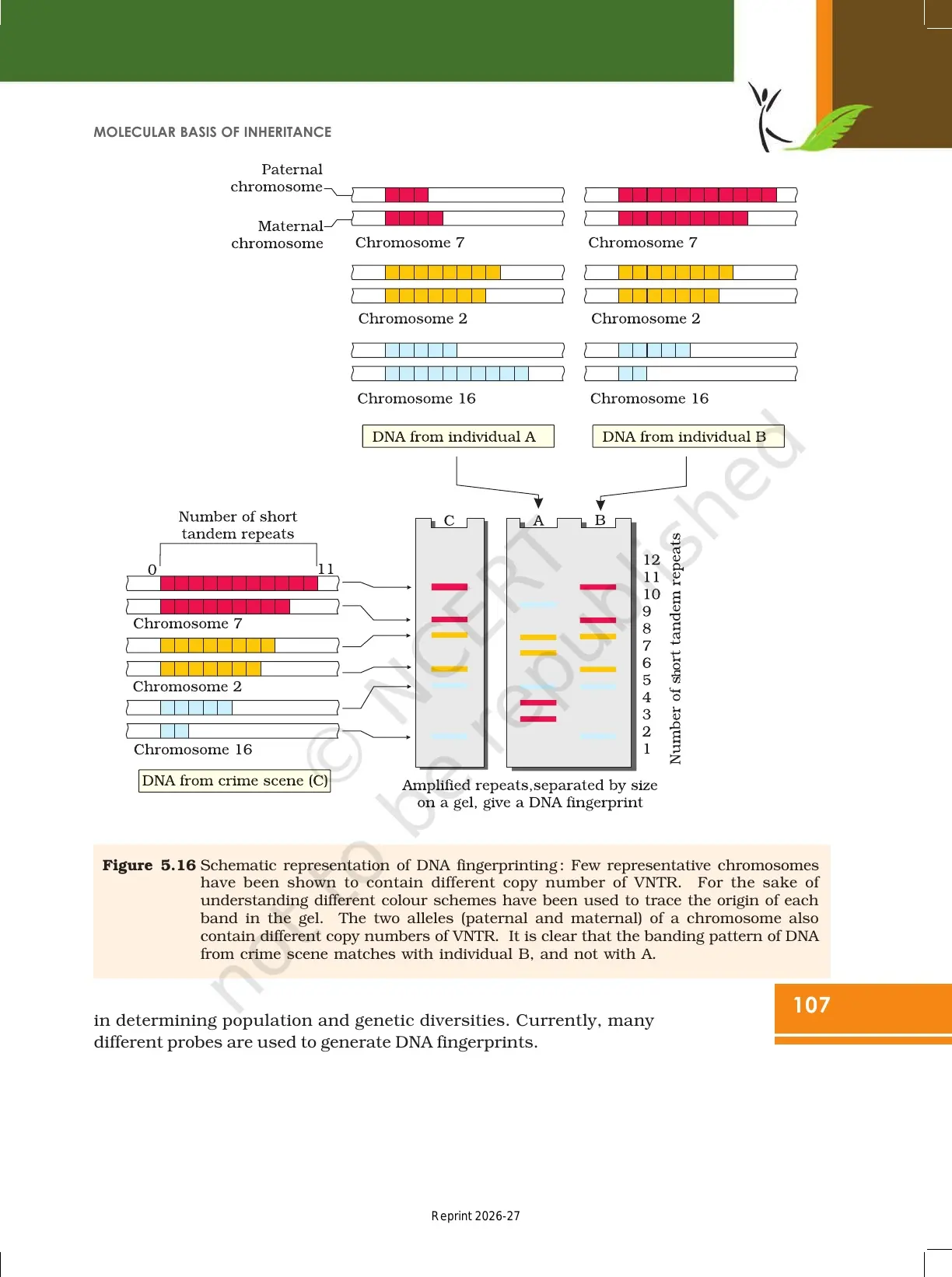
Across the last five NEET papers, Chapter 5 has delivered 5 to 7 questions per year, more than any other Class 12 Biology chapter. The chapter packs four independent high-yield zones, each tested as a topic on its own: DNA structure and replication (Sections 5.1, 5.4), transcription and translation (5.5, 5.7), genetic code and lac operon (5.6, 5.8), and HGP plus DNA fingerprinting (5.9, 5.10).
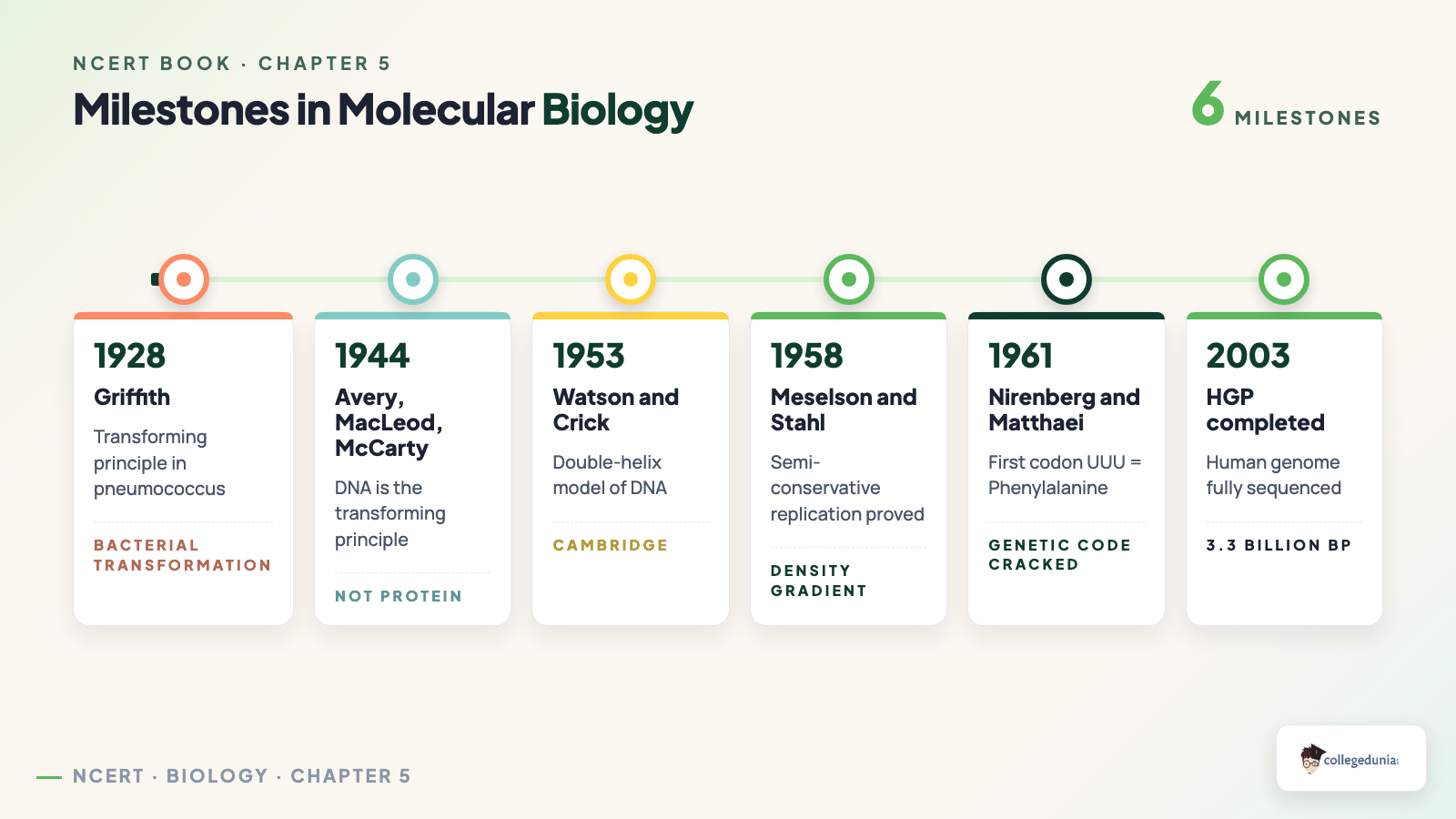
How Will Collegedunia's NCERT Book PDF Help You with Molecular Basis of Inheritance?
- 2026-27 NCERT Alignment: Latest reprint, verified against the CBSE 2026-27 syllabus. Every numbered section retained.
- Section-to-NEET Map: Section 5.4 drives the semiconservative replication question; 5.6 drives the codon-property MCQ; 5.8 drives the lac-operon question.
- Figure Index: All 18 numbered figures tagged by page for direct revision access.
- Cross-Reference: Every section maps to the matching Notes, Formula Sheet, and Solutions linked below.
Reading Plan for Class 12th Biology Chapter 5 Molecular Basis of Inheritance
At 30 pages, this is the longest chapter in the Class 12 Biology book. A four-day plan keeps each session under 2.5 hours and front-loads the highest-yield sections.
| Day | Read | Practise | Time |
|---|---|---|---|
| Day 1 | Sections 5.1 to 5.3 (DNA, genetic material search, RNA world) | Exercises 1-4 and Fig 5.3 labelling | 2 hrs |
| Day 2 | Sections 5.4, 5.5 plus Figures 5.7 to 5.9 | Exercises 5-8 and a Meselson-Stahl numerical | 2.5 hrs |
| Day 3 | Sections 5.6, 5.7 plus codon chart Fig 5.10 | Exercises 9-12 and five codon MCQs | 2 hrs |
| Day 4 | Sections 5.8 to 5.10 plus full revision | Exercises 13-16 and three NEET PYQs | 2.5 hrs |
Molecular Basis of Inheritance NCERT PDF: Section-by-Section Breakdown with Page Numbers
The chapter has ten numbered sections plus the summary and sixteen exercises. Sections 5.4, 5.5, and 5.8 drive most NEET marks; Sections 5.6 and 5.10 are CBSE Board favourites.
| Section | Title | Pages | What it covers |
|---|---|---|---|
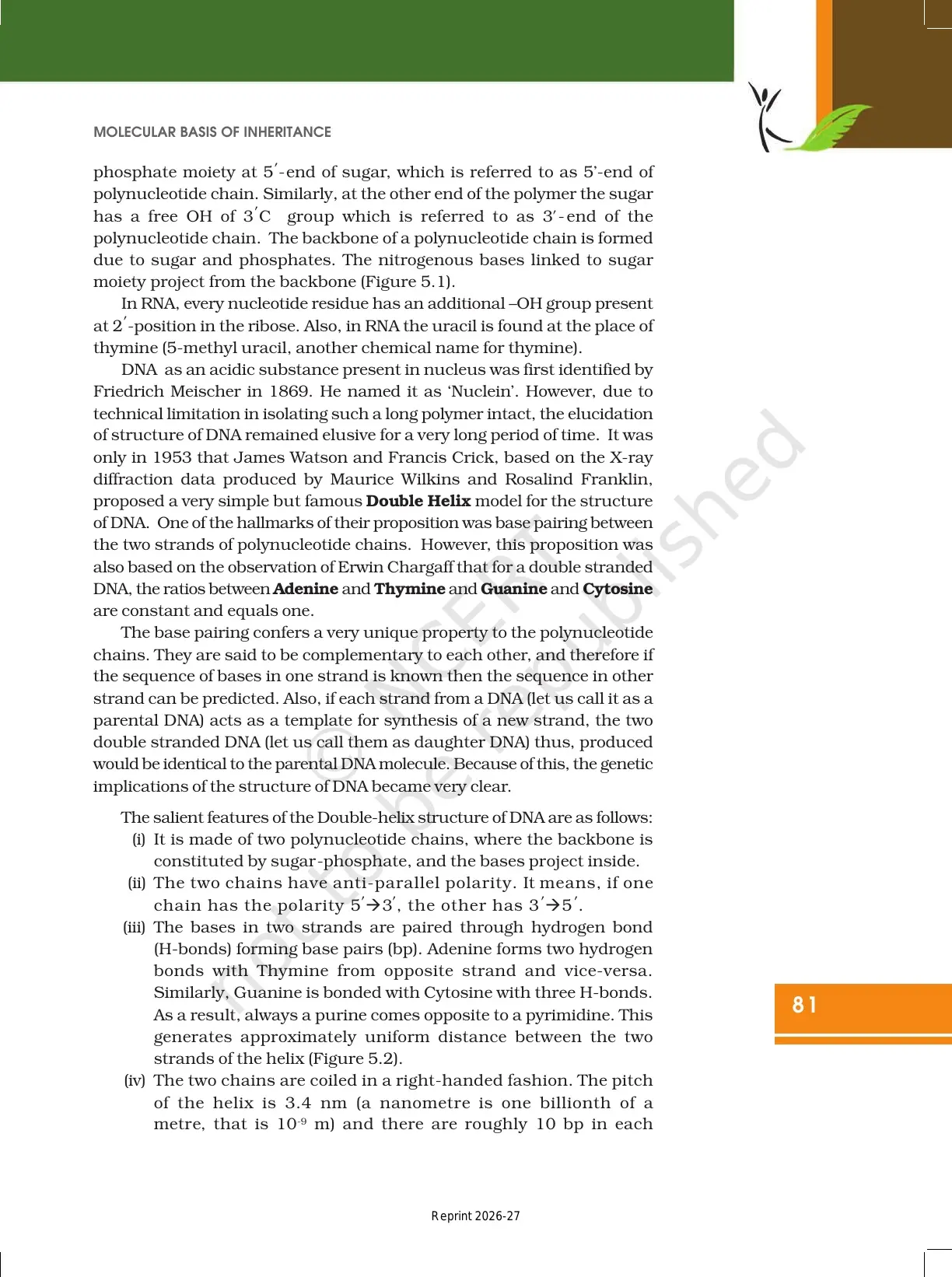
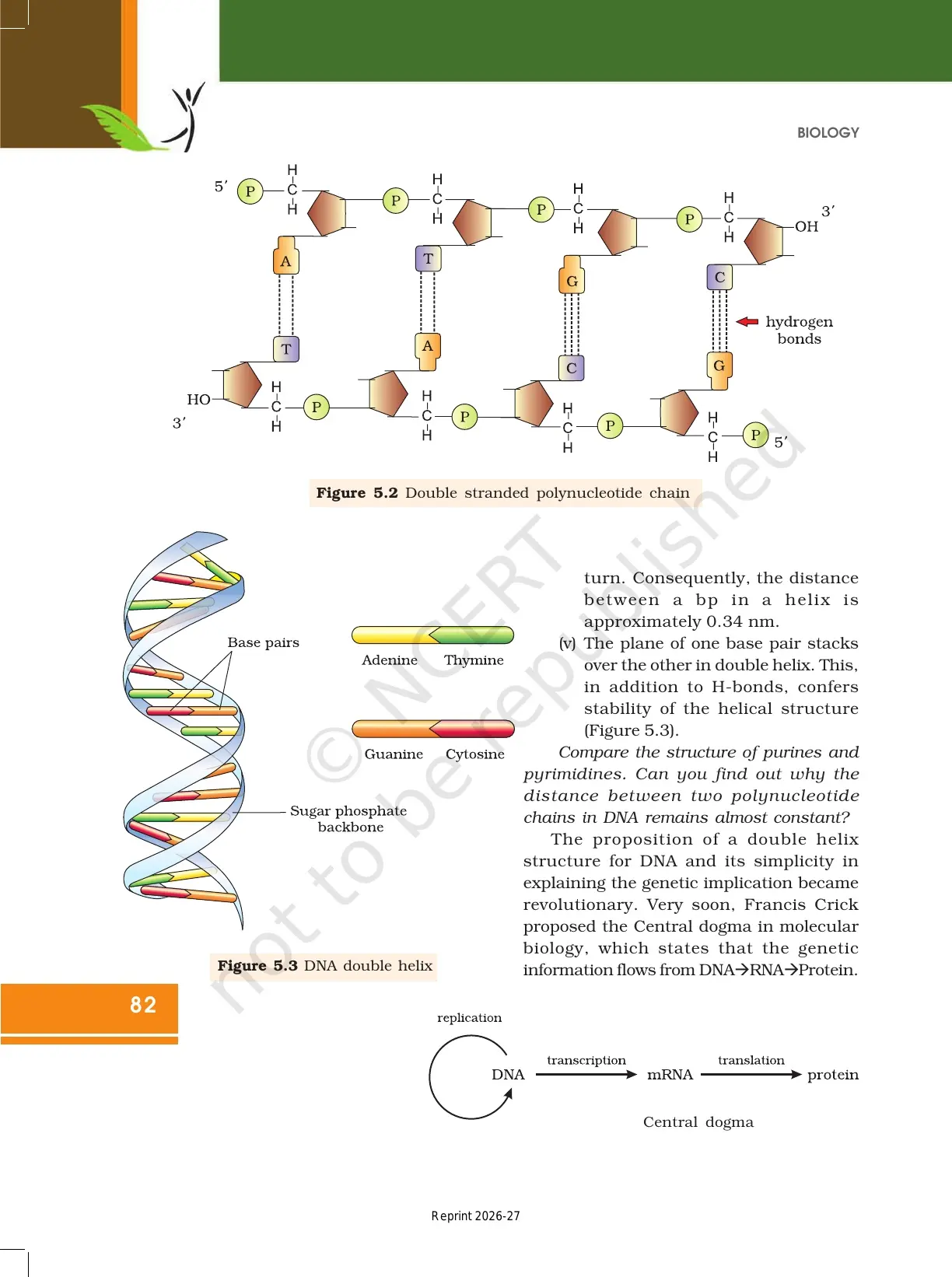
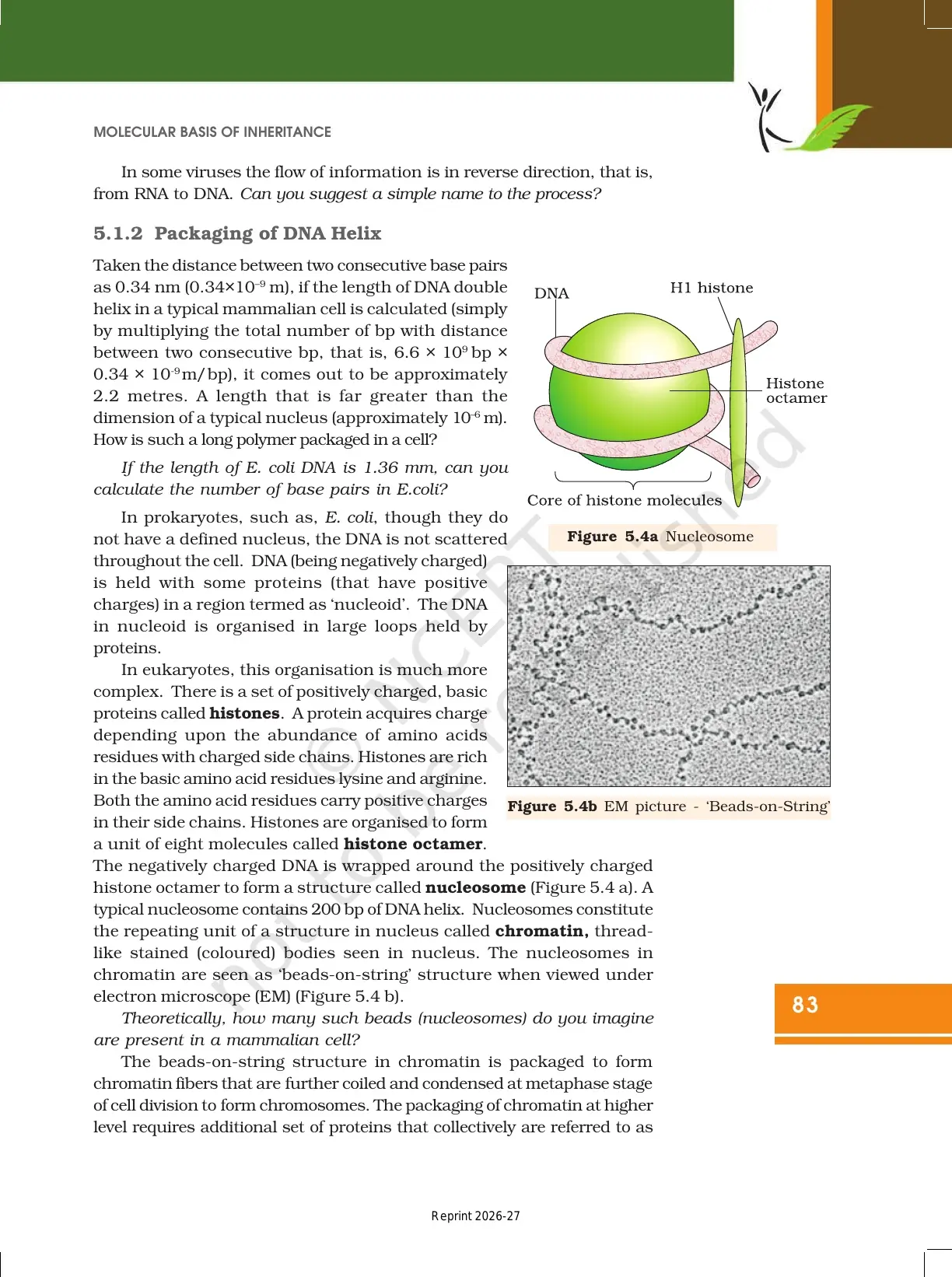
| 5.1 | The DNA | 78-82 | Polynucleotide chain, Watson-Crick double helix, Chargaff's rule, nucleosome packaging |
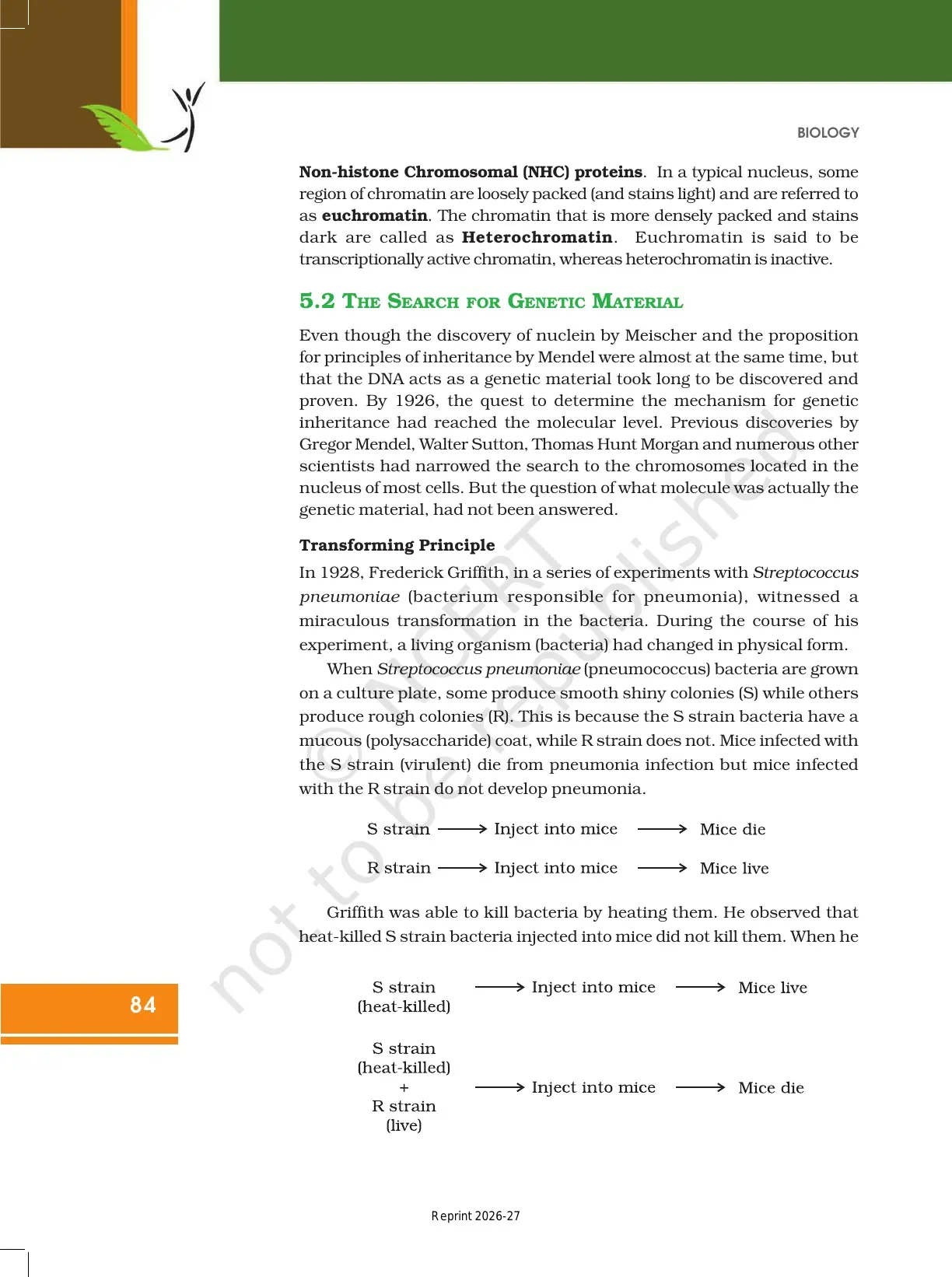
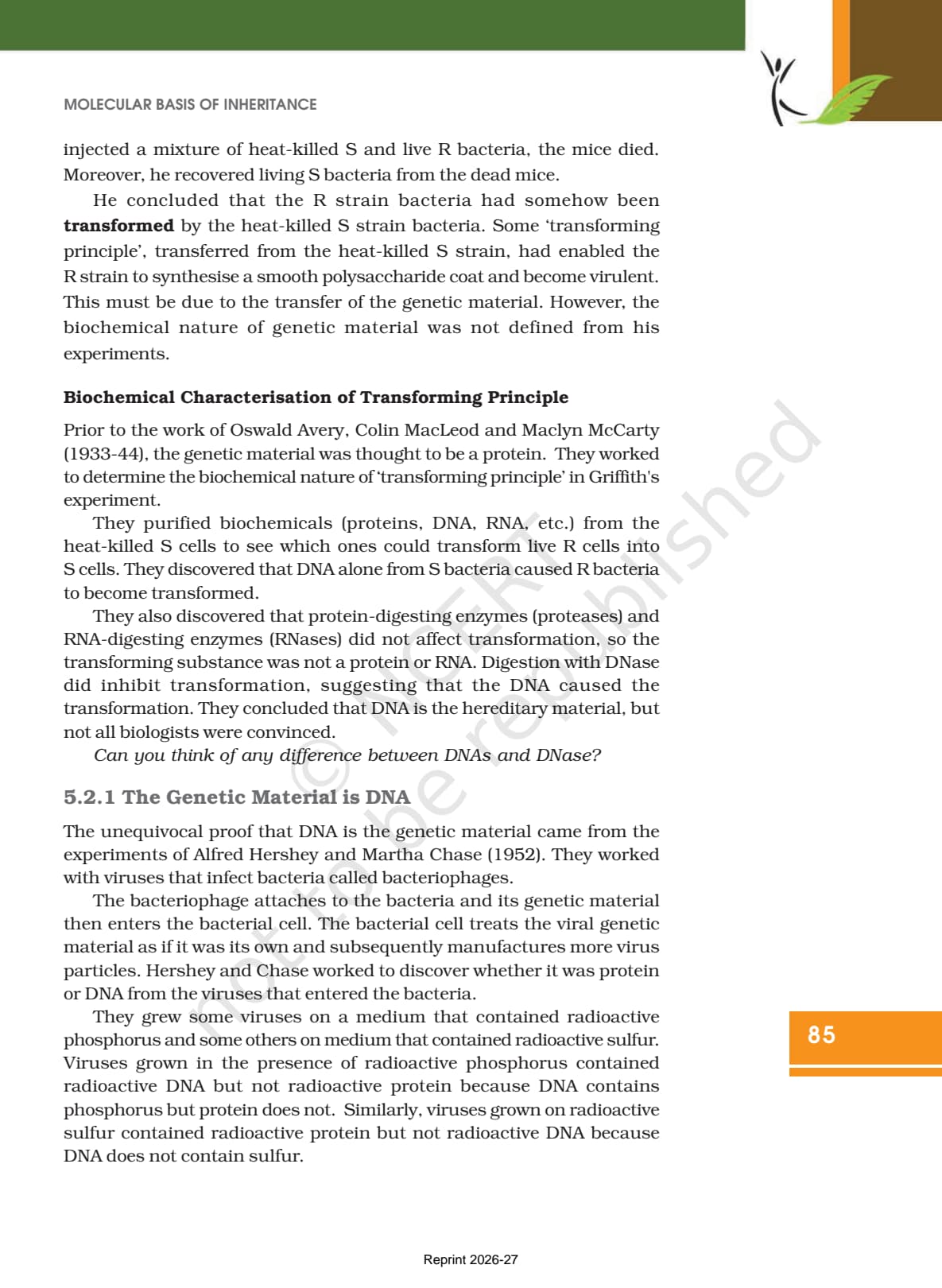
| 5.2 | Search for Genetic Material | 83-86 | Griffith, Avery-MacLeod-McCarty, Hershey-Chase blender experiment |
| 5.3 | RNA World | 86-87 | RNA as genetic material and catalyst, ribozymes |
| 5.4 | Replication | 87-91 | Meselson-Stahl, replication fork, DNA polymerase III, Okazaki fragments |
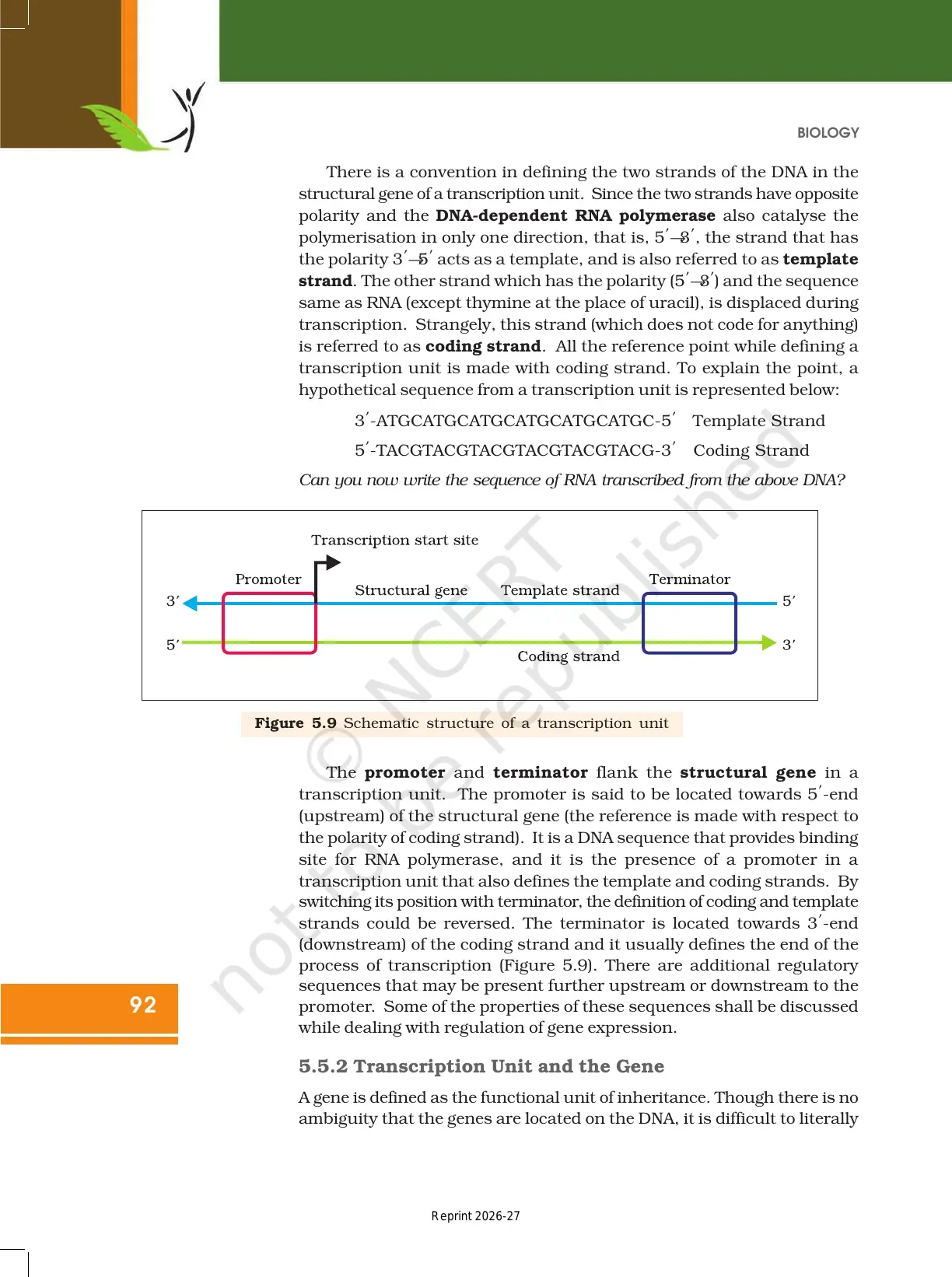
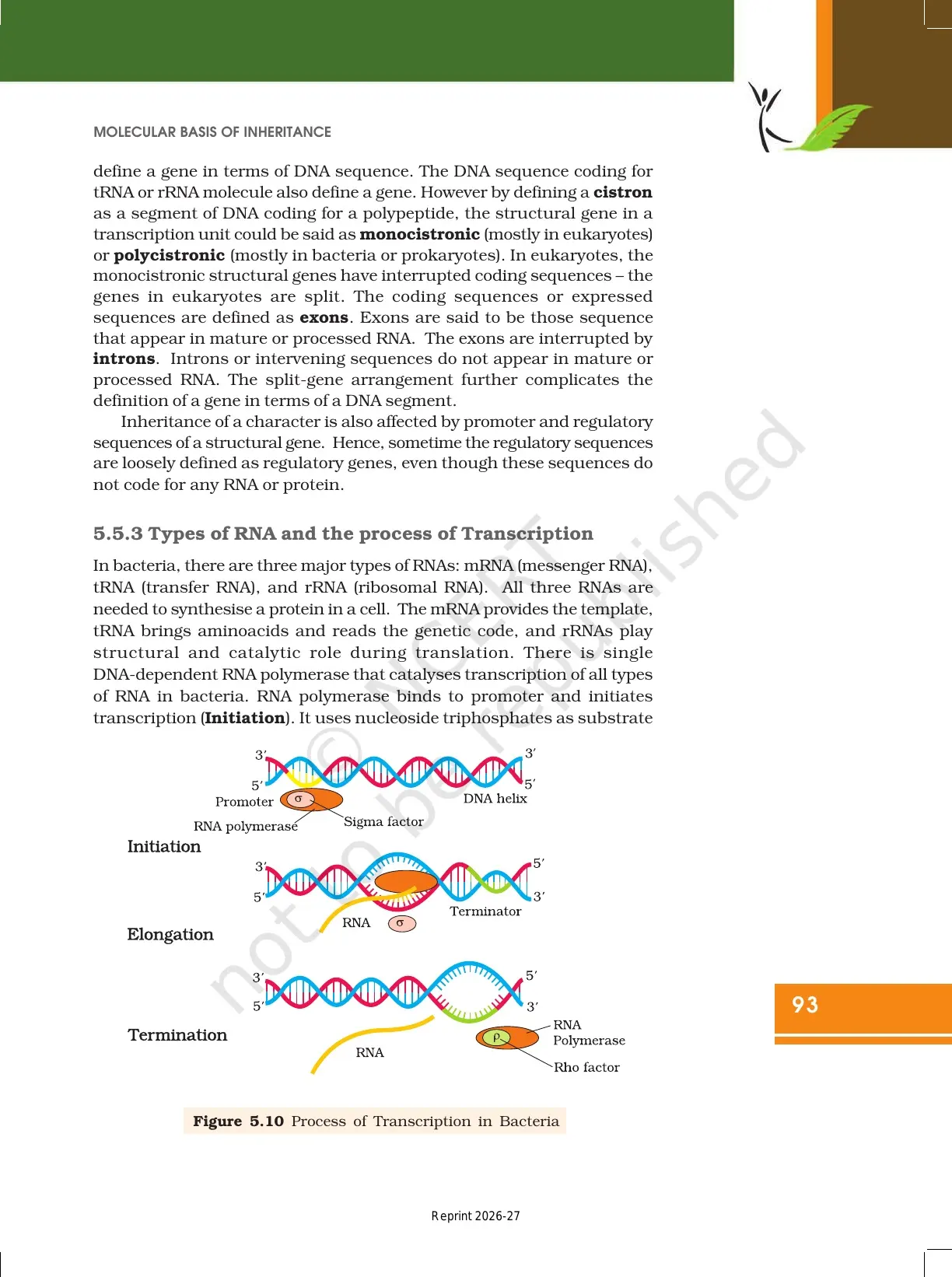
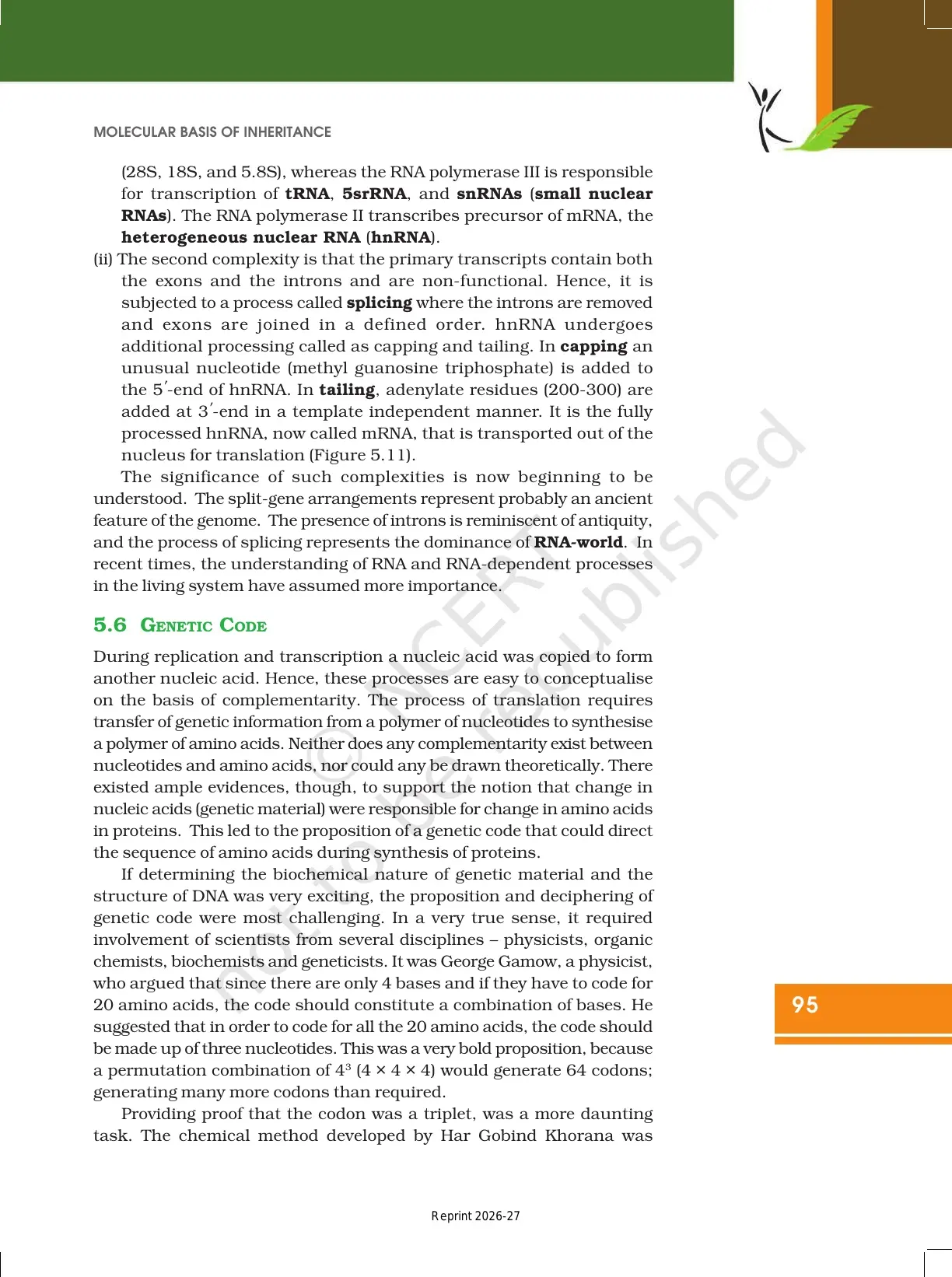
| 5.5 | Transcription | 91-95 | Three RNA polymerases, promoter and terminator, hnRNA capping, tailing, splicing |
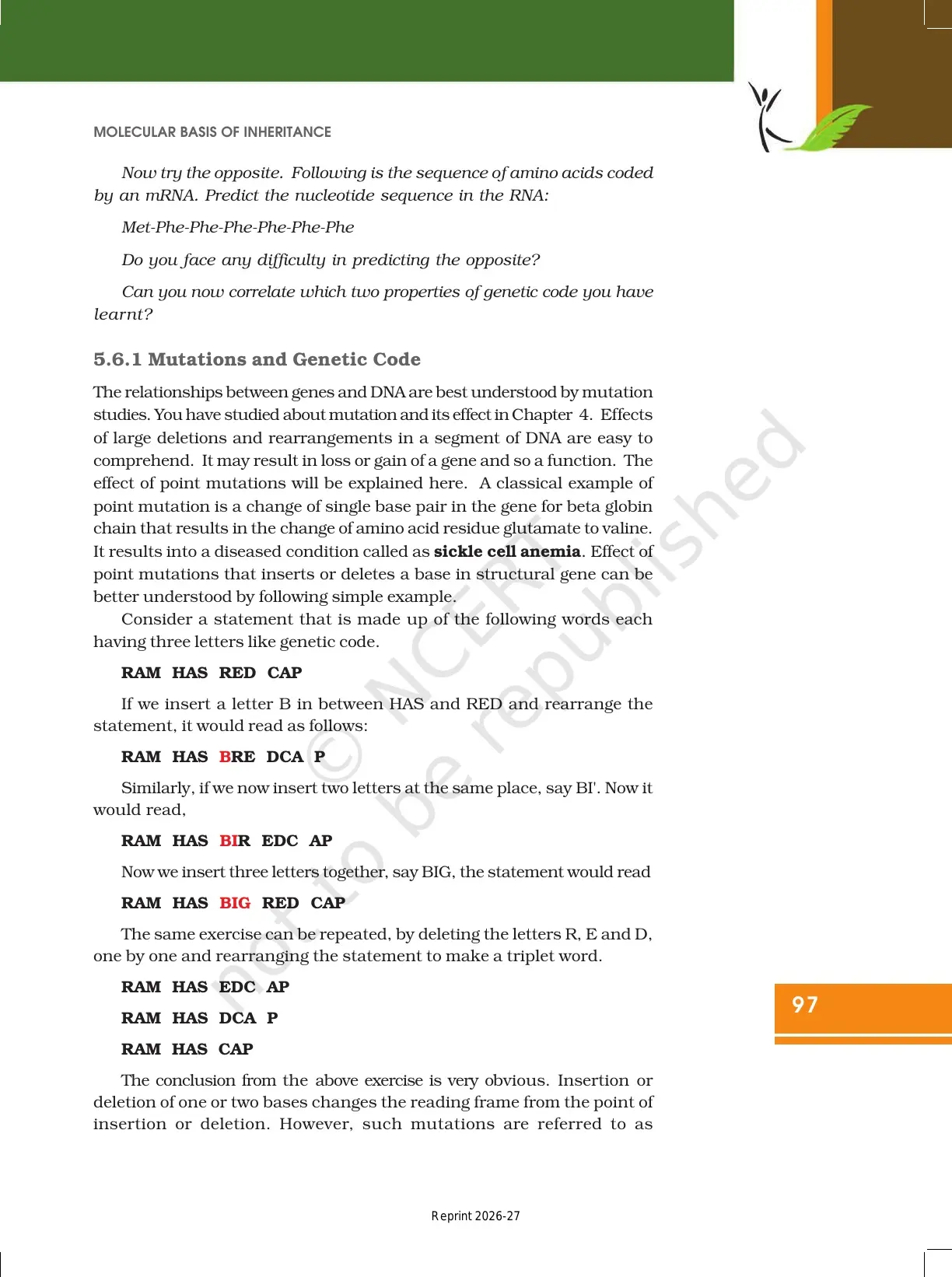
| 5.6 | Genetic Code | 95-98 | Nirenberg-Khorana table, codon degeneracy, start and stop codons, tRNA |
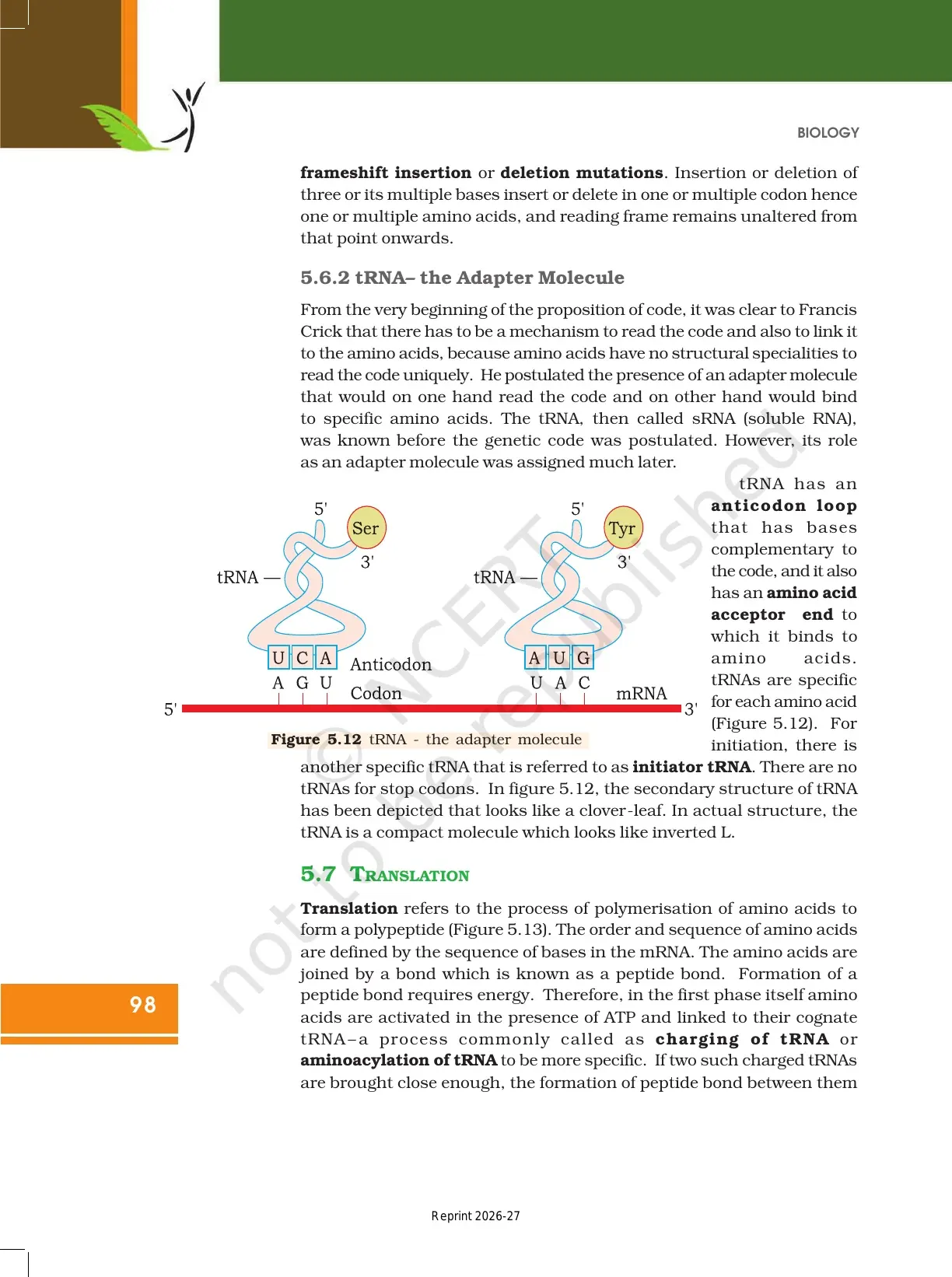
| 5.7 | Translation | 98-100 | tRNA charging, initiation, elongation, peptidyl transferase, release factors |
| 5.8 | Regulation of Gene Expression | 100-103 | Lac operon (Jacob-Monod), inducer, repressor, structural genes z, y, a |
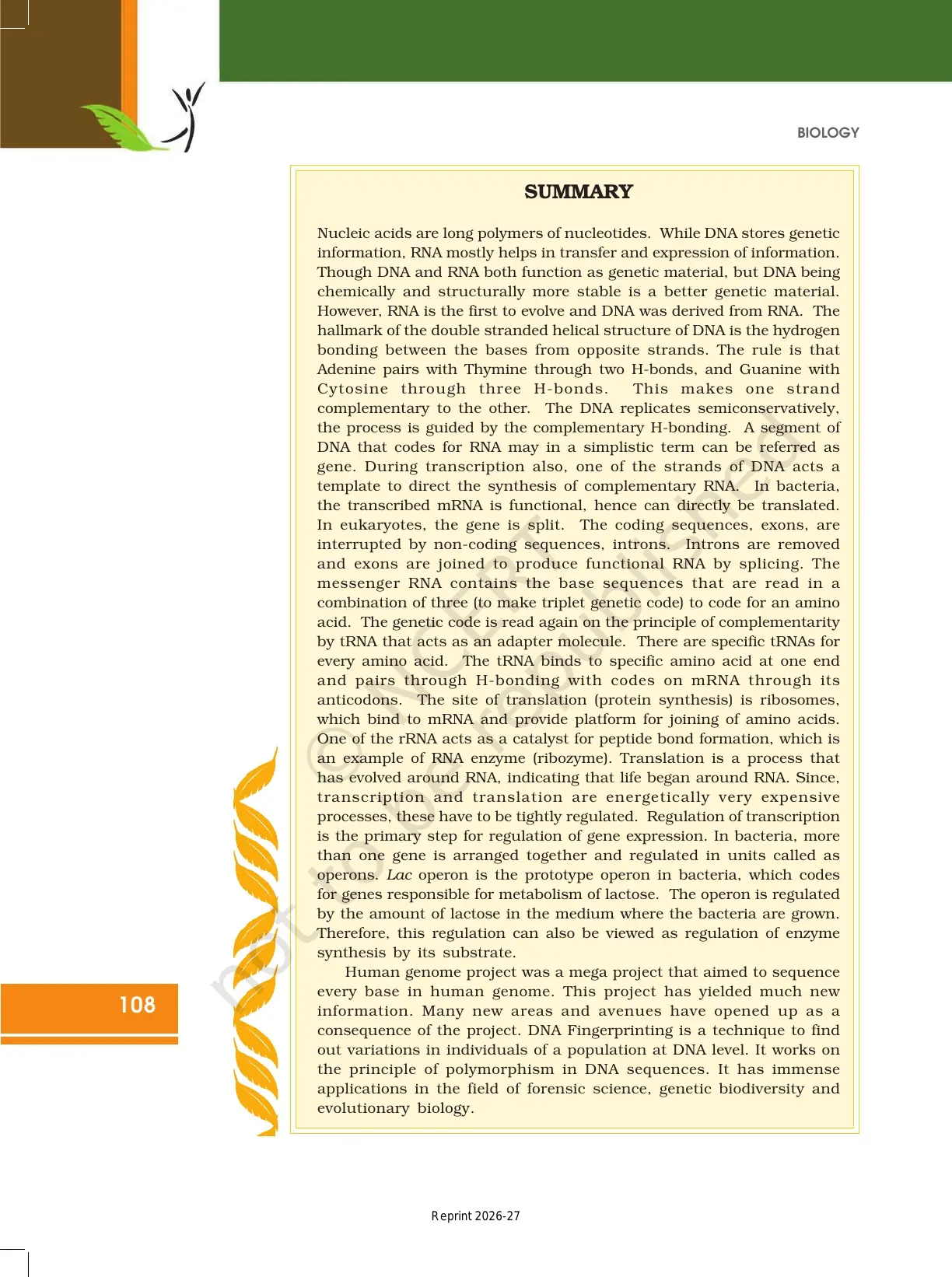
| 5.9 | Human Genome Project | 103-105 | 1990-2003 timeline, shotgun sequencing, 3.1 billion bp, ~30,000 genes |
| 5.10 | DNA Fingerprinting | 105-107 | VNTR, RFLP, Southern blotting, forensic and paternity applications |
| - | Summary and Exercises | 107 | Summary plus 16 end-of-chapter exercises |
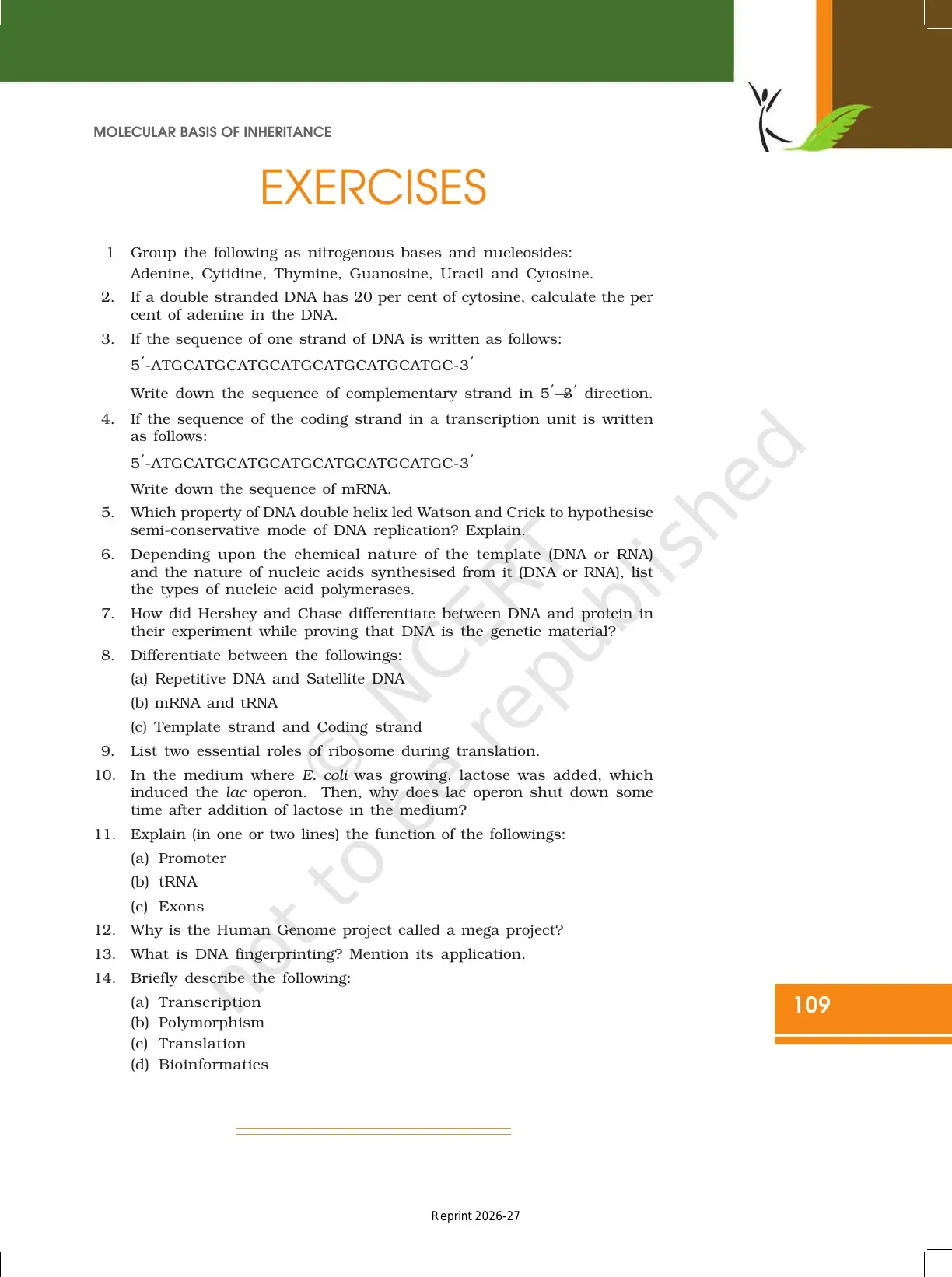
Exercises 5, 8, and 14 have the highest CBSE reuse rate across past papers.
Full year-wise PYQ map: Molecular Basis of Inheritance NCERT Solutions Class 12
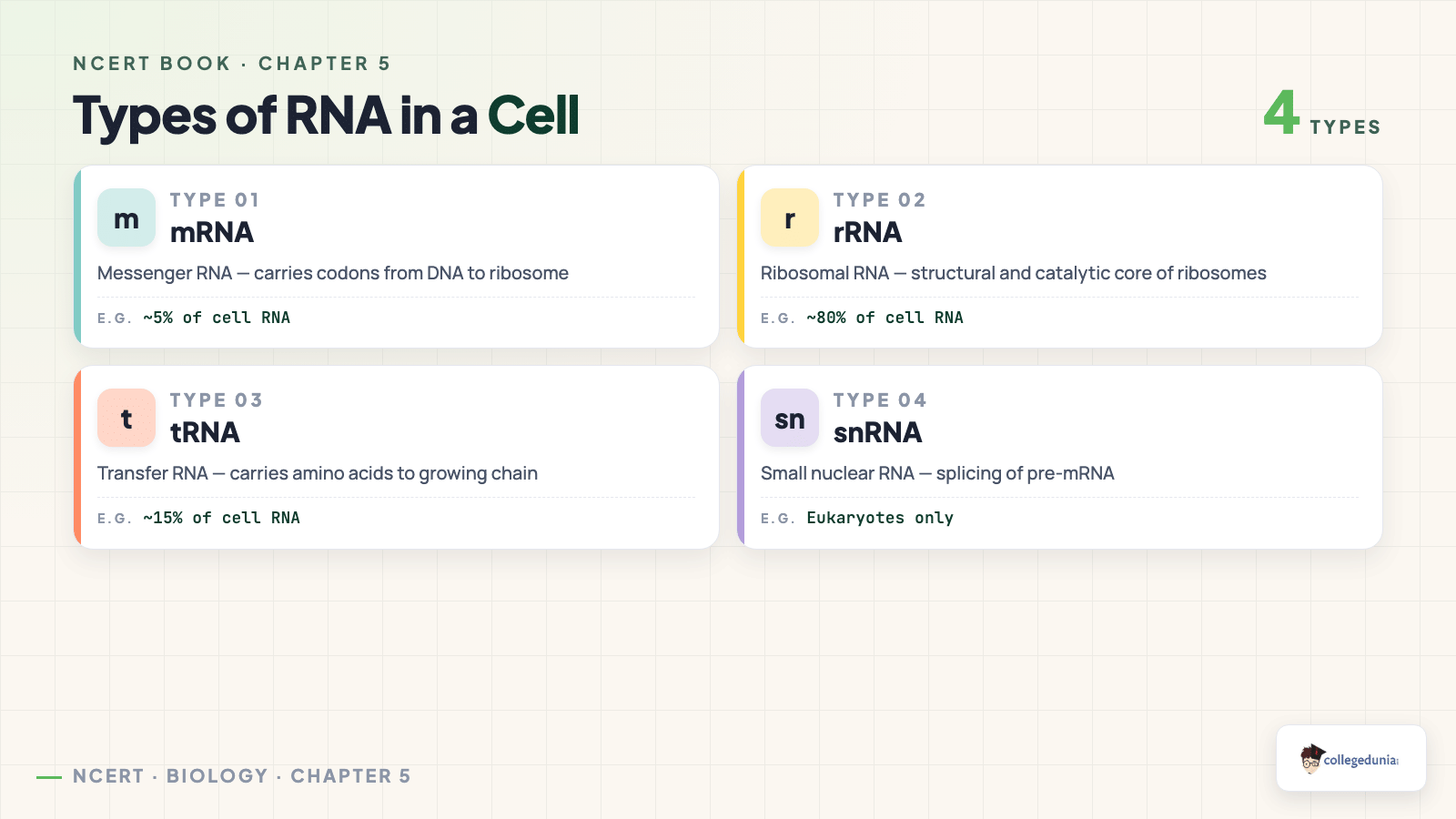
Figure and Diagram Inventory for Molecular Basis of Inheritance Class 12 Biology
Six figures below are the board-favourites for diagram-labelling questions.
| Figure | What it shows | Page | Exam relevance |
|---|---|---|---|
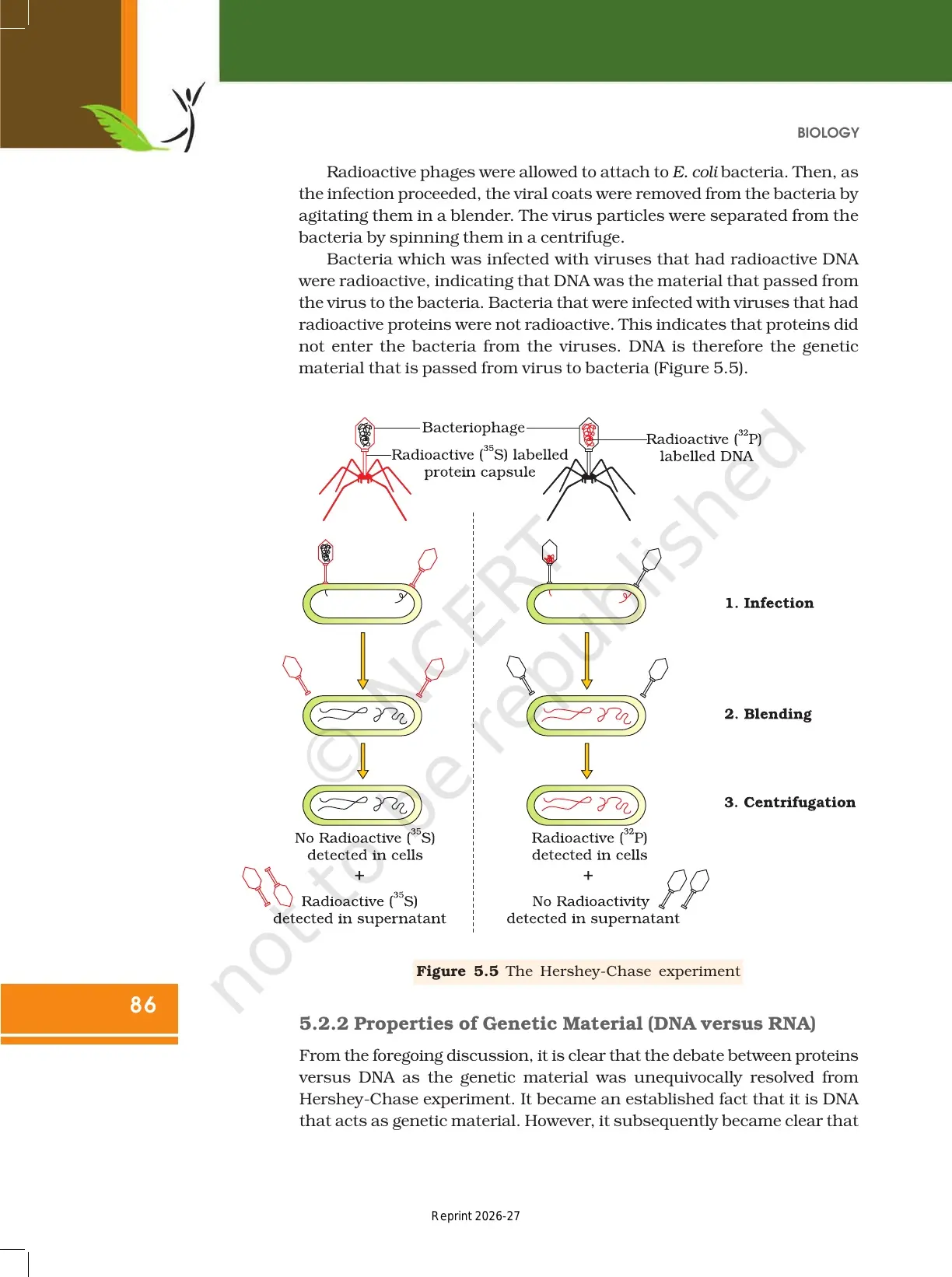
| Fig 5.3 | Hershey-Chase blender experiment | 85 | CBSE 3 or 5-mark explanation question |
| Fig 5.5 | Meselson-Stahl density-gradient bands | 88 | NEET numerical on generation ratios |
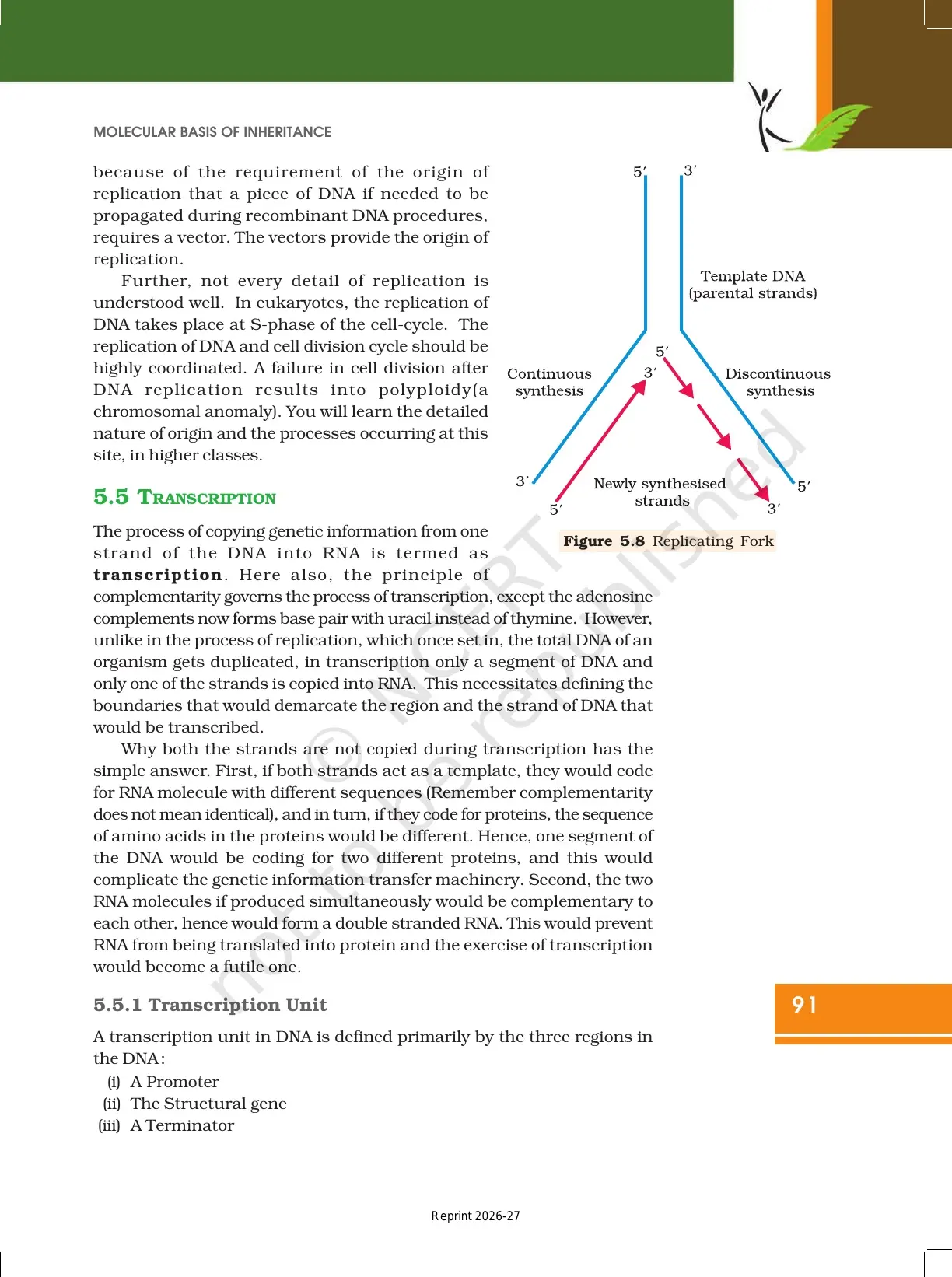
| Fig 5.7 | Replication fork with Okazaki fragments | 90 | CBSE 5-mark long-answer |
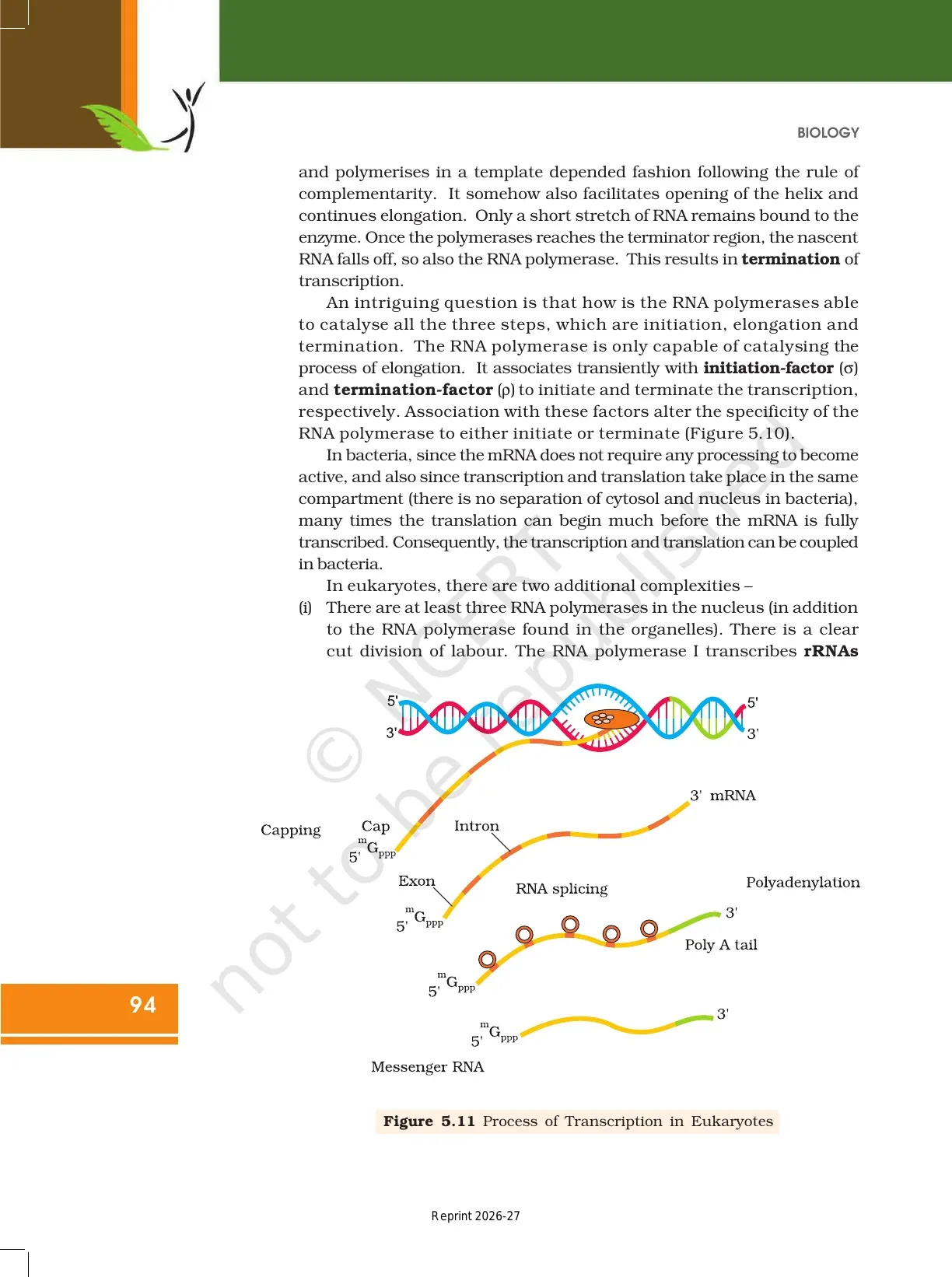
| Fig 5.9 | hnRNA capping, tailing, and splicing | 94 | NEET MCQ on post-transcriptional events |
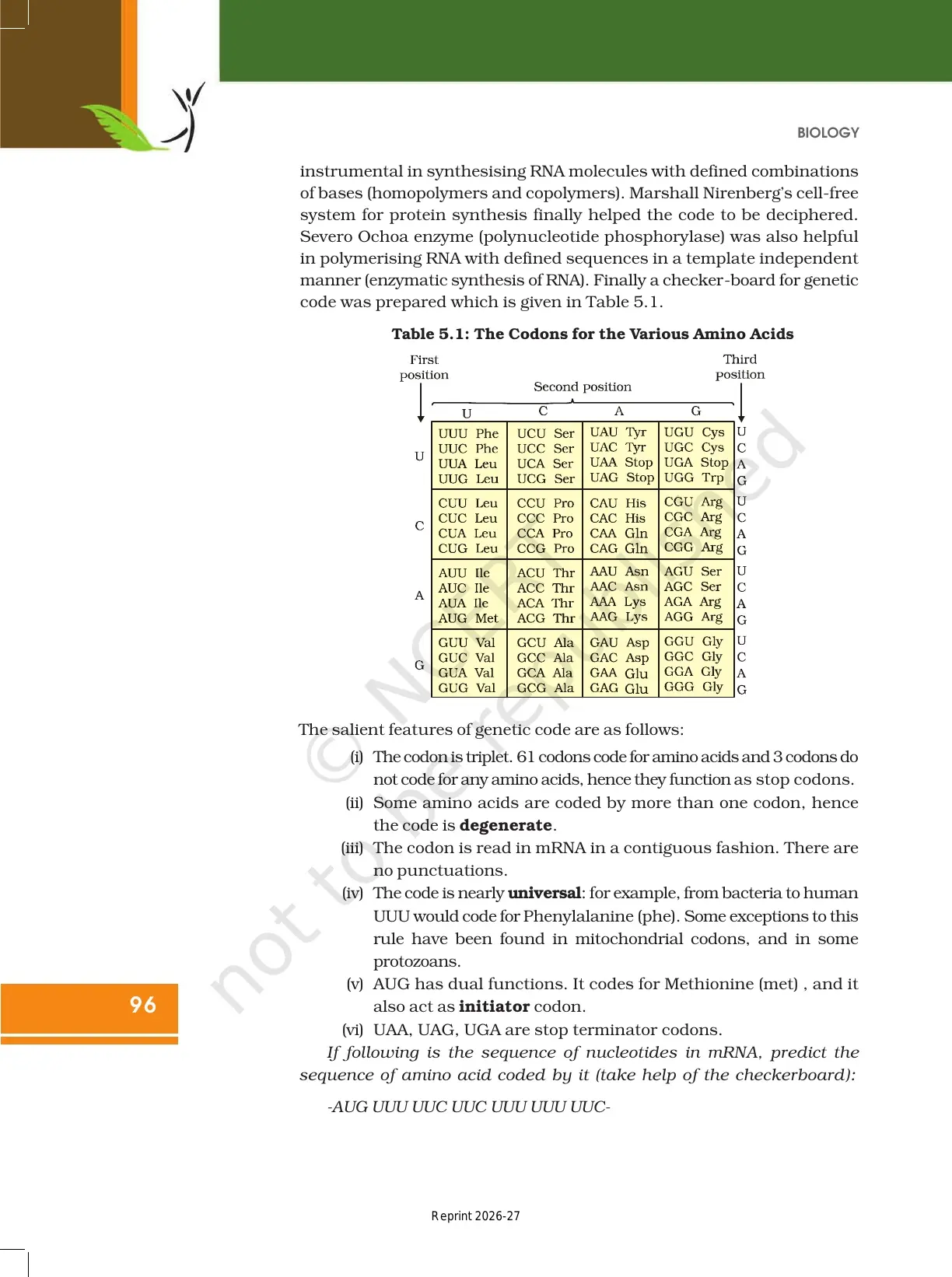
| Fig 5.10 | Codon-amino-acid chart | 96 | NEET assertion-reason MCQ |
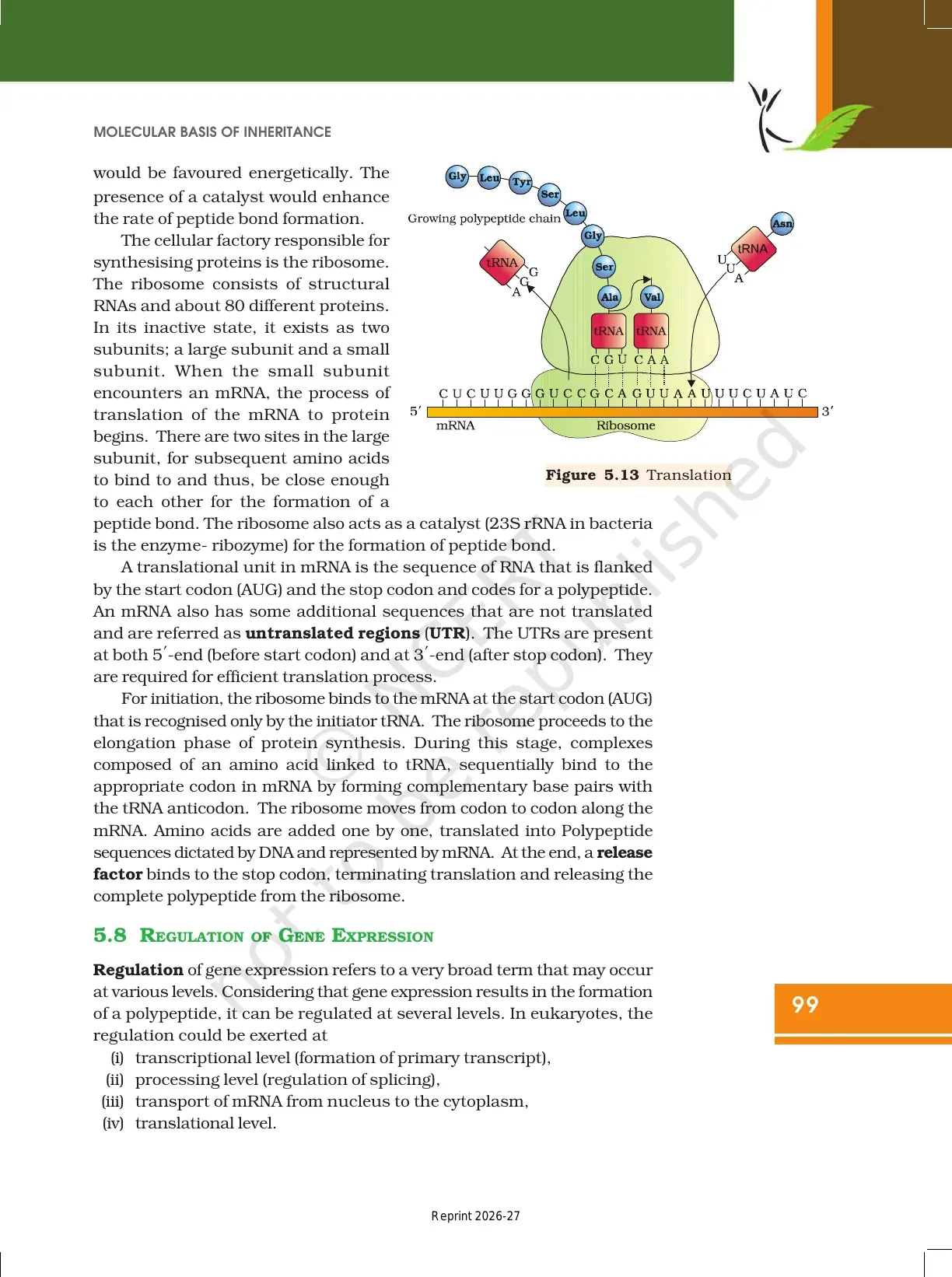
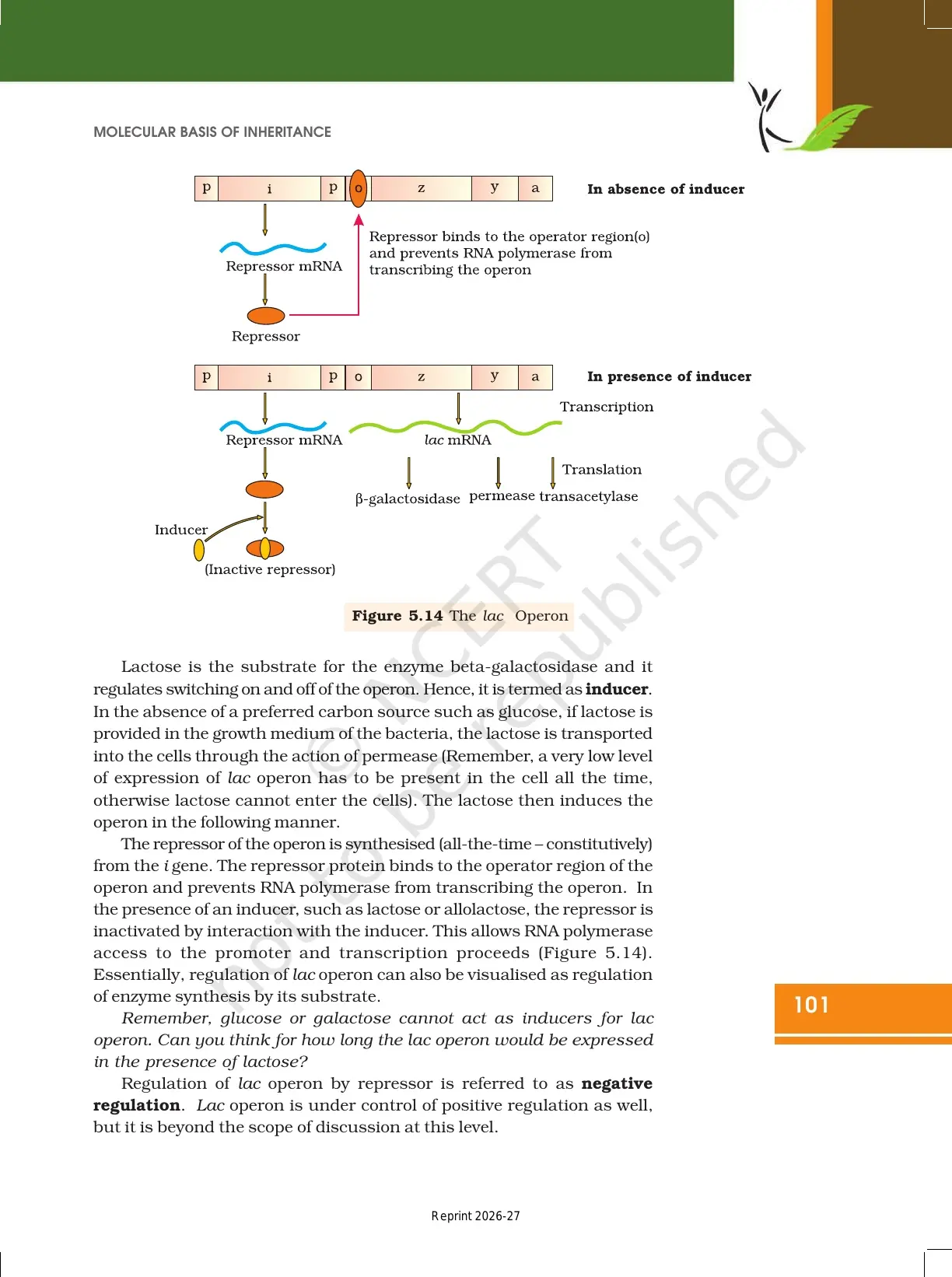
| Fig 5.13 | Lac operon with all six elements | 101 | CBSE 5-mark high-frequency diagram |
Molecular Basis of Inheritance Top 5 Concepts for Quick Recall
Five recurring concepts cover most CBSE and NEET questions from Chapter 5.
| Concept | Key expression / fact |
|---|---|
| Chargaff's rule | A = T and G = C ; purines equal pyrimidines in double-stranded DNA |
| Length of DNA | Length = number of base pairs × 3.4 Å (rise per bp); human genome = 6.6 × 109 × 3.4 Å ≈ 2.2 m per diploid cell |
| Semiconservative replication (Meselson-Stahl) | After one generation in 14N : one hybrid band. After two generations: one hybrid plus one light band in 1:1 ratio |
| Genetic code properties | Triplet, degenerate, unambiguous, near-universal, comma-less, non-overlapping; start = AUG; stops = UAA, UAG, UGA |
| Lac operon (negative regulation) | When lactose is absent, repressor binds operator and blocks transcription of z, y, a. When lactose is present, allolactose inactivates the repressor and the operon switches on |
Full master sheet: Molecular Basis of Inheritance Class 12 Biology Formula Sheet
What Stayed in Molecular Basis of Inheritance for 2026-27 NCERT
NCERT confirmed no deletions or alterations in the Class 12 Biology textbook for 2026-27. Chapter 5 retains every numbered section, the Watson-Crick double helix figure, the Hershey-Chase experiment, the Meselson-Stahl proof, the lac operon diagram, and the full DNA fingerprinting protocol. Unlike Chemistry and Physics, Biology was not trimmed in the current syllabus.
Molecular Basis of Inheritance PYQ Trend in CBSE and NEET (2025 to 2021)
Replication, transcription, and lac operon appear in every NEET and CBSE paper from this chapter.
| Year | CBSE Class 12 Biology | NEET |
|---|---|---|
| 2025 | 3-mark lac operon; 5-mark DNA replication | 6 Qs: replication, splicing, codons, lac operon, HGP, fingerprinting |
| 2024 | 3-mark Hershey-Chase; 2-mark Chargaff's rule | 5 Qs: tRNA, transcription unit, semiconservative replication, codons, VNTR |
| 2023 | 5-mark eukaryotic transcription; 2-mark RNA polymerases | 7 Qs: DNA packaging, Okazaki, splicing, lac operon, AUG, peptidyl transferase, Southern blot |
| 2022 | 3-mark DNA fingerprinting steps | 5 Qs across DNA structure, replication, and gene regulation |
| 2021 | 5-mark lac operon switch on / off | 4 Qs on replication, codons, lac operon, HGP |
Over five exam cycles, replication and the lac operon appear in every NEET paper, making them the most predictable items in Class 12 Biology.
Student Feedback
What 13,400 students told us about Chapter 5 Molecular Basis of Inheritance:
- 76% of students surveyed found the lac operon regulation mechanism the hardest sub-topic.
- 64% lost marks on the Meselson-Stahl semi-conservative replication proof even when the rest of the answer was correct.
- 4 out of 5 students said the Hershey-Chase experiment labelled diagram was the most-skipped figure in their answer sheet.
- Average first read: 7.6 hours; focused revision pass before boards: 3.2 hours.
- Only 32% of students attempted all 16 NCERT exercises; toppers attempted every question and revisited wrong answers within 24 hours.
Source: 2025-26 Class 12 Biology student survey. Sample of 13,400 students from CBSE-affiliated schools across 18 states.
Other Resources for Molecular Basis of Inheritance Class 12 Biology
| Resource | Link |
|---|---|
| NCERT Book PDF | Molecular Basis of Inheritance NCERT Book PDF |
| NCERT Solutions | Molecular Basis of Inheritance Class 12 Biology NCERT Solutions |
| Notes | Molecular Basis of Inheritance Class 12 Biology Notes |
| Formula Sheet | Molecular Basis of Inheritance Class 12 Biology Formula Sheet |
| Handwritten Notes | Molecular Basis of Inheritance Class 12 Biology Handwritten Notes |
| Exemplar Solutions | Molecular Basis of Inheritance Class 12 Biology Exemplar Solutions |
| Exemplar Book PDF | Molecular Basis of Inheritance Class 12 Biology NCERT Exemplar Book PDF |
NCERT Book PDF for Class 12 Biology: All Chapters
| Chapter | Title and NCERT Book PDF Link |
|---|---|
| Chapter 1 | Sexual Reproduction in Flowering Plants NCERT Book PDF |
| Chapter 2 | Human Reproduction NCERT Book PDF |
| Chapter 3 | Reproductive Health NCERT Book PDF |
| Chapter 4 | Principles of Inheritance and Variation NCERT Book PDF |
| Chapter 5 | Molecular Basis of Inheritance NCERT Book PDF |
| Chapter 6 | Evolution NCERT Book PDF |
| Chapter 7 | Human Health and Disease NCERT Book PDF |
| Chapter 8 | Microbes in Human Welfare NCERT Book PDF |
| Chapter 9 | Biotechnology Principles and Processes NCERT Book PDF |
| Chapter 10 | Biotechnology and its Applications NCERT Book PDF |
| Chapter 11 | Organisms and Populations NCERT Book PDF |
| Chapter 12 | Ecosystem NCERT Book PDF |
| Chapter 13 | Biodiversity and Conservation NCERT Book PDF |
Molecular Basis of Inheritance Class 12 Biology NCERT PDF FAQs
Where can I download the Molecular Basis of Inheritance NCERT PDF for Class 12?
You can download the official Molecular Basis of Inheritance NCERT PDF for Class 12 Biology free of cost from the Collegedunia page above or directly from ncert.nic.in. The file code on the NCERT server is lebo105.pdf, and the 2026-27 reprint is the latest edition.
How many pages is Class 12 Biology Chapter 5 Molecular Basis of Inheritance?
Chapter 5 Molecular Basis of Inheritance spans 30 pages in the NCERT Class 12 Biology textbook, from page 78 to page 107. It is the longest chapter in the book and contains ten numbered sections plus the summary and sixteen end-of-chapter exercises.
Is Molecular Basis of Inheritance important for NEET 2027?
Yes. Molecular Basis of Inheritance is the highest-yielding Class 12 Biology chapter for NEET, with five to seven questions appearing every year. Replication, transcription, the lac operon, and the genetic code are the most repeated themes across the last five NEET papers.
Has Chapter 5 Molecular Basis of Inheritance been rationalised in the 2026-27 NCERT?
No. NCERT has confirmed no deletions or alterations in the Class 12 Biology textbook for 2026-27. Chapter 5 retains every numbered section, the lac operon diagram, the codon chart, the Hershey-Chase experiment, and the full DNA fingerprinting protocol.
What is the CBSE weightage of Molecular Basis of Inheritance in Class 12 Biology?
Molecular Basis of Inheritance typically carries 8 to 10 marks in the CBSE Class 12 Biology Board paper, usually split between one 3-mark short-answer on the genetic code or lac operon and one 5-mark long-answer on DNA replication or transcription.
Which sections of Chapter 5 are most important for CBSE Boards?
Sections 5.4 (Replication), 5.5 (Transcription), 5.6 (Genetic Code), 5.8 (Lac Operon), and 5.10 (DNA Fingerprinting) account for the bulk of CBSE Board questions. Within these, the diagrams in Figures 5.7, 5.10, and 5.13 are the most-repeated diagram-based questions.
Is the NCERT Class 12 Biology Chapter 5 PDF enough for NEET preparation?
The NCERT Chapter 5 PDF is the foundational text for NEET preparation and covers every concept tested in the exam. NEET aspirants should pair the PDF with the Collegedunia Notes and Formula Sheet for that chapter to lock in the diagrams and the codon table before timed practice.
Why is the lac operon repeated so often in NEET and CBSE?
The lac operon is the most diagram-rich and conceptually self-contained example of negative gene regulation in the Class 12 syllabus. It tests structural knowledge (six genetic elements), mechanistic knowledge (repressor-inducer logic), and historical knowledge (Jacob and Monod) within a single 5-mark question, which is why CBSE and NEET reuse it almost every year.



Comments