




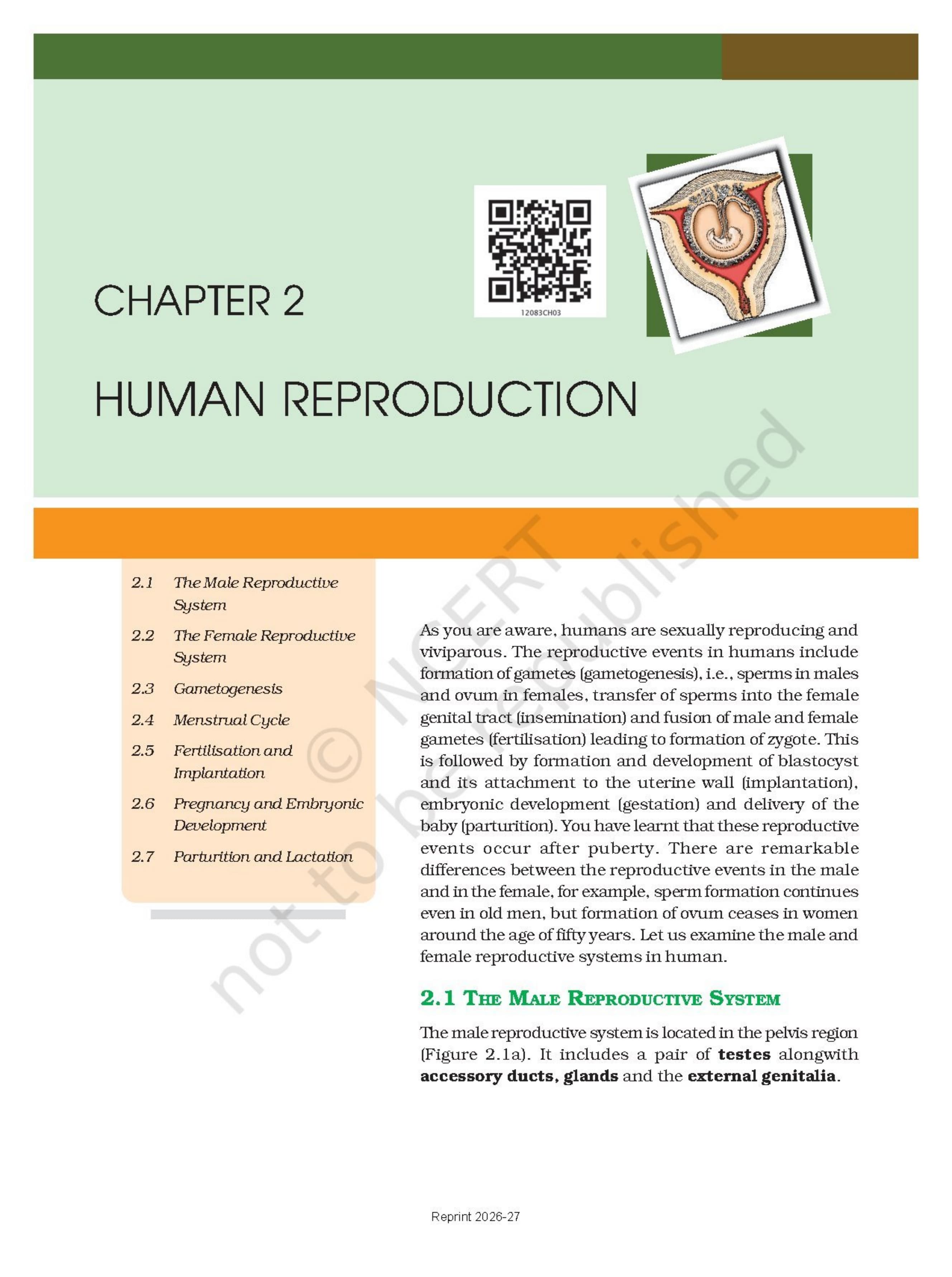
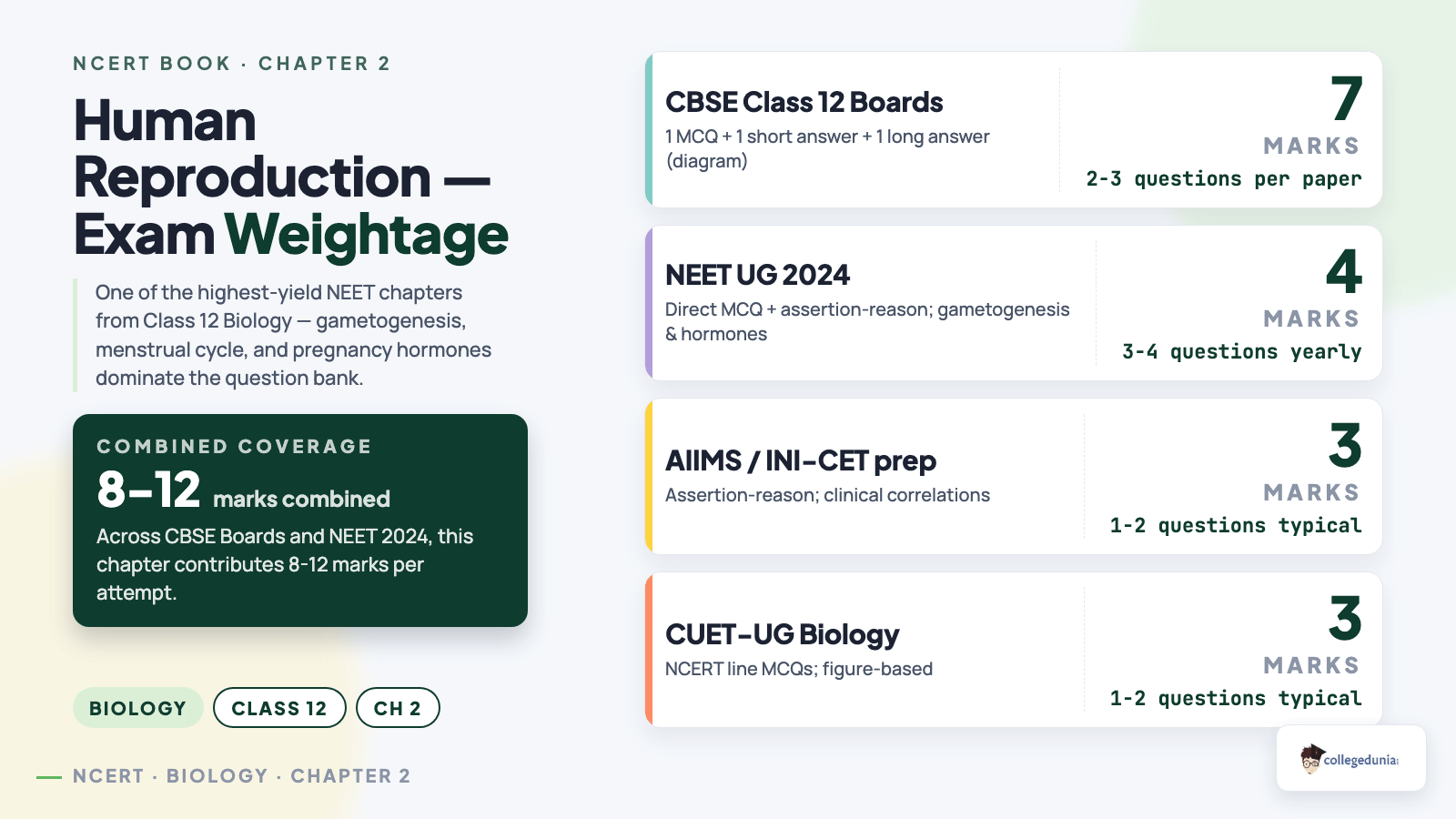
Human reproduction is the sexual mode of reproduction in humans that involves gamete formation, fertilisation, embryo development inside the uterus, and parturition. Class 12 Biology Chapter 2 Human Reproduction is one of the highest-yield chapters in the Reproduction unit, with consistent CBSE Board and NEET appearances. This page hosts the latest 2026-27 NCERT Book PDF, section map, figure inventory and PYQ trends.
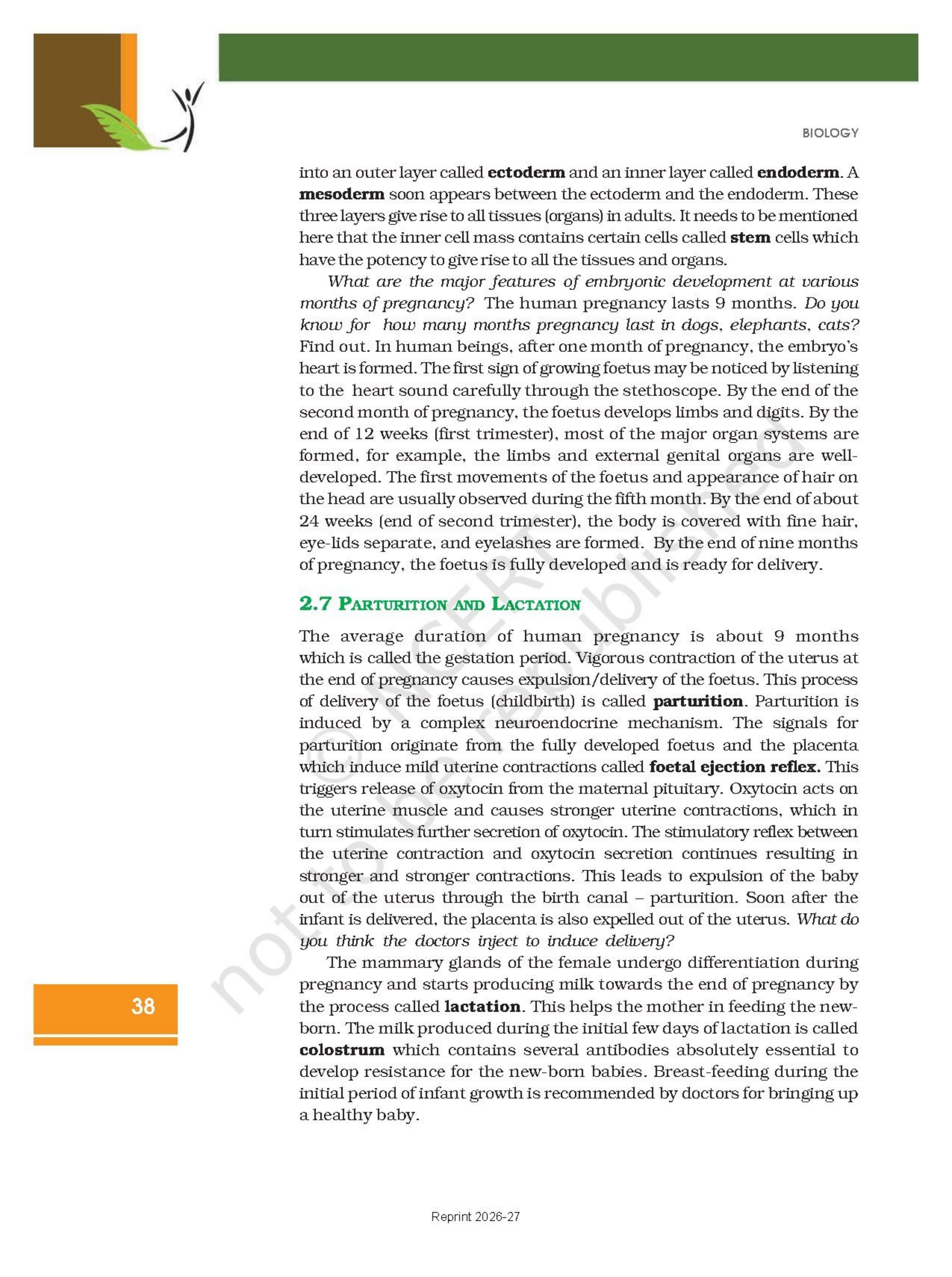
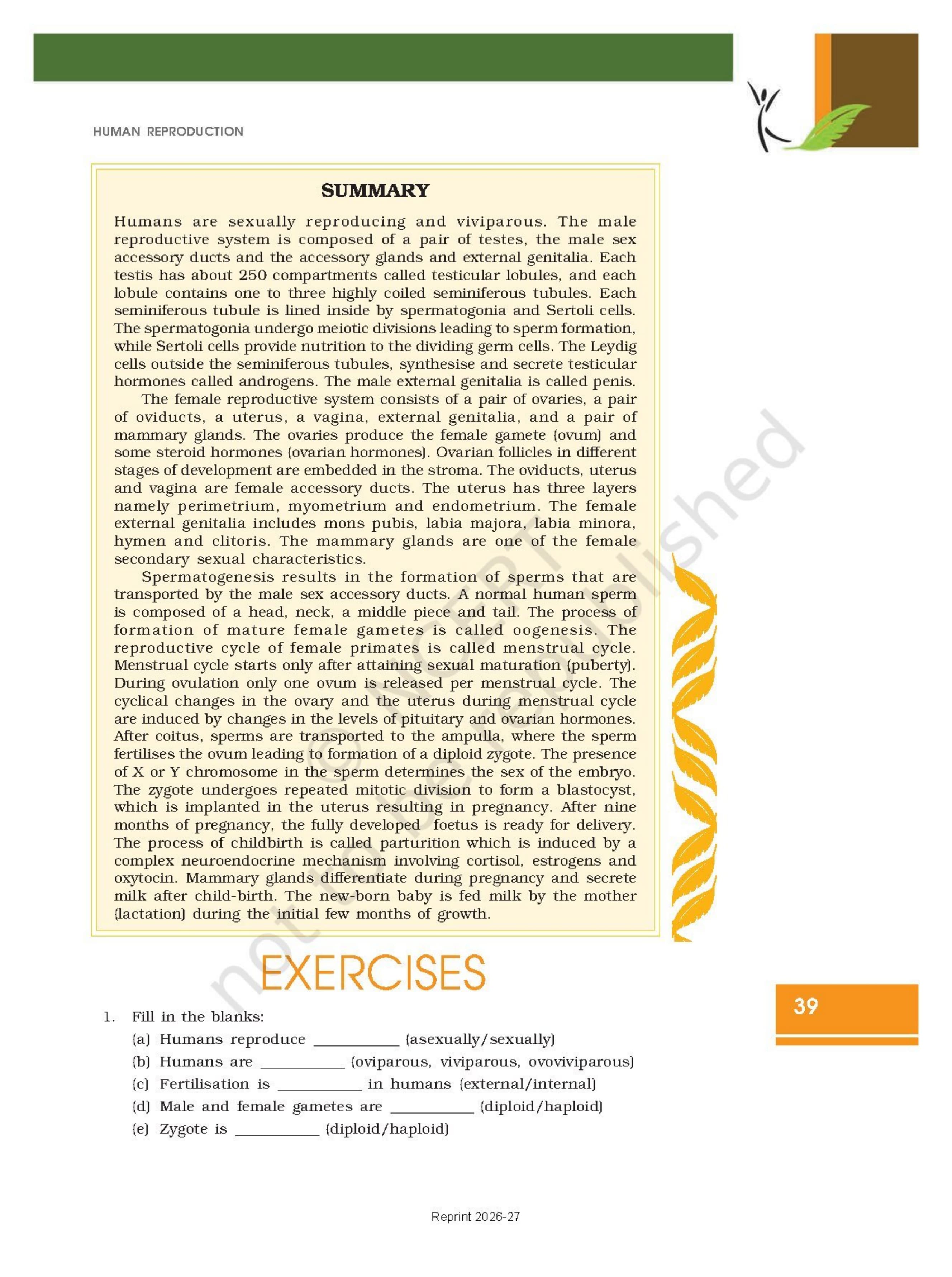
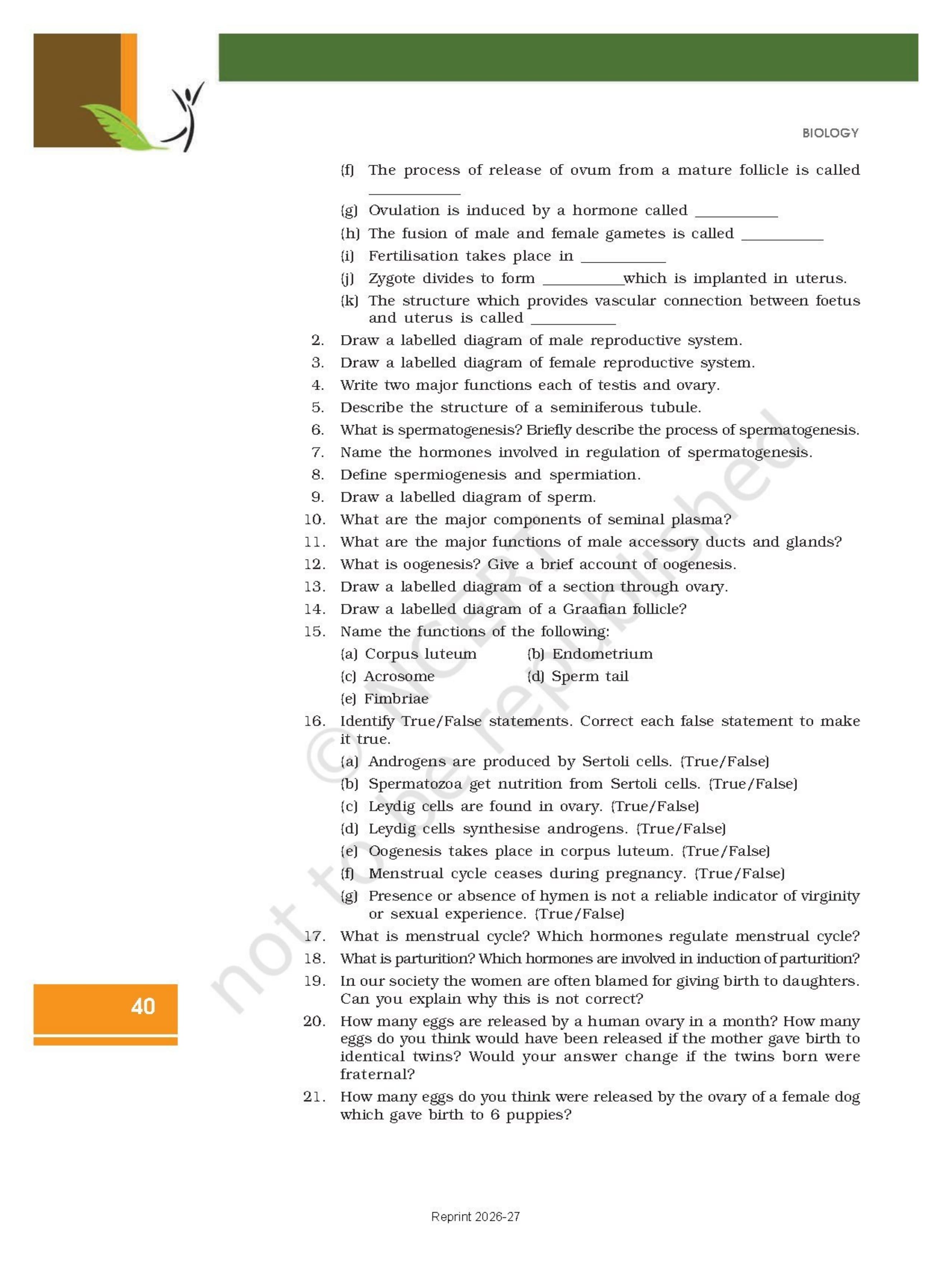
- CBSE Weightage: 6 to 8 marks (Reproduction unit contributes 16 marks; this chapter is the largest single contributor).
- NEET Weightage: 4 to 6 questions consistently across the last five NEET papers, mostly from spermatogenesis, oogenesis and the menstrual cycle.
- CUET Weightage: 3 to 5 MCQs typically in the Biology domain section, with a strong skew toward labelled diagrams.
Human Reproduction Video Lecture for Class 12 Biology
Source: PW NEET on YouTube
The infographic below shows how Chapter 2 ranks within the Reproduction unit based on average CBSE Board marks from 2021 to 2025.
Chapter Weightage Bar Chart for Class 12 Biology Reproduction Unit
The chart below ranks Class 12 Biology chapters by their average CBSE Board marks across 2021-2025. Human Reproduction sits at the top of the Reproduction unit and is one of the four highest-weighted chapters in the entire textbook.
| Chapter | Avg CBSE Marks | Visual |
|---|---|---|
| Ch 1 Sexual Reproduction in Flowering Plants | 6 | |
| Ch 2 Human Reproduction | 7 | |
| Ch 3 Reproductive Health | 4 | |
| Ch 4 Principles of Inheritance and Variation | 7 | |
| Ch 5 Molecular Basis of Inheritance | 8 | |
| Ch 6 Evolution | 5 | |
| Ch 7 Human Health and Disease | 7 |
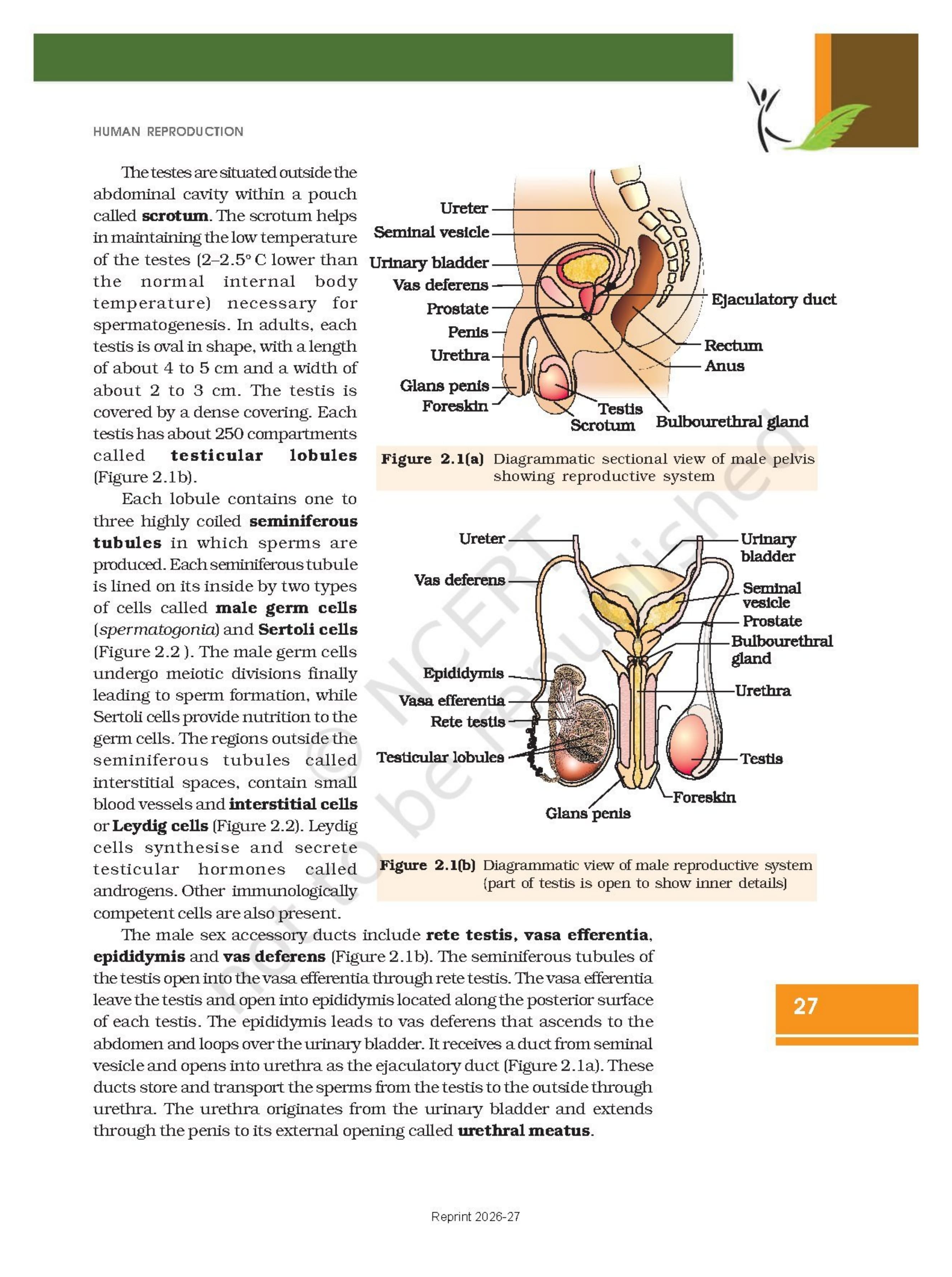
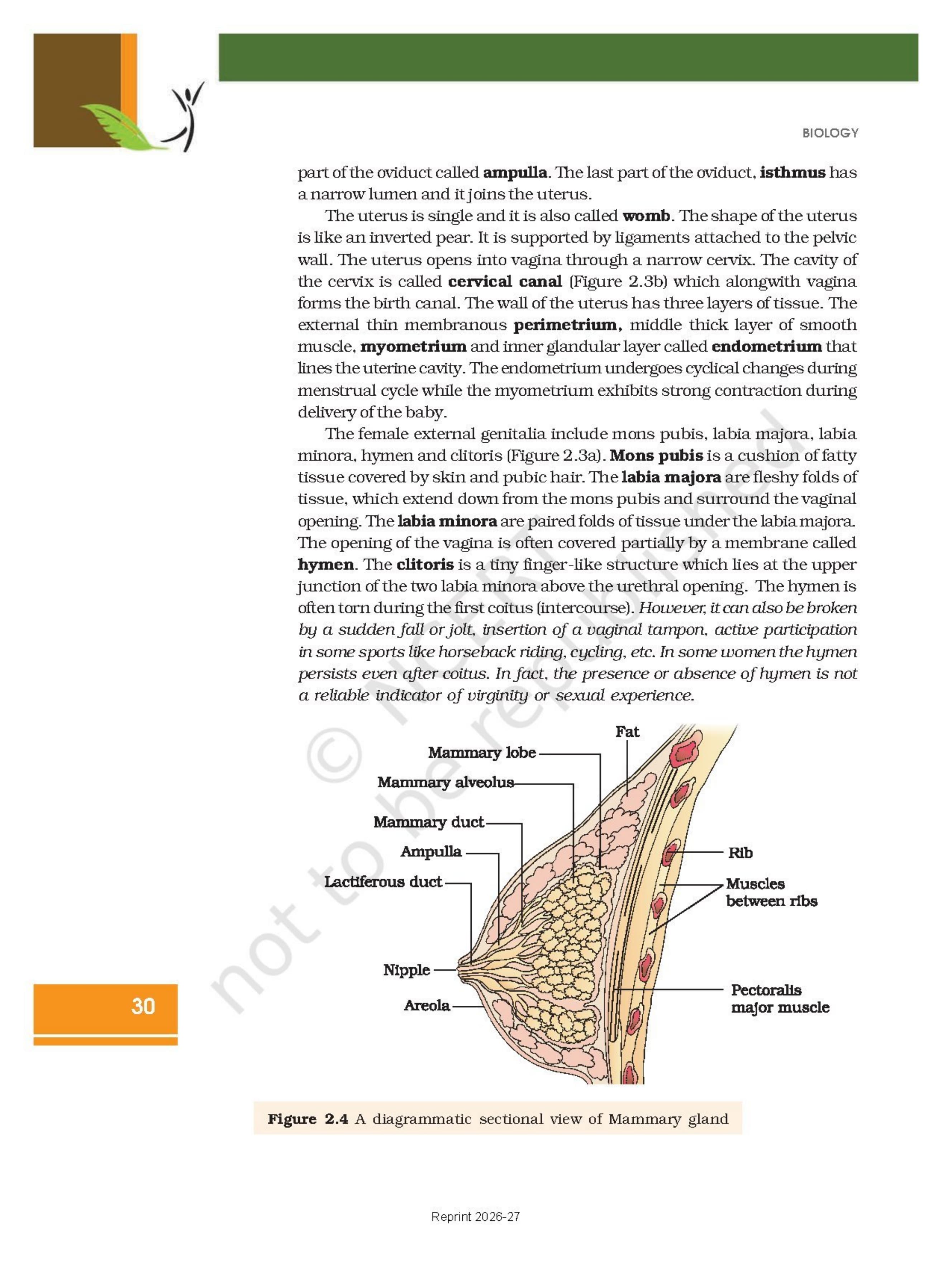
The Reproduction unit (Ch 1 to Ch 3) together contributes 16 marks in the CBSE Class 12 Biology paper, and Human Reproduction alone delivers nearly half of that yield. NEET examiners reuse this chapter every year, often as labelled-diagram MCQs from Fig. 2.1 and Fig. 2.4.
How will Collegedunia's NCERT Book PDF Help You with Human Reproduction?
The Collegedunia human reproduction class 12 ncert pdf reproduces the official Chapter 2 file from ncert.nic.in with navigation aids the bare PDF lacks.
- 2026-27 NCERT Alignment: Matches the current Reprint 2026-27, all seven sections and 11 figures intact.
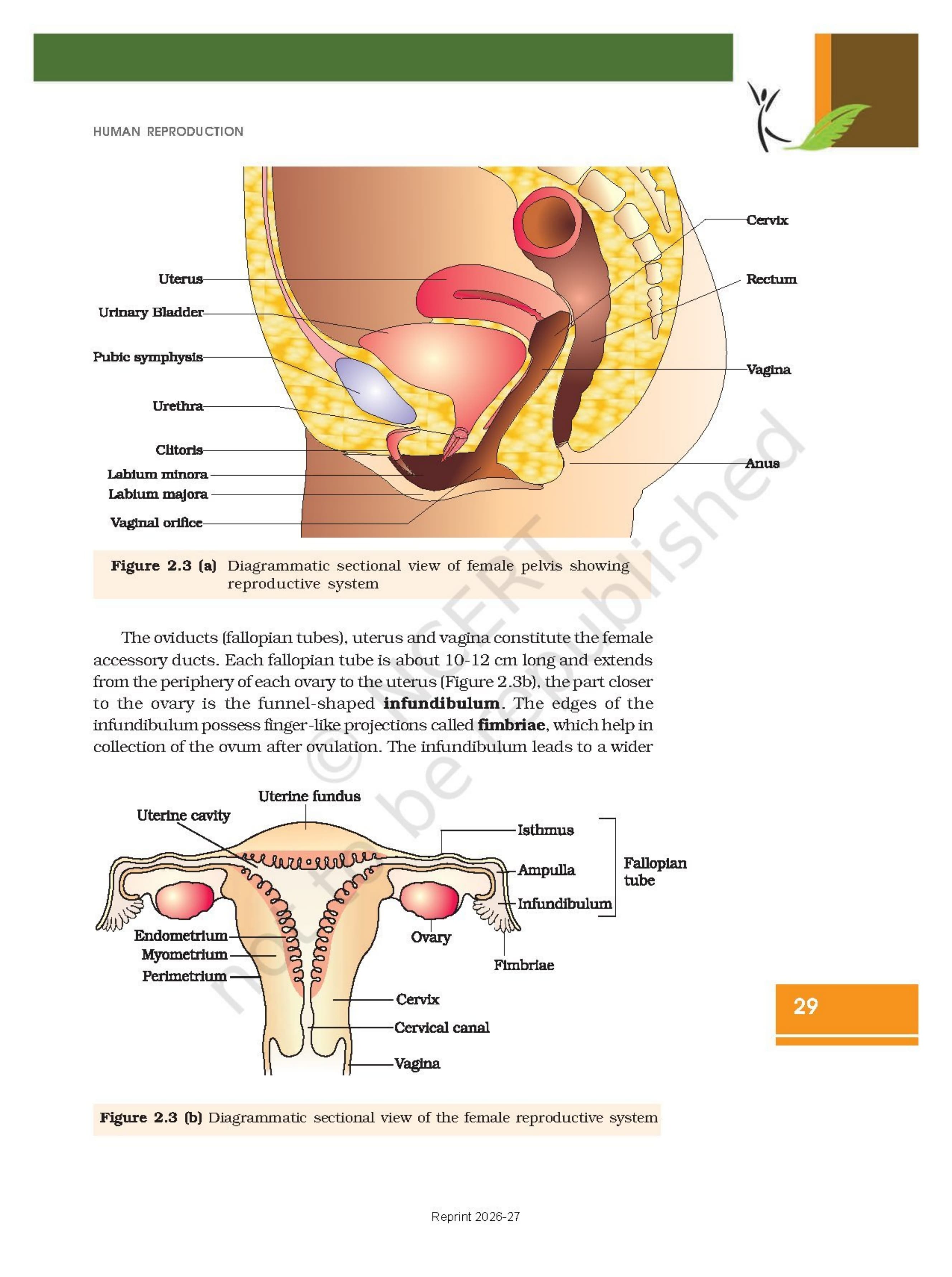
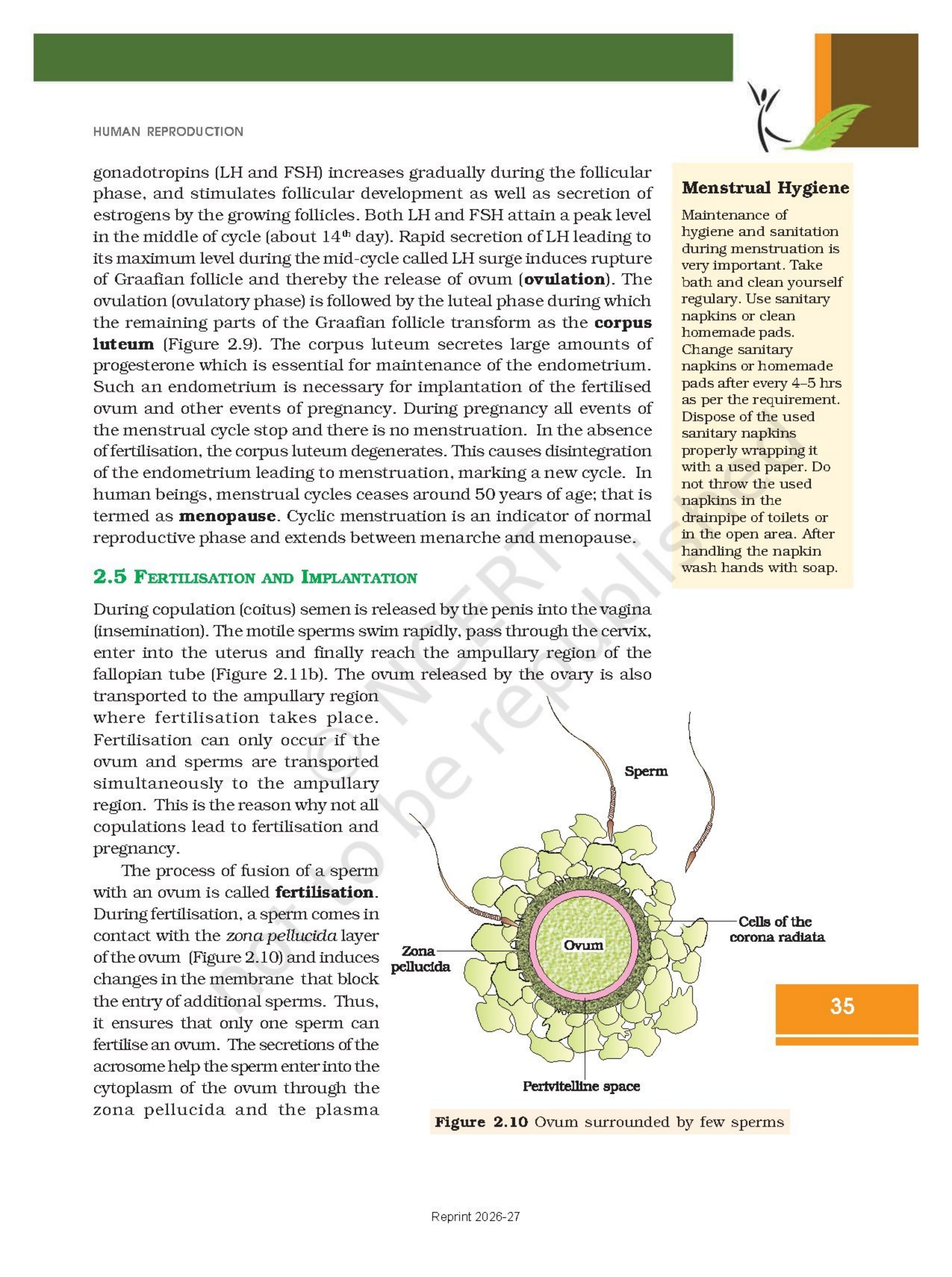
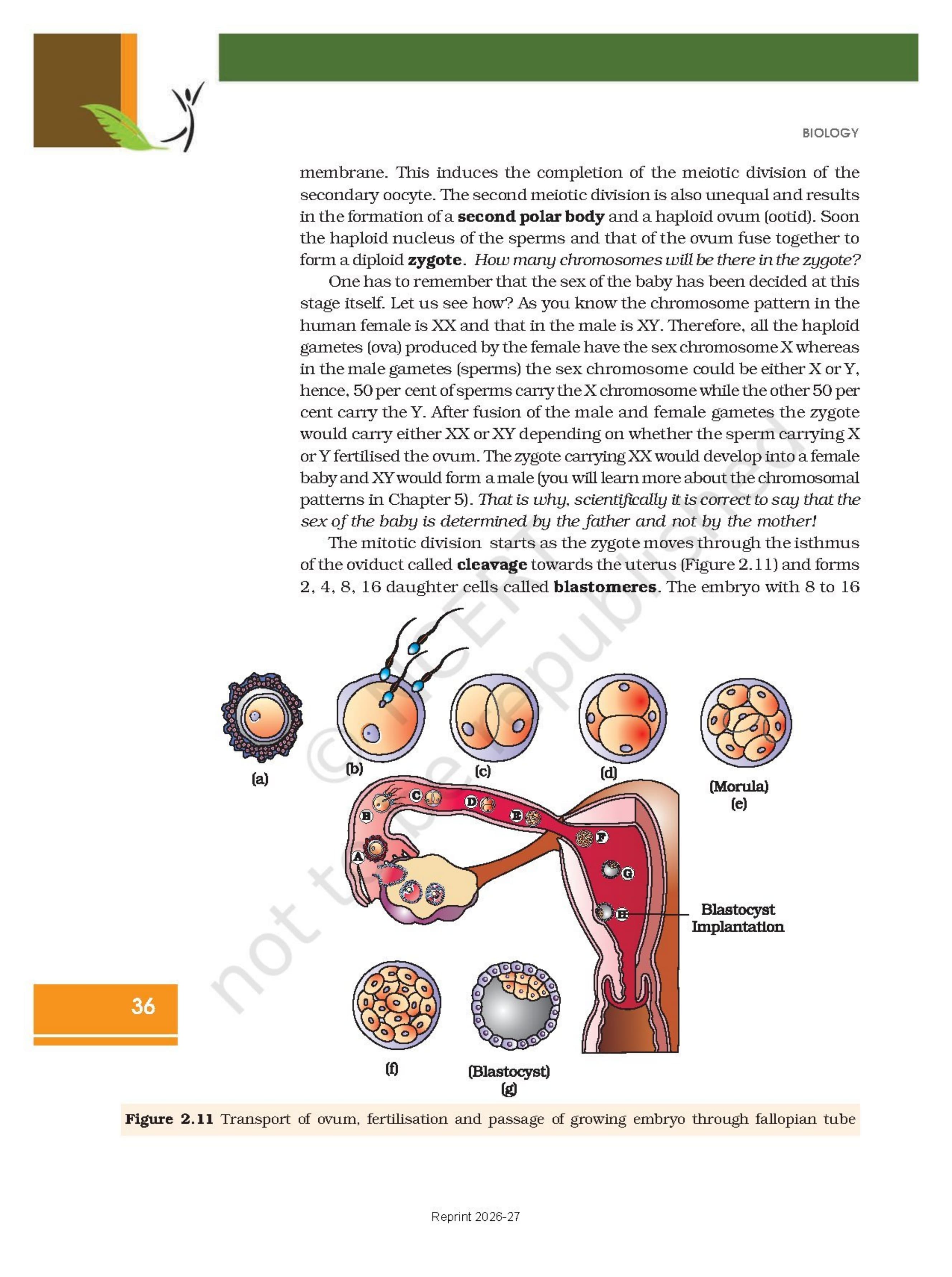
- Diagram-First Read: Fig. 2.1, Fig. 2.4, Fig. 2.10 and Fig. 2.11 carry over 60 percent of the NEET MCQ load from this chapter. Jump straight to any figure using the section map.
Human Reproduction NCERT Section-by-Section Breakdown for Class 12 Biology
The table below maps each section in the human reproduction class 12 ncert pdf to its page range, sub-topic and the single concept that most often appears in board papers and NEET MCQs.
| Section | Topic | Pages | Most-Tested Concept |
|---|---|---|---|
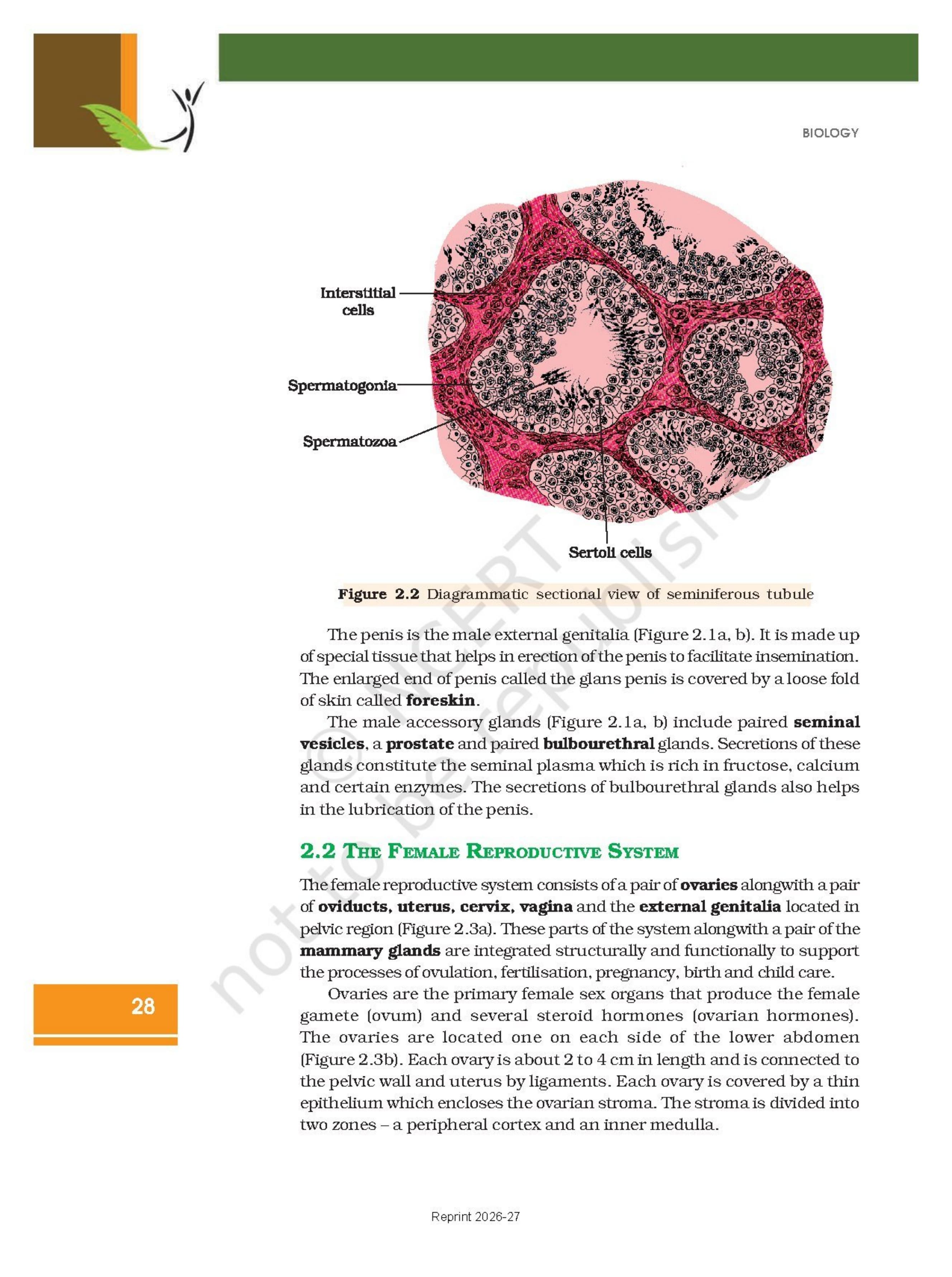
| 2.1 | The Male Reproductive System | 23-25 | Testis structure, seminiferous tubule cell types |
| 2.2 | The Female Reproductive System | 25-27 | Ovary histology, fallopian tube regions, mammary gland |
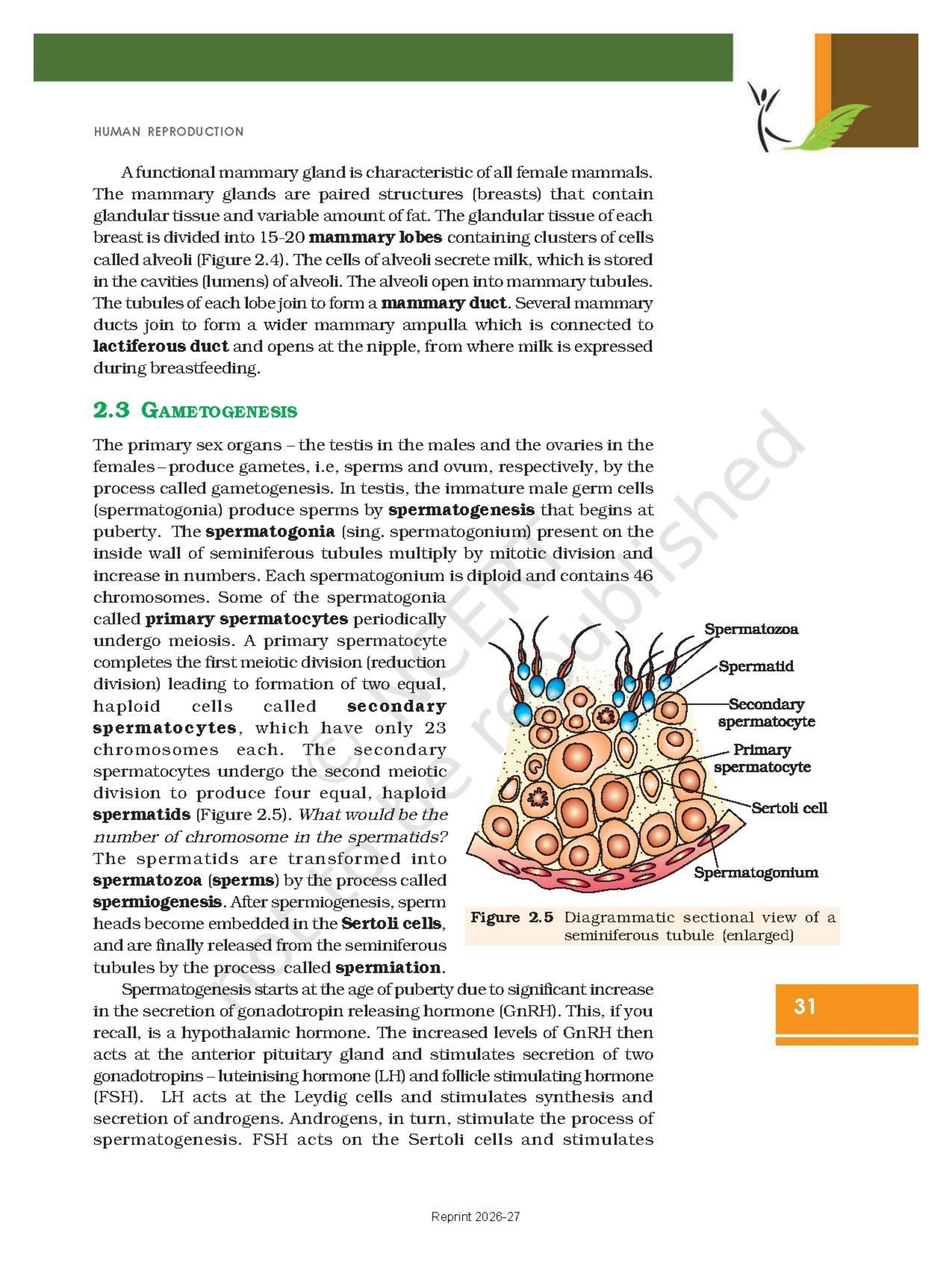
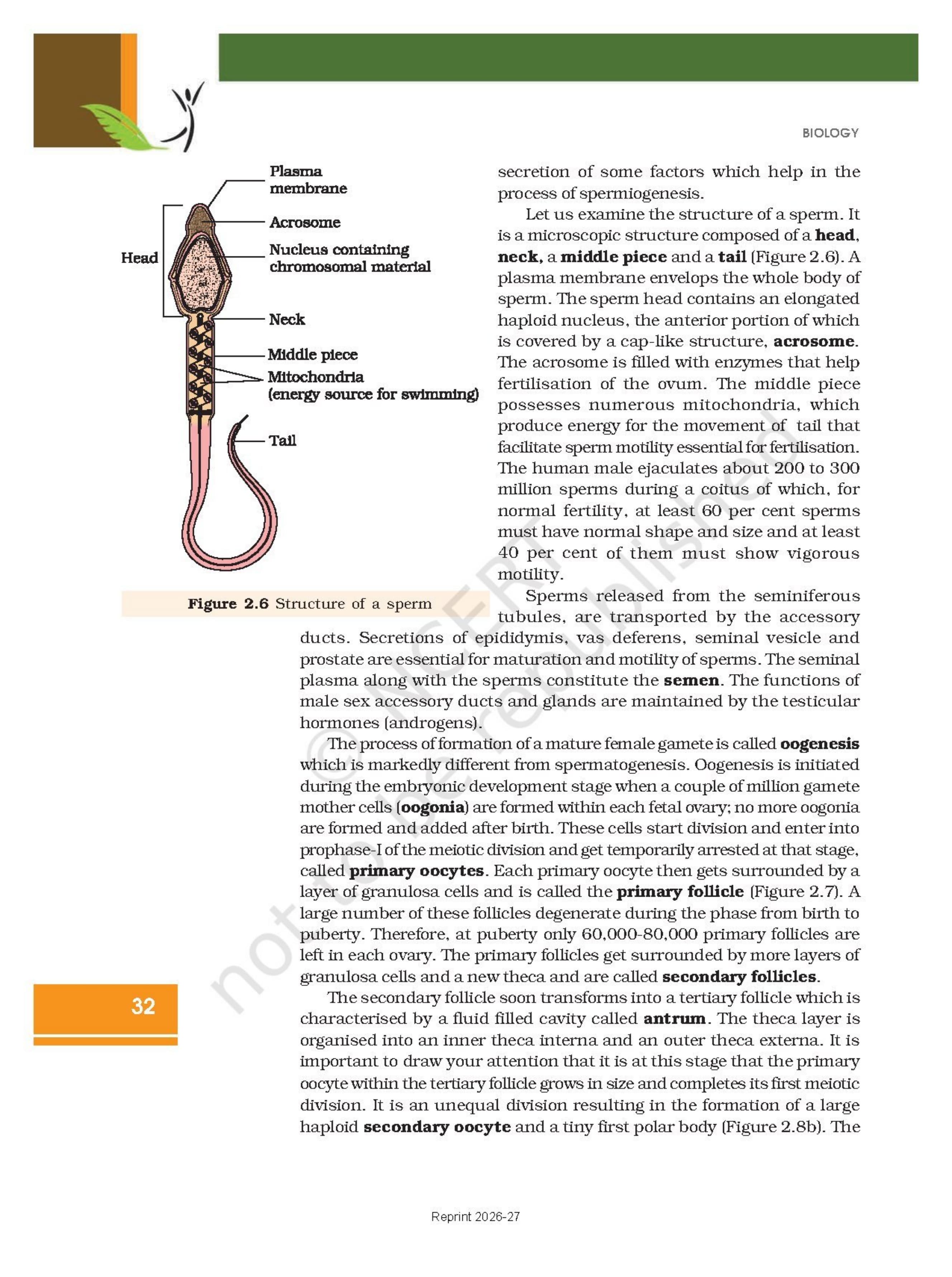
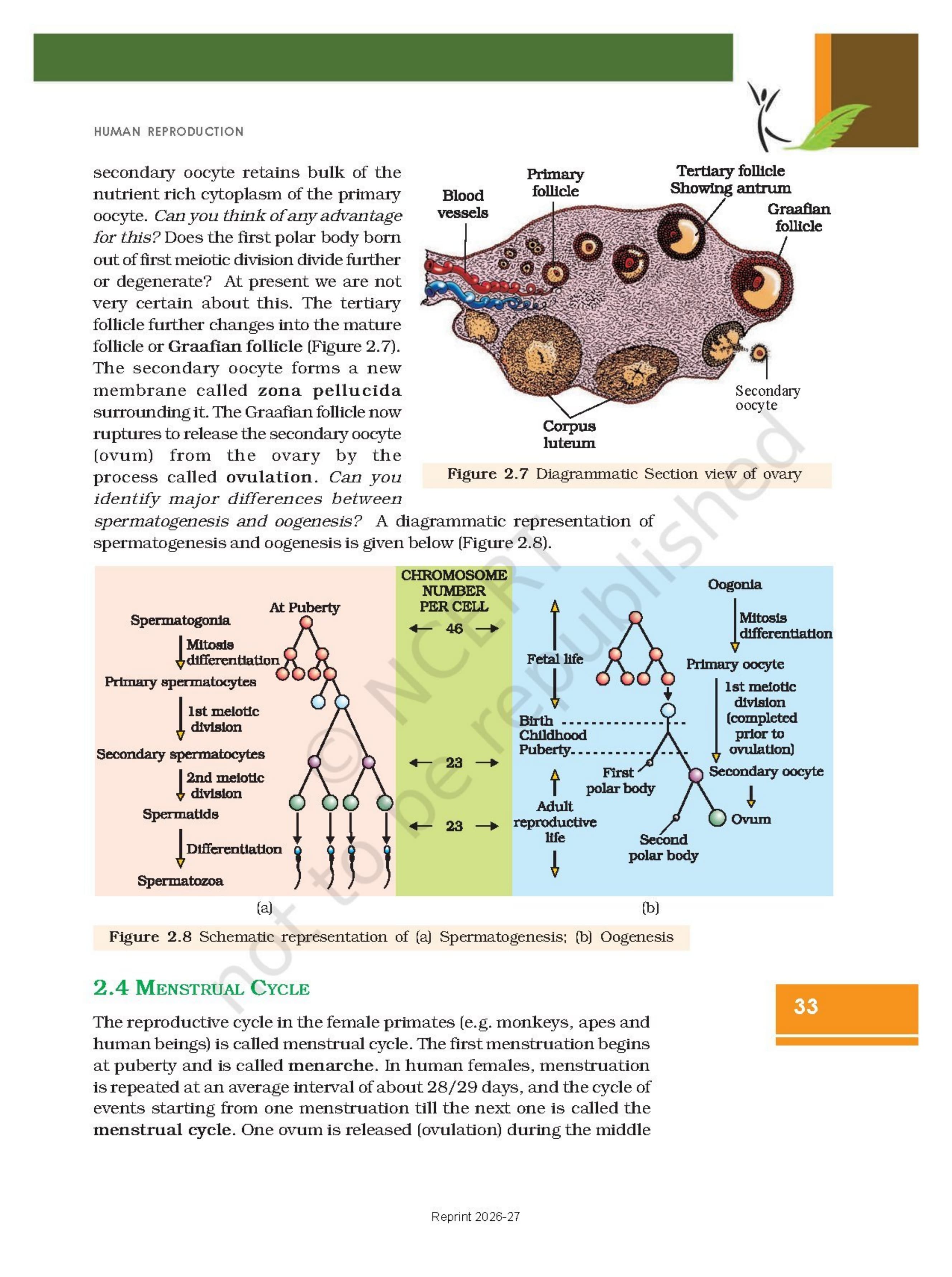
| 2.3 | Gametogenesis | 27-29 | Spermatogenesis vs oogenesis comparison |
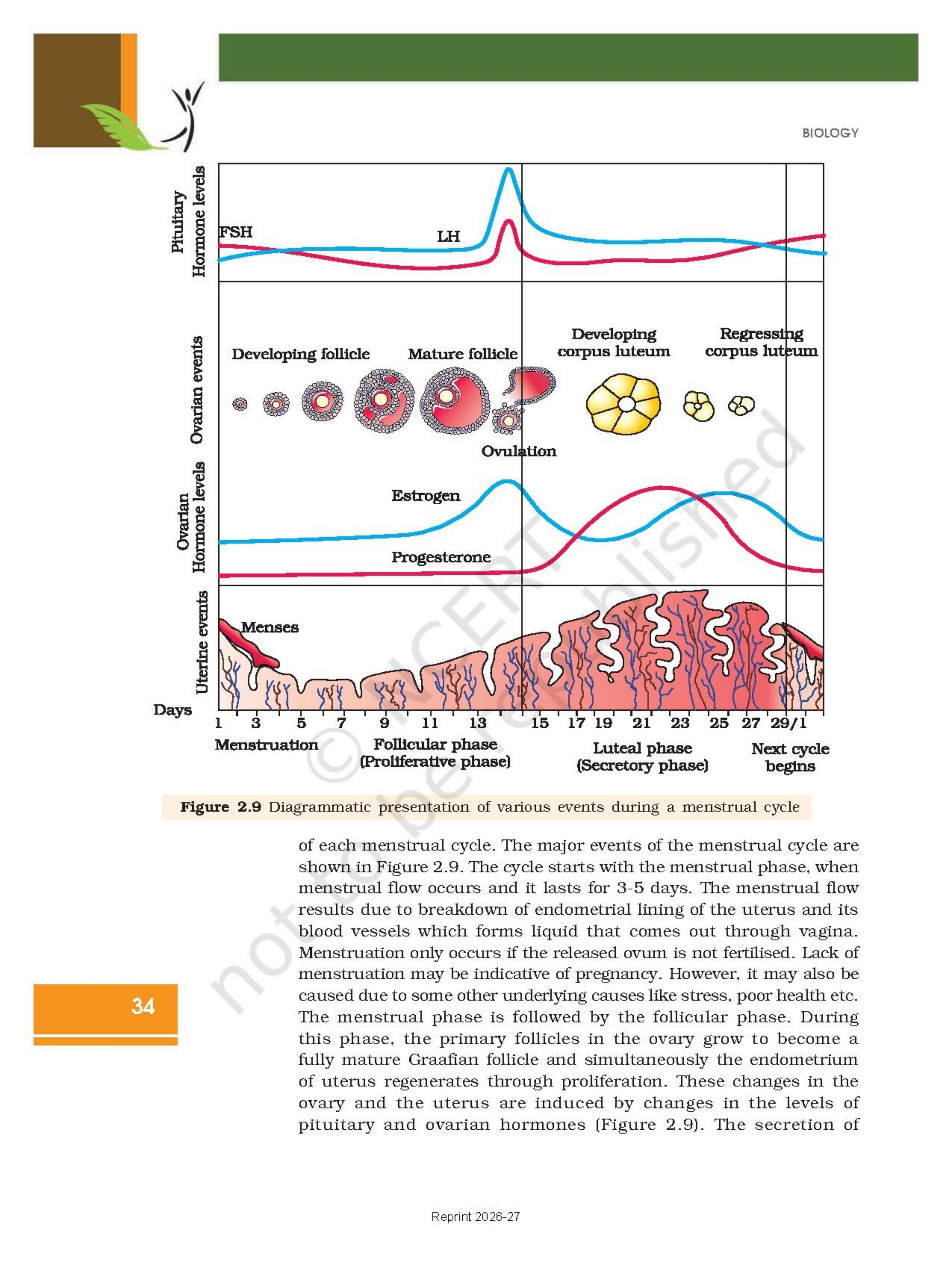
| 2.4 | Menstrual Cycle | 29-30 | Hormone sequence FSH to LH surge to progesterone |
| 2.5 | Fertilisation and Implantation | 30-32 | Acrosomal reaction, cleavage, blastocyst implantation |
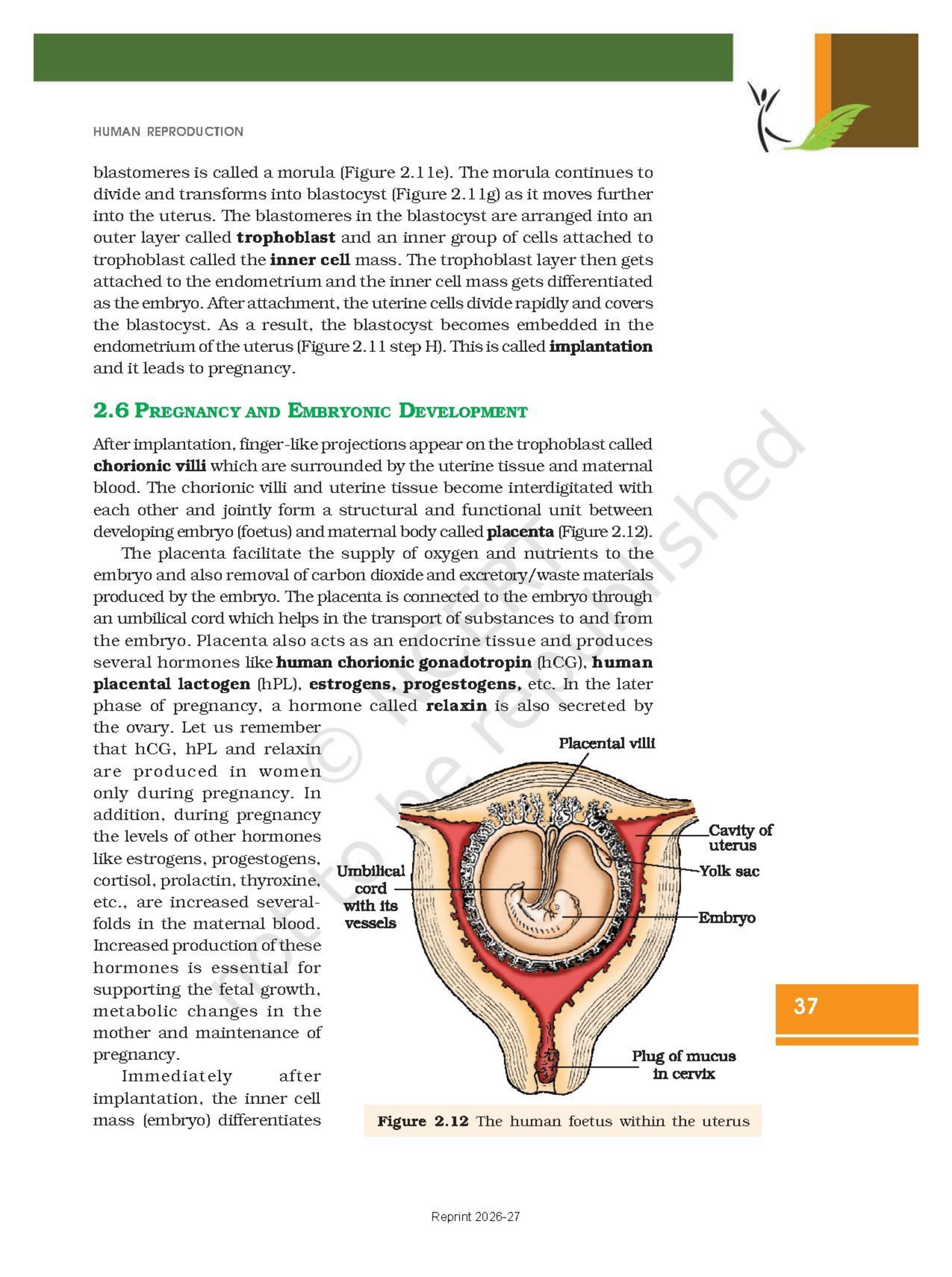
| 2.6 | Pregnancy and Embryonic Development | 32-33 | Placenta function, hCG, gestation timeline |
| 2.7 | Parturition and Lactation | 33-34 | Oxytocin feedback, colostrum composition |
Sections 2.3 and 2.4 generate the most NEET questions. CBSE Boards draw short-answer and 2-mark questions from every section.
What is Inside the Human Reproduction NCERT Book PDF?
The PDF on this page matches what the NCERT server hosts. Several Exercises (notably Q5, Q12 and Q14) reward students who have read the chapter linearly rather than skipping to bullet-point summaries. The chapter is dense with labelled diagrams, and NCERT prints them at a size large enough to label every duct, lobule and follicle.
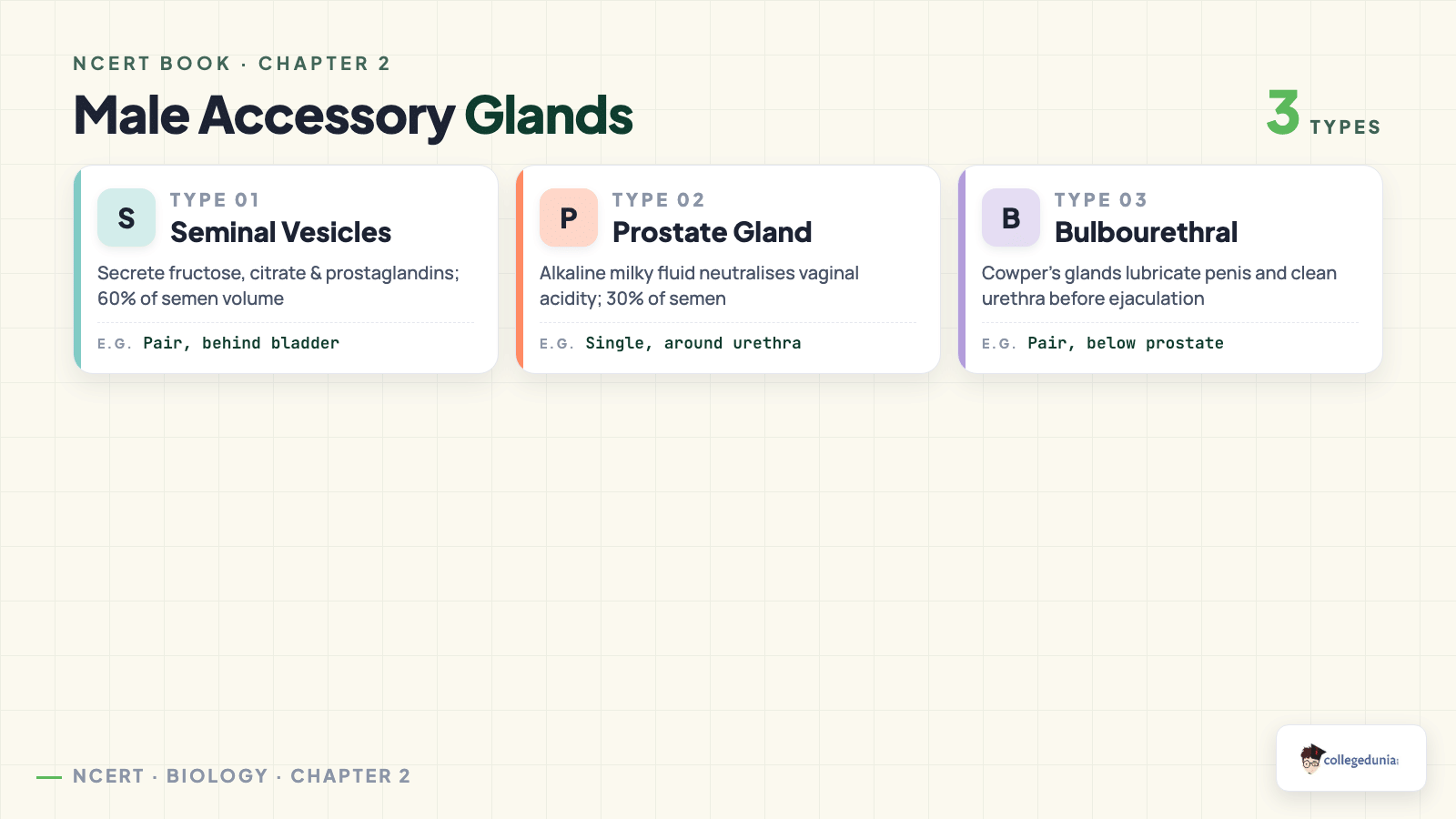
Figure and Diagram Inventory for Human Reproduction Class 12 Biology
The chapter has 11 labelled figures. The four diagrams below appear most often as fill-in-the-label questions in CBSE Boards and as identify-the-structure MCQs in NEET.
| Figure | Diagram | Exam Frequency |
|---|---|---|
| Fig. 2.1 | Diagrammatic sectional view of male reproductive system | NEET 2024, CBSE 2023, 2021 |
| Fig. 2.4 | Diagrammatic sectional view of female reproductive system | NEET 2025, CBSE 2024, 2022 |
| Fig. 2.8 | Spermatogenesis schematic | NEET 2023, CBSE 2022 |
| Fig. 2.11 | Menstrual cycle (hormones, ovary, uterus) | NEET 2024, 2022, CBSE 2025 |
Re-drawing Fig. 2.11 from memory once per week is the single highest-return revision habit for this chapter. The same figure underpins at least one 3-mark question in every CBSE Board paper since 2021.
2026-27 NCERT Update Note for Human Reproduction
The 2026-27 syllabus retains Chapter 2 in full. All seven sections, all 11 figures and the 18 Exercises are present.
- Kept: All seven sections, every labelled figure, every Exercise.
- Trimmed: Minor language edits in Section 2.6 on placenta hormones; the table on twin types is retained but the marginal note has been compressed.
- Removed: Nothing of exam significance has been removed.
Human Reproduction Previous Year Question Trends from the NCERT Chapter
The table below maps the last five CBSE and NEET cycles to the section the question was lifted from. Use it to pre-empt which sub-topic to revise first.
| Year | CBSE Board (Question Type) | NEET (Question Type) |
|---|---|---|
| 2025 | 3-mark labelled diagram of female reproductive system | 2 MCQs from menstrual cycle and 1 from gametogenesis |
| 2024 | 5-mark long answer on spermatogenesis vs oogenesis | 2 MCQs on fertilisation and implantation timing |
| 2023 | 2-mark short answer on parturition hormones | 1 MCQ on graafian follicle structure |
| 2022 | 3-mark question on menstrual cycle phases | 2 MCQs on placenta hormones and hCG |
| 2021 | 2-mark question on accessory glands | 1 MCQ on capacitation |
NEET consistently draws from menstrual-cycle and gametogenesis sub-topics. CBSE Boards rotate the 5-mark long answer between male and female systems. For full year-wise PYQs, see Human Reproduction NCERT Solutions.
How to Read the Human Reproduction NCERT Chapter PDF Effectively
A three-pass plan covers the 12-page chapter in under four hours:
- Pass 1 (40 min): Skim Sections 2.1-2.2 with Fig. 2.1 and Fig. 2.4. Label every structure on a printed copy.
- Pass 2 (90 min): Read Sections 2.3-2.5 in detail. Re-draw Fig. 2.11 from memory.
- Pass 3 (60 min): Finish Sections 2.6-2.7. Attempt all 18 Exercises. Mark terms where you needed to check back.
Exam Comparison: How Human Reproduction Appears across CBSE, NEET and CUET
The table below maps CBSE Boards, NEET and CUET (UG Biology) across the last three exam cycles. Use it to benchmark how much this chapter matters per exam before you set a revision target.
| Exam | Latest Edition (2025) | 2024 | 2023 |
|---|---|---|---|
| CBSE Class 12 Boards | 7 marks (3+2+2) | 8 marks (5+3) | 6 marks (3+3) |
| NEET | 3 questions (12 marks) | 2 questions (8 marks) | 2 questions (8 marks) |
| CUET (UG Biology) | 4 MCQs (20 marks) | 3 MCQs (15 marks) | 3 MCQs (15 marks) |
NEET reliably picks two questions from this chapter every year. CUET favours diagram-label MCQs, particularly from Fig. 2.1 and Fig. 2.11.
Student Feedback
What 14,500 students told us about the Chapter 2 Human Reproduction NCERT Book journey:
- 75% of students surveyed marked the menstrual cycle hormone-graph as the hardest sub-topic.
- 68% reported losing 1-2 marks on differentiating spermatogenesis from oogenesis, even when the rest of their answer was correct.
- 4 out of 5 students said the LH/FSH hormonal-control flowchart was the most-skipped figure in their answer sheet.
- Average student took 6.2 hours for the first read of the chapter, with 2.7 hours for a revision pass before boards.
- Only 41% of students attempted all 18 NCERT Exercises. Toppers attempted every question and revisited wrong answers within 24 hours.
Source: 2025-26 Class 12 Biology student survey. Sample of 14,500 students from CBSE-affiliated schools across 18 states.
Other Resources for Human Reproduction Class 12 Biology
| Resource Type | Link |
|---|---|
| NCERT Book PDF | Human Reproduction NCERT Book PDF |
| NCERT Solutions | Human Reproduction NCERT Solutions |
| Notes | Human Reproduction Class 12 Biology Notes |
| Handwritten Notes | Human Reproduction Handwritten Notes |
| Formula Sheet | Human Reproduction Formula Sheet |
| Exemplar Solutions | Human Reproduction Exemplar Solutions |
| Exemplar Book PDF | Human Reproduction Exemplar Book PDF |
NCERT Book PDF for Class 12 Biology: All Chapters
| Chapter | NCERT Book PDF |
|---|---|
| Chapter 1 | Sexual Reproduction in Flowering Plants NCERT Book PDF |
| Chapter 2 | Human Reproduction NCERT Book PDF |
| Chapter 3 | Reproductive Health NCERT Book PDF |
| Chapter 4 | Principles of Inheritance and Variation NCERT Book PDF |
| Chapter 5 | Molecular Basis of Inheritance NCERT Book PDF |
| Chapter 6 | Evolution NCERT Book PDF |
| Chapter 7 | Human Health and Disease NCERT Book PDF |
| Chapter 8 | Microbes in Human Welfare NCERT Book PDF |
| Chapter 9 | Biotechnology Principles and Processes NCERT Book PDF |
| Chapter 10 | Biotechnology and its Applications NCERT Book PDF |
| Chapter 11 | Organisms and Populations NCERT Book PDF |
| Chapter 12 | Ecosystem NCERT Book PDF |
| Chapter 13 | Biodiversity and Conservation NCERT Book PDF |
Human Reproduction Class 12 NCERT PDF: FAQs
Q. Where can I download the human reproduction class 12 ncert pdf for the 2026-27 syllabus?
You can download the official 2026-27 reprint of Class 12 Biology Chapter 2 Human Reproduction directly from this page. The PDF mirrors the ncert.nic.in file and includes all seven sections, 11 labelled figures and the 18 chapter-end Exercises.
Q. Is Human Reproduction Chapter 2 part of the rationalised NCERT syllabus for 2026-27?
Yes. Chapter 2 Human Reproduction is retained in full in the 2026-27 NCERT Biology textbook. No section, figure or Exercise has been removed. Only minor language edits appear in Section 2.6 on placenta hormones.
Q. How many pages is Human Reproduction Chapter 2 in NCERT Class 12 Biology?
The chapter runs across 12 printed pages (pages 23 to 34 in the official 2026-27 reprint) with 7 sections, 11 labelled figures and 18 end-of-chapter Exercises.
Q. What are the most important topics in Class 12 Biology Chapter 2 for NEET?
For NEET, the highest-return topics are spermatogenesis vs oogenesis (Section 2.3), the hormonal control of the menstrual cycle (Section 2.4), fertilisation and implantation timing (Section 2.5), and labelled diagrams from Fig. 2.1, Fig. 2.4 and Fig. 2.11. These four areas contribute the majority of NEET MCQs from this chapter.
Q. How is human reproduction defined in Class 12 NCERT Biology Chapter 2?
The NCERT defines human reproduction as the sexual mode of reproduction in humans, involving gamete formation (gametogenesis), insemination, fertilisation inside the female body, development of the embryo within the uterus, and parturition followed by lactation. The chapter then expands each of these stages across Sections 2.1 to 2.7.
Q. What is the difference between spermatogenesis and oogenesis as taught in NCERT Chapter 2?
Spermatogenesis produces four functional haploid sperm from one diploid spermatogonium and continues from puberty through adult life. Oogenesis produces one functional haploid ovum (plus polar bodies) from one diploid oogonium, begins in foetal life, pauses in prophase I, and resumes only at puberty under FSH control. The side-by-side comparison appears in Sections 2.3.1 and 2.3.2 and is the single most-asked CBSE 5-mark question.
Q. Which figures from Human Reproduction Class 12 are most asked in CBSE Boards?
Fig. 2.1 (male reproductive system), Fig. 2.4 (female reproductive system) and Fig. 2.11 (menstrual cycle) together account for more than 60 percent of the labelled-diagram questions asked from this chapter across the last five CBSE Board papers.



Comments