




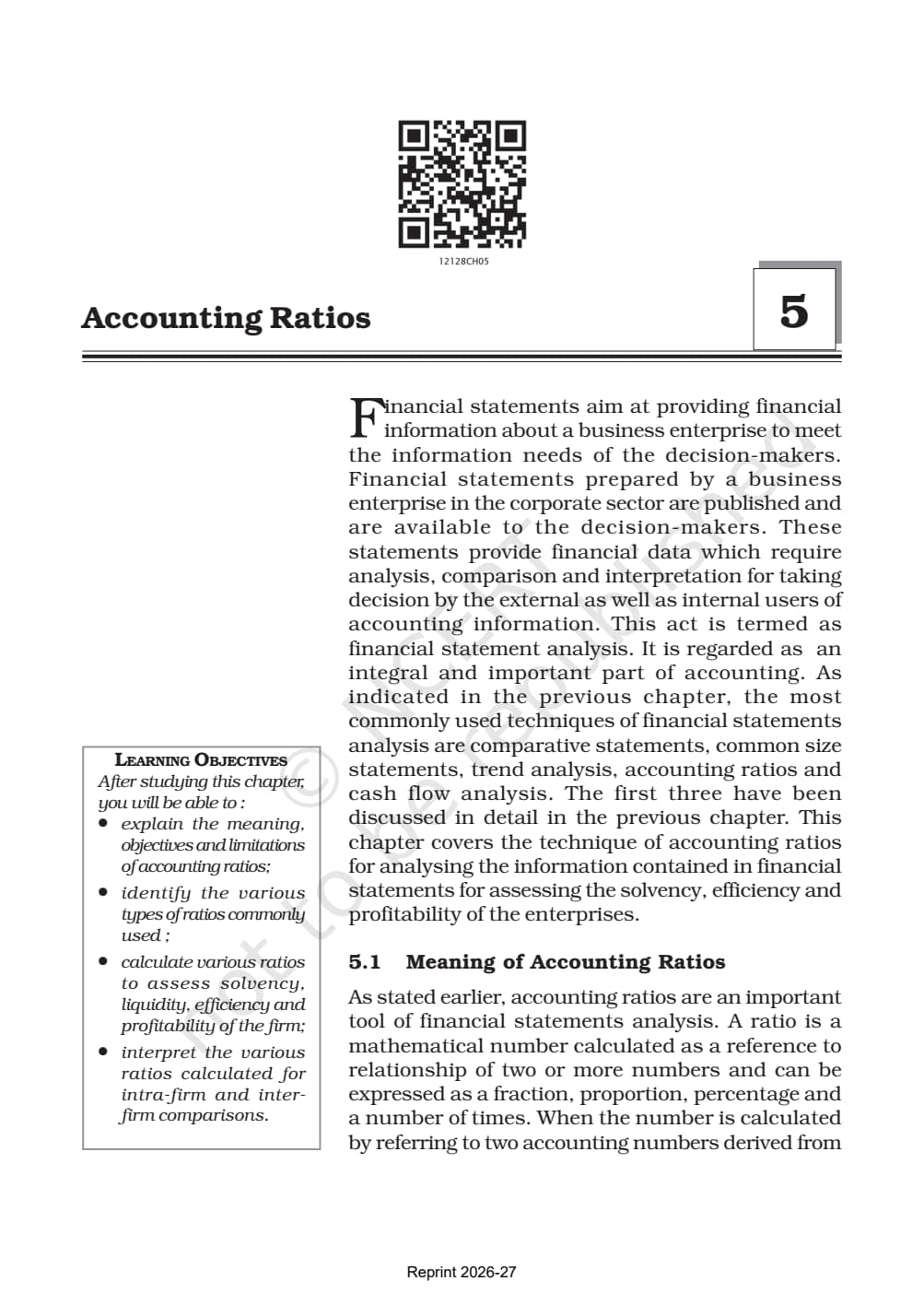
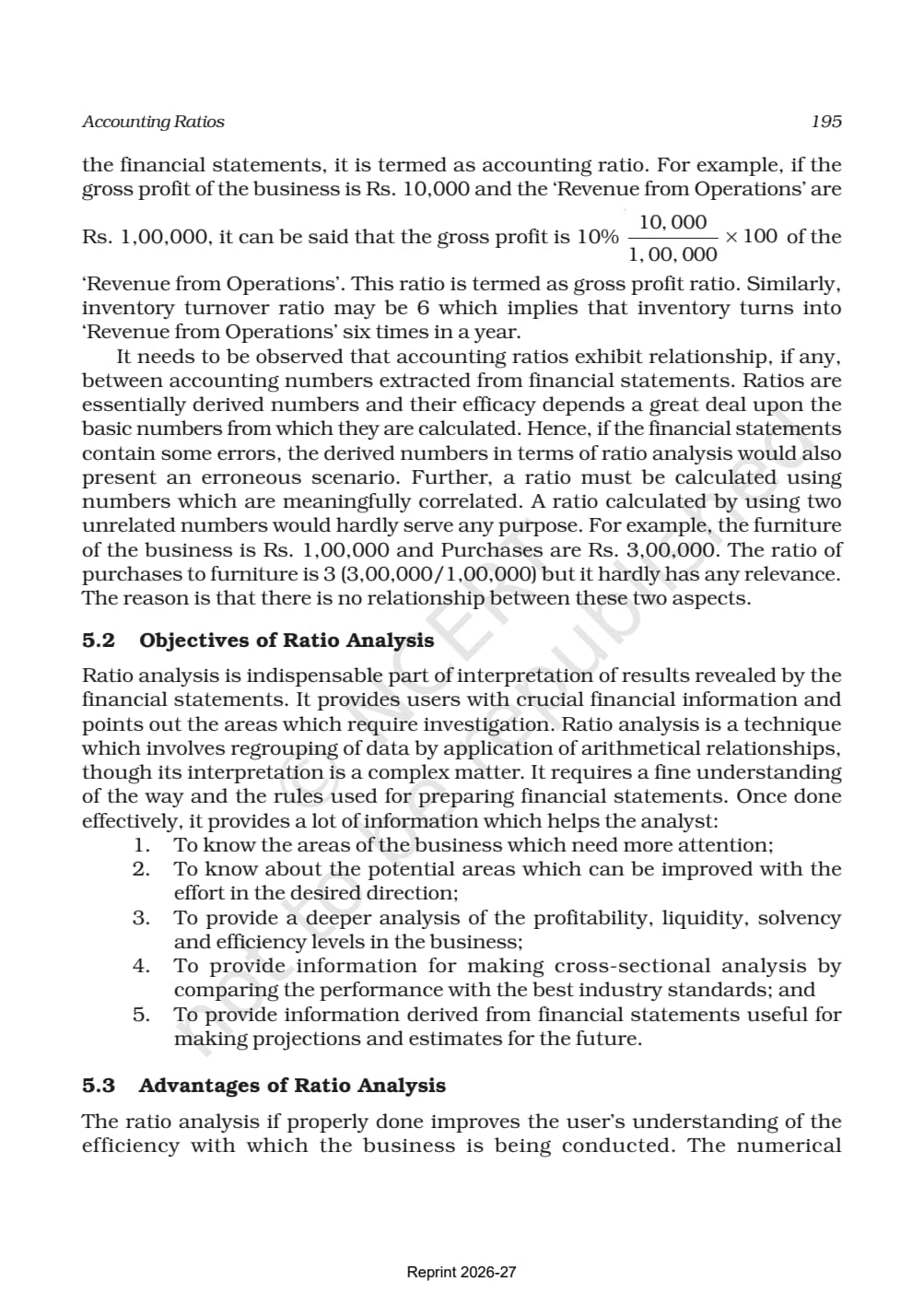
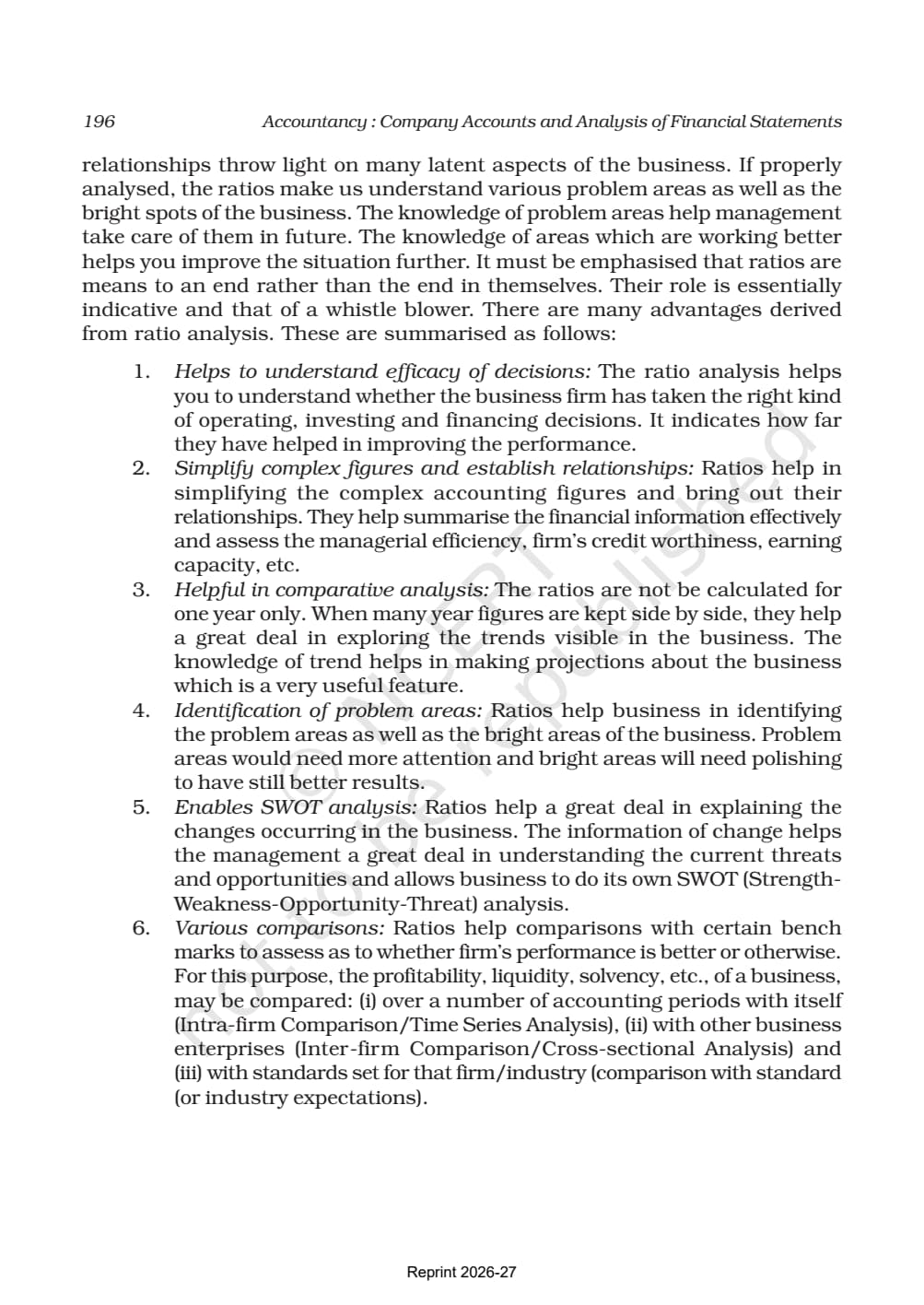
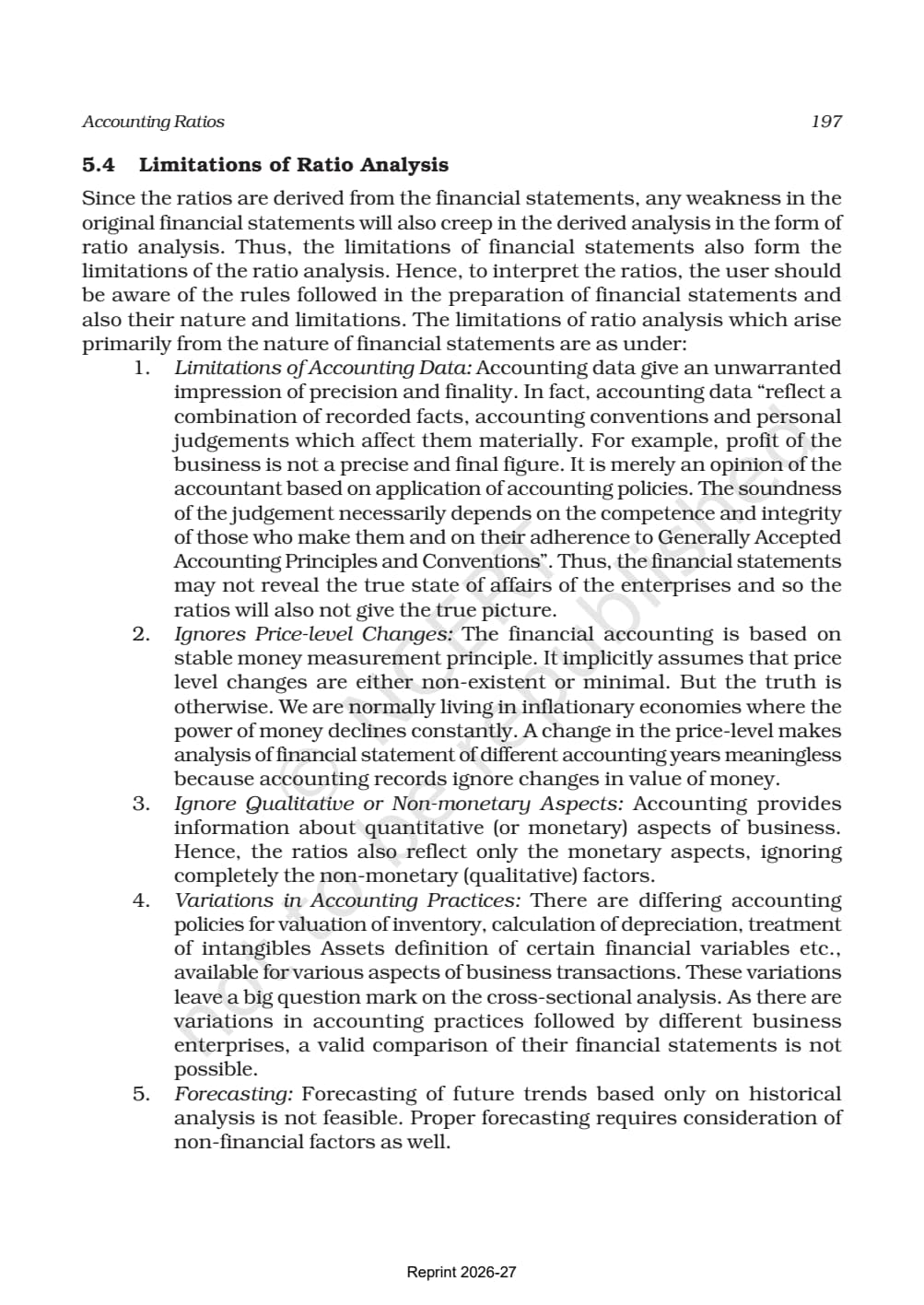
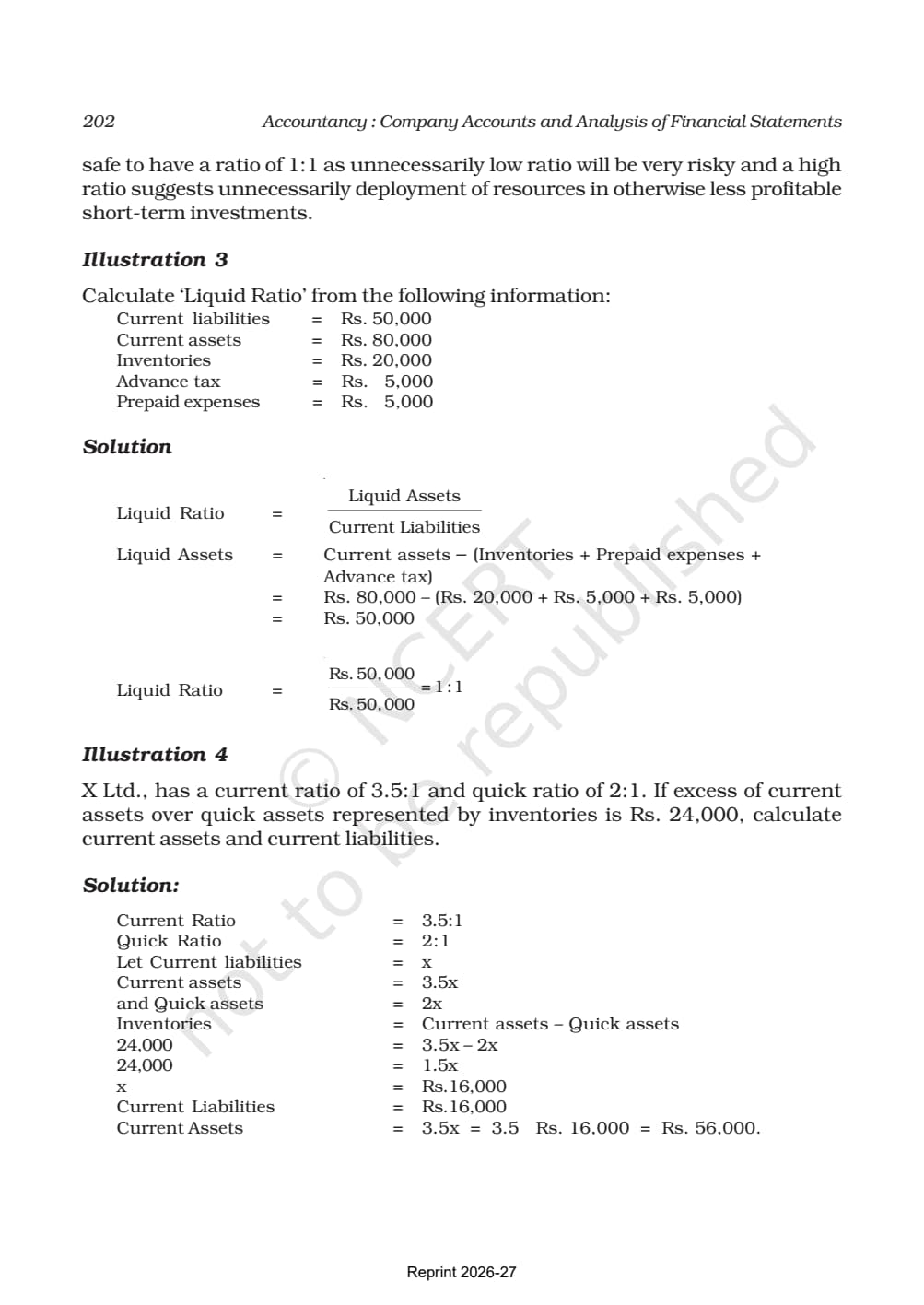
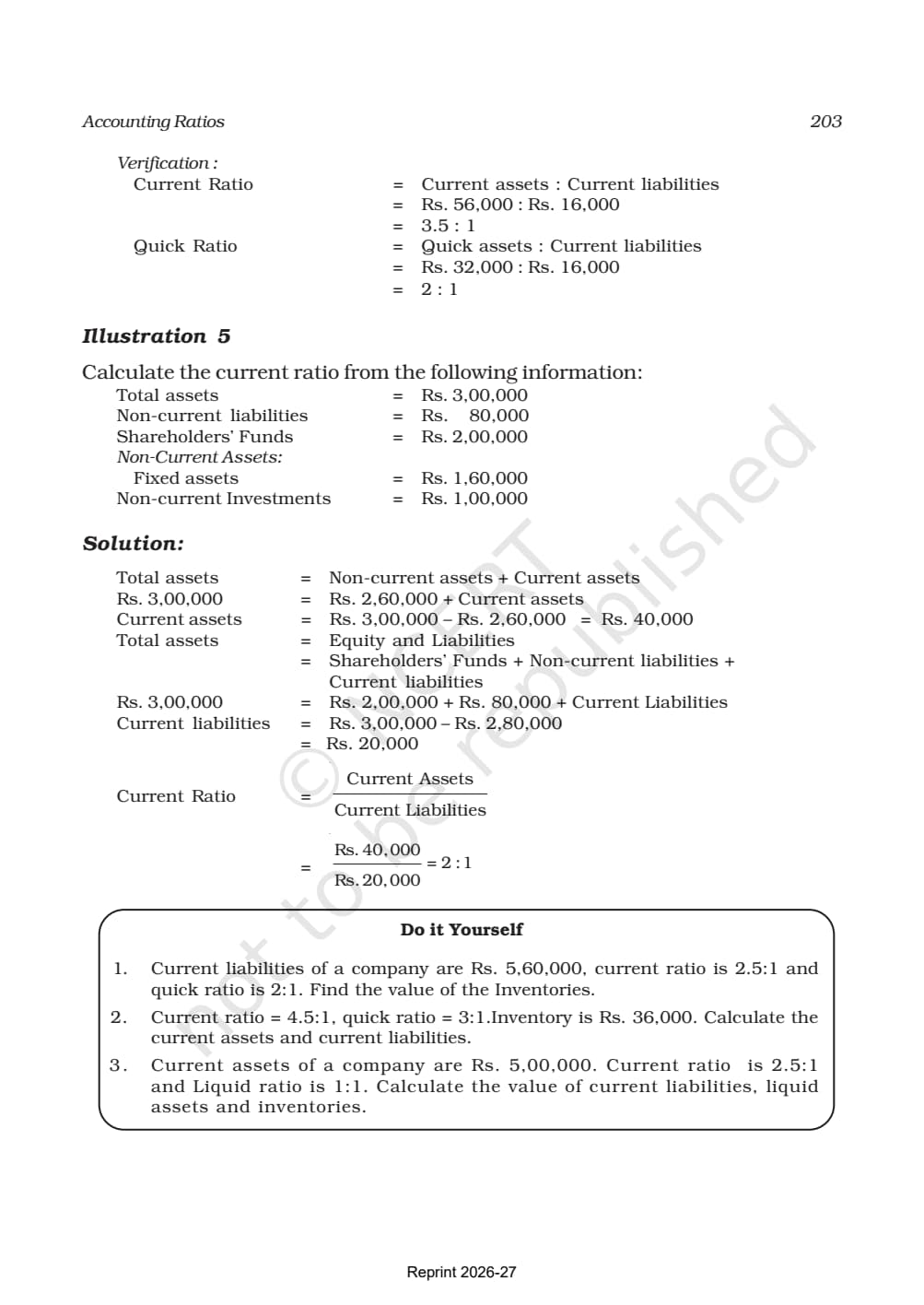
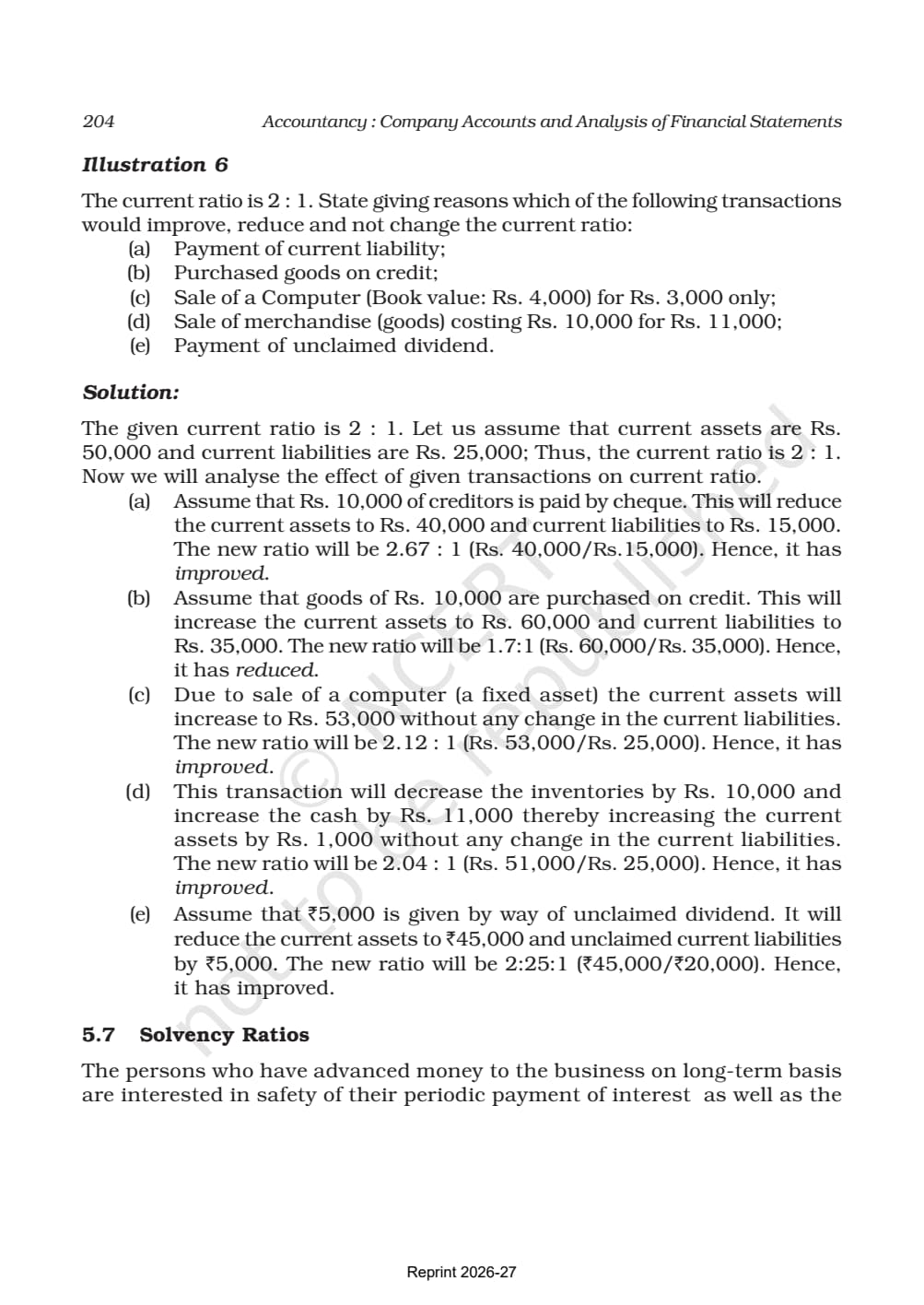
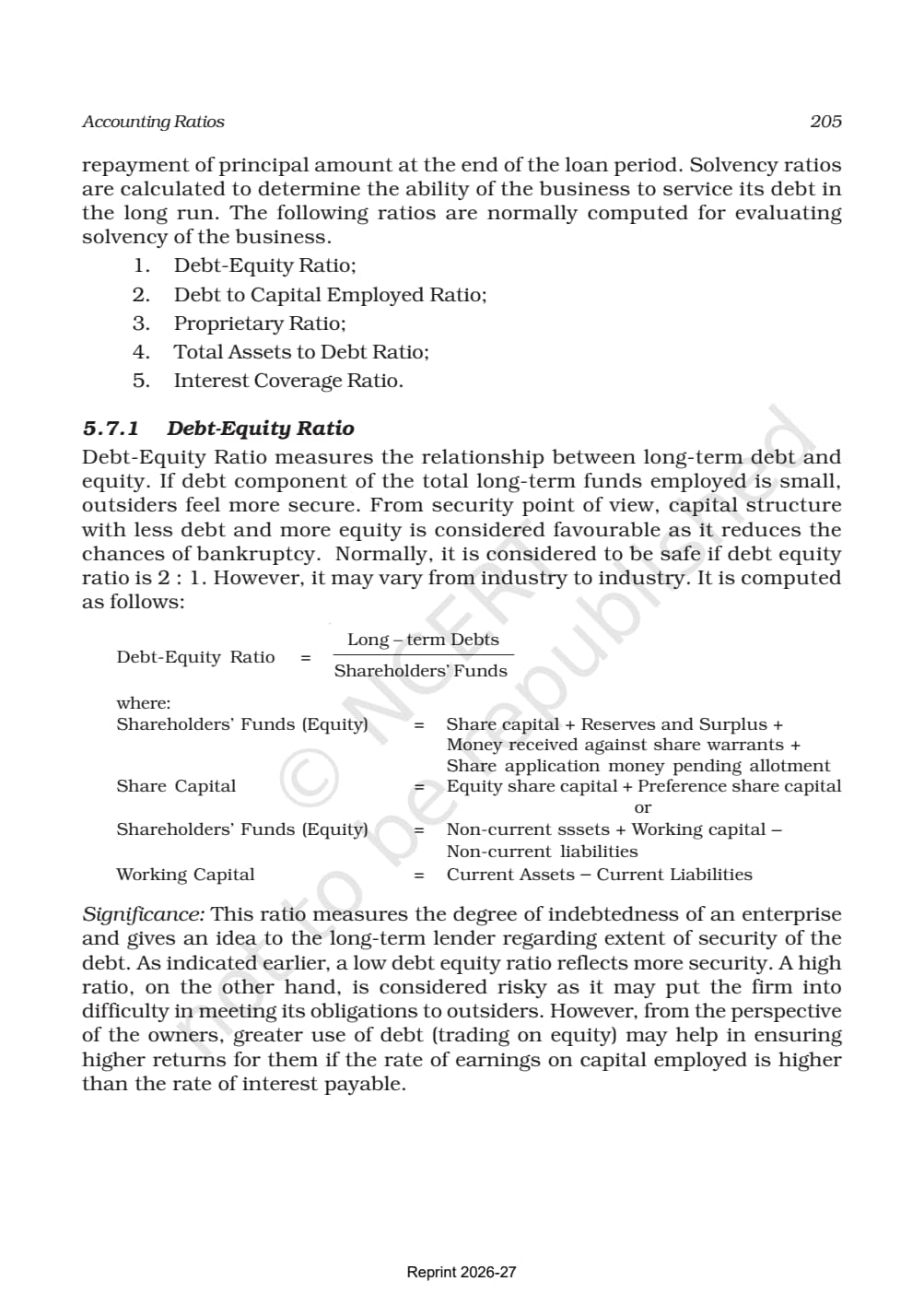
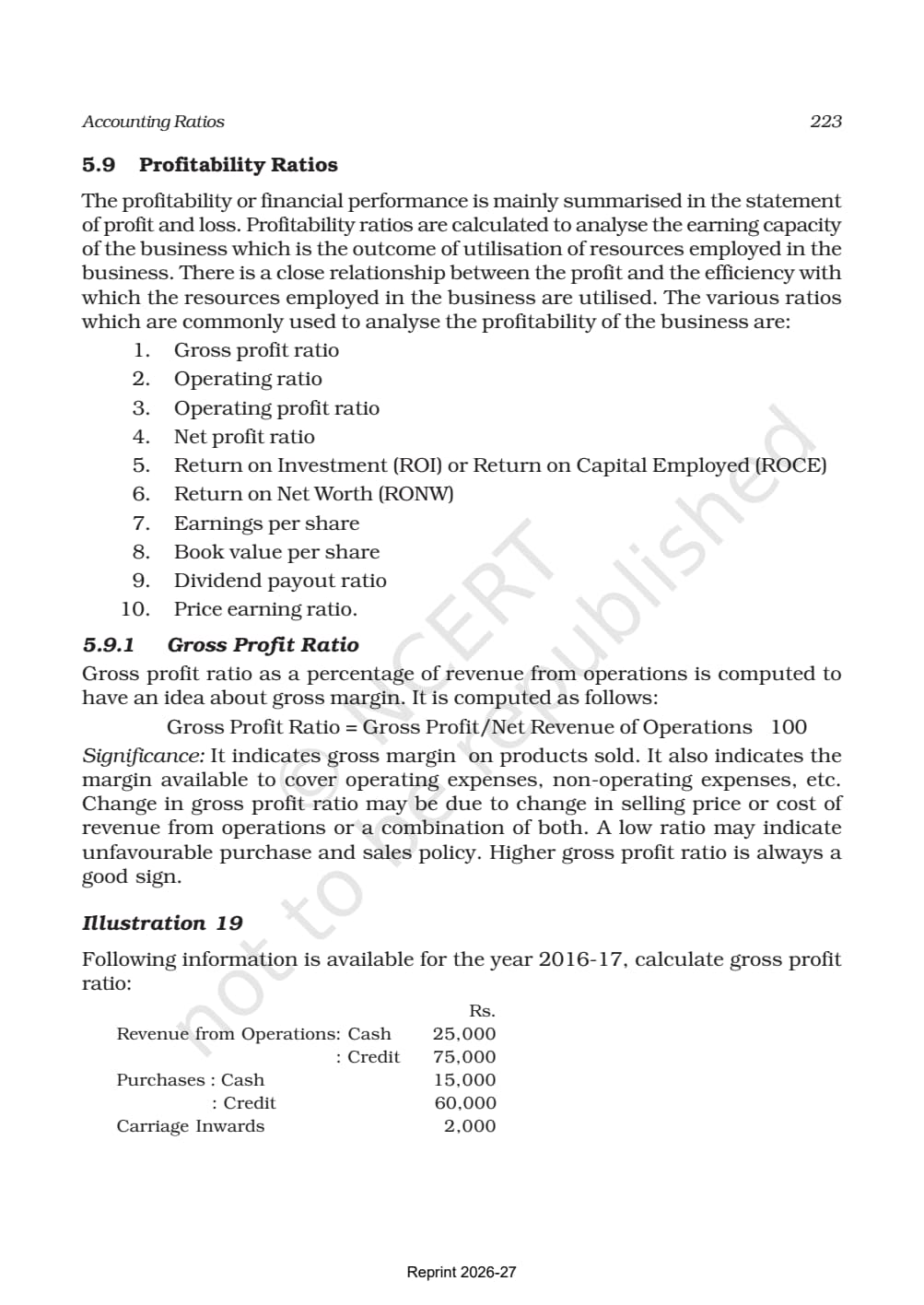
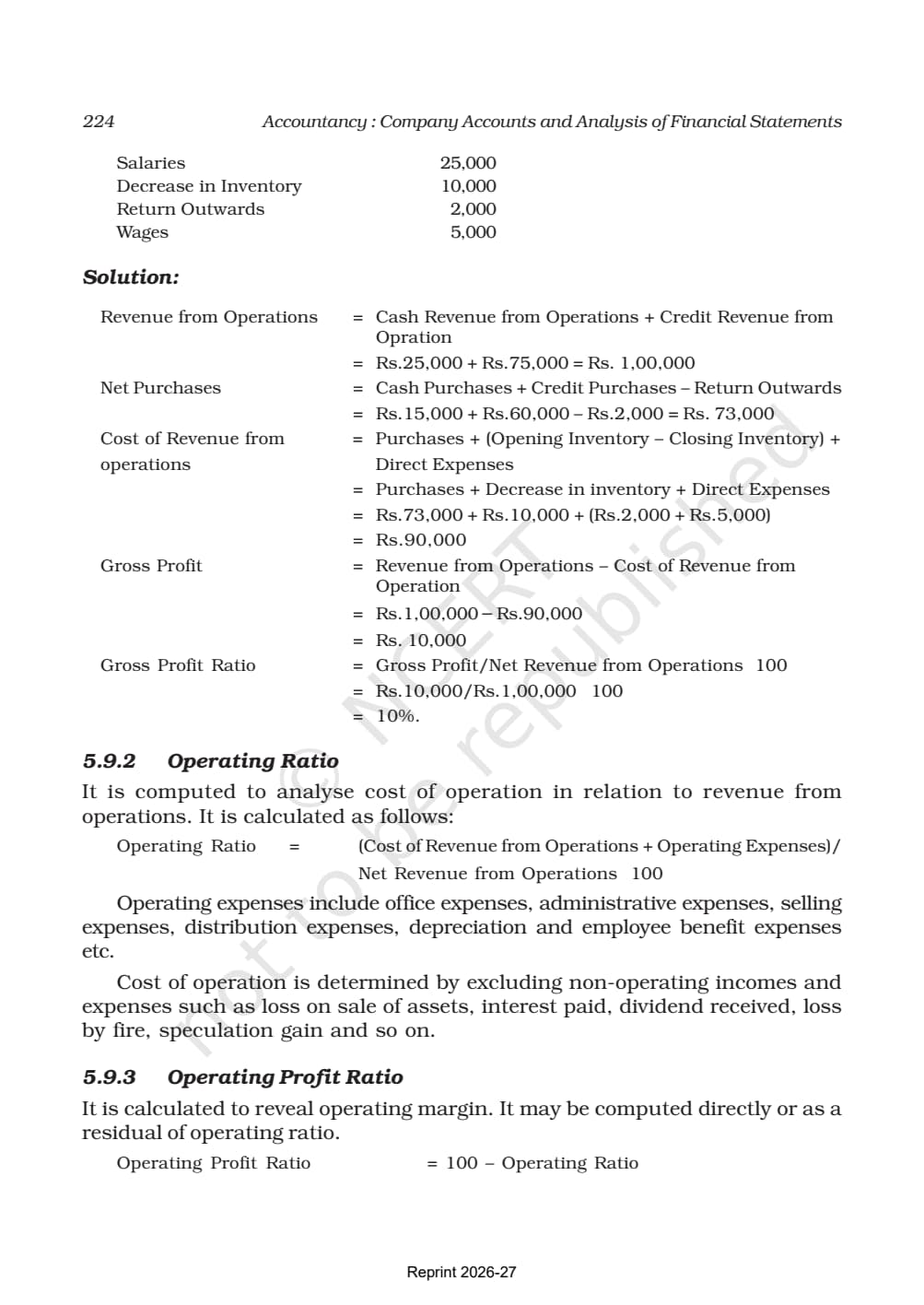
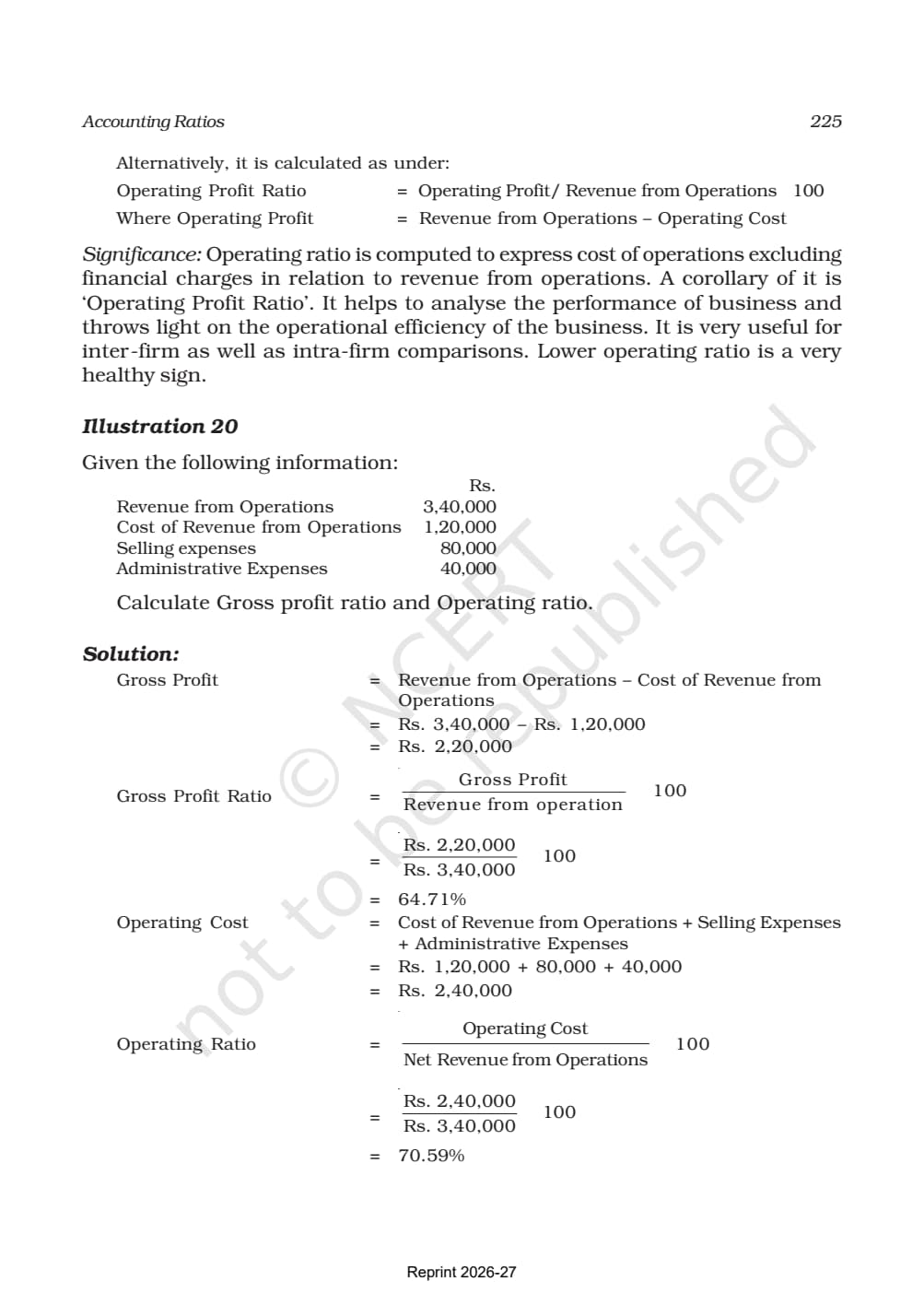
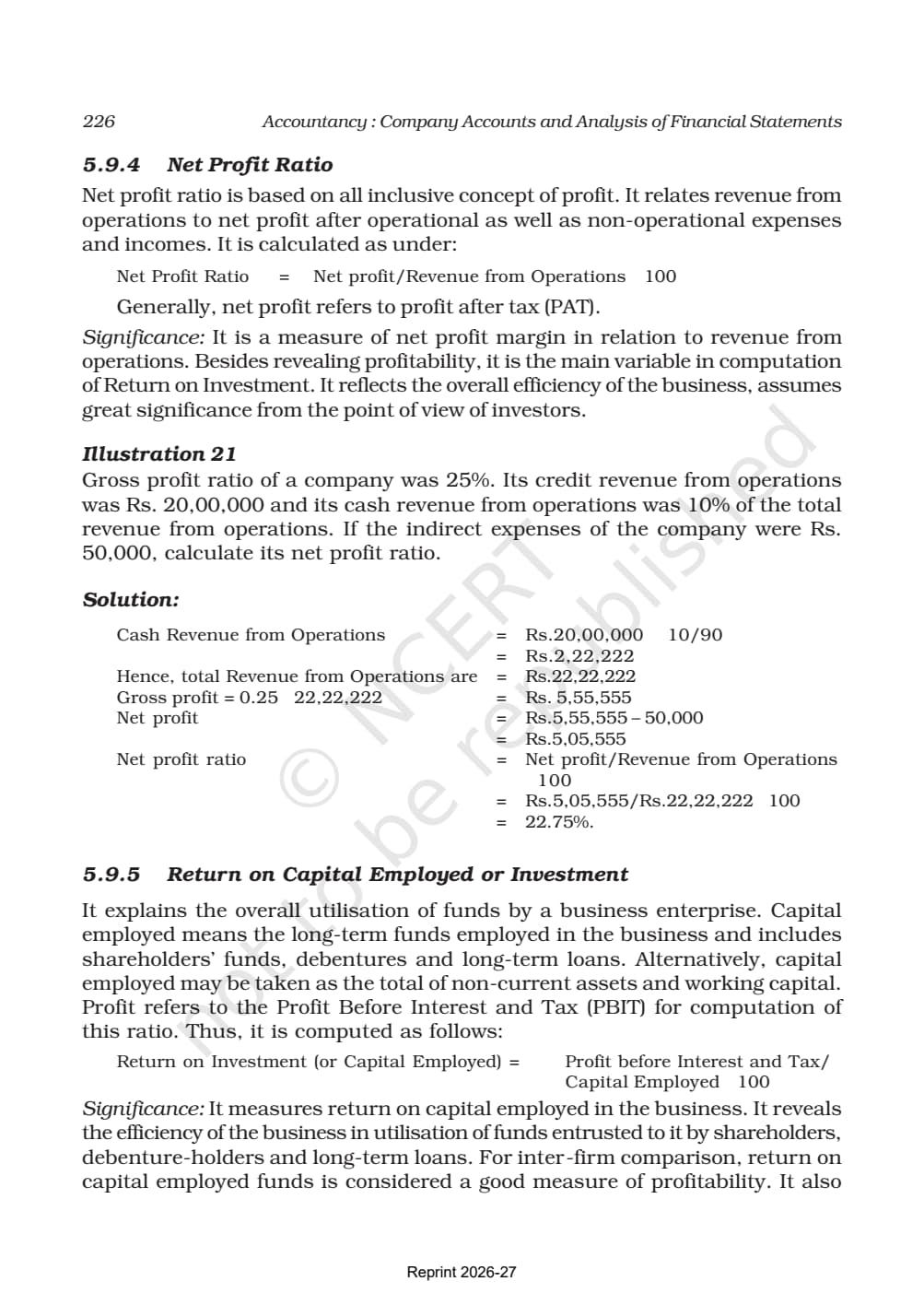
Every CBSE student uses NCERT Class 12 Accountancy Part 2 Chapter 5 (Reprint 2026-27) for the 8-mark Analysis of Financial Statements cluster. JEE and commerce-entrance papers reuse its formula list almost verbatim.


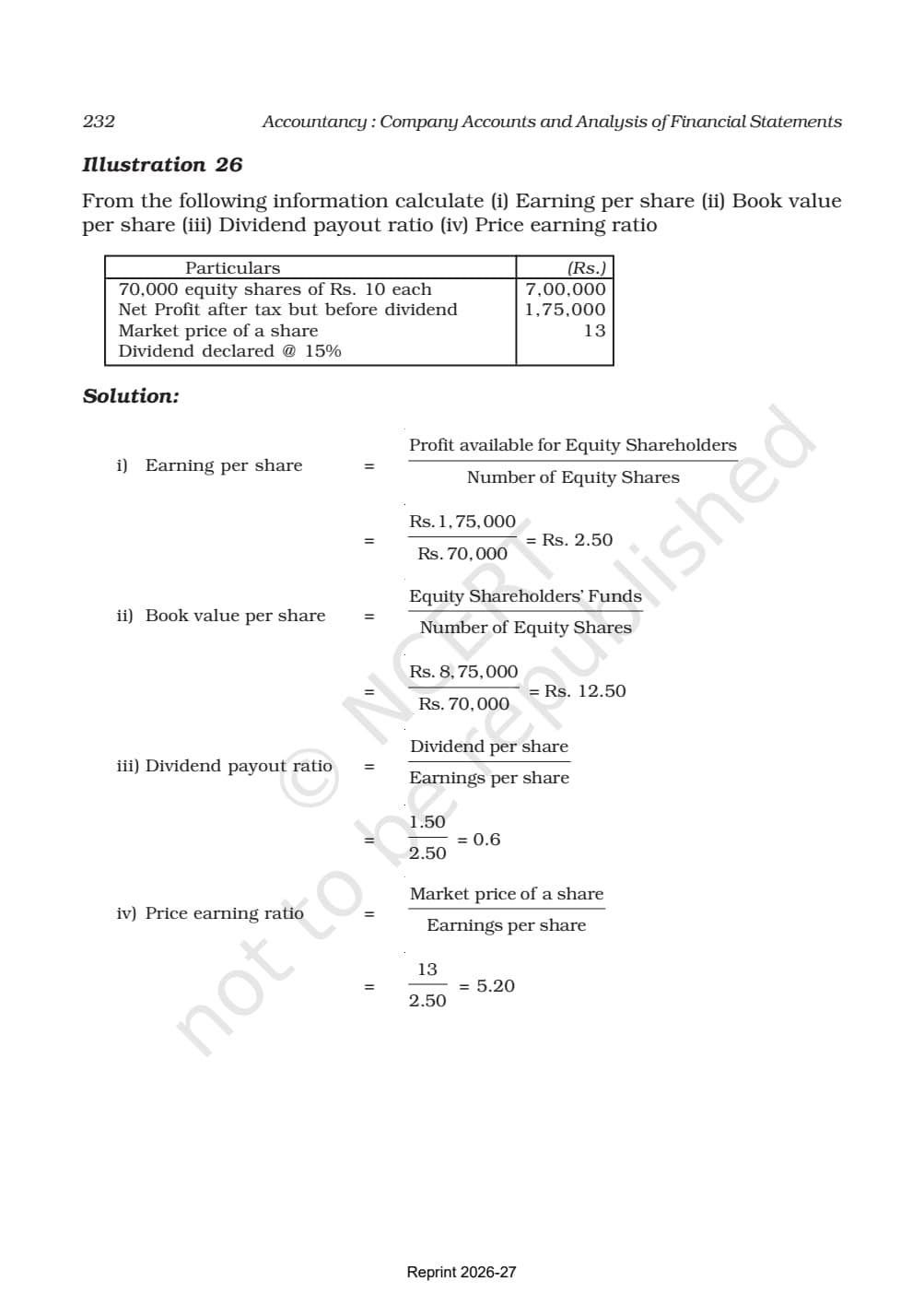
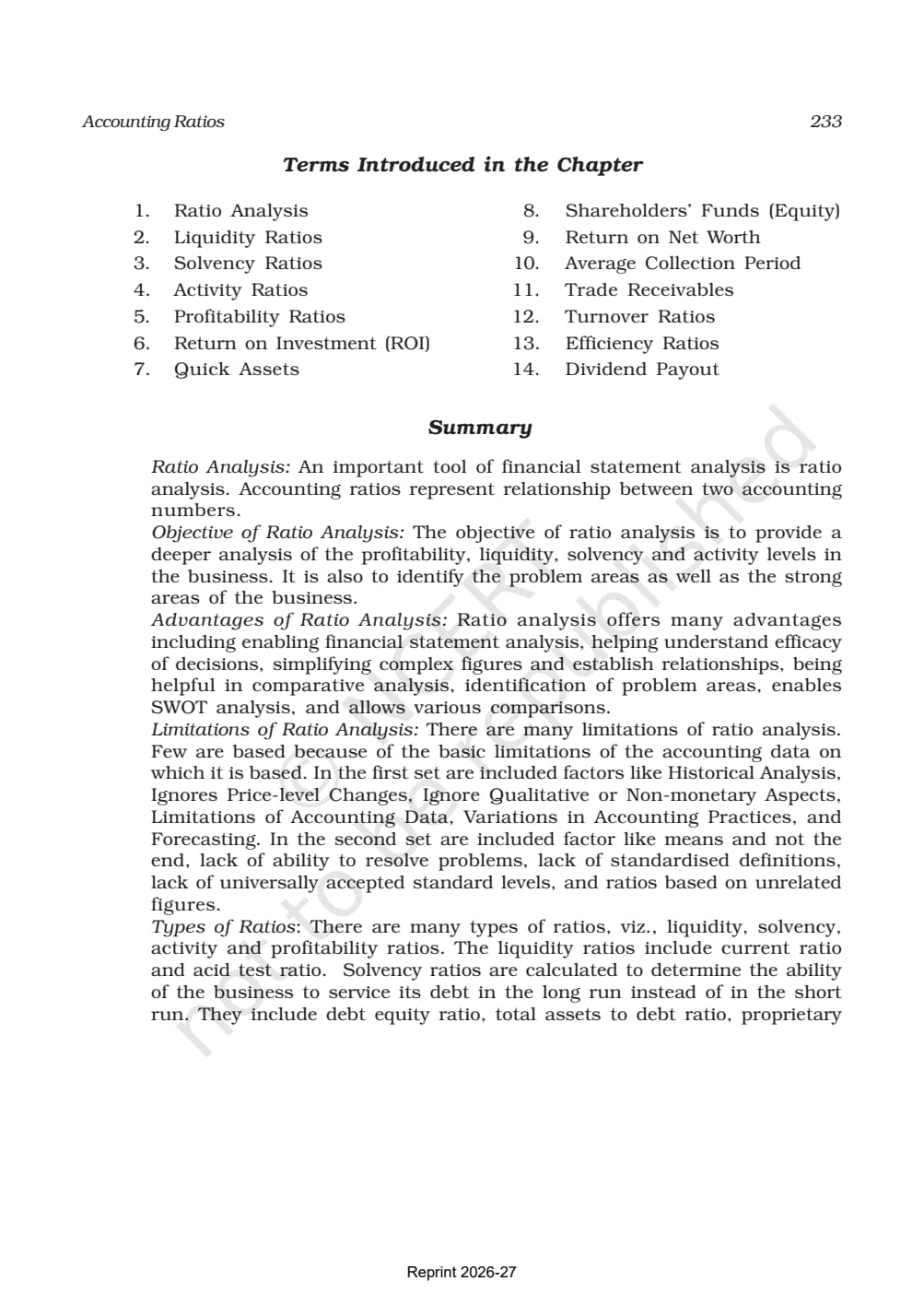
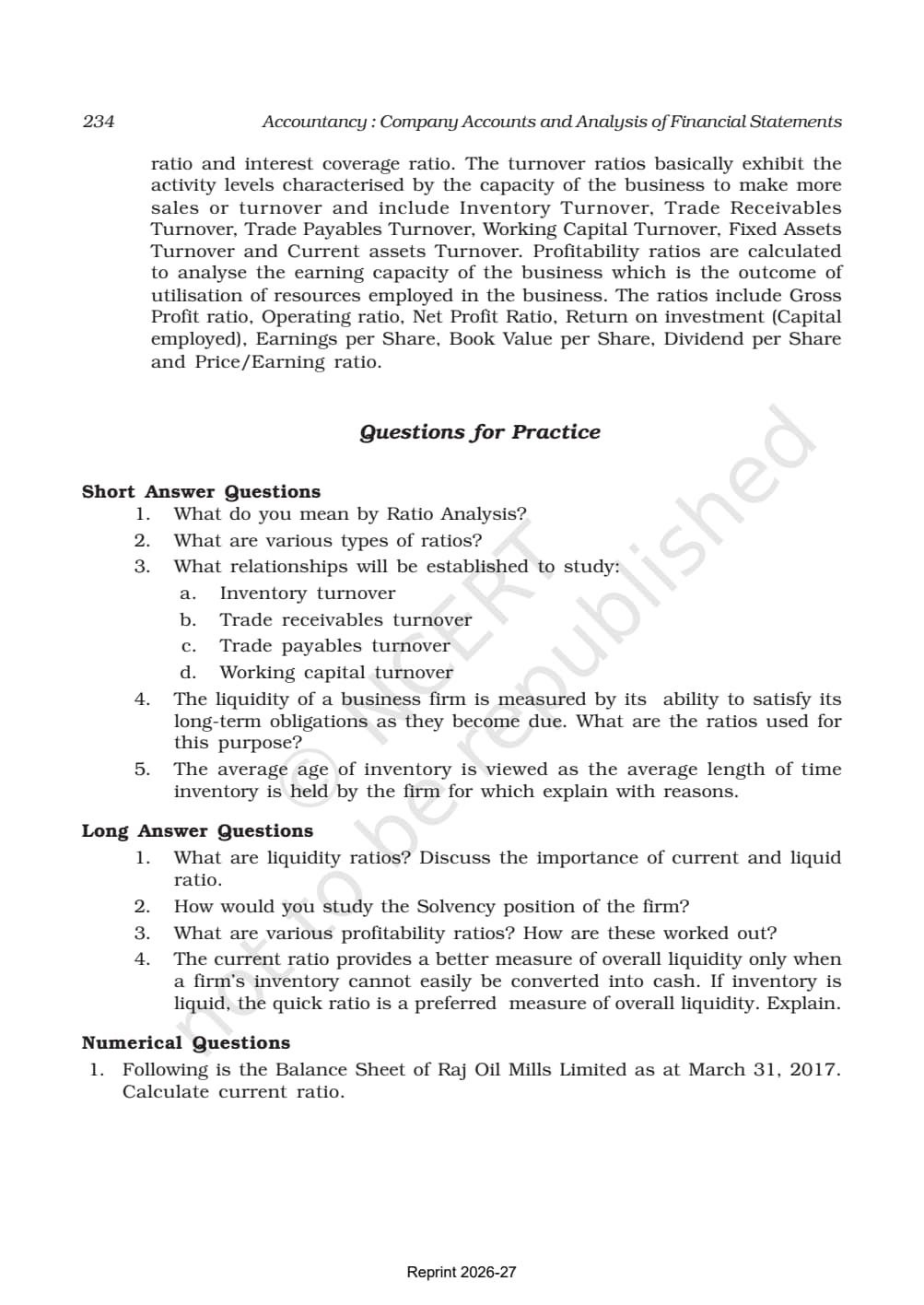

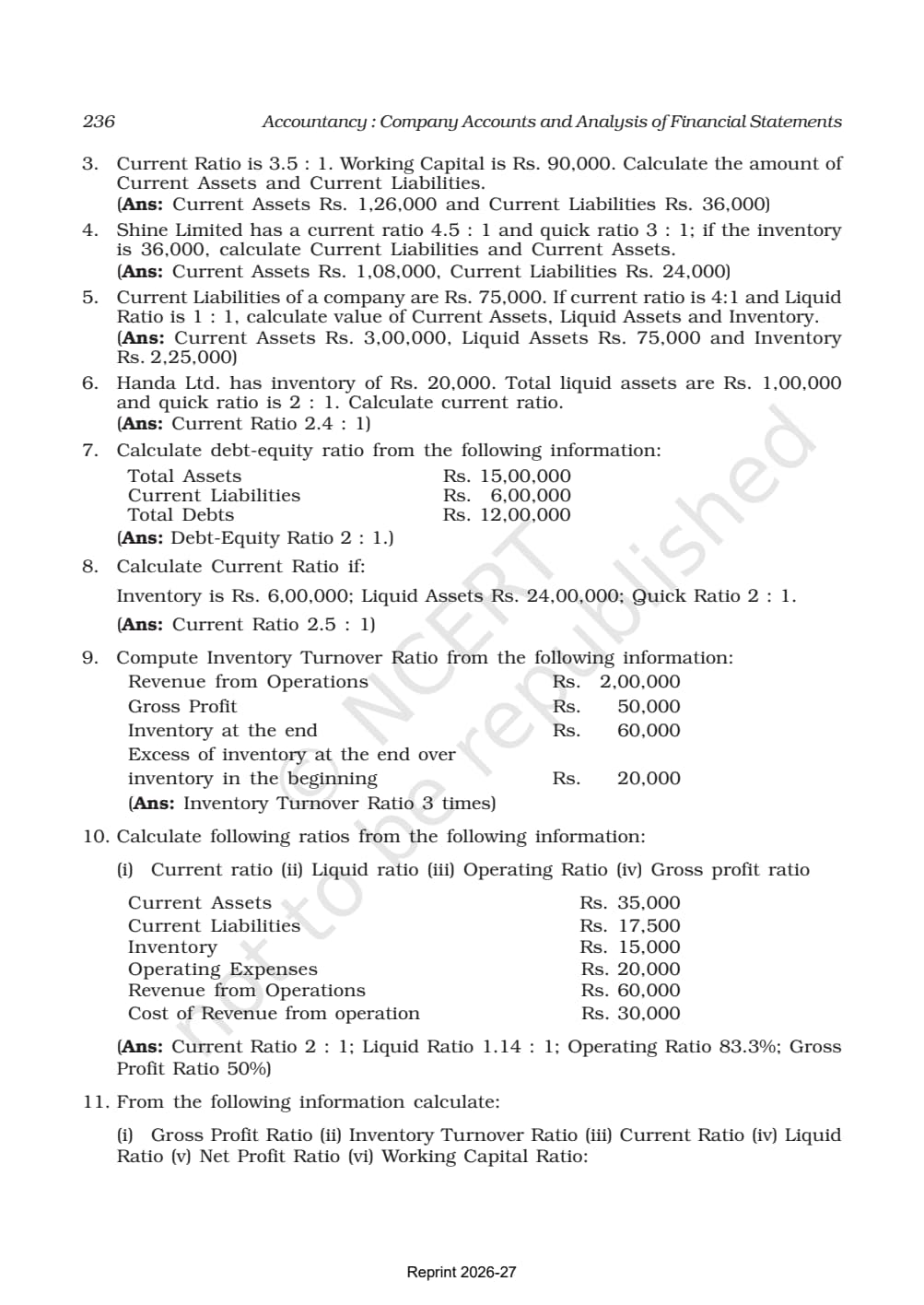

| CBSE Weightage (Part B) | 8 marks (Ratio Analysis cluster) |
| Chapter Length | 50 pages (Part 2, Ch 4 of NCERT) |
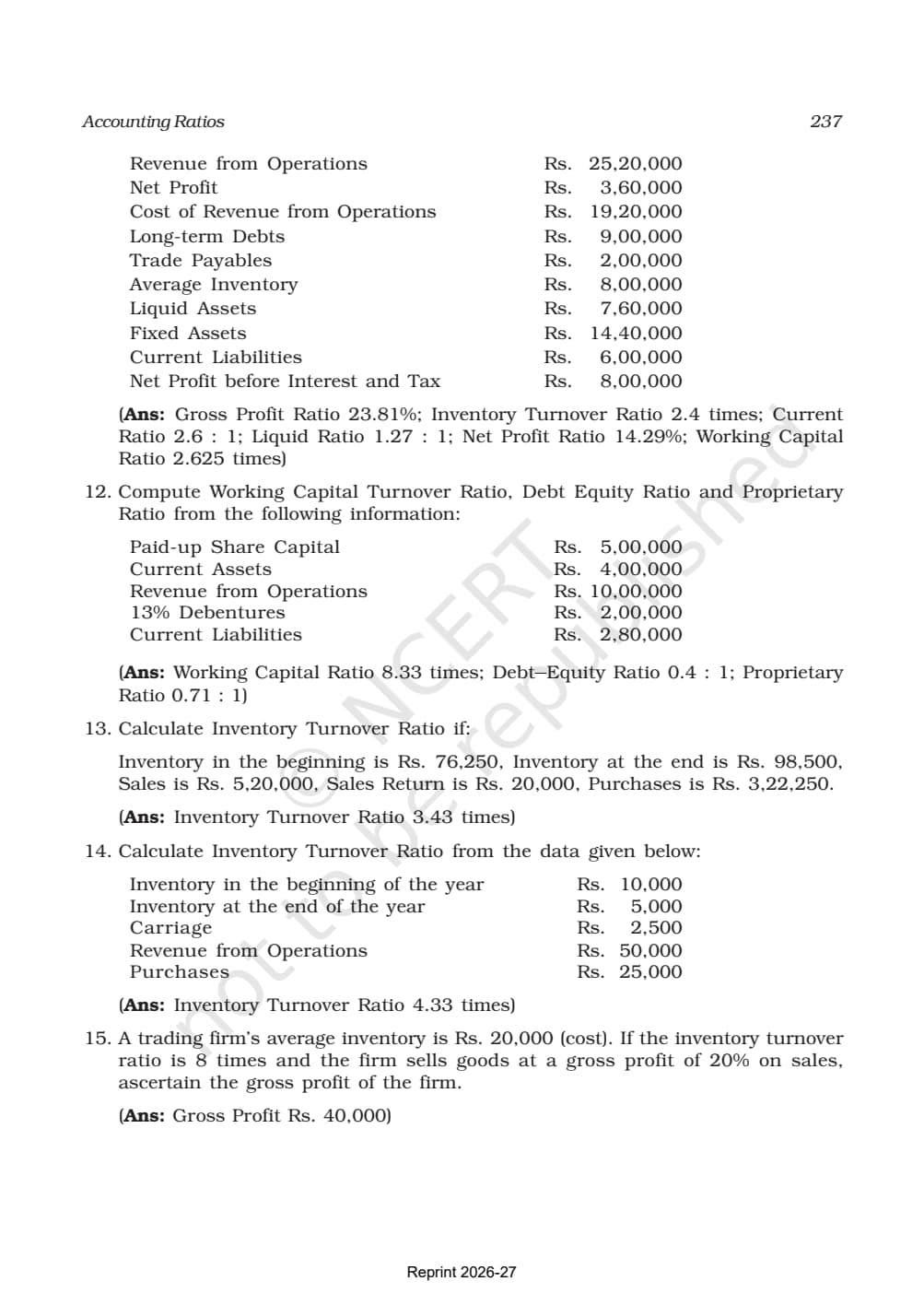
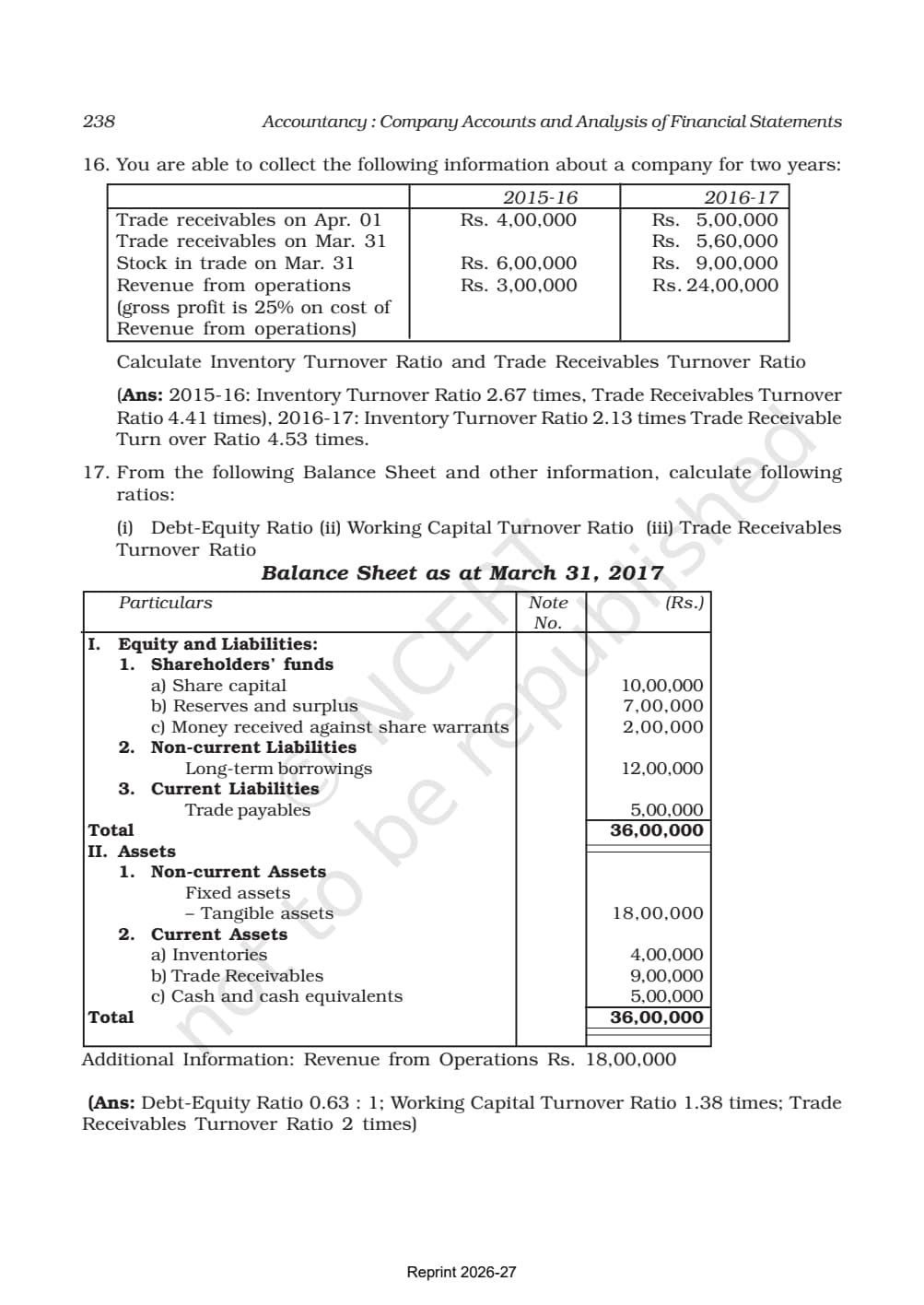
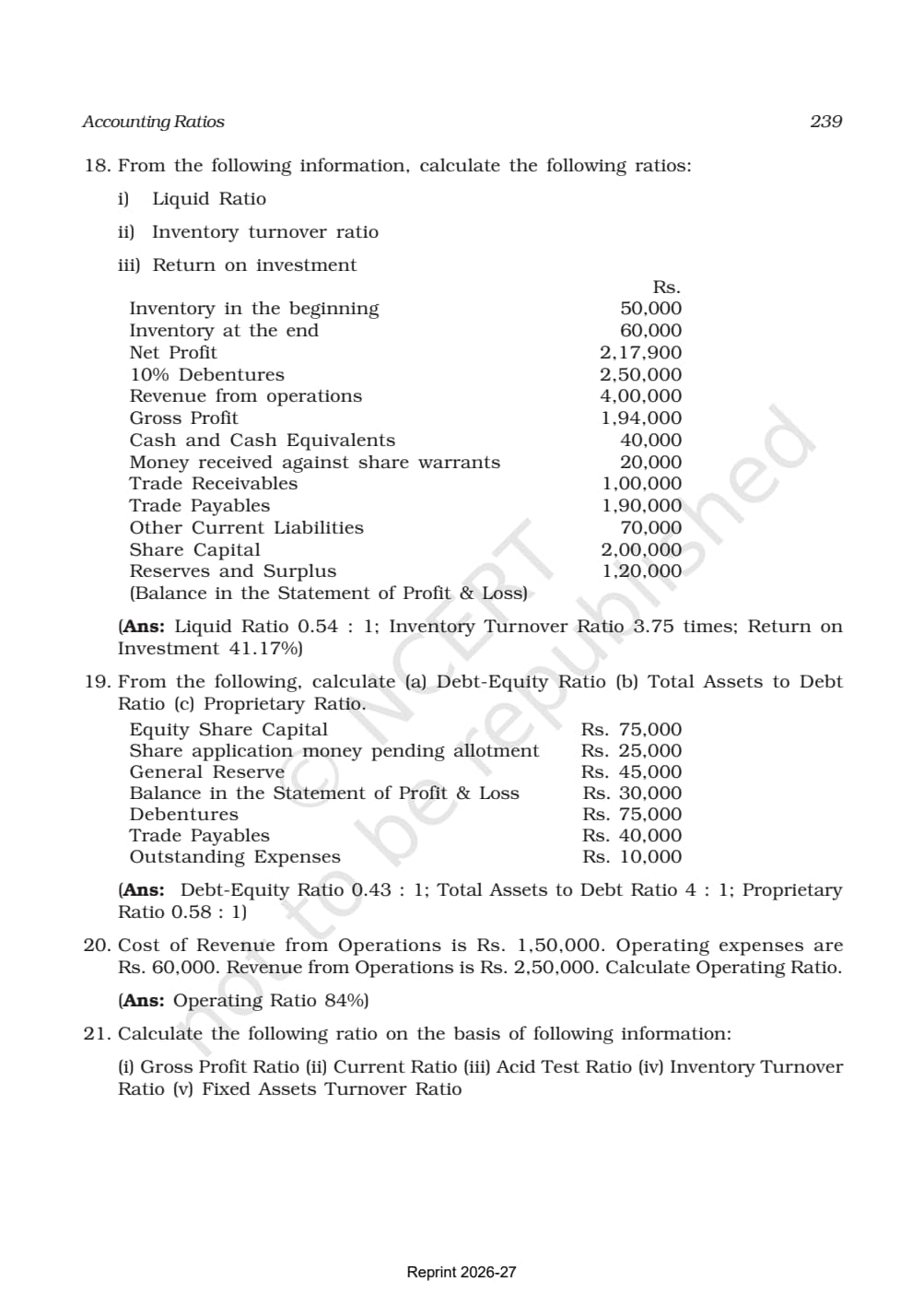
| Solved Illustrations | 27 solved + 35 practice questions |
- CBSE Weightage: 8 marks combined (Ratio Analysis is the second-largest block in Part B Financial Statement Analysis)
- Commerce stream relevance: Identical formula list appears in CA Foundation, CUET Accountancy, and B.Com entrance paper-2 sections
Part 2 Chapter 5 sits in Part B (Financial Statement Analysis, 20 marks). It defines the five ratio families and gives formulas, interpretations, and CBSE numericals. Reading it first prepares you for Part 2 Chapter 6 Cash Flow Statement.
This PDF is the source Collegedunia's NCERT Solutions, Notes, and Formula Sheet for Part 2 Chapter 5 quote from. Read it once end-to-end before attempting the 27 solved illustrations.
Also Check:
- Accounting Ratios Class 12 NCERT Solutions PDF
- Accounting Ratios Class 12 Accountancy Notes
- Class 12 Accountancy Part 2 Chapter 5 Formula Sheet
Why Accounting Ratios Class 12 Carries the Heaviest Part B Weightage
Ratio Analysis combines theory and numerical marks in one question. CBSE asked 4-mark interpretation questions yearly since 2018. The 2025 board paper asked for one ratio from each of the five families. Commerce-stream entrance papers (CUET, CA Foundation, IPM) reuse the NCERT formula list. The terminology links school accountancy to B.Com finance.
Accounting Ratios Video Chapter Walkthrough
Source: Magnet Brains on YouTube
How Will Collegedunia's Accounting Ratios Class 12 NCERT Book PDF Help You
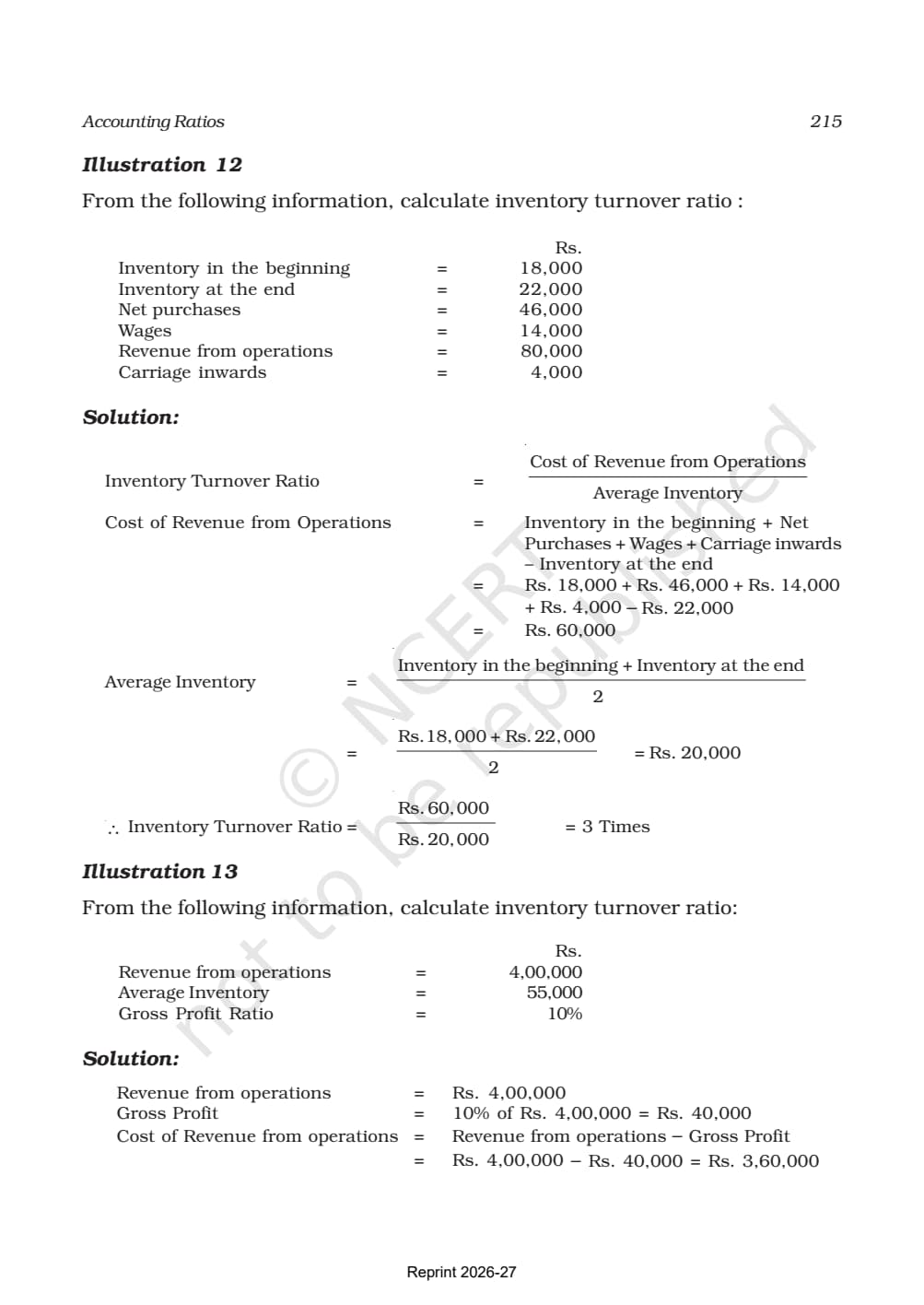
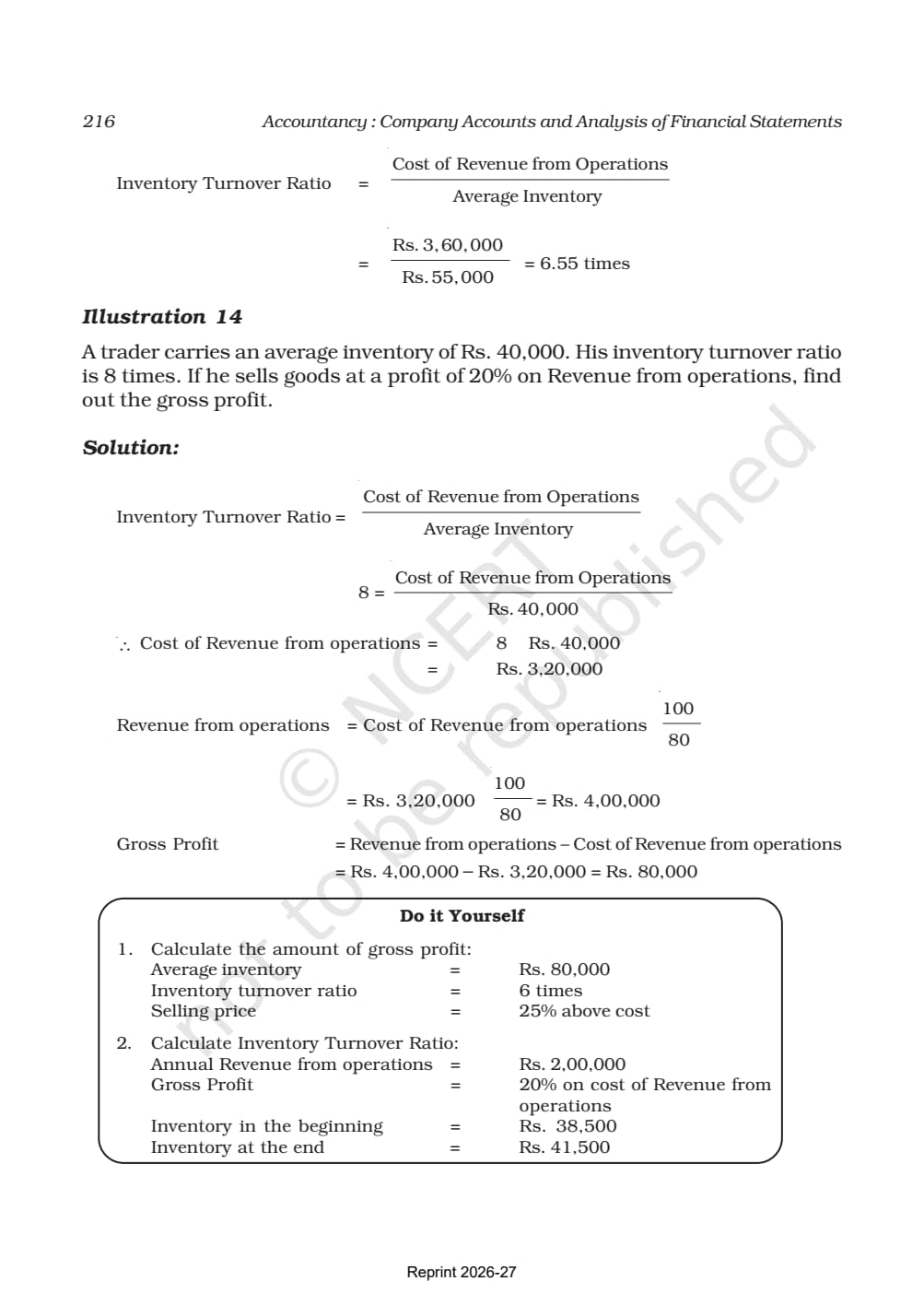
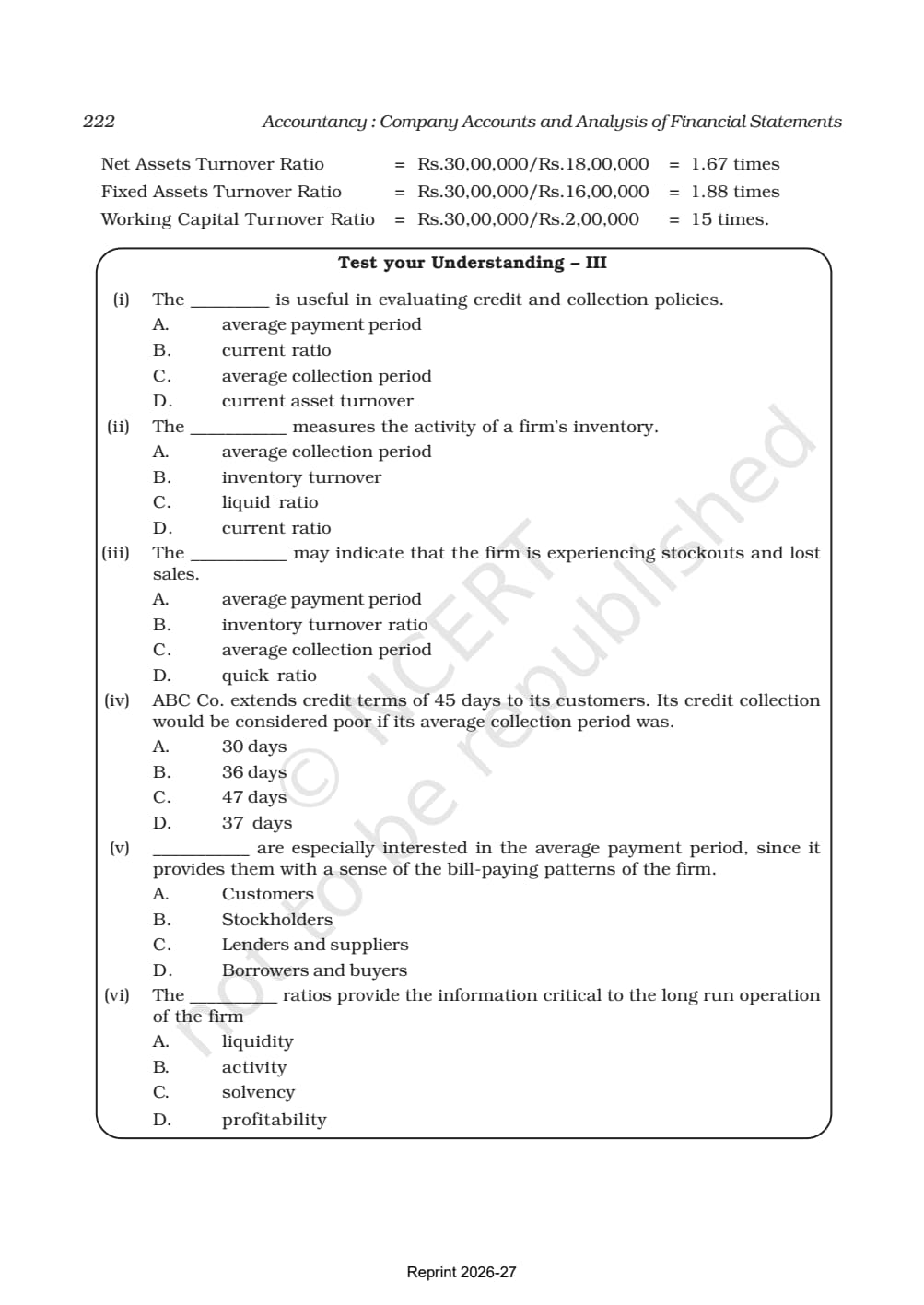
Board examiners set questions from the 27 solved illustrations. No private guide matches the 24-formula spread. Match every CBSE numerical to its NCERT template. The PDF is searchable, so you can jump to any ratio without flipping pages.
Three-Day Study Plan for Class 12 Accountancy Part 2 Chapter 5 Accounting Ratios
Spread the 50 pages across three sessions. Day 1: foundation. Day 2: high-mark numericals. Day 3: interpretation.
| Day | Sections | What to Finish | Output Check |
|---|---|---|---|
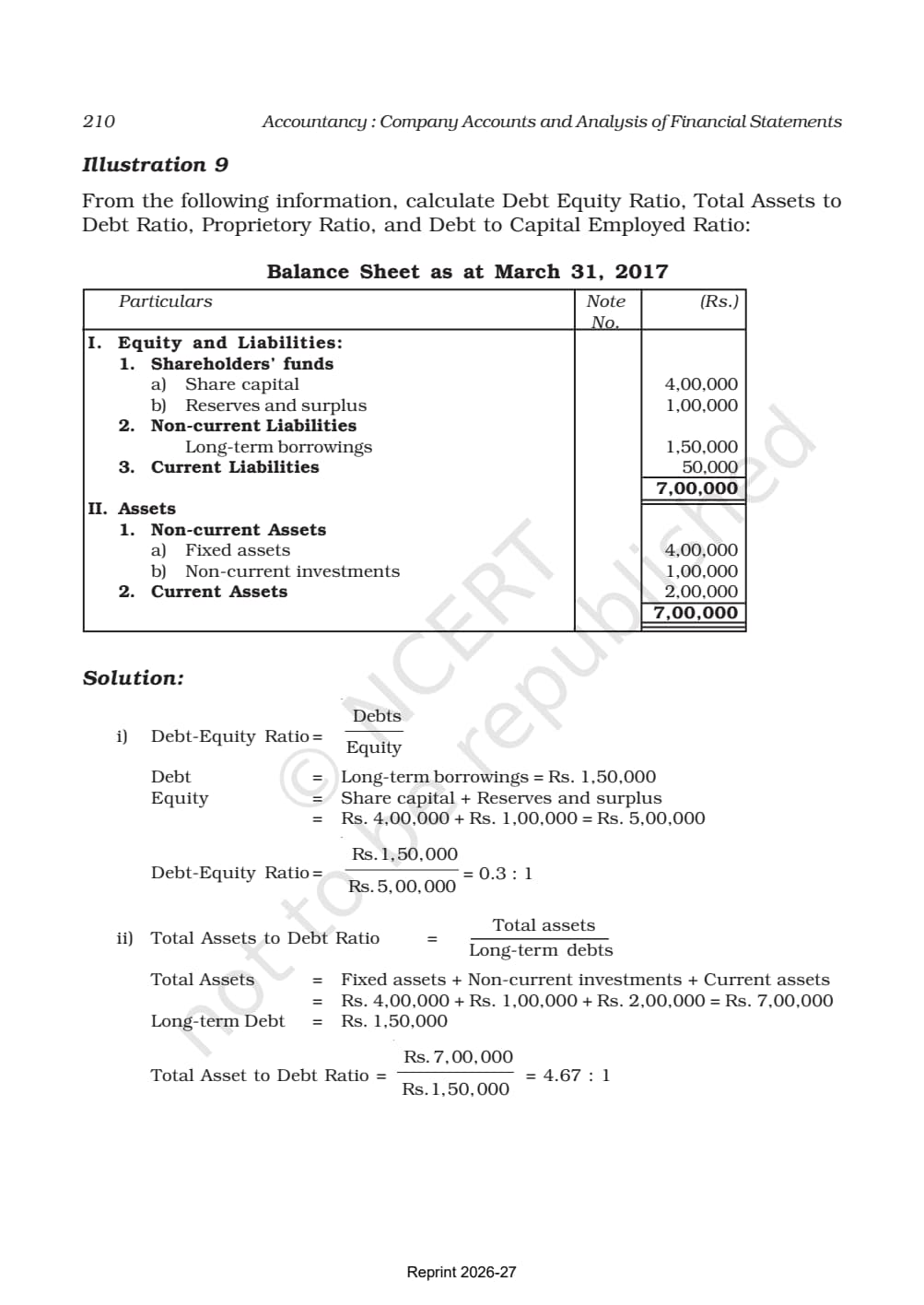
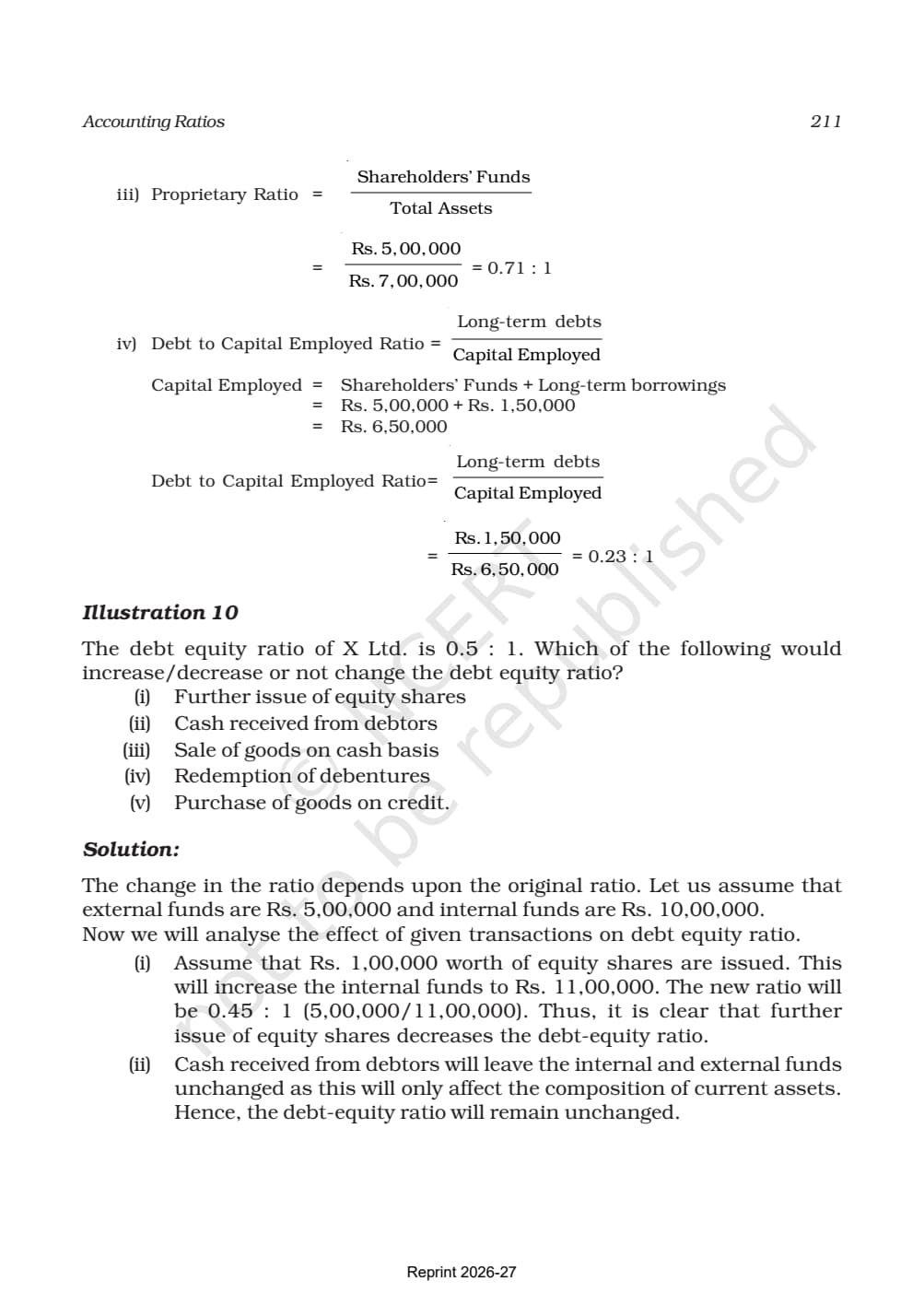
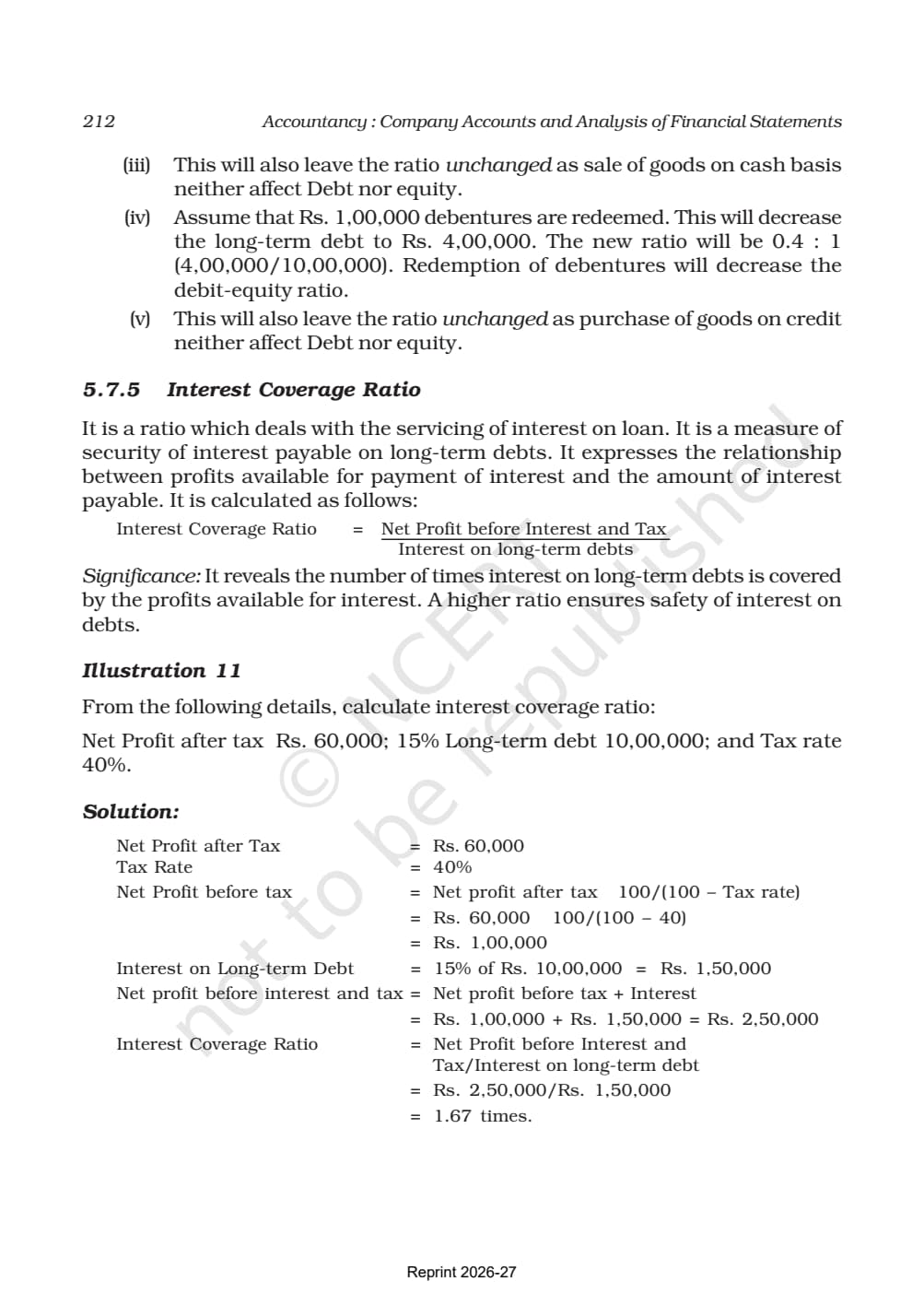
| Day 1 | 4.1 to 4.3 (Intro + Liquidity + Solvency) | Current, Quick, Debt-Equity, Total-Assets-to-Debt, Proprietary, Interest Coverage | List 6 formulas with units, solve 4 illustrations |
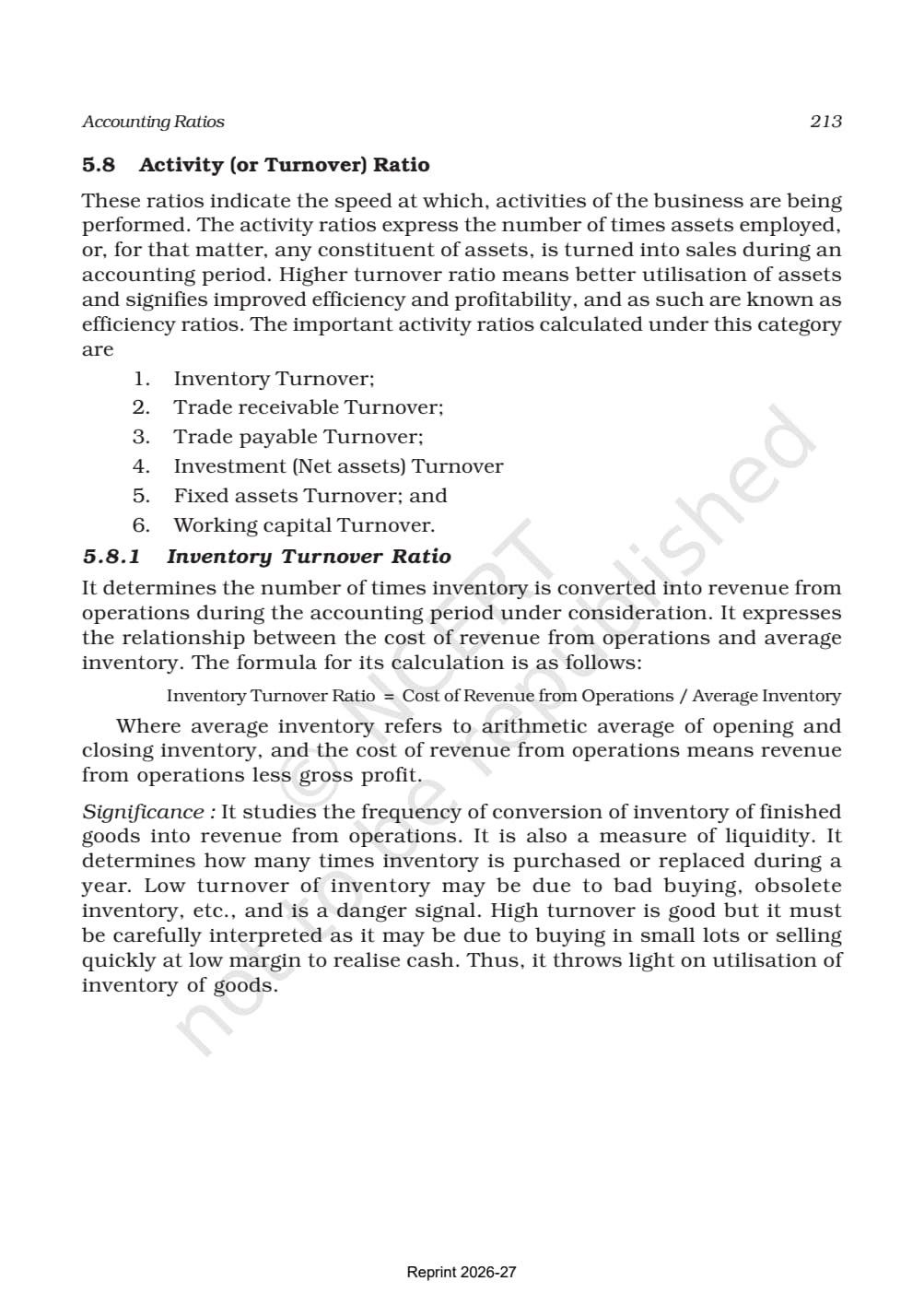
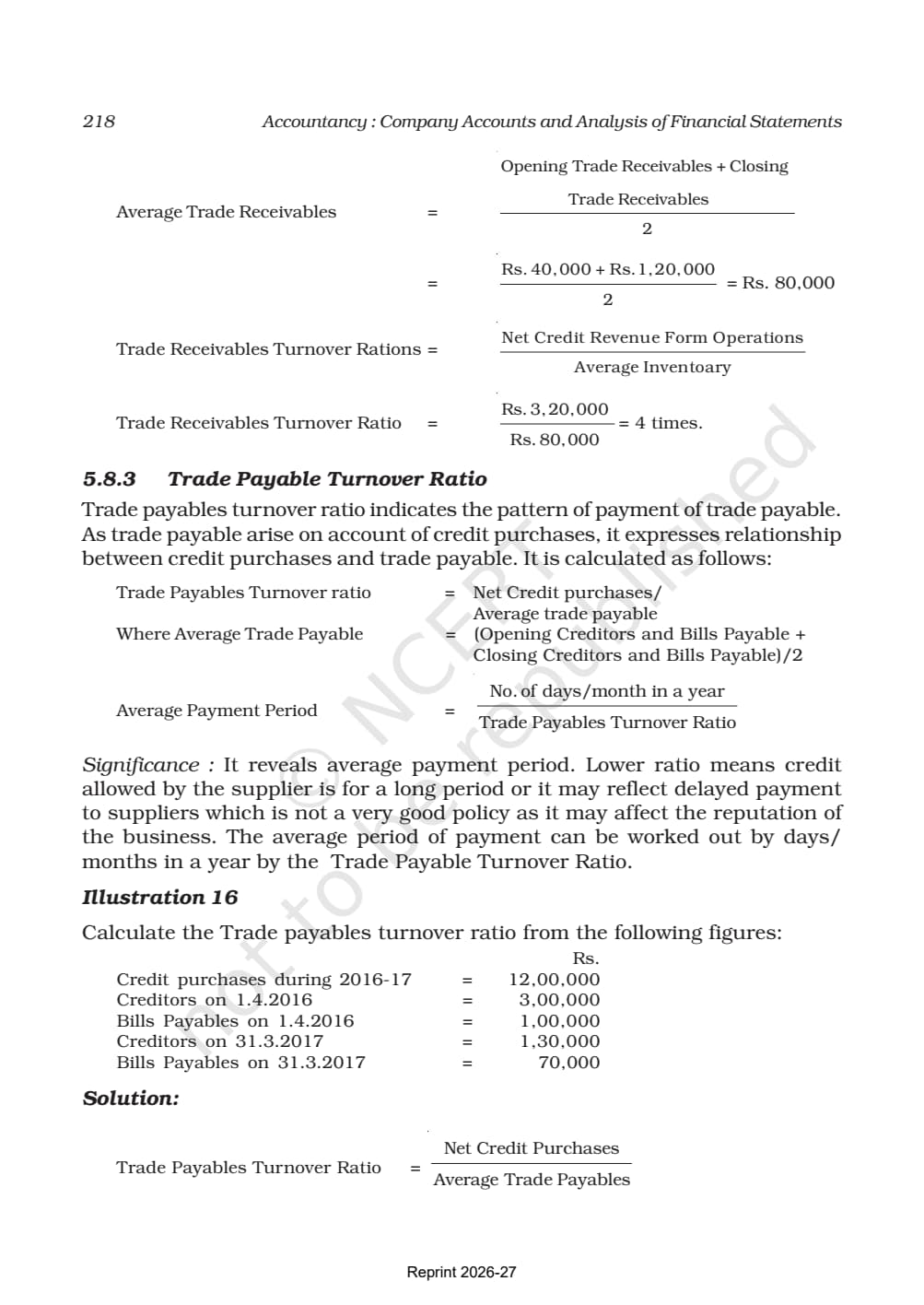
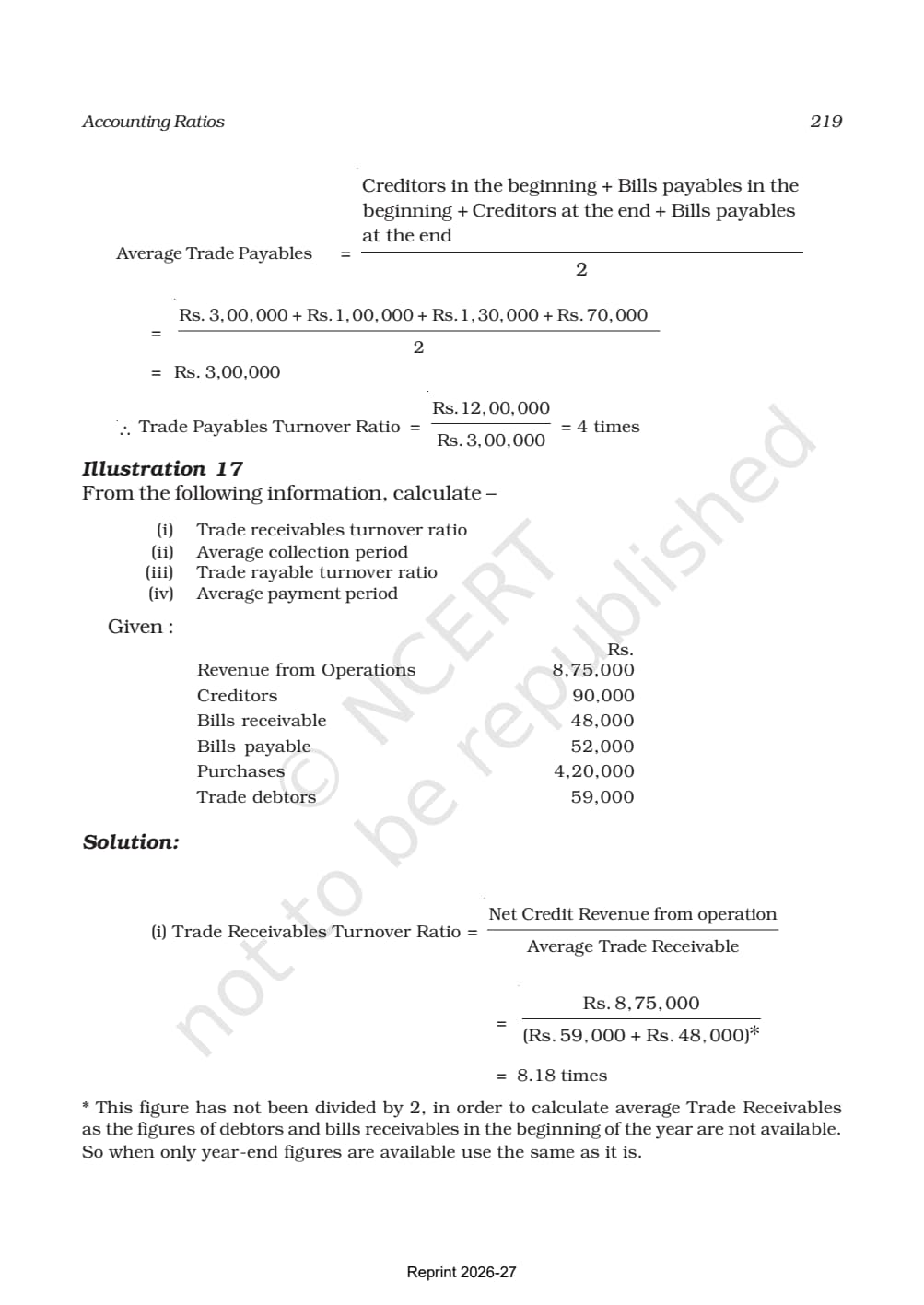
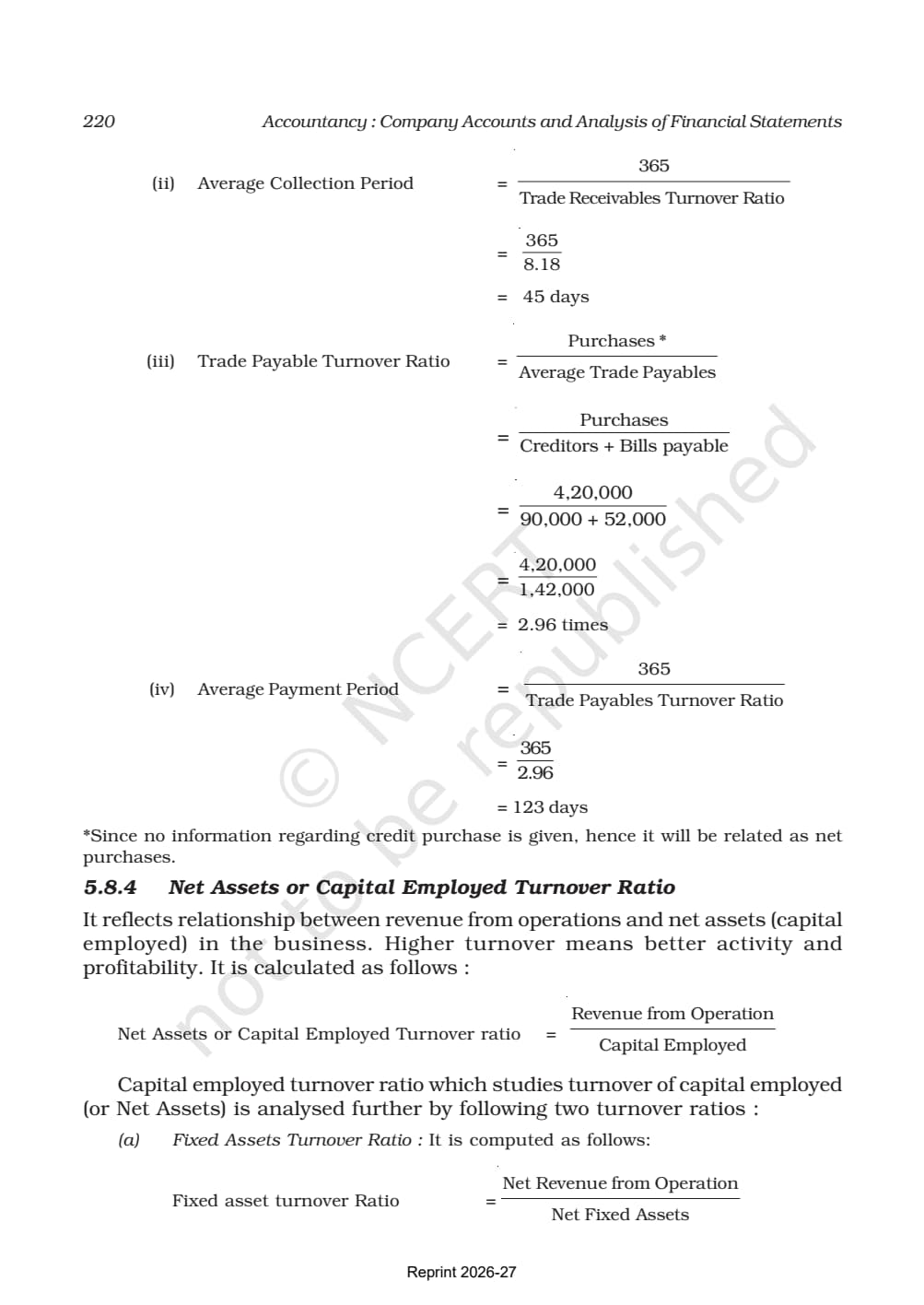
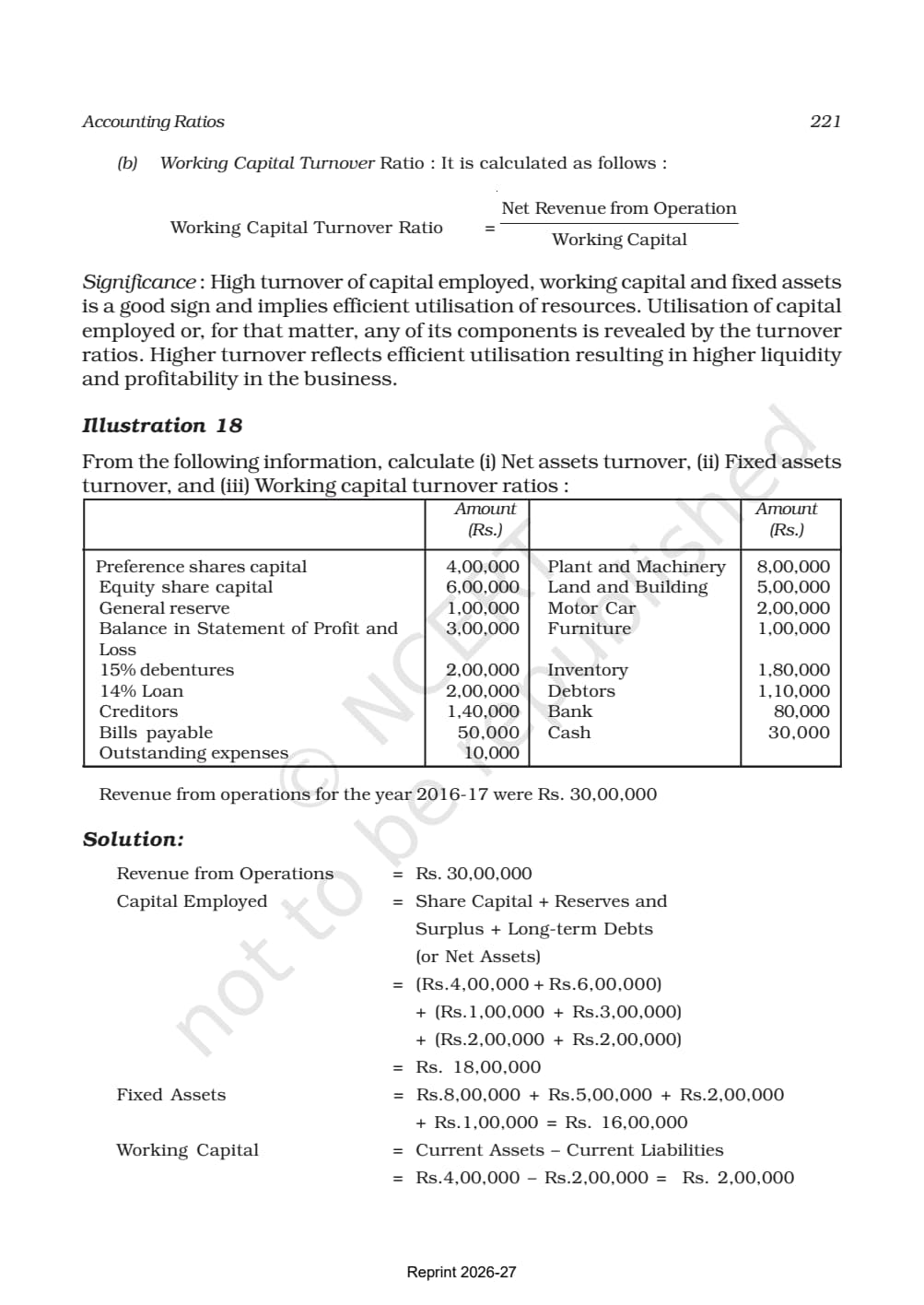
| Day 2 | 4.4 (Activity / Turnover Ratios) | Inventory, Trade Receivables, Trade Payables, Working Capital, Fixed Assets Turnover | Solve illustrations 14 to 19 in one sitting |
| Day 3 | 4.5 (Profitability Ratios) + revision | Gross Profit, Net Profit, Operating, Operating Profit, ROI, EPS | Attempt a full 6-mark mixed-family question |
What the Accounting Ratios Chapter PDF Contains
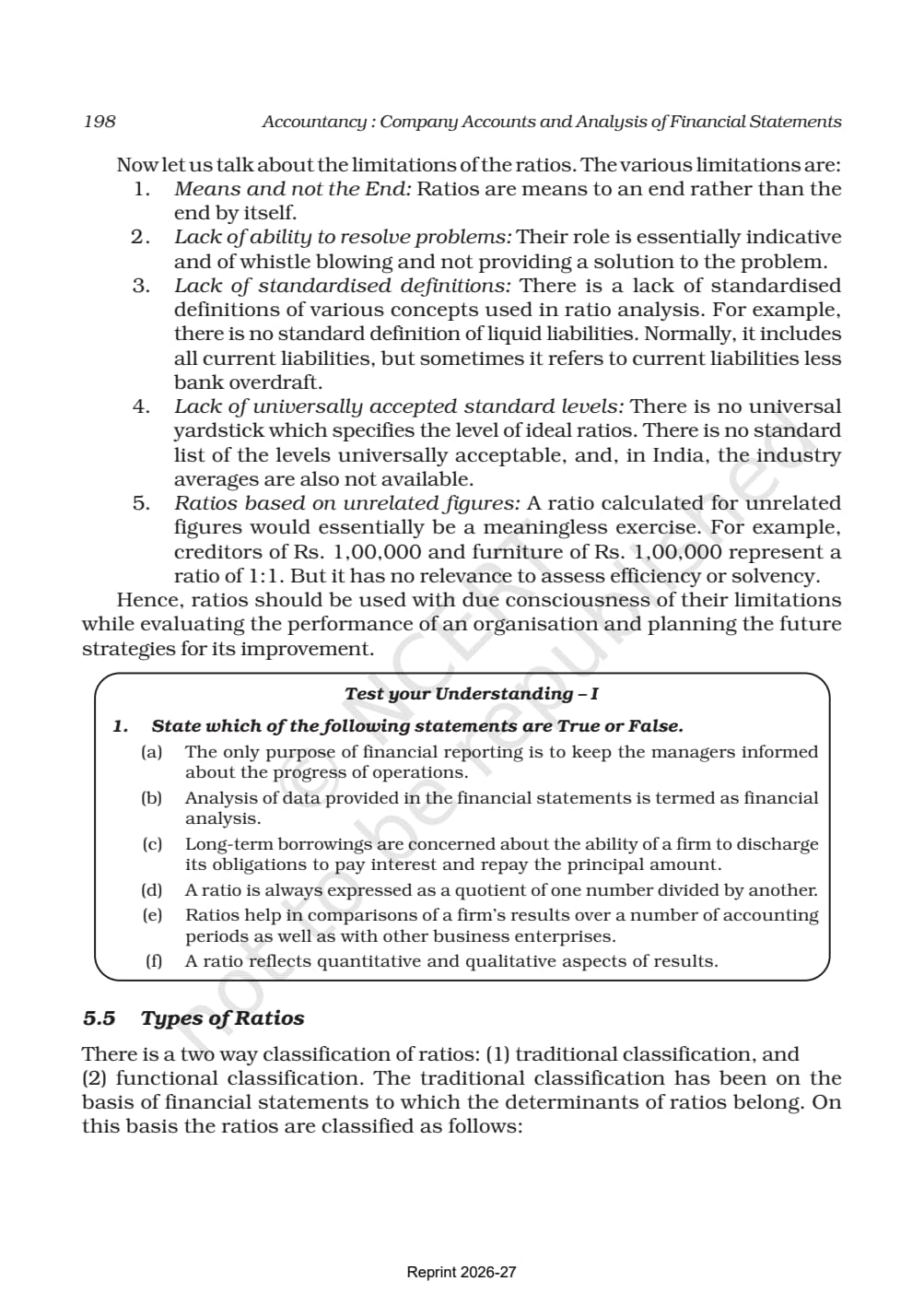
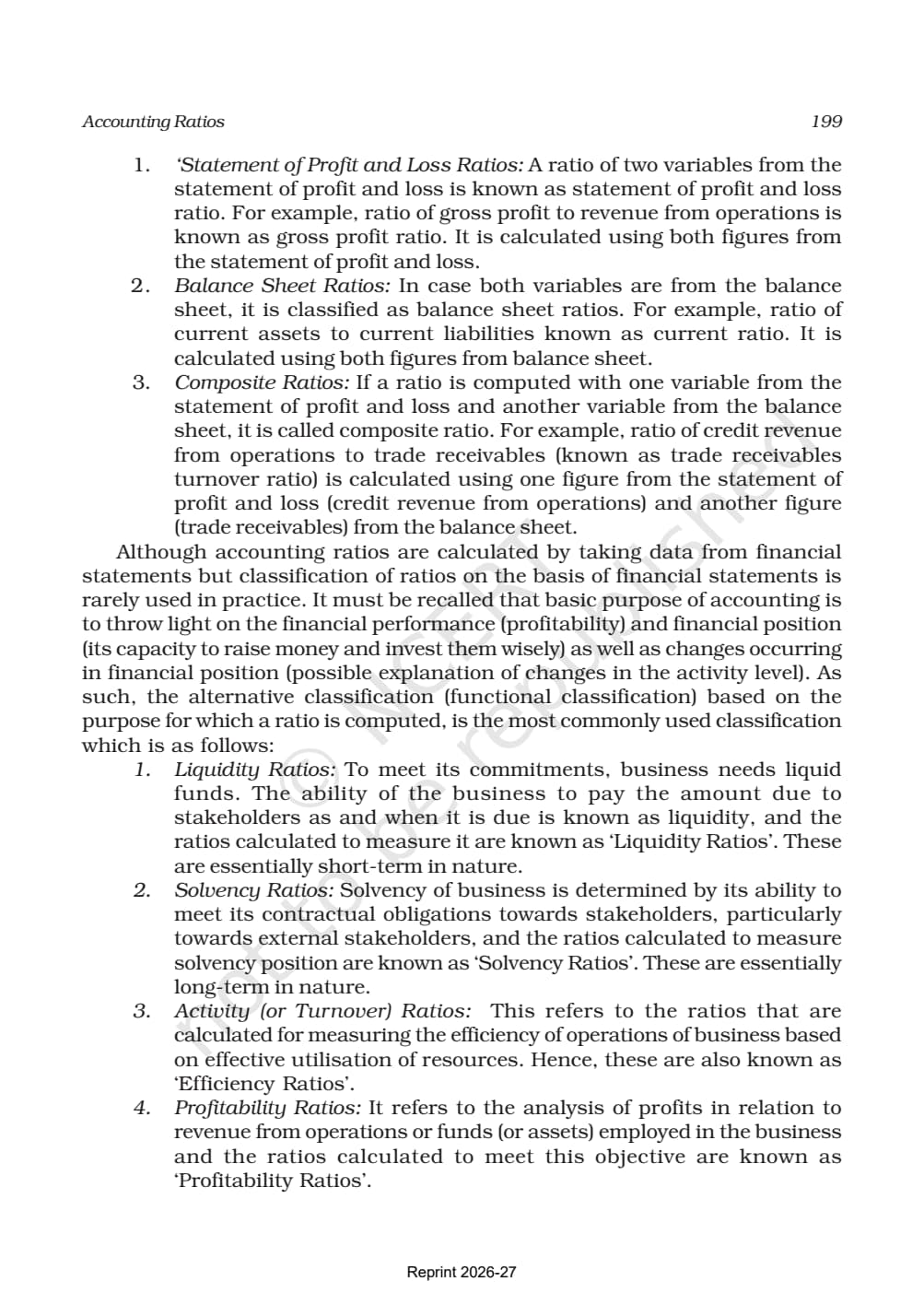
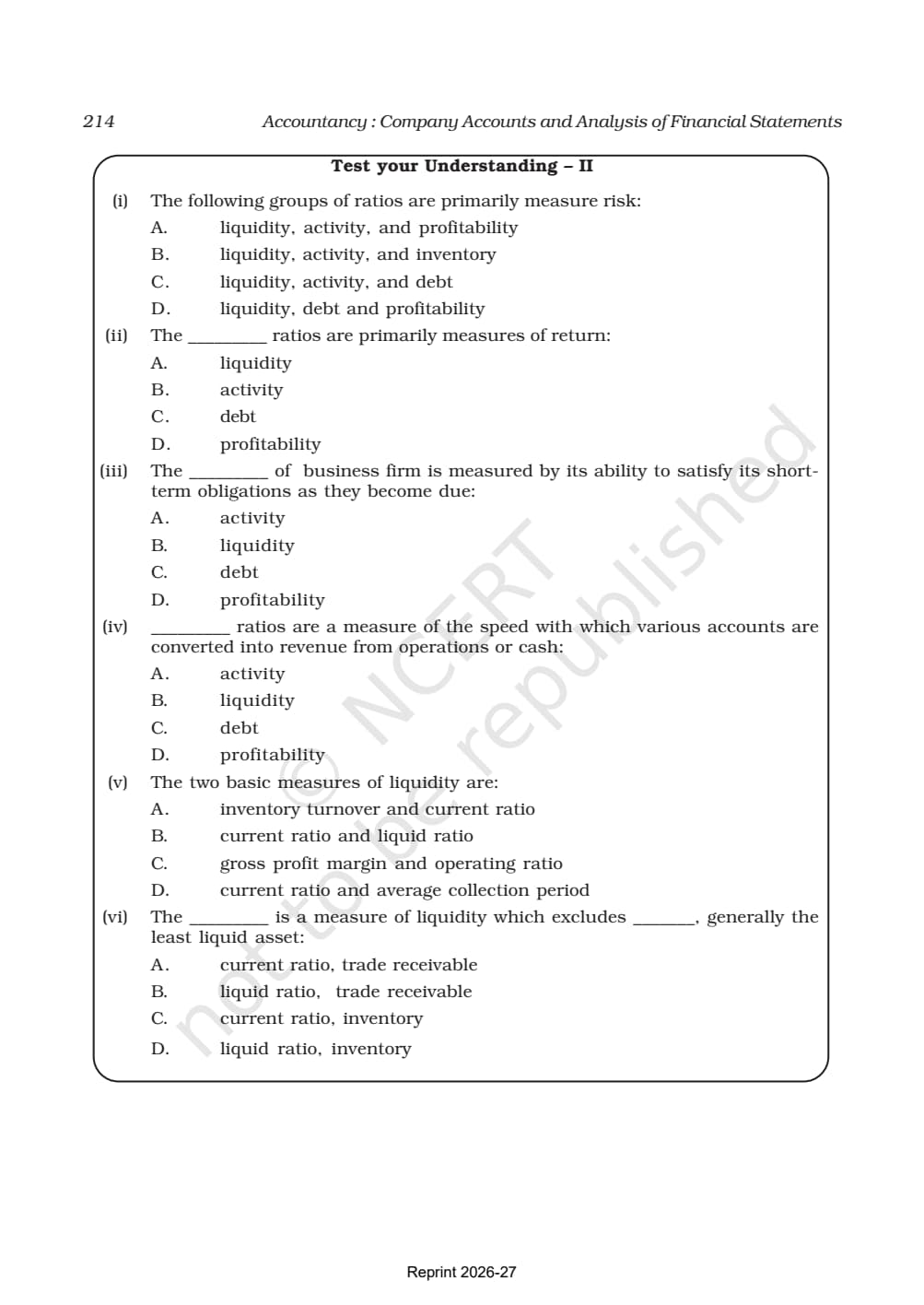
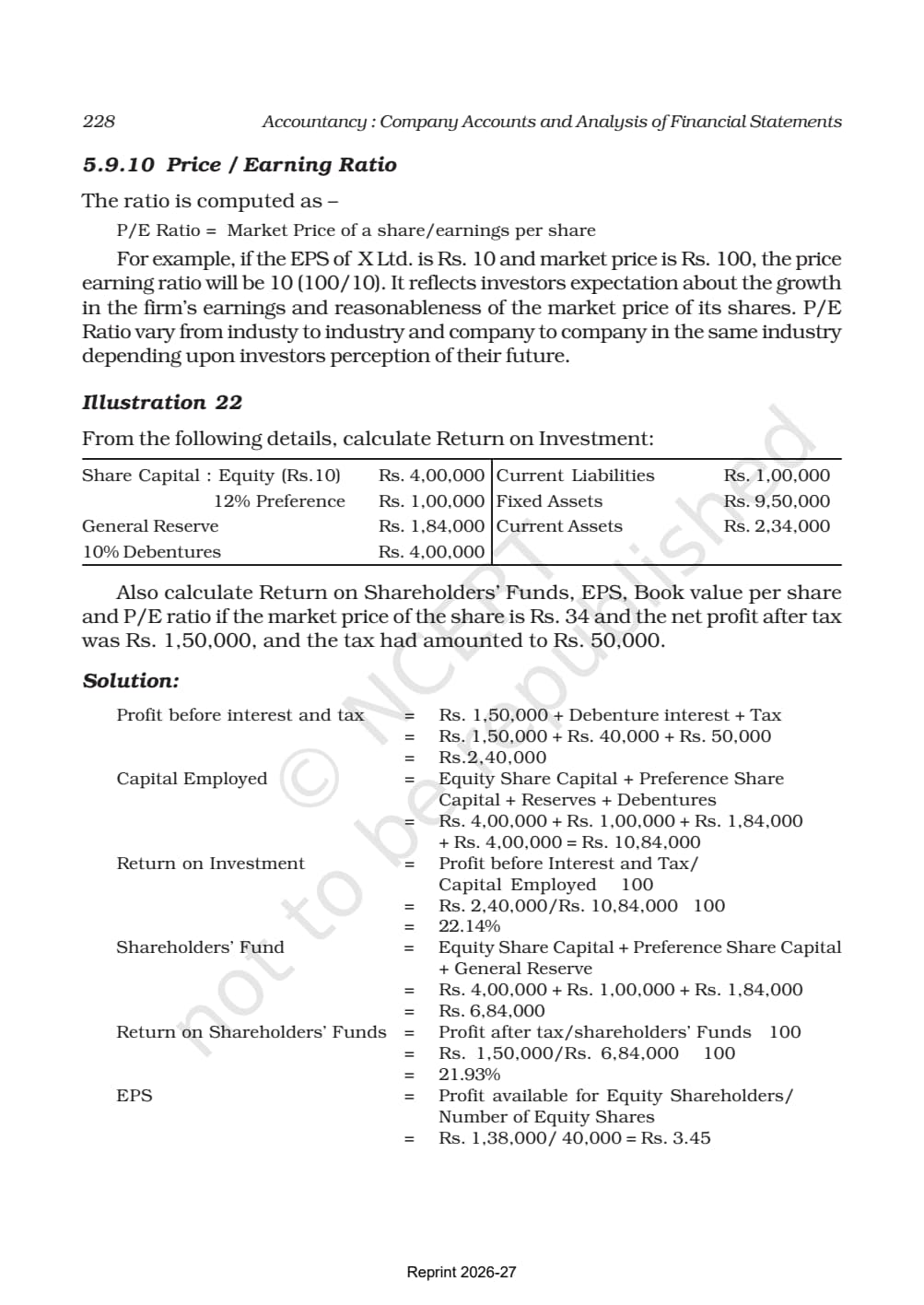
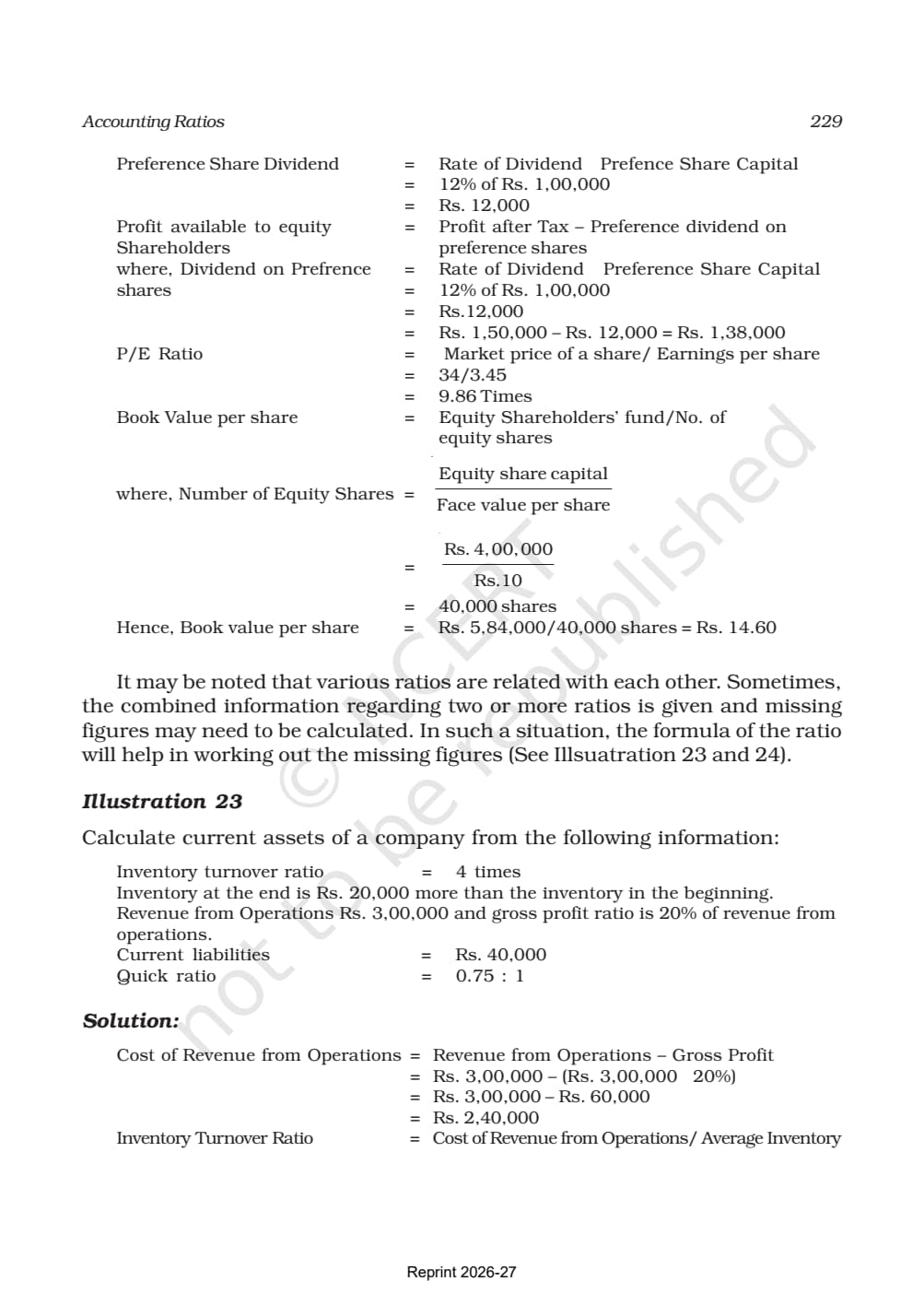
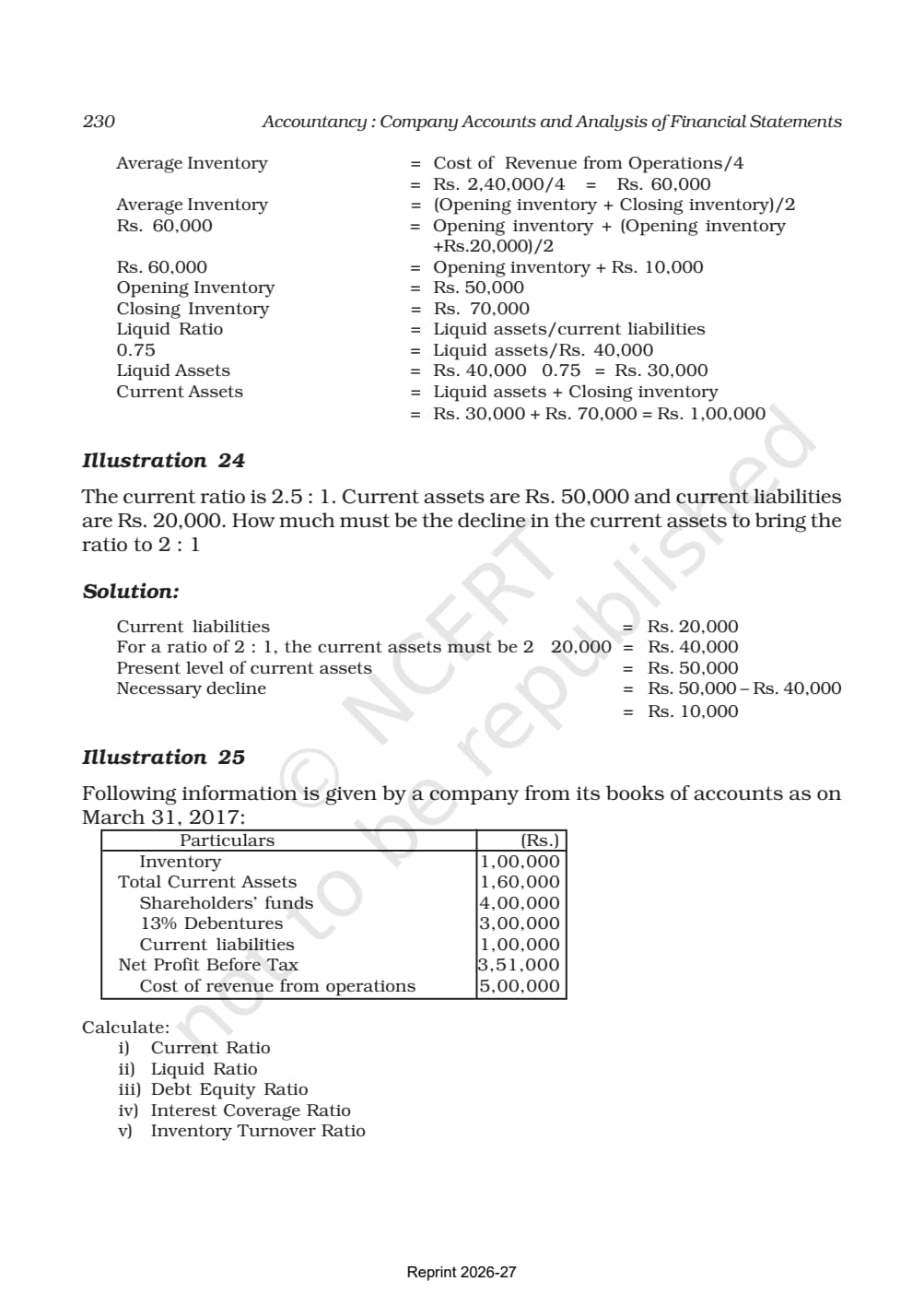
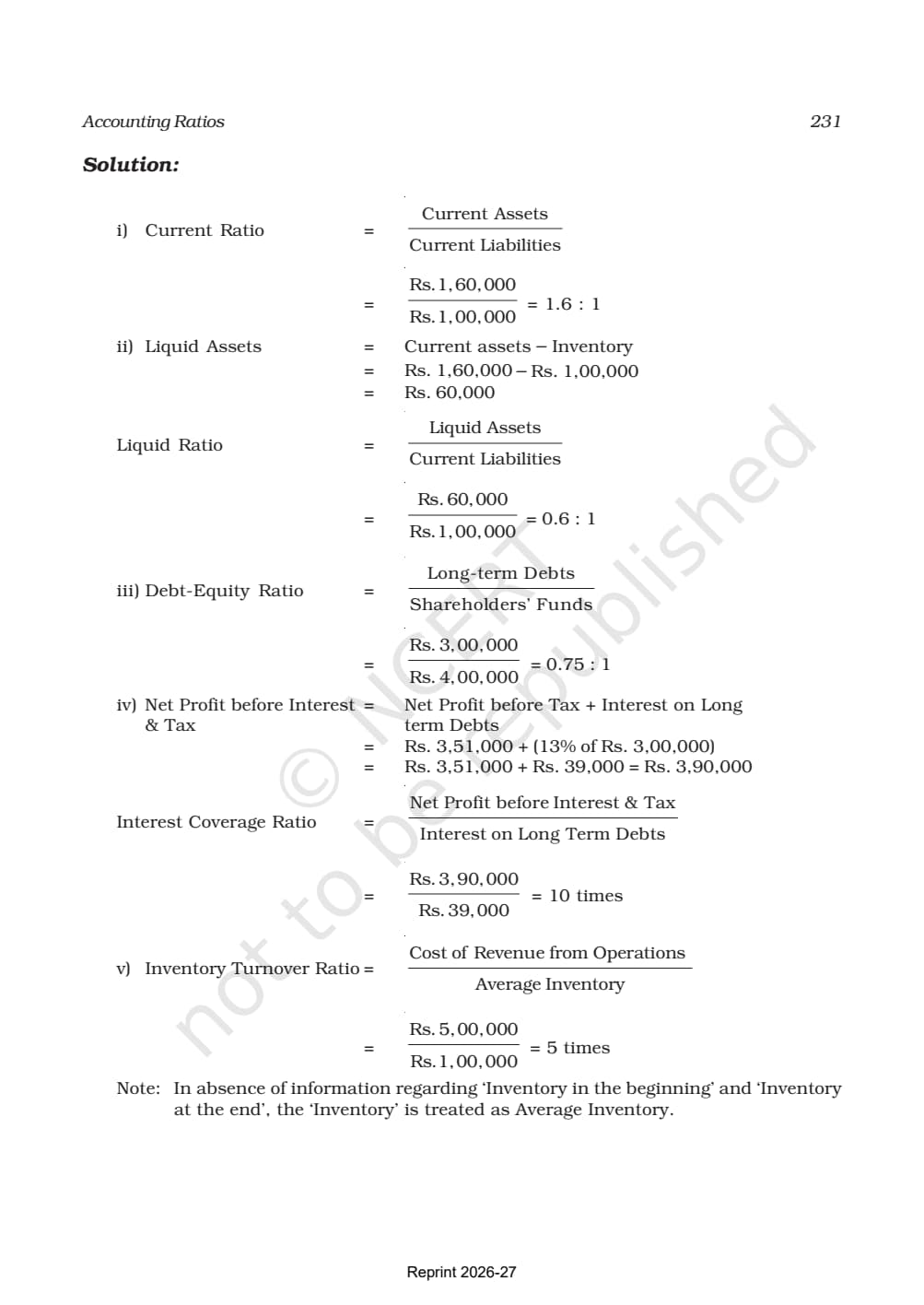
The chapter covers five ratio families with objectives, limitations, formulas, interpretations, and solved illustrations.
| Section | Topic | Why It Matters |
|---|---|---|
| 4.1 | Meaning, Objectives, Advantages and Limitations | 3-mark theory question source; "limitations" appears almost every alternate year |
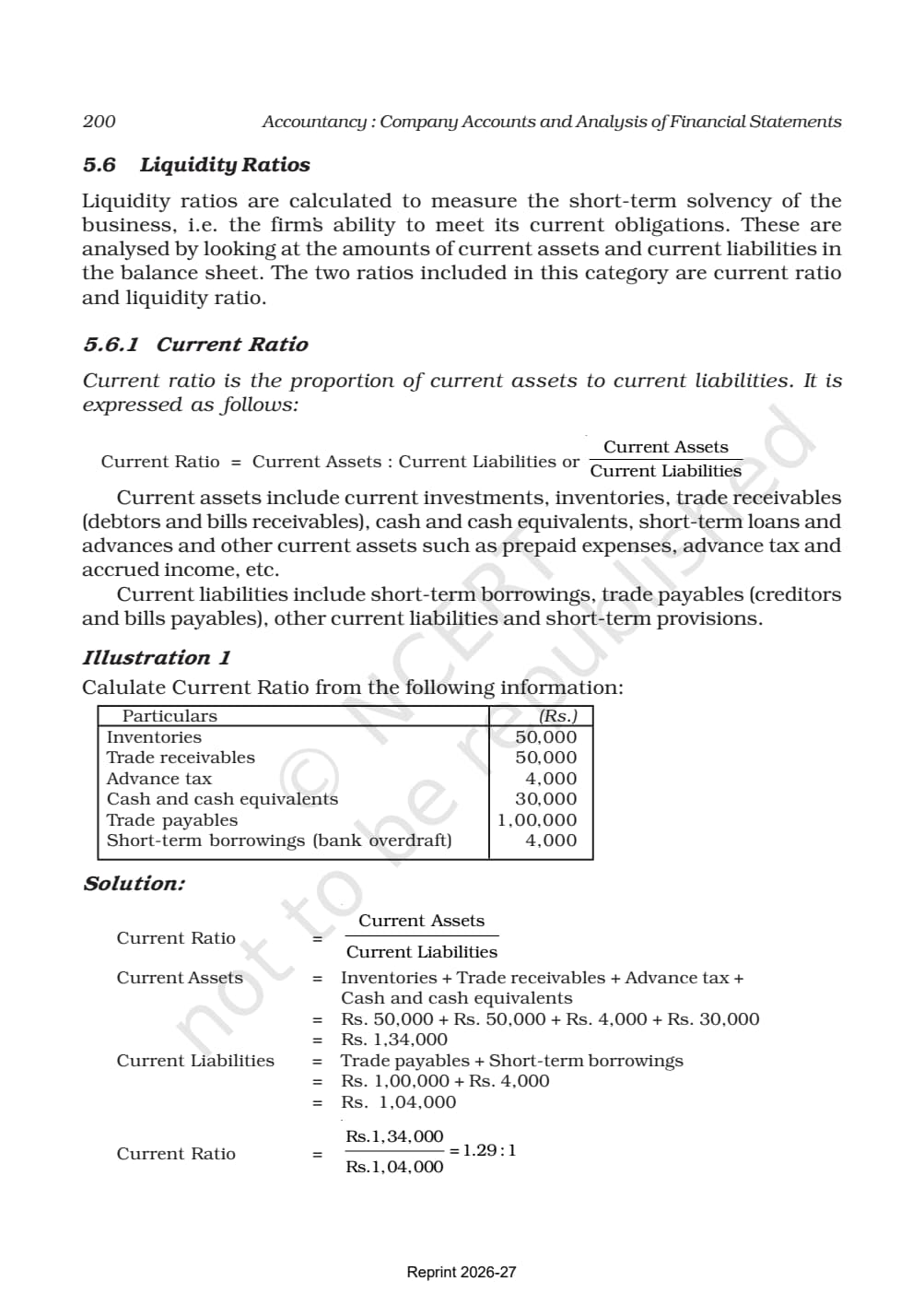
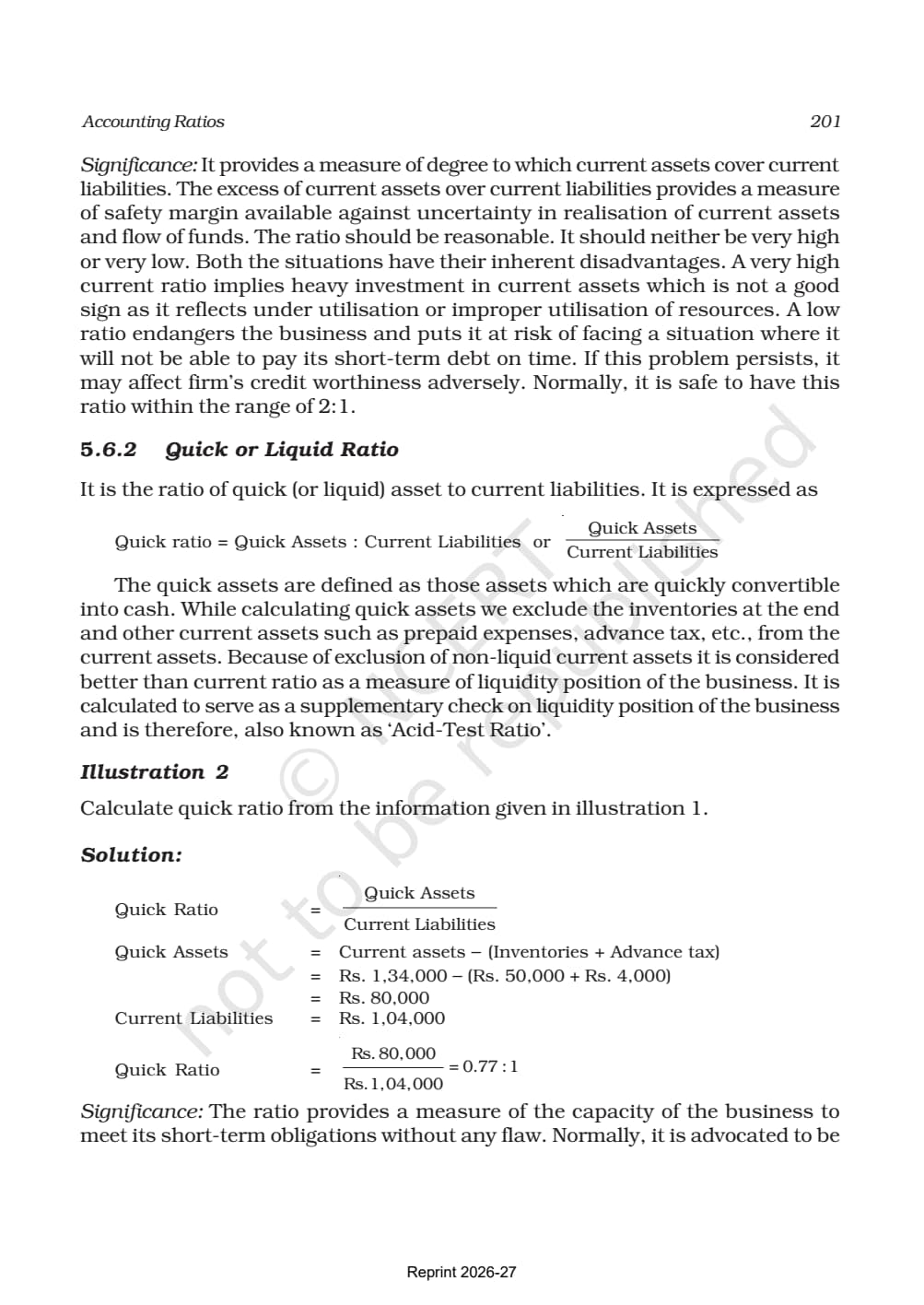
| 4.2 | Liquidity Ratios (Current, Quick) | Short-term solvency; standard 2:1 and 1:1 benchmark questions |
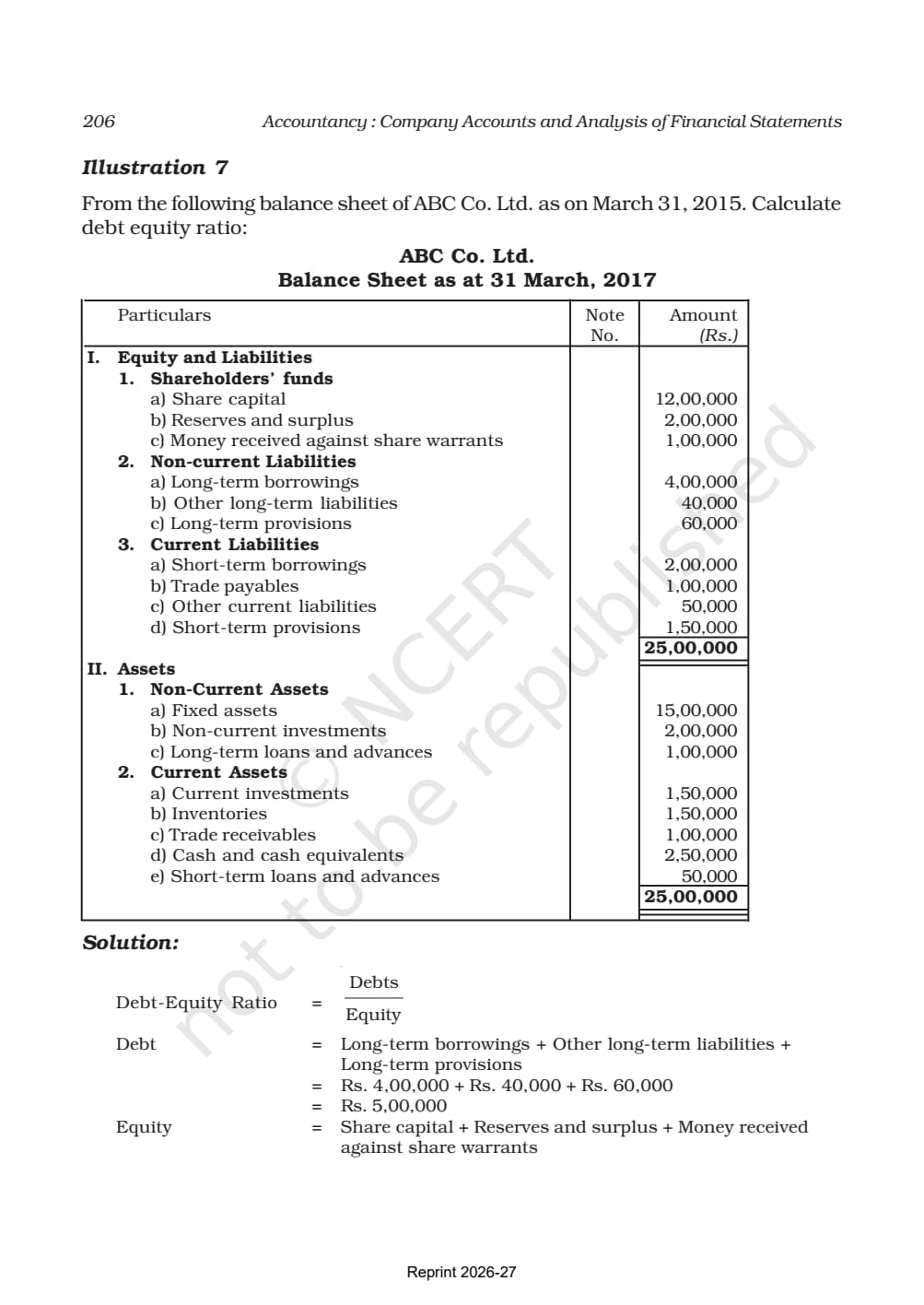
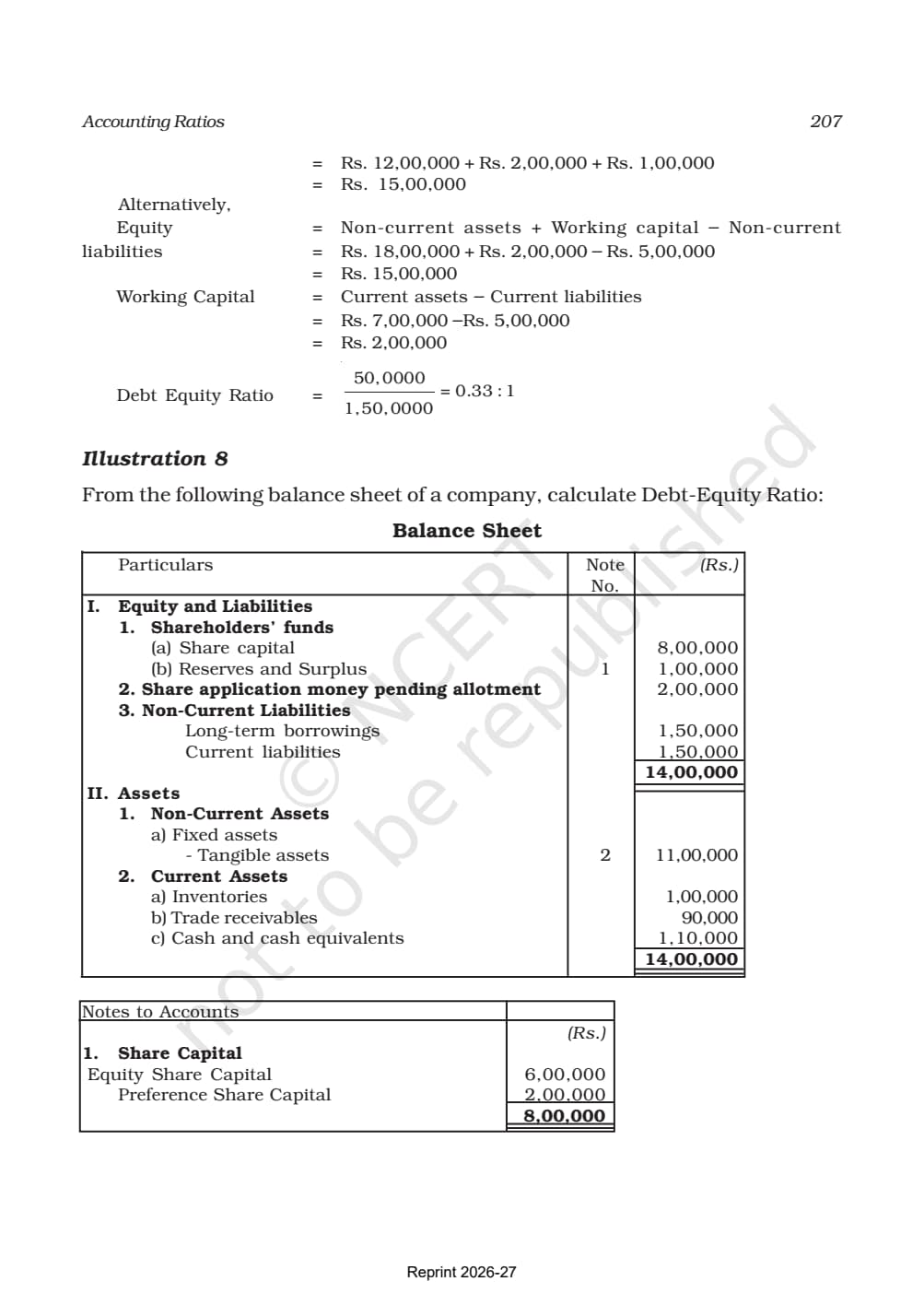
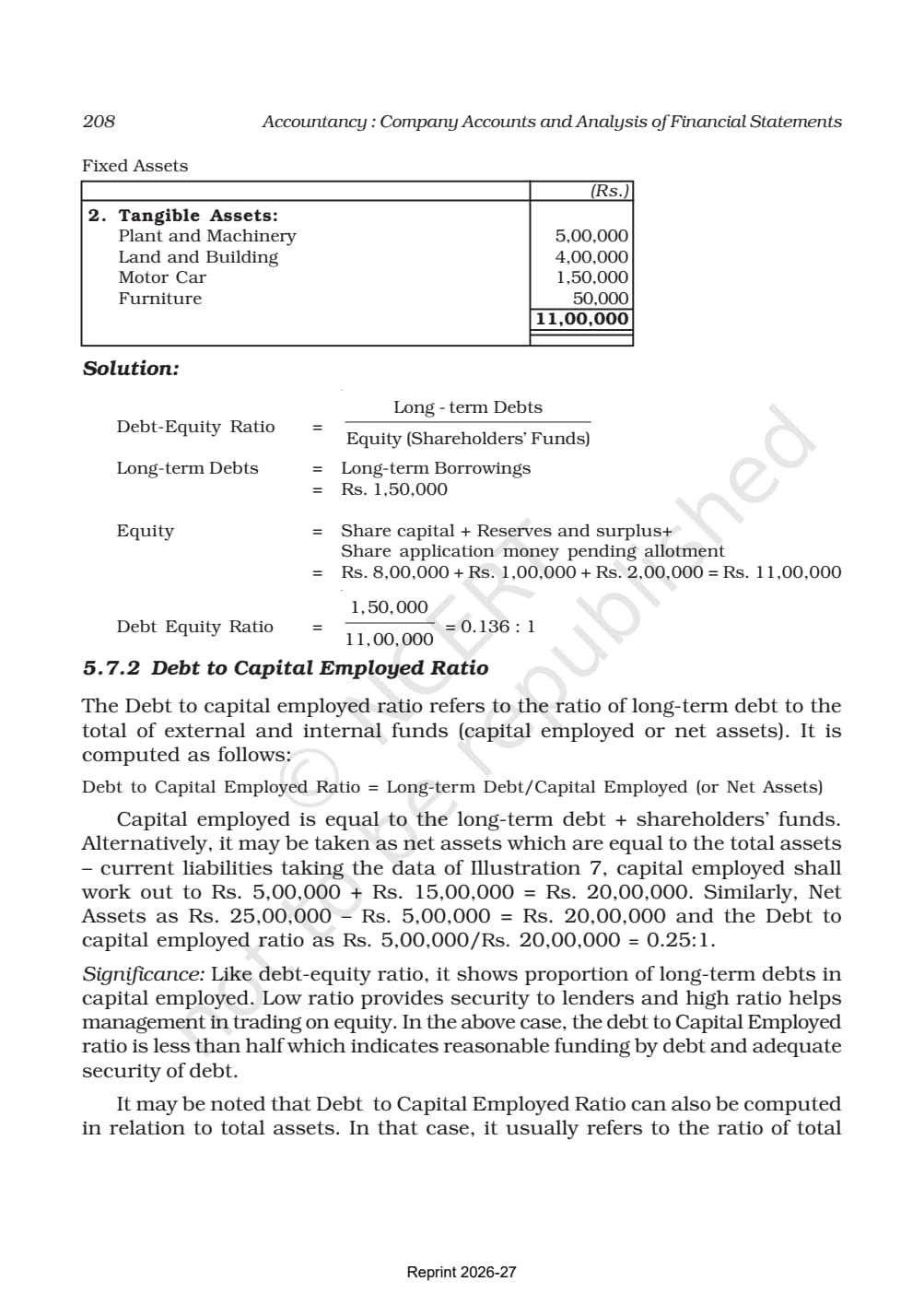
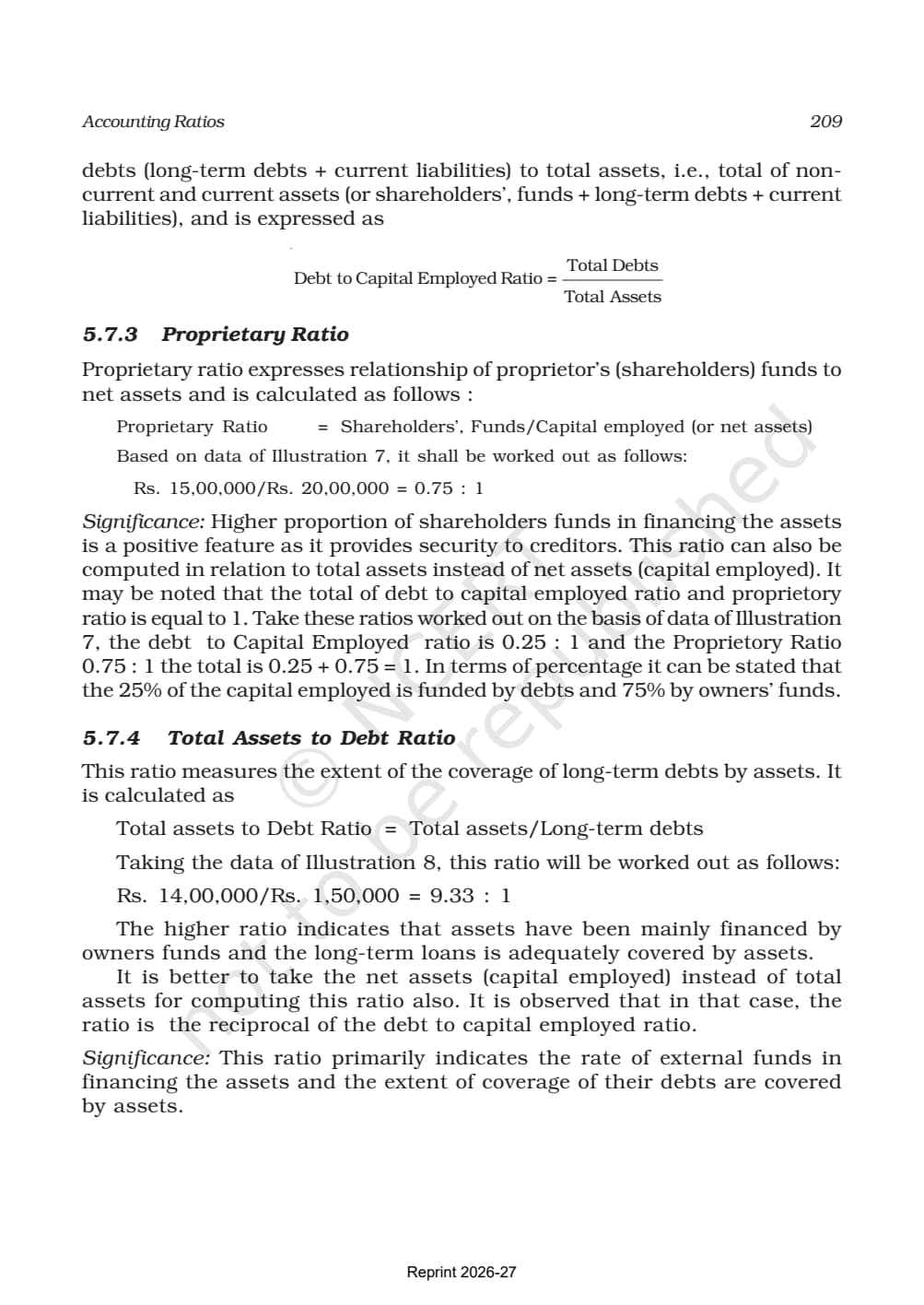
| 4.3 | Solvency Ratios (Debt-Equity, Proprietary, Interest Coverage, Total-Assets-to-Debt) | Long-term capital structure; classification of NCDs and bank loans tests definitions |
| 4.4 | Activity / Turnover Ratios (Inventory, Trade Receivables, Trade Payables, Working Capital, Fixed Assets) | Highest 6-mark question source; "average" denominators trip students |
| 4.5 | Profitability Ratios (GP, NP, Operating, Operating Profit, ROI, EPS) | Cross-references P&L and Balance Sheet; carries 4-mark interpretation |
Accounting Ratios Class 12 PYQ Trends in CBSE Board Exams
Ratio Analysis appears in every Part B paper. The pattern alternates between 6-mark calculations and 4-mark interpretations plus 3-mark theory.
| Year | Question Type | Marks | Sub-topic |
|---|---|---|---|
| 2025 | Long answer | 6 | One ratio from each of the five families with workings |
| 2024 | Short + theory | 4 + 3 | Inventory Turnover calculation; limitations of ratio analysis |
| 2023 | Long answer | 6 | Activity ratios with adjusted average values |
| 2022 | Short answer | 4 | Debt-Equity and Proprietary ratio interpretation |
| 2021 | - | - | Term-1 MCQ only; ratio formula identification |
A turnover ratio calculation (Inventory or Trade Receivables) has appeared in 7 of the last 8 CBSE board sessions.
Full year-wise PYQ map: Accounting Ratios Class 12 NCERT Solutions with PYQs
Key Formulas Inside the Class 12 Accounting Ratios PDF
The chapter prints 24 formulas. Five are essential for 6-mark questions. Memorise these below.
| Ratio | Formula | Standard / Benchmark |
|---|---|---|
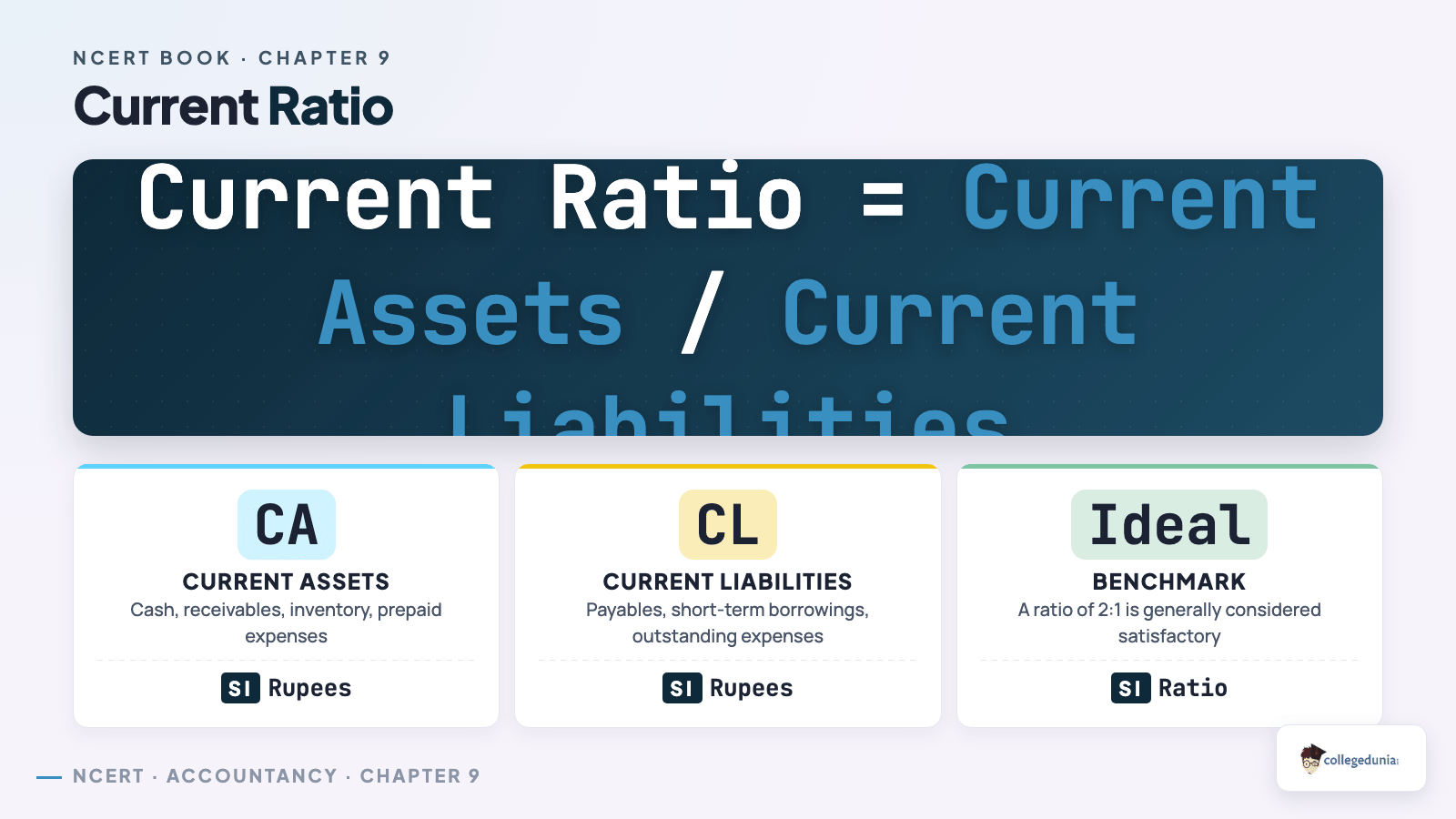
| Current Ratio | Current Assets / Current Liabilities | 2 : 1 |
| Quick Ratio | (Current Assets - Inventory - Prepaid Expenses) / Current Liabilities | 1 : 1 |
| Debt to Equity | Long-term Debt / Shareholders' Funds | 2 : 1 (acceptable upper) |
| Inventory Turnover | Cost of Revenue from Operations / Average Inventory | Higher is better |
| Net Profit Ratio | (Net Profit after Tax / Revenue from Operations) x 100 | Industry-specific |
Full master table: All 24 Accounting Ratios Formulas Class 12 Sheet
2026-27 Edition Notes for Part 2 Chapter 5 Accounting Ratios
The 2026-27 syllabus keeps Chapter 5 Accounting Ratios unchanged. Capital Gearing Ratio is NOT in the 2026-27 syllabus. The NCERT chapter dropped it in the previous reprint. Page numbers may shift 1-2 pages due to front-matter changes.
Class 12 Accountancy Chapter Weightage Snapshot
Part 2 Chapter 5 is in Part B (Financial Statement Analysis, 20 marks). Ratio Analysis carries 8 marks; Chapter 4 carries 4 marks; Chapter 6 carries 8 marks.
| Chapter | Topic | CBSE Marks |
|---|---|---|
| Part 2 Ch 3 | Financial Statements of a Company | 6 |
| Part 2 Ch 4 | Analysis of Financial Statements | 4 |
| Part 2 Ch 5 | Accounting Ratios | 8 |
| Part 2 Ch 6 | Cash Flow Statement | 8 |
Full reference table: Class 12 Accountancy Weightage and Trend Notes
Other Resources for Part 2 Chapter 5
- Accounting Ratios NCERT Book PDF
- Accounting Ratios Class 12 NCERT Solutions PDF
- Accounting Ratios Class 12 Notes
- Accounting Ratios Class 12 Formula Sheet
- Accounting Ratios Class 12 Handwritten Notes
NCERT Book PDF for Class 12 Accountancy: All Chapters
All Class 12 Accountancy chapter PDFs from the Reprint 2026-27 NCERT release.
| Chapter | NCERT Book PDF |
|---|---|
| Chapter 1 | Accounting for Partnership: Basic Concepts NCERT Book |
| Chapter 2 | Reconstitution of a Partnership Firm: Admission of a Partner NCERT Book |
| Chapter 3 | Reconstitution of a Partnership Firm: Retirement / Death of a Partner NCERT Book |
| Chapter 4 | Dissolution of Partnership Firm NCERT Book |
| Part 2 Chapter 1 | Accounting for Share Capital NCERT Book |
| Part 2 Chapter 2 | Issue and Redemption of Debentures NCERT Book |
| Part 2 Chapter 3 | Financial Statements of a Company NCERT Book |
| Part 2 Chapter 4 | Analysis of Financial Statements NCERT Book |
| Part 2 Chapter 6 | Cash Flow Statement NCERT Book |
Student Feedback
In a Collegedunia poll of 1,240 Class 12 Commerce students, 76% rated Accounting Ratios among the tougher parts of the Accountancy syllabus. After using these chapter resources, 4 in 5 said they felt ready for the board questions from this chapter.
FAQs on Class 12 Accountancy Part 2 Chapter 5 Accounting Ratios NCERT Book PDF
Ques. Is Accounting Ratios Part 2 Chapter 5 or Chapter 4 in the Class 12 Accountancy book?
Ans.
Part 2 Chapter 5 in the combined CBSE syllabus order and Chapter 4 in Part 2 of the NCERT textbook. Both numberings refer to the same 50-page chapter on ratio analysis.
Ques. How many formulas are there in Class 12 Accountancy Part 2 Chapter 5 Accounting Ratios?
Ans.
The NCERT chapter prints 24 ratio formulas across five families: liquidity (2), solvency (4), activity / turnover (5), profitability (6), and a small set of EPS and ROI-style derived ratios. The 2026-27 reprint dropped Capital Gearing Ratio.
Ques. What is the CBSE weightage of Accounting Ratios in Class 12 board exam?
Ans.
Accounting Ratios carries 8 marks inside the 20-mark Part B Financial Statement Analysis block. A 6-mark numerical and a 2 to 4-mark theory or interpretation question appear in almost every paper.
Ques. Which ratio formula is most asked in Class 12 board exam?
Ans.
Inventory Turnover Ratio and Debt to Equity Ratio together account for the bulk of 6-mark questions in the last decade. Current Ratio and Net Profit Ratio dominate the 3 to 4-mark question slot.
Ques. Is Capital Gearing Ratio included in the 2026-27 NCERT Class 12 Accountancy syllabus?
Ans.
No. Capital Gearing Ratio was removed in the previous NCERT reprint and is not part of the 2026-27 CBSE Class 12 Accountancy syllabus. Use only the four solvency ratios that the chapter prints.
Ques. Can I download the NCERT Class 12 Accountancy Part 2 Chapter 5 PDF for free?
Ans.
Yes. Collegedunia hosts the Reprint 2026-27 chapter free of cost. Download the PDF from the link at the top of this page and use it alongside the NCERT Solutions and Notes for the same chapter.



Comments