




The NCERT Class 11 Home Science Chapter 10 NCERT Book PDF gives students the official 2026-27 chapter on Financial Management and Planning. The PDF explains family income, budgeting, savings, investment and money control through examples that connect home decisions with adult responsibilities.
- Download the 16-page official NCERT chapter PDF for offline reading.
- Revise money income, real income, psychic income, budget steps and investment principles.
- Use the PDF before moving to notes, worksheets, case examples or budget practice questions.
Student Feedback: In a Collegedunia survey of 10,860 Class 11 Home Science students, 71% said Chapter 10 became easier after they separated income types, budget steps and investment principles into three revision tables.
This NCERT Book PDF follows the 2026-27 reprint and should be used as the source text before revising family budgets, savings, investment and money management.
Financial Management and Planning NCERT Book PDF Highlights
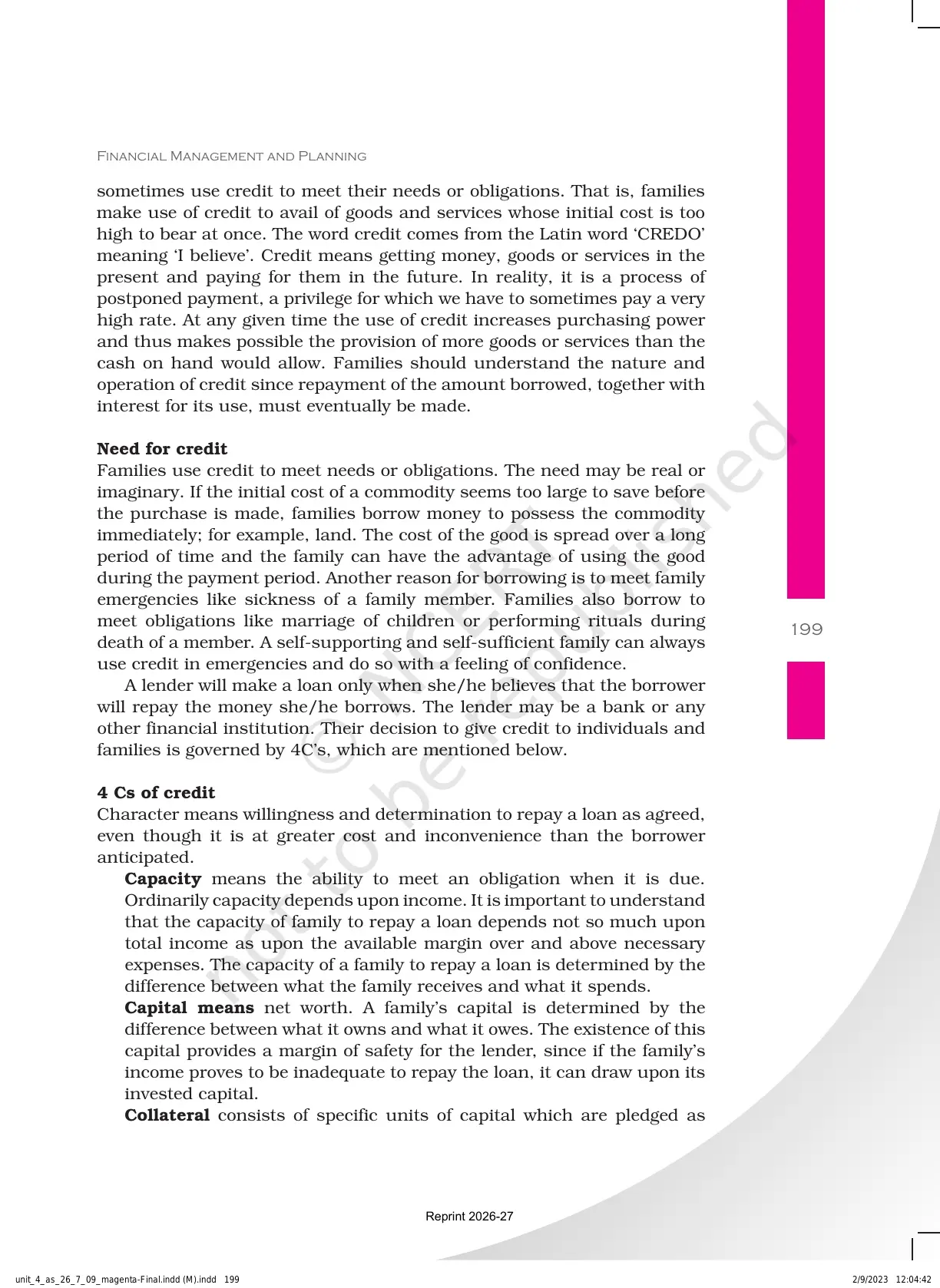
Chapter 10 opens Unit IV, Adulthood. It shows how money becomes a family resource once a person enters higher education, work, marriage and wider family responsibility. NCERT defines financial management as planning, controlling and evaluating the use of all income available to a family.
| NCERT section | Main focus | Best revision method |
|---|---|---|
| Financial management | Planning, controlling and evaluating family income | Write the definition with one family example |
| Family income | Money income, real income and psychic income | Compare the three types in a table |
| Budgeting | Steps in making and checking a family budget | Practise one monthly budget format |
| Savings and investment | Safe use of surplus money for future needs | Revise each investment principle with a keyword |
Chapter 10 is easiest when students read it as a money cycle: income enters the family, the family budgets it, savings protect the future and investments help goals grow.
Financial Management and Planning Video
Source: Achieve it on YouTube
Income Types Explained in Class 11 Home Science Chapter 10
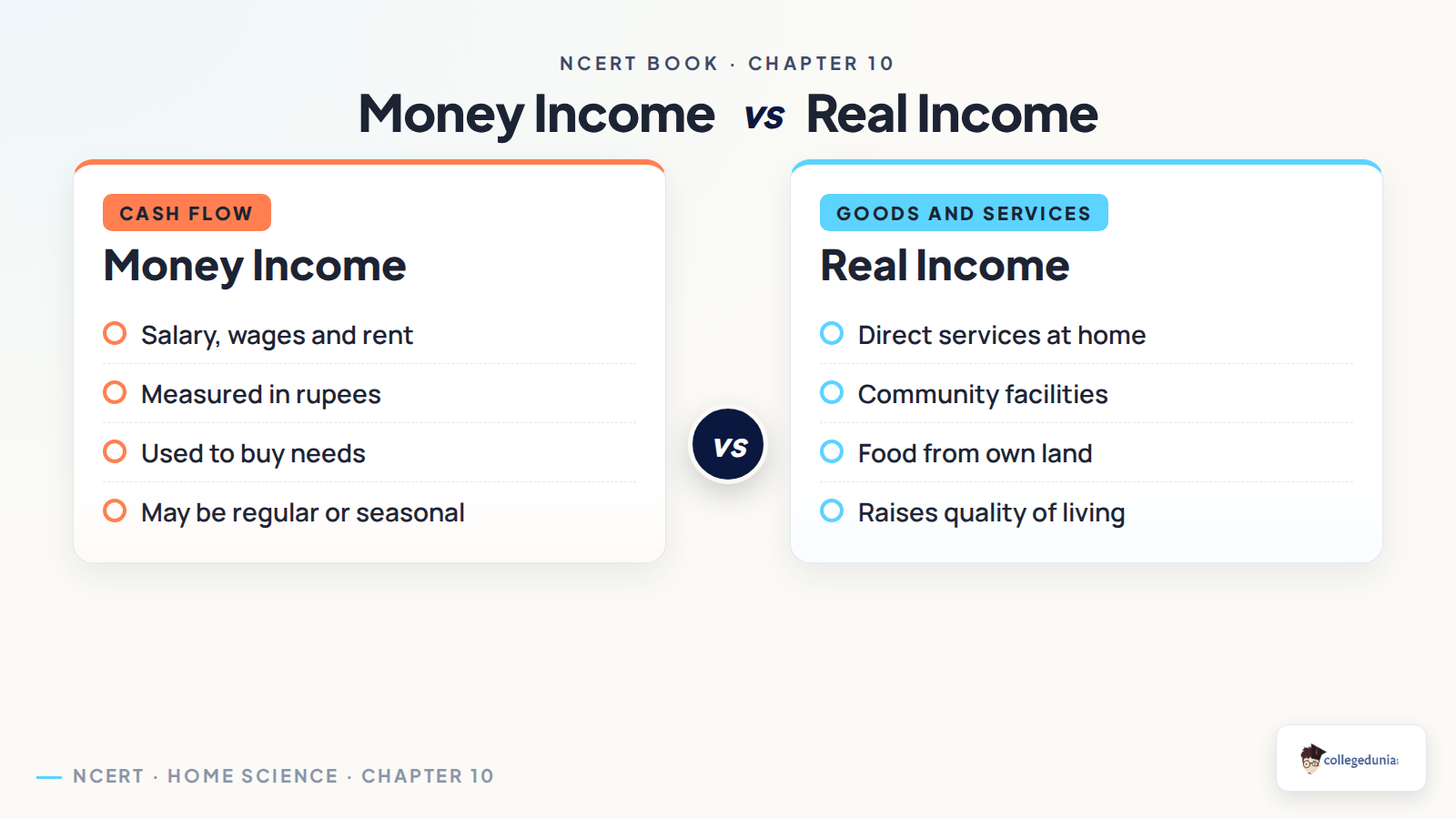
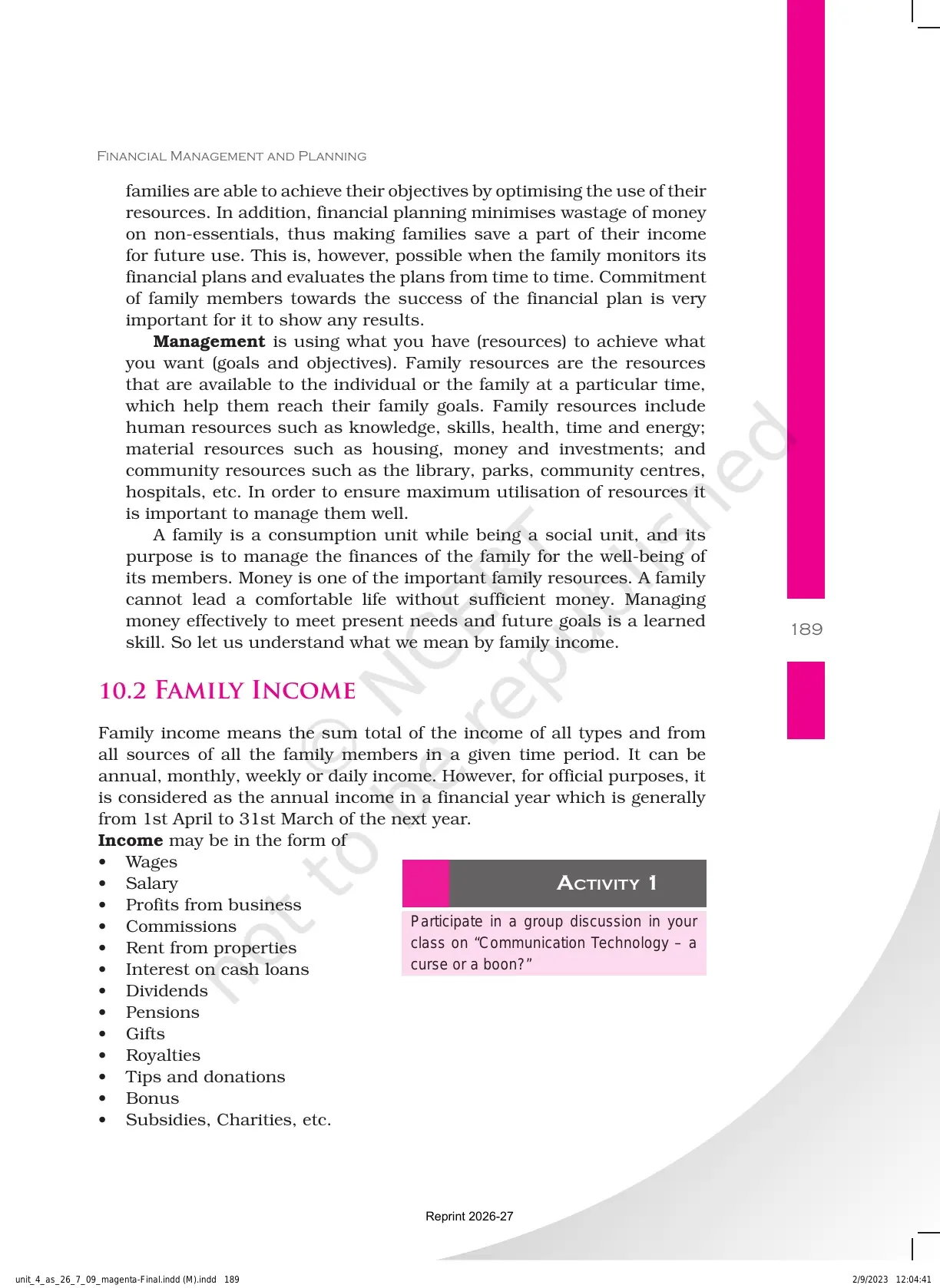
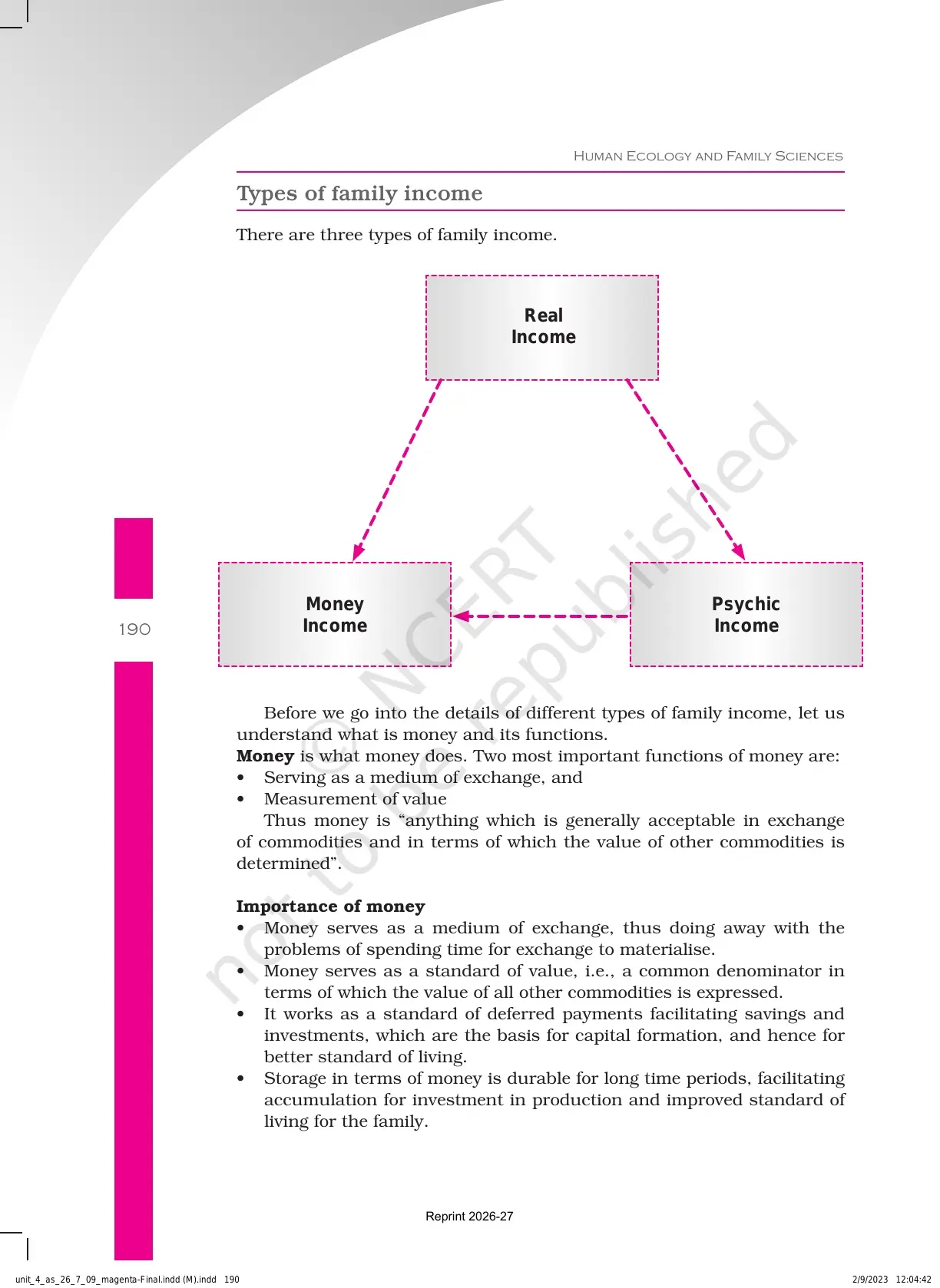
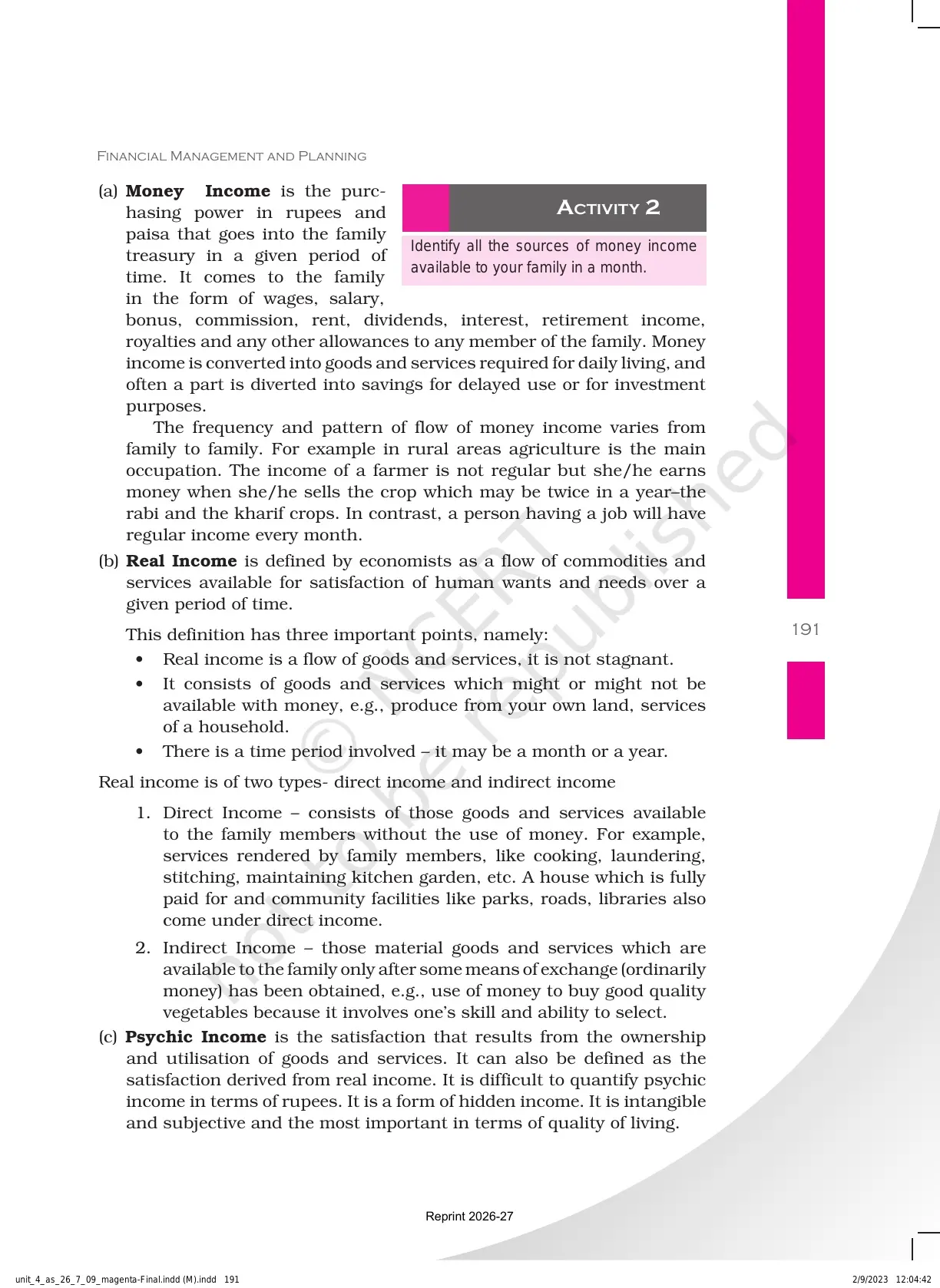
NCERT defines family income as the total income from all sources and all family members over a given period. This can be annual, monthly, weekly or daily, but official income is usually counted for the financial year from 1 April to 31 March.
- Money income: wages, salary, rent, interest, dividends, bonus, pensions, commissions and other rupee receipts.
- Real income: goods and services available to satisfy family wants, including direct services at home and community facilities.
- Psychic income: the satisfaction a family gets from owning and using goods and services.
- Direct real income: cooking, laundering, stitching, kitchen gardening and other services done without spending money.
- Indirect real income: goods and services bought after using money or another means of exchange.
The chapter's central point is practical: a family is not secure only because it earns money. It must also manage timing, stability, spending, saving and satisfaction.
How NCERT Explains Family Budget Planning
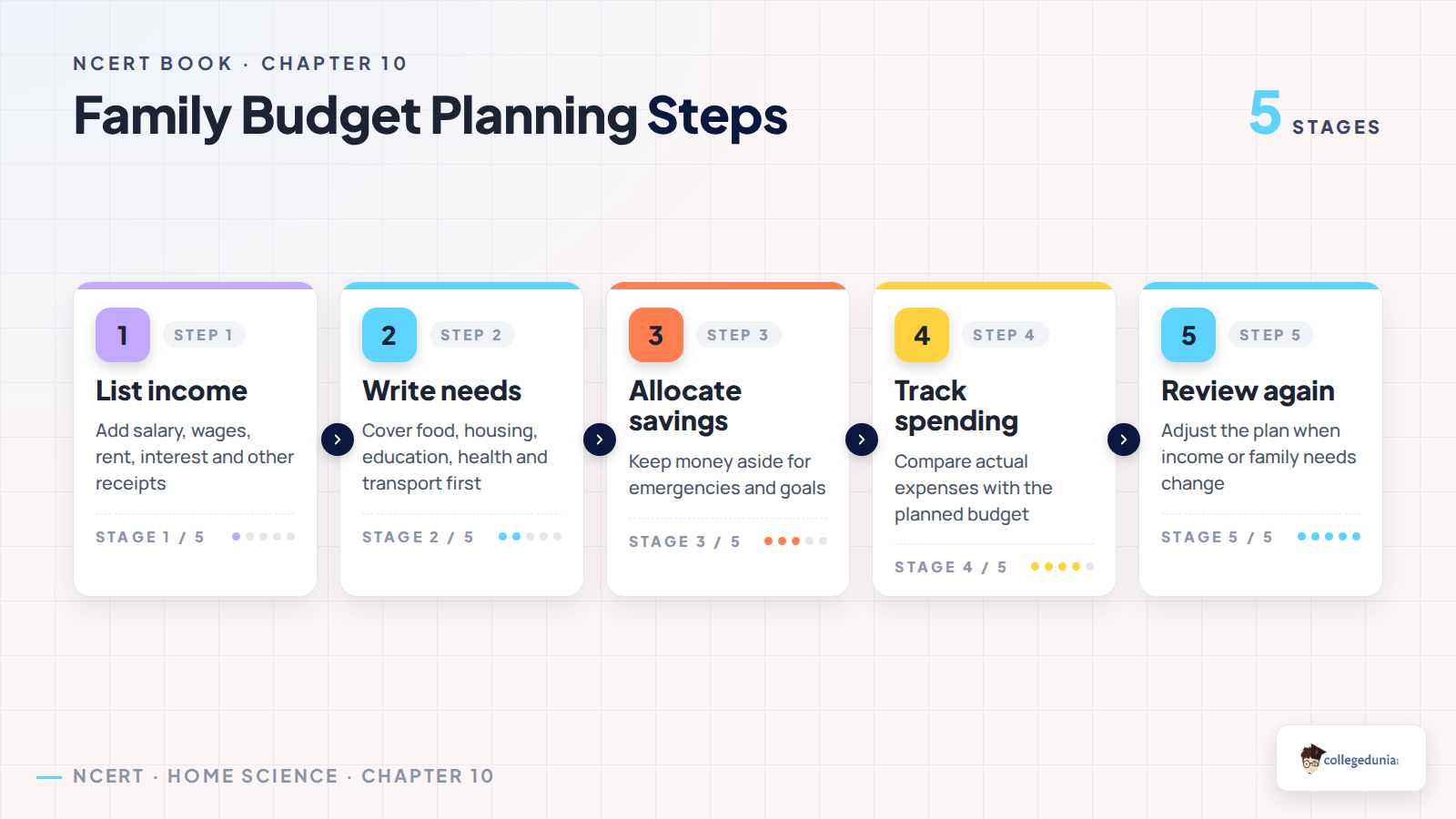
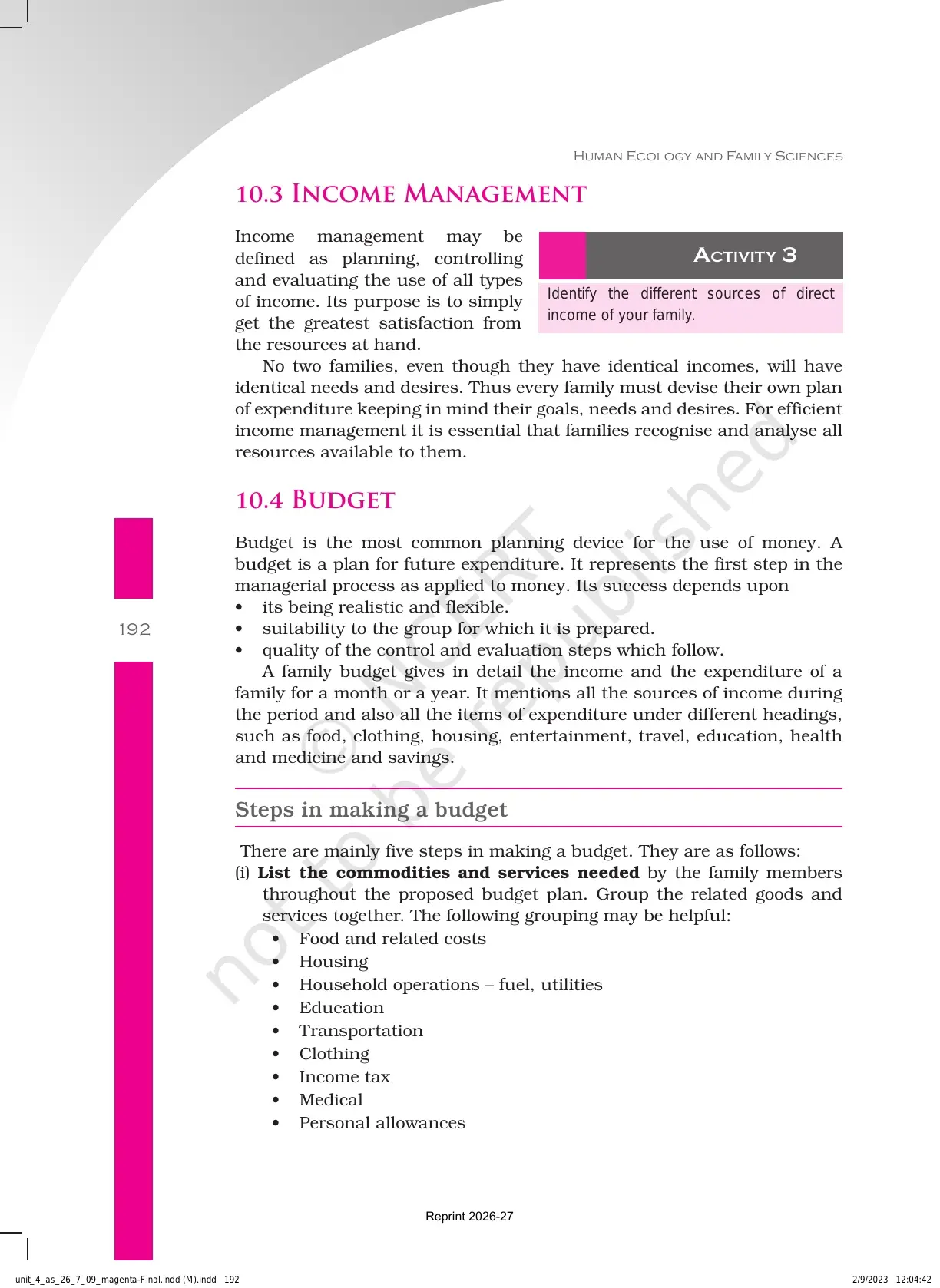
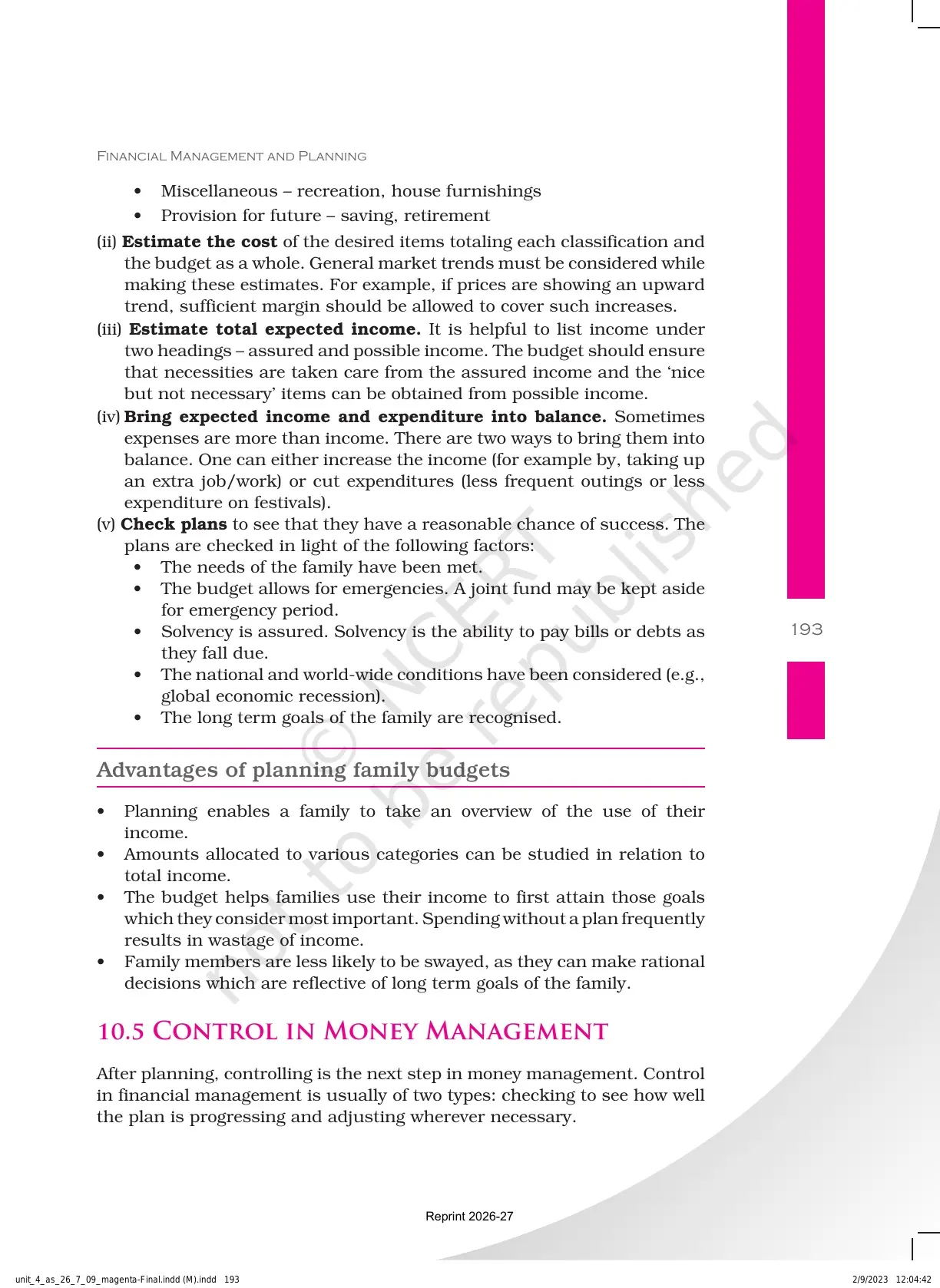
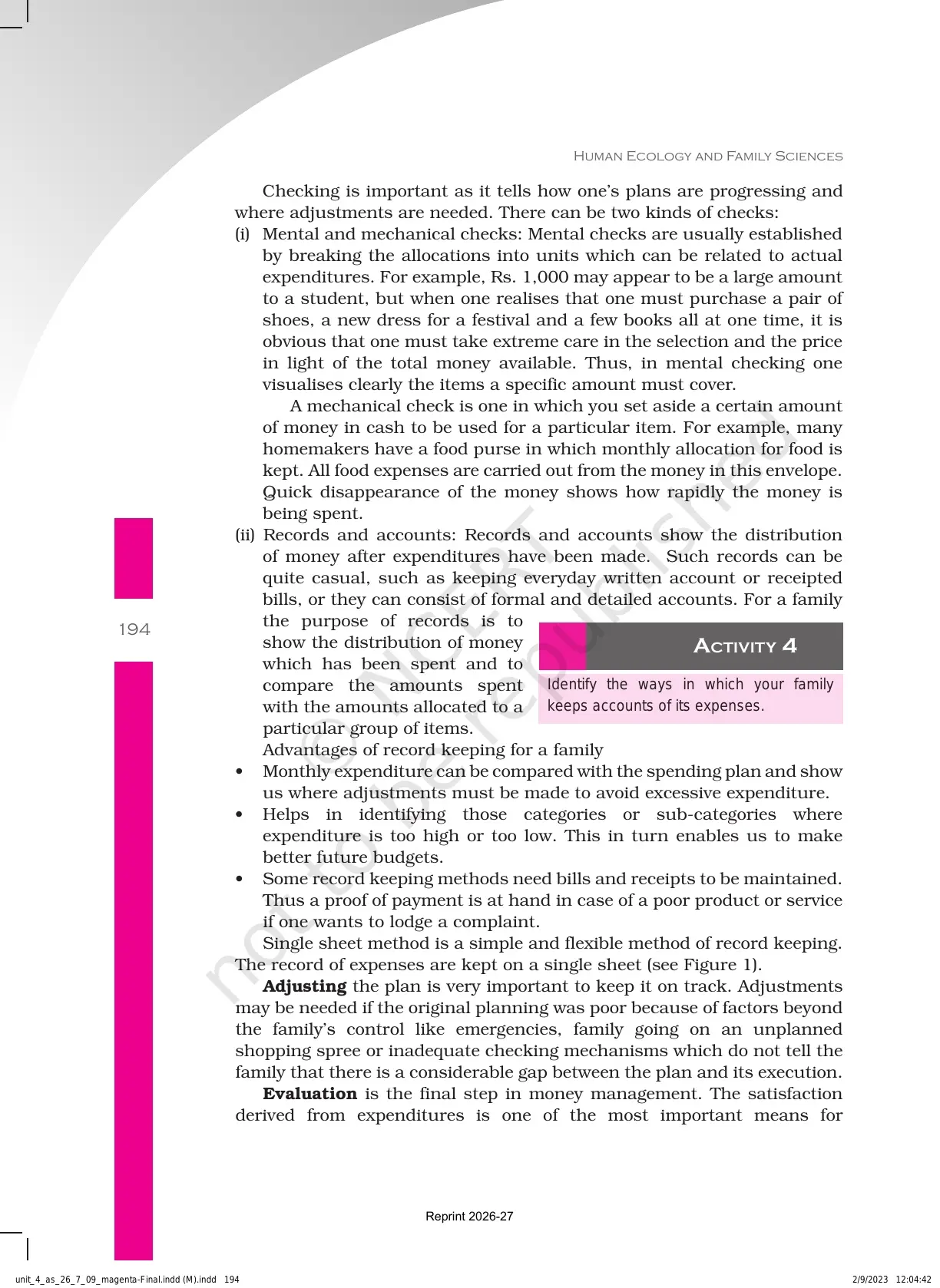
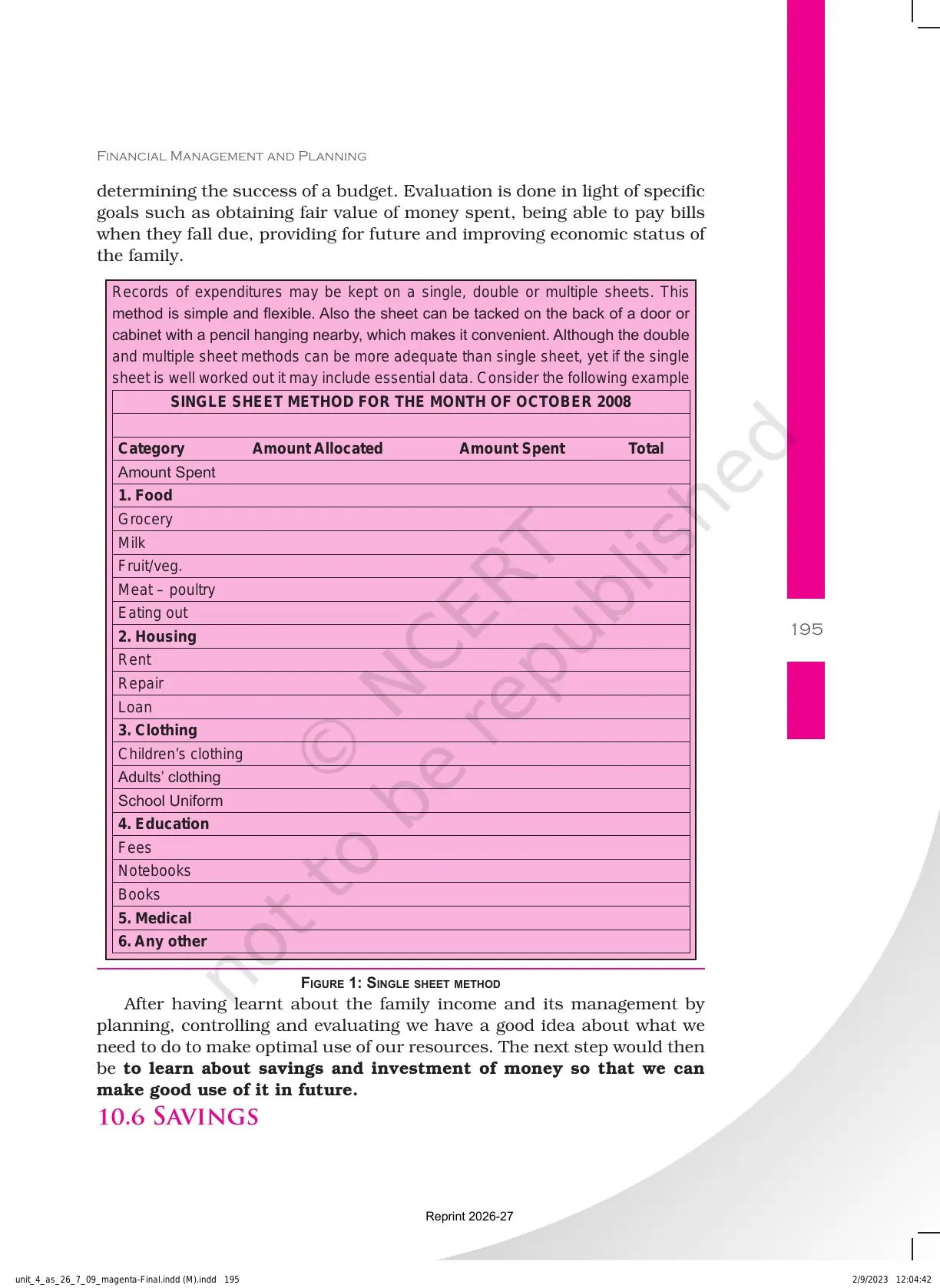
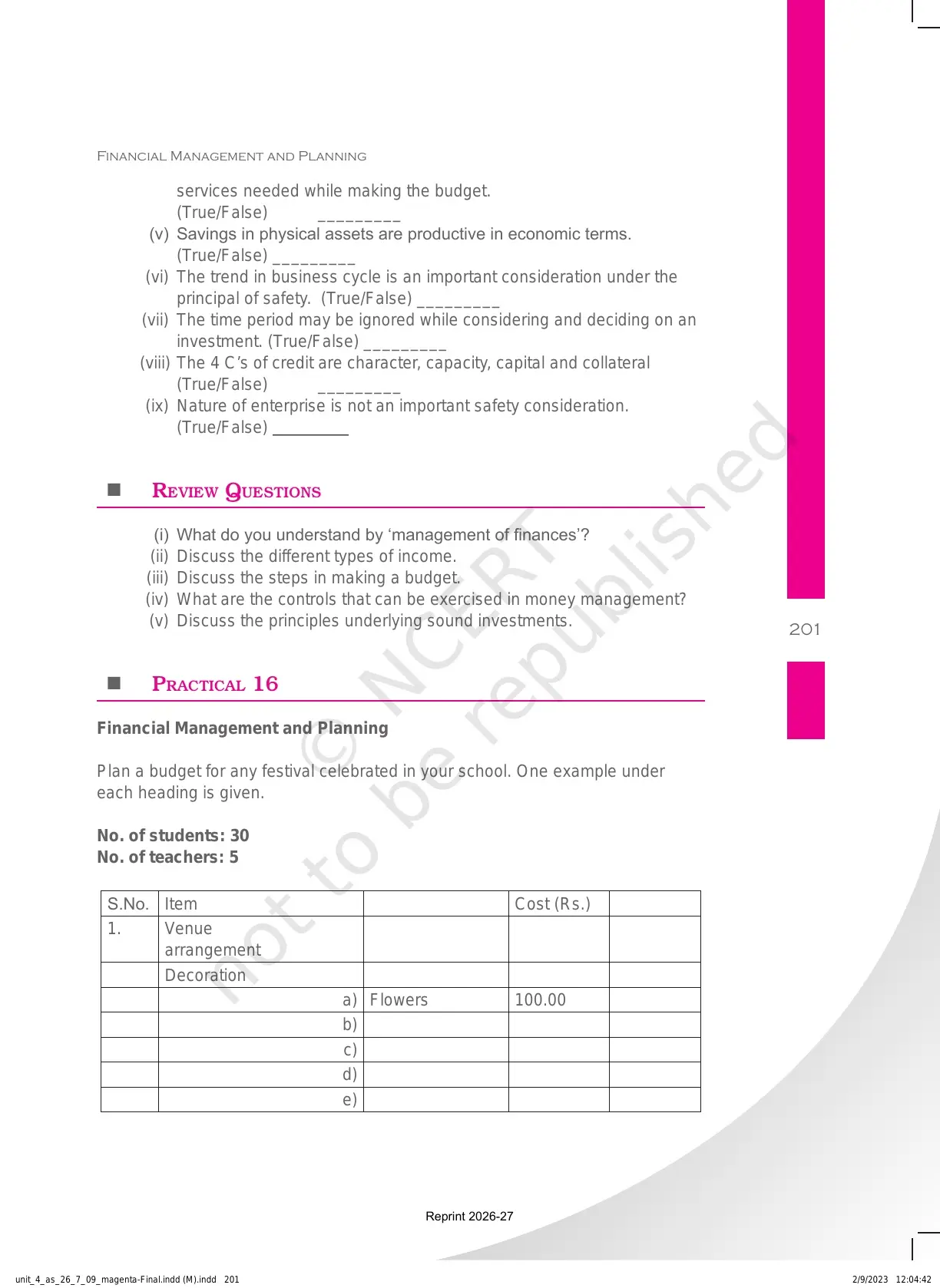
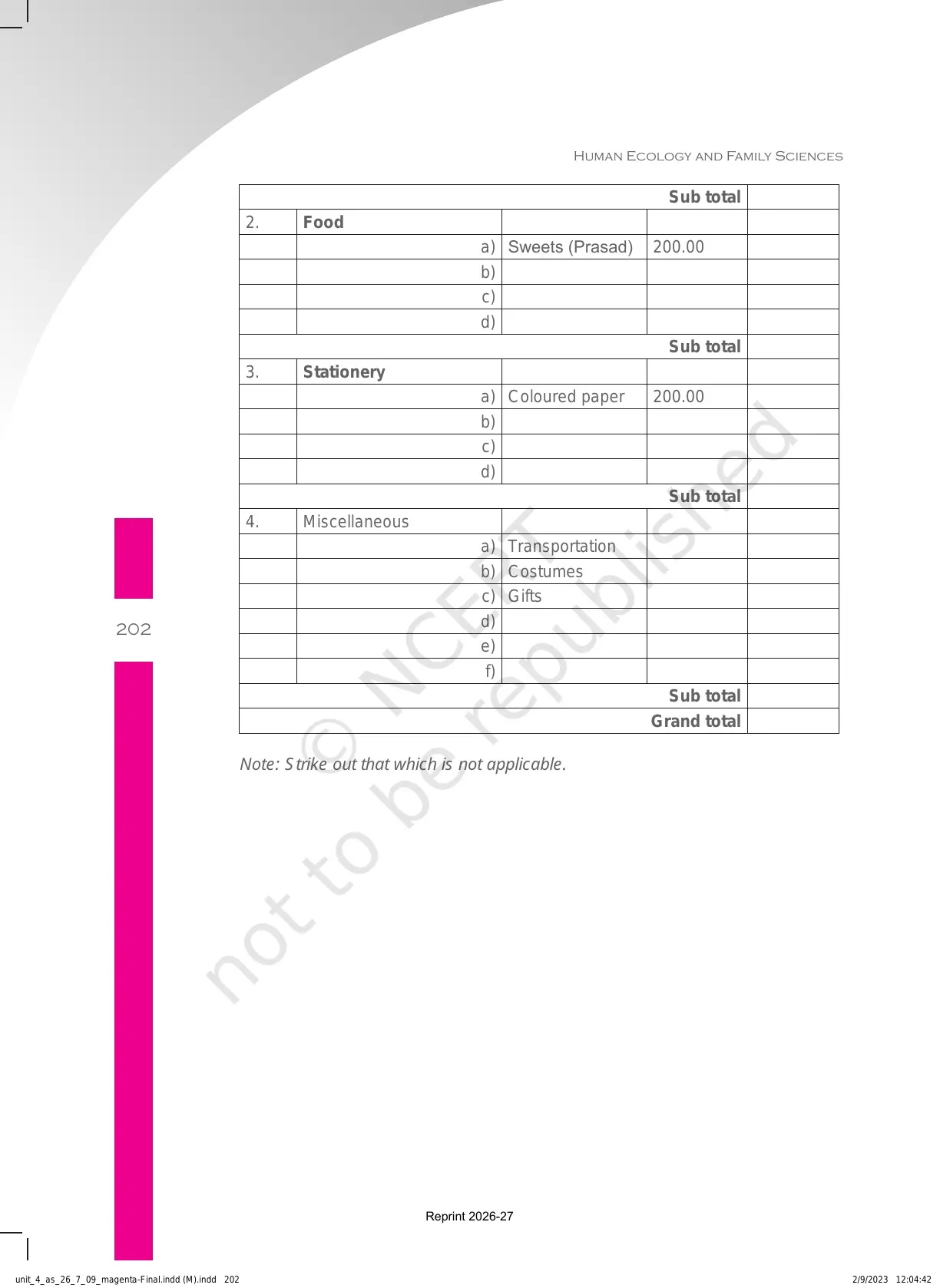
A budget is the planning stage of financial management. It helps a family use income for present needs and long-term goals. NCERT also stresses control, because a budget works only when family members check the plan and adjust it from time to time.
| Budget step | What students should remember | Example |
|---|---|---|
| Estimate income | List regular and irregular receipts before spending | Salary plus rent plus interest |
| List needs | Separate essential needs from non-essential expenses | Food, housing, education, health and transport first |
| Plan savings | Keep a part of income for future use | Emergency fund or education goal |
| Keep records | Use written accounts to check actual spending | Food purse, expense diary or monthly ledger |
| Evaluate | Compare the plan with family goals and revise it | Reduce avoidable expenses next month |
Savings and Investment Principles in Chapter 10
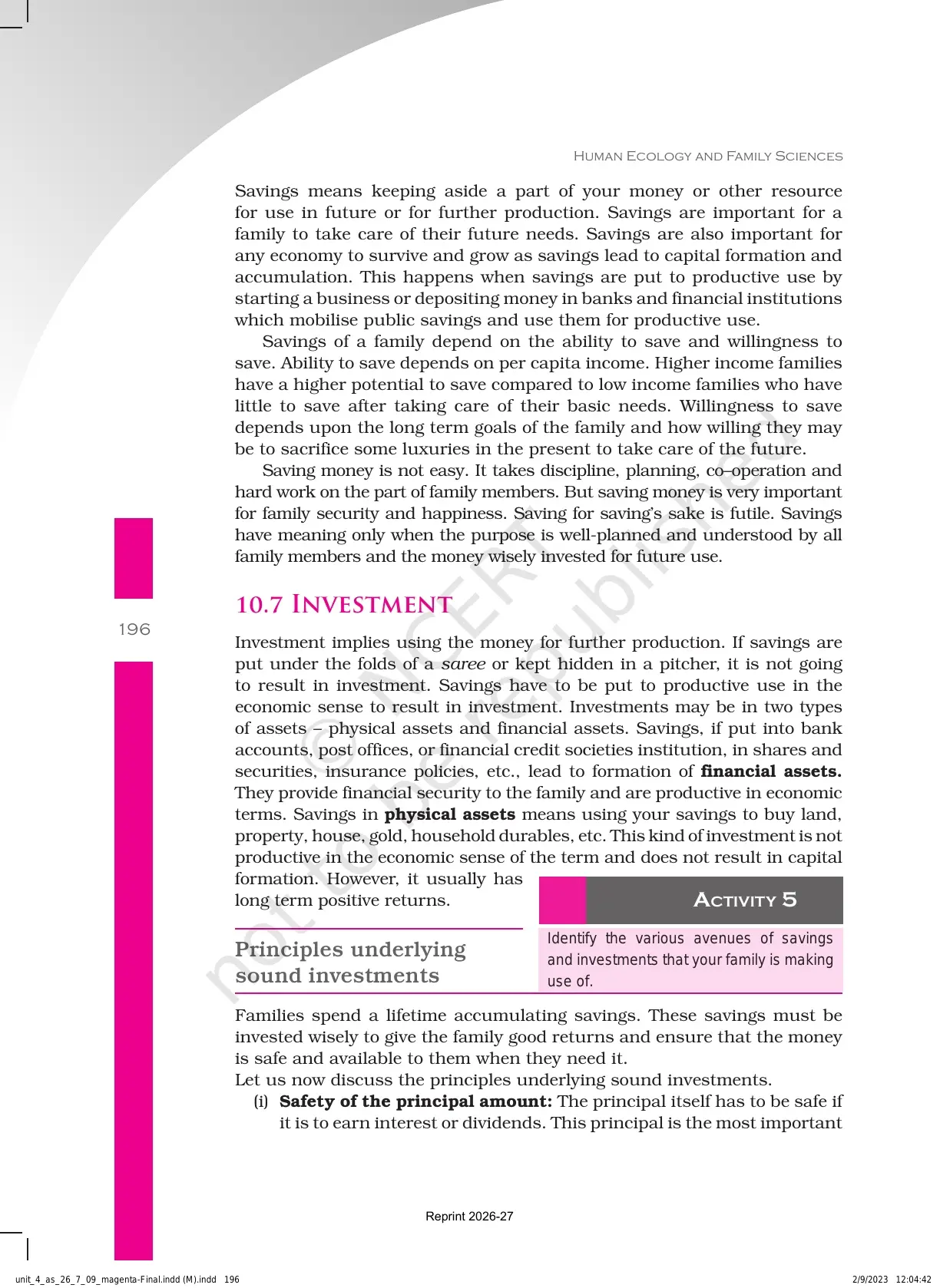
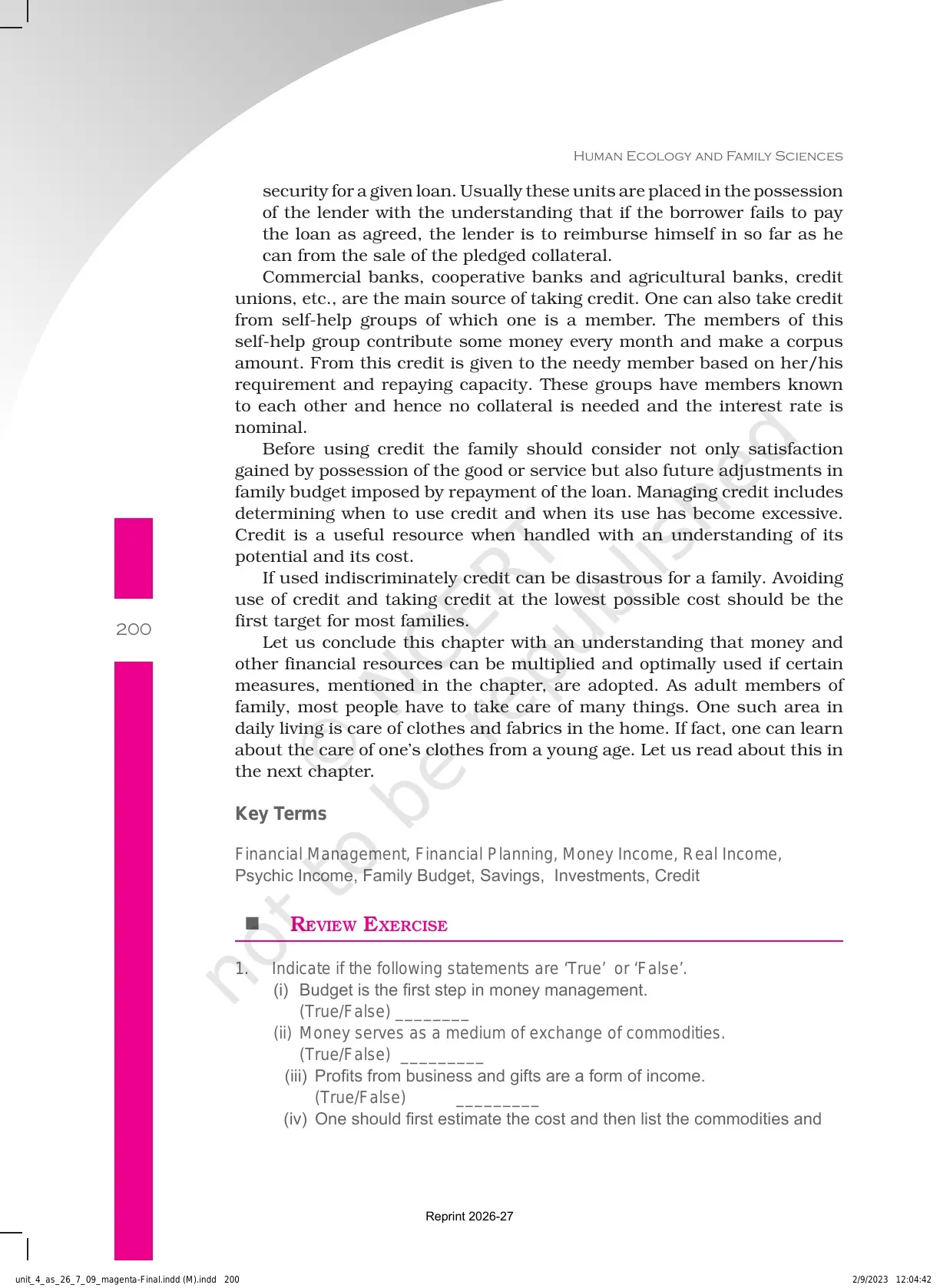
The later part of the chapter explains why savings and investment matter. Savings protect a family from sudden needs, while investment puts saved money into an avenue that can give returns. NCERT asks students to judge investments with care instead of choosing only by interest rate.
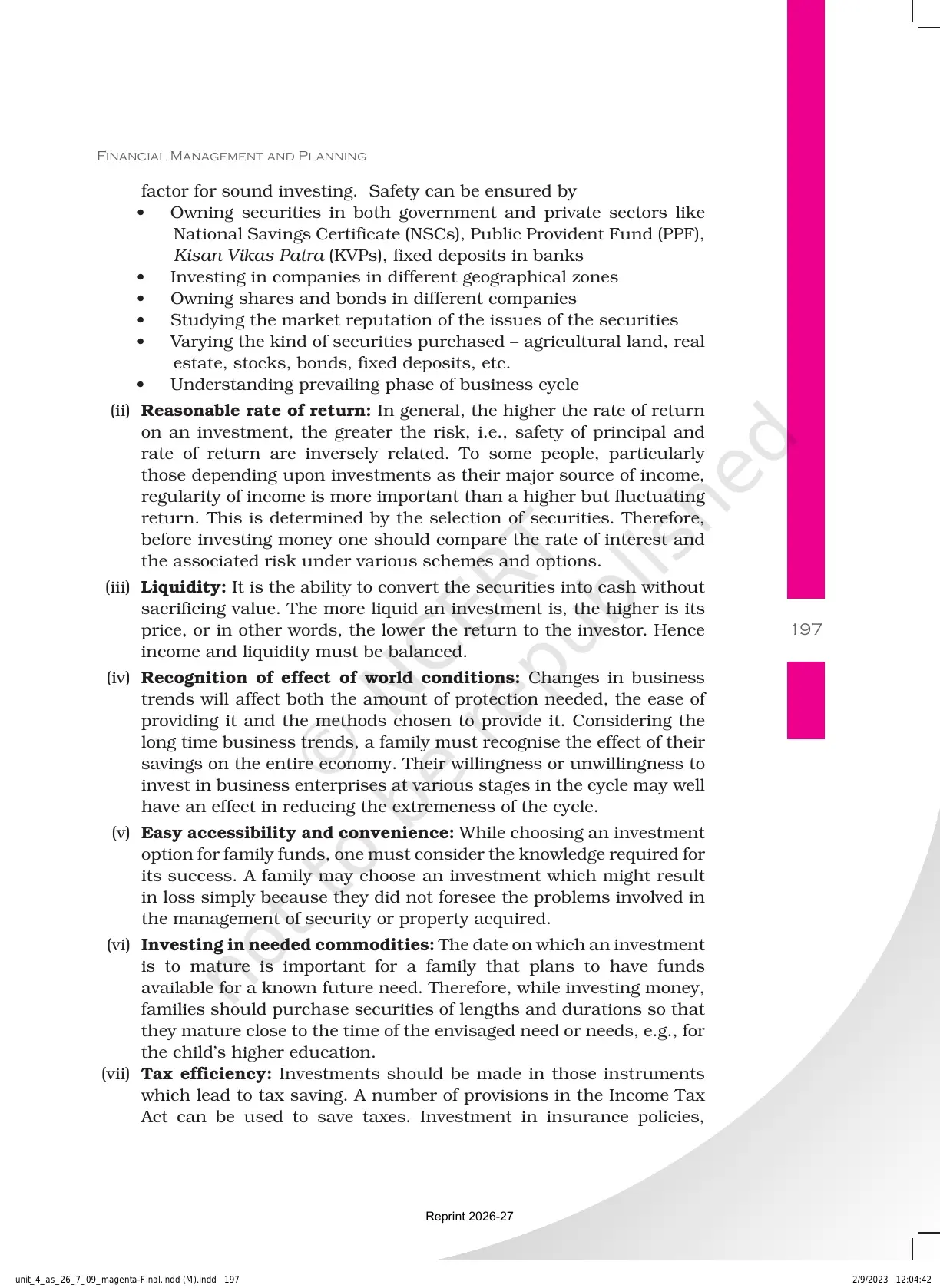
- Safety: the principal amount should remain protected.
- Reasonable return: the rate of interest should match the risk taken.
- Liquidity: money should be available when the family needs it.
- Accessibility: the investment should be easy to manage and understand.
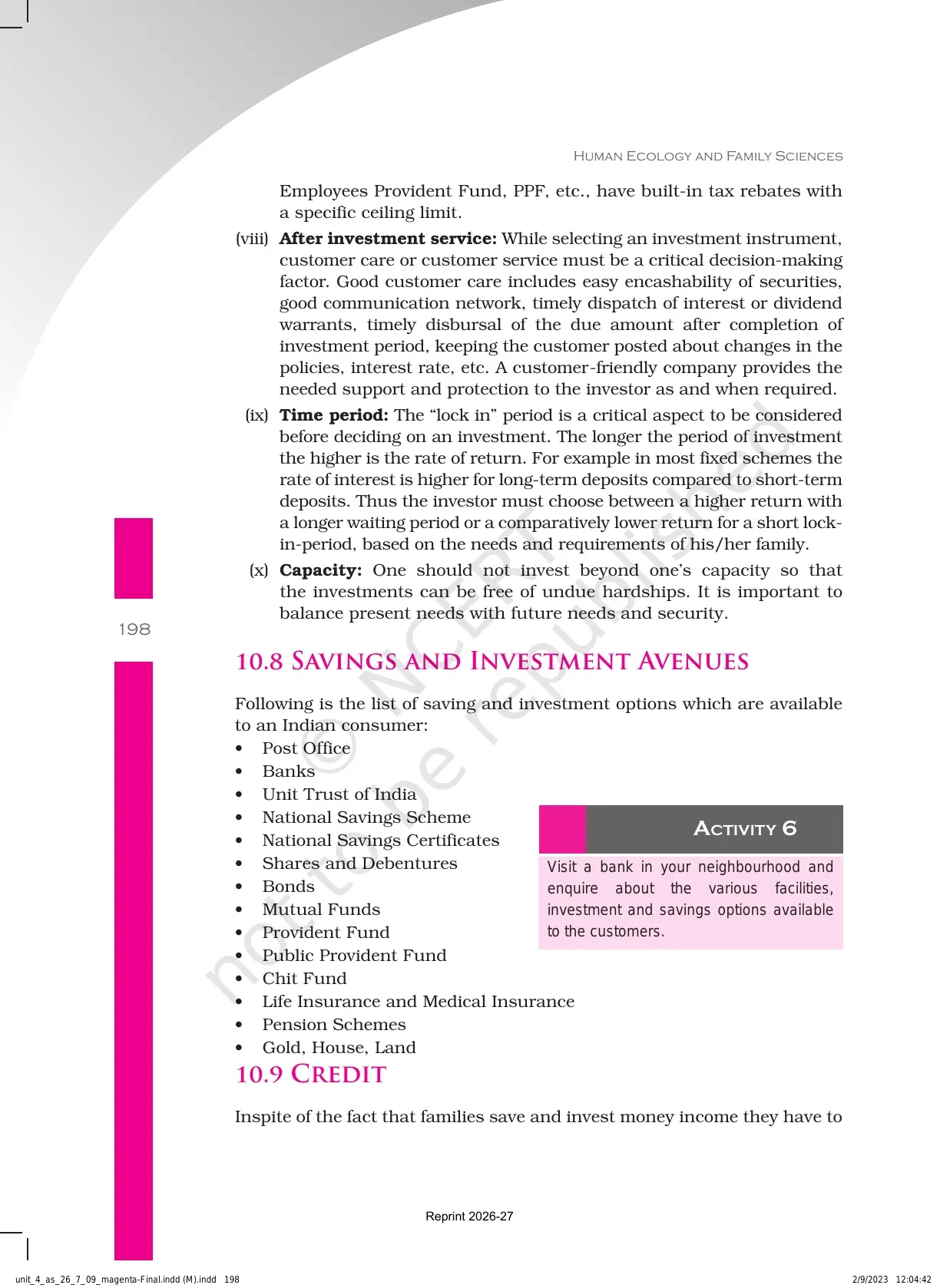
- Tax efficiency: the family should know how taxation affects final returns.
- Time period: short-term and long-term goals need different choices.
For exam revision, link every investment principle with one family goal such as education, health, house repair, retirement or emergency spending.
Related Class 11 Home Science Chapter 10 Resources
Use these related resources when you want Financial Management and Planning in another format. The table stays above the FAQ so students can move from the official book PDF to revision material quickly.
| Resource | Best use | Link |
|---|---|---|
| NCERT Book PDF | Read the official 2026-27 source chapter | This page has the book PDF above |
| NCERT Notes | Revise income types, budgeting, savings, investment and credit | Open notes |
| Handwritten Notes | Use a topper-style copy for budget steps and investment principles | Open handwritten notes |
More NCERT Book PDFs for Home Science Chapters
The table below keeps NCERT Book PDF resources together, so students can continue official textbook reading chapter by chapter.
| Chapter | NCERT chapter title | Book PDF |
|---|---|---|
| Class 11 Chapter 1 | Introduction: Evolution of the Discipline and its Relevance to Quality of Life | Open book PDF |
| Class 11 Chapter 2 | Understanding the Self | Open book PDF |
| Class 11 Chapter 3 | Food, Nutrition, Health and Fitness | Open book PDF |
| Class 11 Chapter 4 | Management of Resources | Open book PDF |
| Class 11 Chapter 5 | Fabrics Around Us | Open book PDF |
| Class 11 Chapter 6 | Media and Communication Technology | Open book PDF |
| Class 11 Chapter 7 | Concerns and Needs in Diverse Contexts | Open book PDF |
| Class 11 Chapter 8 | Nutrition, Health and Well-being | Open book PDF |
| Class 11 Chapter 9 | Our Apparel | Open book PDF |
| Class 11 Chapter 10 | Financial Management and Planning | Current book PDF |
Financial Management and Planning Class 11 Home Science NCERT Book FAQs
Ques. What is included in the Class 11 Home Science Chapter 10 NCERT Book PDF?
Ans. The PDF includes the official NCERT chapter on family income, money income, real income, psychic income, budgeting, savings and investment principles.
Ques. How many pages are there in this Financial Management and Planning PDF?
Ans. The official Class 11 Home Science Chapter 10 PDF used here has 16 pages in the local NCERT chapter file.
Ques. Which types of income are covered in Chapter 10?
Ans. Chapter 10 covers money income, real income and psychic income, along with direct and indirect forms of real income.
Ques. Why is budgeting important in Financial Management and Planning?
Ans. Budgeting helps a family match income with needs, reduce wastage, save for future goals and evaluate spending from time to time.



Comments