



The NCERT Book for Class 10 Science Chapter 2 Acids, Bases and Salts is the official CBSE textbook chapter, free to read and download for the 2026-27 session. It explains how acids and bases react, the pH scale, and the salts of daily life like baking soda, washing soda and Plaster of Paris.
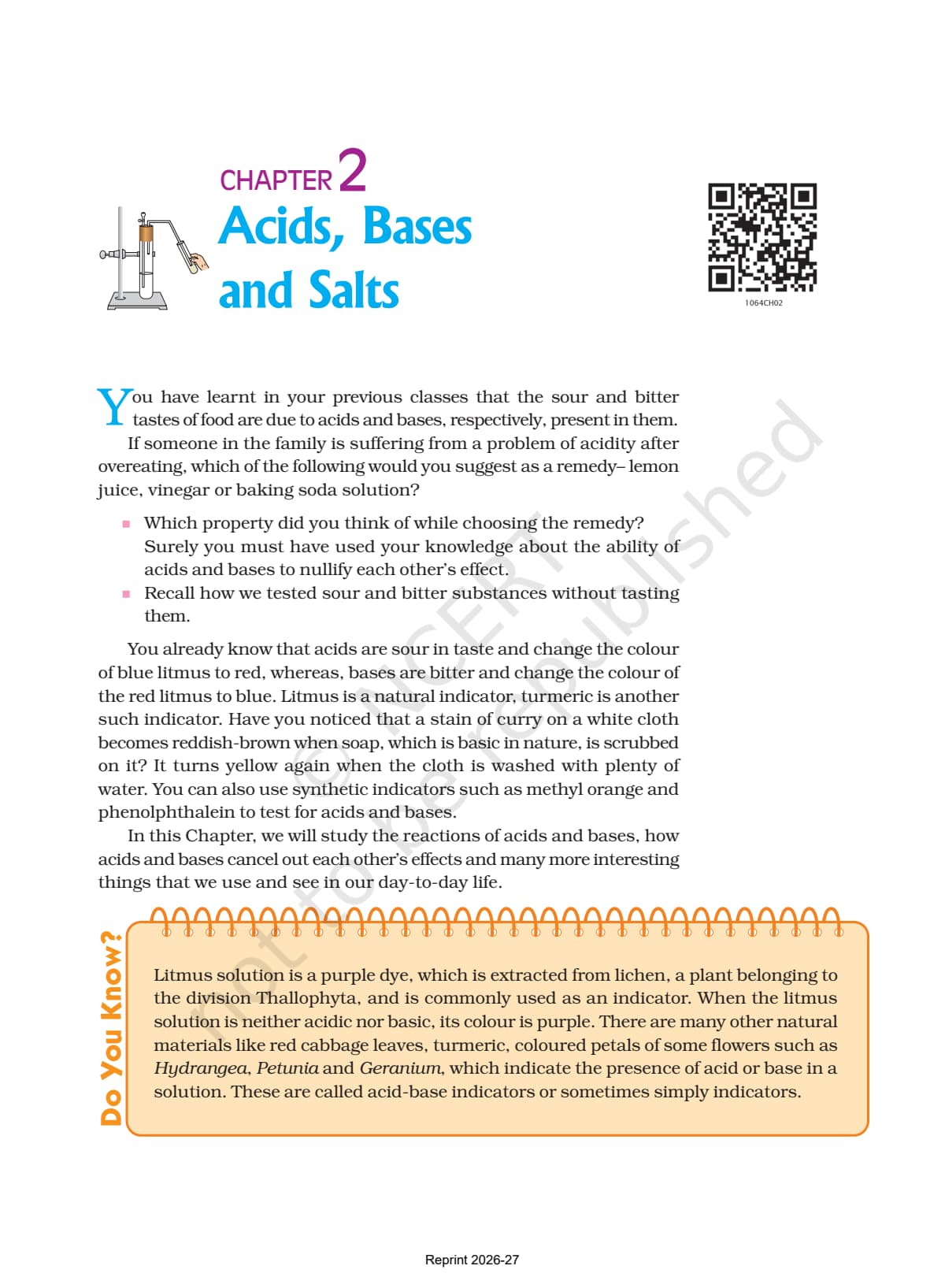
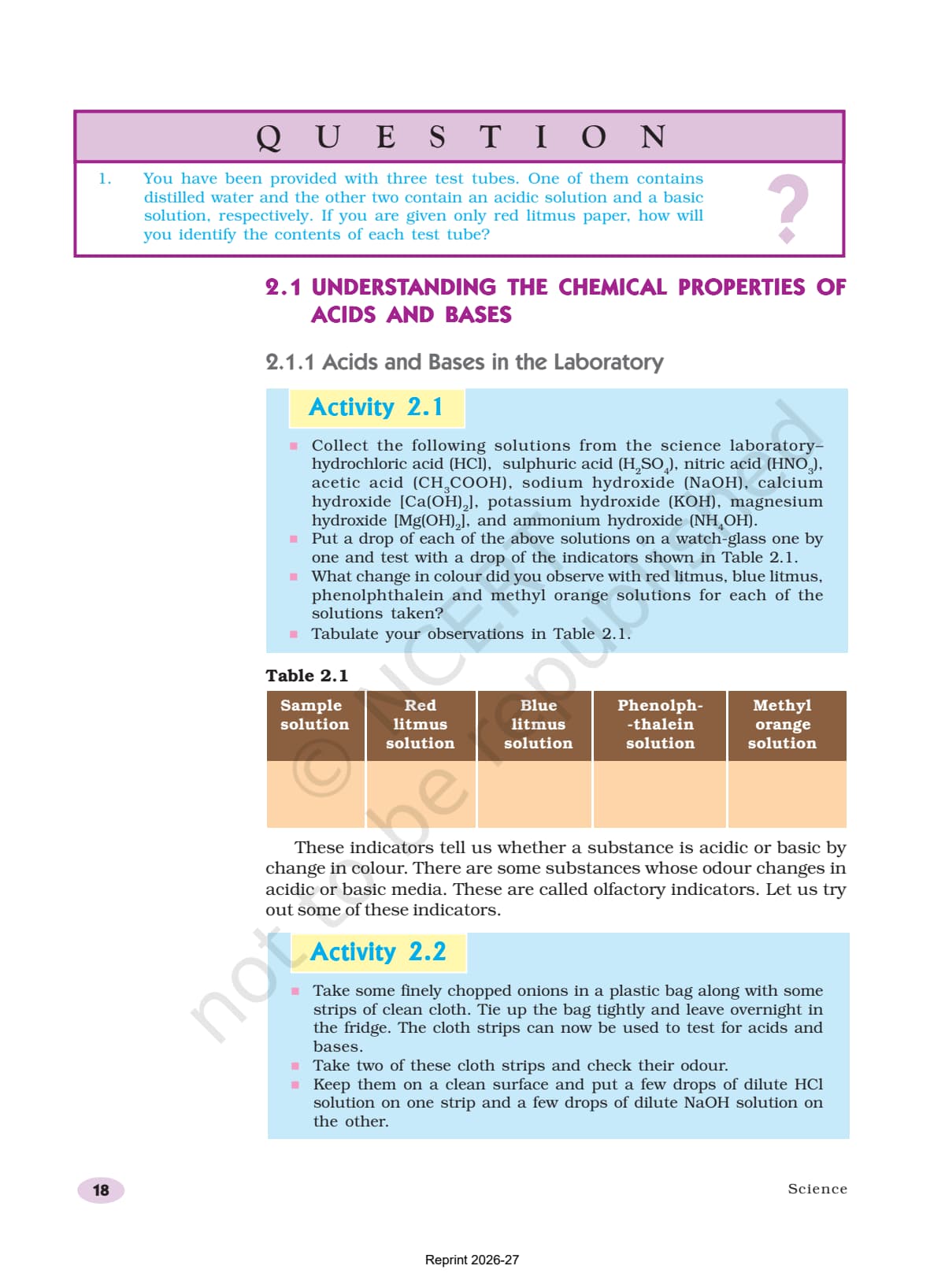
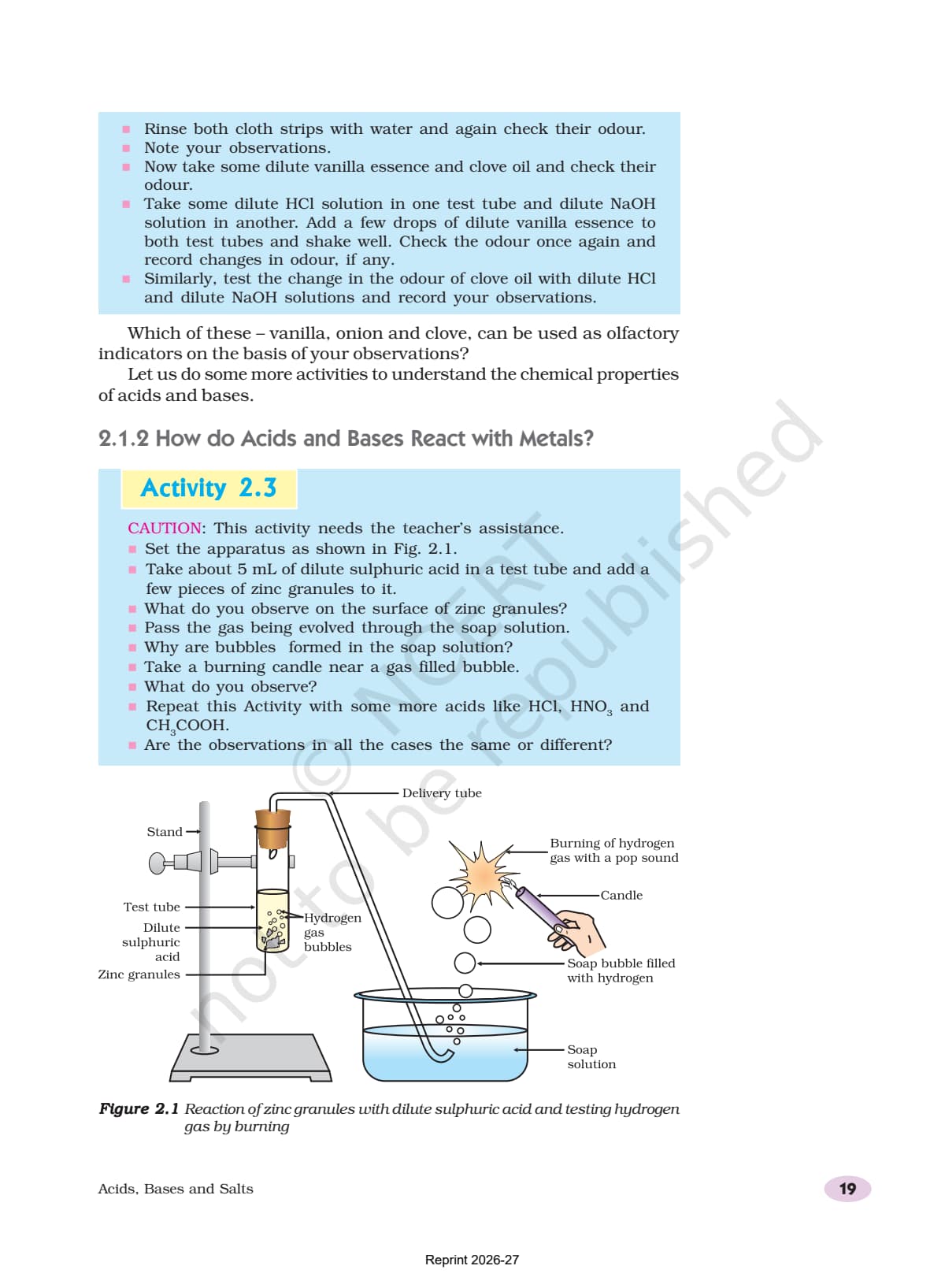
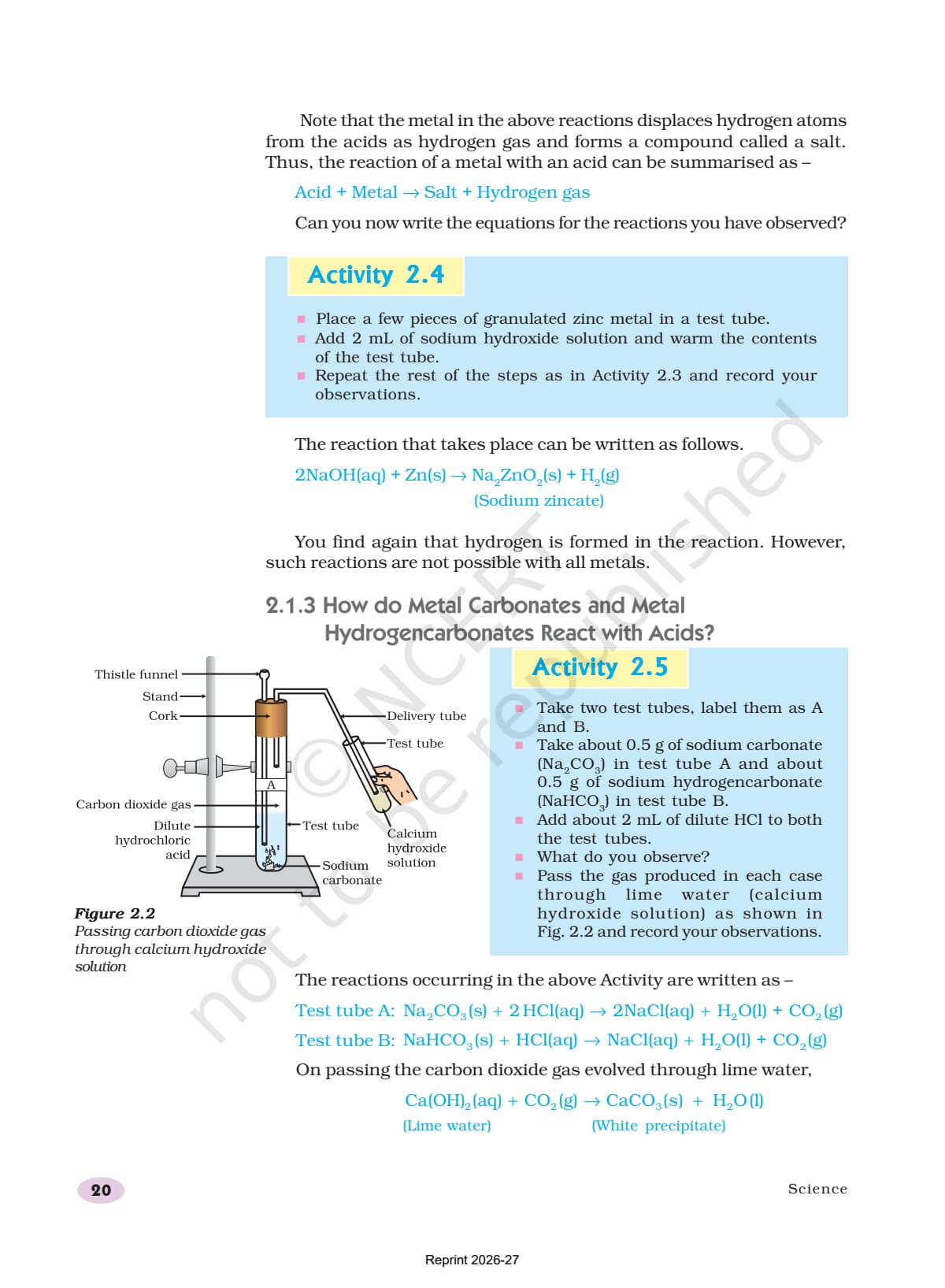
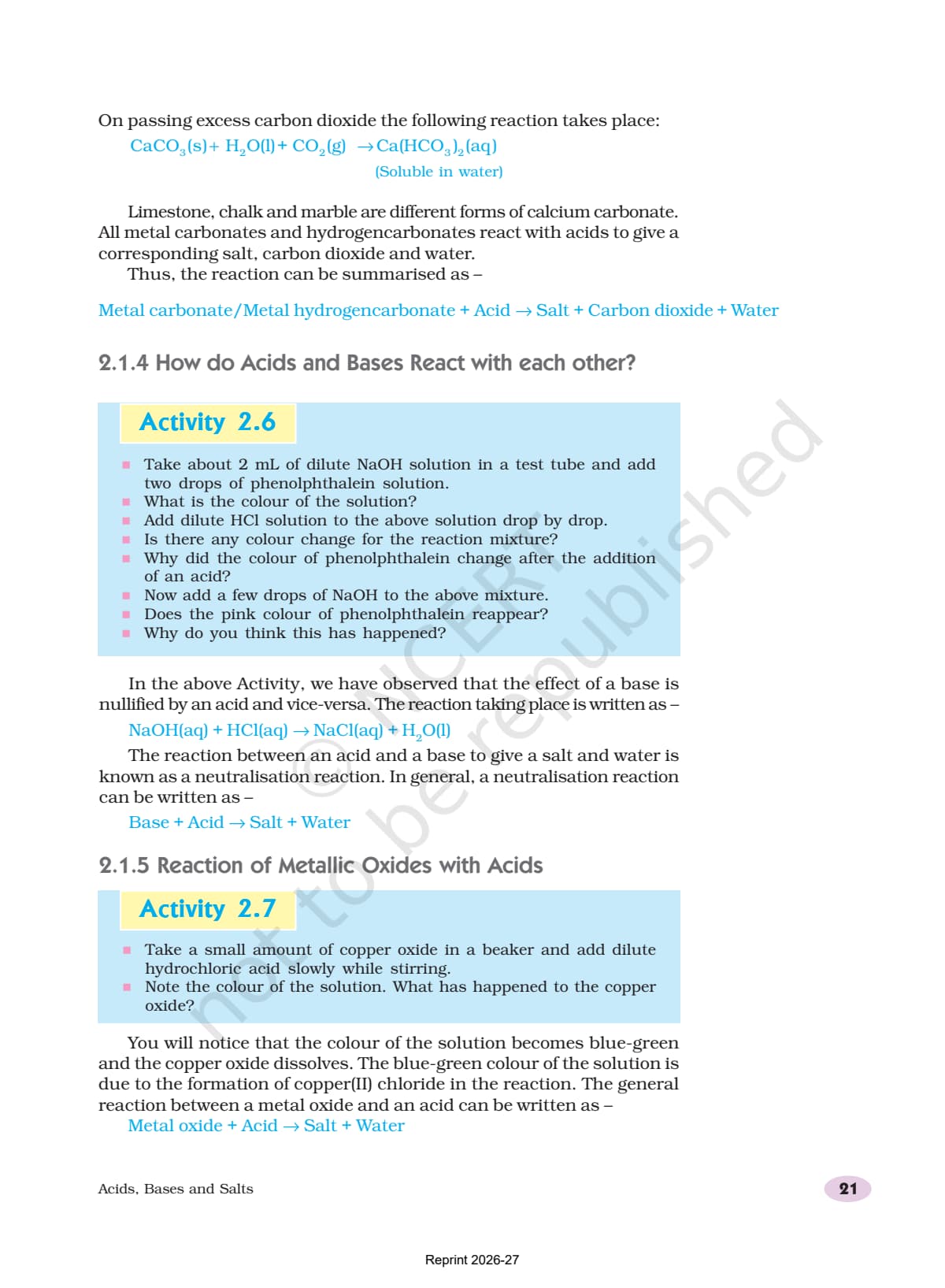
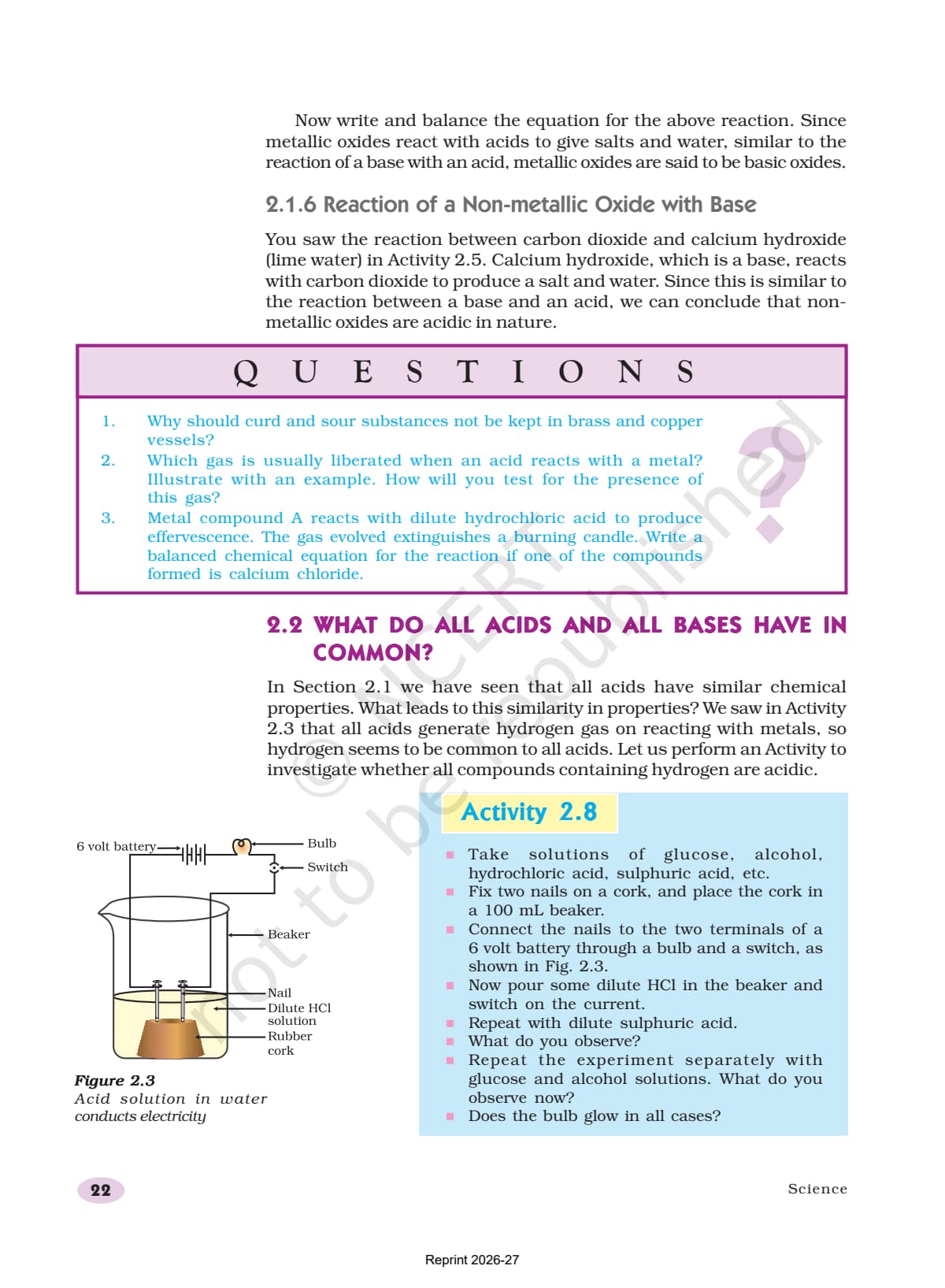
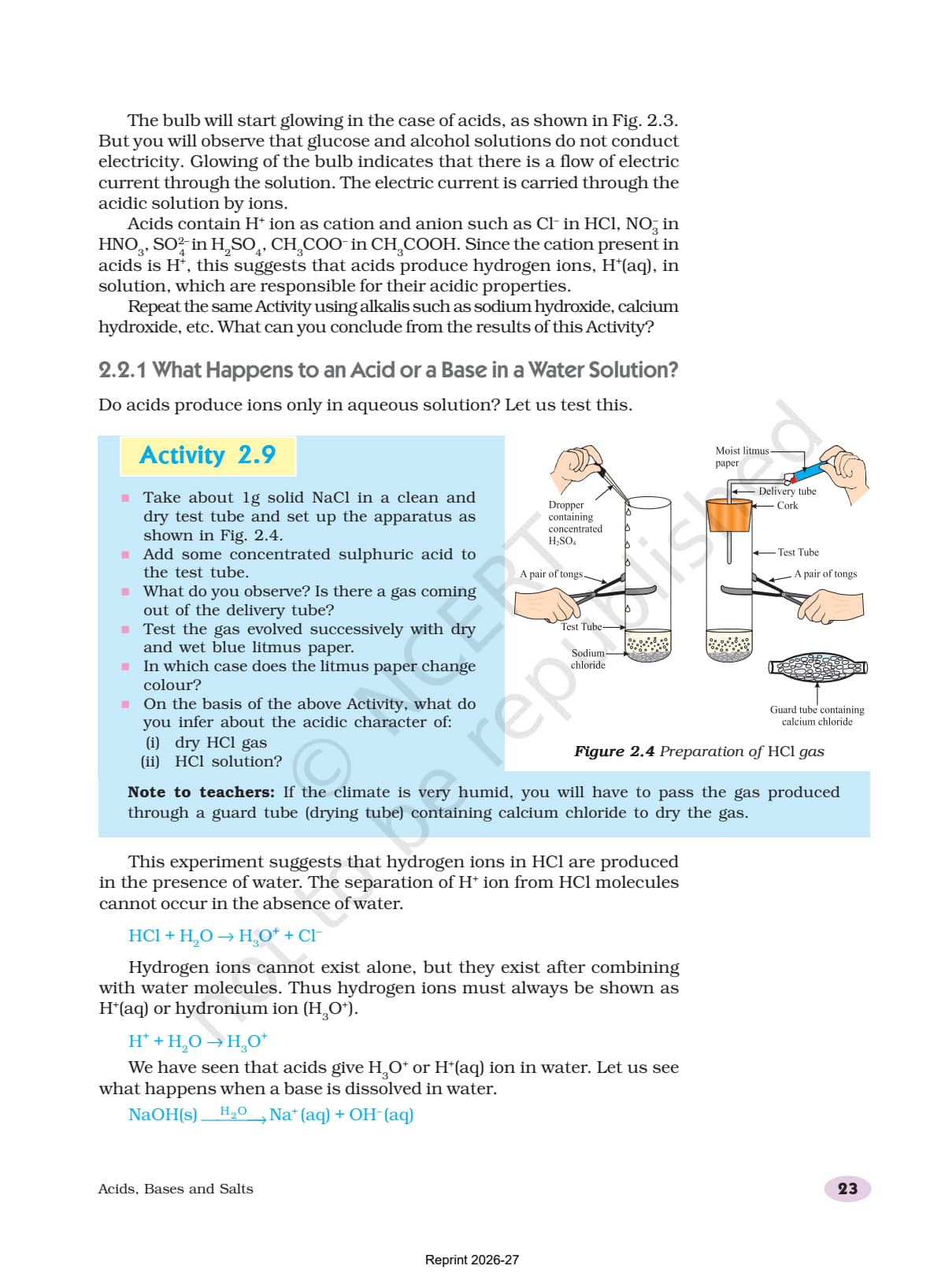
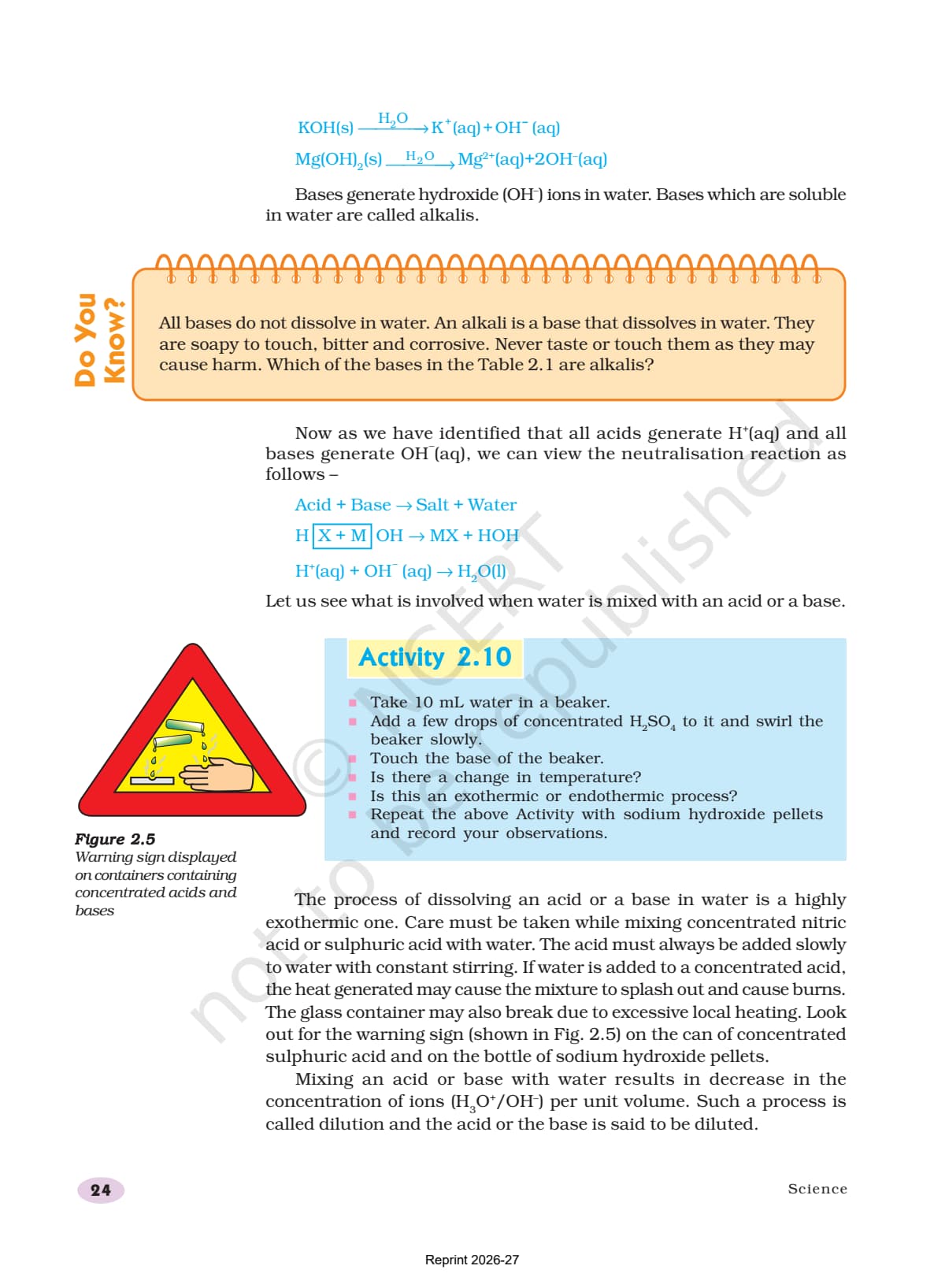
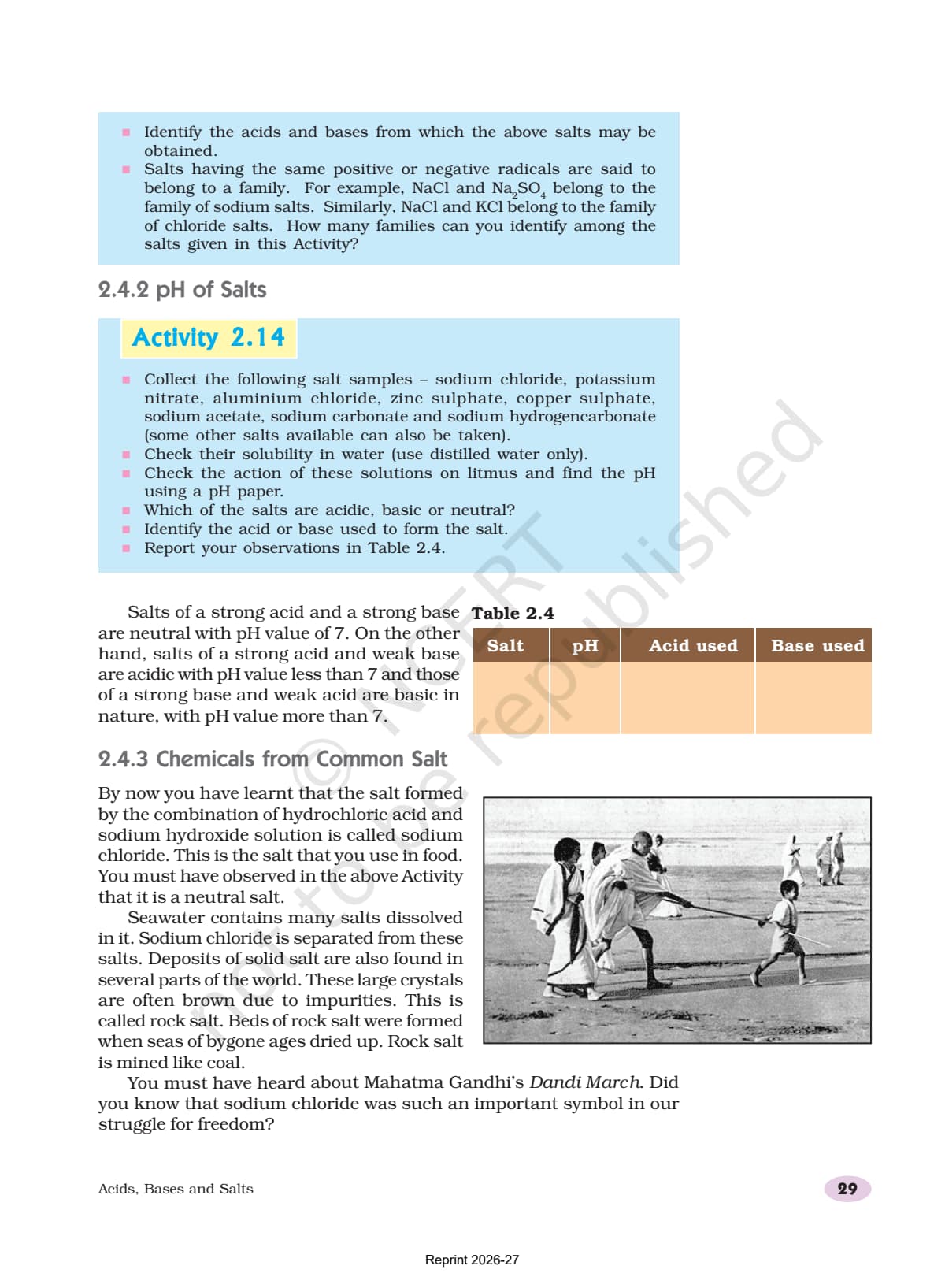
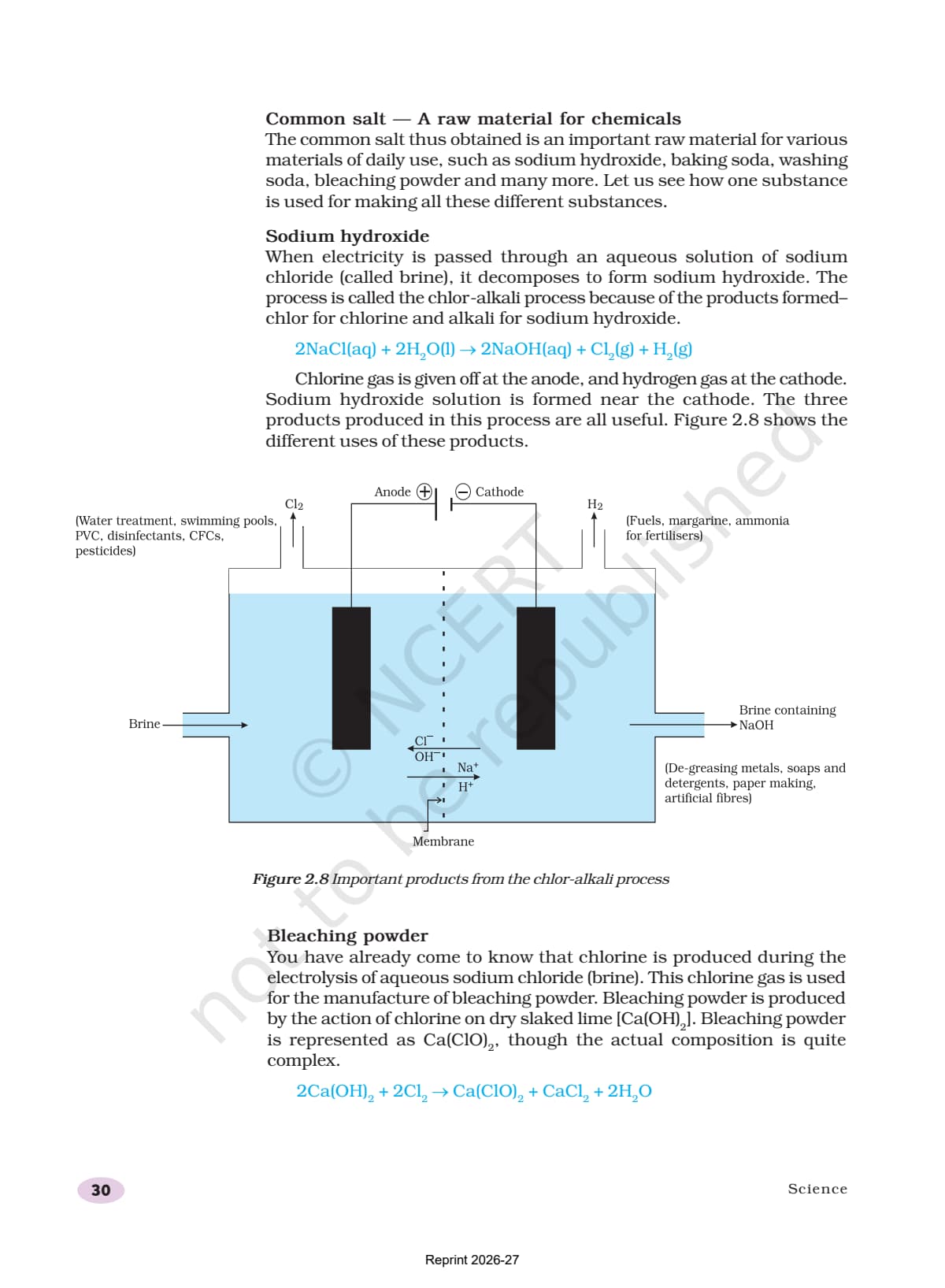
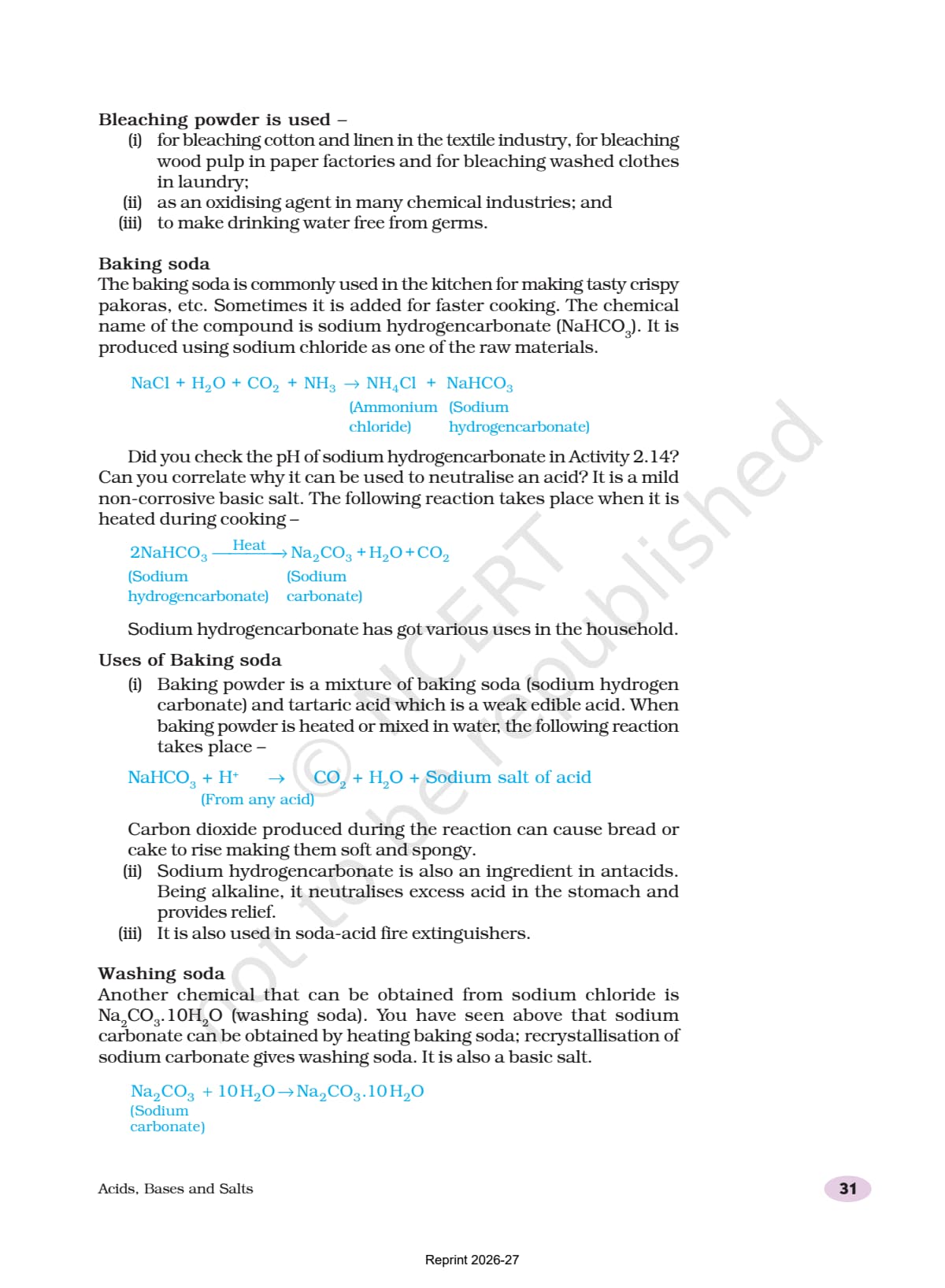
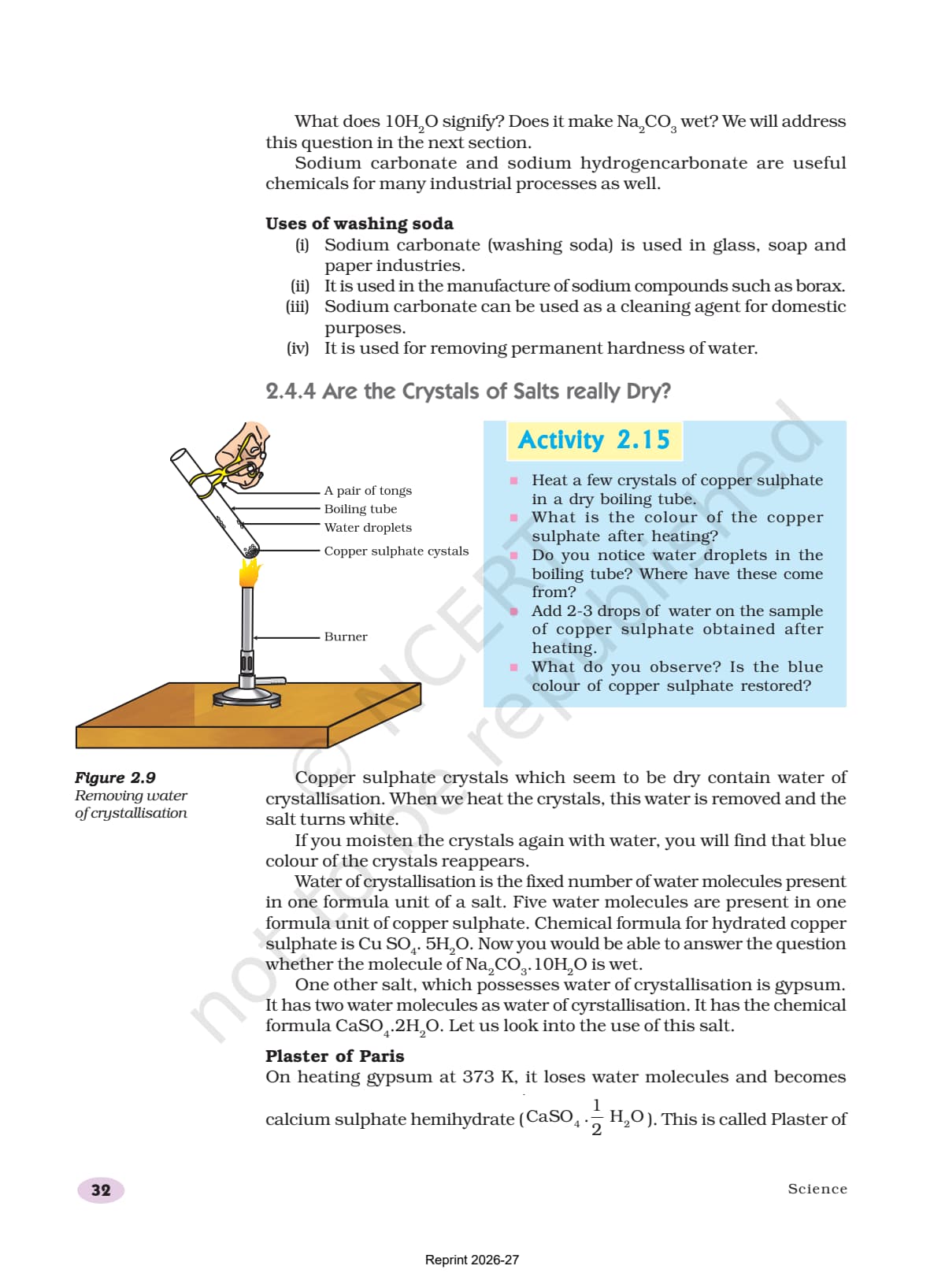
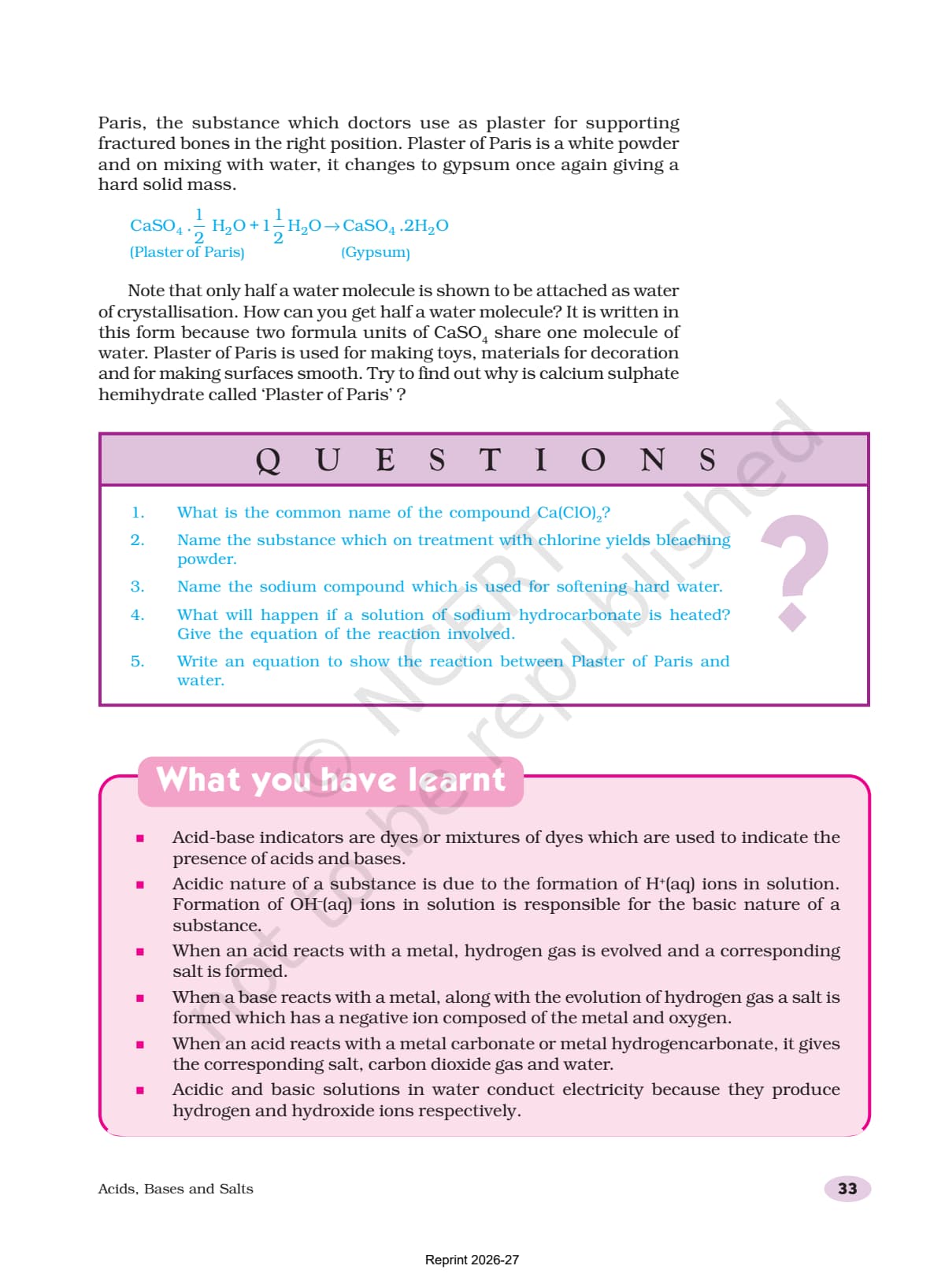
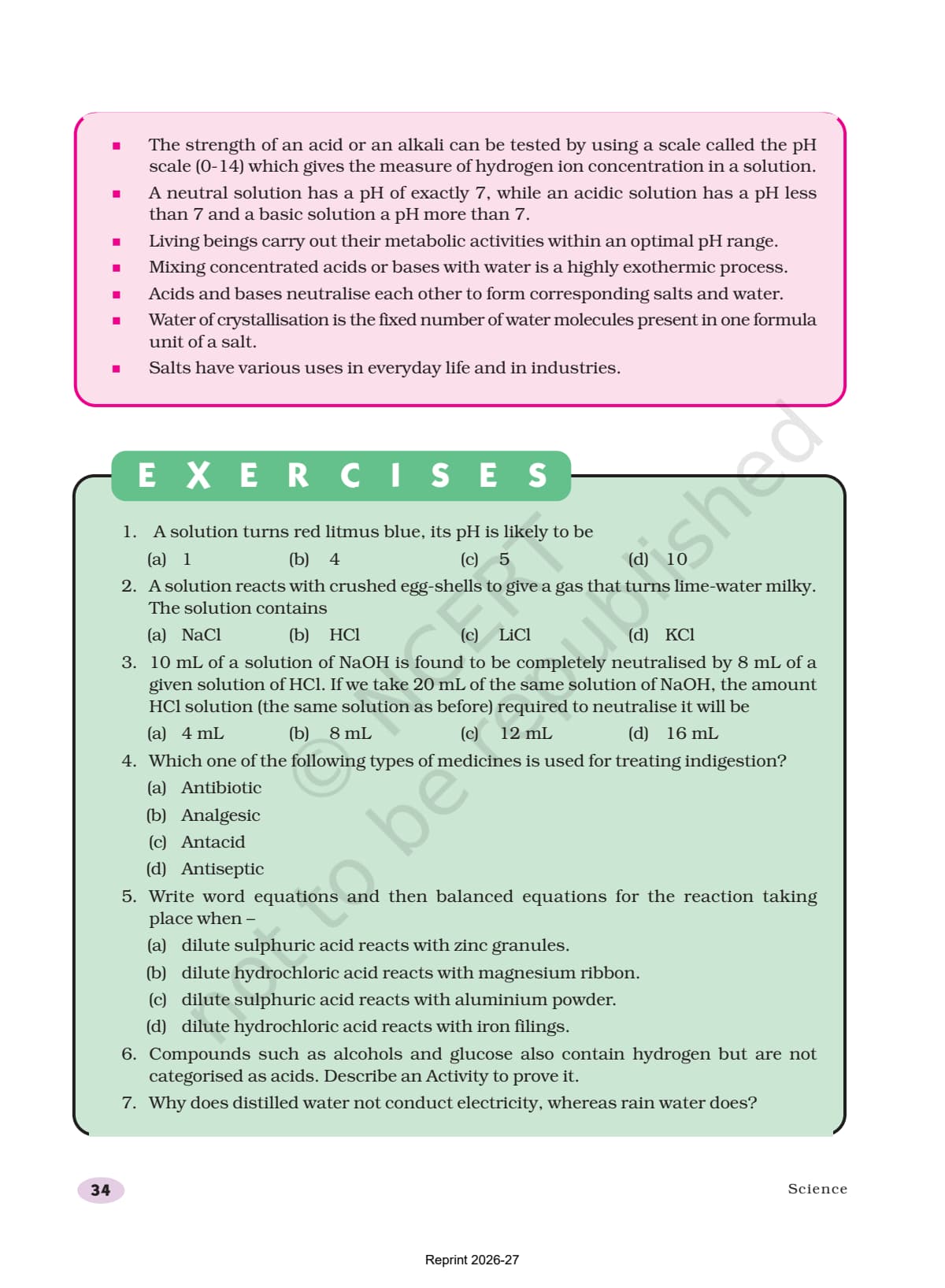
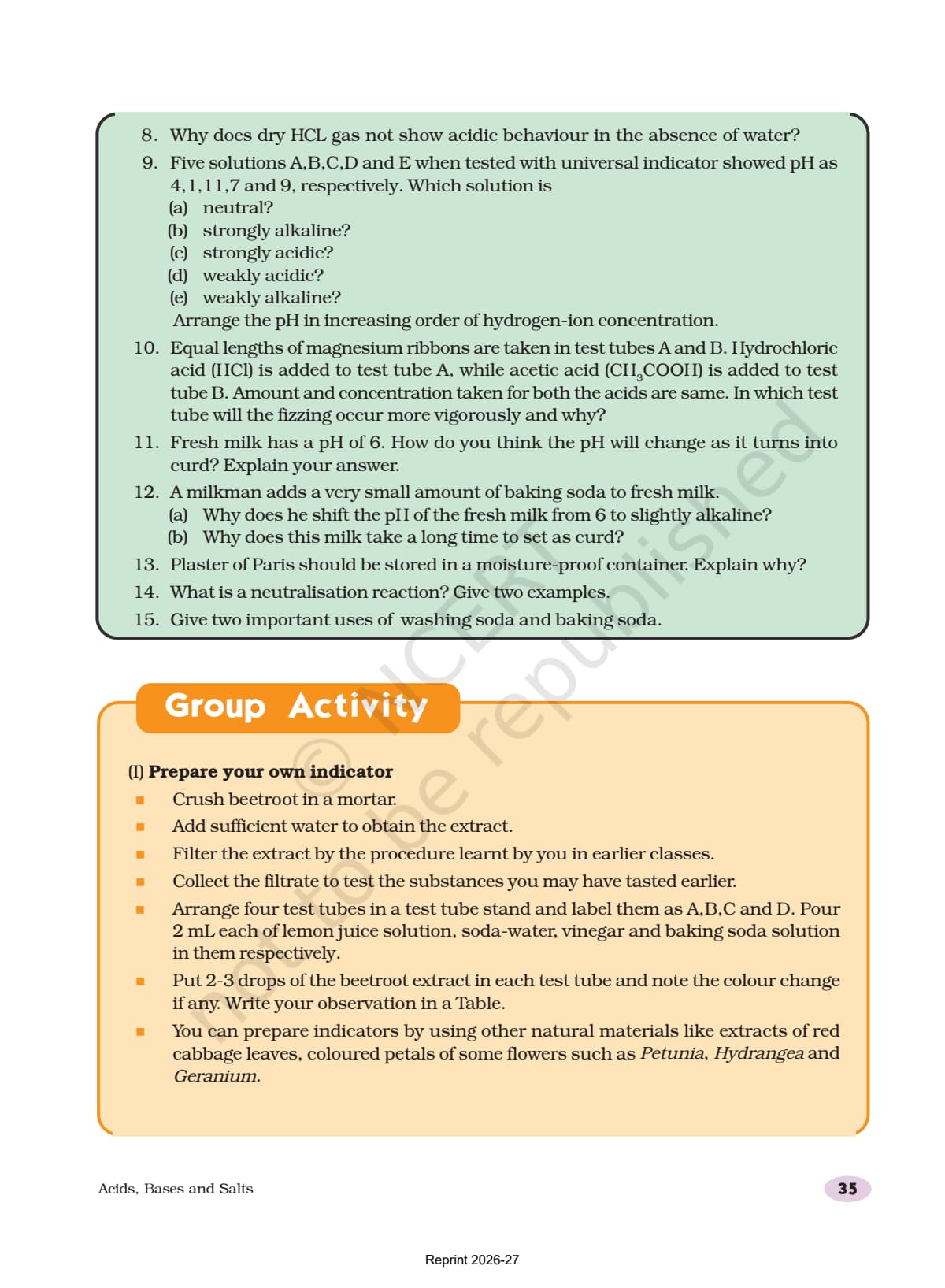
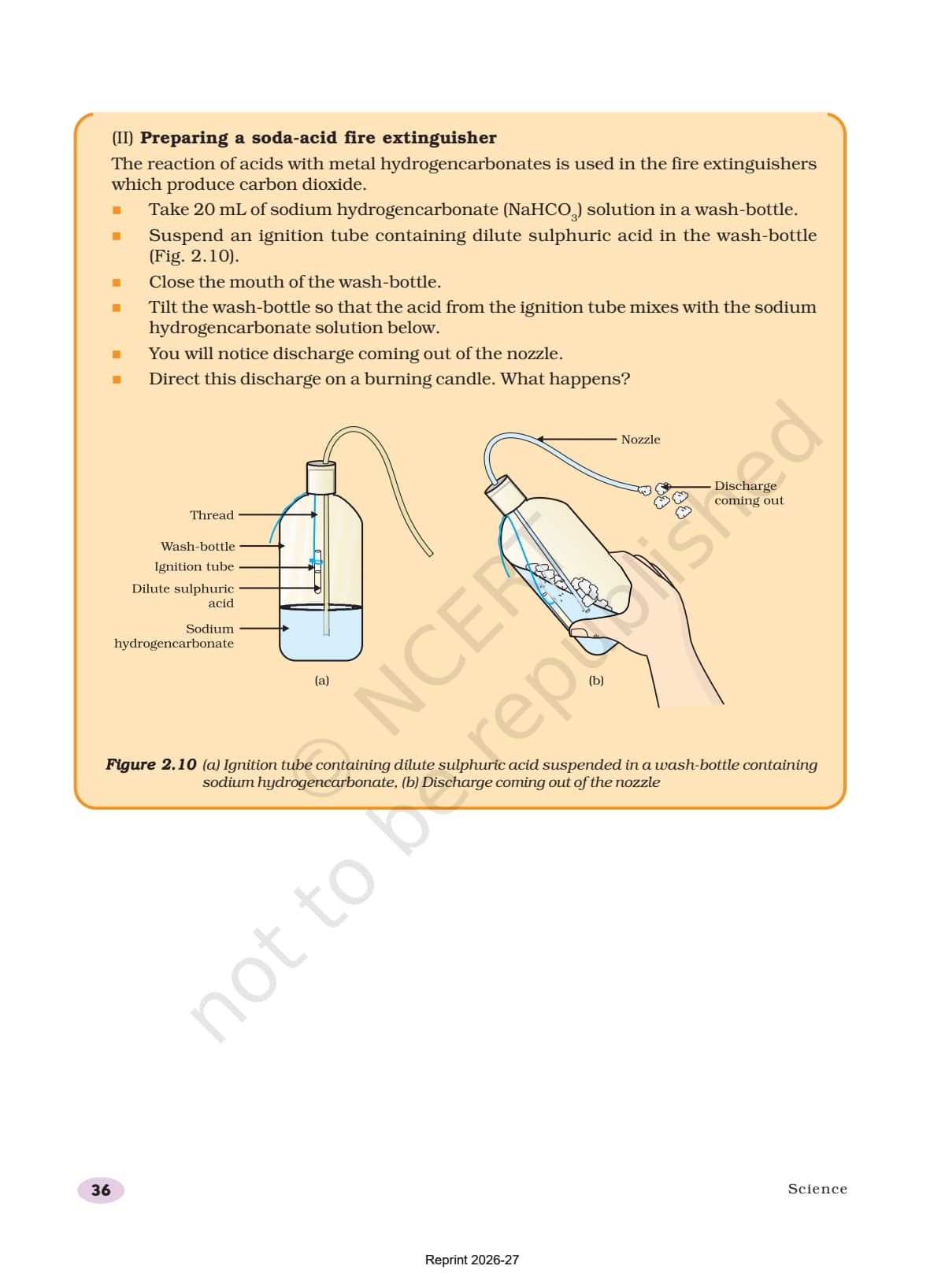
- Official NCERT textbook PDF of Chapter 2, with every activity, figure, in-text question, and exercise exactly as printed.
- Covers acid-base indicators, the pH scale, neutralisation, and the important salts: NaCl, NaHCO3, Na2CO3, bleaching powder and Plaster of Paris.
- Aligned with the 2026-27 CBSE Class 10 Science syllabus, useful for board exam revision and as the base text for solutions and notes.
This page hosts the official NCERT Class 10 Science textbook chapter, mapped to the 2026-27 CBSE syllabus.
What the NCERT Book for Class 10 Science Chapter 2 Acids, Bases and Salts Covers
The downloadable PDF above is the complete official NCERT chapter, exactly as printed in the 2026-27 textbook. It moves from acid-base indicators to the chemistry of acids and bases, the pH scale, and the salts of daily life. Reading it in order is the fastest way to fix the basics.
Acids, Bases and Salts Class 10 Science Full Chapter Video
Source: Magnet Brains on YouTube
Acid-Base Indicators and Chemical Properties in Class 10 Science
An acid-base indicator is a dye that changes colour to show if a substance is acidic or basic. Acids turn blue litmus red, and bases turn red litmus blue. Turmeric, phenolphthalein and methyl orange are other indicators; olfactory indicators like onion and clove change smell.
| Indicator | Colour in acid | Colour in base |
|---|---|---|
| Blue litmus | Turns red | Stays blue |
| Red litmus | Stays red | Turns blue |
| Phenolphthalein | Colourless | Pink |
| Methyl orange | Red | Yellow |
| Turmeric | Stays yellow | Turns reddish-brown |
Reactions of Acids and Bases in Class 10 Science Chapter 2
The chemical properties of acids and bases carry the bulk of the marks. Each reaction has a rule and a standard example to learn by heart, since the board exam gives the reactants and asks for the products.
| Reaction | General rule | Standard example |
|---|---|---|
| Acid + Metal | Salt + hydrogen | Zn + H2SO4 → ZnSO4 + H2 |
| Acid + Carbonate | Salt + CO2 + water | Na2CO3 + 2HCl → 2NaCl + H2O + CO2 |
| Acid + Hydrogencarbonate | Salt + CO2 + water | NaHCO3 + HCl → NaCl + H2O + CO2 |
| Acid + Metal oxide | Salt + water | CuO + 2HCl → CuCl2 + H2O |
| Acid + Base | Salt + water (neutralisation) | NaOH + HCl → NaCl + H2O |
A base with a metal is the odd one out: zinc with a hot strong base gives sodium zincate and hydrogen, 2NaOH + Zn → Na2ZnO2 + H2.
What Acids and Bases Have in Common in Class 10 Science
Why do all acids behave alike? The answer is ions. Acids release hydrogen ions (H+) in water, and bases release hydroxide ions (OH−). This is why acidic and basic solutions conduct electricity.
An acid needs water to act acidic. A hydrogen ion cannot exist alone, so it joins water to form the hydronium ion (H3O+), HCl + H2O → H3O+ + Cl−. This is why dry HCl gas does not turn dry litmus red.
- Acids in water: give H+(aq), shown as the hydronium ion H3O+.
- Bases in water: give OH−(aq); one that dissolves in water is an alkali.
The pH Scale and Its Importance in Everyday Life
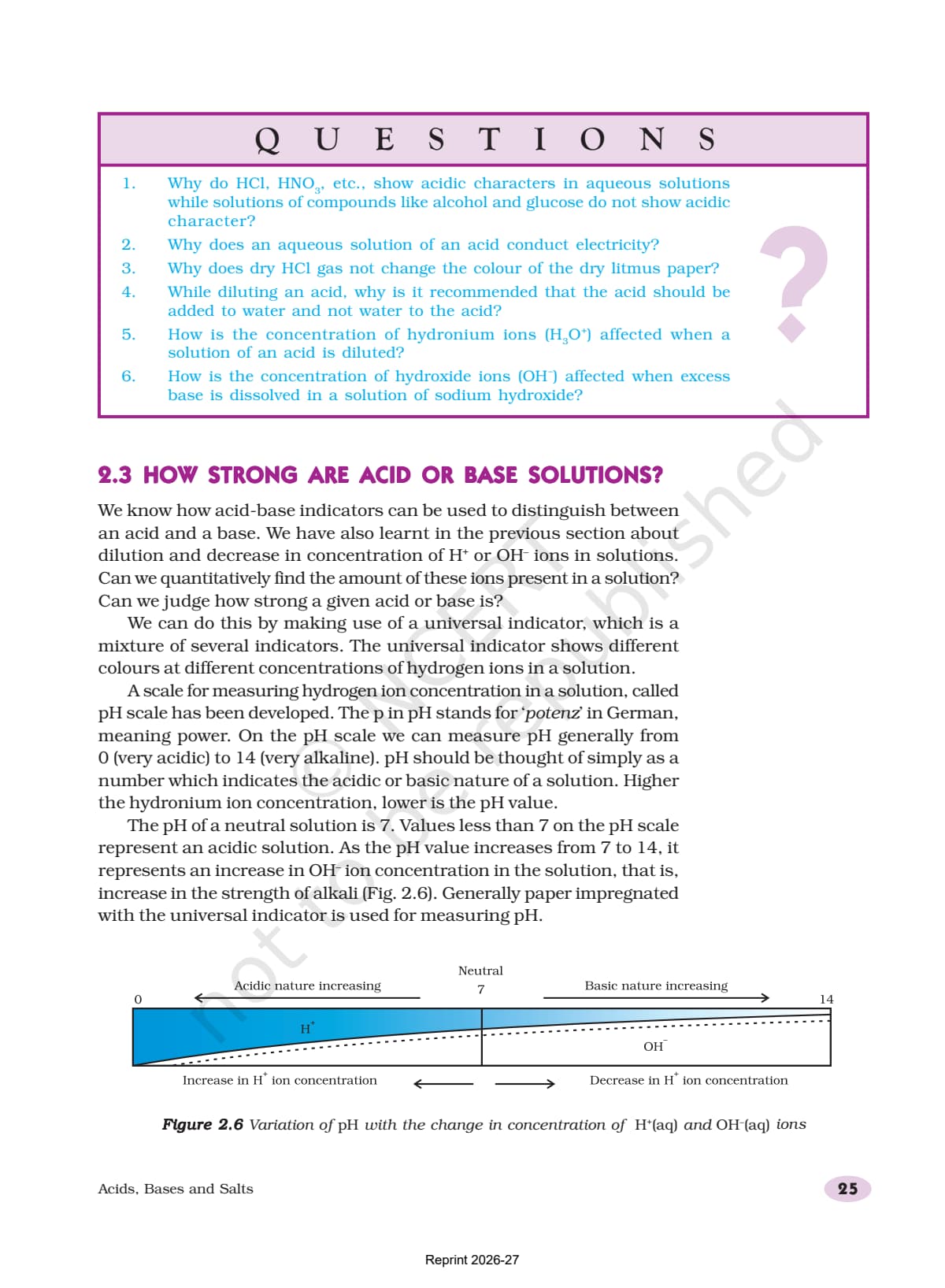
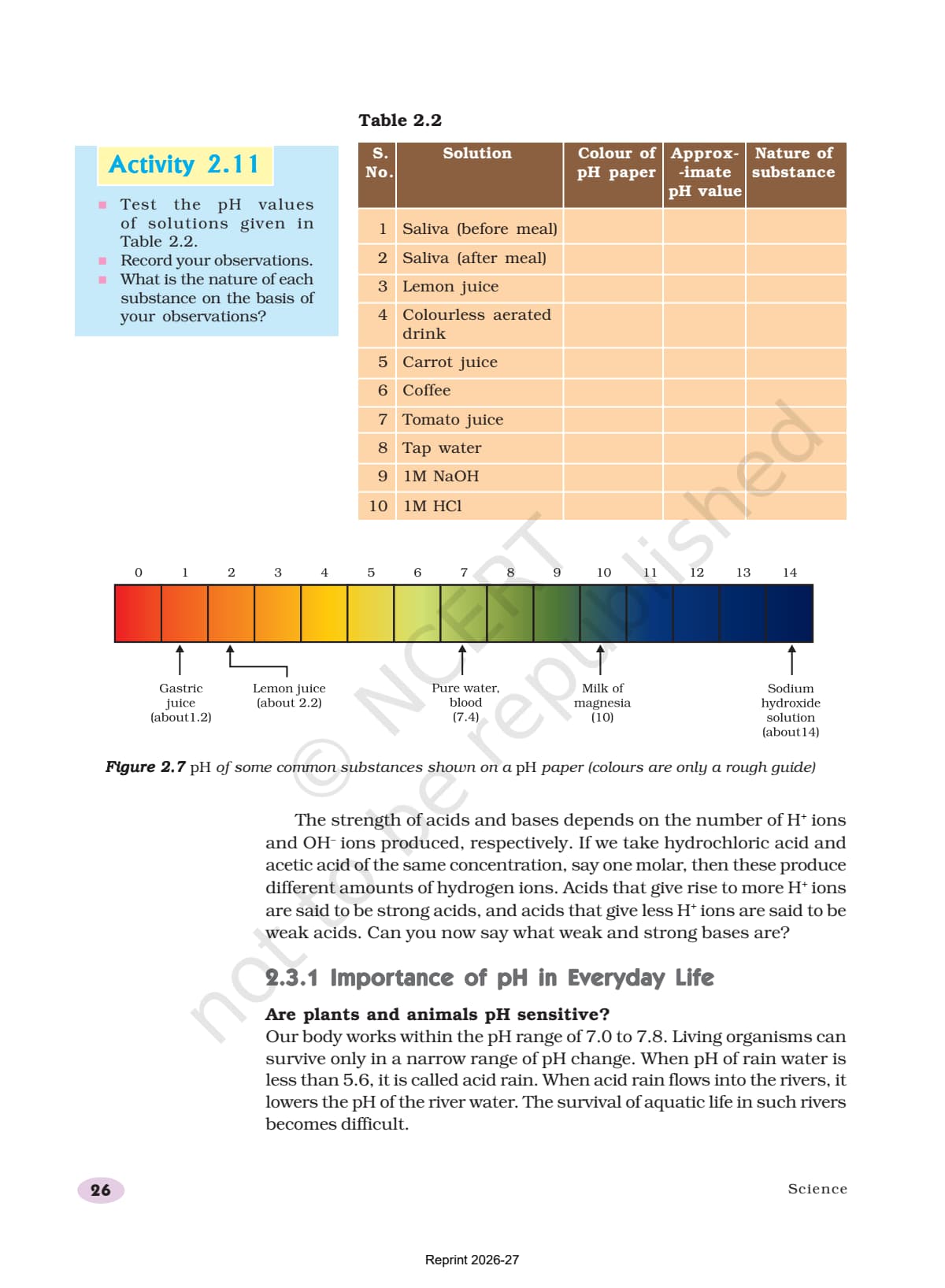
The pH scale measures how strong an acid or base is, from 0 (very acidic) to 14 (very alkaline), with 7 neutral. A lower pH means a stronger acid; a higher pH means a stronger base.
| pH value | Nature | Everyday example |
|---|---|---|
| Less than 7 | Acidic | Gastric juice (1.2), lemon juice (2.2) |
| Exactly 7 | Neutral | Pure water, blood (7.4) |
| More than 7 | Basic | Milk of magnesia (10), NaOH (14) |
Why pH matters in real life, all common short-answer questions.
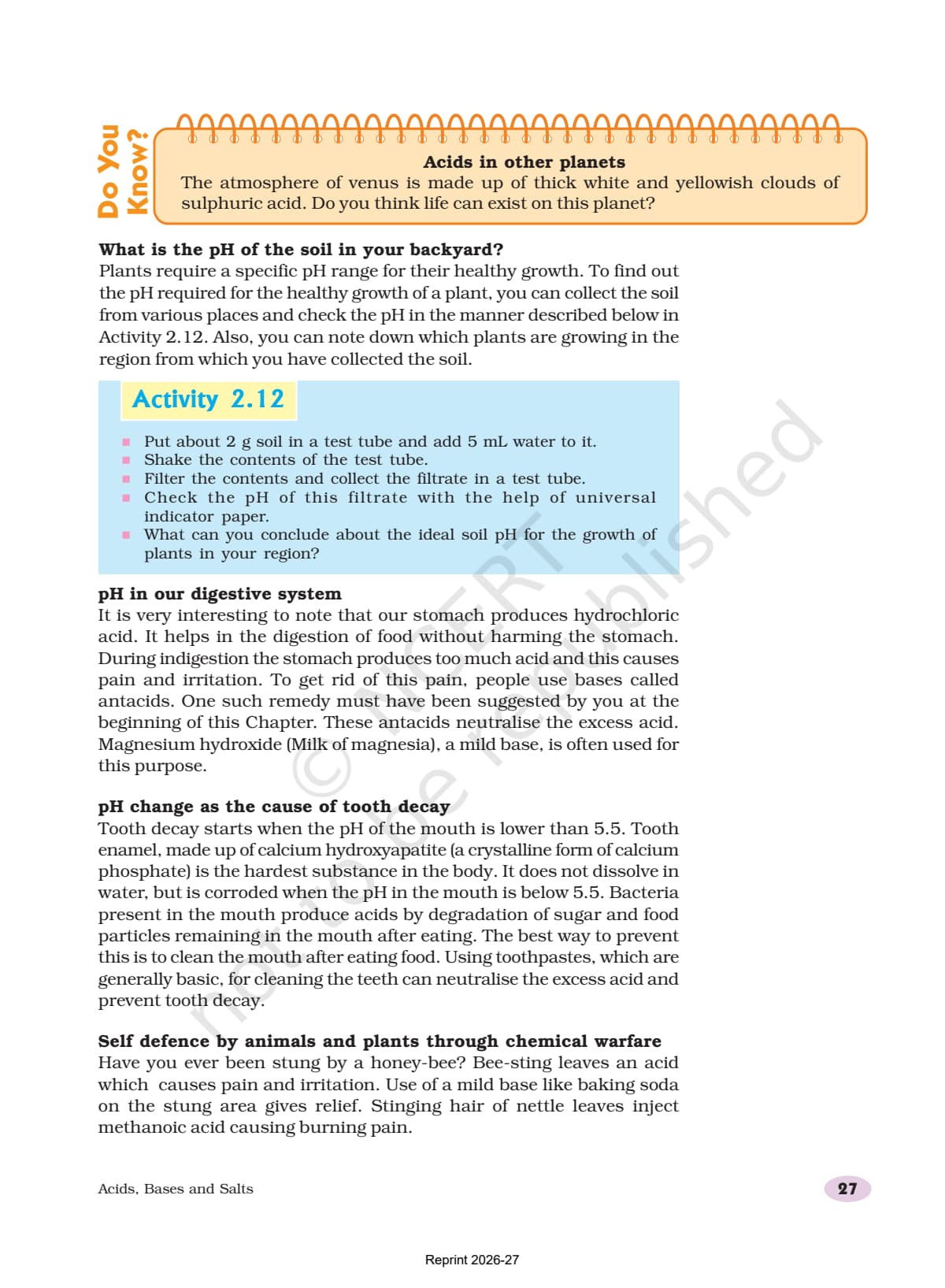
- In our body: the stomach makes acid; an antacid like milk of magnesia neutralises the excess.
- Tooth decay: enamel corrodes below mouth pH 5.5, so basic toothpaste neutralises the acid.
- Soil and rain: rain below pH 5.6 is acid rain, which harms aquatic life.
- Stings: a bee sting injects acid, so baking soda gives relief.
More About Salts: Common Salt to Plaster of Paris in Class 10 Science
The last part, More About Salts, is the most fact-heavy. A salt is the product of neutralisation. Salts of a strong acid and strong base are neutral; strong acid and weak base are acidic; strong base and weak acid are basic. The chemicals made from common salt (NaCl) are the heart of this section.
| Salt | Chemical formula | One key use |
|---|---|---|
| Common salt | NaCl | Food; raw material for other chemicals |
| Sodium hydroxide | NaOH | Soaps, detergents, paper |
| Bleaching powder | Ca(ClO)2 | Bleaching; disinfecting water |
| Baking soda | NaHCO3 | Cooking, antacids, fire extinguishers |
| Washing soda | Na2CO3·10H2O | Glass, soap; softening hard water |
| Plaster of Paris | CaSO4·½H2O | Setting bones; making toys |
Two ideas here are tested every year. Water of crystallisation is the fixed number of water molecules in one formula unit, like the 5 in CuSO4·5H2O. And heating gypsum at 373 K gives Plaster of Paris:
How to Use the NCERT Book PDF for Board Revision
The official textbook is the safest source, because every equation and definition is exam-correct. Read Sections 2.1 to 2.4 in order, do each Activity in your head, then write every reaction and salt from memory. The pH scale, neutralisation, and the salts appear almost every year in this high-weight chapter.
Student Feedback
64% of Class 10 students said the pH scale and the salts section were the parts of this chapter they mixed up most often in class tests. 3 out of 5 students told us reading the NCERT chapter directly, activity by activity, made the reactions of acids and bases far easier to recall.
Source: 2026-27 Class 10 Science student poll. Sample of 9,800 students from CBSE schools across 12 states, taken before the 2026 board exams.
Other Resources for Class 10 Science Chapter 2 Acids, Bases and Salts
Pair this with the other Class 10 Science resources, all linked below.
| Resource | What it covers | Open |
|---|---|---|
| NCERT Book PDF | Official Class 10 Science Chapter 2 textbook, with every activity, figure and exercise. | Class 10 Science Chapter 2 NCERT Book PDF |
| NCERT Solutions | Step-by-step answers to all in-text and exercise questions. | Class 10 Science Chapter 2 NCERT Solutions |
| Notes | Concept-first revision notes for the chapter. | Class 10 Science Chapter 2 Notes |
| Formula Sheet | Quick reference of reactions, pH and salt formulae. | Class 10 Science Chapter 2 Formula Sheet |
| Handwritten Notes | Scanned-style pages for last-minute revision. | Class 10 Science Chapter 2 Handwritten Notes |
NCERT Book for Class 10 Science: All Chapters
Related Links: Open the official NCERT Book PDF for the other chapters of Class 10 Science below.
| Chapter | NCERT Book PDF link |
|---|---|
| Chapter 1 | Chemical Reactions and Equations |
| Chapter 2 | Acids, Bases and Salts NCERT Book PDF |
| Chapter 3 | Metals and Non-metals |
| Chapter 4 | Carbon and its Compounds |
| Chapter 5 | Life Processes |
| Chapter 6 | Control and Coordination |
| Chapter 7 | How do Organisms Reproduce |
| Chapter 8 | Heredity |
| Chapter 9 | Light Reflection and Refraction |
| Chapter 10 | The Human Eye and the Colourful World |
| Chapter 11 | Electricity |
| Chapter 12 | Magnetic Effects of Electric Current |
| Chapter 13 | Our Environment |
NCERT Book Class 10 Science Chapter 2 Acids, Bases and Salts FAQs
Ques. What does Chapter 2 Acids, Bases and Salts cover in the Class 10 Science NCERT Book?
Ans. Chapter 2 of the Class 10 Science NCERT Book covers the chemistry of acids, bases and salts. It explains acid-base indicators such as litmus, turmeric, phenolphthalein and methyl orange, the reactions of acids and bases with metals, metal carbonates, metal hydrogencarbonates, metal oxides and with each other, and what all acids and bases have in common. It then introduces the pH scale from 0 to 14 and its importance in everyday life, and ends with the salts of daily life such as common salt, sodium hydroxide, baking soda, washing soda, bleaching powder and Plaster of Paris. The chapter is aligned with the 2026-27 CBSE syllabus.
Ques. What is the pH scale in Class 10 Science Chapter 2?
Ans. The pH scale is a number scale from 0 to 14 that measures how acidic or basic a solution is. A pH below 7 is acidic, a pH of exactly 7 is neutral, and a pH above 7 is basic or alkaline. The "p" stands for "potenz", the German word for power. A lower pH means a higher concentration of hydrogen ions and so a stronger acid, while a higher pH means a stronger base. Gastric juice has a pH of about 1.2, pure water and blood are near 7, and a sodium hydroxide solution is about 14, which is why the pH scale is used to compare strengths in the chapter.
Ques. What gas is produced when an acid reacts with a metal in Class 10 Science?
Ans. When an acid reacts with a metal, hydrogen gas is produced along with a salt, summarised as acid plus metal gives salt plus hydrogen. For example, dilute sulphuric acid reacts with zinc granules to give zinc sulphate and hydrogen, Zn plus H2SO4 gives ZnSO4 plus H2. The hydrogen gas is tested by bringing a burning candle near it, when it burns with a pop sound. This is different from the reaction of an acid with a carbonate or a hydrogencarbonate, which gives carbon dioxide gas that turns lime water milky.
Ques. What is the difference between baking soda and washing soda?
Ans. Baking soda is sodium hydrogencarbonate, with the formula NaHCO3, and washing soda is sodium carbonate decahydrate, with the formula Na2CO3.10H2O. Baking soda is a mild non-corrosive basic salt used in cooking, in antacids, and in soda-acid fire extinguishers, and it produces carbon dioxide when heated, which makes cakes rise. Washing soda is made by recrystallising sodium carbonate, the product of heating baking soda, and it is used in the glass and soap industries and for removing the permanent hardness of water. Mixing up these two formulae is the most common mistake students make in the salts question.
Ques. What is water of crystallisation, with an example from the chapter?
Ans. Water of crystallisation is the fixed number of water molecules present in one formula unit of a salt. These water molecules are part of the crystal even though the salt seems dry. The standard example in the chapter is hydrated copper sulphate, CuSO4.5H2O, which has five water molecules per formula unit and is blue. When heated, it loses this water and turns white, and adding water restores the blue colour. Another example is gypsum, CaSO4.2H2O, which has two water molecules of crystallisation and is the starting material for making Plaster of Paris.
Ques. Is the Class 10 Science Chapter 2 NCERT Book PDF free to download for 2026-27?
Ans. Yes. The official NCERT Book PDF for Class 10 Science Chapter 2 Acids, Bases and Salts is free to read and download on this page for the 2026-27 session. It is the complete chapter as printed in the CBSE textbook, including every activity, figure, in-text question and end-of-chapter exercise. You can pair the book with the linked NCERT Solutions and revision notes for the same chapter so that you read the textbook and revise from one place.
Ques. Why is Plaster of Paris important in Class 10 Science Chapter 2?
Ans. Plaster of Paris is calcium sulphate hemihydrate, CaSO4 with half a water molecule of crystallisation, made by heating gypsum at 373 K. It is a white powder that sets into a hard solid when mixed with water, turning back into gypsum. This setting property is why doctors use it as a plaster to support fractured bones, and why it is used for making toys, materials for decoration and smooth surfaces. The board exam often asks for its formula, how it is made from gypsum, and the equation for its reaction with water, so it is worth learning in full.
Ques. Are these NCERT Book contents aligned with the 2026-27 CBSE syllabus?
Ans. Yes. This page hosts the official NCERT Class 10 Science textbook chapter for the current 2026-27 CBSE syllabus. The Acids, Bases and Salts chapter is unchanged for this cycle, so the indicators, reactions, pH values and salt formulae you read here are exam-correct. Because it is the official book, it is the safest base text for board preparation, and the linked solutions, notes and formula sheet for the same chapter all follow this textbook order.



Comments