




The Development Class 10 Economics NCERT Book PDF brings together every developmental goal, income measure, and human development indicator that the CBSE board paper actually tests.
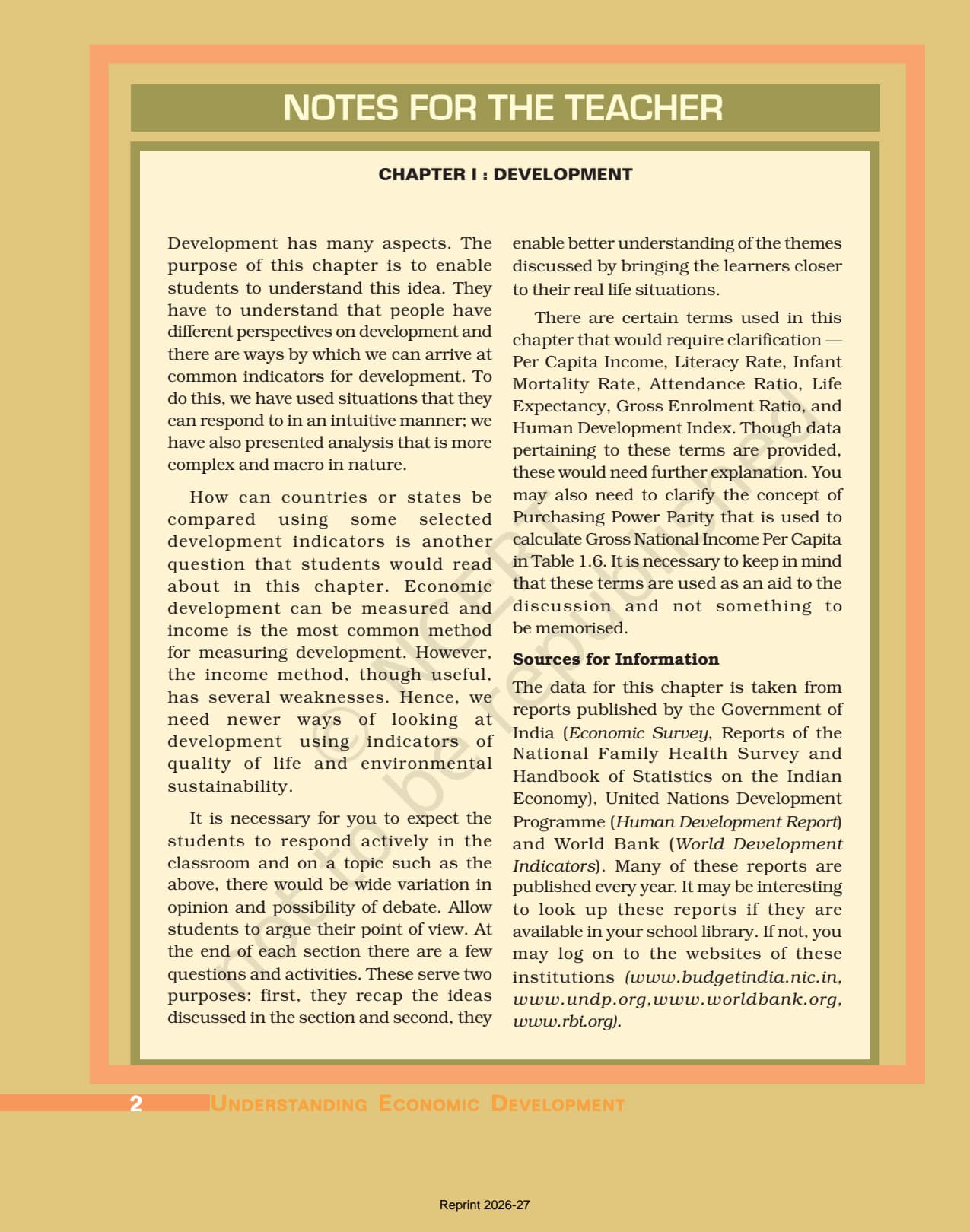
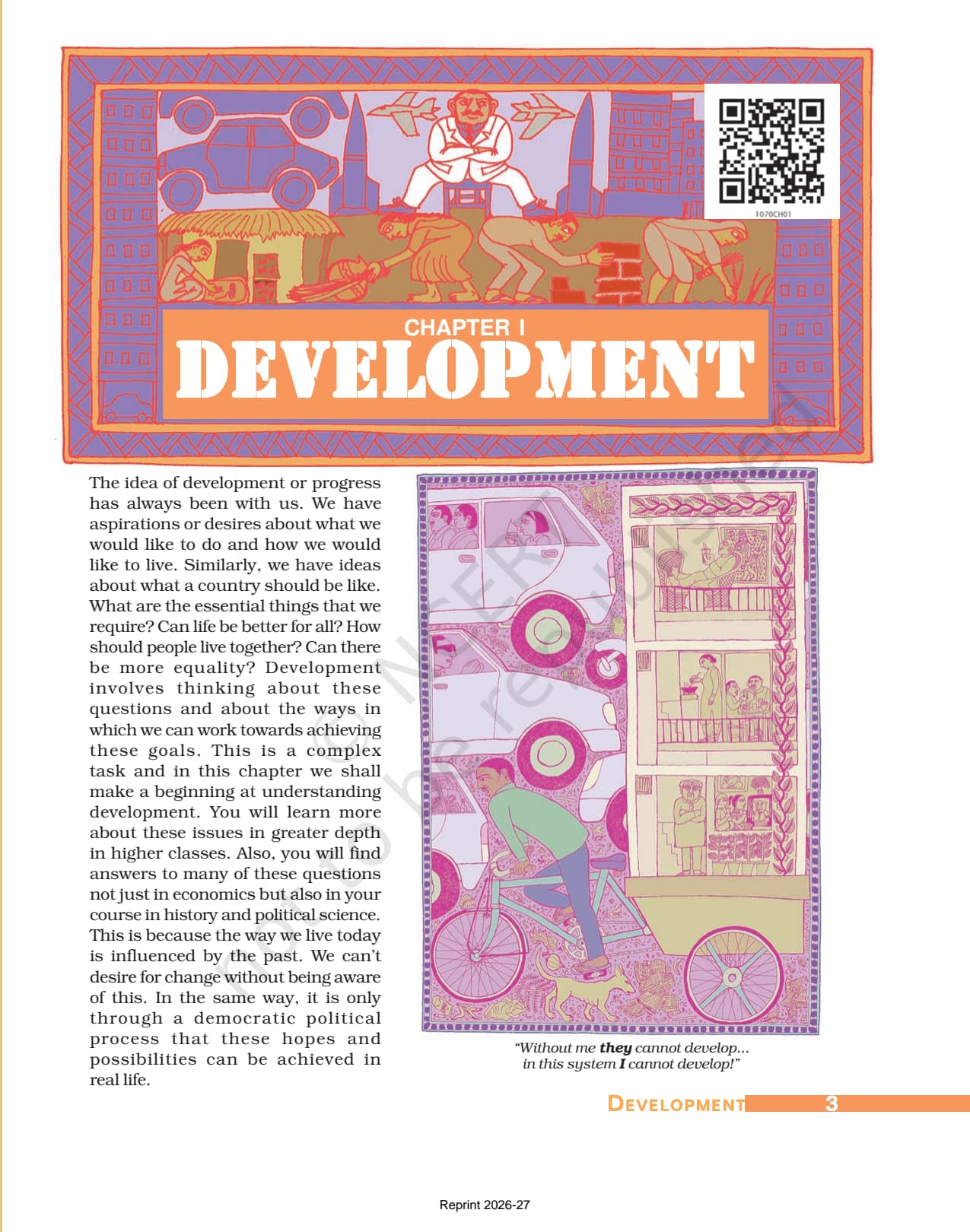
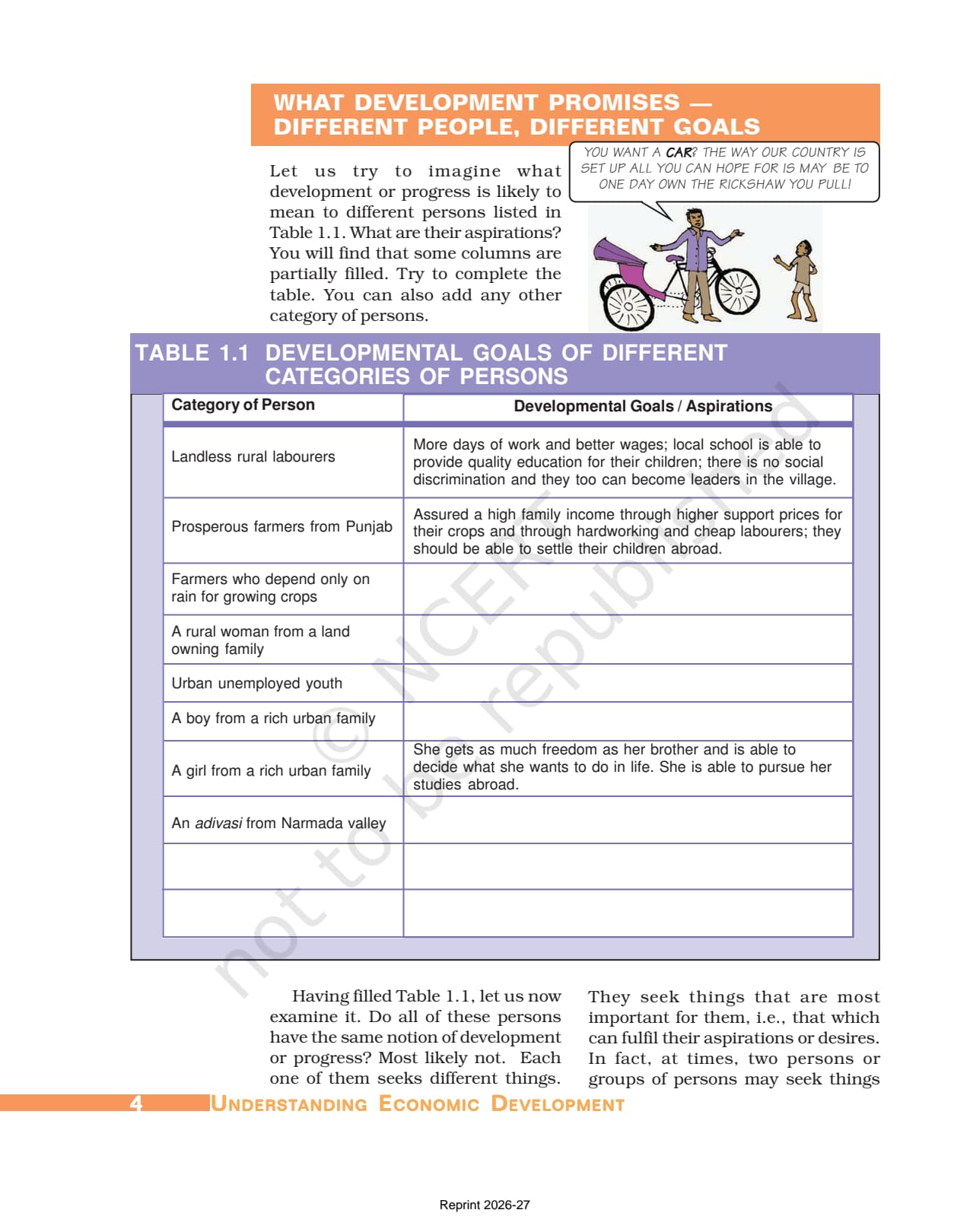
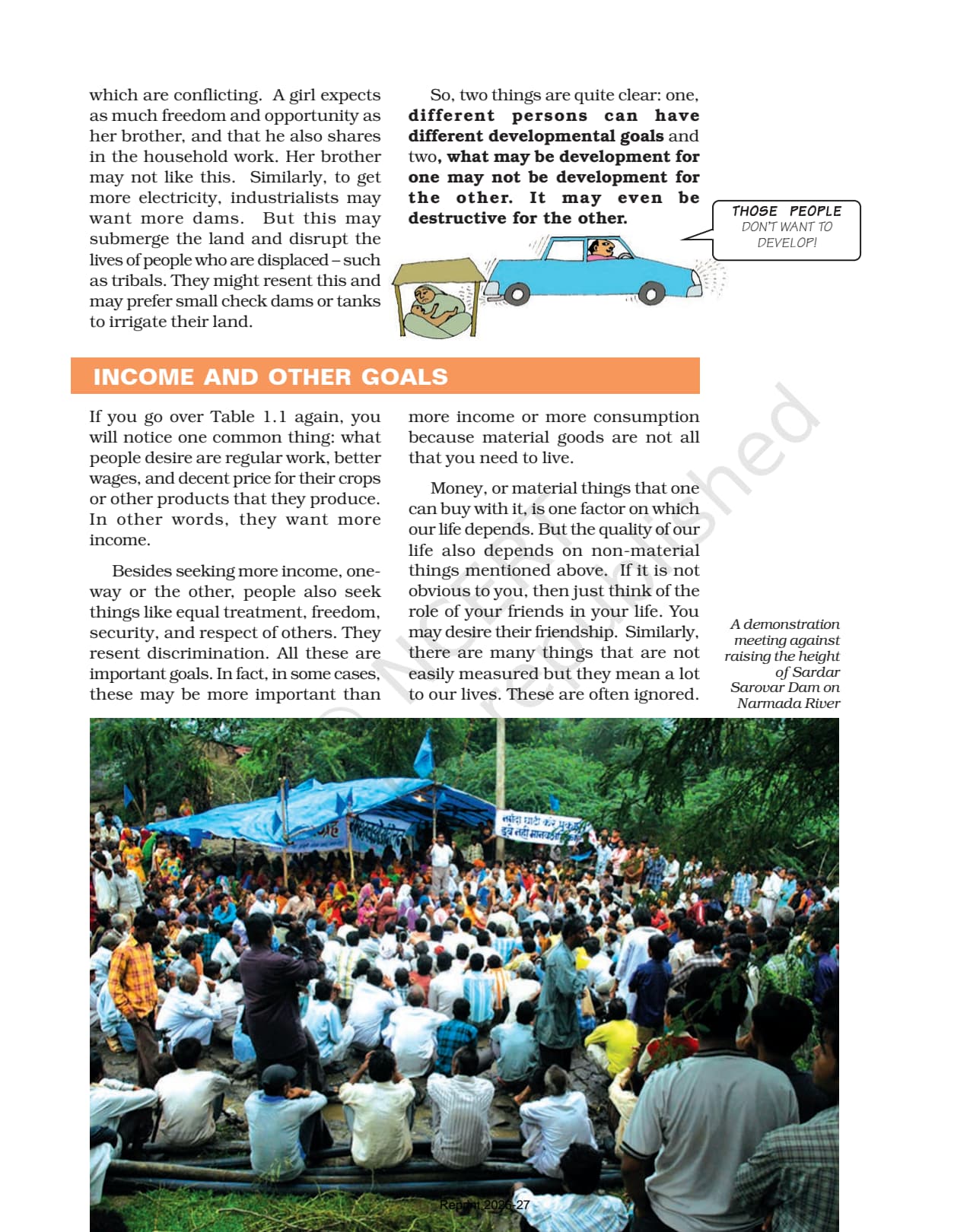
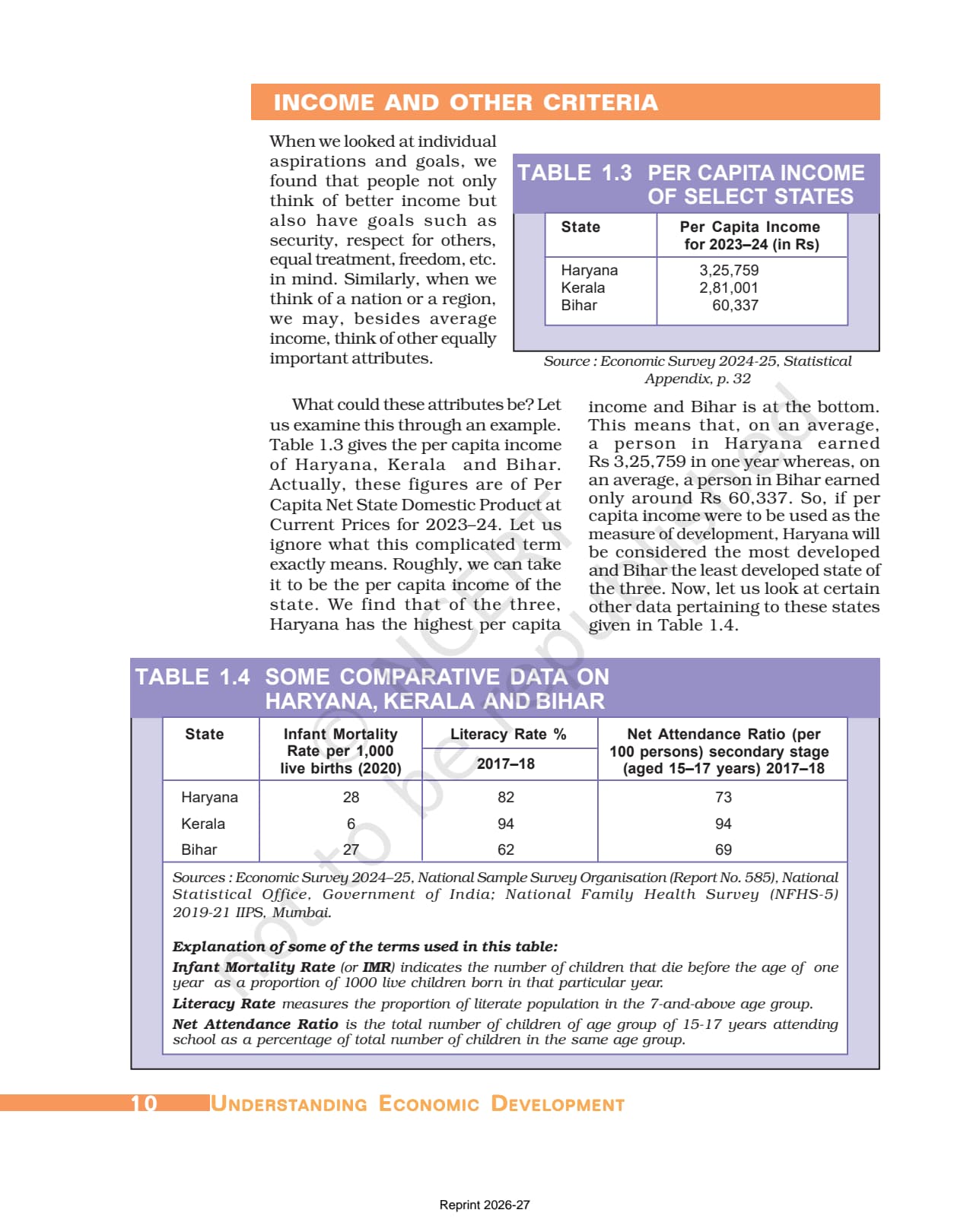
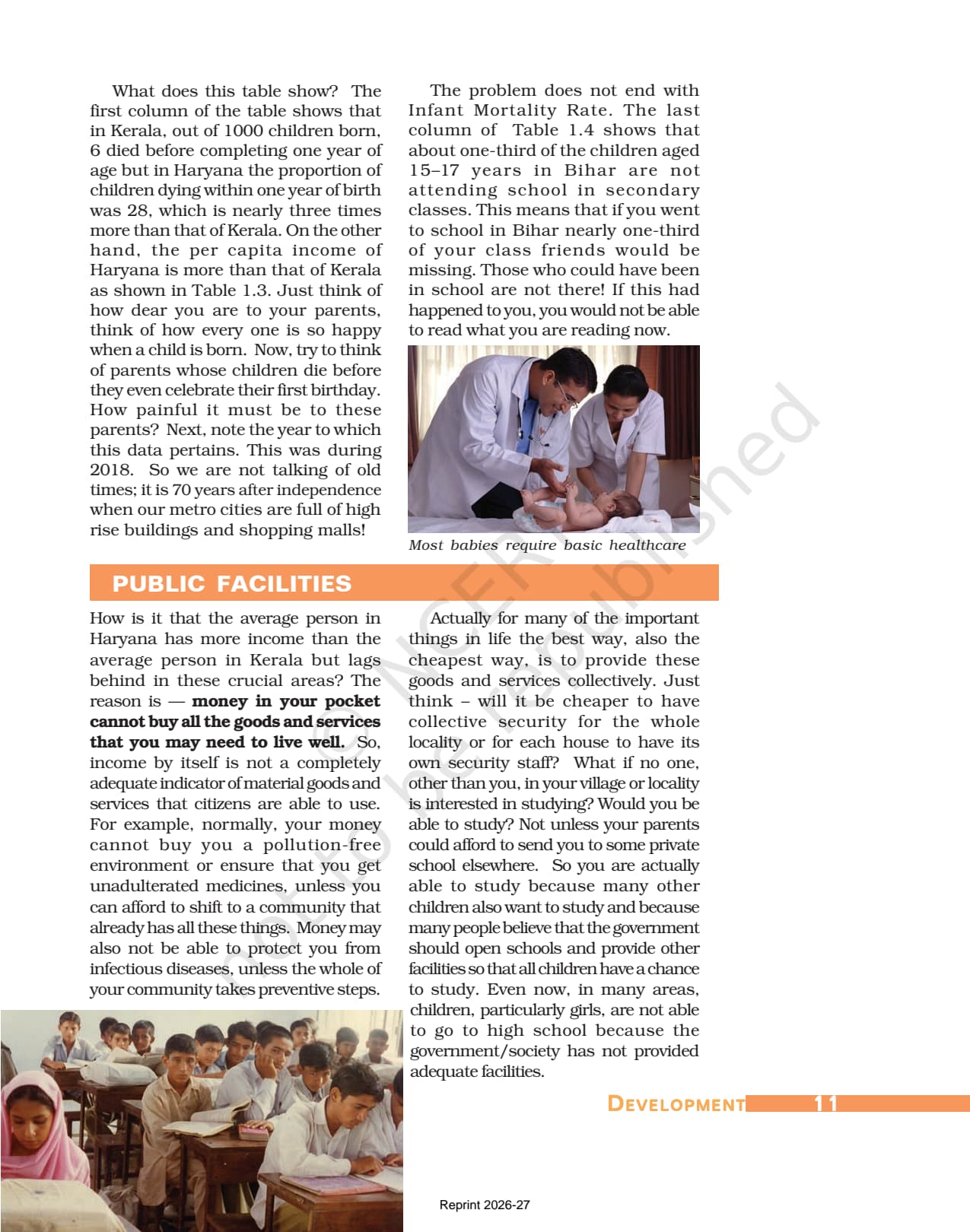
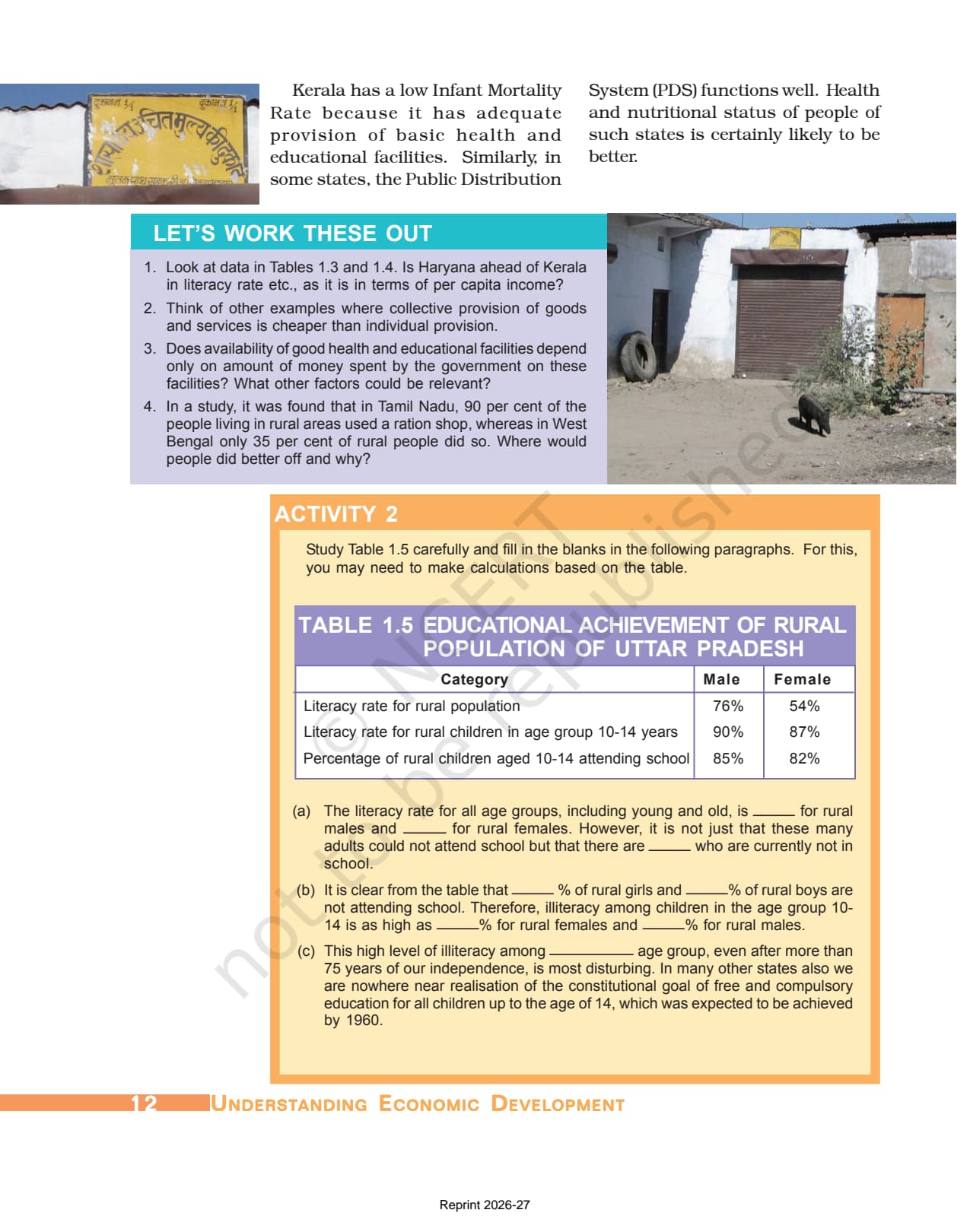
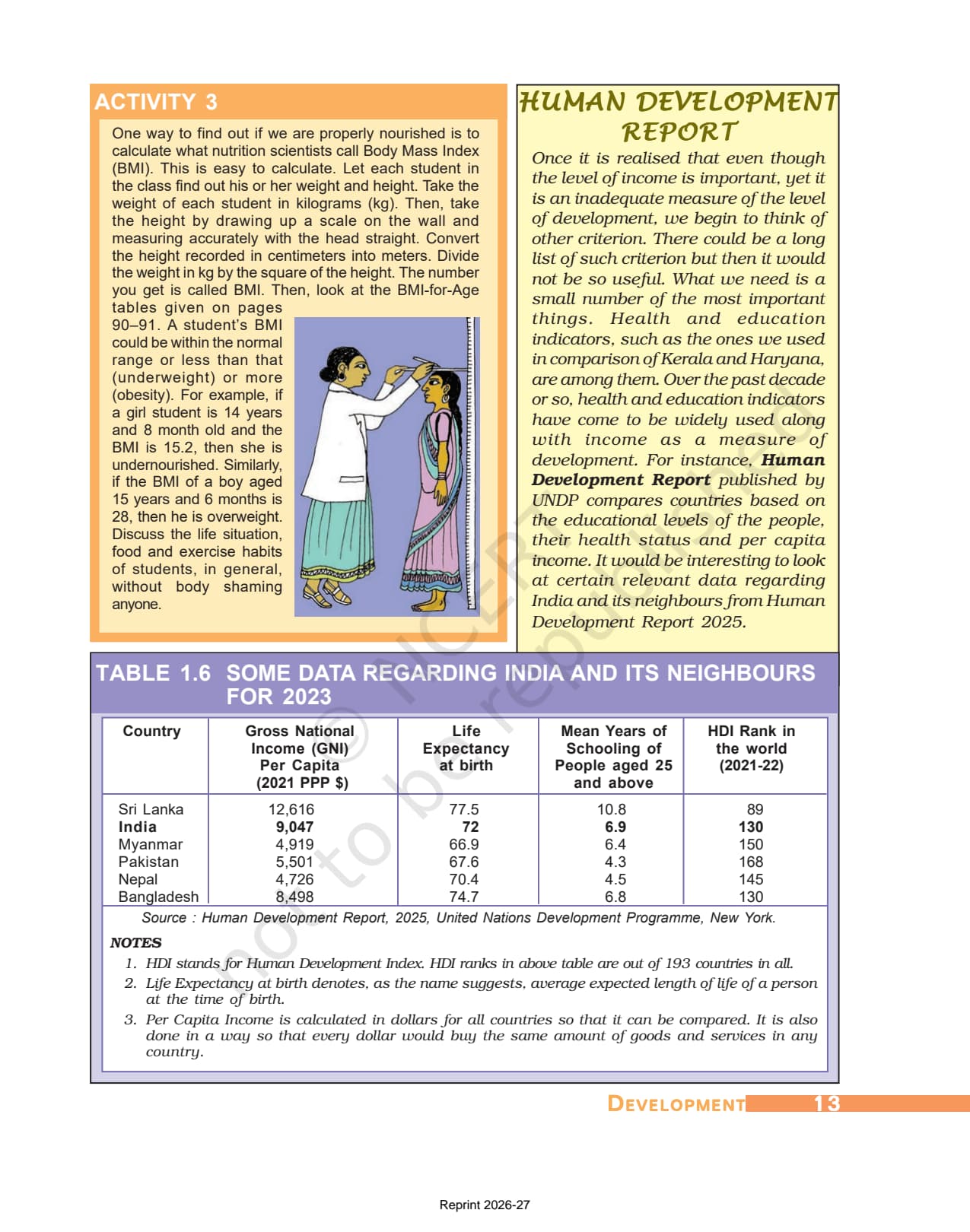
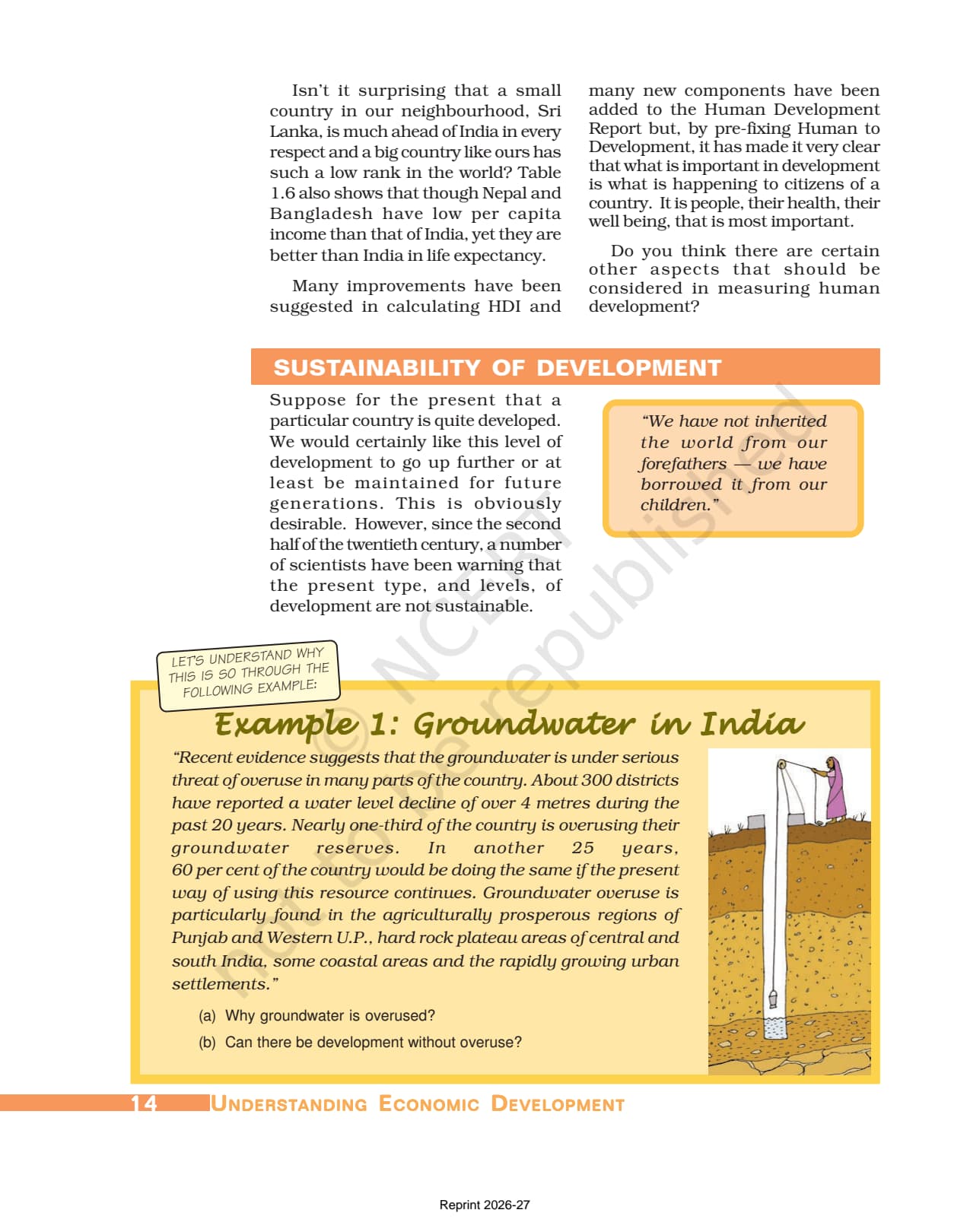
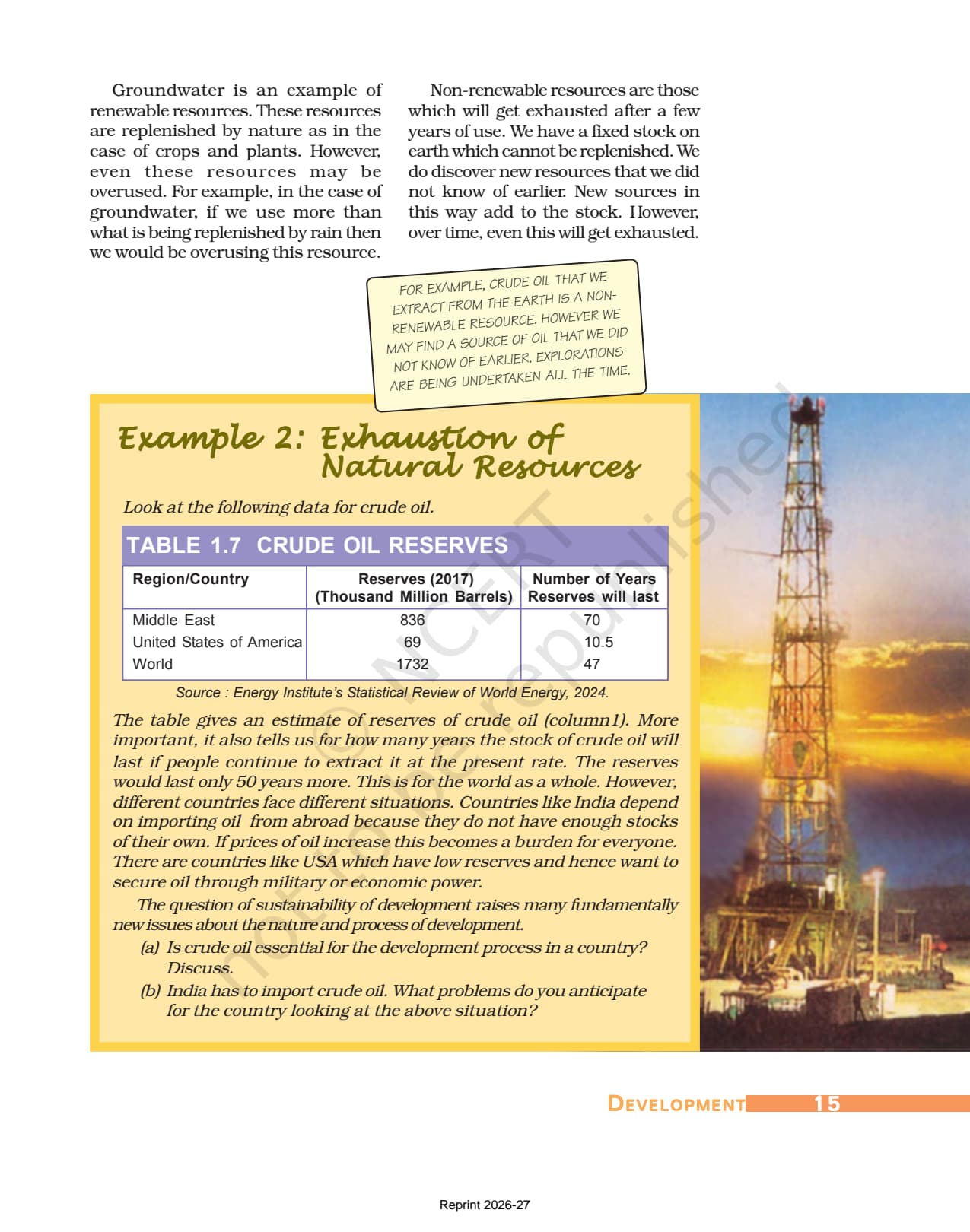
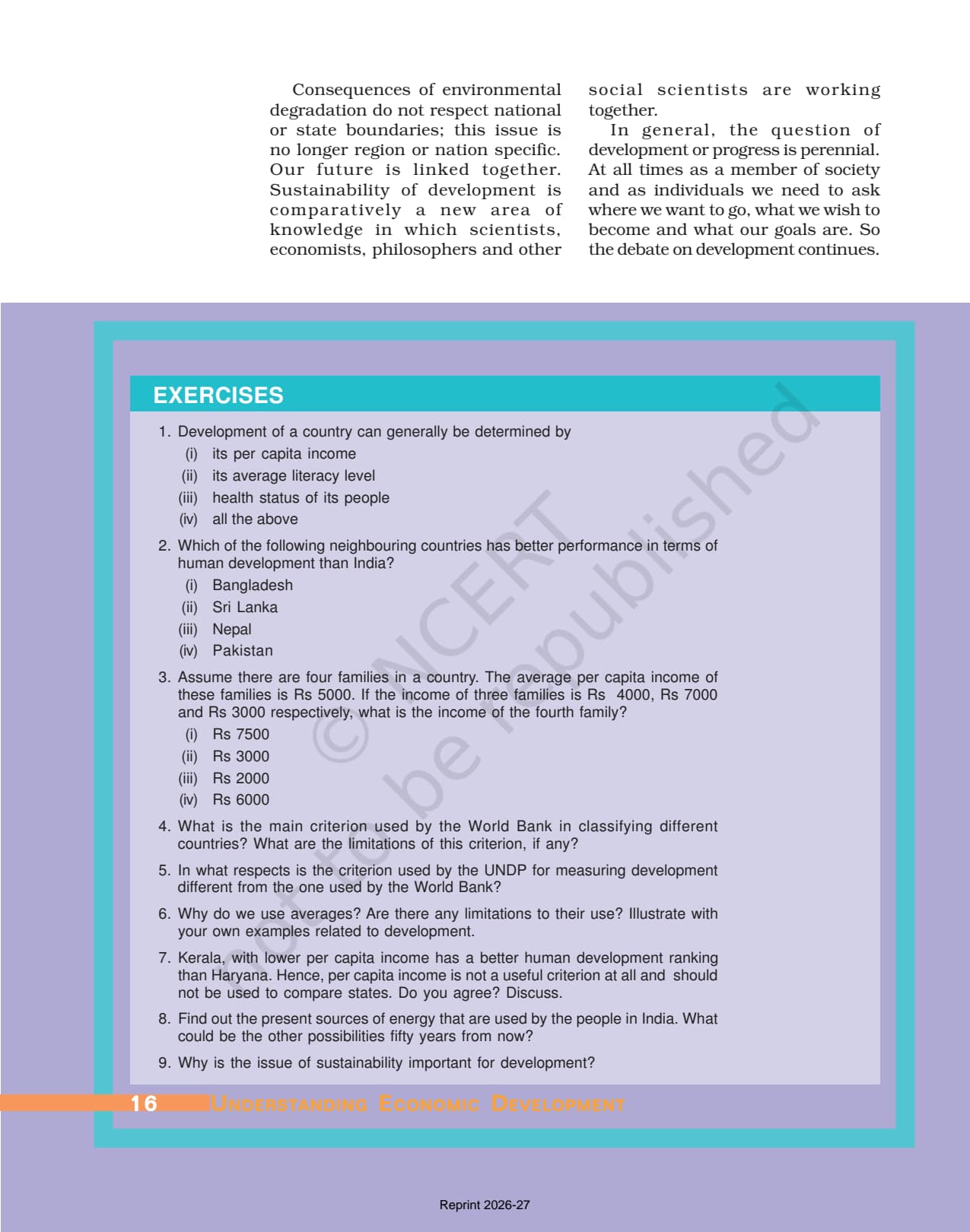
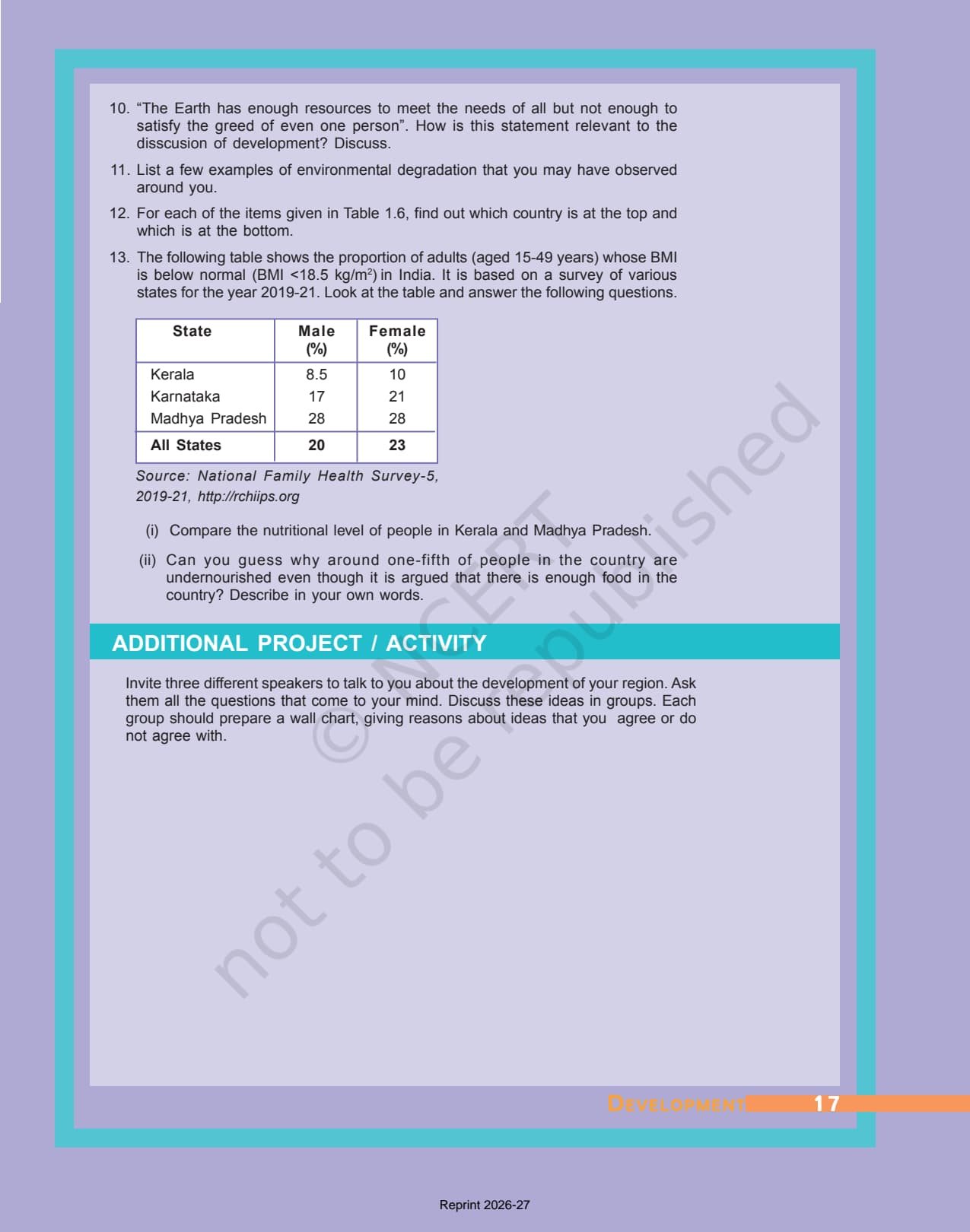
This is the first chapter of Understanding Economic Development, and it sets up how we judge whether a country or a state is doing well. The PDF on this page is the exact 2026-27 NCERT print, ready to read or download.
- Board weightage: Development carries about 6 to 8 marks in the Class 10 Social Science paper.
- Core ideas: developmental goals, per capita income, HDI, literacy rate, and infant mortality rate.
- Page count: the official chapter runs across 12 printed pages with Tables 1.1 to 1.6.
This Development chapter book is the verbatim 2026-27 NCERT print, checked page by page against the official textbook so every table, figure, and activity matches what your school uses.
|
Table of Contents |
What the Development Class 10 Economics Chapter 1 PDF Covers
The class 10 economics chapter 1 development text opens with a simple question: what does progress mean for different people? The same goal can help one person and harm another. The chapter then moves from personal goals to how we compare whole countries and states. It ends with the Human Development Index, a broader measure than income alone.
- Different people, different goals: a landless labourer wants more work days, a farmer wants a fair crop price, a girl wants the same freedom as her brother.
- Income and other goals: people want more income, but also equal treatment, security, and respect.
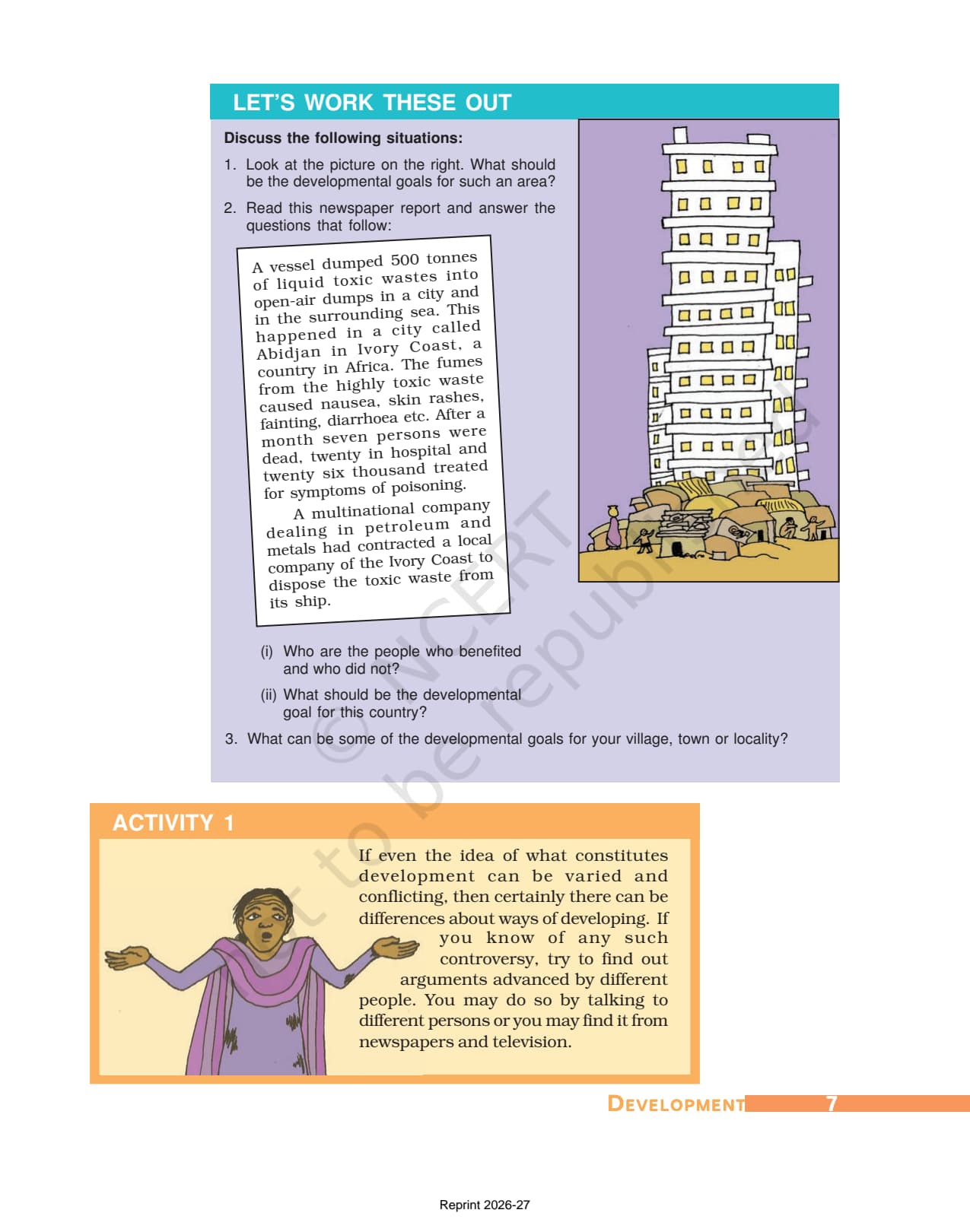
- National development: what is good for a large group may differ from what suits a small group.
- Public facilities: money in your pocket cannot buy clean air, safe roads, or a good local school.
Each section closes with a "Let's Work These Out" box and short activities. These recap the idea and link it to real life, which is why examiners pick questions straight from them.
Per Capita Income and Average Income Explained for Class 10 Economics
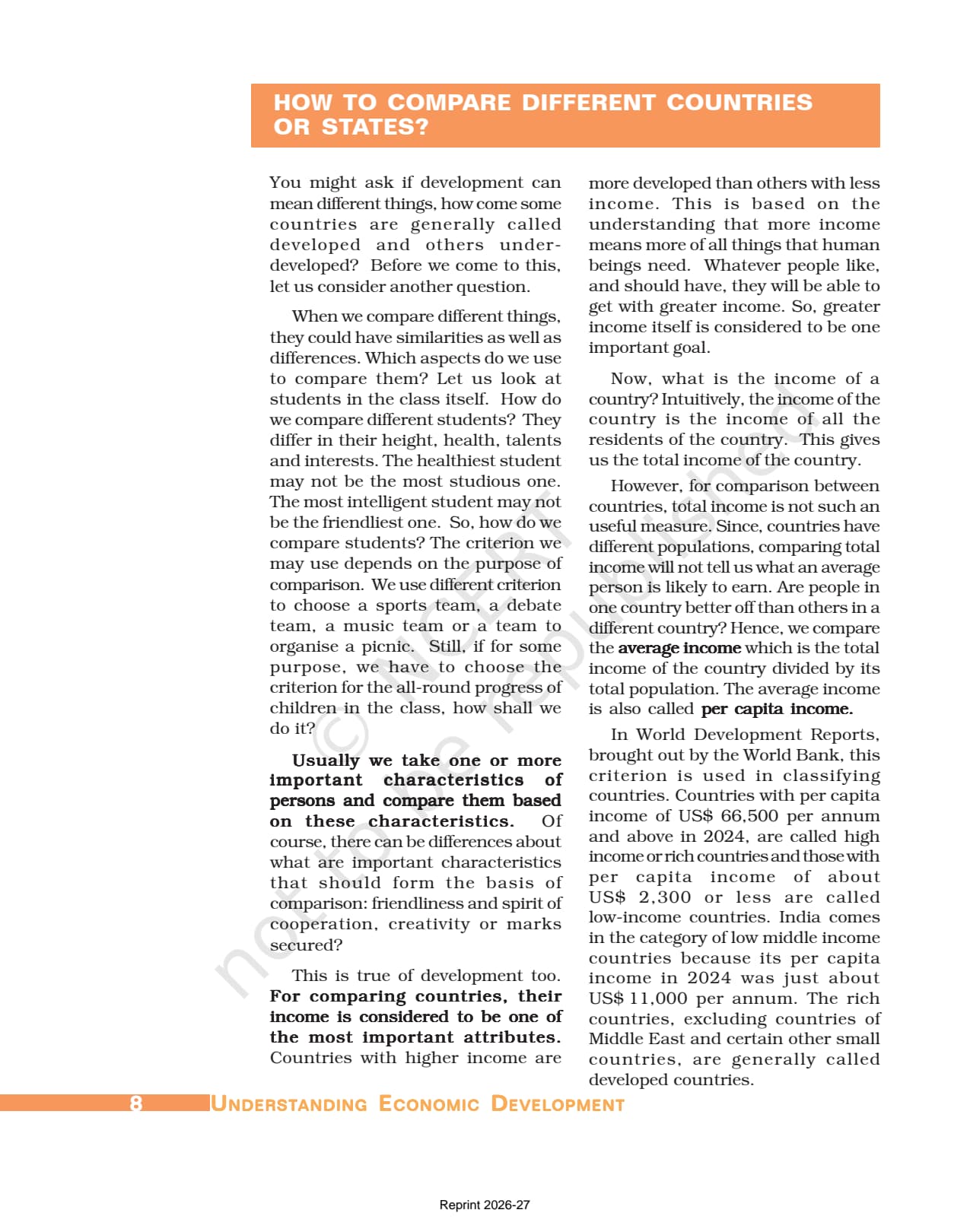
To compare countries, the NCERT chapter uses average income, also called per capita income. It is the total income of a country divided by its total population. The class 10 economics chapter 1 development text shows why this single number is the most common measure of development, and where it falls short.
- Definition: per capita income = total income ÷ total population.
- World Bank rule: countries with very high per capita income are called rich or developed countries.
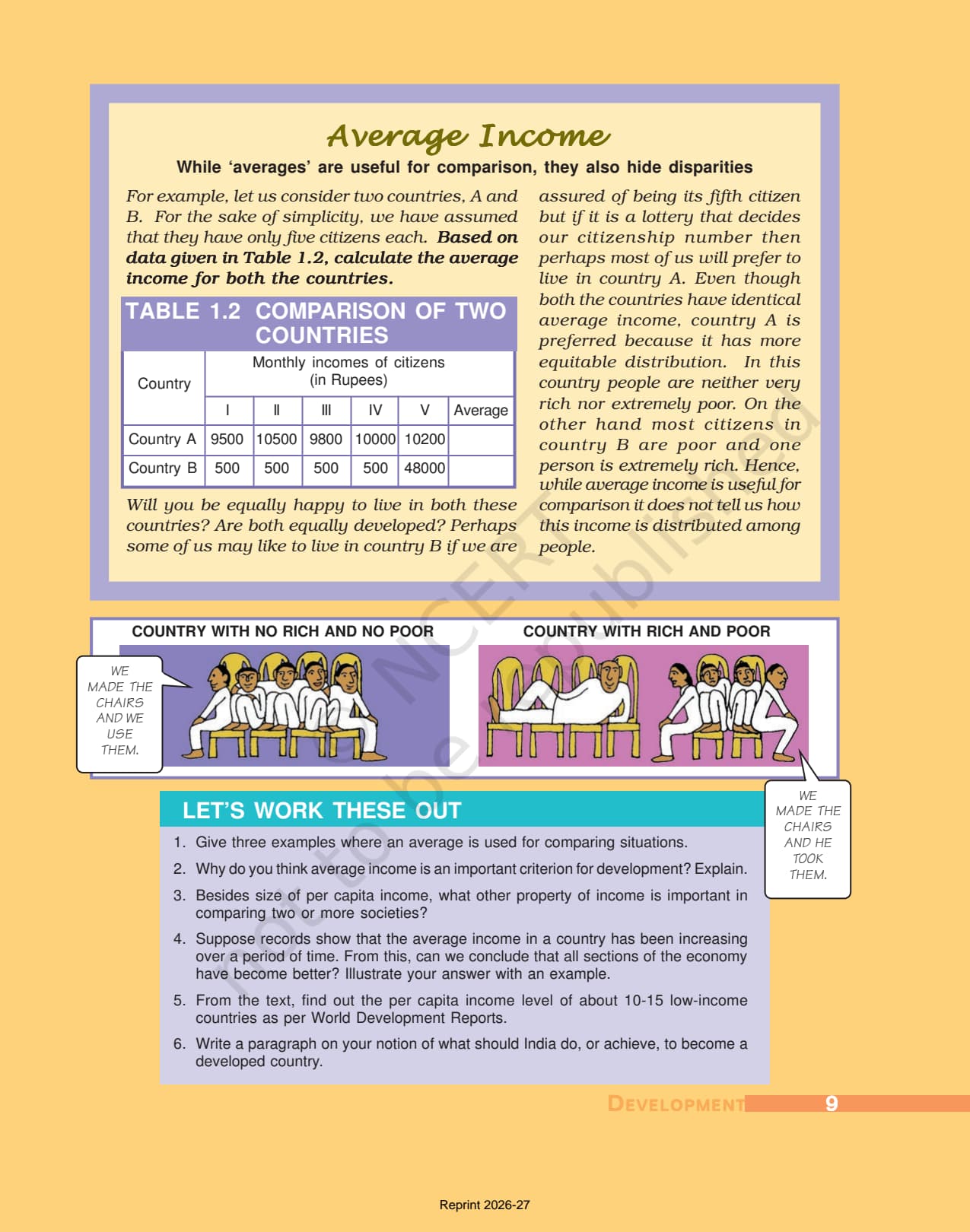
- The catch: averages hide disparities. Two countries can share the same average yet feel very different to live in.
The famous Table 1.2 example compares Country A and Country B. Both have the same average income, but Country B has one very rich person and four poor people. So average income is useful for comparison but does not show how income is shared. That single line is a favourite three-mark question.
Income Versus Other Goals in the Development Chapter
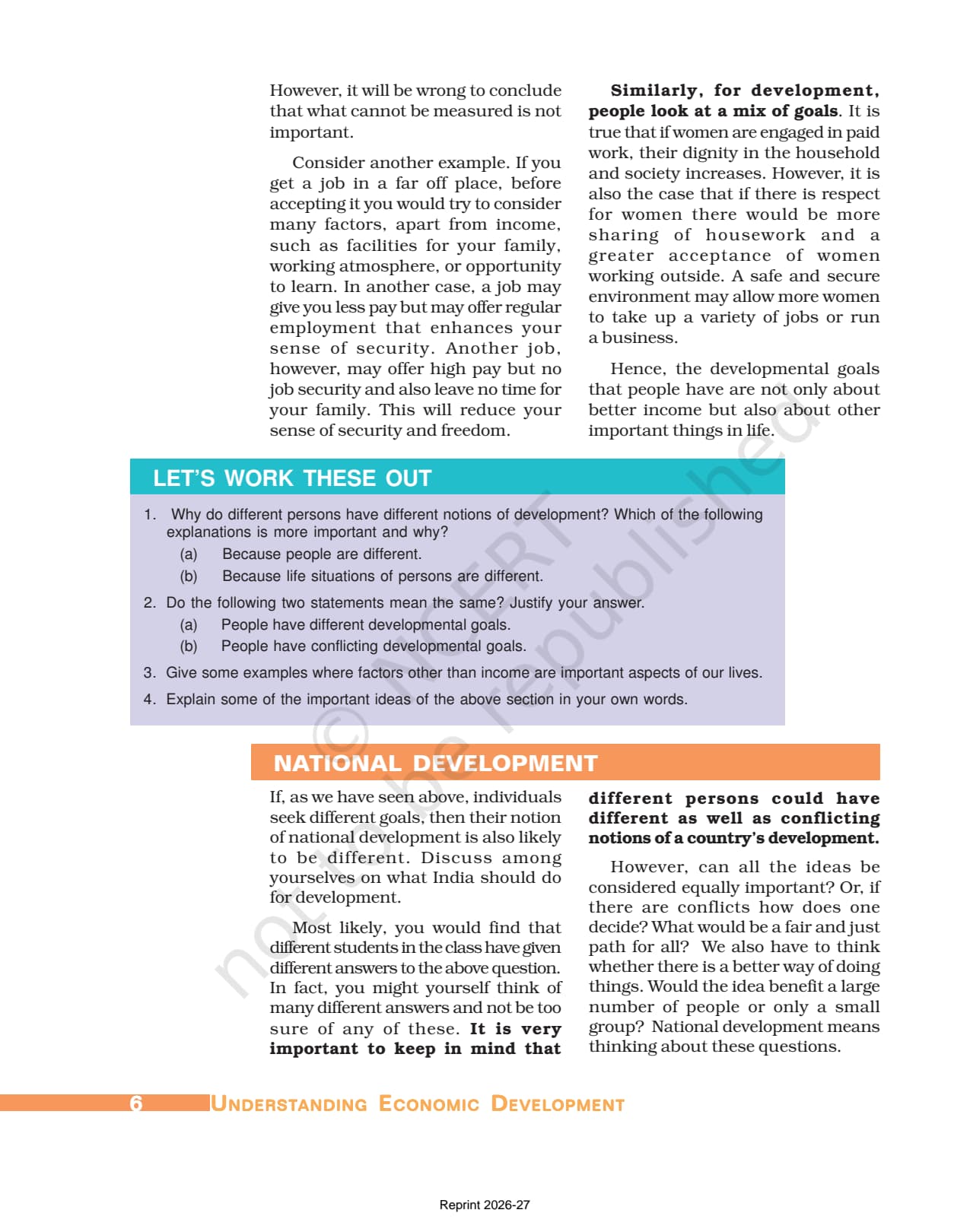
The chapter makes one point clearly: money matters, but it is not everything. People also seek security, freedom, and respect. A job with high pay but no time for family can lower your sense of security. So people look at a mix of goals, not income alone.
- Why income alone is weak: it cannot measure friendship, dignity, or a safe environment.
- Public goods: collective security and a shared school are cheaper and fairer than each family paying alone.
- Women and work: paid work raises a woman's dignity, but a safe environment lets her take up more jobs.
This is also where public facilities enter. Haryana has a higher per capita income than Kerala, yet Kerala scores better on health and education. The reason is that Kerala provides good public services, so money is not the only thing that decides quality of life.
Development Class 10 Economics Explained in a Full Chapter Video
Source: Magnet Brains on YouTube
Human Development Index and Other Criteria in Class 10 Economics
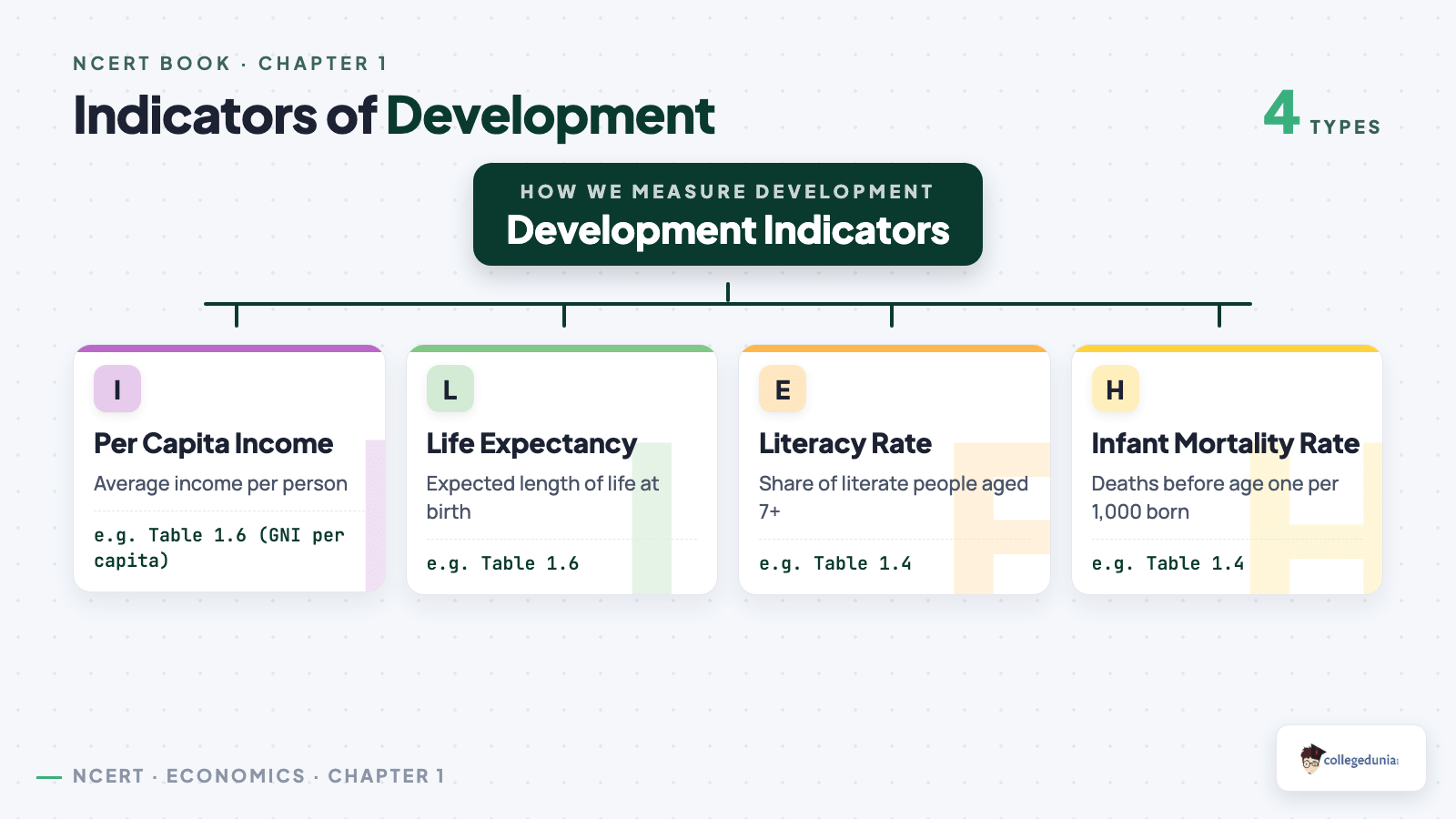
Income alone is a poor measure of development, so the chapter adds health and education indicators. The Human Development Index (HDI), published by the UNDP, ranks countries on three things: per capita income, life expectancy, and years of schooling. This is the heart of the development class 10 economics ncert book pdf for higher marks.
| Indicator | What It Measures | Source in NCERT |
|---|---|---|
| Per Capita Income | Average income per person, in PPP dollars | Table 1.6 |
| Life Expectancy | Average expected length of life at birth | Table 1.6 |
| Literacy Rate | Share of literate people aged 7 and above | Table 1.4 |
| Infant Mortality Rate | Children dying before age one per 1,000 born | Table 1.4 |
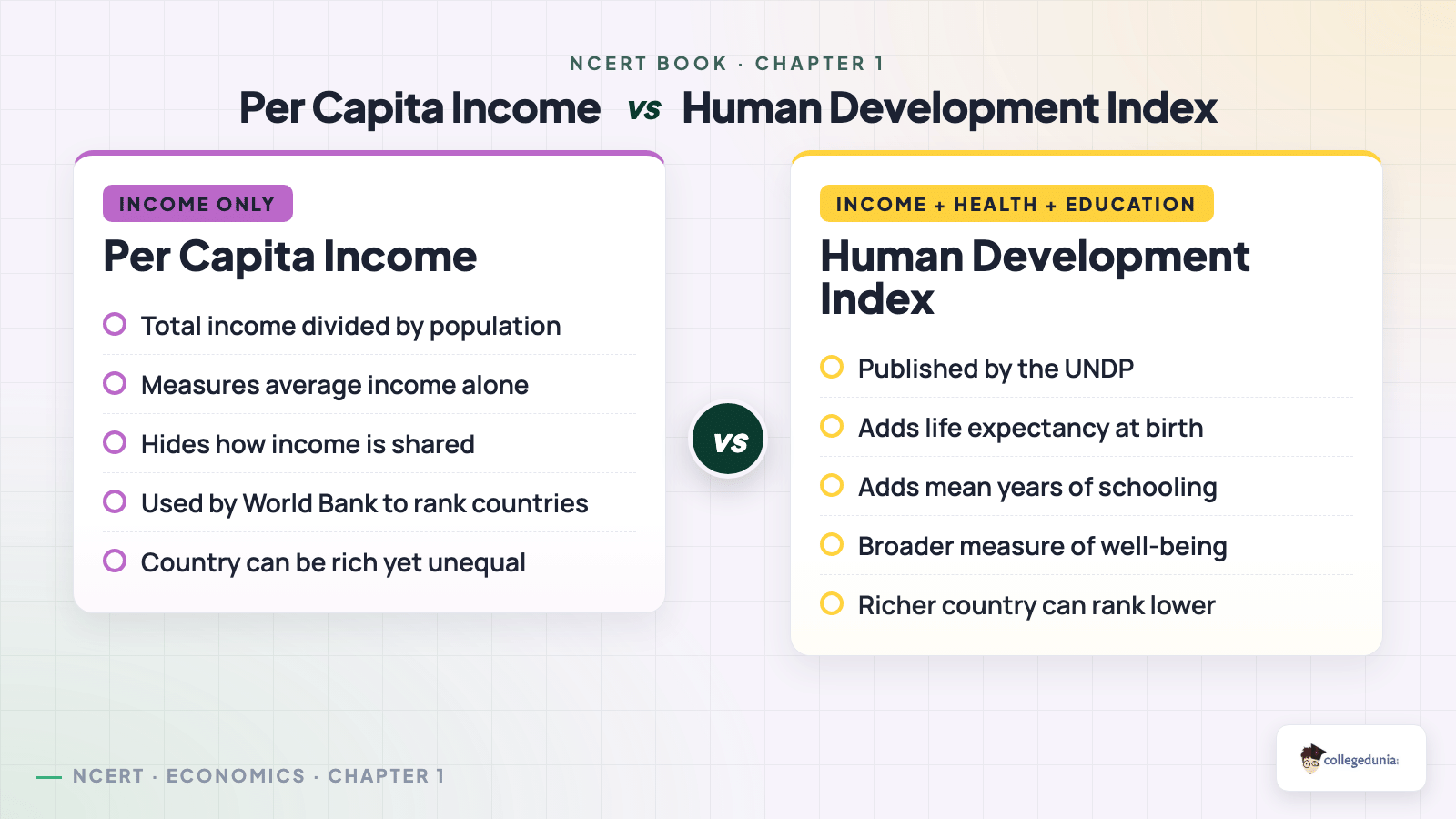
Table 1.6 compares India with its neighbours. India had a higher income than Sri Lanka was once expected to beat, yet Sri Lanka ranked higher on HDI. So a richer country can still rank lower on human development. Students should learn the HDI rank pattern, not the exact numbers.
How to Use This NCERT Class 10 Economics Chapter 1 PDF
The ncert book class 10 economics PDF works best in three short passes. This Collegedunia copy keeps the same page order as the printed book, so the passes match the original text. Read once for the story, once for the tables, and once for the activity boxes. The chapter is short, so this routine fits in about two hours.
- Pass 1: read the four orange section headers and the cartoons to get the flow.
- Pass 2: study Tables 1.1 to 1.6 and write one line of meaning under each.
- Pass 3: answer every "Let's Work These Out" box in your own words.
Tip: the cartoons in the printed book are not decoration. The rickshaw-puller and the dam-protest images each carry a debate that the board often turns into a value-based question.
PDF Download Formats and Languages for the Development Chapter
The development class 10 economics pdf on this page is the standard-resolution NCERT print, which loads fast on a phone. A few format notes help you pick the right copy for revision.
- Standard PDF: the full 12-page chapter, exactly as printed in the 2026-27 reprint.
- Hindi medium: the same chapter is also released as "Vikas" in the Hindi NCERT, useful for bilingual revision.
- Offline use: download the class 10 development economics book pdf download once and read it without data.
For deeper prep, pair the book with chapter notes and solved answers. The development class 10 economics ncert book pdf gives the source text, while notes compress it and solutions show the marking style.
Student Feedback on the Development Class 10 Economics Chapter
What 11,540 students told us about studying the Development chapter:
- 68% of students rated the difference between per capita income and HDI as the part they revisit most.
- Most-skipped sub-topic: the Table 1.6 India-neighbours comparison, skipped by about 1 in 4 students before the first reading.
- Students reported that writing one line under each table added 2 to 3 marks on data-based questions.
Source: 2026-27 Class 10 Economics student poll. Sample of 11,540 students from CBSE schools across 14 states.
Other Resources for the Development Chapter Class 10 Economics
The book PDF is one of several resources for this chapter. Use the table below to move between the notes, solutions, and other formats for development class 10 economics.
| Resource | Best For | Open |
|---|---|---|
| NCERT Solutions | Step-by-step answers to every exercise | Development Class 10 Solutions |
| Notes | Quick revision of all six tables | Development Class 10 Notes |
| Handwritten Notes | One-shot recap before the exam | Development Class 10 Handwritten Notes |
| NCERT Book PDF | The official source text on this page | Development Class 10 NCERT Book PDF |
All Chapters of Class 10 Economics NCERT Book PDF
Understanding Economic Development has five chapters. Download any of them as the official NCERT book PDF from the table below.
| Chapter | Title | Download |
|---|---|---|
| Chapter 1 | Development | This page |
| Chapter 2 | Sectors of the Indian Economy | Download PDF |
| Chapter 3 | Money and Credit | Download PDF |
| Chapter 4 | Globalisation and the Indian Economy | Download PDF |
| Chapter 5 | Consumer Rights | Download PDF |
Also Check: the full Sectors of the Indian Economy book PDF pairs naturally with Development for the first unit of the paper. This Collegedunia compilation keeps every chapter in the same clean format.
Where can I download the Development Class 10 Economics NCERT book PDF?
The book PDF at the top of this page is the official 2026-27 NCERT print. It is the full 12-page Chapter 1 with all six tables, ready to read online or download for offline study.
What is per capita income in Class 10 Economics?
Per capita income is the total income of a country divided by its total population. The per capita income class 10 economics section shows that it is useful for comparison but hides how income is shared among people.
What is the Human Development Index in this chapter?
The human development index class 10 economics idea comes from the UNDP Human Development Report. It ranks countries using income, life expectancy, and years of schooling, so a richer country can still rank lower on HDI.
How many chapters are there in Class 10 Economics?
The five chapters in the ncert book class 10 economics are Development, Sectors of the Indian Economy, Money and Credit, Globalisation and the Indian Economy, and Consumer Rights. You can get each one as an ncert class 10 economics chapter 1 pdf style download from the all-chapters table above.
Is the Development chapter important for the Class 10 board exam?
Yes, it carries about 6 to 8 marks and sets the base for the whole Economics unit. Data-based questions on Tables 1.2, 1.4, and 1.6 are common, so using the development class 10 economics notes alongside this book helps you revise those tables quickly.
What are developmental goals in Class 10 Economics?
The understanding economic development class 10 pdf shows that developmental goals are the different things people want from progress. A landless labourer, a farmer, and a girl from a rich family each define development differently, and a goal good for one can harm another.



Comments