



These Notes for Class 12 Sociology Chapter 3 The Constitution and Social Change give a clear, short summary of the whole chapter, set to the latest 2026-27 CBSE syllabus. They cover the Constitution as a living document, the 73rd Amendment and panchayats, and the difference between political parties, pressure groups and interest groups. Students can use them for fast revision before the board exam.
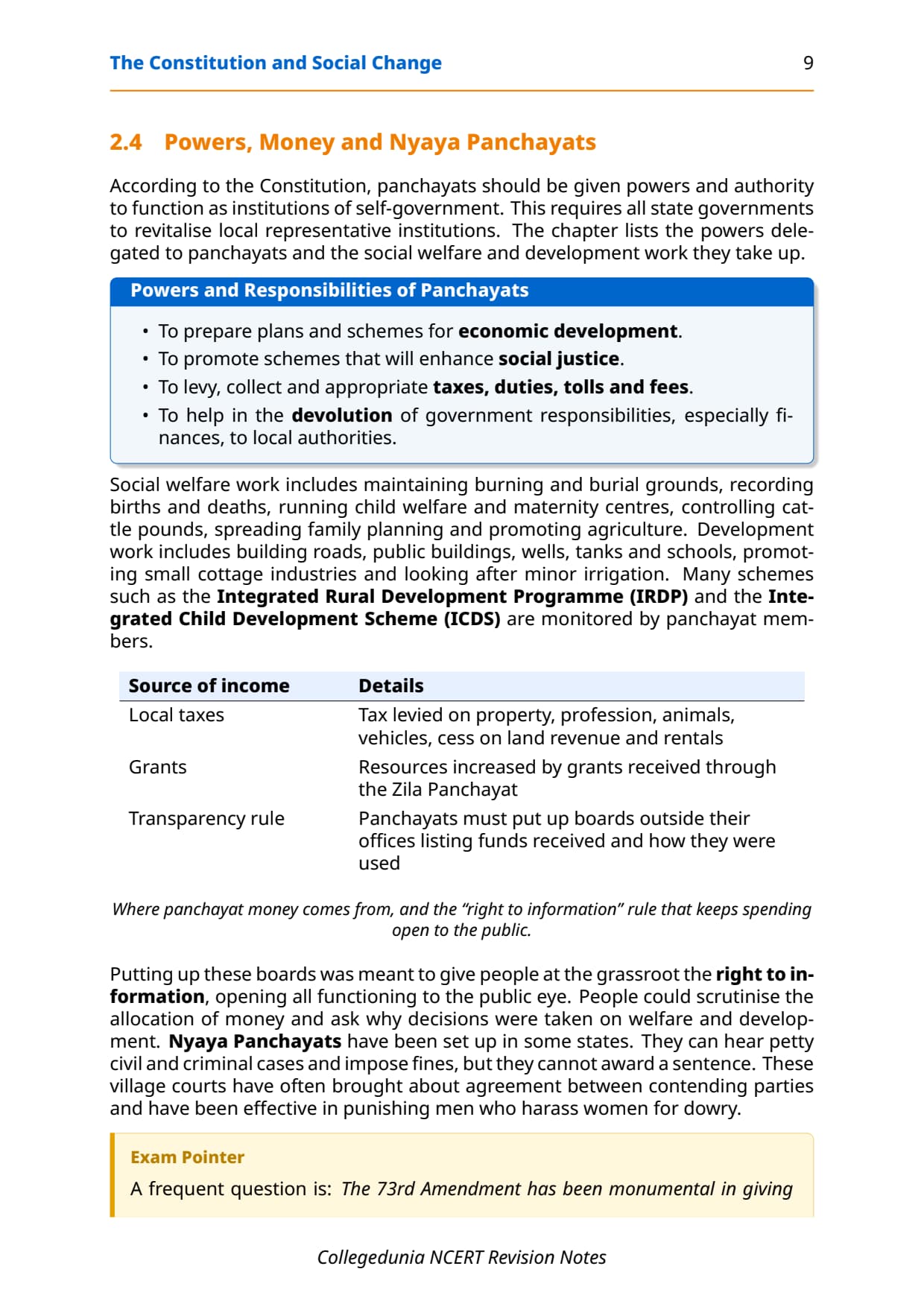
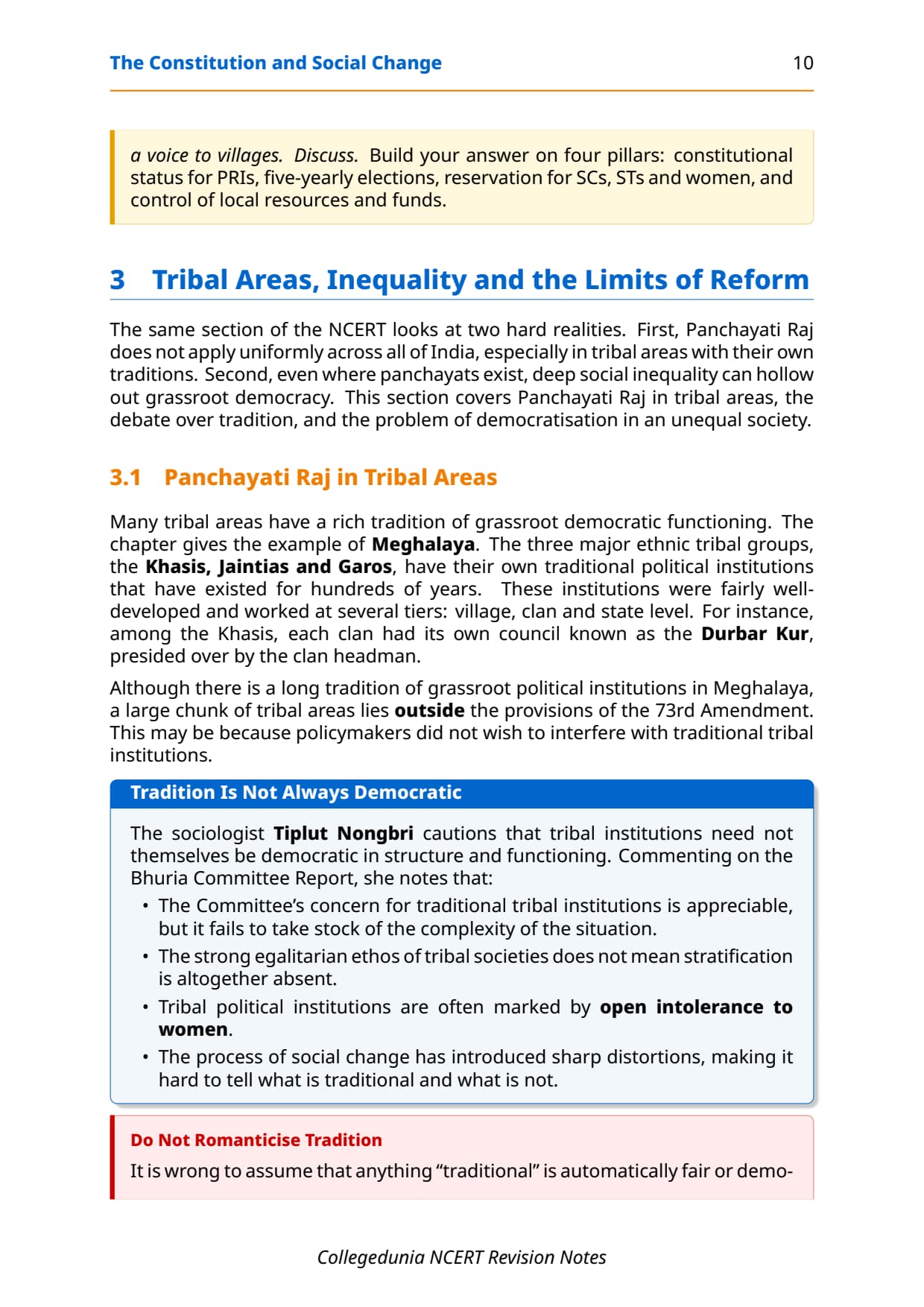
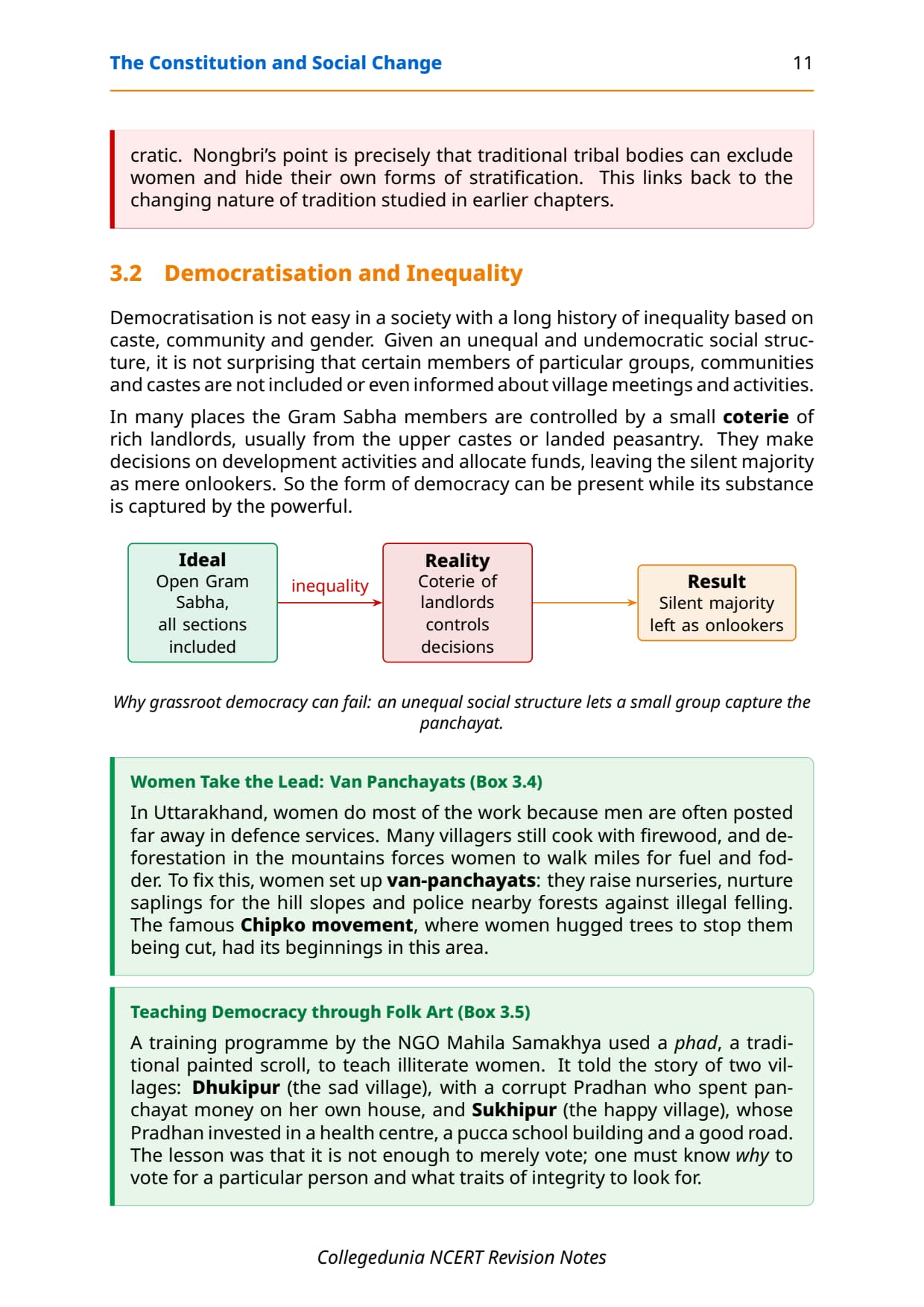
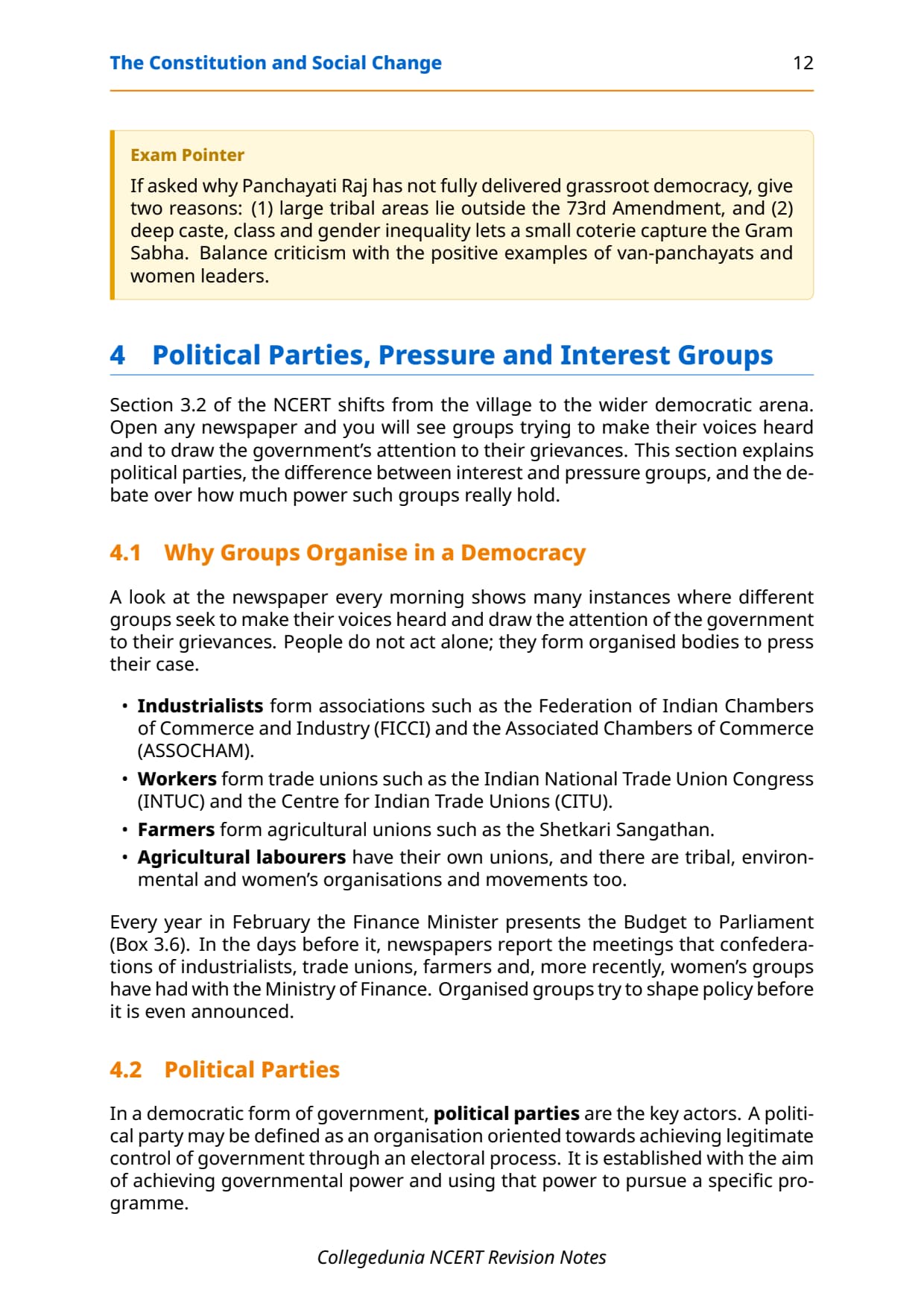
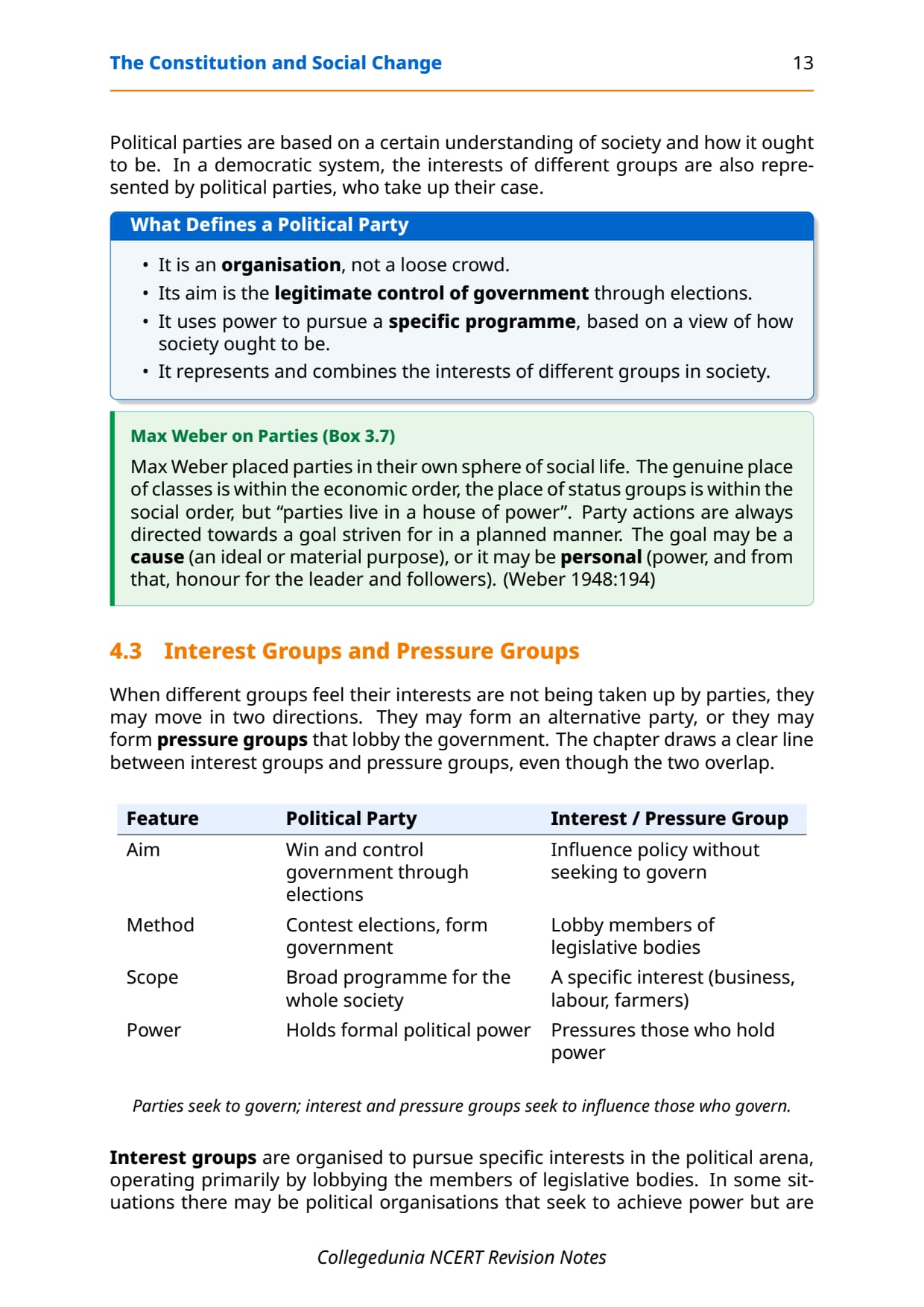
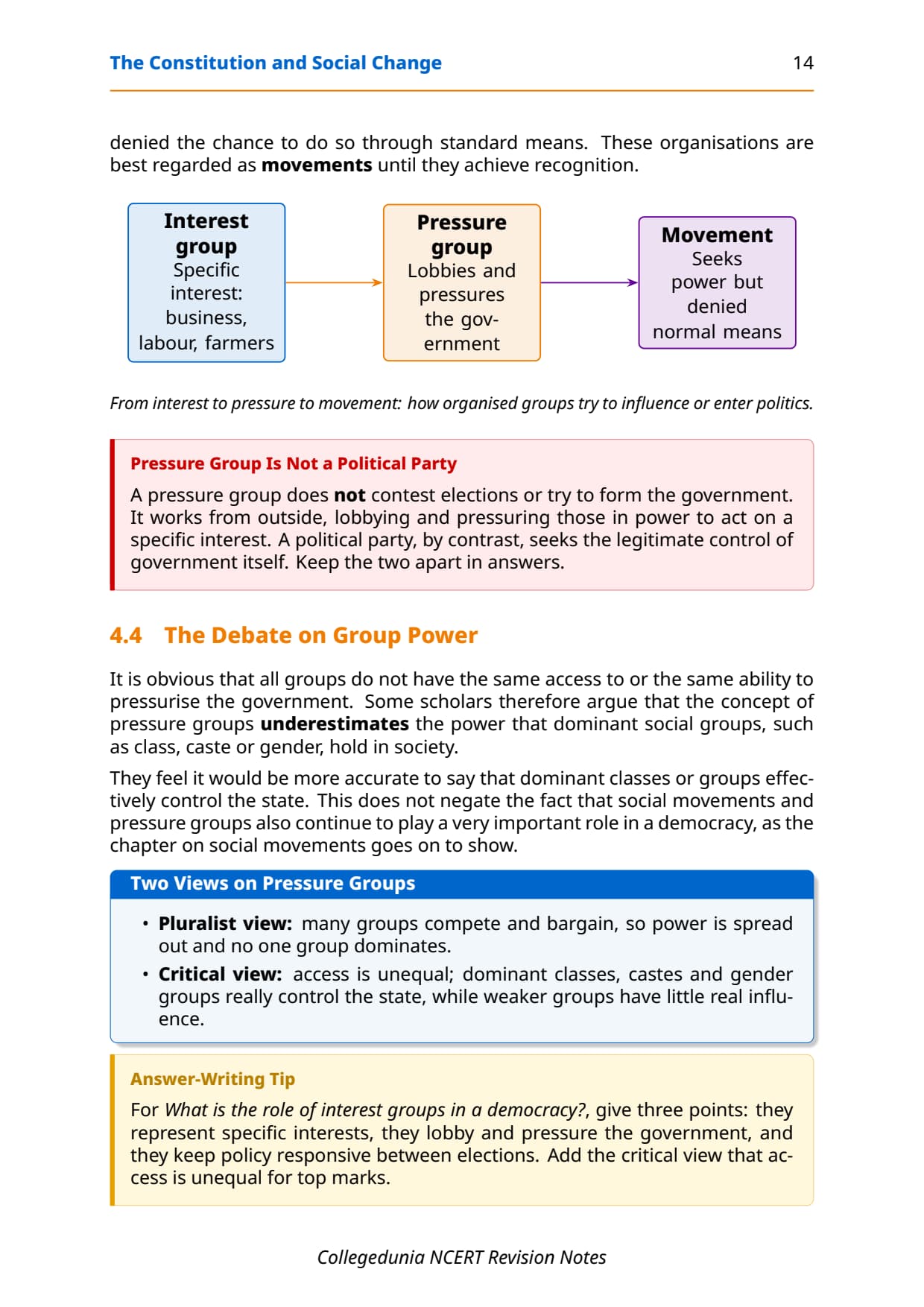
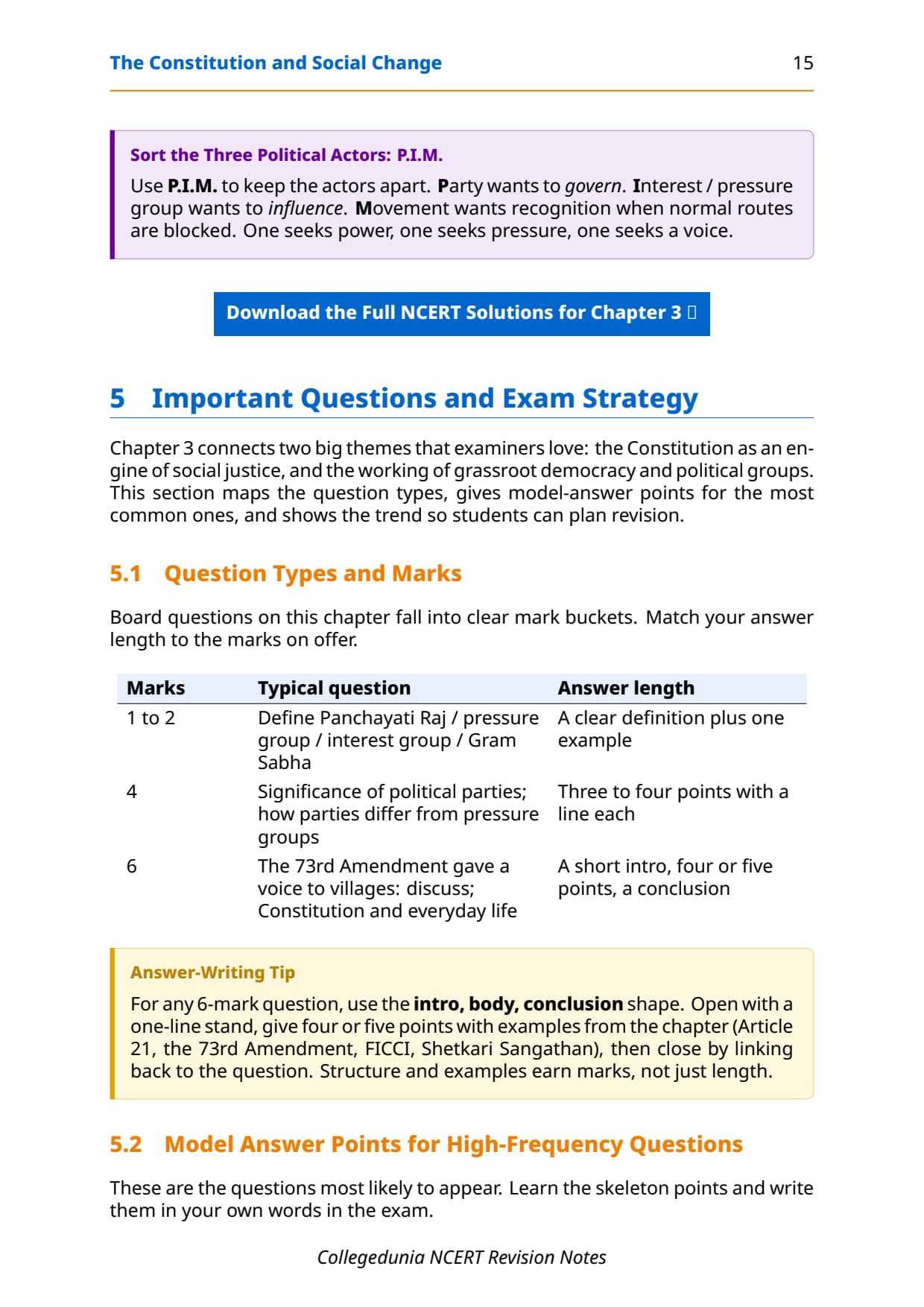
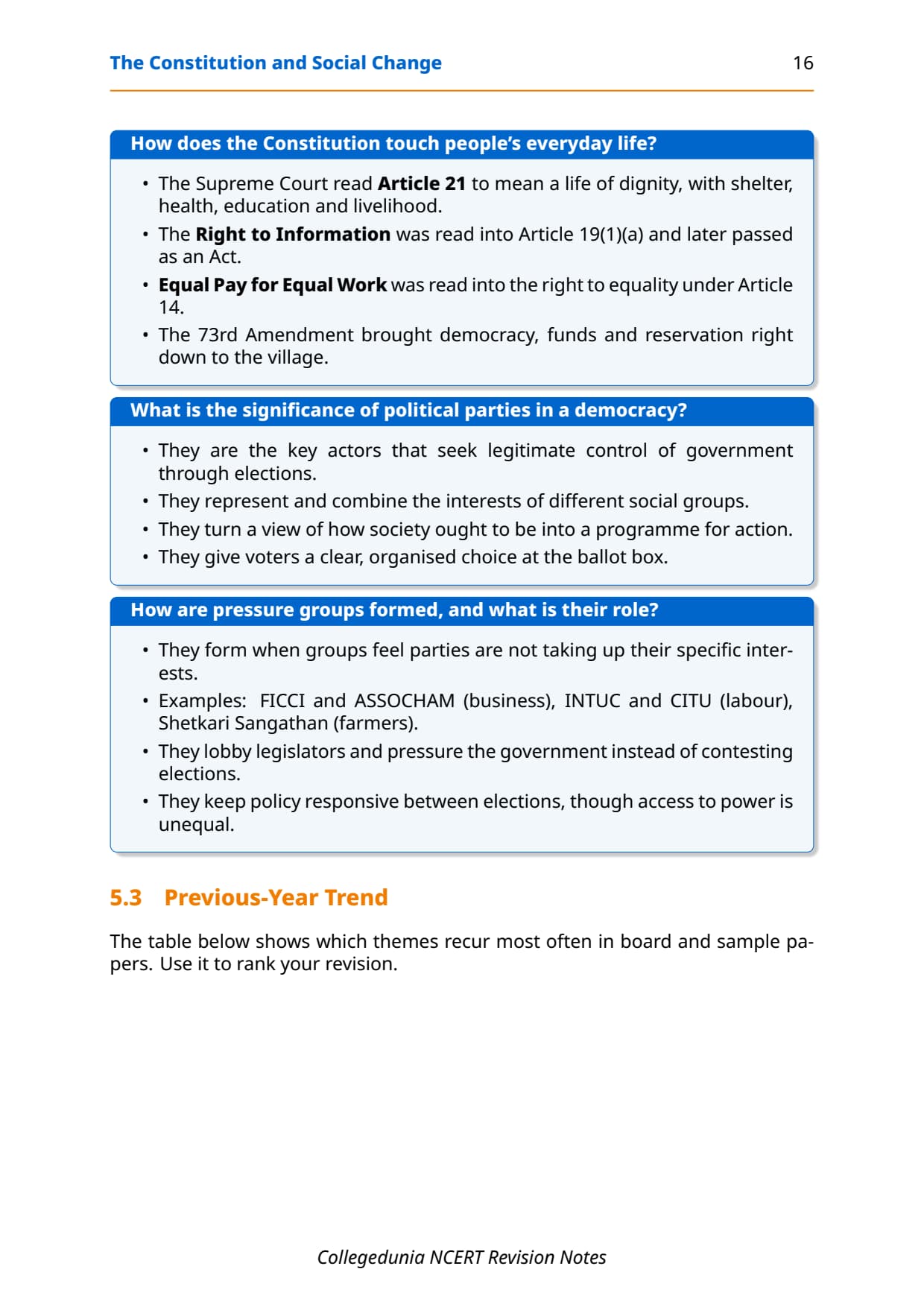
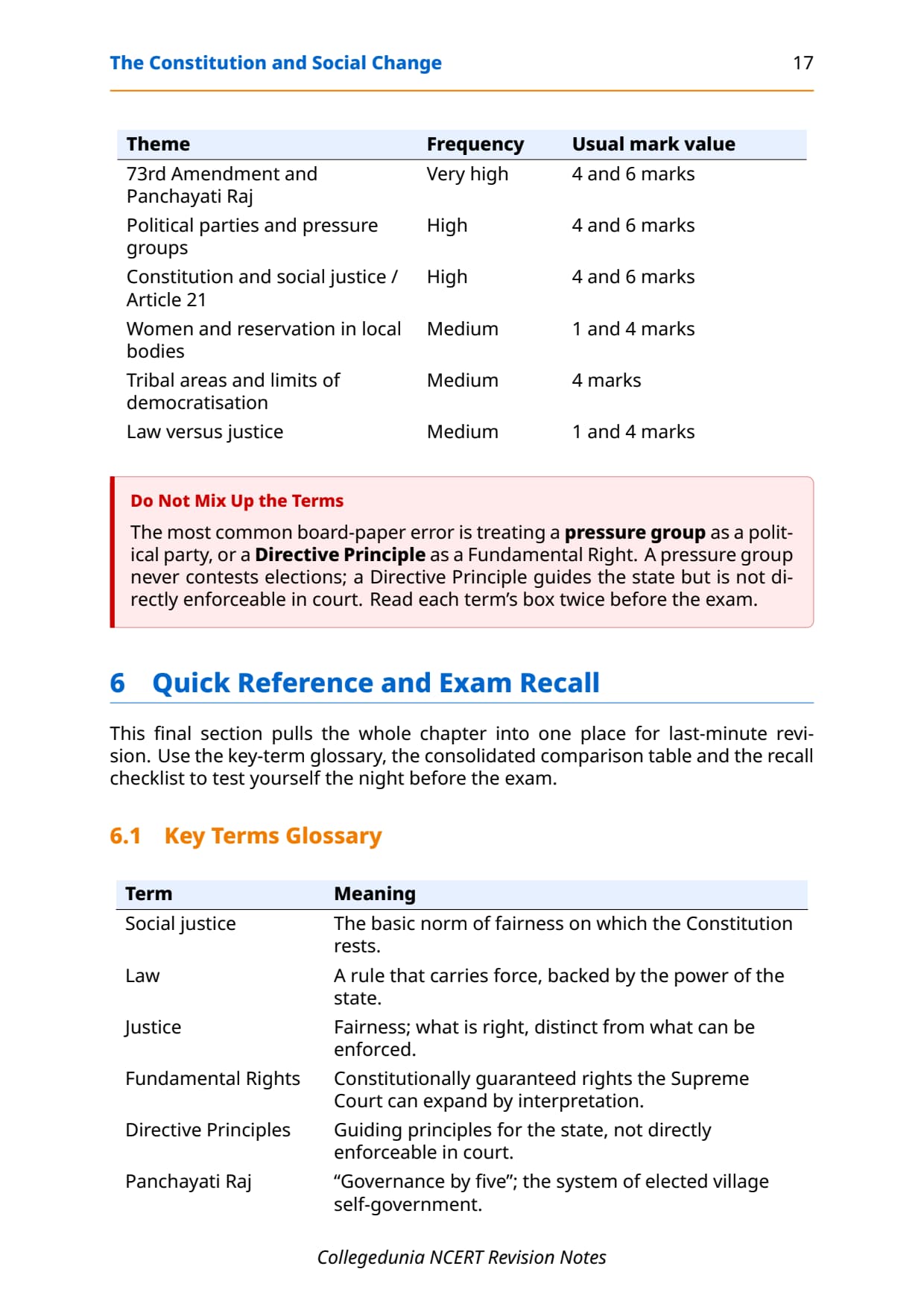
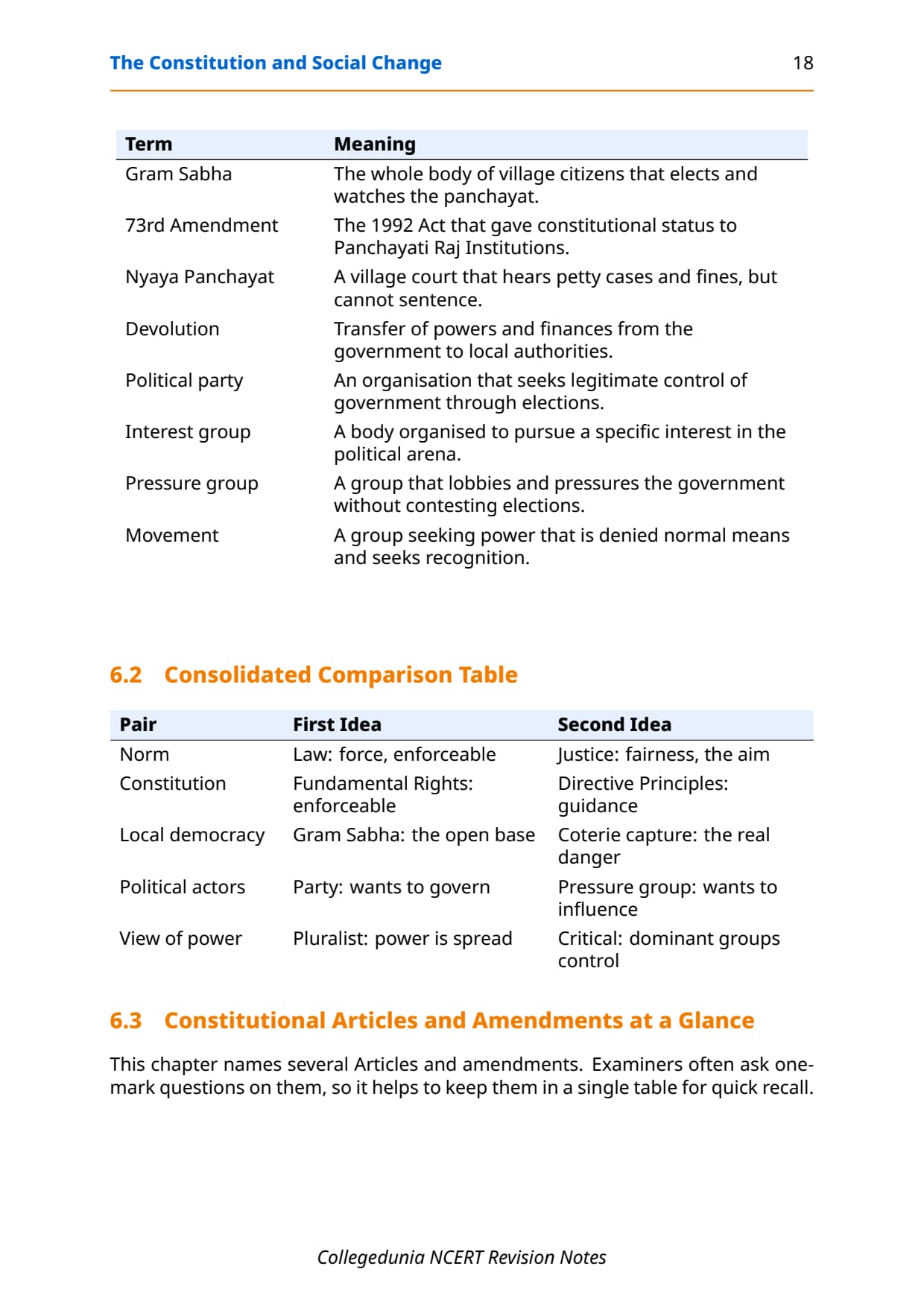
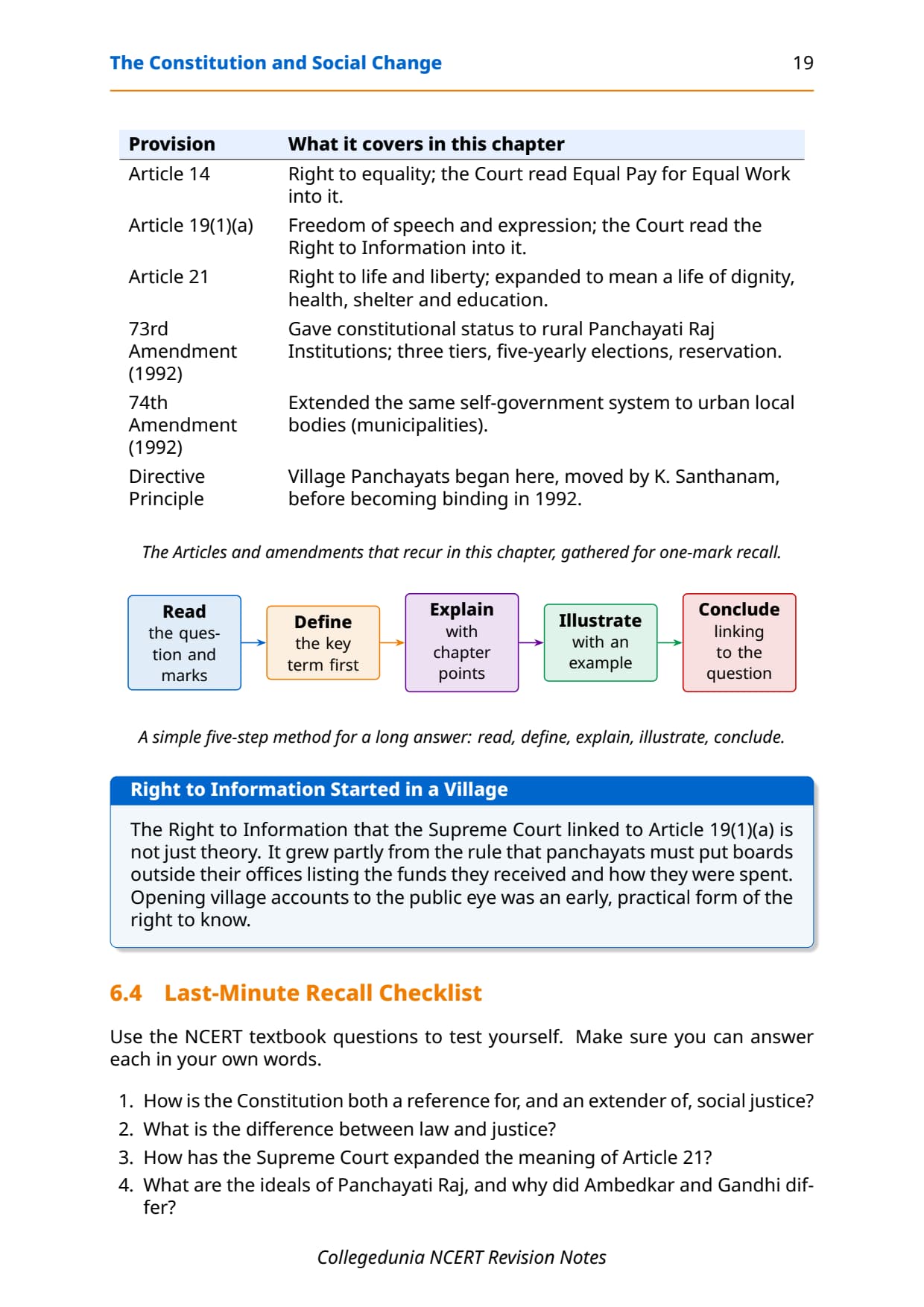
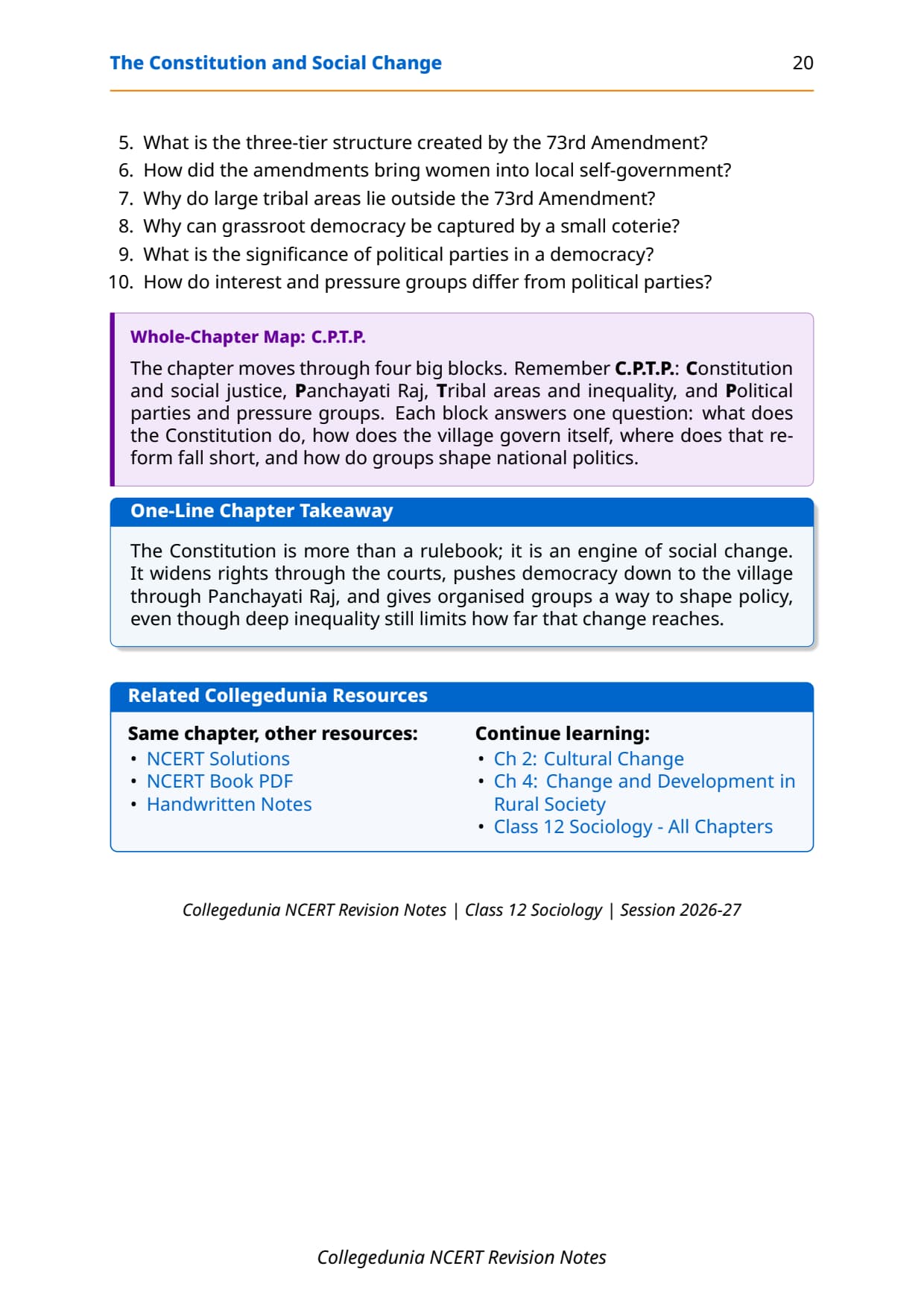
- One-page summary of every topic in Social Change and Development in India Chapter 3.
- This Class 12 Sociology chapter usually carries 5 to 6 marks per board paper.
- Pairs with the NCERT Solutions, Handwritten Notes and Book PDF linked lower on this page.
These Class 12 Sociology Chapter 3 Notes are written by subject experts from the official NCERT Social Change and Development in India textbook, in plain English for quick board revision.
Student Feedback: In a Collegedunia poll of 8,420 Class 12 Sociology students taken before the 2026 boards, 69% of students said a one-page summary of The Constitution and Social Change helped them remember the 73rd Amendment far better than re-reading the textbook. Most students wanted the key terms listed in one place, which these Notes do.
Source: 2026-27 Class 12 Sociology student poll. Sample of 8,420 students from CBSE schools across 12 states.
The Constitution and Social Change Class 12 Notes Overview
The Constitution and Social Change is the third chapter of Social Change and Development in India. The big idea in these Notes is that the Indian Constitution is a living document, a tool that both drives and limits social change. To revise the chapter quickly, students can split it into three blocks, which these Notes follow in order.
- The Constitution: how Fundamental Rights and Directive Principles enable and limit reform.
- Panchayats: how the 73rd Amendment gives villages a constitutional voice.
- Groups: how parties, pressure groups and interest groups carry demands to the State.
Keeping these three blocks separate is the fastest way to revise. A student who can recall one enabling example, one panchayat fact and one clear group definition has the spine of almost every answer in The Constitution and Social Change class 12 notes.
The Constitution as a Living Document
The first block of the chapter explains why the Constitution is more than a rulebook. It was adopted in 1950, yet it can be amended, so it keeps pace with new social needs. These Notes lay out the key points to memorise.
- Adopted: 26 January 1950, when India became a republic.
- Enables reform: it grants equality and abolishes untouchability, so it pushes change forward.
- Limits power: it sets boundaries on the State, so it protects citizens.
- Two tools: Fundamental Rights (Part III) and Directive Principles (Part IV).
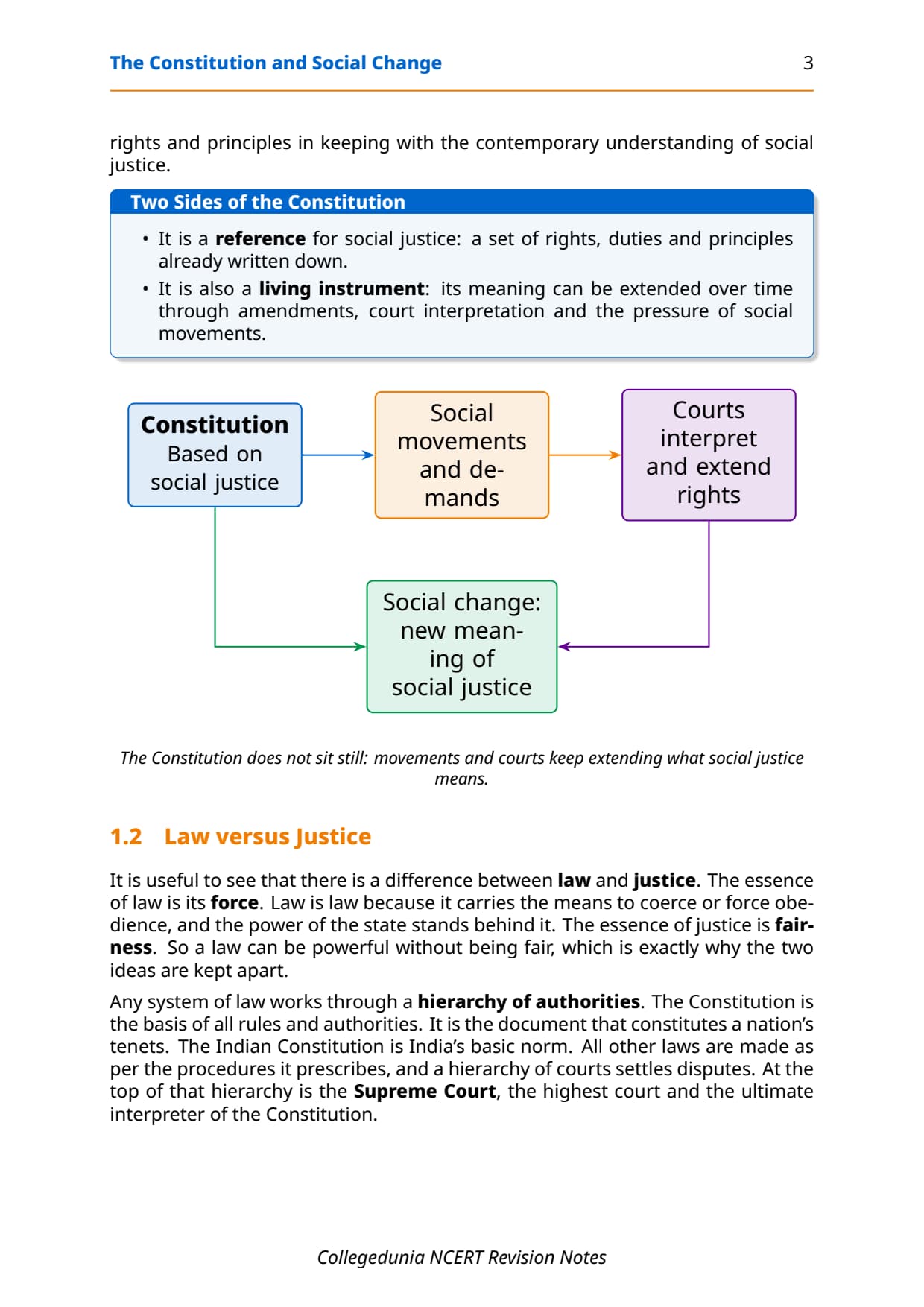
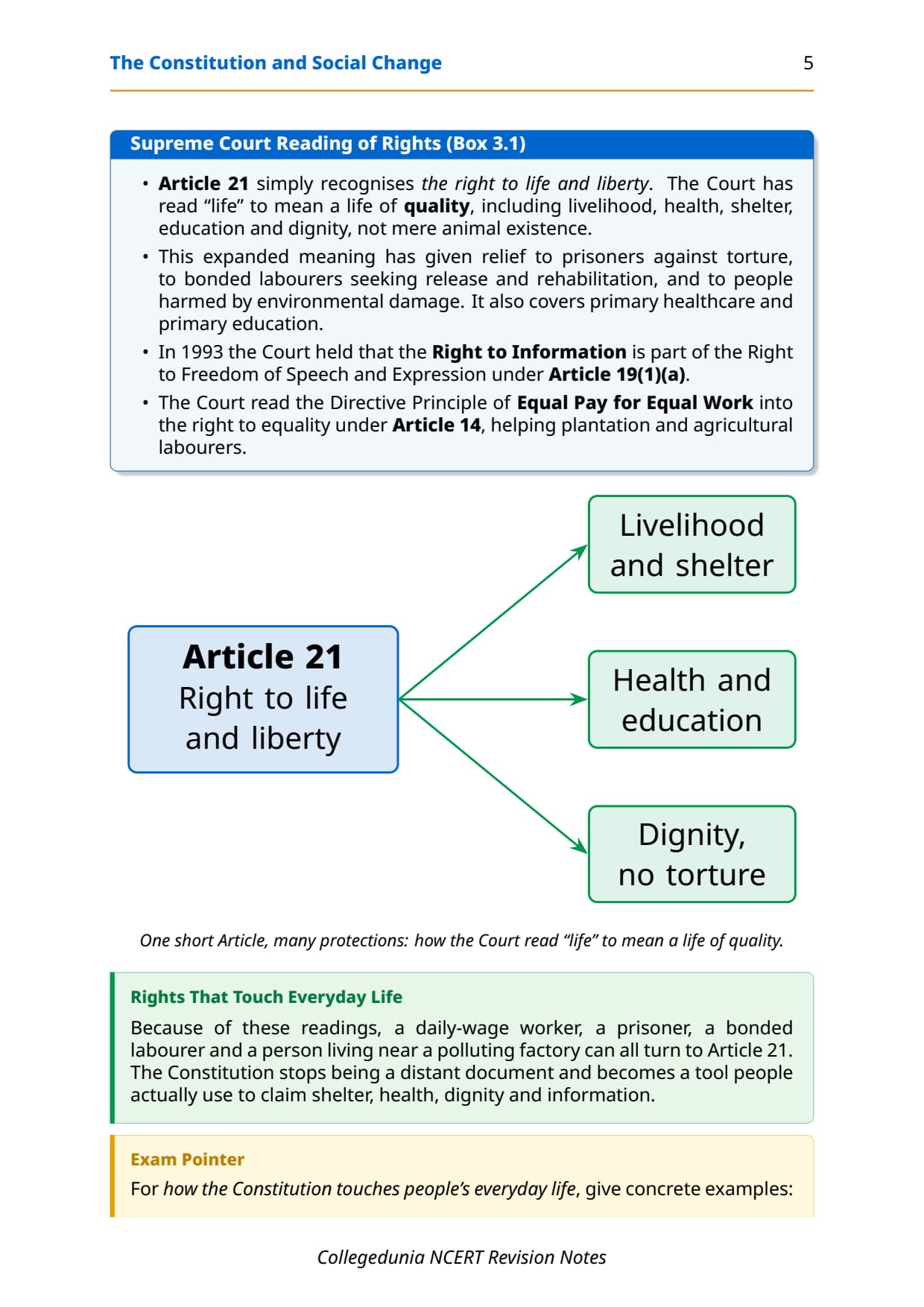
The point to hold on to is that the Constitution both enables and constrains social change. Whenever an answer needs an example, pair an enabling one, such as the right to equality, with a limiting one, such as a check on State power. The card below sums up this living-document idea for quick revision.
The 73rd Amendment and Panchayati Raj
The second block is the most exam-heavy part of the chapter. The 73rd Amendment gave villages a real, constitutional voice, and these Notes keep its key facts in one list for fast recall.
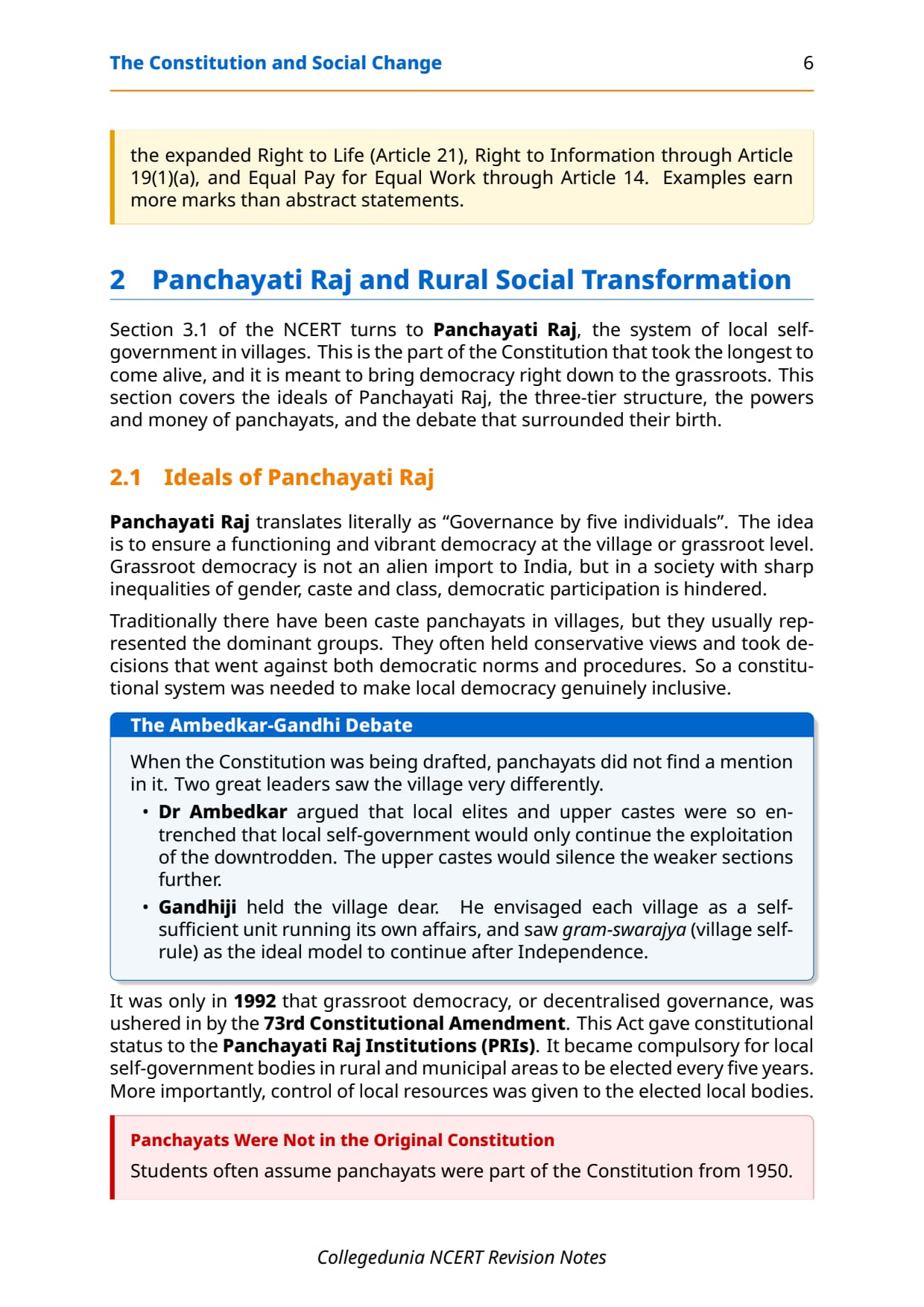
- 73rd Amendment (1992): made Panchayati Raj a constitutional system across rural India.
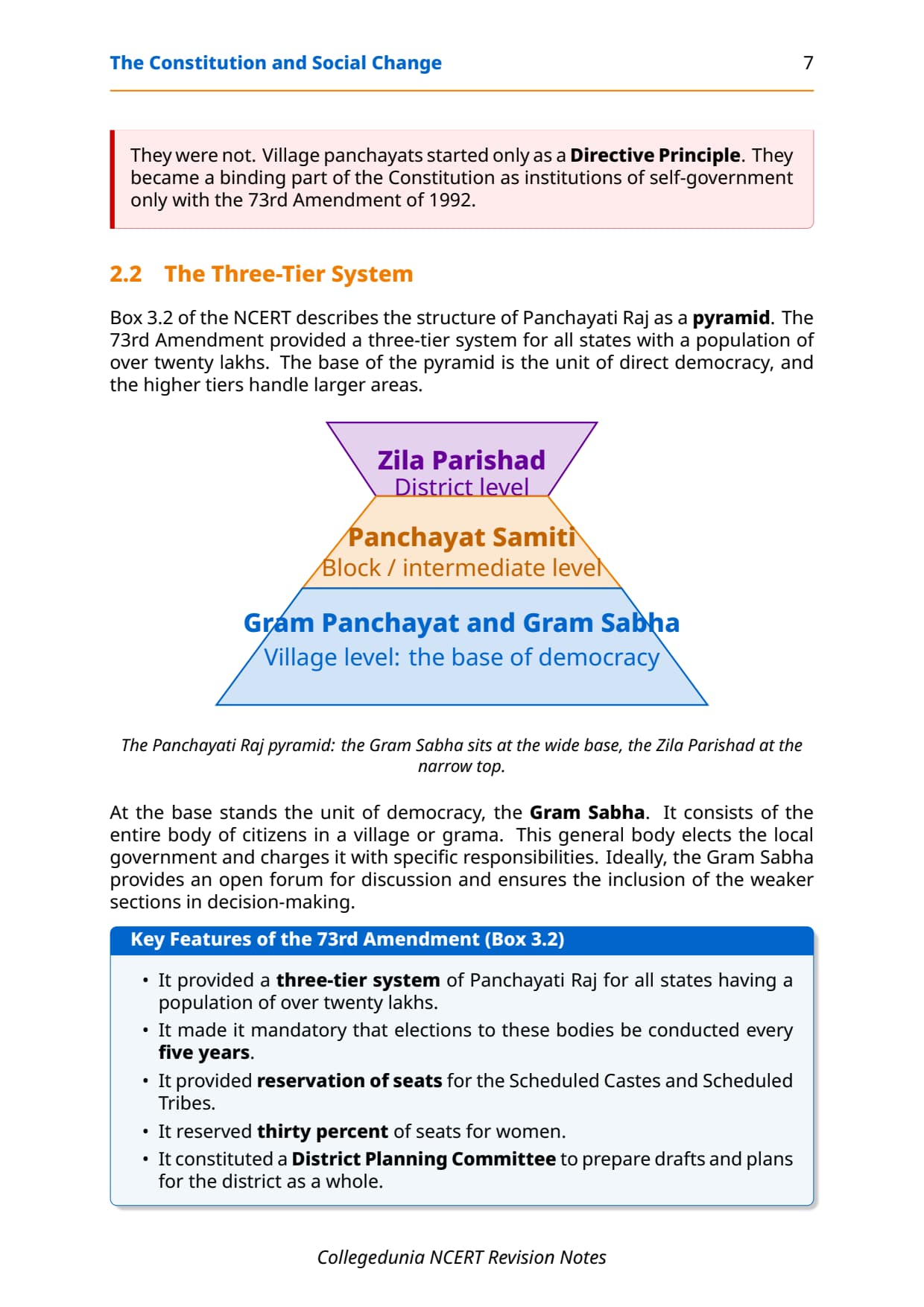
- Three tiers: Gram Panchayat (village), Panchayat Samiti (block) and Zila Parishad (district).
- Gram Sabha: the whole village adult body, which keeps the panchayat answerable.
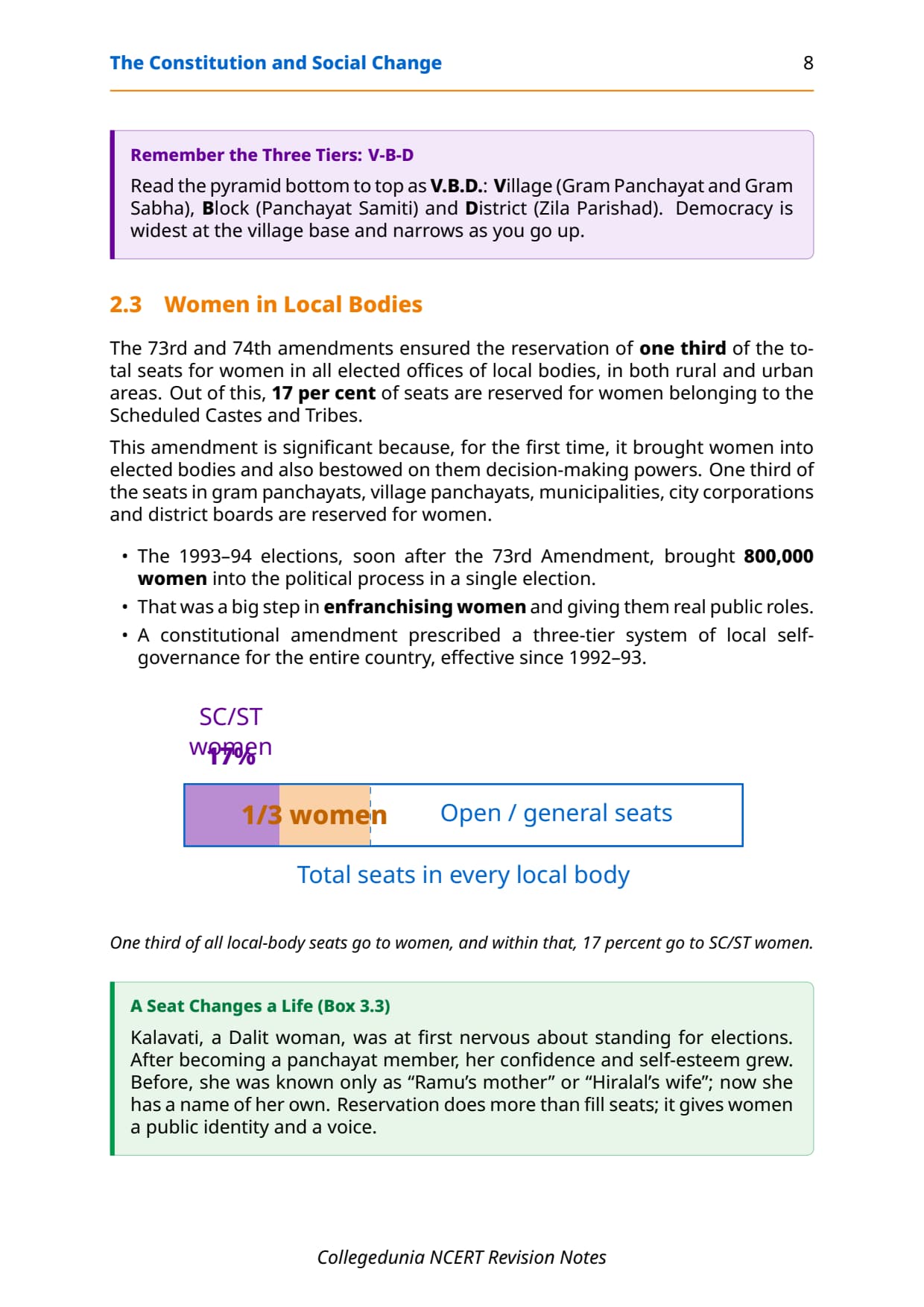
- Reservation: seats reserved for women, Scheduled Castes and Scheduled Tribes.
The honest revision point is that the 73rd Amendment widened who can lead, but elite capture can still weaken it. In a "discuss" answer, praise the reservation of seats and the Gram Sabha, then note that dominant local groups sometimes control decisions. The tree diagram below maps the Constitution's main tools of social change.
Political Parties, Pressure Groups and Interest Groups
The third block covers the bodies that carry citizens' demands to the State. The clean way to revise this is a three-way comparison, which these Notes set out in a table.
| Body | What to recall |
|---|---|
| Political party | Contests elections to capture power and run the government, such as the Congress or BJP. |
| Pressure group | Pushes demands on the State but does not contest elections, such as a trade union. |
| Interest group | Protects a shared interest of its members, such as a farmers' or teachers' body. |
The line to lock in is that only a party seeks office; groups only influence it. Pressure groups and interest groups overlap, but a party wants to govern while a group only wants the government to listen. This single distinction answers most short questions in the chapter.
The Constitution and Social Change Key Terms to Memorise
A handful of terms appear in nearly every answer. Learning them word for word saves time and avoids the most common mix-ups. The list below is the core glossary for the chapter.
- Living document: a Constitution that can be amended to meet new needs.
- Panchayati Raj: a three-tier system of village self-government.
- Gram Sabha: the village adult body that checks the panchayat.
- Pressure group: a body that pushes demands without contesting polls.
- Interest group: a body that protects a shared interest of its members.
Students who can write these five terms in one line each are ready for the class 12 sociology chapter 3 important questions on definitions. Keep them on a single flashcard for the night before the exam.
Quick Revision and Last-Minute Recall
For a fast final pass, these Notes boil the chapter down to a few anchor facts. Reading them the night before the exam fixes the dates and the group definitions without re-reading the whole chapter.
- Constitution adopted: 26 January 1950, a living document.
- 73rd Amendment: 1992, three-tier Panchayati Raj with reserved seats.
- Party seeks office; pressure and interest groups only influence it.
- Fundamental Rights are justiciable; Directive Principles are not enforceable.
- Always give one enabling and one limiting example of the Constitution.
Students who memorise these five anchors usually answer the short questions with no hesitation. Pair the anchors with the key-terms glossary above for a complete one-page revision.
How These Notes Pair with the Solutions and Book PDF
These Notes summarise the chapter. To prepare fully, students should use them alongside the other resources for the same chapter, all linked in the table below.
| Resource | Best used for |
|---|---|
| The Constitution and Social Change Class 12 NCERT Solutions | Full point-wise answers to all 6 exercise questions |
| The Constitution and Social Change Handwritten Notes | Last-minute, one-shot revision in a scanned notebook style |
| The Constitution and Social Change NCERT Book PDF | Reading the original NCERT chapter text |
Tip: read these Notes first, then attempt the NCERT Solutions on your own, and check the model answers last. That order builds memory faster than copying answers straight away.
All Notes for Class 12 Sociology
The table links the Notes for every chapter in both Class 12 Sociology books, so students can move across the course in one click. The Constitution and Social Change is highlighted.
| Chapter | Notes |
|---|---|
| Indian Society | |
| Chapter 1 | Introducing Indian Society |
| Chapter 2 | The Demographic Structure of the Indian Society |
| Chapter 3 | Social Institutions - Continuity and Change |
| Chapter 4 | The Market as a Social Institution |
| Chapter 5 | Patterns of Social Inequality and Exclusion |
| Chapter 6 | The Challenges of Cultural Diversity |
| Social Change and Development in India | |
| Chapter 1 | Structural Change |
| Chapter 2 | Cultural Change |
| Chapter 3 | The Constitution and Social Change |
| Chapter 4 | Change and Development in Rural Society |
| Chapter 5 | Change and Development in Industrial Society |
| Chapter 6 | Globalisation and Social Change |
| Chapter 7 | Mass Media and Communications |
| Chapter 8 | Social Movements |
FAQs on The Constitution and Social Change Class 12 Notes
The Constitution and Social Change Class 12 Sociology Notes Common Questions
Ques. Where can I download the class 12 sociology chapter 3 Notes PDF?
Ans. You can download the The Constitution and Social Change Class 12 Sociology Notes PDF directly from this page. It is free, follows the 2026-27 NCERT, and gives a one-page summary of the whole chapter.
Ques. What are the main topics in The Constitution and Social Change class 12 notes?
Ans. The Notes cover three blocks: the Constitution as a living document, the 73rd Amendment and Panchayati Raj, and the three kinds of bodies that carry demands to the State, which are political parties, pressure groups and interest groups.
Ques. Why is the Constitution called a living document?
Ans. Because it can be amended over time, so it keeps pace with new social needs. It both enables reform, such as ending untouchability, and limits the power of the State, which is why it is a tool of social change and not just a rulebook.
Ques. What is the difference between a pressure group and a political party?
Ans. A political party contests elections to capture power and run the government. A pressure group does not contest elections; it only pushes demands on the State, such as a trade union. The clean line is that a party seeks office while a group only influences it.
Ques. Are these Notes enough for the board exam?
Ans. The Notes are best for revision and quick recall. For the full marks, pair them with the NCERT Solutions for the 6 exercise questions and read the original NCERT chapter once, both linked on this page.



Comments