



These Class 12 Sociology Chapter 3 Social Institutions Continuity and Change Notes sum up the whole chapter for fast revision, set to the 2026-27 CBSE syllabus. They cover the three core institutions of the chapter: the caste system, the tribe and the family, with every key term in one place.
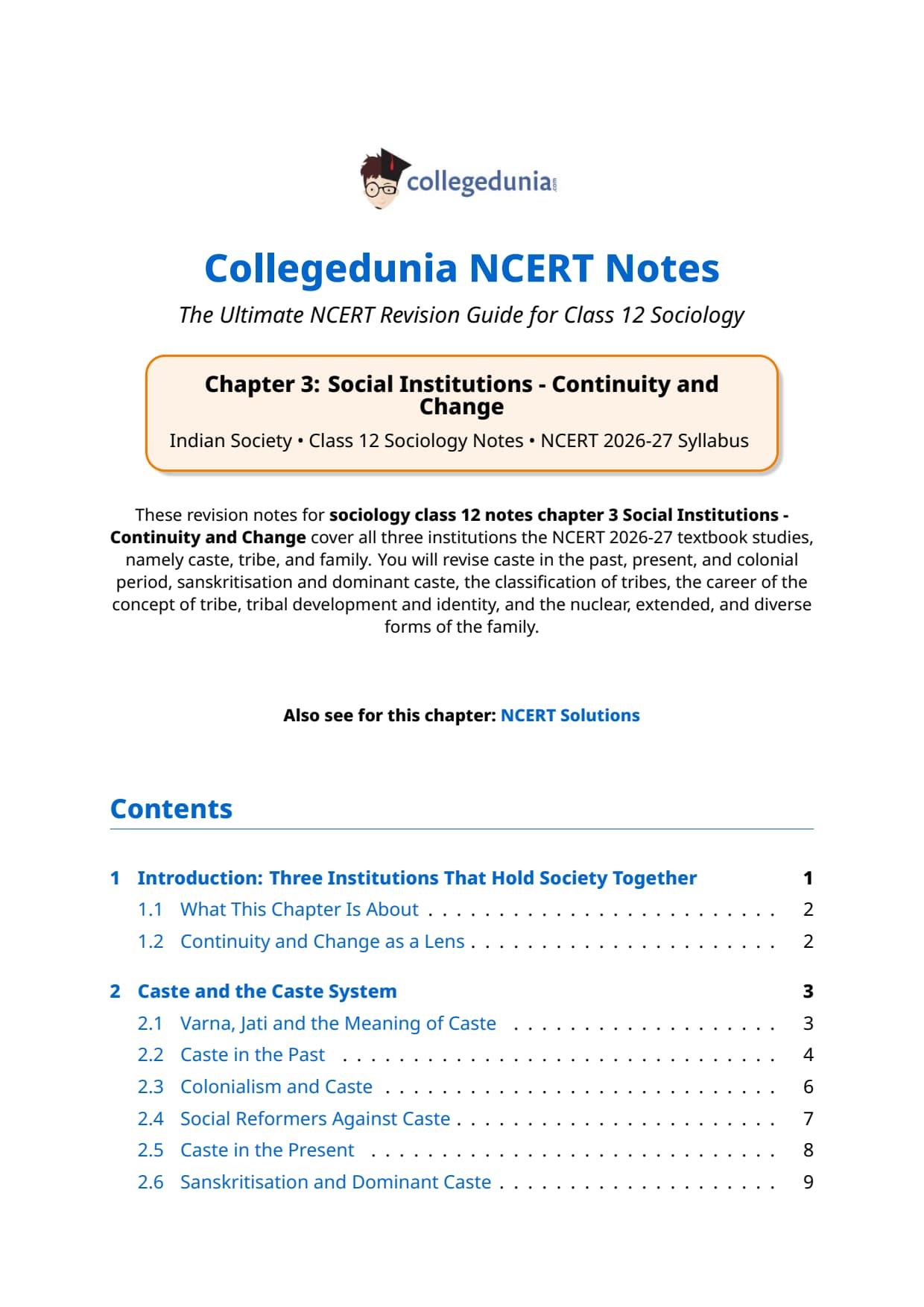
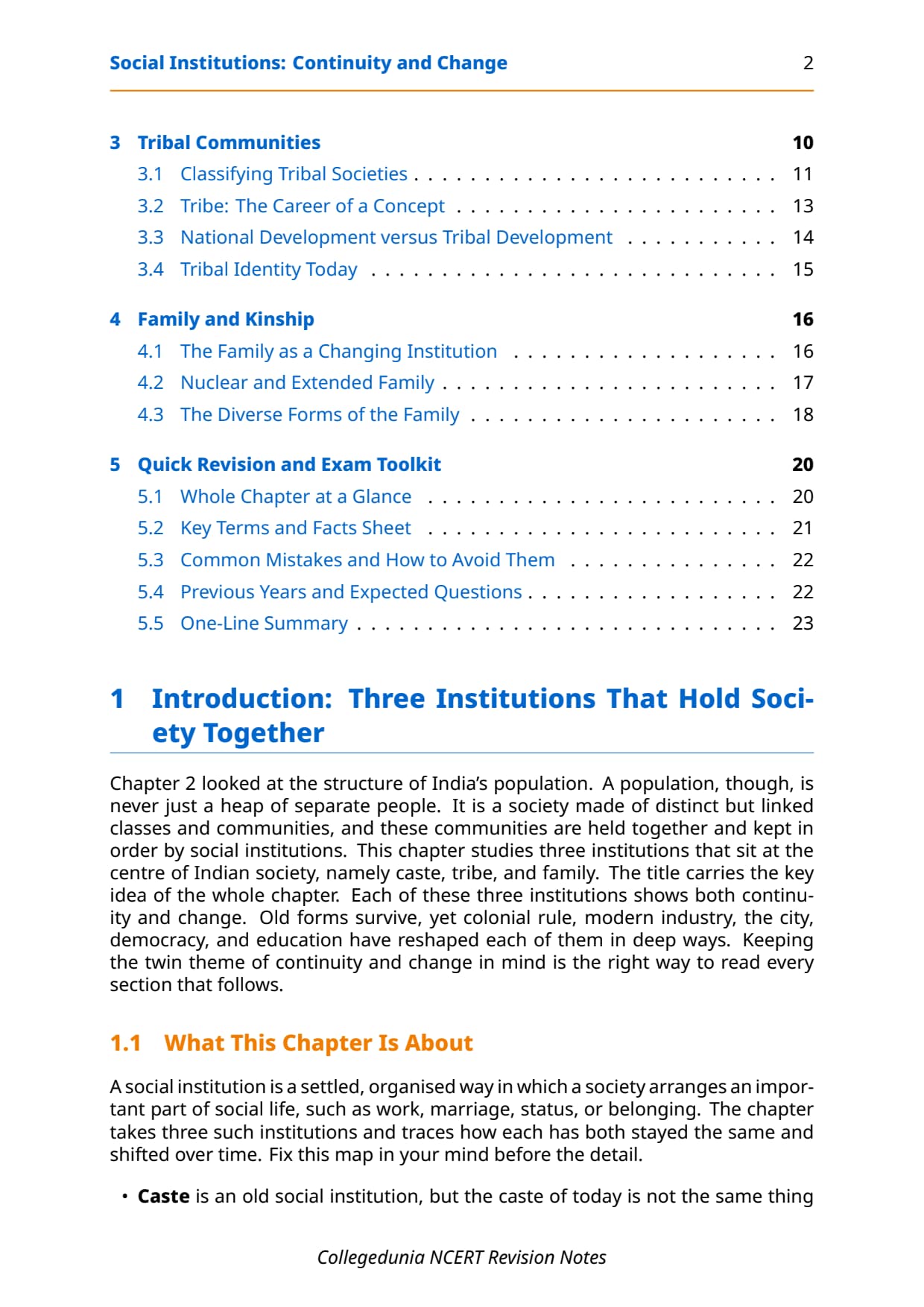
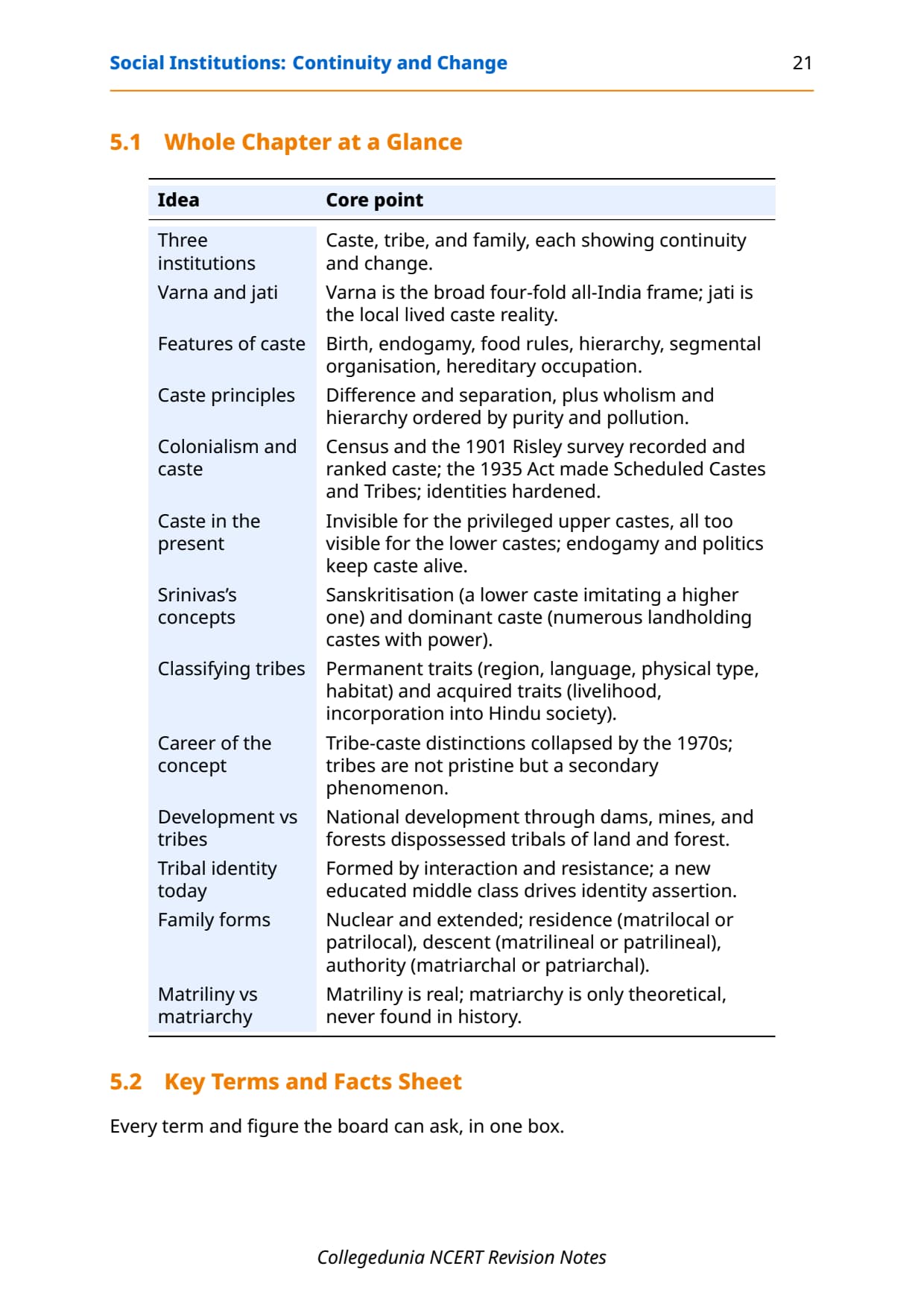
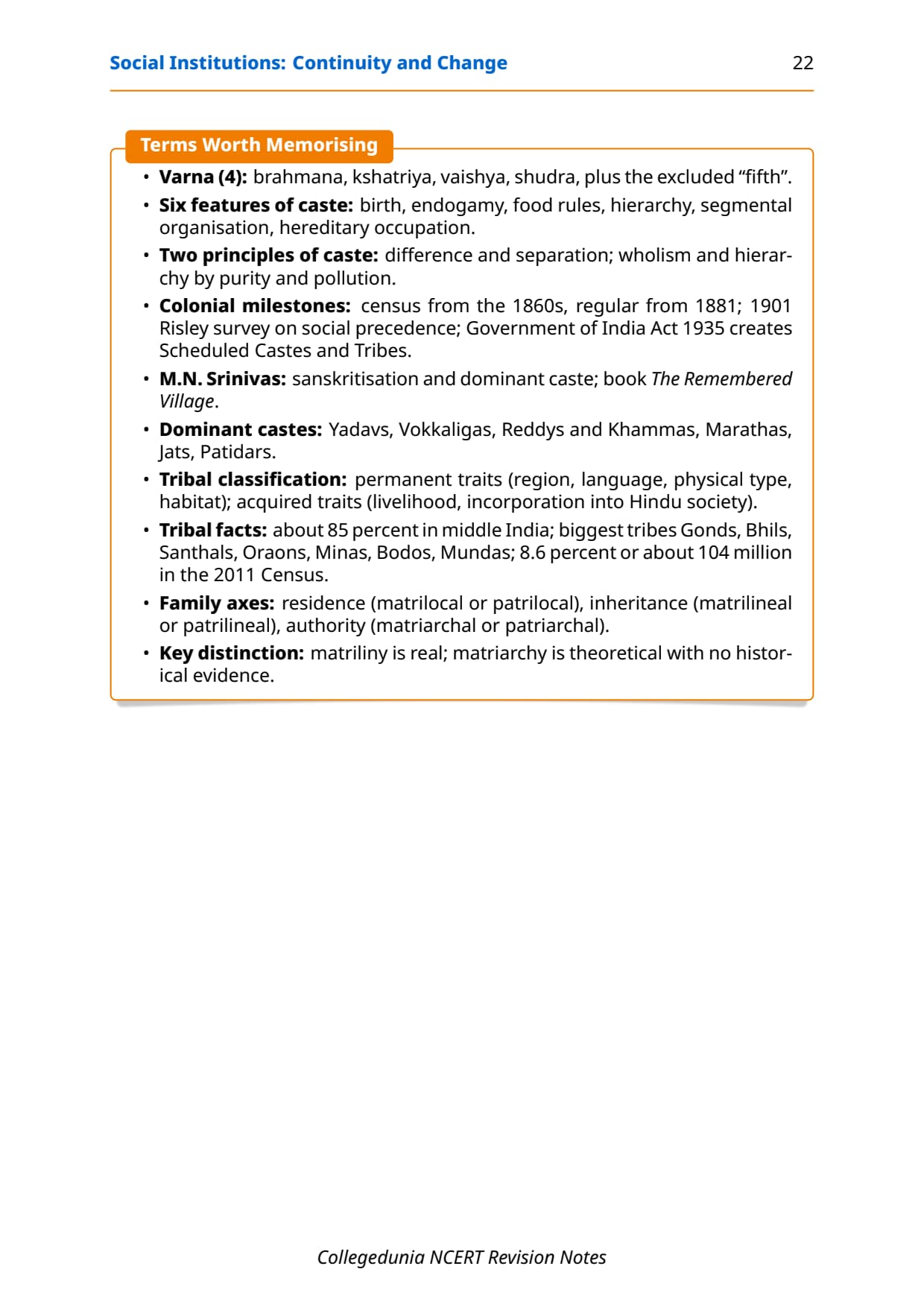
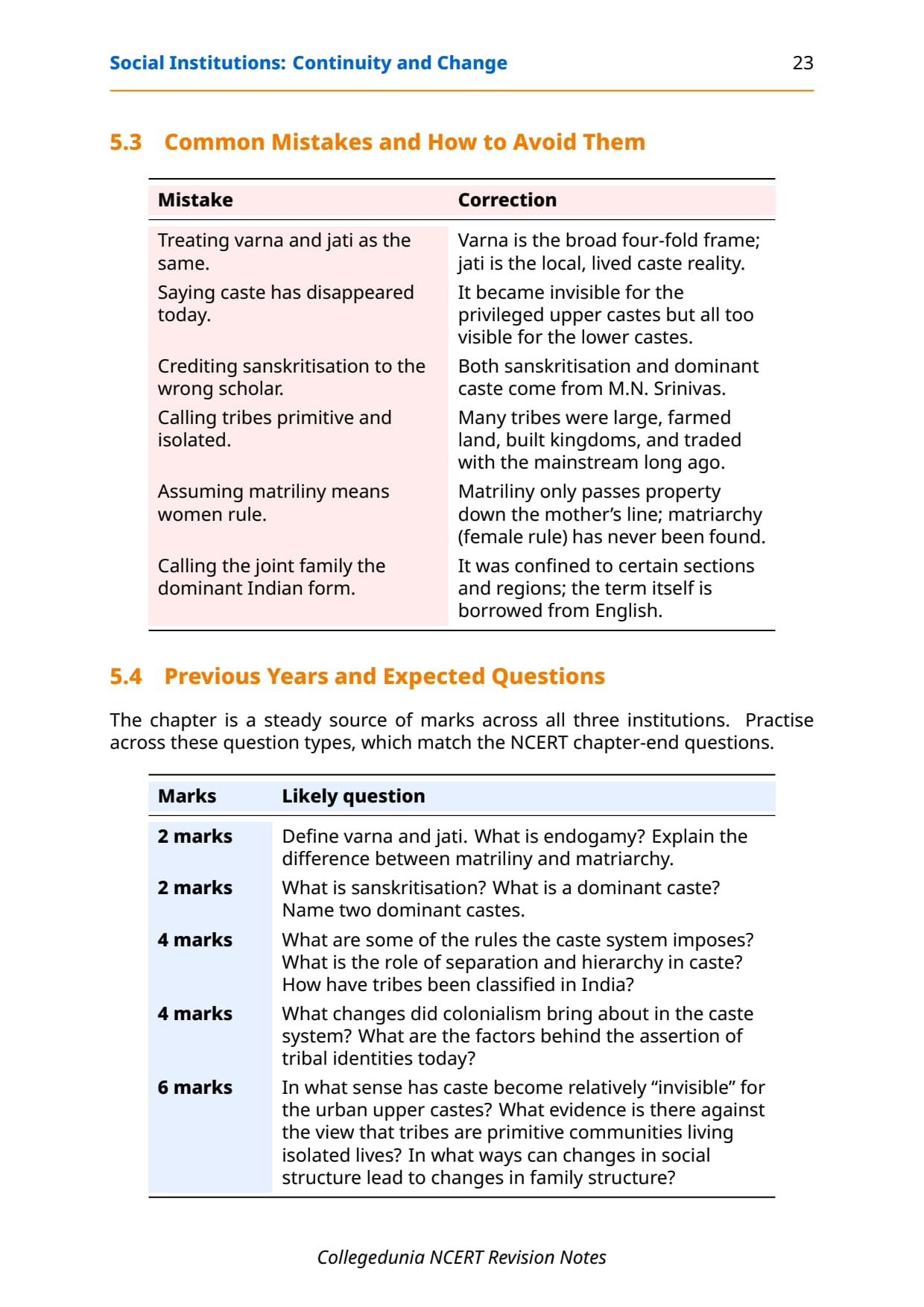
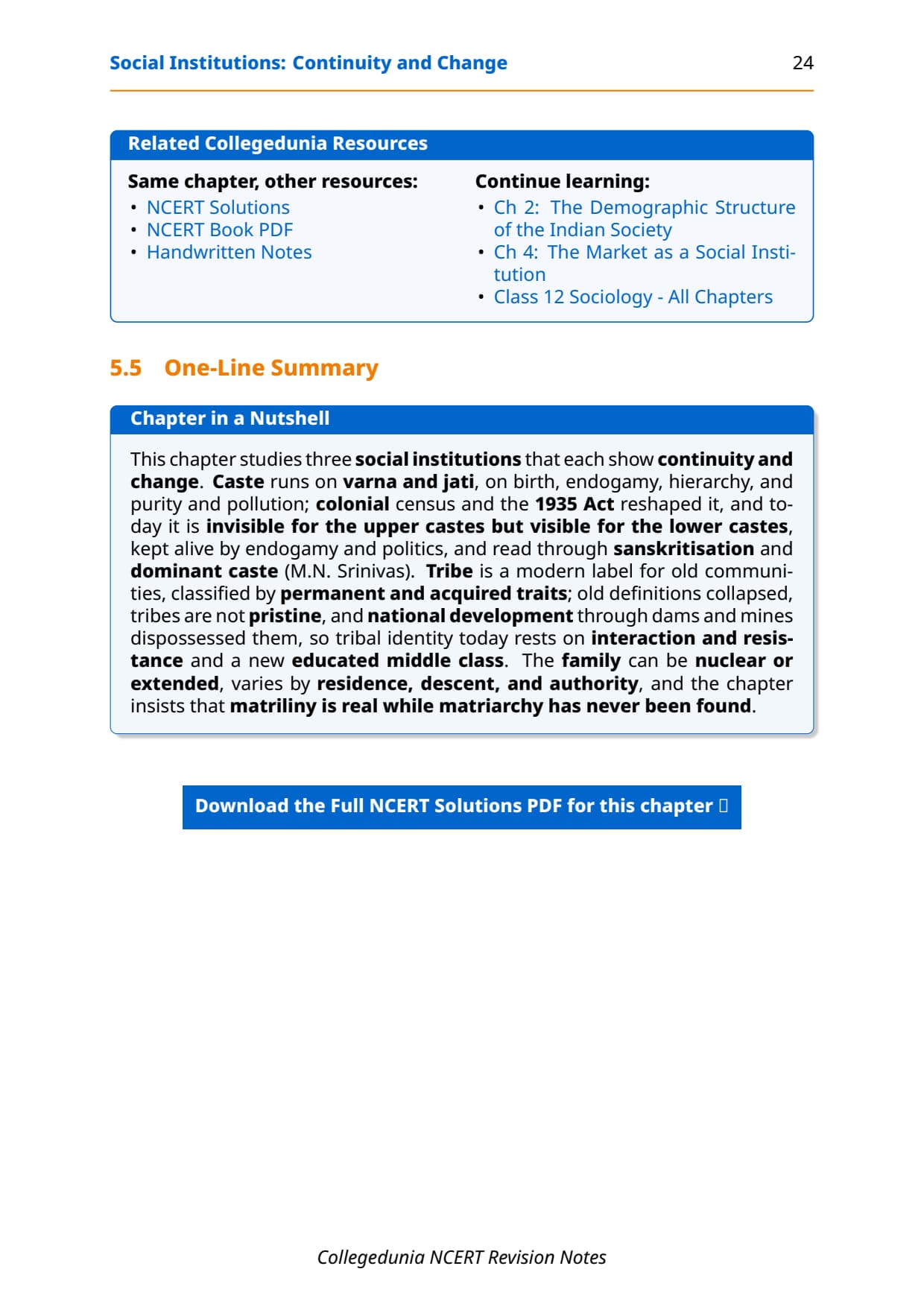
- One-page revision of caste, tribe and family, built around continuity and change.
- This Class 12 Sociology chapter usually carries 5 to 6 marks per board paper.
- Pairs with the NCERT Solutions, Handwritten Notes and NCERT Book PDF linked lower on this page.
These Class 12 Sociology Chapter 3 Notes are written by subject experts from the official NCERT Indian Society textbook, with every fact mapped to the latest 2026-27 syllabus.
Student Feedback: In a Collegedunia poll of 8,140 Class 12 Sociology students, 70% of students said a one-page split of caste, tribe and family made this chapter far quicker to revise. Most students wanted the matriliny and matriarchy difference summed up in a single line.
Source: 2026-27 Class 12 Sociology student poll. Sample of 8,140 students from CBSE schools across 12 states.
Social Institutions Continuity and Change Class 12 Notes Overview
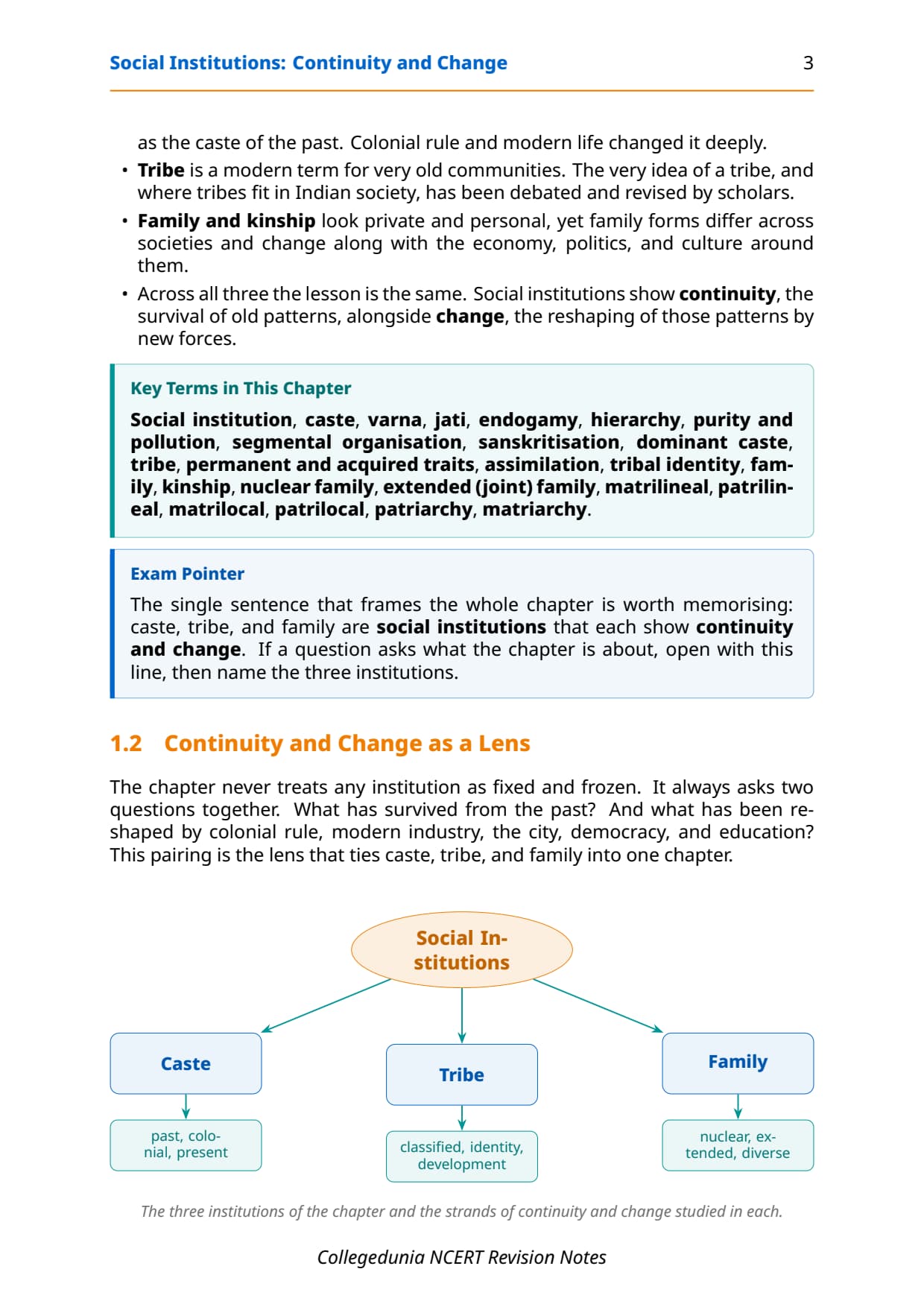
This chapter studies how three institutions of Indian life, caste, tribe and family, both hold steady and slowly change. The theme of continuity and change is the thread that ties the whole chapter together, so keep it in mind for every section.
For quick revision, sort the chapter into three blocks and ask the same two questions of each:
- Caste: what holds it together (separation and hierarchy), and what changed it (colonial rule, the city).
- Tribe: how tribes are classified, and why tribal identity is rising today.
- Family: the forms it takes, and how it shifts with the wider social structure.
A student who keeps these three blocks separate can revise the whole chapter in one sitting. The trick is to learn the features first, then the changes, because most board questions ask for one or the other.
Key Terms and Definitions for Quick Revision
The chapter rests on a handful of terms that come up again and again in the board paper. Learn these first, because a clear definition often earns the opening mark of any answer.
| Term | Meaning to recall |
|---|---|
| Caste | A closed system of ranked, hereditary groups fixed by birth. |
| Endogamy | The rule that members marry only within their own caste. |
| Sanskritisation | A lower caste adopting upper-caste rituals to raise its rank. |
| Tribe | A community defined by shared territory, language and culture, outside caste. |
| Matriliny | Descent and property traced through the mother, not the father. |
Keep these five terms on a single flashcard. Examiners often hide a definition inside a longer question, so a student who knows them cold can pick up easy marks before tackling the harder analysis.
Caste: Separation, Hierarchy and Its Changes
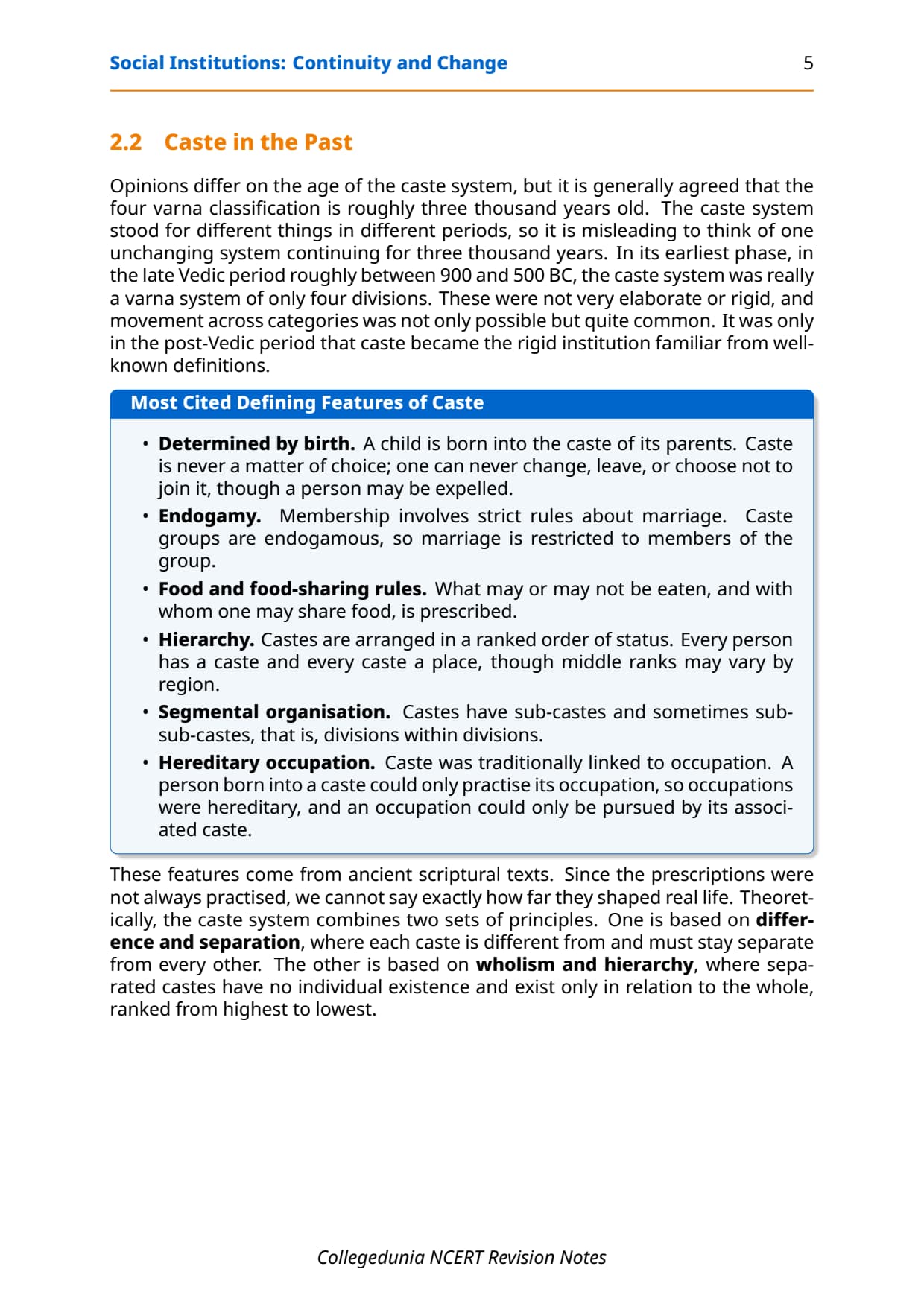
Caste is the most asked institution in this chapter, so it deserves the most revision time. Hold on to two ideas, then the list of changes.
- Separation: rules on marriage, food and contact keep castes apart.
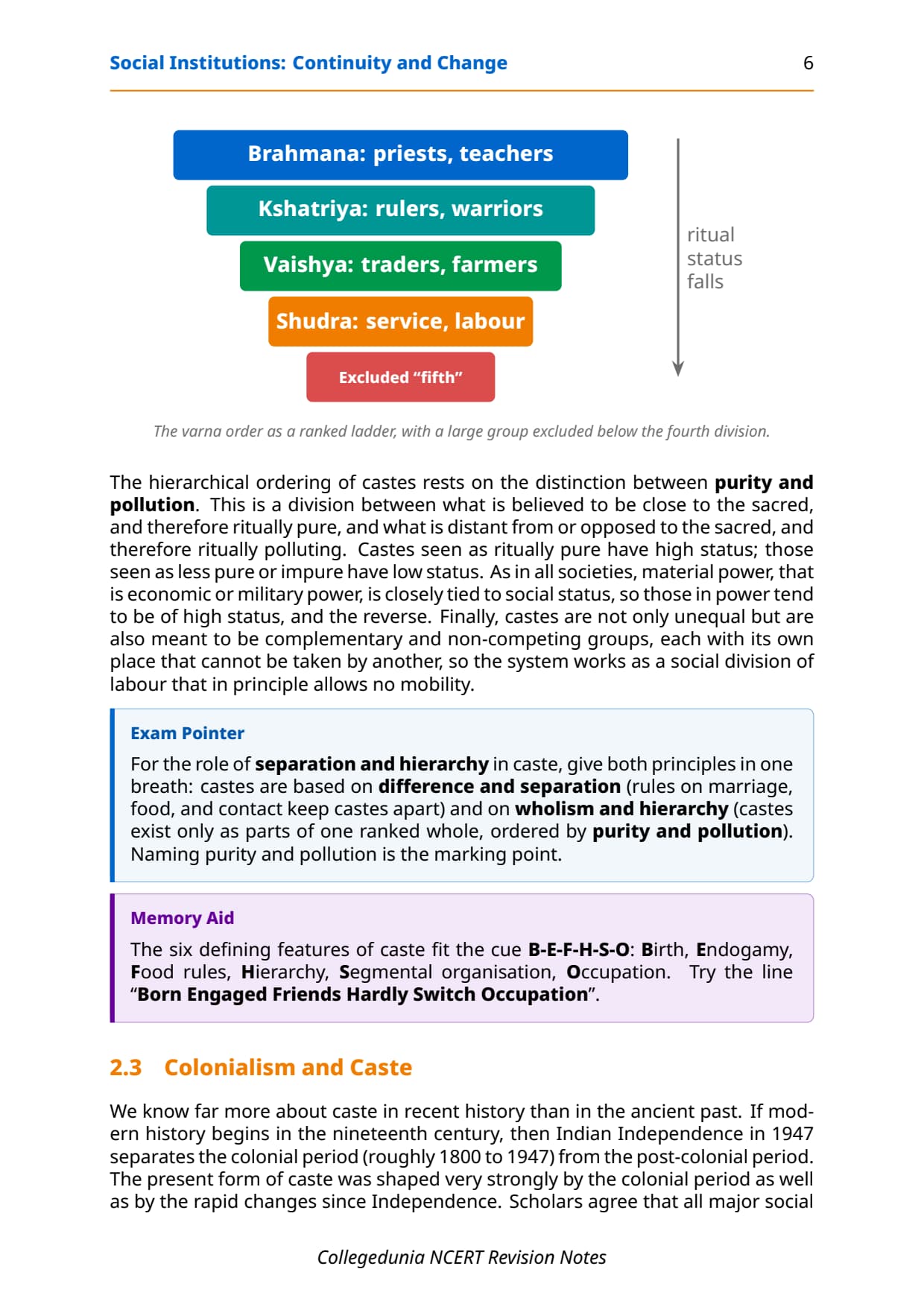
- Hierarchy: castes are ranked from pure to impure, fixed by birth.
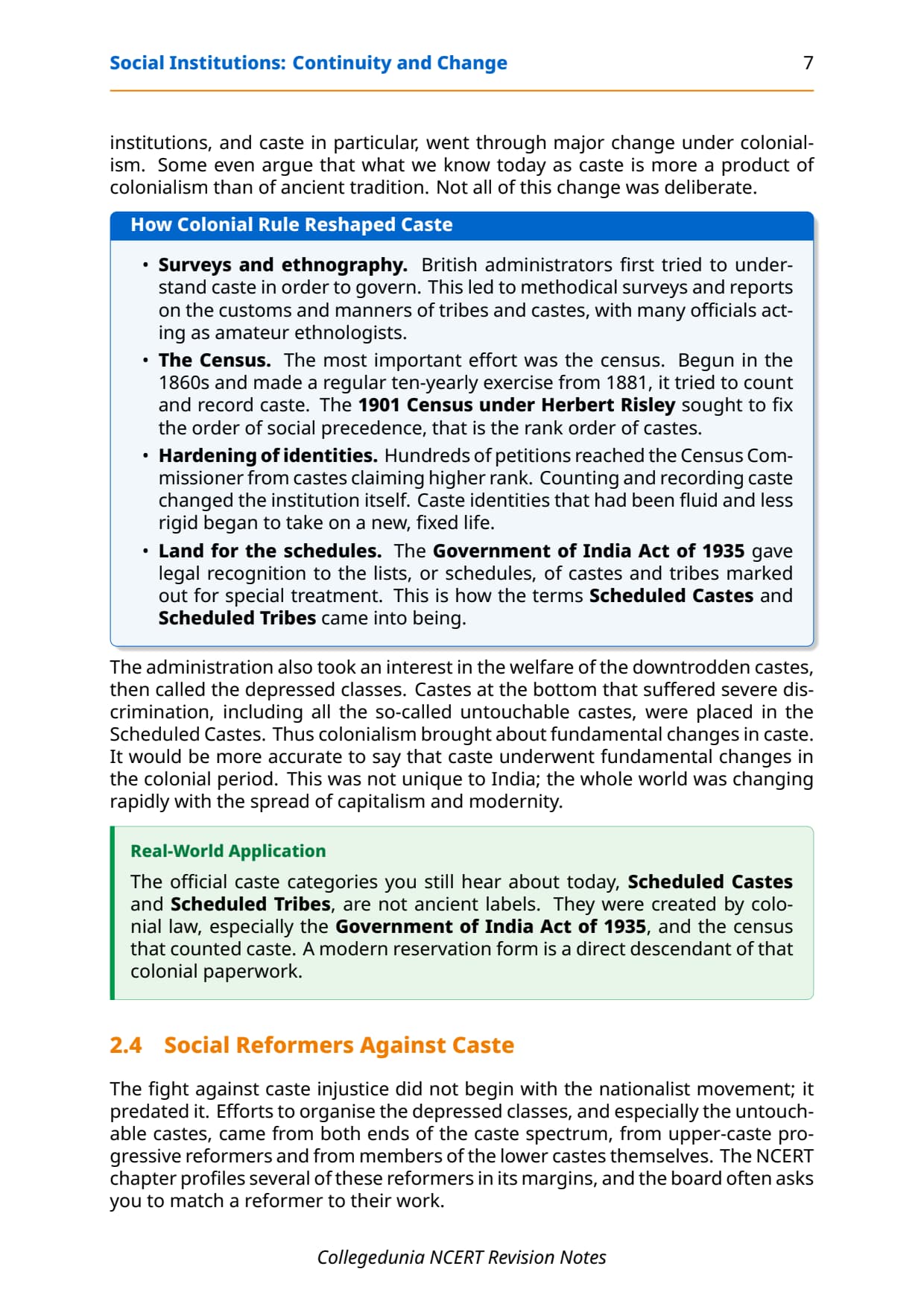
- Colonial change: the 1901 census counted and ranked castes, making them more rigid.
- Urban change: caste turns invisible for the upper castes, who now read their gains as merit.
The single point to remember is that caste did not disappear; it changed form. Colonial rule hardened it, and city life hid it for those it helps. A balanced revision note keeps both the old features and the new changes side by side.
Tribe: Classification and Identity Today
The tribe block has two halves, and the board often asks for both. Revise the classification first, then the reasons identity is rising.
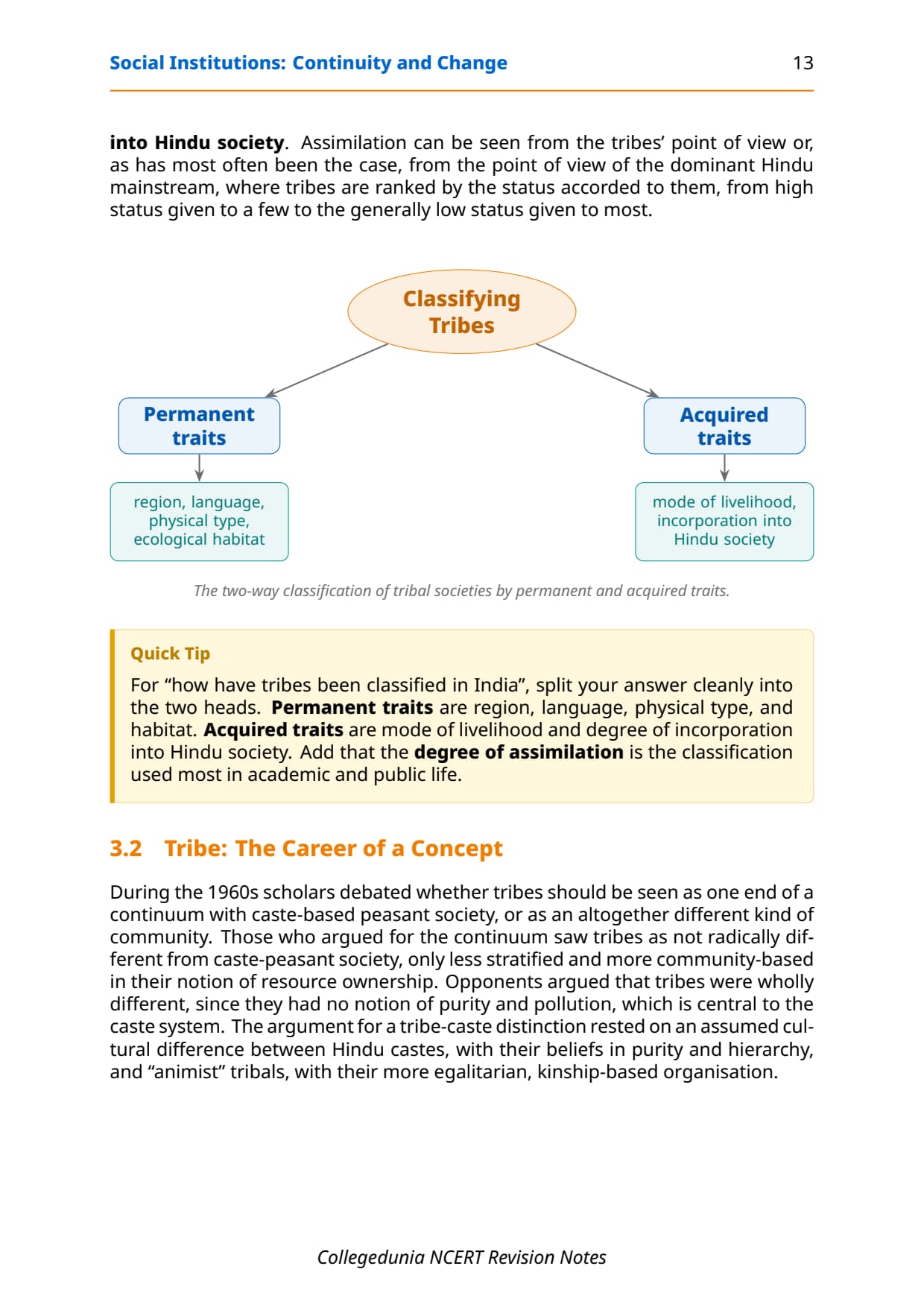
- By region: mostly the central tribal belt and the North East.
- By language: Indo-Aryan, Dravidian, Austric and Tibeto-Burman families.
- By livelihood: from hunting and fishing to shifting and settled farming.
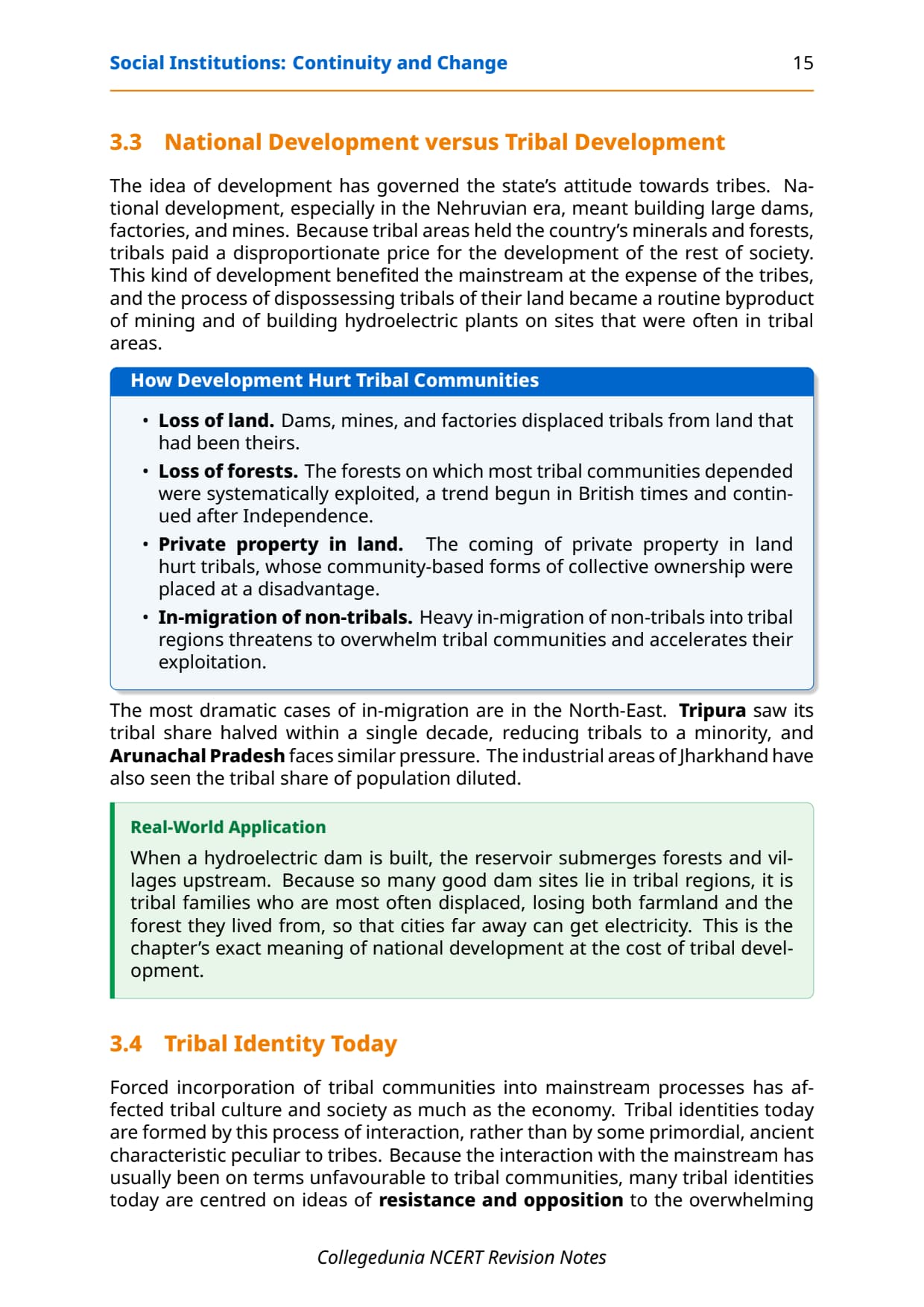
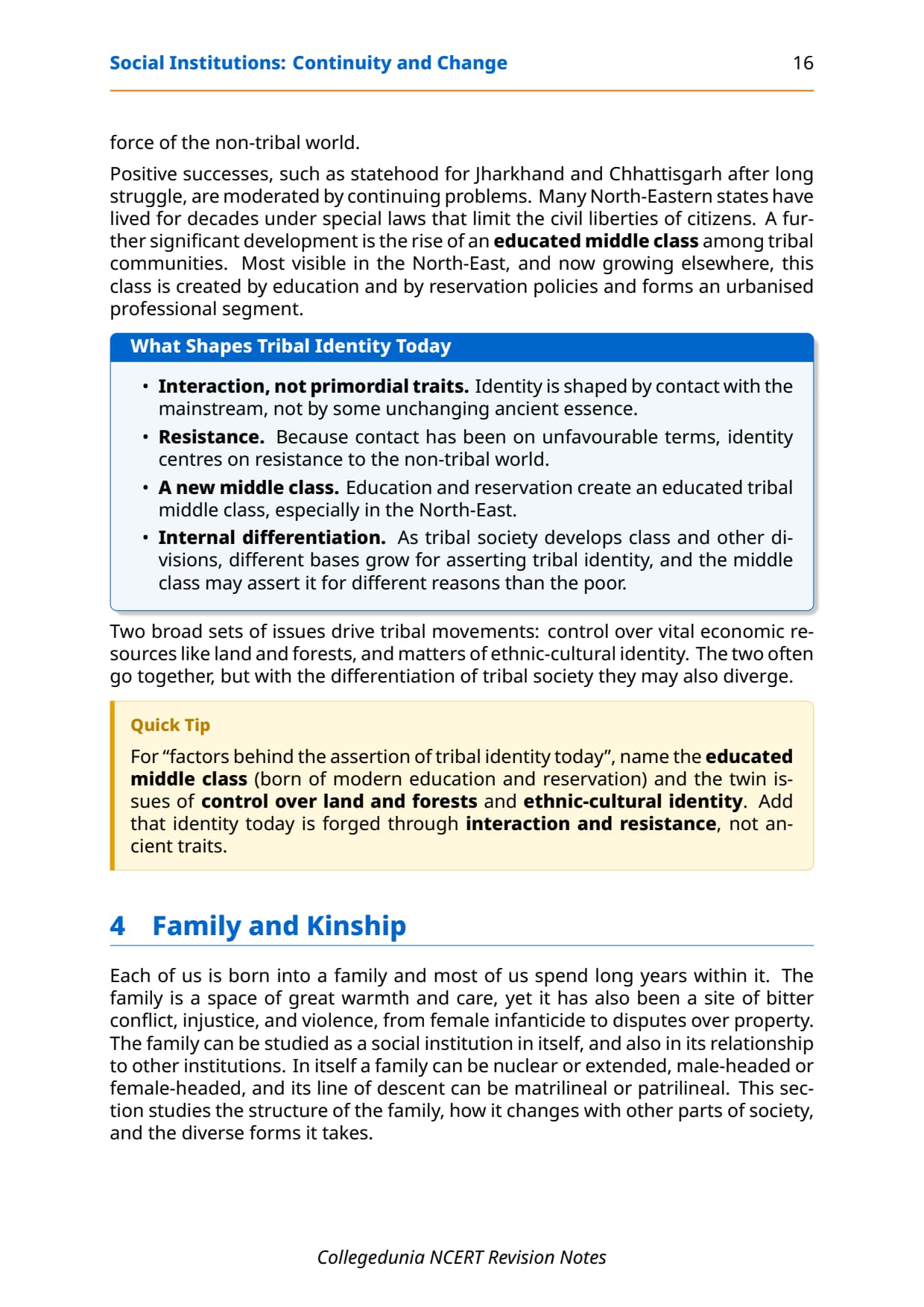
- Identity today: built around land and forest rights, education, and a sense of being left out of development.
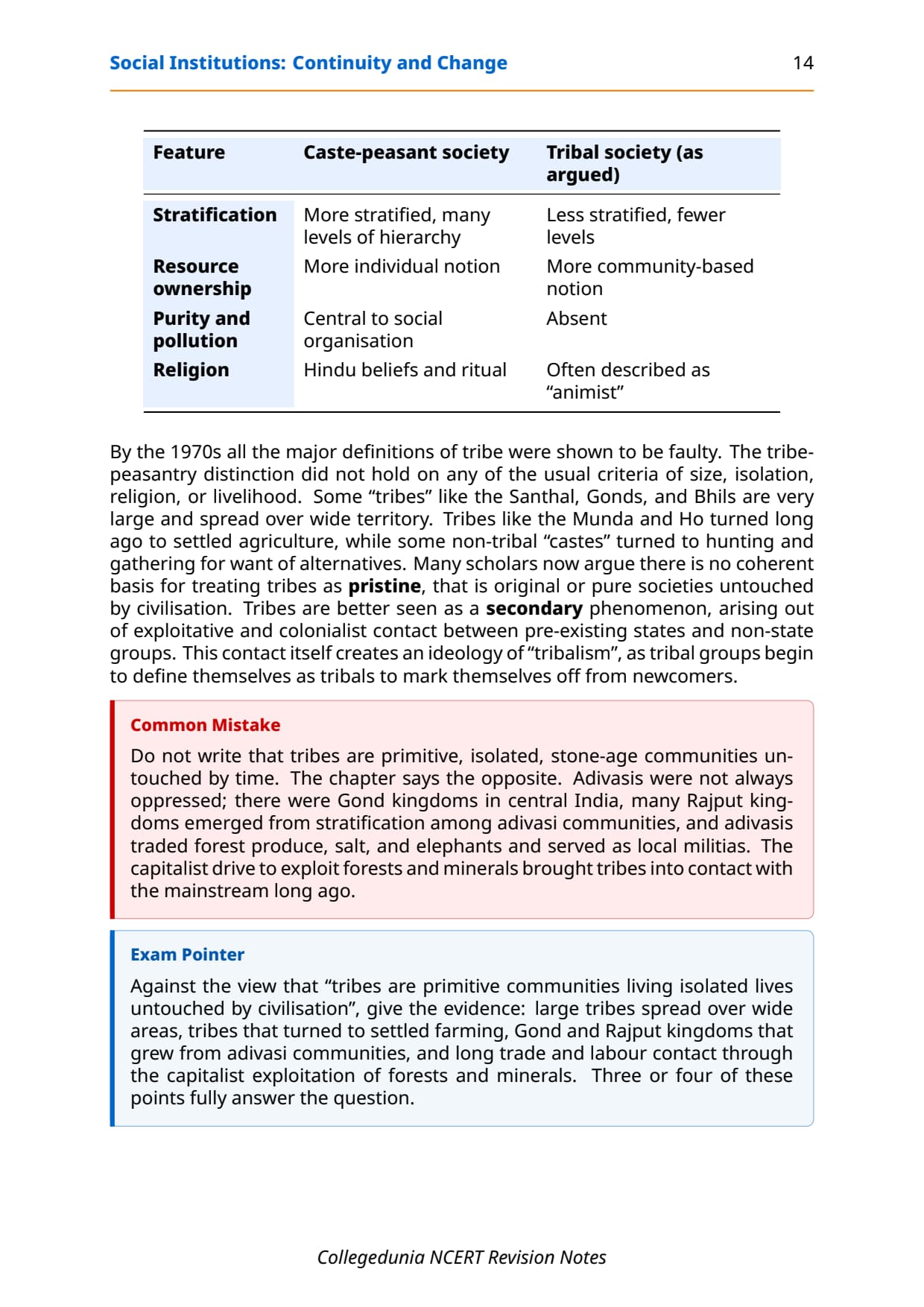
The honest revision point is that tribes are not primitive or isolated. They have long traded with settled society and shared in regional cultures, so any answer that calls them cut off loses marks. Pair the classification with the reasons for identity assertion for a full answer.
Family: Forms and How It Changes
The family block closes the chapter and holds the most-confused pair of terms. Learn the forms, then the one difference that trips most students.
| Form | What it means |
|---|---|
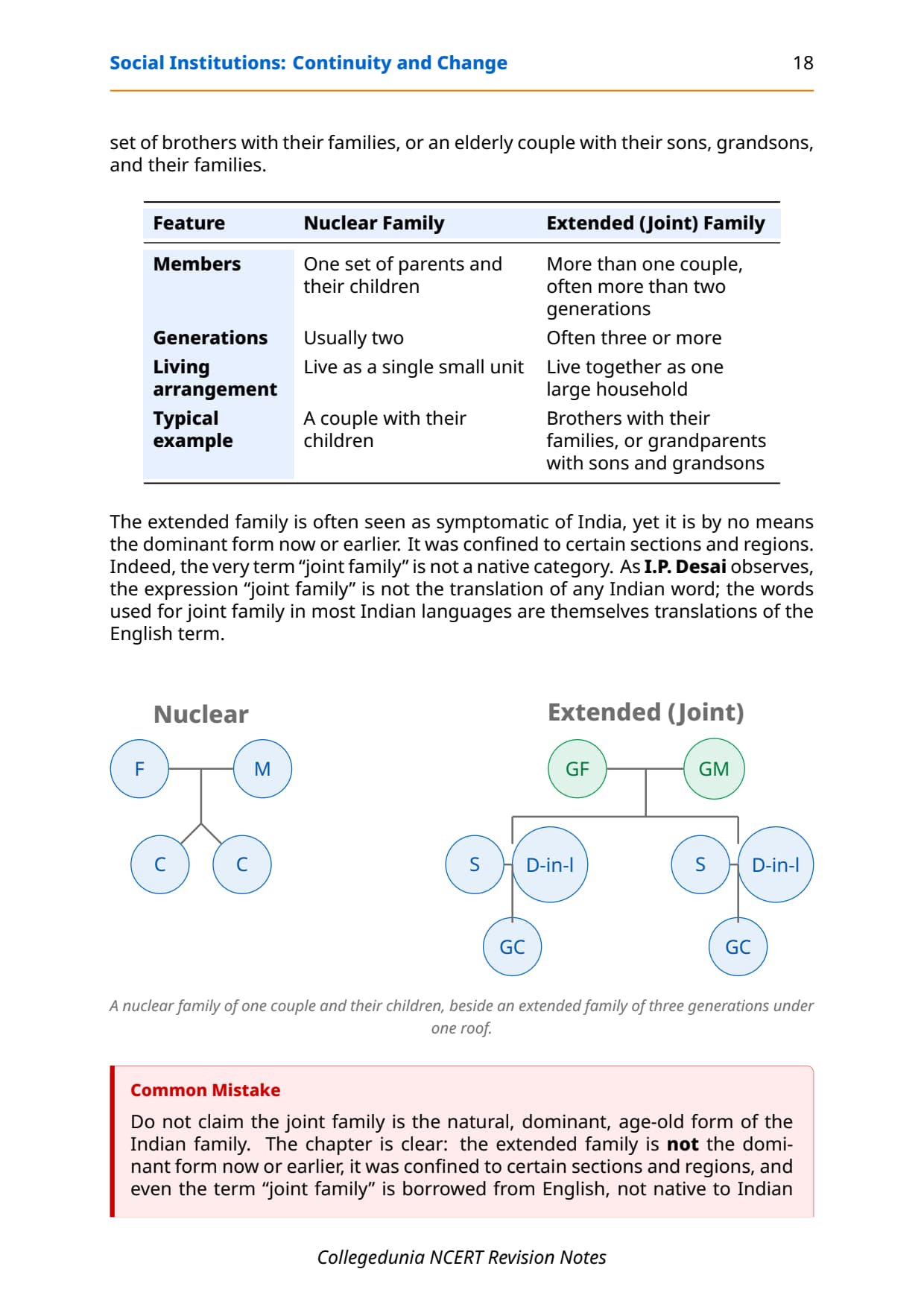
| Nuclear | Parents and their children as one small unit. |
| Joint or extended | Several generations and kin sharing a home. |
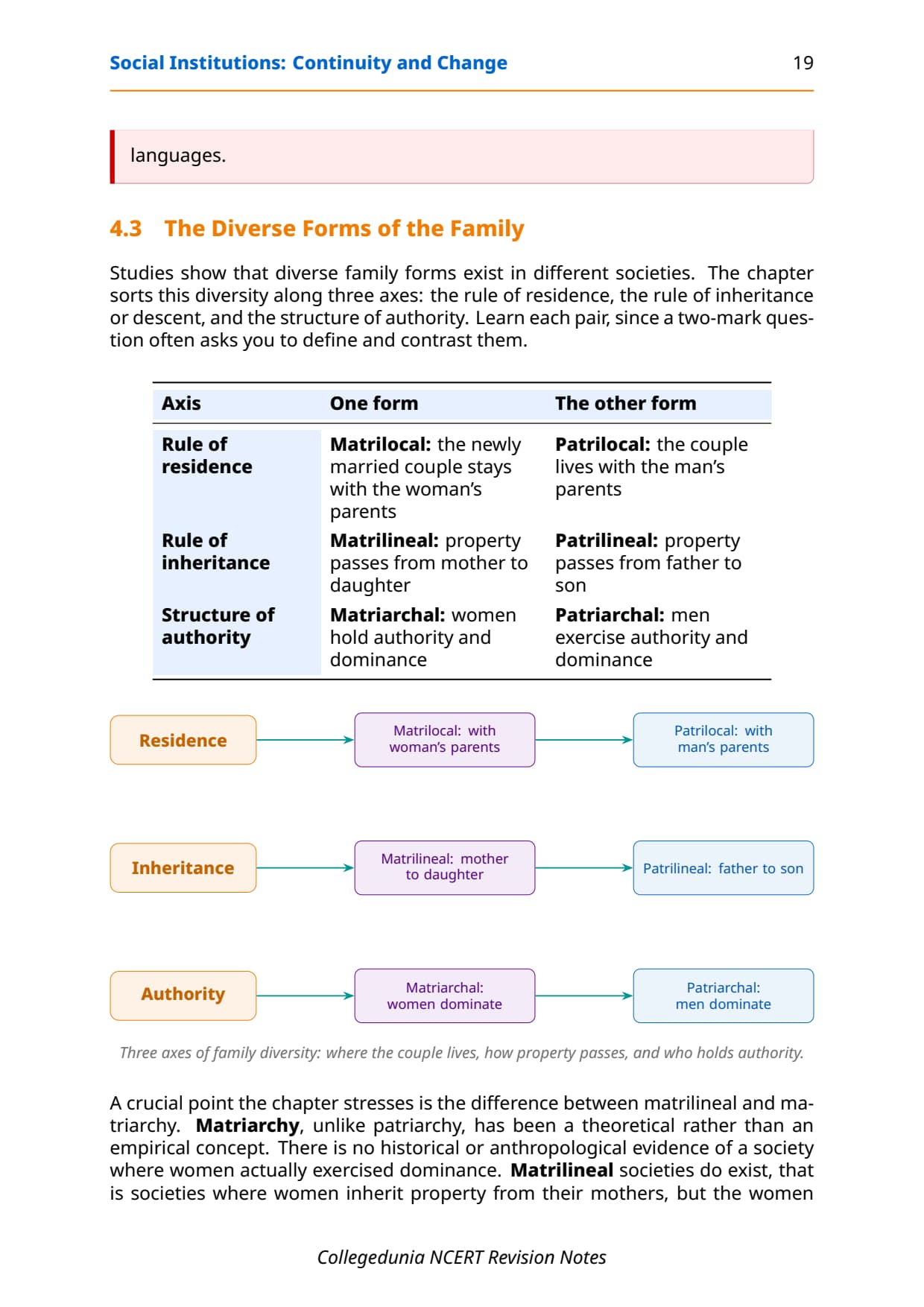
| Matrilineal | Descent and property through the mother, as among the Khasi and Garo. |
| Patrilineal | Descent and property through the father, the common Indian form. |
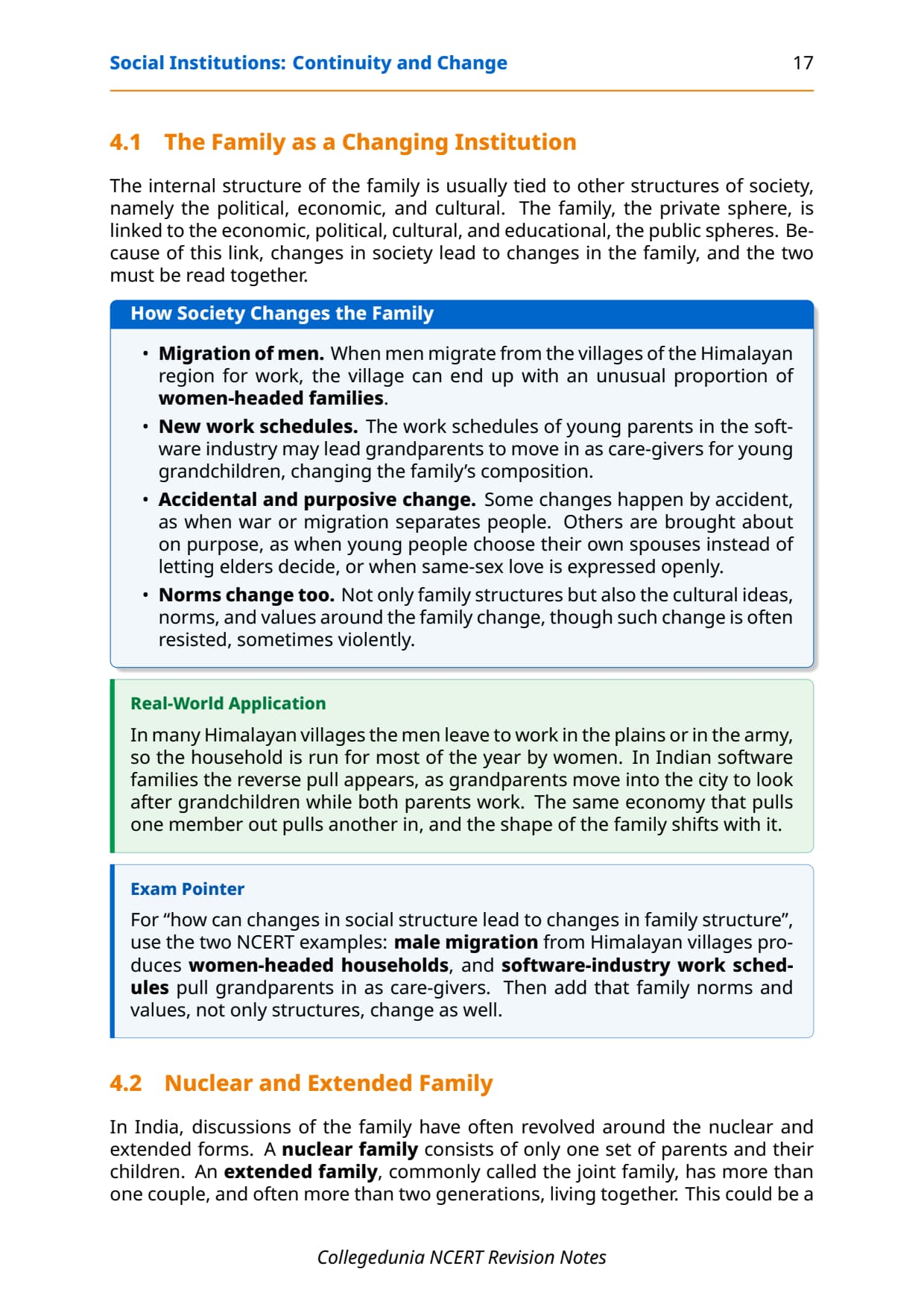
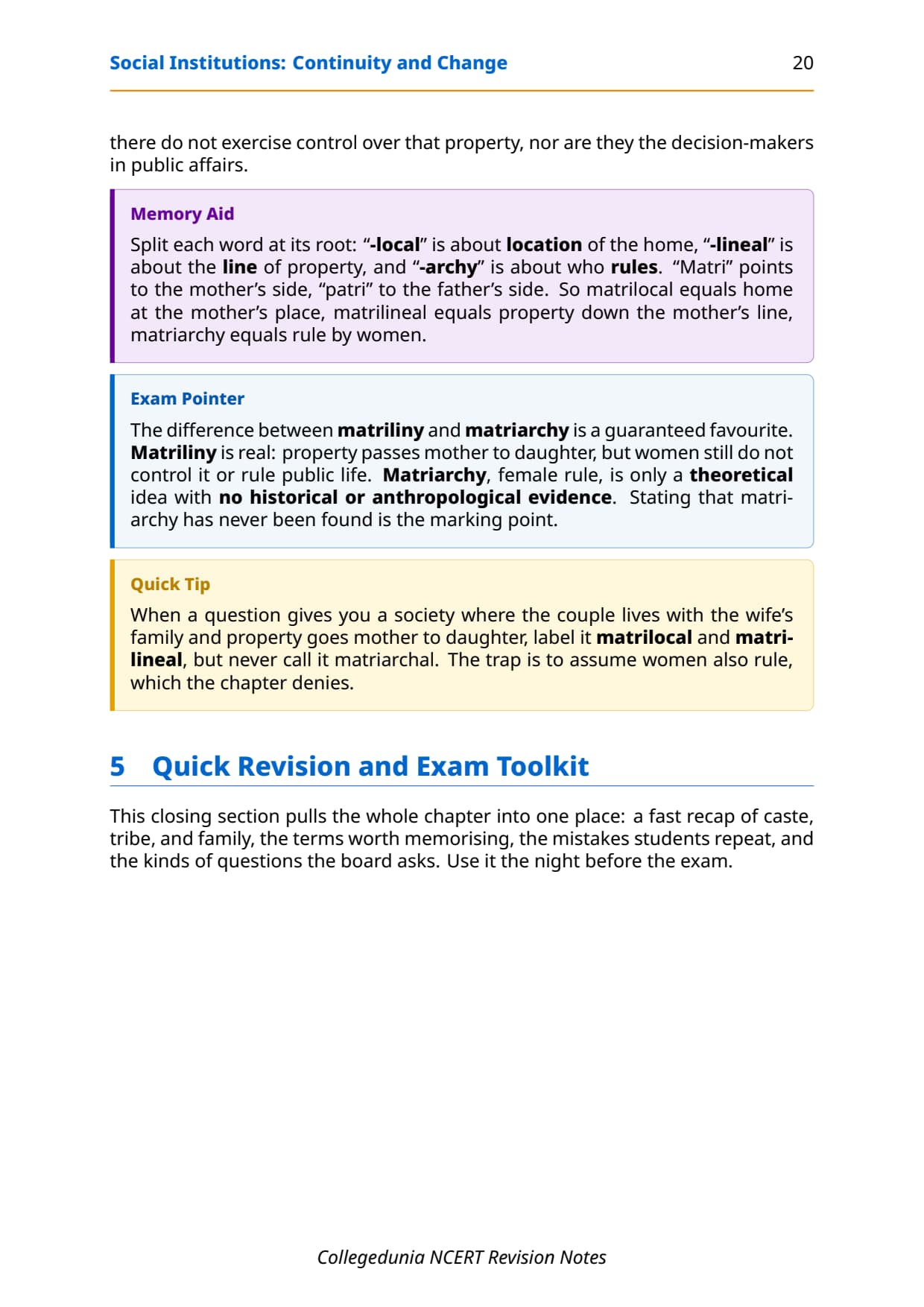
The line to memorise is that matriliny is not matriarchy. Matriliny traces descent through women, but men still hold public power; matriarchy means women rule and has never truly existed. The family also changes with society, so factory work and migration push joint families towards nuclear ones.
Social Institutions Continuity and Change Revision Table
This single table puts the whole chapter in one view. Use it on the last night before the exam to check that you can recall the feature and the change for each institution.
| Institution | Continuity (what stays) | Change (what shifts) |
|---|---|---|
| Caste | Separation and hierarchy, marriage and food rules | Census made it rigid; city life hid it for the upper castes |
| Tribe | Shared territory, language and culture | Identity asserted through land rights, education and politics |
| Family | Kinship, descent and inheritance rules | Joint families move to nuclear with migration and city work |
If you can fill this table from memory, you are ready for the chapter. Most board answers are just one row of this table written out in full, with an example or two added.
How These Notes Pair with the Solutions and Book PDF
These Notes give the quick summary. To finish the chapter, students should use them with the other resources for the same chapter, all linked in the table below.
| Resource | Best used for |
|---|---|
| Social Institutions Continuity and Change NCERT Solutions | Full point-wise answers to all 10 exercise questions |
| Social Institutions Continuity and Change Handwritten Notes | Last-minute, one-shot revision in a scanned notebook style |
| Social Institutions Continuity and Change NCERT Book PDF | Reading the original NCERT chapter text |
Tip: read these Notes first, then attempt the Solutions on your own, and keep the Book PDF open for any term you want to check.
All NCERT Notes for Class 12 Sociology
The table links the Notes for every chapter in both Class 12 Sociology books, so students can revise the whole course in one place. Social Institutions Continuity and Change is highlighted.
| Chapter | Notes |
|---|---|
| Indian Society | |
| Chapter 1 | Introducing Indian Society |
| Chapter 2 | The Demographic Structure of the Indian Society |
| Chapter 3 | Social Institutions - Continuity and Change |
| Chapter 4 | The Market as a Social Institution |
| Chapter 5 | Patterns of Social Inequality and Exclusion |
| Chapter 6 | The Challenges of Cultural Diversity |
| Social Change and Development in India | |
| Chapter 1 | Structural Change |
| Chapter 2 | Cultural Change |
| Chapter 3 | The Constitution and Social Change |
| Chapter 4 | Change and Development in Rural Society |
| Chapter 5 | Change and Development in Industrial Society |
| Chapter 6 | Globalisation and Social Change |
| Chapter 7 | Mass Media and Communications |
| Chapter 8 | Social Movements |
FAQs on Social Institutions Continuity and Change Class 12 Notes
Social Institutions Continuity and Change Class 12 Sociology Notes Common Questions
Ques. Where can I download the class 12 sociology chapter 3 Notes PDF?
Ans. You can download the Social Institutions Continuity and Change Class 12 Sociology Notes PDF directly from this page. It is free, follows the 2026-27 NCERT, and sums up caste, tribe and family for fast revision.
Ques. What does continuity and change mean in this chapter?
Ans. Continuity means each institution keeps its core, such as caste rules or family descent, across generations. Change means it slowly shifts under colonial rule, the law and city life. The chapter shows both for caste, tribe and family.
Ques. What are the two ideas that hold the caste system together?
Ans. Caste rests on separation and hierarchy. Separation keeps castes apart through rules on marriage, food and contact, while hierarchy ranks them from pure to impure by birth. Together they make caste a closed, ranked system.
Ques. What is the difference between matriliny and matriarchy?
Ans. Matriliny means descent and property pass through the mother, as among the Khasi and Garo, but men still hold public power. Matriarchy means women actually rule, which has never truly existed, so matriliny is real and matriarchy is only a theoretical form.
Ques. Are these Notes enough for the board exam?
Ans. These Notes are ideal for quick revision and recall. For full board practice, pair them with the NCERT Solutions for the same chapter, which give the complete point-wise answers to all 10 exercise questions.



Comments