



These Class 12 Sociology Chapter 2 Cultural Change Notes give a clear, quick-revision summary of sanskritisation, westernisation, modernisation and secularisation, plus the 19th-century social reform movements, set to the 2026-27 CBSE syllabus. The notes turn an idea-heavy chapter from Social Change and Development in India into short points, tables and definitions that students can revise in one sitting.
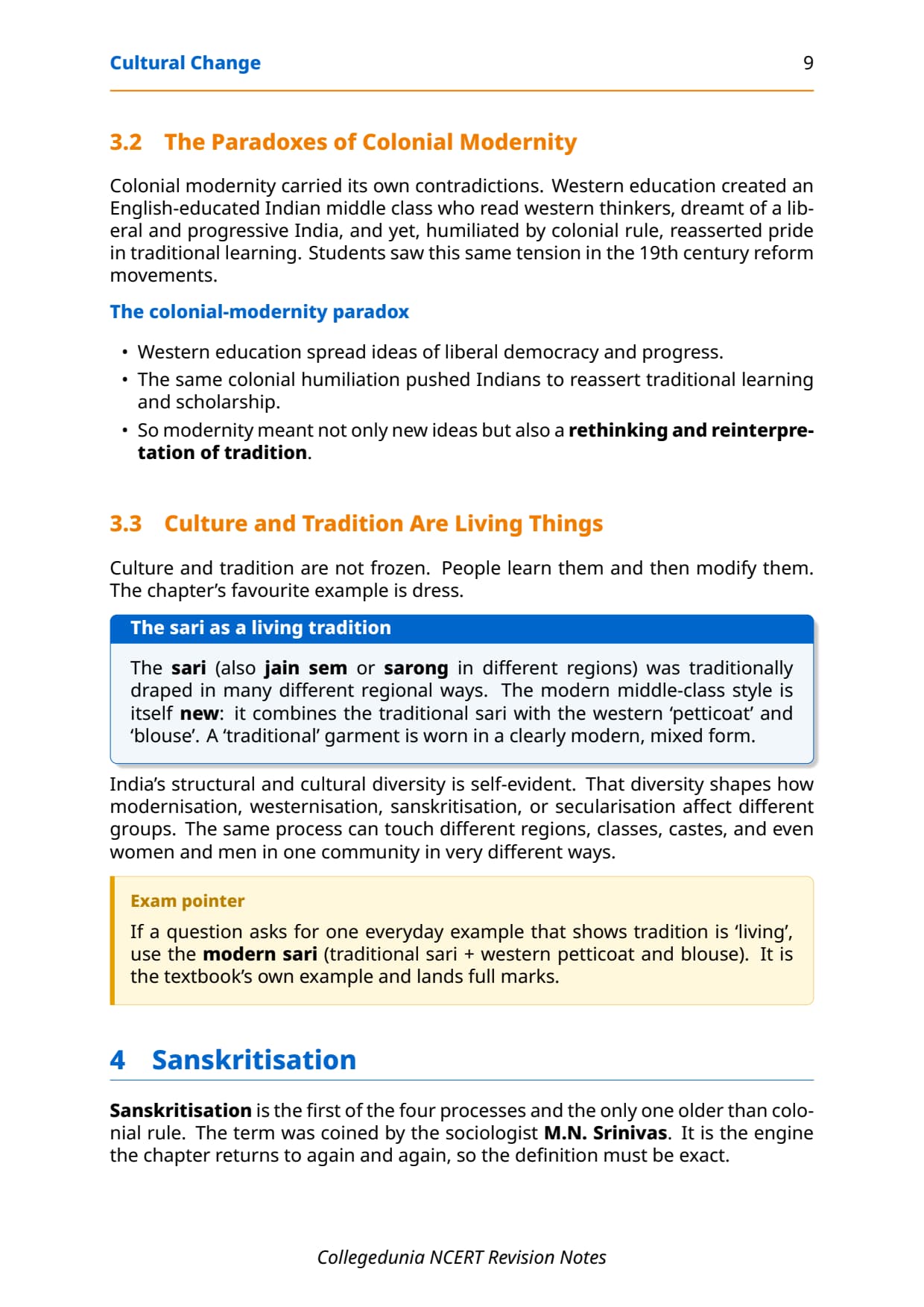
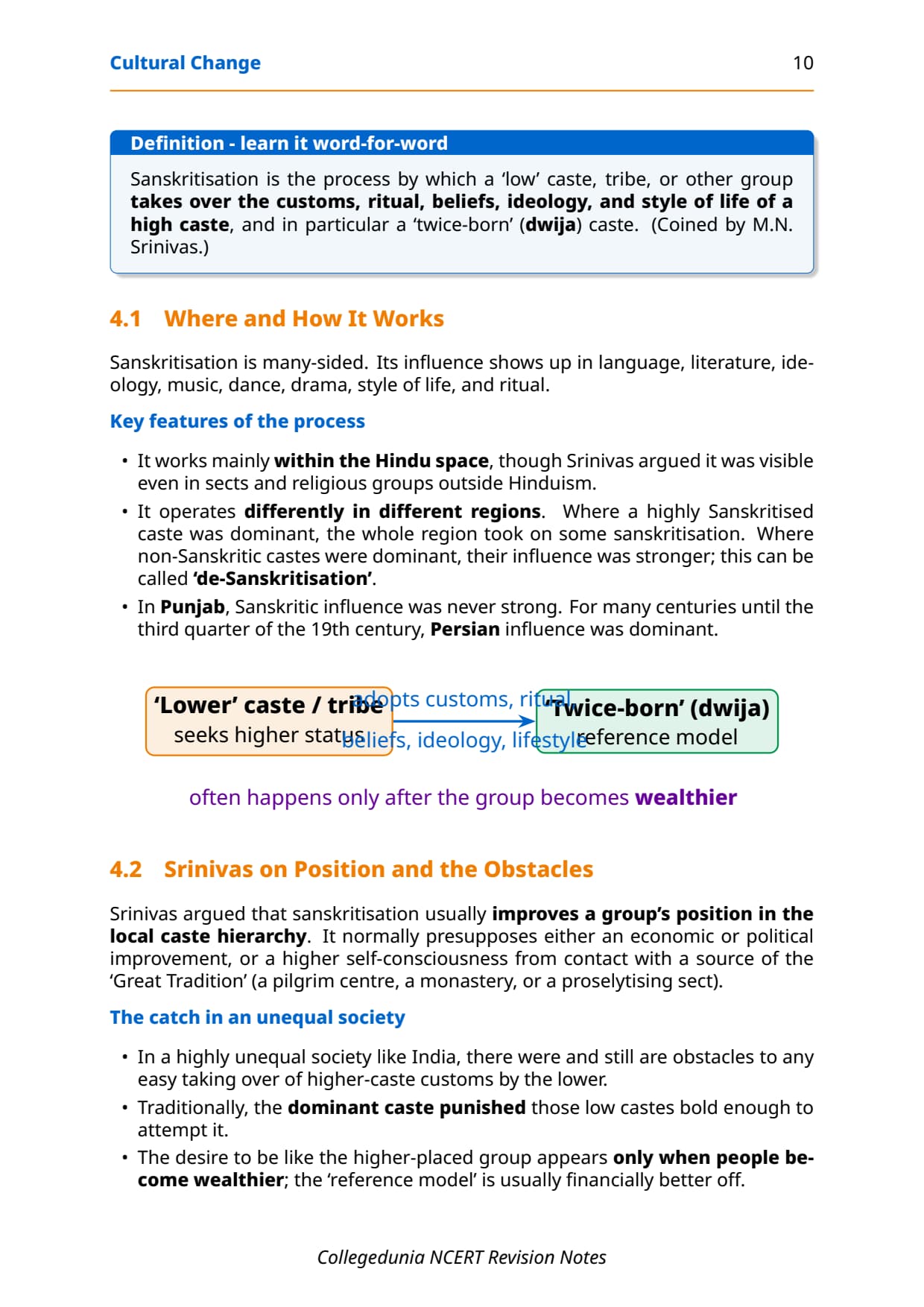
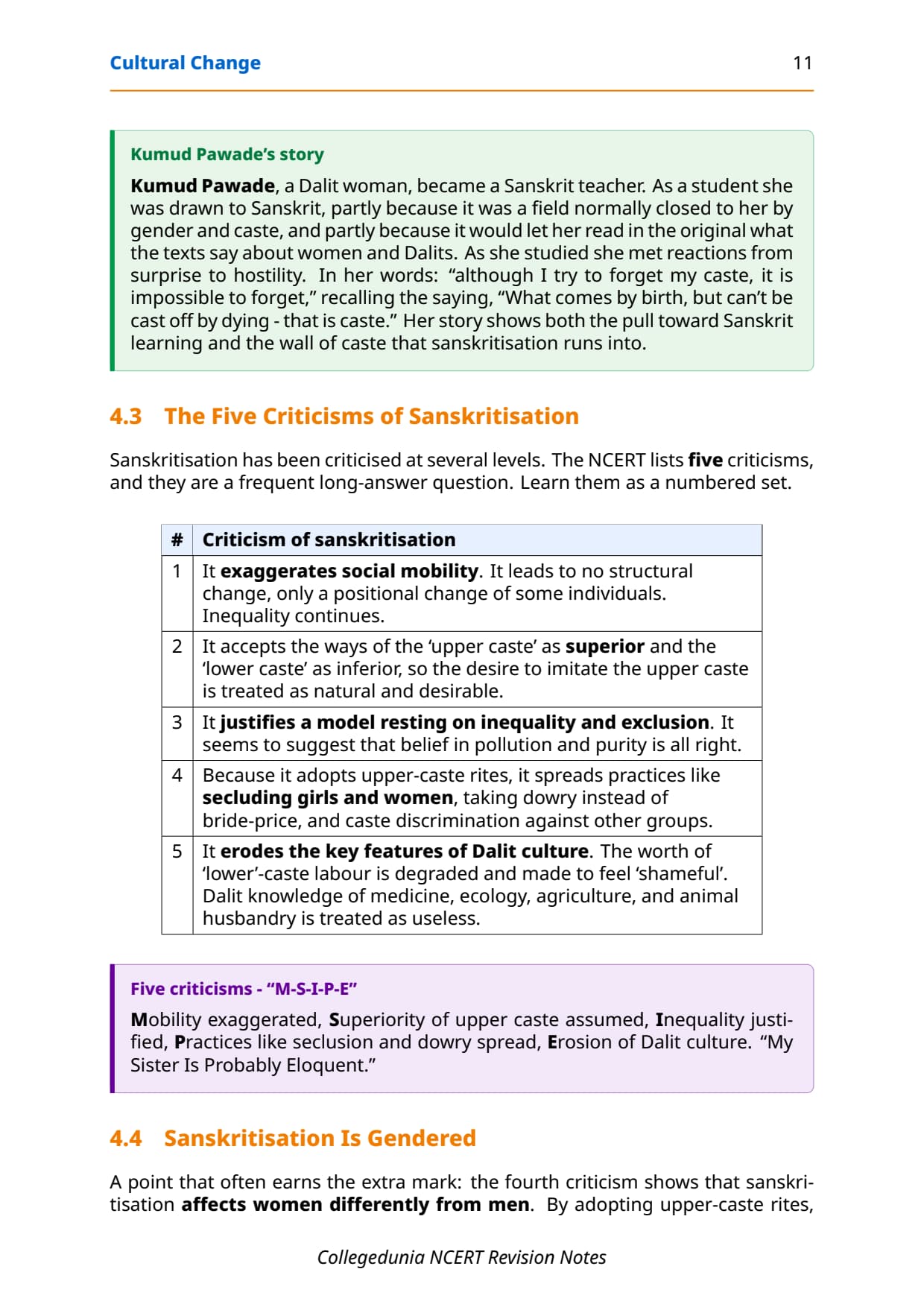
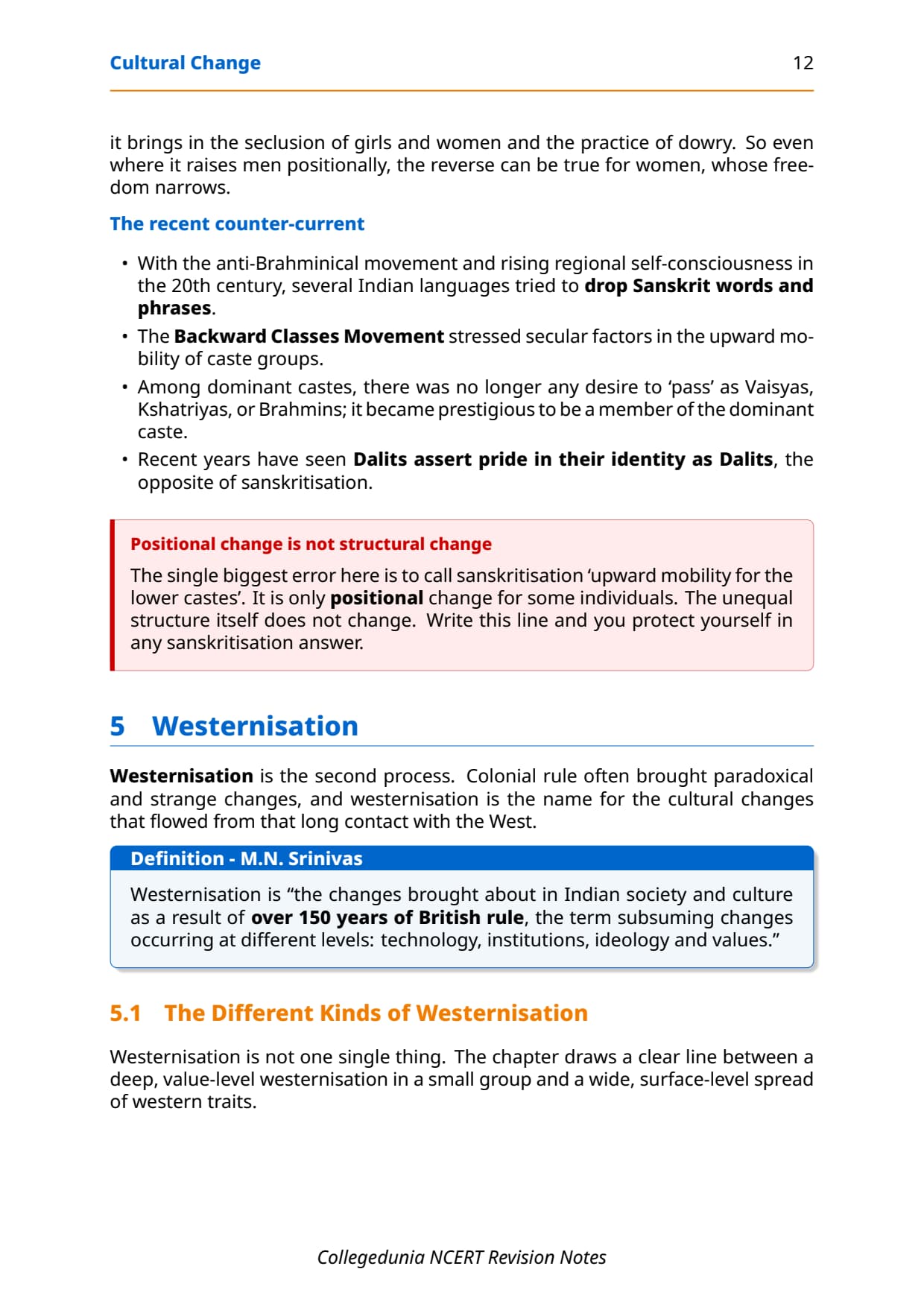
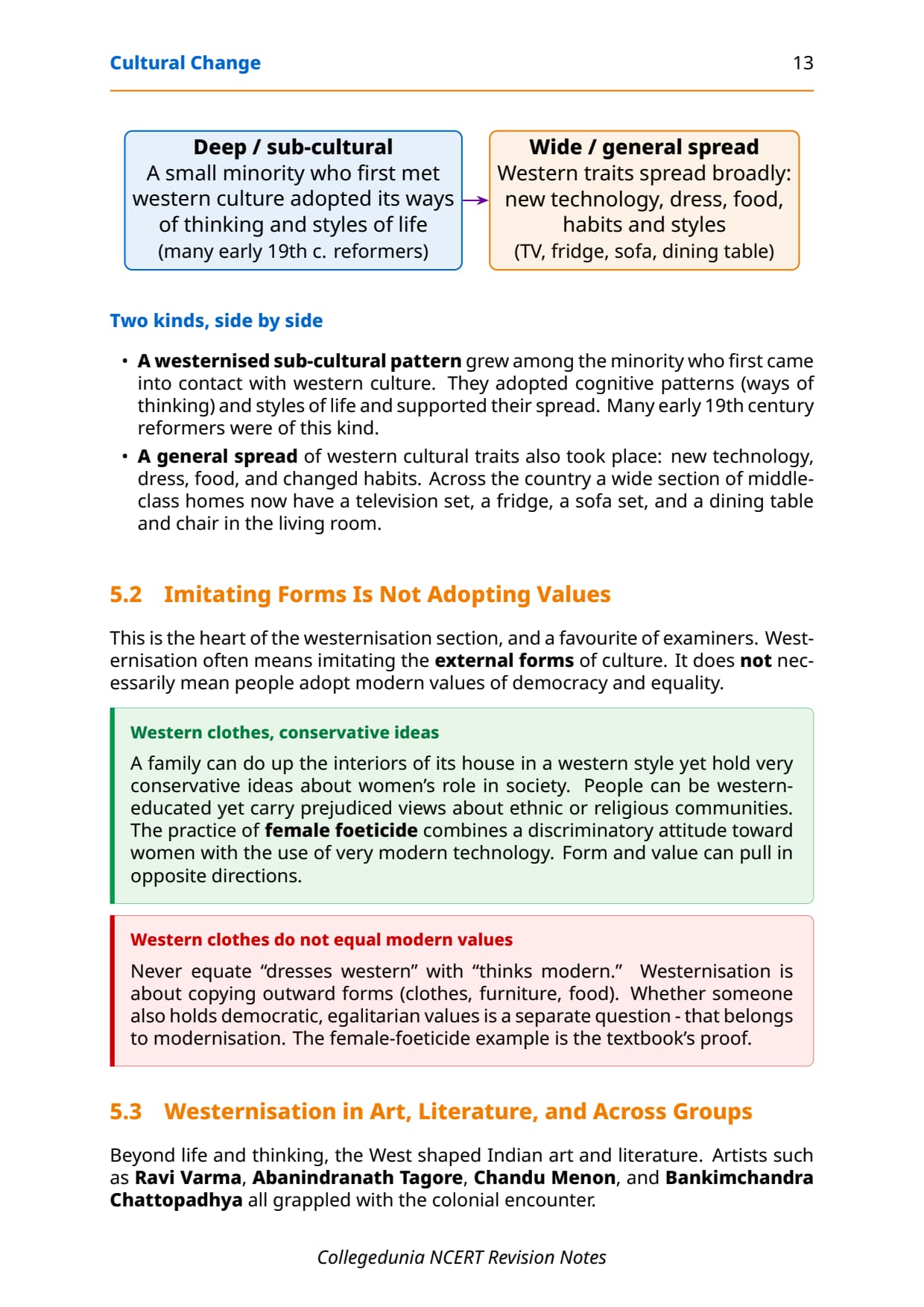
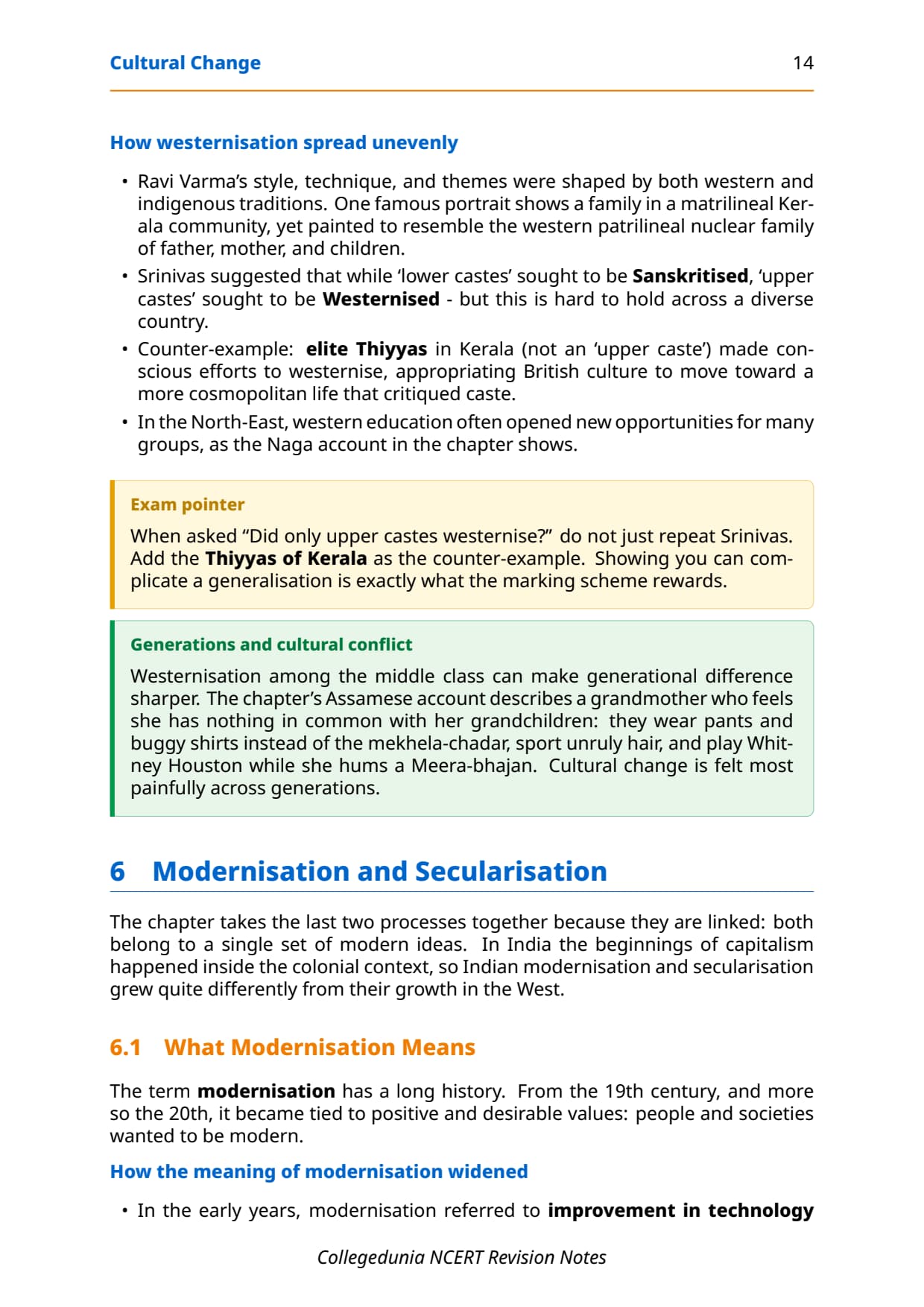
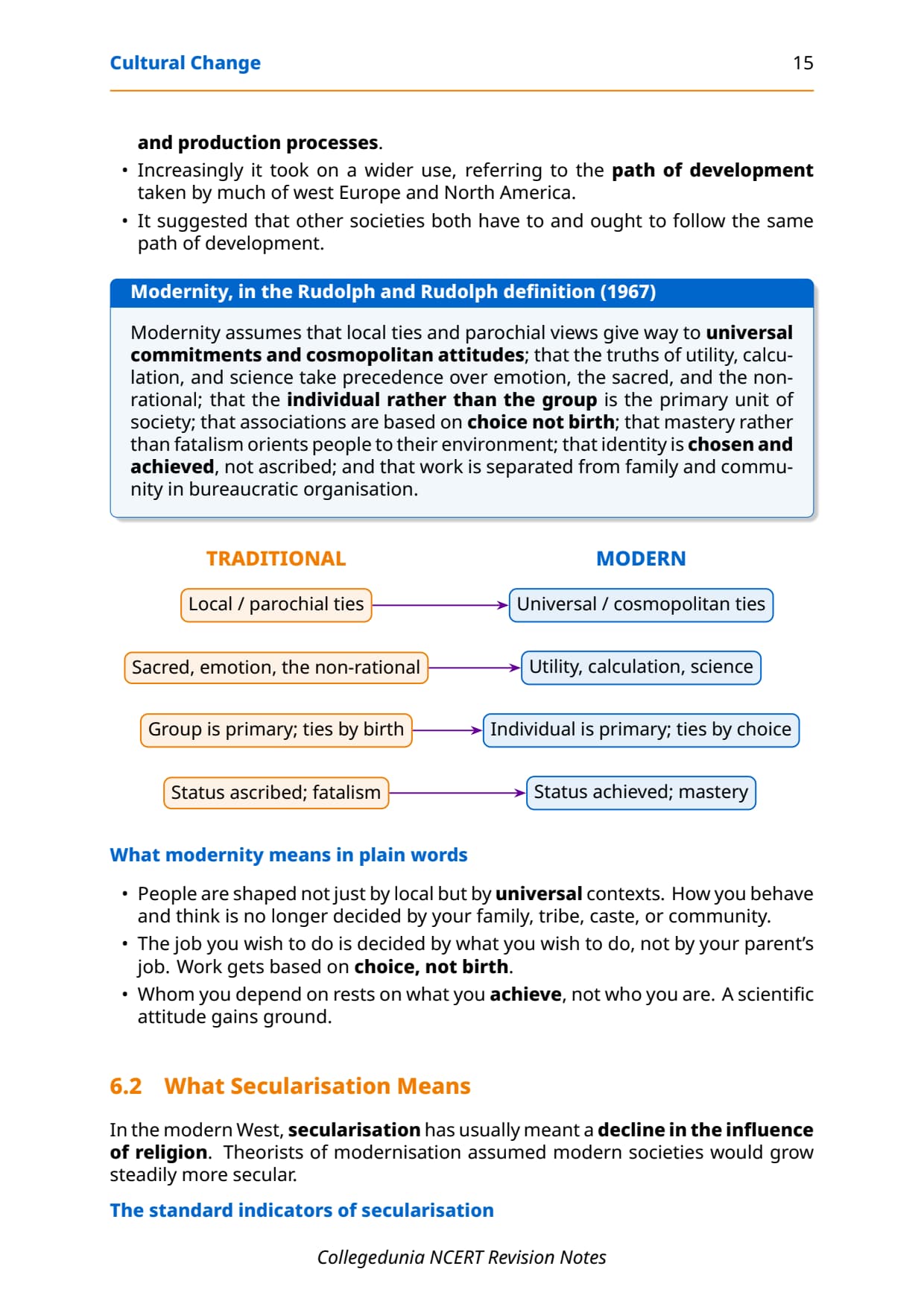
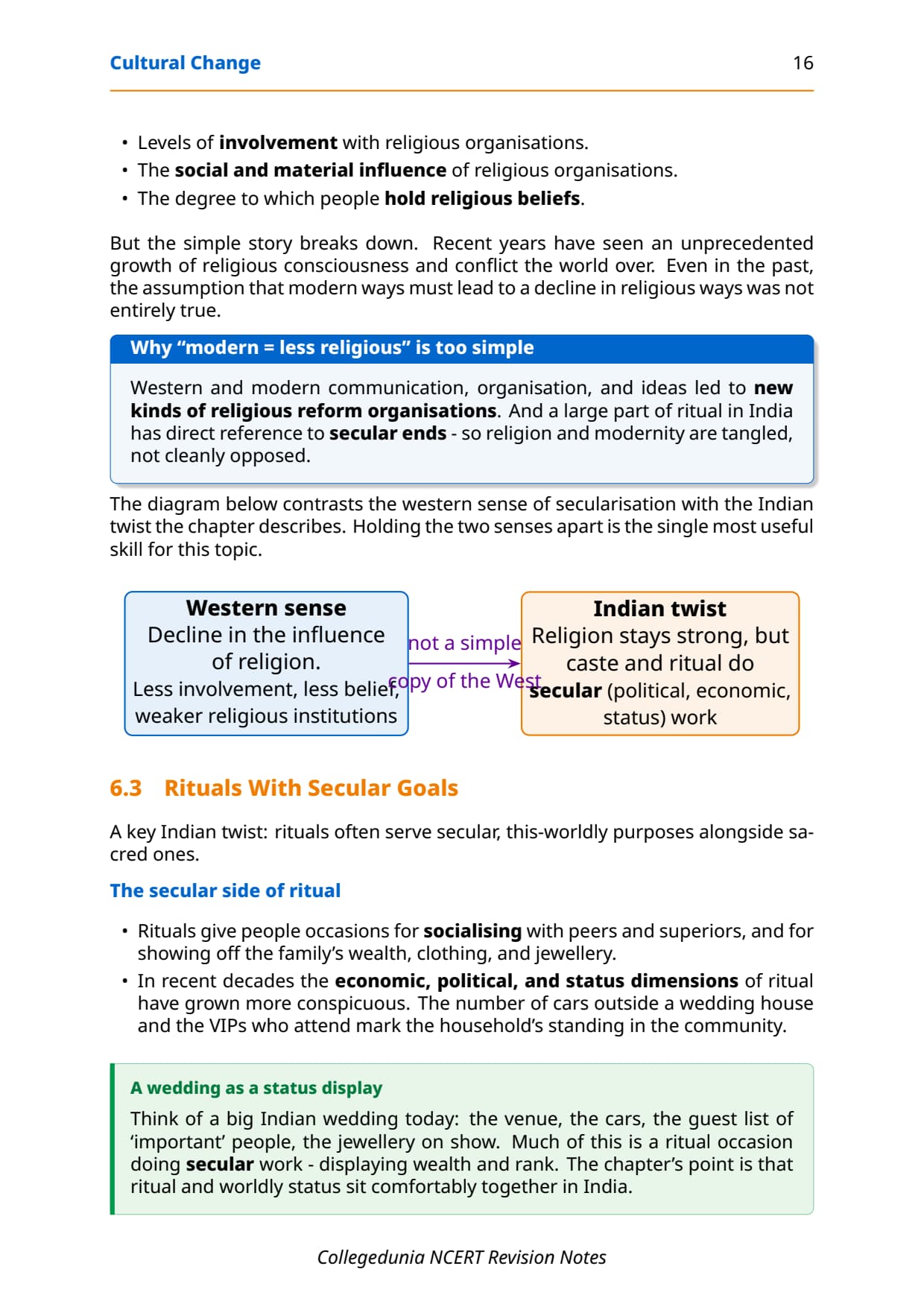
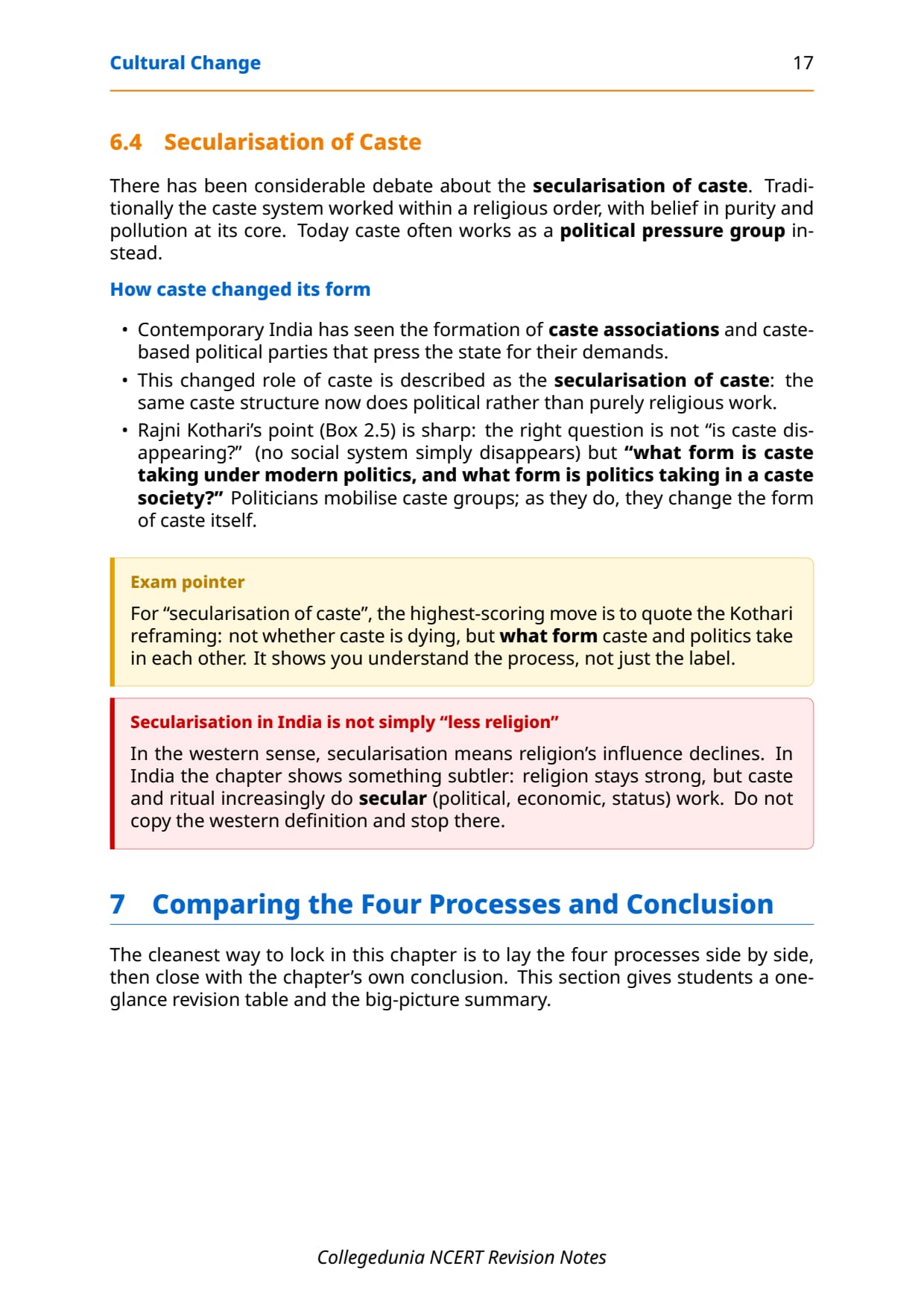
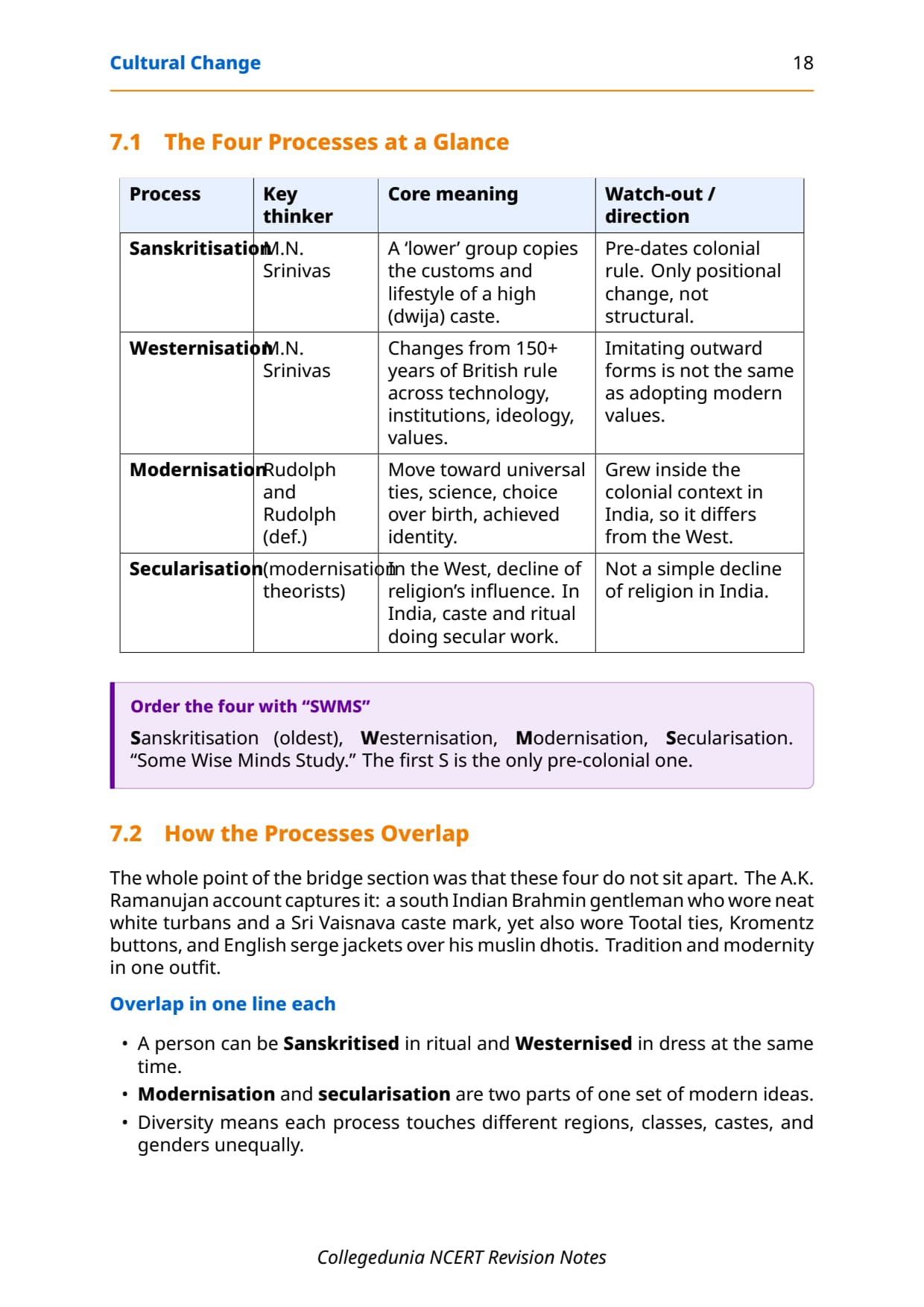
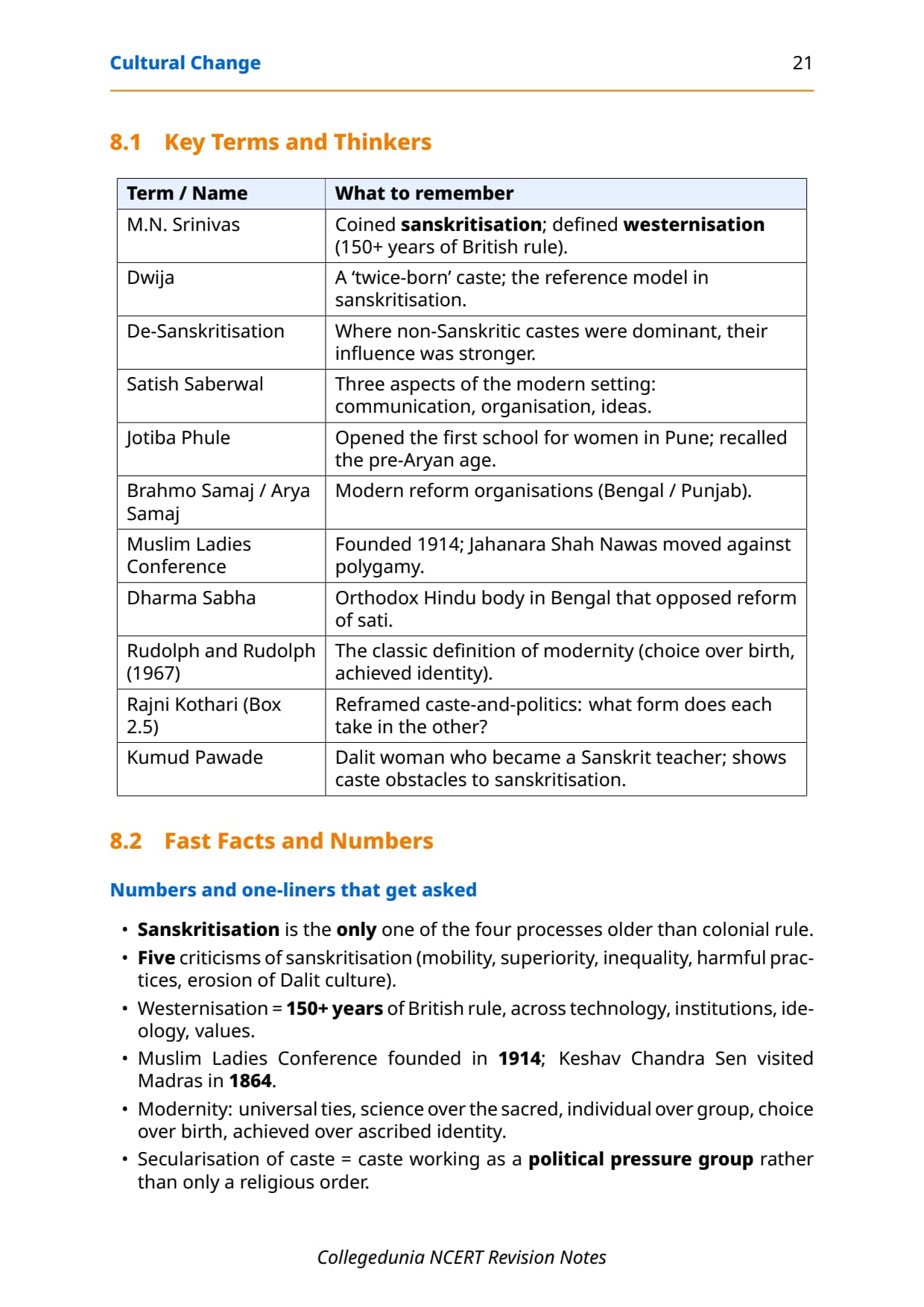
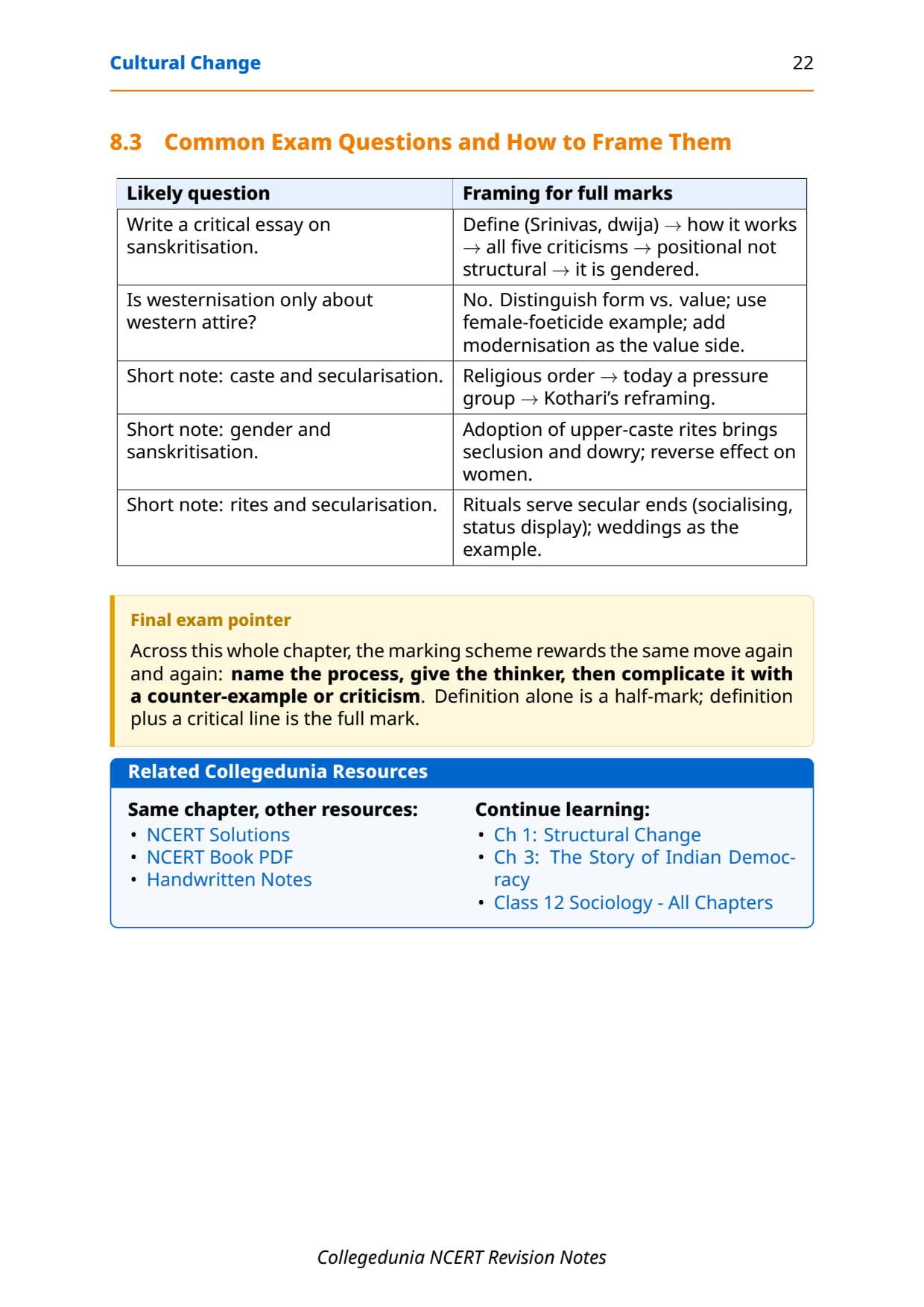
- One-page map of the four processes of cultural change with one Indian example each.
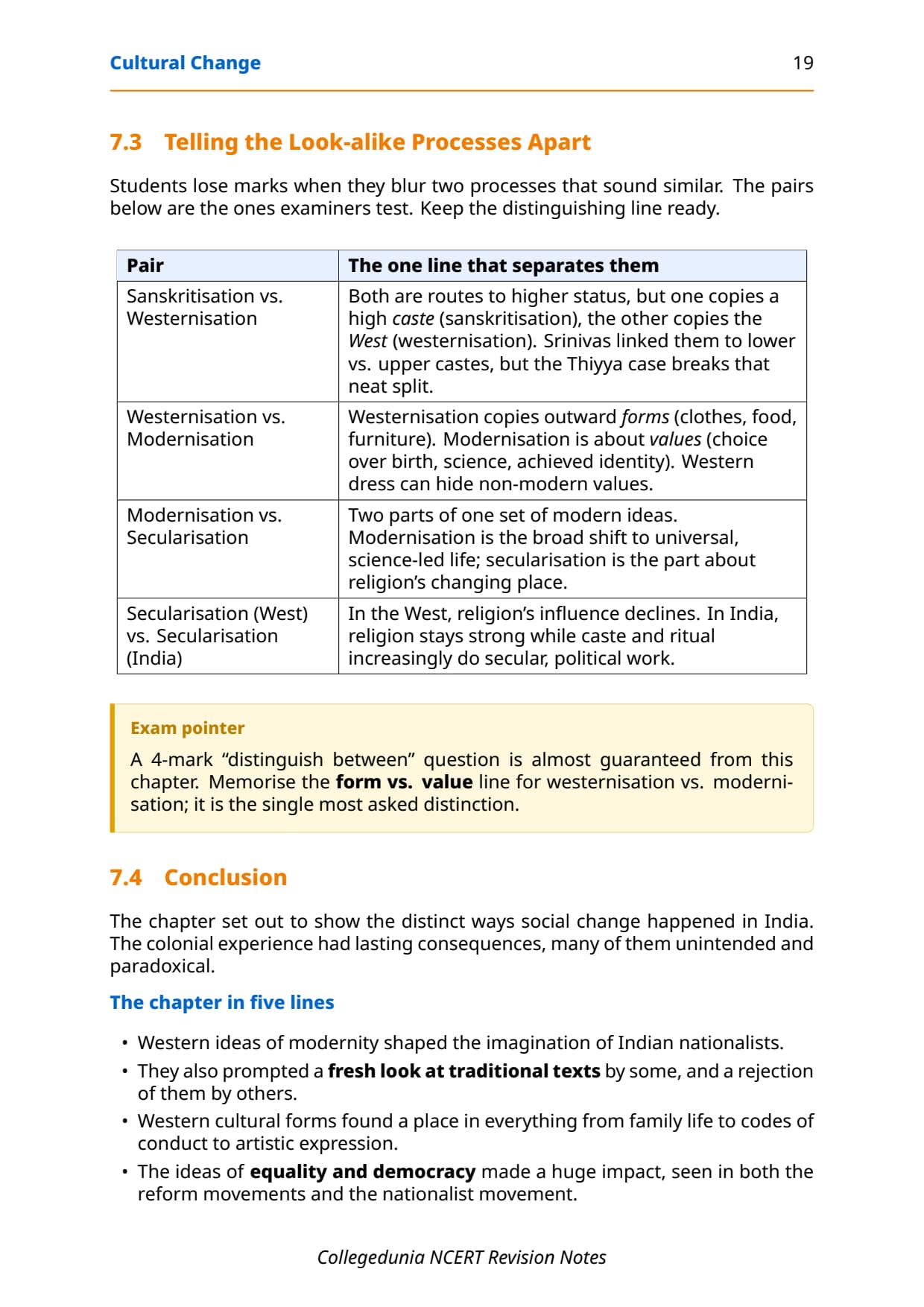
- A quick table that tells westernisation and modernisation apart, the most-confused pair.
- Pairs with the NCERT Solutions, Handwritten Notes and Book PDF linked lower on this page.
These Class 12 Sociology Chapter 2 revision notes are prepared by subject experts from the official NCERT Cultural Change textbook and matched to the 2026-27 CBSE syllabus.
Student Feedback: In a Collegedunia poll of 6,920 Class 12 Sociology students, 74% of students said a single table separating westernisation from modernisation was the most useful revision tool for this chapter. Most students revised these notes the night before the exam.
Source: 2026-27 Class 12 Sociology student poll. Sample of 6,920 students from CBSE schools across 12 states.
Cultural Change Class 12 Notes Overview
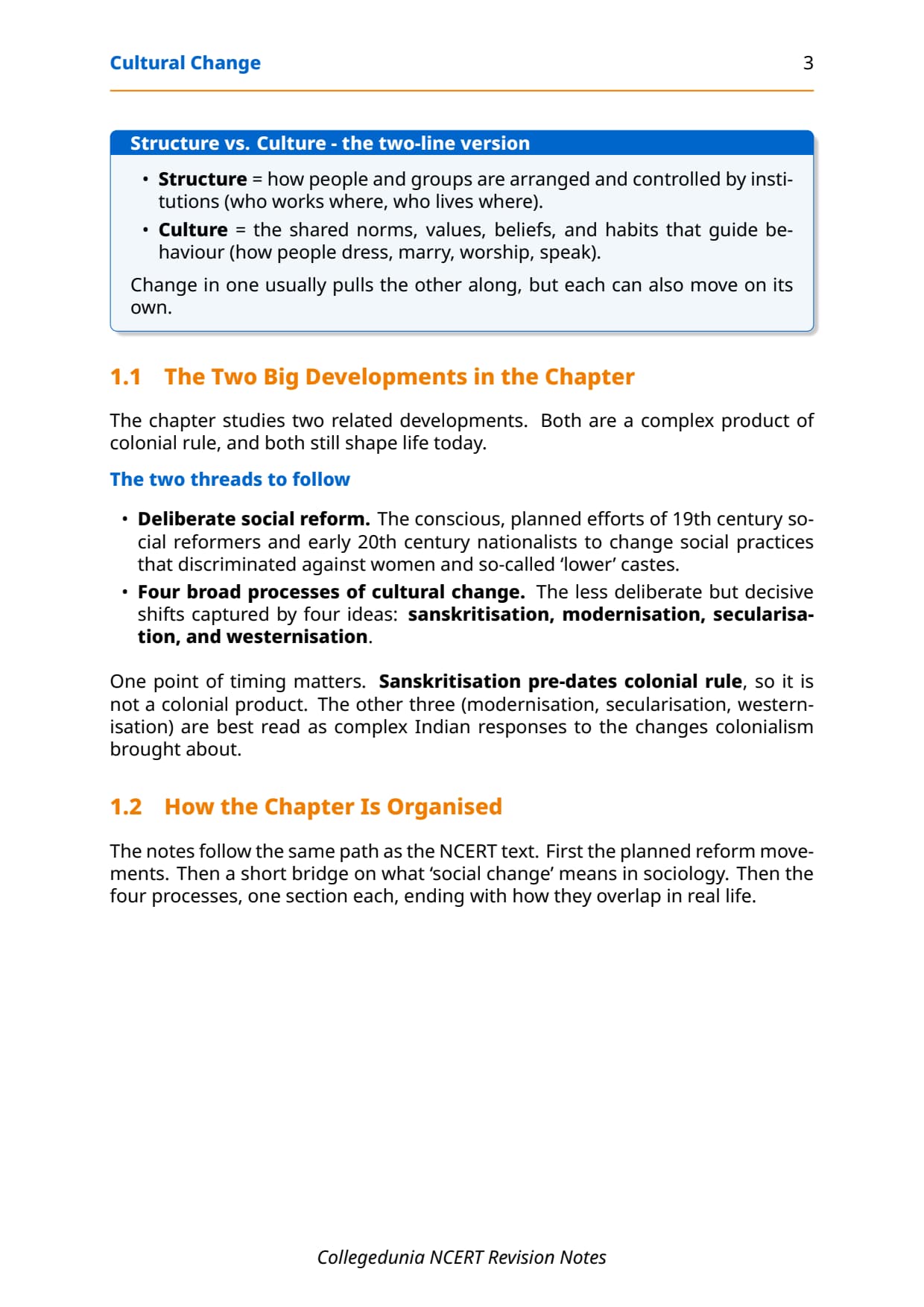
Cultural Change is the second chapter of Social Change and Development in India. It studies how colonial rule and reform movements reshaped Indian culture, then sorts that change into four named processes. These notes break the chapter into the parts students must remember.
The chapter has a few clear blocks, and your revision should follow the same order:
- The reform movements: 19th and early 20th century debates on sati, widow remarriage and women's education.
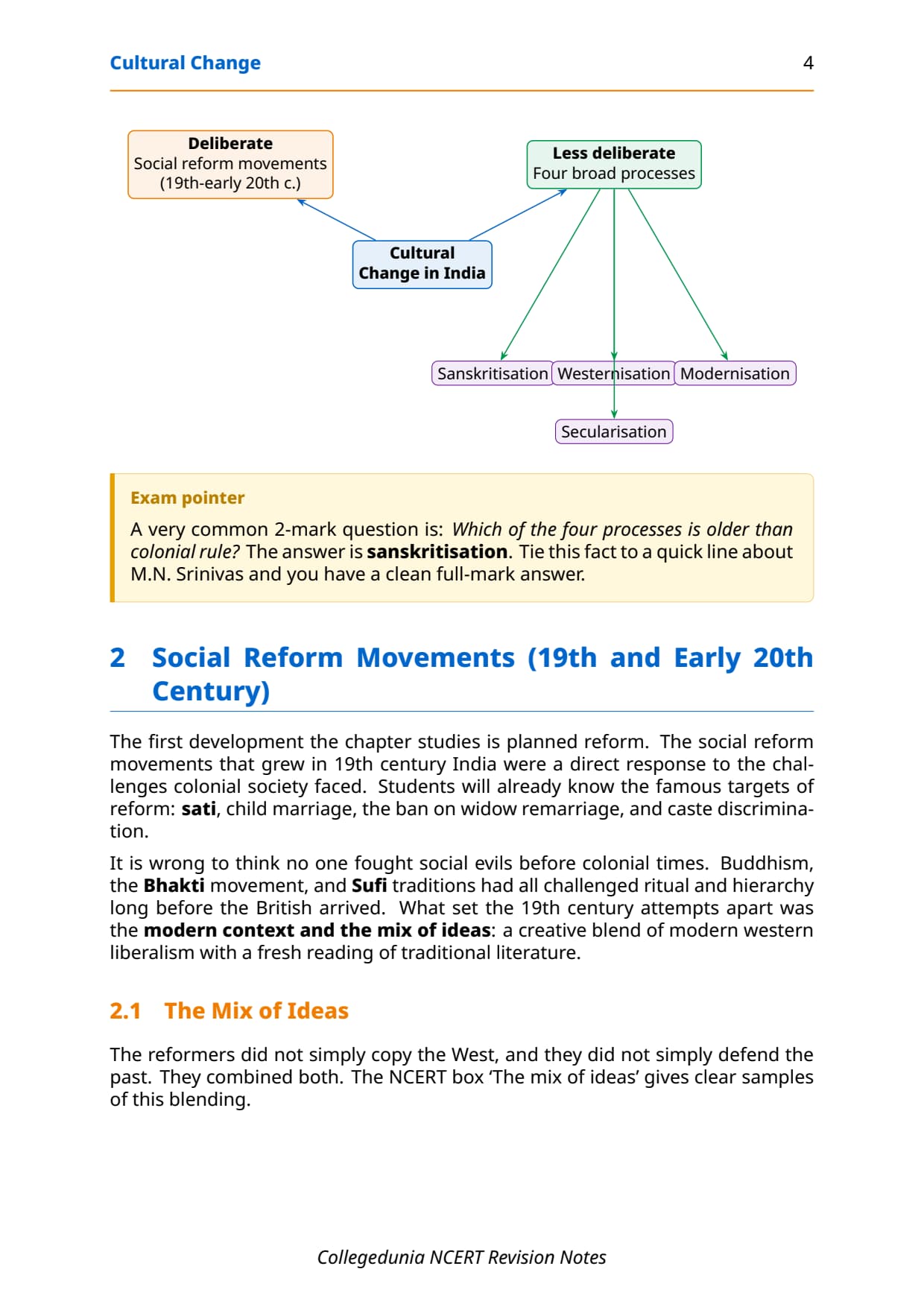
- The four processes: sanskritisation, westernisation, modernisation and secularisation.
- The criticisms: what each process explains and what it conceals, including its effect on caste and gender.
Keeping these blocks separate makes the chapter feel small. A student who can name the four processes in order will rarely get lost in Cultural Change class 12, because almost every exam question sits inside one of them.
Key Terms and Definitions for Quick Revision
This chapter is built on a handful of ideas, and almost every mark in the exam rests on getting them right. The table below is the fastest way to lock them in before the paper. Read it twice and you can attempt any objective question.
| Term | Definition |
|---|---|
| Sanskritisation | A low caste or group adopts the customs, ritual and life-style of a high, twice-born caste (M.N. Srinivas). |
| Westernisation | Changes from over 150 years of British rule, across technology, institutions, ideology and values. |
| Modernisation | A shift to universal, scientific and choice-based attitudes, with the individual as the unit. |
| Secularisation | A decline in the influence of religion, or in India a shift of ritual and caste toward worldly ends. |
| Dominant caste | A landowning caste with numbers and power that sets the local cultural model. |
| De-Sanskritisation | The reverse pull, where a dominant non-Sanskritic caste spreads its influence instead. |
A key revision tip: learn each process with one Indian example attached. Sanskritisation pairs with a caste copying upper-caste ritual, westernisation with the television-fridge-sofa home, secularisation with the wedding as a show of wealth. Examiners reward an example, so storing the term and its case together makes recall faster.
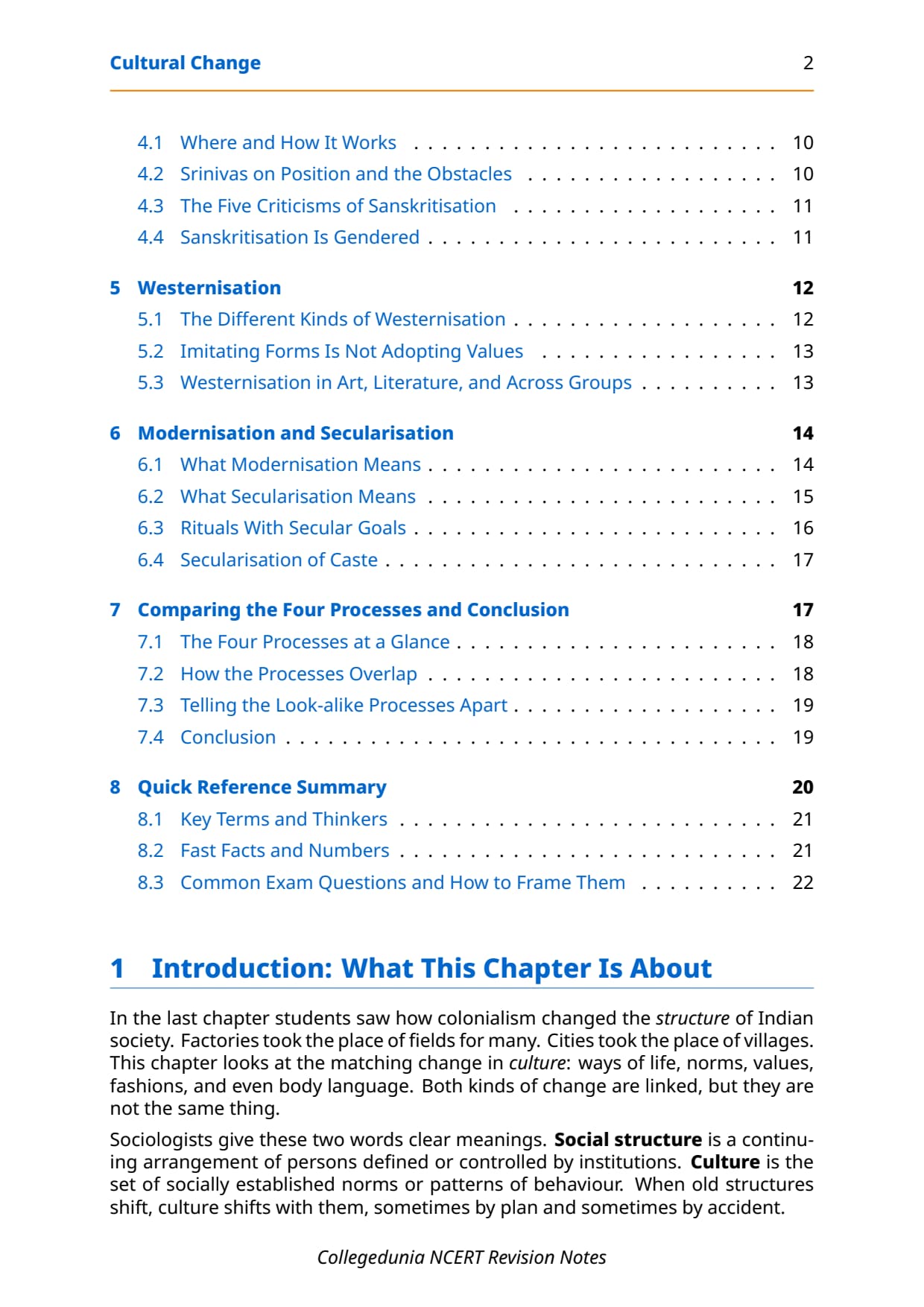
The Four Processes of Cultural Change in Short
The heart of the chapter is four processes that each name a different path of change. These notes set them side by side, the contrast the board tests most. Learn the four and most of the chapter is done.
- Sanskritisation: a low group copies a high caste to rise in the local order, but the caste system stays in place.
- Westernisation: Indian society copies external western forms, from dress and furniture to technology and art.
- Modernisation: a deeper change in values, where choice replaces birth and science replaces the sacred.
- Secularisation: the influence of religion declines, or in India shifts toward status, money and politics.
| Process | What changes | Indian example |
|---|---|---|
| Sanskritisation | Position in the caste order | A group adopts upper-caste ritual and diet |
| Westernisation | Outer forms and style | The television-fridge-sofa middle-class home |
| Modernisation | Inner values and outlook | Choice marriage, scientific outlook |
| Secularisation | Role of religion and caste | Caste as a political pressure group |
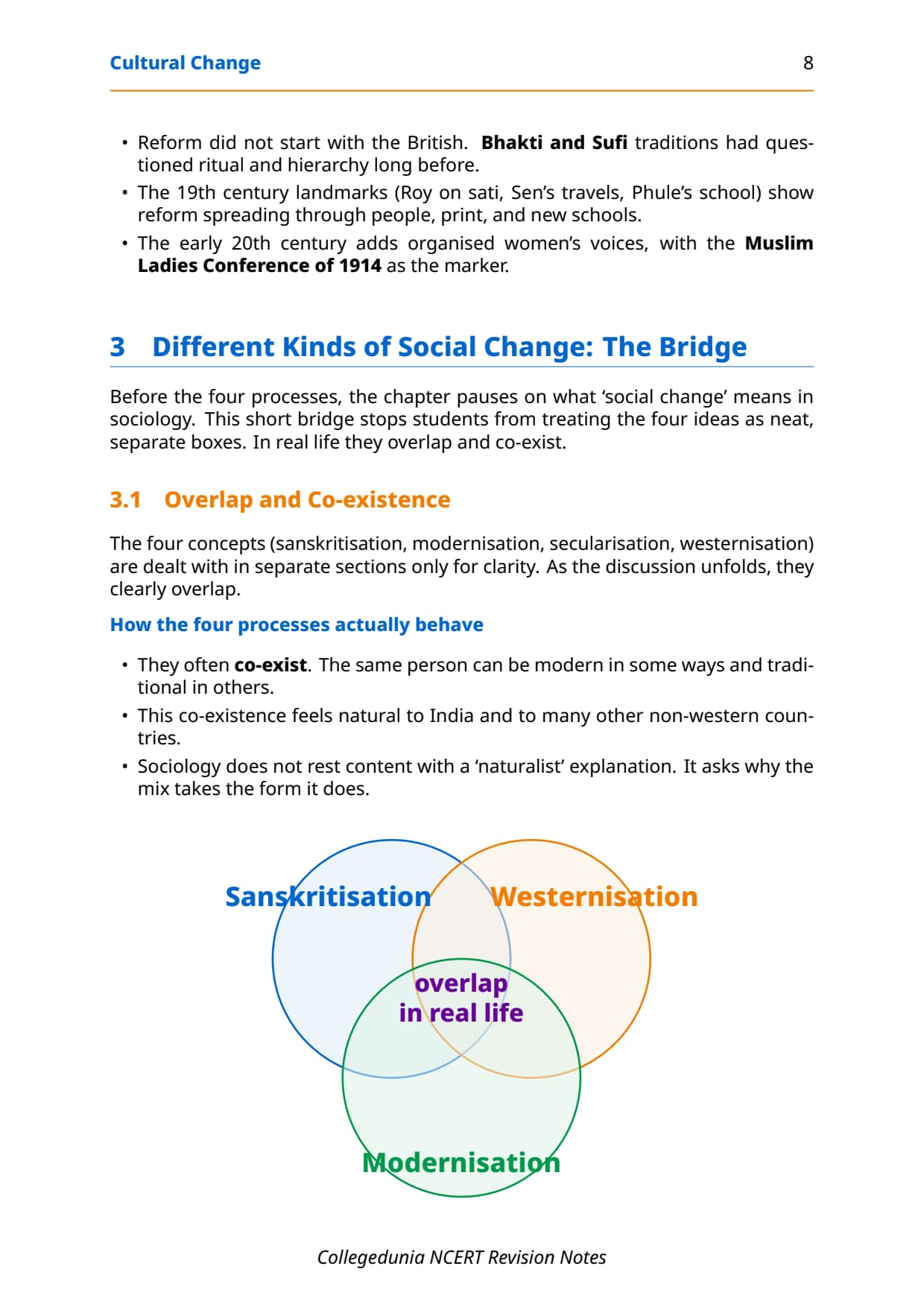
The honest exam point is that these processes overlap but are not the same. A family can be westernised in its furniture yet not modern in its values. Keeping the four apart, and proving each with an example, is the single skill this chapter rewards.
Westernisation Versus Modernisation
This is the single most-confused pair in the chapter, so the notes give it its own block. Westernisation copies outward forms; modernisation changes inner values. Picture two people in the same western clothes who hold opposite views about equality, and the difference becomes clear.
- Westernisation: dress, food, furniture, technology and art borrowed from the west, the surface layer of change.
- Modernisation: choice over birth, the individual over the group, and science over the sacred, the deeper layer.
- The test: a person can be western in appearance yet hold prejudiced or conservative views, which shows the two are not the same.
The key revision line is that westernisation imitates external forms, while modernisation changes the mind. Female foeticide using modern technology, or a western-educated person who is still casteist, both prove the gap. That distinction, outer form against inner value, is what every long answer on this pair rewards.
Secularisation, Caste and Gender
The last block ties the processes to caste and gender. These are the points that turn an abstract idea into a real answer about India, so students should keep them ready. The points below sum up how secularisation and sanskritisation work here.
- Rites and secularisation: Indian rituals often serve a worldly end. A wedding becomes a show of wealth, where the number of cars and VIPs index a household's standing.
- Caste and secularisation: caste once worked through purity and pollution; today it often acts as a political pressure group through caste associations and parties.
- Gender and sanskritisation: as a group climbs, it copies upper-caste controls on women, so bride-price may give way to dowry.
The big takeaway is that in India secularisation rarely means the simple decline of religion. Instead, rituals and caste keep going while their purpose shifts toward status and politics, and sanskritisation can raise a group's rank while lowering women's position inside it. Naming these costs is what lifts an answer.
Cultural Change Revision Table
For a last-minute scan, this table pulls the whole chapter into one place. Students can cover the right column and test themselves, then check their recall. It is the quickest way to confirm you are exam-ready.
| Topic | One-line recall |
|---|---|
| Sanskritisation | Low group copies high caste; positional, not structural, change |
| Westernisation | Copies external forms from British rule |
| Modernisation | Choice over birth, science over the sacred |
| Secularisation | Religion declines, or caste turns political |
| Gender and caste | Climbing the caste order can lower women's status |
| Reform movements | Sati, widow remarriage and women's education debates |
Run down this table once a day in the week before the exam. Active recall beats re-reading, so cover the answers and say them aloud before you check. This single habit lifts retention more than any amount of highlighting.
How These Notes Pair with the Solutions and Book PDF
These notes summarise the chapter. To finish your prep, use them with the other resources for the same chapter, all linked in the table below.
| Resource | Best used for |
|---|---|
| Cultural Change Class 12 NCERT Solutions | Full point-wise answers to all exercise questions |
| Cultural Change Class 12 Handwritten Notes | One-shot revision in a scanned notebook style |
| Cultural Change NCERT Book PDF | Reading the original NCERT chapter text from Social Change and Development in India |
Tip: read these notes first to get the big picture, then attempt the NCERT Solutions on your own. The notes give the map; the solutions give the practice.
All NCERT Notes for Class 12 Sociology
The table links the Notes for every chapter in both Class 12 Sociology books, so students can revise across the course in one place. Cultural Change is highlighted.
| Chapter | NCERT Notes |
|---|---|
| Indian Society | |
| Chapter 1 | Introducing Indian Society |
| Chapter 2 | The Demographic Structure of the Indian Society |
| Chapter 3 | Social Institutions - Continuity and Change |
| Chapter 4 | The Market as a Social Institution |
| Chapter 5 | Patterns of Social Inequality and Exclusion |
| Chapter 6 | The Challenges of Cultural Diversity |
| Social Change and Development in India | |
| Chapter 1 | Structural Change |
| Chapter 2 | Cultural Change |
| Chapter 3 | The Constitution and Social Change |
| Chapter 4 | Change and Development in Rural Society |
| Chapter 5 | Change and Development in Industrial Society |
| Chapter 6 | Globalisation and Social Change |
| Chapter 7 | Mass Media and Communications |
| Chapter 8 | Social Movements |
FAQs on Cultural Change Class 12 Notes
Cultural Change Class 12 Sociology Notes Common Questions
Ques. What are the most important topics in class 12 sociology chapter 2 notes?
Ans. The most important topics are the four processes of cultural change, sanskritisation, westernisation, modernisation and secularisation, plus the 19th-century reform movements. These notes cover each in short, exam-ready points with one Indian example attached.
Ques. What is sanskritisation in simple words?
Ans. Sanskritisation is the process by which a low caste or group copies the customs, ritual and life-style of a high, twice-born caste to raise its own position. The term was coined by M.N. Srinivas. It gives positional change, but it does not challenge the caste system itself.
Ques. What is the difference between westernisation and modernisation?
Ans. Westernisation copies external forms like dress, food and technology from British rule. Modernisation is the deeper change in values, where choice replaces birth and science replaces the sacred. A person can be western in clothes yet still hold unequal views, so the two are not the same.
Ques. What does secularisation mean in the Indian context?
Ans. In the west, secularisation means a decline in the influence of religion. In India it often means religion and caste taking on worldly roles instead, like a wedding becoming a show of wealth, or caste acting as a political pressure group through associations and parties.
Ques. Are these class 12 sociology chapter 2 notes enough for the board exam?
Ans. Yes, these notes cover the full NCERT chapter in revision form. For exam practice, pair them with the NCERT Solutions linked on this page so you can write out full answers to all the exercise questions.



Comments