



These Therapeutic Approaches Class 12 Notes give a quick, exam-ready summary of psychotherapy, the main types of therapy and how the mentally ill are rehabilitated, set to the 2026-27 CBSE syllabus. The notes pull together every key term, founder and technique from Chapter 5 of Class 12 Psychology. Students can use them for a fast revision the night before a test or to fix the main ideas before they attempt the back-exercise questions.
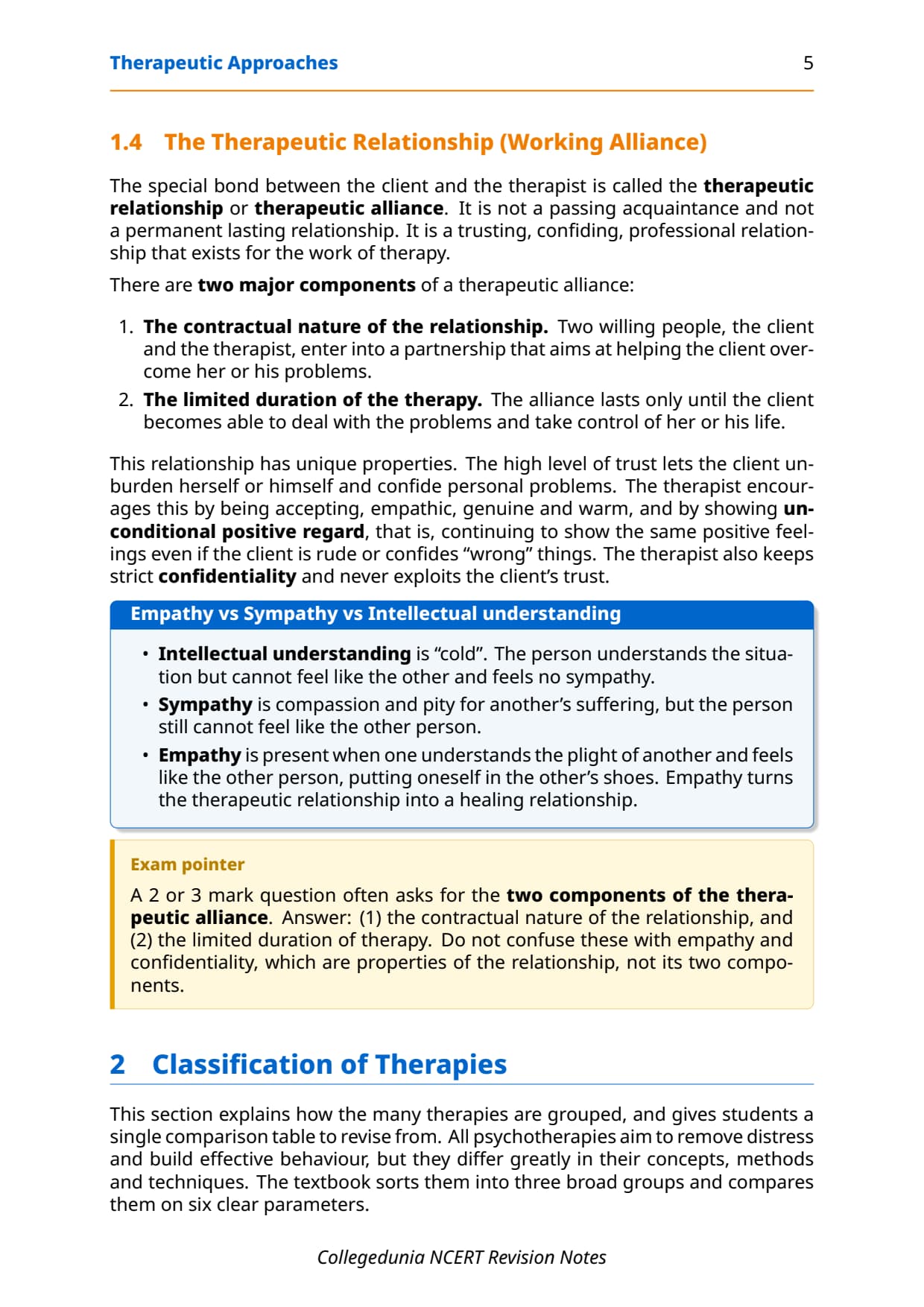
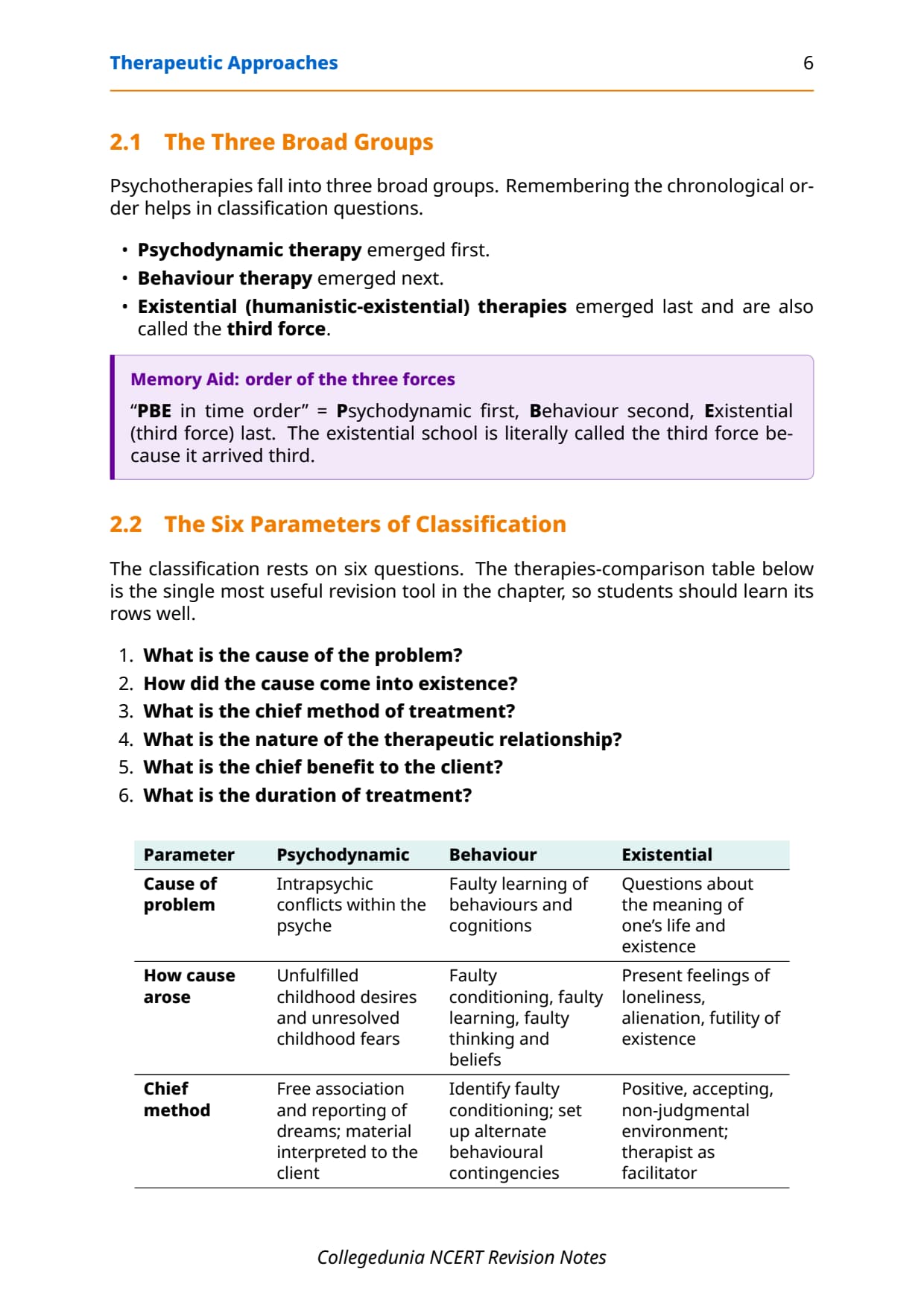
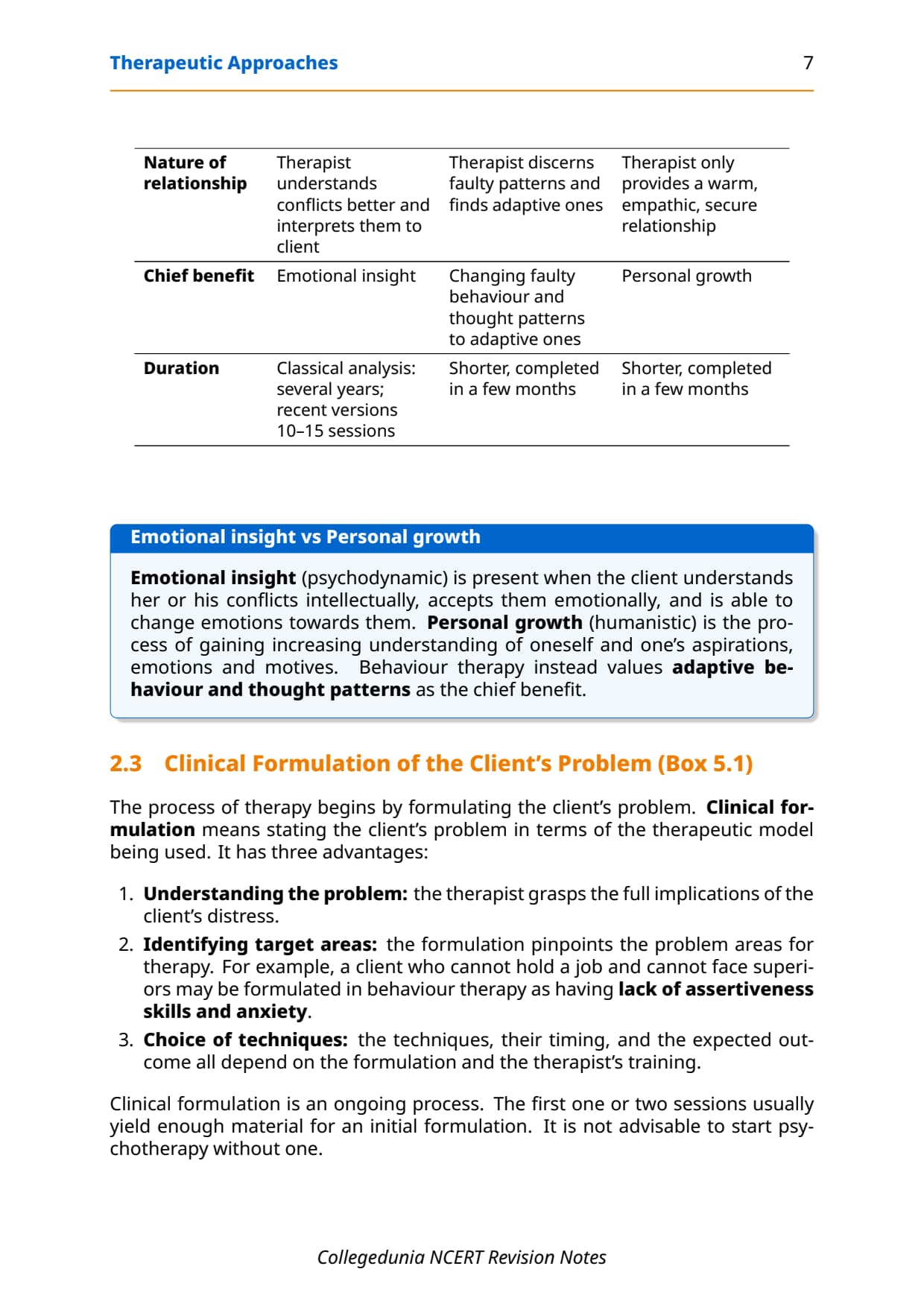
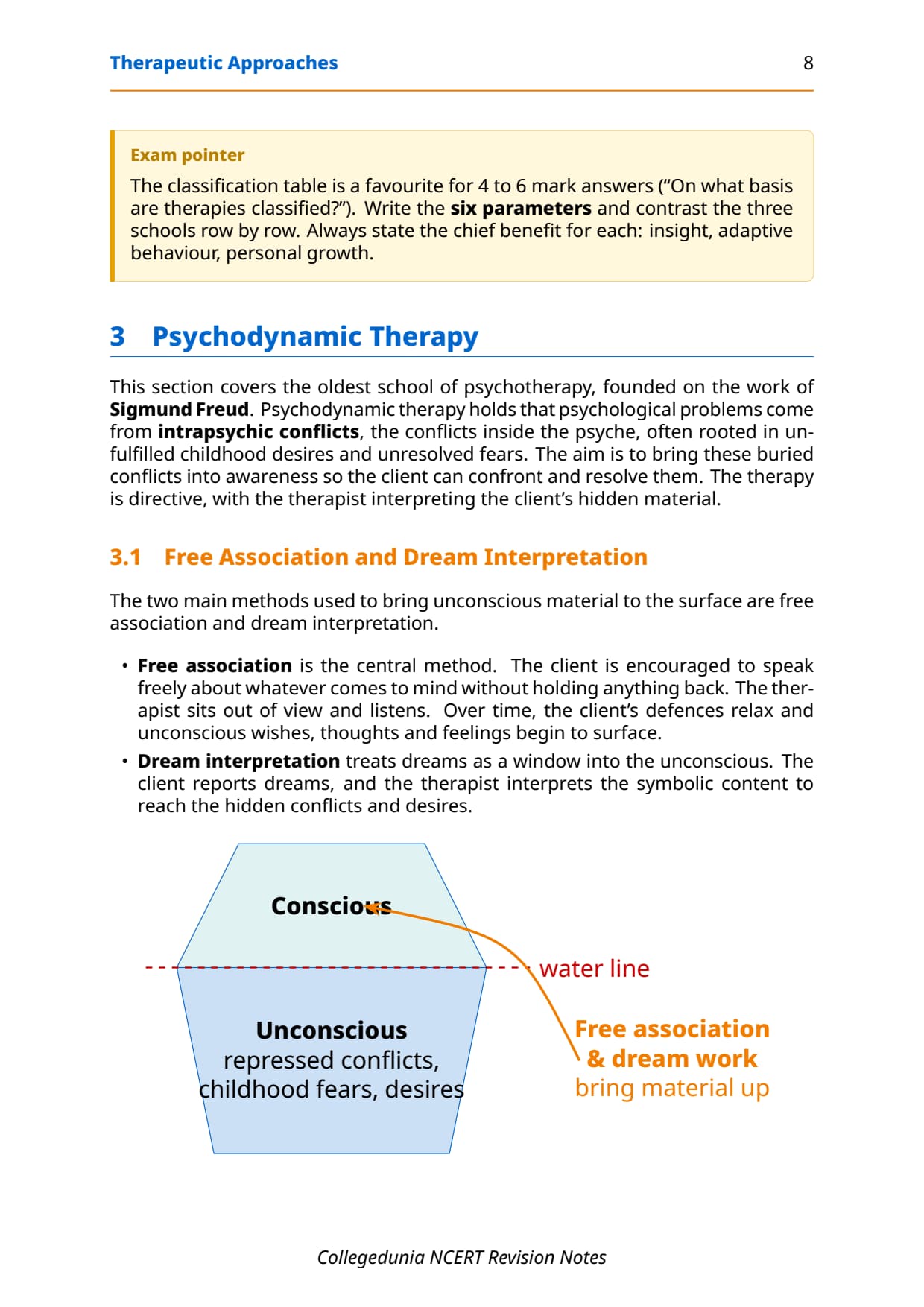
- Covers psychotherapy, behaviour and cognitive therapy, humanistic therapy and rehabilitation in one place.
- This Class 12 Psychology chapter usually carries 6 to 8 marks in the board paper.
- Pairs with the NCERT Solutions, Handwritten Notes and Book PDF linked lower on this page.
These Therapeutic Approaches Class 12 notes are written from the official NCERT Psychology textbook and checked against the last five years of CBSE board papers.
Student Feedback: In a Collegedunia poll of 7,960 Class 12 Psychology students taken before the 2026 boards, 74% of students said short, point-wise notes on the types of therapy and their founders were the fastest way to revise this chapter. Most students kept a single sheet linking each therapy to its method and name.
Source: 2026-27 Class 12 Psychology student poll. Sample of 7,960 students from CBSE schools across 12 states.
Therapeutic Approaches Class 12 Notes at a Glance
Chapter 5 of Class 12 Psychology is about treatment. After Chapter 4 named the disorders, this chapter shows how they are treated through psychotherapy and related methods. The notes below keep every idea in revision form so students can recall it fast.
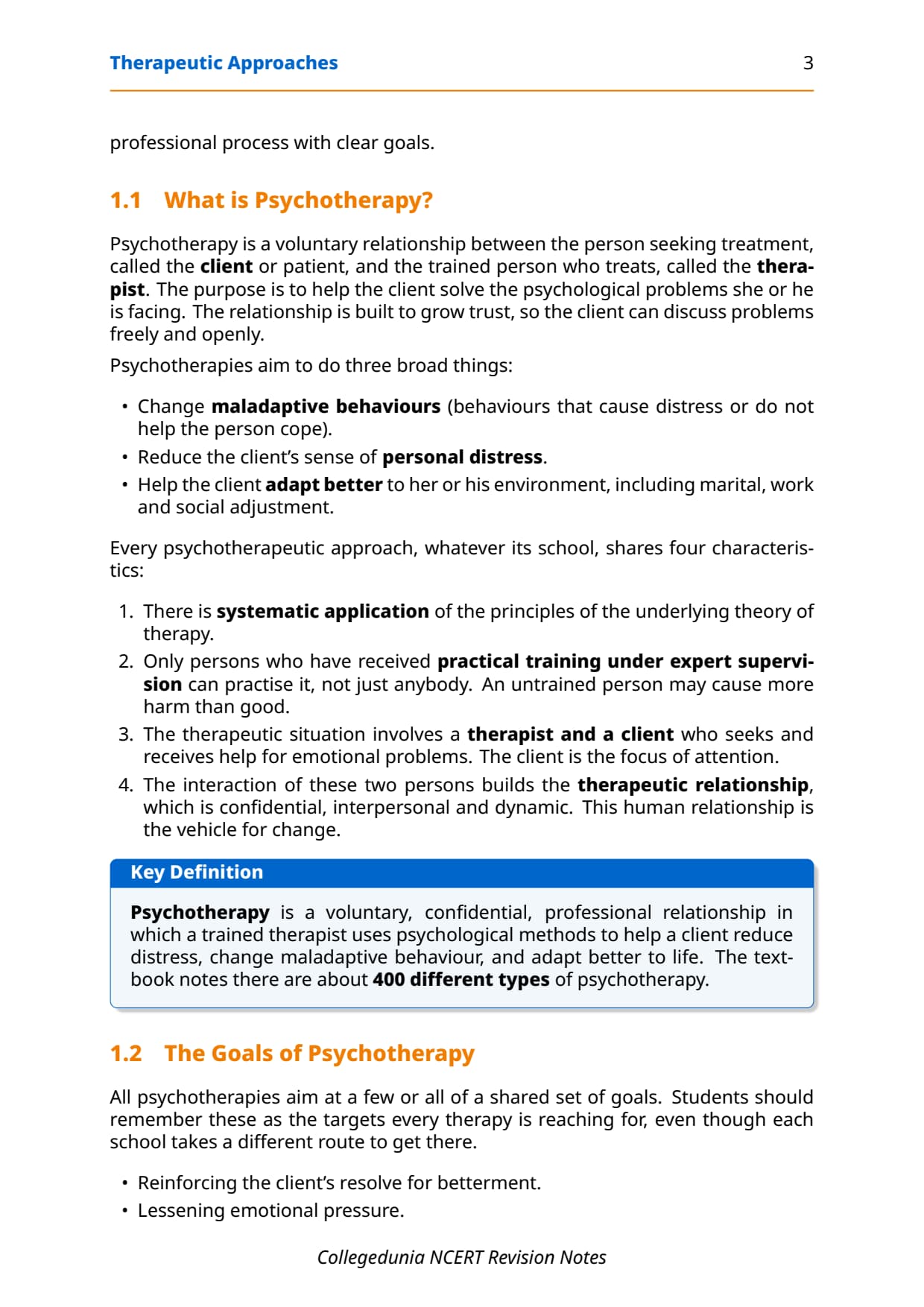
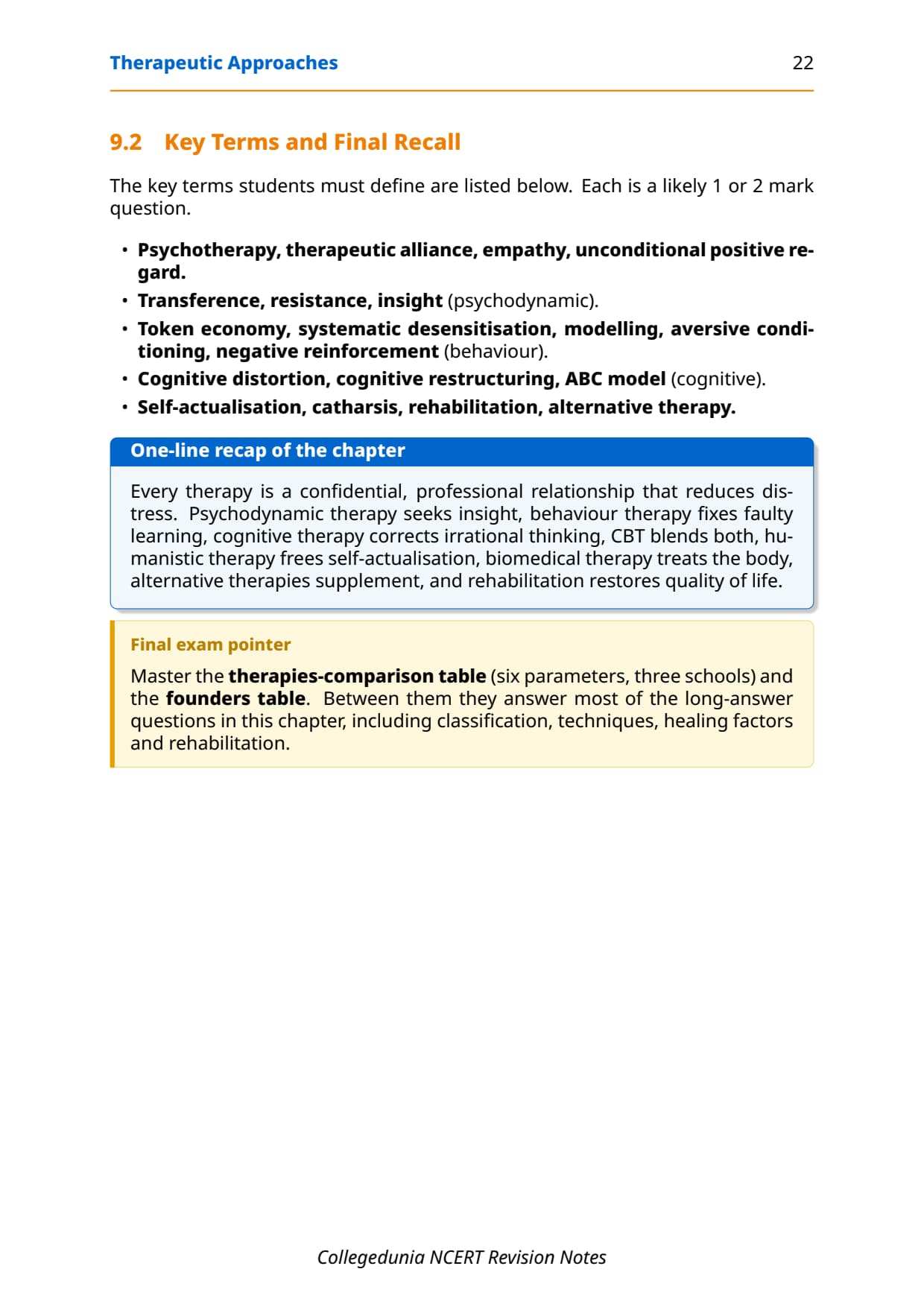
- Psychotherapy: a formal, voluntary, confidential helping relationship between a trained therapist and a client.
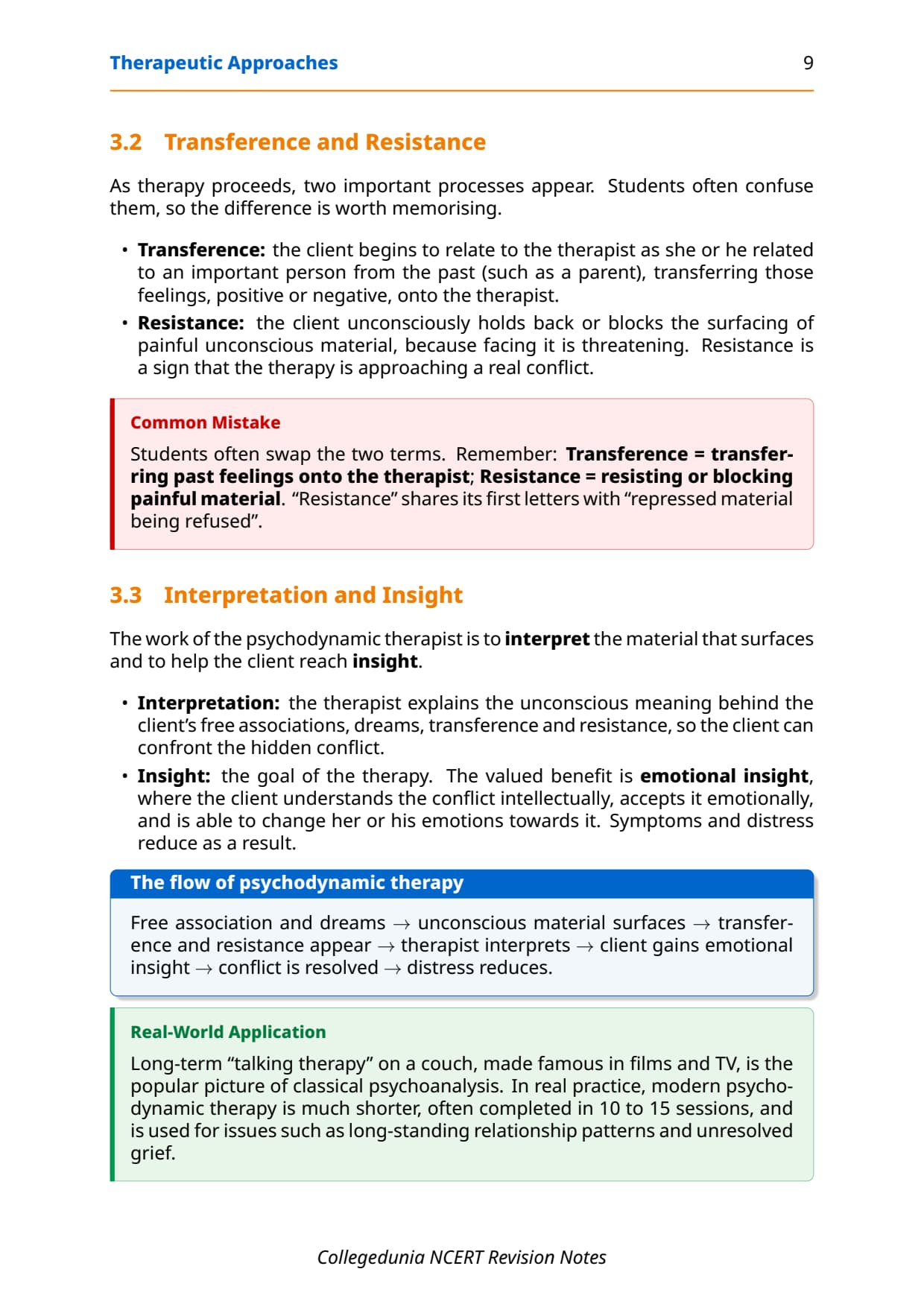
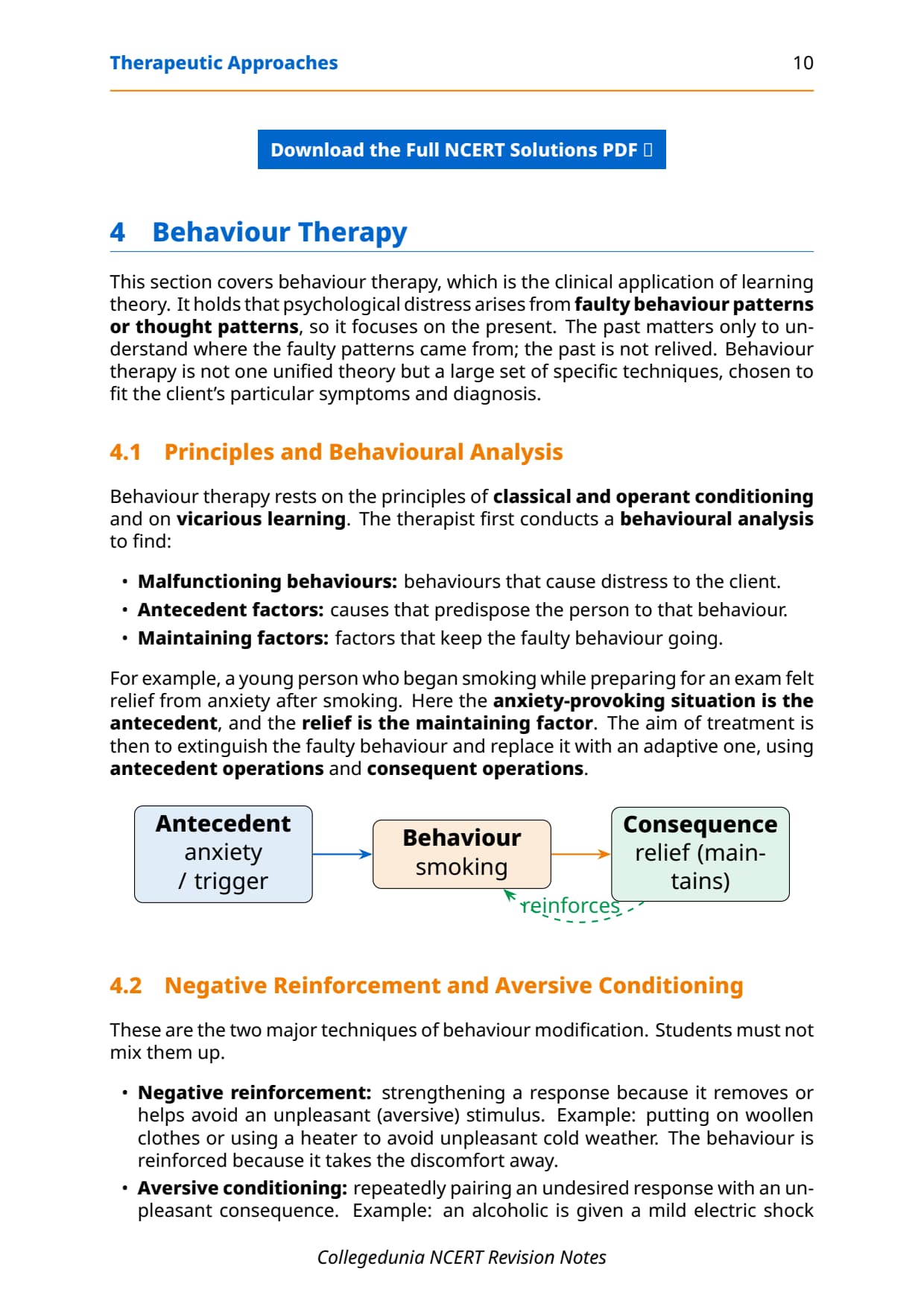
- Six families of therapy: psychodynamic, behaviour, cognitive, humanistic-existential, biomedical and alternative.
- Healing factors: the therapeutic relationship, catharsis and non-specific factors like hope.
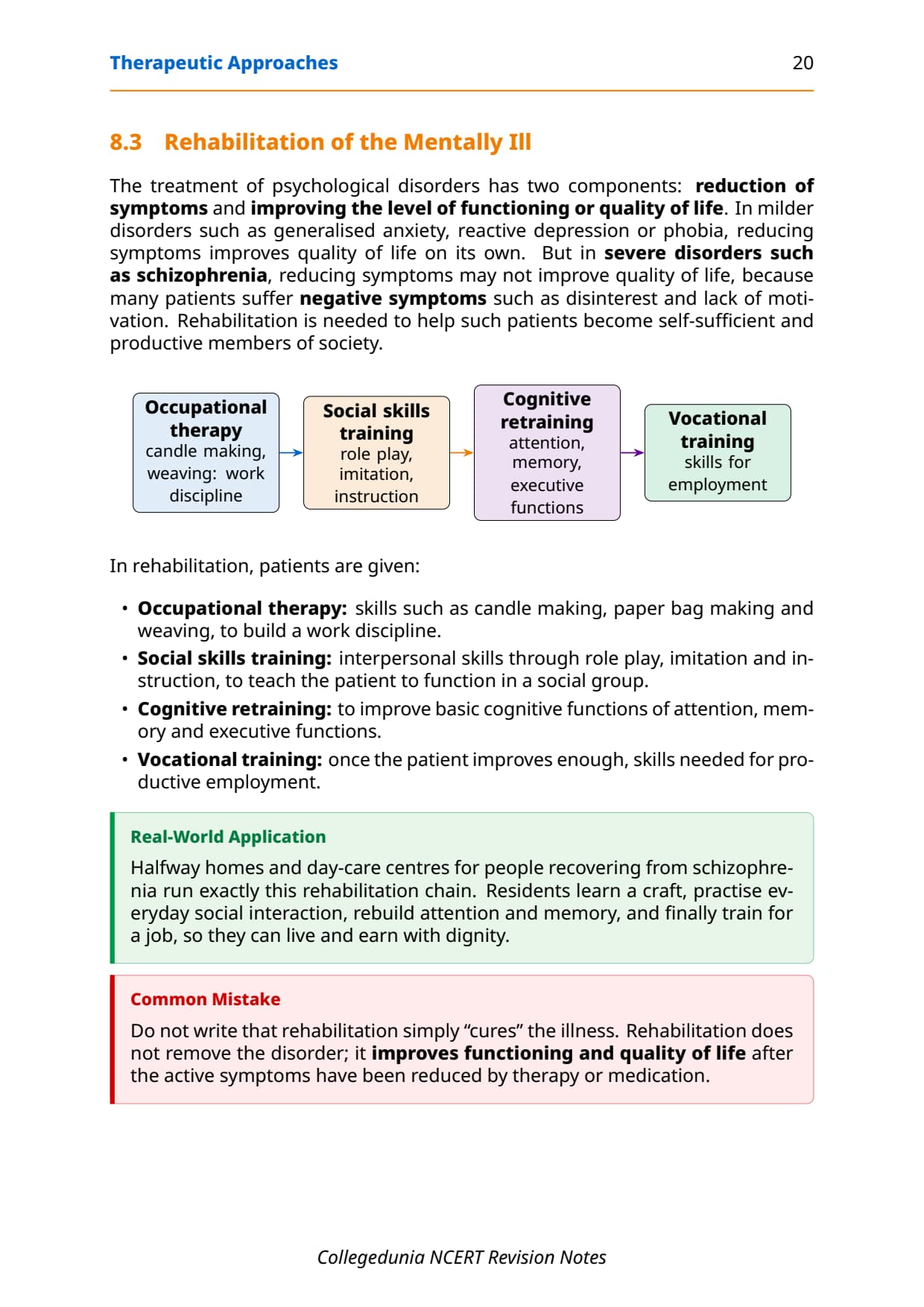
- Rehabilitation: occupational therapy, social skills training, vocational training and cognitive retraining.
The simplest way to hold the chapter in mind is the chain disorder, therapy, healing, rehabilitation. Sort each note under one of those four words and revision becomes much faster.
What Psychotherapy Is and How It Works
Psychotherapy is the core idea of the chapter, so the notes start here. It is not advice from a friend; it is a planned, professional process. Students should fix its features and its goals.
- Features: systematic use of psychological principles, a trained therapist, and a confidential, trusting bond.
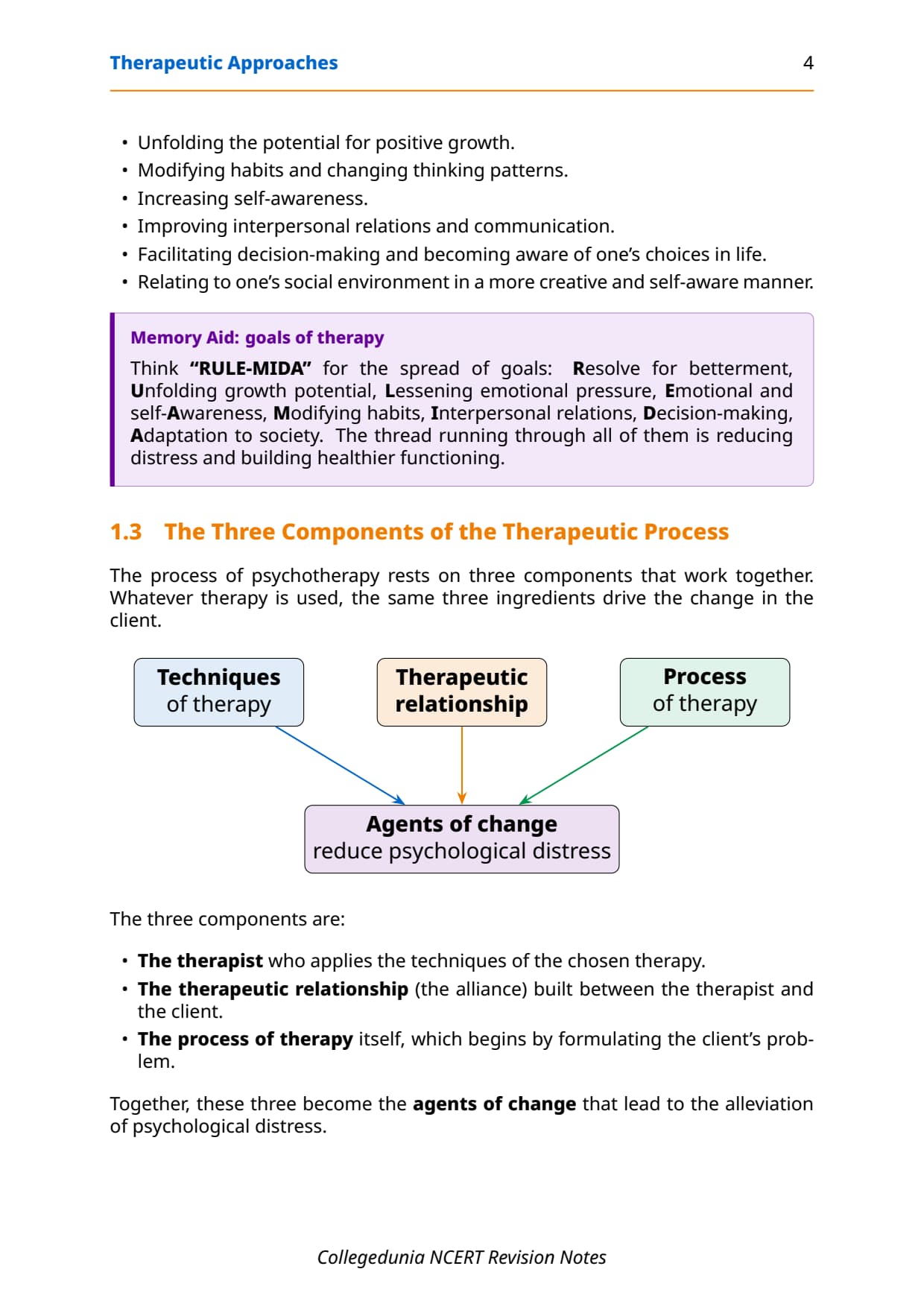
- The therapeutic relationship: made of a contractual bond (the agreed plan) and special rapport (trust and warmth).
- Goals: reduce symptoms, strengthen the client, and help them live and cope better.
A useful exam pointer is that the relationship itself heals, not just the technique. Whatever the therapy, a warm, accepting bond gives the client the safety to change. Note the two parts of the relationship clearly, because that split is a common 2-mark question.
Behaviour Therapy and Cognitive Therapy Notes
These two therapies carry the most marks, so the notes give each its own technique list. Behaviour therapy changes habits; cognitive therapy changes thoughts. The table keeps the techniques exam-ready.
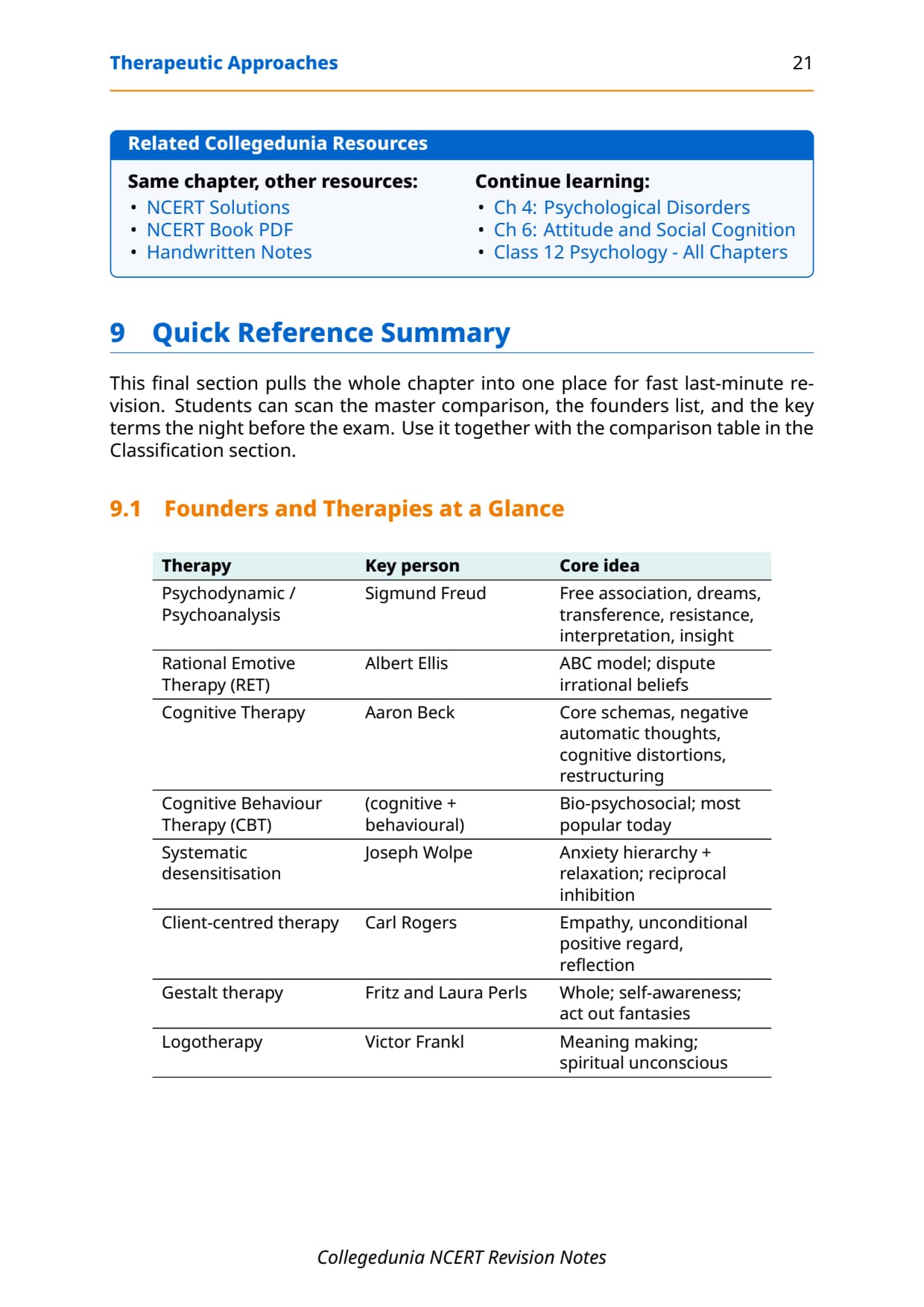
| Therapy | Key techniques to recall |
|---|---|
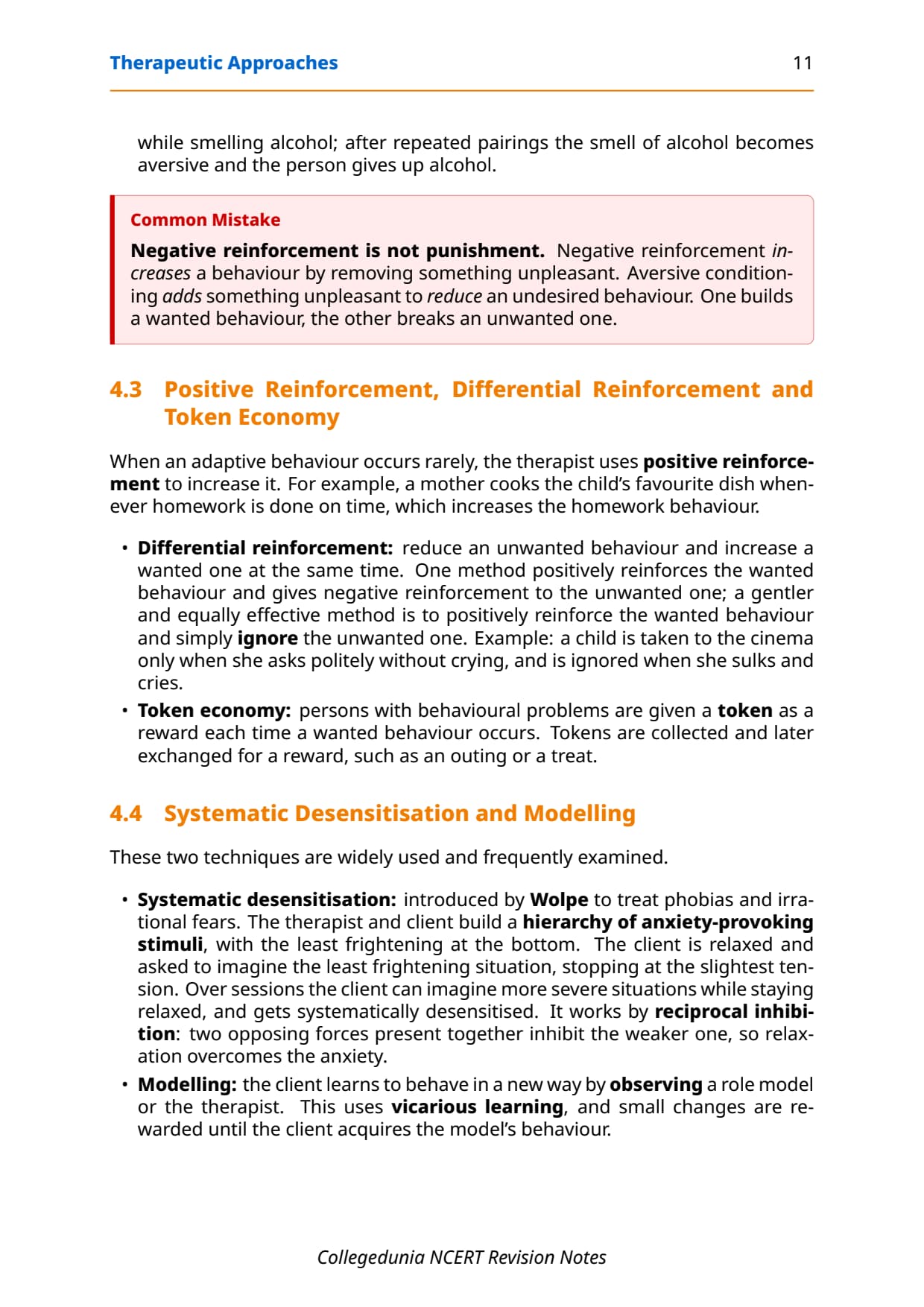
| Behaviour therapy | Negative reinforcement, aversive conditioning, token economy, systematic desensitisation, modelling. |
| Cognitive therapy | Spotting cognitive distortions, Beck's negative triad, Ellis's A-B-C model, replacing faulty beliefs. |
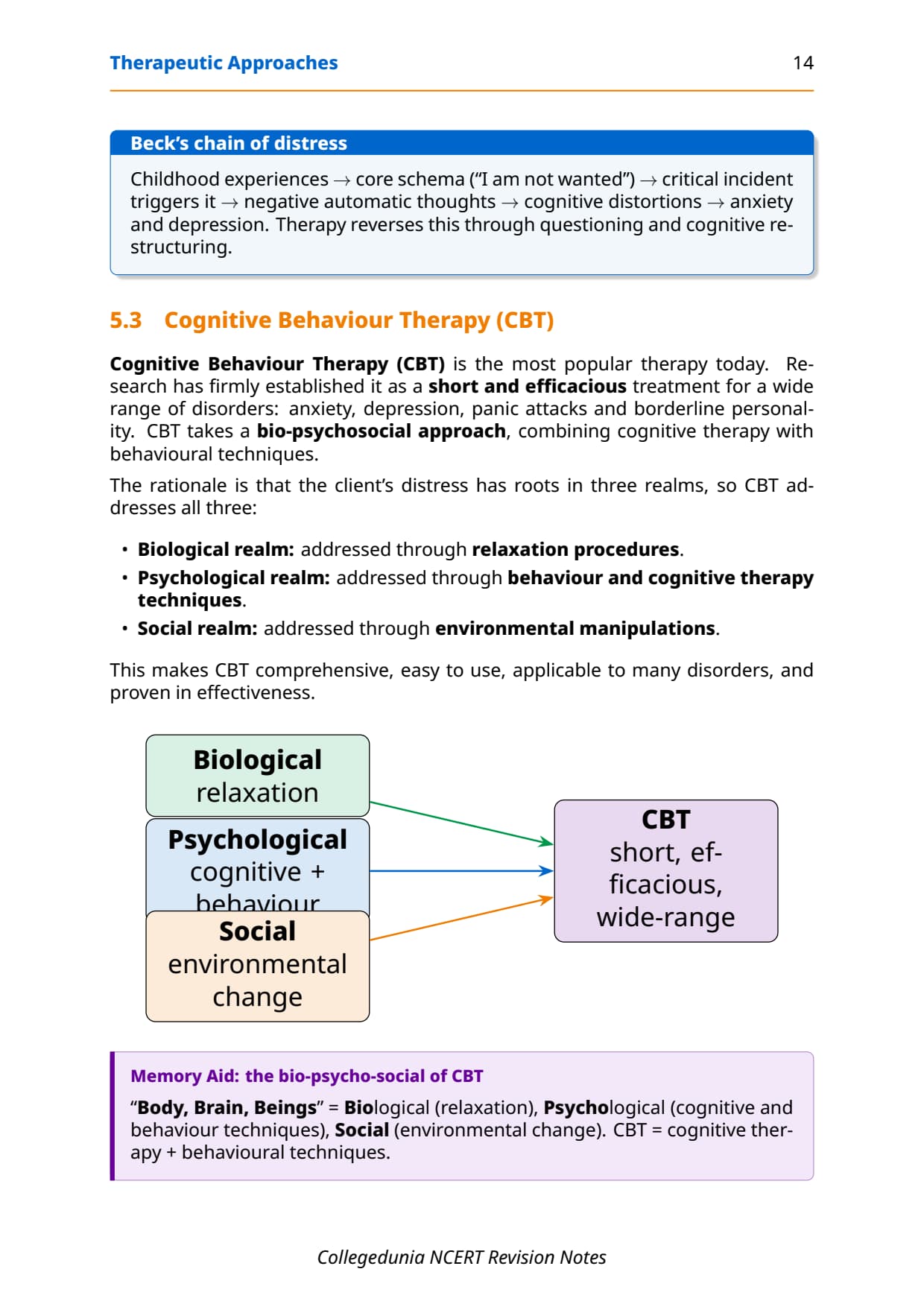
| CBT (combined) | Mixes both; short, broad and the most widely used therapy today. |
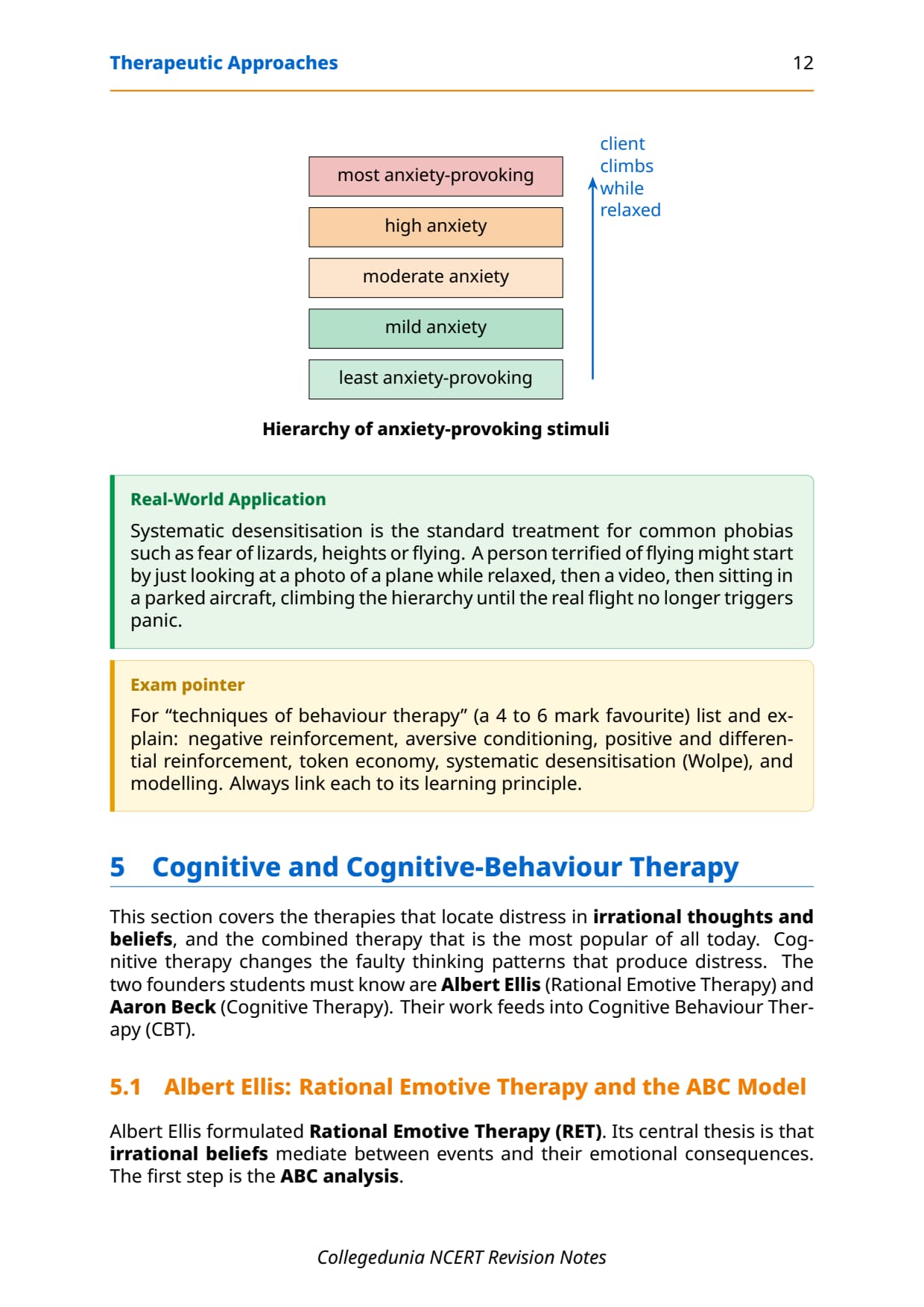
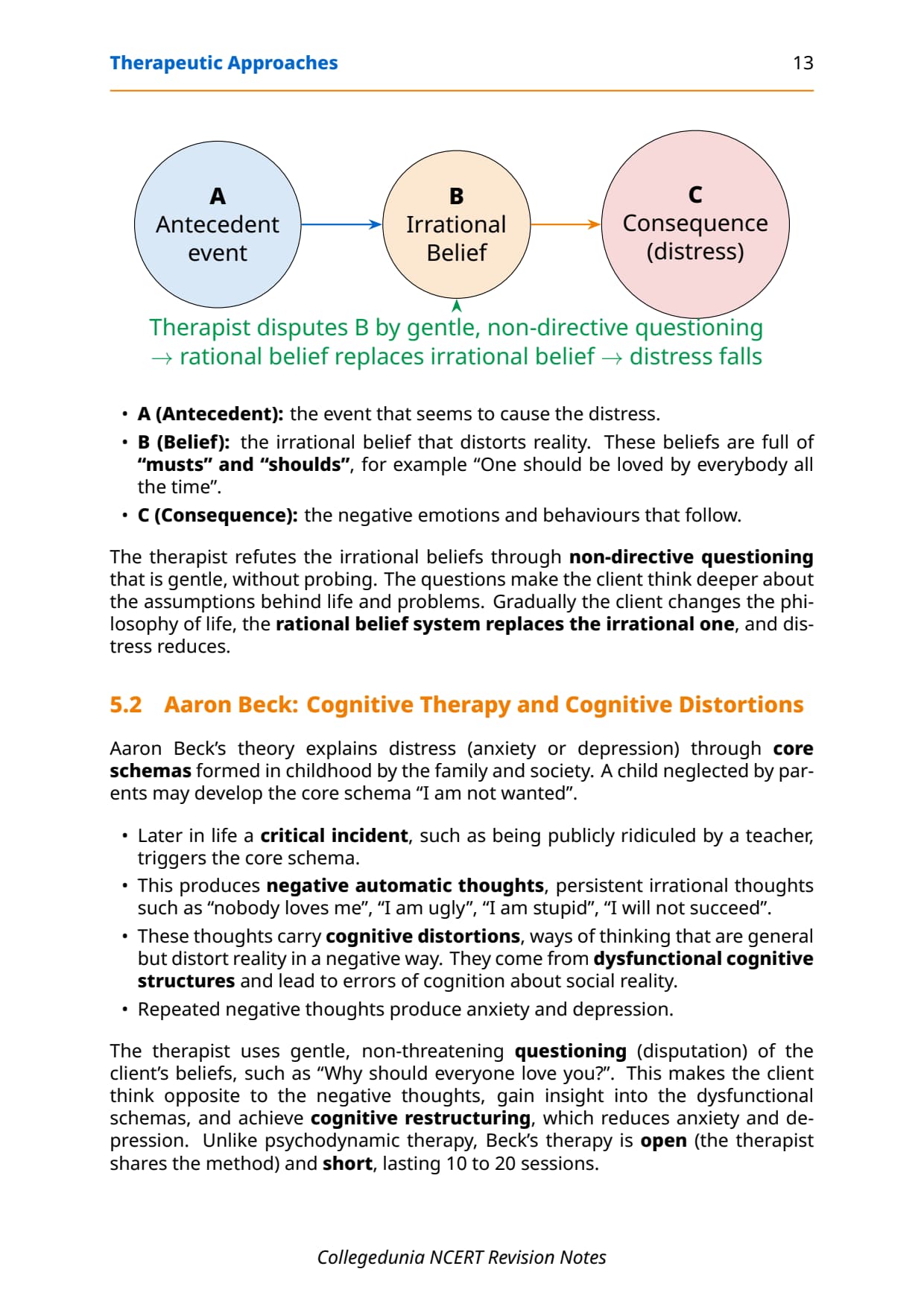
The note to underline is that cognitive distortions, not events, cause distress. A student who fails one test and thinks "I always fail" is showing a distortion. Cognitive behaviour therapy works by catching these thoughts and replacing them, while also changing behaviour. Keep Wolpe's systematic desensitisation steps ready: hierarchy, relaxation, then pairing.
Humanistic, Biomedical and Alternative Therapy Pointers
The remaining therapies are shorter but still examined, so the notes summarise each in a line or two. Linking each one to its founder is the fastest way to score the matching questions.
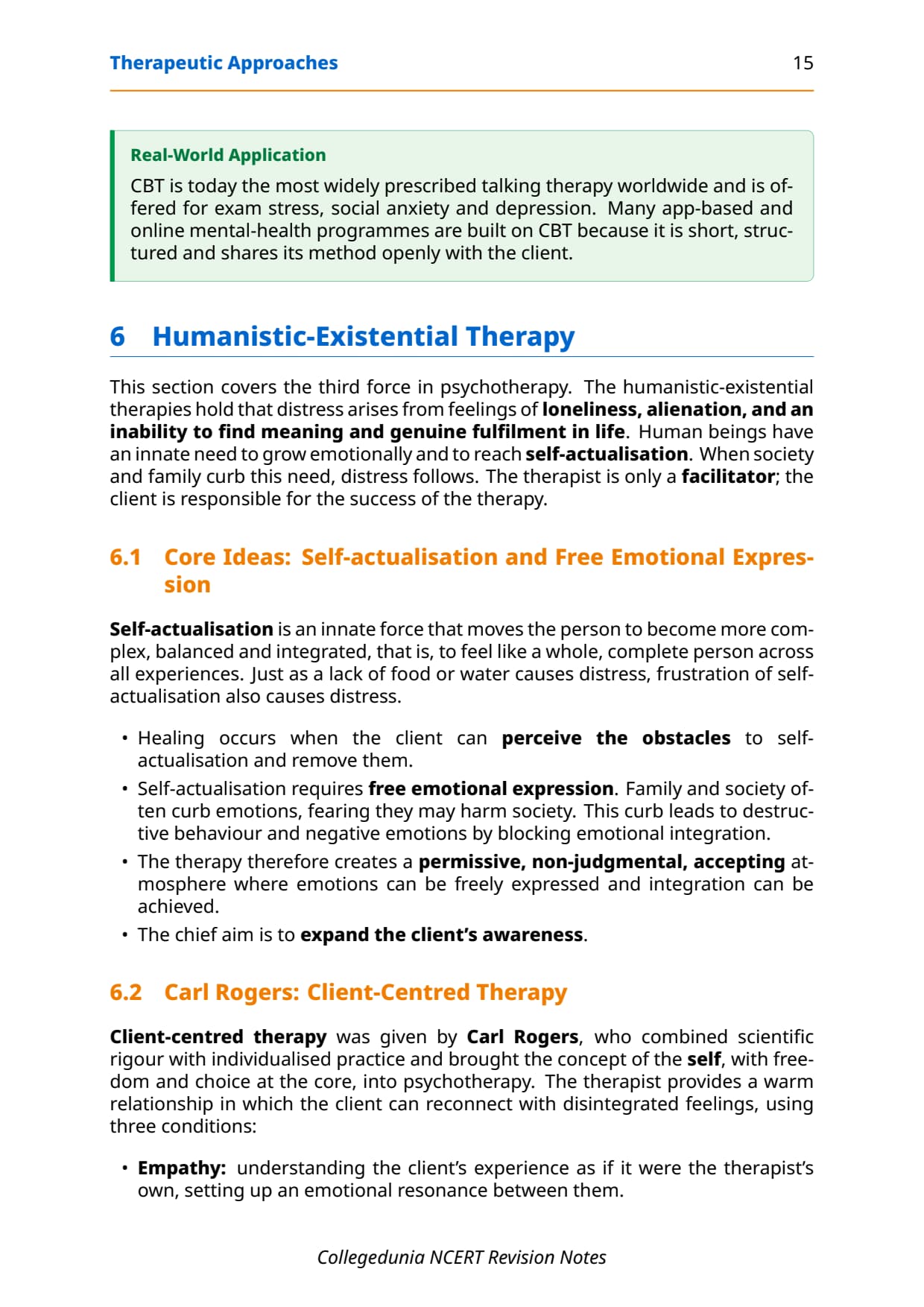
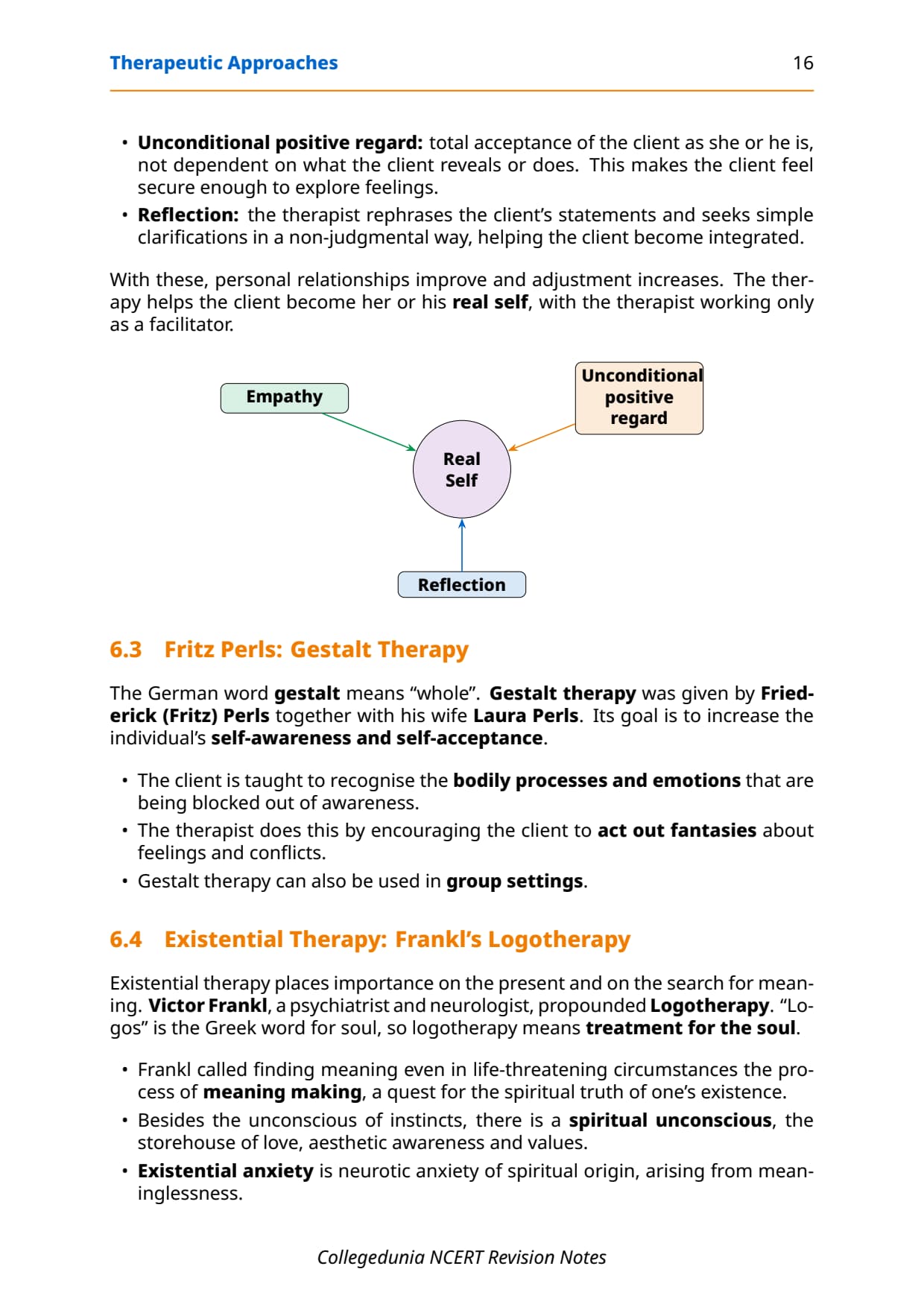
- Humanistic (Rogers): client-centred therapy gives unconditional positive regard, empathy and genuineness so the client grows.
- Existential (Frankl): helps the client find meaning and take charge of life.
- Biomedical: uses drugs and electro-convulsive therapy (ECT) for severe disorders.
- Alternative: yoga, meditation, acupuncture and herbal remedies that support recovery.
The clear exam line is that humanistic therapies treat the client as the expert on their own life. The therapist creates a warm, non-judging space rather than giving directions. For the biomedical note, remember it treats the body and brain, while psychotherapy treats the mind and behaviour.
Healing Factors and Rehabilitation Notes
The last topic links therapy to recovery. The notes split it into the factors that aid healing and the steps that rehabilitate a patient back into society.
| Theme | Points to recall |
|---|---|
| Healing factors | Therapeutic relationship, catharsis, plus non-specific factors like hope and the therapist's warmth. |
| Rehabilitation steps | Occupational therapy, social skills training, vocational training, cognitive retraining. |
| Aim | Make the patient self-reliant and able to live in society again. |
The note that earns marks is that rehabilitation rebuilds skills and confidence, not just symptoms. Occupational therapy teaches simple work, social skills training rebuilds interaction, and vocational training prepares the person for a job. These steps move the patient from the hospital back to a normal life.
Therapeutic Approaches Exam Pointers and Important Questions
CBSE sets a steady mix of short and long answers from this chapter. The pointers below tell students how much to write and which topics repeat the most.
- 6-mark long answer: behaviour therapy techniques, or the nature and scope of psychotherapy.
- 4-mark short answer: cognitive distortions, healing factors, or rehabilitation steps.
- Case-based: a phobia scenario asking for two therapy viewpoints.
- 2-mark objective: match a therapy to its founder, or name a technique from a clue.
For quick recall, students should keep one sheet that links each therapy to its founder and its main method. The most repeated items are the behaviour therapy techniques and the CBT explanation, so revise those first.
Common Mistakes Students Make in This Chapter
A few errors cost marks every year. Most come from mixing up the therapies or naming the wrong founder. Fixing them is the fastest way to lift a score.
- Confusing behaviour therapy with cognitive therapy - one changes habits, the other changes thoughts.
- Linking client-centred therapy to Freud - it is Carl Rogers.
- Calling free association a behaviour technique - it belongs to psychoanalysis.
- Forgetting Rogers's three conditions: unconditional positive regard, empathy and genuineness.
- Mixing up the parts of the therapeutic relationship - it is a contractual bond plus rapport.
Students who fix these five points usually move from average to high marks. The exam rewards a clear link between each therapy, its founder and its method, so always pair the three before you write.
How These Notes Pair with the Solutions and Book PDF
These notes summarise the chapter. To revise the full topic, students should use them alongside the other resources for the same chapter, all linked in the table below.
| Resource | Best used for |
|---|---|
| Therapeutic Approaches Class 12 NCERT Solutions | Full point-wise answers to all 9 review questions |
| Therapeutic Approaches Class 12 Handwritten Notes | Last-minute, one-shot revision in a scanned notebook style |
| Therapeutic Approaches NCERT Book PDF | Reading the original NCERT chapter text and case examples |
Tip: read these notes first, then try the back-exercise questions on your own, and only then check the model answers in the Solutions. That order builds memory faster than copying answers straight away.
All NCERT Notes for Class 12 Psychology
The table links the Notes for every chapter in Class 12 Psychology, so students can move across the course in one click. Therapeutic Approaches is highlighted.
| Chapter | Notes |
|---|---|
| Chapter 1 | Variations in Psychological Attributes |
| Chapter 2 | Self and Personality |
| Chapter 3 | Meeting Life Challenges |
| Chapter 4 | Psychological Disorders |
| Chapter 5 | Therapeutic Approaches |
| Chapter 6 | Attitude and Social Cognition |
| Chapter 7 | Social Influence and Group Processes |
FAQs on Therapeutic Approaches Class 12 Notes
Therapeutic Approaches Class 12 Psychology Common Questions
Ques. Where can I download the Therapeutic Approaches Class 12 Notes PDF?
Ans. You can download the Therapeutic Approaches Class 12 Psychology Notes PDF directly from this page. It is free, follows the 2026-27 NCERT, and summarises every therapy, technique and key term in revision form.
Ques. What topics do the Therapeutic Approaches Class 12 Notes cover?
Ans. The notes cover the nature of psychotherapy, the six families of therapy, behaviour and cognitive techniques, humanistic therapy, healing factors, alternative therapies and the rehabilitation of the mentally ill.
Ques. What are the main types of psychotherapy in Class 12 Psychology?
Ans. The main types are psychodynamic, behaviour, cognitive, humanistic-existential, biomedical and alternative therapies. They differ in the cause they assume, the goal they set and the method they use.
Ques. What is the difference between behaviour therapy and cognitive therapy?
Ans. Behaviour therapy changes faulty, learned habits using conditioning techniques. Cognitive therapy changes distorted, negative thinking. Cognitive behaviour therapy (CBT) combines both and is the most widely used therapy today.
Ques. Are these notes enough to revise Therapeutic Approaches for the board exam?
Ans. Yes for revision. These notes fix every key term, founder and technique. For full answers, pair them with the NCERT Solutions on this site, which solve all 9 review questions step by step.



Comments