




The I Sell My Dreams Class 12 notes explain Gabriel Garcia Marquez's short story for the 2026-27 NCERT Kaleidoscope syllabus. Use this page to revise Frau Frieda, the snake ring, Pablo Neruda, magical realism and the final irony before reading the full PDF.
- Download the Class 12 English Supplementary Chapter 1 notes PDF for offline revision.
- Revise the plot frame, dream motif, symbols, themes and answer-writing cues.
- Student focus: the story keeps belief and doubt alive until the last line.
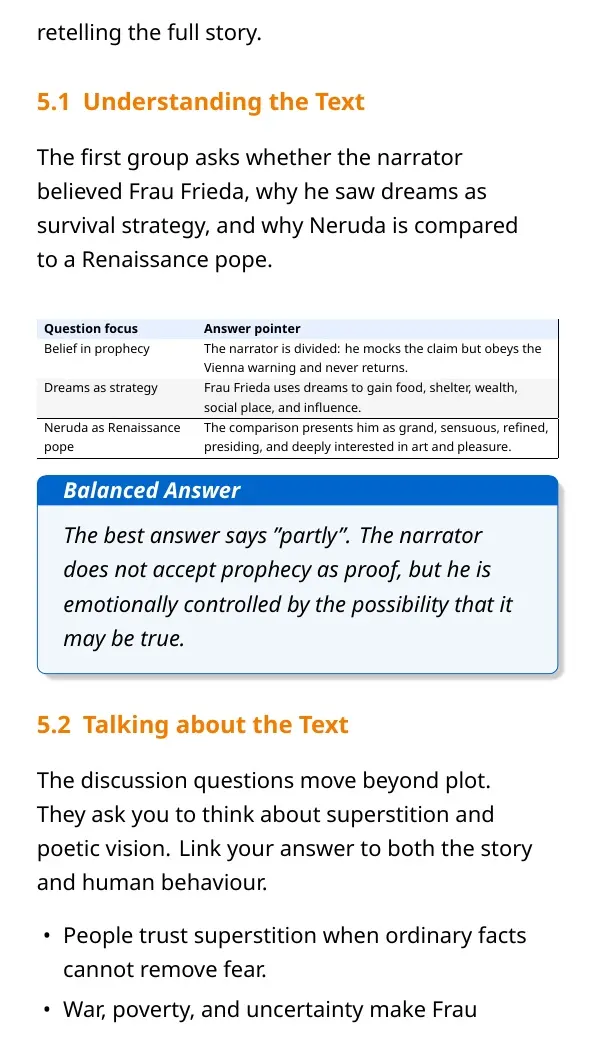
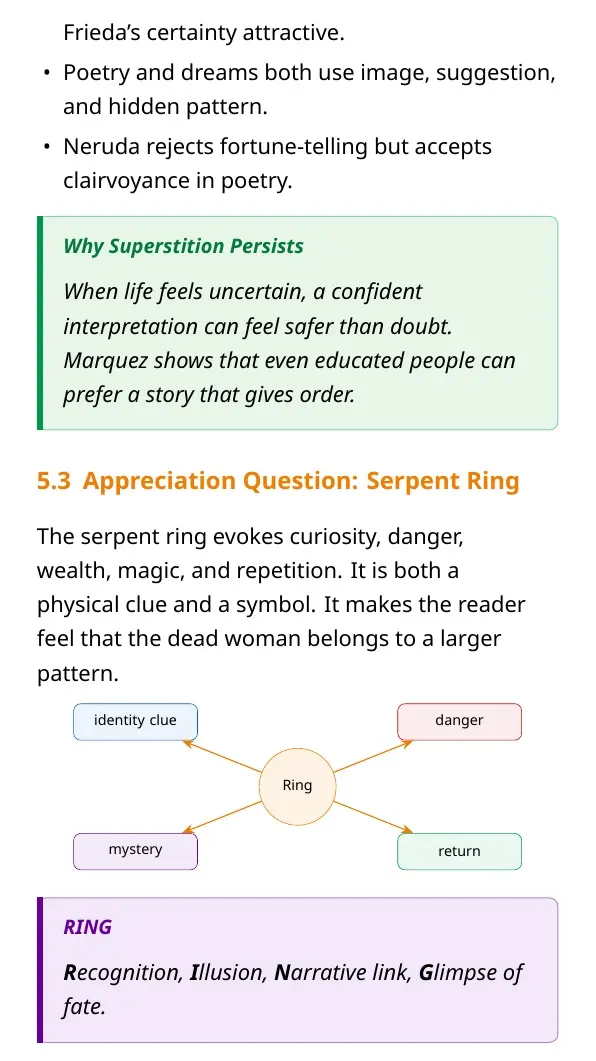
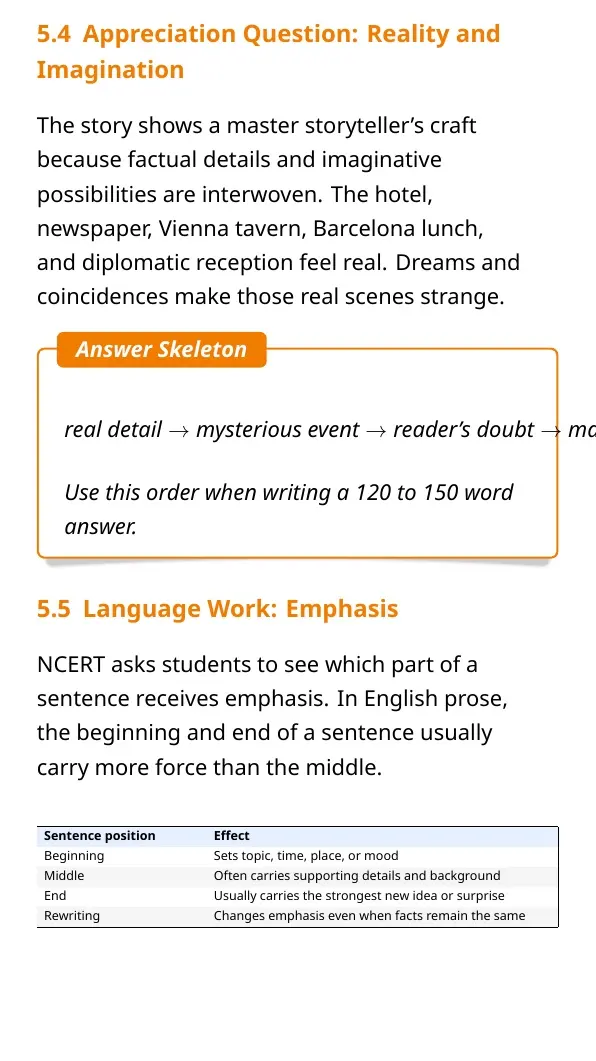
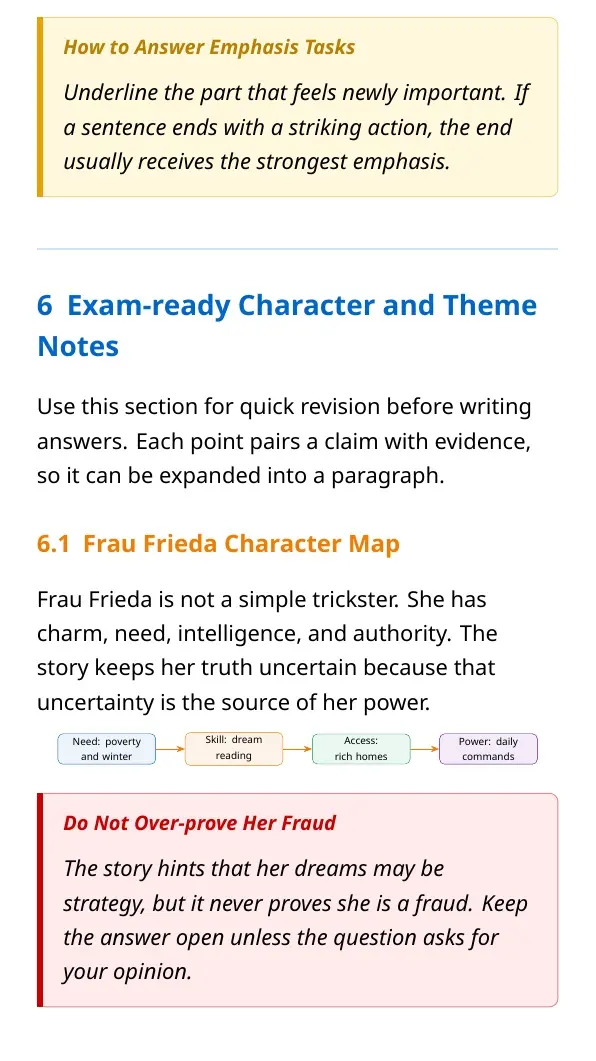
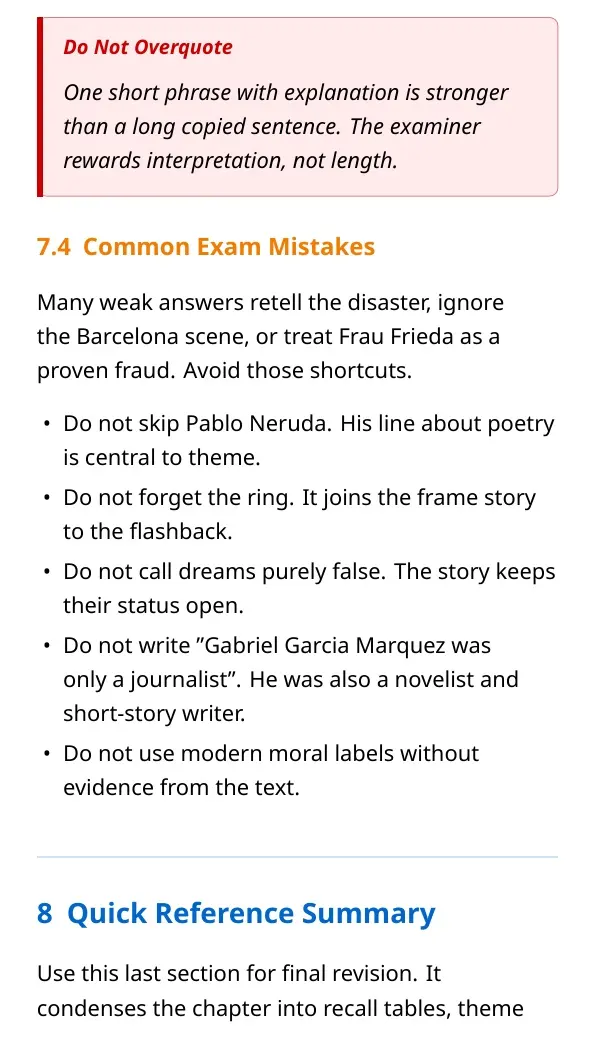
These Class 12 English Supplementary notes are checked against the 2026-27 NCERT chapter and built for fast board revision.
Student Feedback on I Sell My Dreams
In a Collegedunia poll of 12,480 Class 12 English students before the 2026 boards, many students knew the plot but missed how the story mixes superstition, memory and poetic vision.
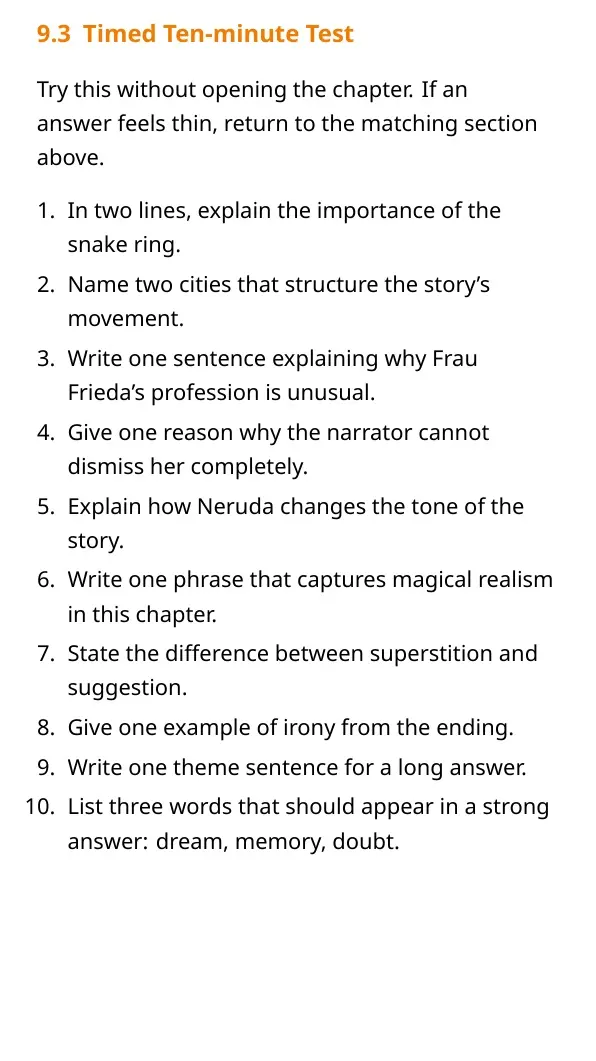
- 71% wanted a clearer split between Frau Frieda's dream power and survival strategy.
- 58% first treated the snake ring only as a clue, not as a symbol.
- 46% needed help with the ambassador's last line. The notes connect it with irony.
Source: 2026-27 Class 12 English student poll. Sample of 12,480 students from CBSE schools across 15 states.
I Sell My Dreams Story Trail for Class 12 English
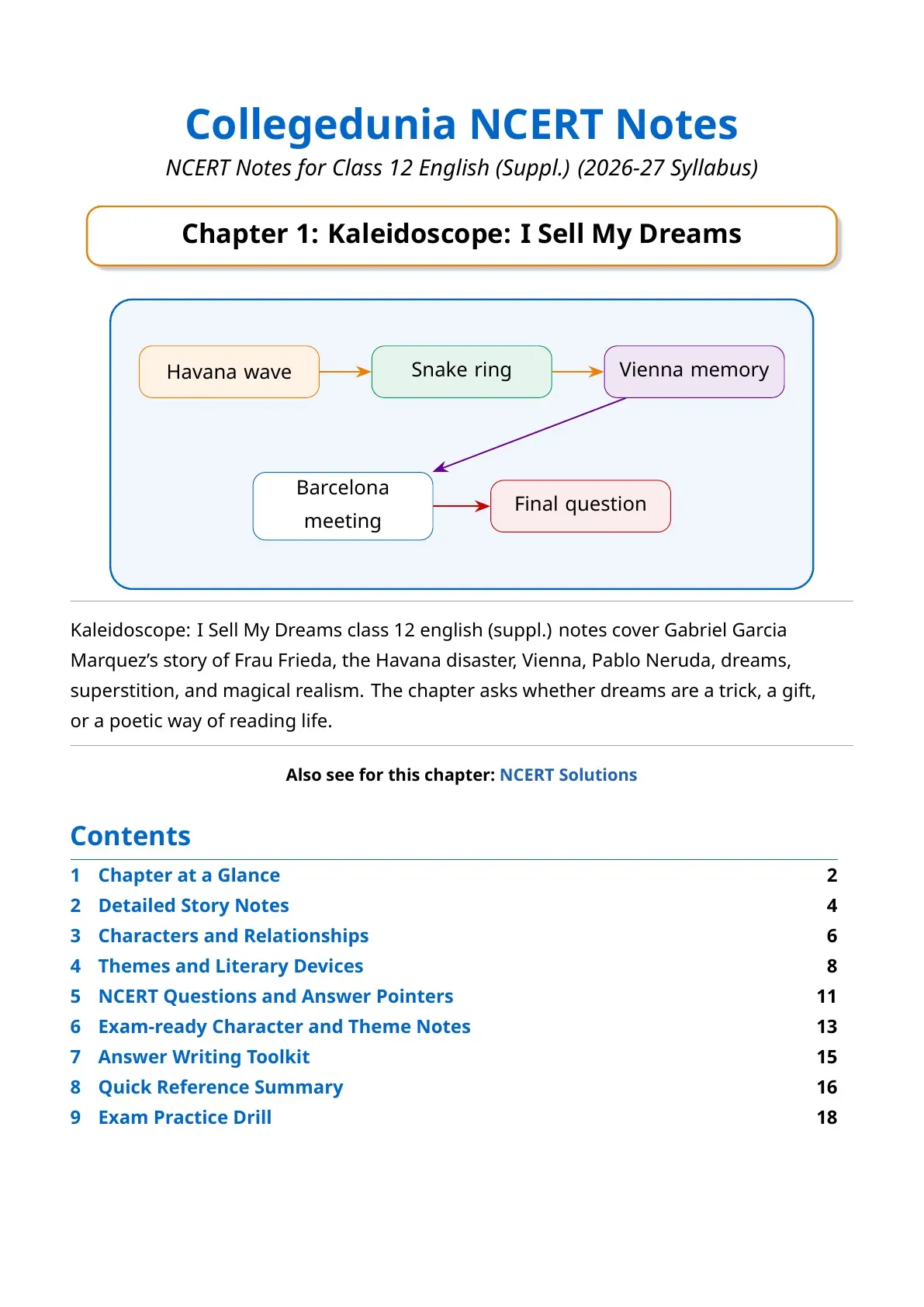
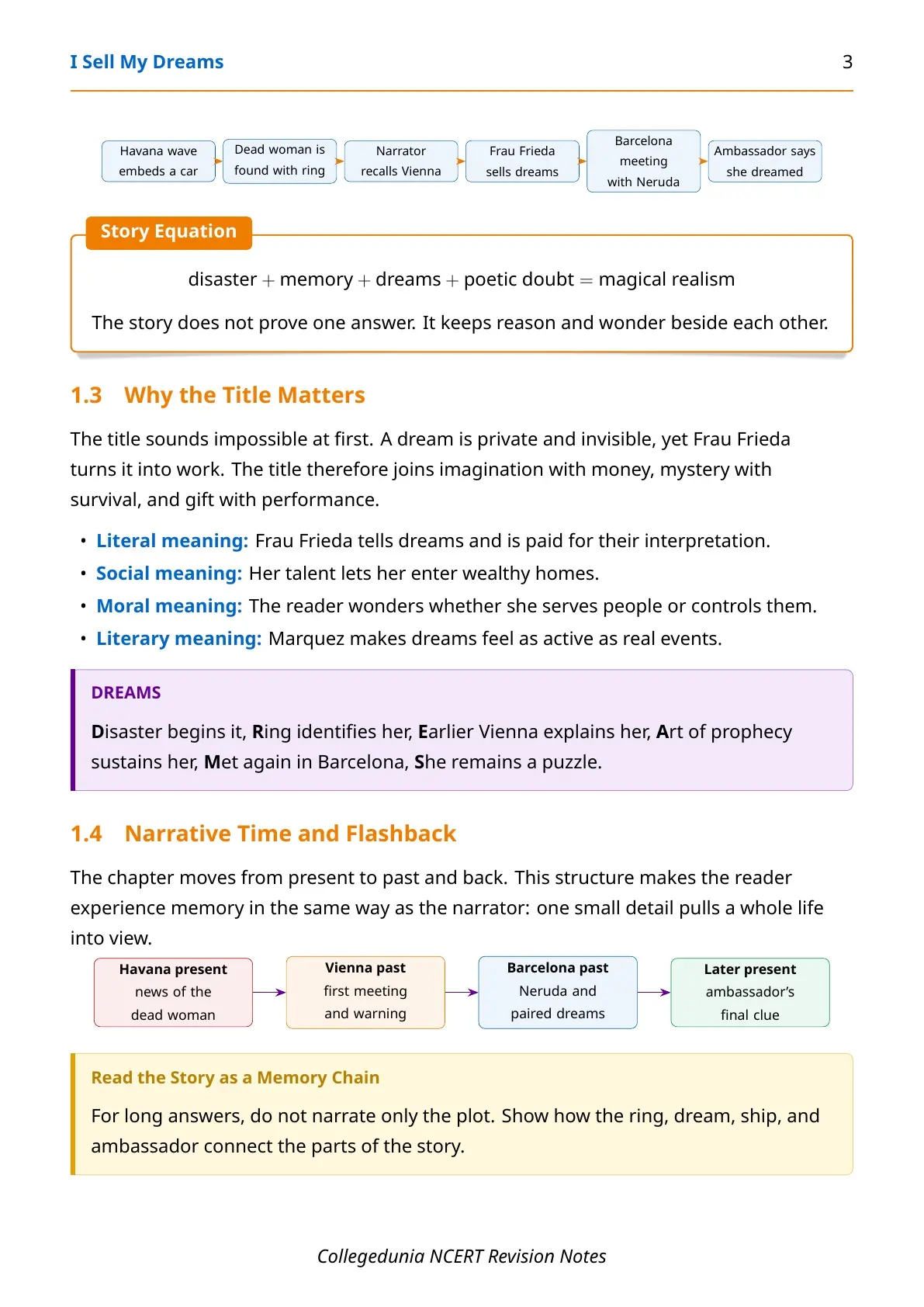
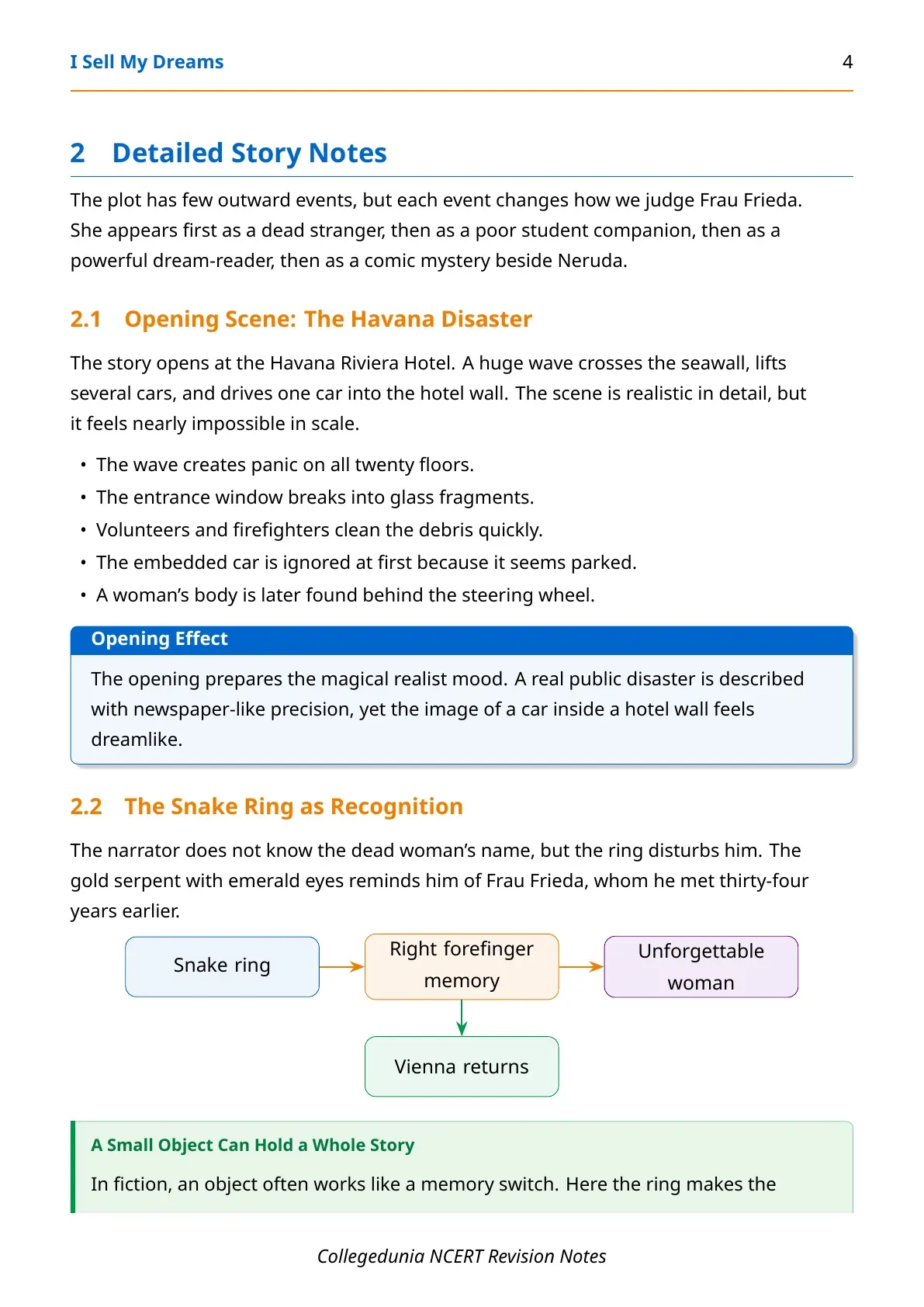
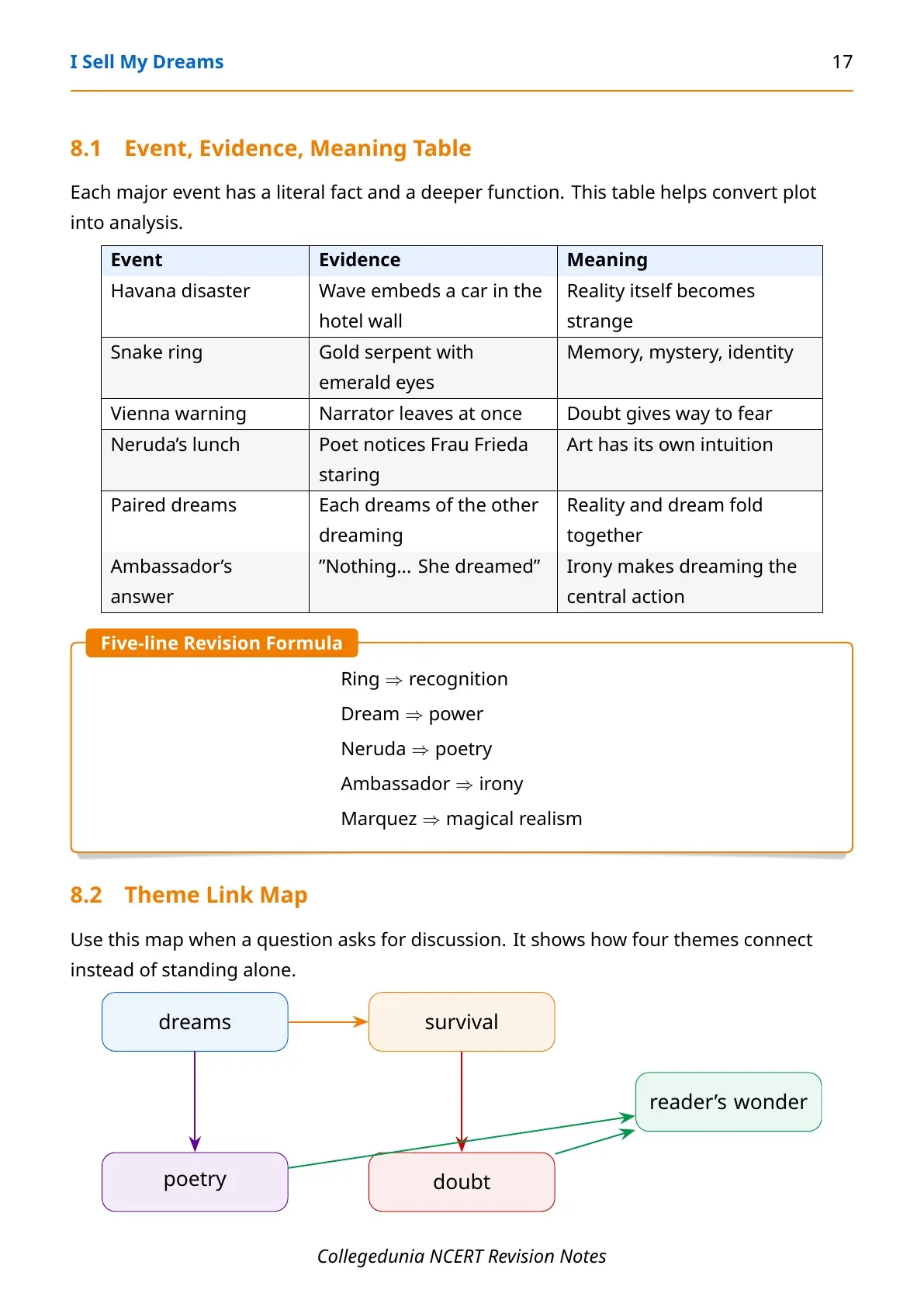
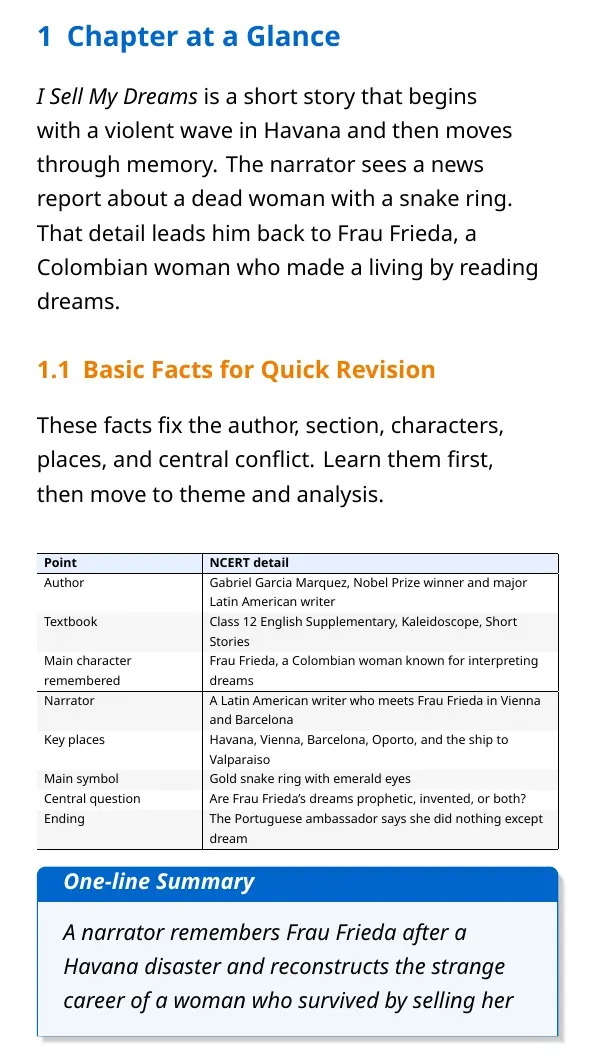
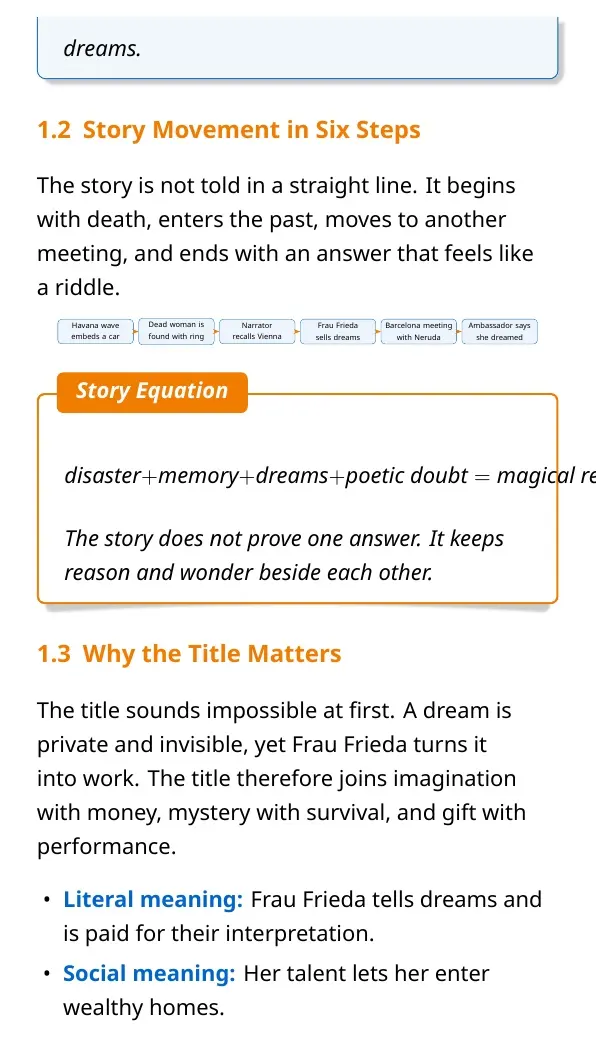
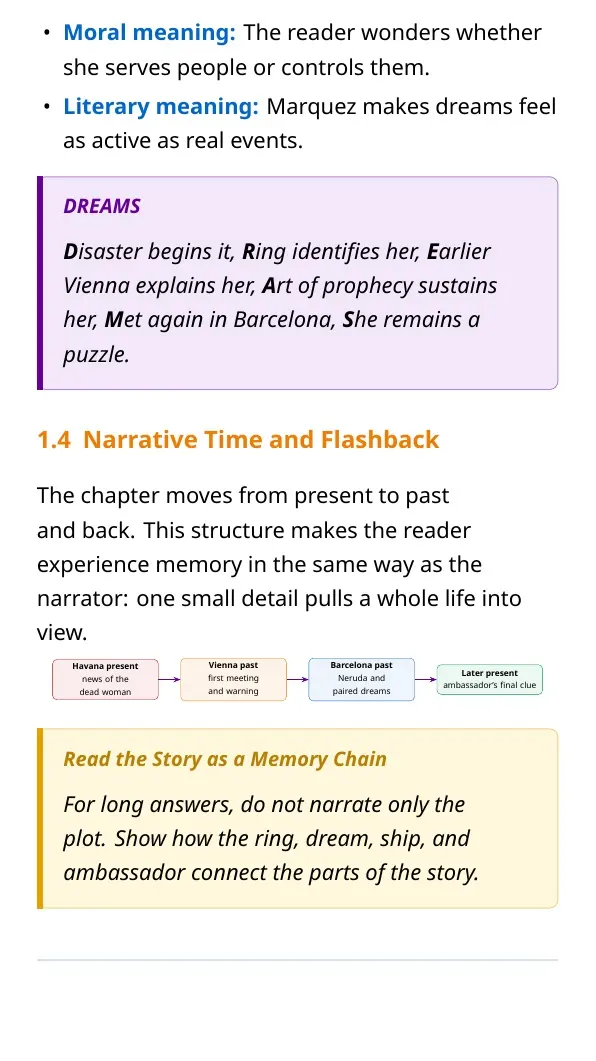
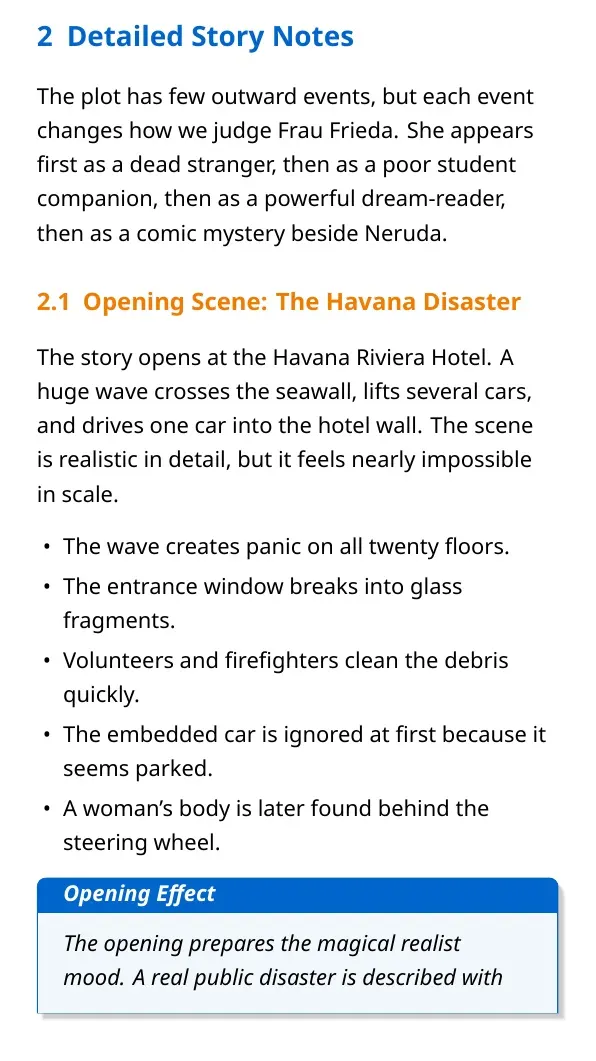
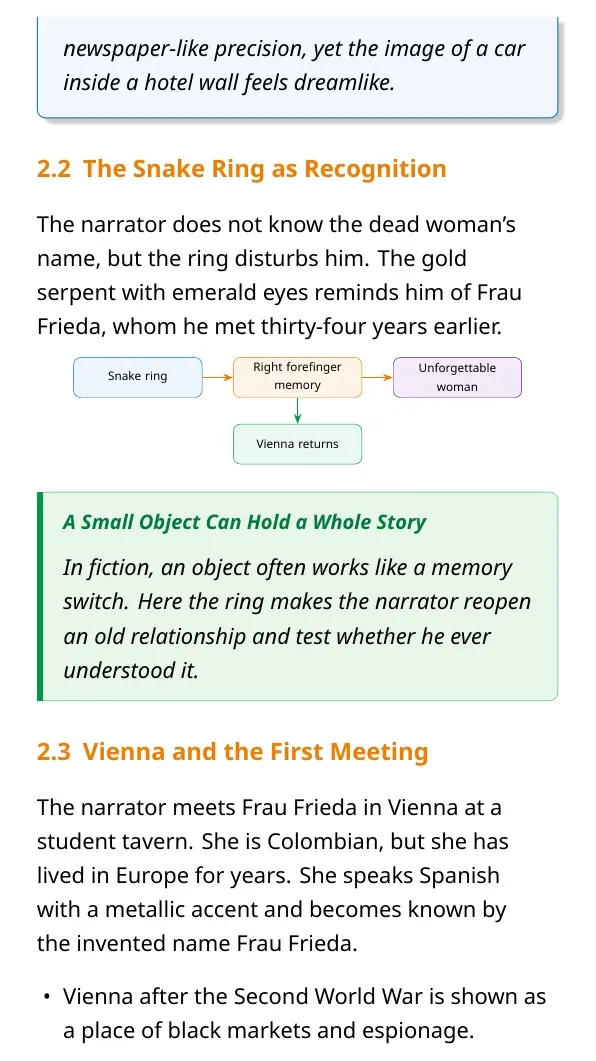
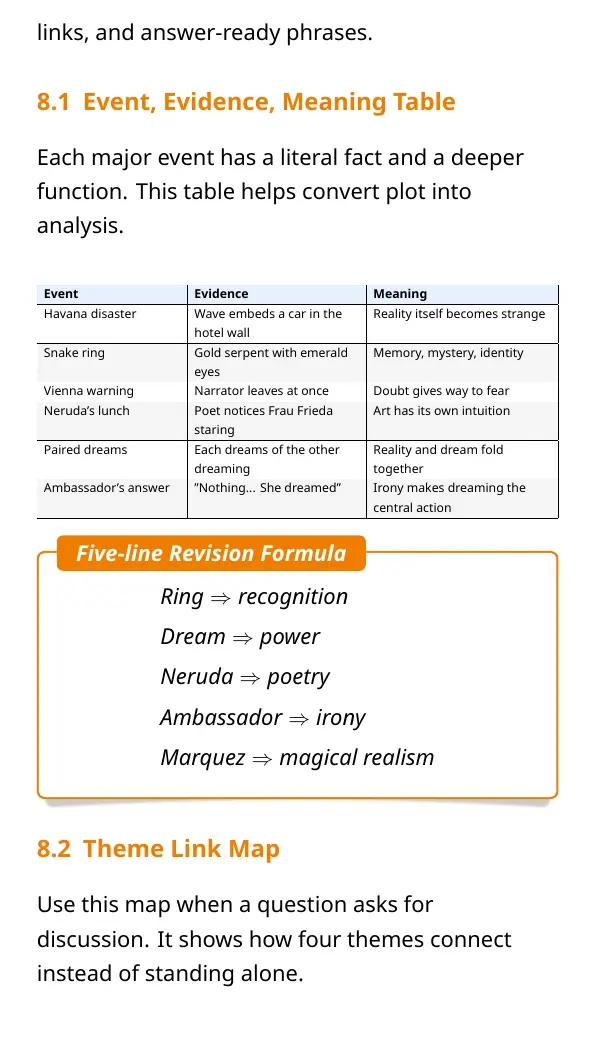
Marquez opens the story with a public disaster in Havana. A huge wave throws a car into the hotel wall. The dead woman inside wears a gold snake ring with emerald eyes. That ring pulls the narrator into a memory of Frau Frieda in Vienna.

- The Havana wave creates the story's frame.
- The snake ring links the dead woman with Frau Frieda.
- Vienna explains how Frau Frieda made dreams her profession.
- Barcelona places her beside Pablo Neruda and poetic vision.
I Sell My Dreams Summary for Class 12 Kaleidoscope
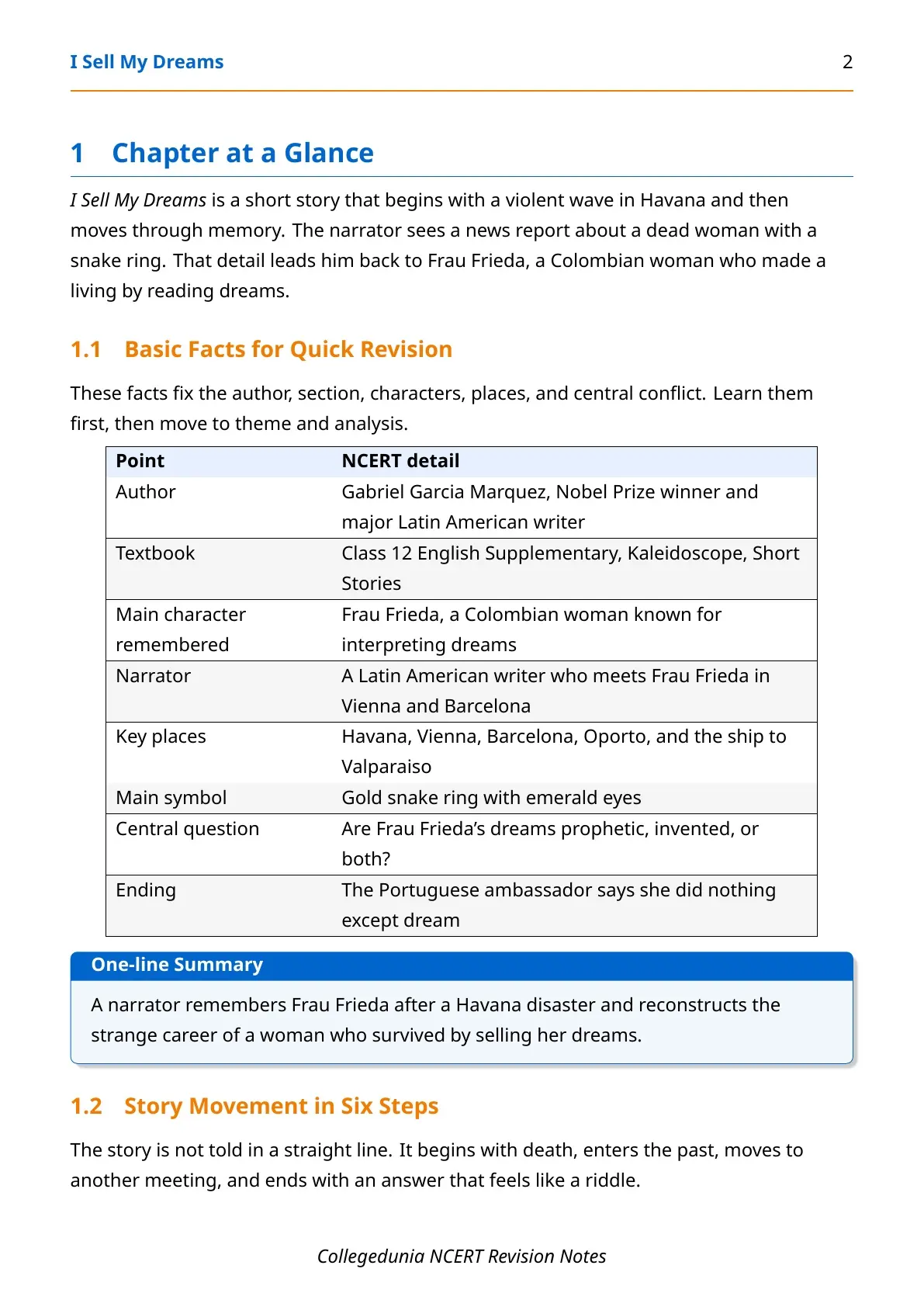
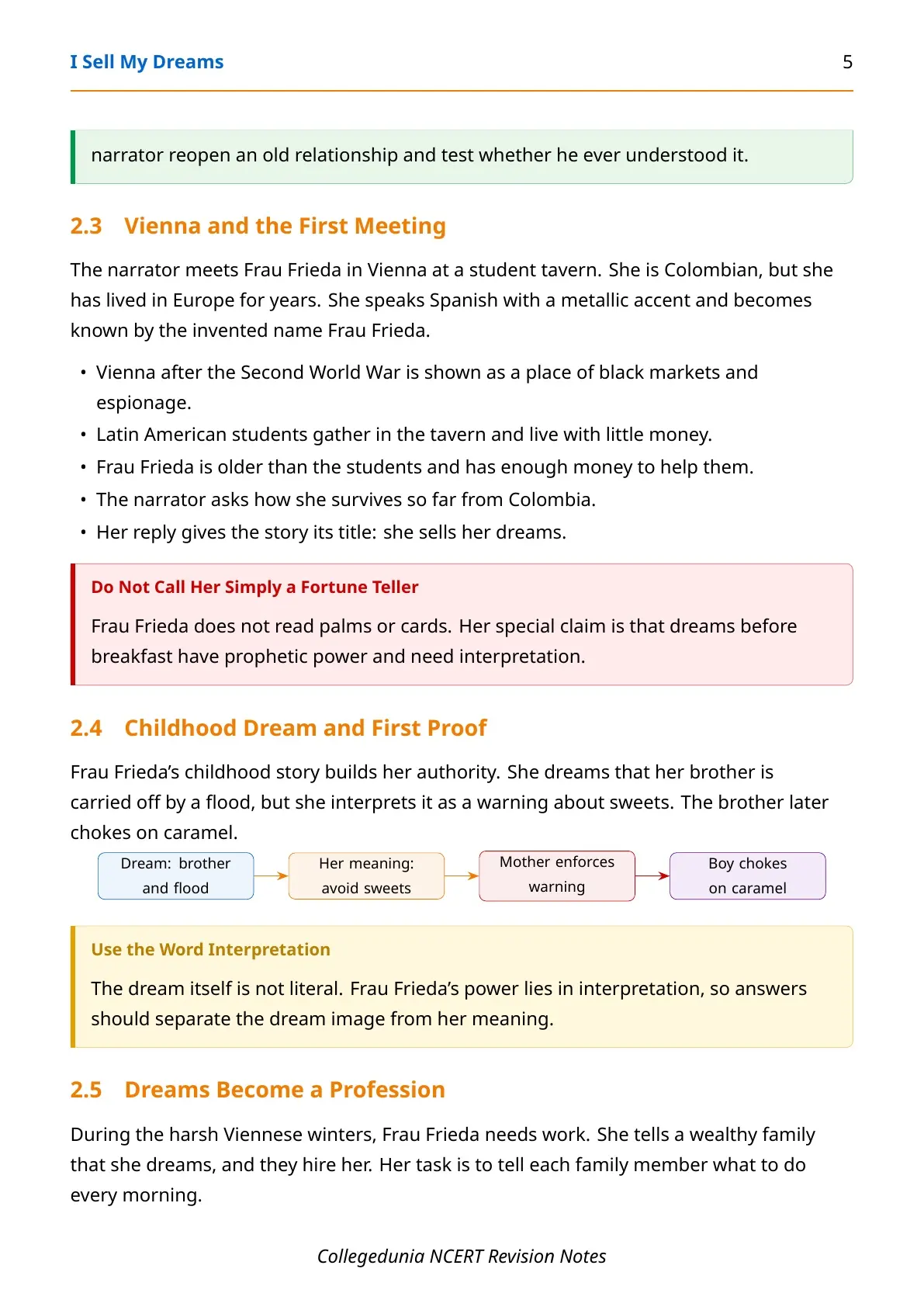
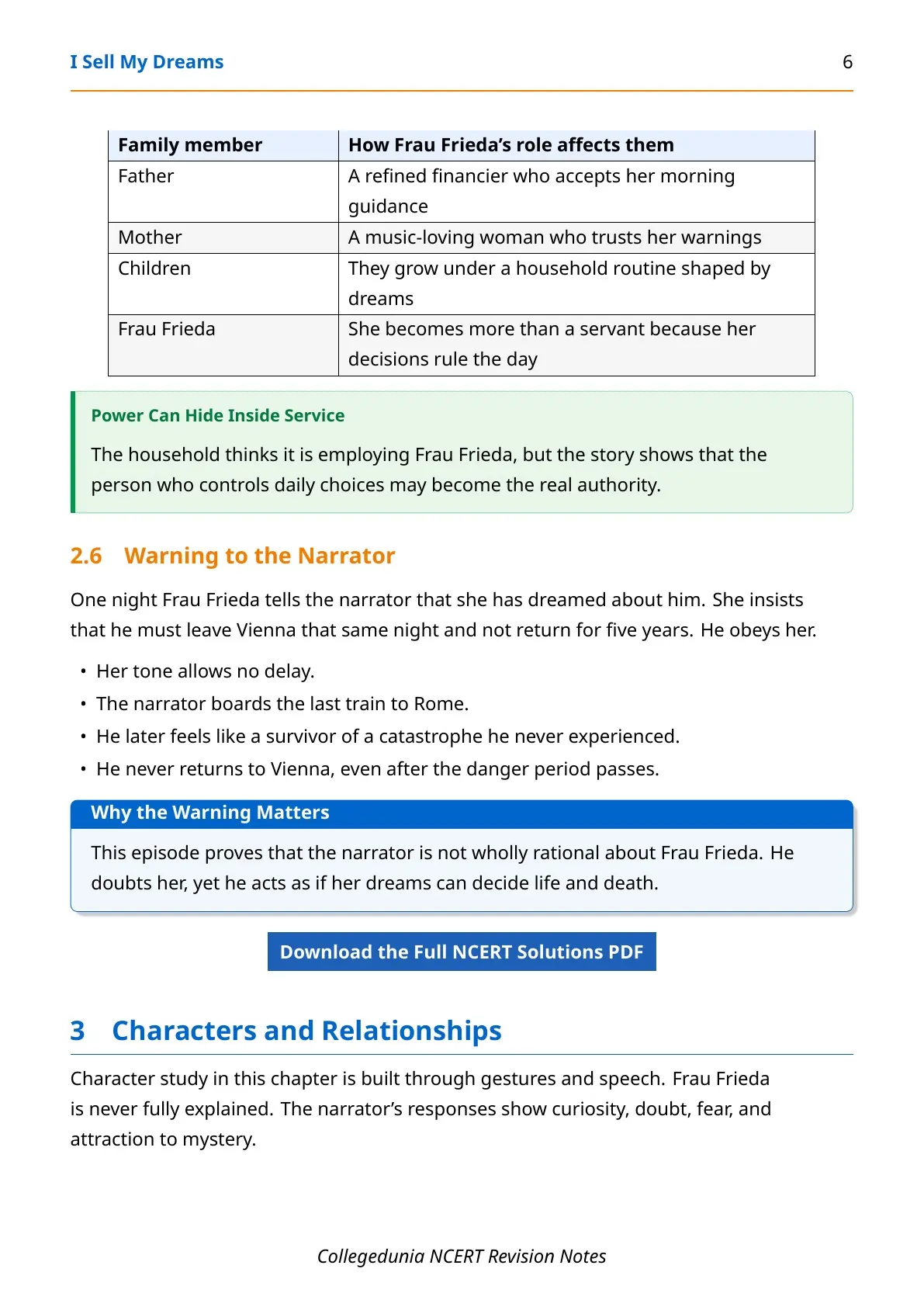
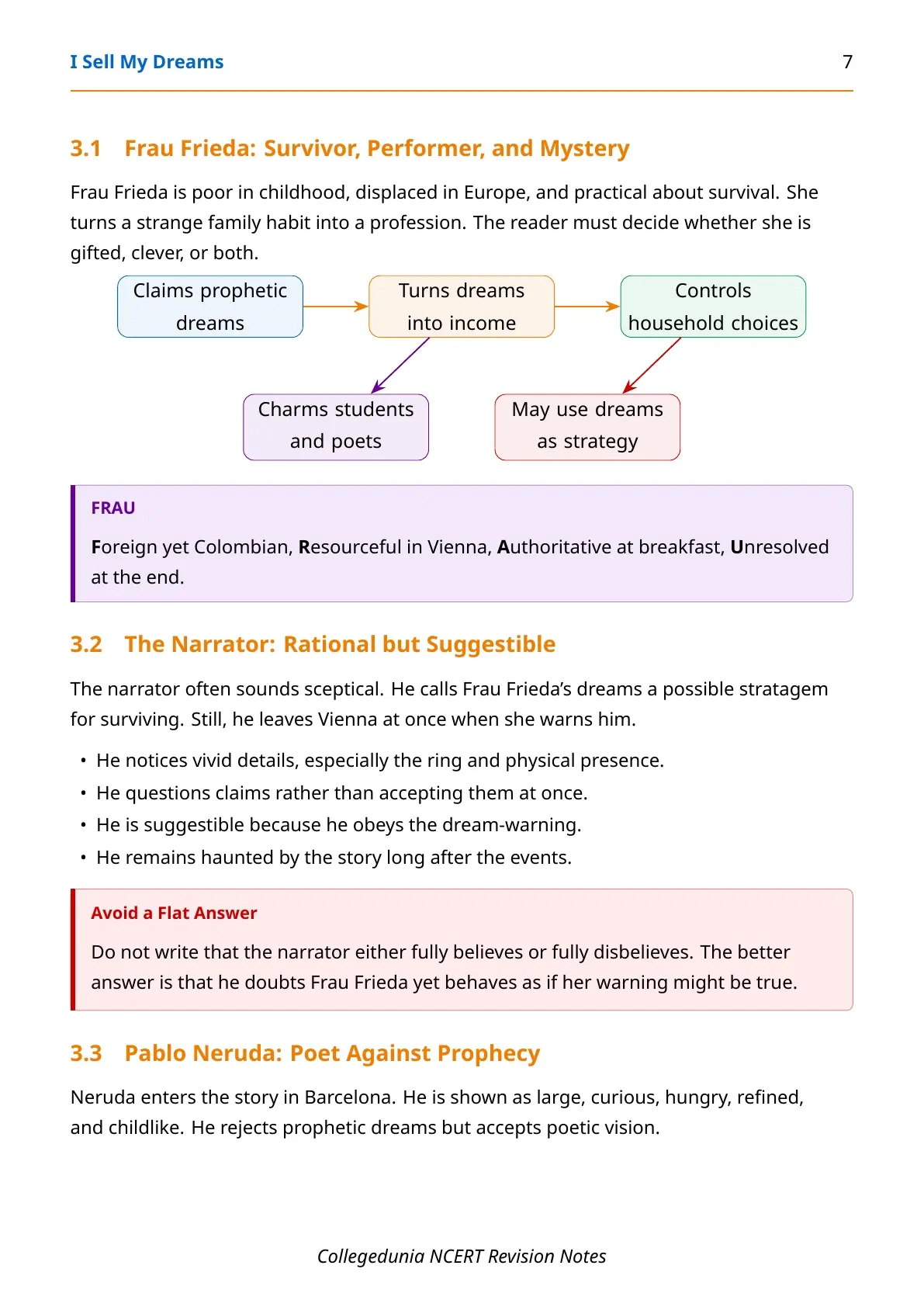
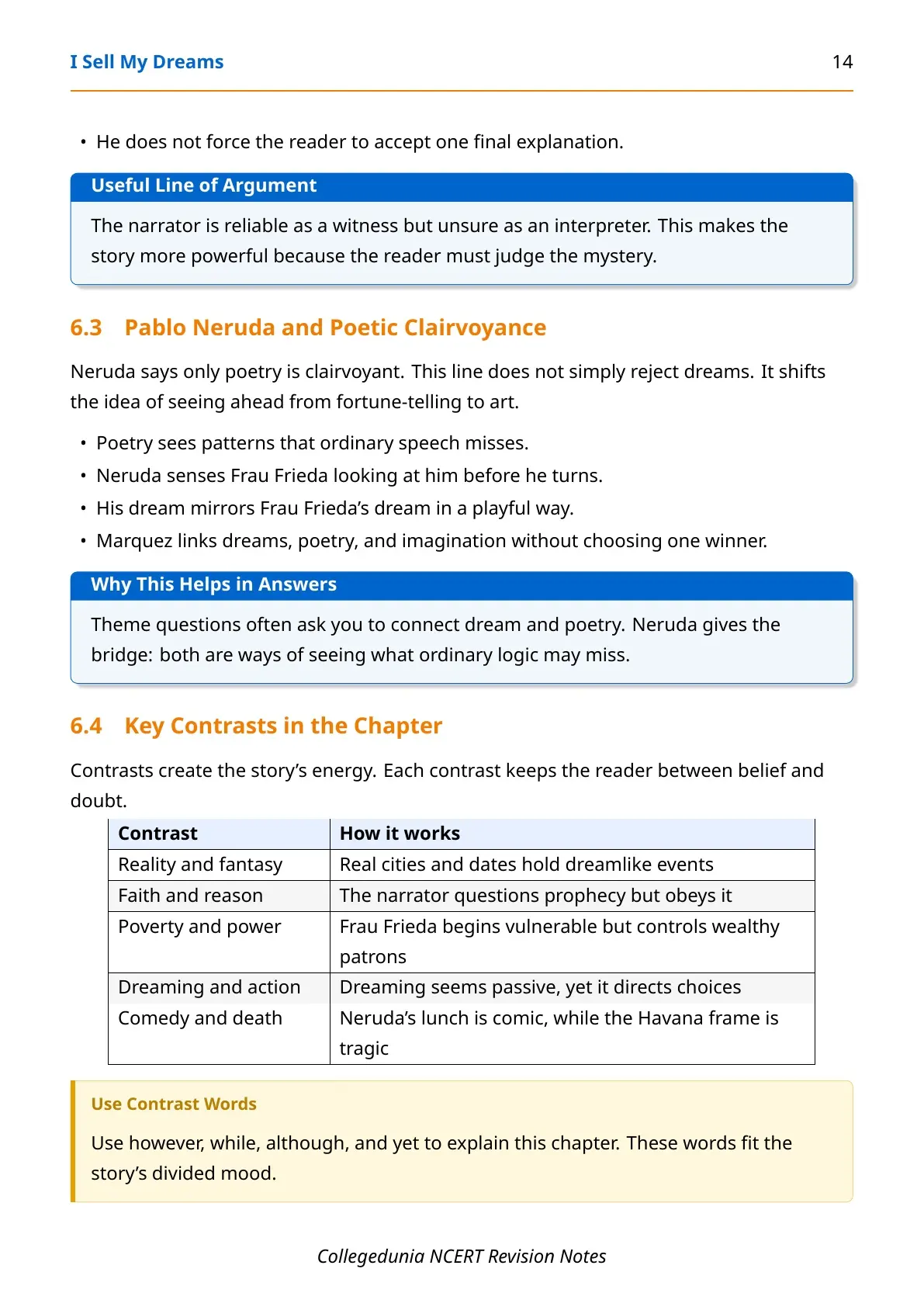
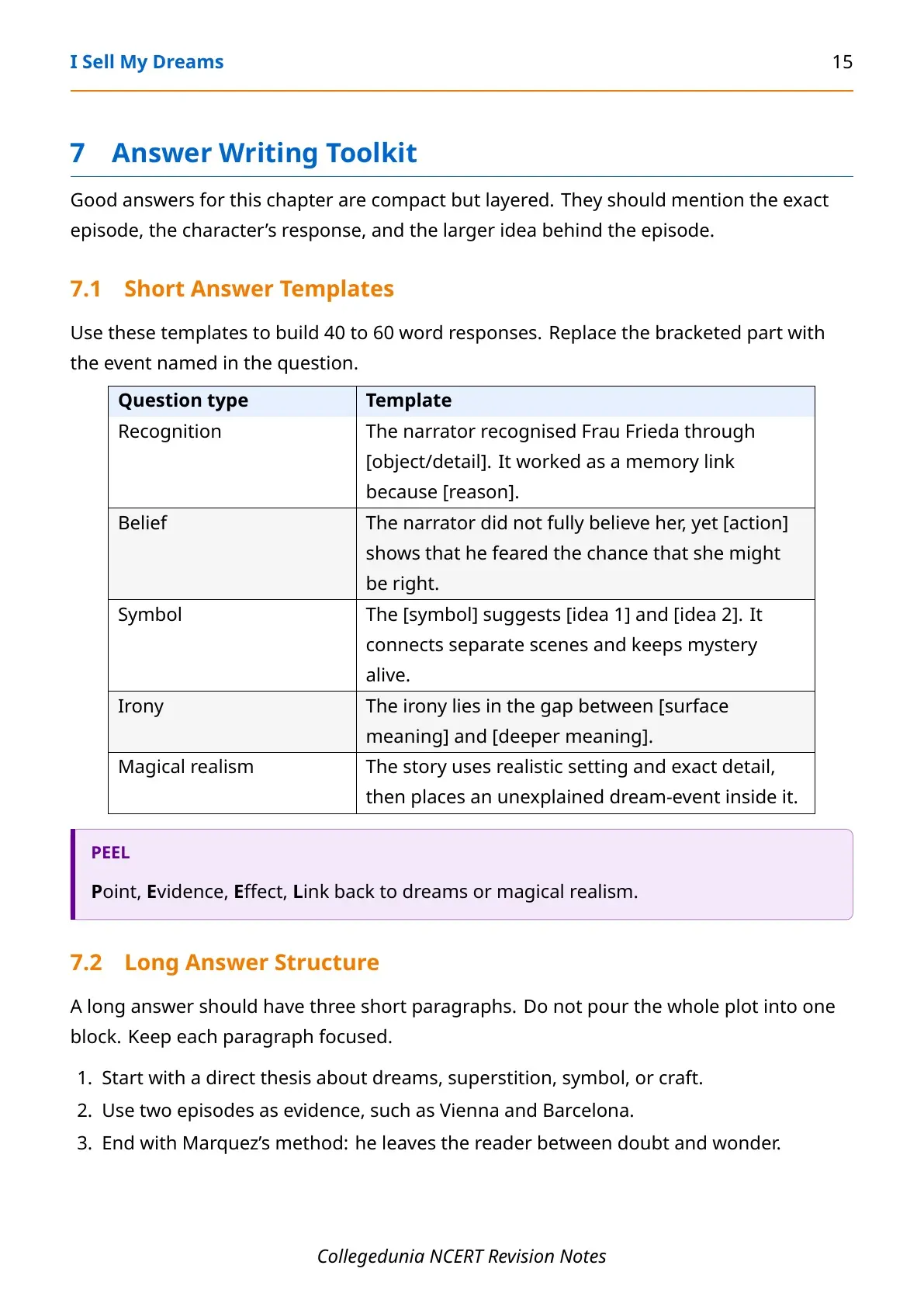
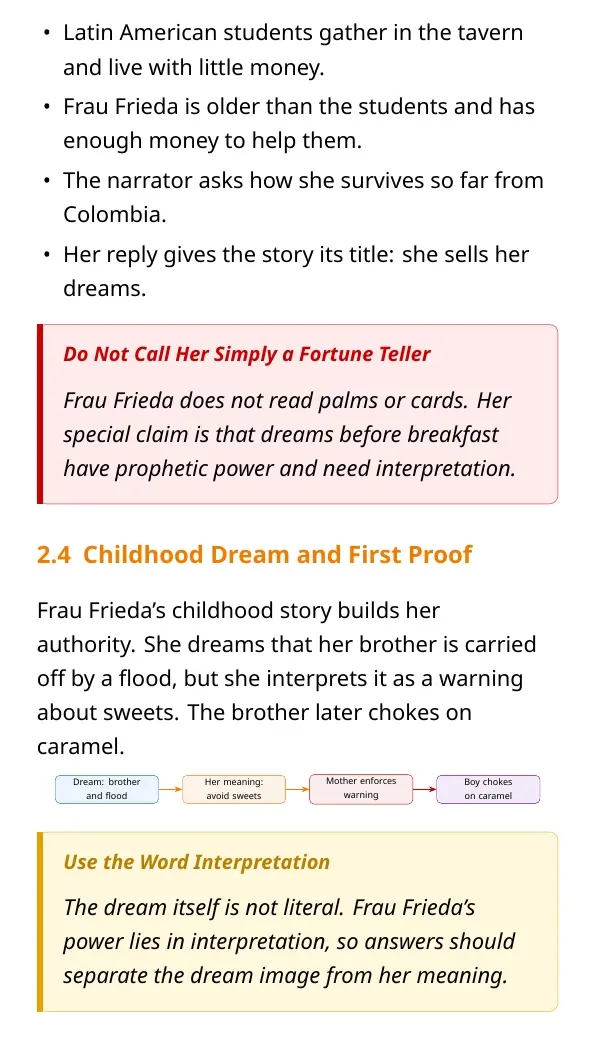
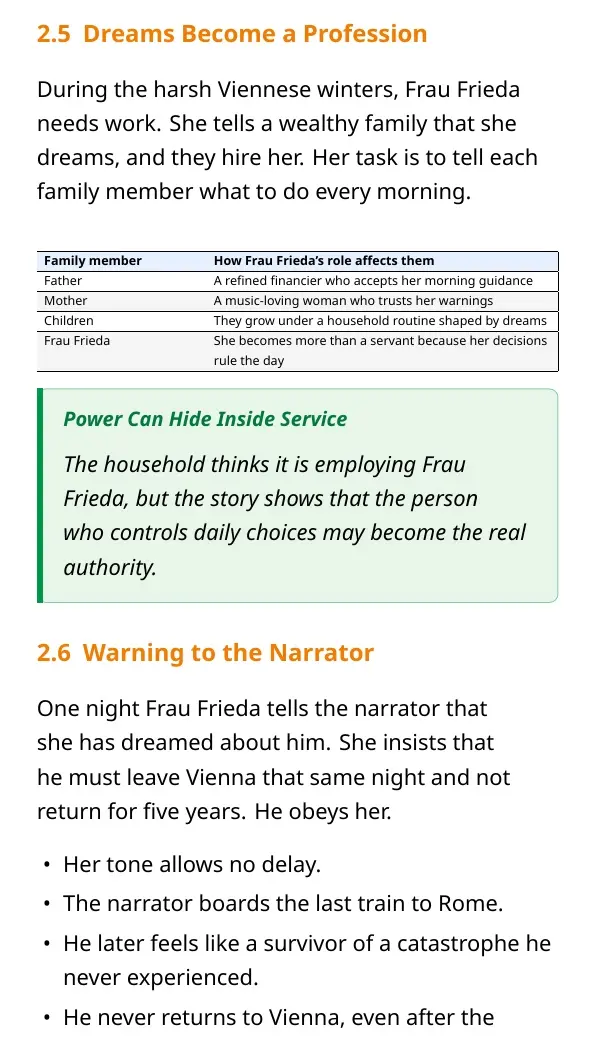
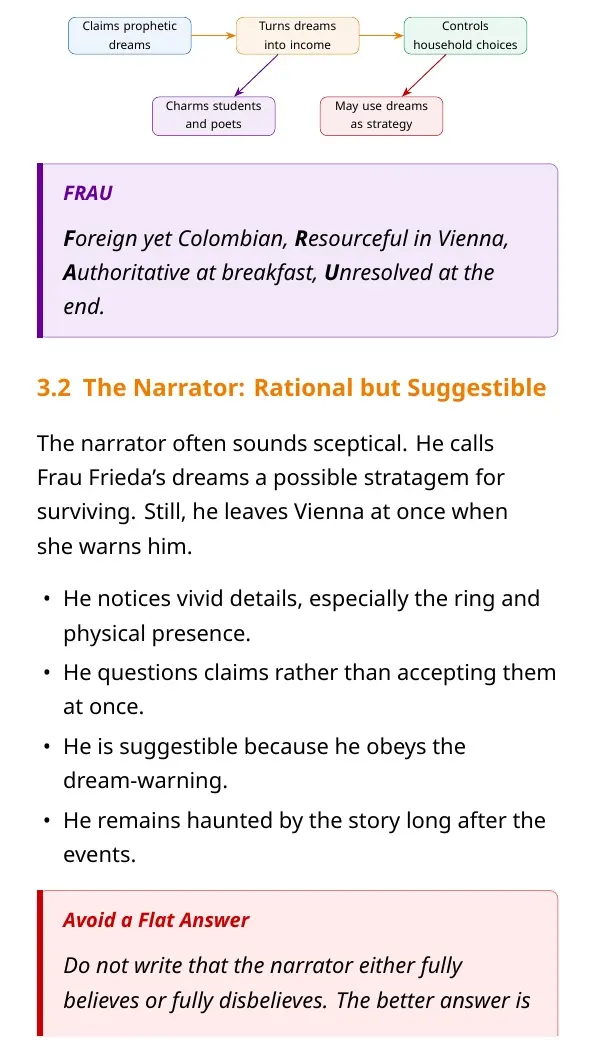
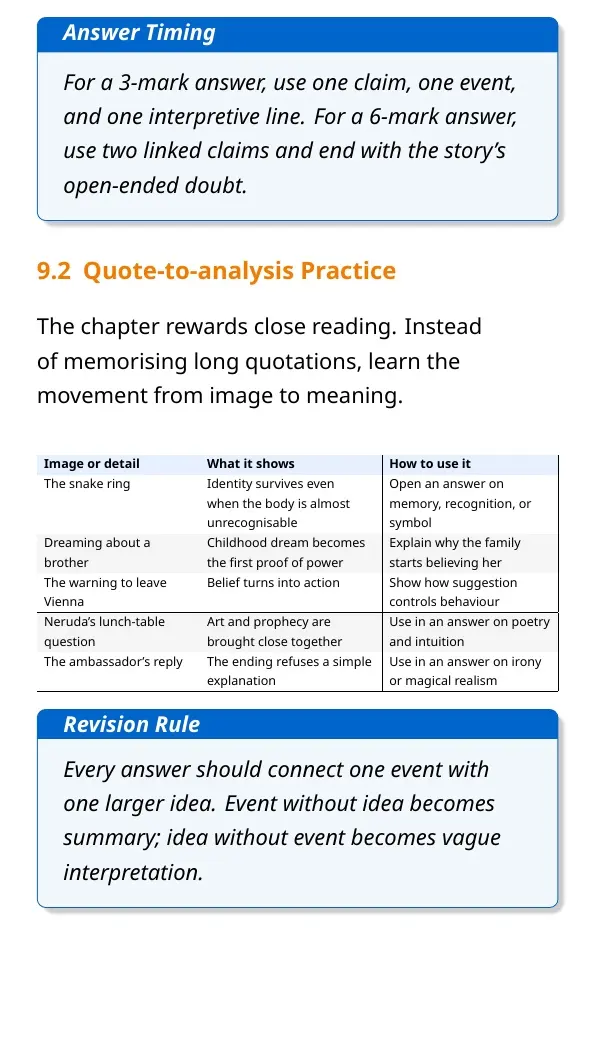
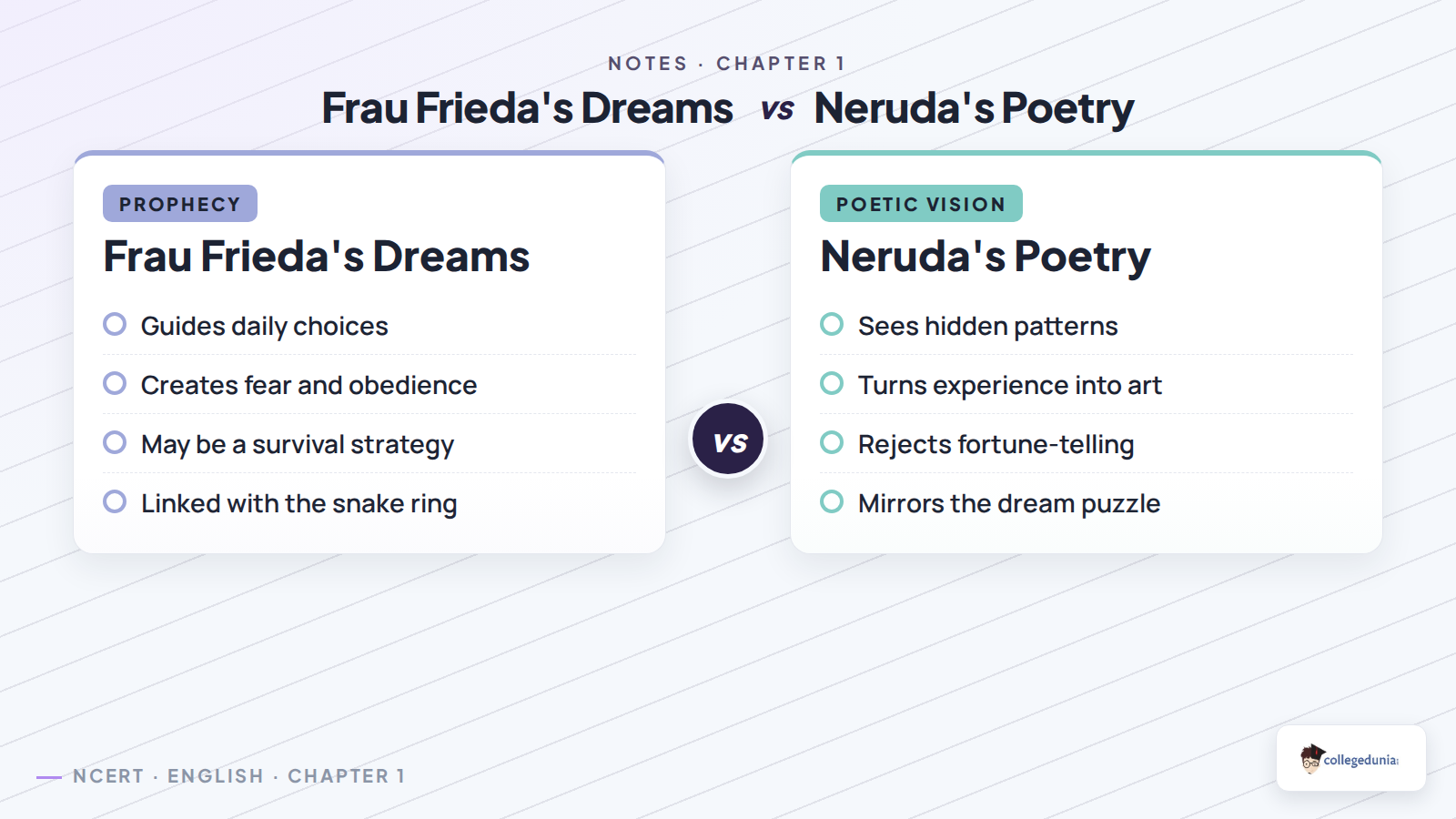
Frau Frieda is a Colombian woman who claims that dreams can predict or guide life. As a child, she interprets a dream about her brother and sweets. Later, in Vienna, she earns shelter and status by telling a wealthy family what to do each morning.
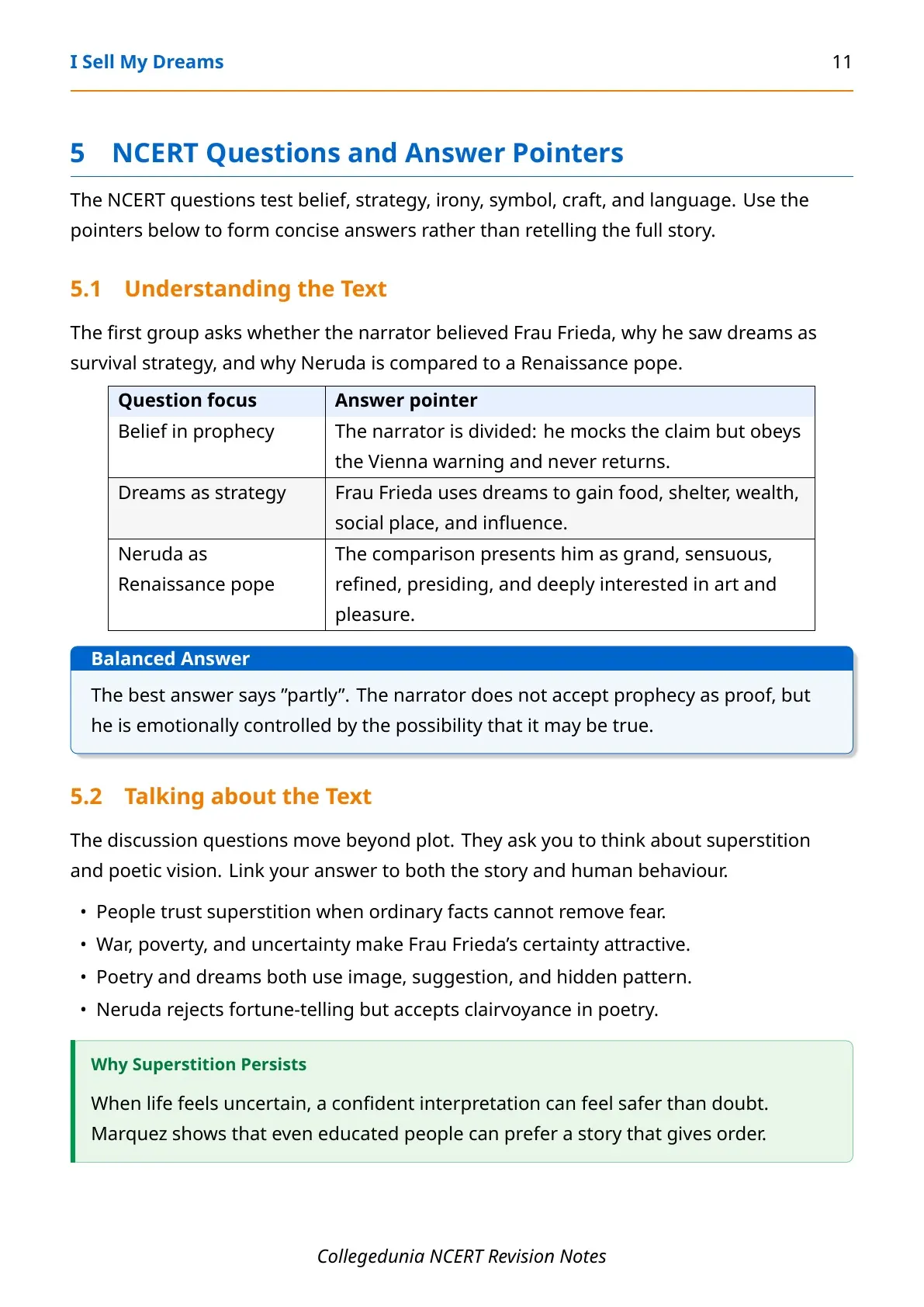
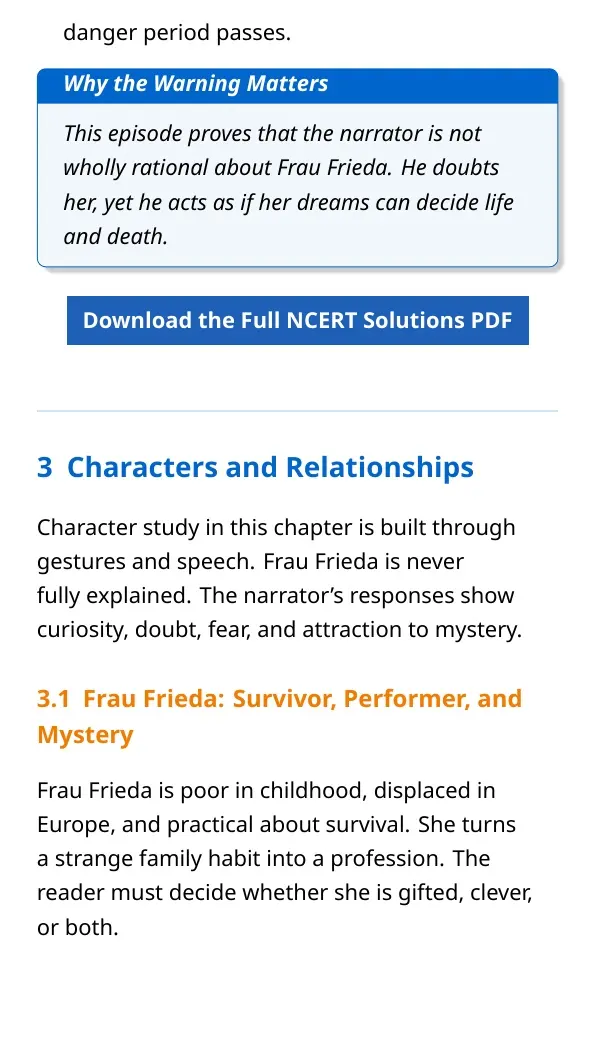
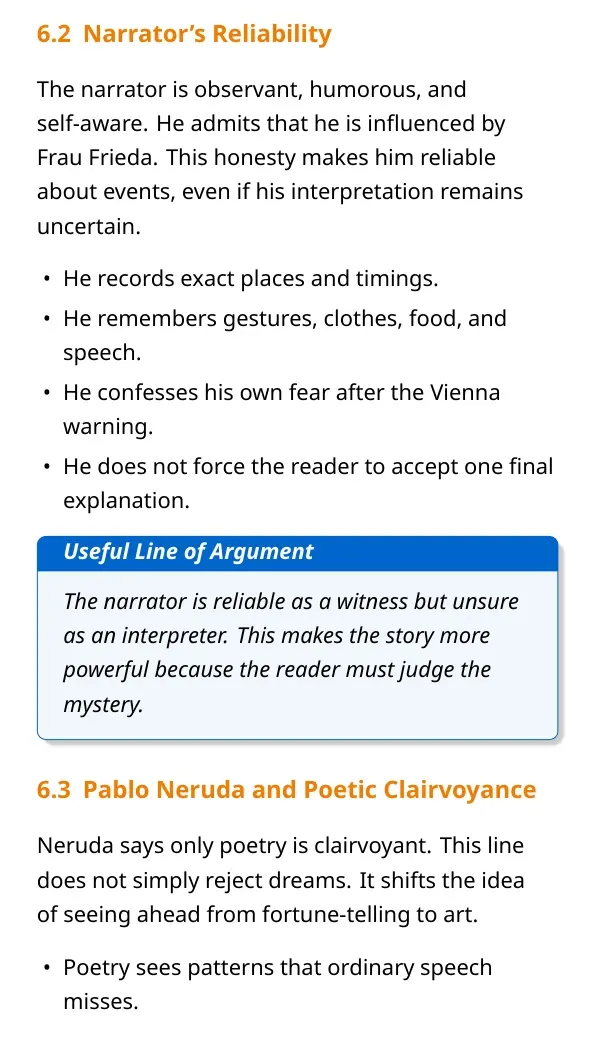
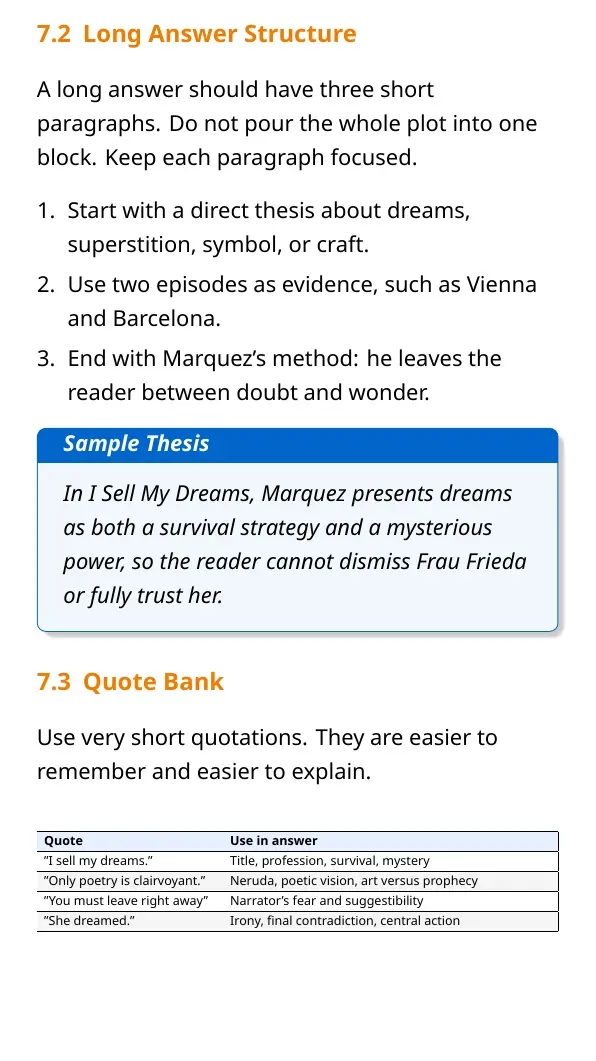
The narrator partly doubts her. Still, when Frau Frieda warns him to leave Vienna at once, he obeys and never returns. Years later in Barcelona, he meets her again with Pablo Neruda. Neruda rejects fortune-telling and says, only poetry is clairvoyant.
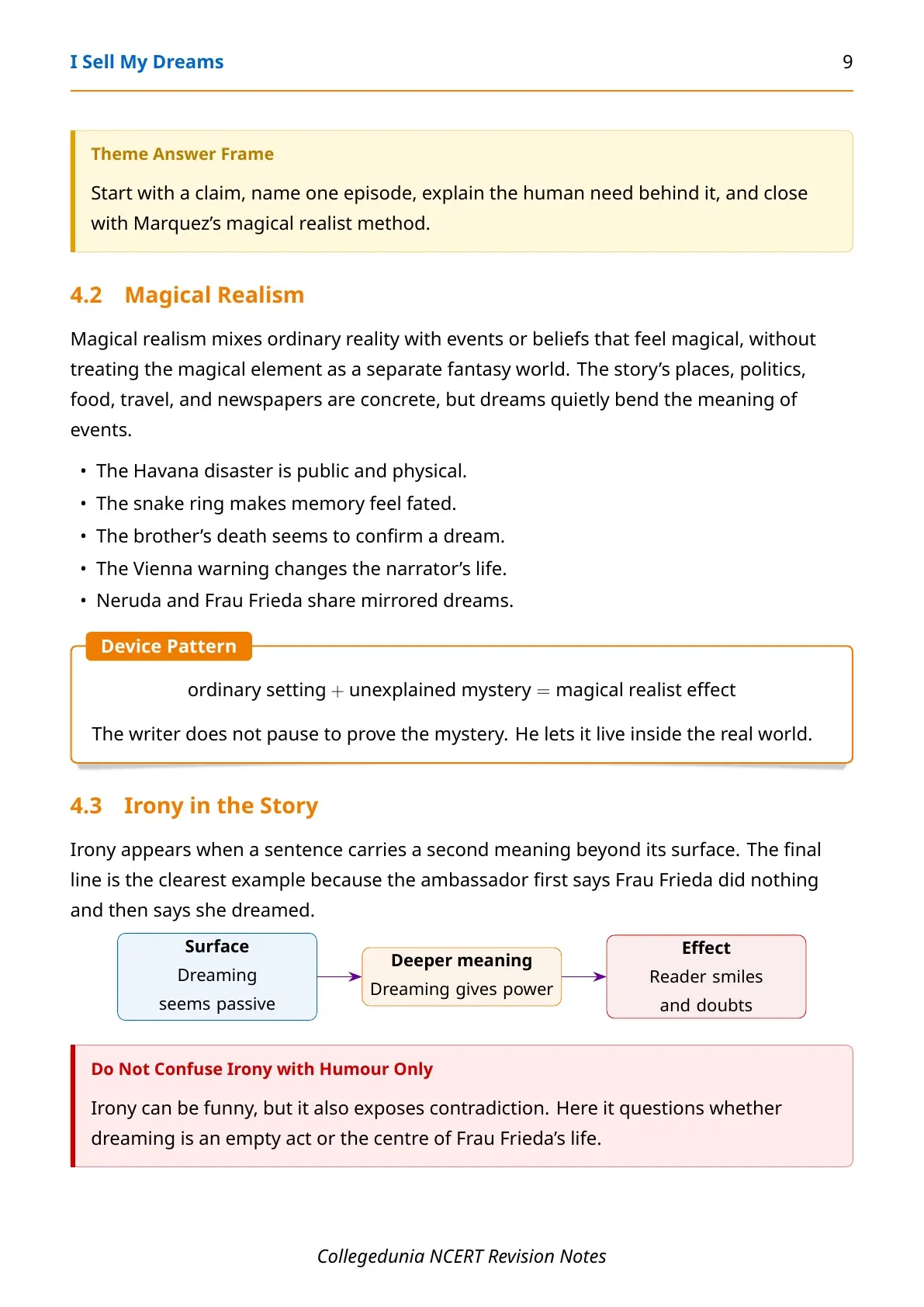
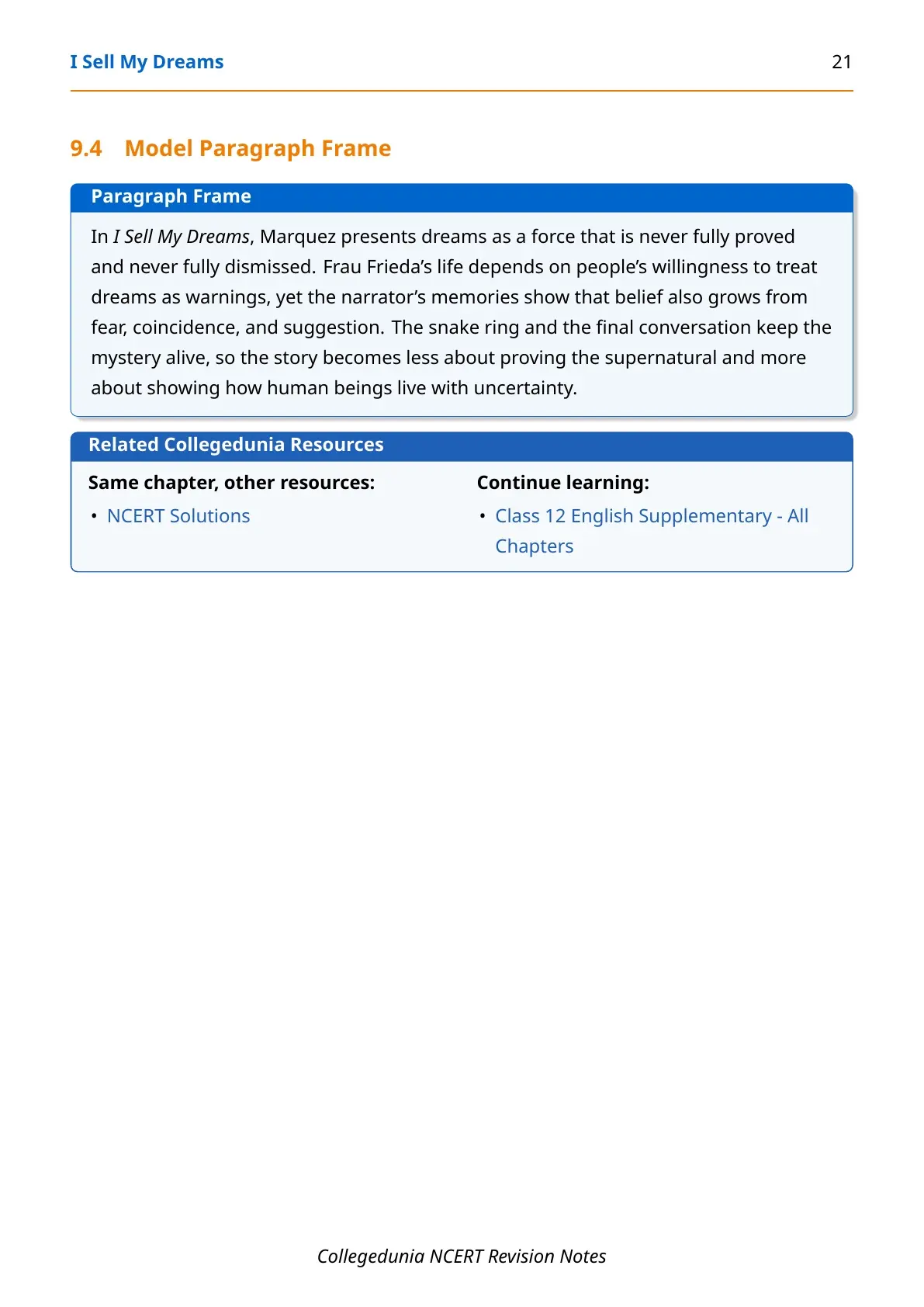
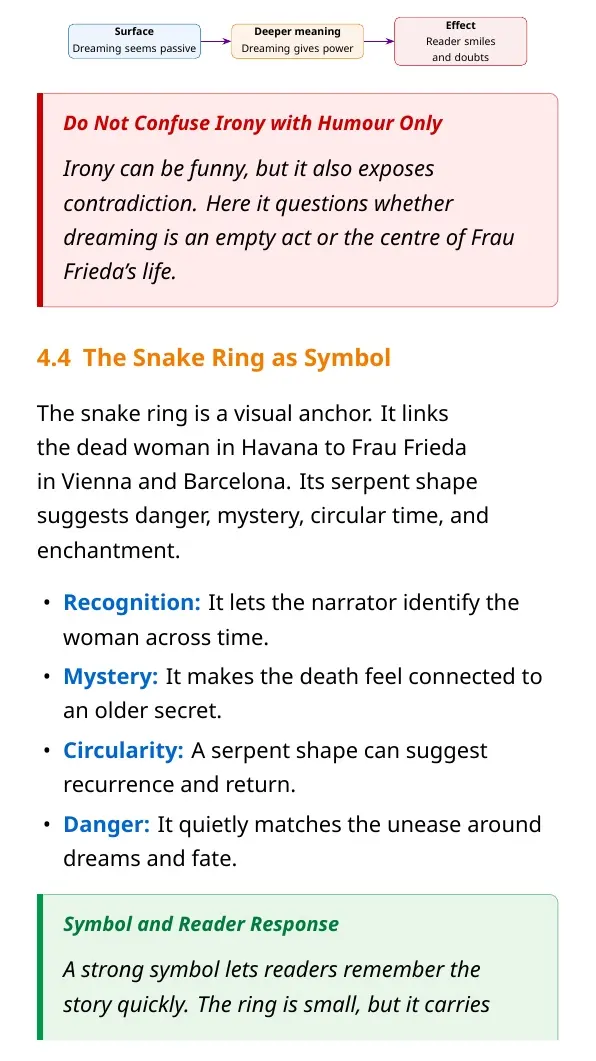
The ending is the key exam point. The Portuguese ambassador says Frau Frieda did nothing except dream. That answer sounds dismissive, but the whole story shows that dreaming shaped her power, survival and mystery.
I Sell My Dreams Class 12 Explanation Video
Source: Magnet Brains on YouTube
Frau Frieda, Pablo Neruda and Poetic Vision
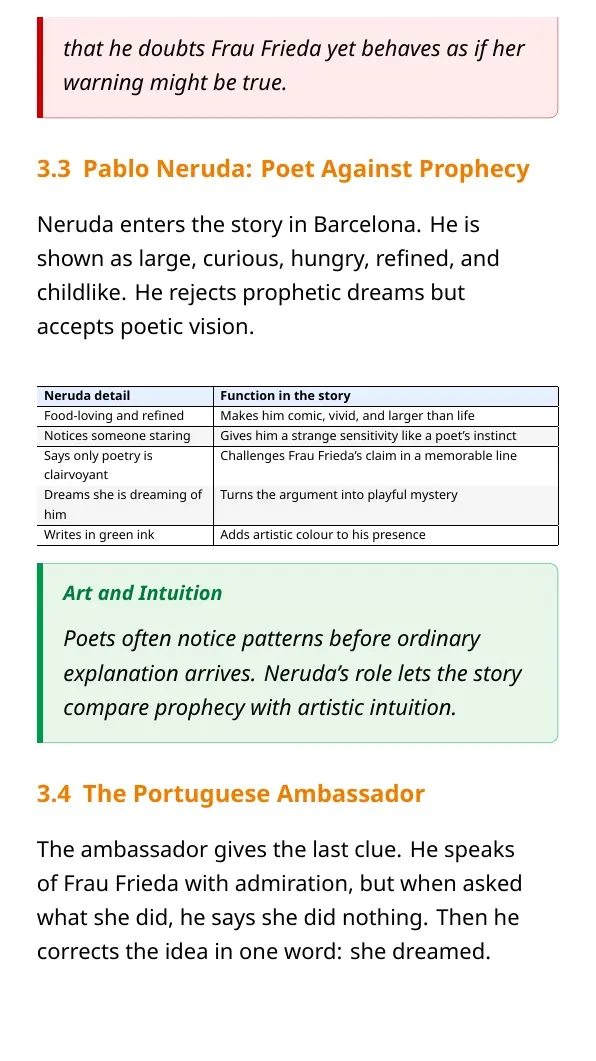
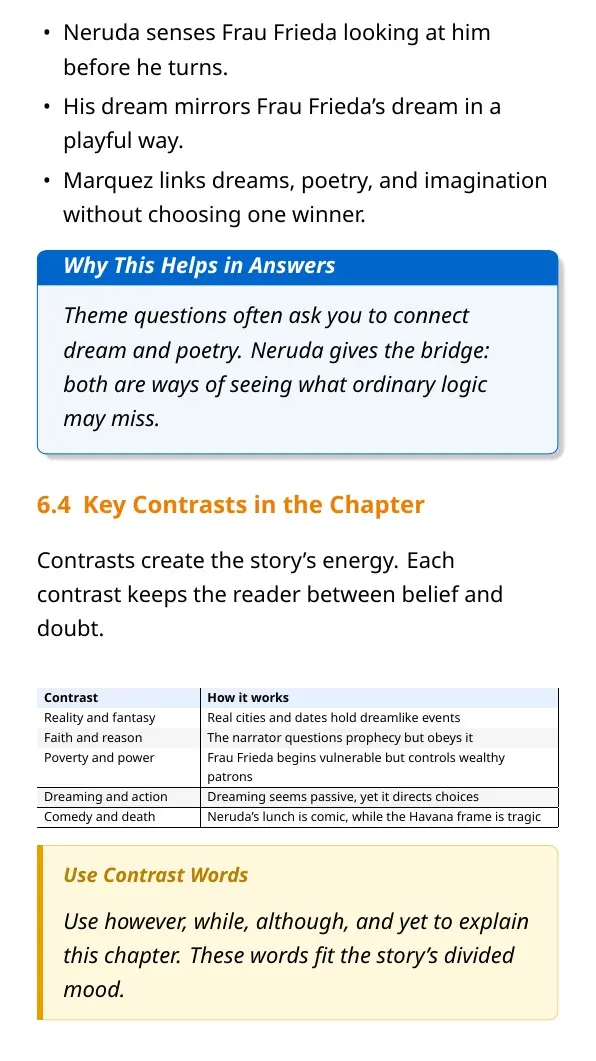
The chapter becomes more interesting when Frau Frieda meets Pablo Neruda. He refuses to believe in prophetic dreams, yet he senses someone watching him. His own dream then mirrors Frau Frieda's dream, making the scene playful and strange.
| Figure | What to remember | Exam use |
|---|---|---|
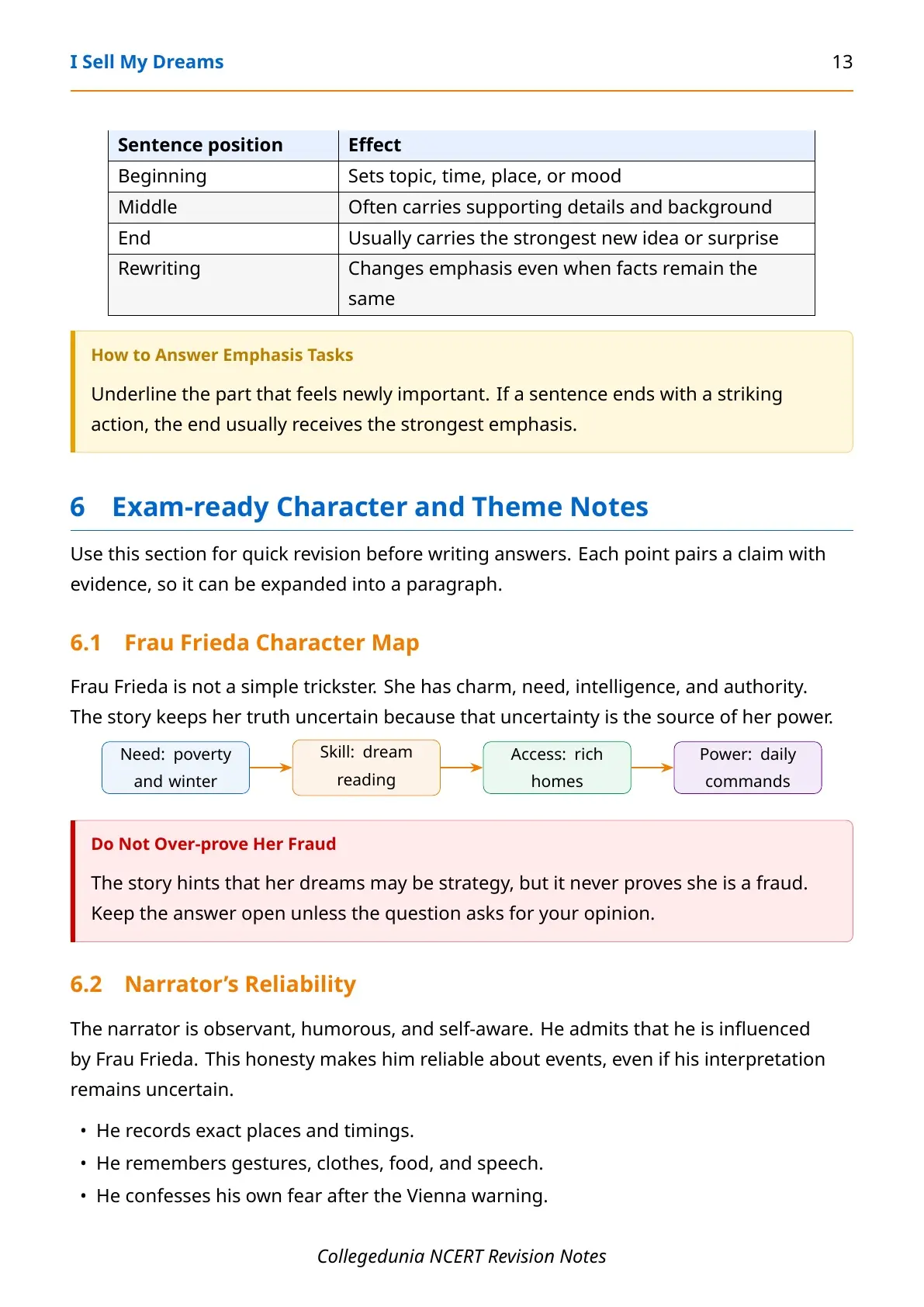
| Frau Frieda | Uses dreams as warning, work and authority | Use for superstition and survival. |
| Narrator | Doubts her but obeys her warning | Use for suggestibility and uncertainty. |
| Pablo Neruda | Trusts poetry more than prophecy | Use for poetic clairvoyance. |
| Portuguese ambassador | Calls dreaming her only action | Use for the final irony. |
Important Themes in I Sell My Dreams
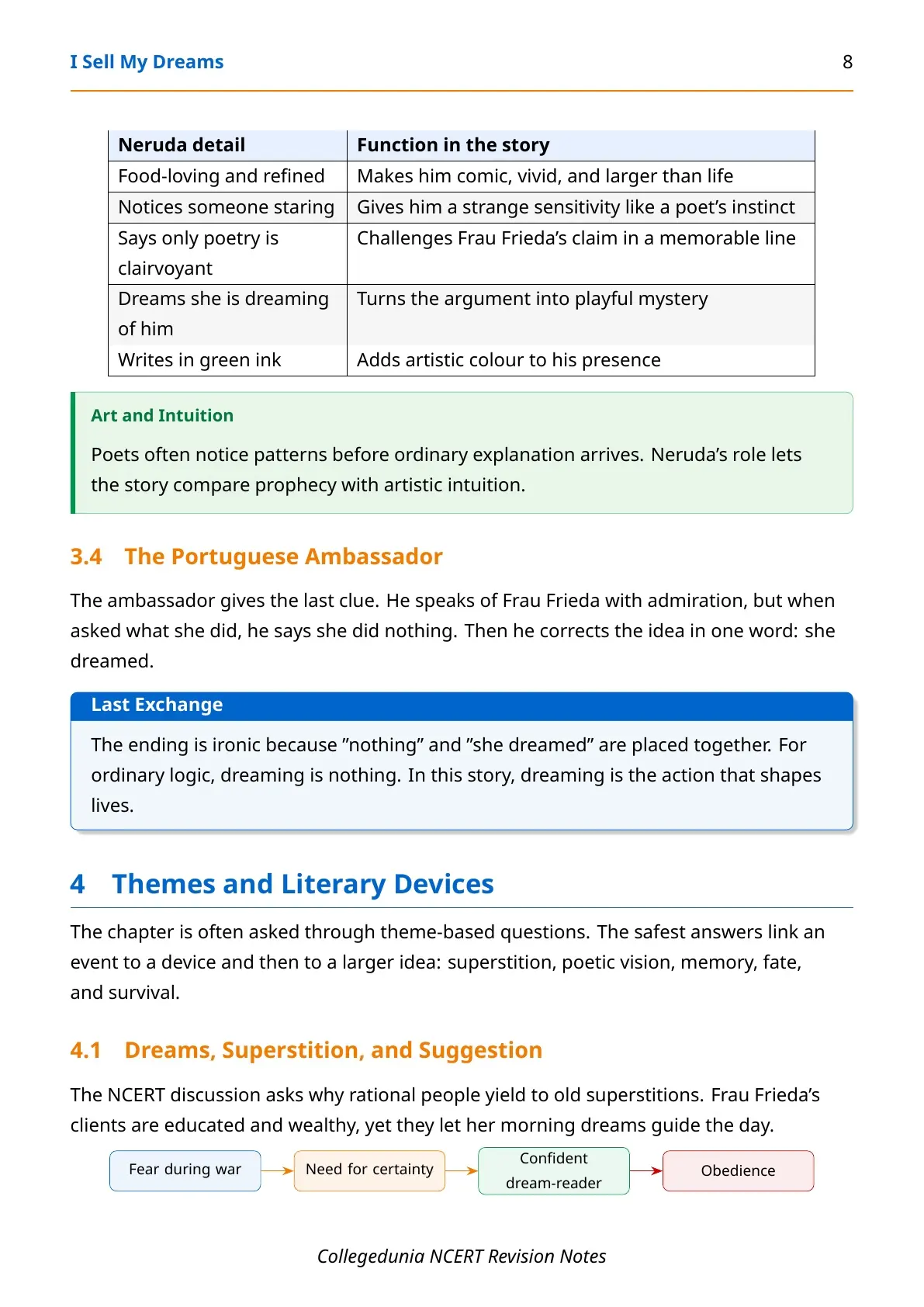
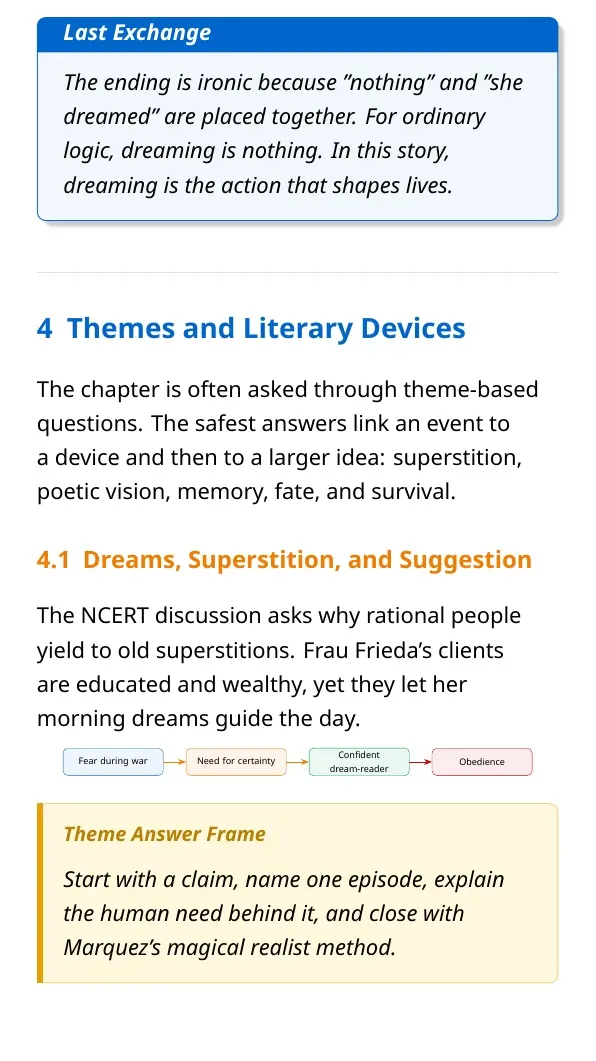
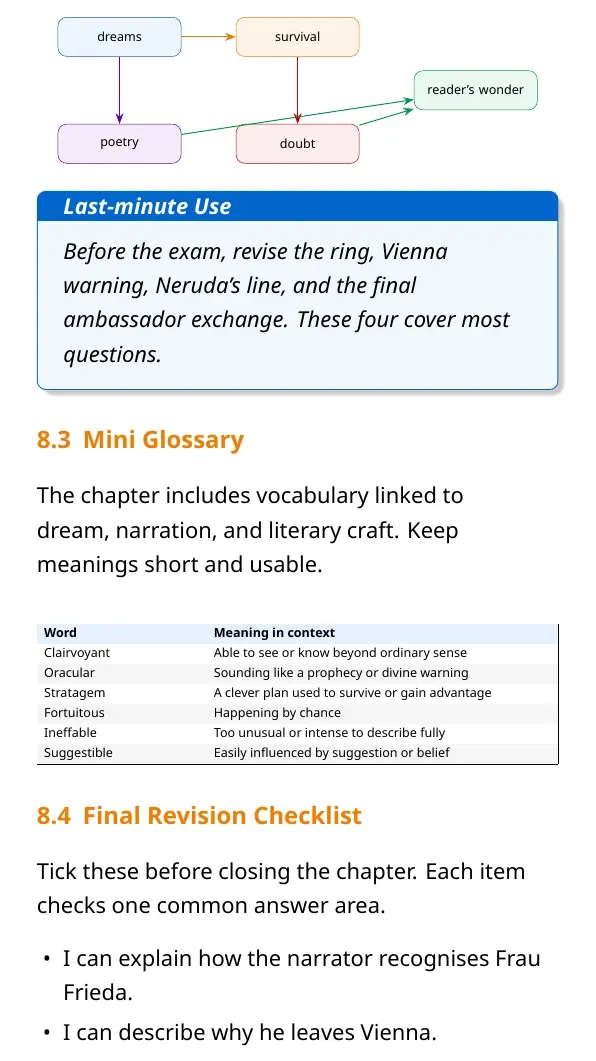
The story is not only about prediction. It studies why educated people may still trust signs, dreams and warnings. Marquez keeps ordinary facts clear, then lets the dream-world enter them quietly.
| Theme | Core idea | Proof from the story |
|---|---|---|
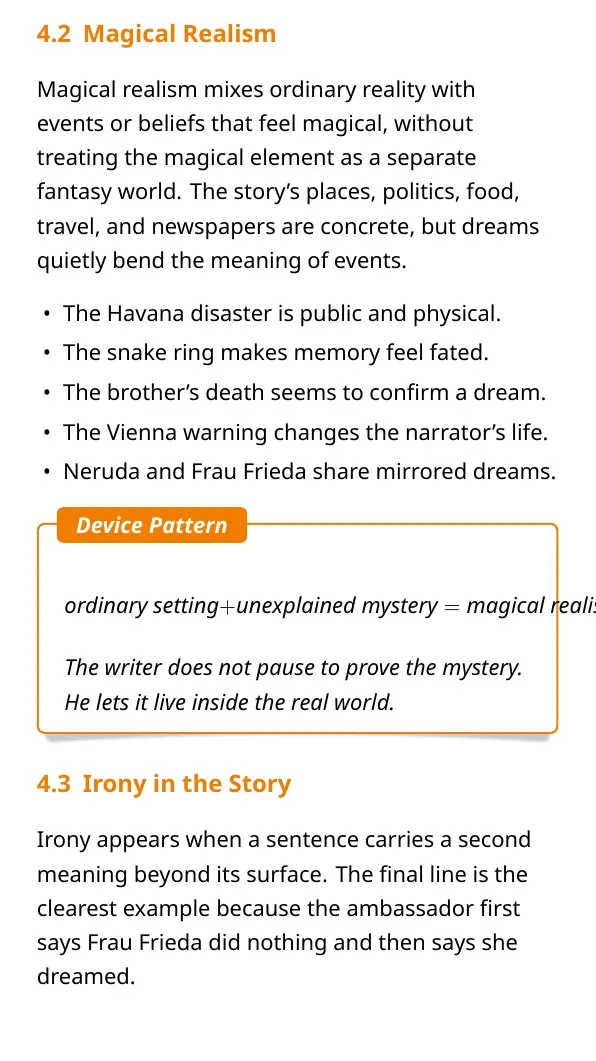
| Magical realism | Real settings hold unexplained mystery. | The hotel disaster and dream warnings sit in the same world. |
| Superstition | Fear makes certainty attractive. | The Vienna family obeys Frau Frieda's morning dreams. |
| Survival | A talent can become a way to live. | Frau Frieda turns dreams into work and security. |
| Irony | Dreaming seems passive but drives action. | The ambassador says she did nothing, then says she dreamed. |
How to Write Better Answers on I Sell My Dreams
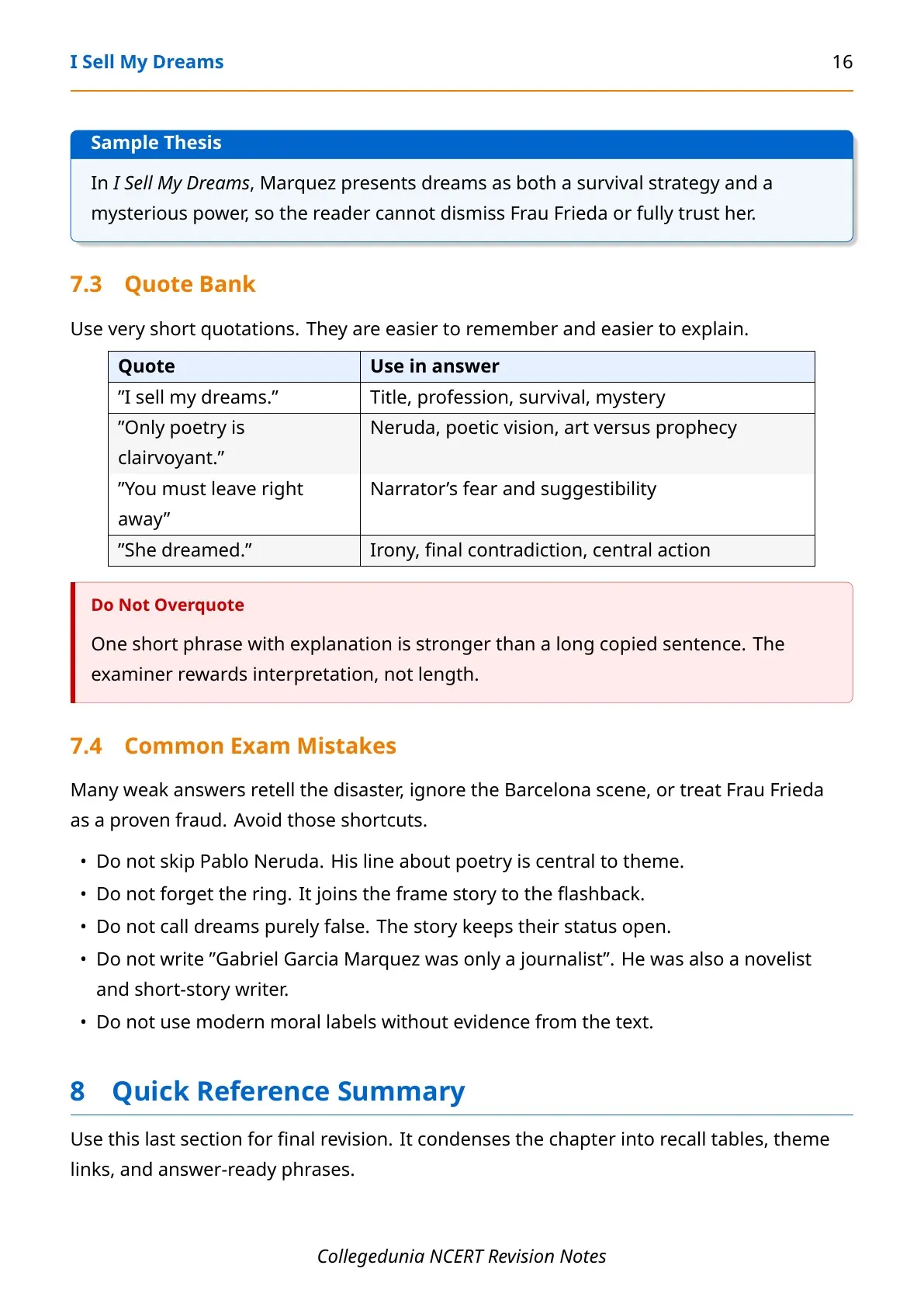
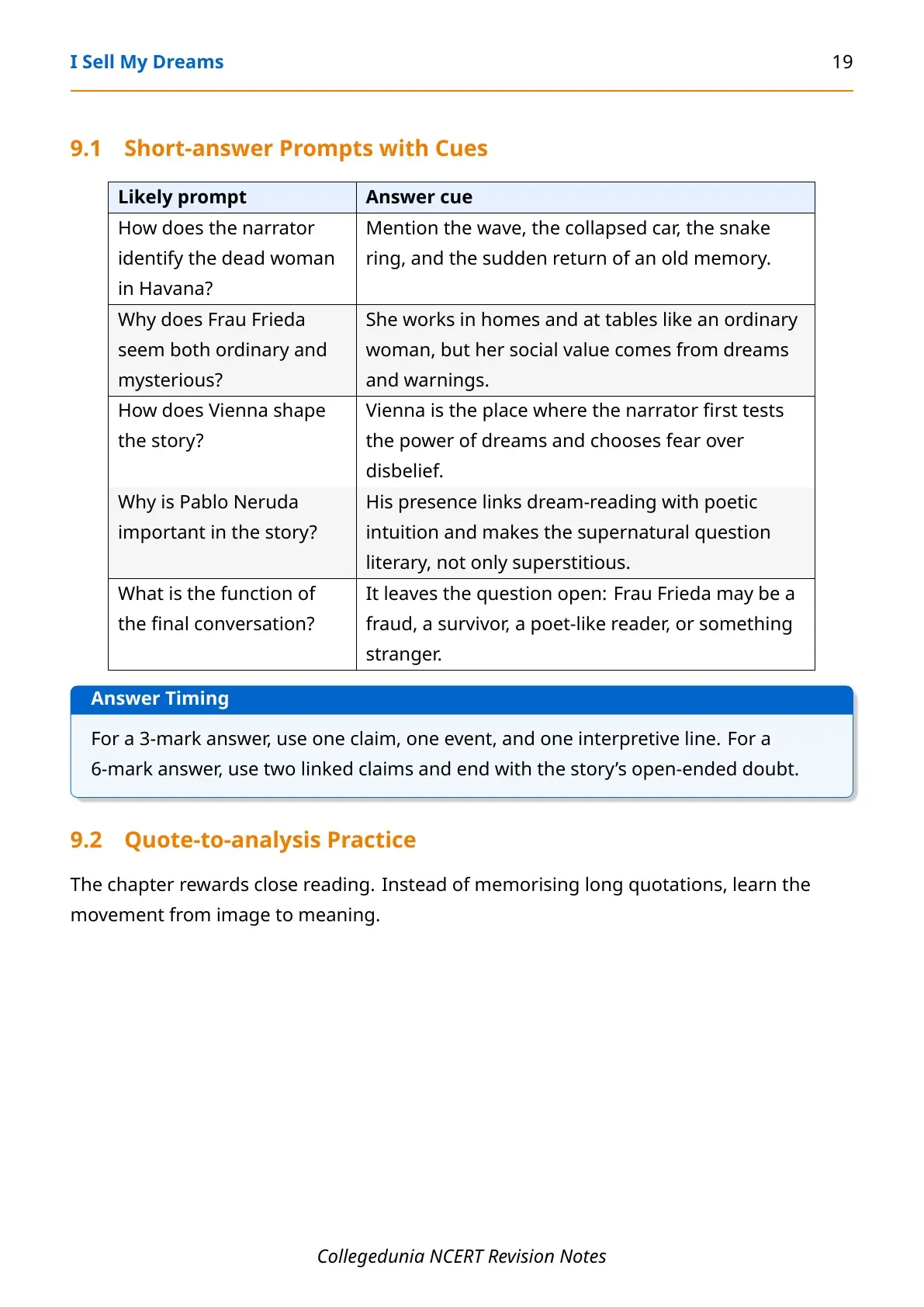
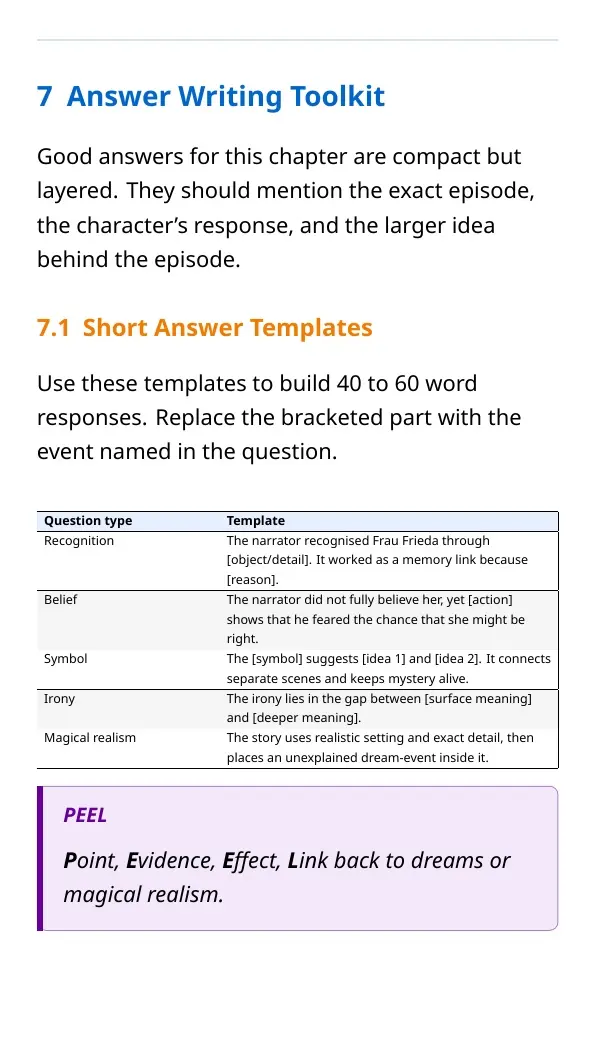
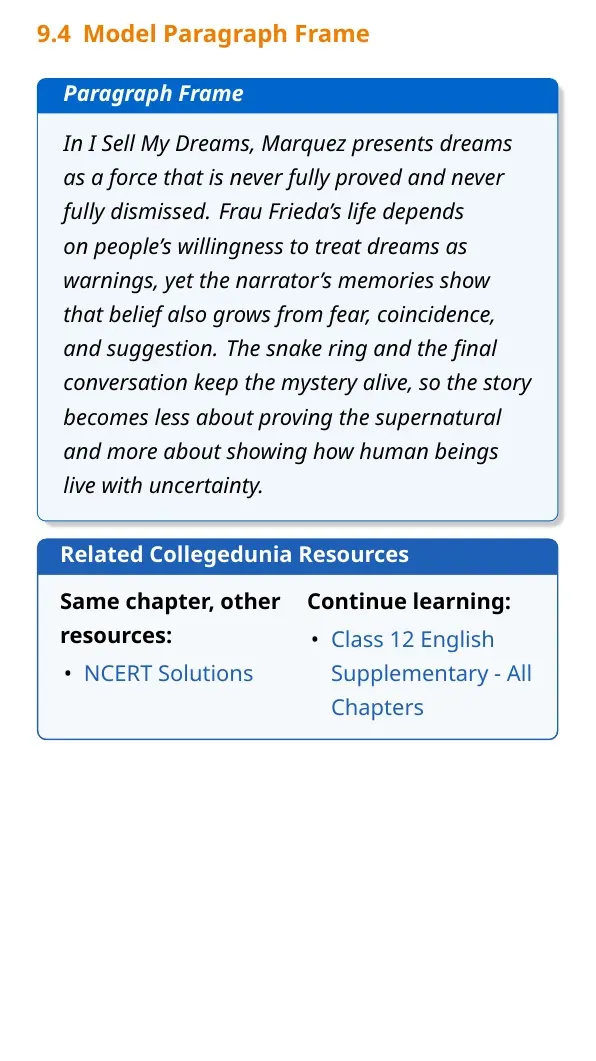
Strong answers do not prove whether Frau Frieda is true or false. They show why the uncertainty matters. Use one event as evidence, then explain how it keeps the student between belief and doubt.
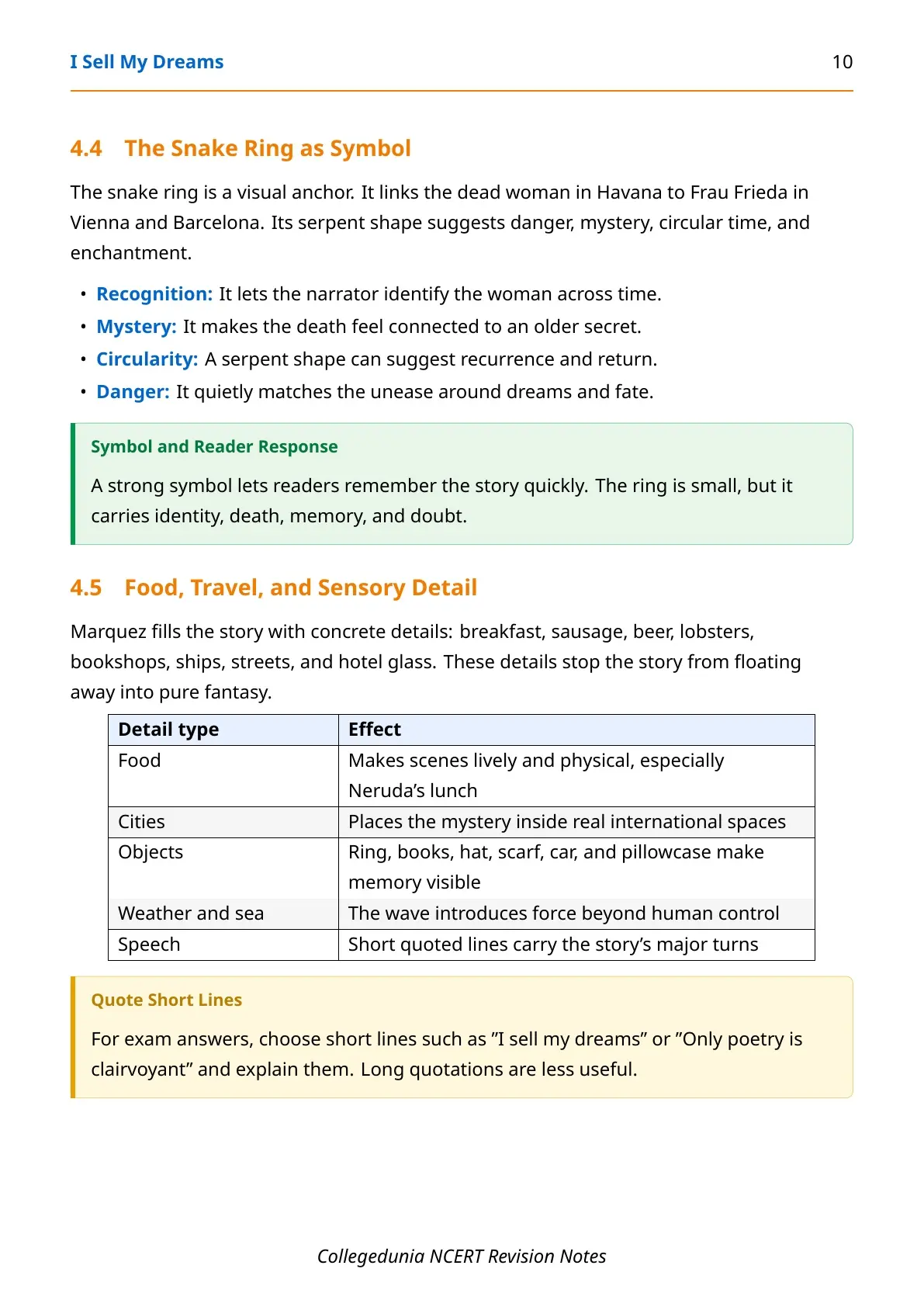
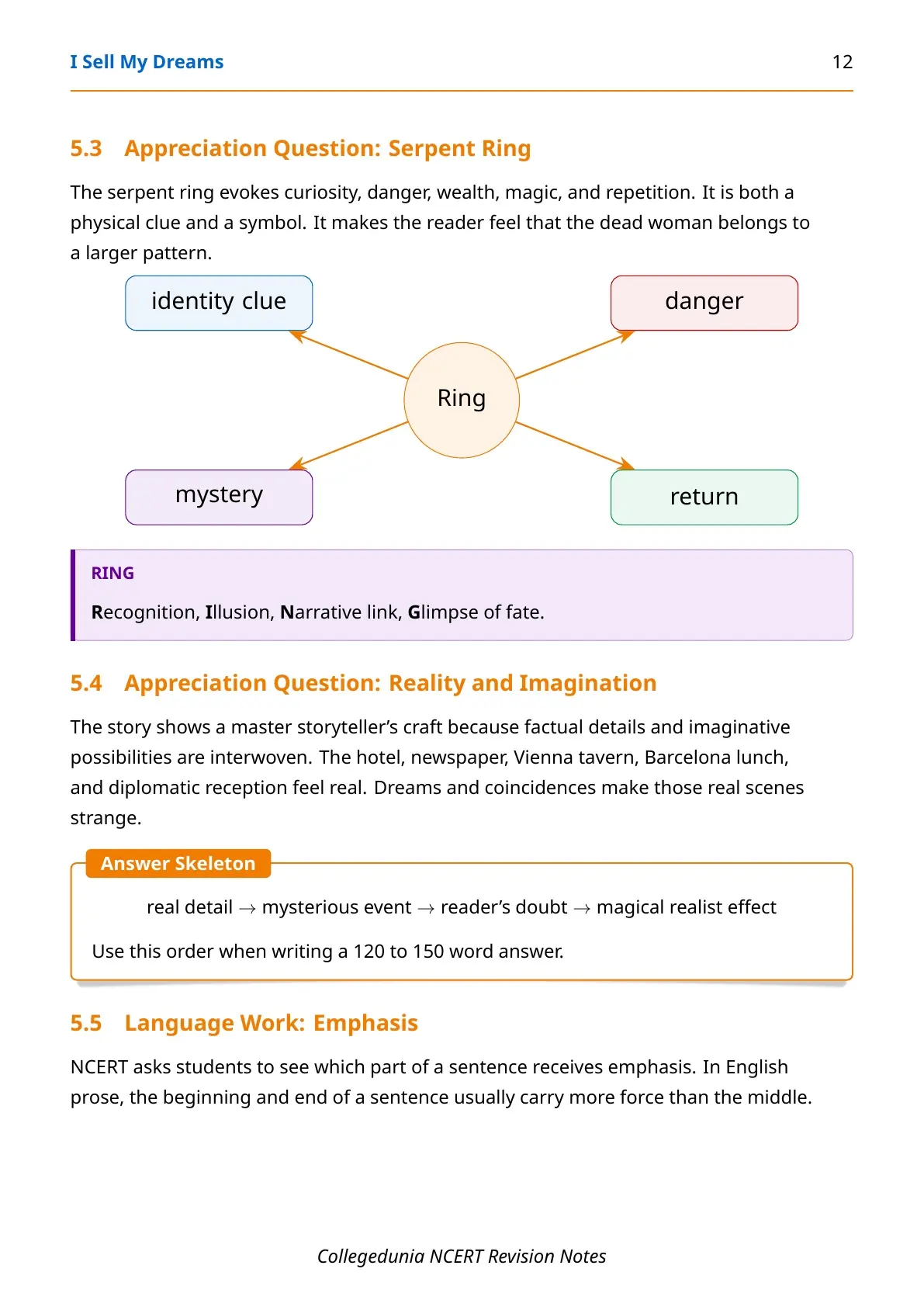
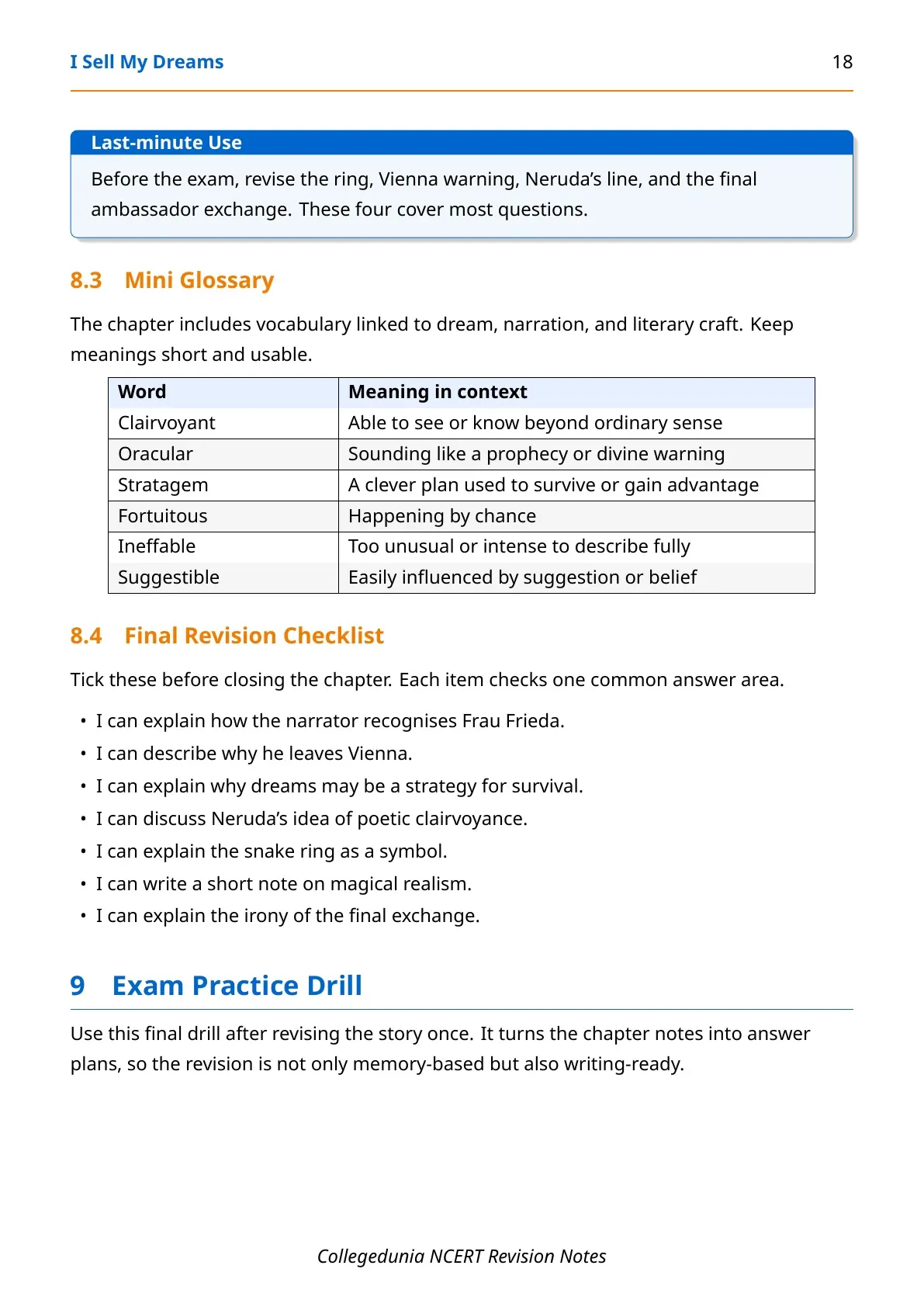
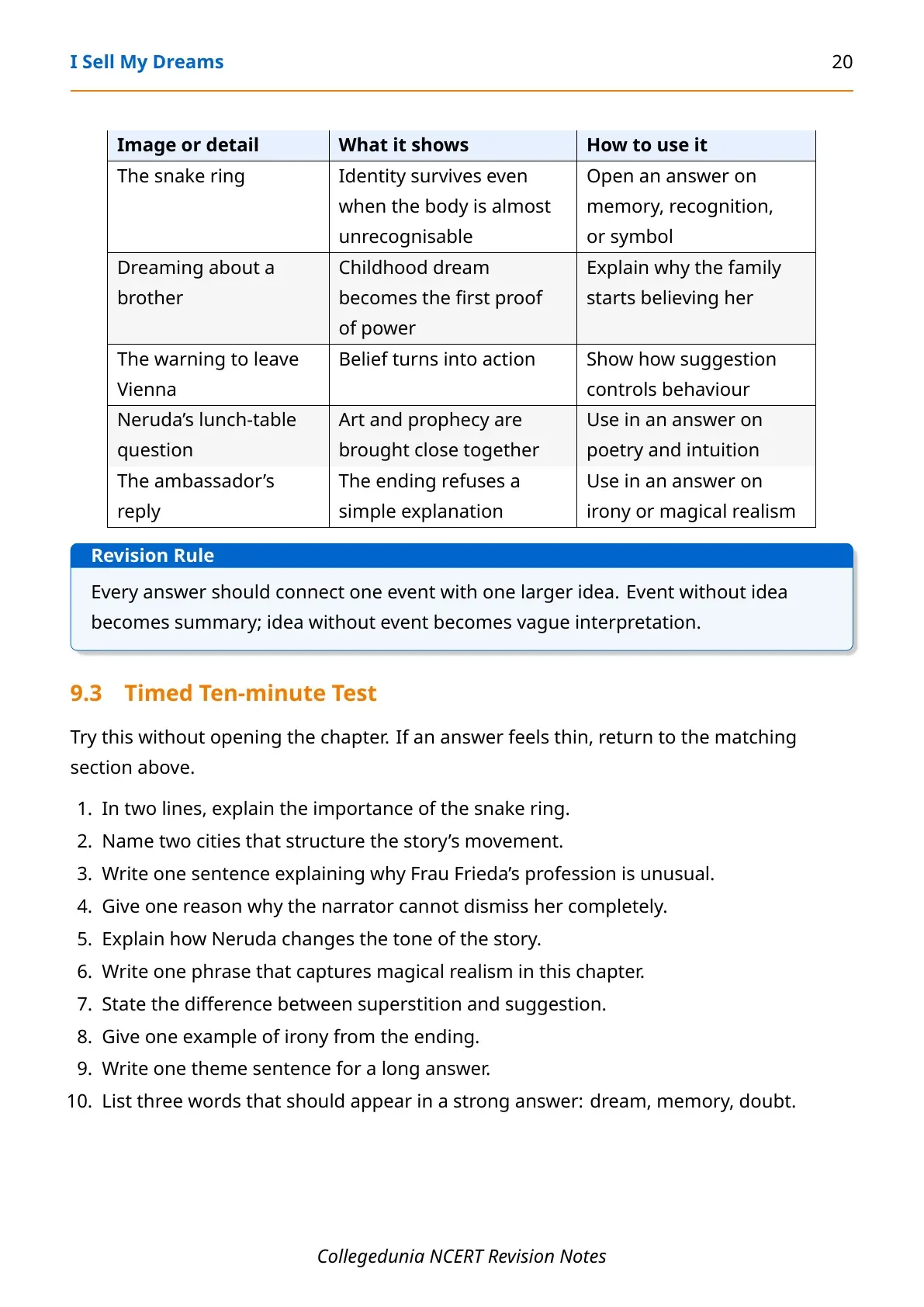
- For symbol answers: explain the snake ring as identity, danger and mystery.
- For theme answers: connect dreams with war fear, poverty and human suggestibility.
- For Neruda answers: compare prophecy with poetic vision.
- For irony answers: explain the gap between "nothing" and "she dreamed".
Related Resources for I Sell My Dreams
| Resource | Use it for | Link |
|---|---|---|
| NCERT Solutions | Full answers to textbook questions | Open NCERT Solutions |
| NCERT Book PDF | Official Kaleidoscope source chapter | Open NCERT Book PDF |
| Handwritten Notes | Topper-style last-minute revision | Open Handwritten Notes |
All Class 12 English Supplementary Notes Chapters
| Chapter | Title | Notes Link |
|---|---|---|
| Chapter 1 | Kaleidoscope: I Sell My Dreams | You are here |
| Chapter 2 | Kaleidoscope: Eveline | Open Notes |
| Chapter 3 | Kaleidoscope: A Wedding in Brownsville | Open Notes |
| Chapter 4 | Kaleidoscope: Tomorrow | Open Notes |
| Chapter 5 | Kaleidoscope: One Centimetre | Open Notes |
I Sell My Dreams Class 12 Notes FAQs
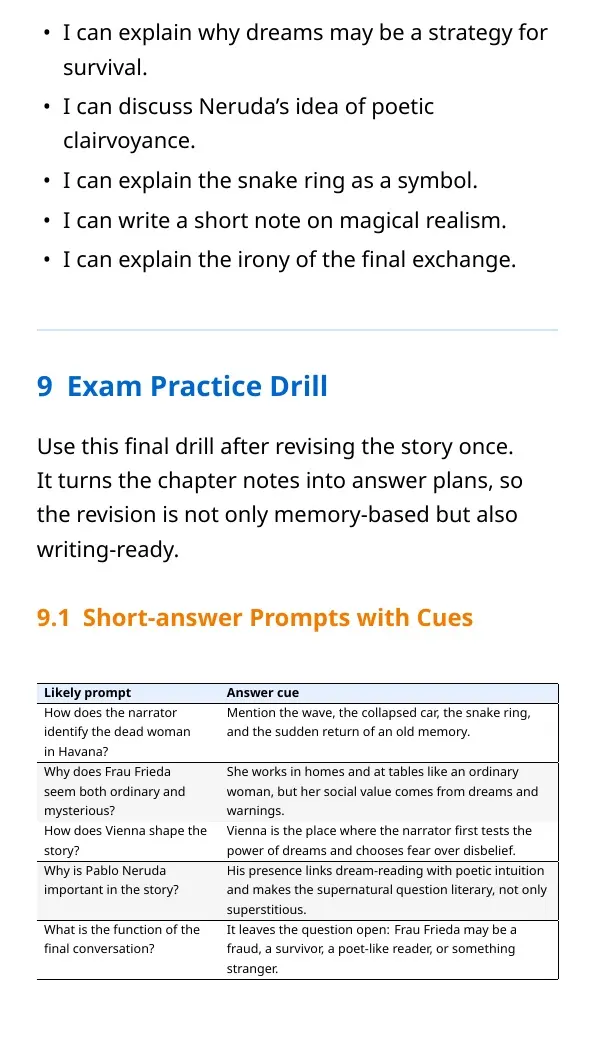
Ques. What is the main idea of I Sell My Dreams?
Ans. The main idea is that dreams can become power when people want certainty. Frau Frieda survives by making others trust her interpretations.
Ques. Why does the narrator leave Vienna?
Ans. He leaves because Frau Frieda says she dreamed about him and warns him to go at once. His action shows doubt and belief together.
Ques. What does the snake ring symbolise in I Sell My Dreams?
Ans. The snake ring works as a clue, a memory trigger and a symbol of mystery. It links Havana, Vienna and Frau Frieda.
Ques. How should students revise this story for exams?
Ans. Students should revise the Havana frame, Vienna warning, Neruda scene, snake ring symbolism, magical realism and final irony.



Comments