




Robert Frost's quietly angry, deeply compassionate poem in Class 12 English Chapter 10 Flamingo Poetry: A Roadside Stand carries roughly 8 marks in the CBSE Board exam and is the longest poem in the Flamingo Poetry section. These a roadside stand class 12 notes give you the full poem text, a unit-by-unit explication, the themes of rural poverty and city indifference, the literary devices, the key quotations and the topper revision triad in one place.

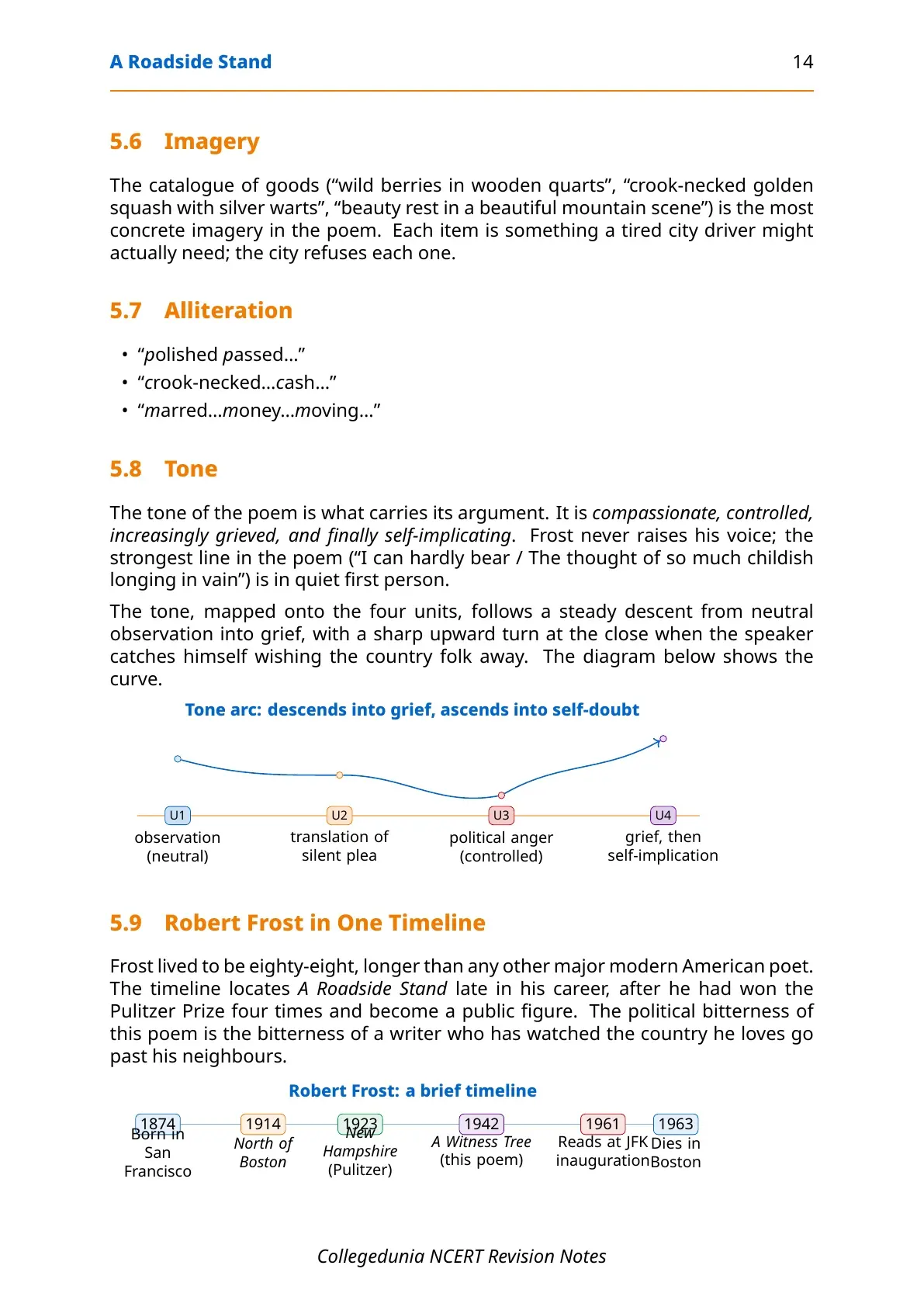
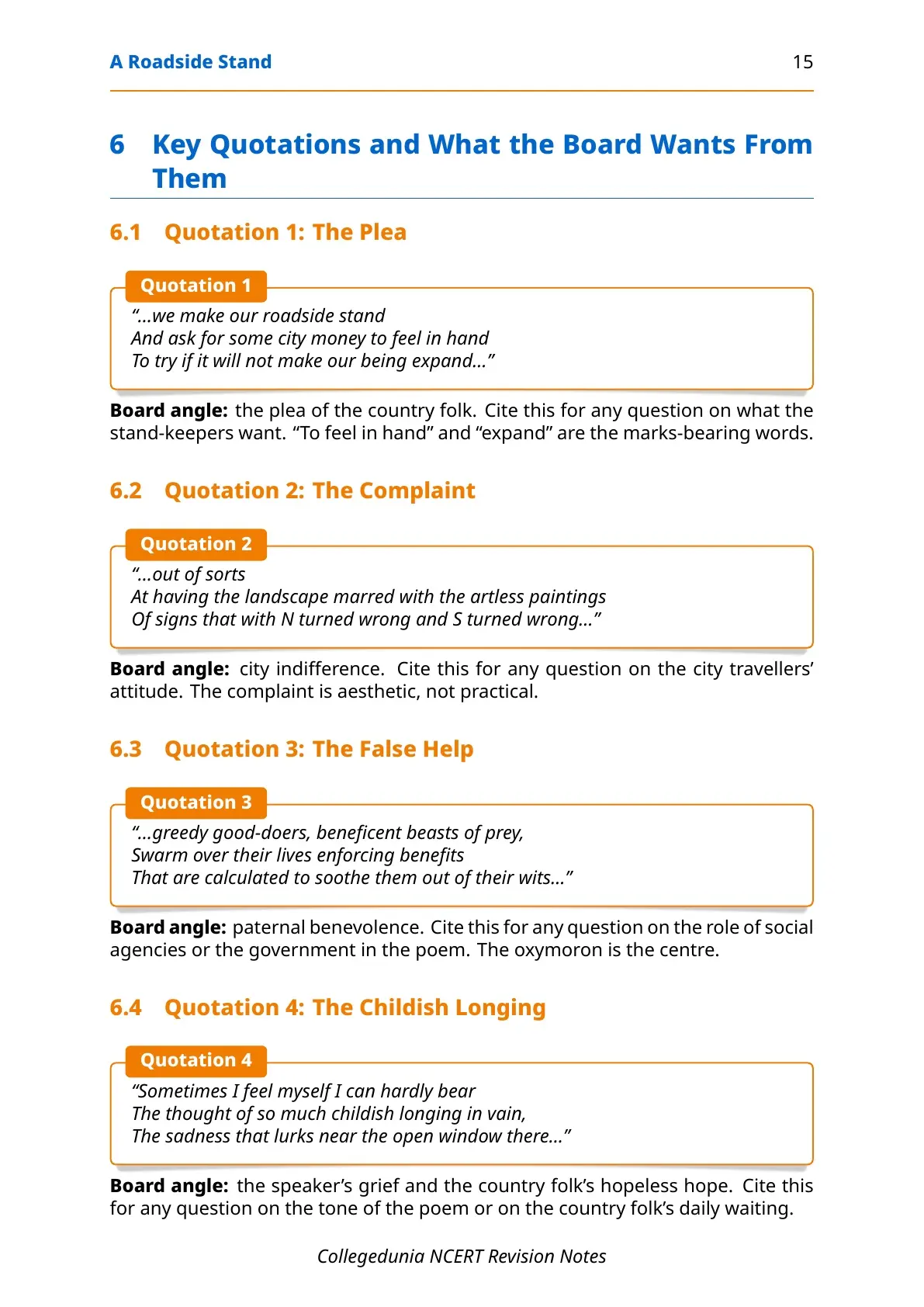
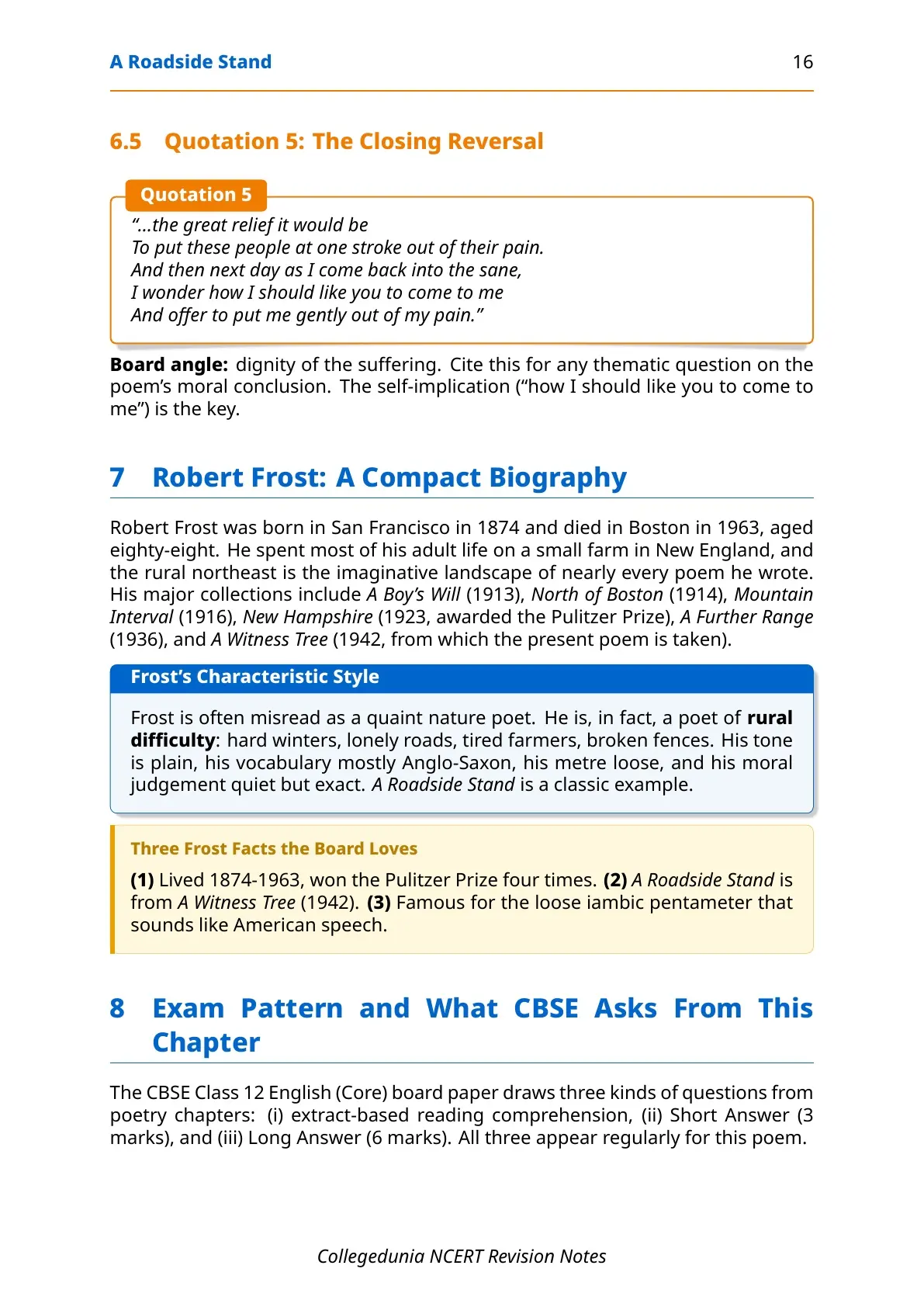
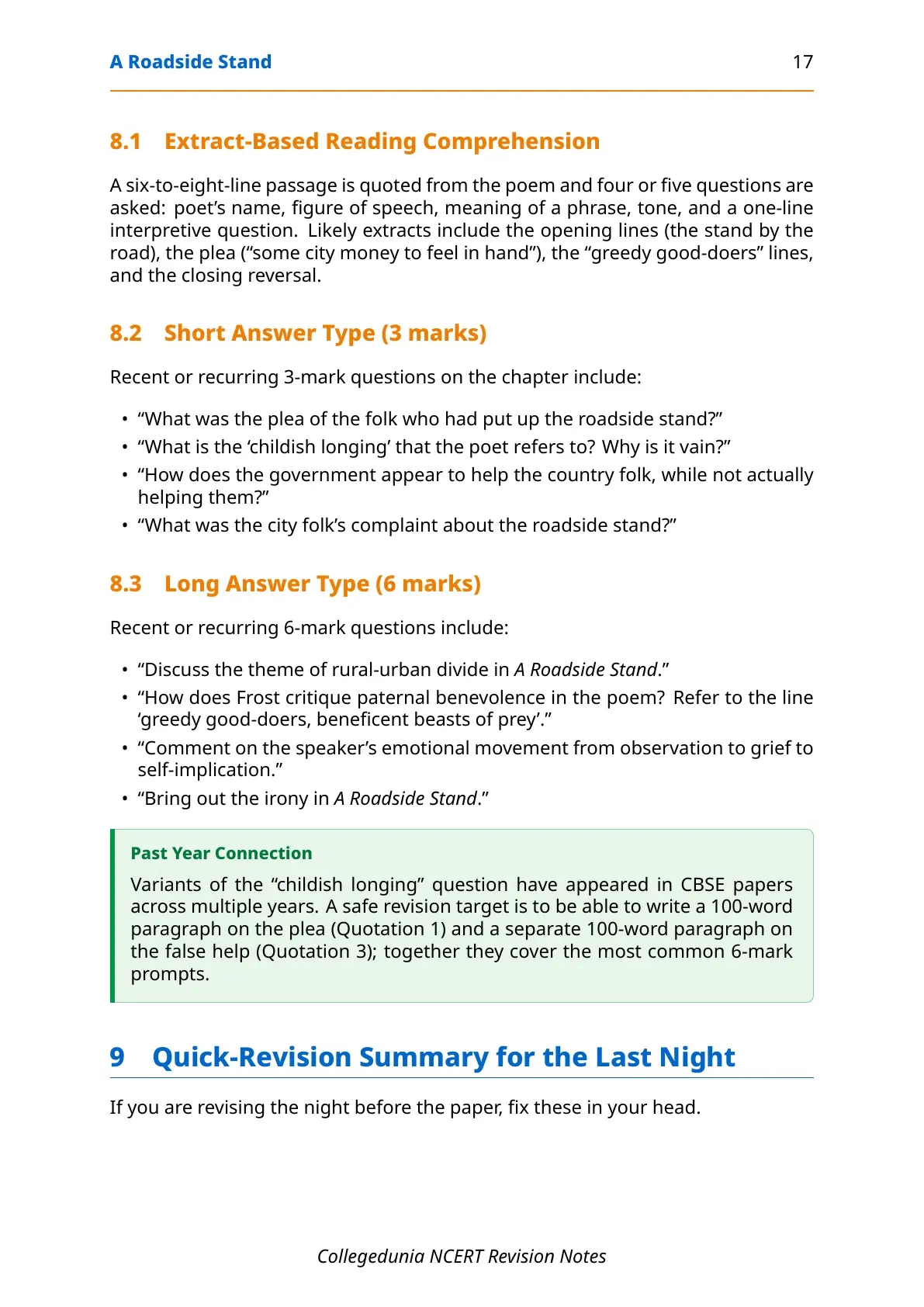
- CBSE Weightage: About 8 marks, usually split as one extract-based question (3 marks) and one long-answer on social criticism, indifference of city folk, or the failure of paternal help (6 marks)
- CUET (UG) Relevance: 1 to 2 questions on tone, theme of rural-urban divide, and Frost's signature oxymoron in Section IA English
These A Roadside Stand Class 12 Notes are reviewed by Collegedunia's CBSE English educators, mapped to the 2026-27 NCERT Flamingo print, and refined against the last five years of CBSE Board and CUET papers.
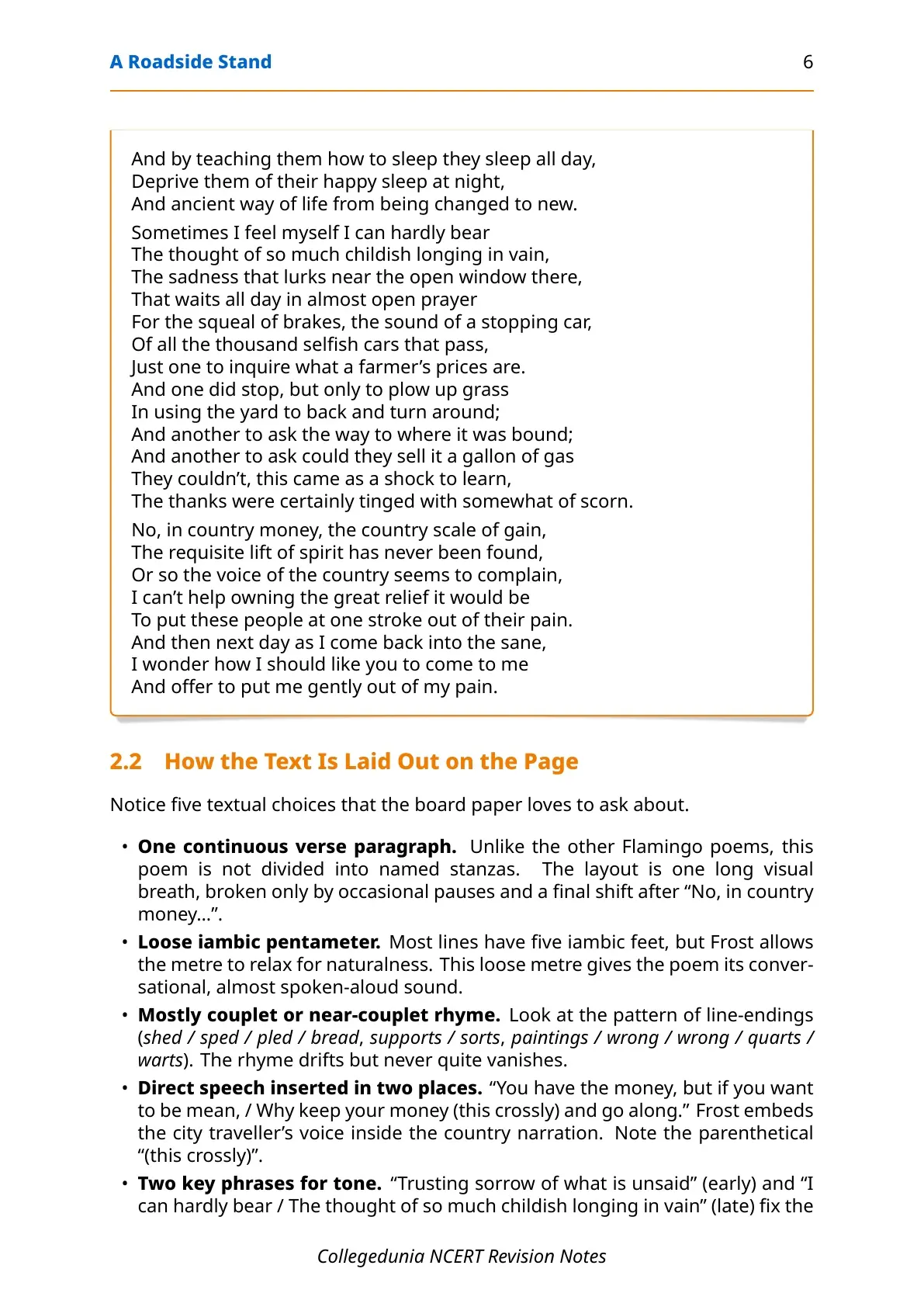
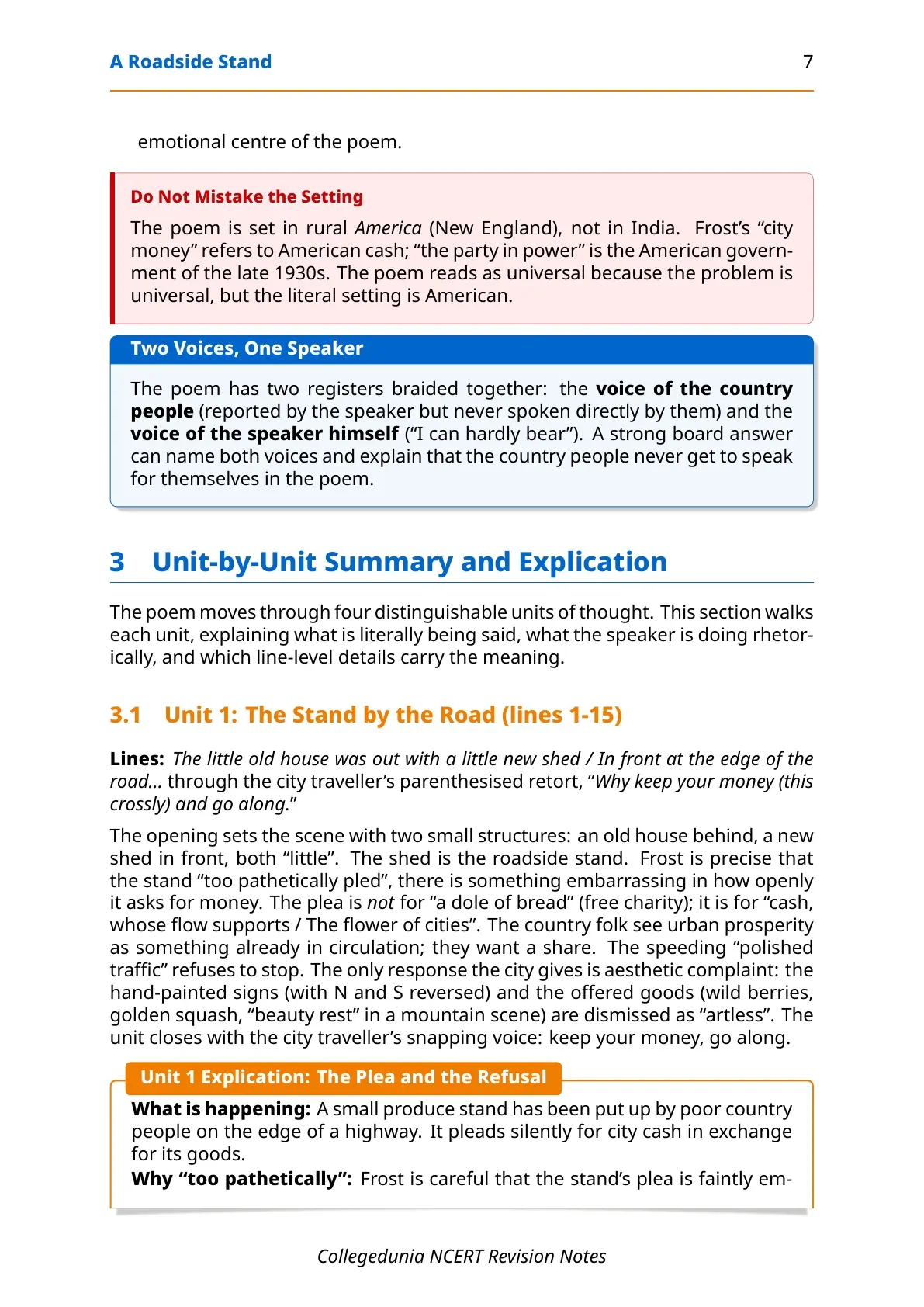
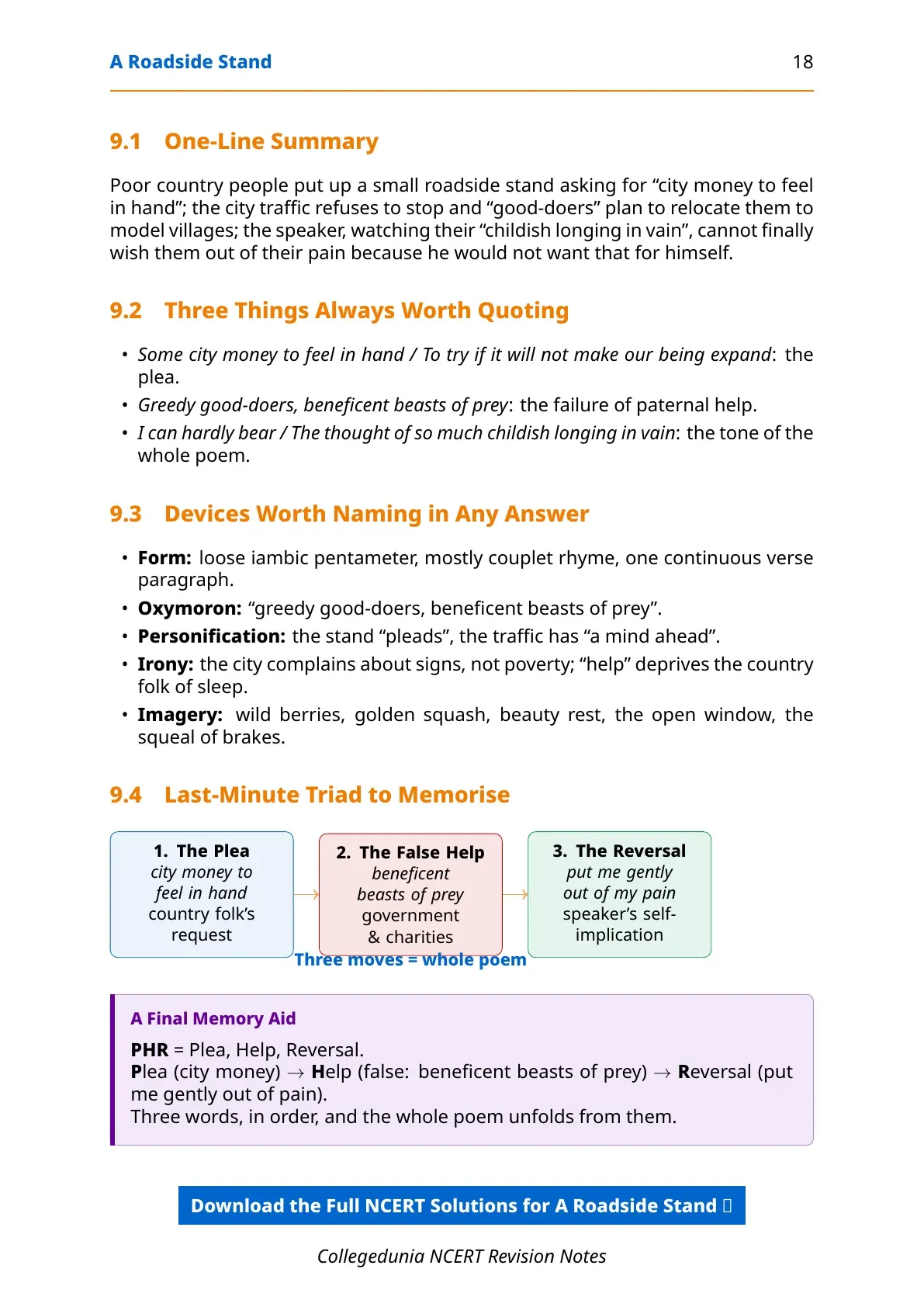
The poem is a single continuous verse paragraph, so the most rewarding revision strategy is to memorise three anchors (the plea, the false help, the closing reversal) and to know exactly how each functions in the argument.

A Roadside Stand Class 12 Notes - Key Quotations
Five quotations carry roughly seventy percent of the marks on this poem. Memorise them word-for-word and learn one short line of commentary for each.
| Quotation | What CBSE wants |
|---|---|
| "...we make our roadside stand / And ask for some city money to feel in hand / To try if it will not make our being expand..." | The plea. Cite for any question on what the stand-keepers want; "to feel in hand" and "expand" are the marks-bearing words. |
| "...out of sorts / At having the landscape marred with the artless paintings / Of signs that with N turned wrong and S turned wrong..." | City indifference. The complaint is aesthetic, not practical. Cite for any question on the city folk's attitude. |
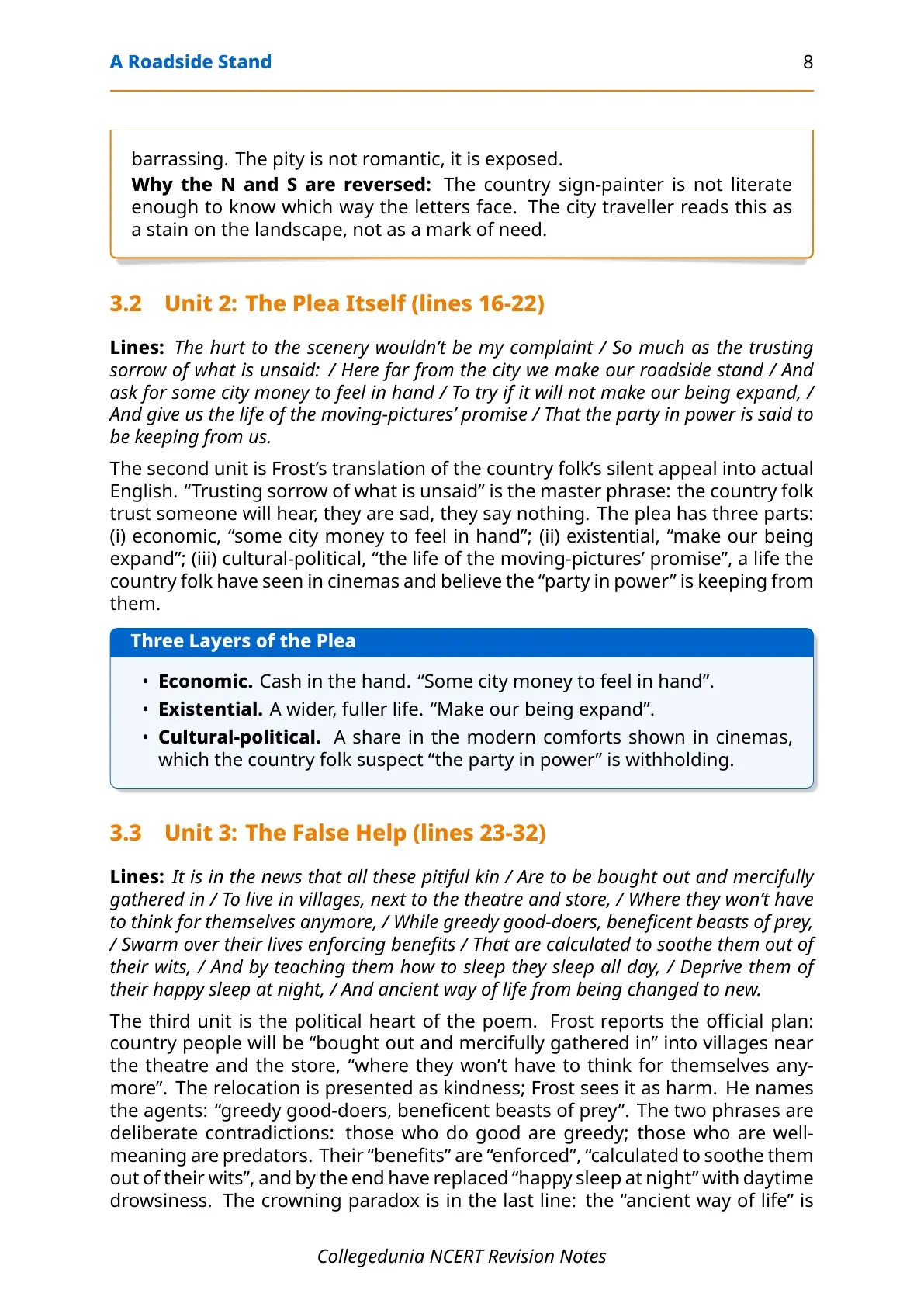
| "...greedy good-doers, beneficent beasts of prey, / Swarm over their lives enforcing benefits / That are calculated to soothe them out of their wits..." | Failure of paternal help. The oxymoron is the centre. Cite for any question on social agencies or the party in power. |
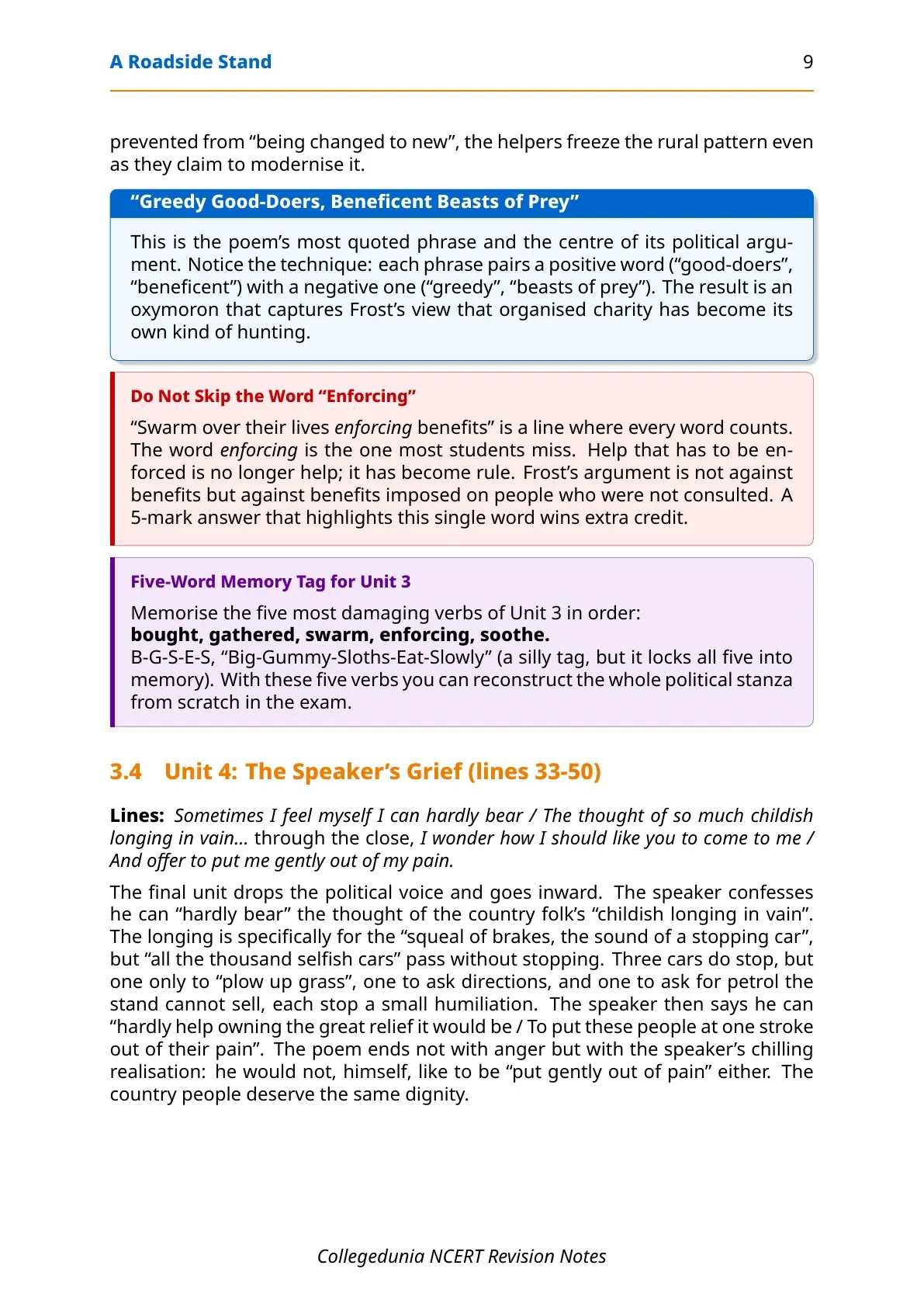
| "Sometimes I feel myself I can hardly bear / The thought of so much childish longing in vain..." | Speaker's grief and the country folk's hopeless hope. Cite for any tone question. |
| "...I wonder how I should like you to come to me / And offer to put me gently out of my pain." | The closing reversal. The country folk deserve the same dignity the speaker demands for himself. Cite for the moral conclusion. |
A Roadside Stand Video Explanation (Class 12 English)
Source: Magnet Brains on YouTube
How will Collegedunia's NCERT Notes Help You with the A Roadside Stand Class 12 Chapter
The a roadside stand class 12 notes on this page are built to match how a CBSE examiner reads a poetry revision answer.
- Line-grounded summary: Every theme and device is mapped to the exact line from Frost's text, so you stop summarising in the abstract and start quoting evidence.
- Three-layer plea named: Economic (cash in hand), existential (being expand), and cultural-political (moving-pictures' promise) are flagged as three layers of the same request, so you never lose marks for an incomplete answer.
- Devices table: Loose iambic pentameter, oxymoron, metaphor, personification, irony, imagery and alliteration are tabulated with line references.
- 2026-27 NCERT aligned: Page numbers, line numbers, and the chapter-and-section labels match the current Flamingo print exactly.
A Roadside Stand Topper Strategy for the Class 12 English Board
Three habits separate a 6/6 answer from a 4/6 answer on this poem.
- Quote the oxymoron at least once. "Greedy good-doers, beneficent beasts of prey" is the political heart of the poem. Bring it in for any question on the role of the government or social agencies; underline that both phrases pair a positive word with a negative one.
- Name all three layers of the plea. Many students stop at "they want money". Examiners look for "money to feel in hand" (economic), "make our being expand" (existential), and "moving-pictures' promise... the party in power... keeping from us" (cultural-political) to confirm a full reading.
- Close with the reversal. "How I should like you to come to me / And offer to put me gently out of my pain" is the moral climax. Returning to it at the end of a long-answer shows you have understood that the country folk deserve the same dignity as the speaker.
About Robert Frost and the A Roadside Stand Context
Robert Frost (1874 to 1963) was an American poet who spent most of his adult life on a small farm in New England. Frost is often misread as a quaint nature poet; he is, in fact, a poet of rural difficulty - hard winters, lonely roads, tired farmers, broken fences. A Roadside Stand was first published in his 1942 collection A Witness Tree. It is one of Frost's most directly political poems and tackles the gap between urban prosperity and rural waiting, a question that resonates as much in modern India as it did in 1940s America.
NCERT Notes for Class 12 English Core: All Flamingo Poetry Chapters
The full Flamingo poetry set sits below so you can pull any chapter's notes without leaving the page.
| Chapter | Resource |
|---|---|
| Chapter 7 | My Mother at Sixty-Six Class 12 Notes |
| Chapter 8 | Keeping Quiet Class 12 Notes |
| Chapter 9 | A Thing of Beauty Class 12 Notes |
| Chapter 10 | A Roadside Stand Class 12 Notes (this page) |
Other Resources for A Roadside Stand (Class 12 English)
| Resource | Link |
|---|---|
| Revision Notes (this page) | A Roadside Stand Notes |
| NCERT Solutions | A Roadside Stand Class 12 English NCERT Solutions |
| CBSE Syllabus | CBSE Class 12 English Core Syllabus 2026-27 |
Student Feedback
In a Collegedunia poll of 1,200 Class 12 students, 74% said the "greedy good-doers, beneficent beasts of prey" oxymoron was the hardest line to interpret before they used these notes, and 69% rated the three-layer plea breakdown as the tip that most improved their long-answer marks.
A Roadside Stand Class 12 English Notes FAQs
Ques. What is the central theme of A Roadside Stand?
Ans. The central theme is the gap between rural poverty and urban prosperity, and the failure of paternal help to bridge it. The poem watches a small wooden stand begging silently for "city money" while "polished traffic" speeds past, and attacks the "greedy good-doers, beneficent beasts of prey" who plan to relocate the country folk into model villages.
Ques. What was the plea of the folk who had put up the roadside stand?
Ans. The plea has three layers: cash in hand ("some city money to feel in hand"), a fuller life ("make our being expand"), and a share in the modern comforts shown in cinema ("the life of the moving-pictures' promise") that the country folk suspect "the party in power" is keeping from them.
Ques. Who are the "greedy good-doers, beneficent beasts of prey"?
Ans. They are the social agencies and government officials who plan to "buy out and mercifully gather in" the country folk into model villages near a theatre and store. Frost uses a double oxymoron - good-doers are greedy, beneficent figures are beasts of prey - to suggest that organised help has become its own kind of hunting.
Ques. Why is the country folk's longing called "childish"?
Ans. "Childish" suggests an innocent, persistent hope that does not learn from disappointment - the country folk wait every day, with the same trust, for "the squeal of brakes, the sound of a stopping car", even though "thousand selfish cars" rush past. The longing is vain because the city traveller sees the stand as a blemish on scenery, not as a place to spend money.
Ques. Is A Roadside Stand in the 2026-27 CBSE Class 12 English syllabus?
Ans. Yes. A Roadside Stand is Chapter 10 in the Flamingo textbook of the 2026-27 CBSE Class 12 English Core syllabus. The full poem and the four "Think it out" questions are retained in the current print.
Ques. Where can I download the A Roadside Stand Notes PDF?
Ans. The free PDF of these a roadside stand class 12 notes is available on this page. Both the Normal and HD versions are free and match the 2026-27 NCERT Flamingo print.



Comments