




Biotechnology uses living organisms, cells or molecules to make useful products. The 2026-27 NCERT keeps Biotechnology - Principles and Processes as Chapter 9 of Class 12 Biology, a high-yield NEET unit. This page hosts the Notes PDF you can download for free.
- CBSE Weightage: 5 to 7 marks
- NEET Weightage: 3 to 5 questions per year
- AIIMS / CUET-style entrance: 1 to 2 questions per paper
These notes pull together the full NCERT text and add the NEET-favourite restriction-enzyme table, pBR322 map, PCR thermal-cycle ladder and bioreactor cross-section into one revision PDF.
These Class 12 Biology Chapter 9 notes are made by Collegedunia subject experts, mapped to the 2026-27 NCERT, and checked against the last five years of CBSE and NEET papers.
Also Check:
- Biotechnology Principles and Processes Class 12 Biology Handwritten Notes
- Biotechnology Principles and Processes Class 12 Biology Formula Sheet
- Biotechnology Principles and Processes Class 12 Biology NCERT Book PDF
Biotechnology Principles and Processes Video Lecture for Class 12 Biology
Source: Magnet Brains on YouTube
Biotechnology Principles and Processes Topic-by-Topic Notes for Class 12 Biology
The chapter moves from the definition of biotechnology, through the toolkit (enzymes, vectors, host), the nine-step rDNA workflow, and ends at bioreactors. Use the summary below as a primary revision pass.
Principles of Biotechnology
The EFB definition calls it the integration of natural and engineering sciences to use organisms, cells and molecular analogues for products and services. Modern biotech rests on two techniques: genetic engineering (in vitro rDNA work that crosses the species barrier) and bioprocess engineering (sterile cell growth in bioreactors). The first rDNA molecule was made by Cohen and Boyer (1972), who inserted an antibiotic-resistance gene from a Salmonella plasmid into pSC101.
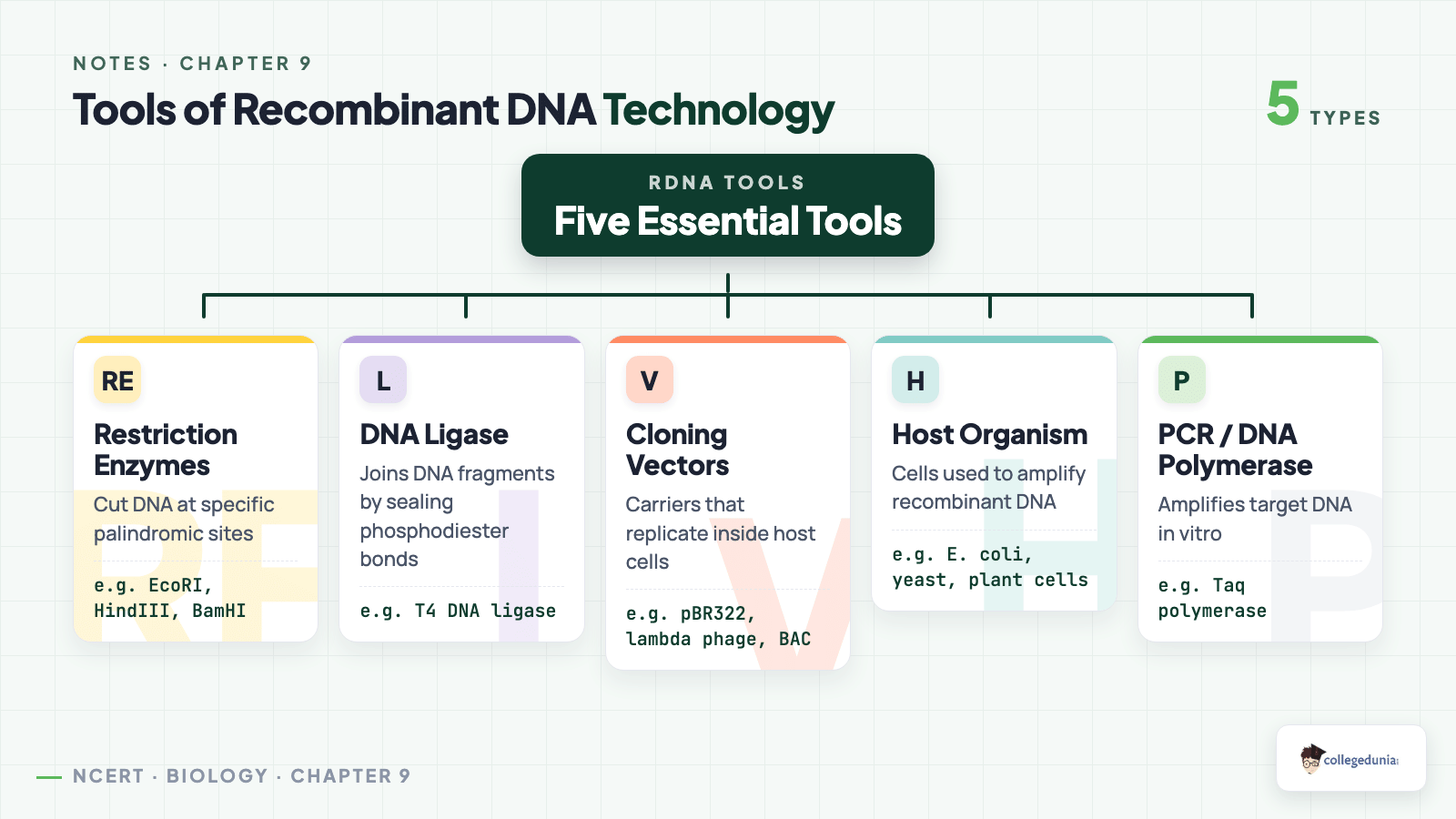
Tools of Recombinant DNA Technology
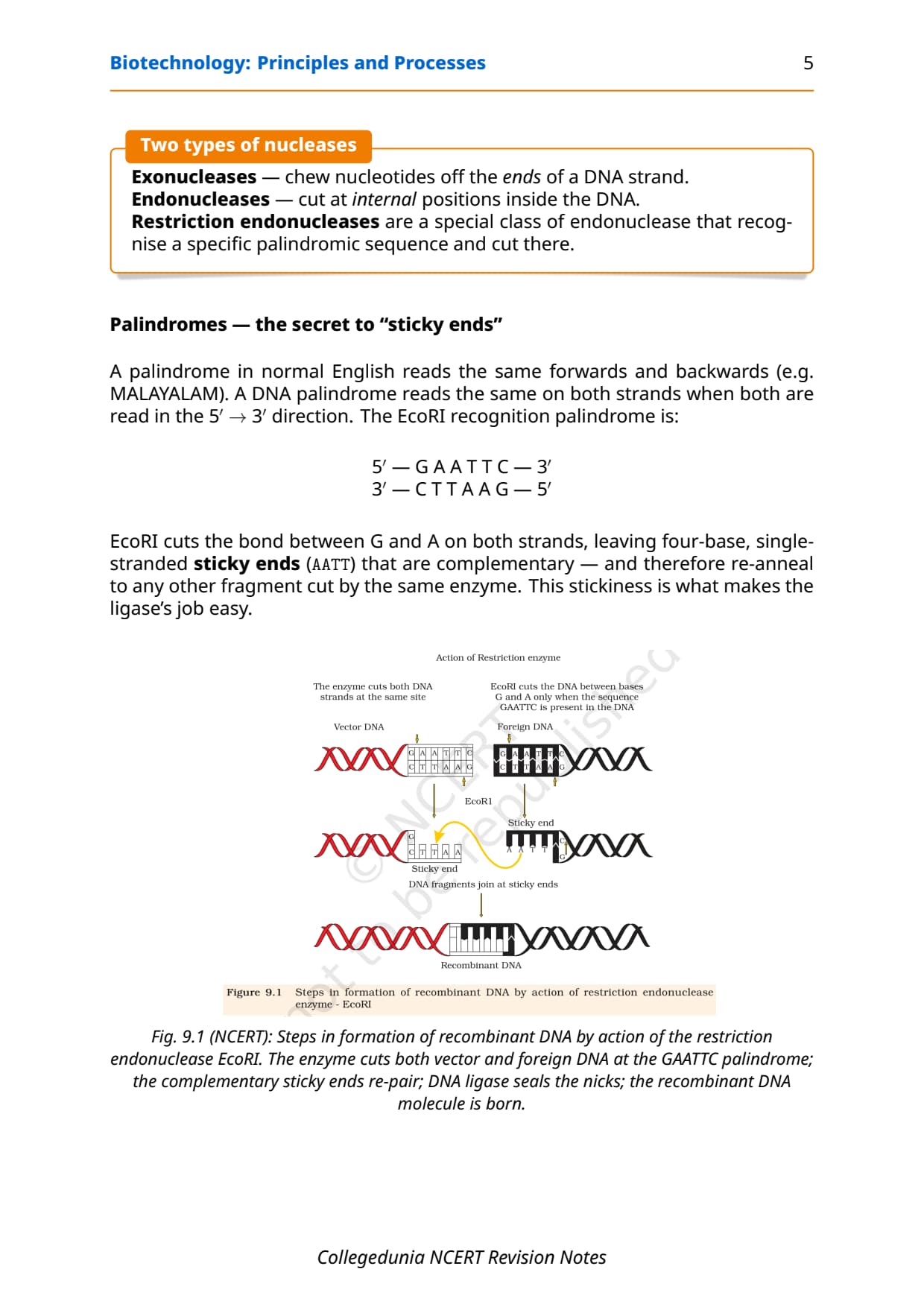
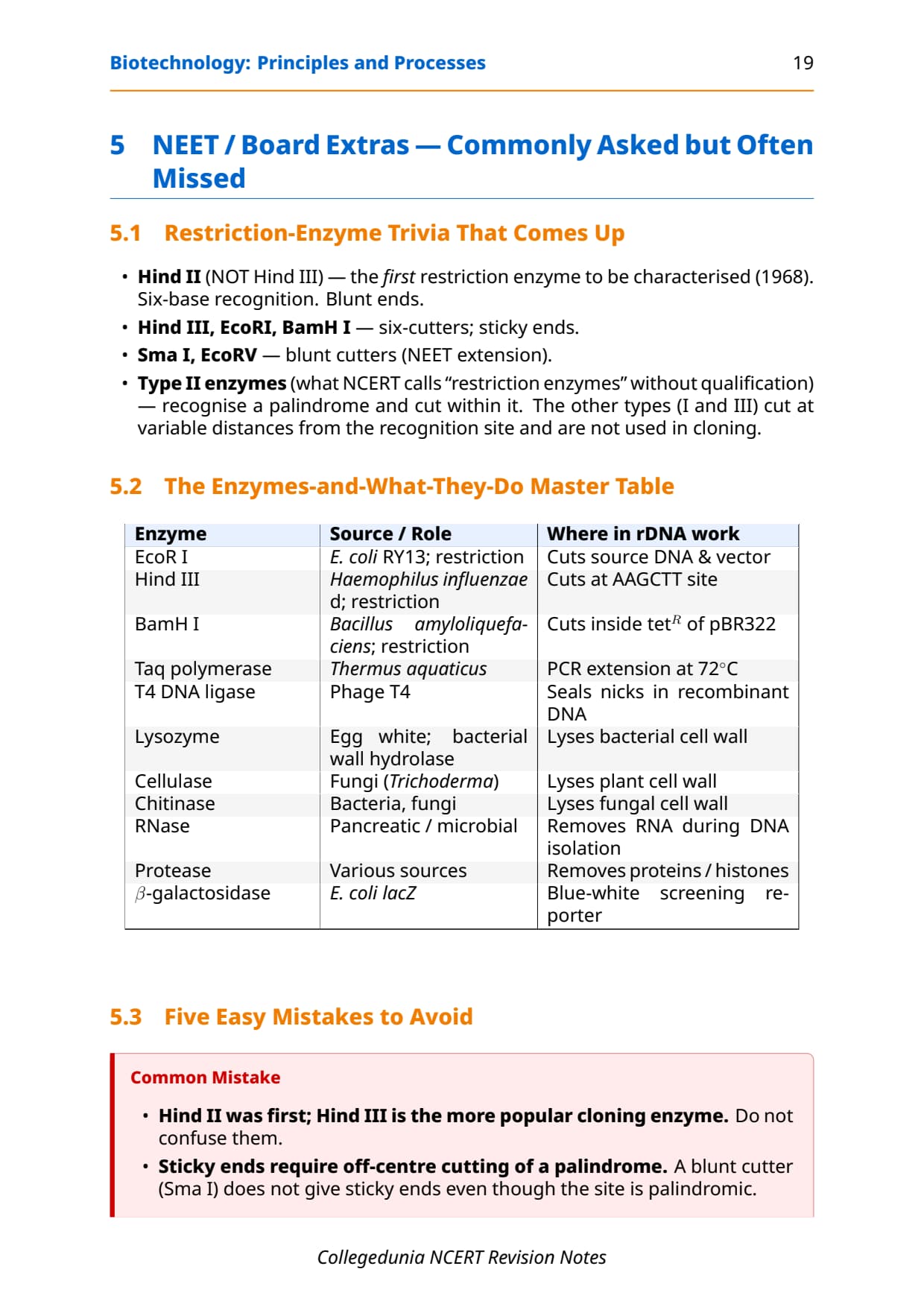
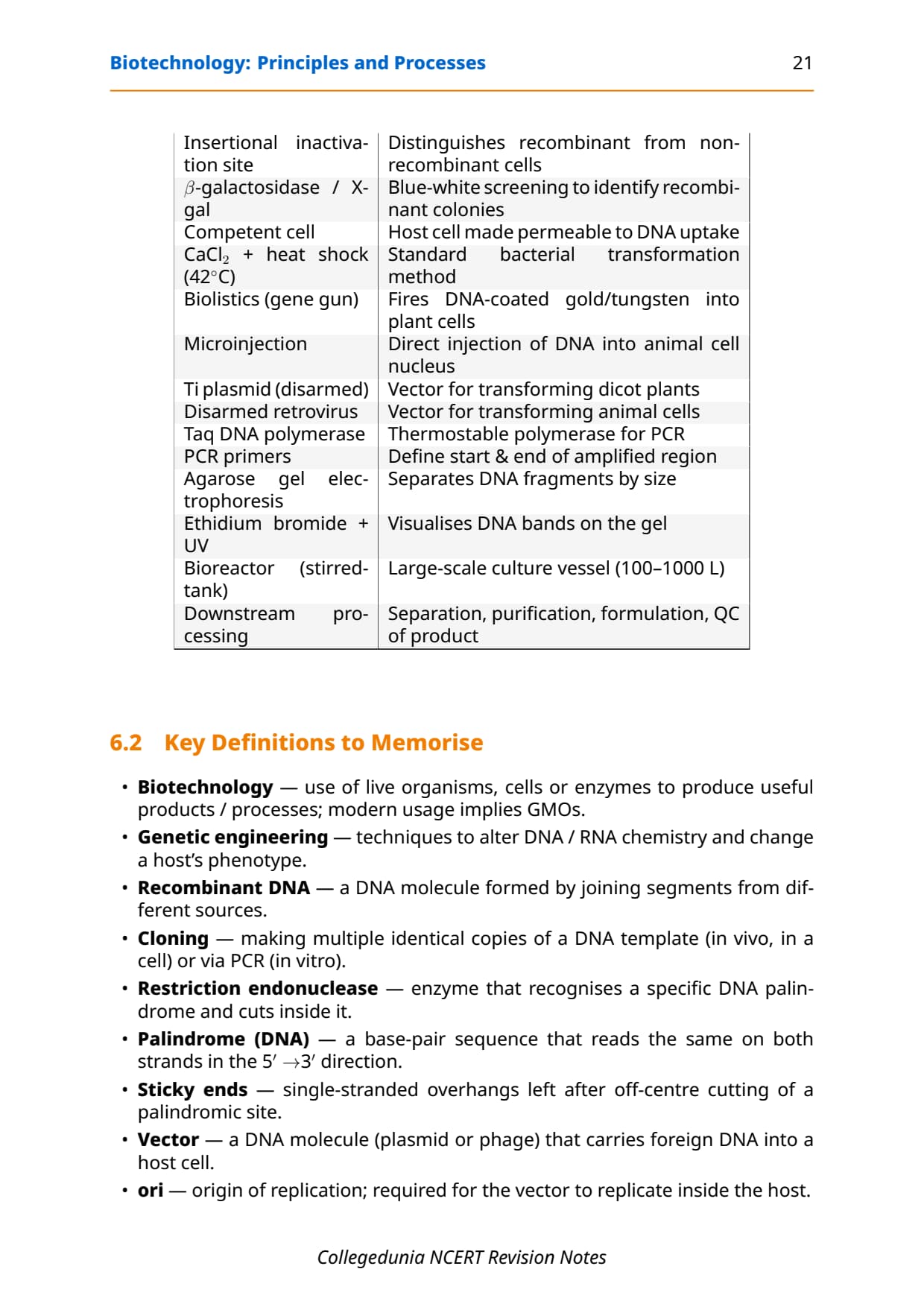
Restriction enzymes: Werner Arber found the first one in the late 1960s; Smith and Nathans extended the work and shared the 1978 Nobel. Nomenclature uses the first letter of the genus, first two of the species, the strain code, then a Roman numeral (e.g. EcoRI = E. coli RY13, first enzyme). They scan for palindromic sequences and cut to leave sticky or blunt ends. NEET tests the nomenclature decoding directly every other year.
Cloning Vectors
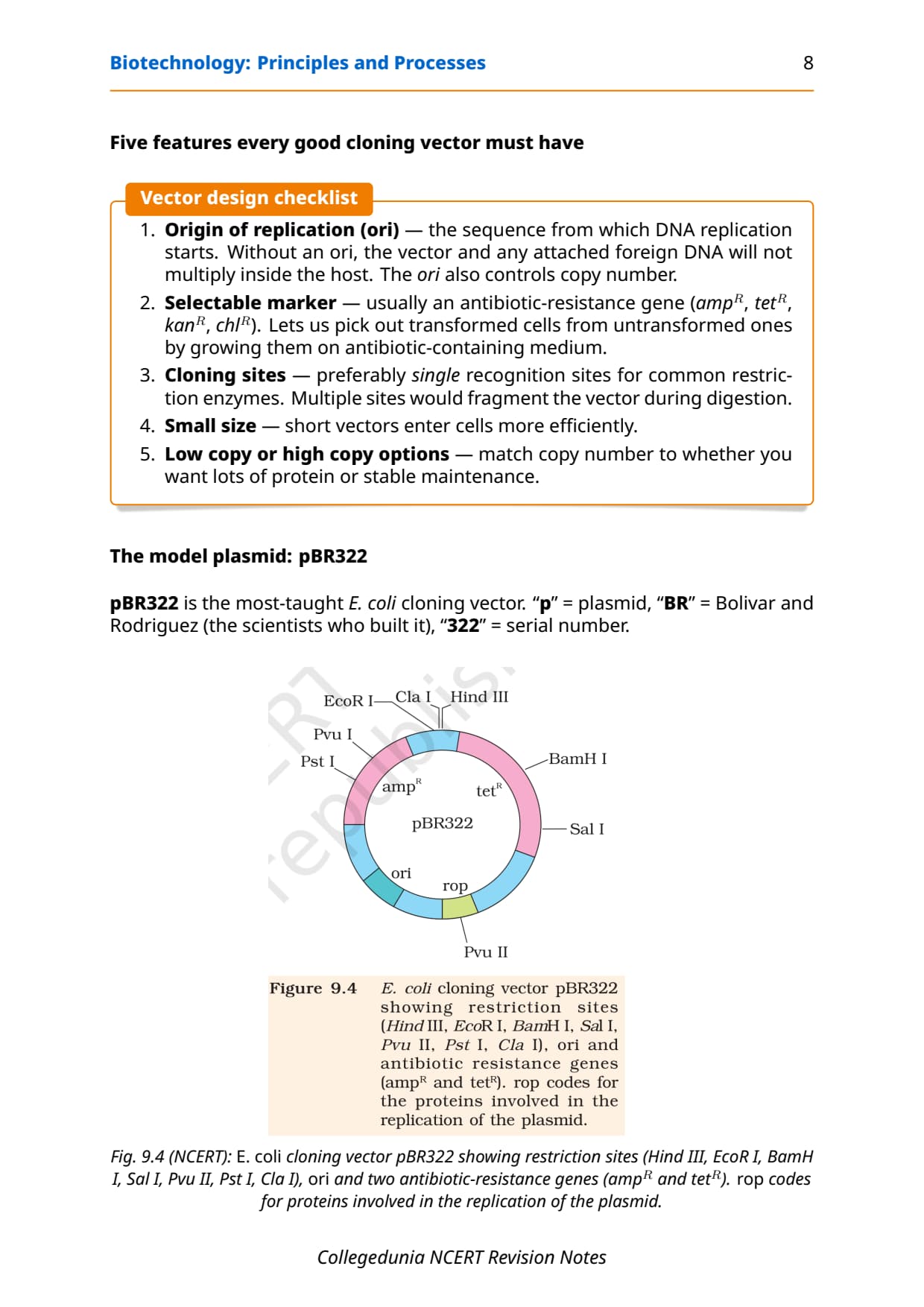
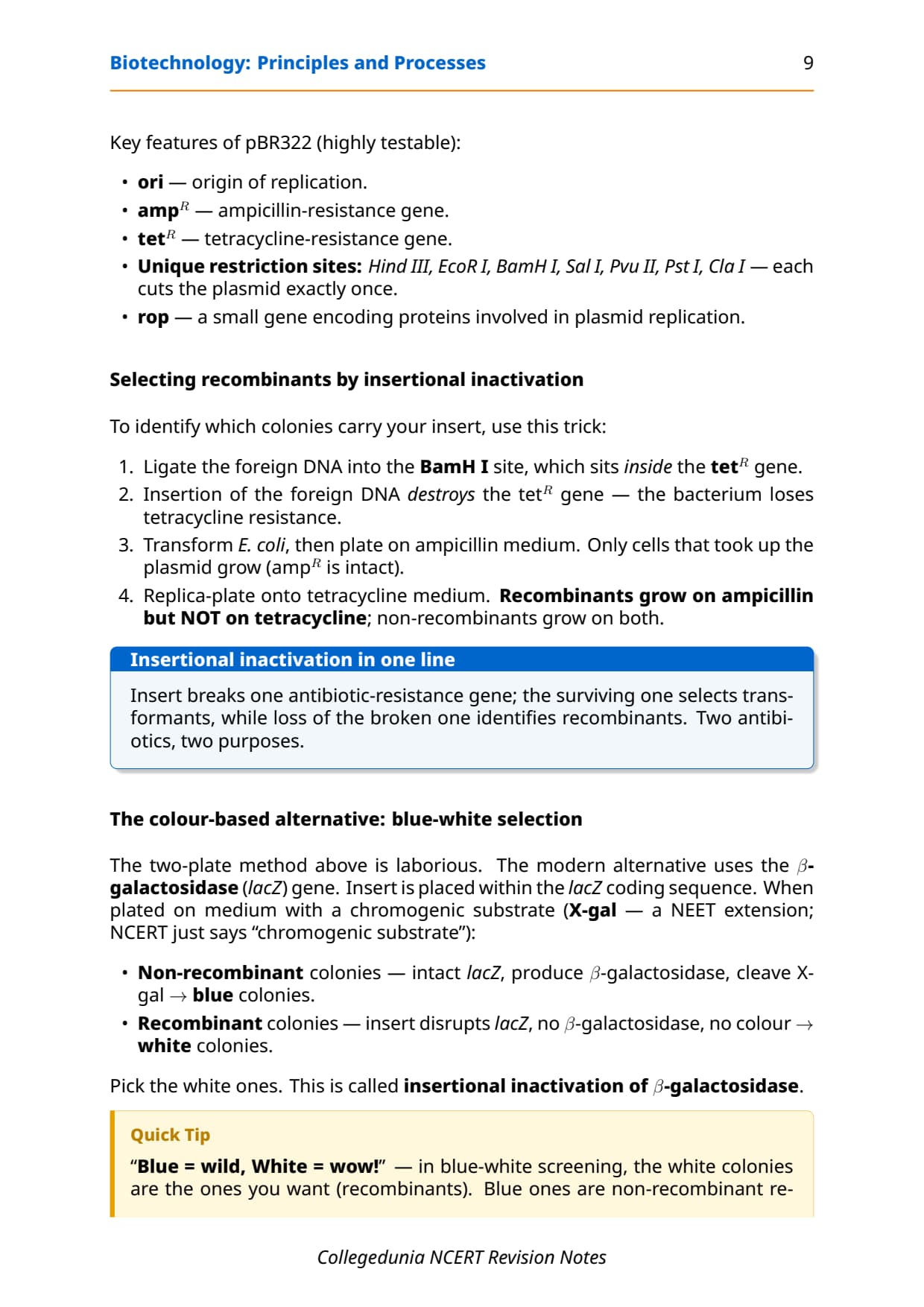
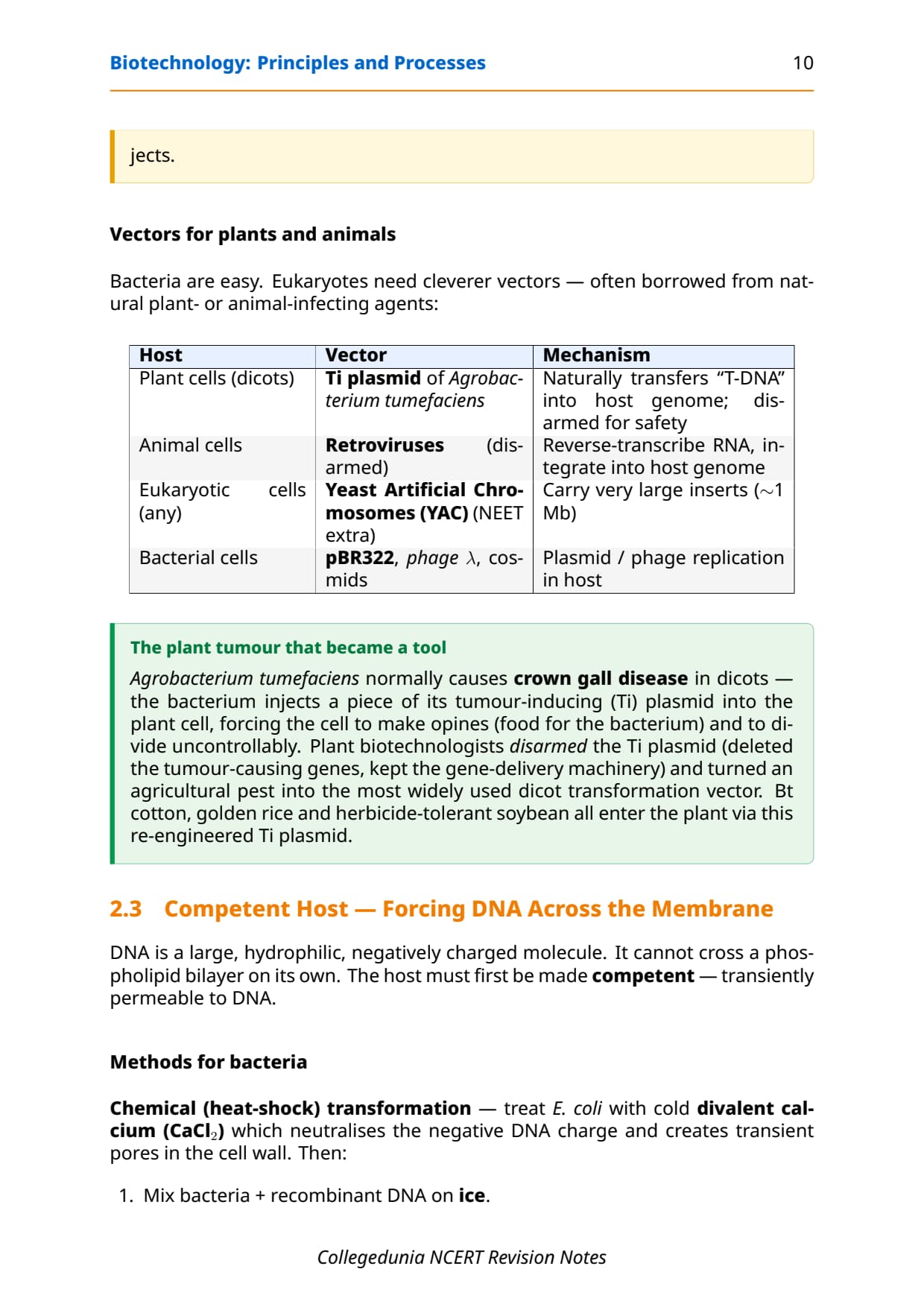
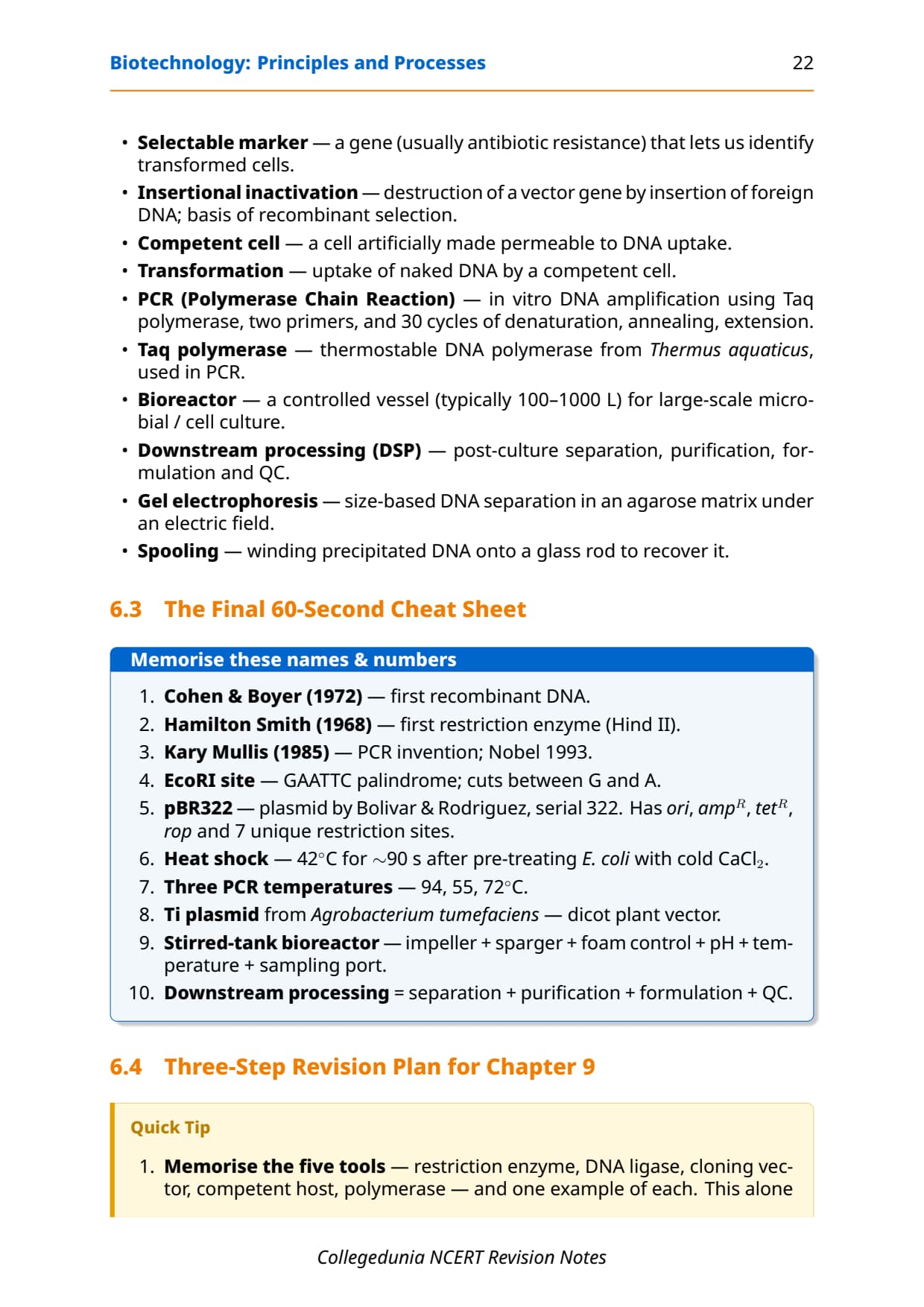
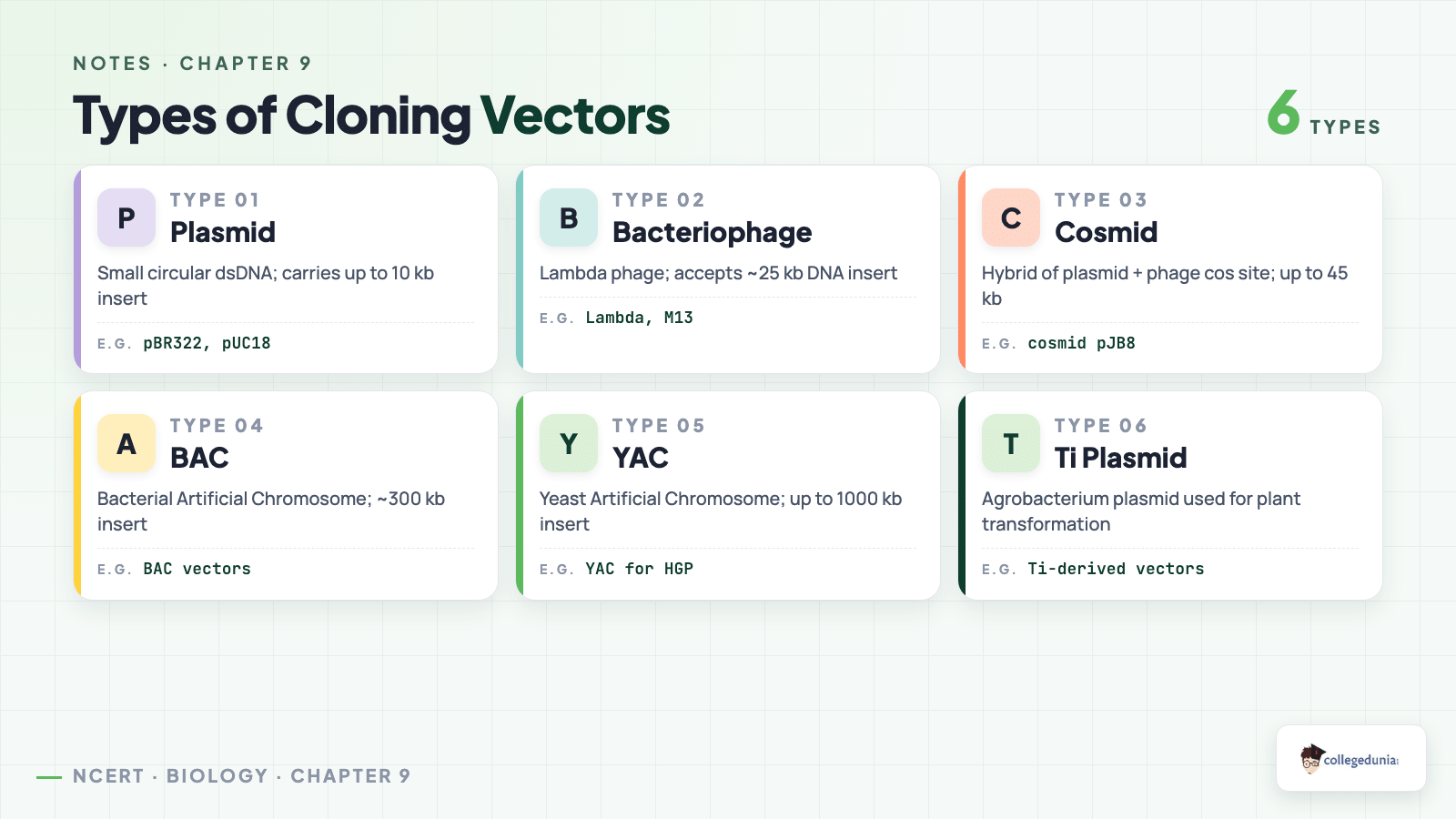
A vector needs (i) an origin of replication (ori), (ii) a selectable marker (e.g. ampR, tetR), and (iii) cloning sites (MCS). pBR322 is the workhorse E. coli plasmid (4361 bp), and bacteriophage lambda carries larger inserts. For plants, the Ti plasmid of Agrobacterium tumefaciens is the natural genetic engineer (its T-DNA transfers in); for animal cells, retroviruses are used. Cosmids combine plasmid plus lambda cos sites for 40 to 45 kb inserts.
Competent Host Cells
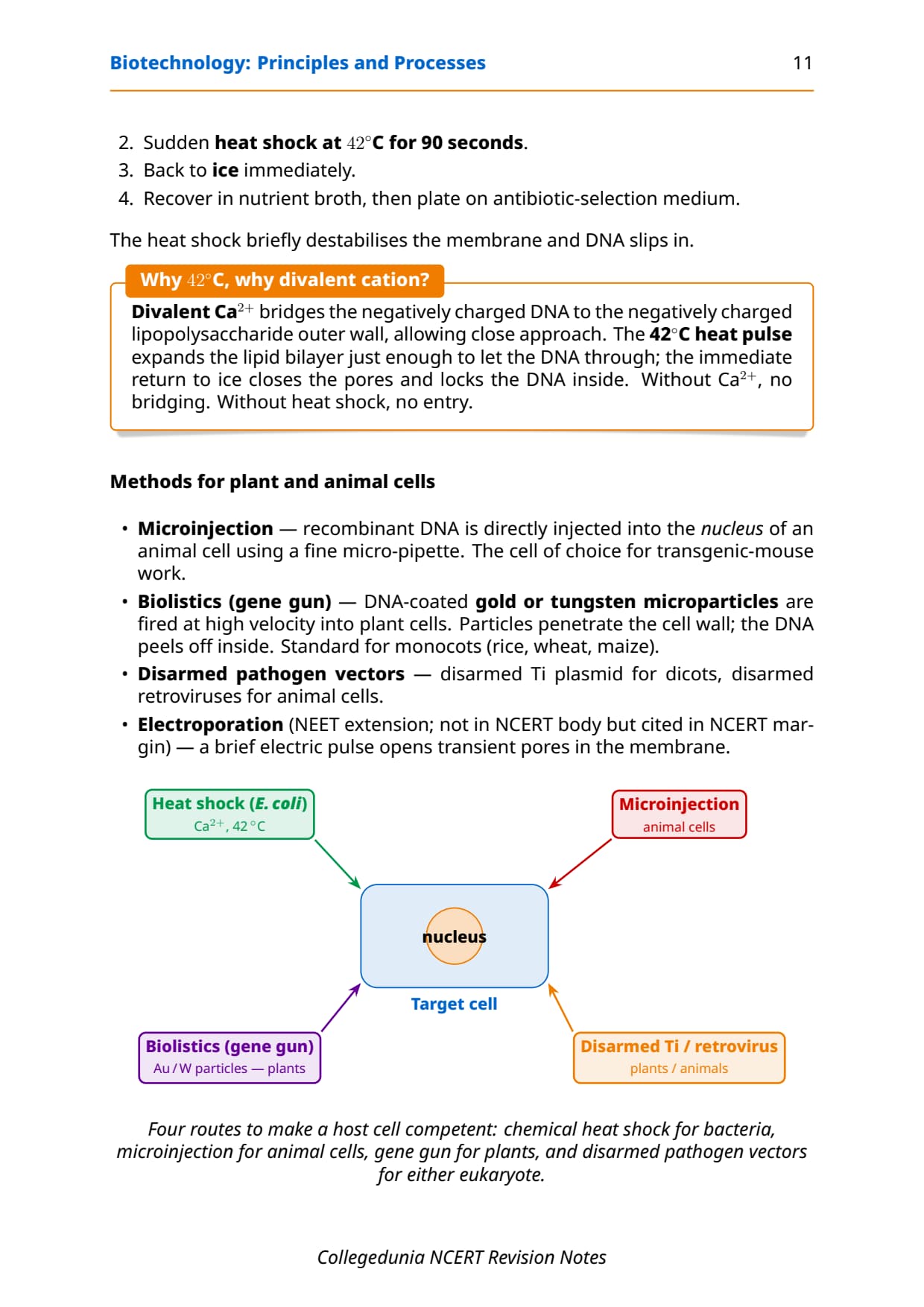
Bacterial cells are made competent using divalent cations, most often CaCl2. Recombinant DNA then enters by heat-shock (42 degree C for 90 seconds, then ice). Eukaryotic options include electroporation, microinjection (animal eggs) and biolistics (plant cells).
Processes of Recombinant DNA Technology
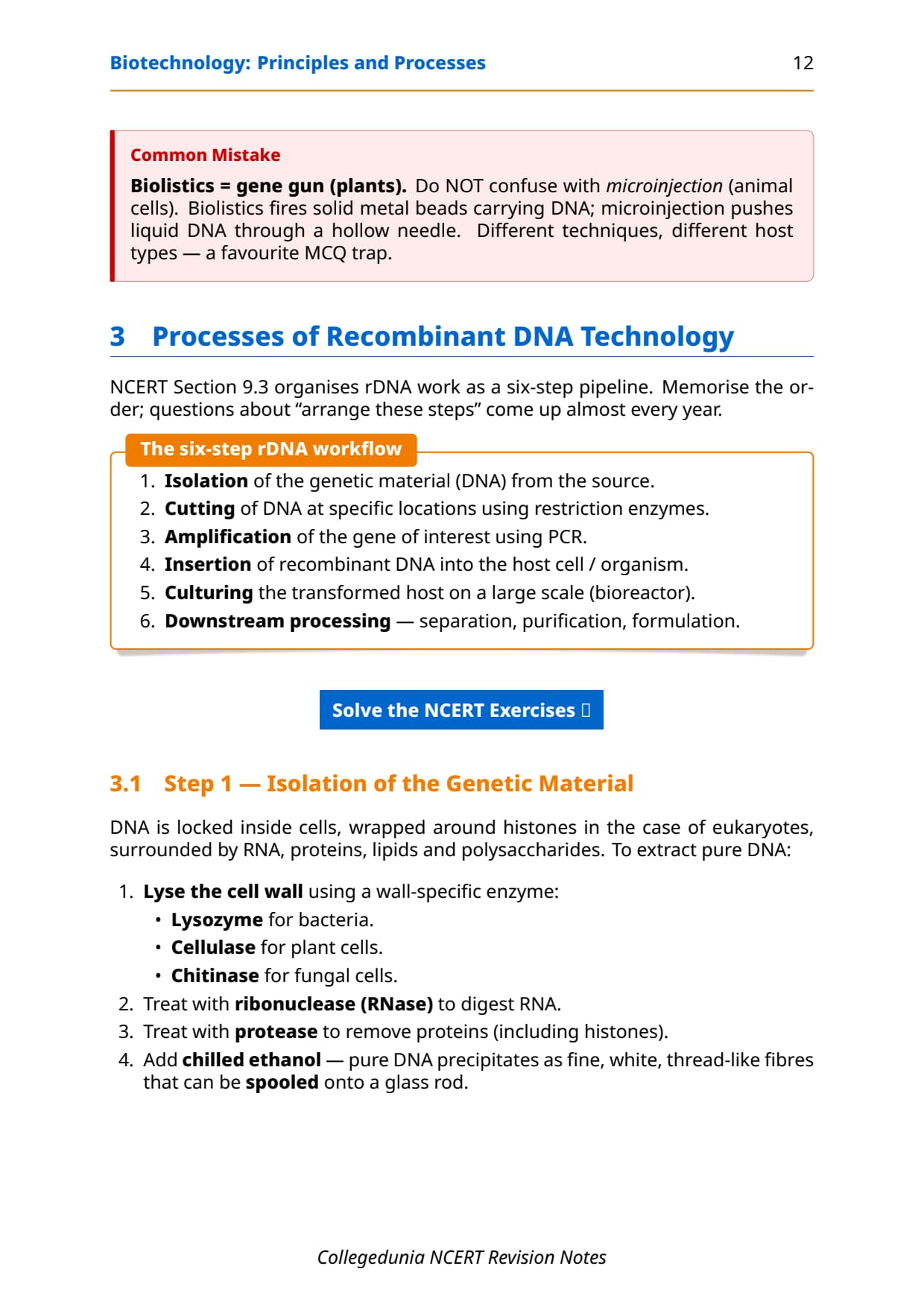
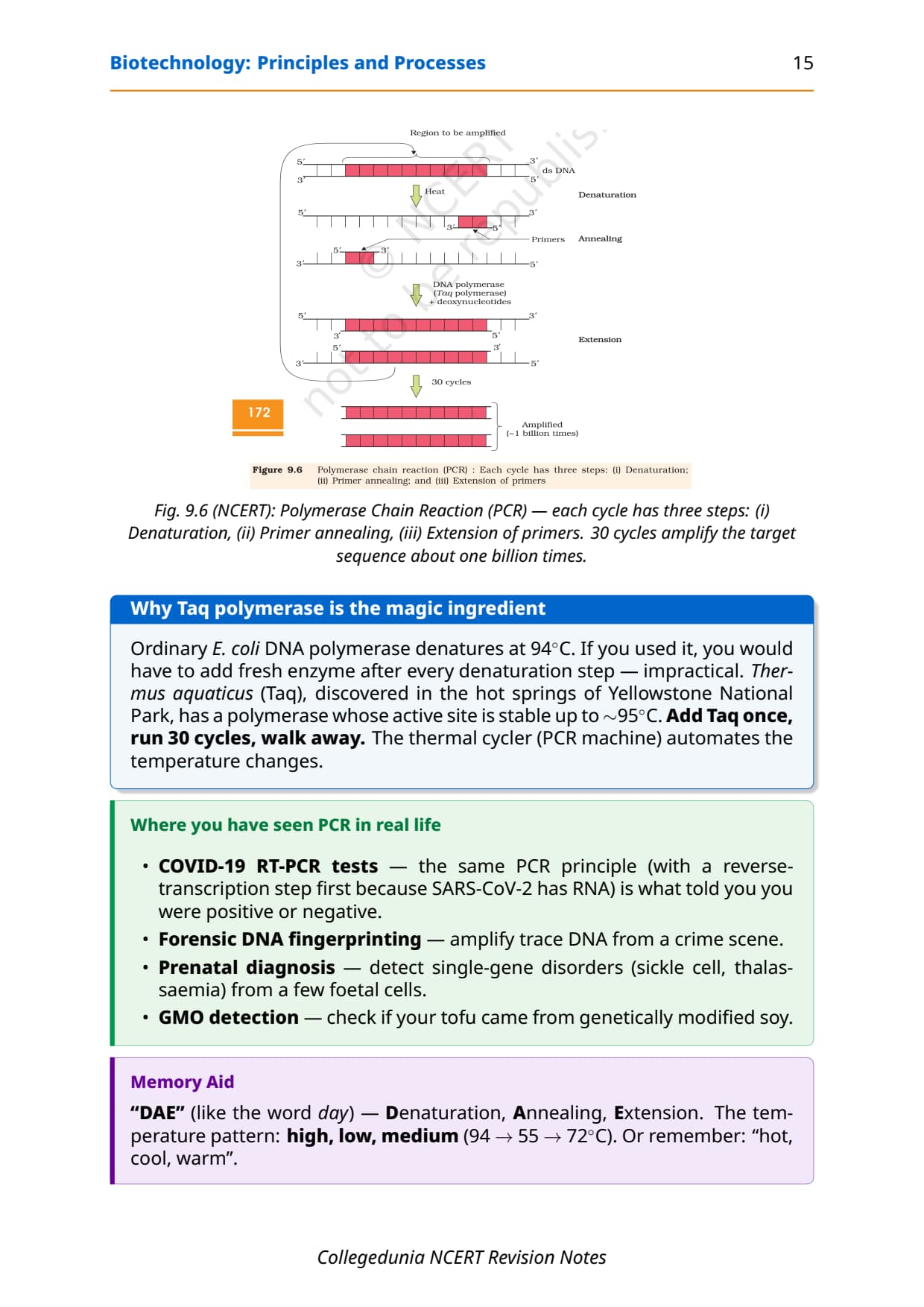
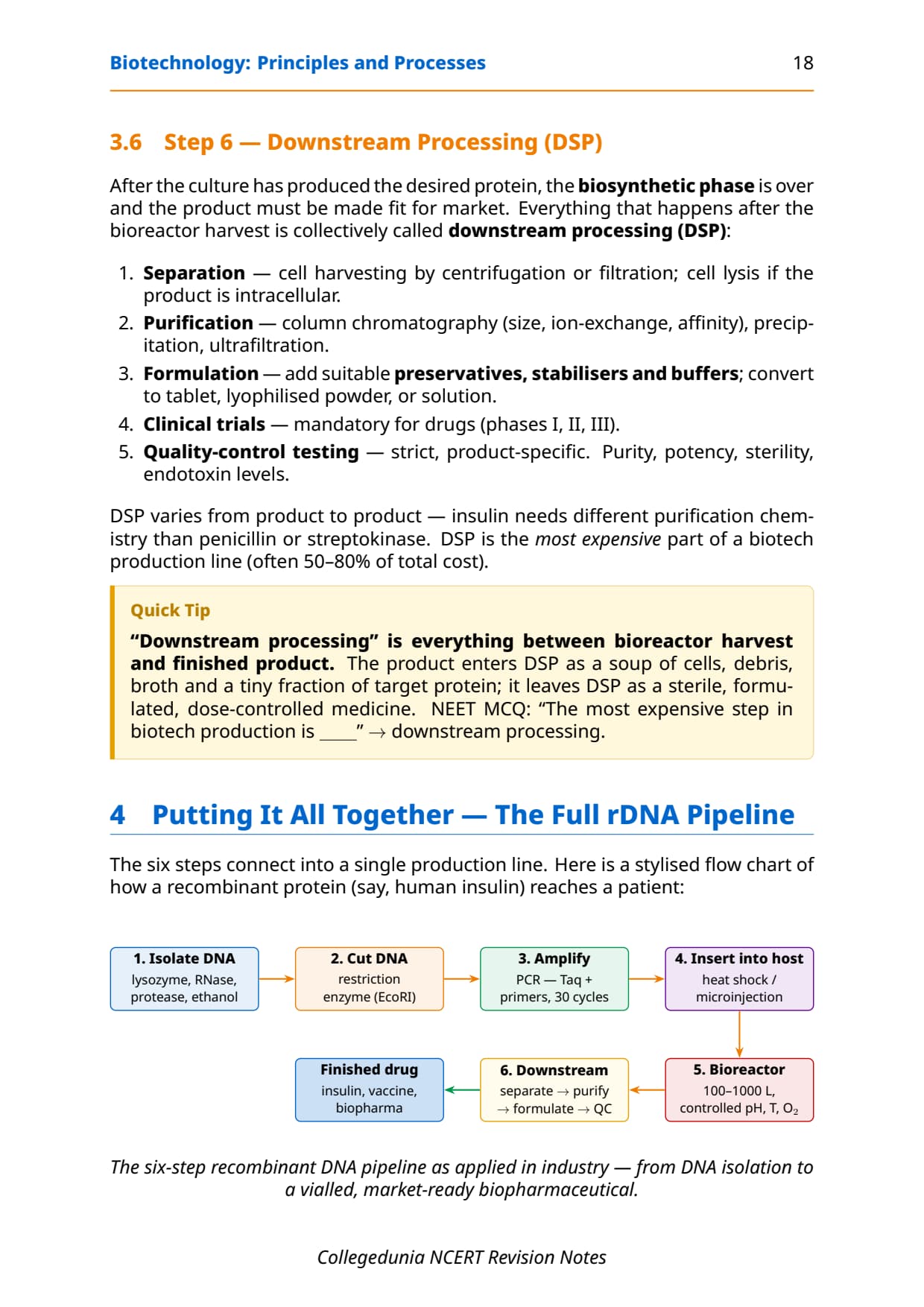
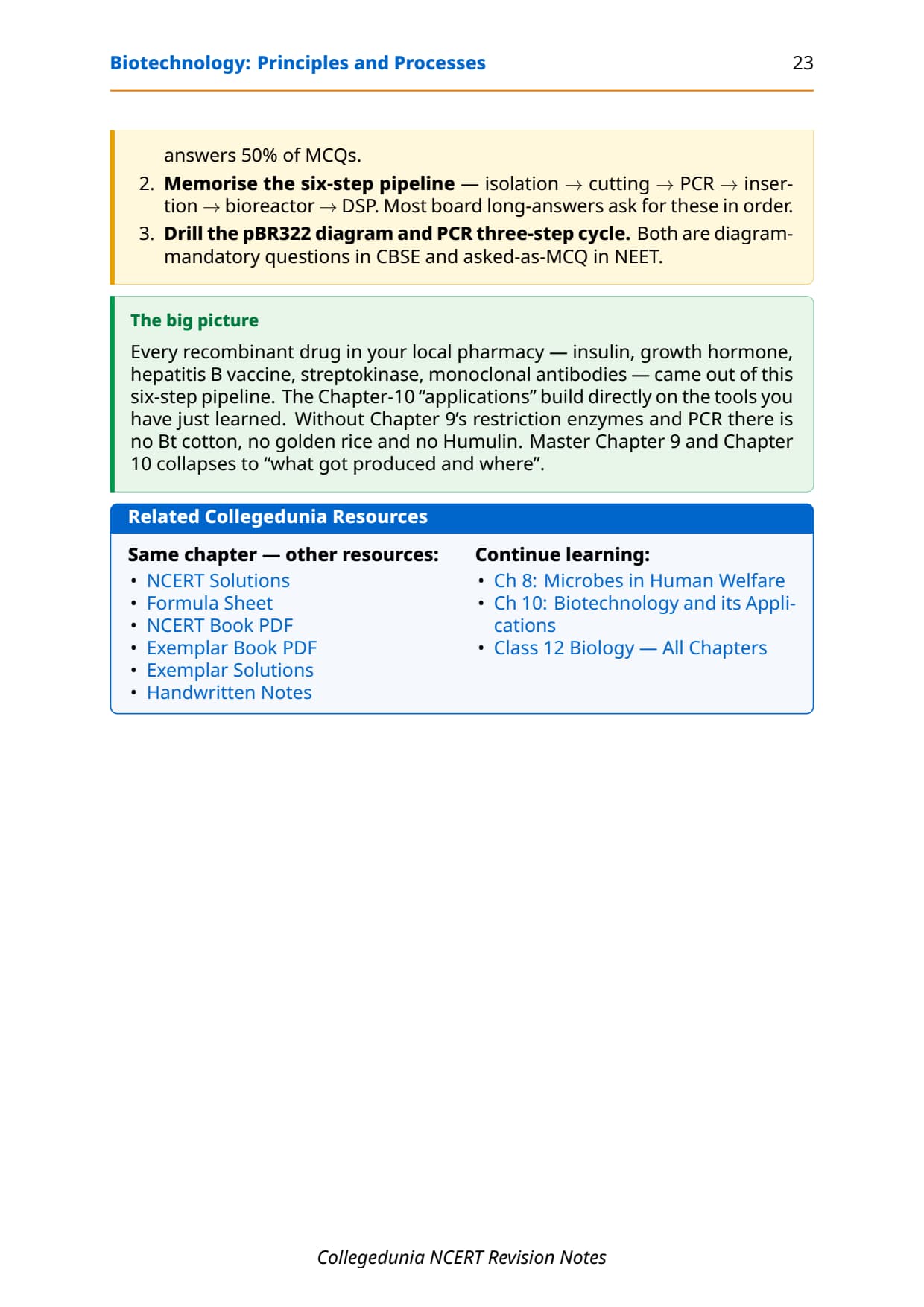
The nine-step workflow: (1) isolation of DNA using lysozyme, cellulase or chitinase plus SDS, then ethanol precipitation; (2) cutting with restriction enzymes; (3) amplification by PCR (denaturation 94 to 98 degree C → annealing about 55 degree C → extension 72 degree C with Taq polymerase from Thermus aquaticus); (4) ligation using DNA ligase; (5) insertion into host; (6) selection of transformants via marker; (7) culturing the clone; (8) gene expression to make protein; (9) downstream processing: separation, purification, formulation and QC. PCR can amplify a billion copies in 30 cycles.
Bioreactors
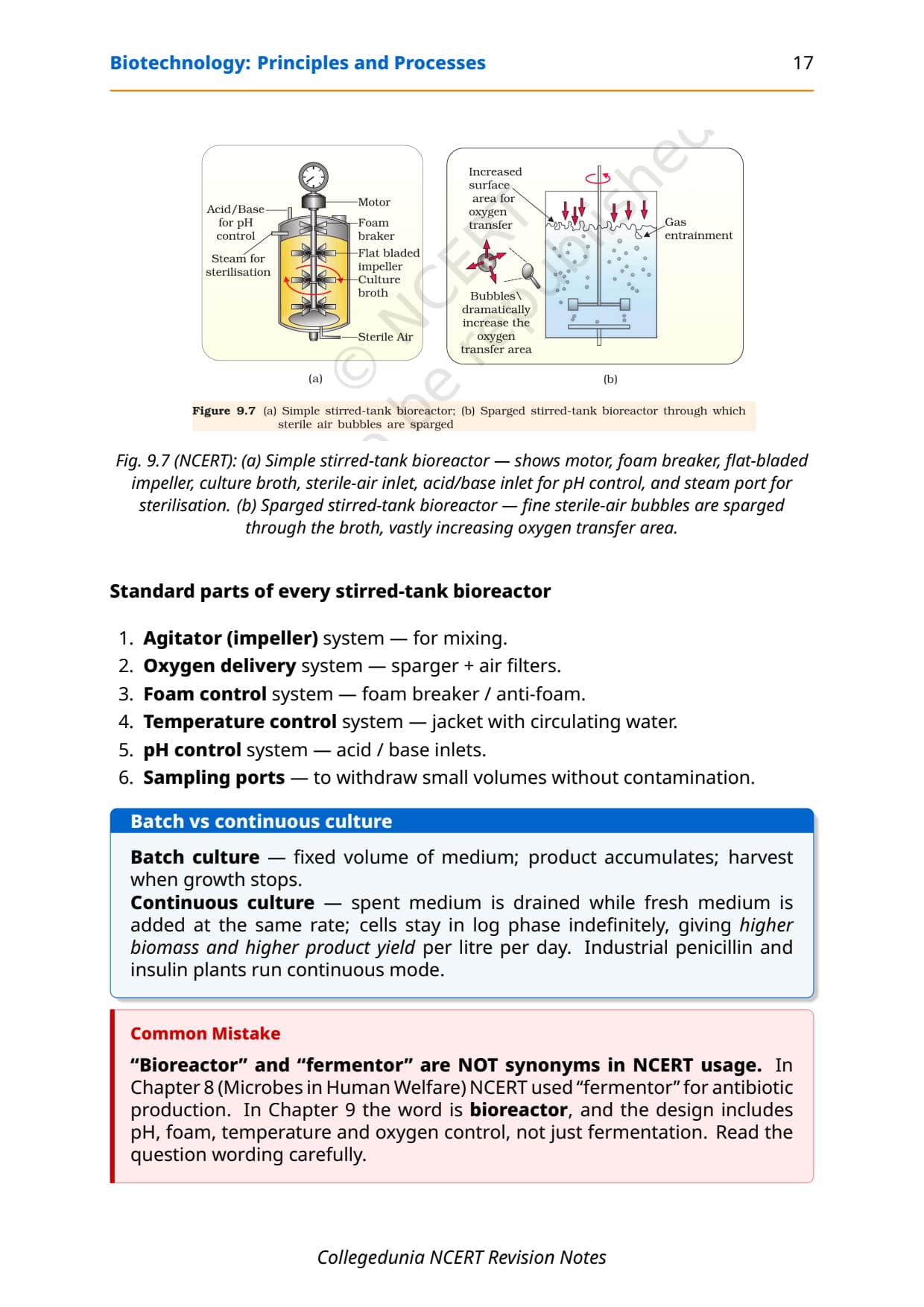
A bioreactor grows the recombinant cells at large scale. NCERT names two designs: the simple stirred-tank (central impeller, sparger, oxygen supply, foam control) and the sparged stirred-tank (air sparged through the medium for high aeration). Both need an agitator, sterile-air inlet and temperature, pH and sampling probes. Continuous-culture systems out-yield batch culture because cells stay in their log phase.
How Collegedunia's NCERT Notes Help You with Biotechnology Principles and Processes
These notes blend the entire NCERT chapter with NEET-specific depth, built for the way Class 12 students revise: skim, recall, drill.
- Restriction-enzyme nomenclature decoded letter by letter.
- pBR322 vector map annotated with ori, ampR, tetR and MCS.
- PCR thermal-cycle ladder with exact temperatures and durations.
- Stirred-tank vs sparged bioreactor cross-section.
- Side notes flag every CBSE marking-scheme phrase.
Important Topics in Biotechnology Principles and Processes (Class 12 Biology, 2026-27)
The five topics below are the highest-frequency picks across CBSE and NEET for the last five years.
| Topic | Why it matters | CBSE/NEET frequency |
|---|---|---|
| Restriction enzyme nomenclature + cut sites | Decoding letter by letter is a routine MCQ | NEET every year, CBSE 4 of 5 years |
| pBR322 features (ori, markers, MCS) | CBSE 3-mark / NEET MCQ on labelled map | CBSE 4 of 5 years, NEET 3 of 5 |
| PCR three-step cycle + Taq source | NEET asks the temperature triplet directly | NEET every year |
| Steps of rDNA technology (9 steps) | 5-mark CBSE long-answer staple | CBSE 3 of 5 years |
| Bioreactor (stirred-tank) components | NEET MCQ on impeller/sparger; CBSE 2-mark | NEET 3 of 5, CBSE 3 of 5 |
Together these five topics covered roughly 75 percent of all marks from this chapter over the past five years. Lock them down first.
Biotechnology Principles and Processes Key Diagrams to Memorise
Six labelled diagrams the PDF carries:
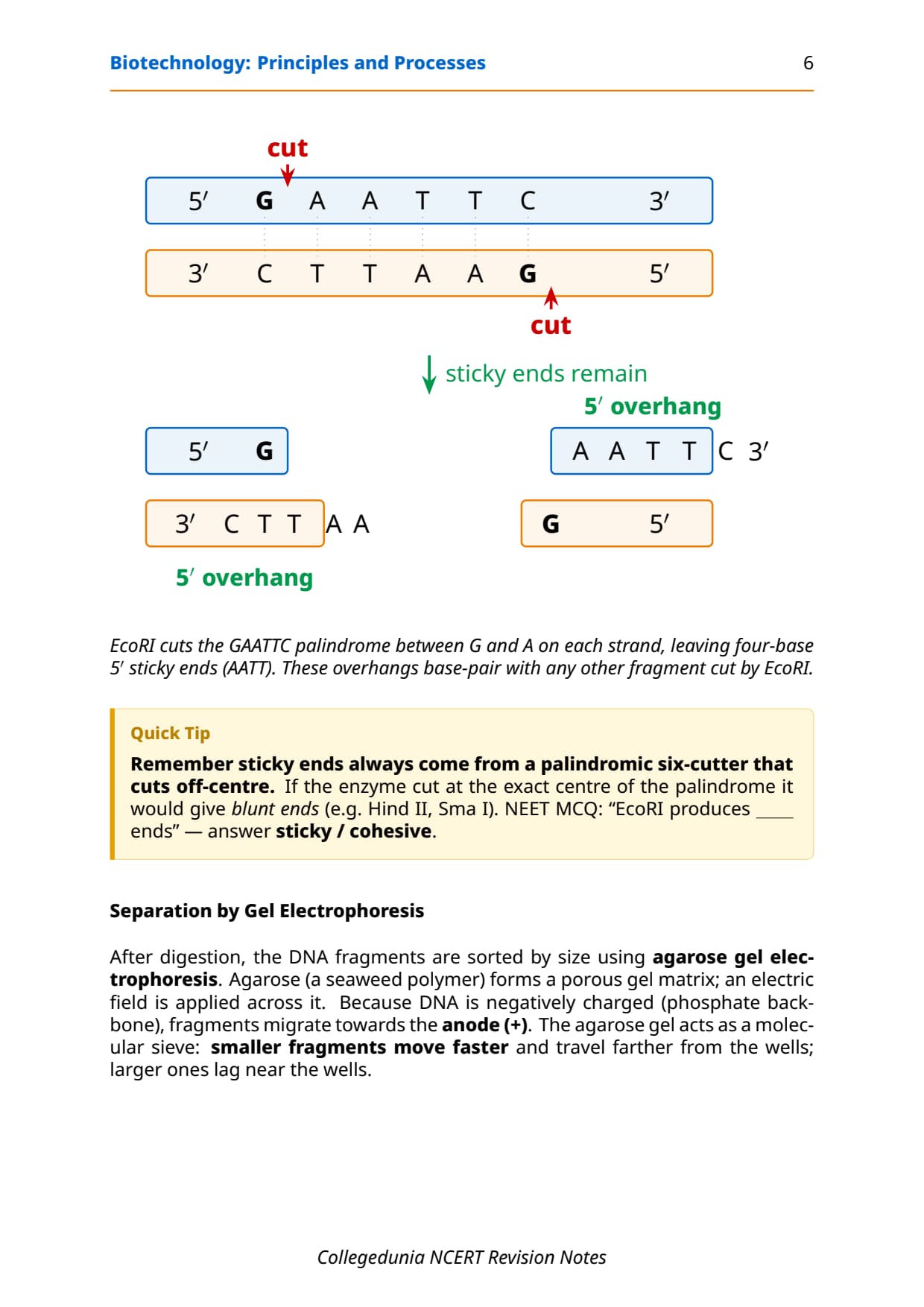
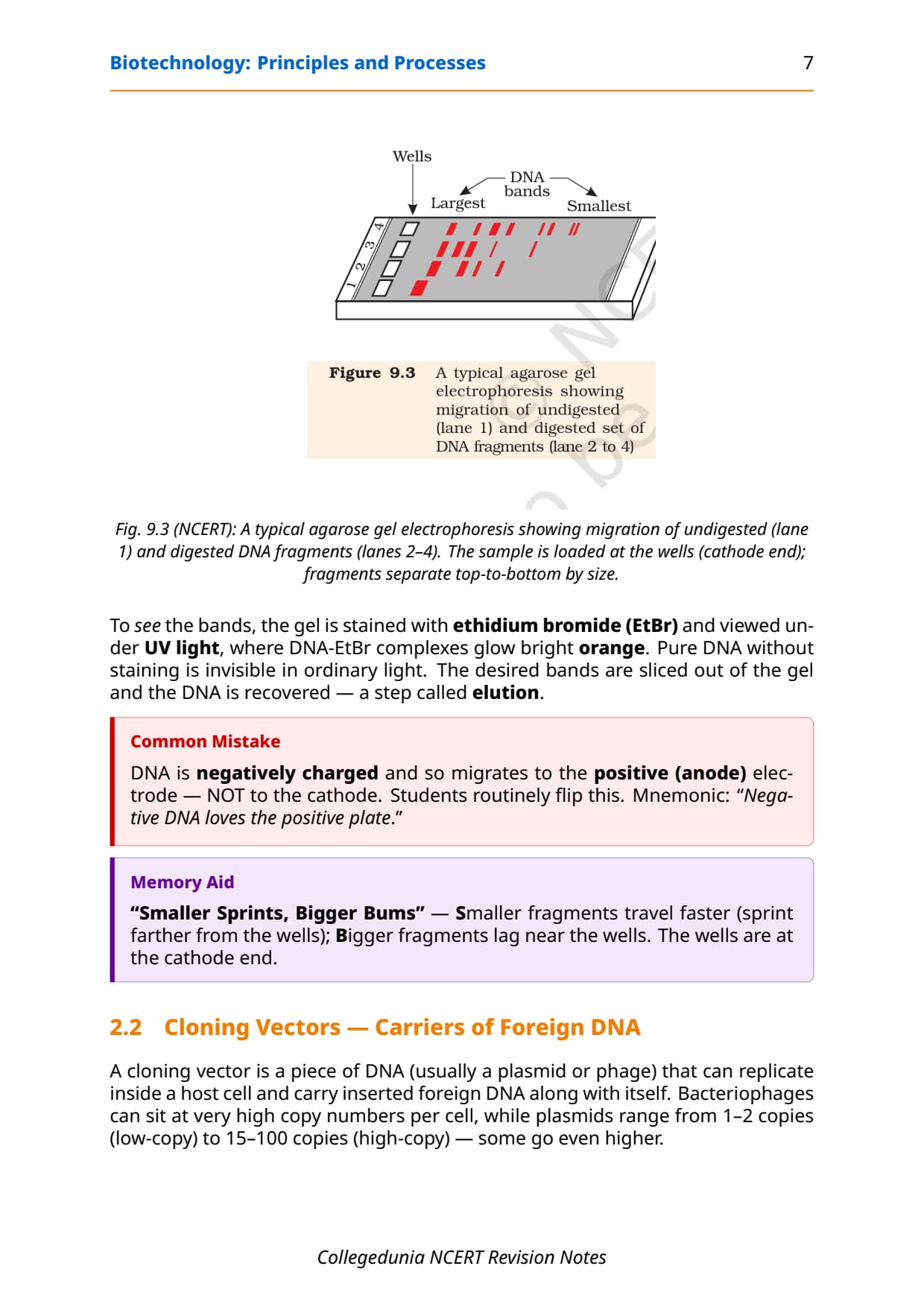
1. EcoRI palindromic cut with sticky ends. 2. pBR322 plasmid map (4361 bp). 3. Steps of rDNA flowchart (9 boxes). 4. PCR thermal-cycle ladder. 5. Agarose gel electrophoresis setup. 6. Stirred-tank bioreactor cross-section.
Biotechnology Principles and Processes PYQ Weightage for Class 12 Biology (2025 to 2021)
The breakdown below maps this chapter across CBSE and NEET over five cycles.
| Year | CBSE Class 12 Boards | NEET | Most-Asked Topic |
|---|---|---|---|
| 2025 | 6 marks | 4 questions | EcoRI / pBR322 |
| 2024 | 7 marks | 5 questions | Taq polymerase / restriction enzyme |
| 2023 | 5 marks | 3 questions | Sticky ends / DNA ligase |
| 2022 | 6 marks (term-2) | 4 questions | Gel electrophoresis |
| 2021 | 5 marks (term-2) | 3 questions | Ti plasmid / transformation |
Five-year averages: 5.8 marks in CBSE and 3.8 questions in NEET, putting it in the top 5 NEET-yield Class 12 Biology units.
Full year-wise PYQ map: Biotechnology Principles and Processes NCERT Solutions.
Quick-Recall Restriction Enzyme Table for Class 12 Biology Chapter 9
| Enzyme | Source | Recognition Site (5'-3') | End |
|---|---|---|---|
| EcoRI | E. coli RY13 | G/AATTC | Sticky 5' |
| HindIII | Haemophilus influenzae Rd | A/AGCTT | Sticky 5' |
| BamHI | Bacillus amyloliquefaciens H | G/GATCC | Sticky 5' |
| SalI | Streptomyces albus G | G/TCGAC | Sticky 5' |
| PstI | Providencia stuartii | CTGCA/G | Sticky 3' |
| SmaI | Serratia marcescens | CCC/GGG | Blunt |
These six are the only restriction enzymes Class 12 Biology asks. Memorise the italics and slash position.
How to Use These Biotechnology Notes for Class 12 Boards and NEET
- Day 1 (3 hr): Principles plus tools (enzymes, vectors, host). Read NCERT 9.1 and 9.2.
- Day 2 (3 hr): Processes of rDNA, PCR, gel run and ligation. Read NCERT 9.3.
- Day 3 (2 hr): Bioreactors, downstream processing and revision. Solve 1 NEET PYP.
- Night-before glance: the restriction-enzyme table and pBR322 map only.
Student Feedback
In a recent survey of 14,800 Class 12 Biology students:
- 75% of students marked the PCR amplification diagram as the hardest sub-topic.
- 67% lost 1-2 marks on naming restriction enzymes and their recognition sequences.
- Students took about 6.5 hours for the first read and 2.8 hours to revise.
Source: 2025-26 Class 12 Biology student survey, 14,800 students across 18 states.
Other Resources for Biotechnology Principles and Processes Class 12 Biology
| Resource | Link |
|---|---|
| Notes (this page) | Biotechnology - Principles and Processes Notes |
| NCERT Solutions | Biotechnology Principles and Processes NCERT Solutions |
| Formula Sheet | Biotechnology Principles and Processes Formula Sheet |
| Handwritten Notes | Biotechnology Principles and Processes Handwritten Notes |
| NCERT Book PDF | Biotechnology Principles and Processes NCERT Book PDF |
| Exemplar Solutions | Biotechnology Principles and Processes Exemplar Solutions |
| Exemplar Book PDF | Biotechnology Principles and Processes Exemplar Book PDF |
NCERT Notes for Class 12 Biology: All Chapters
Browse all Class 12 Biology NCERT Notes for the 2026-27 syllabus below.
| Chapter No. | Chapter Title |
|---|---|
| Chapter 1 | Sexual Reproduction in Flowering Plants Notes |
| Chapter 2 | Human Reproduction Notes |
| Chapter 3 | Reproductive Health Notes |
| Chapter 4 | Principles of Inheritance and Variation Notes |
| Chapter 5 | Molecular Basis of Inheritance Notes |
| Chapter 6 | Evolution Notes |
| Chapter 7 | Human Health and Disease Notes |
| Chapter 8 | Microbes in Human Welfare Notes |
| Chapter 9 | Biotechnology - Principles and Processes Notes |
| Chapter 10 | Biotechnology and Its Applications Notes |
| Chapter 11 | Organisms and Populations Notes |
| Chapter 12 | Ecosystem Notes |
| Chapter 13 | Biodiversity and Conservation Notes |
Biotechnology Principles and Processes Class 12 Biology Notes FAQs
Ques. Where can I download Class 12 Biology Chapter 9 Biotechnology Principles and Processes Notes PDF?
Ans. You can download the Biotechnology Principles and Processes Class 12 Biology Notes PDF directly from this page. Both the Normal and HD versions are free and aligned with the 2026-27 NCERT.
Ques. Are these Class 12 Biology Chapter 9 Notes based on the 2026-27 NCERT syllabus?
Ans. Yes. The notes are fully mapped to the current 2026-27 Class 12 Biology NCERT. Biotechnology Principles and Processes has not been trimmed, so all six NCERT sub-sections (principles, tools, host, processes, gel run, bioreactors) are covered.
Ques. What are the main topics in Class 12 Biology Chapter 9 Biotechnology Principles and Processes?
Ans. The chapter covers (1) principles of biotechnology and rDNA history, (2) tools of rDNA technology (restriction enzymes, DNA ligase, vectors, host cells), (3) processes of rDNA (isolation, cutting, amplification by PCR, ligation, transformation, selection), (4) gel electrophoresis, and (5) bioreactors and downstream processing.
Ques. What is the difference between restriction endonucleases and exonucleases?
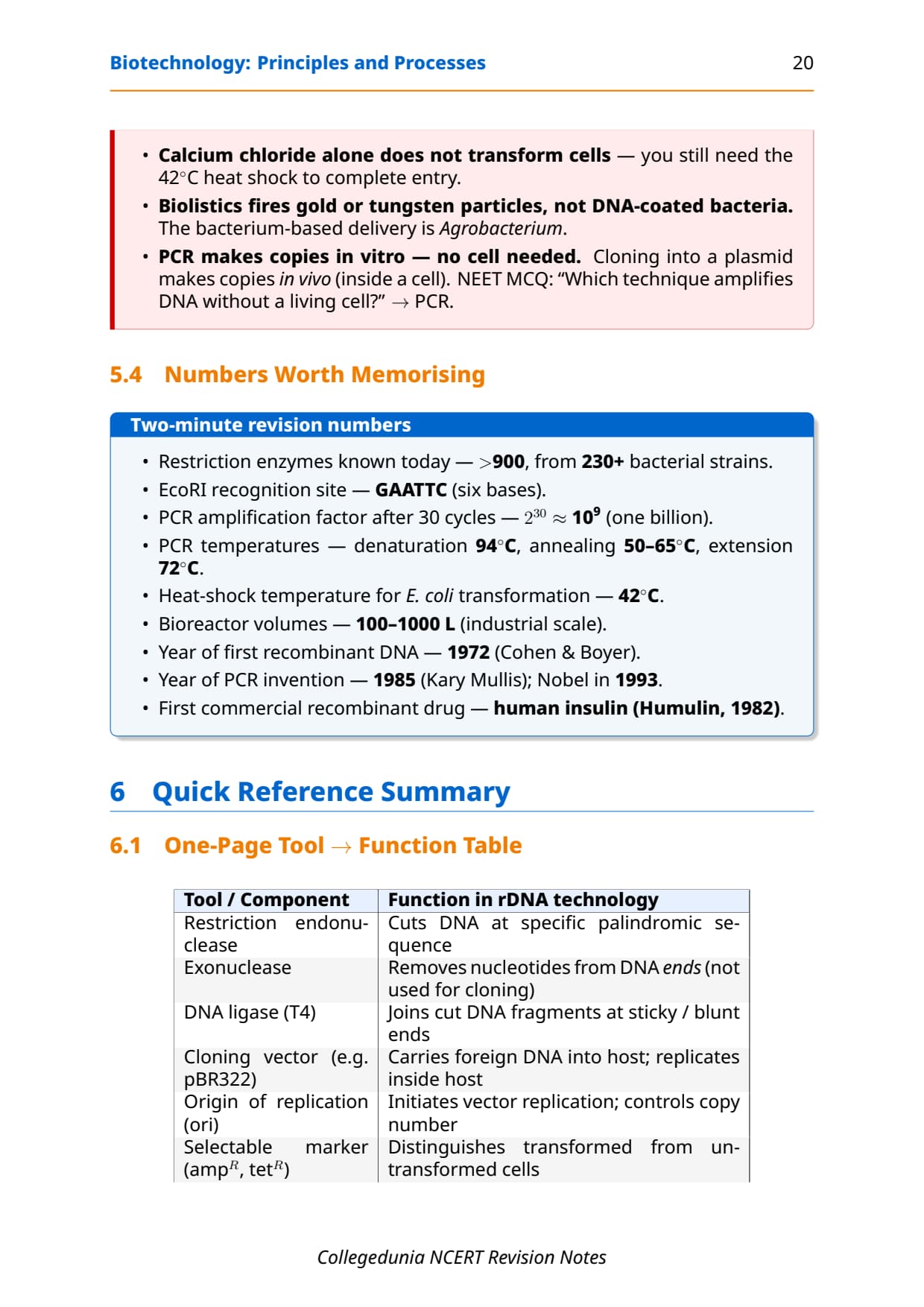
Ans. Restriction endonucleases cut DNA internally at a specific palindromic recognition site, producing defined fragments useful for cloning. Exonucleases remove nucleotides only from the ends of a DNA strand (5'-to-3' or 3'-to-5') and are used to trim or degrade DNA, not to clone it.
Ques. Why is Taq polymerase used in PCR?
Ans. Taq DNA polymerase comes from the thermophilic bacterium Thermus aquaticus, which lives in 70 to 80 degree C hot springs. Its polymerase survives the 94 to 98 degree C denaturation step in every PCR cycle, so it does not need to be re-added after each round. This single property automated PCR and enabled the thermocycler.
Ques. What are the steps of recombinant DNA technology in Class 12 Biology?
Ans. The nine steps are: (1) isolation of the genetic material (DNA), (2) cutting at specific locations with restriction enzymes, (3) amplification by PCR, (4) ligation of insert into vector with DNA ligase, (5) insertion of rDNA into host (CaCl2 heat-shock / biolistics / electroporation), (6) selection of transformants using markers, (7) culture of recombinant clone, (8) expression of the gene product, (9) downstream processing (separation, purification, formulation, QC).
Ques. What are the features of a good cloning vector?
Ans. A cloning vector needs (1) an origin of replication (ori) for autonomous replication in the host, (2) a selectable marker (e.g. antibiotic-resistance gene) to identify transformants, (3) a multiple cloning site (MCS) with unique restriction sites for inserting the foreign DNA, (4) low molecular weight for easy entry, and (5) a method to distinguish recombinants from non-recombinants (insertional inactivation or blue-white screening).
Ques. What is the role of CaCl2 in bacterial transformation?
Ans. CaCl2 treatment makes E. coli cells competent: the divalent Ca2+ ions neutralise the negative charges on the cell wall and on the DNA, allowing the recombinant DNA to bind. A brief heat-shock at 42 degree C for 90 seconds then opens transient pores so the DNA enters the cell. Without the heat-shock, the DNA stays outside.



Comments