



Class 12 Biology Chapter 7 Human Health and Disease draws 3 to 5 questions in every NEET shift. The 2026-27 NCERT retains the full chapter. This page hosts the Notes PDF with pathogen tables, immunity flow, the HIV cycle and a NEET quick-recall summary.
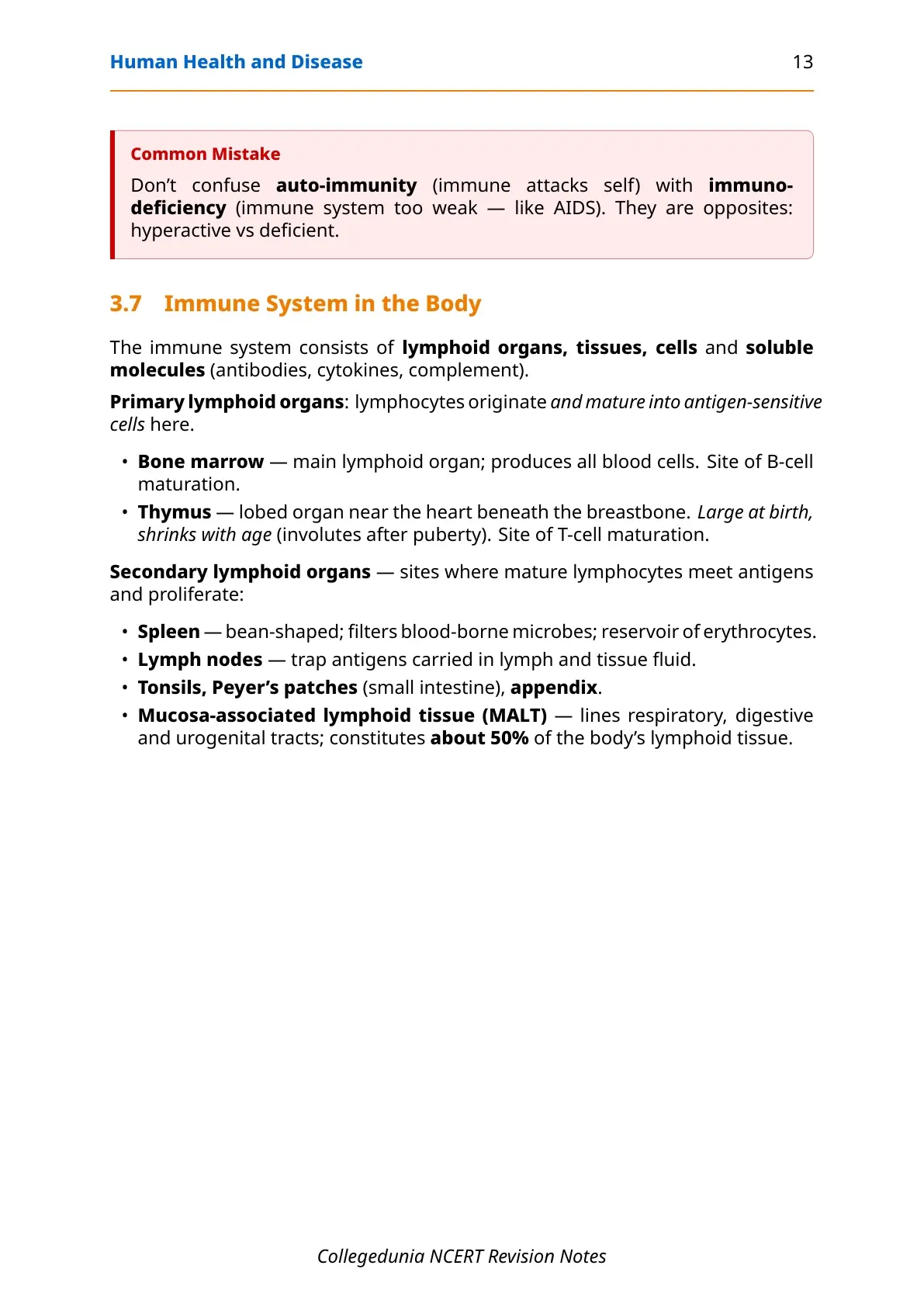
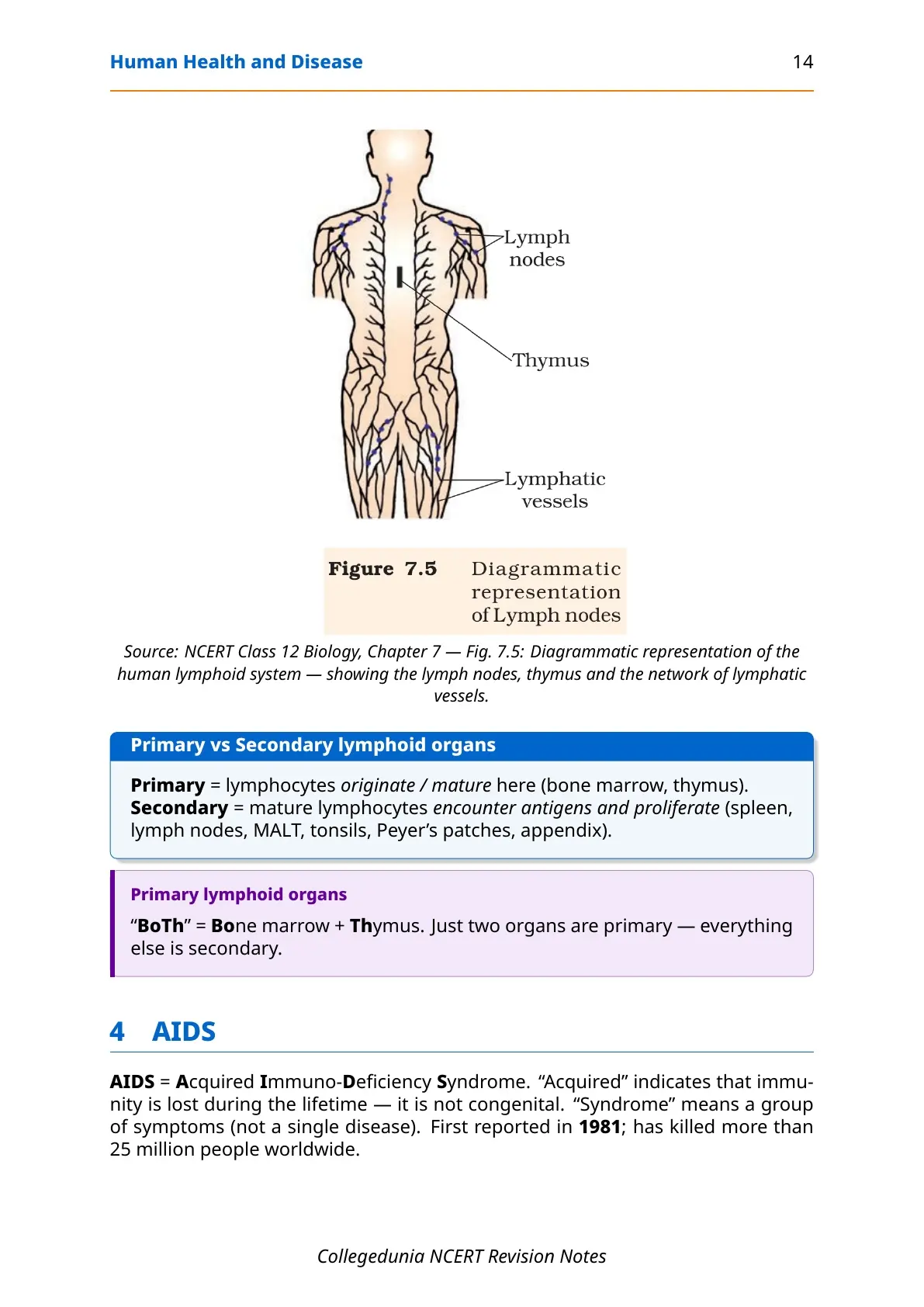
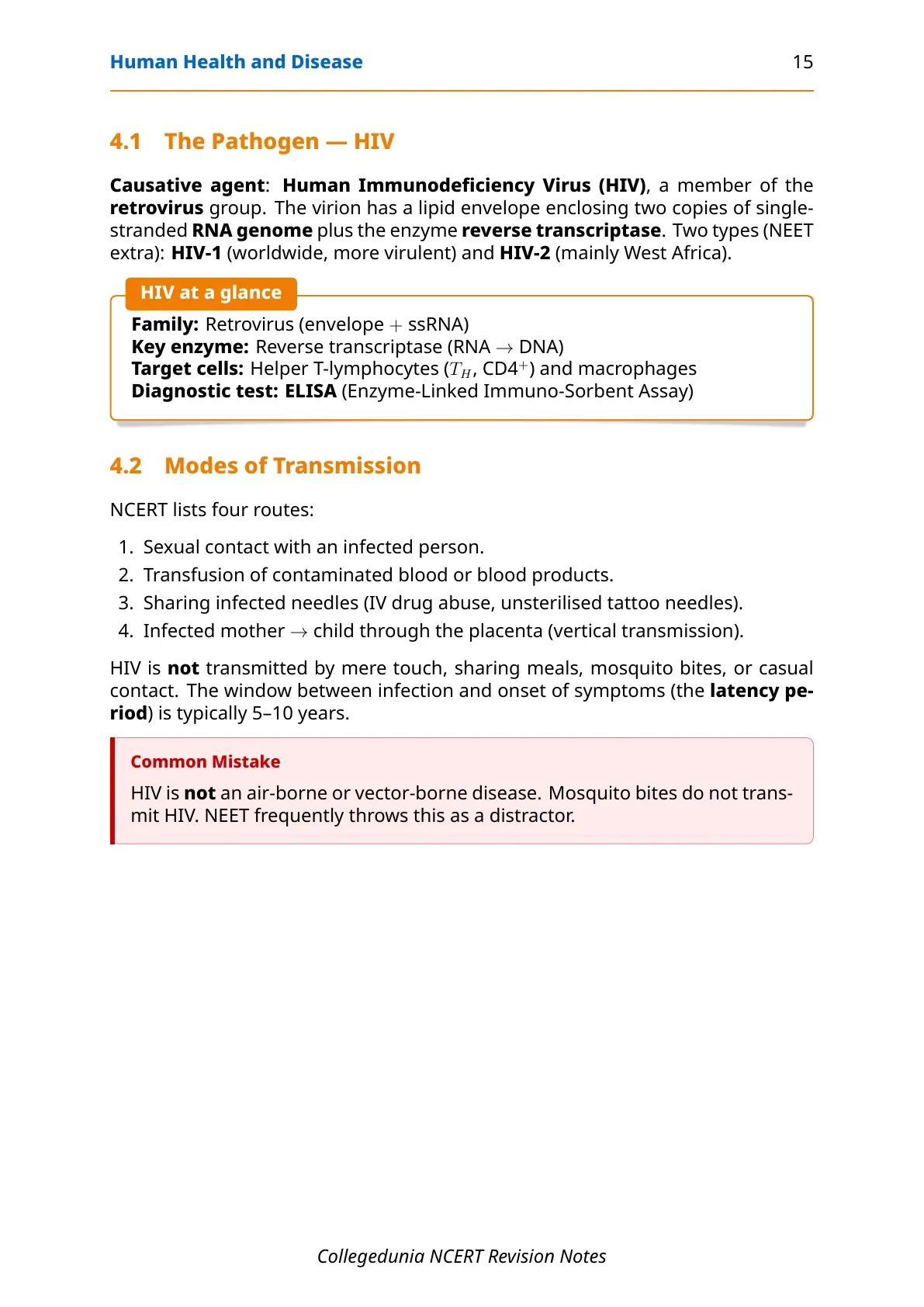
- CBSE Weightage: 6 to 7 marks
- NEET Weightage: 3 to 5 questions per year
- JEE / AIIMS-style entrance: 1 to 2 questions per paper
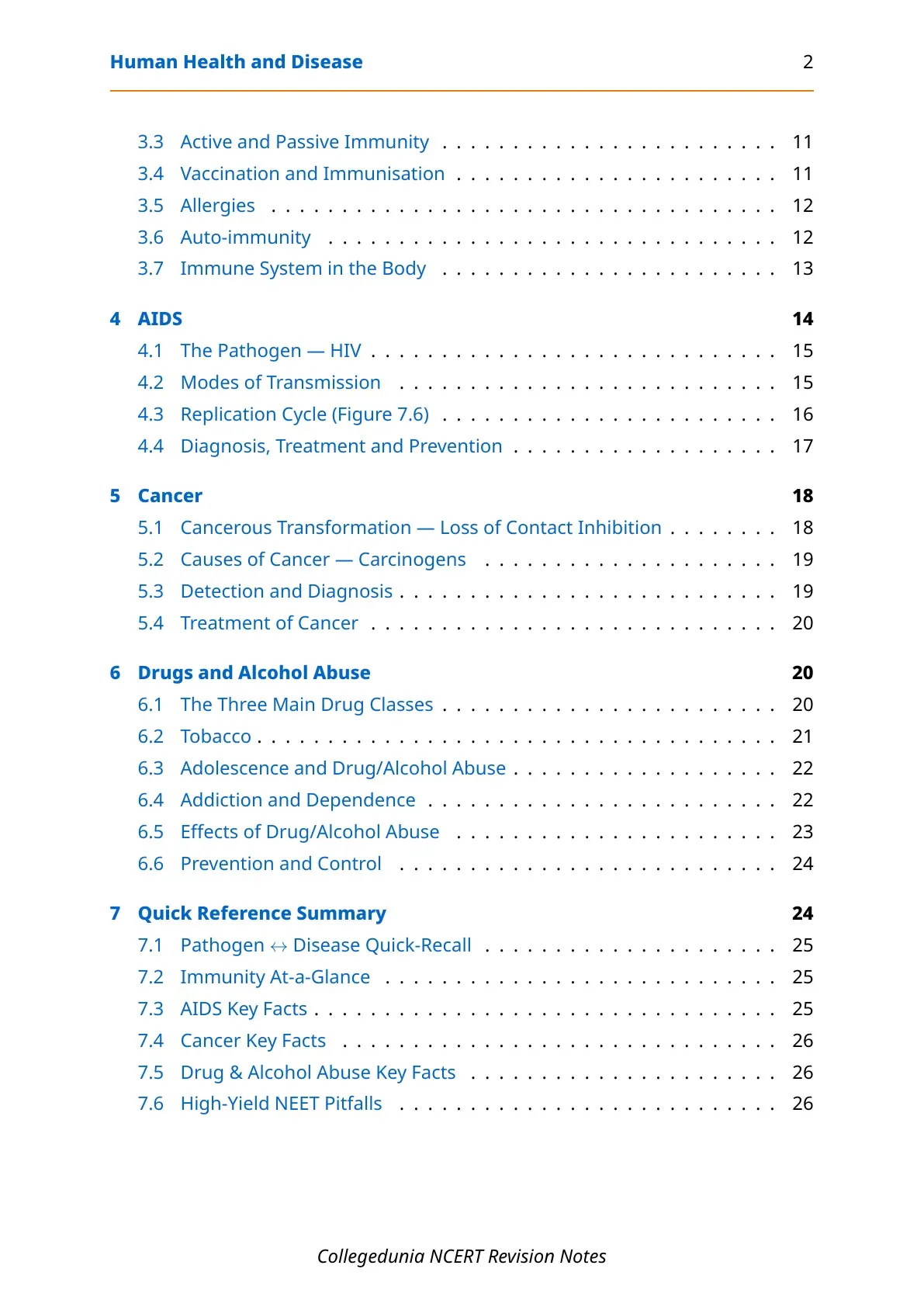
These Notes condense the NCERT text plus NEET extras into one PDF. They are curated by Collegedunia subject experts, mapped to the 2026-27 NCERT, and verified against the last five years of CBSE and NEET papers.
Human Health and Disease Video Lecture for Class 12 Biology
Source: Magnet Brains on YouTube
How will Collegedunia's NCERT Notes Help You with Human Health and Disease?
The notes blend the NCERT chapter with NEET depth for fast revision.
- 2026-27 NCERT Alignment: Sections 7.1 to 7.5 match the current NCERT, with NEET-only add-ons (P. ovale, antibody class chart) flagged.
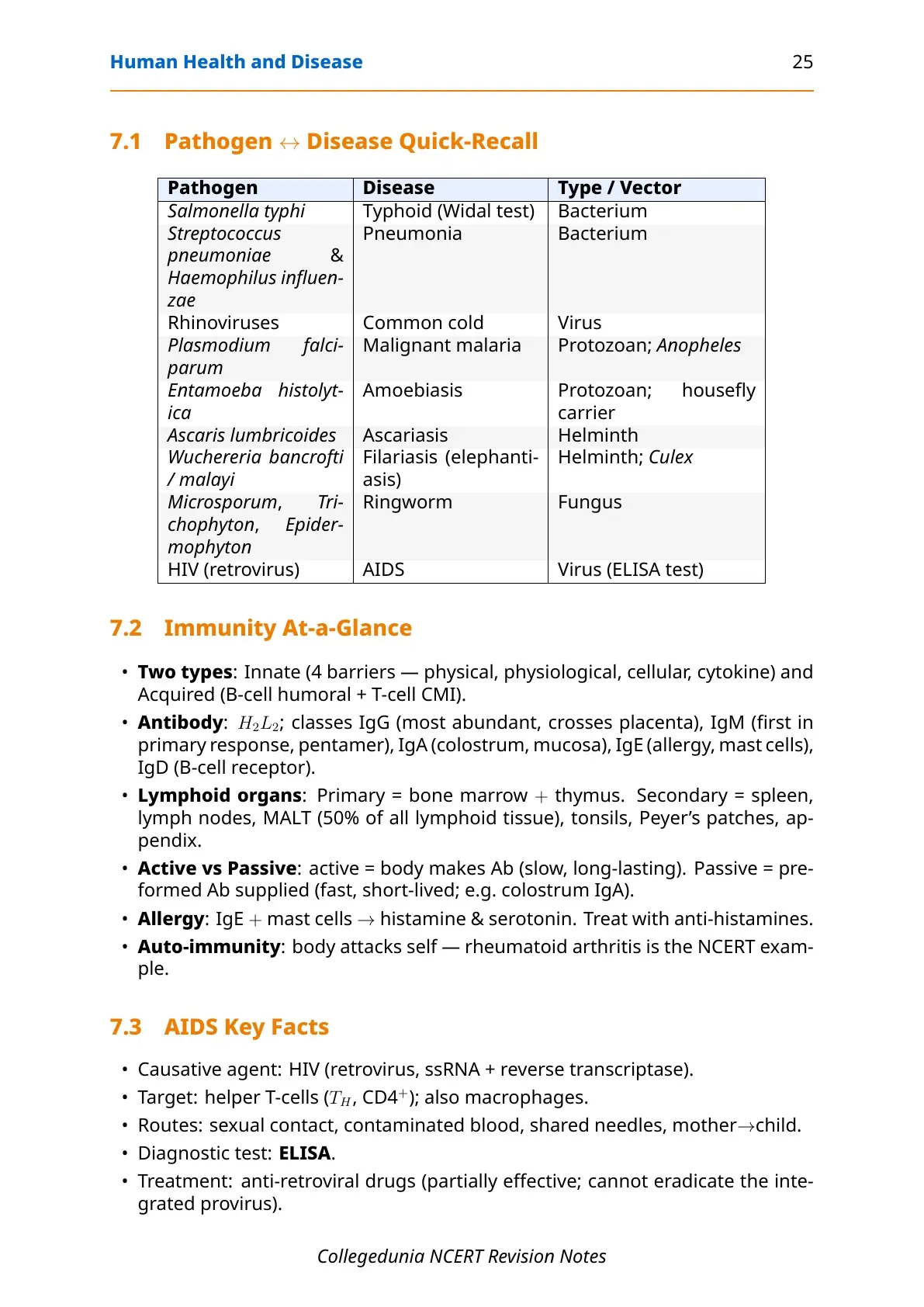
- NEET-Heavy Pathogen Tables: One quotable table for every agent, vector and symptom.
- Diagram-First Layout: HIV cycle, antibody structure and immune-cell flow appear as labelled diagrams.
- Quick Tip and Mistake Boxes: Each sub-topic flags one trap examiners reuse.
Human Health and Disease Topic-wise Weightage for CBSE Class 12 Biology
Across the last five CBSE papers, immunity and AIDS appear almost every year; cancer rotates between 2-mark and 5-mark slots.
| Sub-topic | Weightage | CBSE Frequency |
|---|---|---|
| Immunity (Innate, Acquired, Active vs Passive) | High | Almost every year |
| AIDS - HIV cycle, transmission, prevention | High | 4 out of last 5 years |
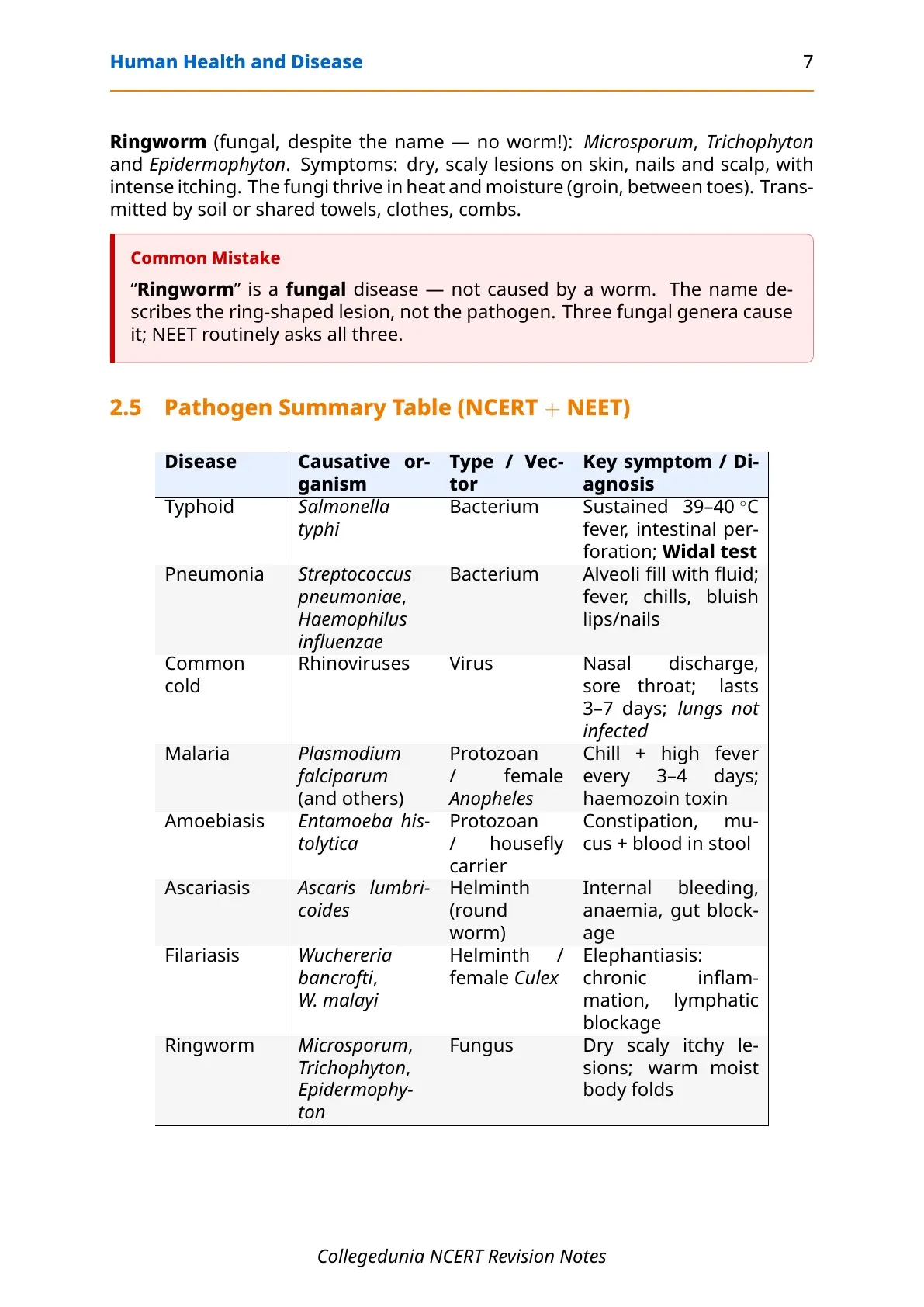
| Common Diseases (pathogen table) | High | Almost every year |
| Cancer - causes, detection, treatment | Medium | 3 out of last 5 years |
| Vaccination and Immunisation | Medium | 3 out of last 5 years |
| Drug and Alcohol Abuse | Medium | 3 out of last 5 years |
Three sub-topics carry over 60% of the CBSE marks: immunity, AIDS and the common-diseases pathogen list. Start every revision pass with these.
Human Health and Disease Topic-by-Topic Notes for Class 12 Biology
The chapter runs through five disease groups. Here is the concept-by-concept summary.
Health, Common Diseases and Malaria in Class 12 Biology
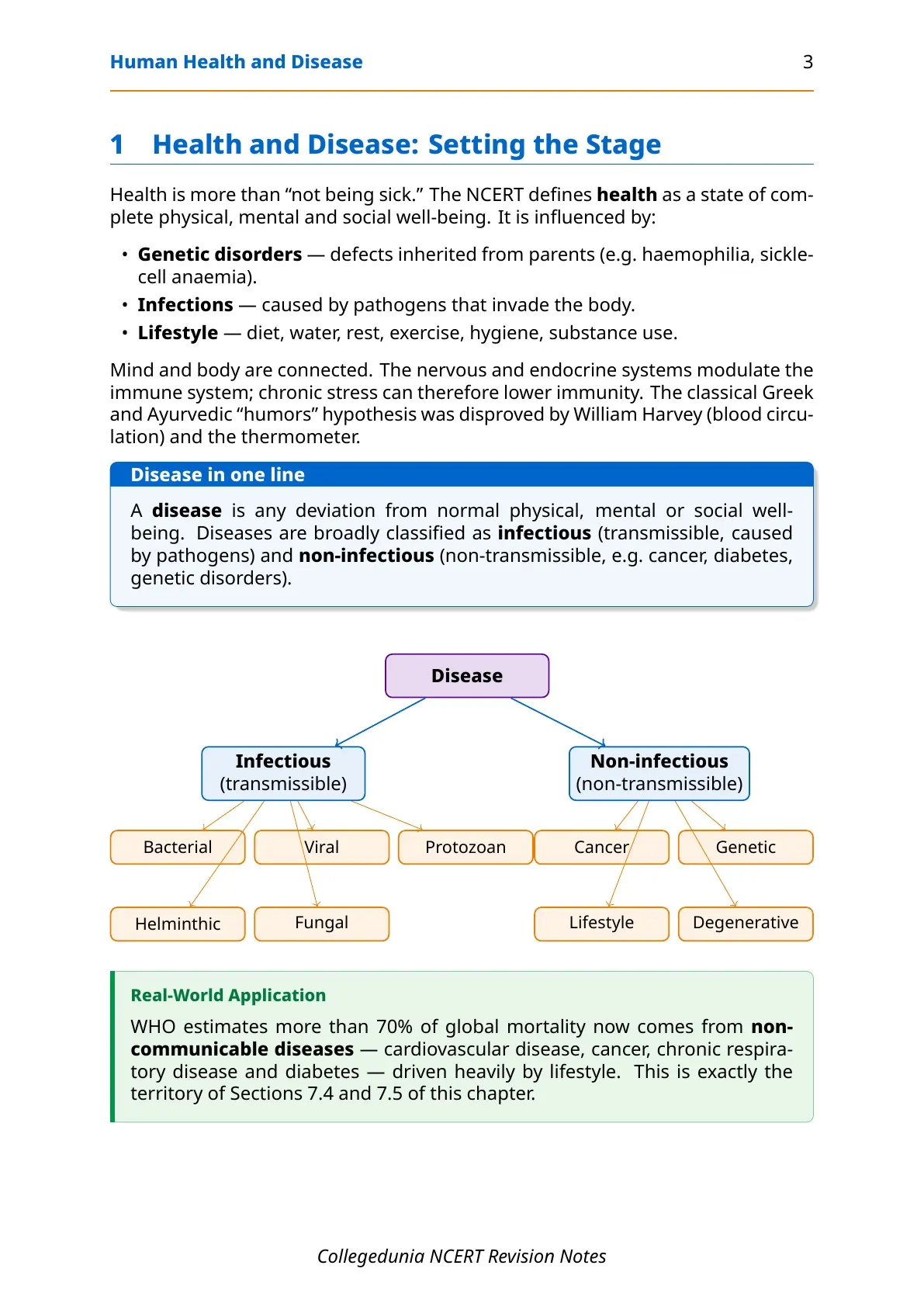
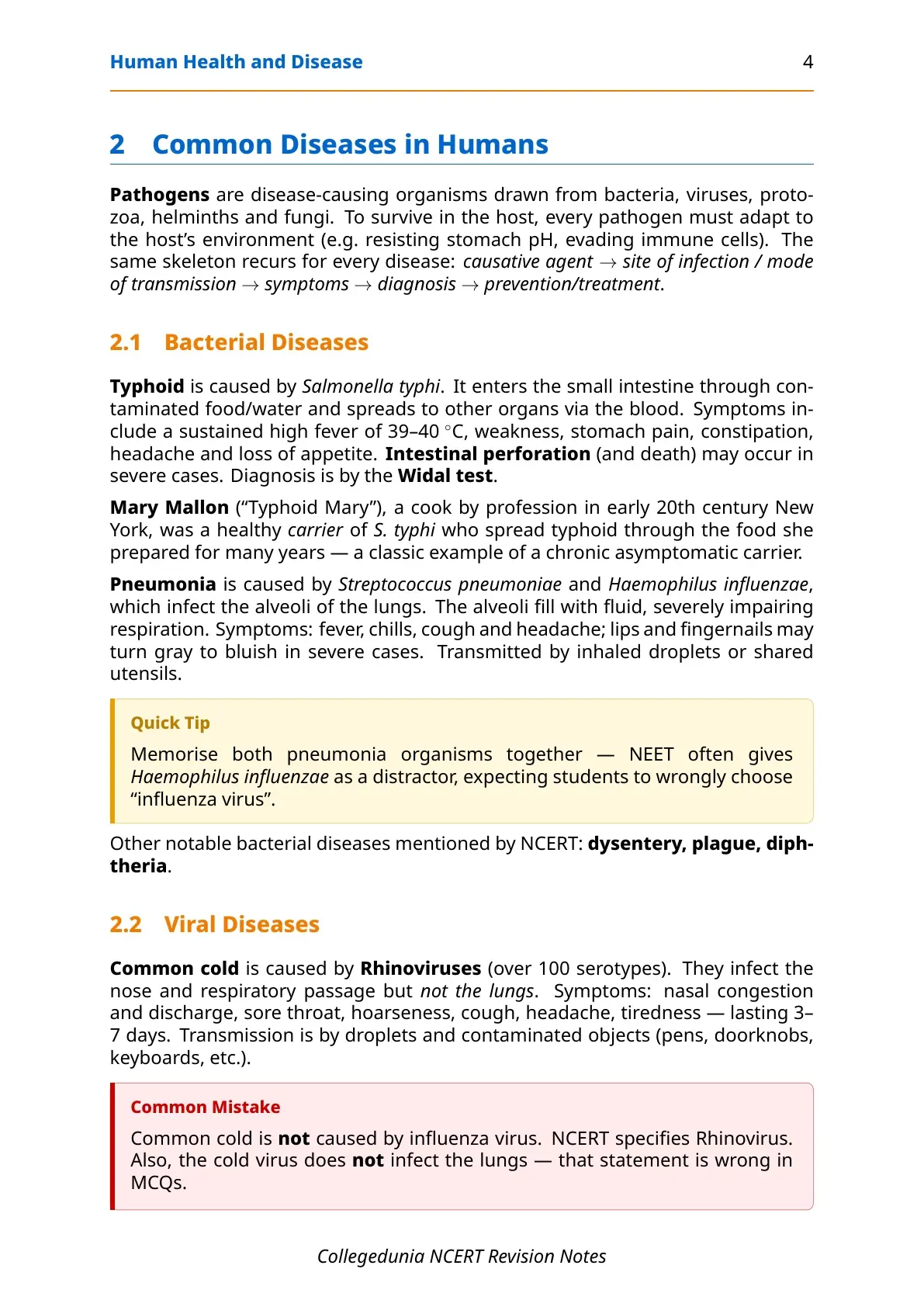
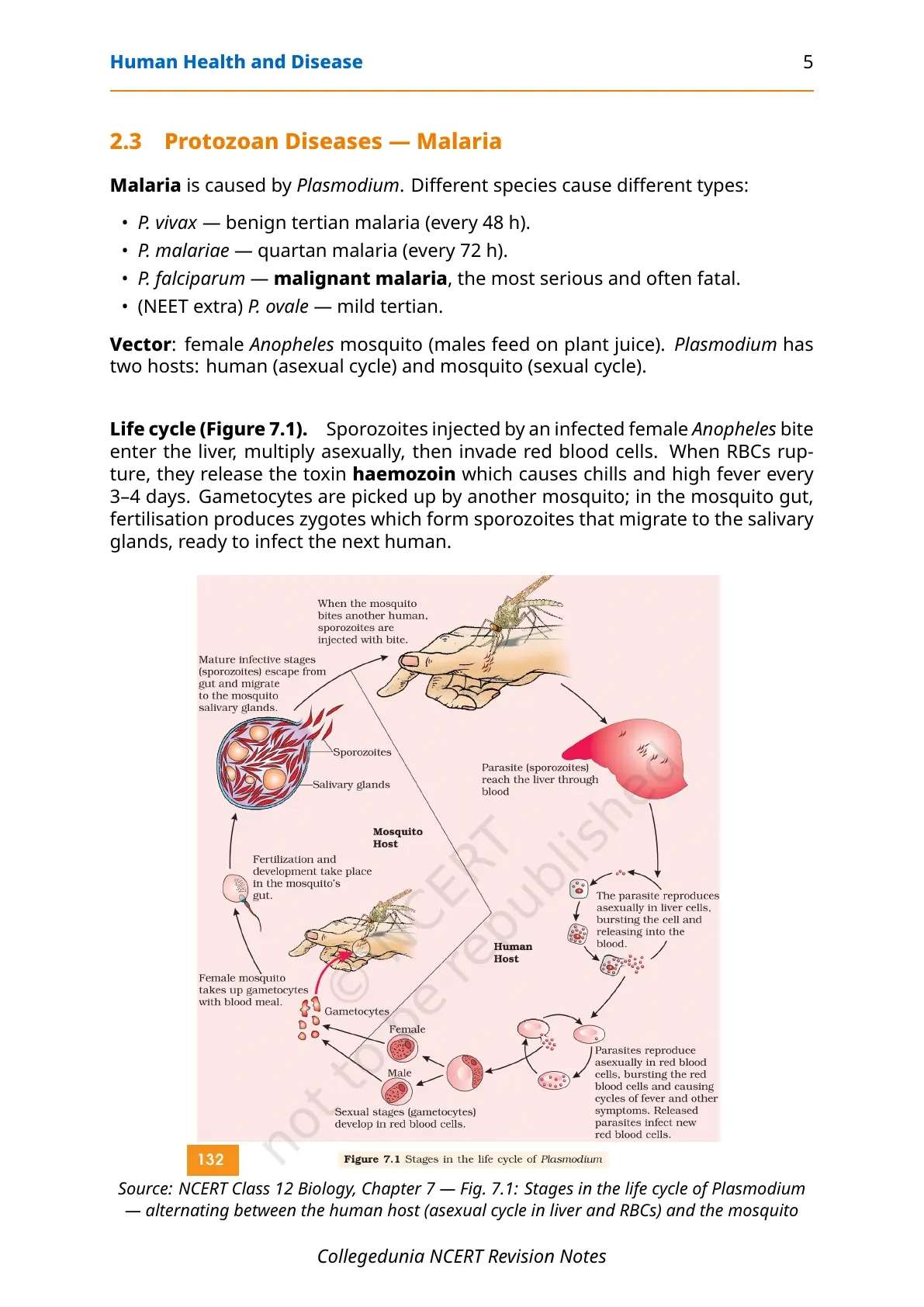
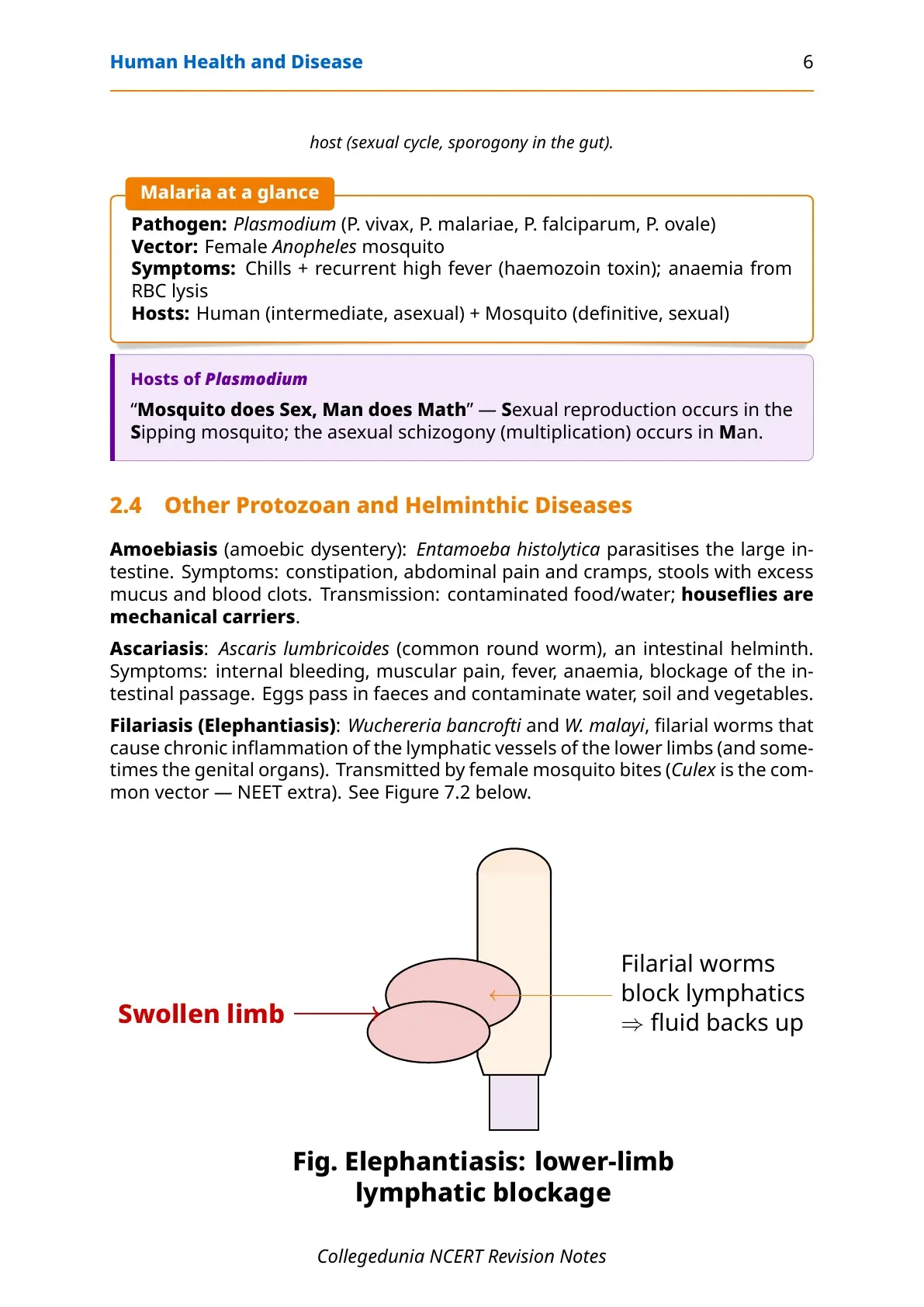
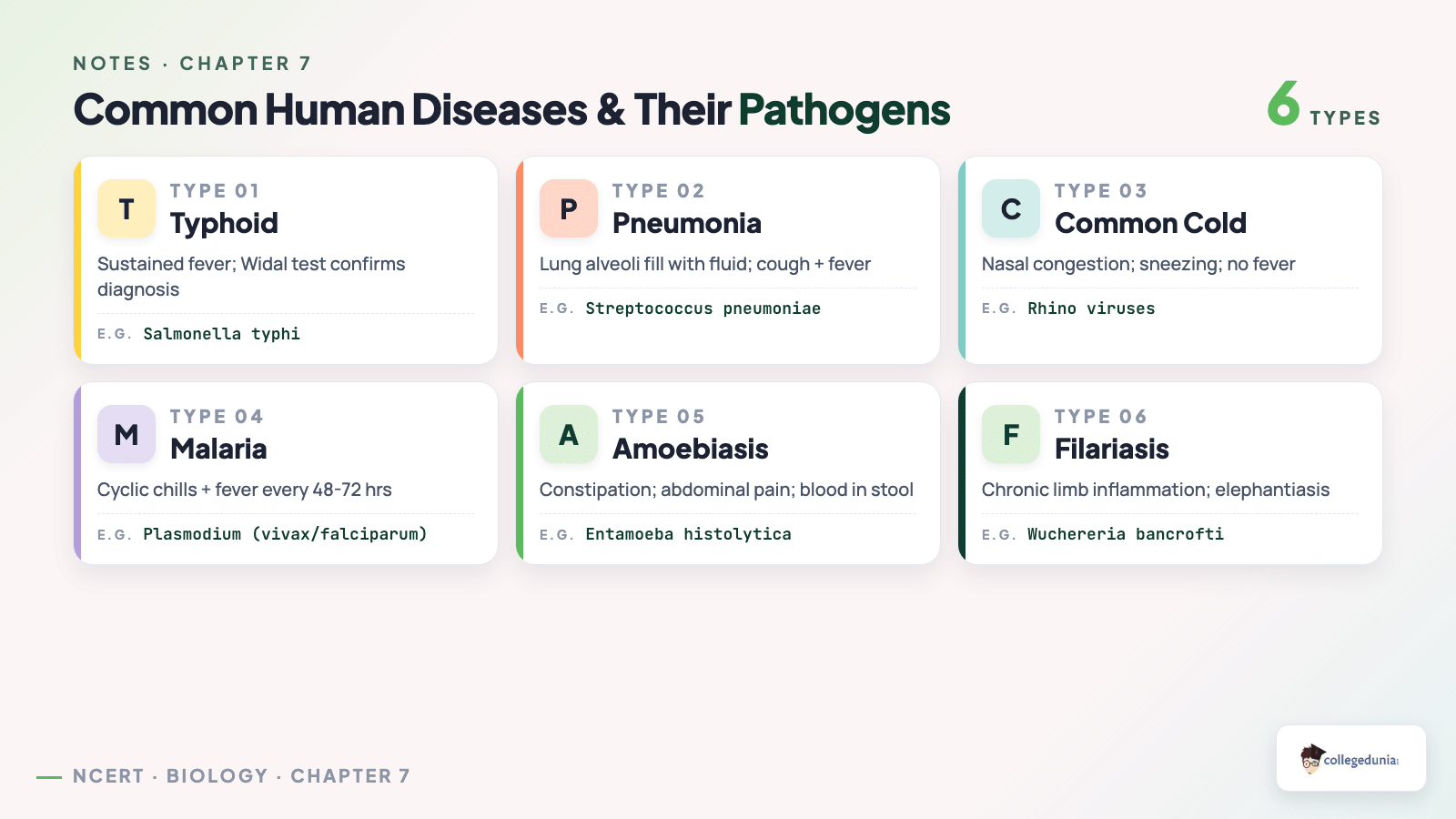
NCERT defines health as complete physical, mental and social well-being, shaped by genetics, infections and lifestyle. Key pathogens: typhoid (Salmonella typhi, Widal test), pneumonia (S. pneumoniae), common cold (Rhinovirus, never the lungs), filariasis (Wuchereria) and amoebiasis (Entamoeba histolytica). Malaria is caused by Plasmodium (P. vivax 48 h, P. falciparum malignant, NEET-only P. ovale); the vector is the female Anopheles, and ruptured RBCs release the toxin haemozoin.
Innate and Acquired Immunity
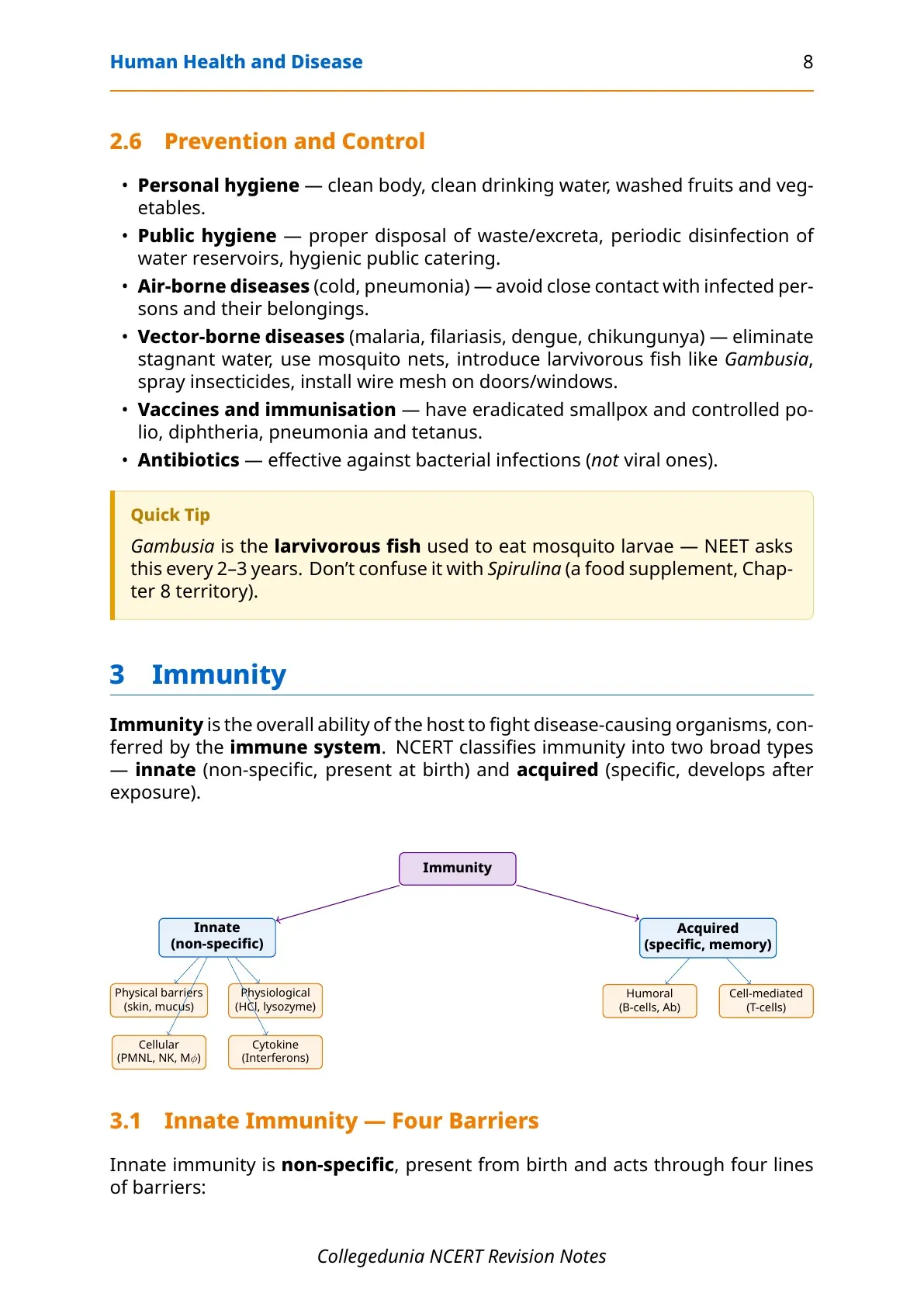
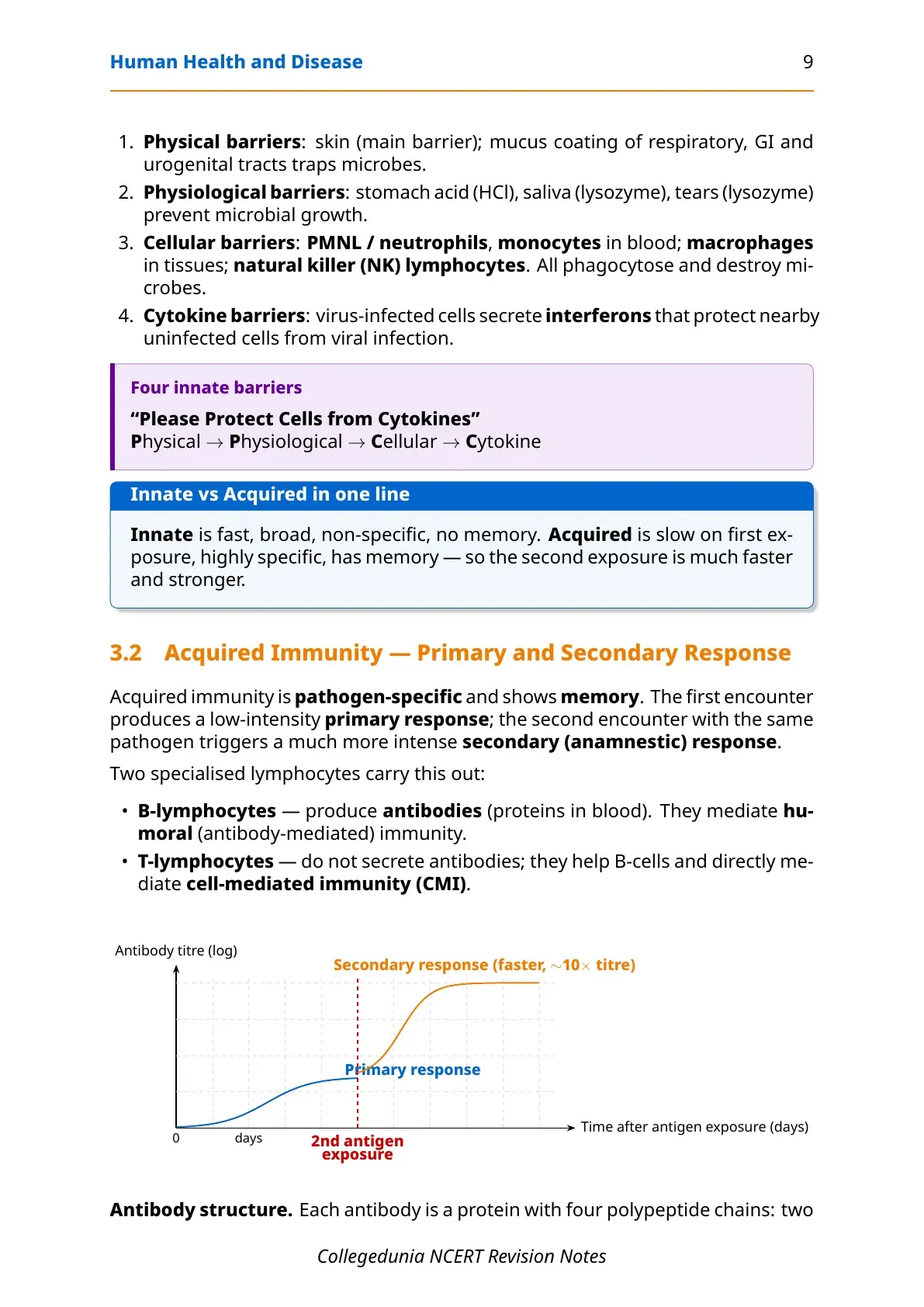
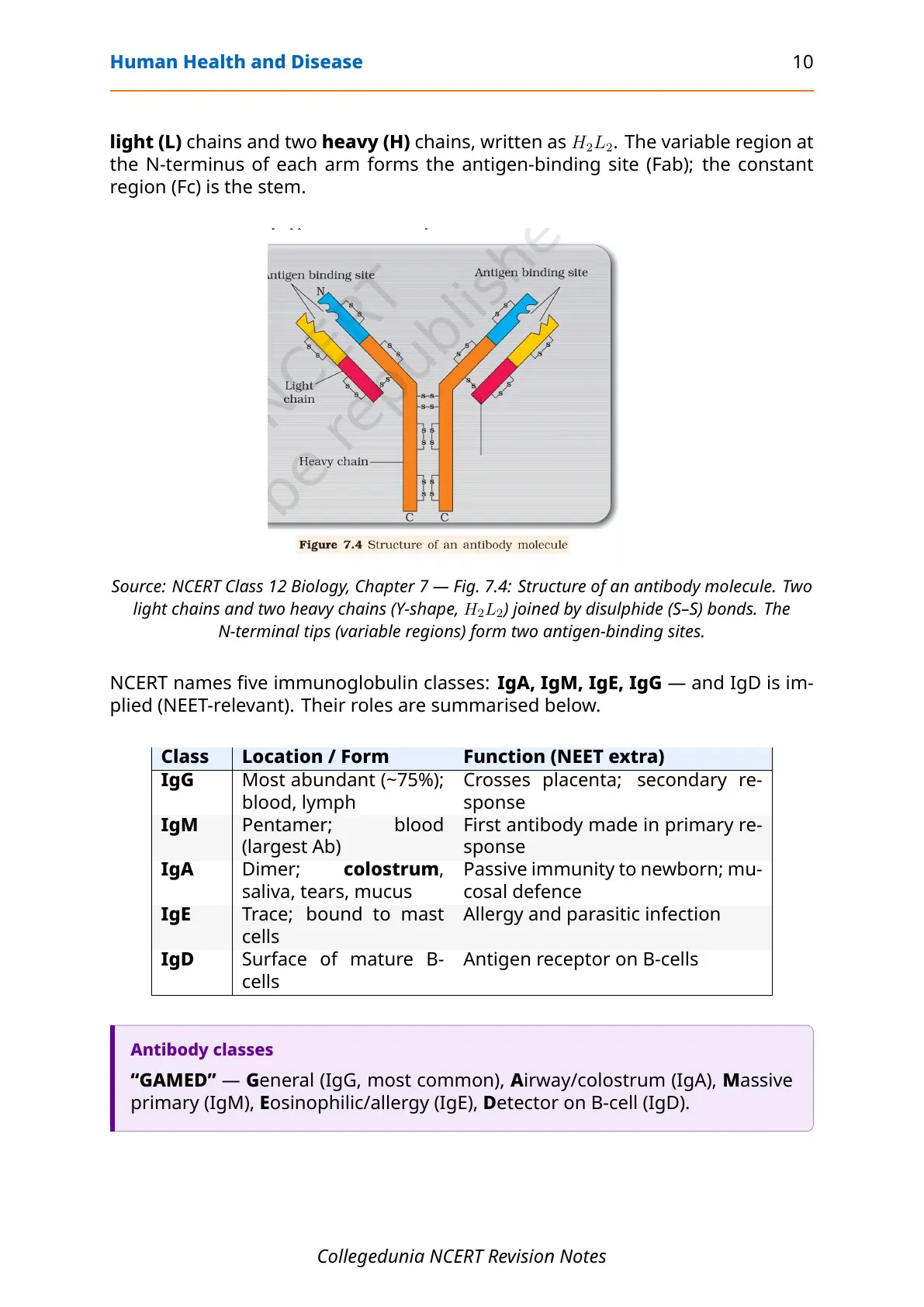
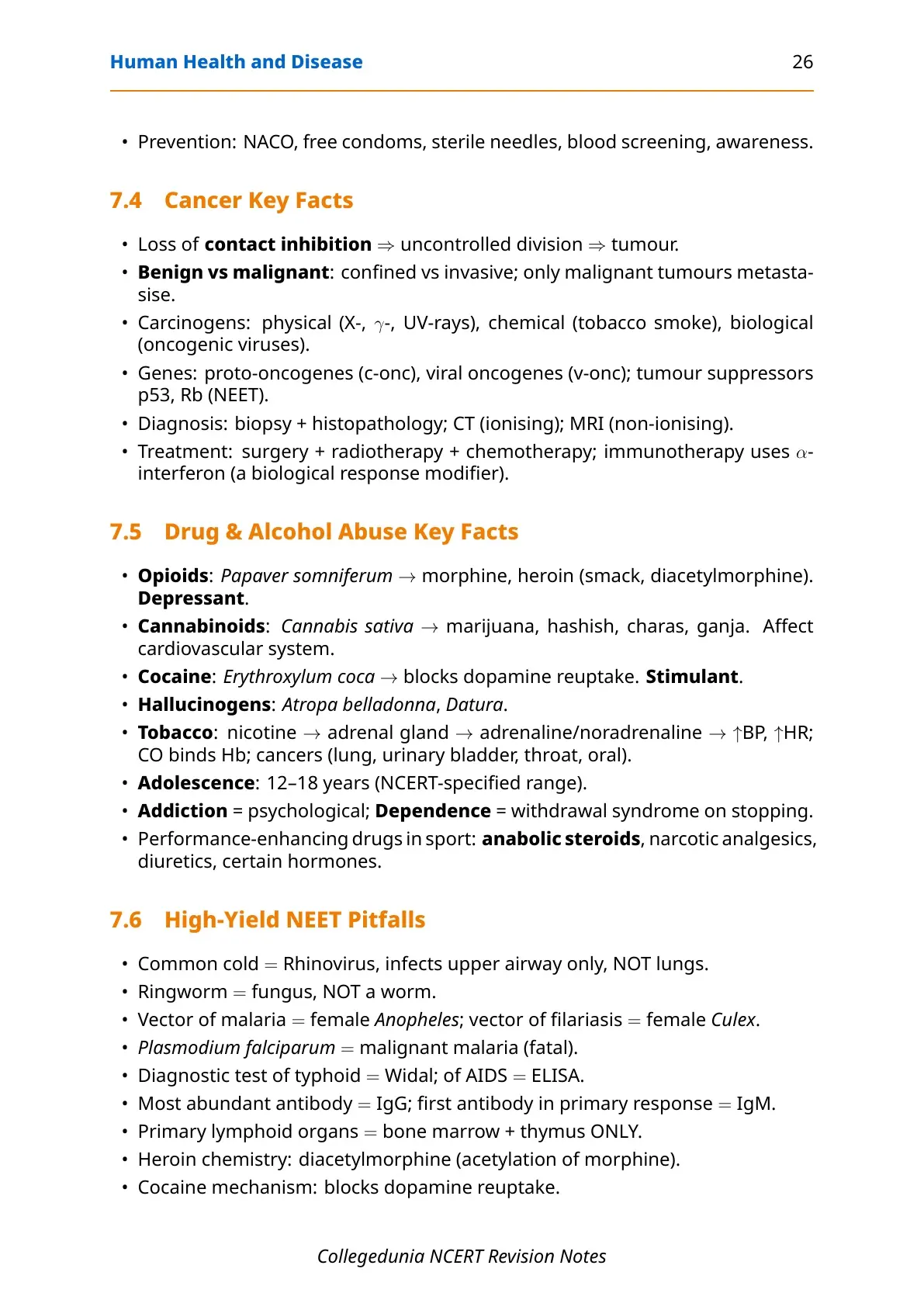
Innate immunity is non-specific and present from birth, with four barriers: physical, physiological, cellular and cytokine. Acquired immunity is specific and has memory: a weak primary response on first exposure, a fast secondary response on re-exposure. Its two arms are humoral (B-cells make antibodies) and cell-mediated (T-cells). Antibodies are H2L2 Y-shaped proteins of five classes: IgG, IgM, IgA, IgE, IgD.
AIDS, Cancer and Drug Abuse
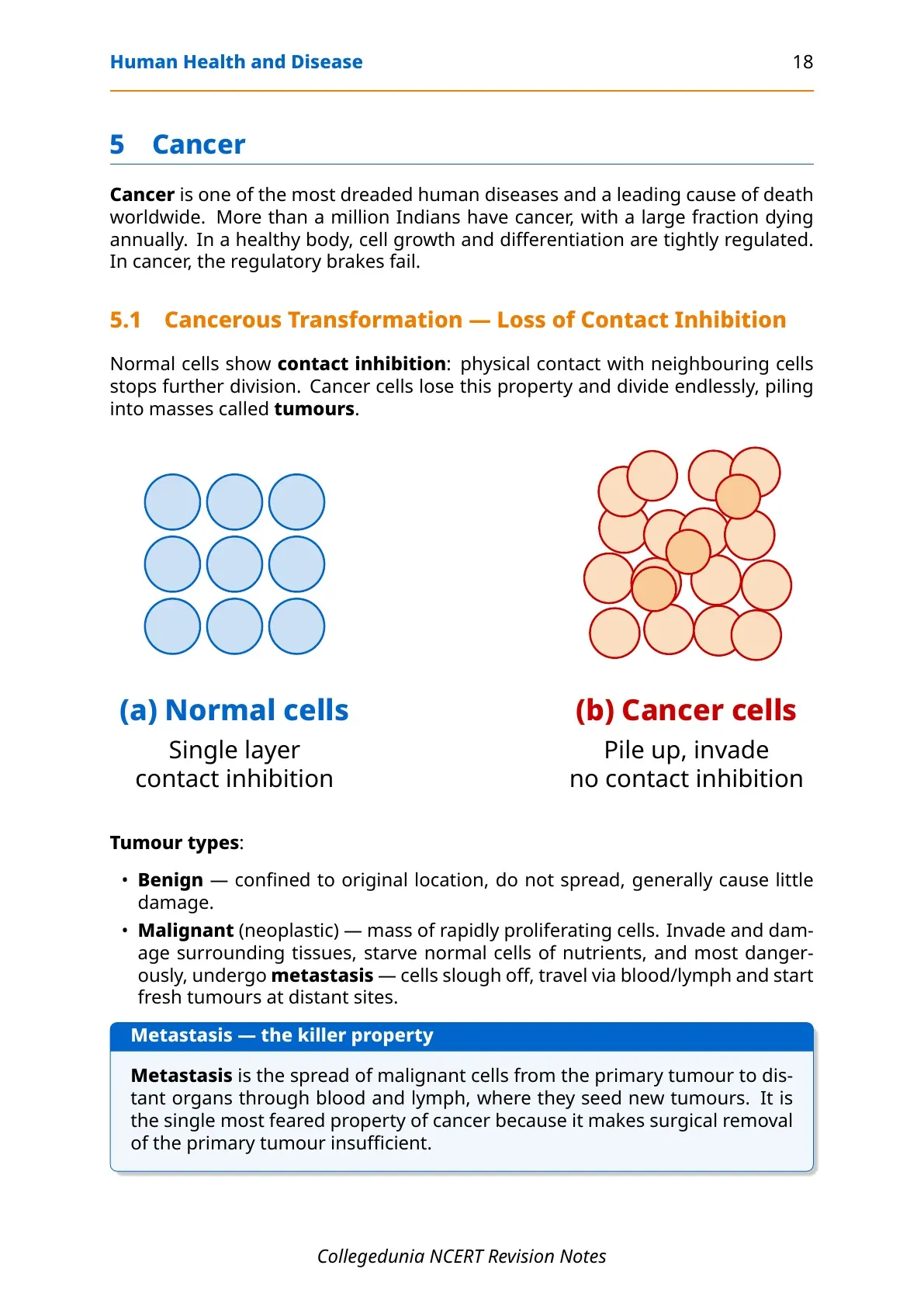
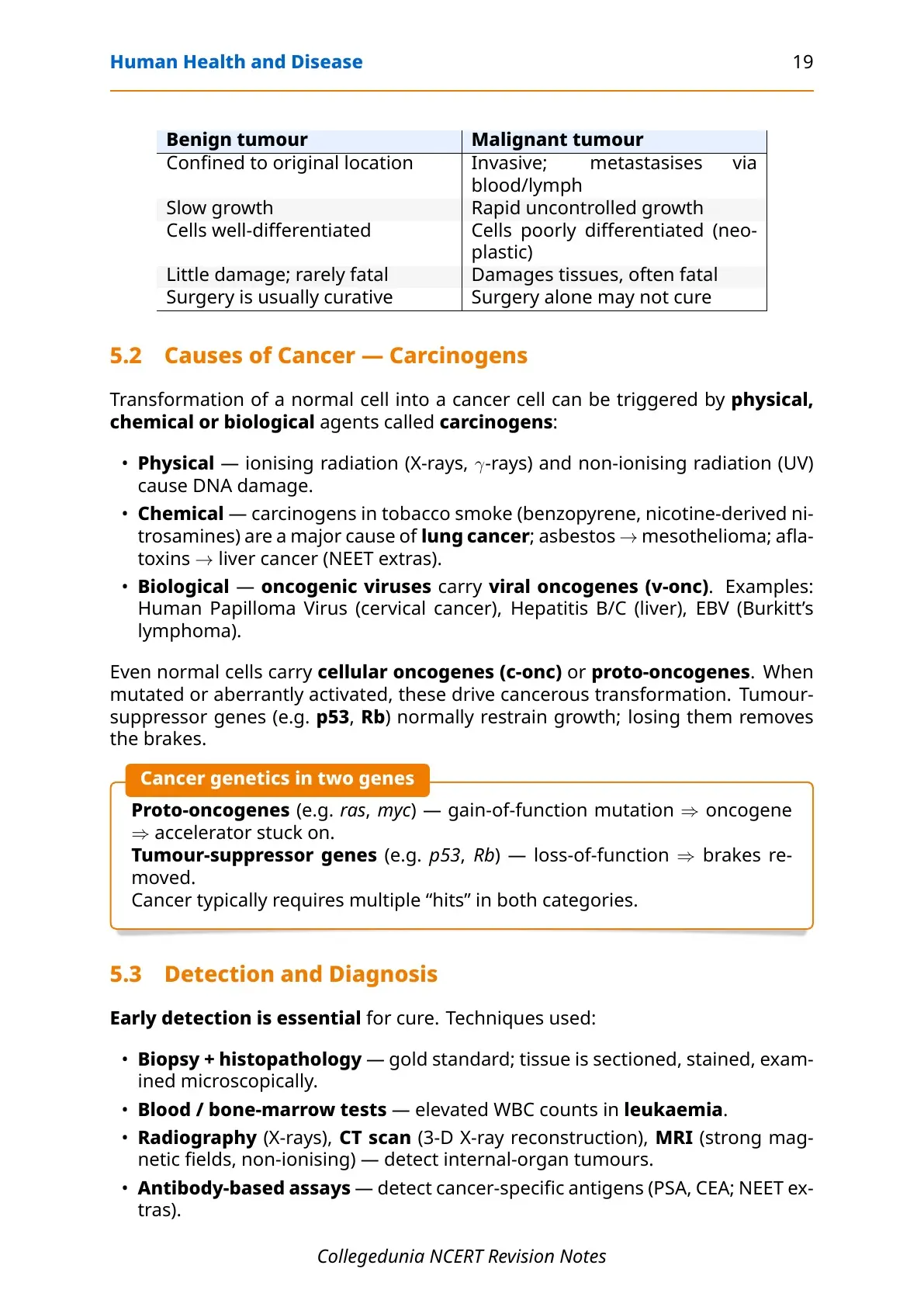
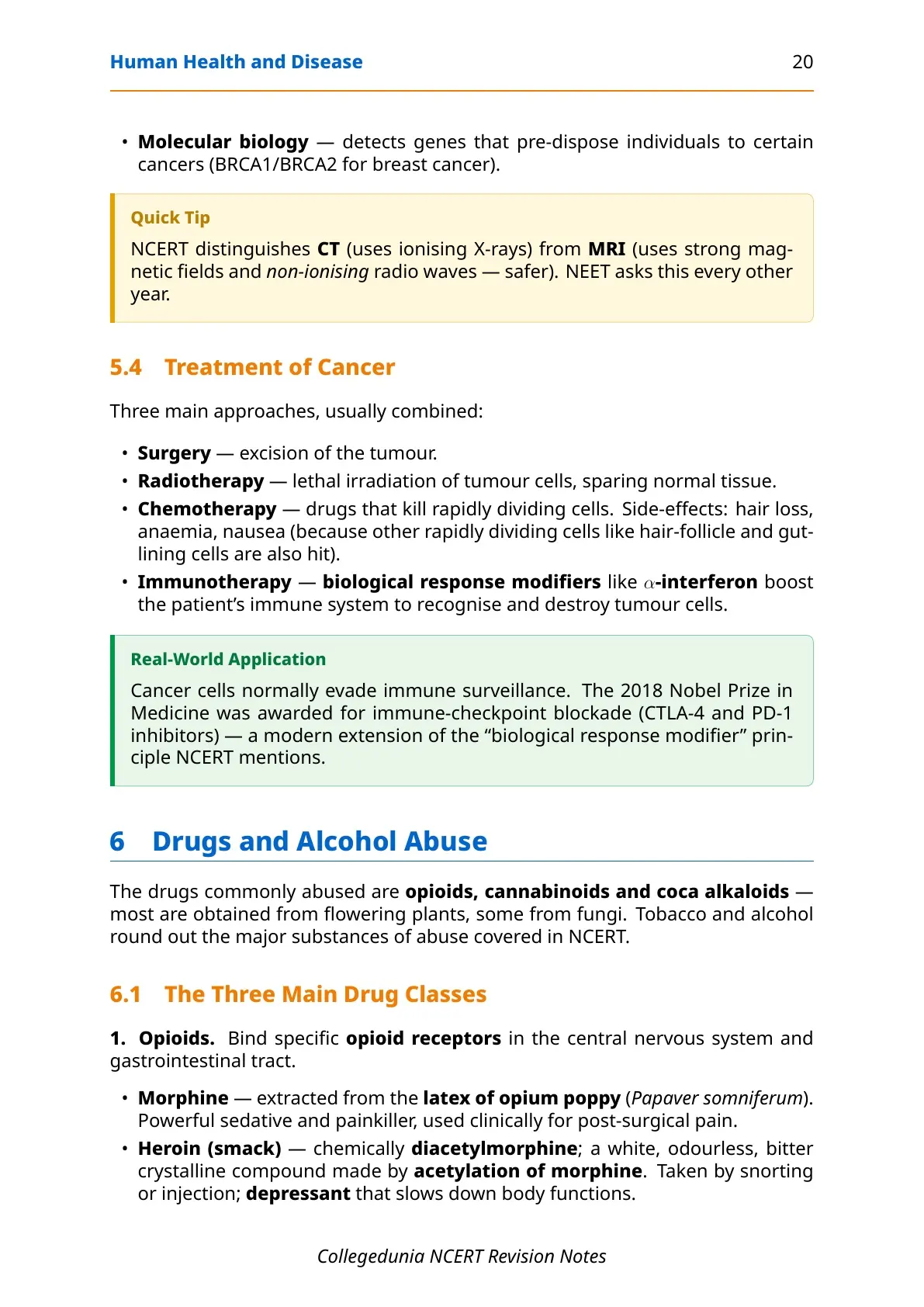
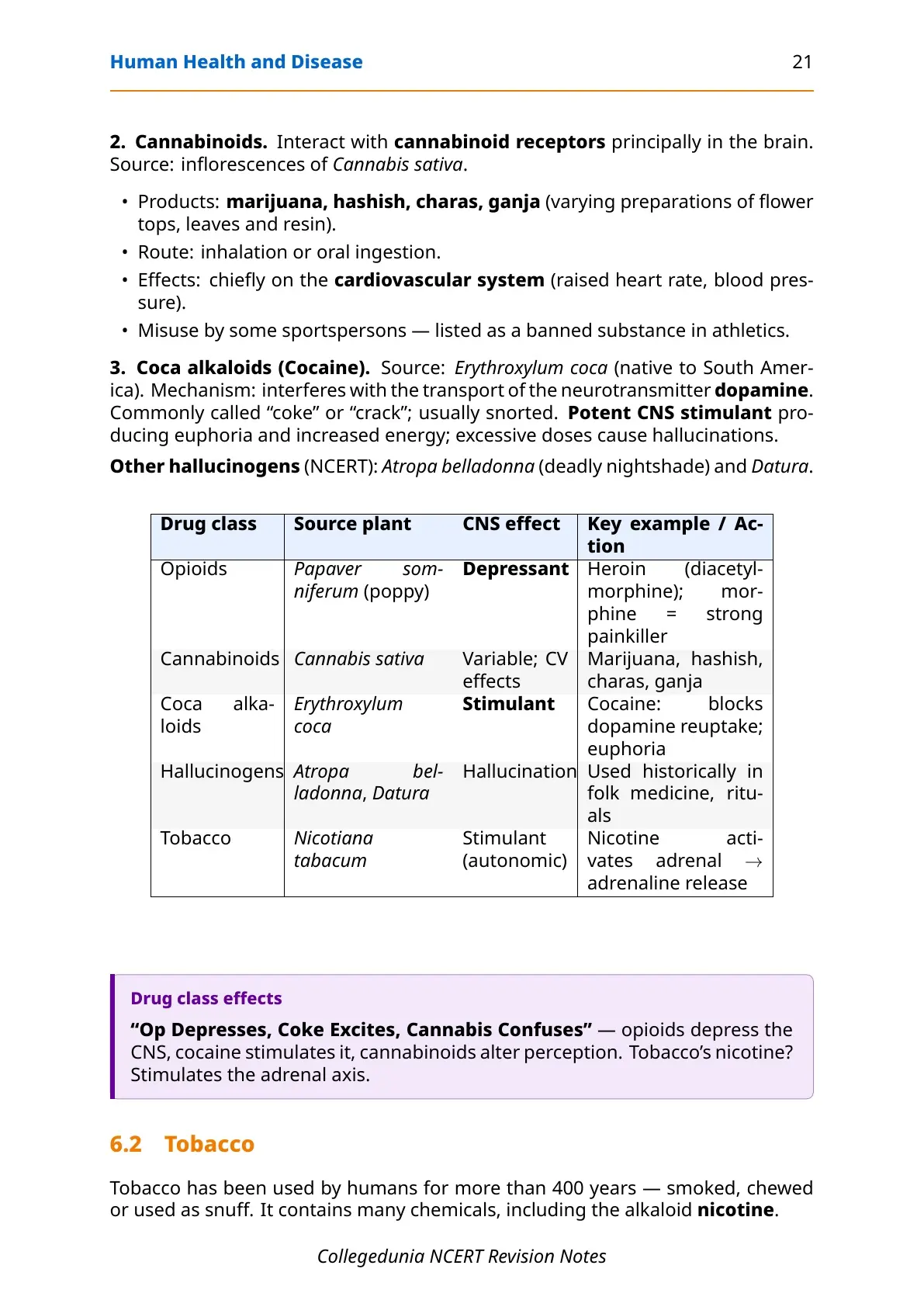
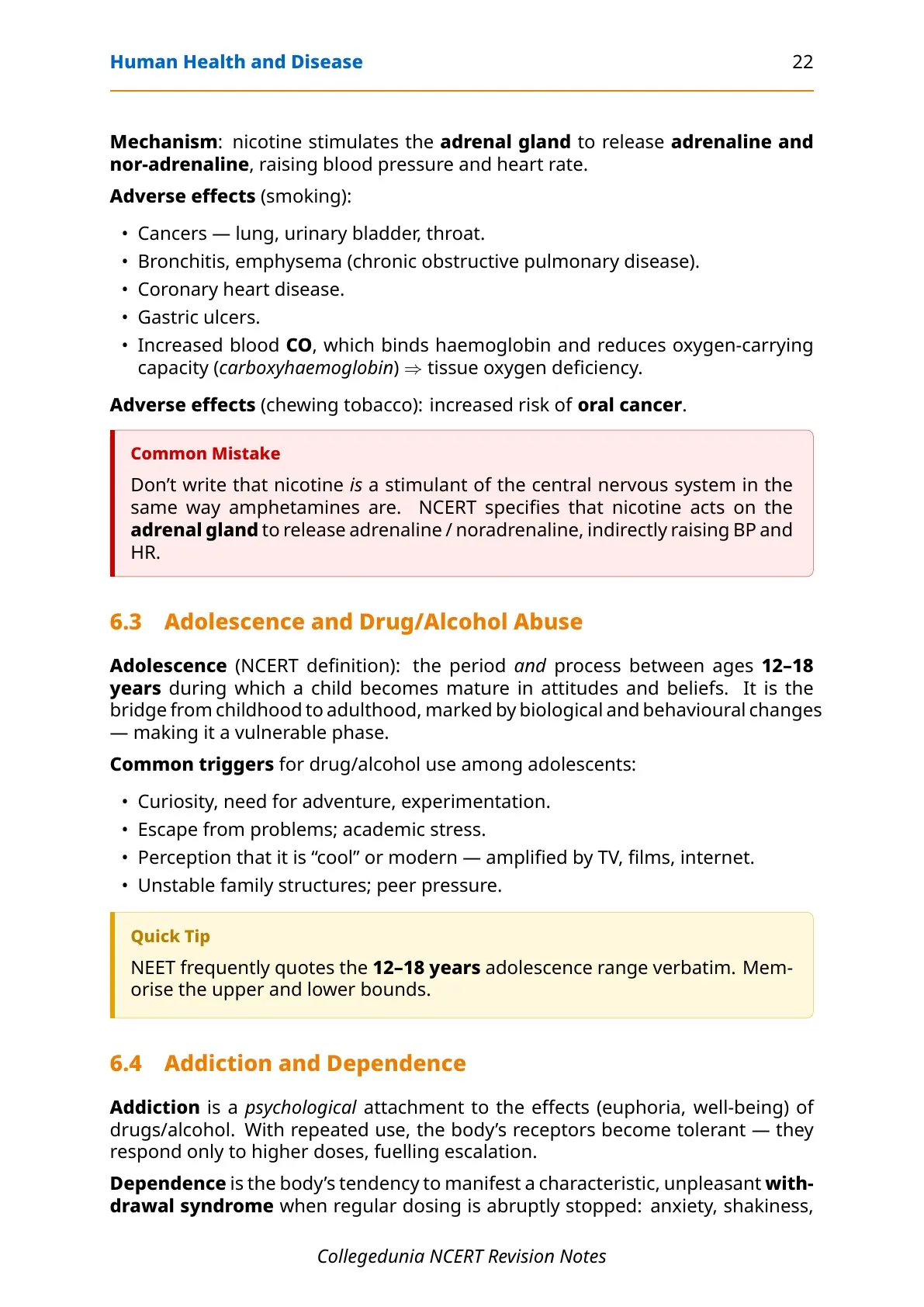
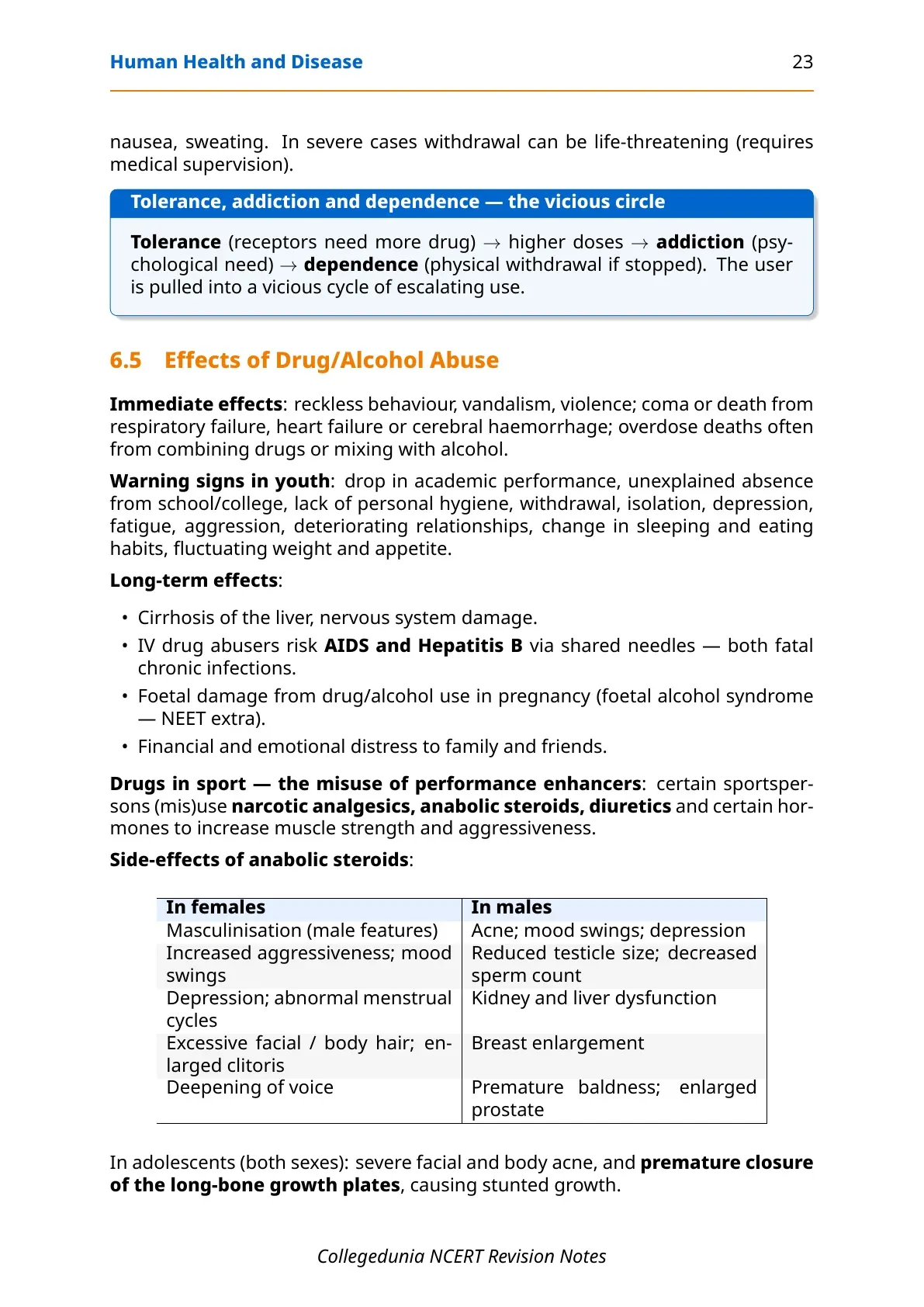
AIDS is caused by HIV, a retrovirus that targets helper T-cells (TH); it is diagnosed by ELISA and treated with antiretroviral therapy. There is no permanent cure. Cancer cells lose contact inhibition; malignant tumours spread by metastasis. Carcinogens are physical, chemical or biological. The three drug classes are opioids (smack, Papaver somniferum), cannabinoids (ganja, Cannabis sativa) and cocaine; tobacco's nicotine raises BP and is linked to lung cancer.
Human Health and Disease Important Diagrams and Process Flows for Class 12 Boards
These six labelled diagrams and process flows recur in CBSE and NEET papers.
- Plasmodium Life Cycle (Fig 7.1): sporozoite → liver → RBC → haemozoin → mosquito uptake → salivary gland.
- Antibody Structure (H2L2): Y shape with two antigen-binding sites.
- Innate Barrier Flowchart: physical → physiological → cellular → cytokine.
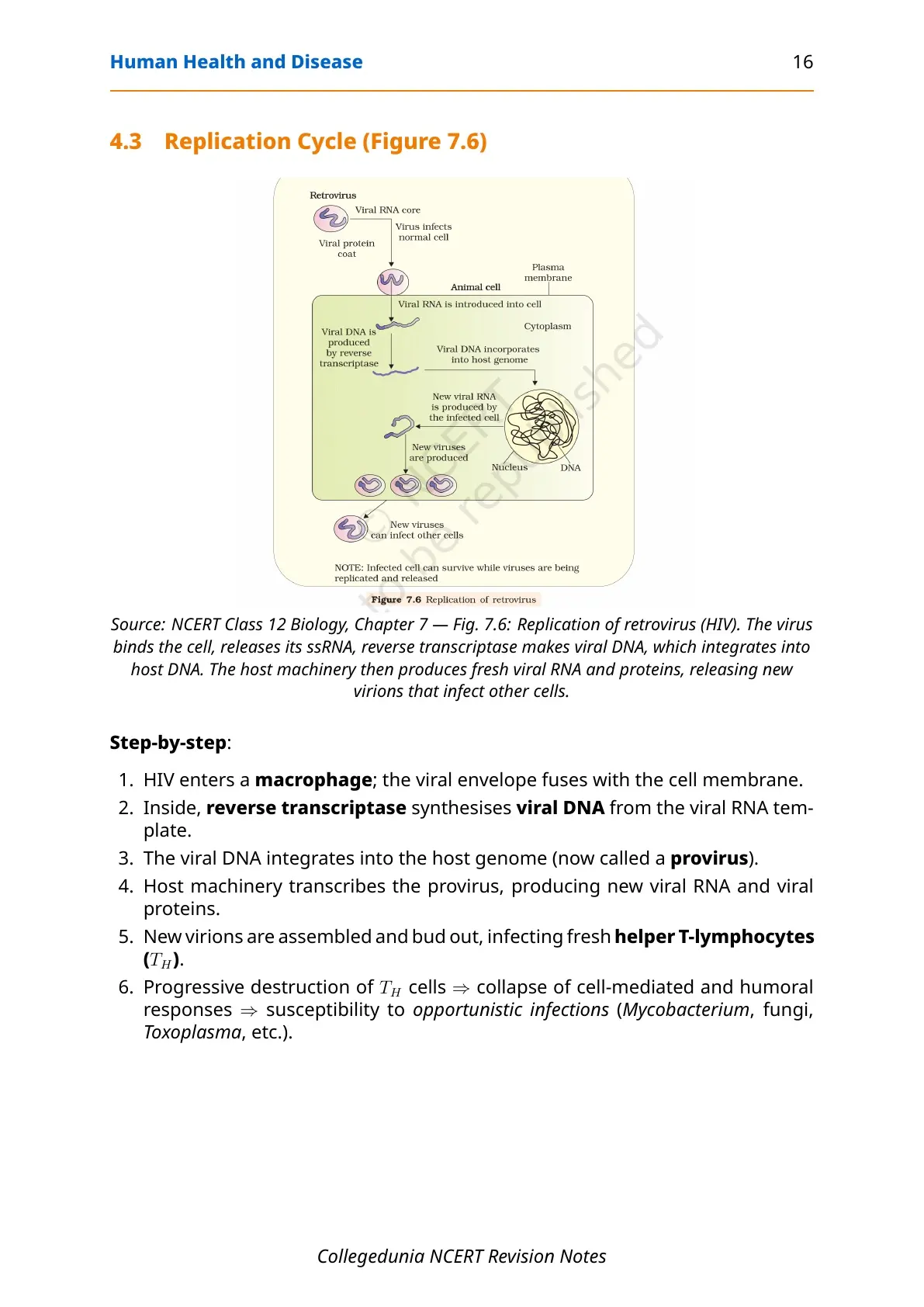
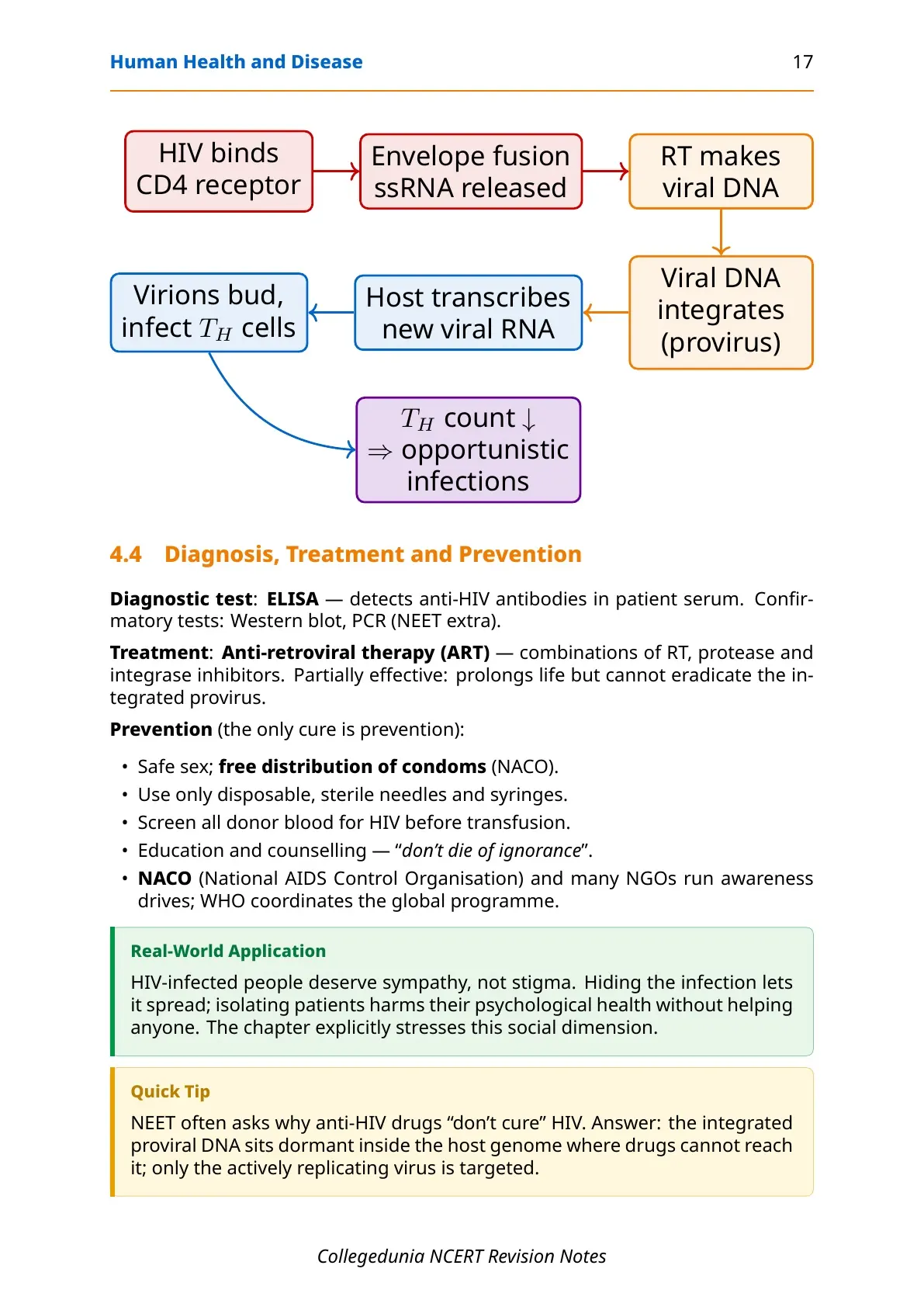
- HIV Replication Cycle (Fig 7.6): entry → reverse transcription → integration → virion release → TH attack.
- Cancer Detection Flow: biopsy / MRI / CT / antibody test → benign vs malignant.
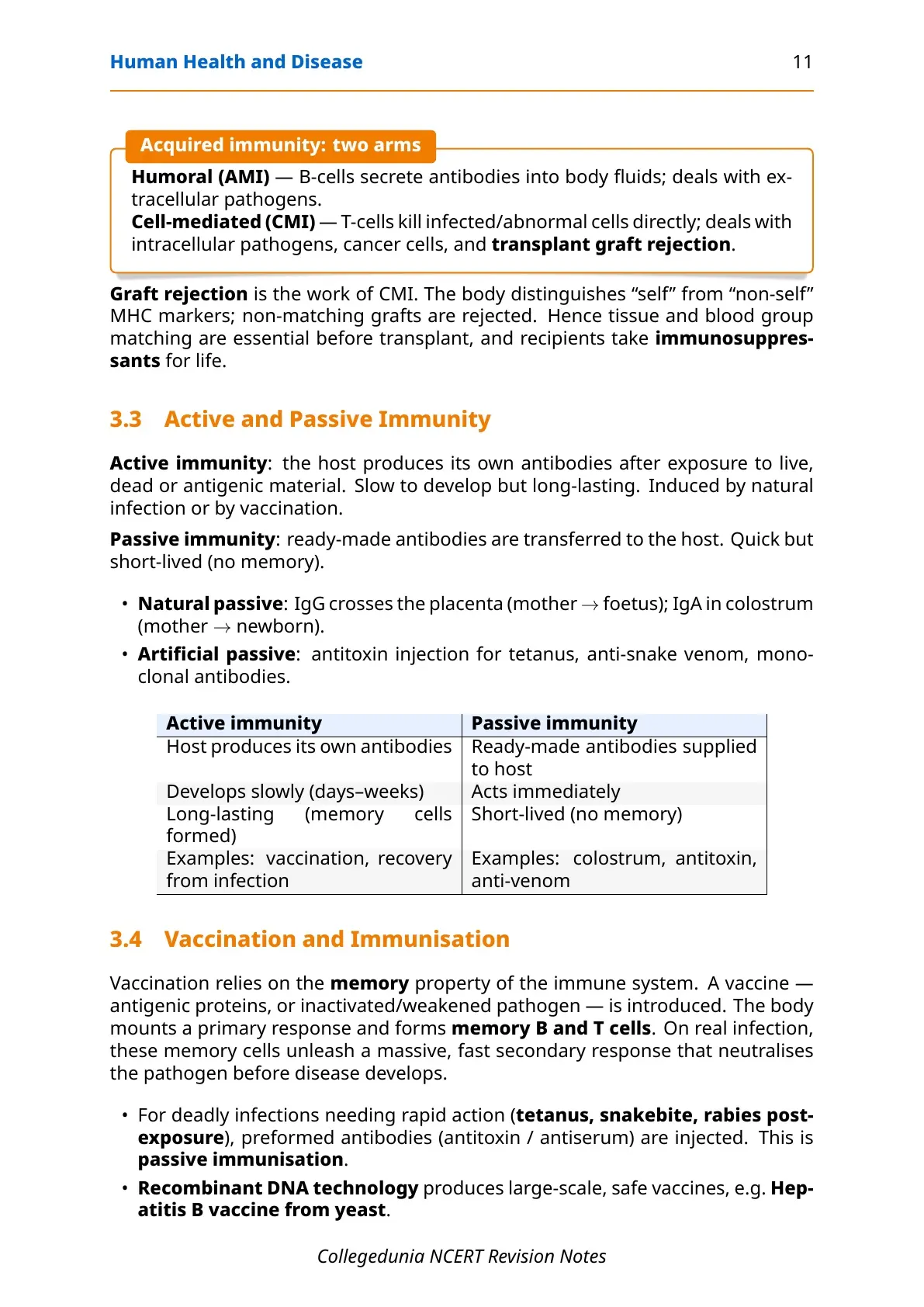
- Active vs Passive Immunity Chart: source, speed, duration and examples side by side.
Common Misconceptions in Human Health and Disease
These wrong beliefs cost students NEET marks every year; each has appeared as a distractor.
- Common cold = influenza virus. Wrong, it is Rhinovirus and never infects the lungs.
- Male Anopheles transmits malaria. Wrong, only the female mosquito is the vector.
- HIV kills T-cells on entry. Wrong, it depletes TH counts gradually over months to years.
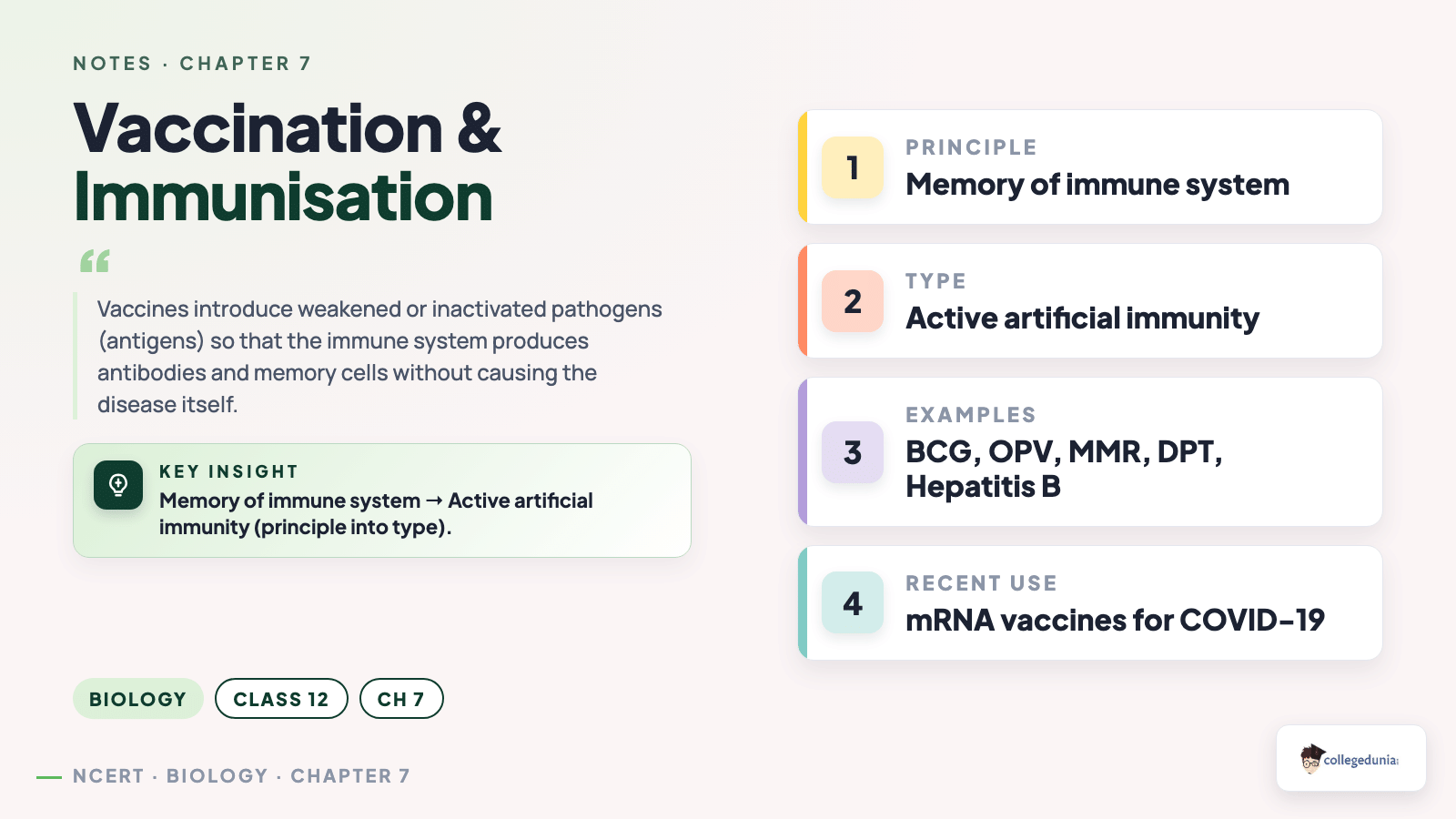
- Vaccination = passive immunity. Wrong, vaccination triggers active immunity.
- Smack and ganja are the same class. Wrong, smack is an opioid; ganja is a cannabinoid.
Human Health and Disease Glossary for Class 12th Biology
High-frequency terms with one-line definitions for revision.
| Term | Definition |
|---|---|
| Pathogen | Disease-causing organism (bacteria, virus, protozoan, helminth, fungus). |
| Vector | Organism that transmits a pathogen (e.g. female Anopheles). |
| Carrier | Symptom-free infected individual who transmits the pathogen (Typhoid Mary). |
| Antigen | Foreign molecule that triggers an immune response. |
| Antibody | Y-shaped H2L2 immunoglobulin produced by B-cells. |
| Active immunity | Own antibodies after antigen exposure; slow but lasting. |
| Passive immunity | Ready-made antibodies; fast but short. |
| Metastasis | Spread of malignant cells to distant sites via blood. |
| Carcinogen | Physical, chemical or biological agent that causes cancer. |
Human Health and Disease Top 5 Facts for Quick Recall in Class 12 Biology
These five facts are the ones NEET and CBSE re-ask most often. The full master sheet is on the Formula Sheet.
| Fact | Value / Detail |
|---|---|
| Antibody structure | H2L2 - 2 heavy + 2 light chains, Y-shaped |
| Antibody classes | IgG, IgM, IgA, IgE, IgD (5 types) |
| Malaria fever cycle | P. vivax 48 h, P. malariae 72 h, P. falciparum irregular |
| HIV diagnosis | ELISA (Enzyme-Linked Immunosorbent Assay) |
| HIV target cell | Helper T-lymphocyte (TH, CD4+) |
Full master sheet: Human Health and Disease Formula Sheet
Human Health and Disease Real-World Applications
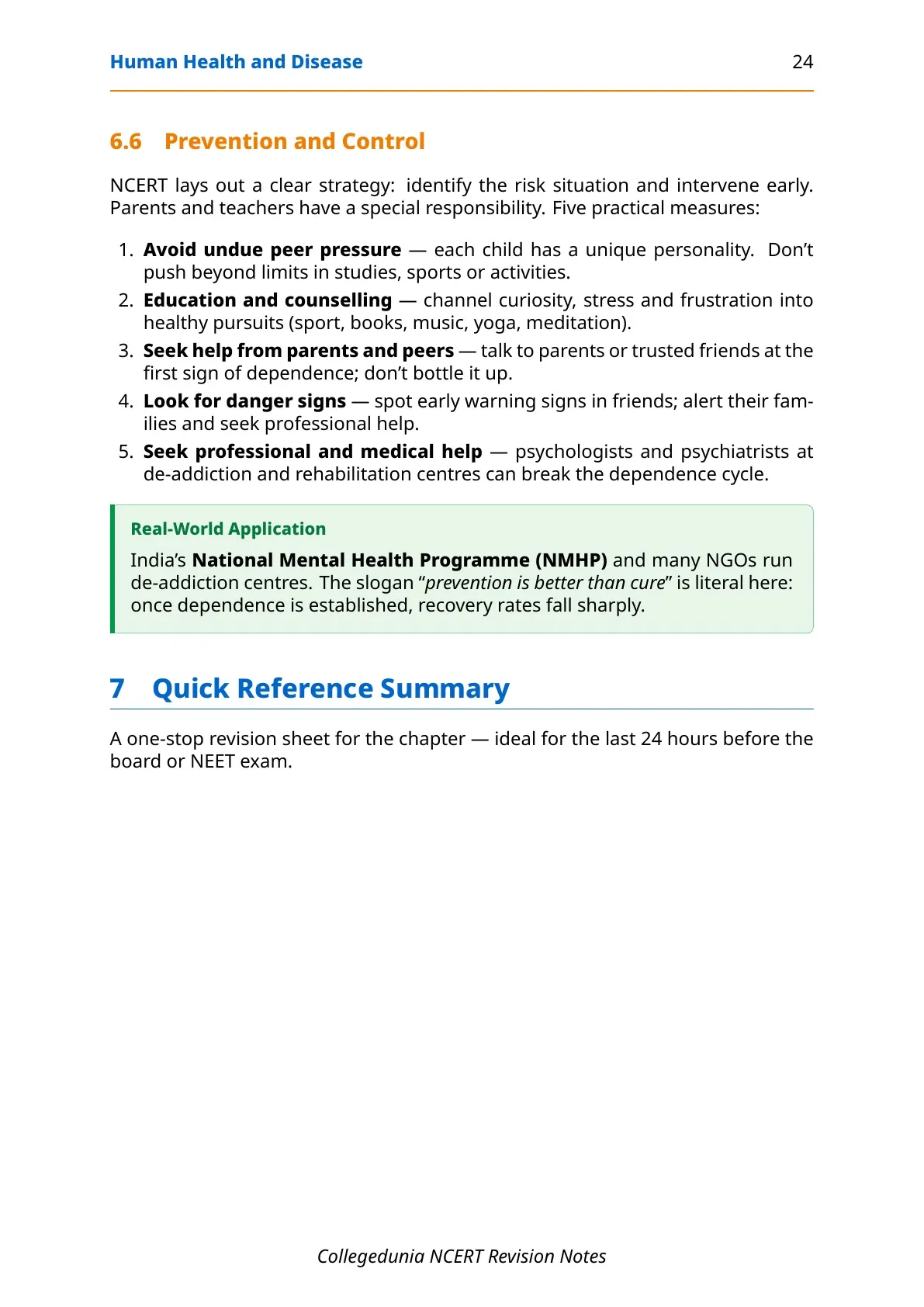
The chapter maps onto public-health practice. Four applications worth quoting in answers:
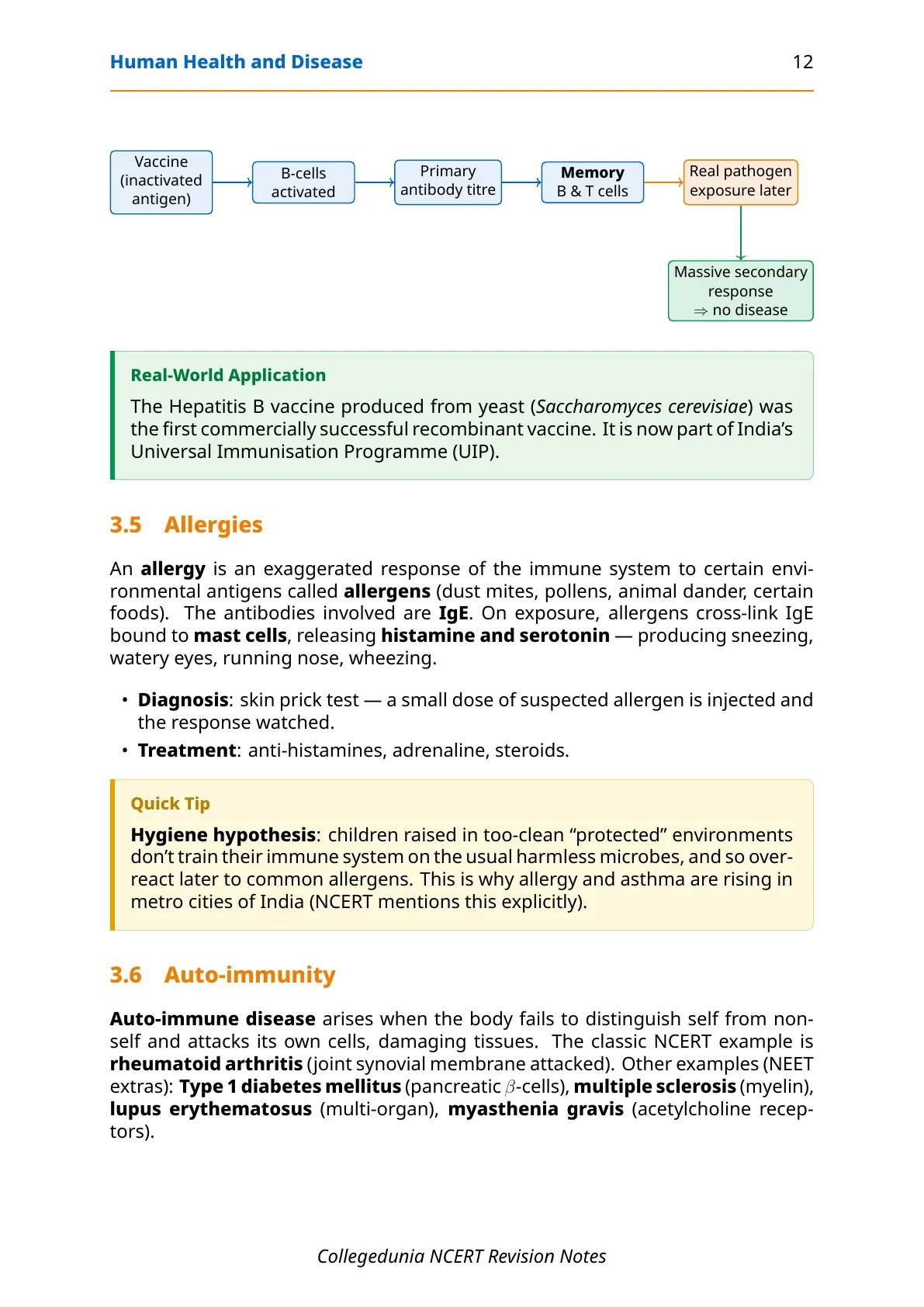
- Vaccination programmes: India's Universal Immunisation Programme uses the active-immunity concept.
- HIV surveillance: ELISA is the standard test; antiretroviral therapy is free at ART centres.
- Cancer screening: Pap smear and mammography apply the biopsy and antibody principles.
- Anti-tobacco law: COTPA 2003 is built on the nicotine evidence in section 7.5.
Human Health and Disease Previous Year Questions Snapshot (2025 to 2021)
Immunity has appeared in every CBSE paper of the last five years; the HIV cycle in 4 of 5. The full year-wise map lives on the Collegedunia NCERT Solutions page.
| Year | CBSE Topic Asked | NEET Topic Asked |
|---|---|---|
| 2025 | Innate vs Acquired Immunity (5 marks); HIV cycle (3 marks) | Antibody classes; Plasmodium vector |
| 2024 | Plasmodium life cycle (3 marks); Active vs Passive Immunity (2 marks) | HIV target cell; cancer carcinogens |
| 2023 | Cancer detection (2 marks); Drug classes - source plants (3 marks) | Common cold pathogen; immunity barriers |
| 2022 | HIV transmission and ELISA (3 marks); Plasmodium toxin (1 mark) | HIV replication; tobacco effects |
| 2021 | - | - |
Full year-wise PYQ map: Human Health and Disease NCERT Solutions
Student Feedback
In a survey of 16,200 Class 12 Biology students, 74% rated the HIV life-cycle flowchart the hardest sub-topic, and 70% lost marks mixing up innate and acquired immunity. Most took about 6.8 hours for a first read and 2.6 hours for revision.
Source: 2025-26 Class 12 Biology student survey, 16,200 students across 18 states.
Other Resources for Human Health and Disease Class 12 Biology
| Resource | Link |
|---|---|
| NCERT Notes (this page) | Human Health and Disease Notes |
| NCERT Solutions | Human Health and Disease NCERT Solutions |
| Formula Sheet | Human Health and Disease Formula Sheet |
| Handwritten Notes | Human Health and Disease Handwritten Notes |
| NCERT Book PDF | Human Health and Disease NCERT Book PDF |
| Exemplar Solutions | Human Health and Disease Exemplar Solutions |
| Exemplar Book PDF | Human Health and Disease Exemplar Book PDF |
NCERT Notes for Class 12 Biology: All Chapters
Open any chapter's Notes PDF below.
| Chapter | Resource |
|---|---|
| Chapter 1 | Sexual Reproduction in Flowering Plants Notes |
| Chapter 2 | Human Reproduction Notes |
| Chapter 3 | Reproductive Health Notes |
| Chapter 4 | Principles of Inheritance and Variation Notes |
| Chapter 5 | Molecular Basis of Inheritance Notes |
| Chapter 6 | Evolution Notes |
| Chapter 7 | Human Health and Disease Notes (this page) |
| Chapter 8 | Microbes in Human Welfare Notes |
| Chapter 9 | Biotechnology - Principles and Processes Notes |
| Chapter 10 | Biotechnology and Its Applications Notes |
| Chapter 11 | Organisms and Populations Notes |
Human Health and Disease Class 12 Biology Notes FAQs
Ques. Where can I download Human Health and Disease Class 12 Biology Notes PDF?
Ans. You can download the Human Health and Disease Class 12 Biology Notes PDF directly from this page. Both the Normal and HD versions are free, and the file is mapped to the 2026-27 NCERT.
Ques. Is this Human Health and Disease Notes PDF aligned with the 2026-27 NCERT?
Ans. Yes. This page reflects the current 2026-27 syllabus for Class 12 Biology. All five chapter sections - common diseases, immunity, AIDS, cancer and drug abuse - are retained in the new NCERT edition without removal.
Ques. How many pages is the Class 12th Biology Human Health and Disease Notes PDF?
Ans. The Notes PDF runs approximately 27 pages and covers all seven NCERT sections plus a NEET quick-reference summary with pathogen tables, immunity flow, HIV cycle, cancer biology and drug-abuse classes.
Ques. What are the most important topics in Human Health and Disease Class 12 for NEET?
Ans. Immunity (innate vs acquired, active vs passive), the HIV replication cycle, the Plasmodium life cycle, antibody structure and classes, and cancer biology (contact inhibition, metastasis, carcinogens) carry the highest NEET frequency. Drug and alcohol abuse is a steady 1-mark MCQ topic.
Ques. What is the difference between active and passive immunity in Class 12 Biology Chapter 7?
Ans. Active immunity develops when the body produces its own antibodies after exposure to an antigen, such as through vaccination or natural infection; it is slow to develop but lasts long. Passive immunity uses ready-made antibodies from another source (colostrum to newborn, anti-tetanus serum); it acts immediately but lasts only weeks.
Ques. Which pathogen causes AIDS and how is it diagnosed?
Ans. AIDS is caused by the Human Immunodeficiency Virus (HIV), a retrovirus with single-stranded RNA and reverse transcriptase. Diagnosis uses the ELISA (Enzyme-Linked Immunosorbent Assay) test. Treatment is antiretroviral therapy; there is currently no permanent cure.
Ques. Are these Human Health and Disease notes useful for NEET 2027?
Ans. Yes. NEET draws 3 to 5 questions from this chapter every year. The notes flag NEET-only depth such as P. ovale, antibody class chart and cancer detection methods so you do not have to read two books for the same chapter.
Ques. What are the three main drug classes covered in Class 12 Biology Chapter 7?
Ans. Class 12 NCERT covers three drug classes: opioids (heroin / smack, from Papaver somniferum, depressants), cannabinoids (marijuana, hashish, ganja, charas, from Cannabis sativa) and cocaine (from coca, a potent CNS stimulant). Tobacco and its nicotine effects are treated as a separate substance-abuse topic.



Comments