




These cell the unit of life class 11 notes bring together every organelle, structure, and defining rule that the CBSE Boards, NEET and CUET papers actually test in 2026-27. Revise the whole chapter fast, with cell theory, the prokaryotic and eukaryotic plans, the fluid mosaic model of the cell membrane, the endomembrane system, mitochondria and plastids, and the nucleus with its chromosomes in one place.
This chapter is where Class 11 Biology stops describing organisms from the outside and starts explaining them from the inside, and the organelles you meet here return in respiration, photosynthesis, and the whole of physiology.
- CBSE Weightage: 5 to 7 marks, usually one labelled-diagram question on the cell or an organelle plus short answers on cell theory, the membrane, and the nucleus.
- Topics covered: the cell as the unit of life, cell theory, prokaryotic and eukaryotic cells, cell size and shape, the cell envelope and mesosome, the fluid mosaic model, the cell wall, the endomembrane system, mitochondria, plastids, ribosomes, the cytoskeleton, cilia and flagella, the centrosome, and the nucleus with its chromosomes.
- Key rules: a membrane bound nucleus splits all cells in two, mitochondria and chloroplasts are the two double membrane organelles with their own DNA, and the 9+2 array defines the eukaryotic axoneme.
These cell the unit of life class 11 notes are curated by subject experts, based on the 2026-27 NCERT textbook, and checked against the last five years of CBSE Board and NEET papers.
Topic-by-Topic Summary of Cell The Unit of Life
The chapter builds the whole vocabulary of the cell from the outside boundary inward. It starts with why the cell, and not a smaller part, is the unit of life, then splits all cells into prokaryotic and eukaryotic on a single feature, and finally walks through every organelle and its job. Here is the quick map of what each topic gives you before you revise the detail.
- Cell and cell theory: the cell is the fundamental structural and functional unit of life, and cell theory was built by Schleiden, Schwann, and Virchow.
- Prokaryotic versus eukaryotic: the presence or absence of a membrane bound nucleus divides all cells into two types.
- Prokaryotic cell: the three-layered cell envelope, the mesosome, ribosomes, flagella, pili, and fimbriae.
- Cell membrane and wall: the fluid mosaic model of Singer and Nicolson, selective permeability, and the layered plant cell wall.
- Endomembrane system: the endoplasmic reticulum, Golgi apparatus, lysosomes, and vacuoles working as one team.
- Energy organelles and the nucleus: mitochondria, plastids, ribosomes, the cytoskeleton, cilia and flagella, the centrosome, and the nucleus with its chromosomes.
Revise the topics in this order, because each one builds on the one before it. Fix the prokaryote versus eukaryote divide first, and every organelle after that slots neatly into place. These cell the unit of life class 11 notes follow the same sequence as the NCERT textbook.
The Cell as the Unit of Life and Cell Theory
A bacterium, a mango tree, and a human being look nothing alike, yet all three are built from cells. A single-celled organism can both live independently and perform every essential function of life, but break the cell into smaller pieces and neither ability survives. That is the whole argument for the cell being the fundamental structural and functional unit of all living organisms. Two names carry the discovery story: Antonie Von Leeuwenhoek first saw and described a live cell, and Robert Brown later discovered the nucleus.
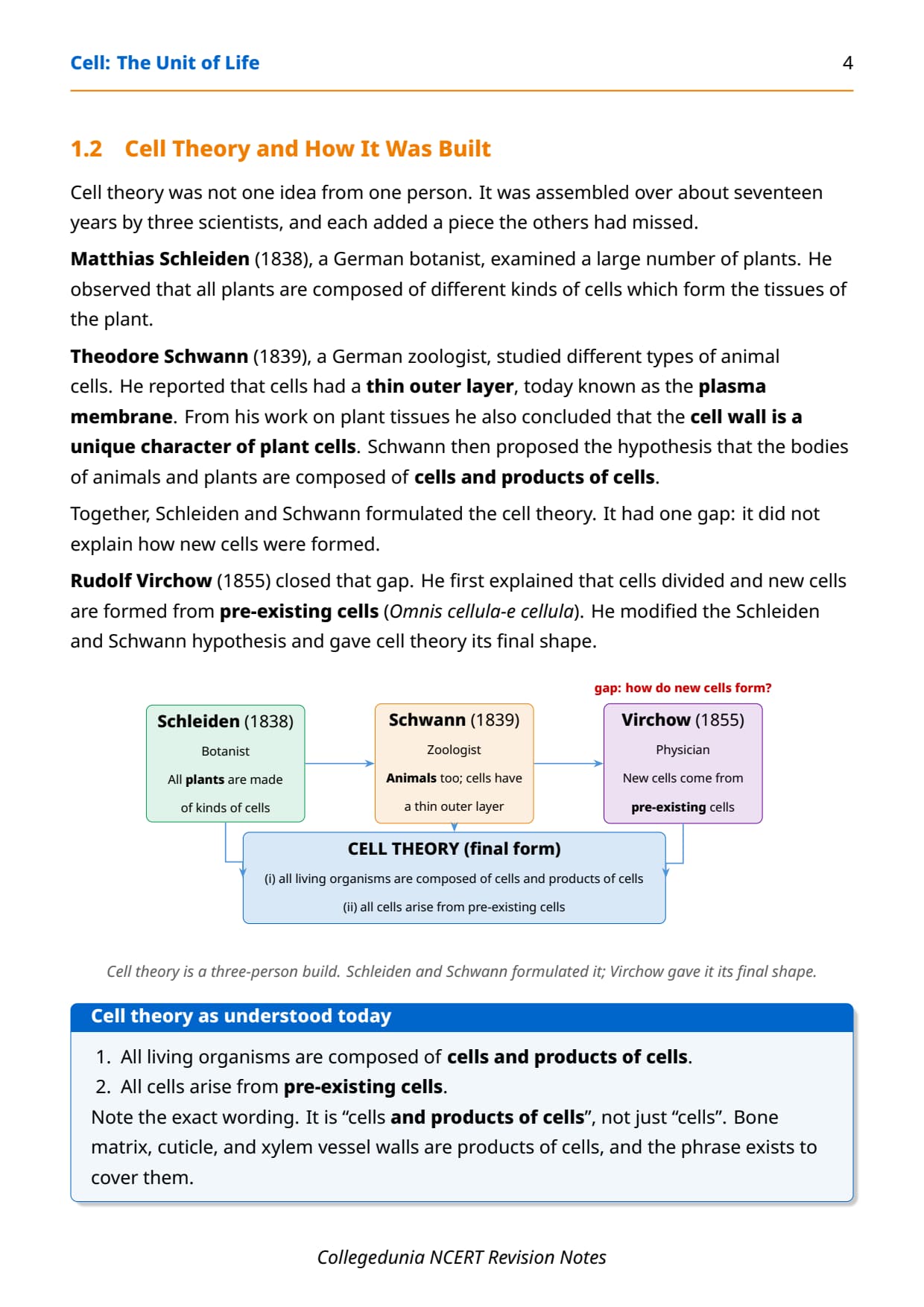
- Matthias Schleiden (1838): a botanist who found that all plants are composed of different kinds of cells that form the plant's tissues.
- Theodore Schwann (1839): a zoologist who studied animal cells, discovered the thin outer plasma membrane, and concluded that bodies of animals and plants are made of cells and products of cells.
- Rudolf Virchow (1855): added that all cells arise from pre-existing cells (Omnis cellula-e cellula), giving cell theory its final shape.
Cell theory as understood today states two things: all living organisms are composed of cells and products of cells, and all cells arise from pre-existing cells. Note the exact wording, because bone matrix and vessel walls are products of cells and the phrase exists to cover them. Cell theory has known exceptions examiners like: viruses are not cells, and mature mammalian erythrocytes and sieve tube cells lose their nucleus yet stay alive. A common exercise asks which statement is not correct and offers "Robert Brown discovered the cell", which is the wrong statement, since Brown discovered the nucleus.
Prokaryotic versus Eukaryotic Cells
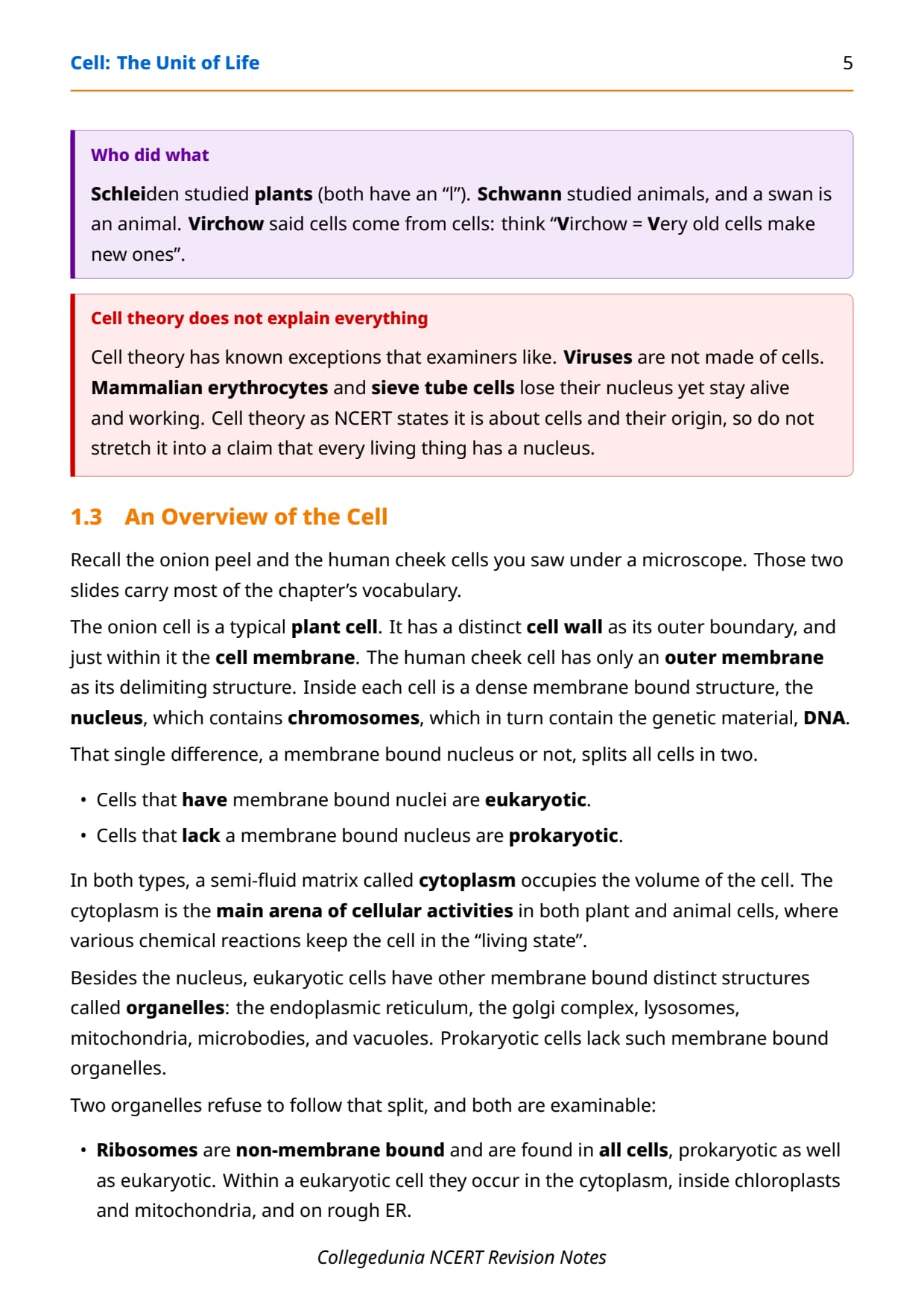
Recall the onion peel and the human cheek cells you saw under a microscope. The onion cell is a plant cell with a distinct cell wall and a cell membrane within it, while the cheek cell has only an outer membrane. Inside each sits a dense structure, the nucleus, holding chromosomes made of DNA. That single feature, a membrane bound nucleus or not, splits all cells in two. In both types a semi-fluid cytoplasm fills the cell and is the main arena of cellular activities.
- Eukaryotic cells have a membrane bound nucleus and membrane bound organelles such as the ER, Golgi, lysosomes, and mitochondria.
- Prokaryotic cells lack a membrane bound nucleus and lack membrane bound organelles, with only ribosomes present.
- Ribosomes are non-membrane bound and found in all cells; the centrosome is non-membrane bound and found in animal cells.
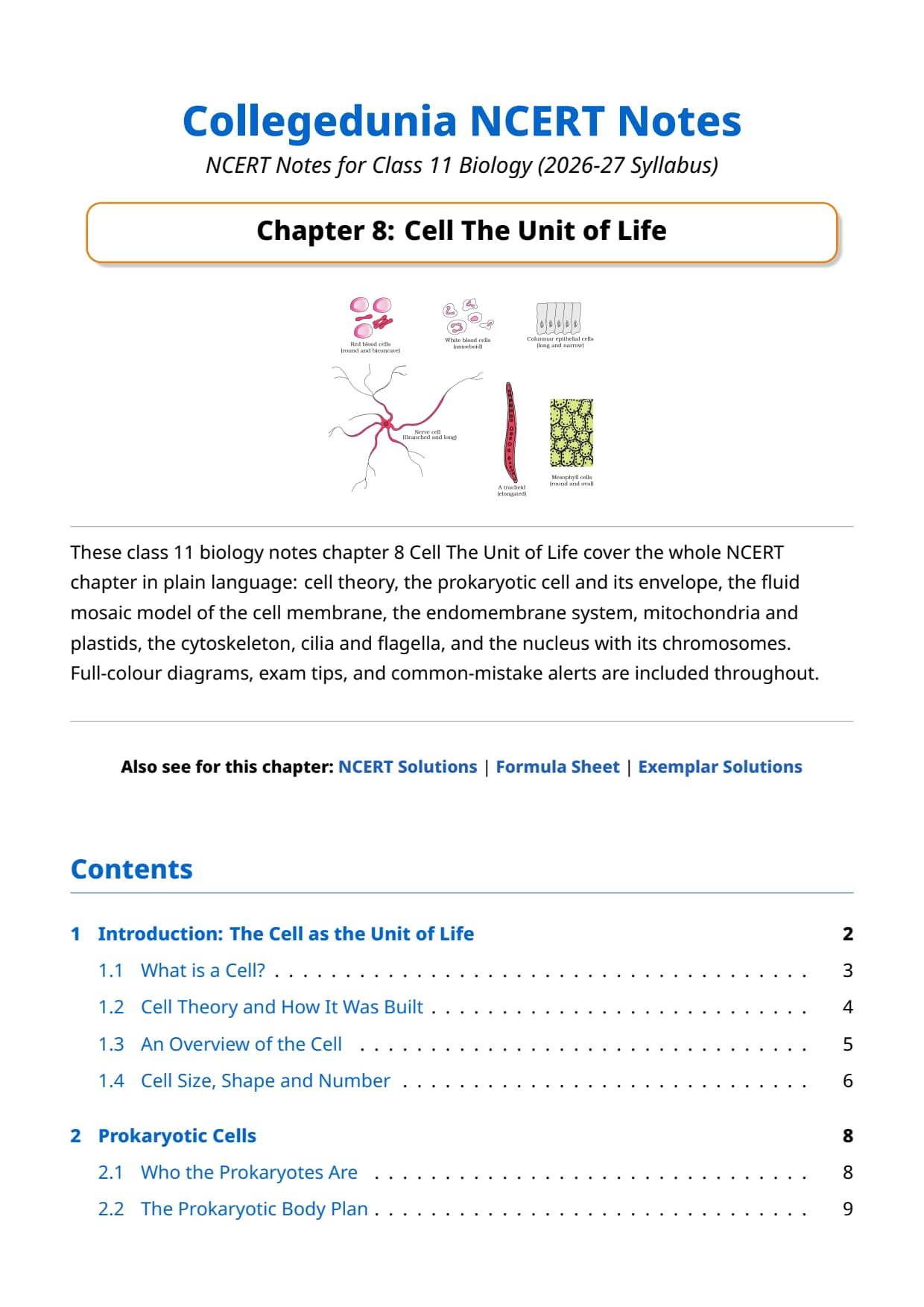
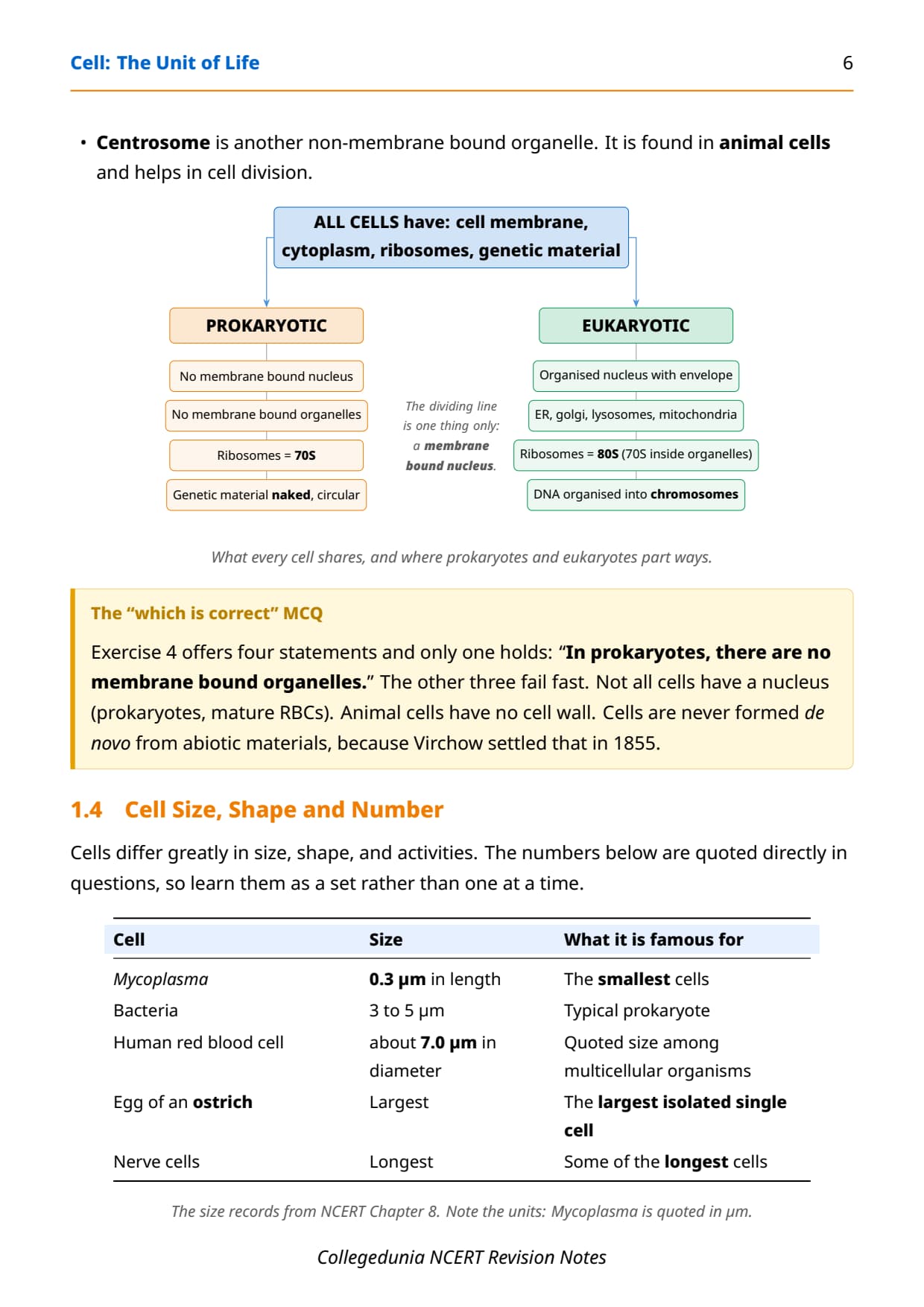
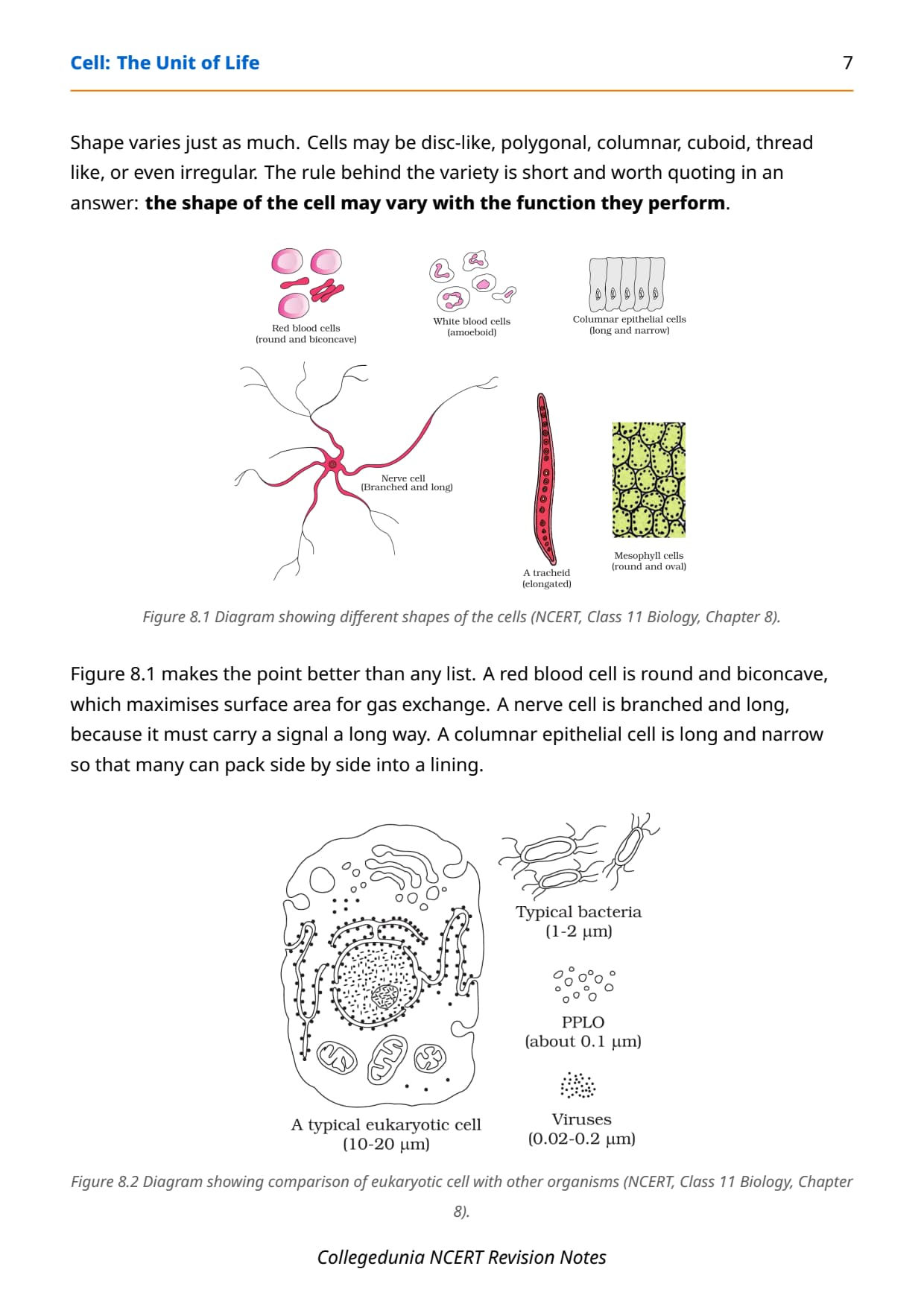
Cells vary hugely in size, shape, and number. Mycoplasma at about 0.3 µm are the smallest cells, bacteria run 3 to 5 µm, the human red blood cell is about 7.0 µm across, the ostrich egg is the largest isolated single cell, and nerve cells are among the longest. The shape of a cell varies with the function it performs, so a red blood cell is a biconcave disc that maximises surface area for gas exchange while a nerve cell is long and branched to carry a signal far. Prokaryotes are generally smaller and multiply more rapidly than eukaryotic cells.
Inside a Prokaryotic Cell: Envelope, Mesosome and Flagella
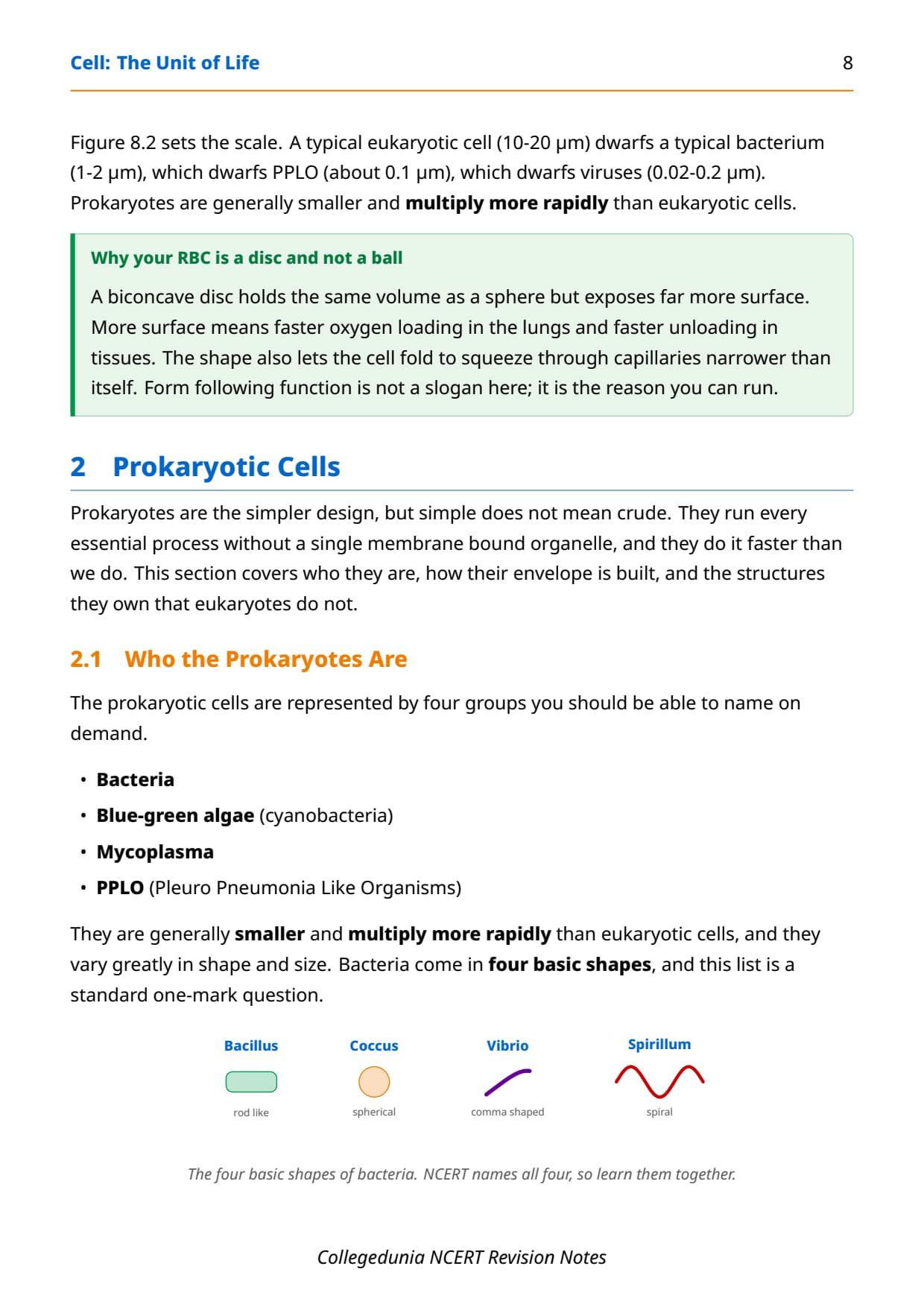
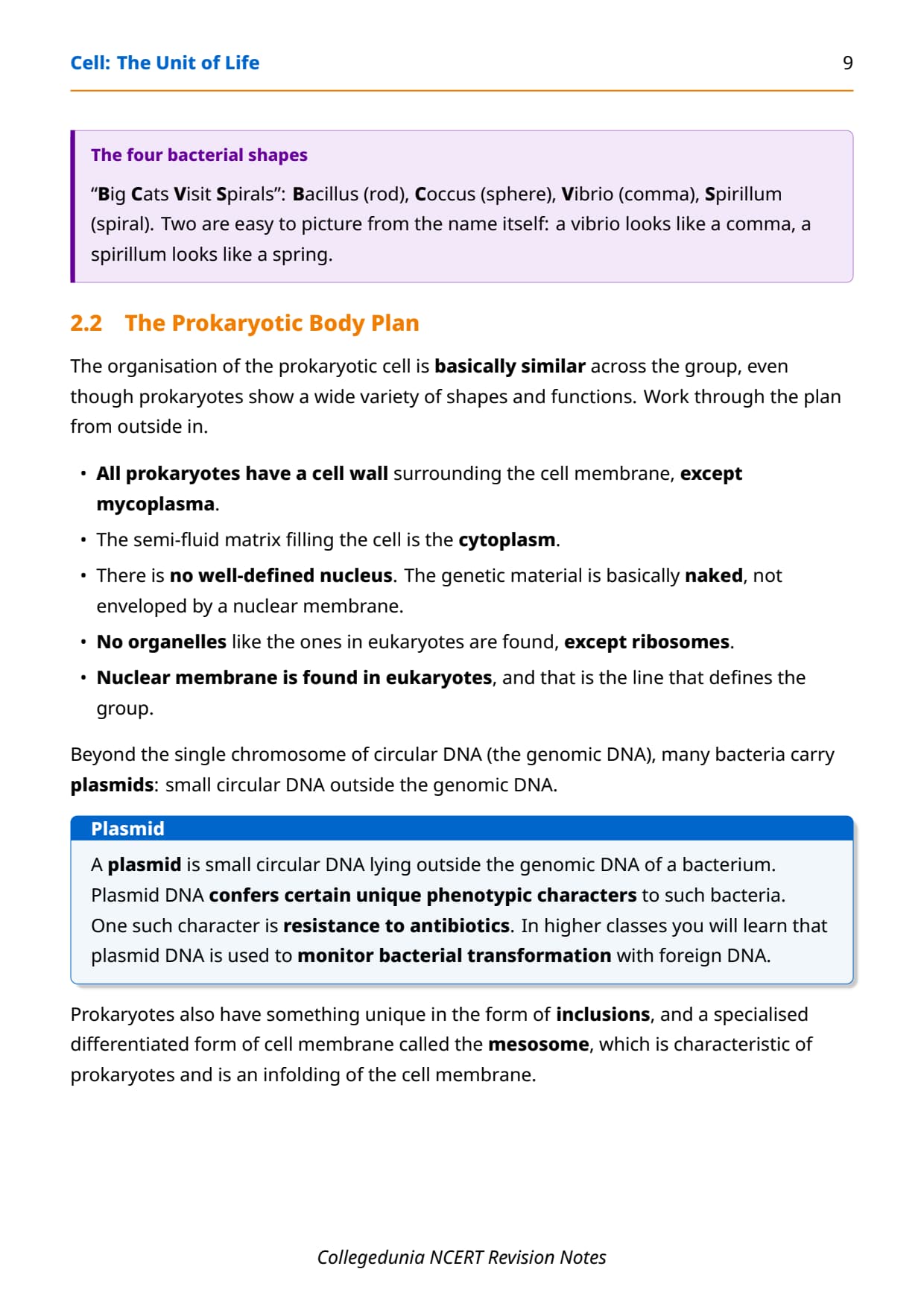
Prokaryotes are represented by bacteria, blue-green algae (cyanobacteria), mycoplasma, and PPLO. All of them except mycoplasma have a cell wall, no well-defined nucleus, and a naked circular genetic material. Bacteria come in four basic shapes, a standard one-mark question: bacillus (rod), coccus (sphere), vibrio (comma), and spirillum (spiral). Beyond the single chromosome, many bacteria carry plasmids, small circular DNA outside the genomic DNA that can confer antibiotic resistance.
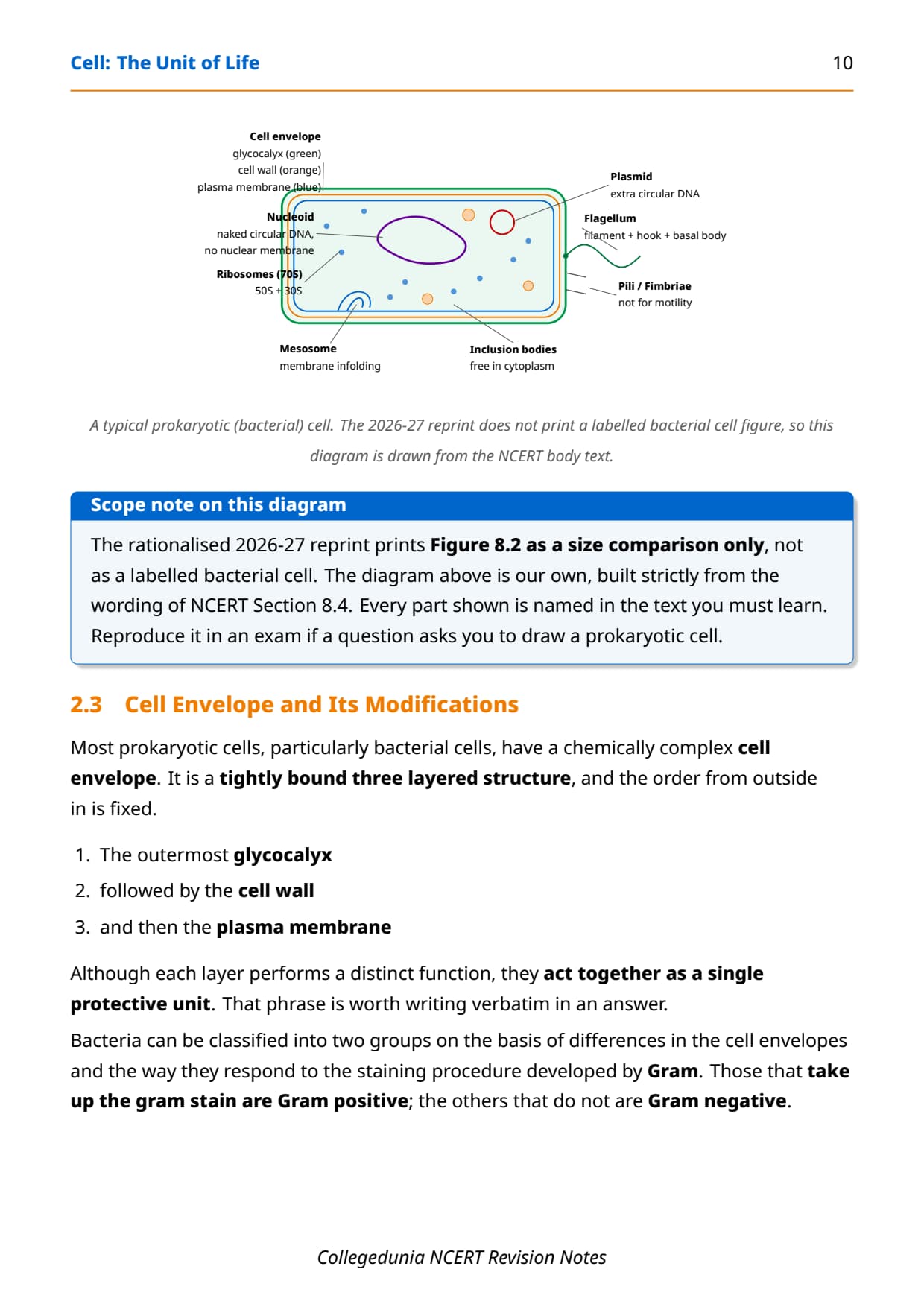
- Cell envelope: a tightly bound three-layered structure, outside in the glycocalyx (slime layer if loose, capsule if thick and tough), then the cell wall, then the plasma membrane; the three act together as a single protective unit.
- Gram staining splits bacteria into Gram positive (take up the stain) and Gram negative (do not).
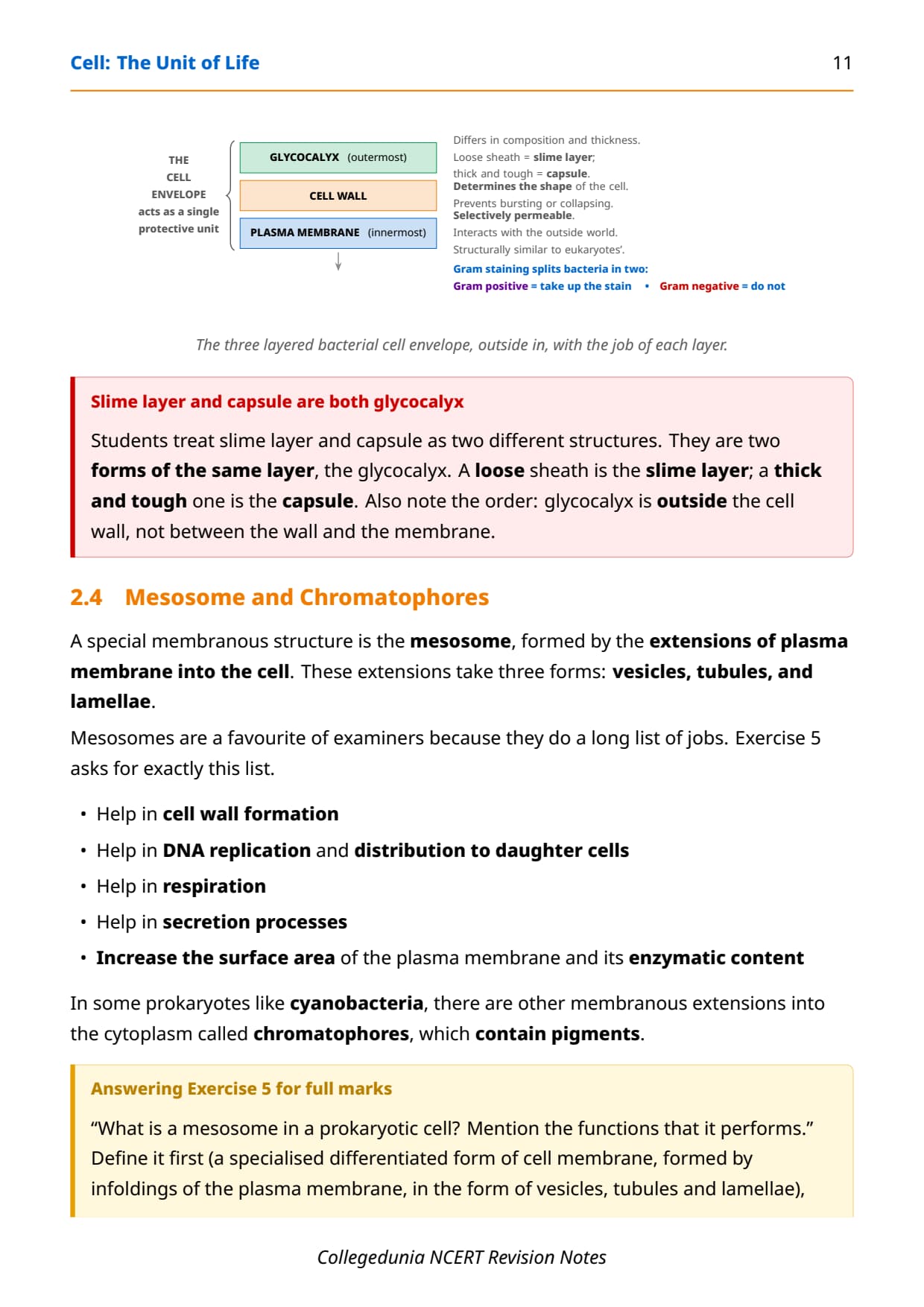
- Mesosome: an infolding of the plasma membrane as vesicles, tubules, and lamellae, helping in cell wall formation, DNA replication and distribution, respiration, secretion, and increasing membrane surface area.
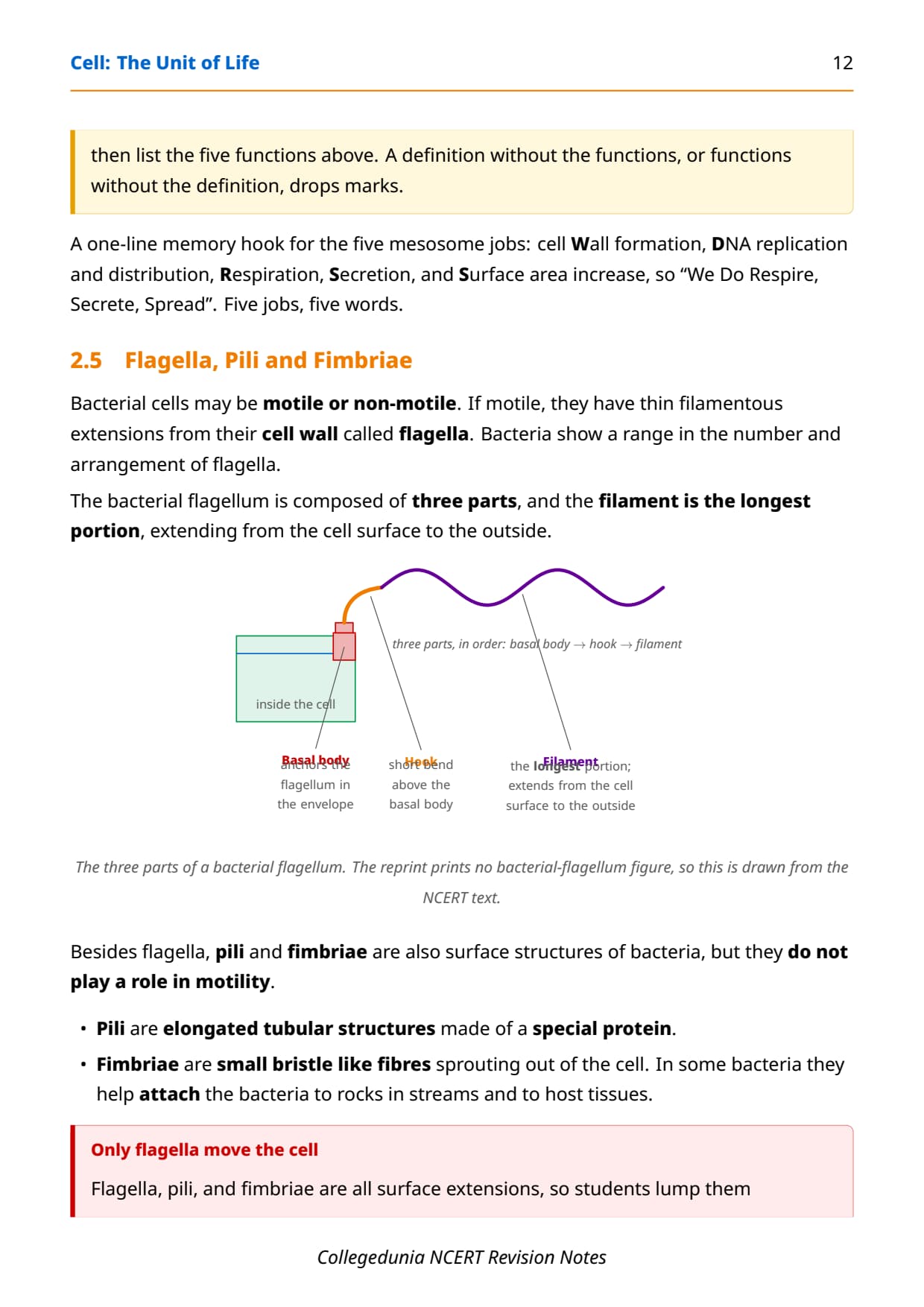
- Flagella give motility and have three parts, basal body, hook, and filament (the longest); pili and fimbriae are for attachment, not movement.
Ribosomes in prokaryotes are the 70S type (50S and 30S subunits), about 15 nm by 20 nm, and are the site of protein synthesis; several on one mRNA form a polysome. Inclusion bodies such as phosphate, cyanophycean, and glycogen granules, plus gas vacuoles, store reserve material and lie free in the cytoplasm, bound by no membrane. The bacterial flagellum is structurally different from the eukaryotic one, so never describe it as 9+2.
Cell Membrane, the Fluid Mosaic Model and the Cell Wall
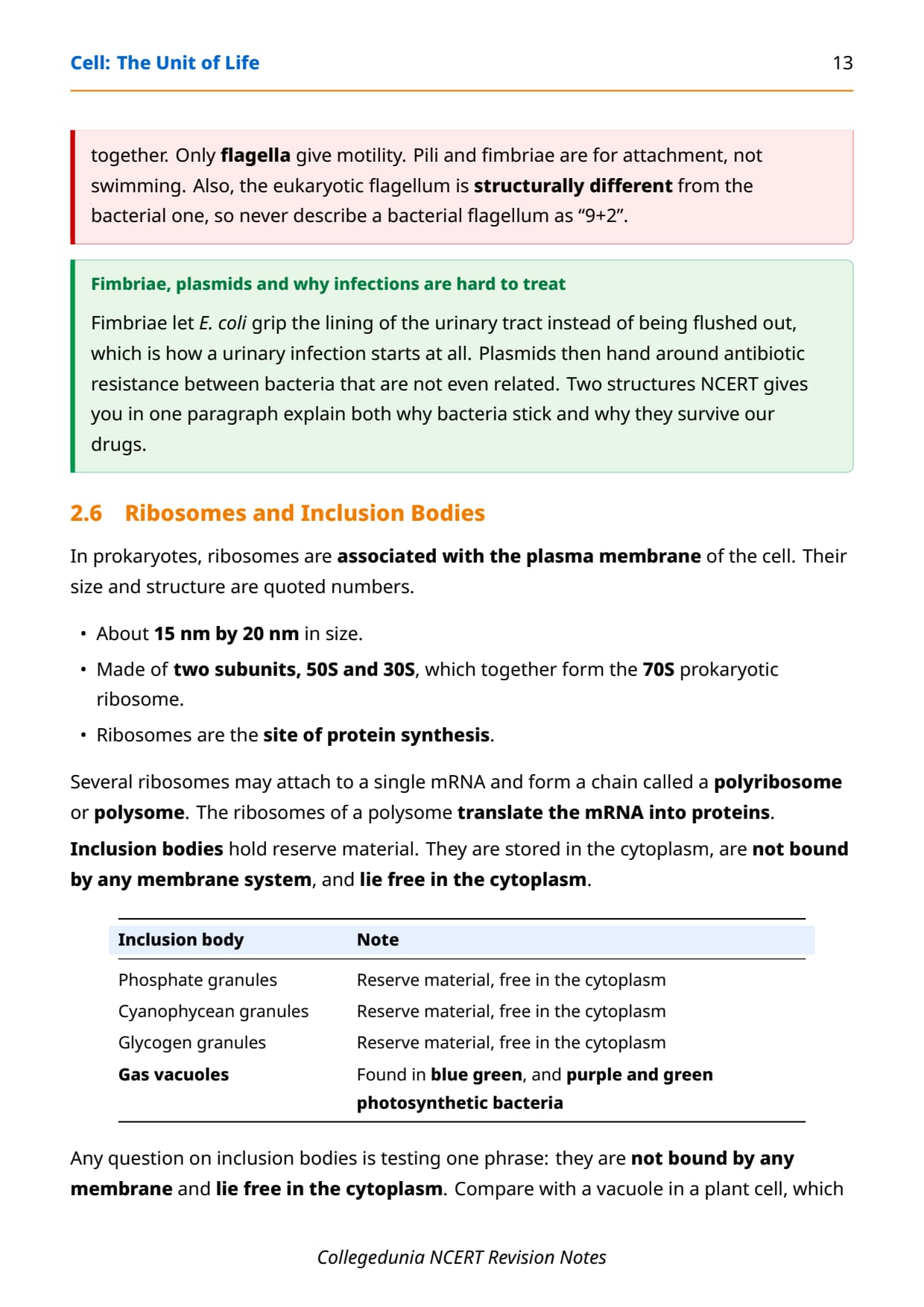
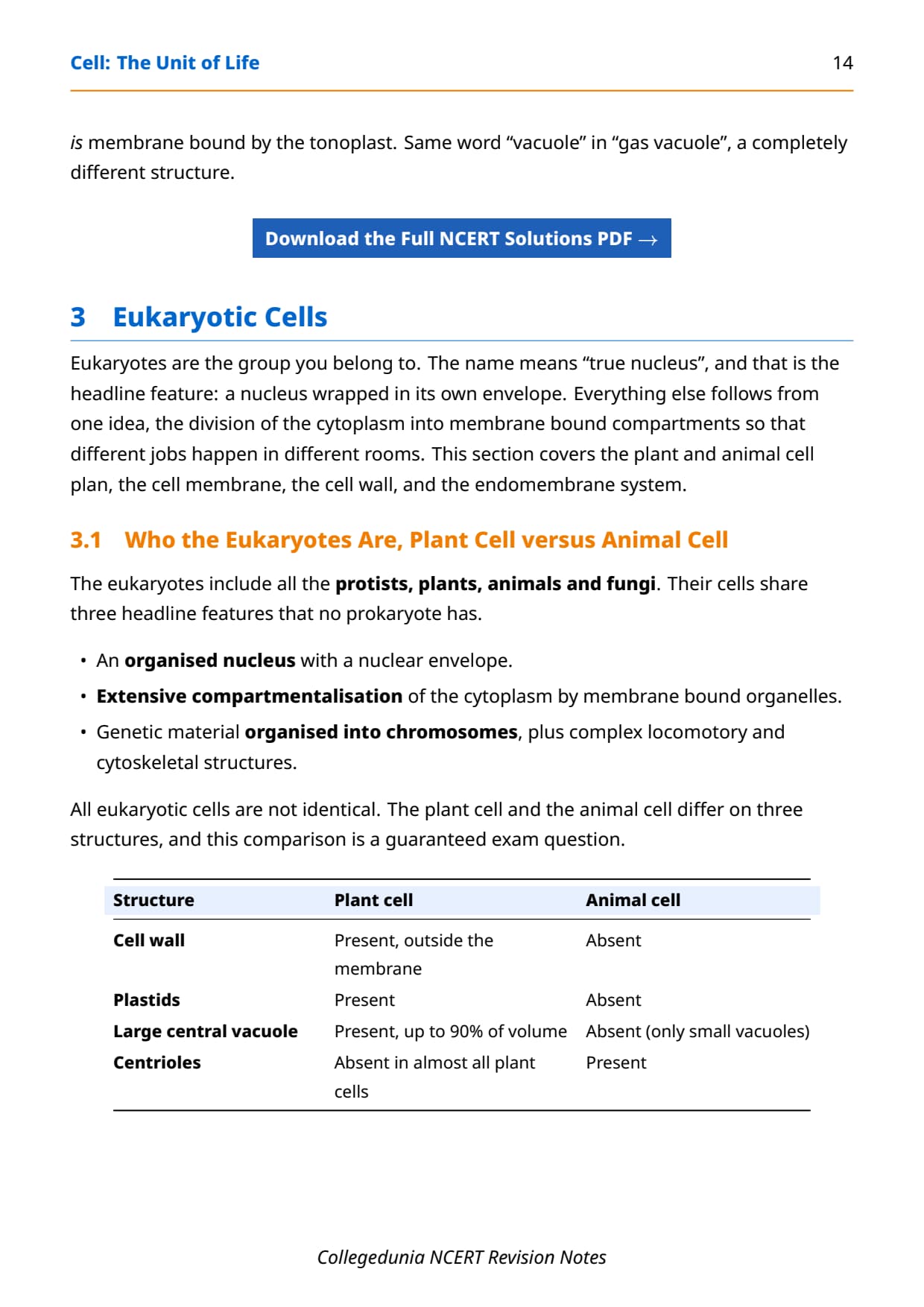
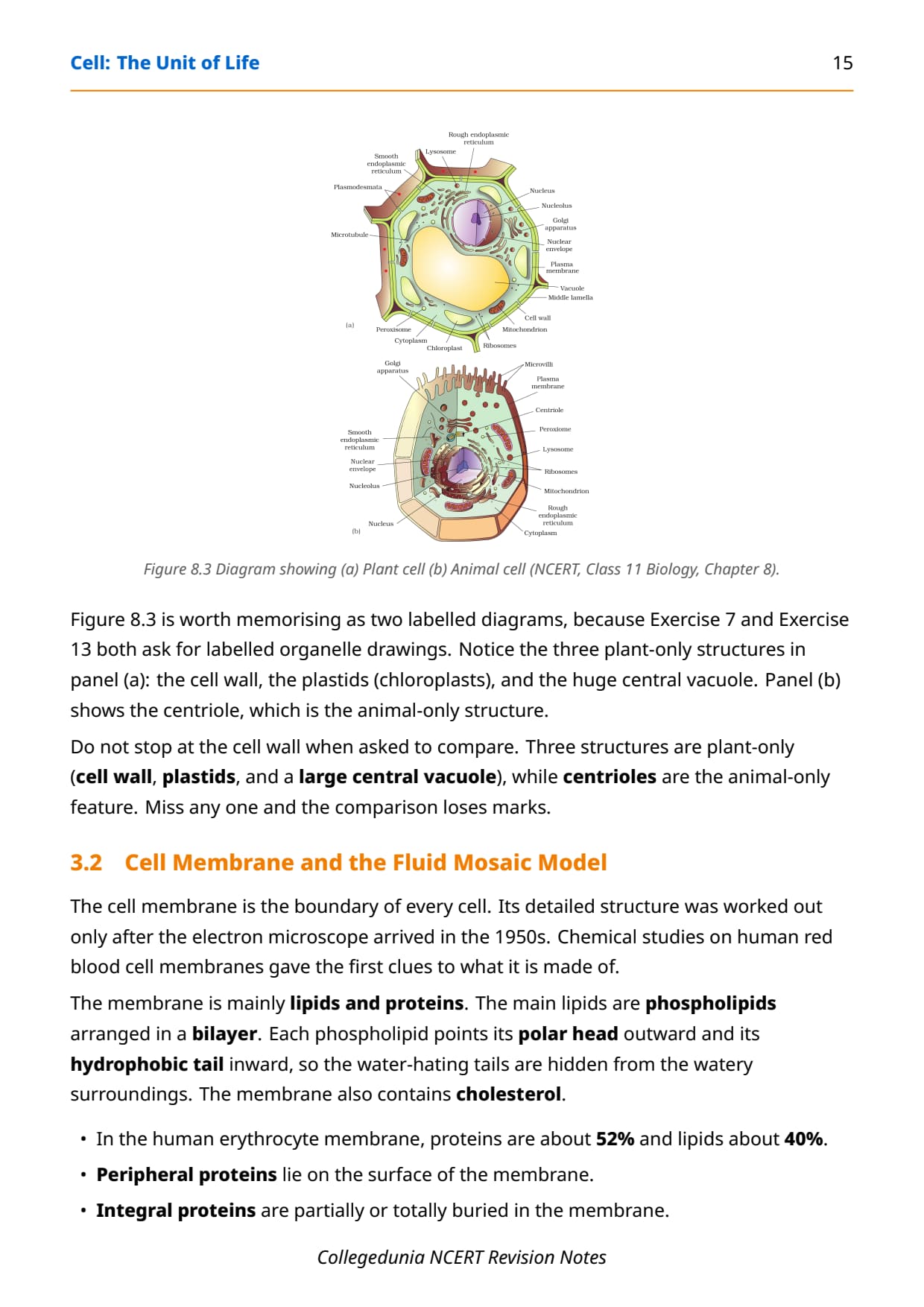
The cell membrane is the boundary of every cell. It is mainly lipids and proteins, with phospholipids arranged in a bilayer so that each molecule points its polar head outward and its hydrophobic tail inward, plus cholesterol. In the human erythrocyte membrane proteins are about 52% and lipids about 40%, with peripheral proteins on the surface and integral proteins buried in the membrane. The accepted model is the fluid mosaic model, proposed by Singer and Nicolson (1972), where the quasi-fluid lipid lets proteins move laterally.
- Selective permeability: the membrane lets some molecules through and blocks others.
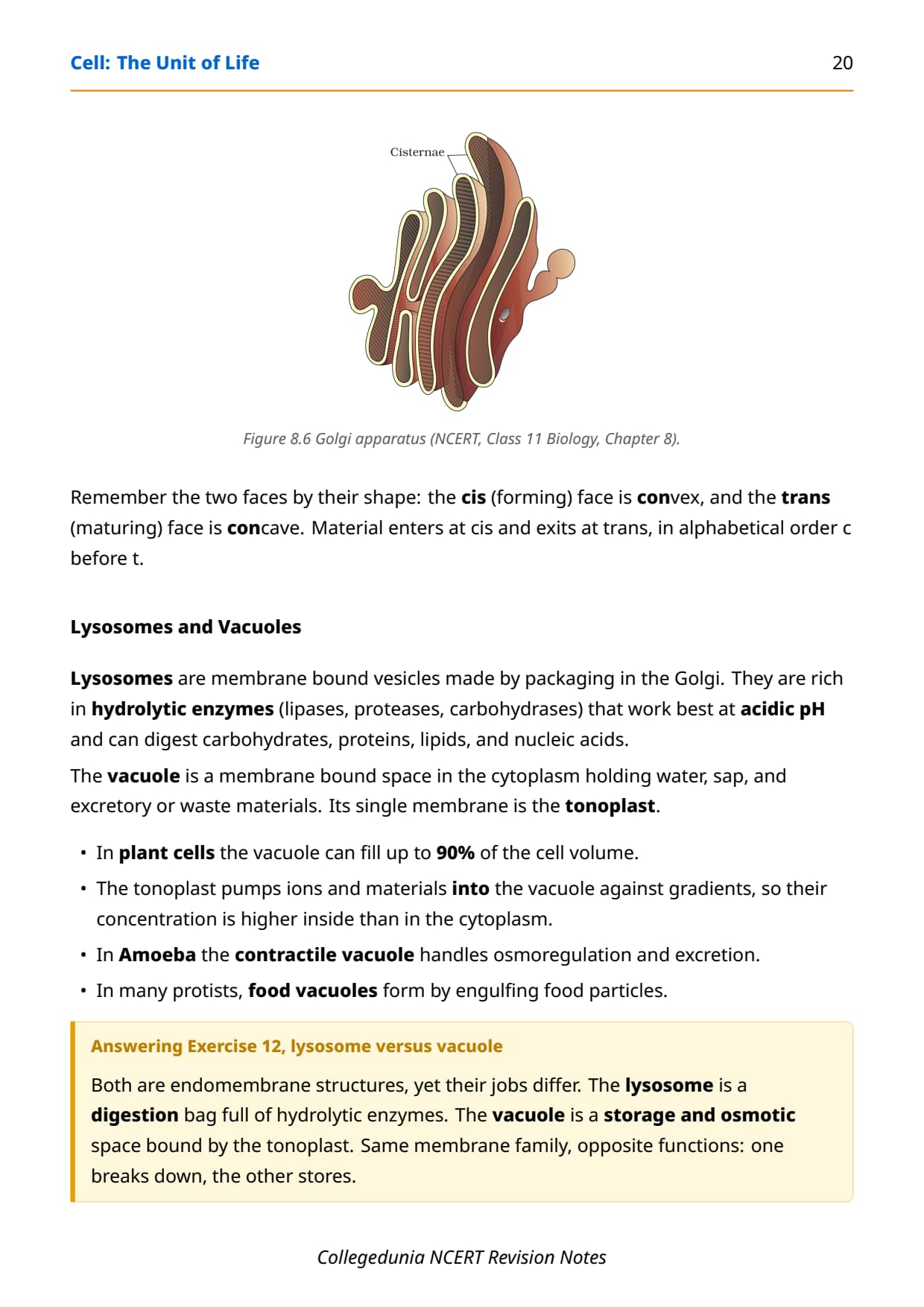
- Passive transport: no ATP, movement down the gradient, including simple diffusion of neutral solutes and osmosis (diffusion of water).
- Active transport: needs ATP, moves molecules against the gradient, for example the Na+/K+ pump.
- Polar molecules cannot cross the nonpolar bilayer alone and need a carrier protein.
The cell wall is a non-living rigid outer covering of fungal and plant cells. It gives shape, protects against mechanical damage and infection, helps cell-to-cell interaction, and acts as a barrier to unwanted macromolecules. In plants the wall is built in layers: a primary wall that can grow, a secondary wall on the inner side, and a middle lamella of calcium pectate that cements neighbouring cells. Plasmodesmata are channels that traverse the wall and connect the cytoplasm of neighbouring cells, and must not be confused with the middle lamella that only glues cells together.
The Endomembrane System: ER, Golgi, Lysosomes and Vacuoles
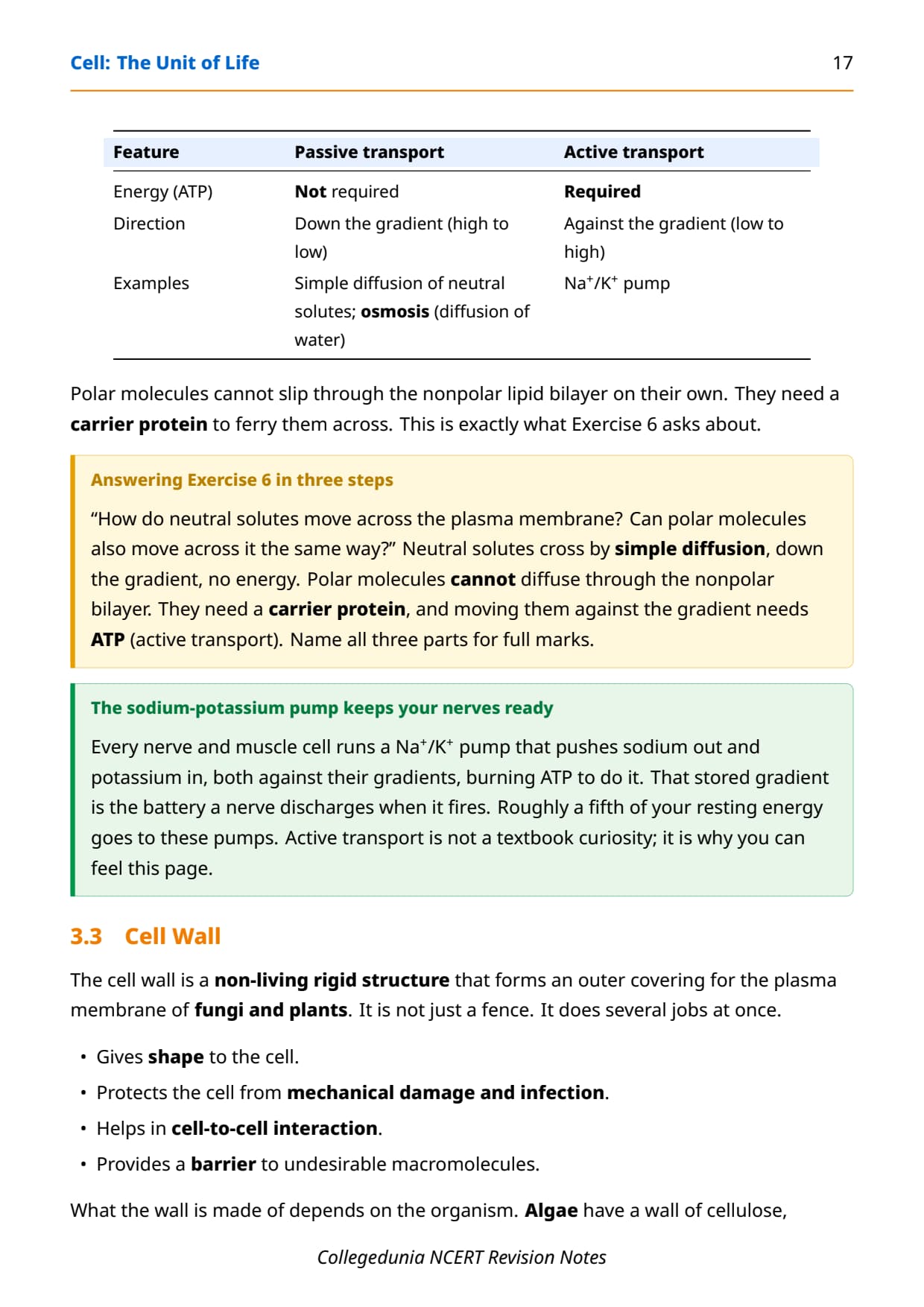
Some membranous organelles work as a coordinated team and are grouped as the endomembrane system: the endoplasmic reticulum, the Golgi complex, lysosomes, and vacuoles. Mitochondria, chloroplasts, and peroxisomes are left out because their functions are not coordinated with the others. Proteins made on the rough ER travel by vesicle to the Golgi, are modified, and leave as lysosomes or secretory vesicles, so the whole system is a factory line for making, packaging, and delivering materials.
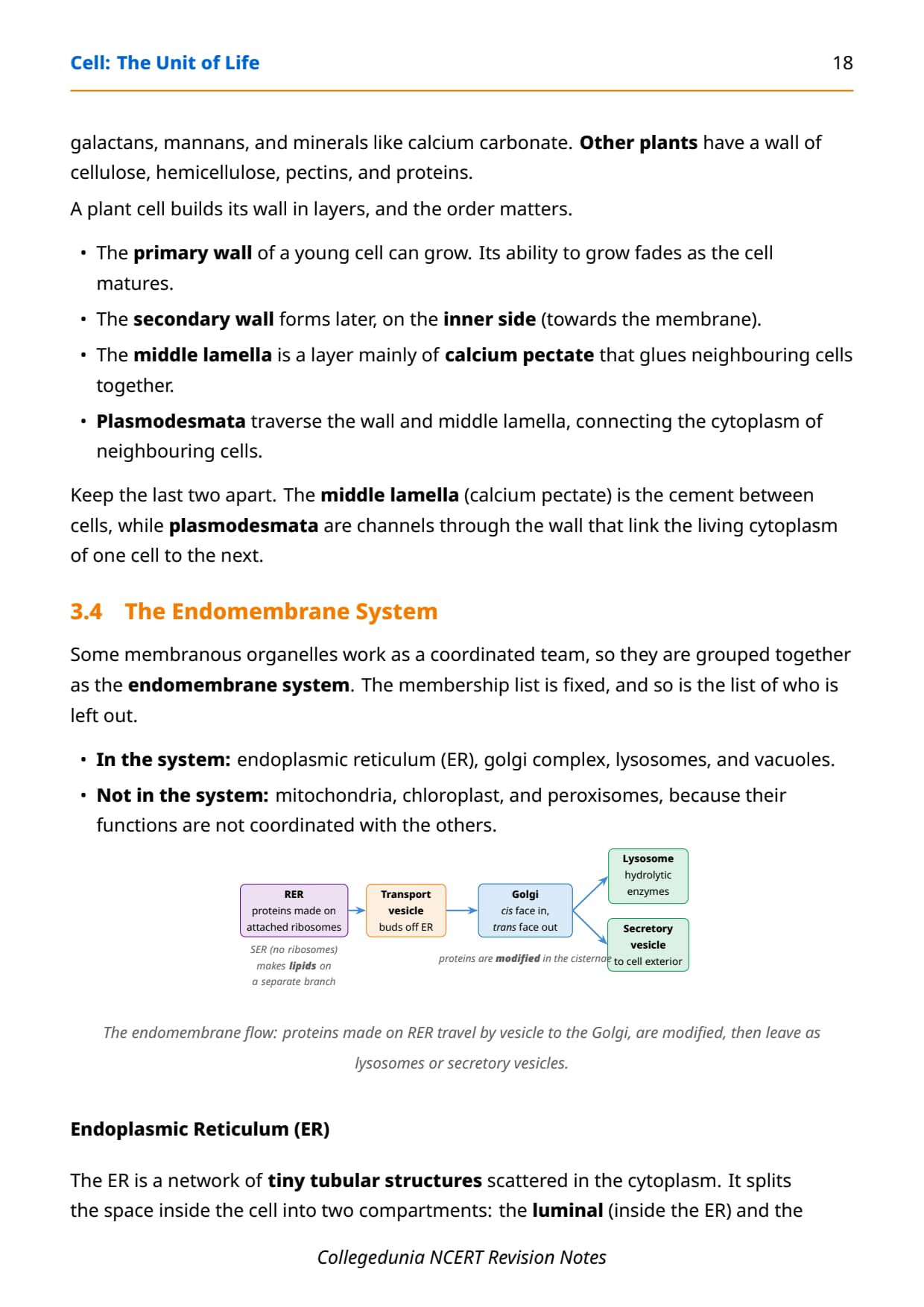
- Rough ER (RER): carries ribosomes, abundant in cells busy with protein synthesis and secretion, continuous with the nuclear membrane.
- Smooth ER (SER): has no ribosomes and is the main site of lipid synthesis, including steroid hormones in animal cells.
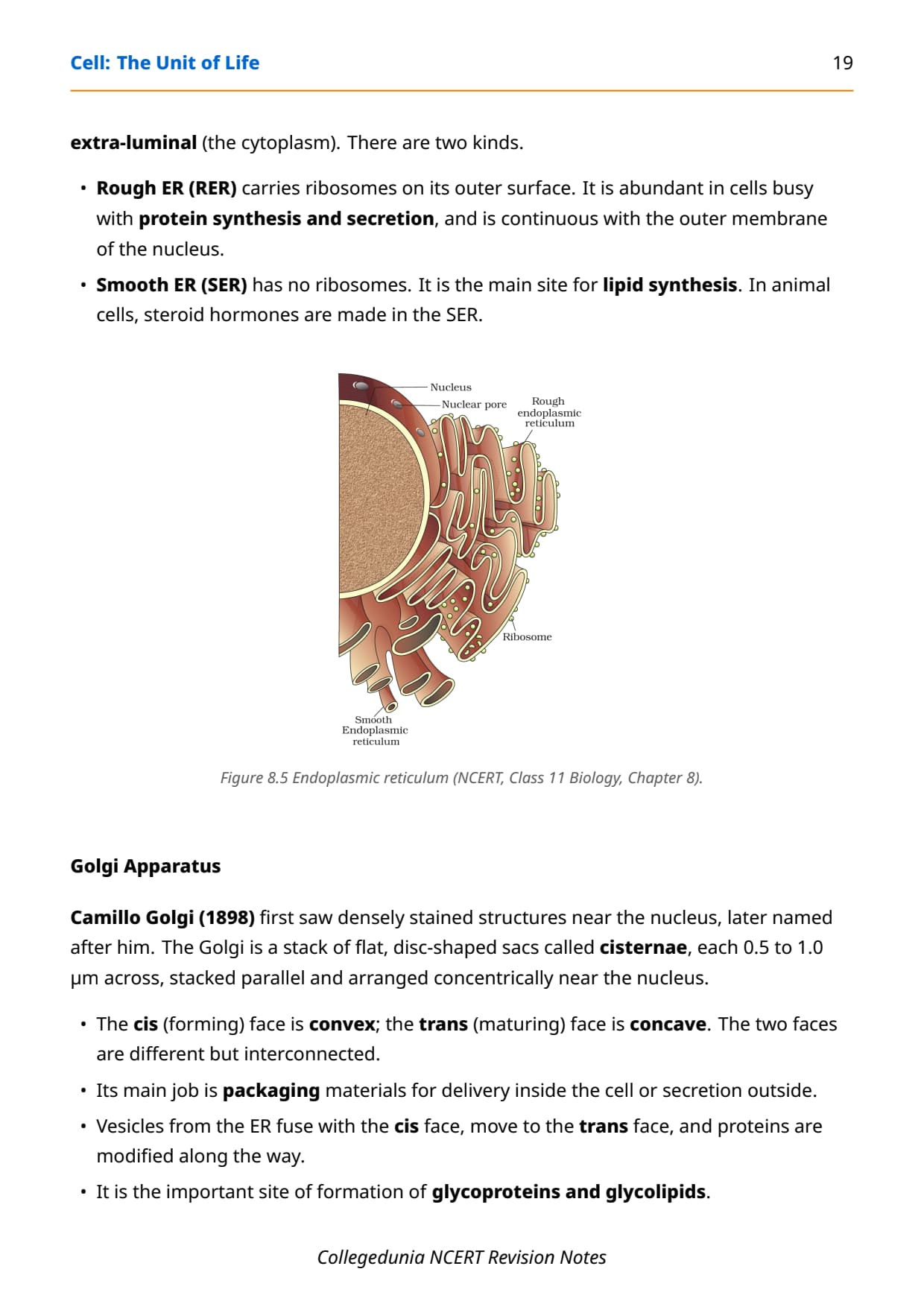
- Golgi apparatus: stacks of flat cisternae with a convex cis (forming) face and a concave trans (maturing) face; it packages materials and makes glycoproteins and glycolipids.
- Lysosomes: membrane bound vesicles from the Golgi, rich in hydrolytic enzymes that work at acidic pH.
- Vacuole: a membrane bound space bound by the tonoplast, up to 90% of a plant cell's volume, and seen as the contractile vacuole in Amoeba.
Camillo Golgi first described the Golgi in 1898, and material enters at its cis face and exits at its trans face, in alphabetical order c before t. Keep the lysosome and vacuole apart: the lysosome digests using hydrolytic enzymes, while the vacuole stores water, sap, and wastes. Both belong to the same membrane family yet do opposite jobs, one breaking down and the other storing.
Mitochondria, Plastids, Ribosomes and the Nucleus
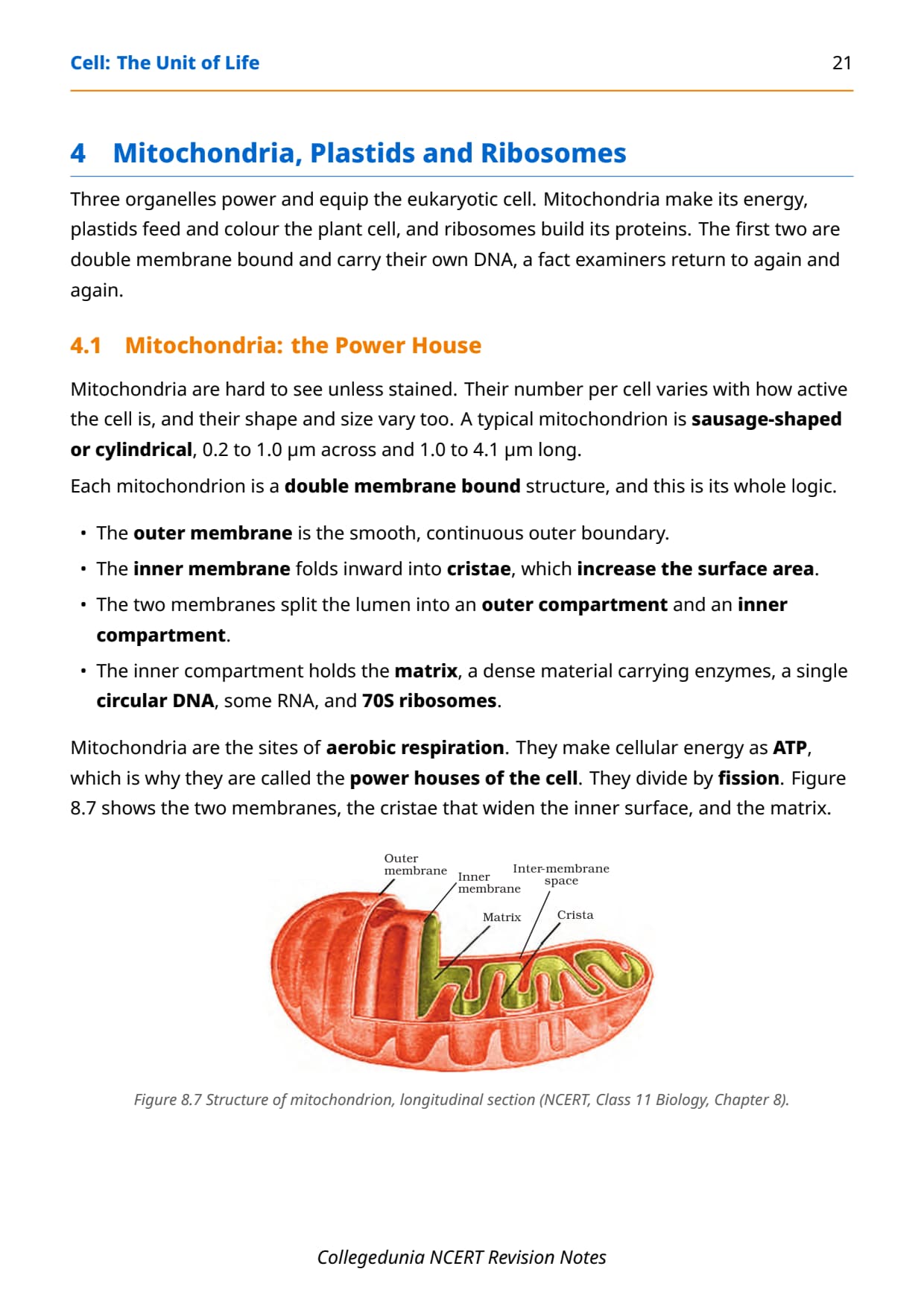
Three organelles power and equip the eukaryotic cell, and two of them share a striking feature. Mitochondria are double membrane bound, sausage-shaped, with the inner membrane folded into cristae that increase surface area and an inner matrix holding circular DNA and 70S ribosomes. They are the sites of aerobic respiration and make ATP, which is why they are the power houses of the cell. Plastids are found in all plant cells and come in three types by pigment.
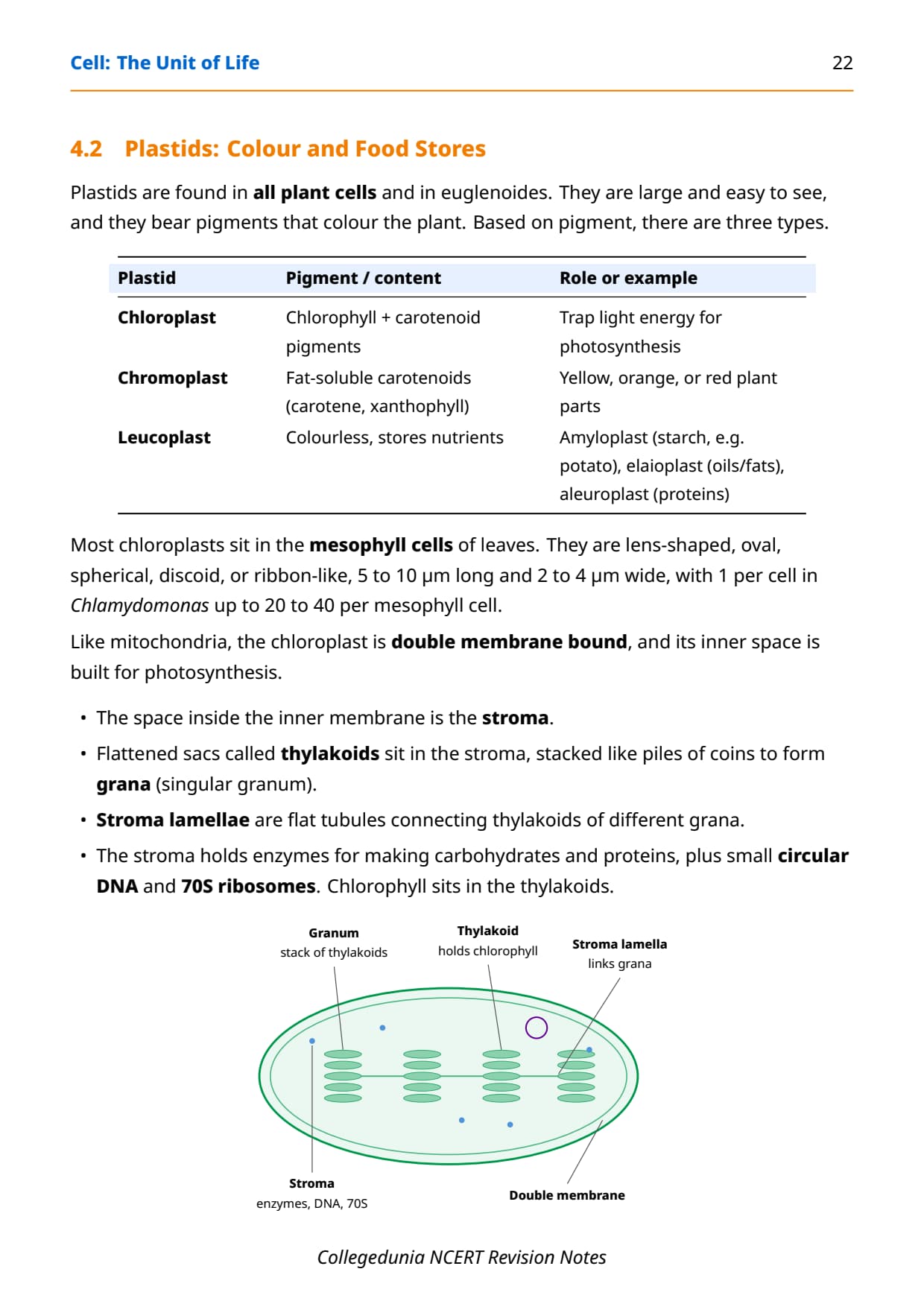
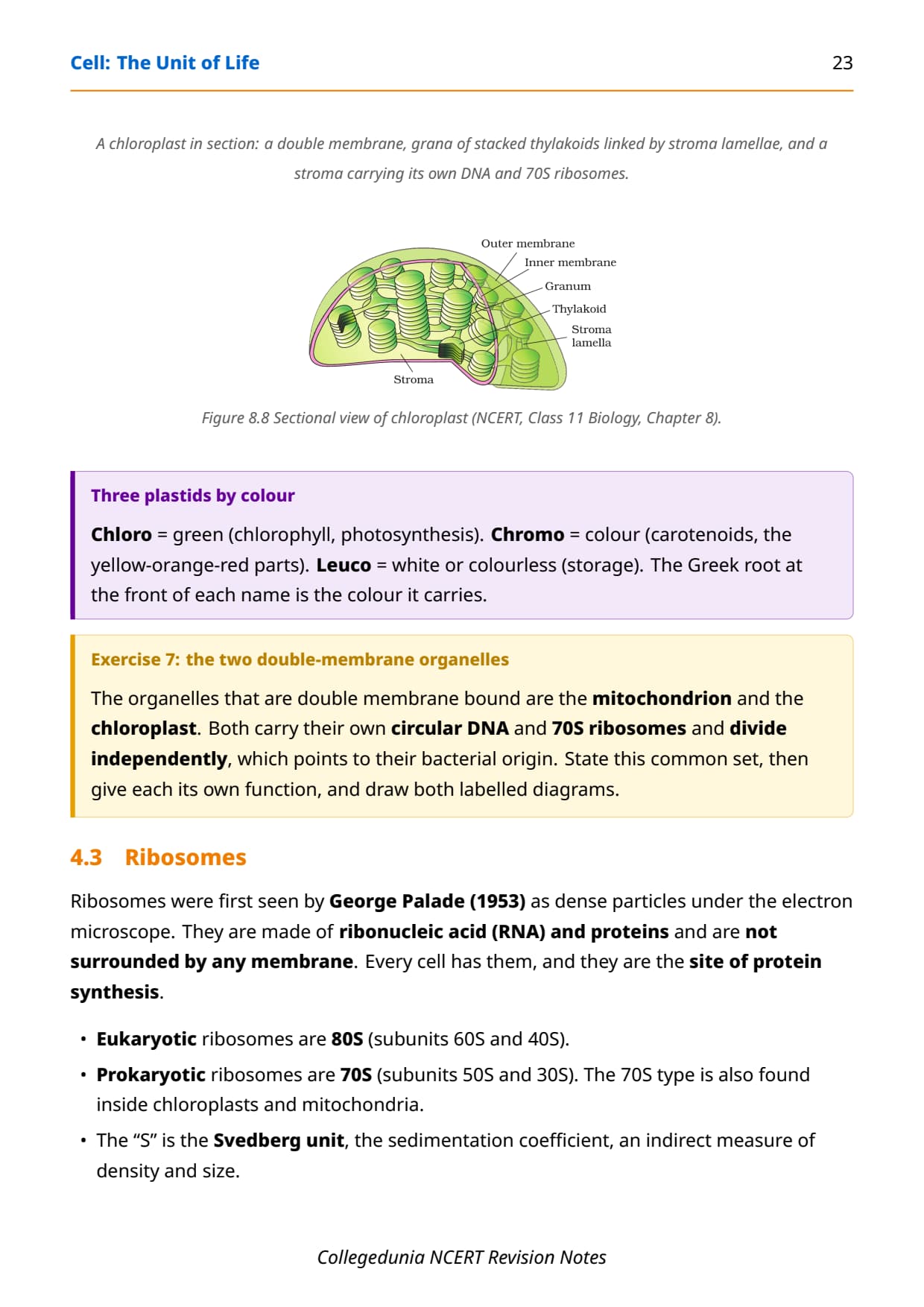
- Chloroplast: holds chlorophyll and carotenoids and traps light for photosynthesis; its stroma carries grana of stacked thylakoids, stroma lamellae, plus circular DNA and 70S ribosomes.
- Chromoplast: holds fat-soluble carotenoids that colour plant parts yellow, orange, or red.
- Leucoplast: colourless, stores starch (amyloplast), oils (elaioplast), or proteins (aleuroplast).
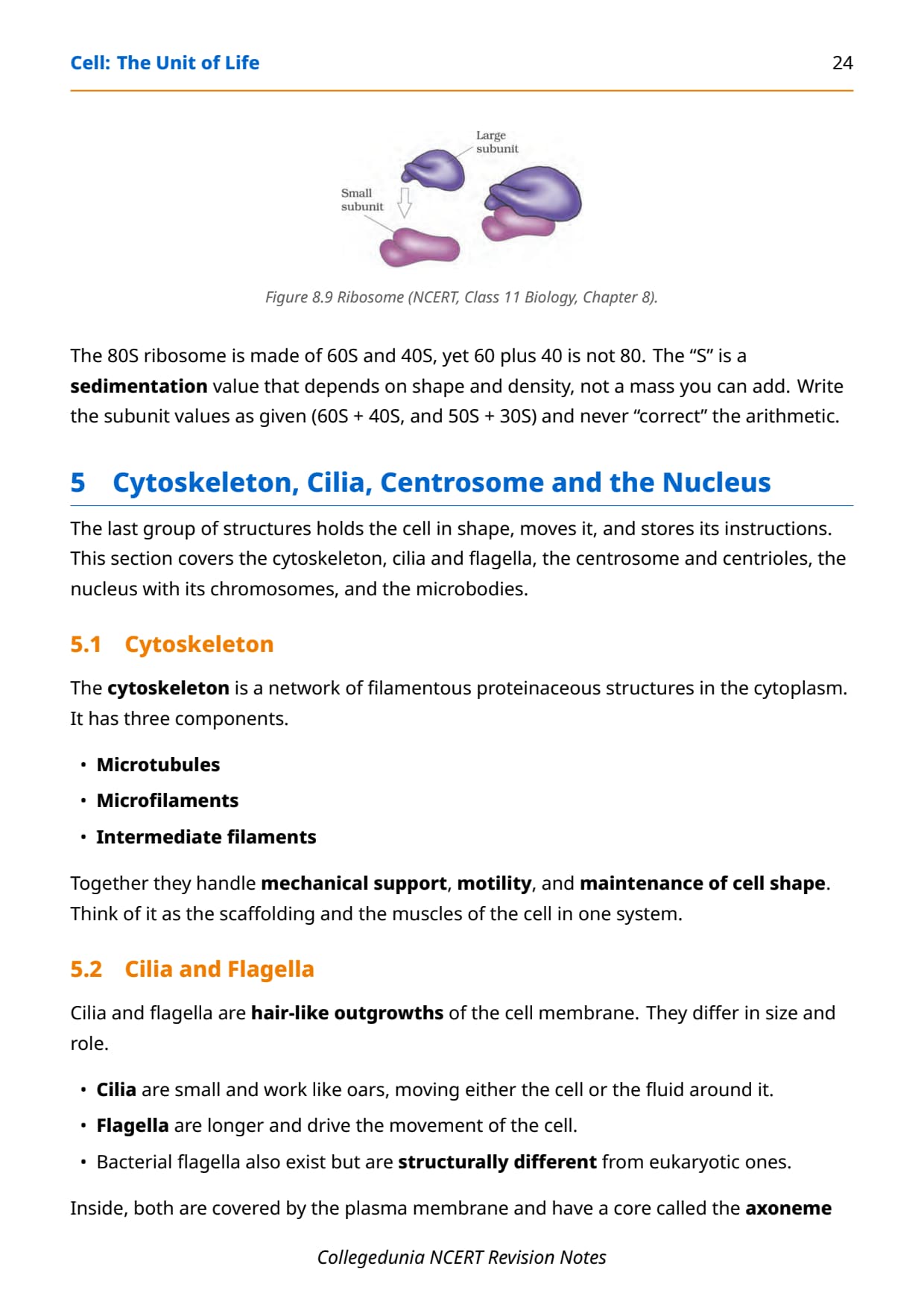
- Ribosomes: made of RNA and protein, non-membrane bound, the site of protein synthesis; eukaryotic 80S (60S and 40S), prokaryotic and organellar 70S (50S and 30S).
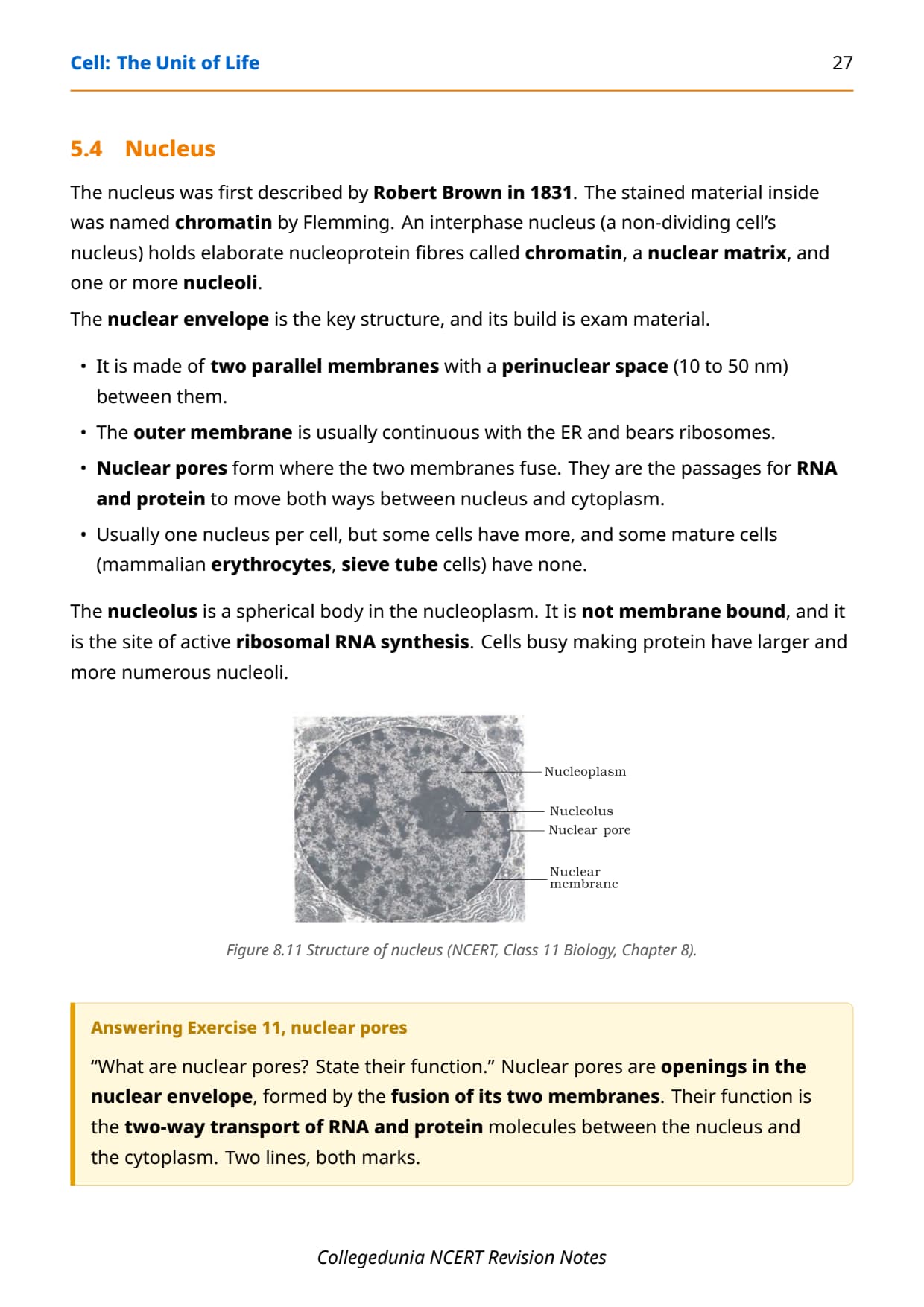
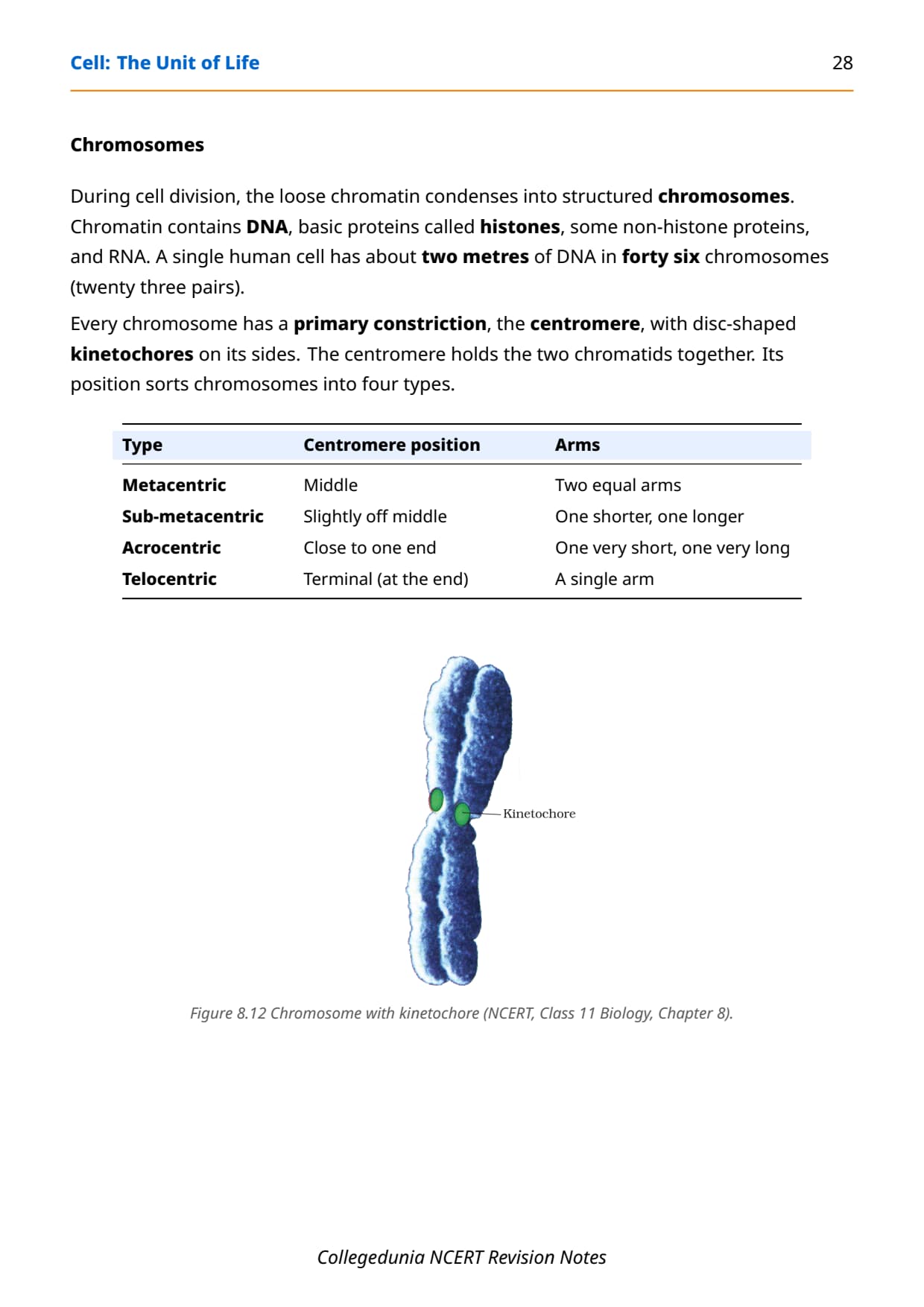
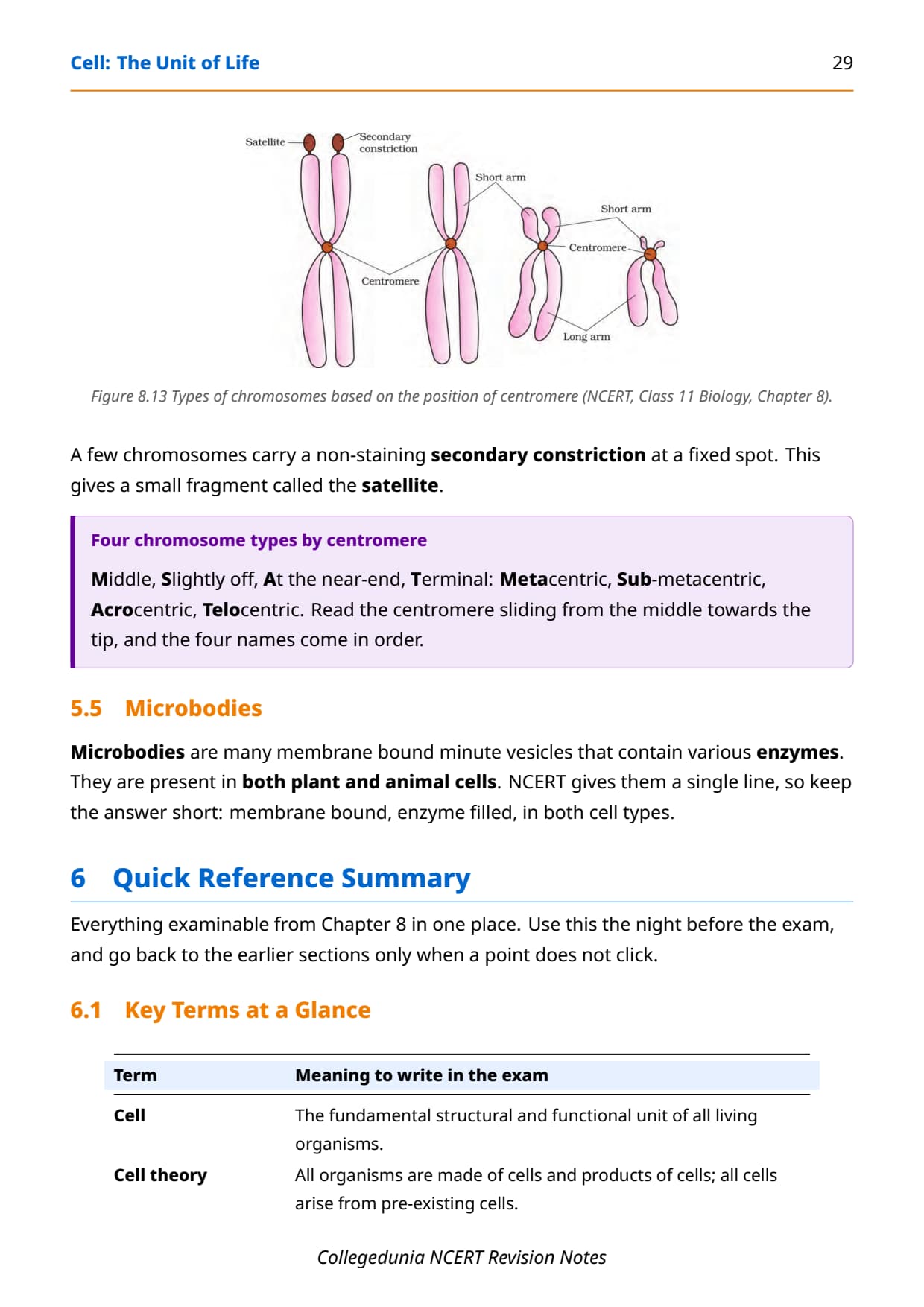
The mitochondrion and the chloroplast are the two double membrane organelles that carry their own circular DNA and 70S ribosomes and divide on their own, which hints at their bacterial origin. The nucleus was first described by Robert Brown in 1831 and is wrapped in a double nuclear envelope with a perinuclear space and nuclear pores that allow two-way transport of RNA and protein. The nucleolus is not membrane bound and is the site of ribosomal RNA synthesis. During division, chromatin condenses into chromosomes, each with a centromere bearing kinetochores; by centromere position they are metacentric, sub-metacentric, acrocentric, or telocentric. The cytoskeleton, cilia and flagella with their 9+2 axoneme, and the centrosome with its cartwheel centrioles complete the eukaryotic cell.
Key Definitions in Cell The Unit of Life
Board short-answer questions often ask for a clean definition in one or two lines, and a vague answer loses easy marks. Learn these word-for-word, because the wording of the exam question is usually built straight from the NCERT definition. Each term below also connects to a diagram or example you can be asked to explain.
| Term | Definition |
|---|---|
| Cell | The fundamental structural and functional unit of all living organisms. |
| Cell theory | All organisms are made of cells and products of cells, and all cells arise from pre-existing cells. |
| Prokaryote | A cell with no membrane bound nucleus or organelles, except ribosomes. |
| Mesosome | An infolding of the prokaryotic plasma membrane as vesicles, tubules, and lamellae. |
| Fluid mosaic model | Singer and Nicolson (1972): a quasi-fluid lipid bilayer with proteins that move laterally. |
| Endomembrane system | The ER, Golgi, lysosomes, and vacuoles, whose functions are coordinated. |
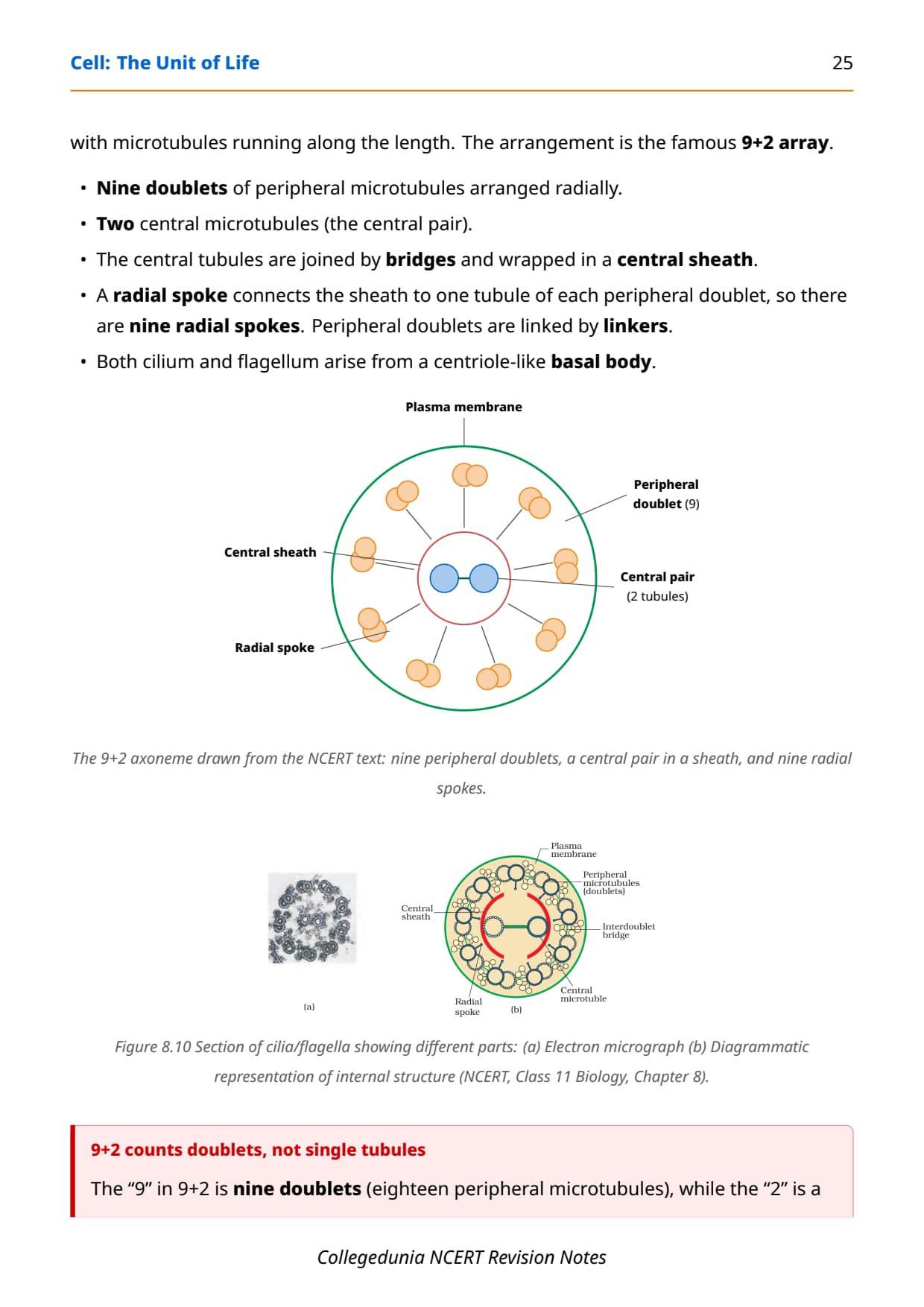
| Axoneme (9+2) | The core of cilia and flagella: nine peripheral doublets plus a central pair. |
A common board question asks you to define a mesosome and then list its functions. State the definition first, then give the five jobs it performs to earn the full mark. Learning these definitions makes the wording of almost every one-mark and two-mark question in this chapter familiar.
Common Mistakes Students Make in Cell The Unit of Life
These slips happen because two structures look alike, not because the concept is hard. Each one costs 1 to 2 marks in the paper, so watch for them at the exact step where they occur.
Mistake 1: Writing "Robert Brown discovered the cell". Brown discovered the nucleus, and Leeuwenhoek first saw and described a live cell.
Mistake 2: Calling a bacterial flagellum "9+2". Only the eukaryotic axoneme is 9+2, and the bacterial flagellum is a structurally different three-part structure.
Mistake 3: Treating the slime layer and capsule as different structures. Both are the glycocalyx, loose as slime and thick as capsule.
Mistake 4: Adding ribosome subunits, as in 60S + 40S = 80S. The "S" is a sedimentation value that depends on shape and density, not a mass you can add.
Mistake 5: Saying mitochondria are the only DNA-bearing organelle. Chloroplasts also carry circular DNA and 70S ribosomes.
Cell The Unit of Life Weightage in CBSE Boards, NEET and CUET
This chapter is diagram-heavy and consistently scoring. It appears every year as a labelled diagram or a short answer on an organelle, and it is the structural base for respiration, photosynthesis, and cell division. Here is how the marks split across the main exams for 2026-27.
| Exam | Typical weightage | What is asked |
|---|---|---|
| CBSE Boards | 5 to 7 marks | A labelled diagram of the cell or an organelle plus short answers on cell theory, the membrane, and the nucleus |
| NEET | 2 to 3 questions | Prokaryotic structures, the fluid mosaic model, double membrane organelles, and the 9+2 axoneme |
| CUET | 1 to 2 objective questions | Cell theory, organelle functions, and the prokaryote versus eukaryote comparison |
The prokaryote versus eukaryote divide and the double membrane organelles are the most tested ideas from this chapter across all three exams. Master the cell membrane and the organelle diagrams first, then the prokaryotic envelope, then the nucleus, in that order of return on effort for the 2026-27 session.
How to Revise Cell The Unit of Life Quickly
Use these cell the unit of life class 11 notes for a fast, ordered recap the night before a test. The checklist below takes about 30 minutes and hits every marks-heavy idea in the chapter without opening the full textbook.
- First 10 minutes: write the two statements of cell theory, then draw and label a prokaryotic cell showing the envelope, nucleoid, mesosome, and flagellum.
- Next 10 minutes: sketch the fluid mosaic model and list the endomembrane system, then note who is left out and why.
- Last 10 minutes: draw a mitochondrion and a chloroplast, mark cristae and grana, and label the nucleus with its pores and nucleolus.
Close the loop by explaining why mitochondria and chloroplasts are thought to have a bacterial origin. If you can do all three blocks without notes, the chapter is exam-ready. Keep the organelle diagrams beside you for the first pass only, then try the whole checklist closed-book.
Student Feedback on the Cell The Unit of Life Notes
What 12,400 students told us about their Cell The Unit of Life revision:
- 71% of students rated the labelled organelle diagrams as the part most worth practising for the exam.
- Most-confused pair: lysosome versus vacuole, mixed up by about 3 in 10 students.
- Students who learnt the double membrane organelles as a set said questions on mitochondria and chloroplasts felt easy afterwards.
Source: 2026-27 Class 11 Biology student poll. Sample of 12,400 students from CBSE schools across 15 states, conducted before the 2026 boards.
Other Cell The Unit of Life Class 11 Biology Resources
Pair these notes with the solved answers, the formula sheet, and the textbook PDF for the same chapter.
| Resource | Link |
|---|---|
| NCERT Solutions | Cell The Unit of Life Class 11 NCERT Solutions |
| Formula Sheet | Cell The Unit of Life Class 11 Formula Sheet |
| Exemplar Solutions | Cell The Unit of Life Class 11 Exemplar Solutions |
| NCERT Book PDF | Cell The Unit of Life Class 11 Book PDF |
| Exemplar Book PDF | Cell The Unit of Life Class 11 Exemplar Book PDF |
NCERT Notes for Class 11 Biology: All Chapters
Jump to the revision notes for any other Class 11 Biology chapter below.
| Chapter | NCERT Notes |
|---|---|
| Chapter 1 | The Living World |
| Chapter 2 | Biological Classification |
| Chapter 3 | Plant Kingdom |
| Chapter 4 | Animal Kingdom |
| Chapter 5 | Morphology of Flowering Plants |
| Chapter 6 | Anatomy of Flowering Plants |
| Chapter 7 | Structural Organisation in Animals |
| Chapter 8 | Cell The Unit of Life |
| Chapter 9 | Biomolecules |
| Chapter 10 | Cell Cycle and Cell Division |
| Chapter 11 | Photosynthesis in Higher Plants |
| Chapter 12 | Respiration in Plants |
| Chapter 13 | Plant Growth and Development |
| Chapter 14 | Breathing and Exchange of Gases |
| Chapter 15 | Body Fluids and Circulation |
| Chapter 16 | Excretory Products and their Elimination |
| Chapter 17 | Locomotion and Movement |
| Chapter 18 | Neural Control and Coordination |
| Chapter 19 | Chemical Coordination and Integration |
FAQs on Cell The Unit of Life Class 11 Biology Notes
Cell the Unit of Life Notes - Frequently Asked Questions
Ques. What topics do the cell the unit of life class 11 notes cover?
Ans. These cell the unit of life class 11 notes cover the cell as the unit of life, cell theory, the prokaryotic and eukaryotic cell plans, cell size and shape, the cell envelope and mesosome, the fluid mosaic model of the membrane, the cell wall, the endomembrane system of ER, Golgi, lysosomes and vacuoles, mitochondria, plastids and ribosomes, the cytoskeleton, cilia and flagella, the centrosome, and the nucleus with its chromosomes. Every key definition and diagram is included for fast revision.
Ques. What is the difference between prokaryotic and eukaryotic cells?
Ans. The single dividing feature is a membrane bound nucleus. Eukaryotic cells have an organised nucleus with an envelope and membrane bound organelles such as the ER, Golgi, lysosomes, and mitochondria, and their DNA is organised into chromosomes. Prokaryotic cells lack a membrane bound nucleus and lack membrane bound organelles, carry naked circular DNA, and have only 70S ribosomes. Prokaryotes are generally smaller and multiply more rapidly than eukaryotic cells.
Ques. What is the fluid mosaic model of the cell membrane?
Ans. The fluid mosaic model, proposed by Singer and Nicolson in 1972, describes the plasma membrane as a phospholipid bilayer studded with proteins. The lipids are quasi-fluid, which lets both lipids and proteins move sideways within the plane of the membrane, and this fluidity matters for cell growth, secretion, endocytosis, and cell division. Peripheral proteins sit on the surface while integral proteins are buried in the bilayer, and the membrane is selectively permeable.
Ques. Which organelles are double membrane bound?
Ans. The two double membrane bound organelles are the mitochondrion and the chloroplast. Both carry their own circular DNA and 70S ribosomes and divide independently, which points to their bacterial origin. The mitochondrion runs aerobic respiration and makes ATP, with its inner membrane folded into cristae. The chloroplast traps light for photosynthesis, with grana of stacked thylakoids sitting in the stroma.
Ques. What is a mesosome and what does it do?
Ans. A mesosome is a specialised differentiated form of cell membrane in prokaryotes, formed by infoldings of the plasma membrane in the form of vesicles, tubules, and lamellae. Its functions are to help in cell wall formation, DNA replication and distribution to daughter cells, respiration, secretion processes, and to increase the surface area of the plasma membrane and its enzymatic content. It is characteristic of prokaryotic cells.
Ques. What is the weightage of this chapter in the CBSE board exam?
Ans. Cell The Unit of Life carries about 5 to 7 marks in the CBSE Class 11 Biology paper, usually one labelled diagram of the cell or an organelle plus short answers on cell theory, the membrane, and the nucleus. It also appears in NEET as two to three questions on prokaryotic structures, the fluid mosaic model, double membrane organelles, and the 9+2 axoneme, and in CUET as objective questions, which makes it a high-return chapter for the 2026-27 session.
Ques. What is the 9+2 arrangement in cilia and flagella?
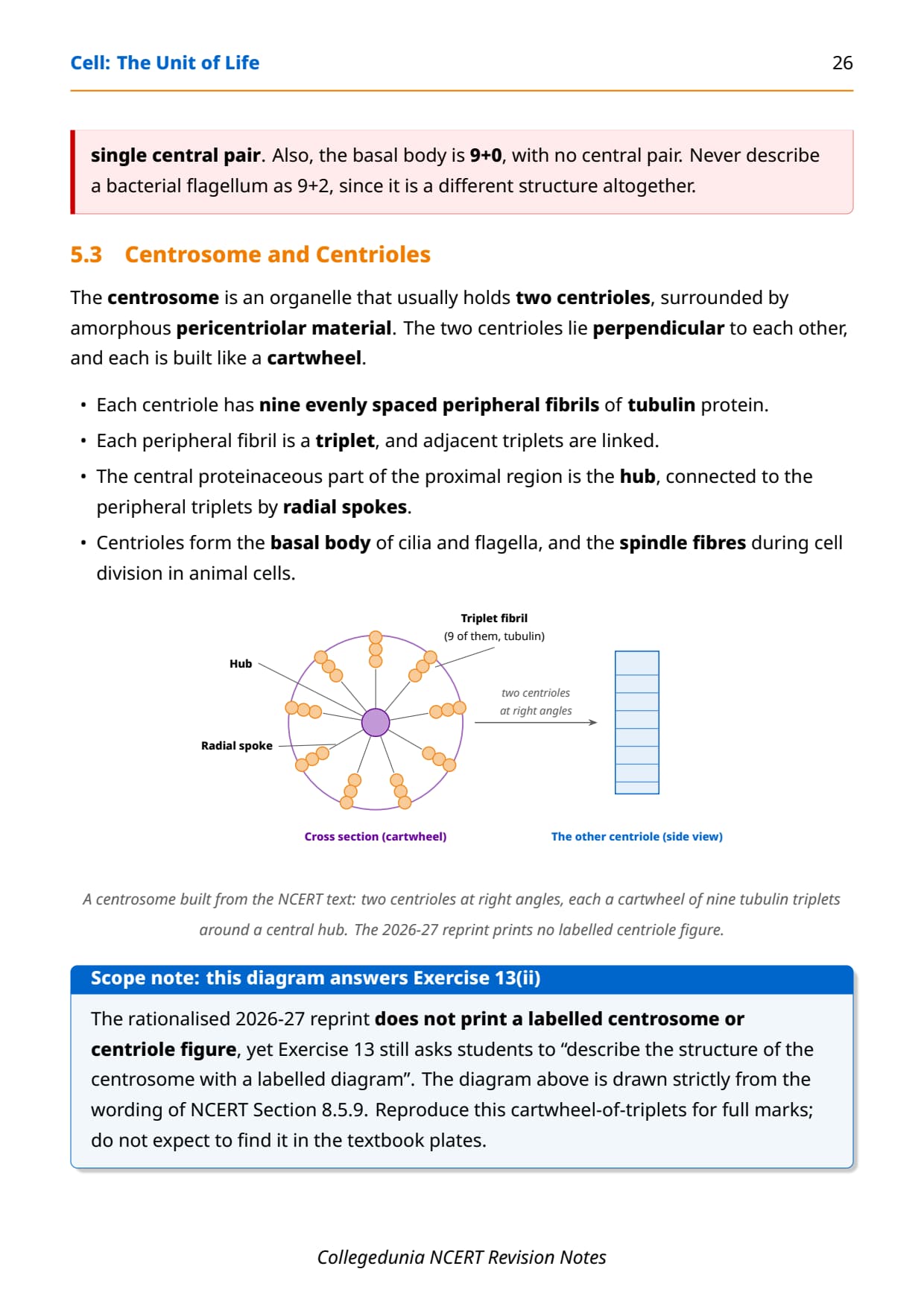
Ans. The core of a eukaryotic cilium or flagellum is the axoneme, which shows a 9+2 array: nine doublets of peripheral microtubules arranged radially around two central microtubules. The central pair is wrapped in a central sheath, and a radial spoke connects the sheath to each peripheral doublet, giving nine radial spokes. The "9" counts doublets, not single tubules, and the bacterial flagellum is a structurally different structure that is never described as 9+2.



Comments