




These chemical coordination and integration class 11 notes bring together every gland, hormone, and mechanism that the CBSE Boards, NEET and CUET papers actually test in 2026-27. Revise the whole chapter fast, with the endocrine system, every human endocrine gland and the hormones it makes, the hormones from the heart, kidney and gut, and the two ways a hormone acts on its target cell in one place.
This is the last chapter of the Human Physiology unit, and it builds directly on the neural coordination you met in the previous chapter, showing how hormones give the slower, body-wide half of control.
- CBSE Weightage: 4 to 6 marks, usually one gland-hormone-function question plus one on a hormonal disorder or the mechanism of hormone action.
- Topics covered: the endocrine system, the hypothalamus and pituitary, the pineal, thyroid, parathyroid and thymus, the adrenal gland, pancreas and gonads, the hormones of the heart, kidney and gut, and the mechanism of hormone action.
- Key facts: endocrine glands are ductless, PTH raises blood calcium while thyrocalcitonin lowers it, insulin lowers blood glucose while glucagon raises it, and protein hormones use a second messenger while steroids act on genes.
These chemical coordination and integration class 11 notes are curated by subject experts, based on the 2026-27 NCERT textbook, and checked against the last five years of CBSE Board and NEET papers.
Topic-by-Topic Summary of Chemical Coordination and Integration
The chapter works gland by gland from the head down, then explains how any hormone changes its target cell. It starts with what an endocrine gland is, moves through the pituitary, thyroid, adrenal, pancreas and gonads, adds the non-classical hormone sources, and ends with the two mechanisms of hormone action. Here is the quick map of what each topic gives you before you revise the detail.
- The endocrine system: ductless glands that pour hormones straight into the blood, and the modern definition of a hormone as a non-nutrient intercellular messenger.
- Hypothalamus and pituitary: the chain of command, the pituitary lobes, and the hormones each lobe makes, plus the pineal gland and melatonin.
- Thyroid, parathyroid and thymus: the control of metabolic rate, blood calcium balance, and immunity.
- Adrenal, pancreas and gonads: the stress response, blood sugar control, and reproduction.
- Diffuse hormones: the hormones made by the heart, kidney and gastrointestinal tract.
- Mechanism of hormone action: the membrane pathway for protein hormones and the genome pathway for steroids.
Revise the topics in this order, because each one uses the one before it. Master the gland-hormone-function table first, and the disorders and mechanisms fall into place around it. These chemical coordination and integration class 11 notes follow the same sequence as the NCERT textbook.
The Endocrine System: Glands and Hormones
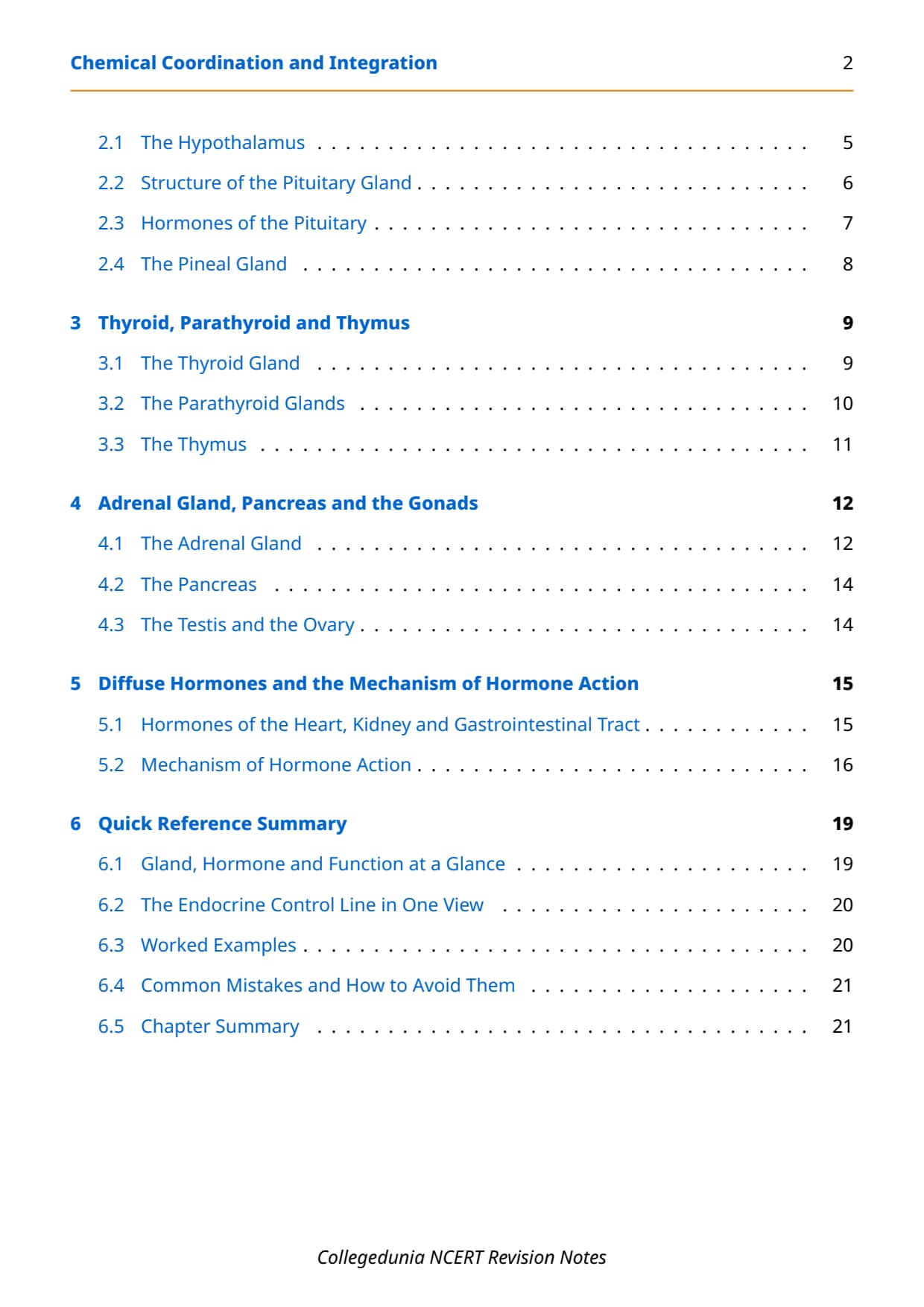
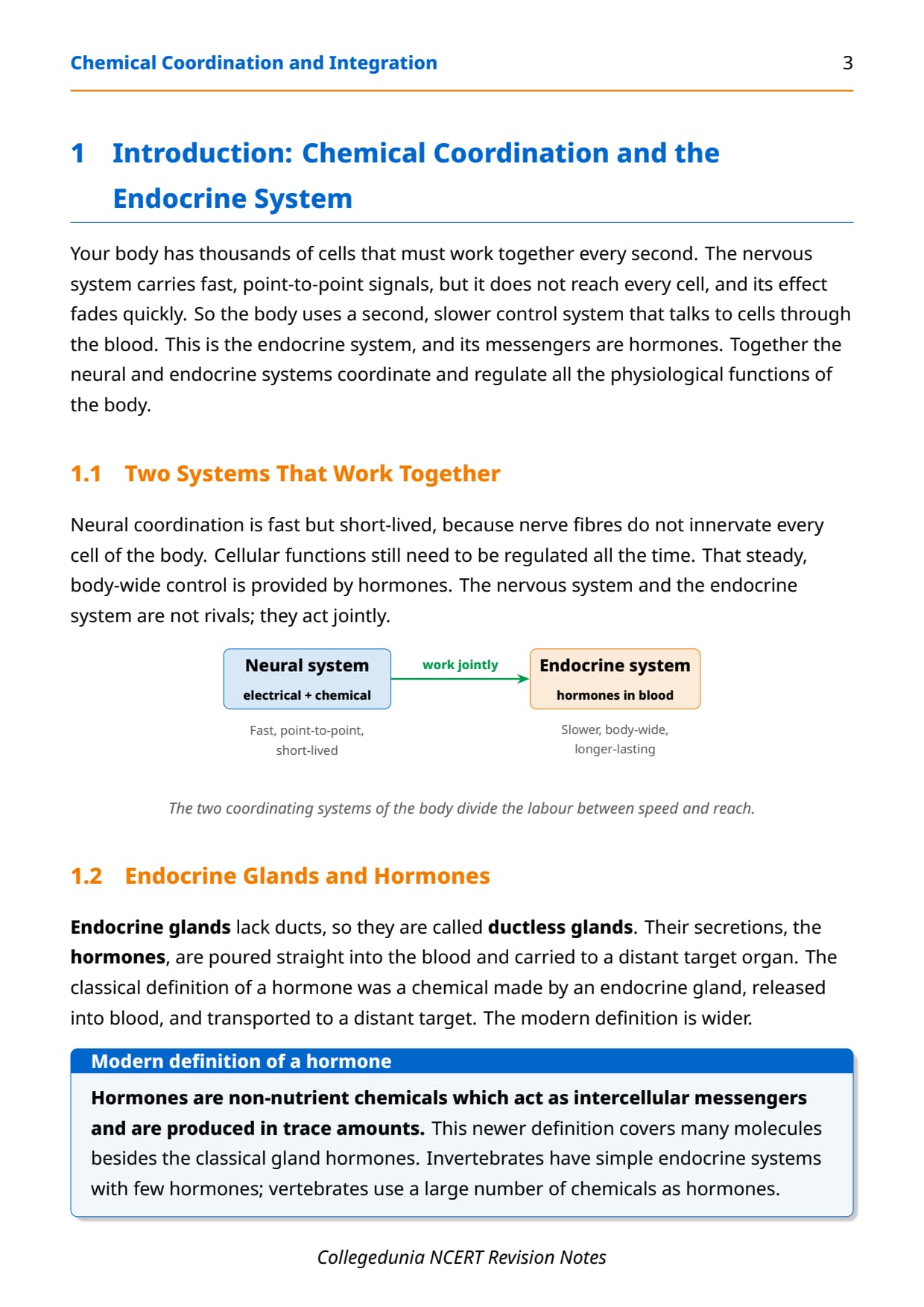
The nervous system carries fast, point-to-point signals, but it does not reach every cell and its effect fades quickly, so the body uses a second, slower control system that talks to cells through the blood. This is the endocrine system, and its messengers are hormones. Endocrine glands lack ducts, so they are called ductless glands, and their secretions are poured straight into the blood and carried to a distant target organ.
- Modern definition of a hormone: a non-nutrient chemical that acts as an intercellular messenger and is produced in trace amounts.
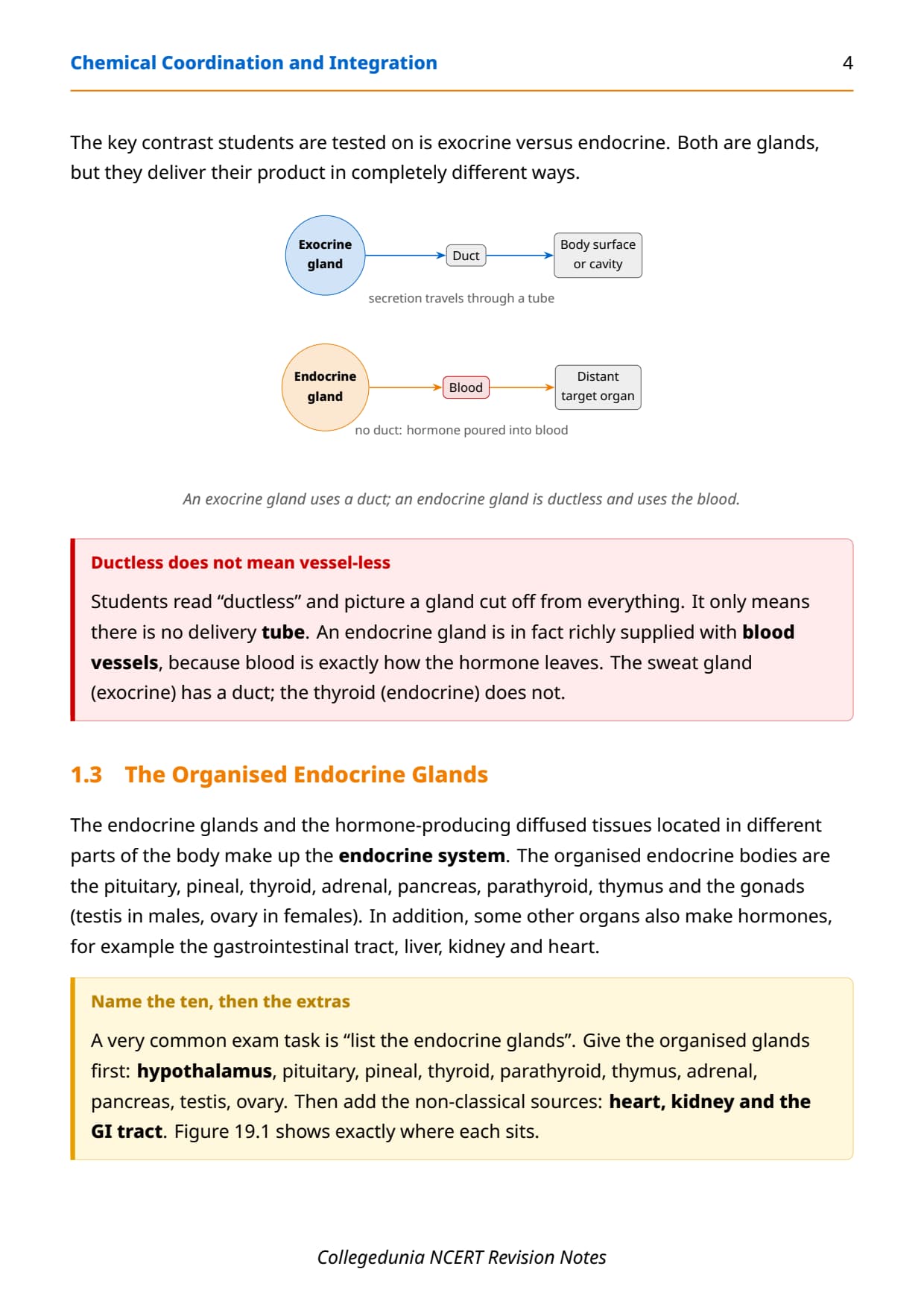
- Exocrine versus endocrine: an exocrine gland releases its product through a duct, while an endocrine gland is ductless and uses the blood.
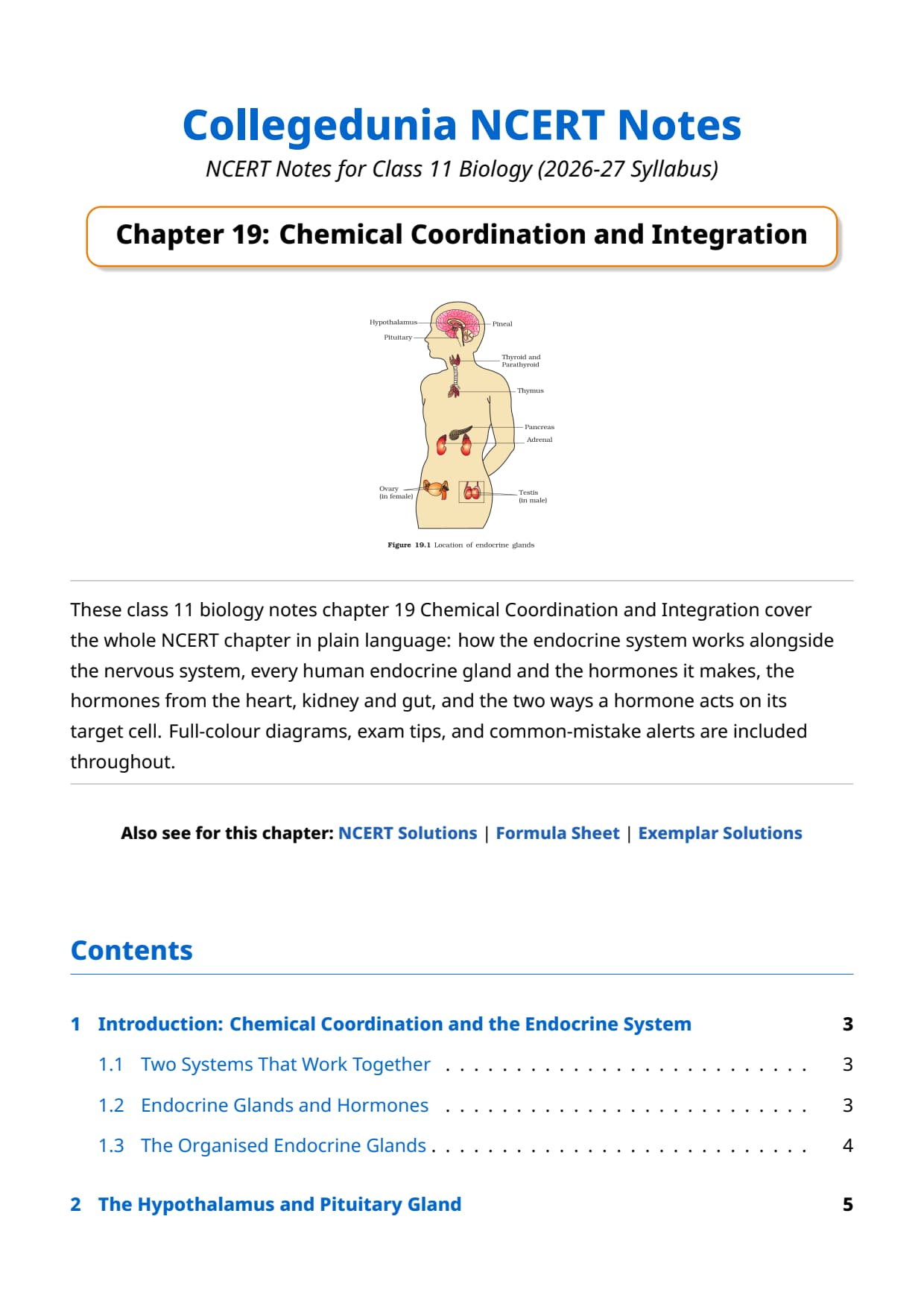
- Organised endocrine glands: the hypothalamus, pituitary, pineal, thyroid, parathyroid, thymus, adrenal, pancreas, and the gonads (testis and ovary).
- Non-classical sources: the heart, kidney, and gastrointestinal tract also secrete hormones.
The key contrast the exam tests is exocrine versus endocrine, and the wording "ductless" trips many students. Ductless does not mean vessel-less: an endocrine gland has no delivery tube but is richly supplied with blood vessels, because blood is exactly how the hormone leaves. The sweat gland is exocrine with a duct, while the thyroid is endocrine and ductless. When a question asks you to list the endocrine glands, give the organised glands first, then add the heart, kidney, and gut as the non-classical sources.
The Hypothalamus and Pituitary Gland
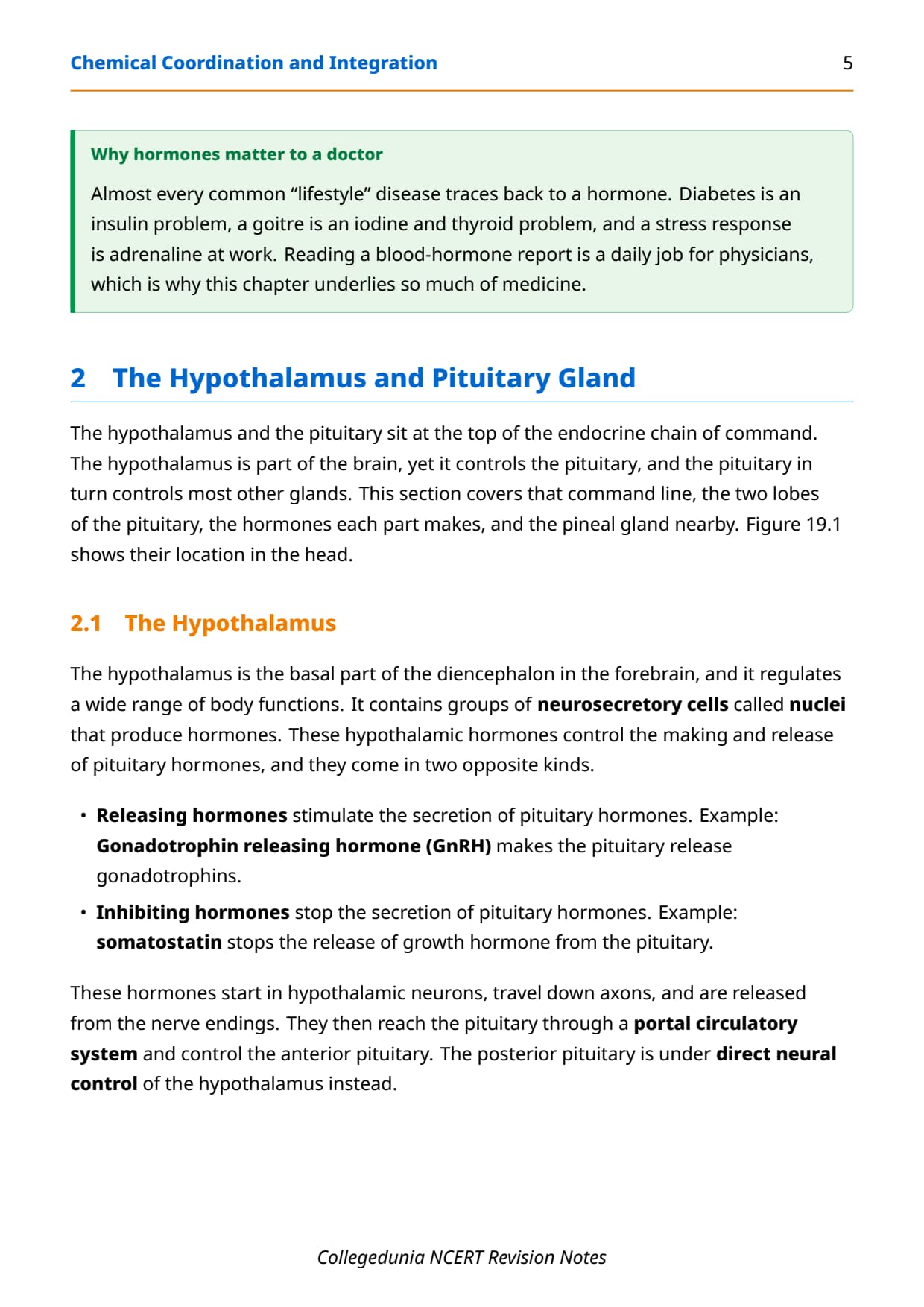
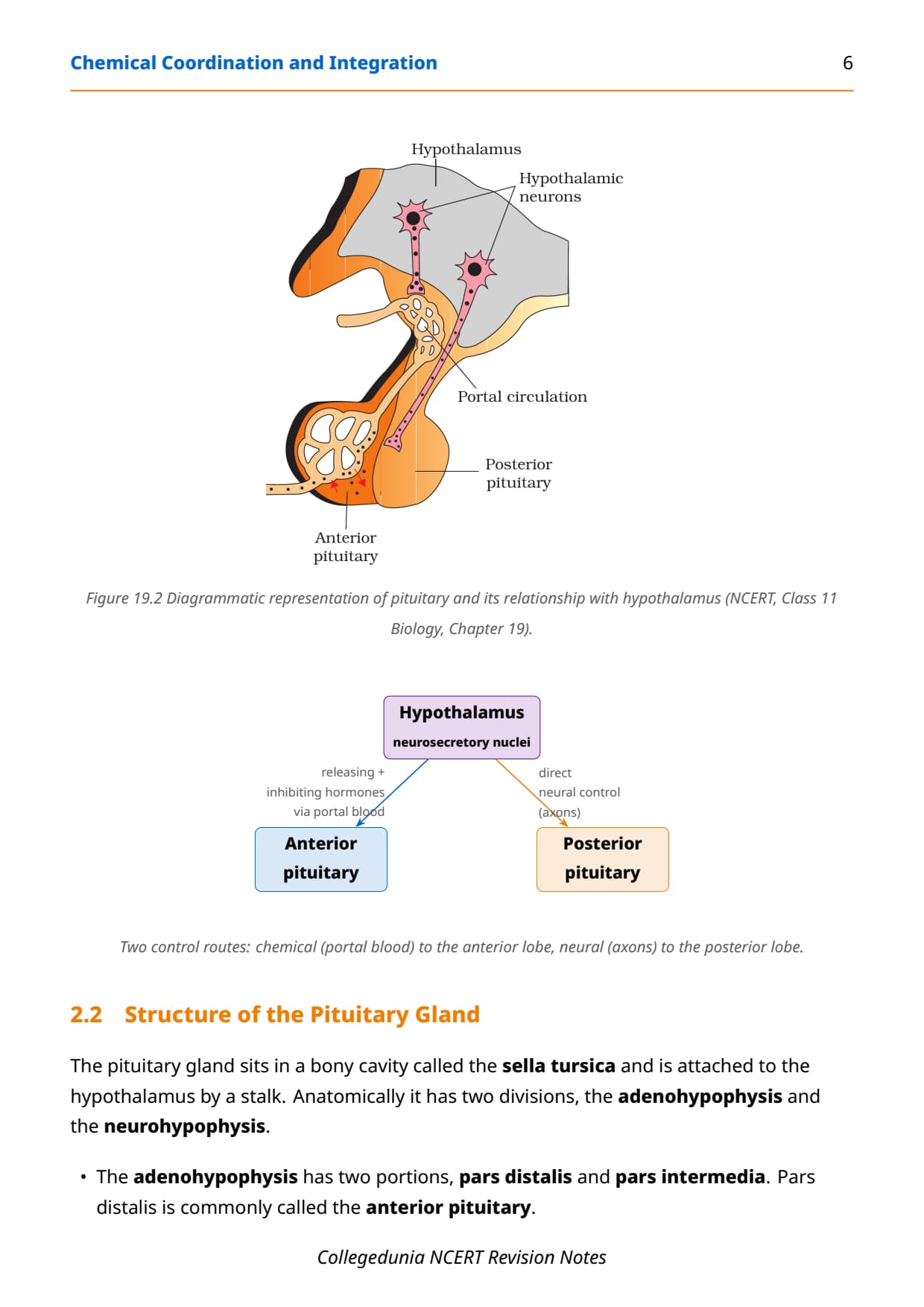
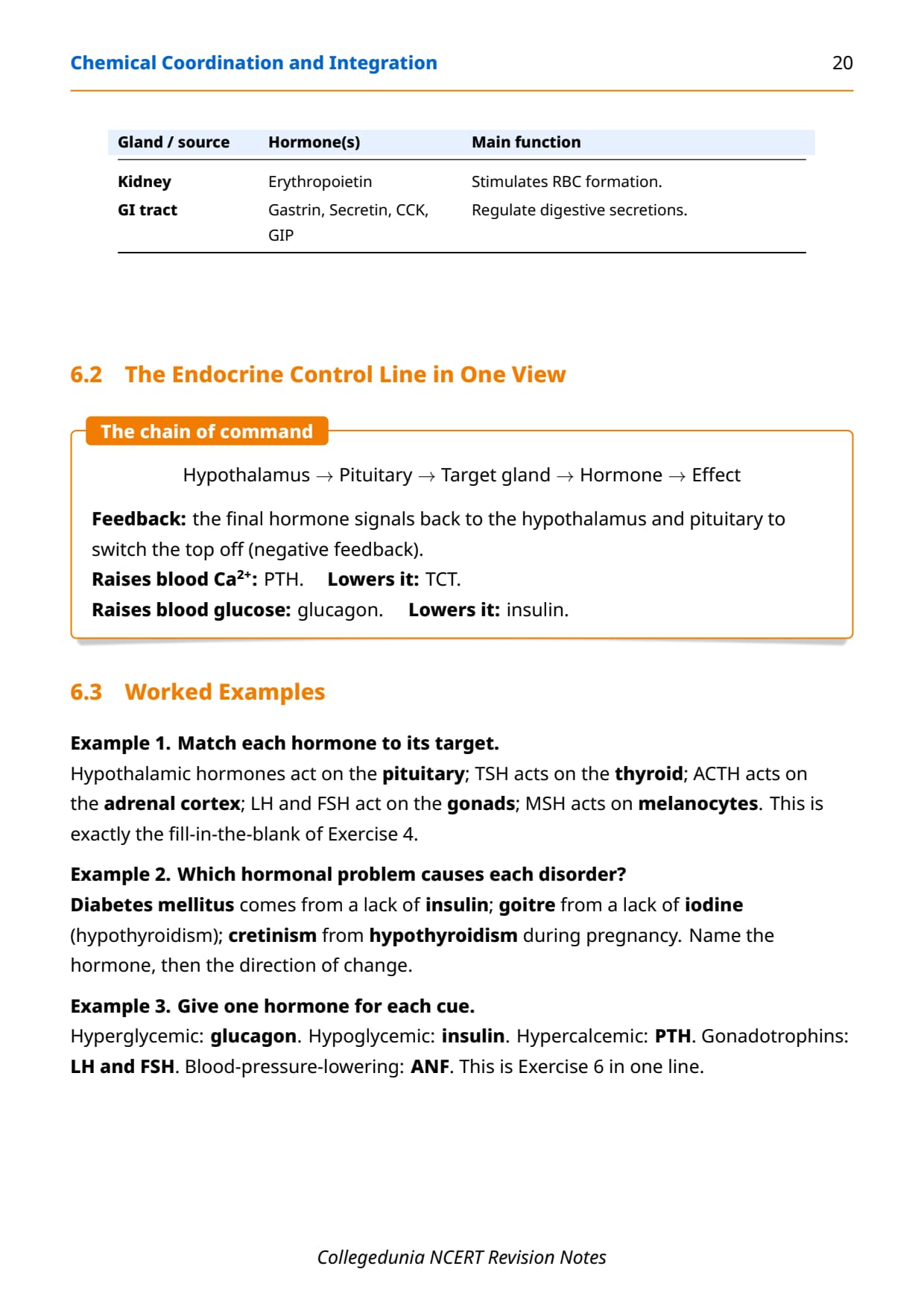
The hypothalamus and the pituitary sit at the top of the endocrine chain of command. The hypothalamus is part of the forebrain, yet it controls the pituitary through neurosecretory cells that make releasing and inhibiting hormones, and the pituitary in turn controls most other glands. The pituitary sits in a bony cavity called the sella tursica and has an anterior lobe (pars distalis), a pars intermedia, and a posterior lobe (pars nervosa).
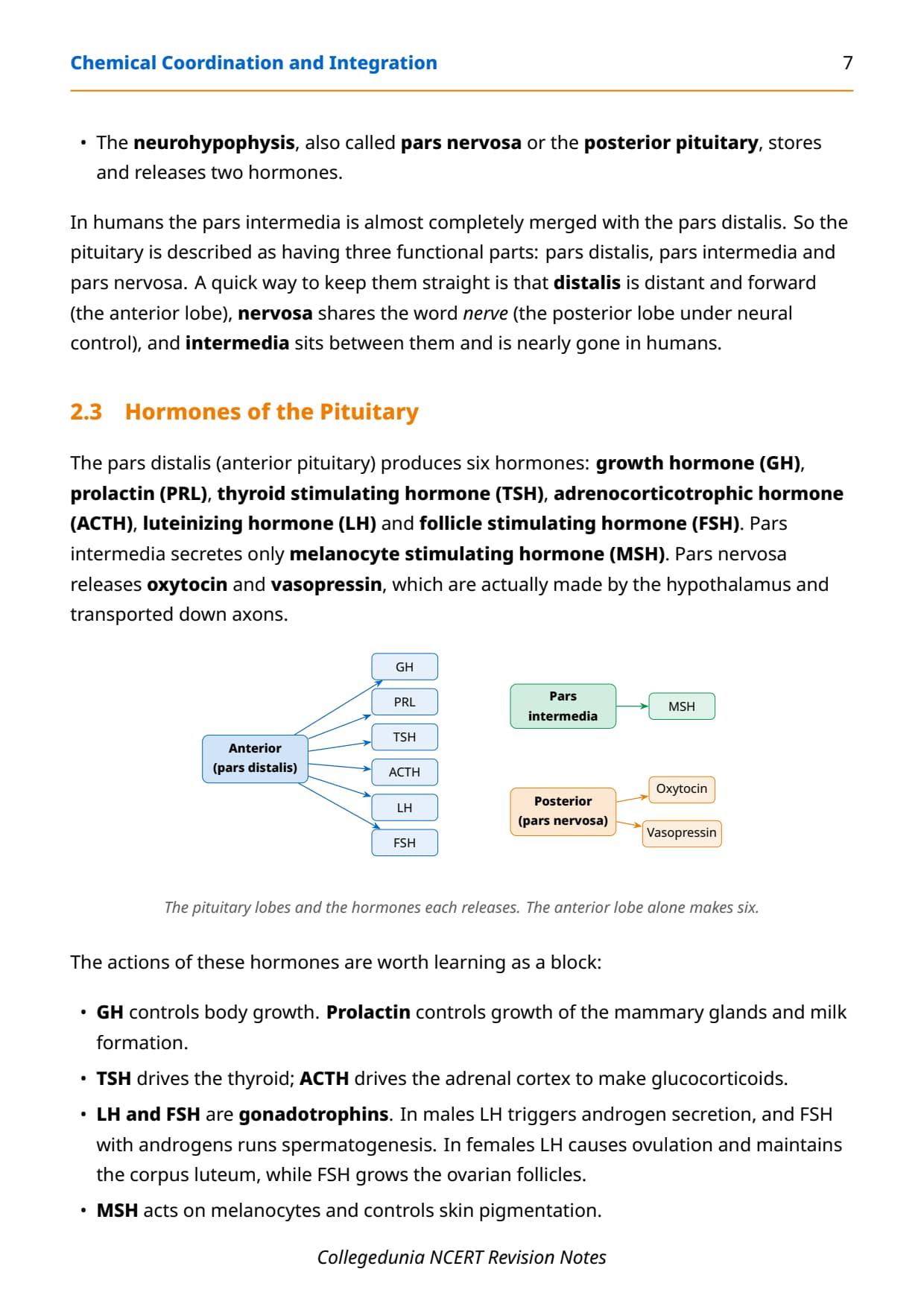
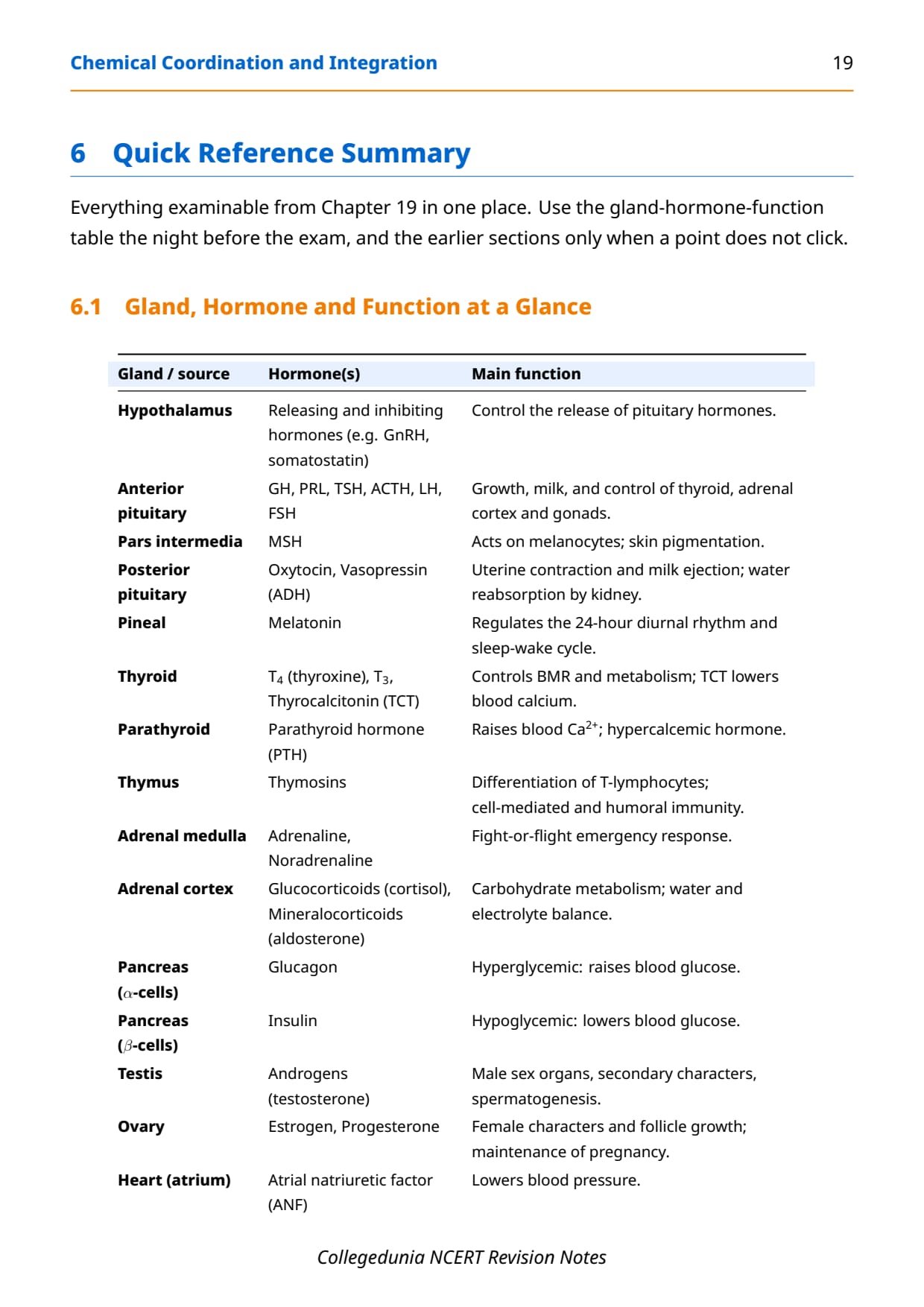
- Anterior pituitary: makes six hormones, GH (growth), prolactin (milk), TSH (thyroid), ACTH (adrenal cortex), and the gonadotrophins LH and FSH.
- Pars intermedia: makes only MSH, which acts on melanocytes to control skin pigmentation.
- Posterior pituitary: releases oxytocin (uterine contraction, milk ejection) and vasopressin or ADH (water reabsorption by the kidney).
- Pineal gland: lies on the dorsal forebrain and secretes melatonin, which controls the 24-hour diurnal rhythm and the sleep-wake cycle.
A useful mnemonic for the six anterior hormones is FLAT PiG, that is, FSH, LH, ACTH, TSH, Prolactin, GH. The commonest mistake is to say the posterior pituitary produces oxytocin and vasopressin; it only stores and releases them, because both are actually made in the hypothalamus and carried down axons. On disorders, excess GH in childhood causes gigantism and too little causes pituitary dwarfism, excess GH in adults causes acromegaly, and a failure of ADH causes Diabetes Insipidus, which is a water problem, not a sugar problem.
Thyroid, Parathyroid and Thymus
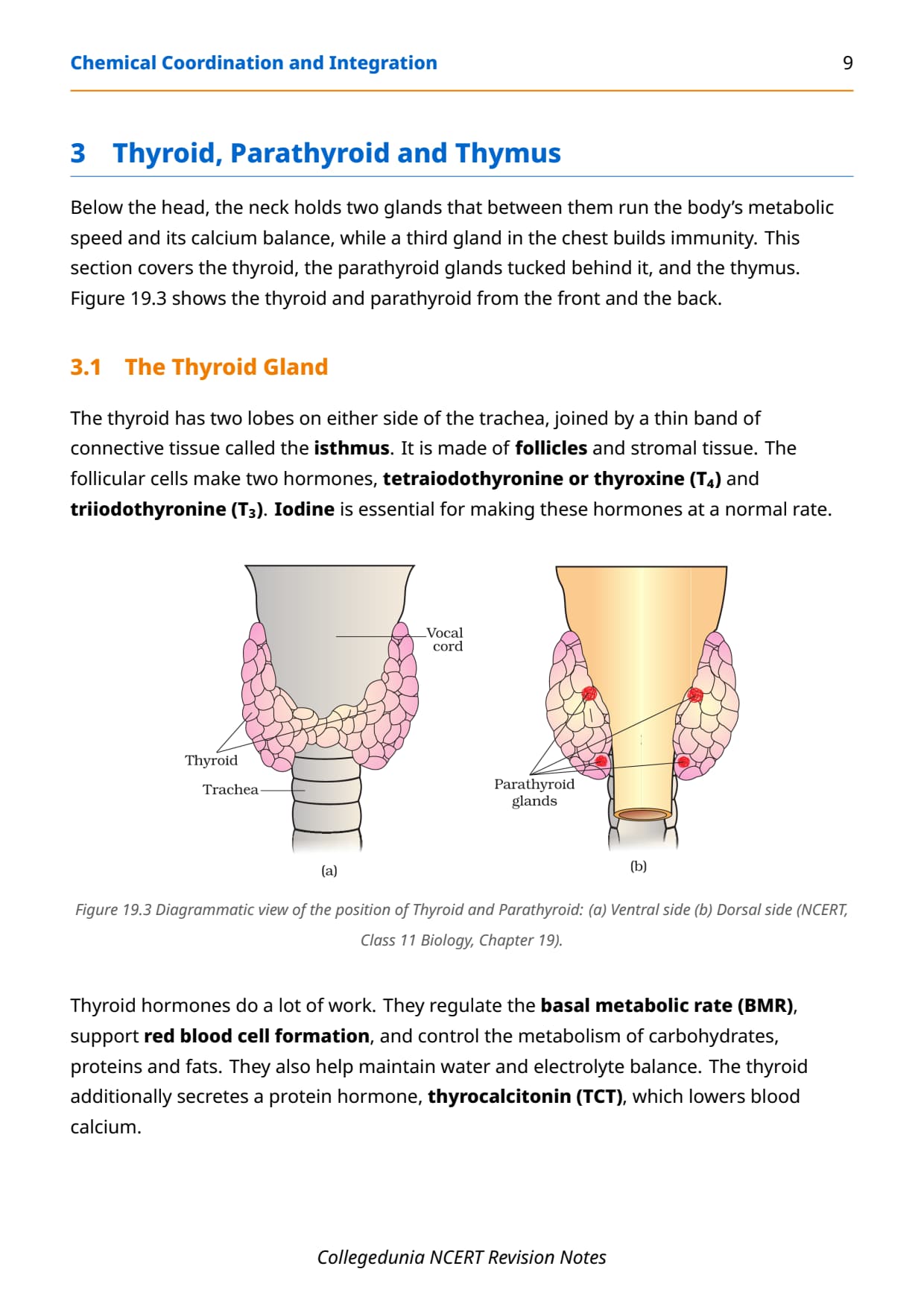
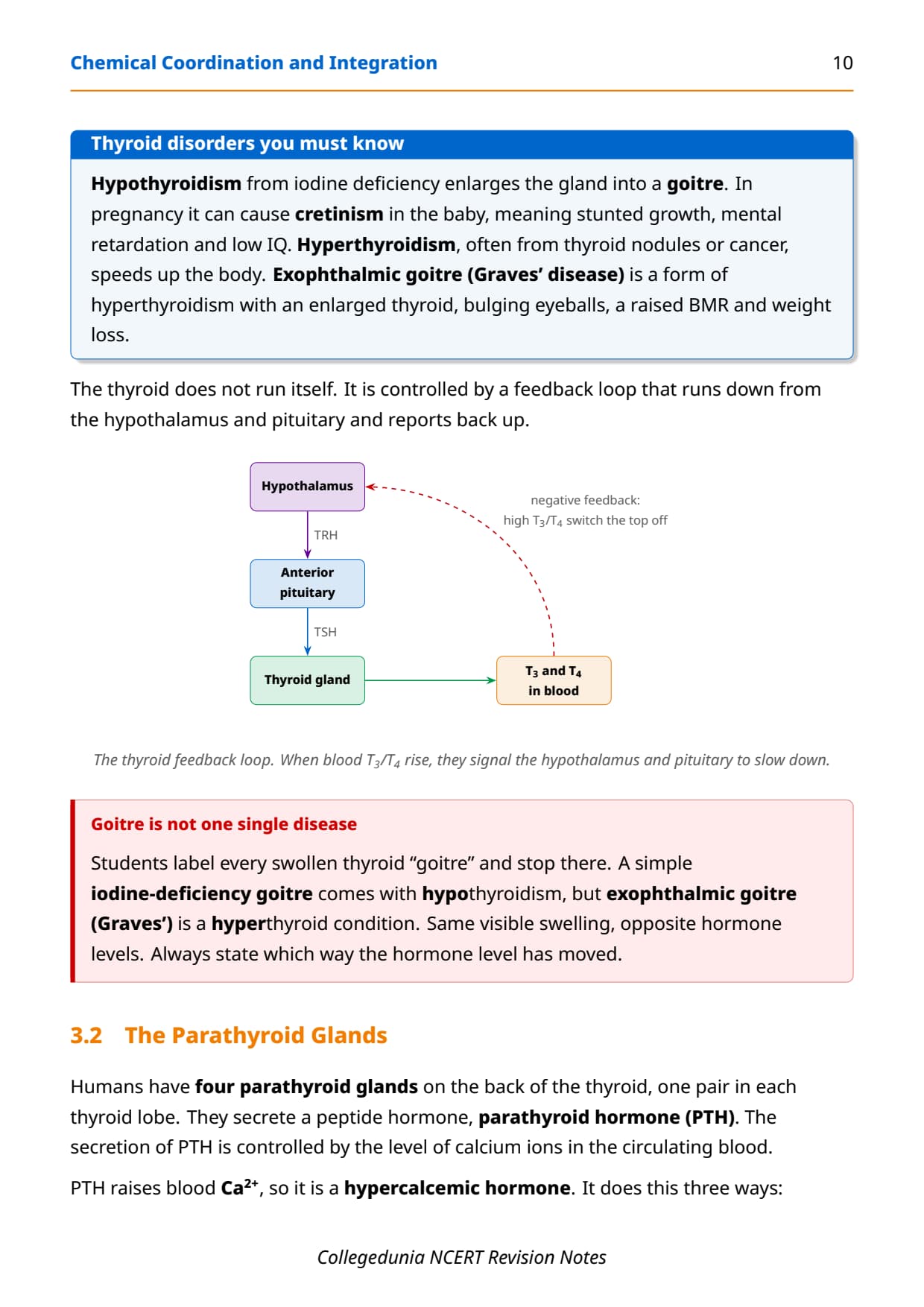
The neck holds two glands that between them run the body's metabolic speed and its calcium balance, while a third gland in the chest builds immunity. The thyroid has two lobes joined by an isthmus and is made of follicles. Its follicular cells make thyroxine (T4) and triiodothyronine (T3), for which iodine is essential, and it also secretes thyrocalcitonin (TCT), which lowers blood calcium.
- Thyroid hormones: regulate the basal metabolic rate (BMR), support red blood cell formation, and control the metabolism of carbohydrates, proteins, and fats.
- Thyroid disorders: iodine deficiency causes hypothyroidism and a goitre, and in pregnancy can cause cretinism, while hyperthyroidism includes exophthalmic goitre (Graves' disease) with bulging eyeballs and weight loss.
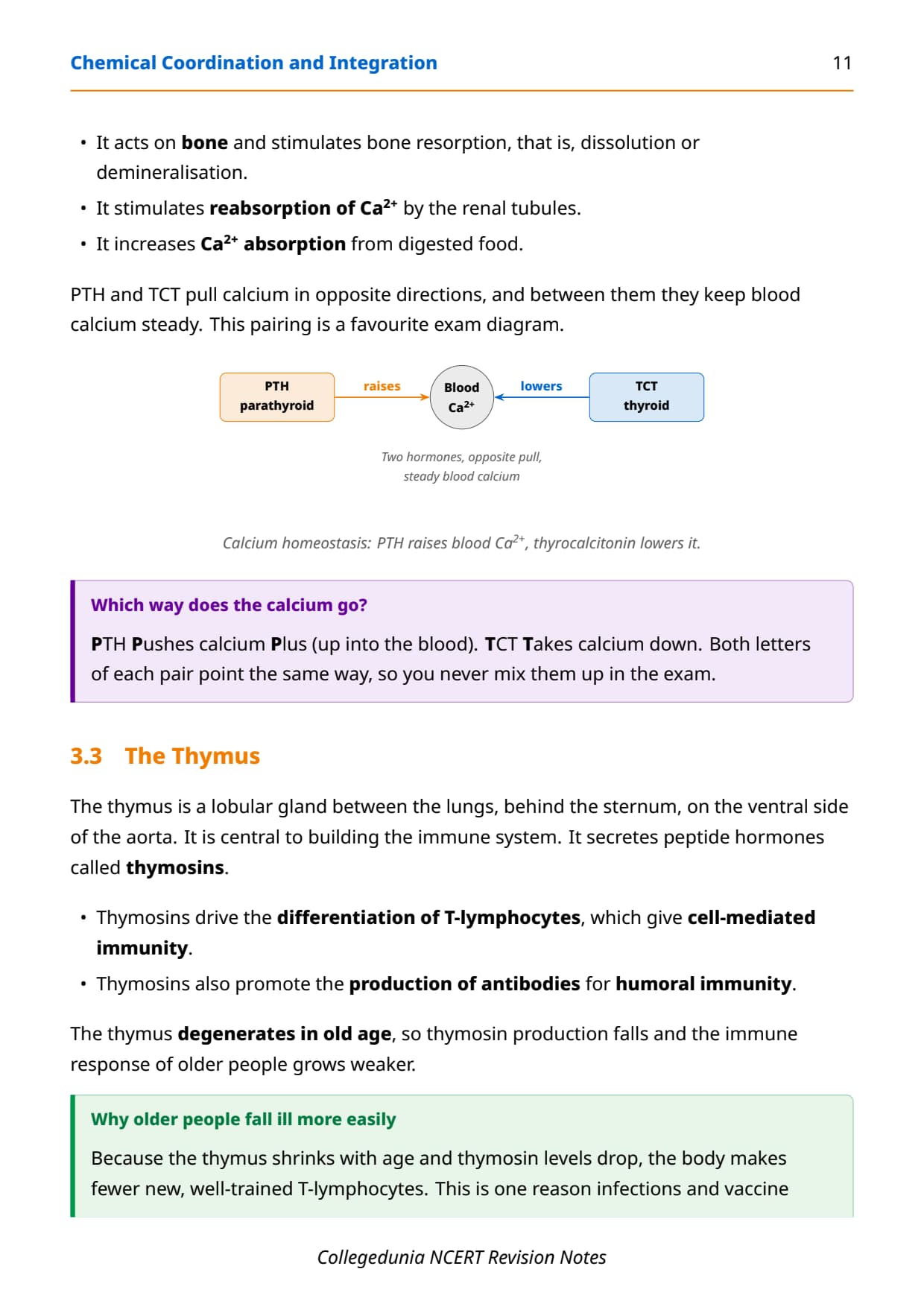
- Parathyroid glands: four glands on the back of the thyroid secrete parathyroid hormone (PTH), which raises blood Ca2+, so it is a hypercalcemic hormone.
- Thymus: secretes thymosins that drive the differentiation of T-lymphocytes for cell-mediated immunity, and it degenerates in old age.
PTH and TCT pull calcium in opposite directions and between them keep blood calcium steady, so PTH pushes calcium up into the blood while TCT takes it down. A frequent slip is to call every swollen thyroid a goitre and stop there, but an iodine-deficiency goitre comes with hypothyroidism while exophthalmic goitre is a hyperthyroid condition, so always state which way the hormone level has moved. Because the thymus shrinks with age and thymosin falls, older people mount a weaker immune response.
Adrenal Gland, Pancreas and the Gonads
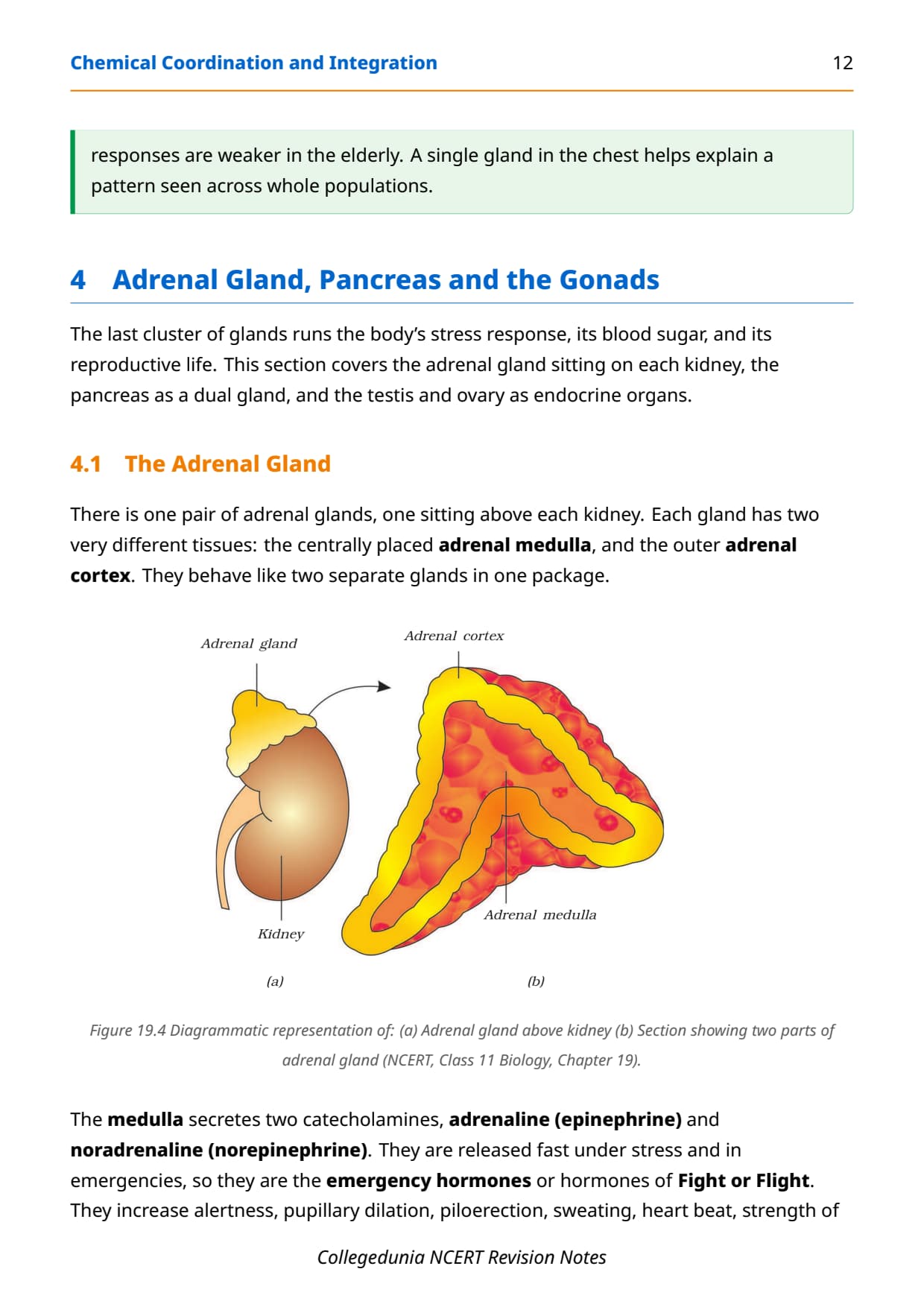
The last cluster of glands runs the body's stress response, its blood sugar, and its reproductive life. There is one pair of adrenal glands, one above each kidney, and each has two very different tissues: the central adrenal medulla and the outer adrenal cortex. The medulla secretes adrenaline and noradrenaline, the emergency hormones of fight or flight, while the cortex secretes corticoids.
- Glucocorticoids (cortisol): drive carbohydrate metabolism and gluconeogenesis, are anti-inflammatory, and suppress the immune response.
- Mineralocorticoids (aldosterone): act on the renal tubules to reabsorb Na+ and water and excrete K+, controlling blood pressure and body-fluid volume.
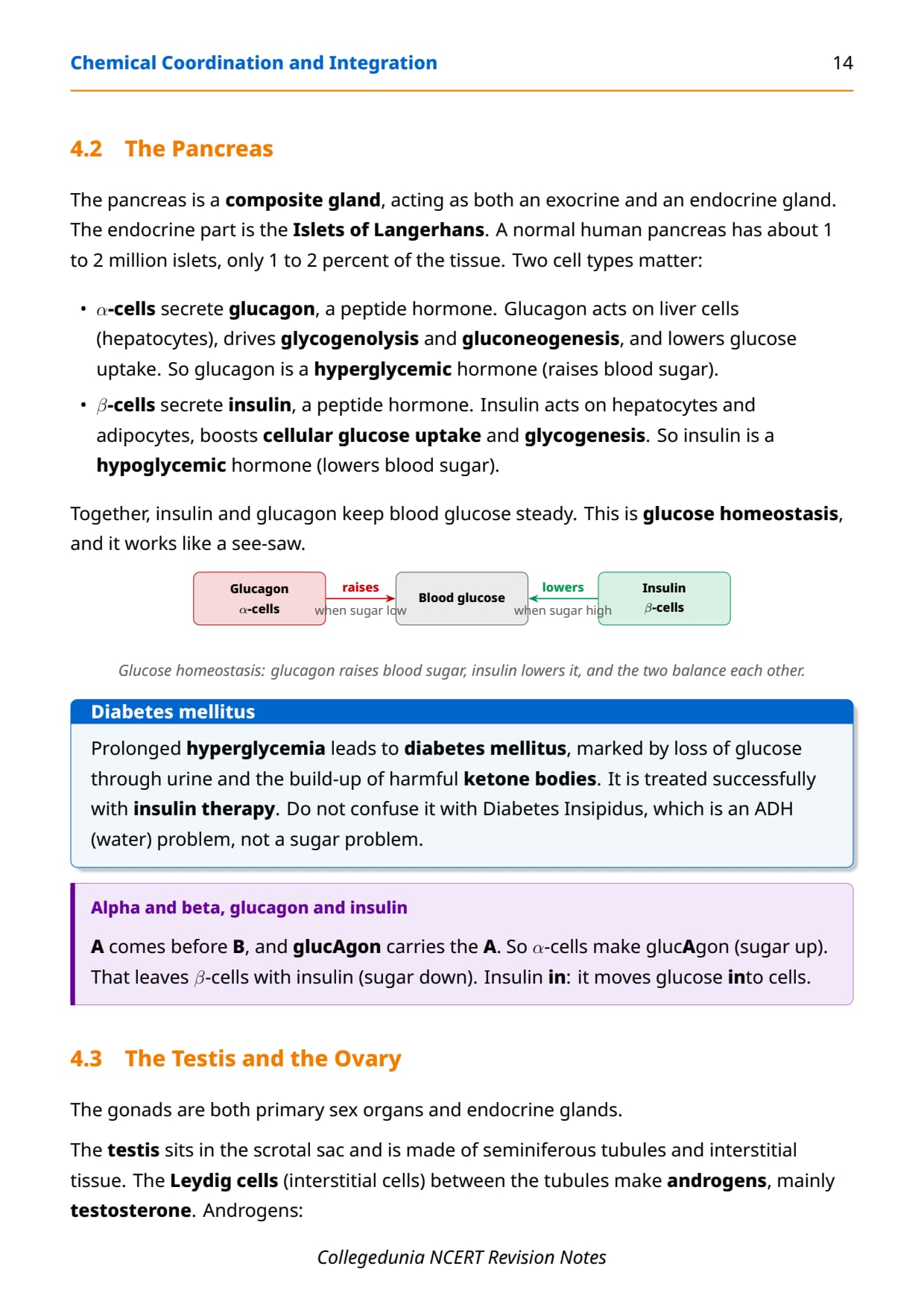
- Pancreas: a composite gland whose Islets of Langerhans hold α-cells that make glucagon (raises blood sugar) and β-cells that make insulin (lowers blood sugar).
- Gonads: the testis makes androgens such as testosterone for male characters and spermatogenesis, while the ovary makes estrogen and progesterone for female characters and pregnancy.
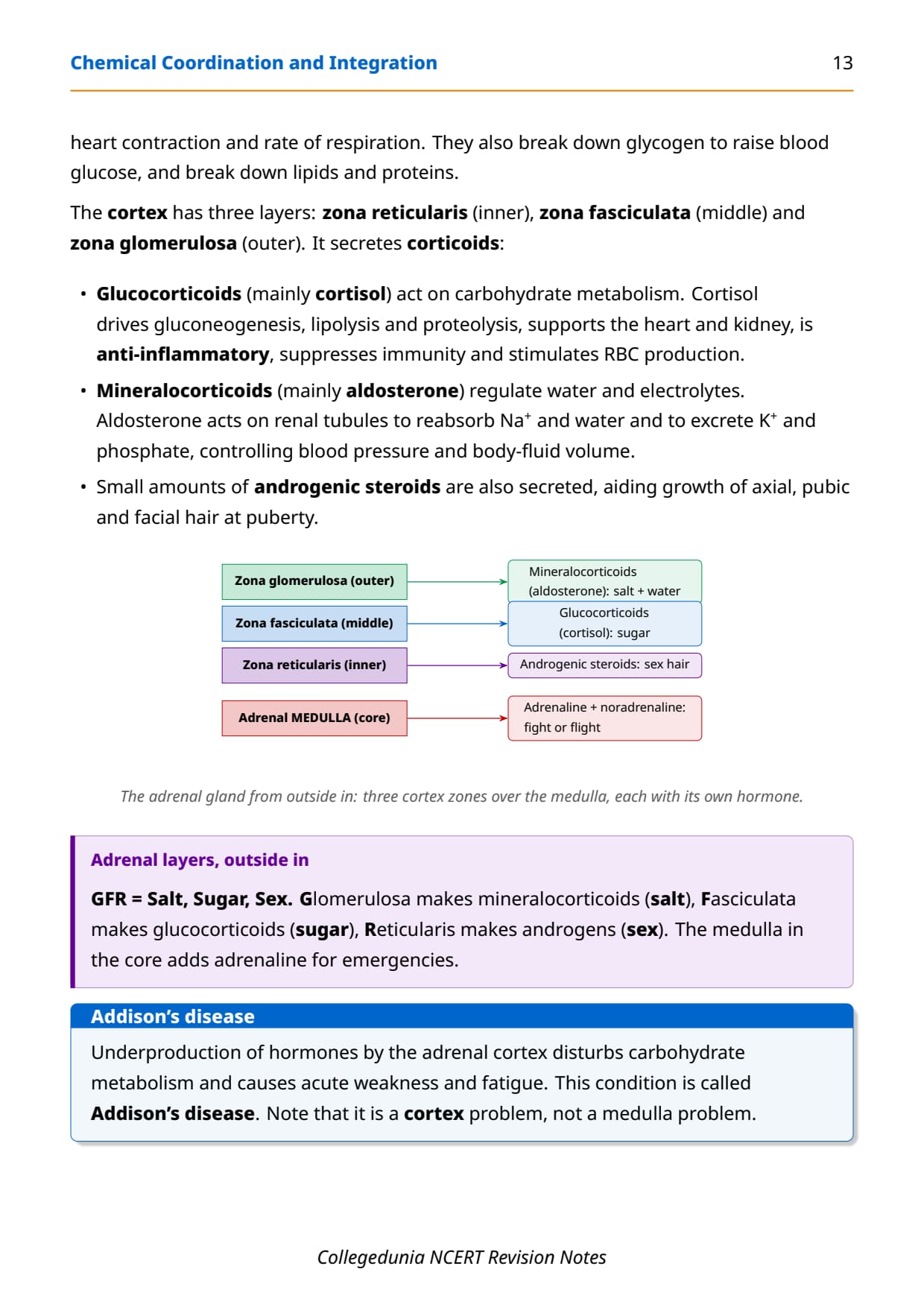
A neat way to hold the adrenal cortex layers outside in is GFR = Salt, Sugar, Sex, that is, glomerulosa for mineralocorticoids, fasciculata for glucocorticoids, and reticularis for androgens. Insulin and glucagon balance each other like a see-saw: prolonged hyperglycemia from low insulin leads to diabetes mellitus, a sugar problem treated with insulin therapy, quite unlike Diabetes Insipidus. For the ovary, split the two hormones by timing, so estrogen is the pre-ovulation growth hormone from the follicle and progesterone is the post-ovulation maintenance hormone from the corpus luteum.
Diffuse Hormones and the Mechanism of Hormone Action
Not every hormone comes from a named gland, and not every hormone acts the same way once it arrives. Several tissues that are not endocrine glands still secrete hormones, and every hormone works by binding a specific hormone receptor found only in its target tissue. This section covers the non-classical hormone sources and then the two mechanisms by which any hormone changes its target cell, which is the single most examined idea here.
- Heart: the atrial wall secretes atrial natriuretic factor (ANF), which dilates blood vessels and lowers blood pressure.
- Kidney: the juxtaglomerular cells make erythropoietin, which stimulates the formation of red blood cells.
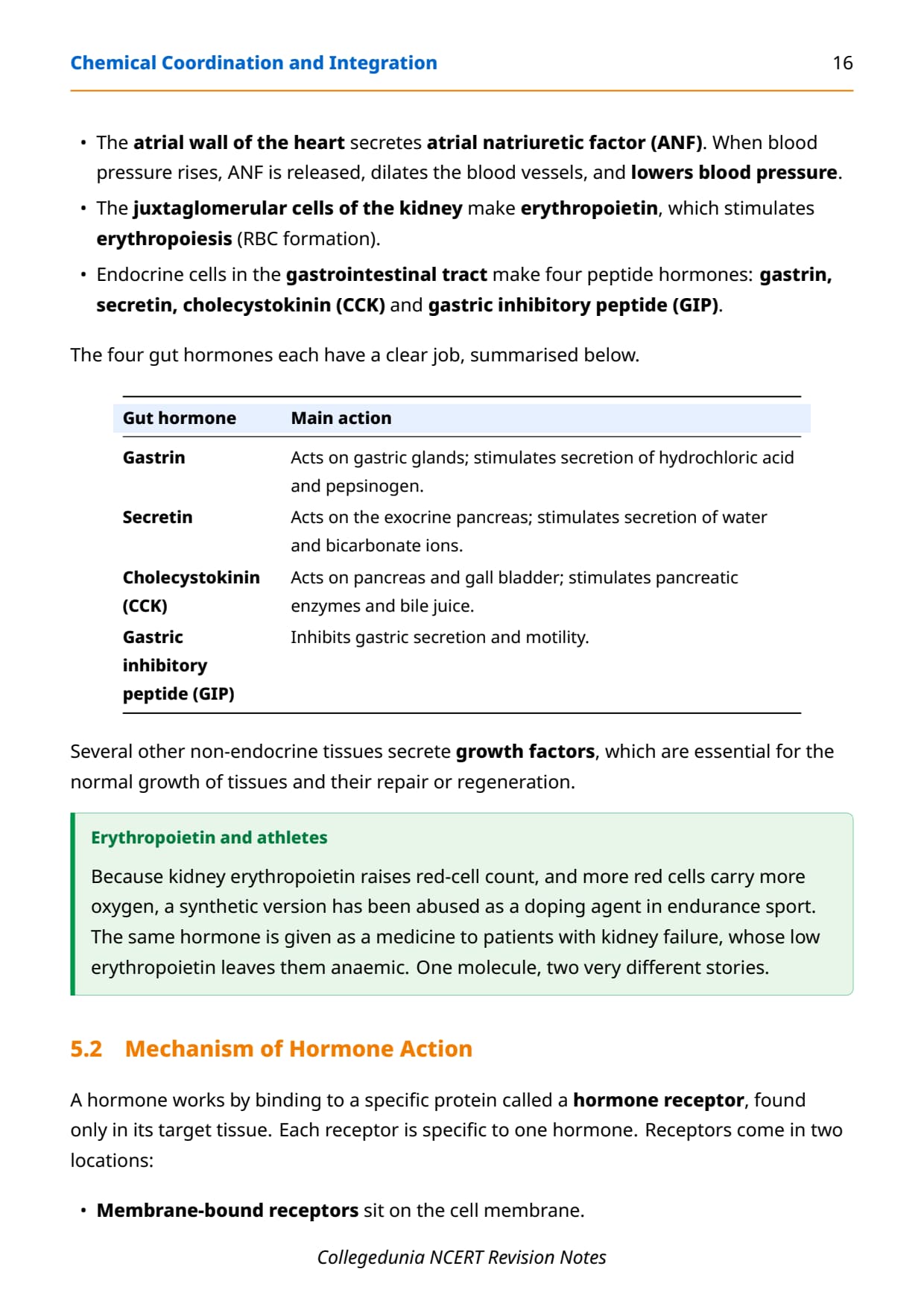
- Gastrointestinal tract: makes four peptide hormones, gastrin, secretin, cholecystokinin (CCK), and gastric inhibitory peptide (GIP), which regulate digestive secretions.
- Two receptor locations: membrane-bound receptors on the cell surface, and intracellular (nuclear) receptors inside the cell.
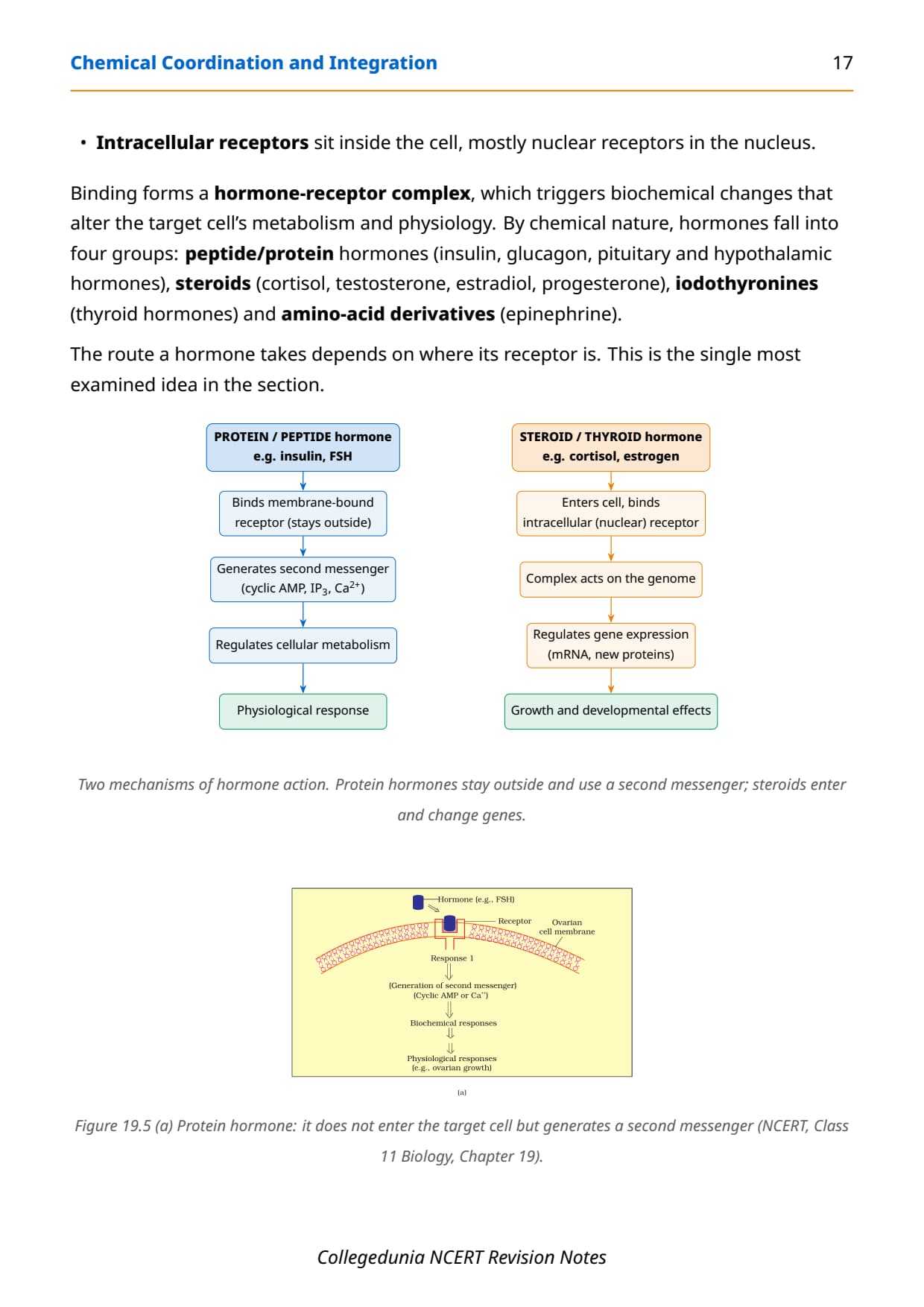
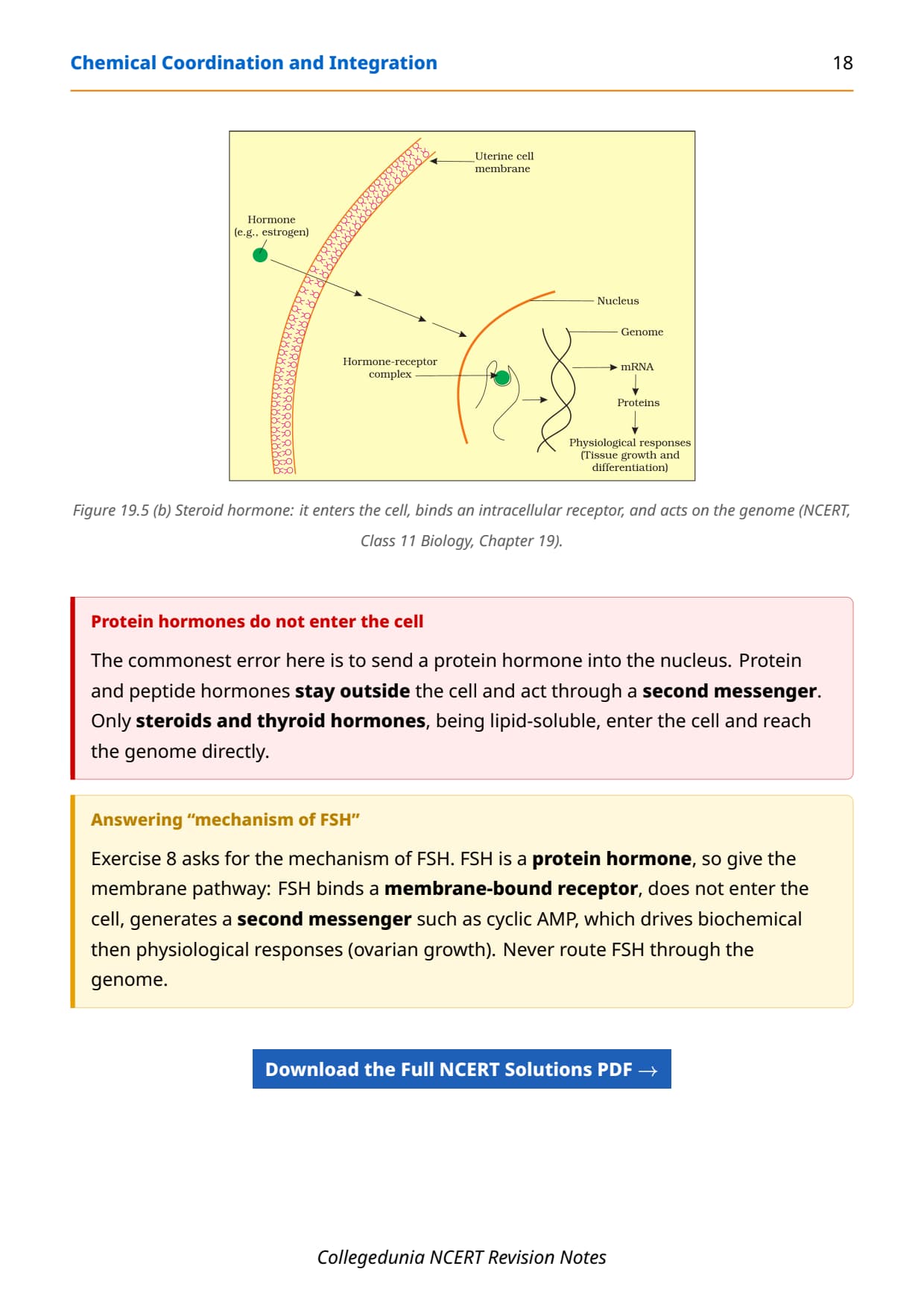
The route a hormone takes depends on where its receptor is. Protein and peptide hormones stay outside the cell, bind a membrane receptor, and act through a second messenger such as cyclic AMP; steroid and thyroid hormones enter the cell, bind an intracellular receptor, and change gene expression. The commonest error is to send a protein hormone into the nucleus. Exercise 8 asks for the mechanism of FSH, which is a protein hormone, so route it through a membrane-bound receptor and a second messenger, never through the genome.
Key Definitions in Chemical Coordination and Integration
Board short-answer questions often ask for a clean definition in one or two lines, and a vague answer loses easy marks. Learn these word-for-word, because the wording of the exam question is usually built straight from the NCERT definition. Each term below also connects to a gland or mechanism you can be asked to explain.
| Term | Definition |
|---|---|
| Hormone | A non-nutrient chemical that acts as an intercellular messenger and is produced in trace amounts. |
| Endocrine gland | A ductless gland that pours its secretion straight into the blood to reach a distant target. |
| Hypercalcemic hormone | A hormone that raises blood calcium, such as parathyroid hormone (PTH). |
| Gonadotrophins | The pituitary hormones LH and FSH that act on the gonads. |
| Islets of Langerhans | The endocrine part of the pancreas, holding α-cells and β-cells. |
| Hormone receptor | A specific protein in the target tissue to which a hormone binds to form a hormone-receptor complex. |
| Second messenger | A molecule such as cyclic AMP made when a protein hormone binds a membrane receptor. |
A common board question asks you to define a hormone and then explain how an endocrine gland differs from an exocrine gland. State the modern definition first, then contrast the ductless endocrine gland with the duct-using exocrine gland to earn the full mark. Learning these definitions makes the wording of almost every one-mark and two-mark question in this chapter familiar.
Common Mistakes Students Make in Chemical Coordination and Integration
These slips happen because two terms look alike, not because the concept is hard. Each one costs 1 to 2 marks in the paper, so watch for them at the exact step where they occur.
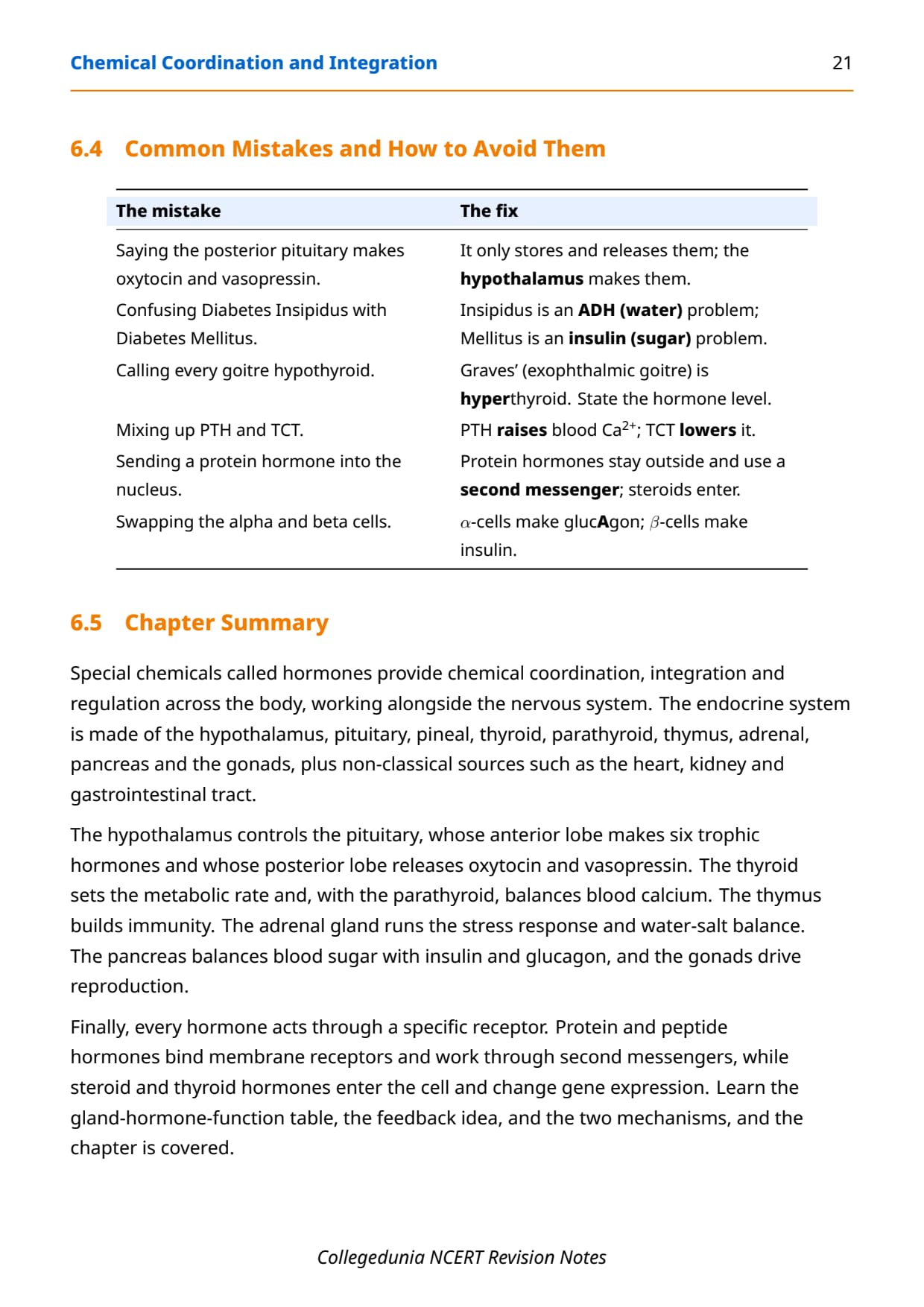
Mistake 1: Saying the posterior pituitary makes oxytocin and vasopressin. It only stores and releases them; the hypothalamus makes them.
Mistake 2: Confusing Diabetes Insipidus with Diabetes Mellitus. Insipidus is an ADH (water) problem, while Mellitus is an insulin (sugar) problem.
Mistake 3: Calling every goitre hypothyroid. Exophthalmic goitre (Graves' disease) is a hyperthyroid condition, so state the hormone level.
Mistake 4: Mixing up PTH and TCT. PTH raises blood Ca2+, while thyrocalcitonin lowers it.
Mistake 5: Sending a protein hormone into the nucleus. Protein hormones stay outside and use a second messenger; only steroids enter the cell.
Chemical Coordination and Integration Weightage in CBSE Boards, NEET and CUET
This chapter is fact-dense and reliably scoring. It carries a gland-hormone-function question almost every year, and it is a heavy NEET source because the disorders and the mechanism of hormone action are easy to frame as objective items. Here is how the marks split across the main exams for 2026-27.
| Exam | Typical weightage | What is asked |
|---|---|---|
| CBSE Boards | 4 to 6 marks | One gland-hormone-function question plus one on a hormonal disorder or hormone action |
| NEET | 2 to 3 questions | Glands and their hormones, disorders, calcium and glucose balance, and hormone action |
| CUET | 1 to 2 objective questions | Matching a gland to its hormone, and identifying the mechanism of a named hormone |
The gland-hormone-function table is the single most tested item from this chapter across all three exams. Master that table first, then the common disorders, then the two mechanisms of hormone action, in that order of return on effort for the 2026-27 session.
How to Revise Chemical Coordination and Integration Quickly
Use these chemical coordination and integration class 11 notes for a fast, ordered recap the night before a test. The checklist below takes about 25 minutes and hits every marks-heavy idea in the chapter without opening the full textbook.
- First 9 minutes: write each endocrine gland with its hormone and one main function, from the hypothalamus down to the gonads.
- Next 8 minutes: pair the opposites, that is, PTH versus TCT for calcium and insulin versus glucagon for glucose, and name the disorder for each hormone.
- Last 8 minutes: write the two mechanisms of hormone action, the membrane and second messenger path for proteins and the genome path for steroids.
Close the loop by explaining why FSH acts through a second messenger while cortisol acts on genes. If you can do all three blocks without notes, the chapter is exam-ready. Keep the gland-hormone-function table beside you for the first pass only, then try the whole checklist closed-book.
Student Feedback on the Chemical Coordination and Integration Notes
What 12,410 students told us about their Chemical Coordination and Integration revision:
- 73% of students rated the gland-hormone-function table as the part most worth memorising for the exam.
- Most-confused pair: Diabetes Insipidus versus Diabetes Mellitus, mixed up by about 3 in 10 students.
- Students who learnt the anterior pituitary hormones with the "FLAT PiG" mnemonic said the list-the-hormones questions felt easy afterwards.
Source: 2026-27 Class 11 Biology student poll. Sample of 12,410 students from CBSE schools across 15 states, conducted before the 2026 boards.
Other Chemical Coordination and Integration Class 11 Biology Resources
Pair these notes with the solved answers, the formula sheet, the exemplar material, and the textbook PDF for the same chapter.
| Resource | Link |
|---|---|
| NCERT Solutions | Chemical Coordination and Integration Class 11 NCERT Solutions |
| Formula Sheet | Chemical Coordination and Integration Class 11 Formula Sheet |
| Exemplar Solutions | Chemical Coordination and Integration Class 11 Exemplar Solutions |
| NCERT Book PDF | Chemical Coordination and Integration Class 11 Book PDF |
| Exemplar Book PDF | Chemical Coordination and Integration Class 11 Exemplar Book PDF |
NCERT Notes for Class 11 Biology: All Chapters
Jump to the revision notes for any other Class 11 Biology chapter below.
| Chapter | NCERT Notes |
|---|---|
| Chapter 1 | The Living World |
| Chapter 2 | Biological Classification |
| Chapter 3 | Plant Kingdom |
| Chapter 4 | Animal Kingdom |
| Chapter 5 | Morphology of Flowering Plants |
| Chapter 6 | Anatomy of Flowering Plants |
| Chapter 7 | Structural Organisation in Animals |
| Chapter 8 | Cell The Unit of Life |
| Chapter 9 | Biomolecules |
| Chapter 10 | Cell Cycle and Cell Division |
| Chapter 11 | Photosynthesis in Higher Plants |
| Chapter 12 | Respiration in Plants |
| Chapter 13 | Plant Growth and Development |
| Chapter 14 | Breathing and Exchange of Gases |
| Chapter 15 | Body Fluids and Circulation |
| Chapter 16 | Excretory Products and their Elimination |
| Chapter 17 | Locomotion and Movement |
| Chapter 18 | Neural Control and Coordination |
| Chapter 19 | Chemical Coordination and Integration |
FAQs on Chemical Coordination and Integration Class 11 Biology Notes
Chemical Coordination and Integration Notes - Frequently Asked Questions
Ques. What topics do the chemical coordination and integration class 11 notes cover?
Ans. These chemical coordination and integration class 11 notes cover the endocrine system and the definition of a hormone, the hypothalamus and pituitary, the pineal, thyroid, parathyroid and thymus, the adrenal gland, pancreas and gonads, the hormones of the heart, kidney and gastrointestinal tract, and the two mechanisms of hormone action. Every key gland, hormone, disorder, and example is included for fast revision.
Ques. What is the difference between an endocrine and an exocrine gland?
Ans. An endocrine gland is ductless, so its hormone is poured straight into the blood and carried to a distant target organ, as the thyroid does. An exocrine gland releases its product through a duct onto a body surface or into a cavity, as a sweat gland does. Endocrine does not mean vessel-less: the gland has no delivery tube but is richly supplied with blood vessels, because blood is exactly how the hormone leaves.
Ques. Which hormones does the pituitary gland secrete?
Ans. The anterior pituitary makes six hormones: growth hormone, prolactin, TSH, ACTH, and the gonadotrophins LH and FSH, remembered as FLAT PiG. The pars intermedia makes only MSH. The posterior pituitary releases oxytocin and vasopressin (ADH), but it does not make them, because both are synthesised in the hypothalamus and carried down axons to the posterior lobe, which only stores and releases them.
Ques. How do PTH and thyrocalcitonin control blood calcium?
Ans. Parathyroid hormone (PTH) is a hypercalcemic hormone that raises blood Ca2+ by acting on bone to release calcium, on the renal tubules to reabsorb it, and on the gut to absorb more of it. Thyrocalcitonin (TCT), from the thyroid, is a hypocalcemic hormone that lowers blood calcium. The two pull calcium in opposite directions and between them keep blood calcium steady, which is calcium homeostasis.
Ques. How do protein and steroid hormones act differently on a cell?
Ans. Protein and peptide hormones such as insulin and FSH cannot cross the cell membrane, so they bind a membrane-bound receptor and generate a second messenger such as cyclic AMP, which changes the cell's metabolism. Steroid and thyroid hormones such as cortisol and estrogen are lipid-soluble, so they enter the cell, bind an intracellular (nuclear) receptor, and act on the genome to regulate gene expression and make new proteins.
Ques. What is the weightage of this chapter in the CBSE board exam?
Ans. Chemical Coordination and Integration carries about 4 to 6 marks in the CBSE Class 11 Biology paper, usually one gland-hormone-function question plus one on a hormonal disorder or the mechanism of hormone action. It is also a heavy NEET and CUET source, with objective questions on the glands, their hormones, disorders, and hormone action, which makes it a high-value chapter for the 2026-27 session.
Ques. What is the difference between Diabetes Mellitus and Diabetes Insipidus?
Ans. Diabetes Mellitus results from a lack of insulin, causing prolonged hyperglycemia, loss of glucose in urine, and the build-up of ketone bodies, and it is treated with insulin therapy. Diabetes Insipidus results from a failure of ADH (vasopressin), so the kidney cannot conserve water and the body dehydrates. One is a sugar problem and the other a water problem, so name the hormone involved before you describe the symptoms.



Comments