




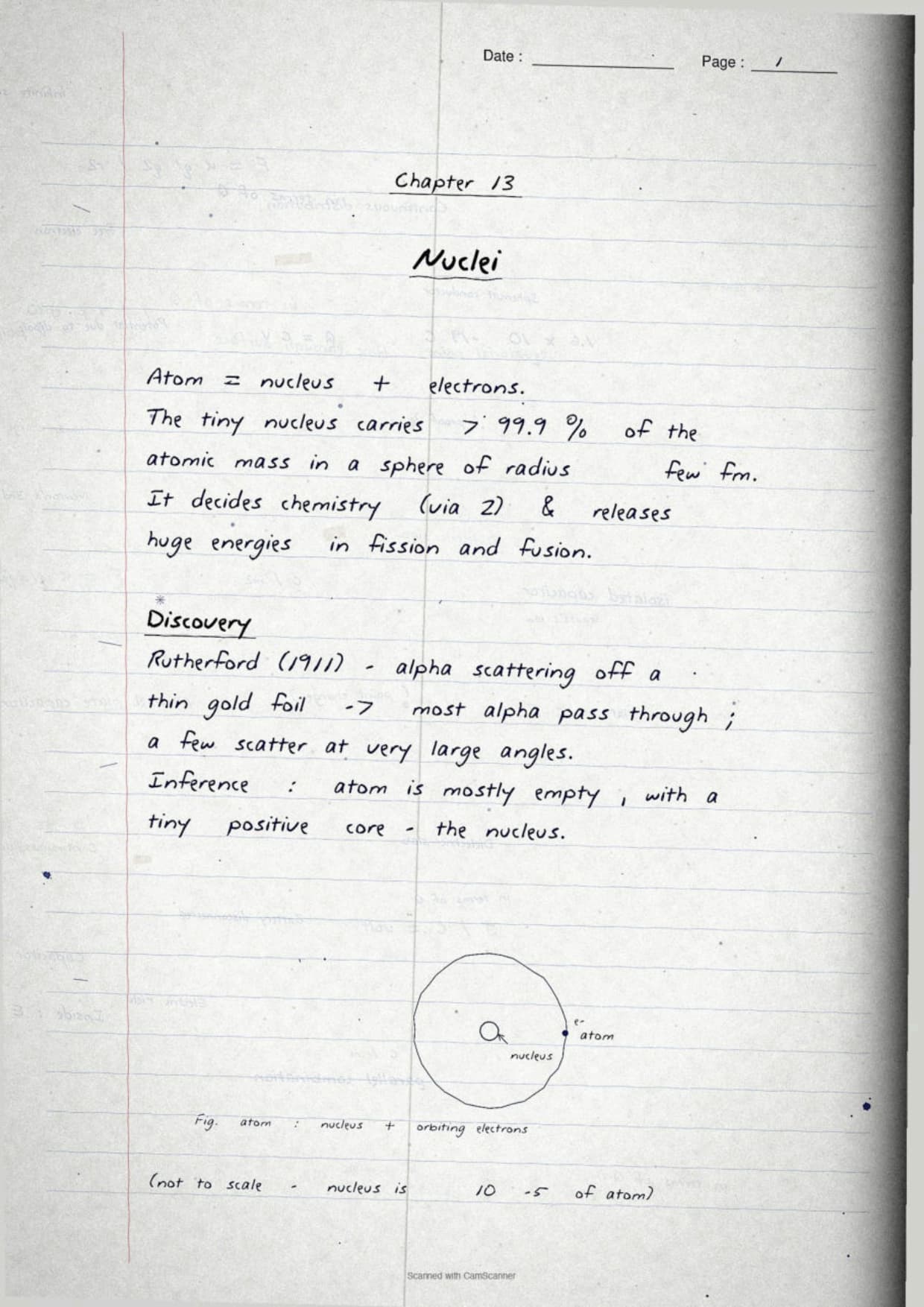
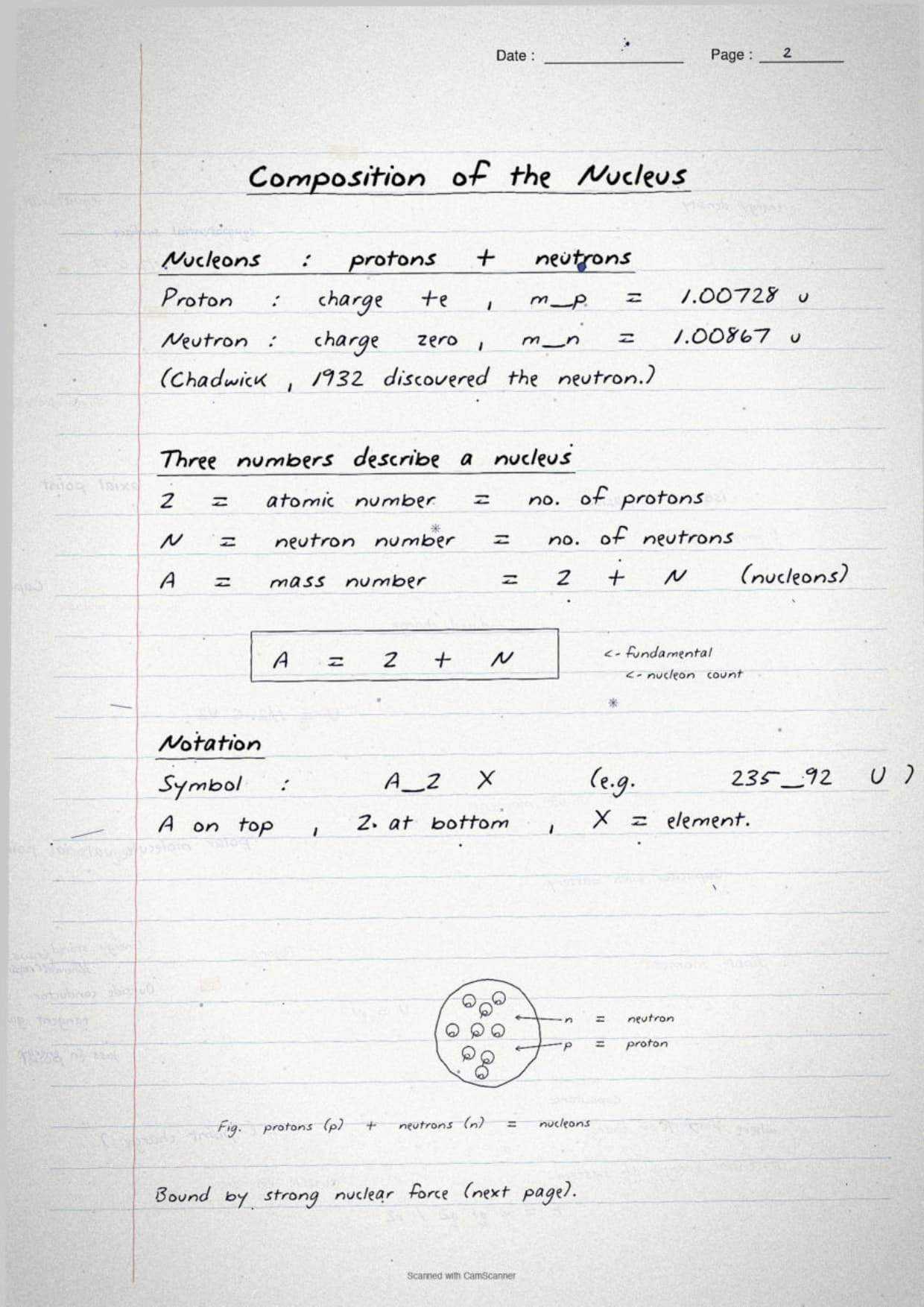
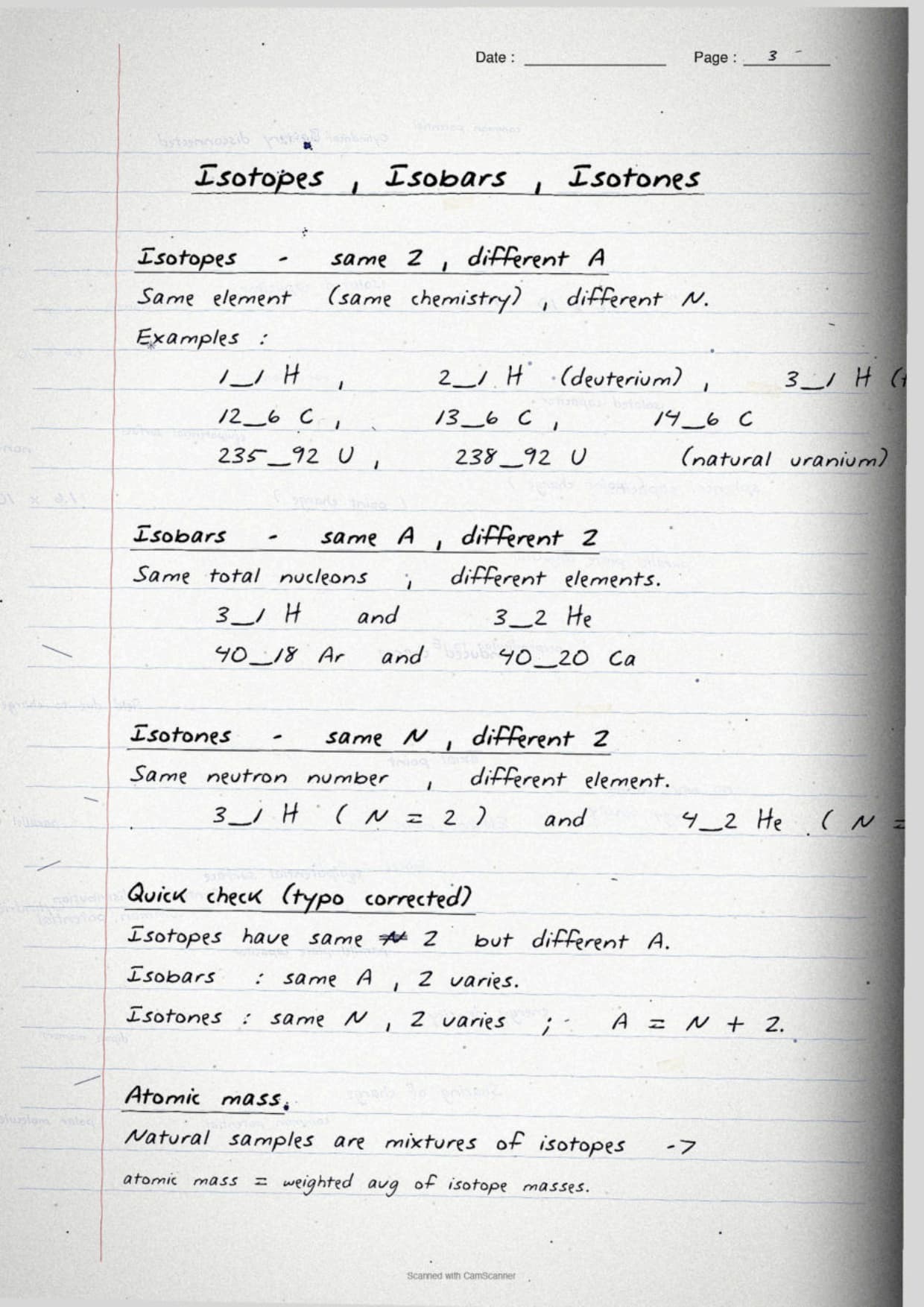
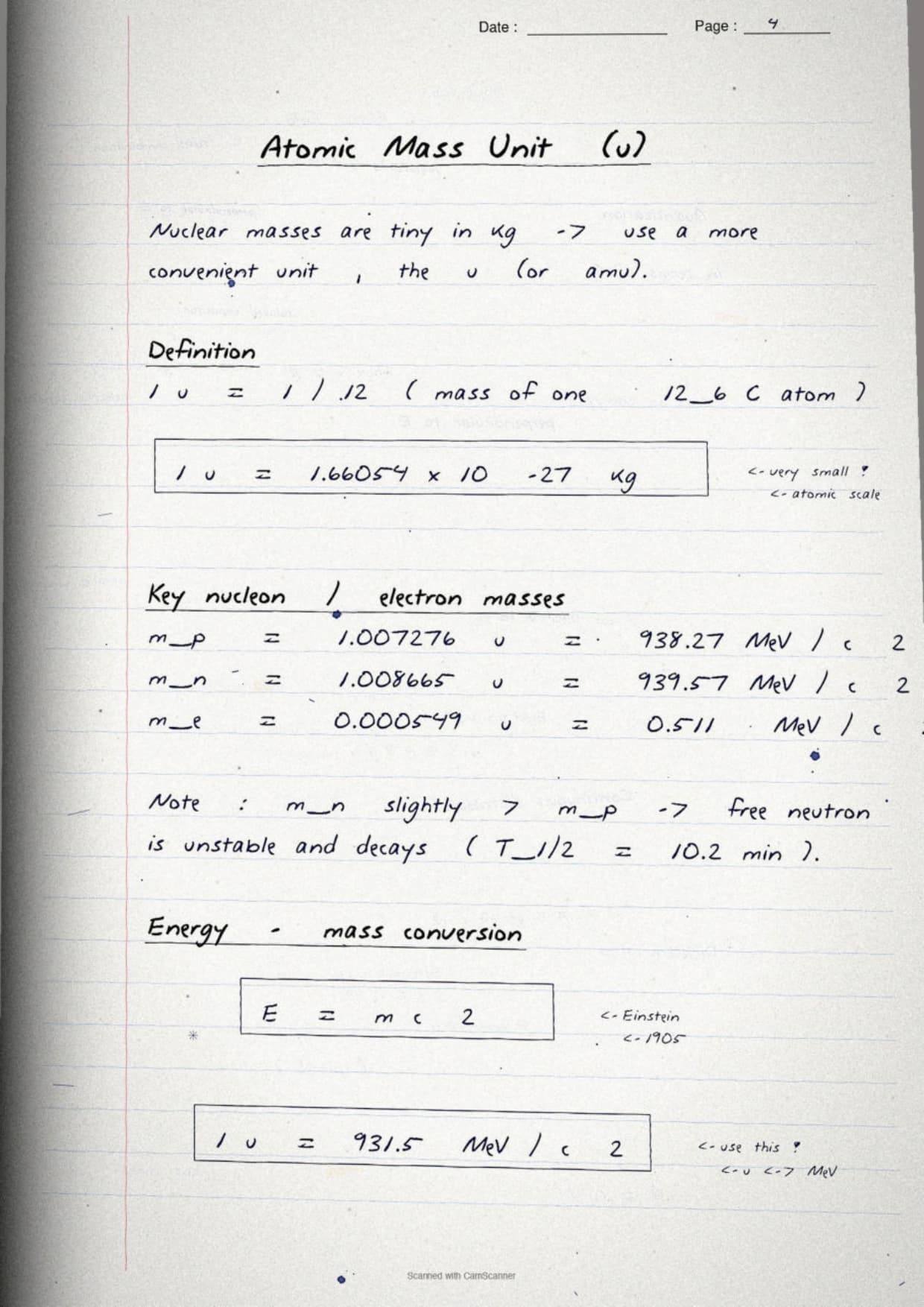
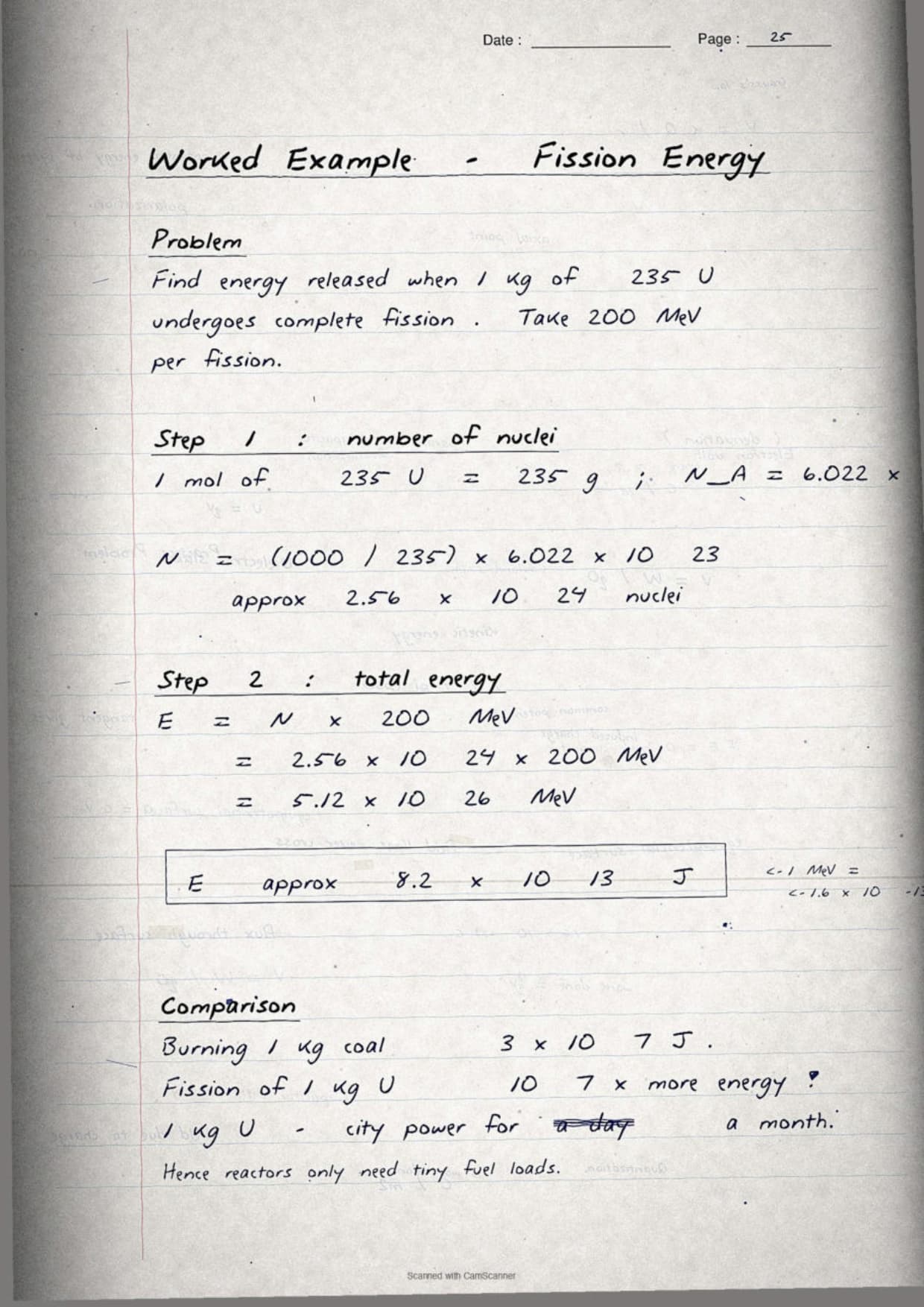
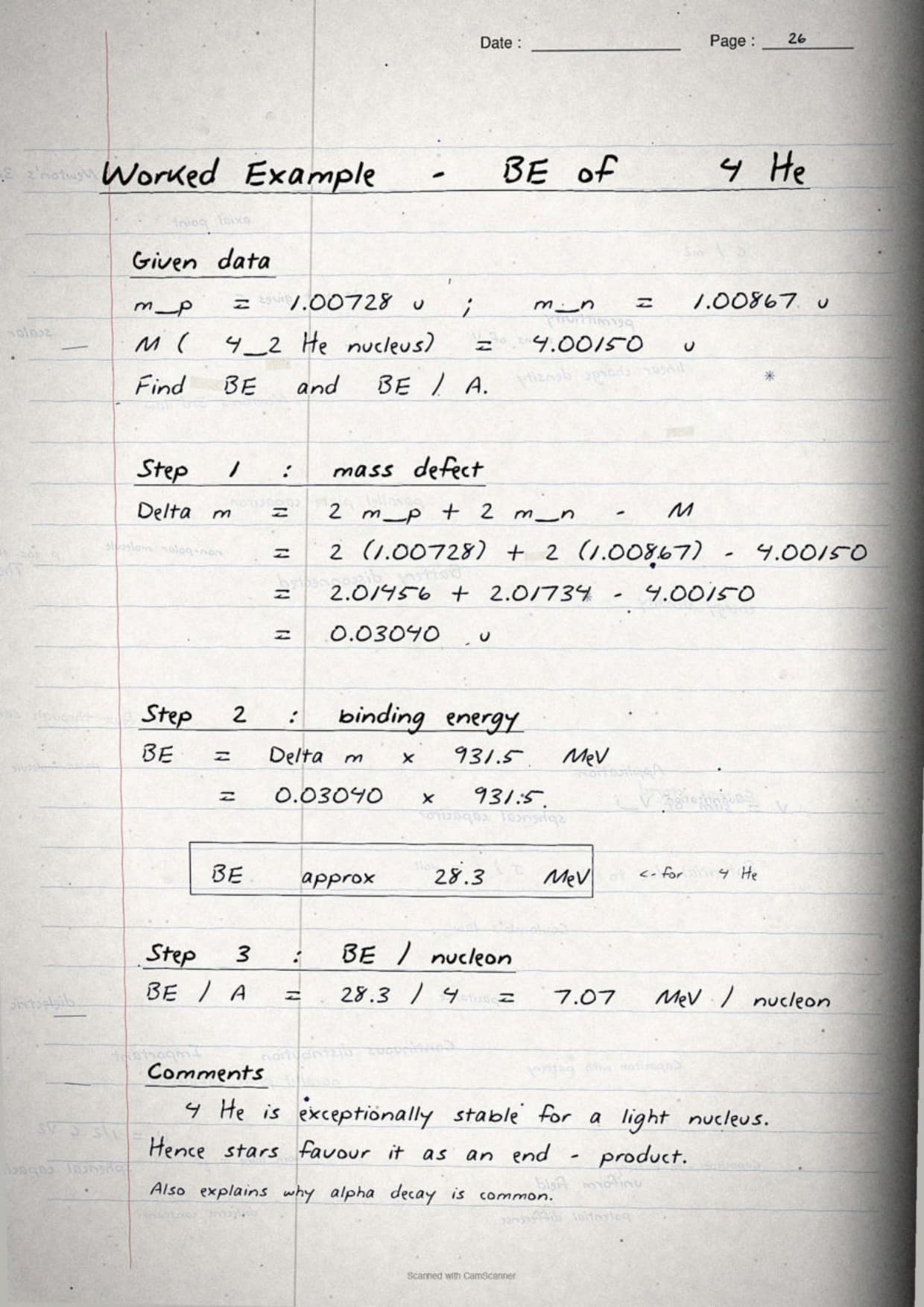
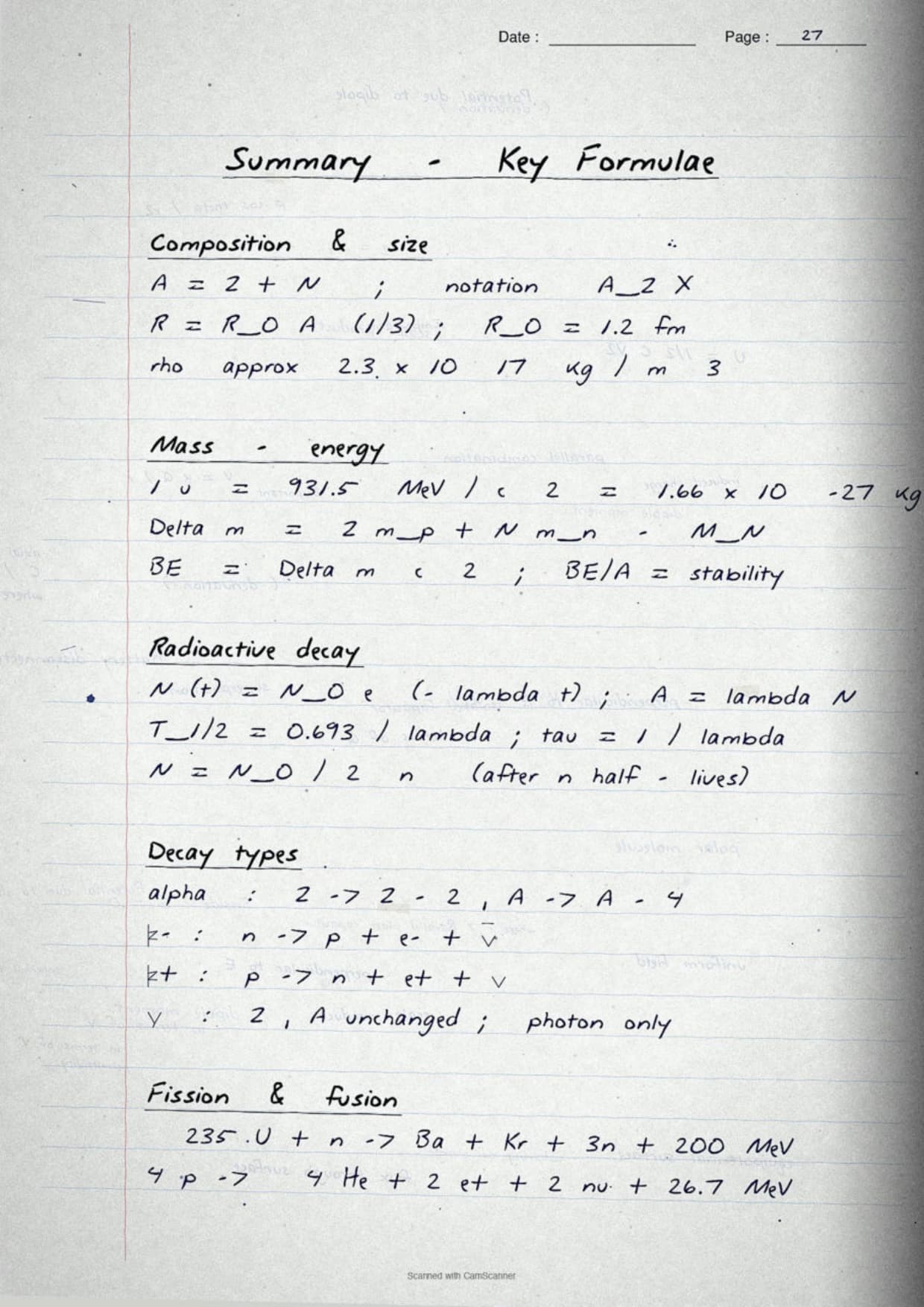
Class 12 Physics Chapter 13 Nuclei covers nuclear composition, radioactive decay, and nuclear fission and fusion. The chapter carries 3 marks in CBSE and 2 to 3 percent in JEE Main. This page hosts the Class 12 Physics Nuclei handwritten notes PDF.
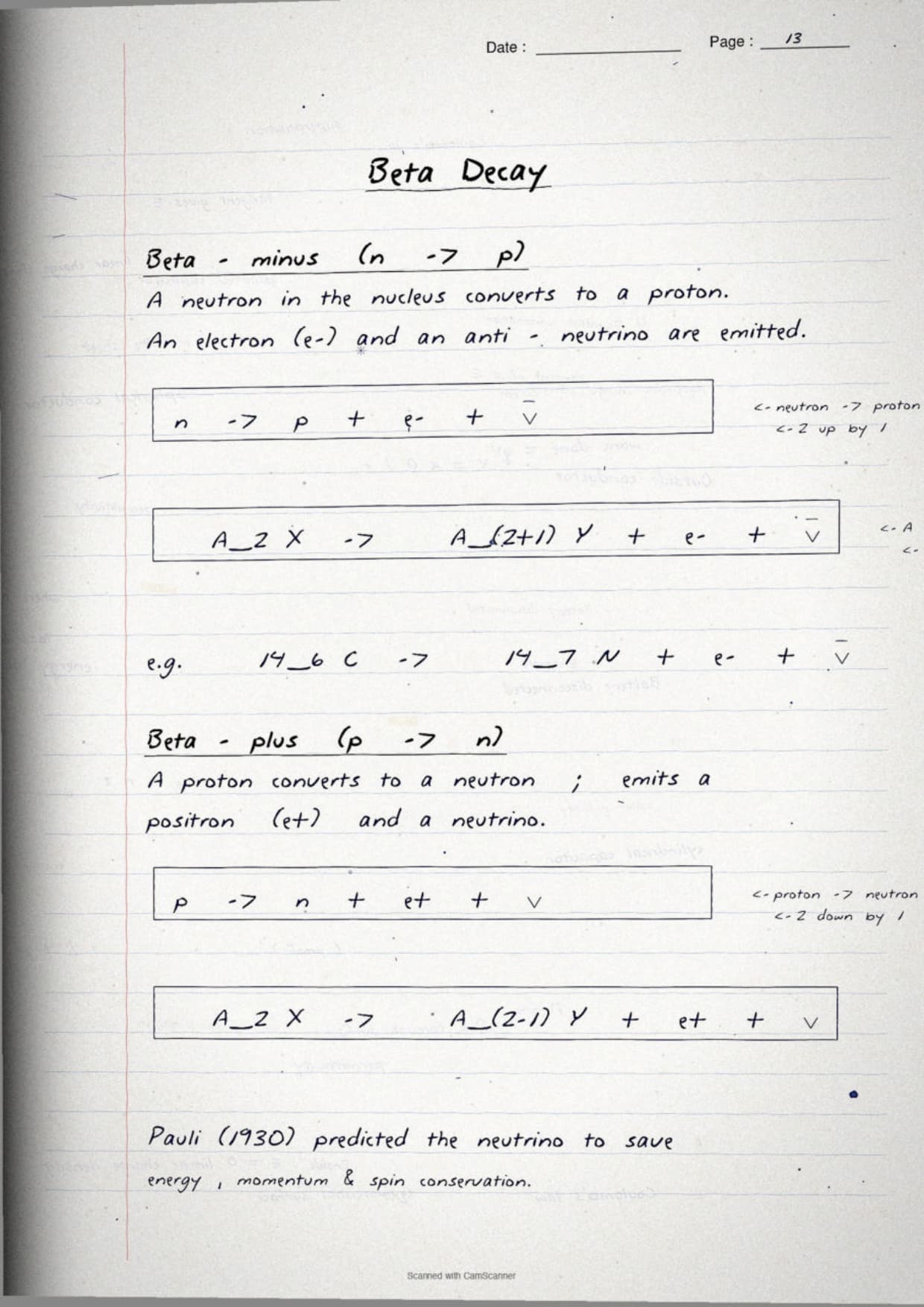
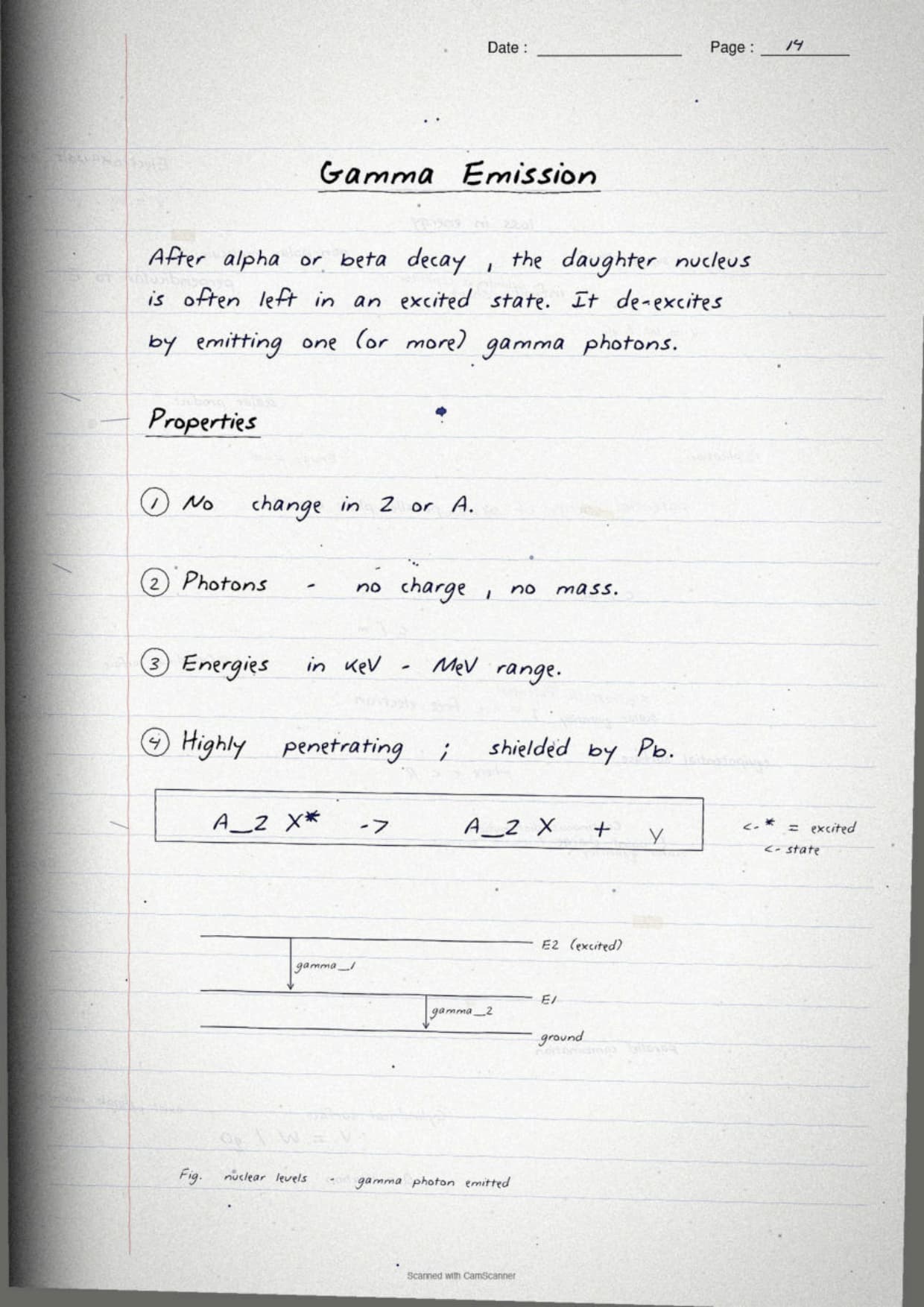
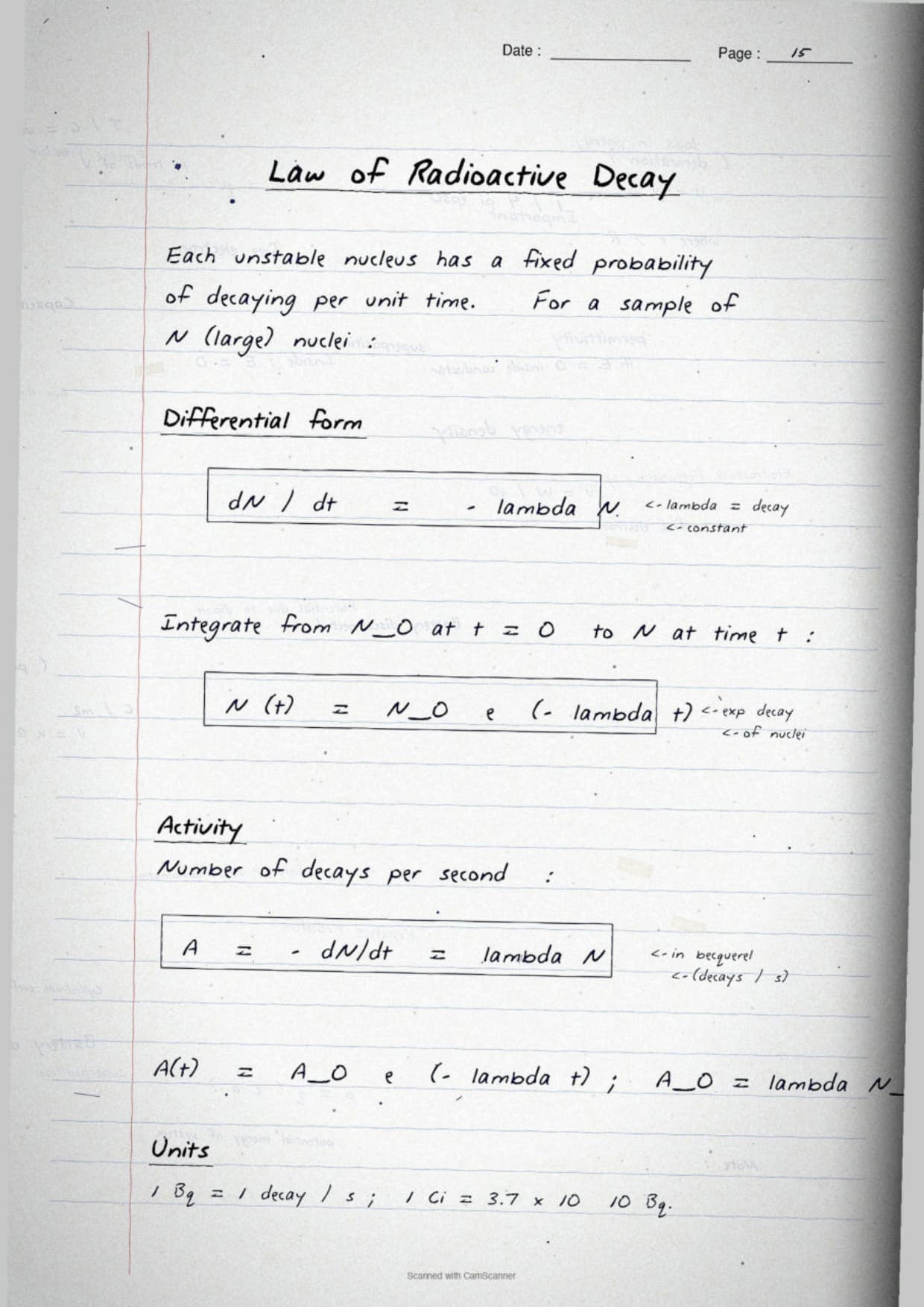
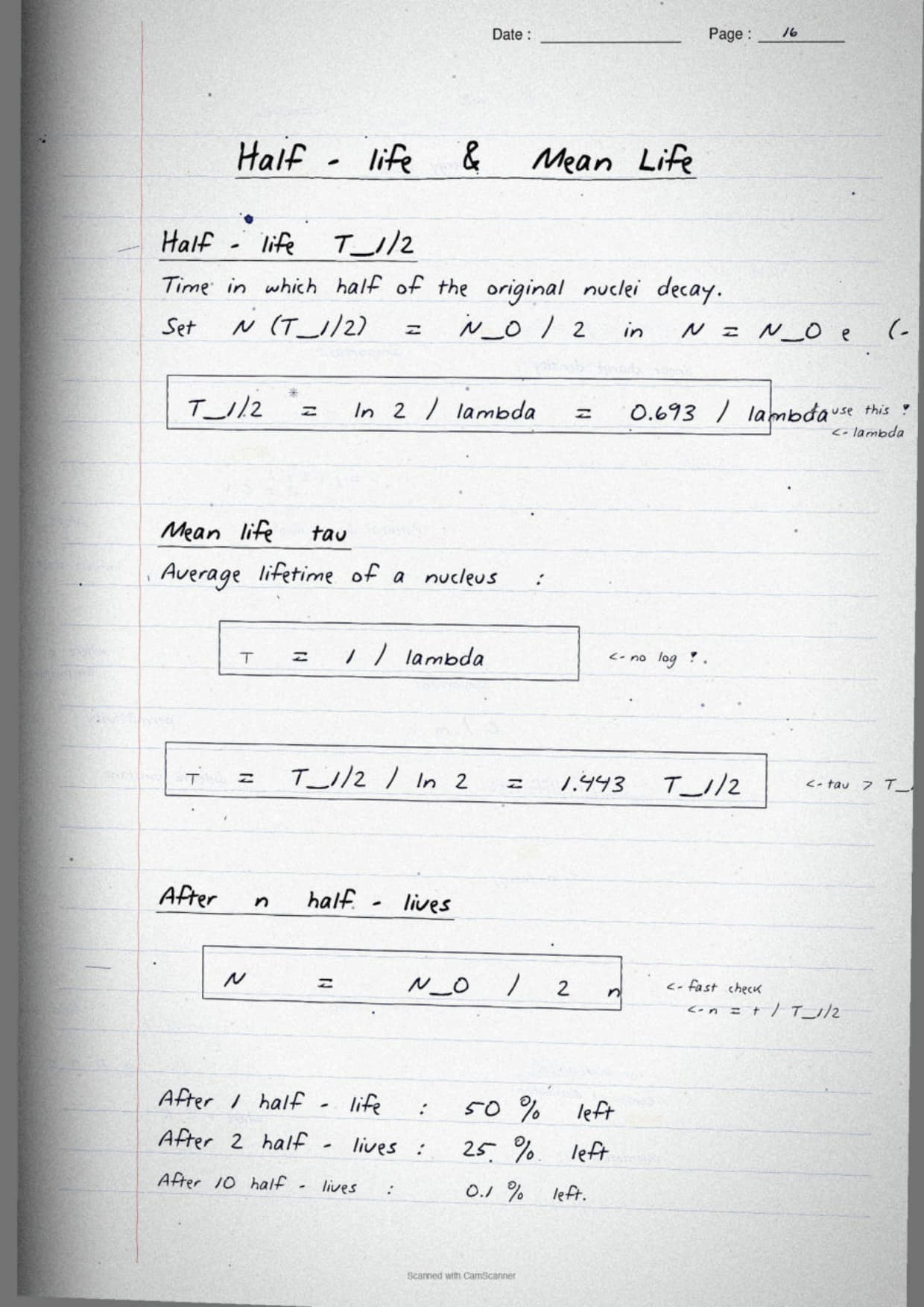
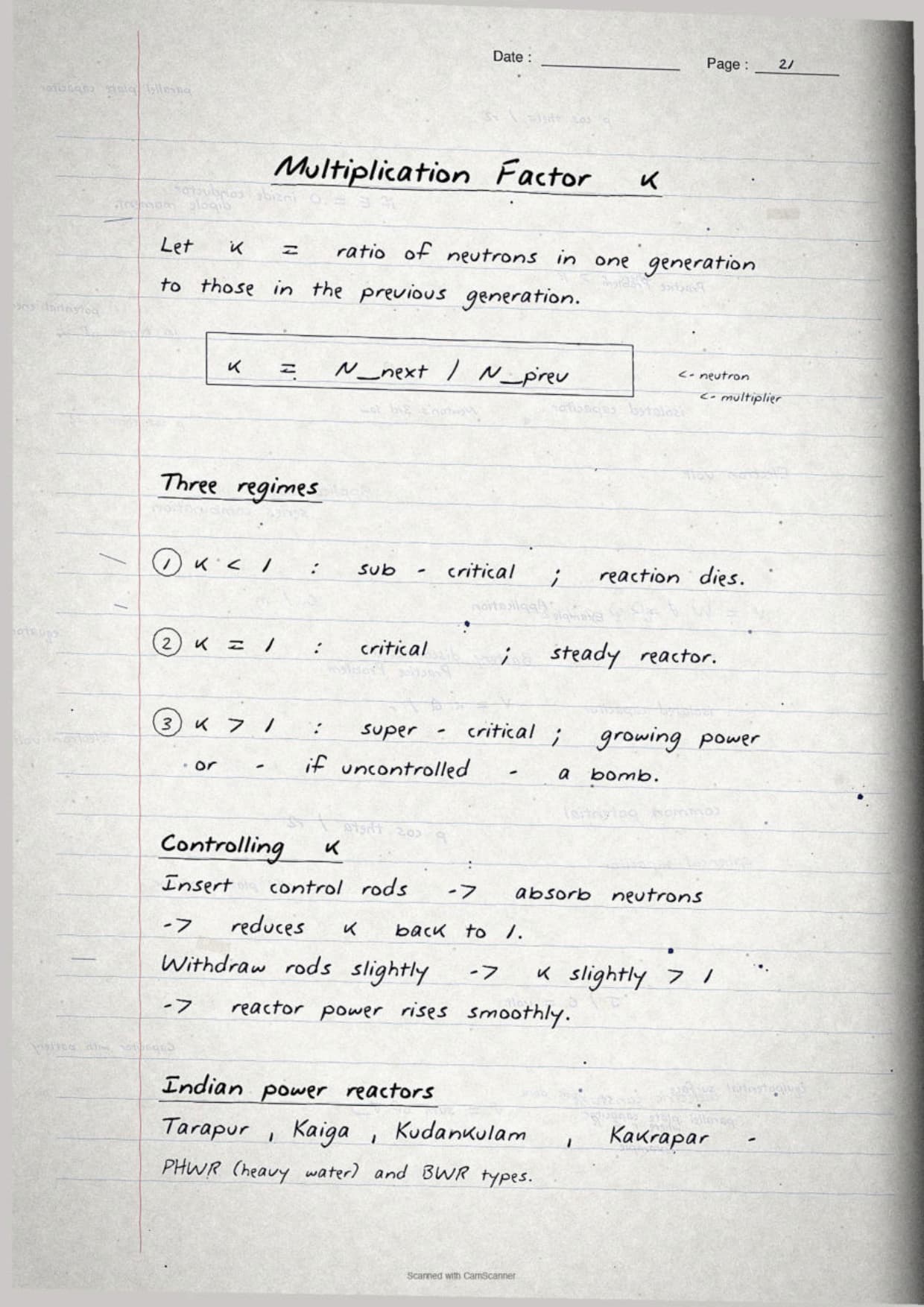
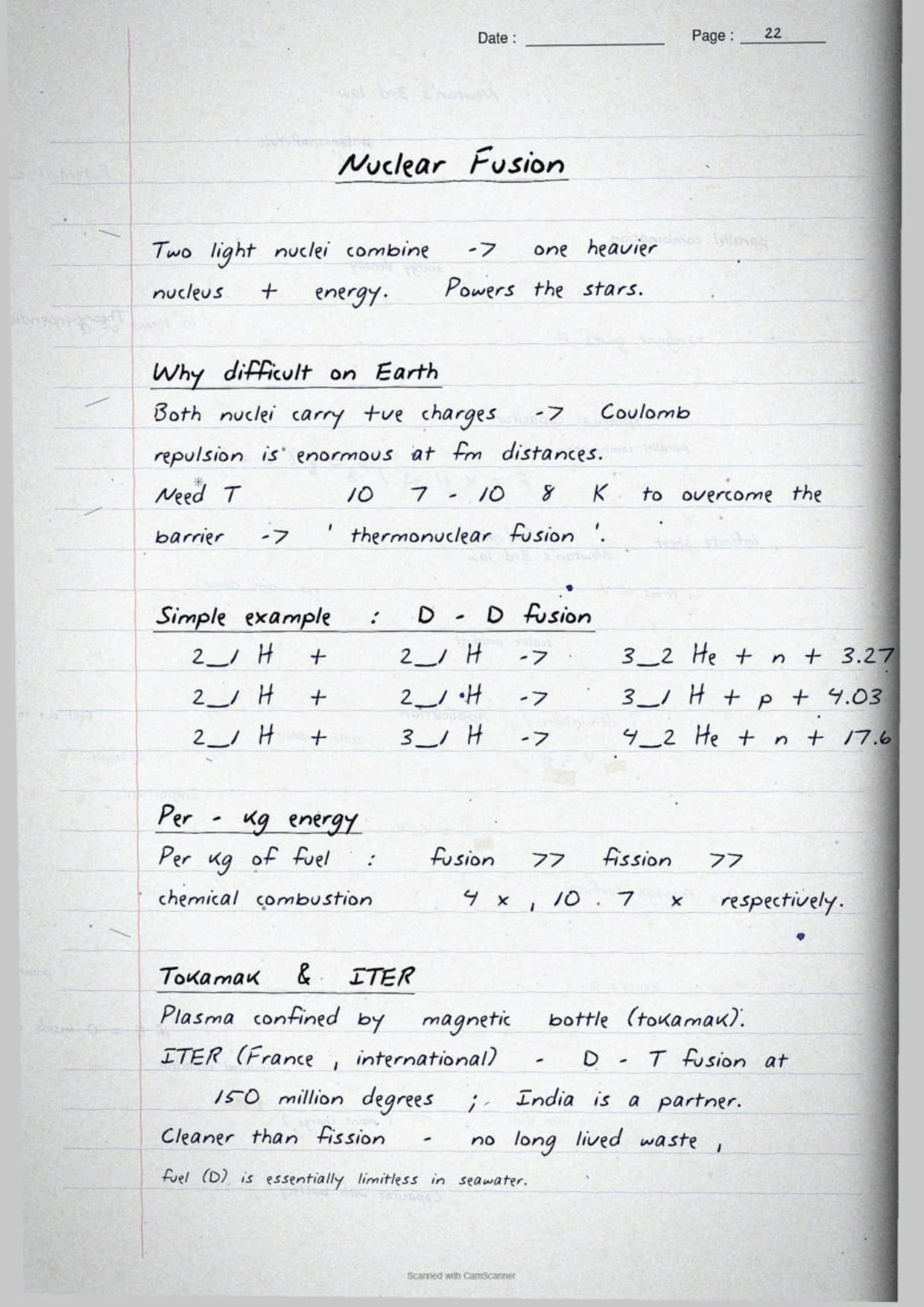
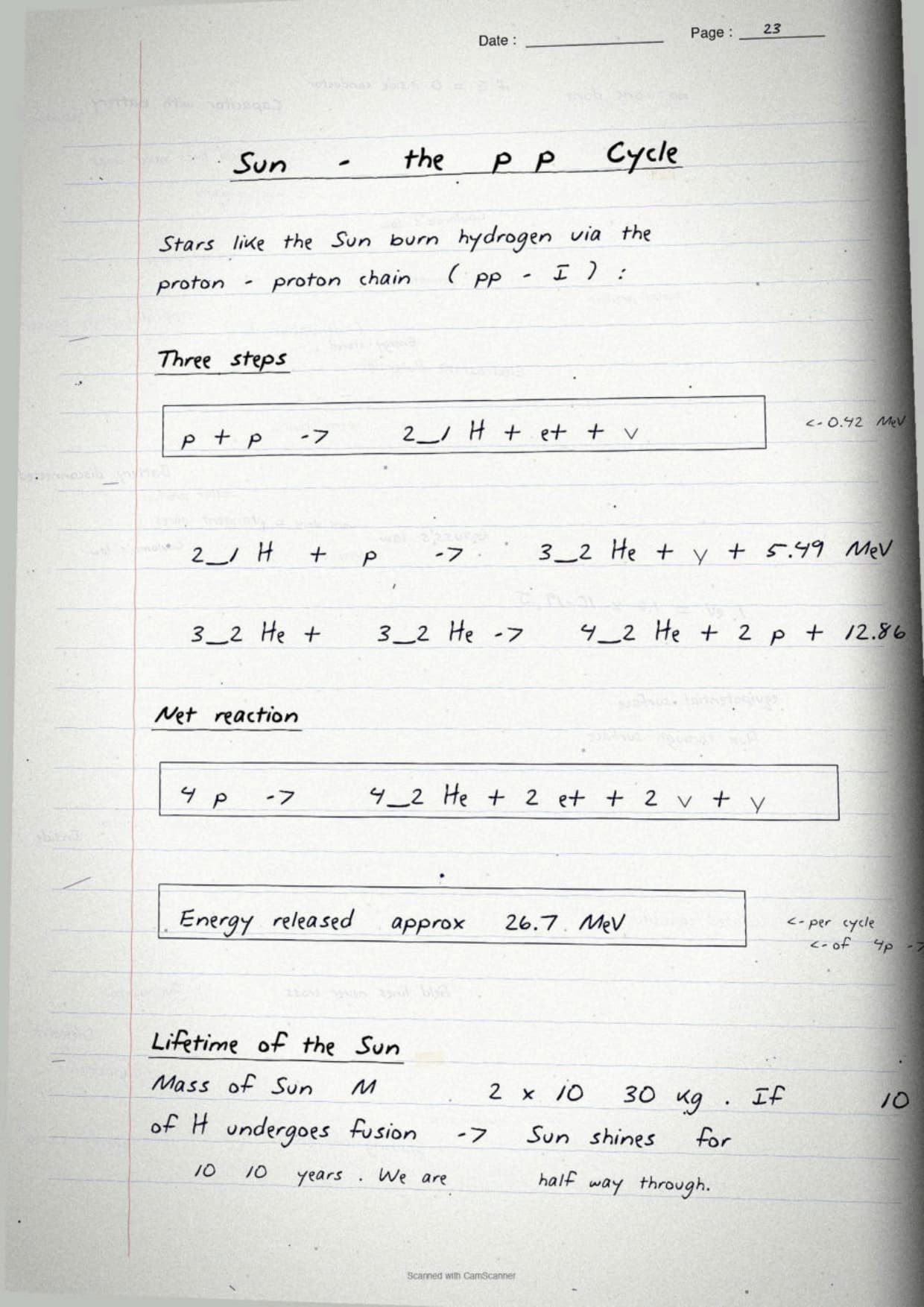
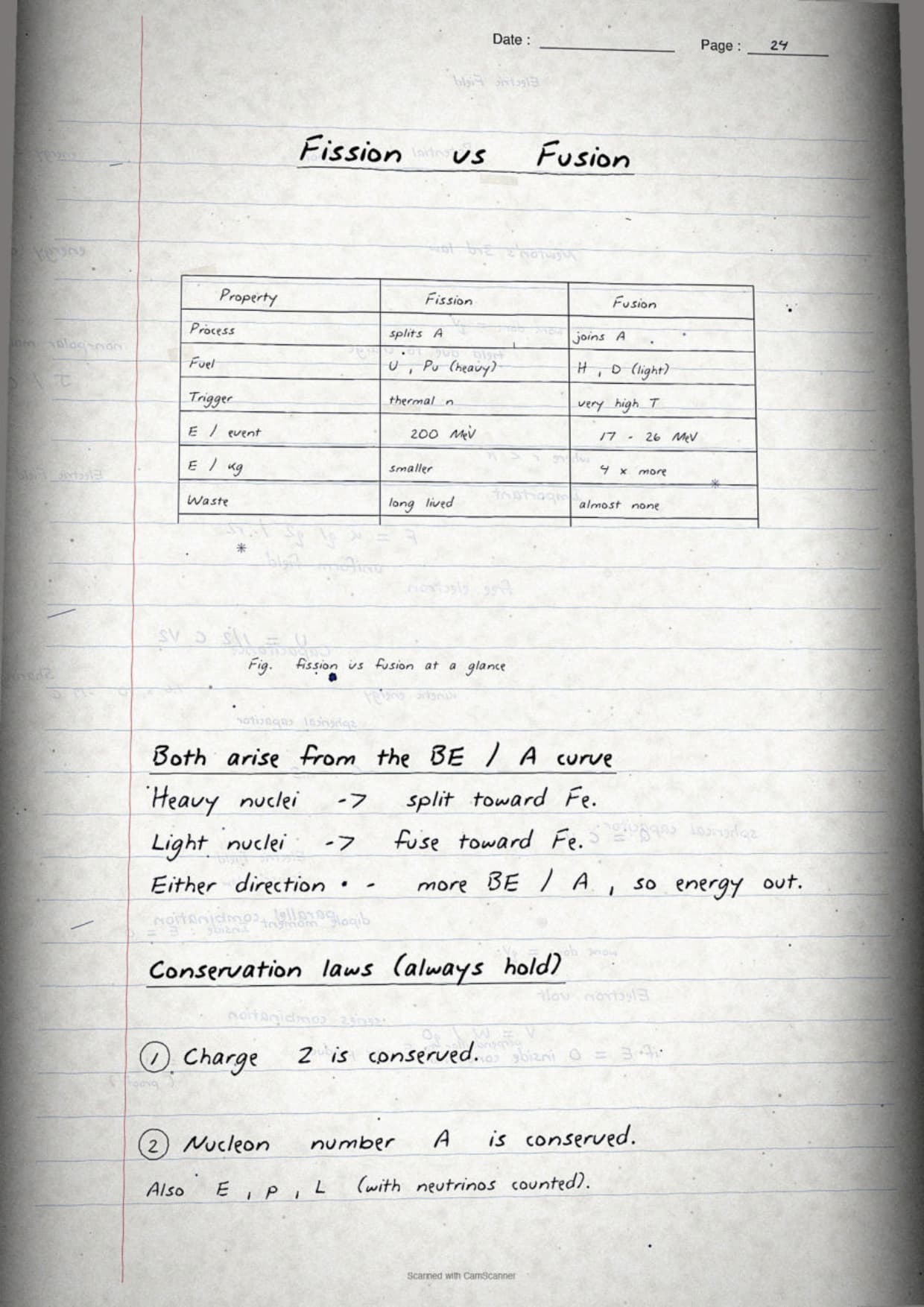
- CBSE Boards: 3 marks, usually one derivation block plus one short-answer concept question.
- JEE Main: 2 to 3 percent, with steady annual coverage on derivations and numericals.
- NEET: 1 to 2 questions every year on chapter concepts.
Chapter 13 Nuclei - Sub-topic Concepts in Class 12 Physics Handwritten Notes
The chapter splits into 6 sub-topic blocks. The table below maps each block to its CBSE marking pattern.
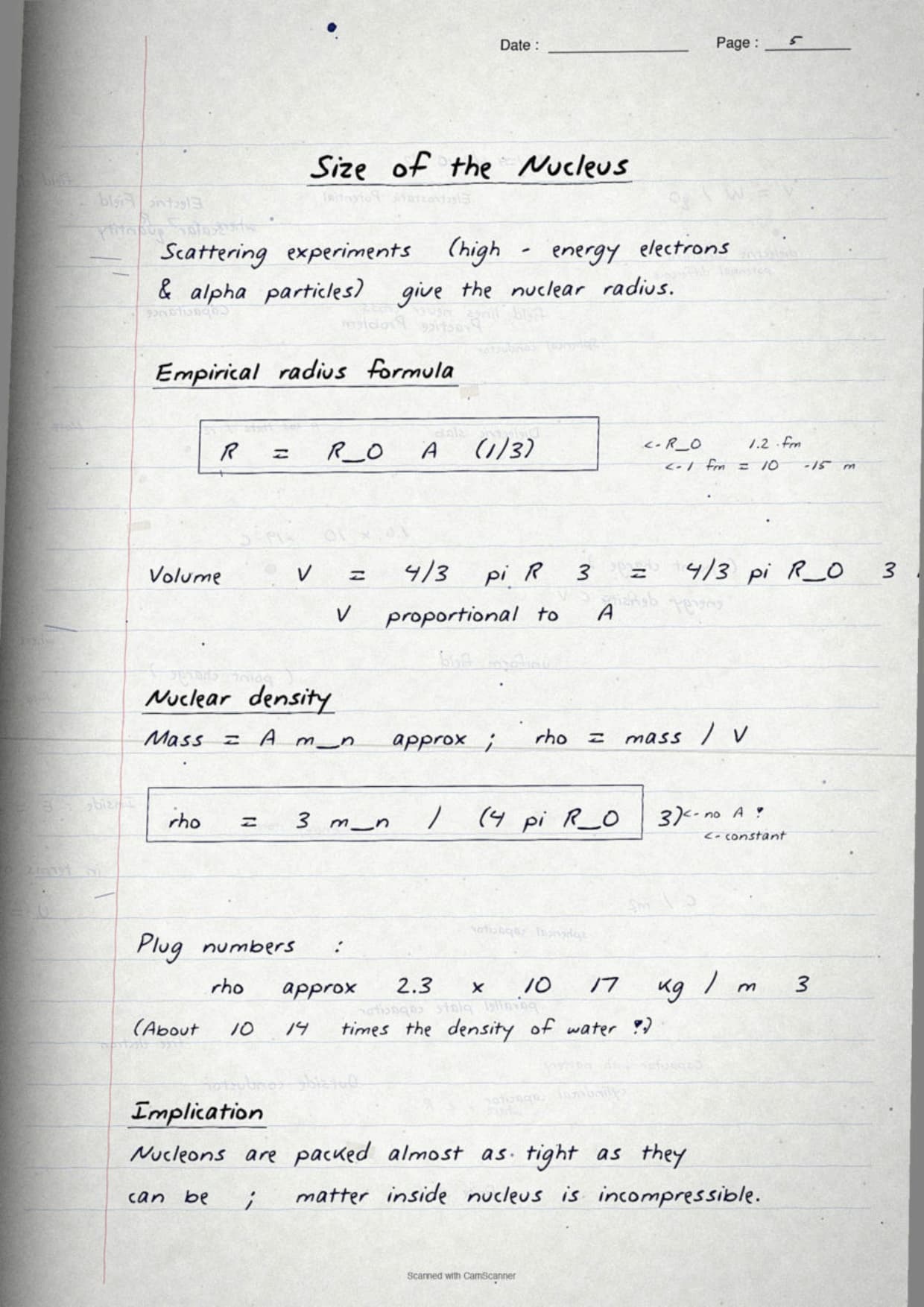
- Nuclear composition and size: 1-mark on Z, N, A; R = R0 A1/3
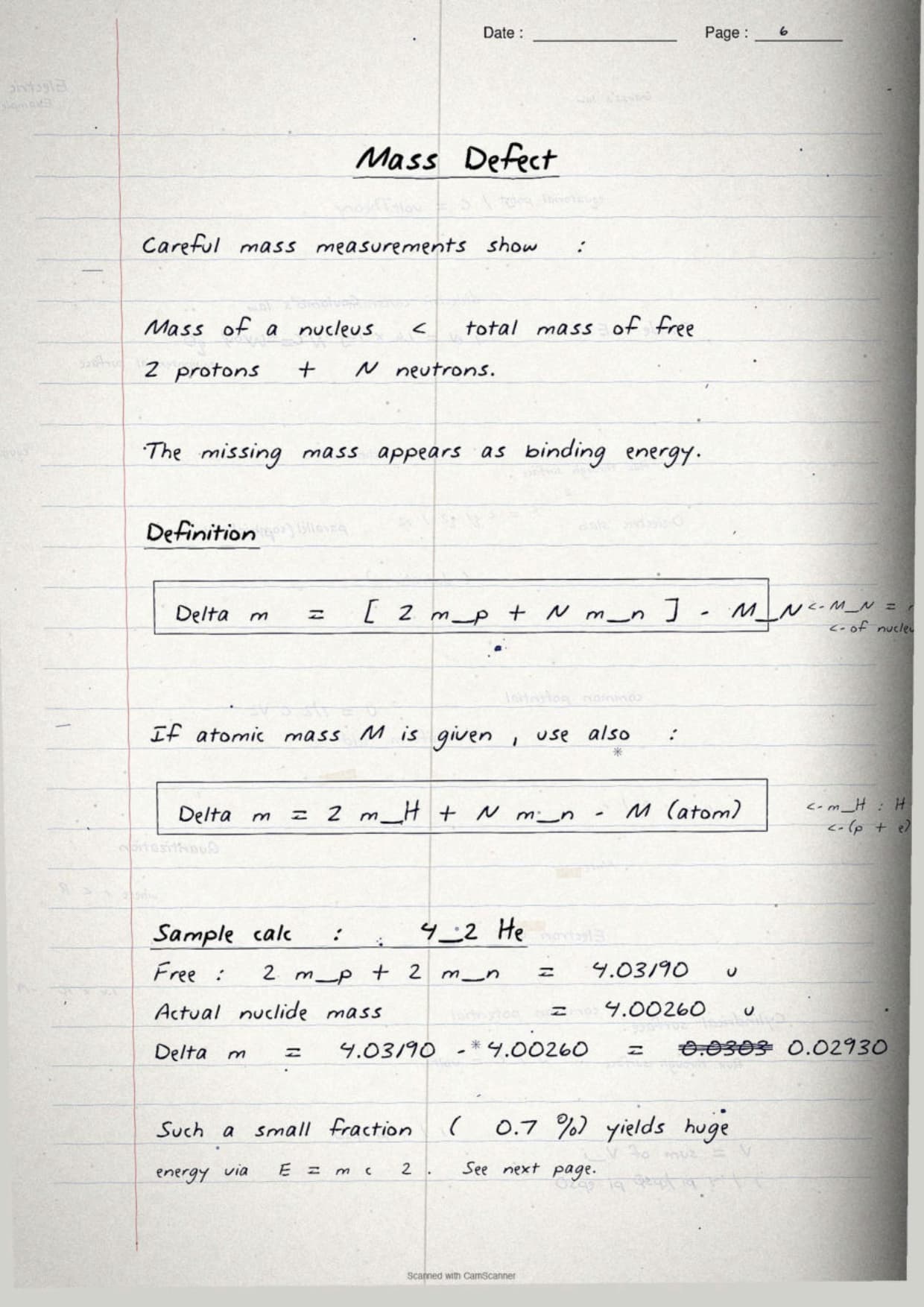
- Mass-energy equivalence: 2-mark on E = mc²
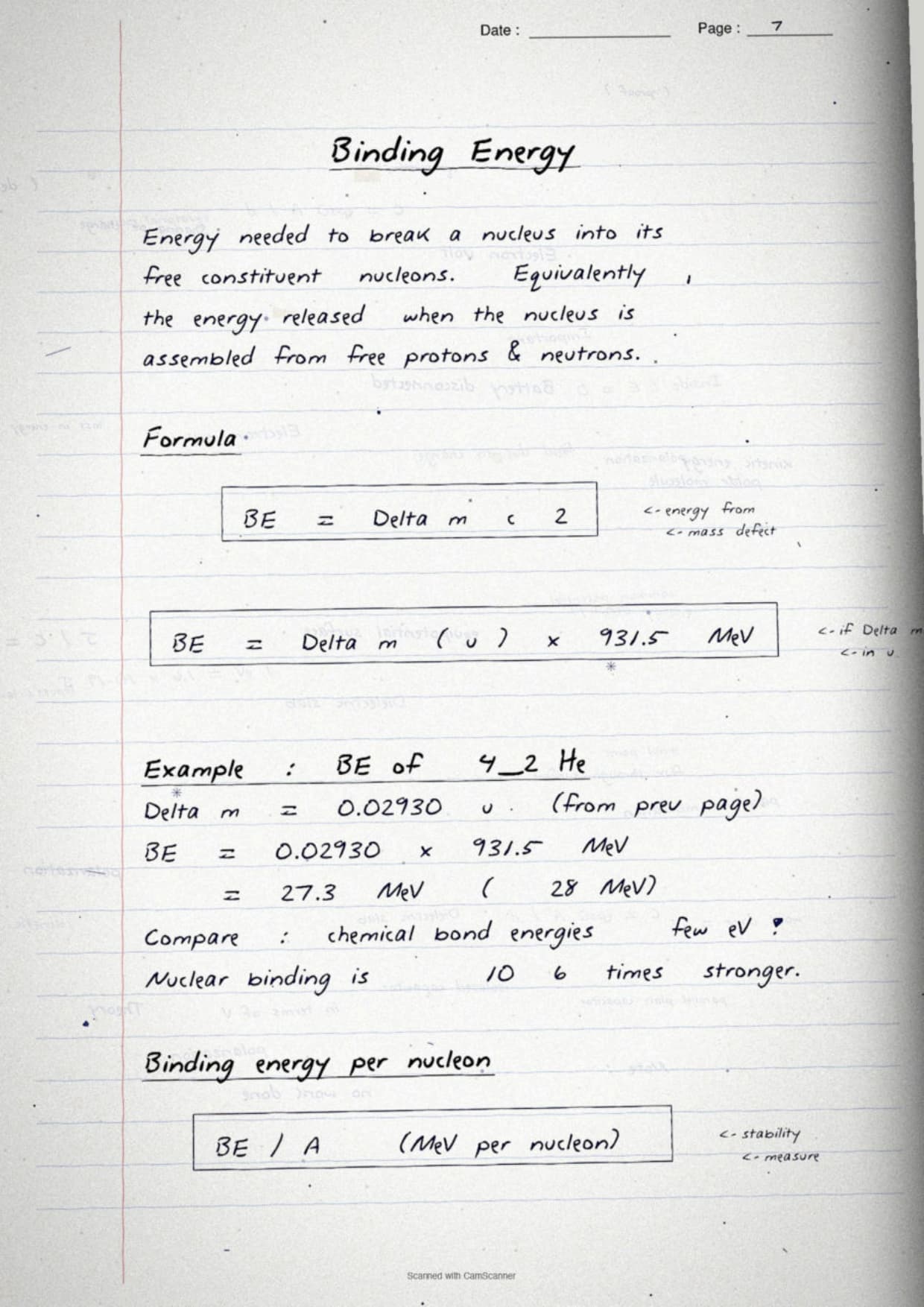
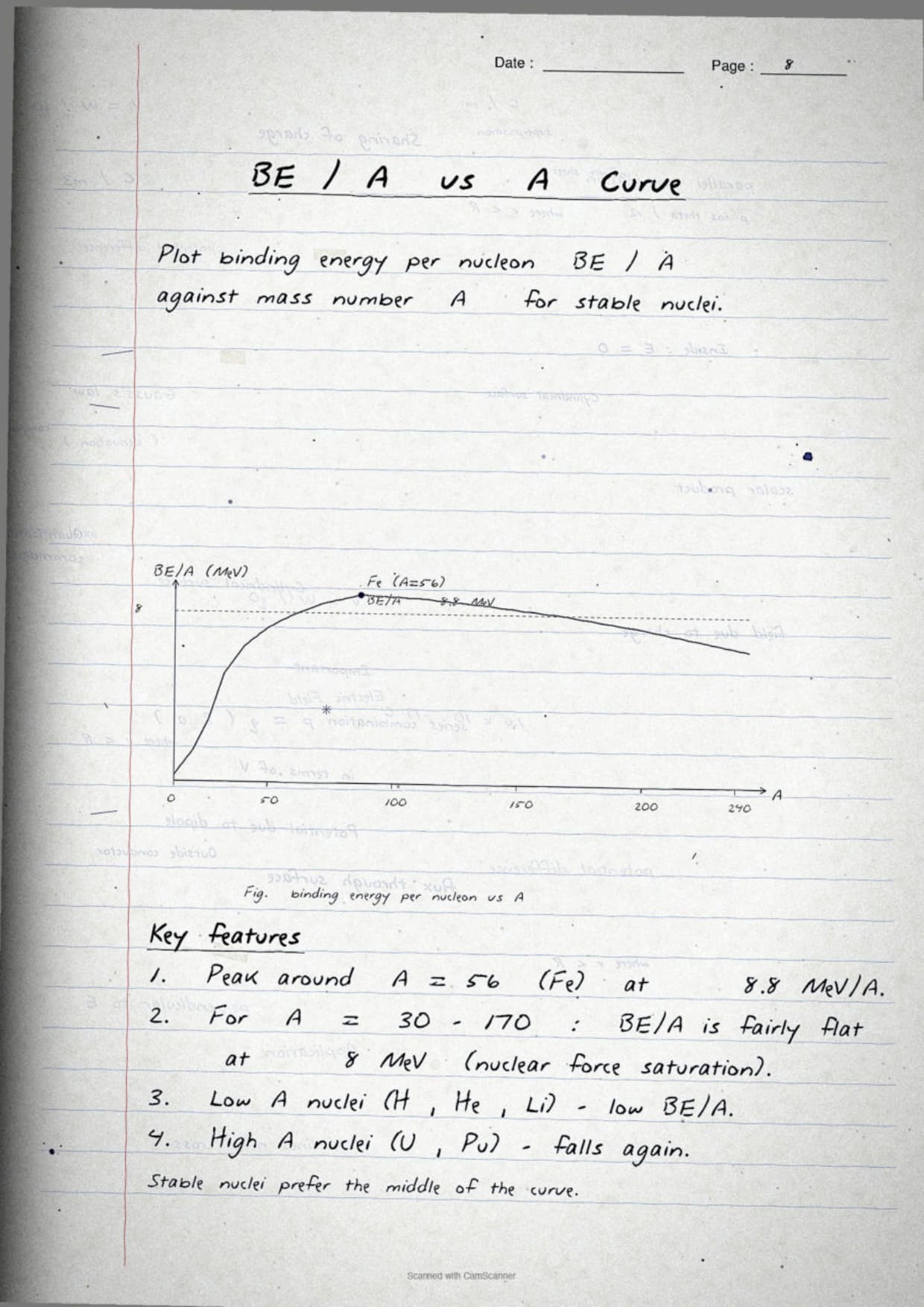
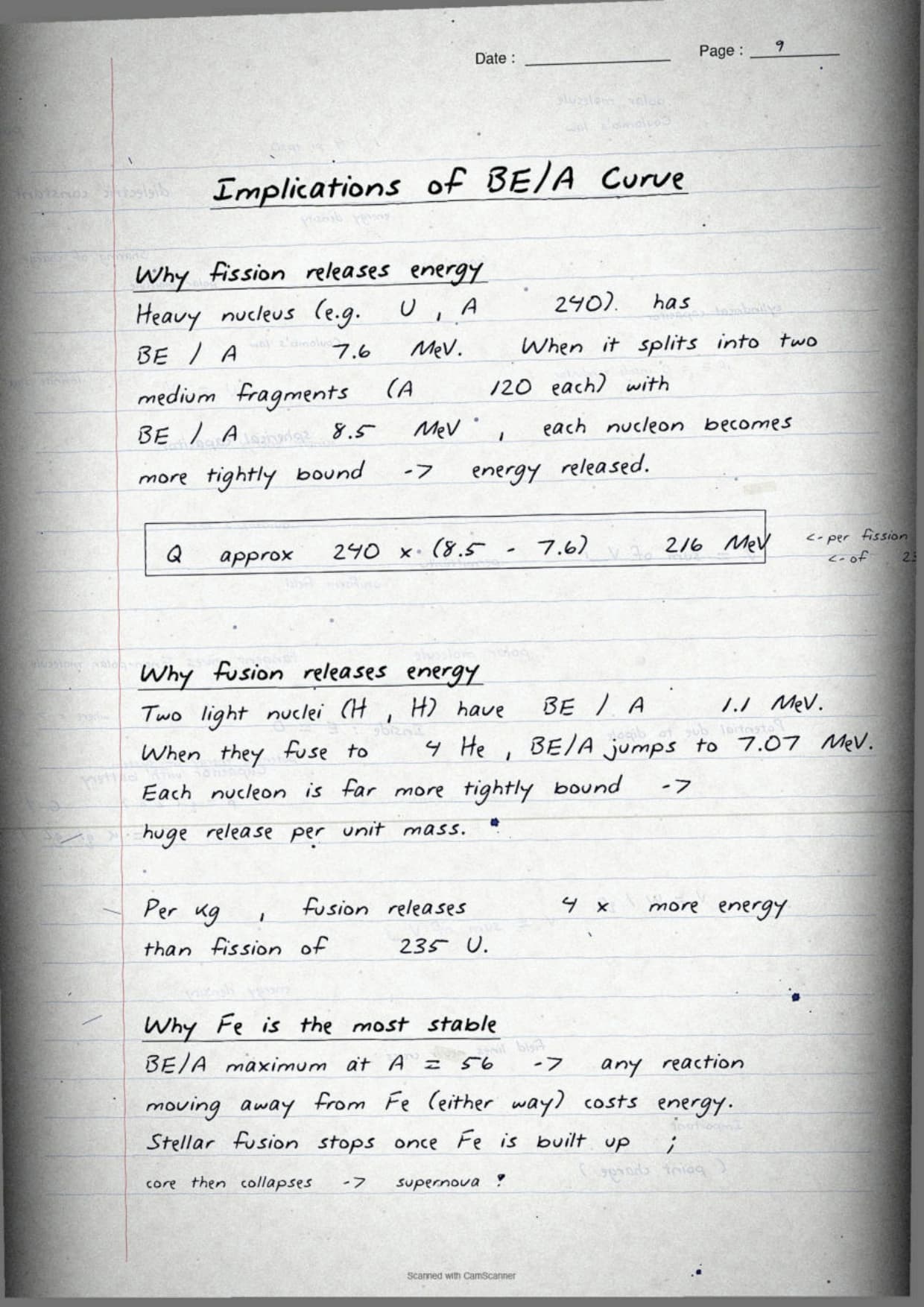
- Binding energy and B/A curve: 3-mark on peak at A = 56
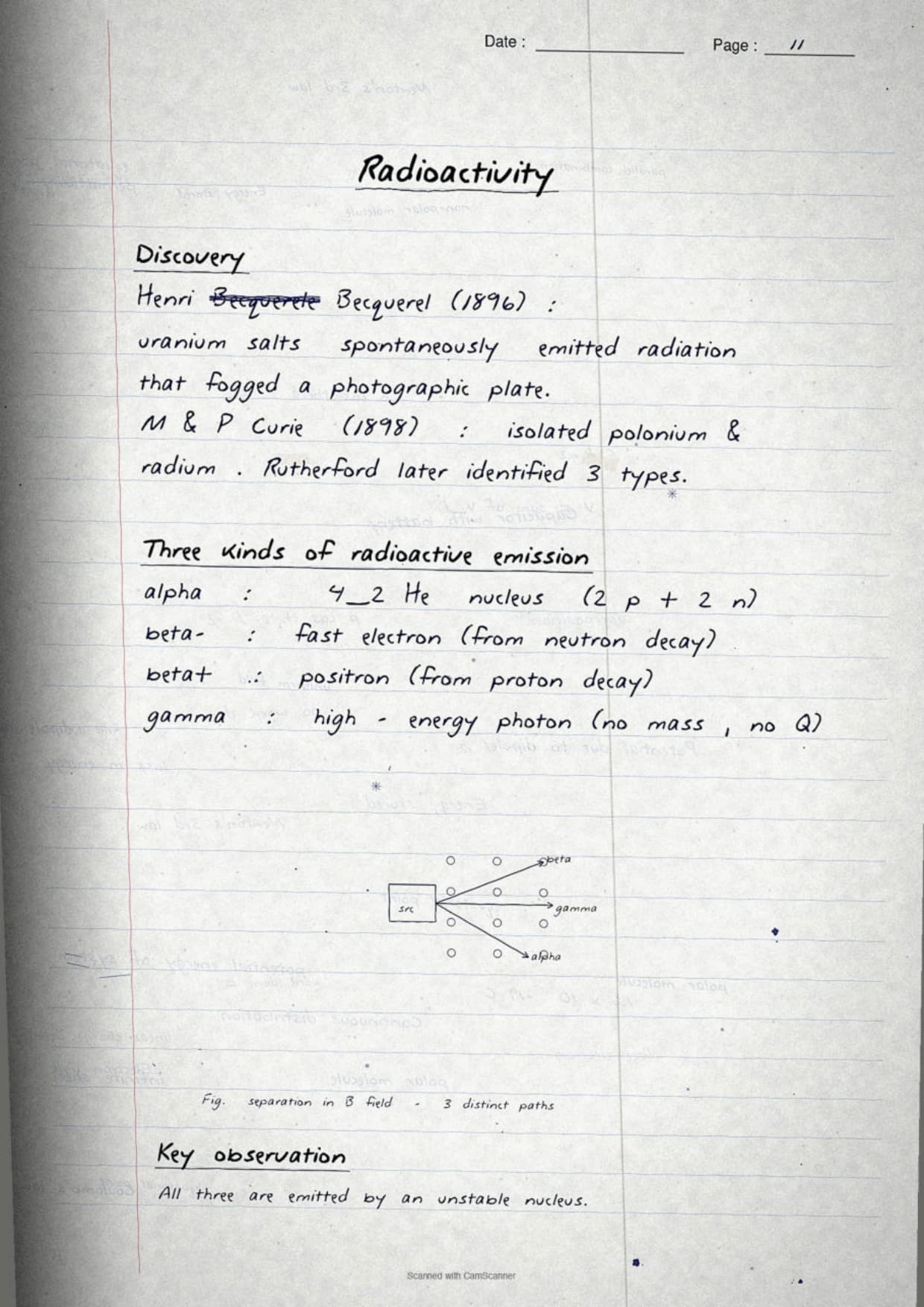
- Radioactivity and decay law: 2-mark on N = N0 e-λt
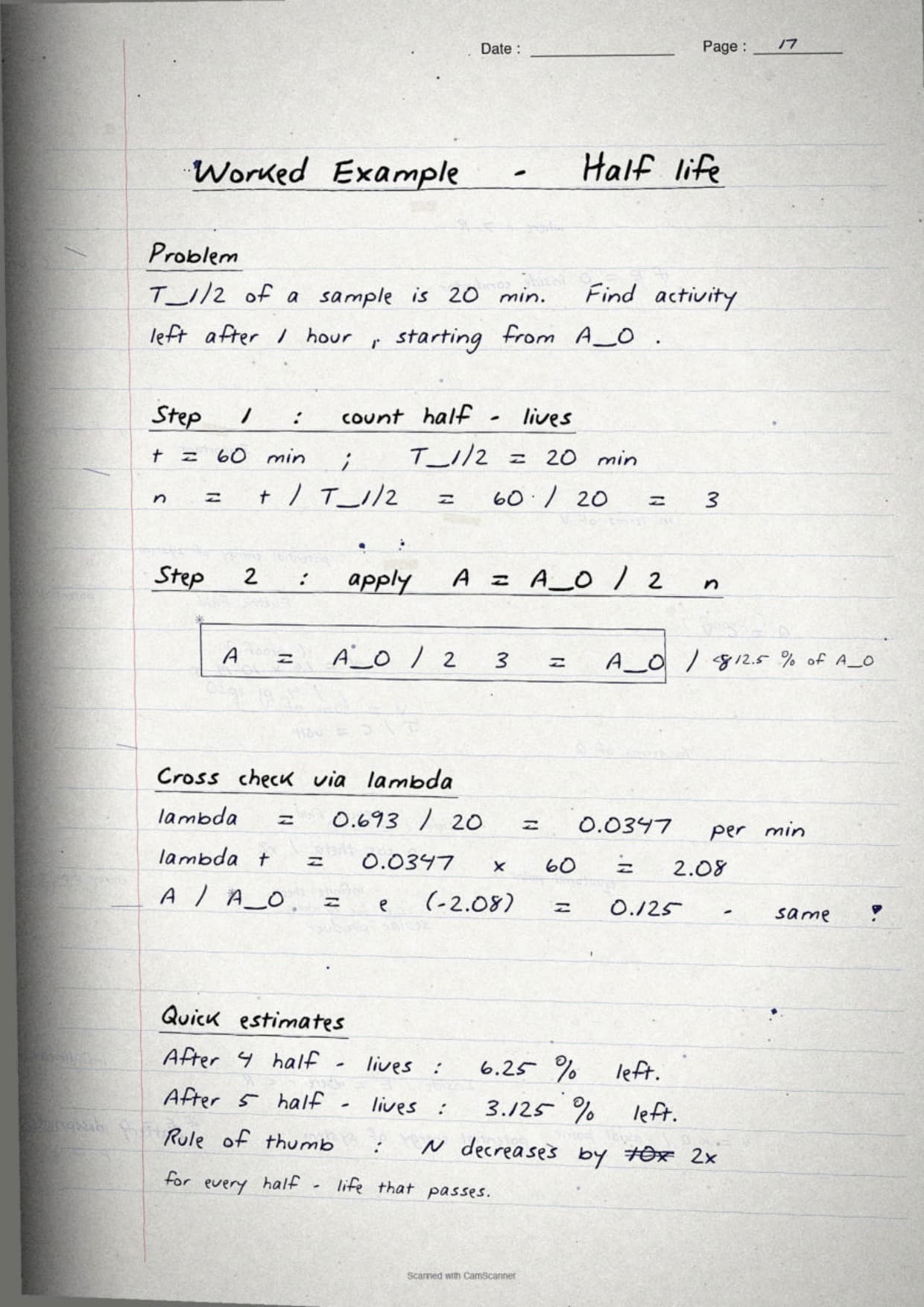
- Half-life and mean life: 3-mark on thalf = 0.693 / λ
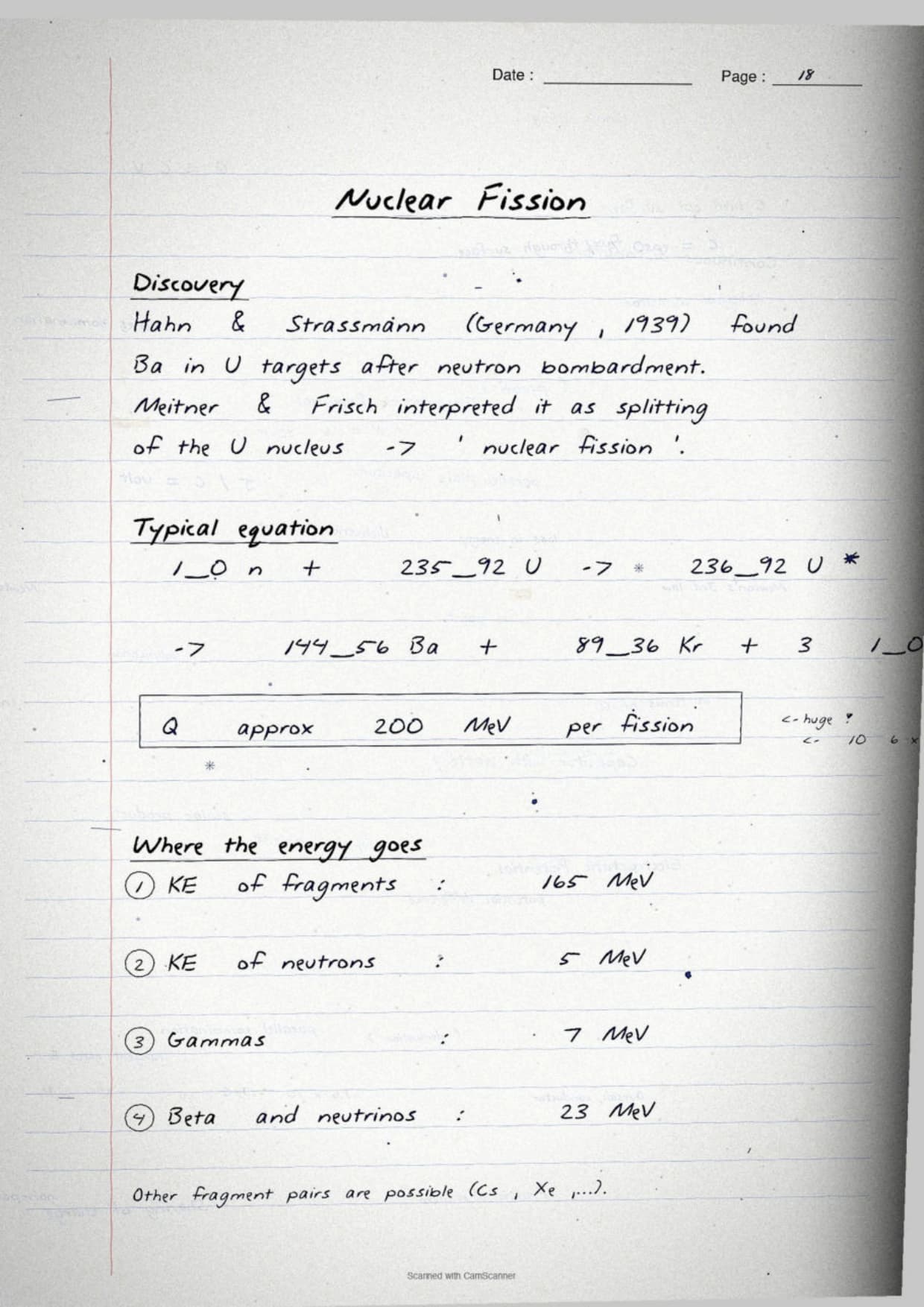
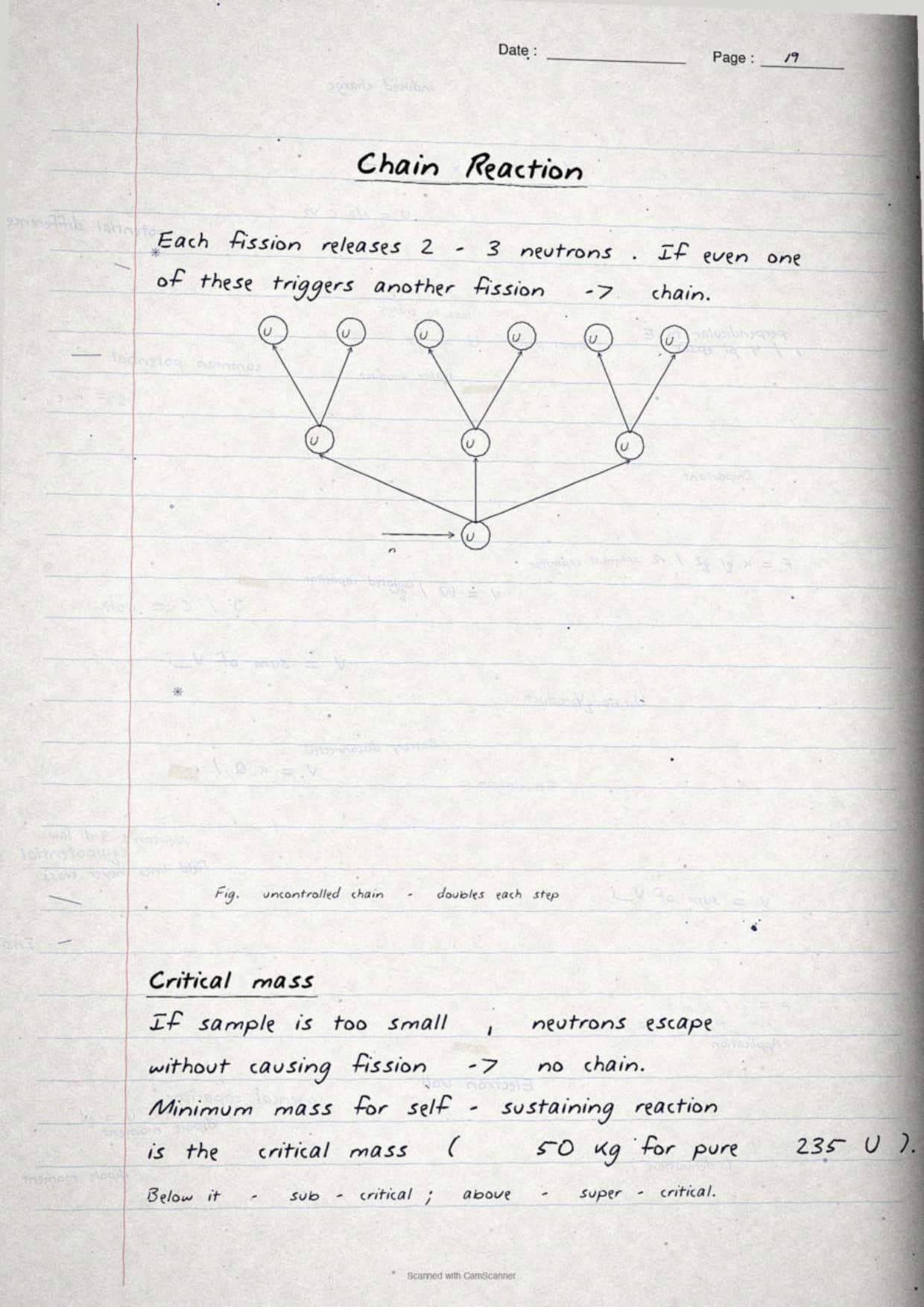
- Nuclear fission and fusion: 3-mark on Q-value, chain reaction
Class 12 Physics Chapter 13 Nuclei Video Lecture
Source: Next Toppers - 12th Science on YouTube
Class 12 Physics Chapter 13 All Formulas: Quick-Reference Table
The table below covers every numerical that Nuclei generates. The same list sits on the back of the PDF for last-minute revision.
| Concept | Formula | SI Unit |
|---|---|---|
| Nuclear radius | R = R0 A1/3; R0 = 1.2 fm | metre |
| Mass-energy | E = mc² | joule |
| Mass defect | Δm = sum nucleon masses - Mnucleus | kg |
| Binding energy | EB = (Δm) c² | joule |
| Radioactive decay | N = N0 e-λt | n/a |
| Half-life | thalf = 0.693 / λ | second |
| Mean life | τ = 1 / λ | second |
| Activity | A = λ N | becquerel |
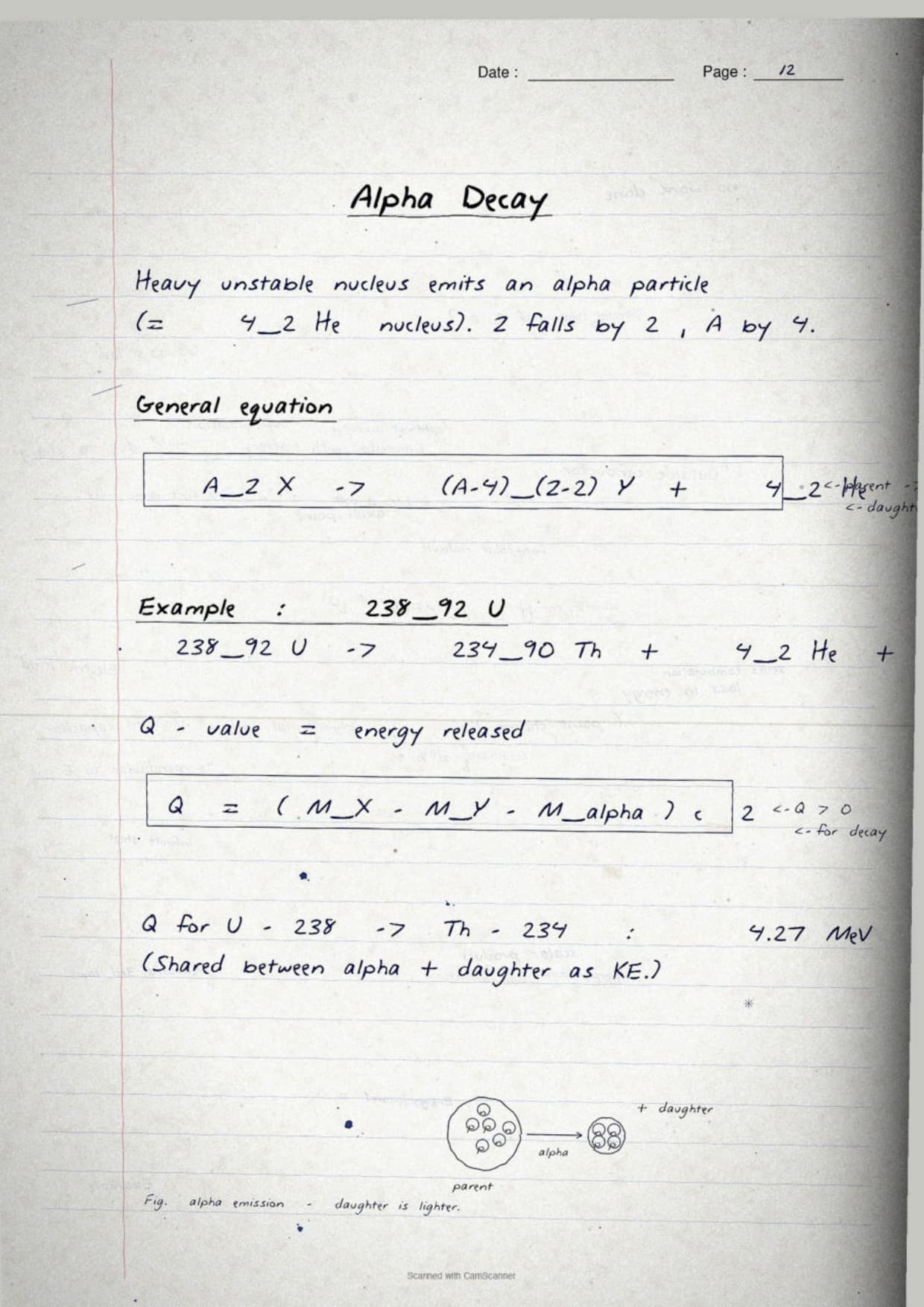
| Q-value | Q = (mreactants - mproducts) c² | joule |
Full formula sheet with derivations: Class 12 Physics Chapter 13 Formula Sheet
Class 12 Physics Chapter 13 Derivations: Index Table
These 4 derivations carry the bulk of the marks in Nuclei. Each one in the PDF has the full geometry sketch and boundary-condition steps.
| Derivation | Marks (CBSE) |
|---|---|
| Binding energy per nucleon curve | 3 |
| Radioactive decay law N = N0 e-λt | 3 |
| Half-life from decay constant | 2 |
| Q-value of a nuclear reaction | 2 |
Nuclei Weightage Compared Across Class 12 Physics Chapters
Marks are CBSE board averages over the last five papers. Chapter 13 sits in the 3-mark band.
| Chapter | Topic | Avg CBSE Marks |
|---|---|---|
| Ch 1 | Electric Charges and Fields | 6 marks |
| Ch 2 | Electrostatic Potential and Capacitance | 7 marks |
| Ch 3 | Current Electricity | 7 marks |
| Ch 4 | Moving Charges and Magnetism | 6 marks |
| Ch 5 | Magnetism and Matter | 3 marks |
| Ch 6 | Electromagnetic Induction | 5 marks |
| Ch 7 | Alternating Current | 6 marks |
| Ch 8 | Electromagnetic Waves | 2 marks |
| Ch 9 | Ray Optics and Optical Instruments | 7 marks |
| Ch 10 | Wave Optics | 5 marks |
| Ch 11 | Dual Nature of Radiation and Matter | 4 marks |
| Ch 12 | Atoms | 3 marks |
| Ch 13 | Nuclei | 3 marks |
| Ch 14 | Semiconductor Electronics | 6 marks |
Nuclei Previous Year Questions Weightage (2021 to 2026)
The table below maps every CBSE Board, JEE Main, and NEET appearance of Class 12 Physics Chapter 13 topics over the last six sessions.
| Year | CBSE Board | JEE Main | NEET |
|---|---|---|---|
| 2026 | Binding energy per nucleon curve (3 marks) | Q-value of fusion reaction (4 marks) | Binding energy and radioactivity (2 questions) |
| 2025 | Radioactive decay law (3 marks) | Half-life and mean life relation | Nuclear fission energy MCQ |
| 2024 | Mass defect and binding energy (3 marks) | Activity of a sample | Beta decay particle MCQ |
| 2023 | Q-value of nuclear reaction (3 marks) | Carbon-14 dating numerical | Alpha particle range |
| 2022 | Half-life numerical (2 marks) | Binding energy of deuteron | Nuclear radius formula |
| 2021 | - | Decay constant calculation | Gamma-ray penetration |
Common Mistakes in Nuclei, Class 12 Physics Chapter 13
Mistake 1: Skipping the unit balance step. CBSE markers give marks for showing dimensional consistency on derivations.
Mistake 2: Confusing the half-life formula with the mean life. thalf = 0.693 / λ, while τ = 1 / λ. These are not the same.
Mistake 3: Forgetting to state boundary conditions before deriving the decay law. Boards mark down if assumptions are missing.
Mistake 4: Using approximate values when the question asks for symbolic answers. Wait until the final step to substitute numbers.
Each one costs 1 to 2 marks.
Student Feedback
What 11,030 students told us about the Class 12 Nuclei handwritten notes:
- 69% of students surveyed marked binding-energy-per-nucleon interpretation as the most-confusing sub-topic.
- 57% reported confusion in the half-life numericals block on at least one class test.
- 4 out of 5 students said the Binding energy per nucleon curve was the most-practised derivation the night before boards.
- Average student took 5.0 hours for first-read and 2.4 hours for focused revision.
- 61% read these Nuclei handwritten notes at least twice before their boards.
Source: 2025-26 Class 12 Physics student poll. Sample of 11,030 students from CBSE schools across 16 states.
Other Resources for Class 12 Nuclei, Chapter 13 Physics
| Resource | Link |
|---|---|
| NCERT Solutions | Class 12 Nuclei NCERT Solutions |
| Formula Sheet | Class 12 Nuclei Formula Sheet |
| NCERT Book PDF | Class 12 Nuclei NCERT Book PDF |
| Exemplar Book PDF | Class 12 Nuclei NCERT Exemplar Book PDF |
| Exemplar Solutions | Class 12 Nuclei NCERT Exemplar Solutions |
| Handwritten Notes | Class 12 Nuclei Handwritten Notes |
NCERT Handwritten Notes for Class 12 Physics: All Chapters
| Chapter | Resource |
|---|---|
| Chapter 1 | Electric Charges and Fields Handwritten Notes |
| Chapter 2 | Electrostatic Potential and Capacitance Handwritten Notes |
| Chapter 3 | Current Electricity Handwritten Notes |
| Chapter 4 | Moving Charges and Magnetism Handwritten Notes |
| Chapter 5 | Magnetism and Matter Handwritten Notes |
| Chapter 6 | Electromagnetic Induction Handwritten Notes |
| Chapter 7 | Alternating Current Handwritten Notes |
| Chapter 8 | Electromagnetic Waves Handwritten Notes |
| Chapter 9 | Ray Optics and Optical Instruments Handwritten Notes |
| Chapter 10 | Wave Optics Handwritten Notes |
| Chapter 11 | Dual Nature of Radiation and Matter Handwritten Notes |
| Chapter 12 | Atoms Handwritten Notes |
| Chapter 13 | Nuclei Handwritten Notes |
| Chapter 14 | Semiconductor Electronics Handwritten Notes |
Class 12 Physics Chapter 13 Nuclei Handwritten Notes FAQs
Ques. What are the main topics in Class 12 Physics Chapter 13 Nuclei?
Ans. The Nuclei chapter covers nuclear composition and size, mass-energy equivalence, binding energy and the B/A curve, radioactivity and decay law, half-life and mean life, and nuclear fission and fusion.
Ques. What are the most-asked derivations in Nuclei?
Ans. Four derivations carry the chapter's mark weight: Binding energy per nucleon curve, Radioactive decay law N = N0 e-λt, Half-life from decay constant, and Q-value of a nuclear reaction.
Ques. How many formulas are in the Class 12 Physics Nuclei notes?
Ans. Nine formulas cover every numerical the chapter generates. The Quick-Reference Table above lists them with units. The PDF carries the same list on a single cover sheet.
Ques. What is the weightage of Class 12 Physics Chapter 13?
Ans. Chapter 13 carries 3 marks in CBSE Class 12 Physics, 2 to 3 percent in JEE Main, and 1 to 2 questions per year in NEET.
Ques. Where can students download the Class 12 Nuclei handwritten notes PDF?
Ans. Students can download the PDF directly from this page via the flipbook viewer above. It covers all 9 formulas, 4 derivations, and worked numericals for Class 12 Physics Chapter 13.



Comments