




The handwritten notes on Class 12 Legal Studies Chapter 4 Human Rights in India have been prepared for quick one-shot revision, according to the latest 2026-27 CBSE syllabus. The PDF covers human dignity, Fundamental Rights, NHRC powers, complaint steps and rights of vulnerable groups.
- Best for last-day revision before CBSE Legal Studies exams.
- Covers constitutional rights, commissions, remedies and key case points.
- Use it with the NCERT chapter for short-answer and long-answer prep.
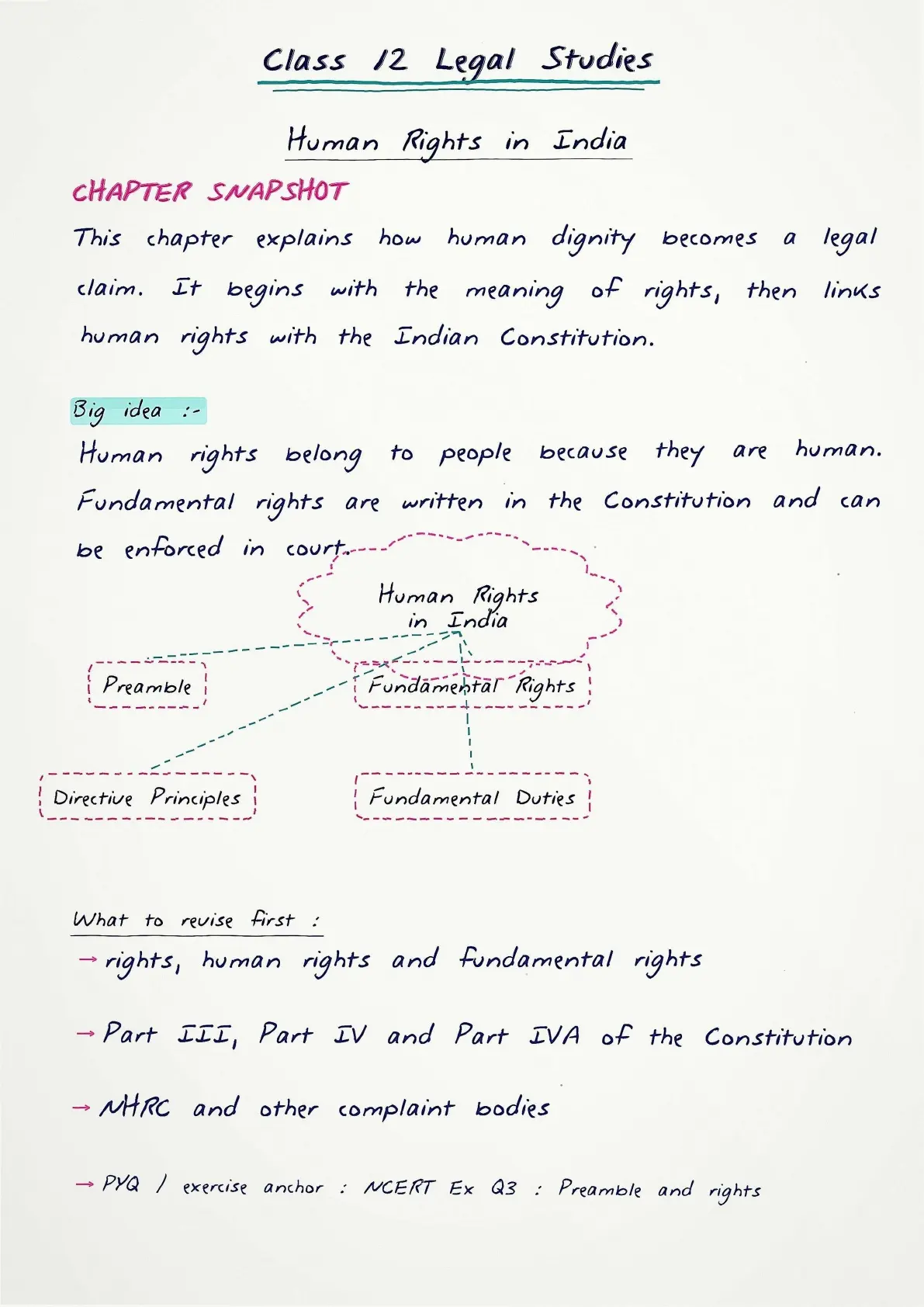
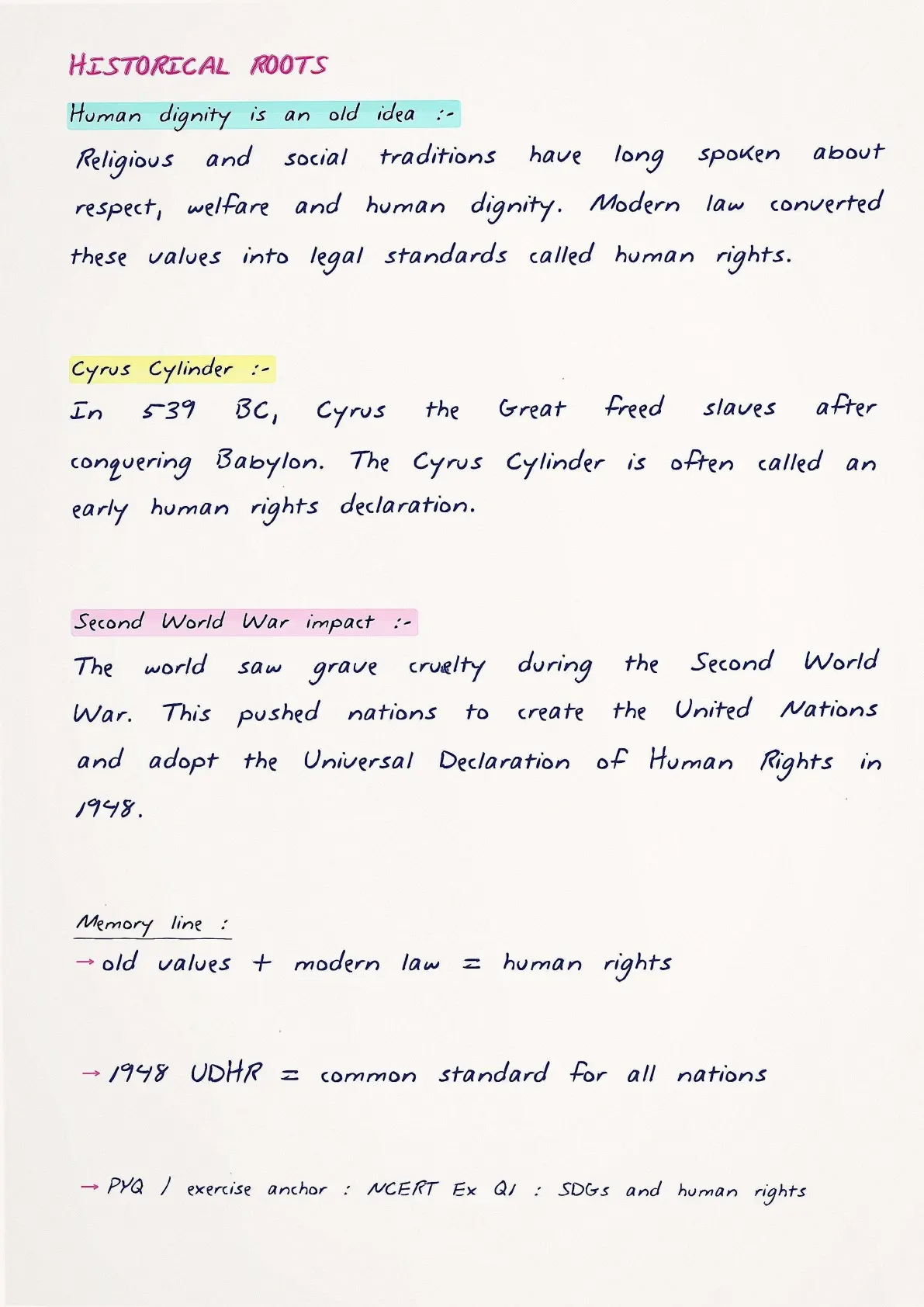
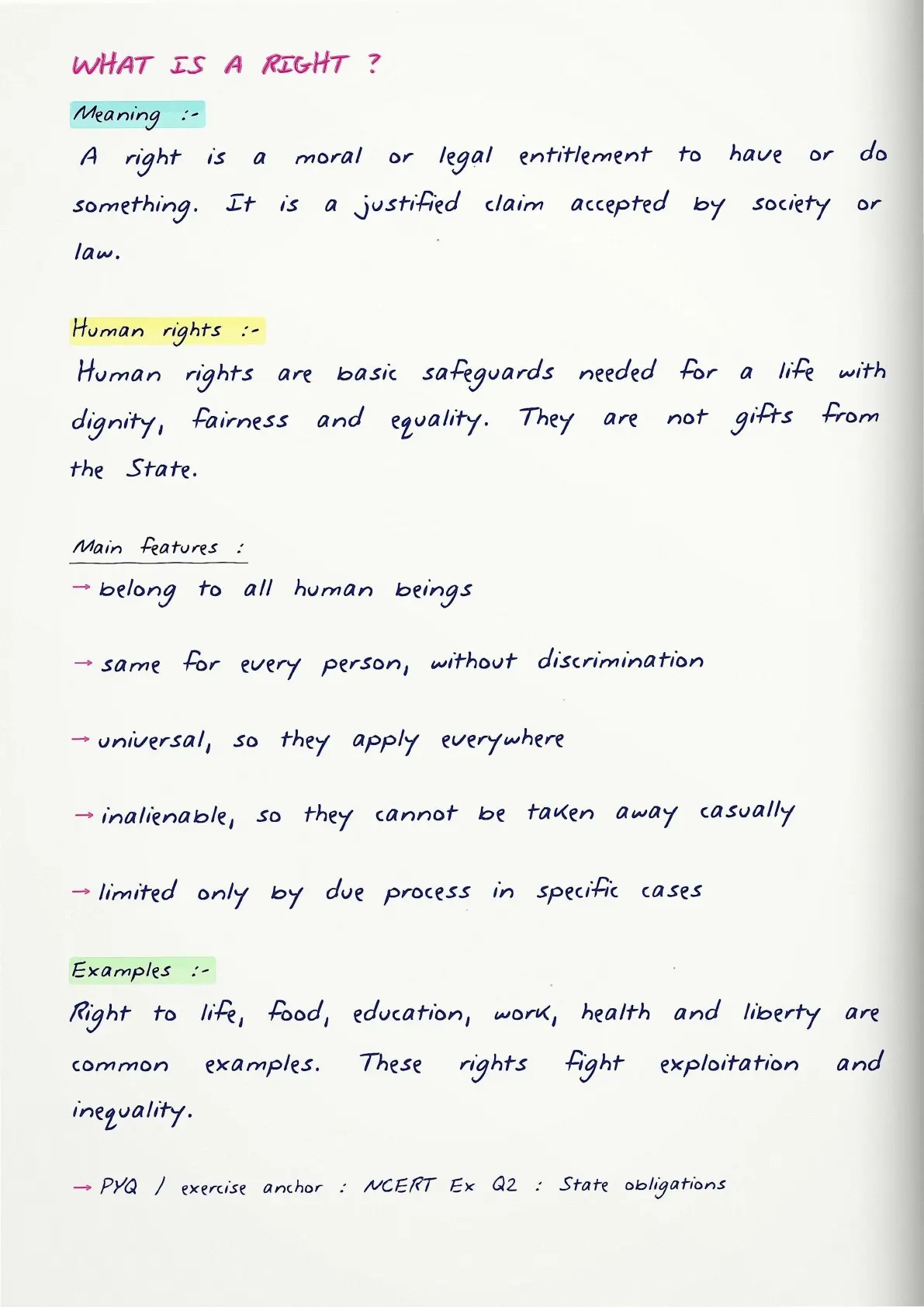
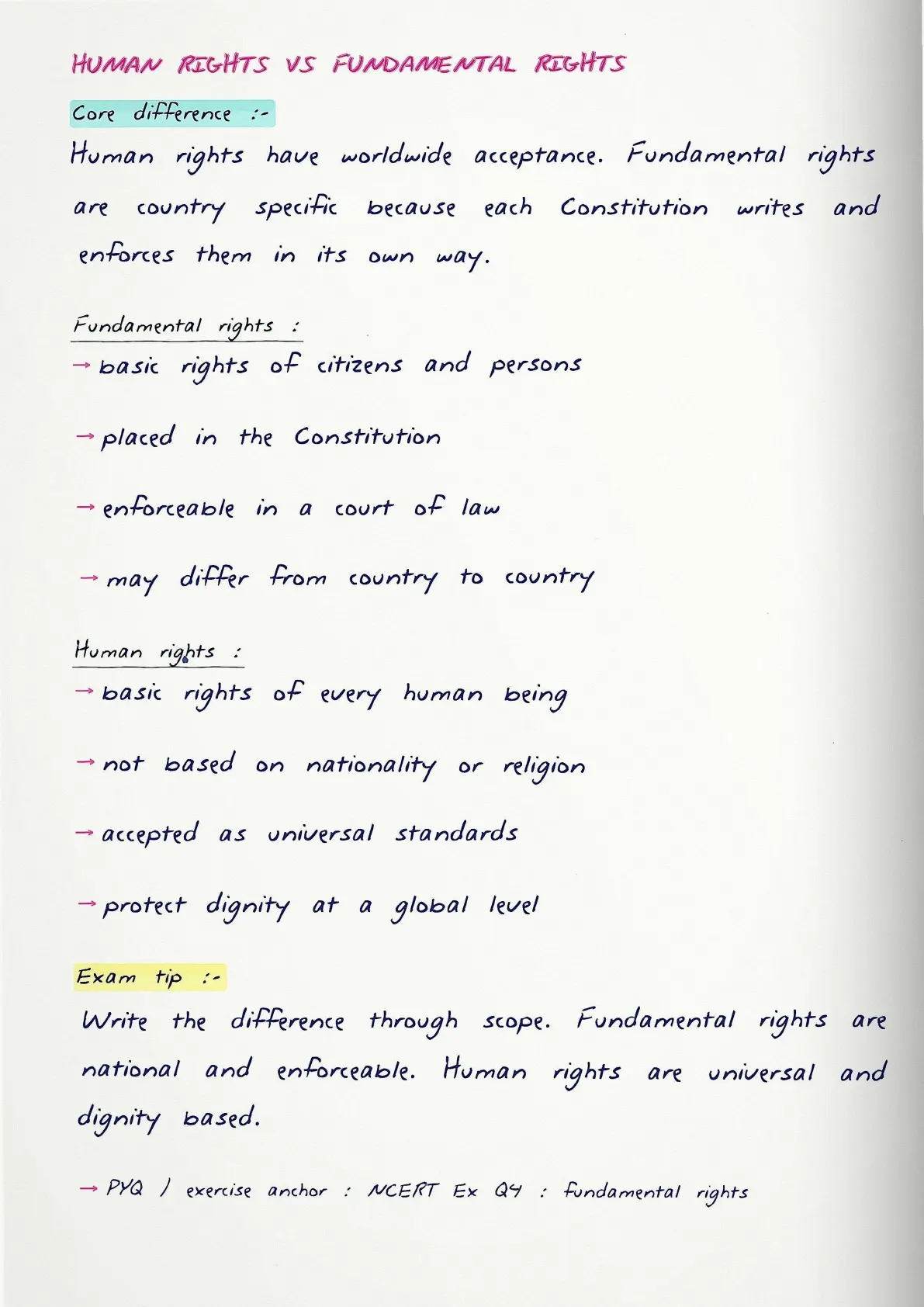
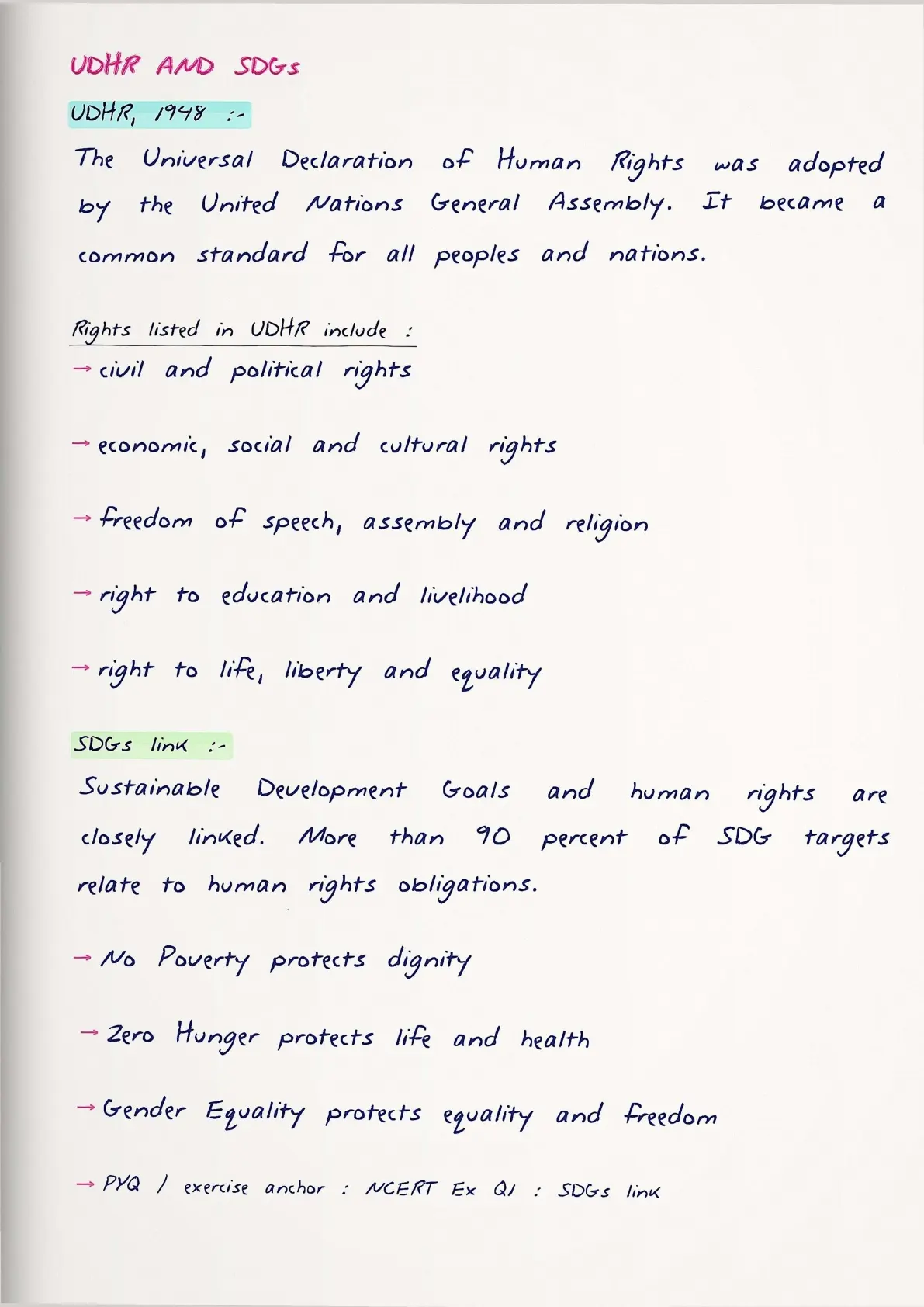
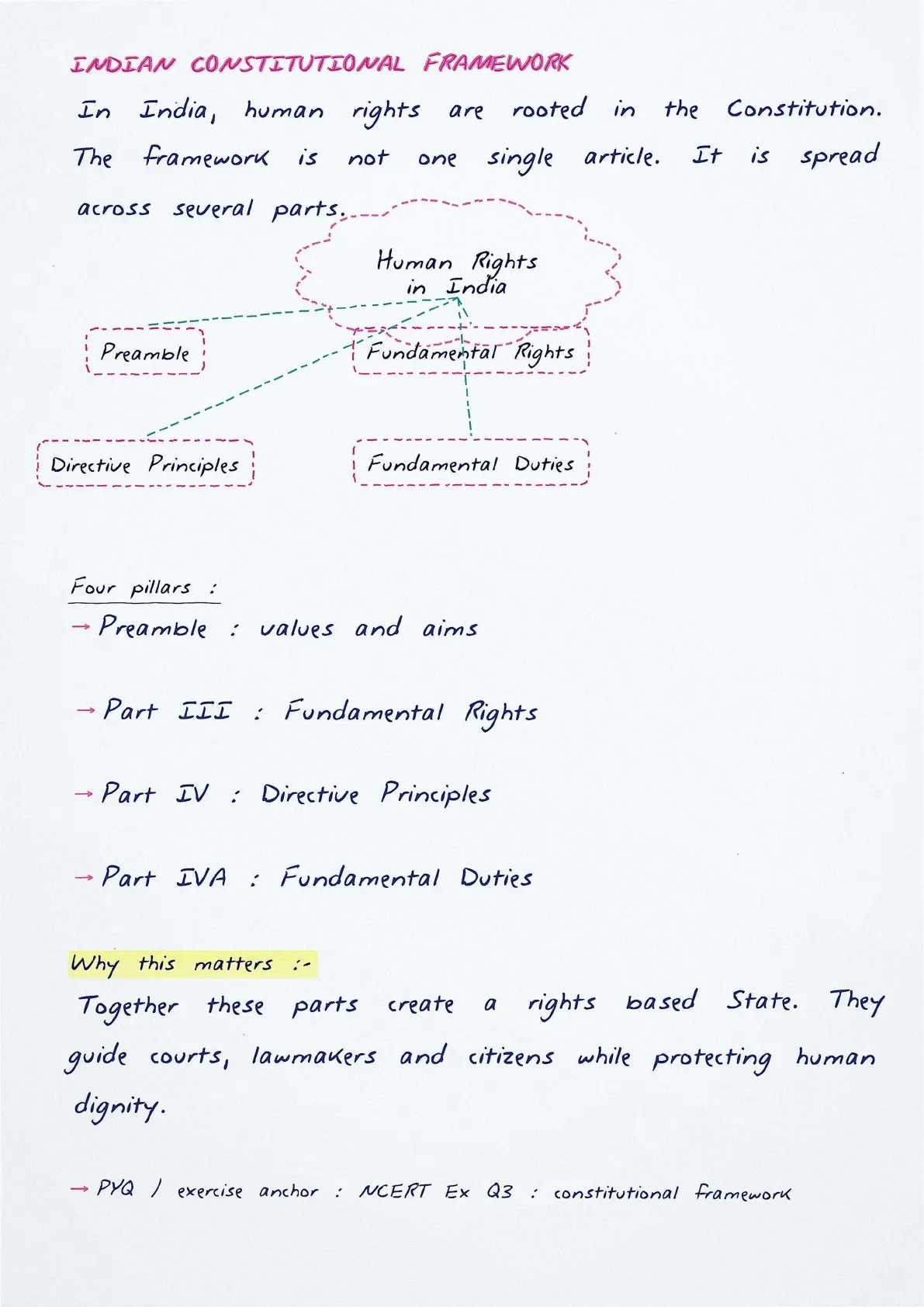
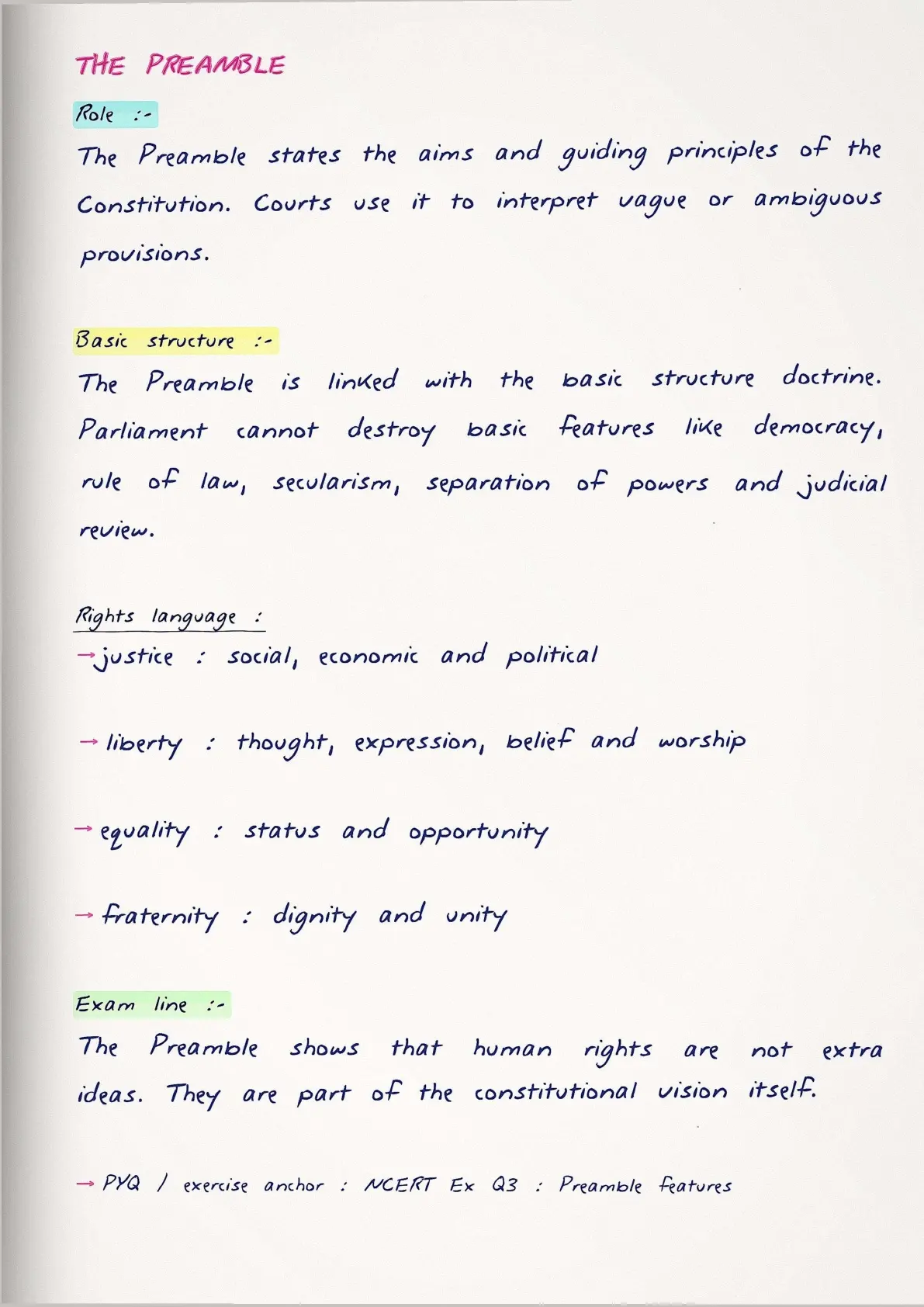
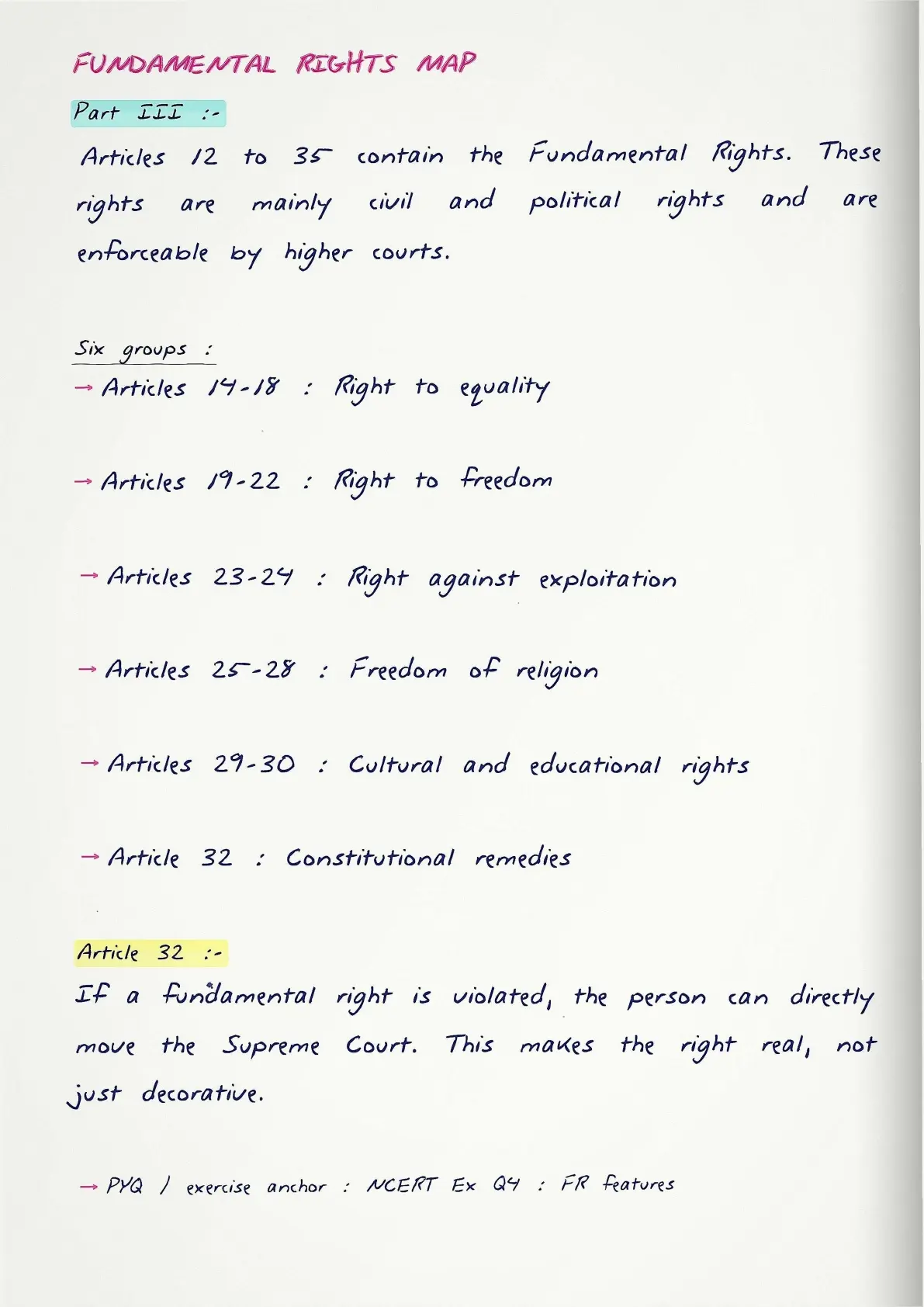
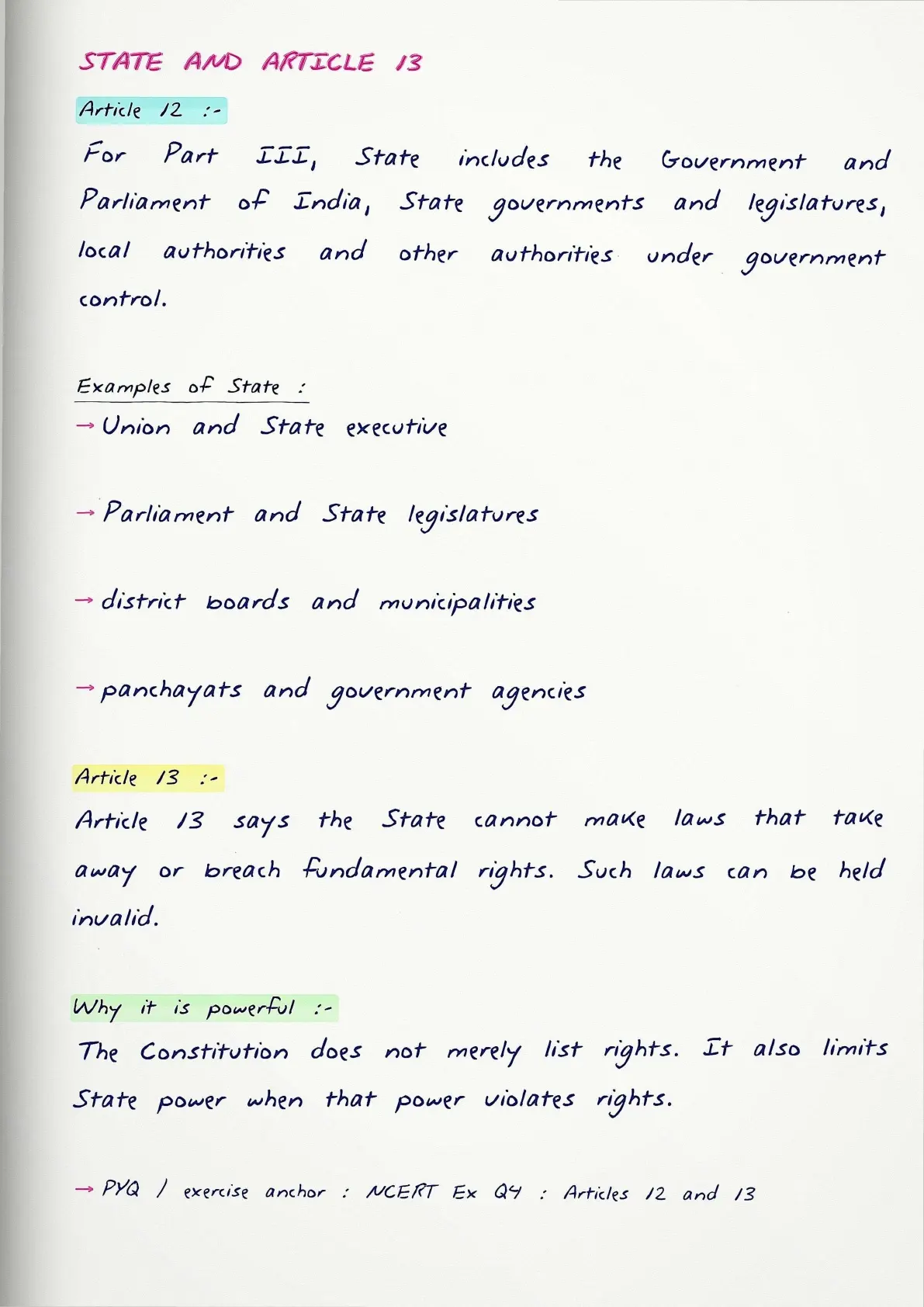
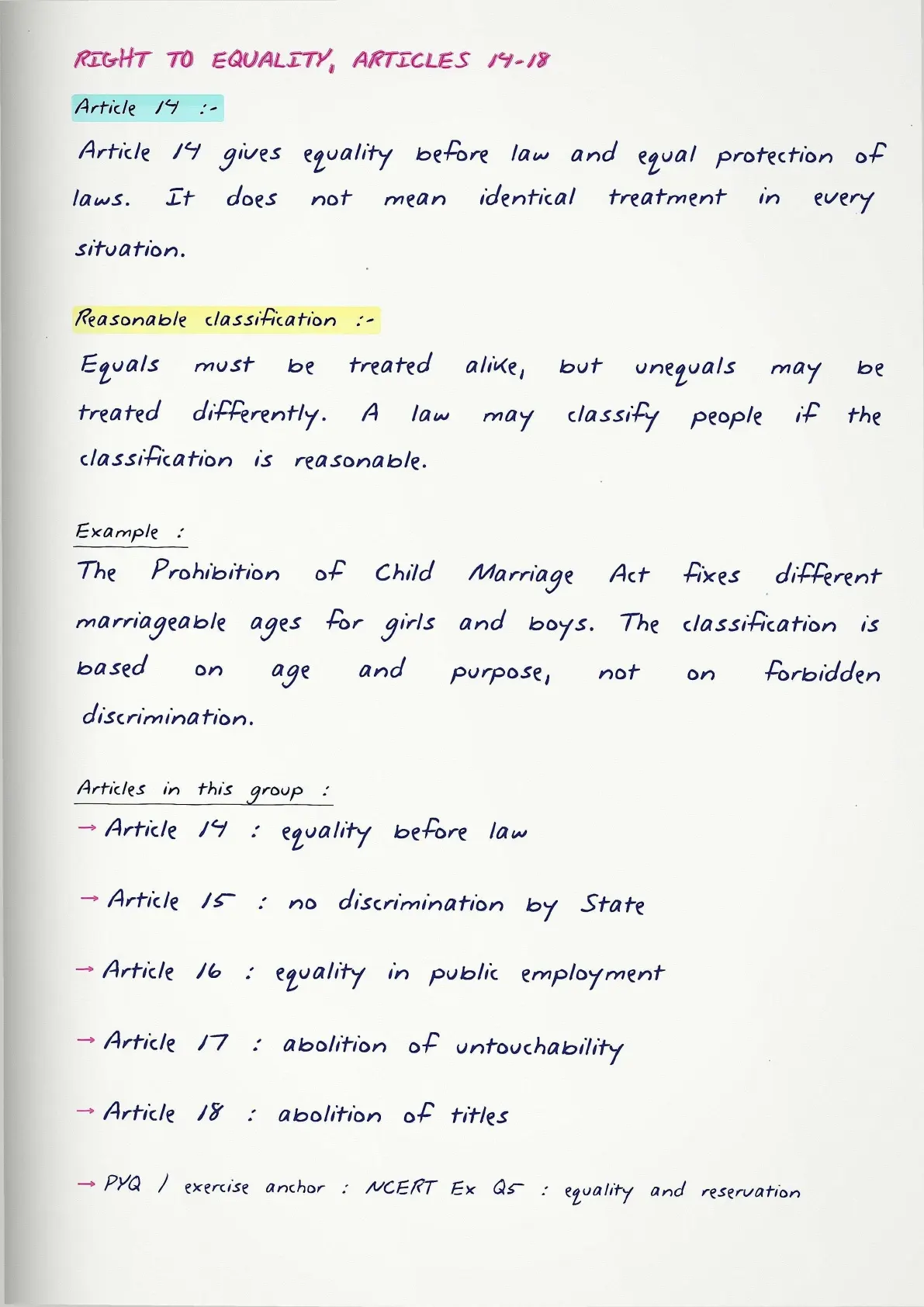
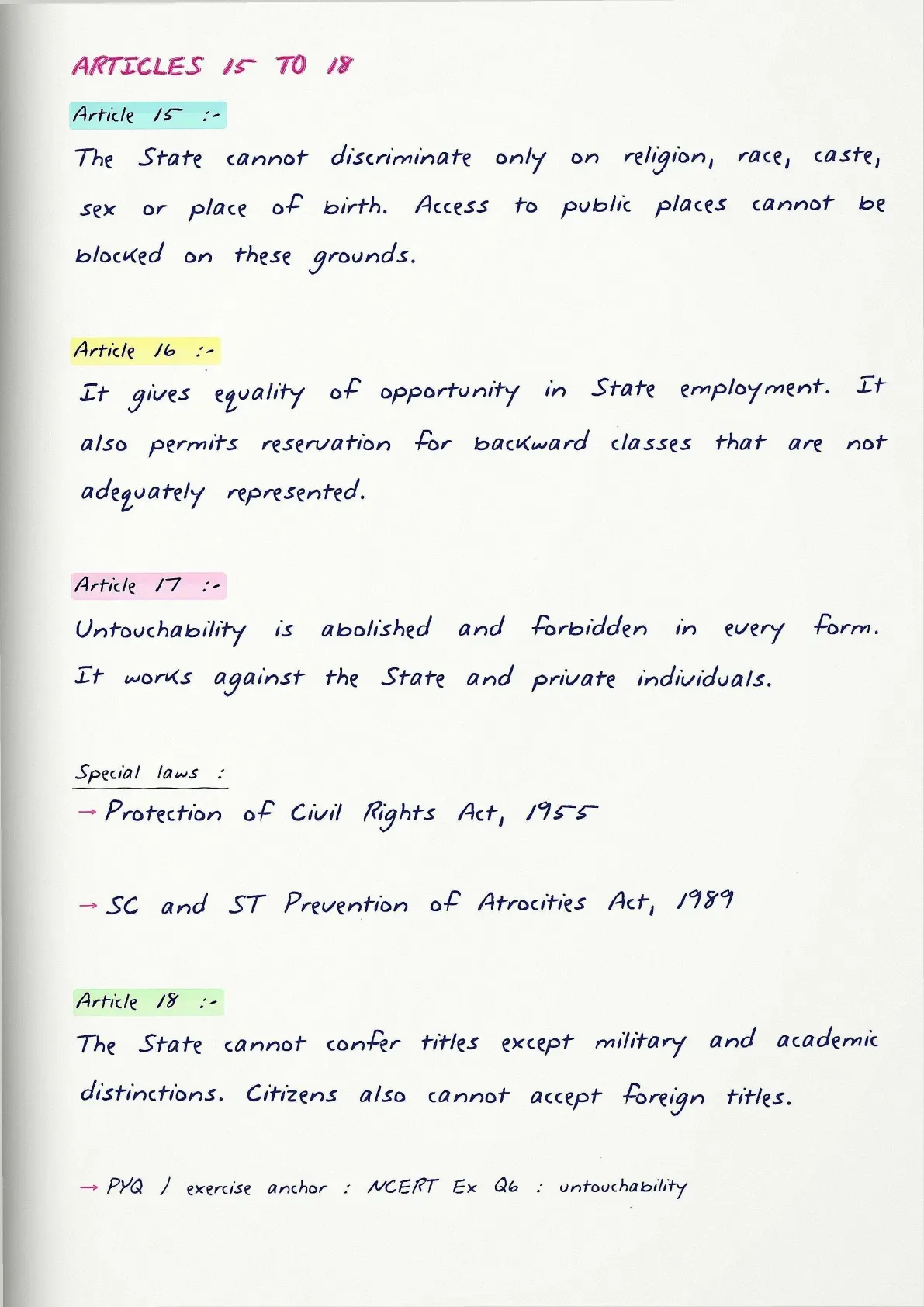
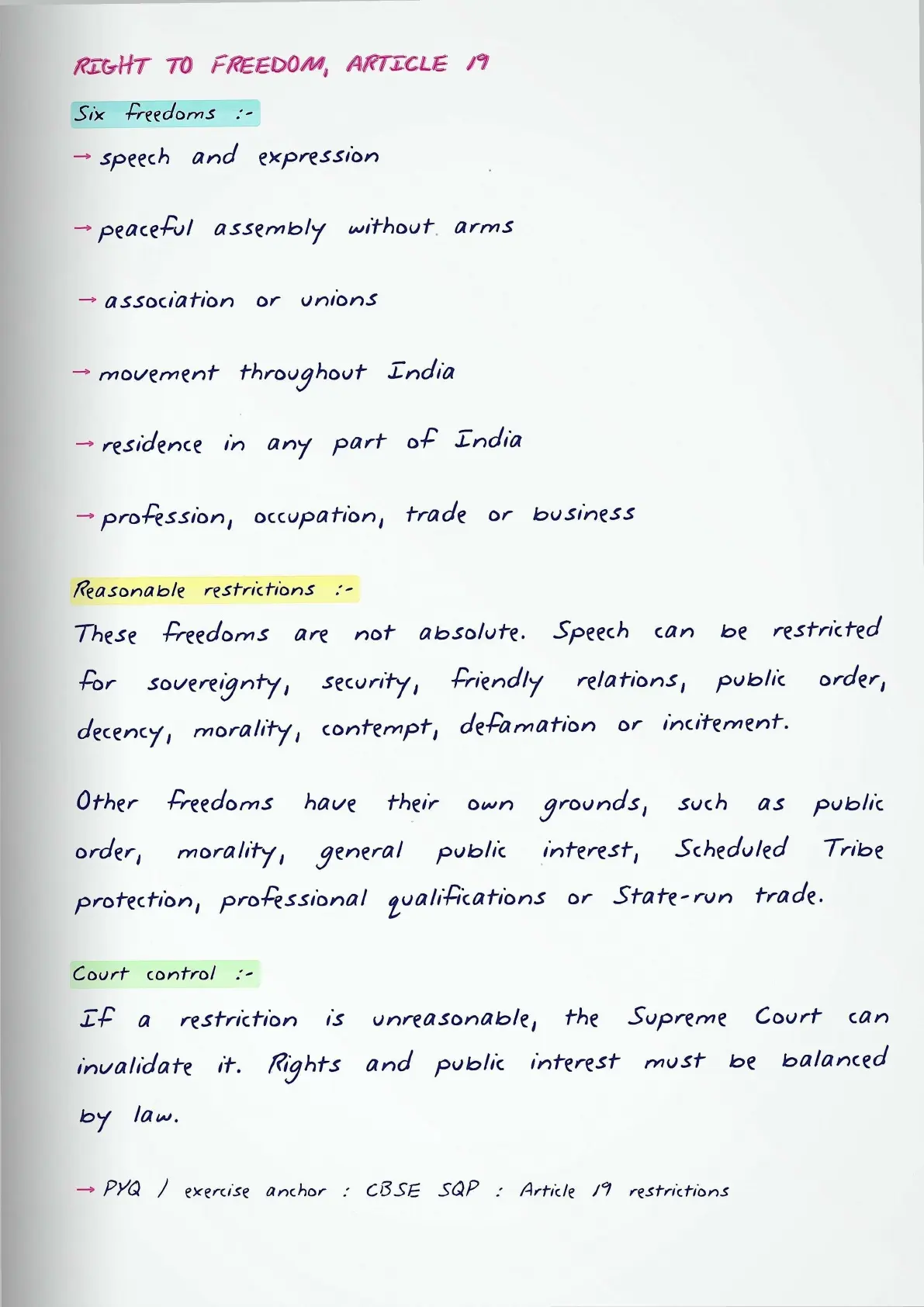
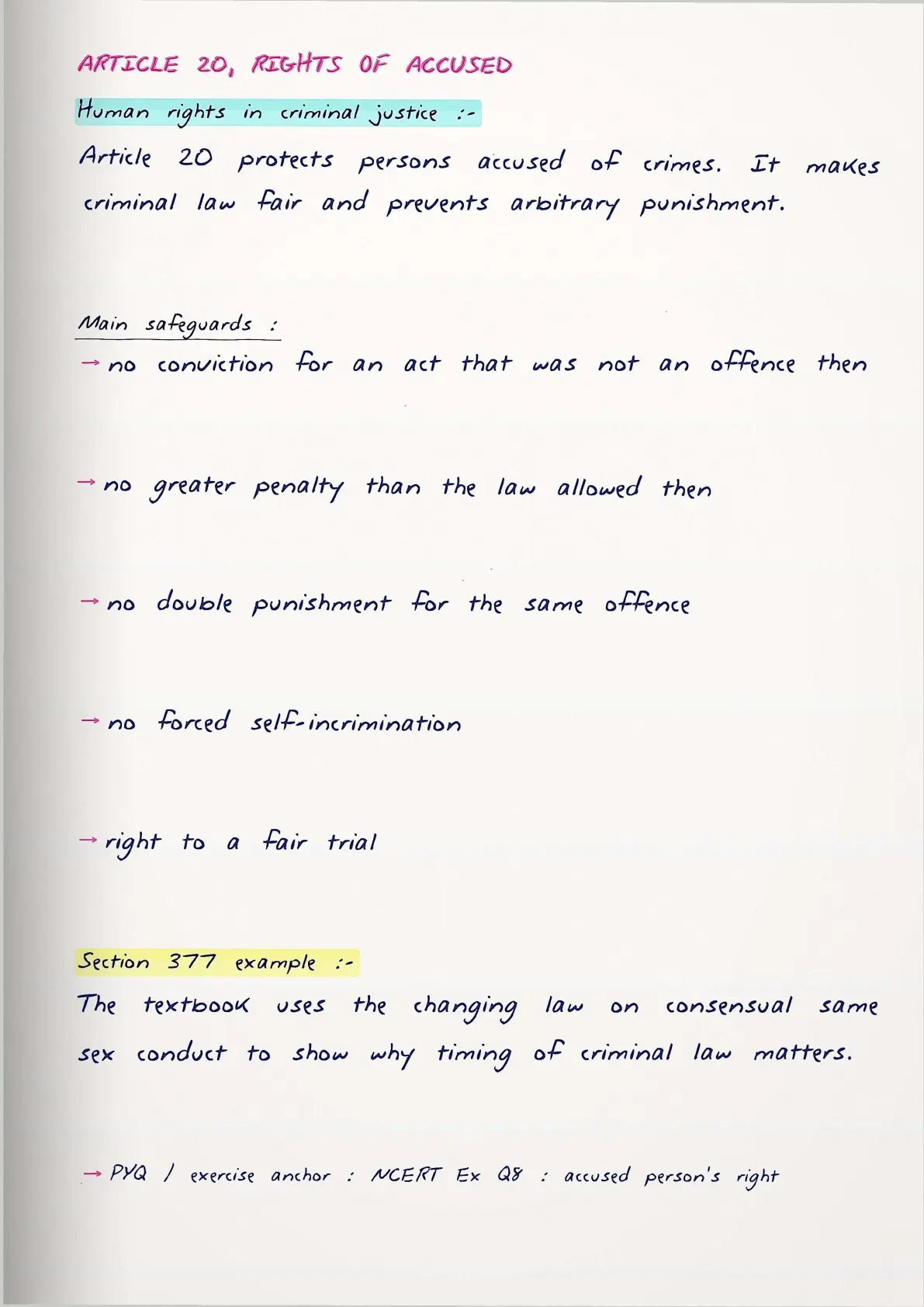
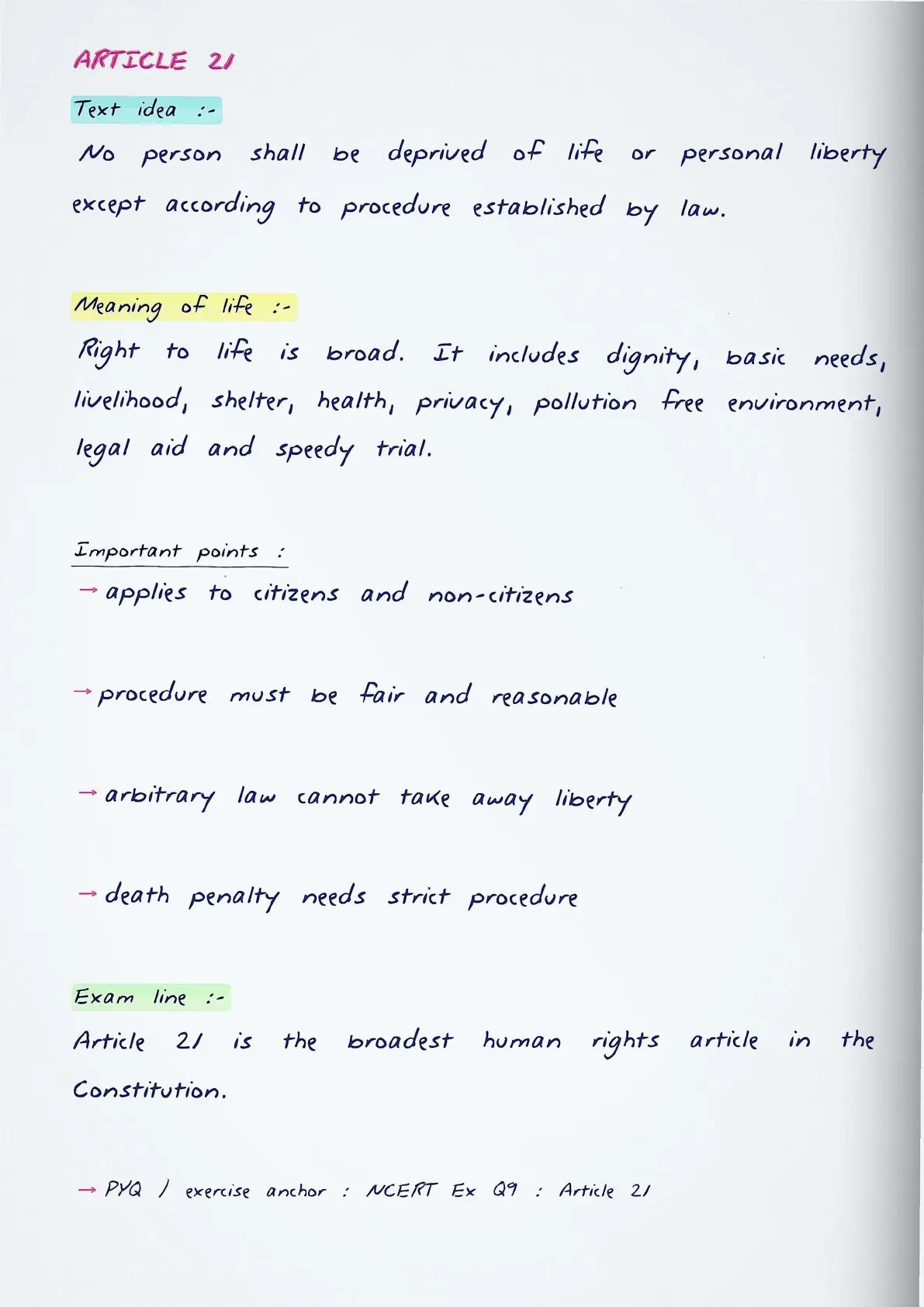
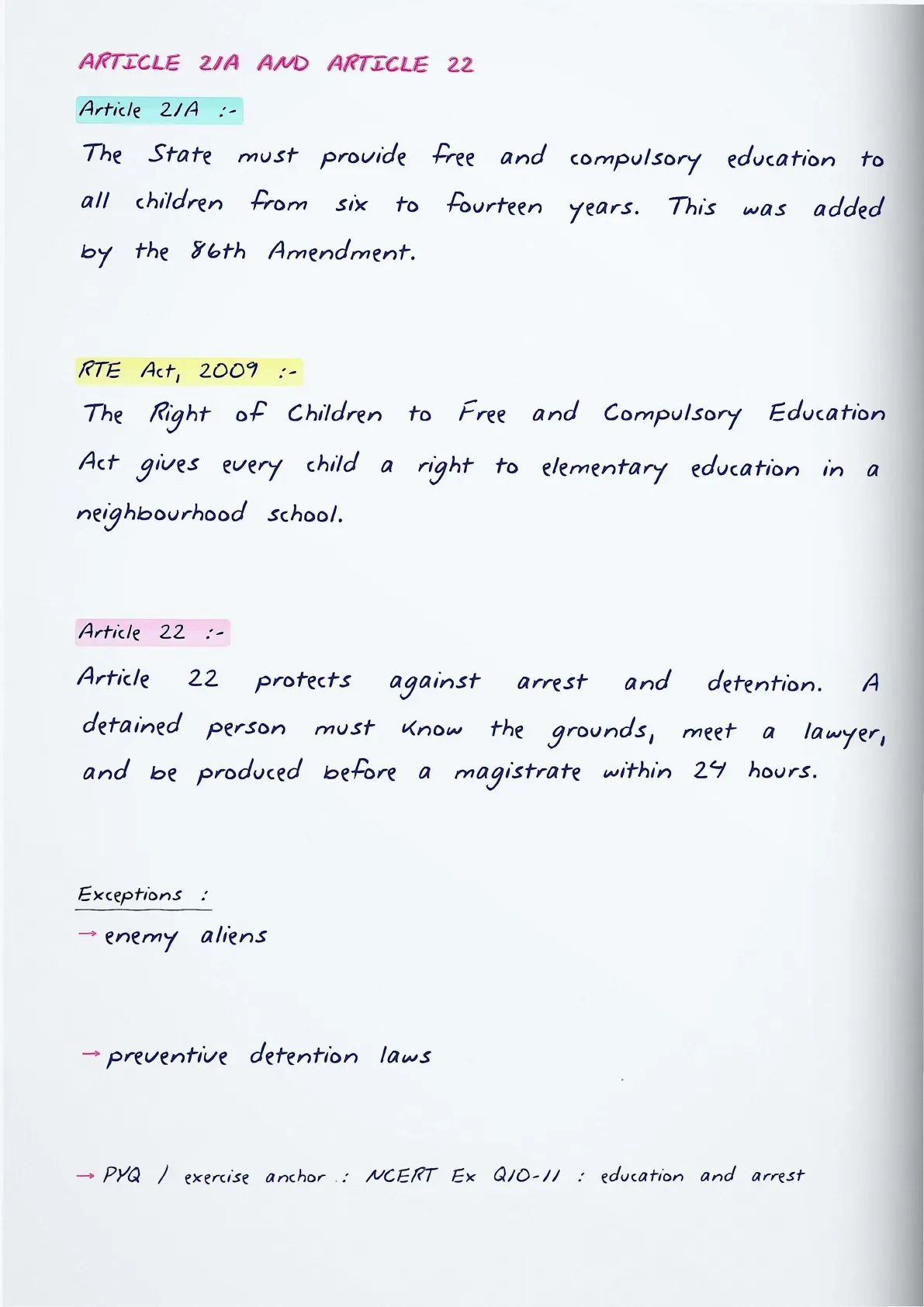
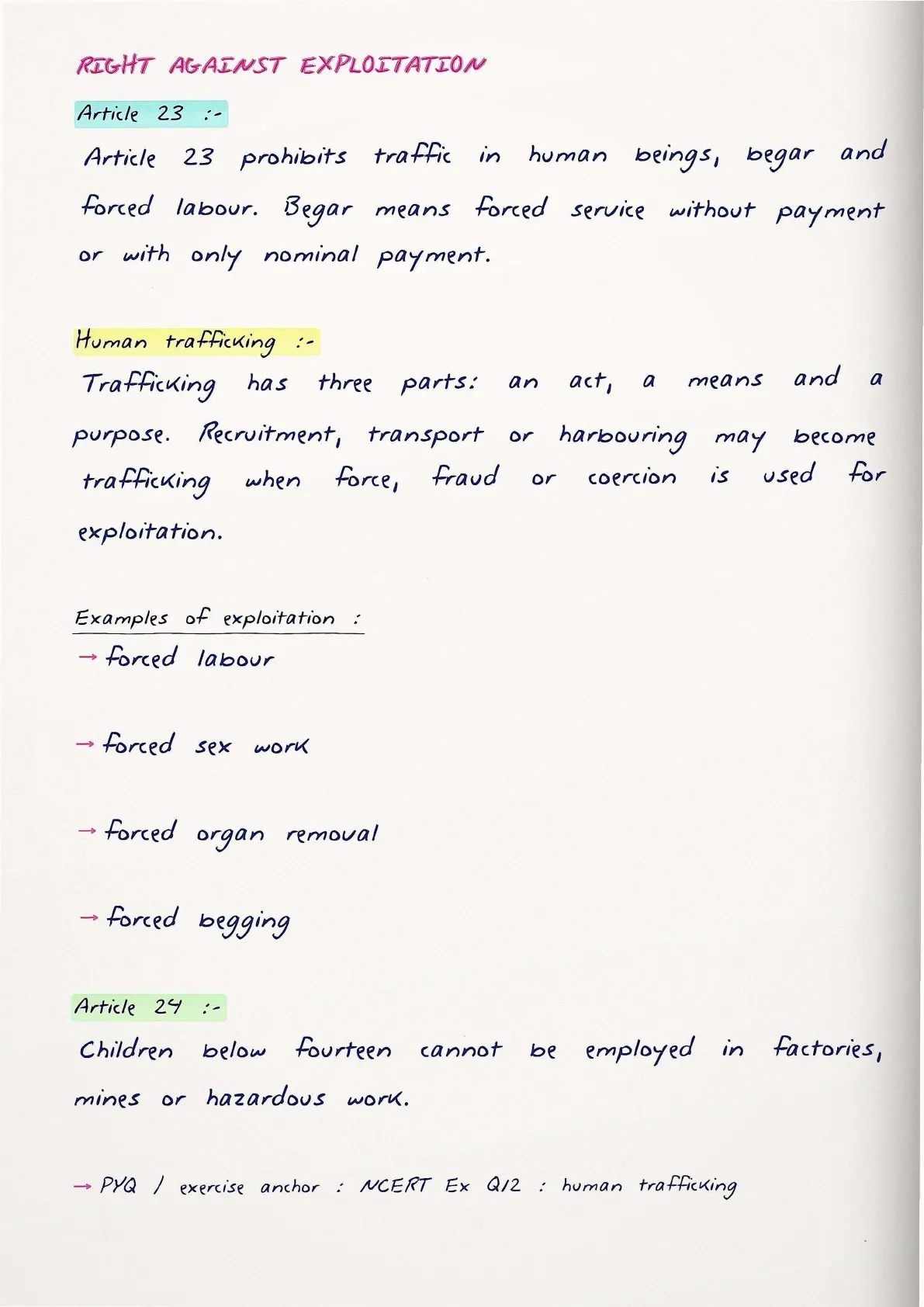
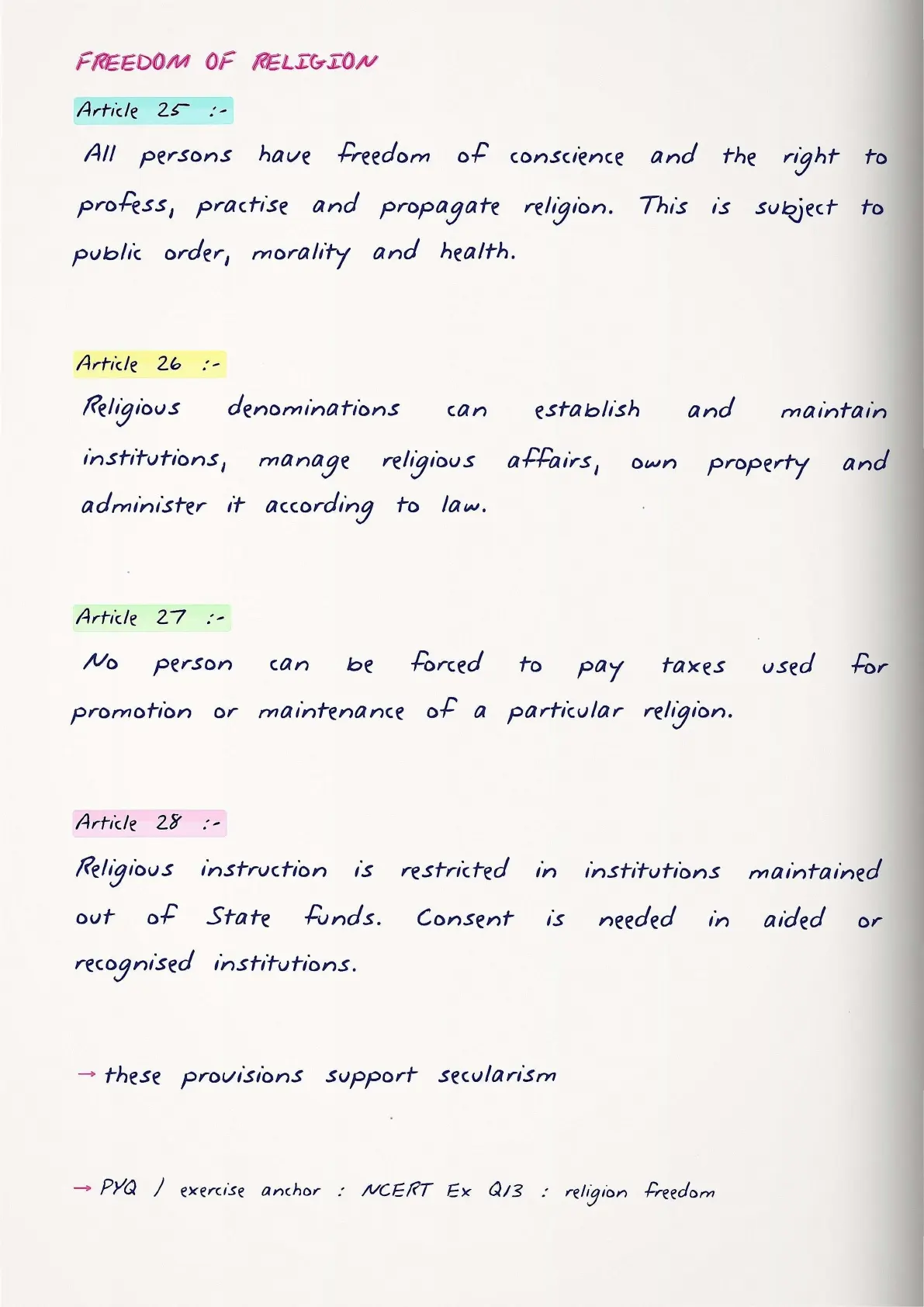
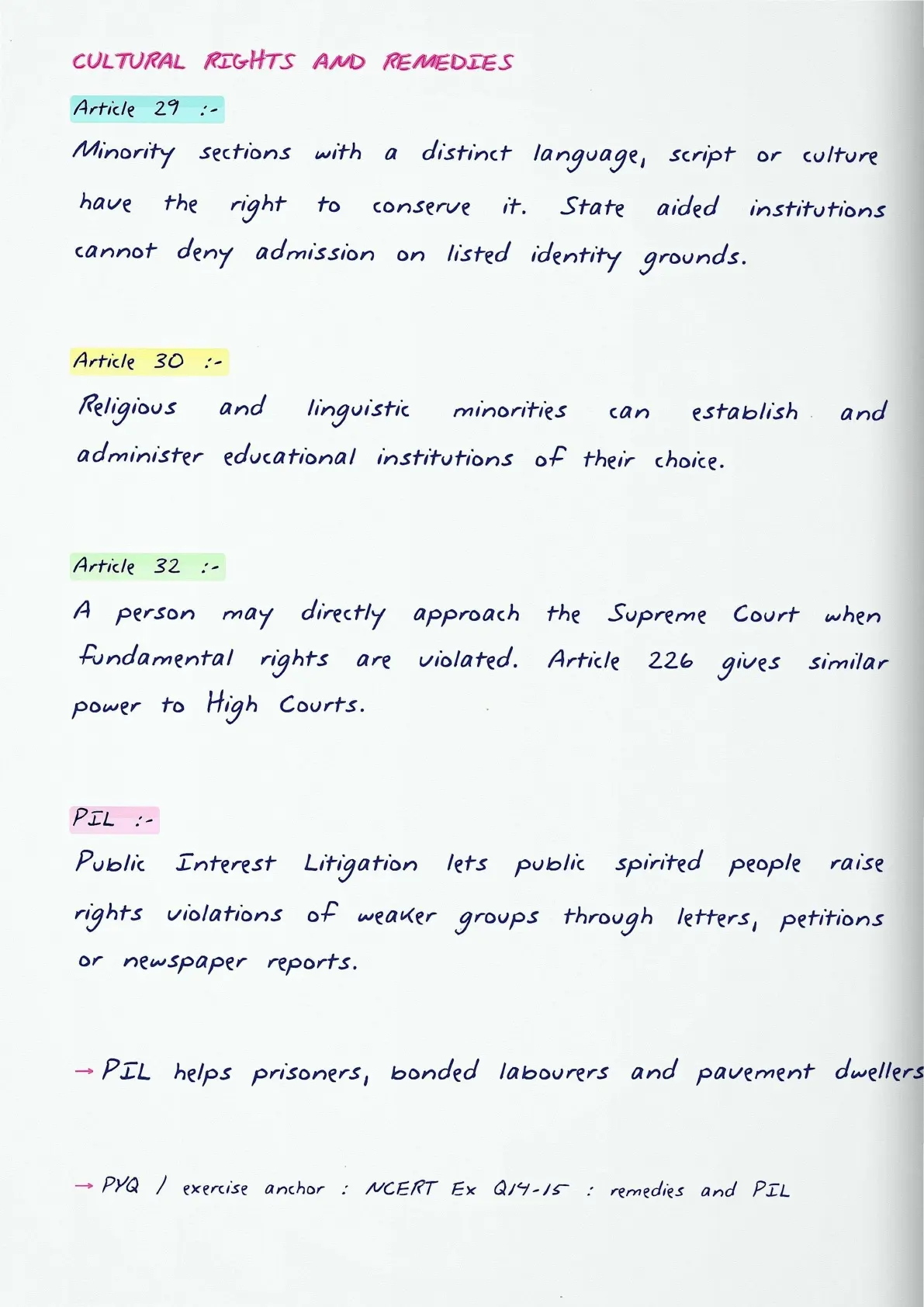
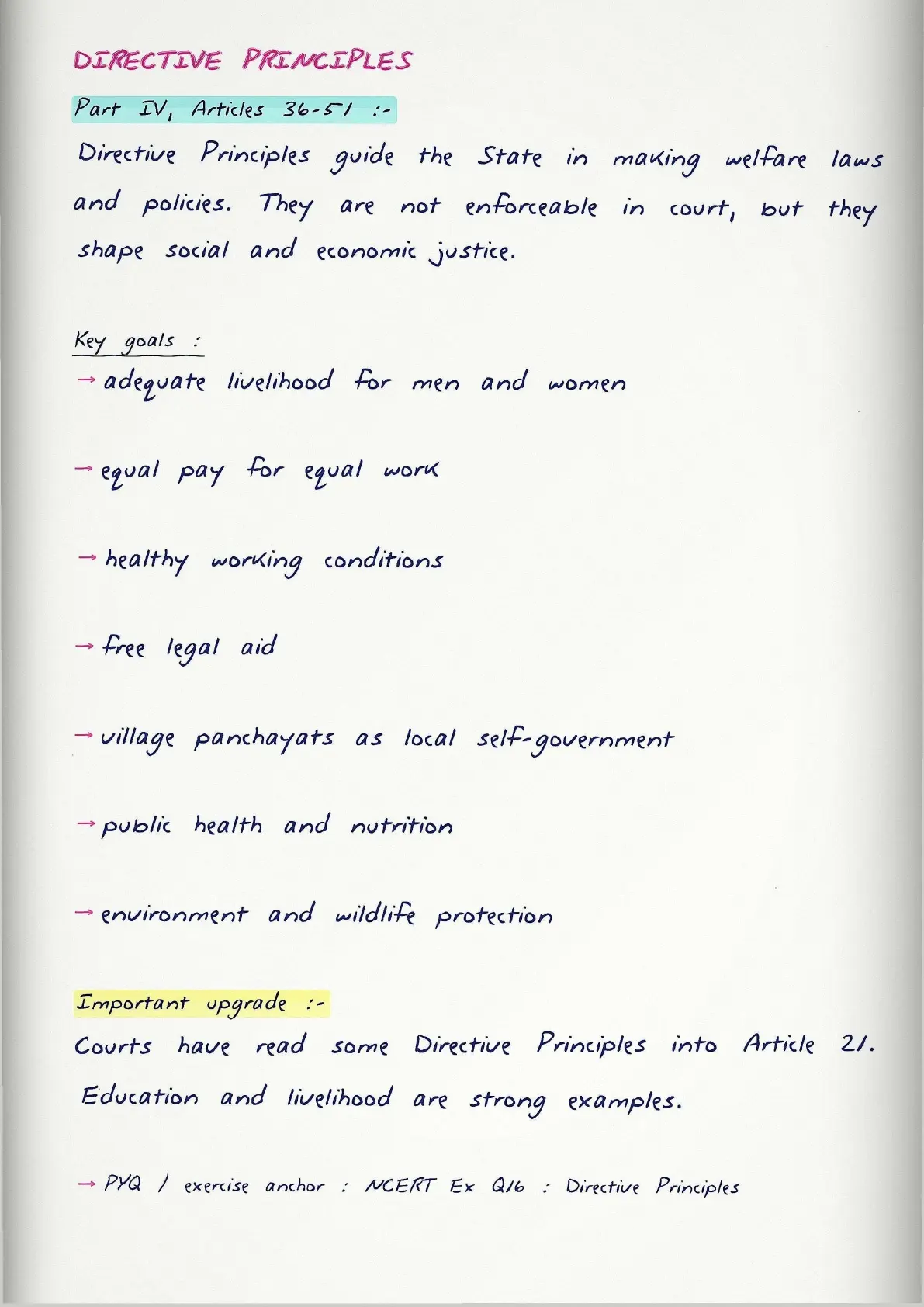
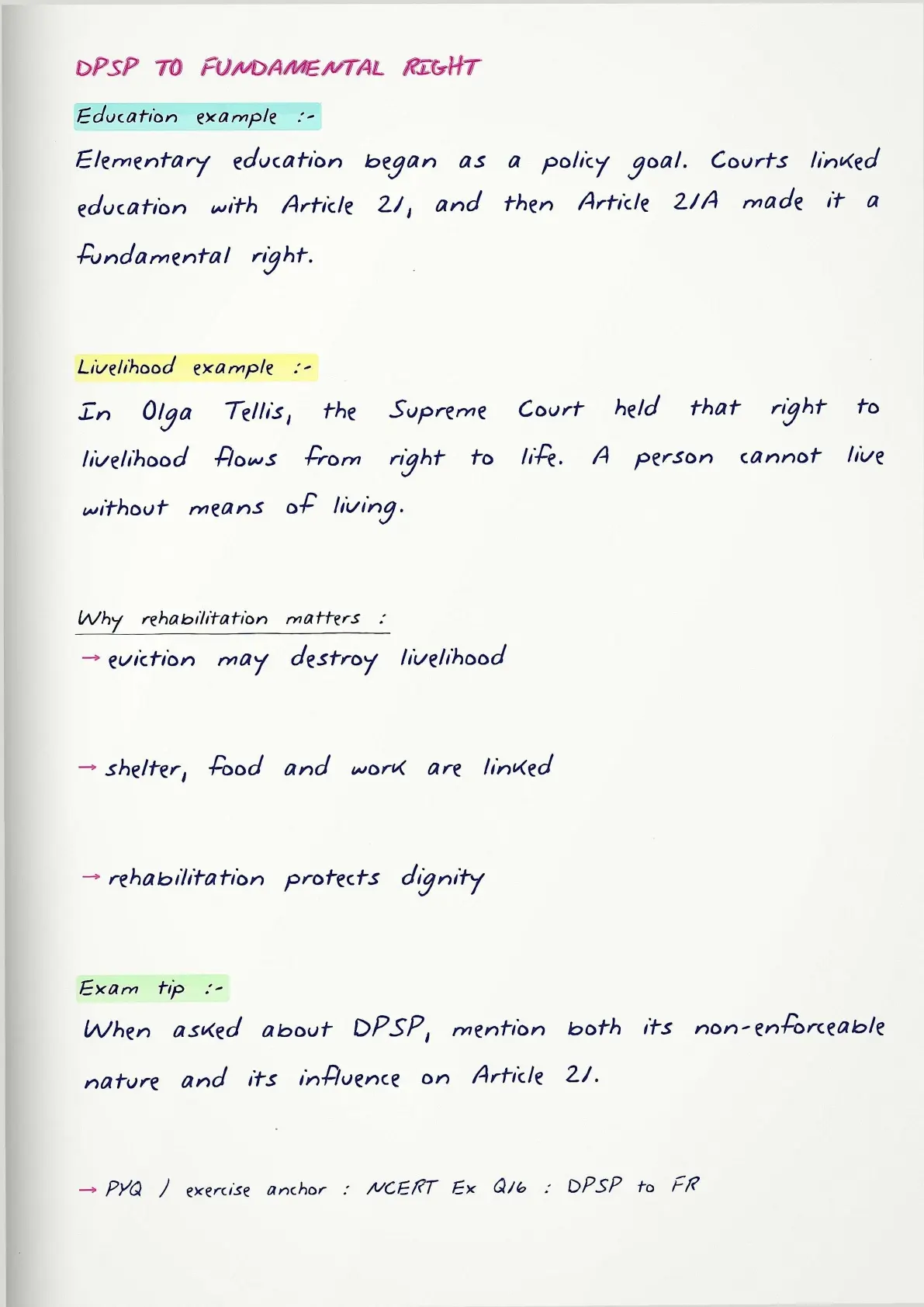
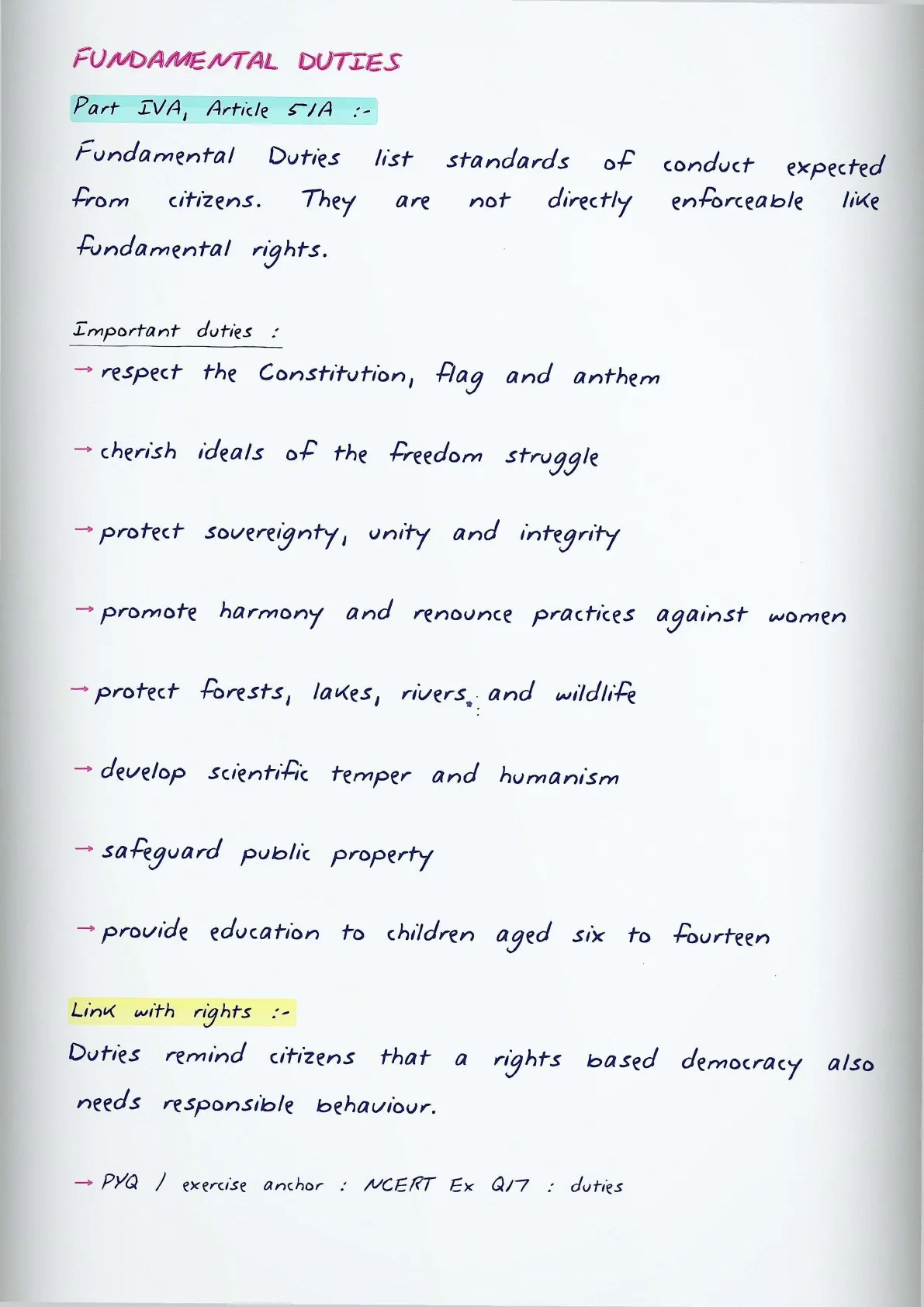
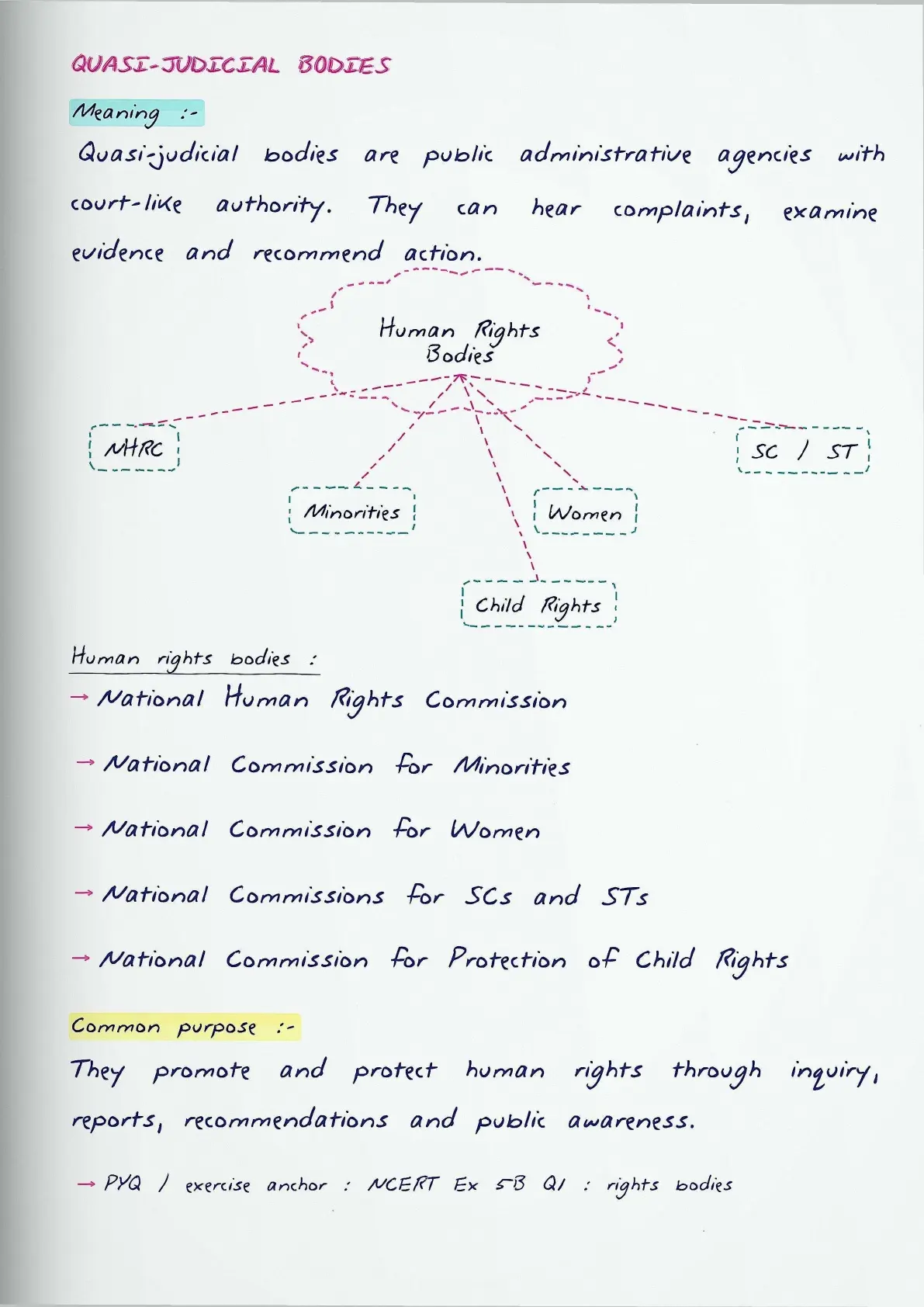
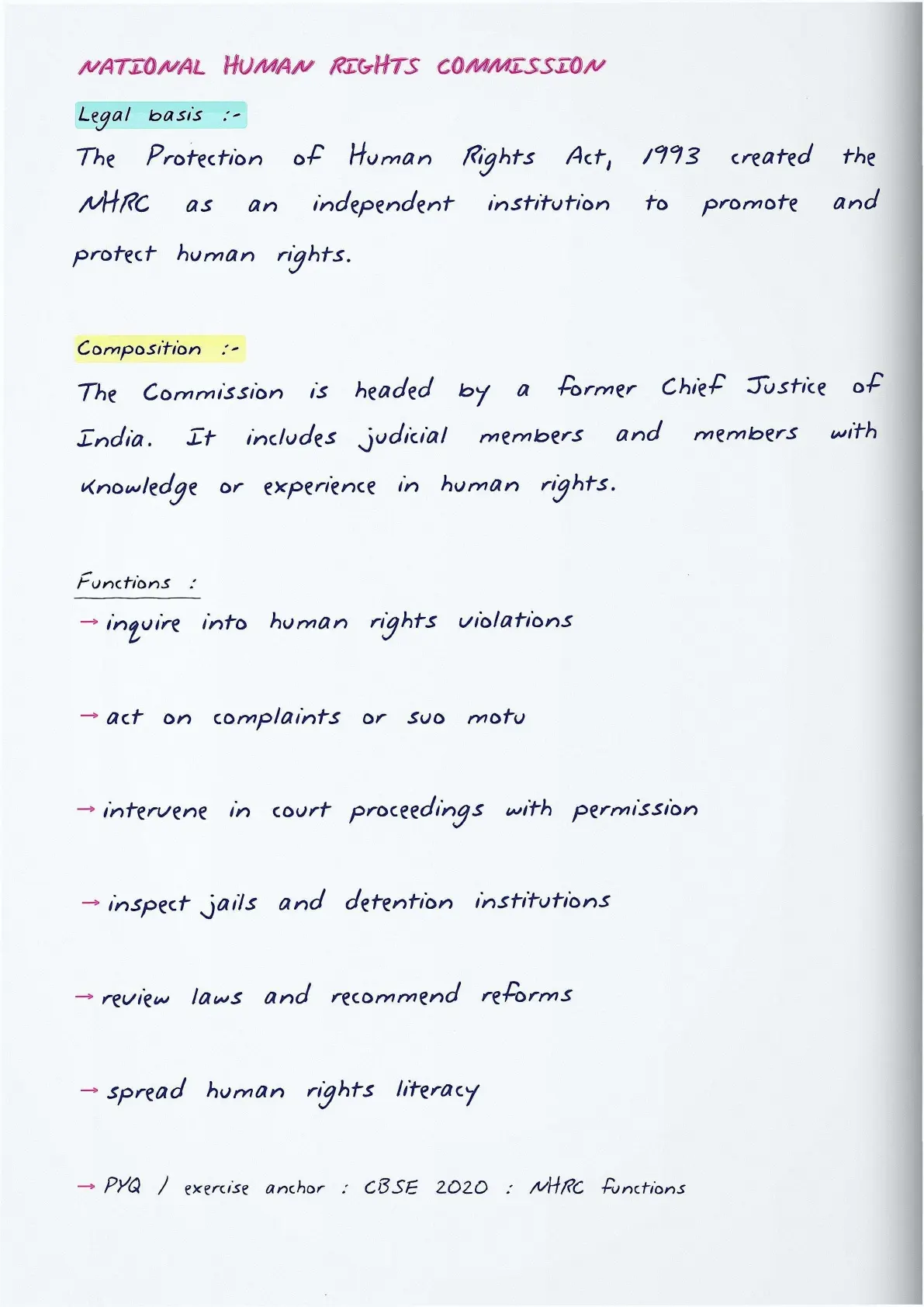
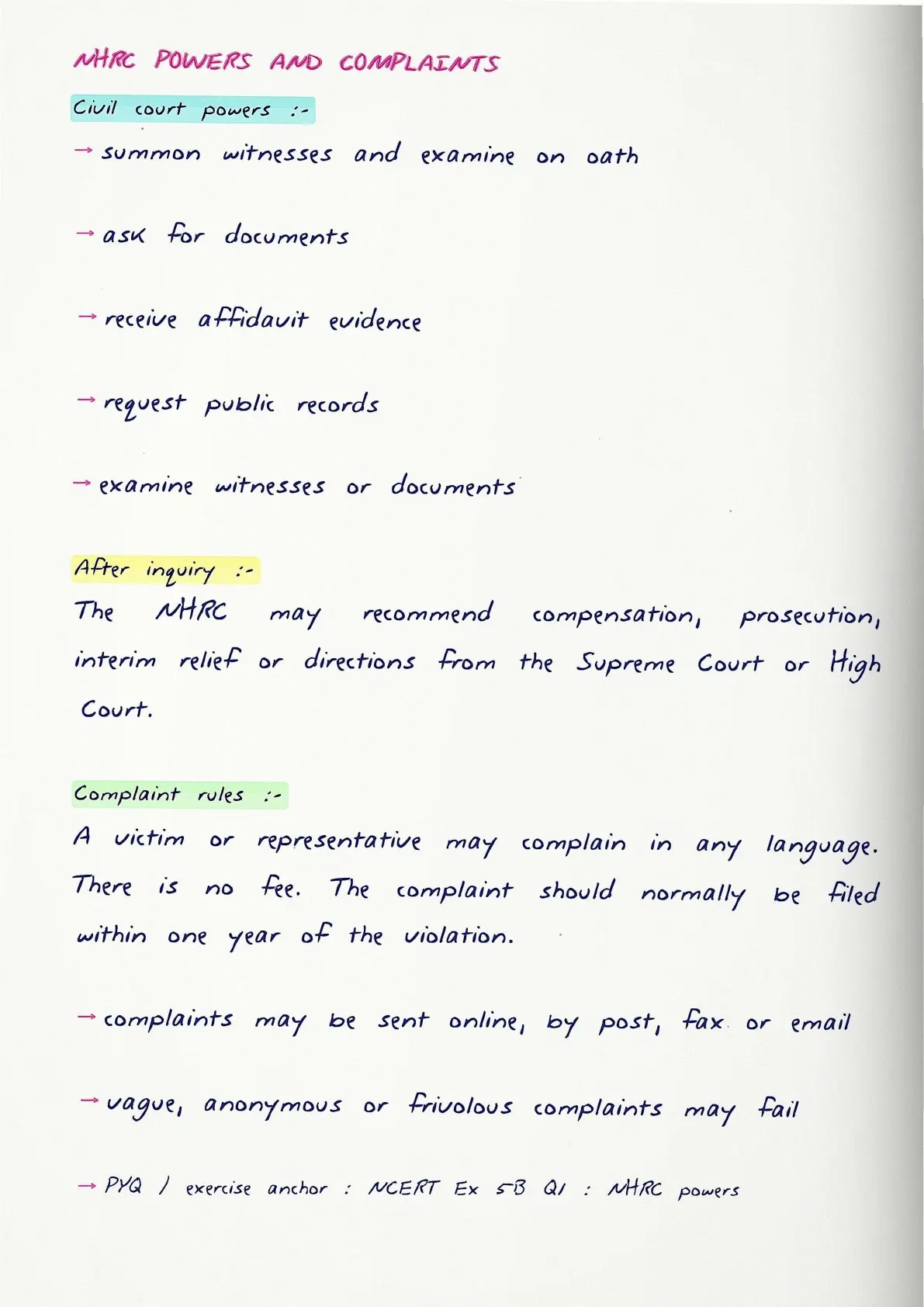
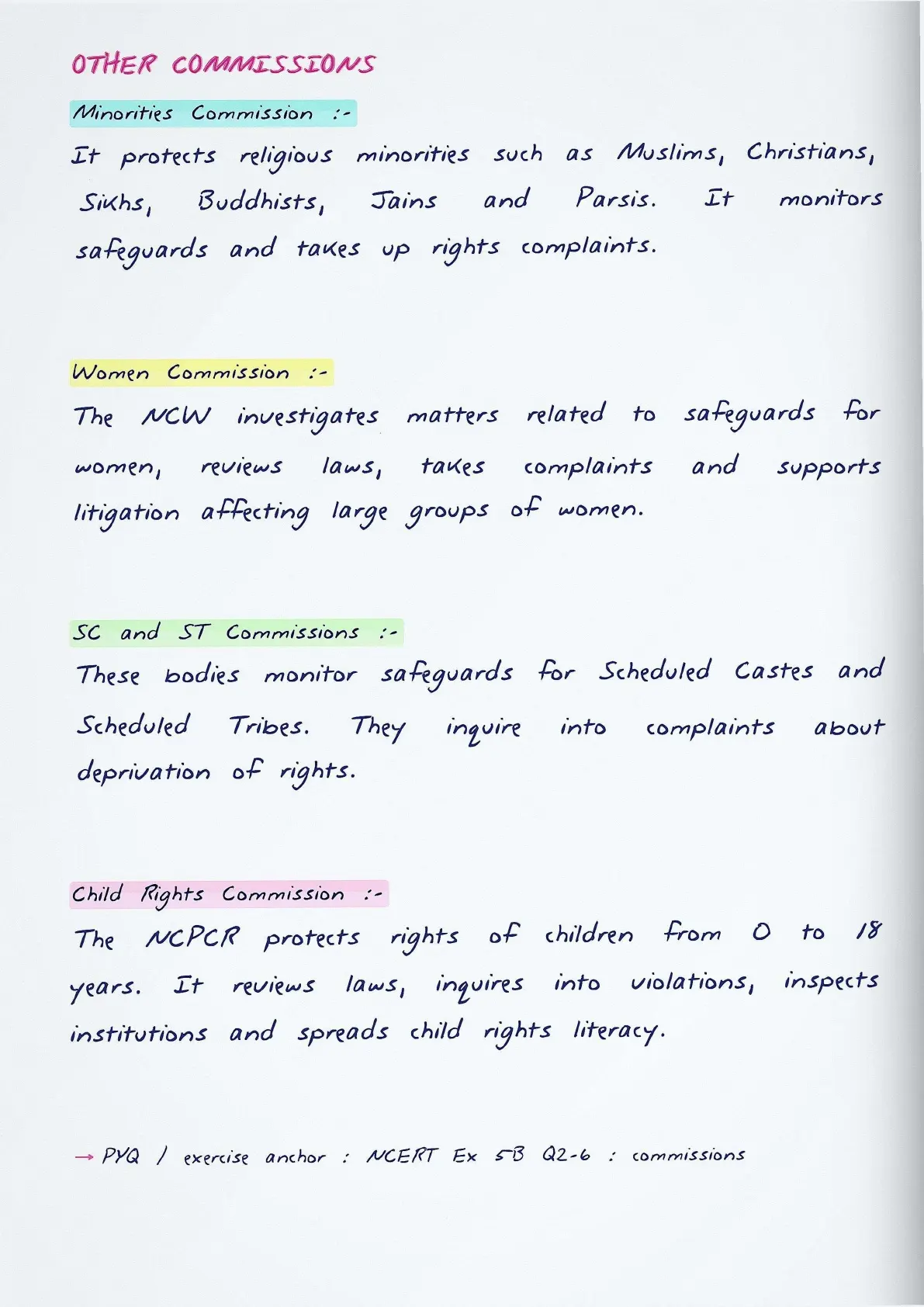
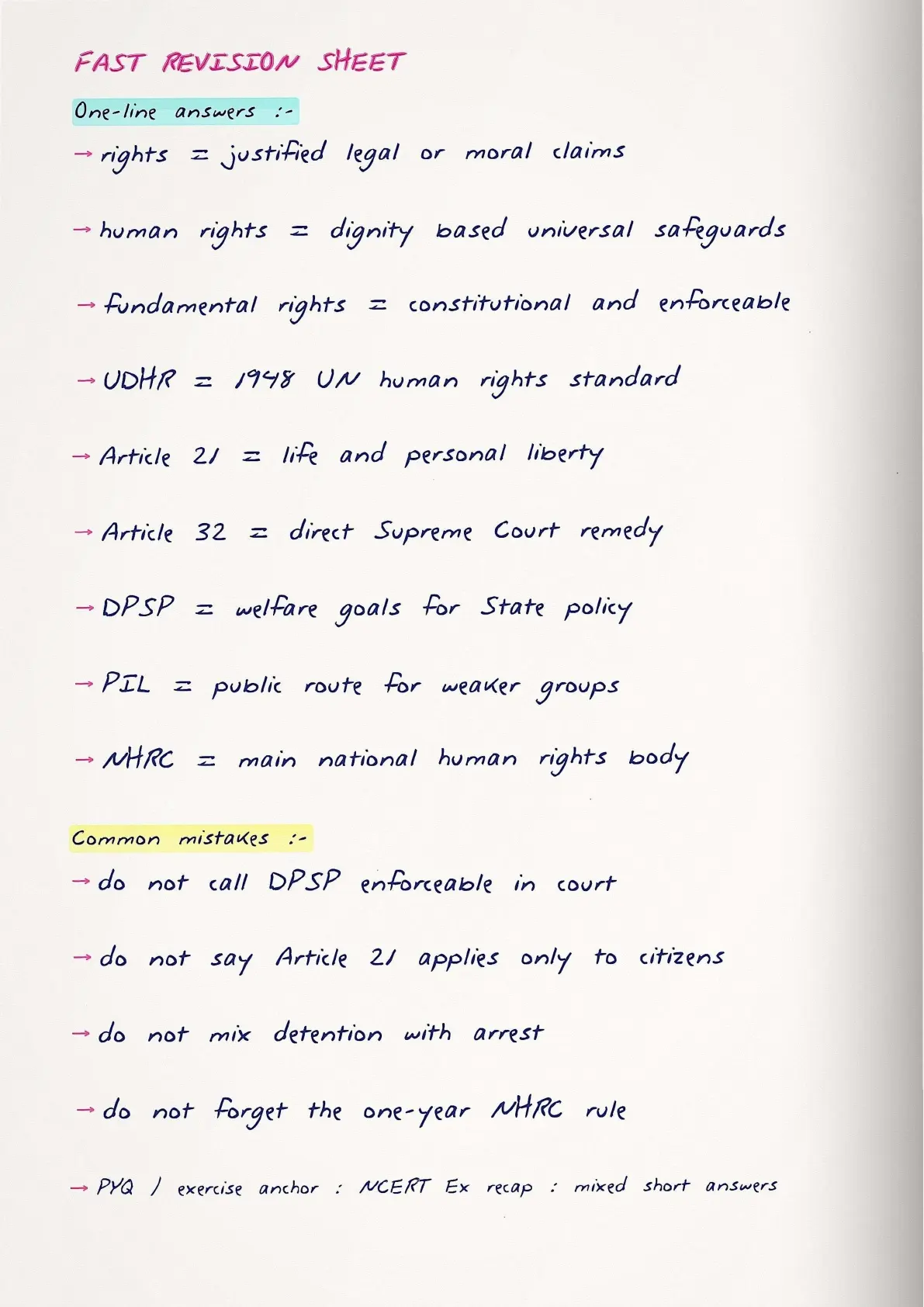
Each Human Rights in India handwritten notes PDF is arranged for fast board revision, with definitions, article links, commissions and complaint remedies placed in exam order.
Human Rights in India Handwritten Notes: What the PDF Covers
These notes start with the basic idea of human dignity. They then connect it to liberty, equality and protection from abuse. The chapter is not only about law names. It also asks how a person can use law when rights are violated.
- Meaning of human rights: rights every person has because they are human.
- Indian Constitution link: Fundamental Rights, Directive Principles and duties.
- Institutions: NHRC, SHRC and special commissions for protected groups.
- Remedies: complaints, inquiries, reports, recommendations and compensation.
Human Rights in India Quick Revision Video
Source: Magnet Brains on YouTube
Human Rights Complaint Flow for Class 12 Legal Studies
A complaint question is easy to score when you write the forum and remedy in order. NHRC and SHRC do not work like regular criminal courts. They inquire, call for reports and recommend relief.
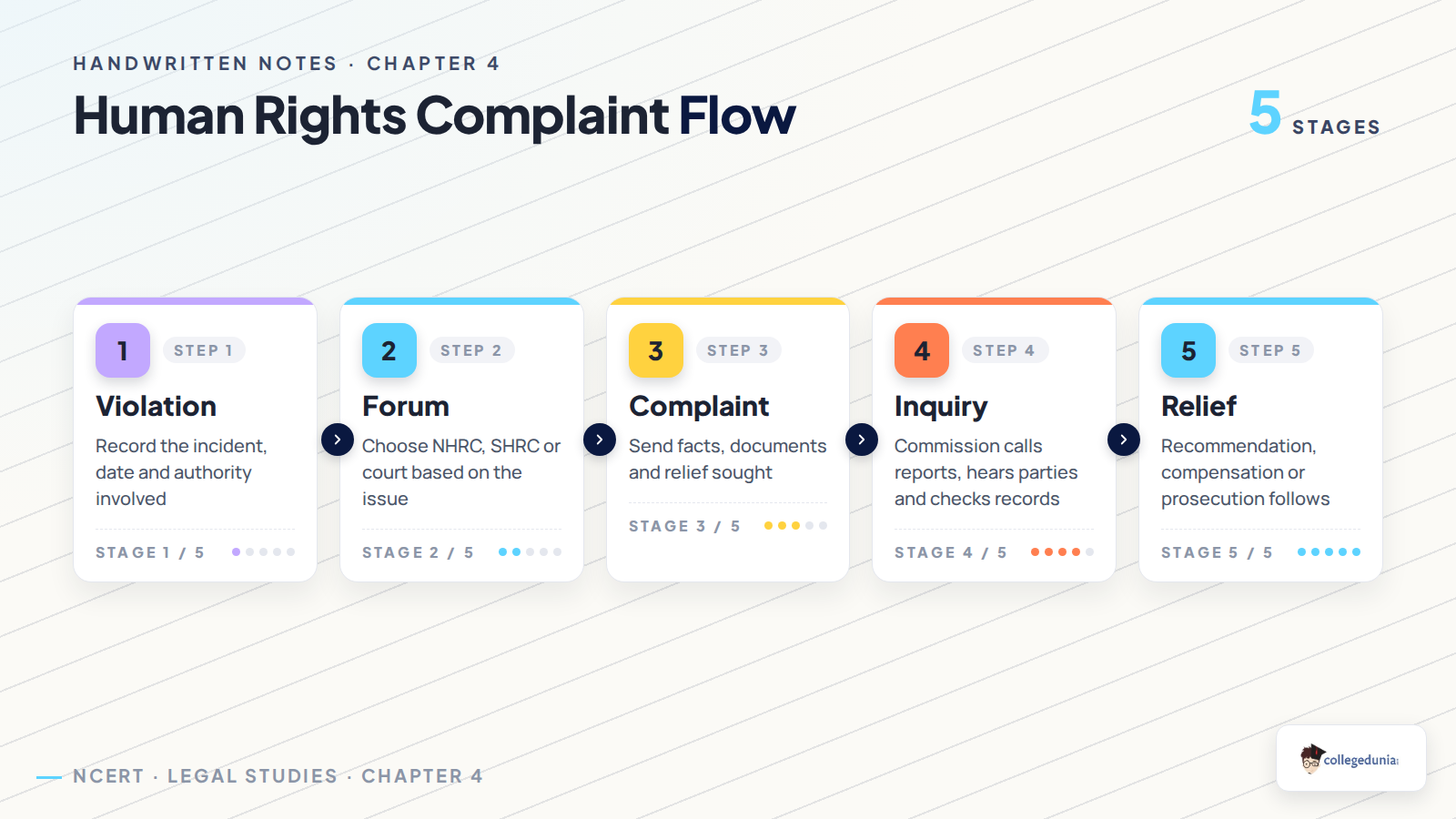
| Step | What to Write in Answers |
|---|---|
| Violation | State the right affected and the public authority involved. |
| Complaint | Mention facts, documents and the relief requested. |
| Inquiry | Explain report calling, hearing and record checking. |
| Relief | Write recommendation, compensation, prosecution or policy change. |
Fundamental Rights and Human Rights in India Compared
Board answers often mix Fundamental Rights with human rights. Keep the difference clear. Fundamental Rights are constitutional rights, while human rights are wider rights based on dignity and accepted across legal systems.
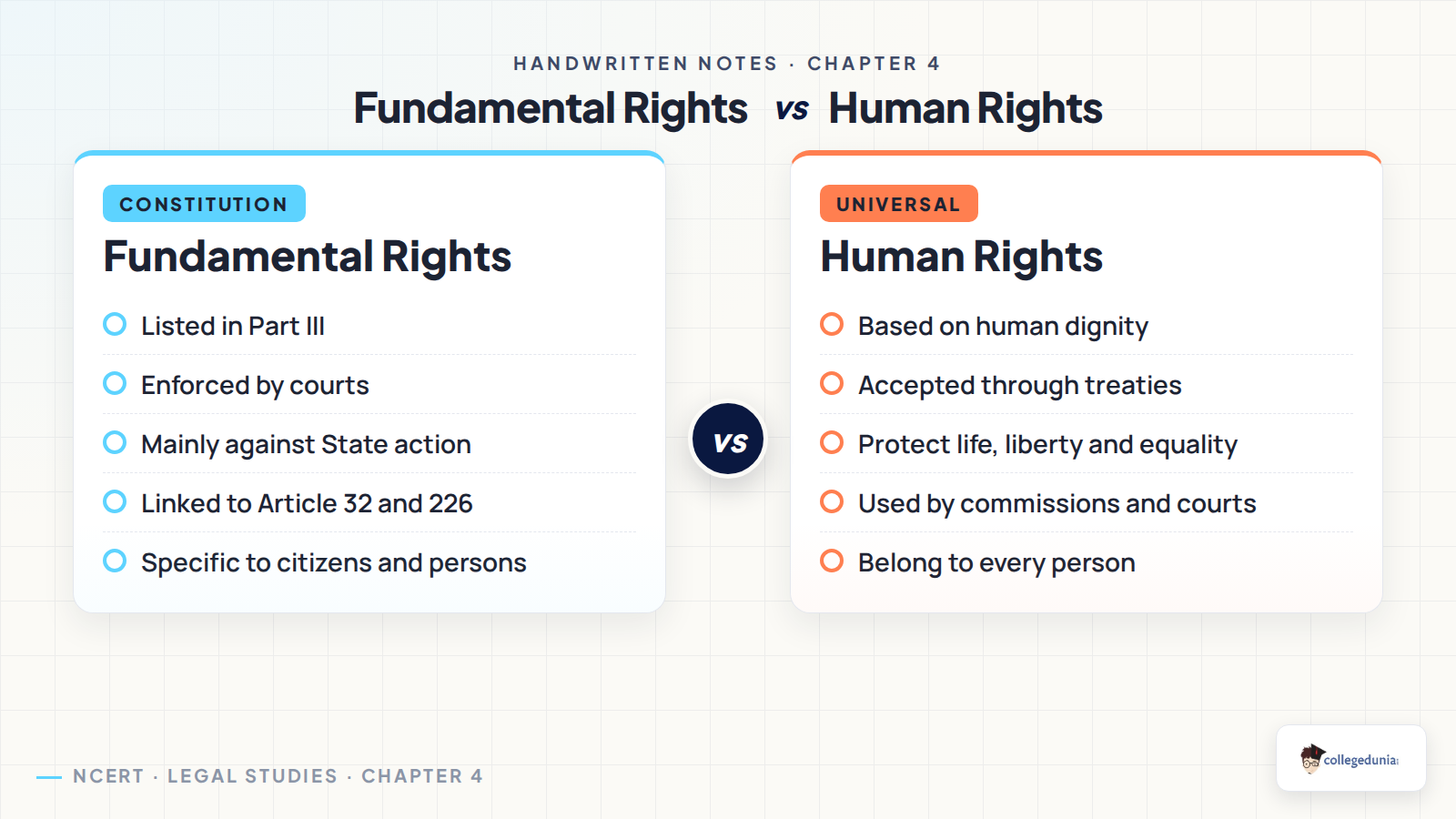
- Part III rights can be enforced through Articles 32 and 226.
- Human rights also guide courts, commissions and welfare laws.
- Article 21 is central because courts read life and liberty widely.
Human Rights in India Revision Plan for CBSE Boards
Use the PDF in three short rounds. First, read definitions and article links. Next, revise the commission table. Last, write two complaint-based answers without looking at the notes.
- 20 minutes: meaning, UDHR idea, dignity and constitutional link.
- 25 minutes: Fundamental Rights, Directive Principles and Article 21 expansion.
- 20 minutes: NHRC, SHRC, women, children, minorities and SC/ST commissions.
- 15 minutes: one complaint answer plus one rights comparison answer.
Common Mistakes in Human Rights in India Answers
Tip: Do not write only moral points. Legal Studies answers need the article, body or remedy named clearly.
- Do not treat every human rights issue as only an Article 21 issue.
- Do not call commission recommendations court decrees.
- Do not forget special commissions for women, children and minorities.
- Do not skip the complaint mechanism in case-based answers.
Student Feedback on Human Rights in India Notes
What 12,640 students told us about Legal Studies revision: students found this chapter easier after separating rights, institutions and remedies into three blocks.
Source: 2026-27 Class 12 Legal Studies student poll conducted before the 2026 boards.
Related Class 12 Legal Studies Resources for Human Rights in India
| Resource | Use It For |
|---|---|
| Human Rights in India Class 12 Notes | Read the full theory before using the handwritten PDF. |
| Human Rights in India NCERT Book PDF | Check the official chapter text and examples. |
| Human Rights in India NCERT Solutions | Practise question-style answers after revision. |
Class 12 Legal Studies Handwritten Notes for Other Chapters
| Chapter | Handwritten Notes |
|---|---|
| Judiciary | Class 12 Legal Studies Chapter 1 Handwritten Notes |
| Topics in Law | Class 12 Legal Studies Chapter 2 Handwritten Notes |
| Family Justice System | Class 12 Legal Studies Chapter 3 Handwritten Notes |
| Legal Profession in India | Class 12 Legal Studies Chapter 5 Handwritten Notes |
Human Rights in India Class 12 Legal Studies Handwritten Notes FAQs
Ques. What is covered in Class 12 Legal Studies Chapter 4 Human Rights in India handwritten notes?
Ans. The notes cover human dignity, Fundamental Rights, Directive Principles, Article 21, NHRC, SHRC, special commissions and complaint remedies.
Ques. Are these Human Rights in India notes useful for CBSE 2026-27 revision?
Ans. Yes. The notes follow the 2026-27 syllabus and help students revise definitions, institutions and case-based complaint answers quickly.
Ques. How should students use the Human Rights in India handwritten notes PDF?
Ans. Read the PDF once, mark article names and commission powers, then practise one comparison answer and one complaint-based answer.
Ques. What is the most important area in Human Rights in India for boards?
Ans. Article 21, Fundamental Rights, NHRC powers and complaint mechanisms are important because they fit short, long and case-based questions.



Comments