




These Class 12 English Going Places Handwritten Notes are a scanned-notebook-style revision pack for A.R. Barton's Chapter 8 of Flamingo. Pages look like a real student's notebook (ruled cream paper, ballpoint ink, hand-drawn box highlights, occasional scribble corrections) and cover the chapter overview, every named character, the seven-scene plot chain, the four major themes, key quotes and the colloquial vocabulary list. The PDF is sized for phone reading the night before the exam.
- Format: Scanned notebook style, 10 hand-written pages
- Best used for: Last-day revision, quick visual recall
- Aligned to: 2026-27 NCERT Flamingo (latest edition)
You can find the complete Class 12 English Handwritten Notes Chapter 8 Flamingo Prose: Going Places, including character analysis, theme breakdown, scene-by-scene plot, and exam-ready answer pointers, in the article below.
This Class 12 English Handwritten Notes Chapter 8 Flamingo Prose: Going Places is curated by Collegedunia subject experts, mapped to the 2026-27 NCERT print, and refined against the last five years of CBSE Board papers and CUET passages.
Also Check:
- Going Places Class 12 English NCERT Solutions
- Going Places Class 12 English Notes
- Going Places Class 12 English Flamingo Chapter 8 NCERT Book PDF
Going Places Class 12 Handwritten Notes: What's Inside
These handwritten notes are designed for the last-day revision. The pages look like a scanned student notebook (cream paper, ballpoint pen, ruled lines with the occasional scribble correction) so they read like notes you would borrow from a friend at the back of the class. The 10-page PDF covers every section the examiner expects.
| Page | Topic |
|---|---|
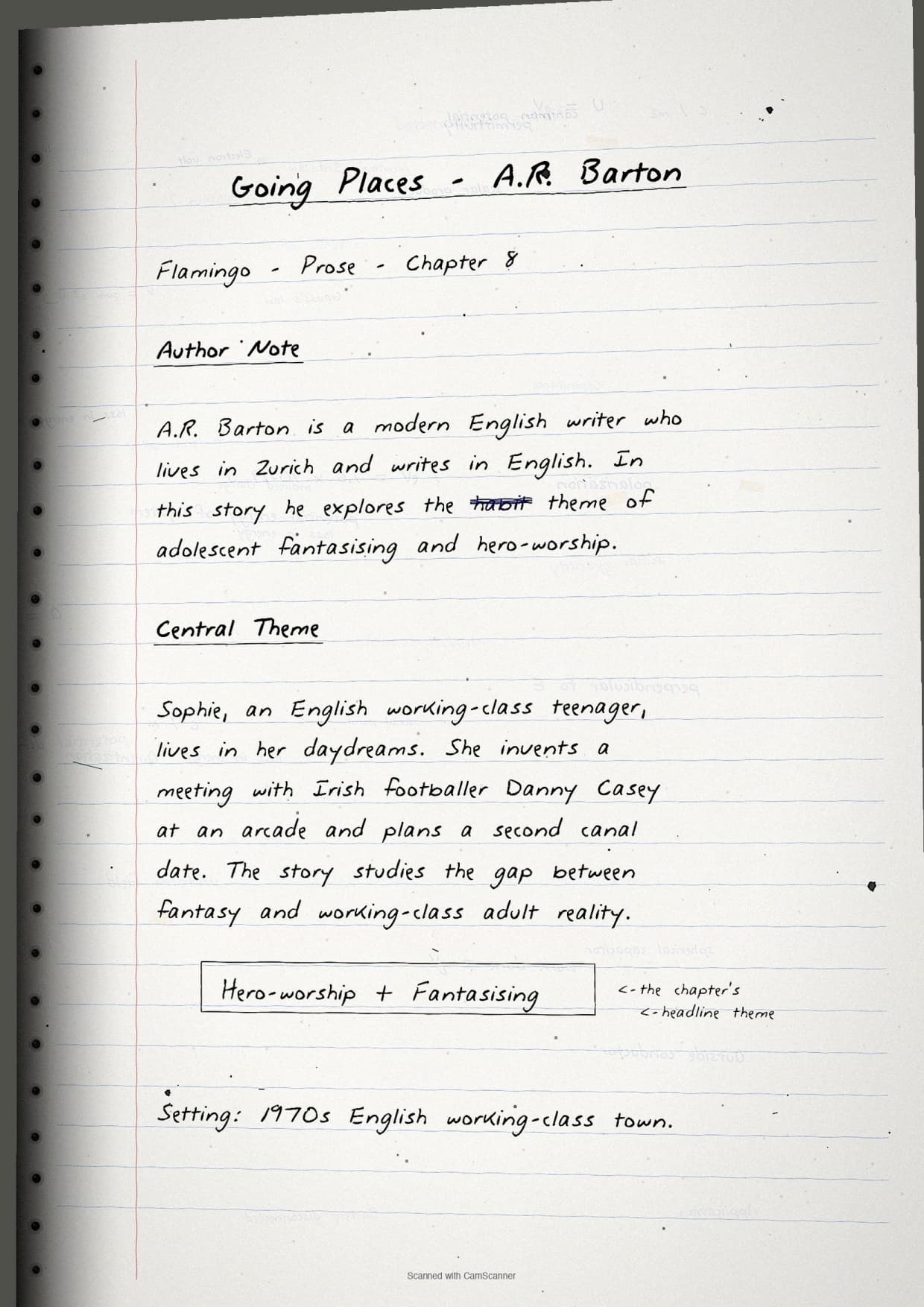
| 1 | Chapter title block, author note, central theme |
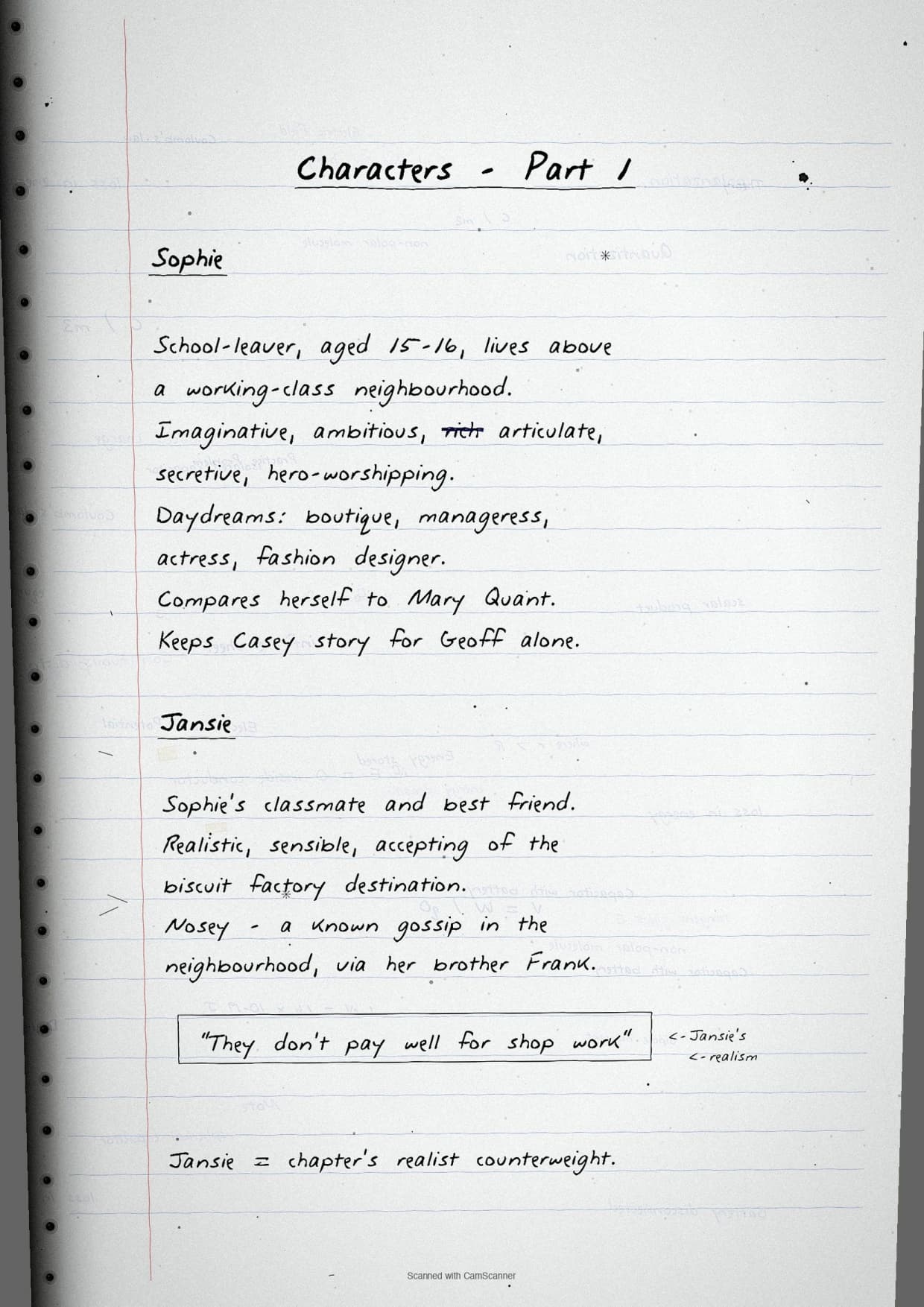
| 2 | Characters - Sophie + Jansie |
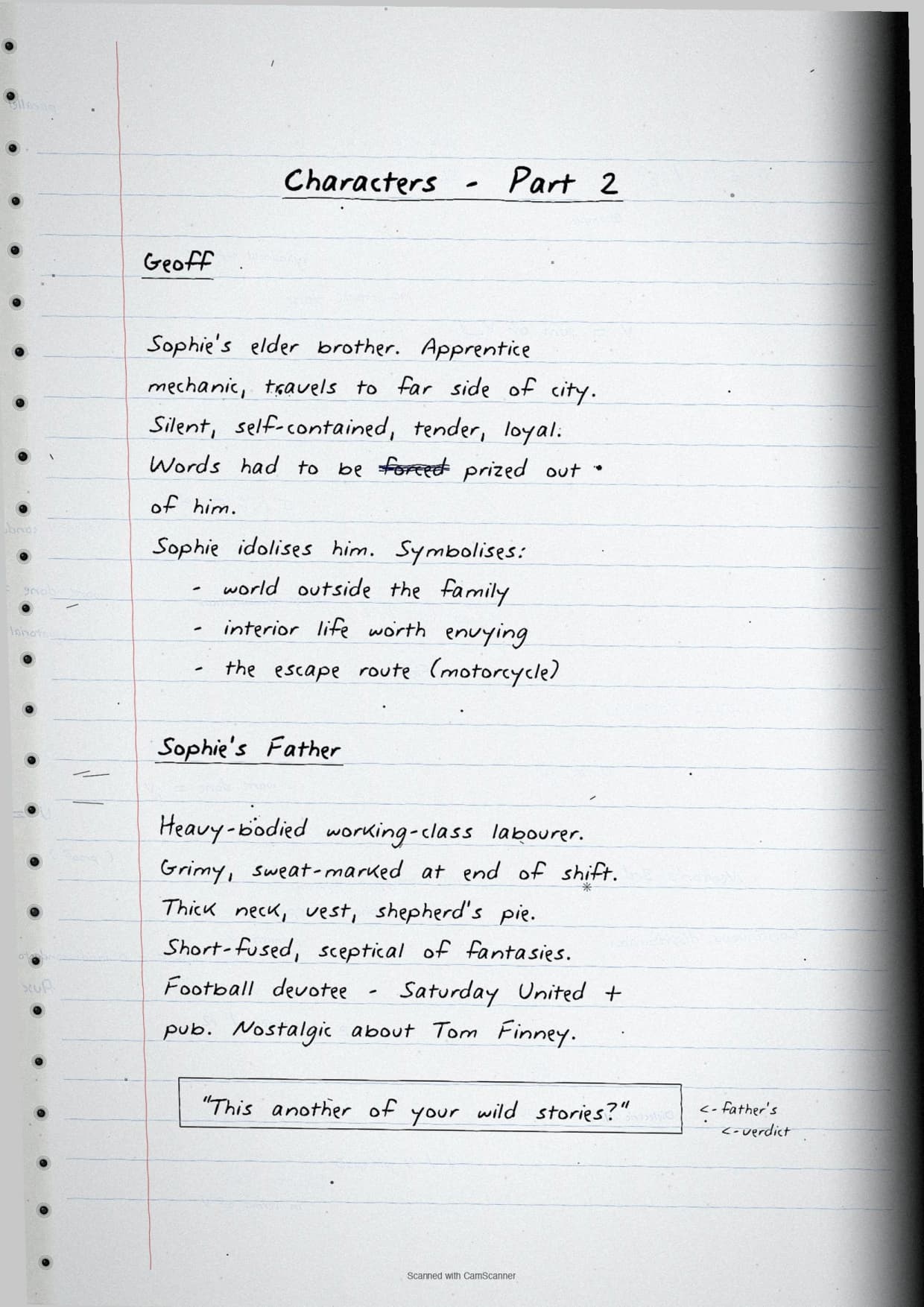
| 3 | Characters - Geoff + Sophie's father |
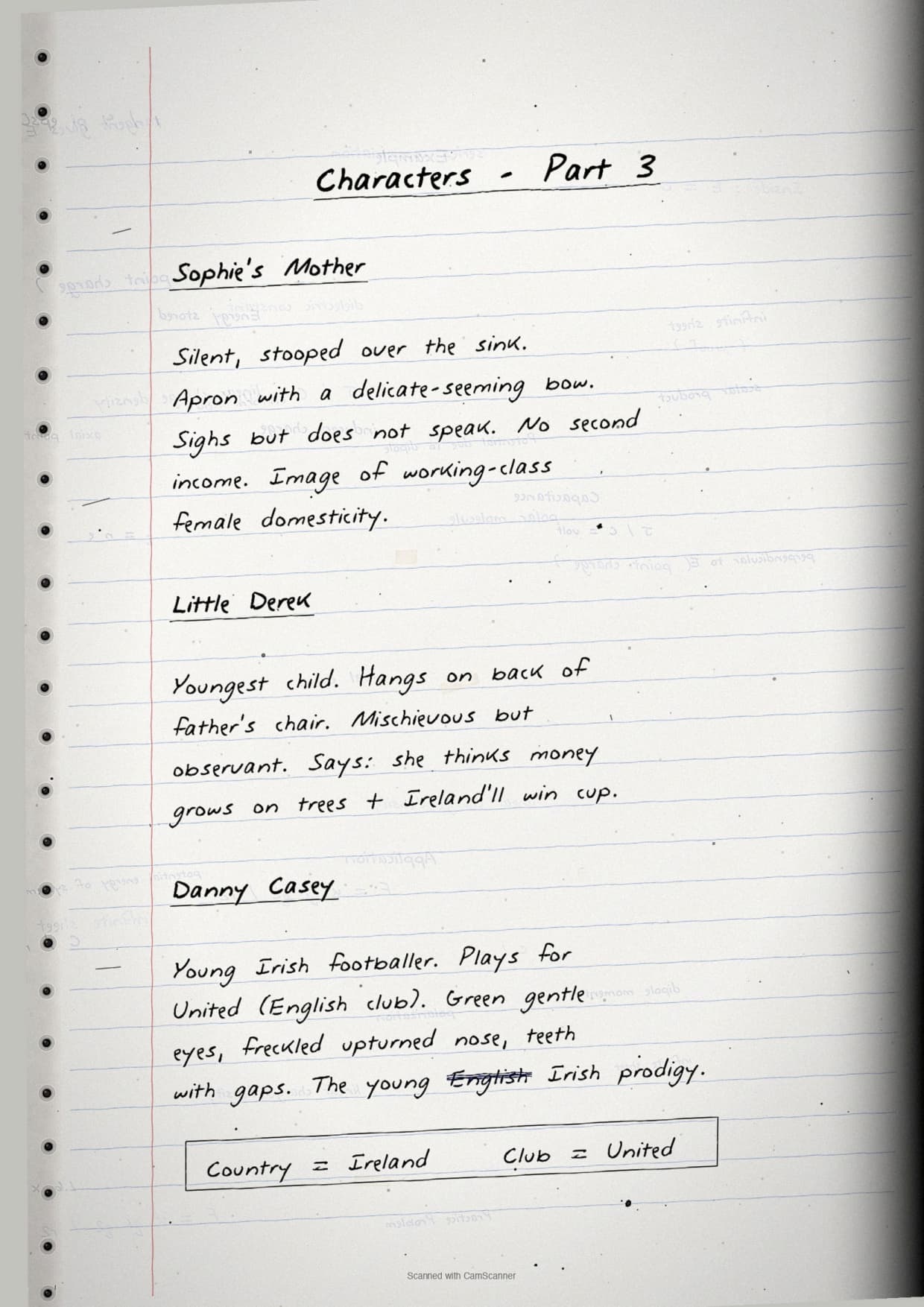
| 4 | Characters - mother, little Derek, Danny Casey |
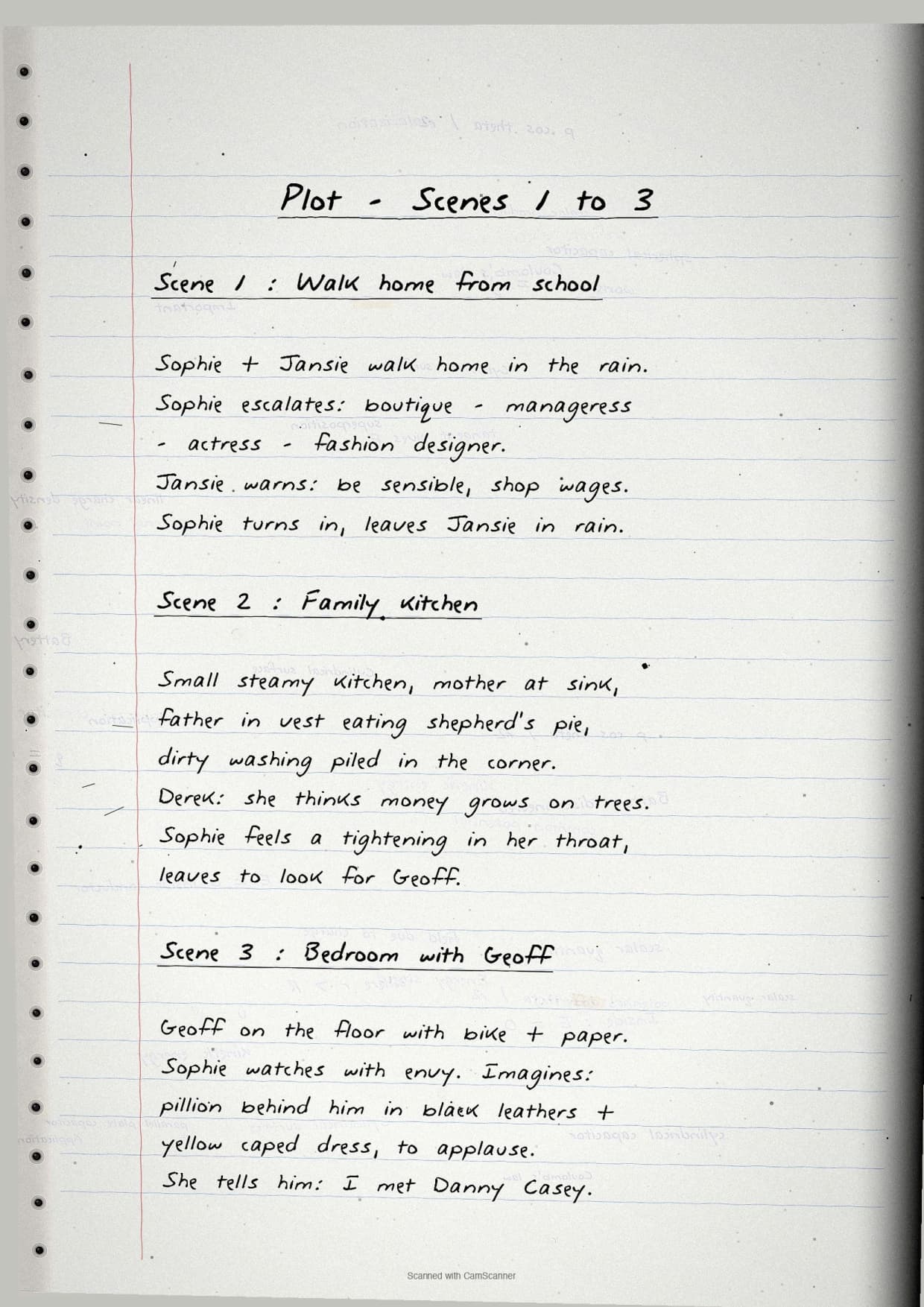
| 5 | Plot scenes 1 to 3 (walk home, kitchen, Geoff's bedroom) |
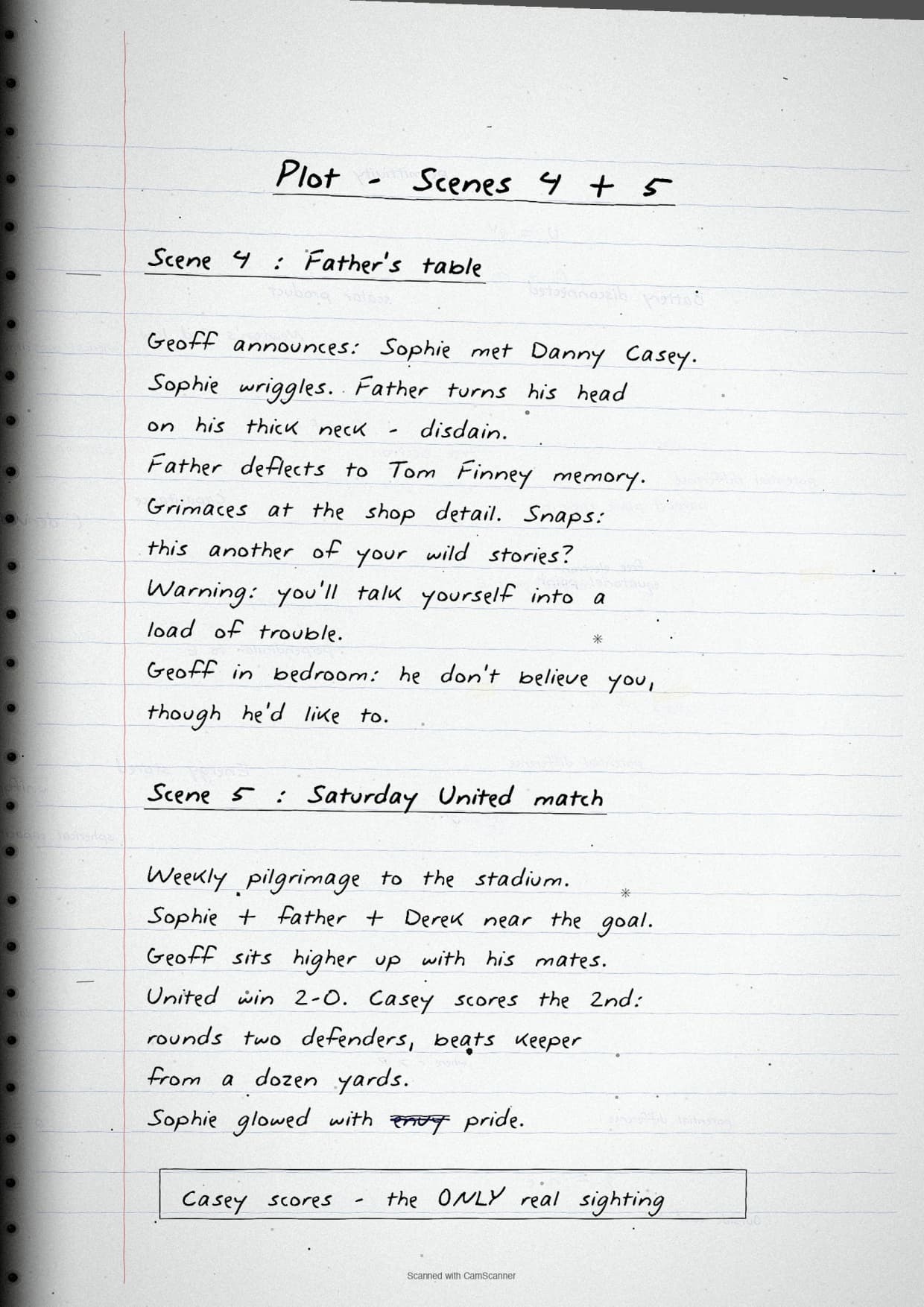
| 6 | Plot scenes 4 + 5 (father's table, Saturday match) |
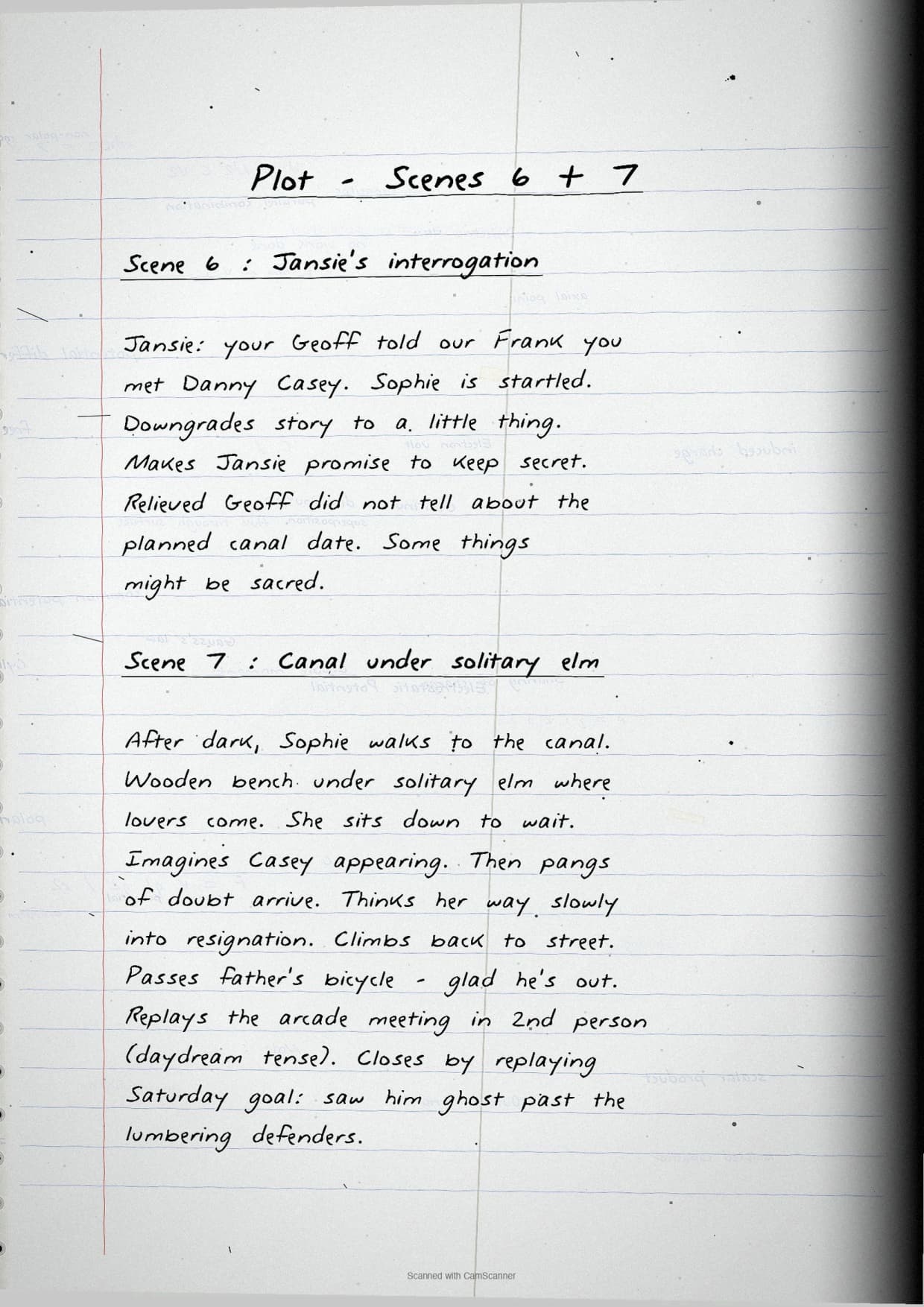
| 7 | Plot scenes 6 + 7 (Jansie's interrogation, canal under the elm) |
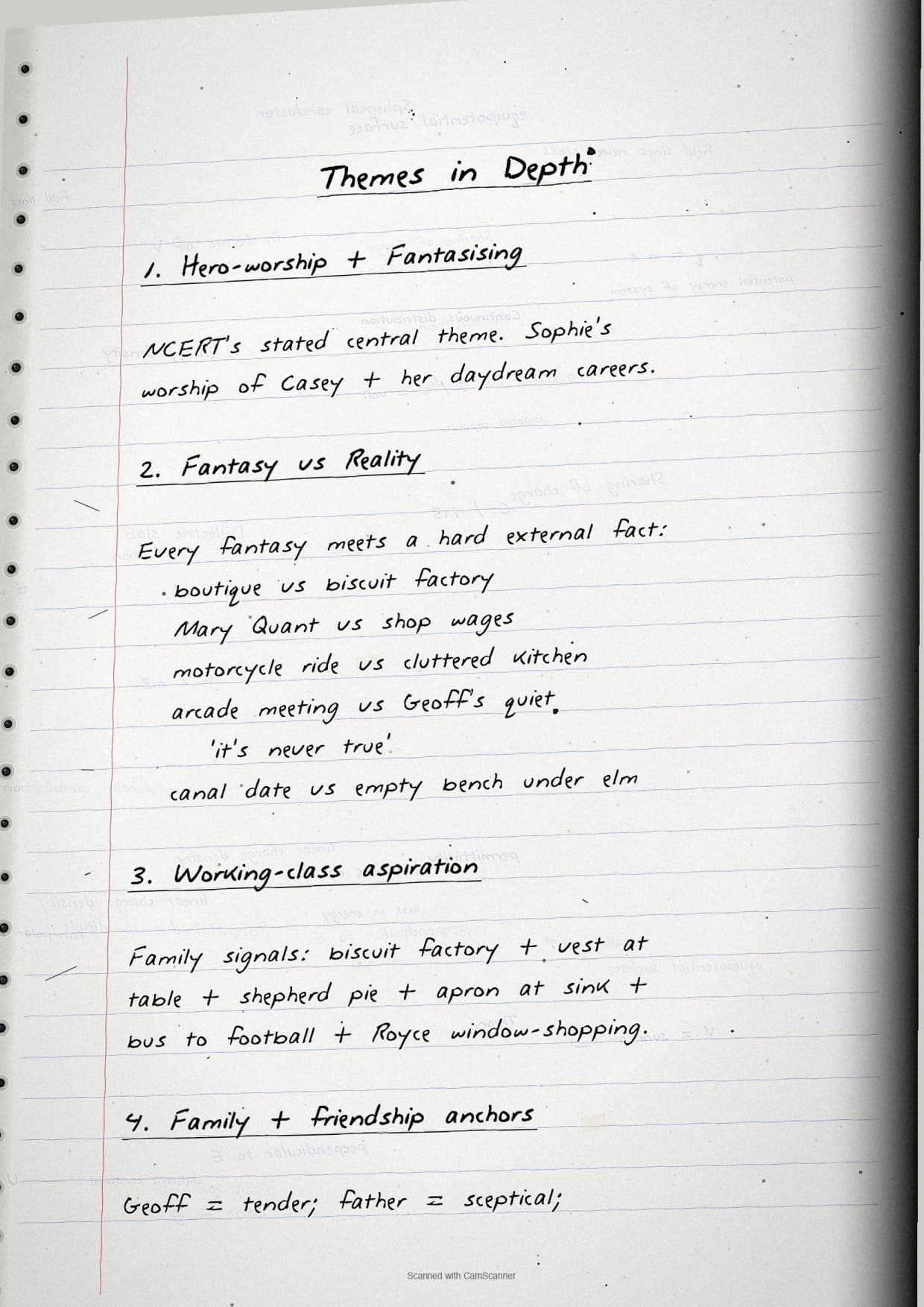
| 8 | Four themes in depth |
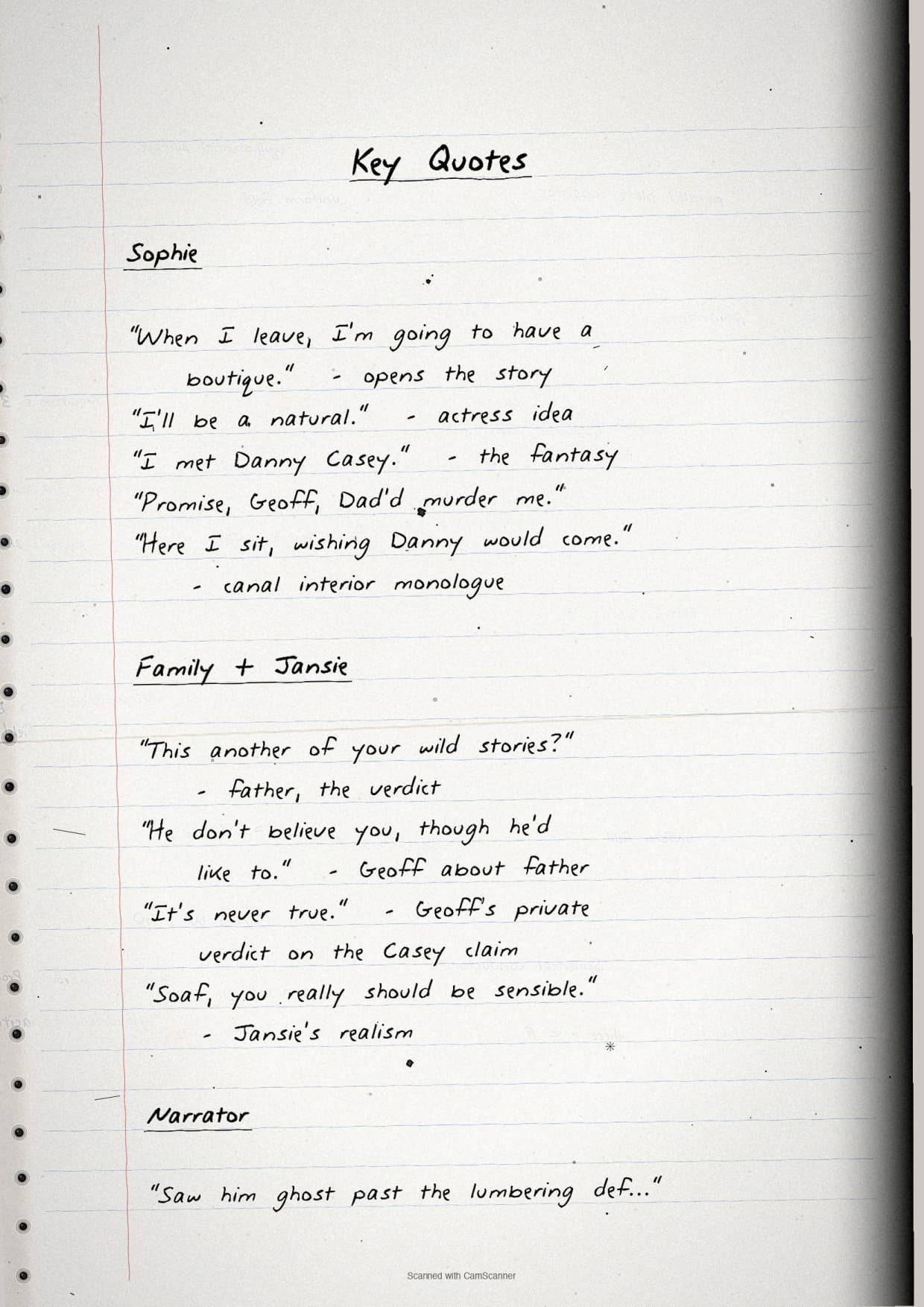
| 9 | Key quotes from Sophie, family, Jansie and narrator |
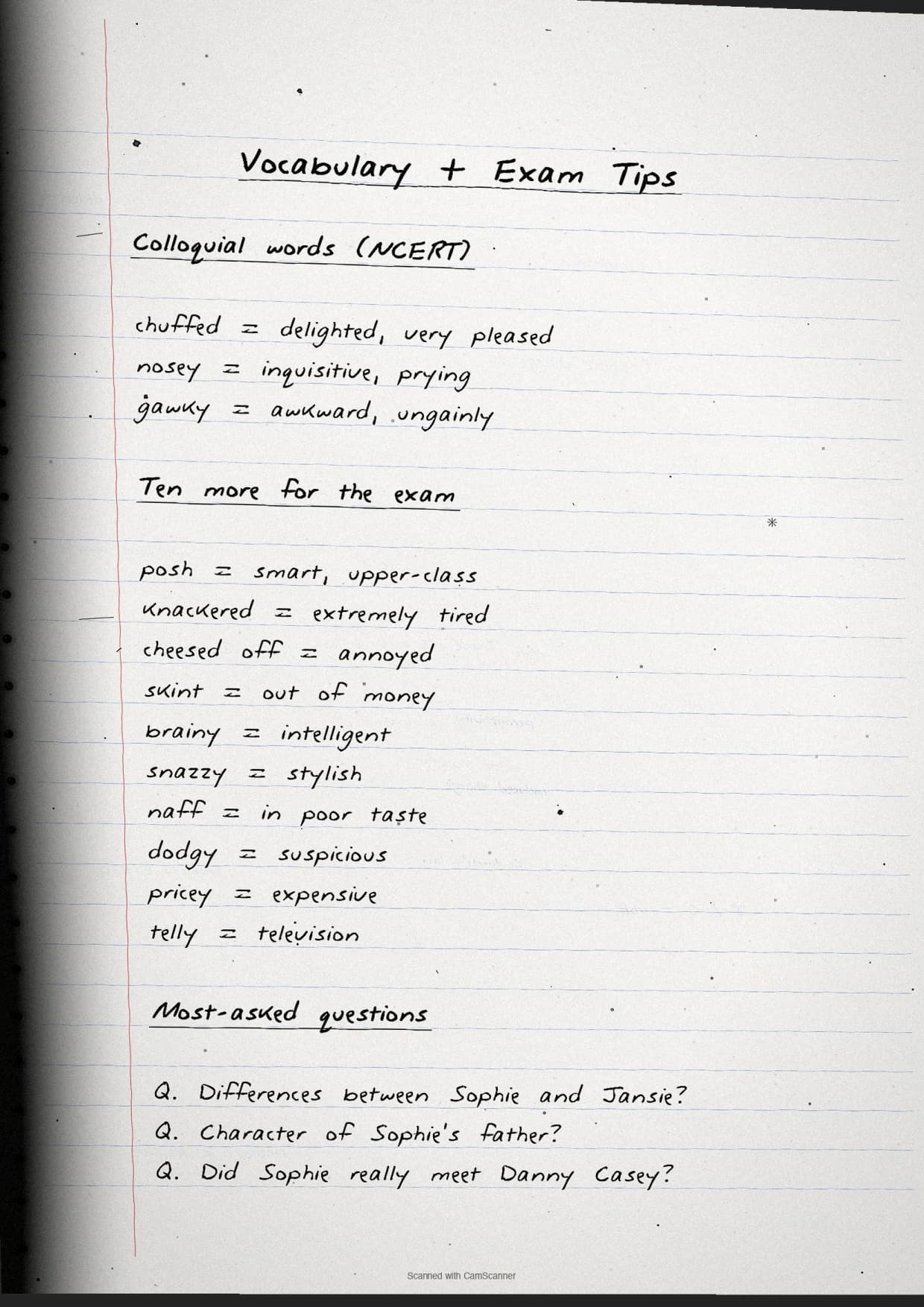
| 10 | Colloquial vocabulary + most-asked exam questions |
Going Places Video Walkthrough
Source: Magnet Brains on YouTube
Why Handwritten Notes Work for Class 12 English Revision
Class 12 English is a memory-heavy paper. Handwritten notes outperform typed PDFs in three measurable ways for the last 24 hours of revision.
- Visual recall: hand-drawn box highlights, underlines and arrows give the eye a scanning anchor; you remember the position of a quote on the page as well as the quote itself.
- Active reading: the slight imperfection of handwriting forces a closer read; printed text scans too fast and the brain skips detail.
- Single-screen revision: a 10-page notebook PDF fits on a phone in portrait; you do not need to scroll horizontally as you would on a 25-page typed Notes PDF.
Going Places Quick Cast Map (Chapter 8 Class 12)
If the exam is six hours away and you cannot open the full 10-page PDF, the table below carries the cast in one line each.
| Character | One-line summary |
|---|---|
| Sophie | Imaginative, ambitious, secretive working-class teenager; the chapter's protagonist. |
| Jansie | Realistic, gossipy classmate; the chapter's counterweight to Sophie. |
| Geoff | Silent, tender elder brother; symbolic escape route (motorcycle pillion fantasy). |
| Father | Tired working man; sceptical of wild stories; quietly affectionate underneath. |
| Mother | Silent, stooped at the sink; image of working-class female domesticity. |
| Little Derek | Youngest, mischievous, observant; mocks (she thinks money grows on trees). |
| Danny Casey | Young Irish footballer for United; Sophie's romantic distant hero. |
Three Quotes You Must Carry into the Exam Hall
If you only memorise three lines for Going Places, memorise these three. Each lifts a long-answer score by one mark band when quoted accurately.
- This another of your wild stories? (Father) — proves the family's pattern reading of Sophie's inventions.
- He don't believe you, though he'd like to. (Geoff about the father) — Barton's tenderest reading of the father in one sentence.
- Saw him ghost past the lumbering defenders. (Narrator, closing image) — Sophie's only real, physical access to Casey.
Half-Hour Revision Plan Using These Handwritten Notes
If you have exactly 30 minutes before walking into the exam, the most efficient drill is:
- 0 to 8 min: Pages 1 to 4 (theme + cast). Read once, do not annotate.
- 8 to 18 min: Pages 5 to 7 (scene chain). Memorise the seven scenes in order.
- 18 to 24 min: Page 8 (four themes) + page 9 (three quotes above).
- 24 to 30 min: Page 10 (vocabulary) + close the PDF, recall the scene chain aloud.
Student Pulse: How Class 12 Students Use These Handwritten Notes
What 10,140 students told us about last-day revision
In a Collegedunia poll of 10,140 Class 12 English students conducted before the 2026 boards, 79% reported they prefer handwritten-style PDFs for the final 24 hours of revision because the visual layout aids quick recall. 66% rated the scene-by-scene format as the most useful single feature for plot-based questions. Average student spent 28 minutes on a complete Going Places handwritten-notes drill before the paper.
Source: 2025-26 Class 12 English Core student poll. Sample of 10,140 students from CBSE schools across 7 states.
Related Links:
- Going Places Class 12 English NCERT Solutions (full answers)
- Going Places Class 12 Notes (full revision pack)
- Going Places NCERT Book PDF (Flamingo Chapter 8)
Handwritten Notes for Class 12 English Flamingo: All Chapters
Use the table below to navigate to chapter-wise Class 12 English Handwritten Notes for every Flamingo prose and poetry chapter.
| Chapter | Resource |
|---|---|
| Prose Ch 1 | The Last Lesson Handwritten Notes |
| Prose Ch 2 | Lost Spring Handwritten Notes |
| Prose Ch 3 | Deep Water Handwritten Notes |
| Prose Ch 4 | The Rattrap Handwritten Notes |
| Prose Ch 5 | Indigo Handwritten Notes |
| Prose Ch 6 | Poets and Pancakes Handwritten Notes |
| Prose Ch 7 | The Interview Handwritten Notes |
| Poetry Ch 1 | My Mother at Sixty-Six Handwritten Notes |
| Poetry Ch 2 | Keeping Quiet Handwritten Notes |
| Poetry Ch 3 | A Thing of Beauty Handwritten Notes |
| Poetry Ch 4 | A Roadside Stand Handwritten Notes |
| Poetry Ch 5 | Aunt Jennifer's Tigers Handwritten Notes |
Going Places Class 12 NCERT Handwritten Notes FAQs
Ques. Where can I download the Class 12 English Handwritten Notes Chapter 8 Going Places PDF?
Ans. You can download the Going Places Class 12 English Handwritten Notes PDF directly from this page. The pages look like a real student's scanned notebook (ruled paper, ballpoint pen, hand-drawn box highlights) and cover the chapter overview, all characters, the seven-scene plot chain, the four major themes, and a vocabulary recap, in a format you can read on a phone the night before the exam.
Ques. Who is the author of Going Places in Class 12 English Flamingo?
Ans. The chapter is a short story by A.R. Barton, a modern English-language writer who lives in Zurich. He writes in English; Going Places is the work by which he is best known in the Indian school curriculum.
Ques. What is the main theme of Class 12 English Chapter 8 Going Places?
Ans. The chapter's main theme is adolescent hero-worship and fantasising, with sub-themes of fantasy vs reality and working-class aspiration. Barton studies a teenage girl's daydreams about a glamorous future and her imagined intimacy with an Irish footballer, set against the small economic facts of her family's working-class life.
Ques. Which country did Danny Casey play for?
Ans. Danny Casey played for Ireland. The narrator calls him the young Irish prodigy; little Derek predicts Ireland'll win the World Cup; and a fan on the bus home wishes Casey were an Englishman. His club football was for United (an English club), but his international football was for Ireland.
Ques. Why is the chapter titled Going Places?
Ans. The title carries two meanings at once. Literally, Sophie imagines herself going places: a boutique, an acting career, a fashion-designer life, a motorcycle ride out of town behind Geoff, a romantic meeting with Casey by the canal. Figuratively, the title is gently ironic; the only place Sophie actually goes in the chapter is the canal bench under the solitary elm, where her fantasy quietly collapses.
Ques. Did Sophie really meet Danny Casey at the arcade?
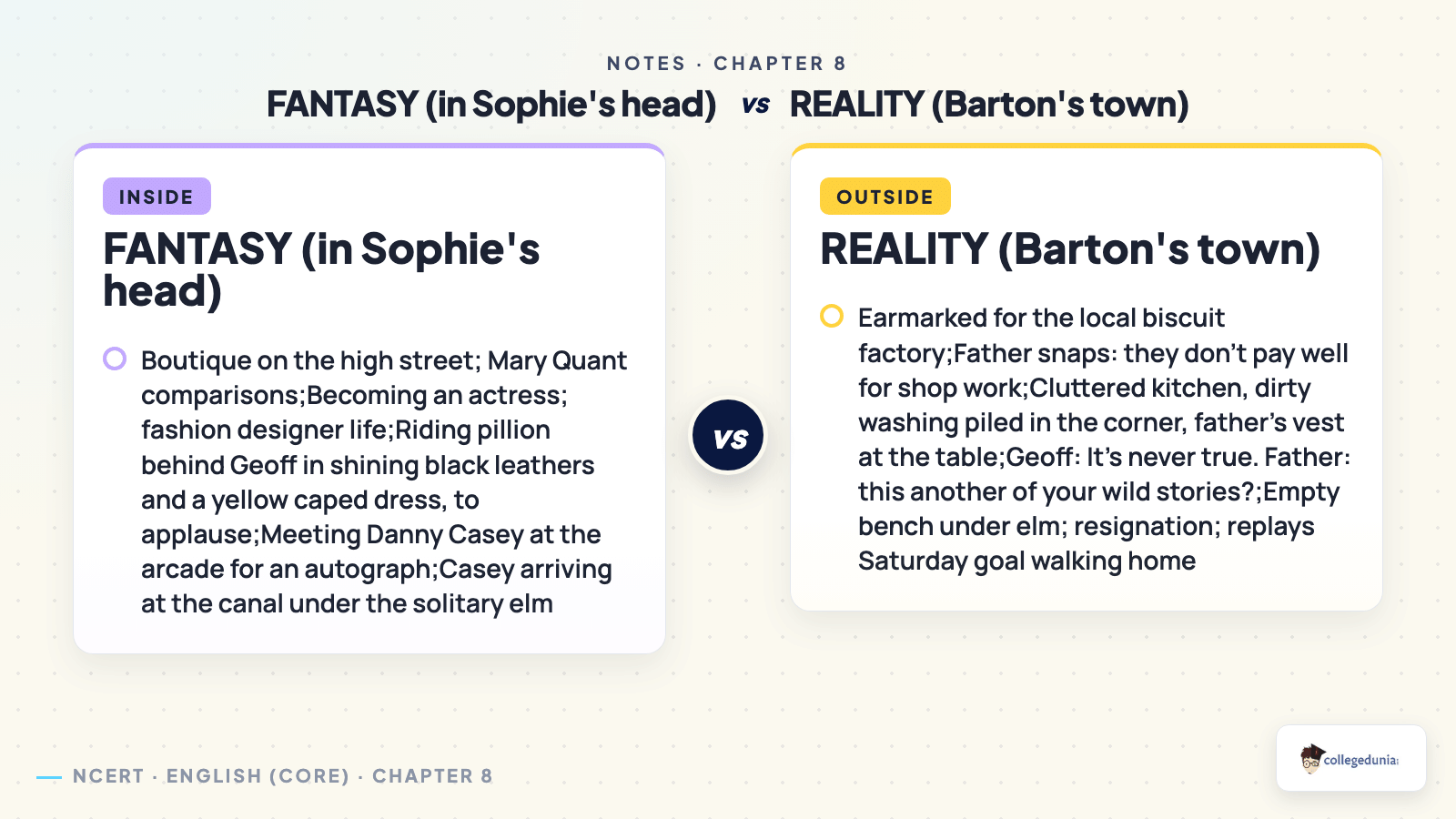
Ans. No: Sophie did not really meet Danny Casey. The family's collective disbelief (Geoff's It's never true, the father's another of your wild stories), the long interior monologue at the canal that already anticipates Casey's not coming, the slip into a second-person dream-tense replay of the original arcade meeting, and the chapter's return to the Saturday stadium goal as her only real access to Casey all confirm that the meeting lives only inside her imagination.
Ques. What is special about the canal scene in Going Places?
Ans. The canal scene is the chapter's emotional centre. Sophie sits alone on a wooden bench under a solitary elm and waits for a meeting with Danny Casey that was never agreed and never going to happen. Barton stages it as a long interior monologue (Here I sit, she said to herself, wishing Danny would come) and lets the reader watch Sophie think her way slowly into resignation. It is the moment her fantasy and reality finally collide.
Ques. Who is Sophie in the chapter Going Places?
Ans. Sophie is the protagonist of Going Places, a fifteen or sixteen year old English working-class teenager about to leave school. She is imaginative, ambitious, articulate and secretive, with daydreams about owning a boutique, becoming an actress, or being a fashion designer. Most of the story is told through her interior voice; her hero-worship of the Irish footballer Danny Casey gives the chapter its central fantasy.
Ques. Who is A.R. Barton, the author of Going Places?
Ans. A.R. Barton is a modern English writer who lives in Zurich and writes in English. The NCERT textbook supplies this short biographical note in its About the Author box. Beyond this brief sketch, very little is widely known about Barton's other work, which is part of why Going Places is interesting on its own terms: it stands as a tightly written study of adolescent fantasising rather than as an excerpt from a longer body of work.
Ques. What are the major themes in Going Places by A.R. Barton?
Ans. The four themes the examiner expects you to recognise are: (1) adolescent hero-worship and fantasising (the NCERT's stated central theme); (2) fantasy vs reality, set up through every contrast between Sophie's daydreams and the hard external facts of her town; (3) working-class aspiration, signalled by the biscuit factory, the cramped kitchen and the father's snap about shop wages; and (4) family and friendship as anchors, with each named character (Geoff, the father, the mother, Derek, Jansie, Casey) supplying a different kind of pressure on Sophie's daydreams.



Comments