




The Class 12 English handwritten notes Chapter 8 Flamingo Poetry: Keeping Quiet compress Pablo Neruda's twenty-five-line meditation into a hand-drawn, scannable revision kit - stanza maps, theme cards, devices in coloured ink, and quotable lines highlighted exactly the way a CBSE topper marks them on the night before the boards. Use them when you have less than an hour and need the poem to lock in fast.
Pen-on-paper revision pages
Extravagaria, 1958
NCERT Flamingo print aligned
- CBSE Weightage: 6 to 10 marks across the Flamingo poetry section, typically one RTC extract (4-6 marks) plus a short or long answer on the central paradox
- Best Used For: Last-minute revision the night before the boards, RTC line-spotting, and quick recall of poetic devices in coloured-pen form
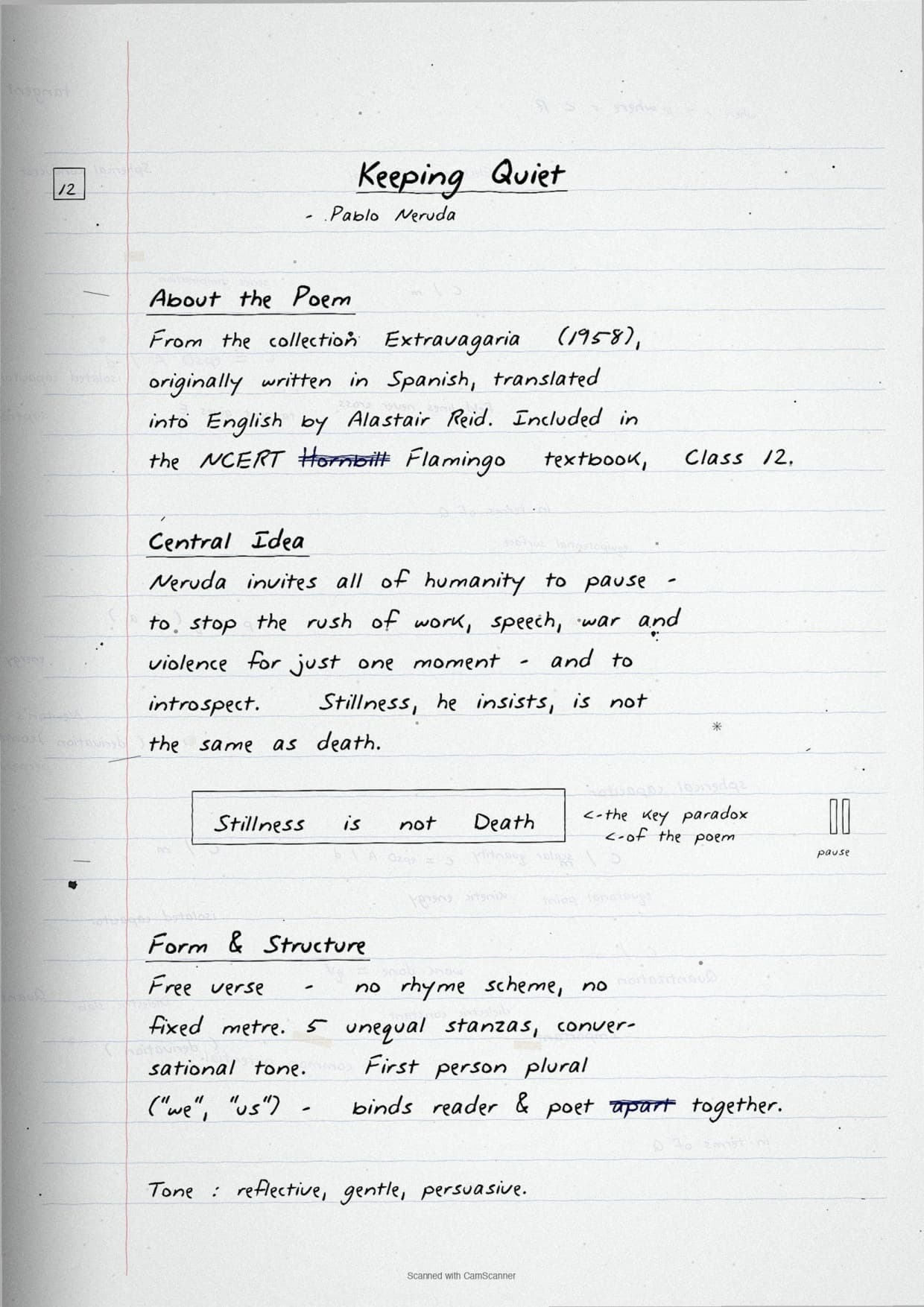
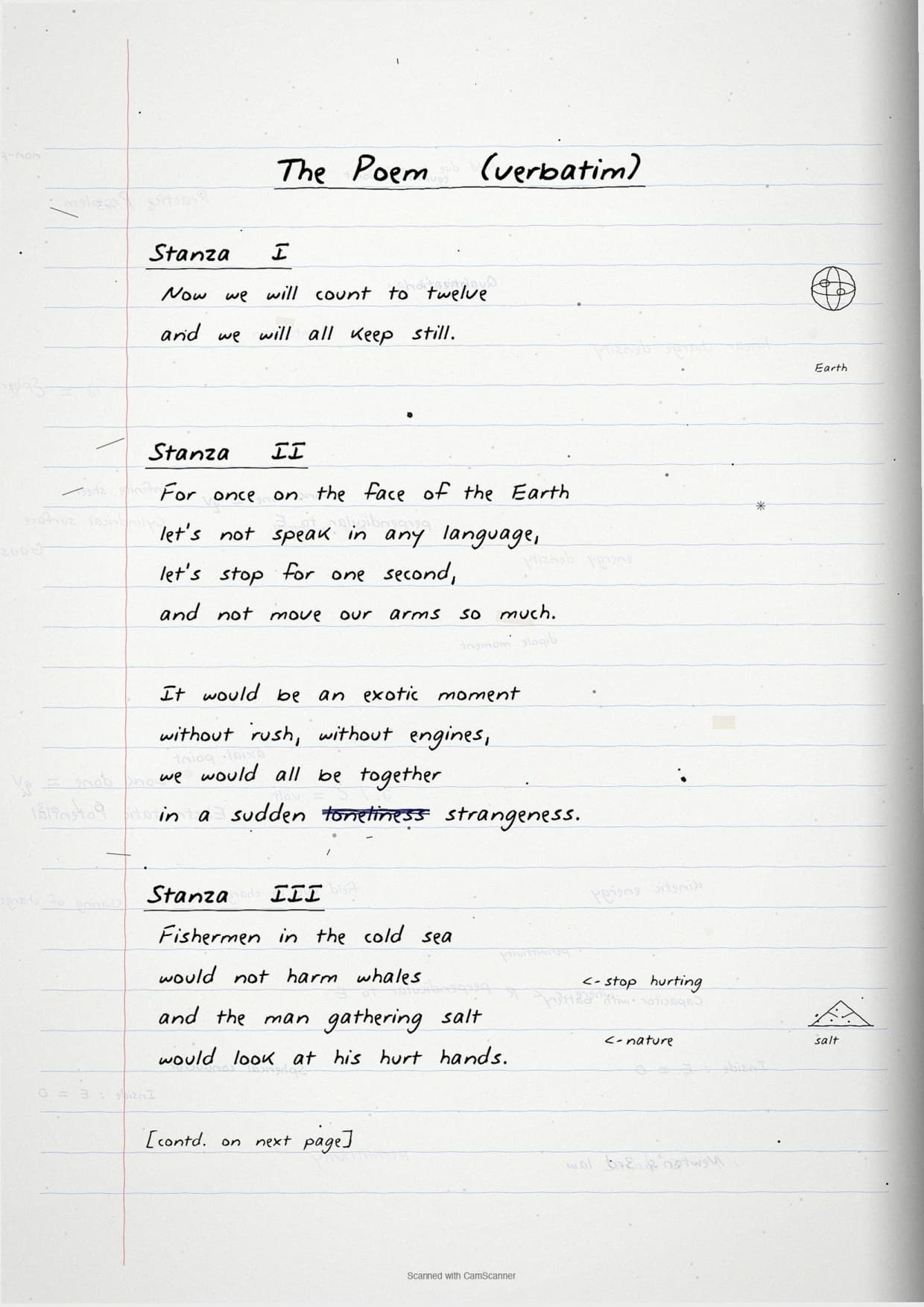
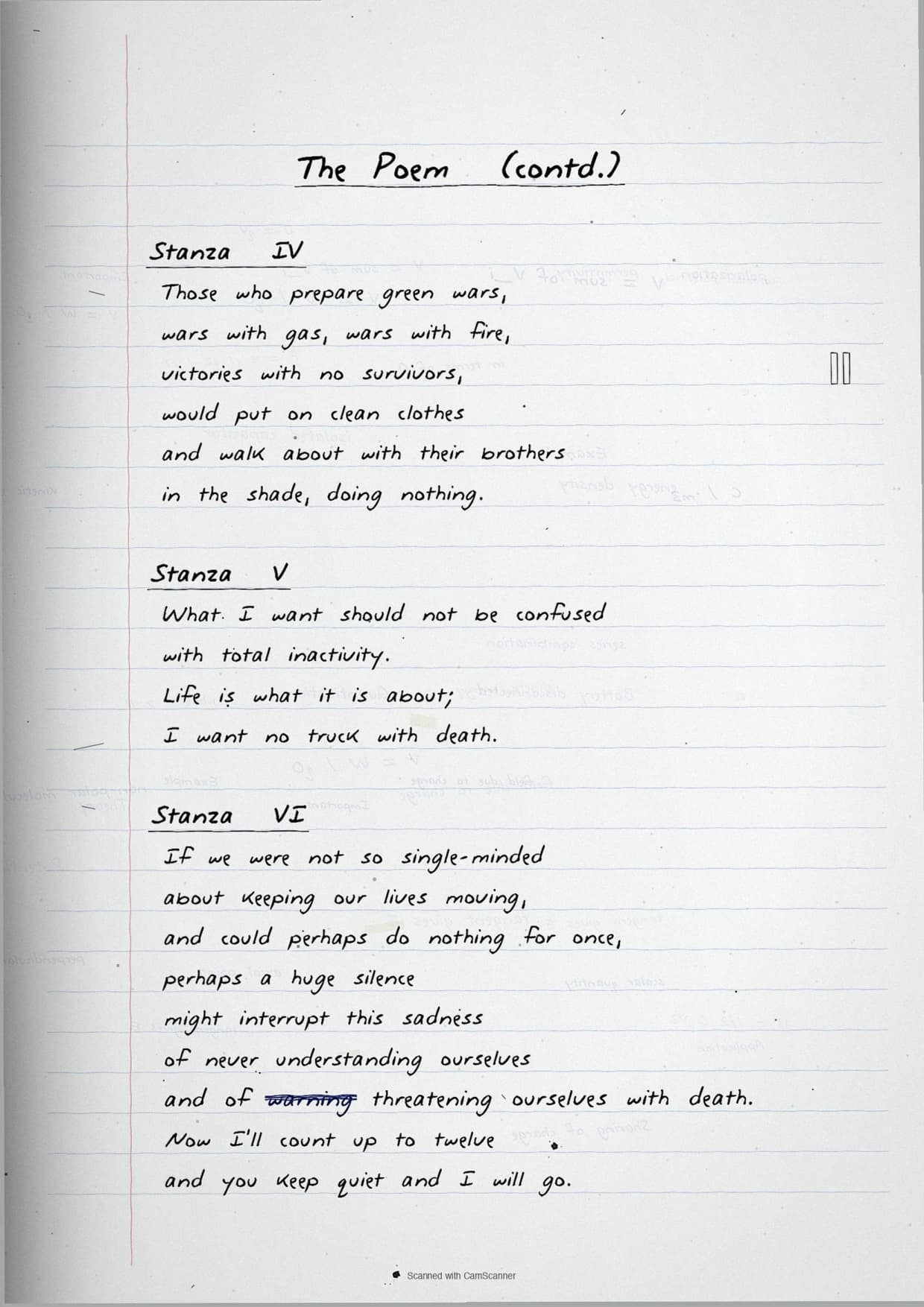
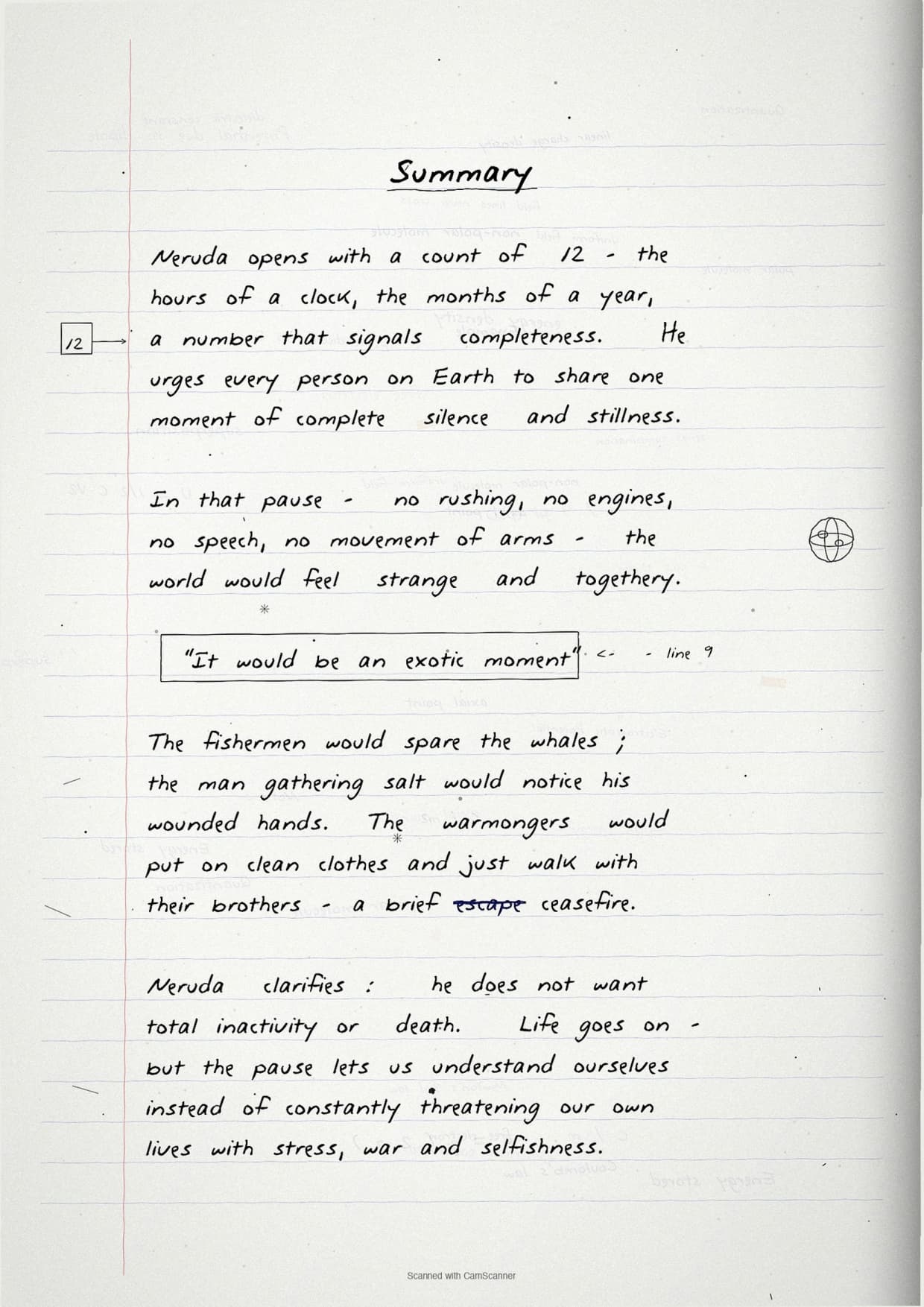
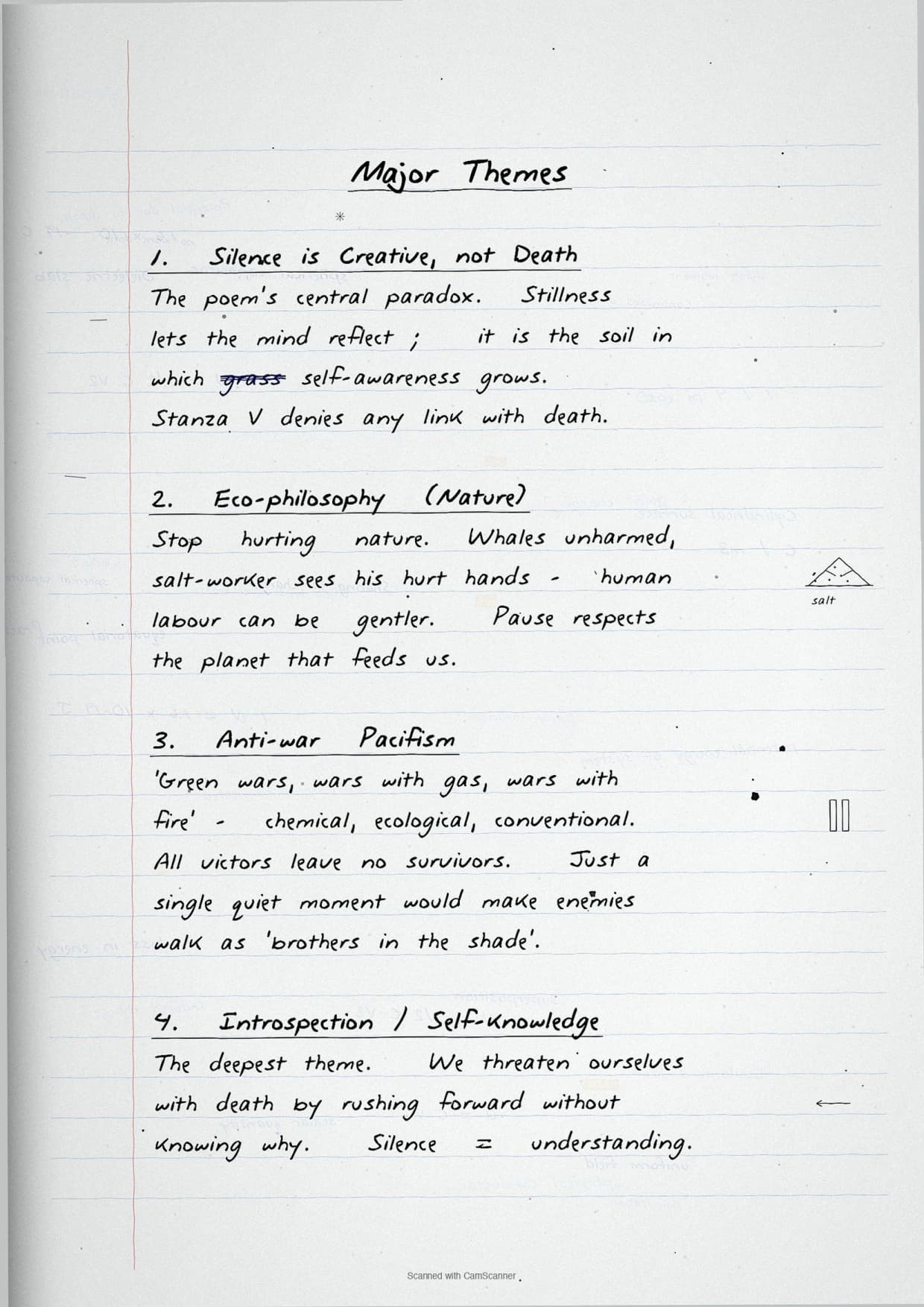
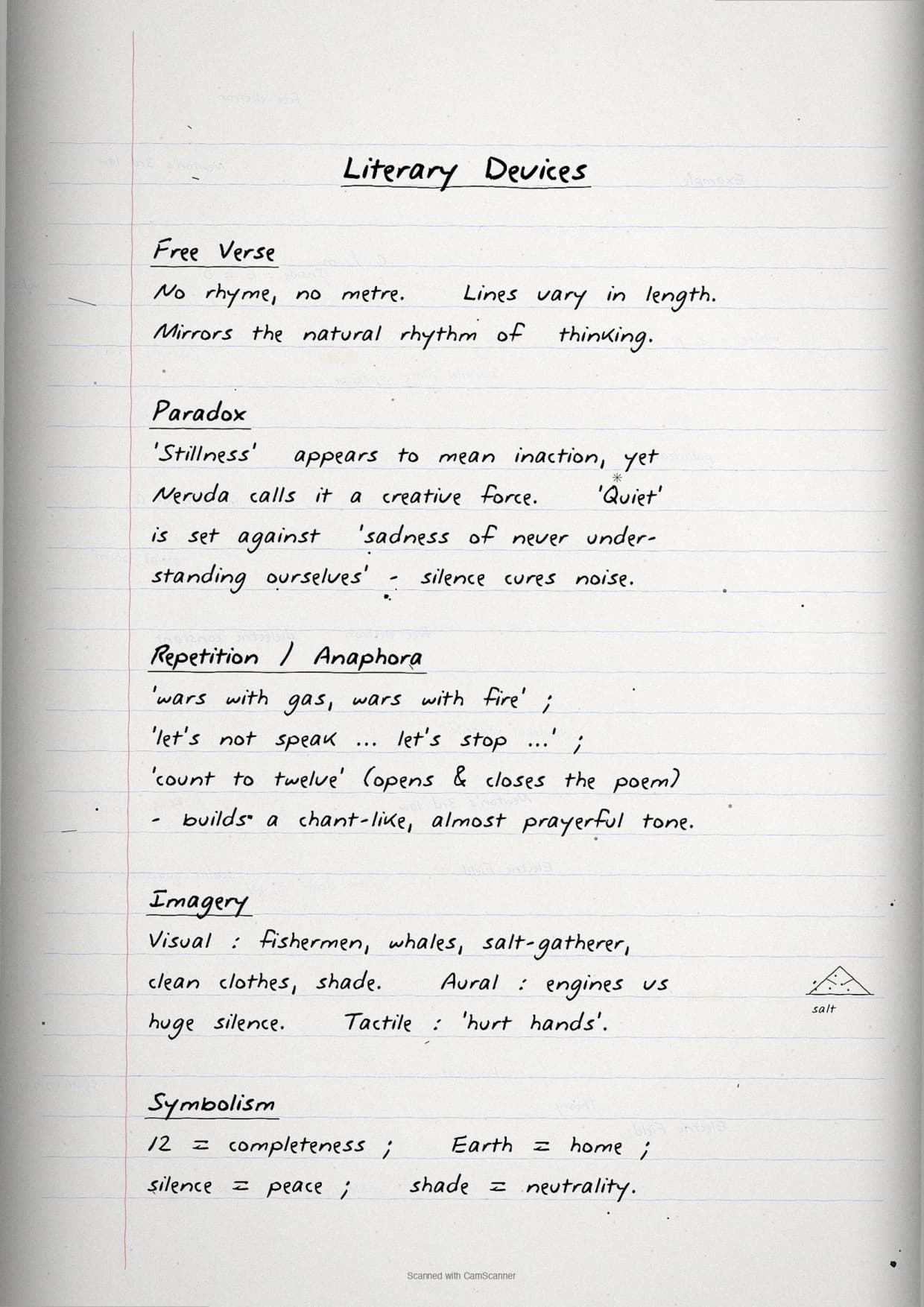
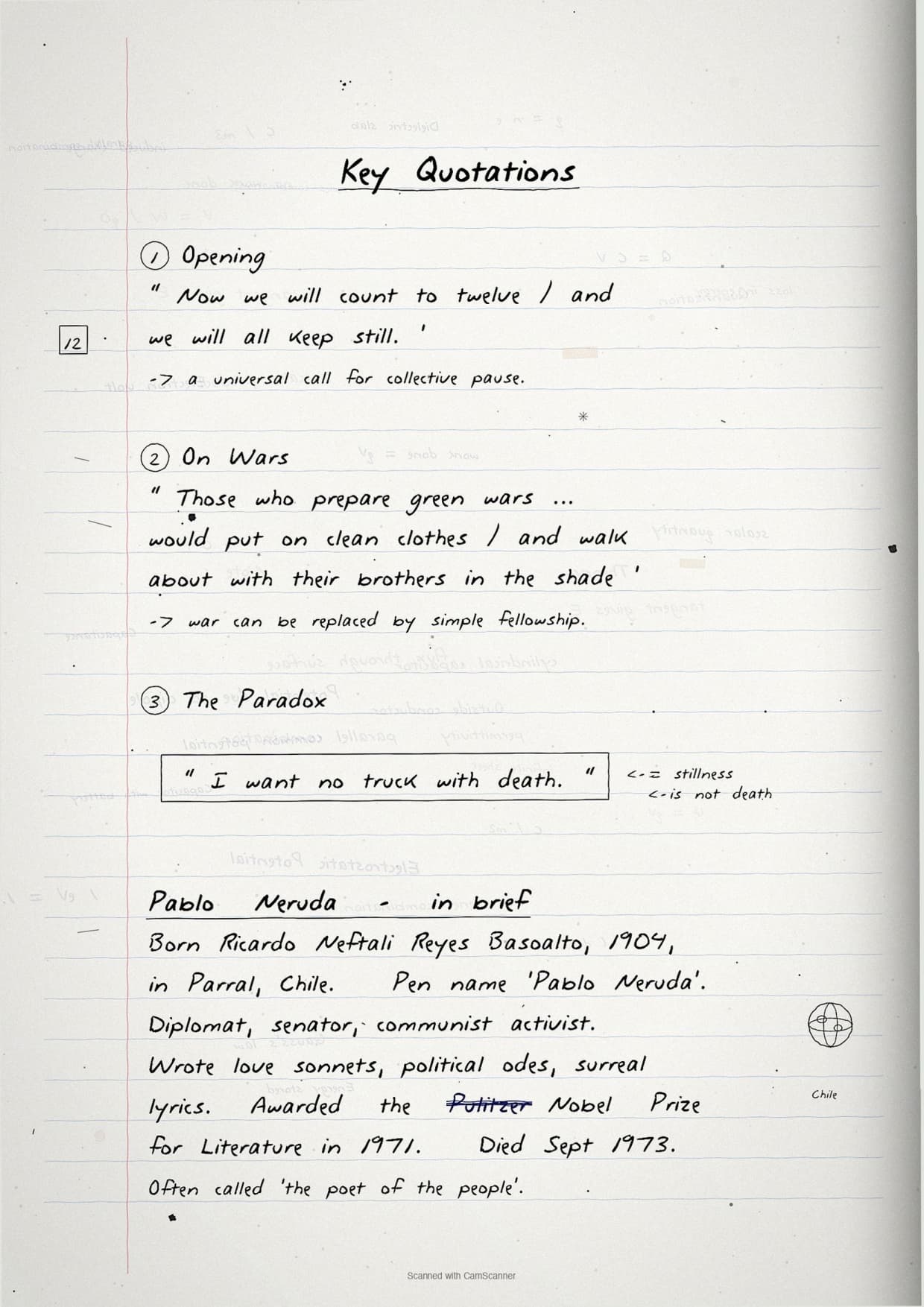
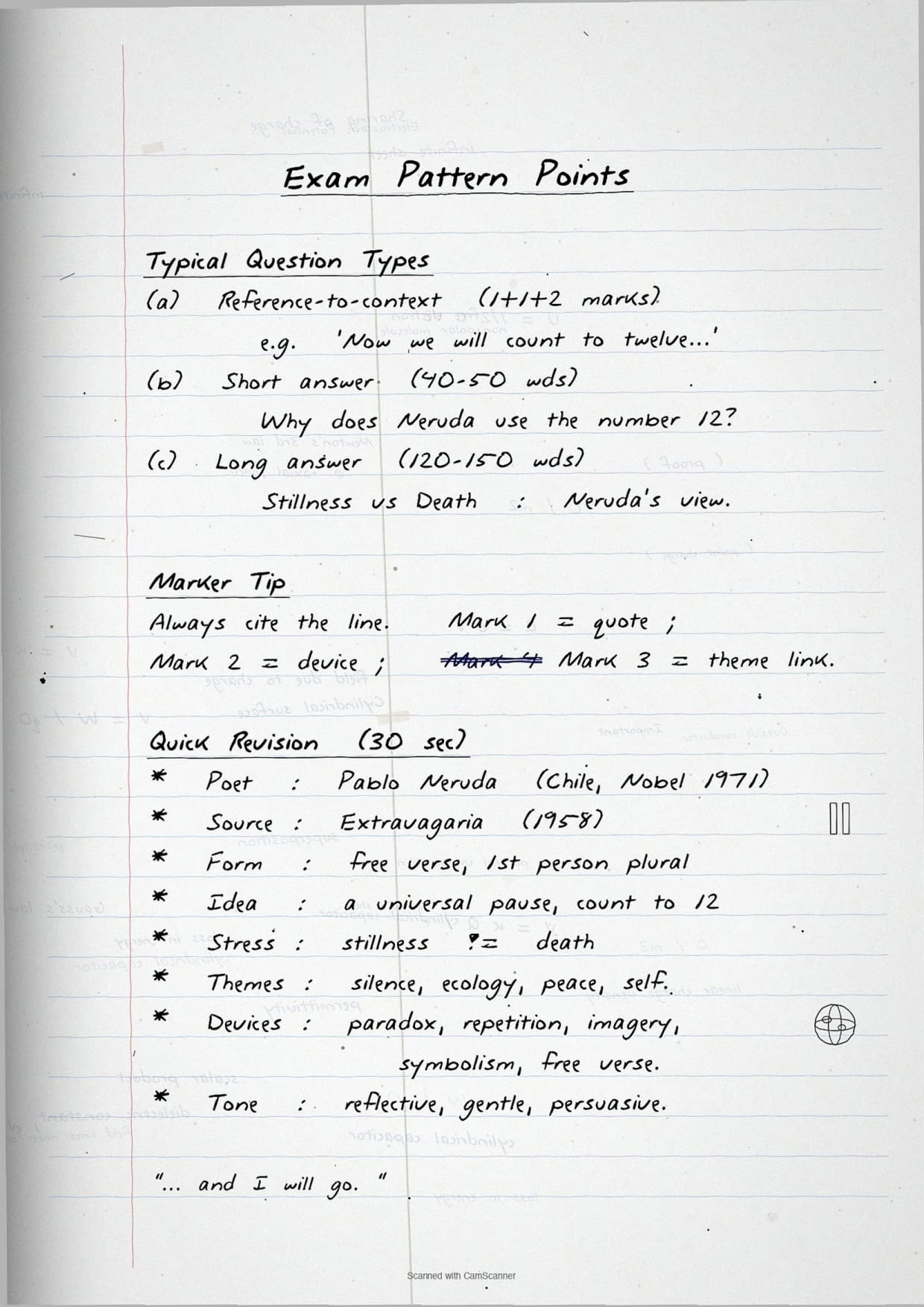
These Class 12 English Chapter 8 Handwritten Notes are written by senior CBSE English educators, hand-lettered for fast scan-reading, aligned with the 2026-27 NCERT print of Flamingo, and cross-checked against the last five years of CBSE Board papers.
Keeping Quiet is the second poem of the Flamingo poetry section, set between My Mother at Sixty-Six and A Thing of Beauty. Pablo Neruda wrote it in Spanish for his 1958 collection Extravagaria; your textbook carries the standard English translation. The Handwritten Notes treat the poem as five short movements - the invitation, the imagined pause, the clarification, the sadness, and the resolution - so a single glance at the page tells you where any RTC extract belongs.
Also Check:
What Is Inside the Keeping Quiet Handwritten Notes PDF
The PDF is engineered as a scannable, last-day revision kit. Each page does one job.
| Page | What It Carries | How To Use It |
|---|---|---|
| Page 1 | Poet card - Pablo Neruda biography in five hand-drawn boxes | Memorise the Nobel year (1971) and the source collection (Extravagaria, 1958) |
| Page 2 | Full poem text with margin annotations | Read aloud once, underline every "let's" |
| Page 3 | Stanza-by-stanza map - the five movements | Glance once before any RTC question to place the extract |
| Page 4 | Three theme cards (Brotherhood, Introspection, Ecology + Anti-War) | One paragraph per theme - revise in 10 minutes |
| Page 5 | Poetic devices grid - five devices in coloured ink | Locate device + line for the device-identification mark |
| Page 6 | Five quotable lines highlighted | Use any line as direct quotation in an answer |
| Page 7 | Common mistakes box - in red ink | Avoid the five recurring wrong answers |
Flamingo Poetry Keeping Quiet Video Walkthrough
Source: Magnet Brains on YouTube
The Five Movements of Keeping Quiet (Hand-Drawn Stanza Map)
Spotting the movement is the fastest route to the RTC mark. The handwritten map on Page 3 of the PDF compresses all twenty-five lines into five clearly-bounded blocks.
| Block | Lines | One-Line Tag |
|---|---|---|
| 1 - The Invitation | "Now we will count to twelve..." | Count, keep still, no language |
| 2 - The Imagined Pause | "It would be an exotic moment..." | Fishermen, salt-gatherer, soldiers, brother in new suit |
| 3 - The Clarification | "What I want should not be confused..." | Silence is not death, not total inactivity |
| 4 - The Sadness | "If we were not so single-minded..." | Hurry, threat of death, never understanding ourselves |
| 5 - The Resolution | "Now I'll count up to twelve / and you keep quiet and I will go." | The Earth as proof; the poet steps back |
Five Quotable Lines to Memorise for Keeping Quiet
One line per theme. The Handwritten Notes highlight each in a separate ink colour so it sticks visually.
- For Universal Brotherhood: "for once on the face of the Earth / let's not speak in any language".
- For Introspection: "we are all threatening ourselves / with death".
- For the Central Paradox: "What I want should not be confused / with total inactivity".
- For Ecology and Anti-War: "those who prepare green wars, / wars with gas, wars with fire".
- For the Resolution: "as when everything seems dead / and later proves to be alive".
Poetic Devices Grid (Handwritten Quick Recall)
Page 5 of the Handwritten Notes is a coloured-ink grid of the five high-value devices.
| Device | One-Word Trigger | Example Line |
|---|---|---|
| Anaphora | "let's" | Repeated "let's stop" across stanzas |
| Paradox | Silence vs death | "What I want should not be confused / with total inactivity" |
| Symbolism | Twelve | "Now we will count to twelve" |
| Metonymy | Three named wars | "green wars, wars with gas, wars with fire" |
| Imagery | Hurt hands | "the man gathering salt / would look at his hurt hands" |
Common Mistakes (Red-Ink Box)
The handwritten "Watch Out" box on Page 7 lists the five recurring wrong answers.
- Writing that the poet wants death or laziness - he denies this in stanza three.
- Calling the poem an elegy - it is reflective and hopeful, not mournful.
- Forgetting to name Pablo Neruda and Extravagaria in long answers.
- Treating twelve as accidental - it is symbolic and worth a mark on its own.
- Missing the Earth image in the closing stanza - it is the single strongest piece of evidence in any paradox-themed answer.
How To Use Keeping Quiet Handwritten Notes On Exam Eve
A 45-minute session the night before the English boards is enough.
- First 10 minutes: Read Pages 2-3 (poem + stanza map) aloud.
- Next 15 minutes: Cover Page 4 (themes) and Page 5 (devices) - say each theme and device aloud with one quoted line.
- Next 10 minutes: Memorise the five quotable lines on Page 6.
- Final 10 minutes: Reread the red-ink Common Mistakes box on Page 7. Sleep.
Related Links:
- My Mother at Sixty-Six Class 12 English Handwritten Notes
- Poets and Pancakes Class 12 English Handwritten Notes
More Keeping Quiet Class 12 English Resources
NCERT Handwritten Notes for Class 12 English (Core) Flamingo: All Chapters
Use the table to move to any other Flamingo chapter's handwritten notes while you revise the prose and poetry sections together.
| Chapter | Resource |
|---|---|
| Chapter 1 | The Last Lesson Handwritten Notes |
| Chapter 2 | Lost Spring Handwritten Notes |
| Chapter 3 | Deep Water Handwritten Notes |
| Chapter 4 | The Rattrap Handwritten Notes |
| Chapter 5 | Indigo Handwritten Notes |
| Chapter 6 | Poets and Pancakes Handwritten Notes |
| Chapter 7 | My Mother at Sixty-Six Handwritten Notes |
Keeping Quiet Class 12 English Handwritten Notes FAQs
Ques. Where can I download the Class 12 English Handwritten Notes Chapter 8 Flamingo Poetry: Keeping Quiet PDF?
Ans. You can download the Class 12 English Handwritten Notes Chapter 8 Flamingo Poetry: Keeping Quiet PDF directly from this page. Both the Normal and HD versions are free and aligned with the 2026-27 NCERT Flamingo print.
Ques. How are these Handwritten Notes different from the typed Notes for Keeping Quiet?
Ans. The Handwritten Notes are pen-on-paper revision pages designed for fast scan-reading on the day before the exam - coloured-ink stanza maps, theme cards, a five-cell devices grid, and highlighted quotable lines. The typed Notes are longer, with prose explanations, PYQ tables and worked-out RTC examples; they are better for the first revision pass.
Ques. Who wrote Keeping Quiet and where does it appear in the Class 12 syllabus?
Ans. Keeping Quiet was written by Pablo Neruda, the Chilean Nobel laureate (1971), and originally appeared in his 1958 Spanish-language collection Extravagaria. The poem is Chapter 8 of the Class 12 Flamingo textbook and is the second poem in the poetry section.
Ques. What is the central paradox of Keeping Quiet?
Ans. The central paradox is that stillness is not the same as death, and silence is not the same as inactivity. The poet uses the Earth in winter as proof - it looks lifeless on the surface but is alive underneath, preparing every seed for spring.
Ques. Why does the poet ask everyone to count to twelve?
Ans. Twelve is a universal number - the twelve hours on a clock face, the twelve months of a year, the twelve apostles. Choosing twelve makes the pause finite, measurable and shareable across every culture and language.
Ques. Which lines should I memorise from Keeping Quiet for the CBSE exam?
Ans. Five quotable lines cover the whole poem: "Now we will count to twelve / and we will all keep still" (invitation), "those who prepare green wars, / wars with gas, wars with fire" (ecology and anti-war), "What I want should not be confused / with total inactivity" (paradox), "the sadness / of never understanding ourselves" (introspection), and "as when everything seems dead / and later proves to be alive" (resolution).
Ques. Are the Handwritten Notes enough for the boards or do I still need the typed Notes?
Ans. For first-time revision use the typed Notes - they have full paragraphs, themes, PYQ analysis and a solved RTC. For the last 24-48 hours before the exam, the Handwritten Notes are usually enough on their own because everything is on one screen-scannable page.



Comments