




Lost Spring questions appear in nearly every CBSE Class 12 English board paper (4 of the last 5 sessions carried a 5-mark long-answer) and 2-3 CUET English shifts per cycle. Class 12 English Chapter 2 Flamingo Prose: Lost Spring is therefore high-yield revision. This Class 12 English Handwritten Notes Chapter 2 Flamingo Prose: Lost Spring page hosts the scanned notebook PDF with diagrams, theme webs, and quotation cards.
- CBSE Weightage: 8 to 10 marks across short-answer and long-answer slots
- CUET English Weightage: 2 to 3 inference questions per shift
- Page Coverage: Both Seemapuri and Firozabad sections plus all 11 device-spotting sentences
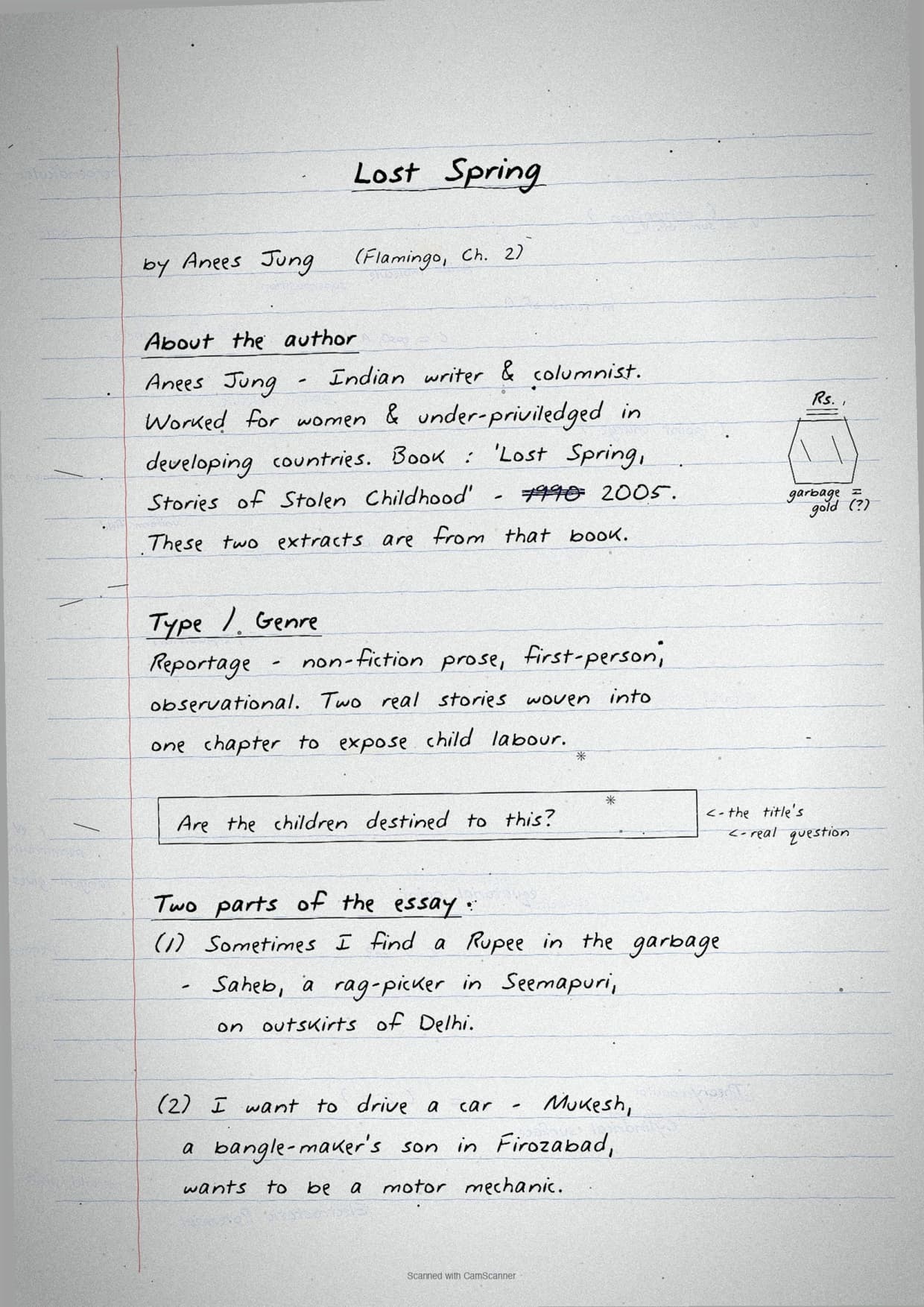
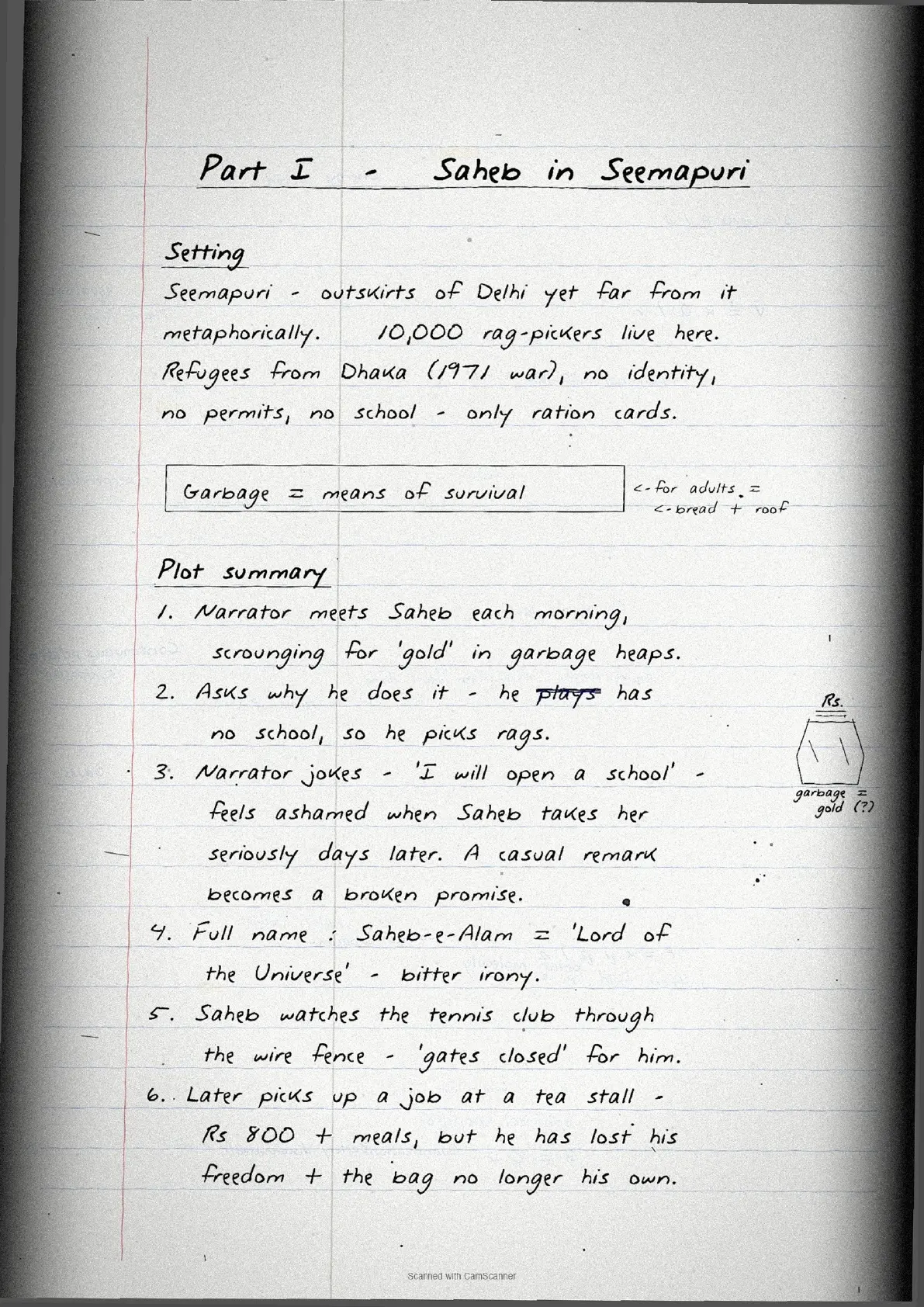
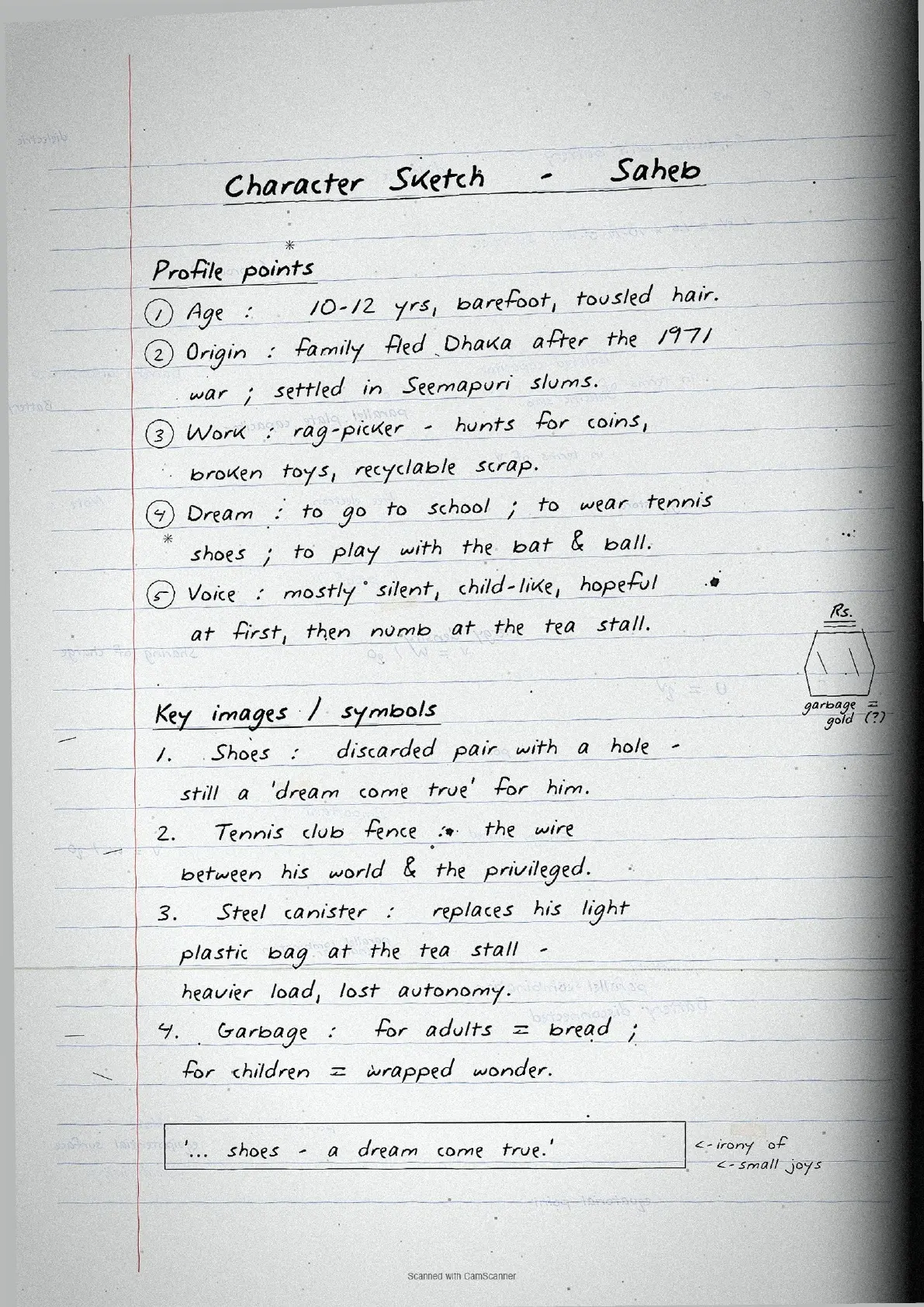
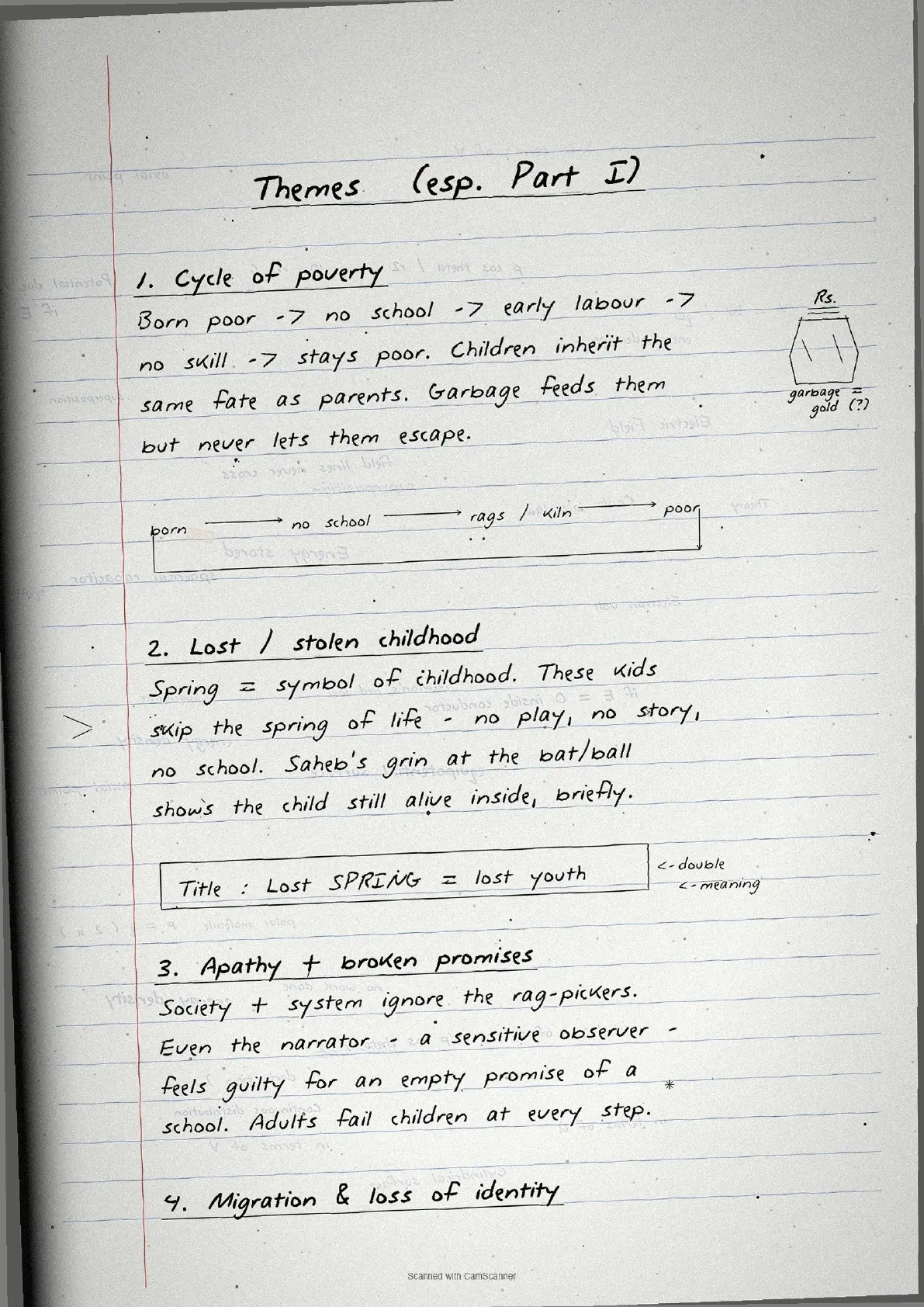
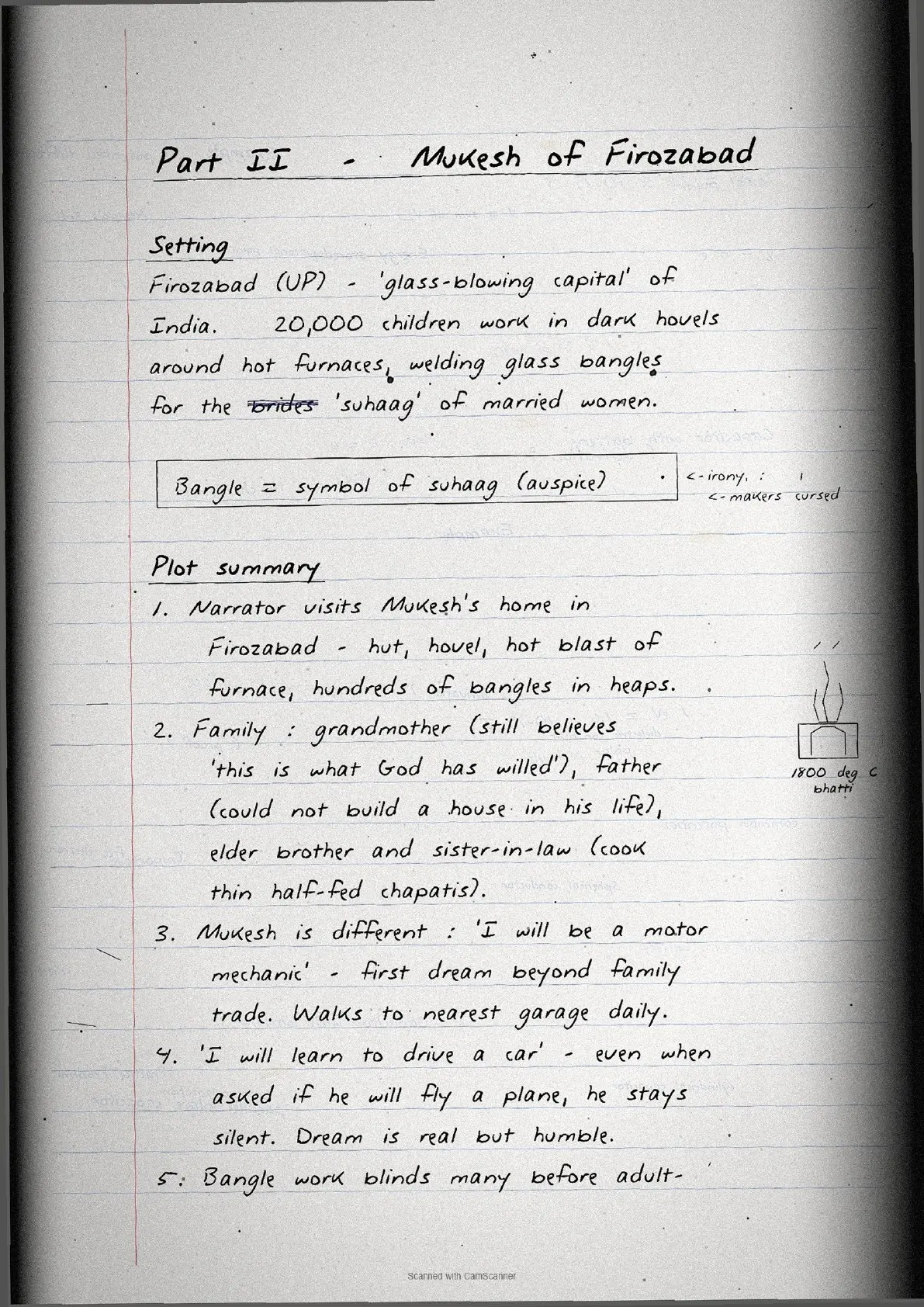
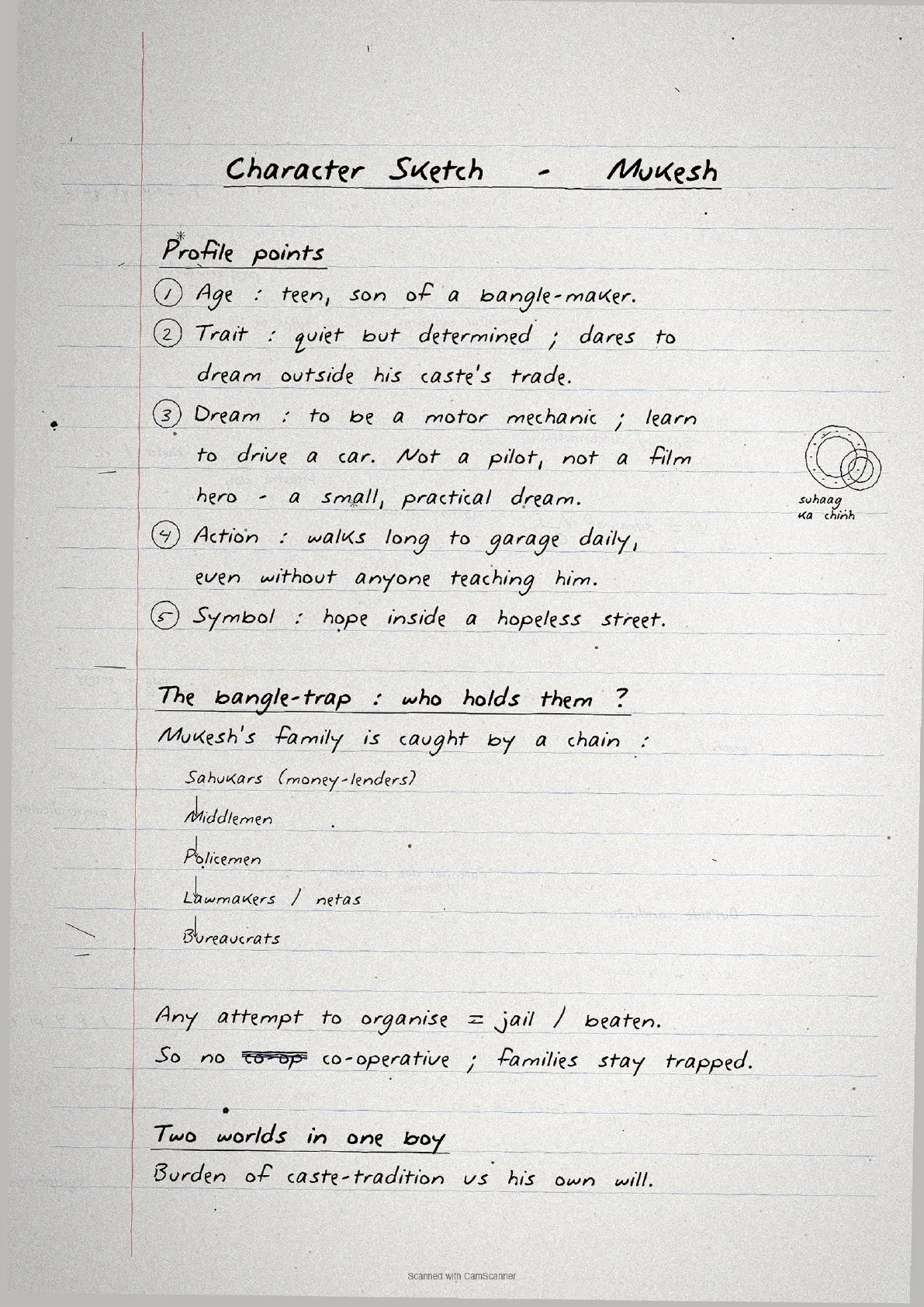
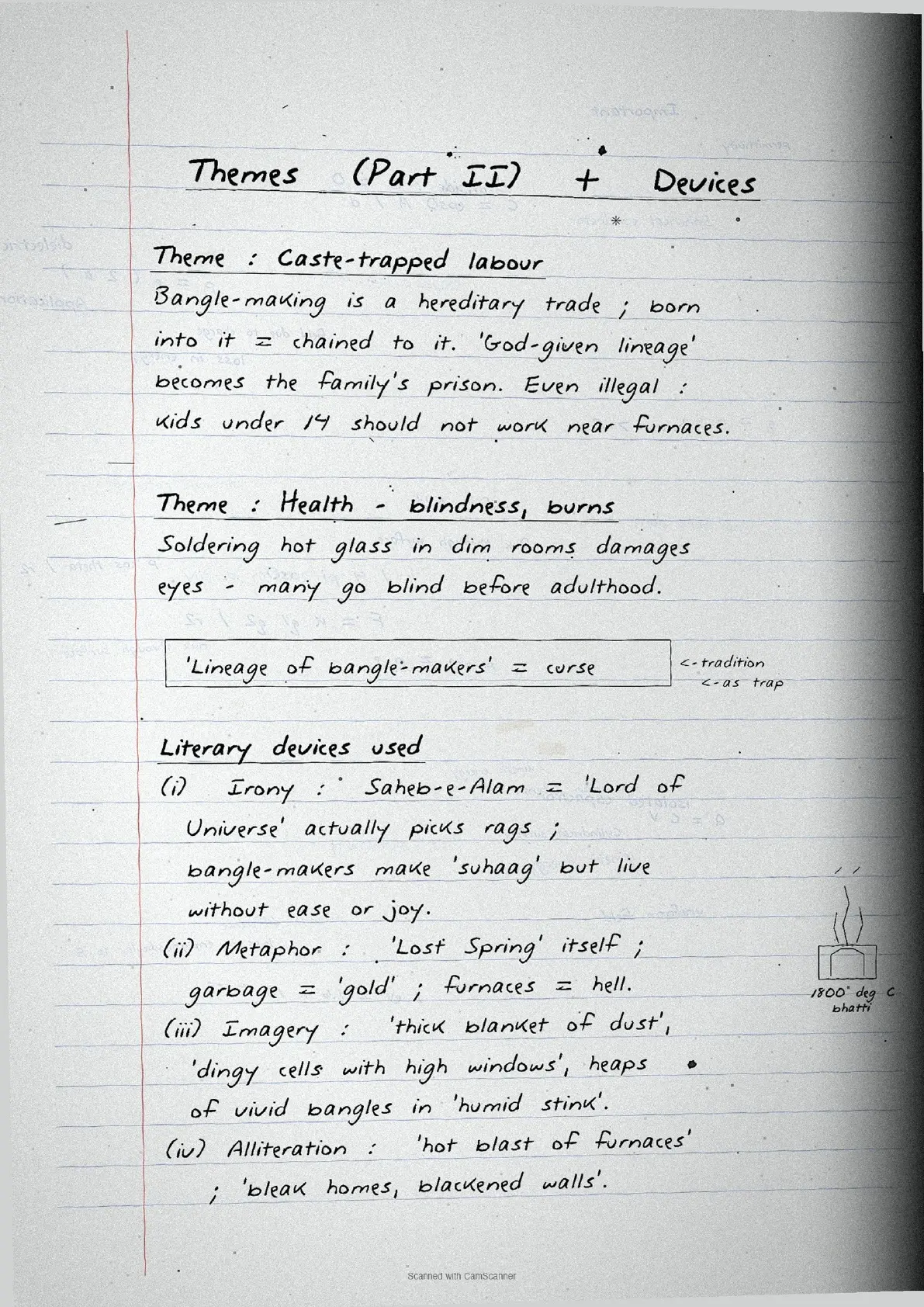
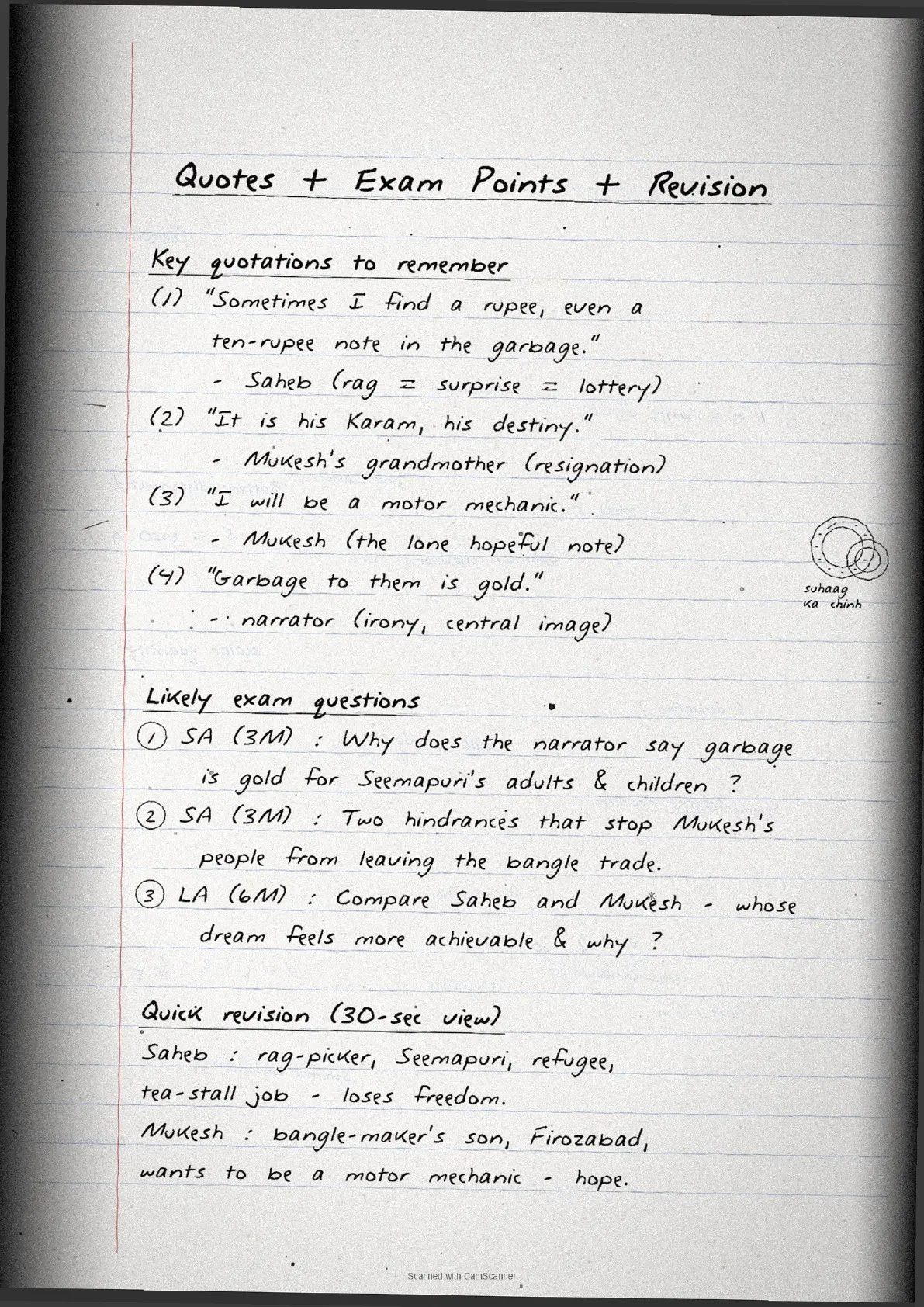
These handwritten notes are curated by Collegedunia's English subject experts, scanned from a real Class 12 student's revision notebook, and refined against the last five years of CBSE board papers and CUET English shifts.
The handwritten PDF on this page is the night-before-the-exam revision sheet for Lost Spring, with hand-drawn theme webs, character flow arrows, and colour-coded quotation cards.
Also Check:
Why Lost Spring Matters for the Class 12 English Board Exam
Lost Spring is one of two Flamingo prose chapters that the CBSE board examiner draws long-answer questions from almost every year. Its themes (stolen childhood, poverty, caste, broken promises) align with the values-based answer slot in Section B of the Class 12 English paper, which carries 5 to 6 marks.
- 4 out of last 5 CBSE sessions: Carried a Lost Spring 5-mark long-answer (2022, 2023, 2024, 2025).
- CUET English: 2 to 3 inference MCQs per shift in the 2024 and 2025 cycles, mostly on Saheb's name irony, Firozabad bangle industry hazards, and the karam framing.
- Reading-comprehension repeats: The "Why Saheb-e-Alam is ironic" question has been rephrased in every CBSE sample paper since 2019.
Flamingo Prose Lost Spring Video Walkthrough
Source: Magnet Brains on YouTube
How will Collegedunia's Class 12 English Handwritten Notes Chapter 2 Flamingo Prose: Lost Spring Help You?
Handwritten notes work for Lost Spring because the chapter is built on visual contrasts (gold-in-garbage, sunny gold bangles in dark hutments, "drowned in an air of desolation"). The scanned PDF on this page maps those contrasts onto labelled diagrams.
- Visual recall: Hand-drawn Seemapuri vs Firozabad split-page diagram, colour-coded by theme.
- Quotation cards: Six examiner-favourite quotations on a single revision sheet, each tagged with its CBSE year.
- Last-night sprint: 24-hour revision card at the back so a student can revise the chapter in 25 minutes.
- Device-spotting drill: All 11 Thinking-about-language sentences pre-tagged as hyperbole, metaphor, or simile.
Why Choose Handwritten Notes for Lost Spring
Lost Spring carries more named places (Seemapuri, Dhaka, Firozabad, Udipi), named characters (Saheb, Mukesh, Savita, the grandmother), and verbatim phrases than any other Flamingo prose chapter. Four benefits of handwritten notes for this chapter:
- Spatial memory: Two sections side-by-side on a single page makes the Seemapuri-Firozabad contrast easy to recall under exam pressure.
- Personal annotations: Coloured arrows trace Saheb's transition from rag-picker to tea-stall worker on one A4 page.
- Quotation pinning: Verbatim lines highlighted in coloured ink stick better than typed text.
- Last-day skim: The night-before-the-exam student can flip through these notes in 25 minutes.
Last 24-Hour Revision Card for Lost Spring
The single page below is what the scanned notebook hands you the night before the Class 12 English Core board exam. Skim it once at night and once on the morning of the exam.
- Author: Anees Jung (1944, Rourkela). Excerpt from her book Lost Spring, Stories of Stolen Childhood.
- Section 1 setting: Seemapuri (10,000 ragpickers from Bangladesh, on the periphery of Delhi).
- Section 2 setting: Firozabad (centre of India's glass-blowing bangle industry, 20,000 child workers).
- Main characters: Saheb-e-Alam (lord of universe, ironic), Mukesh (wants to be a motor mechanic), Mukesh's grandmother (karam), Savita (young girl soldering bangles).
- Five themes: Stolen childhood, grinding poverty, caste tradition, apathy of authority, hope vs resignation.
- Six quotations: "Lord of the universe"; "Garbage to them is gold"; "I will be a motor mechanic"; "Slog their daylight hours"; "Can a god-given lineage ever be broken?"; "Few airplanes fly over Firozabad."
- Devices to spot: Metaphor ("drowned in an air of desolation"), Simile ("like the tongs of a machine"), Hyperbole ("Garbage to them is gold").
Diagram Inventory in the Class 12 English Handwritten Notes Chapter 2 Flamingo Prose: Lost Spring PDF
The scanned notebook carries seven hand-drawn diagrams. Each maps to a specific 2-mark or 5-mark CBSE answer.
| Diagram | Page | Use in Answer |
|---|---|---|
| Seemapuri vs Firozabad split-page contrast | 2 | Title justification (5 marks) |
| Saheb's journey arrow (garbage to tea stall) | 3 | Saheb character (3 marks) |
| Two worlds diagram (family vs vicious circle) | 4 | Forces conspiring (5 marks) |
| Five-theme web | 5 | Theme question (5 marks) |
| Bangle industry flow (furnace, dust, light) | 6 | Hazards (5 marks) |
| Mukesh's small dream pyramid | 7 | Mukesh character (5 marks) |
| Six-quotation card | 8 | Quotation embedding |
Memory Mnemonics from the Class 12 English Handwritten Notes Chapter 2 Flamingo Prose: Lost Spring
Three concept mnemonics from the scanned notebook for fast recall.
Lost Spring Self-Assessment Quick Quiz
Q1. What does the name Saheb-e-Alam mean?
(a) Lord of the streets (b) Lord of the universe (c) King of beggars (d) Keeper of fate
Answer: (b) Lord of the universe - deeply ironic given Saheb's rag-picker life.
Q2. How many children work in the Firozabad bangle industry per Anees Jung?
(a) 10,000 (b) 15,000 (c) 20,000 (d) 30,000
Answer: (c) 20,000 - illegally working in hot furnaces in dingy cells.
Q3. What is Mukesh's dream?
(a) To open a bangle factory (b) To become a motor mechanic (c) To fly an airplane (d) To go abroad
Answer: (b) Motor mechanic - he says "few airplanes fly over Firozabad" so flying is too distant.
Q4. "Garbage to them is gold" is an example of what device?
(a) Simile (b) Metaphor (c) Hyperbole (d) Irony
Answer: (c) Hyperbole - deliberate exaggeration of garbage's value.
Q5. What does Mukesh's grandmother call their bangle-making destiny?
(a) Niyati (b) Karam (c) Dharma (d) Kismet
Answer: (b) Karam - she frames the family's bangle-making as god-given lineage that cannot be broken.
Full PYQ map: Lost Spring NCERT Solutions with Year-Wise Question Map
More Lost Spring English Class 12 Resources
NCERT Handwritten Notes for Class 12 English Flamingo: All Chapters
Every Flamingo chapter's Handwritten Notes page in textbook order.
| Chapter | Resource |
|---|---|
| Chapter 1 | The Last Lesson Handwritten Notes |
| Chapter 3 | Deep Water Handwritten Notes |
| Chapter 4 | The Rattrap Handwritten Notes |
| Chapter 5 | Indigo Handwritten Notes |
| Chapter 6 | Poets and Pancakes Handwritten Notes |
| Chapter 7 | My Mother at Sixty-Six Handwritten Notes |
| Chapter 8 | Keeping Quiet Handwritten Notes |
Class 12 English Handwritten Notes Chapter 2 Flamingo Prose: Lost Spring FAQs
Ques. Where can I download the Class 12 English Handwritten Notes Chapter 2 Flamingo Prose: Lost Spring PDF?
Ans. You can download the class 12 english handwritten notes chapter 2 Flamingo Prose: Lost Spring PDF directly from this page. Both Normal and HD versions are free.
Ques. Are these Lost Spring Handwritten Notes aligned with the 2026-27 NCERT?
Ans. Yes. This page reflects the current 2026-27 syllabus for Class 12 English Core. The Flamingo textbook keeps Lost Spring intact in the new edition.
Ques. How many pages is the Class 12th English Lost Spring Handwritten Notes PDF?
Ans. The Handwritten Notes PDF runs approximately 8 pages with seven hand-drawn diagrams, a 24-hour revision card, three mnemonics, and a five-question self-assessment quiz.
Ques. Who wrote Lost Spring and which book is it from?
Ans. Lost Spring is written by Anees Jung (born 1944, Rourkela). It is an excerpt from her book Lost Spring, Stories of Stolen Childhood and appears as the second prose chapter in the Class 12 English Flamingo textbook.
Ques. What diagrams are included in the Lost Spring Handwritten Notes?
Ans. Seven hand-drawn diagrams: Seemapuri-Firozabad contrast, Saheb's journey arrow, two-worlds family-vs-vicious-circle diagram, five-theme web, bangle industry flow, Mukesh's small-dream pyramid, and a six-quotation card.
Ques. Are these notes useful for CUET English preparation?
Ans. Yes. The CUET English paper draws 2 to 3 Flamingo prose inference questions per shift. The quotation cards and device drill on this page double as CUET English revision.
Ques. How should I use the Lost Spring Handwritten Notes the night before the exam?
Ans. Skim the 24-hour Revision Card once, then attempt the five-question self-assessment quiz on this page. The whole sweep takes about 25 minutes.



Comments