



These handwritten notes on Class 12 Computer Science Chapter 3 Stack are handwritten in a student notebook for quick last-mile revision, in line with the 2026-27 CBSE syllabus. The pages cover every key idea in the chapter: the LIFO rule, PUSH and POP, overflow and underflow, the Python list as a stack, and the four stack applications. Open the PDF in the 24 hours before the board paper.
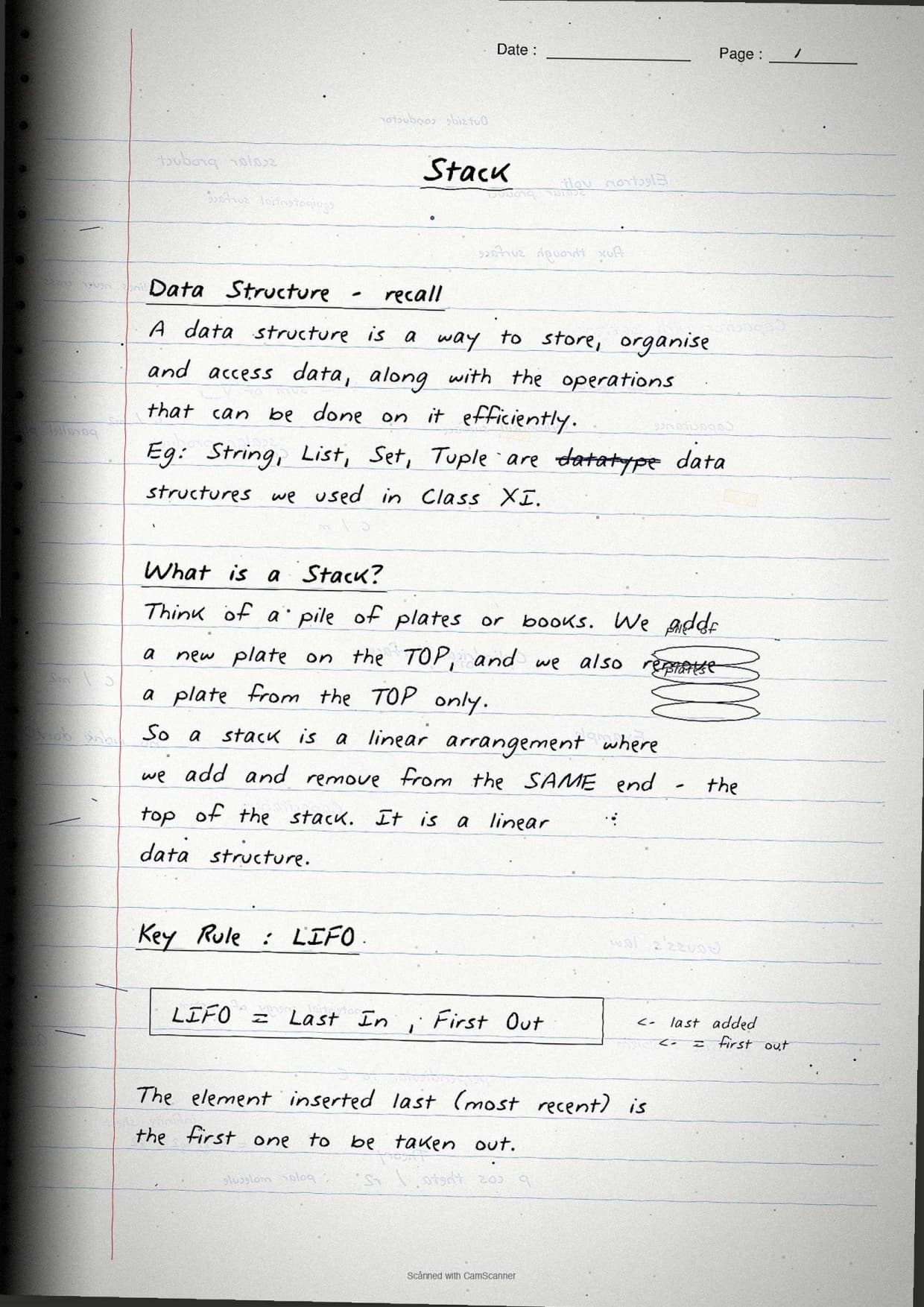
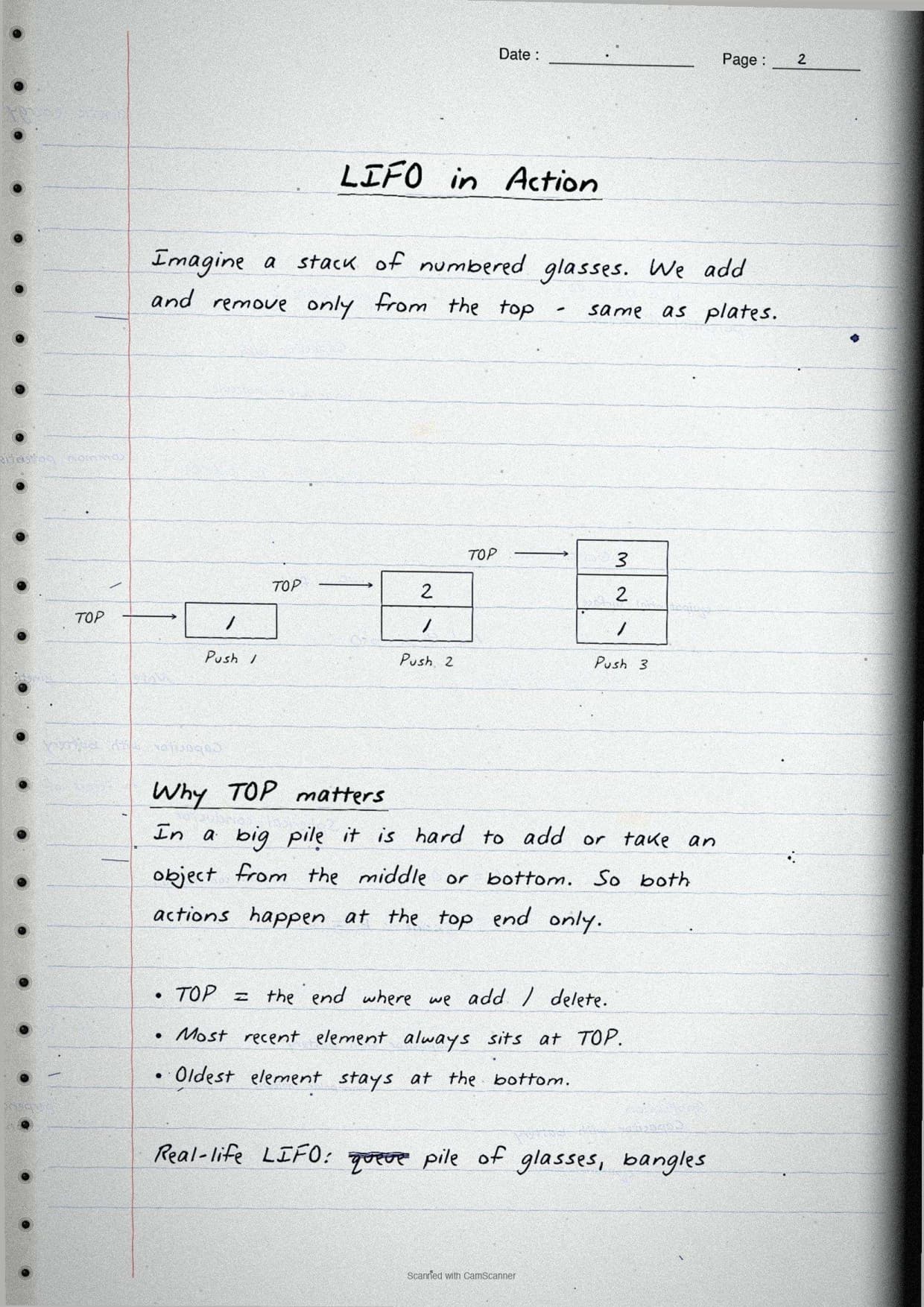
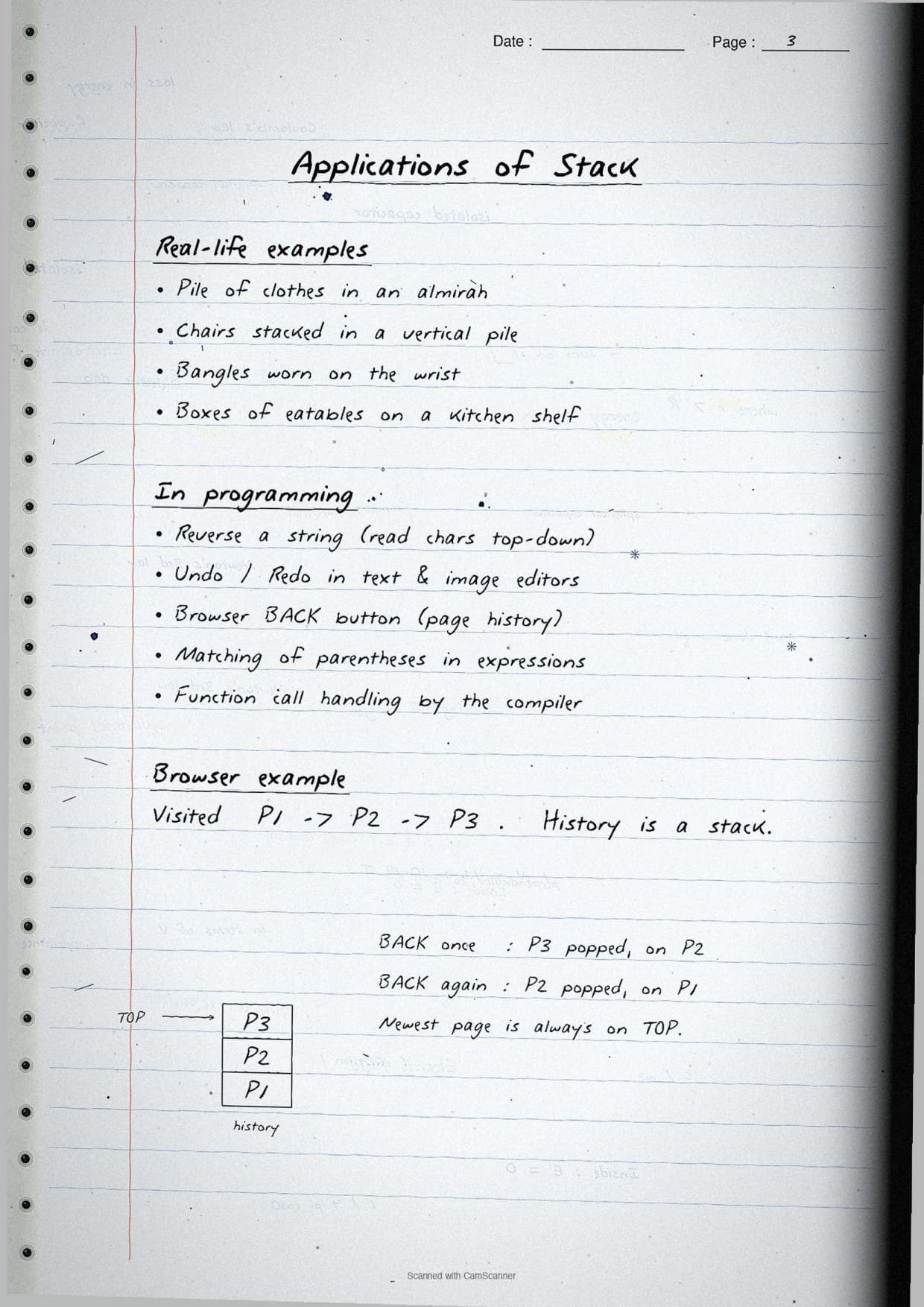
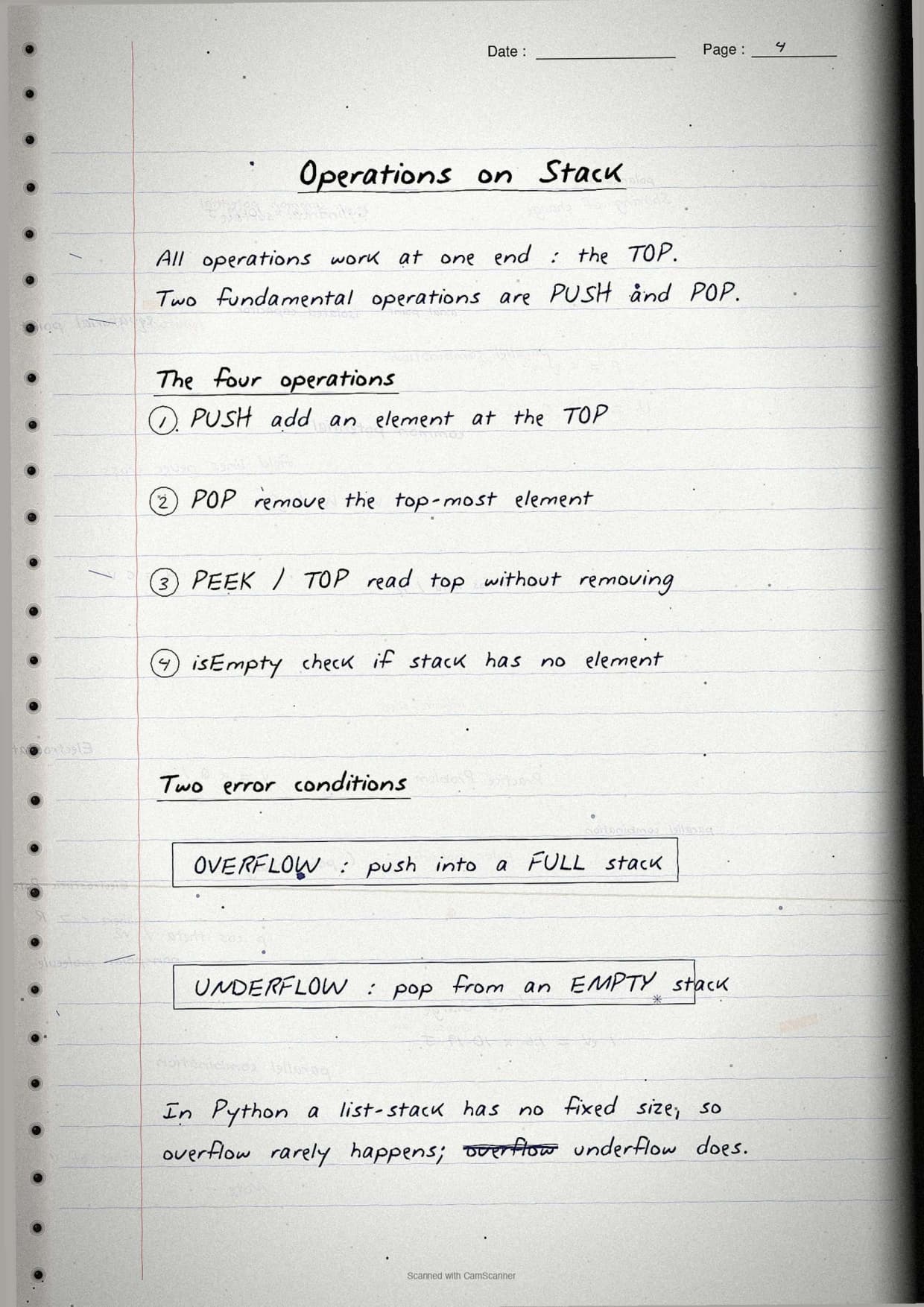
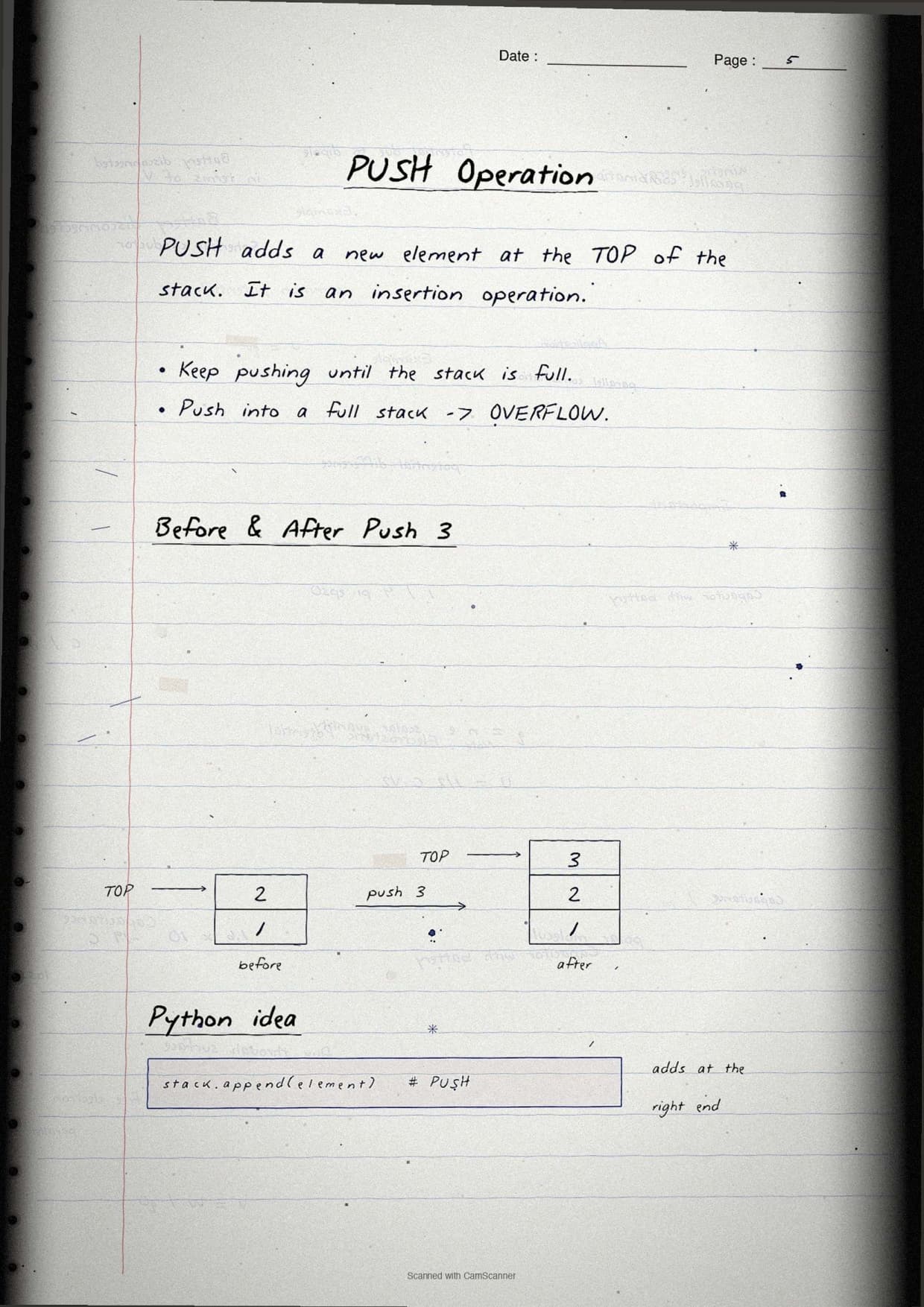
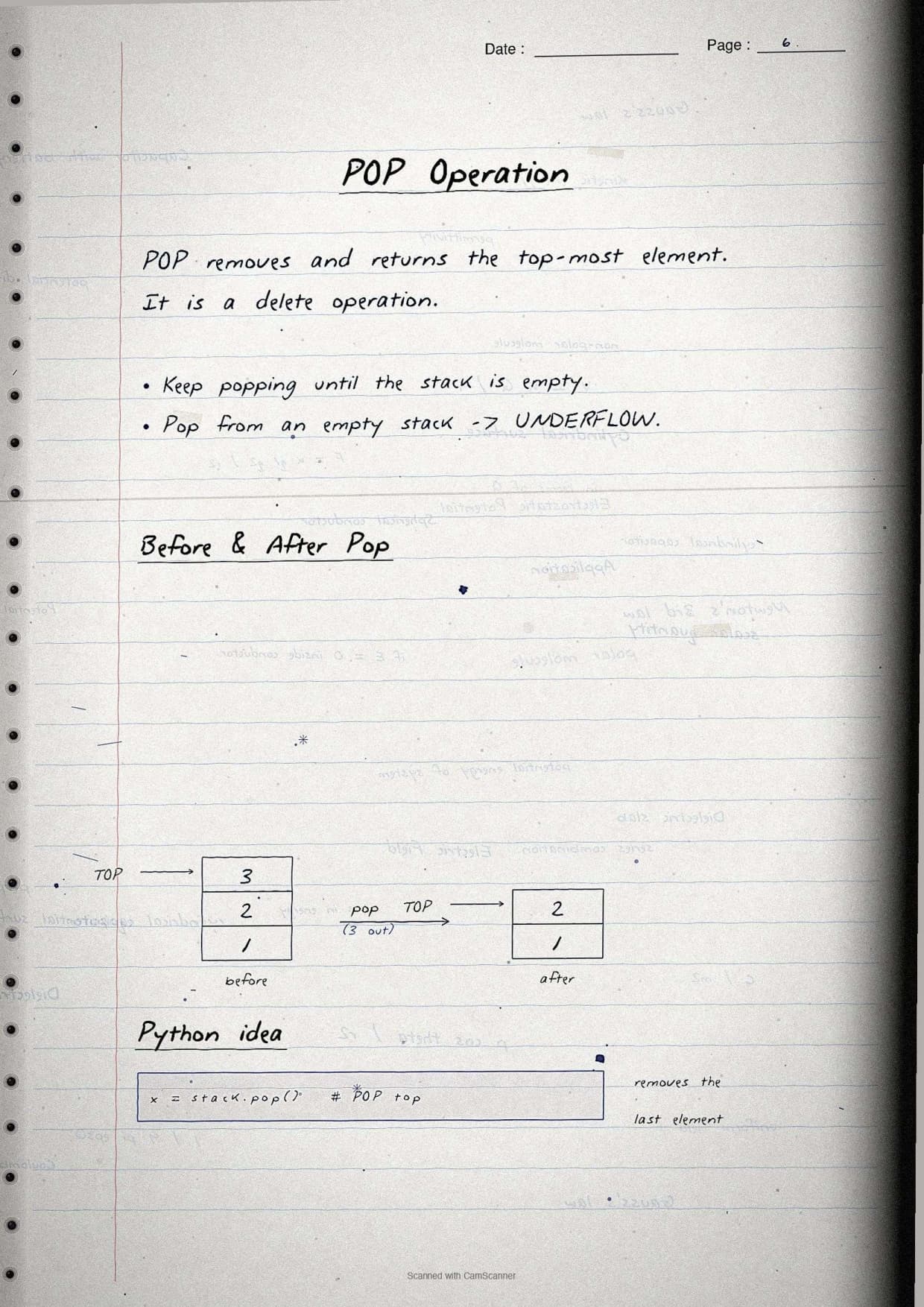
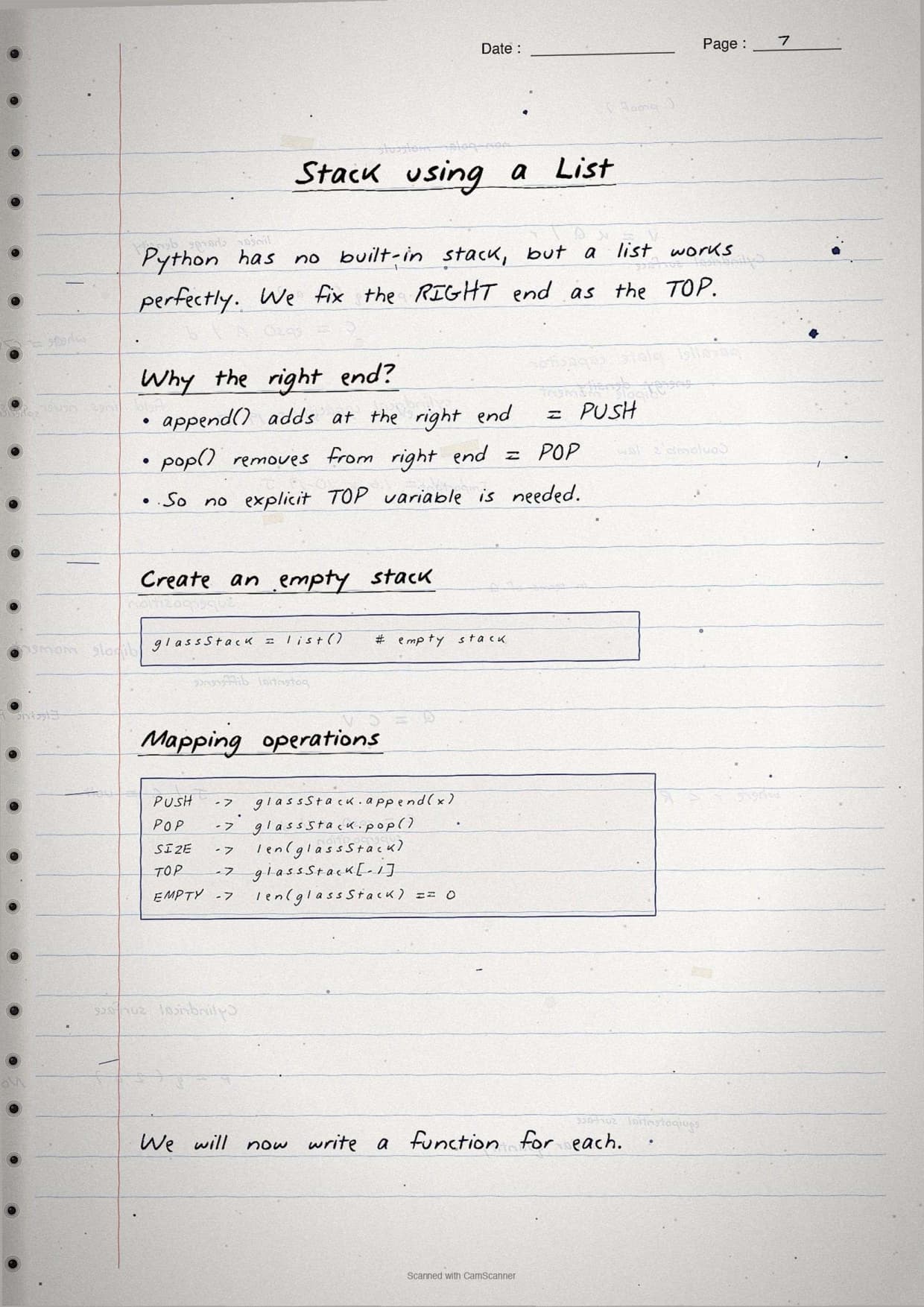
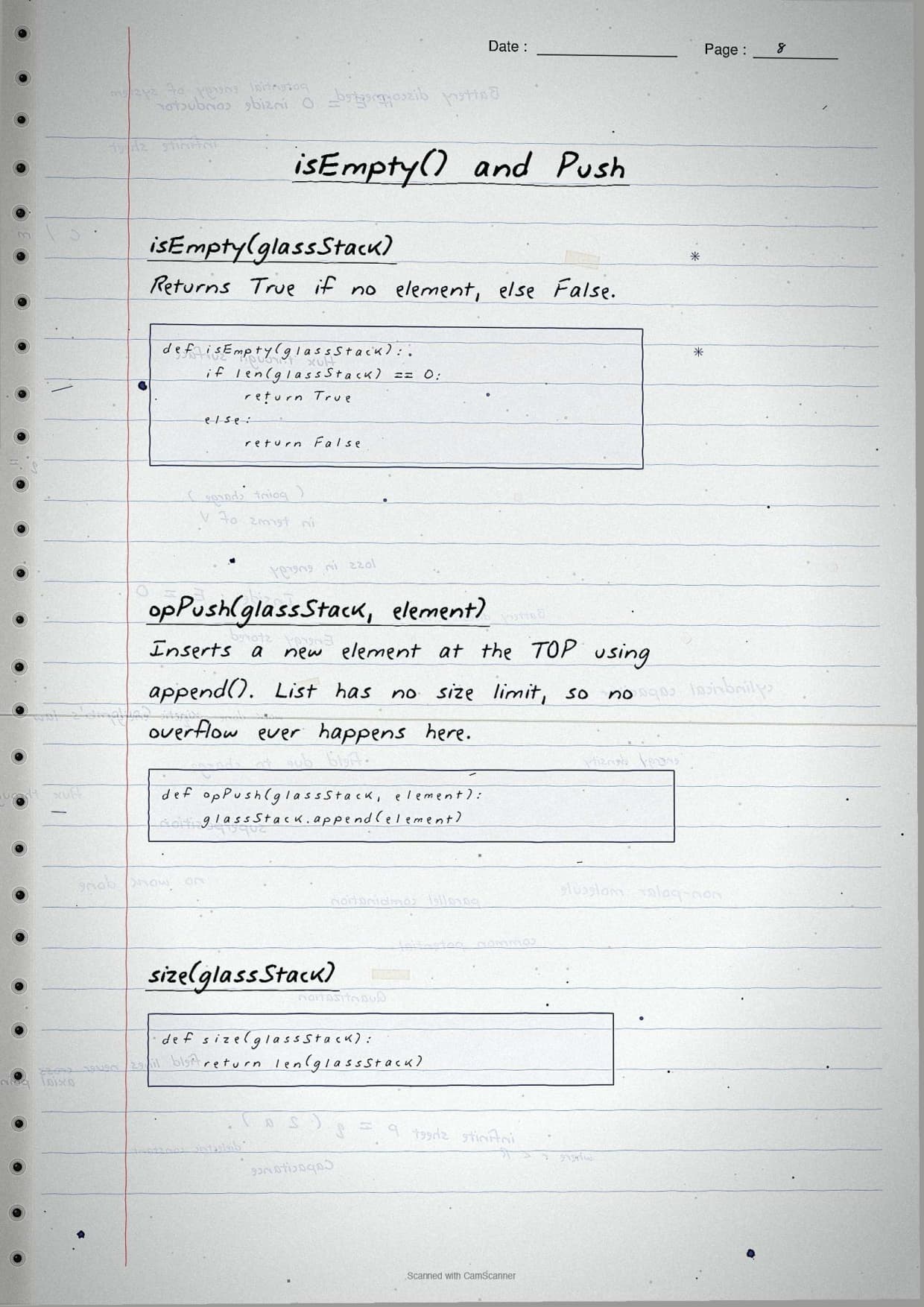
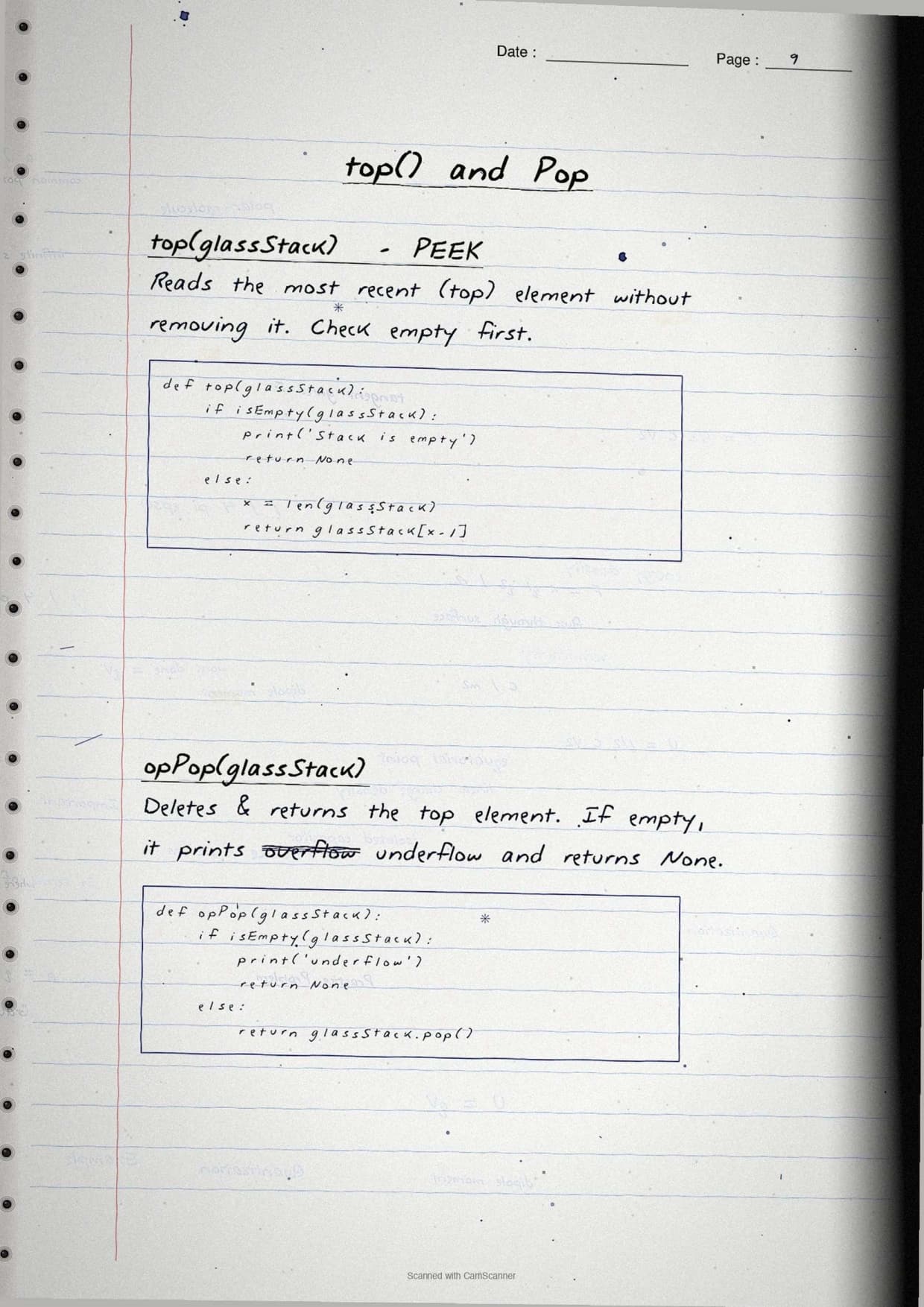
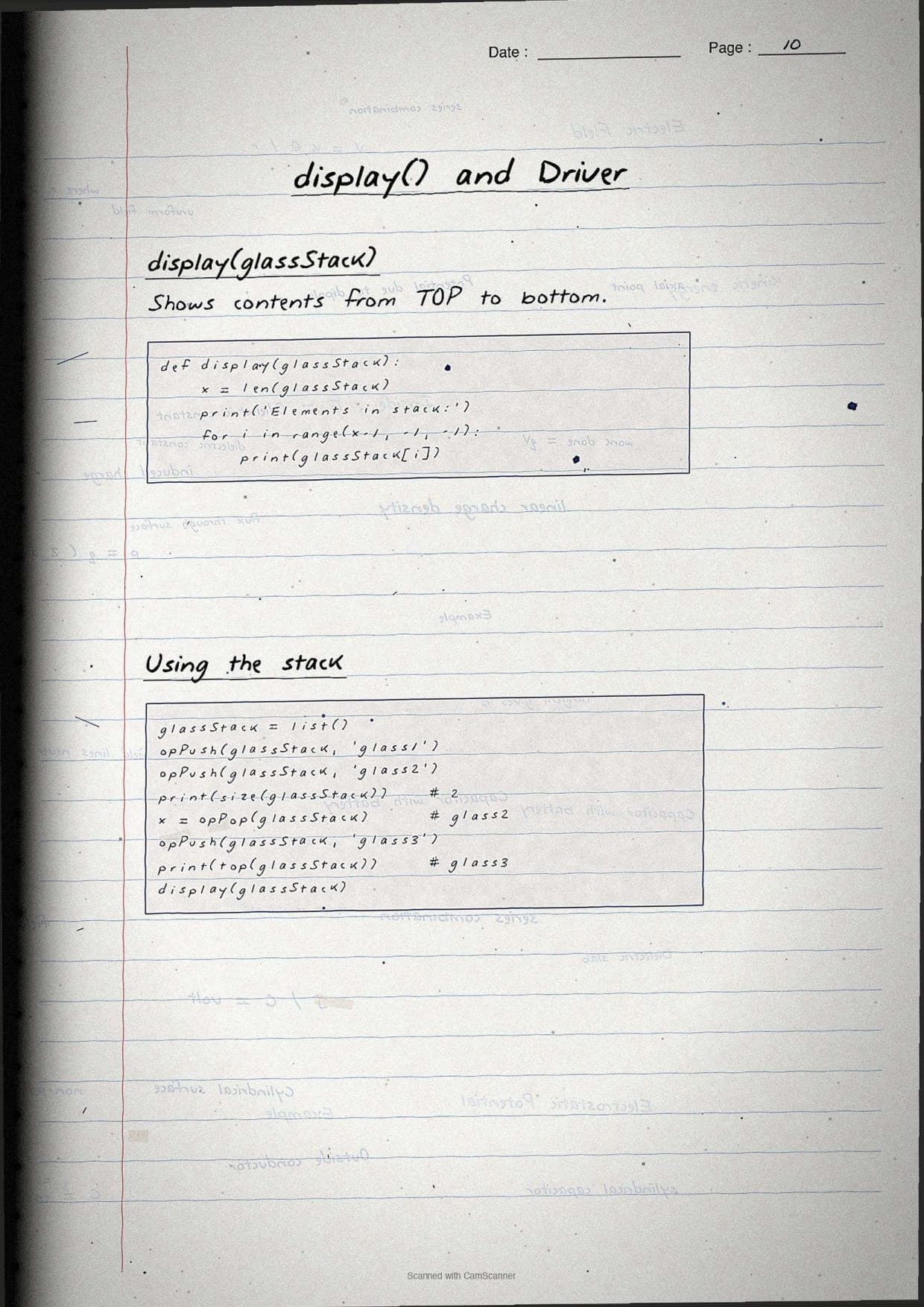
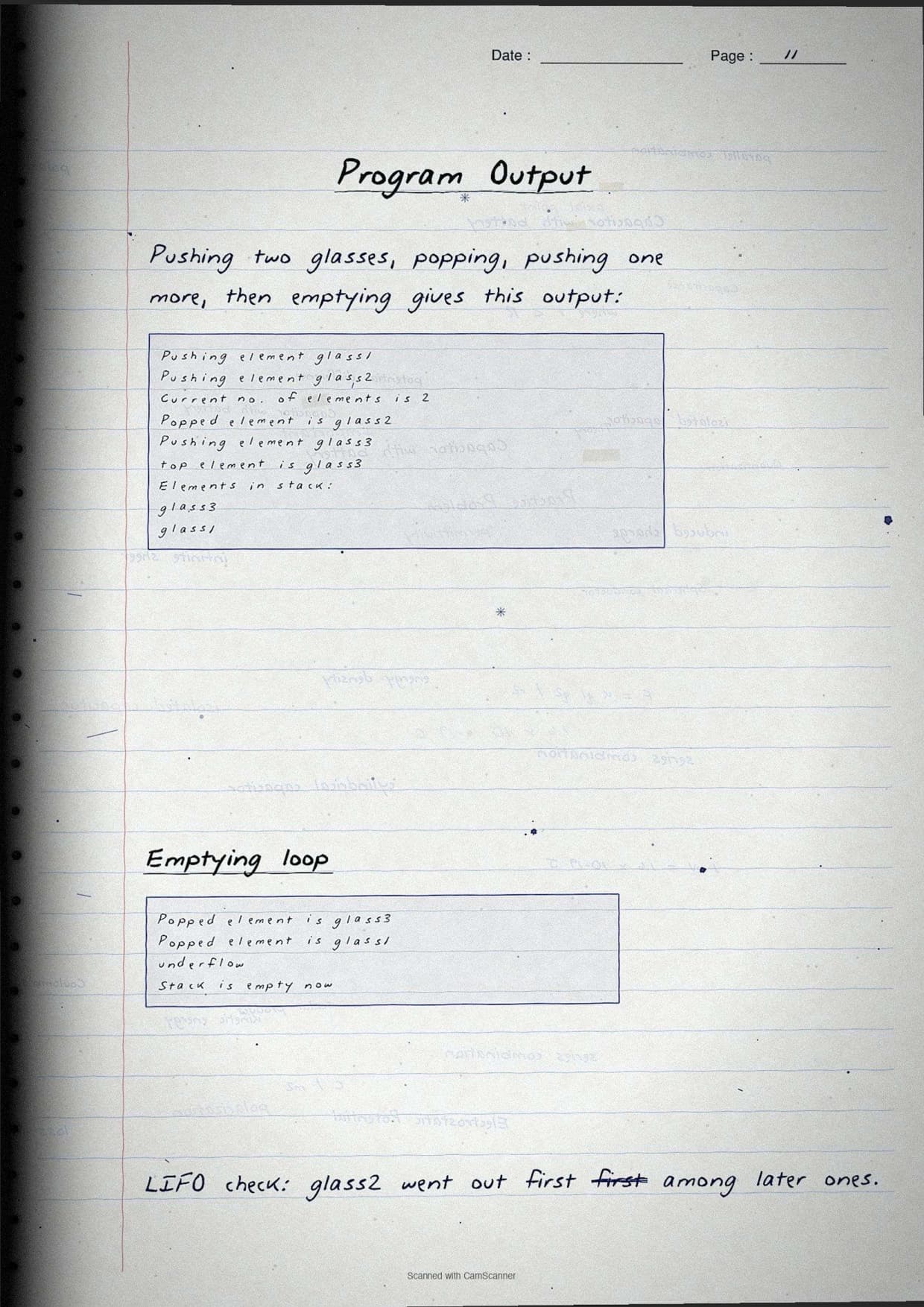
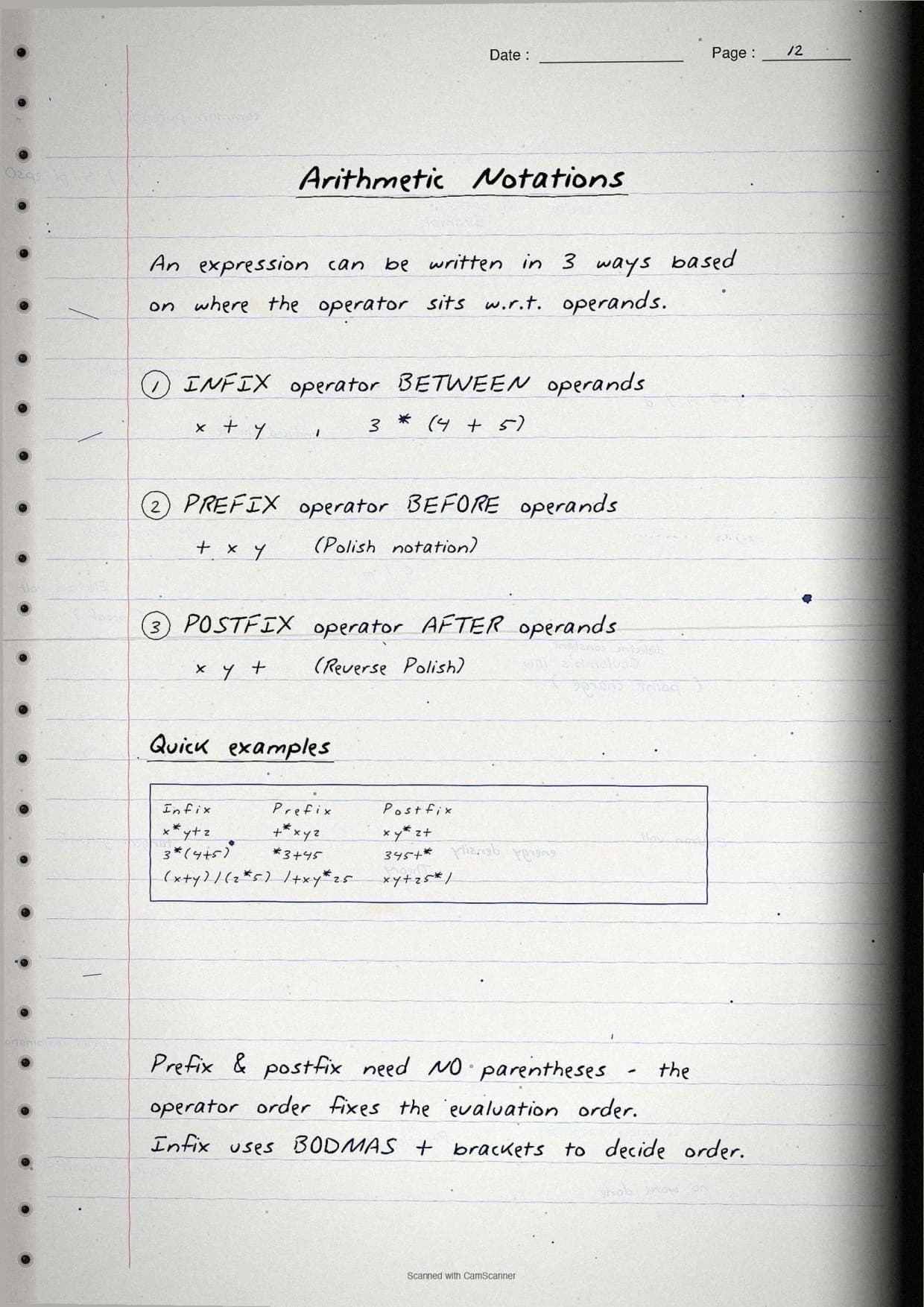
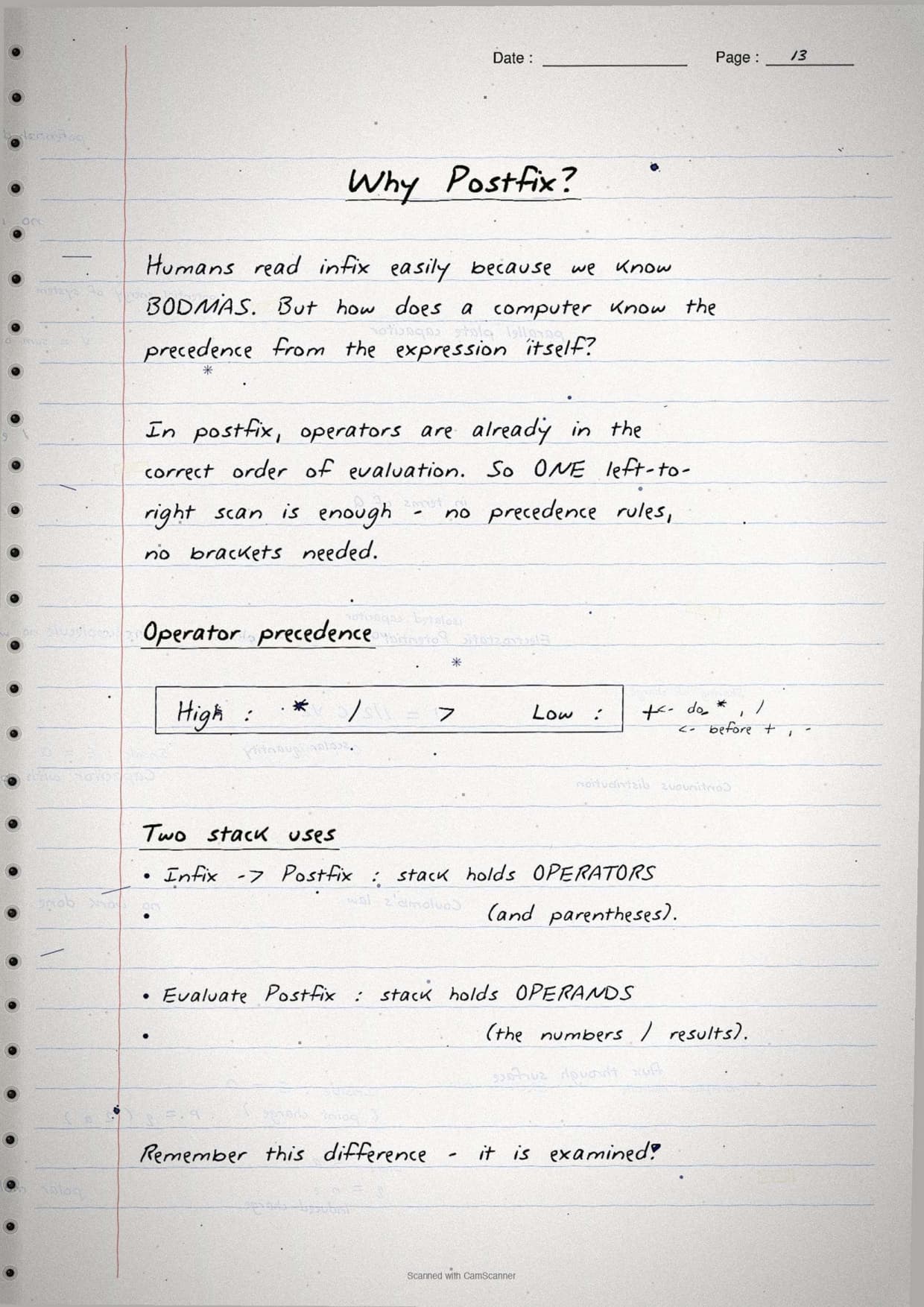
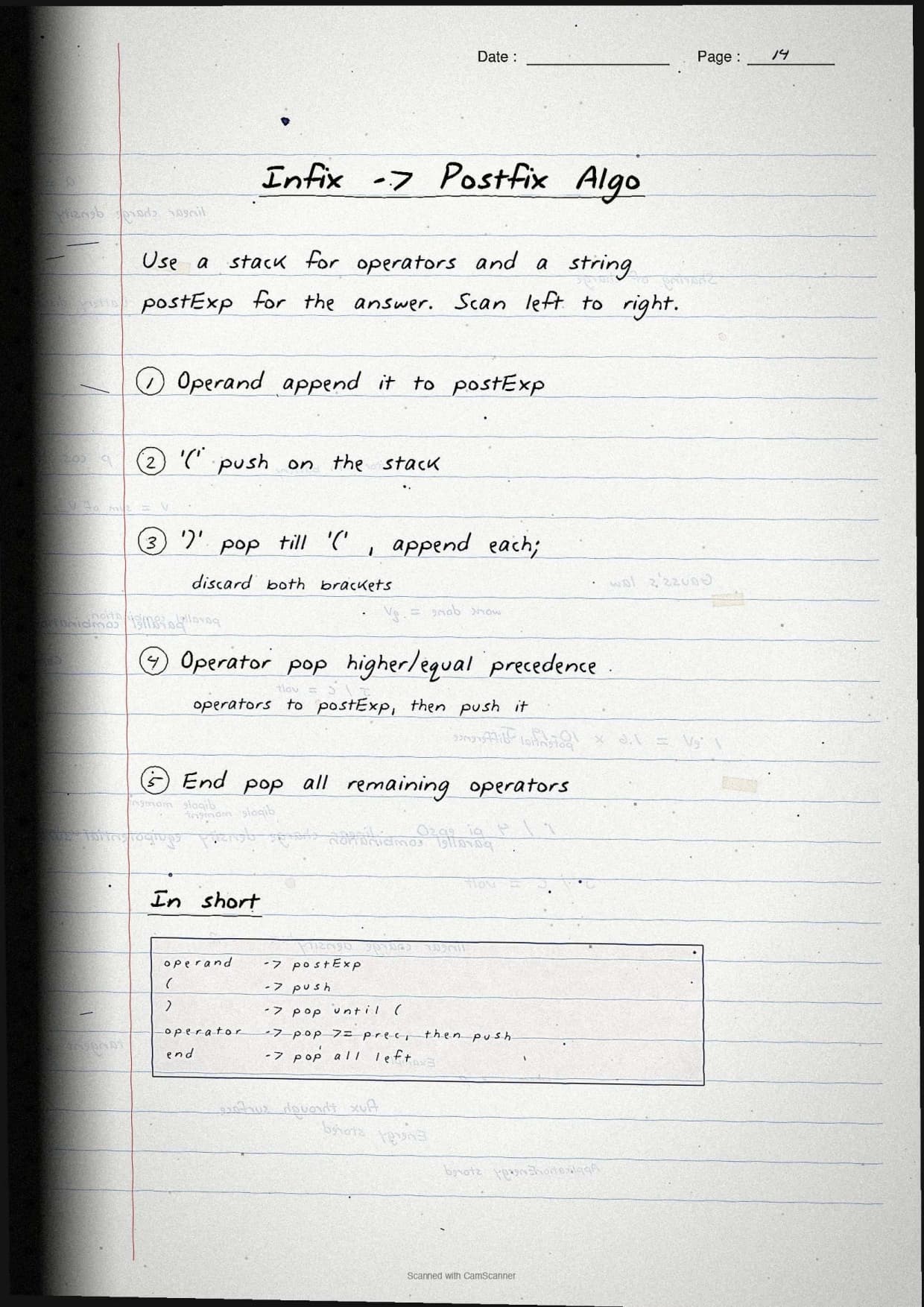
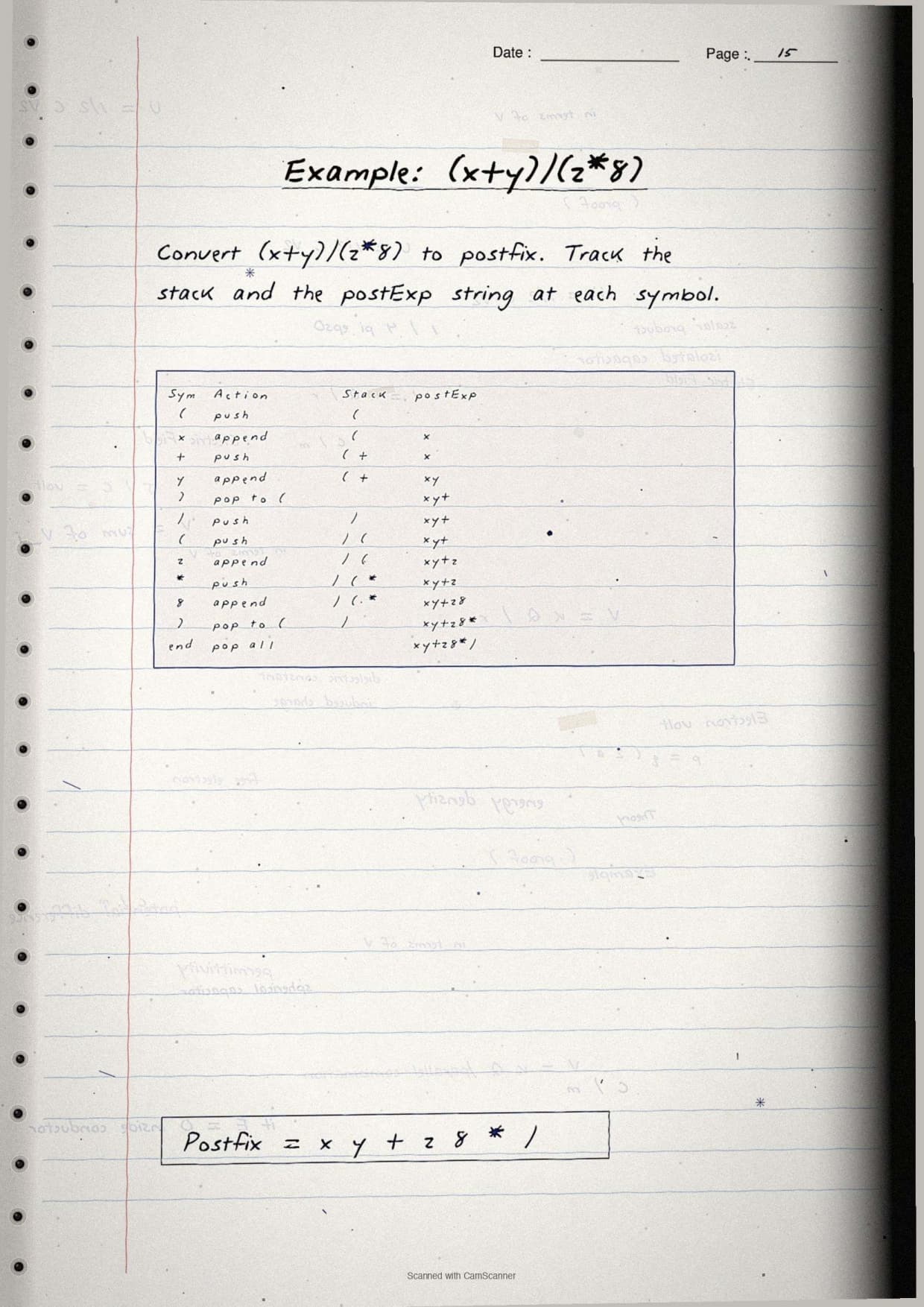
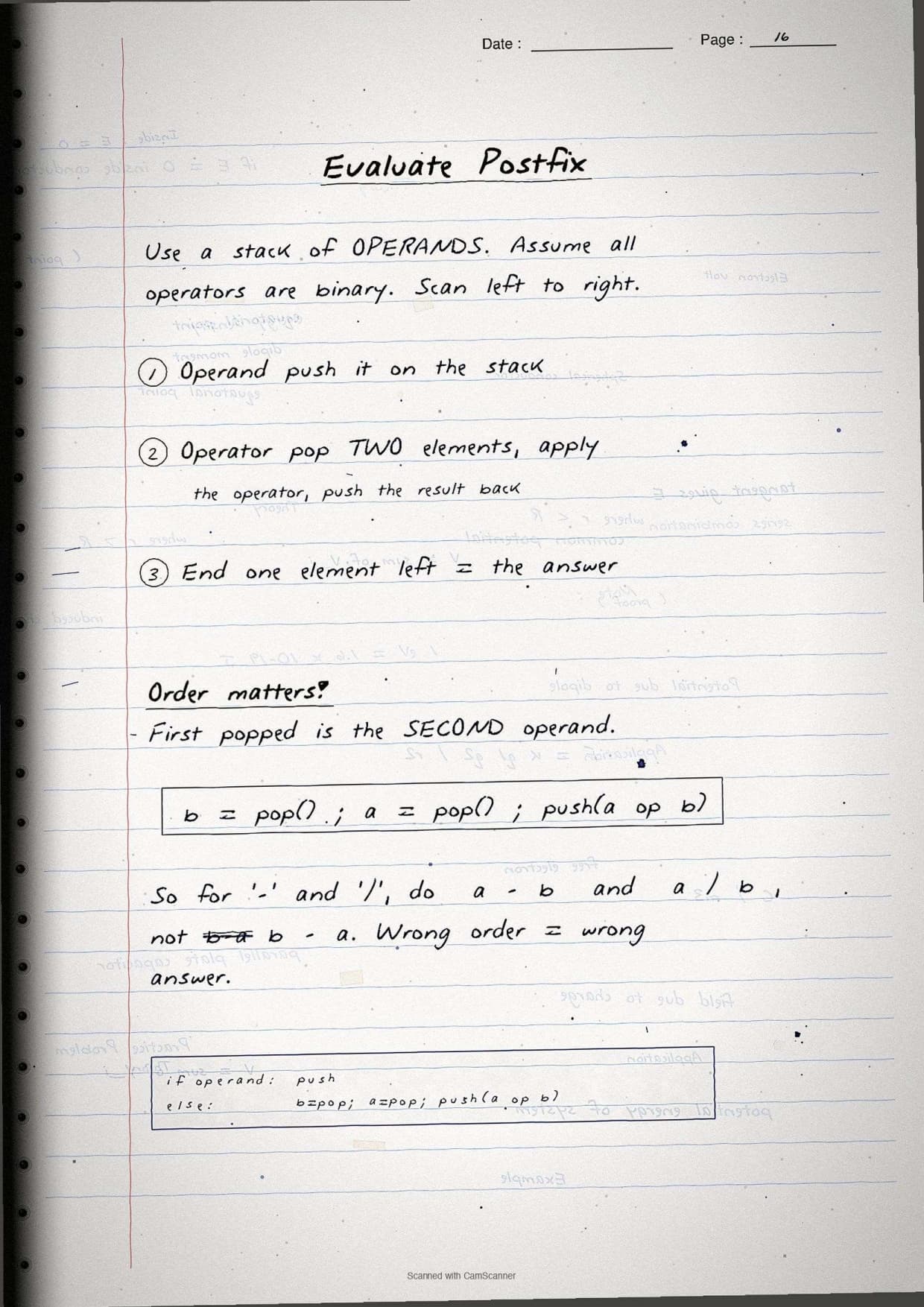
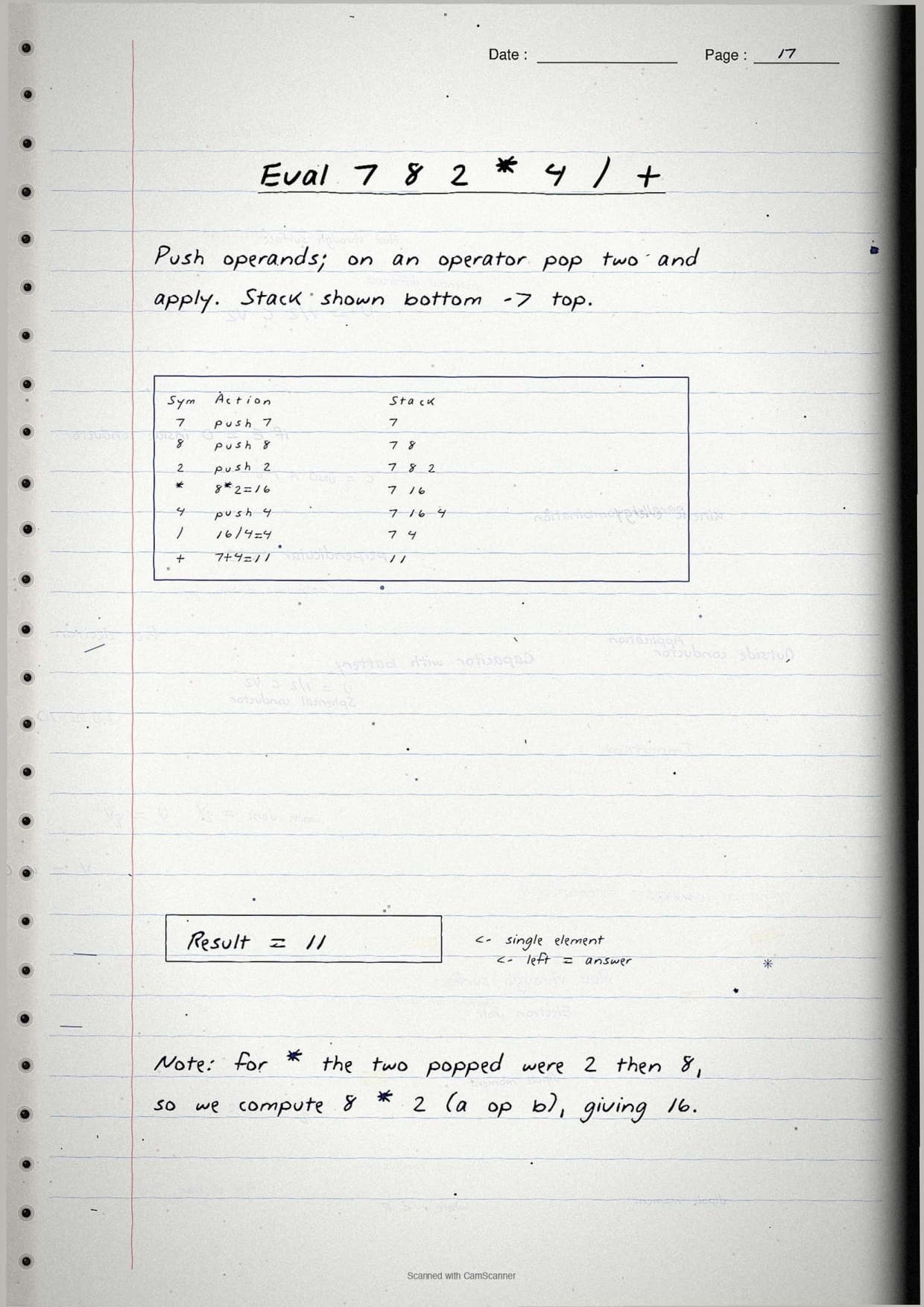
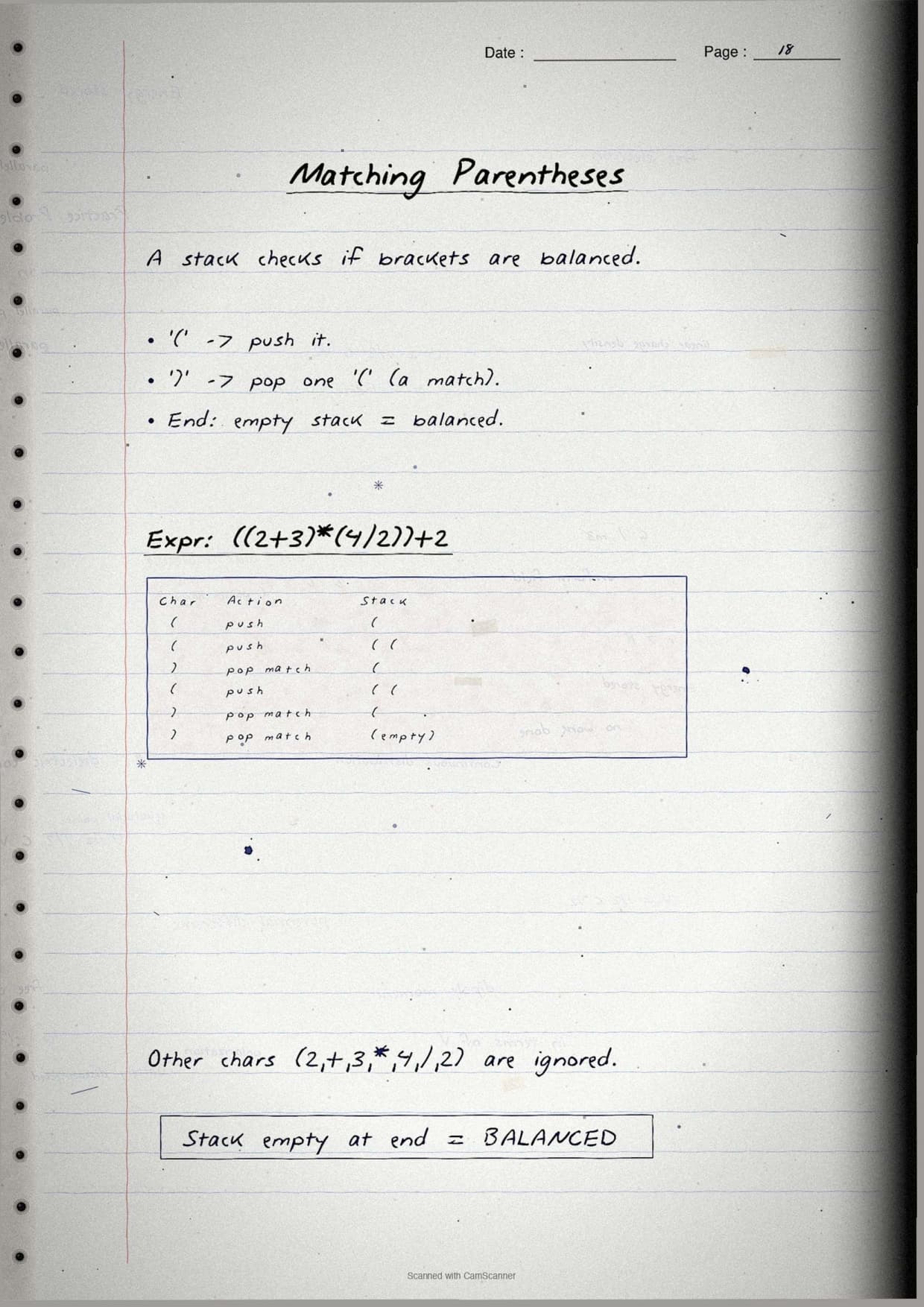
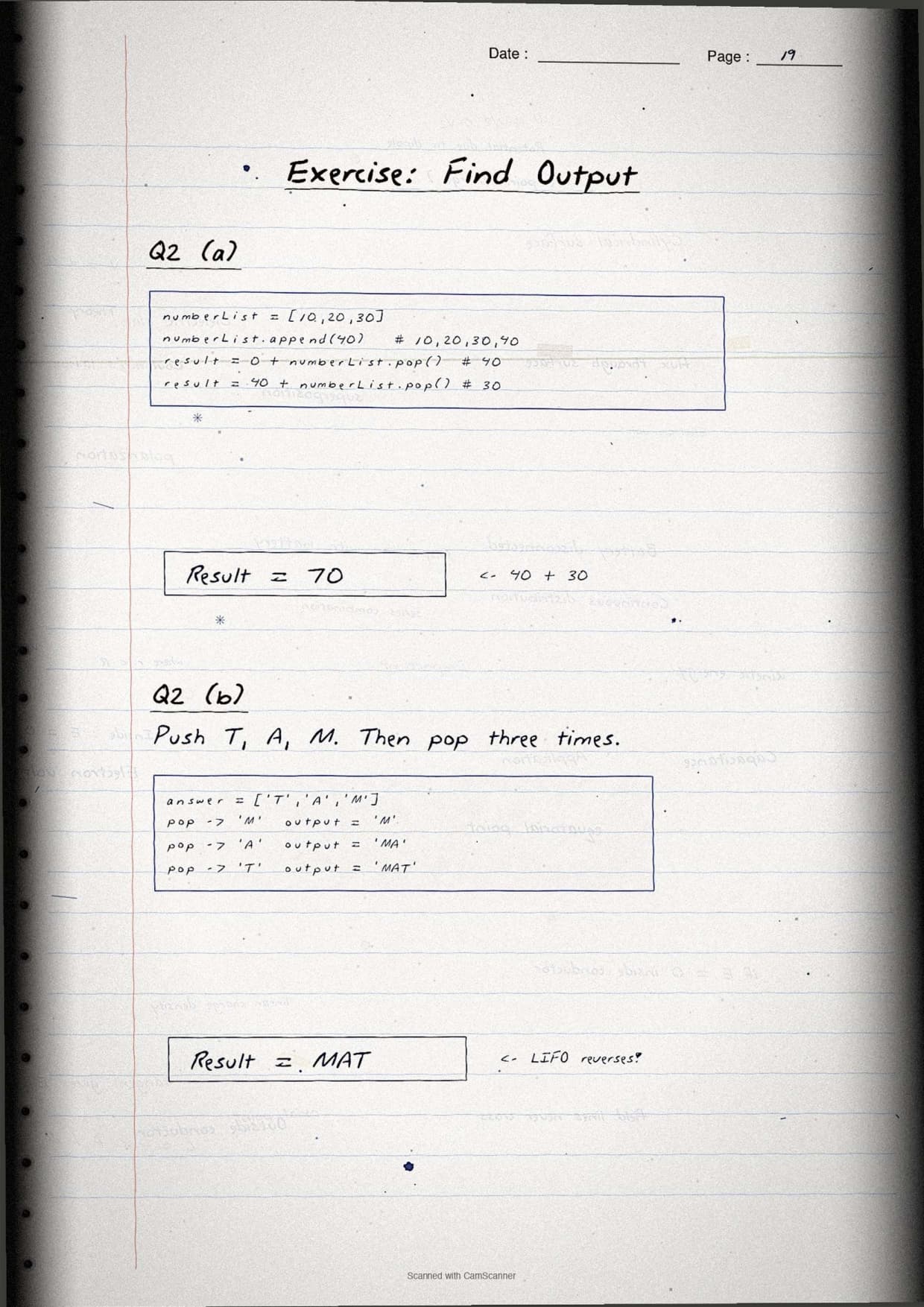
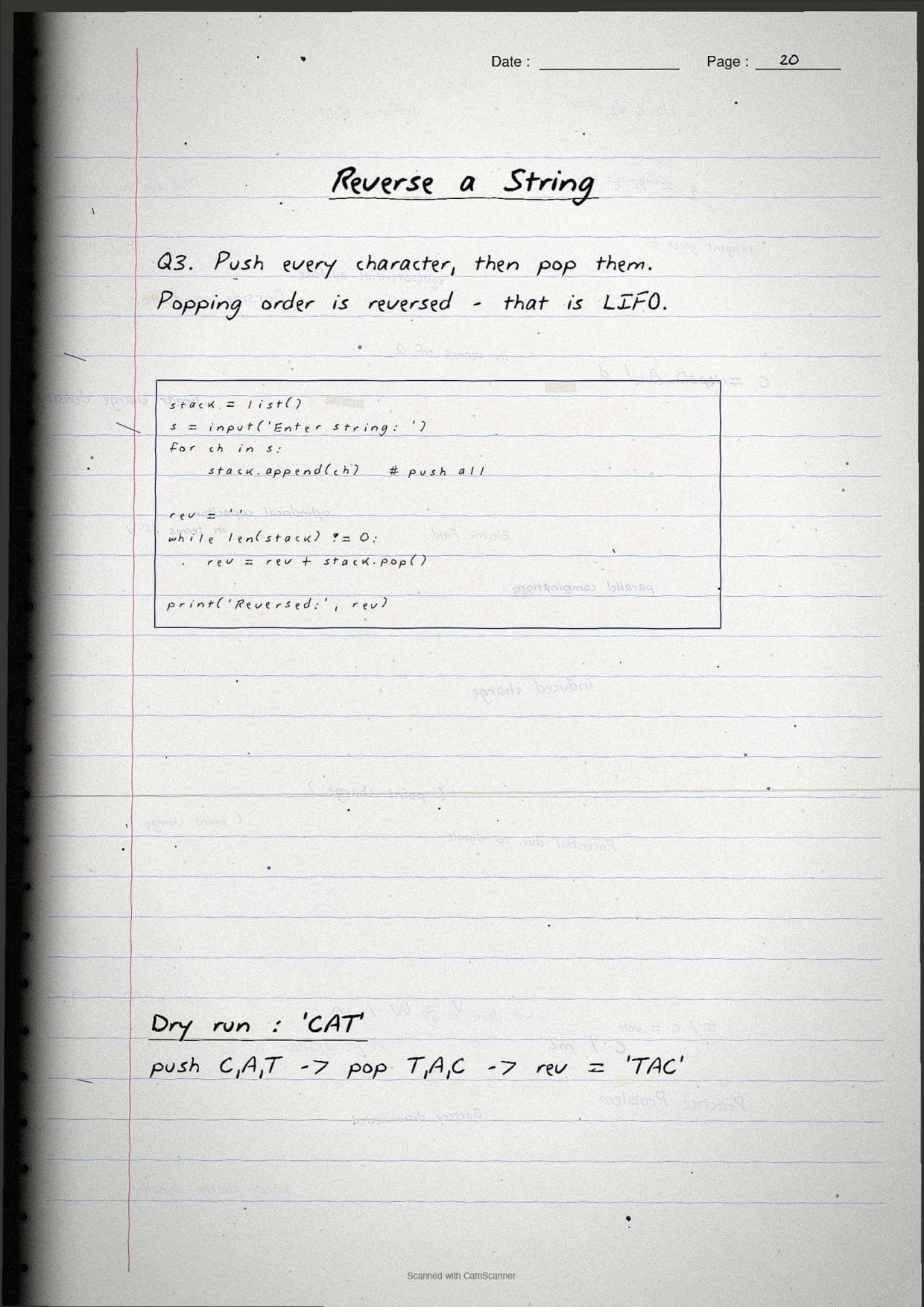
- Handwritten revision pages in ballpoint pen on ruled paper, covering all of CBSE Class 12 Computer Science Chapter 3 Stack.
- 5 to 7 marks weightage in the board paper, with the LIFO diagram, postfix evaluation trace and infix to postfix table all drawn out by hand.
- Pairs with the typed NCERT Solutions, typed Notes and the official NCERT Book PDF for the same chapter.
Each page of these stack class 12 handwritten notes is hand-copied by a Collegedunia Computer Science expert, mapped to the 2026-27 NCERT textbook, and cross-checked against the last five years of CBSE Class 12 Computer Science board papers.
Student Feedback: What 10,600 students told us about handwritten revision pages
71% of Class 12 students said handwritten notes feel faster to skim than typed PDFs in the final 48 hours before the board exam, and 4 out of 5 students reported that pen-on-paper stack traces stick in memory better than typed text when revising stack class 12 computer science.
Toppers reported that printing the postfix and infix trace pages and pasting them inside the revision notebook added 2 marks on average on the 3-mark conversion question, and the average student finished one full handwritten-notes pass in 16 minutes against 28 minutes for the typed Notes file.
Source: 2026-27 Class 12 Computer Science handwritten-notes feedback poll. Sample of 10,600 students from CBSE schools across 13 states, conducted before the 2026 boards.
What These Handwritten Notes Include
The stack class 12 computer science handwritten notes PDF is a handwritten revision file. Every page is hand-written in ballpoint pen on standard ruled paper, with hand-drawn boxes around key terms, a vertical stack diagram for the LIFO rule, and pen-touch corrections in a second ink colour where a definition was tightened. The file is built for last-mile revision, not first-time concept building.
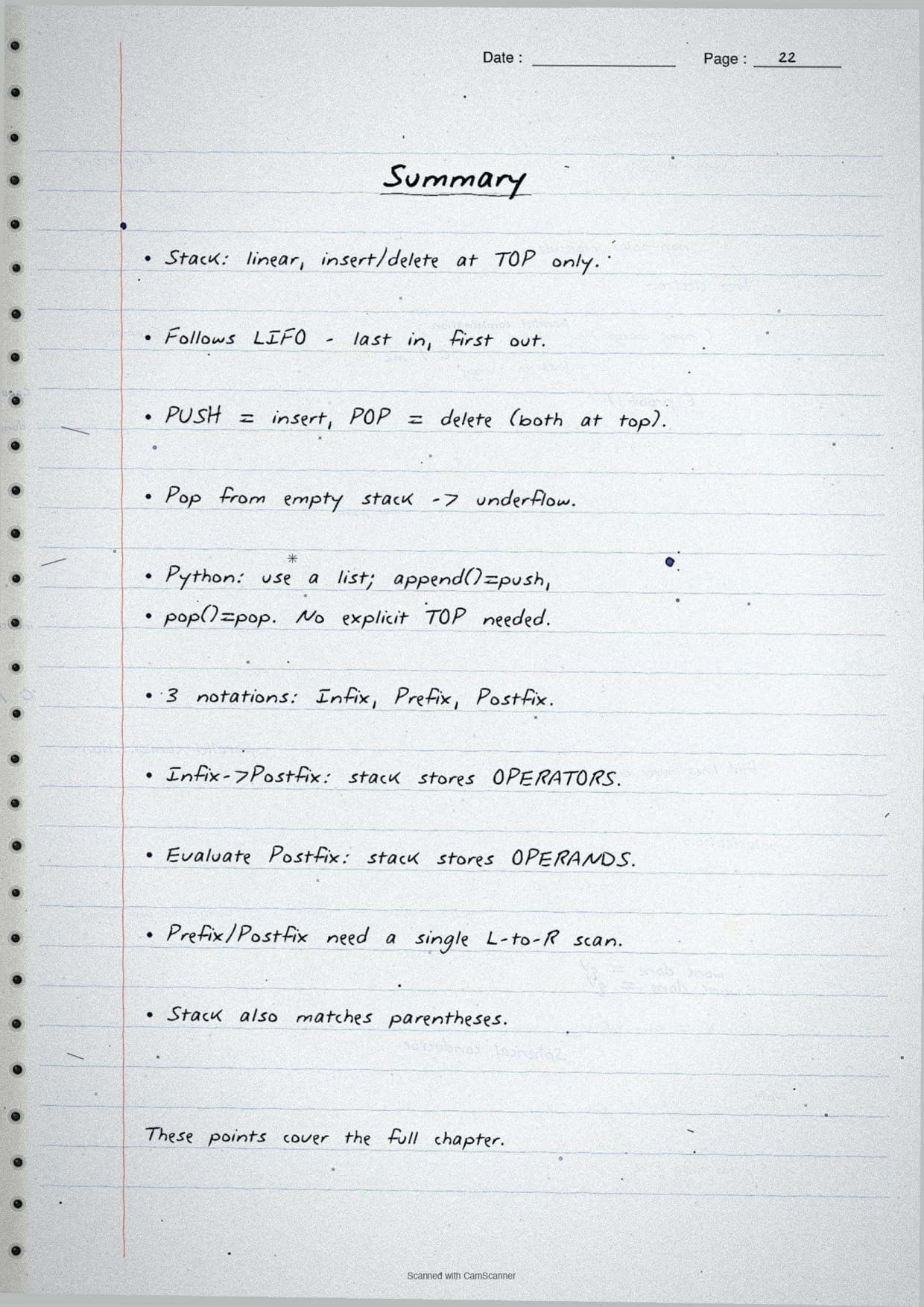
Specifically, the notebook captures every concept tested in CBSE Class 12 Computer Science Chapter 3: the definition of a stack, the LIFO rule, PUSH and POP, the overflow versus underflow pair, the Python list as a stack with append() and pop(), and the four applications: string reversal, parenthesis matching, postfix evaluation and infix to postfix conversion.
| Page | What the handwritten page covers | Approx revision time |
|---|---|---|
| Page 1 | Definition of a stack, the LIFO rule, and the vertical plate-stack diagram with the top marked. | 4 minutes |
| Page 2 | PUSH, POP, overflow and underflow boxes, with the operation that triggers each error. | 5 minutes |
| Page 3 | Python list as a stack: append() and pop() with the Q 2 dry-run trace drawn beside the code. | 5 minutes |
| Page 4 | String reversal and parenthesis matching, with the stack height drawn after every symbol. | 4 minutes |
| Page 5 | Postfix evaluation and the infix to postfix table, with the precedence rule boxed. | 5 minutes |
Every concept box in the handwritten file is drawn with a ruler, every key term is underlined, and the layout follows the natural flow of a student's own revision notebook. The PDF is the closest digital equivalent to borrowing a topper's notebook for a single revision sitting before the 2026-27 board paper.
Page-by-Page Look at the Stack Notes
Source: Magnet Brains on YouTube
To set expectations, here is what one page of these stack class 12 handwritten notes looks like when opened on a phone or printed on A4. The walkthrough below is for Page 2, the operations page, which carries the most-tested 1-mark content in the file.
- Heading in capitals at the top of the ruled page, underlined twice with a ruler: "PUSH, POP, OVERFLOW AND UNDERFLOW". The double-underline is the convention used across every handwritten notes file in this series.
- Four labelled boxes stacked vertically, each hand-drawn with a ruler: (1) PUSH, (2) POP, (3) Overflow, (4) Underflow. Each box names the Python method or the trigger condition in a smaller hand below the label.
- One-line gloss below each box: "PUSH adds at the top", "POP removes from the top", "overflow = PUSH on a full stack", "underflow = POP on an empty stack". This gloss is exactly what CBSE markers reward in the 1-mark definition question.
- Pen-touch correction in red ink: an arrow joining the overflow box to PUSH and the underflow box to POP, with the note "do not swap". This is the single most repeated board-paper trap.
- Cross-reference in the bottom-right corner: "see Page 1 for the LIFO diagram", pointing students back to the definition page.
The same writing conventions repeat across all five pages, so students who learn the layout of one page can scan the rest of the file in under 20 minutes. The handwritten PDF is fully self-contained, works offline, and downloads fast even on a slow connection.
LIFO, PUSH, POP, Overflow and Underflow
The operations page is the structural backbone of the Stack chapter, and the handwritten notebook captures it as a single comparison sheet. Every CBSE board paper since 2021 has asked at least one 1-mark or 2-mark question from this block, so the handwritten notes treat it as the highest-priority revision page in the file.
The LIFO Rule
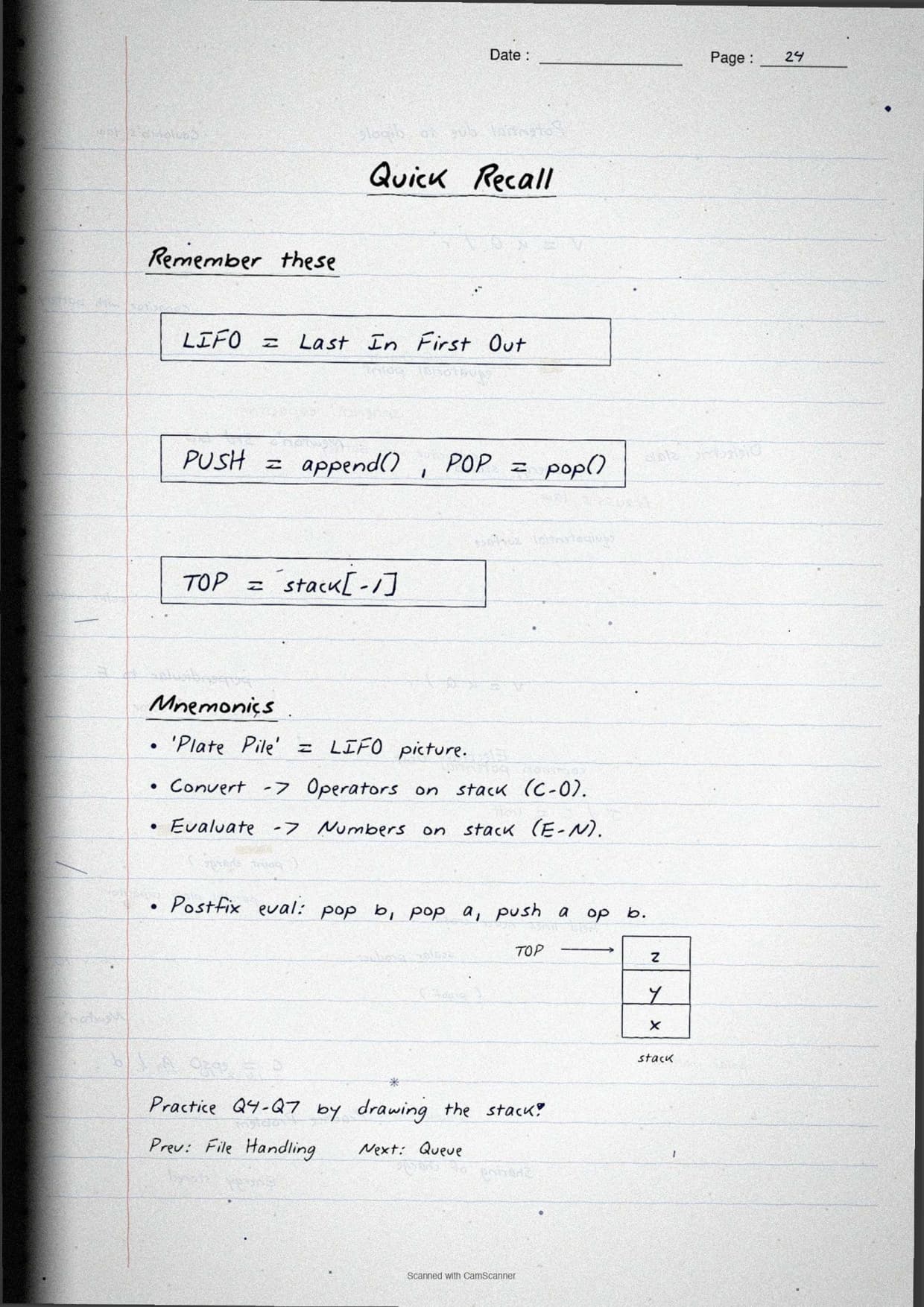
A stack is a linear data structure with one open end, called the top. You add and remove items only at the top, so the item added last is the item removed first. This is the LIFO rule: Last In, First Out. The handwritten notebook draws this as a vertical pile of plates with the top plate circled, which is the picture CBSE expects in the definition answer.
PUSH and POP
The two operations both work at the top. PUSH adds an item to the top; in Python it is stack.append(x). POP removes and returns the top item; in Python it is stack.pop(). The handwritten box shows each operation with a small upward arrow for PUSH and a downward arrow for POP, so the direction of each error is obvious at a glance.
Overflow and Underflow
These two words are the most repeated 1-mark trap. Overflow happens when you PUSH onto a full stack, so only PUSH can cause it. Underflow happens when you POP from an empty stack, so only POP can cause it. The notebook ties each error to its operation with a red arrow, which is the exact correction needed for Q 1(c) of the NCERT exercise, where pairing PUSH with underflow makes the statement false.
Important: Always tie the error to the operation that triggers it. PUSH adds upward, so a full stack overflows; POP removes downward, so an empty stack underflows. Swapping the two is the single most common reason students lose the 1-mark TRUE or FALSE part.
Stack with Python Lists in Handwritten Style
The NCERT chapter uses a Python list as a stack, and the handwritten notebook captures the two methods on Page 3 with the Q 2 dry run drawn beside the code. A list needs no extra setup: append(x) adds at the end, which acts as the top, and pop() removes and returns that same end, so the list is both the storage and the stack pointer.
stack = []
stack.append(10)     # PUSH 10  -> [10]
stack.append(20)     # PUSH 20  -> [10, 20]
top = stack.pop()    # POP      -> returns 20, list is [10]
empty = len(stack) == 0   # test for empty stack
The handwritten page draws the list state to the right of each line, which makes the LIFO order concrete. The notebook works the two parts of NCERT Q 2 the same way:
- Part (a): after
append(40)the list is[10,20,30,40]; the firstpop()returns 40 and the second returns 30, so result is 70. - Part (b): pushing 'T', 'A', 'M' then popping returns M, A, T, so the output builds up to MAT, showing how a stack reverses a sequence.
Postfix Evaluation and Infix to Postfix Conversion
Page 5 of the handwritten notes is where most students lose marks, so the notebook gives the expression questions the most space. Postfix evaluation and infix to postfix conversion both use a stack, but in different ways, so the page keeps their rules in separate boxes.
Postfix Evaluation
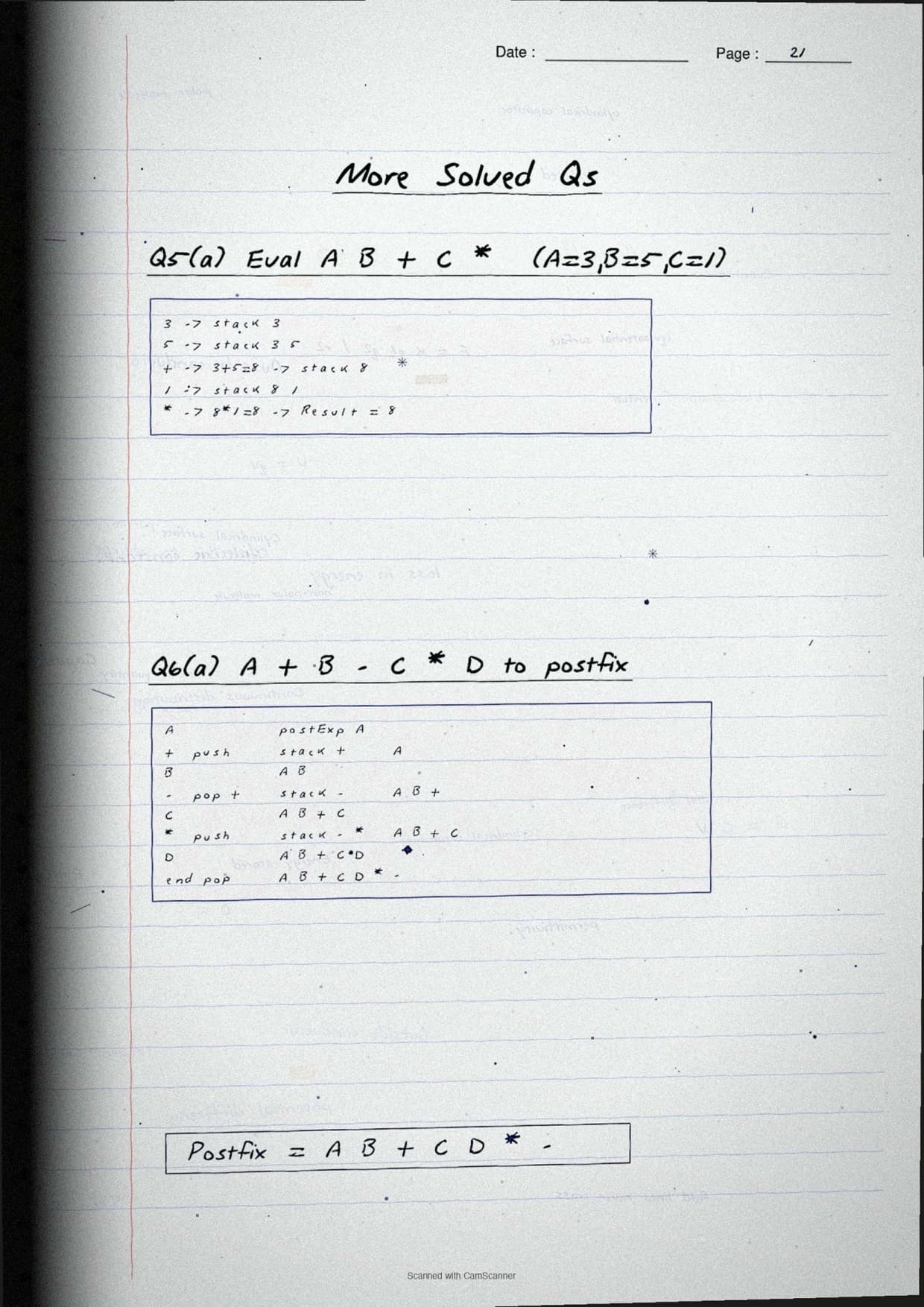
Scan left to right. PUSH each operand value. On each operator, POP the top two values, apply the operator, and PUSH the result. The value popped first is the right operand; the value popped second is the left operand. The single value left at the end is the answer. The handwritten page works the two NCERT Q 5 parts with A=3, B=5, C=1, D=4:
A B + C *gives 3+5=8, then 8×1, so the answer is 8.A B * C / D *gives 3×5=15, then 15÷1=15, then 15×4, so the answer is 60.- Operand order matters only for subtraction and division: compute second-popped operator first-popped.
Infix to Postfix Conversion
Keep an operator stack and an output string. An operand goes straight to the output. A ( is pushed. A ) pops to the output until the matching ( is removed. An operator pops every operator of higher or equal precedence first, then pushes itself, where * and / outrank + and -. The notebook draws the stack and output columns side by side, then records the two NCERT Q 6 results:
| Infix expression | Postfix result | Key step in the notebook |
|---|---|---|
A + B - C * D | AB+CD*- | Equal precedence: the minus pops the plus first |
A * (( C + D)/E) | ACD+E/* | Brackets steer the stack and never reach the output |
( or ) shows up in the output string, a pop step was missed.
Common Mistakes Highlighted in the Notes
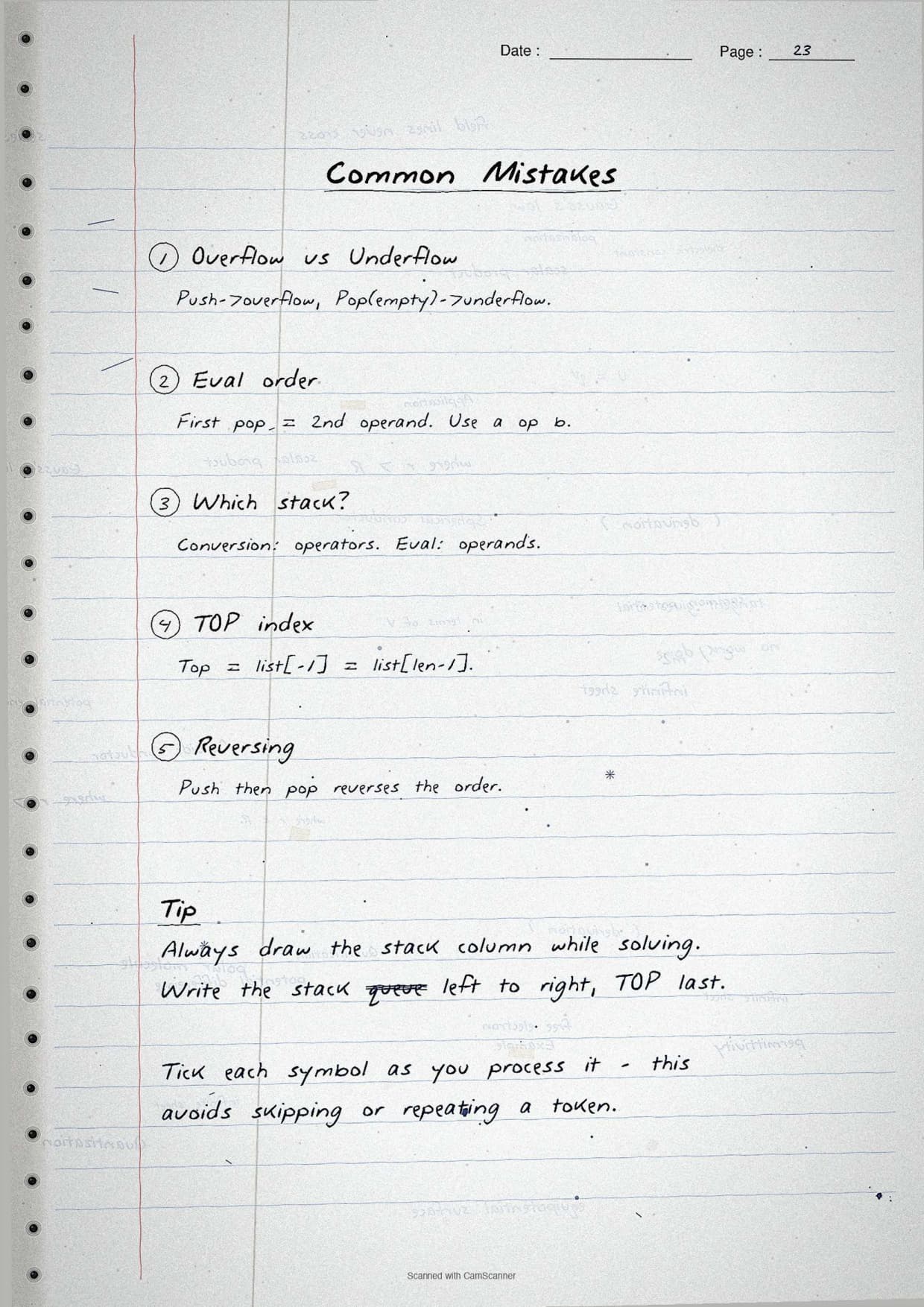
The five repeat-offender mistakes CBSE examiners flag each year on stack class 12 computer science answers. Each one appears as a margin-callout in the handwritten file, written in a second ink colour so students see the warning the first time they hit the relevant concept.
- Swapping overflow and underflow. PUSH causes overflow, POP causes underflow. Q 1(c) is false only because it pairs PUSH with underflow.
- Adding the wrong two values in a pop trace.
pop()always returns the current top. In Q 2(a) the answer is 70, not 30 or 50. - Reversing with a counter loop. Reading
stack[i]from the front keeps the original order. You must take from the top withpop(). - Wrong operand order in division. For
C /compute left divided by right, that is 15 divided by 1, not 1 divided by 15. - Copying brackets into the postfix output. Parentheses only steer the stack and must vanish from the final string.
Each mistake is paired with a one-line memory hook in the margin of the handwritten file. For example, the overflow callout reads "PUSH fills, POP empties", which is the most-quoted hook in this notebook and the fastest way to lock the Q 1 answer.
How to Use Handwritten Notes for Quick Revision
These stack class 12 handwritten notes are designed for three specific revision windows. Used in order, the three windows cover the full revision arc from one week before the board paper down to the final 30 minutes outside the exam hall.
The 16-minute first pass (one week before the boards)
Open the PDF on a phone or print it on A4. Read every page top to bottom once, highlighting any concept box you cannot recall from memory. Do not write long answers on this pass. The aim is a mental map of the five pages and a short list of items to drill next.
The 10-minute targeted pass (the night before)
Open only the pages with highlighted boxes from the first pass. Re-read those boxes, then close the file and write each definition or trace out once from memory. If a trace does not come back in under 30 seconds, return to the box and read it twice more. This is the highest-yield revision step in the file.
The 6-minute final pass (30 minutes before the exam)
Open Page 2 (the operations boxes) and Page 5 (the postfix and infix table) only. Trace each arrow with a finger or pen tip. The aim is muscle-memory for the overflow versus underflow pair and the precedence rule, not new learning. Students who skip this pass typically lose 1 mark on the overflow or underflow part.
Pairing with Typed Notes, Solutions and the NCERT Book
The handwritten notes file is not a substitute for the typed Notes PDF or the NCERT chapter; it is a last-mile compression layer that sits at the top of a four-resource stack. Used correctly, the four files form a single revision pipeline for the 2026-27 board cycle.
Handwritten Notes plus NCERT Solutions
The Solutions PDF works each NCERT exercise question with concept, code and final answer on separate lines, plus an Expert Solution alternative. The handwritten notes carry only the concept boxes and traces. Use the handwritten file to lock in concept recall, then move to the Solutions PDF for answer-writing drill. The matching NCERT Solutions for Class 12 Computer Science Chapter 3 Stack covers all 7 questions with the same traces drawn out in full.
Handwritten Notes plus Typed Notes
The typed Class 12 Computer Science Chapter 3 Notes file carries deeper prose around each operation and application (algorithms, edge cases, worked examples). The handwritten notes compress that prose down to the boxes and traces alone. Read the typed Notes first to build the concept, then collapse to the handwritten file for repeat revision.
Handwritten Notes plus NCERT Book PDF
The official NCERT Book PDF for Class 12 Computer Science Chapter 3 is the source-of-truth textbook with NCERT Algorithm 3.1 and 3.2. The handwritten notes are a revision summary of that textbook, not a replacement. Students preparing the CBSE Class 12 Computer Science board paper for 2026-27 should open the NCERT chapter at least once before revising from the handwritten file.
Previous Year Question Trends
The CBSE Class 12 Computer Science board paper has carried a stable 5 to 7 marks from the Stack chapter over the last five years, split across output, trace and program questions. The handwritten notebook is structured around exactly this pattern, so each year maps to a specific page to revise.
| Year | Question asked | Marks | Notes page to revise |
|---|---|---|---|
| 2025 | Find the output of a list-as-stack program; define overflow | 2 + 1 | Page 3 + Page 2 |
| 2024 | Write a program to PUSH and POP elements; evaluate a postfix expression | 3 + 3 | Page 3 + Page 5 |
| 2023 | Convert an infix expression to postfix showing the stack | 3 | Page 5 |
| 2022 | State the LIFO rule; reverse a string using a stack | 1 + 3 | Page 1 + Page 4 |
| 2021 | Difference between overflow and underflow; postfix evaluation | 2 + 3 | Page 2 + Page 5 |
Across these five years, the trace question has rotated between postfix evaluation and infix to postfix conversion on a roughly equal cycle, which is why both boxes on Page 5 of the handwritten file must be revised together, not selectively.
PDF Format, Printing and Languages
The handwritten notes PDF is sized at 150 DPI for both A4 printing and mobile screen reading. The file is multi-page, prints cleanly on a black-and-white laser or inkjet printer, and stays small enough for a quick download.
| Format | Use case | File size |
|---|---|---|
| A4 print (recommended) | Paste the trace pages inside a physical revision notebook for last-mile revision. | Compact |
| Mobile PDF | Scroll on a phone in the 30 minutes before the exam. | Same file |
| Tablet annotation | Open in a PDF annotation app and add personal margin notes. | Same file |
The current PDF is in English-medium only, matching the NCERT Computer Science textbook for Class 12. The file is aligned to the unchanged 2026-27 syllabus and will stay on the same URL for the current board cycle.
Other Resources for Class 12 Computer Science Chapter 3 Stack
Pair these handwritten notes with the matching NCERT Solutions, typed Notes and the official NCERT Book chapter. The cross-resource table below links to every Collegedunia file for Class 12 Computer Science Chapter 3 Stack.
| Resource | What it covers | Open |
|---|---|---|
| Handwritten Notes | Handwritten ballpoint-on-ruled-paper revision pages for last-mile board exam prep. | You are here |
| NCERT Solutions | Step-by-step answers to all 7 NCERT exercise questions with Expert Solution alternatives. | Class 12 Computer Science Chapter 3 NCERT Solutions |
| Notes | Concept-first typed revision notes on LIFO, PUSH and POP, and the four stack applications. | Class 12 Computer Science Chapter 3 Notes |
| NCERT Book PDF | Official NCERT Computer Science Chapter 3 Stack textbook in PDF form. | Class 12 Computer Science Chapter 3 NCERT Book PDF |
All Chapters Handwritten Notes for Class 12 Computer Science
Related Links: Use the table below to open the handwritten notes for the other chapters of Class 12 Computer Science. Every chapter ships with the same handwritten-notebook structure, concept boxes and margin-callout common mistakes.
| Chapter | Topic | Handwritten Notes link |
|---|---|---|
| Chapter 1 | Exception Handling in Python | Exception Handling in Python Handwritten Notes |
| Chapter 2 | File Handling in Python | File Handling in Python Handwritten Notes |
| Chapter 3 | Stack | You are here |
| Chapter 4 | Queue | Queue Handwritten Notes |
| Chapter 5 | Sorting | Sorting Handwritten Notes |
| Chapter 6 | Searching | Searching Handwritten Notes |
| Chapter 7 | Understanding Data | Understanding Data Handwritten Notes |
| Chapter 8 | Database Concepts | Database Concepts Handwritten Notes |
| Chapter 9 | Structured Query Language (SQL) | Structured Query Language (SQL) Handwritten Notes |
| Chapter 10 | Computer Networks | Computer Networks Handwritten Notes |
| Chapter 11 | Data Communication | Data Communication Handwritten Notes |
| Chapter 12 | Security Aspects | Security Aspects Handwritten Notes |
Stack Class 12 Computer Science Handwritten Notes FAQs
Ques. What are these stack class 12 computer science handwritten notes meant to be used for?
Ans. The stack class 12 computer science handwritten notes are a handwritten-notebook revision file: they compress the full NCERT Chapter 3 Stack into a handful of ballpoint-pen-on-ruled-paper concept boxes, dry-run traces and margin-callout common mistakes. Students typically use the file for last-mile revision in the 24 hours before the board paper, paired with the typed Notes PDF for concept building and the NCERT Solutions PDF for answer-writing drill. The handwritten file is the closest digital equivalent to borrowing a topper's notebook for one revision sitting before the 2026-27 boards.
Ques. How are handwritten notes different from the typed stack class 12 notes?
Ans. The typed stack class 12 notes carry deeper prose around each concept (algorithms, edge cases, extended worked examples) and run longer. The handwritten notes compress that prose down to concept boxes and traces alone, and lean on visual recall (ruler-drawn boxes, the vertical stack diagram, the side-by-side stack-and-output columns, pen-touch corrections) rather than typed explanations. The two files are designed to be used together, not as substitutes. Read the typed Notes first, then collapse to the handwritten file for the second and third revision passes.
Ques. What is the LIFO rule in a stack for Class 12 Computer Science?
Ans. LIFO stands for Last In, First Out. A stack is a linear data structure with a single open end called the top, where both PUSH and POP happen. Because you can only add and remove at the top, the item added last is the item removed first, which is the LIFO rule. The handwritten notebook draws this as a vertical pile of plates with the top plate circled. CBSE asks the LIFO rule as a 1-mark definition almost every year, and the marker rewards both the full form and the one-line meaning.
Ques. What is the difference between overflow and underflow in a stack?
Ans. Overflow happens when you try to PUSH an item onto a stack that is already full, so only the PUSH operation can cause overflow. Underflow happens when you try to POP an item from a stack that is already empty, so only the POP operation can cause underflow. The handwritten notebook ties each error to its operation with a red arrow and the note "do not swap", because pairing PUSH with underflow is the single most common reason students lose the 1-mark TRUE or FALSE part in NCERT Q 1.
Ques. How do you evaluate a postfix expression using a stack?
Ans. Scan the postfix expression from left to right. When you meet an operand, PUSH its value onto the stack. When you meet an operator, POP the top two values, apply the operator, and PUSH the result back. The value popped first is the right operand and the value popped second is the left operand, which matters for subtraction and division. The single value left at the end is the answer. With A=3, B=5, C=1, D=4, the handwritten notebook shows that A B + C * gives 8 and A B * C / D * gives 60.
Ques. How do you convert an infix expression to postfix using a stack?
Ans. Keep an operator stack and an output string. An operand goes straight to the output. An opening bracket is pushed. A closing bracket pops operators to the output until the matching opening bracket is removed. An operator pops every operator of higher or equal precedence first, then pushes itself, where multiplication and division outrank addition and subtraction. The handwritten file draws the stack and output columns side by side. The result for A + B - C * D is AB+CD*-, and for A * (( C + D)/E) it is ACD+E/*, with brackets never reaching the output.
Ques. Why does a stack reverse a string?
Ans. A stack hands items back in the opposite order to the order they went in, because of the LIFO rule. To reverse a string you PUSH every character in order, so the first character sits at the bottom and the last sits on top. Then you POP until the stack is empty, which returns the last character first and the first character last. Reading the popped characters gives the string backwards. The handwritten notebook draws the vertical character stack and the pop order beside it, and notes that slicing earns no method marks when the question says "using stack".
Ques. Are these notes enough for the CBSE Class 12 Computer Science board exam?
Ans. The handwritten notes are sufficient for the concept-recall and trace component, which is roughly 5 to 7 marks the Stack chapter typically carries, but the program-writing practice in this file is limited to short code blocks rather than full programs. Students aiming for 90-plus in CBSE Class 12 Computer Science should pair the handwritten file with the matching NCERT Solutions PDF and at least one practice set of output and program questions. All resources are linked in the cross-resource table on this page.
Ques. How long does it take to revise from these stack handwritten notes?
Ans. The full handwritten notes file is designed for a 16-minute first revision pass, a 10-minute targeted pass and a 6-minute final pass right before the exam. Students who already have the chapter under their belt finish the full file in under 14 minutes. Page 2 (the operations boxes) and Page 5 (the postfix and infix table) together take 9 to 11 minutes to revise and cover roughly 5 of the 5 to 7 marks the chapter typically carries in the CBSE Class 12 Computer Science board paper.
Ques. Can these handwritten notes be printed and pasted in a physical revision notebook?
Ans. Yes, and that is the recommended use pattern. The handwritten PDF is sized at 150 DPI for A4 printing, with each page sitting cleanly inside a standard ruled notebook page. Toppers in the 2026 Class 12 Computer Science student poll reported that printing the postfix and infix trace pages and pasting them inside the physical revision notebook helped them recall the precedence rule under exam pressure, because the pen-on-paper layout matches the muscle memory of writing the trace in the answer script.
Ques. Is the Class 12 Computer Science syllabus for Chapter 3 changing in 2026-27?
Ans. No major changes in 2026-27. The Computer Science textbook Chapter 3 Stack structure is unchanged for the current cycle, and the CBSE marking scheme continues to reward dry-run traces with the stack state shown after each step. These stack class 12 computer science handwritten notes for the 2026-27 cycle are aligned to the unchanged textbook and the latest CBSE sample paper released for the 2026 boards.
Ques. Which NCERT exercise questions do these stack handwritten notes cover?
Ans. The handwritten notes trace the highest-yield NCERT exercise questions of Chapter 3 Stack: Q 1 on the TRUE or FALSE properties (linear structure, LIFO, underflow, postfix), Q 2 on the output of two list-as-stack programs, Q 3 on reversing a string using a stack, Q 4 on parenthesis matching, Q 5 on postfix evaluation with A=3, B=5, C=1, D=4, and Q 6 on infix to postfix conversion. The full step-by-step answers to all 7 questions, including the two program questions, sit in the matching NCERT Solutions PDF linked in the cross-resource table.



Comments