




Aldehydes, Ketones and Carboxylic Acids handwritten notes will help students to understand how notes are prepared and how different topics are written. Every year, you can see around 3 to 4 questions in NEET and 4 to 5% of every JEE Main shift.
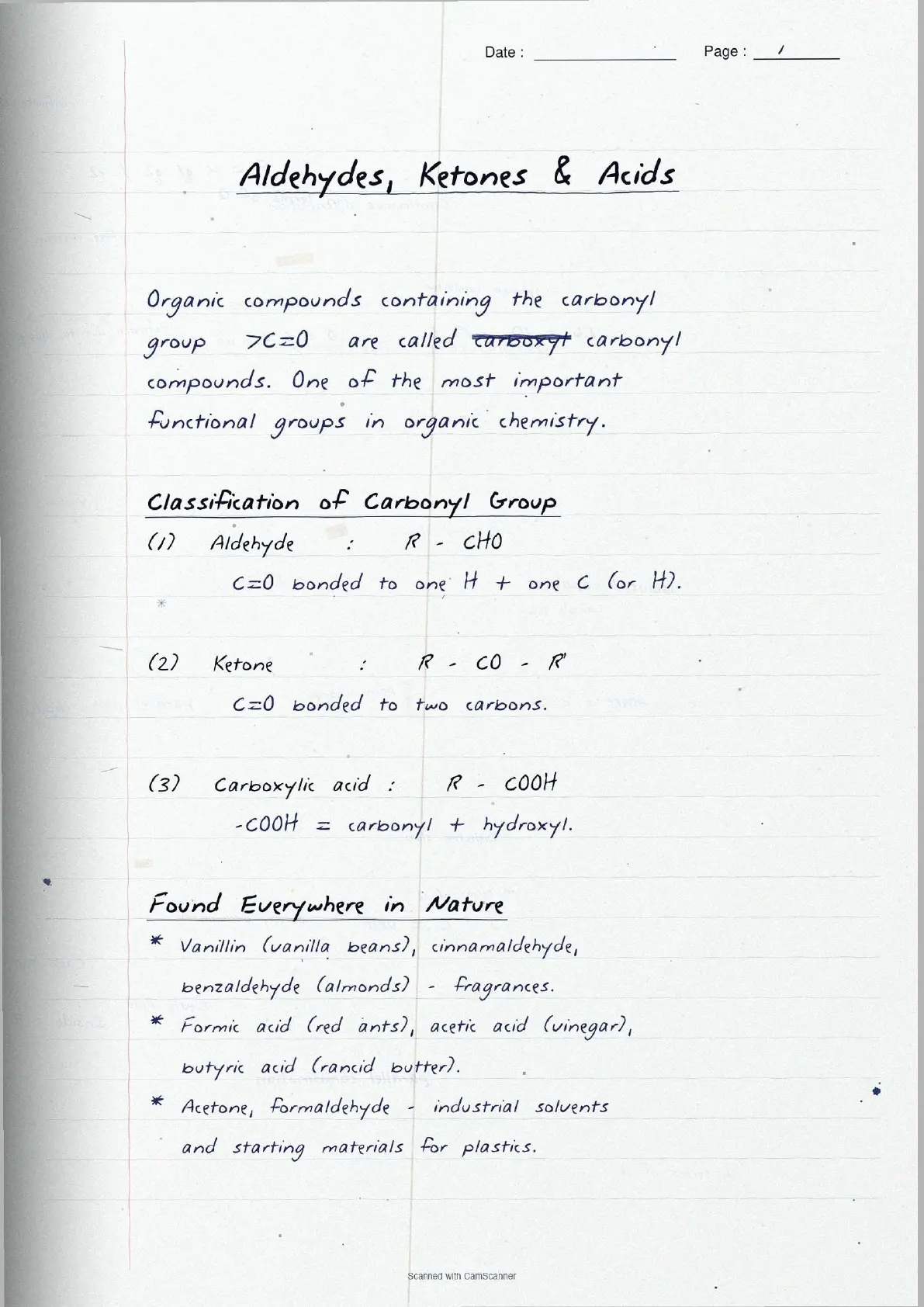
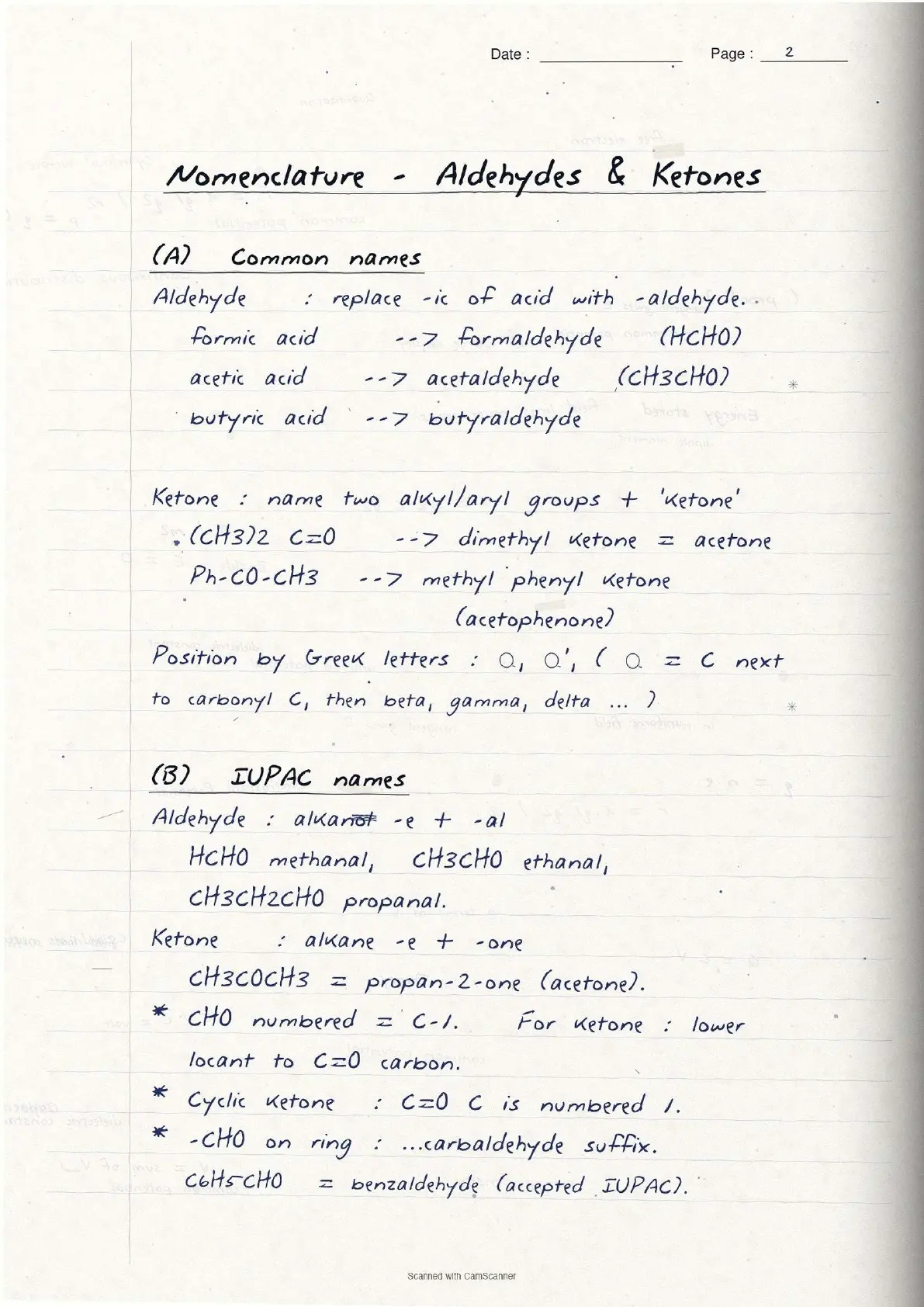
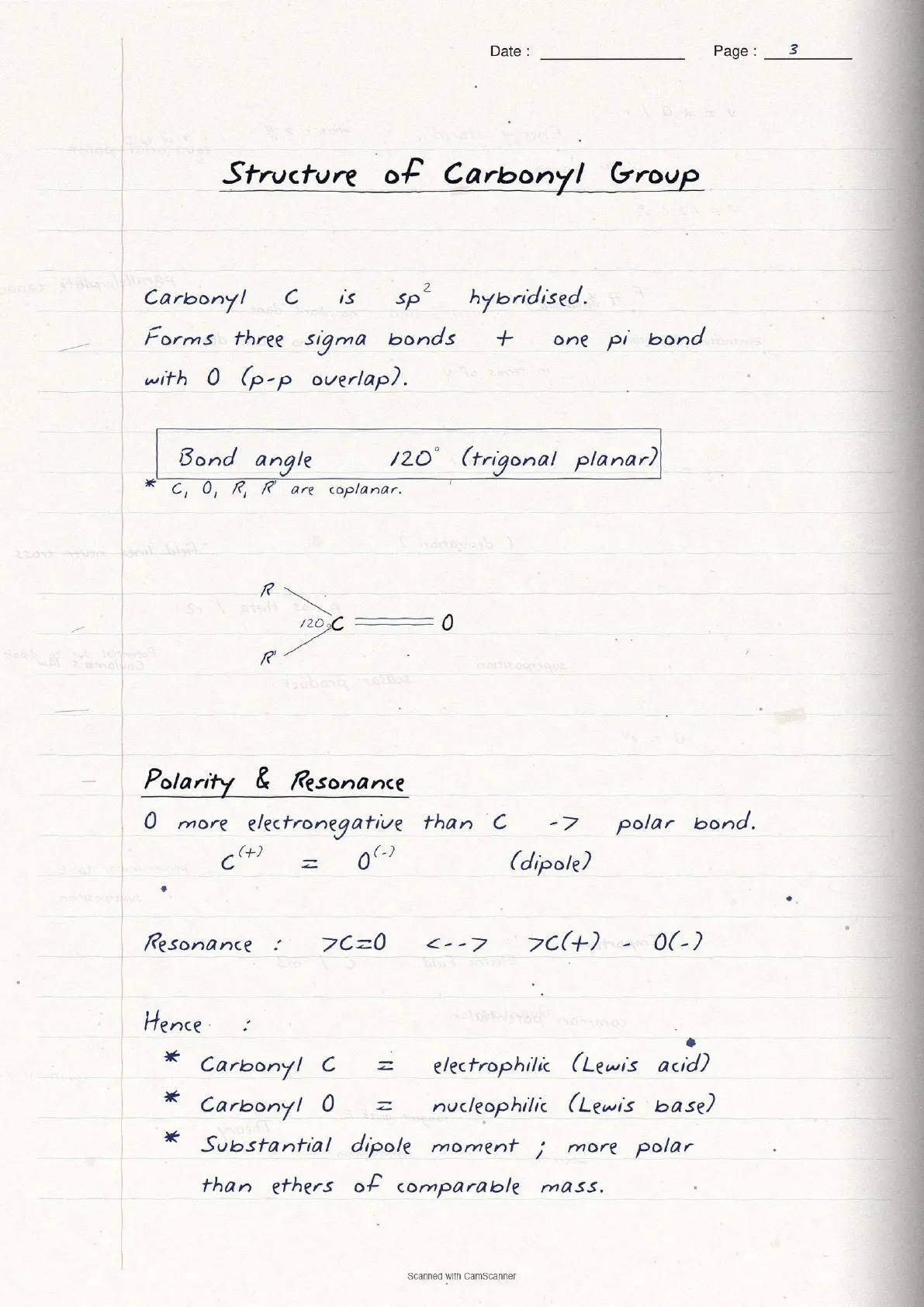
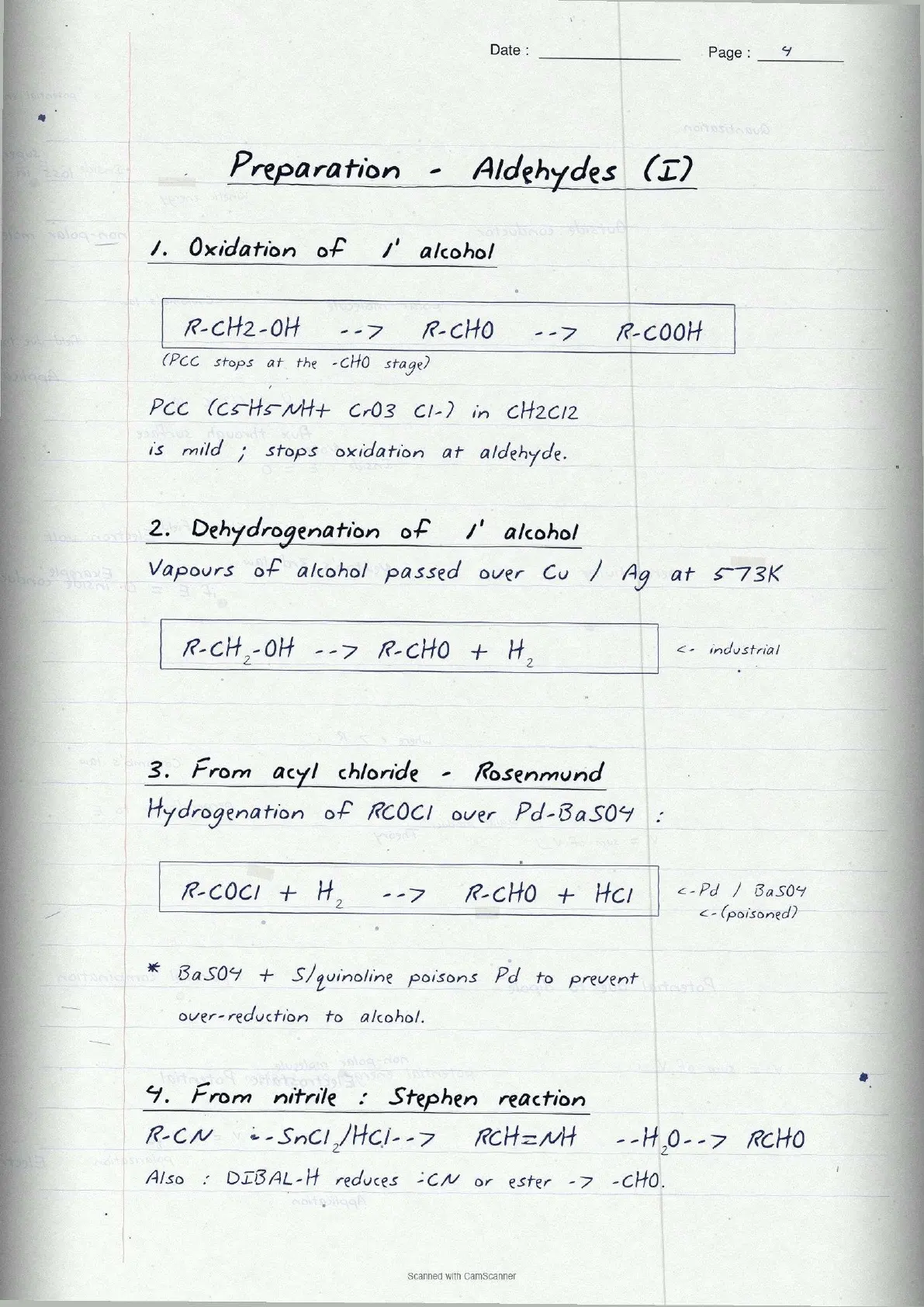
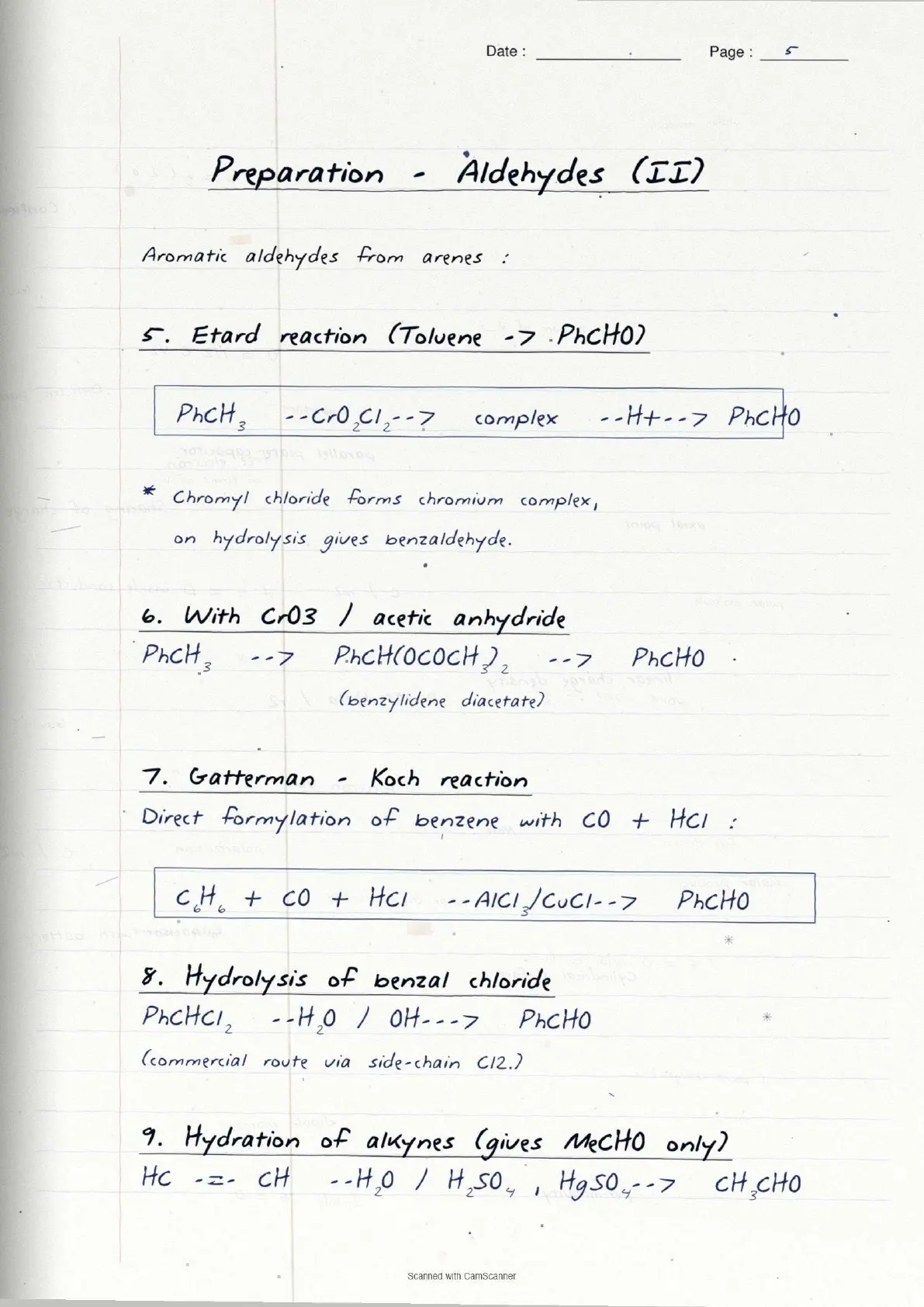
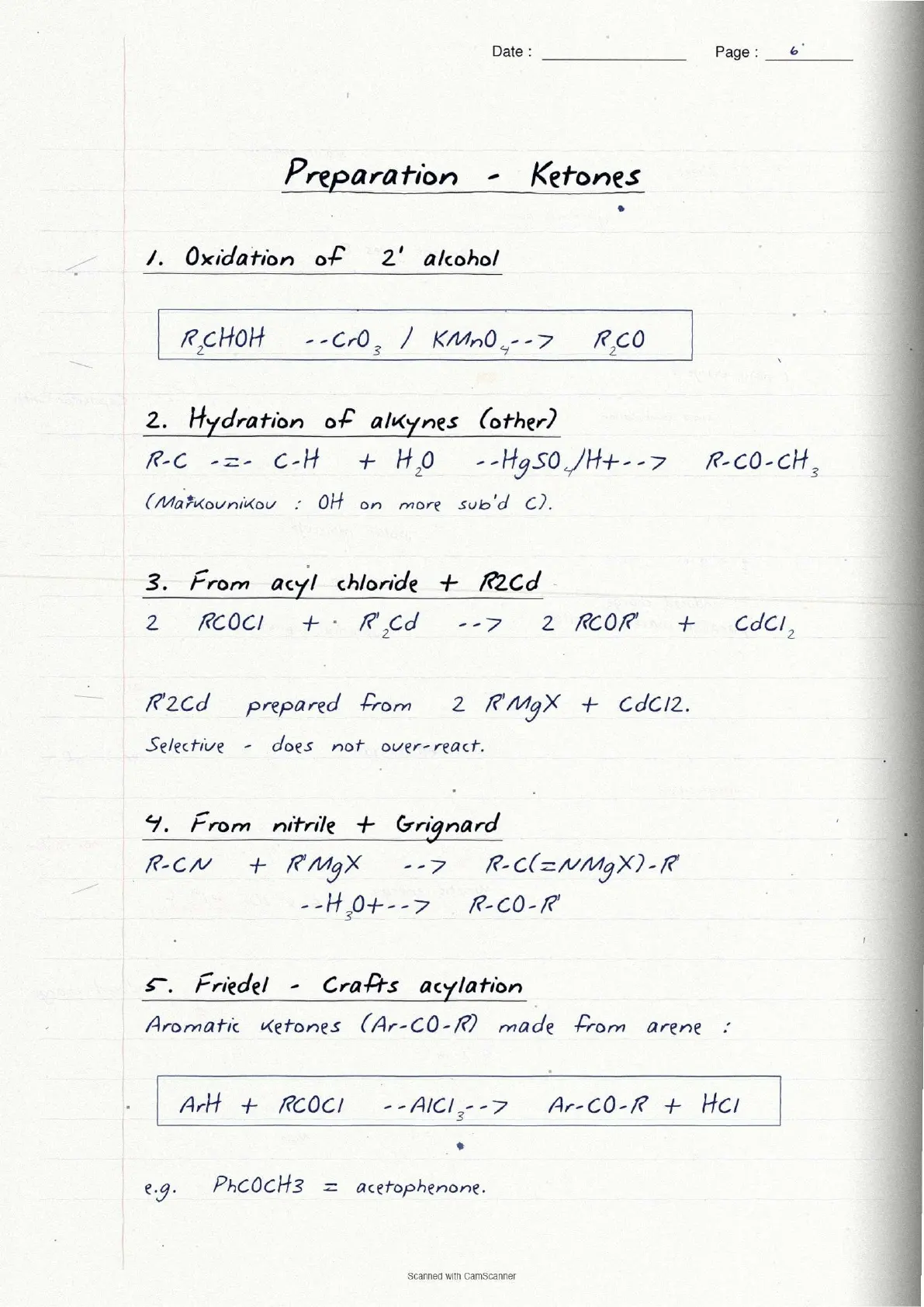
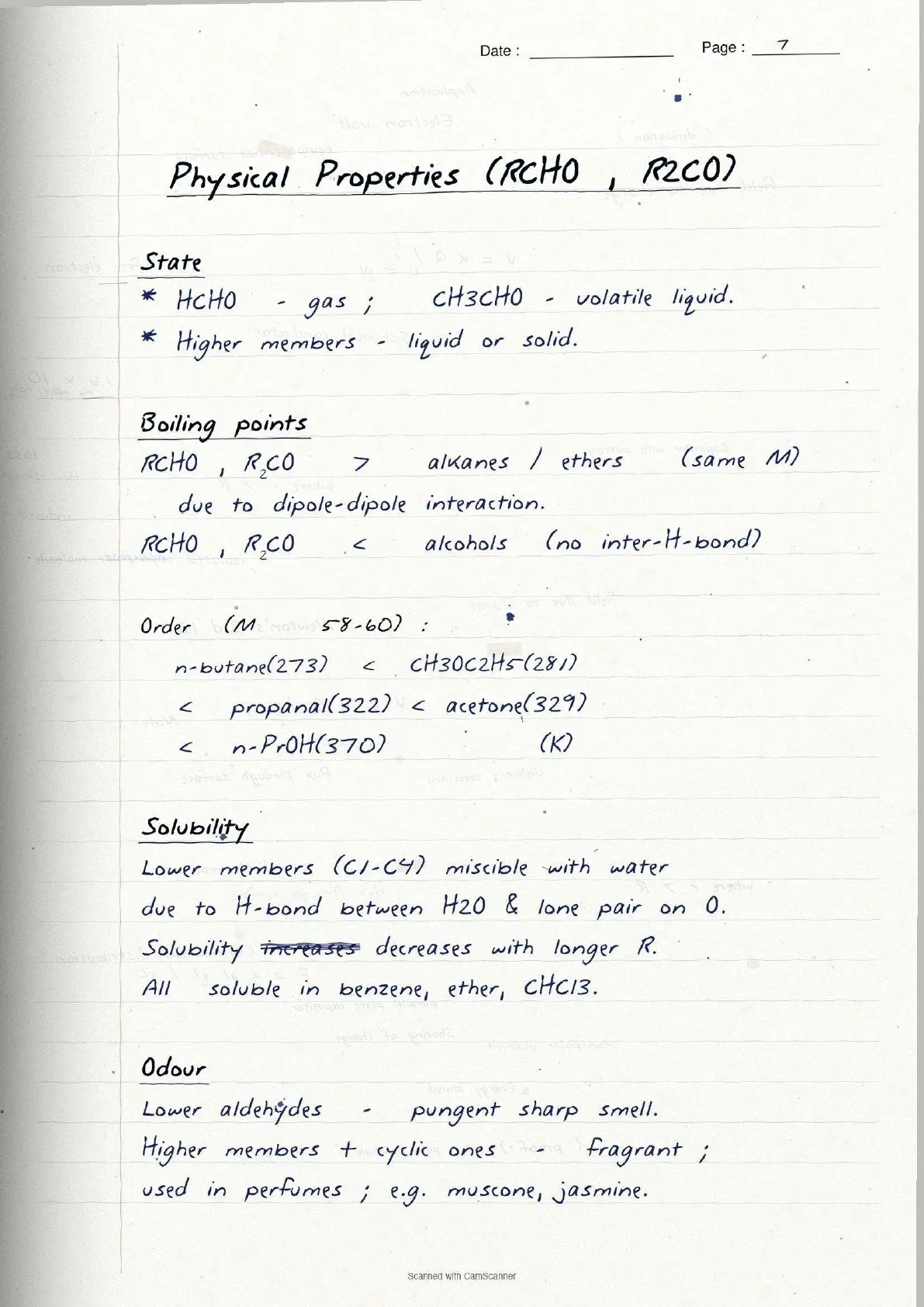
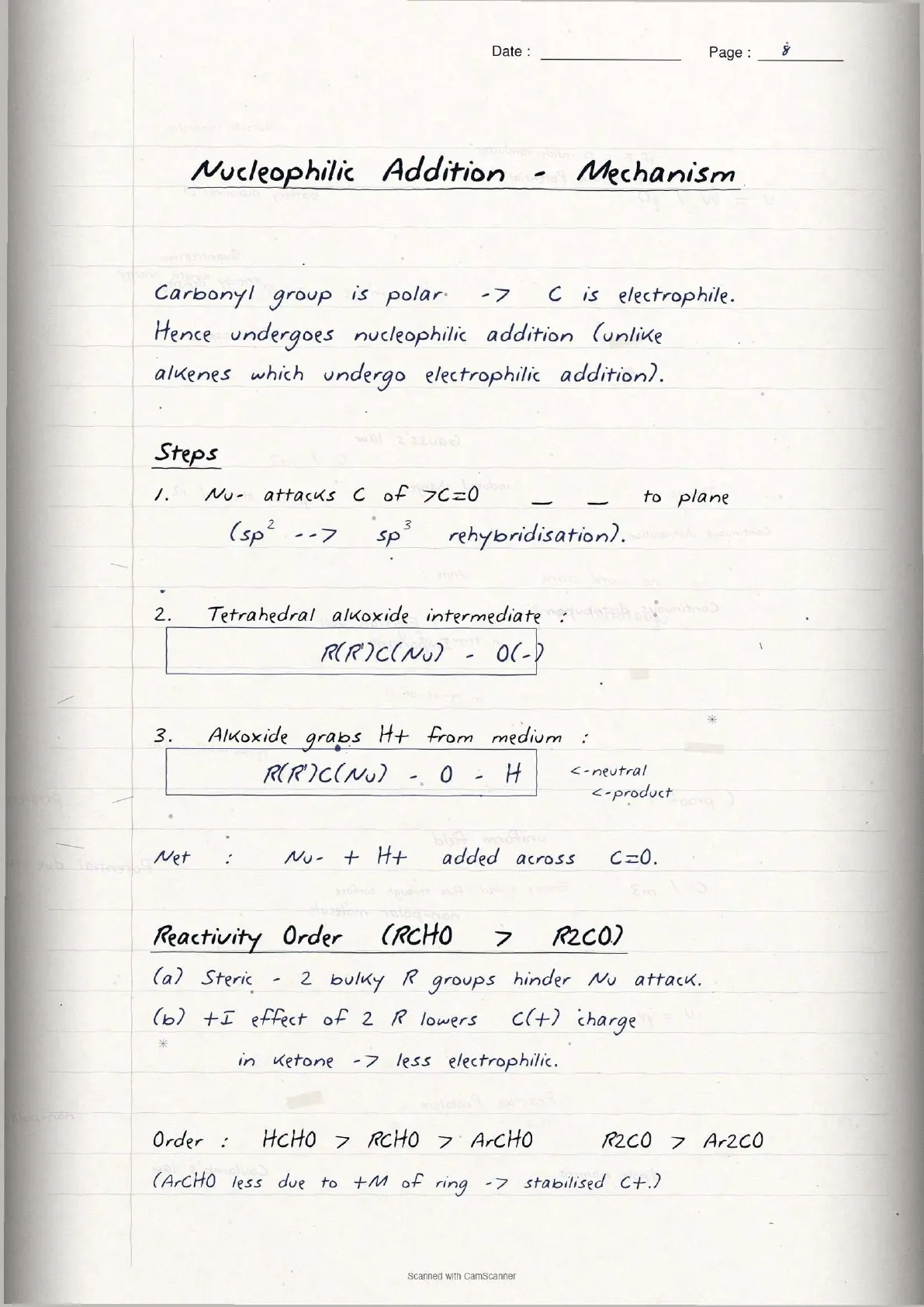
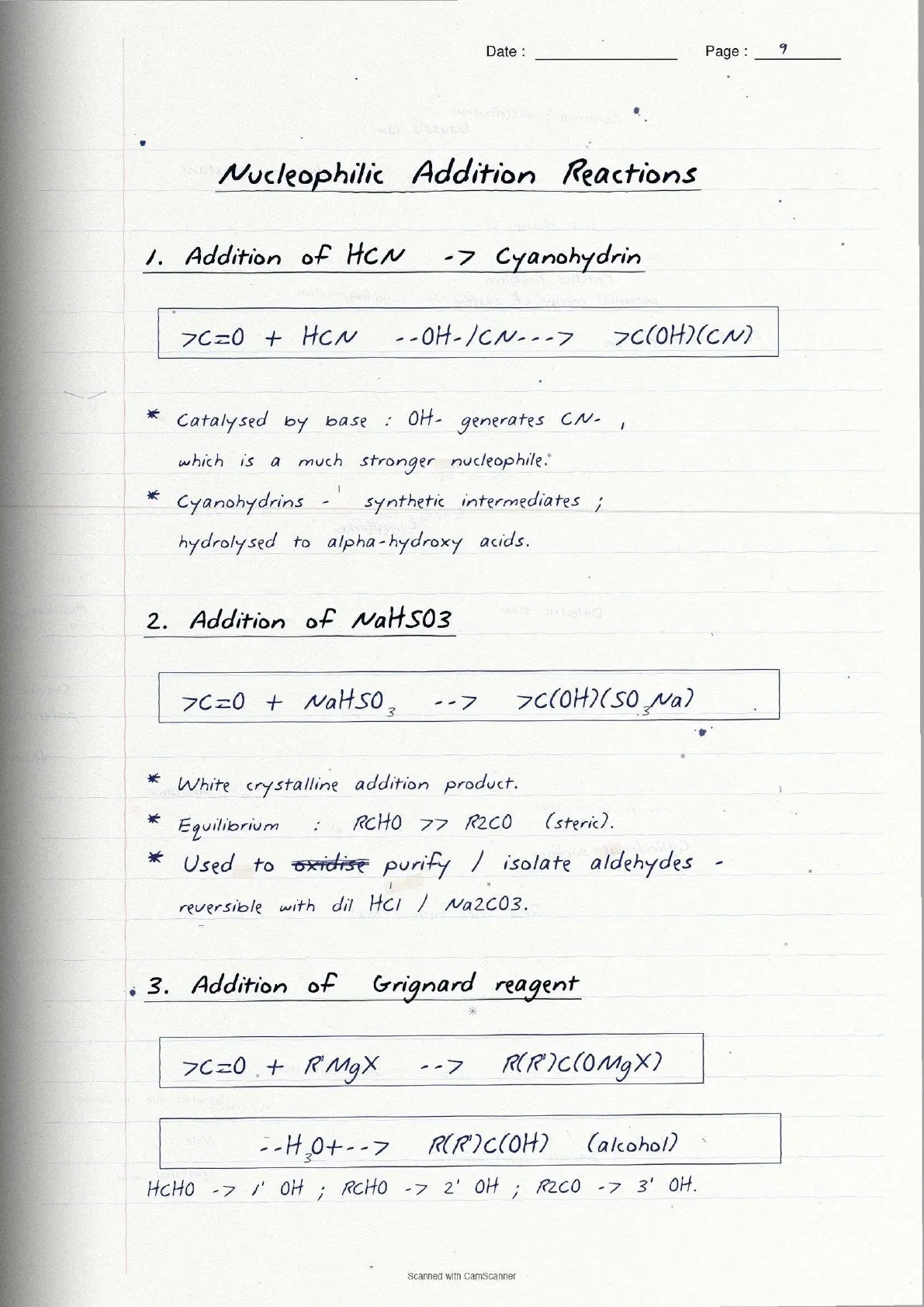
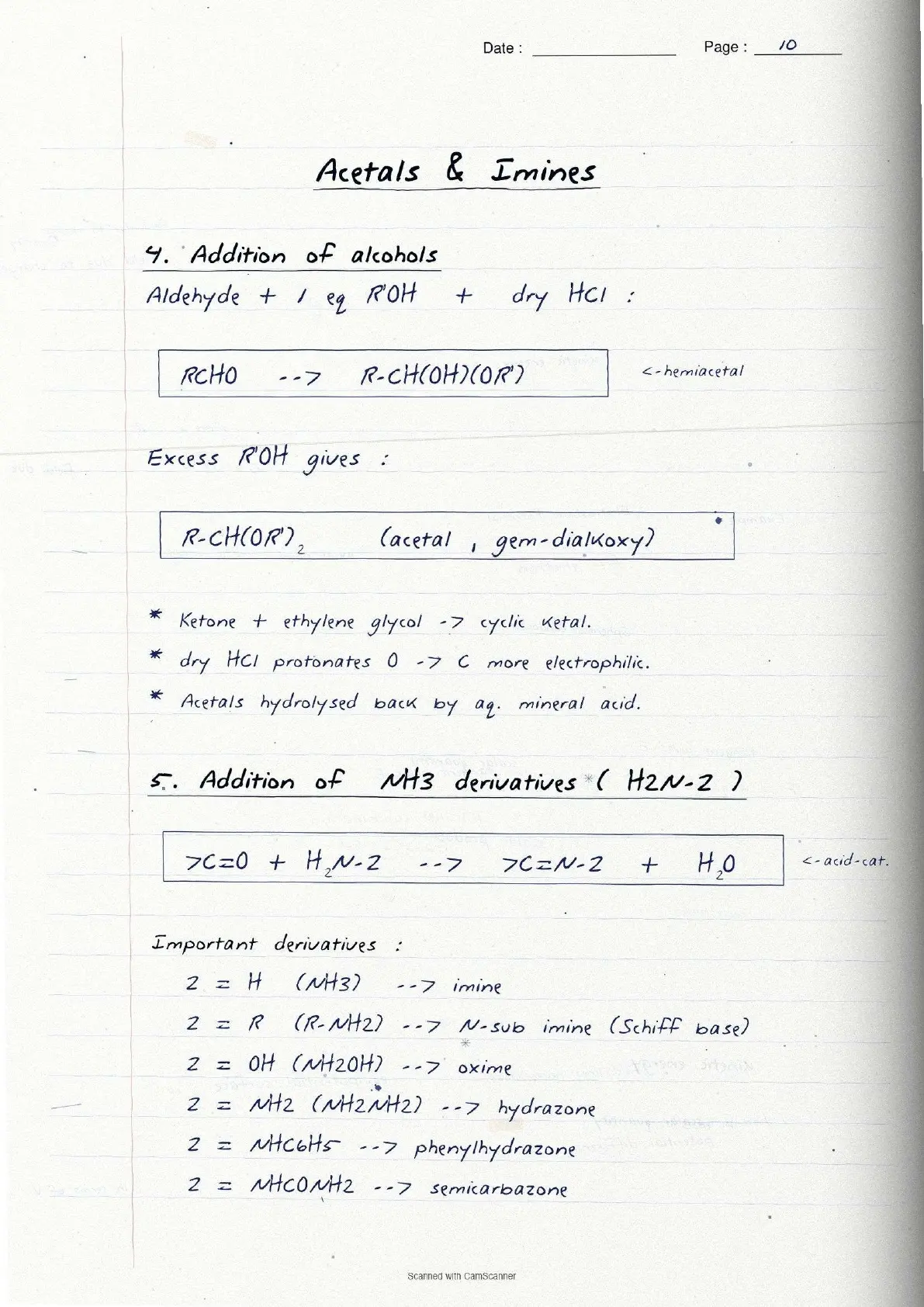
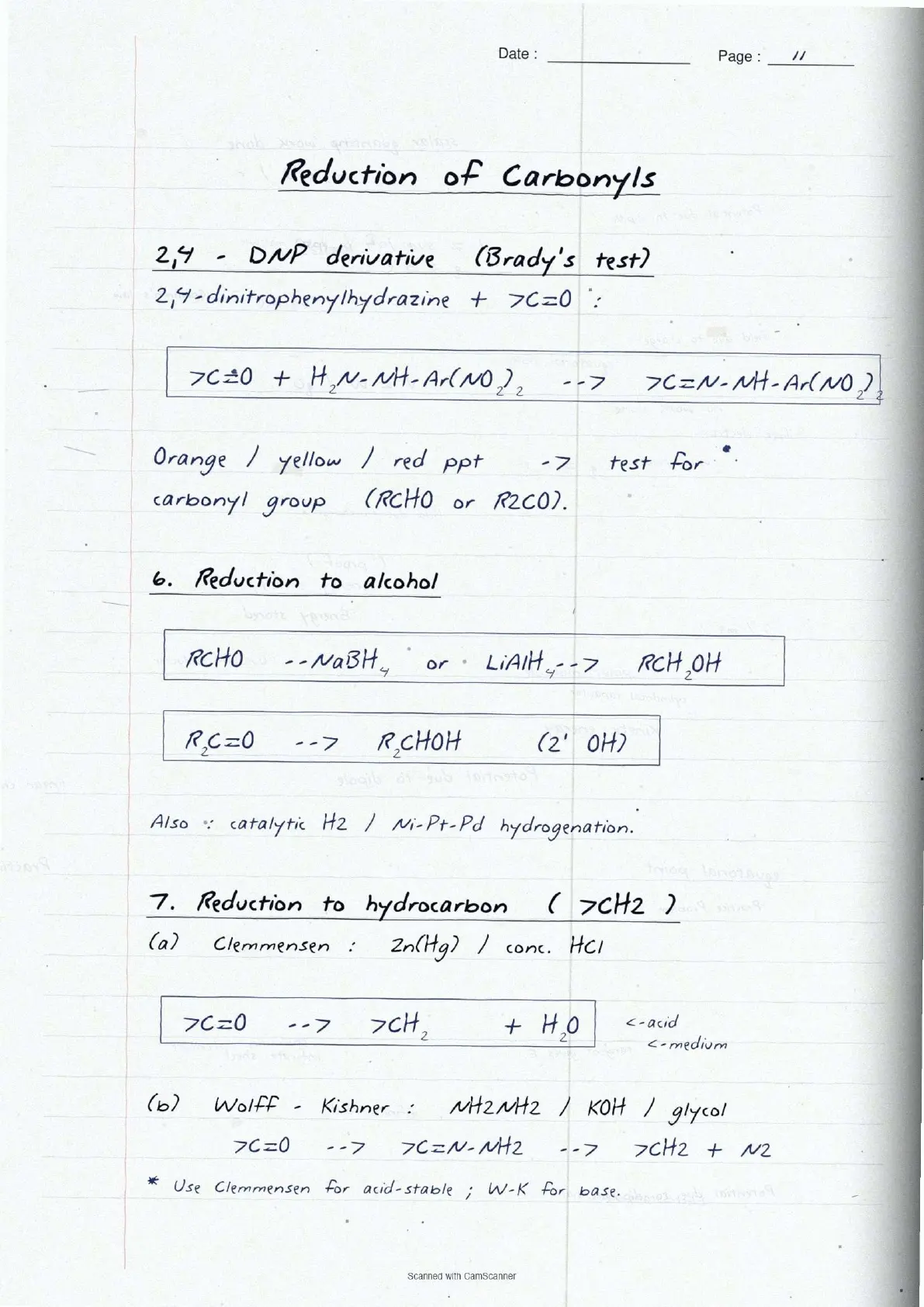
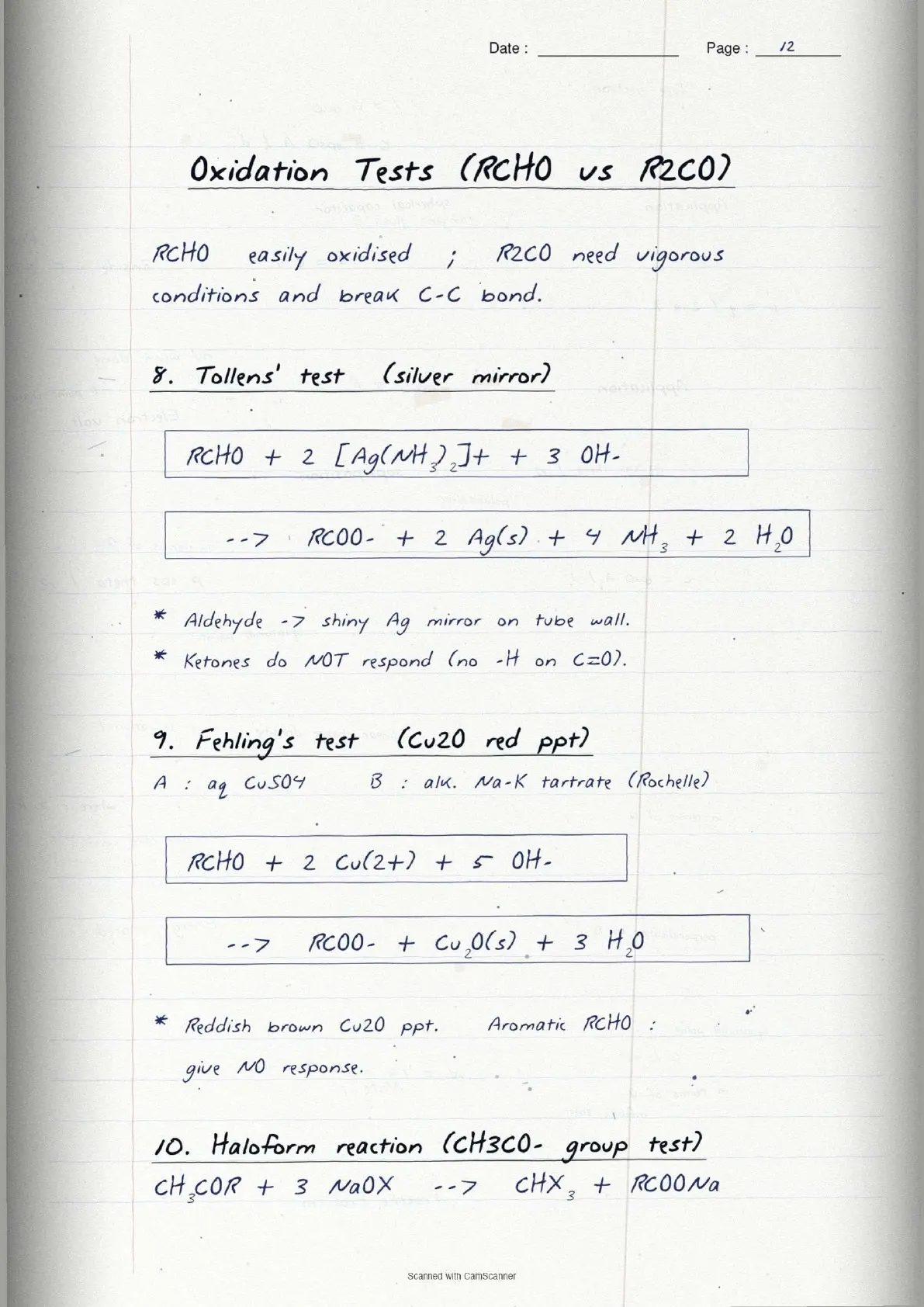
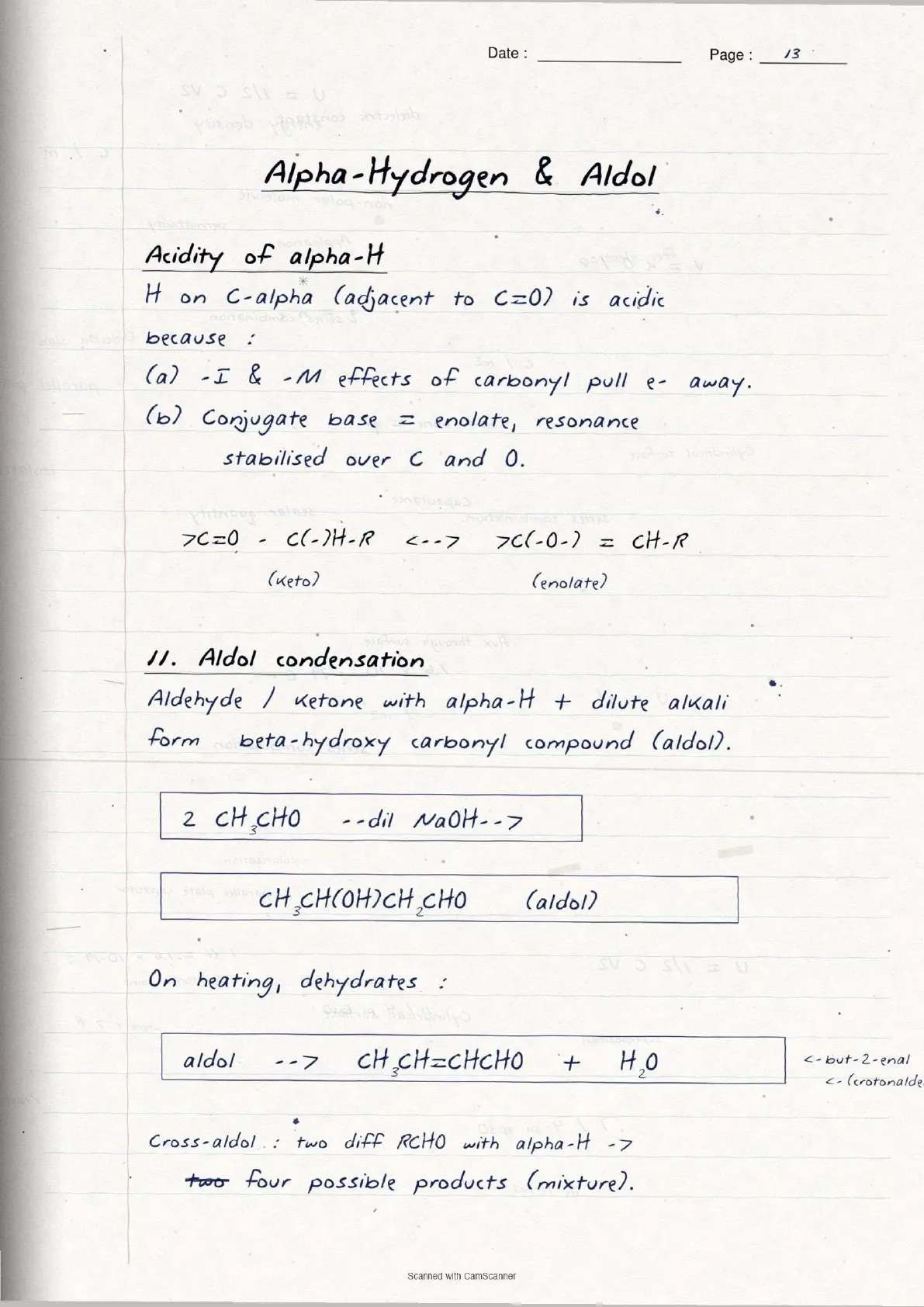
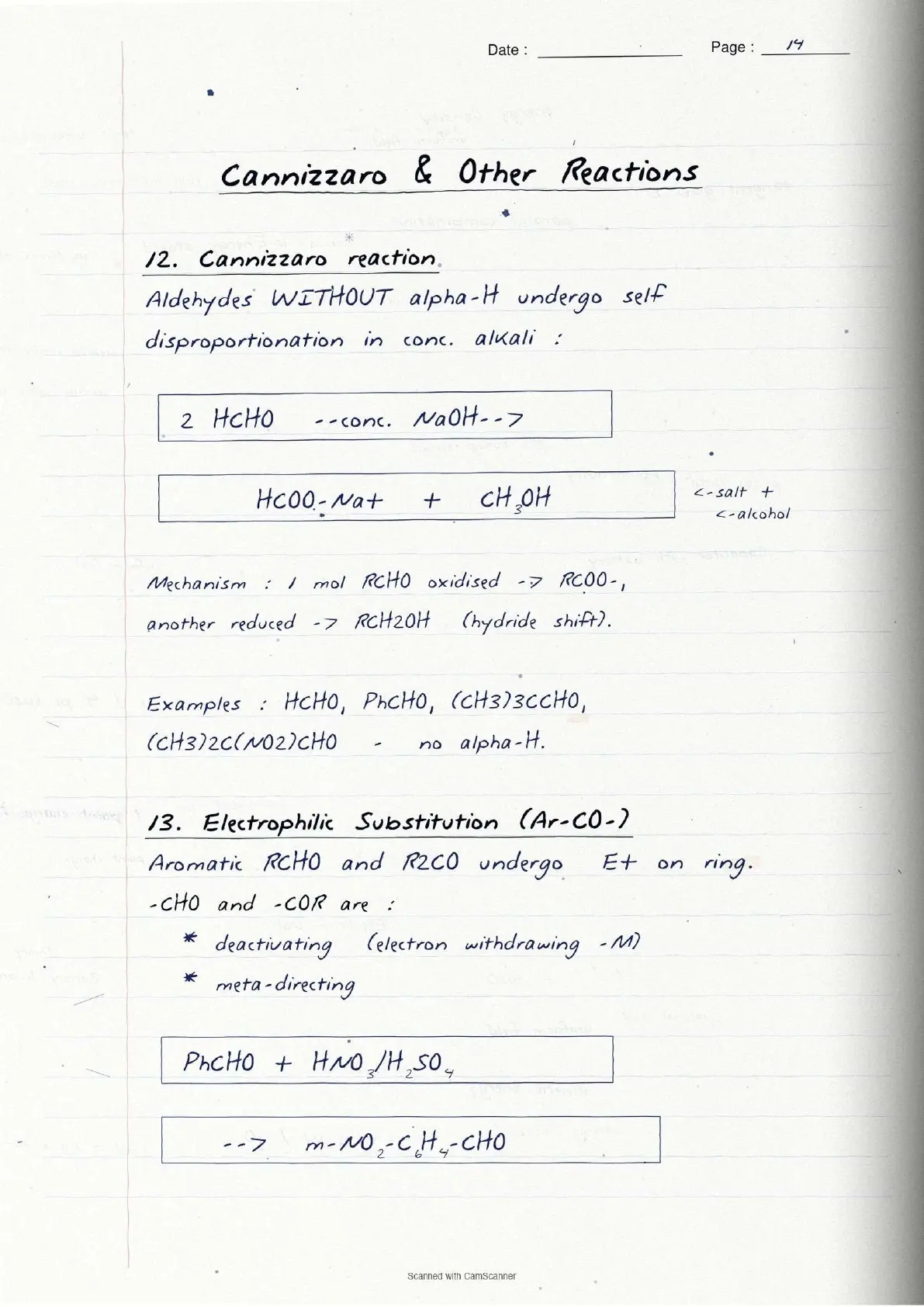
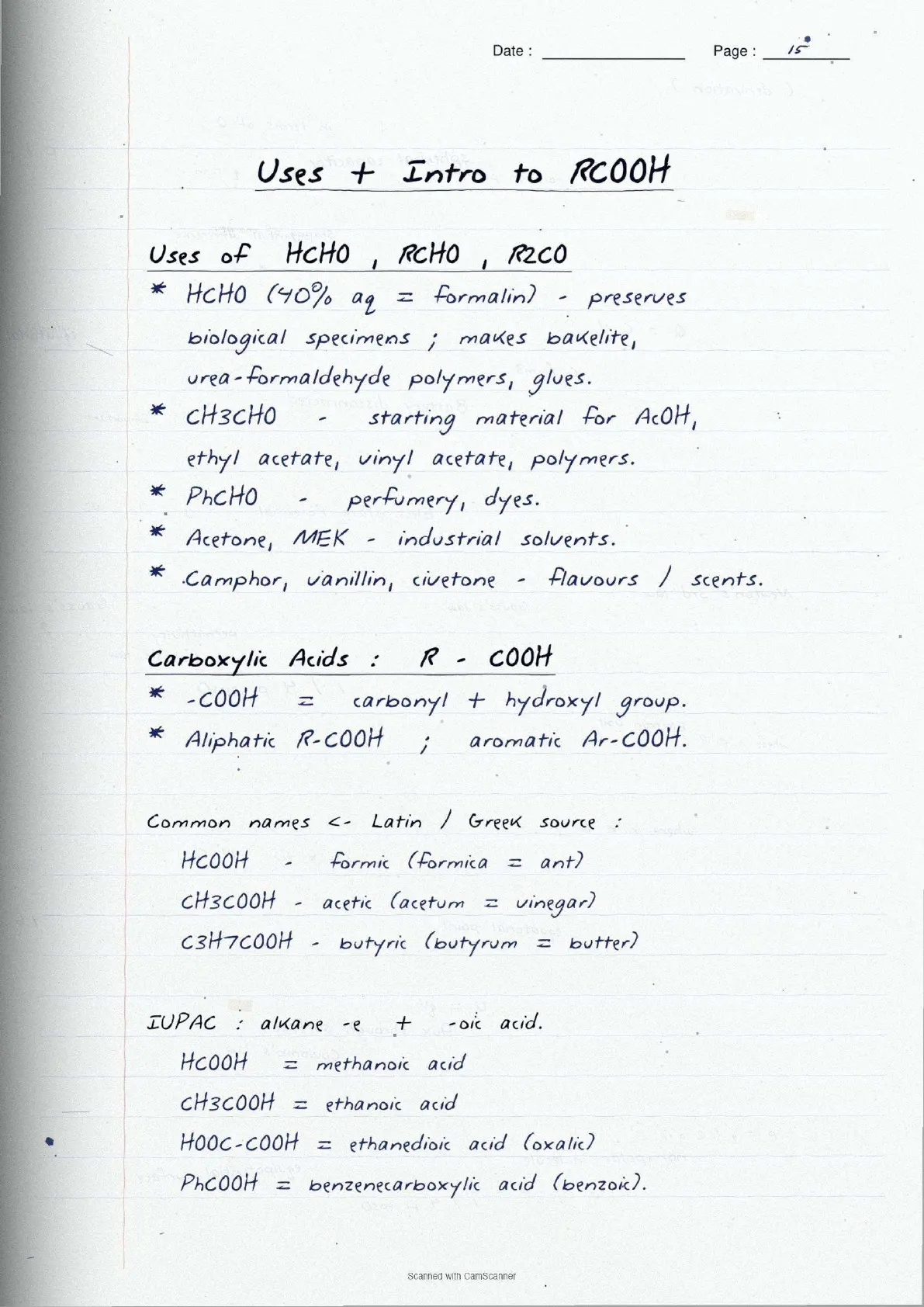
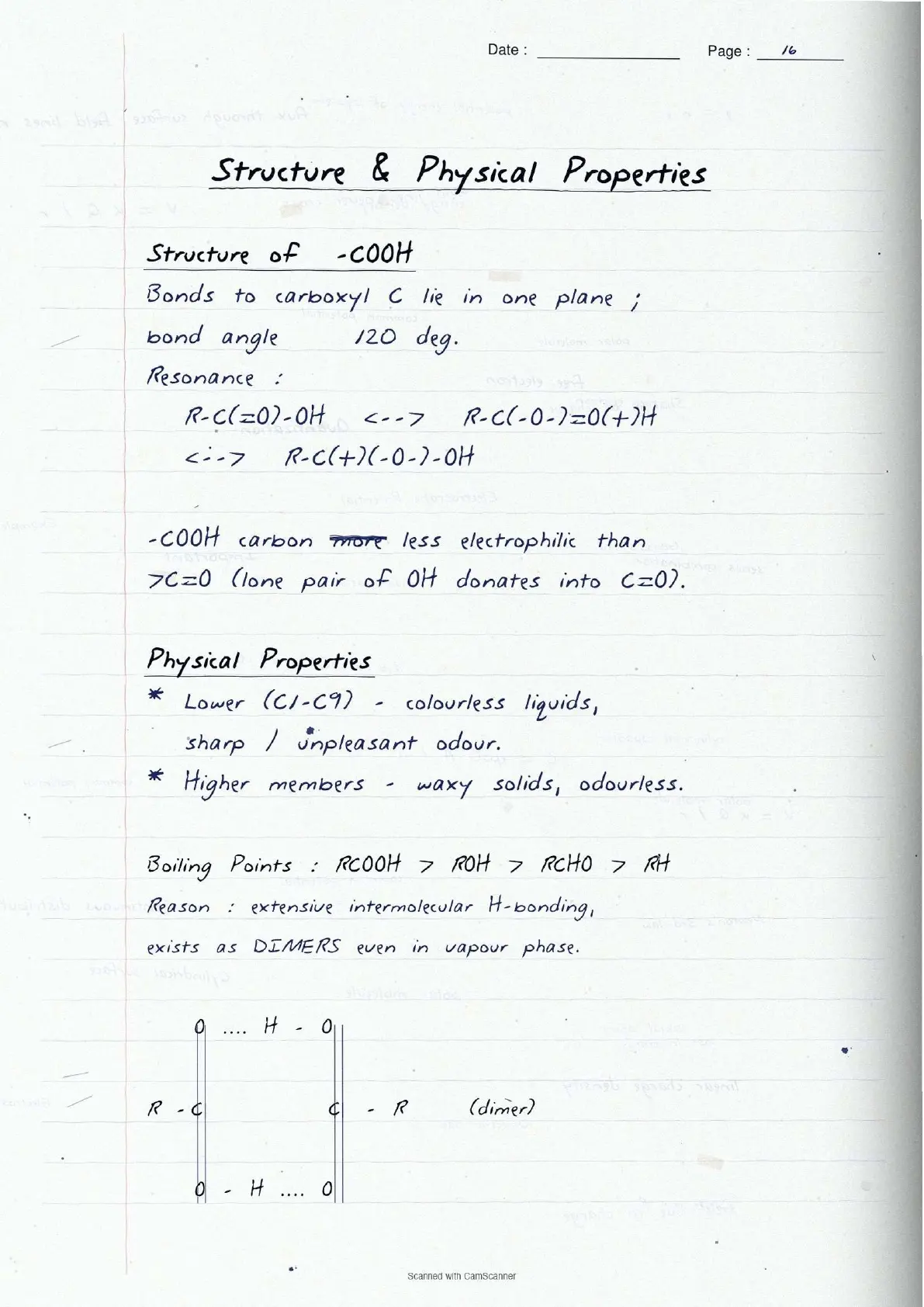
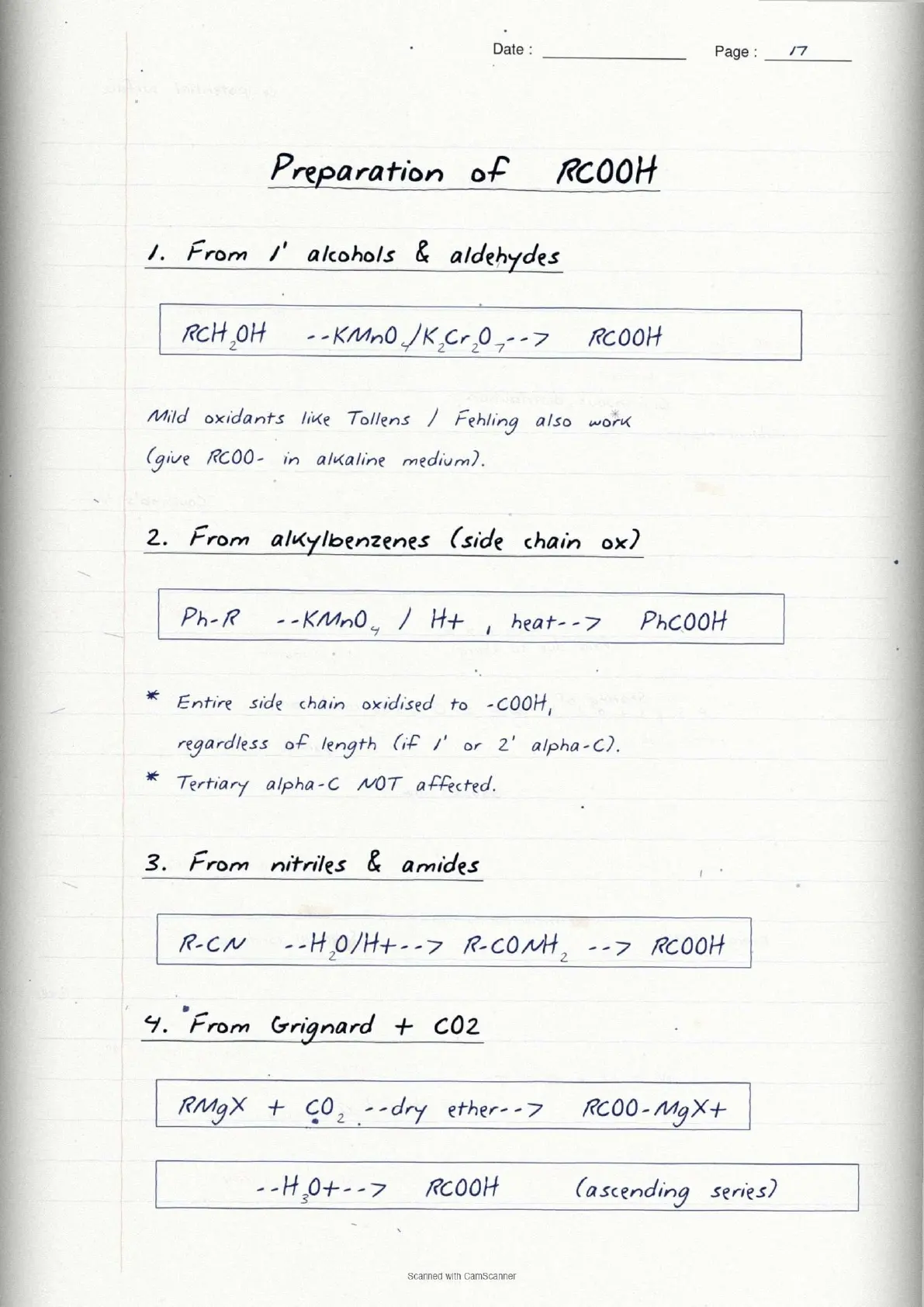
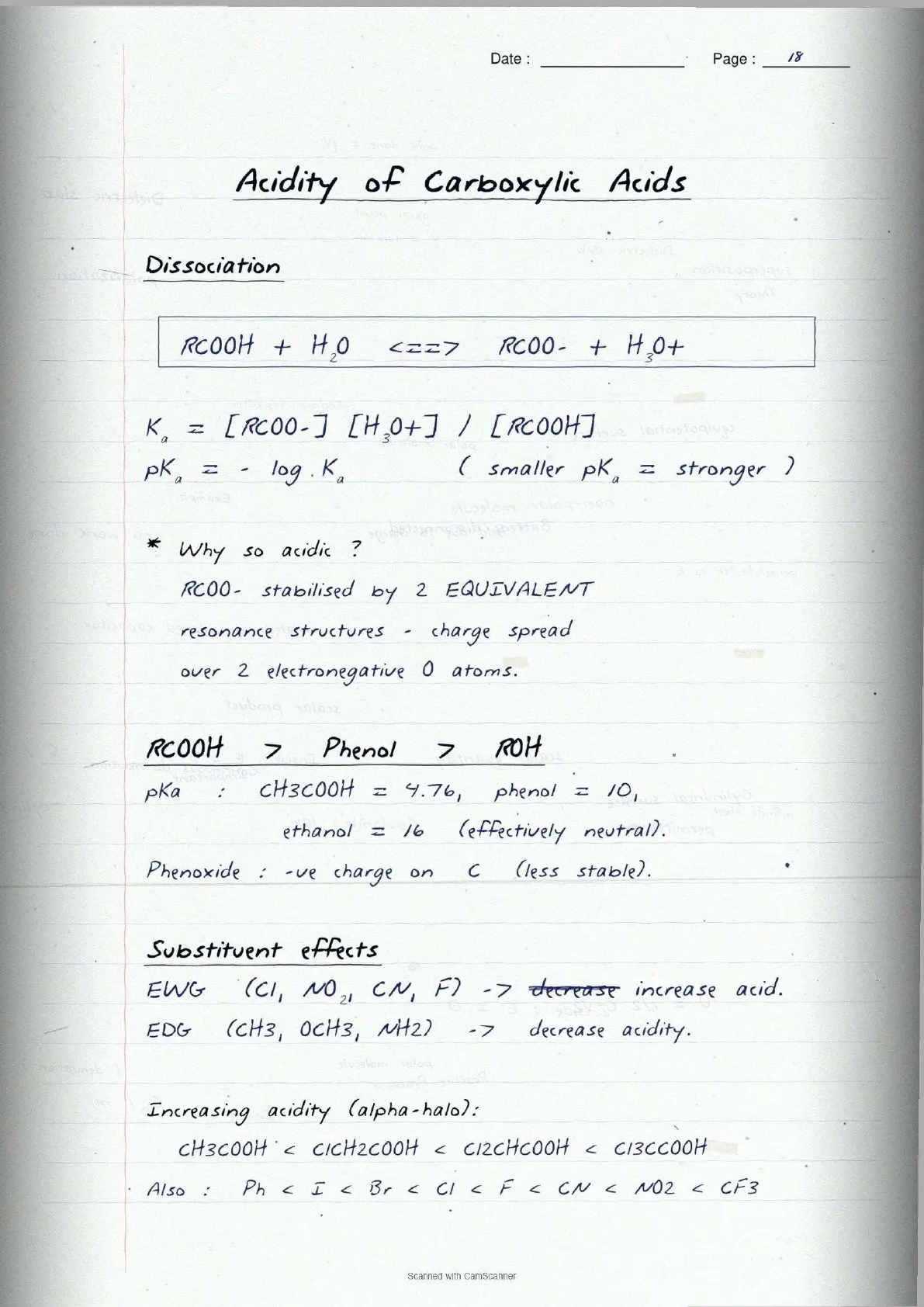
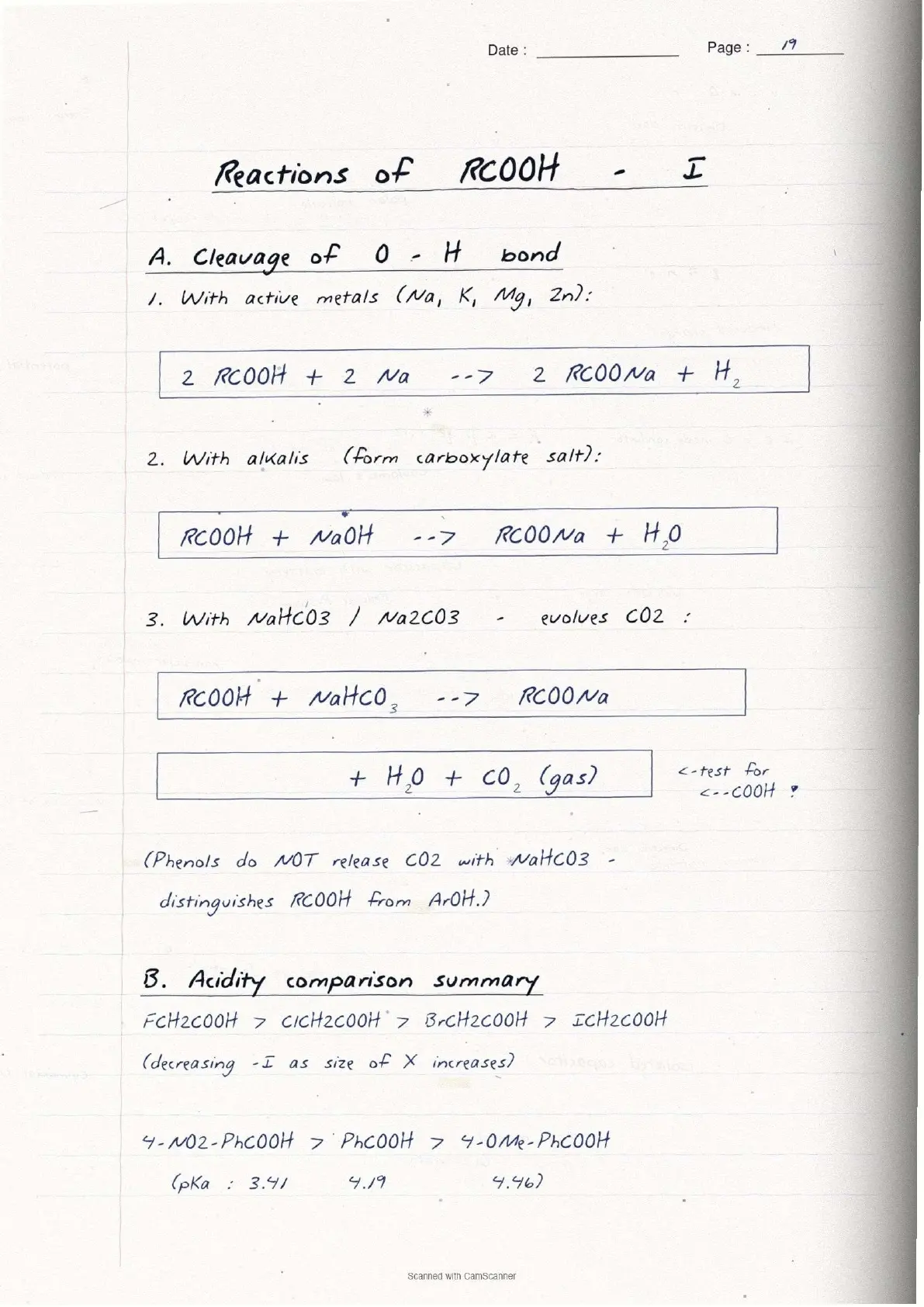
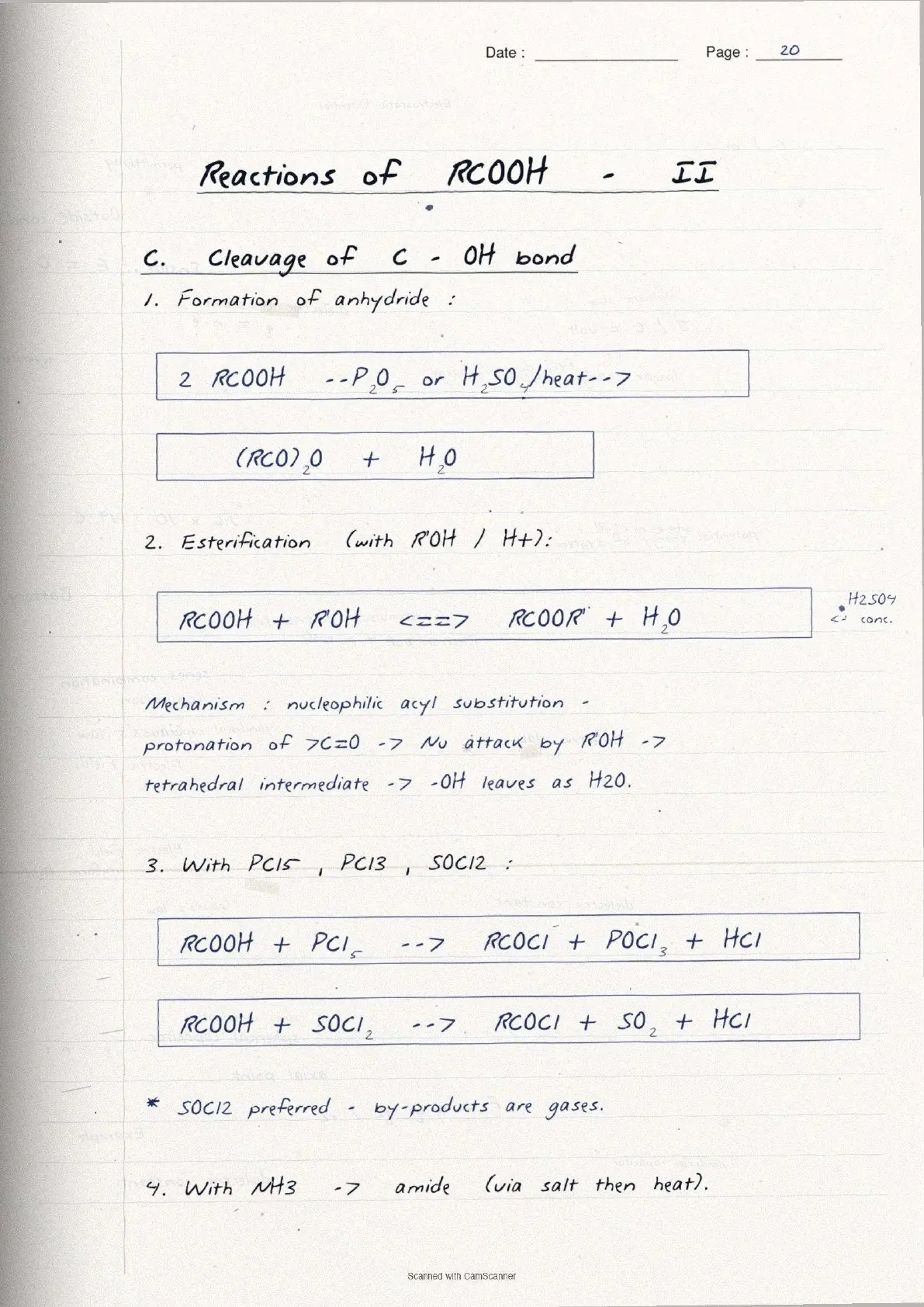
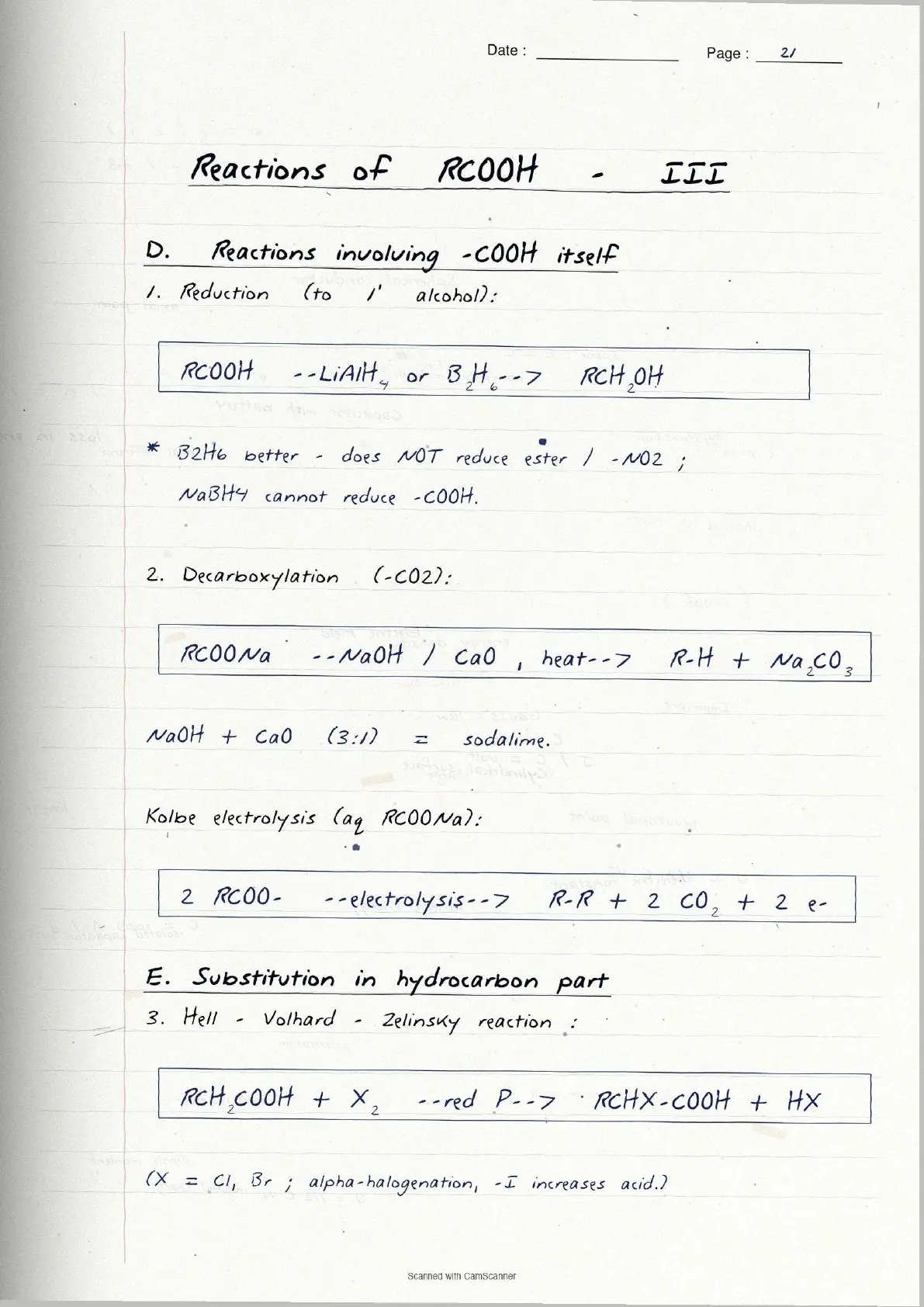
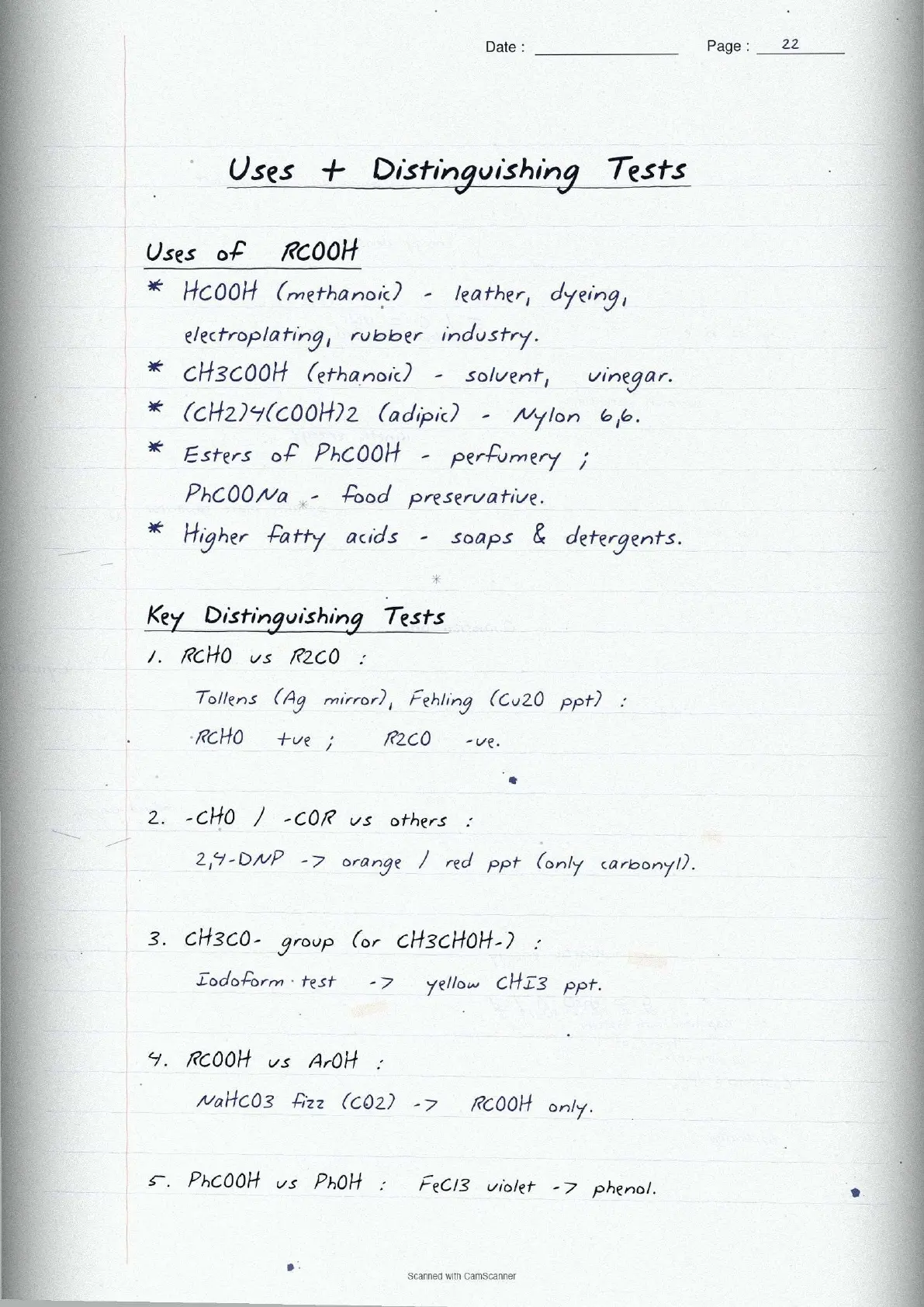
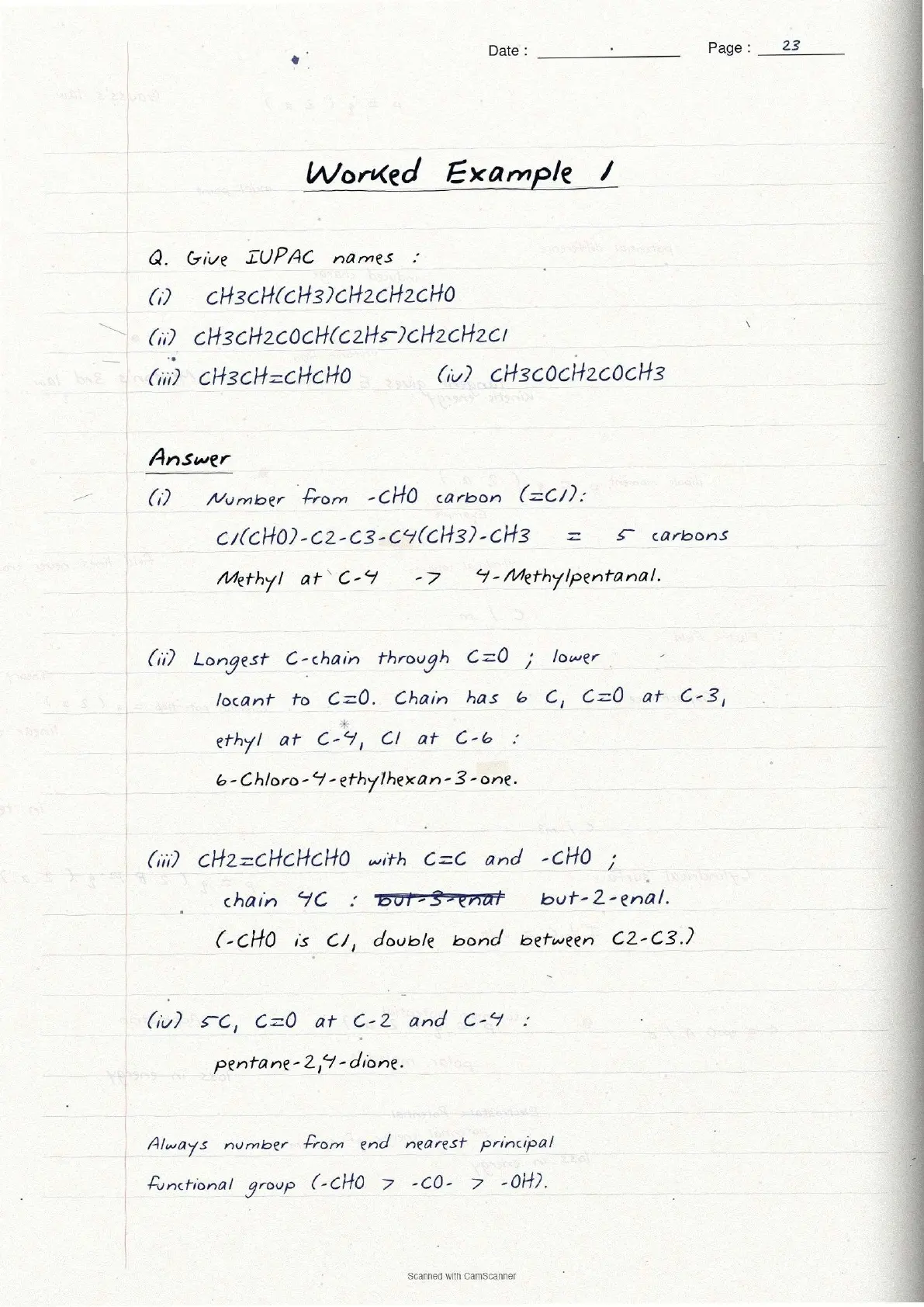
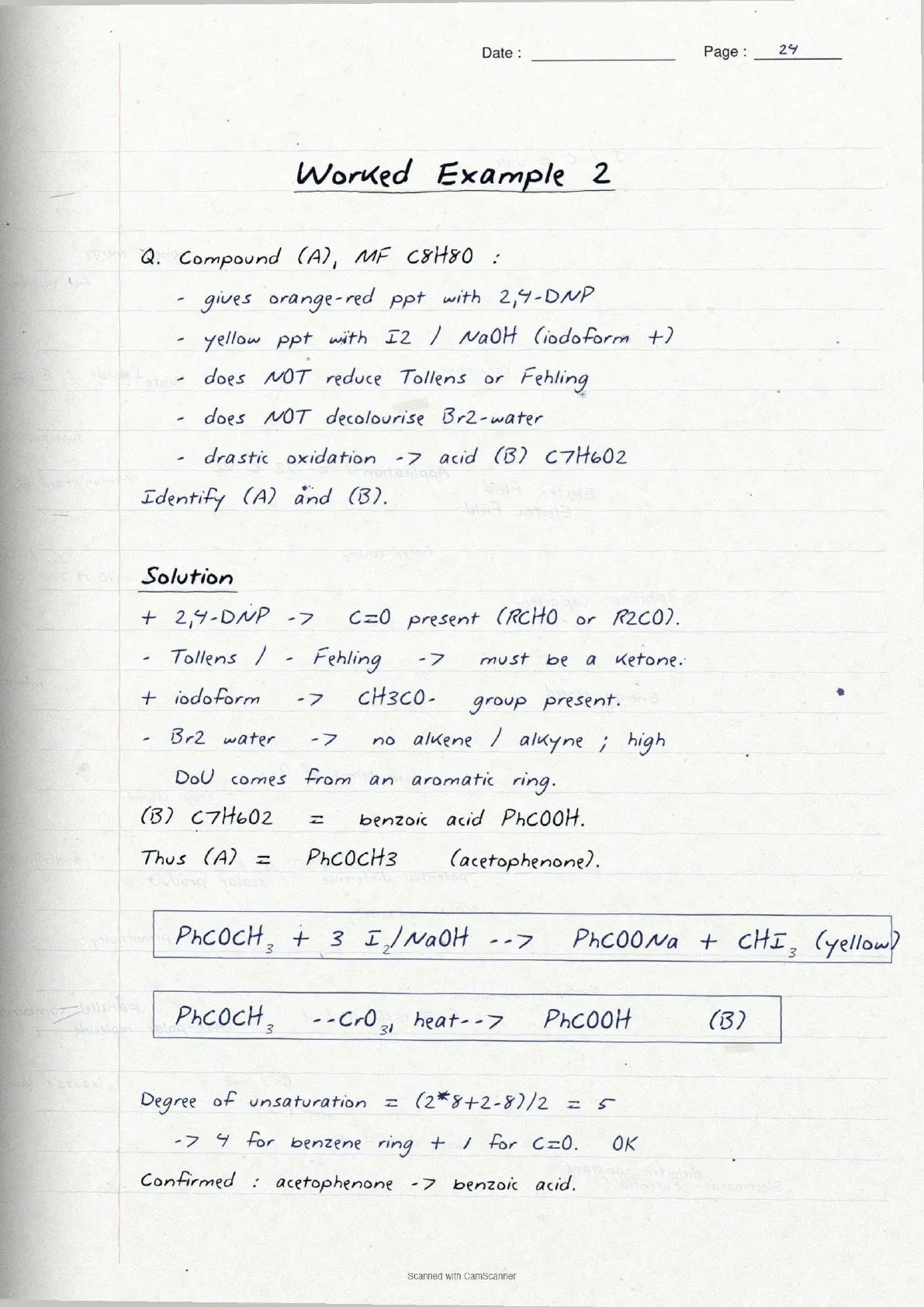
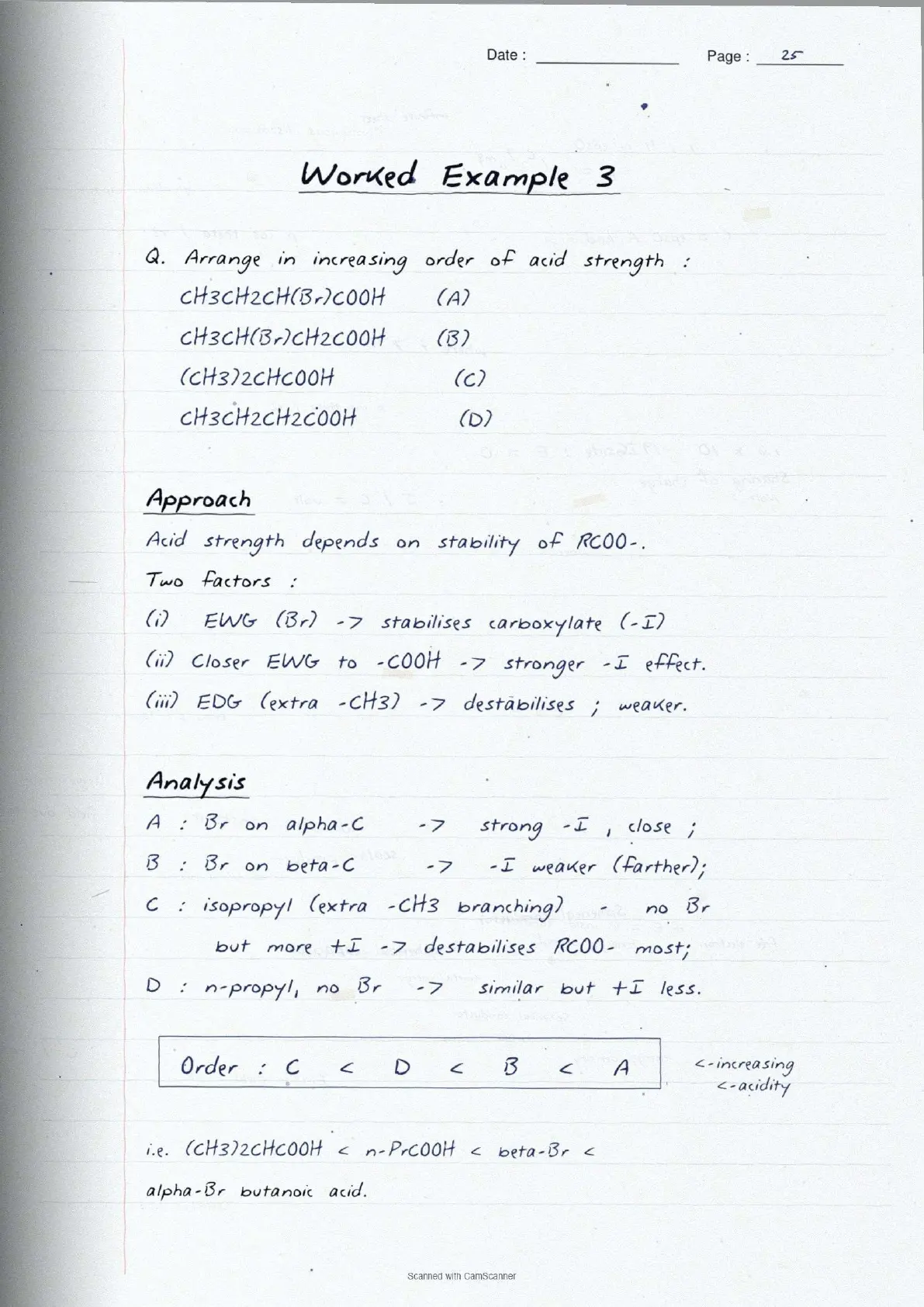
The Collegedunia handwritten notes PDF will include carbonyl mechanisms, name reactions, and acidity comparisons for Chapter 8: Aldehydes, Ketones and Carboxylic Acids.
- CBSE Weightage: 5 to 7 marks, usually a mechanism or distinction question plus a conversion.
- JEE Main Weightage: 3 to 4%, one to two questions per shift on aldol, Cannizzaro, and acidity order.
- NEET Weightage: 2 to 3 questions per year on nucleophilic addition and oxidation tests.
Scanned from a topper's notebook, cross-checked against the 2026-27 NCERT, and refined against the last five years of CBSE, JEE Main, and NEET papers.
Also Check:
- Aldehydes, Ketones and Carboxylic Acids Class 12 Chemistry Notes
- Aldehydes, Ketones and Carboxylic Acids Class 12 Chemistry NCERT Solutions
- Aldehydes, Ketones and Carboxylic Acids Class 12 Chemistry Formula Sheet
Aldehydes, Ketones and Carboxylic Acids Weightage Compared Across Class 12 Chemistry Chapters
Where this chapter sits in the Class 12 CBSE Chemistry mark distribution. Chapter 8 lands in the top mark band with Solutions and Coordination Compounds.
Aldehydes, Ketones and Carboxylic Acids Class 12 Chemistry Explained
Source: Magnet Brains on YouTube
How will Collegedunia's Handwritten Notes Help You with Aldehydes, Ketones and Carboxylic Acids?
A scanned topper notebook keeps the curl of each nucleophile arrow and the colour cue that separates electrophile from nucleophile. NEET 2025 traced three organic questions to this chapter; JEE Main January 2025 carried two on aldol condensation.
- Ink-coded C=O: Carbonyl carbon in red; Nu-attack arrow in blue. One glance triggers mechanism recall.
- Aldehyde vs ketone panels: Steric and electronic comparison on the same page.
- Acidity ladder for RCOOH: Substituted acids ranked with pKa numbers in the margin.
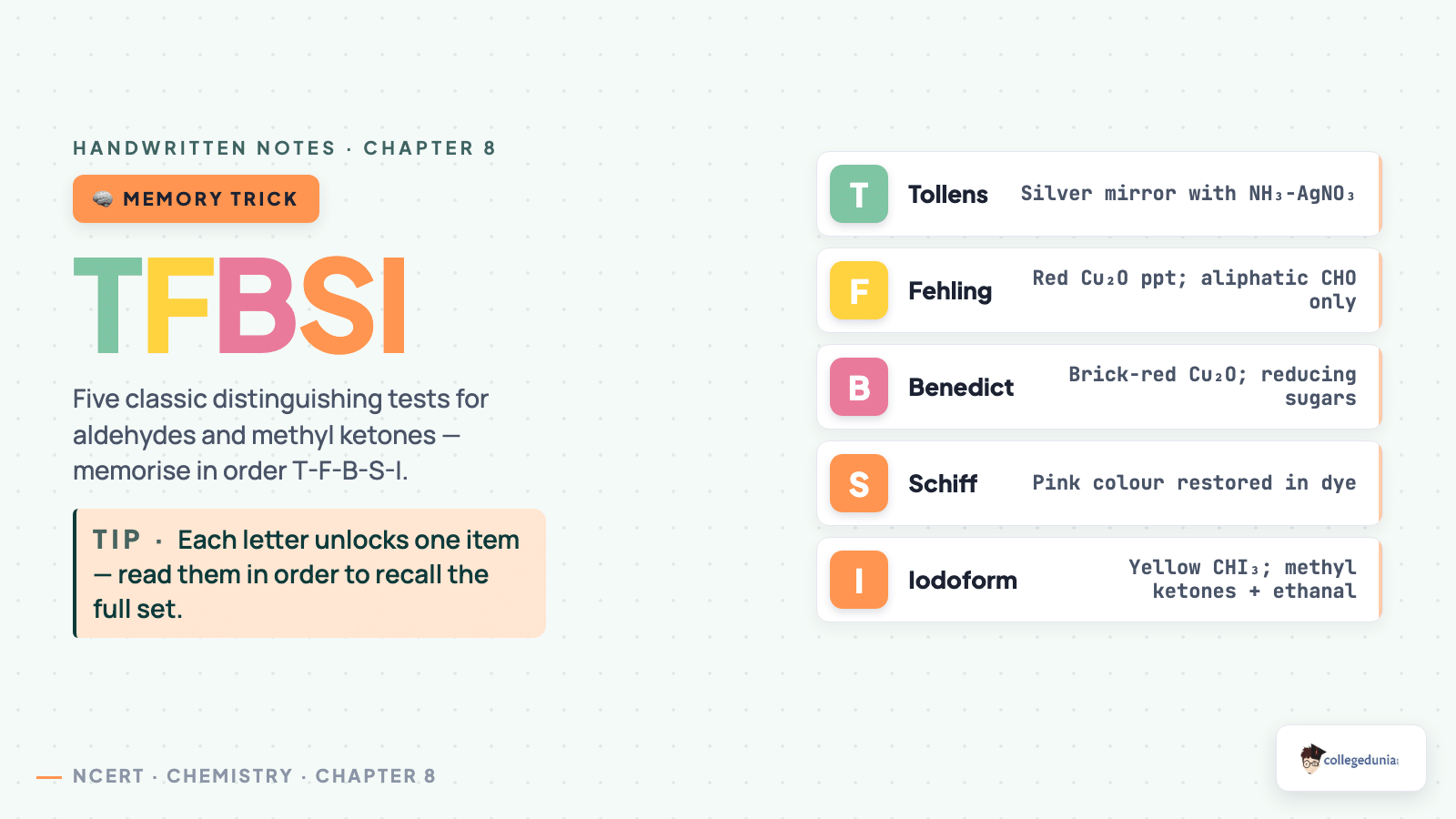
- Margin mnemonics: Tollens, Fehling, Benedict, iodoform, Schiff - one-line hook each.
Hand-Drawn Figures Indexed in This Notebook
The notebook holds fourteen figures across 21 pages, each paired with the concept it anchors.
| Fig No. | Figure | Page |
|---|---|---|
| Fig 8.1 | Carbonyl sp2 hybridisation and dipole | p. 2 |
| Fig 8.2 | Classification tree | p. 3 |
| Fig 8.3 | Nucleophilic addition (curly-arrow) | p. 6 |
| Fig 8.4 | Reactivity HCHO > RCHO > R2CO | p. 7 |
| Fig 8.5 | Aldol condensation (acid + base paths) | p. 10 |
| Fig 8.6 | Cannizzaro hydride transfer | p. 11 |
| Fig 8.7 | Clemmensen vs Wolff-Kishner panel | p. 12 |
| Fig 8.8 | Tollens, Fehling, Benedict grid | p. 13 |
| Fig 8.9 | Iodoform test compounds | p. 14 |
| Fig 8.10 | Carboxylate resonance | p. 16 |
| Fig 8.11 | Acidity ladder substituent effects | p. 17 |
| Fig 8.12 | Hell-Volhard-Zelinsky product map | p. 18 |
| Fig 8.13 | Decarboxylation: soda lime + Kolbe | p. 19 |
| Fig 8.14 | Benzoic acid preparations and reactions | p. 20 |
For last-day revision, lock Fig 8.5, 8.6, 8.8, and 8.11. These four cover about 70 per cent of CBSE marks since 2021.
What's Inside the Aldehydes, Ketones and Carboxylic Acids Handwritten Notes PDF
A 21-page scan with a fixed ink-colour code. Use this map to find your weakest sub-topic.
| Page Block | Topic | Why It Stays |
|---|---|---|
| p. 1-3 | Carbonyl structure, classification, IUPAC names | sp2 carbon sketch clicks only when hand-drawn |
| p. 4-6 | Prep: ozonolysis, Rosenmund, Stephen, Etard, Gattermann-Koch | Six routes on one foldable page |
| p. 7-9 | Nu-addition mechanism; HCHO > RCHO > R2CO | Curly-arrow flow on C=O |
| p. 10-12 | Aldol, Cross-aldol, Cannizzaro, Clemmensen, Wolff-Kishner | Five name reactions CBSE alternates |
| p. 13-15 | Tollens, Fehling, Benedict, iodoform, Schiff tests | Test colours hand-shaded |
| p. 16-18 | RCOOH preparation; acidity order; substituent pKa | Acidity ladder is the JEE 1-marker |
| p. 19-21 | HVZ, decarboxylation, Kolbe electrolysis, reduction | Reagent map on one foldable page |
Aldehydes, Ketones & Carboxylic Acids Self-Assessment Quick Quiz
Five rapid-fire MCQs from CBSE, JEE Main, and NEET. Tap to reveal.
Q1. Positive Tollens but negative Fehling test?
Benzaldehyde (PhCHO). Fehling cannot oxidise aromatic aldehydes.
Q2. Decreasing acidity: HCOOH, CH3COOH, CH2ClCOOH, CCl3COOH.
CCl3COOH > CH2ClCOOH > HCOOH > CH3COOH. EWG -Cl stabilises carboxylate.
Q3. Reagent converting benzene to benzaldehyde?
CO + HCl, anhydrous AlCl3 and CuCl (Gattermann-Koch).
Q4. Which undergoes Cannizzaro?
HCHO, PhCHO, (CH3)3C-CHO (no alpha-H).
Q5. CH3CHO + HCN then H3O+?
Lactic acid via cyanohydrin.
Why Aldehydes, Ketones and Carboxylic Acids Matters for JEE Main and NEET 2026
This chapter concentrates more mechanism marks than any other organic block. NEET carried 38 questions here (2014-2025); JEE Main carried 51 (2024-2025). Three angles dominate.
Top Three Exam Angles
- Nucleophilic addition: HCN, NaHSO3, Grignard, NH3 derivatives. CBSE 3-marker and JEE Main 1-marker yearly.
- Aldol vs Cannizzaro decision: alpha-H present gives aldol; absent gives Cannizzaro. CBSE Boards 2024 carried this verbatim.
- Acidity comparison: RCOOH vs phenol vs alcohol; substituent effects on pKa. The 2-mark CBSE recurring stem.
Aldehydes, Ketones and Carboxylic Acids: Last 24-Hour Revision Card for Class 12 Chemistry
Skim these eight items in order. Each anchors a 2 to 5 mark cluster.
- Carbonyl reactivity: HCHO > RCHO > R2CO; aromatic < aliphatic.
- Nu addition (Fig 8.3): Nu attacks C, O picks up H+.
- Aldol vs Cannizzaro: alpha-H present/absent decides.
- Clemmensen vs Wolff-Kishner: Zn-Hg/HCl vs NH2NH2/KOH. Both: C=O to CH2.
- Five distinction tests: Tollens, Fehling, Benedict, iodoform, Schiff.
- Acidity ladder: CCl3COOH > CHCl2COOH > CH2ClCOOH > HCOOH > PhCOOH > CH3COOH.
- HVZ: RCH2COOH + Cl2/red P gives alpha-chloro acid.
- Six prep routes: Rosenmund, Stephen, Etard, ozonolysis, oxidation, Gattermann-Koch.
Best Way to Use These Aldehydes, Ketones and Carboxylic Acids Handwritten Notes
The scan rewards a slow, layered read in three passes.
- Pass 1 (diagrams only): Skip prose. Study the 14 figures and seven page-block panels.
- Pass 2 (mechanisms and acidity): Read the curly-arrow mechanisms on pages 6, 10, 11; lock the acidity order on page 17.
- Pass 3 (night before): Run the Last 24-Hour Revision Card above.
Where Students Lose Marks in Class 12th Chemistry Chapter 8 Aldehydes, Ketones and Carboxylic Acids
Flagged in red ink in the notebook margins. Roughly 30 per cent of dropped marks trace to four errors.
- Mixing aldol with Cannizzaro: alpha-H present gives aldol; alpha-H absent (HCHO, PhCHO, (CH3)3C-CHO) gives Cannizzaro. Swapping loses the 3-marker.
- Wrong distinction-test map: Ketones do not respond to Tollens, Fehling, or Benedict. Only methyl ketones (CH3-CO-R) give iodoform.
- Acidity inversion: RCOOH (pKa ~4) >> phenol (pKa ~10) >> alcohol (pKa ~16); reversing this costs a 2-marker.
- HVZ alpha-only: only the alpha-carbon gets halogenated. Chlorine on beta-carbon or oxygen loses the question.
Full PYQ map: Aldehydes, Ketones and Carboxylic Acids Class 12 NCERT Solutions carries the full year-wise CBSE, JEE Main, and NEET trend (2021-2026) with the standard 5-marker marks budget.
Student Feedback
In a Collegedunia poll of 900 Class 12 students, 78% said the two-colour mechanism arrows in these notes made aldol and Cannizzaro easier to recall in the exam.
Other Resources for Class 12 Chemistry Chapter 8
- Aldehydes, Ketones and Carboxylic Acids Class 12 Chemistry Handwritten Notes
- Aldehydes, Ketones and Carboxylic Acids Class 12 Chemistry Notes
- Aldehydes, Ketones and Carboxylic Acids Class 12 Chemistry NCERT Solutions
- Aldehydes, Ketones and Carboxylic Acids Class 12 Chemistry Formula Sheet
- Aldehydes, Ketones and Carboxylic Acids Class 12 Chemistry NCERT Book PDF
- Aldehydes, Ketones and Carboxylic Acids Class 12 Chemistry Exemplar Solutions
NCERT Handwritten Notes for Class 12 Chemistry: All Chapters
| Chapter | Handwritten Notes |
|---|---|
| Chapter 1 | Solutions Handwritten Notes |
| Chapter 2 | Electrochemistry Handwritten Notes |
| Chapter 3 | Chemical Kinetics Handwritten Notes |
| Chapter 4 | The d- and f-Block Elements Handwritten Notes |
| Chapter 5 | Coordination Compounds Handwritten Notes |
| Chapter 6 | Haloalkanes and Haloarenes Handwritten Notes |
| Chapter 7 | Alcohols, Phenols and Ethers Handwritten Notes |
FAQs on Aldehydes, Ketones and Carboxylic Acids Class 12 Handwritten Notes
Q. Are the Aldehydes, Ketones and Carboxylic Acids Class 12 handwritten notes aligned with the 2026-27 syllabus?
Yes. The scanned notebook covers every topic retained in the current 2026-27 NCERT print, including nomenclature, six preparation routes for aldehydes and ketones, nucleophilic addition mechanism, aldol and Cannizzaro reactions, oxidation distinction tests, carboxylic acid acidity order, HVZ reaction, and decarboxylation. Sub-topics dropped from the rationalised edition (some industrial preparation routes and a few specialised reactions) have been removed from the notebook to match the current syllabus exactly.
Q. How many name reactions does the notebook cover for Chapter 8?
The scan maps nine name reactions: Rosenmund reduction, Stephen reaction, Etard reaction, Gattermann-Koch synthesis, aldol condensation, cross-aldol condensation, Cannizzaro reaction, Clemmensen reduction, Wolff-Kishner reduction, and HVZ reaction. Each reaction has its mechanism arrows drawn in two-colour ink so the electron flow direction is unmistakable.
Q. Why is carboxylic acid more acidic than phenol and alcohol?
Carboxylic acids (pKa around 4) are stronger acids than phenols (pKa around 10) and alcohols (pKa around 16) because the carboxylate ion is stabilised by two equivalent resonance contributors that distribute the negative charge equally over two oxygens. Phenoxide spreads charge over the benzene ring but with unequal contribution, and alkoxide carries the full negative charge on a single oxygen. The notebook draws all three ion stabilisations side by side on page 16.
Q. What is the expected CBSE Board weightage for Aldehydes, Ketones and Carboxylic Acids in 2026?
CBSE typically allocates 5 to 7 marks to this chapter, usually as one 2-marker on conversions or distinction tests and one 3-marker on a name reaction mechanism or acidity comparison. Occasionally the 5-mark long-answer question pulls entirely from this chapter when it combines a preparation route with a reaction. JEE Main and NEET each carry one to two additional questions per shift on top of this.
Q. Which aldehyde undergoes the Cannizzaro reaction and not aldol condensation?
Aldehydes without an alpha-hydrogen undergo Cannizzaro: formaldehyde (HCHO), benzaldehyde (PhCHO), and 2,2-dimethylpropanal ((CH3)3C-CHO). Aldehydes with at least one alpha-H undergo aldol condensation (CH3CHO, CH3CH2CHO). Whether the alpha-H is present is the only question worth asking; the notebook gives a one-step decision diagram on page 11.
Q. What is the difference between Clemmensen and Wolff-Kishner reduction?
Both convert C=O to CH2. Clemmensen uses Zn-Hg amalgam in concentrated HCl (acidic medium) and is the right choice when the substrate is acid-stable. Wolff-Kishner uses hydrazine (NH2NH2) with KOH in ethylene glycol (basic medium) and suits base-stable substrates. The notebook lays the two reagent panels side by side on page 14 with a one-line decision rule: "Acid OK = Clemmensen; Base OK = Wolff-Kishner".
Q. Why is trichloroacetic acid such a strong acid?
Three chlorines on the alpha-carbon pull electron density inductively (-I effect) and spread the negative charge of the trichloroacetate anion (Cl3CCOO-) over a wider region. The pKa drops from 4.76 (acetic acid) to roughly 0.66 (trichloroacetic acid), an acidity jump of more than four orders of magnitude. The notebook tracks this stepwise drop with a pKa ladder on page 17.
Q. What is the Hell-Volhard-Zelinsky (HVZ) reaction?
The HVZ reaction is the alpha-halogenation of an aliphatic carboxylic acid carrying at least one alpha-H. The acid reacts with Cl2 or Br2 in the presence of catalytic red phosphorus to give an alpha-halocarboxylic acid (R-CHX-COOH). This product is a precursor for alpha-hydroxy acids and alpha-amino acids. Formic acid and pivalic acid lack alpha-H and do not undergo HVZ.
Q. How does ozonolysis fit into Chapter 8 preparation routes?
Ozonolysis (O3 followed by Zn / H2O reductive work-up) cleaves an alkene's C=C double bond into two carbonyl fragments - aldehyde from =CHR ends, ketone from =CR2 ends. Though officially from Class 11 Hydrocarbons, ozonolysis is a routine opening step in multi-step Chapter 8 conversion questions in CBSE 2024 and 2022.
Q. What is a Schiff base and the 2,4-DNP test?
A Schiff base is an imine (R-CH=N-R') formed when an aldehyde reacts with a primary amine, losing water from the tetrahedral intermediate. The 2,4-DNP (Brady's reagent) test gives an orange-to-red phenylhydrazone precipitate with any C=O group, confirming a carbonyl. Schiff's reagent (fuchsin-bisulphite) restores its magenta colour only with aldehydes. Together they distinguish "any carbonyl" from "aldehyde specifically".



Comments