




Class 12 Chemistry Chapter 2 Electrochemistry carries a steady 6-mark band in CBSE, plus regular JEE Main and NEET questions. These Collegedunia handwritten notes map the full 2026-27 NCERT chapter into one downloadable booklet: every formula, cell diagram, and quick-recall card.
- CBSE Weightage: 5 to 7 marks
- JEE Main Weightage: 3 to 4% (1 to 2 questions per paper)
- NEET Weightage: 2 to 3 questions per year
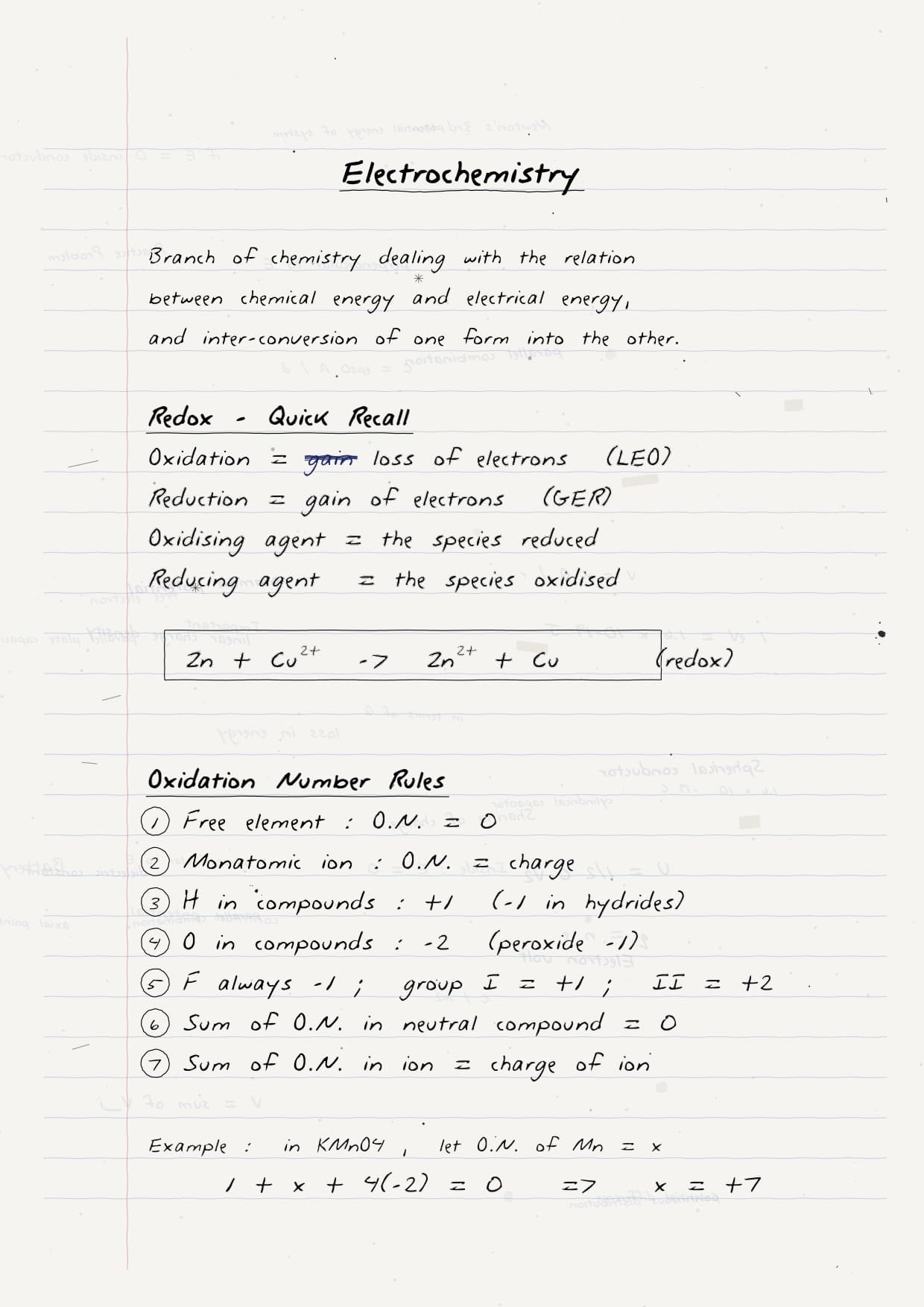
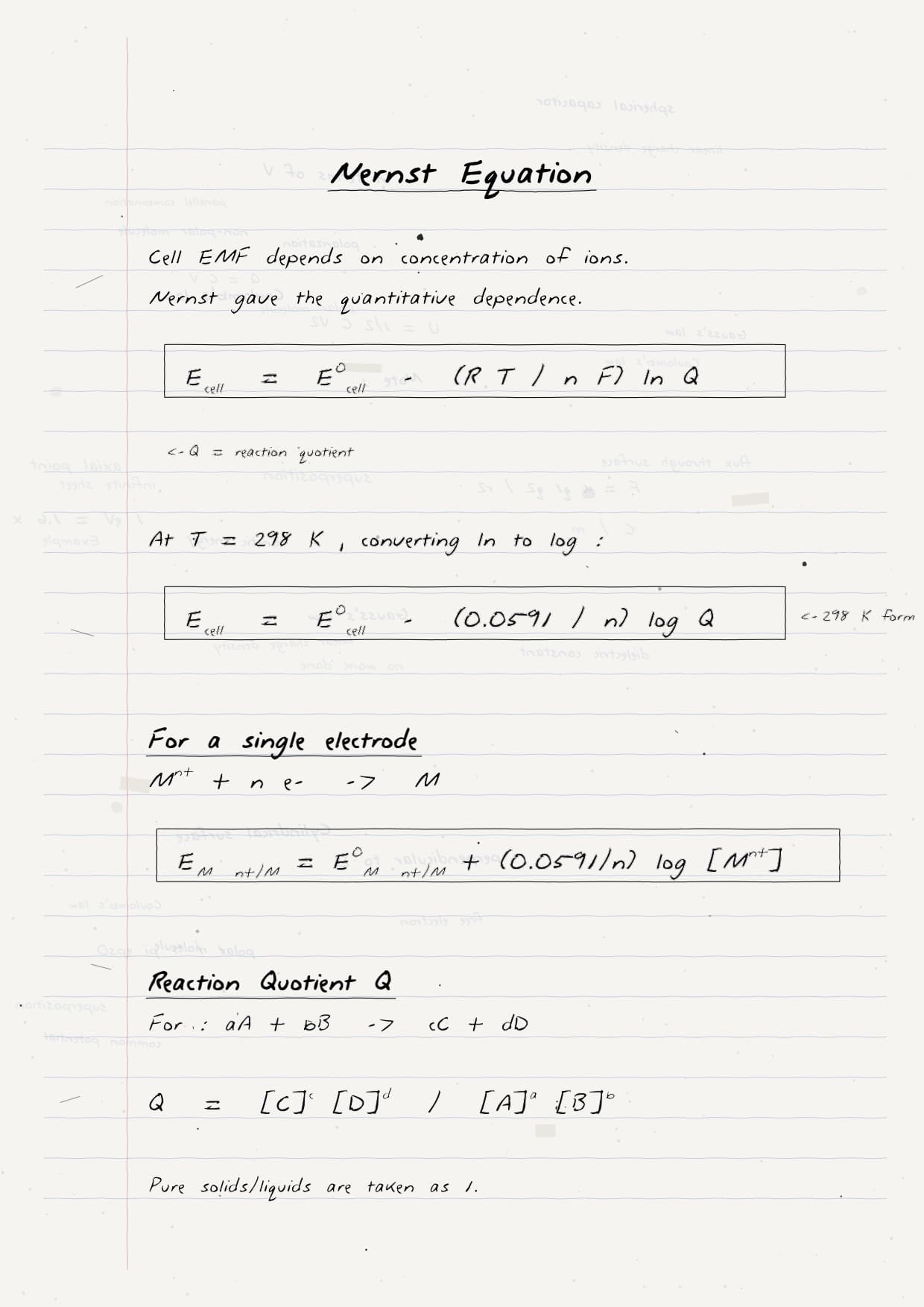
The notes follow the NCERT order: Daniell cell, Nernst equation, conductance, Kohlrausch's law, electrolysis, batteries, fuel cells, and corrosion.
Prepared by senior CBSE-board examiners, mapped to the 2026-27 rationalised NCERT, and checked against the last five years of CBSE, JEE Main, and NEET papers.
Also Check:
- CBSE Class 12 Chemistry Syllabus 2026-27
- JEE Main Chemistry Syllabus
- NEET Chemistry Syllabus
Electrochemistry Handwritten Notes: Complete Diagram List
The booklet carries 14 hand-drawn sketches across 22 pages. Use the index below to find any figure fast.
| Page | Diagram |
|---|---|
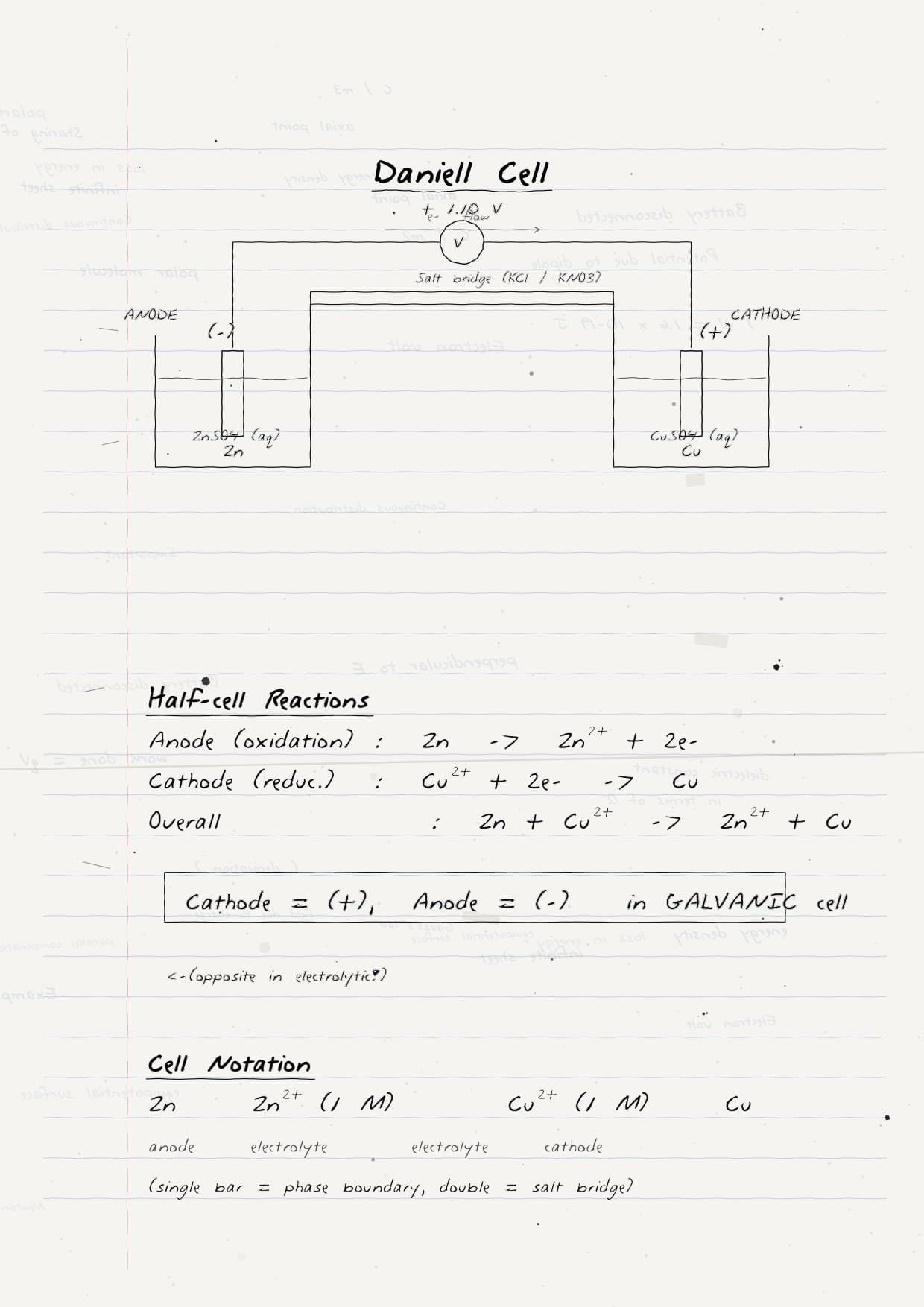
| 2 | Daniell Cell with Salt Bridge (Zn / ZnSO4 || CuSO4 / Cu) |
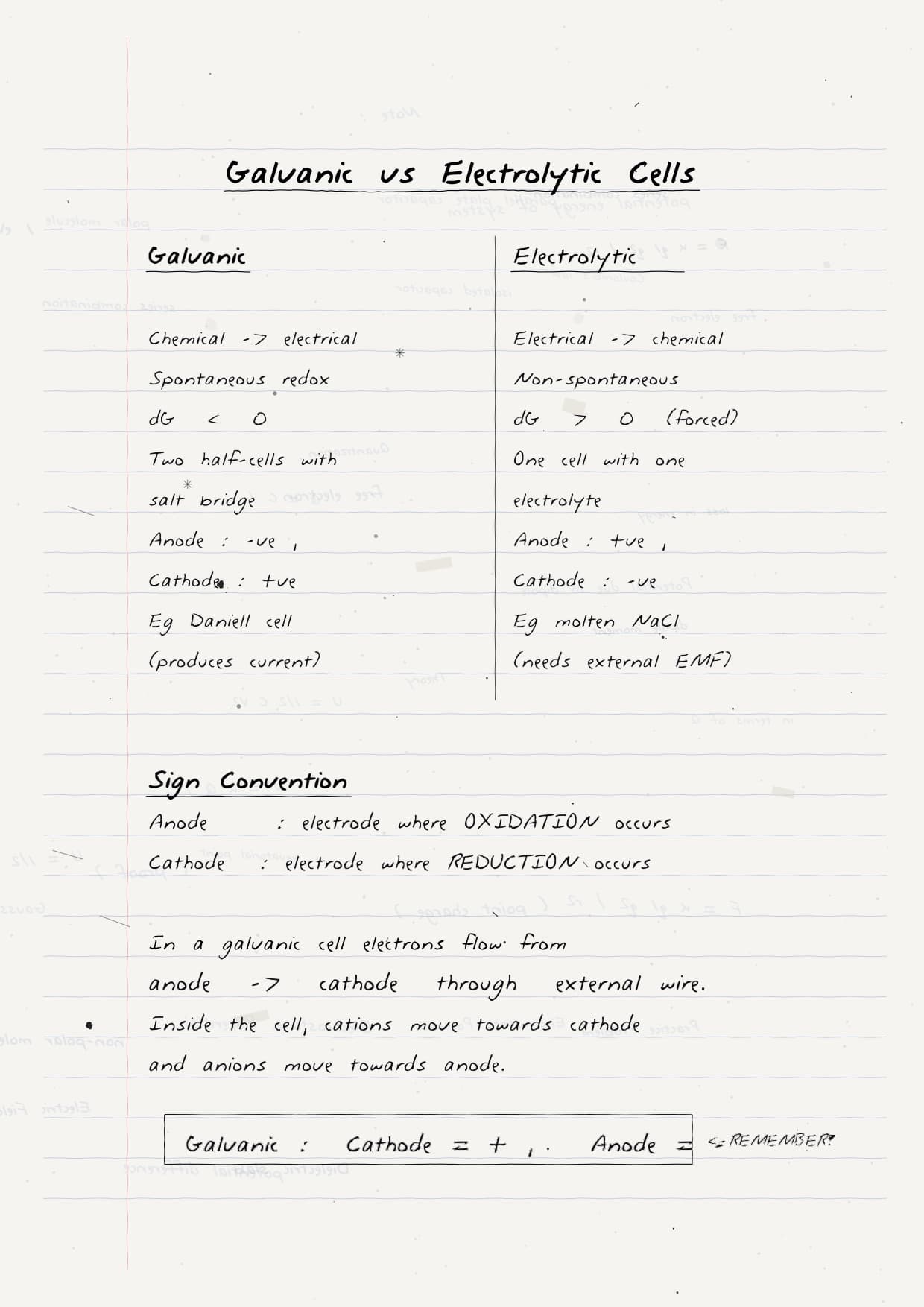
| 3 | Galvanic vs Electrolytic Cell |
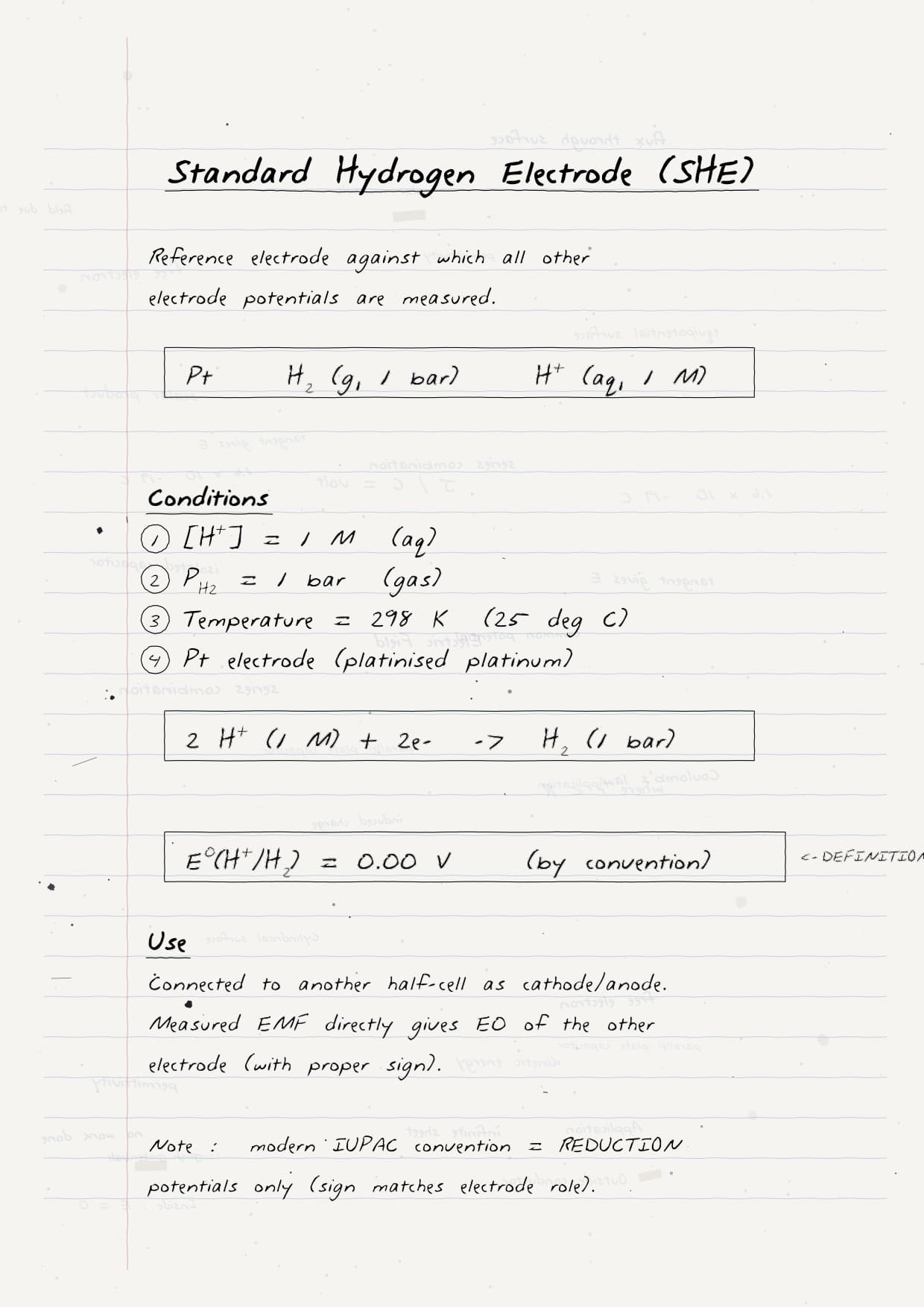
| 5 | Standard Hydrogen Electrode |
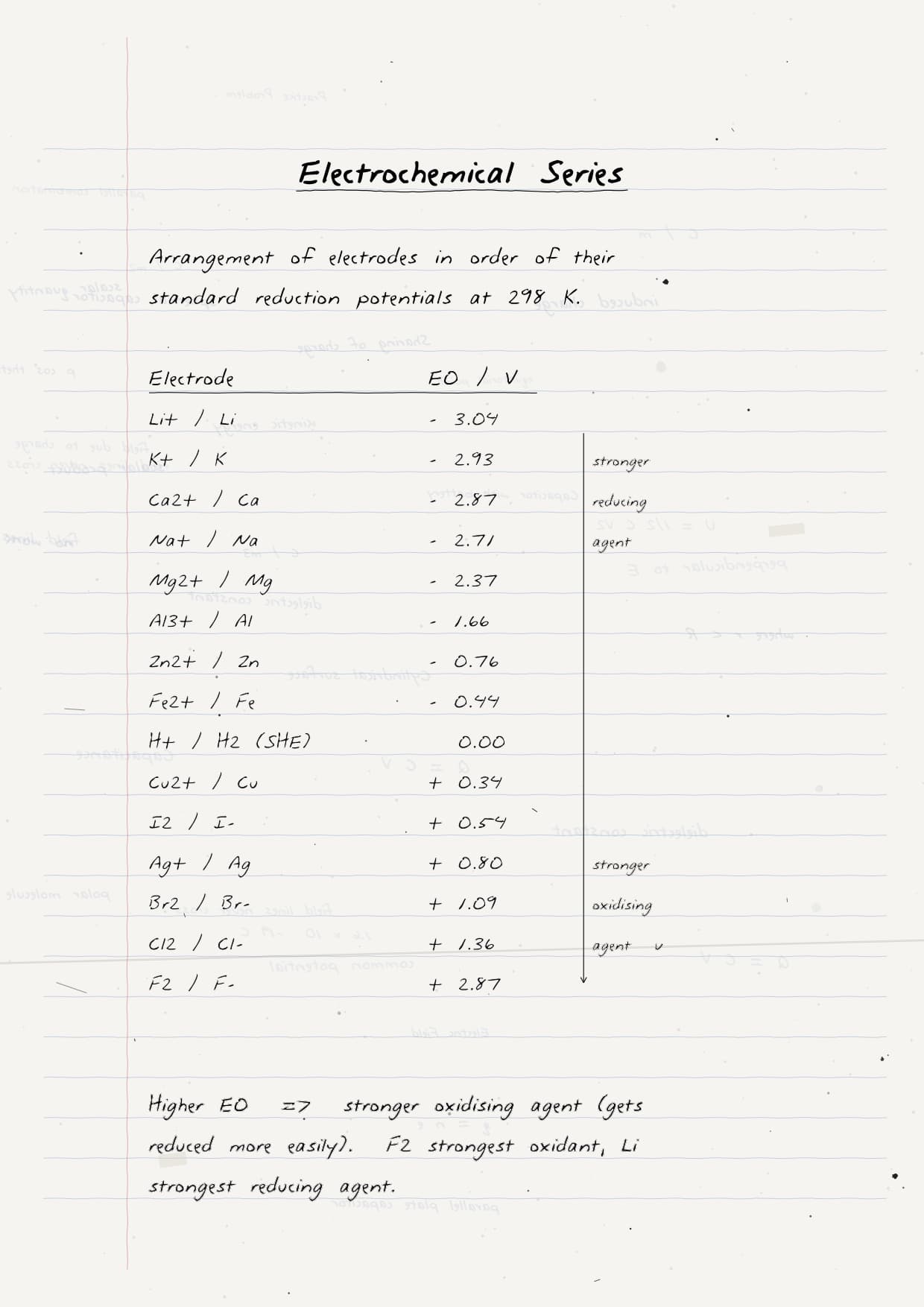
| 6 | Electrochemical Series Ladder |
| 8 | Nernst Equation Derivation Strip |
| 10 | Conductance Cell (cell-constant geometry) |
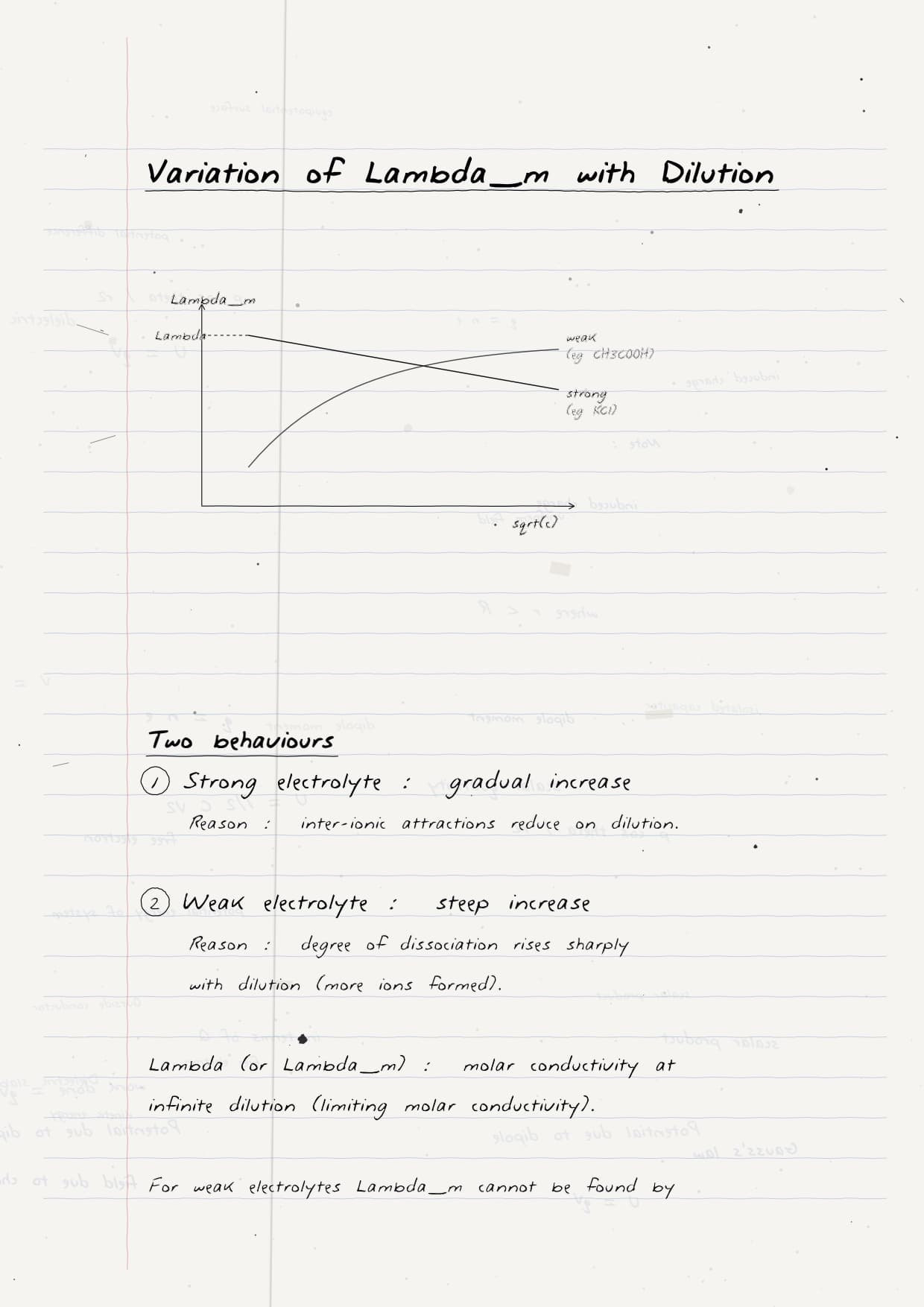
| 11 | Molar Conductivity vs √C Curve |
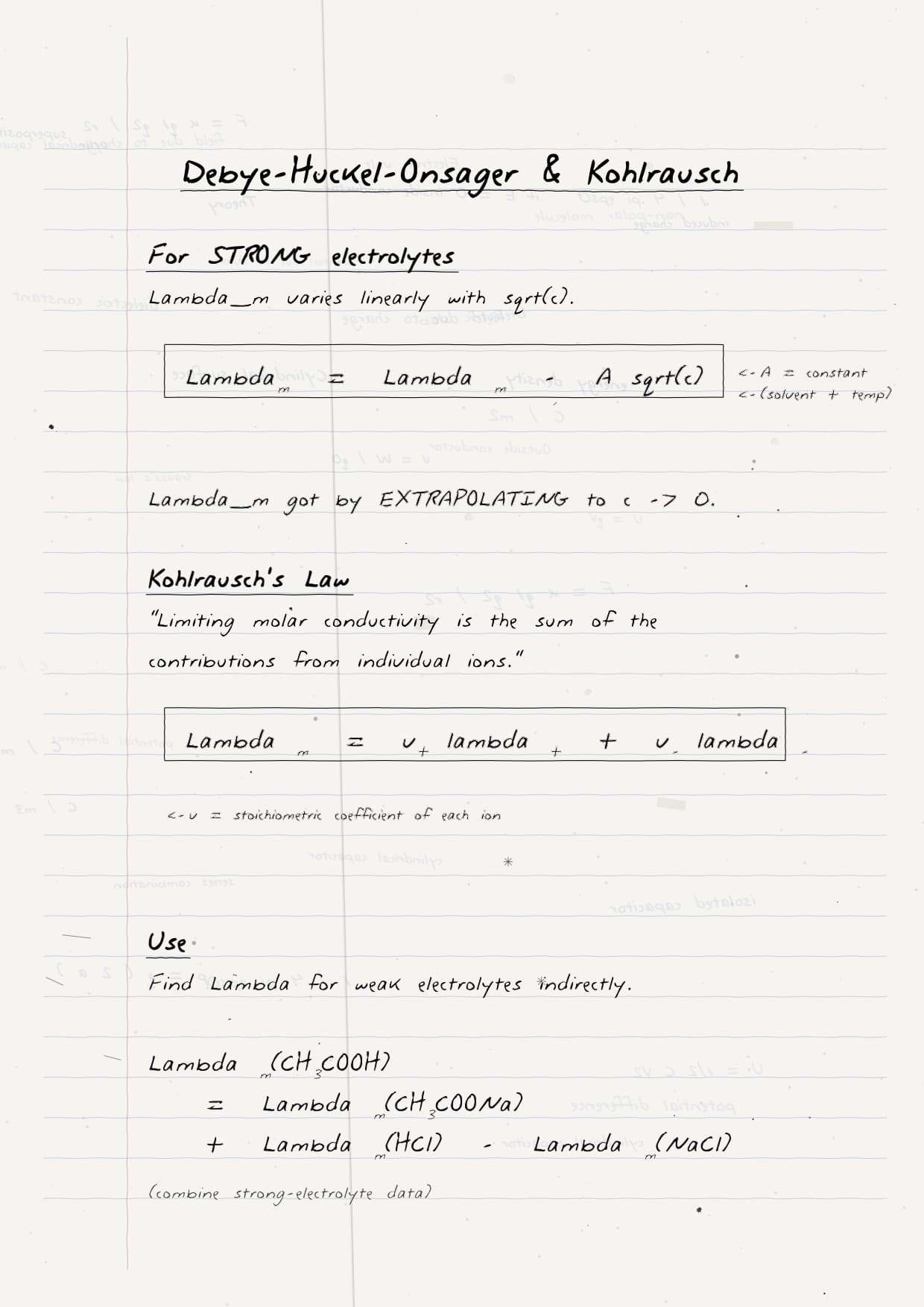
| 13 | Kohlrausch's Law Decomposition |
| 15 | Electrolysis of Molten NaCl and Aqueous CuSO4 |
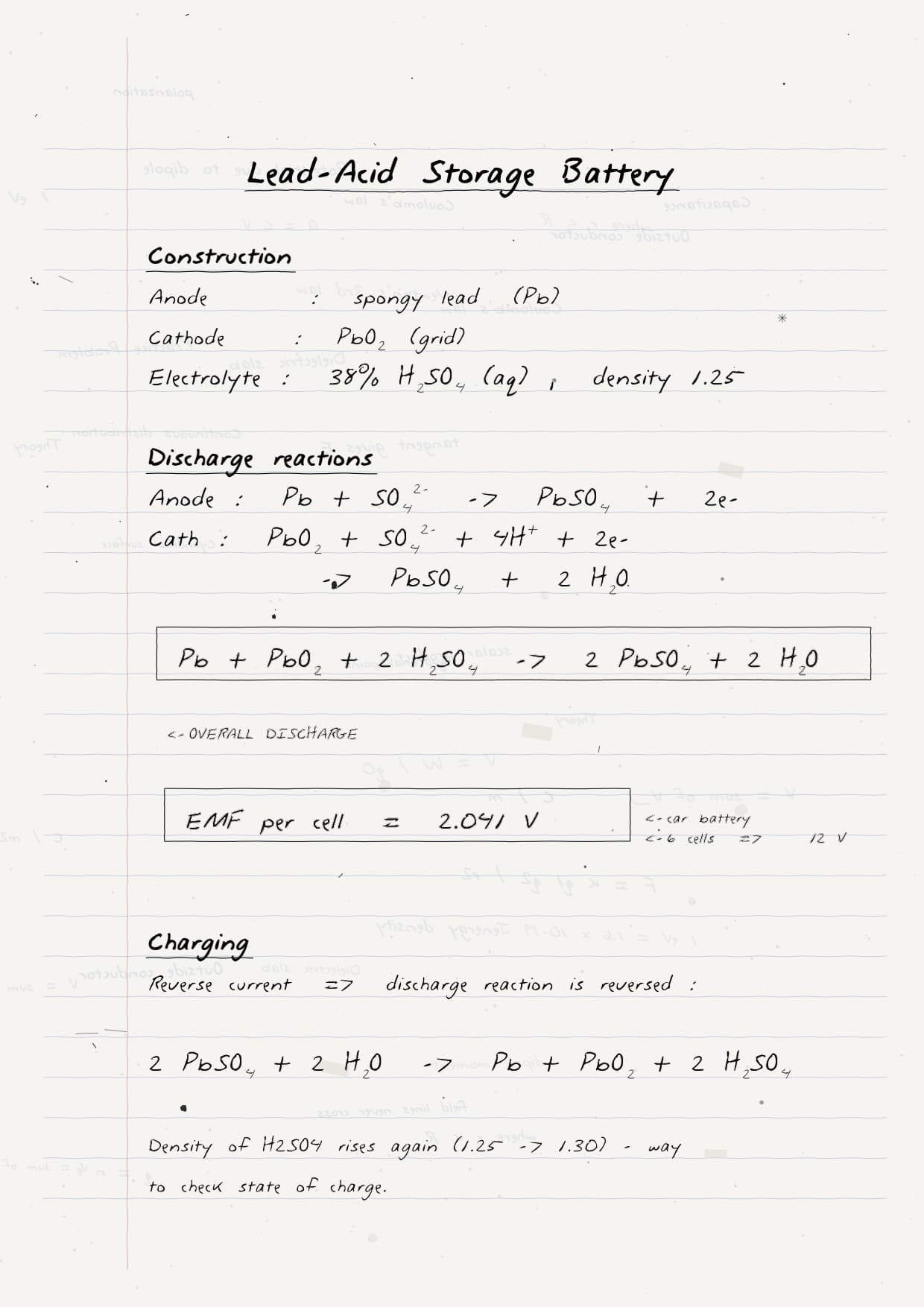
| 17 | Lead Storage Battery |
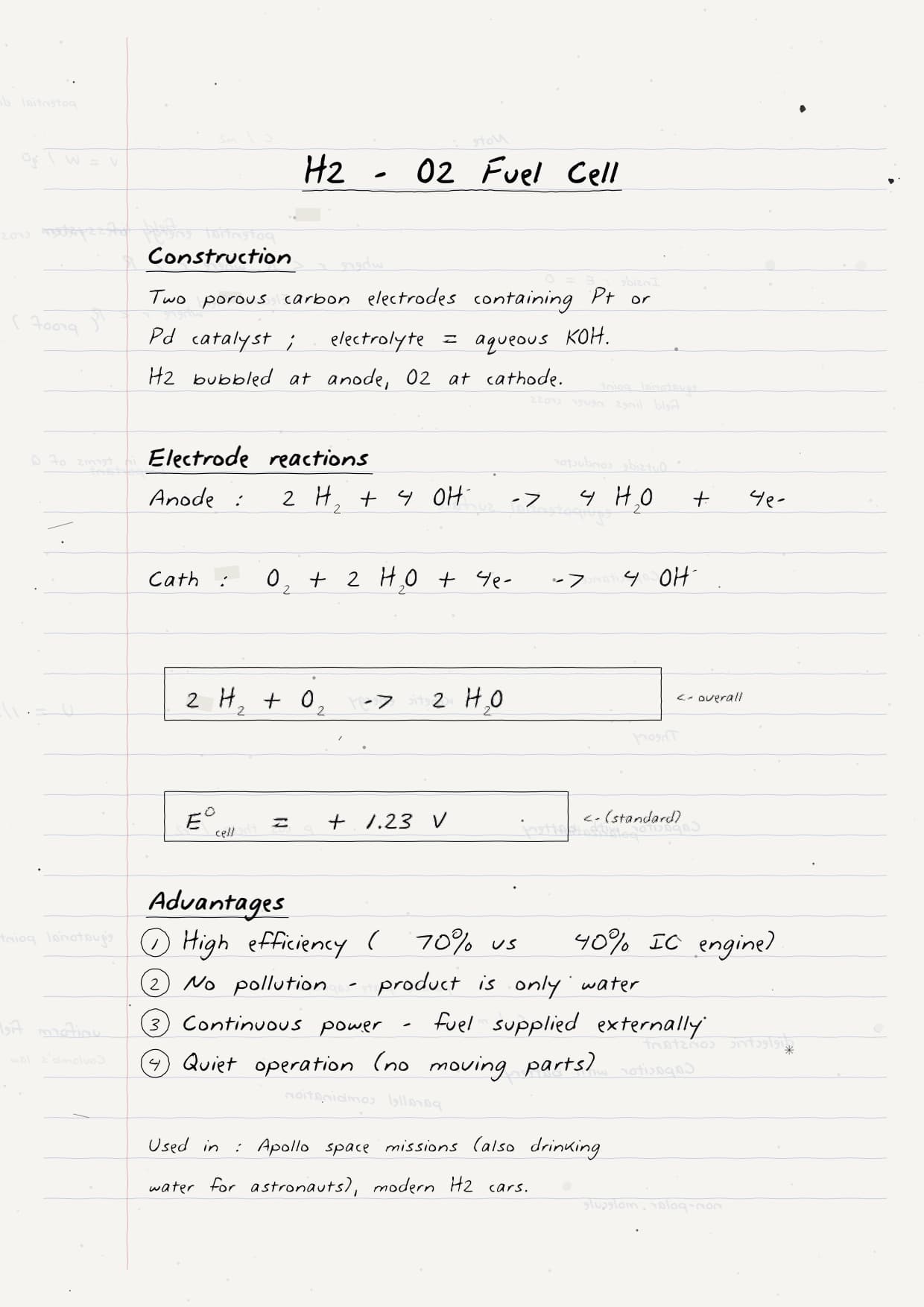
| 19 | Hydrogen-Oxygen Fuel Cell |
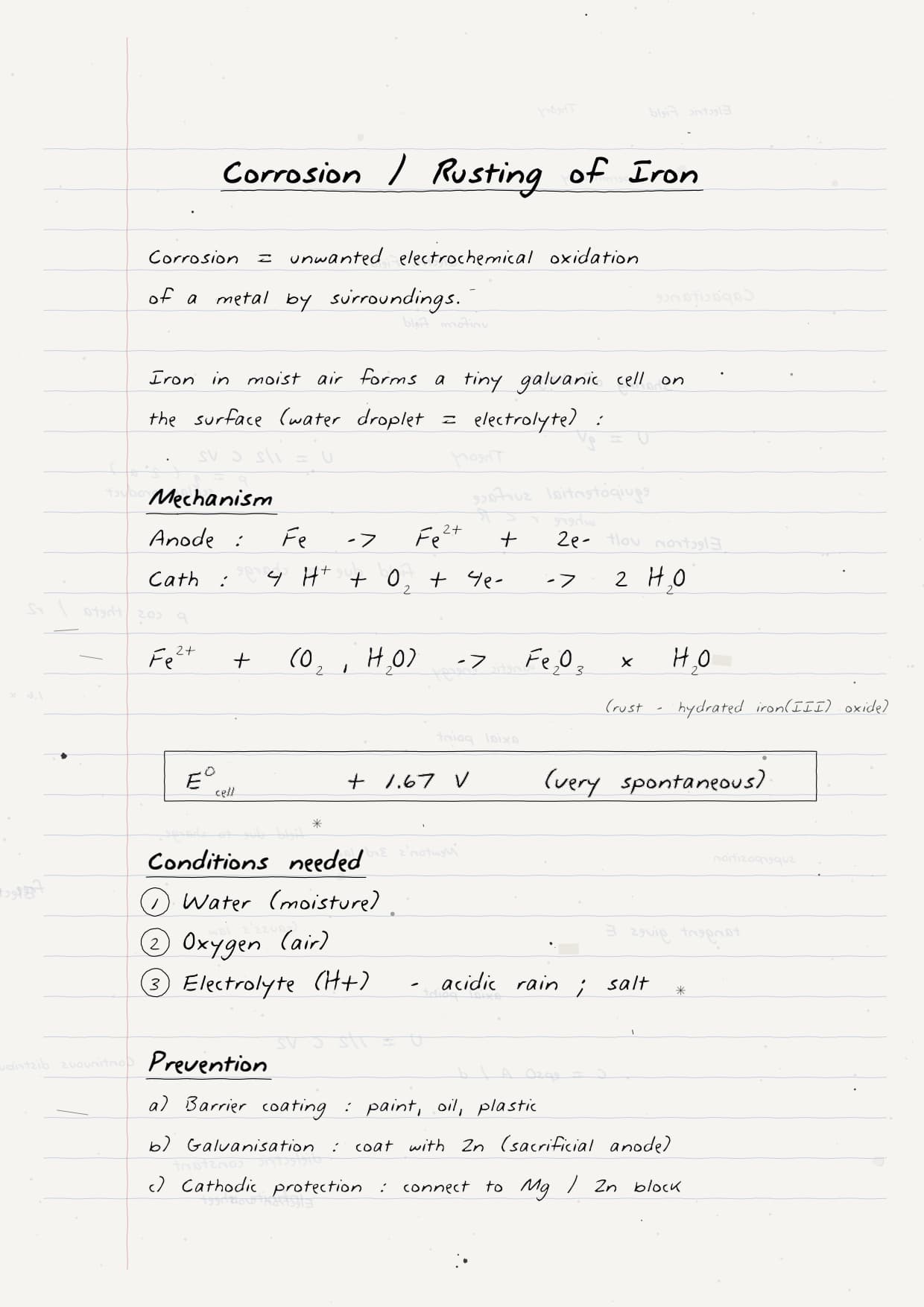
| 21 | Rusting of Iron (anodic and cathodic patches) |
Electrochemistry Class 12 Chemistry Explained
Source: Magnet Brains on YouTube
What's Inside the Electrochemistry Handwritten Notes PDF
The PDF is a 22-page notebook with a four-colour ink code. The contents map and colour legend are below.
| Pages | Section |
|---|---|
| 2 to 4 | Electrochemical Cells, cell notation, SHE |
| 5 to 7 | Electrode Potential, EMF, Electrochemical Series |
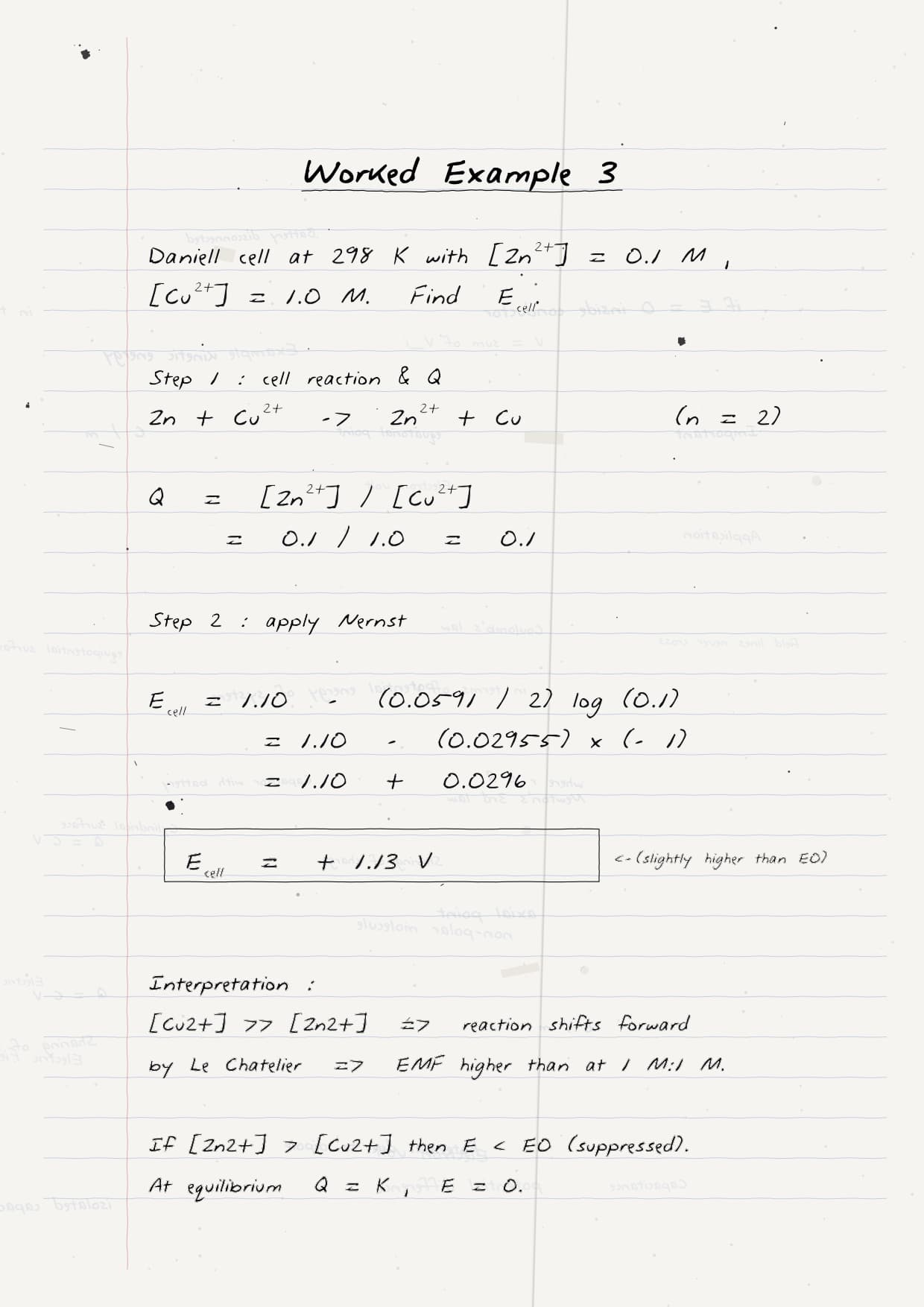
| 8 to 9 | Nernst Equation: derivation, cell form, sample numerical |
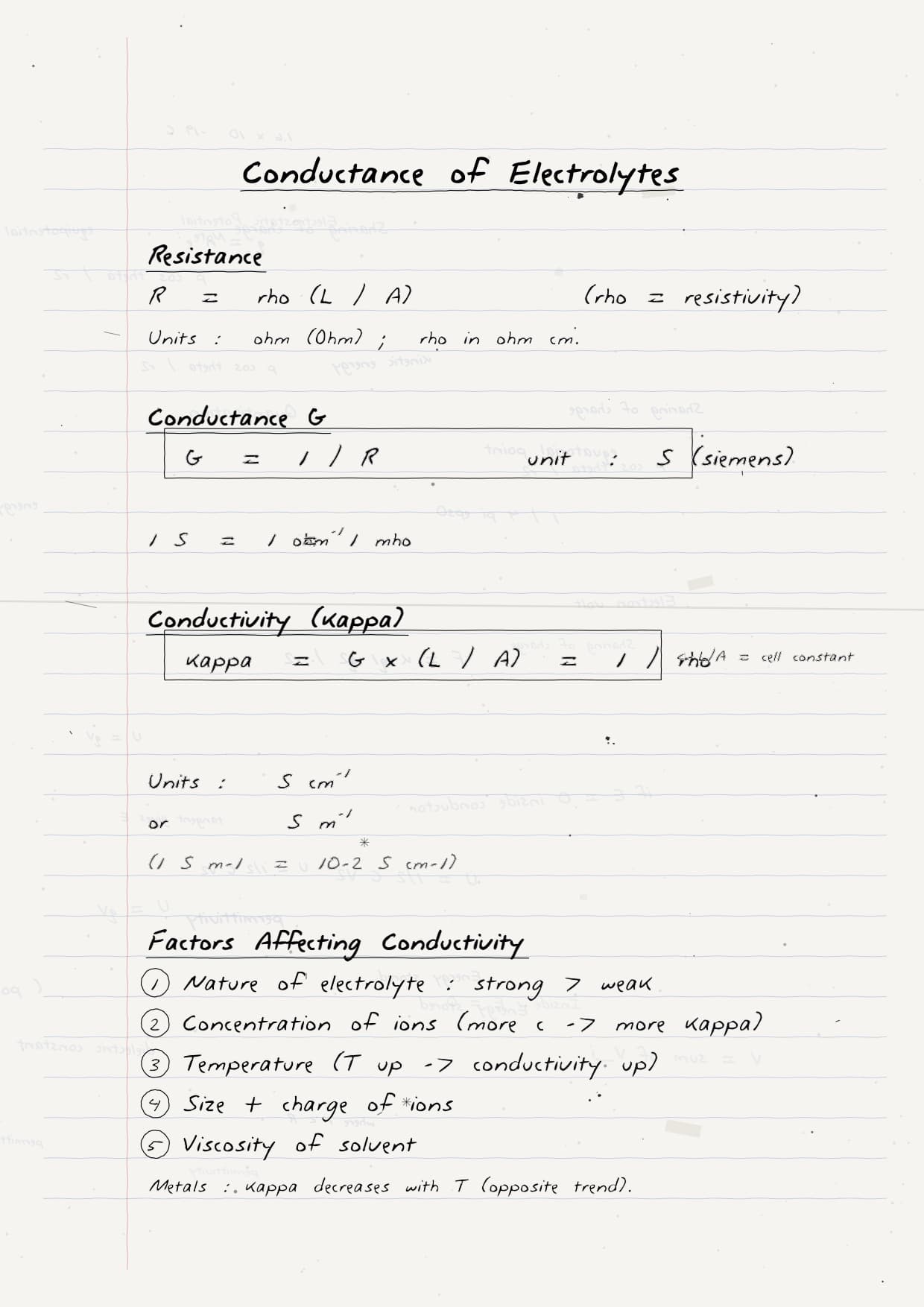
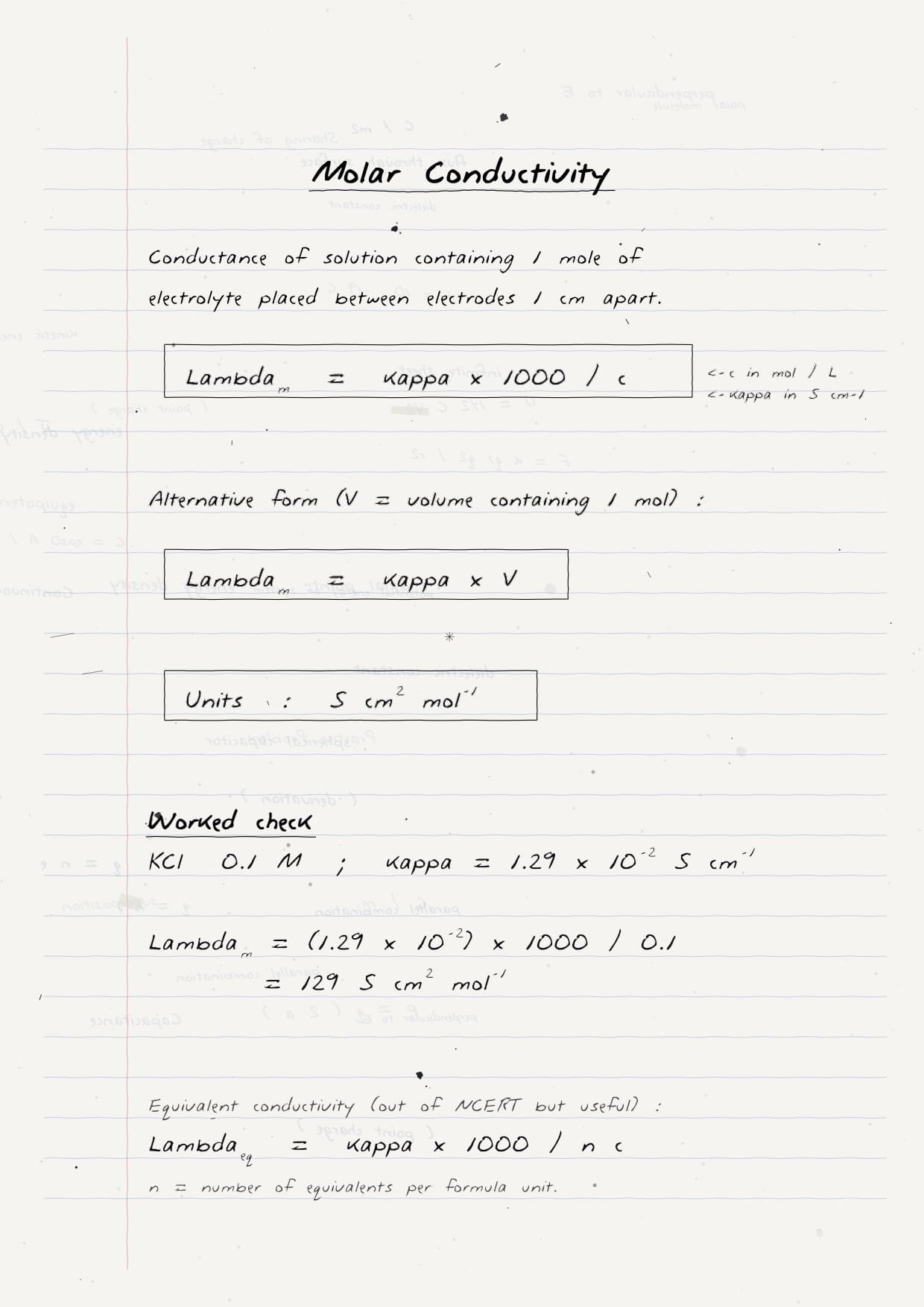
| 10 to 13 | Conductance: specific, molar, Kohlrausch's law |
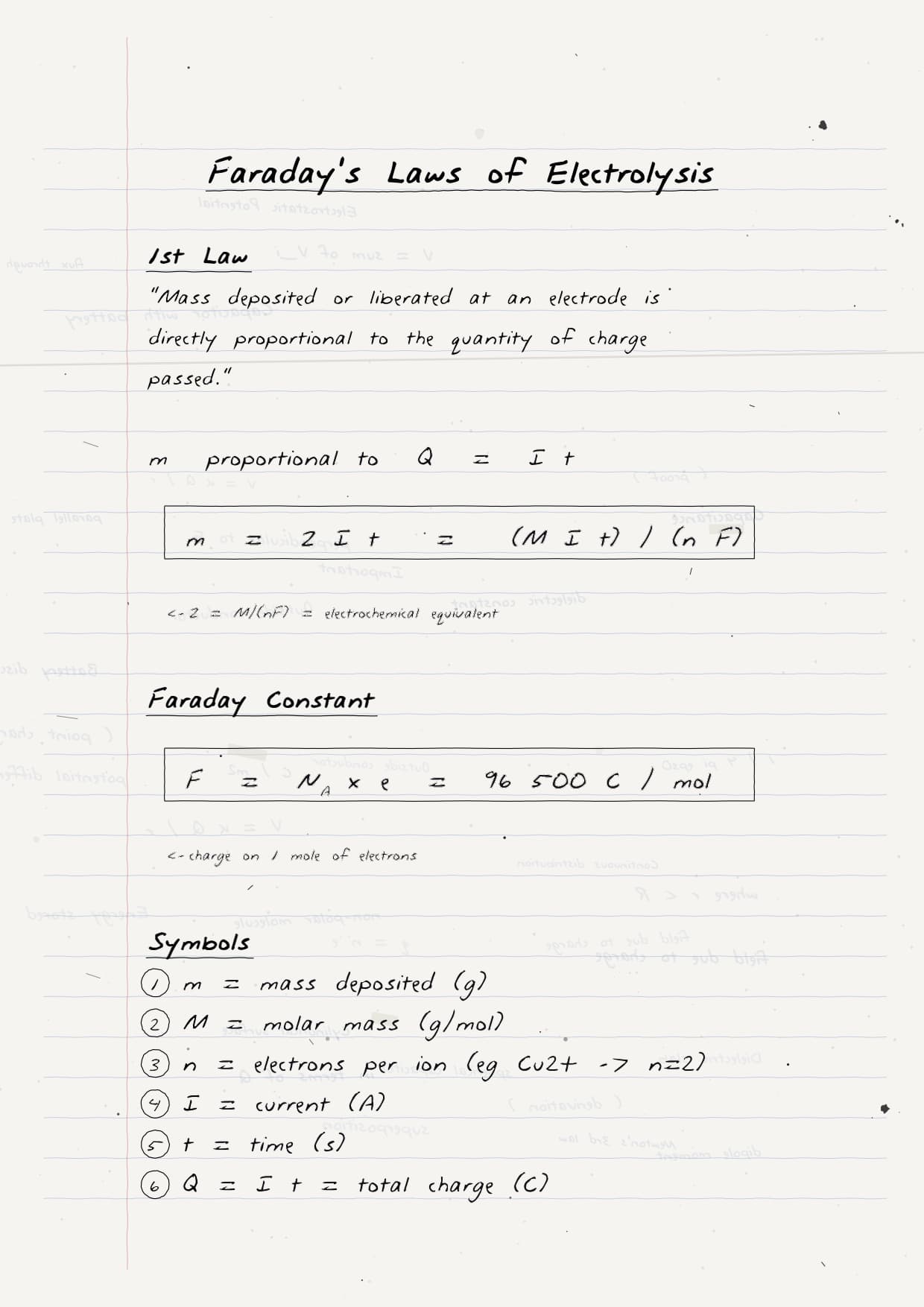
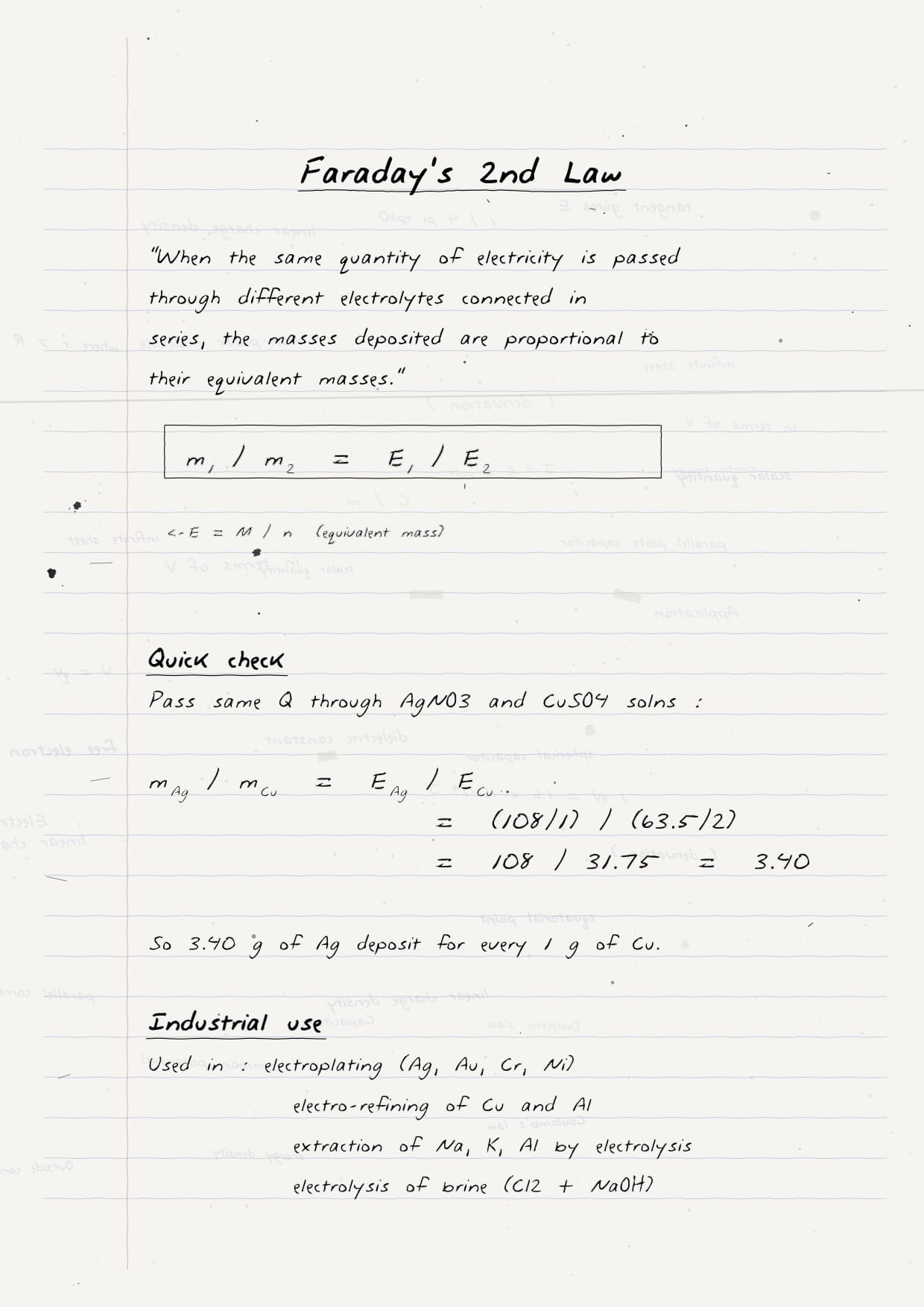
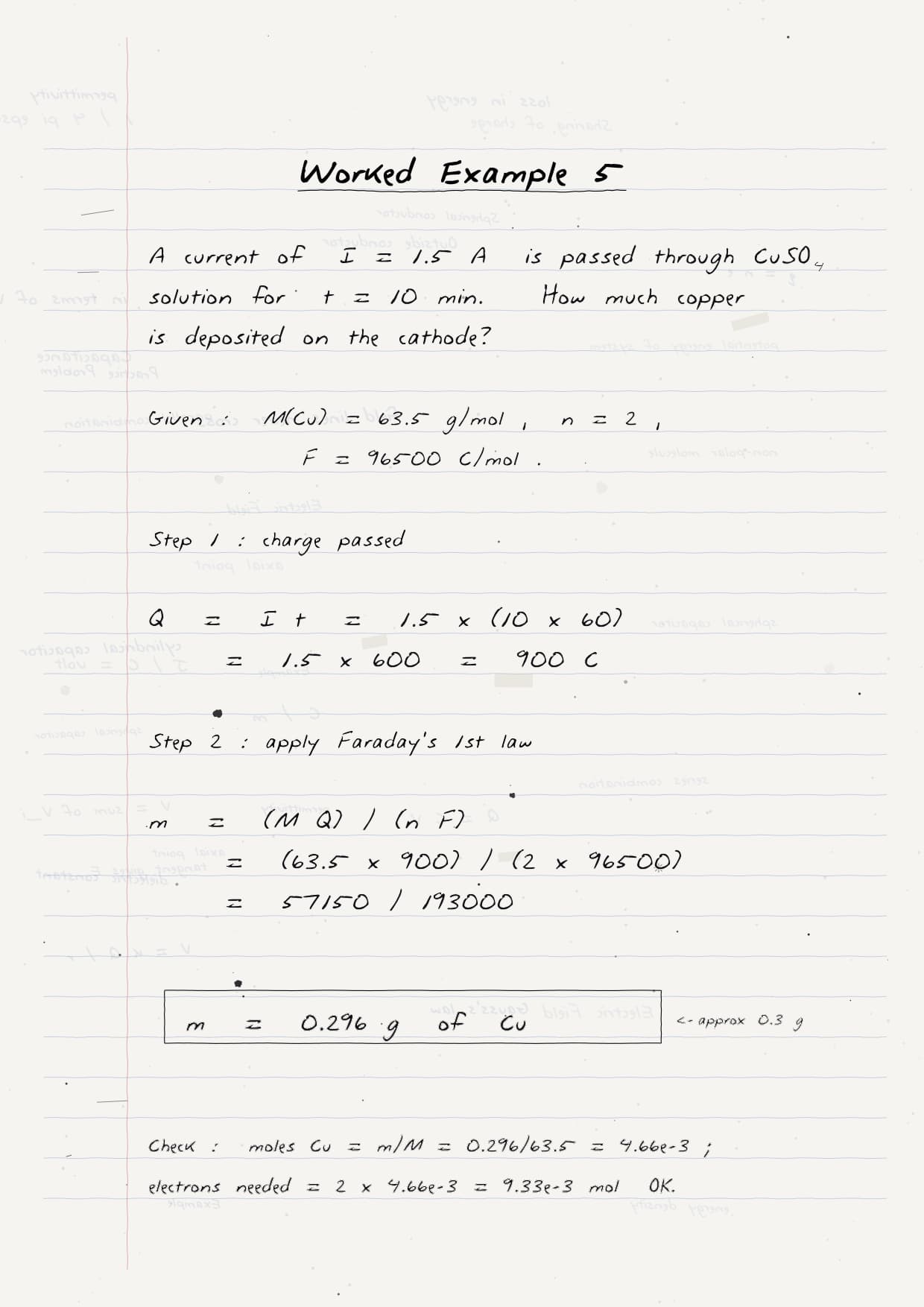
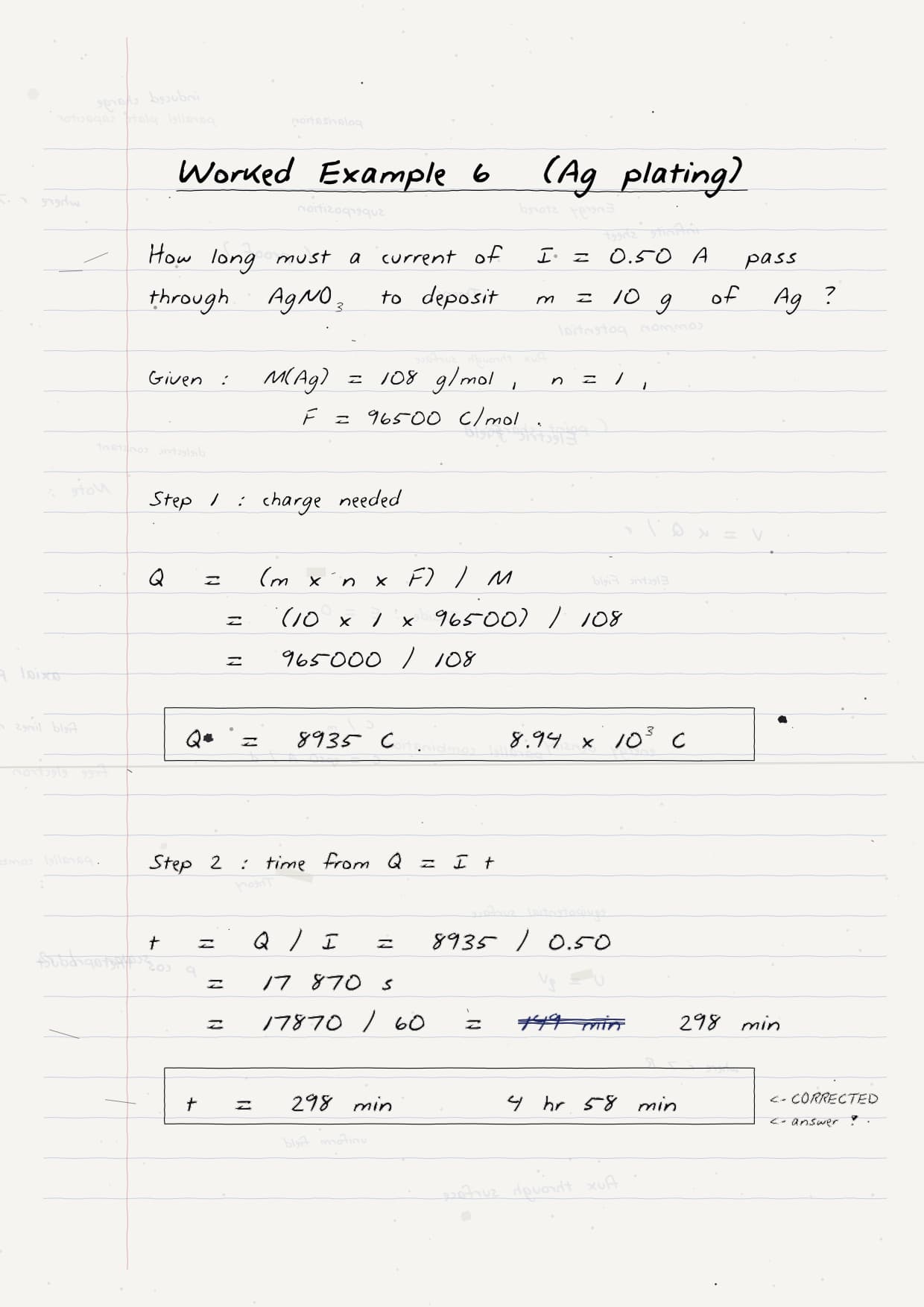
| 14 to 16 | Electrolysis and Faraday's Laws |
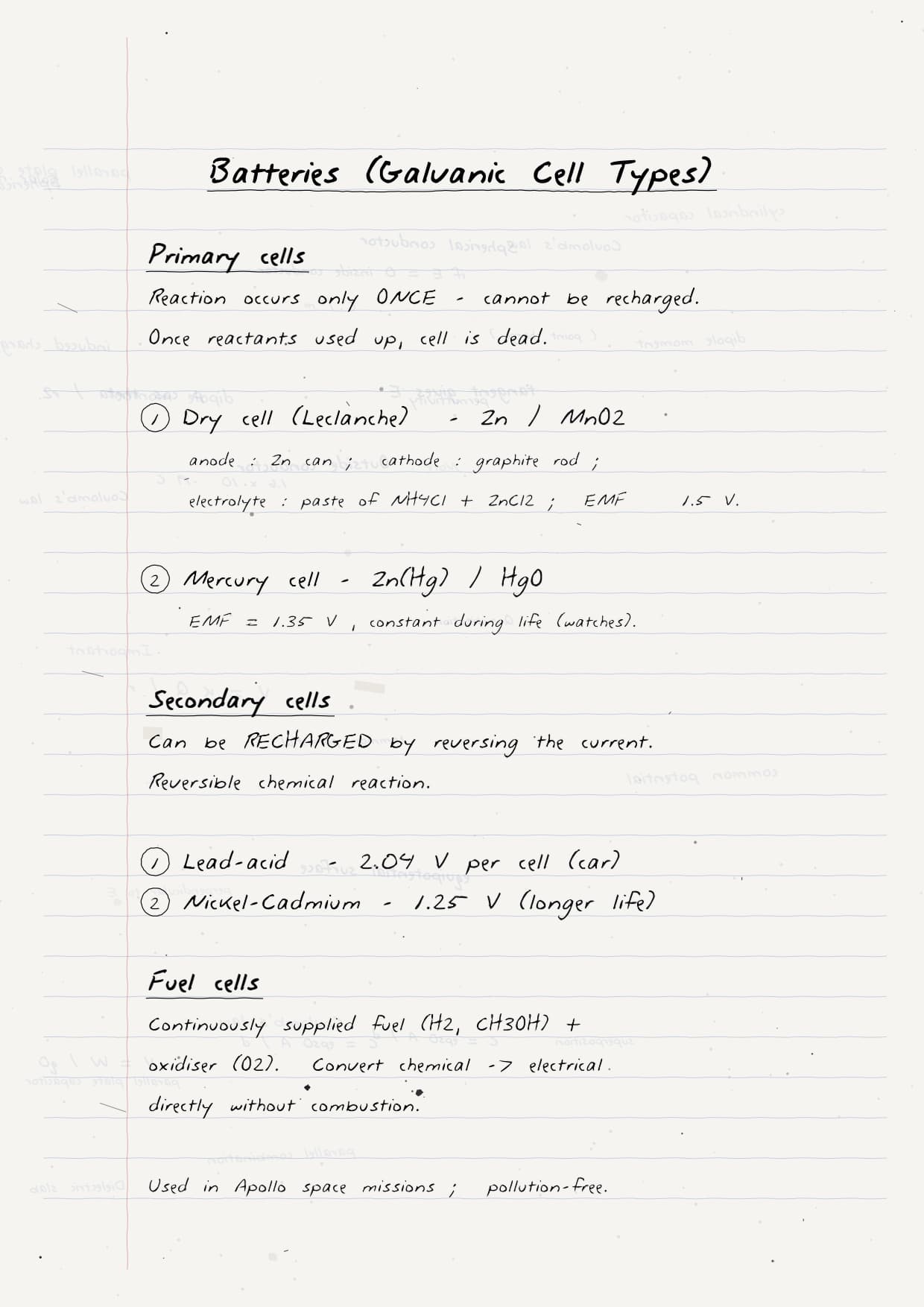
| 17 to 19 | Batteries (lead storage, Ni-Cd) and H2-O2 fuel cell |
| 20 to 21 | Corrosion: electrochemical theory and prevention |
| 22 | One-page recap and last 24-hour card |
Colour-Code Box Legend
How will Collegedunia's Handwritten Notes Help You with Electrochemistry?
The booklet is built for students who have hours, not days, to revise. Every page is a labelled sketch, a boxed formula, or a one-line definition.
- Notebook feel: Ink-on-ruled-paper reads faster than typeset notes; your eye lands on the formula box first.
- 2026-27 NCERT alignment: Dropped topics (Leclanche and mercury cells, bulk-electrolysis derivations) are flagged so you skip removed content.
- Worked numericals: Each formula box has a 2-line worked example.
- Last 24-hour card: Page 22 collapses the chapter into 9 bullets and 4 formulas for the morning of the paper.
Electrochemistry Memory Mnemonics for Concept Recall
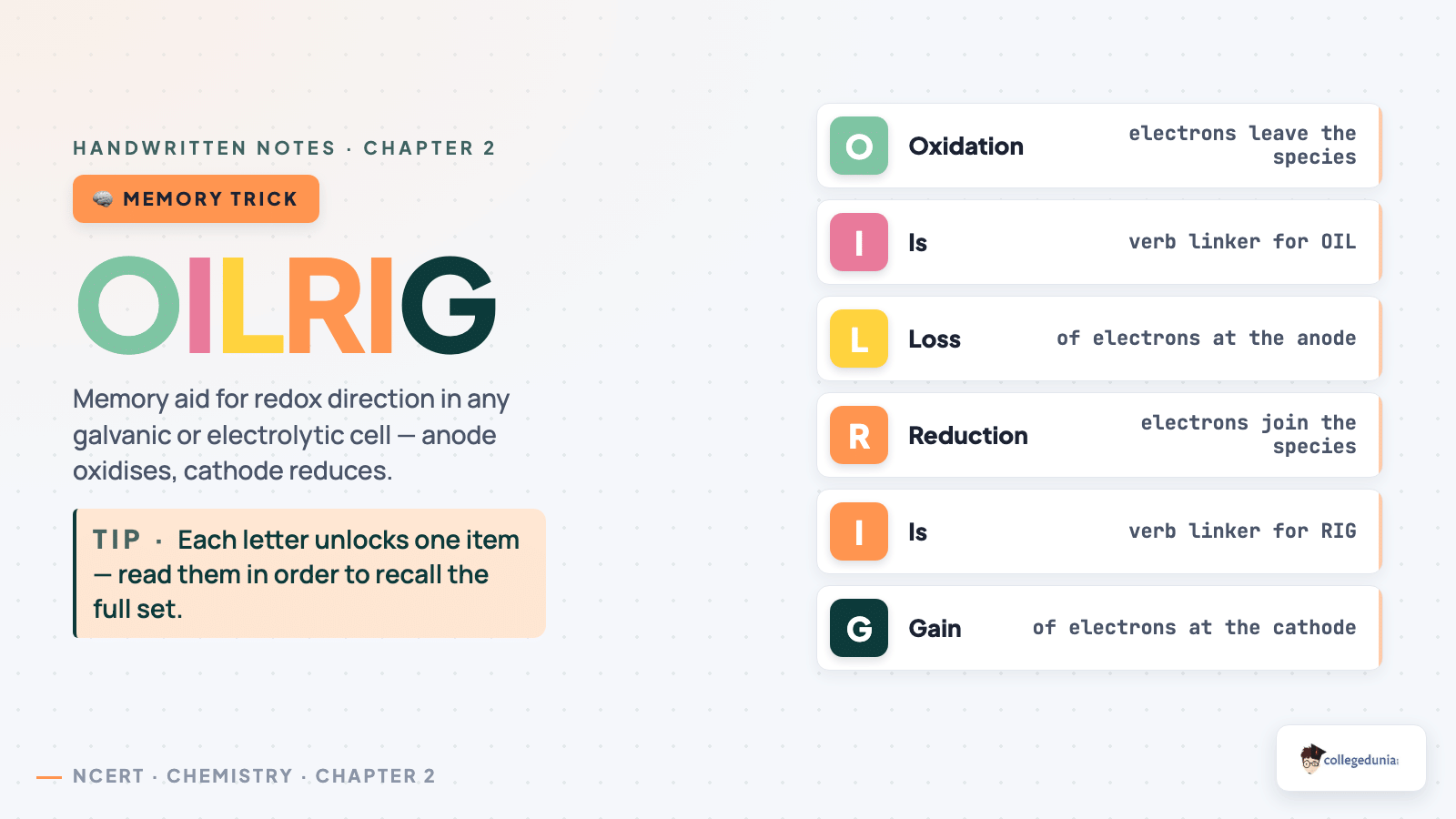
Three mnemonics cover the sign-convention traps CBSE and JEE lean on.
A single sign error in the Nernst equation flips Ecell and costs the full 3-mark numerical.
Electrochemistry Top 5 Formulae for Quick Recall
These five formulae cover most of the chapter's numericals. Memorise the units too.
| Quantity | Formula | Units |
|---|---|---|
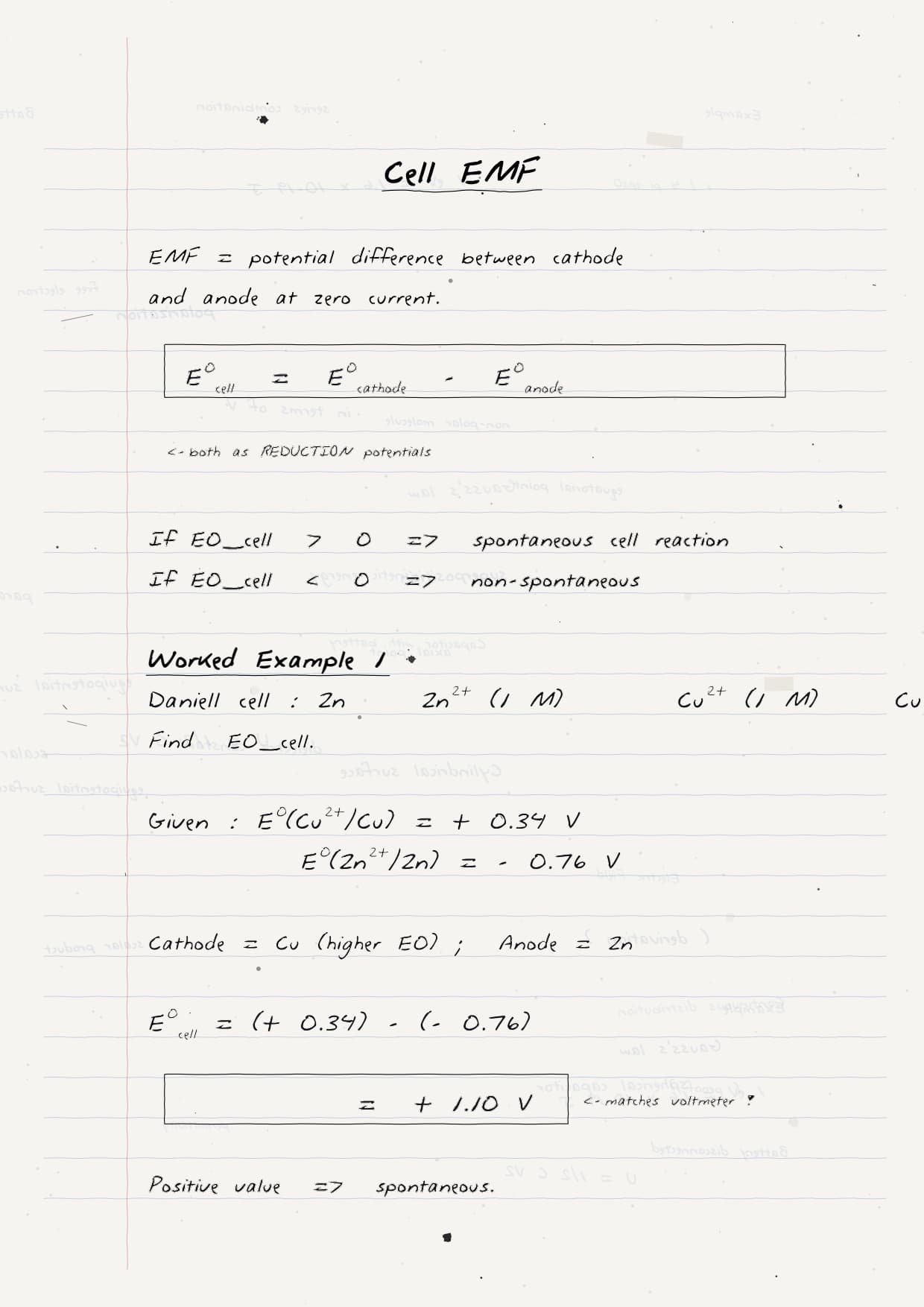
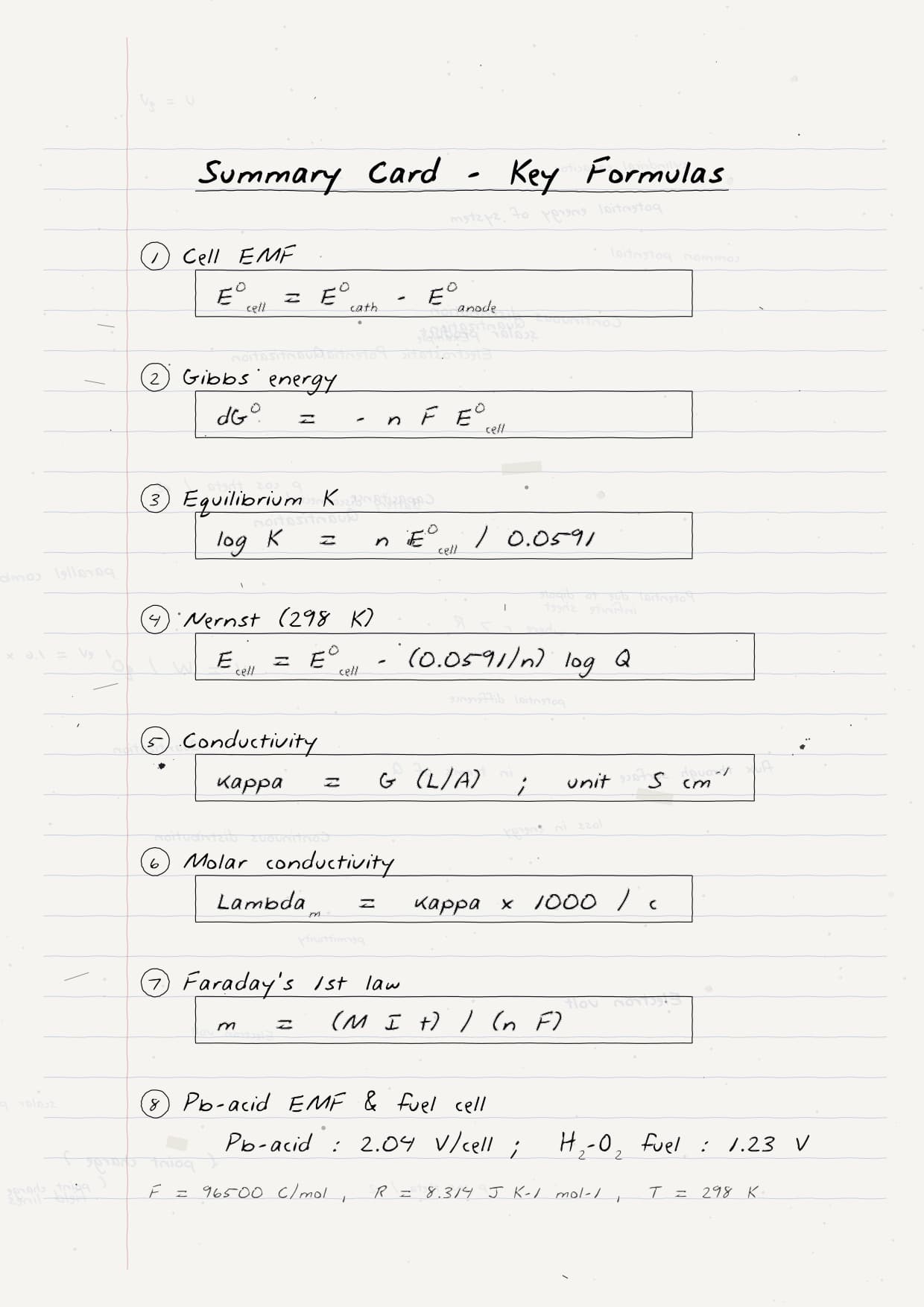
| Cell EMF (Nernst, 298 K) | Ecell = E∘cell - 0.0591nlog Q | V |
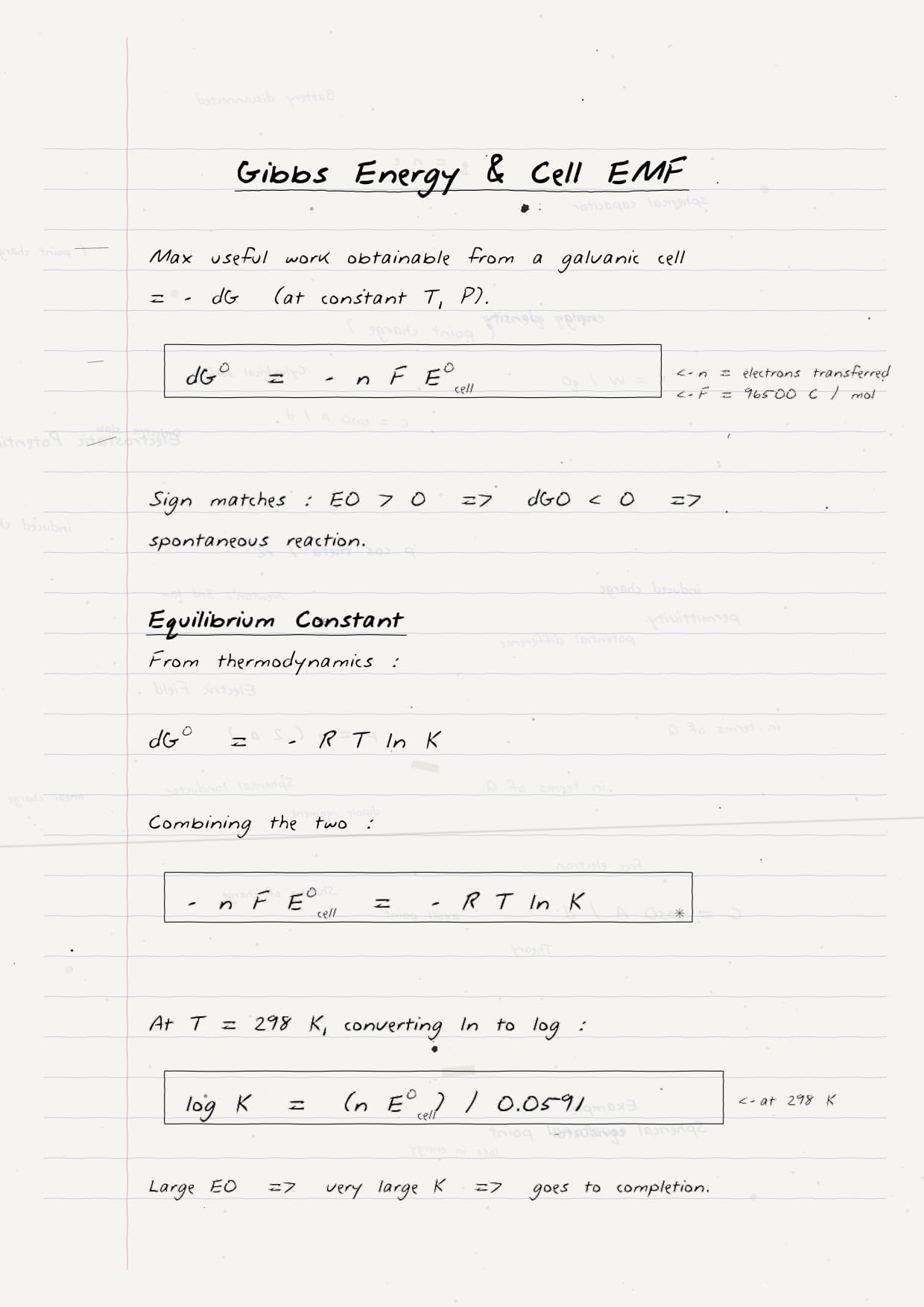
| Gibbs energy of cell reaction | r G∘ = -nFE∘cell | J mol-1 |
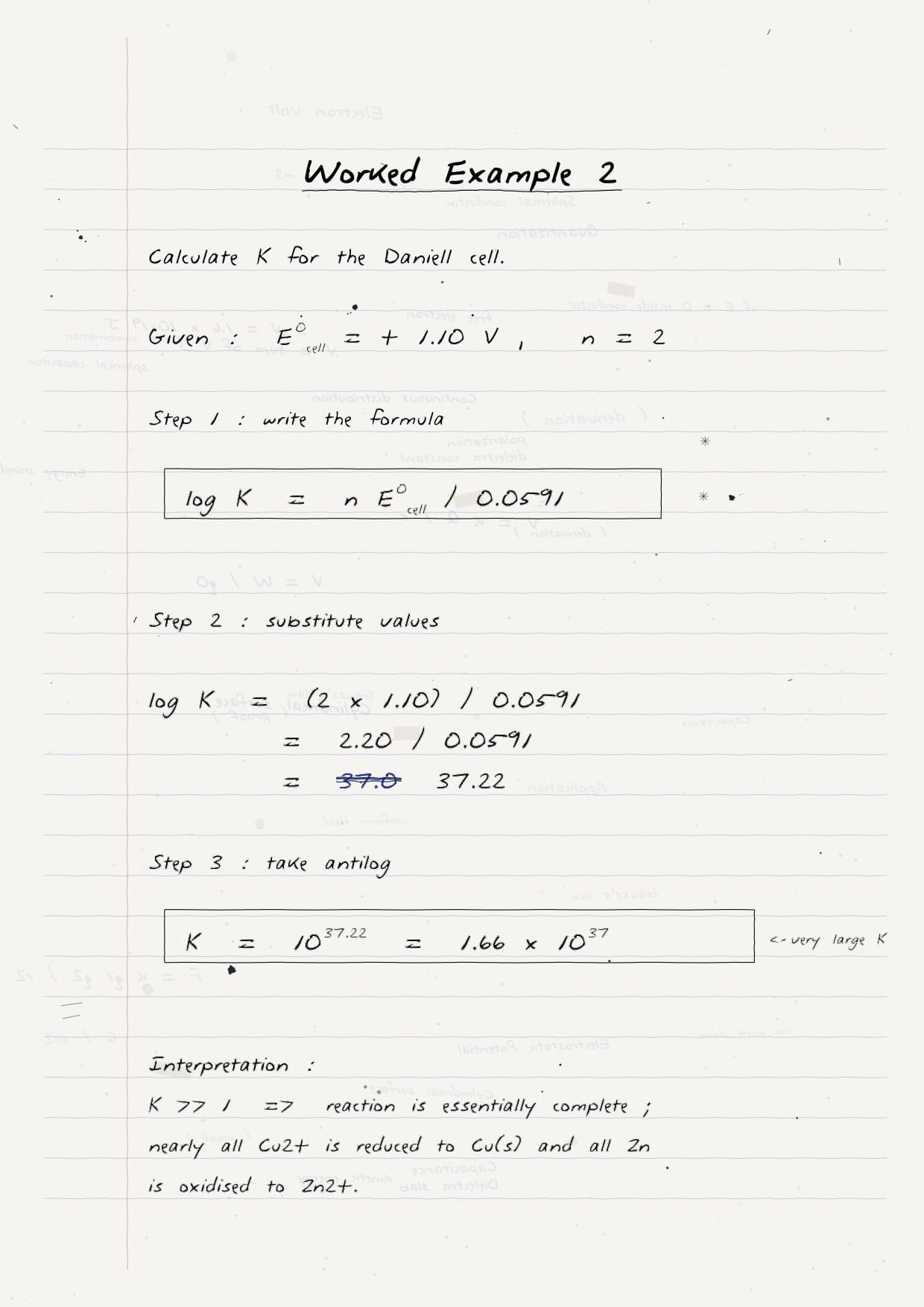
| Equilibrium constant link | log Kc = nE∘cell0.0591 | - |
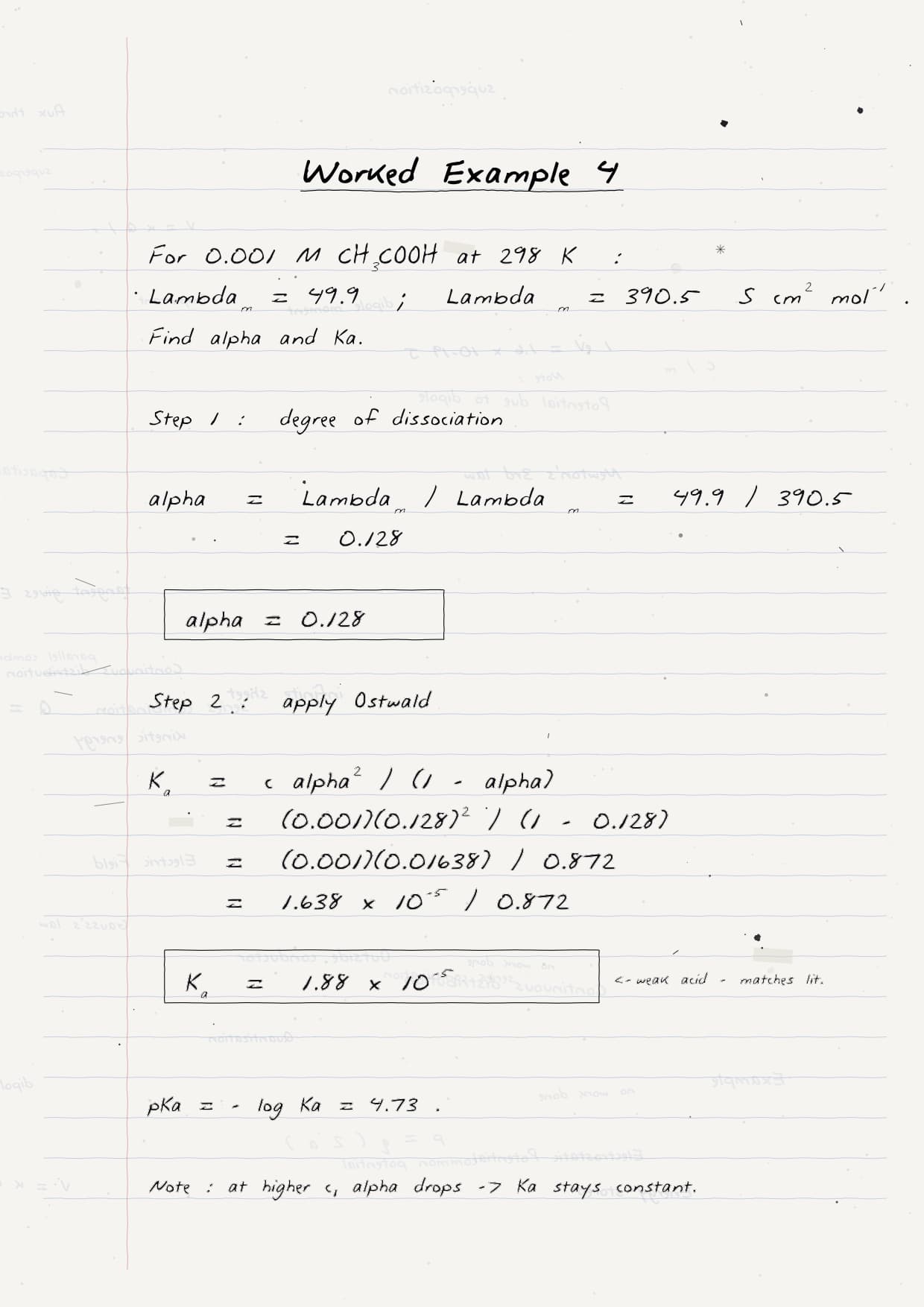
| Molar conductivity | m = κ × 1000c | S cm2 mol-1 |
| Faraday's first law | w = ItMnF | g |
Electrochemistry: Topic Checklist for CBSE Boards and Entrance Exams
If time is tight, start with the high-priority rows. CBSE weights the Nernst equation, conductance, and Faraday's-law numericals; JEE and NEET lean on the electrochemical series and Kohlrausch's law.
| Sub-topic | Priority | Where it shows up |
|---|---|---|
| Nernst Equation (E and E° form) | High | 3-mark CBSE numerical almost every year; JEE Main objective |
| Conductance, Molar Conductivity, Kohlrausch's Law | High | 5-mark CBSE LA; NEET 1-2 questions |
| Electrolysis & Faraday's Laws | High | 3-mark numerical (mass / charge); JEE Main objective |
| Galvanic Cell, Cell Notation, SHE | Medium | 2-mark CBSE SA; conceptual MCQ |
| Batteries (Lead Storage, Ni-Cd) & Fuel Cell | Medium | 2-mark write-up; NEET assertion-reason |
| Corrosion (Electrochemical Theory) | Low | VSA 1-mark; occasionally a 2-mark explanation |
CBSE 2024 Compartment asked a 3-mark Nernst numerical and a 5-mark conductance-Kohlrausch derivation from this chapter alone.
Electrochemistry: Last 24-Hour Revision Card for Class 12 Chemistry
The night before the exam, this is the only page you need.
- Galvanic vs Electrolytic: galvanic is spontaneous ( Δ G < 0 ), converts chemical to electrical energy; electrolytic is the reverse.
- Cell notation: anode left, cathode right, double bar = salt bridge. Zn | Zn2+ || Cu2+ | Cu.
- SHE: E° = 0.00 V, the reference electrode (1 atm H2 over Pt black in 1 M H+).
- Nernst (298 K): E = E∘ - 0.0591nlog Q . Daniell: Q = [Zn2+]/[Cu2+].
- Conductance: κ in S cm-1, Λm in S cm2 mol-1. Λm rises on dilution.
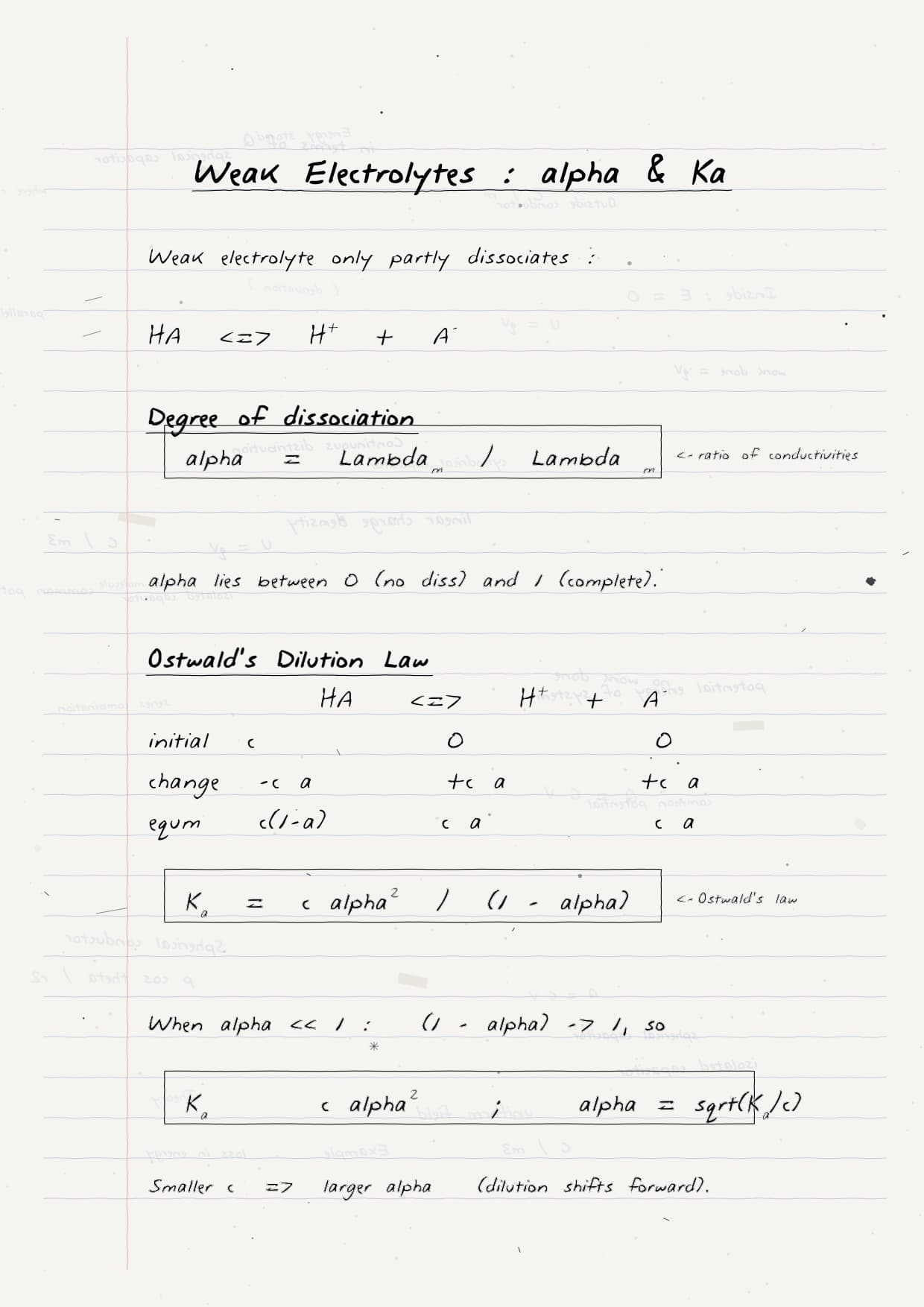
- Kohlrausch: Λ∘m = ∑ i λ∘i . Used for weak-electrolyte Λ∘m and degree of dissociation.
- Faraday's first law: w = ItMnF , with 1 F = 96500 C.
- Batteries and fuel cell: lead storage is rechargeable; H2-O2 fuel cell outputs water.
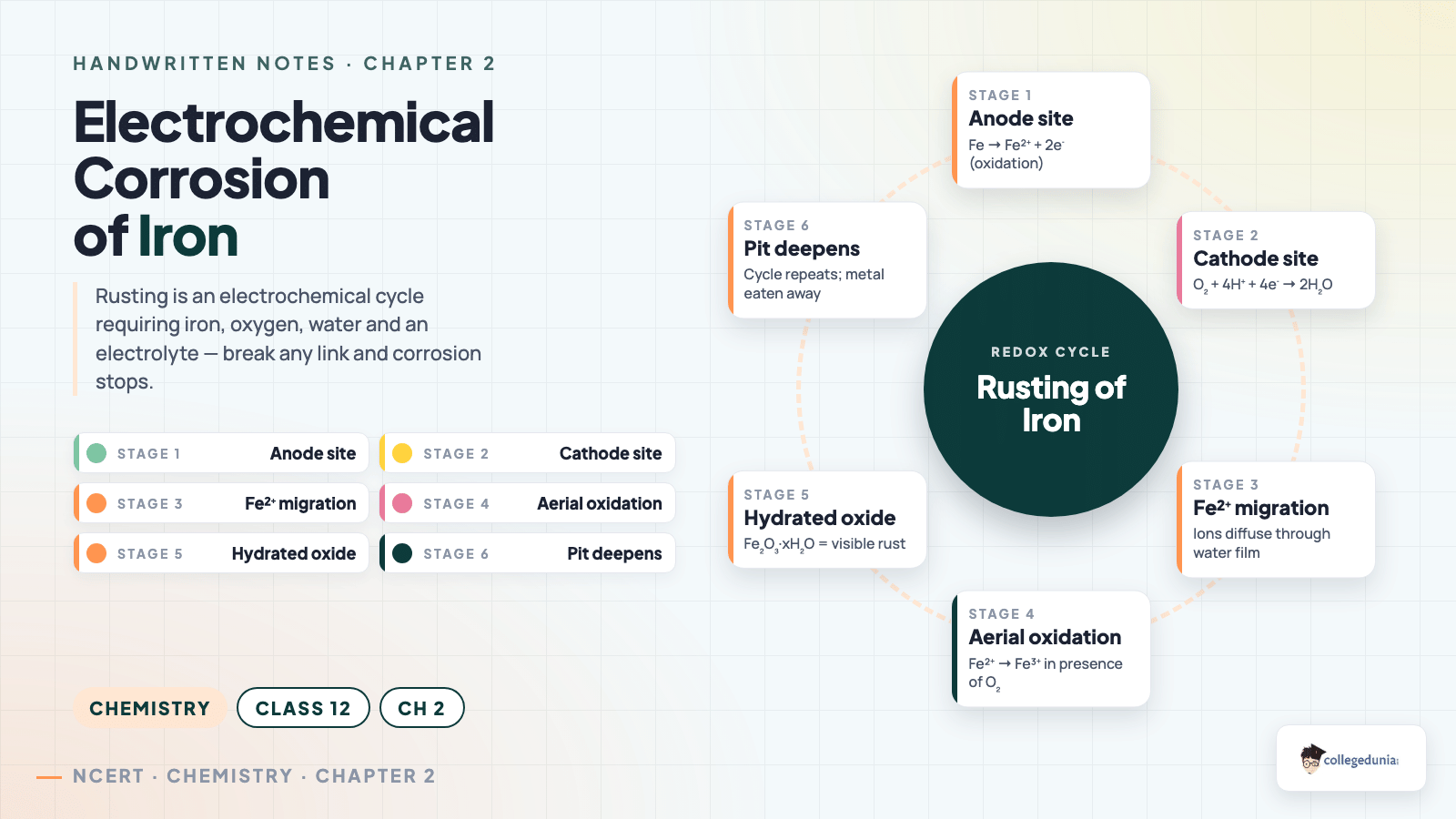
- Corrosion: Fe → Fe2+ + 2e- at the anodic patch; O2 + 4H+ + 4e- → 2H2O at the cathodic patch.
- Sign trap: Δ G∘ = -nFE∘ ; keep the negative sign and check J vs kJ.
Where Students Lose Marks in Electrochemistry (Class 12 Chemistry)
A few mistakes cost most of the dropped marks here.
| Mistake | Why it costs marks |
|---|---|
| Writing the Nernst equation with + instead of - before the log term | Flips Ecell, wipes the 3-mark numerical |
| Confusing κ (specific) with Λm (molar) conductivity in unit conversions | Wrong factor of 1000, the numerical is off by an order of magnitude |
| Forgetting that for Al3+, n = 3 in Faraday's law (not n = 1) | Mass of metal deposited becomes one-third of the correct value |
| Including solids in Q in the Nernst equation | Solids and pure liquids must be left out of Q |
CBSE 2025 toppers averaged 6.4 / 7 here; the usual 1-mark loss was the Nernst sign error.
Best Way to Use These Electrochemistry Handwritten Notes
Use the booklet in three passes, not as a textbook.
Related Links:
- CBSE Class 12 Chemistry Question Paper
- CBSE Class 12 Chemistry Sample Papers
- NCERT Resources Hub
NCERT Handwritten Notes for Class 12 Chemistry: All Chapters
Jump to any other chapter's handwritten notes in the same format.
Student Feedback
In a Collegedunia poll of 900 Class 12 students, 78% said the page-22 Last 24-Hour card and the Nernst-equation formula box saved them the most time revising Electrochemistry.
Other Resources for Electrochemistry Class 12 Chemistry
| Resource | Link |
|---|---|
| NCERT Solutions | Electrochemistry Class 12 Chemistry Solutions |
| Notes | Electrochemistry Class 12 Chemistry Notes |
| Handwritten Notes | Electrochemistry Class 12 Chemistry Handwritten Notes |
Electrochemistry Class 12 Chemistry Handwritten Notes FAQs
Ques. Where can I download Electrochemistry Class 12 Chemistry Handwritten Notes PDF?
Ans. You can download the Electrochemistry Class 12 Chemistry Handwritten Notes PDF directly from this page using the download buttons above. Both Normal and HD versions are free.
Ques. Are these handwritten notes aligned with the 2026-27 NCERT for Class 12 Chemistry Chapter 2?
Ans. Yes. The booklet follows the current 2026-27 syllabus, covering galvanic cells, the Nernst equation, conductance, Kohlrausch's law, electrolysis, batteries, fuel cells, and corrosion. Topics dropped from the new NCERT edition, such as the mercury cell and detailed bulk-electrolysis derivations, are flagged so you do not revise removed content.
Ques. How many pages is the Class 12th Chemistry Electrochemistry Handwritten Notes PDF?
Ans. The booklet runs 22 pages and contains 14 hand-drawn diagrams, including the Daniell cell, standard hydrogen electrode, conductance cell, lead storage battery, and the hydrogen-oxygen fuel cell.
Ques. What is the weightage of Electrochemistry in CBSE Class 12 Chemistry?
Ans. Electrochemistry typically carries 5 to 7 marks in the CBSE Class 12 Chemistry board exam, with a 3-mark numerical and a 2-mark conceptual question being the most common pattern over the last five years.
Ques. Are Electrochemistry notes useful for JEE Main and NEET 2026?
Ans. Yes. Electrochemistry contributes about 3 to 4% of JEE Main Chemistry questions (one to two questions per shift) and 2 to 3 NEET questions per year. The Nernst equation, electrochemical series, and Kohlrausch's law are the highest-yield JEE and NEET topics, all of which appear in the notes.
Ques. Can these handwritten notes alone clear Electrochemistry for Class 12 boards?
Ans. The notes are designed for revision, not first-time learning. Pair them with the NCERT textbook and at least one round of solved CBSE PYQs from the last five years; the booklet's Last 24-Hour Revision Card on page 22 then becomes a complete pre-exam recap.
Ques. Which Electrochemistry topics were removed in 2026-27 NCERT rationalisation?
Ans. The mercury cell, Leclanche dry cell (detailed derivation), and the in-depth treatment of bulk-electrolysis processes were trimmed. The current 2026-27 syllabus retains all formula-based content: Nernst equation, conductance, Kohlrausch's law, Faraday's laws, lead storage and Ni-Cd cells, the hydrogen-oxygen fuel cell, and corrosion.
Ques. What is the EMF formula for a Daniell cell and how do you set it up in the notebook?
Ans. For a Daniell cell at standard conditions, E∘cell = E∘Cu2+/Cu - E∘Zn2+/Zn = +0.34 - (-0.76) = +1.10 V. The handwritten sketch on page 2 of the booklet draws Zn|ZnSO4(1 M) on the left (anode, oxidation, electrons leave) and Cu|CuSO4(1 M) on the right (cathode, reduction, electrons arrive), with a U-tube salt bridge (KCl in agar) closing the circuit. Electron-flow arrow points externally Zn → Cu.
Ques. How do you remember the difference between conductance and conductivity?
Ans. Conductance G = 1/R is for the specific cell you set up (S, depends on shape and size). Conductivity κ = G · l/A is intrinsic to the material (S cm-1, independent of cell). The handwritten notes use a 4-colour code: blue ink for definitions, orange for the boxed formula κ = G · l/A , red ink to warn against mixing the two. Page 10 has the conductance-cell sketch with the cell-constant geometry labelled.
Ques. Why is the salt bridge essential in a galvanic cell?
Ans. Without a salt bridge, oxidation at the anode would build up positive charge in the Zn2+ half and reduction at the cathode would build up negative charge in the Cu2+ half. The cell would stop within seconds. The salt bridge (inverted U-tube of agar saturated with KCl or KNO3) provides a steady internal path: K+ ions migrate to the cathode side, NO3- / Cl- ions migrate to the anode side, keeping both half-cells electrically neutral.



Comments