




Class 12 Chemistry Chapter 1 Solutions is a high-weight Physical Chemistry unit covering colligative properties, Raoult's Law, and concentration formulas. This handwritten notebook PDF runs 21 pages with hand-drawn plots, ink-coded definition boxes, and a night-before recall card.
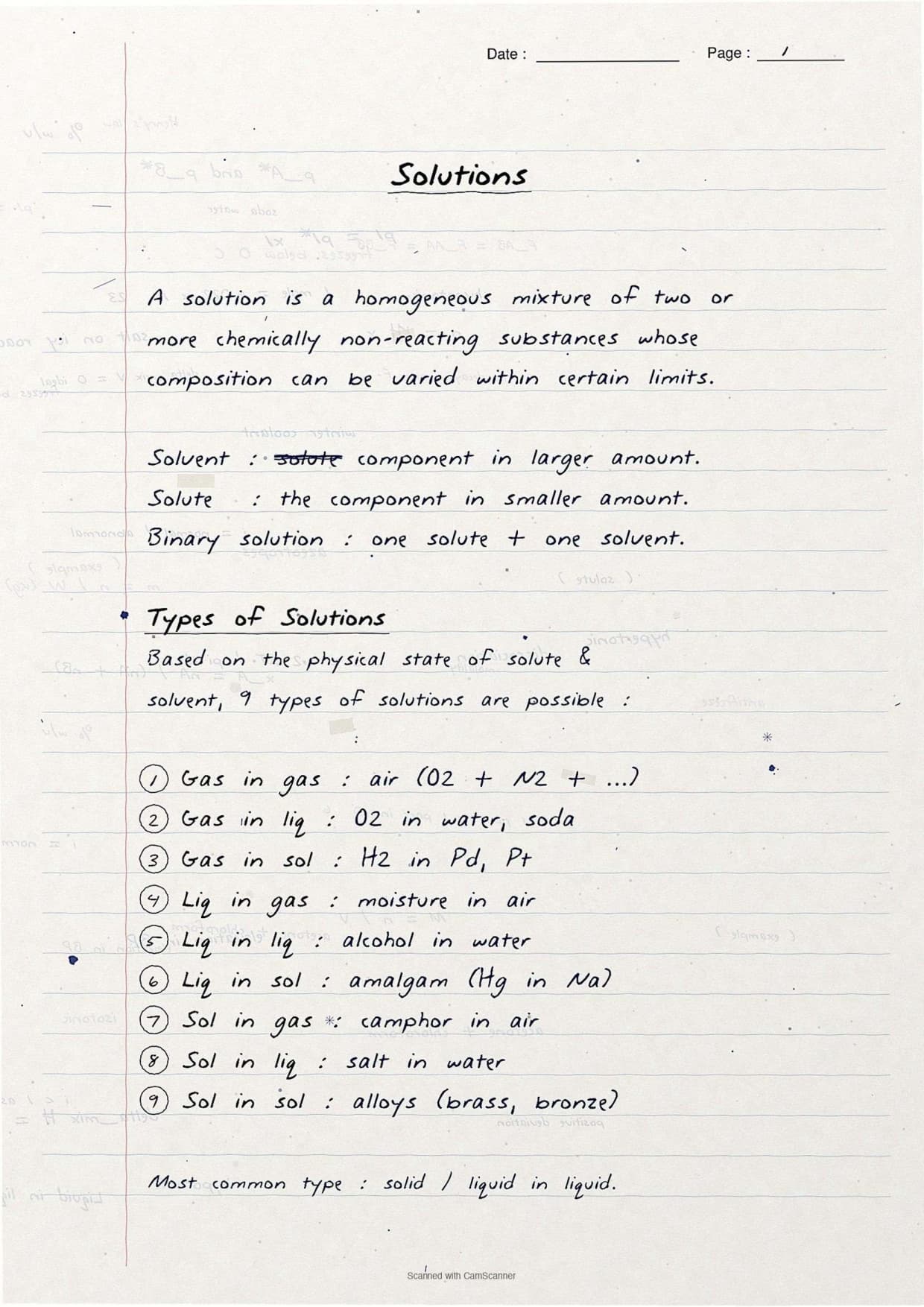
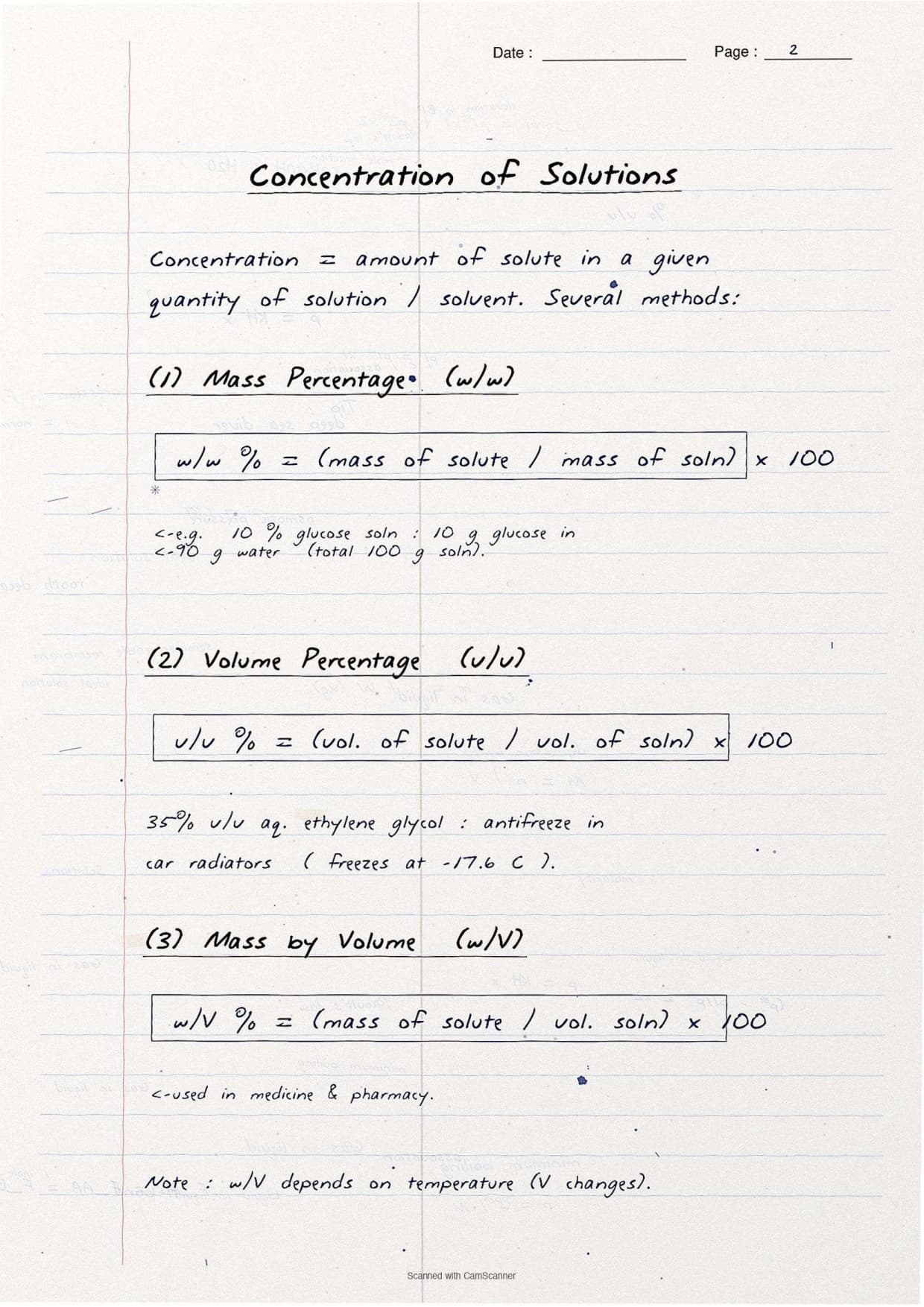
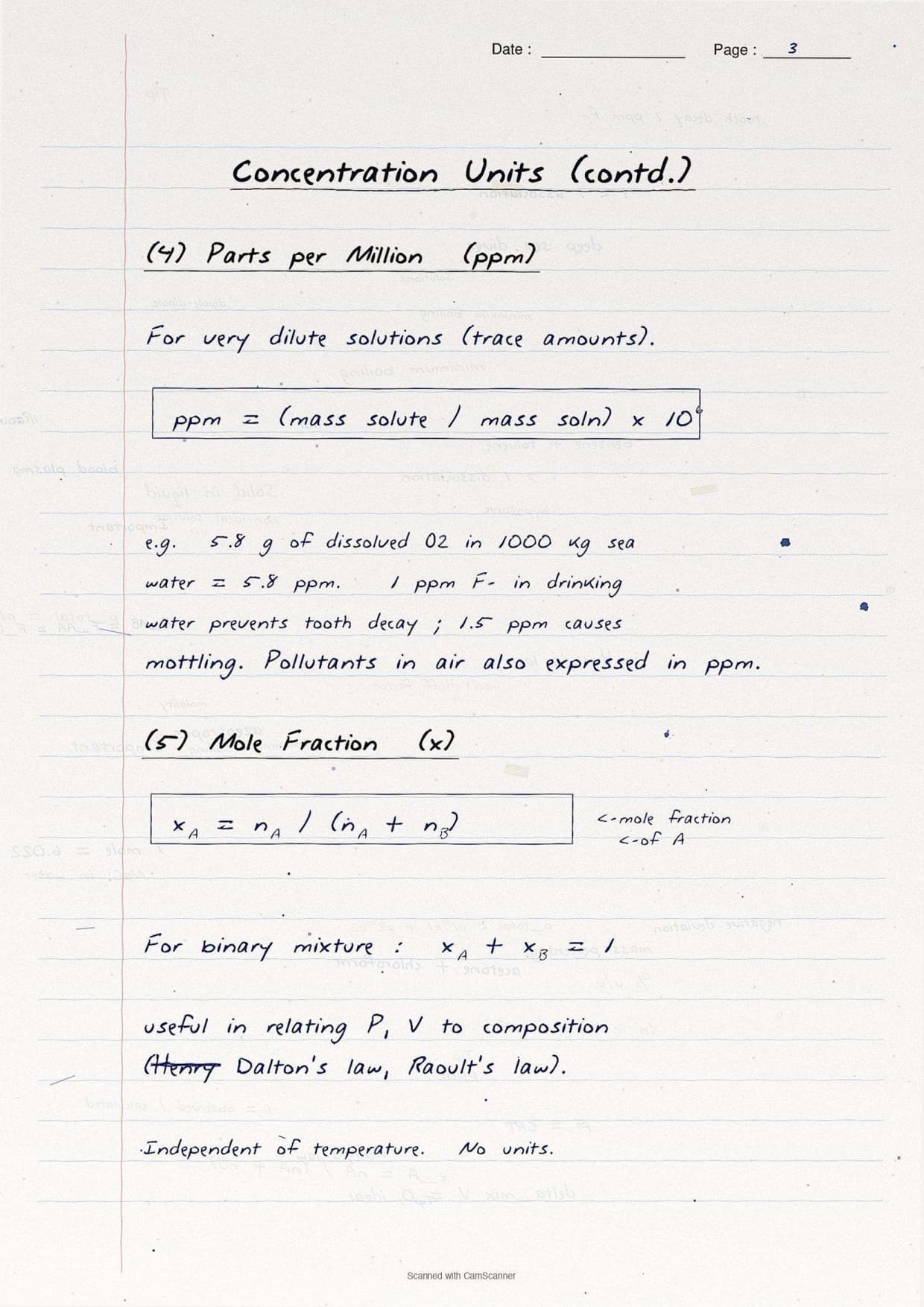
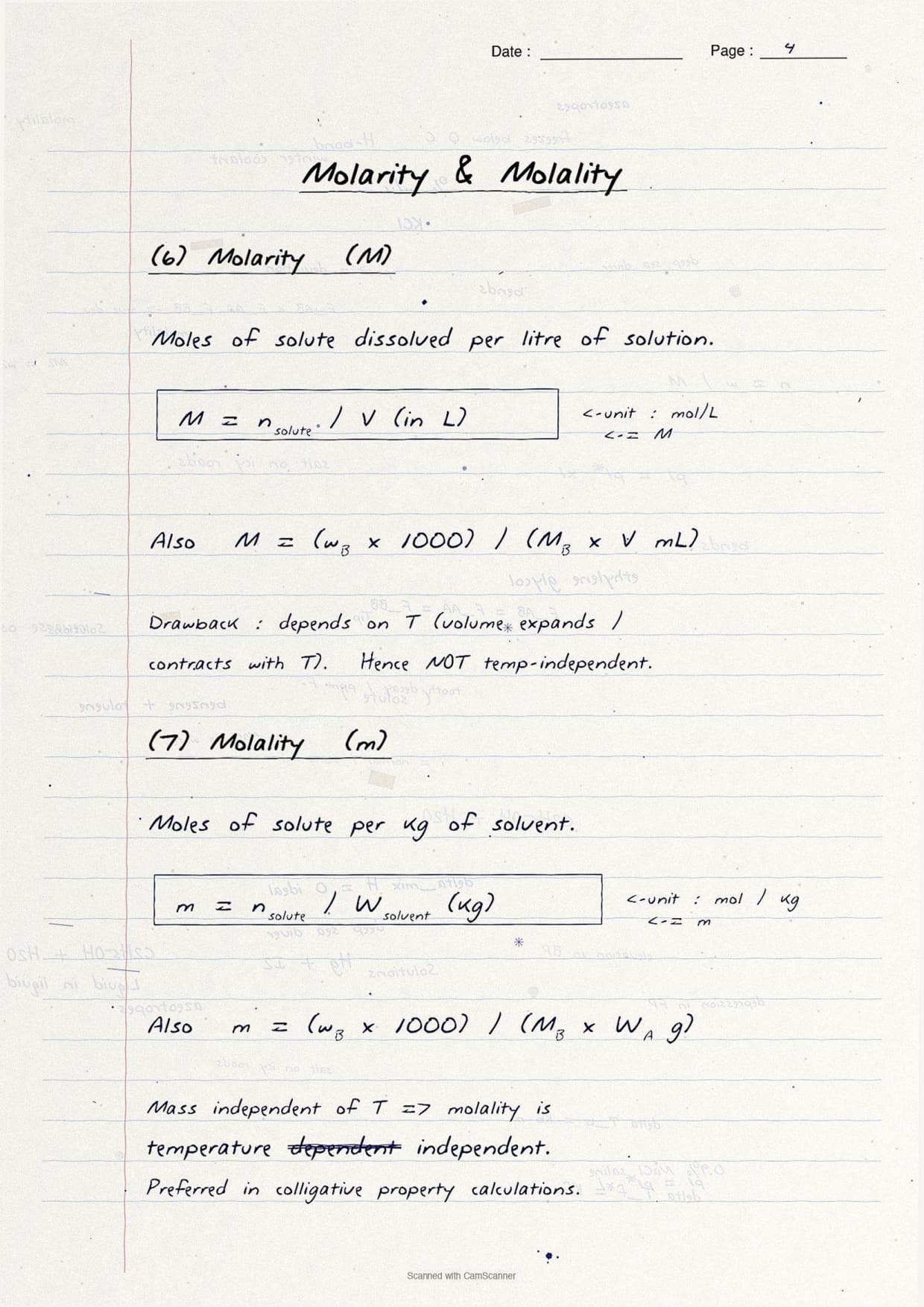
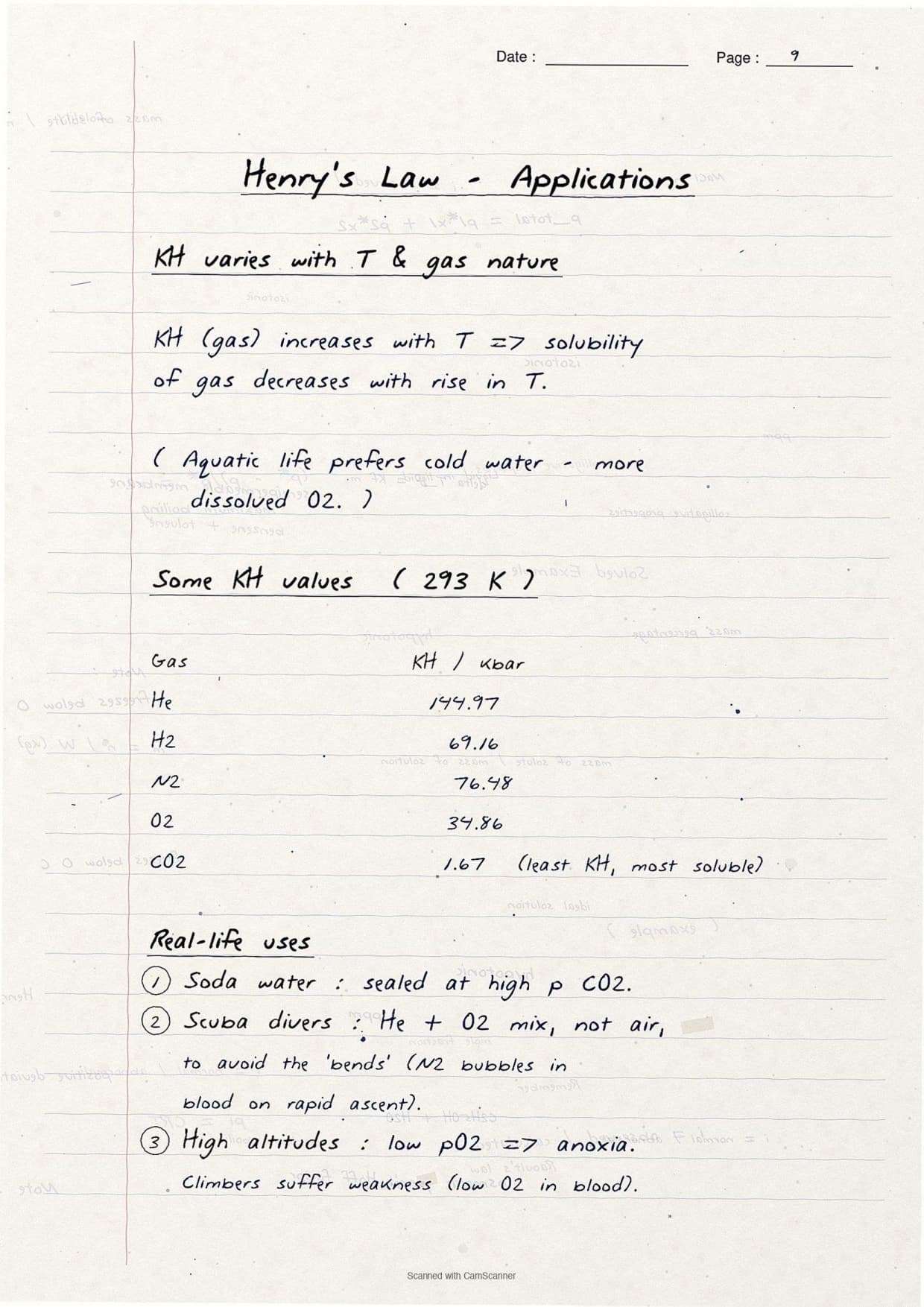
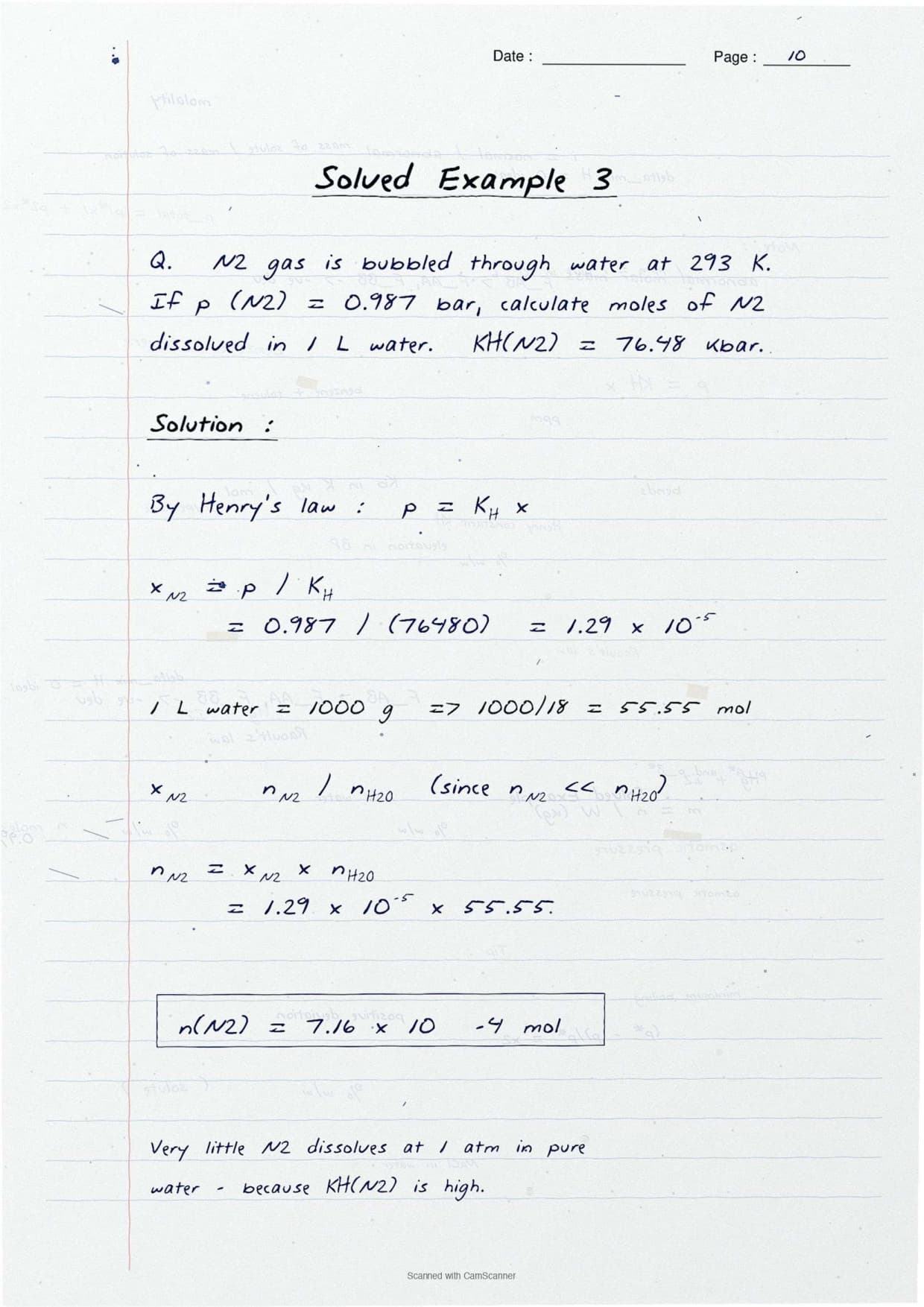
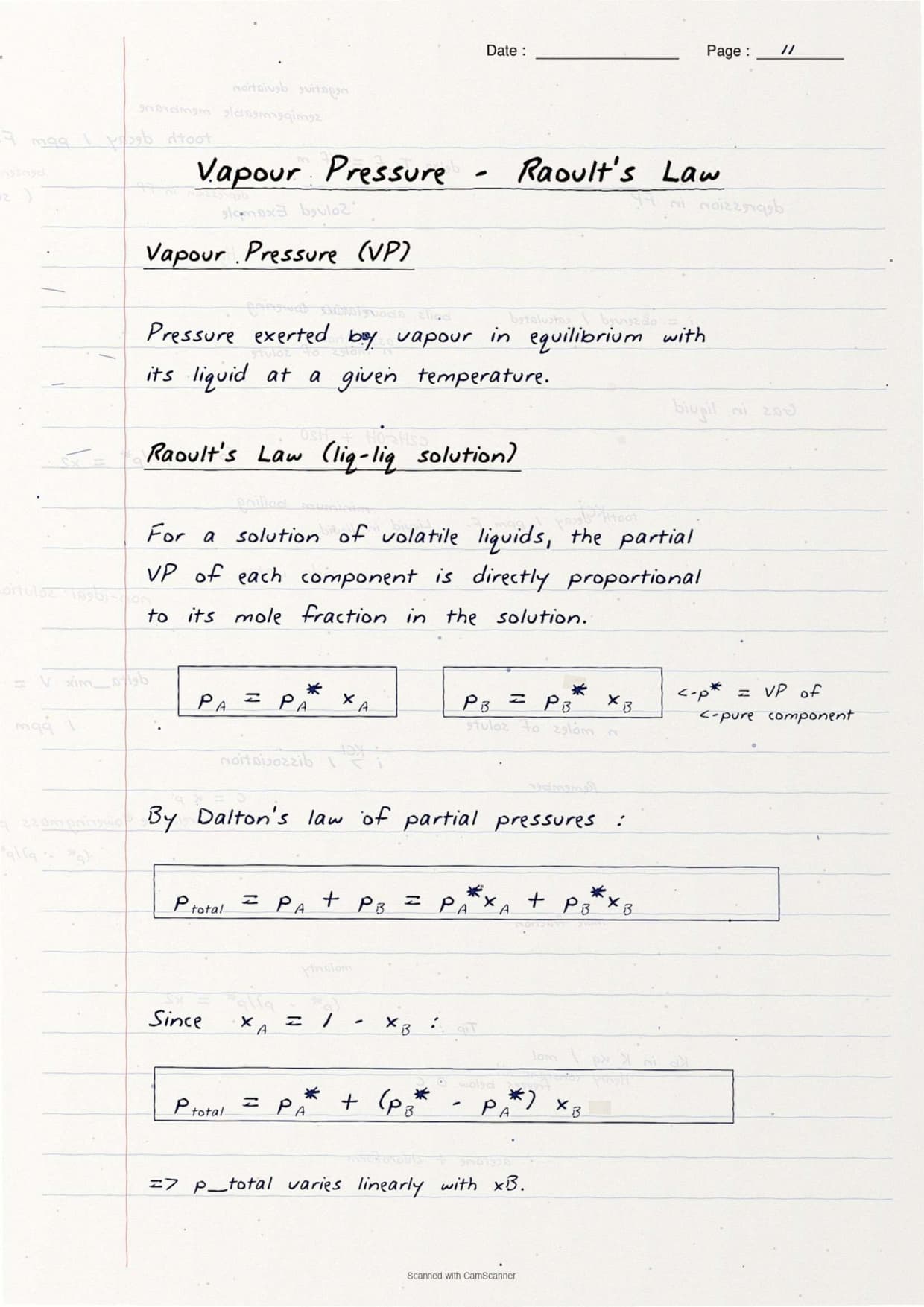
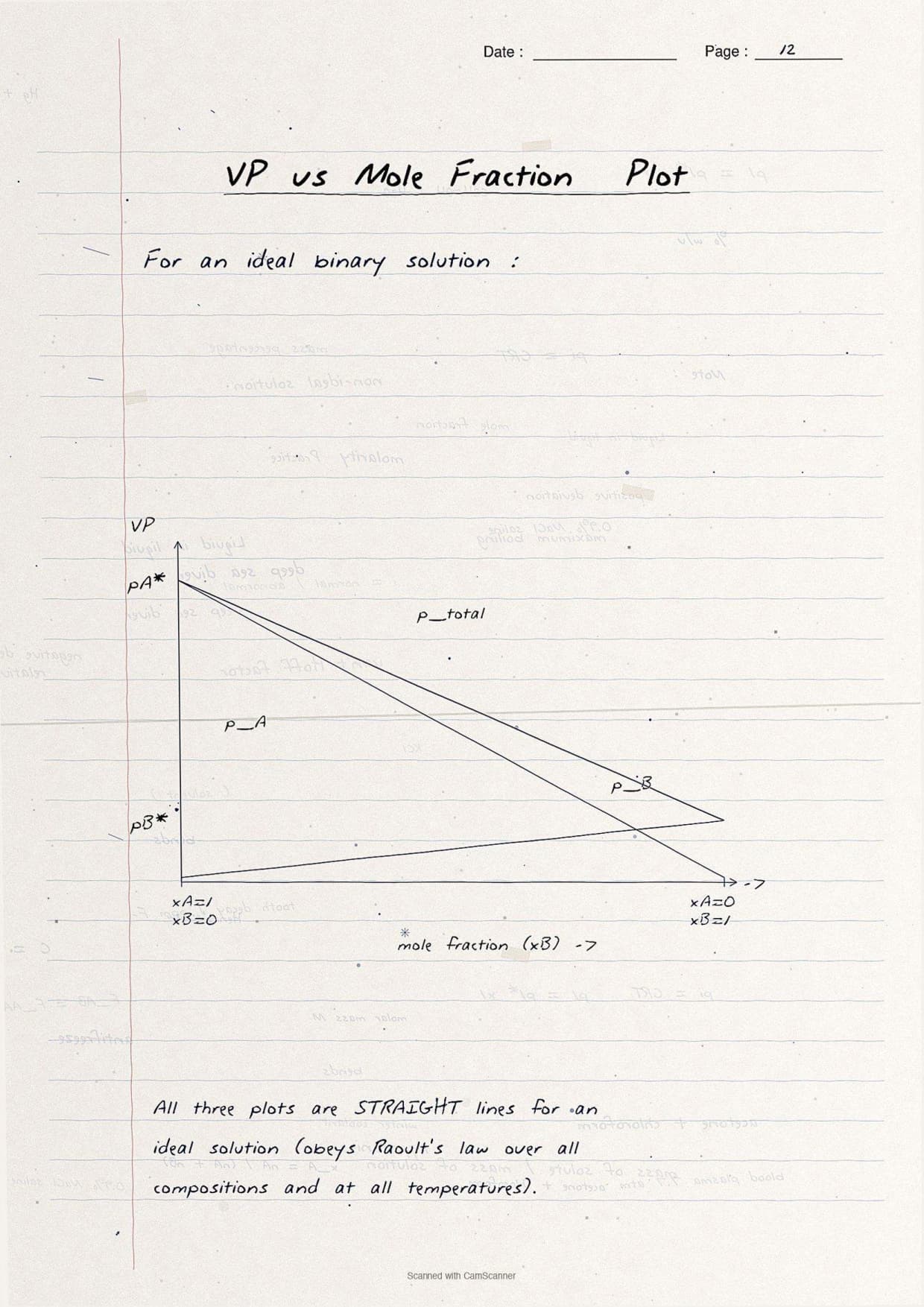
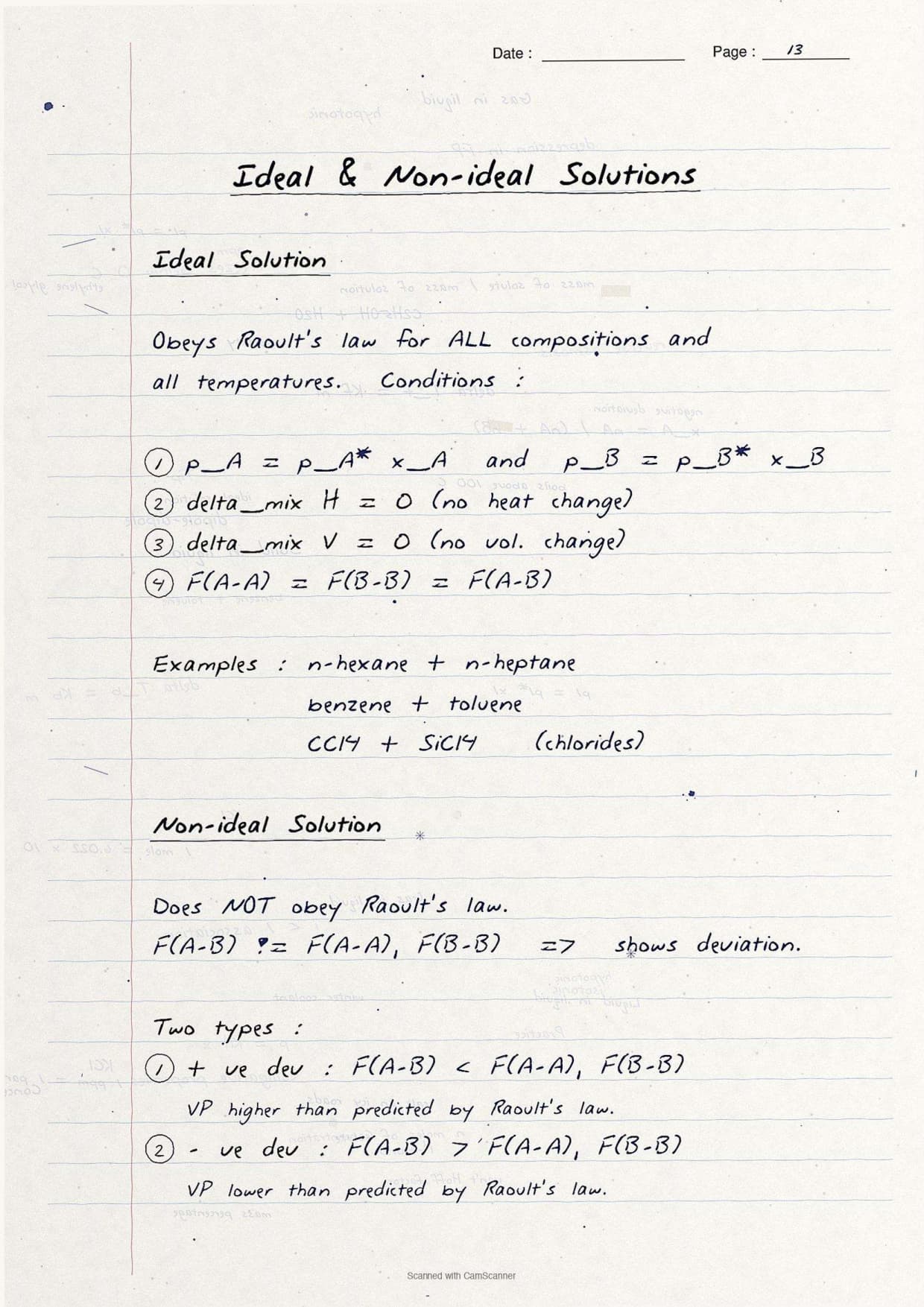
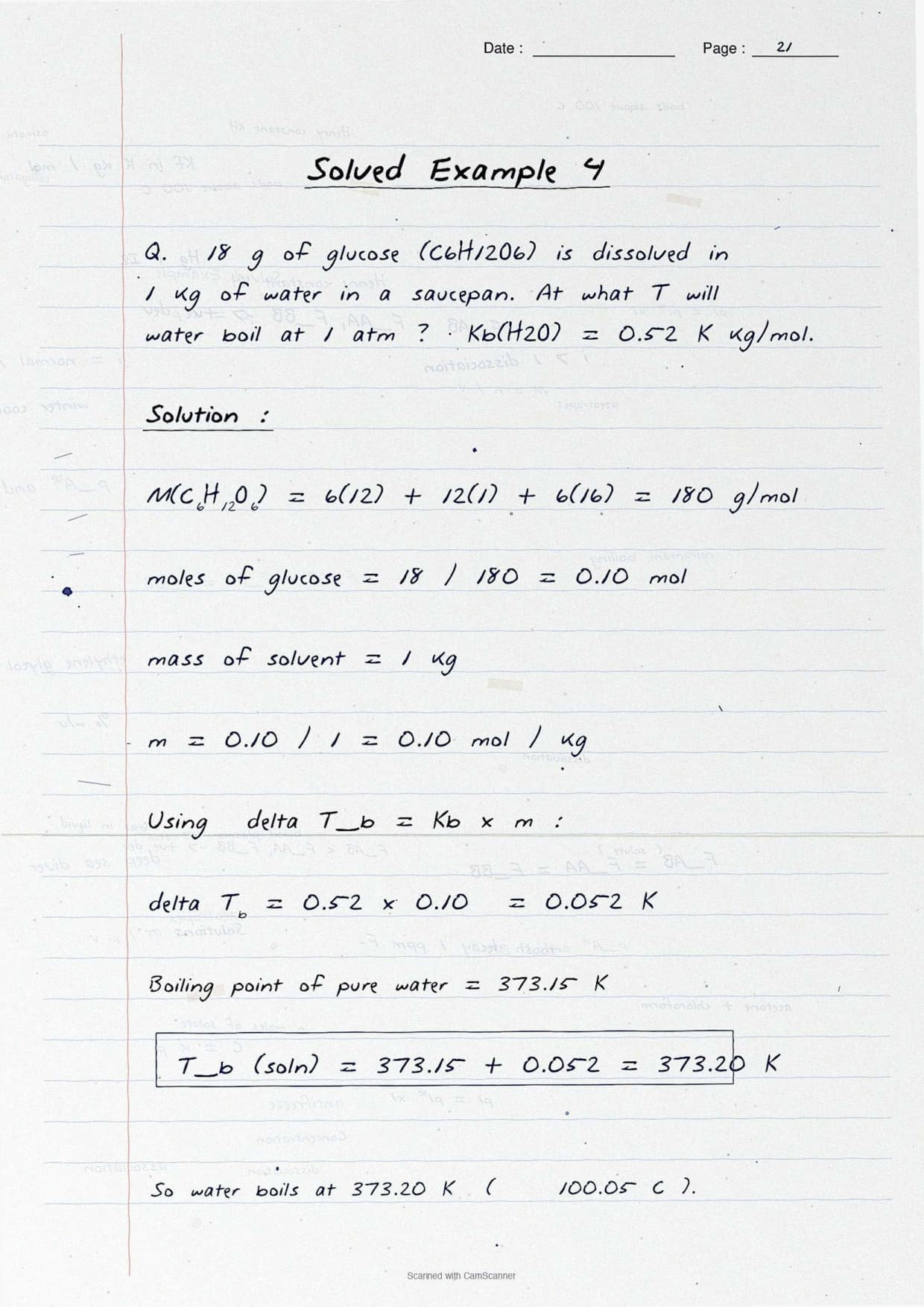
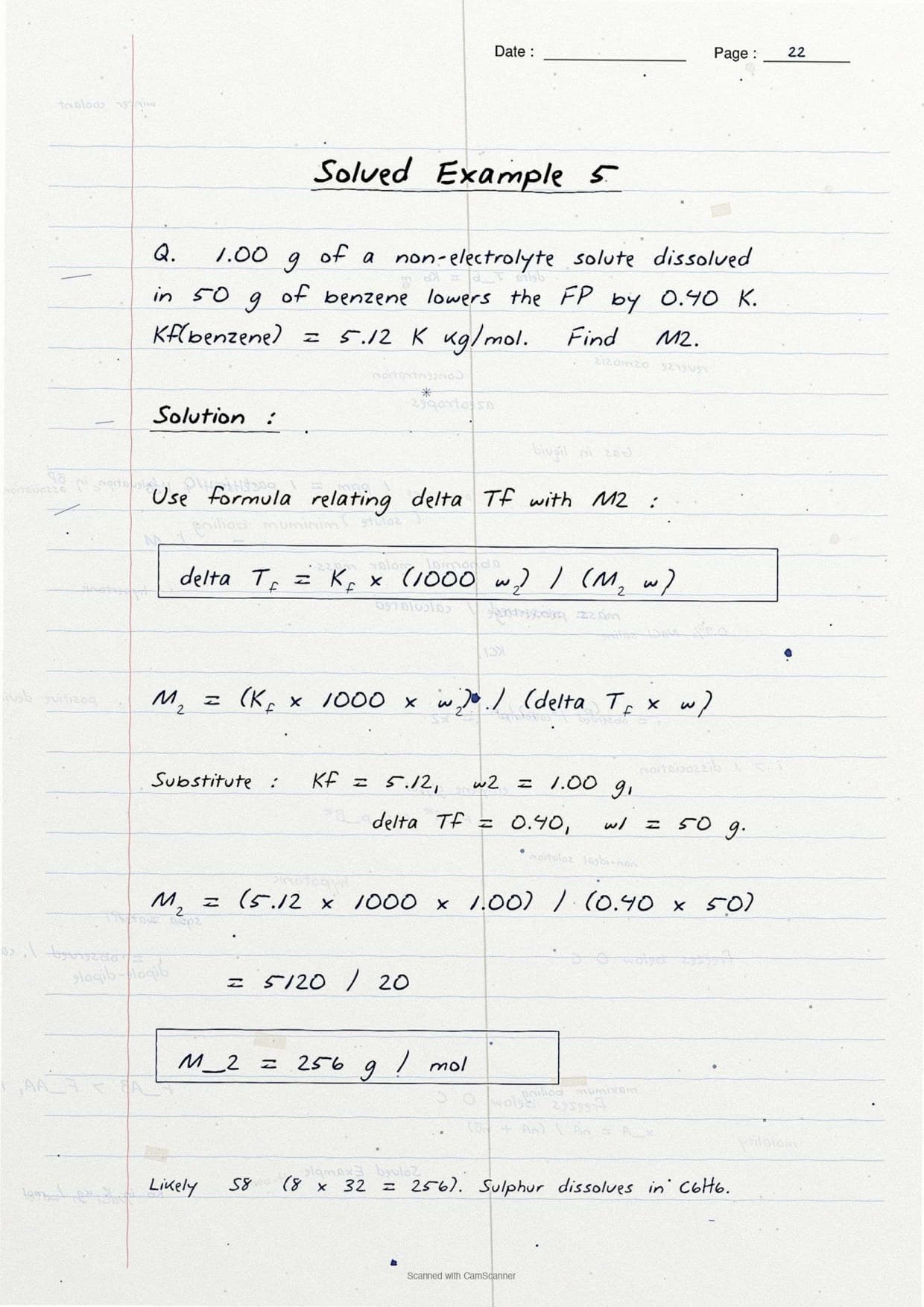
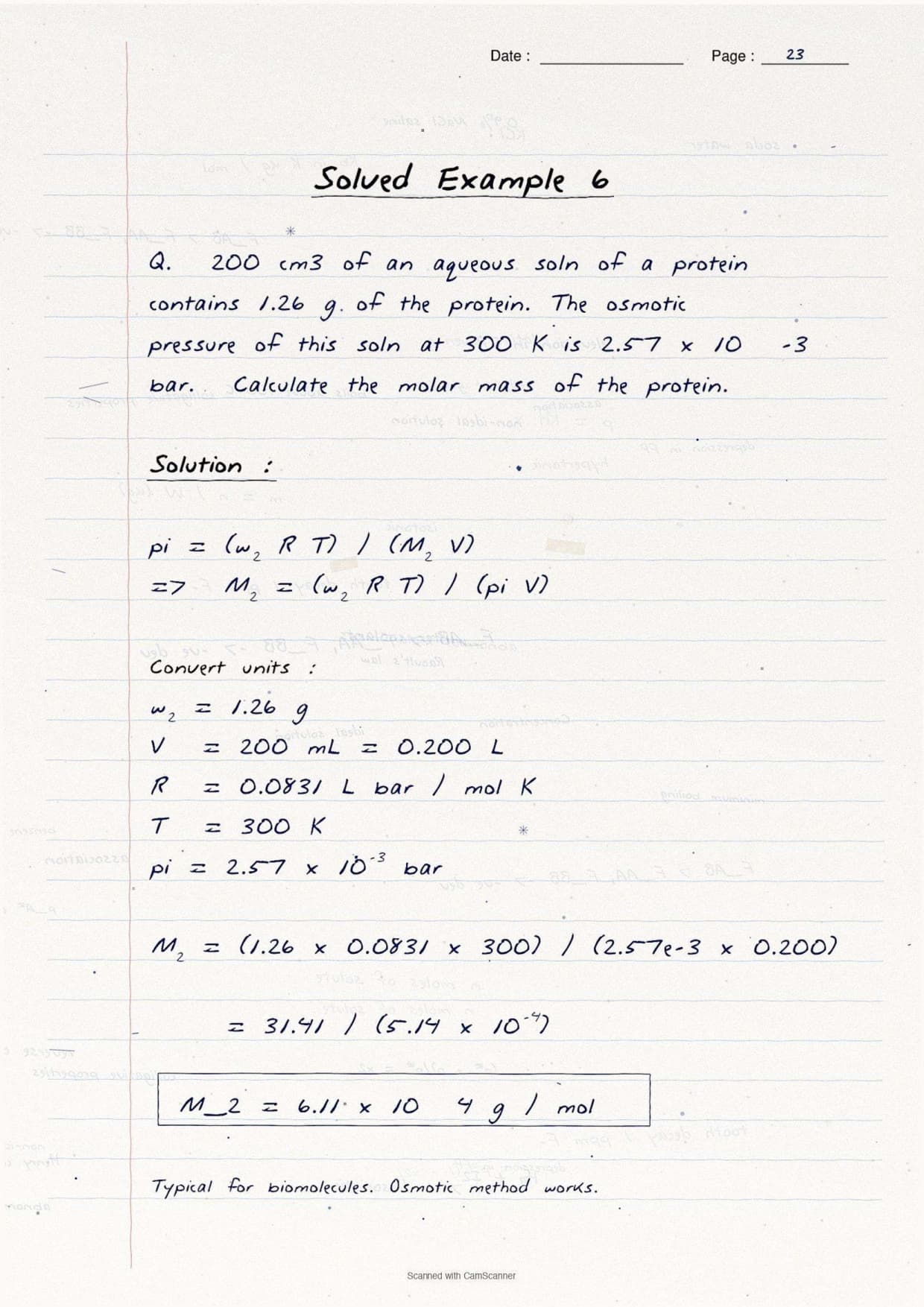
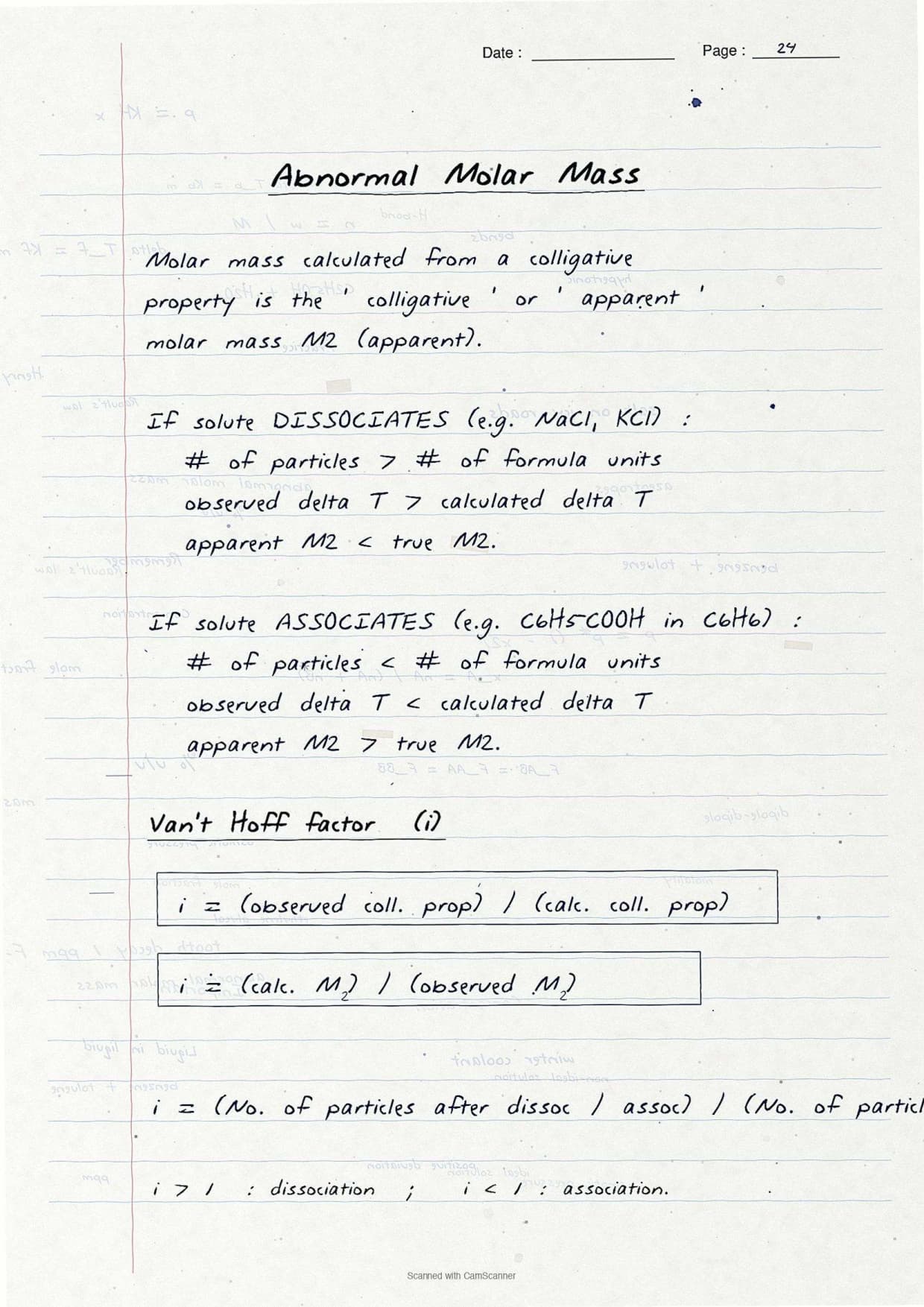
- CBSE Weightage: 6 to 8 marks (long answer plus a numerical)
- JEE Main Weightage: 3 to 4% (1 to 2 questions per shift on molality, Raoult, and van't Hoff factor)
- NEET Weightage: 2 to 3 questions per year, mostly from osmotic pressure and depression of freezing point
These handwritten notes are prepared by Collegedunia subject mentors, mapped to the 2026-27 NCERT print, and cross-checked against the last five years of CBSE Board, JEE Main, and NEET papers on Solutions.
Also Check:
- Solutions Class 12 Chemistry Notes
- Solutions Class 12 Chemistry NCERT Solutions
- Solutions Class 12 Chemistry Formula Sheet
Solutions Handwritten Notes: Complete Diagram List for Class 12 Chemistry
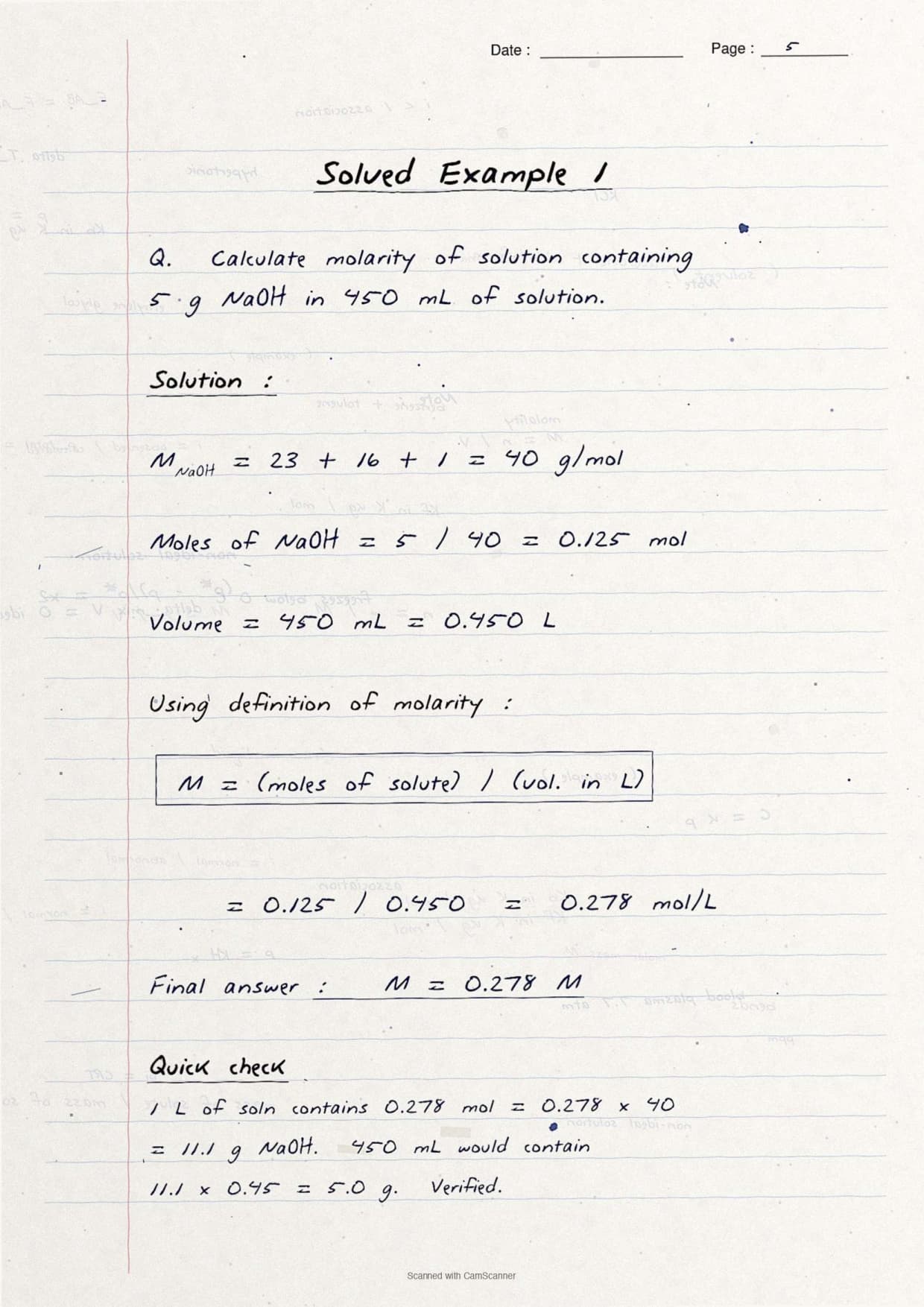
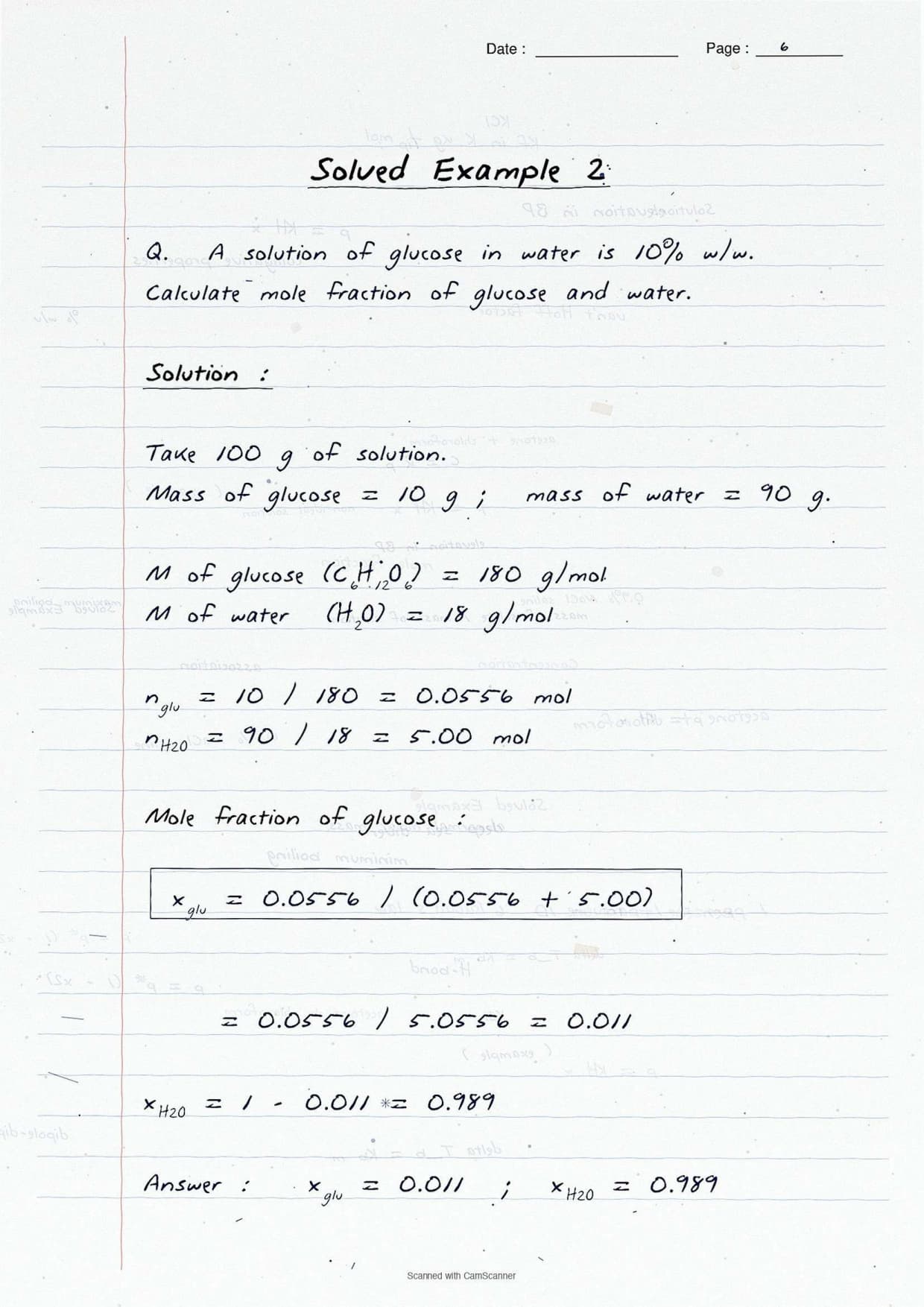
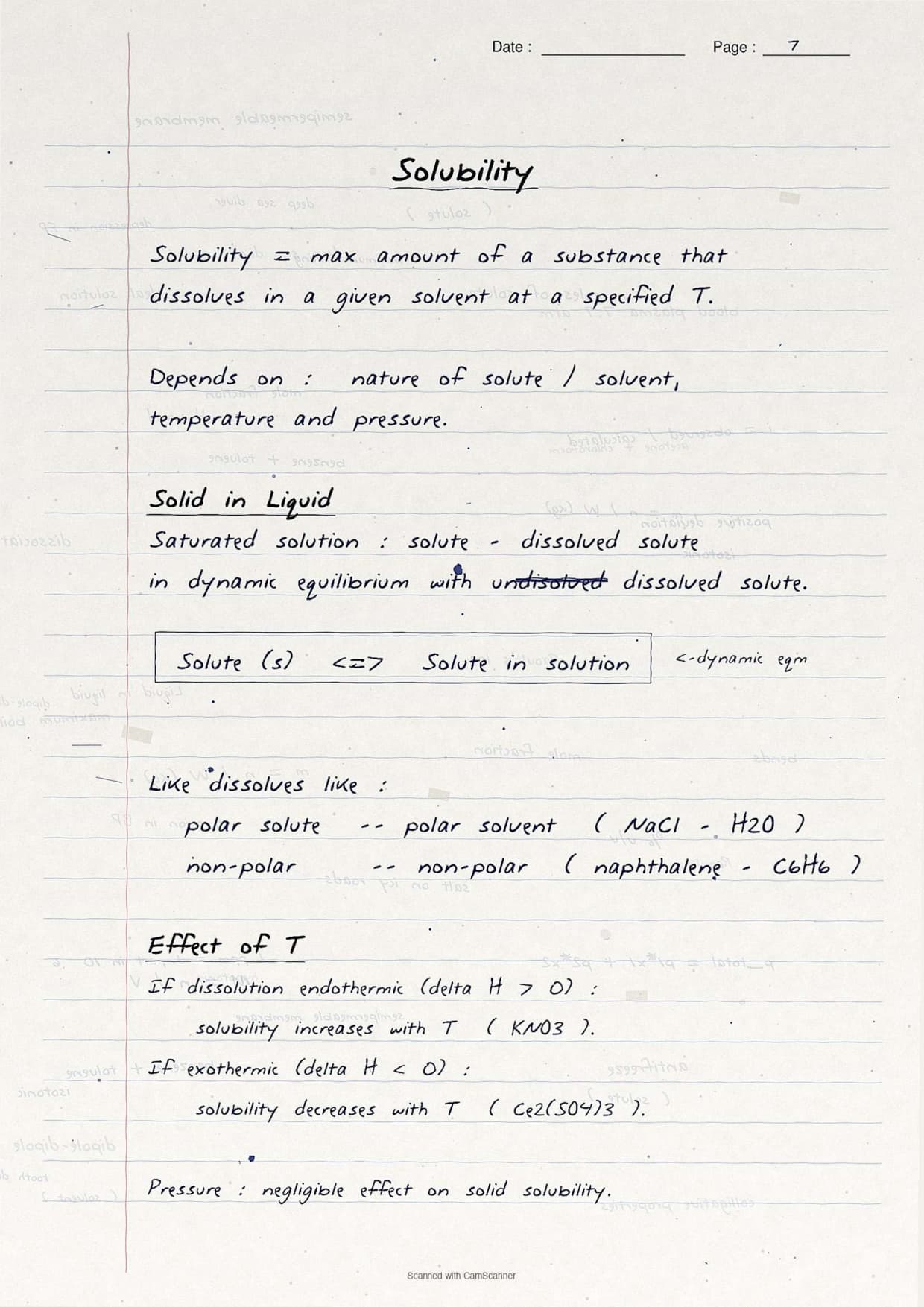
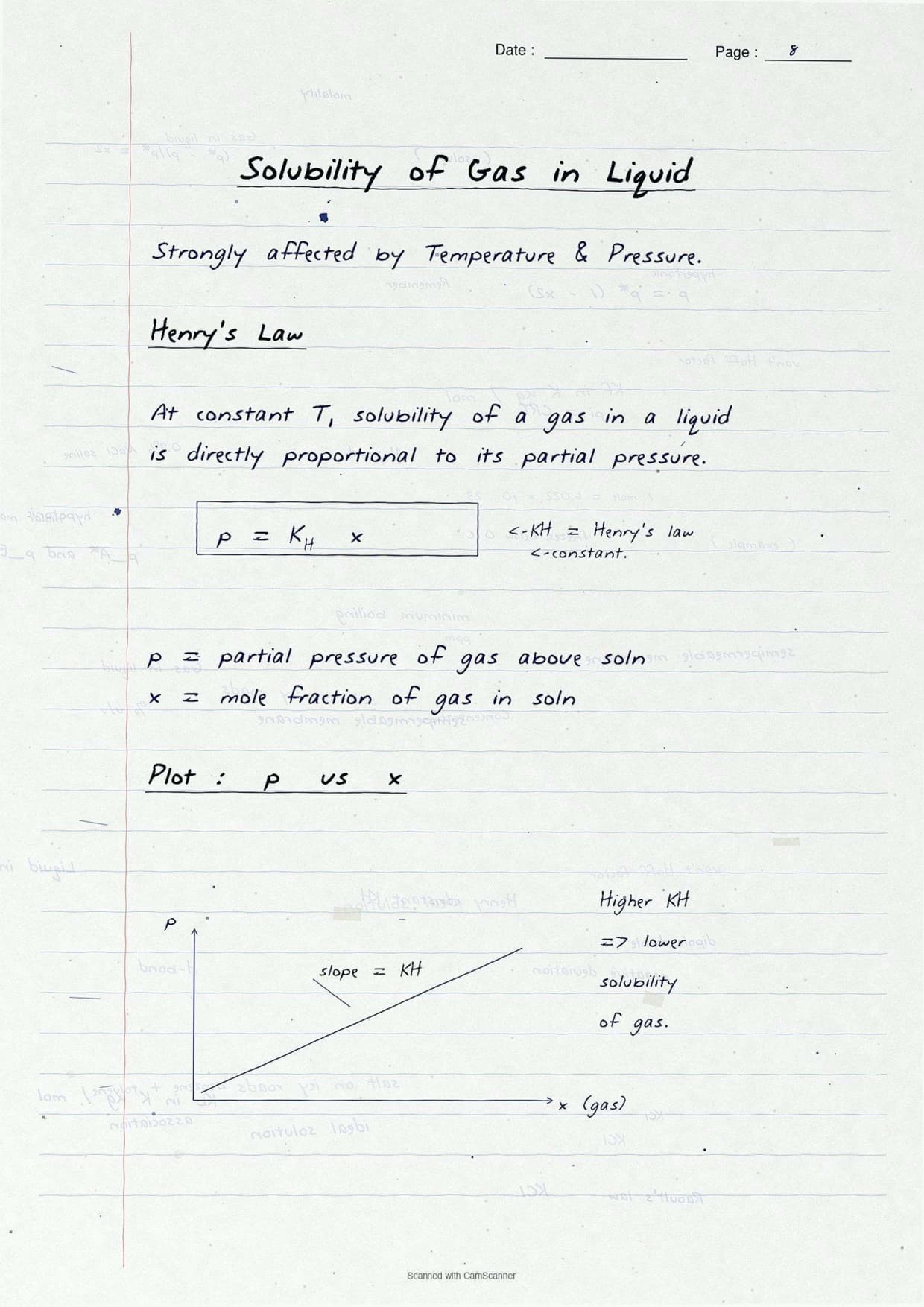
The notebook contains 14 hand-sketched diagrams. The table below maps every figure to its page for quick revision.
| Page | Diagram | What It Shows |
|---|---|---|
| 3 | Solid / Liquid / Gas mixing matrix | The nine solute-solvent combinations with one labelled real-life example each |
| 5 | Mass percent and ppm strip chart | Side-by-side concentration units with the SI base each carries |
| 7 | Henry's Law plot of p vs x | Straight line with slope KH and the deep-sea diver call-out |
| 9 | Raoult's Law p-x diagram | Ideal binary mixture with both partial vapour pressures and the total line |
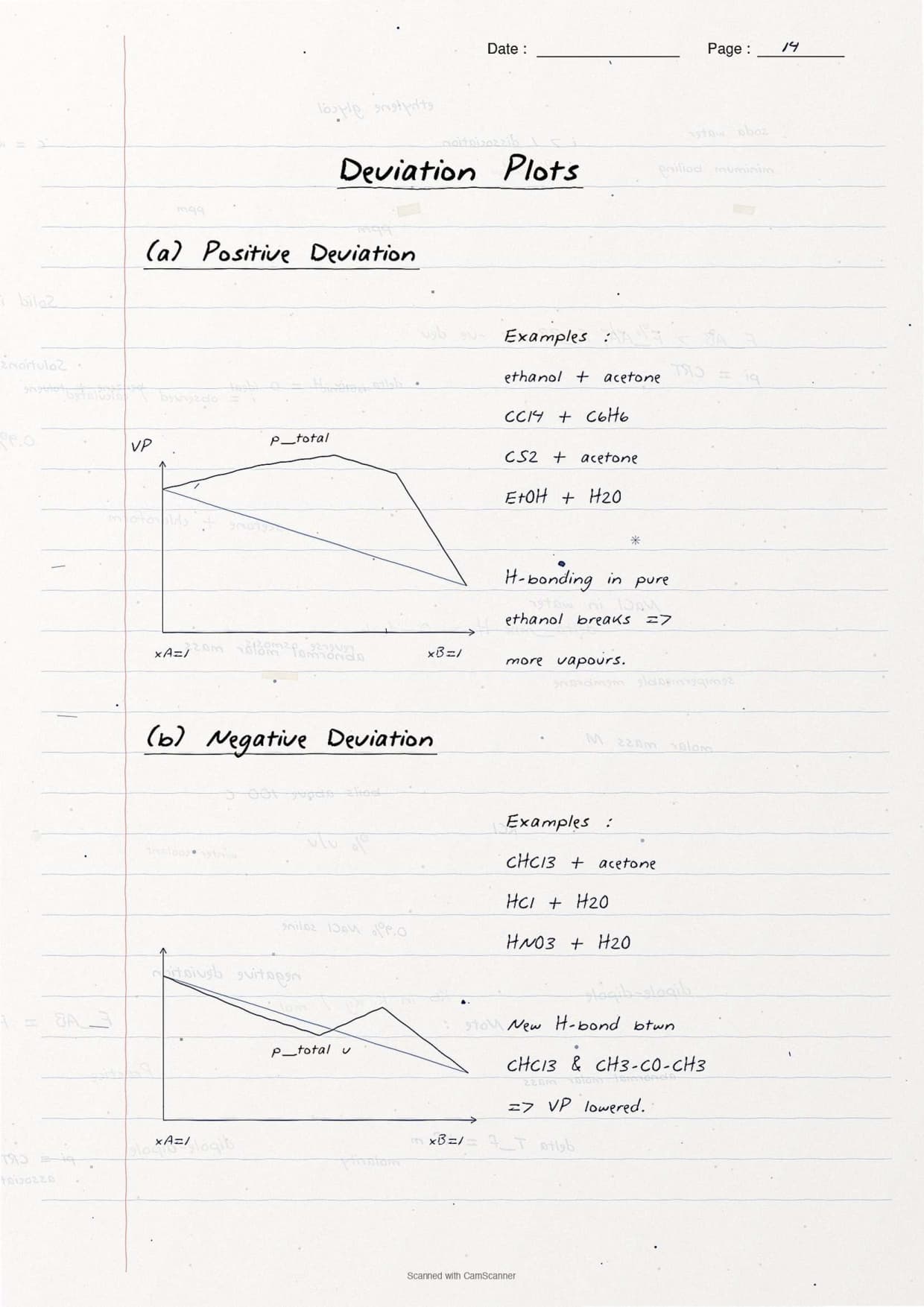
| 11 | Positive deviation curve (ethanol + acetone) | Total pressure bows ABOVE the ideal line, with the H-bond breaking annotation |
| 12 | Negative deviation curve (chloroform + acetone) | Total pressure bows BELOW the ideal line, with the new H-bond formation note |
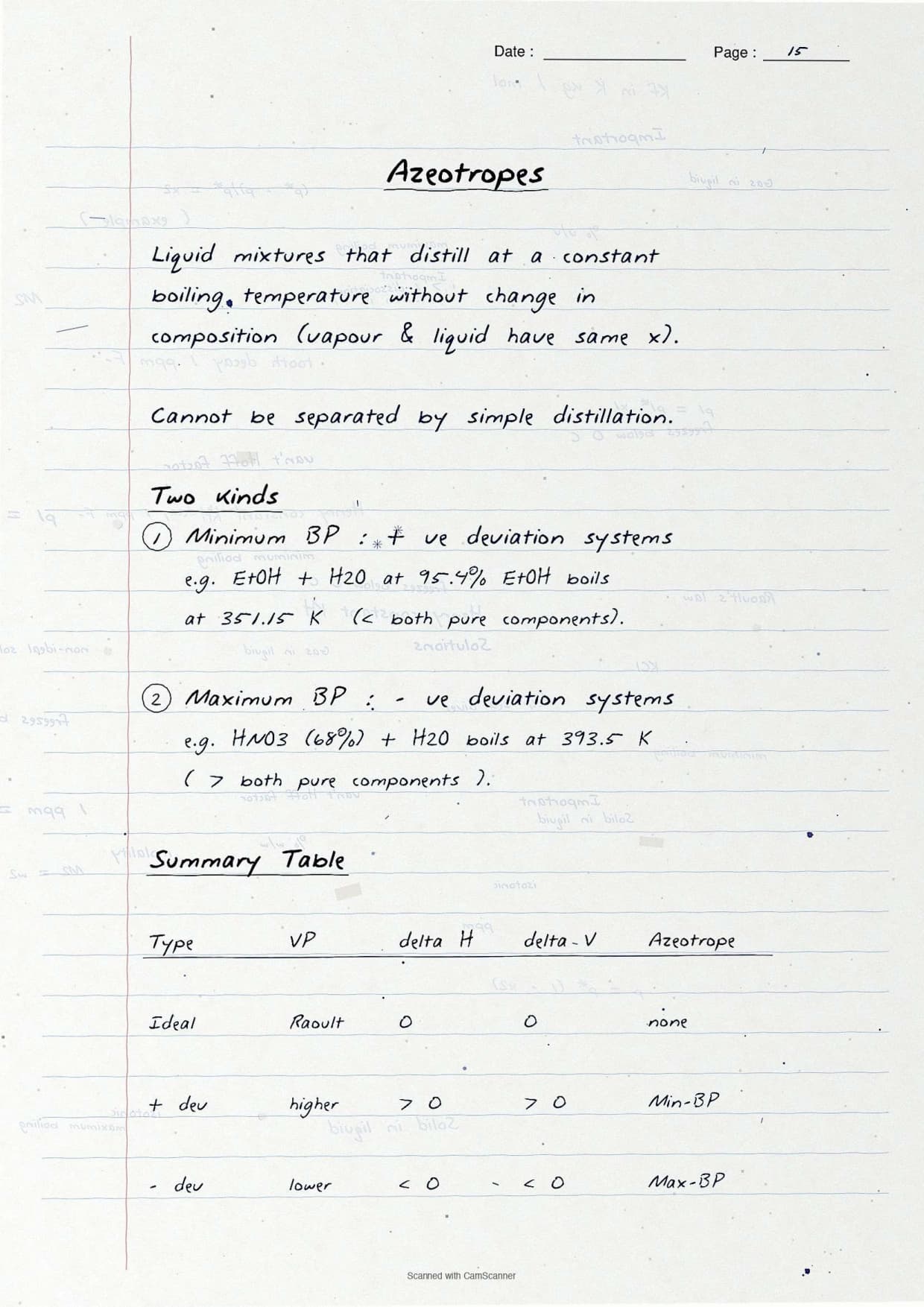
| 13 | Minimum and maximum boiling azeotrope sketches | Boiling point vs composition with the constant-composition vertical drop |
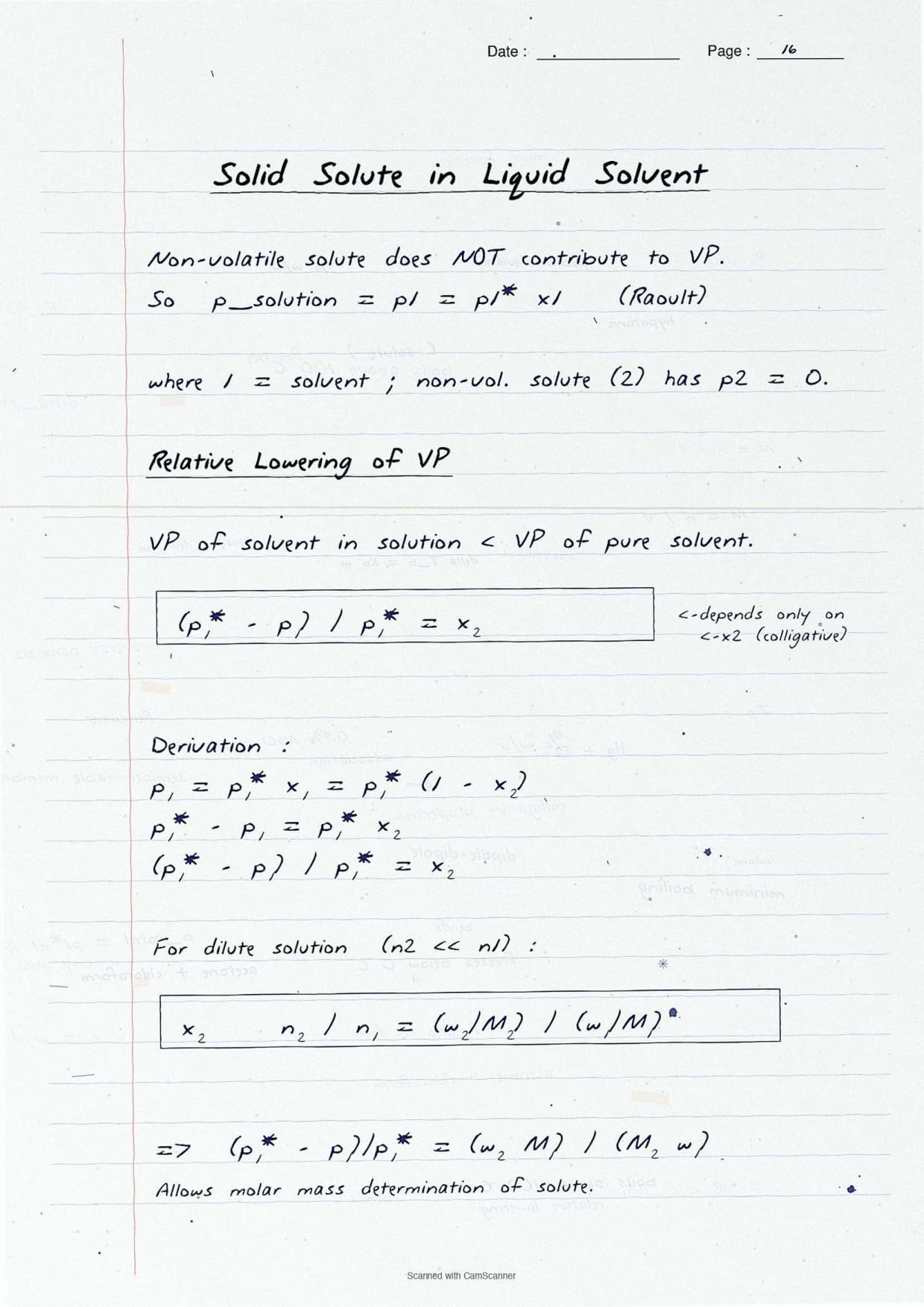
| 14 | Vapour-pressure lowering bar | How a non-volatile solute reduces solvent vapour pressure linearly with mole fraction |
| 15 | Elevation of boiling point thermogram | Solvent vs solution curves on T-vs-vapour-pressure axes with ΔTb labelled |
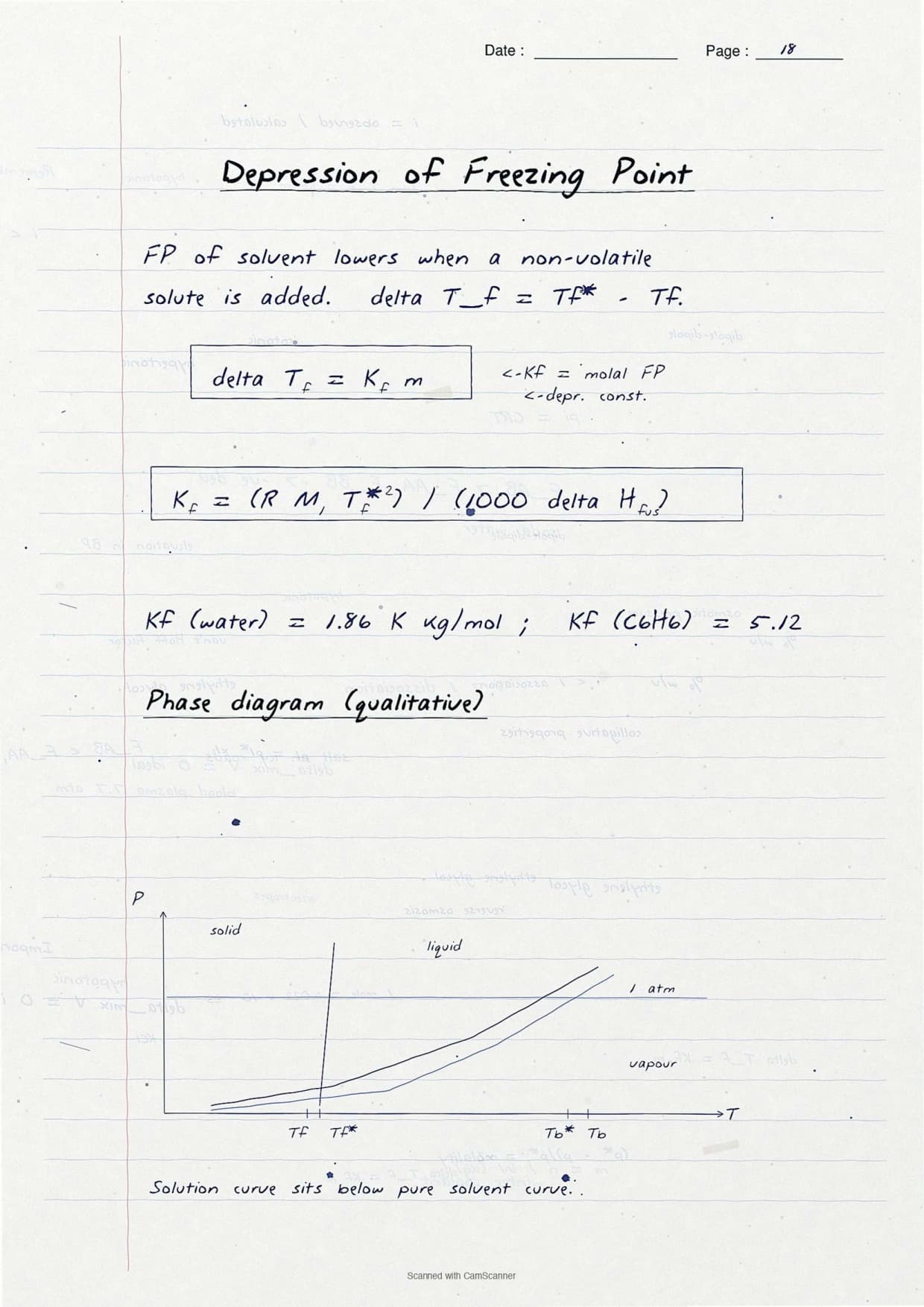
| 16 | Depression of freezing point thermogram | Mirror of the boiling-point sketch with ΔTf at the freezing point |
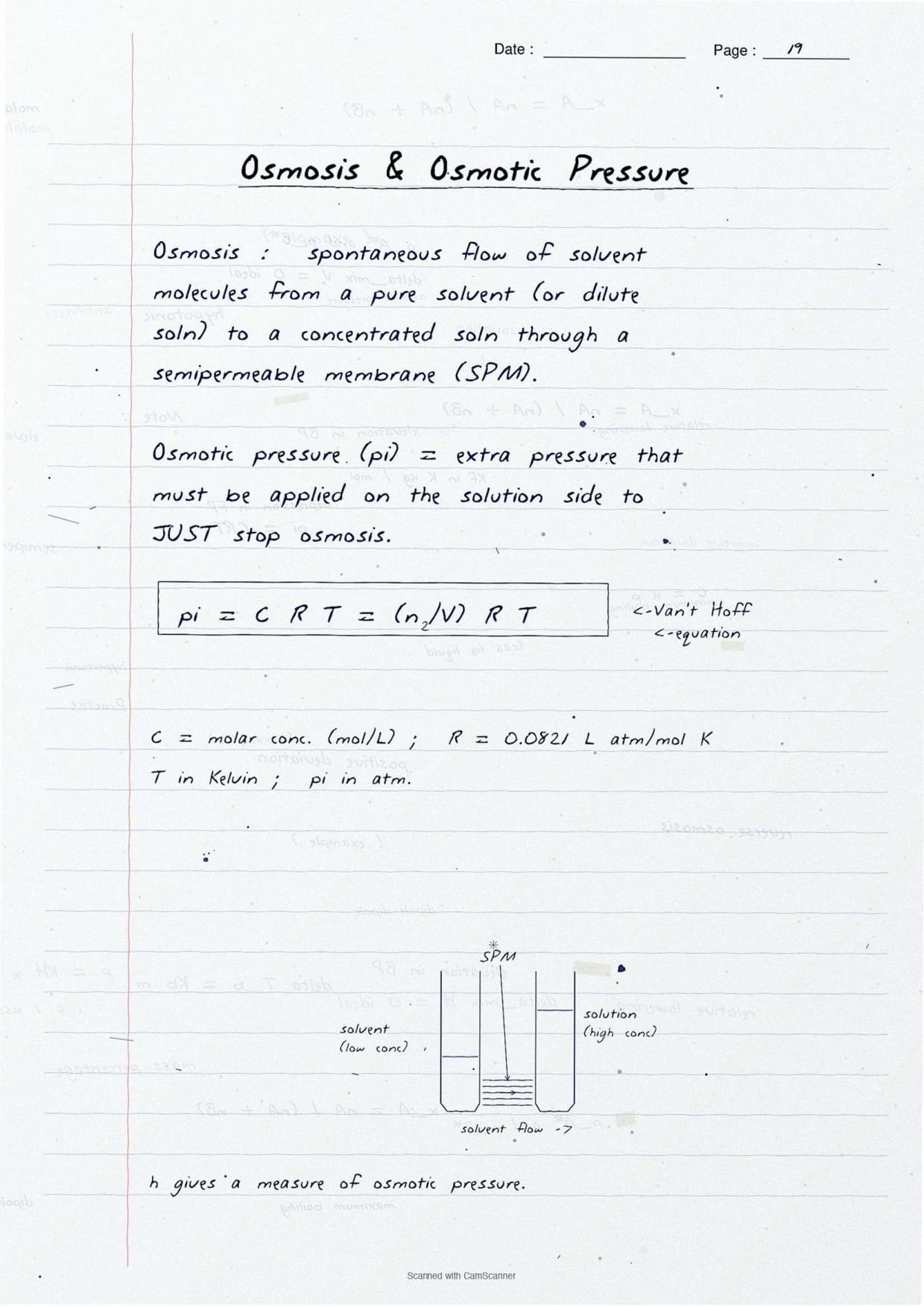
| 17 | Osmosis cell schematic | Semipermeable membrane with arrows showing net solvent flow and the π column |
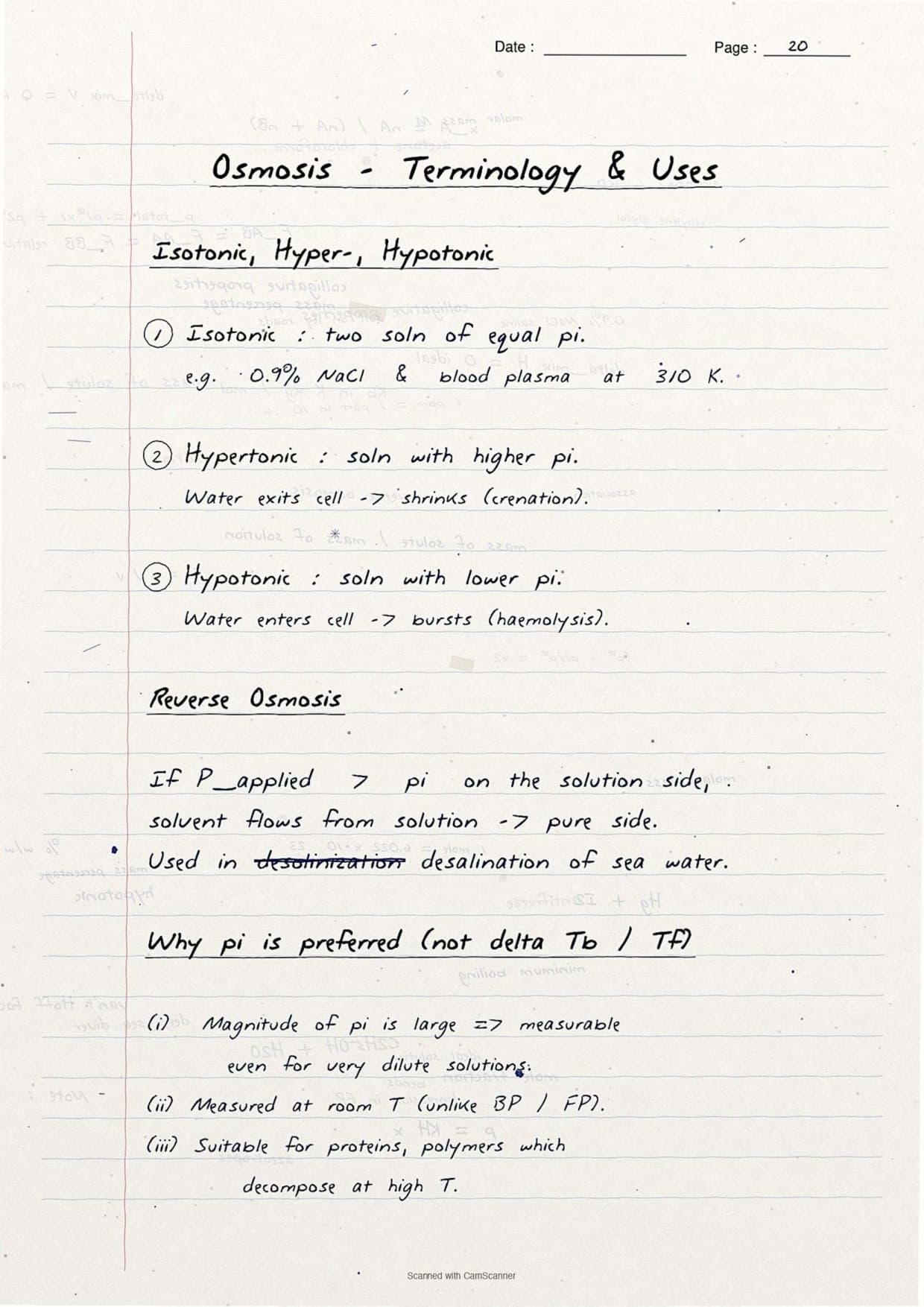
| 18 | Reverse osmosis desalination cartoon | The seawater → potable water flow with the pressure piston labelled |
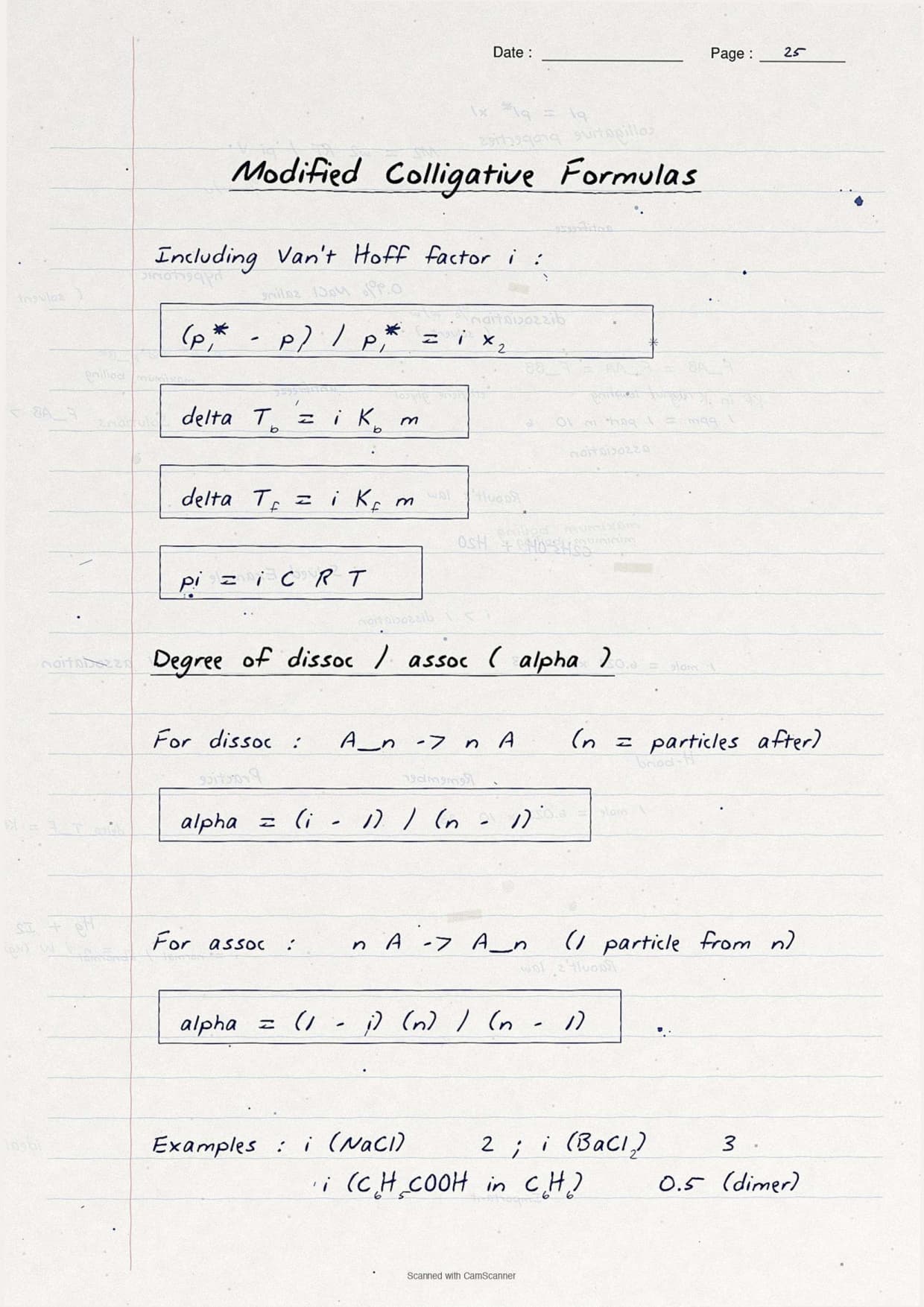
| 19 | Van't Hoff factor (i) table sketch | Association vs dissociation cases with worked i-values for KCl, benzoic acid, and acetic acid |
| 20 | Last-day mind map | One-page concept tree linking concentration → vapour pressure → colligative properties → abnormal i |
Solutions Class 12 Chemistry Explained
Source: Magnet Brains on YouTube
Topics Covered in Class 12 Chemistry Chapter 1 Solutions Handwritten Notes
The notebook maps every 2026-27 NCERT Chapter 1 concept onto its own ink-coded page.
- Concentration units: mass percent, ppm, mole fraction, molarity, molality in one definition table.
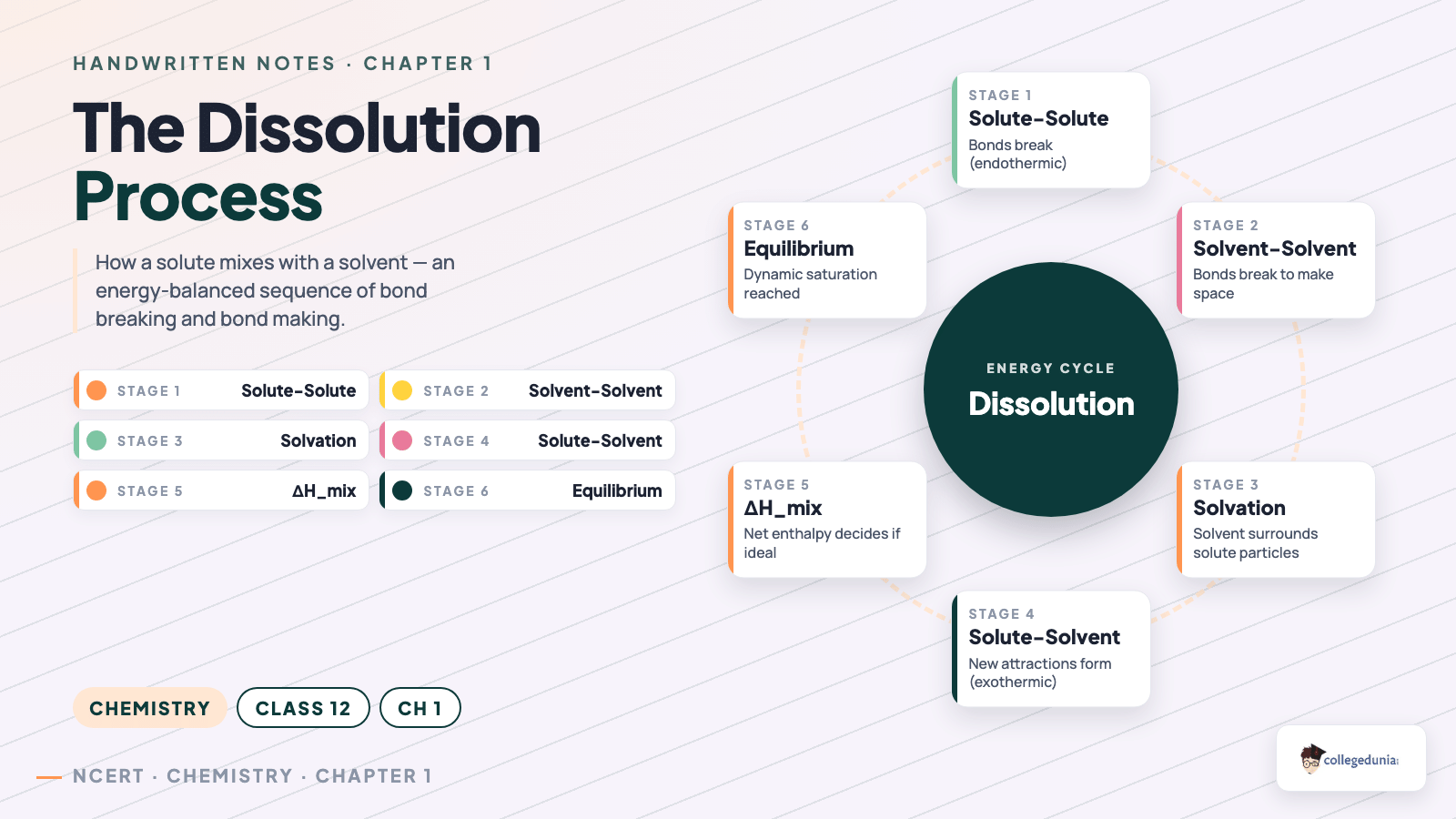
- Henry's law and Raoult's law: drawn with ideal and deviation curves.
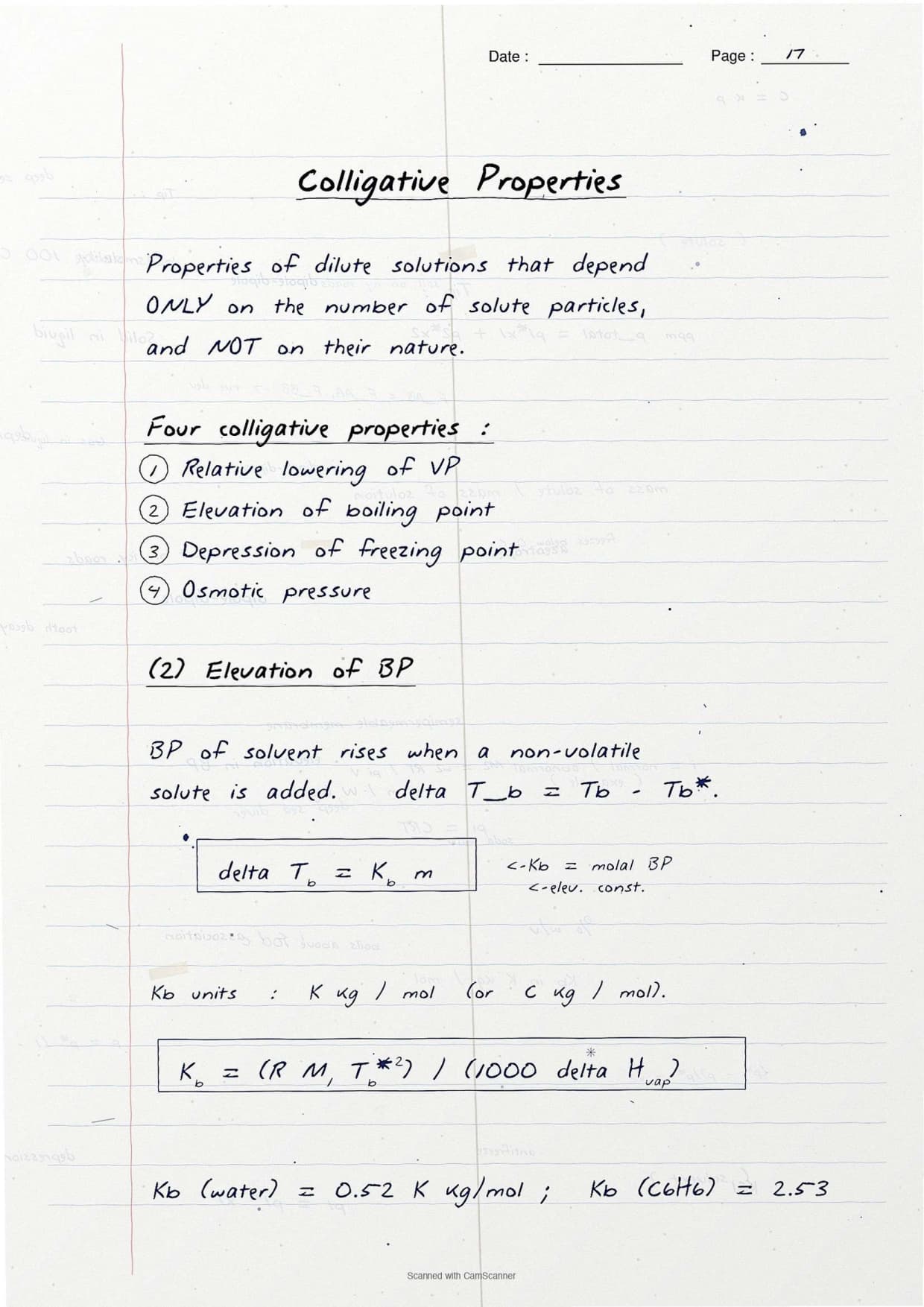
- Colligative properties: thermograms for boiling-point elevation, freezing-point depression, vapour-pressure lowering, and osmotic pressure.
- van't Hoff factor: dissociation and association cases, plus an abnormal molar mass recall card.
How will Collegedunia's Handwritten Notes Help You Crack Solutions?
The notebook compresses a 36-page NCERT chapter into a 21-page revision stack.
- Hand-sketched visual anchors: every graph and diagram drawn freehand so you can redraw it from memory in under 90 seconds.
- Colour-coded box legend: orange definitions, blue formulas, yellow traps, red common errors, consistent across chapters.
- 2026-27 NCERT alignment: molality-based colligative formulas highlighted for the new edition.
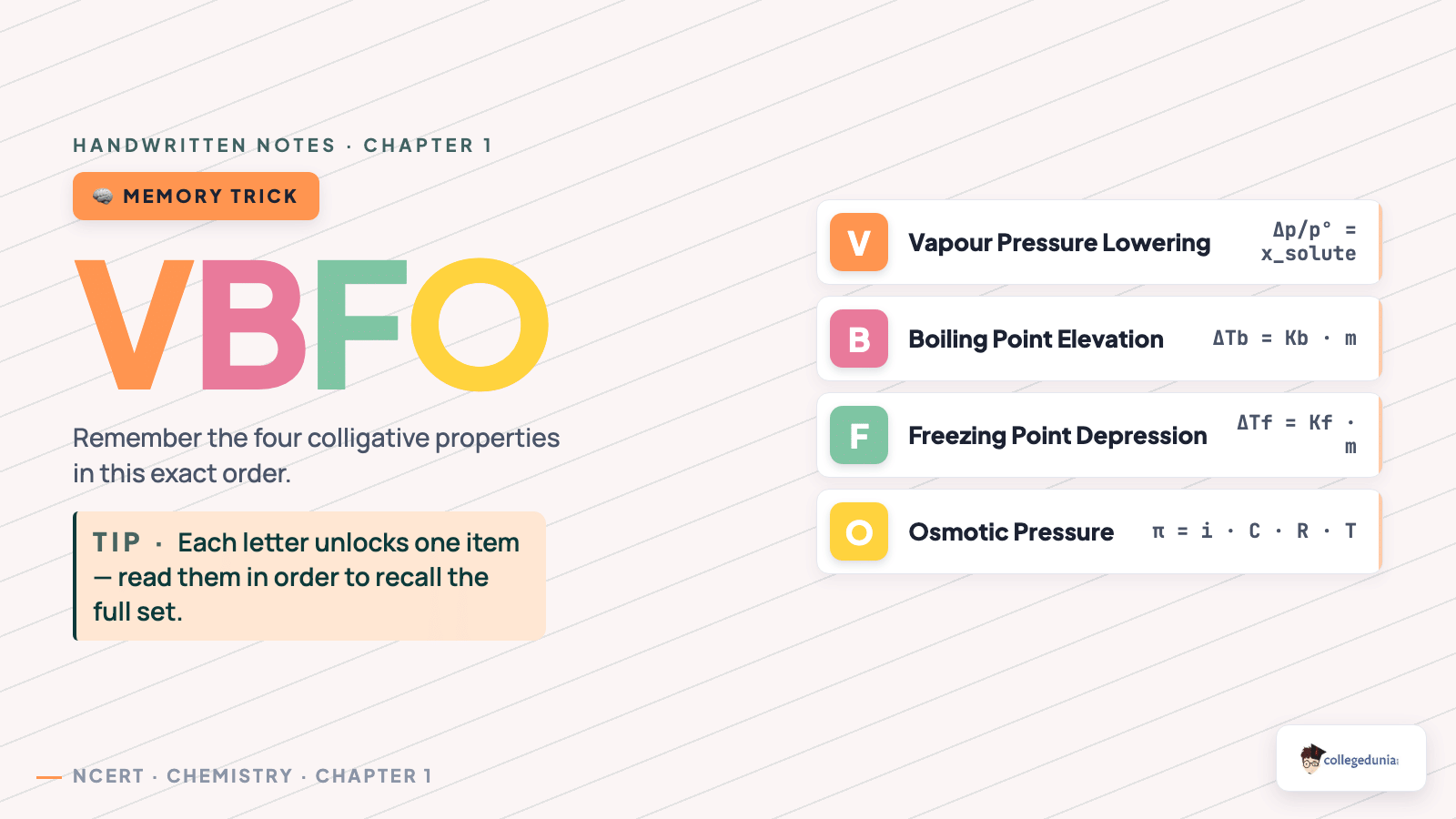
- Mnemonics: the VBFO stack keeps the four colligative properties in order for MCQs.
Solutions Handwritten Notes Concept-Flavoured Mnemonics
Two mnemonics the notebook uses to lock in the most-tested facts.
Solutions Handwritten Notes: Color Legend for the Notebook
The notebook uses four ink colours consistently. Knowing the legend lets you skim a 21-page PDF in eight minutes during last-day revision.
| Colour | Box Type | What's Inside |
|---|---|---|
| Orange | Definition box | NCERT one-line definitions: solution, solute, solvent, mole fraction, molarity, molality |
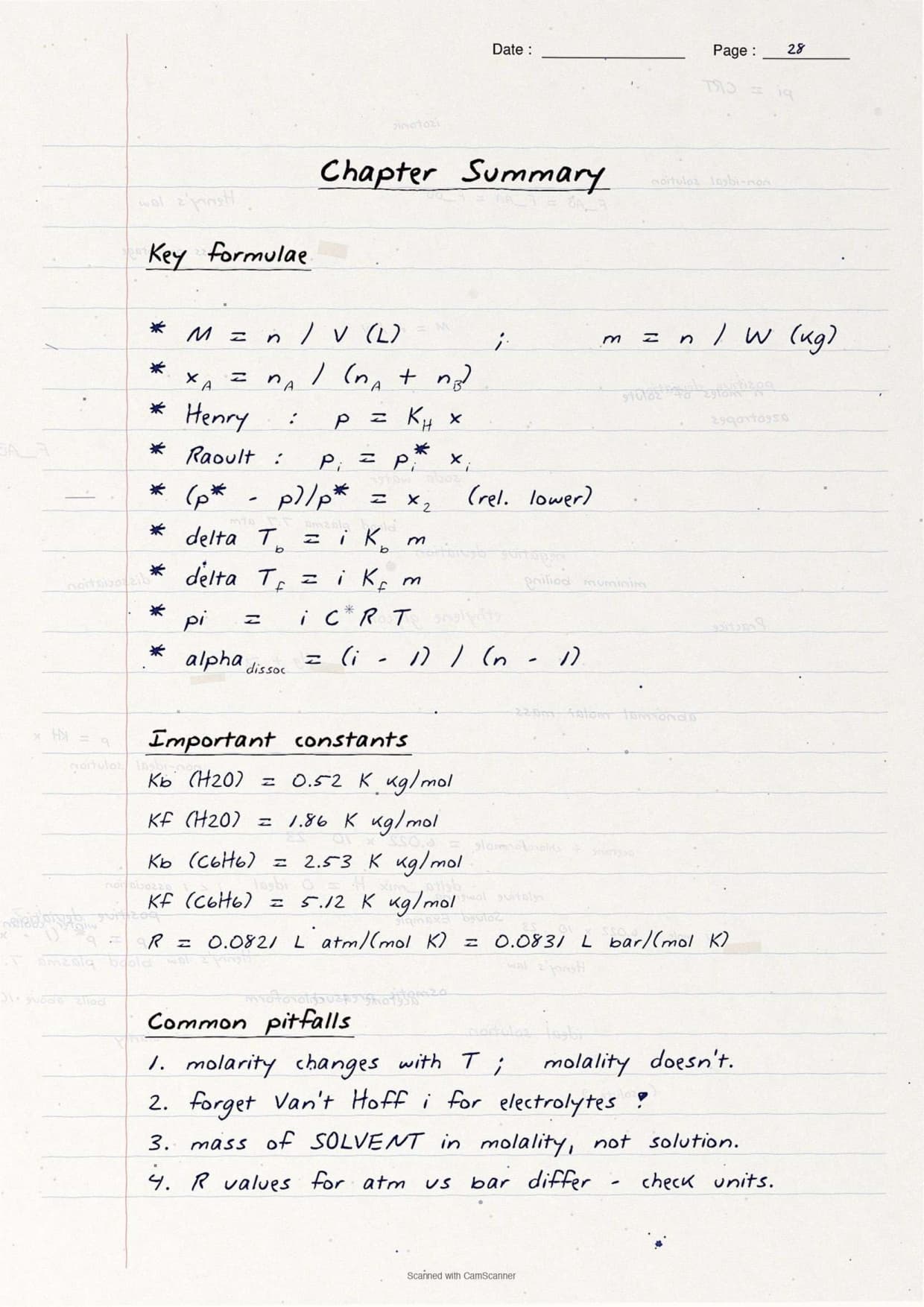
| Blue | Formula box | Every working equation with units. p = KH · x , Δ Tb = Kb m i , π = CRT , etc. |
| Yellow | MCQ-trap callout | The 7 facts CBSE / NEET re-use as MCQ distractors: ideal solution ΔH = 0, azeotrope can't be separated by fractional distillation, etc. |
| Red | Common-mistake box | Most students mis-write the colligative-property formulas; the red box shows the correct form right next to the wrong one |
Solutions: Last 24-Hour Revision Card for Class 12 Chemistry
The single page below is what you should scan the night before the Board exam. Skip the derivations; the marks come from formula recall plus one labelled diagram.
- Concentration definitions: molarity (T-dependent), molality (T-independent), mole fraction, ppm.
- Henry's Law: p = KH x, plus one application.
- Raoult's Law: ptotal = p°AxA + p°BxB.
- Deviation graphs: positive and negative, with causes. Sketch from memory.
- Four colligative properties: all proportional to molality and the van't Hoff factor.
- van't Hoff factor: i > 1 dissociation, i < 1 association, i = 1 non-electrolyte.
- One numerical: compute molality from mass per cent in under 90 seconds.
Best Way to Use These Solutions Handwritten Notes
Treat the notebook as a two-pass revision tool, not a textbook substitute.
- Pass 1: flip through the 14 diagrams and the colour legend to imprint the visual layout.
- Pass 2: read the blue formula boxes and yellow MCQ-traps; recall each formula from the variable name.
- Pass 3 (last 24 hours): skim the revision card and re-sketch the deviation curves from memory.
Related Links:
Solutions Weightage Compared Across Class 12 Chemistry Chapters
The visual below maps the typical CBSE Board mark distribution across all 10 chapters of the 2026-27 NCERT Chemistry book, averaged over the last five years.
Solutions ties with Coordination Compounds at the top of the bar chart at 7 marks, so a strong revision pass on this chapter alone secures a tangible chunk of the Class 12 Chemistry paper.
Student Feedback
In a Collegedunia poll of 900 Class 12 students, 78% said the hand-drawn van't Hoff and osmosis sketches in this Solutions notebook were the fastest way to revise colligative properties the night before the exam.
Other Resources for Solutions Class 12 Chemistry
- Solutions Class 12 Chemistry Handwritten Notes
- Solutions Class 12 Chemistry NCERT Solutions
- Solutions Class 12 Chemistry Notes
- Solutions Class 12 Chemistry Formula Sheet
- Solutions Class 12 Chemistry NCERT Book PDF
- Solutions Class 12 Chemistry NCERT Exemplar Book PDF
- Solutions Class 12 Chemistry NCERT Exemplar Solutions
NCERT Handwritten Notes for Class 12 Chemistry: All Chapters
Use the table below to jump to any other Class 12 Chemistry chapter's handwritten notebook PDF. The same colour-coded box legend and last-day revision card runs through every chapter.
| Chapter | Resource |
|---|---|
| Chapter 2 | Electrochemistry Handwritten Notes |
| Chapter 3 | Chemical Kinetics Handwritten Notes |
| Chapter 4 | The d- and f-Block Elements Handwritten Notes |
| Chapter 5 | Coordination Compounds Handwritten Notes |
| Chapter 6 | Haloalkanes and Haloarenes Handwritten Notes |
| Chapter 7 | Alcohols, Phenols and Ethers Handwritten Notes |
| Chapter 8 | Aldehydes, Ketones and Carboxylic Acids Handwritten Notes |
| Chapter 9 | Amines Handwritten Notes |
| Chapter 10 | Biomolecules Handwritten Notes |
Solutions Class 12 Chemistry Handwritten Notes FAQs
Ques. Where can I download Solutions Class 12 Chemistry Handwritten Notes PDF?
Ans. You can download the Solutions Class 12 Chemistry Handwritten Notes PDF directly from this page. Both the Normal and HD versions are available, and both are free.
Ques. Are these handwritten notes aligned with the 2026-27 NCERT?
Ans. Yes. The notebook reflects the current 2026-27 syllabus for Class 12 Chemistry. The new NCERT edition keeps Solutions intact as Chapter 1 and emphasises molality-based colligative-property numericals over the older molarity-based variants.
Ques. How many pages is the Class 12th Chemistry Solutions Handwritten Notes PDF?
Ans. The handwritten notes PDF runs 21 pages and covers concentration units, Henry's Law, Raoult's Law, ideal and non-ideal behaviour, every colligative property with formulas, and the van't Hoff factor with worked cases.
Ques. Are these notes enough to score full marks in CBSE Boards Chapter 1?
Ans. The handwritten notes cover every CBSE-relevant topic and include the last-24-hour revision card. For full-marks performance, pair the notebook with the NCERT exercise solutions and the Exemplar problems so you have practiced every typical 3-mark numerical at least once.
Ques. Do these handwritten notes help with JEE Main and NEET Solutions questions?
Ans. Yes. JEE Main and NEET draw 1 to 3 questions per year from this chapter, and the yellow MCQ-trap boxes inside the notebook are calibrated against the last five years of these entrance papers, in particular the abnormal molar mass and van't Hoff factor stems.
Ques. What's the difference between Collegedunia's Handwritten Notes and the regular Notes for Class 12 Chemistry Chapter 1?
Ans. The regular Notes carry the deep concept walkthrough with detailed explanations of every sub-topic. The Handwritten Notes compress the same content into a faster, more visual revision tool with hand-drawn diagrams, colour-coded boxes, and a 24-hour pre-exam recall card. Use Notes for first read, Handwritten Notes for second and third passes.
Ques. Which sub-topic of Solutions carries the most weight in CBSE Board exams?
Ans. Colligative properties (boiling-point elevation, freezing-point depression, osmotic pressure) and the van't Hoff factor together account for roughly 4 to 5 of the 6 to 8 marks CBSE assigns to this chapter, and they have been asked in some form in every Board paper since 2022.
Ques. What is the easiest way to remember the four colligative properties?
Ans. Use the VBFO mnemonic on page 20 of the notebook: Vapour-pressure lowering, Boiling-point elevation, Freezing-point depression, Osmotic pressure. All four depend only on the number of solute particles and pick up a factor of i (the van't Hoff factor) for electrolytes. The colour-coded formula box on page 14 carries the four equations side by side.
Ques. How does the handwritten notebook explain positive and negative deviation from Raoult's law?
Ans. Pages 11 and 12 carry two hand-sketched p-vs-x curves. Positive deviation (ethanol + acetone) bows above the ideal Raoult line because acetone breaks the H-bond network and weakens A-B forces; it forms a minimum-boiling azeotrope. Negative deviation (chloroform + acetone) bows below the ideal line because chloroform forms a new H-bond with acetone's carbonyl; it forms a maximum-boiling azeotrope. The annotation arrows on each diagram make the H-bond logic visible.
Ques. Why do we use molality instead of molarity in colligative-property numericals?
Ans. Molality is moles of solute per kilogram of solvent, so it is independent of temperature. Molarity is moles of solute per litre of solution; the volume changes with temperature, so molarity drifts. CBSE numericals on Δ Tb , Δ Tf , and relative lowering of vapour pressure always use molality. The yellow MCQ-trap box on page 14 of the notebook captures this.
Ques. How does the notebook handle the van't Hoff factor for dissociation and association?
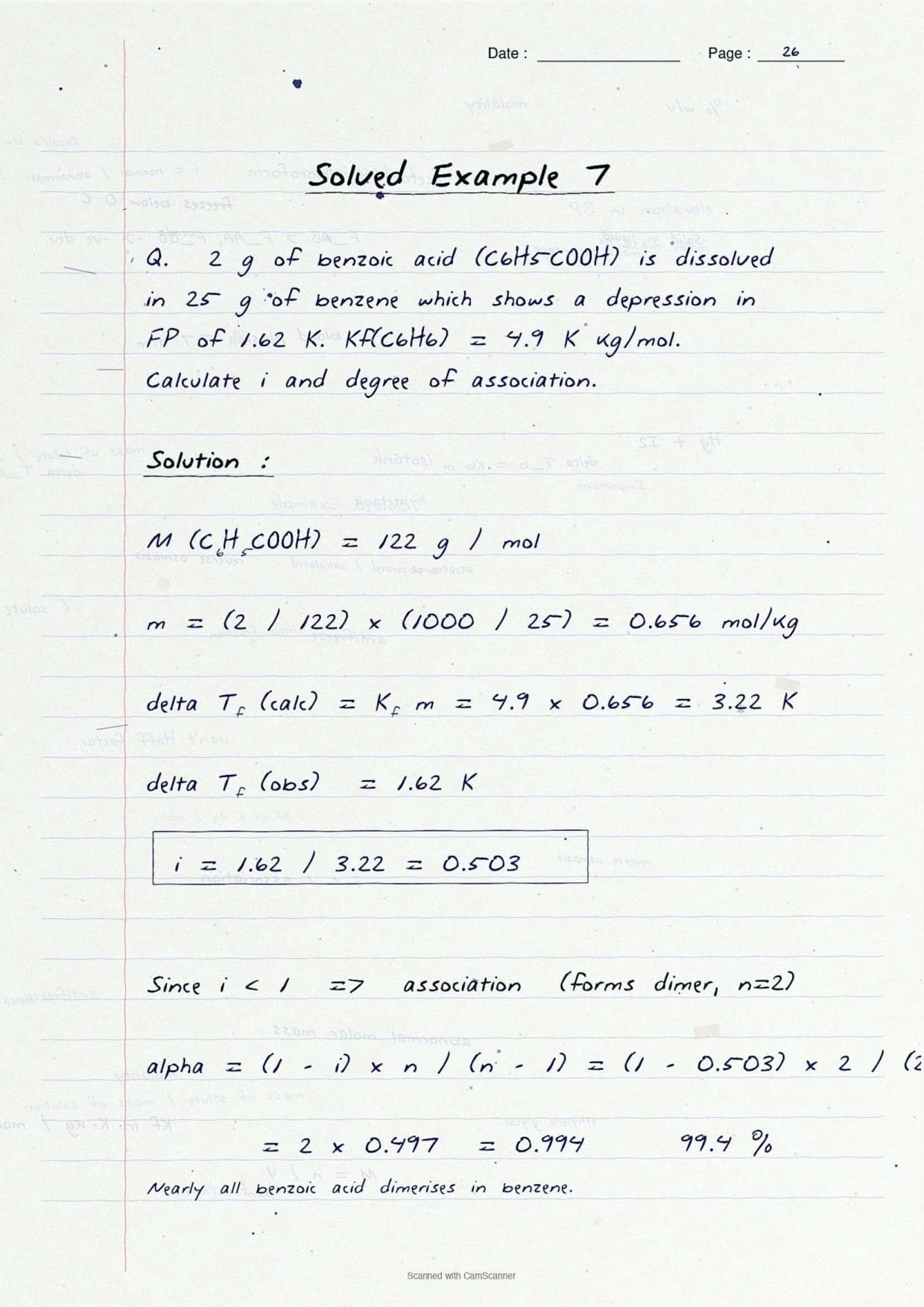
Ans. Page 19 carries a three-case stick-figure sketch. For dissociation (NaCl, K2SO4, CaCl2) the figure splits, i > 1 . For association (benzoic acid dimer in benzene, acetic acid in benzene) the figure combines, i < 1 . For a non-electrolyte (glucose, urea), the figure stays still, i = 1 . The formulas α = (i-1)/(n-1) for dissociation and α = (1-i)/(1 - 1/n) for association sit in a blue formula box right next to the sketch.
Ques. What is osmotic pressure and how does reverse osmosis work?
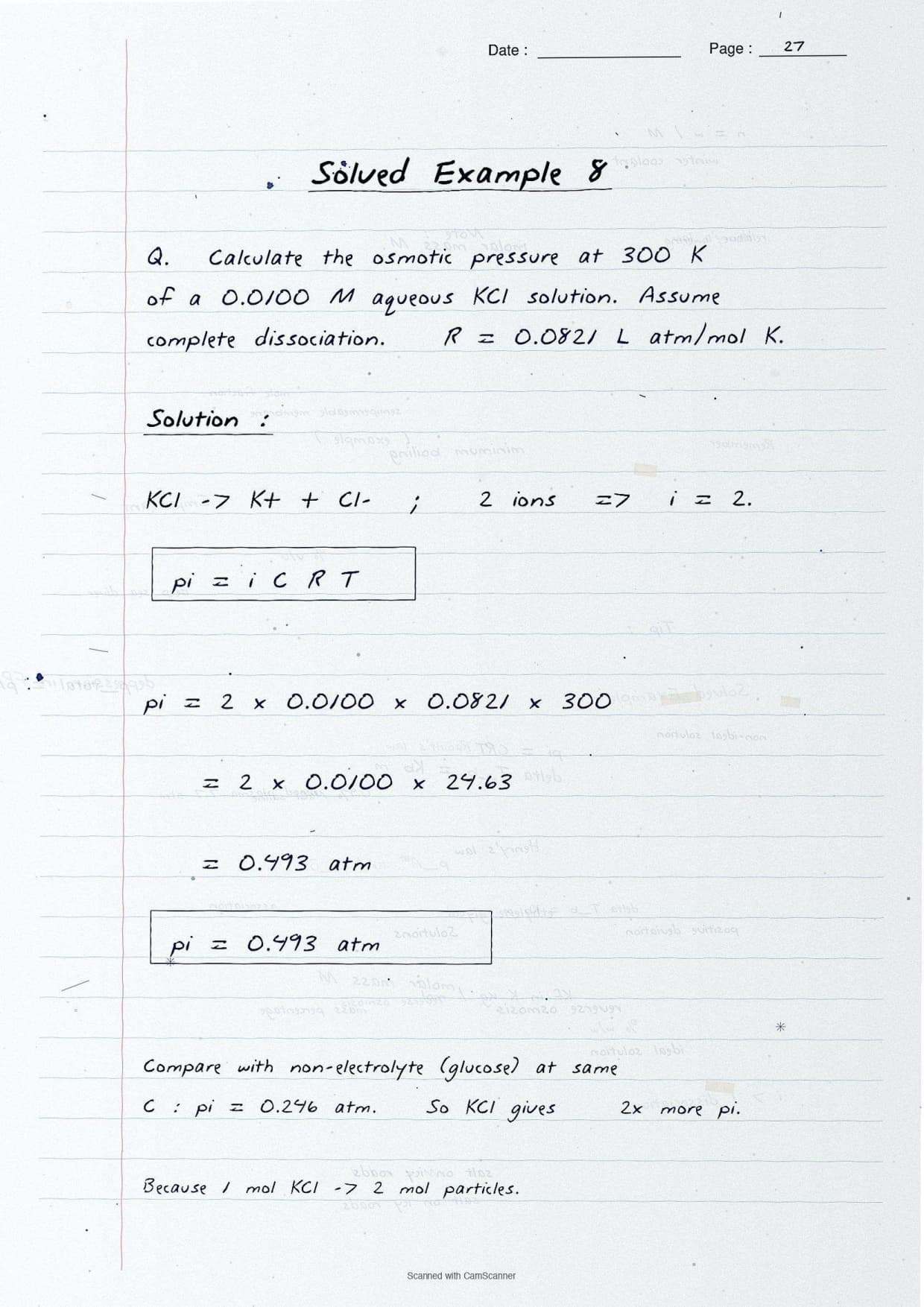
Ans. Osmotic pressure π = i C R T is the pressure that must be applied to the more-concentrated side of a semipermeable membrane to stop net solvent flow. Reverse osmosis applies a pressure greater than π on the concentrated side (e.g. sea water at roughly 30 atm), forcing solvent the other way and leaving solute behind. The osmosis-cell schematic on page 17 of the notebook and the desalination cartoon on page 18 walk through the setup with labelled arrows.



Comments