




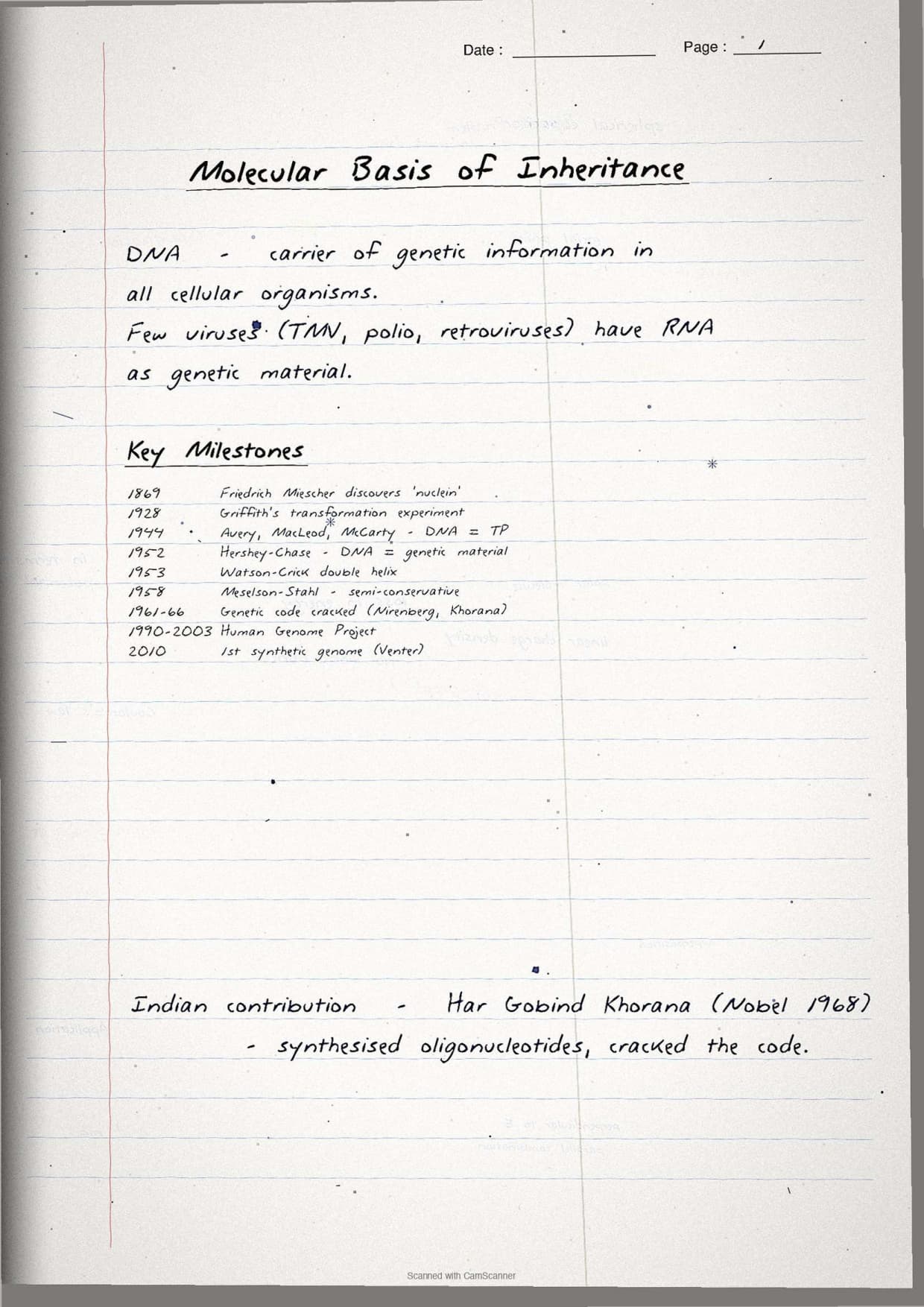
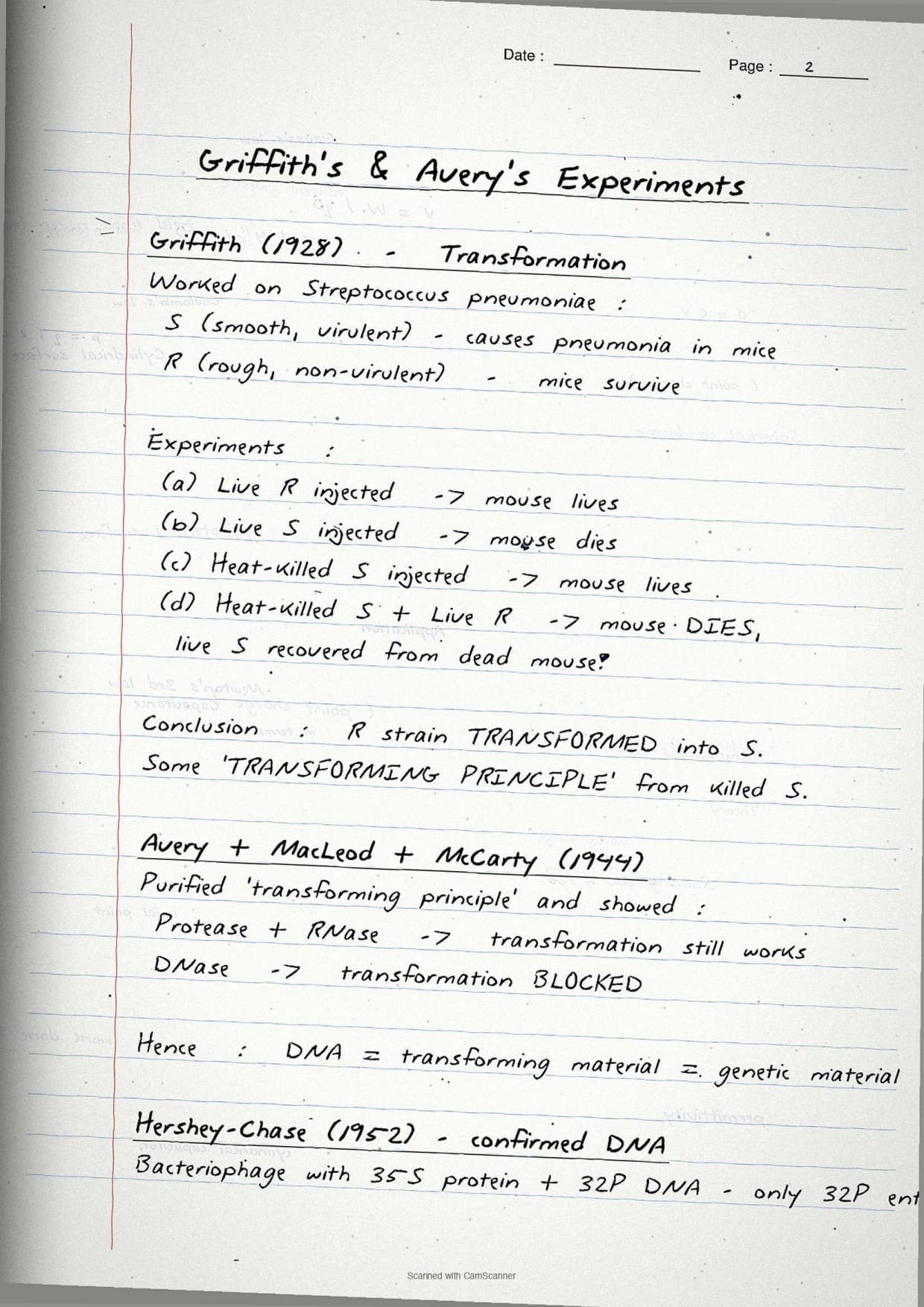
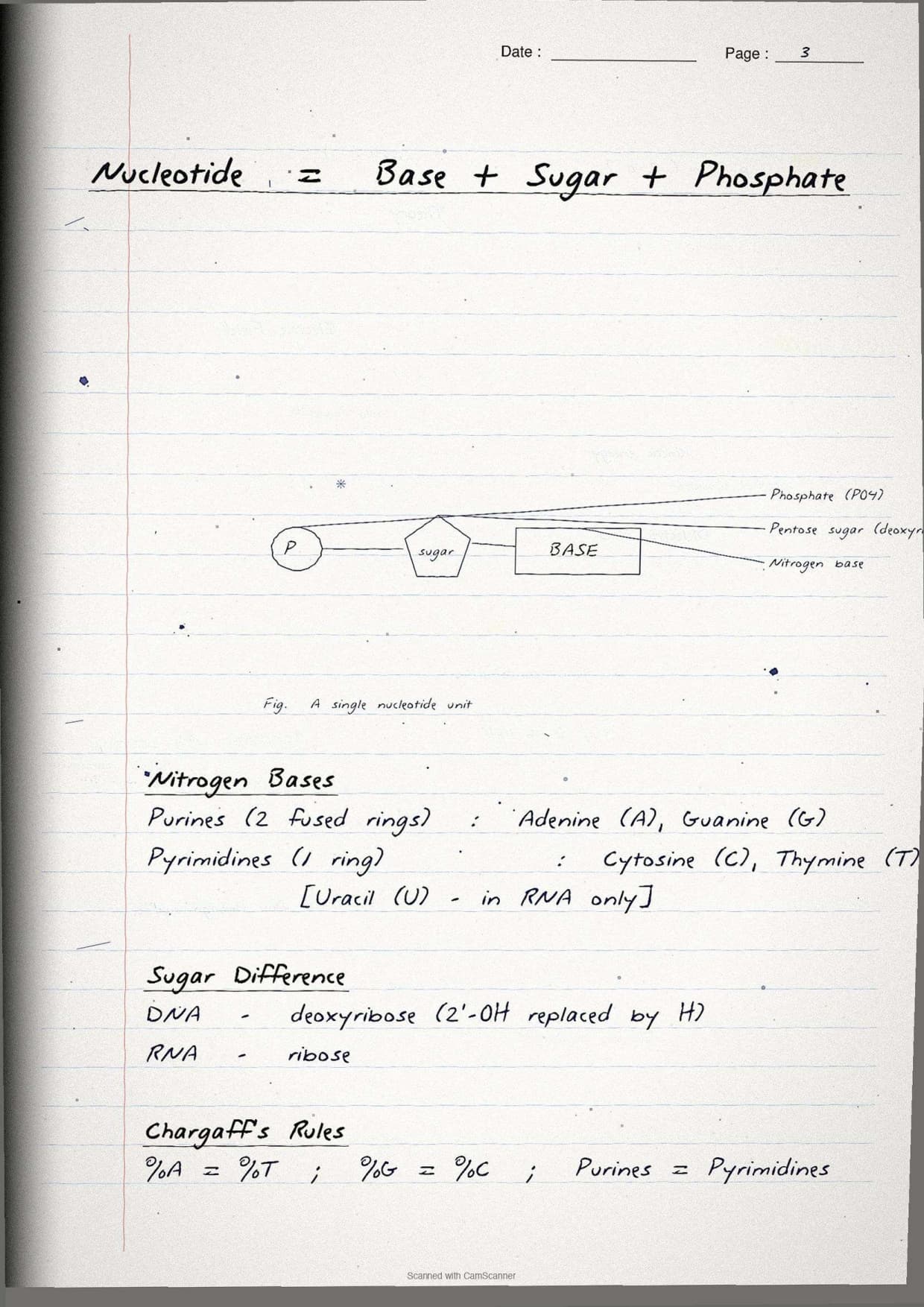
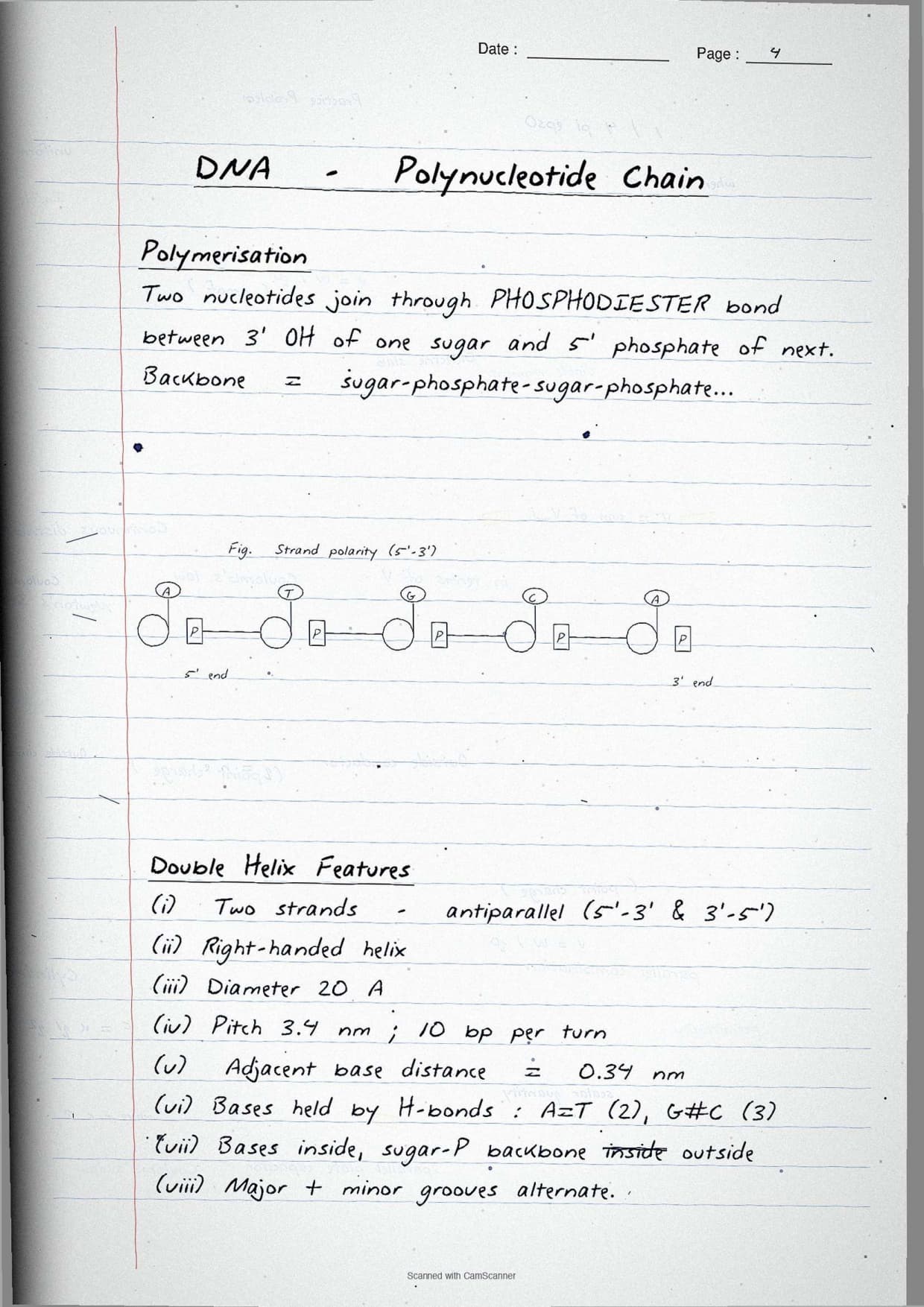
The Collegedunia scanned notebook for Class 12 Biology Chapter 5 Molecular Basis of Inheritance compresses 21 sub-topics, from Griffith and Hershey-Chase to the Human Genome Project, into roughly 20 colour-coded pages. These molecular basis of inheritance class 12 handwritten notes follow the 2026-27 NCERT order and are free to download below.
- CBSE Weightage: 7 to 9 marks (Unit: Genetics and Evolution, the highest single-chapter load in Class 12 Biology)
- NEET Weightage: 6 to 8 questions per year (consistently the top-scoring Biology chapter)
- CUET (UG) Biology: 4 to 6 questions per year
MBBS Student, Kasturba Medical College, Manipal • CBSE Board 2025 Topper (100/100 Biology)
Sanya scored 99.2% overall in CBSE 2025 boards and shared her personal revision notebook free of cost to help current Class 12 Biology students. The Molecular Basis of Inheritance pages were redrawn for legibility before scanning.
Molecular Basis of Inheritance Video Lecture for Class 12 Biology
Source: Magnet Brains on YouTube
How will Collegedunia's Handwritten Notes Help You Revise Molecular Basis of Inheritance Faster?
- 2026-27 NCERT Alignment: Sections follow the current syllabus order, with dropped content clearly marked.
- Diagram-First Layout: The helix, replication fork and lac operon are hand-drawn with labelled arrows for quick recall.
- Expert Verification: Every base-pairing rule, enzyme name and experimental conclusion is checked against the official NCERT chapter.
- Recall-Ready Margins: Each page closes with a summary box and colour-coded keyword strip for last-day revision.
What's Inside the Molecular Basis of Inheritance Class 12 Handwritten Notes PDF
The table maps each topic block and shows how heavily it is tested in CBSE and NEET.
| Topic in the Notes | What You Get | Exam Pull |
|---|---|---|
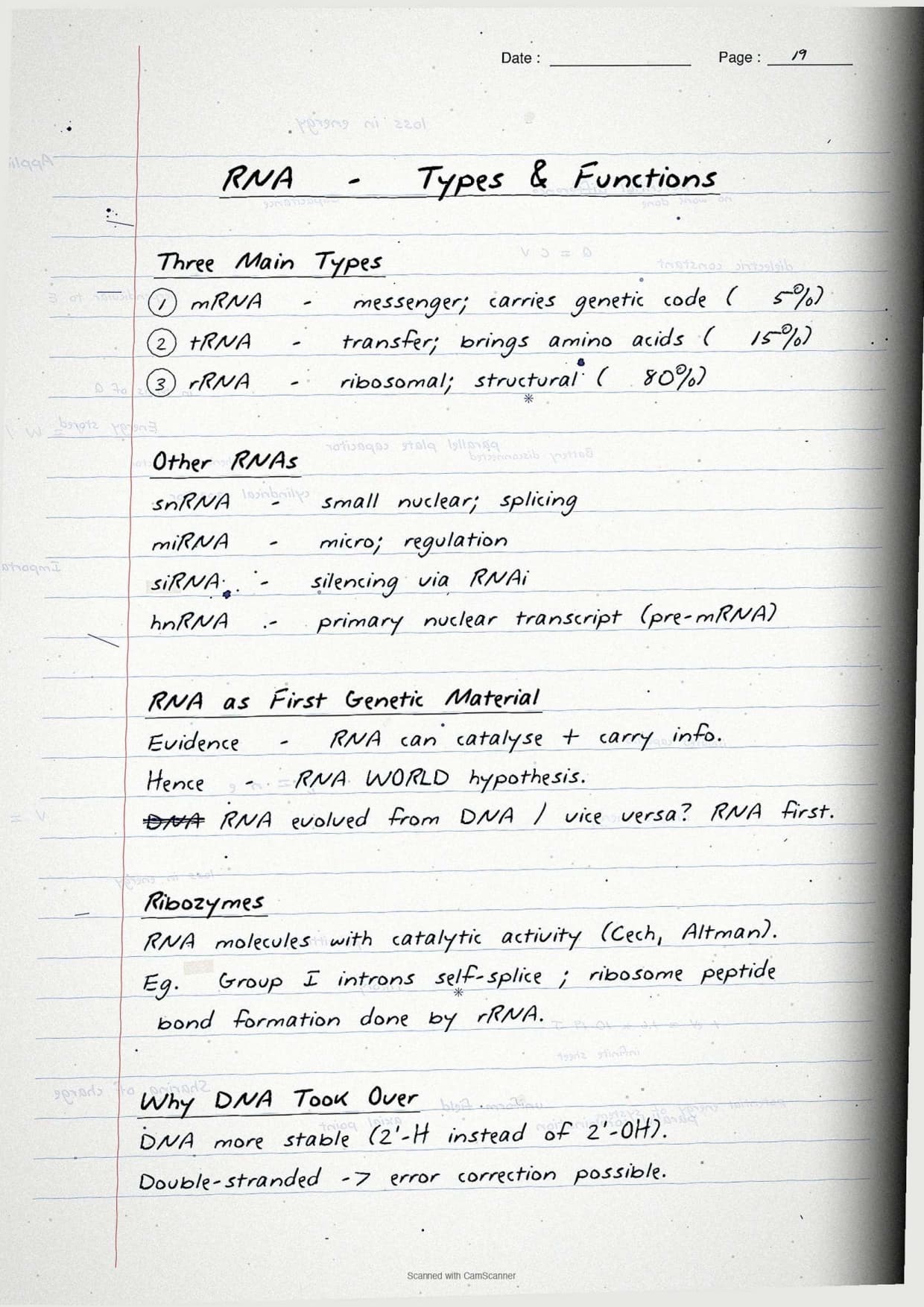
| DNA and RNA World | Nucleotide structure, polynucleotide chain, DNA as genetic material | Medium |
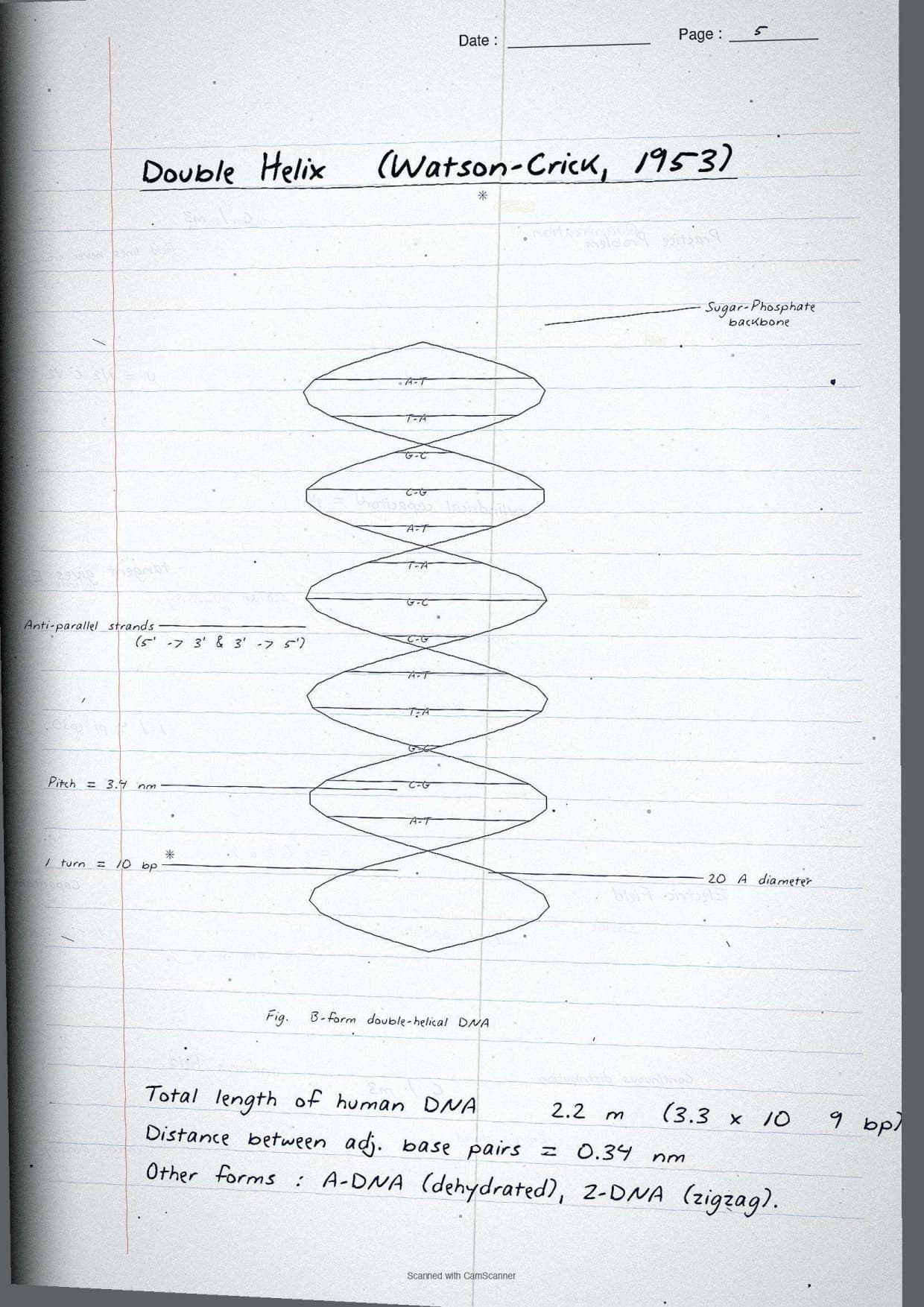
| Structure of DNA | Watson-Crick helix, base pairing, helix dimensions | High |
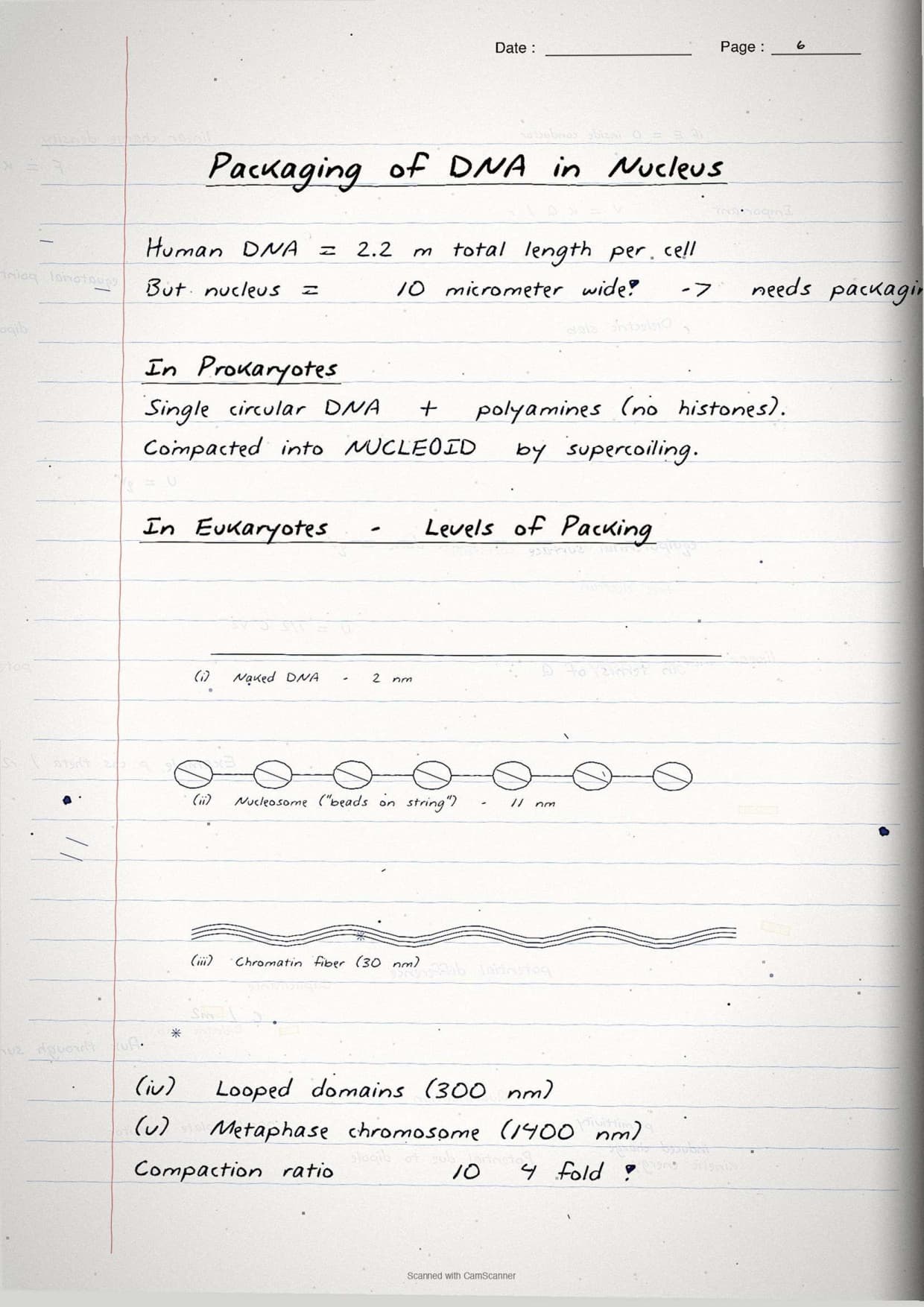
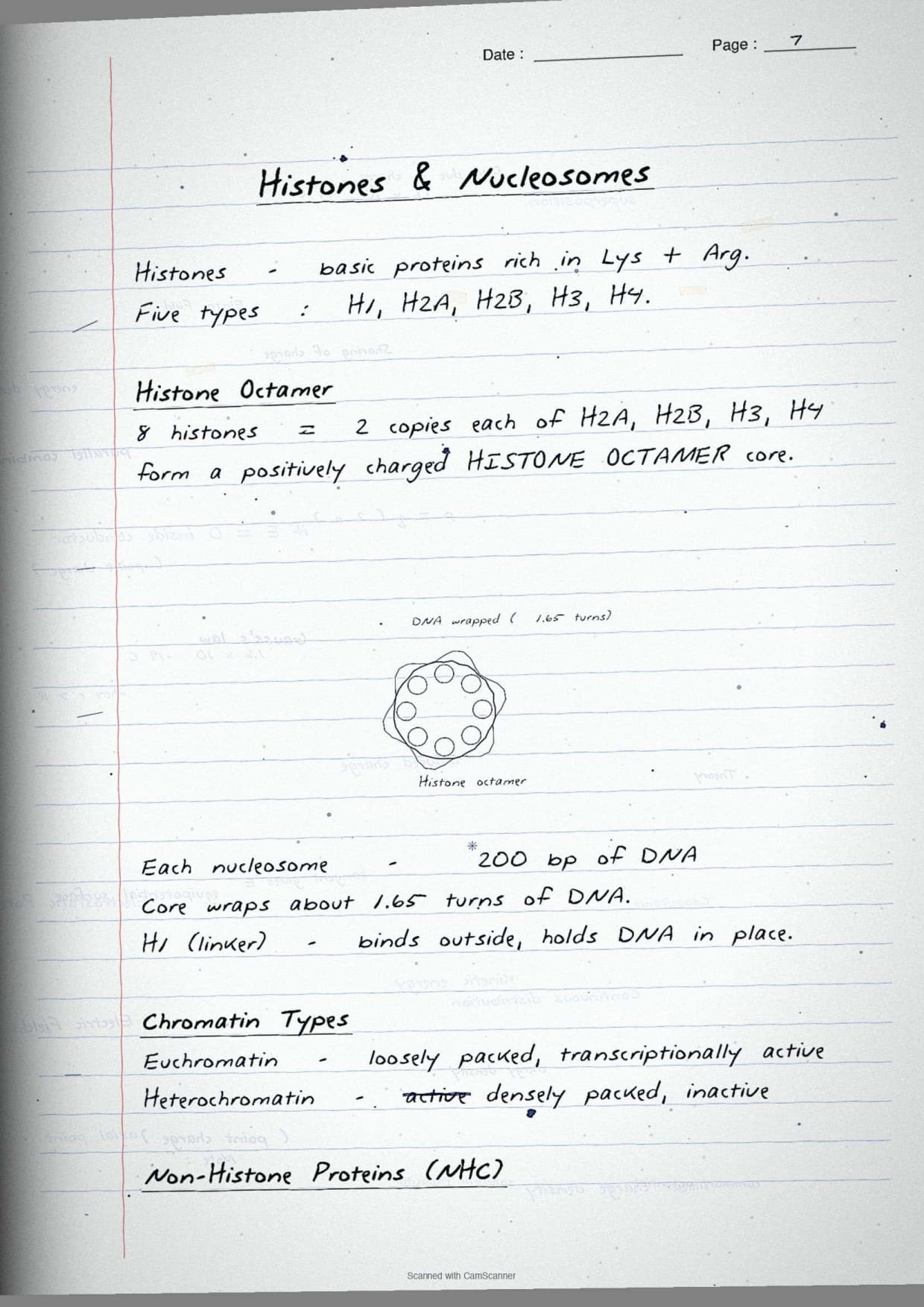
| DNA Packaging | Histones, nucleosome, euchromatin vs heterochromatin | Medium |
| Search for Genetic Material | Griffith, Avery-MacLeod-McCarty, Hershey-Chase | High |
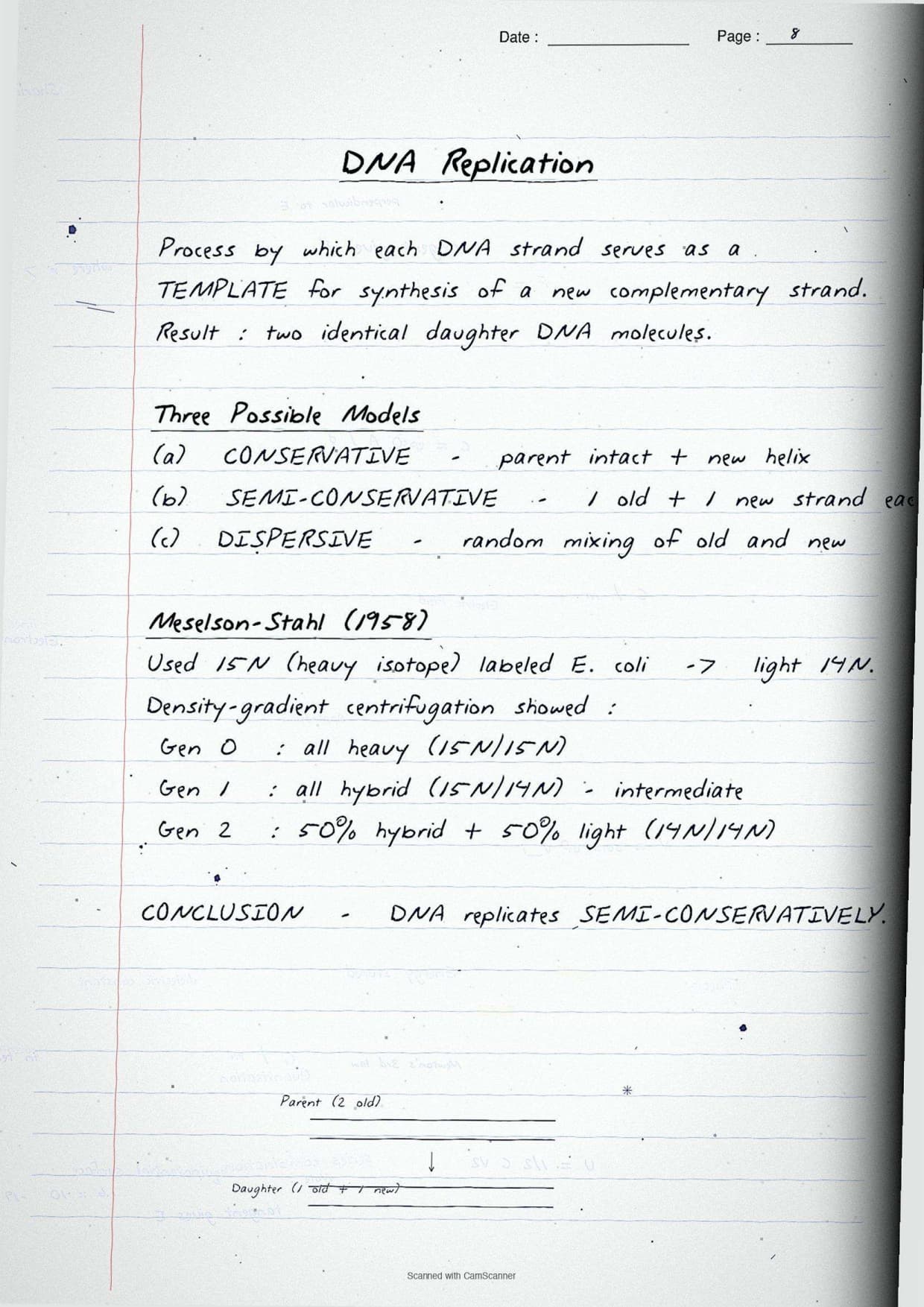
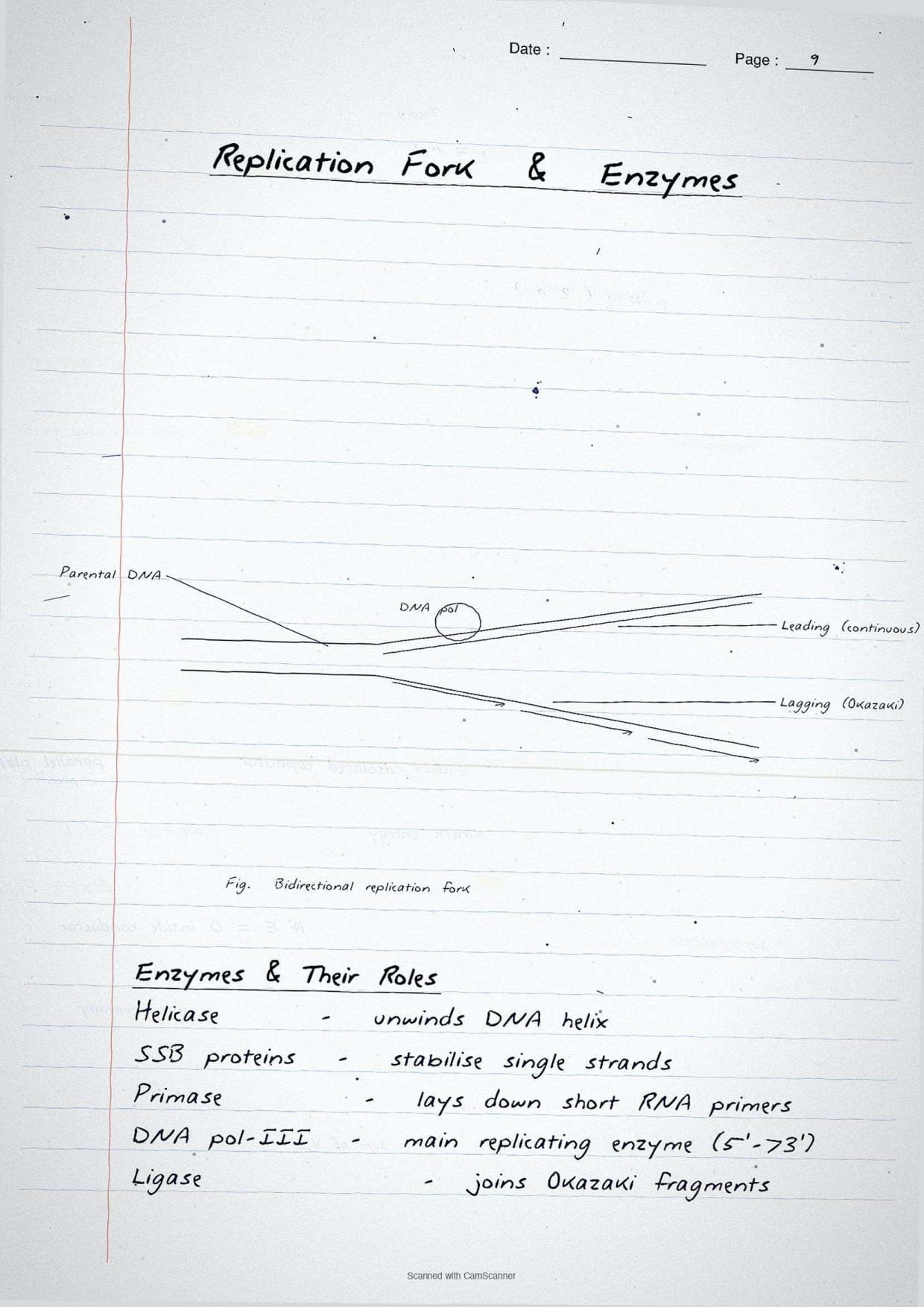
| DNA Replication | Semiconservative model, Meselson-Stahl, replication fork | High |
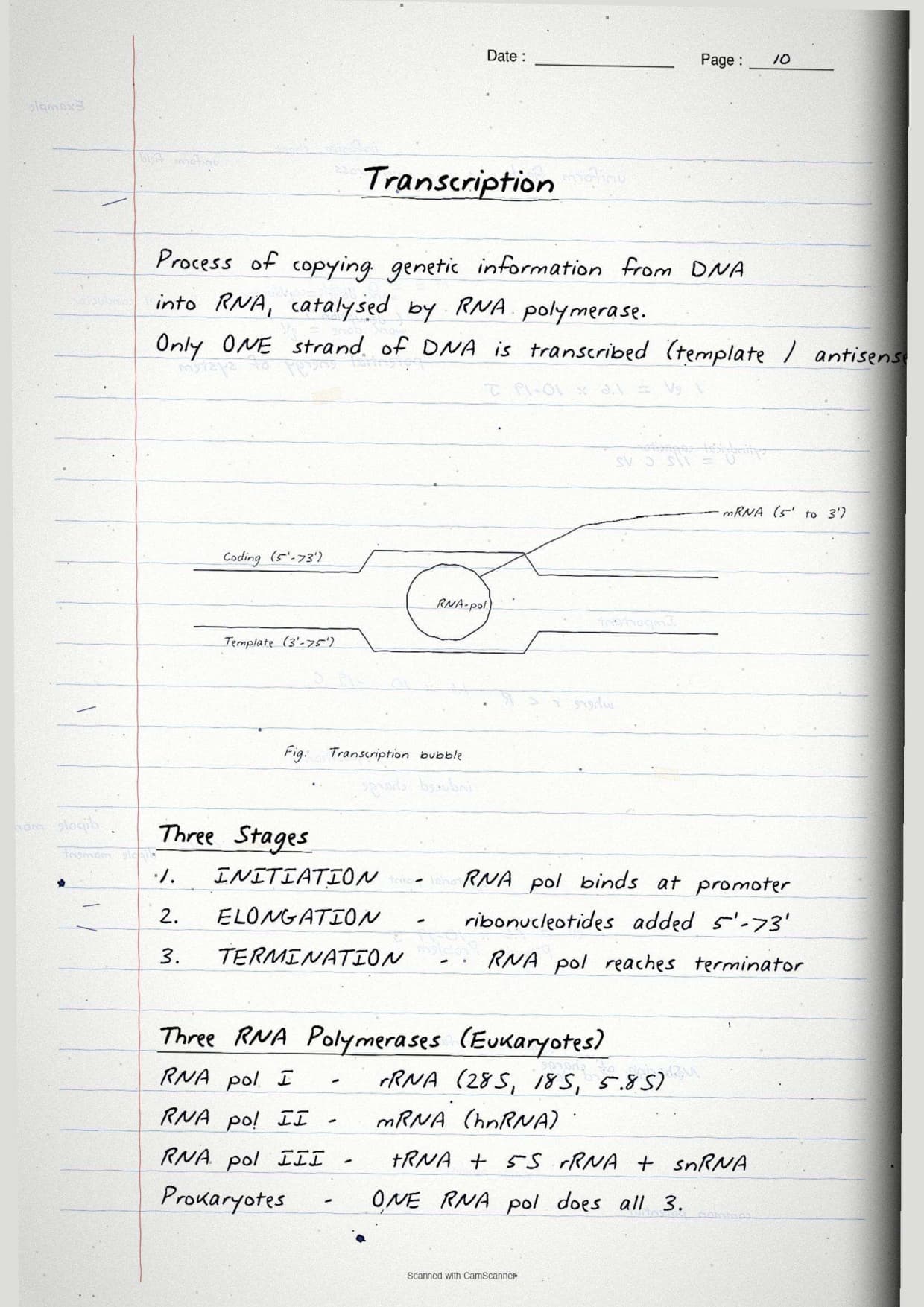
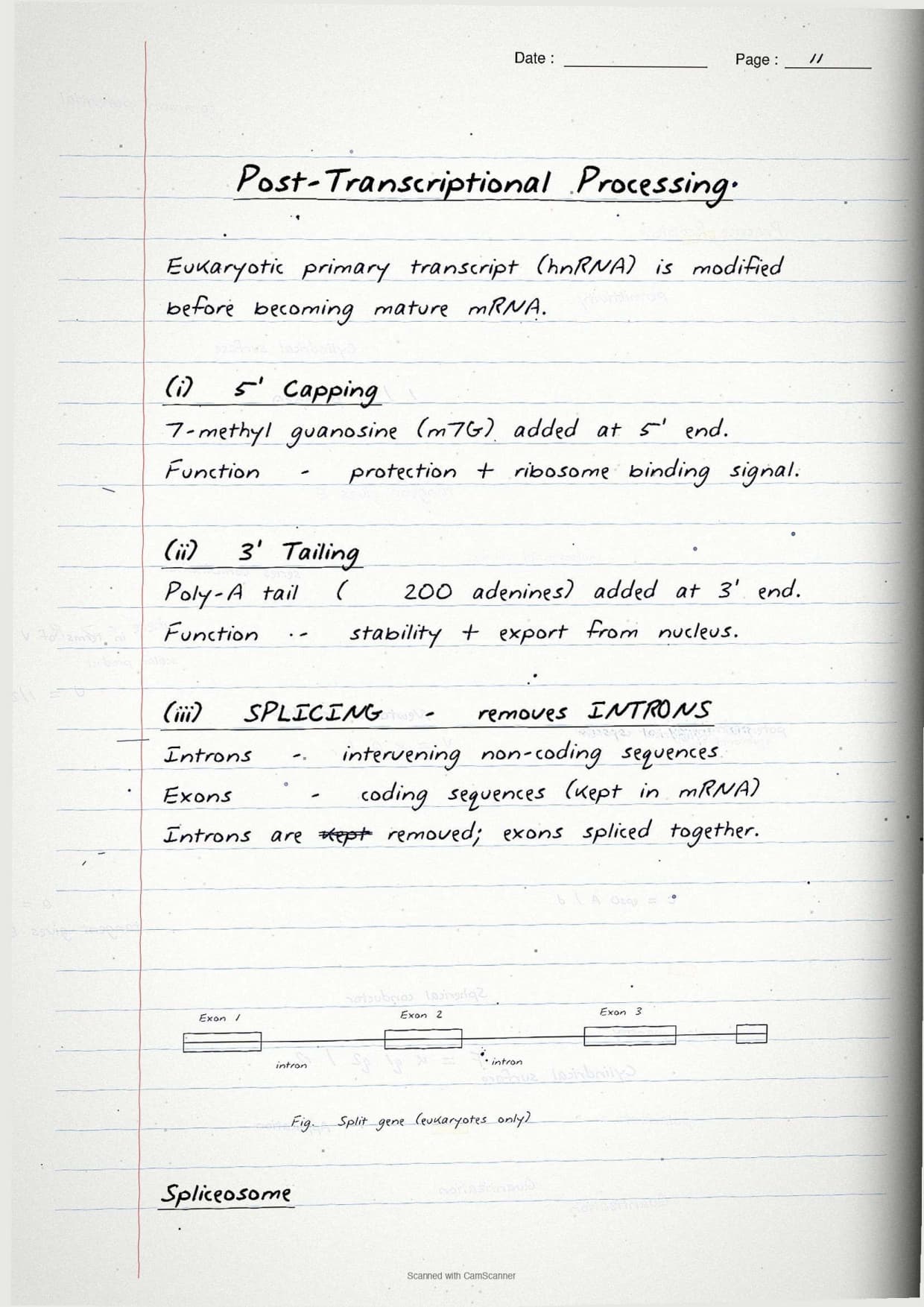
| Transcription | Transcription unit, RNA polymerase, hnRNA processing | High |
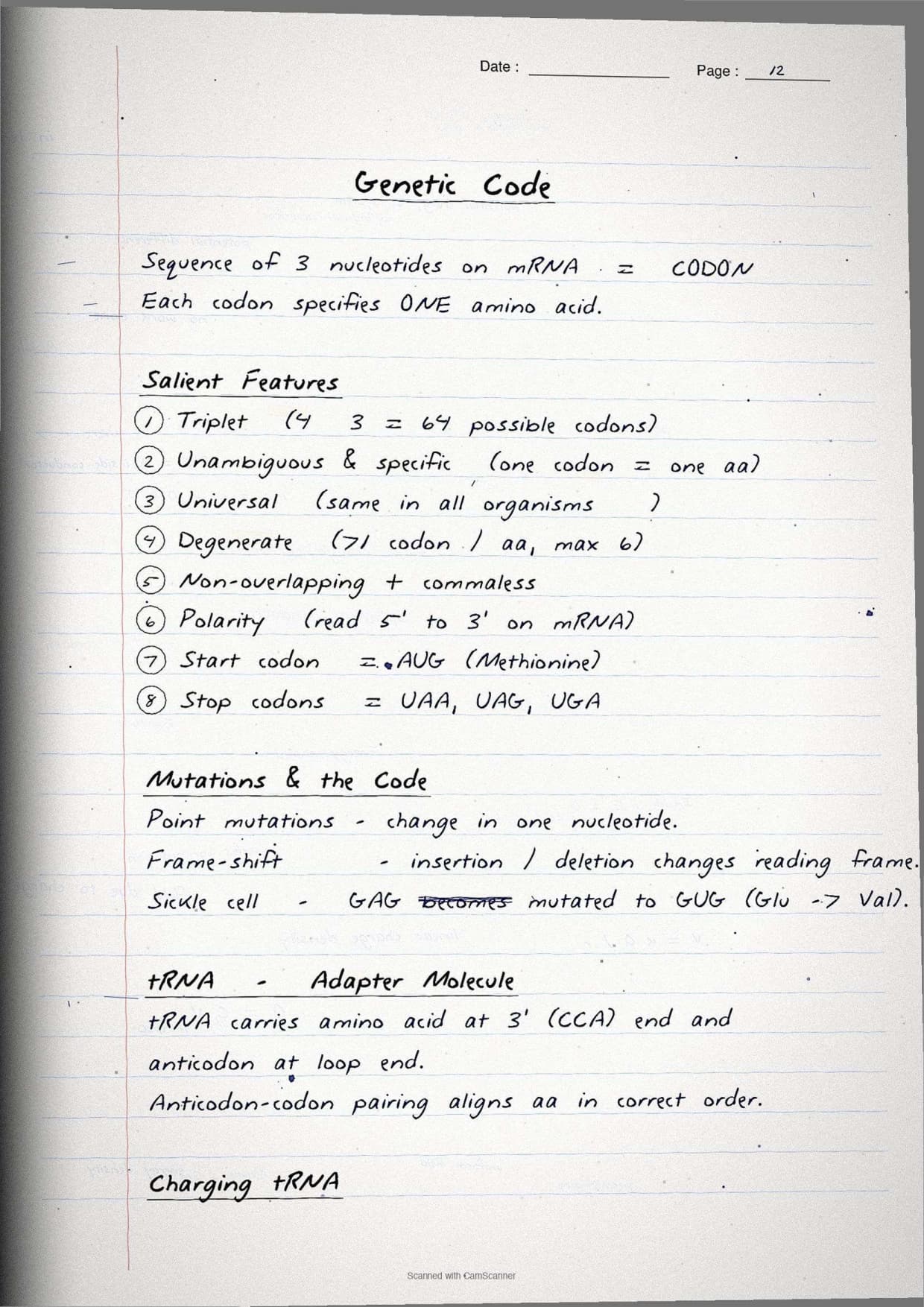
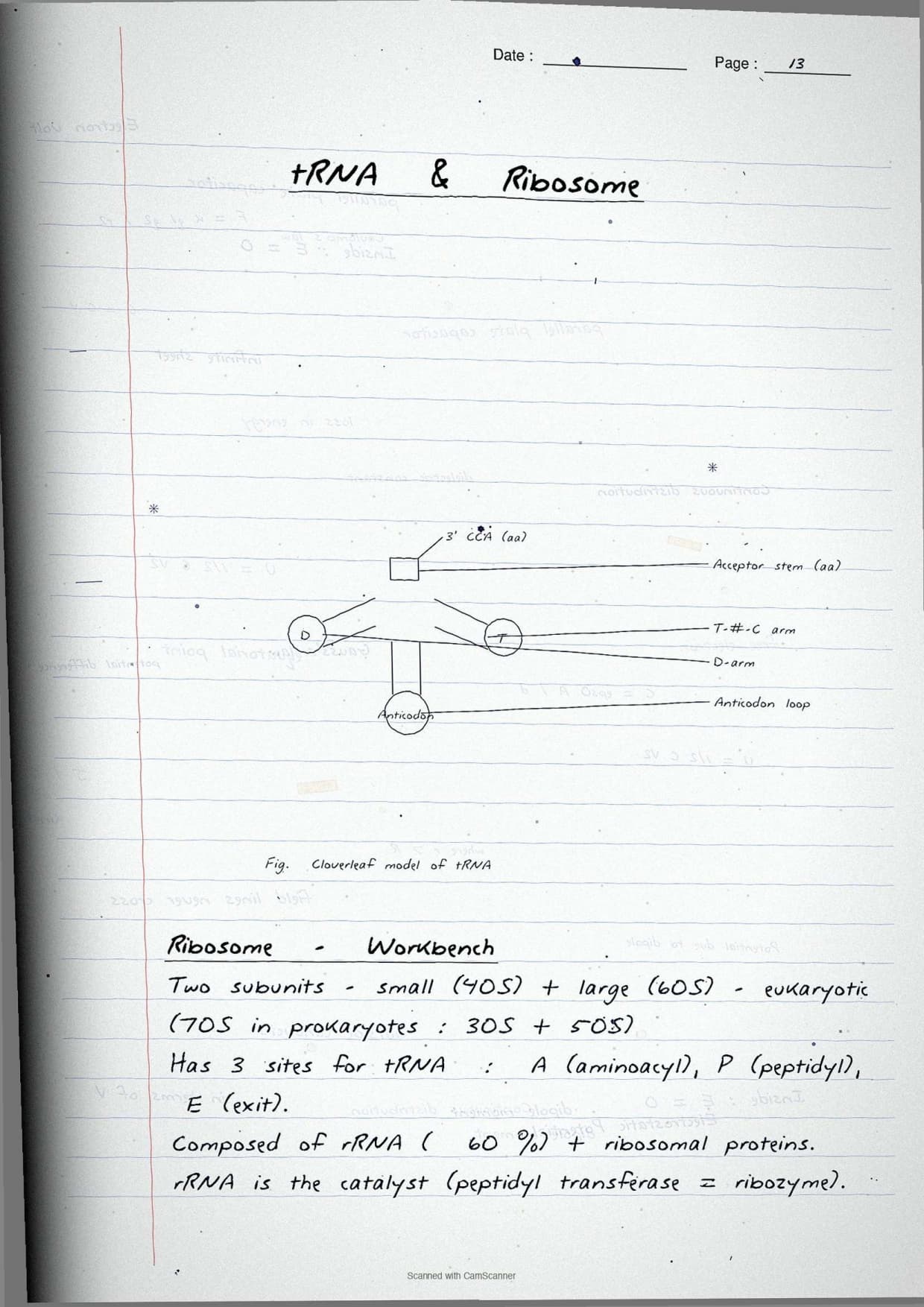
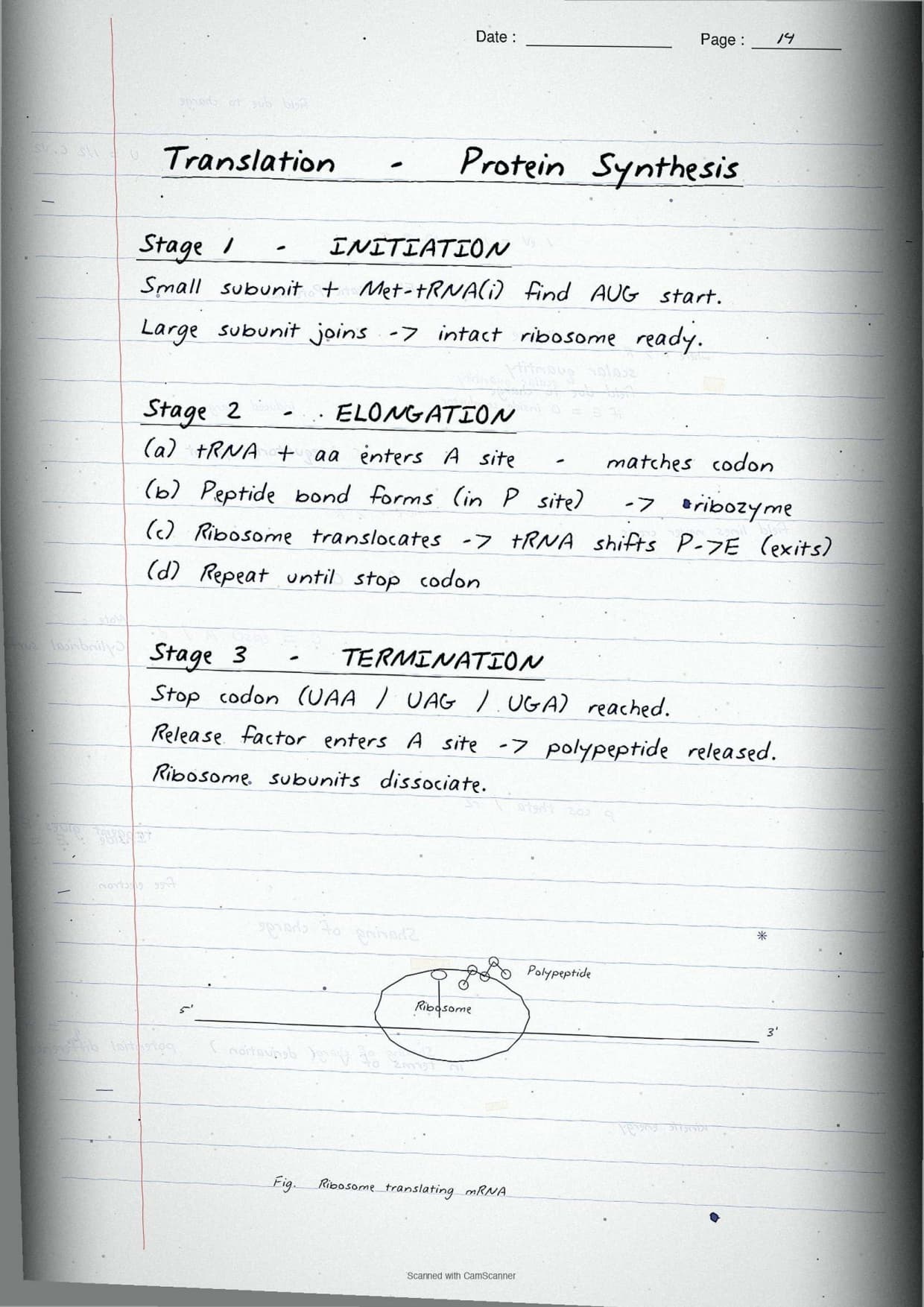
| Genetic Code and Translation | Triplet code, codon table, tRNA adaptor, ribosome | High |
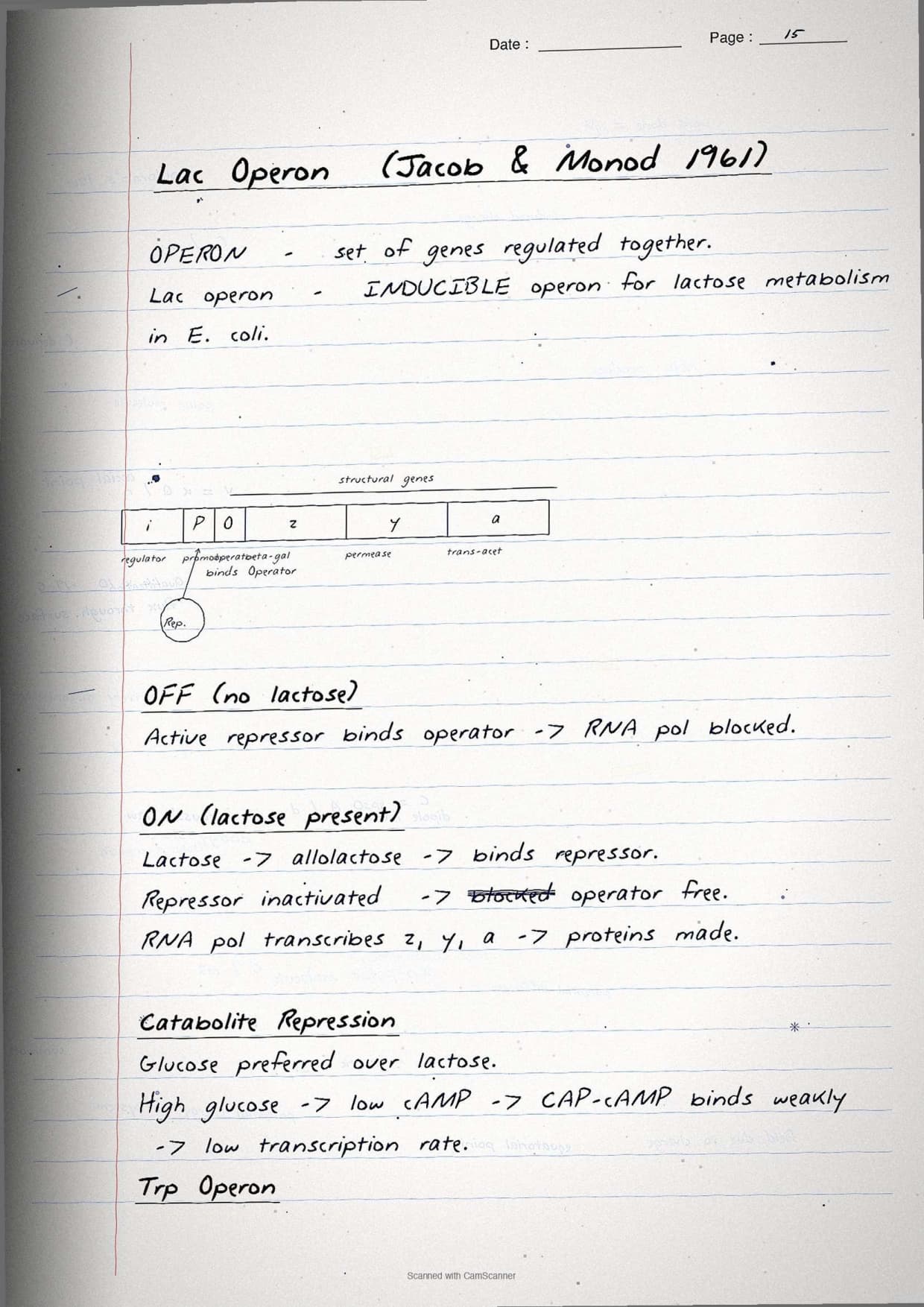
| Gene Regulation | lac operon switch (inducible), repressor, inducer | High |
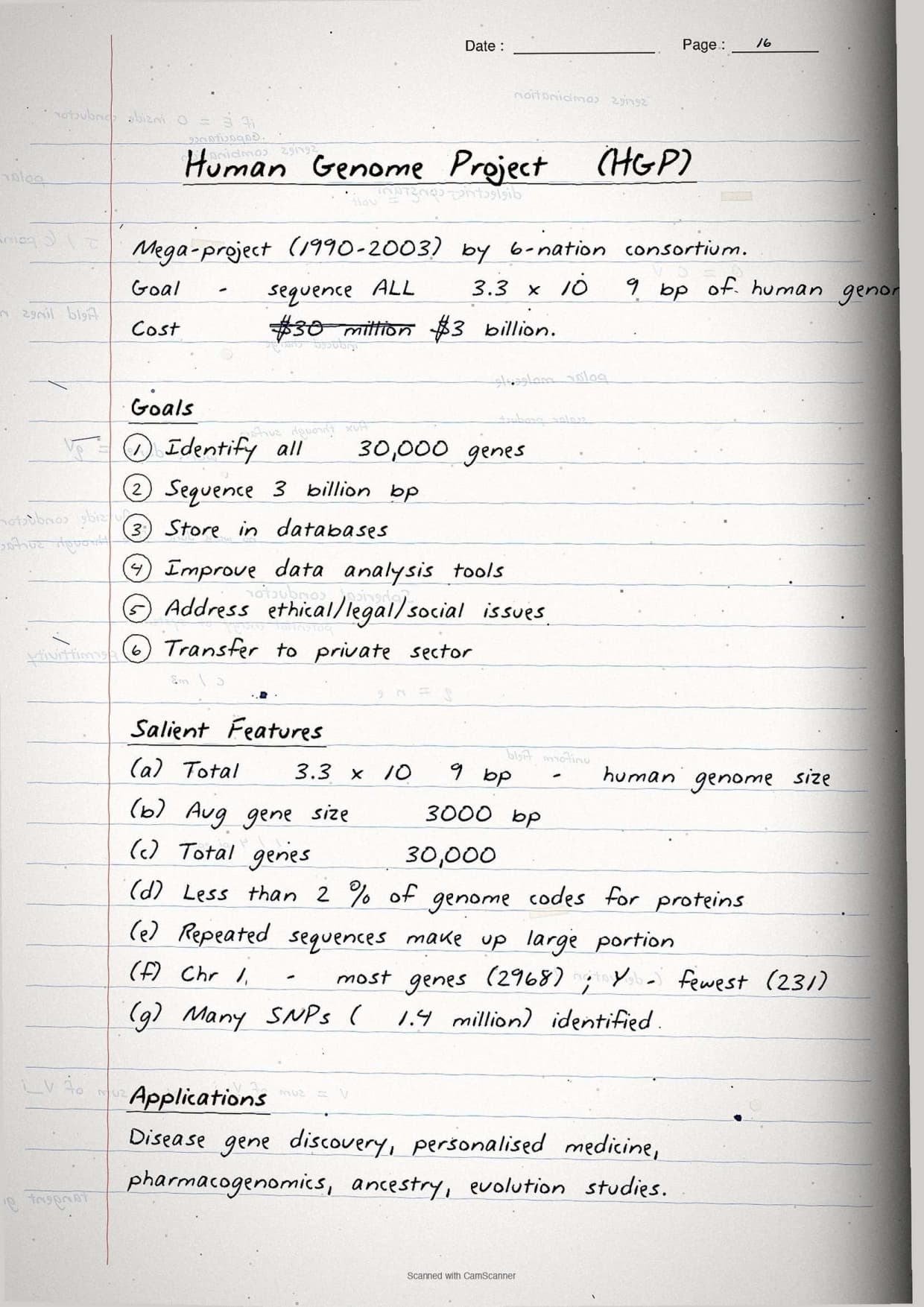
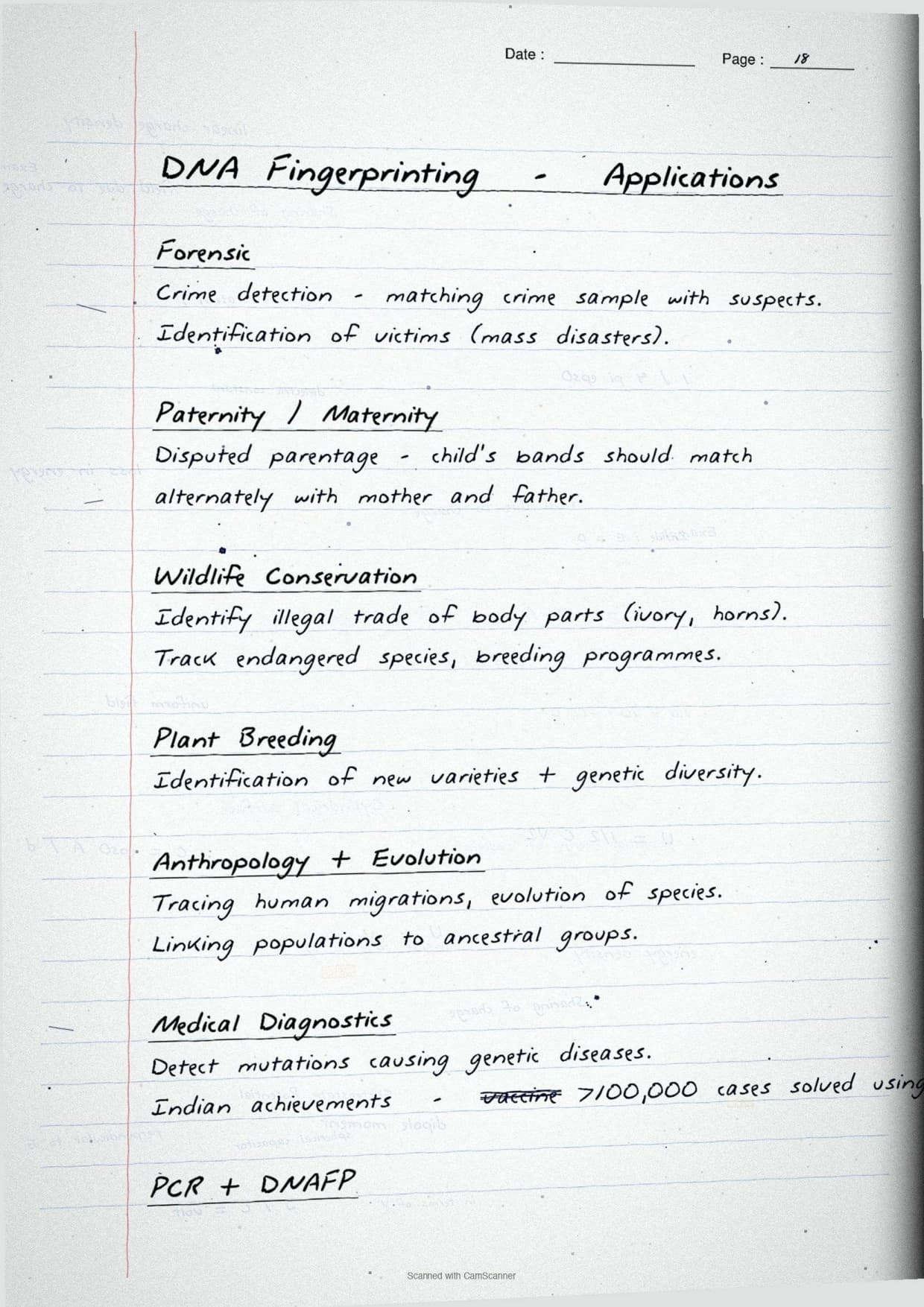
| HGP and DNA Fingerprinting | HGP features, VNTR, RFLP, applications | Medium |
The high-pull rows carry most CBSE and NEET marks, so the notebook gives them the most page space.
Molecular Basis of Inheritance Class 12 Notes: Sub-Topic Weightage for CBSE Boards
The three highest-scoring blocks (full table on the Class 12 Notes page):
- DNA Replication and Transcription: High - a 3 or 5 mark diagram question appears in almost every CBSE paper.
- Genetic Code and Translation: High - frequent short answers on code properties and the lac operon.
- Search for Genetic Material: Medium to High - Hershey-Chase and Griffith appear as 2 to 3 mark questions.
Every Hand-Drawn Diagram in the Molecular Basis of Inheritance Notes PDF
CBSE and NEET test labelled figures from this chapter directly. The table lists the key hand-drawn sketches with their page number.
| Diagram | Page | Why It Matters |
|---|---|---|
| DNA double helix with dimensions | 3 | 3.4 nm pitch, 0.34 nm rise, 10 bp/turn |
| Nucleosome and chromatin packaging | 5 | Histone octamer, H1, 200 bp wrap |
| Hershey-Chase blender experiment | 7 | 32-P vs 35-S labelling |
| Semiconservative replication fork | 9 | Leading/lagging strand, Okazaki fragments |
| Transcription unit and hnRNA processing | 12 | Promoter, terminator, capping, splicing |
| lac operon (switched on and off) | 16 | Operator, z y a genes, inducer switch |
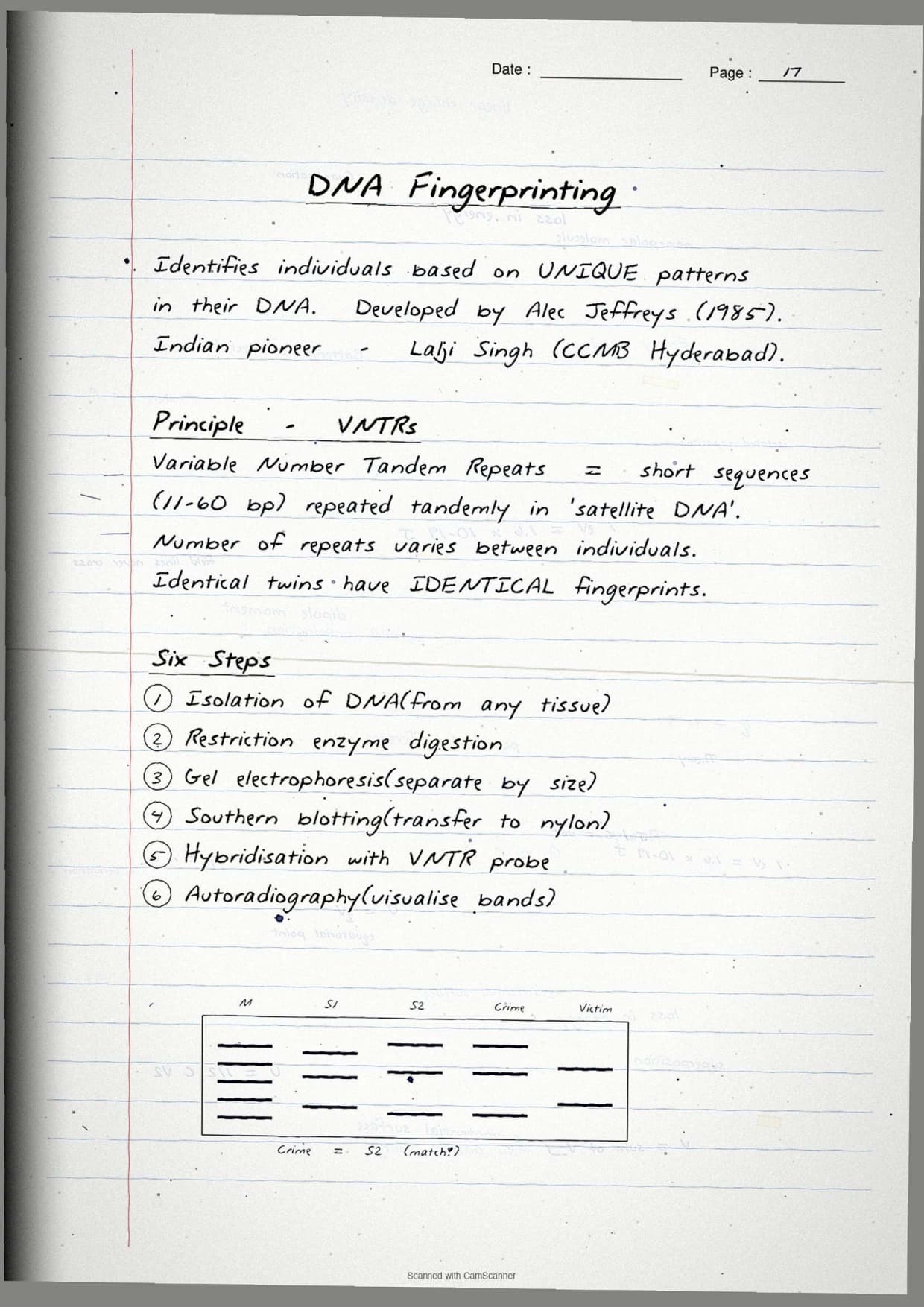
| DNA fingerprinting workflow | 19 | VNTR, Southern blot, autoradiography |
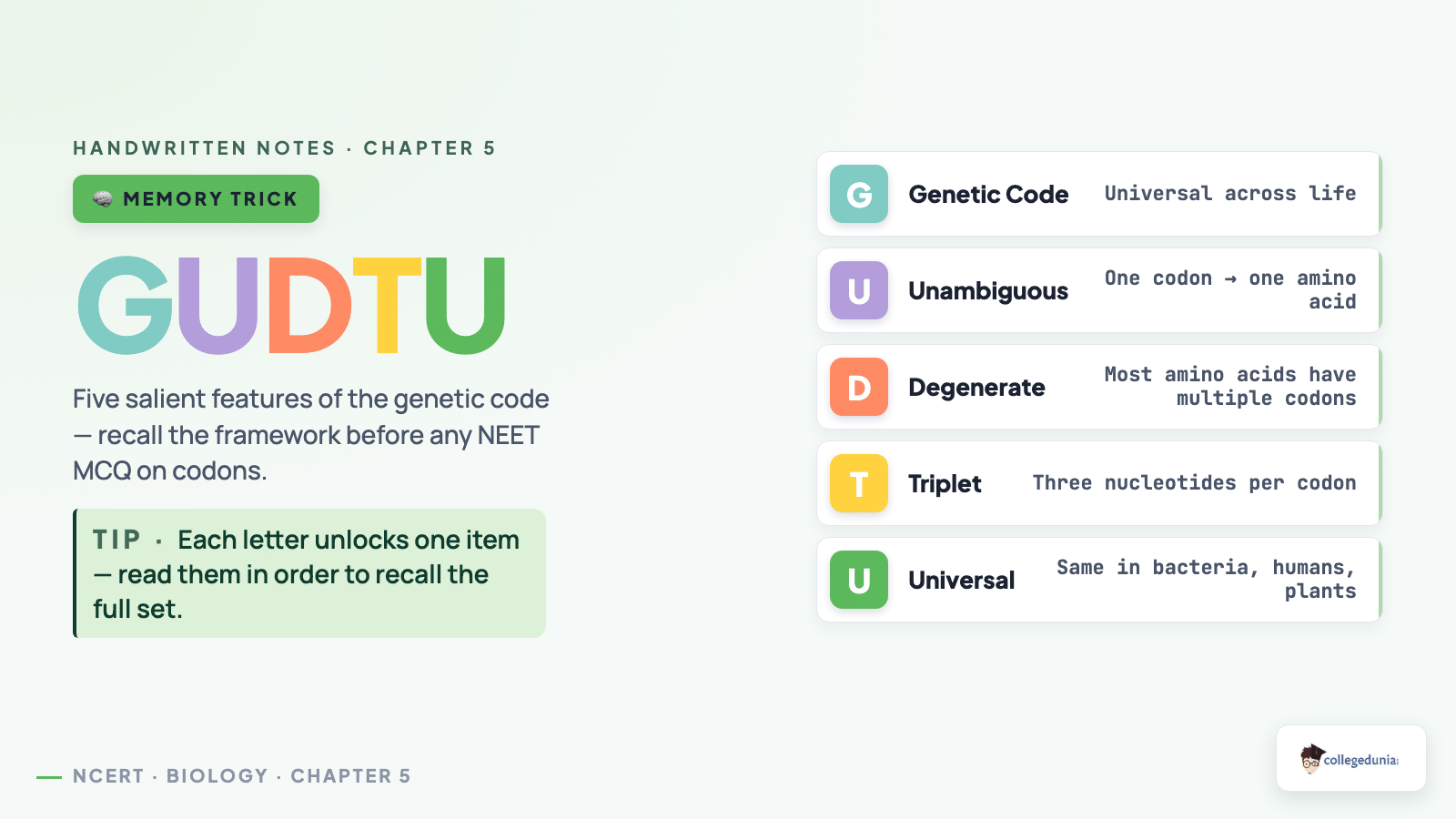
Molecular Basis of Inheritance Memory Mnemonics for Hard-to-Recall Lists
Several lists here are pure recall under pressure. The notebook places these mnemonics in the margins for quick scanning.
Molecular Basis of Inheritance Class 12 Biology: Handwritten Notes vs Printed Notes
| Situation | Use Handwritten Notes | Use Printed Notes |
|---|---|---|
| Night-before revision | Yes - diagram-first layout recalls fast | Slower, too much prose |
| First-time learning the lac operon | Good for the sketch | Better for the full mechanism text |
| NEET MCQ drilling | Yes - keyword strips are MCQ-shaped | - |
| Writing a 5-mark CBSE answer | Use as the structure skeleton | Use for the full phrasing |
Class 12th Biology Molecular Basis of Inheritance Self-Assessment Quiz
Use these after your first read. Each answer reveals on click.
Q1. In the DNA double helix, the distance between two consecutive base pairs is:
(a) 3.4 nm (b) 0.34 nm (c) 34 nm (d) 20 nm
Answer: (b) 0.34 nm. Pitch 3.4 nm with 10 bp per turn gives 0.34 nm per base pair.
Q2. The Hershey-Chase experiment used radioactive isotopes of:
(a) Carbon and nitrogen (b) Phosphorus and sulphur (c) Nitrogen and sulphur (d) Carbon and phosphorus
Answer: (b) Phosphorus and sulphur. 32-P tagged DNA; 35-S tagged the protein coat.
Q3. The lac operon is an example of a:
(a) Repressible operon (b) Inducible operon (c) Constitutive gene (d) Split gene
Answer: (b) Inducible operon. Lactose inactivates the repressor.
Molecular Basis of Inheritance: Last 24-Hour Revision Card for Class 12 Biology
Recall every line and the chapter is exam-ready for CBSE and NEET.
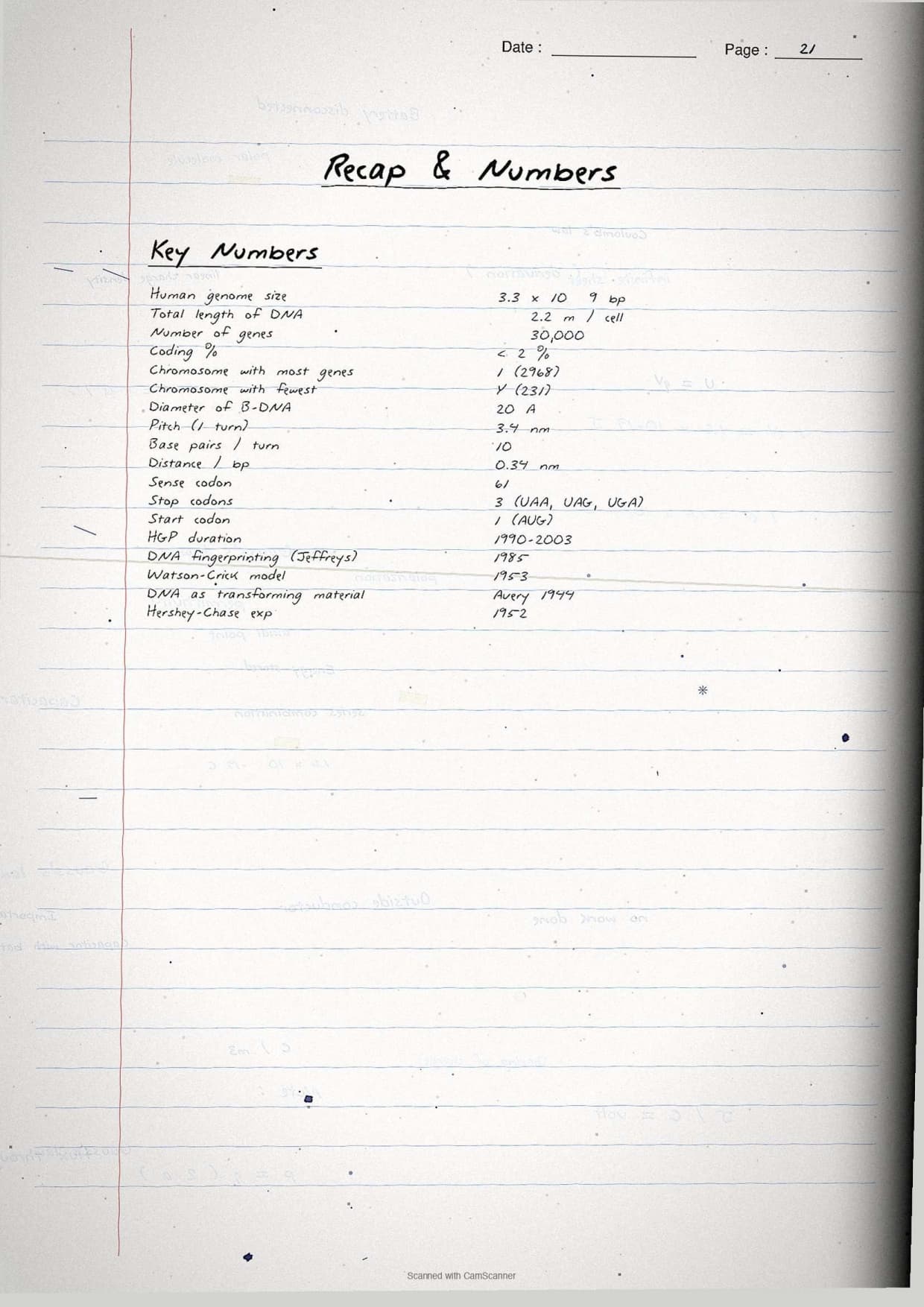
- DNA helix: 2 nm diameter, 3.4 nm pitch, 0.34 nm per bp, 10 bp per turn, antiparallel.
- Genetic material proof order: Griffith, then Avery-MacLeod-McCarty, then Hershey-Chase.
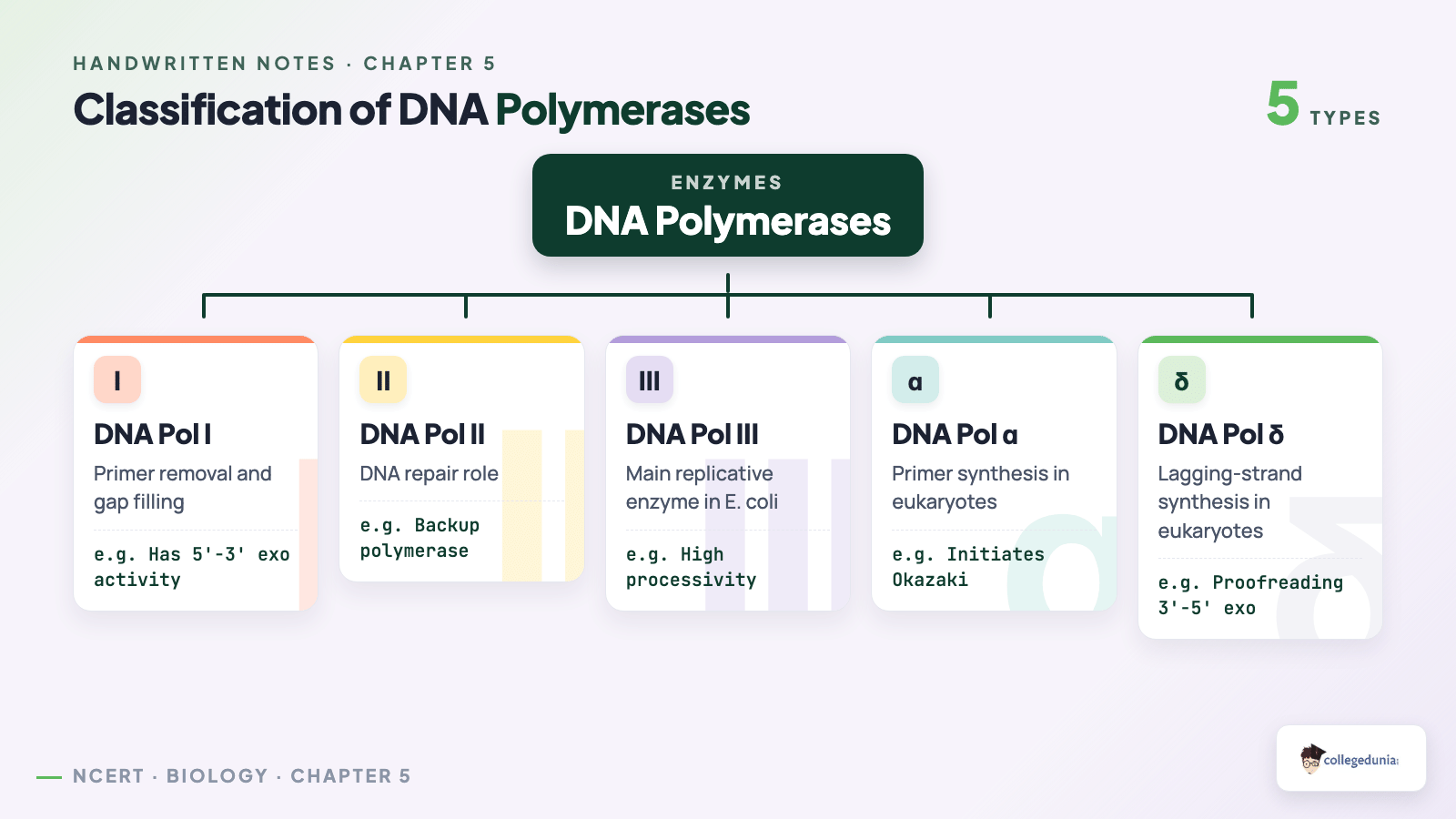
- Replication semiconservative (Meselson-Stahl); enzymes: helicase, primase, DNA polymerase, ligase.
- Transcription unit = promoter + structural gene + terminator; template read 3' to 5'.
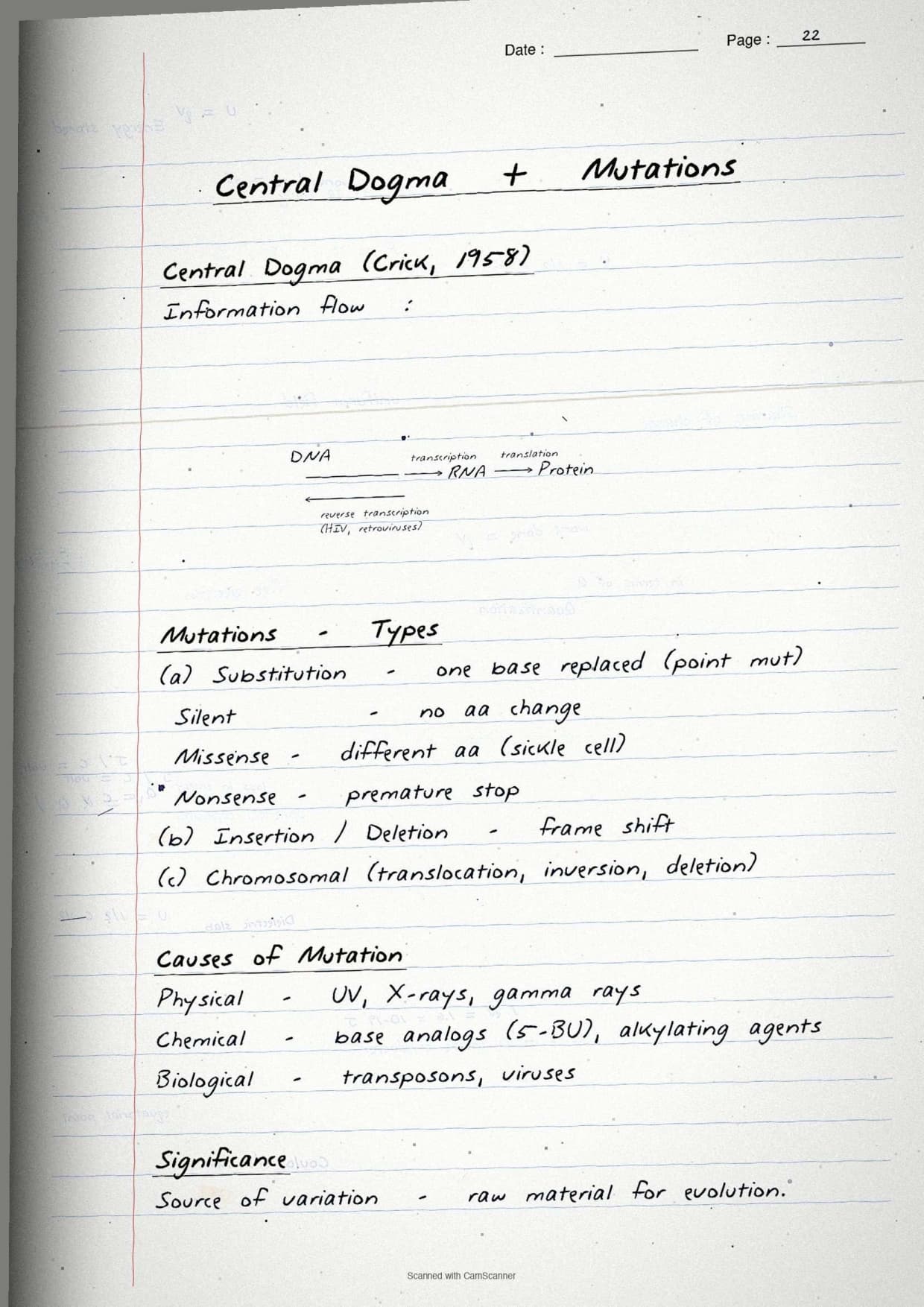
- Genetic code: triplet, degenerate, non-overlapping, universal; start AUG, stop UAA/UAG/UGA.
- lac operon: genes i, o, p, z, y, a; inducible by lactose (allolactose binds repressor).
- HGP: ~3 billion bp, 20,000 to 25,000 genes; fingerprinting uses VNTR and Southern blot.
This card covers roughly 70 percent of typical CBSE and NEET marks from this chapter.
Molecular Basis of Inheritance Class 12 Biology Most-Asked Previous Year Question Trends
The full year-wise CBSE, NEET and CUET map is on the NCERT Solutions page. The three most-recurring topics are:
| Recurring Topic | Where It Appears | Typical Form |
|---|---|---|
| DNA replication / transcription diagram | CBSE 2025, 2023, 2022 | 3 or 5 mark labelled diagram |
| lac operon switch | NEET 2025, 2024; CBSE 2024 | MCQ and 3 mark short answer |
| Hershey-Chase / Griffith experiment | NEET 2025, 2023; CBSE 2022 | 2 to 3 mark experiment question |
How Molecular Basis of Inheritance Ranks Among Class 12 Biology Chapters
At 7 to 9 CBSE marks and 6 to 8 NEET questions per year, this is the top-yield chapter in Class 12 Biology.
What Students Say about the Molecular Basis of Inheritance Handwritten Notes
Student Feedback
- 76% of students surveyed rated the lac operon regulation mechanism as the hardest sub-topic in the chapter.
- 64% lost 1-2 marks on the Meselson-Stahl semi-conservative replication proof even when the rest of the answer was correct.
- Average student took 7.6 hours for the first read and 3.2 hours for a focused revision pass before boards.
- Only 32% attempted all 15 NCERT exercise questions; toppers reported attempting every question and revisiting wrong attempts within 24 hours.
Source: 2025 Class 12 Biology student survey. Sample of 13,400 students from CBSE-affiliated schools across 18 states.
Other Resources for Molecular Basis of Inheritance Class 12 Biology
Jump to any other resource for Chapter 5. All pages are free and mapped to the 2026-27 NCERT.
| Resource for Chapter 5 Molecular Basis of Inheritance |
|---|
| Molecular Basis of Inheritance Handwritten Notes (this page) |
| Molecular Basis of Inheritance NCERT Solutions |
| Molecular Basis of Inheritance Class 12 Notes |
| Molecular Basis of Inheritance Formula Sheet |
| Molecular Basis of Inheritance NCERT Book PDF |
| Molecular Basis of Inheritance Exemplar Solutions |
NCERT Handwritten Notes for Class 12 Biology: All Chapters
Jump to handwritten notes for any other Class 12 Biology chapter.
| Chapter | Resource |
|---|---|
| Chapter 1 | Sexual Reproduction in Flowering Plants Handwritten Notes |
| Chapter 2 | Human Reproduction Handwritten Notes |
| Chapter 3 | Reproductive Health Handwritten Notes |
| Chapter 4 | Principles of Inheritance and Variation Handwritten Notes |
| Chapter 5 | Molecular Basis of Inheritance Handwritten Notes |
| Chapter 6 | Evolution Handwritten Notes |
| Chapter 7 | Human Health and Disease Handwritten Notes |
| Chapter 8 | Microbes in Human Welfare Handwritten Notes |
| Chapter 9 | Biotechnology - Principles and Processes Handwritten Notes |
| Chapter 10 | Biotechnology and Its Applications Handwritten Notes |
| Chapter 11 | Organisms and Populations Handwritten Notes |
| Chapter 12 | Ecosystem Handwritten Notes |
| Chapter 13 | Biodiversity and Conservation Handwritten Notes |
Molecular Basis of Inheritance Class 12 Biology Handwritten Notes FAQs
Ques. Where can I download the Molecular Basis of Inheritance Class 12 Biology handwritten notes PDF?
Ans. You can download the Molecular Basis of Inheritance Class 12 Biology handwritten notes PDF directly from this page. Both the Normal and HD versions are available, and both are free.
Ques. Are these molecular basis of inheritance class 12 notes aligned with the 2026-27 NCERT?
Ans. Yes. These notes follow the current 2026-27 syllabus for Class 12 Biology. The new NCERT edition retains the full chapter, including DNA structure, replication, transcription, the genetic code, the lac operon, the Human Genome Project and DNA fingerprinting.
Ques. How many pages is the Class 12th Biology Molecular Basis of Inheritance handwritten notes PDF?
Ans. The handwritten notes PDF runs approximately 20 pages and covers all 21 sub-topics of the chapter, with 16 hand-drawn labelled diagrams.
Ques. Is Molecular Basis of Inheritance an important chapter for NEET?
Ans. Yes. It is consistently the highest-yield Class 12 Biology chapter for NEET, with 6 to 8 questions per year, mostly on replication, transcription, the genetic code and the lac operon.
Ques. Which diagrams should I focus on in Molecular Basis of Inheritance?
Ans. Prioritise the DNA double helix with dimensions, the semiconservative replication fork, the transcription unit and the lac operon. These four diagrams carry the most CBSE and NEET marks and are all hand-drawn in the notebook.
Ques. Can I revise the whole chapter from these handwritten notes in one day?
Ans. Yes. The notebook is built for fast revision. The Last 24-Hour Revision Card on this page lists the seven highest-return lines, which together cover roughly 70 percent of the typical exam marks.



Comments