




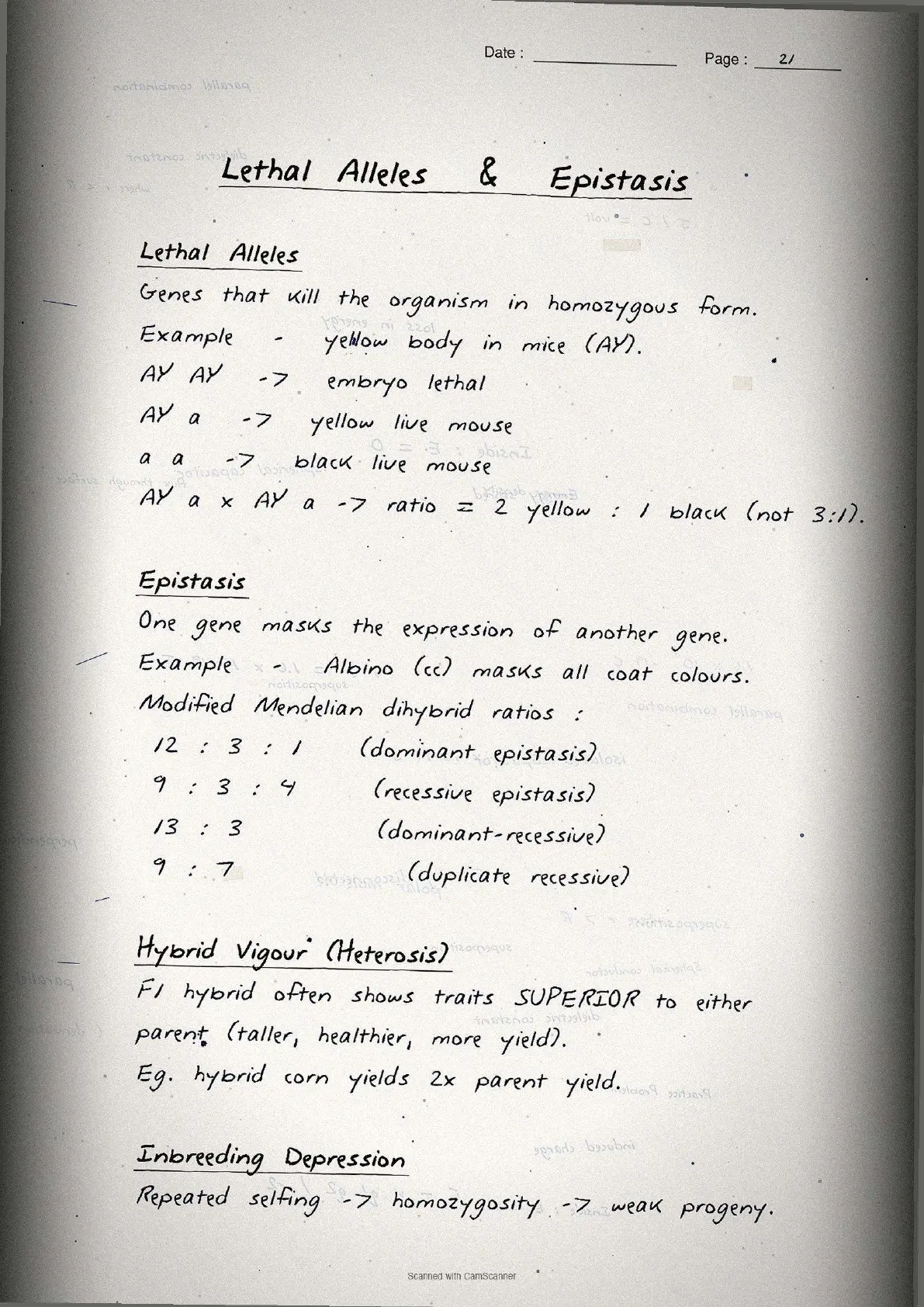
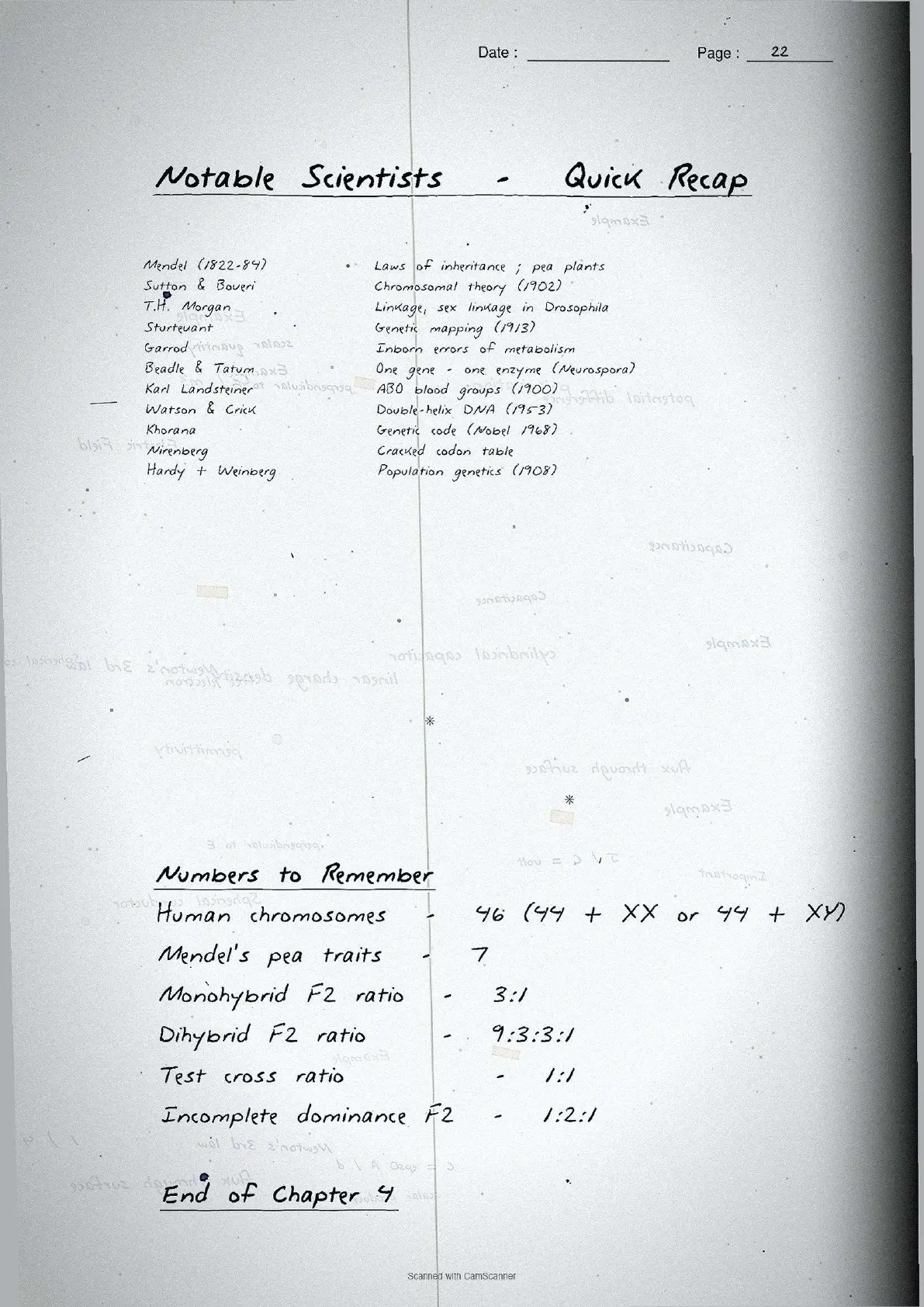
Class 12 Biology Chapter 4 Principles of Inheritance and Variation covers Mendel's laws, dihybrid crosses, linkage, sex determination and pedigree analysis. These handwritten notes help students revise the chapter quickly. Download the PDF from the flipbook below.
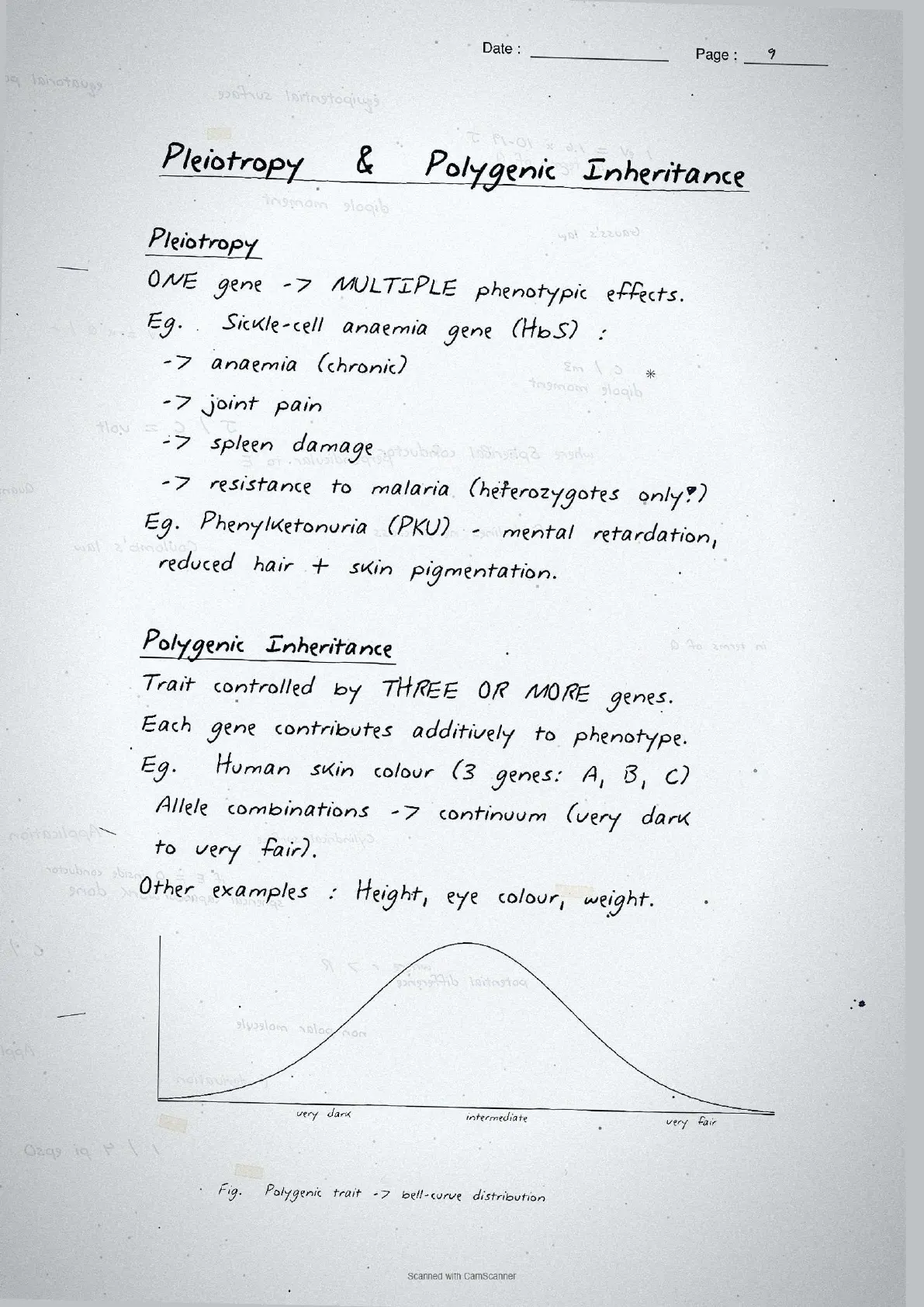
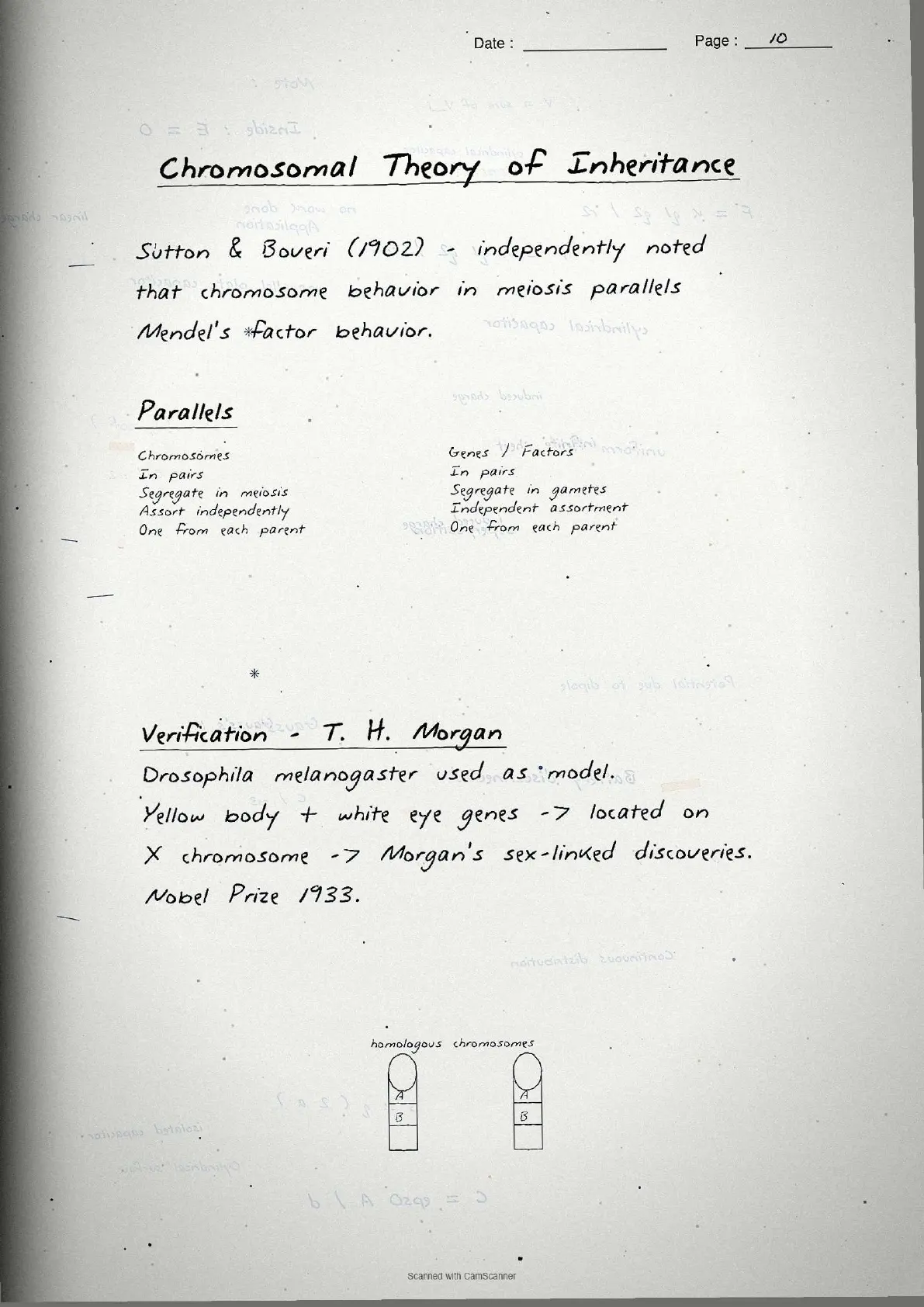
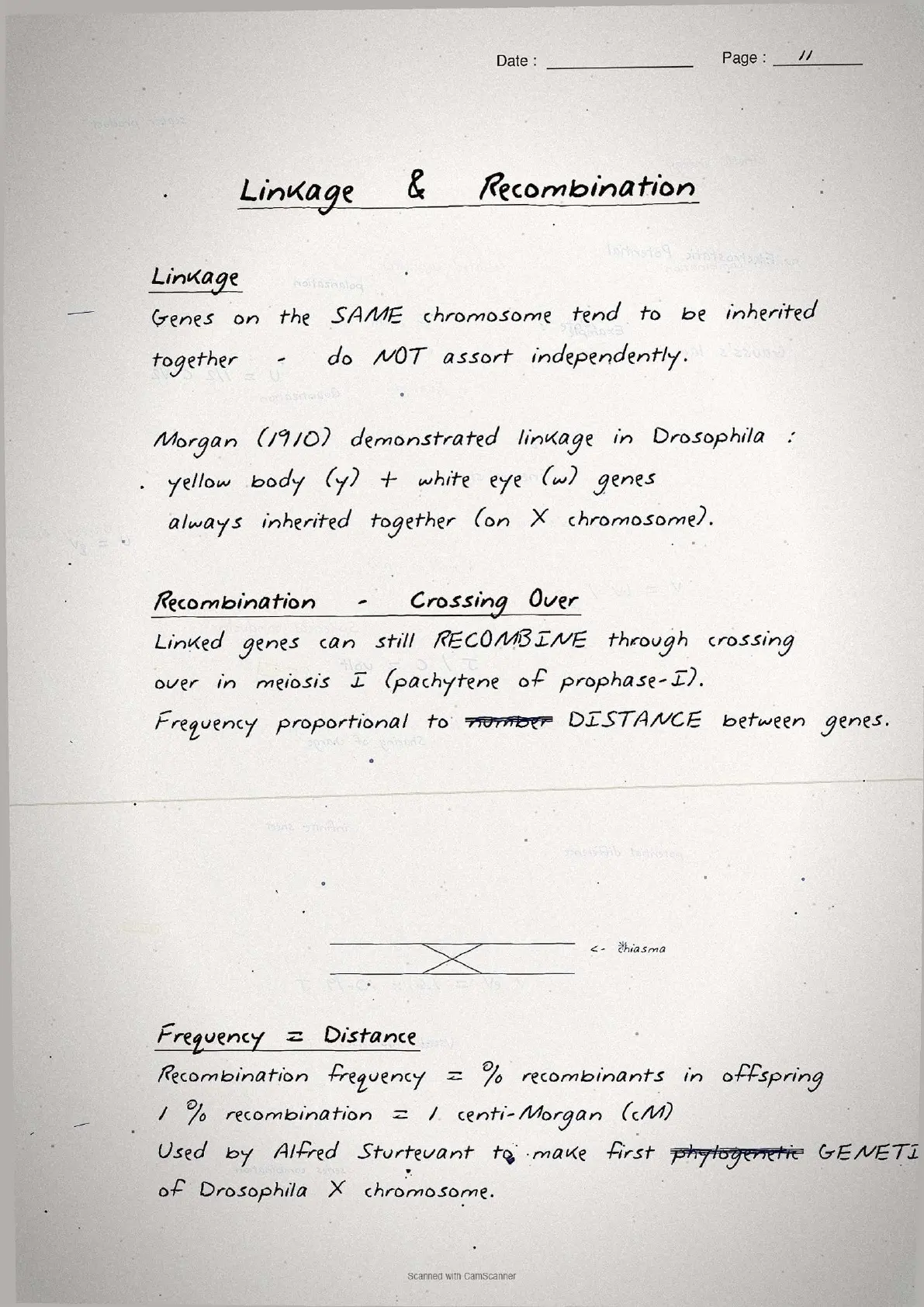
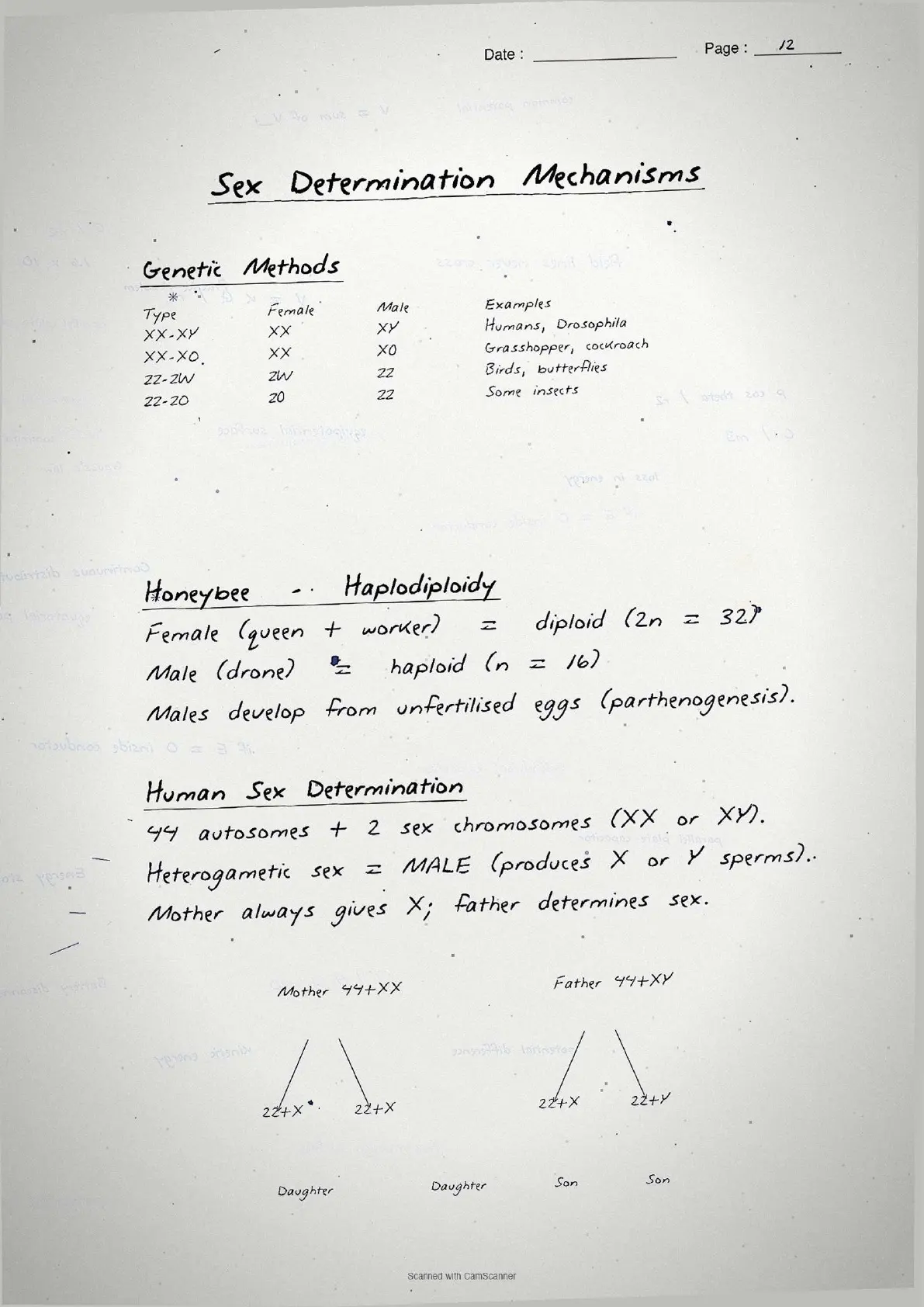
Before you start, here is what this chapter is worth across the main exams:
- CBSE Boards: 6 marks in the Genetics and Evolution unit.
- NEET: 4 to 6 questions a year, one of the highest-yield chapters.
- CUET (UG): 3 to 5 Biology questions a year.
What the Principles of Inheritance and Variation Handwritten Notes Cover
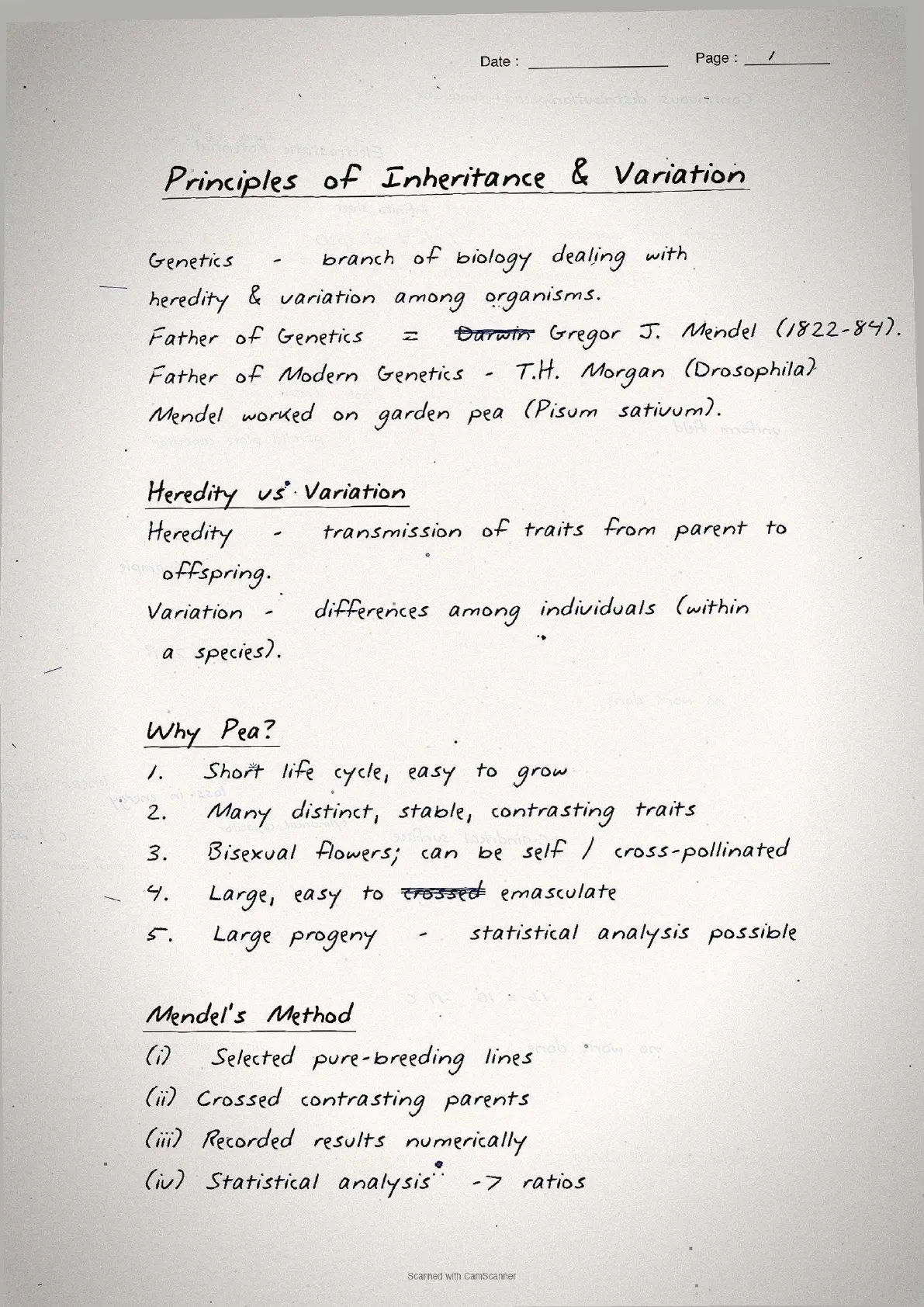
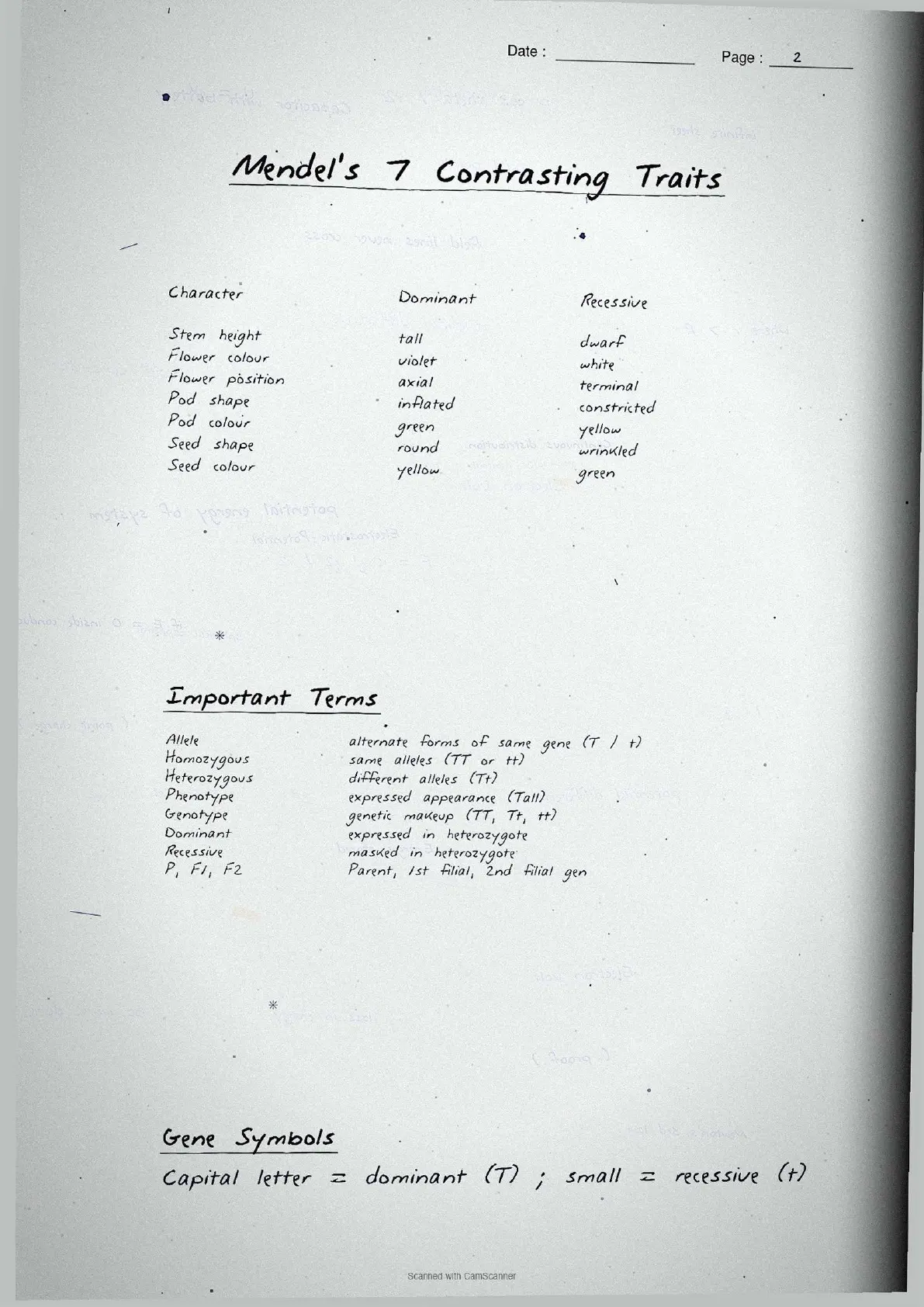
The notebook follows the NCERT chapter order, so it sits beside your textbook without re-teaching. Each topic is condensed the way a topper writes it the night before an exam, with the heavy-scoring numericals worked by hand.
| Topic in the Notes | What You Get | Exam Pull |
|---|---|---|
| Mendel's Experiments | Garden pea, 7 contrasting traits, monohybrid cross | High |
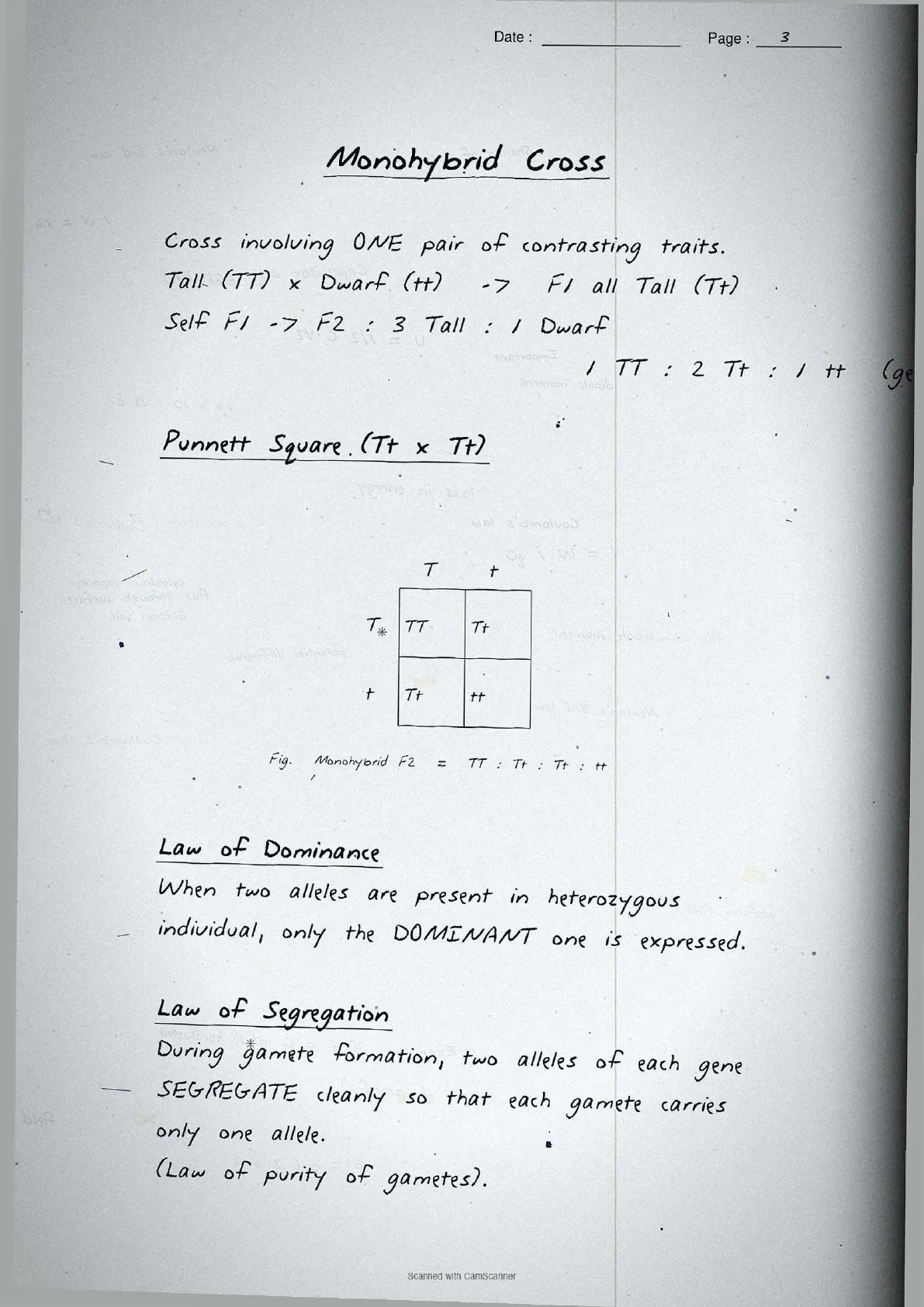
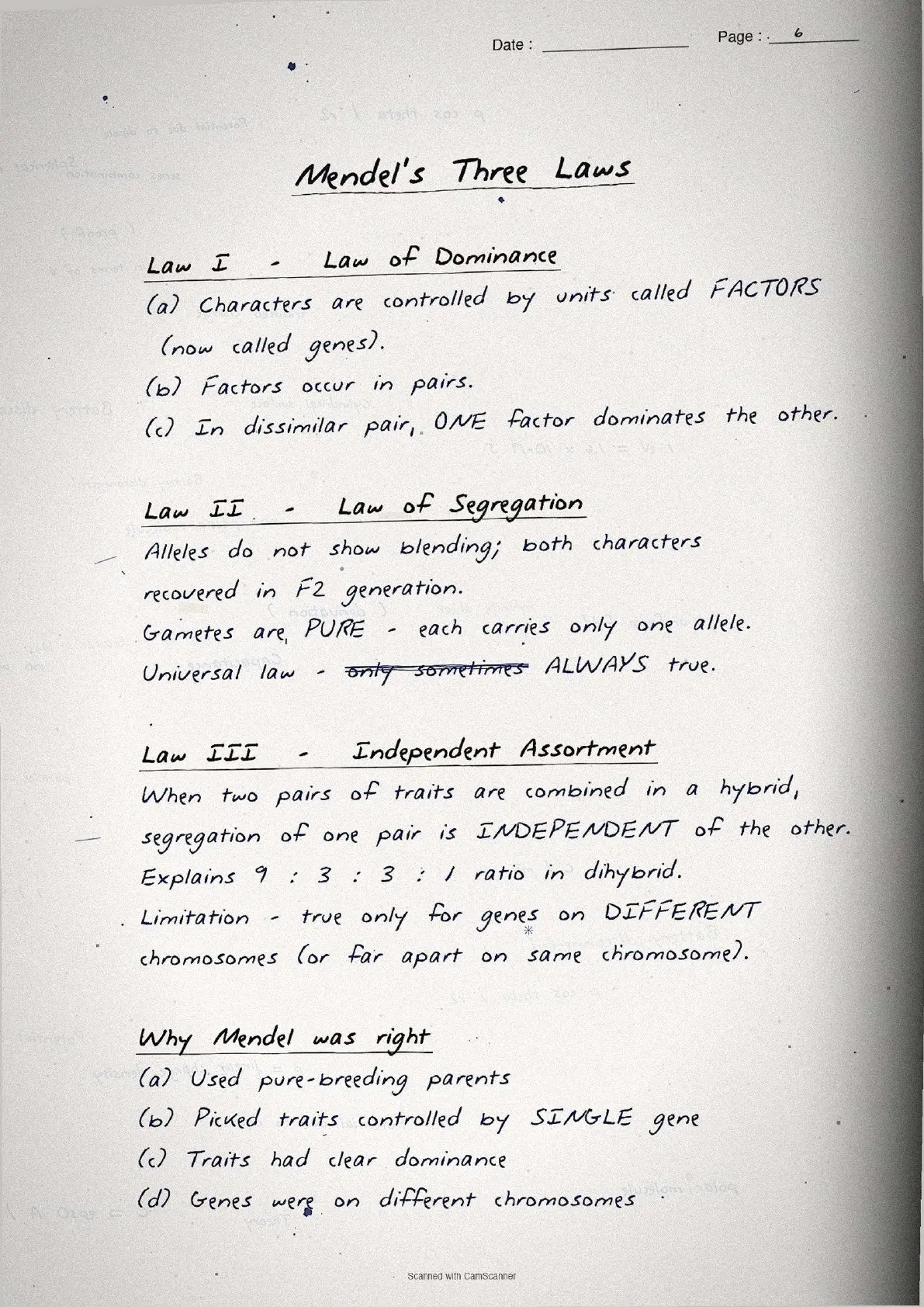
| Laws of Inheritance | Dominance, Segregation, Independent Assortment | High |
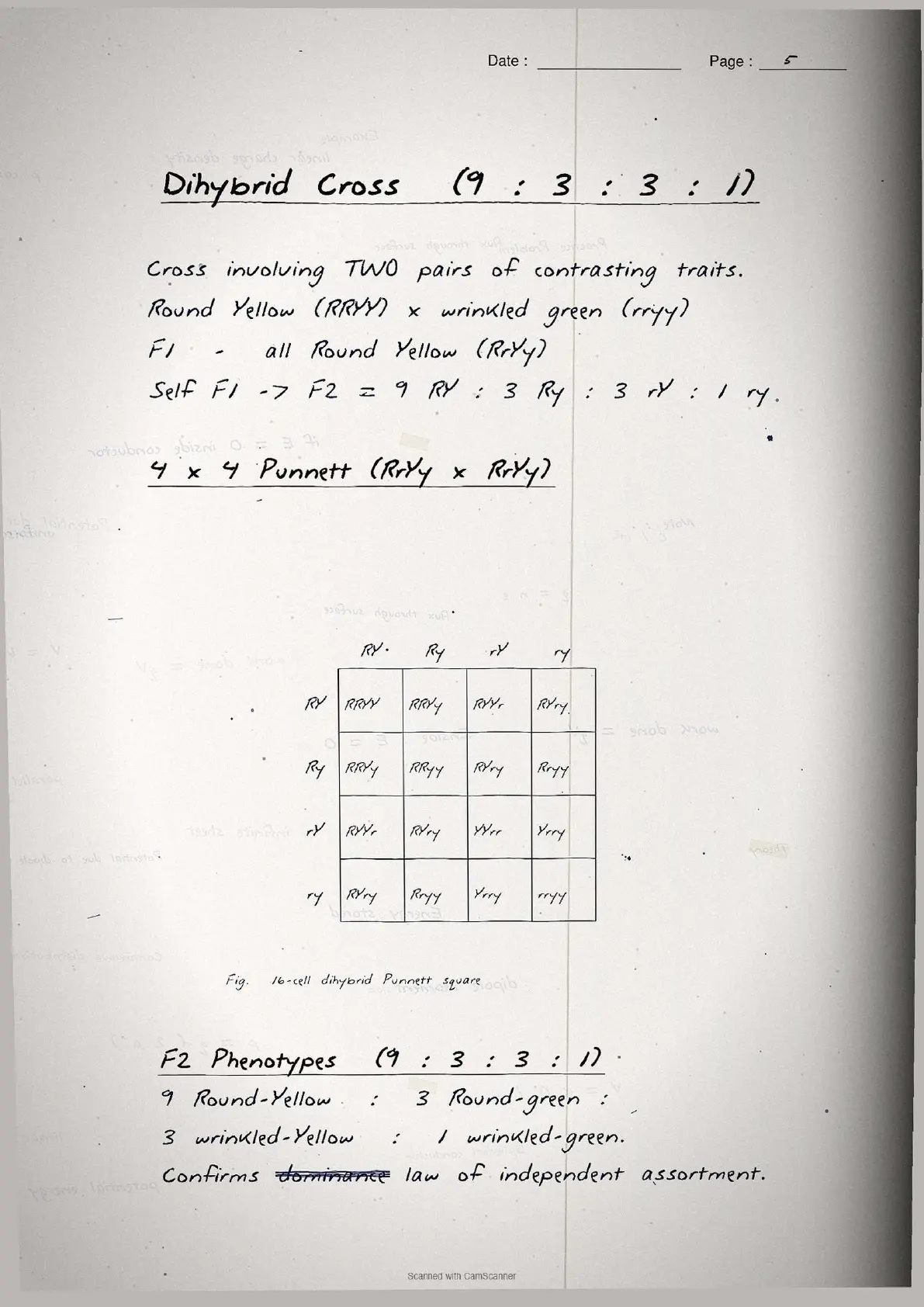
| Inheritance of Two Genes | Dihybrid cross, 9:3:3:1 Punnett square by hand | High |
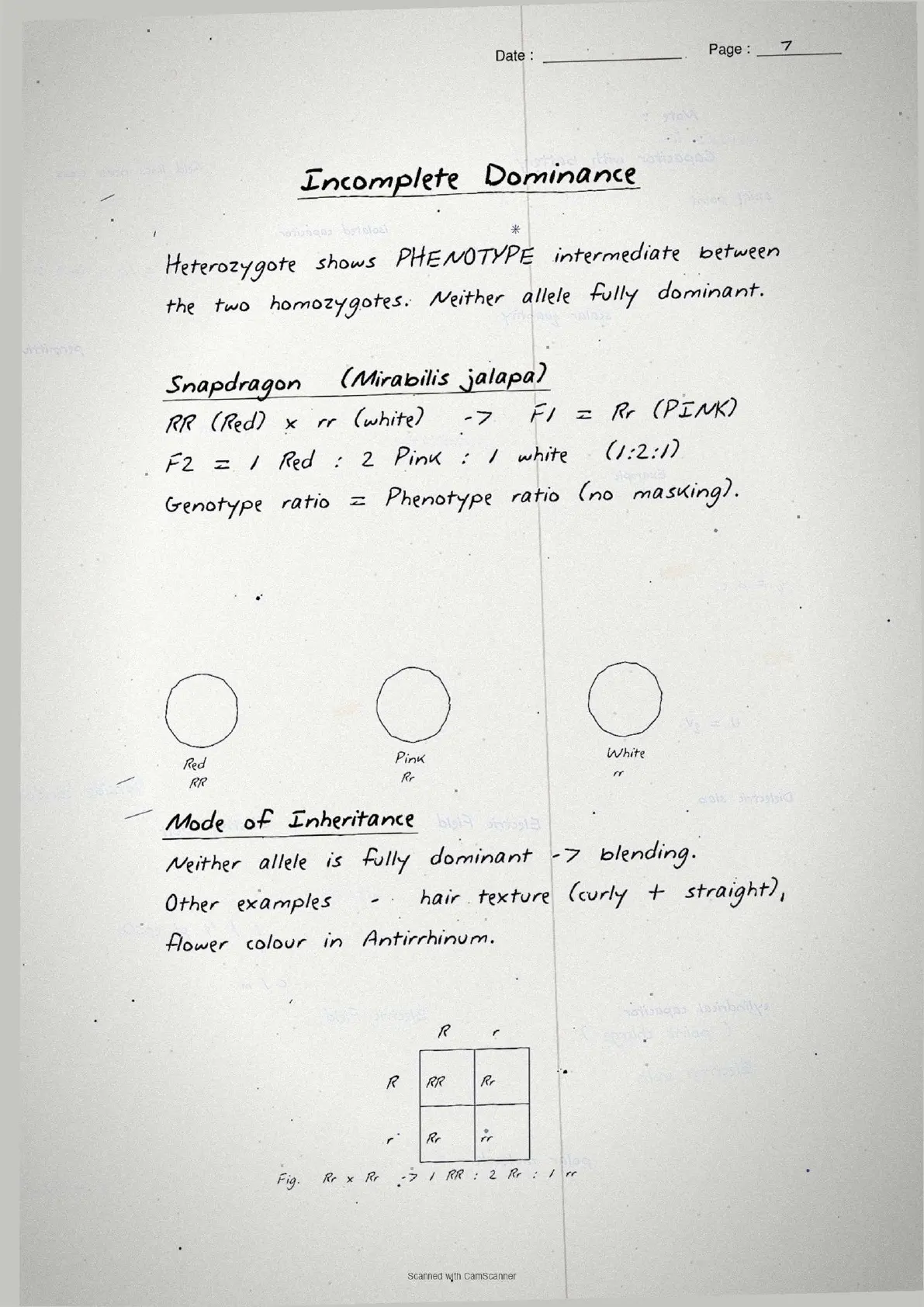
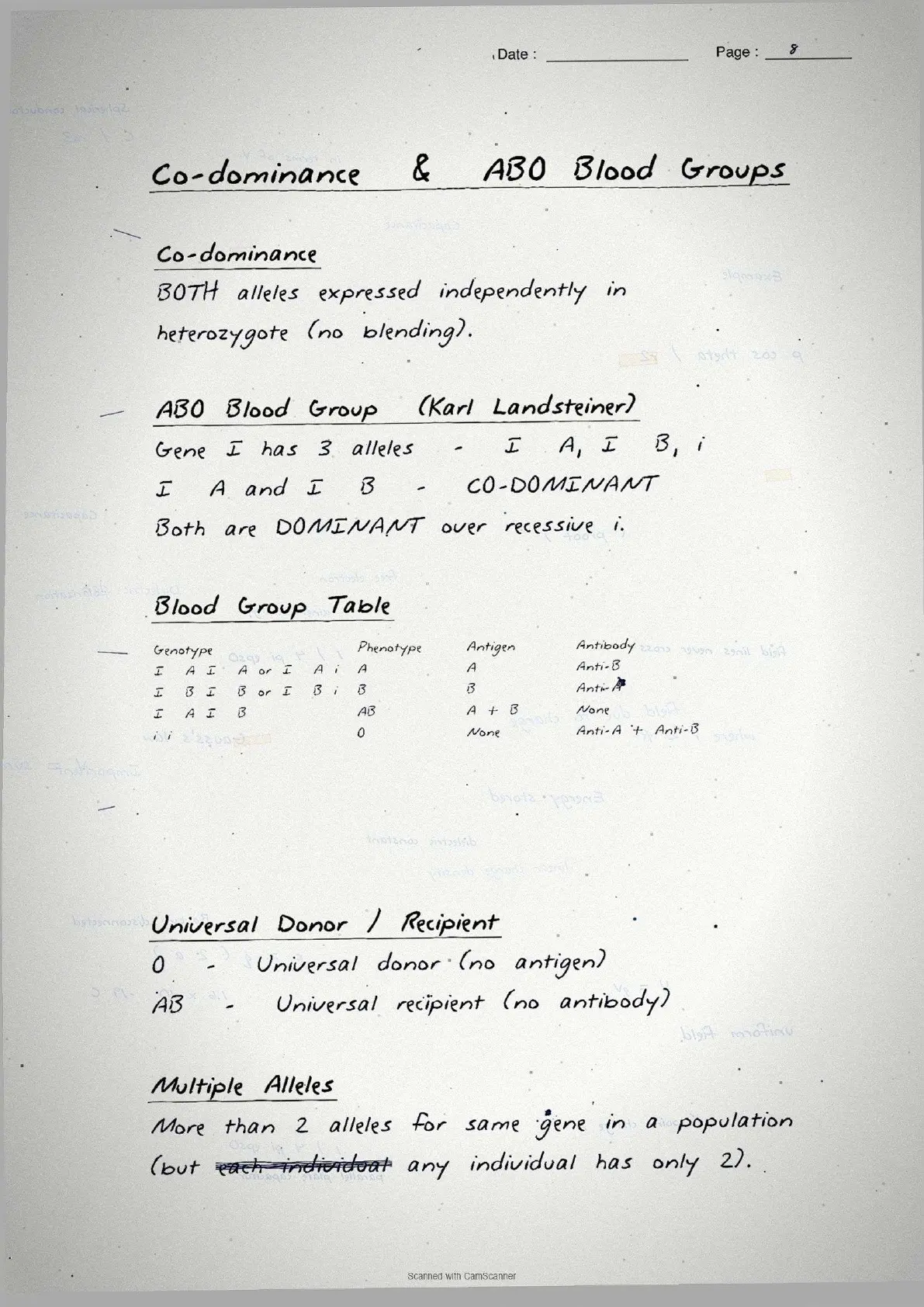
| Deviations from Mendelism | Incomplete dominance, co-dominance, ABO alleles | Medium |
| Linkage and Recombination | Morgan's Drosophila work, recombination frequency | Medium |
| Sex Determination | XX-XO, XX-XY, ZW-ZZ, haplodiploidy | High |
| Mutation and Pedigree | Point vs frameshift, pedigree symbols and reading | Medium |
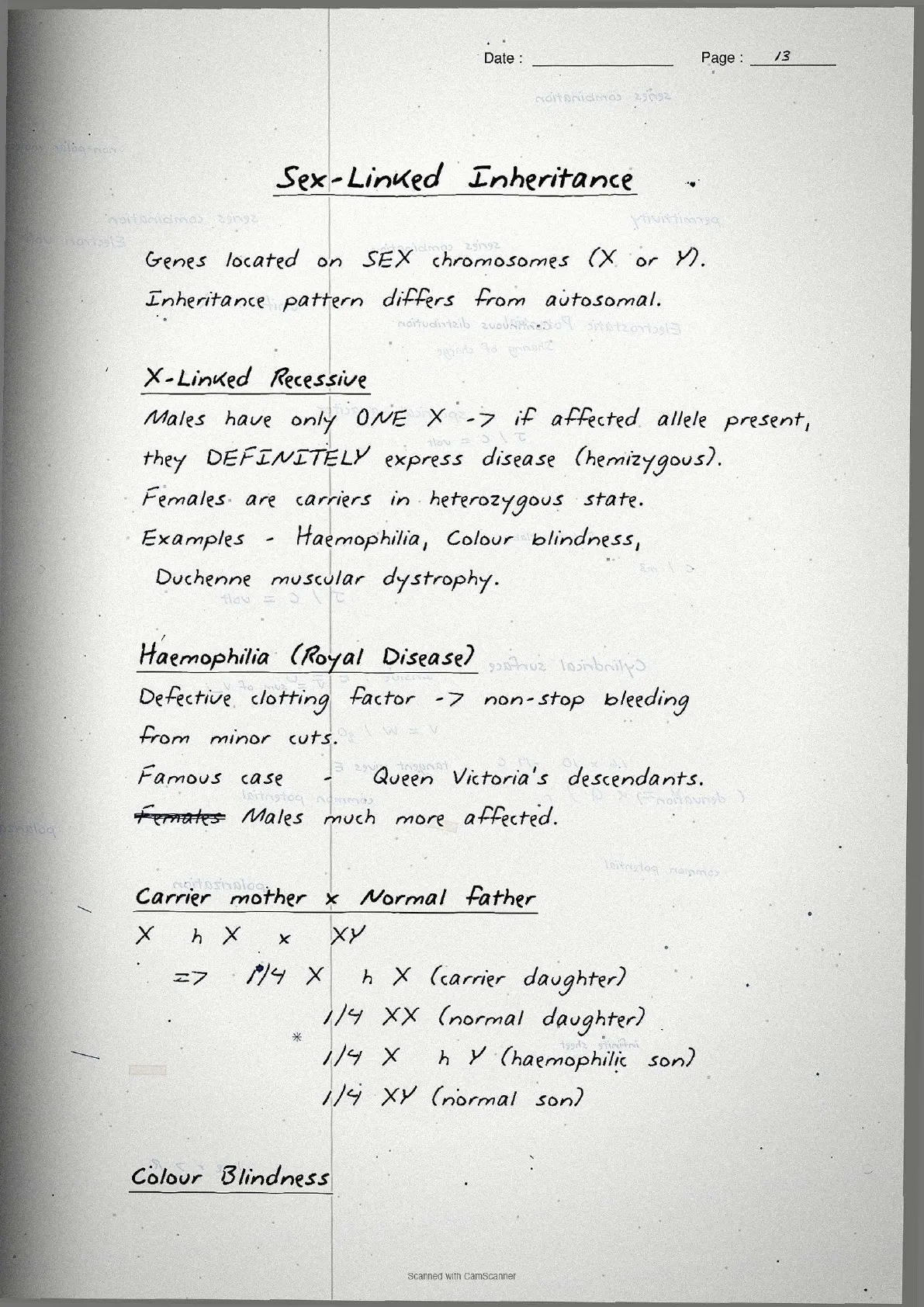
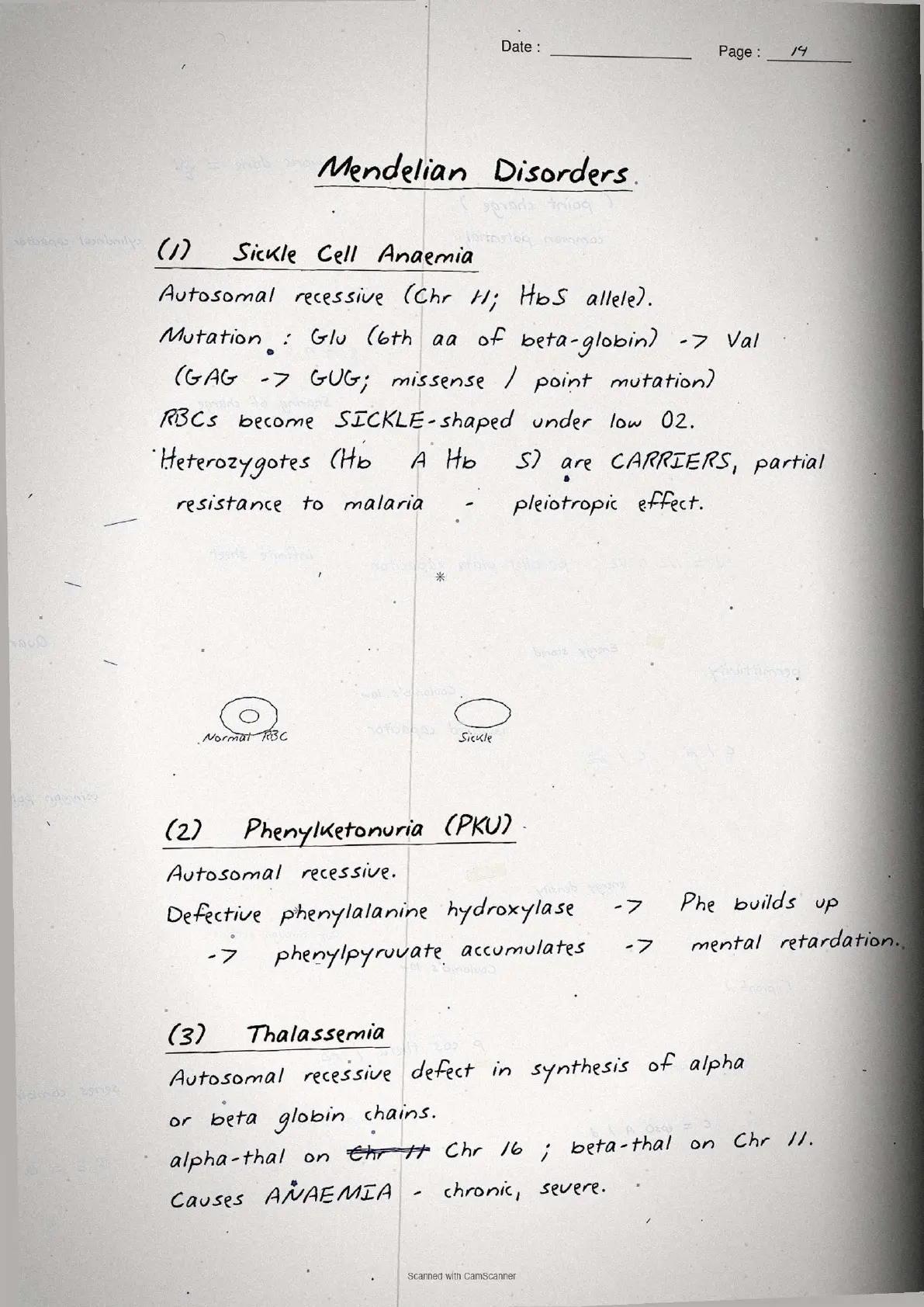
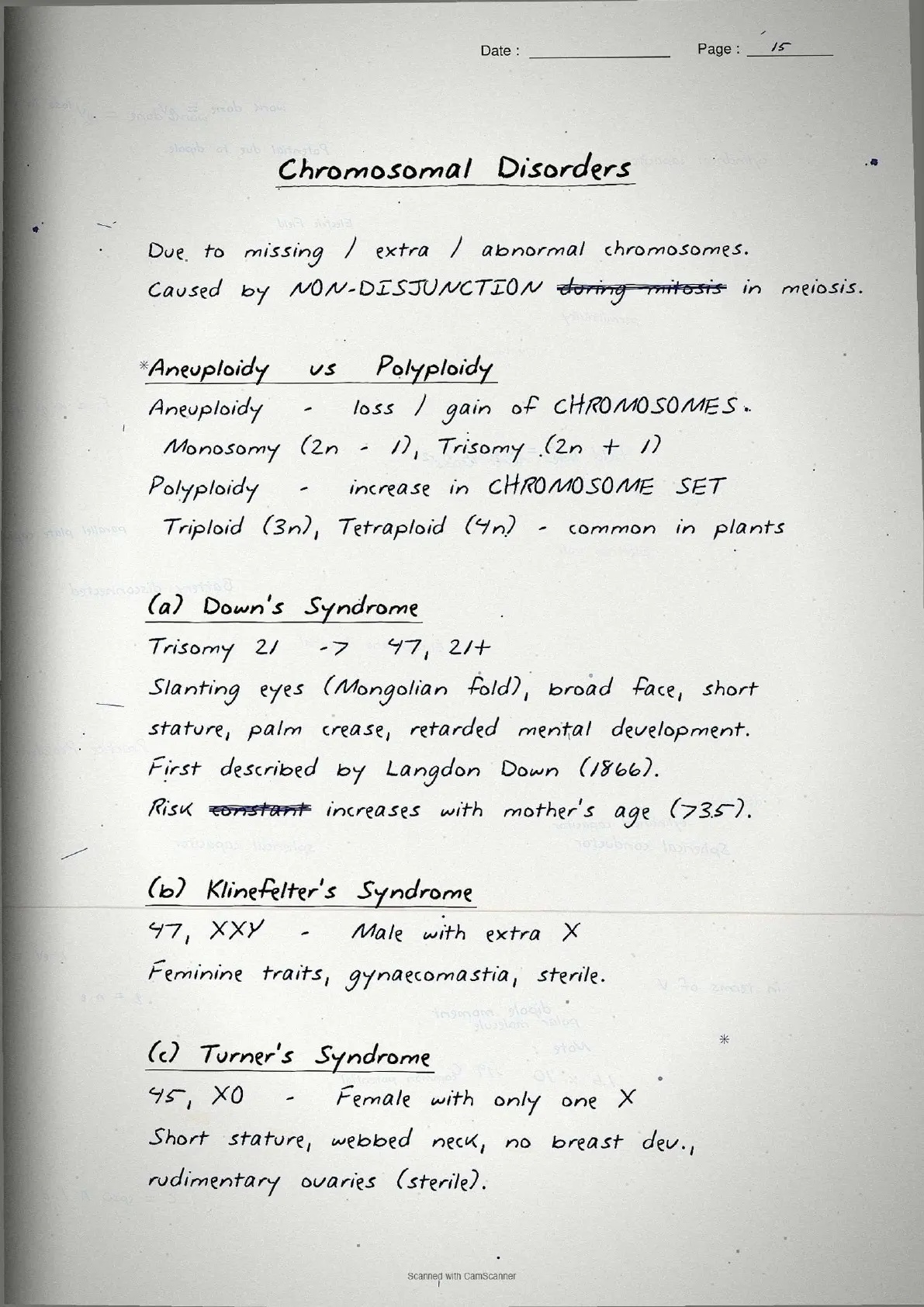
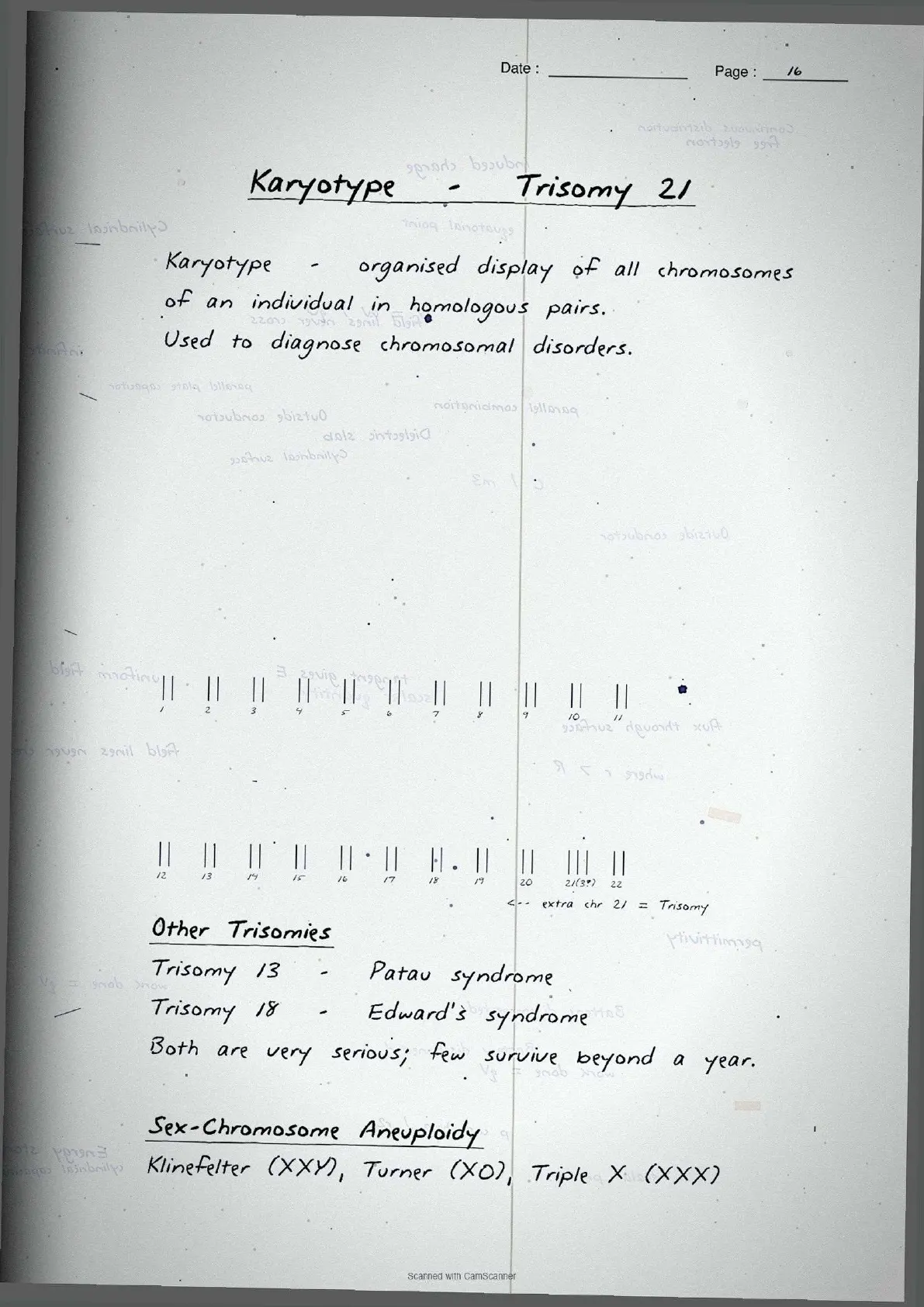
| Genetic Disorders | Haemophilia, colour blindness, Down/Turner/Klinefelter | High |
The table makes the revision priority obvious. Sex determination, the dihybrid cross and genetic disorders return almost every NEET and CBSE year, so those pages carry the densest notes.

Key Diagrams and Crosses to Memorise
Genetics is a diagram-and-cross subject. The notebook builds each cross step by step, so you learn to draw the Punnett square in the exam instead of memorising the answer.
- Monohybrid Punnett square with the 3:1 phenotypic and 1:2:1 genotypic split.
- Dihybrid 4x4 Punnett square showing the full 9:3:3:1 ratio by phenotype.
- Incomplete dominance in Mirabilis (red x white giving pink F1) and the ABO multiple-allele chart.
- Morgan's linkage experiment in Drosophila with parental and recombinant types.
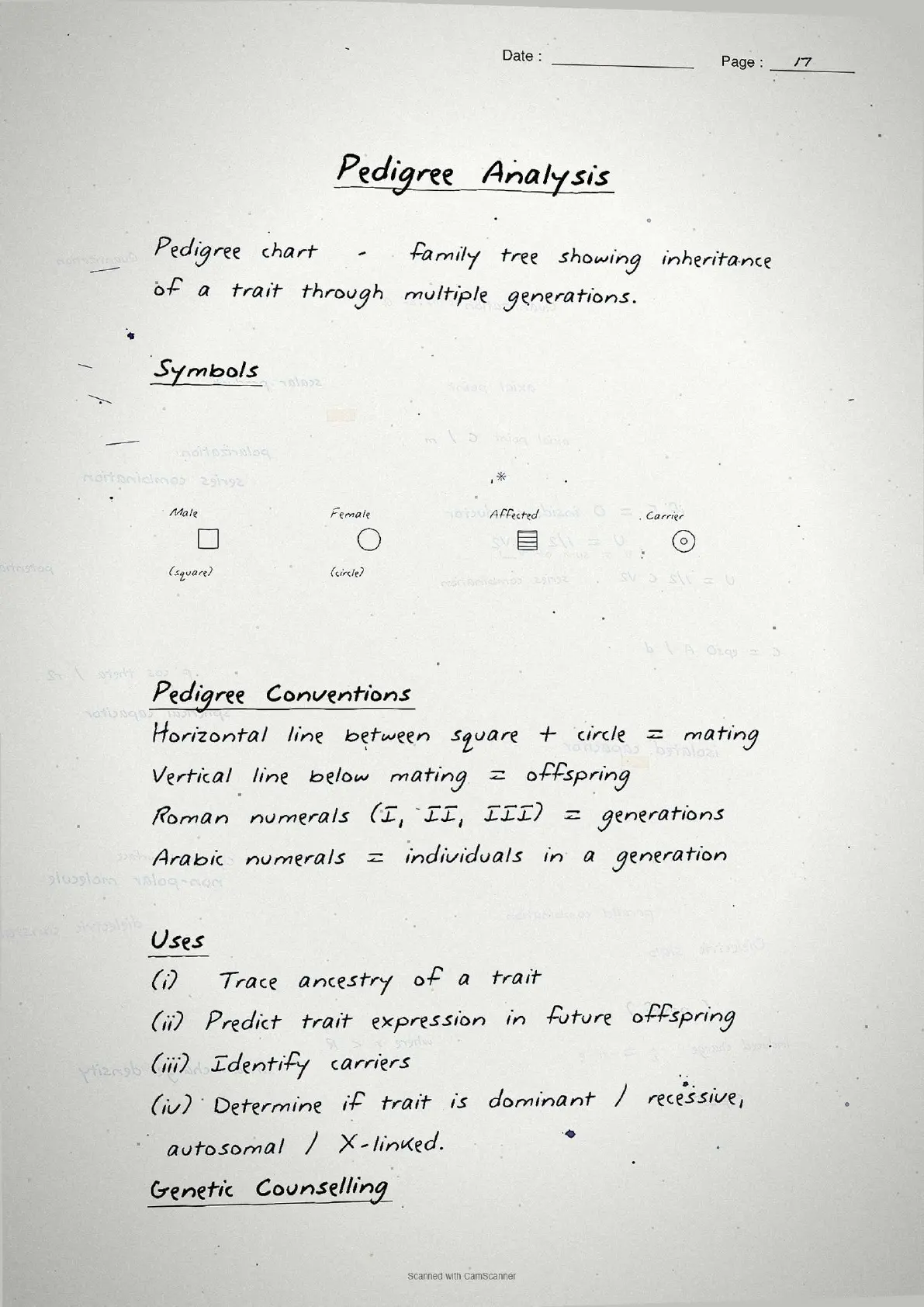
- Pedigree chart with the standard symbol key (autosomal vs sex-linked).
- Karyotype sketches for Down, Turner and Klinefelter, plus the sickle-cell point mutation.
Quick-Recall Genetics Facts
These five facts, between them, decide the majority of objective questions from this chapter. Revise them last.
Common Mistakes in Genetics
- Confusing incomplete dominance with co-dominance. In incomplete dominance the F1 is a blend (pink Mirabilis); in co-dominance both alleles show fully and separately (AB blood group). Examiners set this trap almost every year.
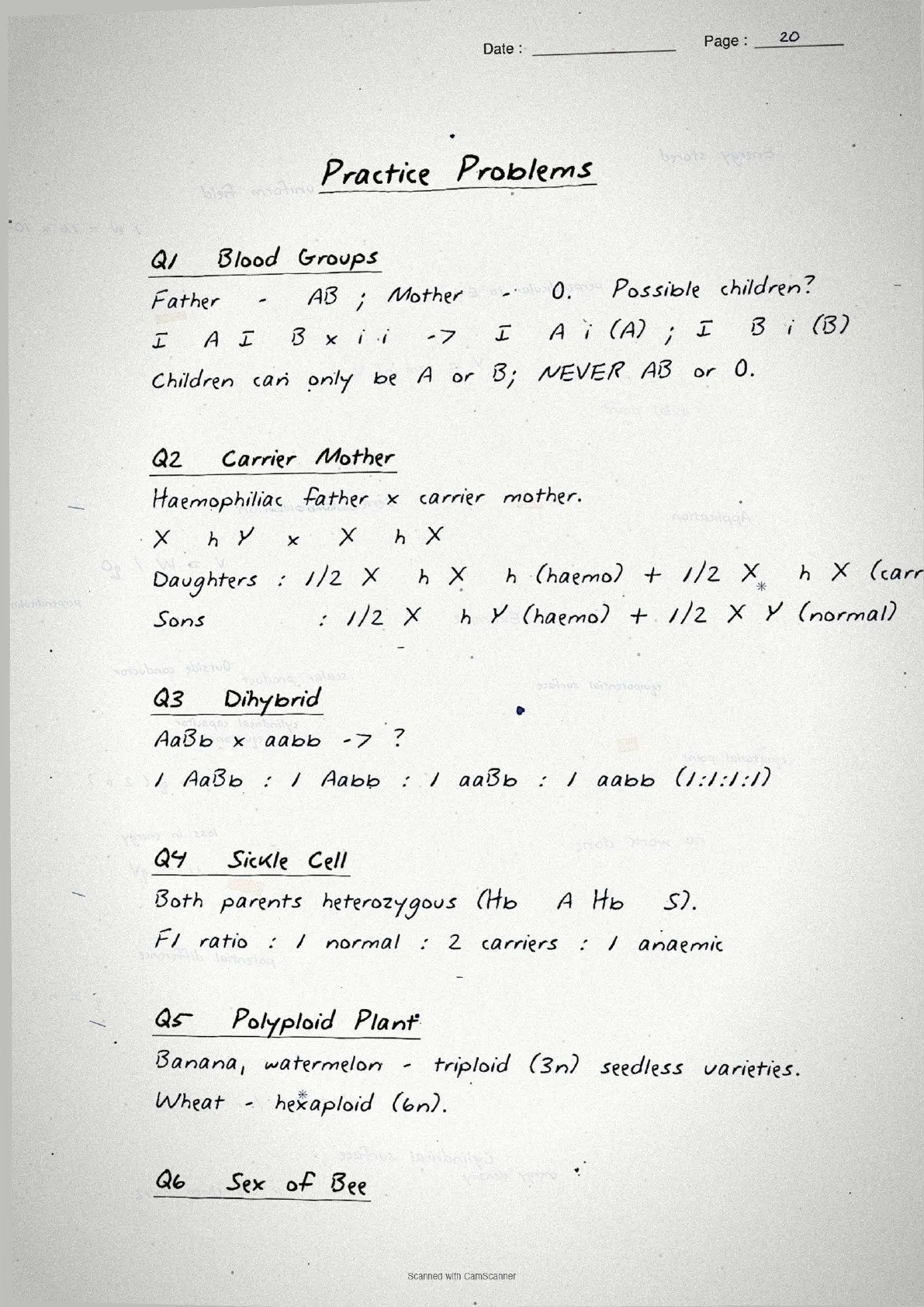
- Missing a dihybrid gamete. Write gametes first using the FOIL pattern (RrYy gives RY, Ry, rY, ry). Most lost marks come from a missing combination, not the ratio.
- Forgetting to define the law. Examiners give a separate mark for a one-line definition before the cross.
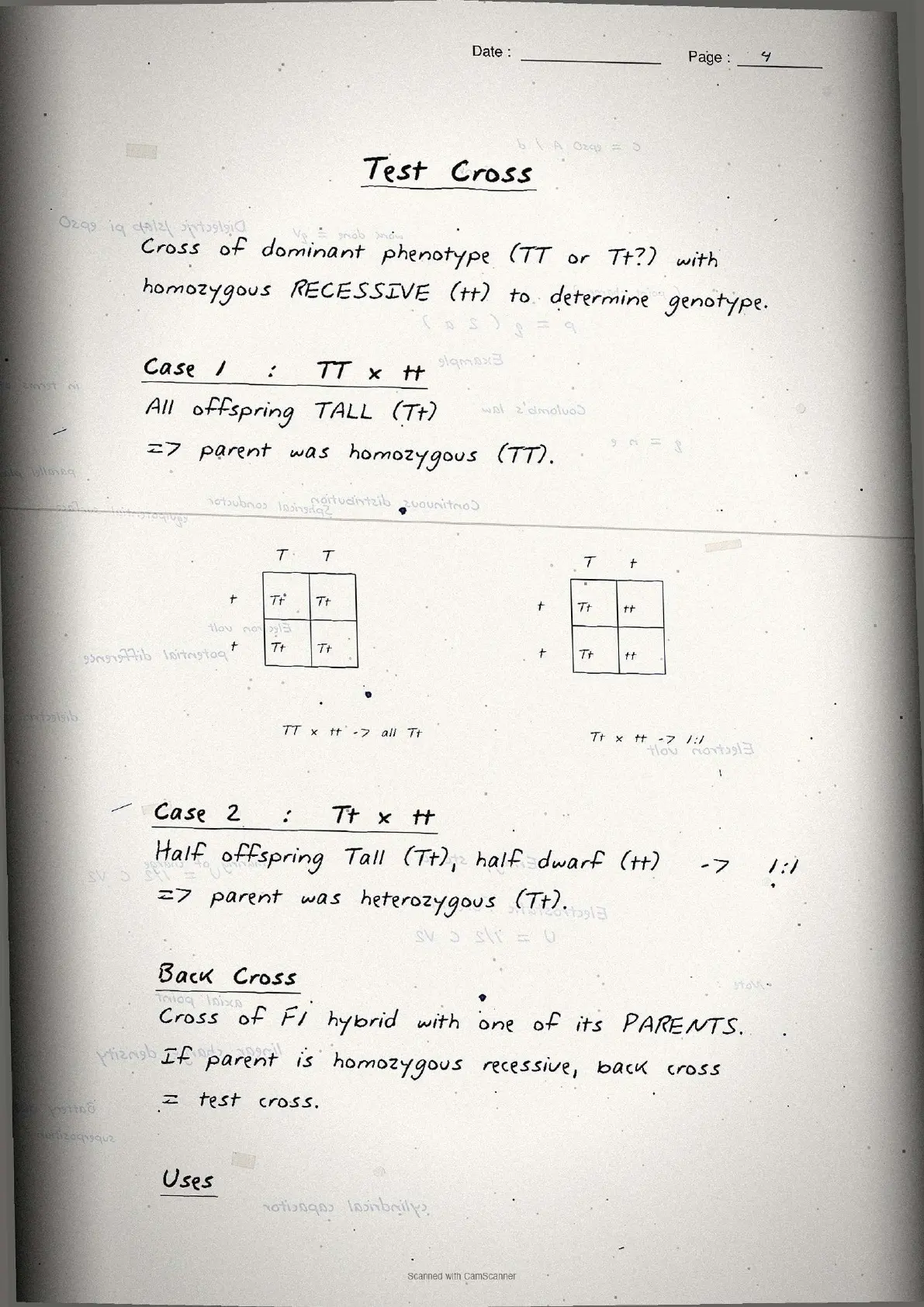
- Mixing up the test cross. A test cross is with the homozygous recessive parent, not with F1.
Principles of Inheritance and Variation Video Lecture for Class 12 Biology
Source: Magnet Brains
Genetics Weightage and Previous Year Trends
The pattern is stable: CBSE leans on the dihybrid cross and pedigree analysis as 3 to 5 mark questions, while NEET spreads MCQs across disorders, sex determination and Mendel's laws.
| Year | CBSE Board Focus | NEET Focus |
|---|---|---|
| 2025 | Dihybrid cross, genetic disorders | Mendel's laws, linkage, ABO blood group |
| 2024 | Incomplete dominance vs co-dominance | Pedigree, chromosomal disorders |
| 2023 | Test cross, Law of Independent Assortment | Sex determination, mutation |
| 2022 | Haemophilia, colour blindness | Dihybrid ratio, multiple alleles |
Full year-wise PYQ map: Class 12 Biology Chapter 4 NCERT Solutions
Student Feedback
We asked 15,800 Class 12 students; 78% found dihybrid Punnett-square problems the hardest, and most skipped the pedigree figure in their answer sheet.
How to Revise This Chapter Fast
- Diagrams first: open only the Punnett-square and pedigree pages and re-draw each cross without looking.
- Fact-blocks second: read the boxed genetic-disorder summaries and the deviation-from-Mendelism examples; these are pure-recall MCQ fuel.
- Margins last: the night before the exam, skim only the coloured margin captions, each the single line an examiner looks for.
Other Resources for Principles of Inheritance and Variation Class 12 Biology
Pair these handwritten notes with the Solutions, Notes and official NCERT chapter linked below.
| Resource | What it covers | Open |
|---|---|---|
| Handwritten Notes | Scanned notebook pages for last-mile revision. | Handwritten Notes |
| NCERT Solutions | Step-by-step answers to every exercise question. | Chapter 4 NCERT Solutions |
| Notes | Full revision notes on Mendel's laws and disorders. | Chapter 4 Notes |
| NCERT Book PDF | Official NCERT textbook chapter. | Chapter 4 NCERT Book PDF |
| Exemplar Solutions | Worked answers to the NCERT Exemplar problems. | Chapter 4 Exemplar Solutions |
| Formula Sheet | Key ratios, terms and crosses at a glance. | Chapter 4 Formula Sheet |
| Exemplar Book PDF | Official NCERT Exemplar problem chapter. | Chapter 4 Exemplar Book PDF |
All Chapters Handwritten Notes for Class 12 Biology
| Chapter | Handwritten Notes link |
|---|---|
| Chapter 1 | Sexual Reproduction in Flowering Plants |
| Chapter 2 | Human Reproduction |
| Chapter 3 | Reproductive Health |
| Chapter 4 | Principles of Inheritance and Variation |
| Chapter 5 | Molecular Basis of Inheritance |
| Chapter 6 | Evolution |
| Chapter 7 | Human Health and Disease |
| Chapter 8 | Microbes in Human Welfare |
| Chapter 9 | Biotechnology - Principles and Processes |
| Chapter 10 | Biotechnology and Its Applications |
| Chapter 11 | Organisms and Populations |
| Chapter 12 | Ecosystem |
| Chapter 13 | Biodiversity and Conservation |
Principles of Inheritance and Variation Class 12 Biology Handwritten Notes FAQs
Ques. Where can I download Principles of Inheritance and Variation Class 12 handwritten notes PDF?
Ans. You can download the Principles of Inheritance and Variation Class 12 Biology handwritten notes PDF directly from this page using the flipbook above. It is free for all students.
Ques. Are these Class 12 genetics handwritten notes aligned with the 2026-27 NCERT?
Ans. Yes. The notes reflect the current 2026-27 syllabus and follow the present NCERT chapter order, covering Mendel's laws through genetic disorders without adding back trimmed content.
Ques. Is Principles of Inheritance and Variation important for NEET?
Ans. Yes, it is one of the highest-yield chapters. NEET typically asks 4 to 6 questions a year, spread across Mendel's laws, sex determination, pedigree analysis and genetic disorders.
Ques. What is the dihybrid cross phenotypic ratio in this chapter?
Ans. The F2 phenotypic ratio of a Mendelian dihybrid cross is 9:3:3:1, which follows from the Law of Independent Assortment. The full Punnett-square working is drawn by hand in these notes.
Ques. Do these handwritten notes include diagrams and Punnett squares?
Ans. Yes. The notes include hand-drawn monohybrid and dihybrid Punnett squares, the Morgan linkage experiment, pedigree charts and karyotypes for Down, Turner and Klinefelter syndromes.



Comments