




Class 12 Biology Chapter 10 covers Bt crops, recombinant human insulin, gene therapy, and the biopiracy debate in one densely exam-tested chapter. These handwritten notes walk through each process with arrow-mapped diagrams, boxed definitions, and coloured exam-callouts in the same style a classroom teacher uses on the board. Students can download the full 20-page PDF free from this page.
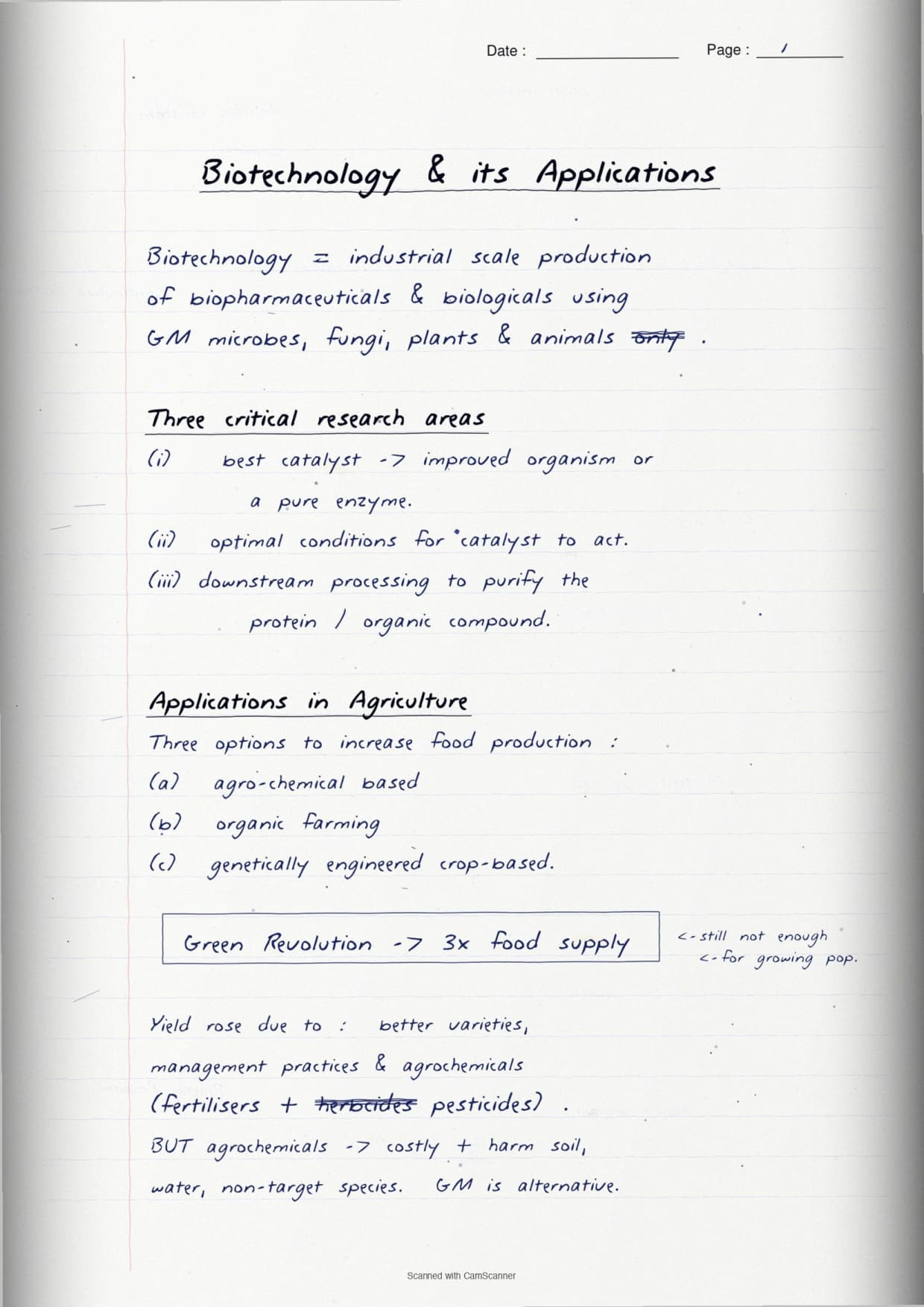
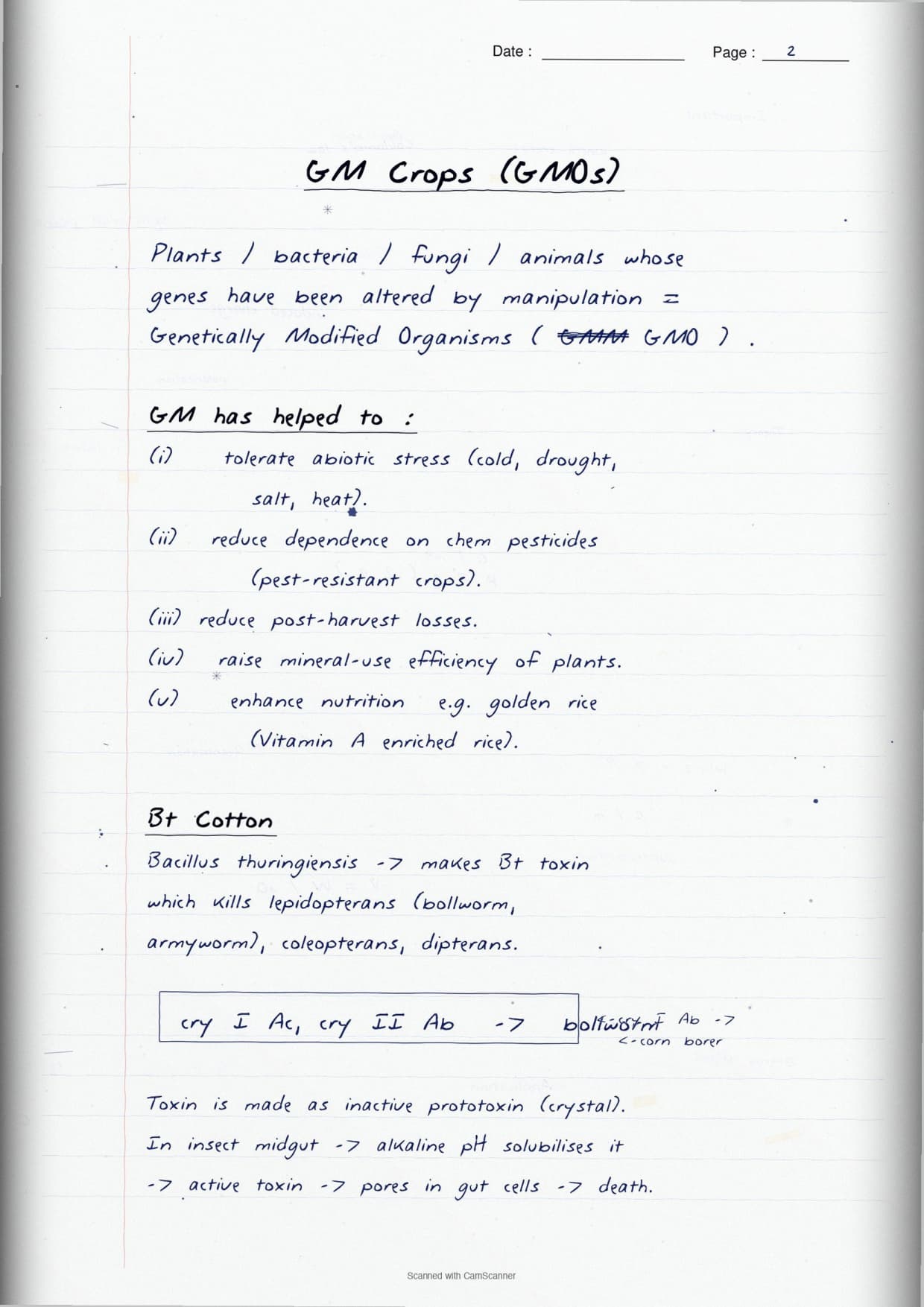
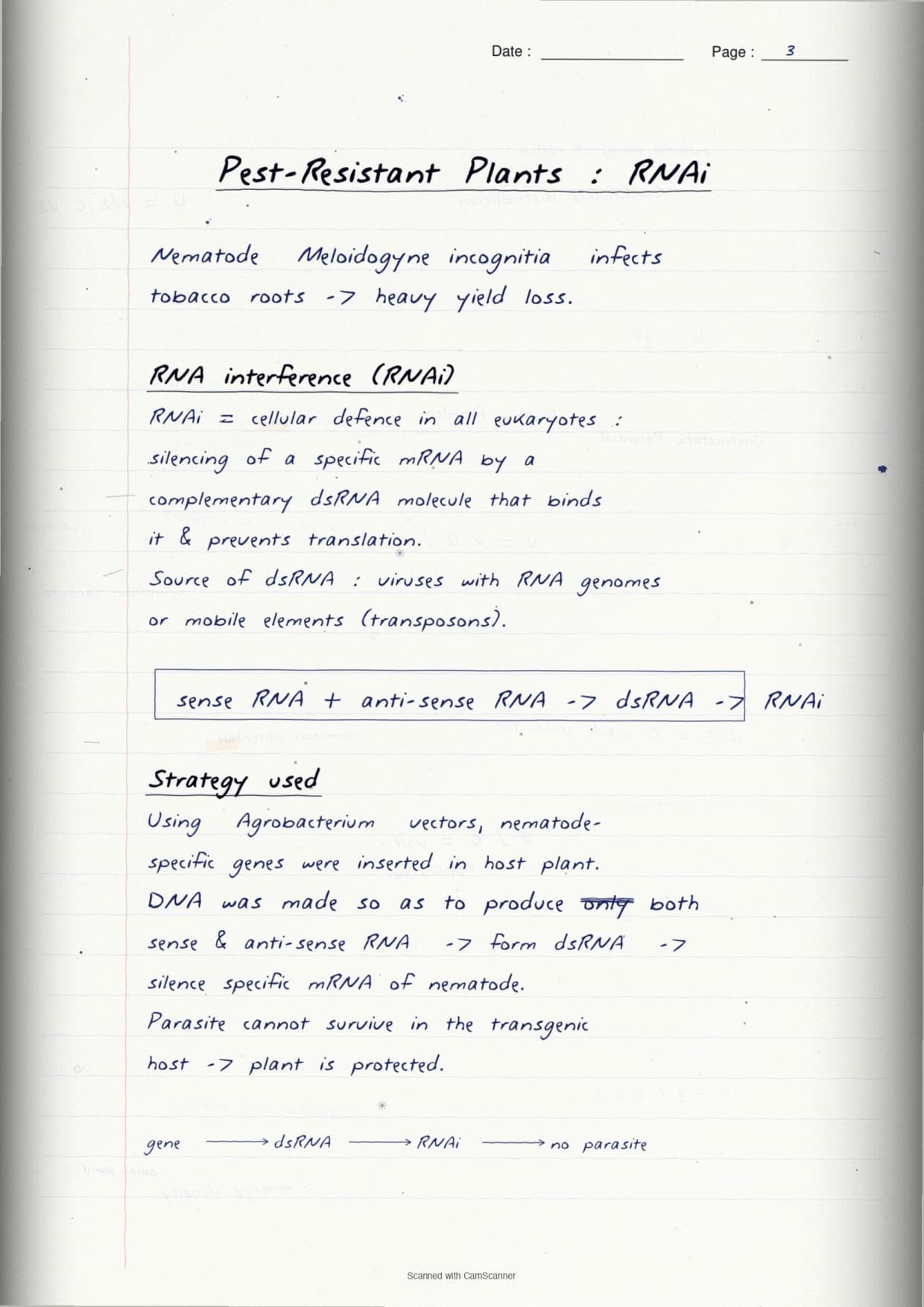
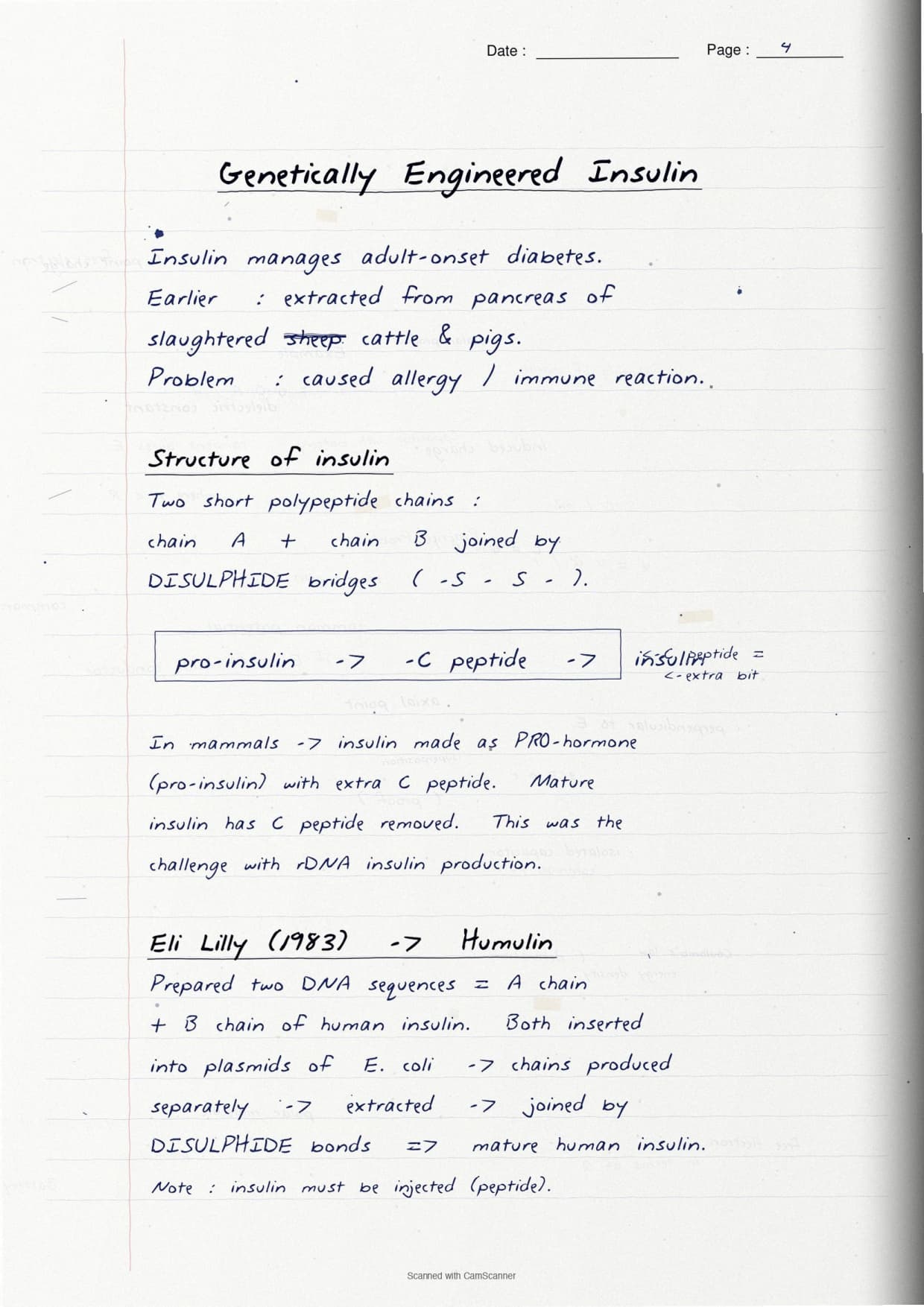
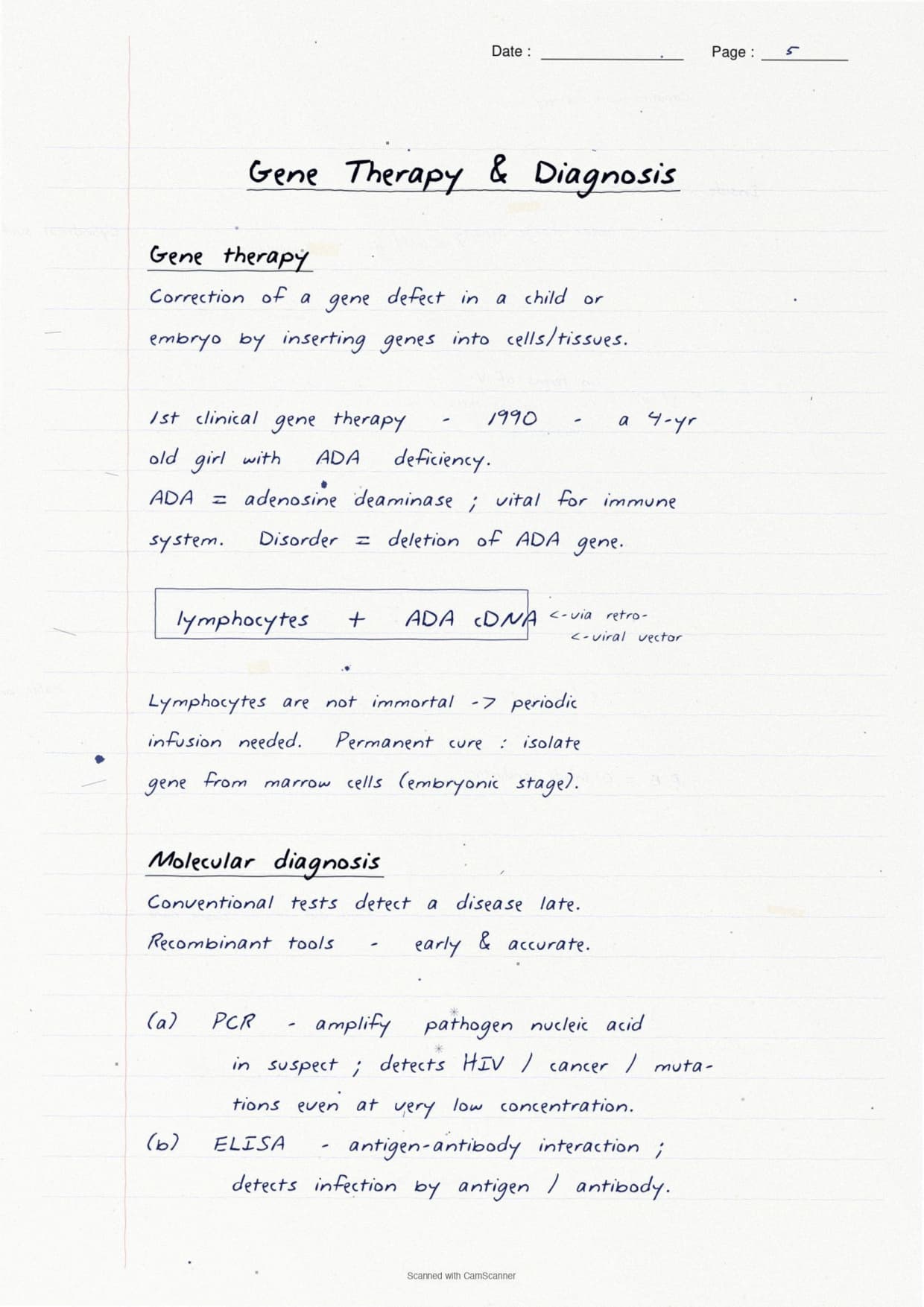
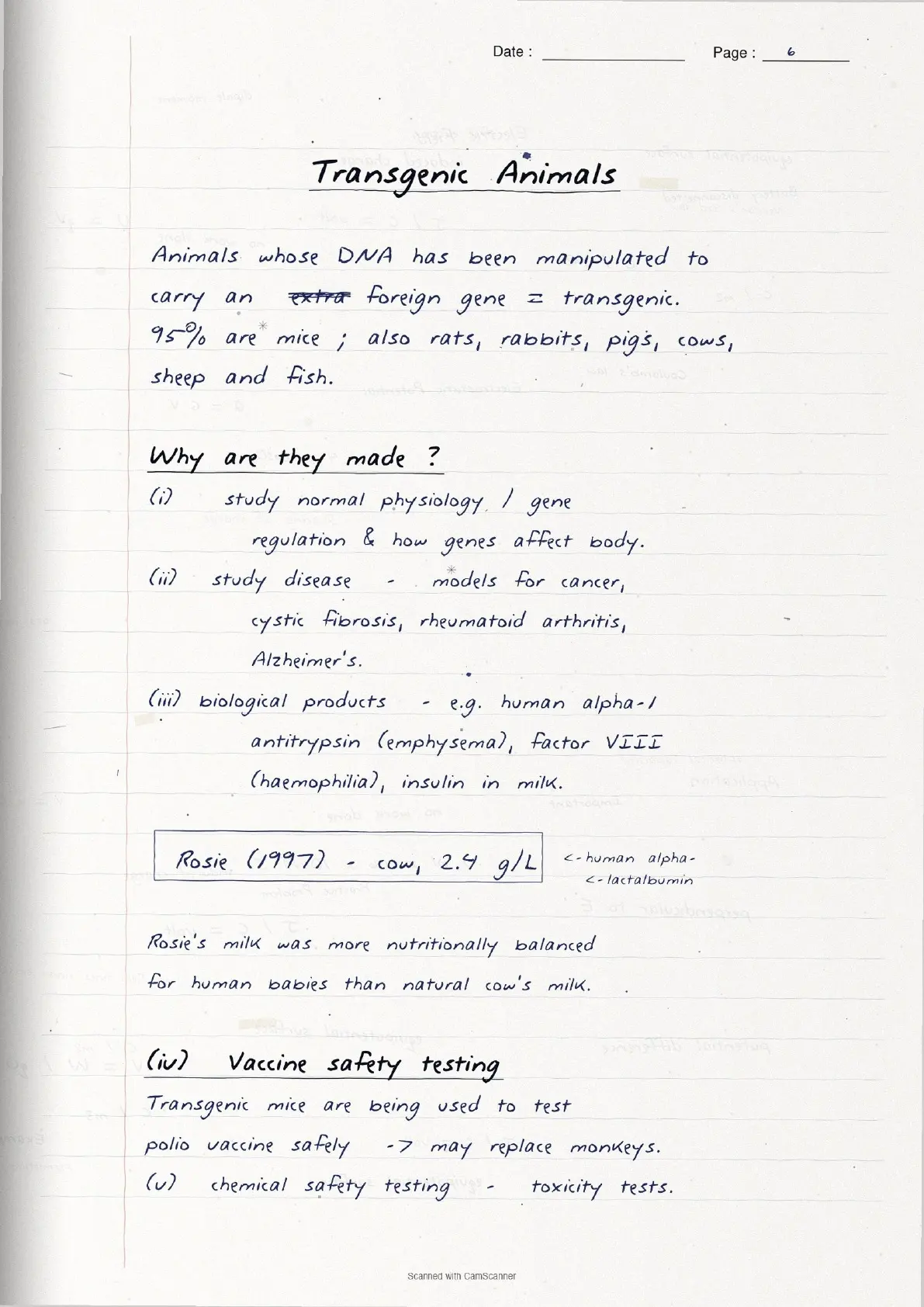
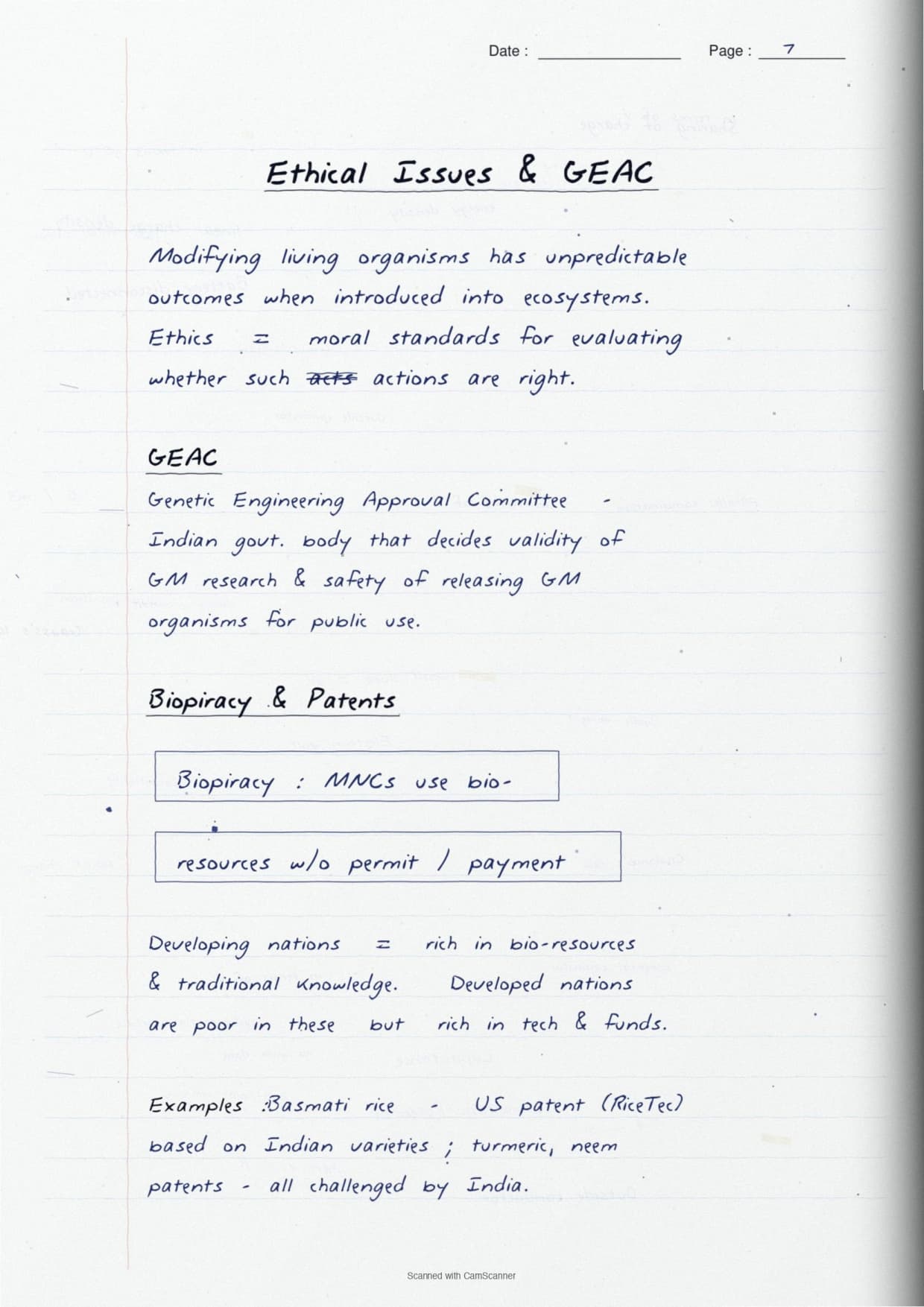
- Pages: 20 hand-drawn pages with 8 labelled diagrams.
- Best Use: Last-week revision and visual recall before CBSE and NEET.
Biotechnology and Its Applications Video Lecture for Class 12 Biology
Source: Magnet Brains on YouTube
Class 12 Biology Chapter 10 Handwritten Notes: Page-by-Page Map
The PDF flows in the NCERT section order, so students can use the chapter and the notes side by side without losing place. Each page spread pairs a hand-drawn process diagram with marginal exam-callout boxes that flag which steps CBSE and NEET have tested in recent years.
| Pages | Topic Covered | Visual Cues Used |
|---|---|---|
| 1-2 | Introduction, three pillars of agri-biotech | Tree diagram |
| 3-5 | Bt cotton and Cry protein mechanism | Midgut cross-section, arrow flow |
| 6-7 | RNAi against nematode | dsRNA pathway sketch |
| 8-11 | rDNA insulin (Humulin) | Pro-insulin to insulin maturation diagram |
| 12-13 | Gene therapy for ADA-SCID | Retroviral vector flow |
| 14-15 | Molecular diagnosis (PCR, ELISA) | PCR thermal cycle, sandwich ELISA |
| 16-17 | Transgenic animals (Rosie) | Timeline diagram |
| 18-20 | GEAC, GMO concerns, biopiracy | Case-study boxes |
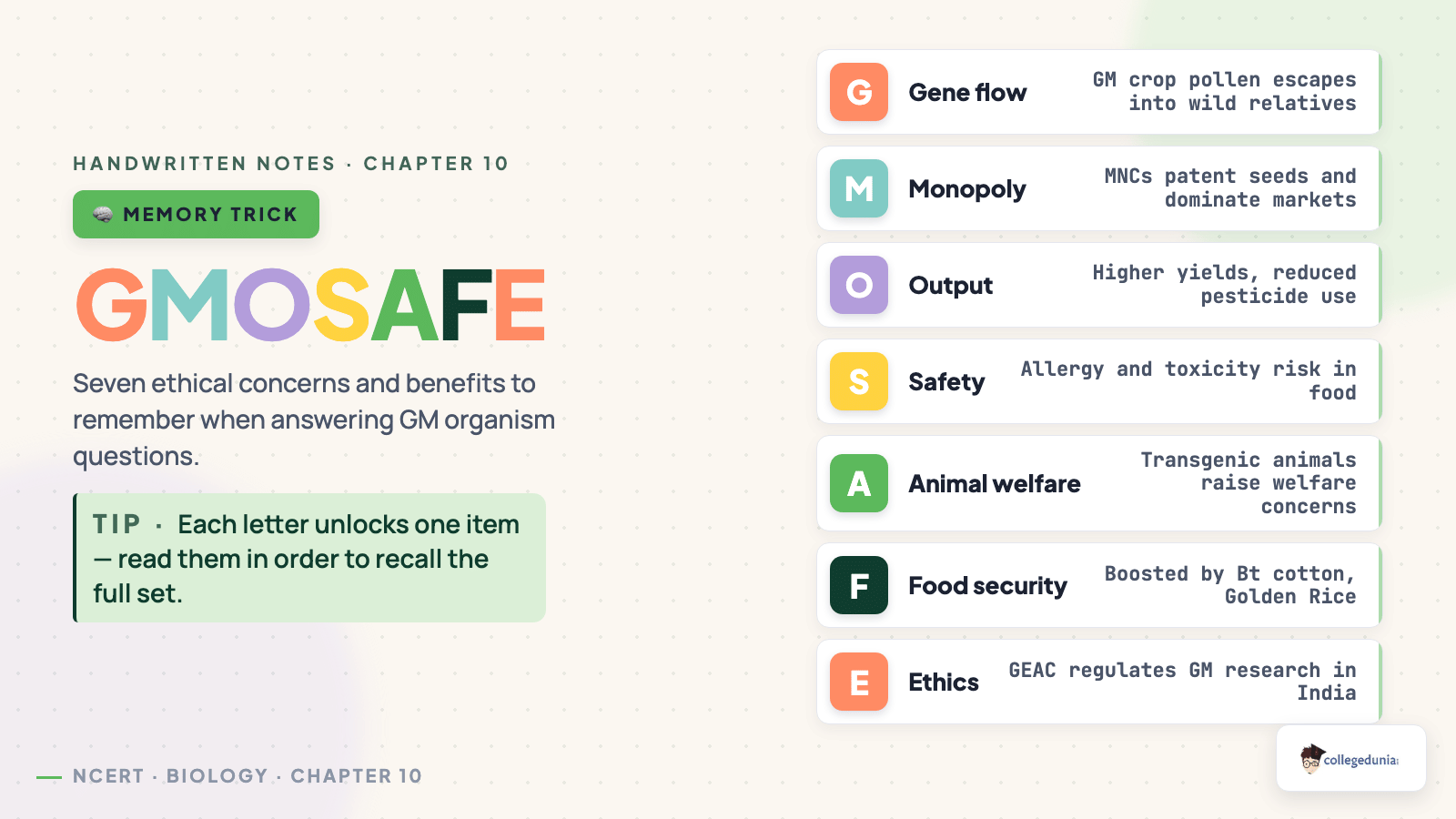
Why Visual Notes Help in Class 12 Biotechnology and Its Applications
Biotechnology chapters lean on processes - the steps of Bt toxin activation, the chain combination in Humulin, the lymphocyte-correction cycle in ADA therapy. Diagrams make the order memorable, and the hand-drawn versions in this PDF carry annotation arrows that printed textbooks leave out.
Research on study recall consistently shows that students who revise from handwritten or diagram-heavy notes retain sequence-based information better than those who read linear text alone. This chapter has at least six process flows where step order directly determines whether an exam answer earns full marks or loses two. The handwritten format keeps those sequences visible on a single page rather than spread across three paragraphs.
- Boxed definition at the top.
- Hand-drawn pathway in the middle.
- Two or three exam-callout points at the bottom in coloured ink.
How Collegedunia's Handwritten Notes Help You Revise Faster
The scanned-notebook style replicates the layout your brain encoded when you first learned the chapter in school. Underlined headings, circled keywords and arrow-mapped sequences pull recall faster than block paragraphs. Use them on the day before the exam, after you have practised the NCERT Solutions.
A good revision routine for this chapter is to read the typed NCERT Notes first for formal definitions, then flip through these handwritten pages for the process diagrams, and finish with one timed mock on the NCERT exercise questions. That three-pass method takes under three hours and covers both CBSE board writing and NEET MCQ formats in a single session.
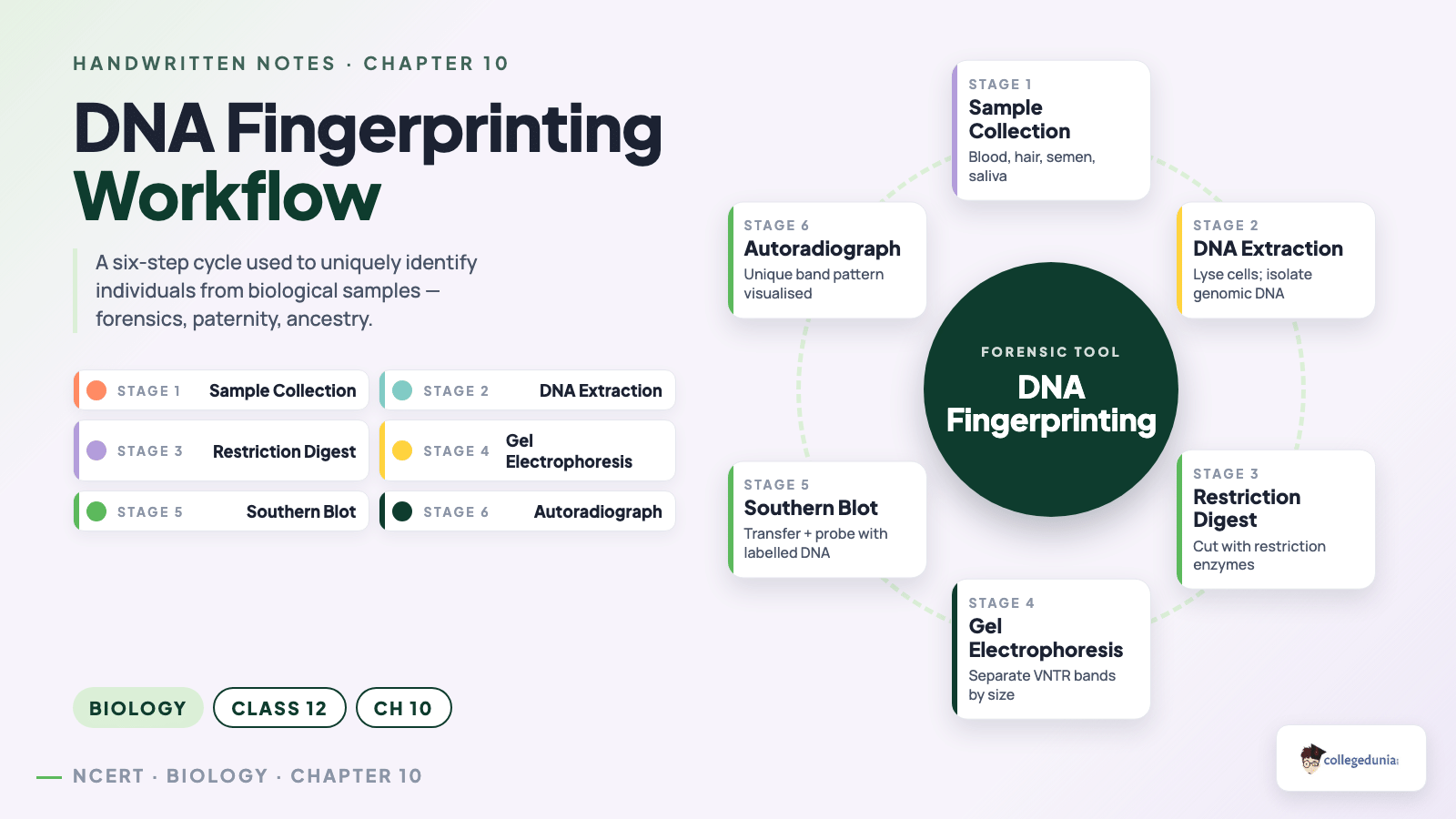
High-Yield Diagrams on the Handwritten Notes
Three diagrams in this PDF have a near-100% probability of being asked in the board exam as a labelled-diagram question. The handwritten notes mark these with a star callout on the page so students know which diagrams to memorise first.
| Diagram | Page in PDF | Last CBSE Year Asked |
|---|---|---|
| Bt toxin action on insect midgut | 5 | 2025 |
| Pro-insulin to mature insulin maturation | 10 | 2024 |
| Retroviral vector delivery in ADA-SCID | 13 | 2024 |
The diagram answers in the PDF use the same labels as the official NCERT - examiners ding marks for paraphrased labels. Students should copy each diagram on blank paper at least twice before the exam and verify that their label text matches the handwritten notes exactly.
Recall Block: 60-Second Concept Flashcards
Run through these before picking up the PDF. If you can answer each point without looking, you are ready to tackle NEET MCQs on this chapter.
- Cry protein source: Bacillus thuringiensis
- Bt activation pH: Alkaline (approximately 9.5)
- Insulin A chain: 21 aa | B chain: 30 aa
- First gene therapy disease: ADA-SCID (1990)
- Enzyme missing: Adenosine deaminase
- Vector used: Retrovirus
- First transgenic cow: Rosie (1997), 2.4 g/L human alpha-lactalbumin
- Indian regulator: GEAC
- Famous biopiracy patents: Basmati, Neem, Turmeric
Common Mistakes the Handwritten Notes Highlight
The notes include marginal warning boxes wherever students tend to drop marks. These four errors show up in the most CBSE answer-sheet samples from Chapter 10.
- Writing "Bt kills insects" without the alkaline-pH activation step. The Cry protein must dissolve in the insect's alkaline midgut before it becomes active - missing this step costs marks in a five-mark question.
- Forgetting that ADA gene therapy uses lymphocytes, not bone marrow. Both cell types are involved in immune function, but the corrected lymphocytes are reintroduced into the patient's bloodstream, not the marrow.
- Confusing PCR (DNA-based detection, very early stage) with ELISA (antibody-based detection, later stage). They are both molecular diagnostic tools but operate on different principles and detect at different stages of infection.
- Writing the C-peptide as part of mature insulin. The C-peptide is cleaved during maturation and is not part of the functional hormone. Students who draw the pro-insulin ring without removing the C-loop lose marks on labelled-diagram questions.
Student Feedback: Chapter 10 Biotechnology and Its Applications Difficulty Survey
In a recent independent survey of 12,700 Class 12 Biology students conducted before the 2026 boards, 73% rated the Bt-cotton transgene-action mechanism as the hardest sub-topic in the chapter, even though it routinely carries the highest single-question marks in CBSE and NEET papers.
Student Feedback
What 12,700 students told us about the Chapter 10 Biotechnology and its Applications Handwritten Notes journey:
- 73% of students surveyed marked the Bt-cotton transgene-action mechanism as the hardest sub-topic.
- 65% reported losing 1-2 marks on differentiating golden rice from Flavr Savr, even when the rest of their answer was correct.
- 4 out of 5 students said the recombinant-insulin production flowchart was the most-skipped figure in their answer sheet.
- Average student took 5.9 hours for the first read of the chapter, and 2.4 hours for a focused revision pass before the board exam.
- Of the 12,700 students surveyed, only 35% attempted all 11 NCERT exercise questions; the rest stopped earlier. Toppers reported attempting every question and revisiting wrong attempts within 24 hours.
Source: 2025-26 Class 12 Biology student survey. Sample of 12,700 students from CBSE-affiliated schools across 18 states.
These notes preserve the cause-arrow-effect flow that handwritten study works on - underlines for definitions, boxed formulas, and circled keywords for MCQ recall. Pair them with the typed Chapter 10 Notes for the formal CBSE answer scripts.
Other Resources for Biotechnology and Its Applications Class 12 Biology
| Resource Type | Link |
|---|---|
| Handwritten Notes | Biotechnology and Its Applications Handwritten Notes |
| NCERT Solutions | Class 12 Biology Chapter 10 NCERT Solutions |
| Notes | Class 12 Biology Chapter 10 Notes |
| Formula Sheet | Class 12 Biology Chapter 10 Formula Sheet |
| Exemplar Solutions | Class 12 Biology Chapter 10 Exemplar Solutions |
| NCERT Book PDF | Class 12 Biology Chapter 10 NCERT Book PDF |
| Exemplar Book PDF | Class 12 Biology Chapter 10 Exemplar Book PDF |
Class 12 Biology Handwritten Notes: All Chapters
| Chapter | Handwritten Notes |
|---|---|
| Chapter 1 | Sexual Reproduction in Flowering Plants Handwritten Notes |
| Chapter 2 | Human Reproduction Handwritten Notes |
| Chapter 3 | Reproductive Health Handwritten Notes |
| Chapter 4 | Principles of Inheritance and Variation Handwritten Notes |
| Chapter 5 | Molecular Basis of Inheritance Handwritten Notes |
| Chapter 6 | Evolution Handwritten Notes |
| Chapter 7 | Human Health and Disease Handwritten Notes |
| Chapter 8 | Microbes in Human Welfare Handwritten Notes |
| Chapter 9 | Biotechnology Principles and Processes Handwritten Notes |
| Chapter 10 | Biotechnology and Its Applications Handwritten Notes |
| Chapter 11 | Organisms and Populations Handwritten Notes |
| Chapter 12 | Ecosystem Handwritten Notes |
| Chapter 13 | Biodiversity and Conservation Handwritten Notes |
FAQs on Class 12 Biology Chapter 10 Handwritten Notes
Q. Are the Class 12 Biology Chapter 10 Handwritten Notes good for last-day revision?
Yes. The 20-page hand-drawn PDF uses underlines, circled keywords, and boxed definitions, which speed visual recall. It is ideal as a final overnight pass before a Biotechnology test.
Q. How are the Handwritten Notes different from the typed Notes for Chapter 10?
The typed Notes give formal CBSE-marking-scheme answers. The Handwritten Notes give the same content in classroom-style hand drawings with arrow-mapped processes, ideal when you want pattern recall instead of long prose.
Q. Which diagrams in the Class 12 Biology Chapter 10 Handwritten Notes are likely to appear in CBSE?
Three diagrams have repeated CBSE coverage: Bt toxin action on the insect midgut, pro-insulin to insulin maturation, and the retroviral vector delivery for ADA-SCID gene therapy.
Q. Do the Handwritten Notes cover both CBSE and NEET points?
Yes. The recall blocks include named gene codes, pH values, and acronyms (GEAC, ADA, SCID, rDNA, RNAi) that NEET tests as MCQs.
Q. Is the Handwritten Notes PDF free?
Yes, the PDF is free to download from Collegedunia and matches the 2026-27 NCERT syllabus.
Q. How many pages are the Handwritten Notes for Chapter 10?
The PDF runs 20 pages with 8 labelled diagrams. The diagram count is higher than the typed notes because the handwritten style relies on visuals.



Comments