




An 8-page scanned blue-ink notebook with all 22 ratios across liquidity, solvency, activity, and profitability. These Accounting Ratios handwritten notes reproduce every formula, numerator, denominator, and CBSE slip warnings, sized for last-day revision.
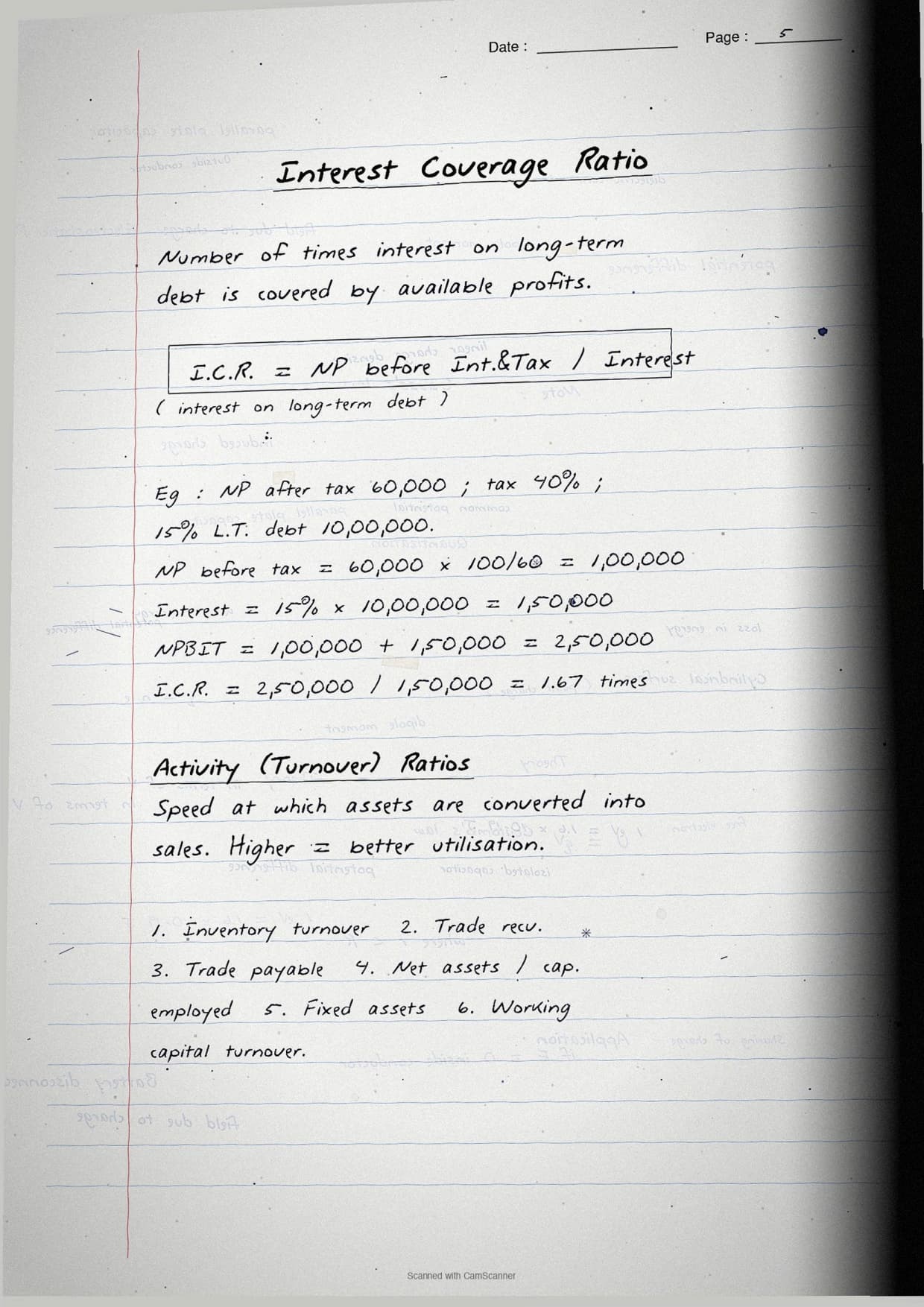
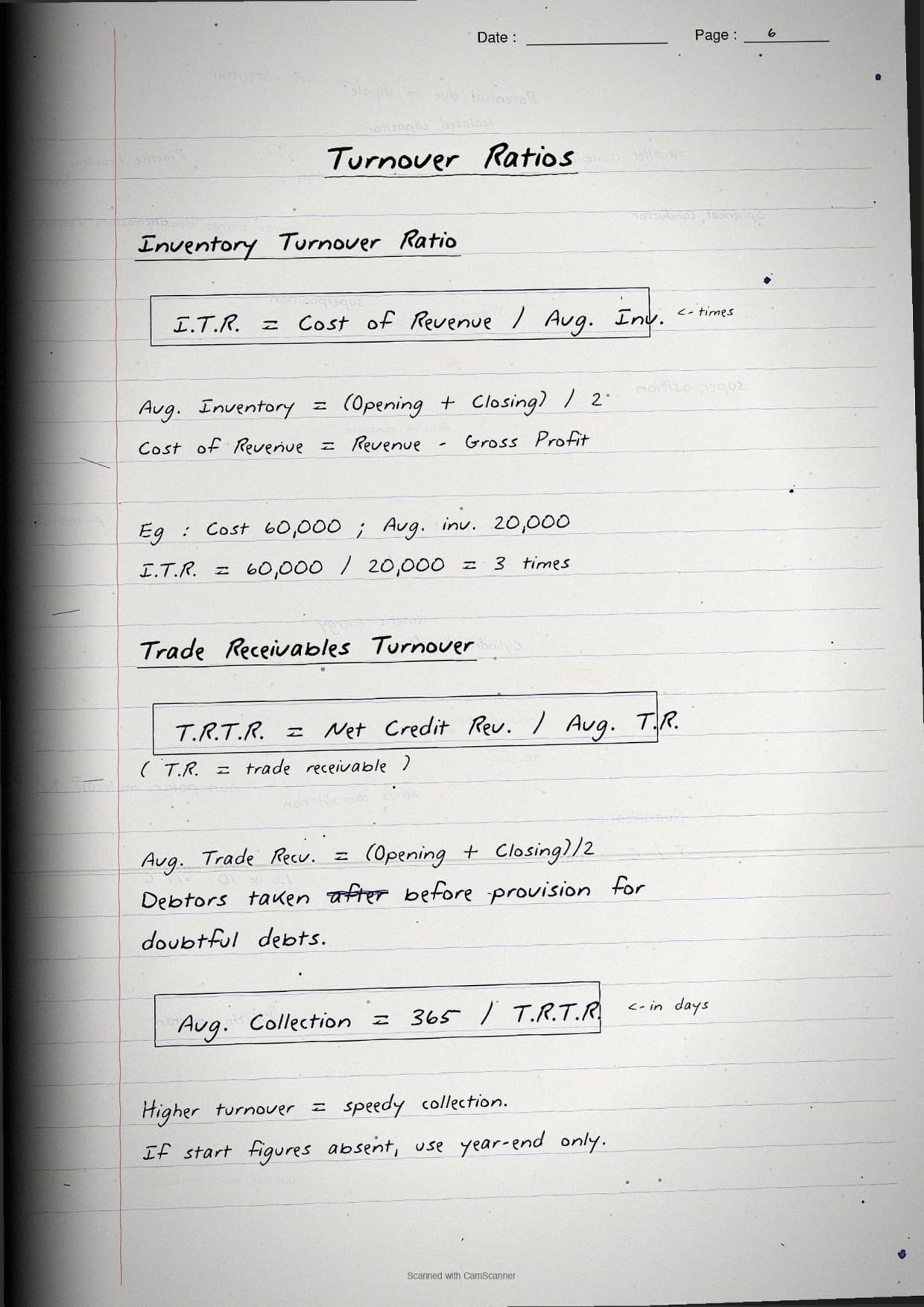
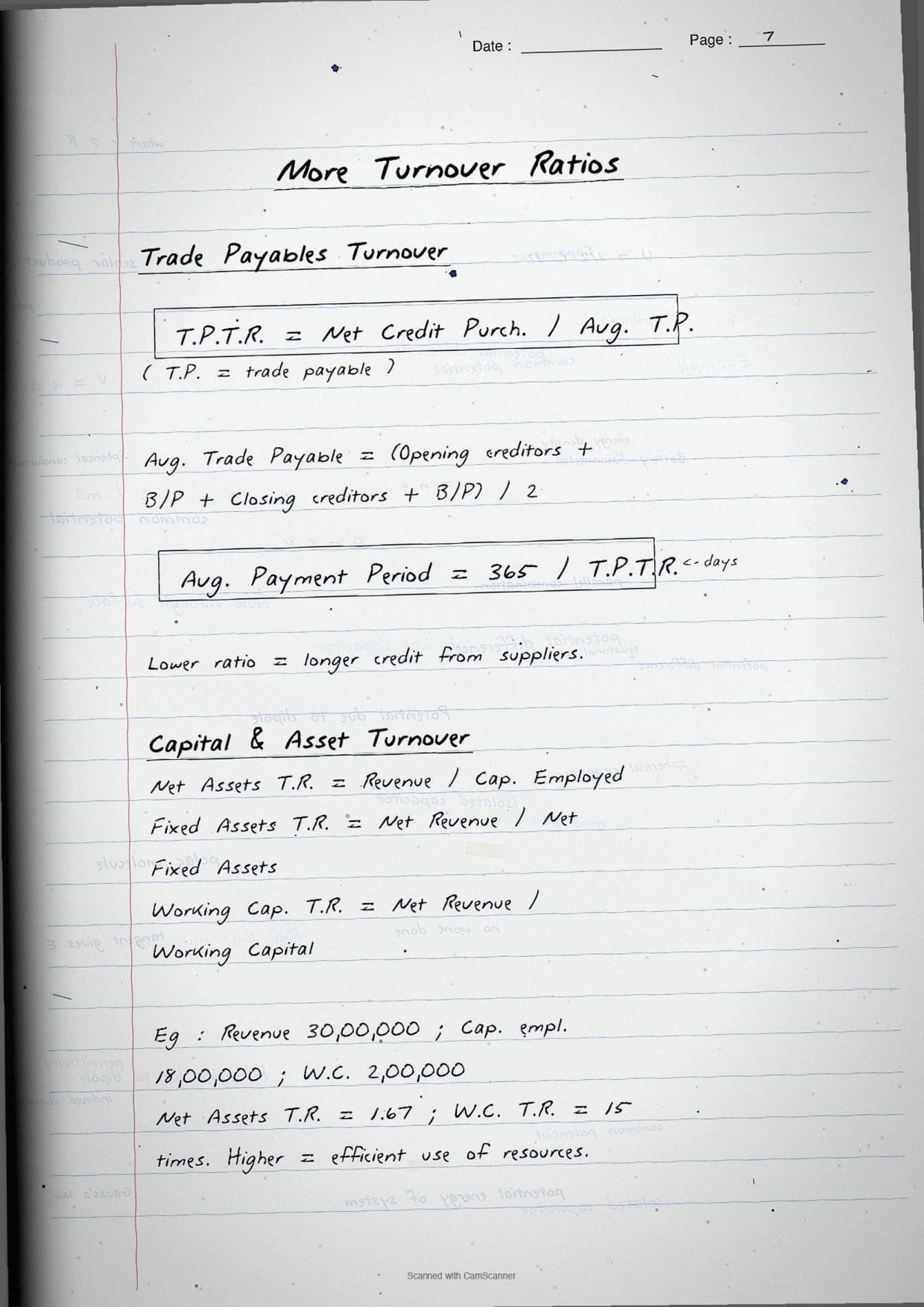
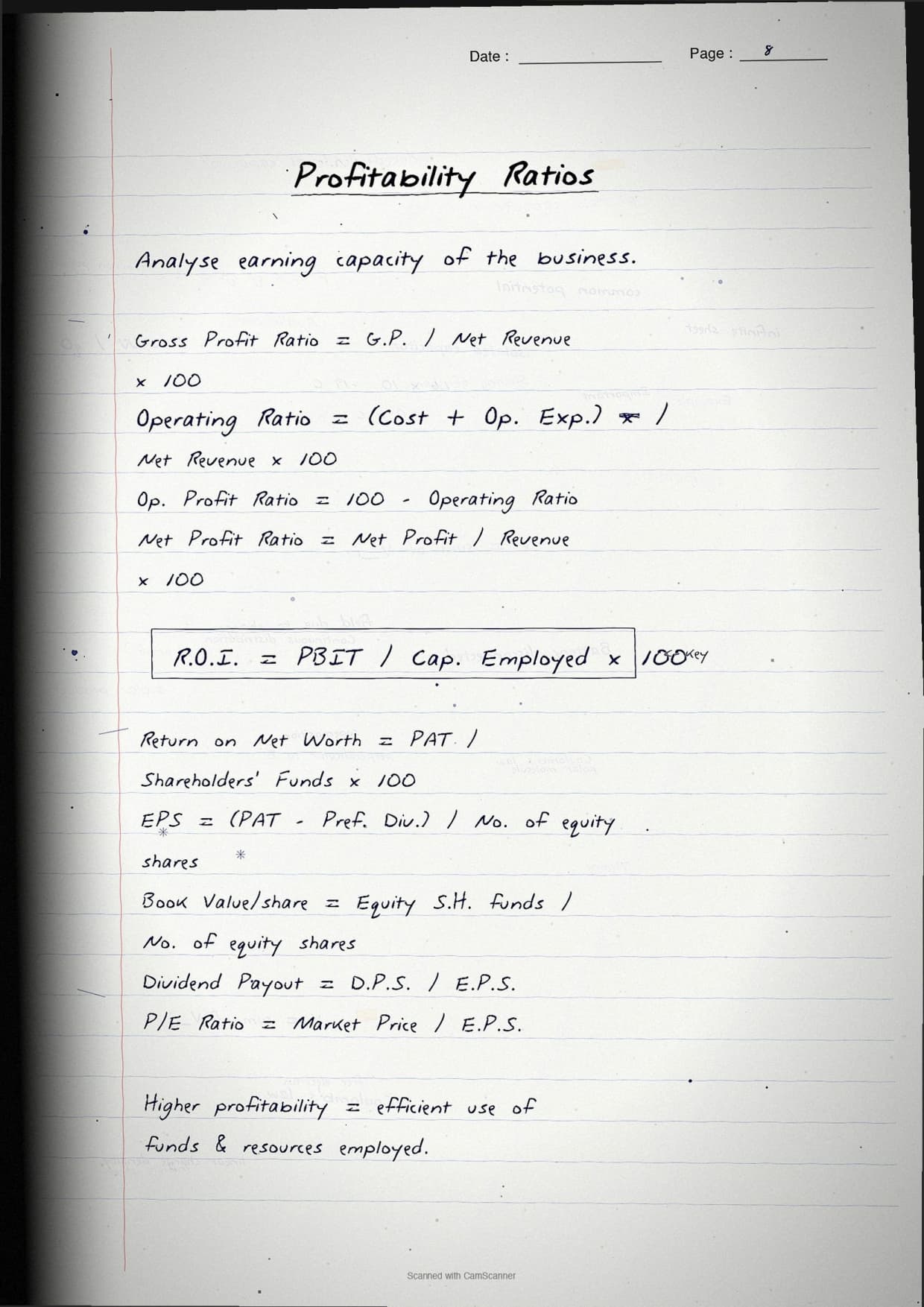
- CBSE Weightage (Part B): 8 to 12 marks, the single highest-scoring chapter in the Analysis of Financial Statements unit.
- CUET / commerce-stream relevance: High, with a recurring numerical on Current, Debt-Equity, Inventory Turnover, and Net Profit ratios.
- Notebook pages in this PDF: 8 pages, scanned blue-ink notebook format.
The chapter turns financial statements into ratios measuring liquidity, solvency, efficiency, and earning power. These notes keep all 22 formulae on one foldable spread, curated against the last five years of CBSE papers.
Also Check:
How will Collegedunia's Handwritten Notes Help You with Accounting Ratios?
Accounting Ratios is formula-dense; marks are lost in the denominator, not the concept. These handwritten notes are for students who need a fast-recall booklet after one read of the typeset Notes.
- All 22 Formulae, Hand-Boxed: Exact numerator and denominator for each ratio.
- 2026-27 NCERT Aligned: Four categories and Schedule III items match the current edition.
- High-Error Marks in Red: Net Credit Sales and Cost of Revenue from Operations flagged.
- Fast Recall: Folded lengthwise, review all four categories in under three minutes.
Class 12 Accountancy Part 2 Chapter 5 Accounting Ratios Handwritten Notes
Source: Magnet Brains on YouTube
What the 8 Pages Cover
Each page anchors one ratio category the CBSE paper tests.
| Page | Focus | What you copy first |
|---|---|---|
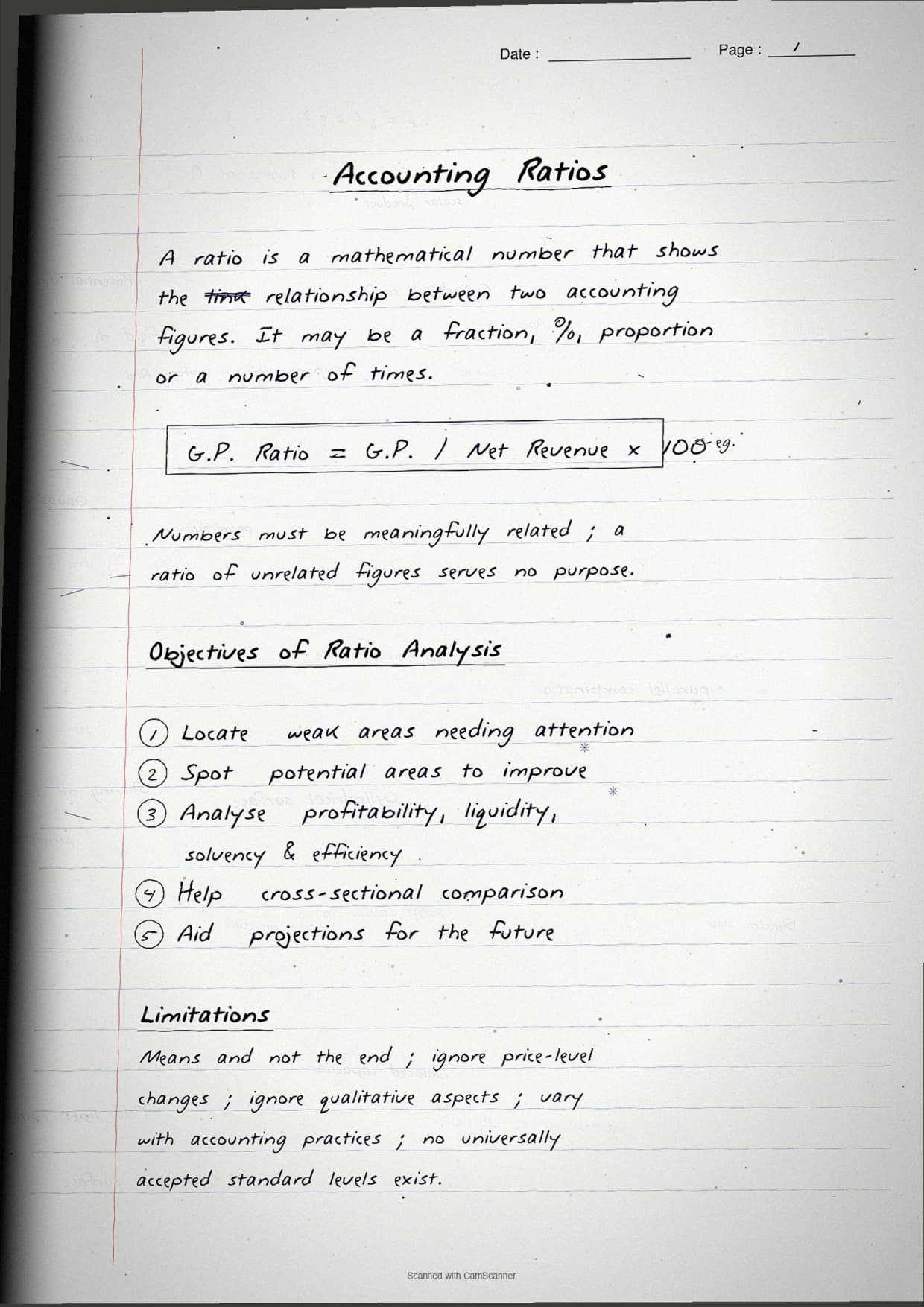
| Page 1 | Meaning, objectives and the four ratio categories | The liquidity, solvency, activity, profitability split. |
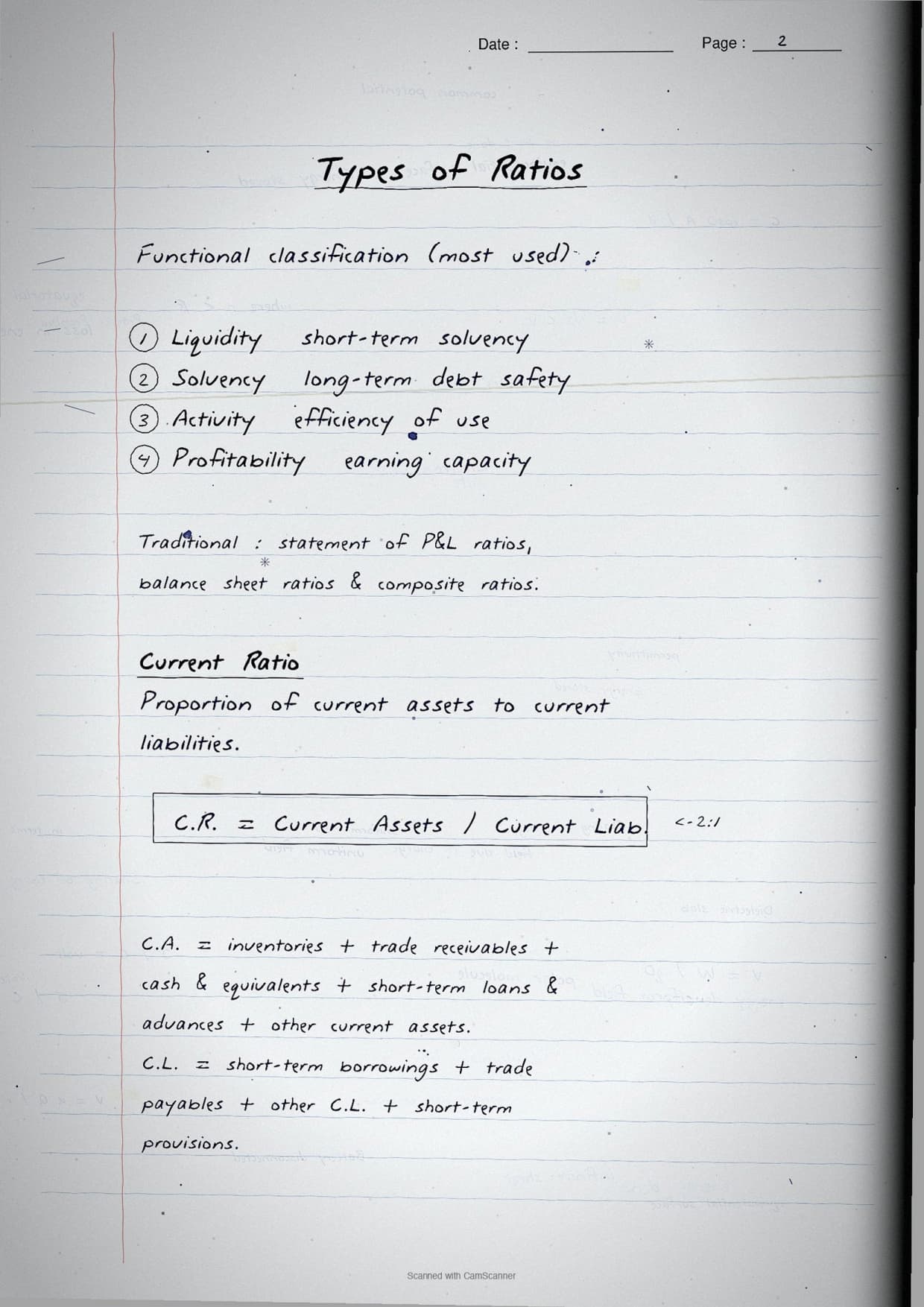
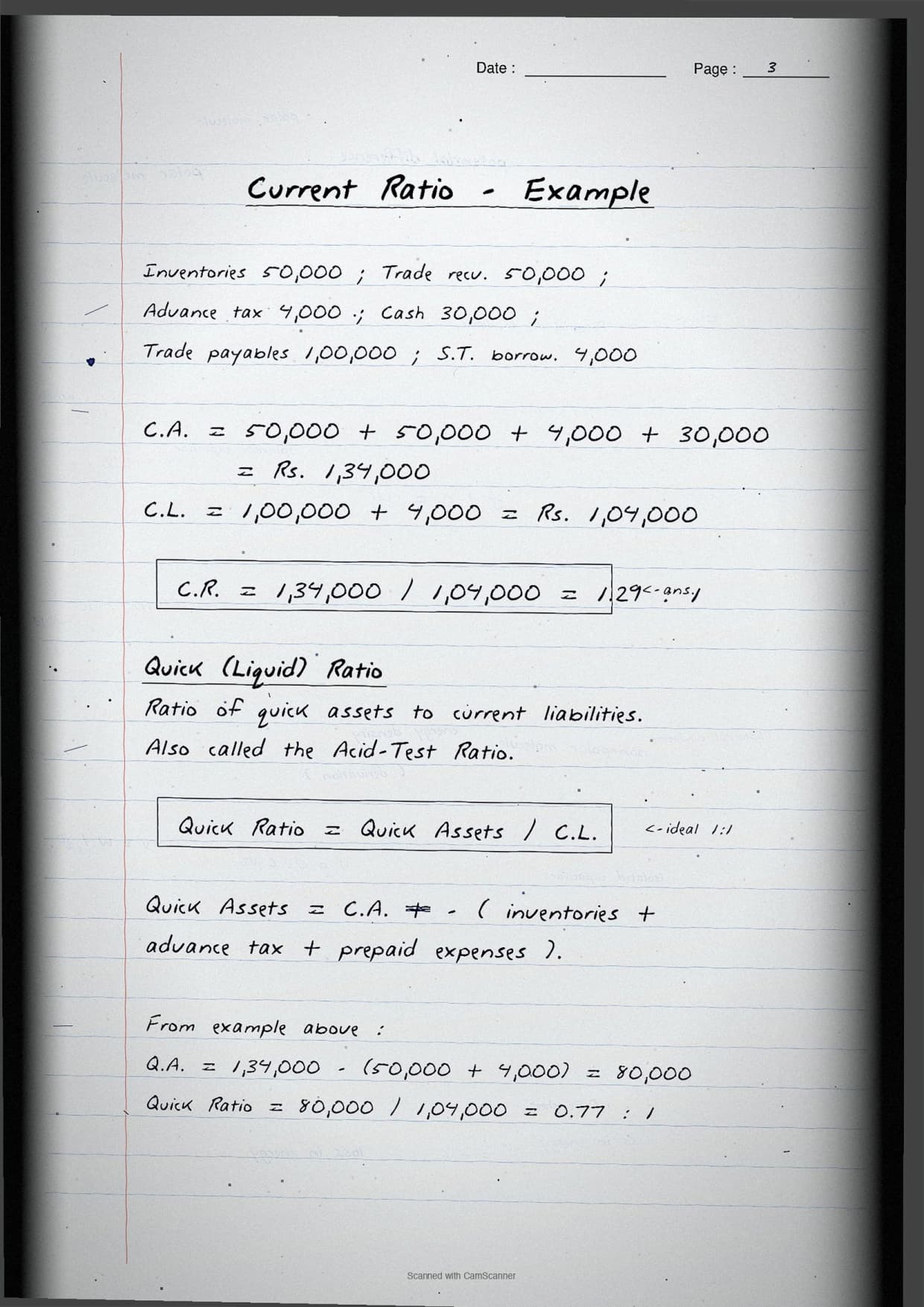
| Page 2 | Liquidity ratios: Current and Quick Ratio | The ideal 2:1 and 1:1 benchmarks. |
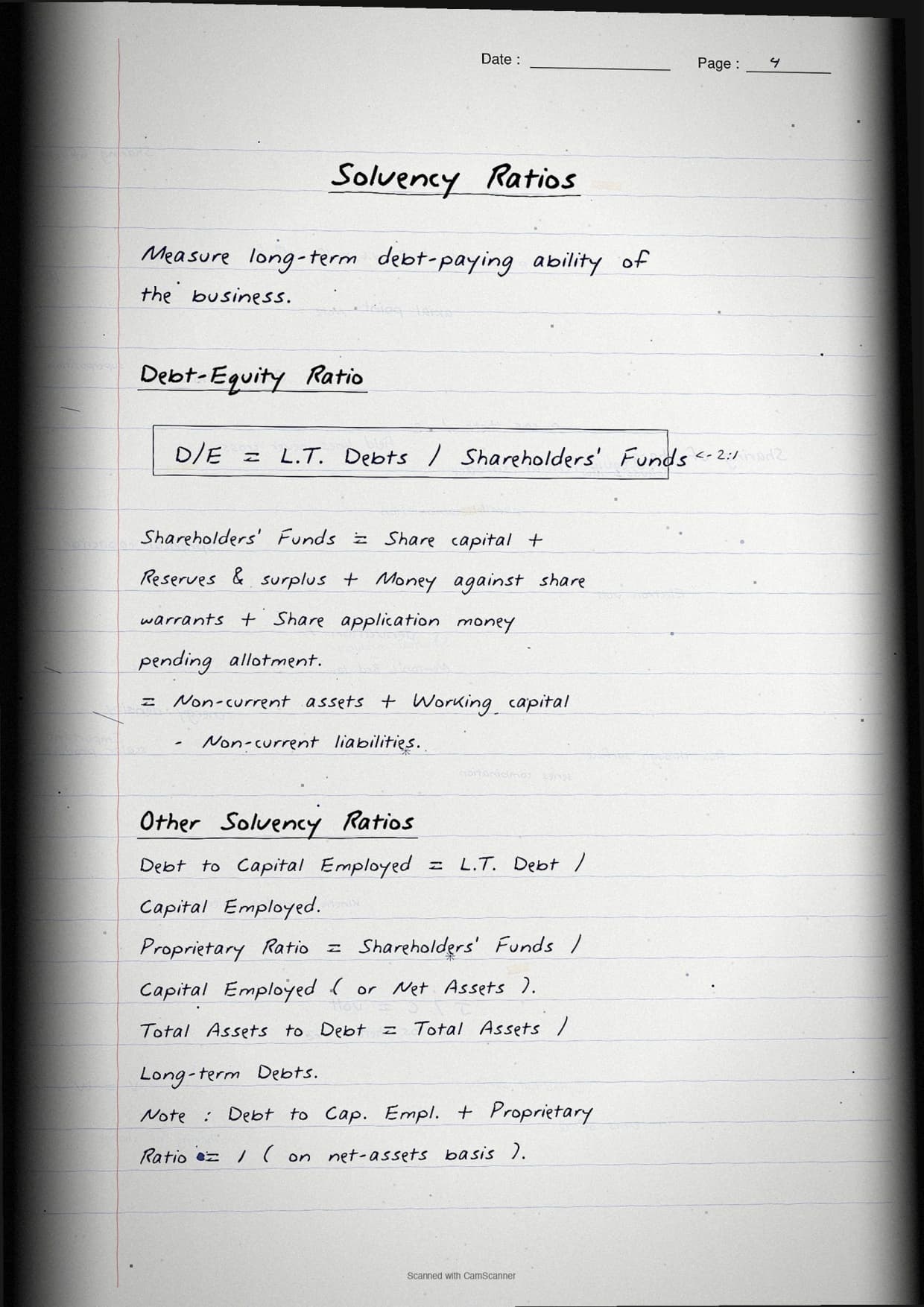
| Page 3 | Solvency ratios: Debt-Equity, Proprietary, Interest Coverage | The Debt-Equity numerator and denominator. |
| Pages 4-5 | Activity and Profitability ratios | The Net Credit Sales rule and Operating Ratio. |
| Page 6 | Return on Investment and Capital Employed | The Capital Employed definition. |
| Pages 7-8 | Worked numerical, slip warnings, recall grid | The order of computation and red margin arrows. |
Hand-Drawn Diagrams in the Notes PDF
The booklet uses structured grids instead of sketches.
| Page | Hand-drawn element | What it shows |
|---|---|---|
| Page 1 | Four-branch ratio category tree | Liquidity, Solvency, Activity, Profitability with member ratios on each branch. |
| Page 4 | Turnover-times to days conversion arrow | How a turnover ratio (times) converts to an average period (days). |
| Page 6 | Capital Employed building block diagram | The two routes to Capital Employed (liabilities side and assets side). |
| Page 8 | All-formula recall grid | All 22 ratios in a single boxed grid for the final read. |
Last 24-Hour Revision Card
Review these the night before your Accountancy Part B paper.
- Liquidity: Current Ratio 2:1 ideal; Quick Ratio 1:1 ideal.
- Solvency: Debt-Equity; Interest Coverage ratios.
- Activity: Inventory and Trade Receivables Turnover.
- Profitability: Net Profit and Operating Ratios.
- Denominator rule: Use Net Credit Sales and Cost of Revenue, never total Revenue.
How to Read These Notes: Colour Legend
A fixed colour code helps you scan quickly.
| Ink / mark | Meaning |
|---|---|
| Blue ink | Standard formula, category headings, and the ratio category tree. |
| Red pen | High-error denominators and numerators, slip warnings, the figures students most often swap. |
| Green underline | Ideal benchmarks (2:1, 1:1) and the standard comment that earns the interpretation mark. |
| Yellow shading | The single step the CBSE marker most often penalises, usually a wrong base figure. |
Red ink always marks the figure that decides the mark, so a quick scan for red rebuilds the trap list for the whole chapter.
Top 6 Formulae for Quick Recall
The CBSE Part B paper builds numericals on these six most.
| Ratio | Formula |
|---|---|
| Current Ratio | Current AssetsCurrent Liabilities |
| Quick Ratio | Quick AssetsCurrent Liabilities |
| Debt-Equity Ratio | DebtShareholders' Funds |
| Inventory Turnover Ratio | Cost of Revenue from OperationsAverage Inventory |
| Net Profit Ratio | Net ProfitRevenue from Operations × 100 |
| Return on Investment | Profit before Interest and TaxCapital Employed × 100 |
Full master table: Accounting Ratios Class 12 Accountancy Formula Sheet
Self-Assessment Quiz
Use these five questions as a final check.
1. What are Quick Assets equal to?
Current Assets minus Inventory minus Prepaid Expenses (or Current Assets minus Inventory minus Prepaid Expenses minus Advance Tax, depending on the items given).
2. What is the denominator of the Inventory Turnover Ratio?
Average Inventory; the numerator is Cost of Revenue from Operations, not Revenue from Operations.
3. Which figure is used in the Trade Receivables Turnover Ratio numerator?
Net Credit Sales (Net Credit Revenue from Operations), not total sales.
4. State the ideal Current Ratio and Quick Ratio.
Current Ratio 2:1 and Quick Ratio 1:1.
5. Name the four categories of accounting ratios in NCERT order.
Liquidity, Solvency, Activity (Turnover), and Profitability ratios.
Most-Repeated Topics in CBSE Papers
Three topic clusters carry most of the 8 to 12 marks.
| Recurring topic | Typical ask |
|---|---|
| Liquidity ratios from a Balance Sheet | Compute Current and Quick Ratio, then comment on short-term solvency. |
| Debt-Equity and Proprietary ratios | Compute and interpret long-term solvency from given capital figures. |
| Turnover and profitability ratios | Inventory or Trade Receivables Turnover, plus Gross or Net Profit Ratio from a Statement of Profit and Loss. |
Full year-wise PYQ map: Accounting Ratios Class 12 NCERT Solutions
Best Way to Use These Notes
A two-pass routine gets the most from the eight pages in the final week.
- Pass 1, category then formula: Redraw the Page-1 four-branch tree from memory, then write every member ratio's formula under its branch. This locks classification, which the marker reads first.
- Pass 2, denominators and traps: Recite the high-error definitions aloud, Quick Assets, Net Credit Sales, Cost of Revenue from Operations, then read the Page-8 slip warnings. This protects the marks the chapter actually loses.
Slip Warnings on Page 8
Red margin arrows mark the errors that cost the most marks.
Other Resources for This Chapter
- Accounting Ratios Handwritten Notes
- Accounting Ratios Class 12 Notes
- Accounting Ratios Class 12 NCERT Solutions
- Accounting Ratios Class 12 NCERT Book PDF
- Accounting Ratios Class 12 Formula Sheet
All Chapters
| Chapter | Resource |
|---|---|
| Chapter 1 | Accounting for Partnership: Basic Concepts Handwritten Notes |
| Chapter 2 | Reconstitution: Admission of a Partner Handwritten Notes |
| Chapter 3 | Reconstitution: Retirement or Death of a Partner Handwritten Notes |
| Chapter 4 | Dissolution of Partnership Firm Handwritten Notes |
| Part 2 Chapter 1 | Accounting for Share Capital Handwritten Notes |
| Part 2 Chapter 2 | Issue and Redemption of Debentures Handwritten Notes |
| Part 2 Chapter 3 | Financial Statements of a Company Handwritten Notes |
| Part 2 Chapter 4 | Analysis of Financial Statements Handwritten Notes |
| Part 2 Chapter 6 | Cash Flow Statement Handwritten Notes |
Student Feedback
In a Collegedunia poll of 1,240 Class 12 Commerce students, 76% rated Accounting Ratios among the tougher parts of the Accountancy syllabus. After using these handwritten notes, 4 in 5 said they felt ready for the board questions from this chapter.
Accounting Ratios Class 12 Accountancy Handwritten Notes FAQs
Ques. Where can I download the Accounting Ratios class 12 accountancy handwritten notes PDF?
Ans. You can download the Accounting Ratios Class 12 Accountancy Handwritten Notes PDF directly from this page. The scanned blue-ink booklet runs eight pages and is free, sized for last-day CBSE revision after one read of the typeset Notes.
Ques. What does the Accounting Ratios handwritten notes PDF contain?
Ans. Eight ruled pages: the meaning and four categories of ratios, all liquidity, solvency, activity and profitability formulae with their exact numerator and denominator definitions, one worked numerical, and a Page-8 slip-warning grid plus an all-formula recall block.
Ques. What are the four types of accounting ratios in Class 12 Accountancy?
Ans. The NCERT classifies ratios into four categories: Liquidity ratios (Current, Quick), Solvency ratios (Debt-Equity, Proprietary, Interest Coverage), Activity or Turnover ratios (Inventory, Trade Receivables, Trade Payables, Working Capital), and Profitability ratios (Gross Profit, Operating, Net Profit, Return on Investment).
Ques. What is the difference between the Current Ratio and the Quick Ratio?
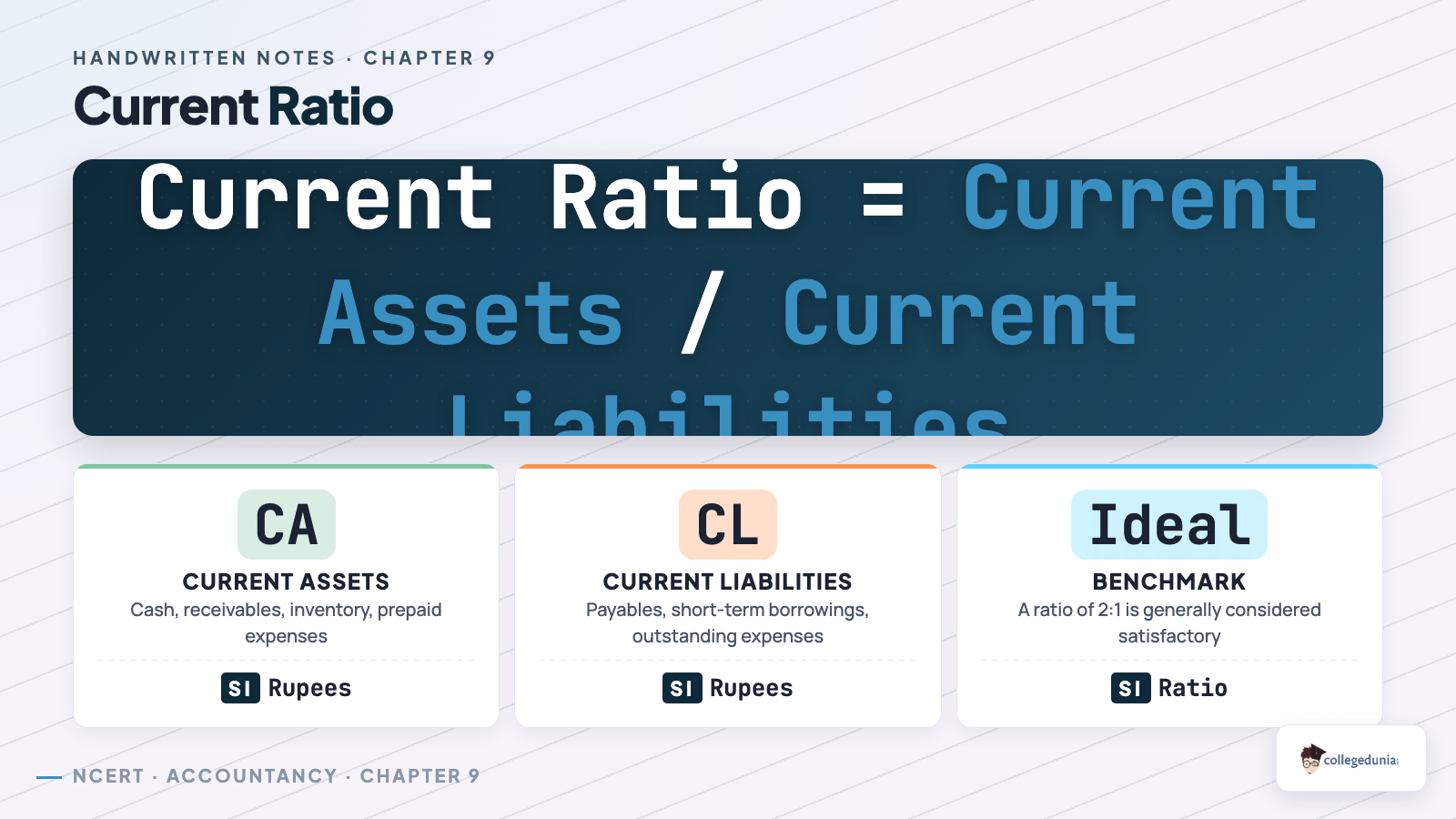
Ans. The Current Ratio is Current Assets divided by Current Liabilities and its ideal is 2:1. The Quick Ratio (Liquid or Acid-Test Ratio) is Quick Assets divided by Current Liabilities with an ideal of 1:1, where Quick Assets exclude Inventory and Prepaid Expenses, so it tests immediate short-term solvency more strictly.
Ques. How many pages is the Class 12th Accountancy Accounting Ratios handwritten notes PDF?
Ans. The handwritten notes PDF runs eight pages and covers the four ratio categories, all twenty-two formulae with their definitions, one worked numerical from a Balance Sheet, and the percentage-base and denominator traps the CBSE Part B paper tests.
Ques. Is this resource aligned with the 2026-27 NCERT?
Ans. Yes. The booklet reflects the current 2026-27 syllabus for Class 12 Accountancy Part B. The four-category classification, the formula list, and the Schedule III item names used in the numerators and denominators all match the new NCERT edition.
Ques. Are handwritten notes enough to cover Accounting Ratios for CBSE 2026?
Ans. The handwritten notes are a final-day revision aid, not a first-read resource. Pair them with the Collegedunia typeset Notes PDF and at least six solved ratio numericals from the NCERT textbook and Solutions for full 8 to 12 mark coverage in the Accountancy Part B paper.



Comments