



These Sensory, Attentional and Perceptual Processes handwritten notes turn the whole chapter into clean, handwritten pages for fast last-minute revision. They follow the 2026-27 NCERT syllabus and Chapter 4 of Class 11 Psychology. Students get the three processes of sensation, attention and perception, the sense modalities and thresholds, the Gestalt laws, depth cues, perceptual constancies and illusions in a pen-on-paper format that is easy to skim before a test.
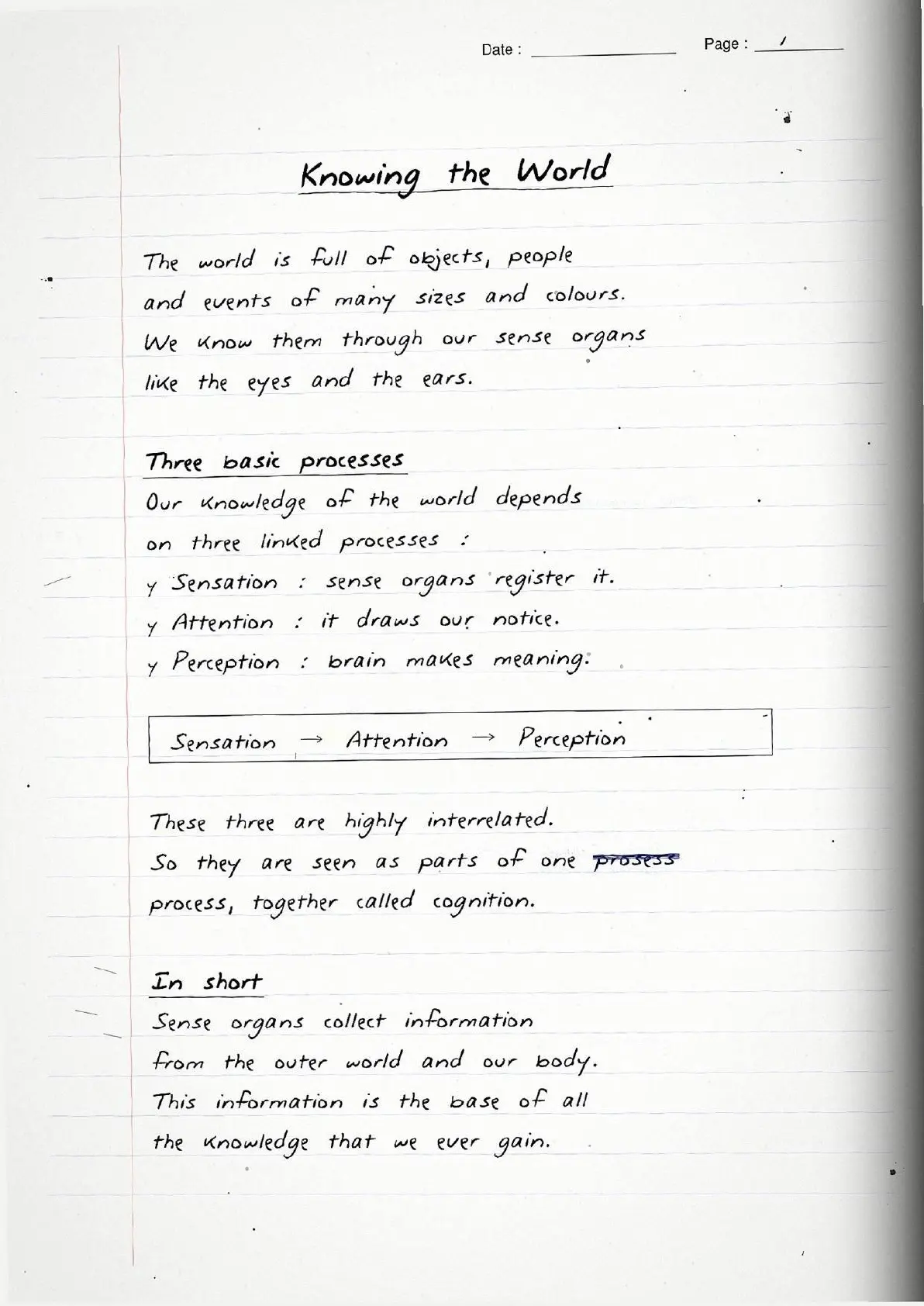
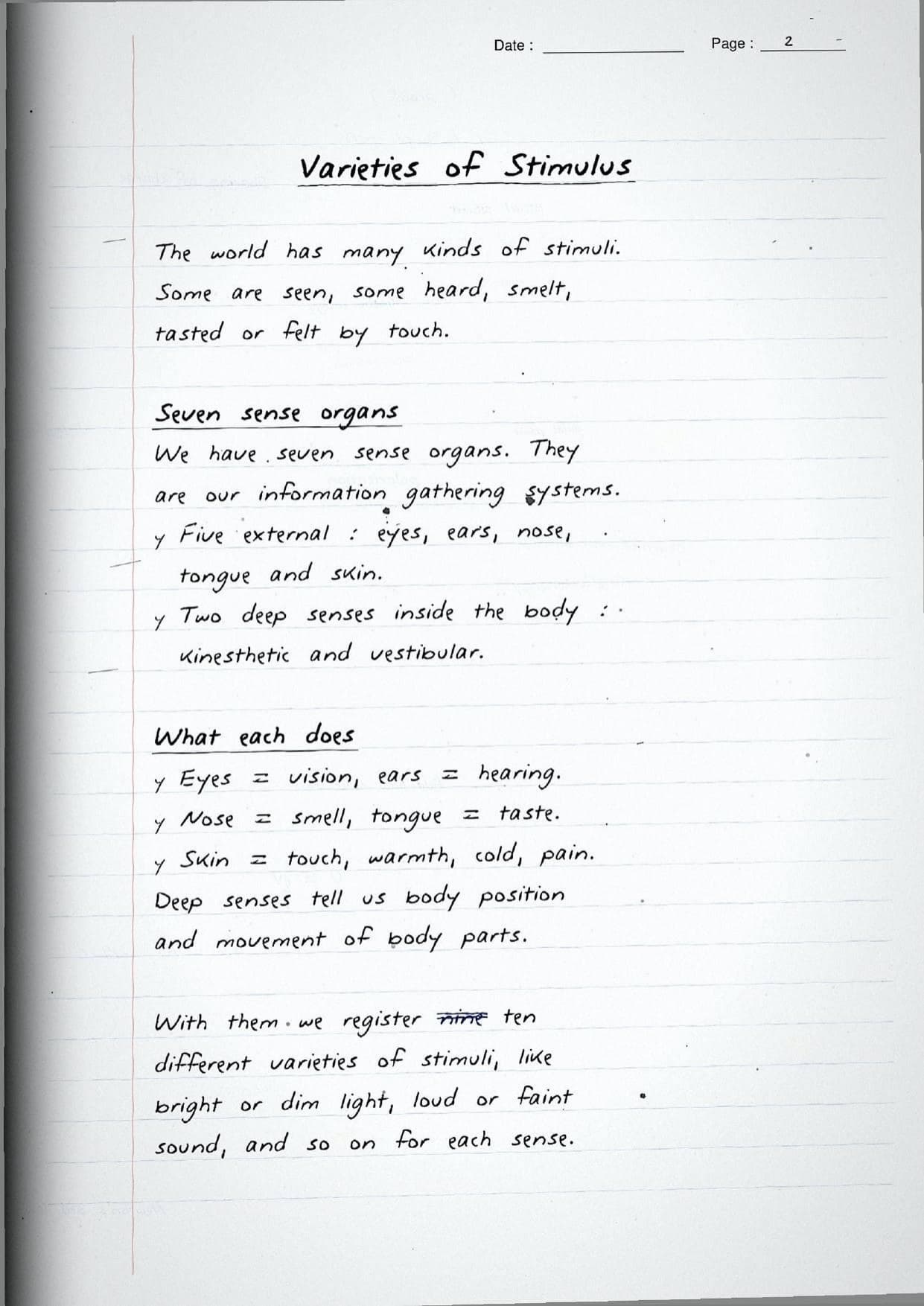
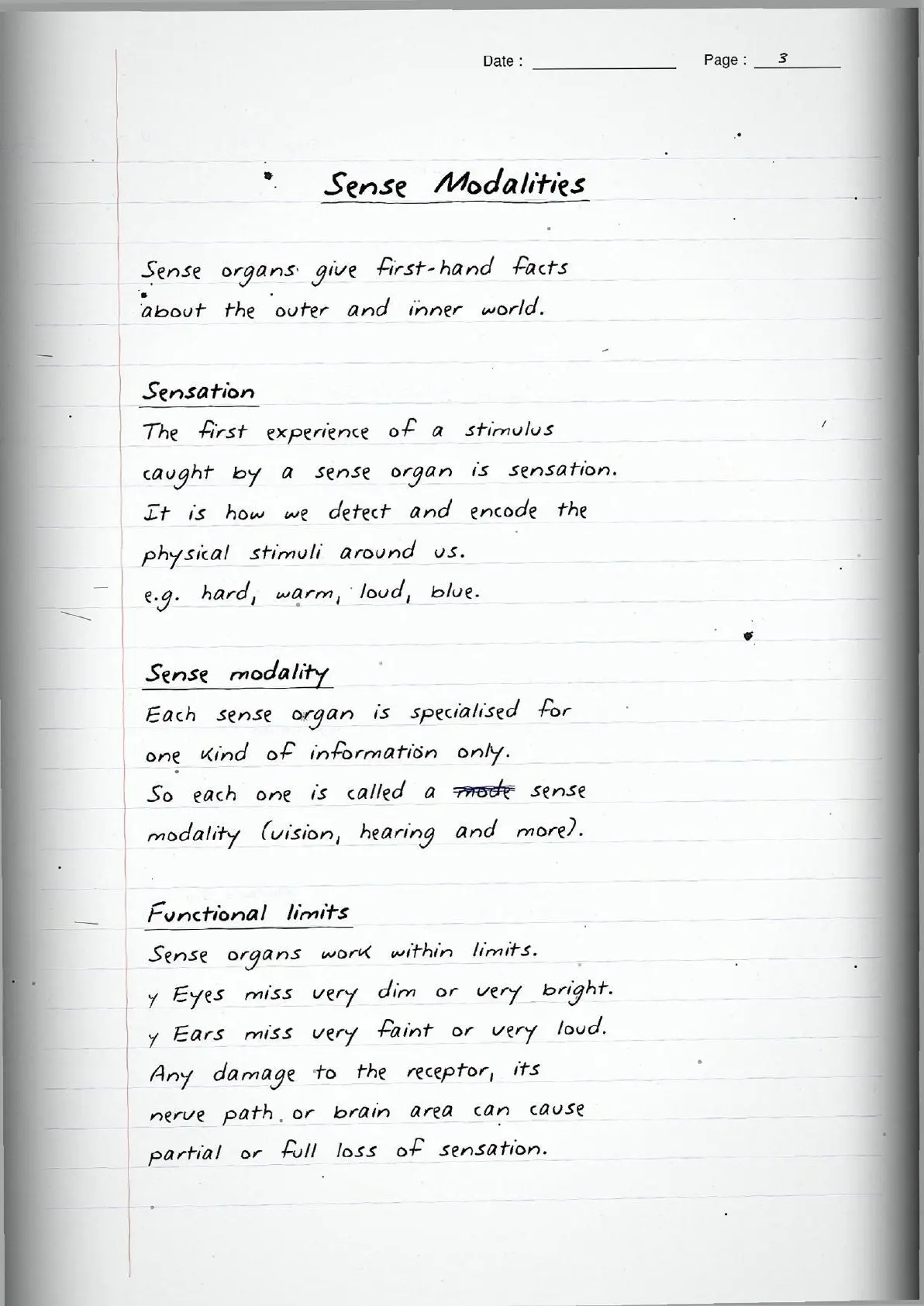
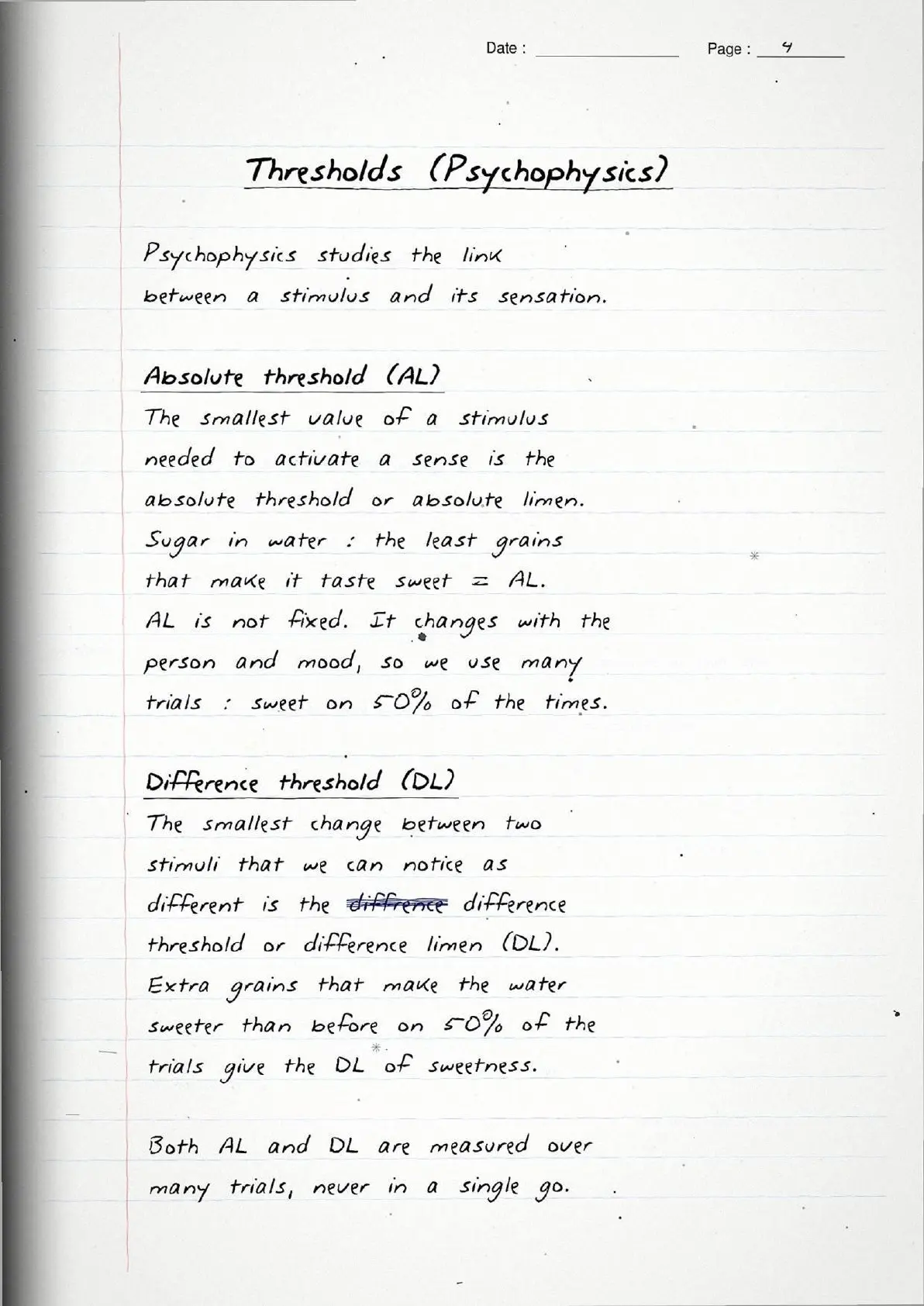
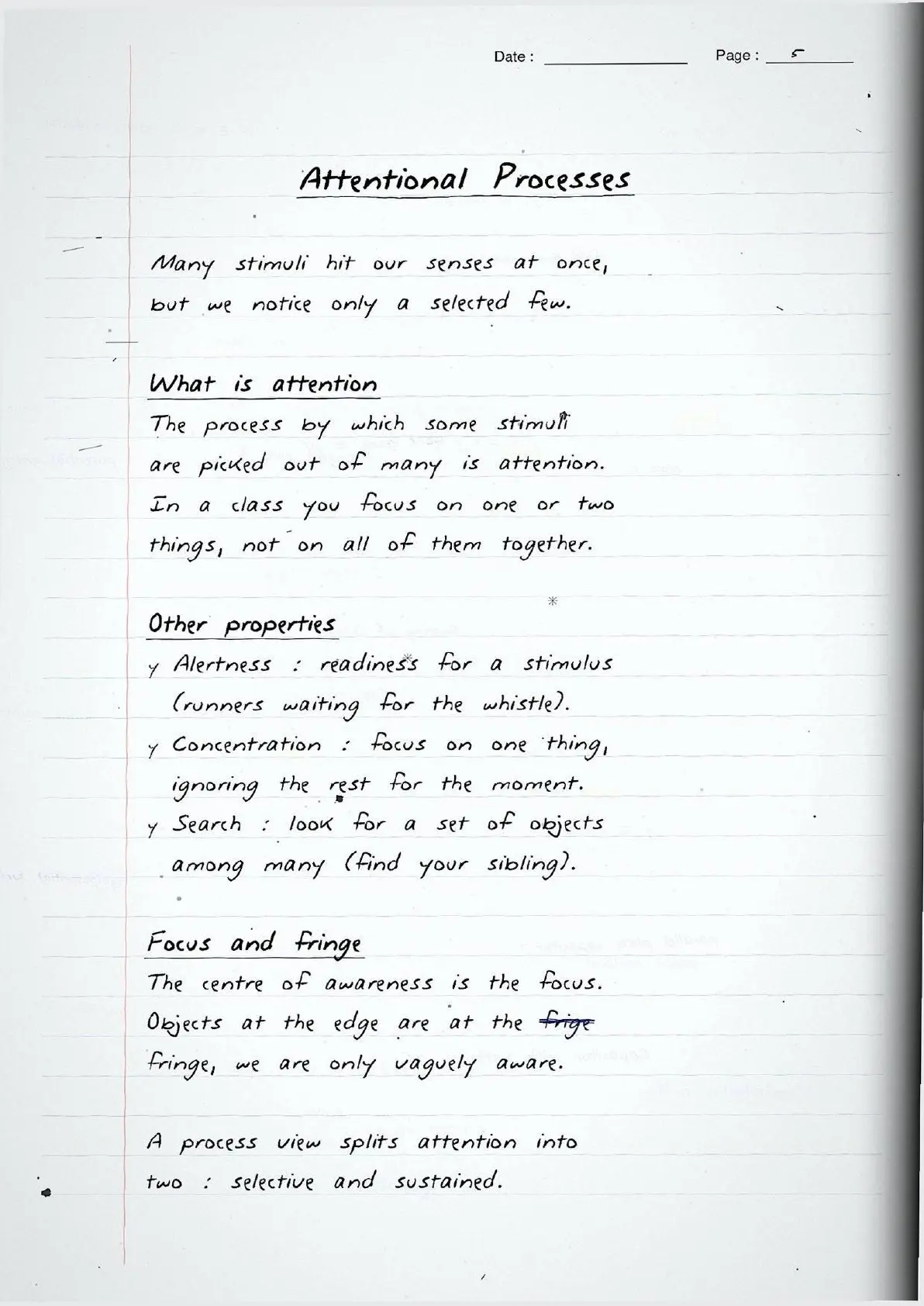
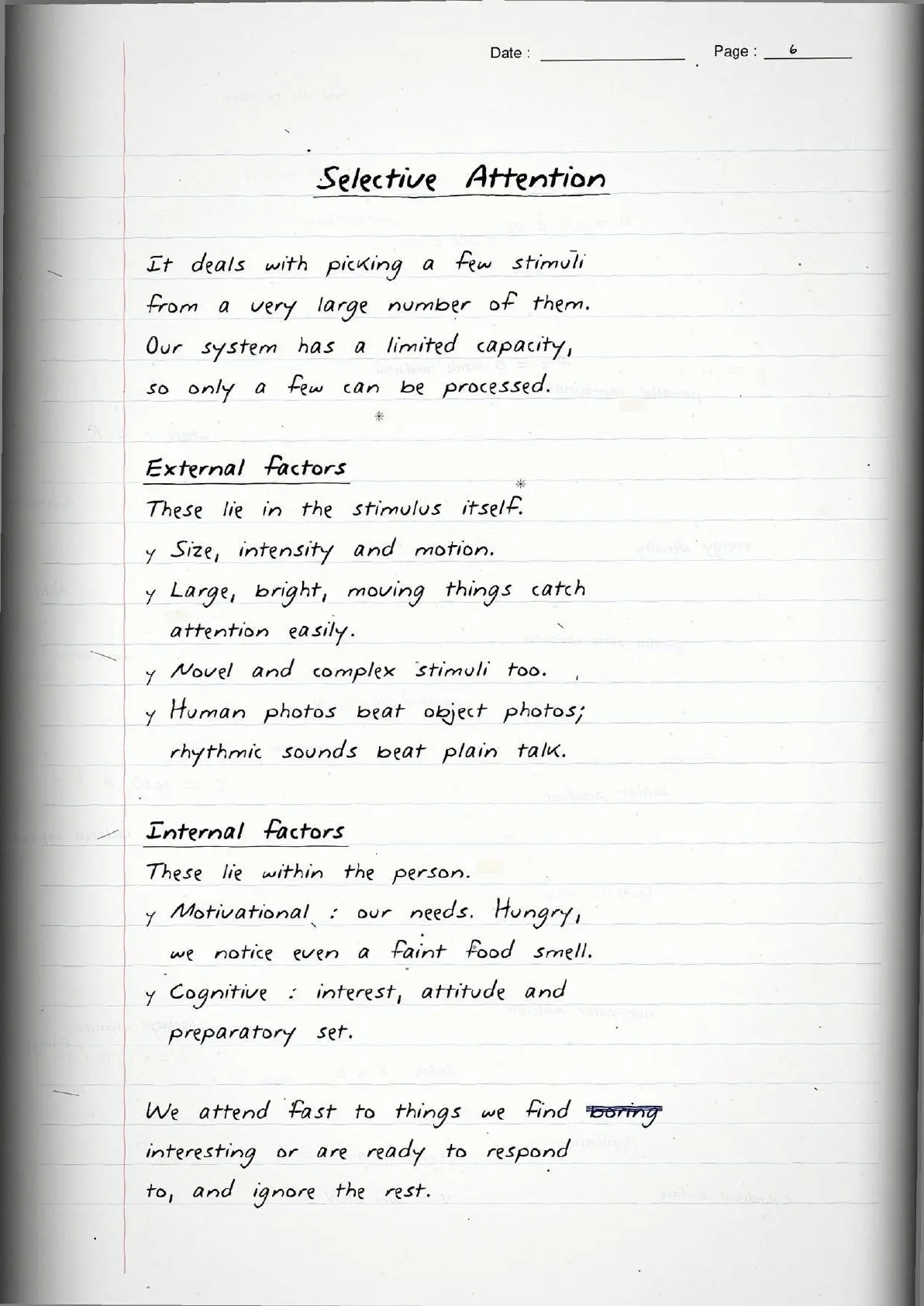
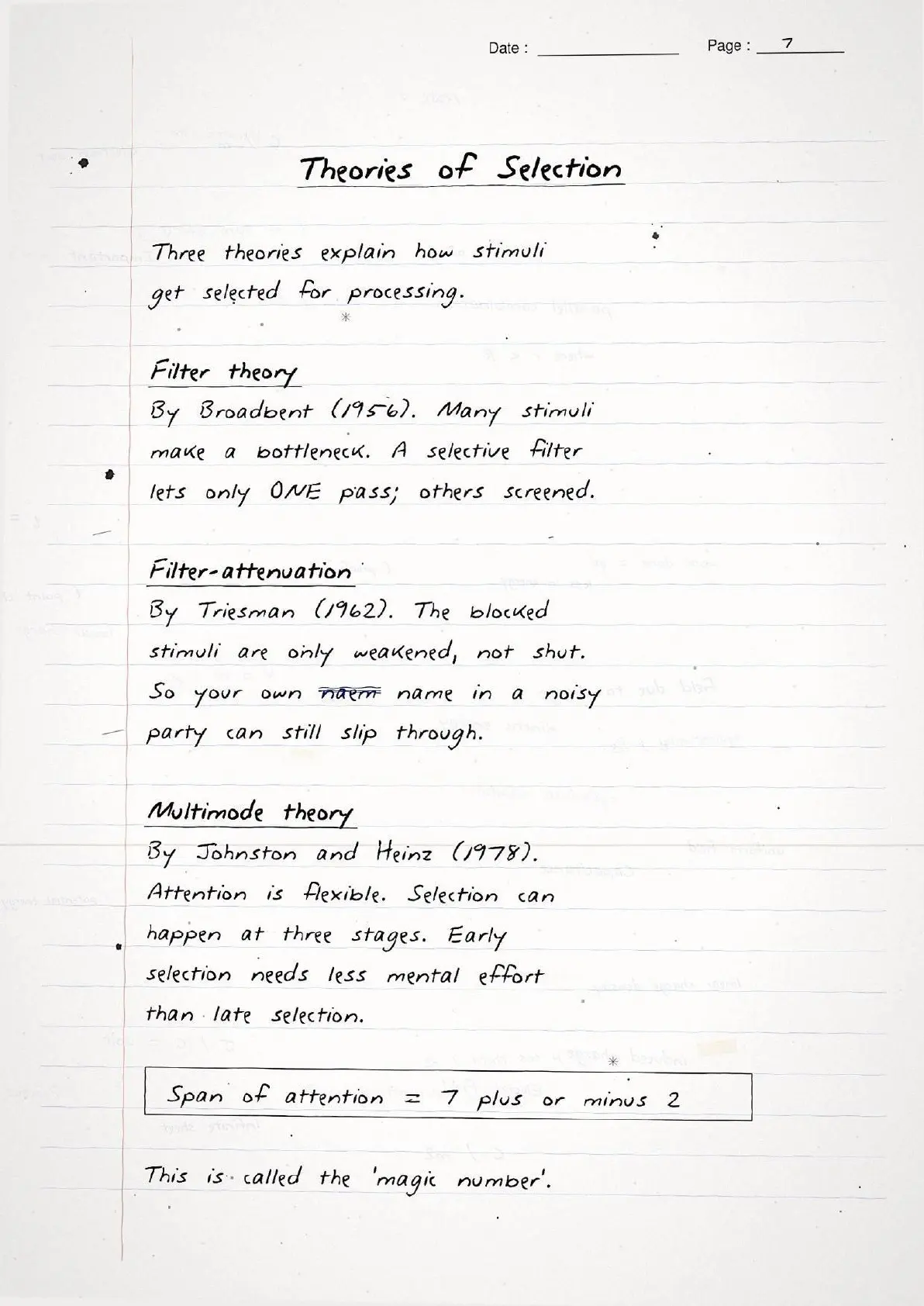
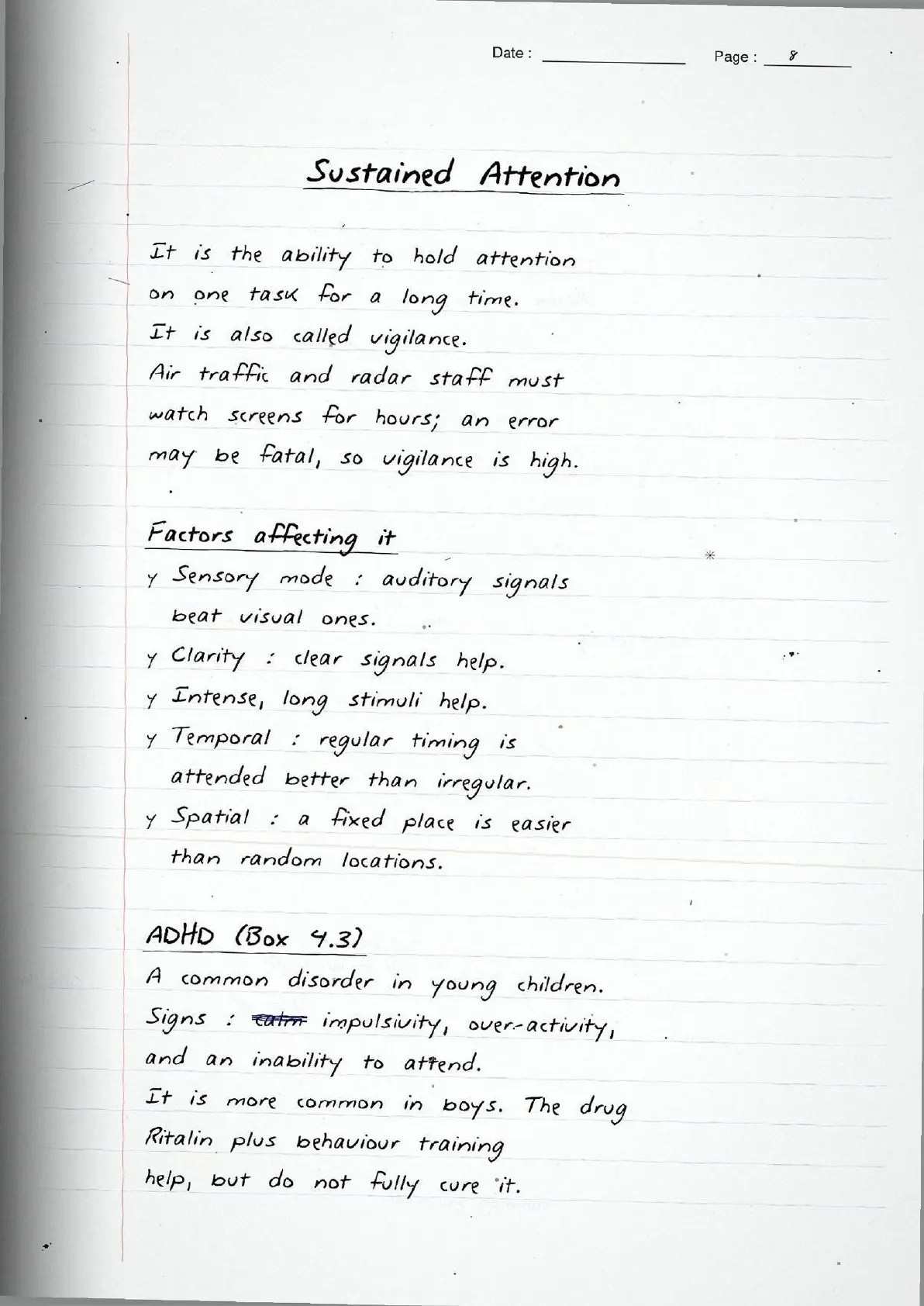
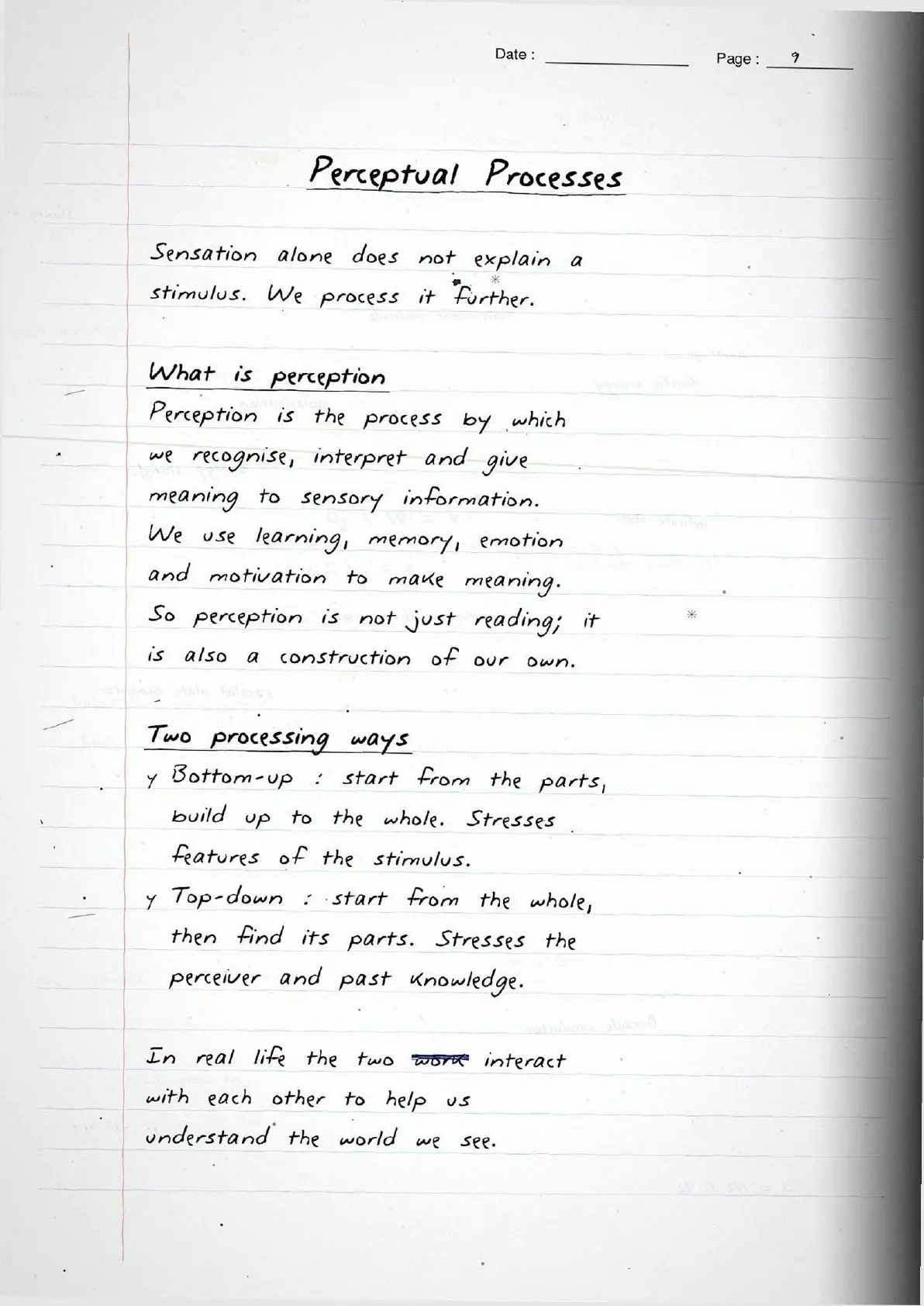
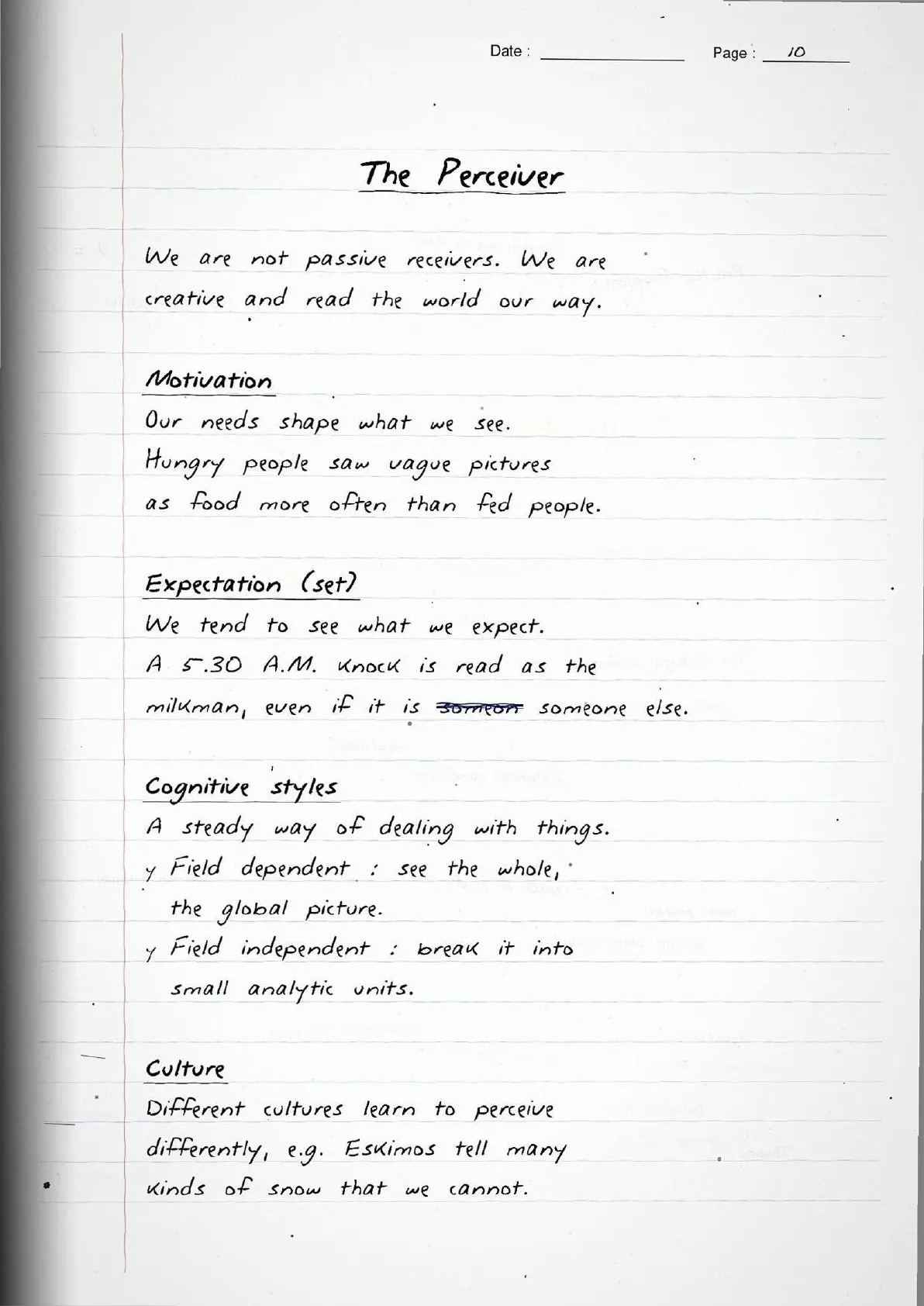
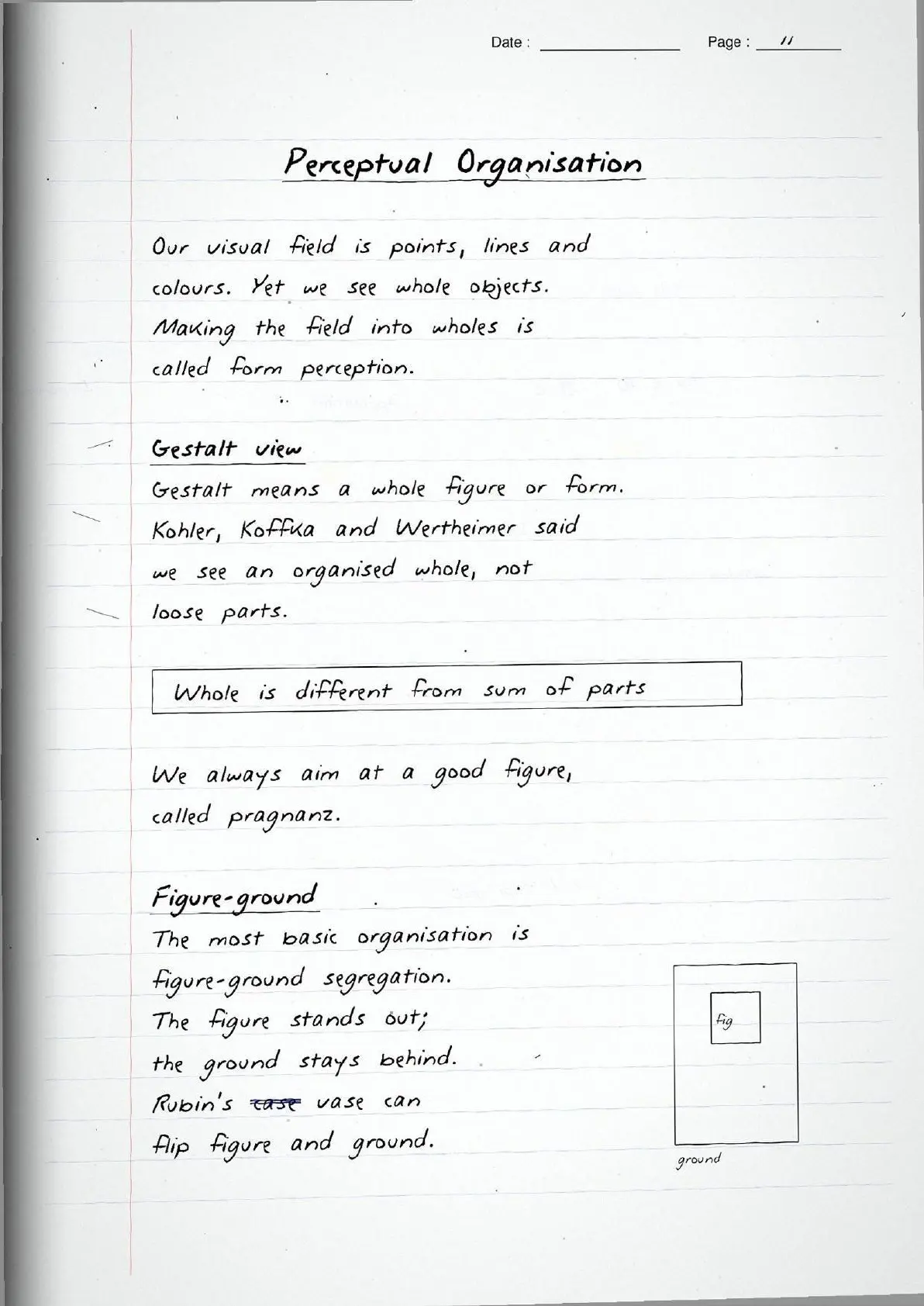
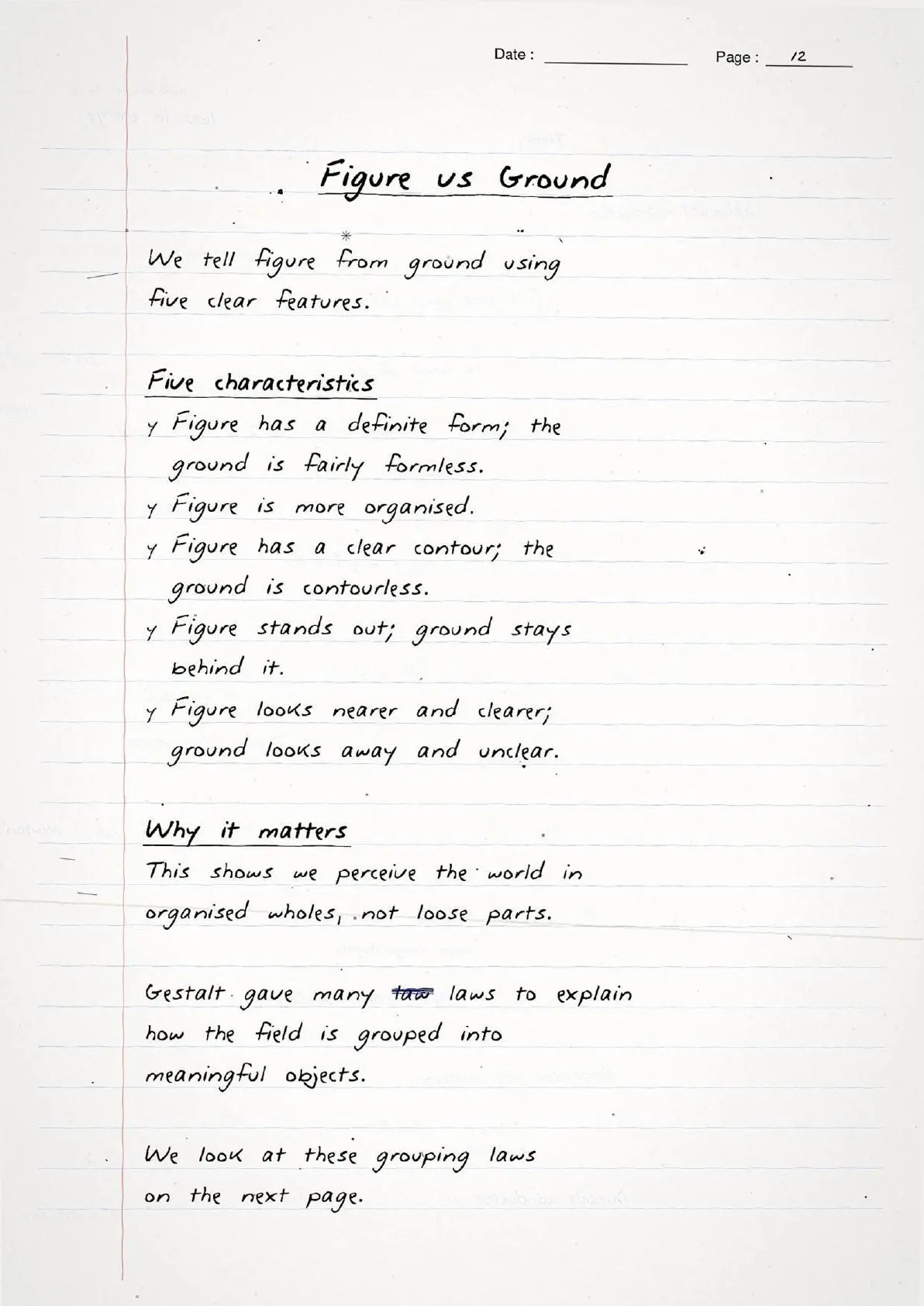
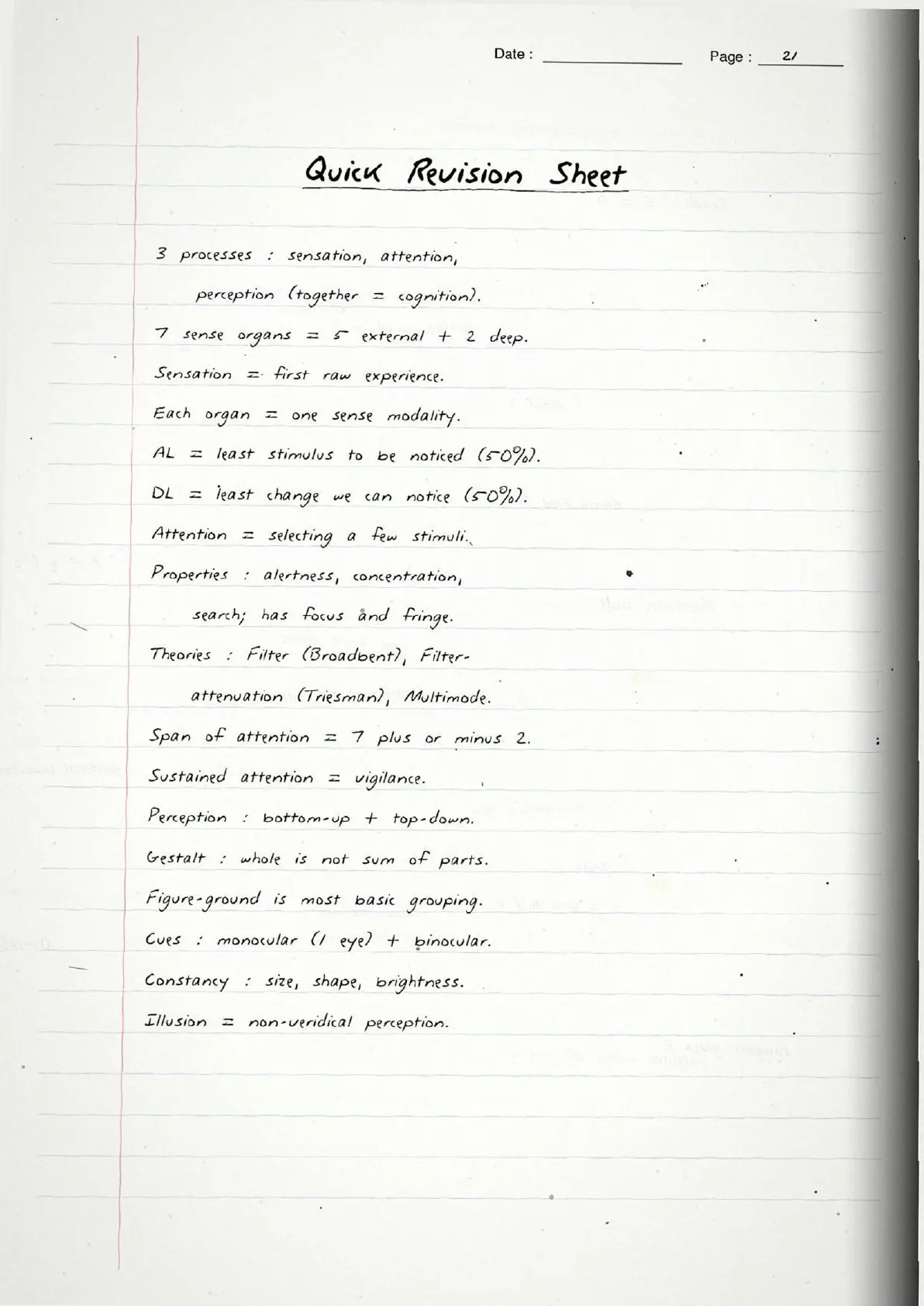
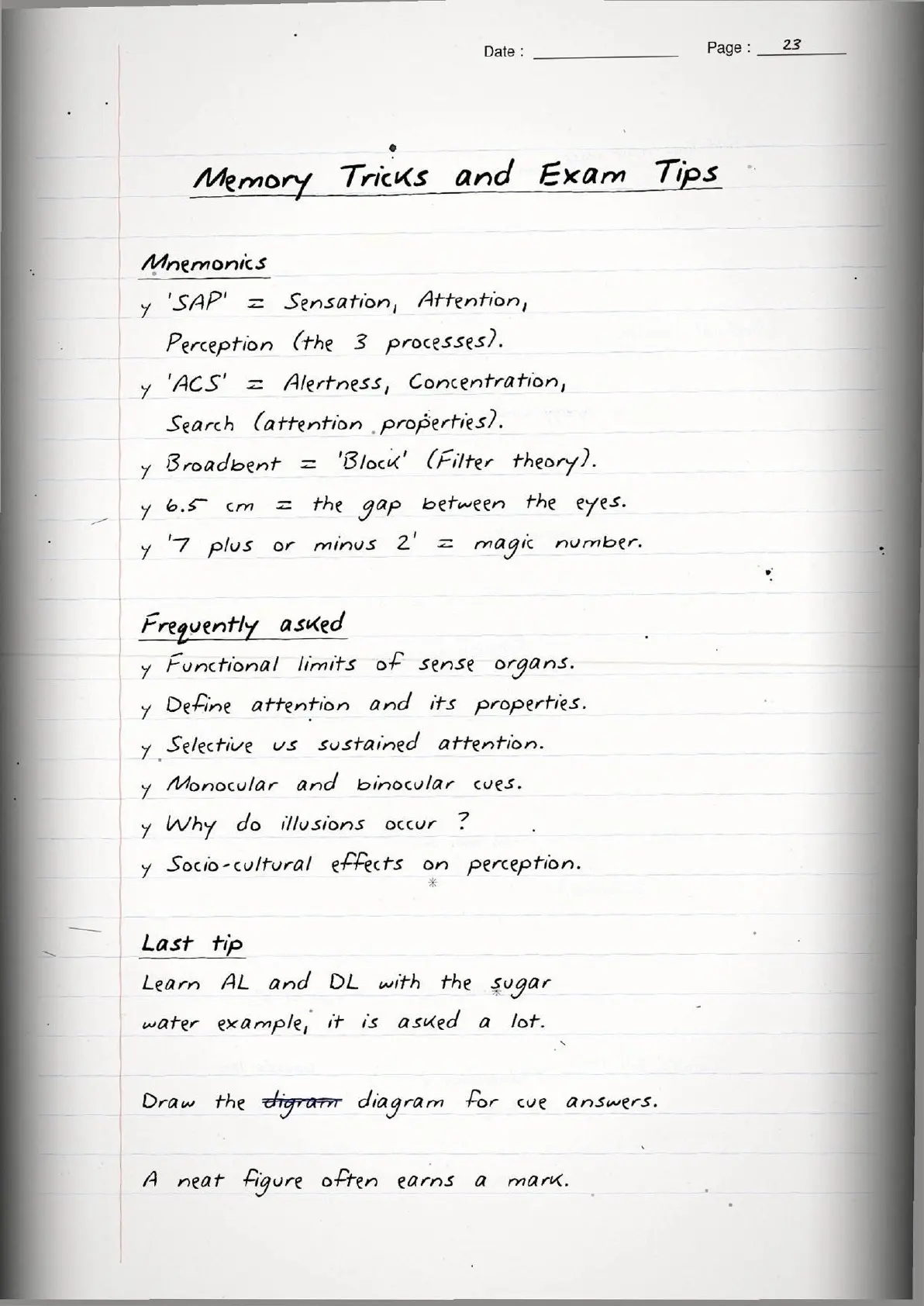
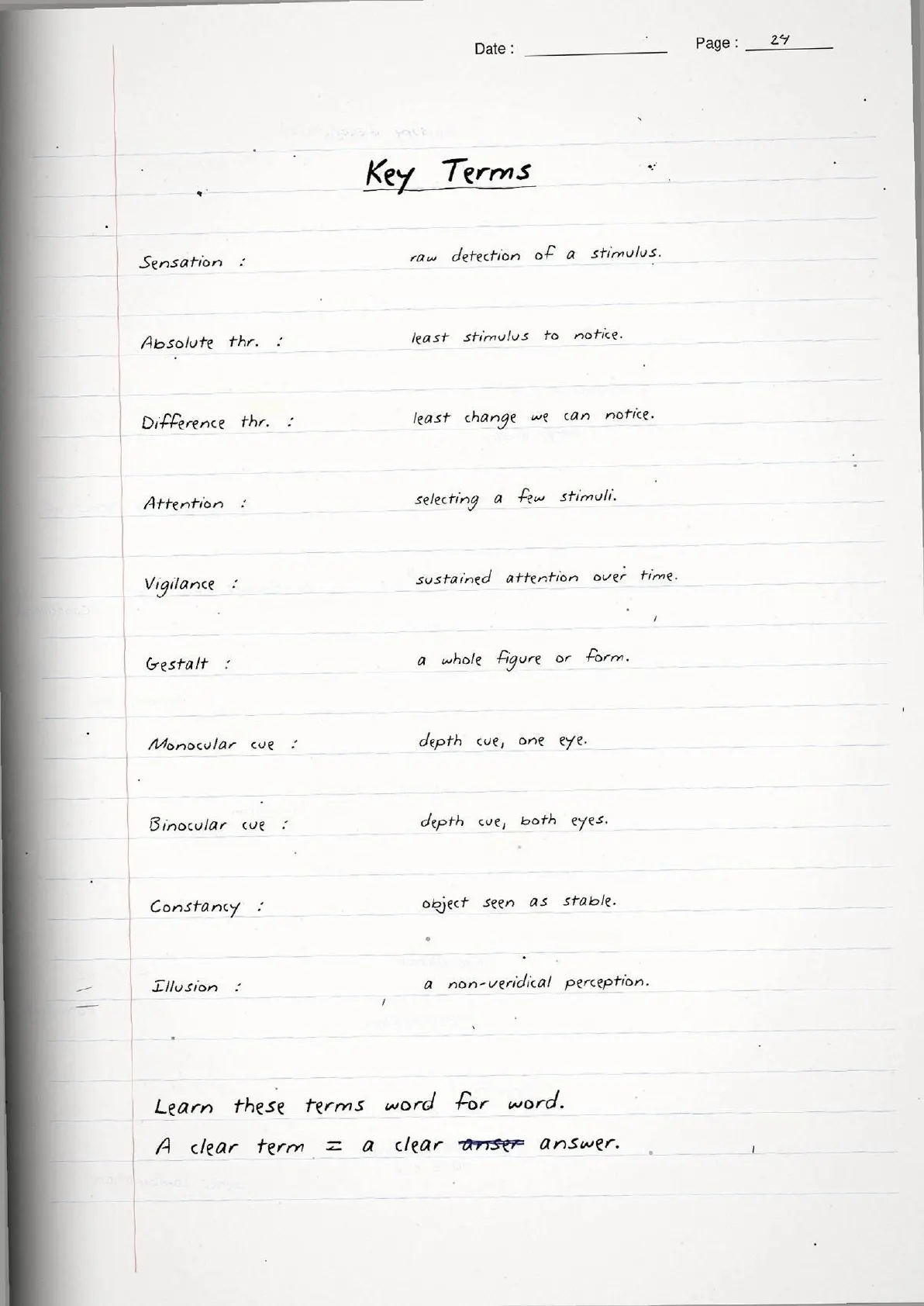
- Handwritten pages with boxed key terms and a labelled map of sensation, attention and perception.
- This Class 11 Psychology chapter is one of the heavier scoring units, with several short and long answer questions.
- Pairs with the NCERT Solutions, Notes and Book PDF linked lower on this page.
These Sensory, Attentional and Perceptual Processes handwritten notes are prepared from the official NCERT Psychology textbook and checked against recent CBSE Class 11 question papers.
Student Feedback: In a Collegedunia poll of 6,180 Class 11 Psychology students before their final exams, 72% of students said handwritten pages helped them recall the Gestalt laws and the depth cues faster than printed text, because the boxed figures and arrows made the perceptual principles stick.
Source: 2026-27 Class 11 Psychology student poll. Sample of 6,180 students from CBSE schools across 11 states.
What These Sensory, Attentional and Perceptual Processes Handwritten Notes Contain
Sensory, Attentional and Perceptual Processes is the fourth chapter of Class 11 Psychology. It explains how we come to know the world through three interrelated processes, called sensation, attention and perception. These handwritten notes condense the chapter into handwritten pages that read like a topper's own notebook.
The notes are organised under three threads, each on its own set of pages:
- Sensation: the seven sense organs, sense modalities, and the absolute and difference thresholds.
- Attention: selective and sustained attention, divided attention, span of attention, and the three filter theories.
- Perception: the perceiver, Gestalt organisation, depth cues, perceptual constancies, illusions and culture.
Because the pages are handwritten, the key terms sit in boxes and arrows rather than long paragraphs. A student can flip through the sensory attentional and perceptual processes class 11 pages in a few minutes and still pick up the modalities, the Gestalt laws, the monocular and binocular cues and the constancies before walking into the exam.
Sensation, Attention and Thresholds in the Handwritten Pages
The opening pages set up how information reaches the brain. The notes list the seven sense organs: five external ones (eyes, ears, nose, tongue and skin) and two deep senses (the kinesthetic and vestibular systems that track body position and movement). The initial experience of a stimulus registered by one sense organ is called sensation, and each organ is a separate sense modality. The table below shows what the handwritten notes cover for the sensory and attentional section.
| Concept | What the page shows |
|---|---|
| Absolute threshold (AL) | The minimum stimulus value that activates a sense, drawn with the sugar-in-water example. |
| Difference threshold (DL) | The smallest change needed to notice two stimuli as different, measured over 50% of trials. |
| Selective attention | Filter theory (Broadbent), filter-attenuation (Triesman) and multimode theory (Johnston and Heinz). |
| Sustained attention | Vigilance, its four influencing factors, and the span of attention "magic number" seven plus or minus two. |
Attention is the process by which a few stimuli are selected out of many, and it also carries alertness, concentration and search. The notes split the factors affecting selective attention into external ones (size, intensity, motion, novelty) and internal ones (interest, attitude and preparatory set). Seeing the three filter theories drawn side by side is the fastest way to remember which name goes with early or late selection.
Perceptual Organisation, Depth and Illusions in the Notes
The later pages cover perception, which is how we recognise and give meaning to raw sensory input. The notes first show the two processing approaches, bottom-up (recognition begins from the parts) and top-down (recognition begins from the whole), then move to the perceiver and the Gestalt laws. These topics feed the long answers, so the handwritten pages keep them as boxed lists and labelled figures.
- The perceiver: motivation, expectations or perceptual sets, cognitive styles (field dependent versus field independent) and cultural background.
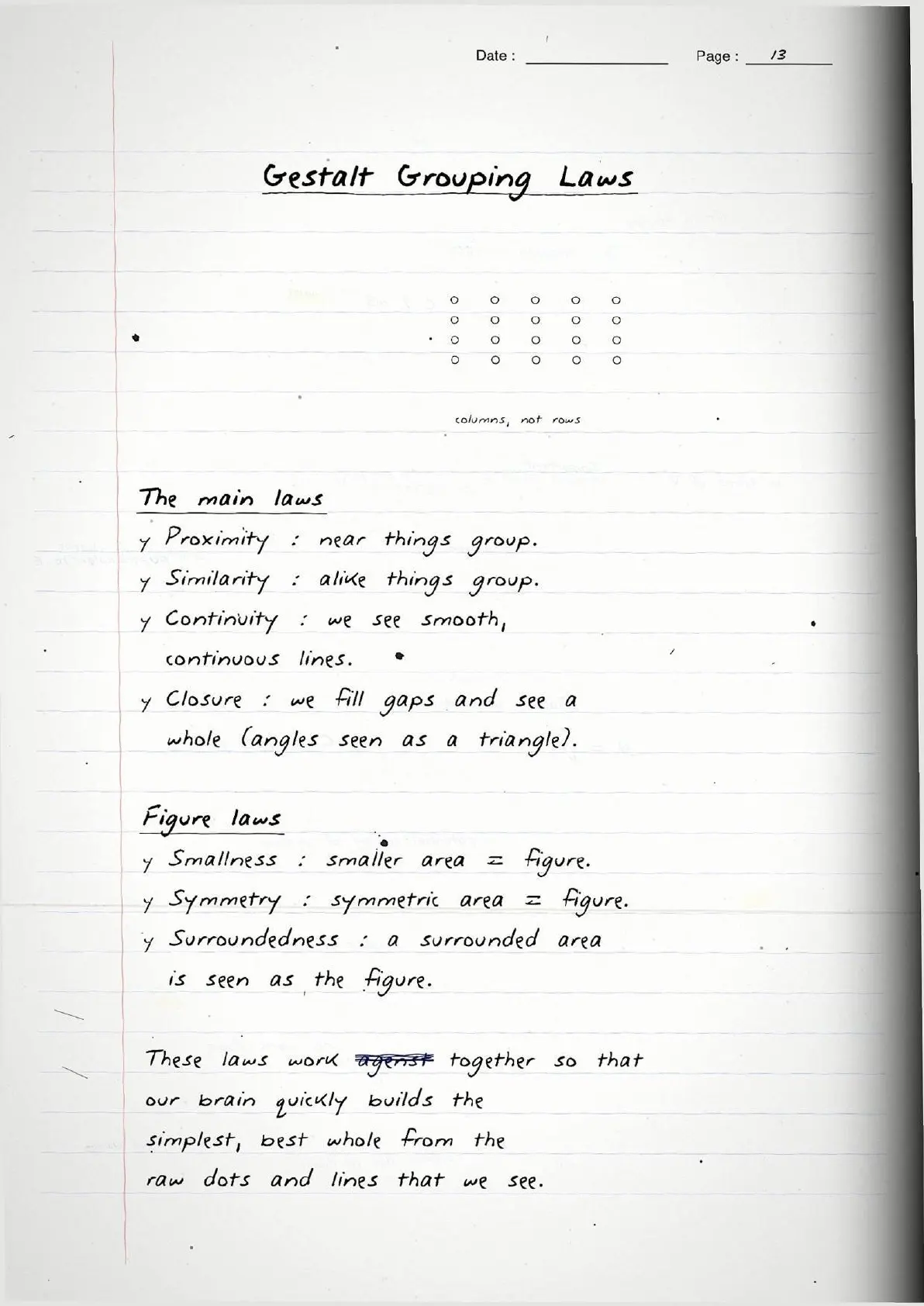
- Gestalt laws: figure-ground segregation plus proximity, similarity, continuity, closure, smallness, symmetry and surroundedness.
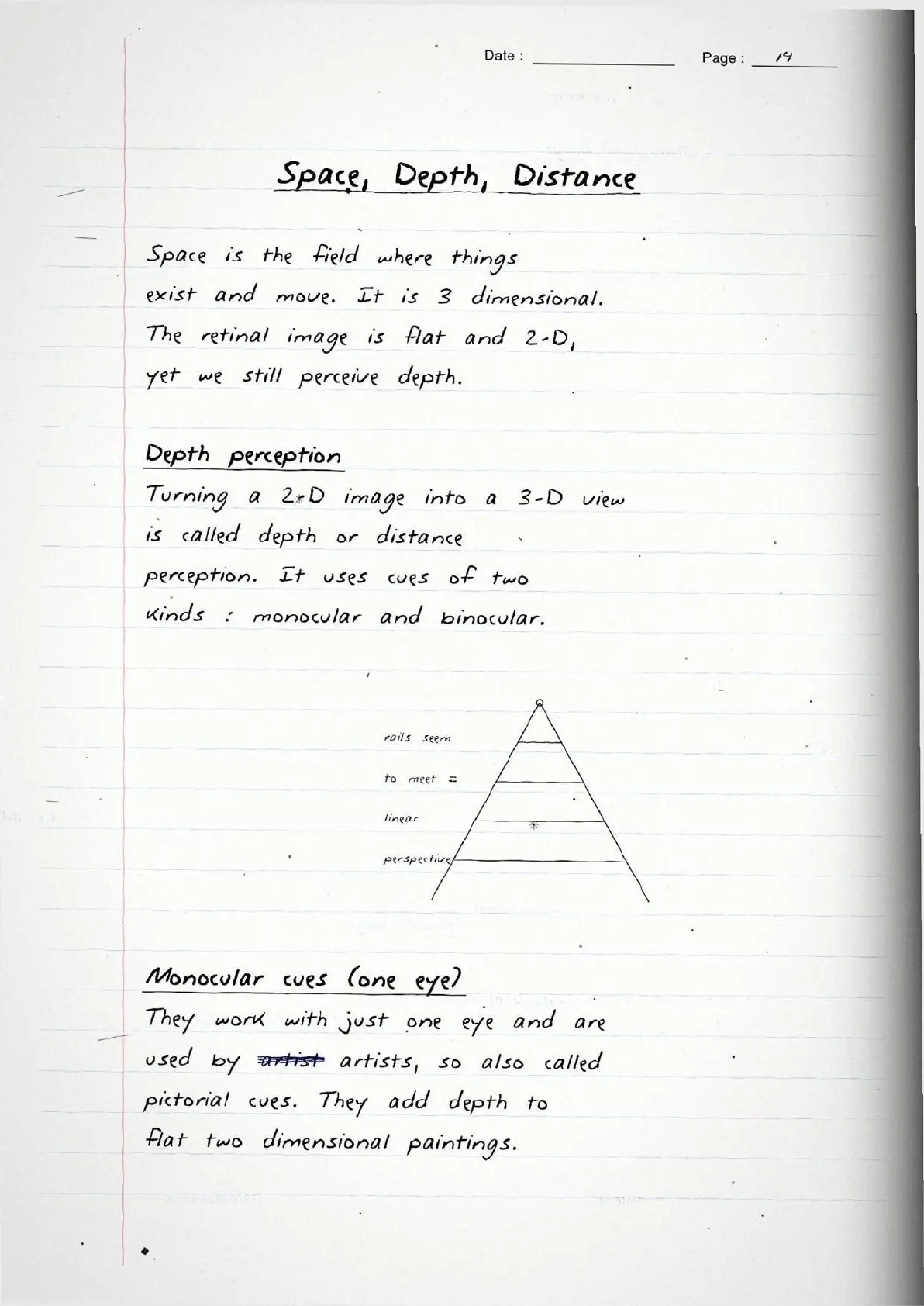
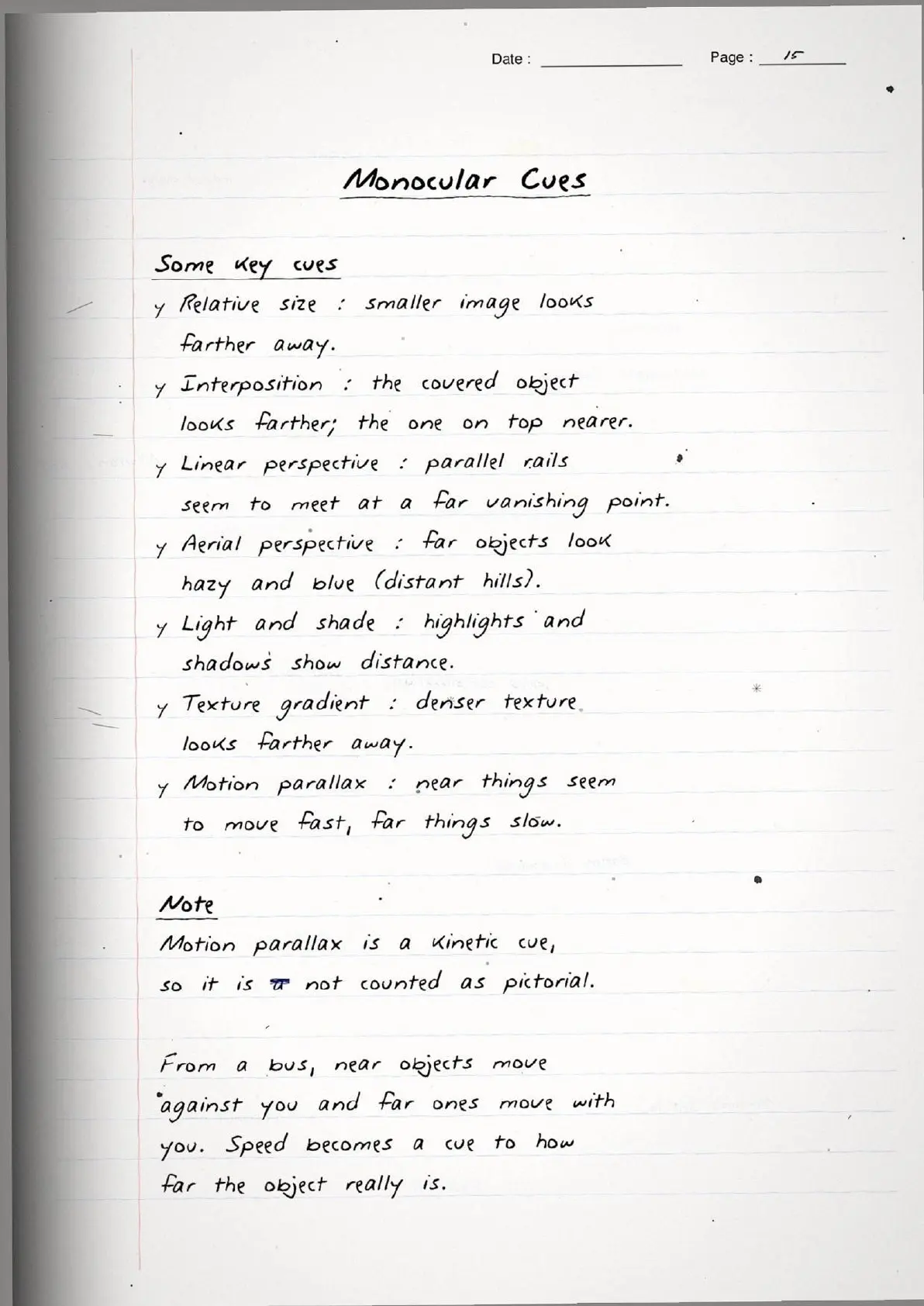
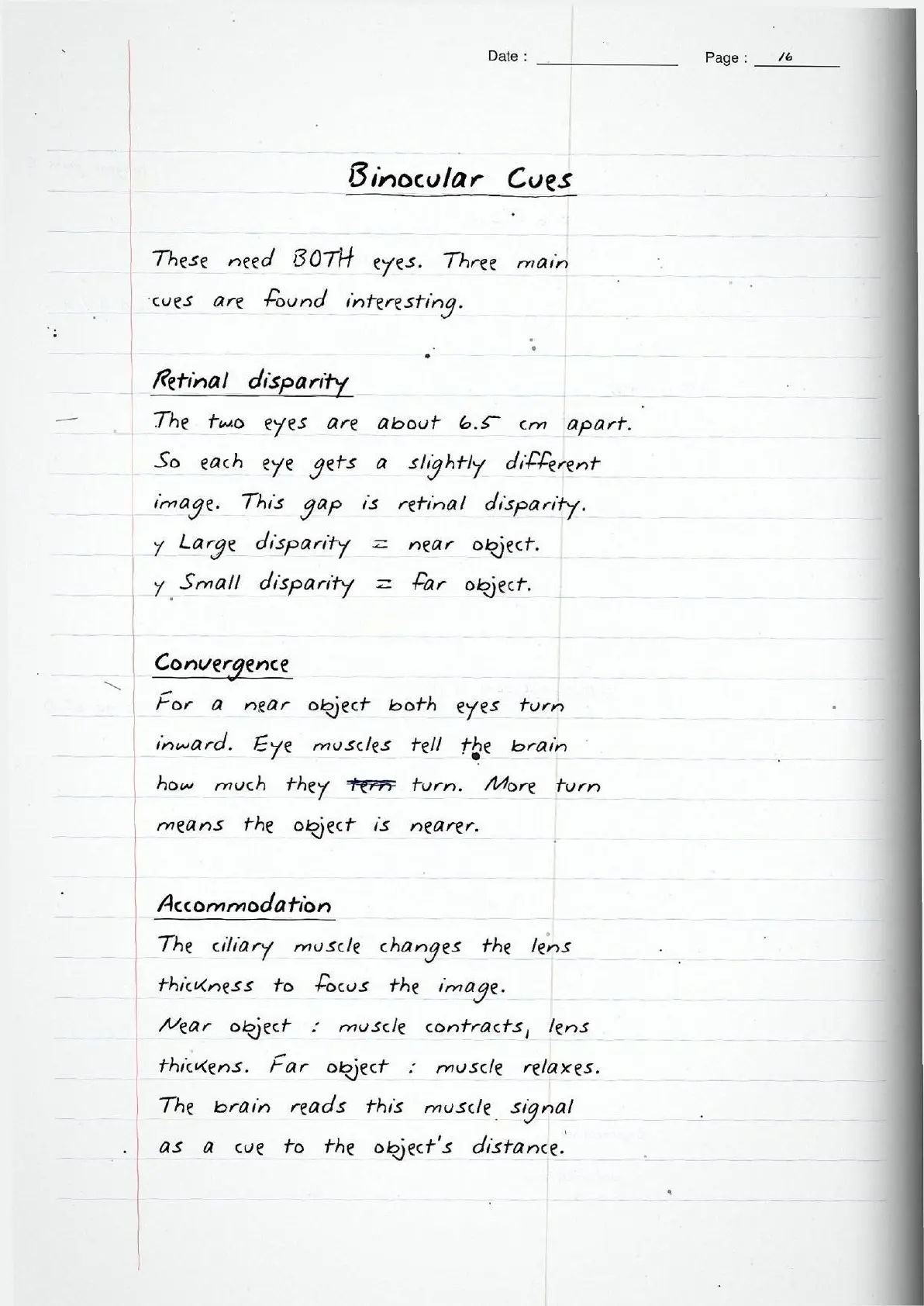
- Depth cues: monocular cues (relative size, interposition, linear and aerial perspective, light and shade, texture gradient, motion parallax) and binocular cues (retinal disparity, convergence, accommodation).
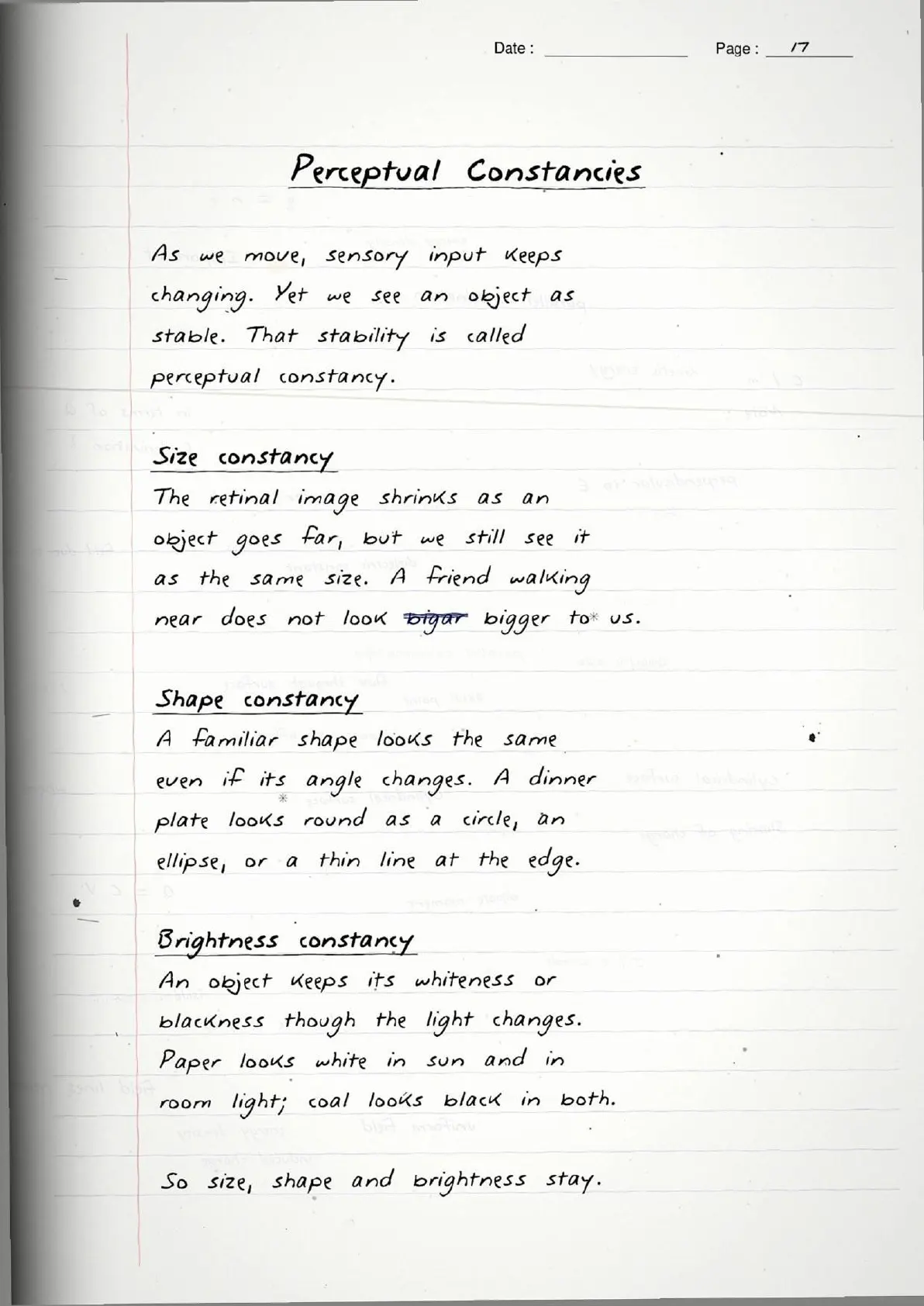
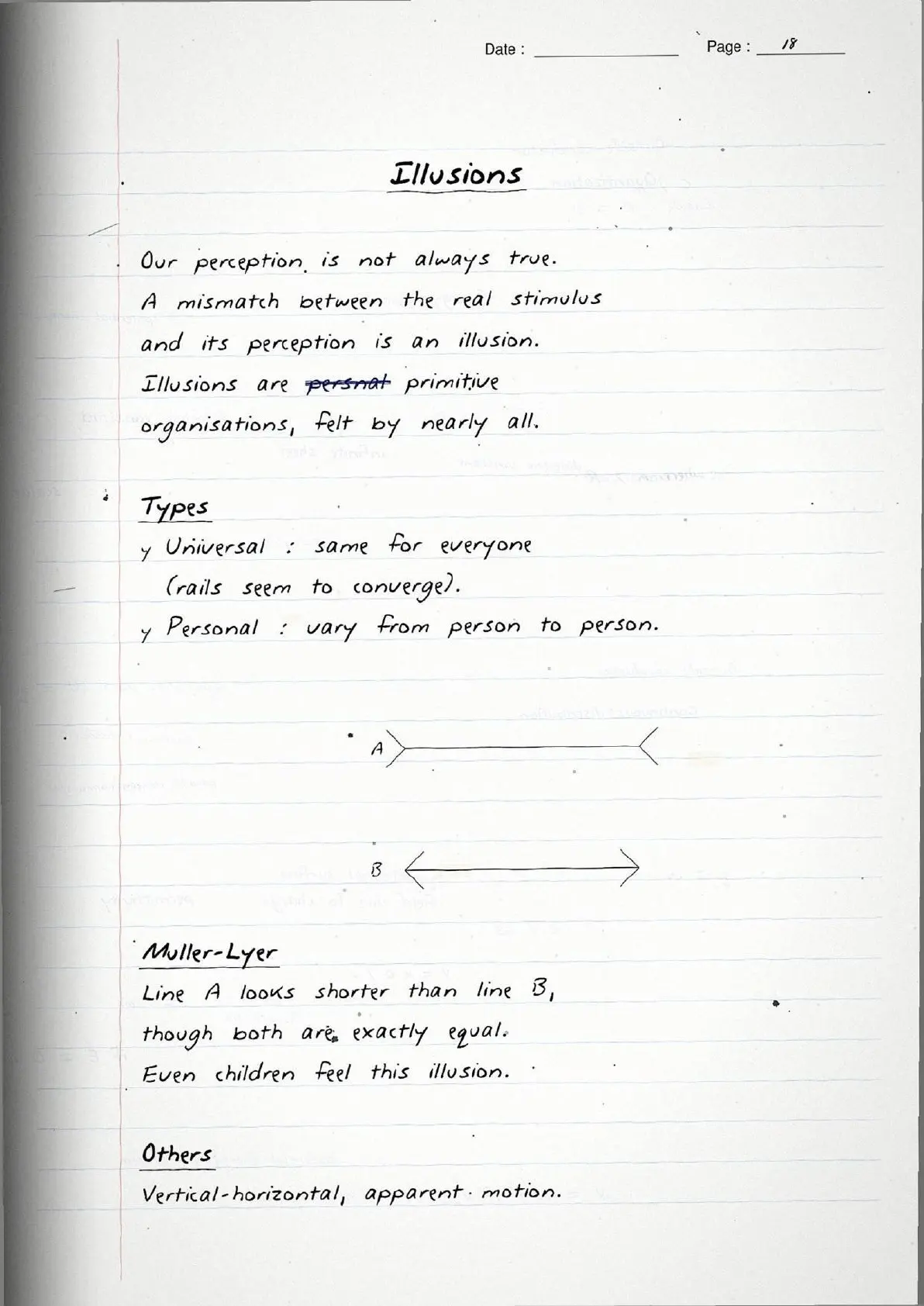
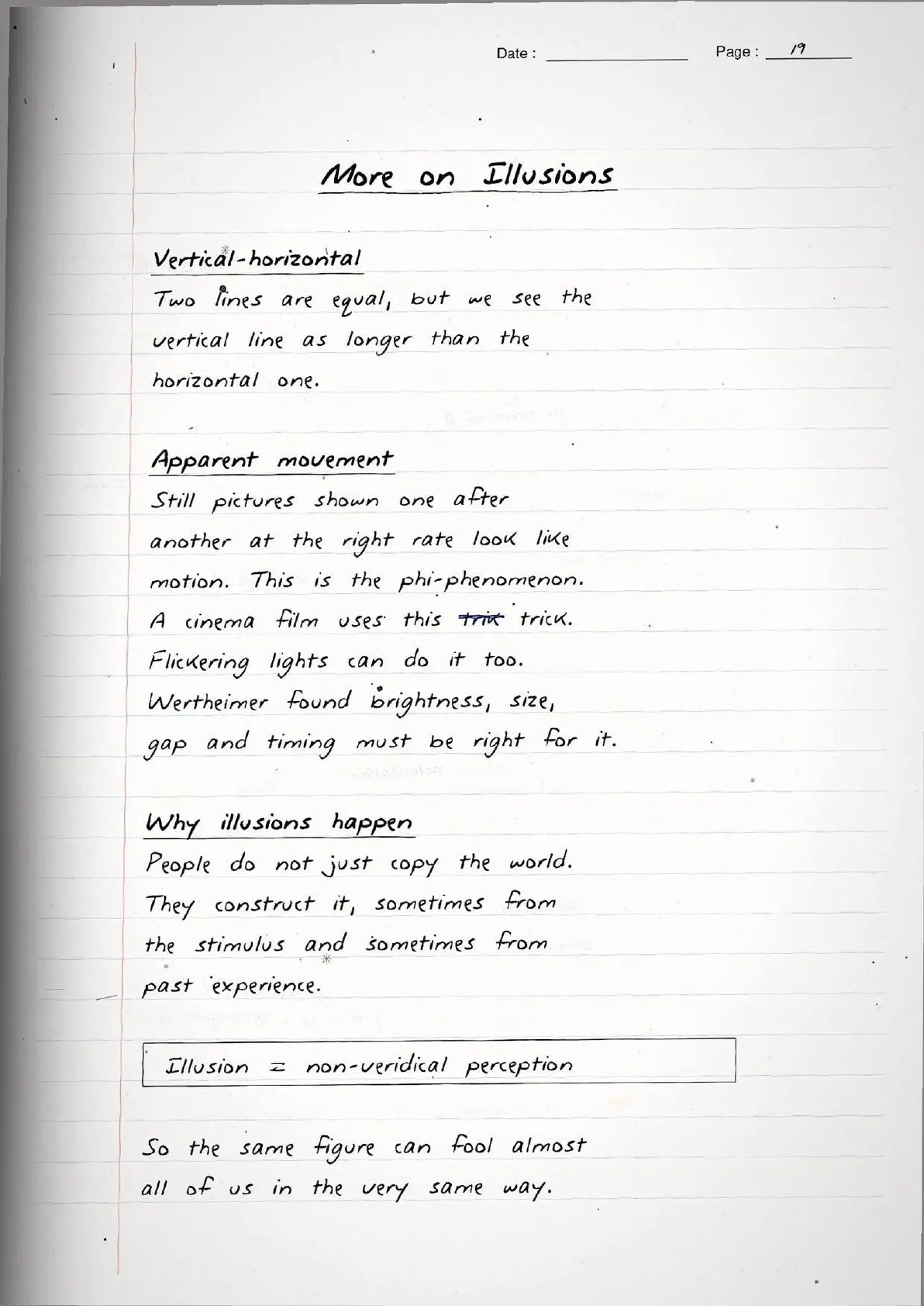
- Constancies and illusions: size, shape and brightness constancy, and the Muller-Lyer, vertical-horizontal and phi-phenomenon illusions.
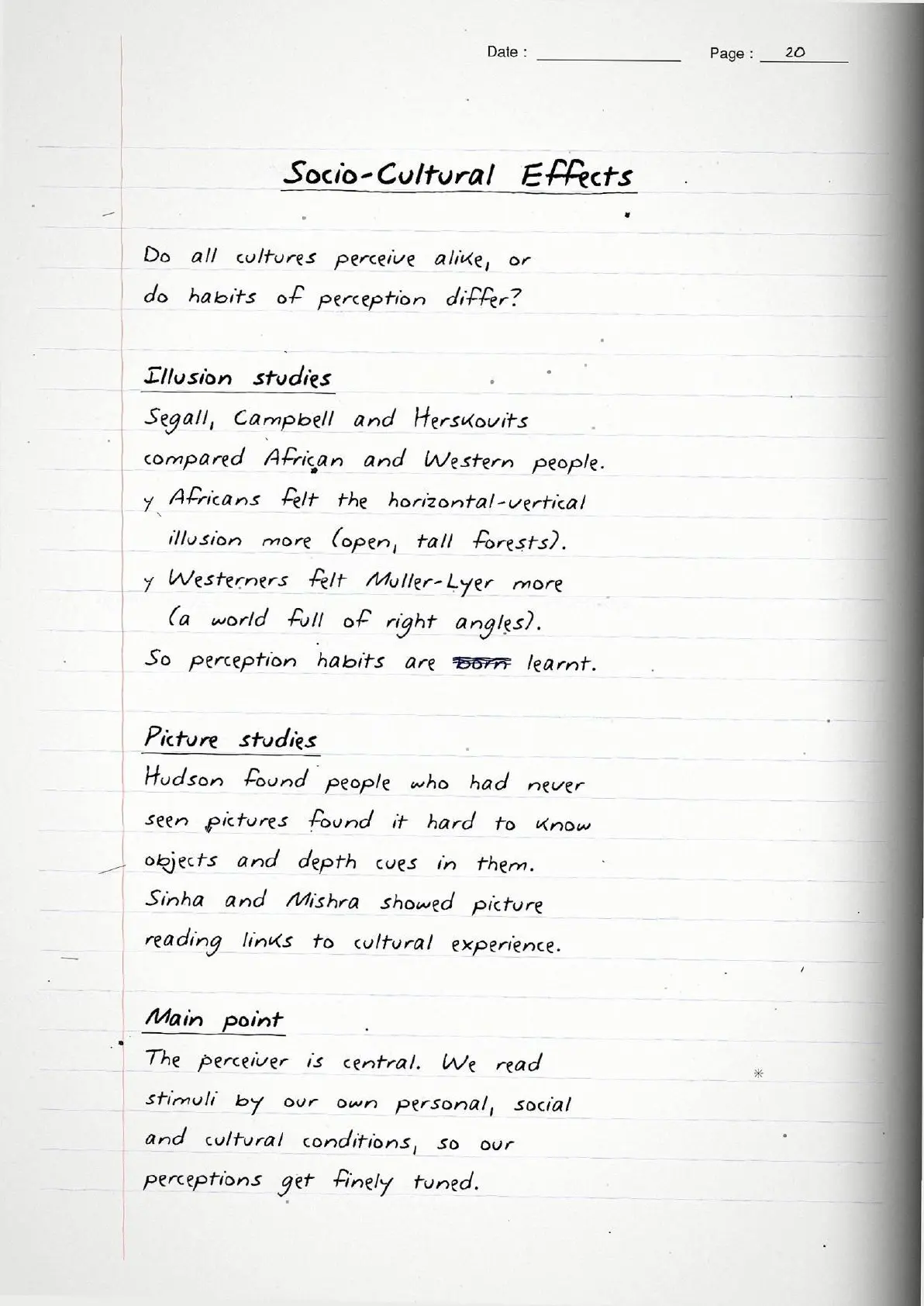
The notes underline one judgement that scores well: perception is a construction, not a copy, so people from different cultures can perceive the same figure differently. The handwritten pages box the Segall, Campbell and Herskovits finding that African subjects were more prone to the vertical-horizontal illusion while Western subjects were more prone to the Muller-Lyer illusion. Pair the Gestalt laws with the depth cues and constancies and the back half of the chapter fits on a few pages.
How to Use These Handwritten Notes
Handwritten notes work best as a final-revision tool, not a first read. The steps below show how to get the most out of the Sensory, Attentional and Perceptual Processes handwritten notes in the last days before a test.
- Download: tap the download card above to save the handwritten pages to your device.
- First read: read the printed Notes once so the handwritten pages act as a refresher, not a first source.
- Recall drill: cover the page and try to write all the Gestalt laws and both sets of depth cues from memory.
- Night before: flip through the boxed pages for a quick last-minute recall of the modalities, thresholds and illusions.
Many students search for class 11 psychology chapter 4 notes on their phone the night before a test, so a saved set of handwritten pages means you can revise offline. Use the handwritten notes for speed, then check the solutions to confirm you have the answer points right.
Common Mistakes These Notes Help You Avoid
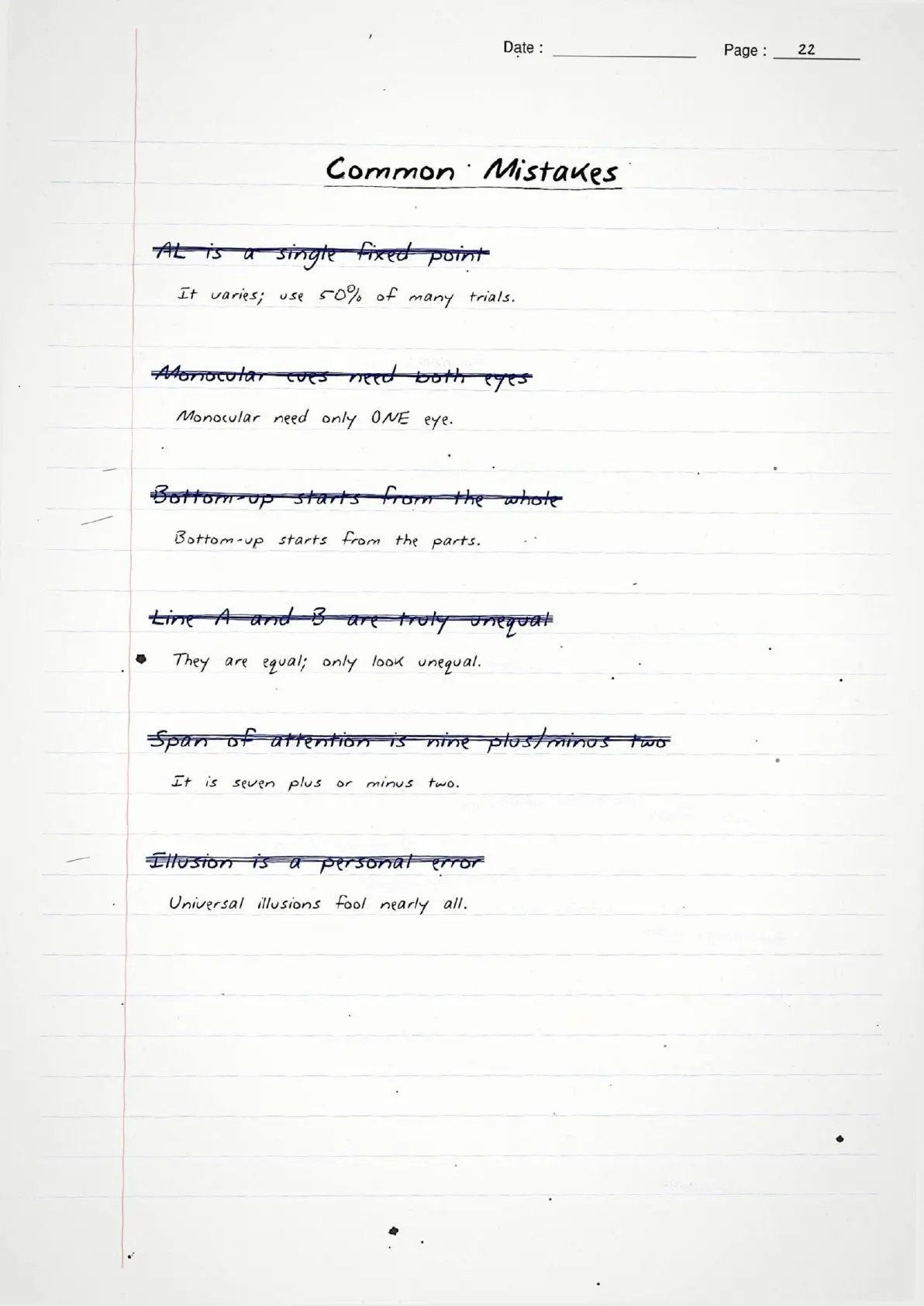
A few errors cost marks every year. The handwritten notes flag each one in the margin so you can fix it before the exam. These five are the most common.
- Mixing up absolute and difference threshold. AL is the minimum to detect; DL is the minimum to notice a change.
- Calling monocular cues "binocular". Monocular cues work with one eye and are used by artists as pictorial cues.
- Listing only some Gestalt laws. The exam can ask for the full set, so name all of them.
- Confusing sensation with perception. Sensation is raw detection; perception gives meaning to it.
- Forgetting that illusions are non-veridical but shared. Universal illusions occur in everyone, unlike personal ones.
Students who fix these five points usually move from average to high marks. The handwritten notes box the two thresholds together and list every Gestalt law in full, so the soft points are hard to miss when you revise.
How These Handwritten Notes Pair with the Solutions and Book PDF
These handwritten notes are a fast revision tool. To prepare fully, students should use them alongside the other resources for the same chapter, all linked in the table below. Read the printed Notes, test yourself with the solutions, then use these pages for a final recall.
| Resource | Best used for |
|---|---|
| Sensory, Attentional and Perceptual Processes NCERT Solutions | Step-by-step answers to all 8 review questions |
| Sensory, Attentional and Perceptual Processes Class 11 Notes | Quick chapter summary with all processes, laws and cues in one place |
| Sensory, Attentional and Perceptual Processes NCERT Book PDF | Reading the original NCERT chapter text and figures |
Tip: read the printed Notes first, then attempt the solutions, and keep these handwritten pages for the final night-before flip. Using them for recall, not for the first read, builds memory faster.
All Class 11 Psychology Handwritten Notes by Chapter
The table links the handwritten notes for every chapter in Class 11 Psychology, so students can move across the course in one click. Sensory, Attentional and Perceptual Processes is highlighted.
| Chapter | Handwritten Notes |
|---|---|
| Chapter 1 | What is Psychology? |
| Chapter 2 | Methods of Enquiry in Psychology |
| Chapter 3 | Human Development |
| Chapter 4 | Sensory, Attentional and Perceptual Processes |
| Chapter 5 | Learning |
| Chapter 6 | Human Memory |
| Chapter 7 | Thinking |
| Chapter 8 | Motivation and Emotion |
FAQs on Sensory, Attentional and Perceptual Processes Handwritten Notes
Sensory, Attentional and Perceptual Processes Class 11 Psychology Handwritten Notes Common Questions
Ques. Where can I download the Sensory, Attentional and Perceptual Processes handwritten notes PDF?
Ans. You can download the Sensory, Attentional and Perceptual Processes Class 11 Psychology handwritten notes PDF directly from this page. It is free, follows the 2026-27 NCERT, and presents sensation, attention, the Gestalt laws, depth cues, constancies and illusions as handwritten pages.
Ques. Are handwritten notes good for revising Class 11 Psychology Chapter 4?
Ans. Yes. Handwritten notes are best for fast, last-minute revision because the boxed key terms and labelled figures make the Gestalt laws, depth cues and constancies easy to skim. Use them after a first read of the printed Notes, not as your only source.
Ques. What topics do these handwritten notes cover?
Ans. They cover knowing the world through sensation, attention and perception, the seven sense organs and sense modalities, absolute and difference thresholds, selective and sustained attention, the perceiver, Gestalt organisation, depth cues, perceptual constancies, illusions and socio-cultural influences on perception.
Ques. What is the difference between monocular and binocular cues in this chapter?
Ans. Monocular cues work with one eye and include relative size, interposition, linear and aerial perspective, light and shade, texture gradient and motion parallax. Binocular cues need both eyes and include retinal disparity, convergence and accommodation. The notes box both sets side by side.
Ques. How should I use these notes with the other resources?
Ans. Read the printed Notes first, test yourself with the NCERT Solutions, then keep these handwritten pages for the final night-before flip. Using them for recall rather than the first read builds memory faster.



Comments