



The 2026-27 NCERT keeps Class 11 Political Science Chapter 16 Citizenship in full for the CBSE course. These class 11 political-science handwritten notes chapter 16 Citizenship follow the 2026-27 NCERT and cover meaning of full and equal membership, rights won through long struggle, insiders, outsiders and migration. This page hosts the notes PDF, key terms, and quick revision points.
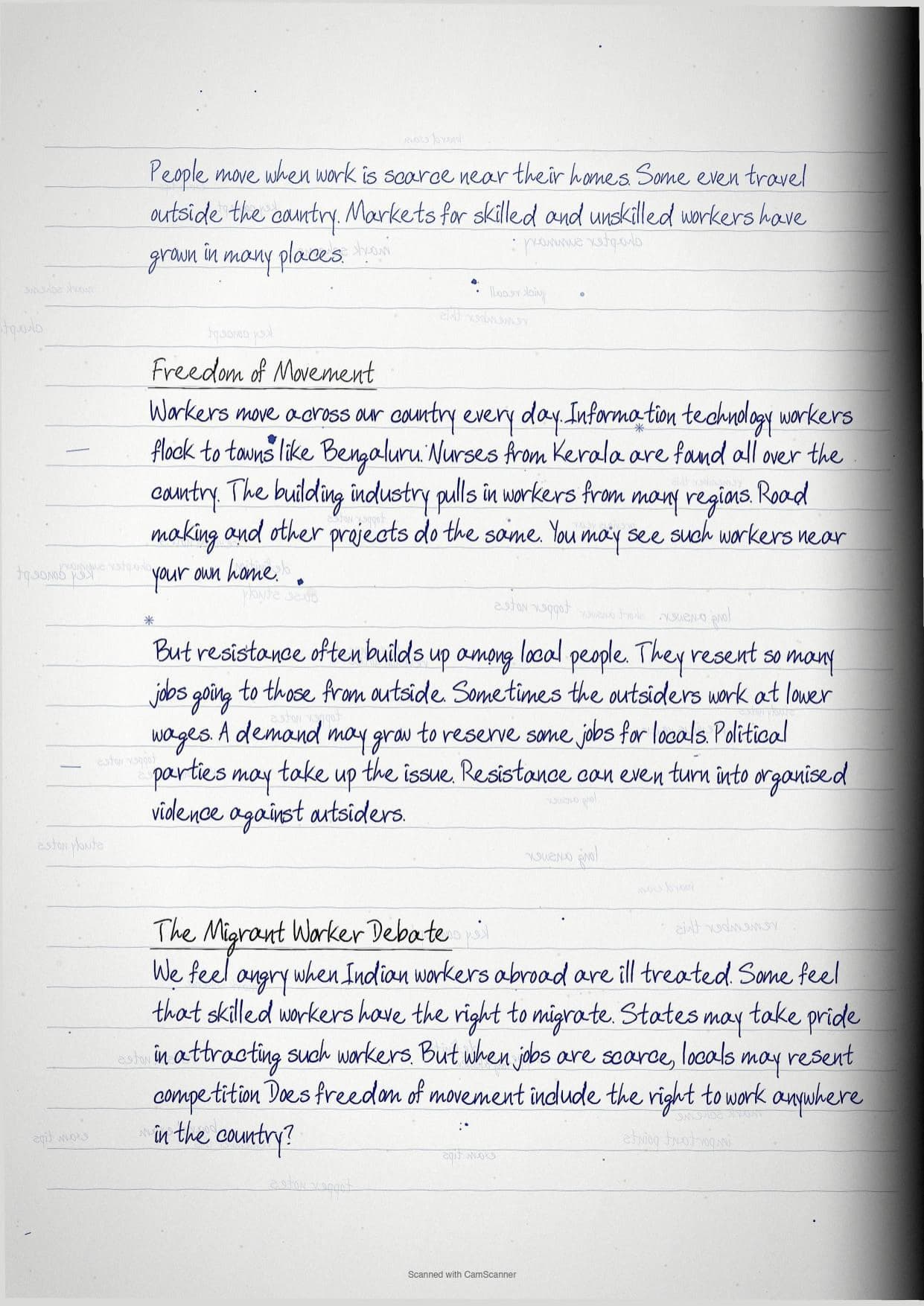
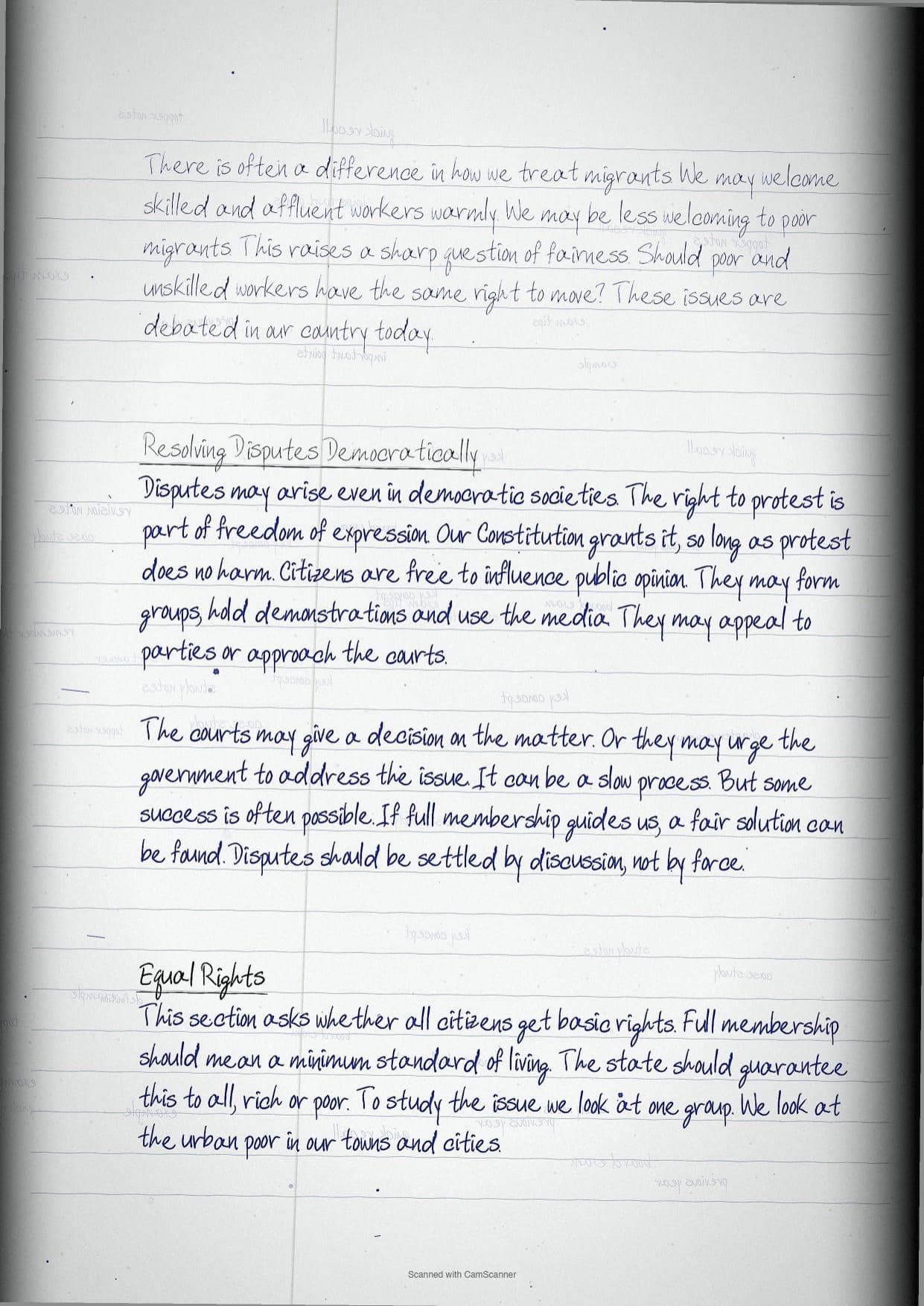
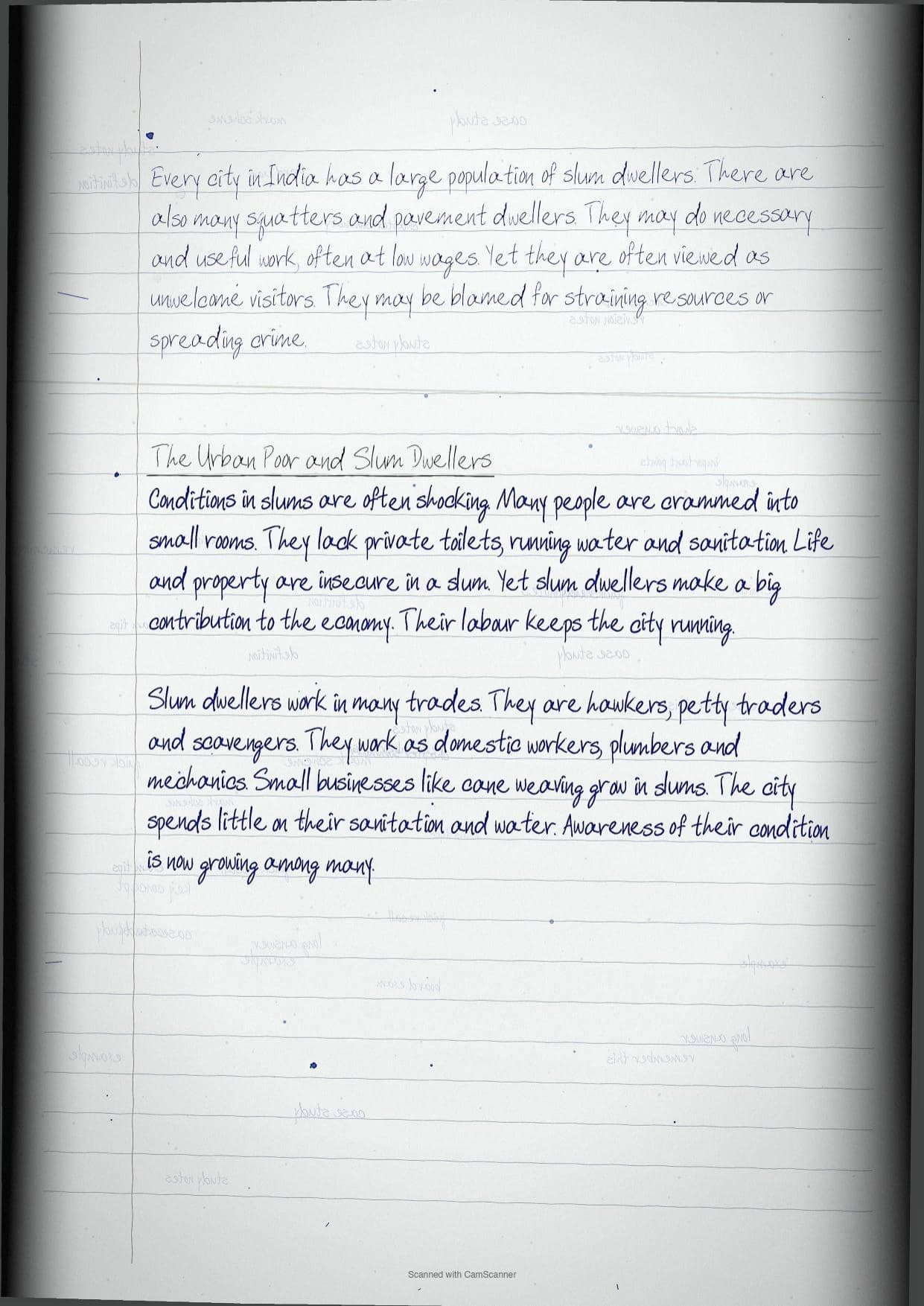
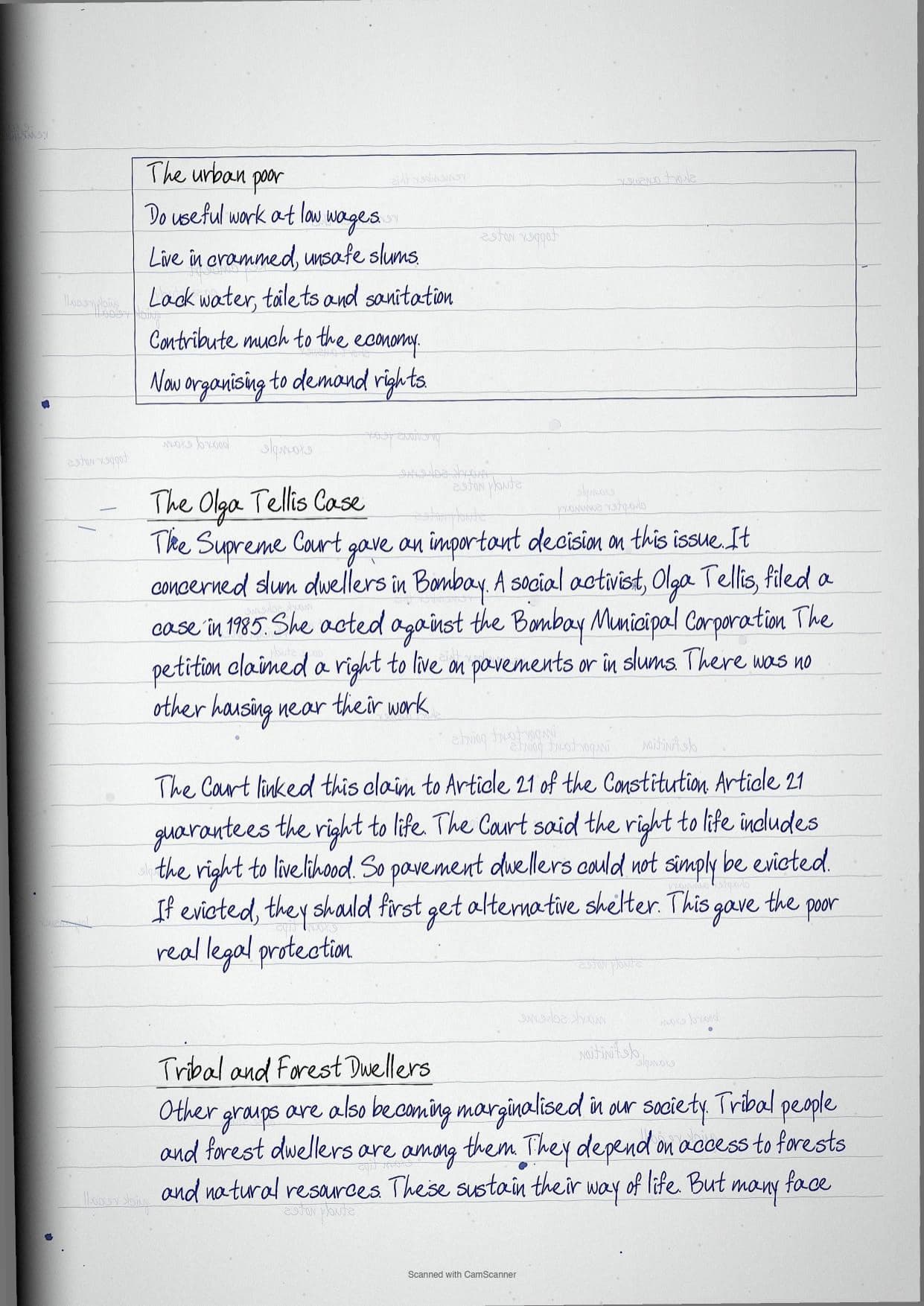
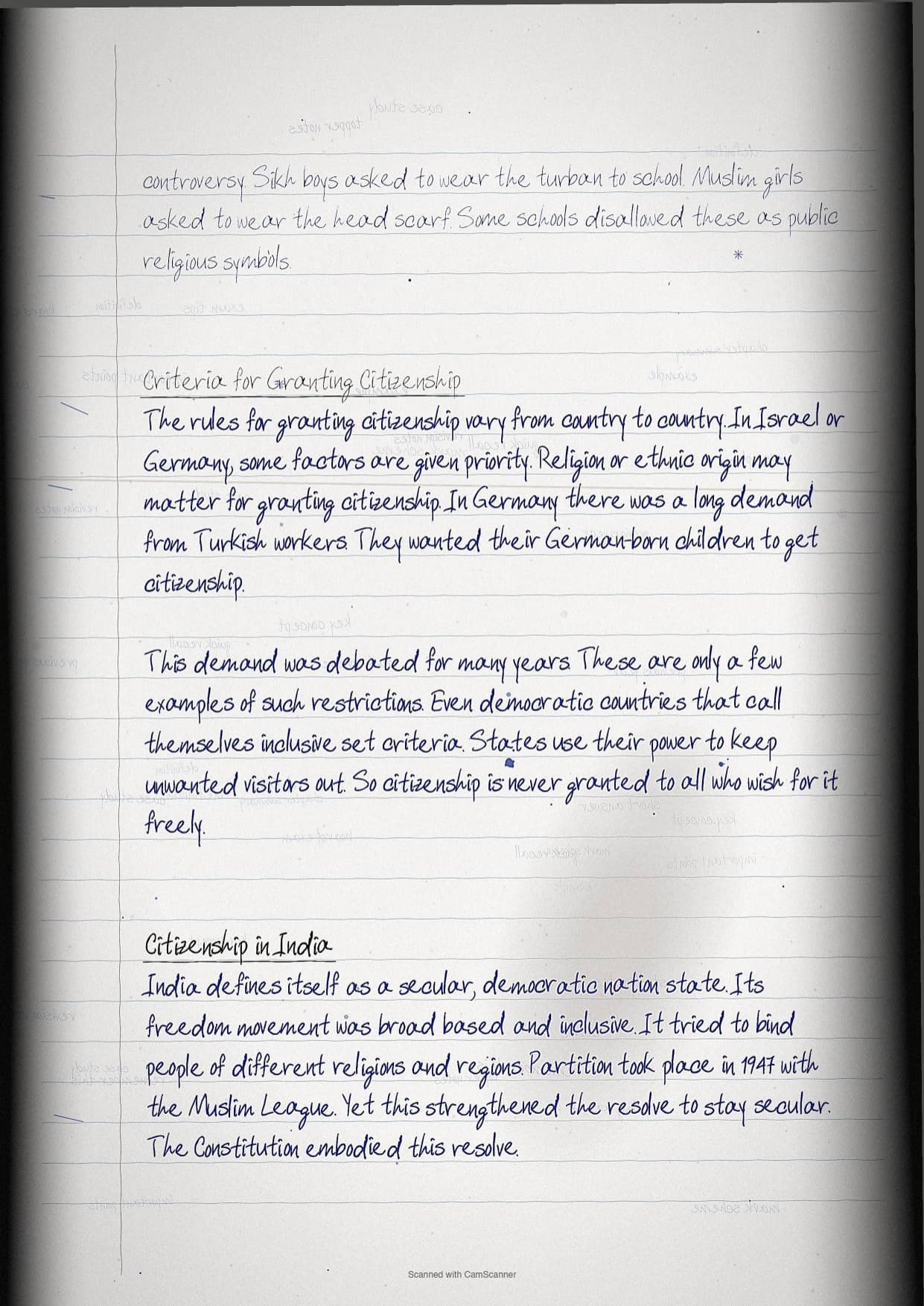
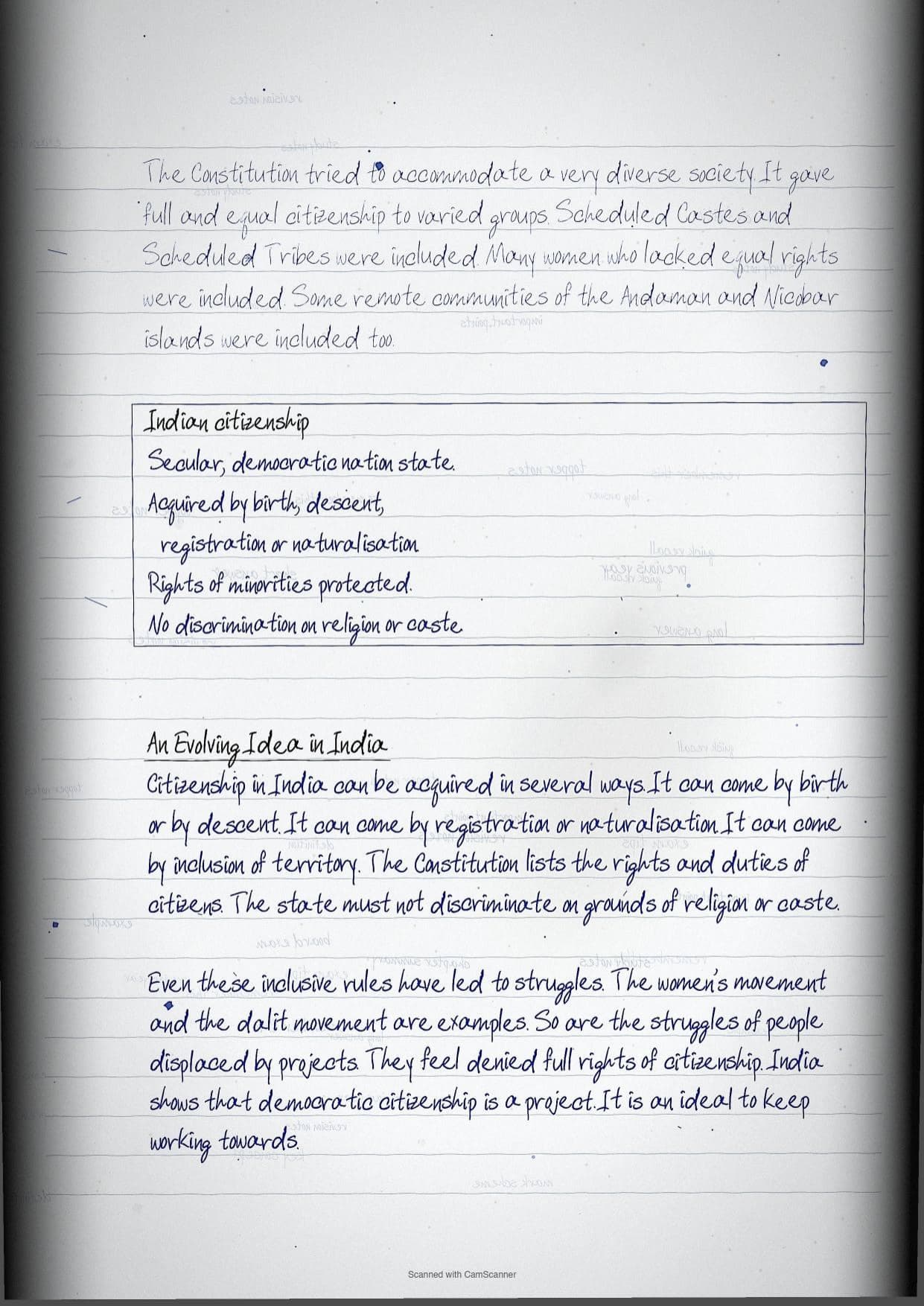
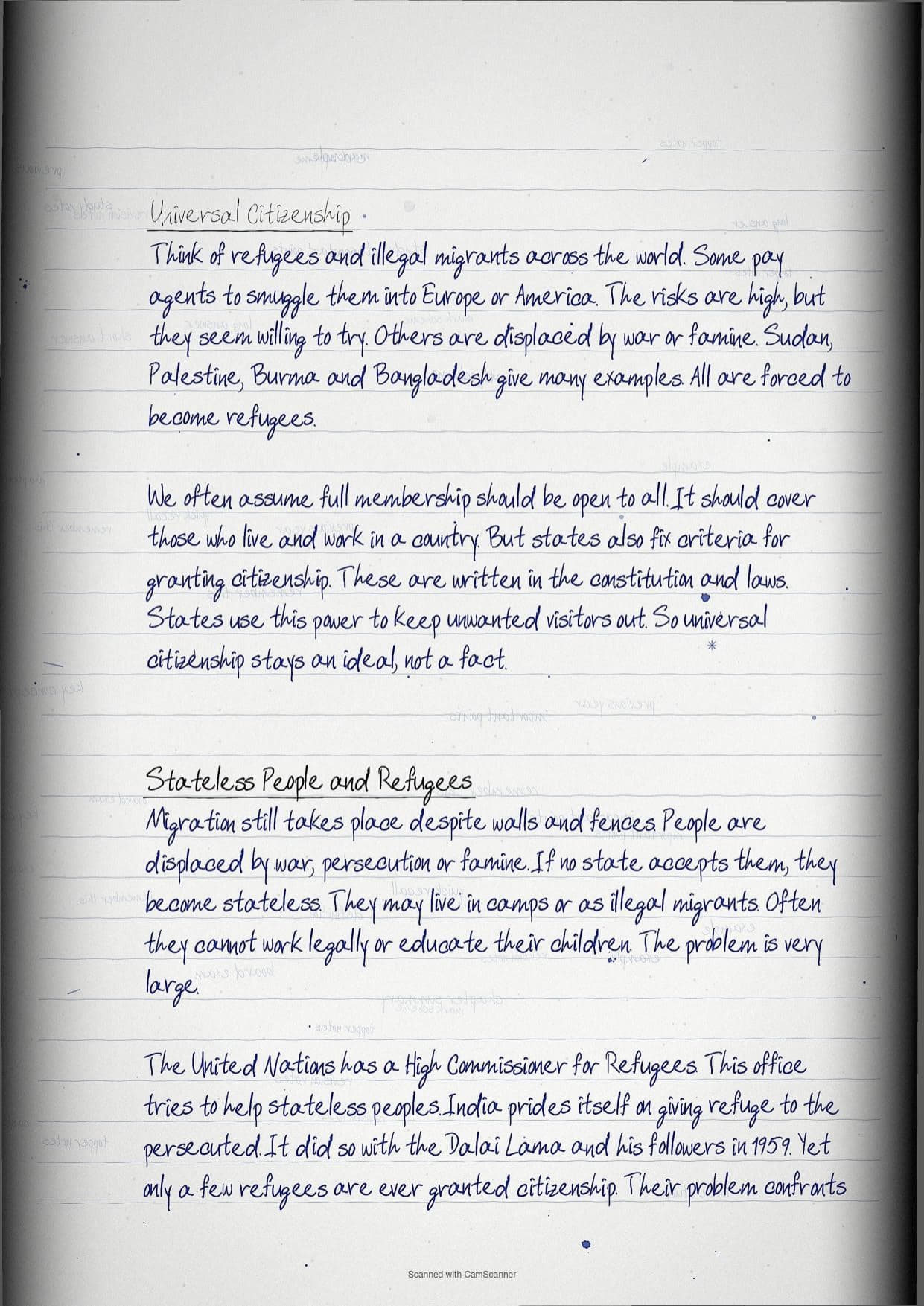
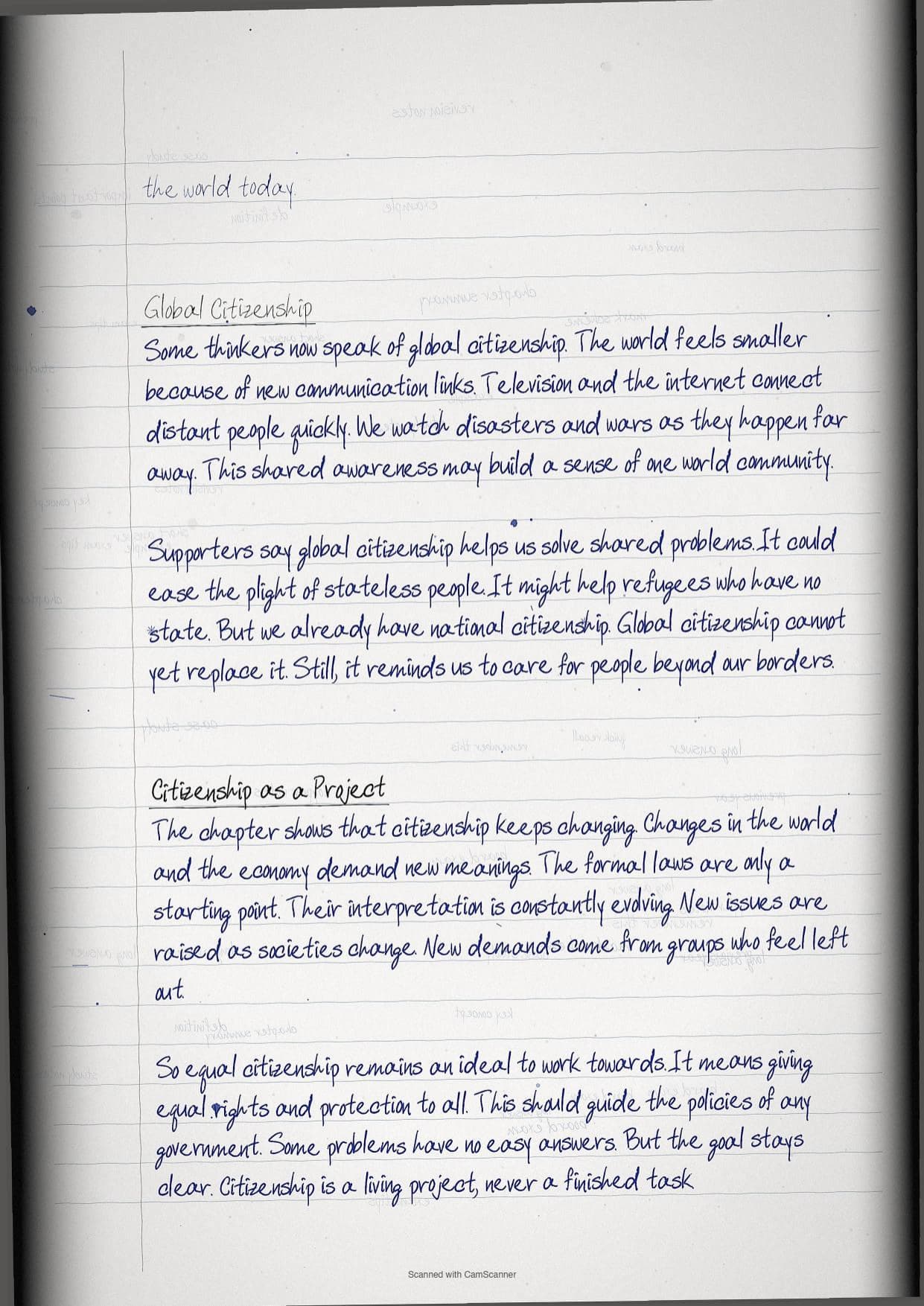
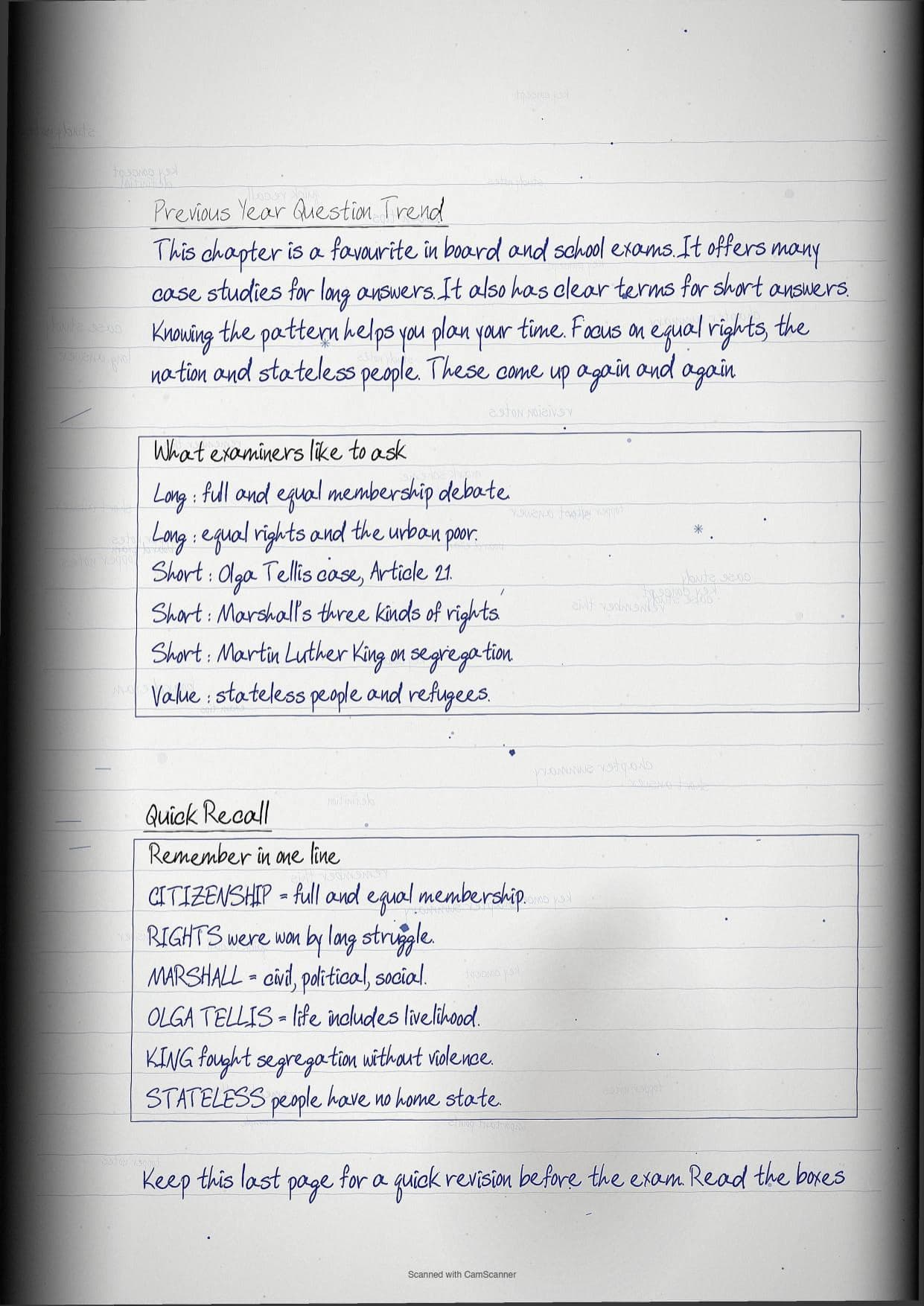

- CBSE Class 11 Weightage: a scoring chapter in the Political Science paper, asked in short and long answers.
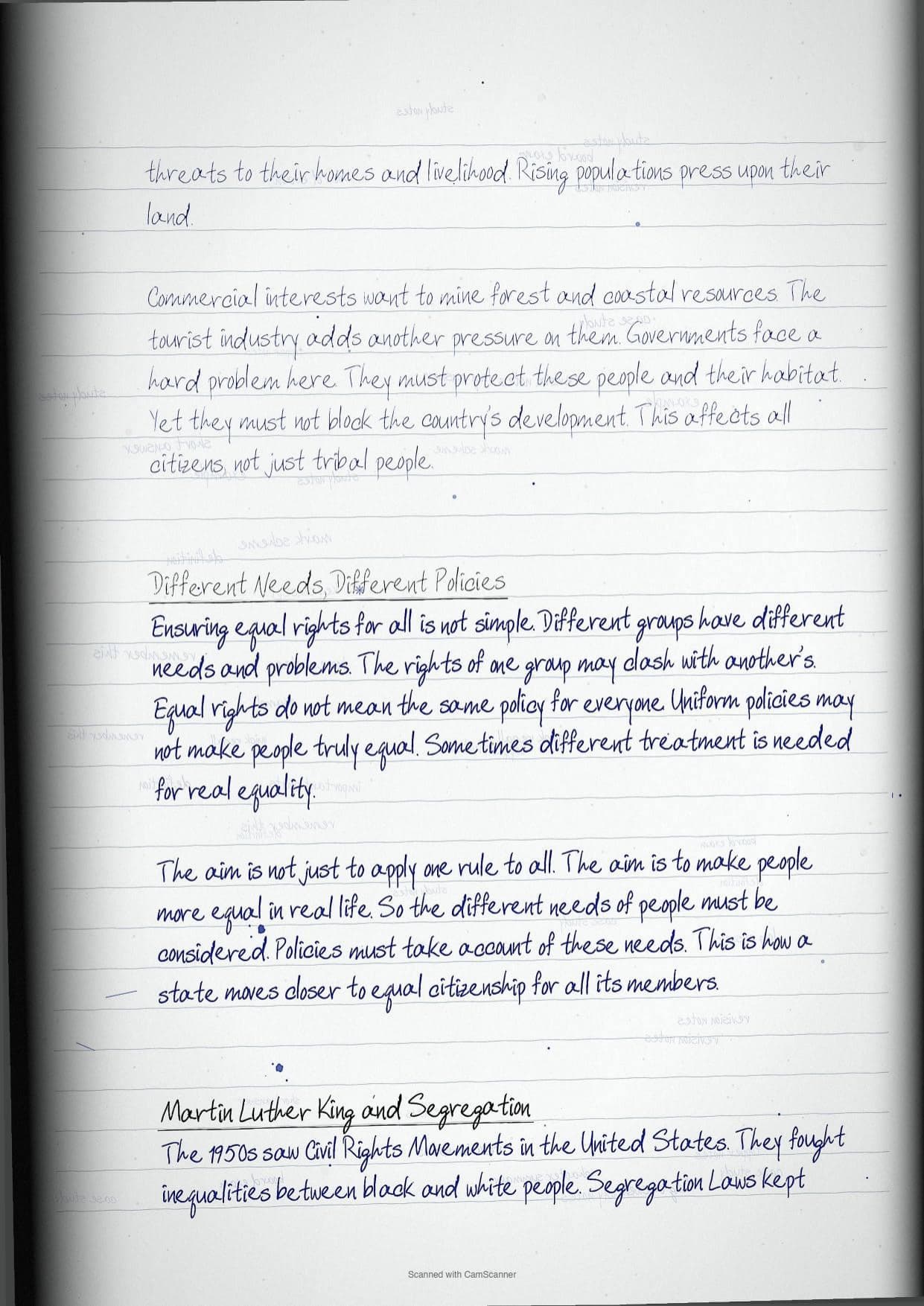
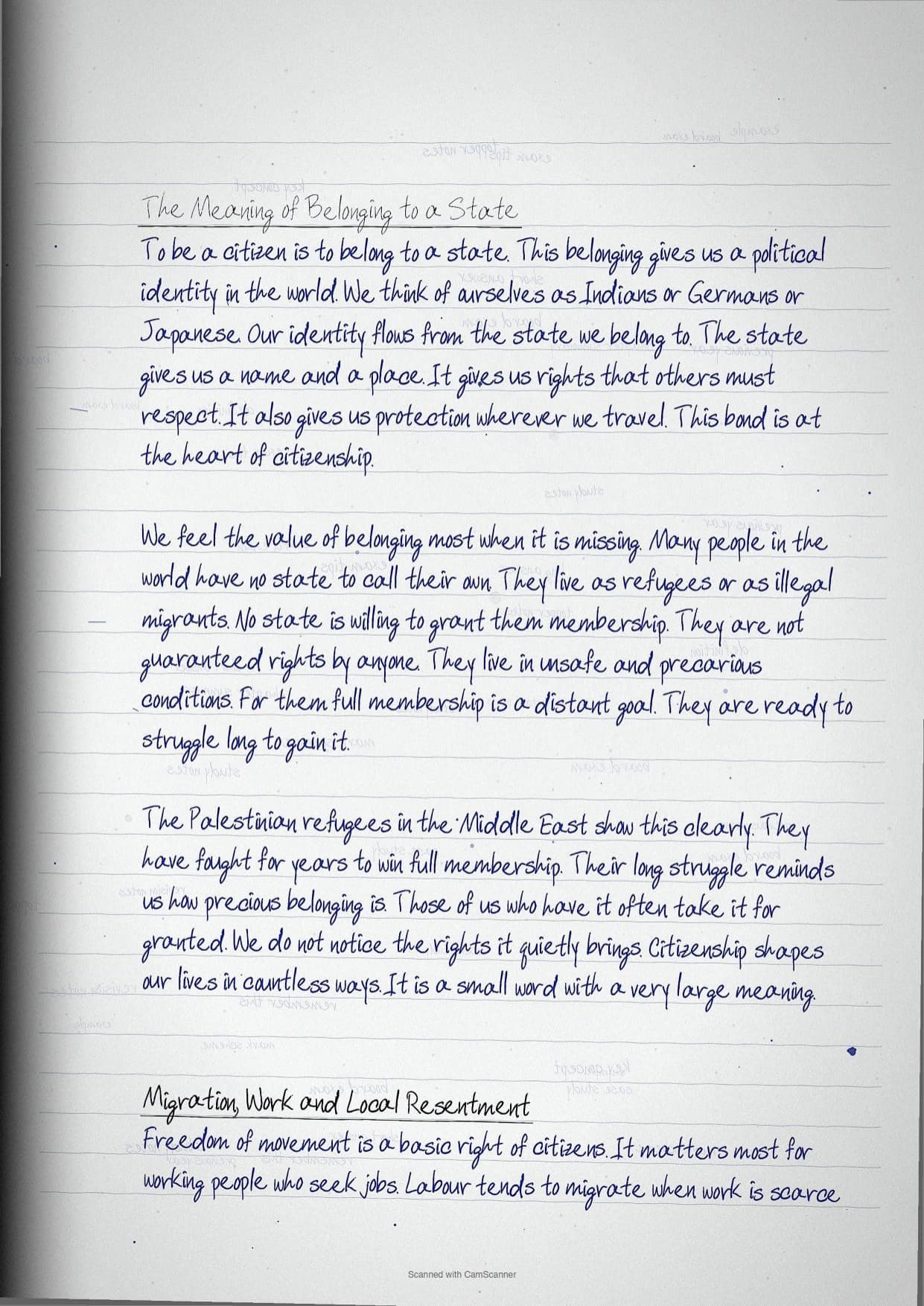
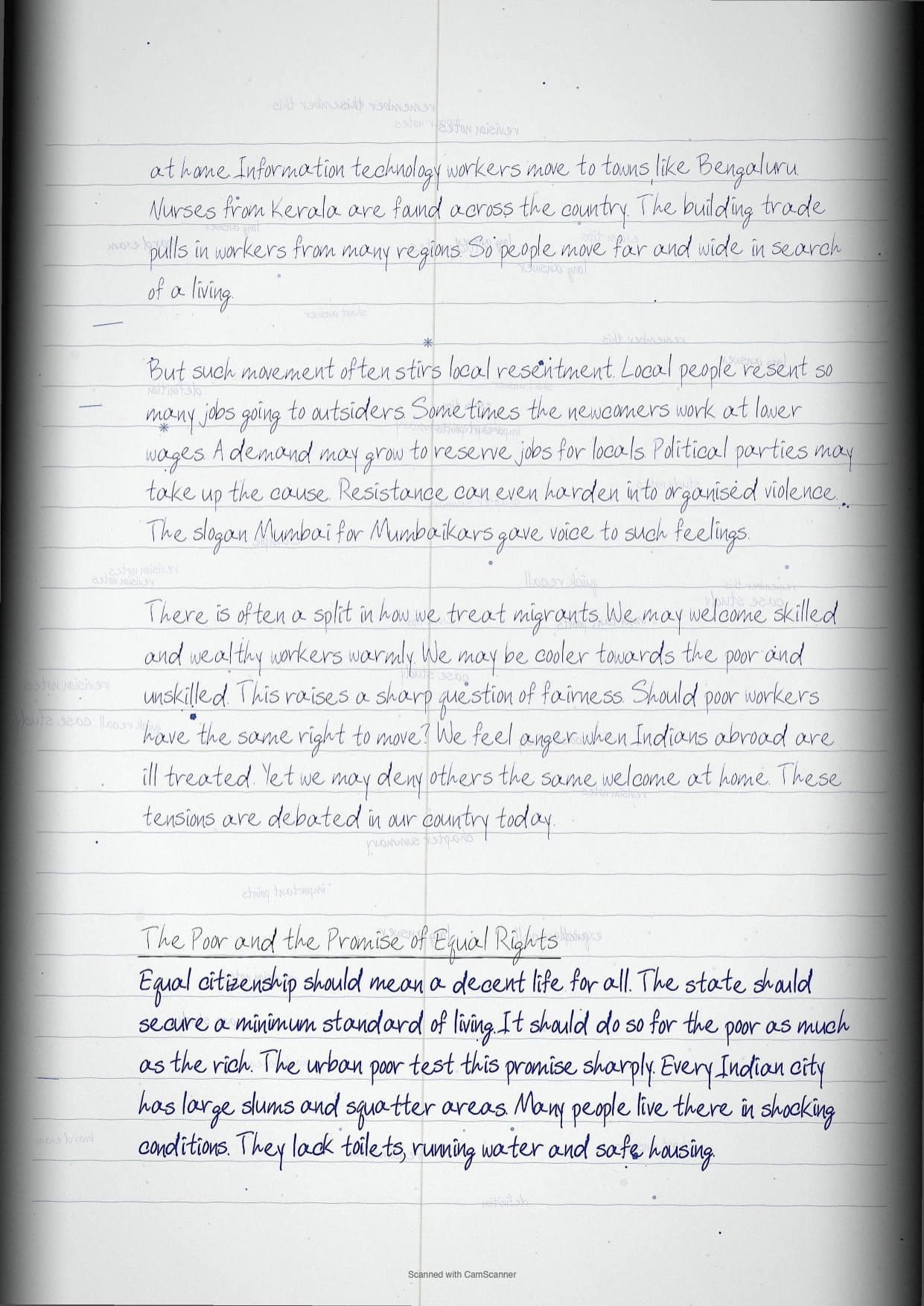
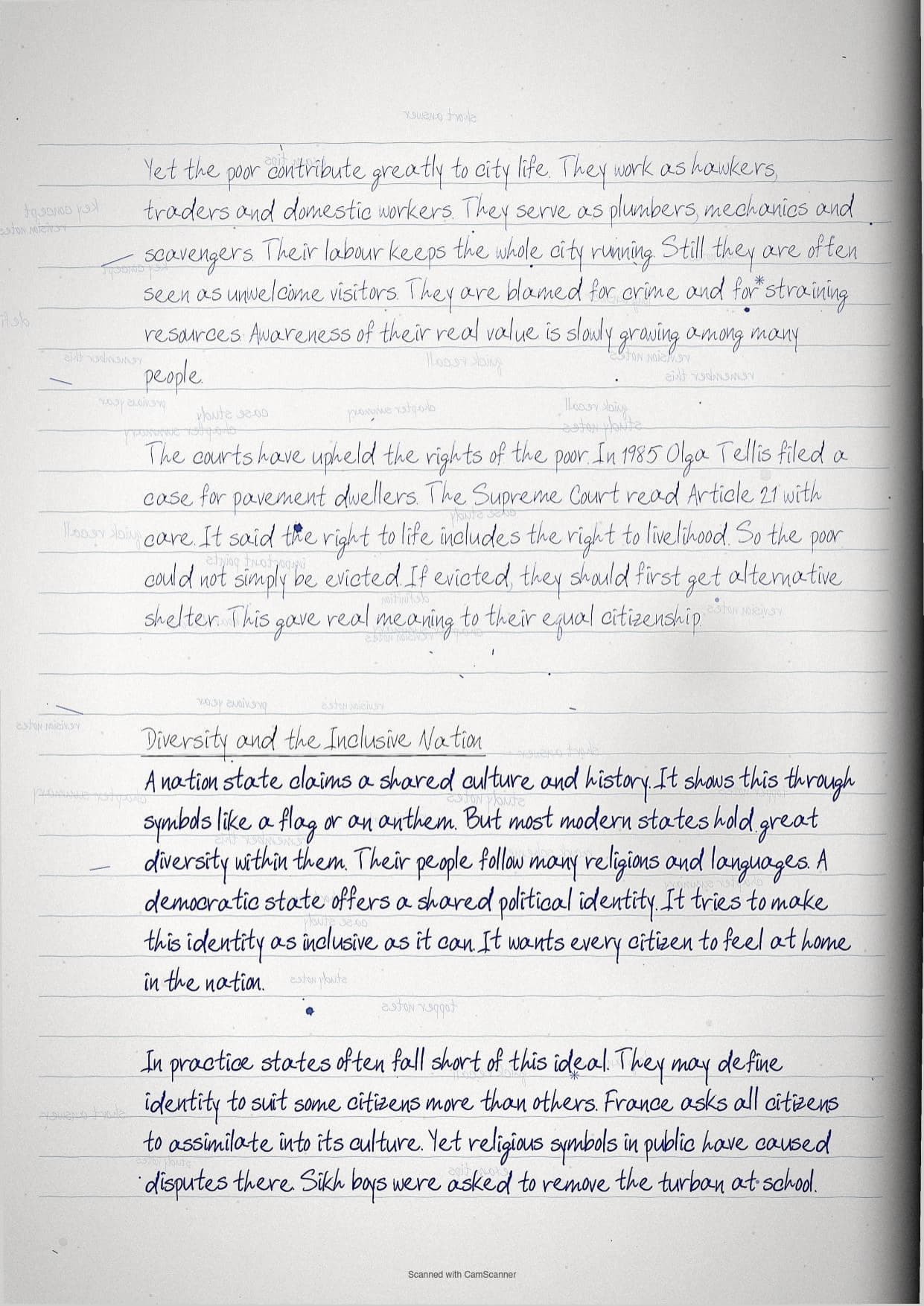
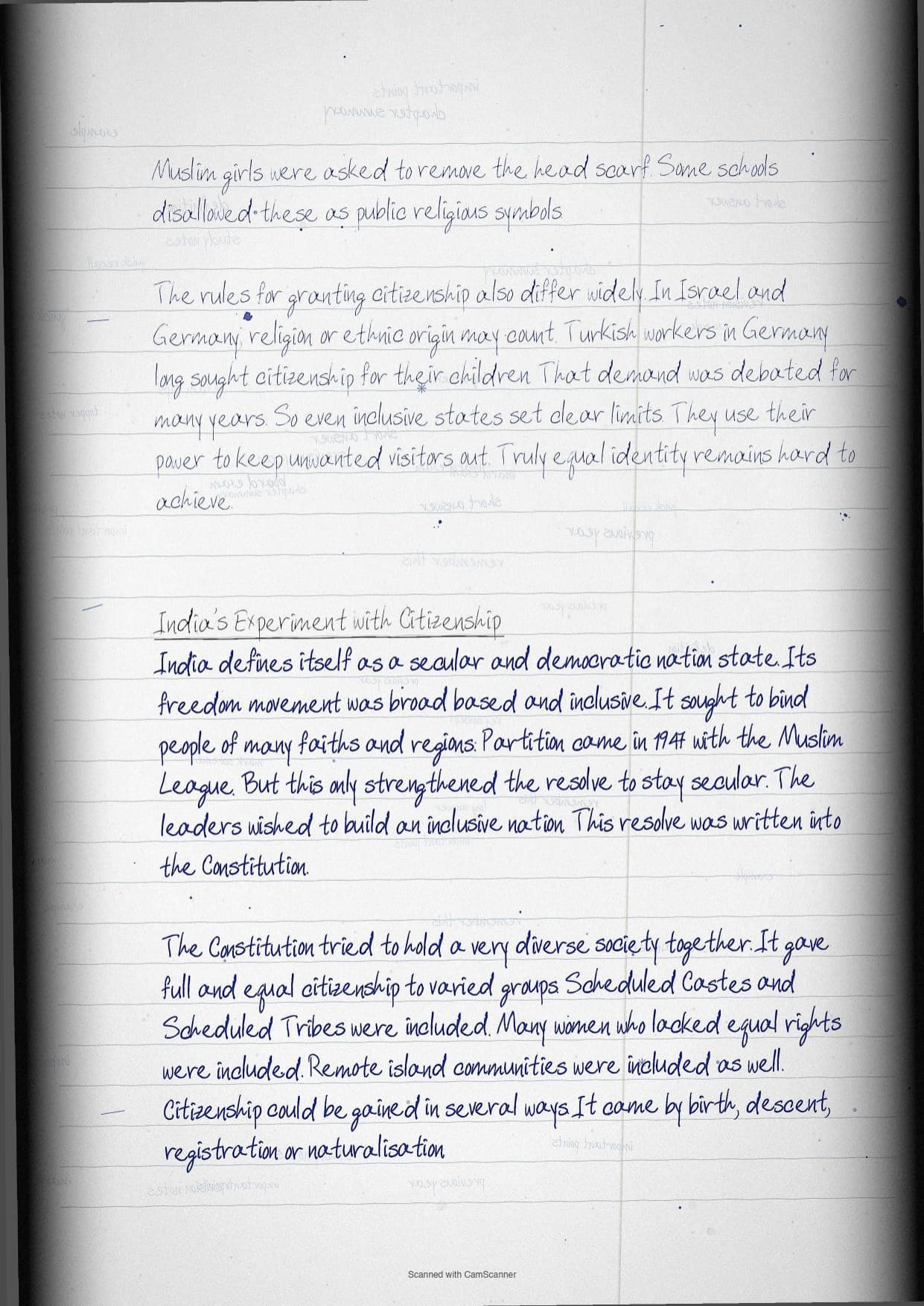
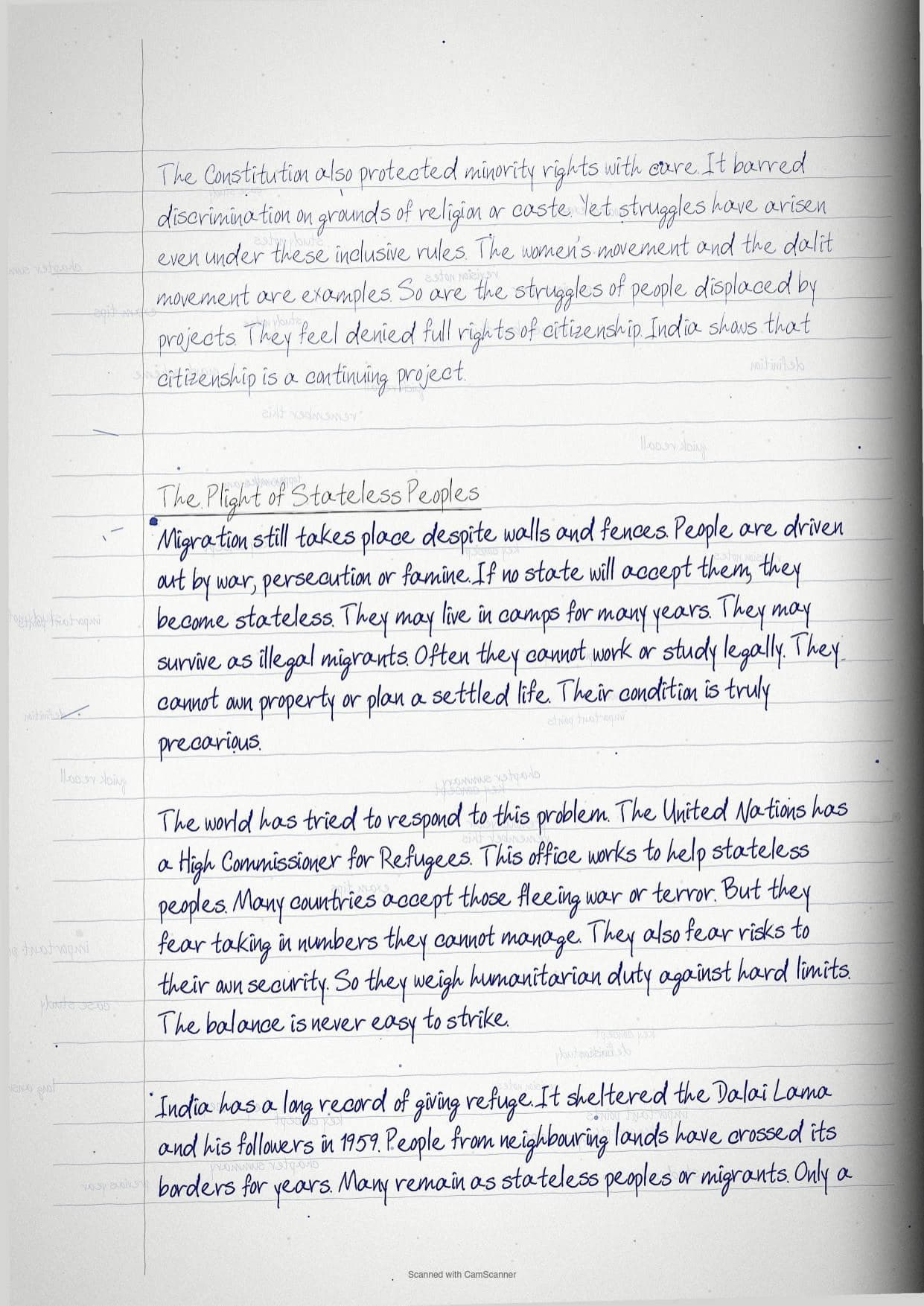
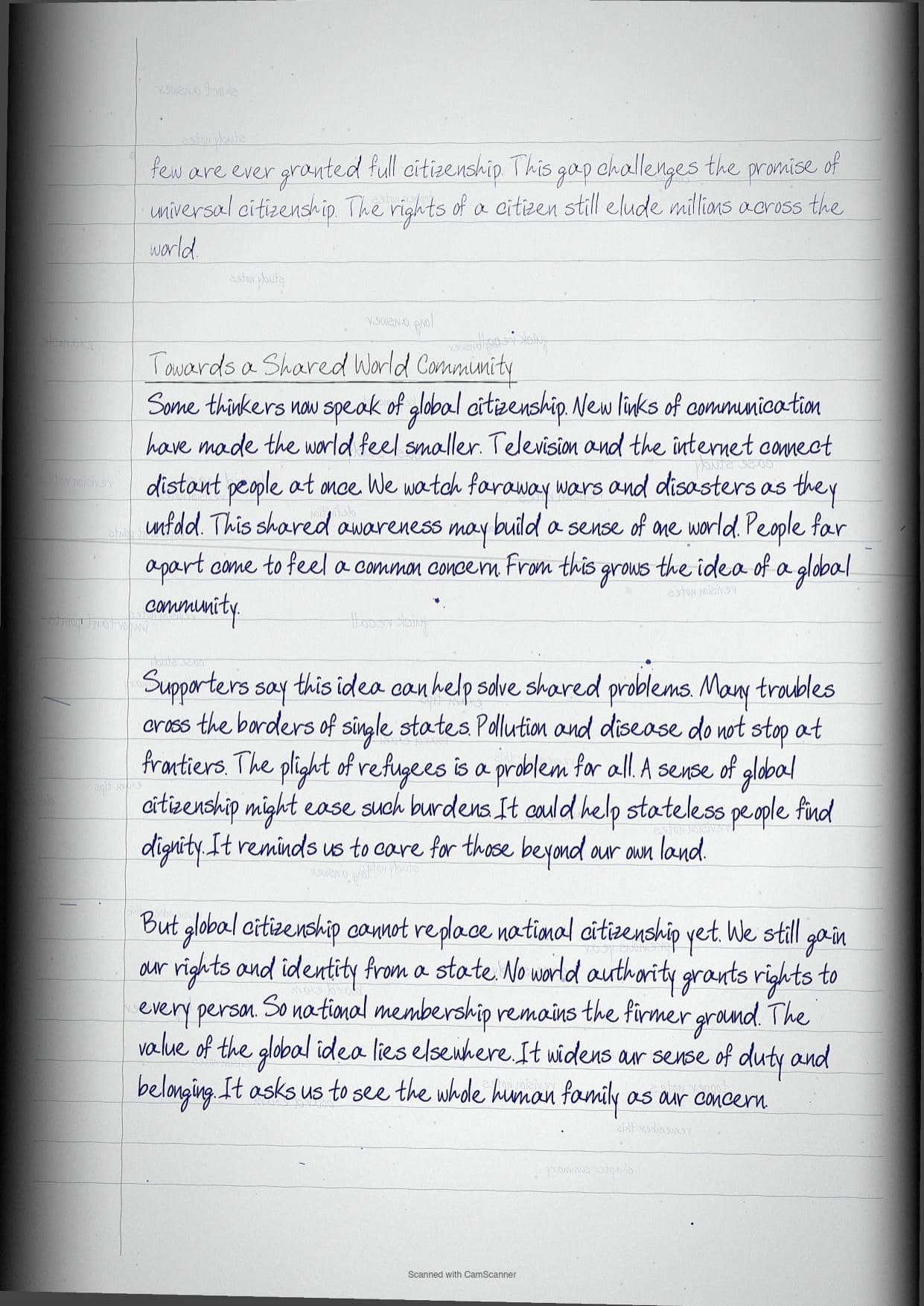
- What the notes cover: meaning of full and equal membership, rights won through long struggle, insiders, outsiders and migration, equal rights and the urban poor.
- Best for: quick revision before Class 11 exams and a base for CUET later.
You can read the complete class 11 political-science handwritten notes for Citizenship, with key terms, boxed definitions, and quick revision points, in the PDF below.
These handwritten notes are written by subject teachers, mapped to the 2026-27 NCERT, and checked against the last five years of CBSE Class 11 Political Science papers.
Citizenship Topic-wise Weightage for CBSE Class 11 Political Science
Some parts of this chapter are asked more often than others. The table below shows which sub-topics to revise first, based on recent CBSE Class 11 question trends.
| Sub-topic | Weightage | CBSE Frequency |
|---|---|---|
| Full and equal membership | High | asked often |
| Equal rights and urban poor | High | asked often |
| Citizen and nation | Medium | asked sometimes |
| Universal and global citizenship | Medium | asked sometimes |
| Marshall and kinds of rights | Low | asked rarely |
What the Citizenship Handwritten Notes Cover
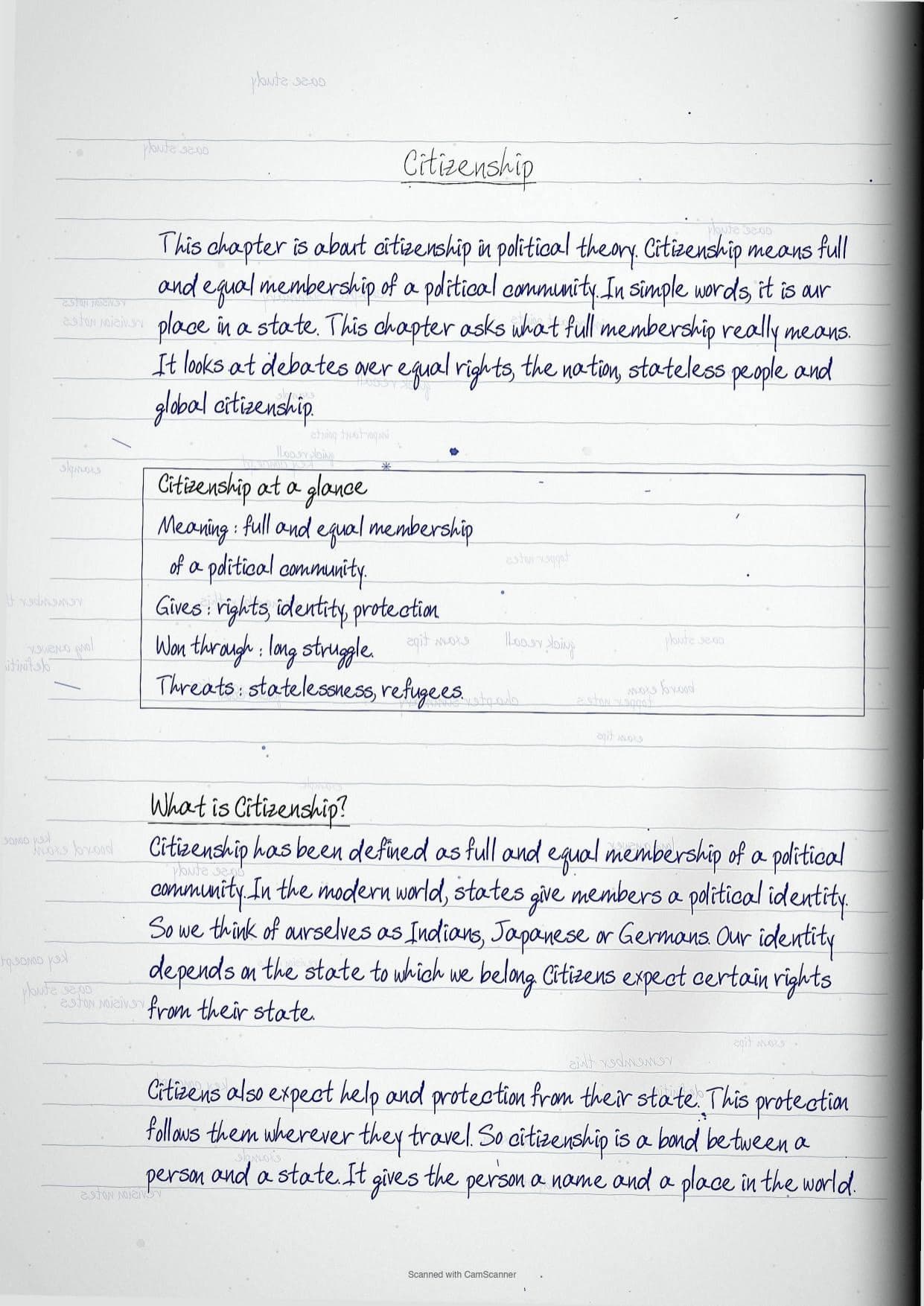
Citizenship means full and equal membership of a political community. This chapter explores what that membership means and how it is challenged today. It looks at equal rights, the nation, stateless people and global citizenship.
- Meaning of full and equal membership
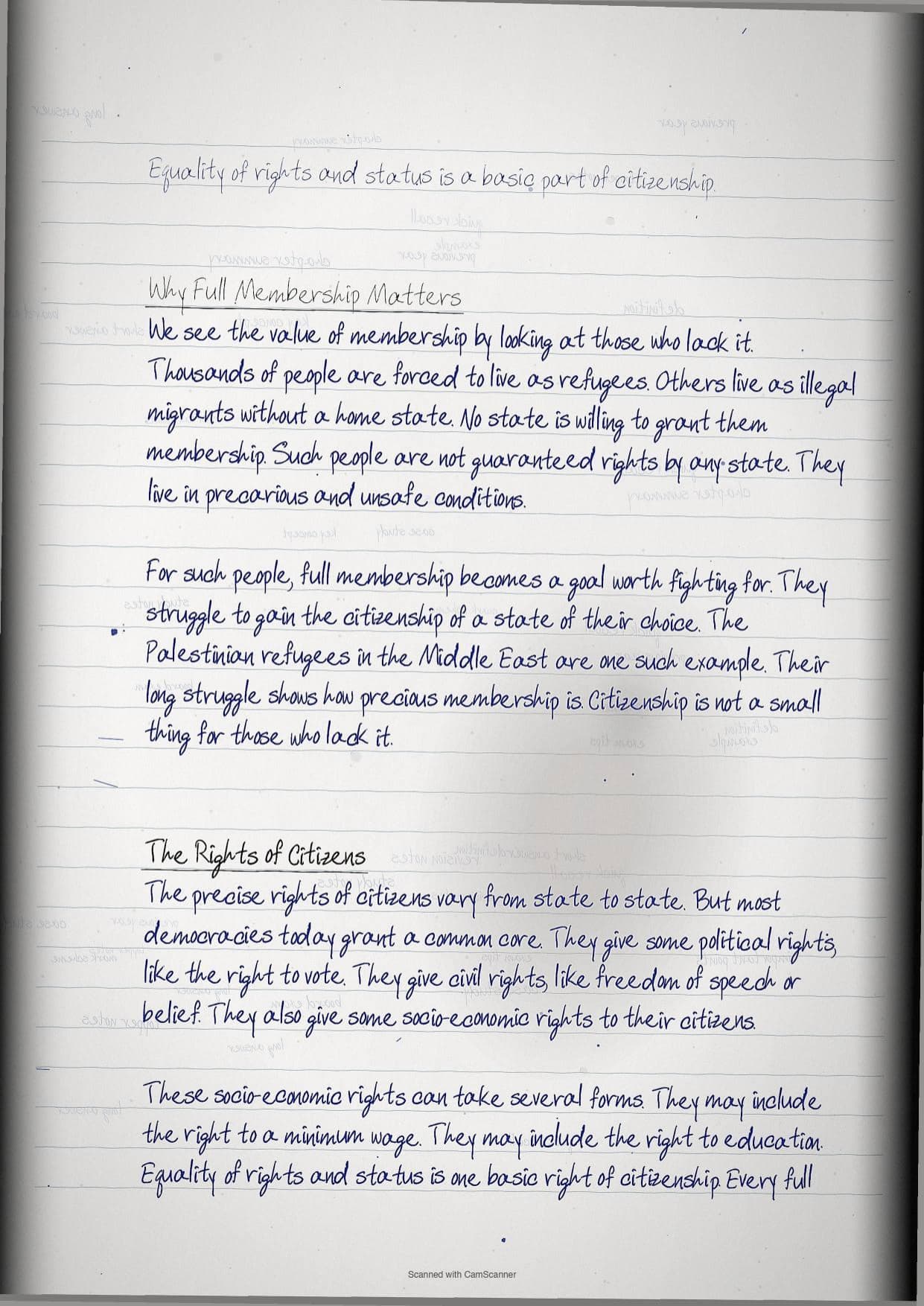
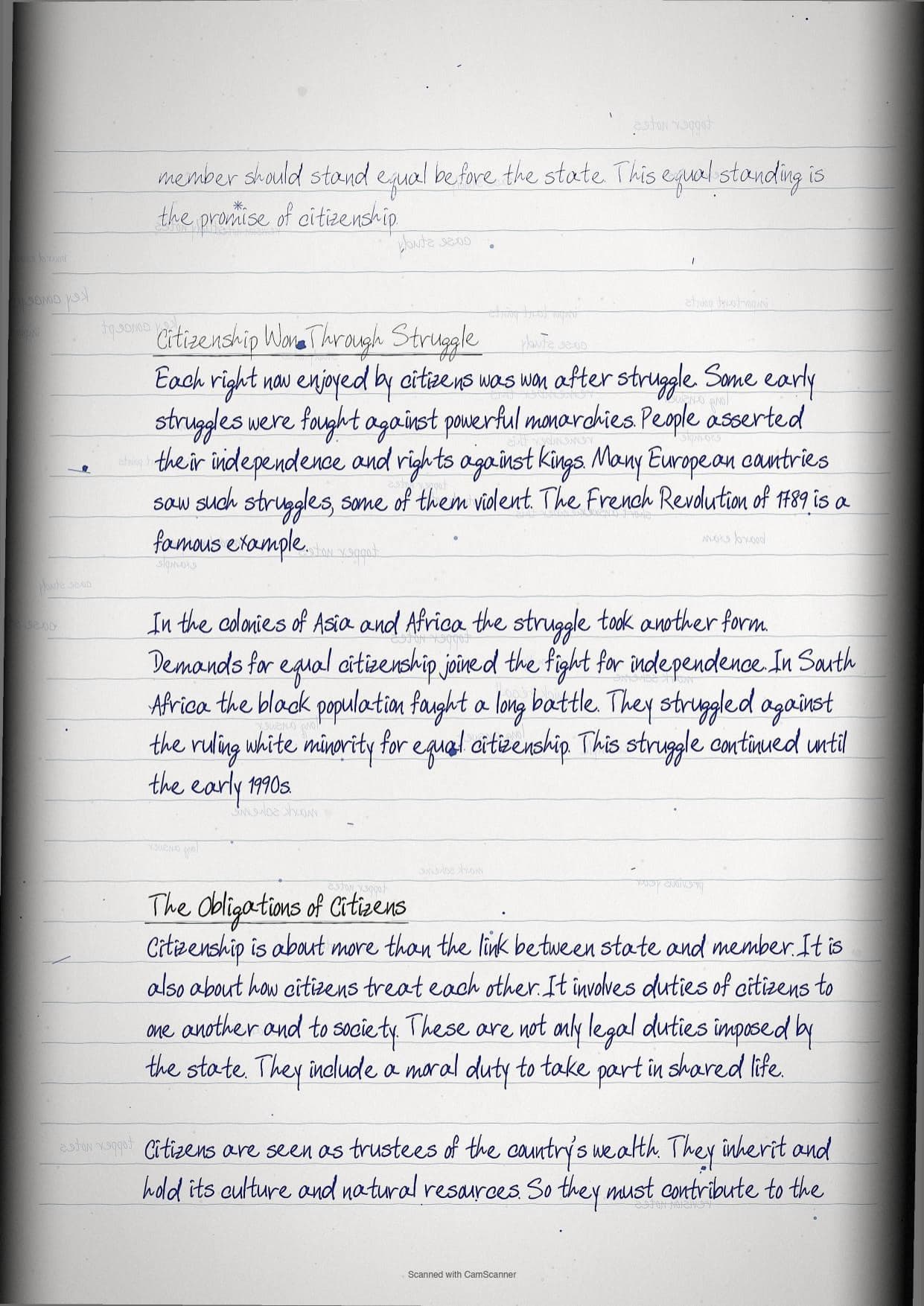
- Rights won through long struggle
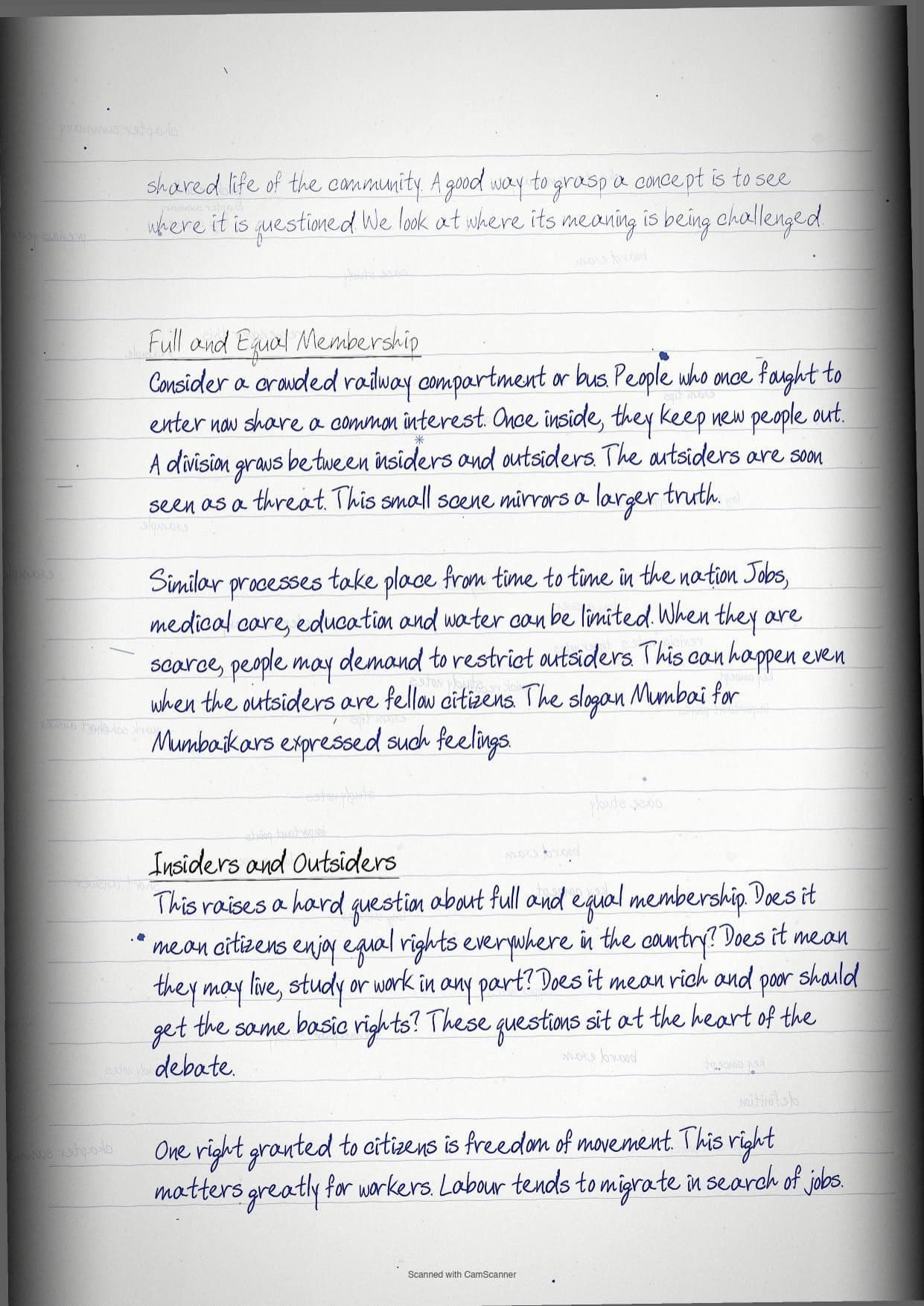
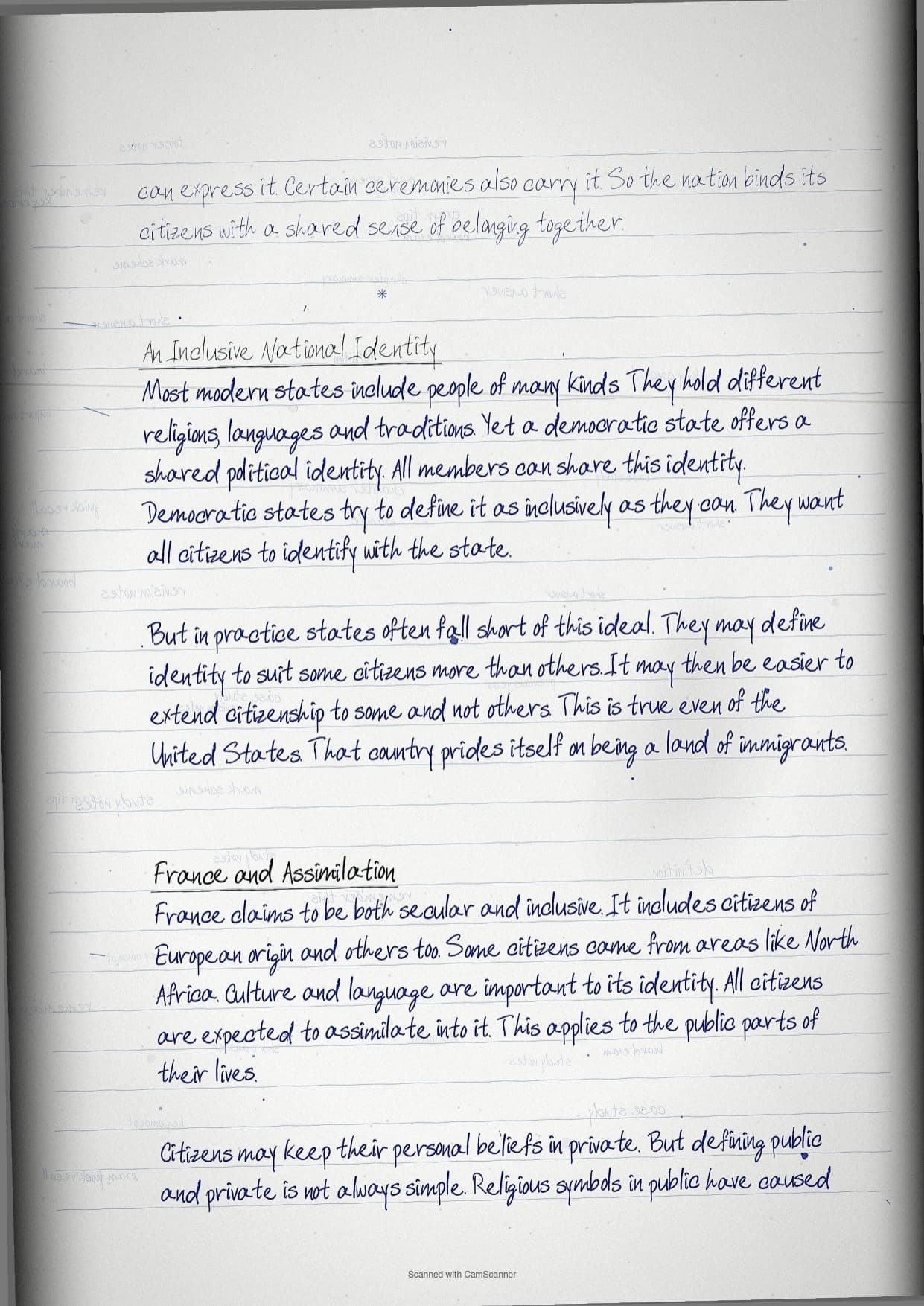
- Insiders, outsiders and migration
- Equal rights and the urban poor
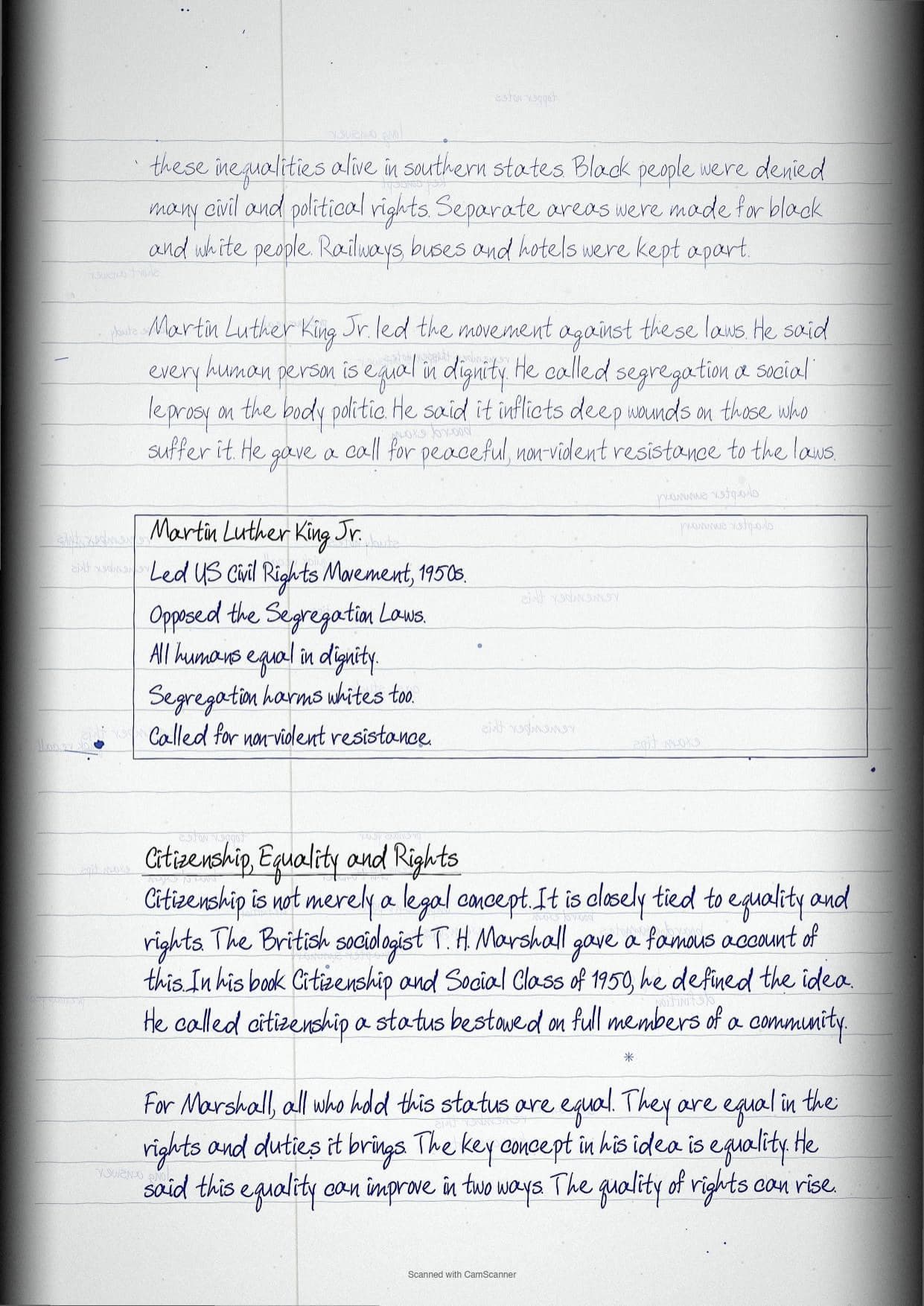
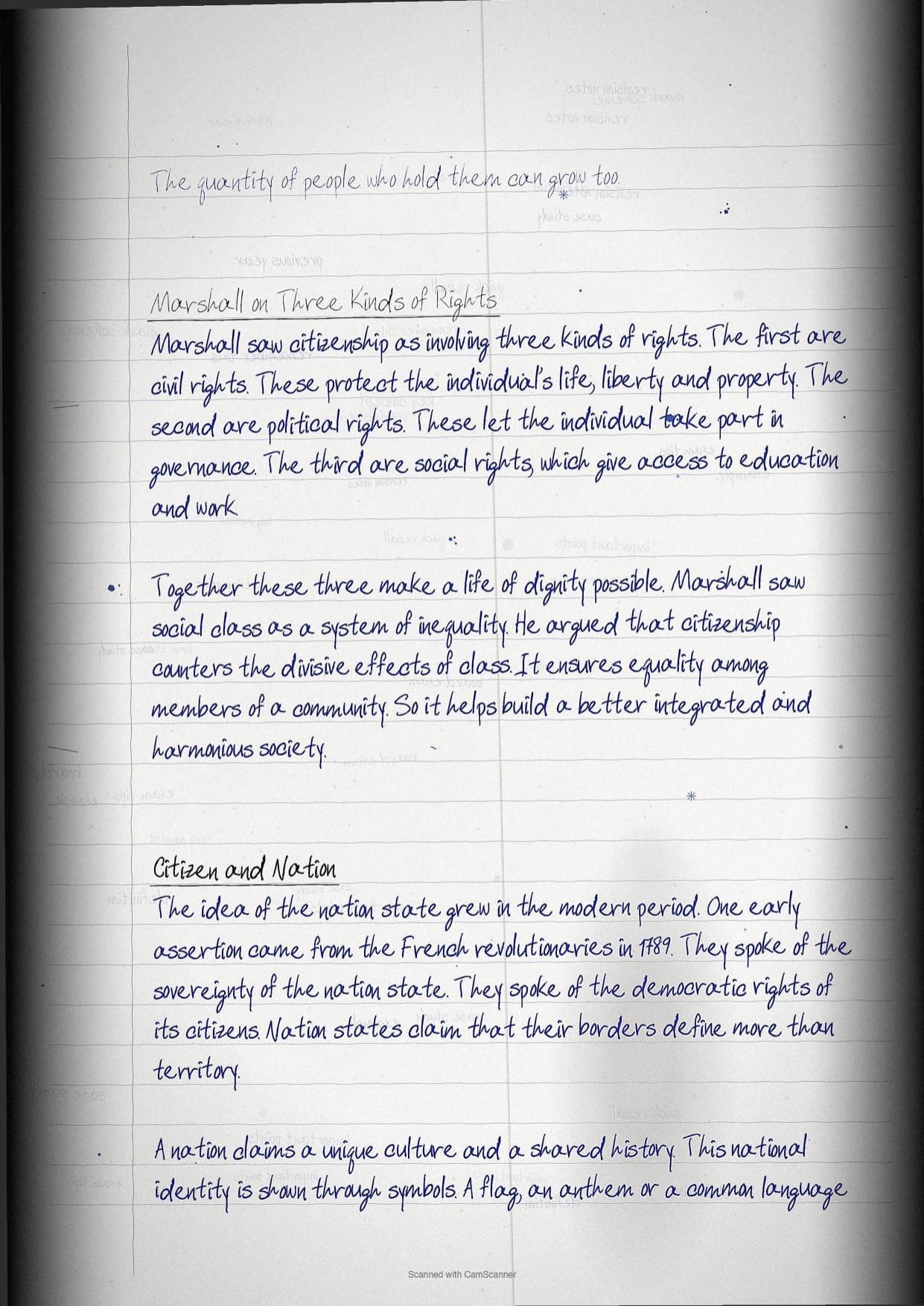
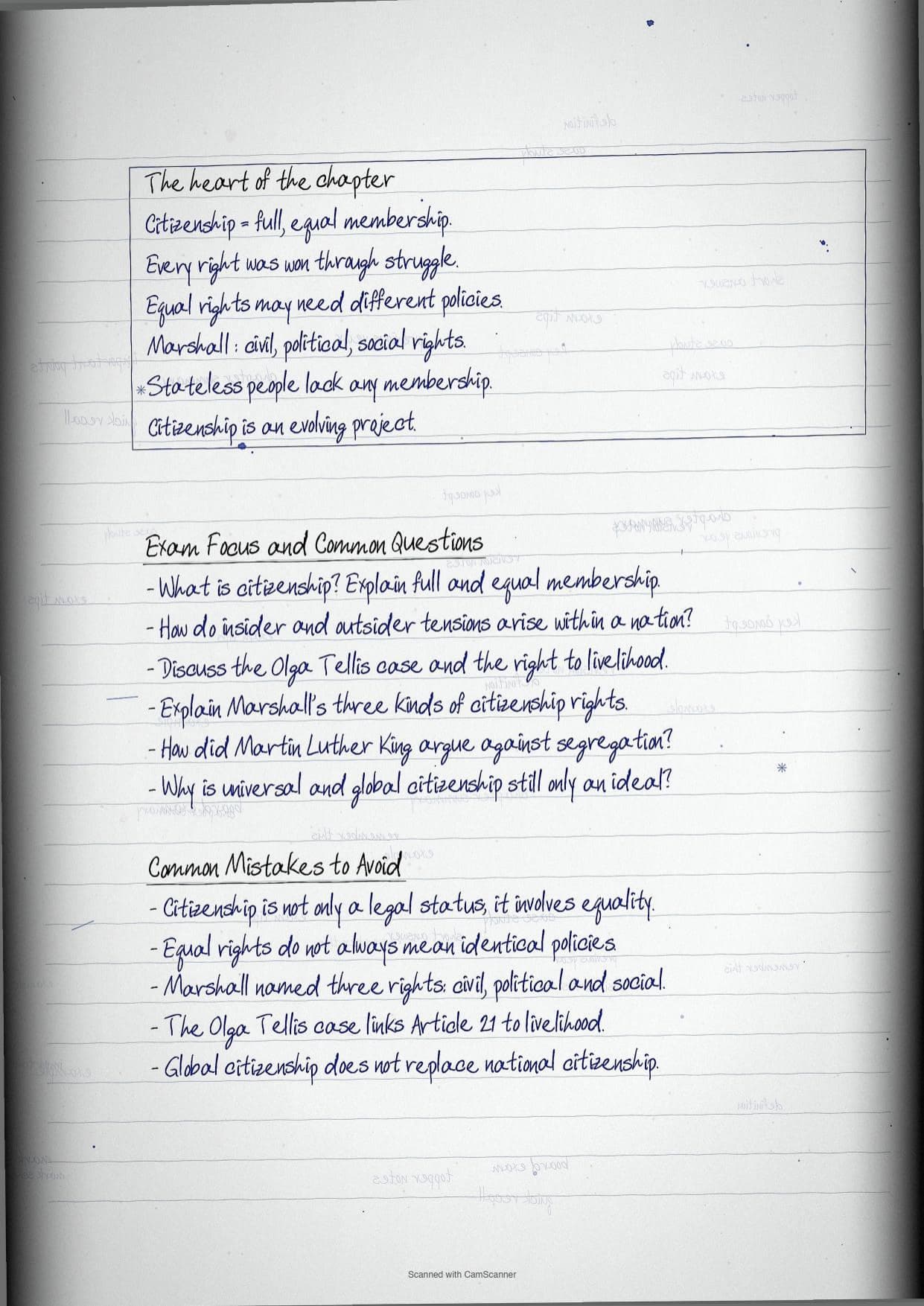
- Marshall on civil, political and social rights
- Citizen, nation and criteria for citizenship
- Stateless people and global citizenship
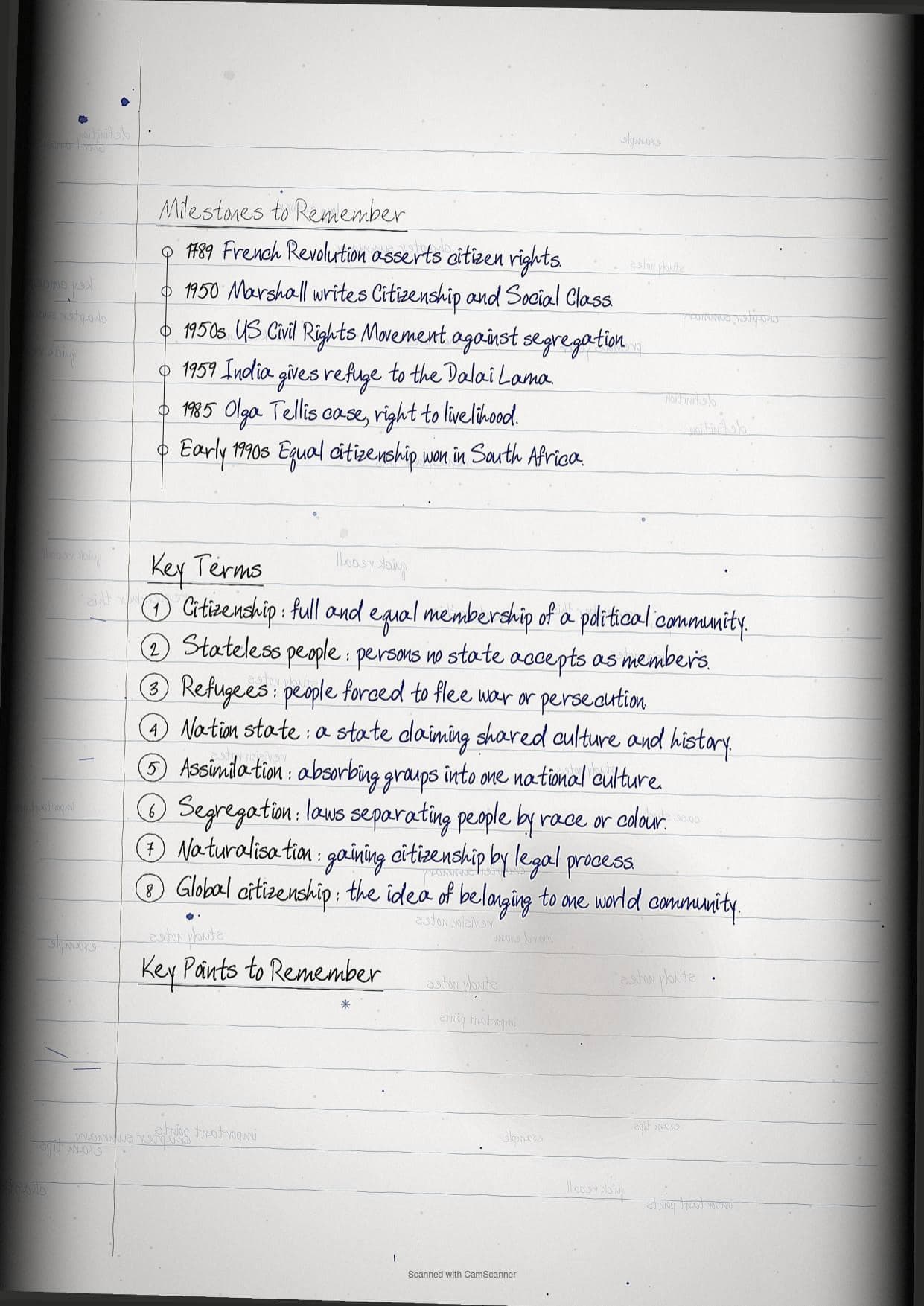
Key Terms and Ideas in Citizenship
These are the terms and ideas the exam asks about most. Learn each one so you can define it and use it in your answers.
| Term / Idea | What it means |
|---|---|
| Citizenship | full and equal membership of a community |
| Struggle | each right was won after long struggle |
| Insiders | tensions arise over scarce jobs and resources |
| Olga Tellis | right to life includes right to livelihood |
| Marshall | civil, political and social rights |
| Martin Luther King | non-violent fight against segregation |
| Stateless people | persons no state accepts as members |
| Global citizenship | an ideal that cannot yet replace national |
How Collegedunia's Handwritten Notes Help You Revise Citizenship
These notes are made for the night before the exam. They keep the facts short and easy to scan. Collegedunia maps every point to the 2026-27 NCERT.
- Clear handwriting: each topic is written in neat, easy-to-read handwriting.
- Boxed key terms: the main terms and definitions are boxed by hand for fast recall.
- Diagrams and tables: simple hand-drawn tables and charts make ideas clear.
- Colour-coded headings: new sub-topics stand out, so you find any section in seconds.
Citizenship Self-Assessment Quiz
Try these quick questions after you read the notes. Tap each question to check your answer. They cover the points CBSE asks most often.
Citizenship is defined as
(a) legal residence only (b) full and equal membership (c) the right to vote alone (d) paying taxes to a state
Answer: (b) correct - citizenship is full and equal membership of a political community
The Olga Tellis case linked livelihood to
(a) Article 19 (b) Article 14 (c) Article 21 (d) Article 32
Answer: (c) correct - the Court said Article 21's right to life includes livelihood
Marshall named three kinds of rights:
(a) natural, legal, moral (b) civil, political, social (c) old, new, future (d) local, state, global
Answer: (b) correct - Marshall named civil, political and social rights
Martin Luther King called for
(a) armed revolt (b) non-violent resistance (c) new segregation (d) leaving the country
Answer: (b) correct - King called for peaceful, non-violent resistance to segregation
Stateless people are those who
(a) refuse to vote (b) have no state as members (c) hold two passports (d) live abroad for work
Answer: (b) correct - stateless people are accepted as members by no state
How to Use These Handwritten Notes for Class 11 Political Science Revision
Use these class 11 political-science handwritten notes in two passes. Read them slowly once for the full chapter. Then, near the exam, read only the boxes and key terms for a fast recall.
- Read the notes once with the NCERT chapter open beside you.
- Say each key term and idea in your own words.
- Practise one long-answer question from a past paper.
- On the last day, revise only the key terms and the boxes.
Class 11 Political Science Handwritten Notes for All Chapters
The table below links the class 11 political-science handwritten notes for every chapter. Use it to jump to any other chapter's notes.
| Chapter | Resource |
|---|---|
| Chapter 1 | Constitution: Why and How Handwritten Notes |
| Chapter 2 | Rights in the Indian Constitution Handwritten Notes |
| Chapter 3 | Election and Representation Handwritten Notes |
| Chapter 4 | Executive Handwritten Notes |
| Chapter 5 | Legislature Handwritten Notes |
| Chapter 6 | Judiciary Handwritten Notes |
| Chapter 7 | Federalism Handwritten Notes |
| Chapter 8 | Local Governments Handwritten Notes |
| Chapter 9 | Constitution as a Living Document Handwritten Notes |
| Chapter 10 | The Philosophy of the Constitution Handwritten Notes |
| Chapter 11 | Political Theory: An Introduction Handwritten Notes |
| Chapter 12 | Freedom Handwritten Notes |
| Chapter 13 | Equality Handwritten Notes |
| Chapter 14 | Social Justice Handwritten Notes |
| Chapter 15 | Rights Handwritten Notes |
| Chapter 16 | Citizenship Handwritten Notes |
| Chapter 17 | Nationalism Handwritten Notes |
| Chapter 18 | Secularism Handwritten Notes |
Citizenship Class 11 Political Science Handwritten Notes FAQs
Ques. Where can I download Citizenship Class 11 Political Science Handwritten Notes PDF?
Ans. You can download the Citizenship Class 11 Political Science Handwritten Notes PDF directly from this page. Both the Normal and HD versions are free.
Ques. Are these handwritten notes aligned with the 2026-27 NCERT?
Ans. Yes. These notes follow the current 2026-27 syllabus for Class 11 Political Science. Why is equal citizenship called a project?
Ques. How many pages is the Class 11 Political Science Citizenship Handwritten Notes PDF?
Ans. The notes run about 22 pages. They cover the full chapter with key terms, hand-drawn boxes, and a short self-assessment quiz.
Ques. What is the main idea of the 11th standard Political Science chapter Citizenship?
Ans. Equal citizenship is called a project because its meaning keeps changing with society and the economy. New groups raise new demands, so states must keep working towards full and equal membership for all.
Ques. Are these Citizenship notes enough for the CBSE Class 11 exam?
Ans. Yes, for revision. The Collegedunia handwritten notes cover every key point and exam term. Read them with the NCERT chapter and practise past questions.



Comments