



Questions from Class 11 Political Science Chapter 15 Rights come up often in the CBSE Class 11 exam. These class 11 political-science handwritten notes chapter 15 Rights follow the 2026-27 NCERT and cover what a right is and what it is not, grounds of rights: dignity and well-being, natural rights and human rights. This page hosts the notes.
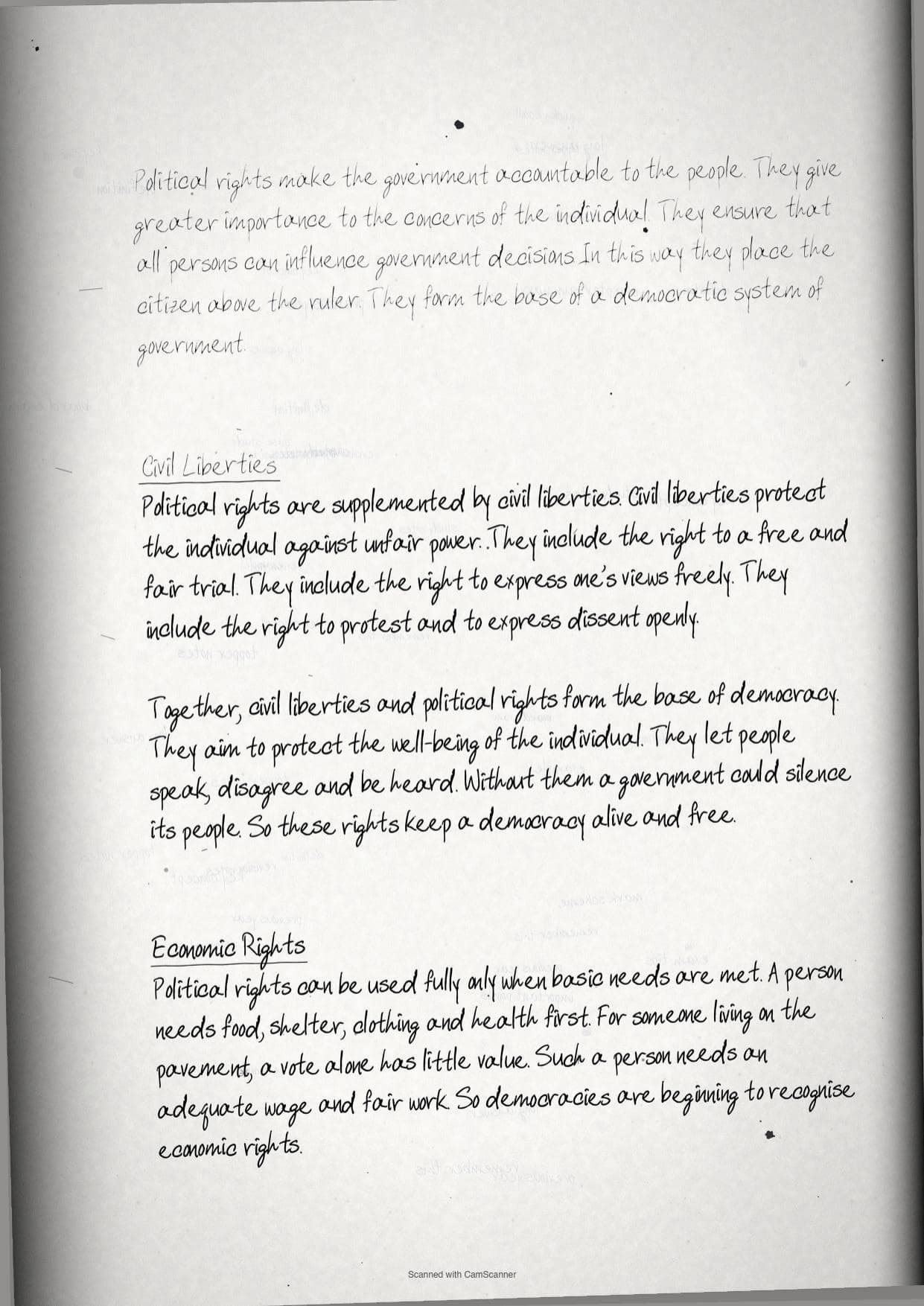
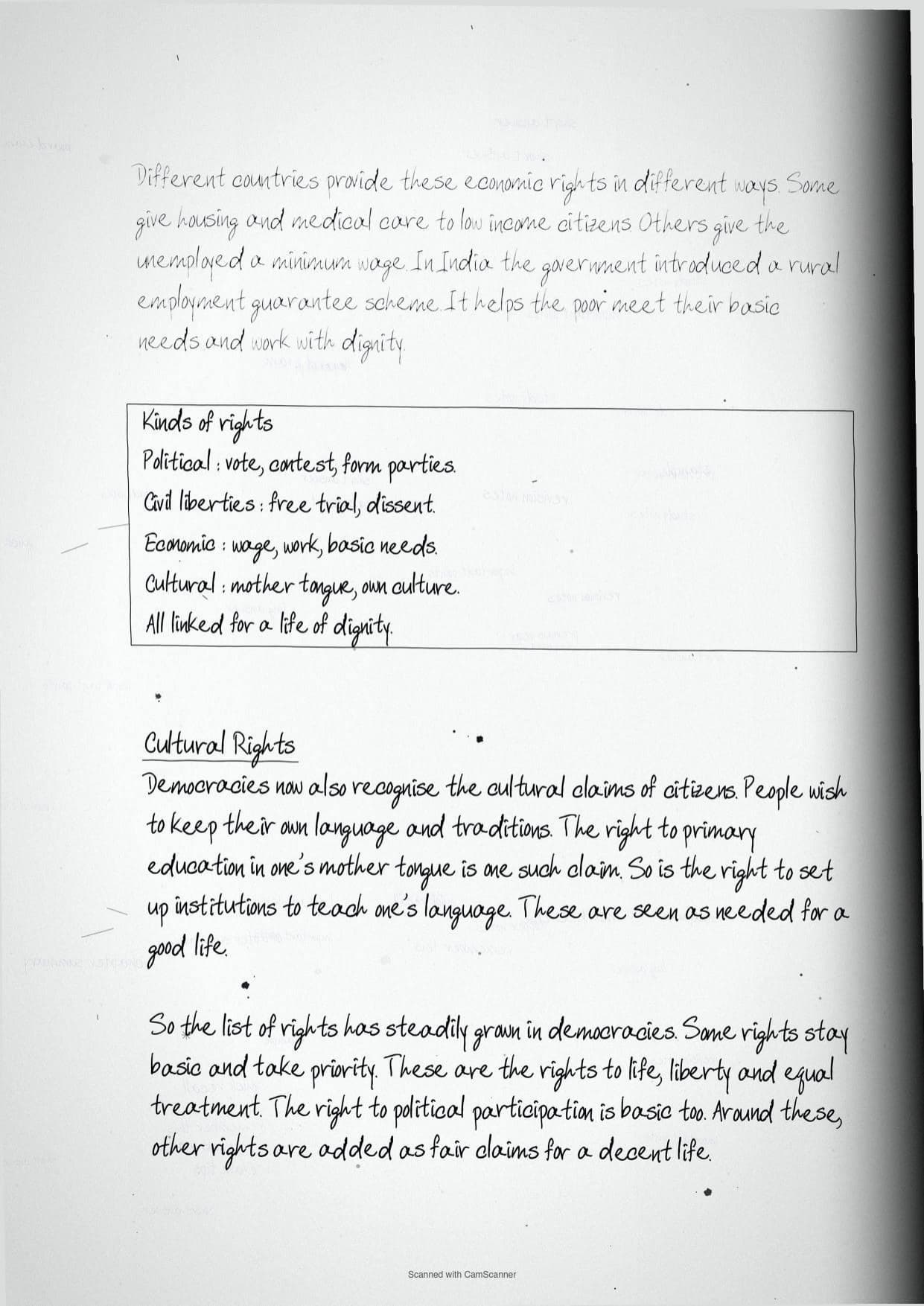
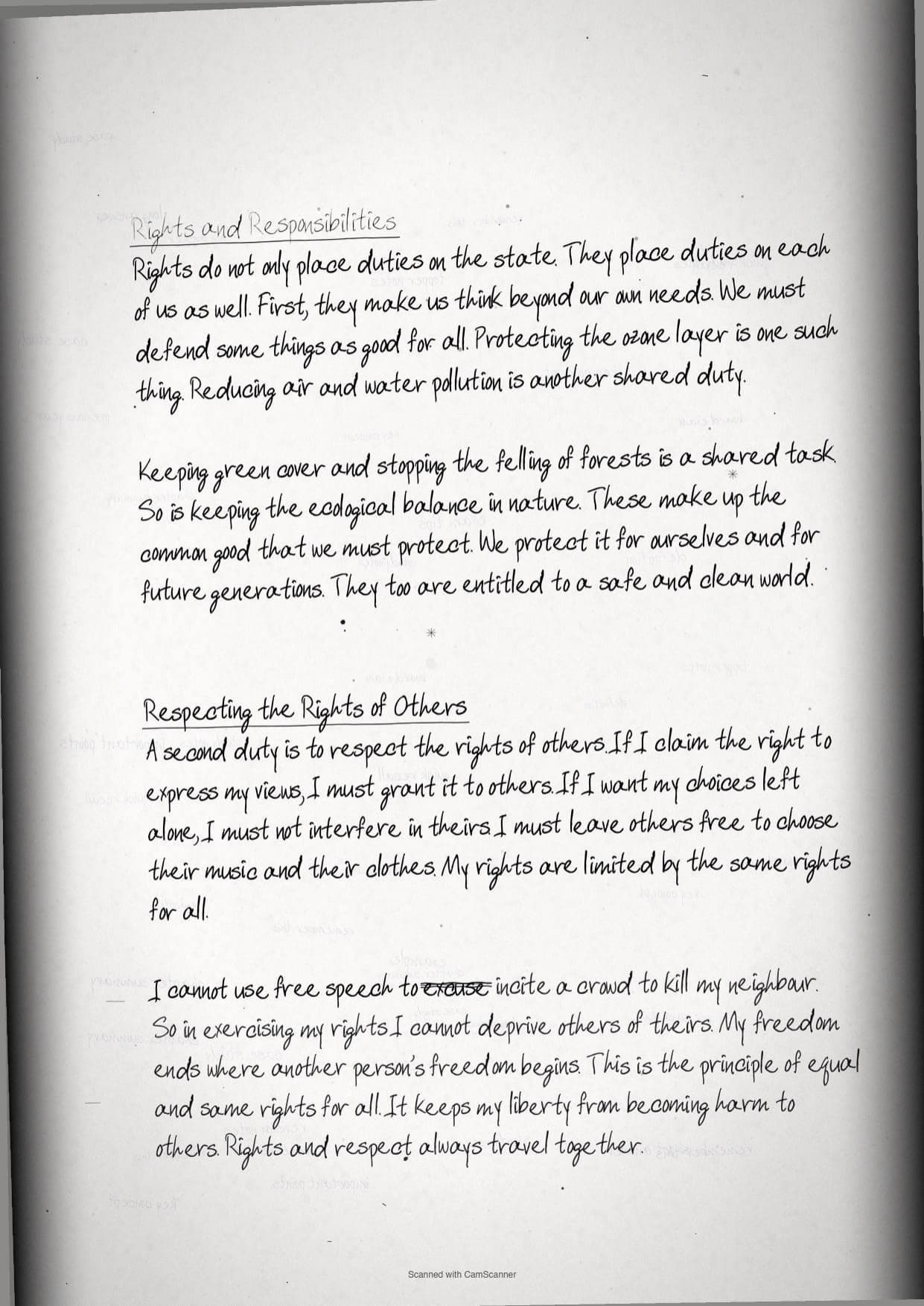
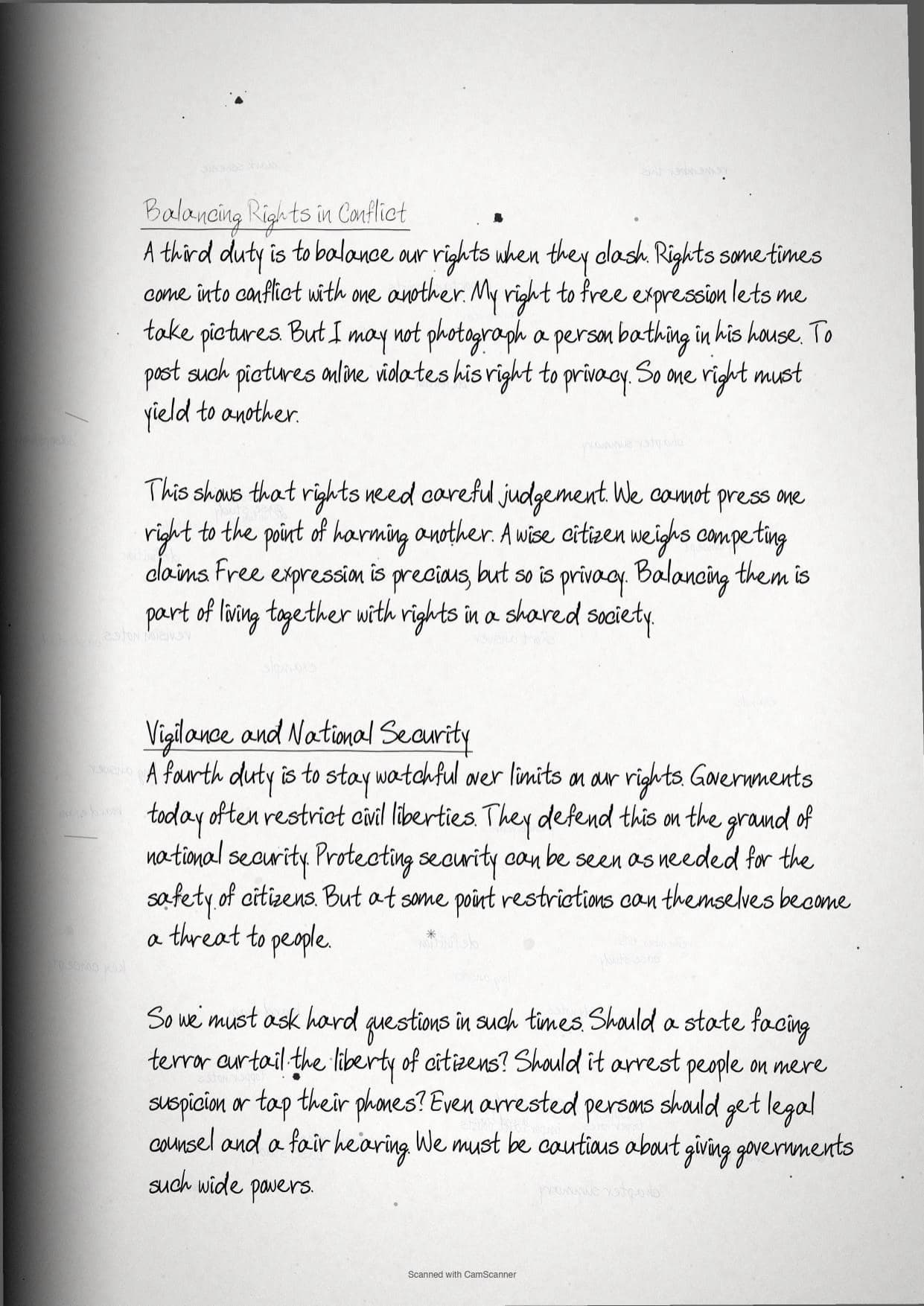
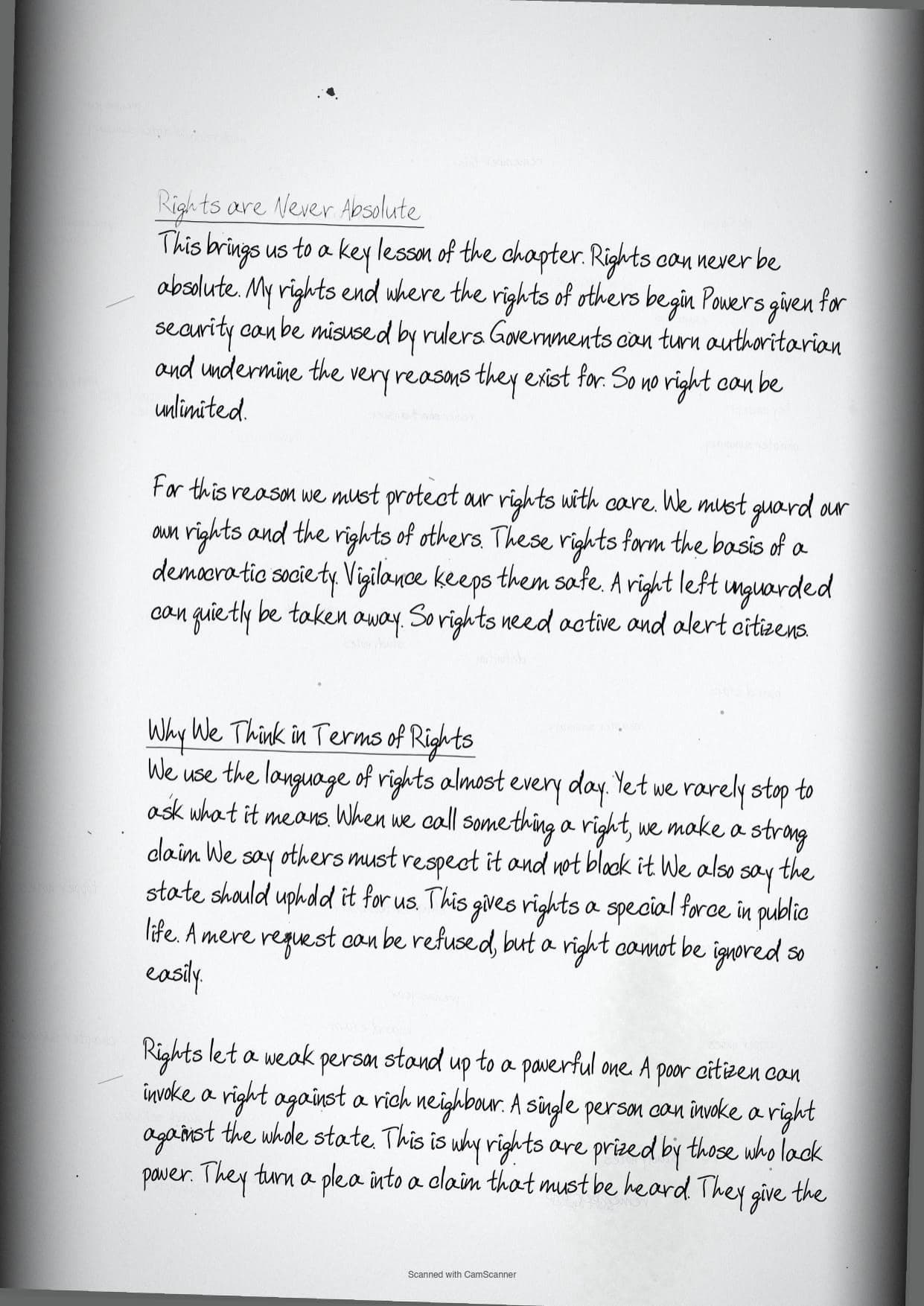
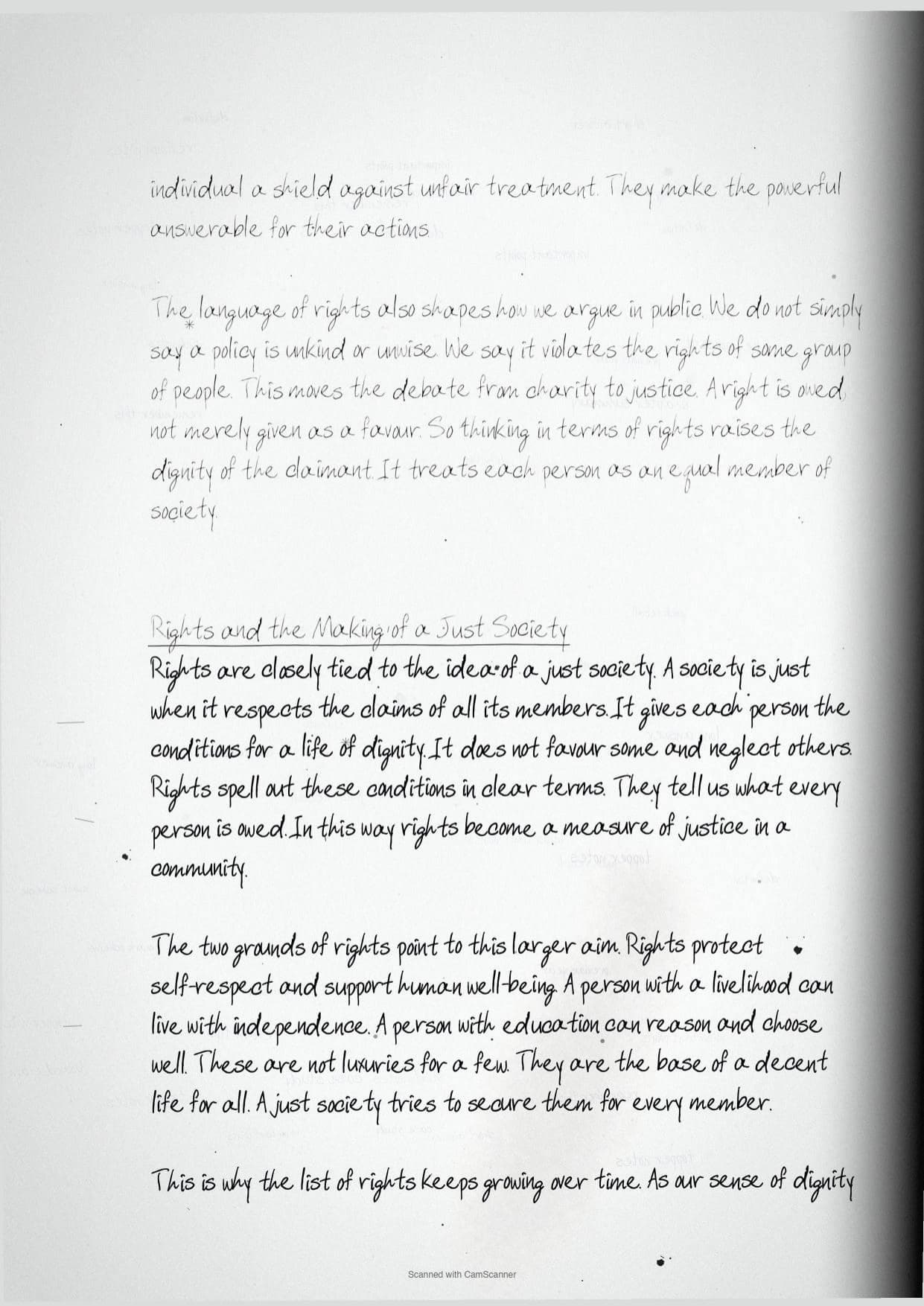
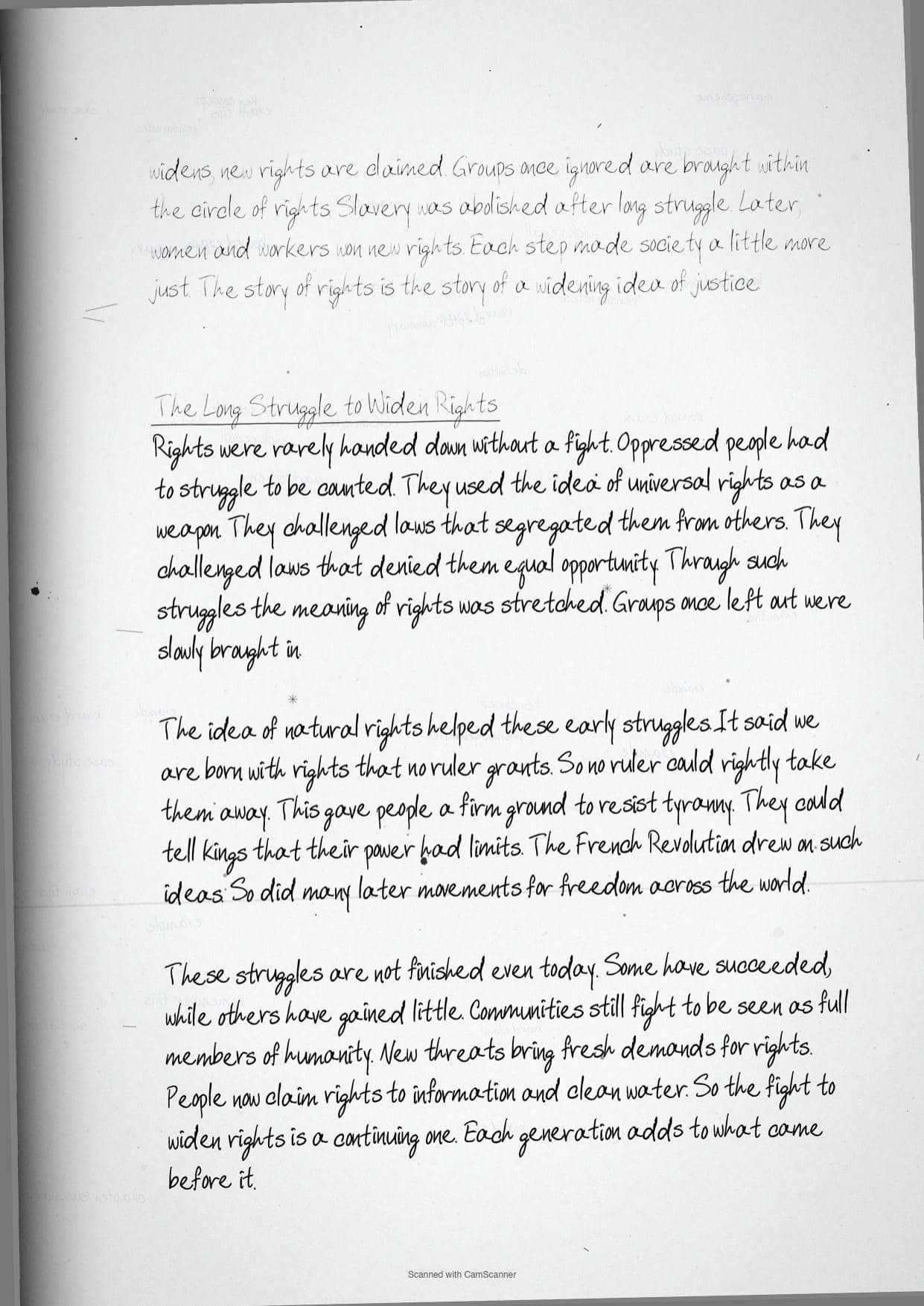
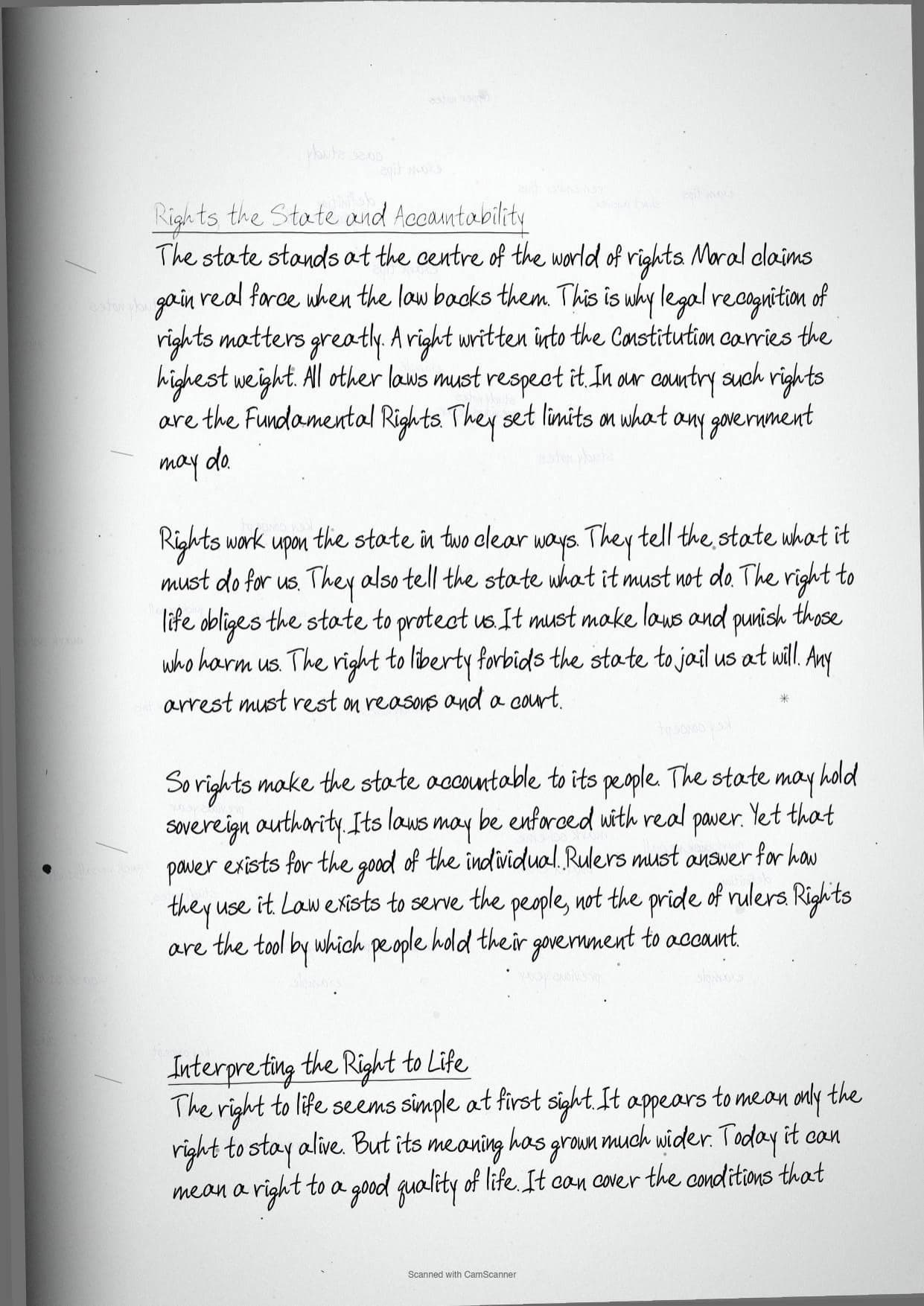
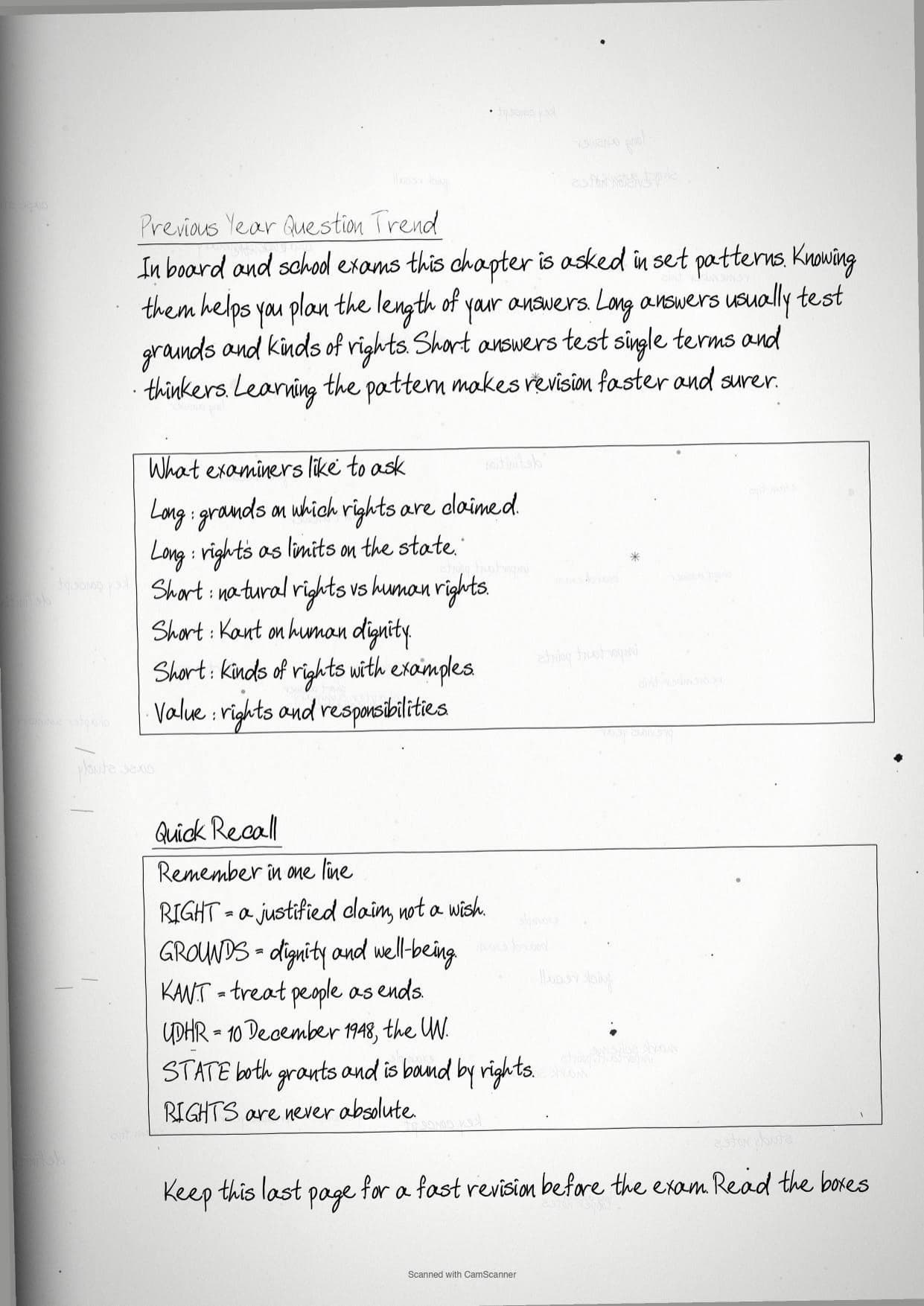

- CBSE Class 11 Weightage: a scoring chapter in the Political Science paper, asked in short and long answers.
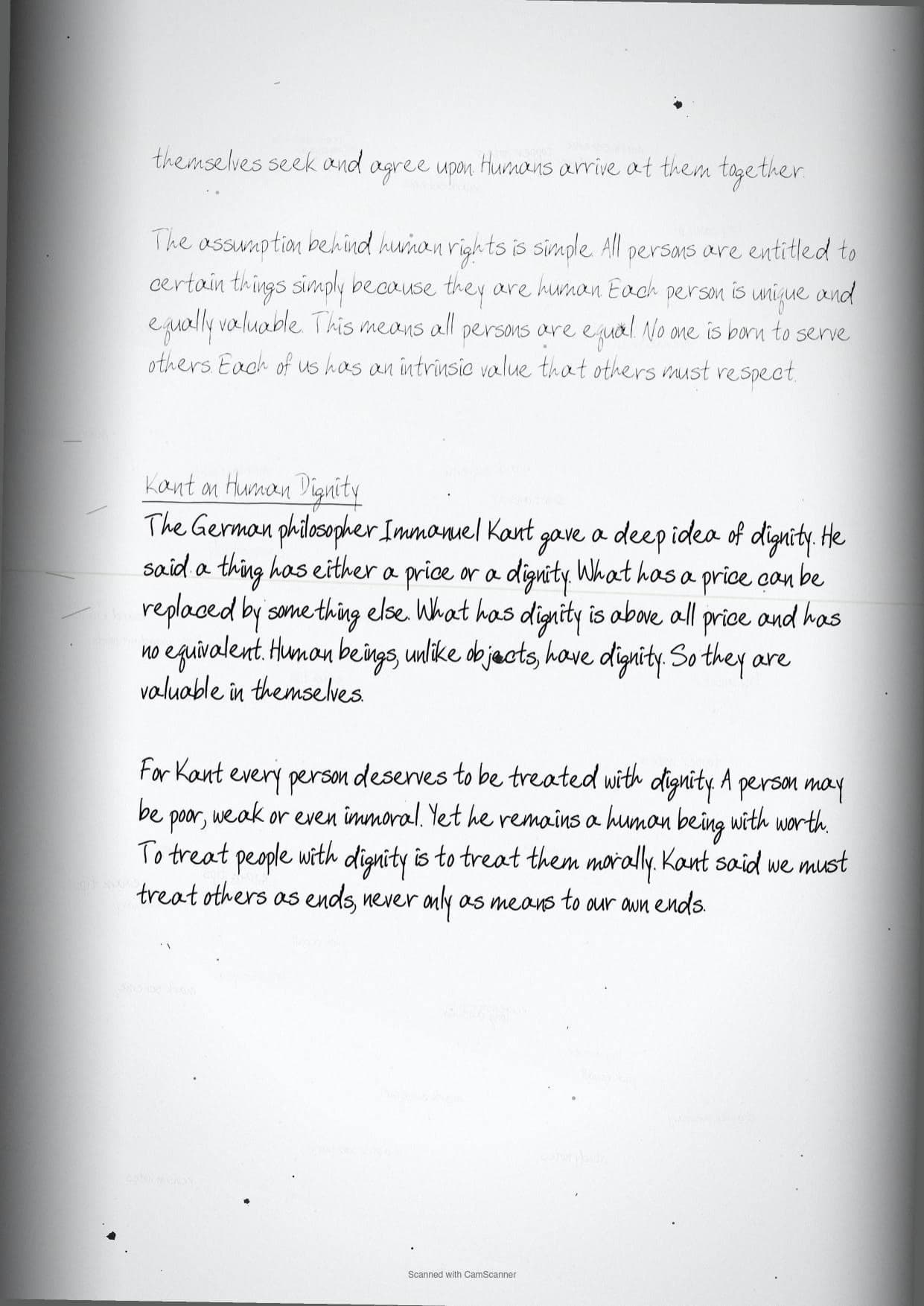
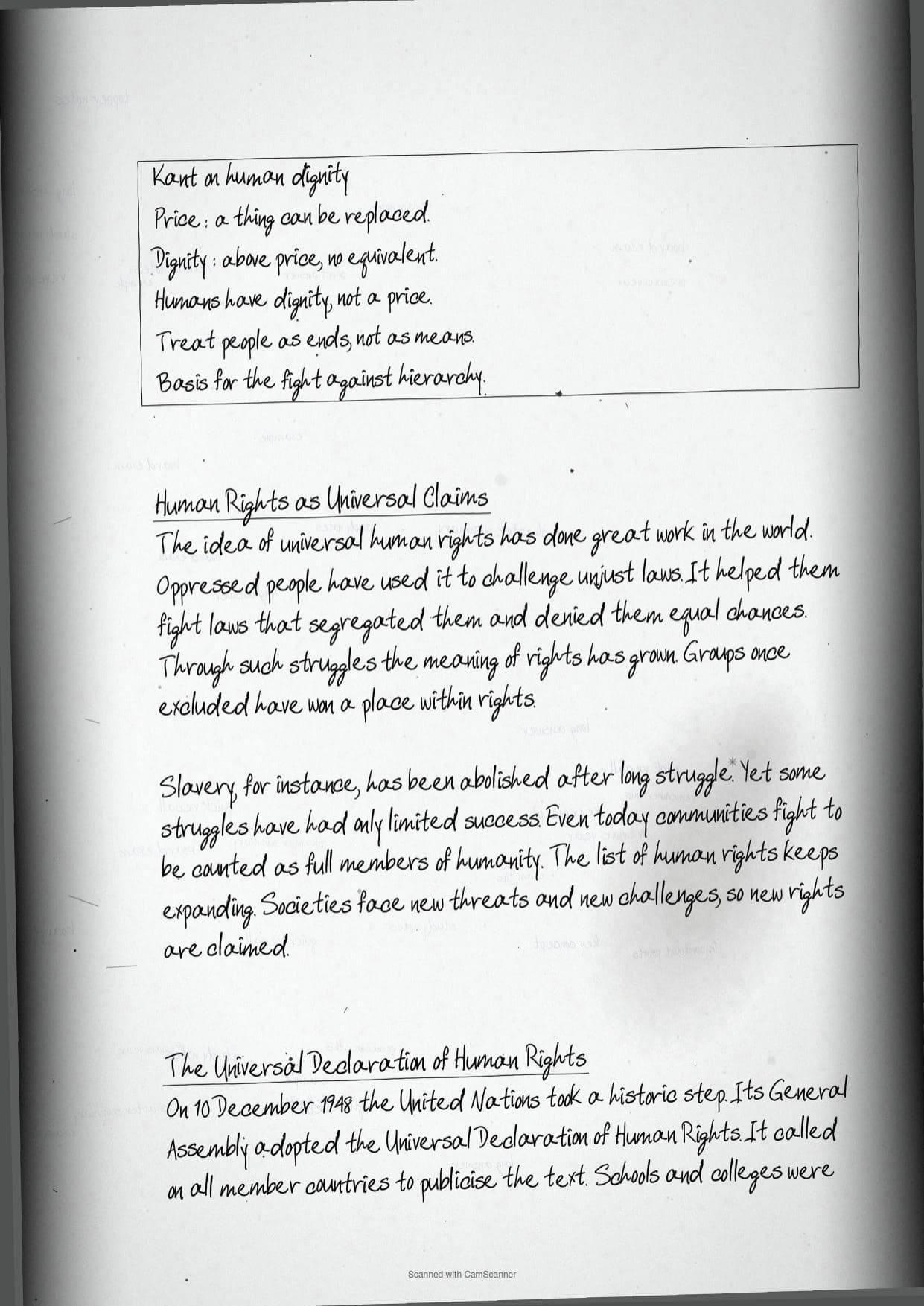
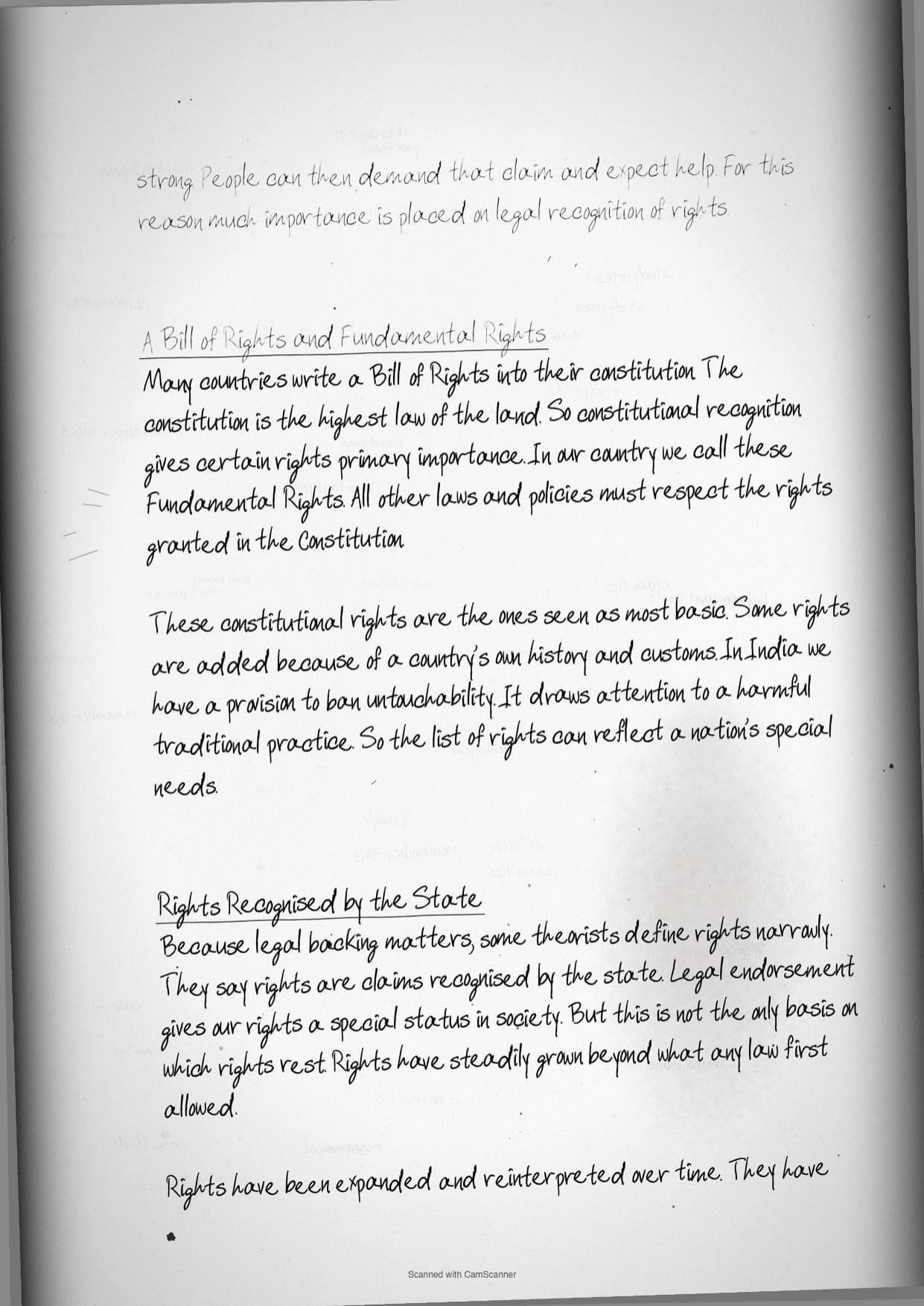
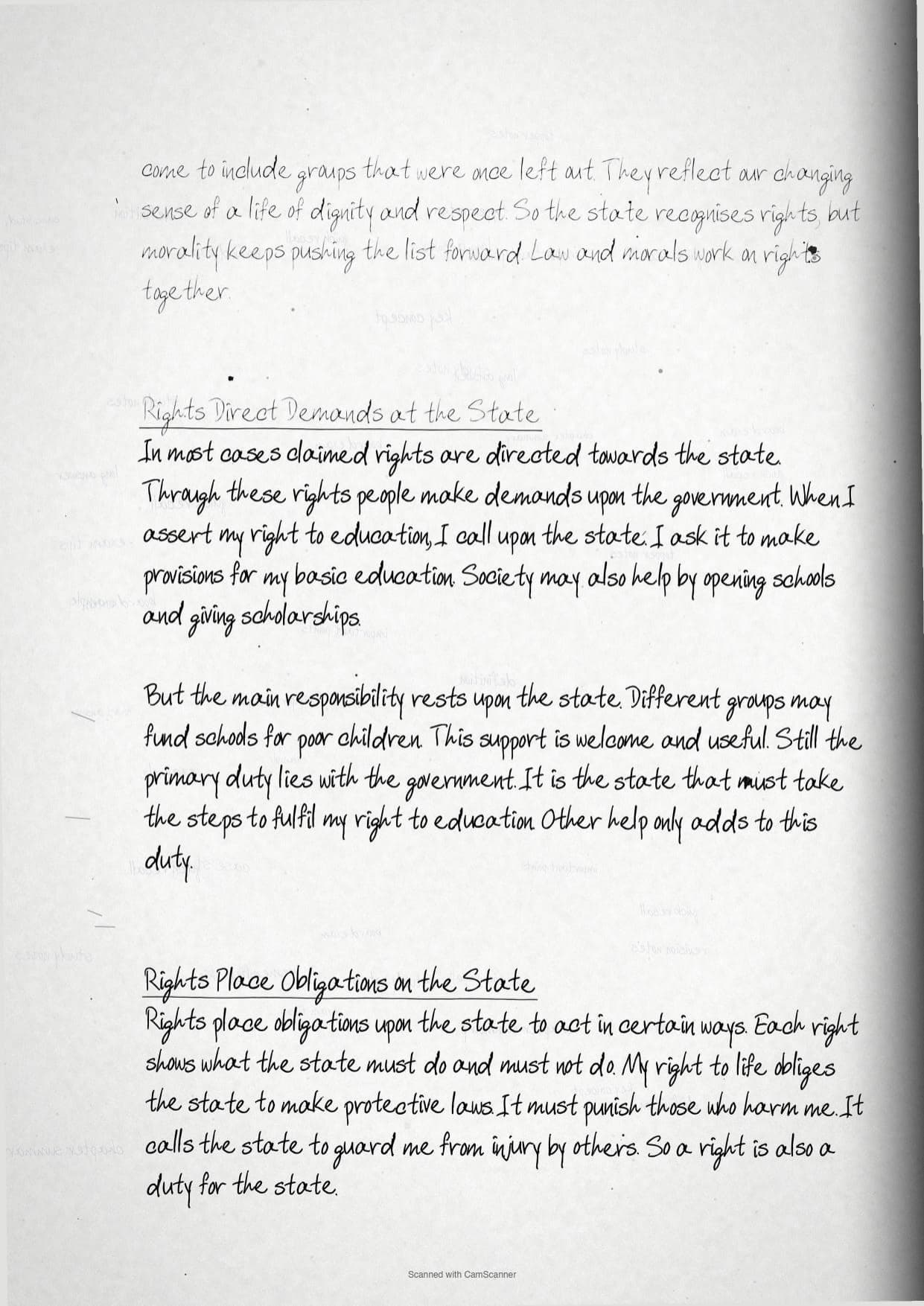
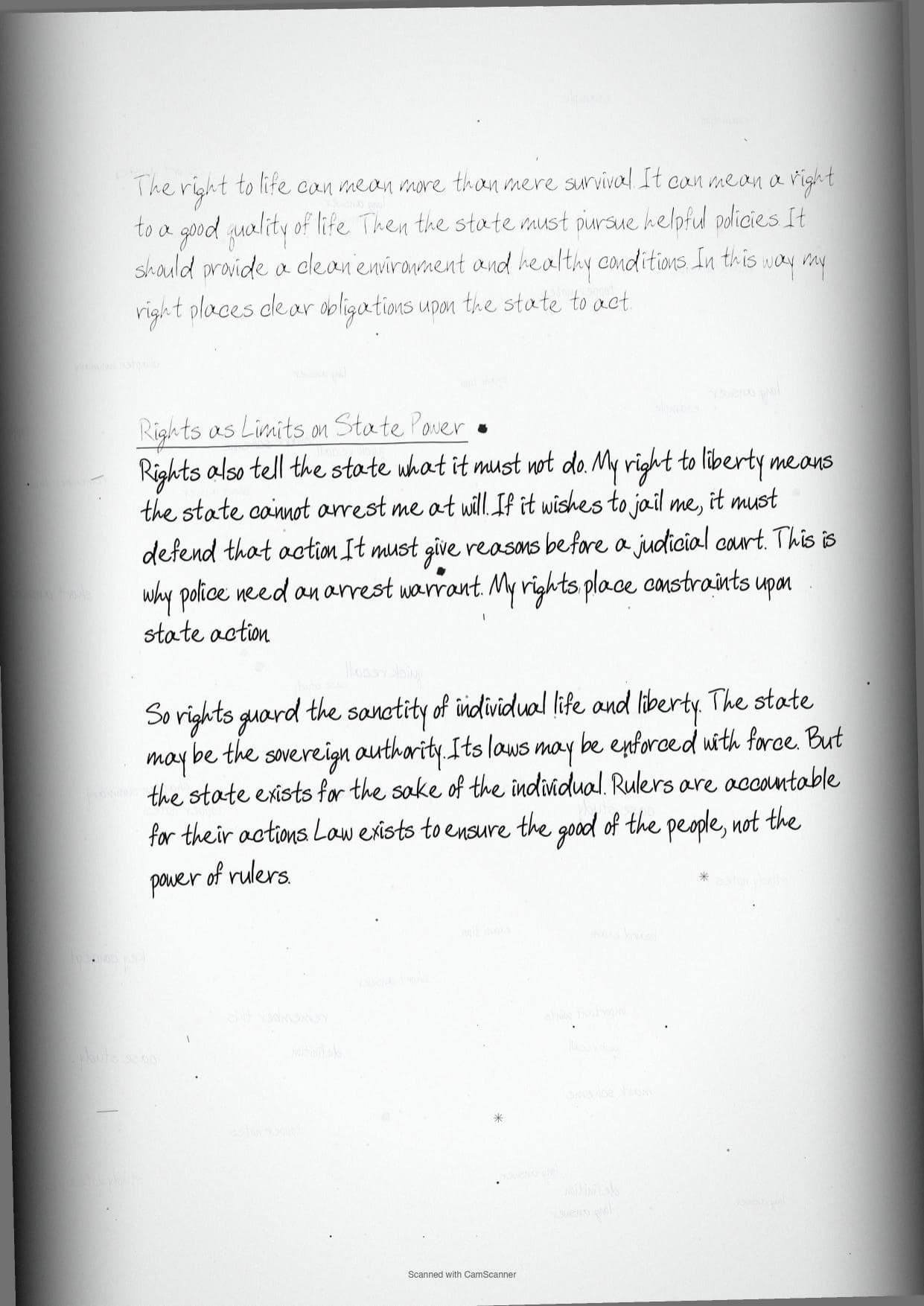
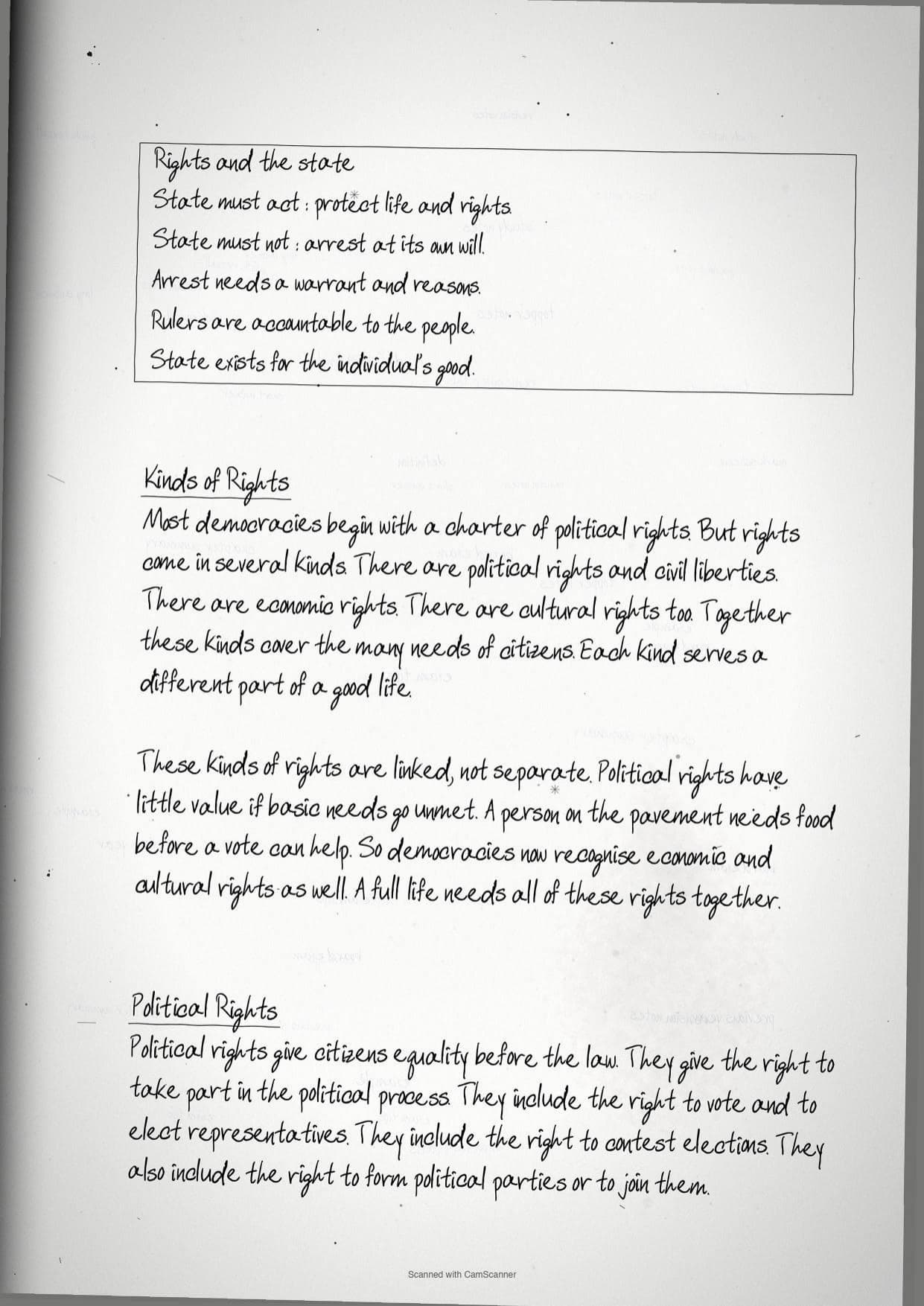
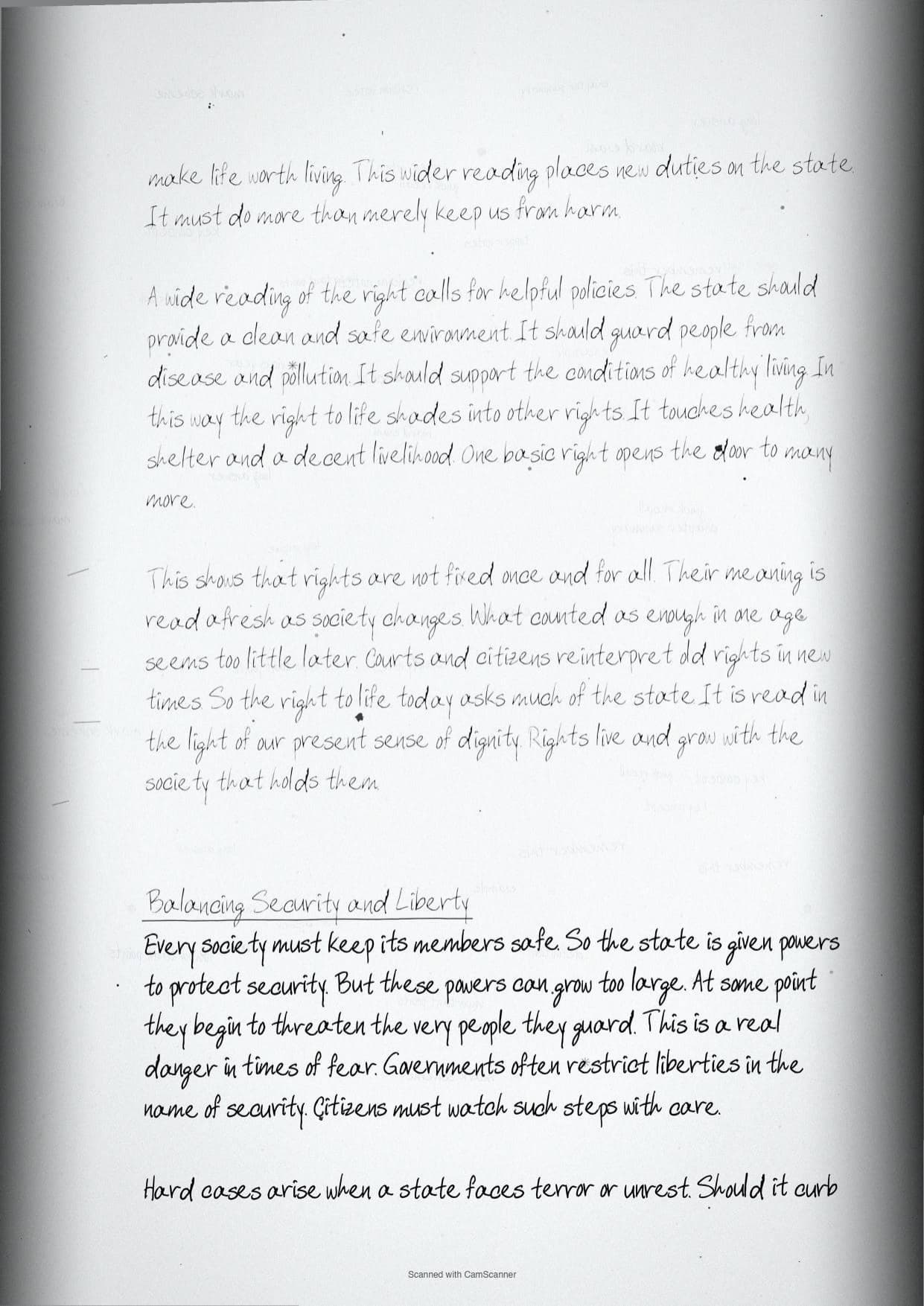
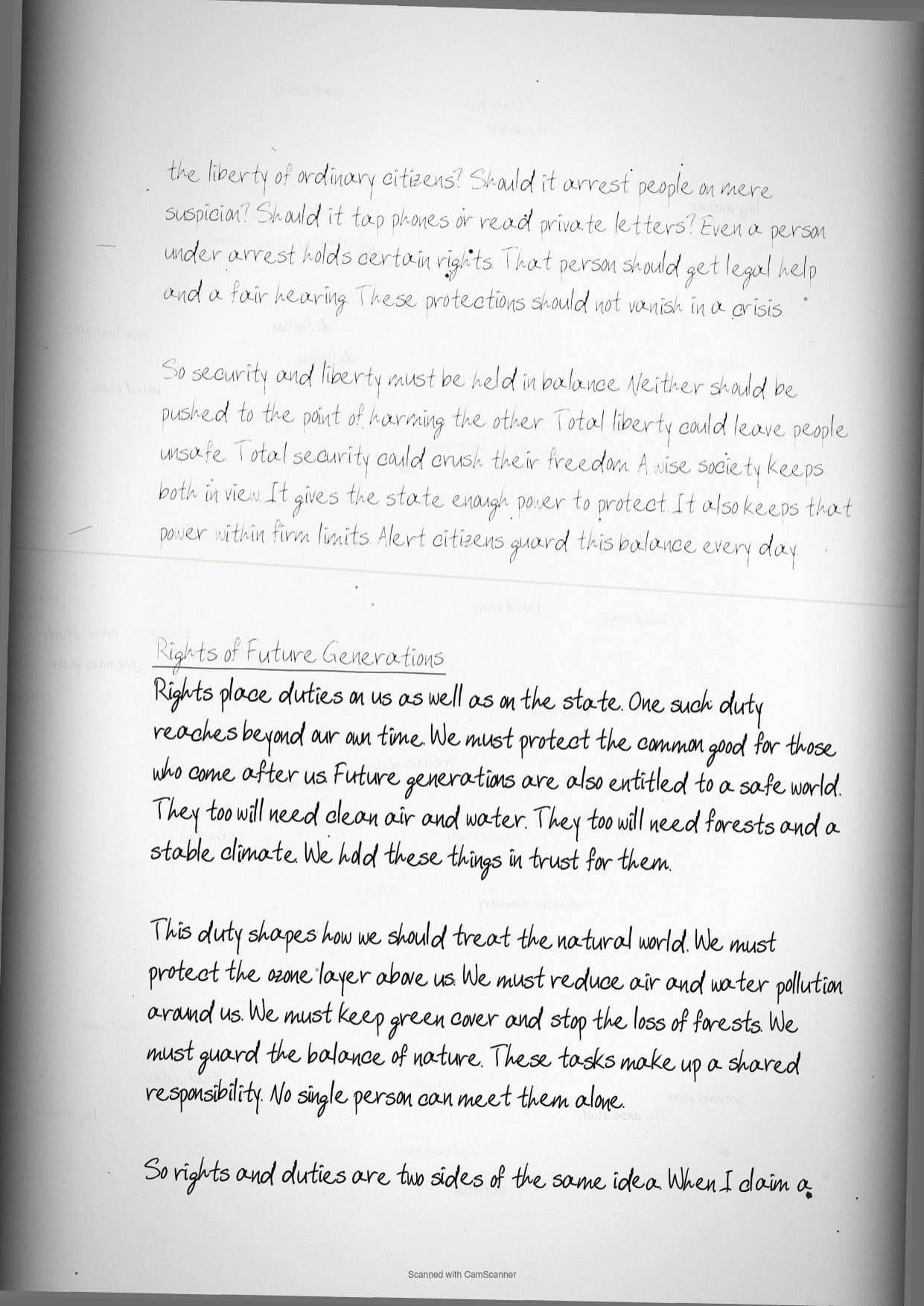
- What the notes cover: what a right is and what it is not, grounds of rights: dignity and well-being, natural rights and human rights, kant on human dignity.
- Best for: quick revision before Class 11 exams and a base for CUET later.
You can read the complete class 11 political-science handwritten notes for Rights, with key terms, boxed definitions, and quick revision points, in the PDF below.
These handwritten notes are written by subject teachers, mapped to the 2026-27 NCERT, and checked against the last five years of CBSE Class 11 Political Science papers.
What the Rights Handwritten Notes Cover
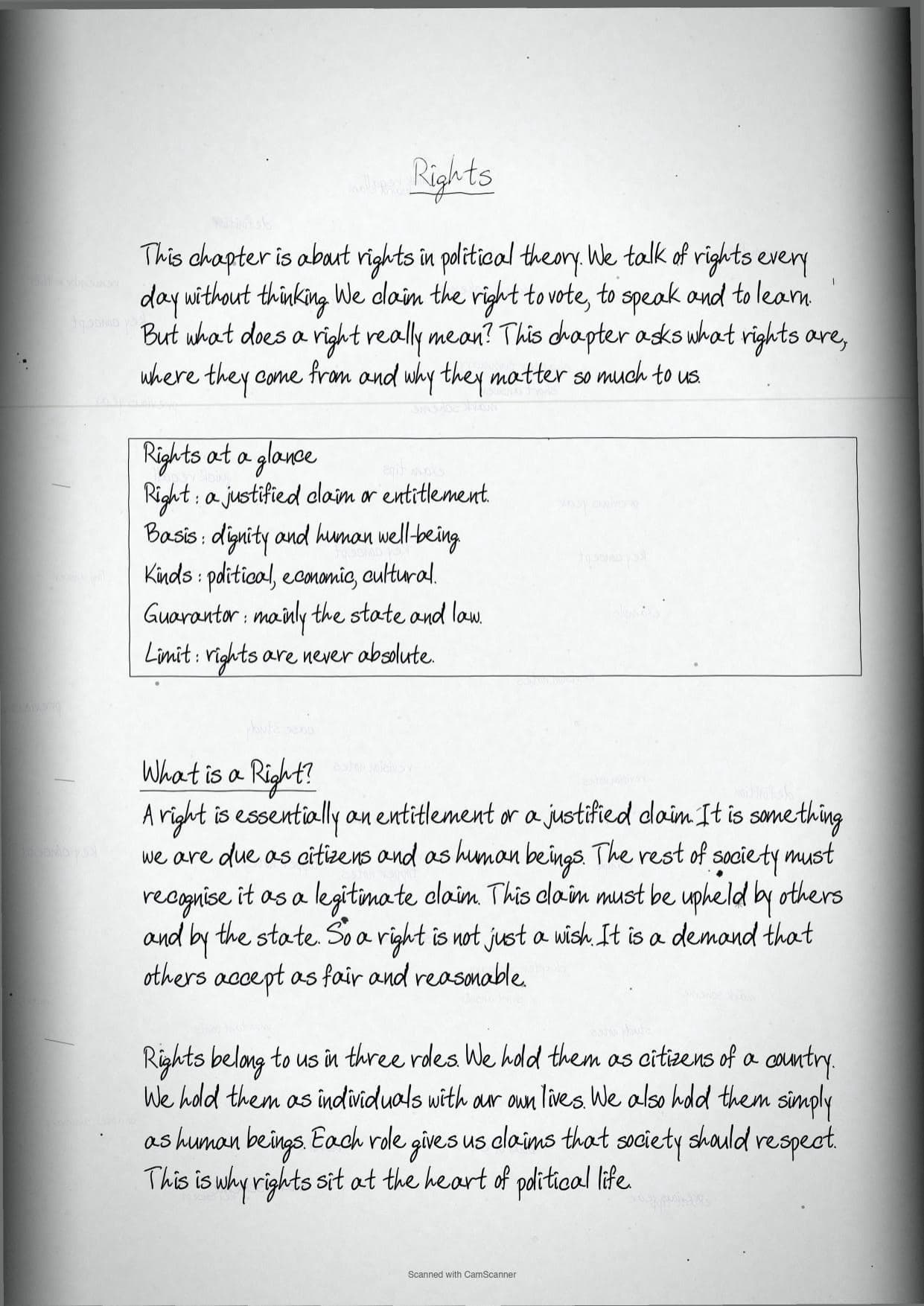
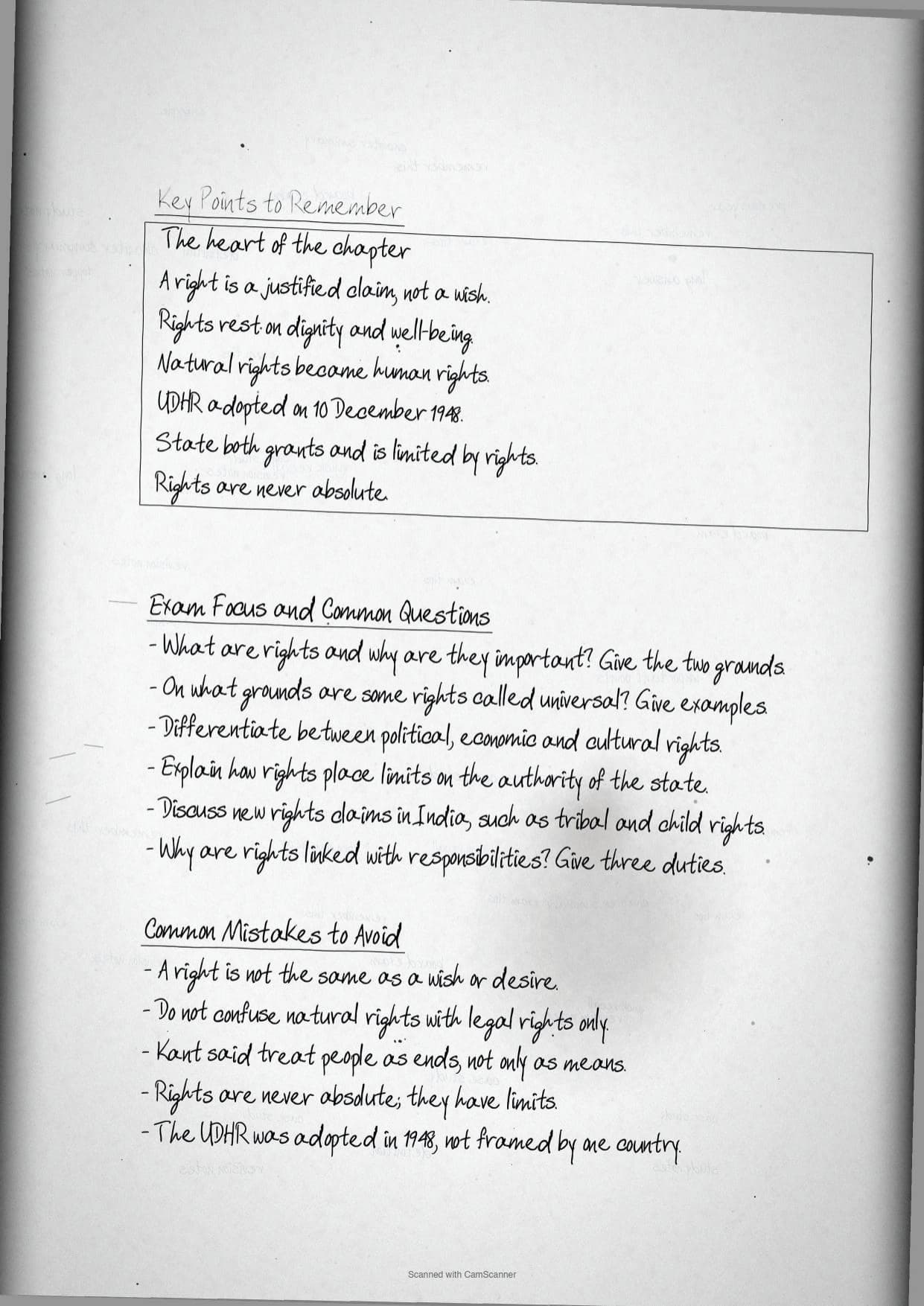
Rights are justified claims we hold as citizens, individuals and human beings. This chapter asks what rights mean, where they come from and why they matter. It also shows why no right can ever be absolute.
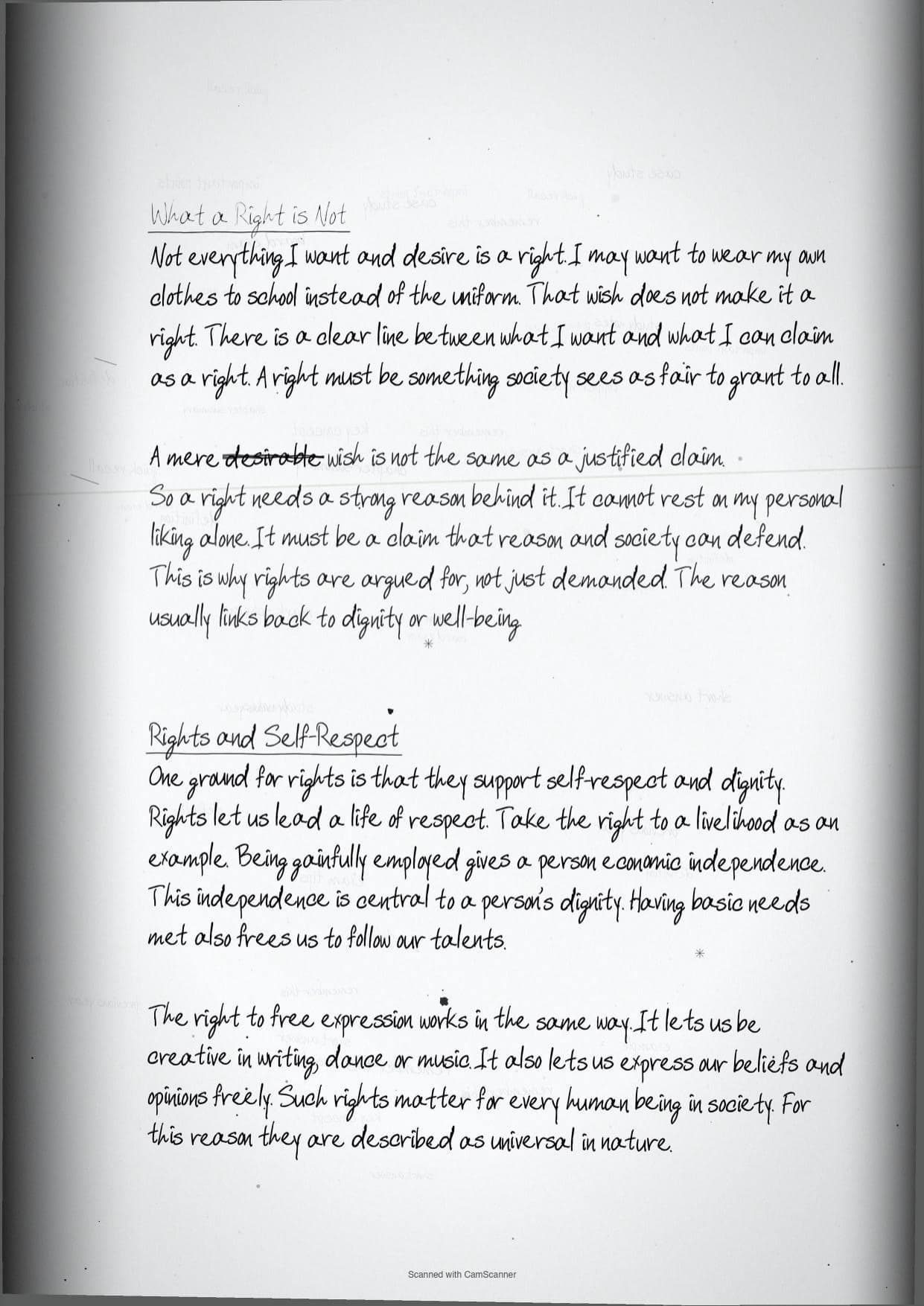
- What a right is and what it is not
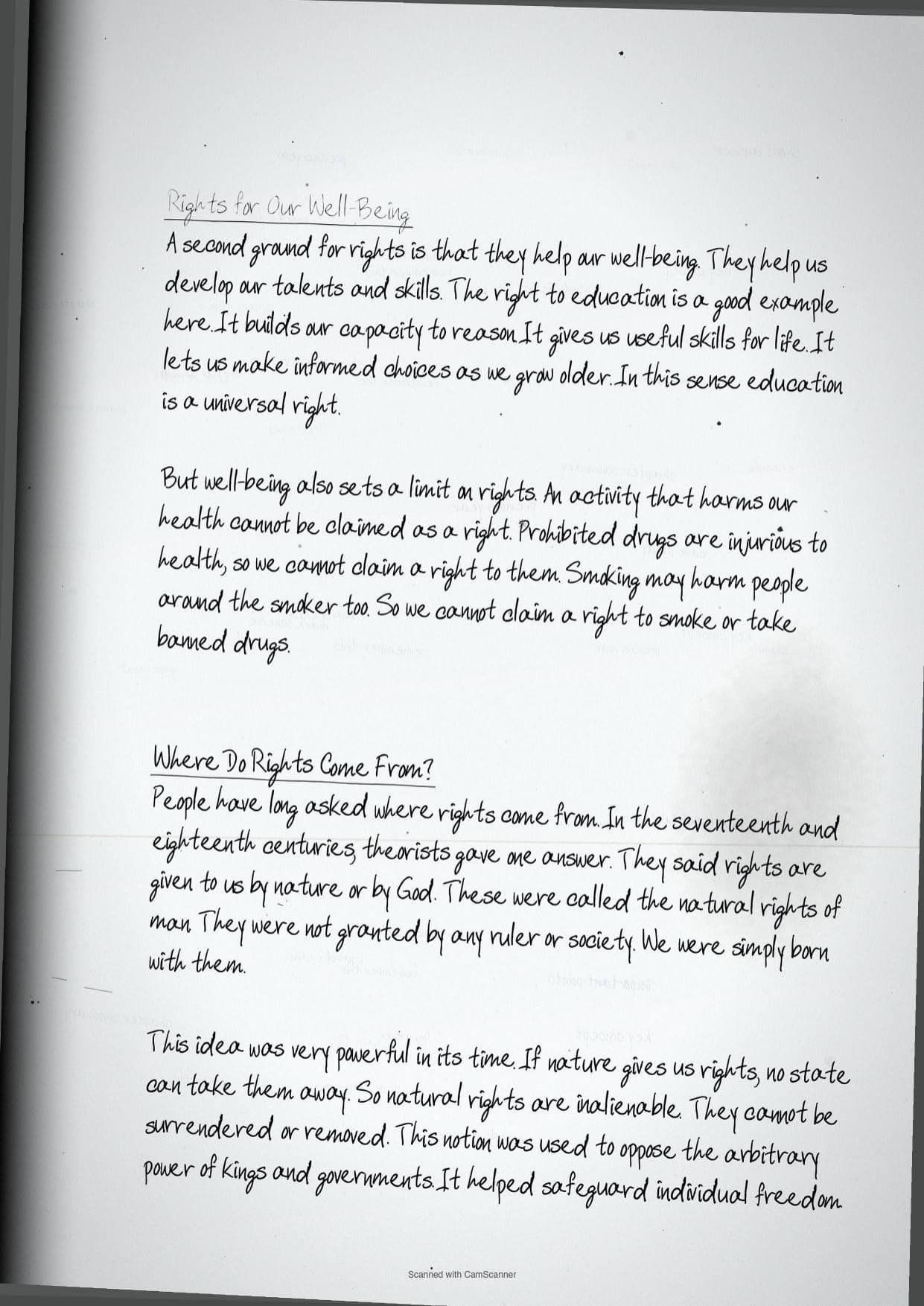
- Grounds of rights: dignity and well-being
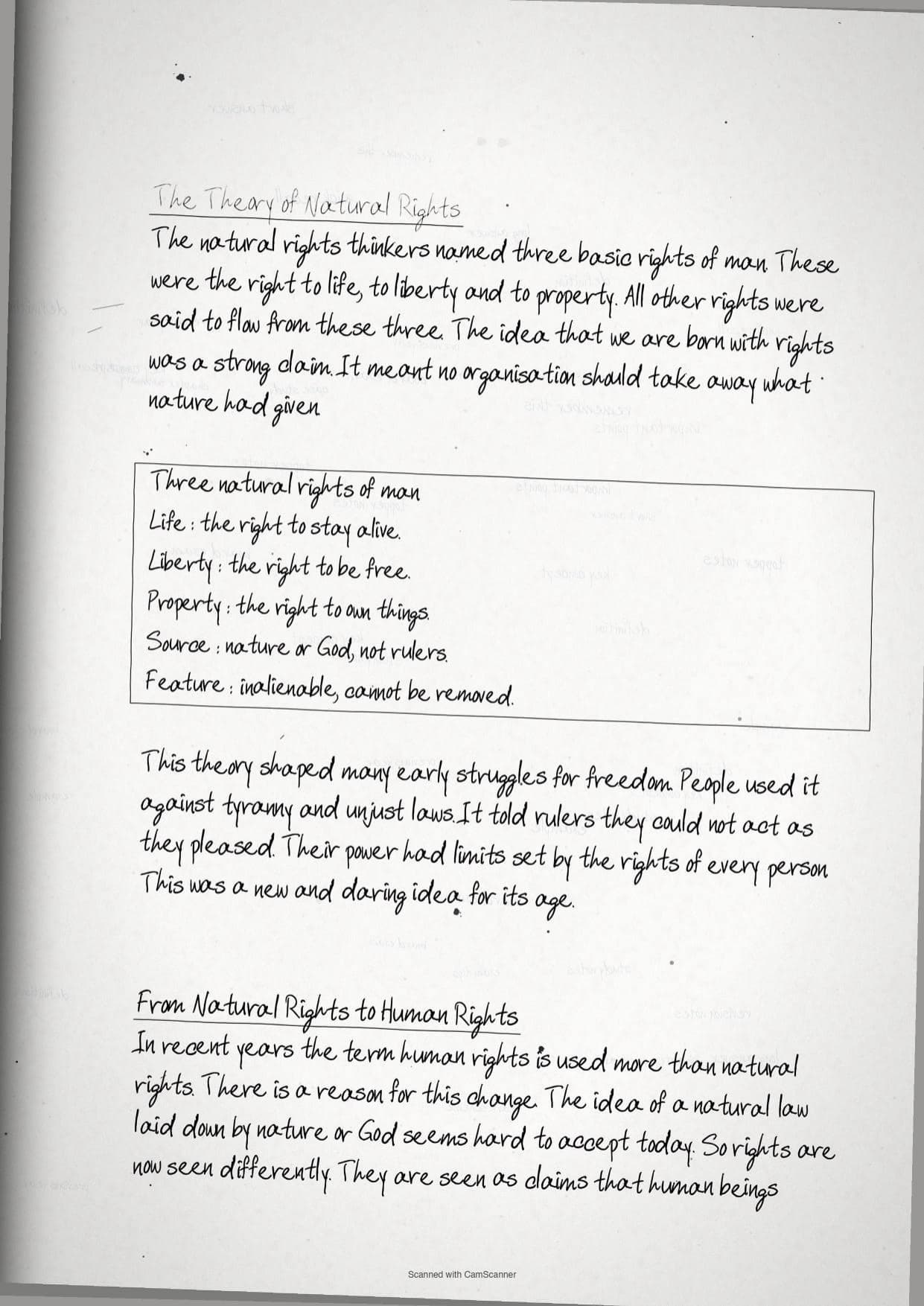
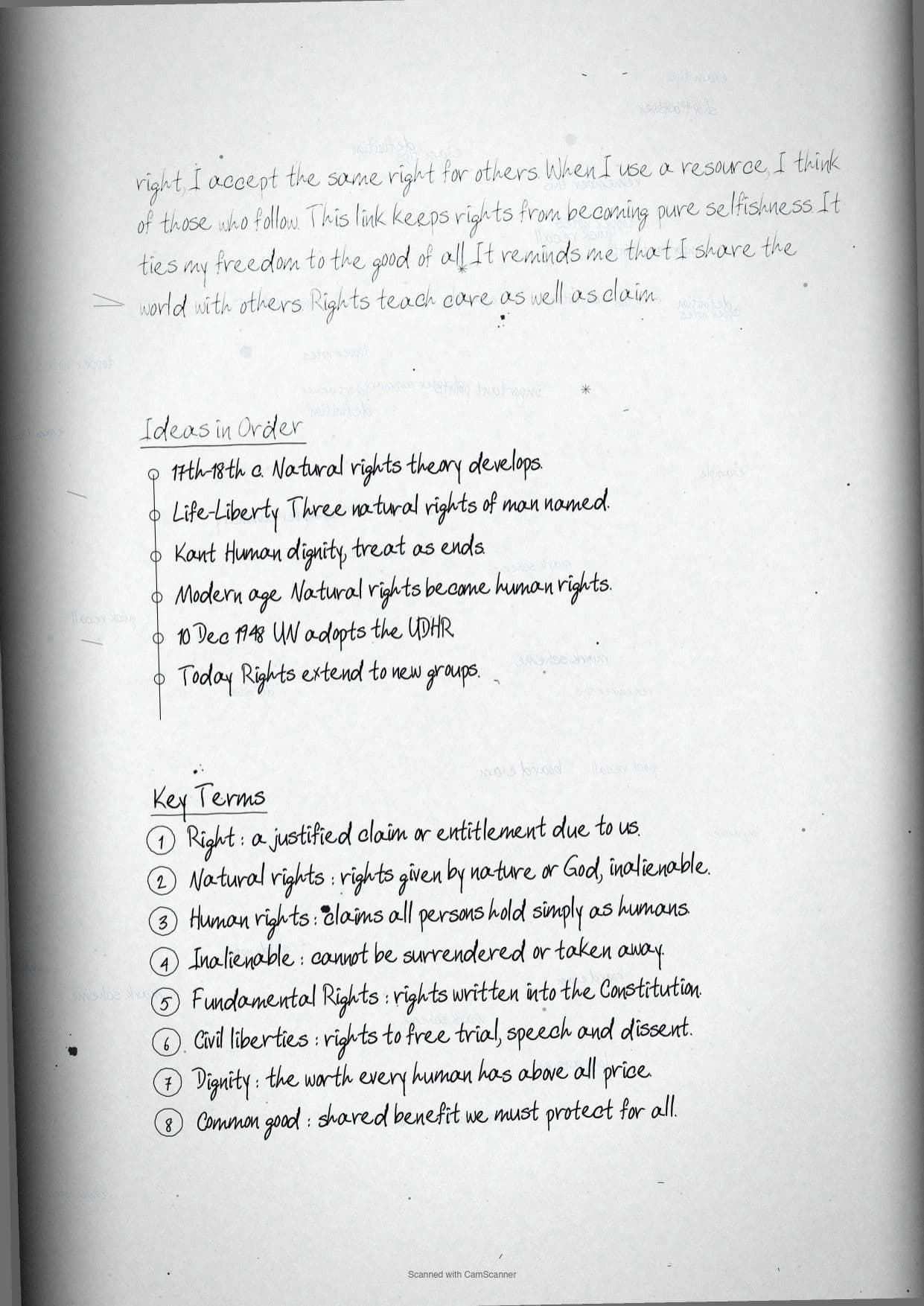
- Natural rights and human rights
- Kant on human dignity
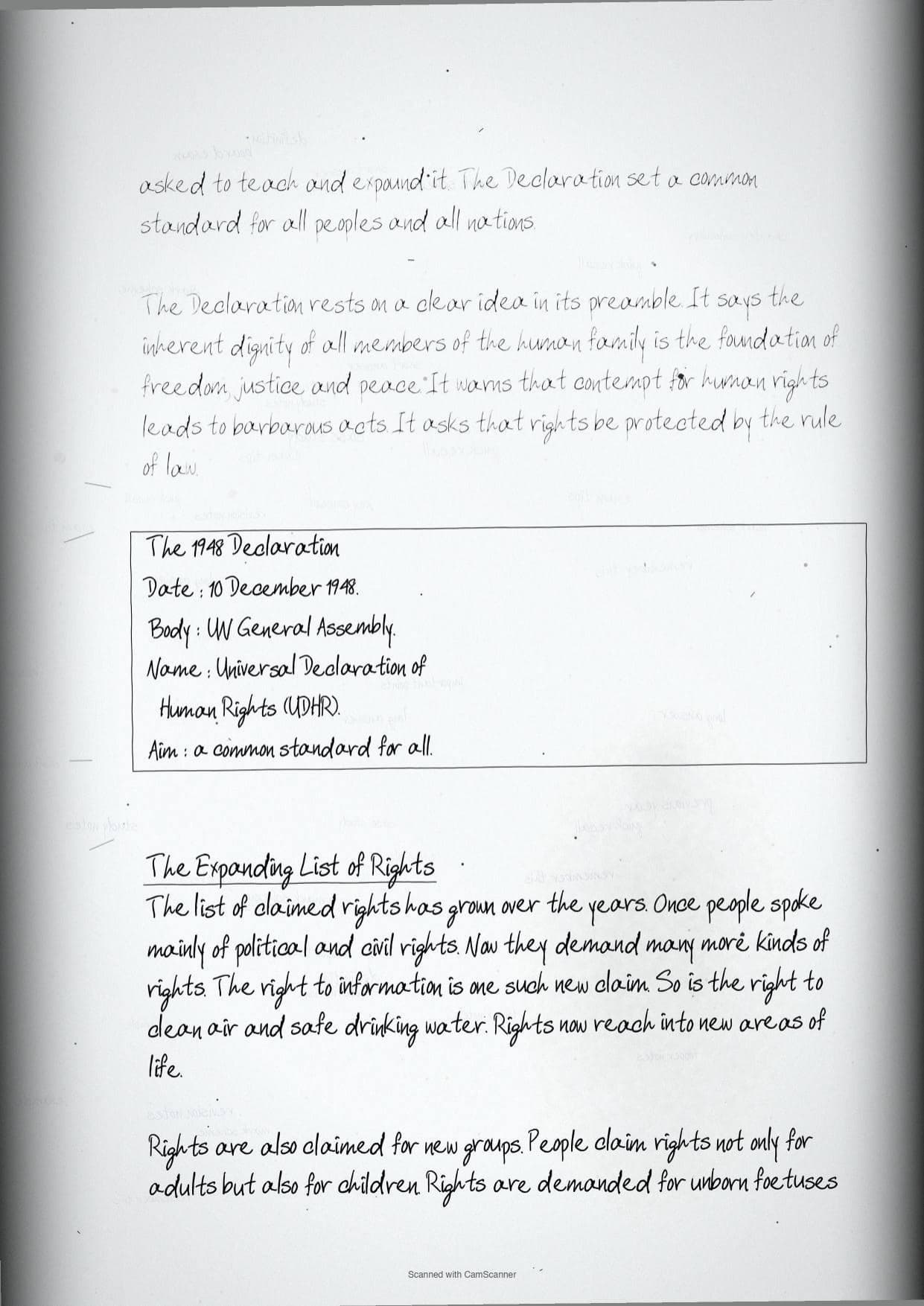
- The Universal Declaration of 1948
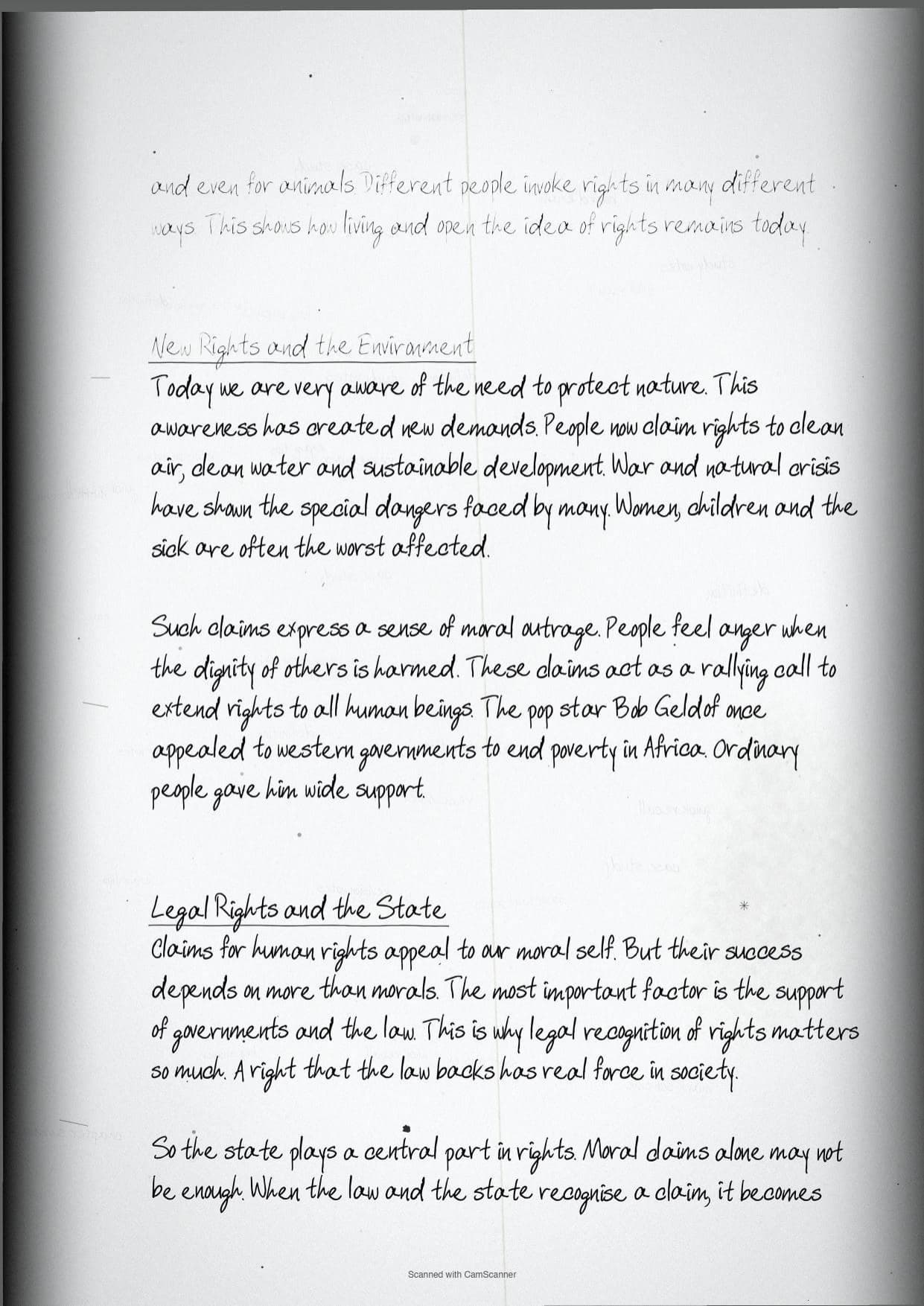
- Legal rights and the role of the state
- Political, economic and cultural rights
Rights Topic-wise Weightage for CBSE Class 11 Political Science
Some parts of this chapter are asked more often than others. The table below shows which sub-topics to revise first, based on recent CBSE Class 11 question trends.
| Sub-topic | Weightage | CBSE Frequency |
|---|---|---|
| Grounds and meaning of rights | High | asked often |
| Kinds of rights | High | asked often |
| Rights and the state | Medium | asked sometimes |
| Natural vs human rights | Medium | asked sometimes |
| Rights and responsibilities | Low | asked rarely |
Key Terms and Ideas in Rights
These are the terms and ideas the exam asks about most. Learn each one so you can define it and use it in your answers.
| Term / Idea | What it means |
|---|---|
| Right | a justified claim society must recognise |
| Natural rights | life, liberty and property from nature |
| Human rights | claims all persons hold as humans |
| Kant | treat people as ends, not only as means |
| UDHR | adopted by the UN on 10 December 1948 |
| Fundamental Rights | rights written into the Constitution |
| Kinds of rights | political, civil, economic, cultural |
| Limit | rights are never absolute |
How Collegedunia's Handwritten Notes Help You Revise Rights
These notes are made for the night before the exam. They keep the facts short and easy to scan. Collegedunia maps every point to the 2026-27 NCERT.
- Clear handwriting: each topic is written in neat, easy-to-read handwriting.
- Boxed key terms: the main terms and definitions are boxed by hand for fast recall.
- Diagrams and tables: simple hand-drawn tables and charts make ideas clear.
- Colour-coded headings: new sub-topics stand out, so you find any section in seconds.
Rights Self-Assessment Quiz
Try these quick questions after you read the notes. Tap each question to check your answer. They cover the points CBSE asks most often.
A right is best described as
(a) any personal wish (b) a justified claim (c) a legal duty only (d) a government order
Answer: (b) correct - a right is an entitlement or justified claim others must recognise
The three natural rights of man are
(a) life, liberty, property (b) vote, speech, work (c) food, shelter, health (d) equality, unity, order
Answer: (a) correct - natural rights theory named life, liberty and property
The UDHR was adopted on
(a) 26 January 1950 (b) 15 August 1947 (c) 10 December 1948 (d) 2 October 1945
Answer: (c) correct - the UN General Assembly adopted it on 10 December 1948
Kant said we must treat people as
(a) means to our ends (b) ends, not only means (c) tools of the state (d) equal to objects
Answer: (b) correct - Kant said treat people as ends, never only as means
Which is a political right?
(a) right to a minimum wage (b) right to mother tongue (c) right to vote (d) right to clean air
Answer: (c) correct - the right to vote is a political right
How to Use These Handwritten Notes for Class 11 Political Science Revision
Use these class 11 political-science handwritten notes in two passes. Read them slowly once for the full chapter. Then, near the exam, read only the boxes and key terms for a fast recall.
- Read the notes once with the NCERT chapter open beside you.
- Say each key term and idea in your own words.
- Practise one long-answer question from a past paper.
- On the last day, revise only the key terms and the boxes.
Class 11 Political Science Handwritten Notes for All Chapters
The table below links the class 11 political-science handwritten notes for every chapter. Use it to jump to any other chapter's notes.
| Chapter | Resource |
|---|---|
| Chapter 1 | Constitution: Why and How Handwritten Notes |
| Chapter 2 | Rights in the Indian Constitution Handwritten Notes |
| Chapter 3 | Election and Representation Handwritten Notes |
| Chapter 4 | Executive Handwritten Notes |
| Chapter 5 | Legislature Handwritten Notes |
| Chapter 6 | Judiciary Handwritten Notes |
| Chapter 7 | Federalism Handwritten Notes |
| Chapter 8 | Local Governments Handwritten Notes |
| Chapter 9 | Constitution as a Living Document Handwritten Notes |
| Chapter 10 | The Philosophy of the Constitution Handwritten Notes |
| Chapter 11 | Political Theory: An Introduction Handwritten Notes |
| Chapter 12 | Freedom Handwritten Notes |
| Chapter 13 | Equality Handwritten Notes |
| Chapter 14 | Social Justice Handwritten Notes |
| Chapter 15 | Rights Handwritten Notes |
| Chapter 16 | Citizenship Handwritten Notes |
| Chapter 17 | Nationalism Handwritten Notes |
| Chapter 18 | Secularism Handwritten Notes |
Rights Class 11 Political Science Handwritten Notes FAQs
Ques. Where can I download Rights Class 11 Political Science Handwritten Notes PDF?
Ans. You can download the Rights Class 11 Political Science Handwritten Notes PDF directly from this page. Both the Normal and HD versions are free.
Ques. Are these handwritten notes aligned with the 2026-27 NCERT?
Ans. Yes. These notes follow the current 2026-27 syllabus for Class 11 Political Science. Why can rights never be absolute?
Ques. How many pages is the Class 11 Political Science Rights Handwritten Notes PDF?
Ans. The notes run about 22 pages. They cover the full chapter with key terms, hand-drawn boxes, and a short self-assessment quiz.
Ques. What is the main idea of the 11th standard Political Science chapter Rights?
Ans. No right can be absolute because one person's rights end where another's begin. Powers given for security can be misused, so citizens must stay vigilant to protect rights.
Ques. Are these Rights notes enough for the CBSE Class 11 exam?
Ans. Yes, for revision. The Collegedunia handwritten notes cover every key point and exam term. Read them with the NCERT chapter and practise past questions.



Comments