




These class 11 physics handwritten notes chapter 2 Motion in a Straight Line have been carefully prepared for quick one-shot revision before Boards, JEE Main, JEE Advanced, NEET, CUET and NDA in 2026-27. The neat, colour-coded pages carry every kinematic equation, motion graph and formula box you need for a last, fast recap.
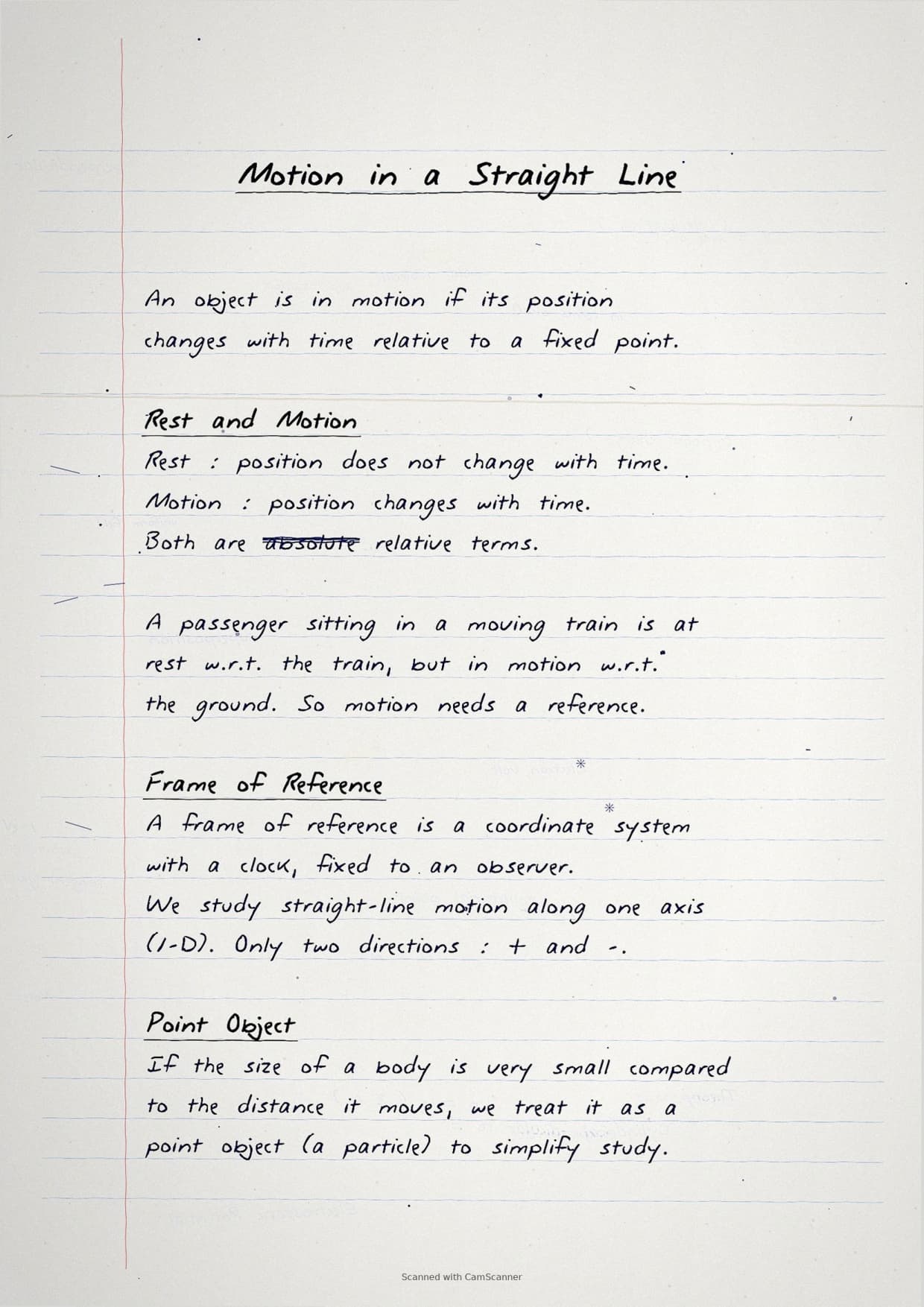
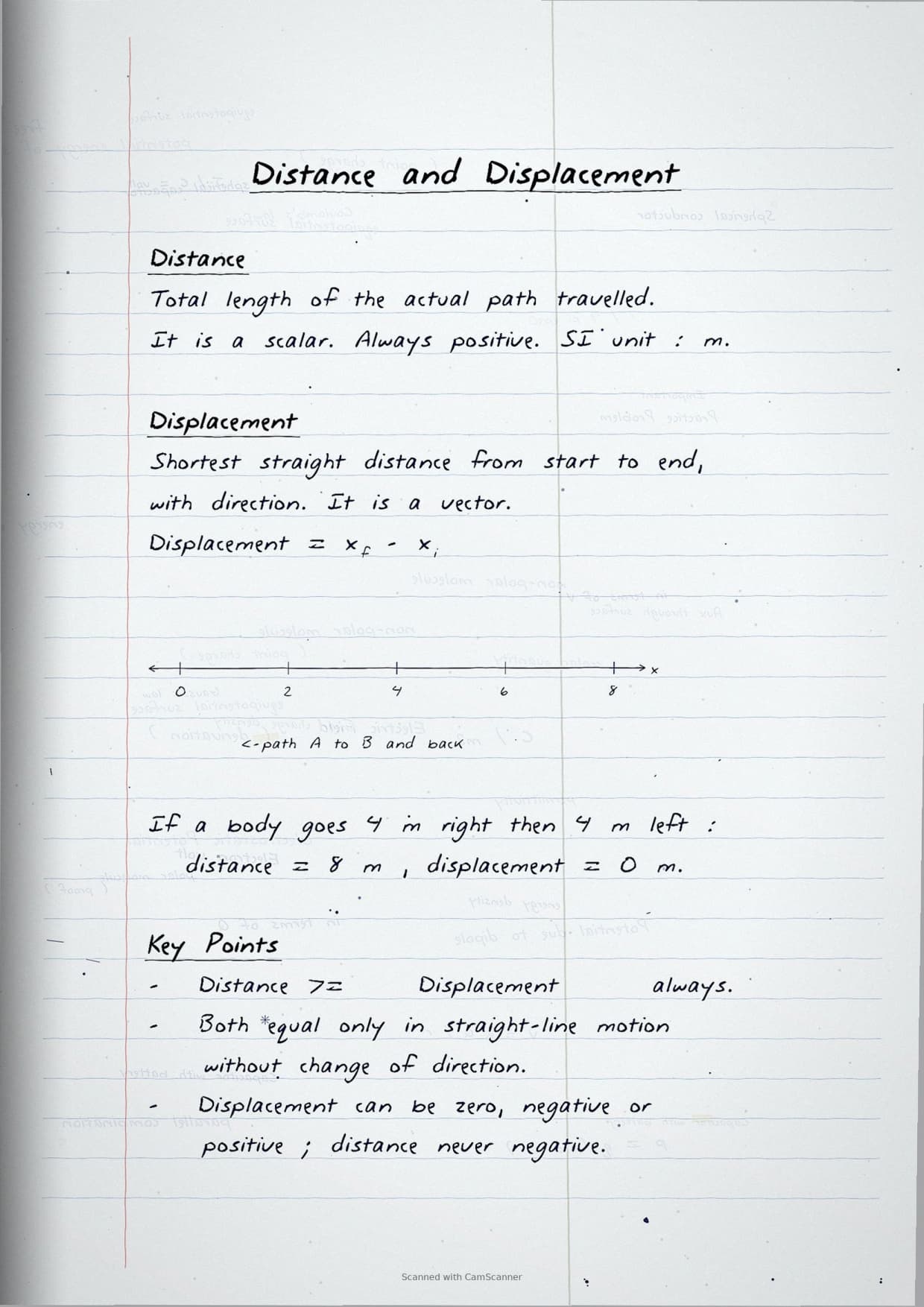
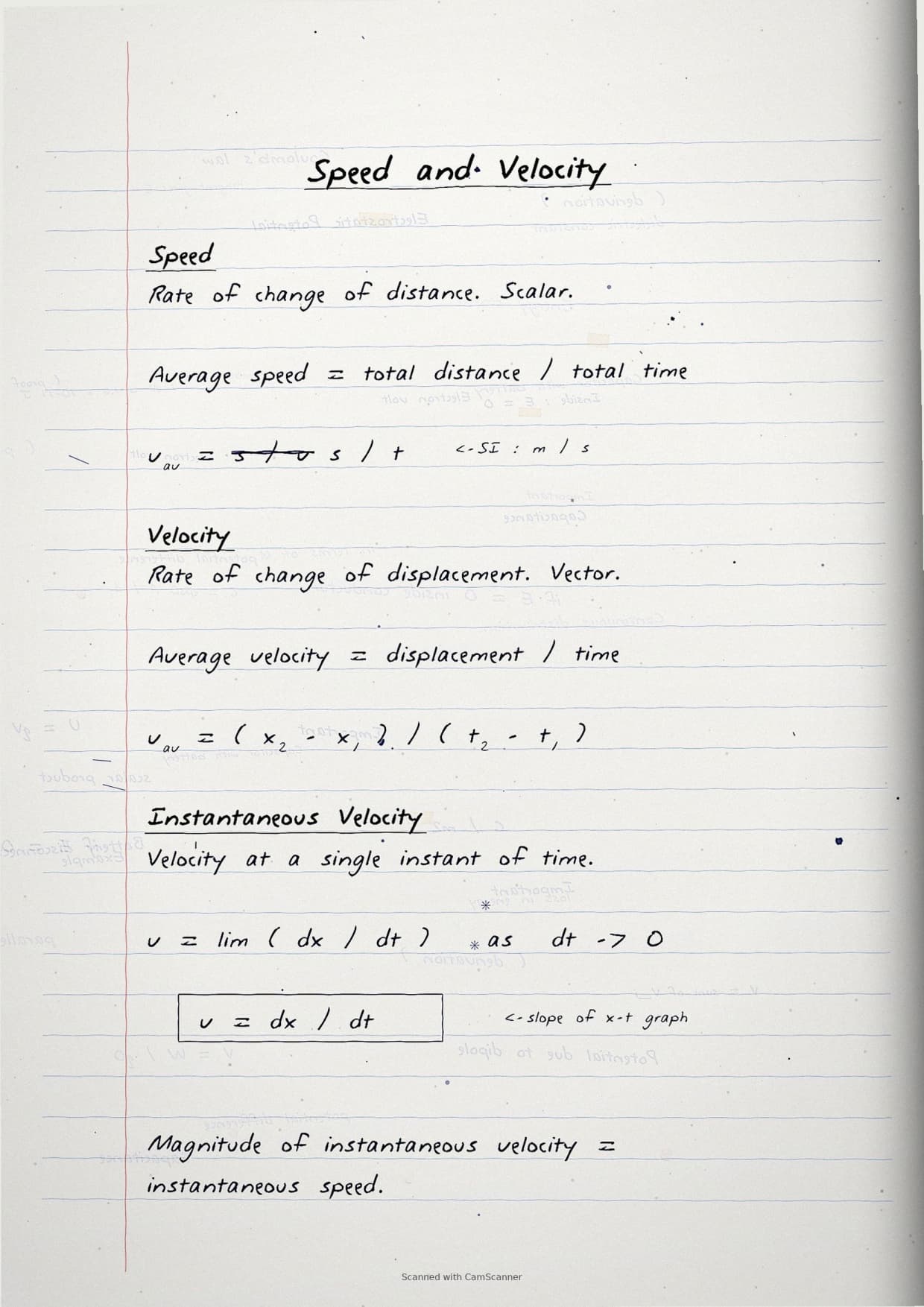
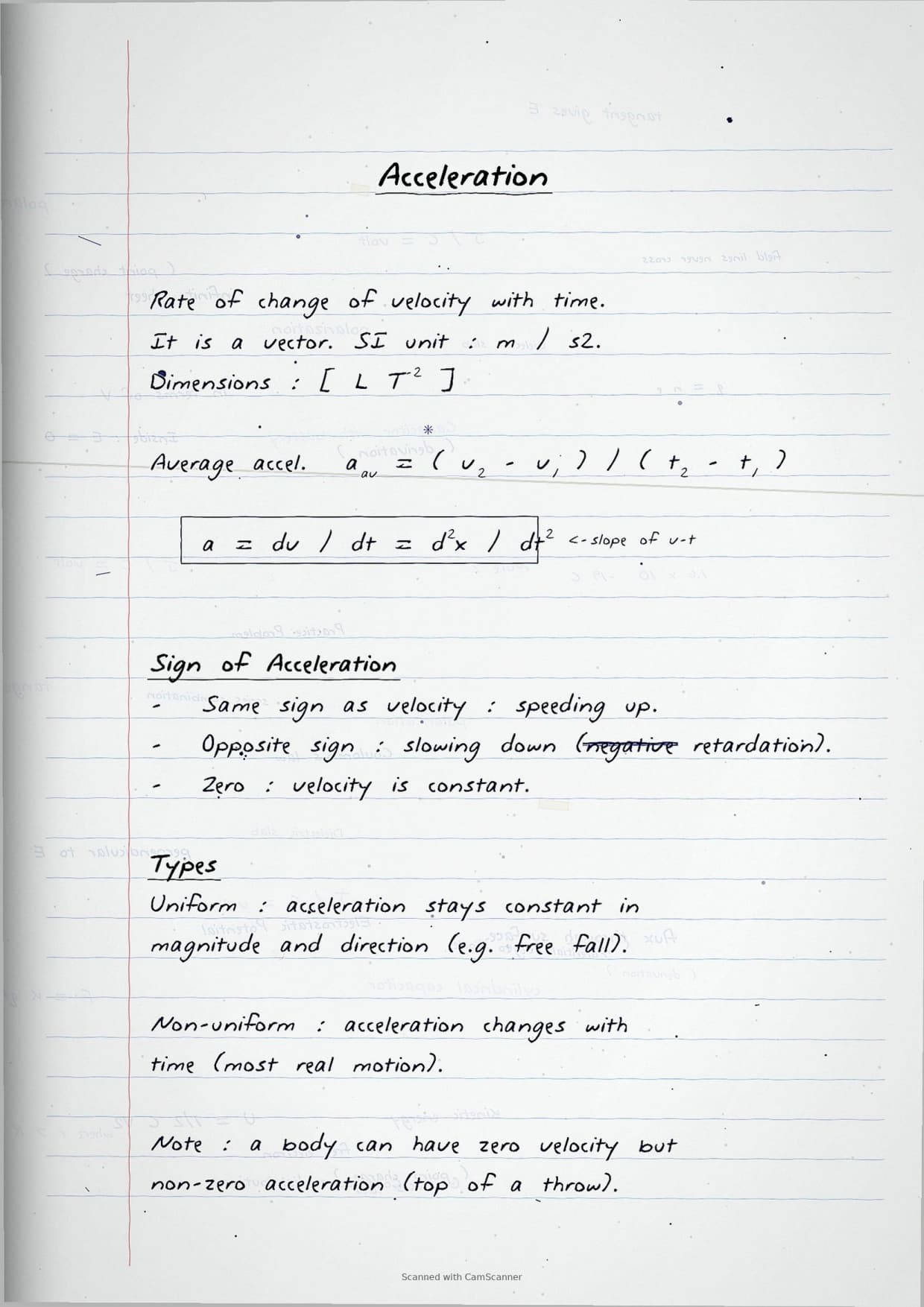
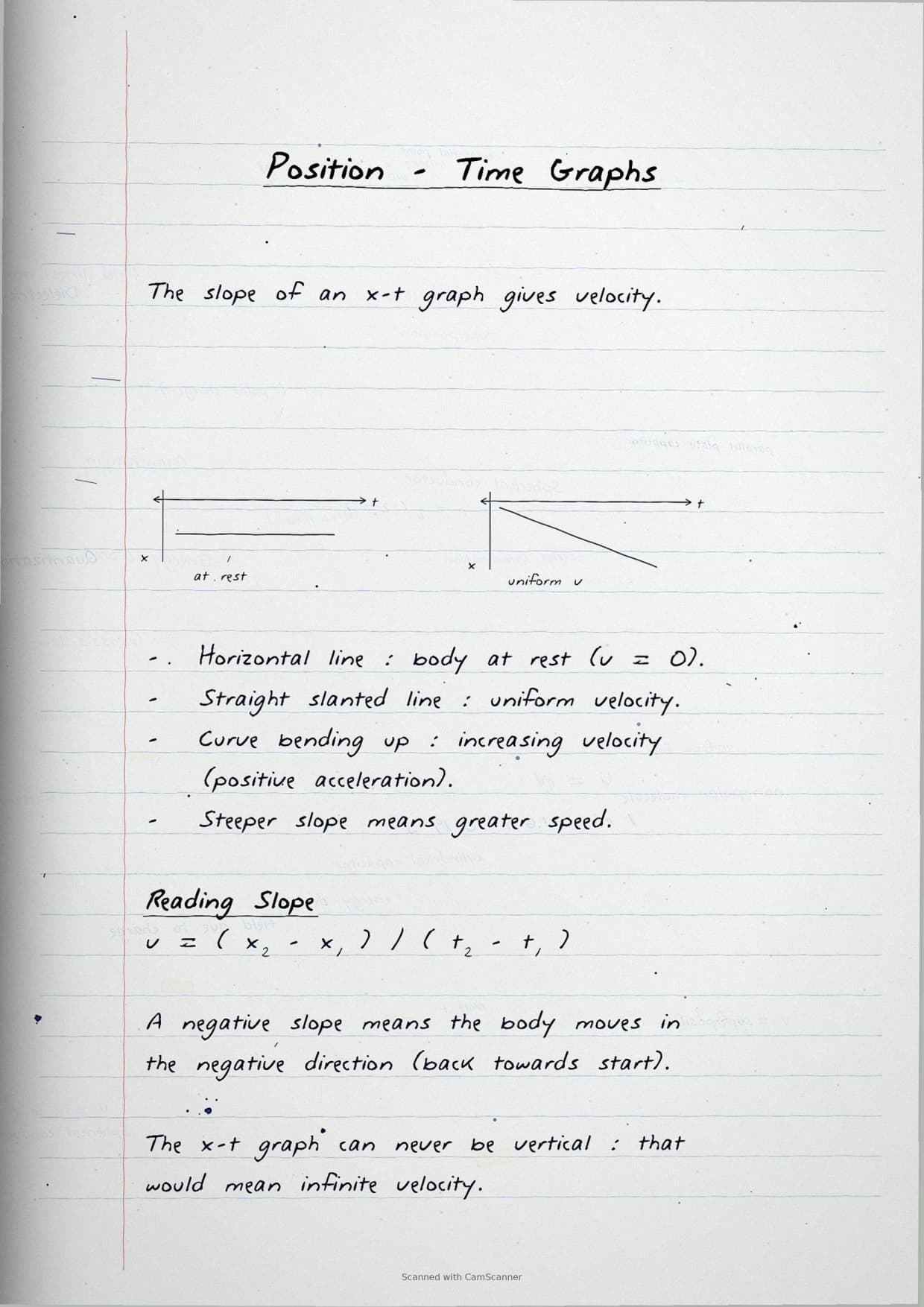
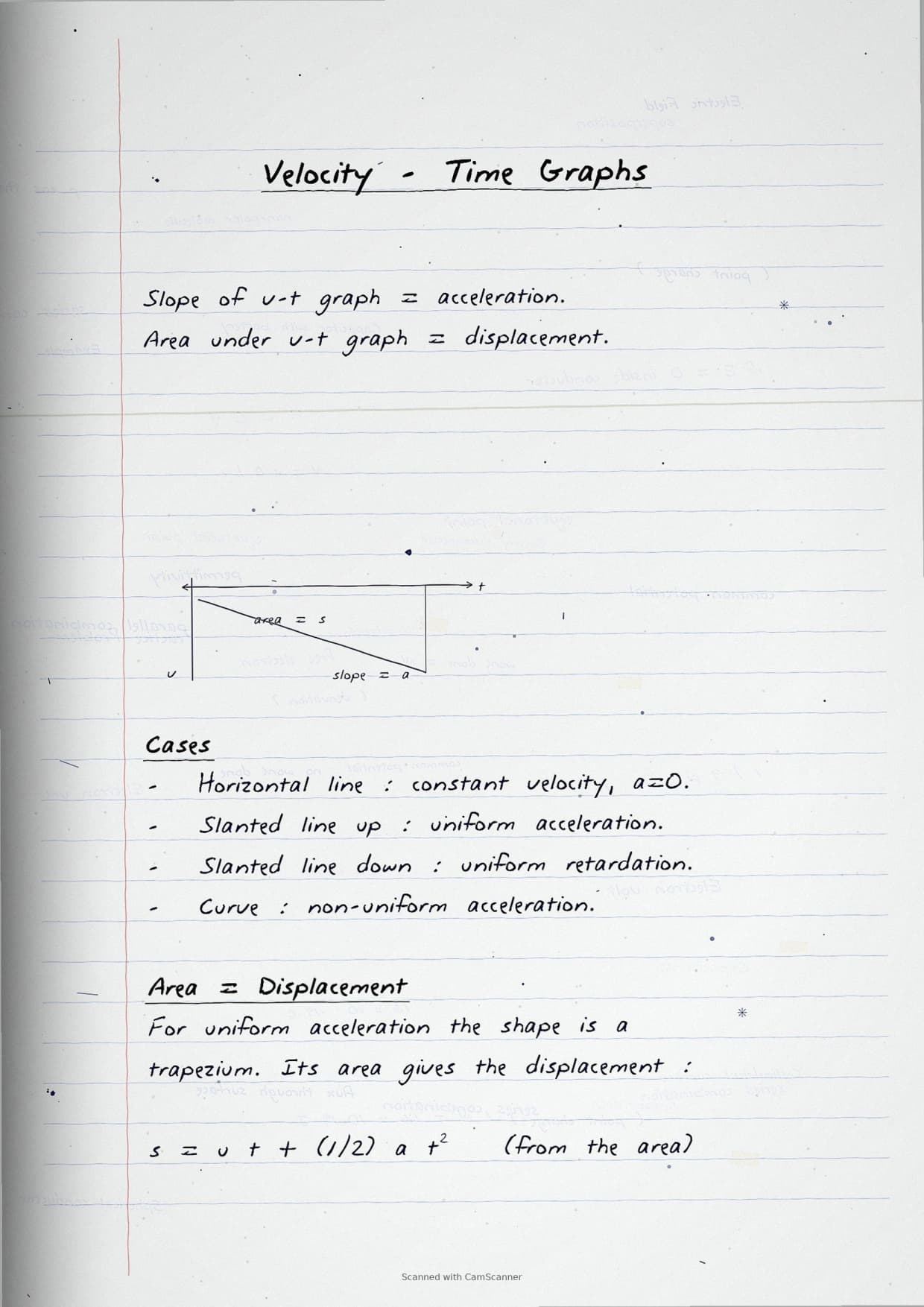
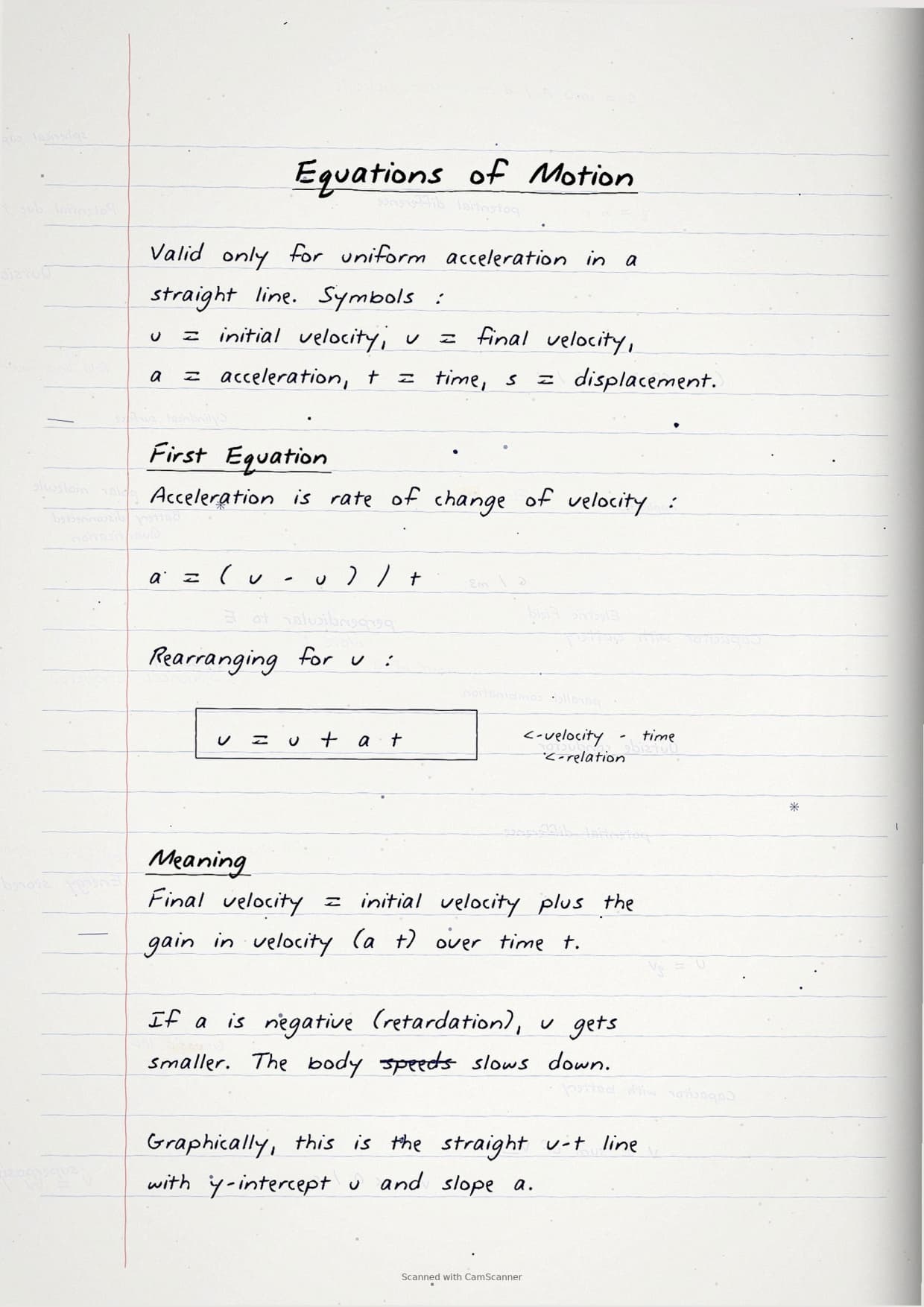
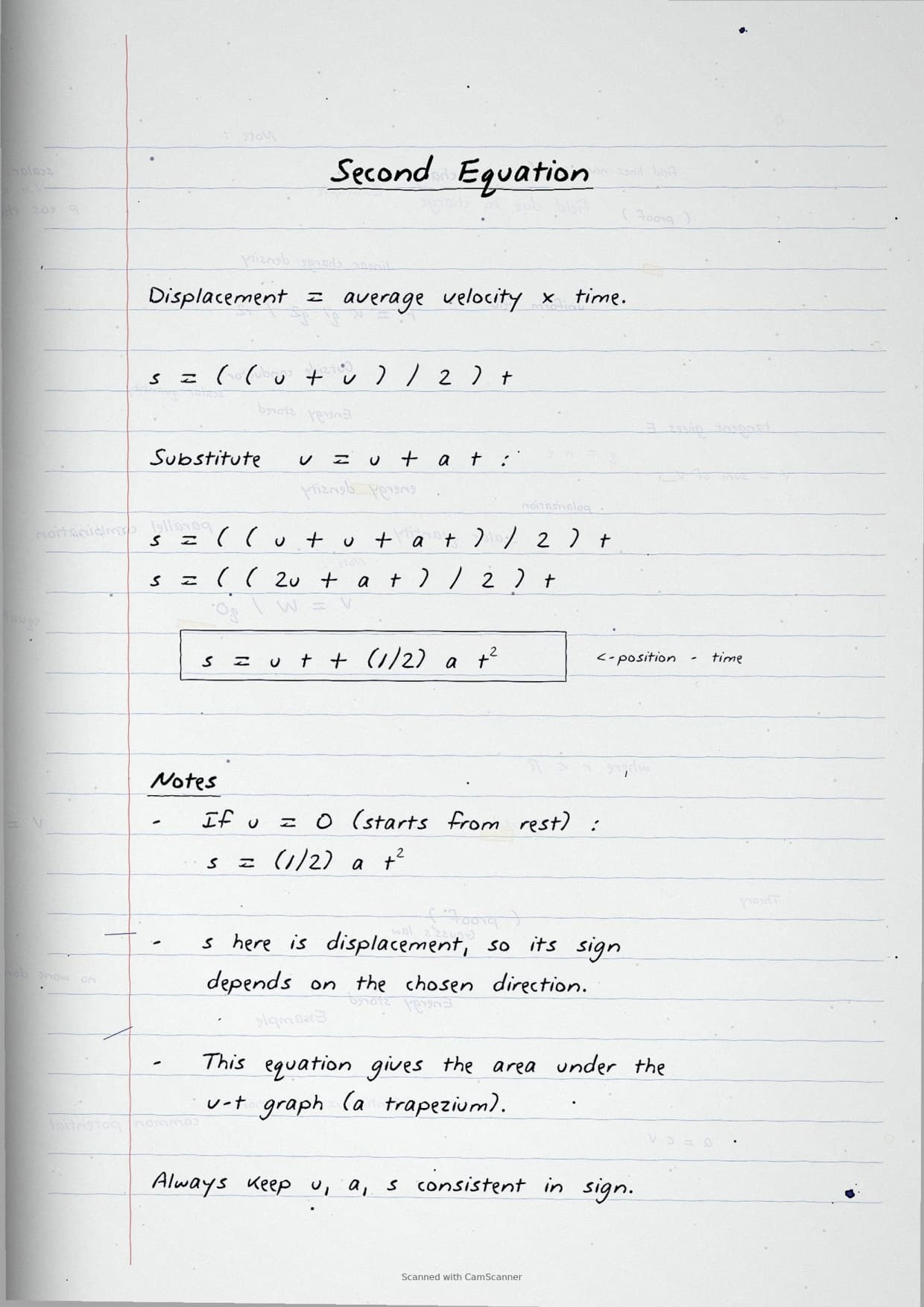
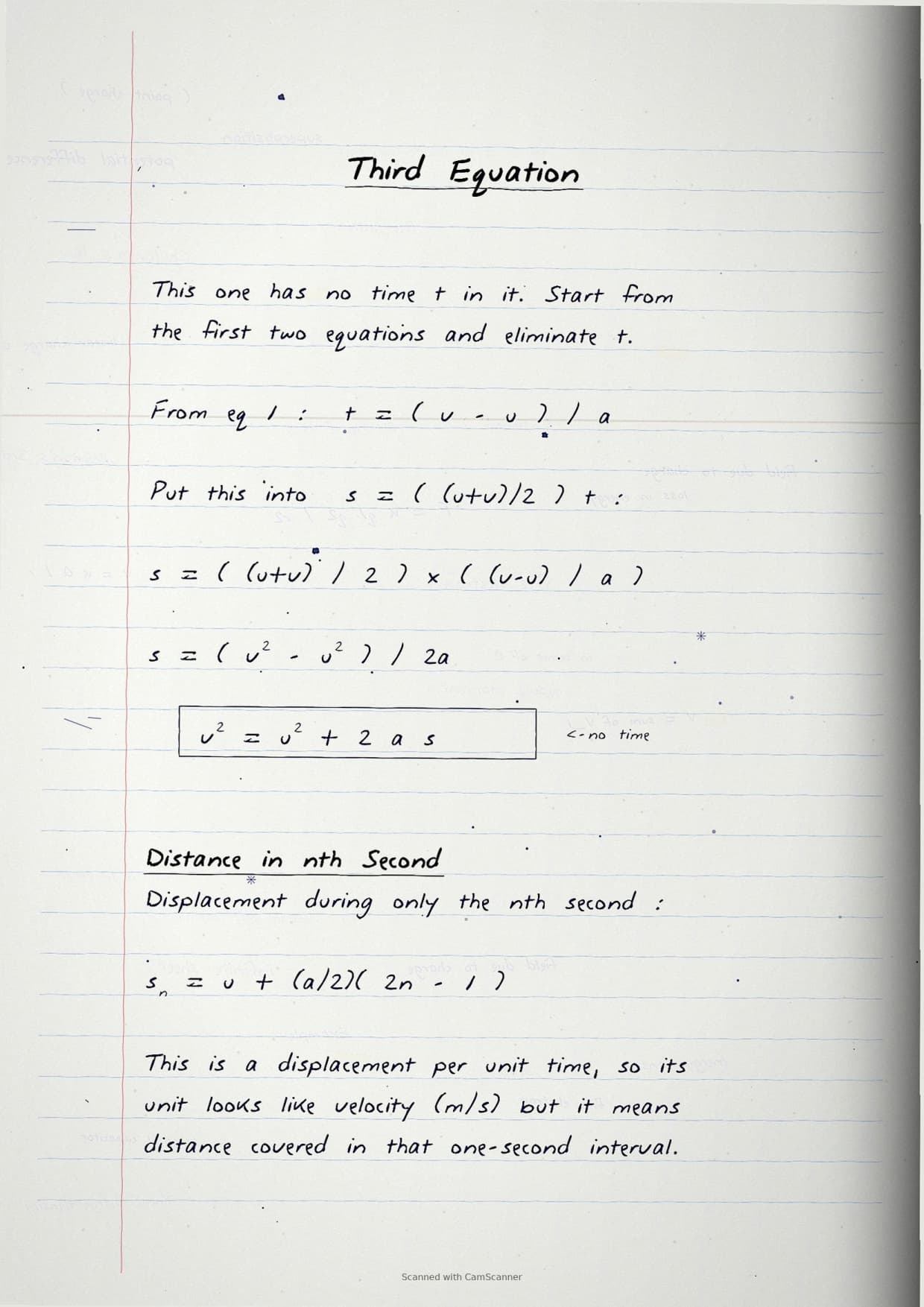
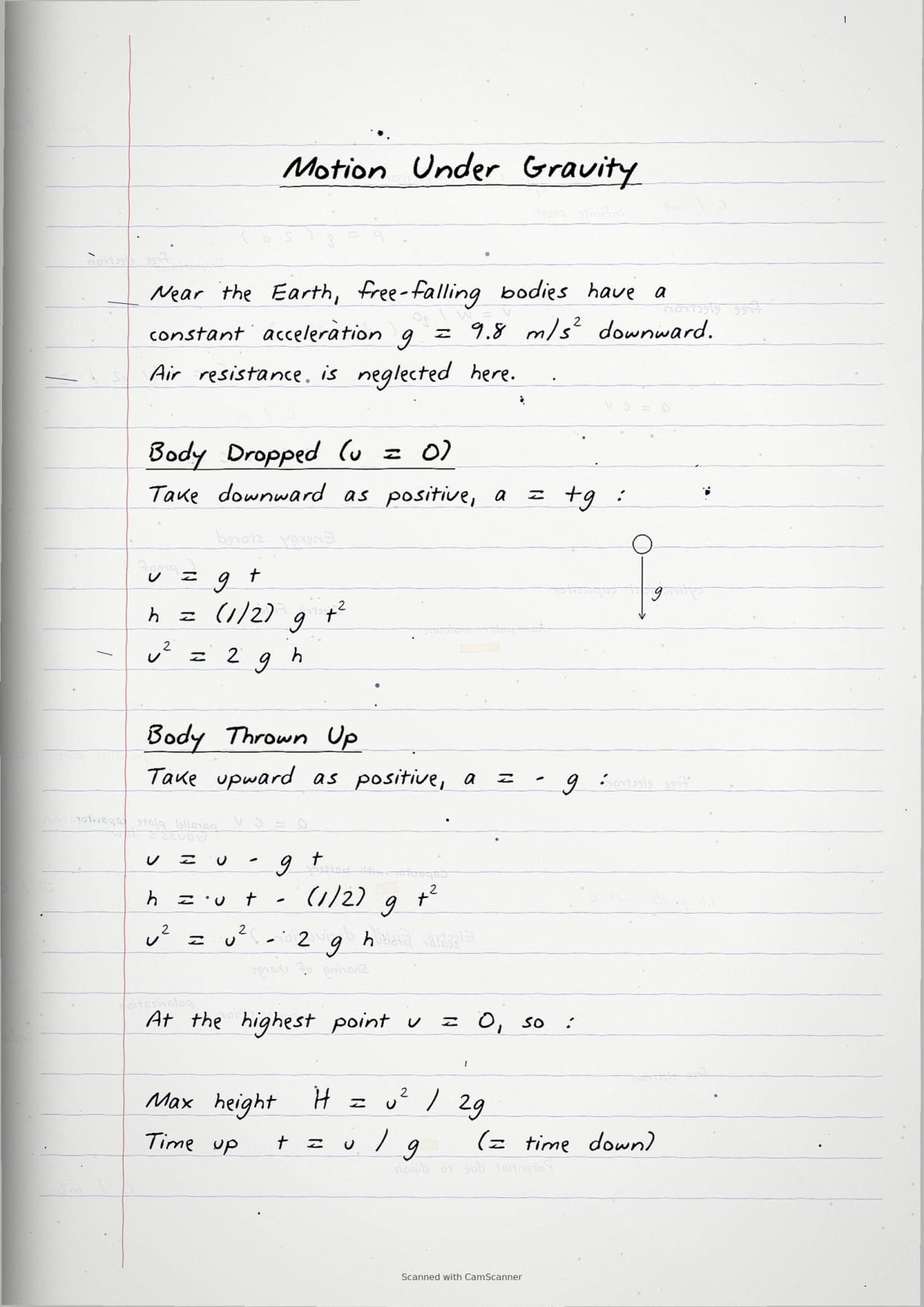
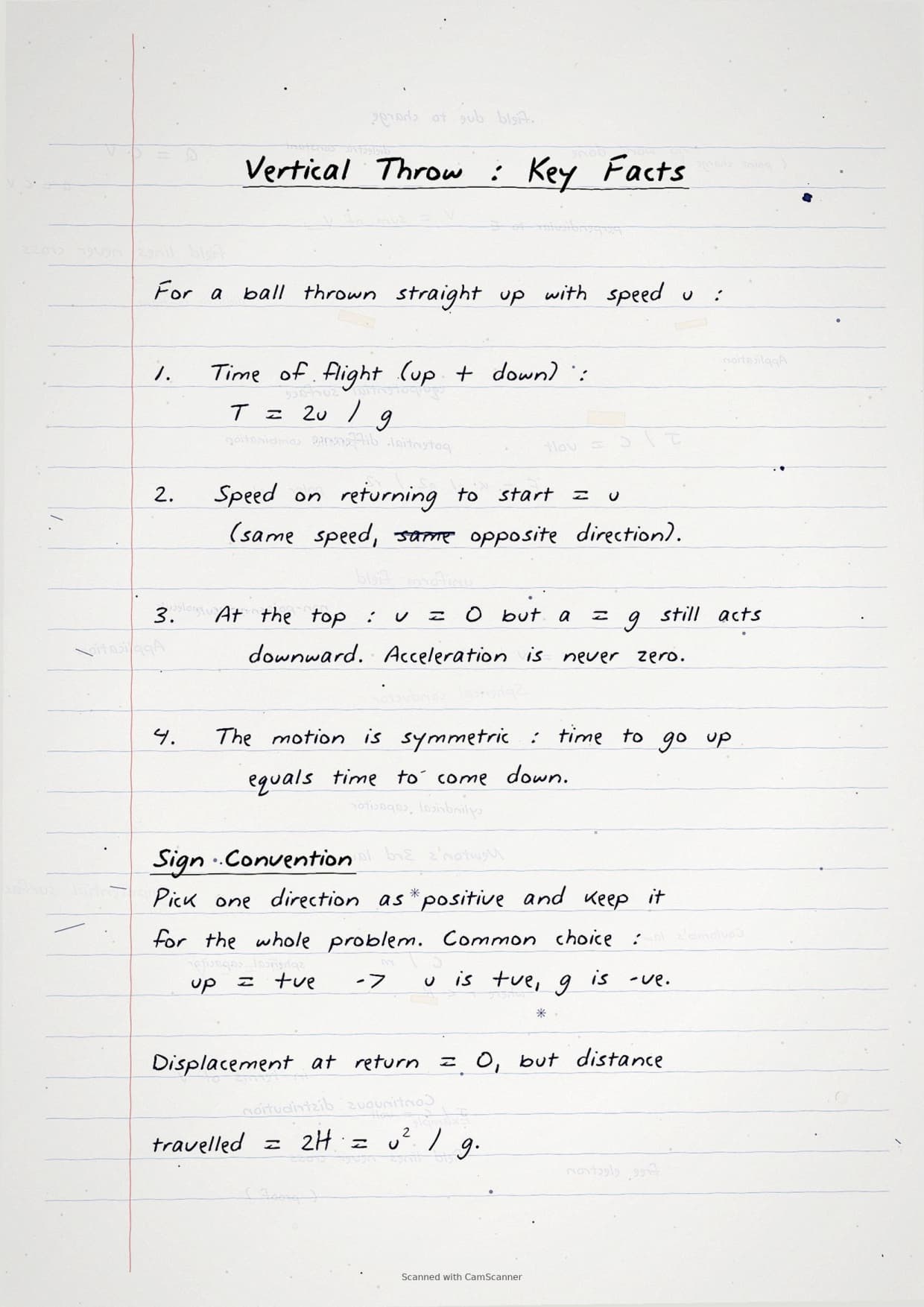
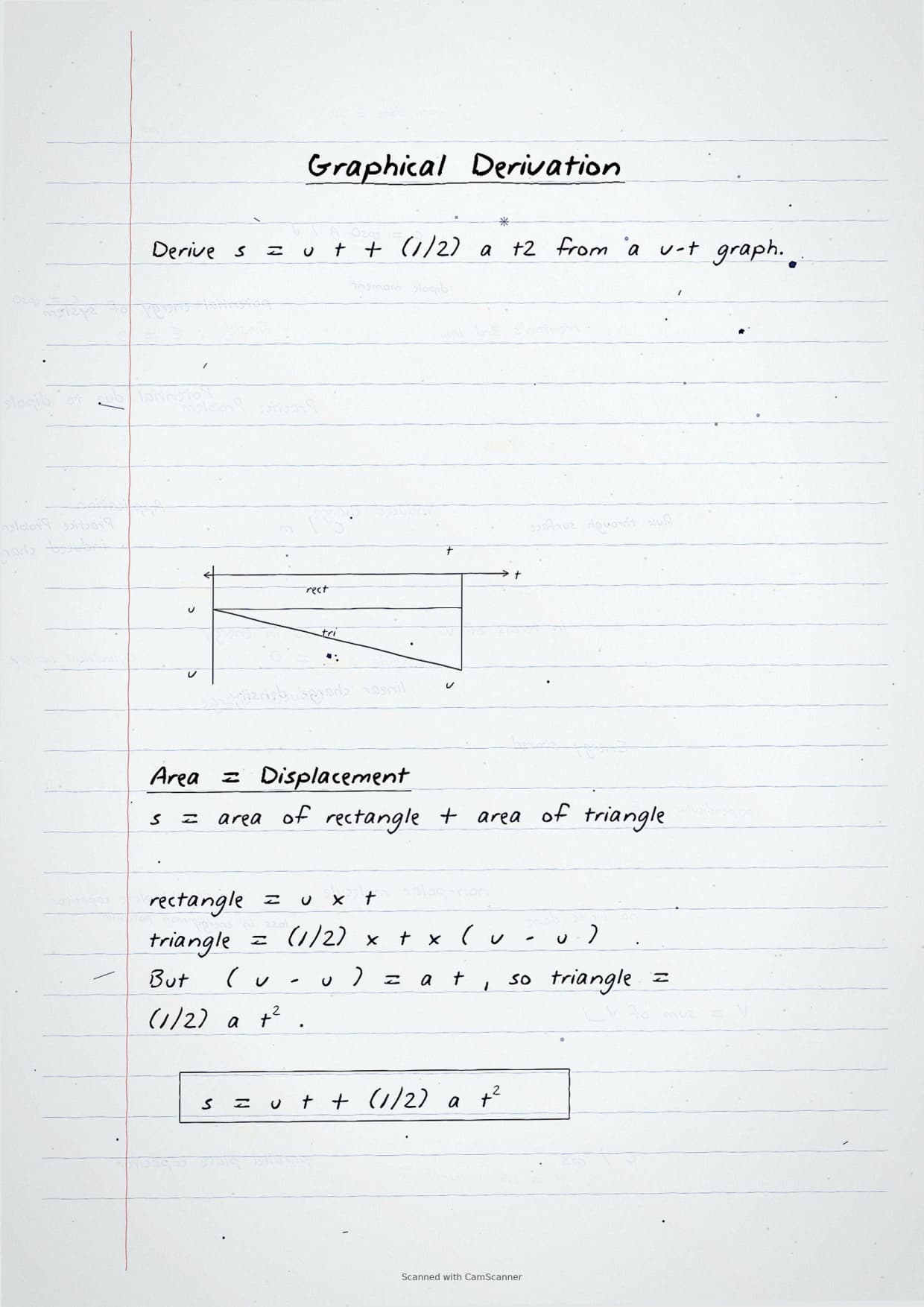
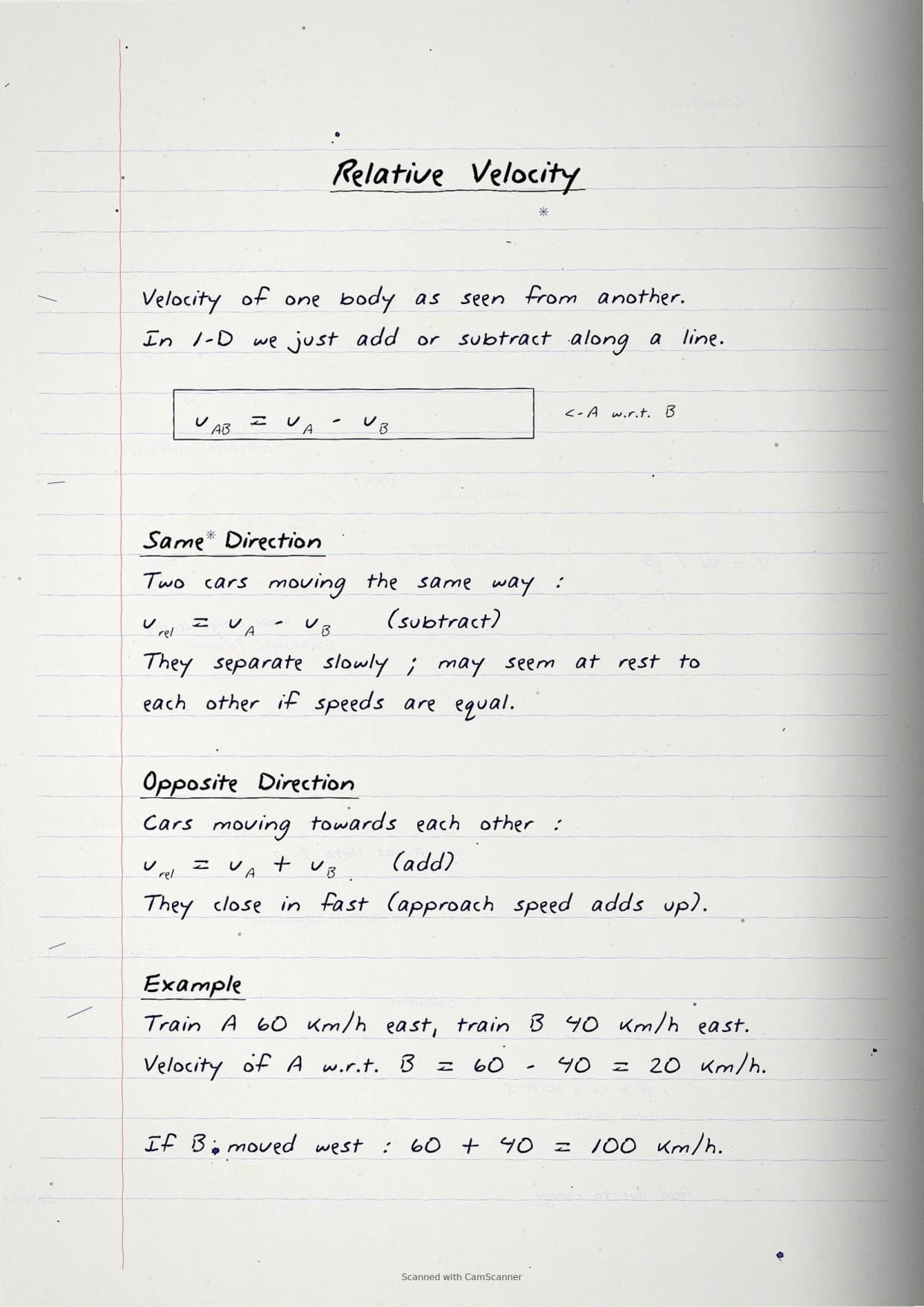
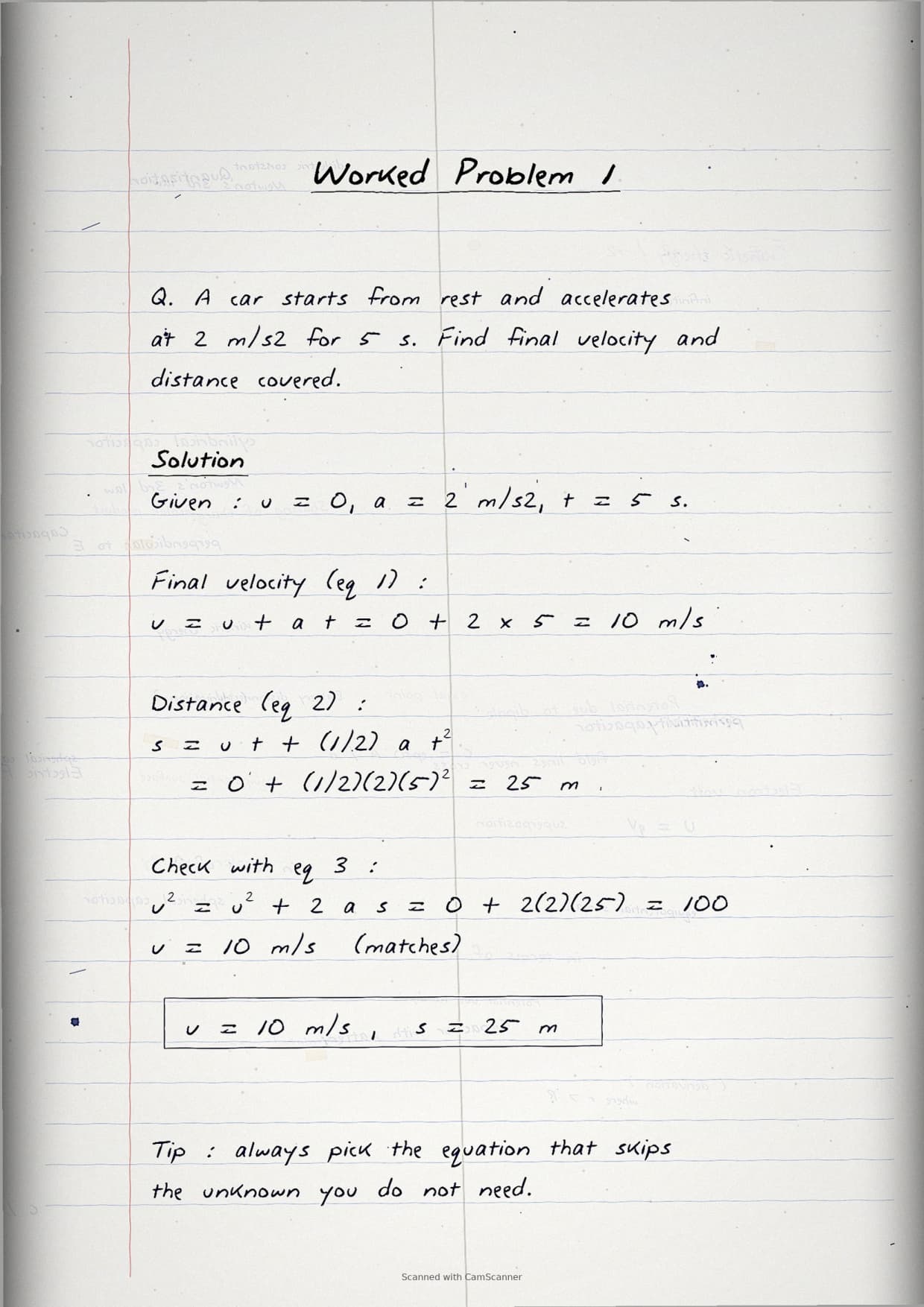
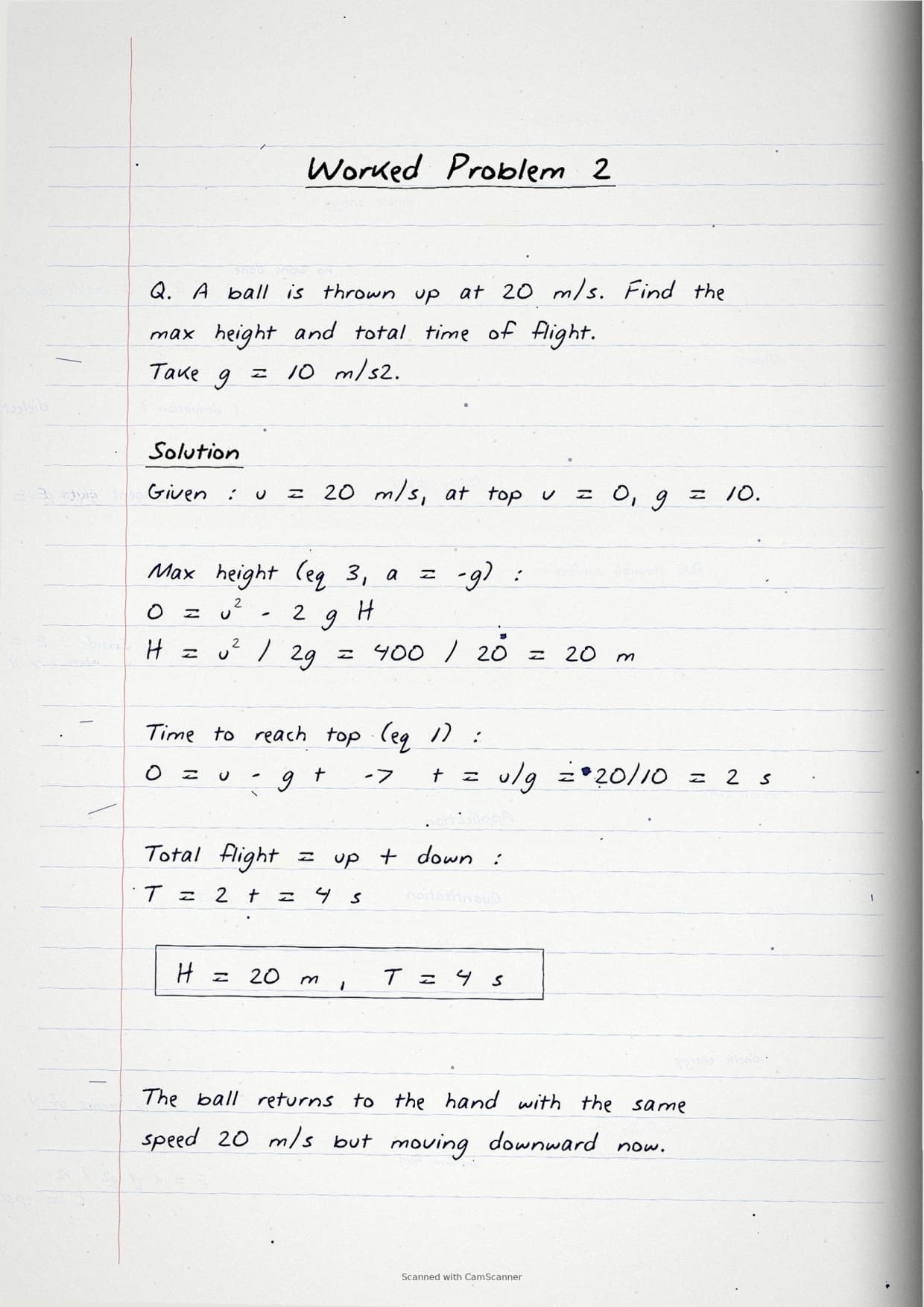
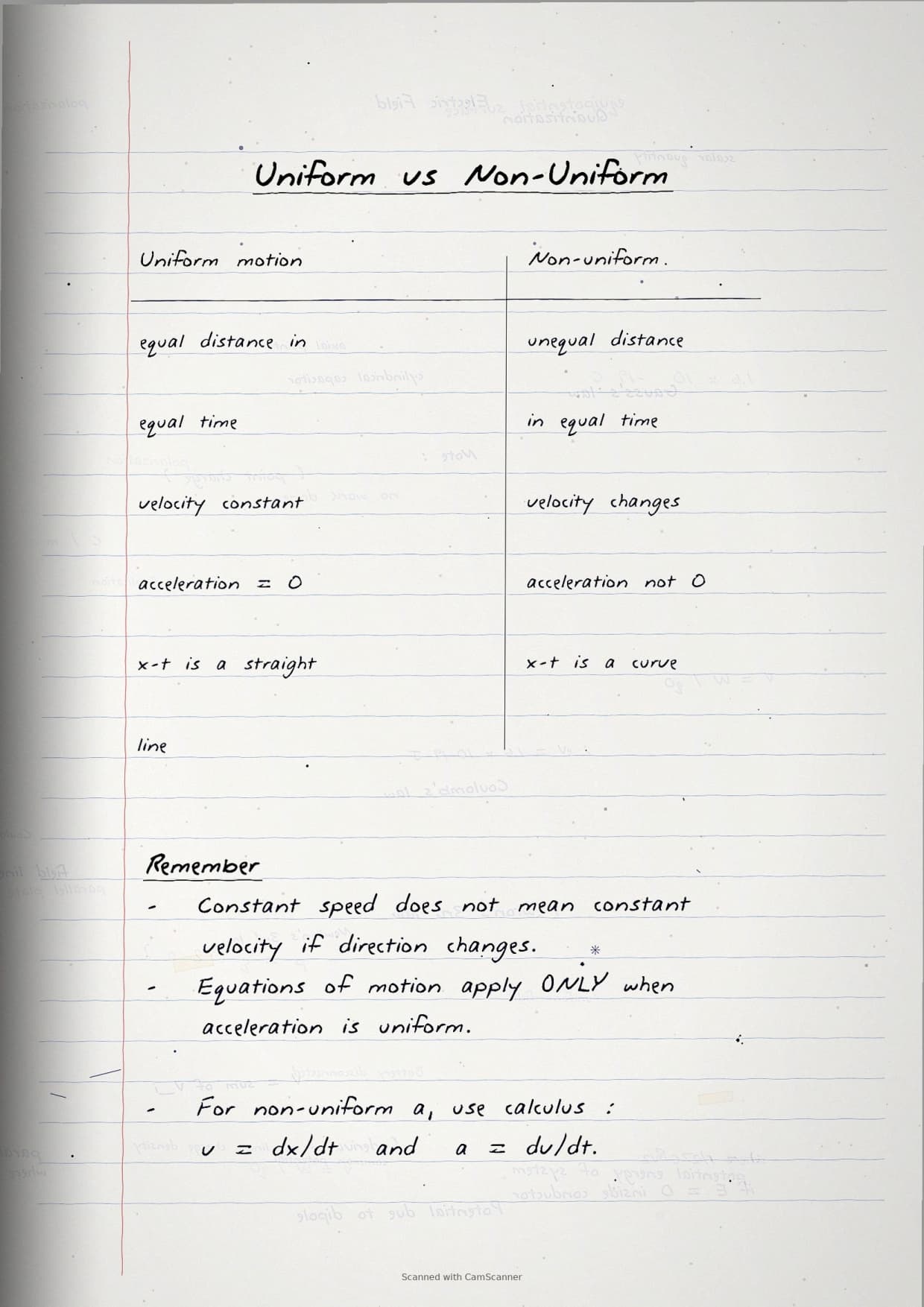
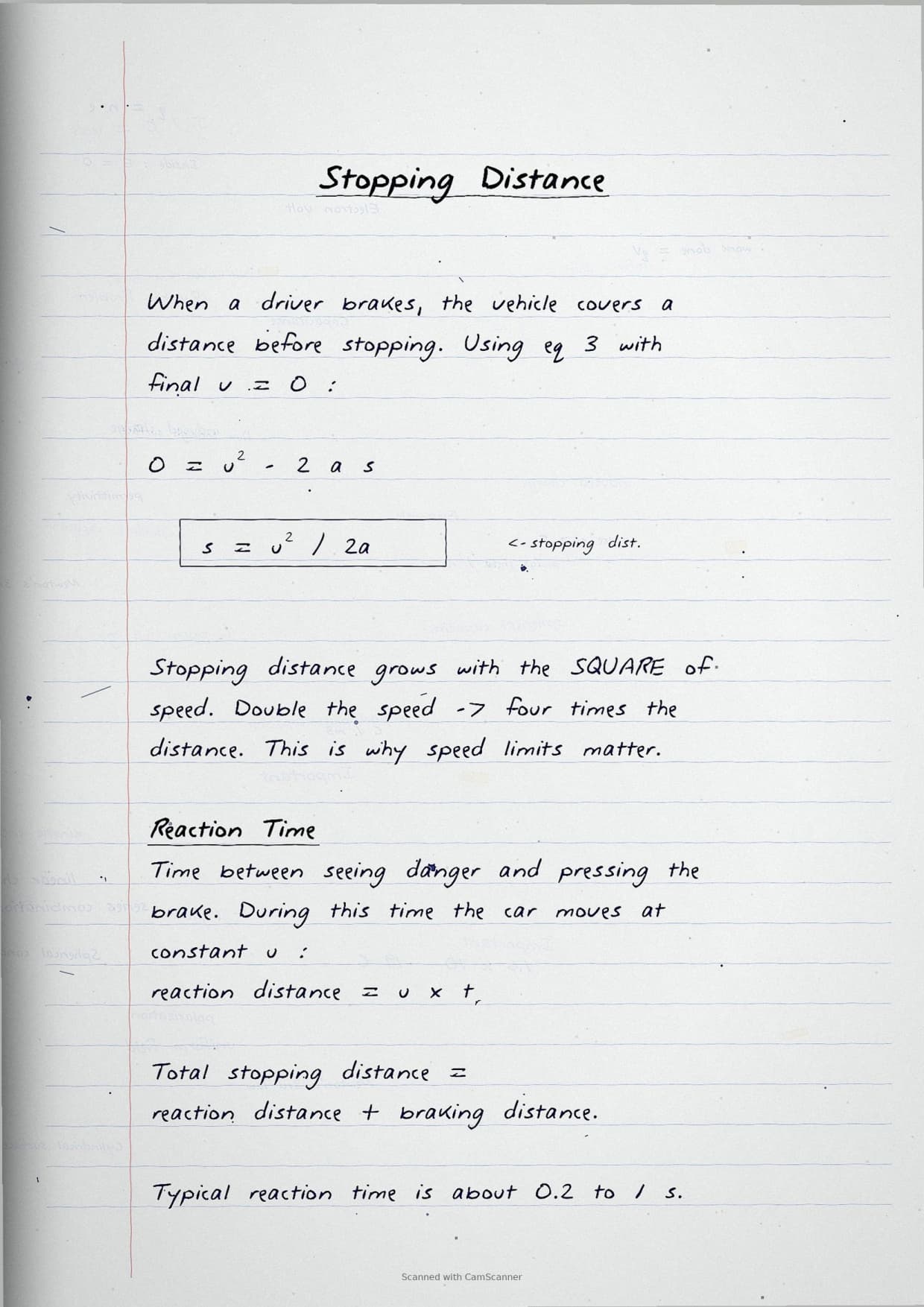
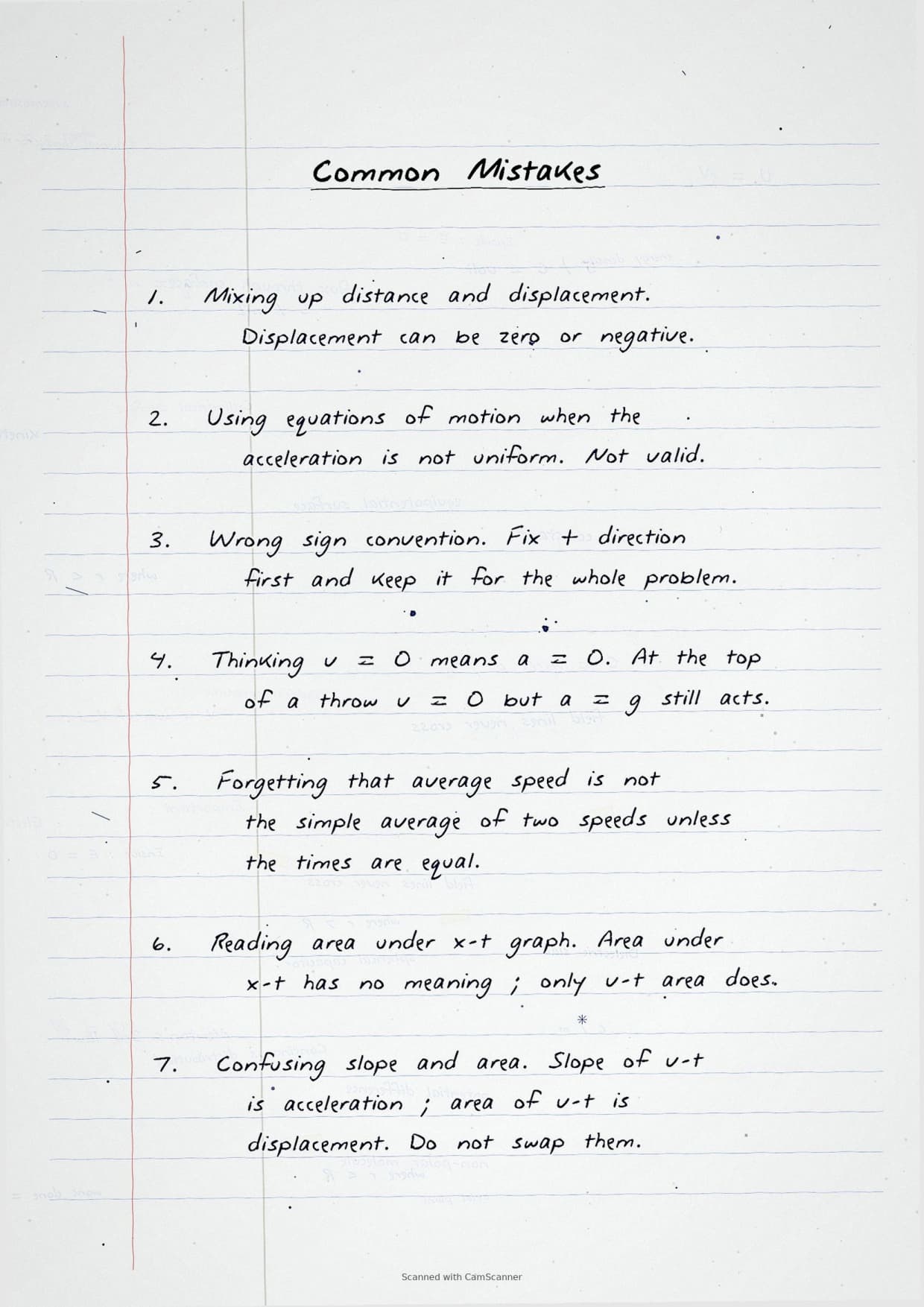
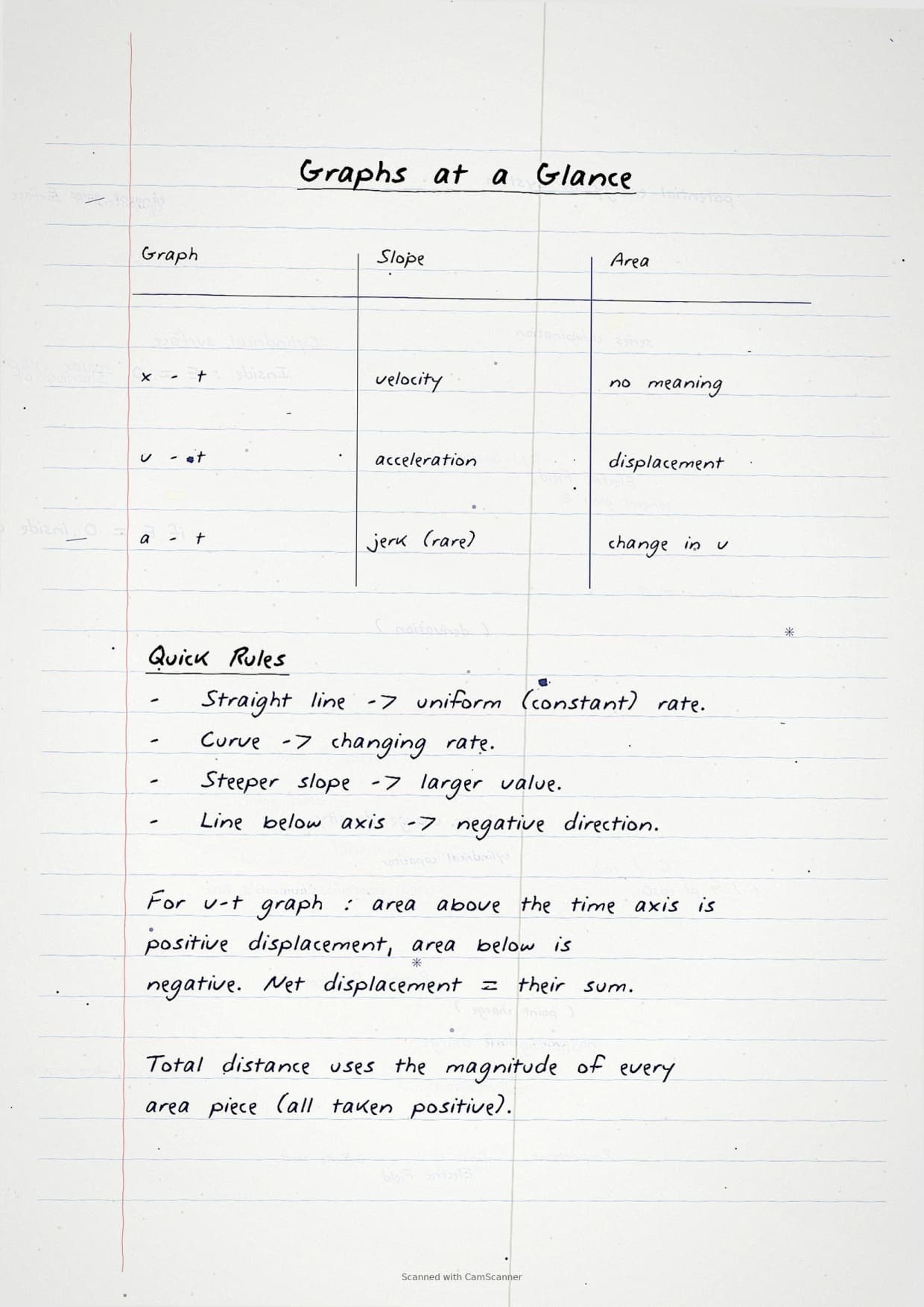
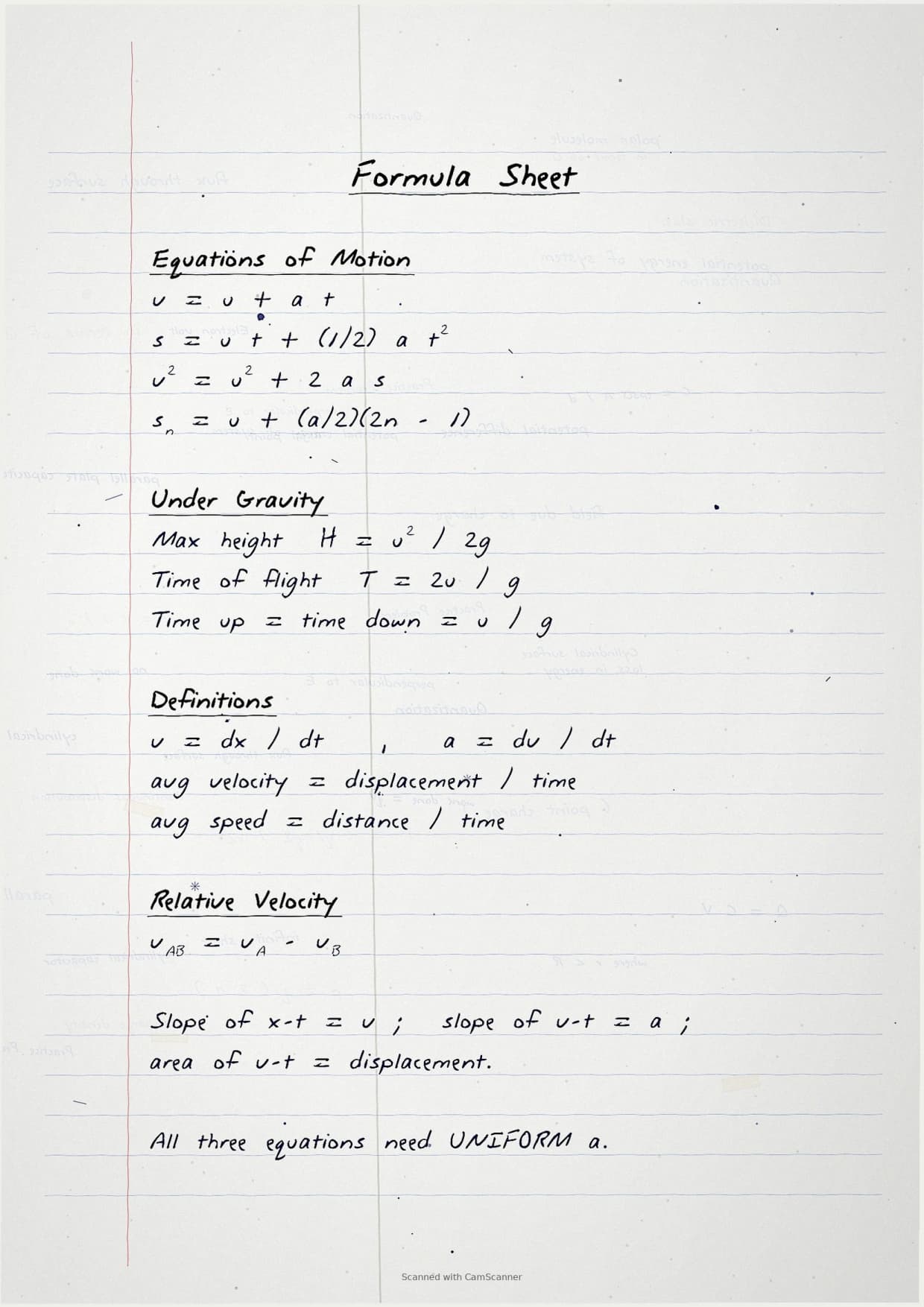
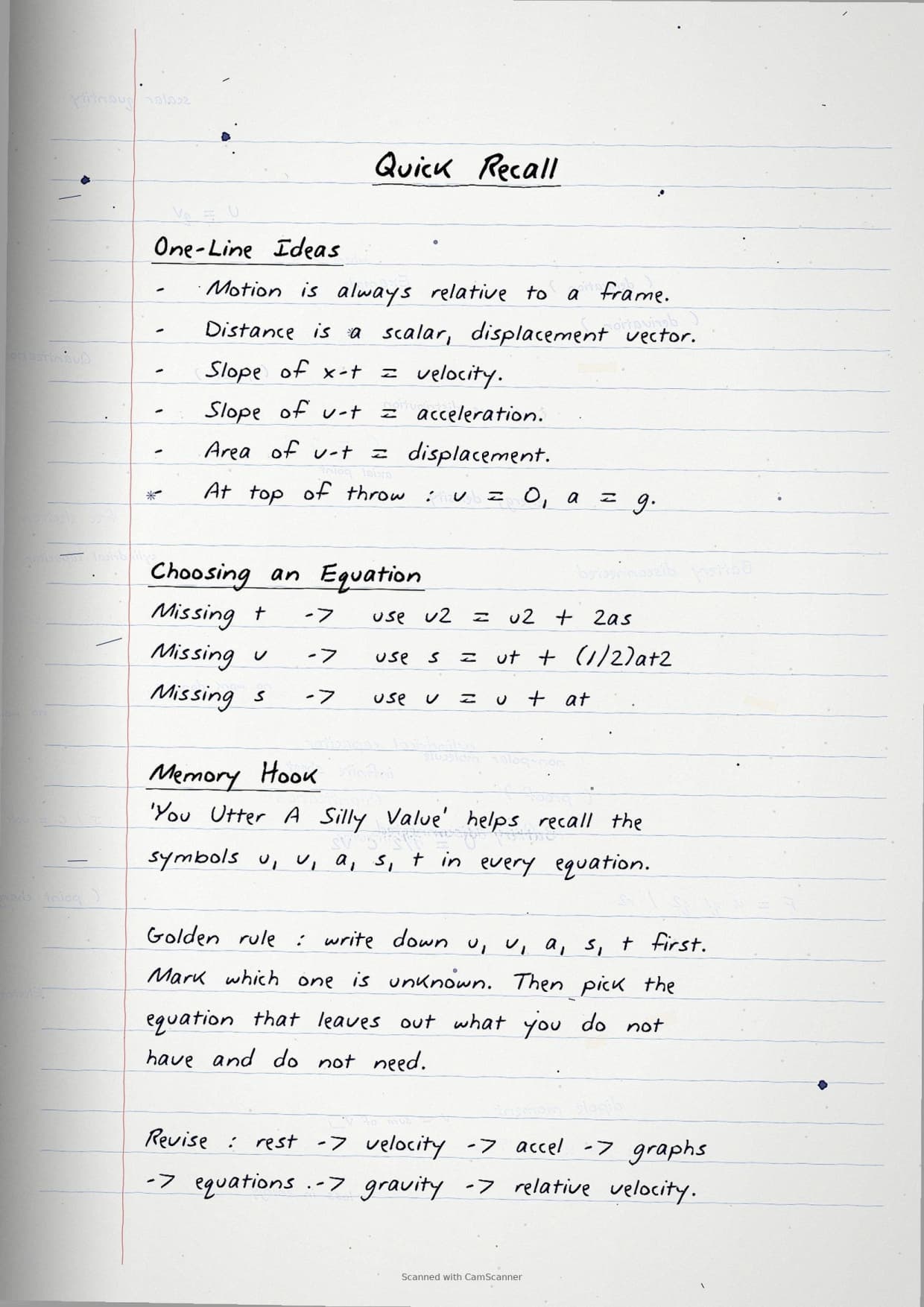
Chapter 2 introduces kinematics, the language of motion that every later mechanics chapter builds on, so these handwritten pages keep every rule and graph in one place.
- Hand-drawn comparison of distance versus displacement and speed versus velocity with signs.
- Boxed kinematic equations and clean position-time and velocity-time graphs in exam-ready form.
- Pairs with the NCERT Solutions, Notes and Formula Sheet linked lower on this page.
What the Motion in a Straight Line Handwritten Notes Cover
The notes open with the basics of rectilinear motion and build up to relative velocity, in the same order as the NCERT chapter. Every topic sits on its own handwritten page, so students can revise one idea at a time. New sub-topics are written in red, and key terms are boxed for fast recall.
- Distance and displacement: path length versus straight-line change, with signs.
- Speed and velocity: average and instantaneous, uniform and non-uniform.
- Acceleration: average and instantaneous, positive and negative (retardation).
- Kinematic equations: the three equations for uniform acceleration.
- Motion graphs and relative velocity in one dimension.
Because these class 11 physics handwritten notes chapter 2 Motion in a Straight Line follow the 2026-27 NCERT exactly, students can revise straight from them without cross-checking the textbook.
Key Formulas and Graphs in the Motion in a Straight Line Notes
The formula boxes are the heart of these pages. Each one is drawn by hand with the meaning written beside it, so a student sees the rule and its use together. The kinematic-equation table below is the single most-tested block in the chapter.
| Concept | Formula in the notes |
|---|---|
| Average velocity | v = total displacement / total time |
| Acceleration | a = (v − u) / t |
| First equation | v = u + at |
| Second equation | s = ut + ½ a t² |
| Third equation | v² = u² + 2as |
Hand-drawn graphs show that the slope of a position-time graph gives velocity and the slope of a velocity-time graph gives acceleration, while the area under a velocity-time graph gives displacement. A quick relative-velocity sketch explains overtaking problems, a favourite in Boards.
How to Use These Handwritten Notes for Revision
Use the pages in three short passes. First read a topic page, then cover the boxed answer and recall it, then solve two NCERT questions on it. This active loop fixes the rules faster than re-reading the textbook.
- Revise the three kinematic equations the night before any test.
- Redraw each motion graph from memory on rough paper.
- Keep the class 11 physics handwritten notes chapter 2 Motion in a Straight Line open beside the NCERT Solutions while practising.
Around 40 minutes is enough for a full revision of this chapter with these notes, which makes them ideal in the last week before an exam.
Student Feedback on the Motion in a Straight Line Handwritten Notes
Students consistently rate the boxed kinematic equations as the part that saves them the most time. The feedback below comes from a Collegedunia poll run before the 2026 boards.
- In a Collegedunia survey of 11,540 students, 76% said the kinematic-equation box was their most-used revision page.
- Most-skipped sub-topic before the poll: reading motion graphs, revised late by about 3 in 10 students.
Source: 2026-27 Class 11 Physics student poll. Sample of 11,540 students from CBSE schools across 14 states.
Where to Use These Notes Alongside Other Resources
These handwritten notes work best next to the point-wise Solutions, the summary Notes and the Formula Sheet for the same chapter. Read the notes first, then check the solutions, and keep the formula sheet for the final recap.
| Resource | Best used for |
|---|---|
| Motion in a Straight Line NCERT Solutions | Step-by-step answers to every back-exercise question |
| Motion in a Straight Line Class 11 Notes | Quick chapter summary with all key terms in one place |
| Motion in a Straight Line Formula Sheet | All formulas on one page for the final recap |
| Motion in a Straight Line NCERT Book PDF | The original chapter text and exercises |
All Class 11 Physics Handwritten Notes by Chapter
The table links the handwritten notes for every Class 11 Physics chapter, so students can move across the course in one click. Motion in a Straight Line is highlighted.
| Chapter | Handwritten Notes |
|---|---|
| Chapter 1 | Units and Measurements |
| Chapter 2 | Motion in a Straight Line |
| Chapter 3 | Motion in a Plane |
| Chapter 4 | Laws of Motion |
| Chapter 5 | Work Energy and Power |
| Chapter 6 | System of Particles and Rotational Motion |
| Chapter 7 | Gravitation |
| Chapter 8 | Mechanical Properties of Solids |
| Chapter 9 | Mechanical Properties of Fluids |
| Chapter 10 | Thermal Properties of Matter |
| Chapter 11 | Thermodynamics |
| Chapter 12 | Kinetic Theory |
| Chapter 13 | Oscillations |
| Chapter 14 | Waves |
FAQs on Motion in a Straight Line Handwritten Notes
Motion in a Straight Line Handwritten Notes - Frequently Asked Questions
Ques. Are these class 11 physics handwritten notes chapter 2 Motion in a Straight Line free to download?
Ans. Yes. The Motion in a Straight Line handwritten notes are free to download as a PDF from this page. They follow the 2026-27 NCERT and cover the full chapter in clear, handwritten pages for quick revision.
Ques. What topics do these handwritten notes cover?
Ans. They cover distance and displacement, speed and velocity, acceleration, the three kinematic equations, position-time and velocity-time graphs, and relative velocity. Each topic sits on its own handwritten page with boxed formulas and graphs.
Ques. Are the notes useful for JEE and NEET, not just Boards?
Ans. Yes. The kinematic-equation and motion-graph pages are written the way JEE Main, JEE Advanced, NEET, CUET and NDA test them, so the same notes work for both board and competitive revision.
Ques. How long do these notes take to revise?
Ans. About 40 minutes for one full pass. Read each topic page, recall the boxed equation, then solve two NCERT questions to lock it in before the exam.



Comments