




These Individual Games handwritten notes turn the whole chapter into clean, handwritten pages for fast revision. They follow the 2026-27 NCERT "Health and Physical Education" Class 11 Chapter 4 and cover the seven individual sports in the book: Athletics, Badminton, Gymnastics, Judo, Swimming, Table Tennis and Wrestling. Students get the history, court and field measurements, fundamental skills, key rules and major tournaments in a pen-on-paper format that is easy to skim before the Class 11 final exam.
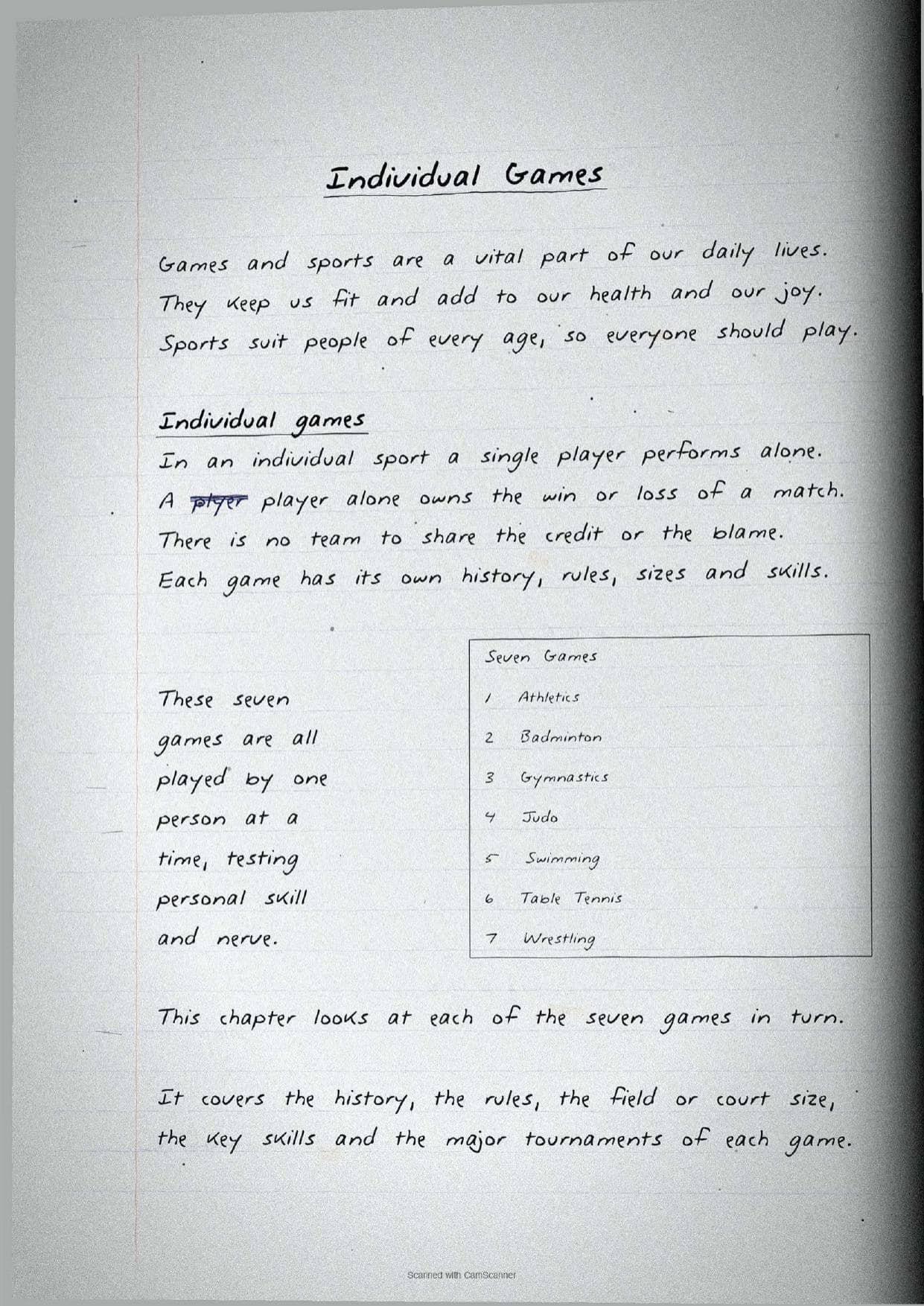
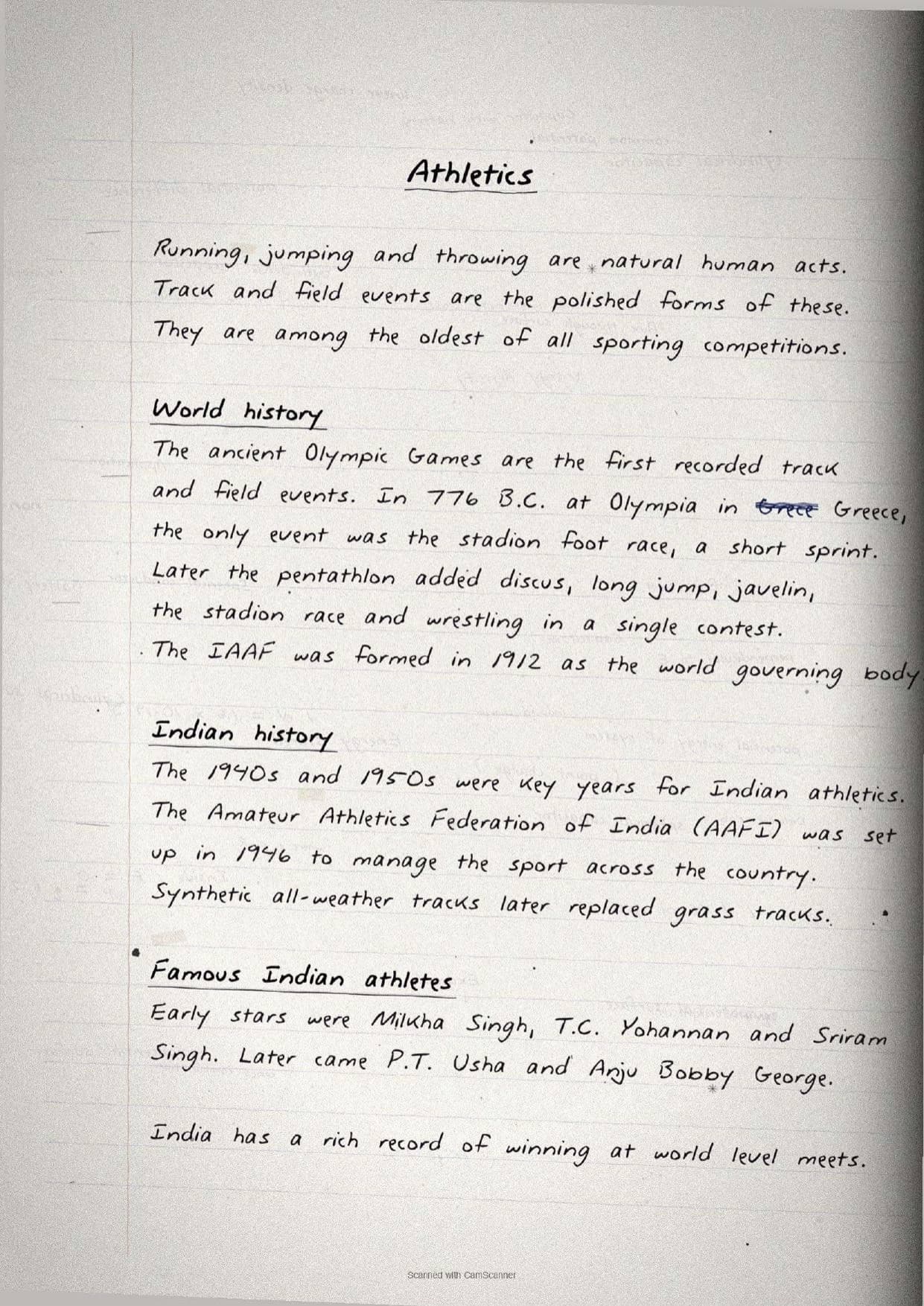
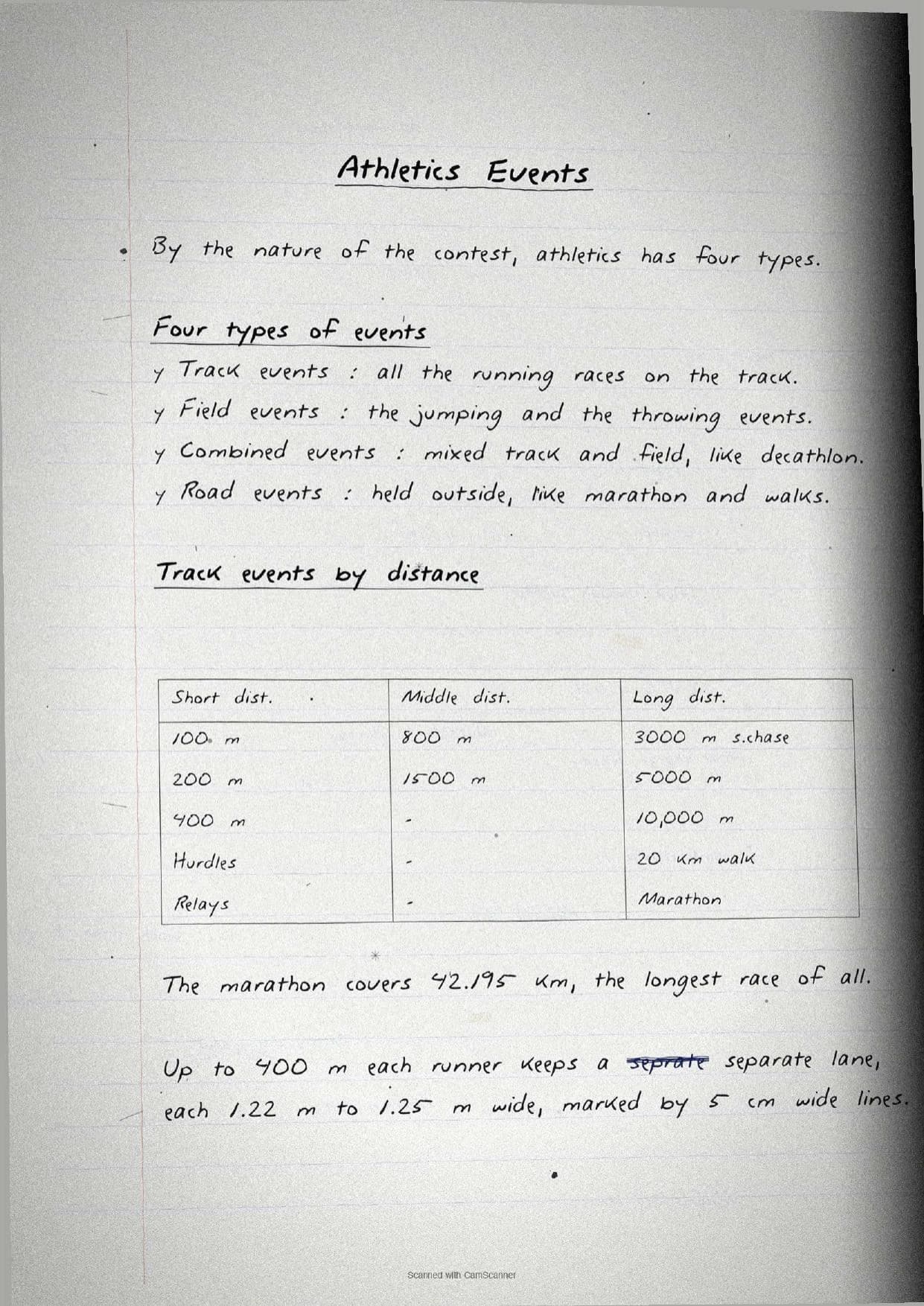
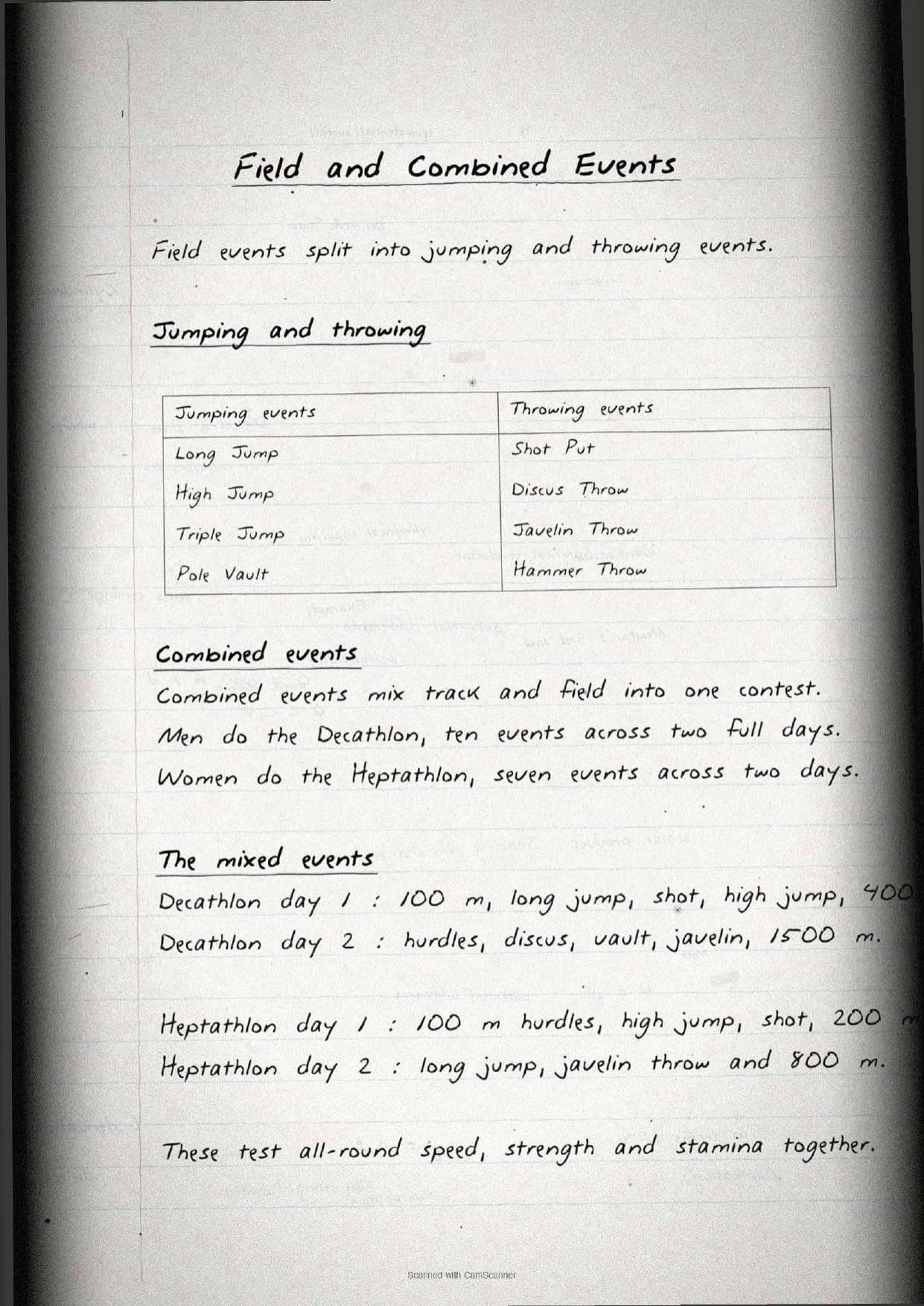
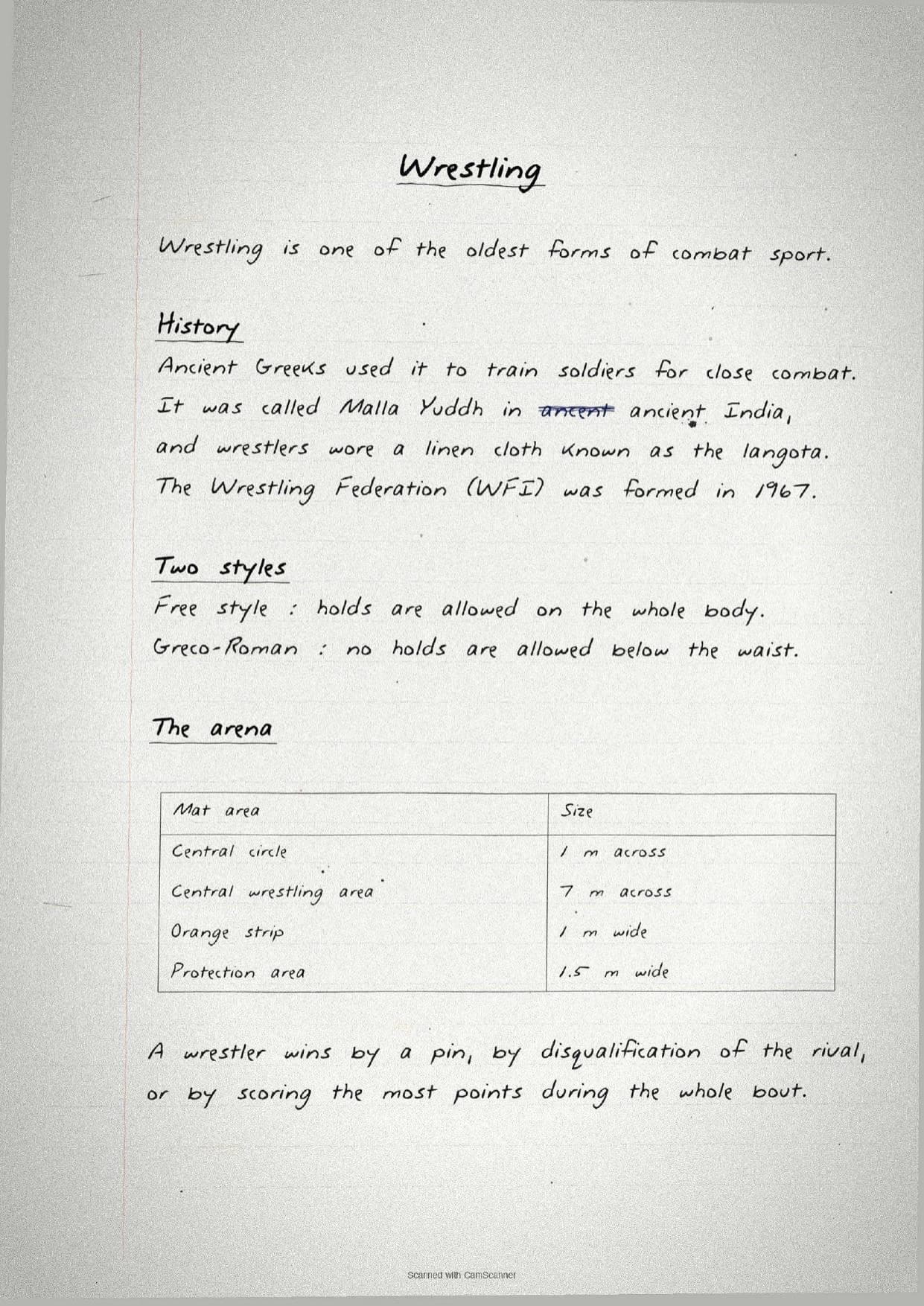
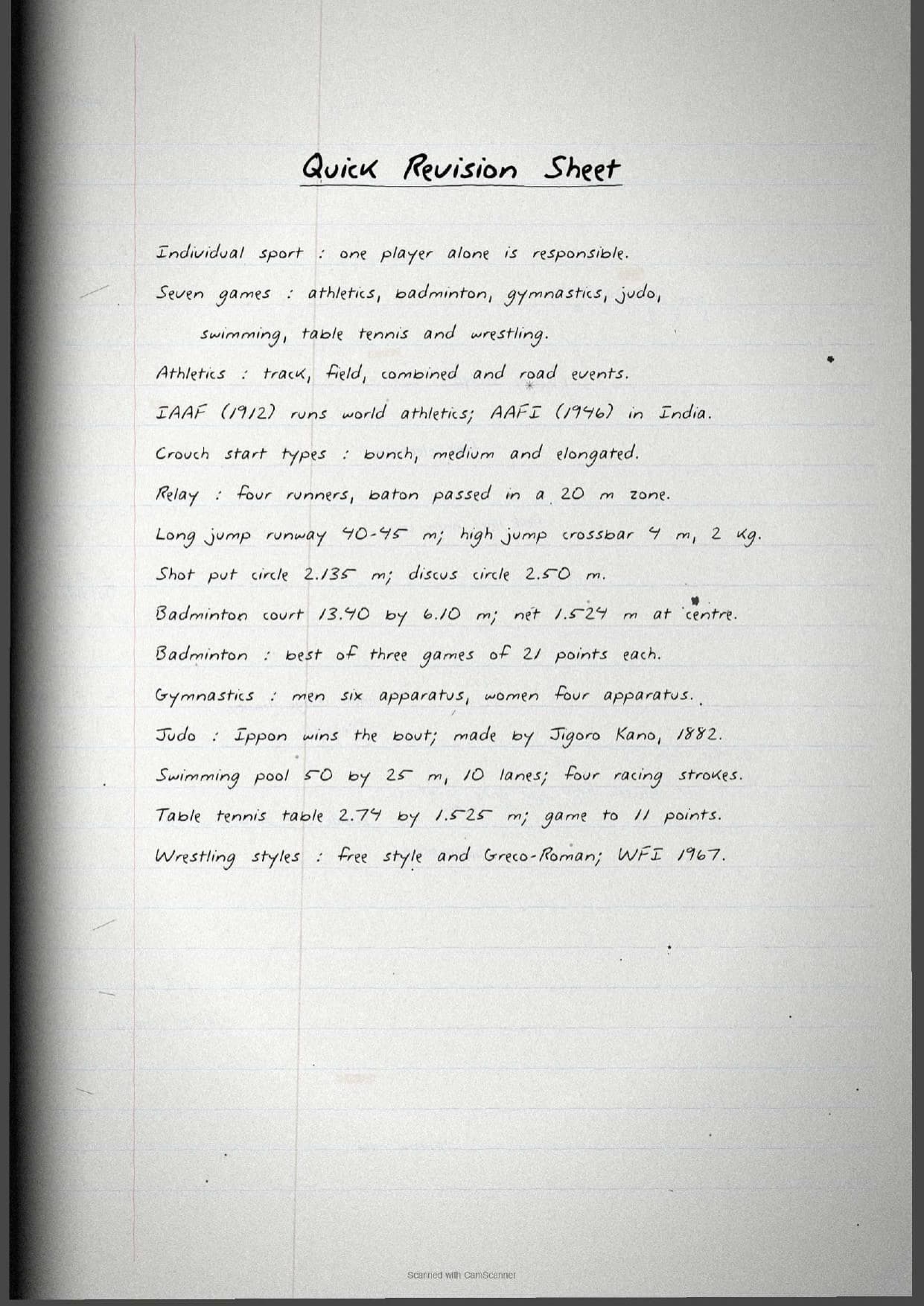
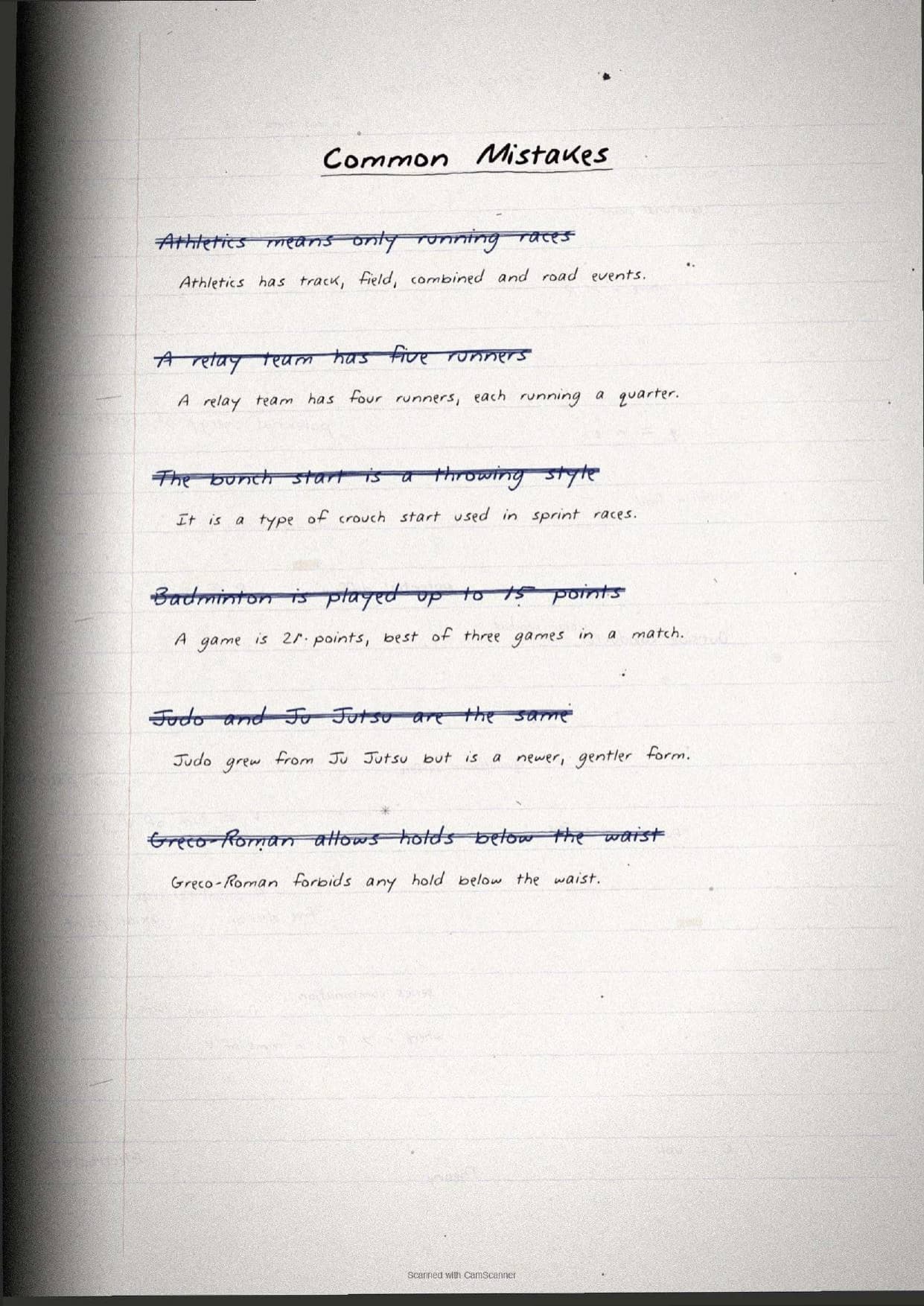
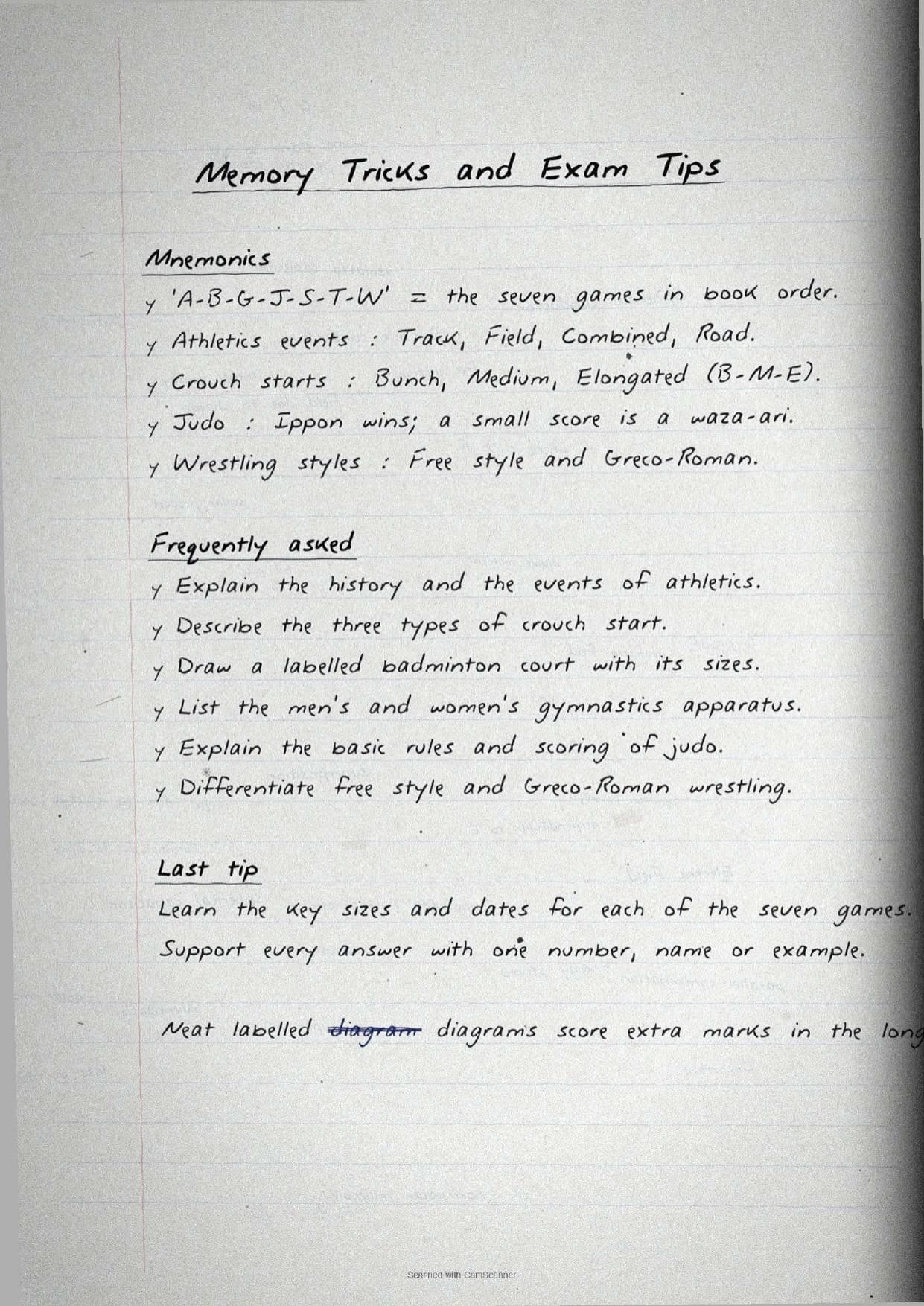
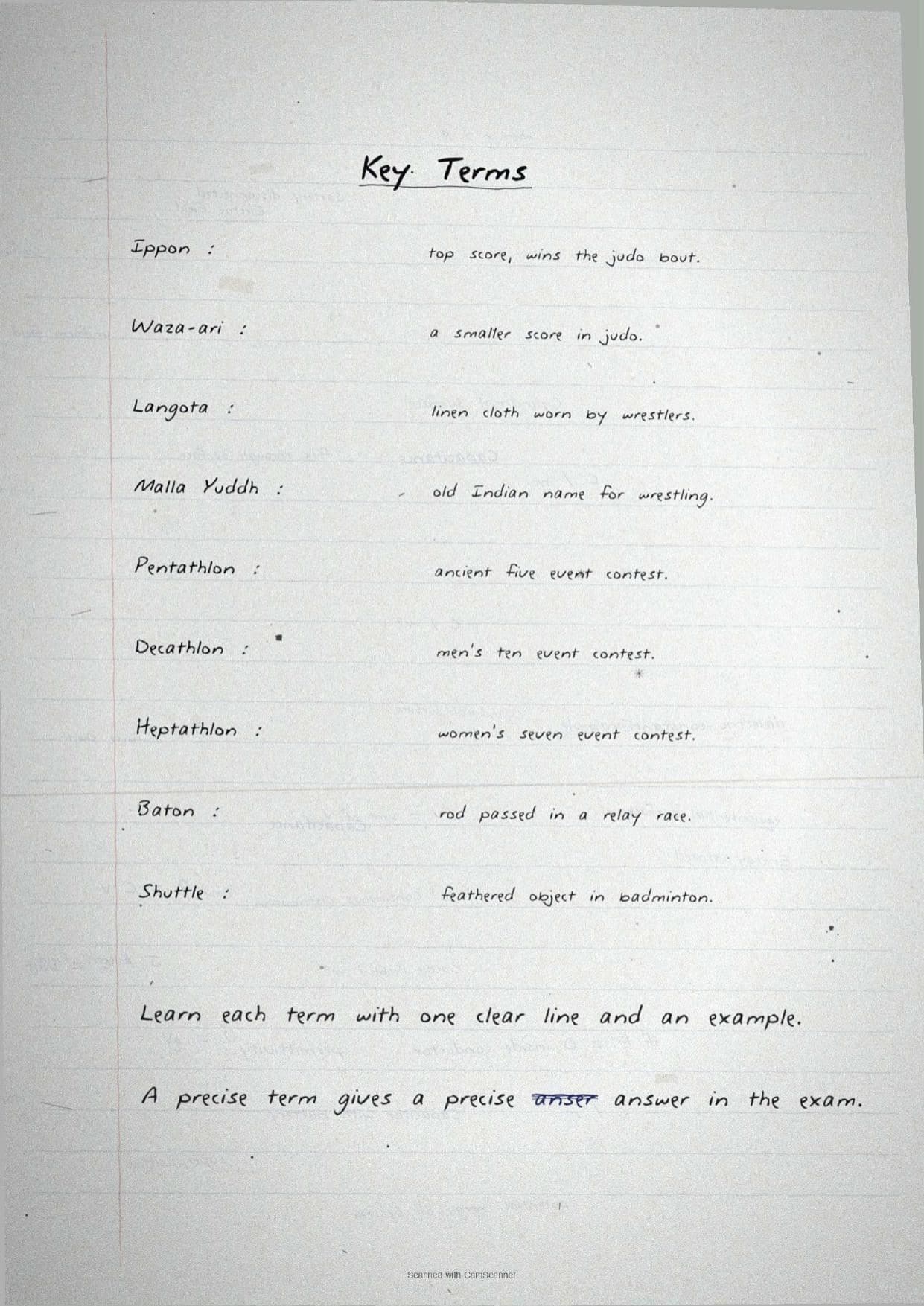
- Handwritten pages with boxed key terms, labelled court diagrams and measurement tables.
- Written for CBSE Class 11 Physical Education, a scoring chapter for objective and short-answer questions.
- Pairs with the Notes and Book PDF for the same chapter, linked lower on this page.
These Individual Games handwritten notes are prepared from the official NCERT Health and Physical Education Class 11 textbook and checked against recent CBSE Class 11 Physical Education question papers.
Student Feedback: In a Collegedunia poll of 5,180 Class 11 Physical Education students, 72% of students said the handwritten measurement tables helped them recall the badminton court size and the shot put and discus figures faster than printed text, because the boxed diagrams and numbers made the facts stick.
Source: 2026-27 Class 11 Physical Education student poll. Sample of 5,180 students from CBSE schools across 11 states.
What These Individual Games Handwritten Notes Contain
Individual Games is Chapter 4 of Class 11 Physical Education. The chapter looks at sports where a player is on their own and is responsible for the win or loss. These handwritten notes condense the full chapter into handwritten pages that read like a topper's own notebook, so a student can revise all seven games in one sitting.
The notes are organised game by game, and each game is broken into the same threads:
- History and governing body: when the sport began, its Indian history, and the federation that runs it.
- Court, field or equipment: the official measurements drawn in a labelled diagram with the numbers boxed.
- Skills, rules and tournaments: the fundamental skills, the main rules, and the major championships.
Because the pages are handwritten, the key numbers sit in boxes and tables rather than long paragraphs. A student can flip through the Individual Games class 11 pages in a few minutes and still recall the badminton court size, the Olympic year for each sport, and the award names before walking into the exam.
Games Covered and Their History
The chapter covers seven individual sports, and the handwritten notes give each one a short history block so the dates and governing bodies are easy to remember. The table below shows the founding facts the pages highlight.
| Game | Key history point the page boxes |
|---|---|
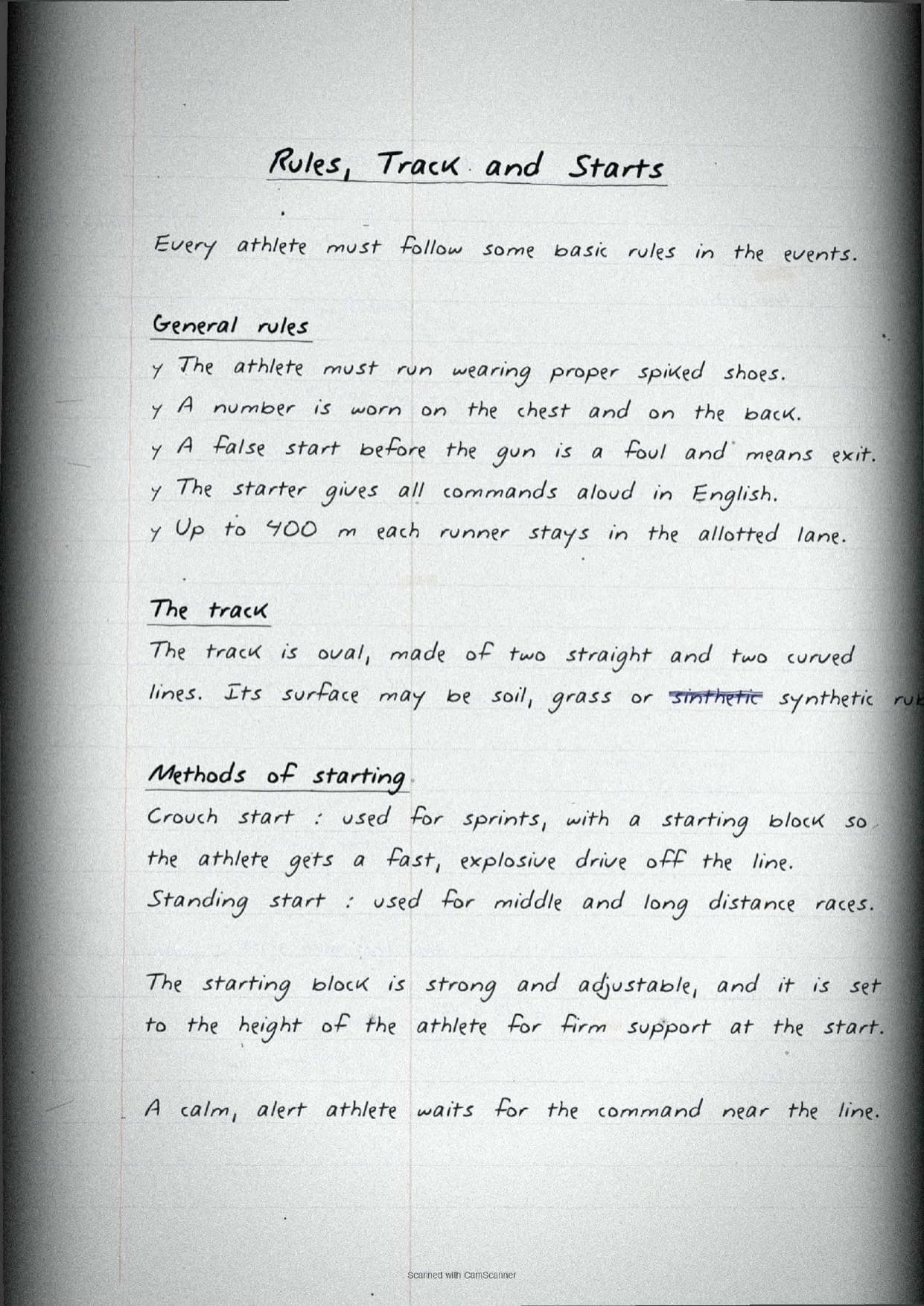
| Athletics | First recorded at the Ancient Olympic Games in 776 B.C. at Olympia; IAAF formed in 1912; AAFI in India set up in 1946. |
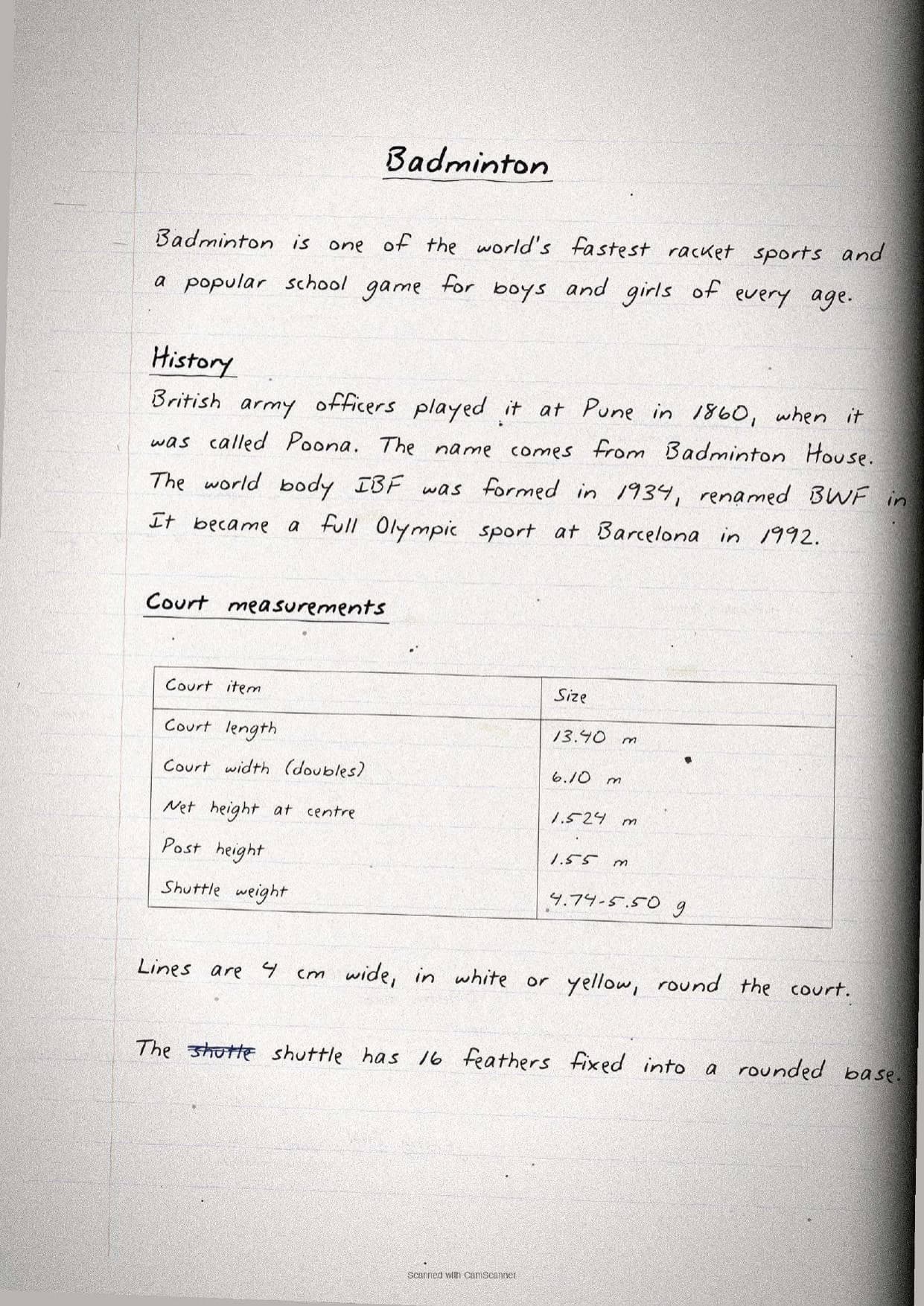
| Badminton | Once called Poona; British officers played it at Pune in 1860; IBF founded 1934, renamed BWF in 2006. |
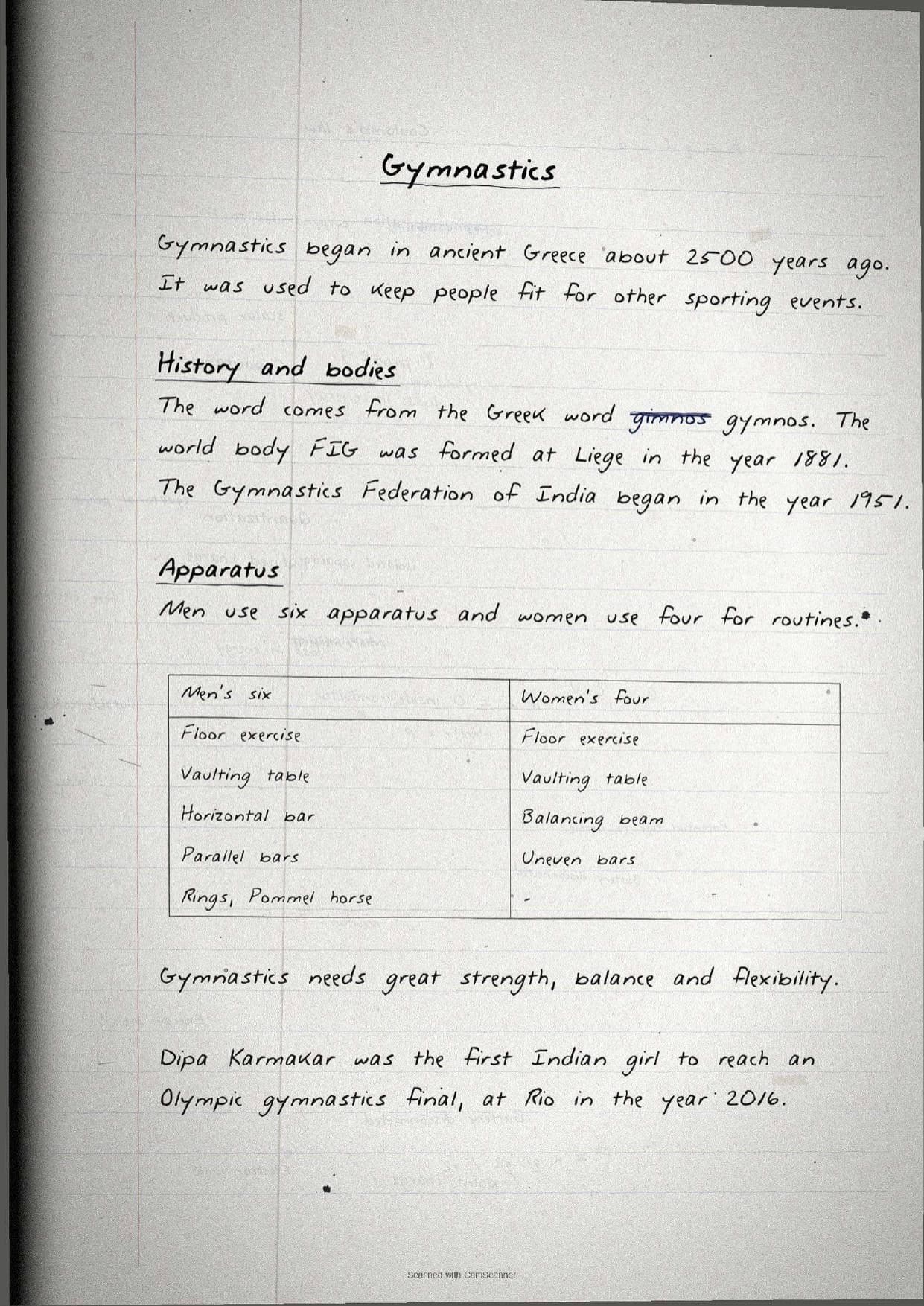
| Gymnastics | Began in ancient Greece; FIG formed at Liege in 1881; Gymnastics Federation of India started in 1951. |
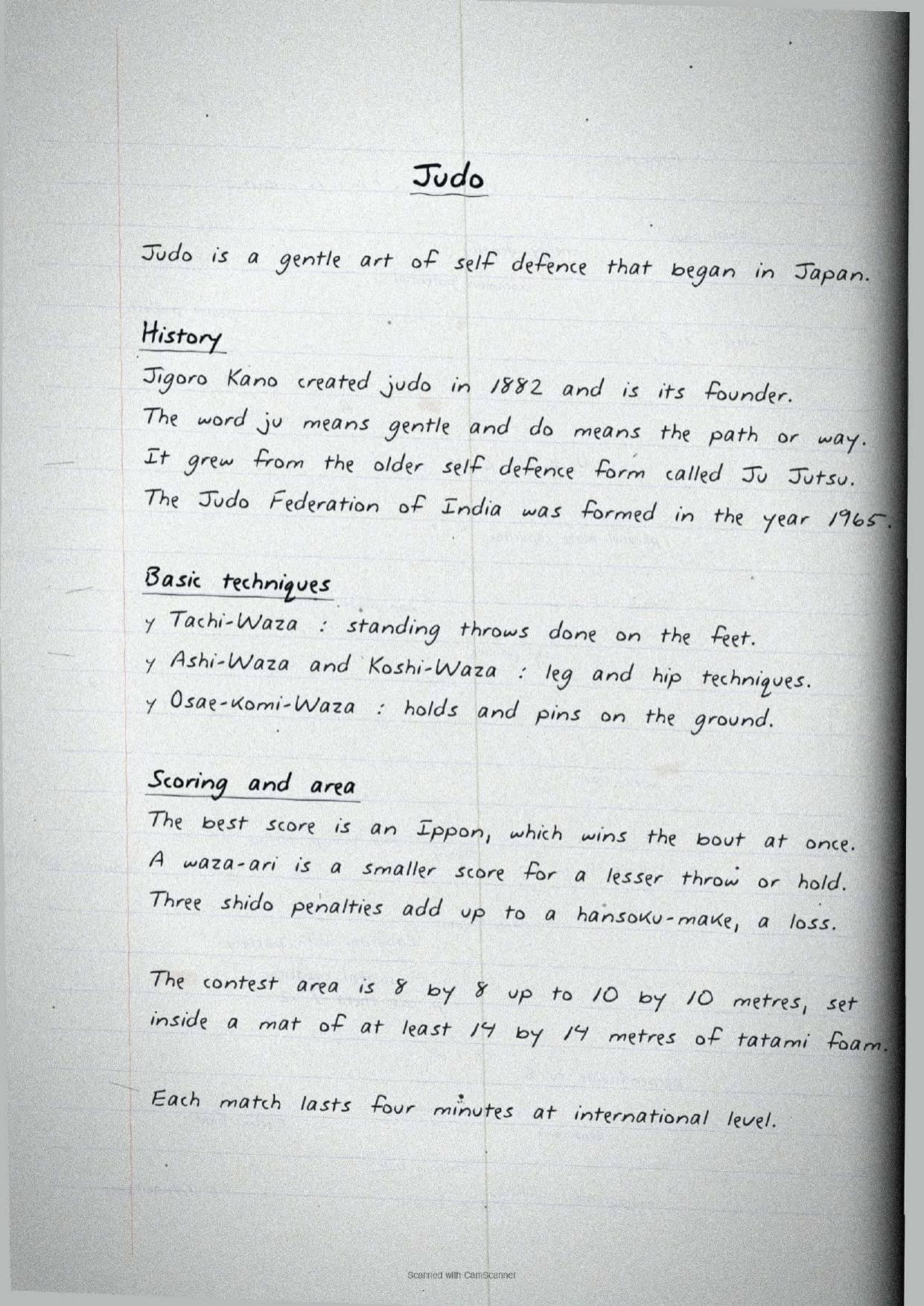
| Judo | Invented by Jigoro Kano in Japan in 1882; Judo Federation of India formed in 1965. |
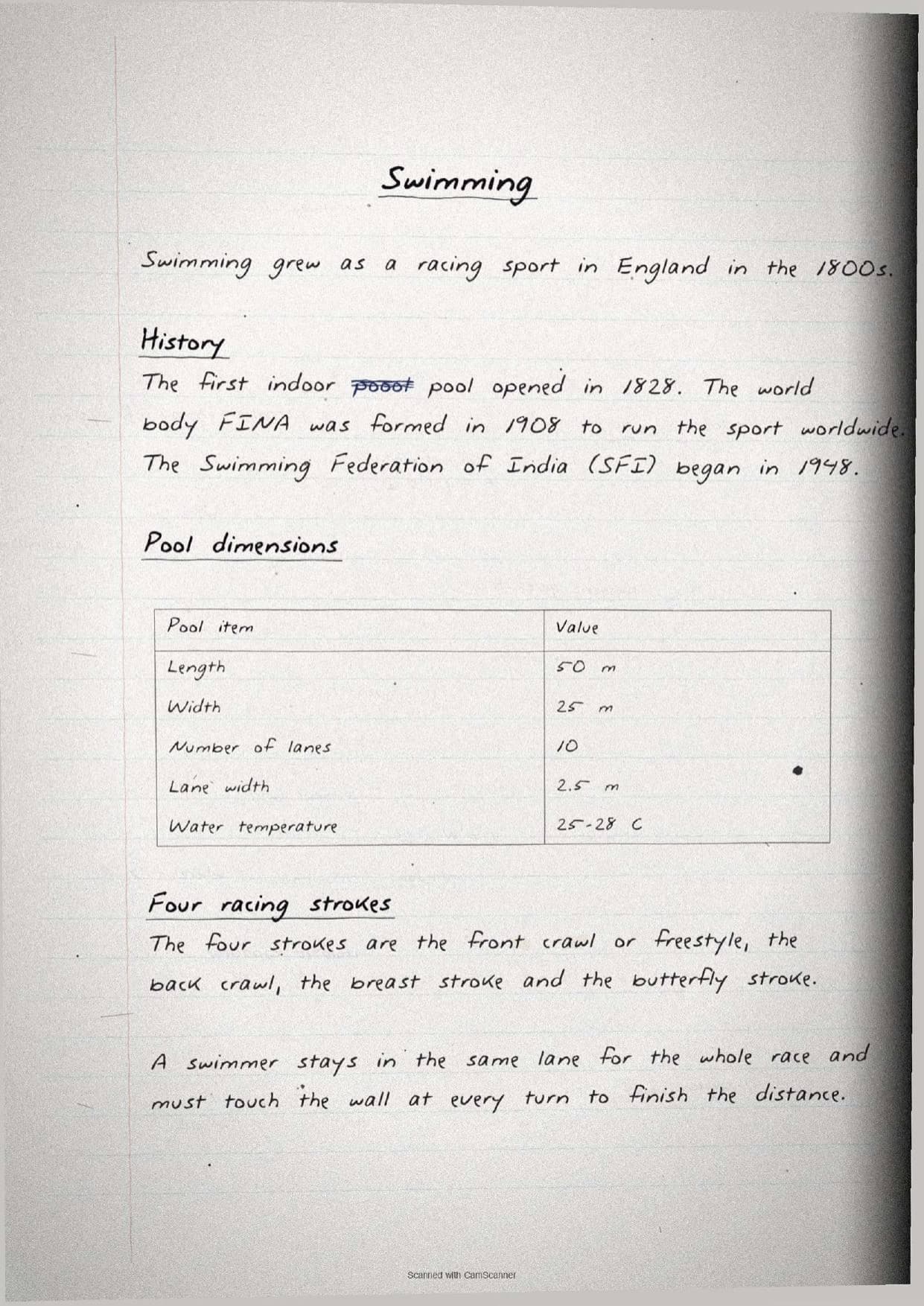
| Swimming | Emerged as a sport in early 1800s England; Swimming Federation of India set up in 1948. |
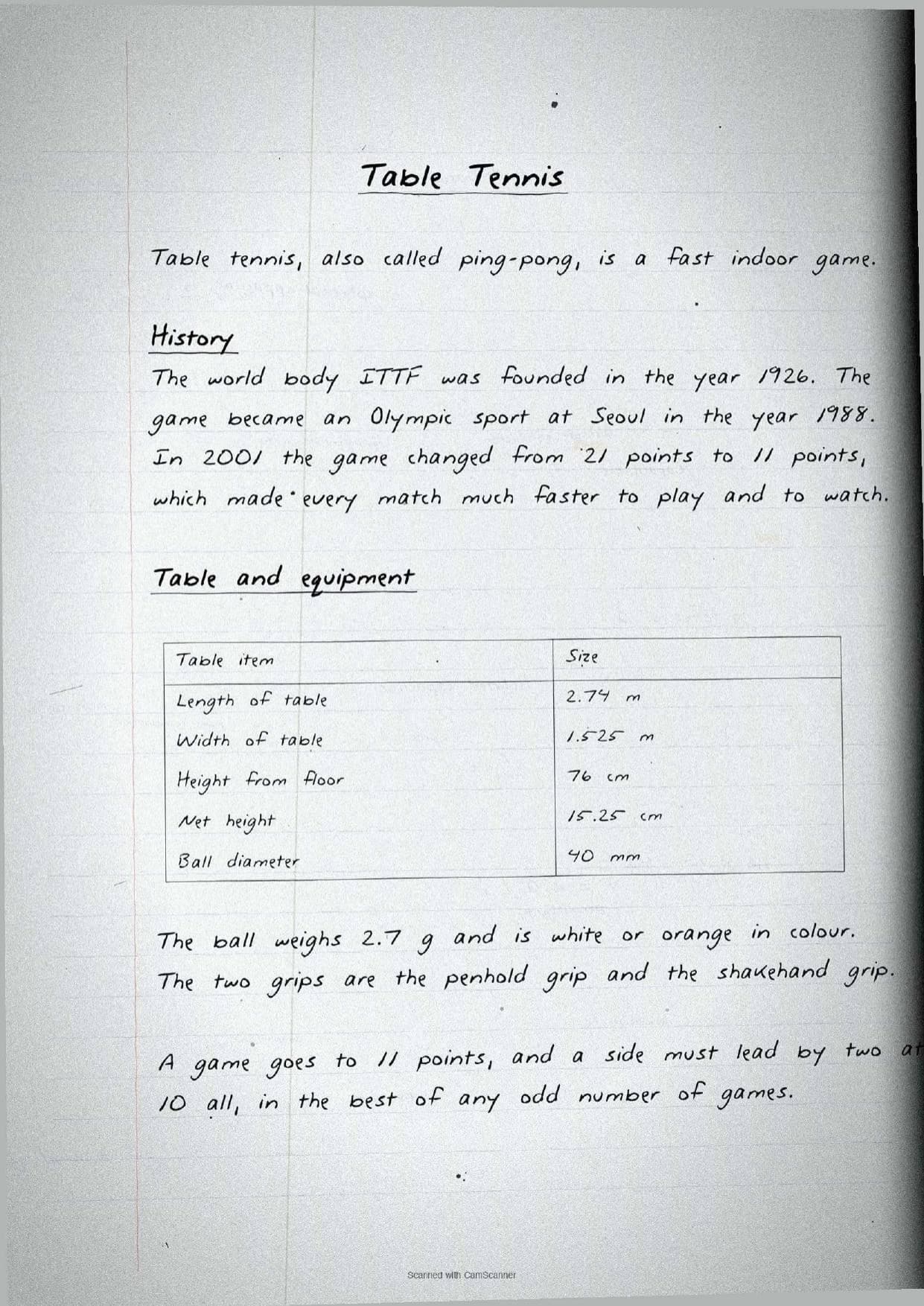
| Table Tennis | An indoor racket game; points changed from 21 to 11 in 2001; two-service rule from 2002. |
| Wrestling | One of the oldest sports, part of the ancient pentathlon along with discus, long jump and javelin. |
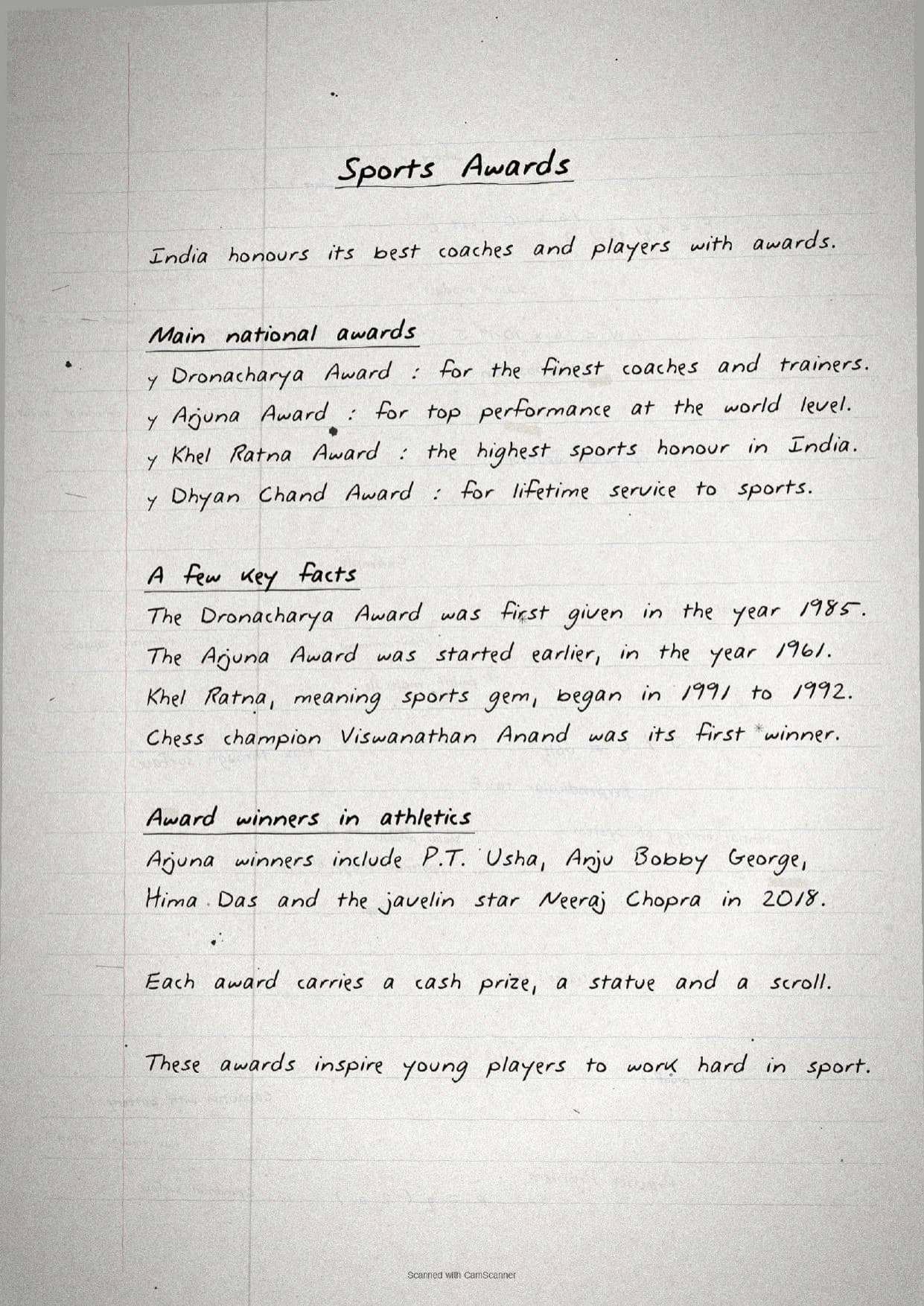
The notes also flag India's milestones. In athletics the pages list Milkha Singh, P.T. Usha, Anju Bobby George and Neeraj Chopra, and connect the sport to the four national sports awards: the Dronacharya Award for coaches, the Arjuna Award, the Rajiv Gandhi Khel Ratna Award, and the Dhyan Chand Award for lifetime achievement.
Court, Field and Equipment Measurements
Measurement questions are the surest marks in this chapter, so the handwritten notes keep every dimension in a labelled diagram with the numbers boxed. The table below pulls together the figures students are asked most often in class 11 physical education chapter 4.
| Game / Event | Official measurement from the NCERT book |
|---|---|
| Athletics track | Oval, formed by two straight and two curved lines; each lane 1.22 m to 1.25 m wide, marked by 5 cm lines. |
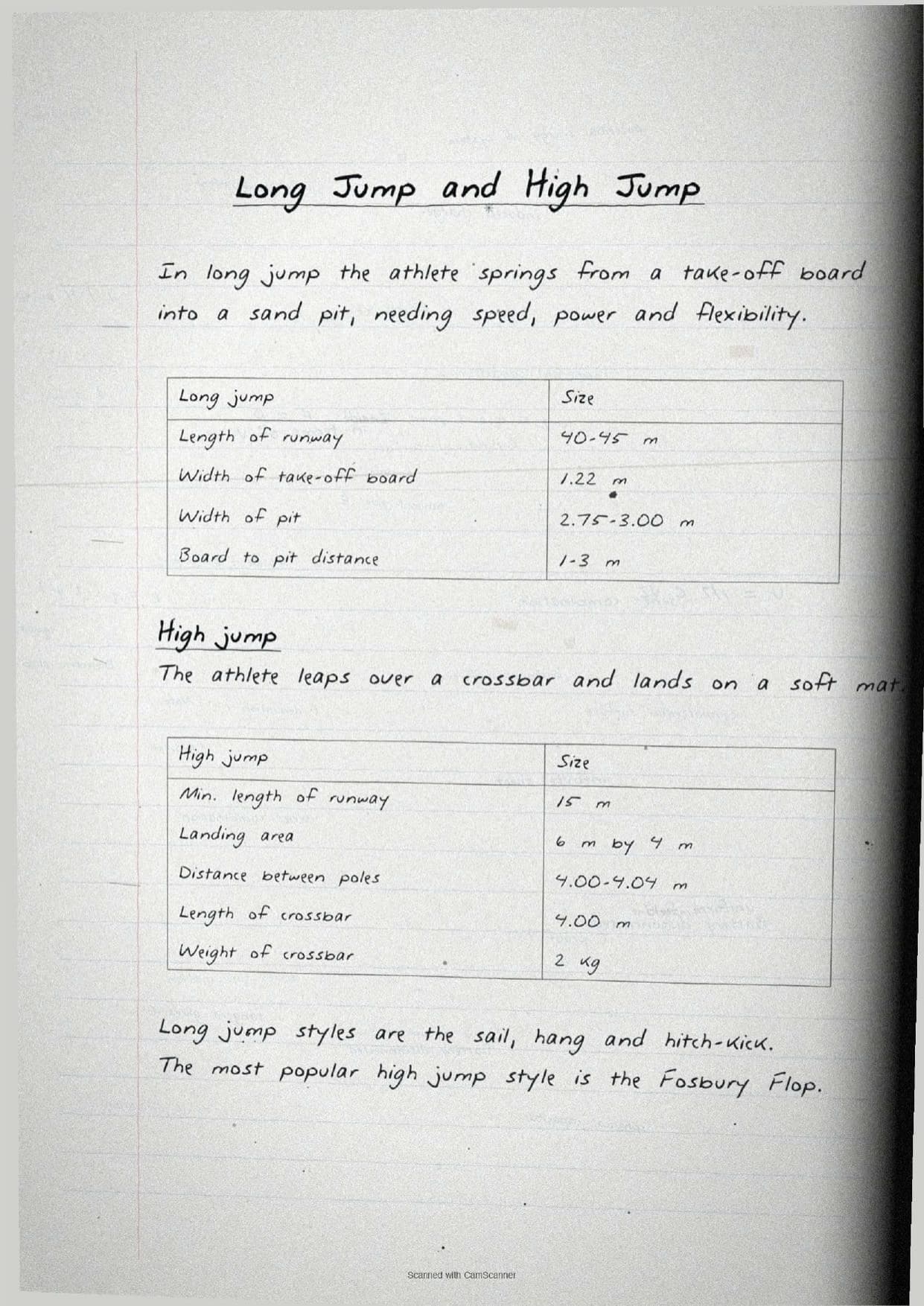
| Long jump | Runway 40 m to 45 m long; take-off board 1.22 m long, 20 cm wide, 10 cm thick; pit 2.75 m to 3.00 m wide. |
| High jump | Minimum runway 15 m; landing area 6 m x 4 m; crossbar 4.00 m long, 2 kg, poles 4.00 m to 4.04 m apart. |
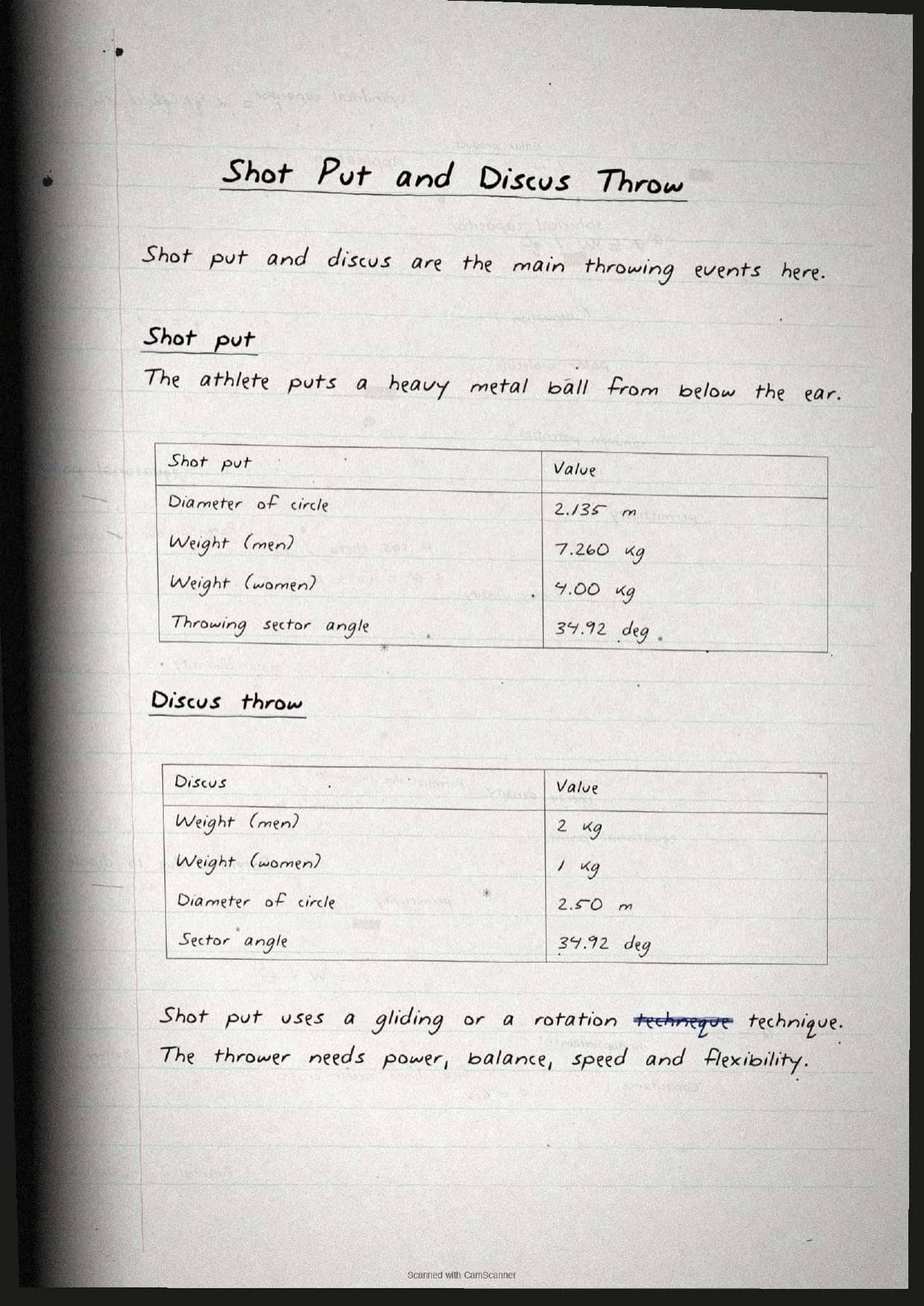
| Shot put | Circle diameter 2.135 m; throwing sector 34.92 degrees; shot 7.260 kg (men), 4.00 kg (women). |
| Discus throw | Circle diameter 2.50 m; sector 34.92 degrees; discus 2 kg (men), 1 kg (women). |
| Badminton court | 13.40 m x 6.10 m (5.18 m for singles), 4 cm lines; net 1.524 m high at centre; posts 1.55 m; shuttle 4.74 to 5.50 g. |
| Table tennis table | 2.74 m long, 1.525 m wide, 76 cm above the floor; net 15.25 cm high; ball 40 mm, 2.7 g. |
| Swimming pool | Length 50 m, width 25 m, depth 2.0 m minimum; 10 lanes, each 2.5 m wide; water 25 to 28 degrees C. |
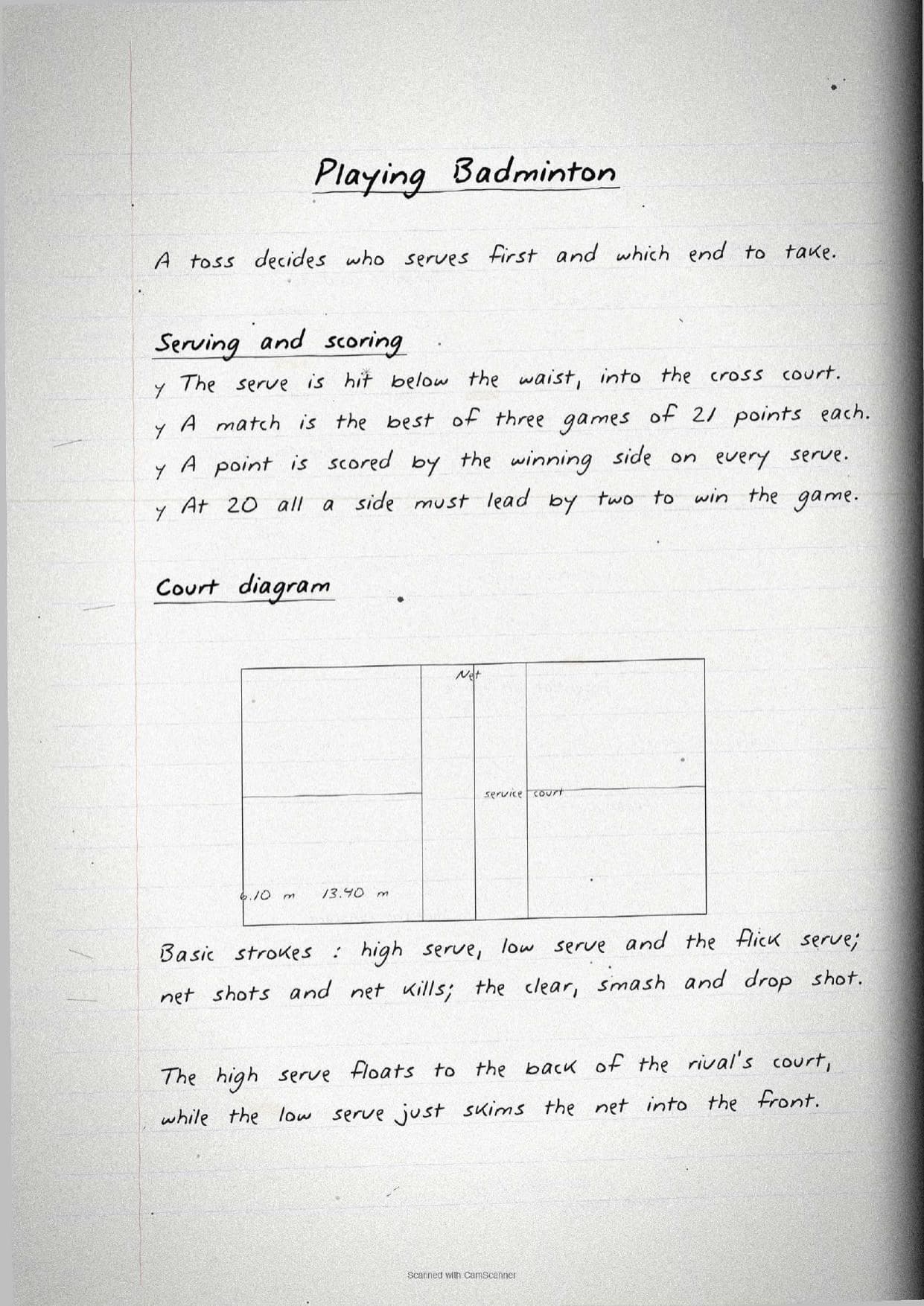
The handwritten pages draw each of these as a simple sketch so the numbers attach to a picture, not just a list. Seeing the badminton court, the shot put sector and the swimming pool as labelled diagrams is the fastest way to recall the exact figures under exam pressure.
Fundamental Skills and Key Rules
Alongside the measurements, the notes list the fundamental skills and the main rules of each game as short boxed points. These feed the short-answer and long-answer questions, so the pages keep them tight and easy to reproduce.
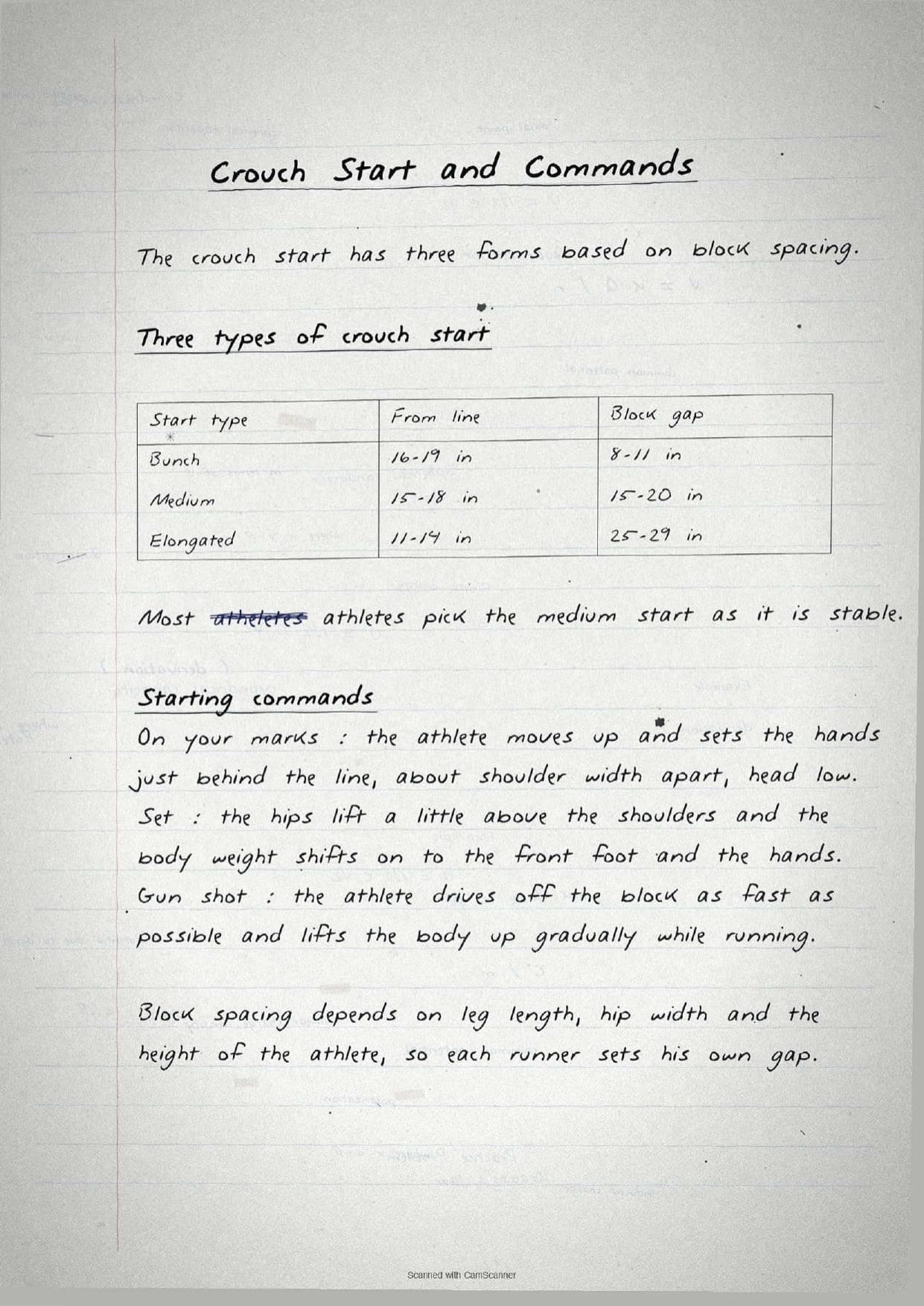
- Athletics starts: the crouch start (bunch, medium and elongated) for sprints, and the standing start for middle and long distance; the medium start is the most used.
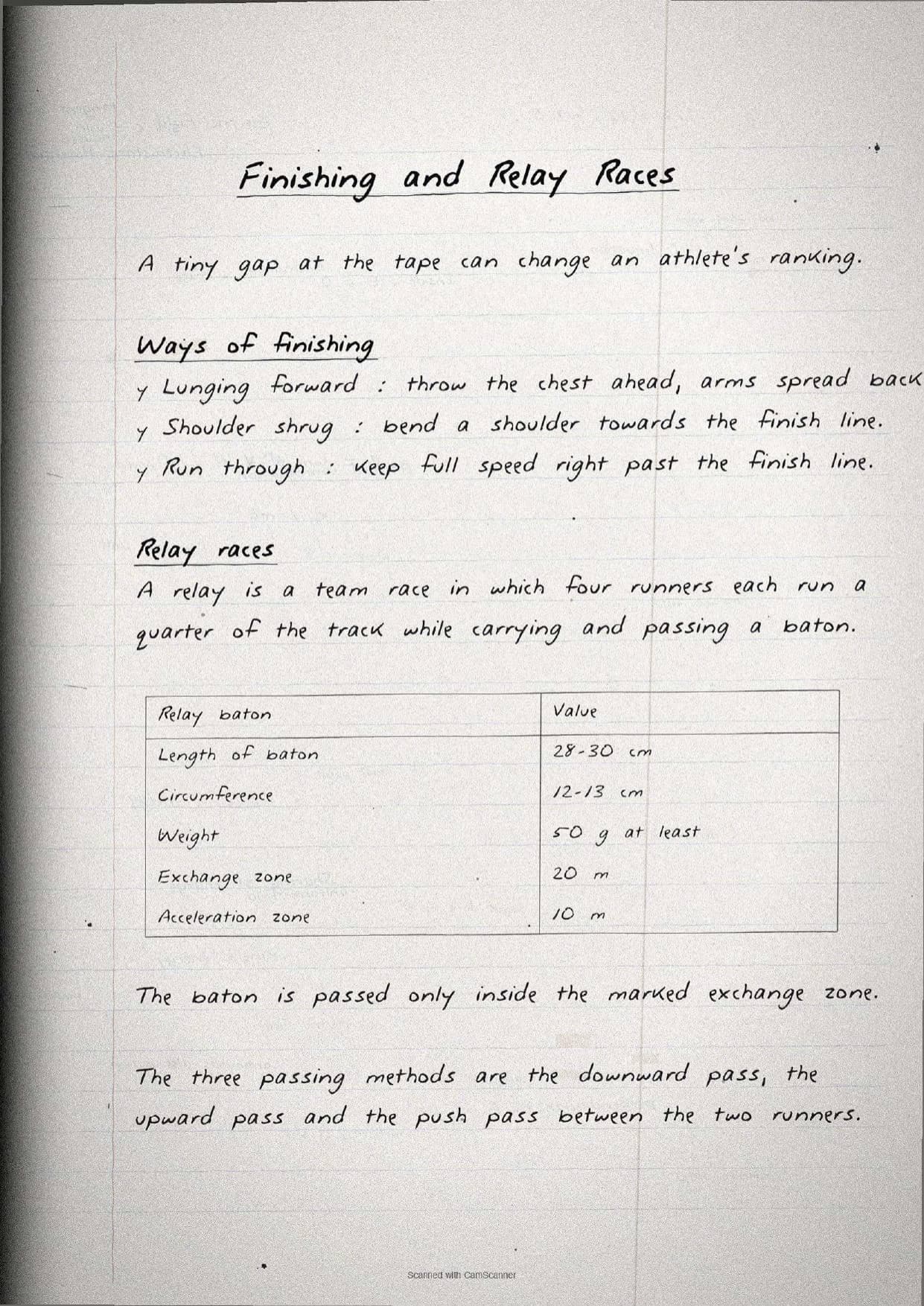
- Athletics finishing: lunging forward, shoulder shrug and run through are the three finishing techniques.
- Badminton strokes: serves (high, low, flick), net strokes, midcourt drives and rear-court clears, smashes and drop shots; a match is best of three games of 21 points.
- High jump techniques: scissor jump, western roll, straddle and the modern Fosbury Flop.
- Judo scoring: Ippon is the full-point score; penalties are shido and hansoku-make; players wear the Judogi and Obi belt.
- Table tennis service: after 2 points the serve changes; at 10 all each player serves for only 1 point in turn.
The notes underline one point that scores well in badminton: at 20 all the side that first gains a two-point lead wins, and at 29 all the side scoring the 30th point wins the game. The pages box this rule so it stands out. Pairing each skill list with its measurement diagram gives students the full picture of every game on just a few pages.
How to Use These Handwritten Notes
Handwritten notes work best as a final-revision tool, not a first read. The steps below show how to get the most out of the Individual Games handwritten notes in the last days before a test.
- Download: save the handwritten pages to your device so you can revise offline.
- First read: read the printed Notes once so the handwritten pages act as a refresher, not a first source.
- Recall drill: cover the page and try to write the badminton court size, the shot put and discus figures, and the founding year of each sport from memory.
- Night before: flip through the boxed measurement tables and history blocks for a quick last-minute recall.
Many students search for individual games class 11 notes on their phone the night before a test, so a saved set of handwritten pages means you can revise anywhere. Use the handwritten notes for speed, then check the solutions to confirm you have the answer points right.
Common Mistakes These Notes Help You Avoid
A few errors cost marks every year. The handwritten notes flag each one in the margin so you can fix it before the exam. These five are the most common.
- Mixing up the badminton court size. It is 13.40 m x 6.10 m, with 5.18 m used for singles.
- Confusing the shot and discus weights. The shot is 7.260 kg for men; the discus is 2 kg for men and 1 kg for women.
- Saying relay is an individual event. Relay races are team events even though they sit inside athletics.
- Forgetting the throwing sector angle. Both shot put and discus use a 34.92 degree sector.
- Naming the wrong founder of Judo. It was invented by Jigoro Kano in 1882, not by a federation.
Students who fix these five points usually move from average to high marks. The handwritten notes box the measurement figures and list the founding facts in full, so the soft points are hard to miss when you revise.
How These Handwritten Notes Pair with the Notes and Book PDF
These handwritten notes are a fast revision tool. To prepare fully, students should use them alongside the other resources for the same chapter, both linked in the table below. Read the printed Notes, keep the Book PDF for the original diagrams, then use these pages for a final recall.
| Resource | Best used for |
|---|---|
| Individual Games Class 11 Notes | Quick chapter summary with all seven games and their key facts in one place |
| Individual Games NCERT Book PDF | Reading the original NCERT chapter text and the labelled court and field figures |
Tip: read the printed Notes first, keep the Book PDF open for the diagrams, and save these handwritten pages for the final night-before flip. Using them for recall, not for the first read, builds memory faster.
All Class 11 Physical Education Handwritten Notes by Chapter
The table links the handwritten notes for every chapter in Class 11 Physical Education, so students can move across the course in one click. Individual Games is highlighted.
| Chapter | Handwritten Notes |
|---|---|
| Chapter 1 | Physical Education |
| Chapter 2 | Understanding Health |
| Chapter 3 | Physical and Physiological Aspects of Physical Education and Sports |
| Chapter 4 | Individual Games |
| Chapter 5 | Team Games |
| Chapter 6 | Yoga and its Relevance in the Modern Times |
| Chapter 7 | Safety and Security |
| Chapter 8 | Health Related Physical Fitness |
| Chapter 9 | Measurement and Evaluation |
| Chapter 10 | Tournaments and Competitions |
| Chapter 11 | Adventure Sports |
FAQs on Individual Games Handwritten Notes
Individual Games Class 11 Physical Education Handwritten Notes Common Questions
Ques. Where can I download the Individual Games handwritten notes PDF?
Ans. You can download the Individual Games Class 11 Physical Education handwritten notes PDF directly from this page. It is free, follows the 2026-27 NCERT Health and Physical Education book, and presents Athletics, Badminton, Gymnastics, Judo, Swimming, Table Tennis and Wrestling as handwritten pages.
Ques. Which games are covered in Class 11 Physical Education Chapter 4?
Ans. Chapter 4 covers seven individual sports: Athletics, Badminton, Gymnastics, Judo, Swimming, Table Tennis and Wrestling. For each game the notes give the history, the court or field measurements, the fundamental skills, the key rules and the main tournaments.
Ques. What is the size of a badminton court in Chapter 4?
Ans. A badminton court is rectangular, 13.40 m by 6.10 m, with the width reduced to 5.18 m for singles. The lines are 4 cm wide, the net is 1.524 m high at the centre, and the posts are 1.55 m high. These figures are boxed in the handwritten measurement table.
Ques. Are handwritten notes good for revising Class 11 Physical Education Chapter 4?
Ans. Yes. Handwritten notes are best for fast, last-minute revision because the boxed measurements, labelled diagrams and short history blocks make the facts easy to skim. Use them after a first read of the printed Notes, not as your only source.
Ques. Who prepared these handwritten notes?
Ans. They are written and proofread by hand by a subject expert with an MPEd, NIS coaching certification and years of CBSE Class 11 Physical Education teaching experience, using the official NCERT textbook and recent Class 11 question papers.



Comments