



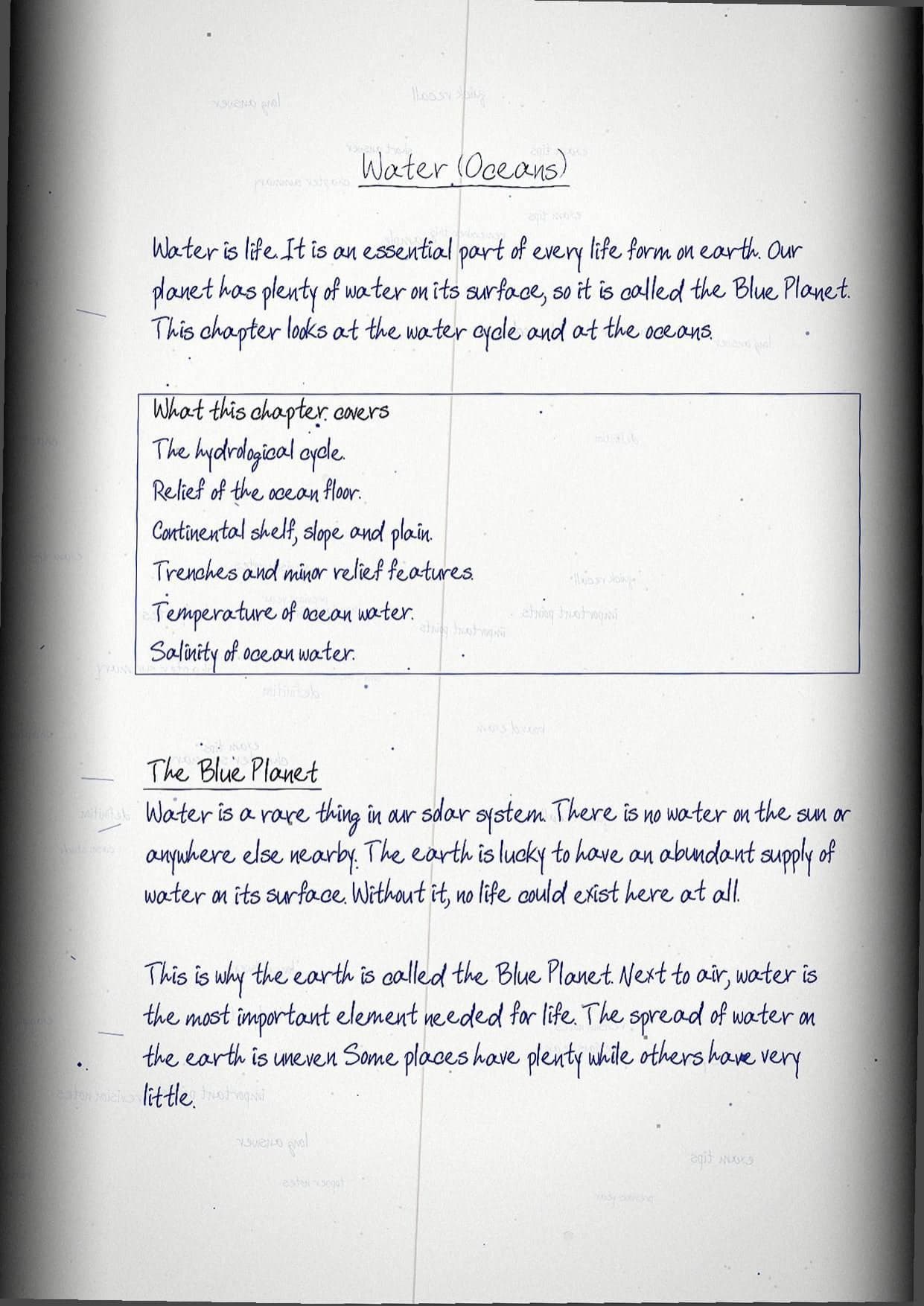
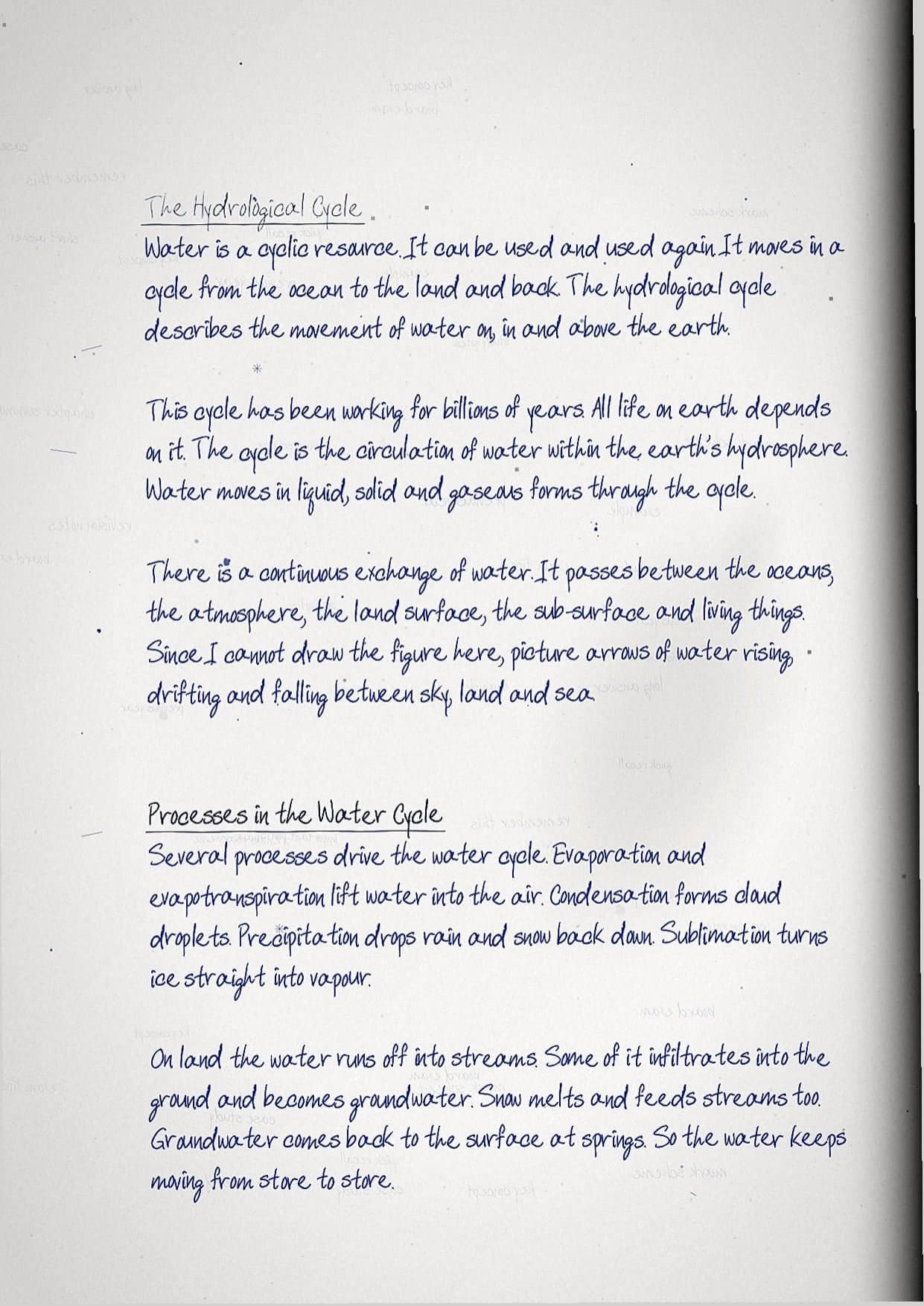
The 2026-27 NCERT keeps Class 11 Geography Chapter 12 Water (Oceans) in full for the CBSE course. These class 11 geography handwritten notes chapter 12 Water (Oceans) follow the 2026-27 NCERT and cover the hydrological cycle and its processes, distribution of water on the earth, relief of the ocean floor. This page hosts the notes PDF, key terms,.
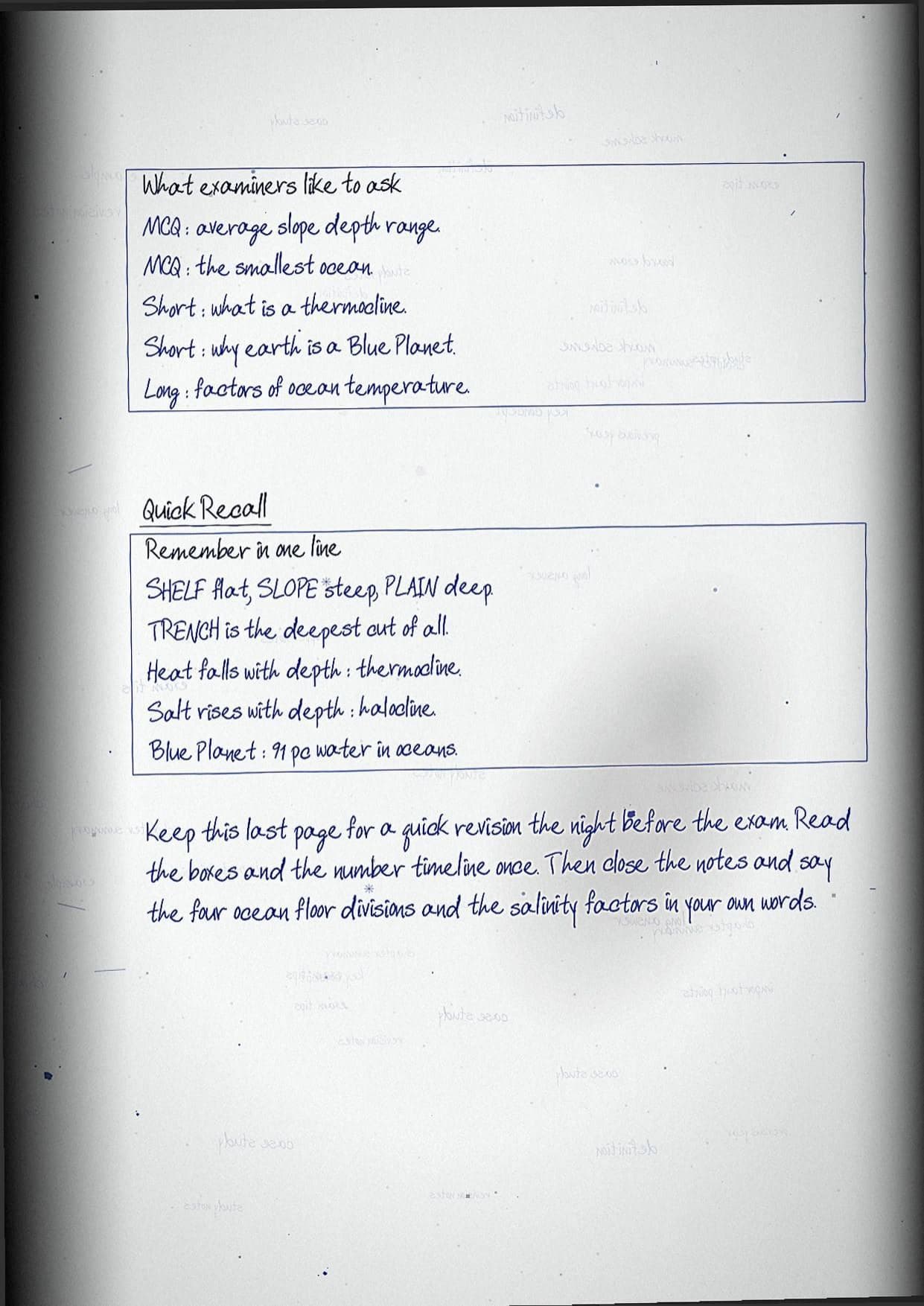
- CBSE Class 11 Weightage: a scoring chapter in the Geography paper, asked in short and long answers.
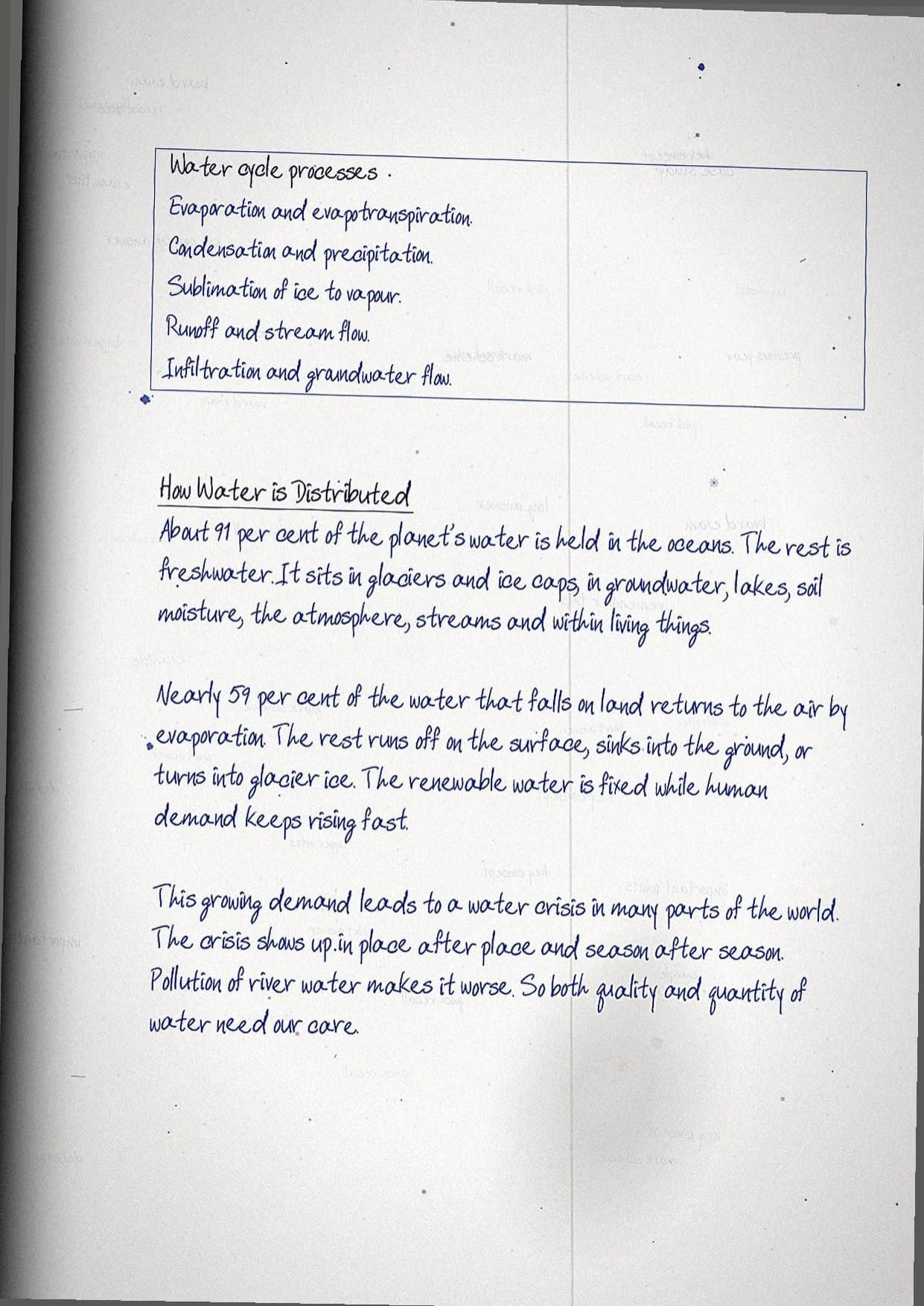
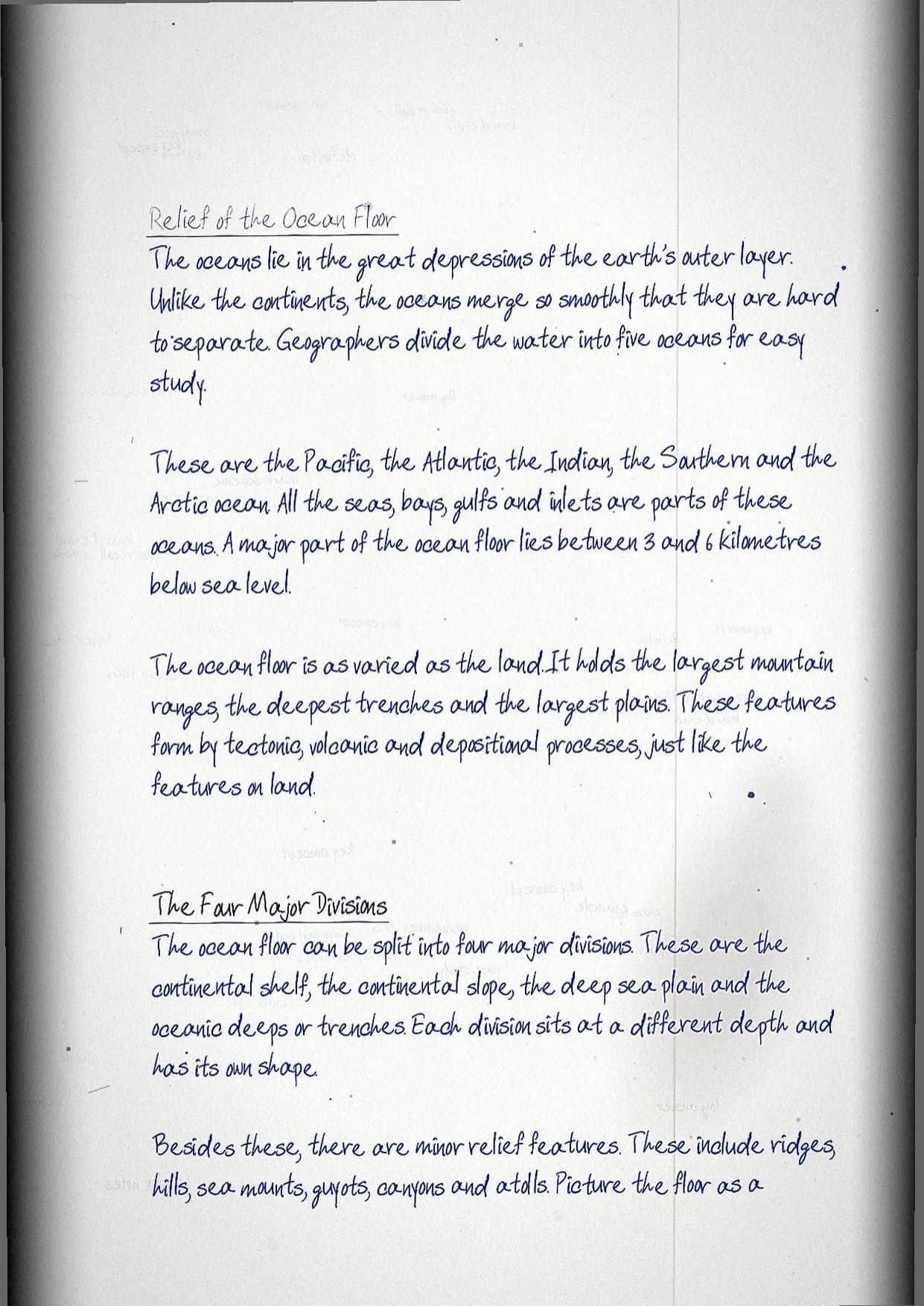
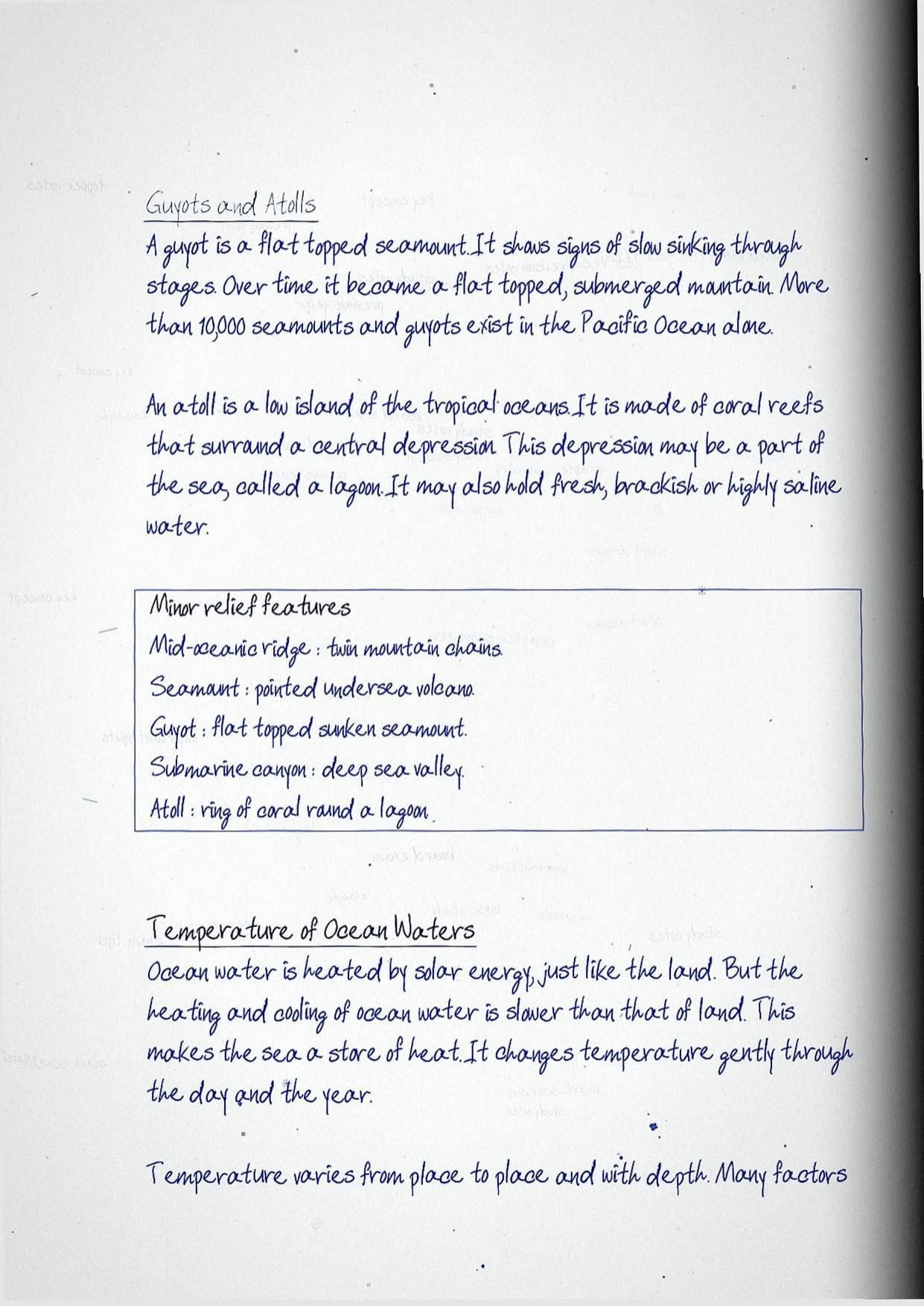
- What the notes cover: the hydrological cycle and its processes, distribution of water on the earth, relief of the ocean floor, continental shelf, slope, plain and trench.
- Best for: quick revision before Class 11 exams and a base for CUET later.
You can read the complete class 11 geography handwritten notes for Water (Oceans), with key terms, boxed definitions, and quick revision points, in the PDF below.
These handwritten notes are written by subject teachers, mapped to the 2026-27 NCERT, and checked against the last five years of CBSE Class 11 Geography papers.
Water (Oceans) Topic-wise Weightage for CBSE Class 11 Geography
Some parts of this chapter are asked more often than others. The table below shows which sub-topics to revise first, based on recent CBSE Class 11 question trends.
| Sub-topic | Weightage | CBSE Frequency |
|---|---|---|
| Relief of the ocean floor divisions | High | very frequent |
| Temperature distribution of oceans | High | very frequent |
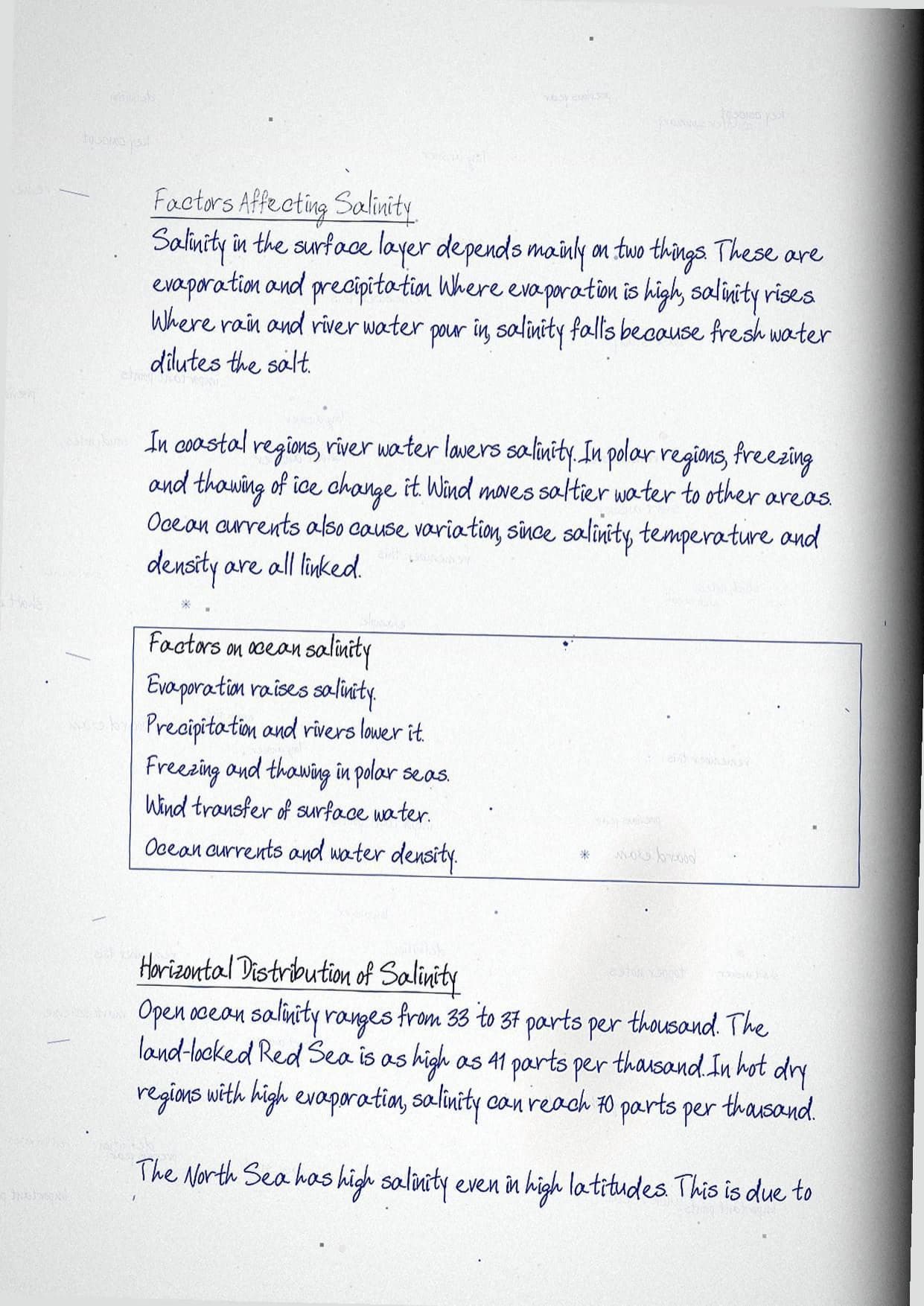
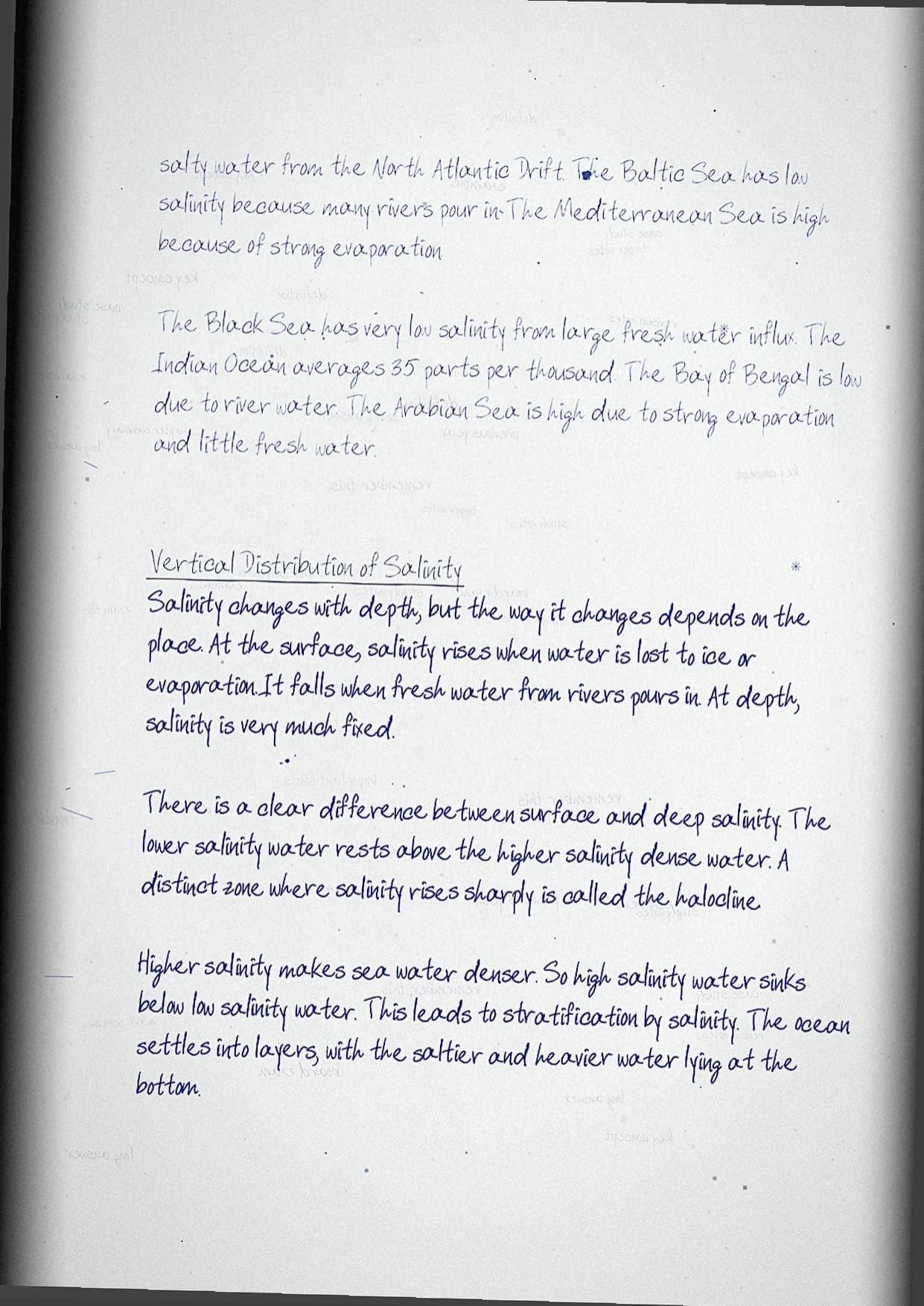
| Salinity of ocean water | Medium | frequent |
| Hydrological cycle and its processes | Medium | frequent |
| Minor relief features of oceans | Low | occasional |
What the Water (Oceans) Handwritten Notes Cover
Water is life and the earth is the Blue Planet. Water moves in a never-ending cycle between sea, air and land. This chapter covers the ocean floor, its temperature and its salinity.
- The hydrological cycle and its processes
- Distribution of water on the earth
- Relief of the ocean floor
- Continental shelf, slope, plain and trench
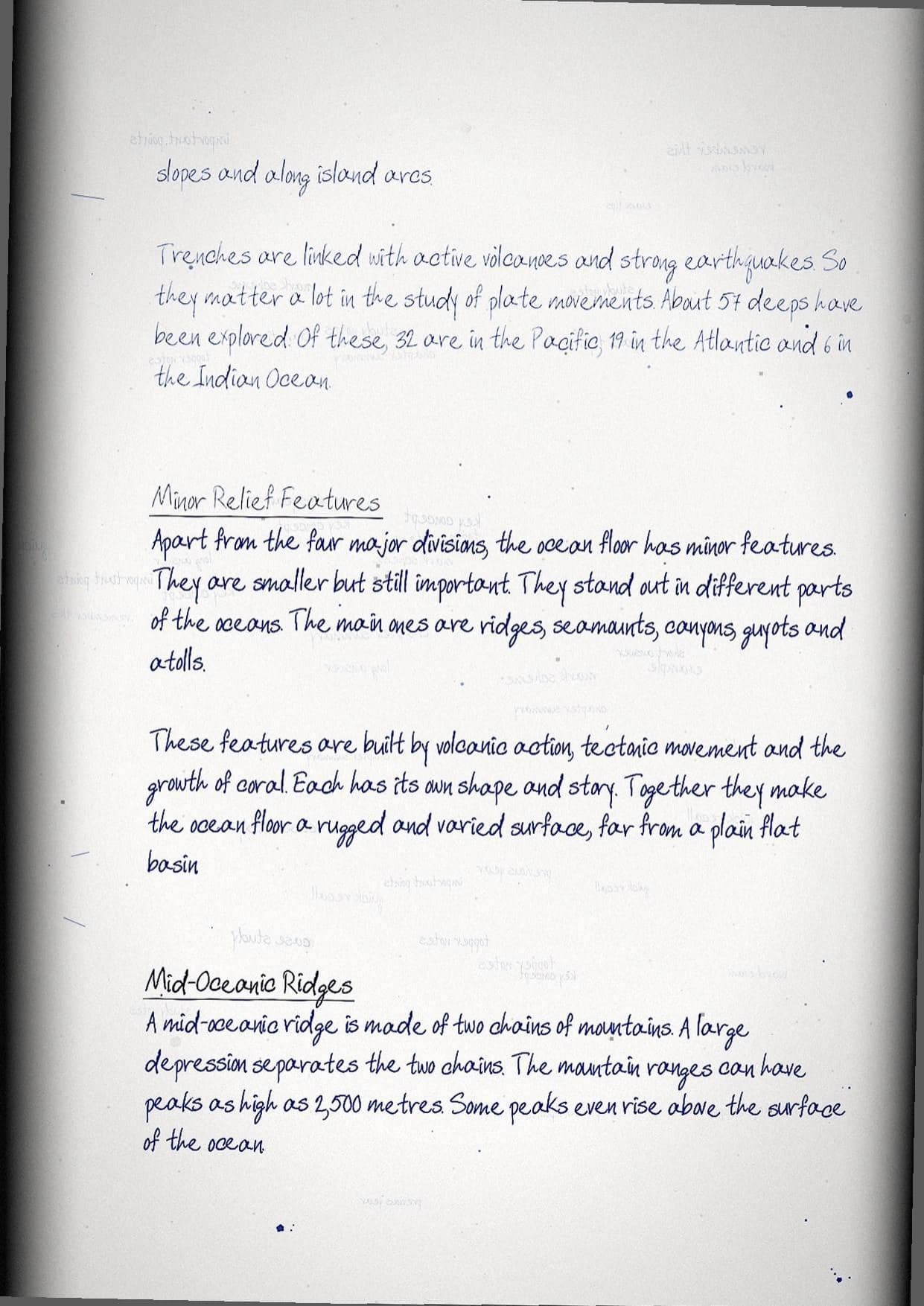
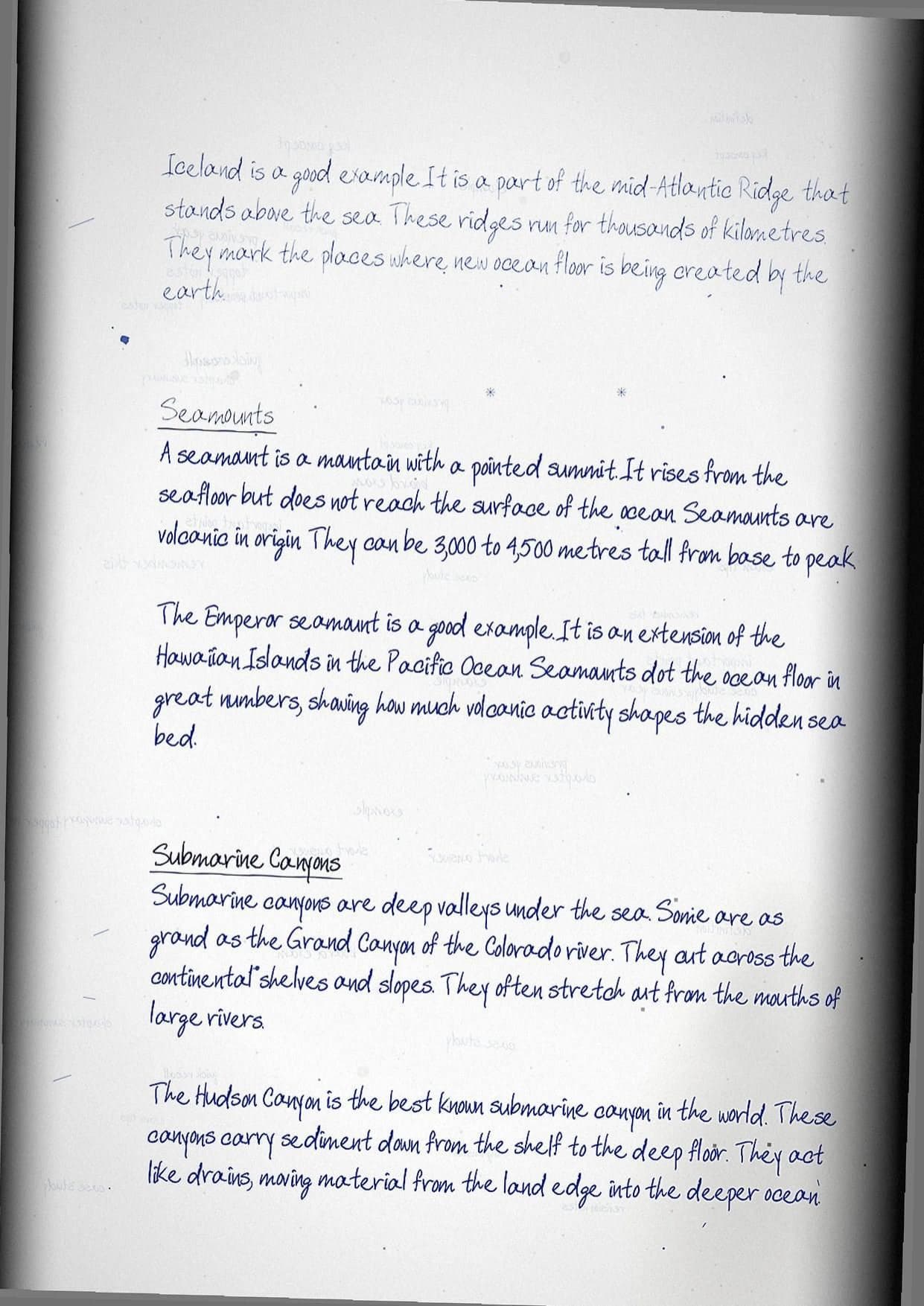
- Minor features: ridges, seamounts, atolls
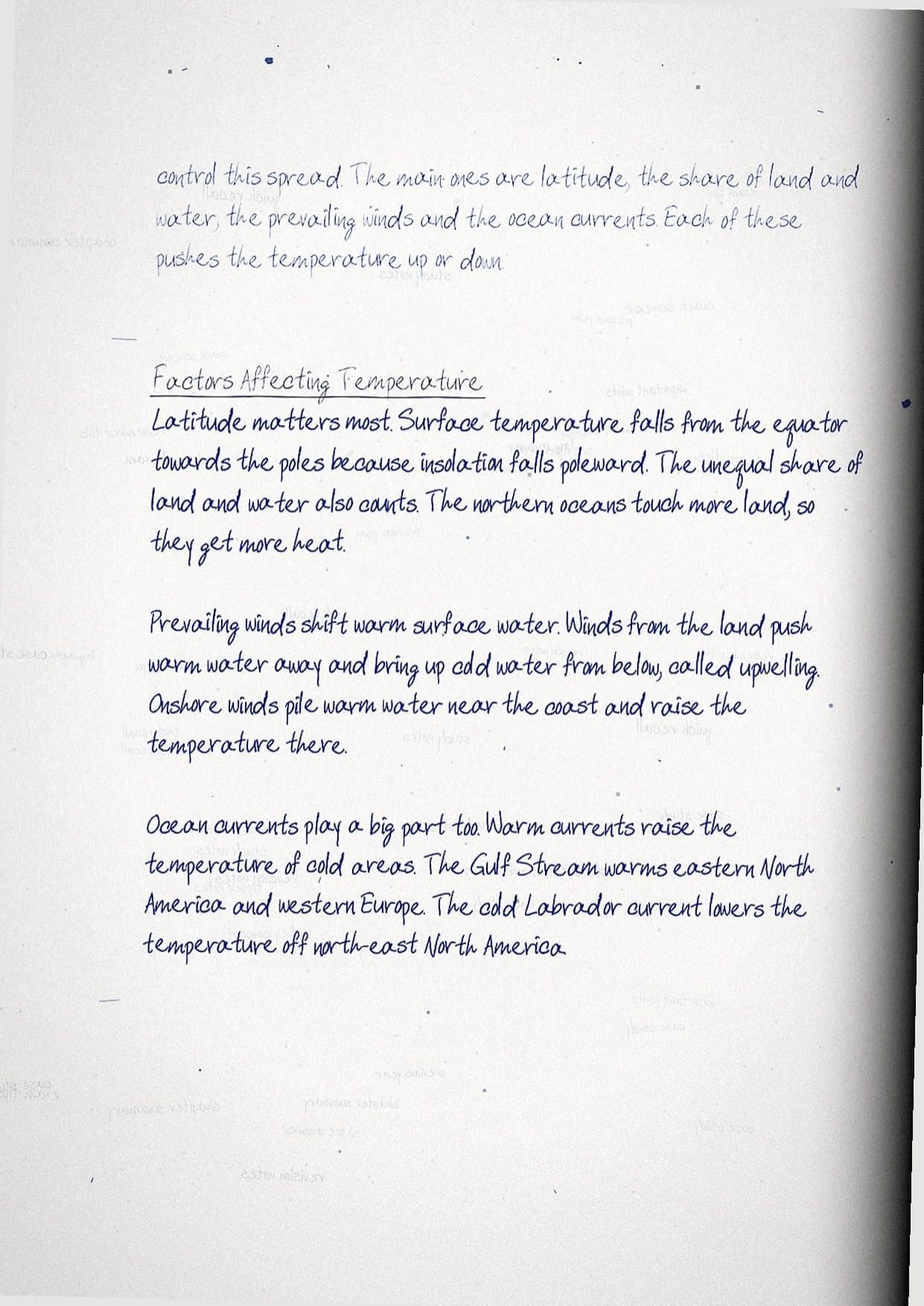
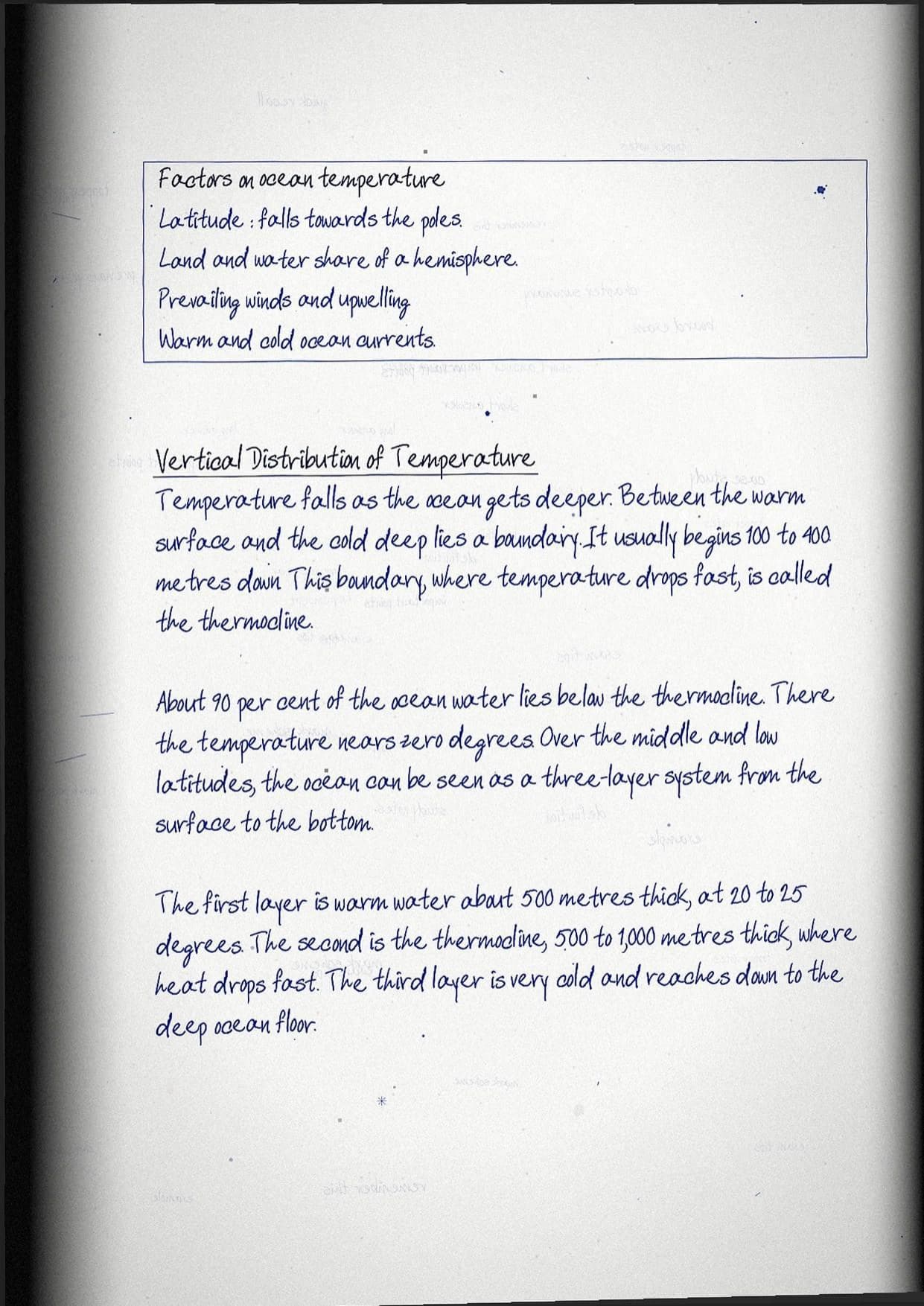
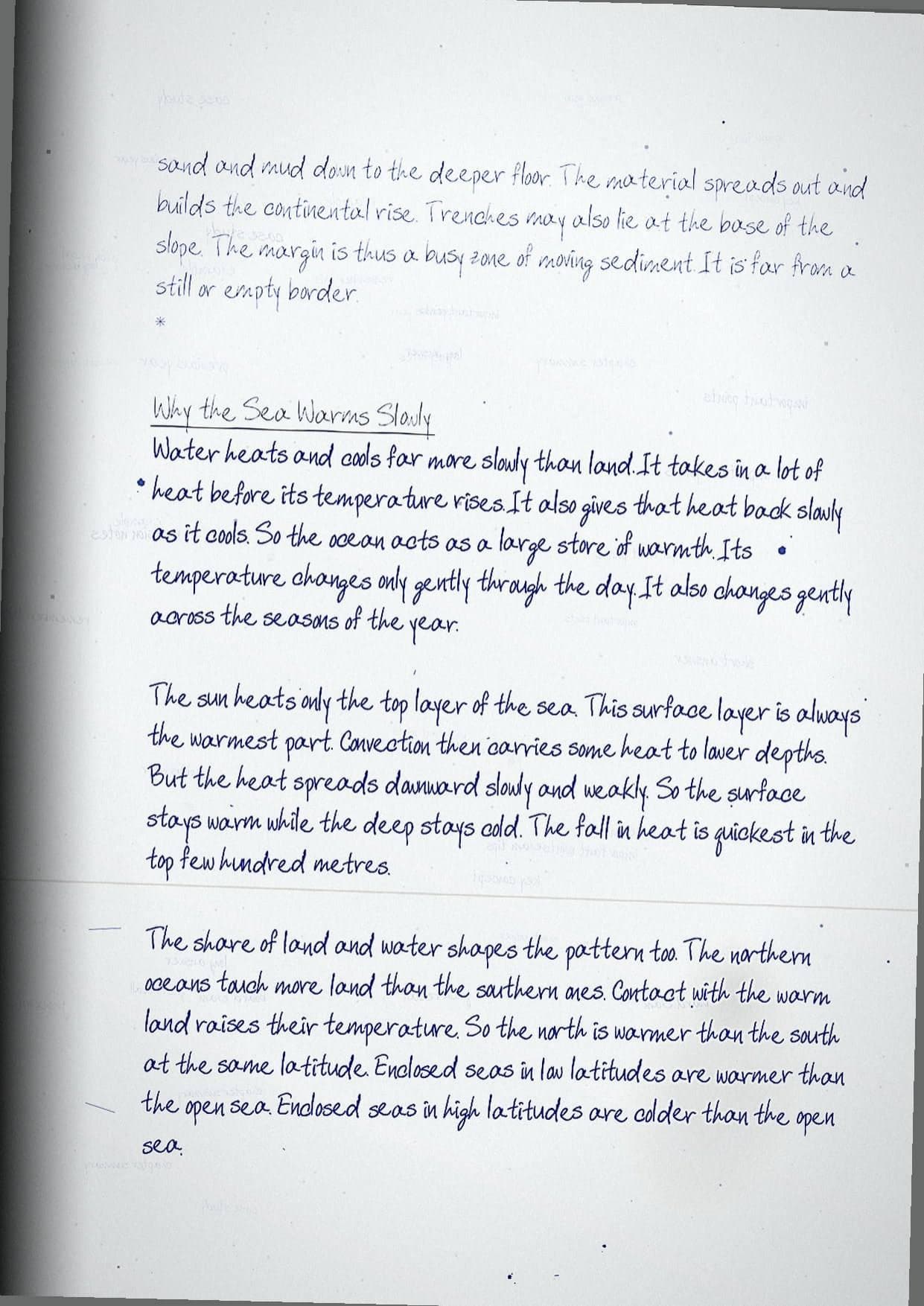
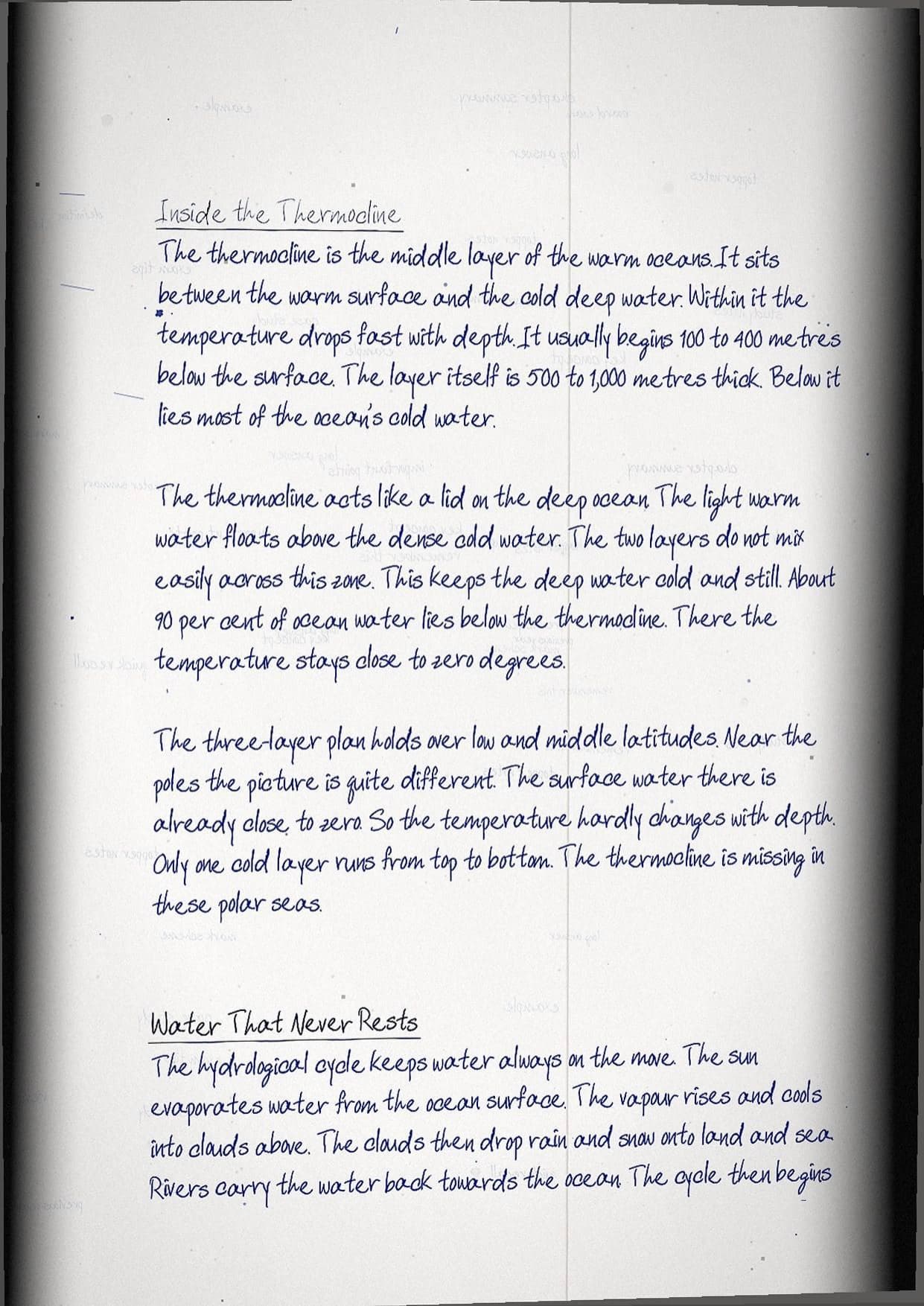
- Temperature of ocean water and the thermocline
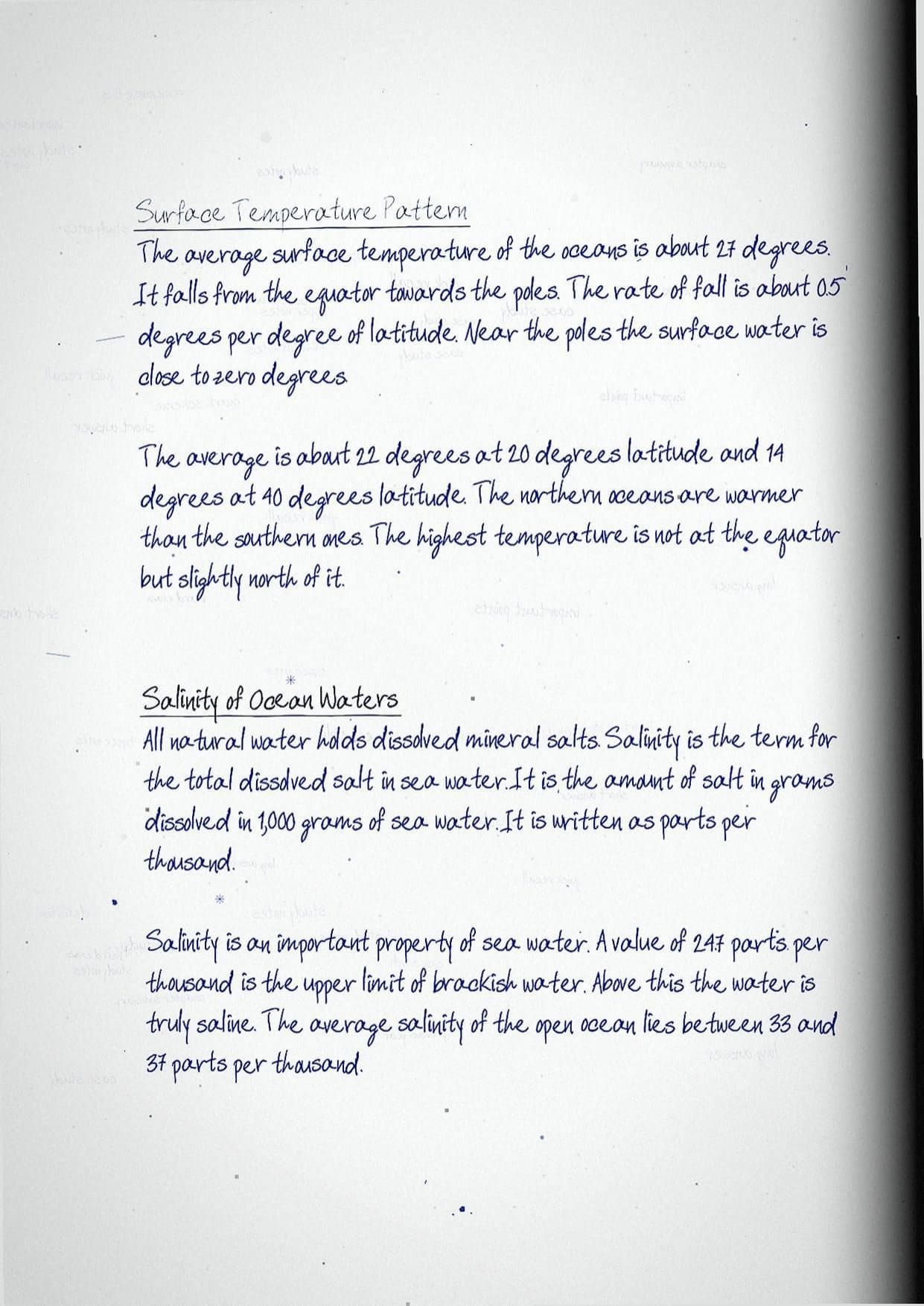
- Salinity of ocean water and the halocline
Key Terms and Ideas in Water (Oceans)
These are the terms and ideas the exam asks about most. Learn each one so you can define it and use it in your answers.
| Term / Idea | What it means |
|---|---|
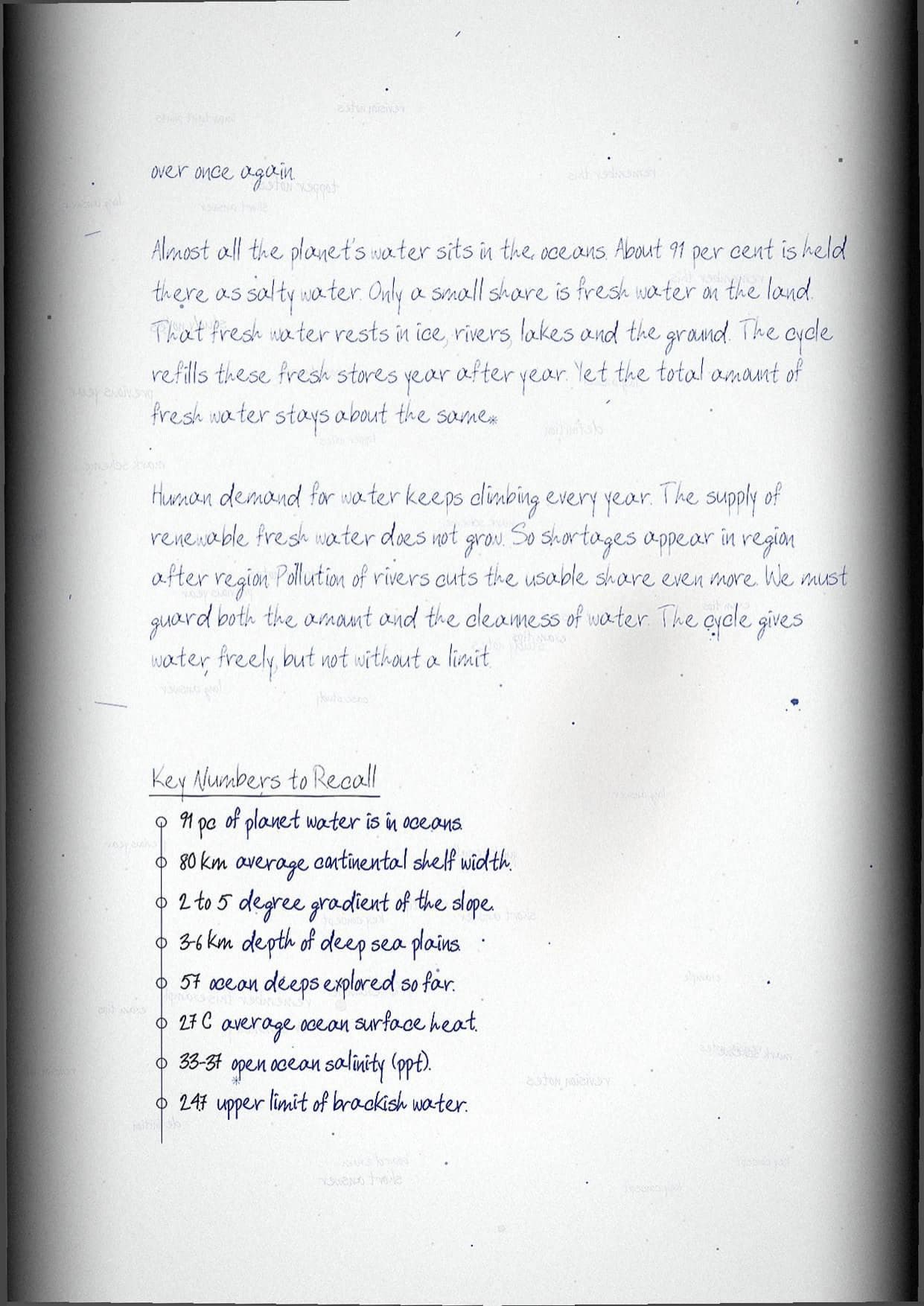
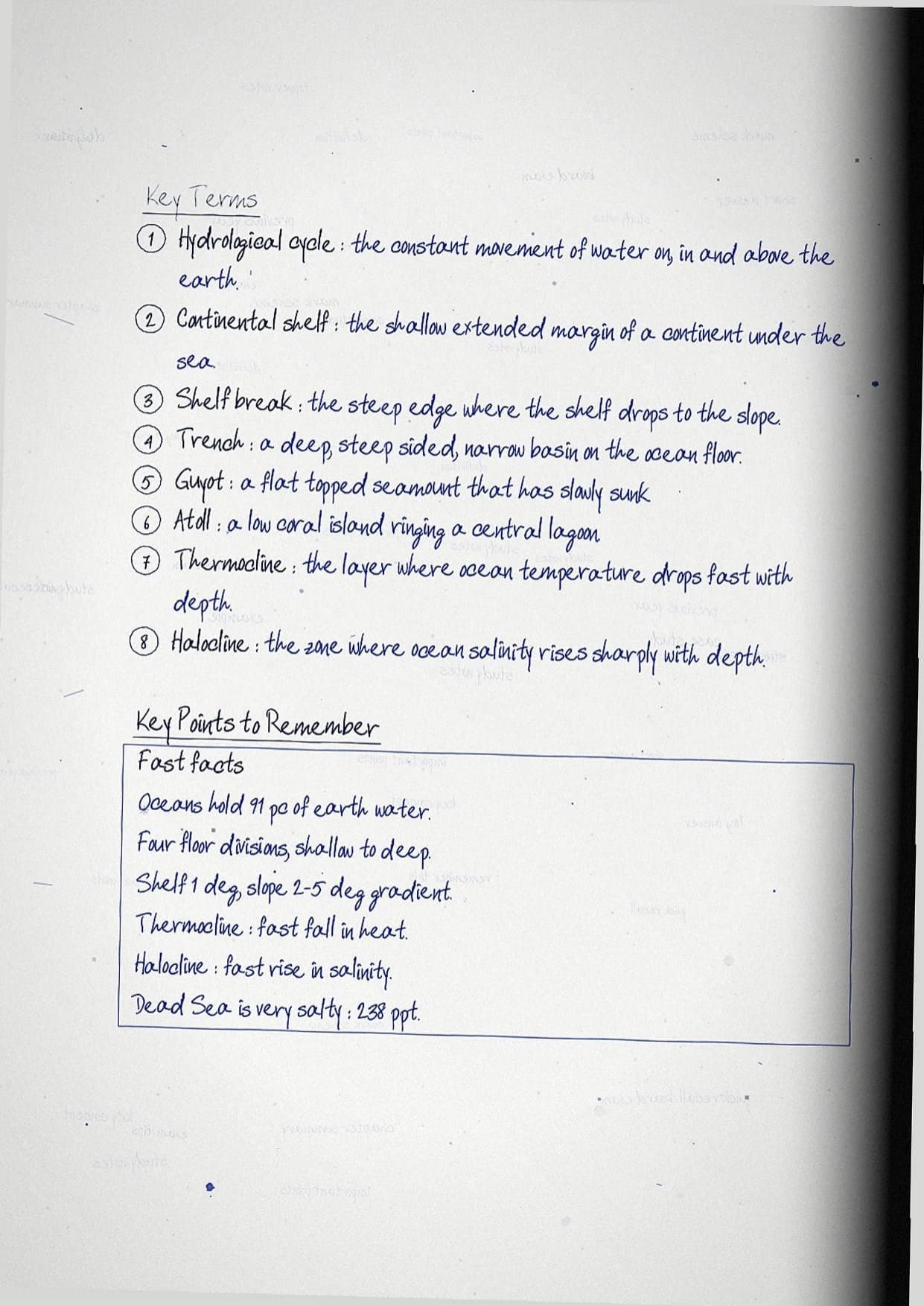
| Ocean share | About 91 per cent of planetary water lies in the oceans |
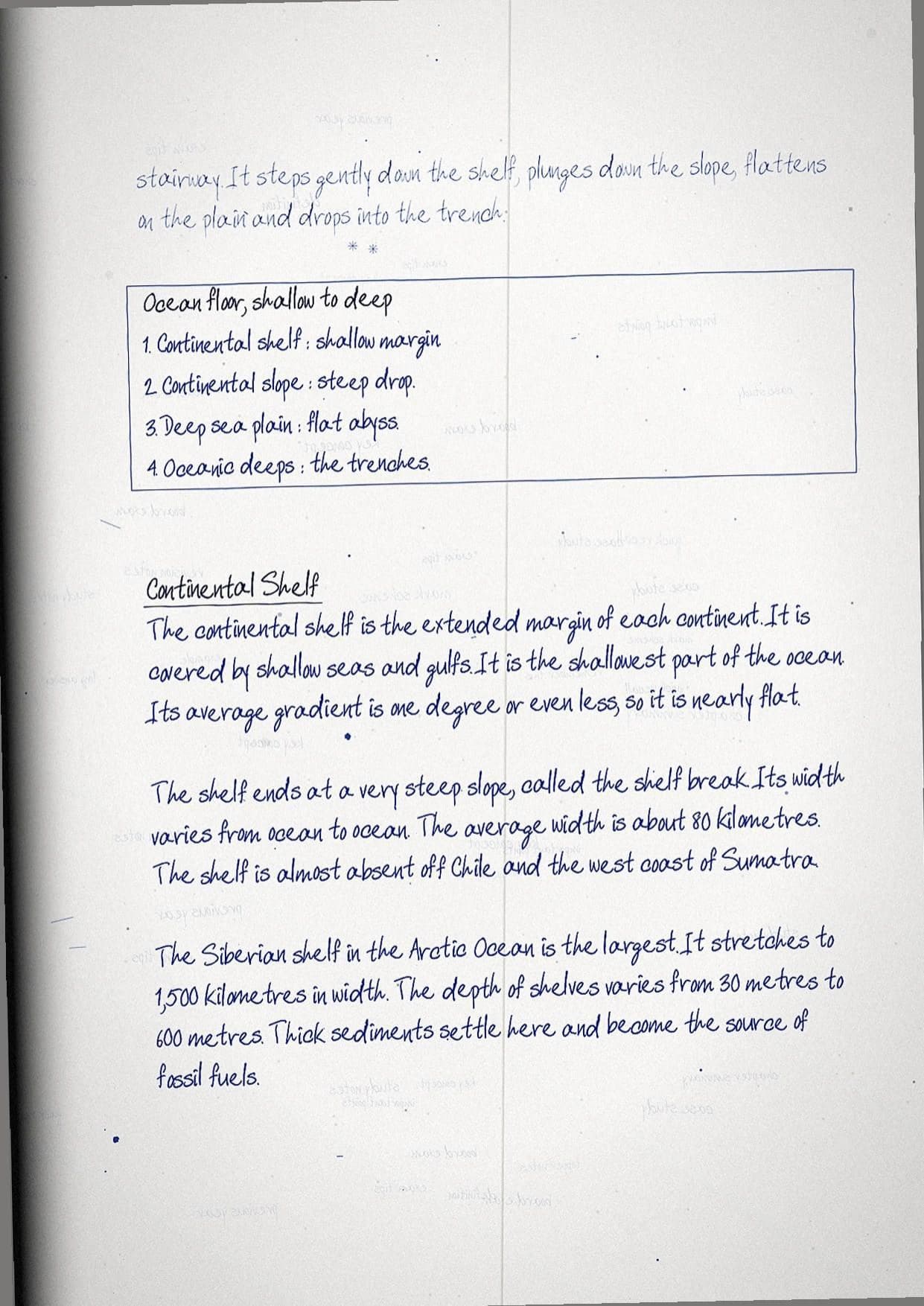
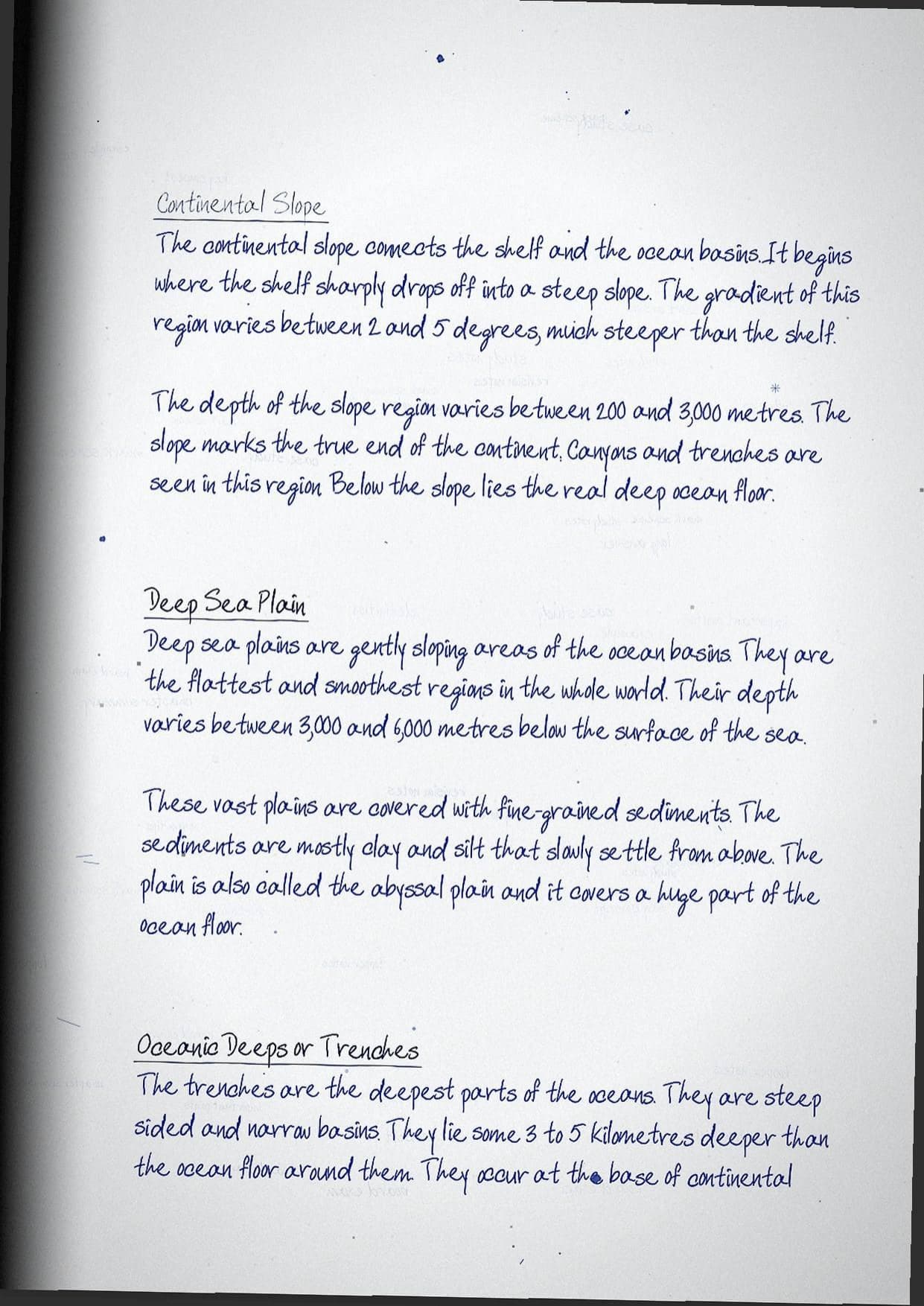
| Four divisions | Shelf, slope, deep sea plain and oceanic deeps |
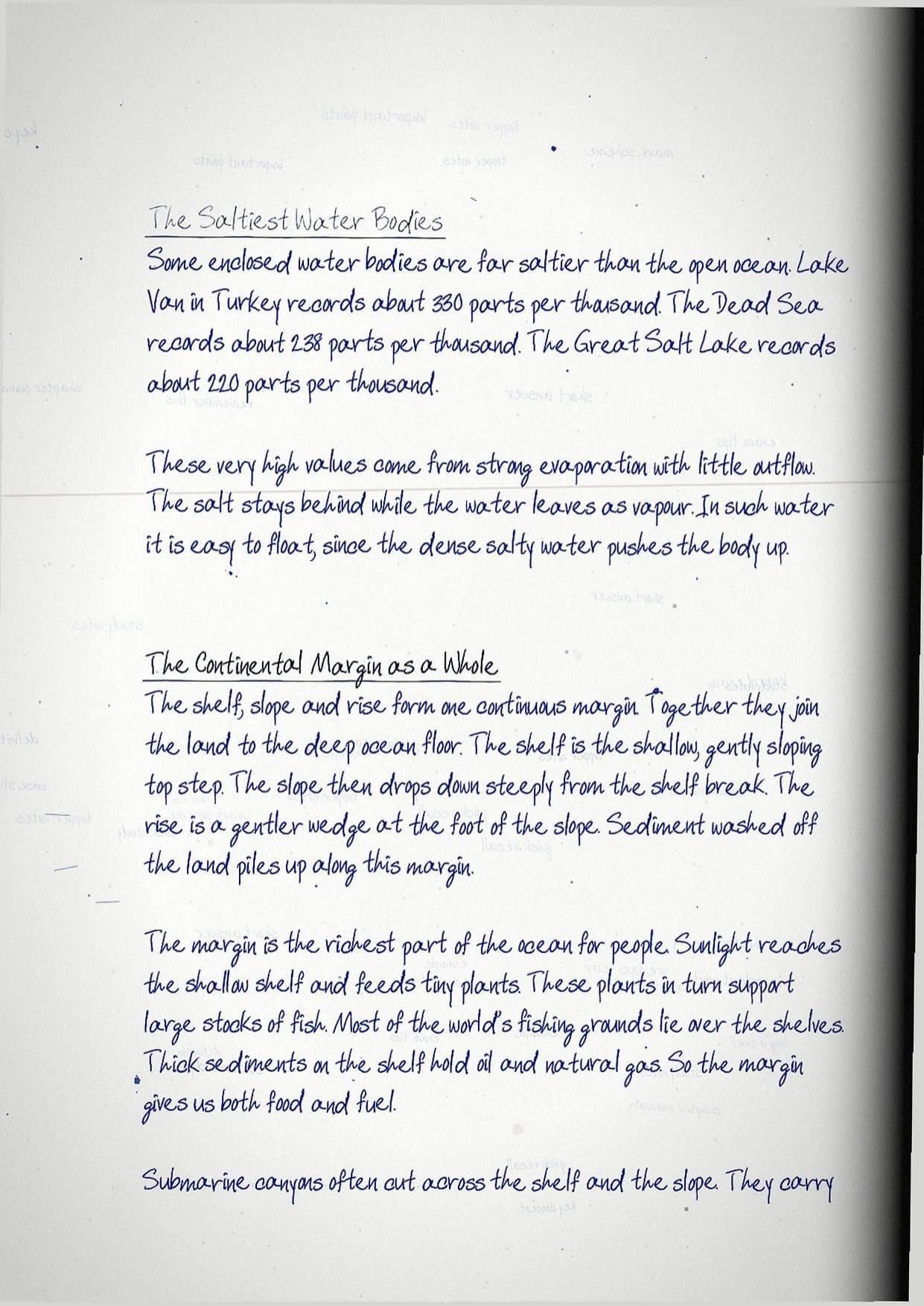
| Continental shelf | Shallow margin, average width 80 km, gradient 1 degree |
| Continental slope | Steep, gradient 2-5 degrees, depth 200 to 3,000 m |
| Thermocline | Boundary layer where temperature falls fast with depth |
| Halocline | Zone where salinity rises sharply with depth |
| Salinity unit | Salt in grams per 1,000 g of sea water, parts per thousand |
| Saltiest bodies | Lake Van, Dead Sea and Great Salt Lake |
How Collegedunia's Handwritten Notes Help You Revise Water (Oceans)
These notes are made for the night before the exam. They keep the facts short and easy to scan. Collegedunia maps every point to the 2026-27 NCERT.
- Clear handwriting: each topic is written in neat, easy-to-read handwriting.
- Boxed key terms: the main terms and definitions are boxed by hand for fast recall.
- Diagrams and tables: simple hand-drawn tables and charts make ideas clear.
- Colour-coded headings: new sub-topics stand out, so you find any section in seconds.
Water (Oceans) Self-Assessment Quiz
Try these quick questions after you read the notes. Tap each question to check your answer. They cover the points CBSE asks most often.
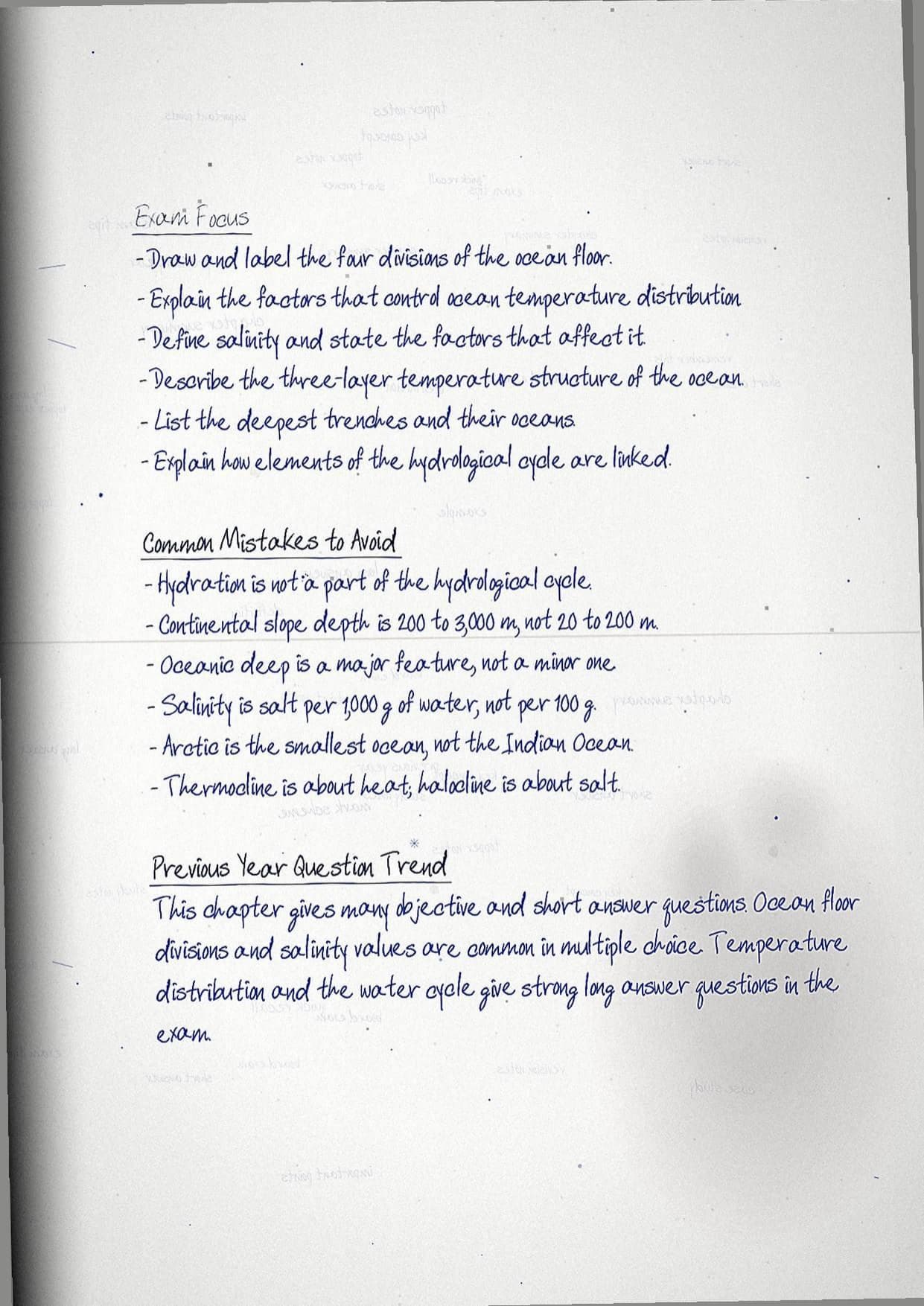
Which one is not a part of the hydrological cycle?
(a) Evaporation (b) Hydration (c) Precipitation (d) Condensation
Answer: (b) Hydration correct - it is a chemical process, not a water cycle stage
The average depth of the continental slope varies between?
(a) 2-20 m (b) 200-2,000 m (c) 20-200 m (d) 2,000-20,000 m
Answer: (b) 200-2,000 m correct - the slope depth range is 200 to 3,000 m
Which one is not a minor relief feature of the oceans?
(a) Seamount (b) Atoll (c) Oceanic Deep (d) Guyot
Answer: (c) Oceanic Deep correct - the trench is a major division, not minor
Salinity is the amount of salt in grams dissolved per?
(a) 10 g (b) 1,000 g (c) 100 g (d) 10,000 g
Answer: (b) 1,000 g correct - salinity is salt per 1,000 g of sea water
Which one is the smallest ocean?
(a) Indian (b) Arctic (c) Atlantic (d) Pacific
Answer: (b) Arctic correct - the Arctic is the smallest of the oceans
How to Use These Handwritten Notes for Class 11 Geography Revision
Use these class 11 geography handwritten notes in two passes. Read them slowly once for the full chapter. Then, near the exam, read only the boxes and key terms for a fast recall.
- Read the notes once with the NCERT chapter open beside you.
- Say each key term and idea in your own words.
- Practise one long-answer question from a past paper.
- On the last day, revise only the key terms and the boxes.
Class 11 Geography Handwritten Notes for All Chapters
The table below links the class 11 geography handwritten notes for every chapter. Use it to jump to any other chapter's notes.
Water (Oceans) Class 11 Geography Handwritten Notes FAQs
Ques. Where can I download Water (Oceans) Class 11 Geography Handwritten Notes PDF?
Ans. You can download the Water (Oceans) Class 11 Geography Handwritten Notes PDF directly from this page. Both the Normal and HD versions are free.
Ques. Are these handwritten notes aligned with the 2026-27 NCERT?
Ans. Yes. These notes follow the current 2026-27 syllabus for Class 11 Geography. Why the temperature of ocean water falls with depth, which students find confusing.
Ques. How many pages is the Class 11 Geography Water (Oceans) Handwritten Notes PDF?
Ans. The notes run about 20 pages. They cover the full chapter with key terms, hand-drawn boxes, and a short self-assessment quiz.
Ques. What is the main idea of the 11th standard Geography chapter Water (Oceans)?
Ans. Ocean surface water is warmest as it directly receives the sun's heat. Temperature falls with depth through the thermocline, and the deep water stays close to zero degrees.
Ques. Are these Water (Oceans) notes enough for the CBSE Class 11 exam?
Ans. Yes, for revision. The Collegedunia handwritten notes cover every key point and exam term. Read them with the NCERT chapter and practise past questions.



Comments