




Class 11 English Chapter 5 Pappachi's Moth is a high-frequency chapter in the CBSE Class 11 English exam. These class 11 english handwritten notes chapter 5 Pappachi's Moth follow the 2026-27 NCERT and cover about arundhati roy and the source novel, mammachi's pickle business and success, pappachi's shame at retirement and jealousy. This page hosts the notes PDF,.
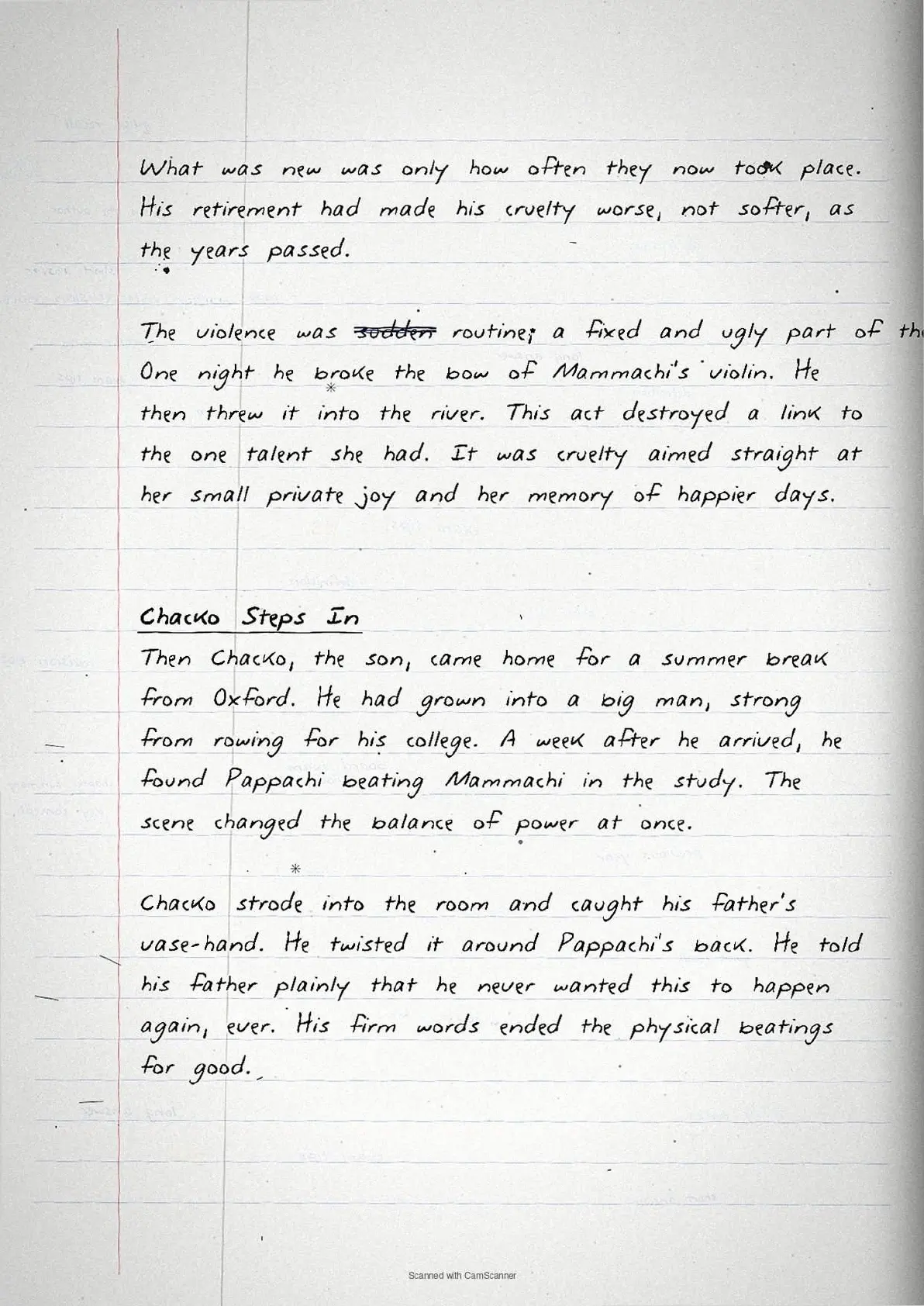
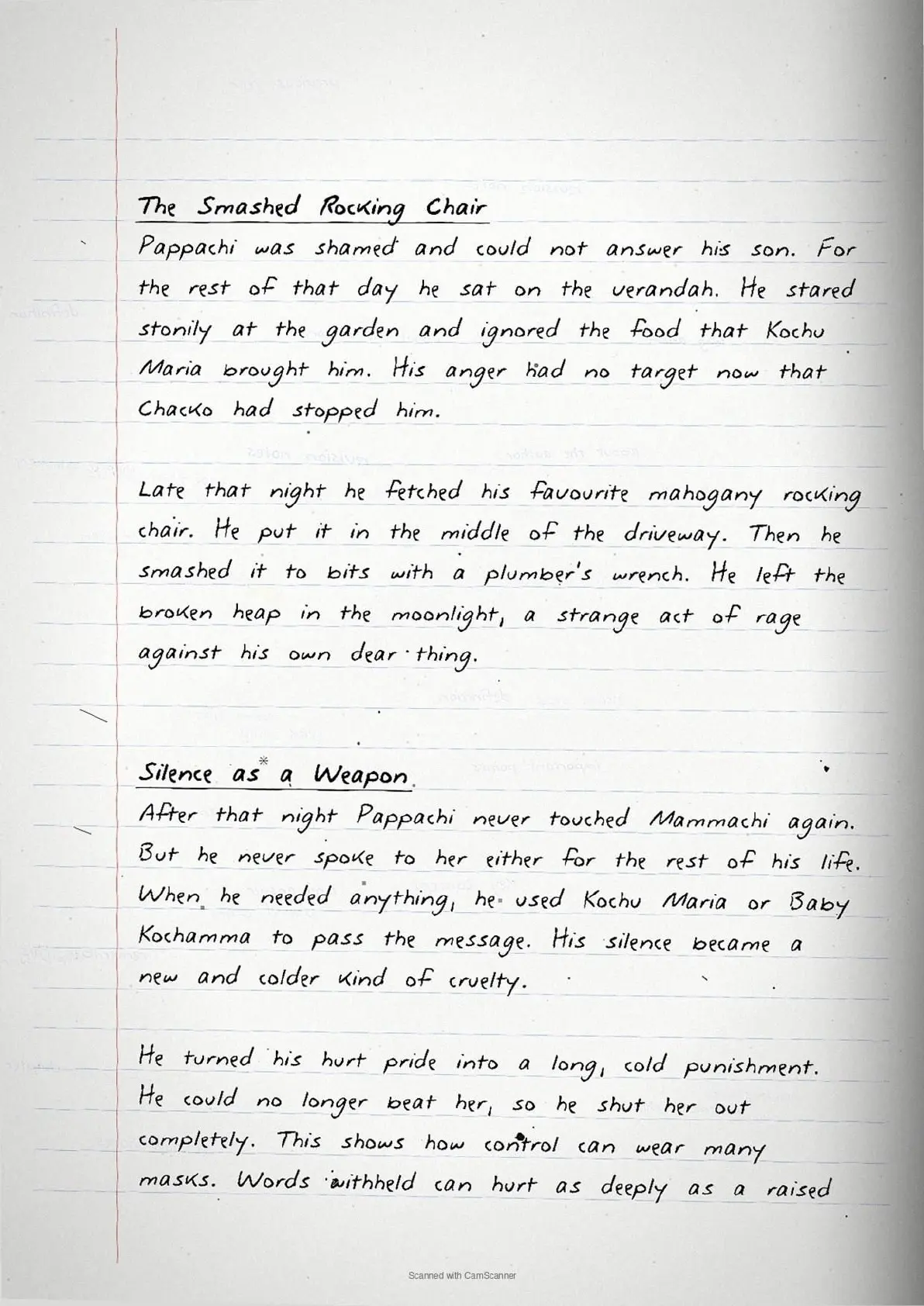
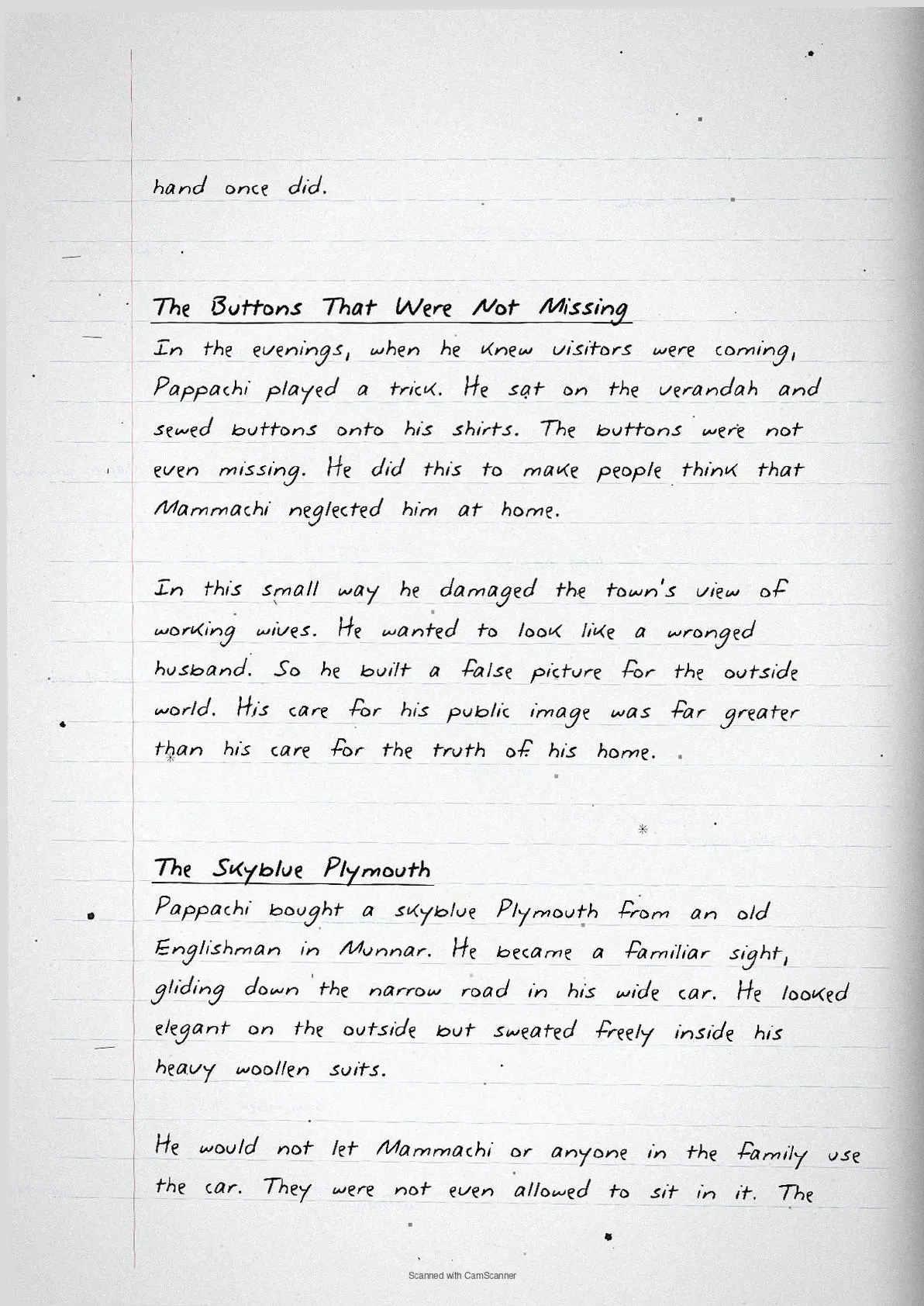
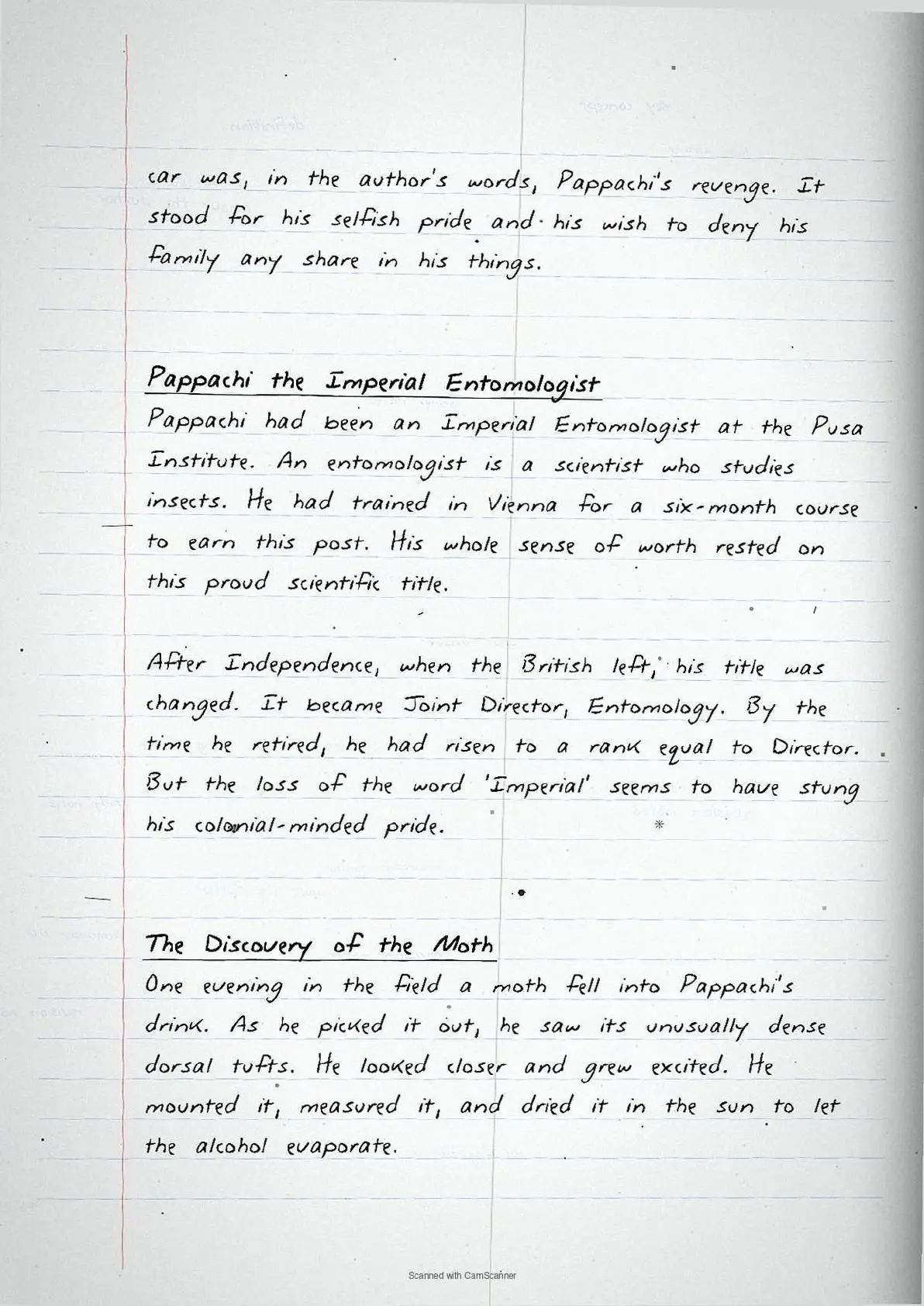
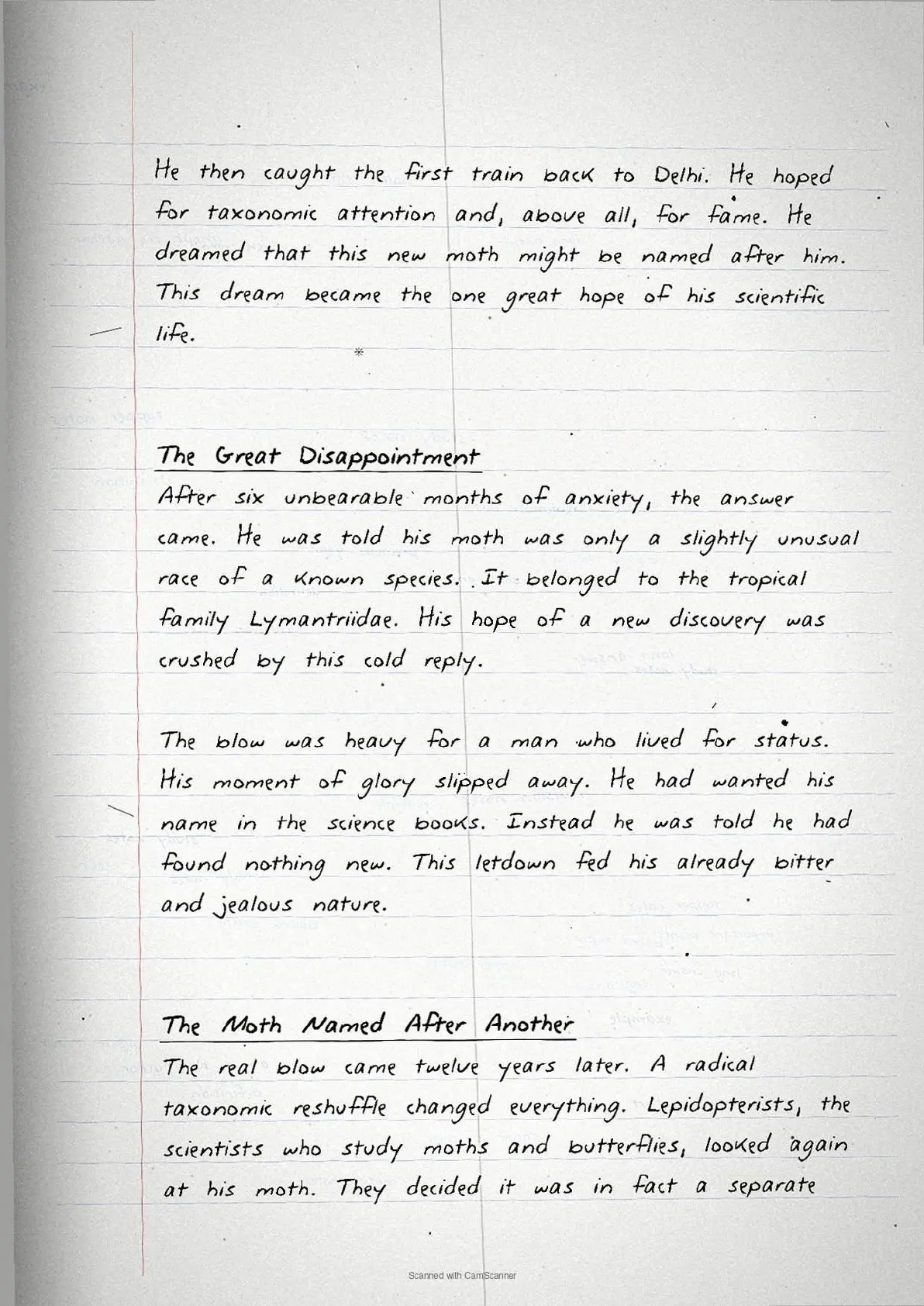
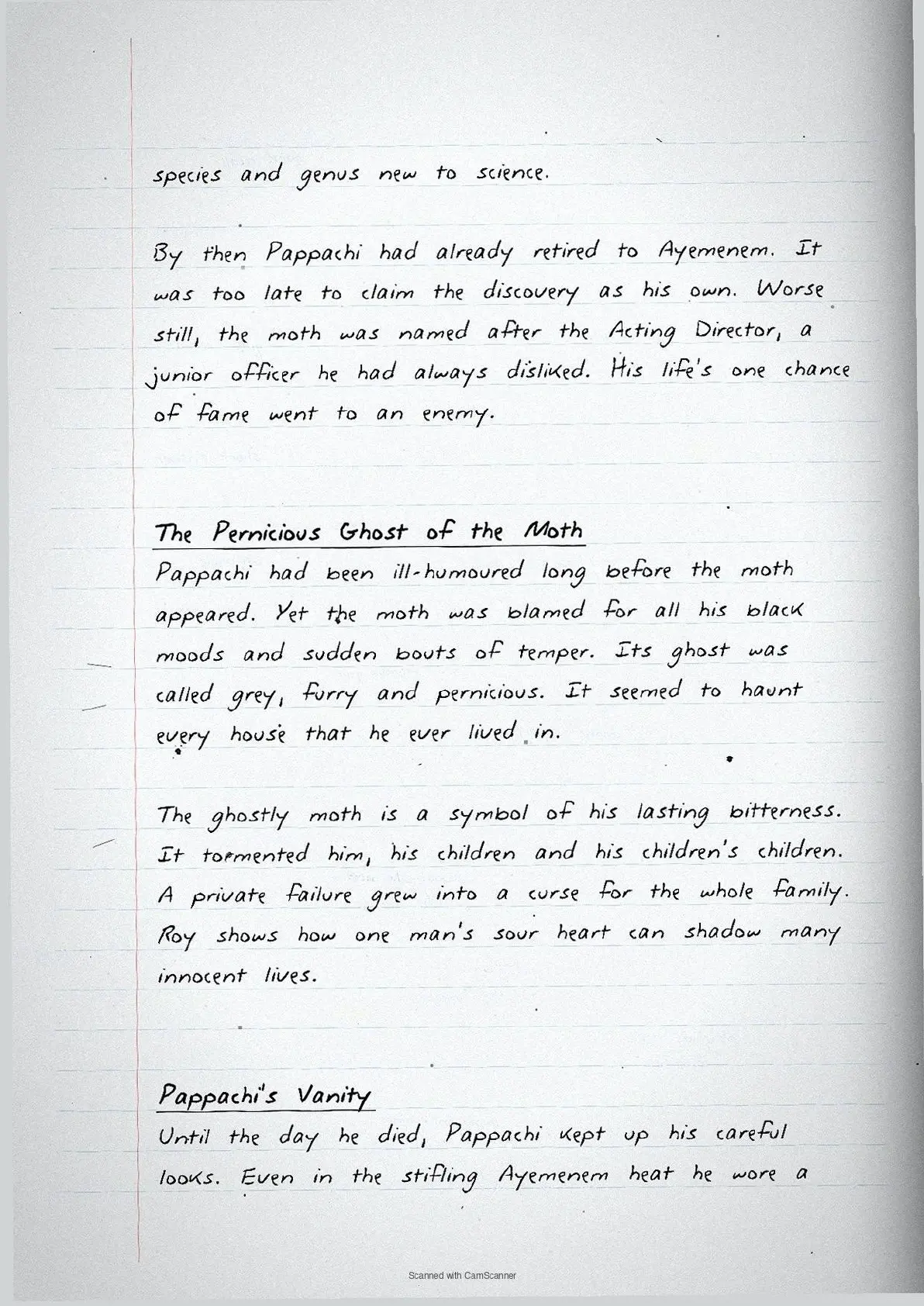
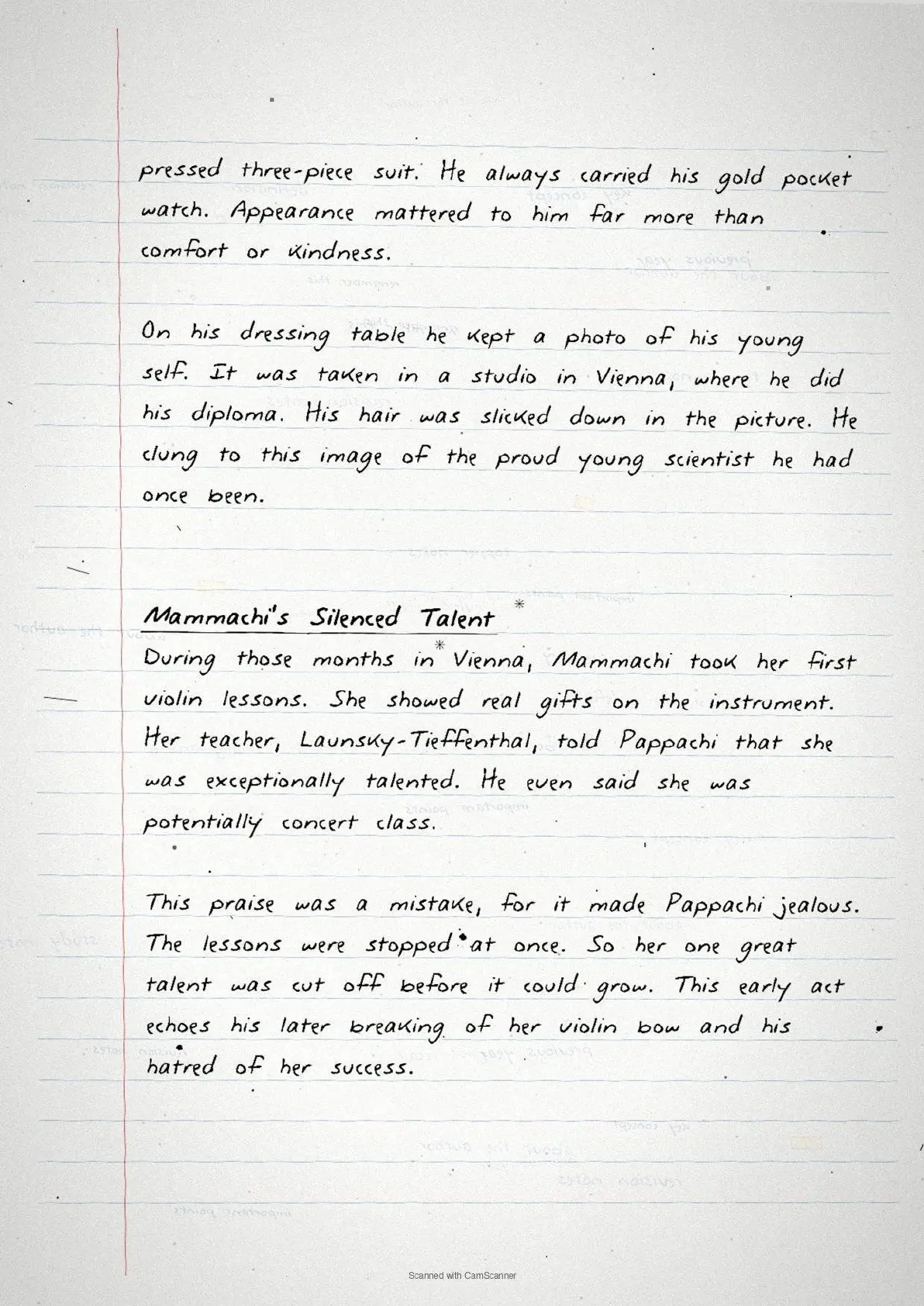
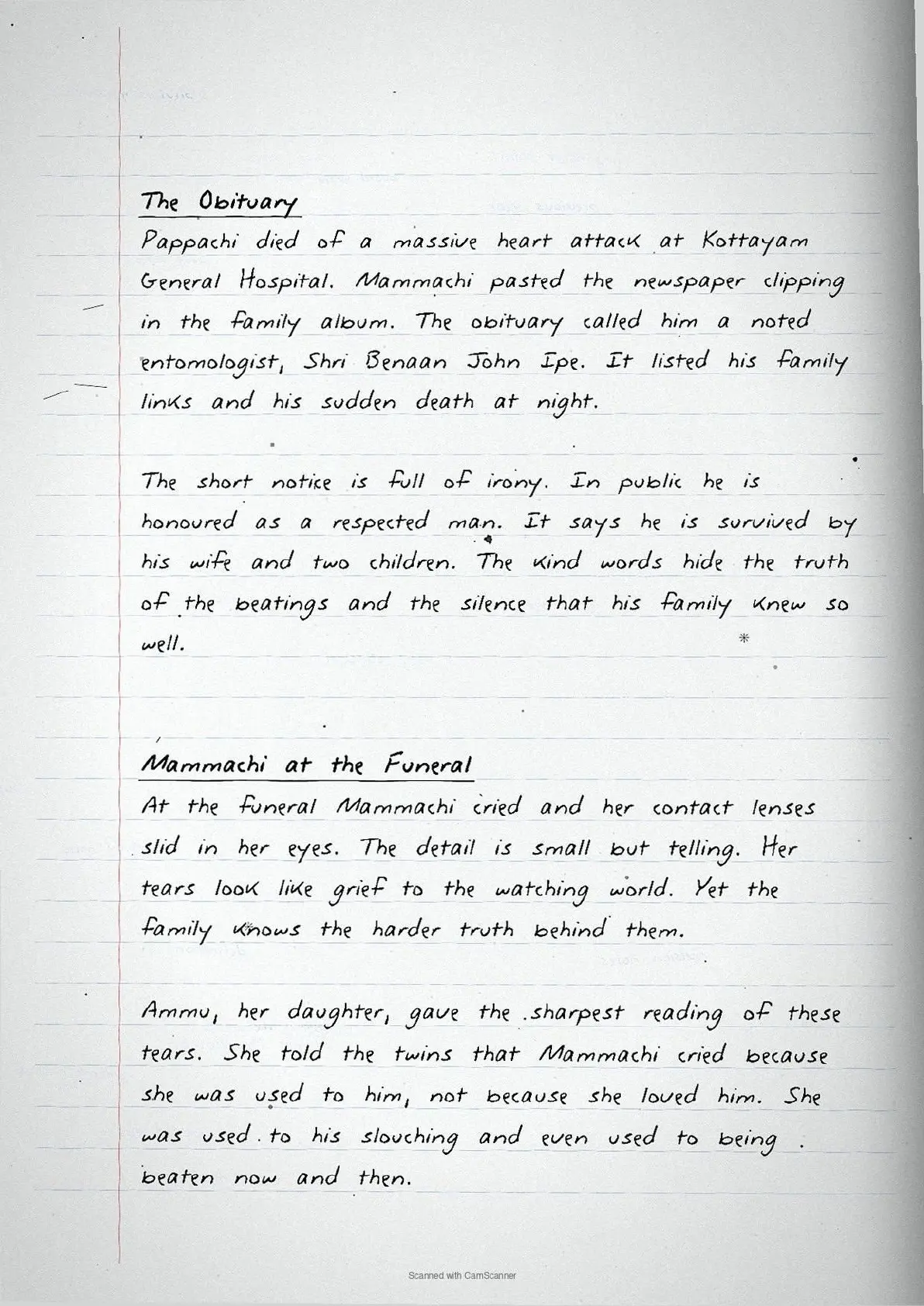
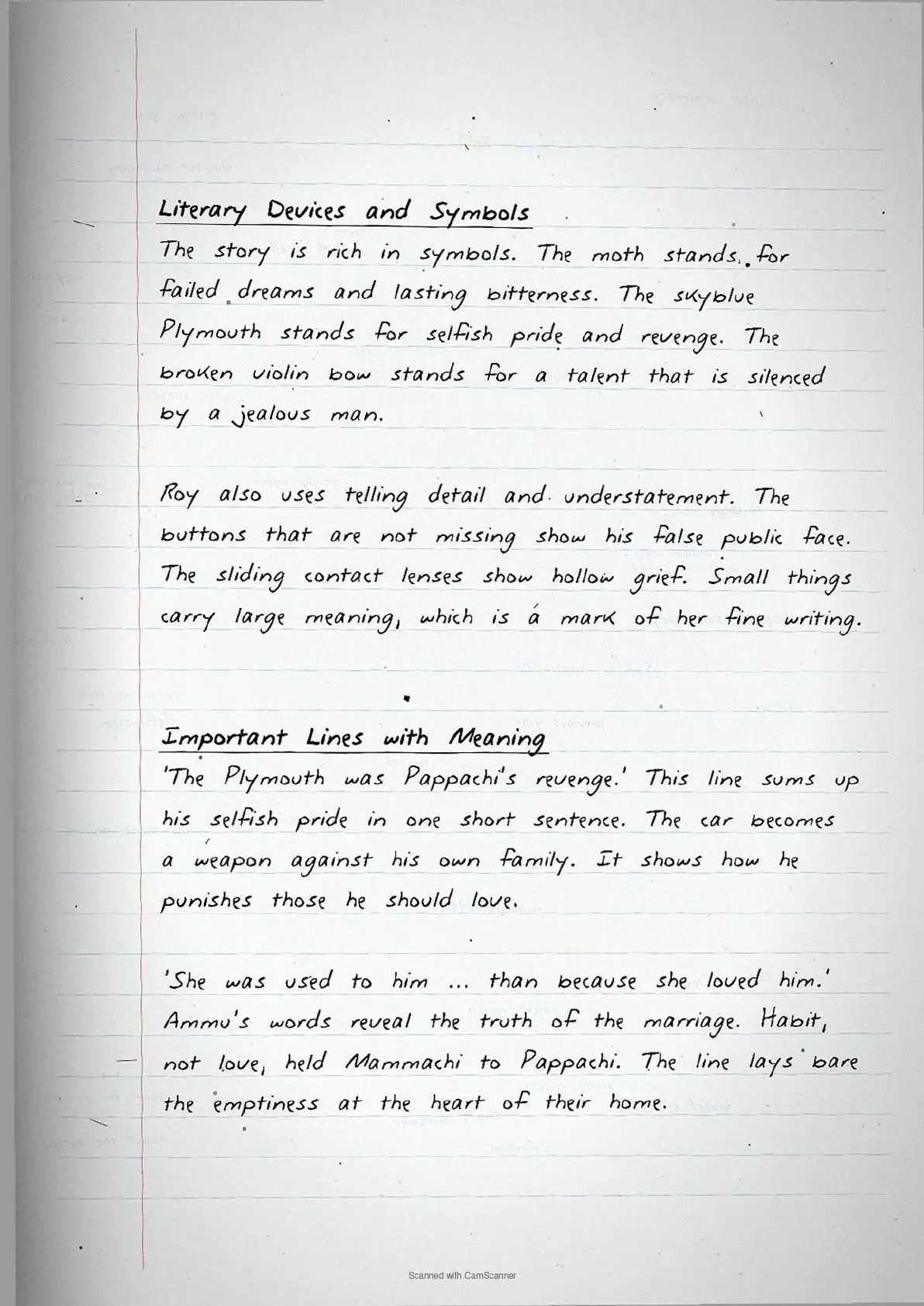
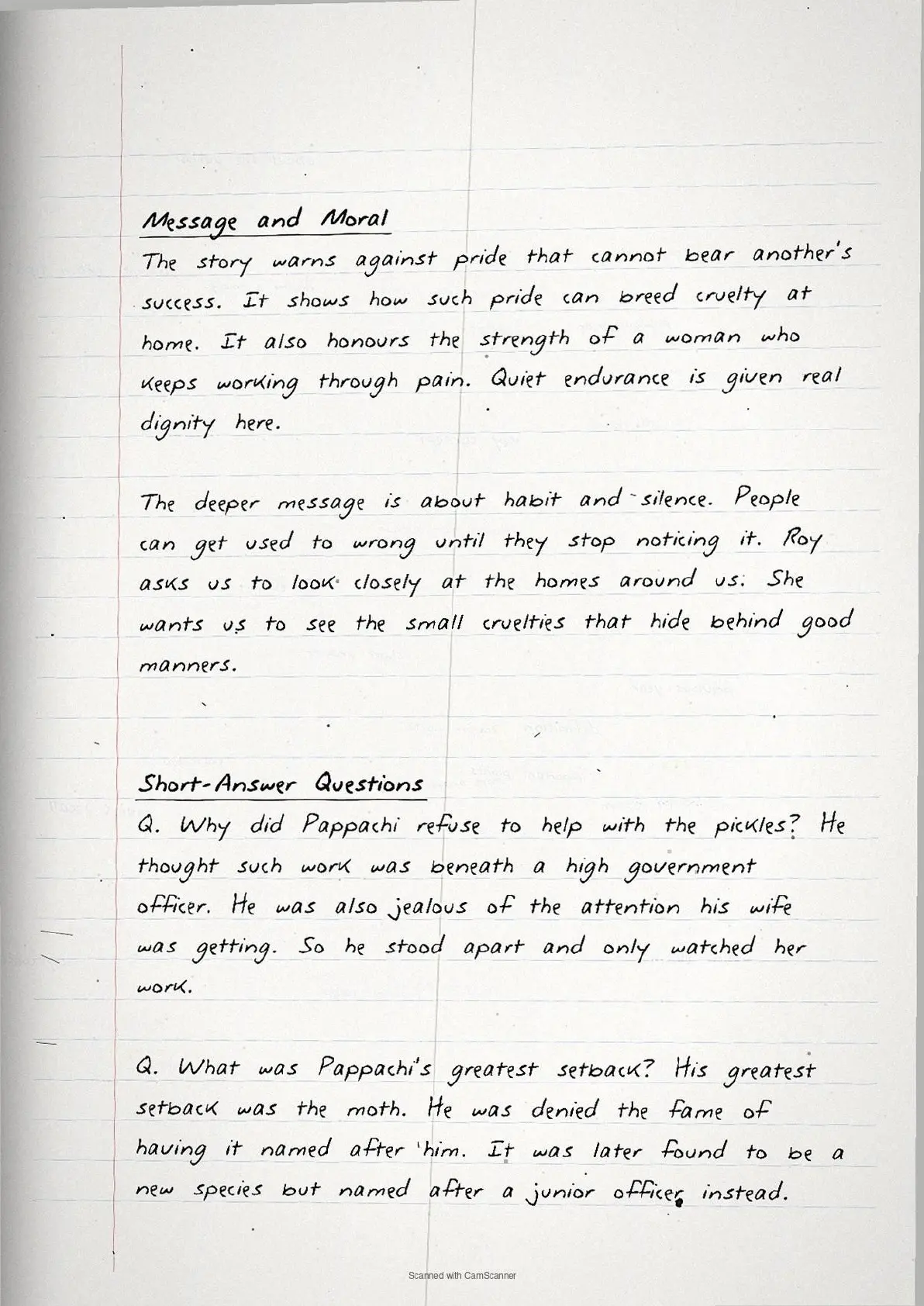
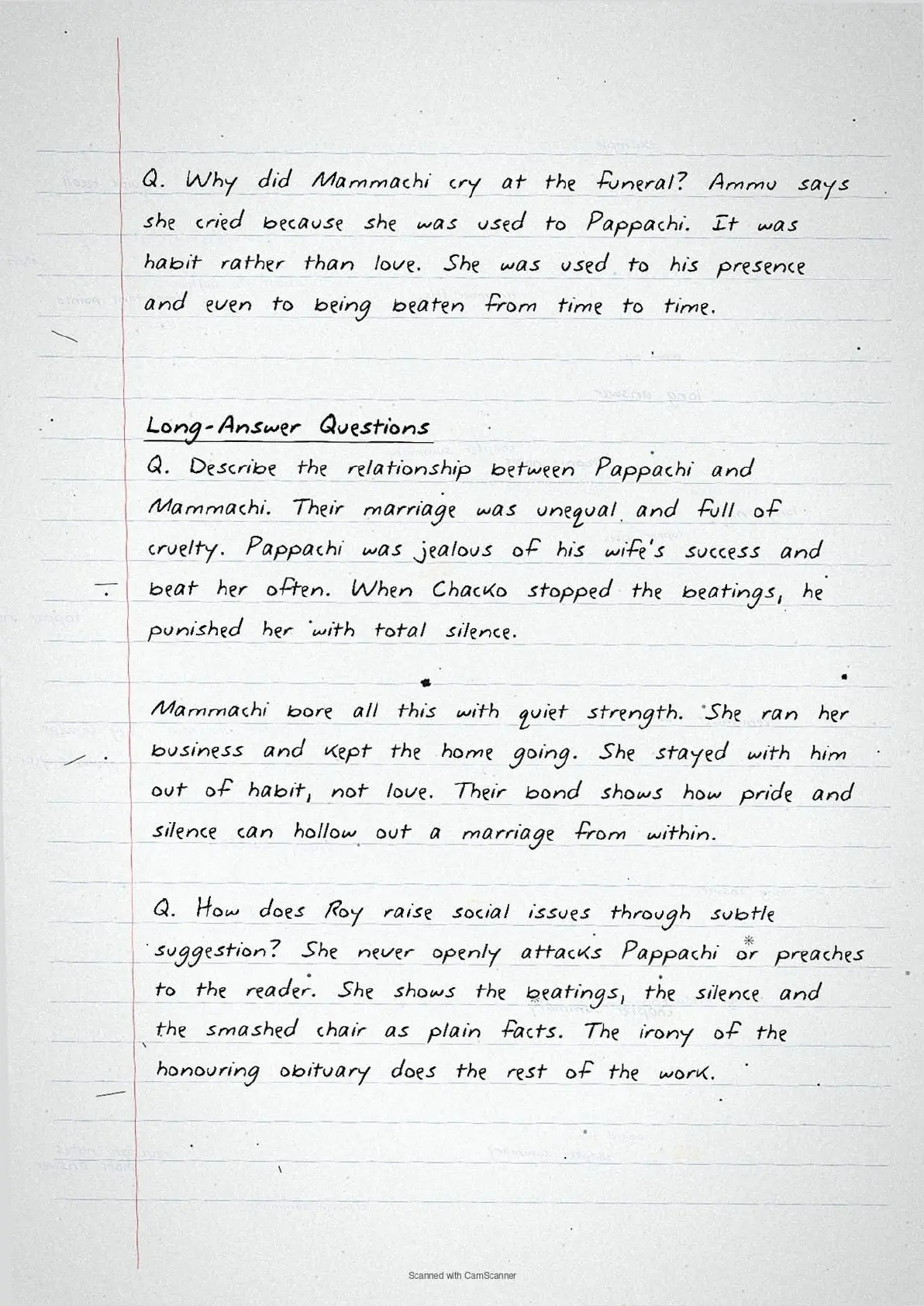
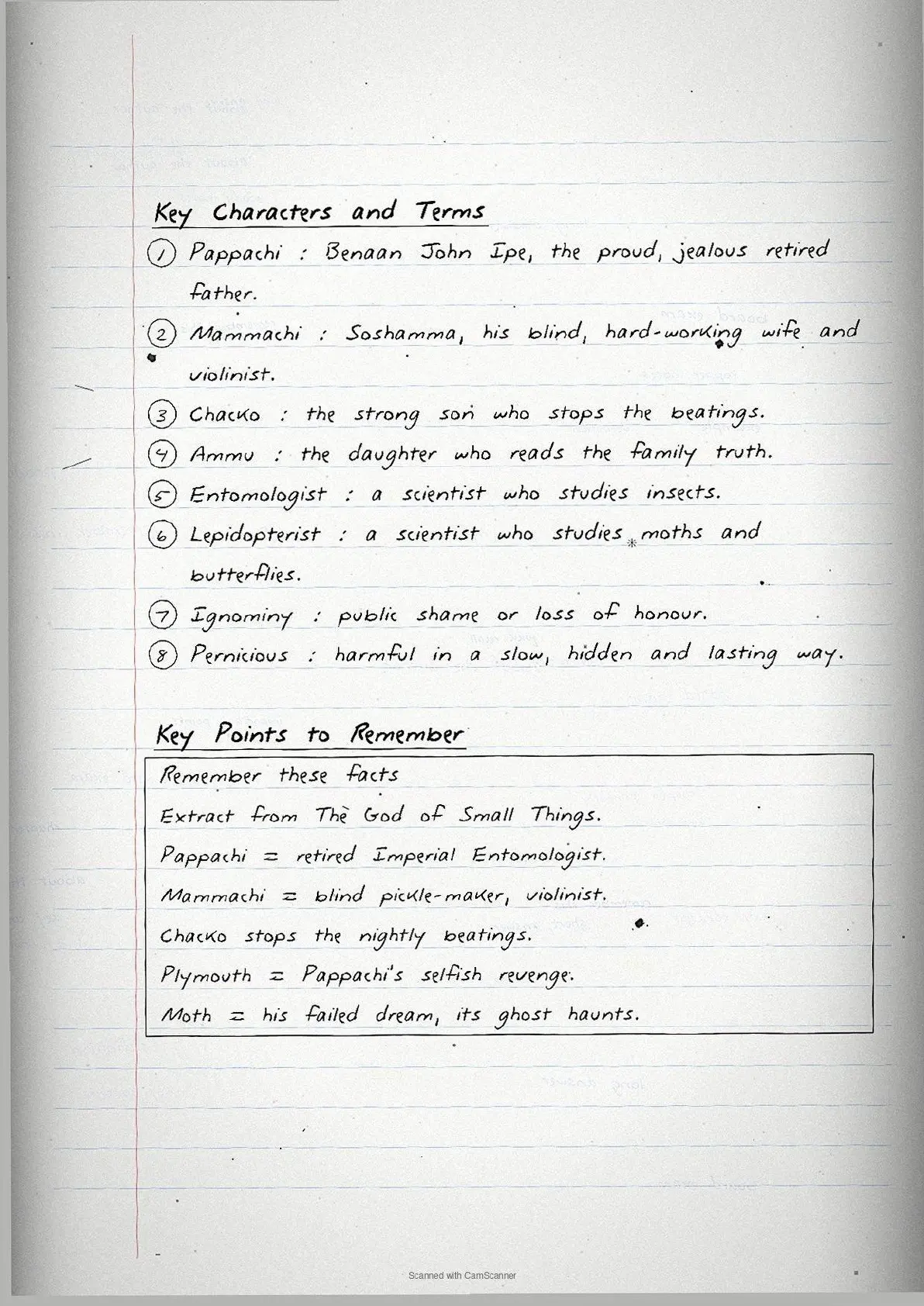
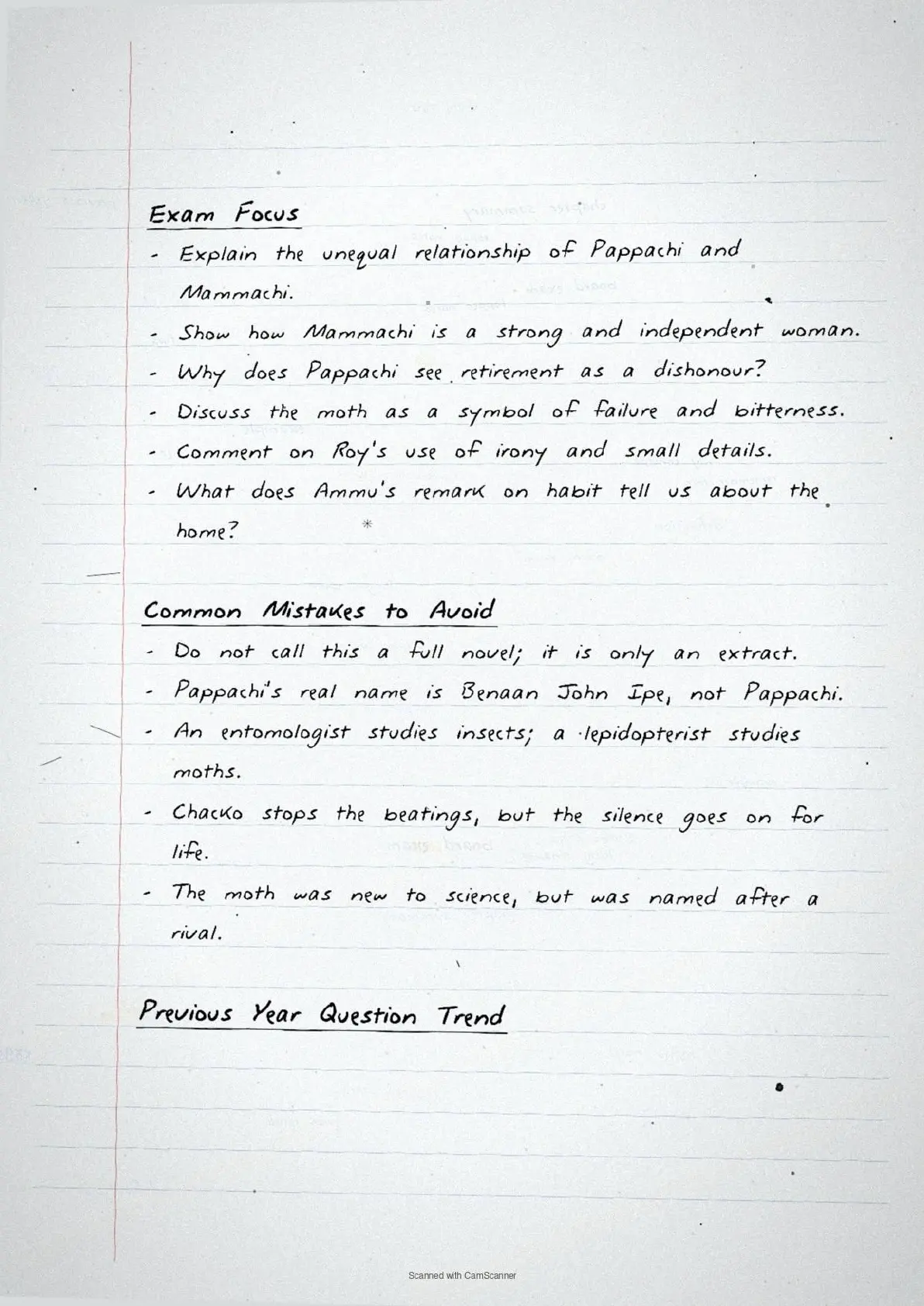
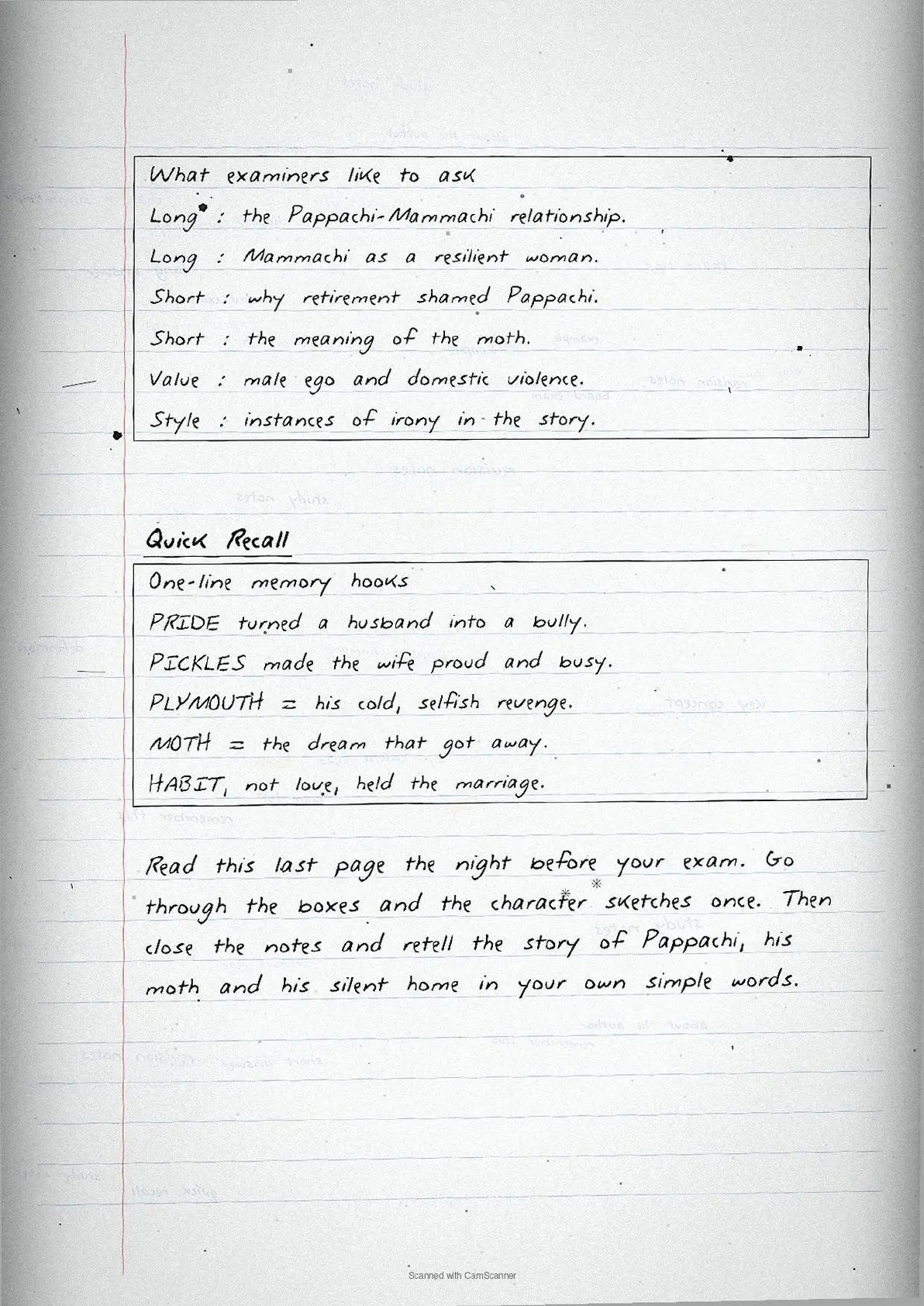
- CBSE Class 11 Weightage: a scoring chapter in the English paper, asked in short and long answers.
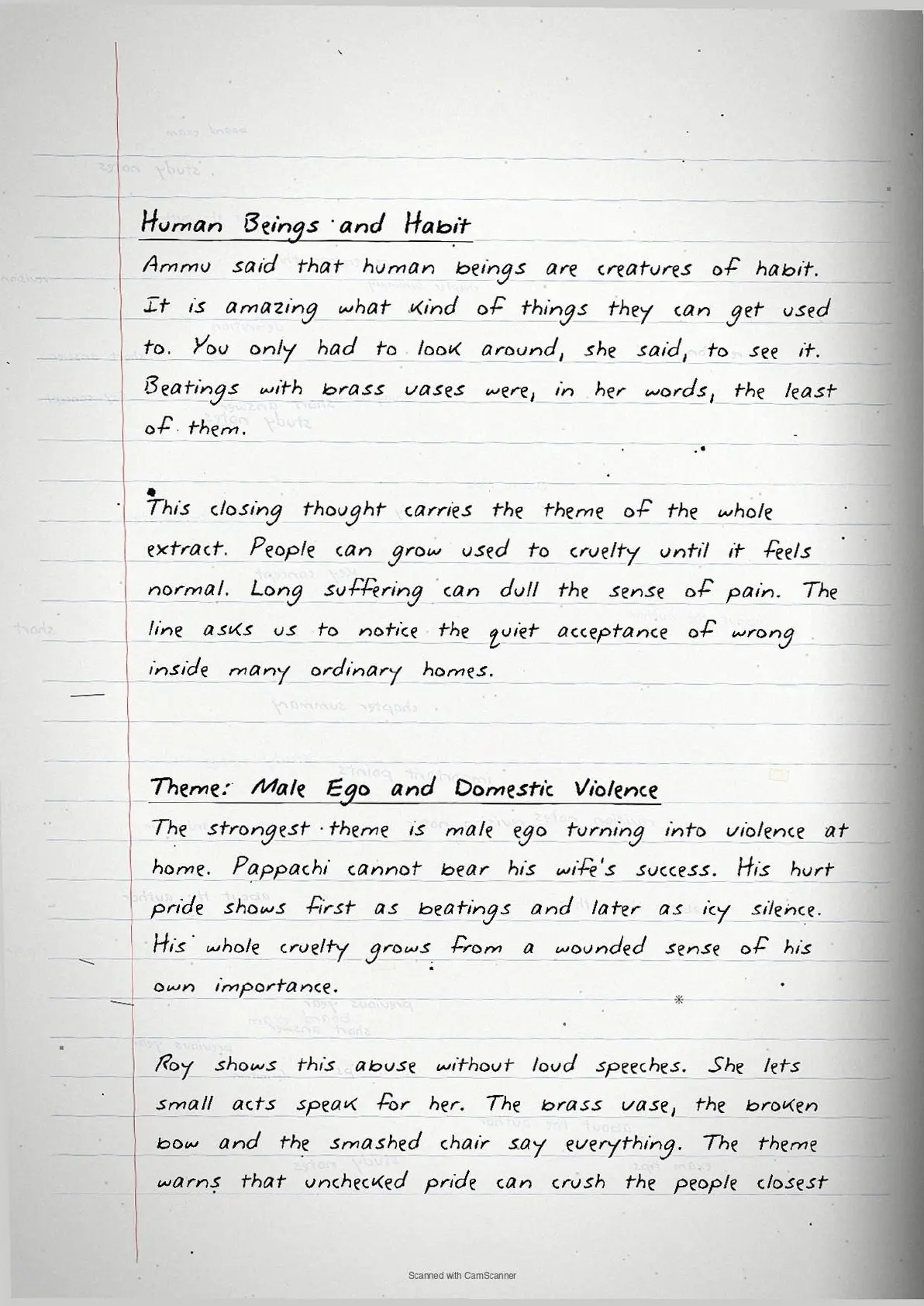
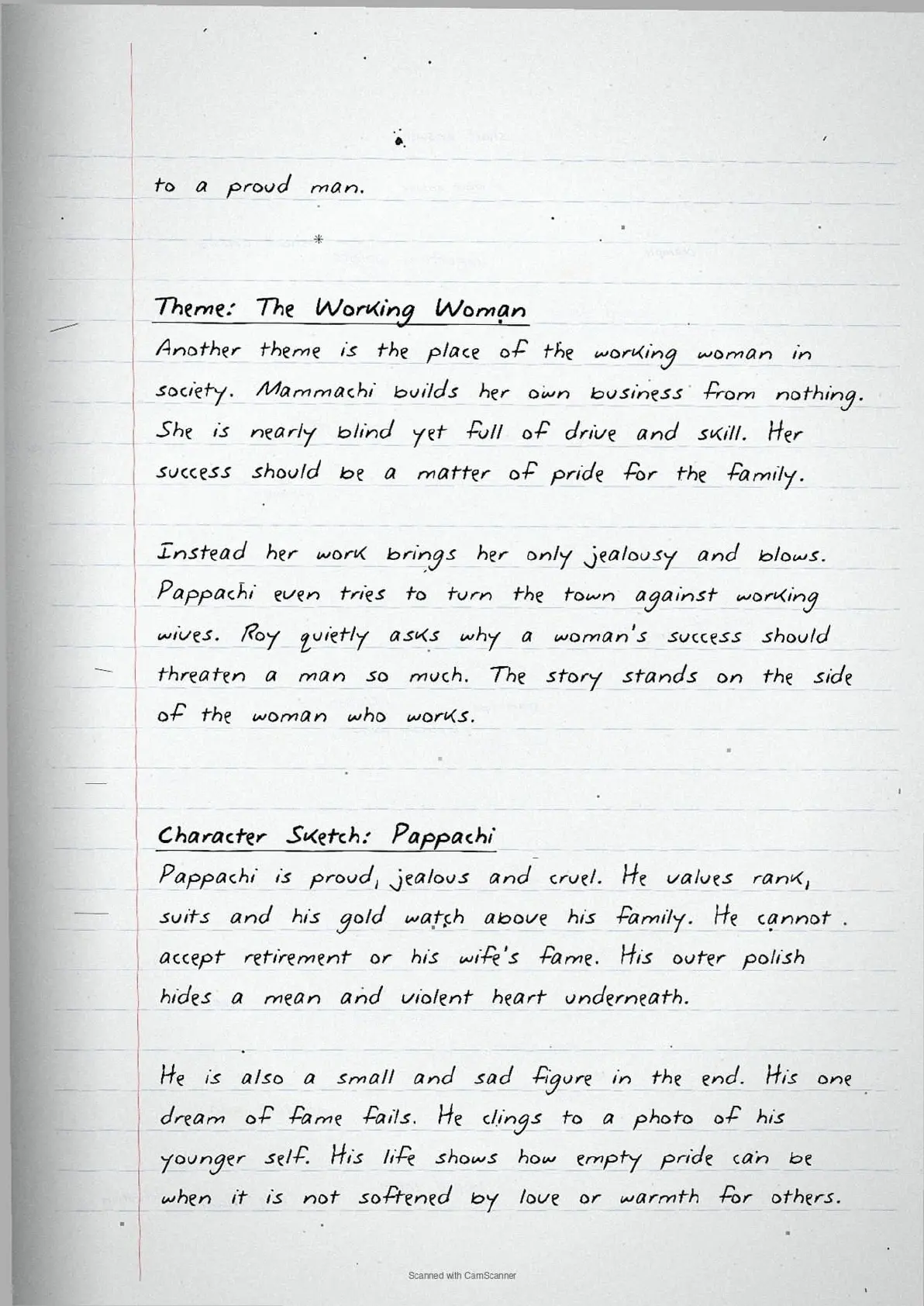
- What the notes cover: about arundhati roy and the source novel, mammachi's pickle business and success, pappachi's shame at retirement and jealousy, the beatings, chacko, and the smashed chair.
- Best for: quick revision before Class 11 exams and a base for CUET later.
You can read the complete class 11 english handwritten notes for Pappachi's Moth, with key terms, boxed definitions, and quick revision points, in the PDF below.
These handwritten notes are written by subject teachers, mapped to the 2026-27 NCERT, and checked against the last five years of CBSE Class 11 English papers.
What the Pappachi's Moth Handwritten Notes Cover
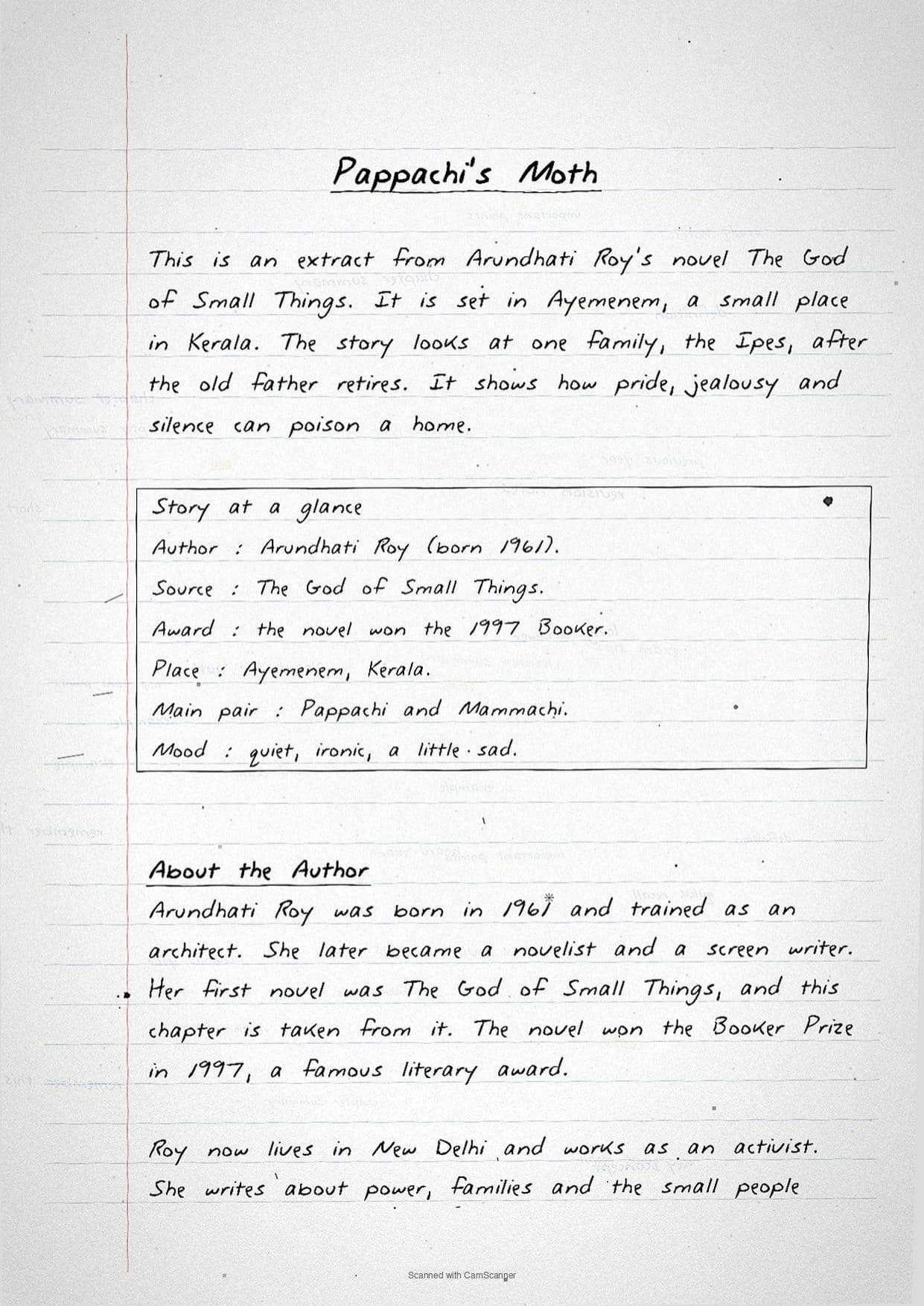
Pappachi's Moth is an extract from Arundhati Roy's Booker-winning novel The God of Small Things. It shows how a proud man's jealousy poisons his home. Set in Ayemenem, it packs two full lives into a few pages.
- About Arundhati Roy and the source novel
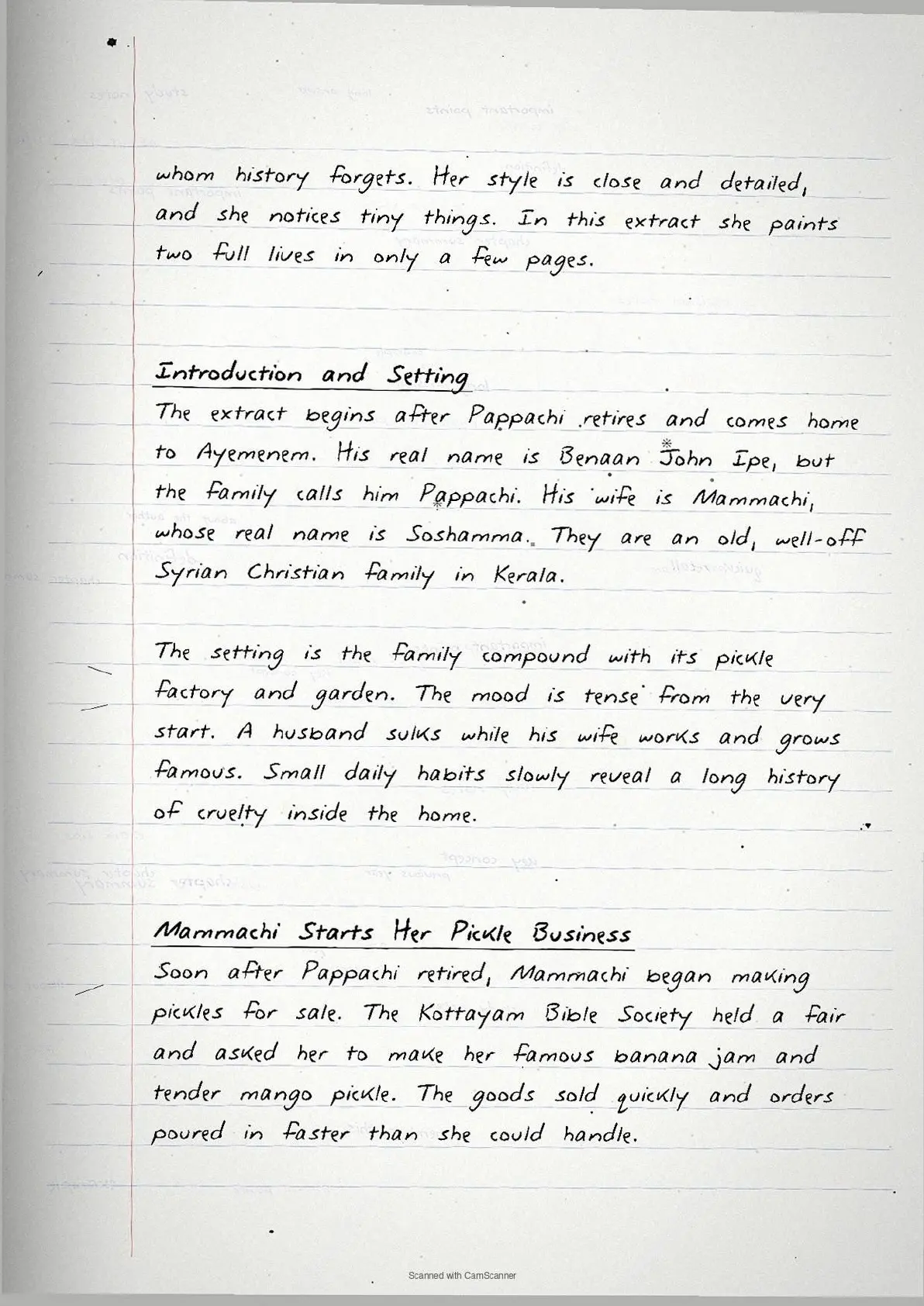
- Mammachi's pickle business and success
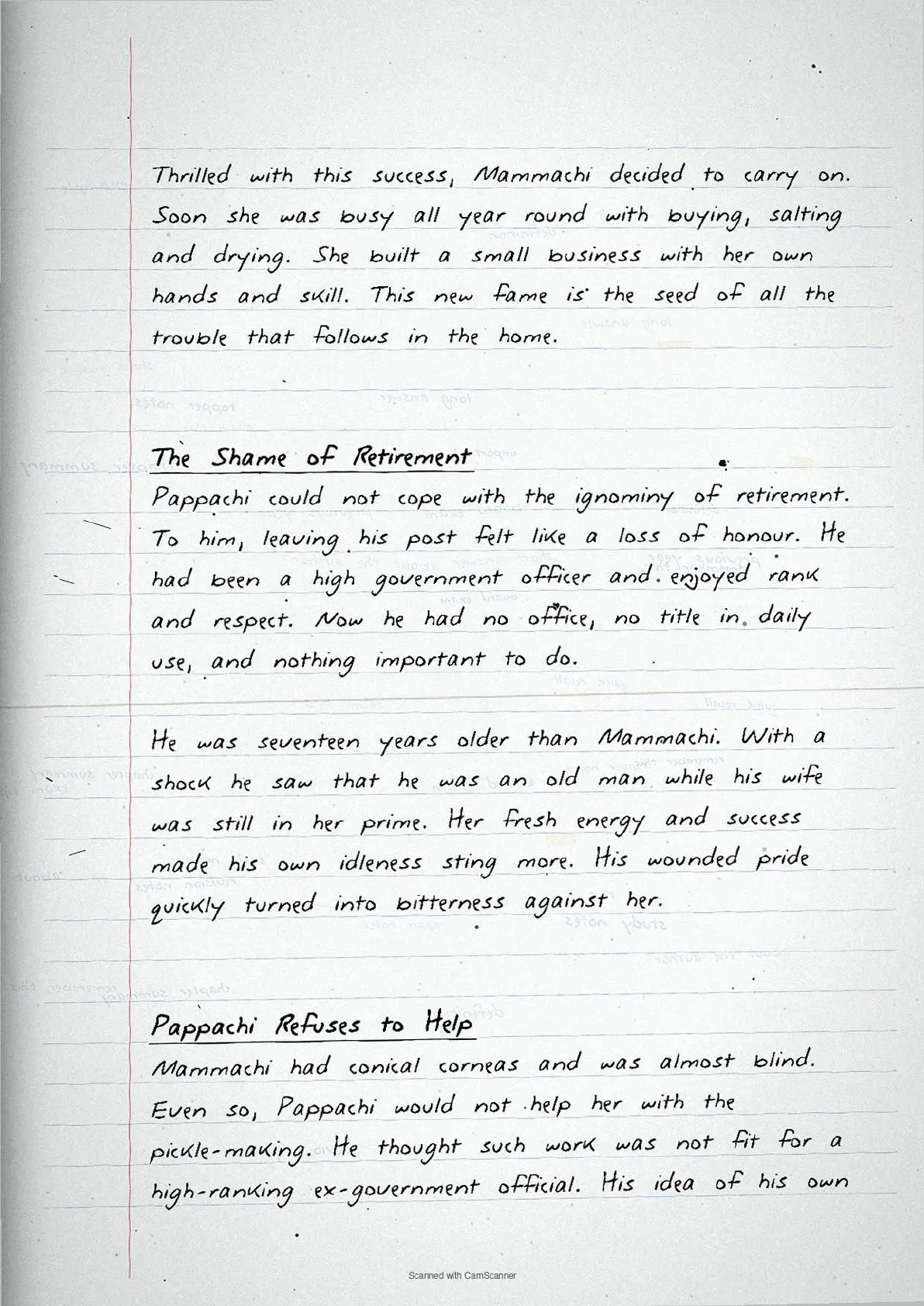
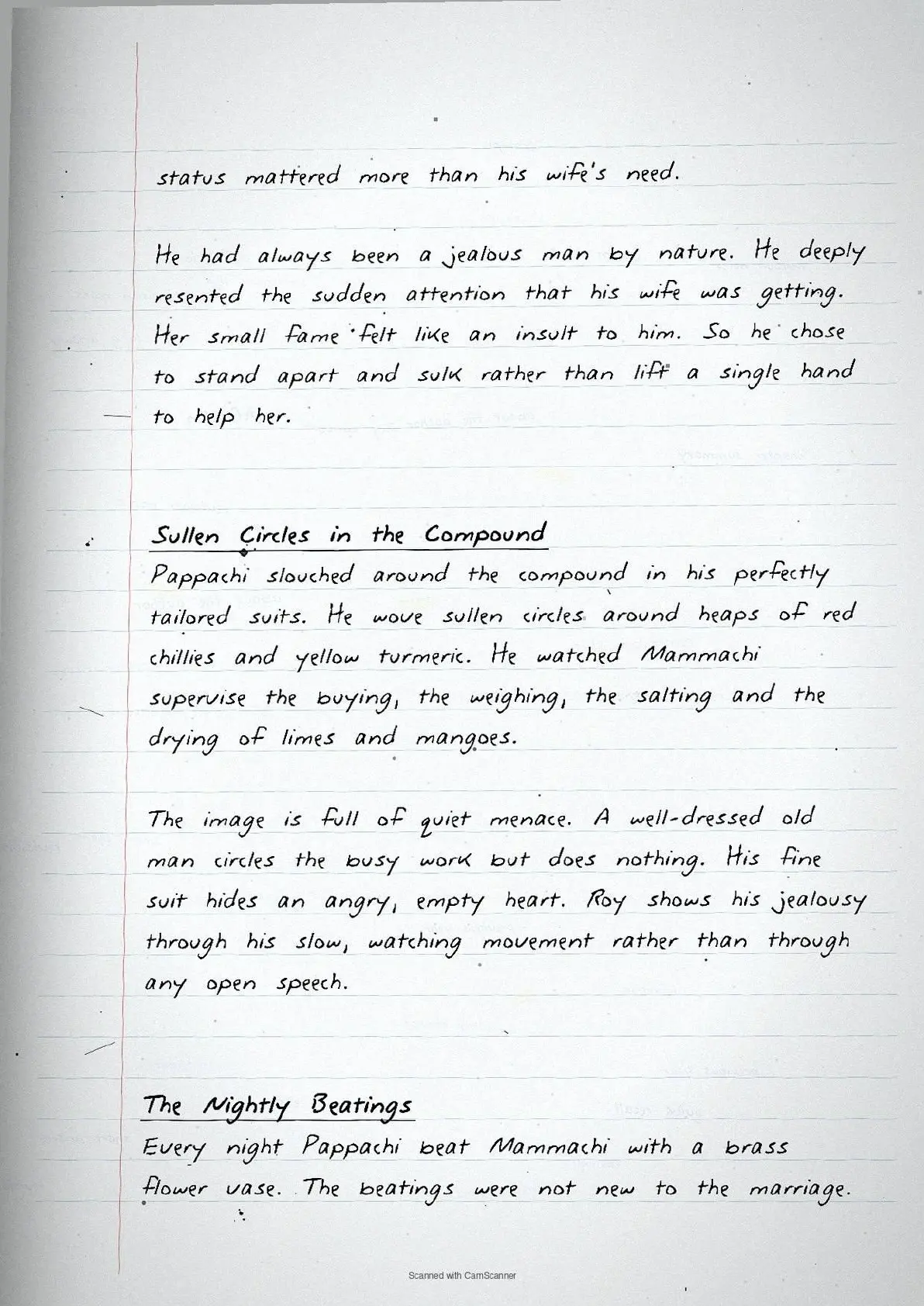
- Pappachi's shame at retirement and jealousy
- The beatings, Chacko, and the smashed chair
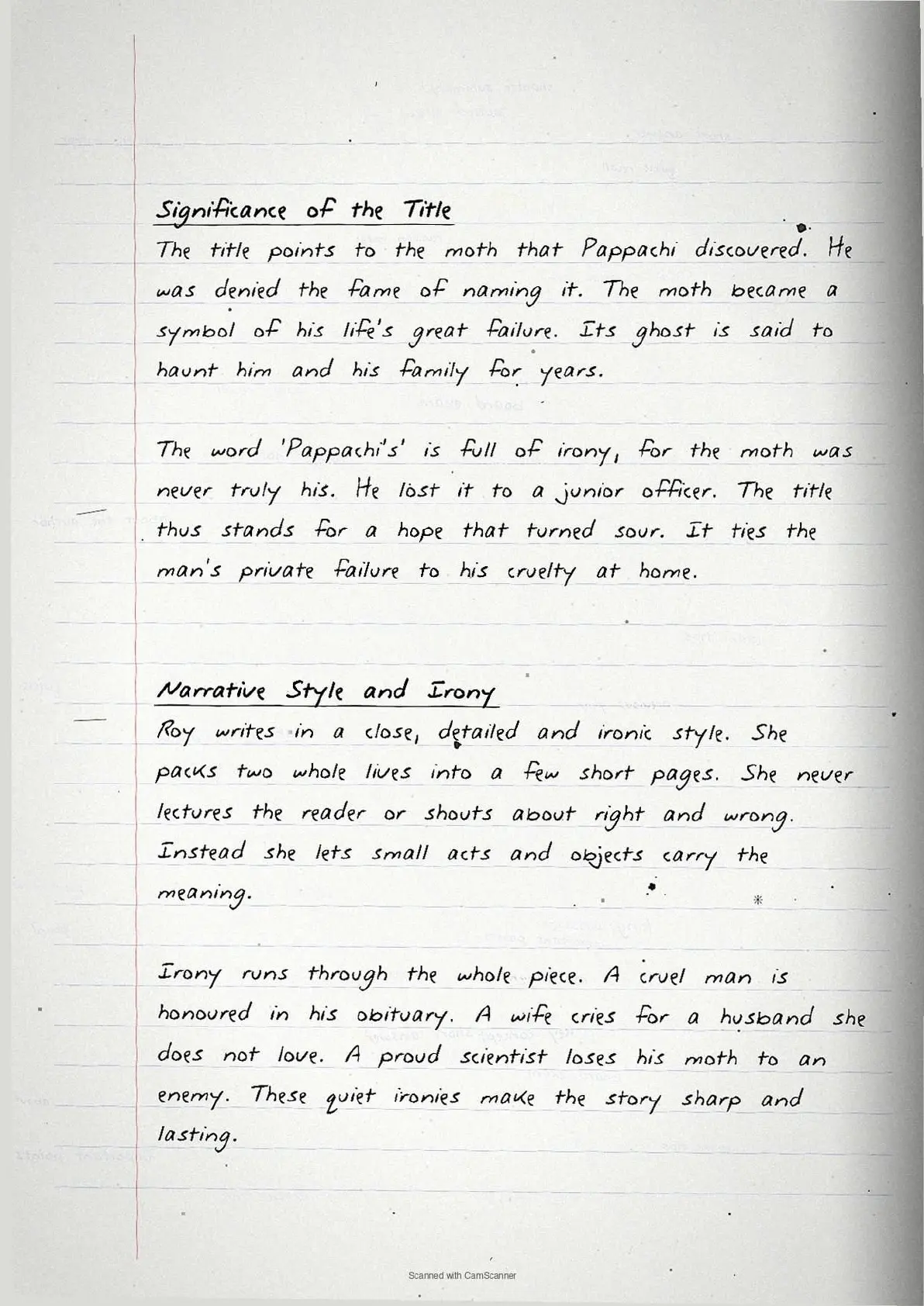
- The moth, the failed dream and its ghost
- Themes of male ego and the working woman
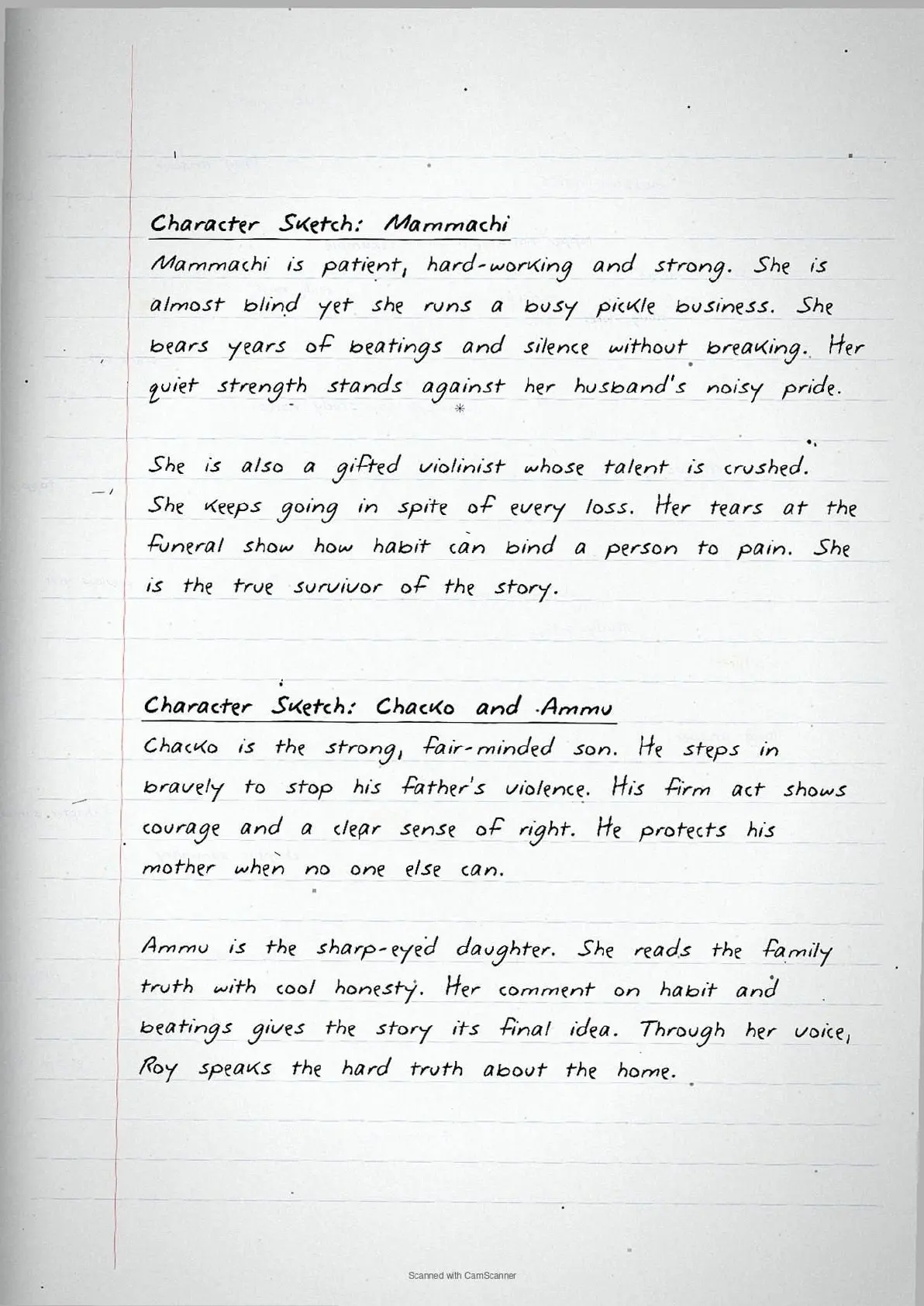
- Character sketches, irony and exam Q&A
Pappachi's Moth Self-Assessment Quiz
Try these quick questions after you read the notes. Tap each question to check your answer. They cover the points CBSE asks most often.
Which award did the source novel win?
(a) Nobel Prize (b) Booker Prize (c) Pulitzer Prize (d) Sahitya Akademi
Answer: (b) Booker Prize - The God of Small Things won it in 1997.
What work did Mammachi do?
(a) Teaching (b) Making pickles and jam (c) Nursing (d) Weaving
Answer: (b) Making pickles and jam - she built a busy business.
Who stopped Pappachi's beatings?
(a) Ammu (b) Baby Kochamma (c) Chacko (d) Kochu Maria
Answer: (c) Chacko - he twisted his father's vase-hand and warned him.
What was Pappachi's greatest setback?
(a) Losing his car (b) The moth not named after him (c) His retirement (d) His wife's fame
Answer: (b) The moth - it was named after a junior officer instead.
Why did Mammachi cry at the funeral, per Ammu?
(a) Deep love (b) Fear (c) Habit (d) Relief
Answer: (c) Habit - she was used to him rather than loving him.
Pappachi's Moth Topic-wise Weightage for CBSE Class 11 English
Some parts of this chapter are asked more often than others. The table below shows which sub-topics to revise first, based on recent CBSE Class 11 question trends.
| Sub-topic | Weightage | CBSE Frequency |
|---|---|---|
| Pappachi-Mammachi relationship | High | very frequent |
| Mammachi as a resilient woman | High | frequent |
| The moth as a symbol of failure | Medium | frequent |
| Irony and narrative style | Medium | occasional |
| Retirement and wounded pride | Low | occasional |
Key Terms and Ideas in Pappachi's Moth
These are the terms and ideas the exam asks about most. Learn each one so you can define it and use it in your answers.
| Term / Idea | What it means |
|---|---|
| Pappachi | Proud retired entomologist, jealous and cruel. |
| Mammachi | Blind, hard-working pickle-maker and gifted violinist. |
| Chacko | The son who stops the nightly beatings. |
| Ammu | The daughter who reads the family truth on habit. |
| The moth | His failed discovery, named after a rival officer. |
| The Plymouth | The car he called his own selfish revenge. |
| Entomologist | A scientist who studies insects. |
| Ignominy | Public shame, which Pappachi felt at retirement. |
How Collegedunia's Handwritten Notes Help You Revise Pappachi's Moth
These notes are made for the night before the exam. They keep the facts short and easy to scan. Collegedunia maps every point to the 2026-27 NCERT.
- Clear handwriting: each topic is written in neat, easy-to-read handwriting.
- Boxed key terms: the main terms and definitions are boxed by hand for fast recall.
- Diagrams and tables: simple hand-drawn tables and charts make ideas clear.
- Colour-coded headings: new sub-topics stand out, so you find any section in seconds.
How to Use These Handwritten Notes for Class 11 English Revision
Use these class 11 english handwritten notes in two passes. Read them slowly once for the full chapter. Then, near the exam, read only the boxes and key terms for a fast recall.
- Read the notes once with the NCERT chapter open beside you.
- Say each key term and idea in your own words.
- Practise one long-answer question from a past paper.
- On the last day, revise only the key terms and the boxes.
Class 11 English Handwritten Notes for All Chapters
The table below links the class 11 english handwritten notes for every chapter. Use it to jump to any other chapter's notes.
Pappachi's Moth Class 11 English Handwritten Notes FAQs
Ques. Where can I download Pappachi's Moth Class 11 English Handwritten Notes PDF?
Ans. You can download the Pappachi's Moth Class 11 English Handwritten Notes PDF directly from this page. Both the Normal and HD versions are free.
Ques. Are these handwritten notes aligned with the 2026-27 NCERT?
Ans. Yes. These notes follow the current 2026-27 syllabus for Class 11 English. Why is the story called Pappachi's Moth?
Ques. How many pages is the Class 11 English Pappachi's Moth Handwritten Notes PDF?
Ans. The notes run about 20 pages. They cover the full chapter with key terms, hand-drawn boxes, and a short self-assessment quiz.
Ques. What is the main idea of the 11th standard English chapter Pappachi's Moth?
Ans. The title refers to a moth Pappachi discovered but was denied the fame of naming. It became a symbol of his life's failure, and its ghost is said to haunt him and his family.
Ques. Are these Pappachi's Moth notes enough for the CBSE Class 11 exam?
Ans. Yes, for revision. The Collegedunia handwritten notes cover every key point and exam term. Read them with the NCERT chapter and practise past questions.



Comments