




Class 11 English Chapter 21 Patterns of Creativity is a high-frequency chapter in the CBSE Class 11 English exam. These class 11 english handwritten notes chapter 21 Patterns of Creativity follow the 2026-27 NCERT and cover science versus poetry as ways of creating, wordsworth and keats fearing cold science, shelley, the scientist's poet, who loved it. This page.
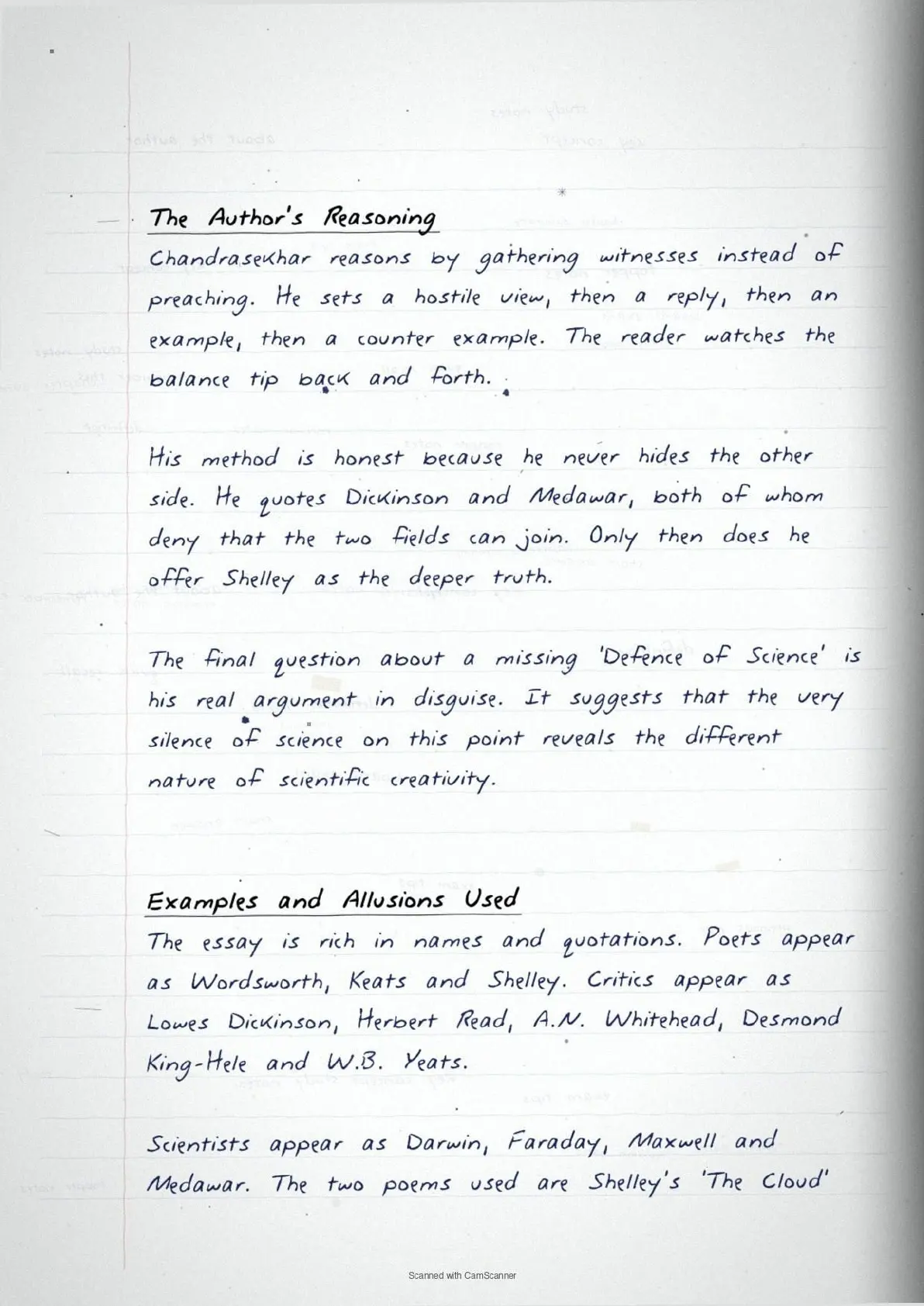
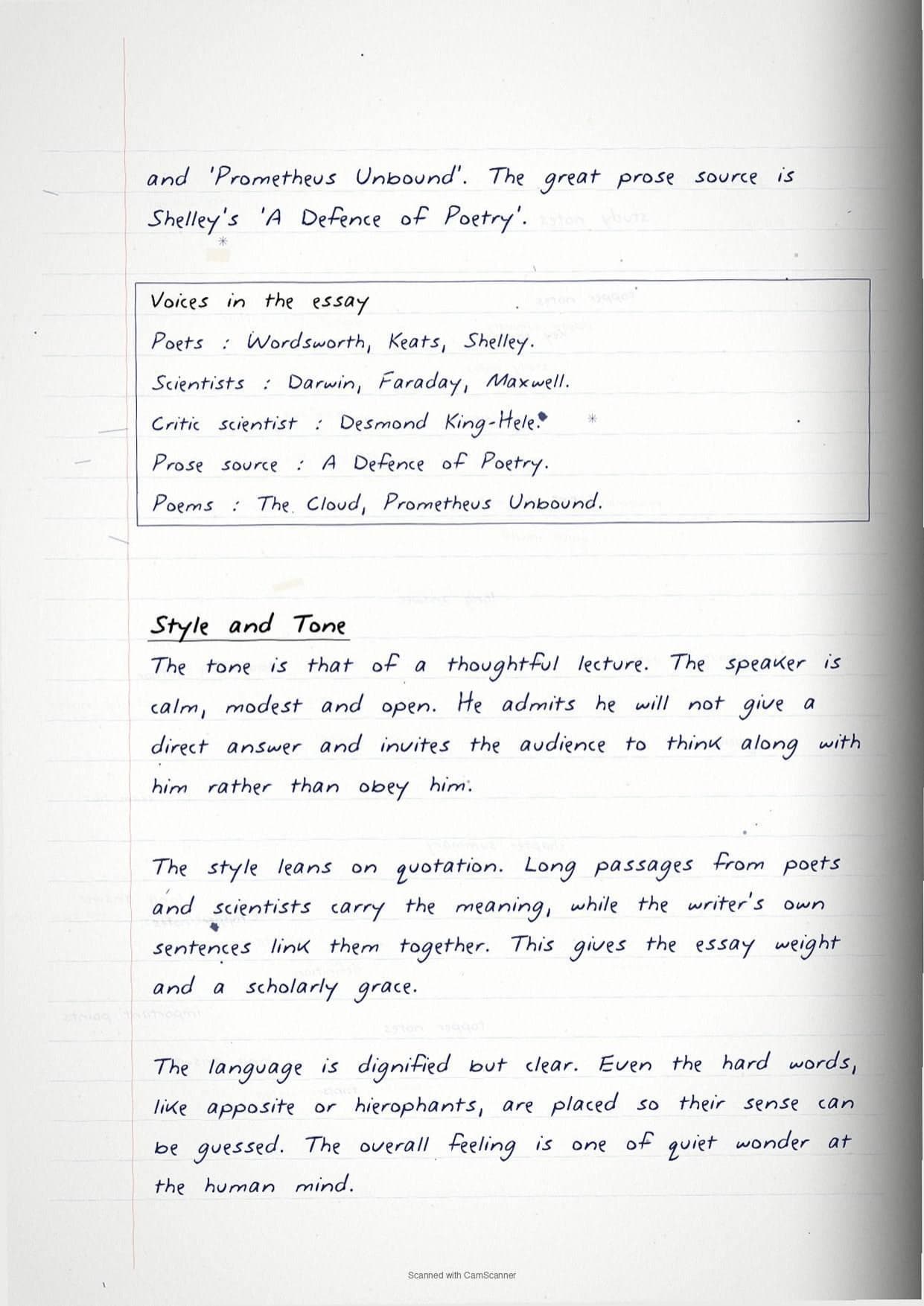
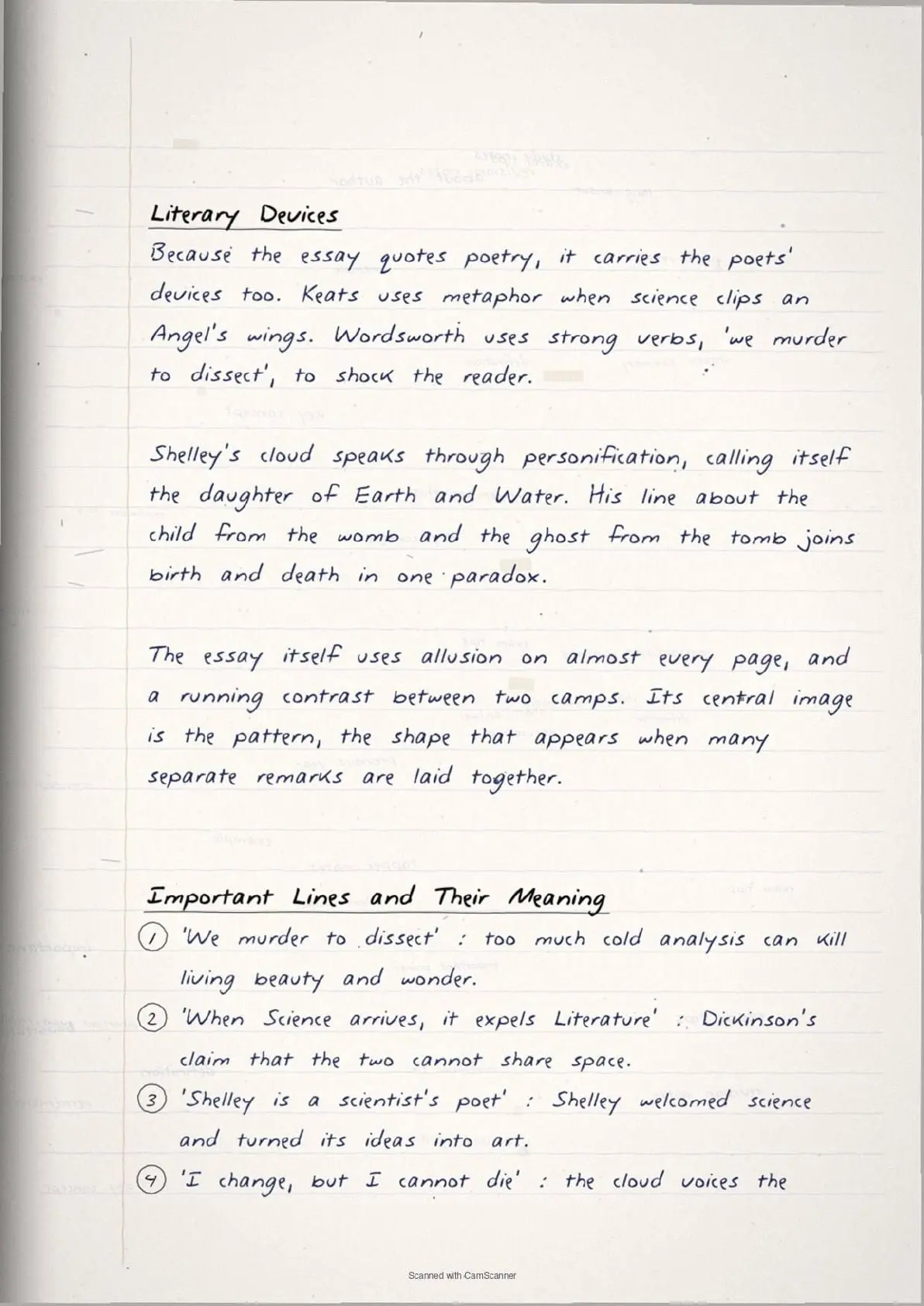
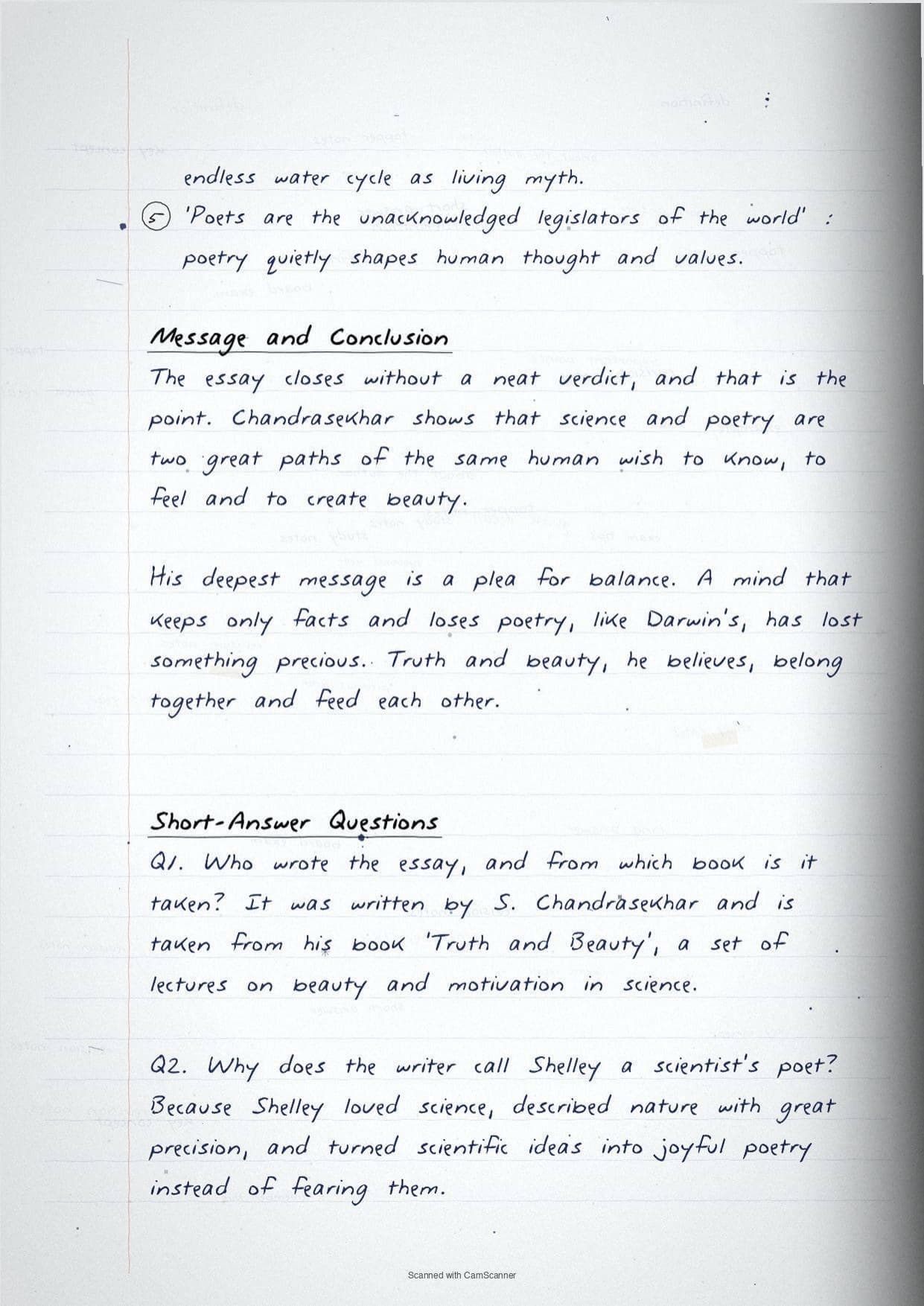
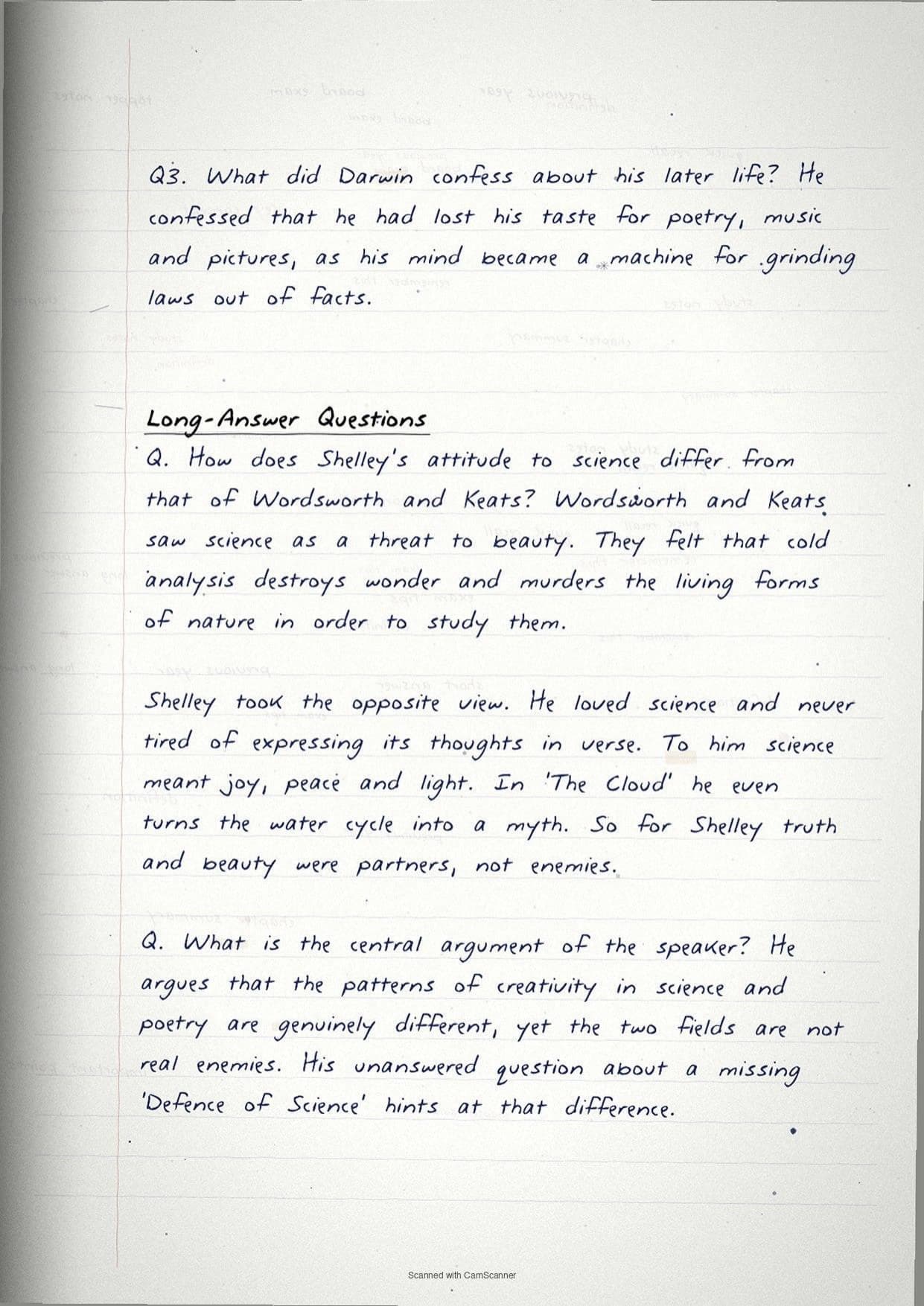
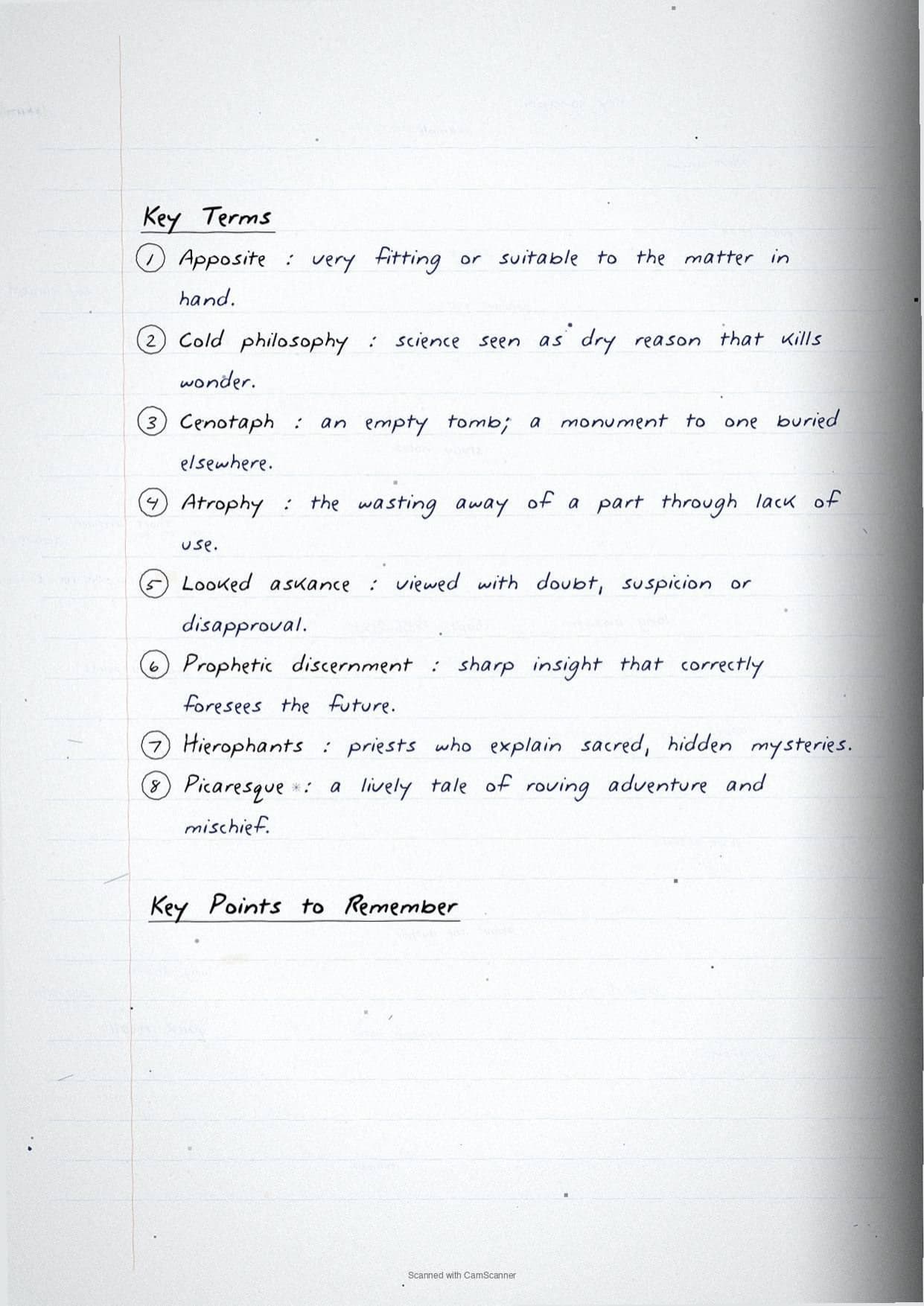
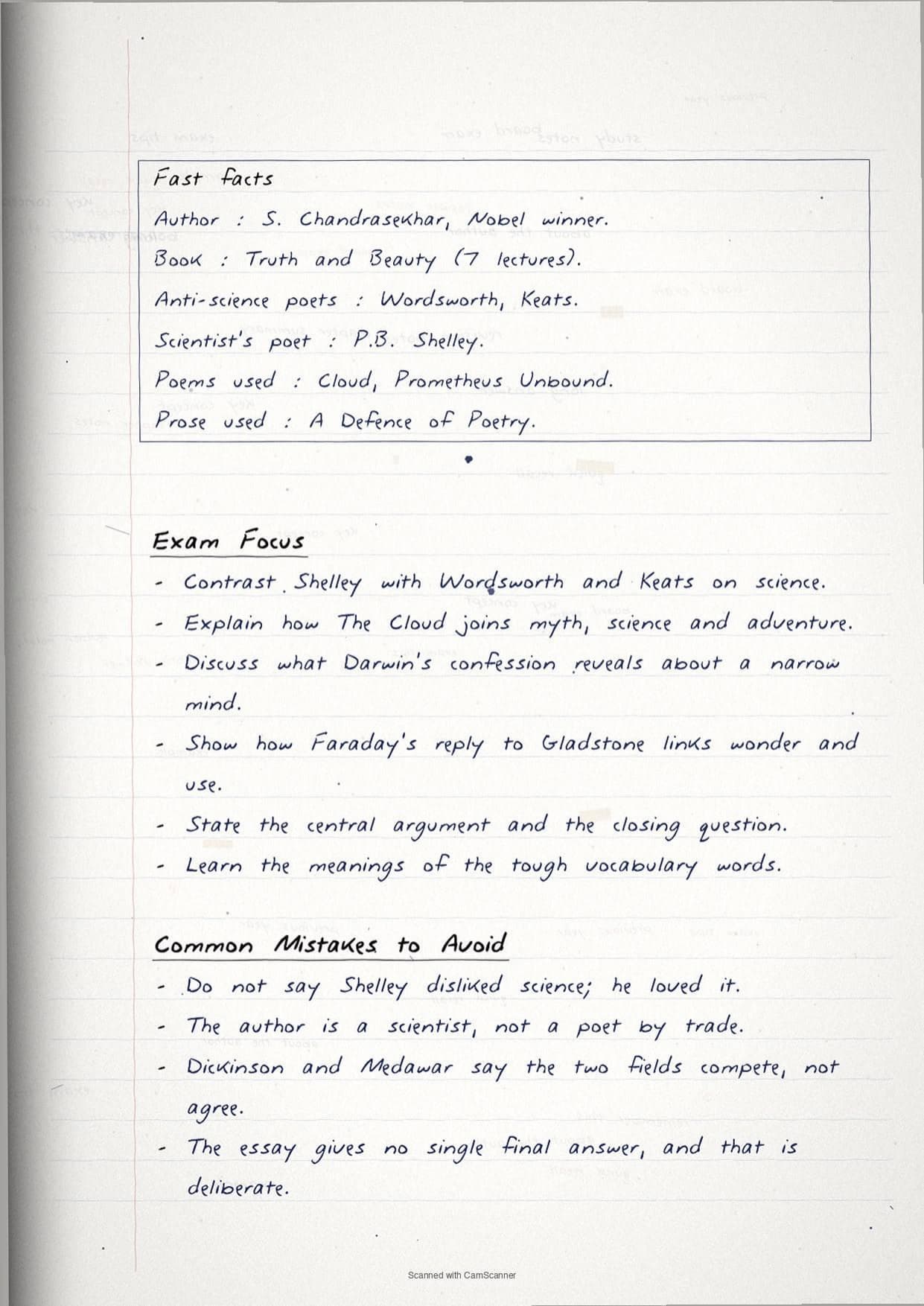
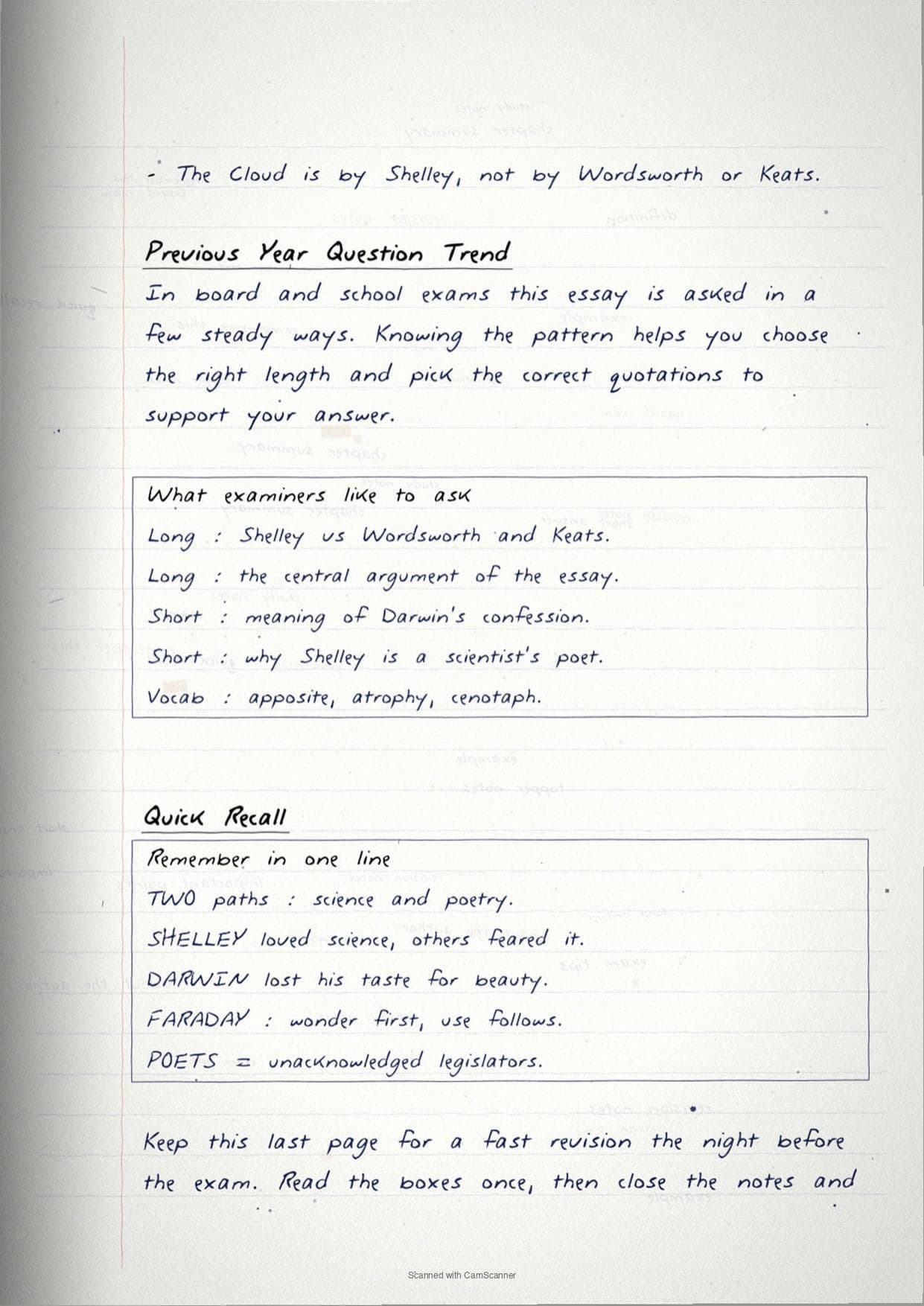
- CBSE Class 11 Weightage: a scoring chapter in the English paper, asked in short and long answers.
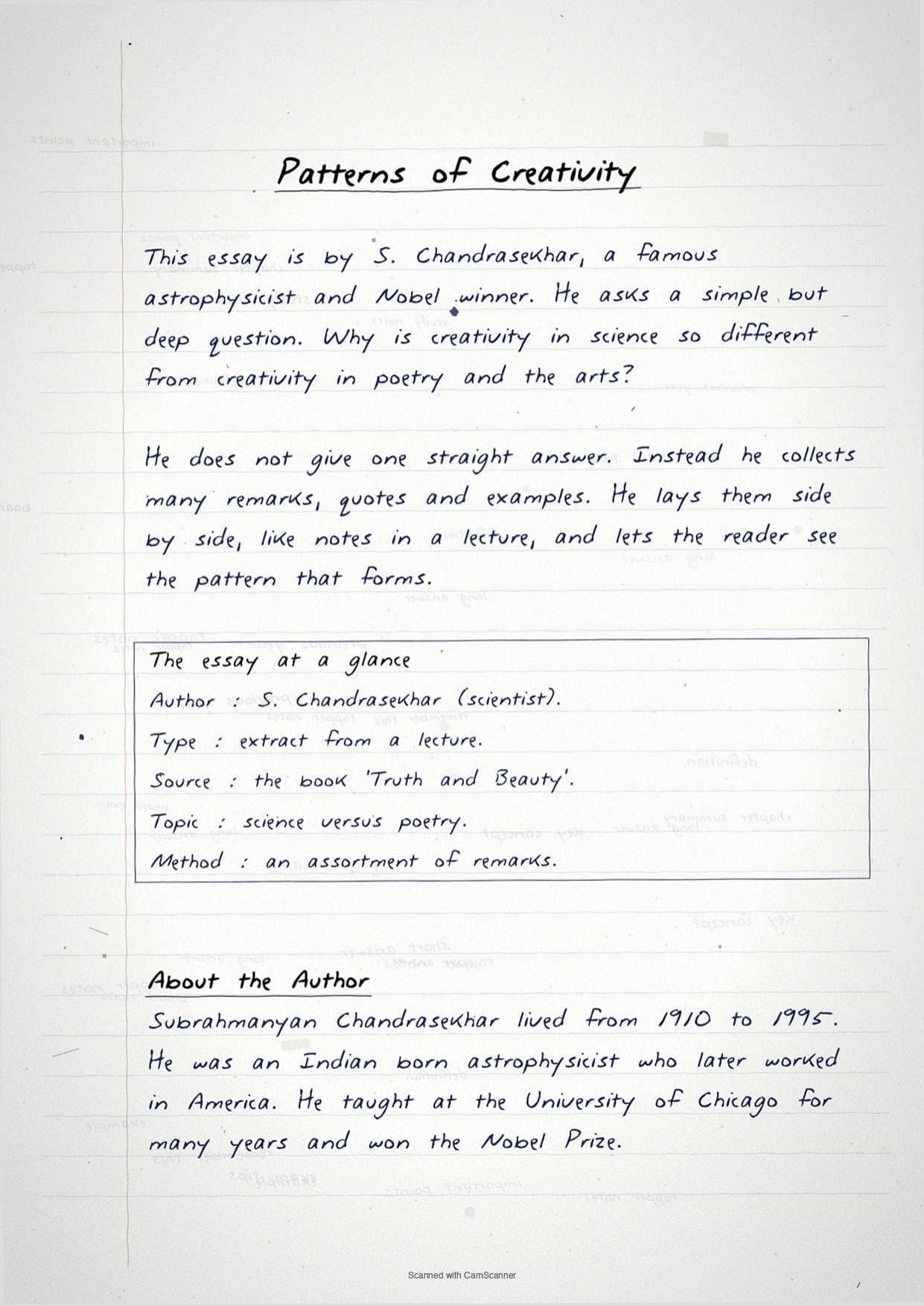
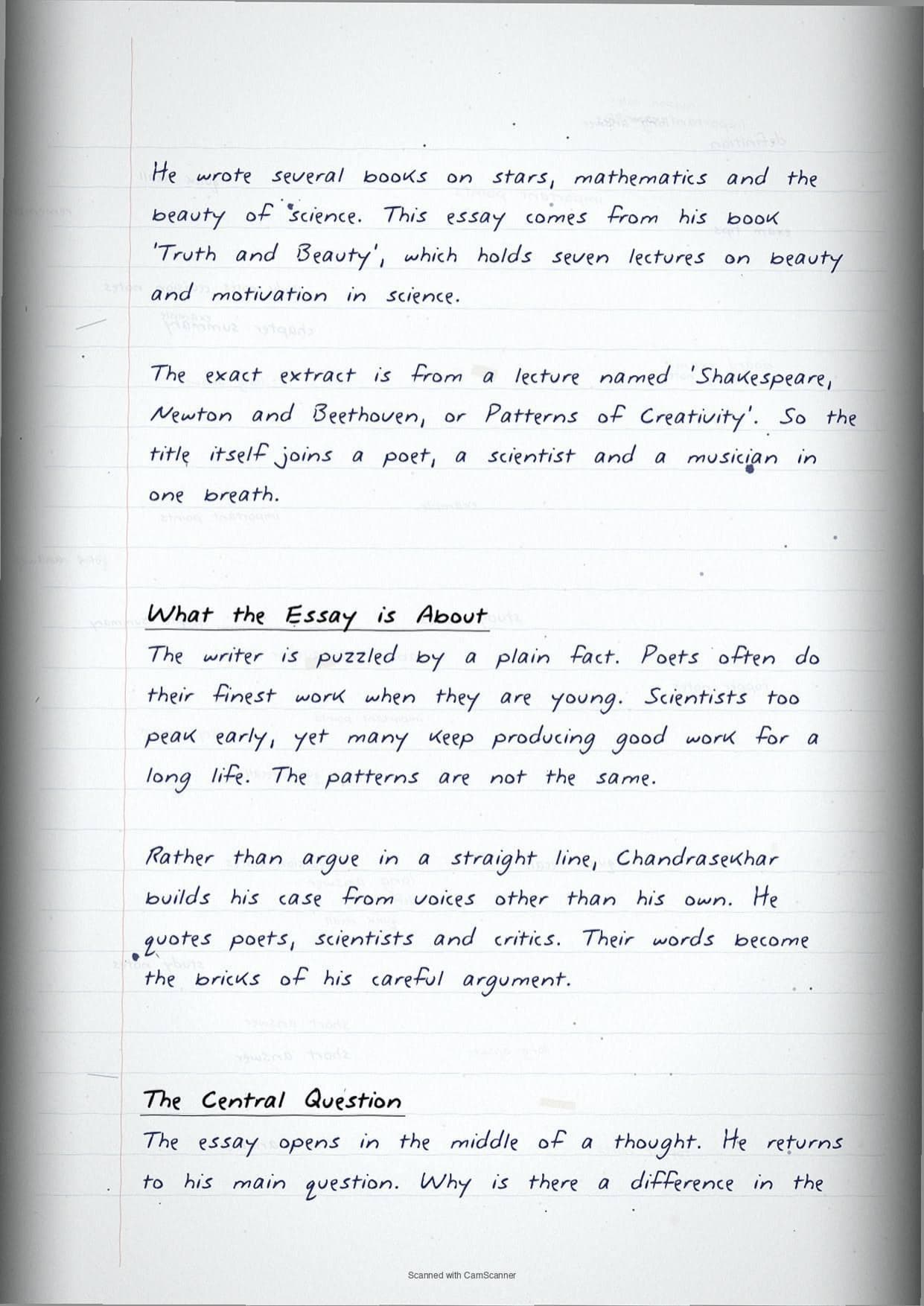
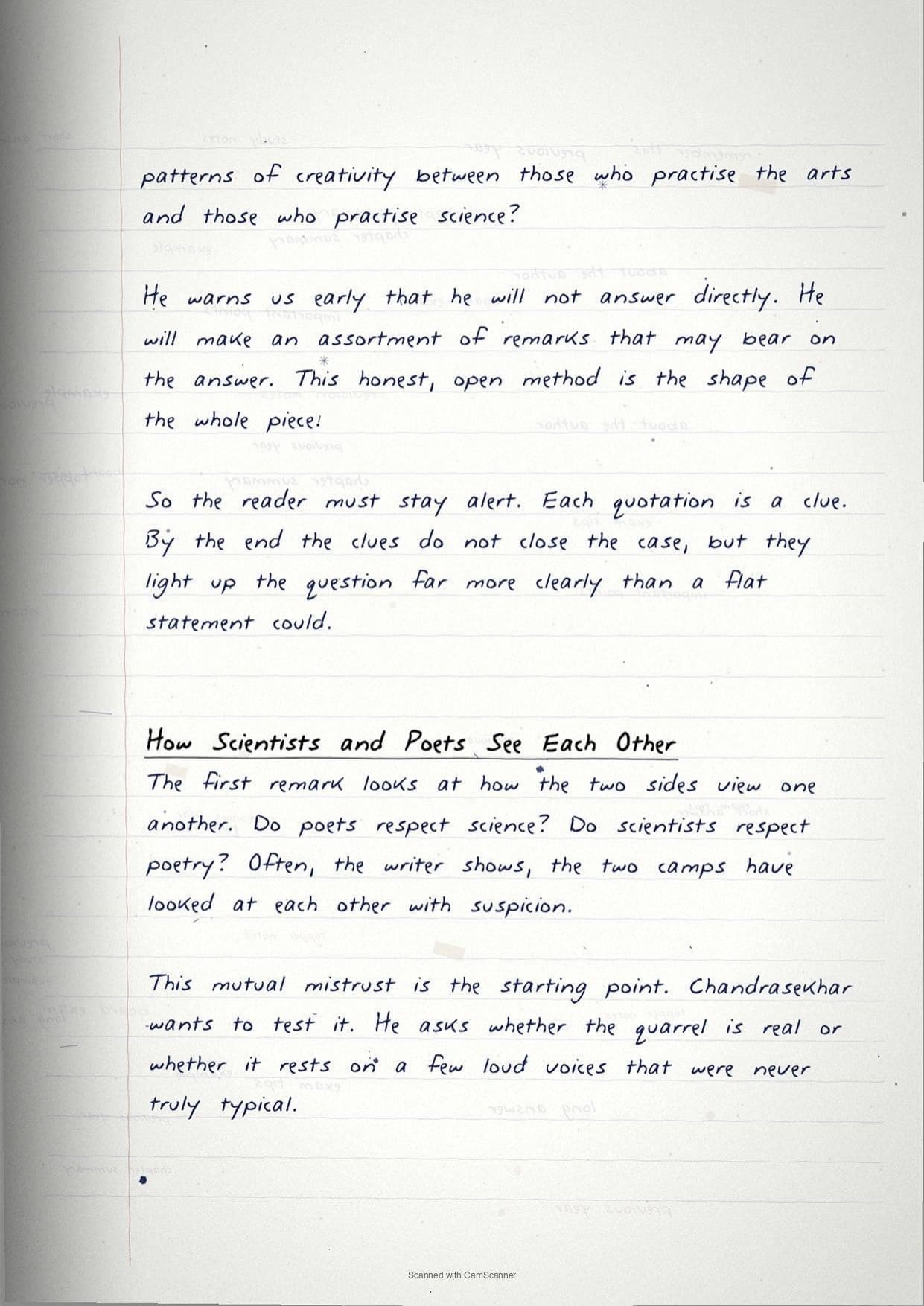
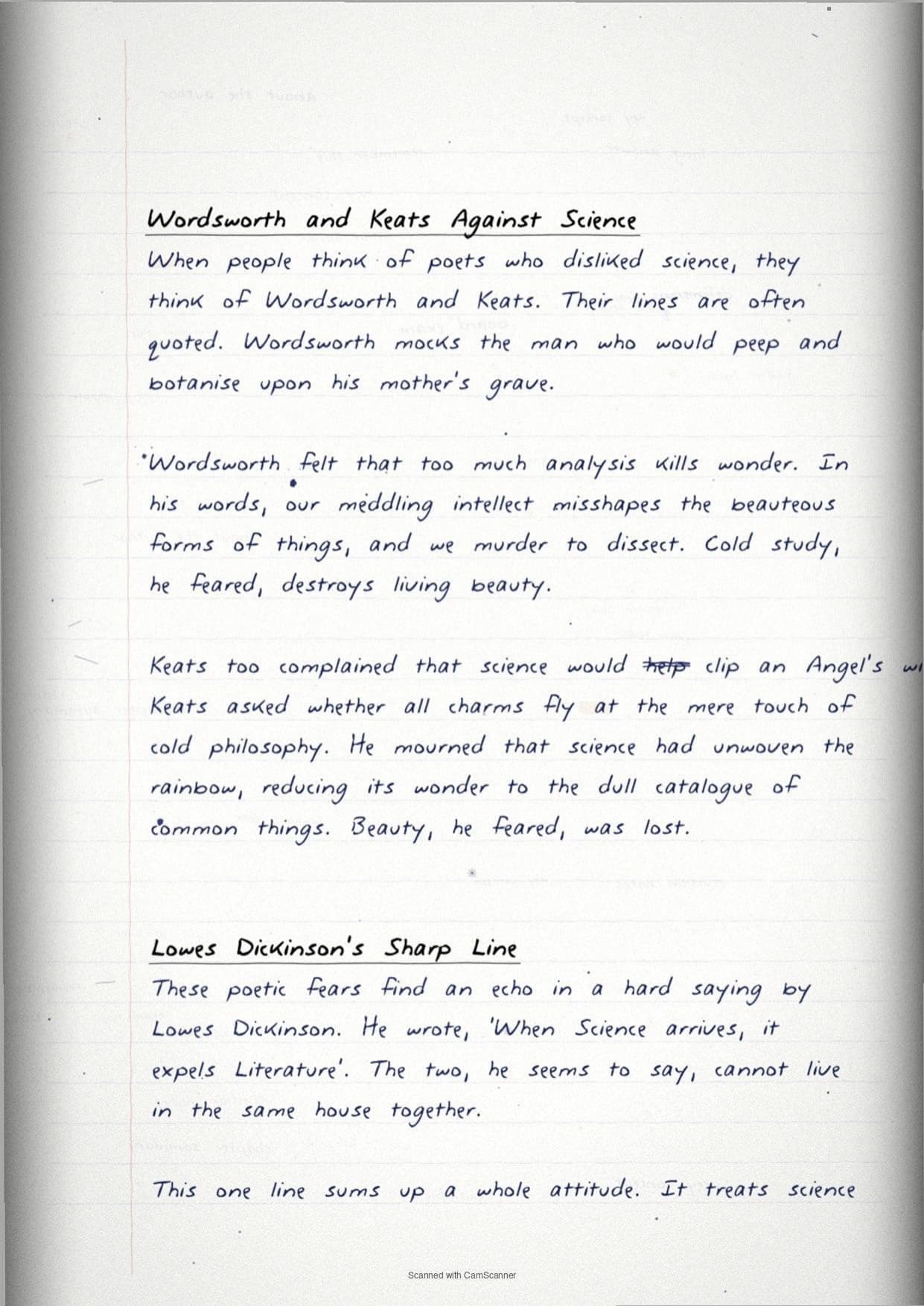
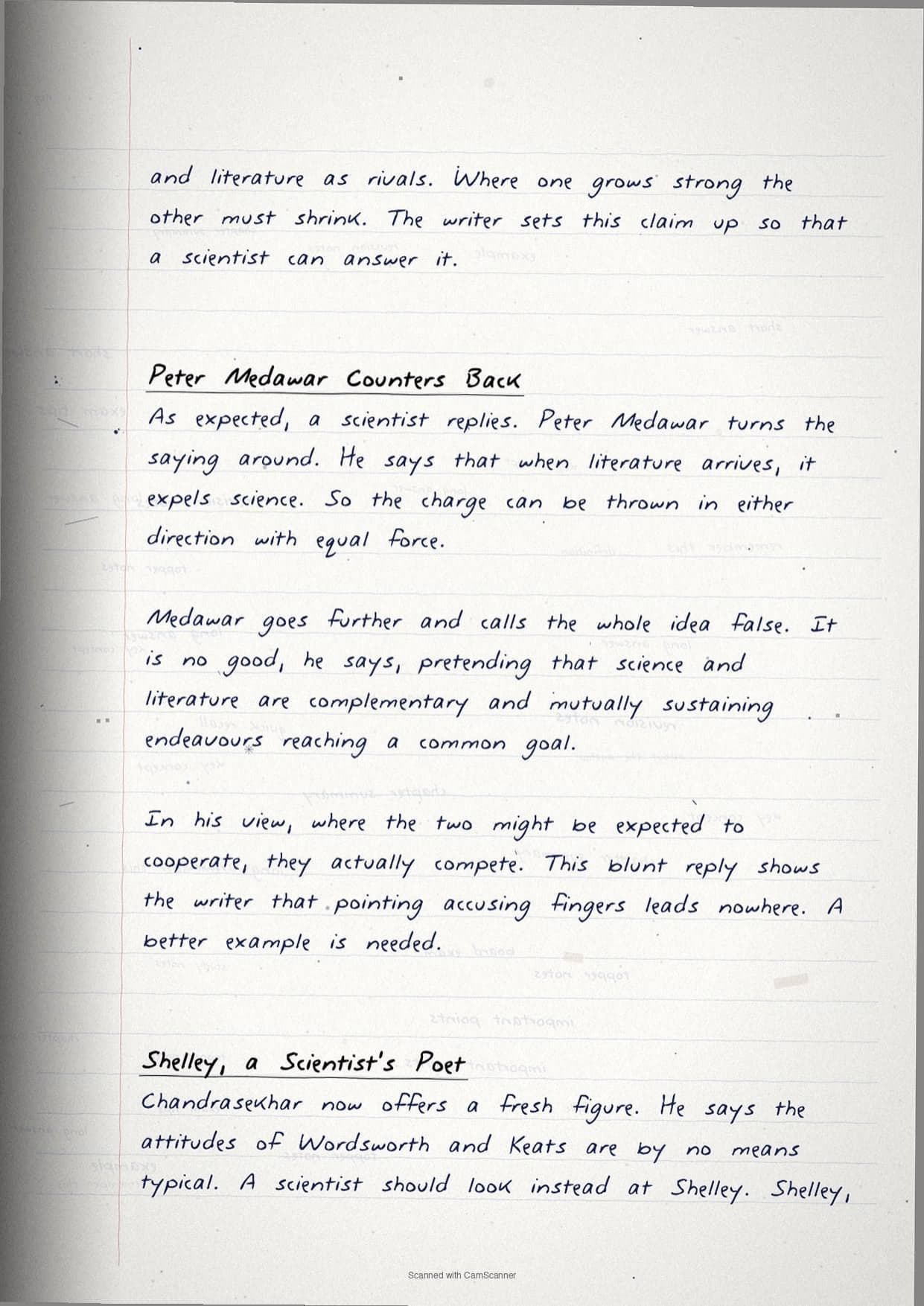
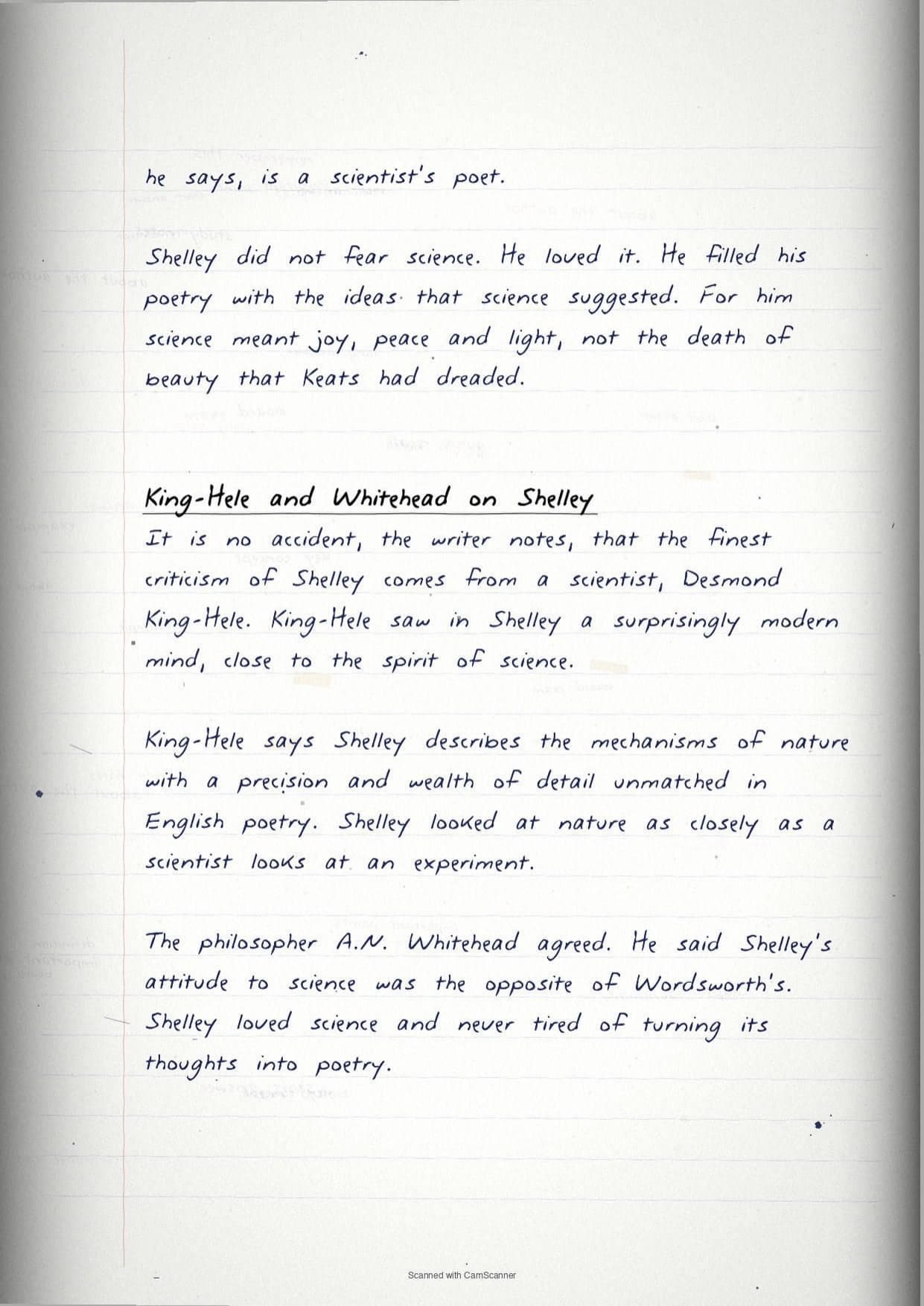
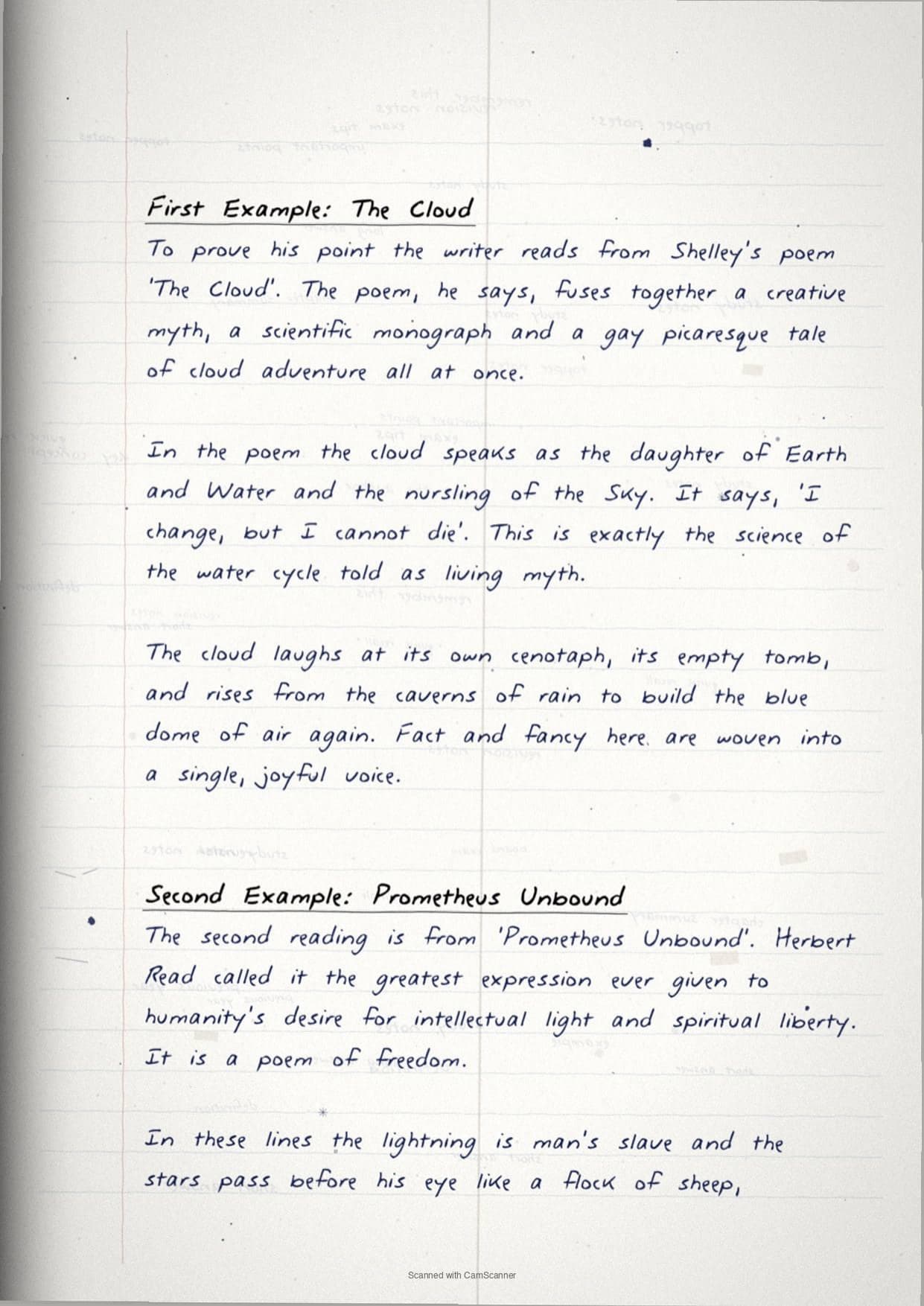
- What the notes cover: science versus poetry as ways of creating, wordsworth and keats fearing cold science, shelley, the scientist's poet, who loved it, the cloud and prometheus unbound as proof.
- Best for: quick revision before Class 11 exams and a base for CUET later.
You can read the complete class 11 english handwritten notes for Patterns of Creativity, with key terms, boxed definitions, and quick revision points, in the PDF below.
These handwritten notes are written by subject teachers, mapped to the 2026-27 NCERT, and checked against the last five years of CBSE Class 11 English papers.
What the Patterns of Creativity Handwritten Notes Cover
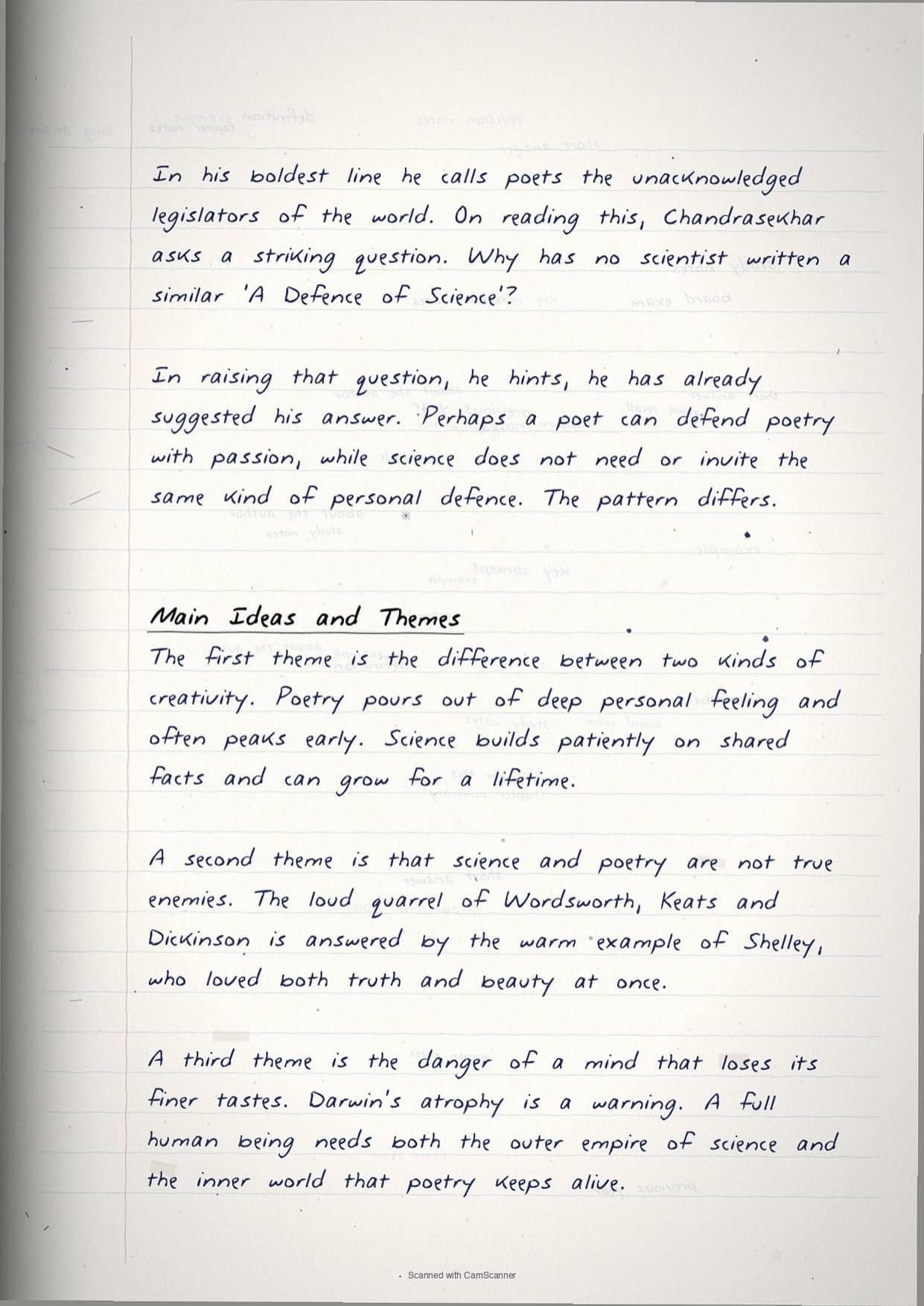
S. Chandrasekhar asks why creativity in science looks so different from creativity in poetry. Instead of one answer he lays out an assortment of remarks by poets and scientists. The pattern that forms lights up the question.
- Science versus poetry as ways of creating
- Wordsworth and Keats fearing cold science
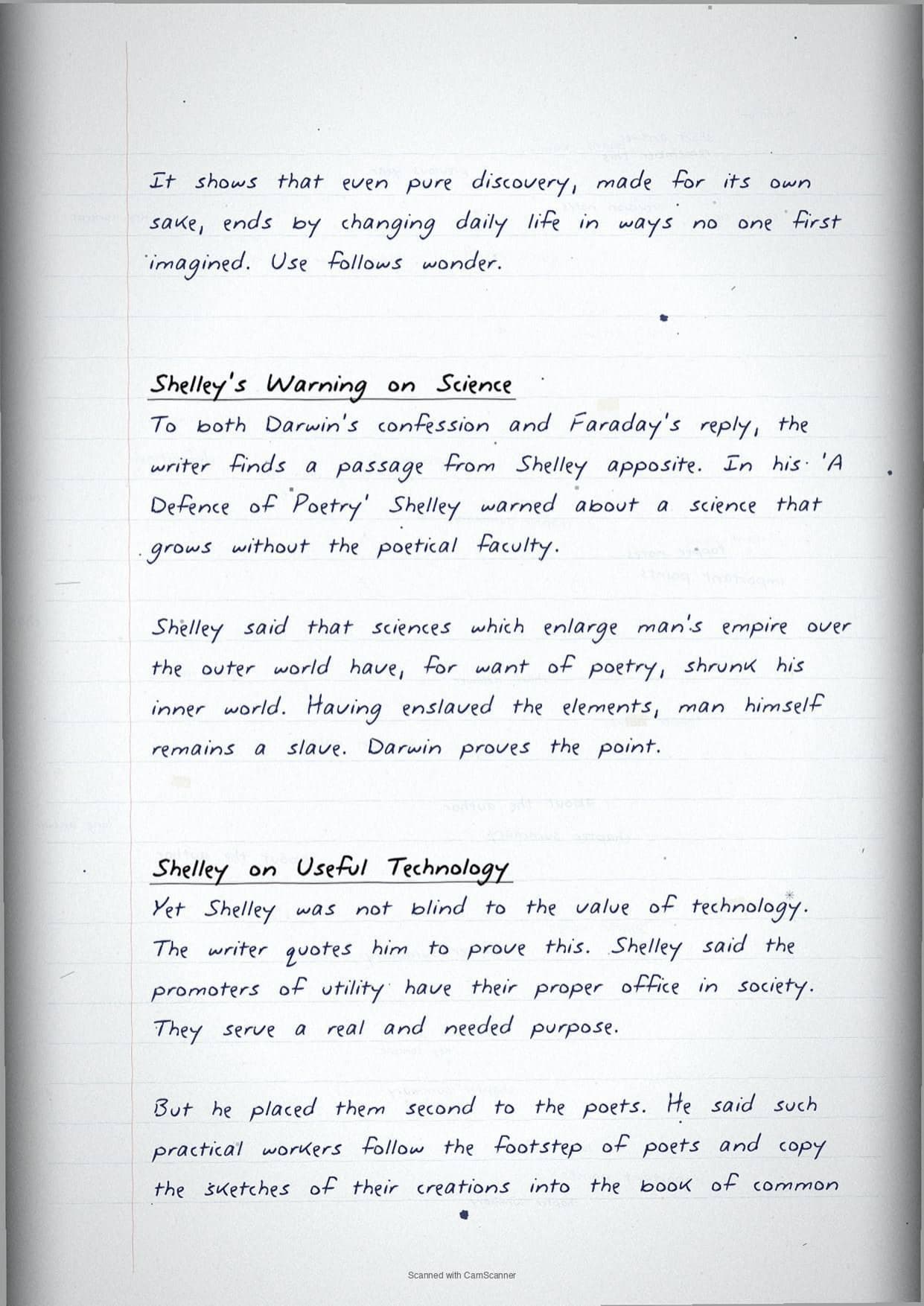
- Shelley, the scientist's poet, who loved it
- The Cloud and Prometheus Unbound as proof
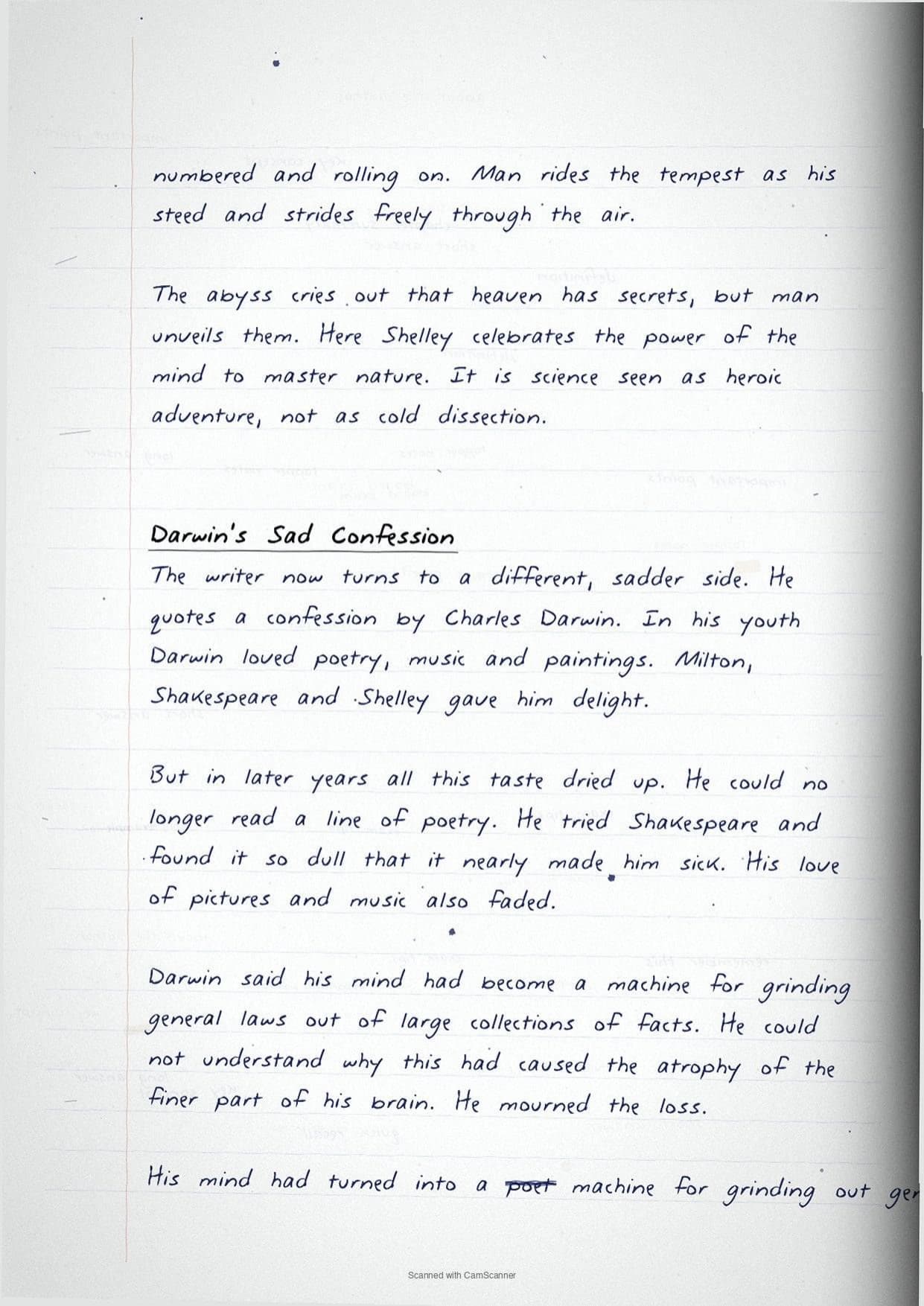
- Darwin's confession of lost taste for art
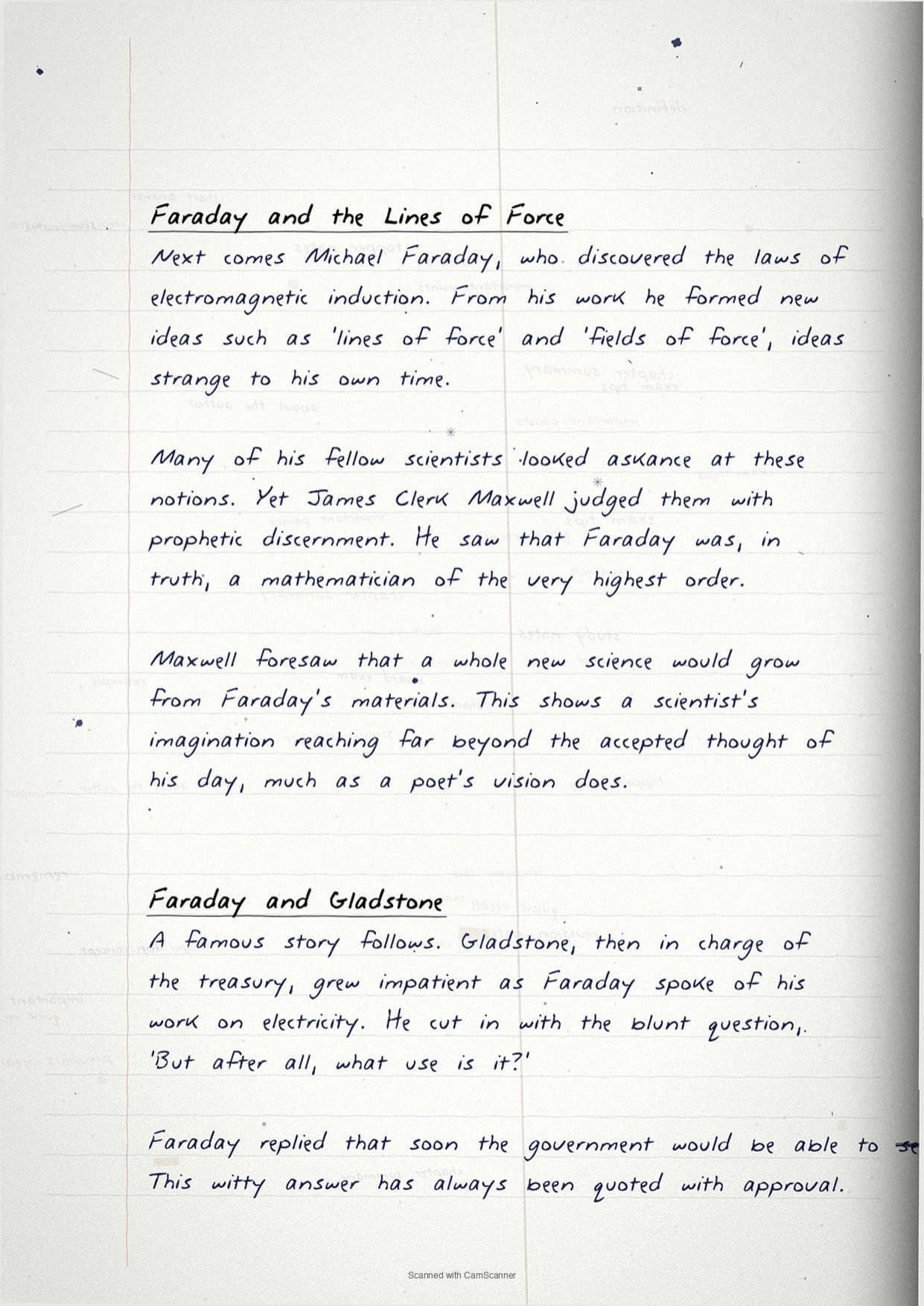
- Faraday, Maxwell and the lines of force
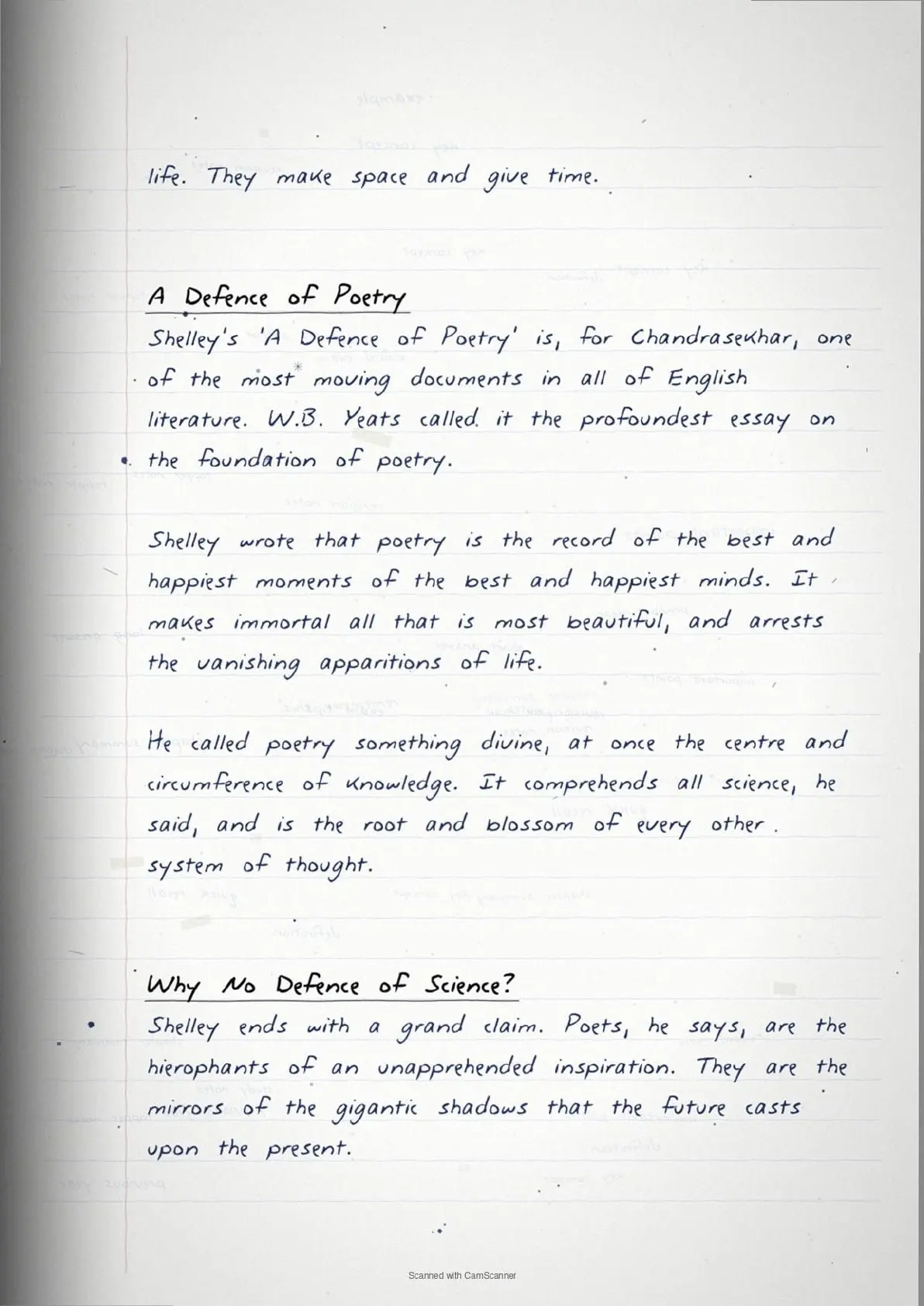
- Why there is no Defence of Science
Patterns of Creativity Self-Assessment Quiz
Try these quick questions after you read the notes. Tap each question to check your answer. They cover the points CBSE asks most often.
Who wrote 'Patterns of Creativity'?
(a) P.B. Shelley (b) S. Chandrasekhar (c) Charles Darwin (d) A.N. Whitehead
Answer: (b) correct - it is by the astrophysicist S. Chandrasekhar, from Truth and Beauty.
Which poet is called a scientist's poet?
(a) Wordsworth (b) Keats (c) Shelley (d) Yeats
Answer: (c) correct - Shelley loved science and expressed its thoughts in poetry.
What did Darwin confess in later life?
(a) He hated science (b) He lost taste for poetry and music (c) He loved painting more (d) He gave up research
Answer: (b) correct - his mind became a machine for laws and his finer tastes atrophied.
Whose poem is 'The Cloud'?
(a) Keats (b) Wordsworth (c) Shelley (d) Milton
Answer: (c) correct - The Cloud is by Shelley and fuses myth, science and adventure.
What was Faraday's reply to Gladstone?
(a) It is useless (b) Soon you can tax it (c) Ask a poet (d) It is only theory
Answer: (b) correct - he said the government would soon be able to tax electricity.
Patterns of Creativity Topic-wise Weightage for CBSE Class 11 English
Some parts of this chapter are asked more often than others. The table below shows which sub-topics to revise first, based on recent CBSE Class 11 question trends.
| Sub-topic | Weightage | CBSE Frequency |
|---|---|---|
| Shelley vs Wordsworth and Keats on science | High | very frequent |
| Central argument of the speaker | High | frequent |
| Darwin's confession and its meaning | Medium | common |
| The Cloud fusing myth, science, adventure | Medium | common |
| Vocabulary: apposite, atrophy, cenotaph | Low | occasional |
Key Terms and Ideas in Patterns of Creativity
These are the terms and ideas the exam asks about most. Learn each one so you can define it and use it in your answers.
| Term / Idea | What it means |
|---|---|
| S. Chandrasekhar | Nobel astrophysicist who wrote the essay |
| Truth and Beauty | the book of seven lectures it is from |
| Wordsworth and Keats | poets who feared science kills wonder |
| Shelley | the scientist's poet who loved science |
| Darwin | confessed he lost his taste for poetry |
| Faraday | answered Gladstone: soon you can tax it |
| A Defence of Poetry | Shelley's prose the essay leans on |
| Unacknowledged legislators | Shelley's phrase for poets' quiet power |
How Collegedunia's Handwritten Notes Help You Revise Patterns of Creativity
These notes are made for the night before the exam. They keep the facts short and easy to scan. Collegedunia maps every point to the 2026-27 NCERT.
- Clear handwriting: each topic is written in neat, easy-to-read handwriting.
- Boxed key terms: the main terms and definitions are boxed by hand for fast recall.
- Diagrams and tables: simple hand-drawn tables and charts make ideas clear.
- Colour-coded headings: new sub-topics stand out, so you find any section in seconds.
How to Use These Handwritten Notes for Class 11 English Revision
Use these class 11 english handwritten notes in two passes. Read them slowly once for the full chapter. Then, near the exam, read only the boxes and key terms for a fast recall.
- Read the notes once with the NCERT chapter open beside you.
- Say each key term and idea in your own words.
- Practise one long-answer question from a past paper.
- On the last day, revise only the key terms and the boxes.
Class 11 English Handwritten Notes for All Chapters
The table below links the class 11 english handwritten notes for every chapter. Use it to jump to any other chapter's notes.
Patterns of Creativity Class 11 English Handwritten Notes FAQs
Ques. Where can I download Patterns of Creativity Class 11 English Handwritten Notes PDF?
Ans. You can download the Patterns of Creativity Class 11 English Handwritten Notes PDF directly from this page. Both the Normal and HD versions are free.
Ques. Are these handwritten notes aligned with the 2026-27 NCERT?
Ans. Yes. These notes follow the current 2026-27 syllabus for Class 11 English. Students often ask whether the essay says science is better than poetry.
Ques. How many pages is the Class 11 English Patterns of Creativity Handwritten Notes PDF?
Ans. The notes run about 22 pages. They cover the full chapter with key terms, hand-drawn boxes, and a short self-assessment quiz.
Ques. What is the main idea of the 11th standard English chapter Patterns of Creativity?
Ans. The essay does not rank one above the other. It shows that science and poetry are different patterns of the same creative human mind, and it pleads for a balance between truth and beauty.
Ques. Are these Patterns of Creativity notes enough for the CBSE Class 11 exam?
Ans. Yes, for revision. The Collegedunia handwritten notes cover every key point and exam term. Read them with the NCERT chapter and practise past questions.



Comments