




The handwritten notes on Class 11 English Hornbill Chapter 11, Father to Son, have been carefully prepared for quick one-shot revision, according to the latest 2026-27 CBSE syllabus. They cover Elizabeth Jennings's poem stanza by stanza, so students can revise the full chapter in one sitting before an exam or a class test.
- Board Weightage: poetry extracts from this chapter carry 4-6 marks through reference-to-context and short-answer questions.
- Question Types: extract-based questions, "Think It Out" short answers, and questions on rhyme scheme and universality.
- 2026-27 NCERT: Father to Son stays unchanged in the rationalised Hornbill syllabus.

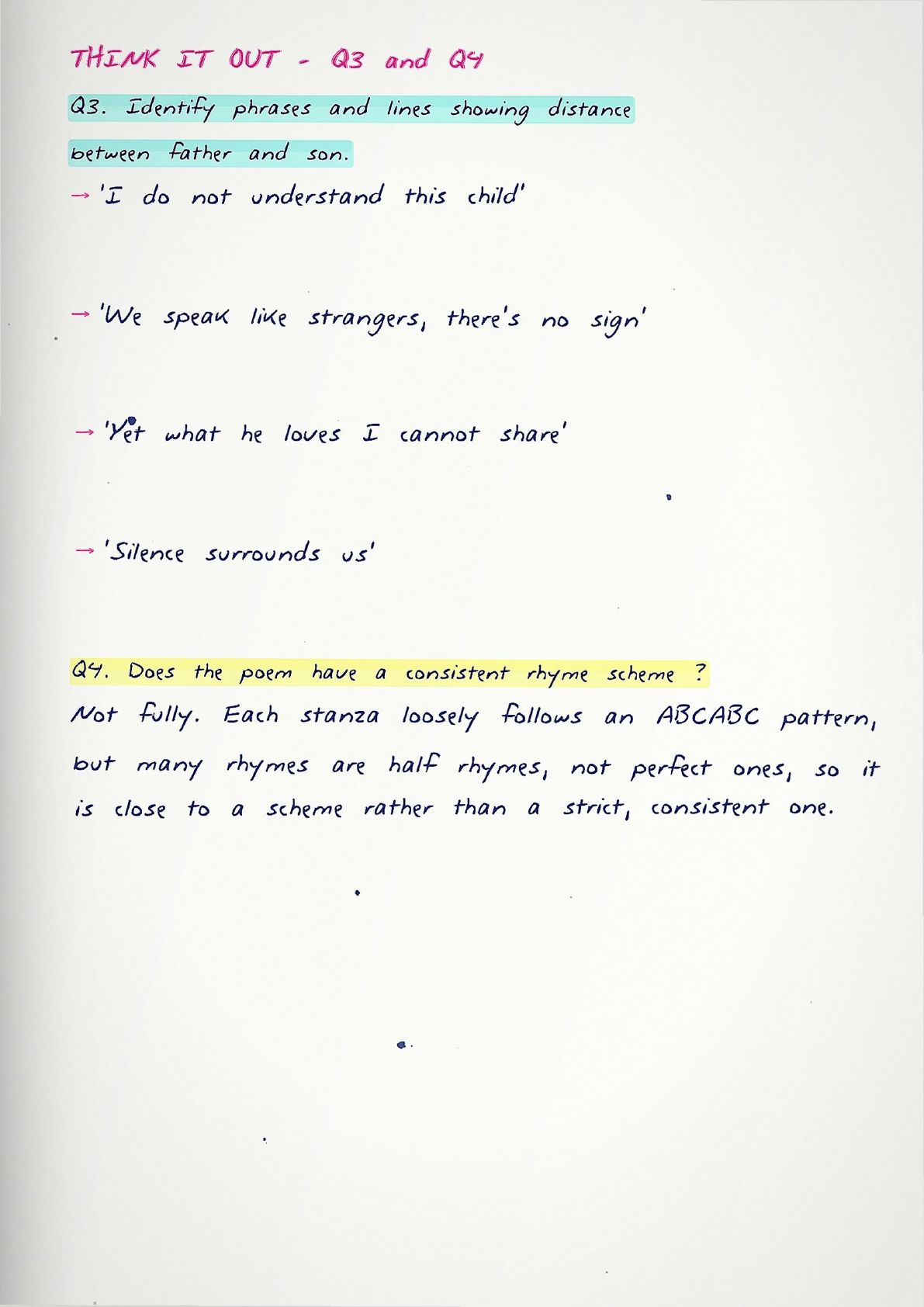
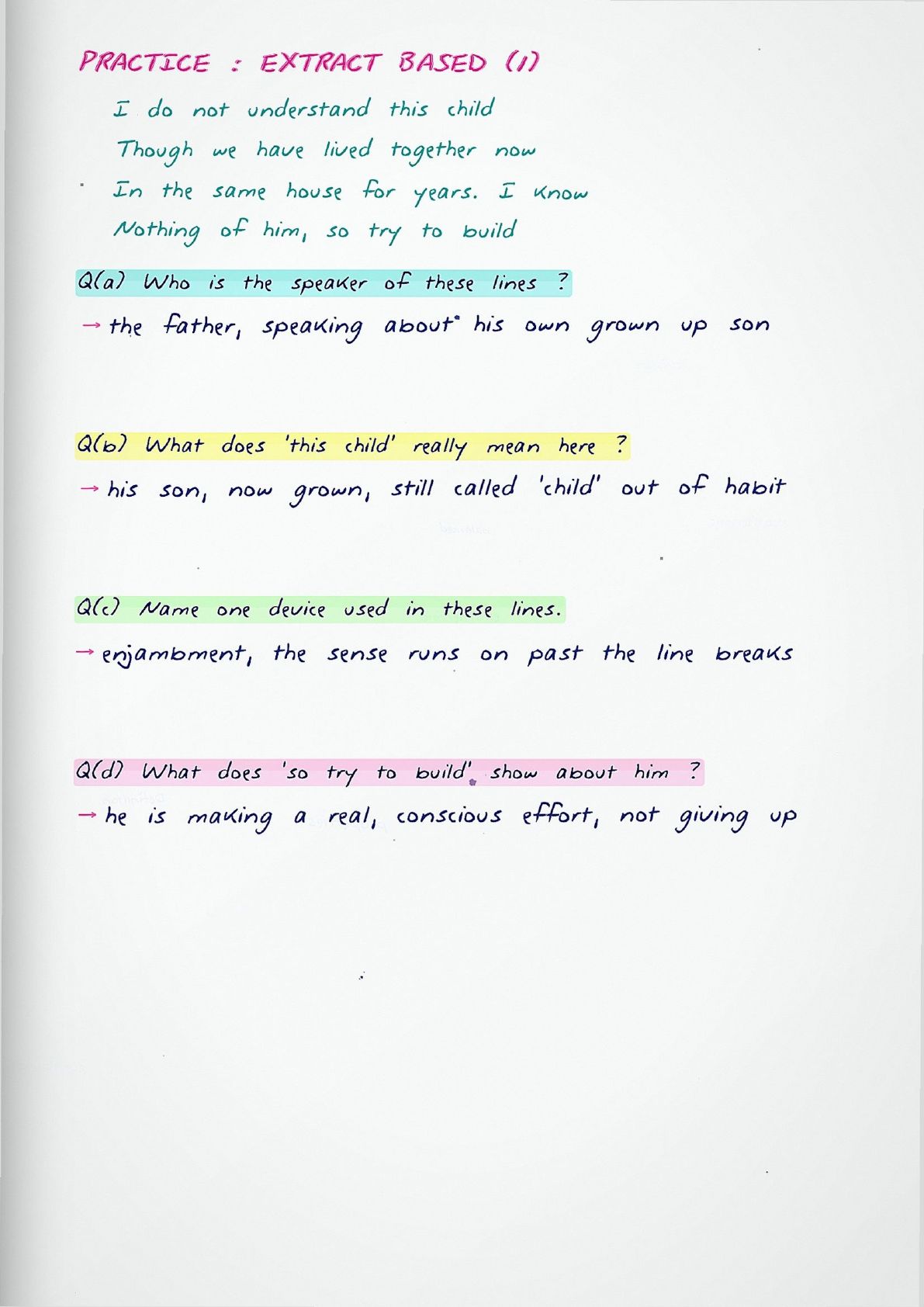
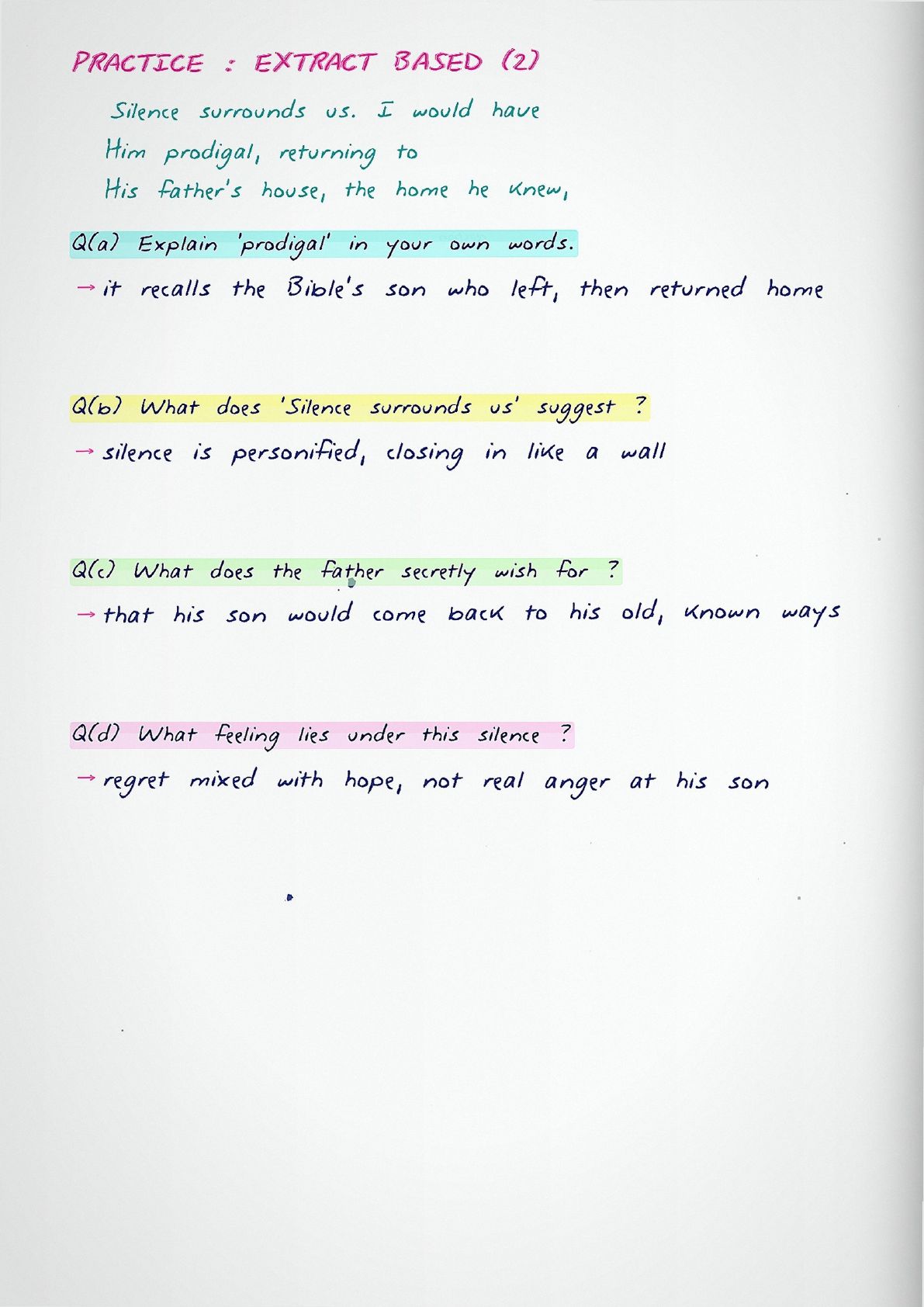
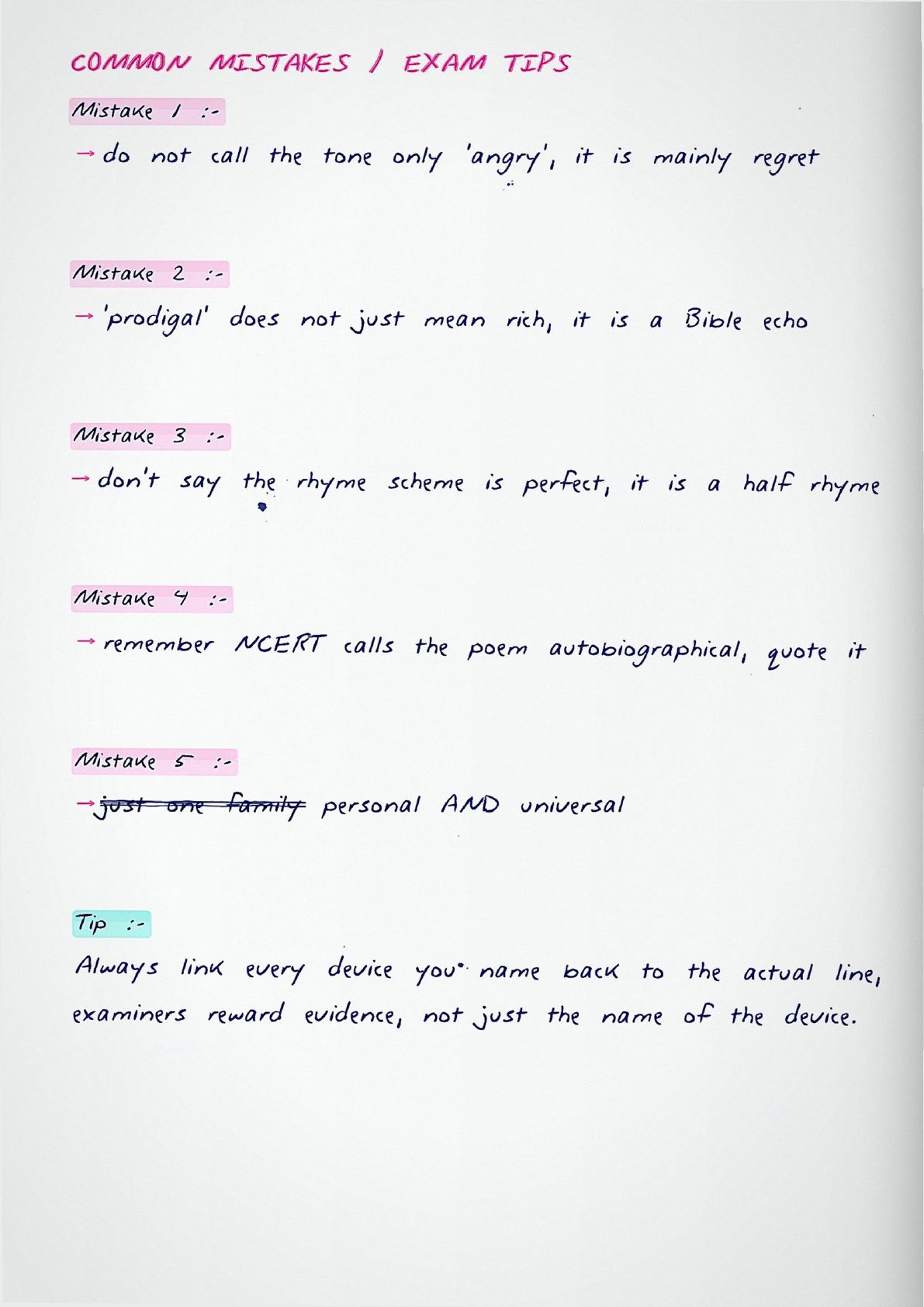
Every page in these Father to Son notes is written by hand, checked against the 2026-27 Class 11 Hornbill print, and matched to the way CBSE board papers ask about Elizabeth Jennings's poem.
You will find the full poem text, a stanza-by-stanza paraphrase, every poetic device Jennings uses, word meanings, and NCERT's own "Think It Out" answers inside this 23-page set, all according to the latest 2026-27 CBSE syllabus.
|
Table of Contents |
About the Poem Father to Son and Poet Elizabeth Jennings
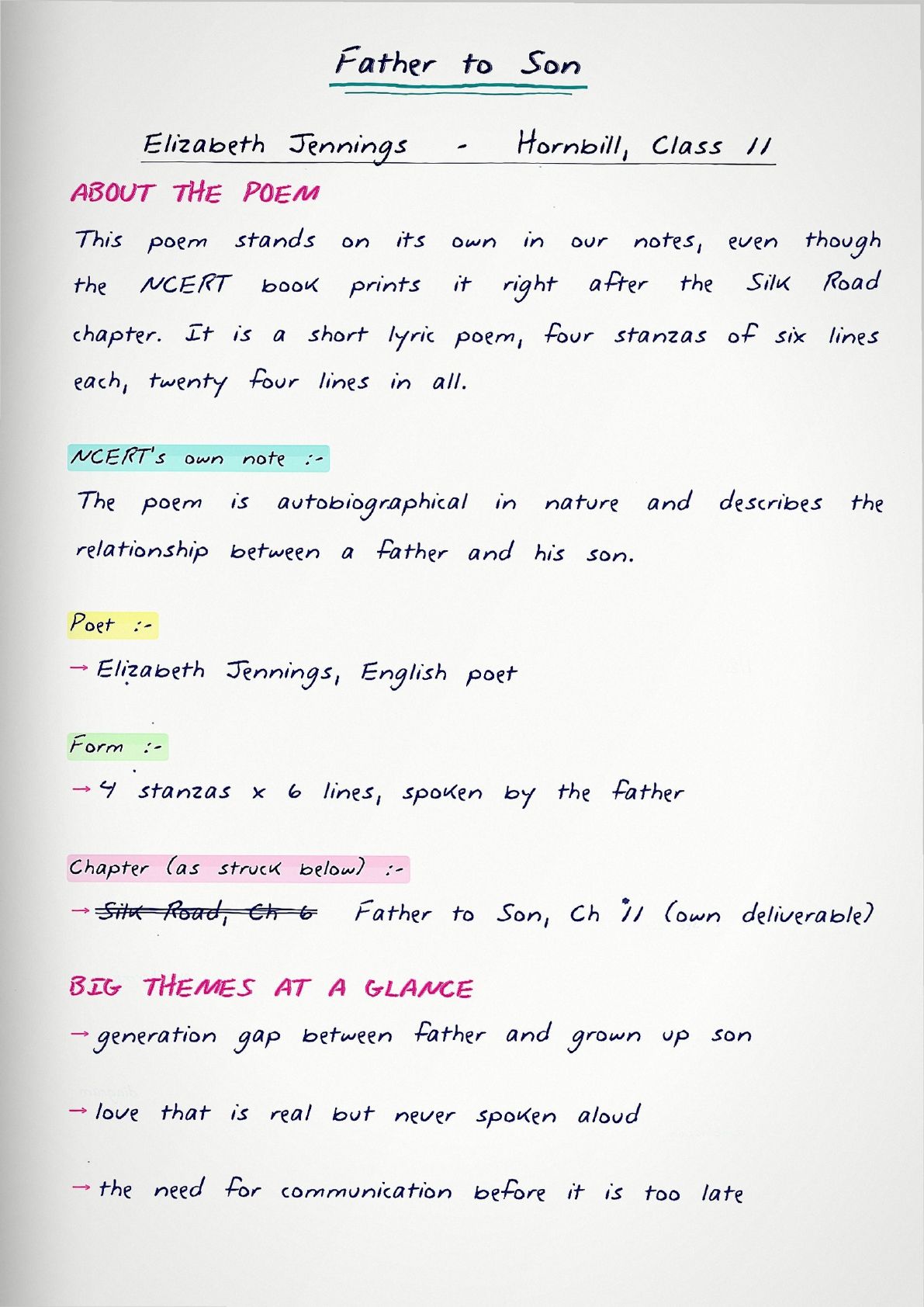
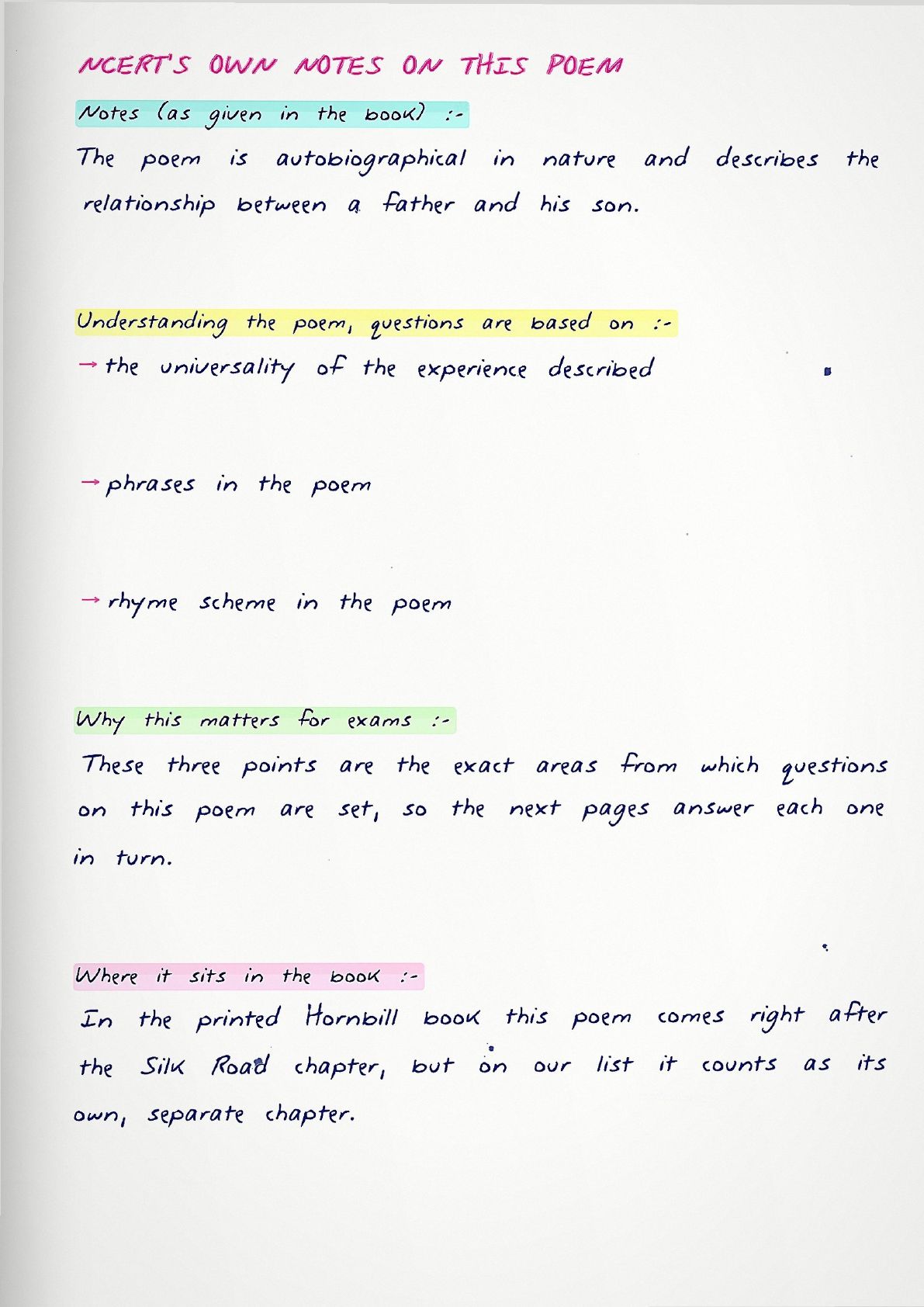
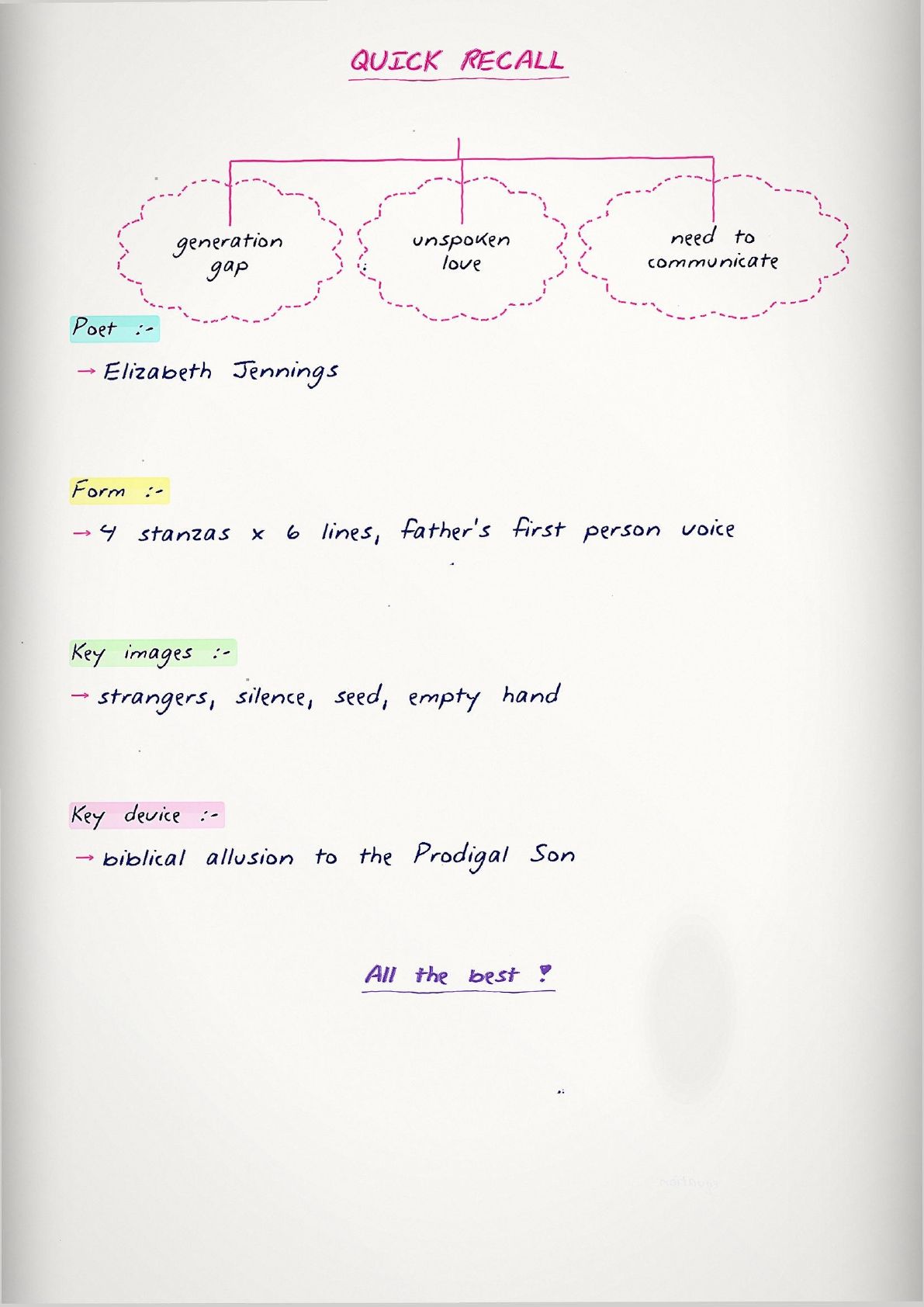
Father to Son is written by Elizabeth Jennings, an English poet whose work often turns to family, faith and personal emotion. NCERT's own note calls the poem autobiographical, describing a real strain between a father and his son.
- The poem has 4 stanzas of 6 lines each, 24 lines in total, spoken throughout by the father.
- In the printed Hornbill book, the poem sits right after the Silk Road chapter, but Collegedunia treats it as its own standalone chapter.
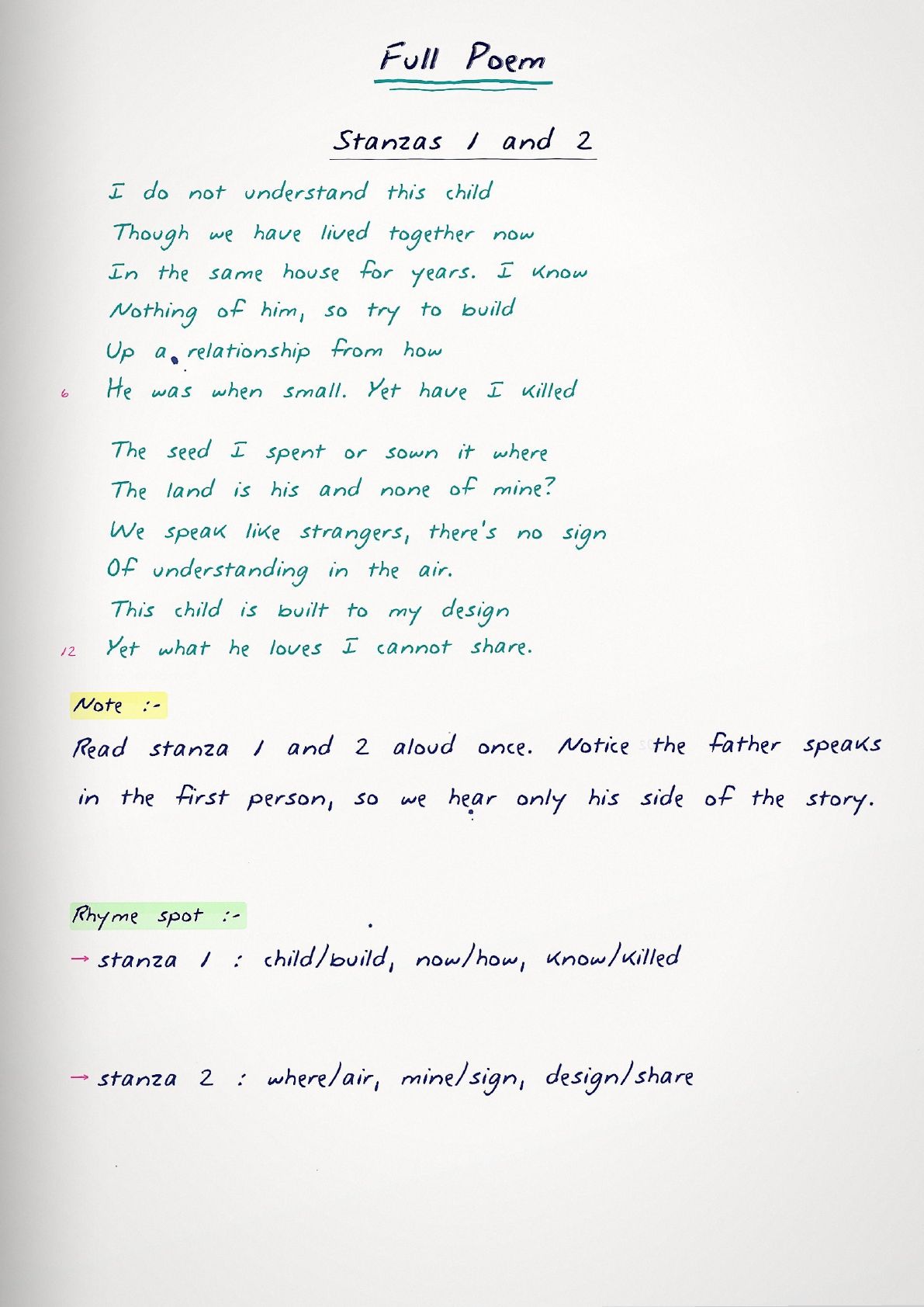
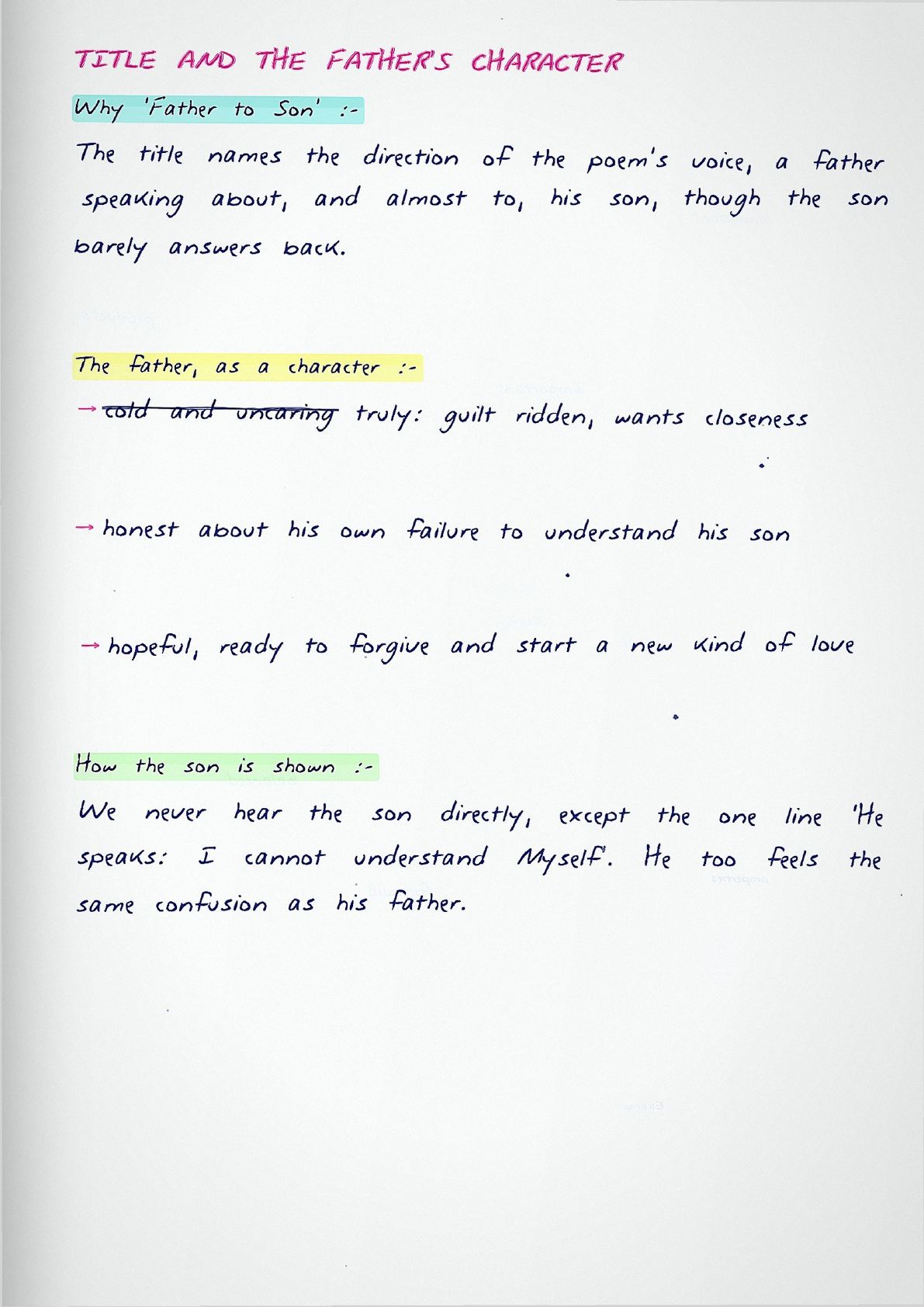
- The father speaks in the first person, so the reader hears only his side of the story.
Father to Son Video Explanation
Source: Shikha Shokeen on YouTube
Father to Son Summary in Simple Words
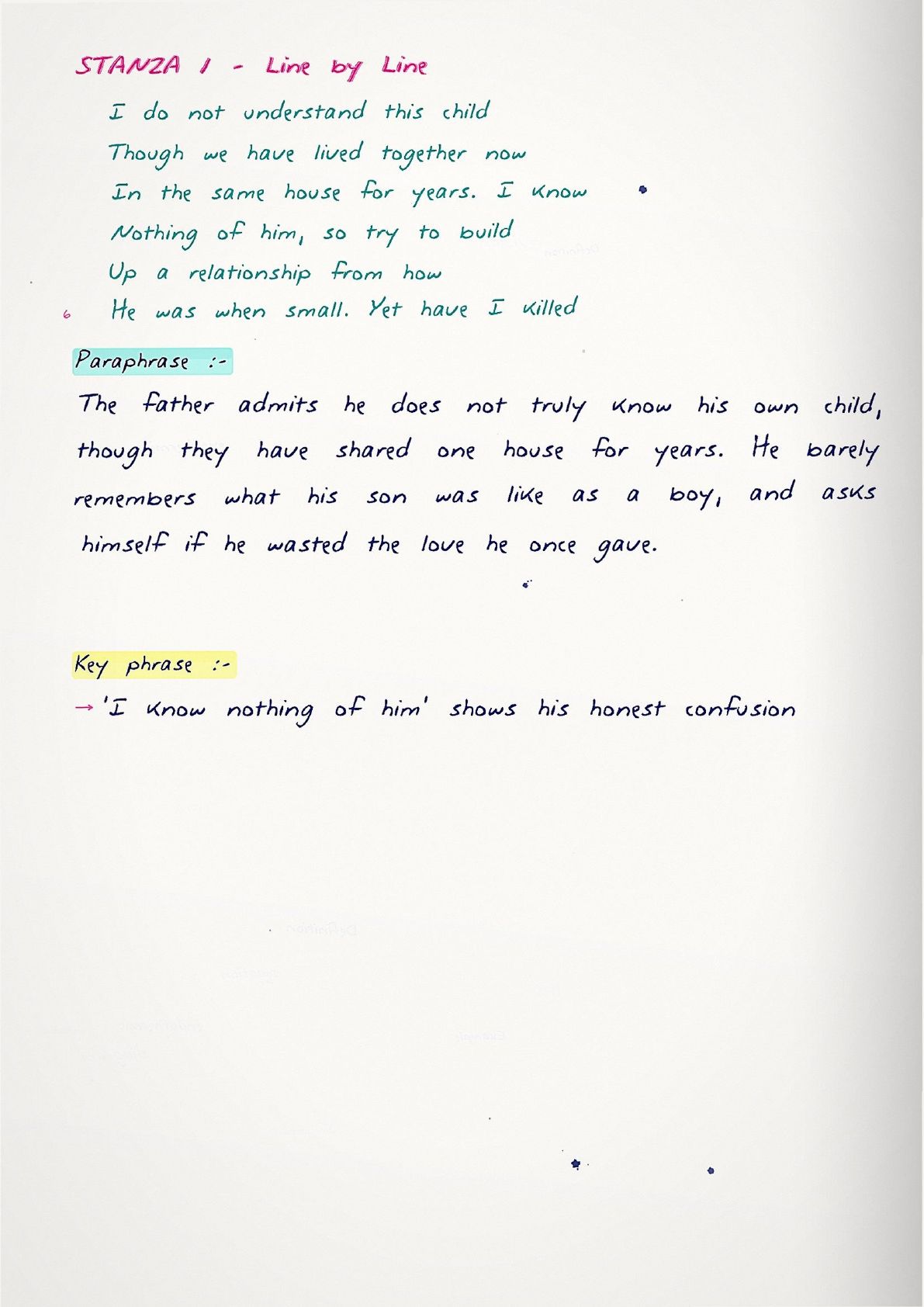
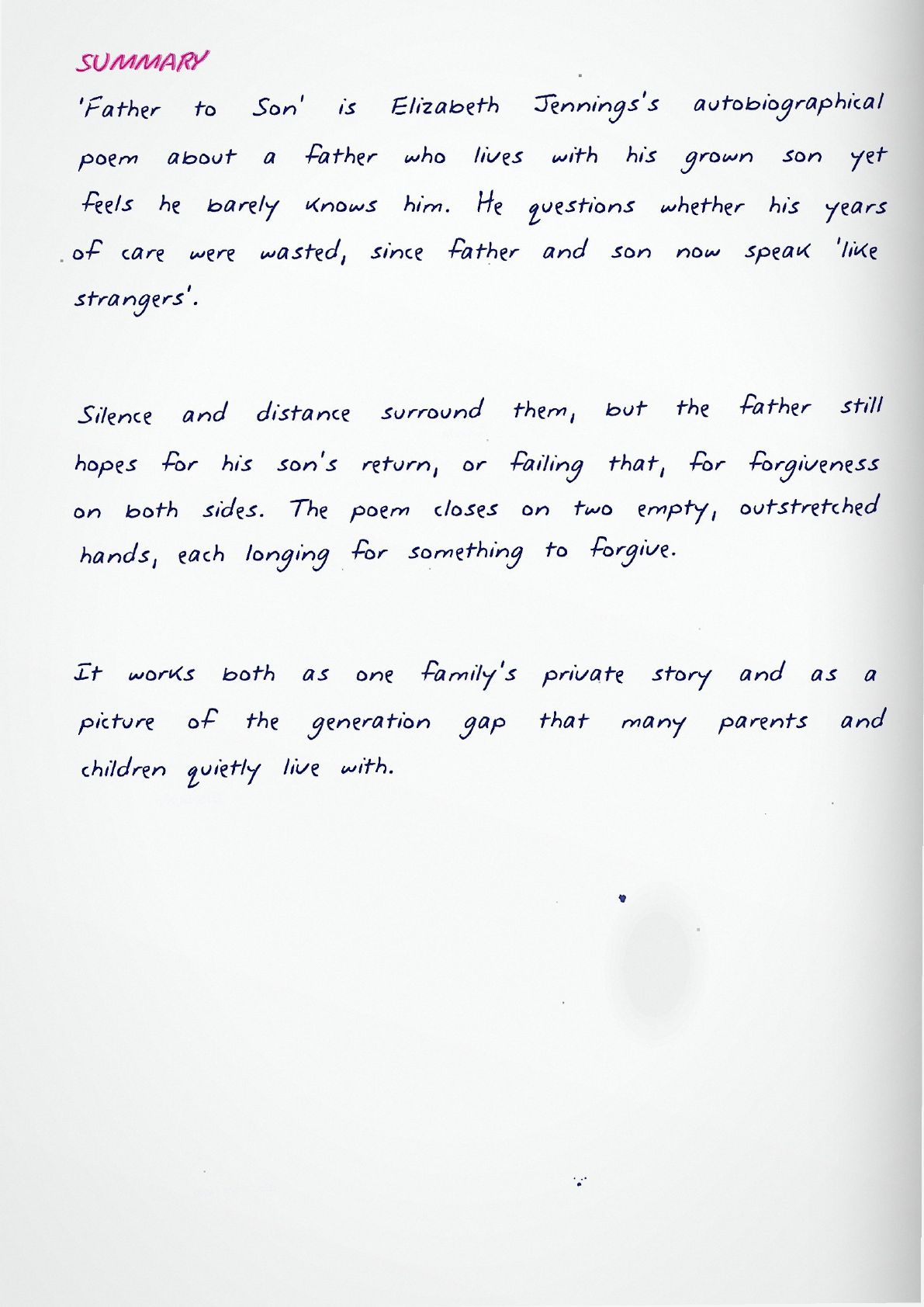
The father admits he does not truly understand his own child, even though they have shared one house for years. He barely remembers his son as a boy and wonders whether the love and effort he once gave were wasted, since his son's life now belongs fully to himself.
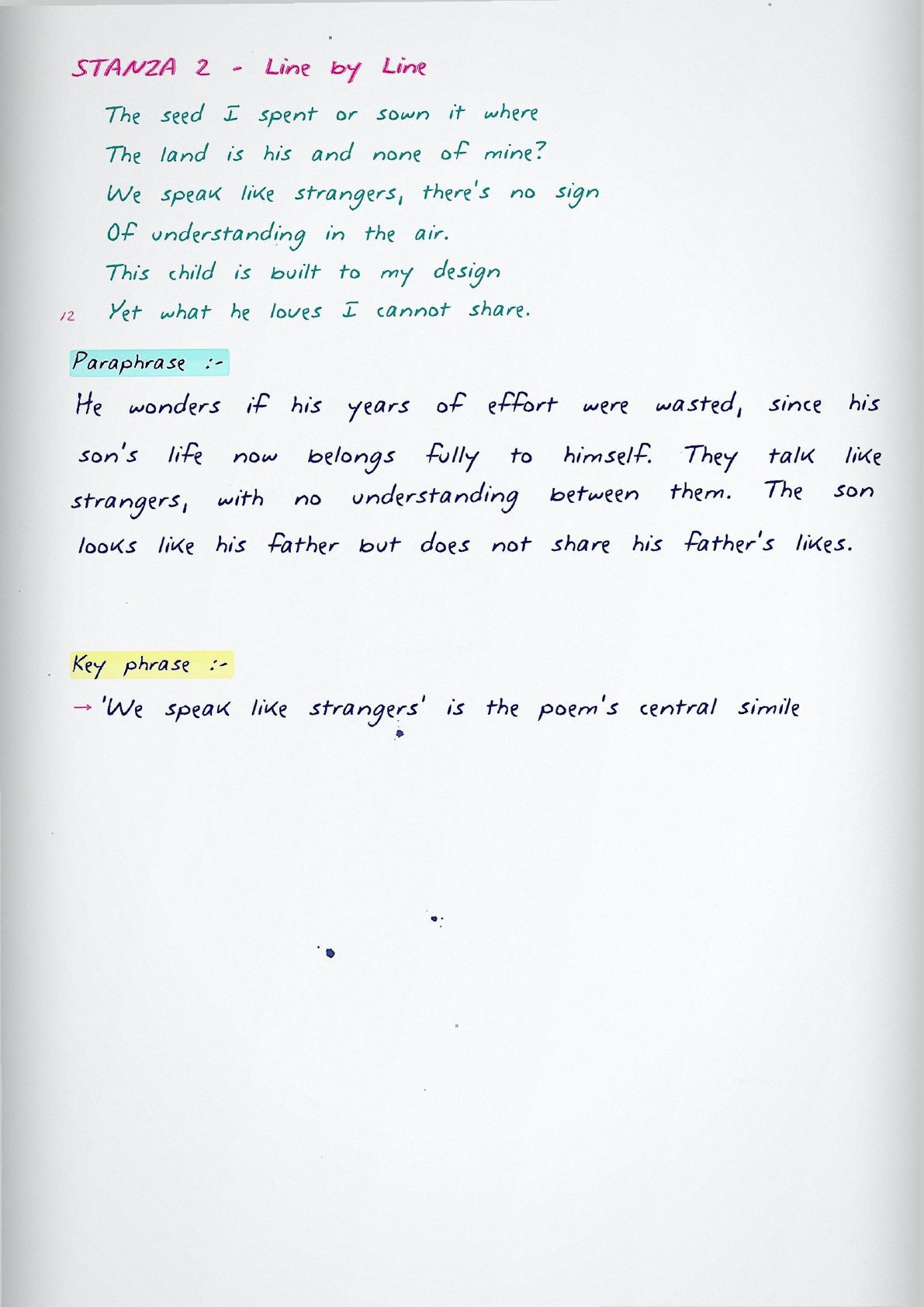
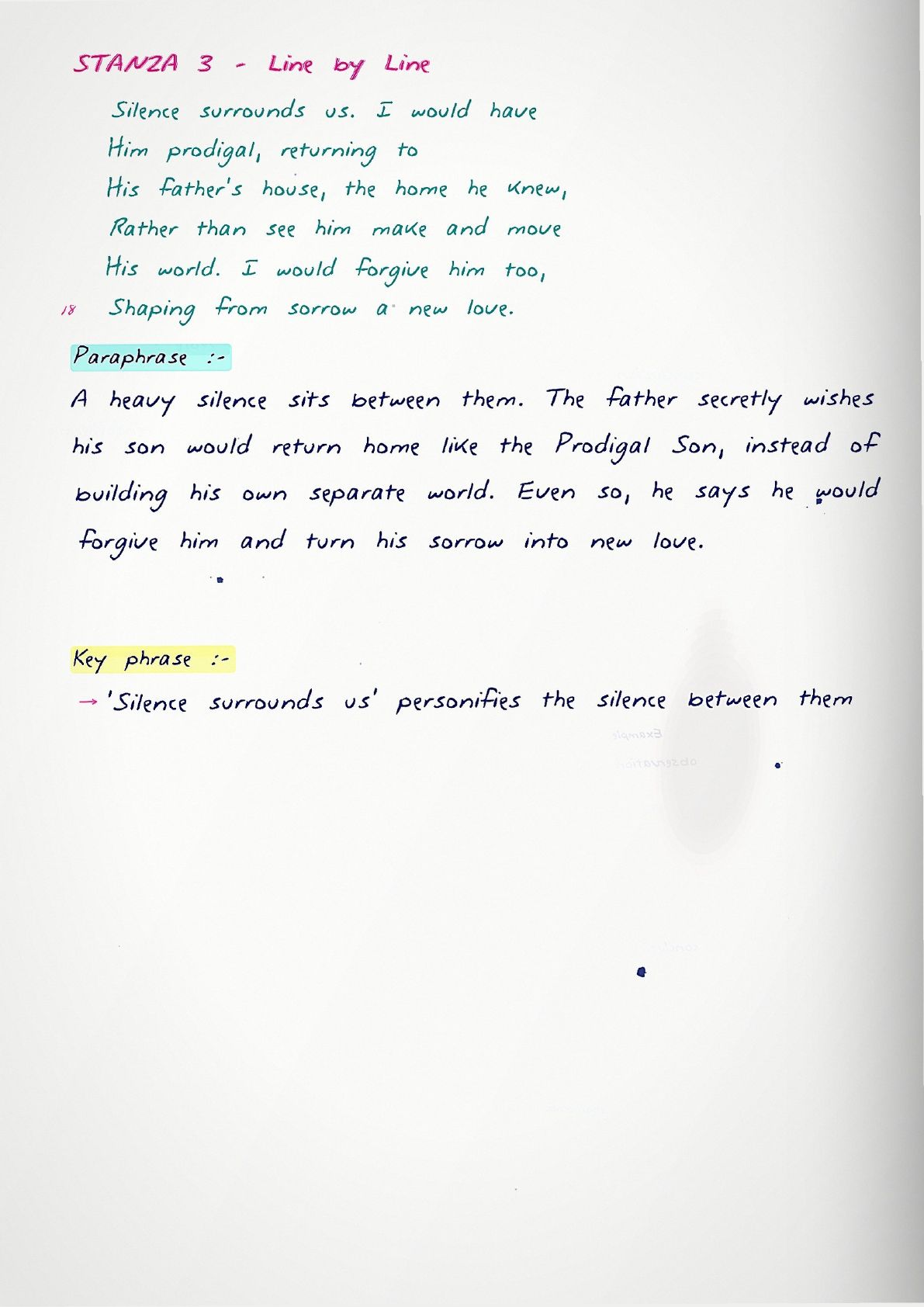
Father and son "speak like strangers", with no real understanding passing between them. A heavy silence surrounds them. The father secretly wishes his son would return home the way the Prodigal Son returns in the Bible, but says he would forgive him either way, turning his sorrow into a new kind of love.
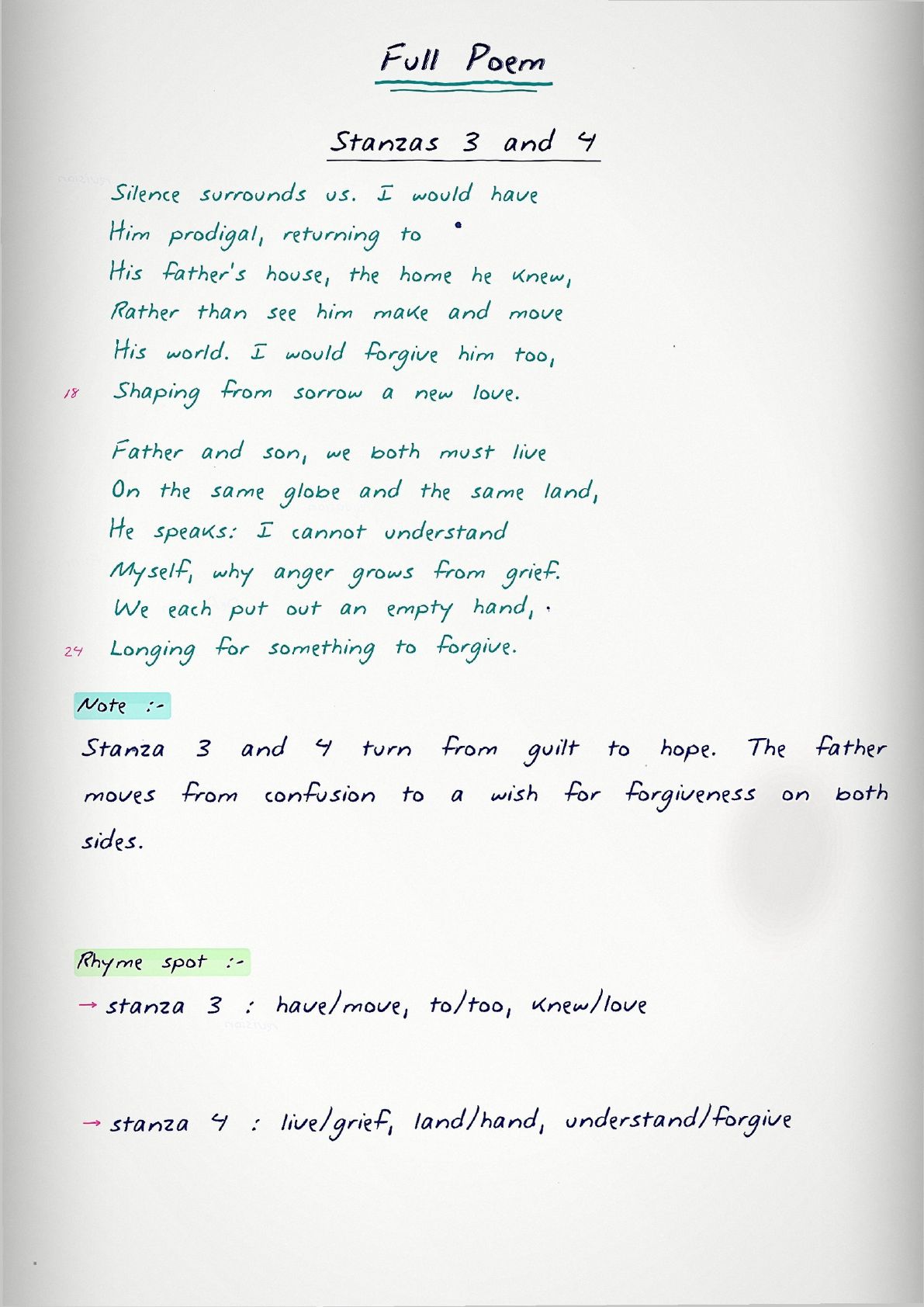
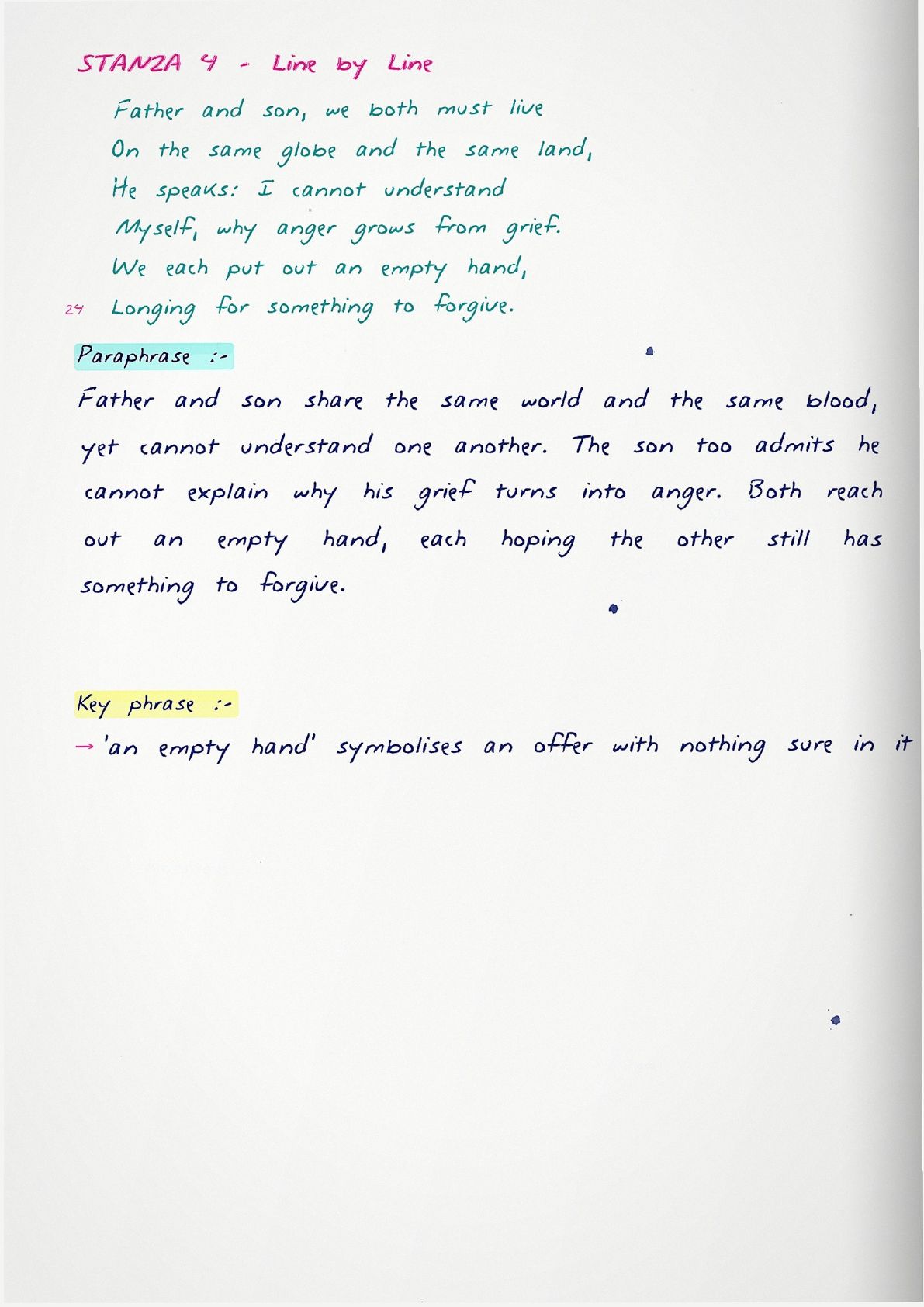
In the final stanza, both father and son admit they cannot fully explain themselves. The son too feels his grief turning into anger he cannot understand. The poem closes with each of them putting out an "empty hand", both longing for something to forgive.
Poetic Devices Used in Father to Son
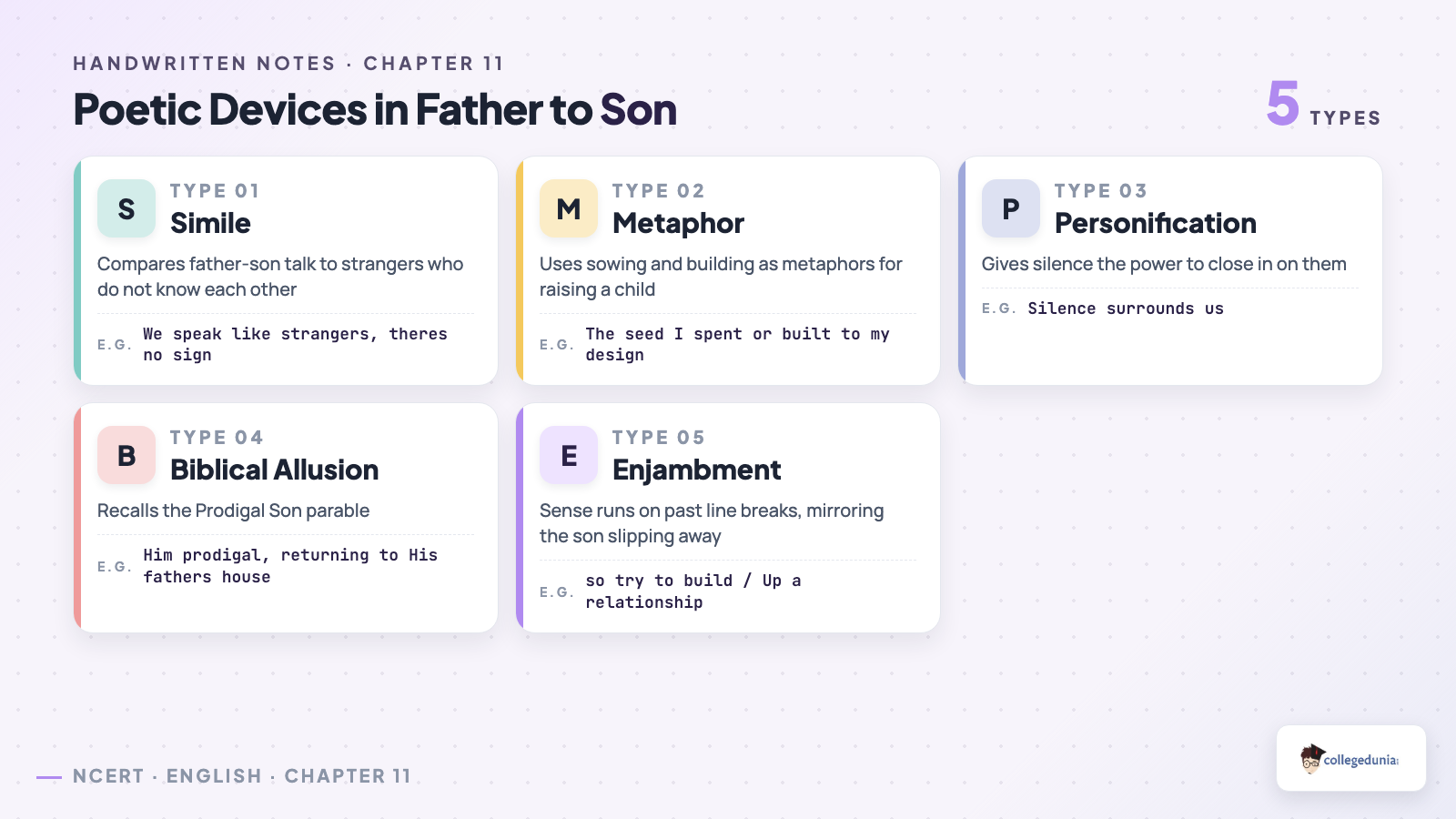
Jennings builds the whole poem around a handful of poetic devices. The table below lists each one with where it appears.
| Poetic Device | Where It Appears | Effect |
|---|---|---|
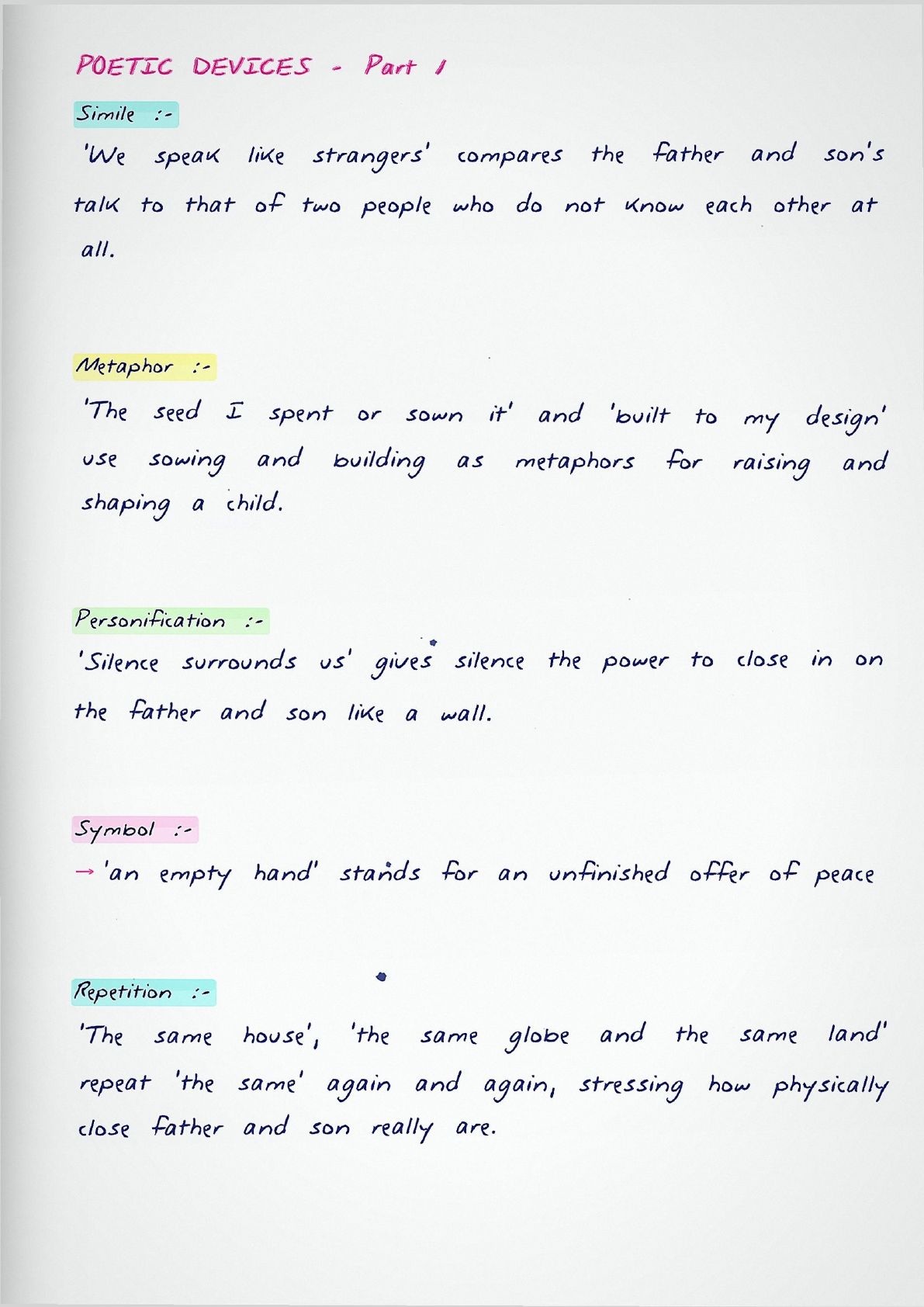
| Simile | "We speak like strangers, there's no sign" | Compares father-son talk to strangers who do not know each other |
| Metaphor | "The seed I spent or sown it" and "built to my design" | Uses sowing and building as metaphors for raising and shaping a child |
| Personification | "Silence surrounds us" | Gives silence the power to close in on father and son like a wall |
| Biblical Allusion | "Him prodigal, returning to His father's house" | Recalls the Prodigal Son parable, a child who leaves and later returns |
| Enjambment | "so try to build / Up a relationship from how / He was when small" | Sense runs on past line breaks, mirroring how the son's story keeps slipping past the father |
Theme and Message of Father to Son
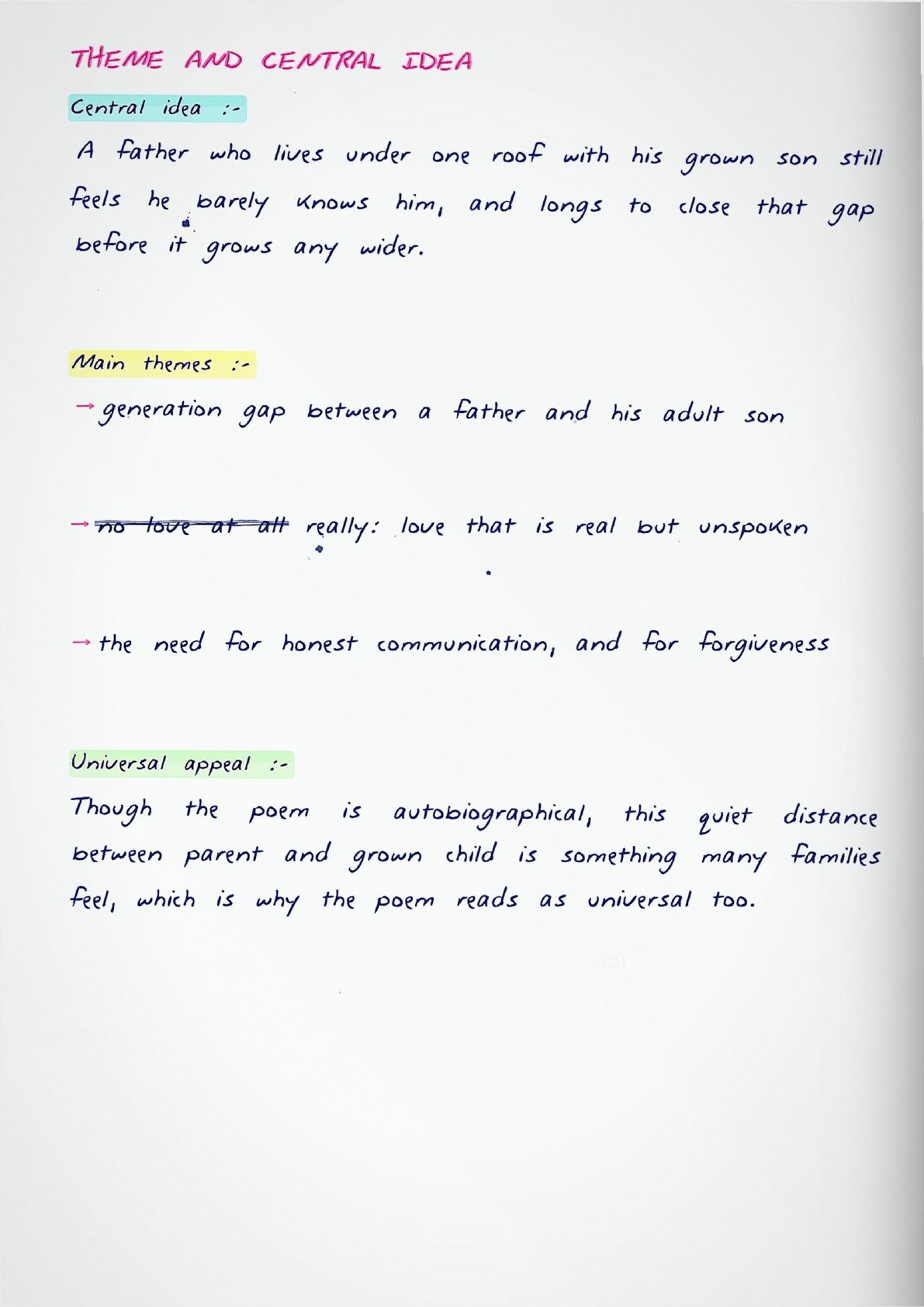
At its core, the poem is about the generation gap between a father and his grown son, and the love that survives underneath it even when it is never spoken aloud. Both live under one roof, share the same blood, and still fail to understand each other.
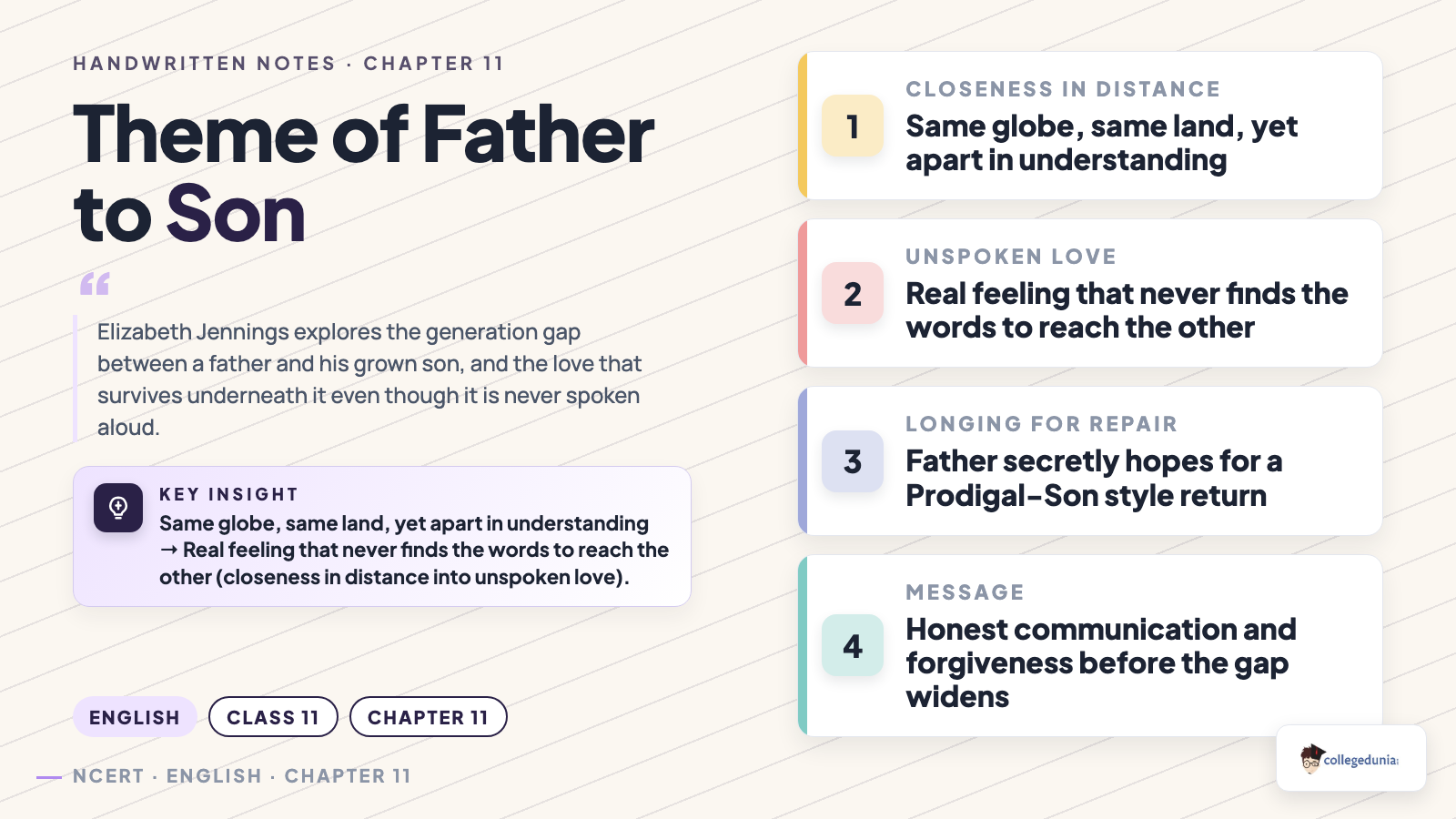
- Closeness in distance: they share "the same globe and the same land" yet remain apart in understanding.
- Love that is real but unspoken, never quite finding the words to reach the other person.
- The need for honest communication and forgiveness before the gap grows any wider.
Word Meanings from Father to Son
A few words and phrases in the poem are unfamiliar even to strong students. This table explains each one in plain English.
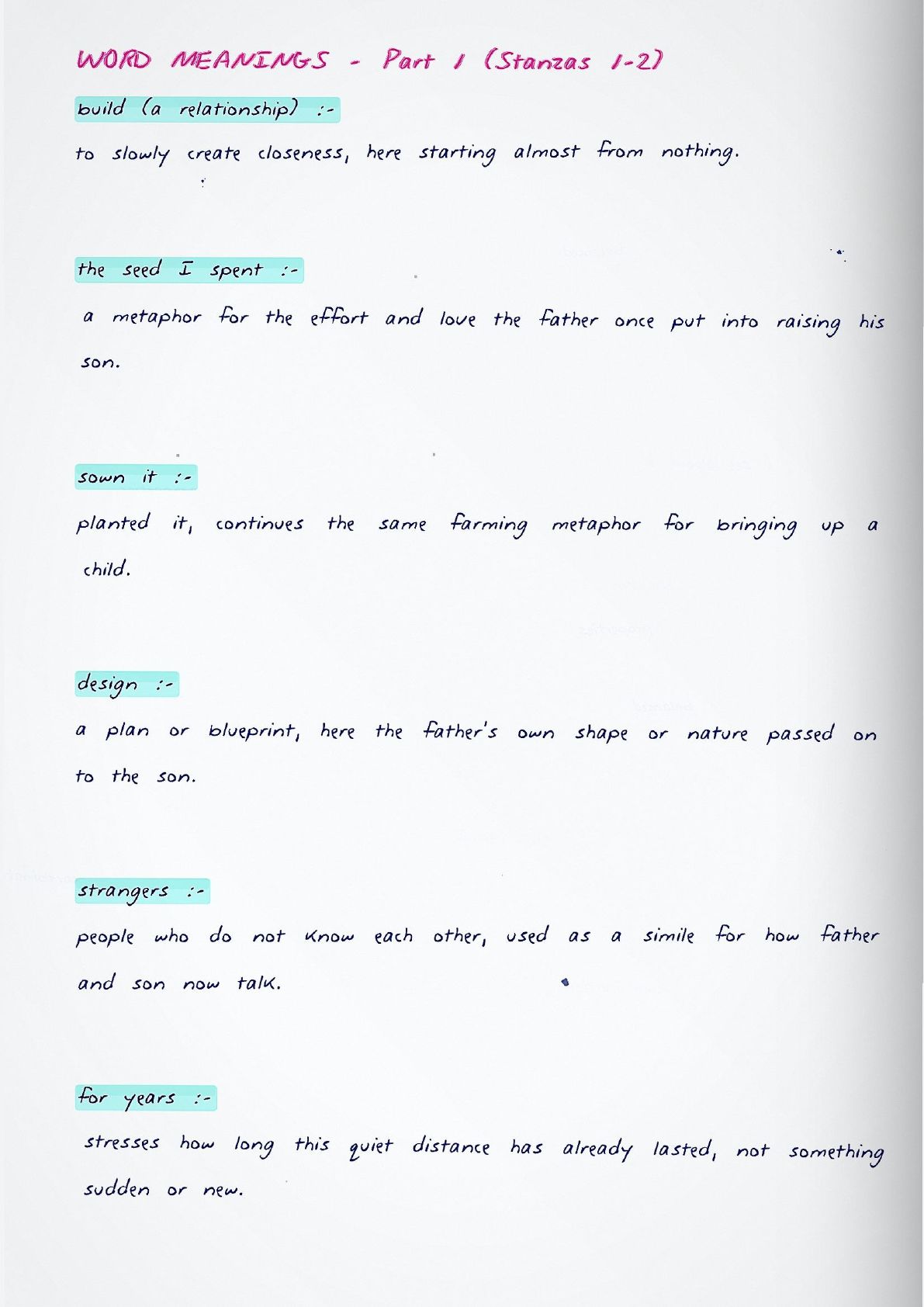
| Word / Phrase | Meaning |
|---|---|
| The seed I spent or sown it | A metaphor for the effort and love the father once put into raising his son |
| Design | A plan or blueprint, here the father's own nature passed on to the son |
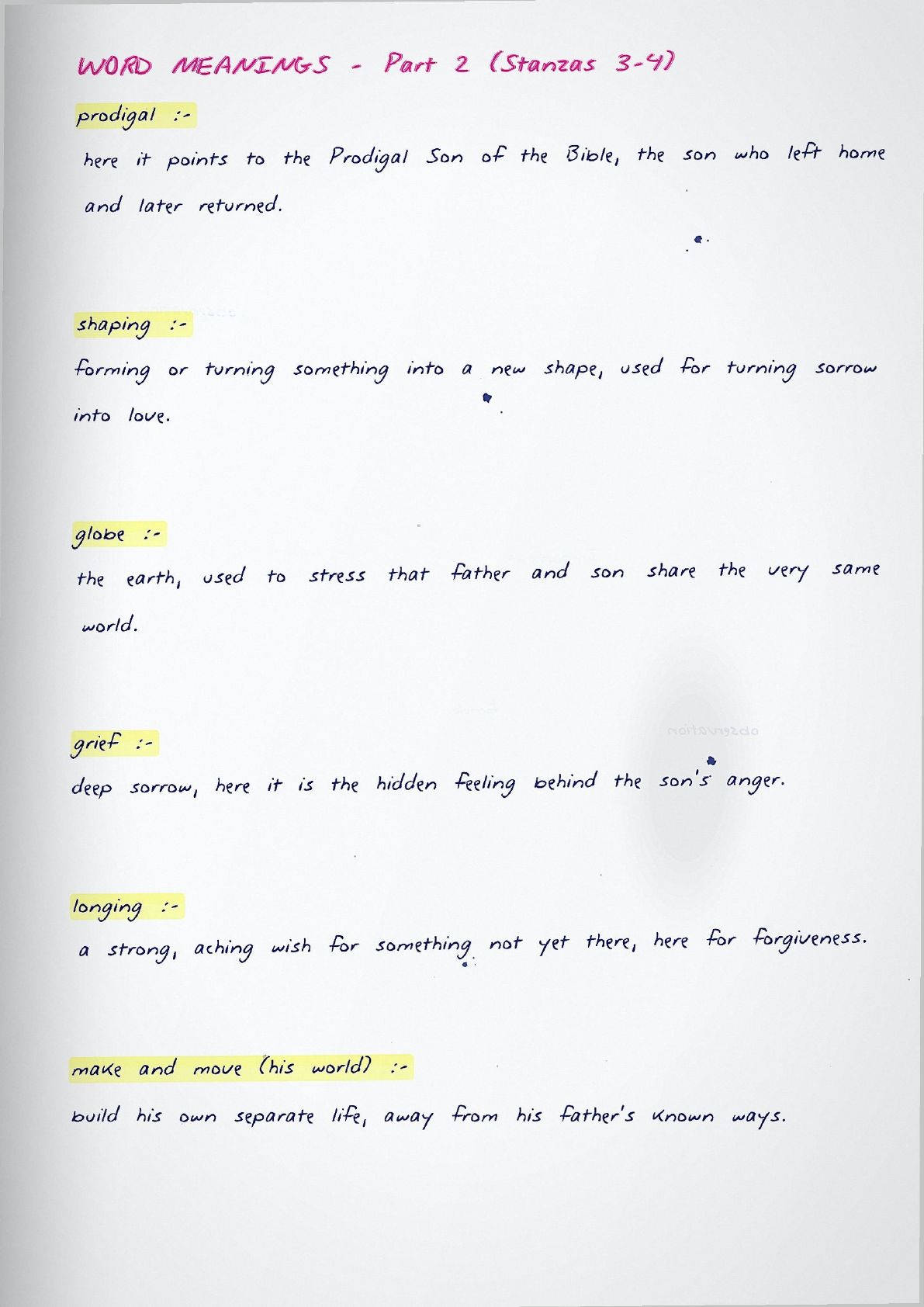
| Prodigal | Points to the Bible's Prodigal Son, who left home and later returned |
| Shaping | Forming something into a new shape, here turning sorrow into love |
| Globe | The earth, stressing that father and son share the very same world |
| Longing | A strong, aching wish for something not yet there, here forgiveness |
Father to Son NCERT Think It Out Questions Covered
The handwritten notes answer every question NCERT sets under "Think It Out" for this chapter.
| NCERT Question | What the Notes Cover |
|---|---|
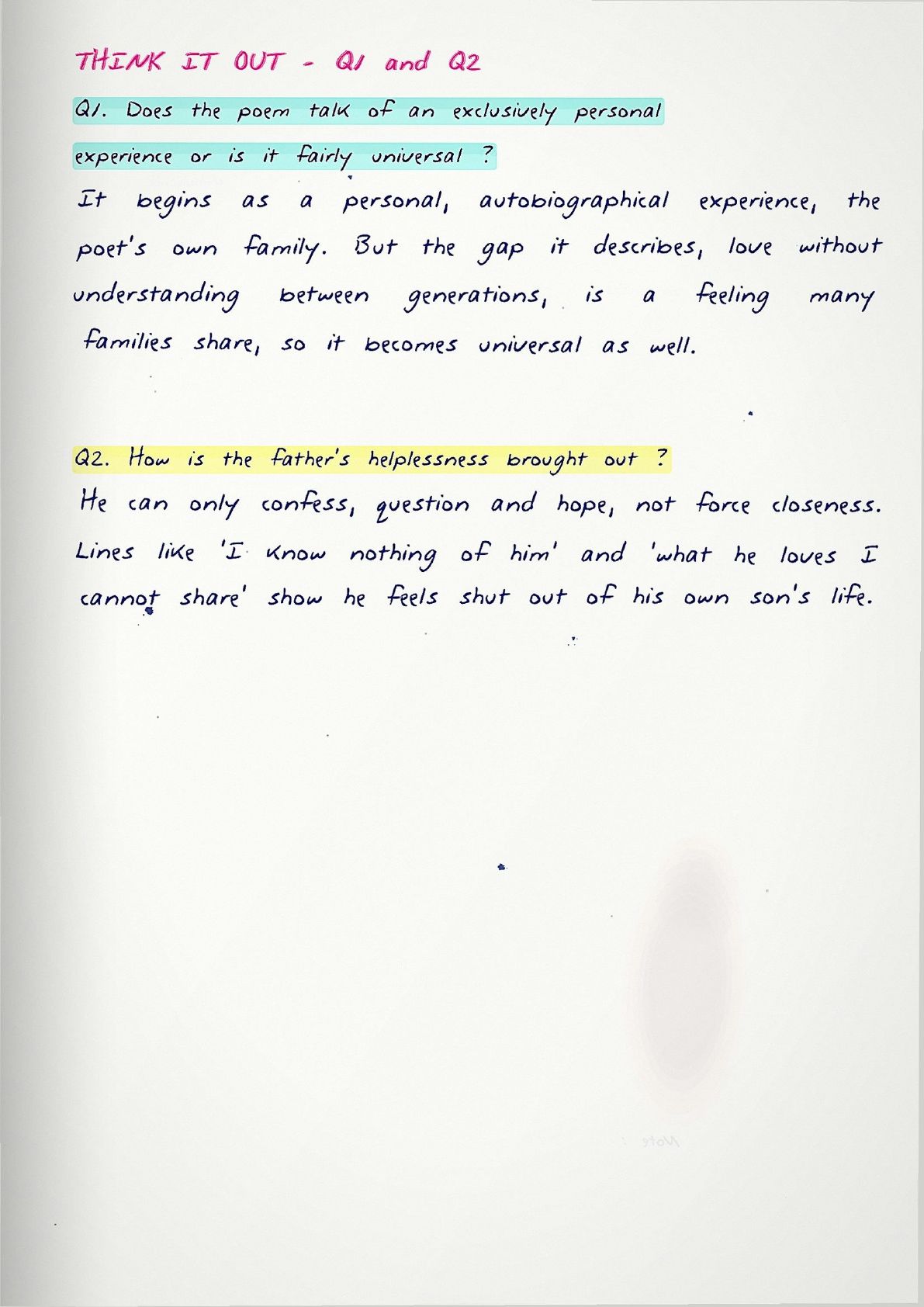
| Does the poem talk of an exclusively personal experience, or is it fairly universal? | Explanation of how a personal, autobiographical family moment reads as a universal generation gap |
| How is the father's helplessness brought out in the poem? | Line-by-line evidence from "I know nothing of him" and "what he loves I cannot share" |
| Identify the phrases and lines that show the son and the father are becoming strangers. | Full list of distance-marking lines with short explanations |
Common Mistakes Students Make While Studying Father to Son
Watch out for these:
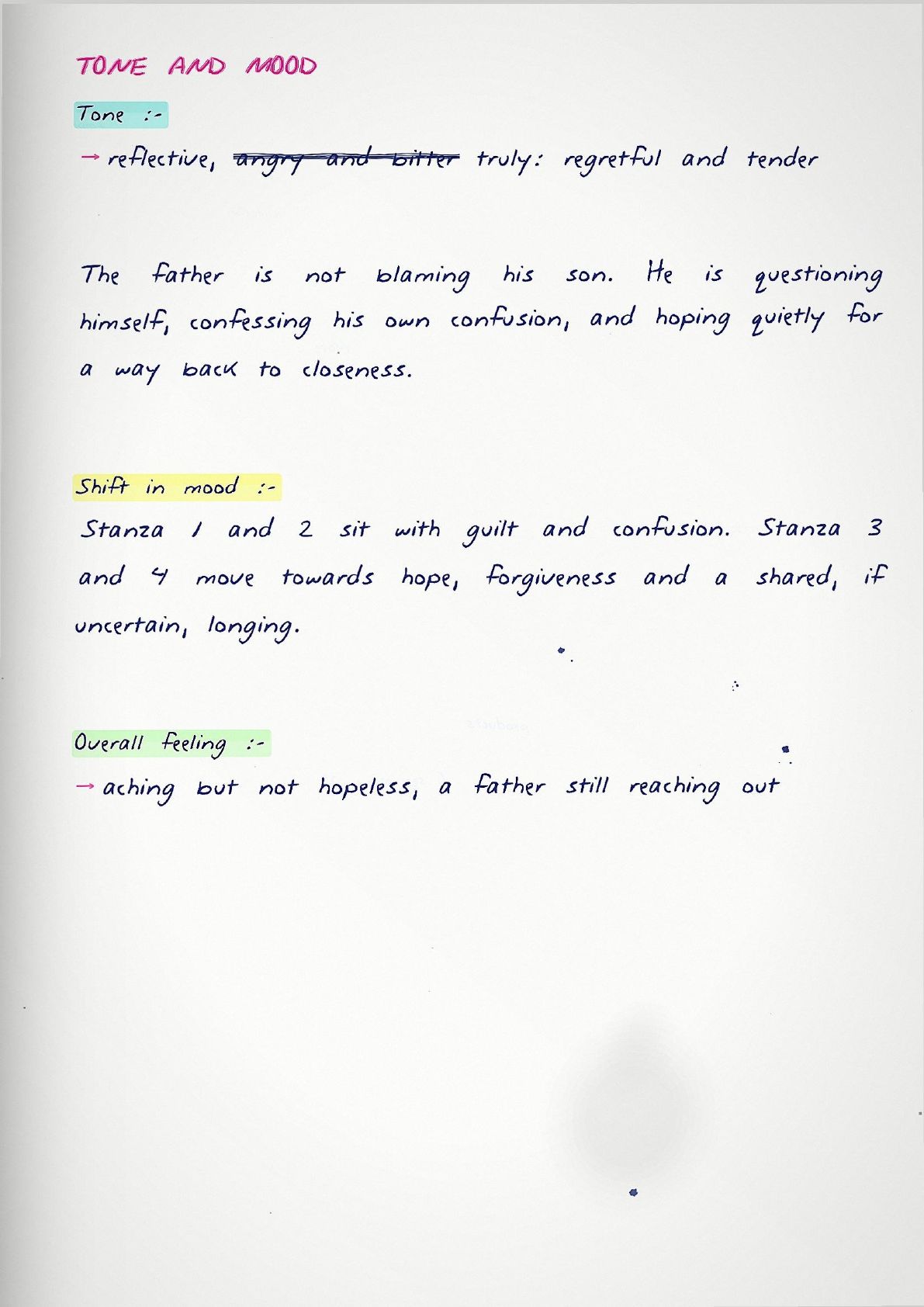
- Calling the father's tone simply "angry" instead of regretful, confused and still hopeful.
- Reading "prodigal" as only meaning "wasteful with money" instead of the Biblical allusion NCERT expects.
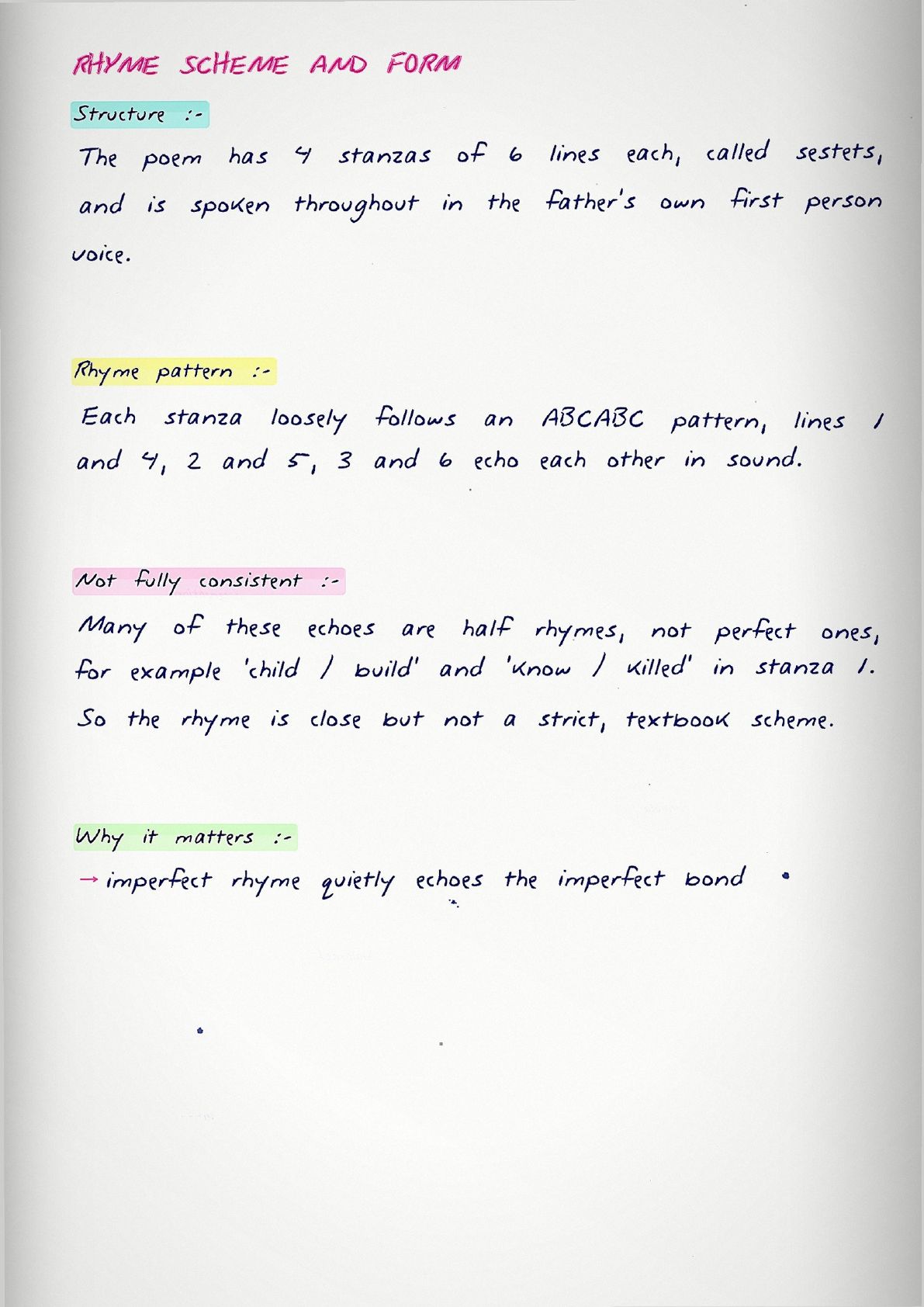
- Claiming the poem has a perfect rhyme scheme when most rhymes in each stanza are half rhymes.
Getting the father's tone and the biblical allusion wrong costs marks on reference-to-context questions every year.
Student Feedback: In a Collegedunia survey of 10,860 Class 11 students conducted before the 2026 boards, 71% said explaining the "empty hand" symbol in their own words was the hardest part of Father to Son.
Source: 2026-27 Class 11 English student poll. Sample of 10,860 students from CBSE schools across 13 states.
How These Handwritten Notes Help You Revise Father to Son
The notes are built to be read once, right before the exam, without needing the full textbook open beside you.
- Full Poem Text: all four stanzas are copied out by hand for quick reading.
- Stanza-by-Stanza Paraphrase: every stanza is explained in plain words next to the original lines.
- Poetic Devices Marked: simile, metaphor, personification and the biblical allusion are labelled where they occur.
- NCERT Answers Included: all "Think It Out" questions are answered in full.
Father to Son Rhyme Scheme, Form and Tone
Father to Son is written as four sestets (six-line stanzas), each loosely following an ABCABC rhyme pattern. Most of these rhymes are half rhymes rather than perfect ones, which quietly echoes the imperfect bond between father and son.
| Stanza | Rhyme Pair Examples | Tone in This Stanza |
|---|---|---|
| Stanza 1 | child/build, now/how, know/killed | Confused, questioning his own past |
| Stanza 2 | where/air, mine/sign, design/share | Distant, "like strangers" |
| Stanza 3 | have/move, to/too, knew/love | Turning towards hope and forgiveness |
| Stanza 4 | live/grief, land/hand, understand/forgive | Reaching out, longing for closeness |
Cross-Resource Study Material for Father to Son
These handwritten notes work best alongside the other Class 11 English Hornbill Chapter 11 resources for the 2026-27 session.
| Resource | Status |
|---|---|
| Father to Son Handwritten Notes | Live on this page |
| Father to Son NCERT Solutions | Read the Solutions |
| Father to Son Notes | Coming soon (coming soon) |
| Class 11 English NCERT Book PDF | Read the Book PDF |
NCERT Handwritten Notes for Class 11 English Hornbill: All Chapters
Use this table to find handwritten notes for the rest of the Hornbill chapters as Collegedunia adds them through the 2026-27 session.
| Chapter | Resource |
|---|---|
| Chapter 8 | The Laburnum Top Handwritten Notes (coming soon) |
| Chapter 9 | The Voice of the Rain Handwritten Notes (coming soon) |
| Chapter 10 | Childhood Handwritten Notes (coming soon) |
| Chapter 11 | Father to Son Handwritten Notes |
| Chapter 12 | Note-making Handwritten Notes (coming soon) |
Also Check: in the printed Hornbill textbook, Father to Son sits right after the prose Chapter 6, Silk Road. Students revising this poem often pair it with that chapter's own resources below.
| Chapter 6, Silk Road | Best used for | Open it |
|---|---|---|
| Class 11 English Hornbill Handwritten Notes | Handwritten revision notes for the prose chapter printed alongside this poem | Silk Road Class 11 Handwritten Notes |
| Class 11 English Hornbill Notes | Typed revision notes for Silk Road | Silk Road Class 11 Notes (coming soon) |
| Class 11 English Hornbill Solutions | Full worked solutions for Silk Road | Silk Road Class 11 Solutions (coming soon) |
Father to Son Class 11 English Handwritten Notes FAQs
Ques. Where can I download Father to Son Class 11 English Handwritten Notes PDF?
Ans. You can download Father to Son Class 11 English Handwritten Notes PDF directly from this page. Both the Normal and HD versions are available, and both are free.
Ques. Who wrote Father to Son?
Ans. Father to Son was written by Elizabeth Jennings, an English poet. NCERT describes the poem as autobiographical, based on the poet's own family experience.
Ques. What is the central theme of Father to Son?
Ans. The poem is about the generation gap between a father and his grown son, and the love that stays real between them even though it is never openly spoken.
Ques. Is this Handwritten Notes PDF aligned with the 2026-27 NCERT?
Ans. Yes. This page reflects the current 2026-27 syllabus for Class 11 English Hornbill. Father to Son is unchanged in the rationalised syllabus.
Ques. How many pages is the Class 11th English Hornbill Chapter 11 Handwritten Notes PDF?
Ans. The Handwritten Notes PDF runs 23 pages and covers the full poem text, a stanza-by-stanza paraphrase, poetic devices, word meanings, the theme, and NCERT's "Think It Out" answers.
Ques. What does the "empty hand" in the last line of Father to Son symbolise?
Ans. The empty hand stands for an unfinished offer of peace. Both father and son reach out with nothing certain in hand, each hoping the other still has something to forgive.
Ques. Does Father to Son have a fixed rhyme scheme?
Ans. Not fully. Each stanza loosely follows an ABCABC pattern, but many of the rhymes are half rhymes rather than perfect ones.



Comments