




Questions from Class 11 Economics Chapter 11 Liberalisation, Privatisation and Globalisation: An Appraisal come up often in the CBSE Class 11 exam. These class 11 economics handwritten notes chapter 11 Liberalisation, Privatisation and Globalisation: An Appraisal follow the 2026-27 NCERT and cover the 1991 balance of payments crisis, new economic policy and its two measures, liberalisation and industrial.
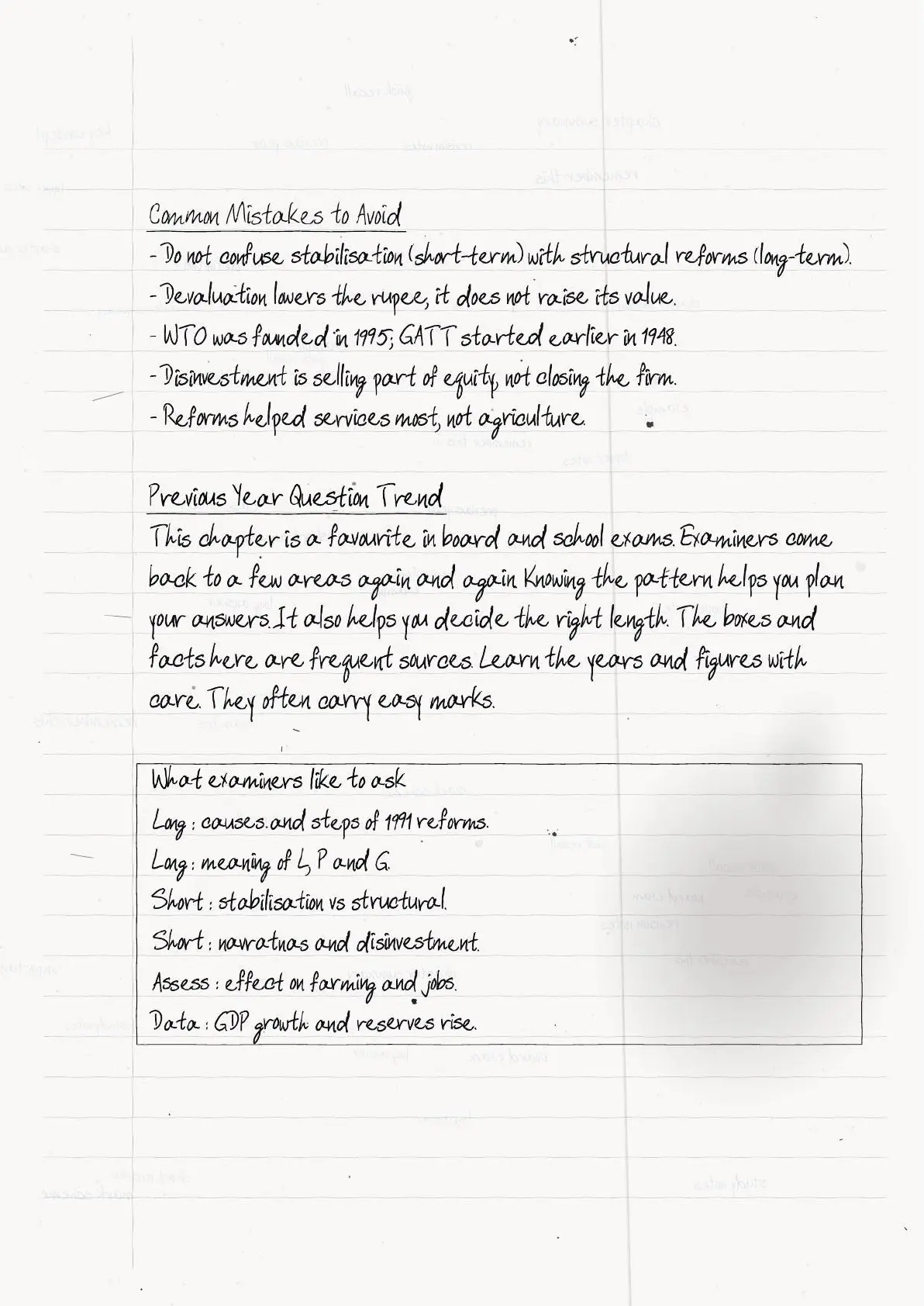
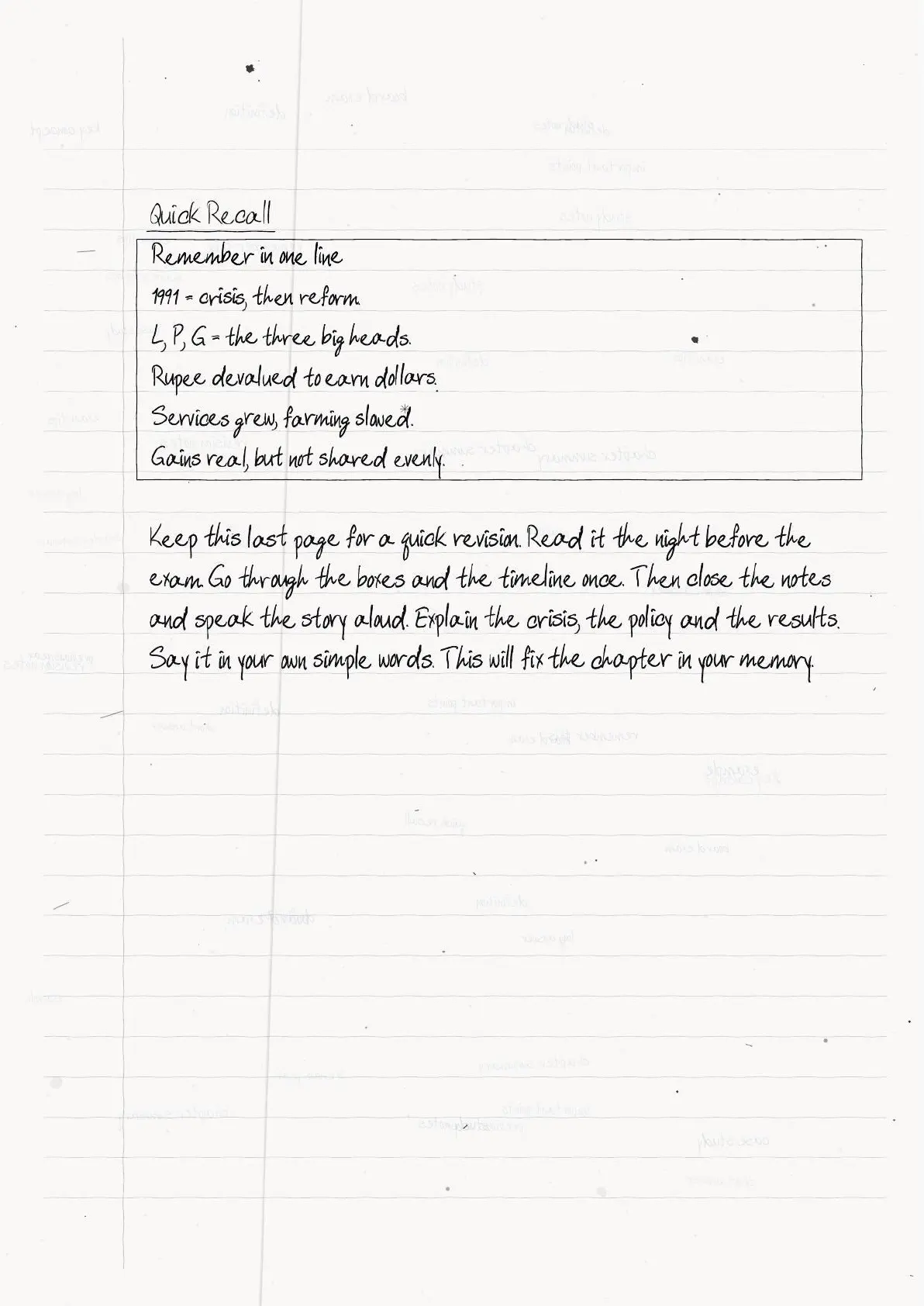
- CBSE Class 11 Weightage: a scoring chapter in the Economics paper, asked in short and long answers.
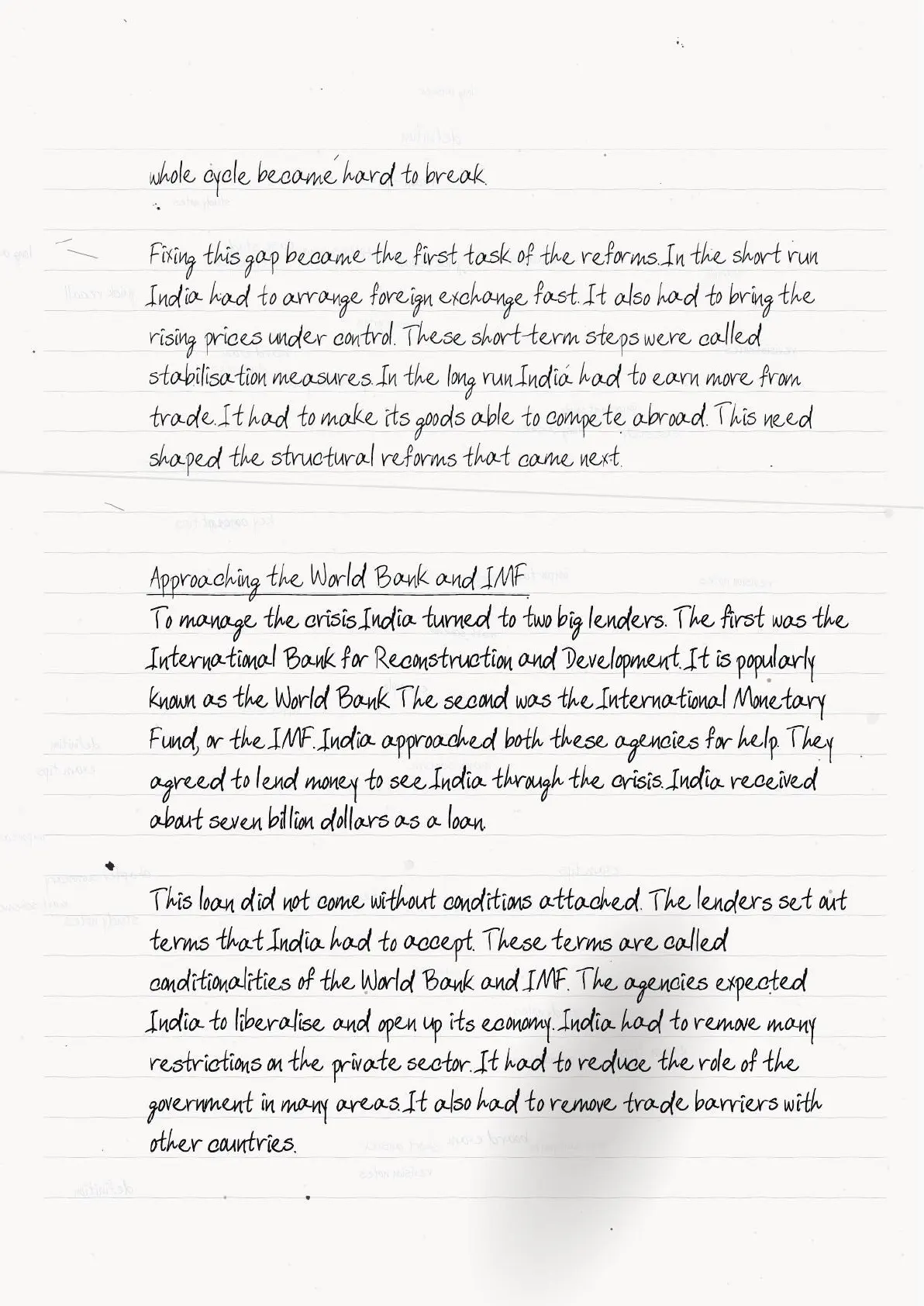
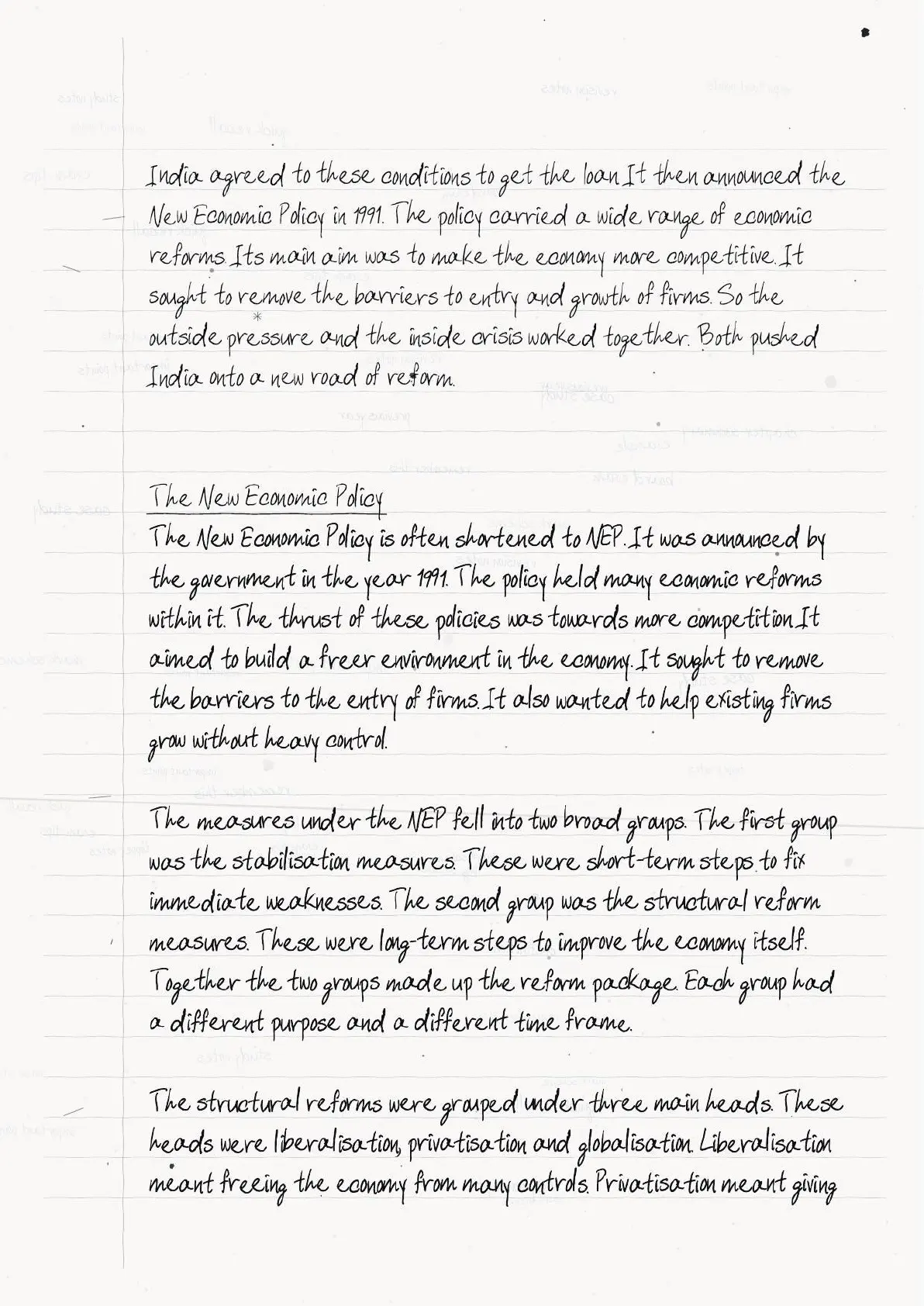
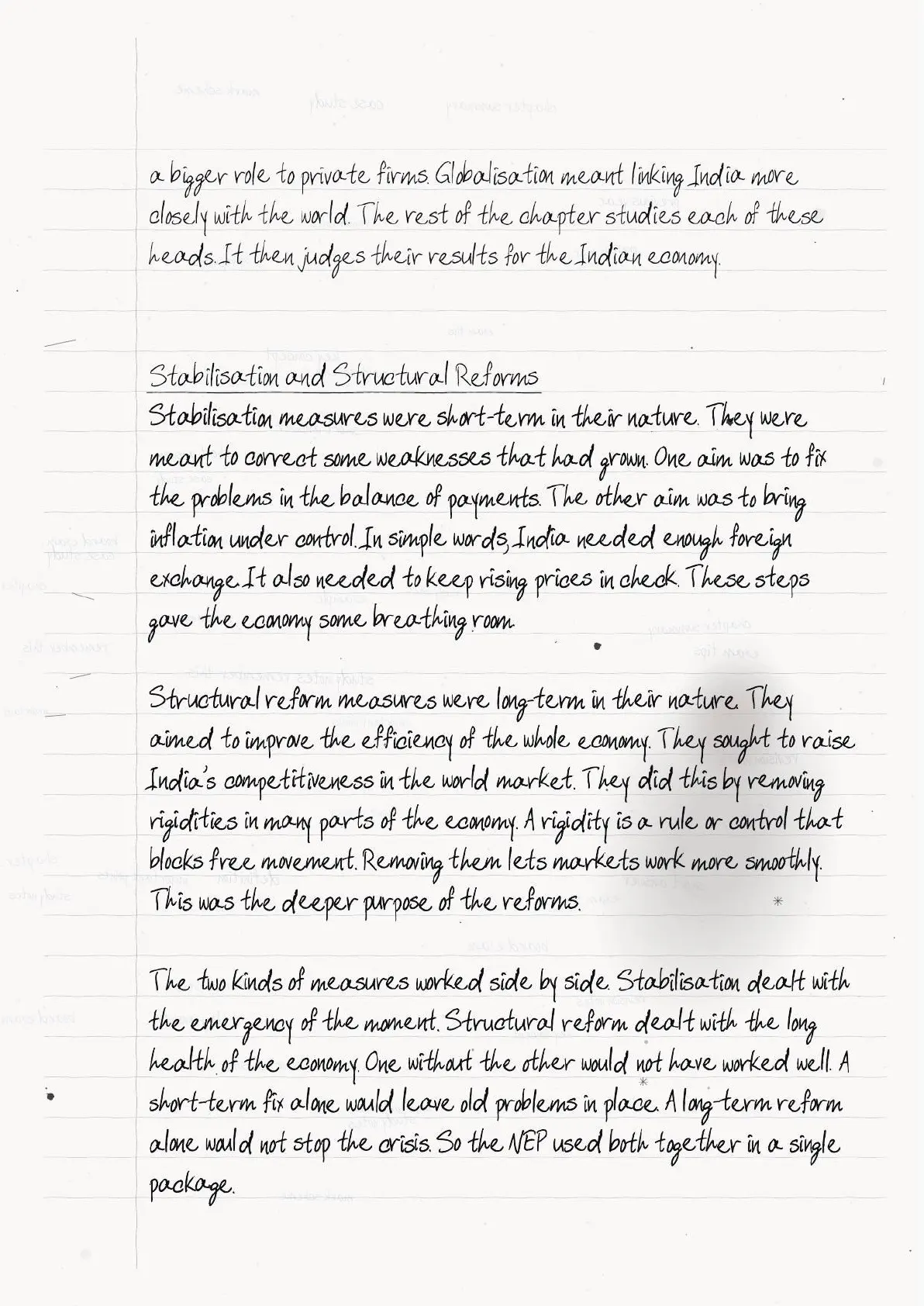
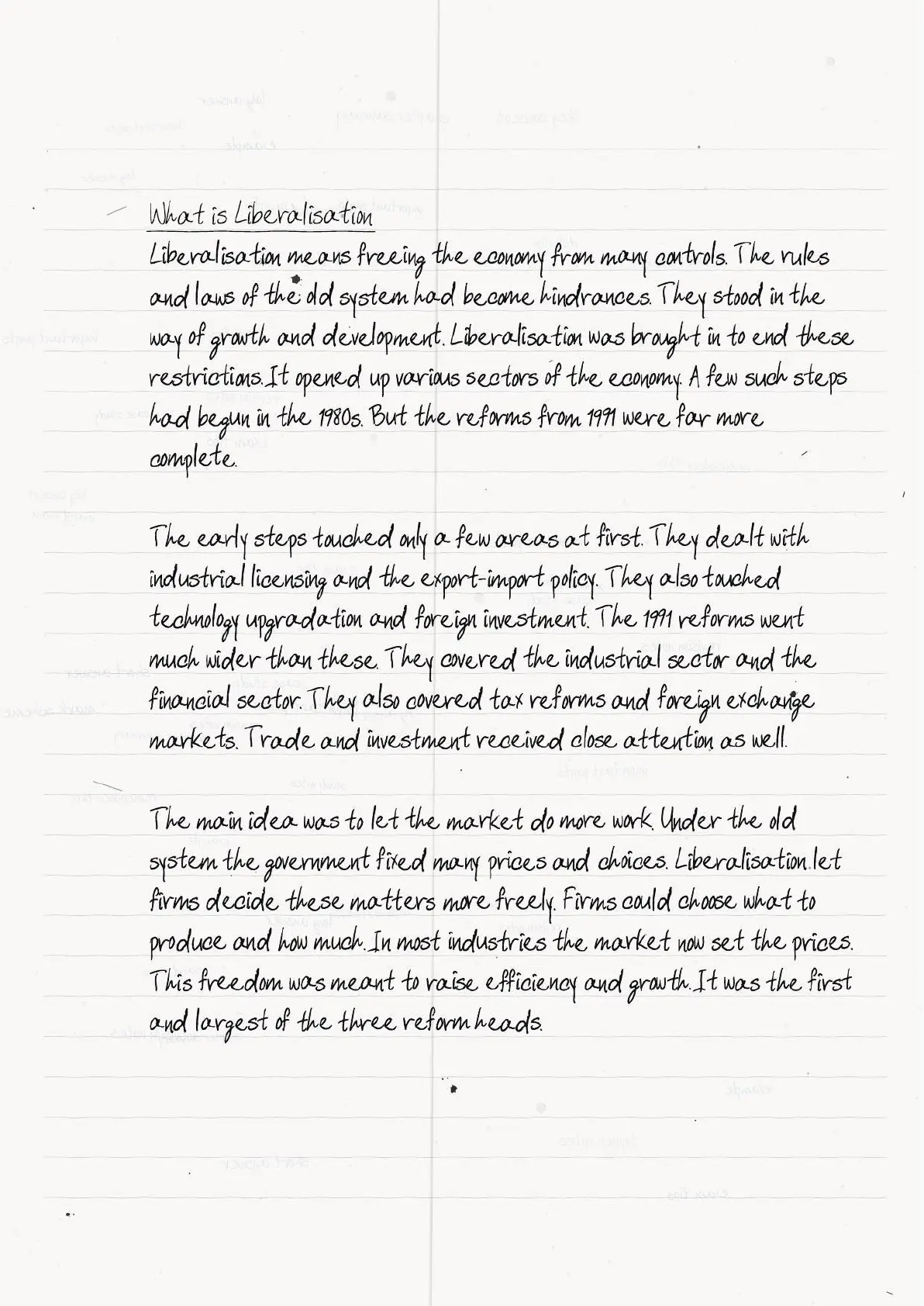
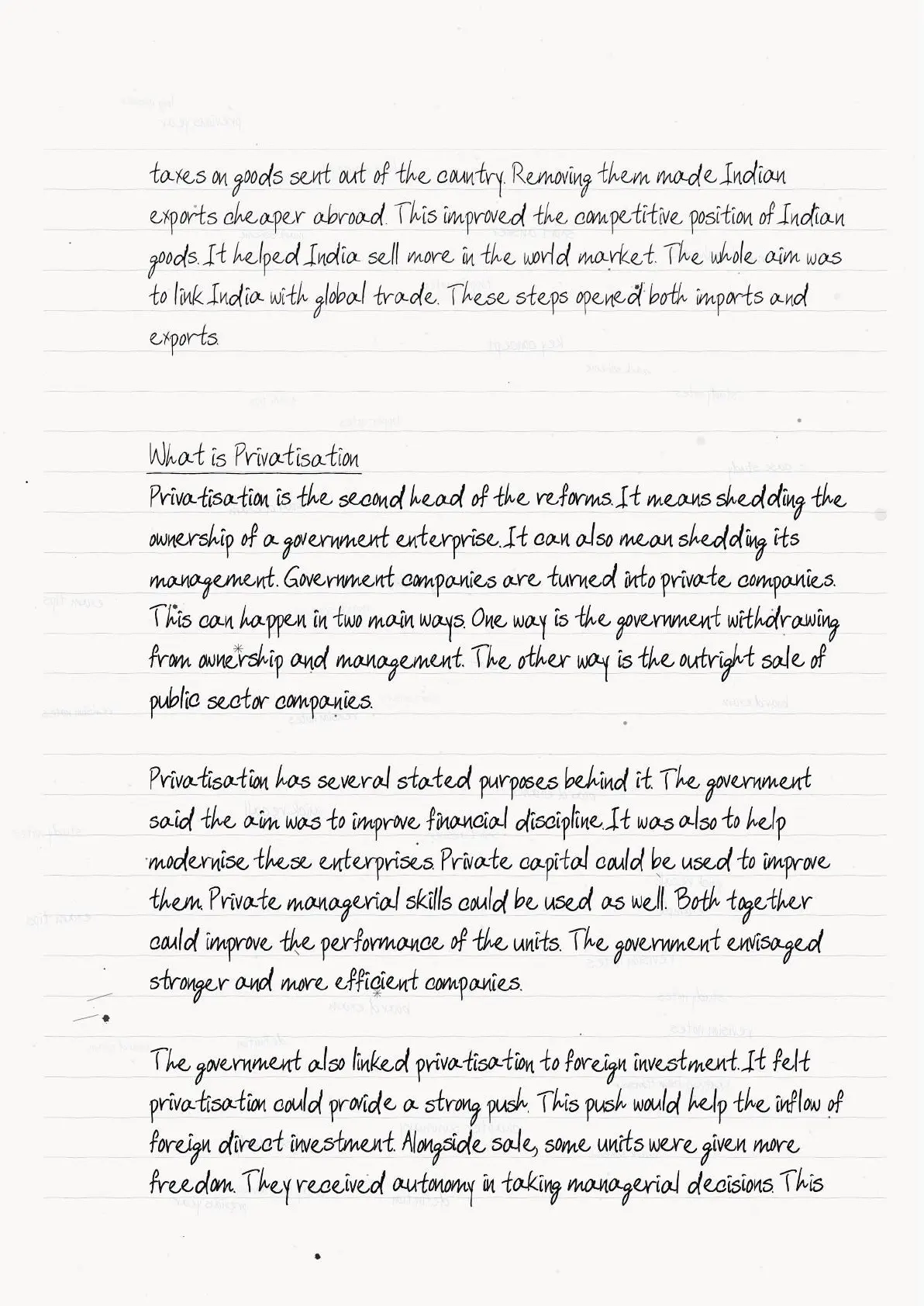
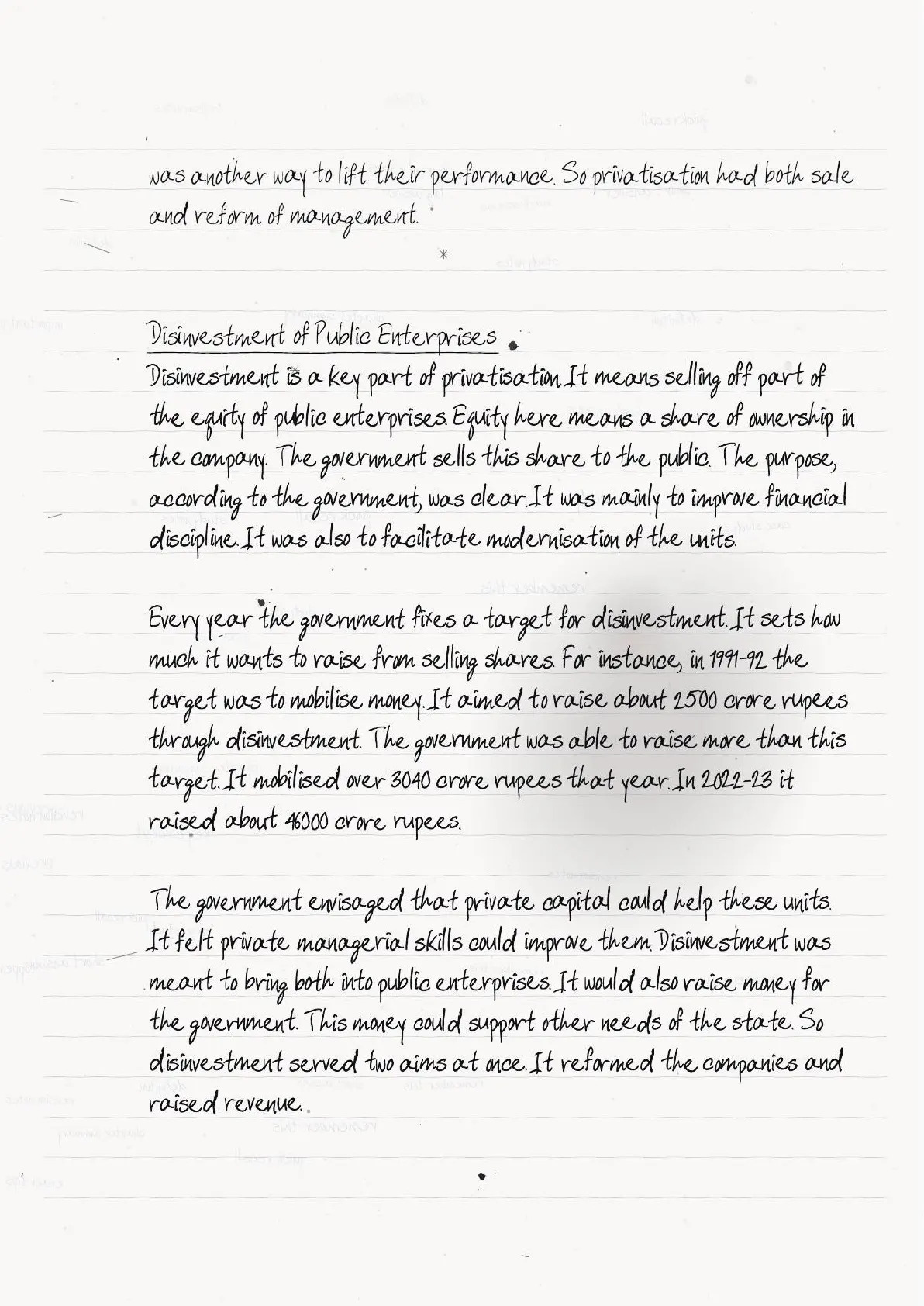
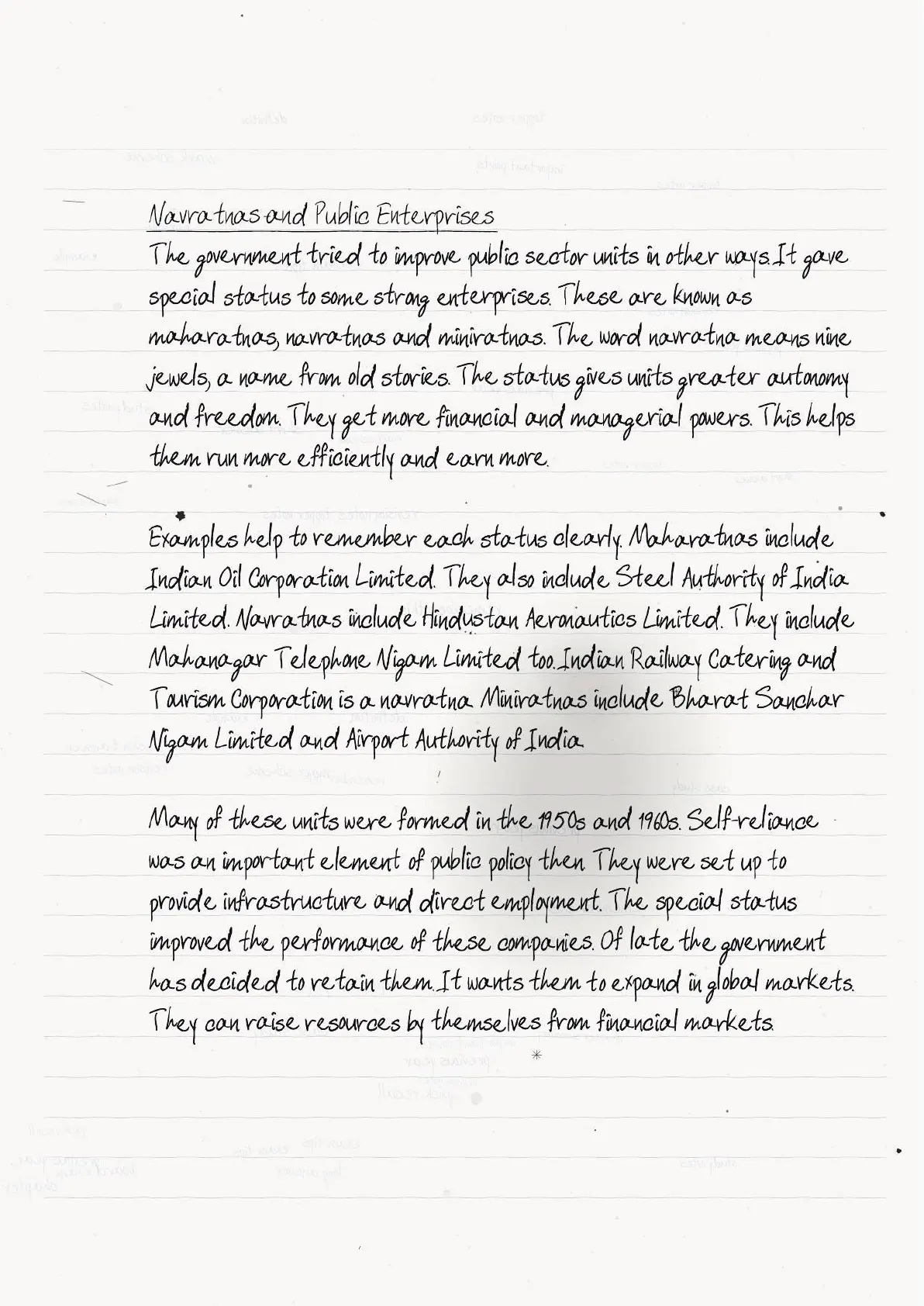
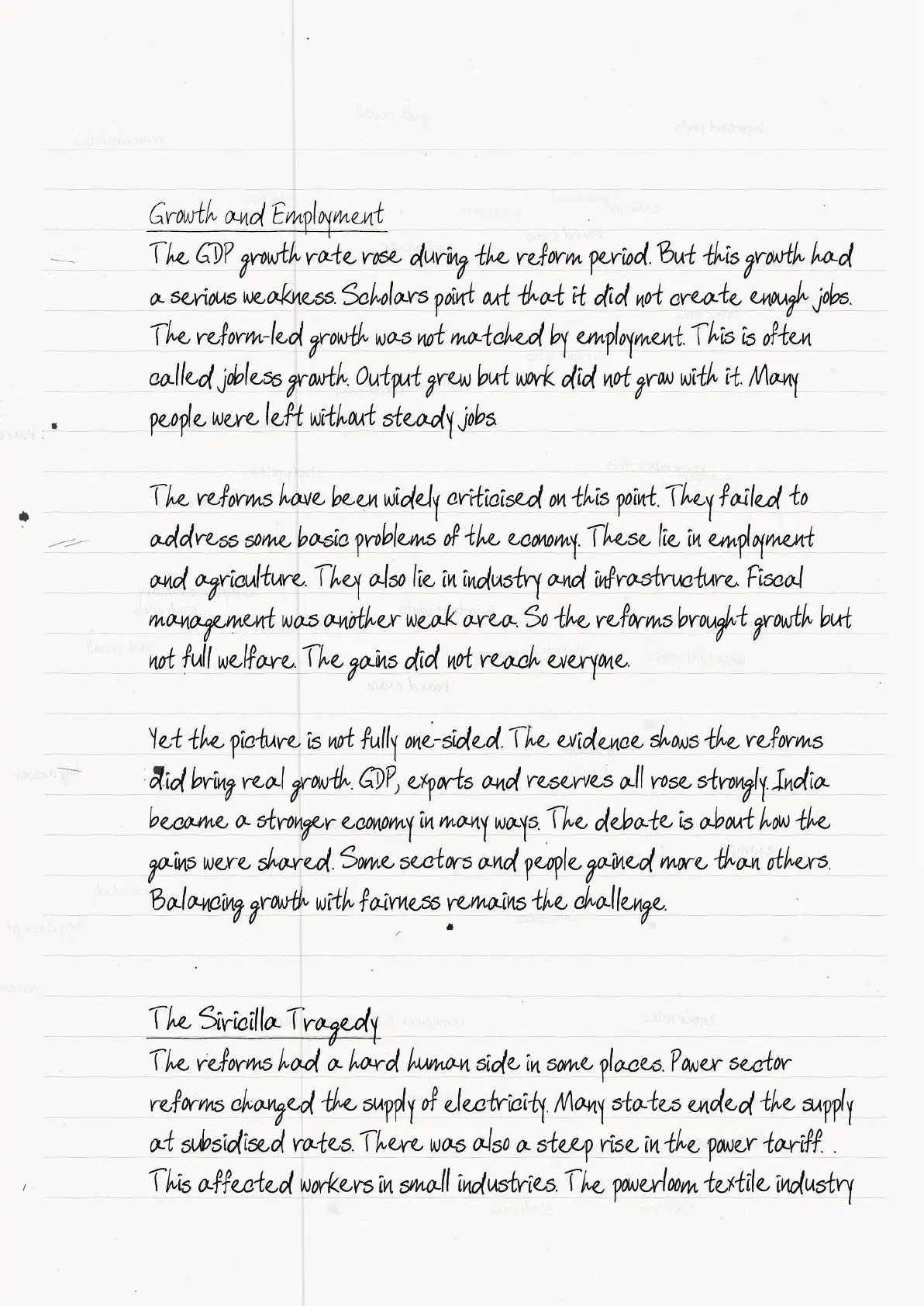
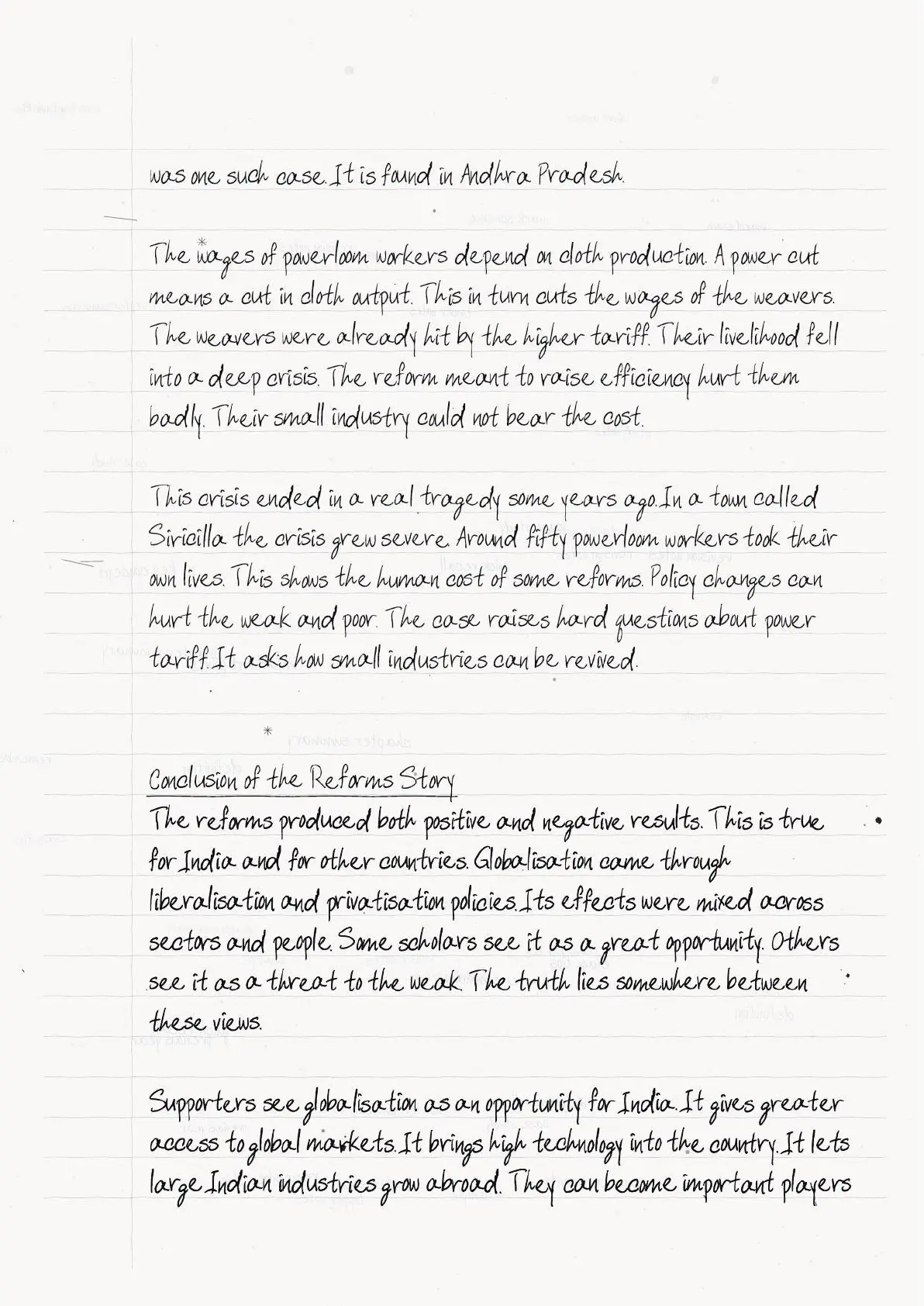
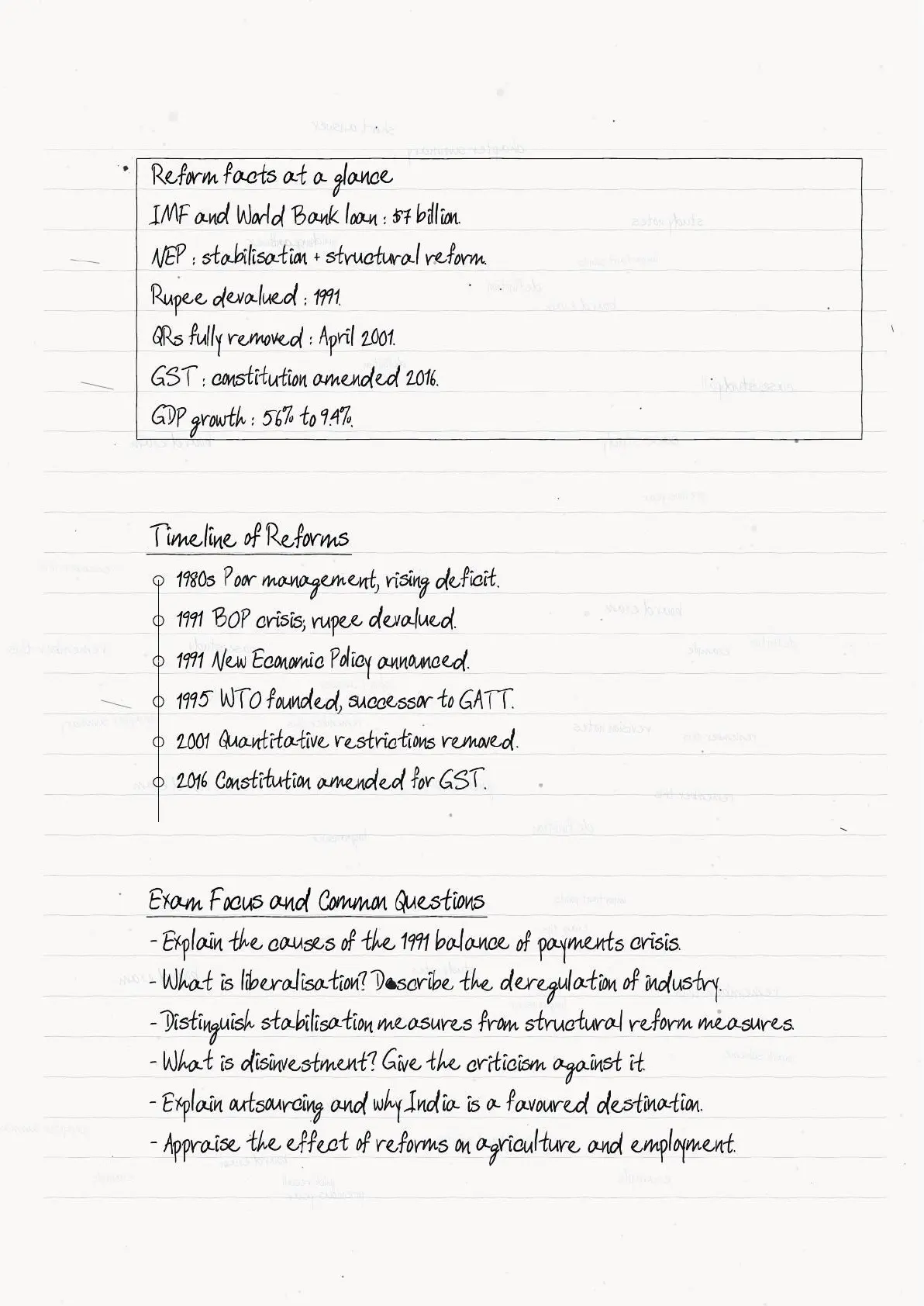
- What the notes cover: the 1991 balance of payments crisis, new economic policy and its two measures, liberalisation and industrial deregulation, privatisation, disinvestment and navratnas.
- Best for: quick revision before Class 11 exams and a base for CUET later.
You can read the complete class 11 economics handwritten notes for Liberalisation, Privatisation and Globalisation: An Appraisal, with key terms, boxed definitions, and quick revision points, in the PDF below.
These handwritten notes are written by subject teachers, mapped to the 2026-27 NCERT, and checked against the last five years of CBSE Class 11 Economics papers.
What the Liberalisation, Privatisation and Globalisation: An Appraisal Handwritten Notes Cover
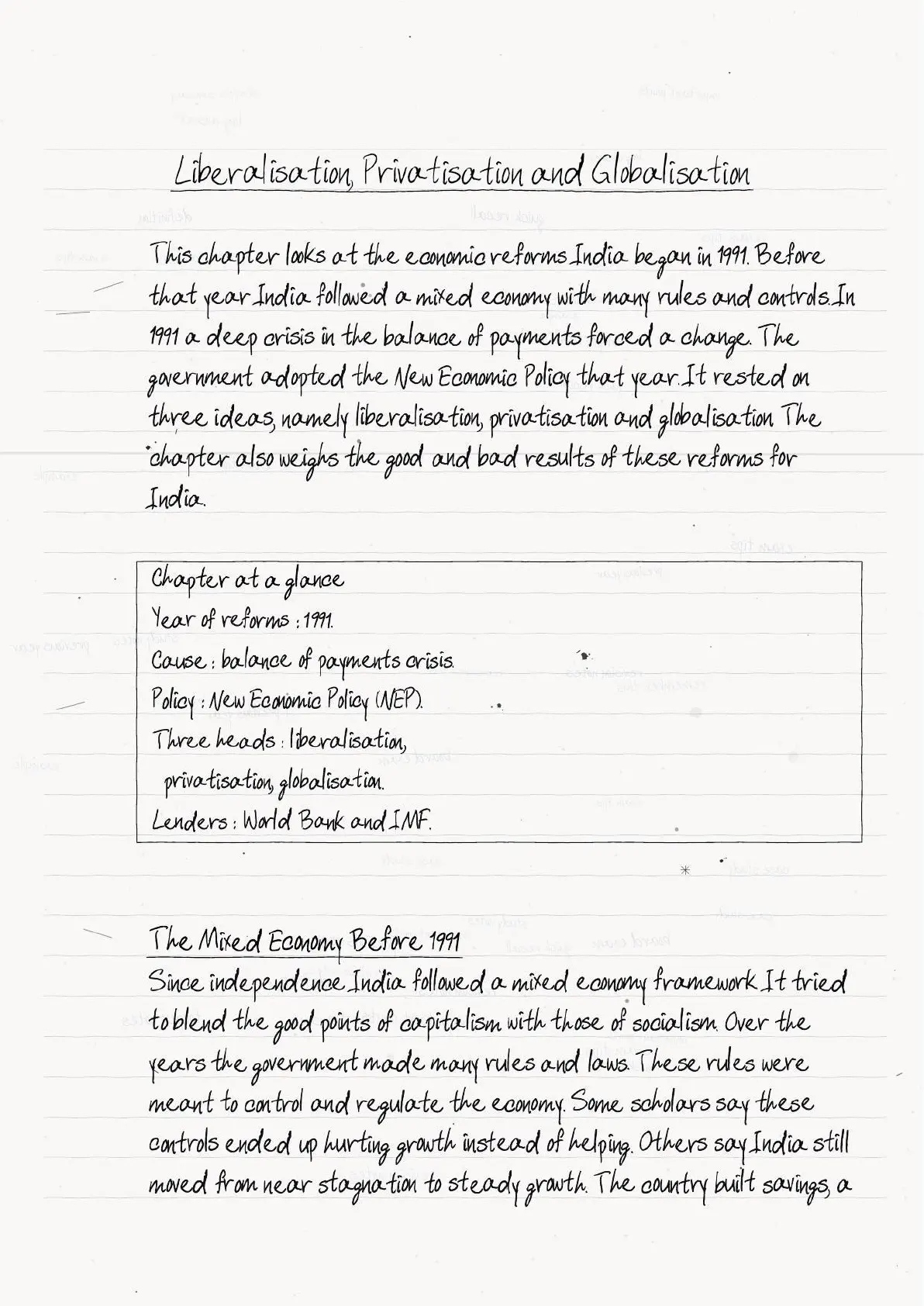
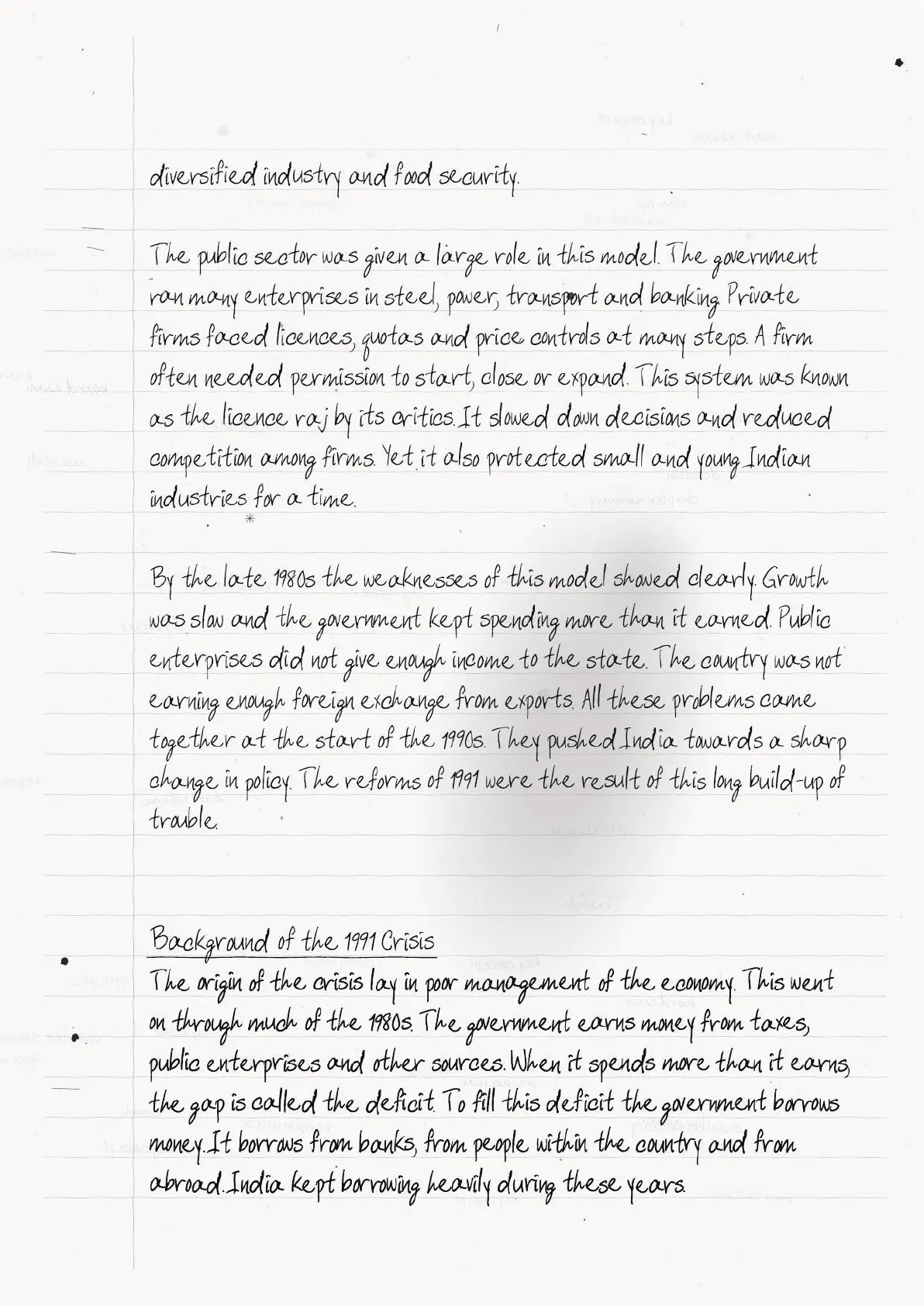
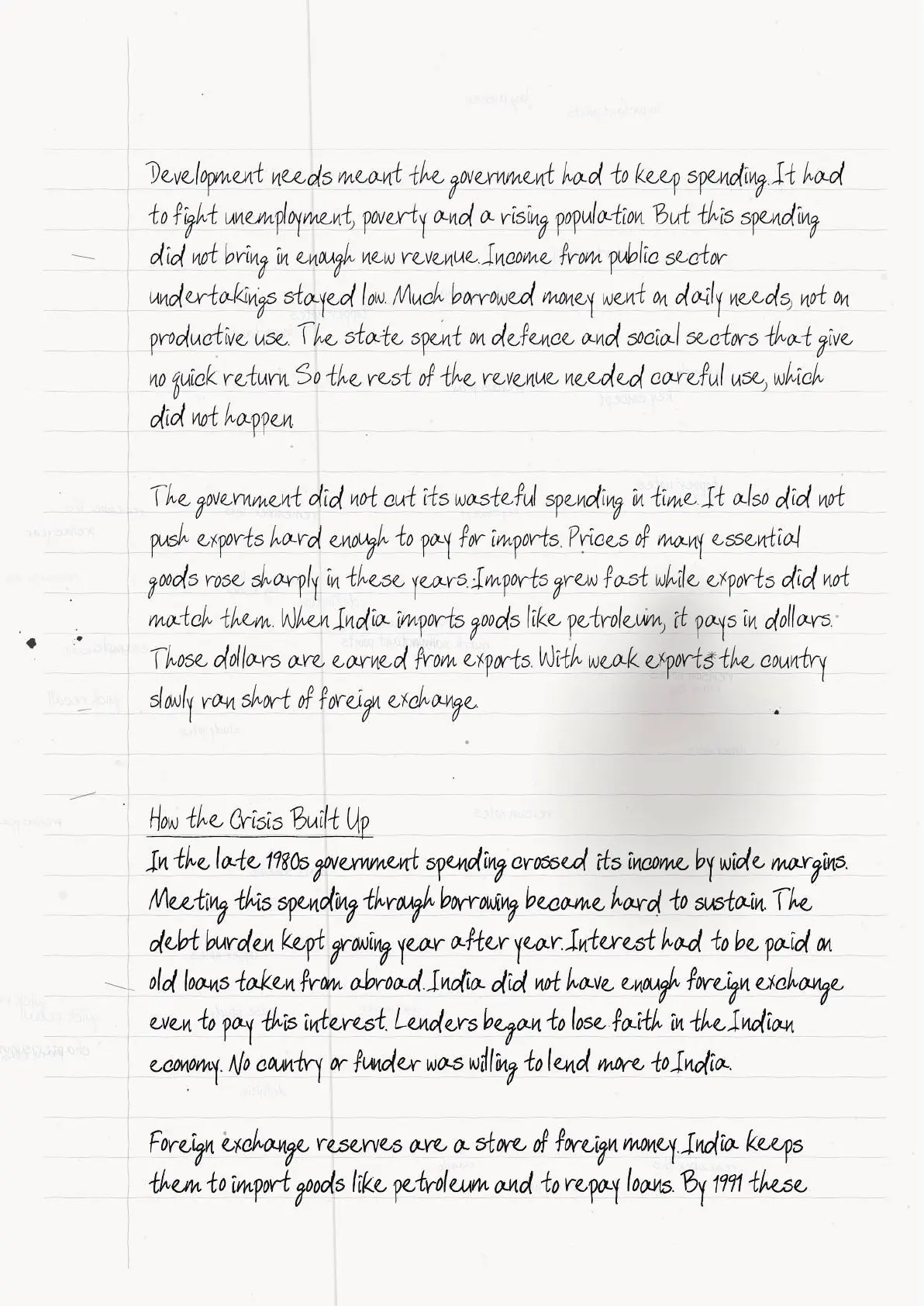
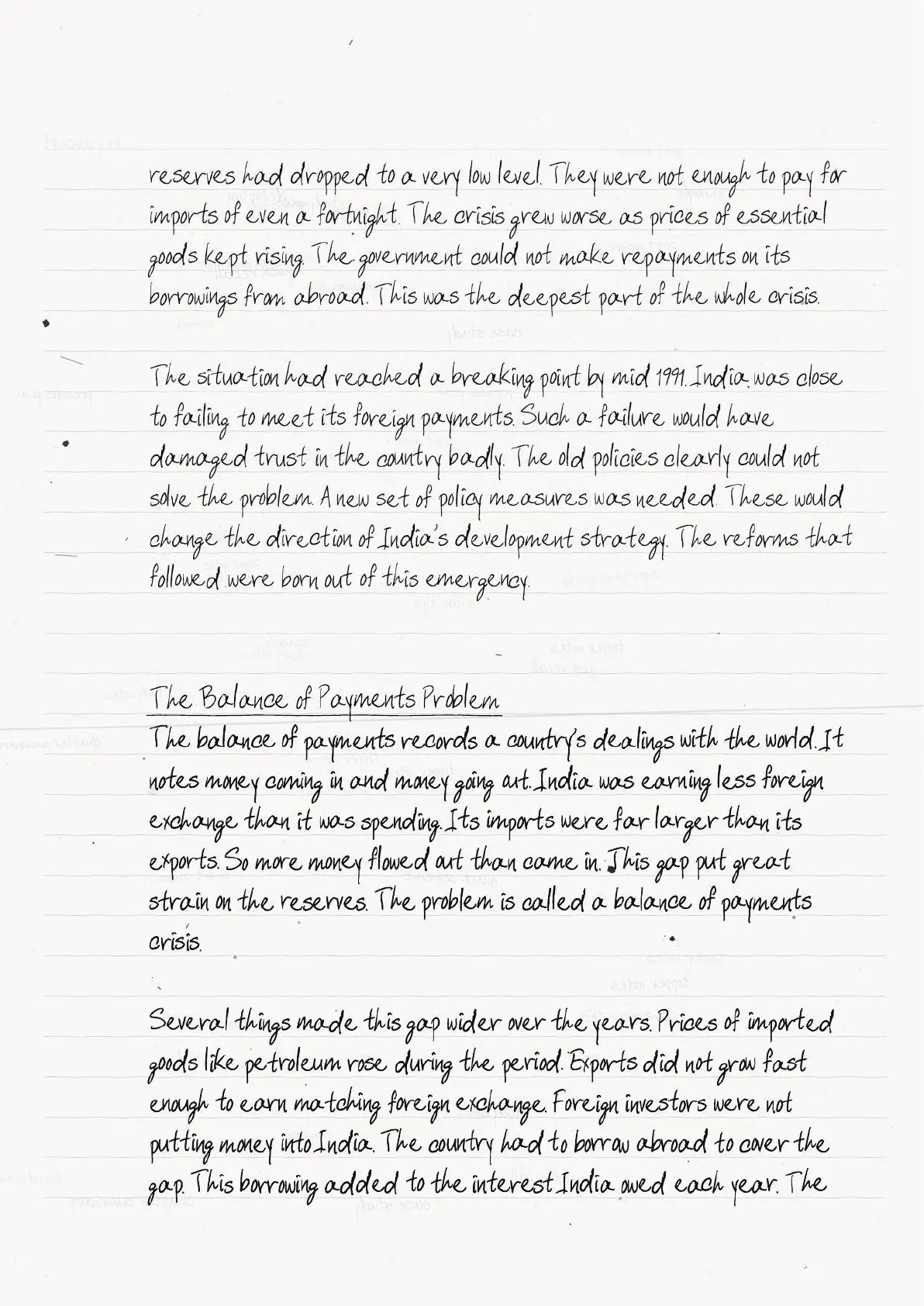
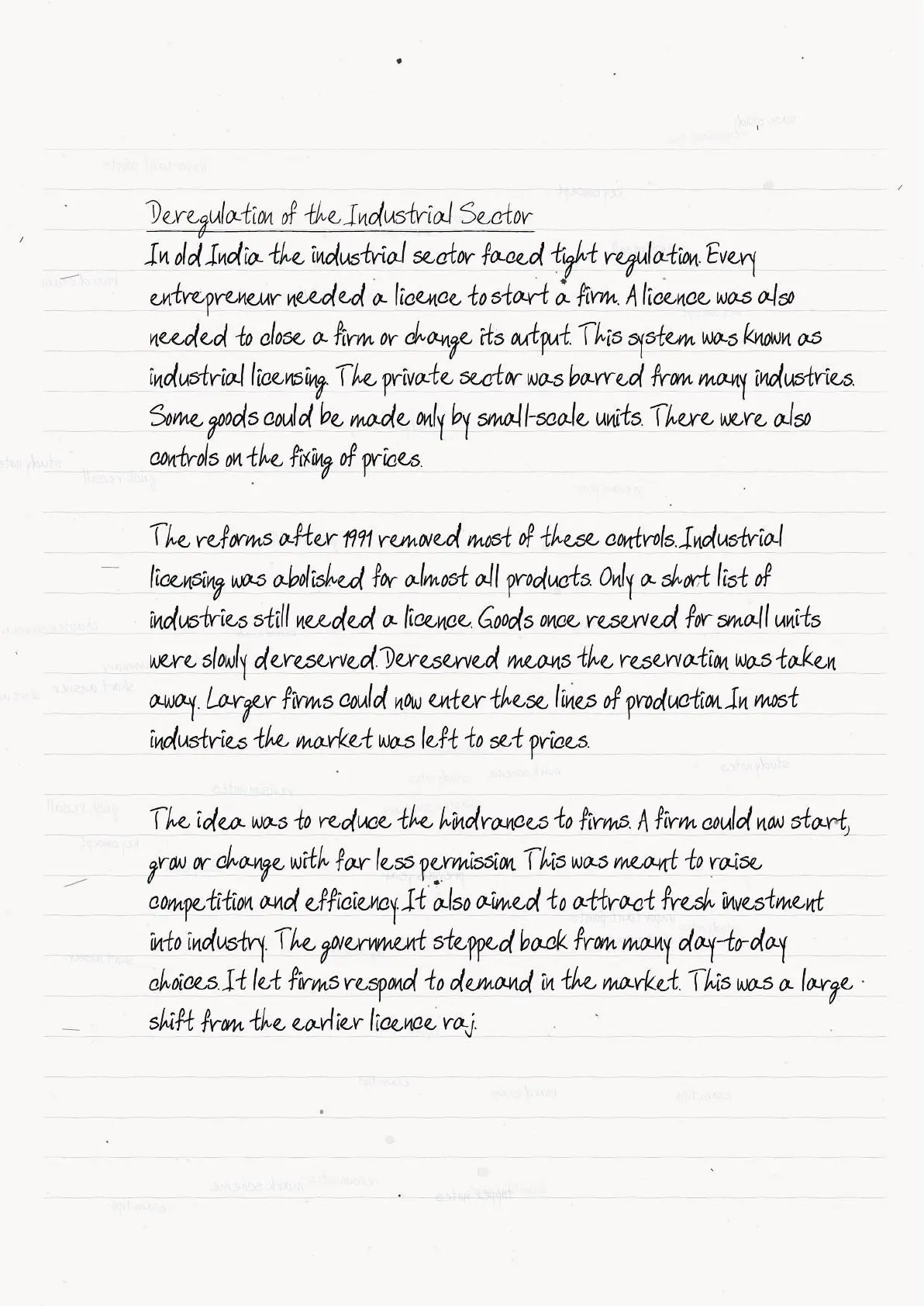
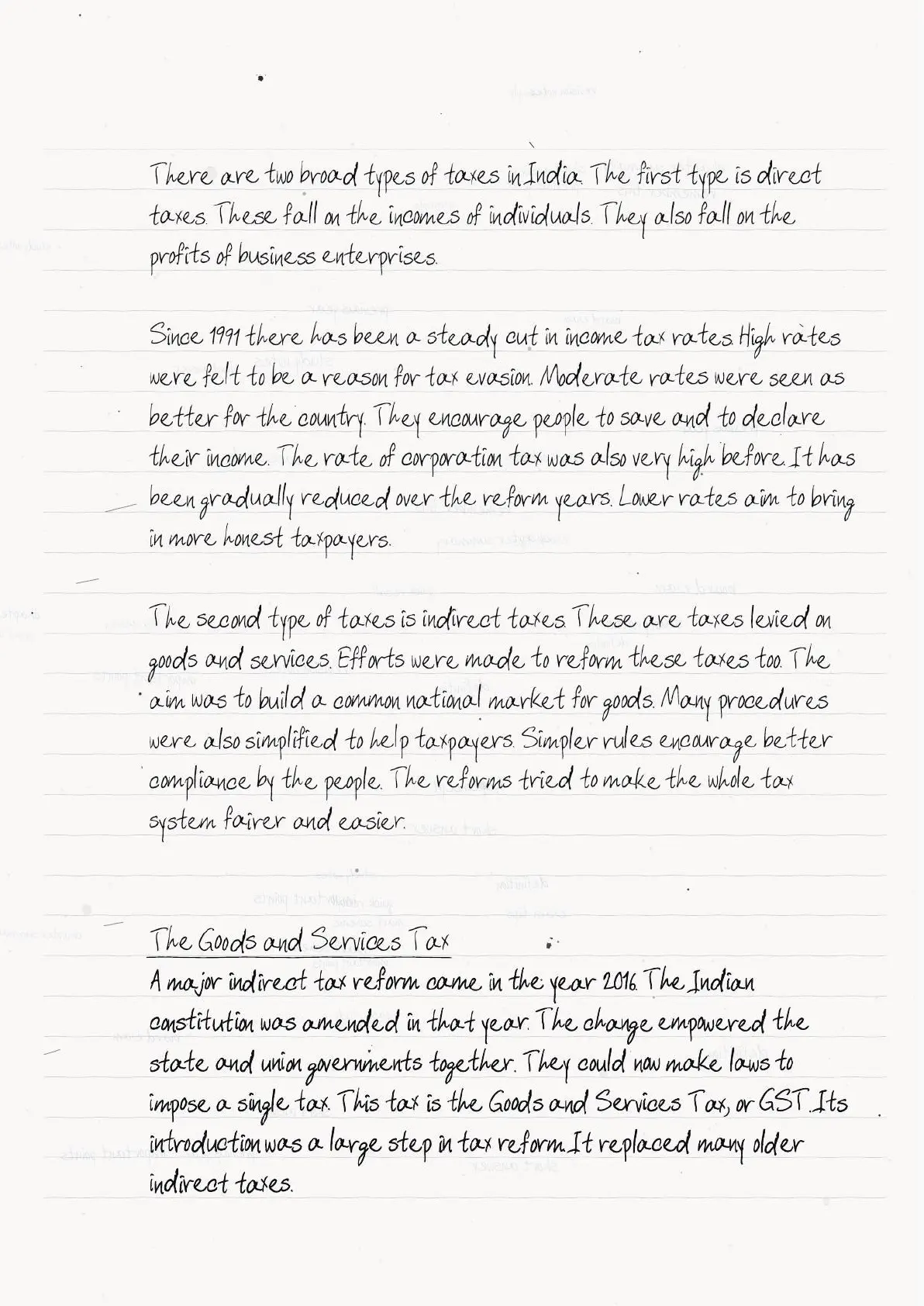
India began sweeping economic reforms in 1991 after a deep balance of payments crisis. These reforms rested on liberalisation, privatisation and globalisation. This chapter appraises their process and their mixed results for India.
- The 1991 balance of payments crisis
- New Economic Policy and its two measures
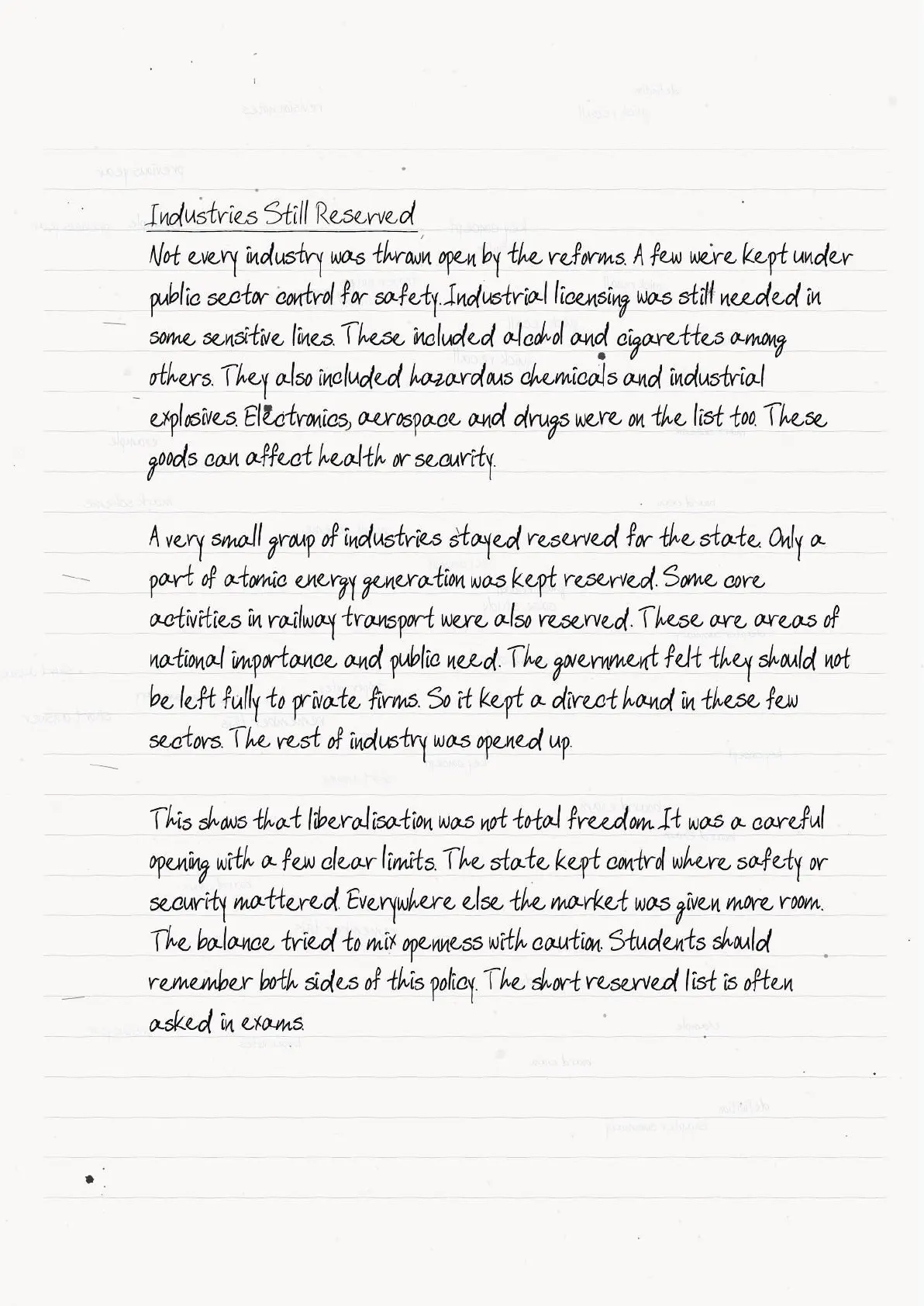
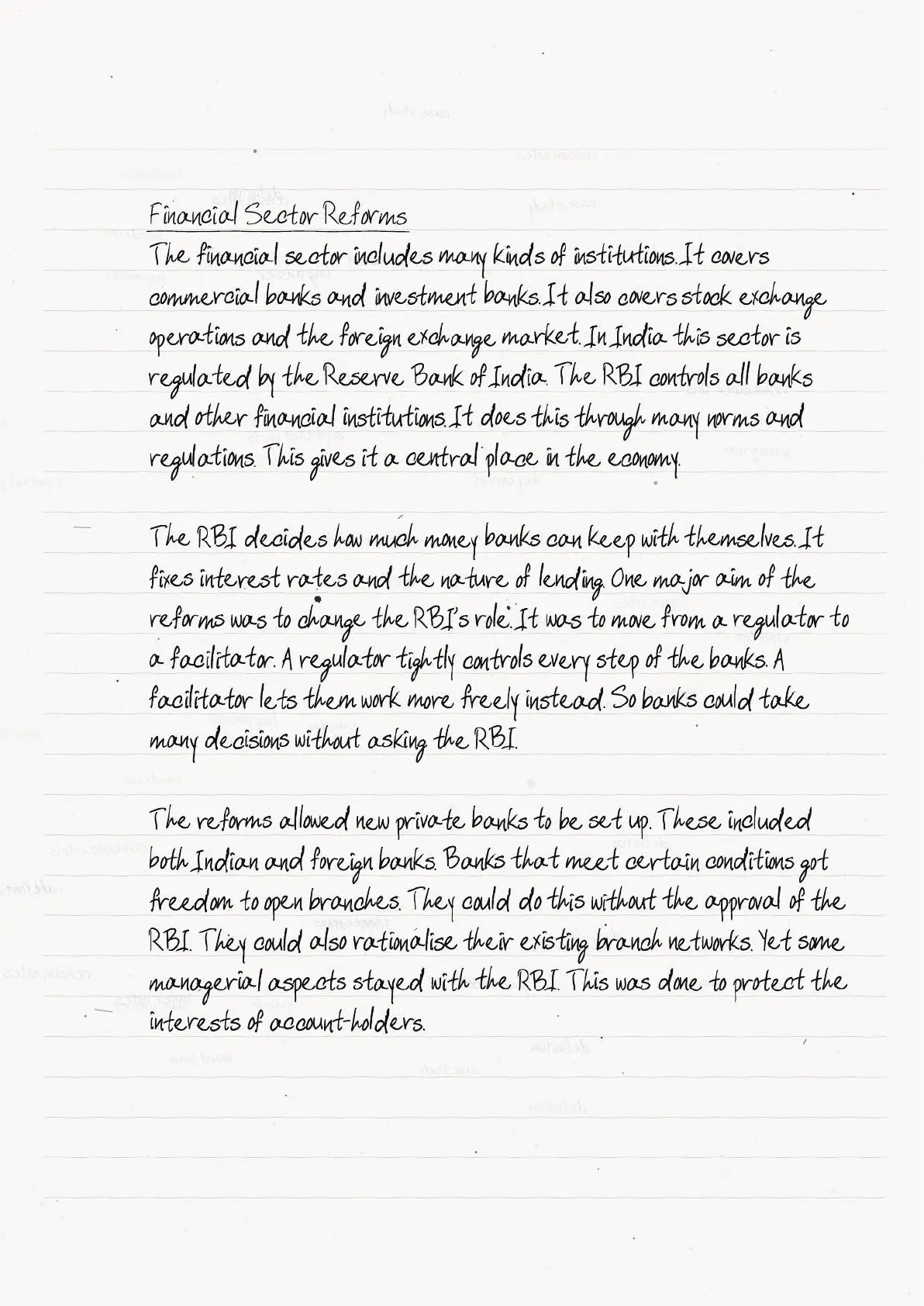
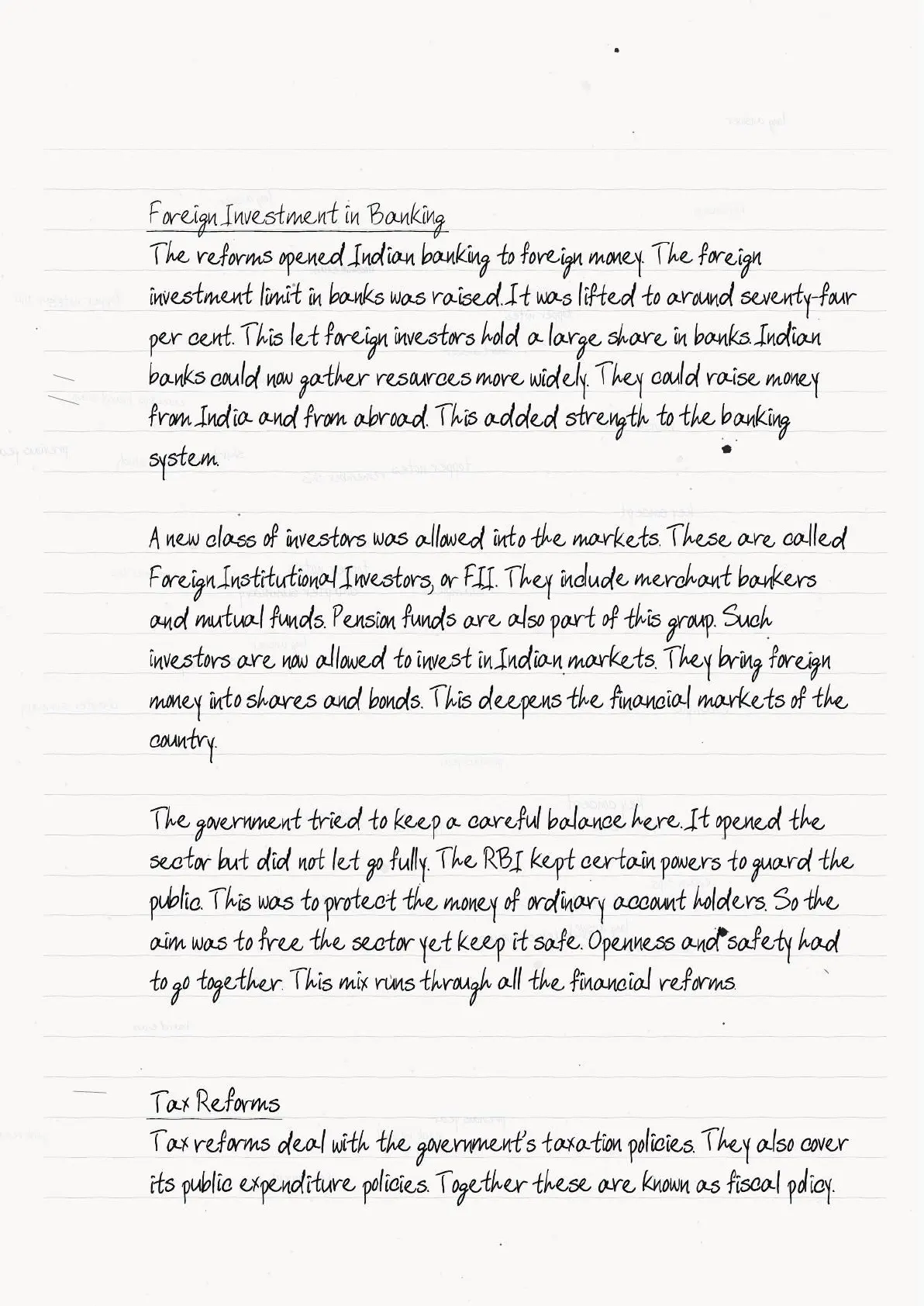
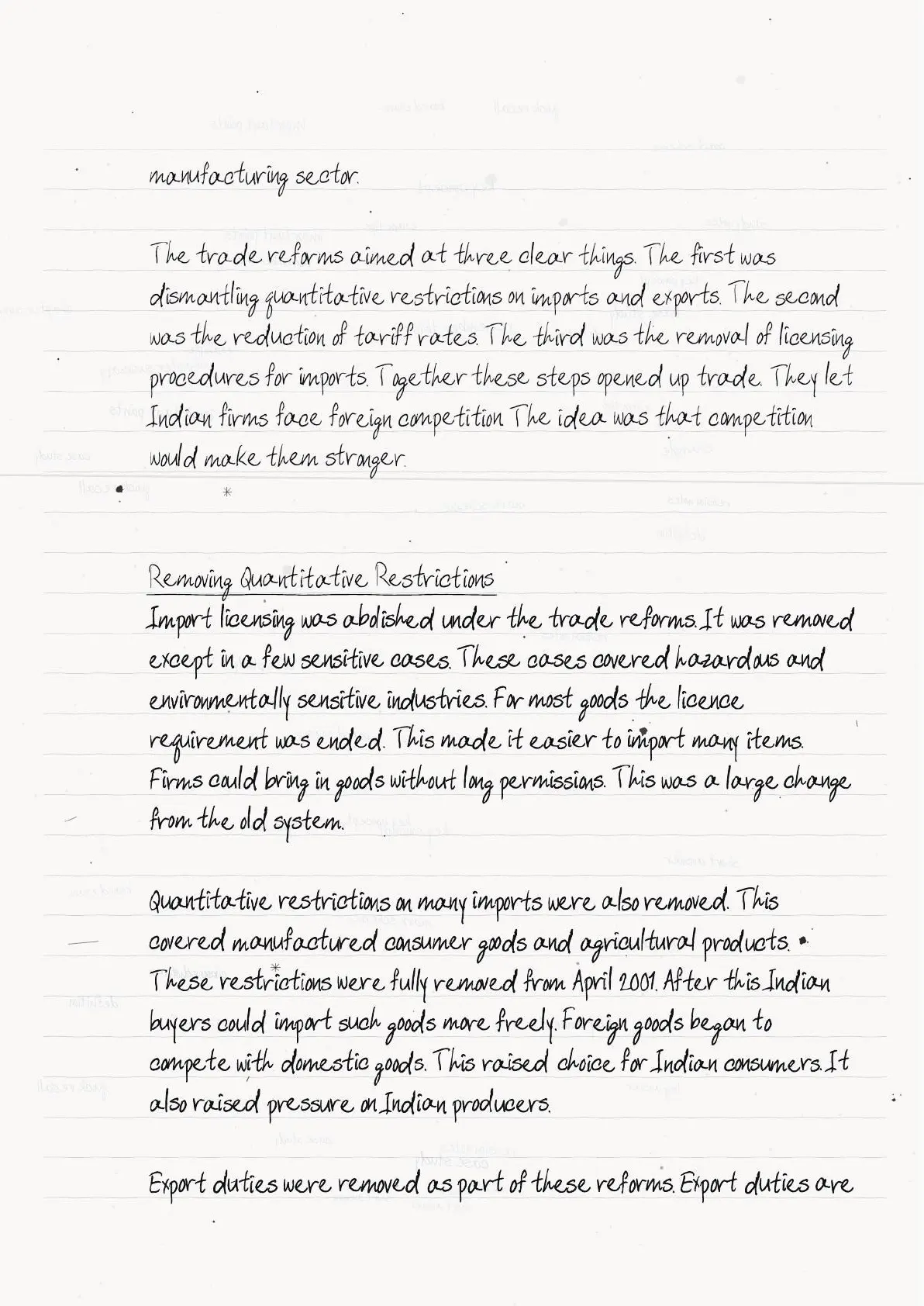
- Liberalisation and industrial deregulation
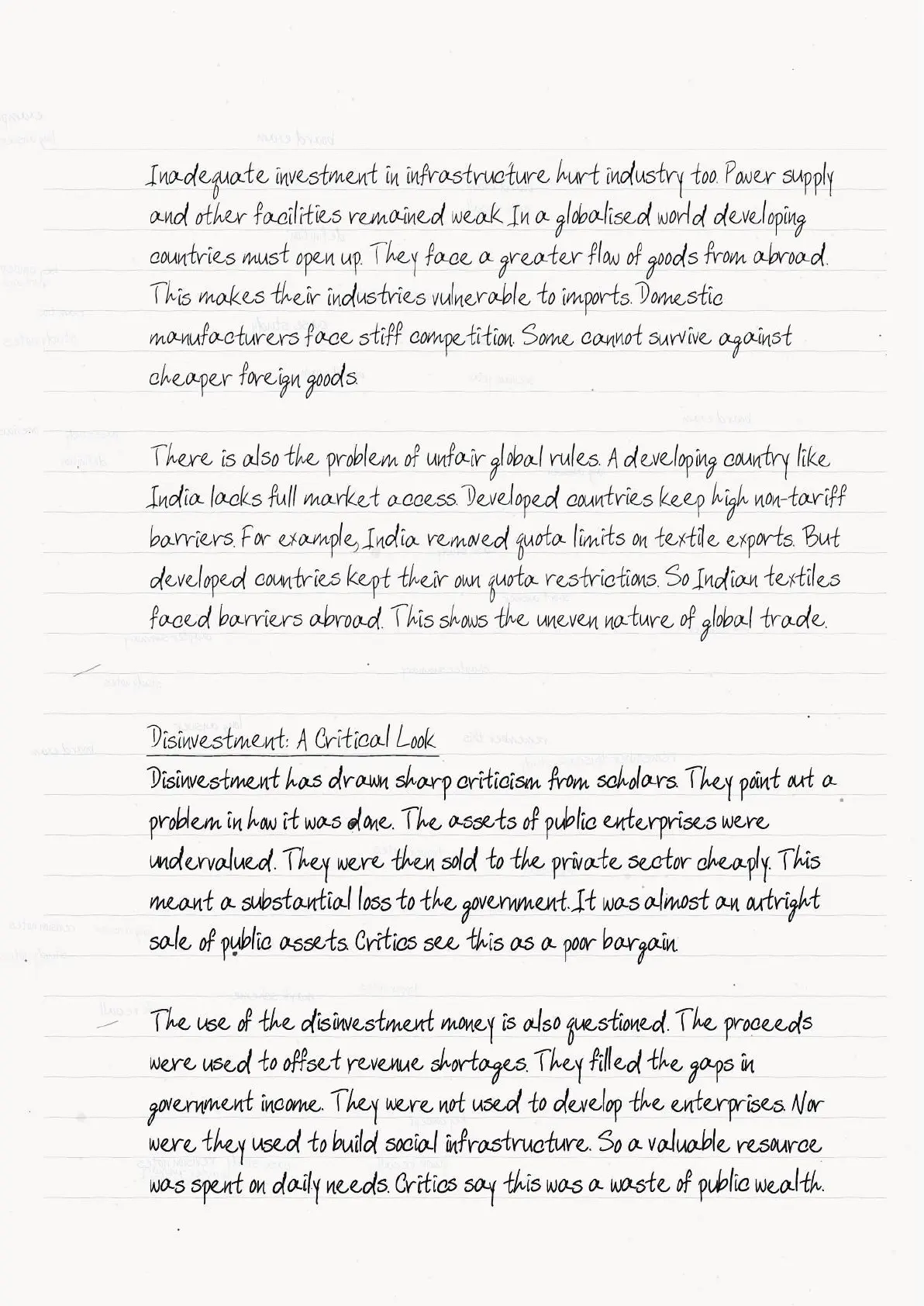
- Privatisation, disinvestment and navratnas
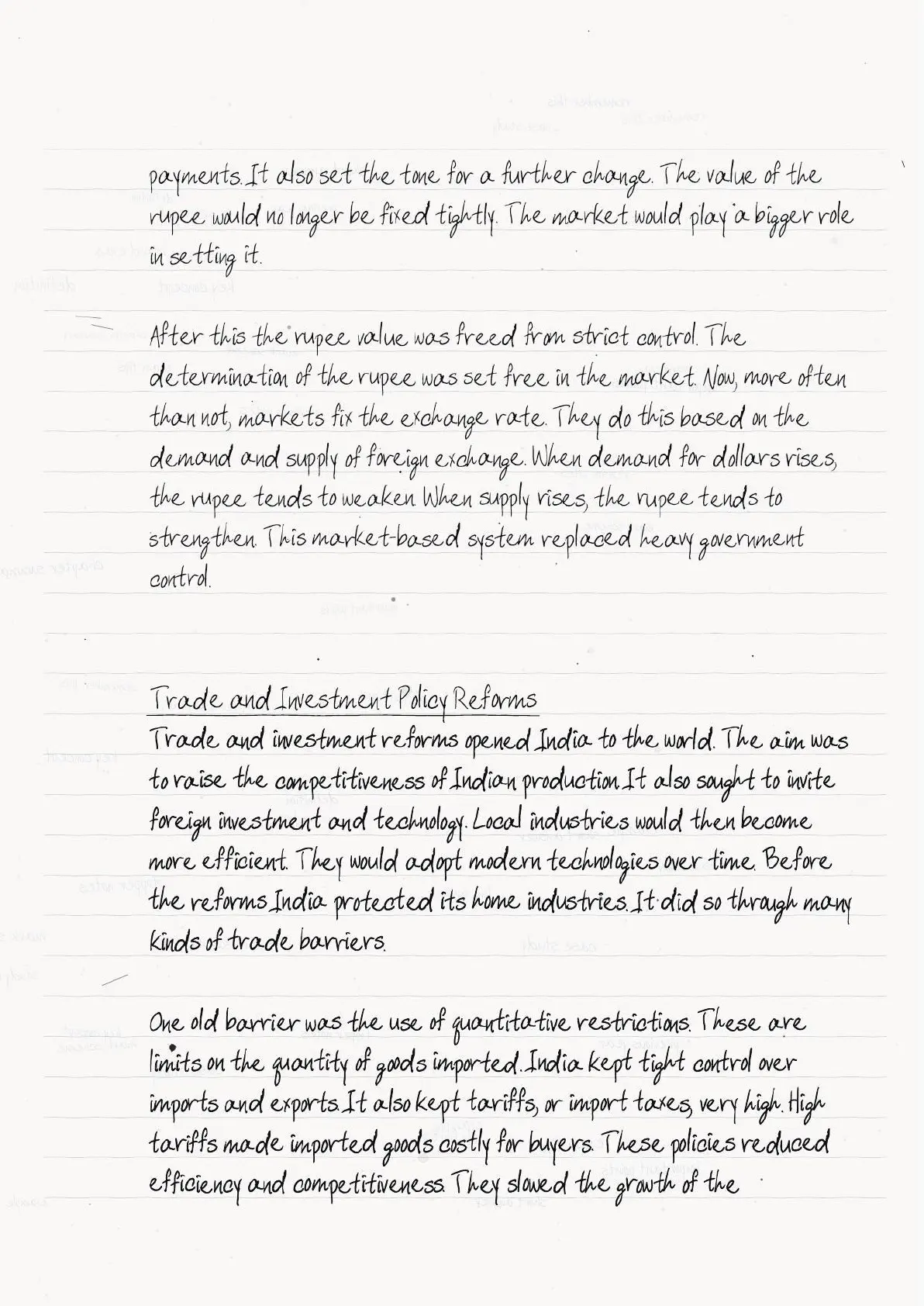
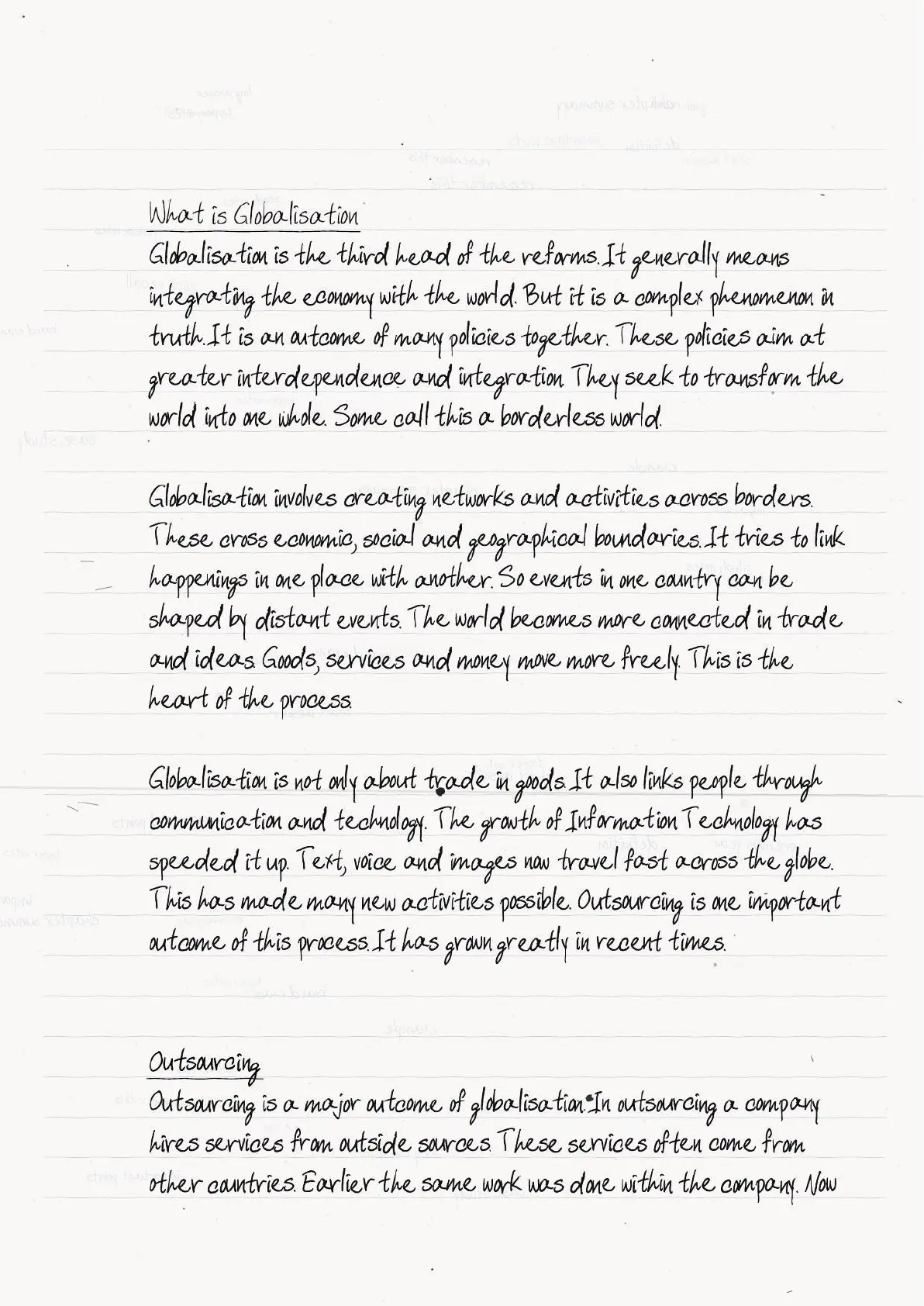
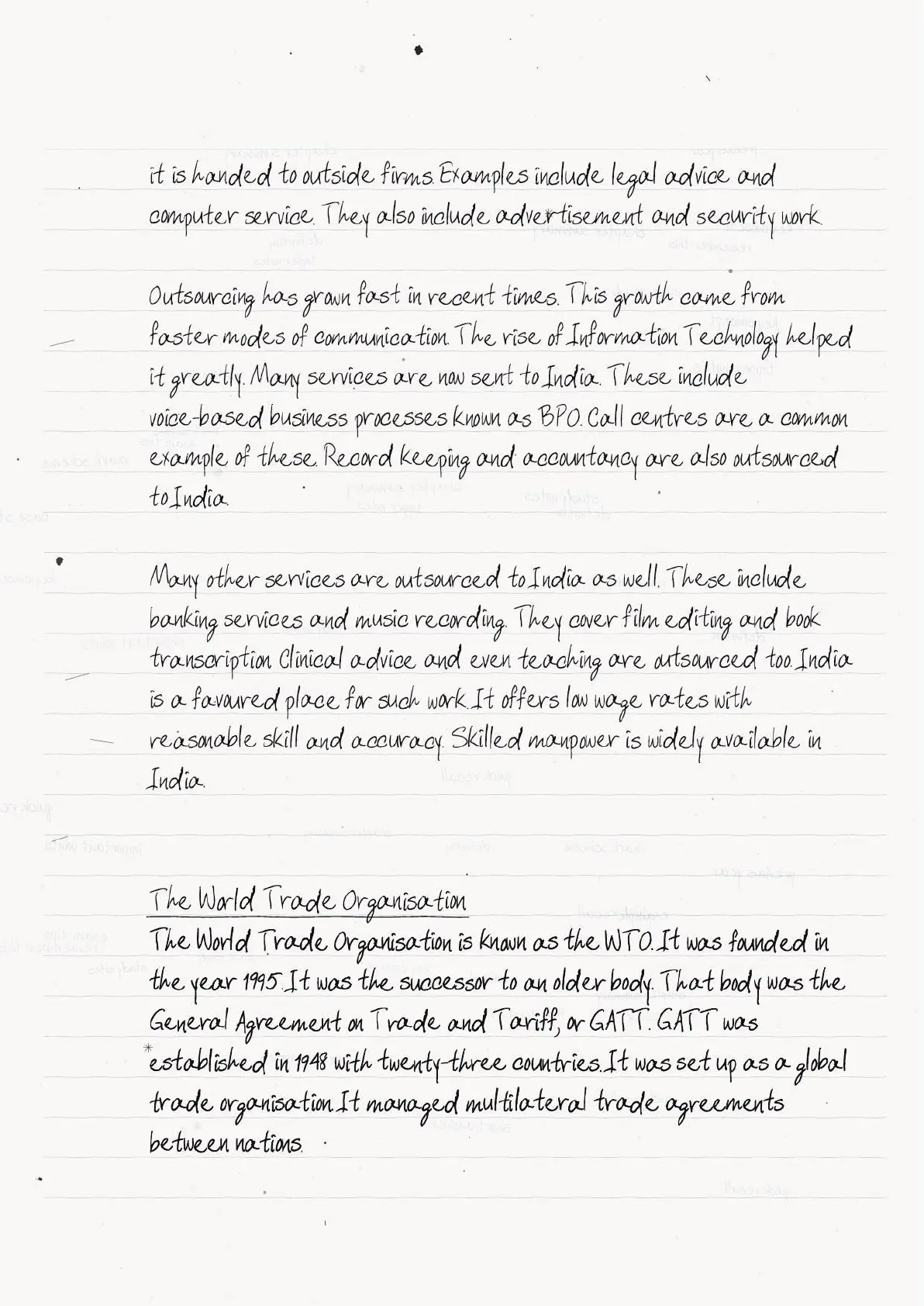
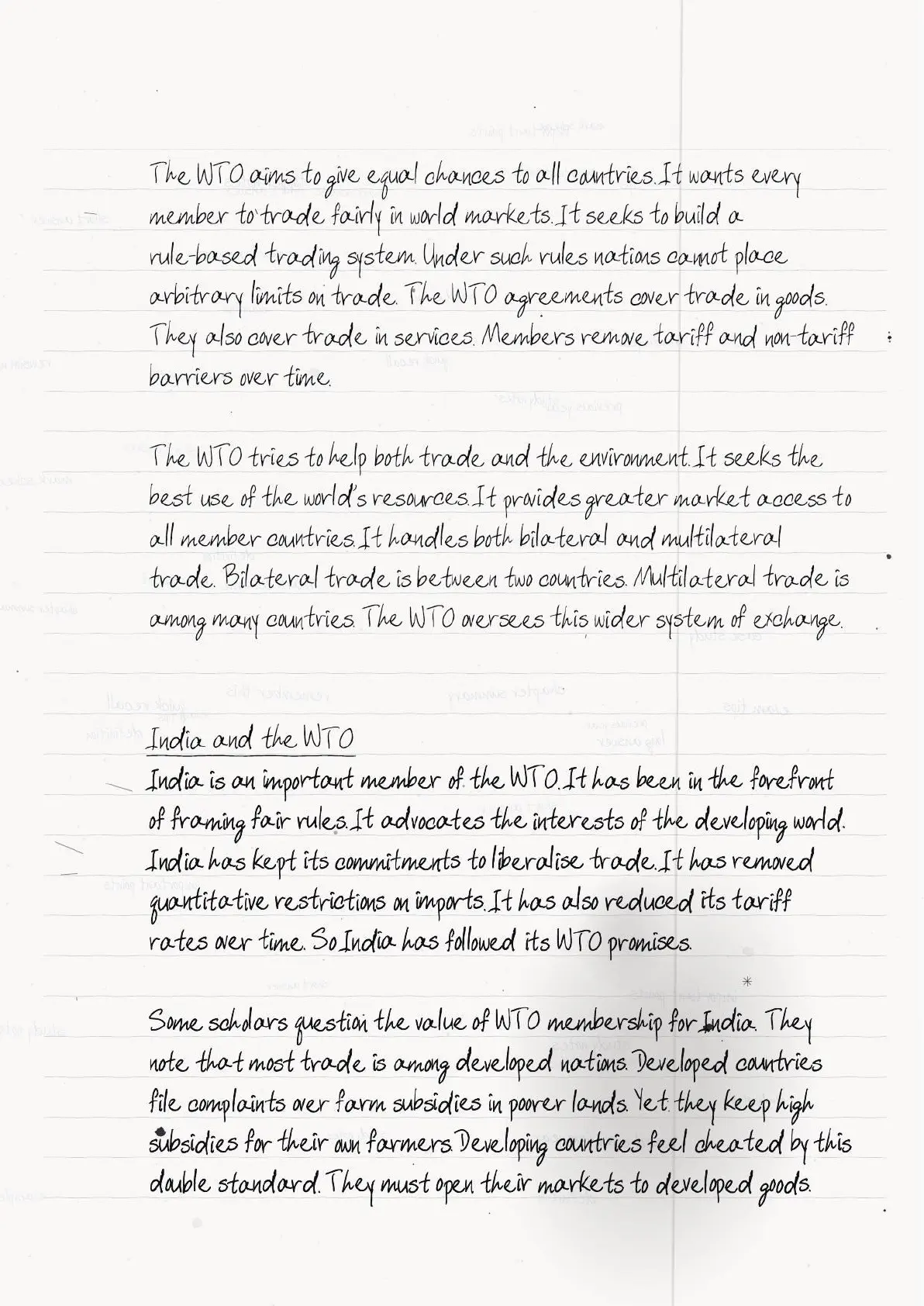
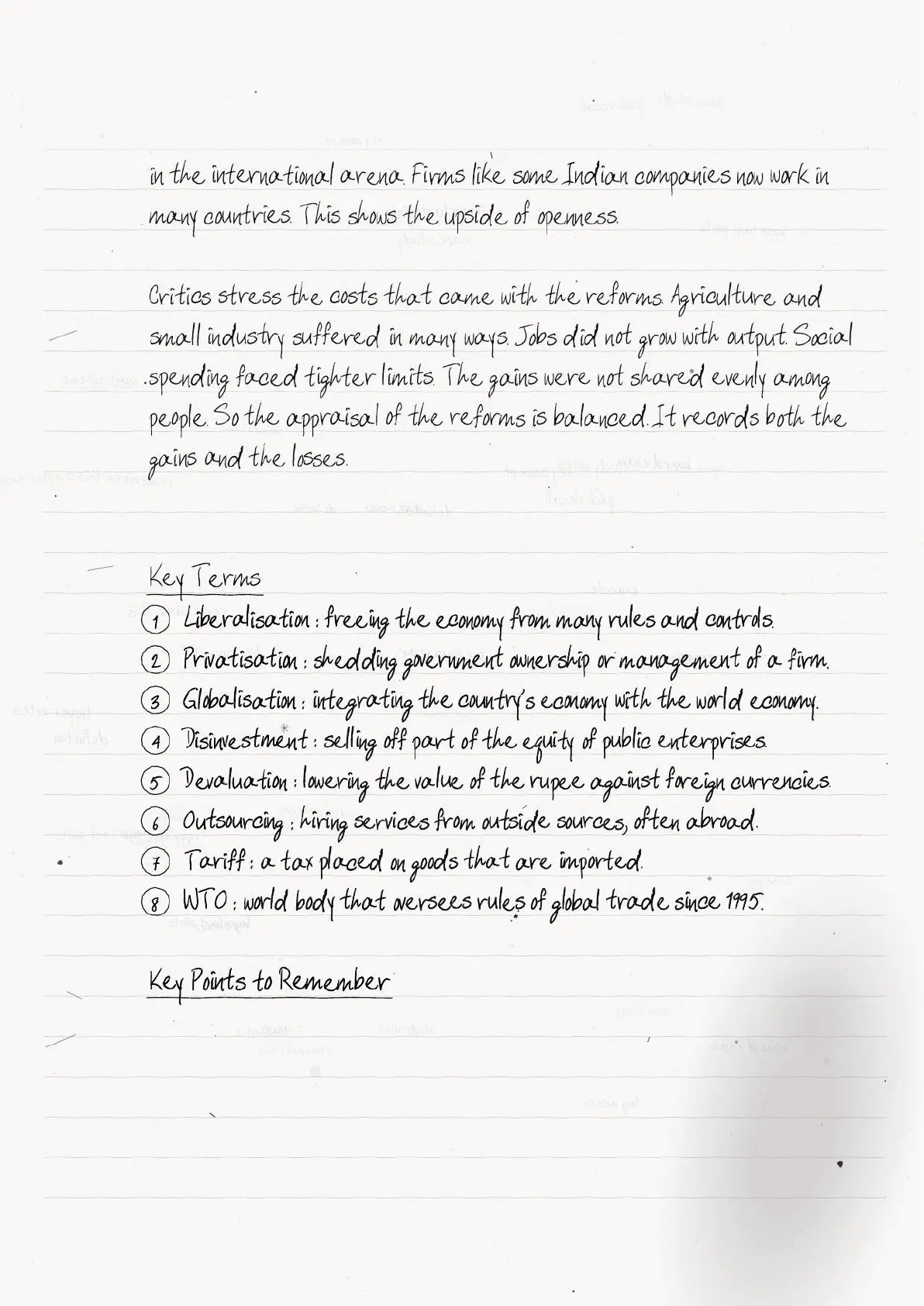
- Globalisation, outsourcing and the WTO
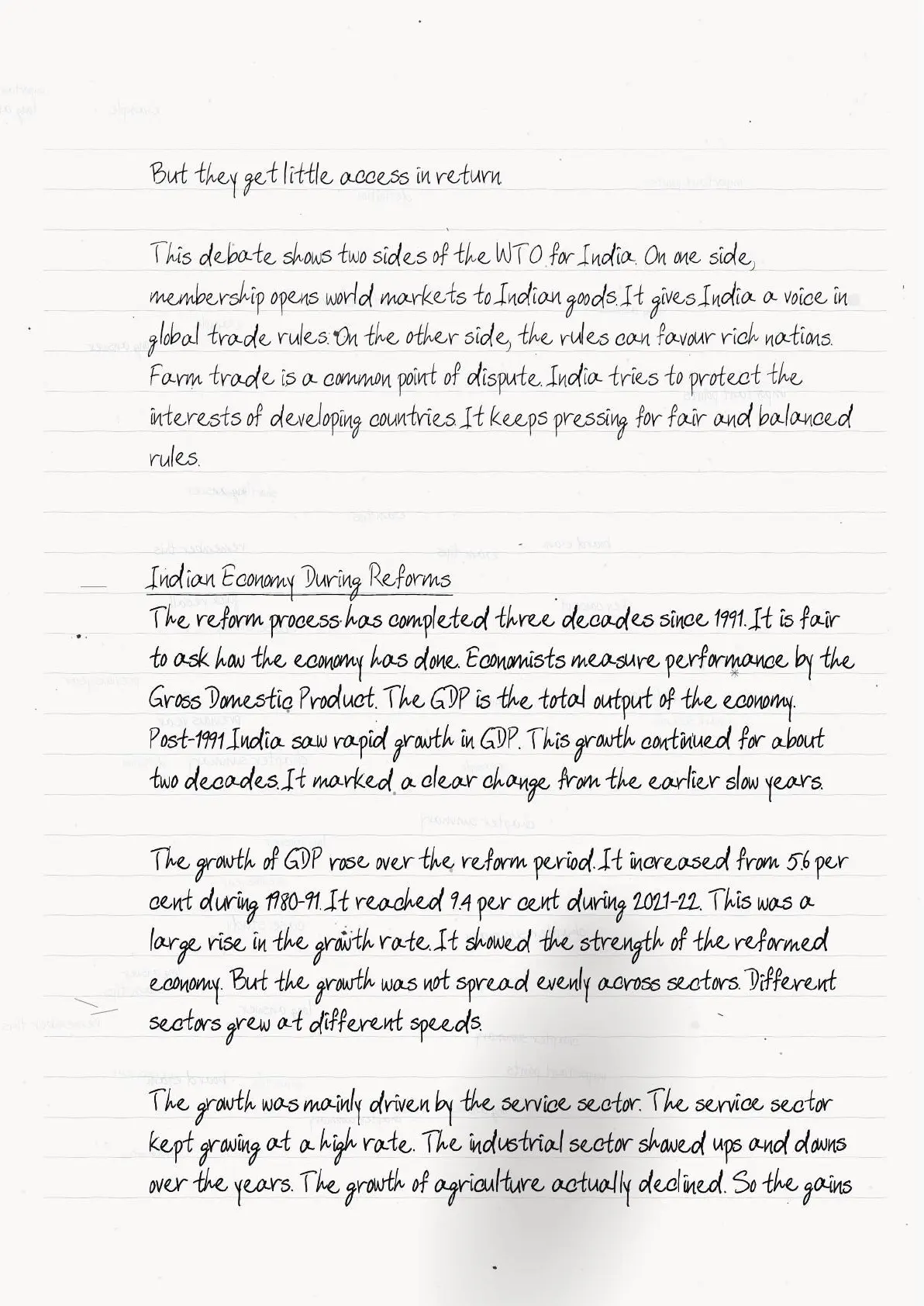
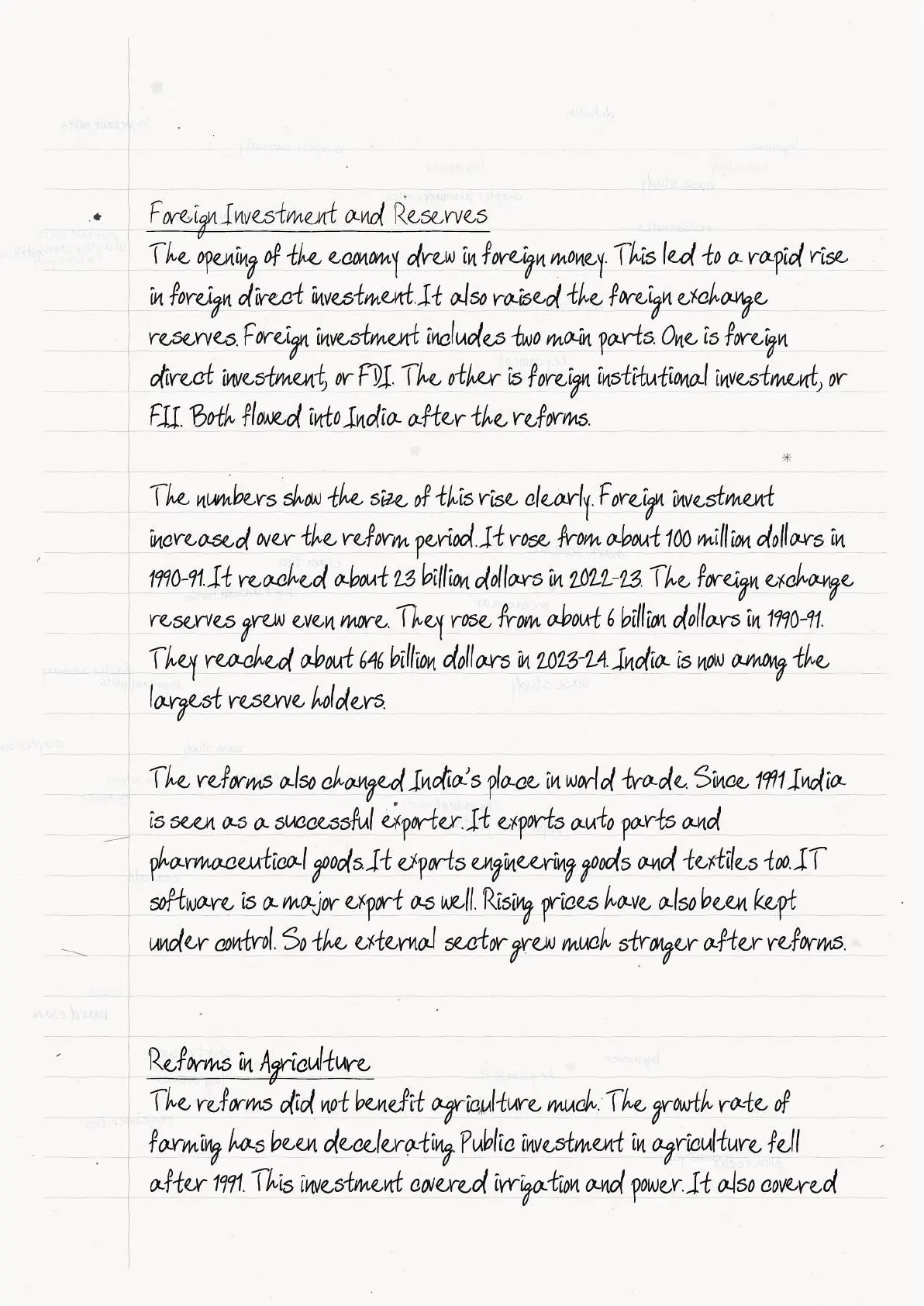
- GDP, foreign investment and reserves
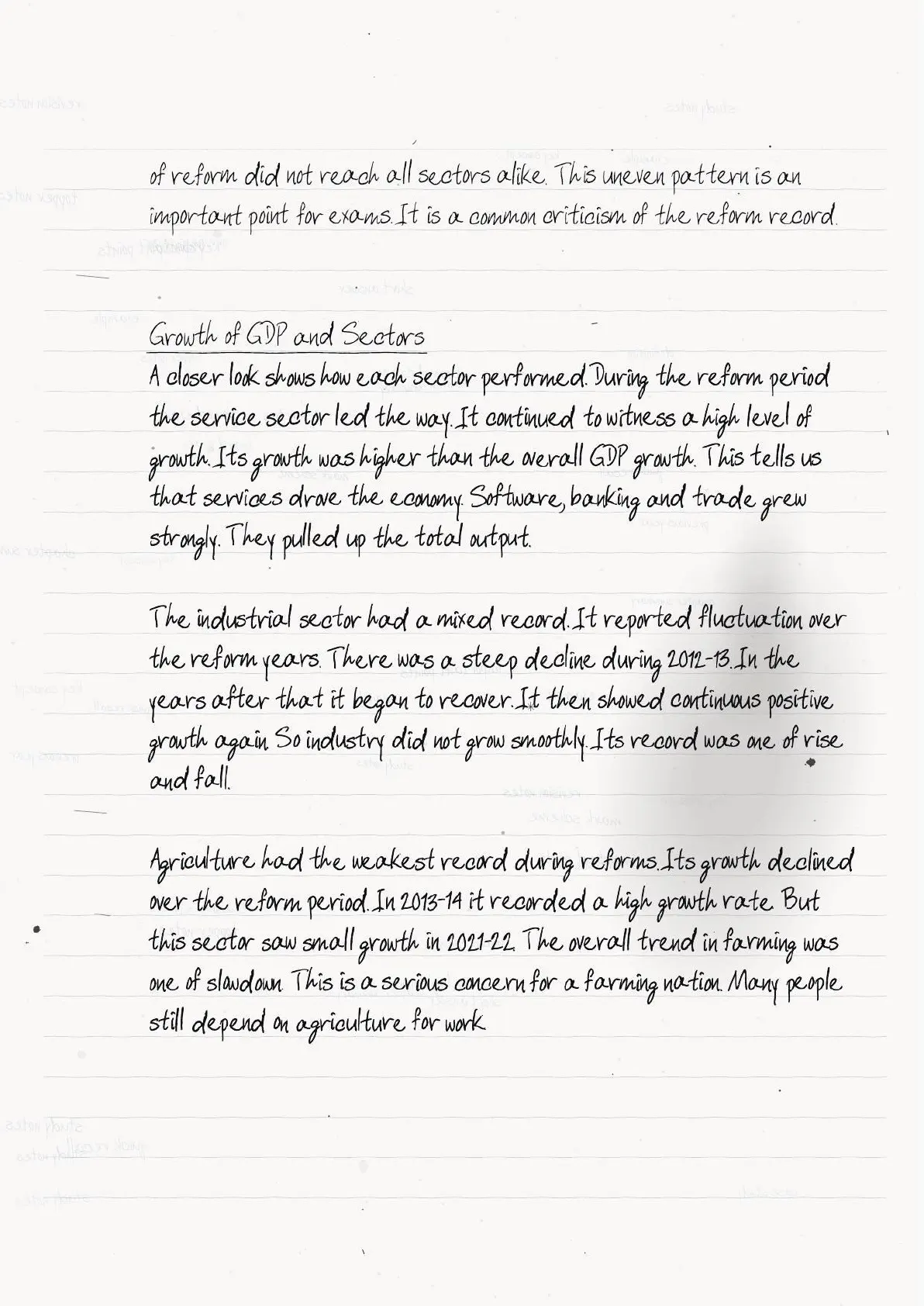
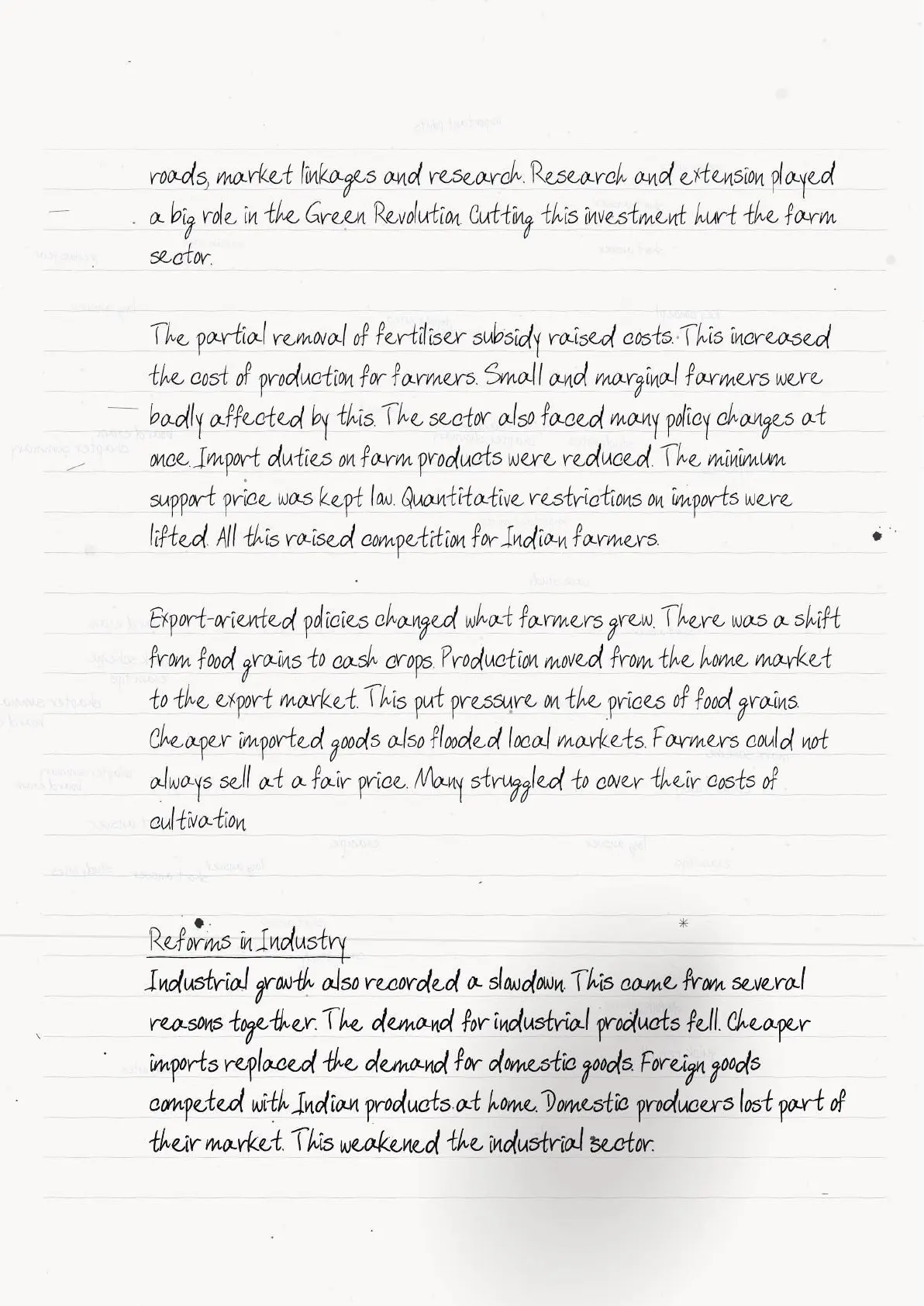
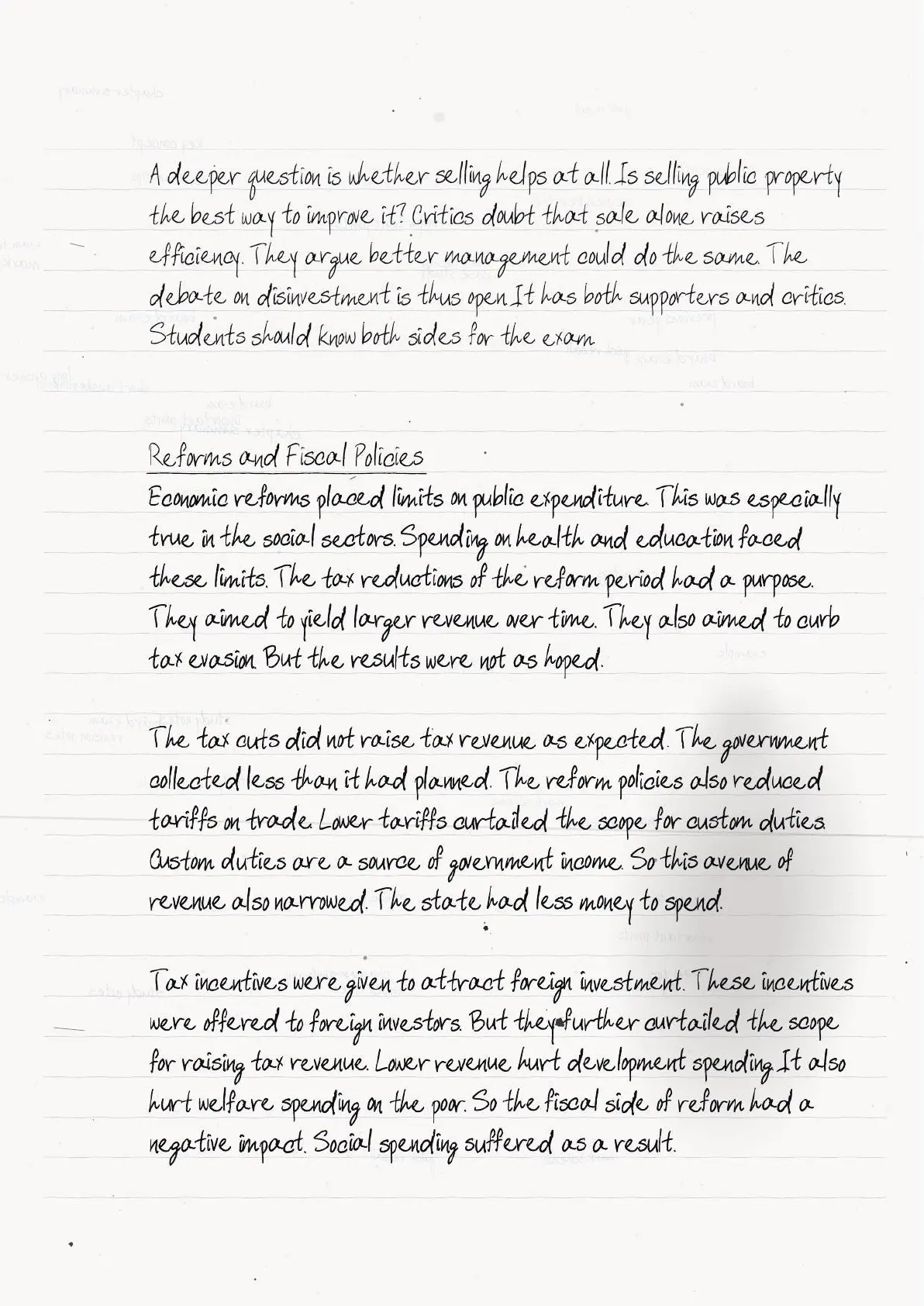
- Appraisal of reforms for farming and jobs
Liberalisation, Privatisation and Globalisation: An Appraisal Topic-wise Weightage for CBSE Class 11 Economics
Some parts of this chapter are asked more often than others. The table below shows which sub-topics to revise first, based on recent CBSE Class 11 question trends.
| Sub-topic | Weightage | CBSE Frequency |
|---|---|---|
| Causes of the 1991 crisis and NEP | High | Very frequent |
| Liberalisation and industrial reforms | High | Very frequent |
| Privatisation and disinvestment | Medium | Frequent |
| Globalisation, outsourcing and WTO | High | Frequent |
| Appraisal of reforms across sectors | Medium | Frequent |
Key Terms and Ideas in Liberalisation, Privatisation and Globalisation: An Appraisal
These are the terms and ideas the exam asks about most. Learn each one so you can define it and use it in your answers.
| Term / Idea | What it means |
|---|---|
| Liberalisation | freeing the economy from many rules and controls |
| Privatisation | shedding government ownership or management of firms |
| Globalisation | integrating India's economy with the world economy |
| Disinvestment | selling part of the equity of public enterprises |
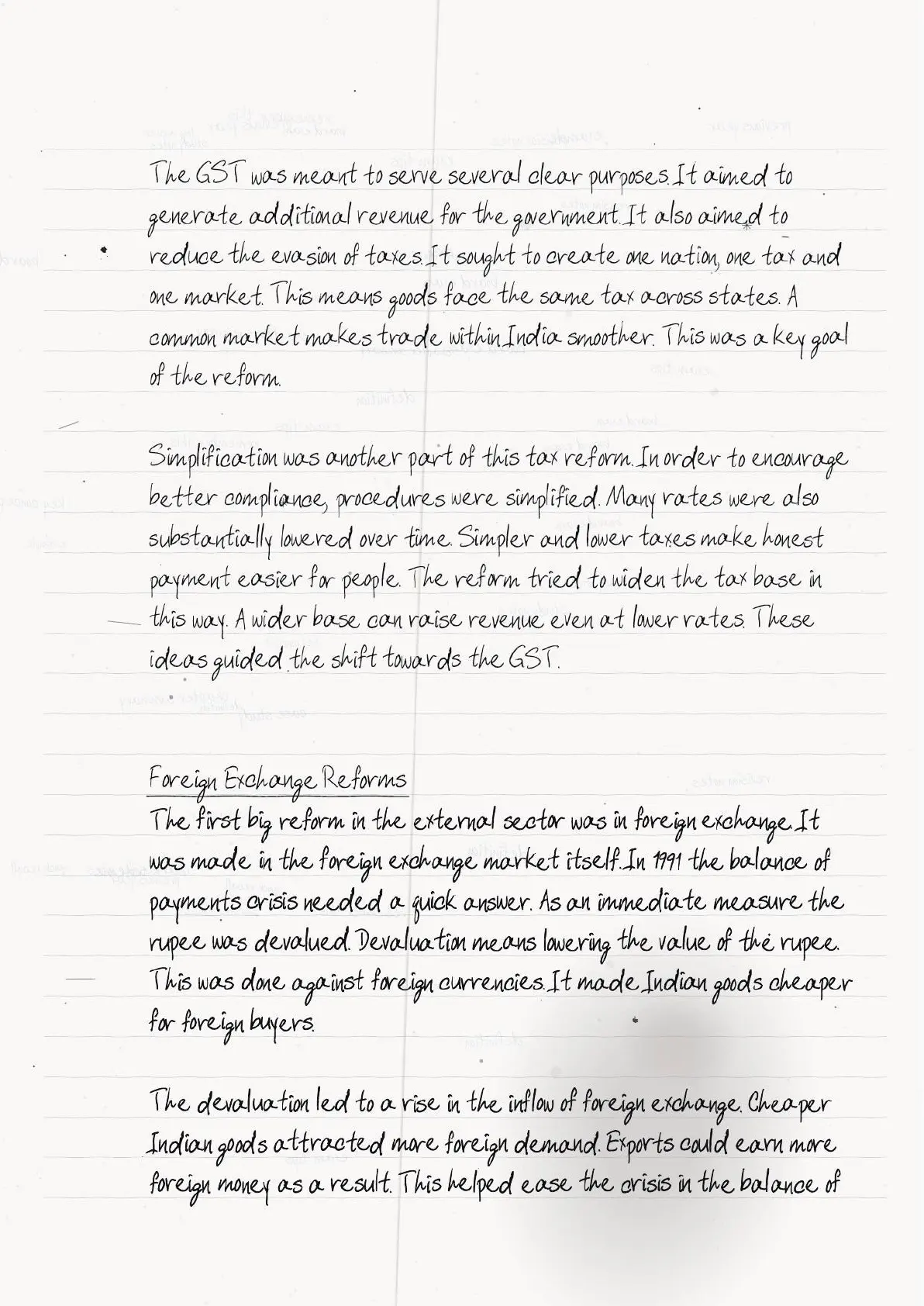
| Devaluation | the rupee was lowered against foreign currencies in 1991 |
| Outsourcing | hiring services from outside sources, often abroad |
| WTO | world trade body founded in 1995, successor to GATT |
| Stabilisation vs structural | short-term crisis fix versus long-term efficiency reform |
How Collegedunia's Handwritten Notes Help You Revise Liberalisation, Privatisation and Globalisation: An Appraisal
These notes are made for the night before the exam. They keep the facts short and easy to scan. Collegedunia maps every point to the 2026-27 NCERT.
- Clear handwriting: each topic is written in neat, easy-to-read handwriting.
- Boxed key terms: the main terms and definitions are boxed by hand for fast recall.
- Diagrams and tables: simple hand-drawn tables and charts make ideas clear.
- Colour-coded headings: new sub-topics stand out, so you find any section in seconds.
Liberalisation, Privatisation and Globalisation: An Appraisal Self-Assessment Quiz
Try these quick questions after you read the notes. Tap each question to check your answer. They cover the points CBSE asks most often.
The 1991 reforms were triggered mainly by a crisis in the
(a) monsoon (b) balance of payments (c) stock market (d) banking sector
Answer: (b) balance of payments - forex reserves fell below two weeks of imports
Under liberalisation, industrial licensing was
(a) made stricter (b) abolished for almost all products (c) extended to all firms (d) unchanged
Answer: (b) abolished for almost all products - only a few sensitive industries kept it
Selling part of the equity of public enterprises is called
(a) devaluation (b) globalisation (c) disinvestment (d) dereservation
Answer: (c) disinvestment - it is a key part of privatisation
The WTO was founded in the year
(a) 1948 (b) 1991 (c) 1995 (d) 2001
Answer: (c) 1995 - as the successor to GATT, which began in 1948
During reforms, the sector that grew the most was
(a) agriculture (b) industry (c) services (d) mining
Answer: (c) services - the service sector drove most of the GDP growth
How to Use These Handwritten Notes for Class 11 Economics Revision
Use these class 11 economics handwritten notes in two passes. Read them slowly once for the full chapter. Then, near the exam, read only the boxes and key terms for a fast recall.
- Read the notes once with the NCERT chapter open beside you.
- Say each key term and idea in your own words.
- Practise one long-answer question from a past paper.
- On the last day, revise only the key terms and the boxes.
Class 11 Economics Handwritten Notes for All Chapters
The table below links the class 11 economics handwritten notes for every chapter. Use it to jump to any other chapter's notes.
Liberalisation, Privatisation and Globalisation: An Appraisal Class 11 Economics Handwritten Notes FAQs
Ques. Where can I download Liberalisation, Privatisation and Globalisation: An Appraisal Class 11 Economics Handwritten Notes PDF?
Ans. You can download the Liberalisation, Privatisation and Globalisation: An Appraisal Class 11 Economics Handwritten Notes PDF directly from this page. Both the Normal and HD versions are free.
Ques. Are these handwritten notes aligned with the 2026-27 NCERT?
Ans. Yes. These notes follow the current 2026-27 syllabus for Class 11 Economics. Students often ask what caused the 1991 economic reforms in India.
Ques. How many pages is the Class 11 Economics Liberalisation, Privatisation and Globalisation: An Appraisal Handwritten Notes PDF?
Ans. The notes run about 22 pages. They cover the full chapter with key terms, hand-drawn boxes, and a short self-assessment quiz.
Ques. What is the main idea of the 11th standard Economics chapter Liberalisation, Privatisation and Globalisation: An Appraisal?
Ans. The reforms were caused by a balance of payments crisis in 1991, when foreign exchange reserves fell too low to pay for even two weeks of imports. India took a loan from the World Bank and IMF and launched the New Economic Policy based on liberalisation, privatisation and globalisation.
Ques. Are these Liberalisation, Privatisation and Globalisation: An Appraisal notes enough for the CBSE Class 11 exam?
Ans. Yes, for revision. The Collegedunia handwritten notes cover every key point and exam term. Read them with the NCERT chapter and practise past questions.



Comments