




The Our Environment Class 10 Science handwritten notes are scanned, boxed and built for fast last-minute revision, fully matched to the 2026-27 CBSE syllabus. They cover the ecosystem and its components, food chains and food webs, the flow of energy and the 10% law, trophic levels, the ozone layer and its depletion, and how biodegradable and non-biodegradable waste affects the environment, all in clear ruled-page form with hand-drawn food chains and a labelled energy pyramid.
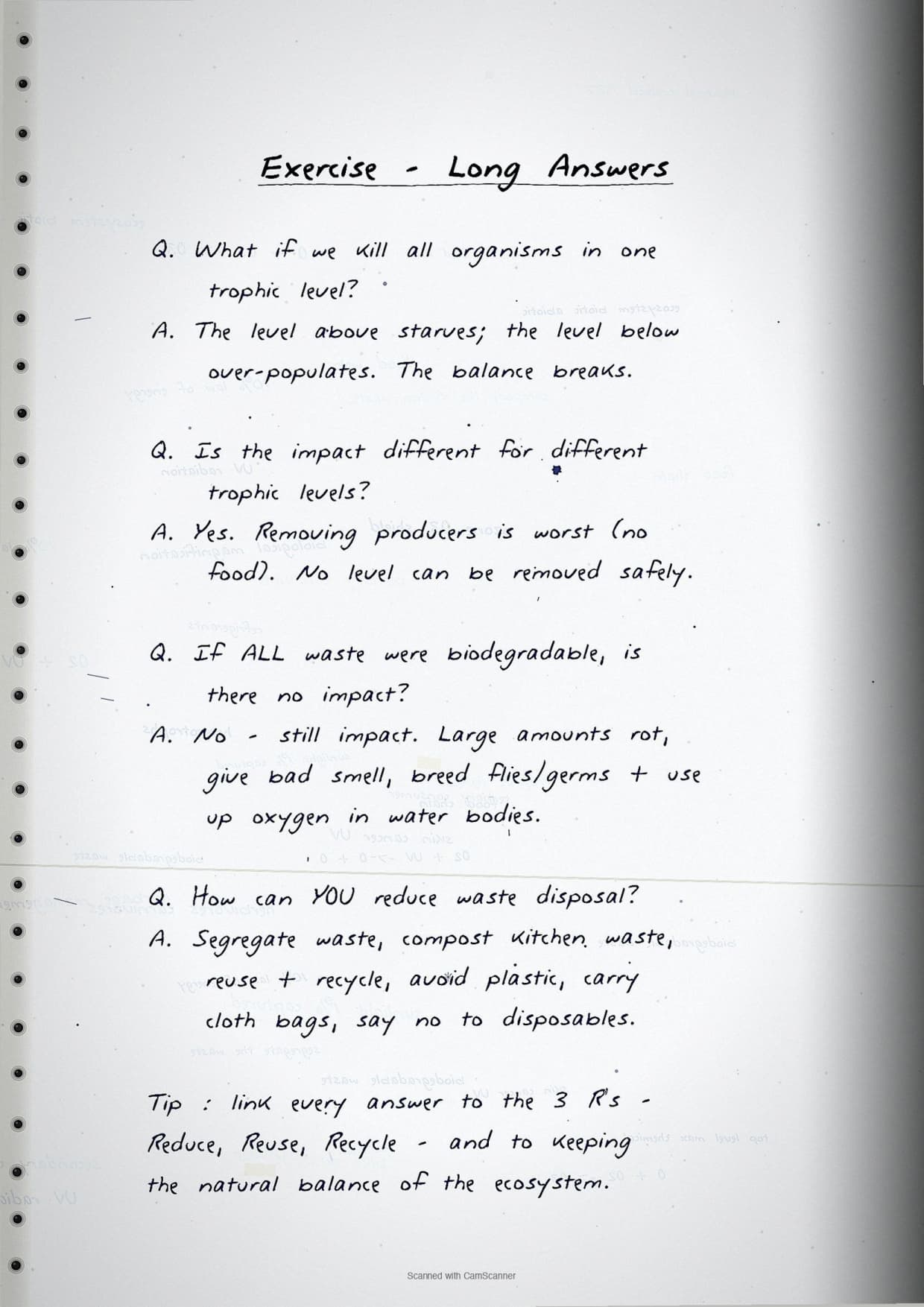
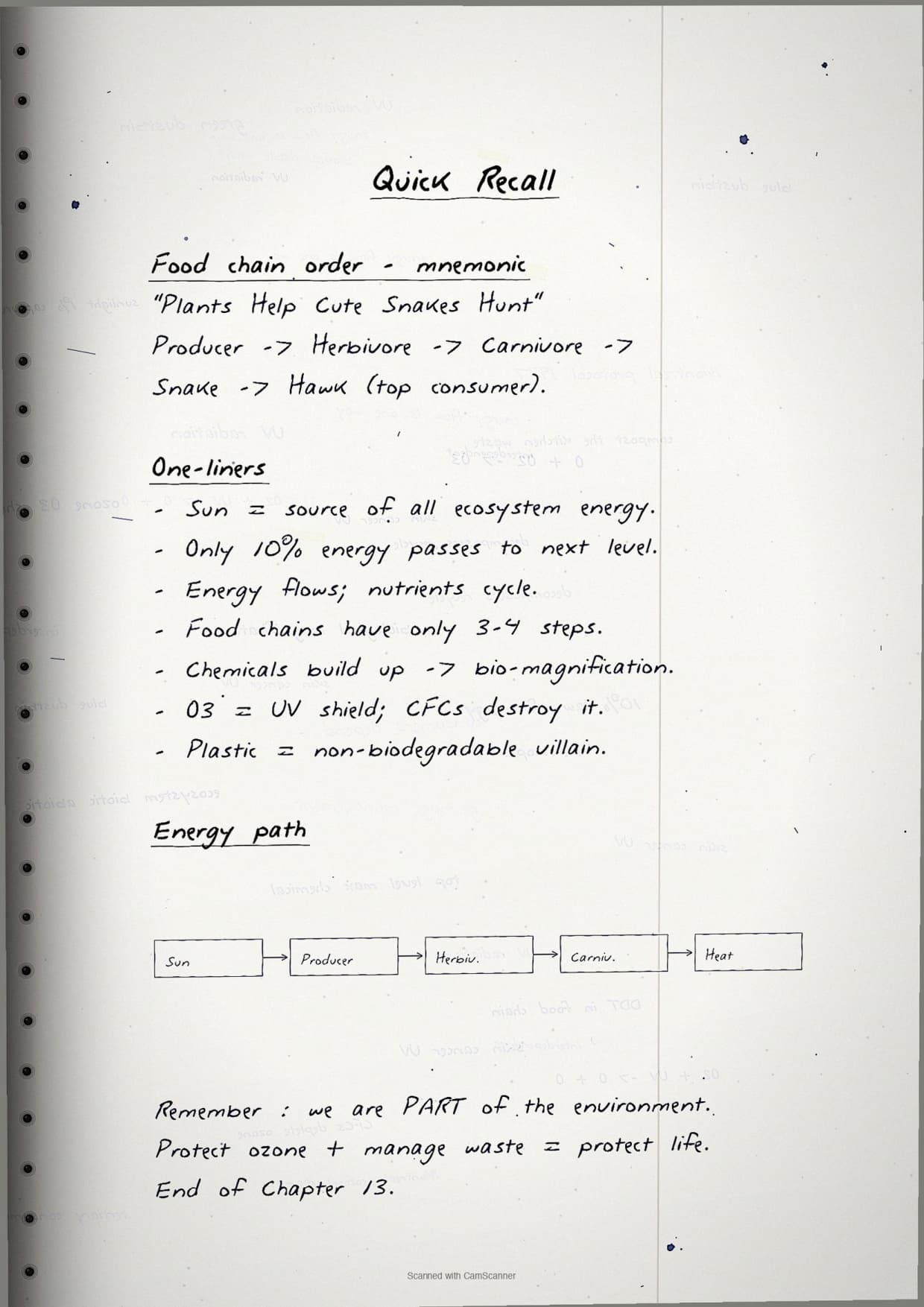
- CBSE Weightage: 3 to 5 marks from the Natural Resources unit, often as 3-mark questions on food chains, the 10% law and the ozone layer.
- Boxed definitions and a hand-drawn energy pyramid for every term, food chain and trophic level the board paper asks about.
- Pairs with the NCERT Solutions, Notes and Book PDF linked lower on this page.
These Our Environment handwritten notes are prepared from the official NCERT Science textbook and matched to the 2026-27 CBSE syllabus.
Student Feedback: In a Collegedunia poll of 10,900 Class 10 Science students before the 2026 boards, 79% of students said the hand-drawn food web and the energy pyramid box were the fastest way to revise this chapter. Most students copied the boxed food chain and the 10% law straight onto practice answer sheets.
Source: 2026-27 Class 10 Science student poll. Sample of 10,900 students from CBSE schools across 15 states.
Solved by Collegedunia: Every food chain and definition in these Our Environment handwritten notes is checked by Collegedunia's Class 10 Science team against the latest 2026-27 NCERT textbook, so what you revise matches exactly what the CBSE board paper expects.
What These Our Environment Handwritten Notes Include
These Our Environment handwritten notes condense the whole chapter into 22 scanned pages of ruled paper, with every food chain drawn by hand and every key term underlined. They are built around the three big ideas the CBSE board paper tests:
- Ecosystem and feeding: what an ecosystem is, its biotic and abiotic components, and how food chains and food webs link them.
- Energy flow: the trophic levels, the one-way flow of energy from the Sun, and the 10% law that limits a food chain to four or five steps.
- Environmental problems: the ozone layer and its depletion, and how biodegradable and non-biodegradable waste is managed.
Our Environment Class 10 Science Video Lecture
Source: Magnet Brains on YouTube
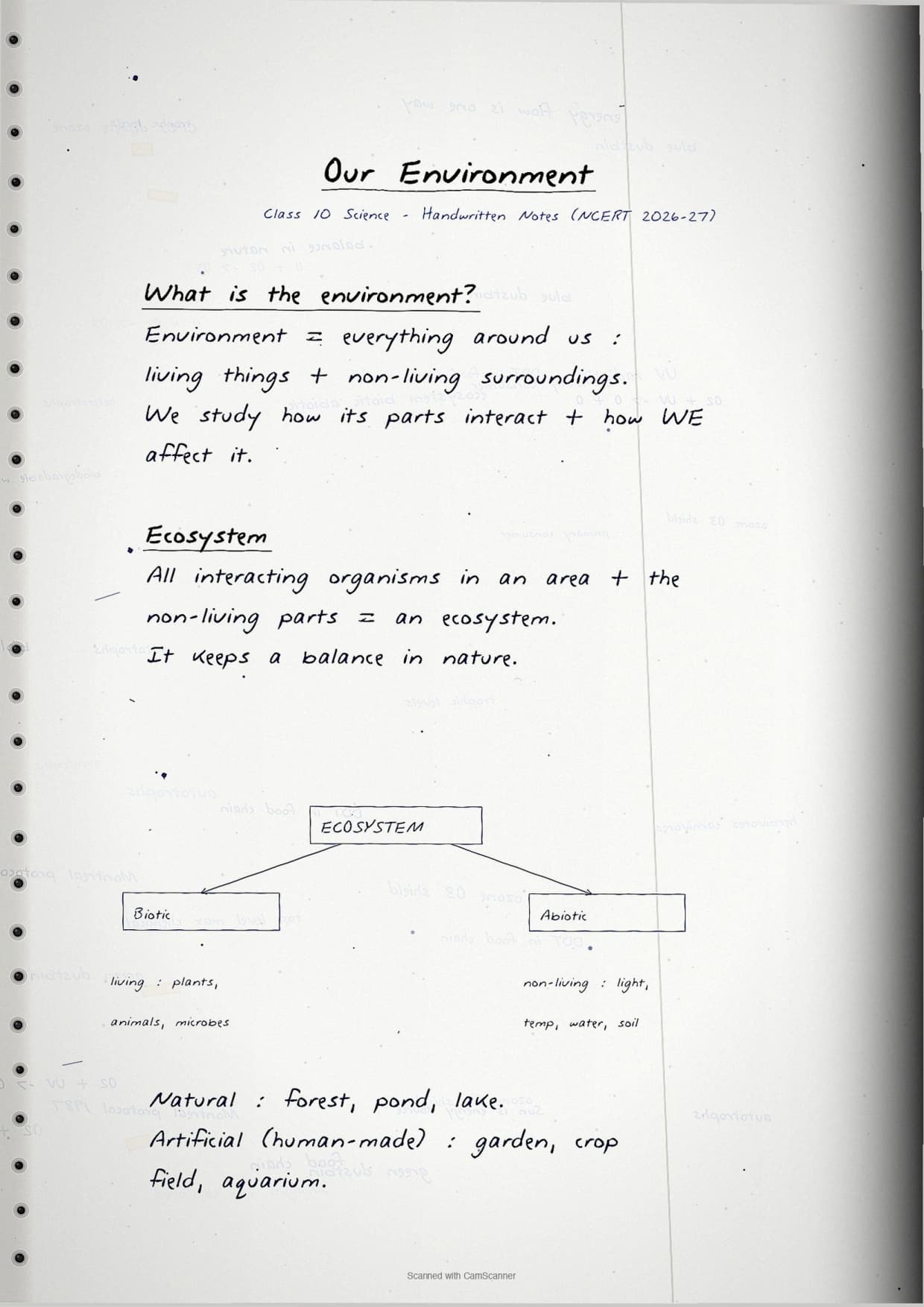
Ecosystem and Its Components: The First Page of the Notes
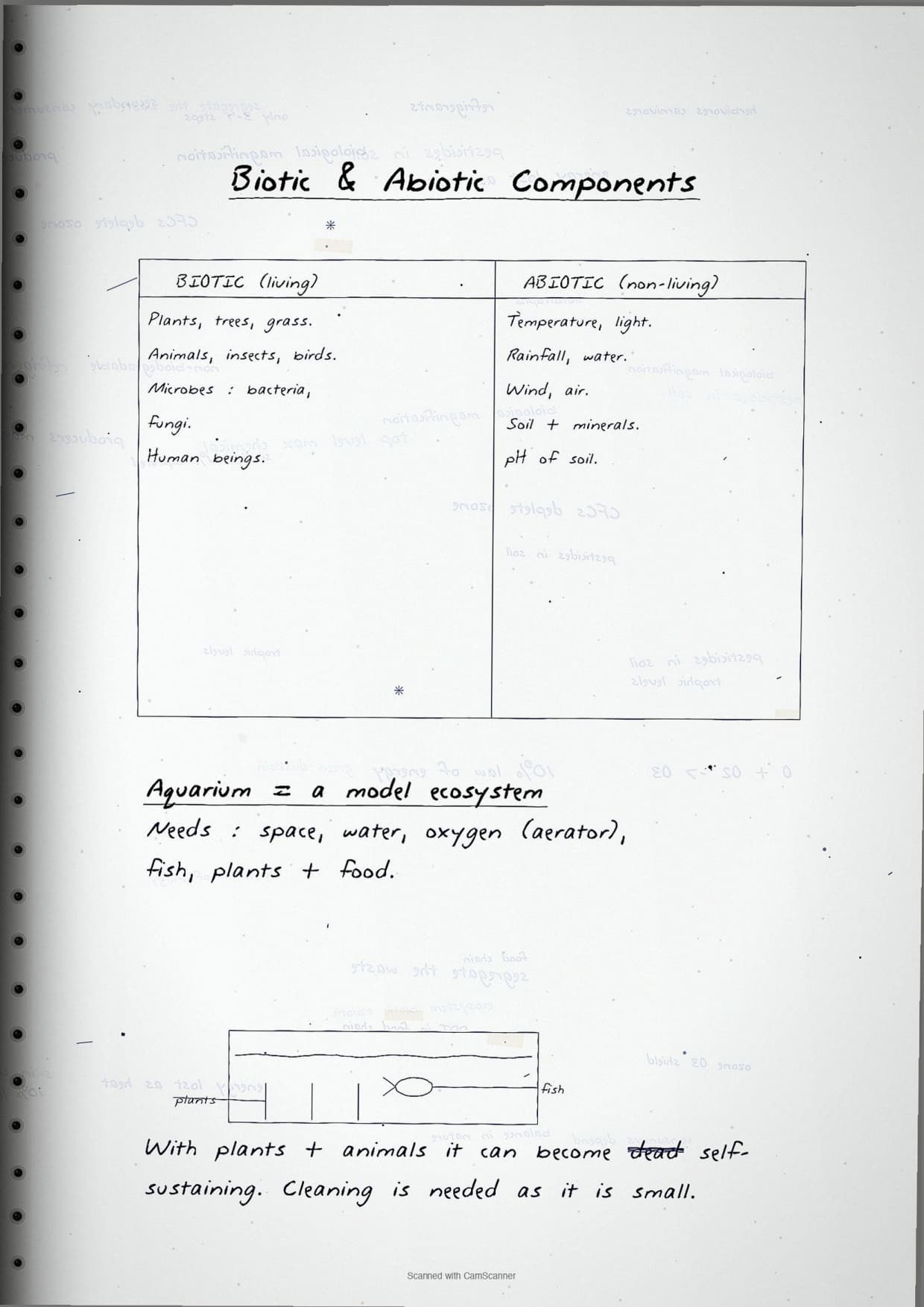
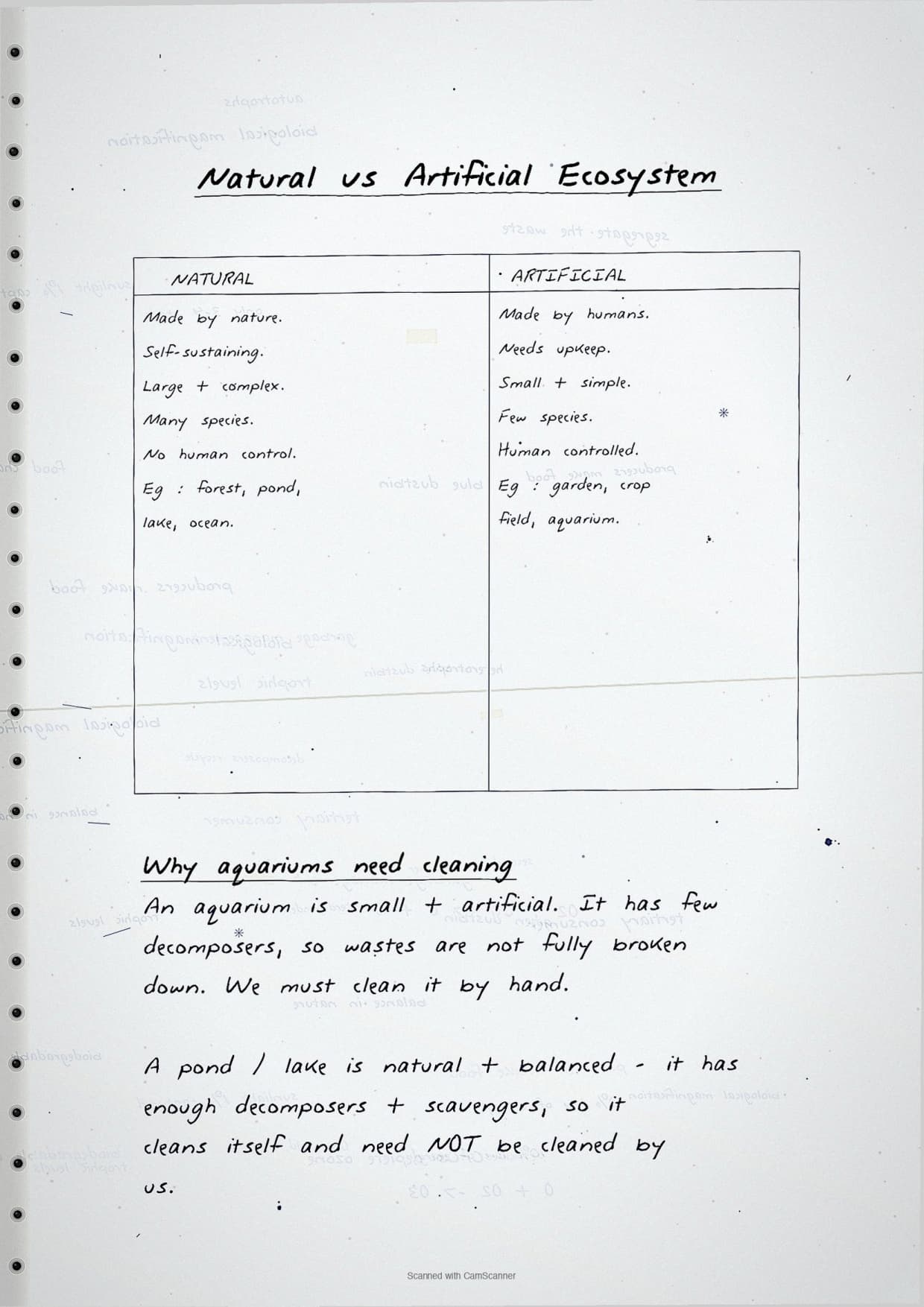
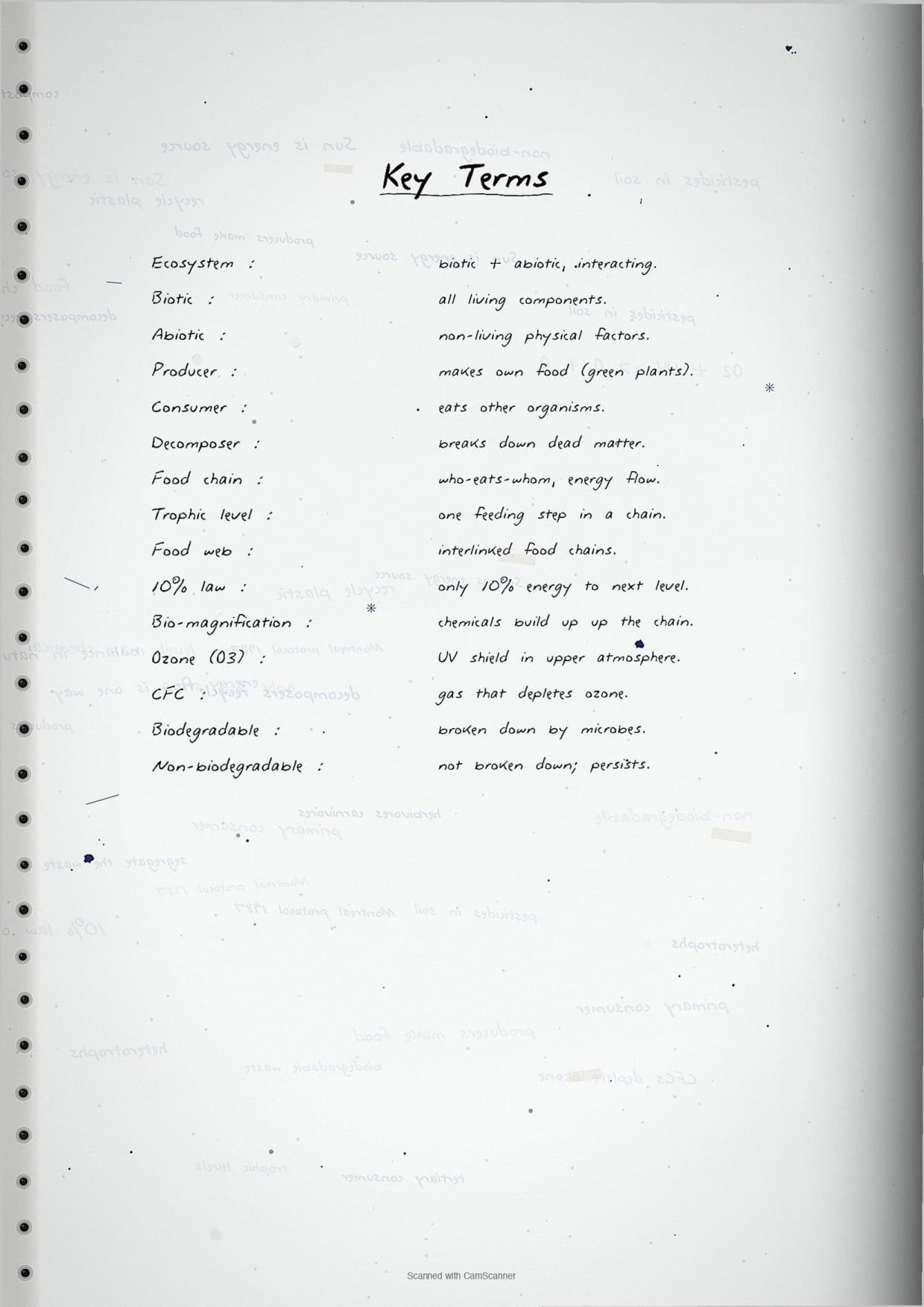
An ecosystem is all the living organisms in an area together with the non-living physical factors, working as one unit. It can be natural (a forest, a pond) or artificial (an aquarium, a garden).
- Biotic components: the living parts, the producers, consumers and decomposers.
- Abiotic components: the non-living parts, like temperature, light, water, air and soil.
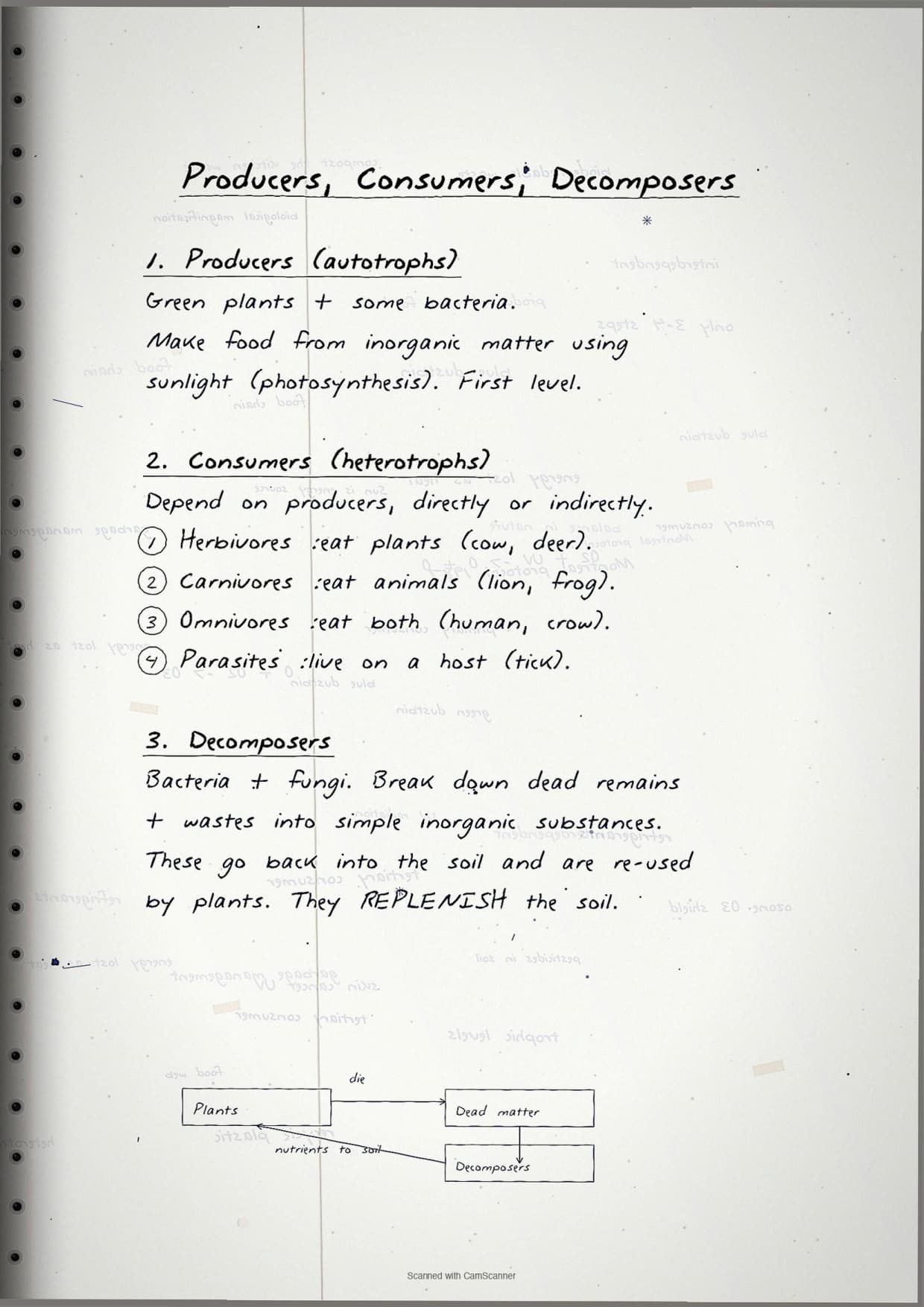
- Producers: green plants and some bacteria that make food by photosynthesis.
- Consumers: animals (herbivores, carnivores or omnivores) that depend on producers or other animals.
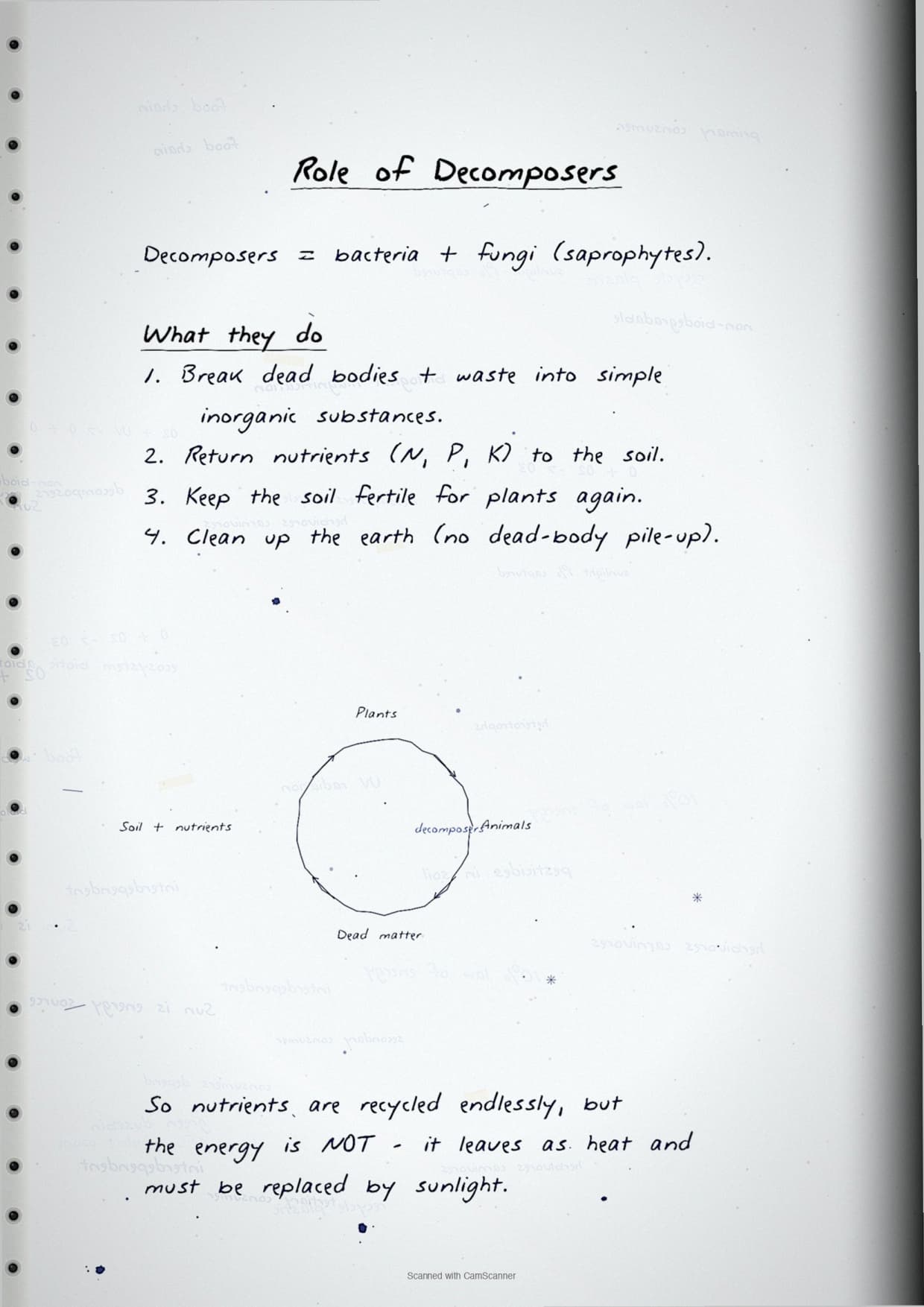
- Decomposers: bacteria and fungi that break down dead matter and return nutrients to the soil.
Food Chains and Food Webs in the Notes
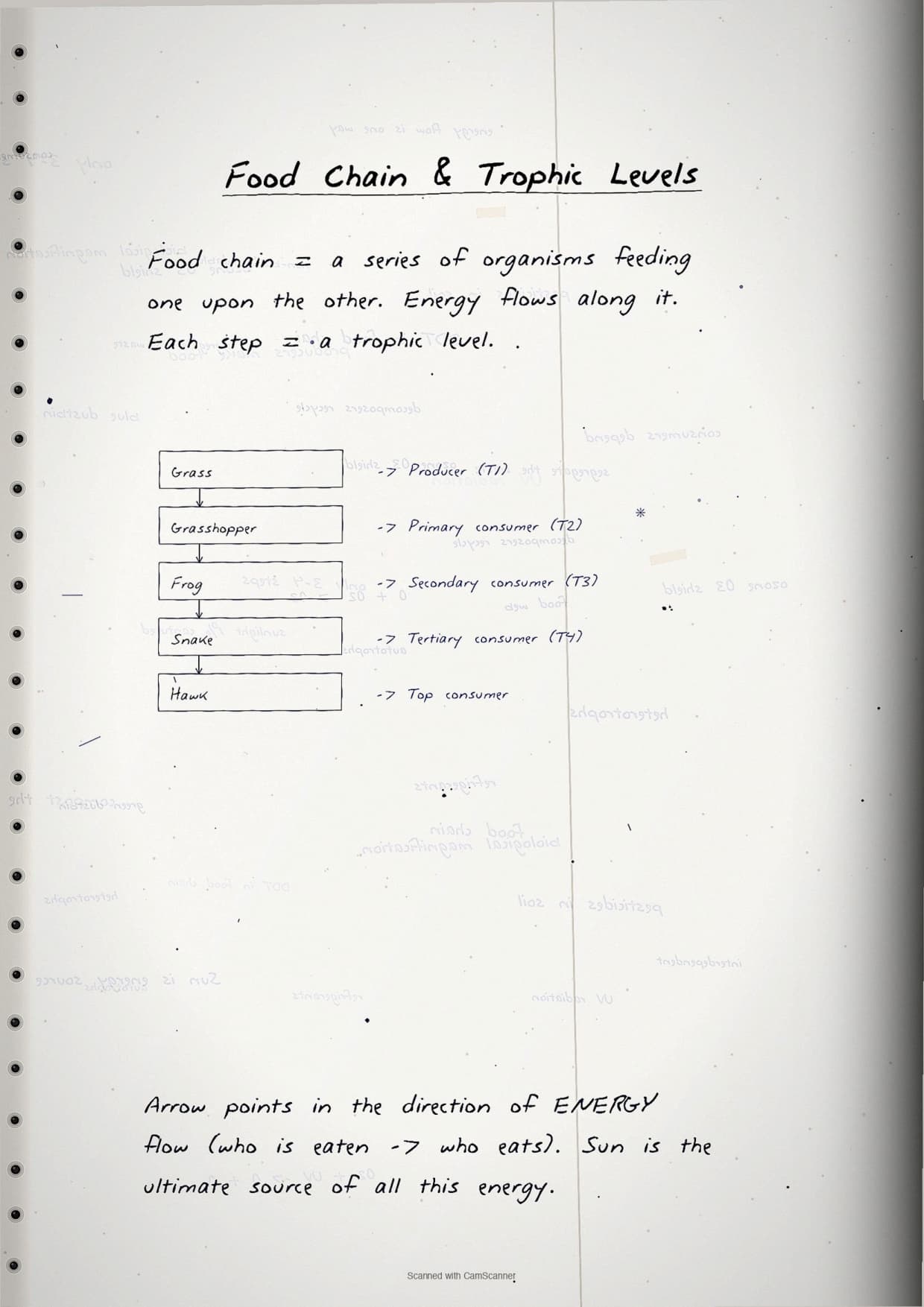
The notes draw a food chain as a labelled arrow line, since tracing the flow of food is a top 2-mark and 3-mark question. The boxed example below uses a simple grassland chain.
| Step in the chain | Organism | Role |
|---|---|---|
| First | Grass | Producer |
| Second | Grasshopper | Primary consumer (herbivore) |
| Third | Frog | Secondary consumer (carnivore) |
| Fourth | Snake, then hawk | Higher consumers |
The arrow always points towards the organism that eats, that is from the food to the feeder, since it shows the direction of energy flow.
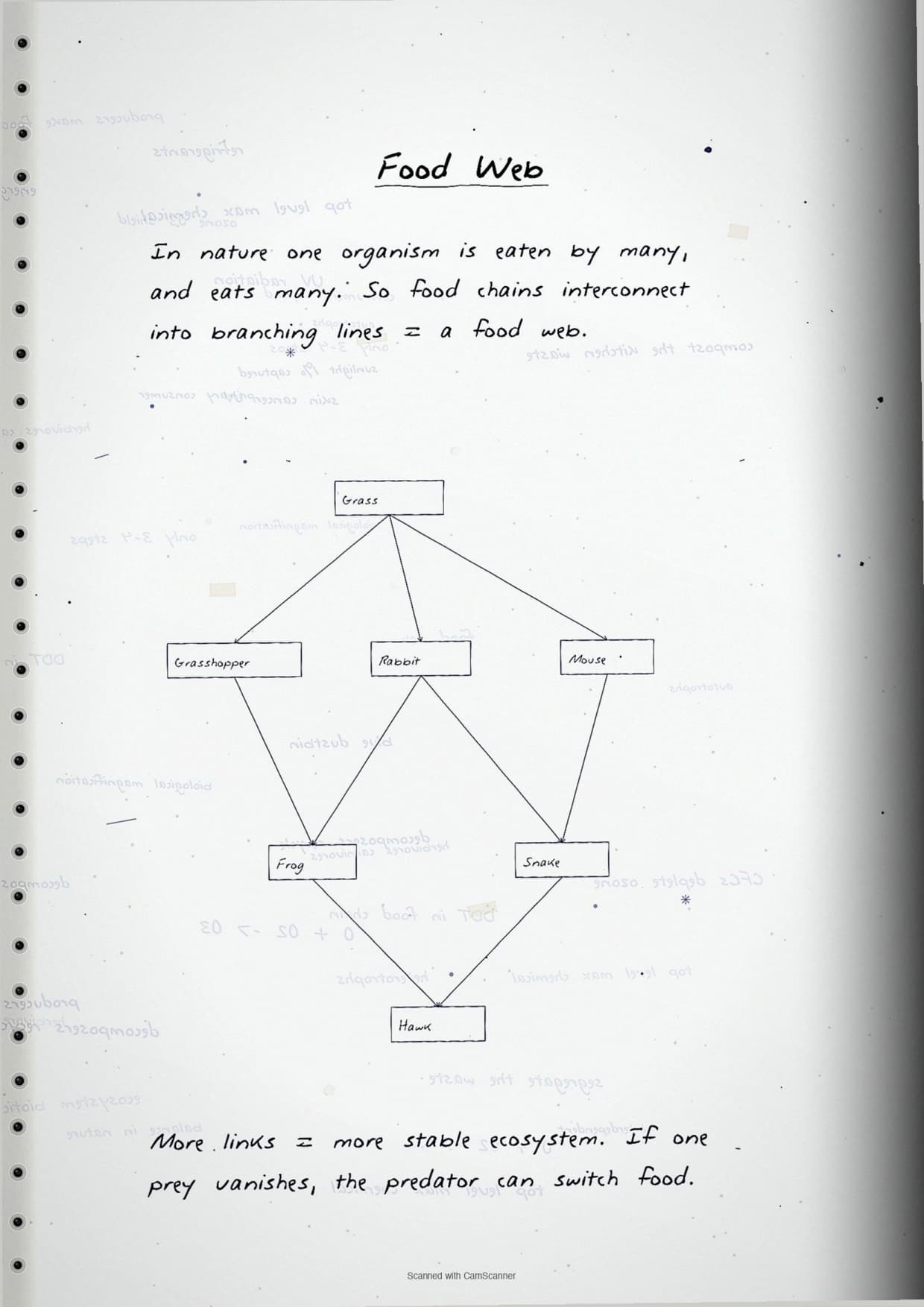
- Food chain: a single straight line of who eats whom, like grass to grasshopper to frog to snake.
- Food web: a network of interconnected food chains, because most animals eat more than one kind of food, so it shows the true feeding relationships.
Trophic Levels and the 10% Energy Law
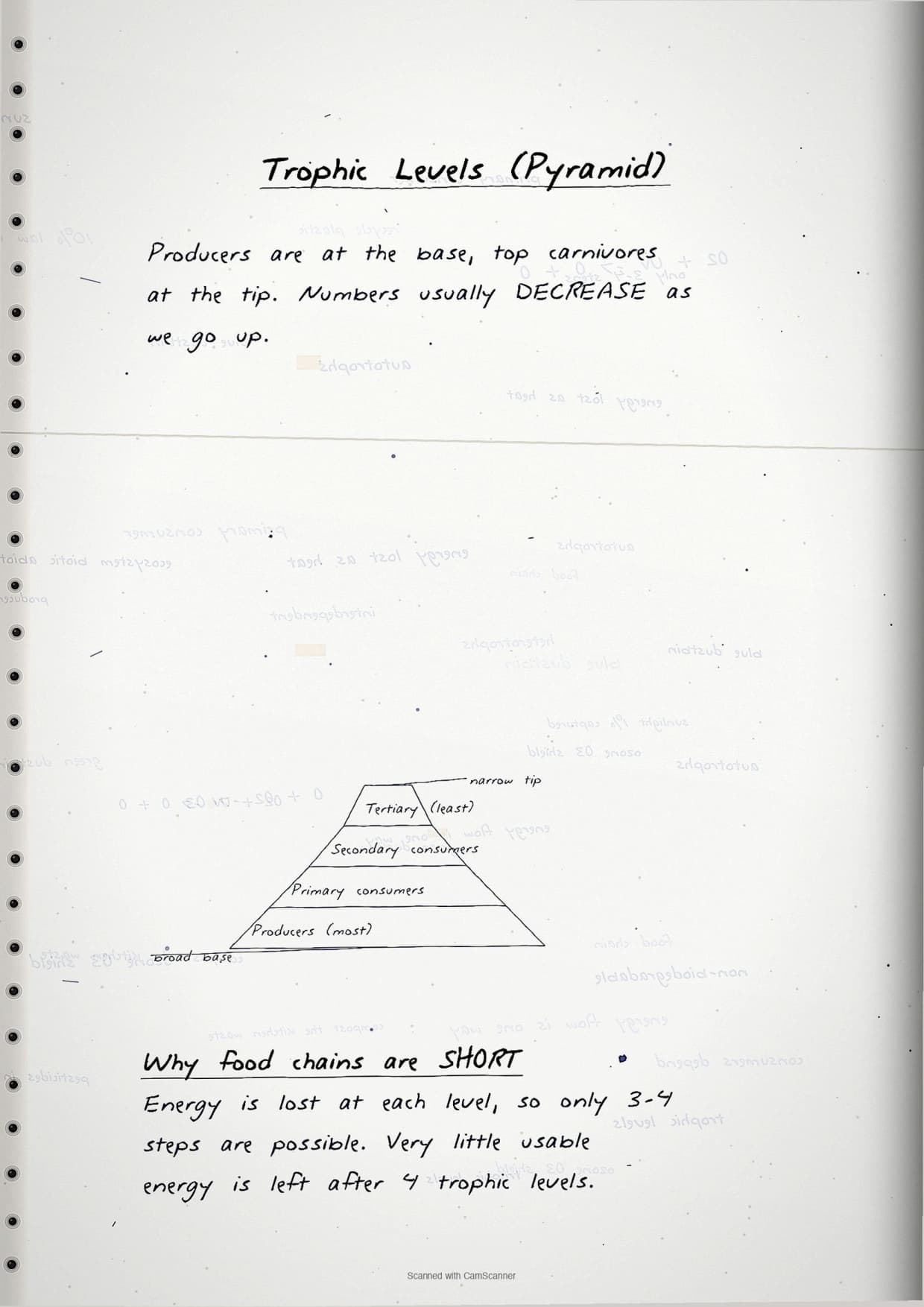
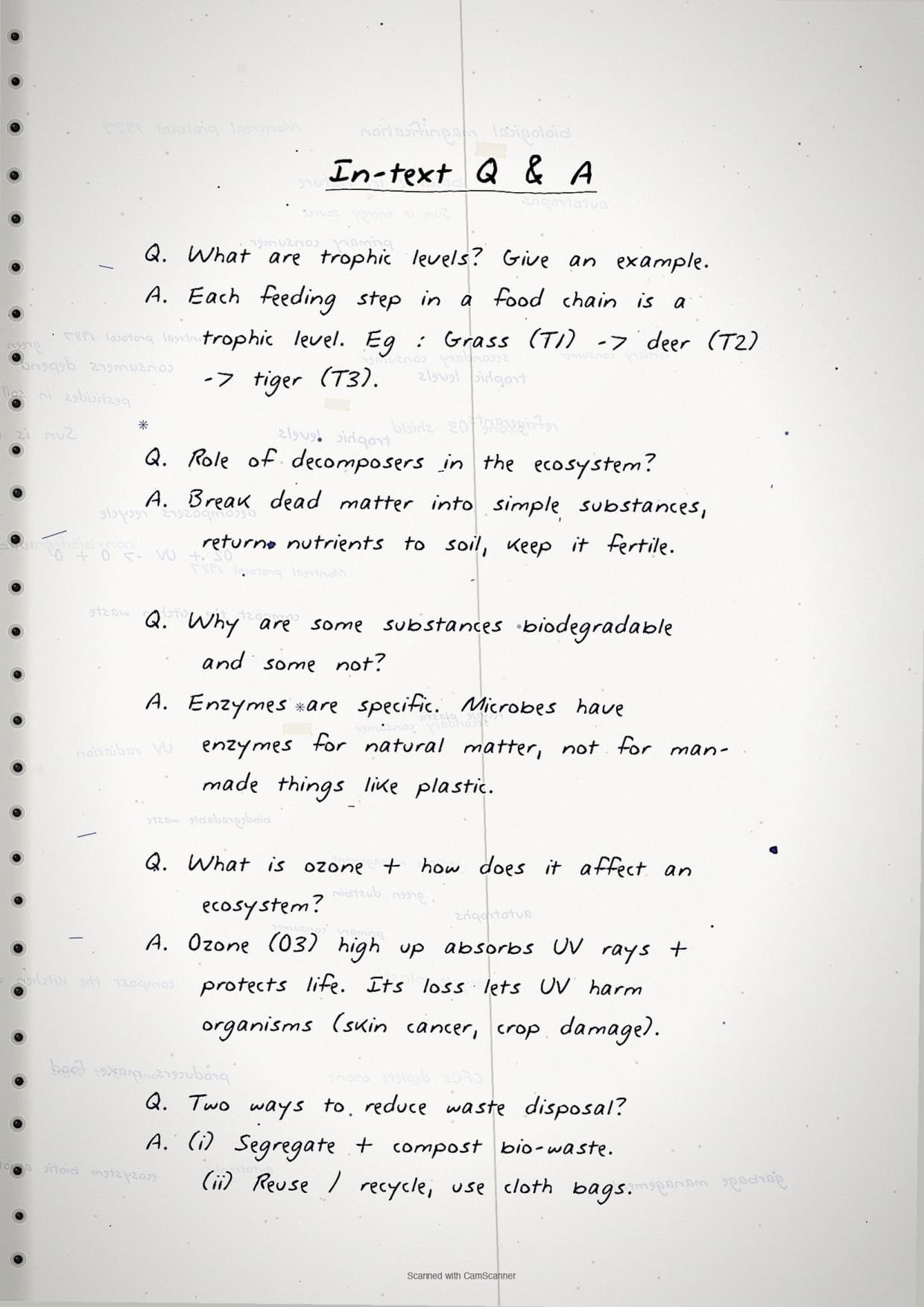
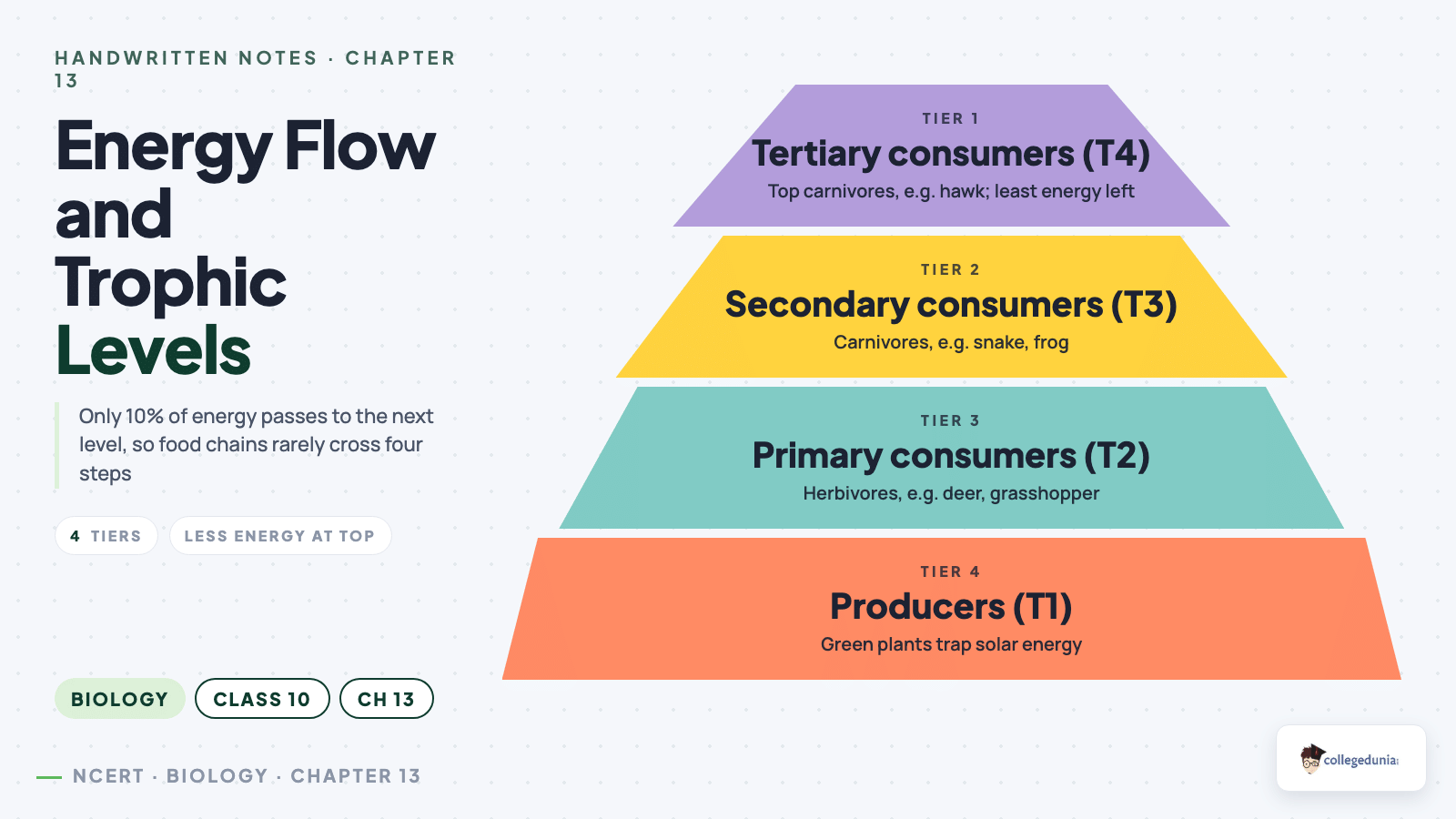
Each step in a food chain is a trophic level, drawn as an energy pyramid (a guaranteed 3-mark question). Energy moves only one way, from the Sun to the producers and upward.
- First level (T1): the producers, green plants that trap solar energy.
- Second level (T2): the herbivores or primary consumers.
- Third level (T3): the small carnivores or secondary consumers.
- Fourth level (T4): the large carnivores or tertiary consumers at the top.
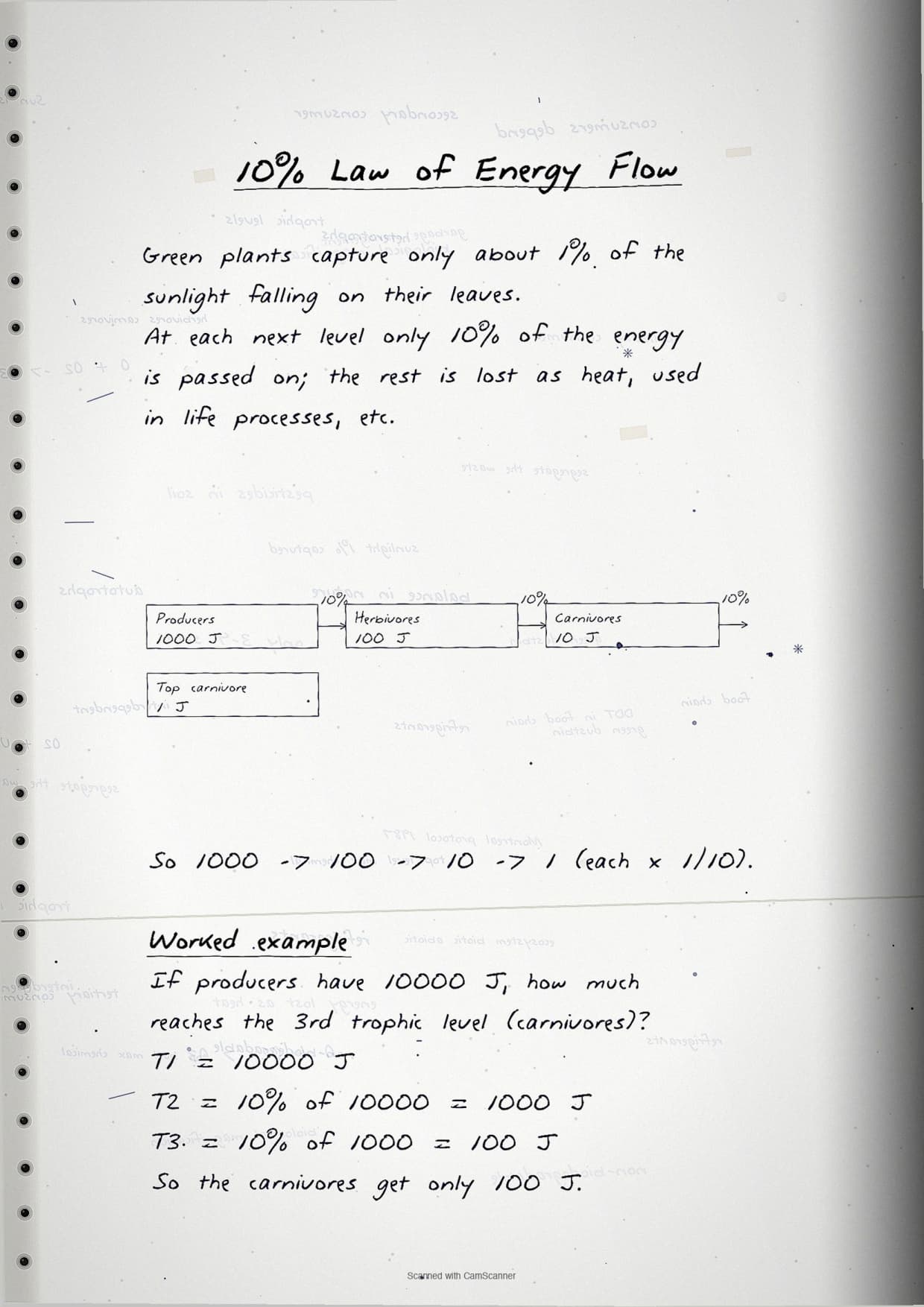
By the ten percent law (Lindemann), only about 10% of the energy at one trophic level passes on to the next; the rest is lost as heat and used in life processes.
- Why chains are short: so little energy is left that a food chain usually has only three or four steps, rarely more than five.
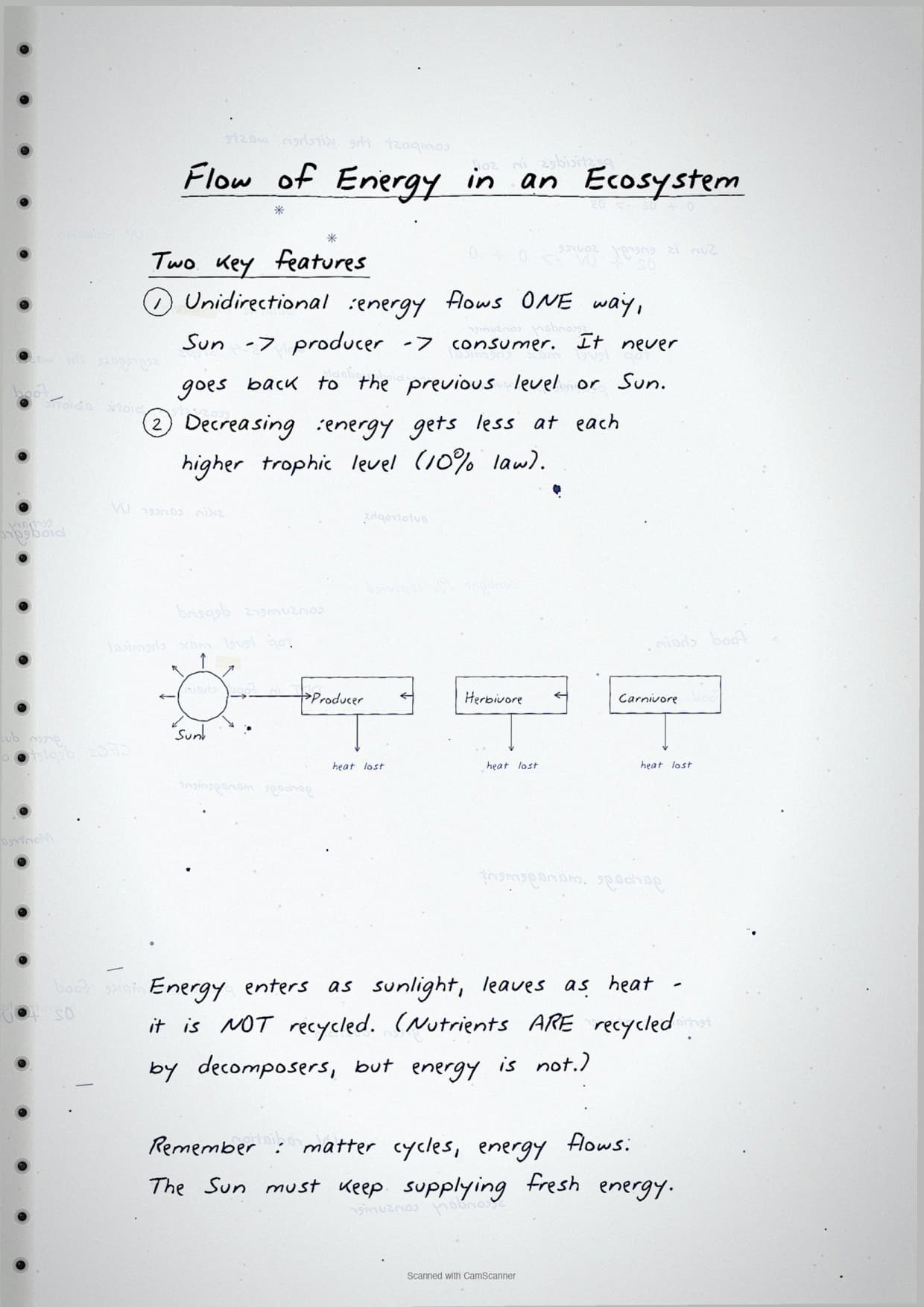
- Energy is one-way: it flows from the Sun and is lost as heat; it never flows back, unlike nutrients which are recycled.
The Ozone Layer and Its Depletion
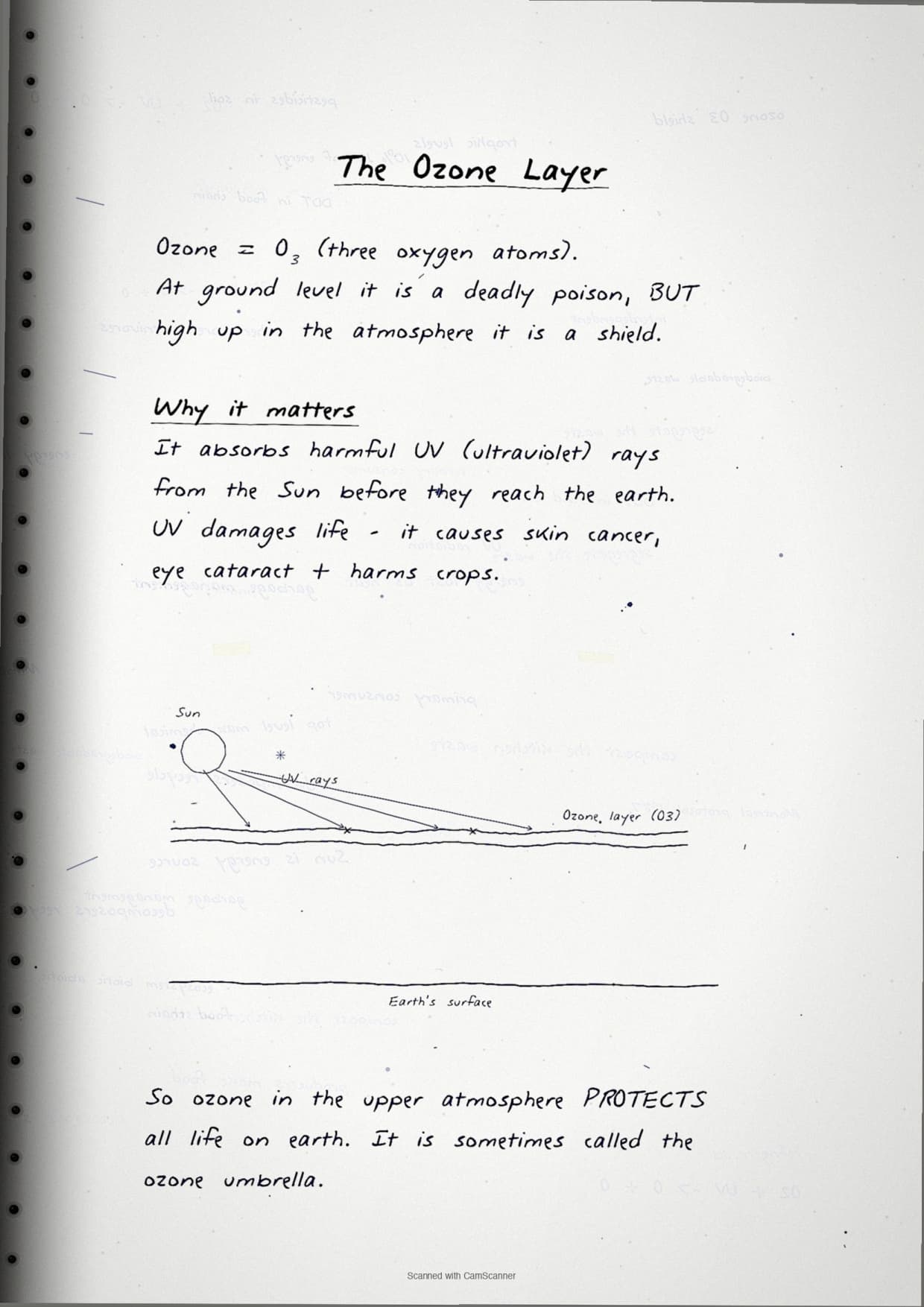
Ozone is a molecule of three oxygen atoms (O3), unlike the oxygen we breathe (O2), and it forms a thin layer in the upper atmosphere, the stratosphere.
- Its role: a shield that absorbs the harmful ultraviolet (UV) rays of the Sun before they reach the Earth.
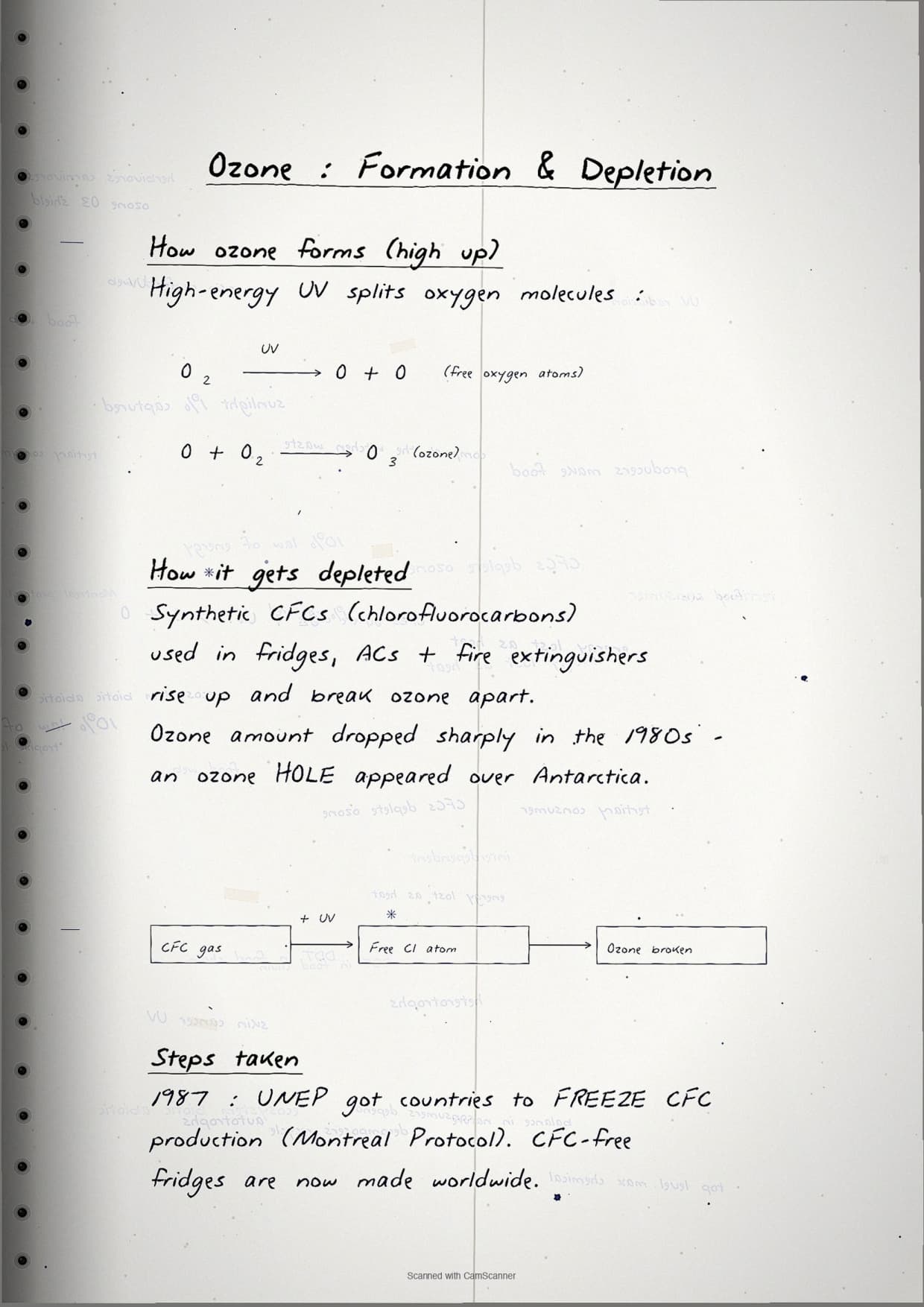
- How it forms: high-energy UV rays split O2 into free oxygen atoms, which join O2 to make O3.
- Cause of depletion: man-made chlorofluorocarbons (CFCs), once used in fridges and sprays, break down ozone.
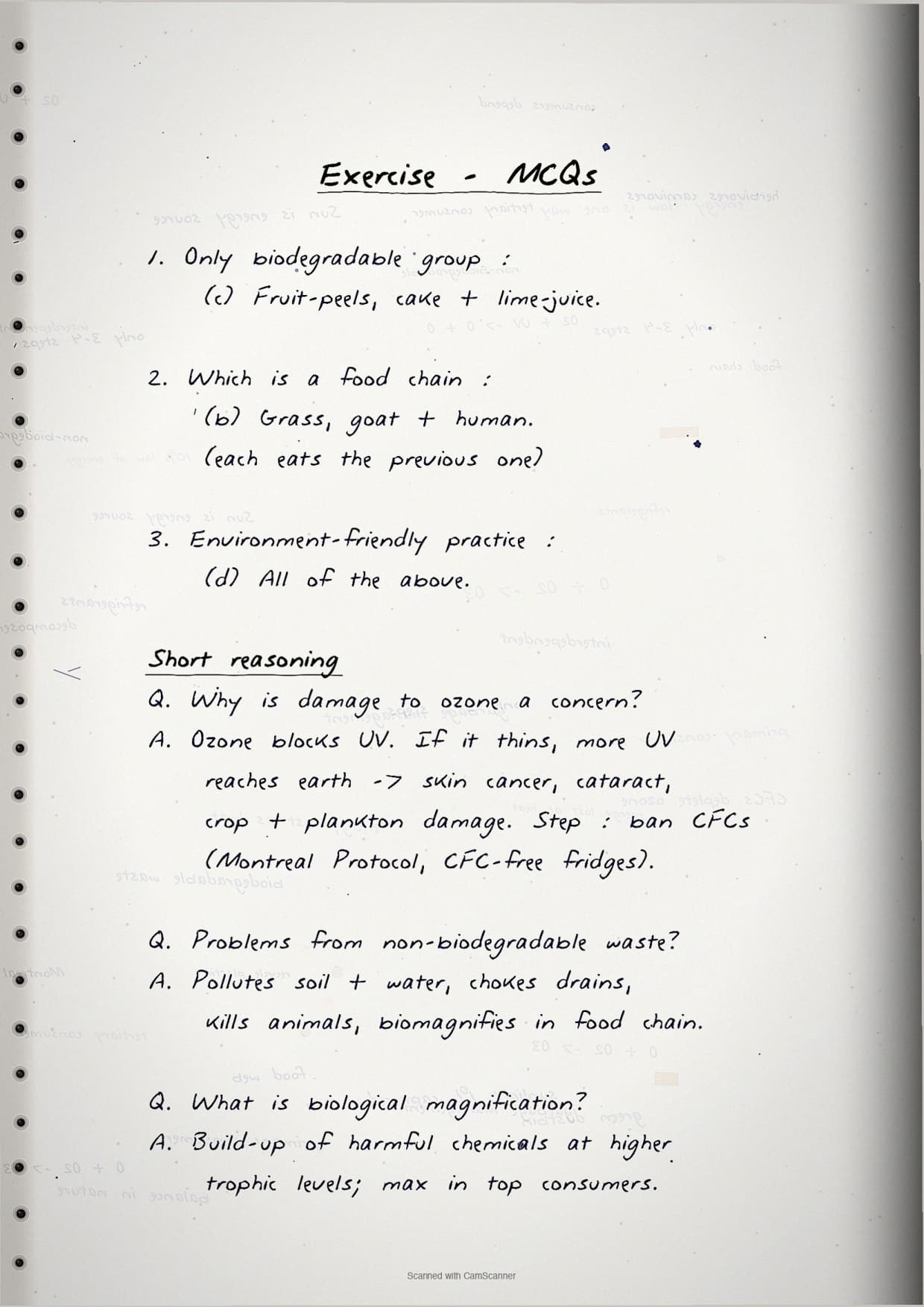
- The effect: a thinner layer lets more UV rays in, causing skin cancer, cataract and harm to crops.
In 1987 many countries signed an agreement to cut the use of CFCs, which helped slow the damage, an easy full-marks point.
Biodegradable and Non-biodegradable Waste
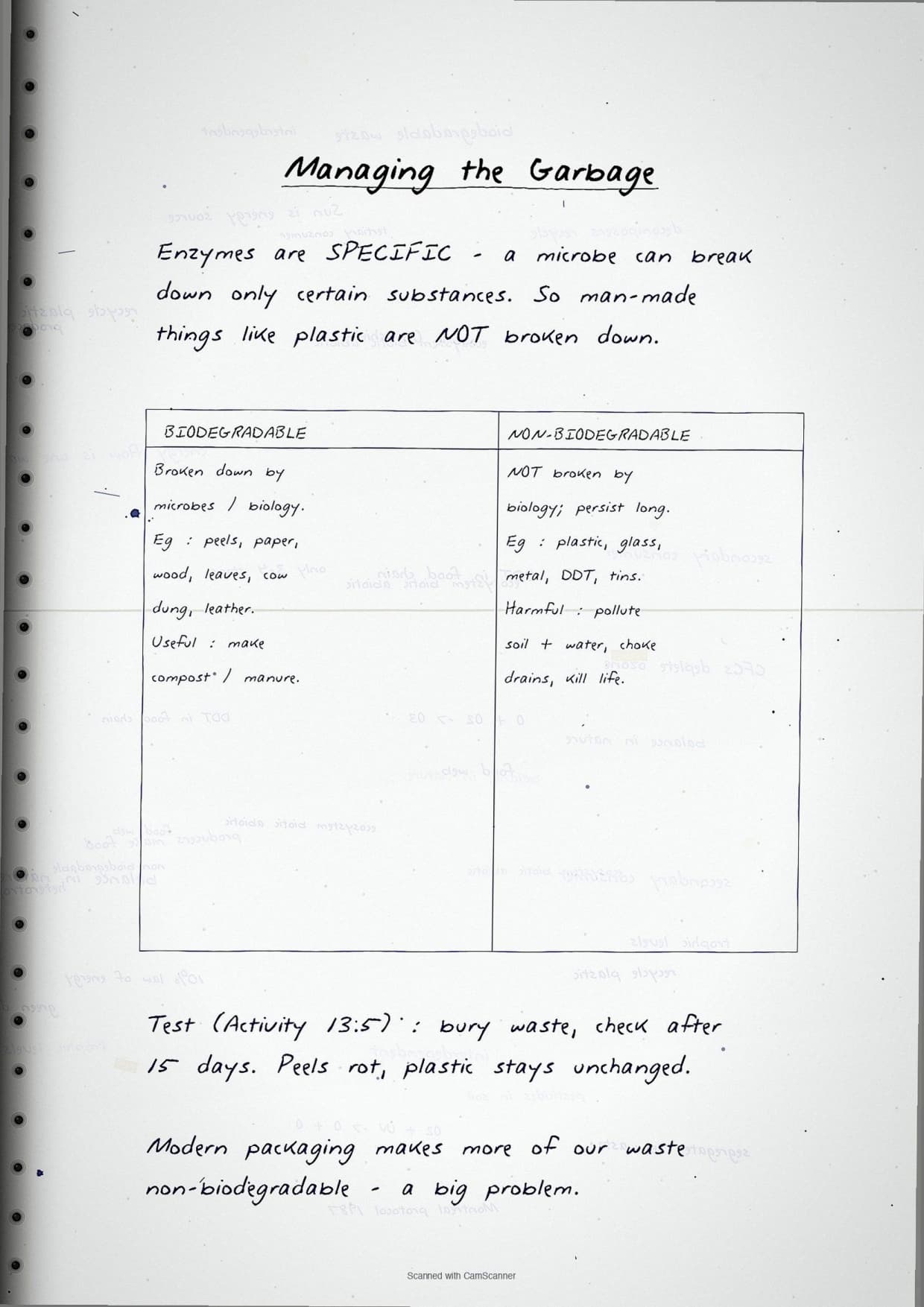
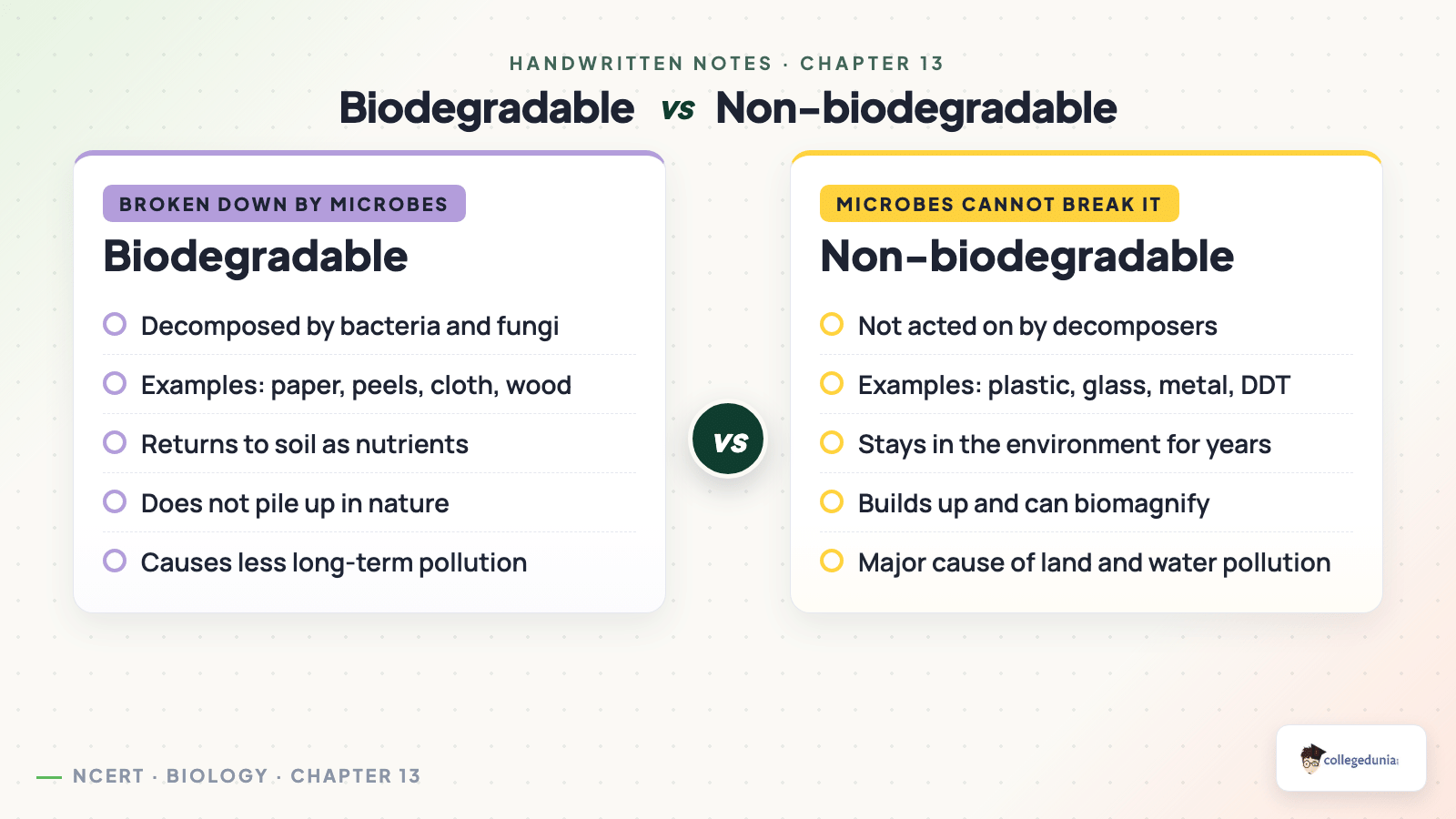
The difference between biodegradable and non-biodegradable substances is a guaranteed 2-mark or 3-mark question. The split depends on whether decomposers can break the substance down.
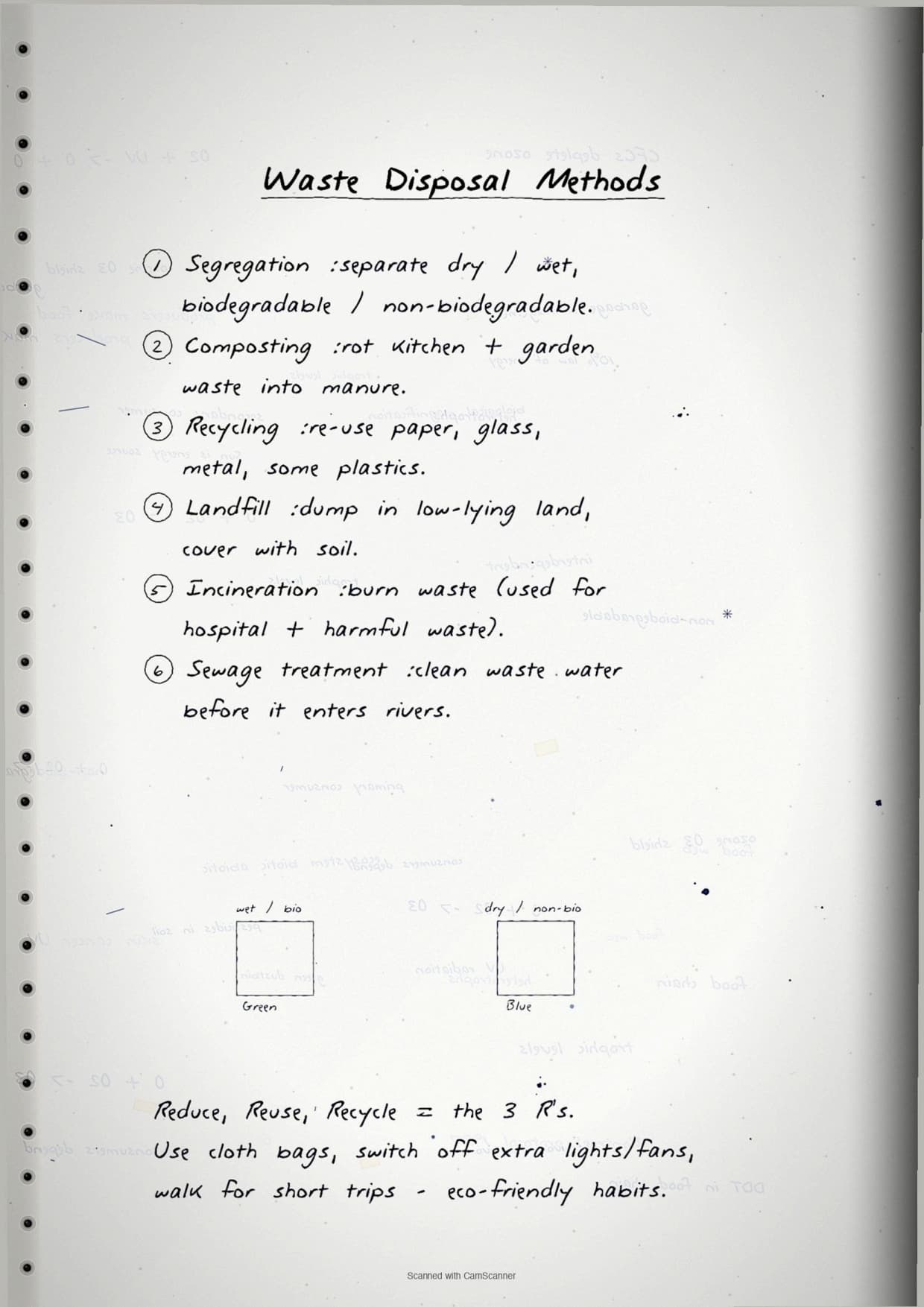
- Biodegradable: substances decomposers can break down, like vegetable peels, paper, cotton cloth and wood.
- Non-biodegradable: substances decomposers cannot break down, like plastic, glass, metal and DDT, so they stay in the environment for years and pile up.
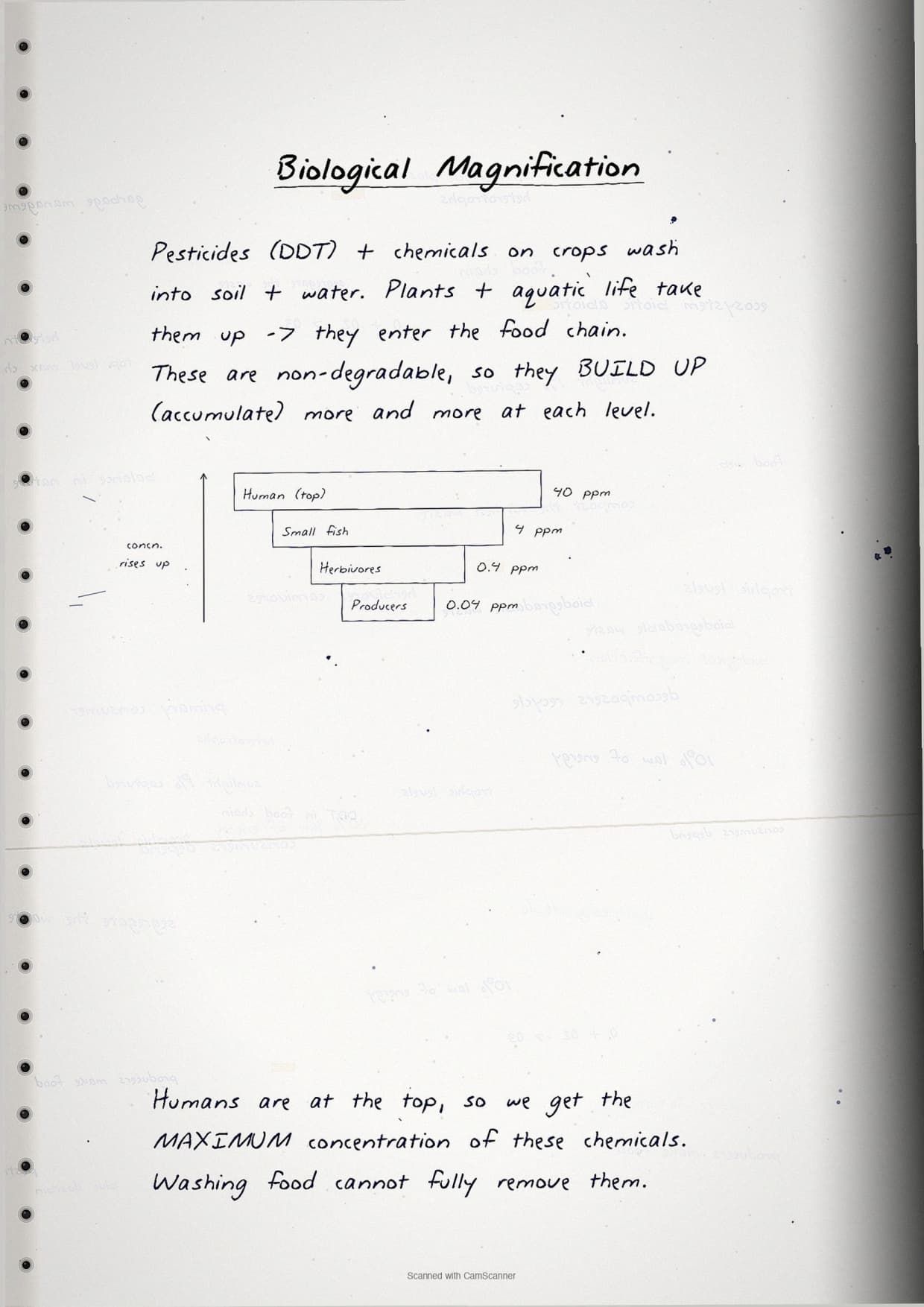
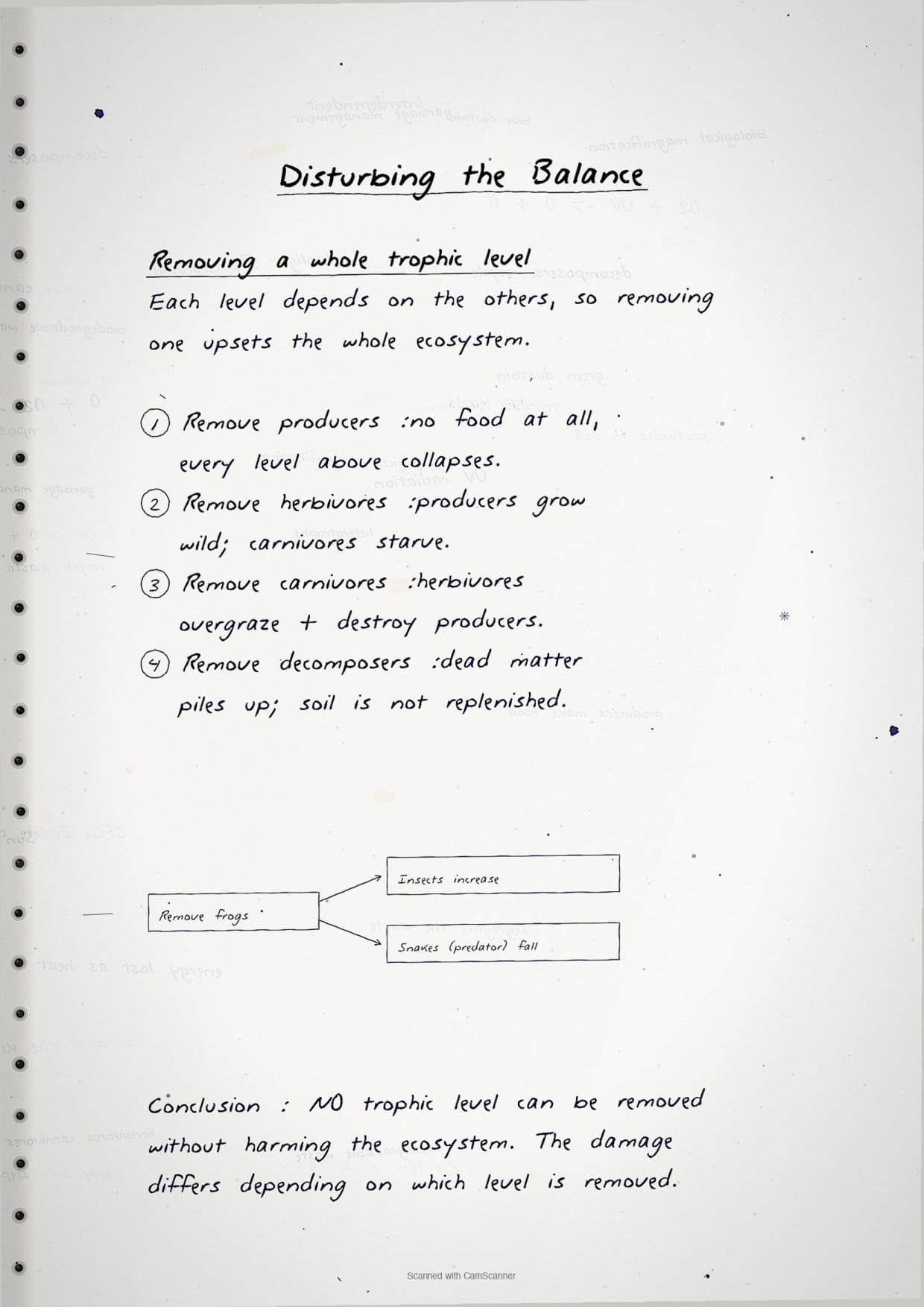
- Biological magnification: harmful chemicals like pesticides enter a food chain and become more concentrated at each higher trophic level, so top consumers (including humans) are worst hit.
- Best practice: reduce, reuse and recycle to cut down the waste we add.
How to Use These Handwritten Notes Effectively
Use the Our Environment handwritten notes as a final revision layer before the board exam:
- First pass: read the pages in order, ecosystem, food chains and webs, energy flow, ozone and waste.
- Active recall: cover the boxed food chain and redraw it and the energy pyramid from memory.
- Number drill: write the 10% figure on each step of the pyramid.
Because the pages are scanned, students can save the our environment class 10 notes on a phone and revise offline before the test. Pair them with the full solutions to check your answers against model ones.
Common Mistakes These Notes Help You Avoid
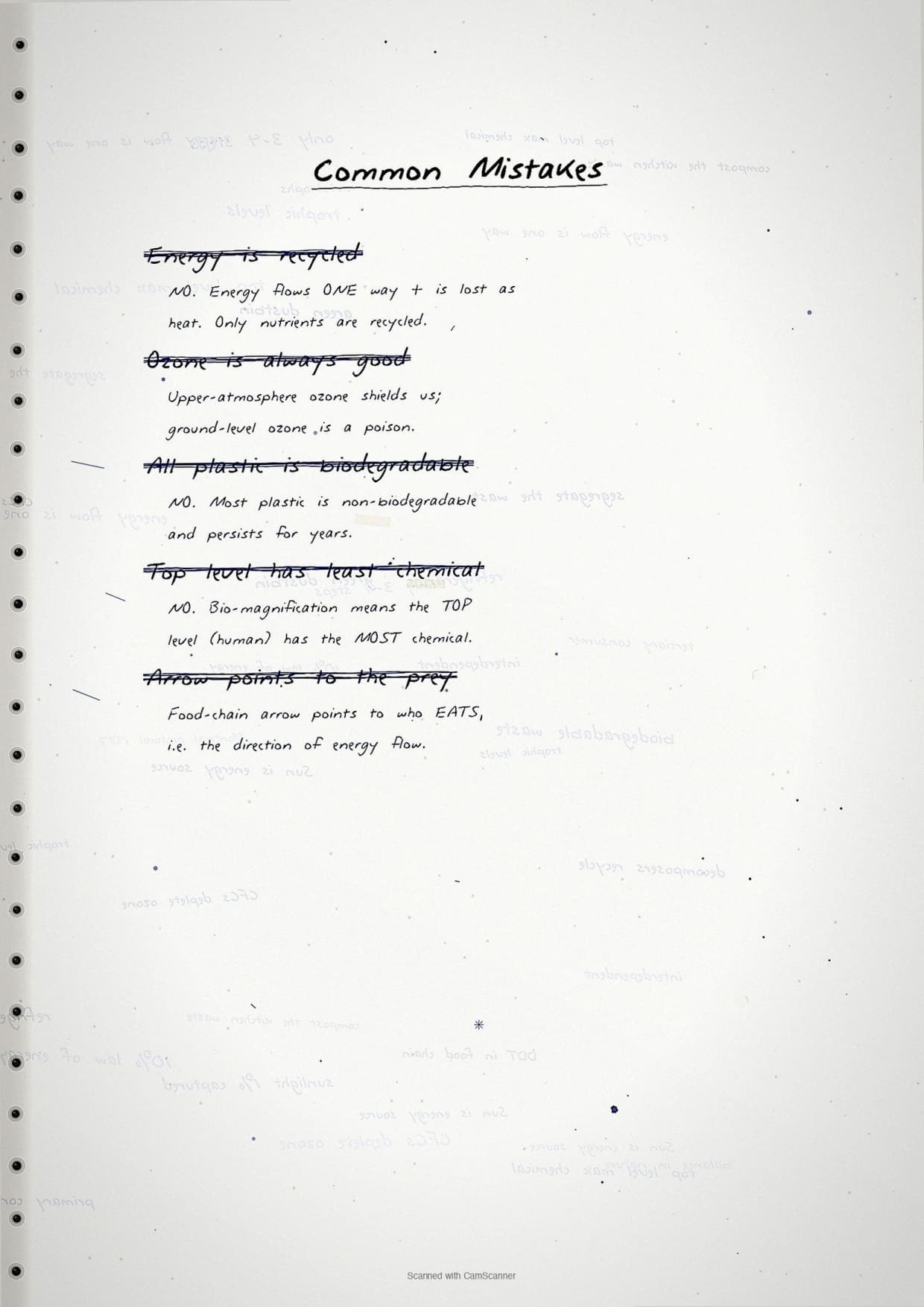
A few errors cost marks every year, mostly from drawing the food chain arrow the wrong way or mixing up the two kinds of waste.
- Drawing the food chain arrow the wrong way. It must point from the food to the feeder, the direction of energy flow.
- Saying energy is recycled. Energy flows one way and is lost as heat; only nutrients are recycled.
- Writing that 20% or 50% of energy passes up. The correct figure is the 10% law.
- Calling plastic or glass biodegradable. Decomposers cannot break them down, so they are non-biodegradable.
- Confusing ground-level pollution with the ozone layer, which sits high up in the stratosphere and shields us from UV rays.
How These Notes Pair with the Solutions and Book PDF
Use these notes with the other resources for the same chapter, linked in the table below: read the notes, test yourself with the solutions, and open the book PDF for the original text.
| Resource | Best used for |
|---|---|
| Our Environment NCERT Solutions | Step-by-step answers for every in-text and back-exercise question |
| Our Environment Class 10 Notes | Quick typed summary with every food chain, level and term in one place |
| Our Environment Formula Sheet | One-page quick reference of the key terms, food chains and the 10% law |
| Our Environment NCERT Book PDF | Reading the original NCERT chapter text from the textbook |
All Class 10 Science Handwritten Notes by Chapter
The table links the handwritten notes for every Class 10 Science chapter. Our Environment is highlighted.
| Chapter | Handwritten Notes |
|---|---|
| Chapter 1 | Chemical Reactions and Equations |
| Chapter 2 | Acids, Bases and Salts |
| Chapter 3 | Metals and Non-metals |
| Chapter 4 | Carbon and its Compounds |
| Chapter 5 | Life Processes |
| Chapter 6 | Control and Coordination |
| Chapter 7 | How do Organisms Reproduce? |
| Chapter 8 | Heredity |
| Chapter 9 | Light - Reflection and Refraction |
| Chapter 10 | The Human Eye and the Colourful World |
| Chapter 11 | Electricity |
| Chapter 12 | Magnetic Effects of Electric Current |
| Chapter 13 | Our Environment |
FAQs on Our Environment Handwritten Notes
Our Environment Class 10 Science Handwritten Notes Common Questions
Ques. Are these class 10 science chapter 13 Our Environment handwritten notes free to download?
Ans. Yes. The Our Environment handwritten notes are free to download as a PDF from this page. They follow the 2026-27 NCERT syllabus and cover the full chapter across 22 scanned, hand-drawn pages for quick revision.
Ques. What does Chapter 13 Our Environment cover in Class 10 Science?
Ans. The notes cover the ecosystem and its biotic and abiotic components, food chains and food webs, trophic levels, the one-way flow of energy with the 10% law, the ozone layer and its depletion by CFCs, and the difference between biodegradable and non-biodegradable waste, all of which the CBSE board paper tests directly.
Ques. What is the 10% law of energy flow?
Ans. The 10% law states that only about 10% of the energy at one trophic level is passed on to the next level. The remaining energy is lost as heat and used up in life processes. Because so little energy is left at each step, a food chain usually has only three or four trophic levels.
Ques. What is the difference between biodegradable and non-biodegradable substances?
Ans. Biodegradable substances, such as vegetable peels, paper and cotton, can be broken down by decomposers like bacteria and fungi. Non-biodegradable substances, such as plastic, glass, metal and DDT, cannot be broken down by decomposers, so they stay in the environment for a long time and cause pollution.
Ques. Are these notes enough for the class 10 science chapter 13 board exam?
Ans. They are a strong final revision layer. For full preparation, pair them with the NCERT Solutions linked on this page so you can write out complete answers and draw the food chains and energy pyramid for every in-text and back-exercise question and check them against model answers.



Comments