




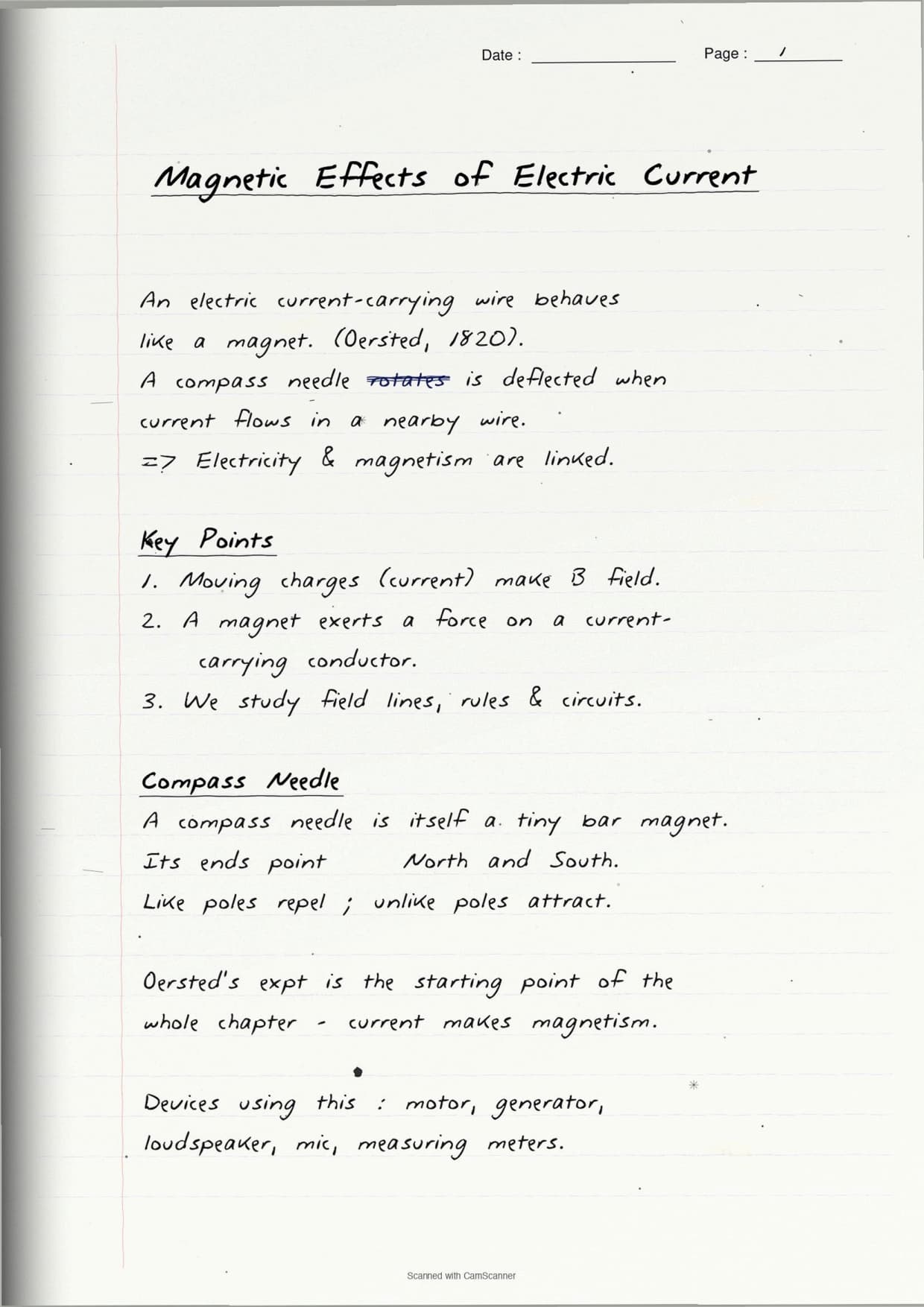
The Magnetic Effects of Electric Current Class 10 Science handwritten notes are scanned, boxed and built for fast last-minute revision, matched to the 2026-27 CBSE syllabus. They cover the magnetic field and field lines, the right-hand thumb rule, the field of a circular loop and a solenoid, the force on a conductor and Fleming's left-hand rule, the electric motor, electromagnetic induction, the electric generator, and domestic circuits, all in ruled-page form with hand-drawn diagrams.
- CBSE Weightage: about 6 to 8 marks from the unit Effects of Current, often as rule, diagram and reasoning questions.
- Boxed rules and a hand-drawn diagram for every field pattern, hand rule and device the board paper asks about.
- Pairs with the NCERT Solutions, Notes and Book PDF linked lower on this page.
These Magnetic Effects of Electric Current handwritten notes are prepared from the official NCERT Science textbook and matched to the 2026-27 CBSE syllabus.
Student Feedback: In a Collegedunia poll of 11,900 Class 10 Science students before the 2026 boards, 79% of students said the hand-drawn field-line diagrams and the boxed right-hand and Fleming's rules were the fastest way to revise this chapter. Most students copied the boxed hand rules straight onto practice answer sheets.
Source: 2026-27 Class 10 Science student poll. Sample of 11,900 students from CBSE schools across 16 states.
Solved by Collegedunia: Every field-line diagram, table and hand rule in these Magnetic Effects of Electric Current handwritten notes is checked by Collegedunia's Class 10 Science team against the latest 2026-27 NCERT textbook, so what you revise matches exactly what the CBSE board paper expects.
What These Magnetic Effects of Electric Current Handwritten Notes Include
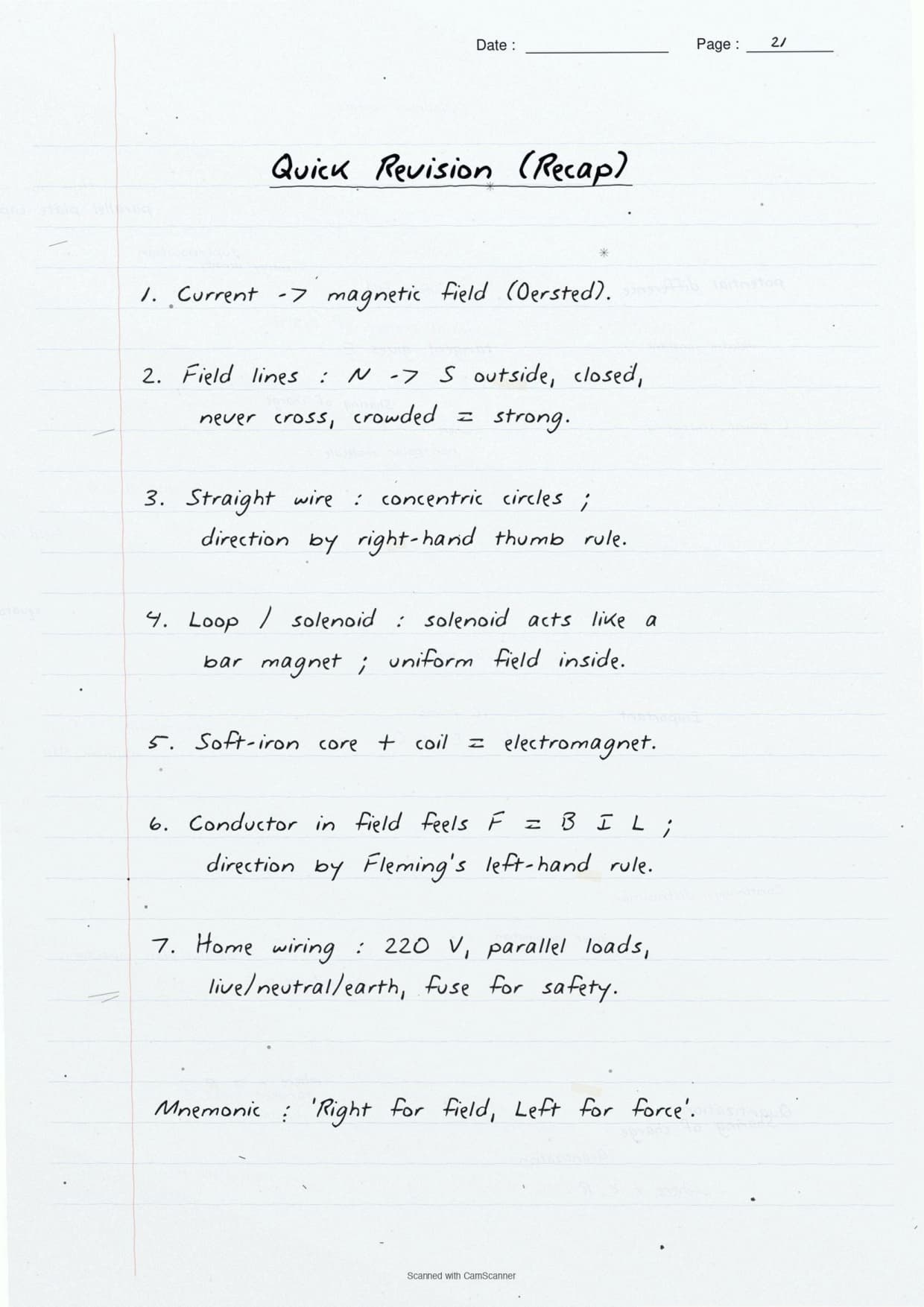
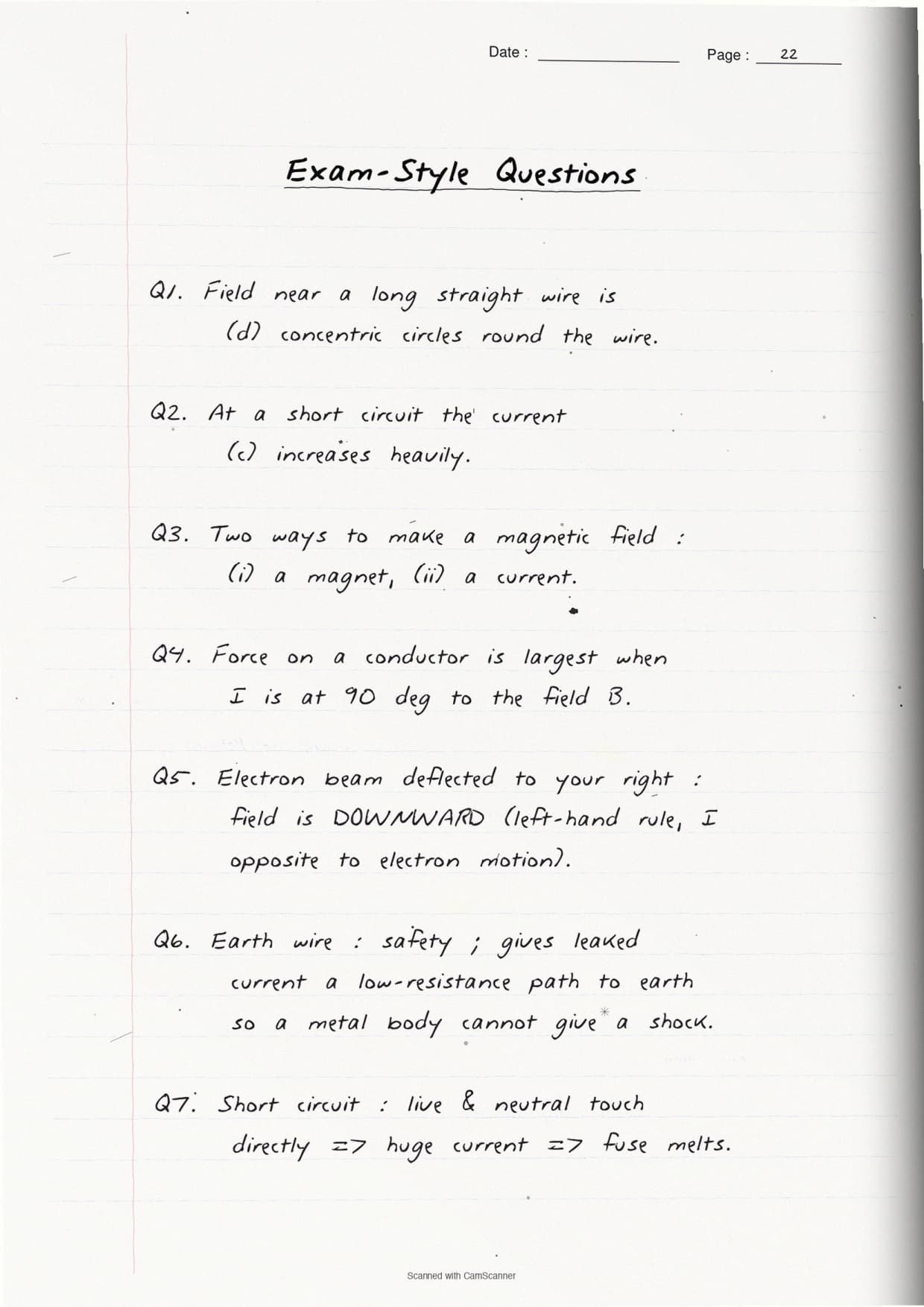
These Magnetic Effects of Electric Current handwritten notes condense the whole chapter into 22 scanned pages of ruled paper, with every field-line diagram drawn by hand and every hand rule boxed in pen. The pages are built around the three big ideas the CBSE board paper tests:
- Magnetic field and its sources: the magnetic field, field lines, and the field due to a straight wire, a circular loop and a solenoid.
- Force and the motor: the force on a current-carrying conductor, Fleming's left-hand rule, and how the electric motor works.
- Induction and the generator: electromagnetic induction, Fleming's right-hand rule, the electric generator, and domestic circuits.
Magnetic Effects of Electric Current Class 10 Science Video Lecture
Source: Magnet Brains on YouTube
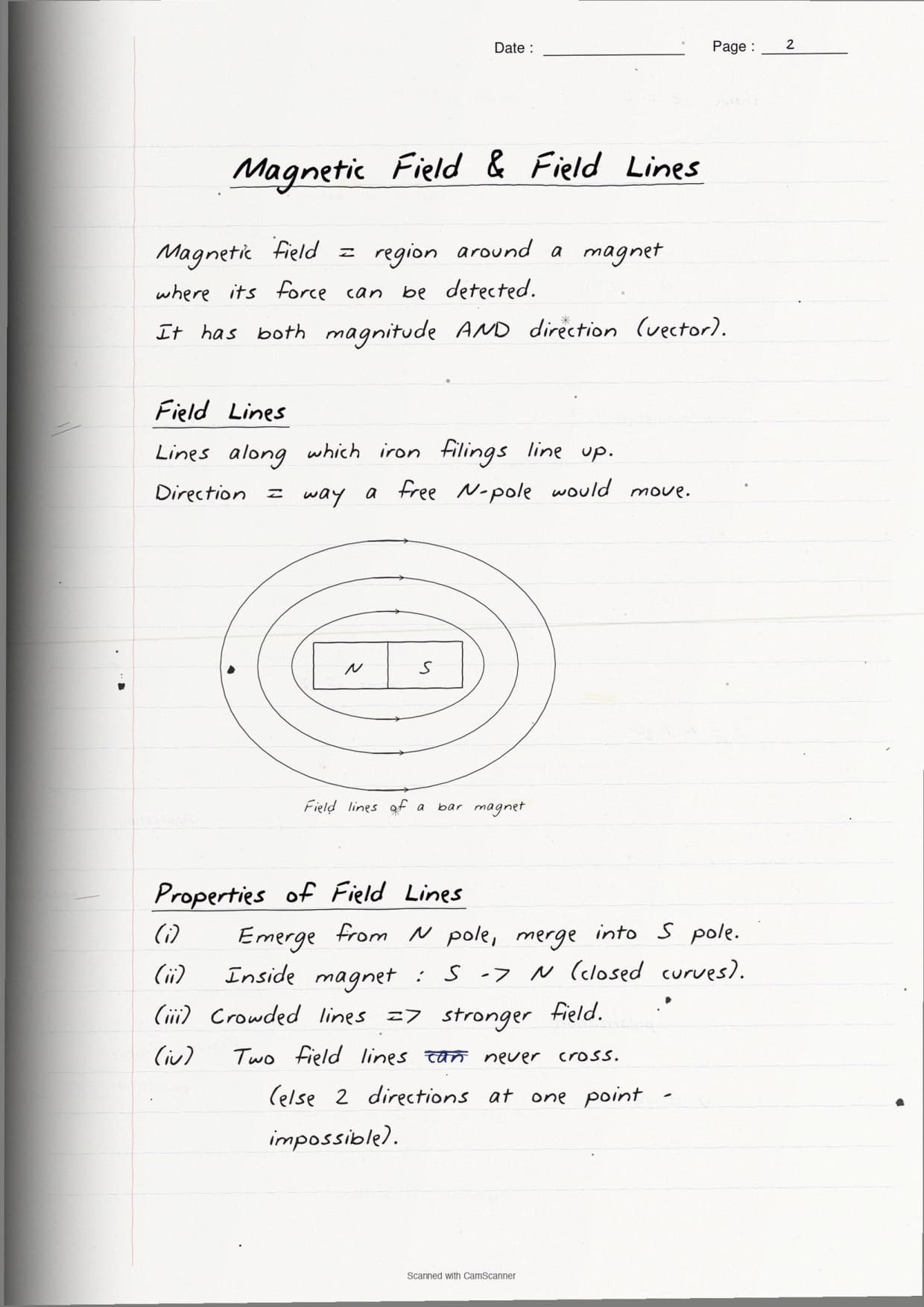
Magnetic Field and Magnetic Field Lines: The First Page of the Notes
The opening page settles the most basic board ideas: what a magnetic field is and how magnetic field lines describe it.
- Magnetic field: the region around a magnet or current-carrying wire where a magnetic force acts; it has magnitude and direction.
- Field lines: imaginary lines showing the path a free north pole would take; field lines run from north to south outside a magnet, so they form closed loops.
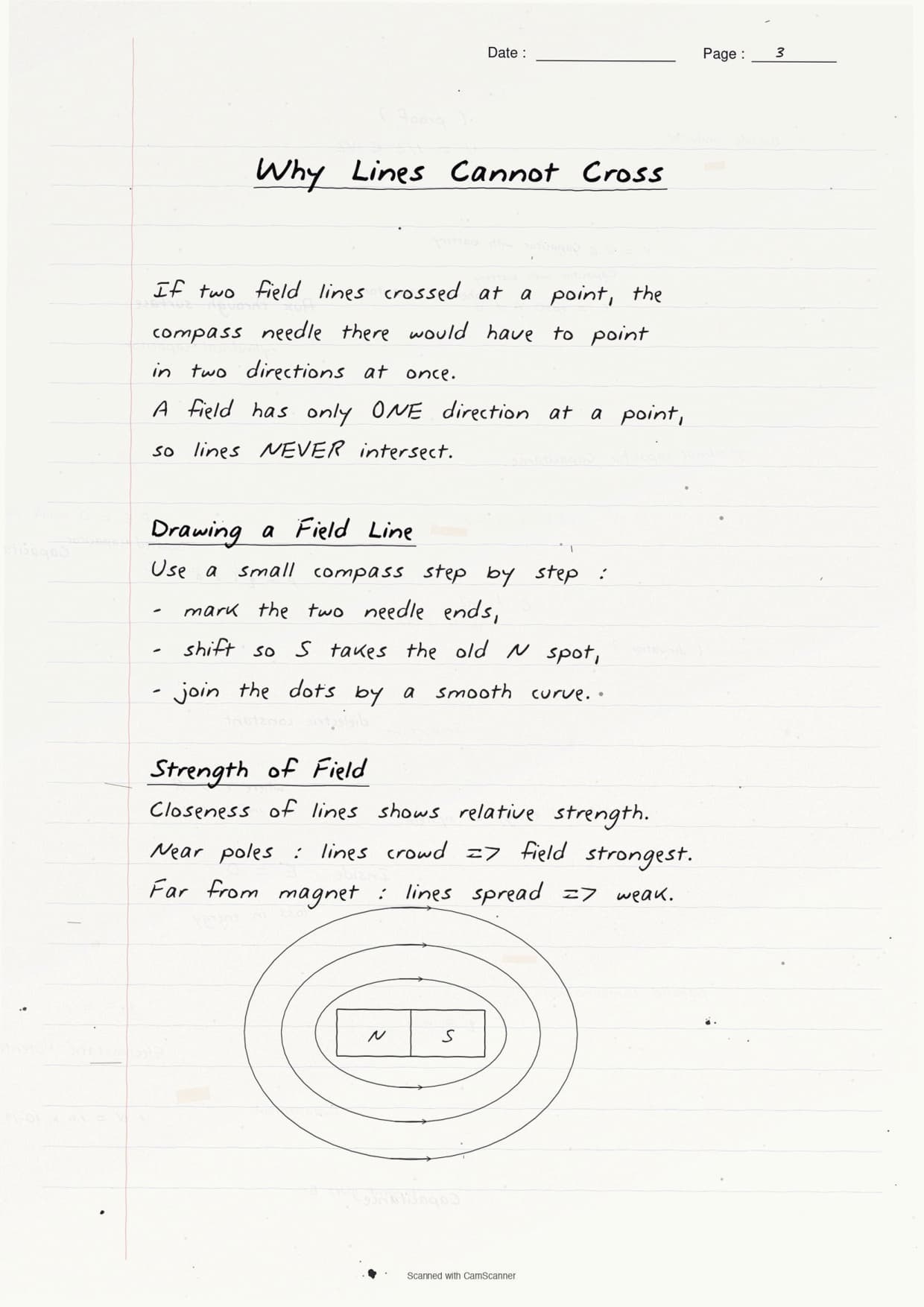
- No crossing: two field lines never cross, because the field cannot have two directions at one point.
- Closer means stronger: where the lines are crowded the field is strong; a compass needle lines up along the field.
Field Due to a Current-Carrying Conductor and the Right-Hand Thumb Rule
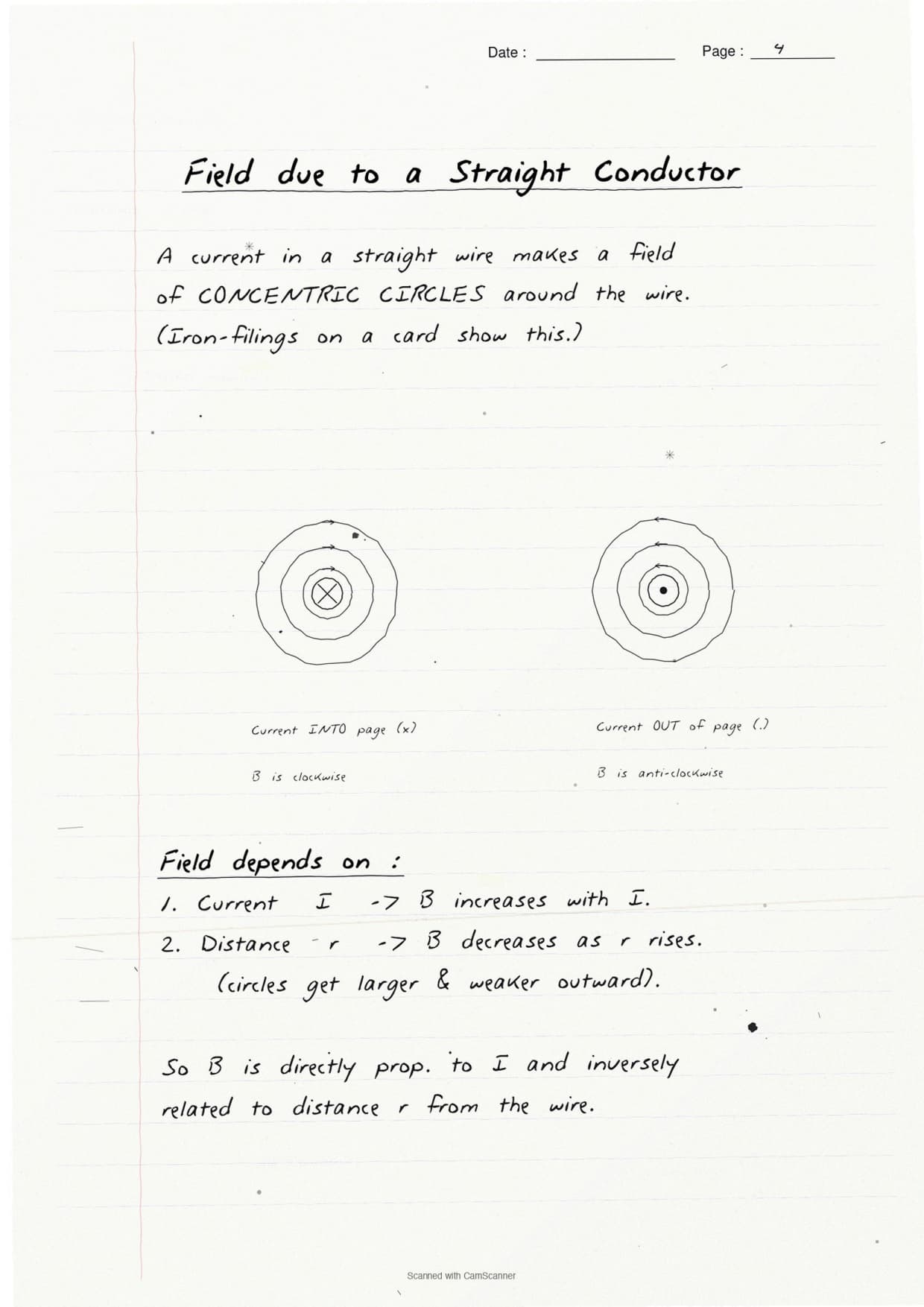
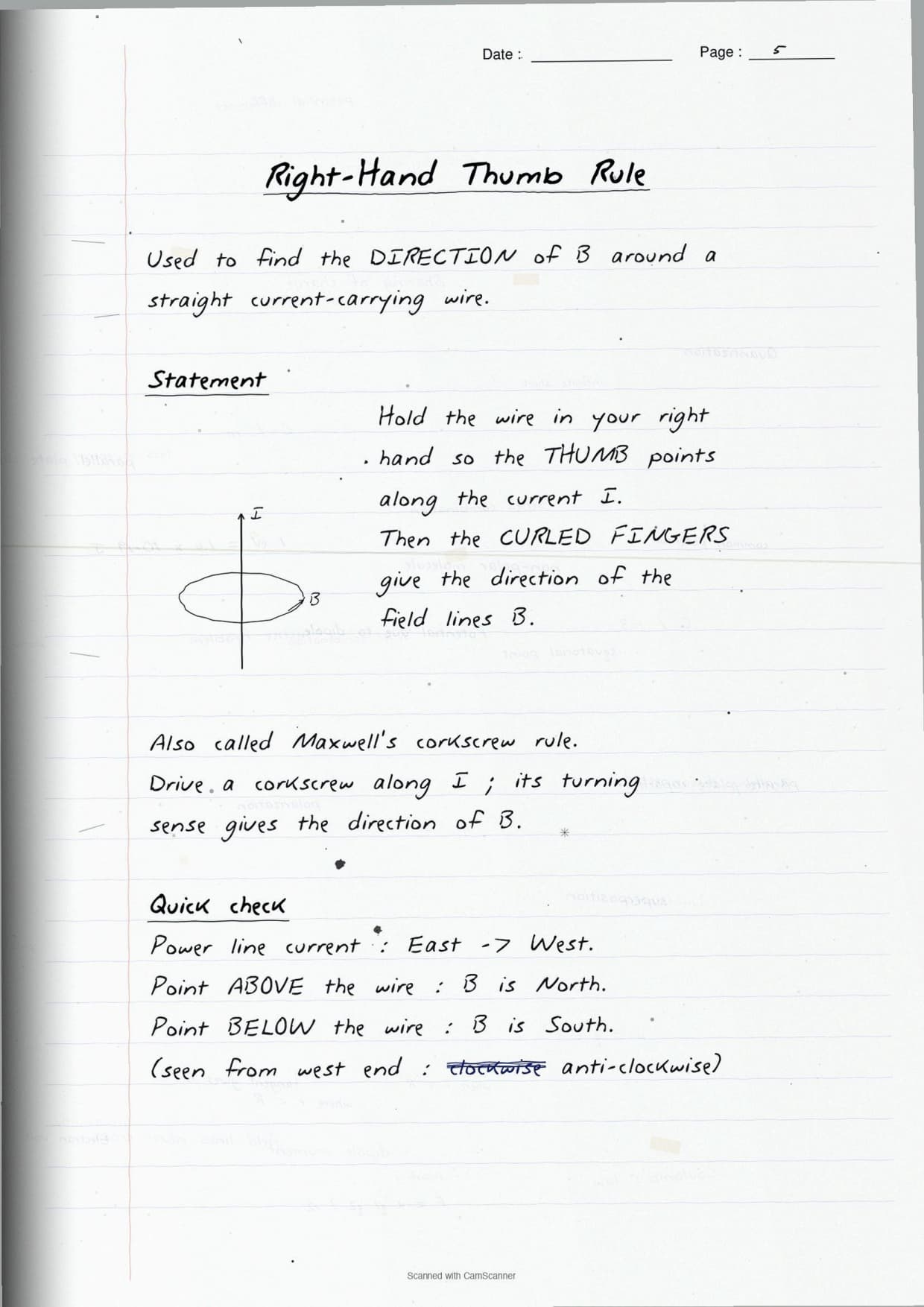
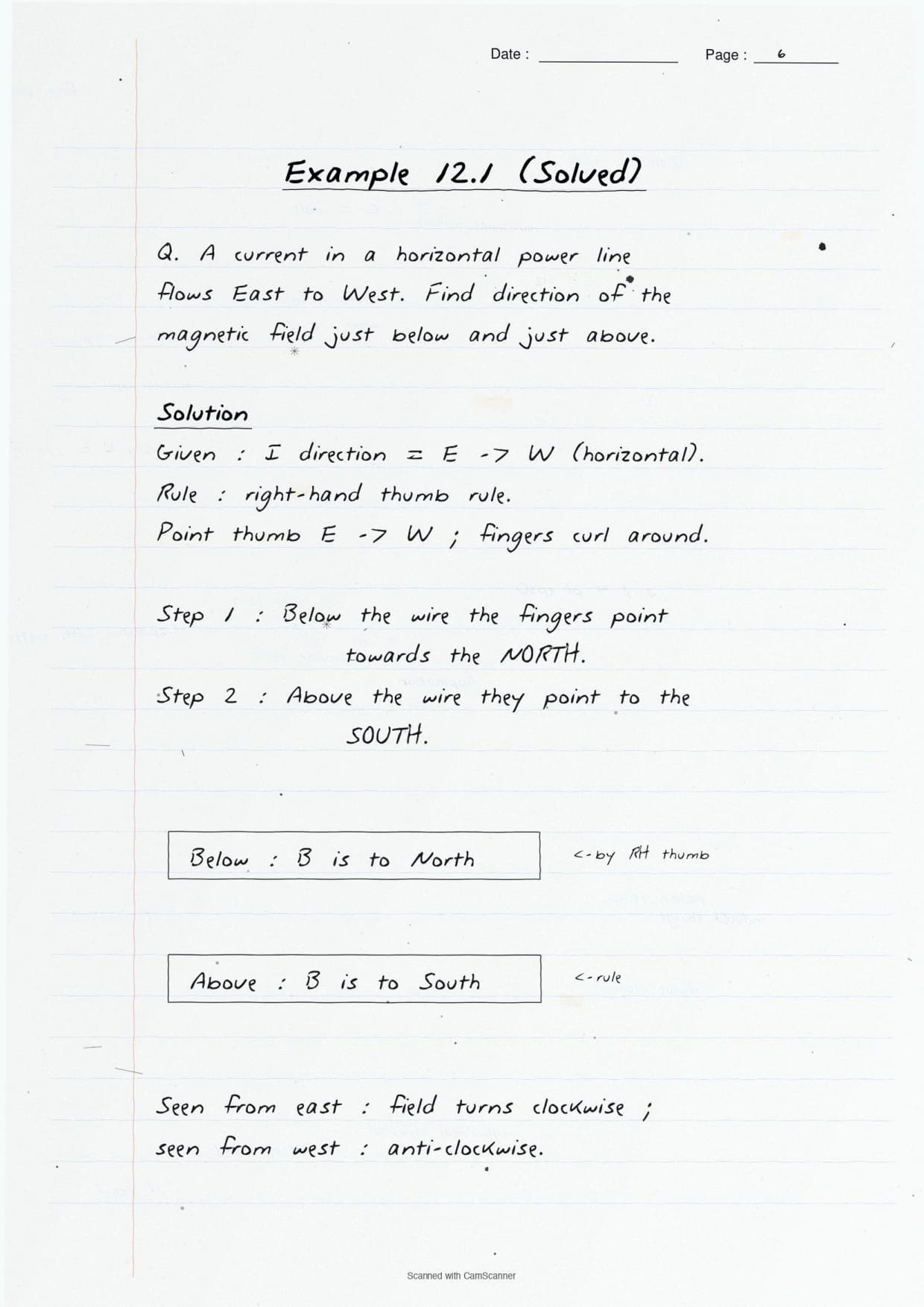
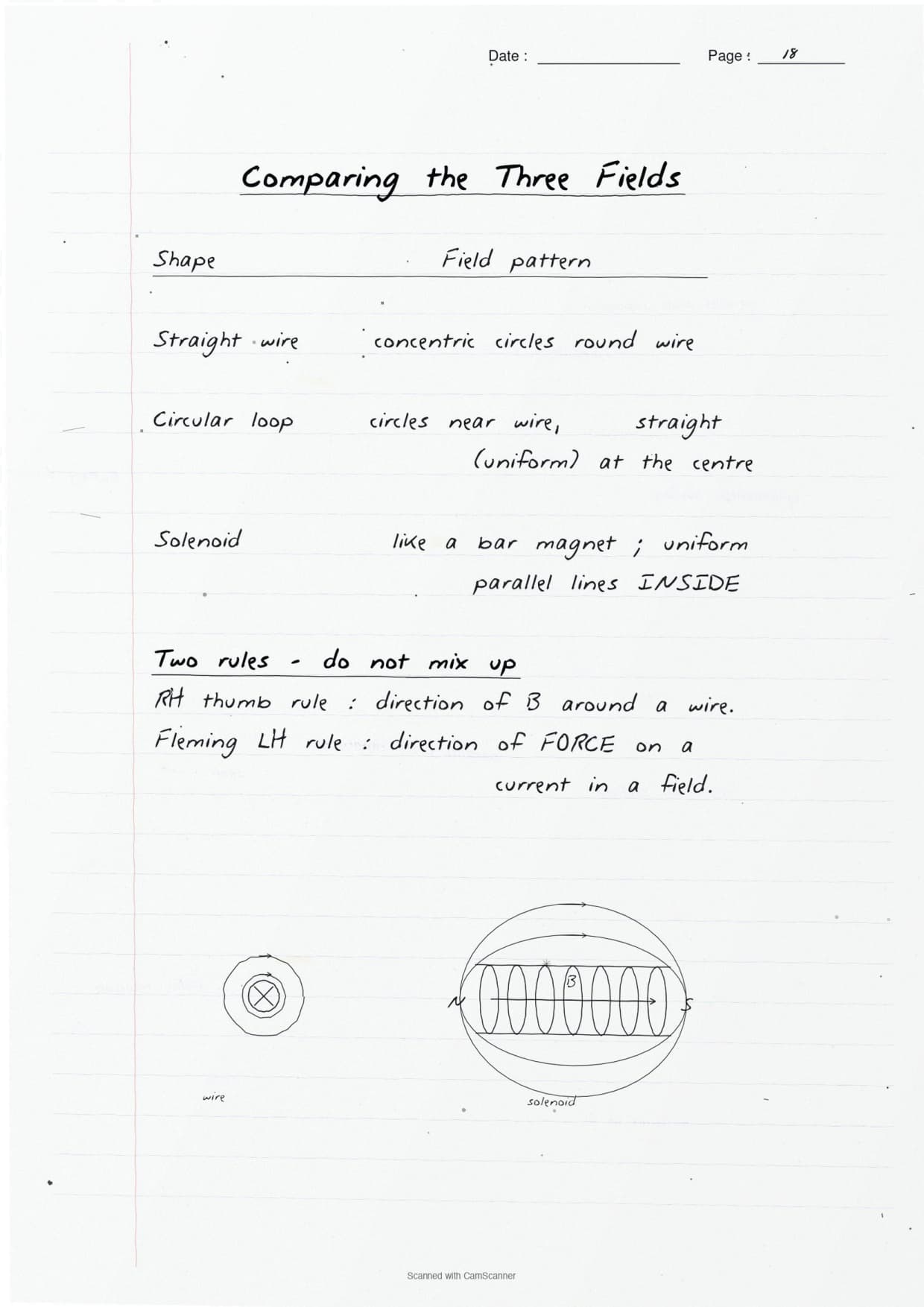
A current-carrying wire produces a magnetic field in the form of concentric circles around it, and a "find the direction of the field" question appears in almost every board paper.
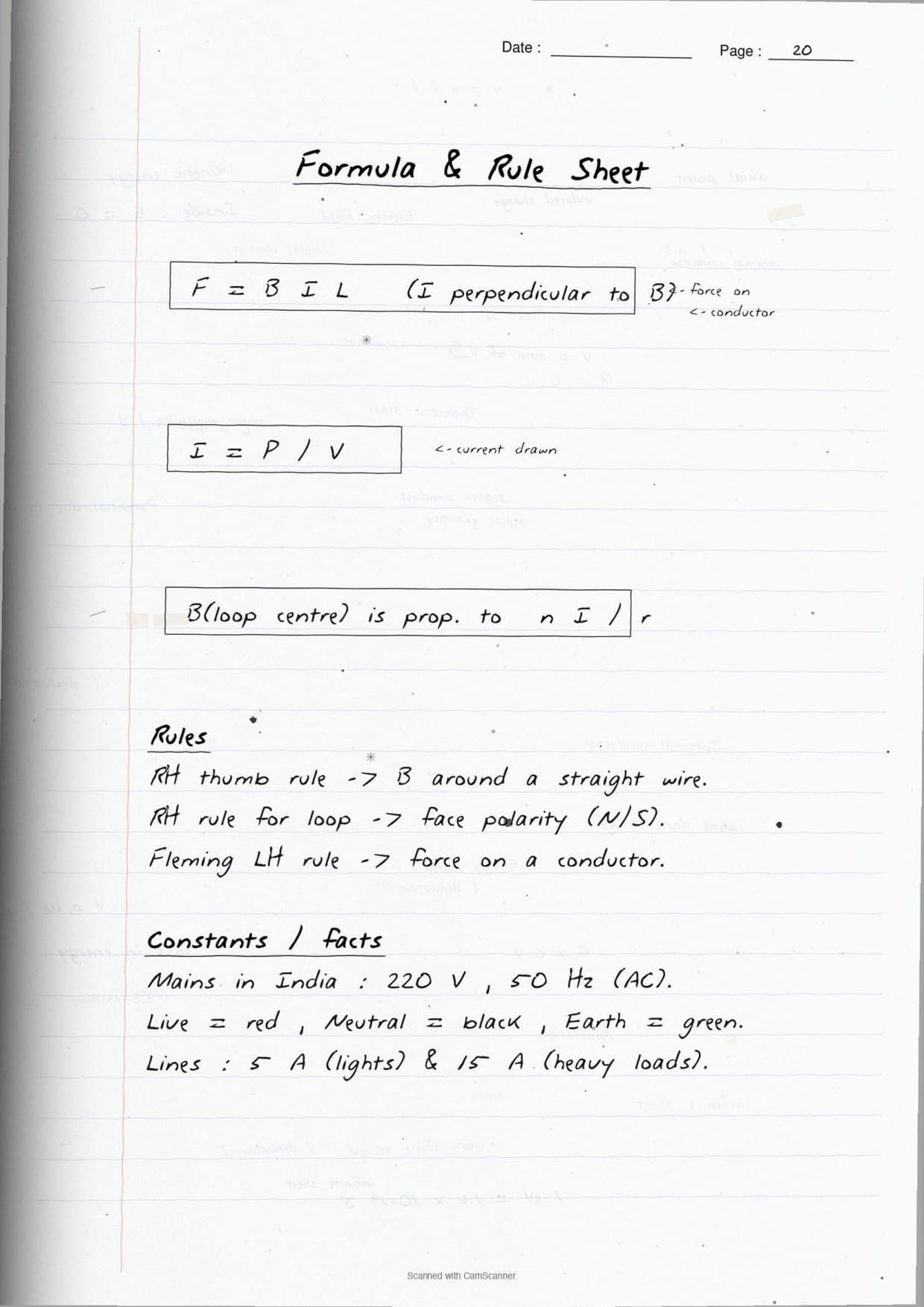
- Right-hand thumb rule: hold the wire in your right hand with the thumb pointing along the current; the curl of the fingers gives the direction of the field lines.
- Pattern: concentric circles whose plane is at right angles to the wire; the field is stronger near the wire and weaker further away.
- Strength: a larger current gives a stronger field; at a fixed current, the field falls with distance.
Examiners reward the line that the field of a straight wire is always in circles around it, and reversing the current reverses the field direction.
Magnetic Field of a Circular Loop and a Solenoid
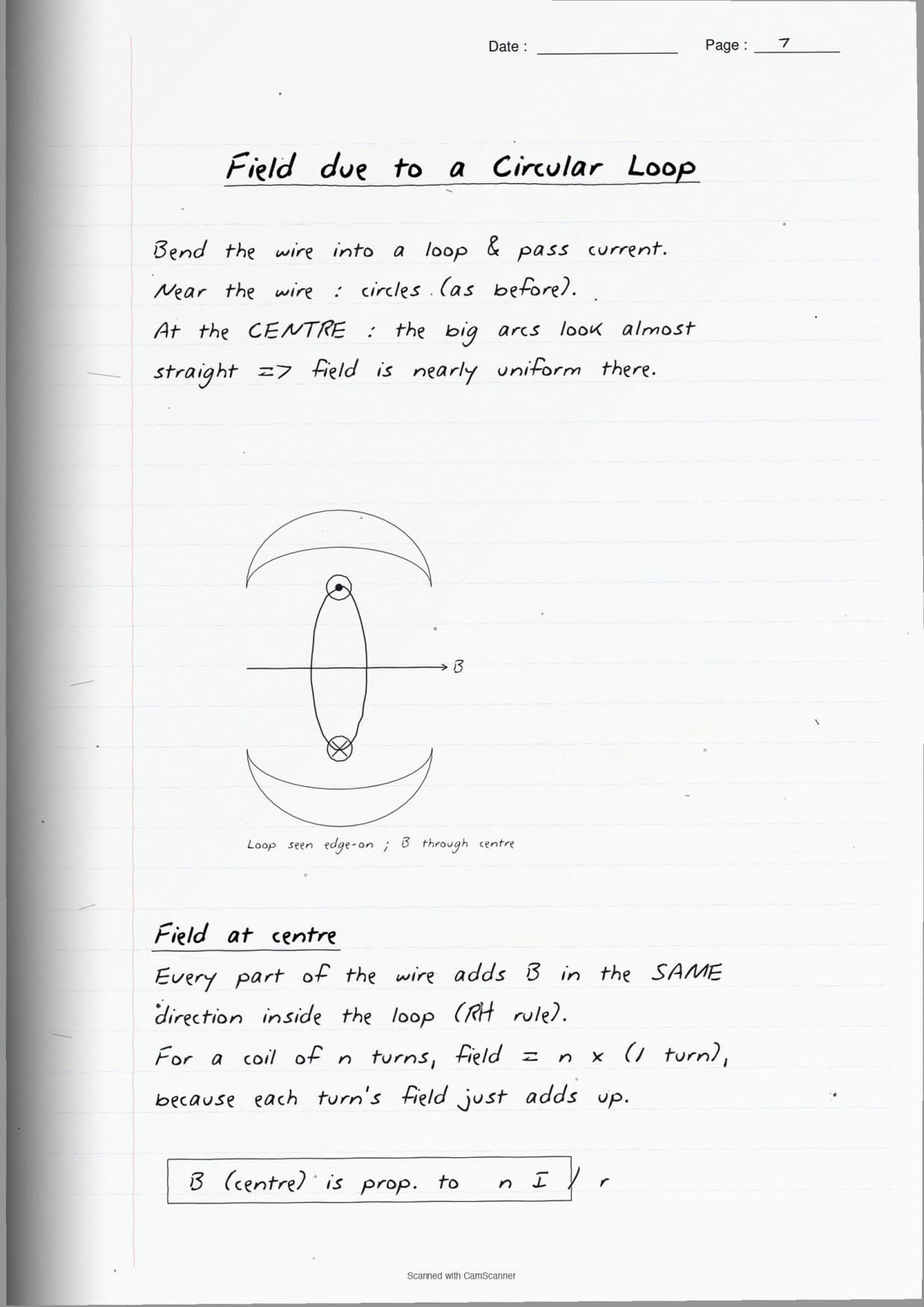
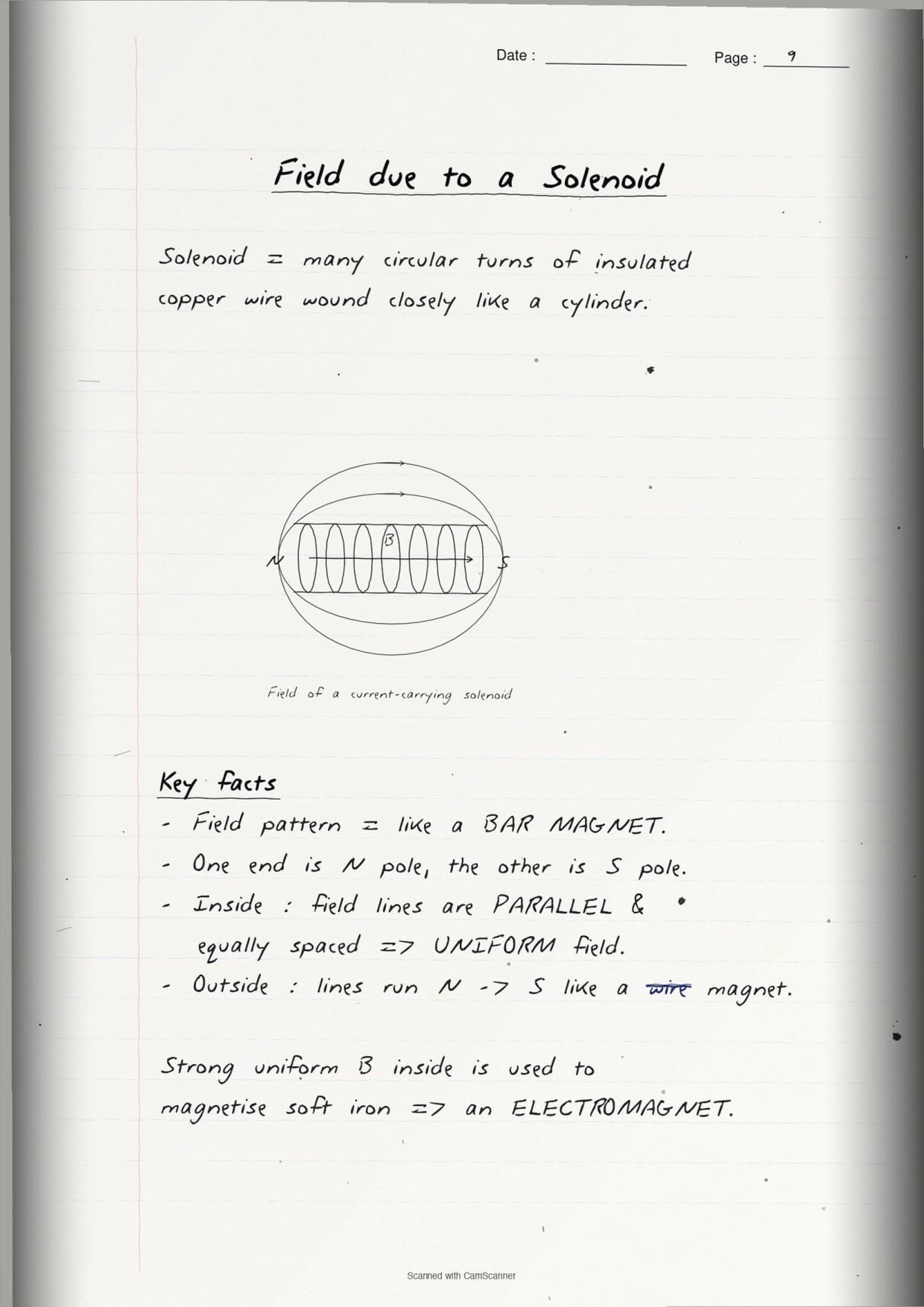
This spread holds the diagrams examiners ask students to draw, and a "draw and explain the field of a solenoid" question is a guaranteed 3-mark answer.
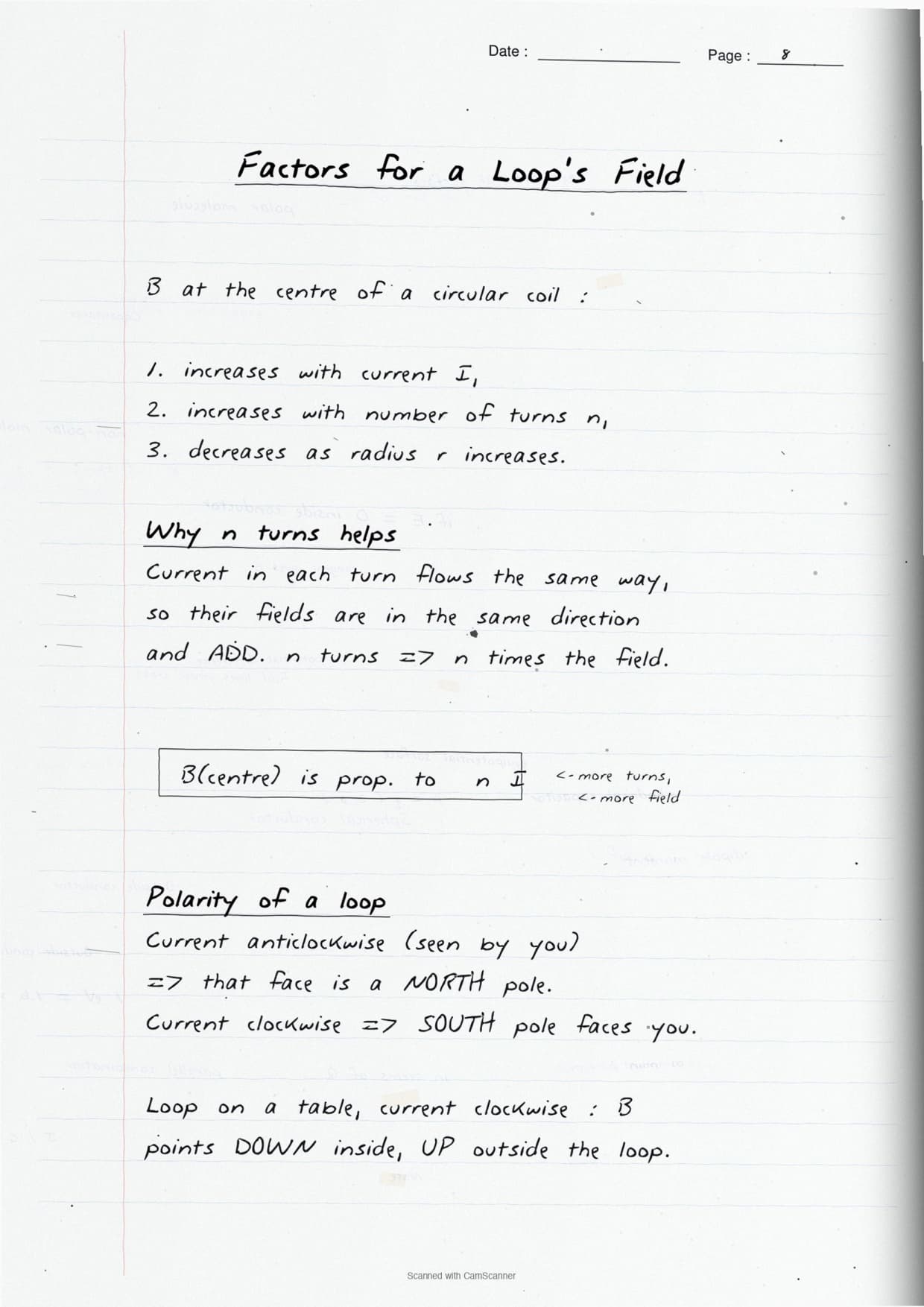
- Circular loop: every part of the loop adds its field at the centre, so the field there is much stronger than for a straight wire; a coil of n turns gives n times the field.
- Solenoid: a long coil of many turns; the field lines inside are parallel and equally spaced, so the field is uniform, just like a bar magnet with a north and a south end.
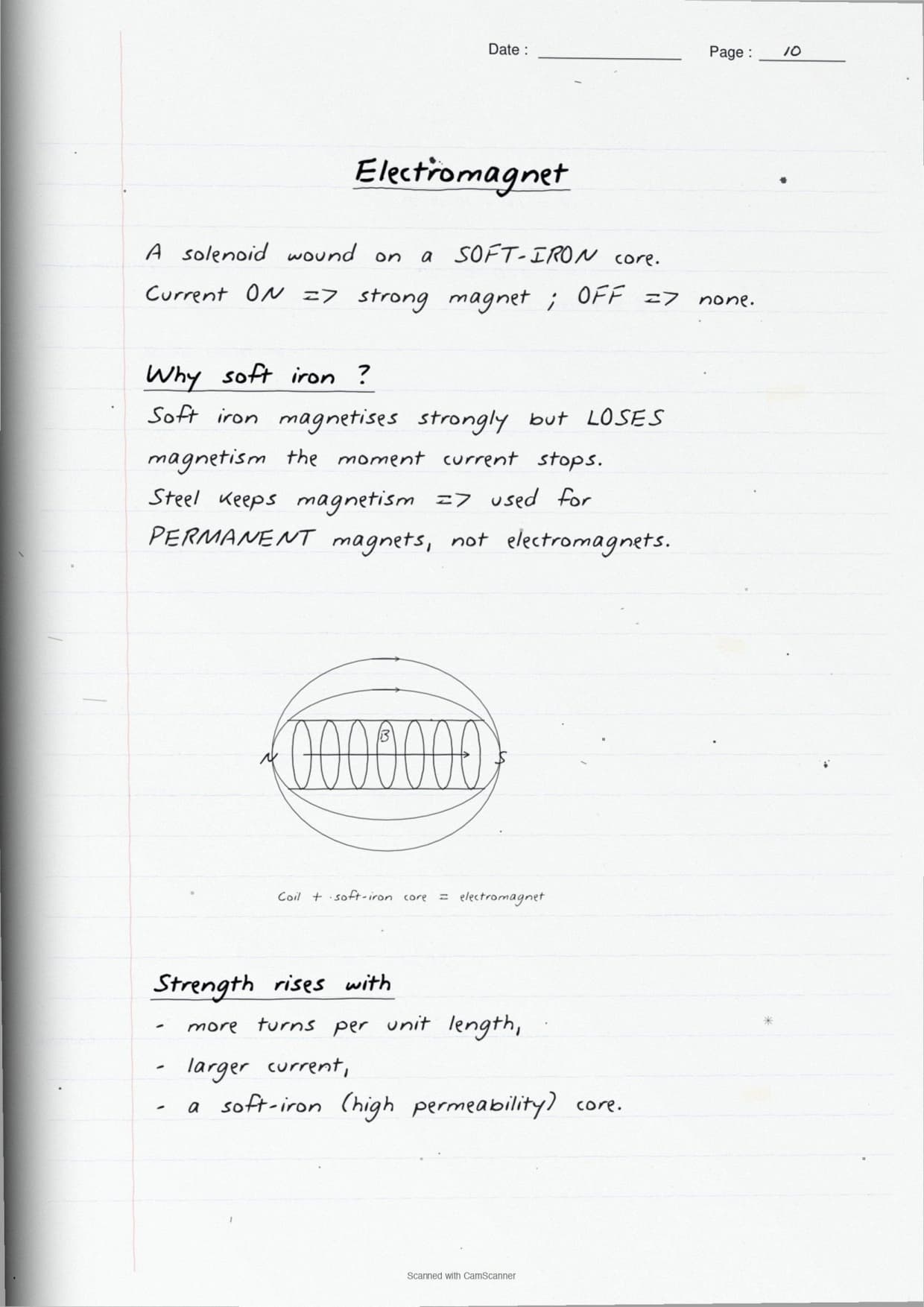
- Electromagnet: a soft iron core inside a solenoid makes a strong electromagnet whose strength can be switched on and off.
Soft iron is used for the core because it loses its magnetism the moment the current stops.
Force on a Conductor, Fleming's Left-Hand Rule and the Electric Motor
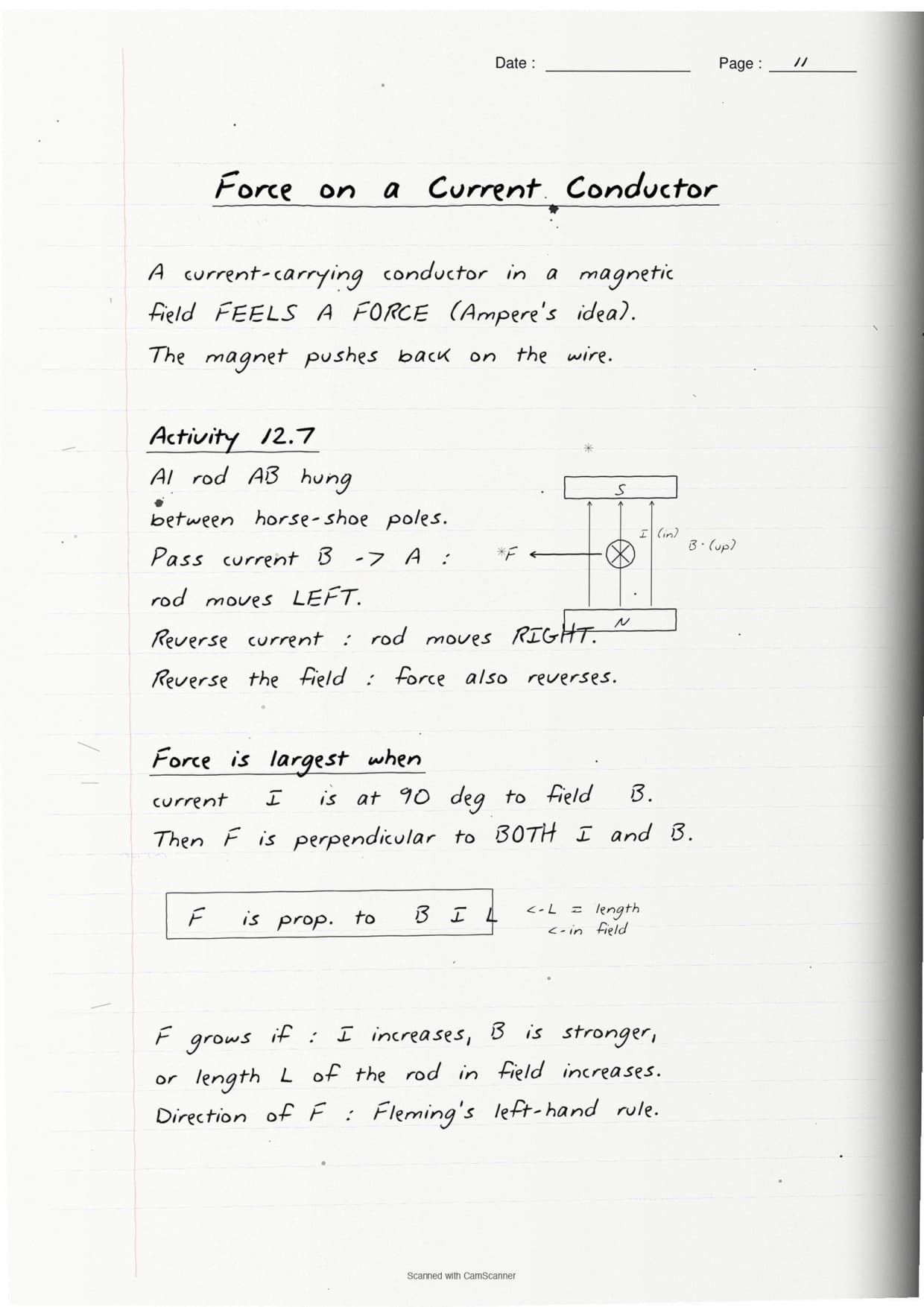
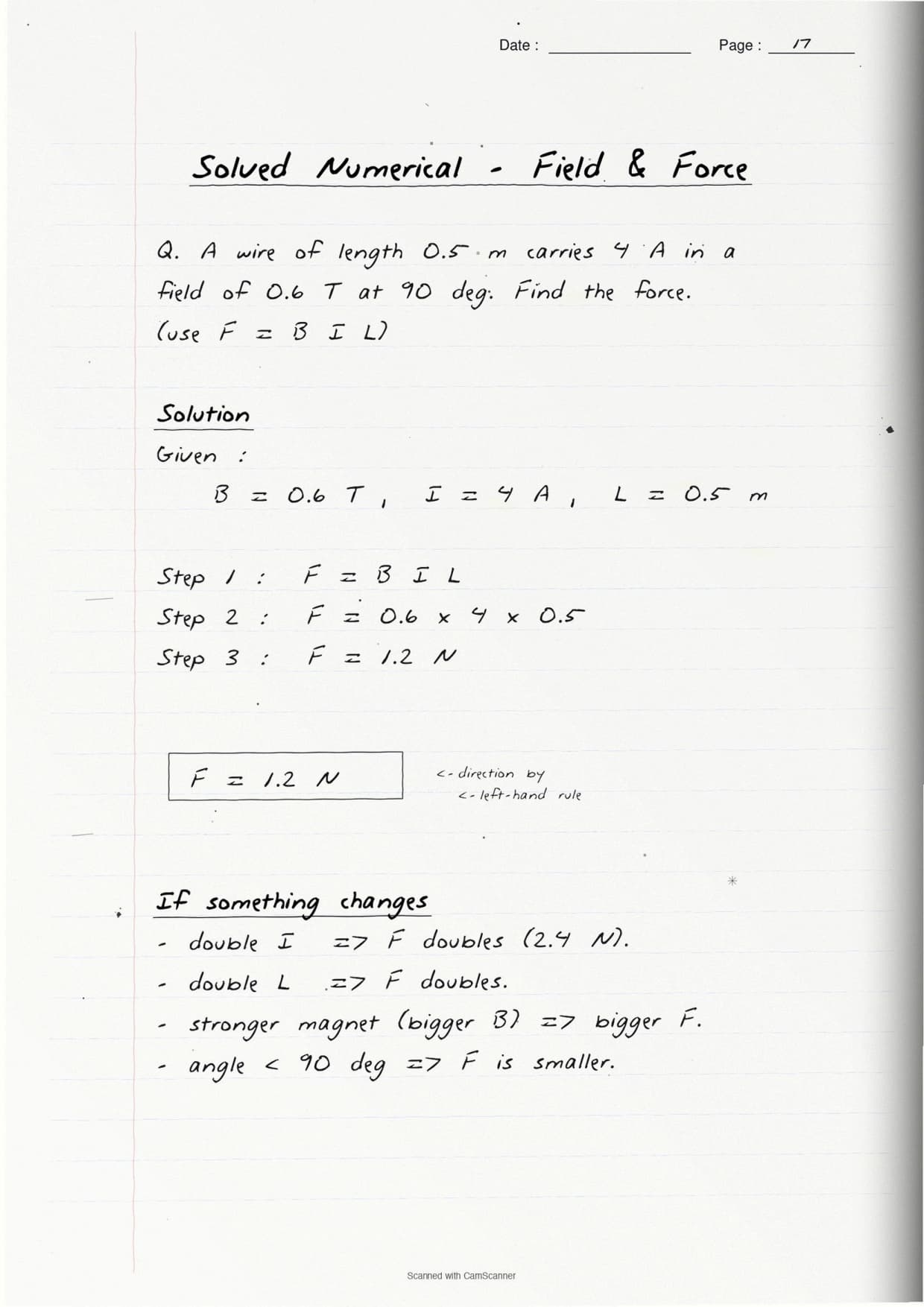
When a current-carrying conductor is placed in a magnetic field, it feels a force whose direction is given by Fleming's left-hand rule. All three ideas here are direct board questions.
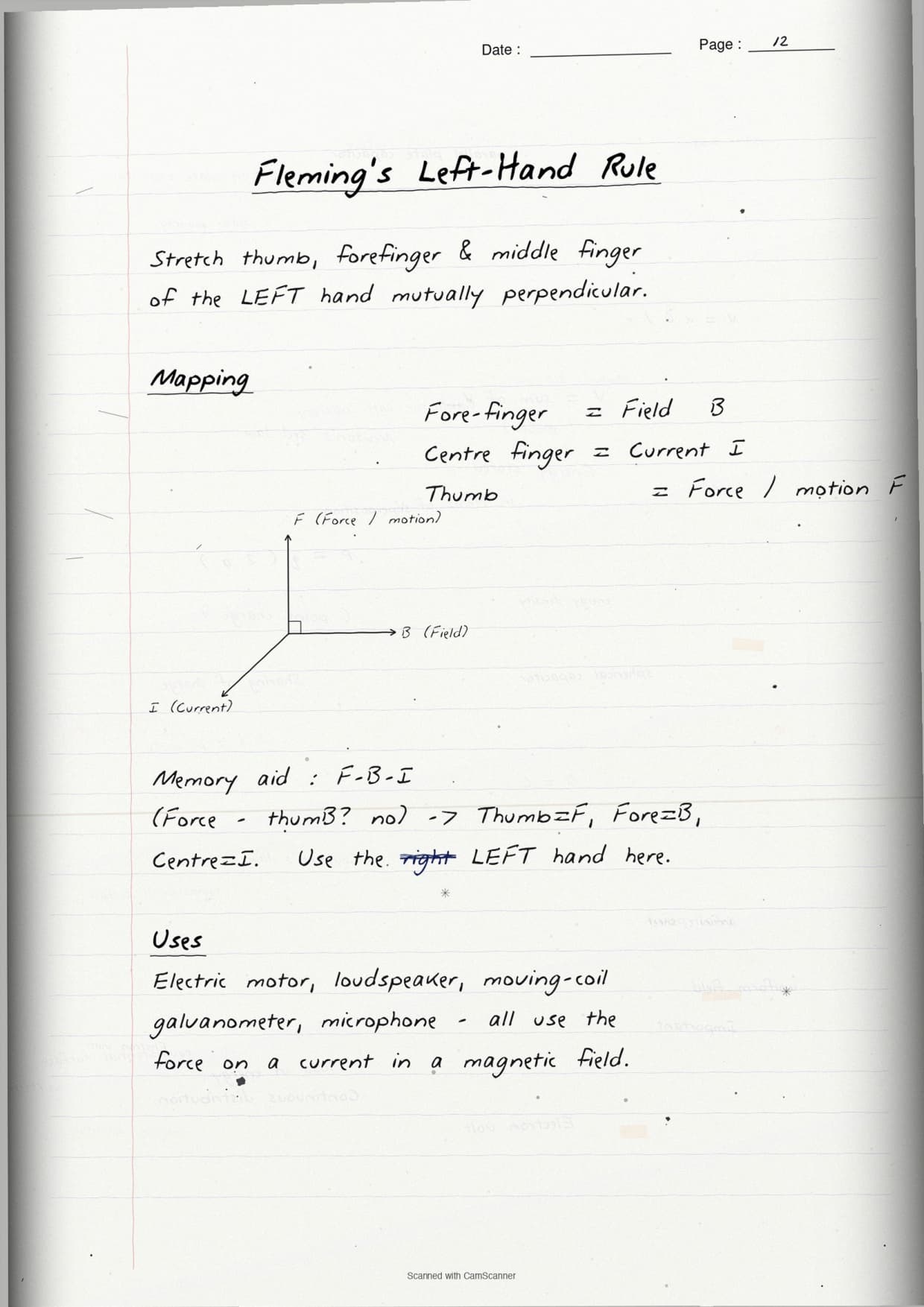
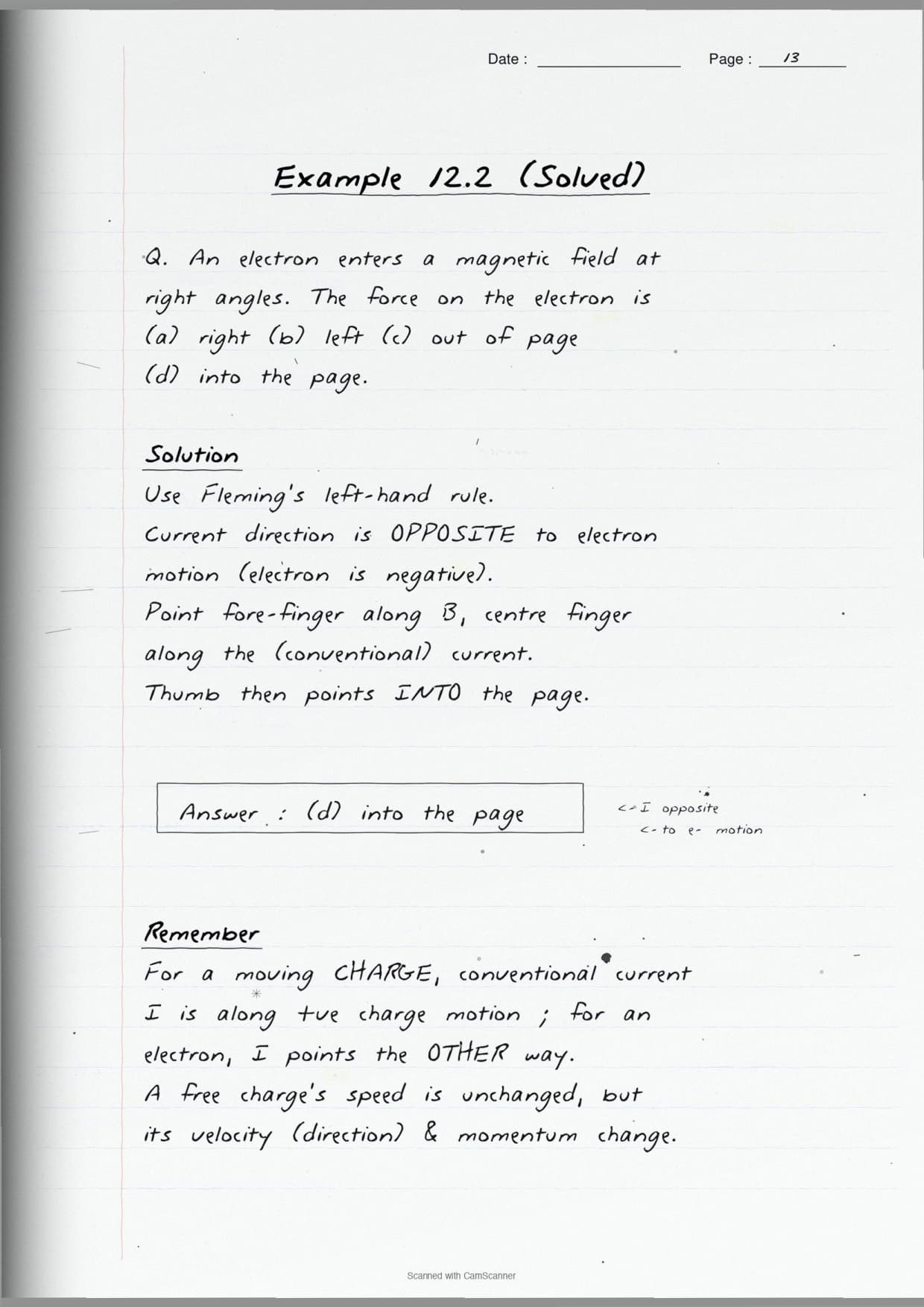
- Fleming's left-hand rule: stretch the thumb, forefinger and middle finger of the left hand at right angles. The forefinger points along the field, the middle finger along the current, and the thumb gives the force. The force is greatest when the conductor is at right angles to the field, and reverses if the current or field reverses.
- Electric motor: a current-carrying coil in a magnetic field feels a force that makes it rotate; it changes electrical energy into mechanical energy.
- Split ring (commutator): reverses the current in the coil every half turn, so the coil keeps turning one way.
The catch examiners look for: the split ring, not the brushes, keeps the motor rotating one way. Without the commutator the coil would only swing back and forth.
Electromagnetic Induction and the Electric Generator
The last spread covers the idea that gives us electricity at home, and a working-of-the-generator question appears in nearly every board paper.
- Electromagnetic induction: a changing magnetic field through a coil sets up an induced current; this is the basis of the generator.
- Fleming's right-hand rule: stretch the thumb, forefinger and middle finger of the right hand at right angles. The forefinger shows the field, the thumb the motion, and the middle finger the induced current.
- Generator: a coil rotated in a magnetic field induces a current; it changes mechanical energy into electrical energy. An AC generator uses two slip rings; a DC generator uses a split ring.
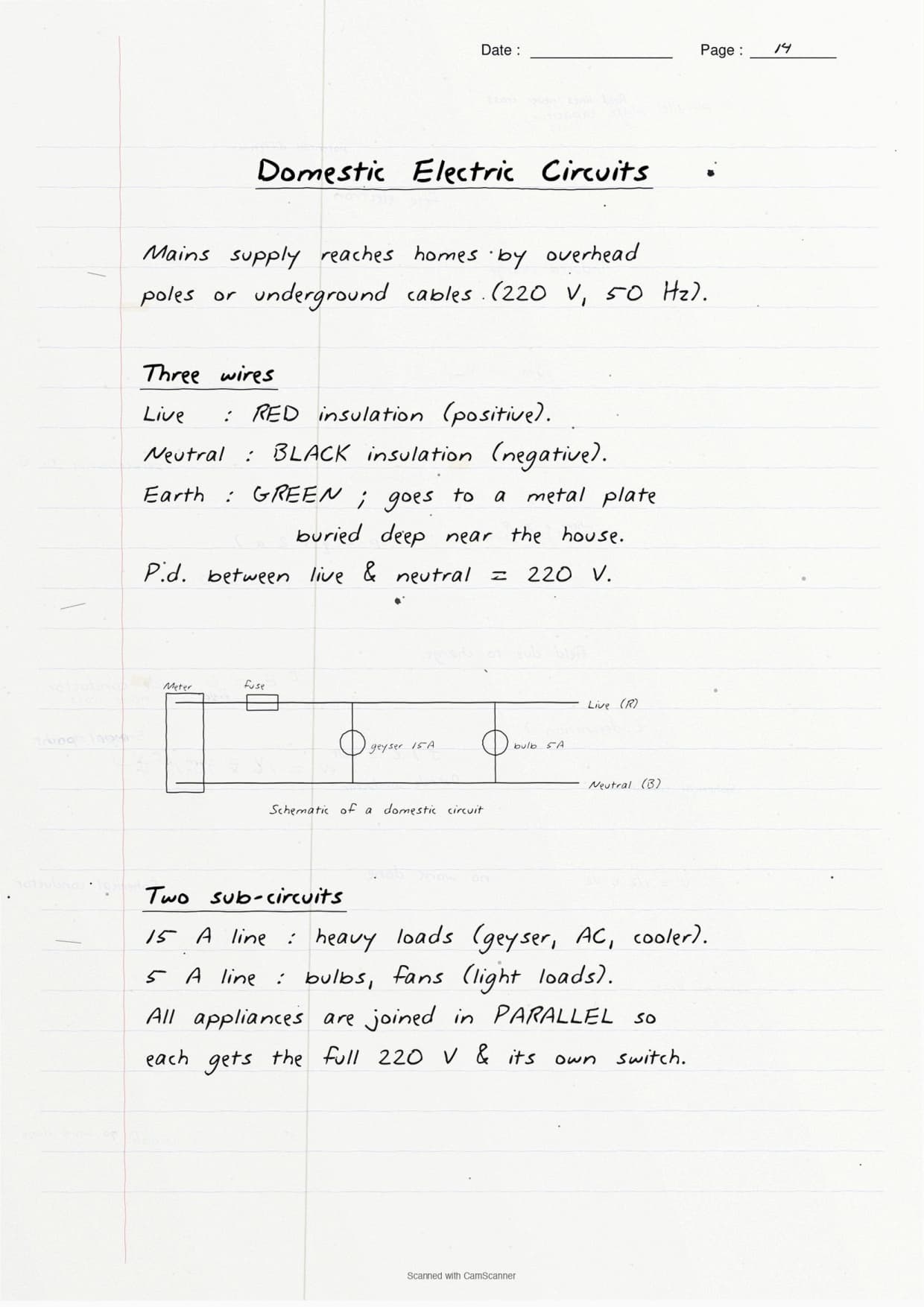
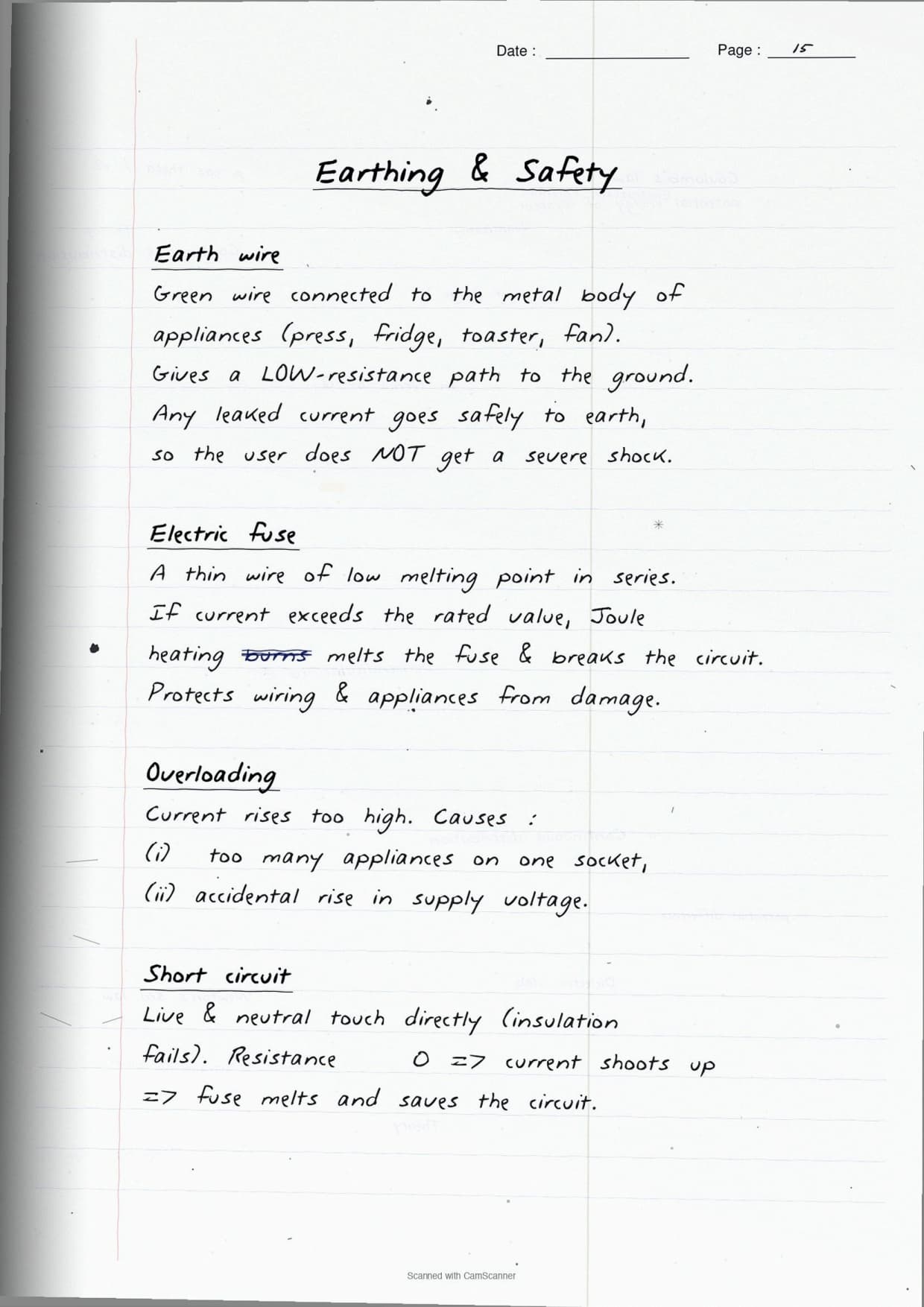
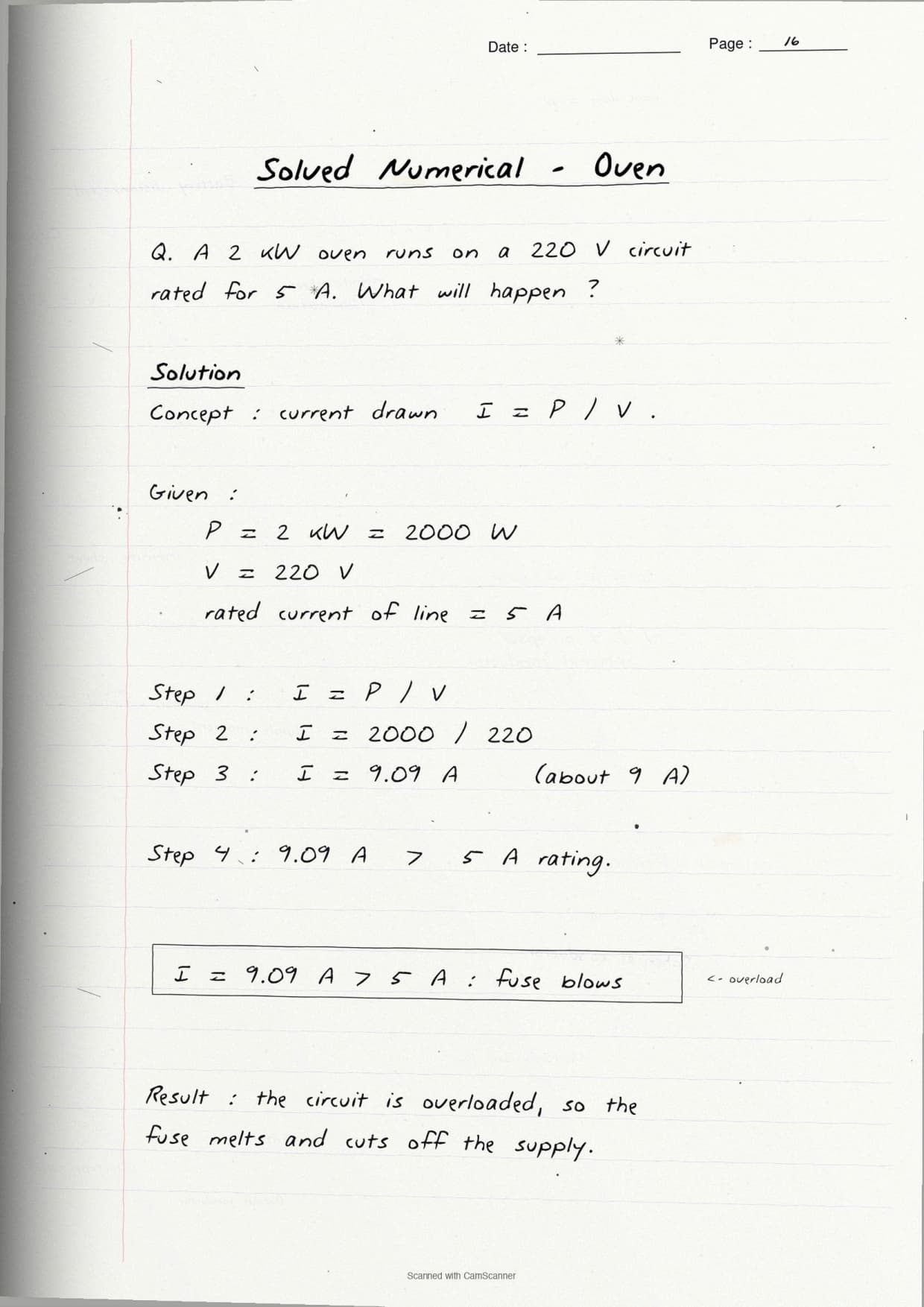
- Domestic supply: Indian homes get AC at 220 V and 50 Hz, with live, neutral and earth wires, and a fuse for safety.
Examiners reward this line: a motor uses a current to make motion, a generator uses motion to make a current, so the two are exact opposites. The motor uses the left-hand rule, the generator the right-hand rule.
How to Use These Handwritten Notes Effectively
Handwritten notes work best as a final layer of revision, not your first read. To get the most from the Magnetic Effects of Electric Current handwritten notes:
- First pass: read in order, field and field lines, then sources, then force, motor, induction and generator.
- Active recall: cover the boxed diagrams and redraw the field of a solenoid and the labelled electric motor from memory.
- Rule drill: write all three hand rules with a quick sketch, since the board often gives marks for the correct rule and diagram alone.
Common Mistakes These Notes Help You Avoid
A few errors cost marks every year, mostly from swapping the hand rules or mixing up the motor and the generator.
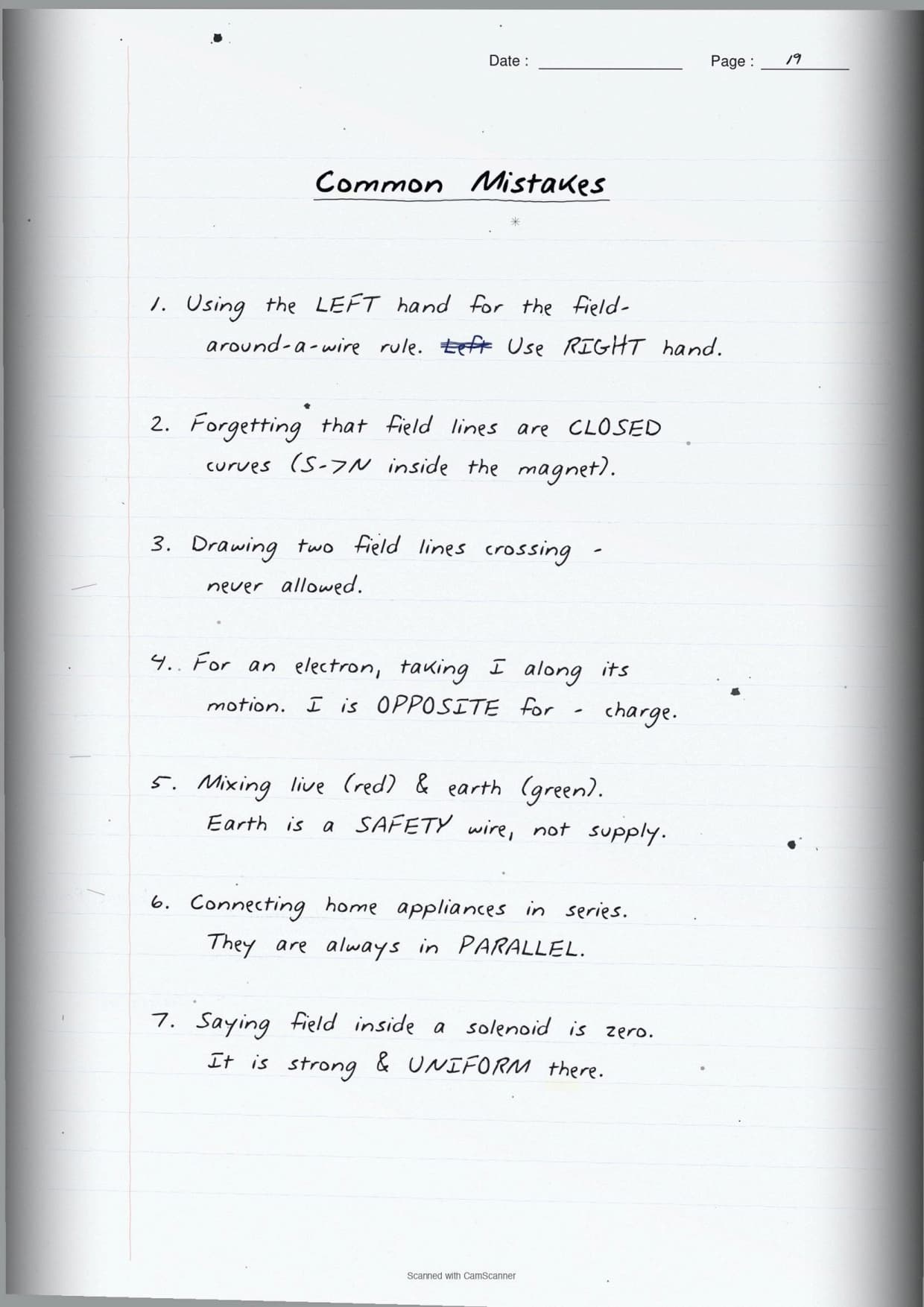
- Using the right hand for the motor. The motor uses Fleming's left-hand rule; the generator uses the right-hand rule.
- Saying a generator changes electrical energy into mechanical energy. That is the motor; a generator does the opposite.
- Drawing field lines that cross. Two field lines never cross, because the field has only one direction at a point.
- Using a split ring in an AC generator. An AC generator uses two slip rings; the split ring gives DC.
- Calling the field around a straight wire straight. It is in concentric circles around the wire.
The exam rewards exact rules and clean diagrams, so always name the hand rule, draw the field pattern and label the device.
How These Notes Pair with the Solutions and Book PDF
These handwritten notes are a revision layer. To prepare fully, use them with the other resources for the same chapter, linked below.
| Resource | Best used for |
|---|---|
| Magnetic Effects of Electric Current NCERT Solutions | Step-by-step answers for every in-text and back-exercise question |
| Magnetic Effects of Electric Current Class 10 Notes | Quick typed summary with every rule, field diagram and device in one place |
| Magnetic Effects of Electric Current Formula Sheet | One-page quick reference of the hand rules and key facts |
| Magnetic Effects of Electric Current NCERT Book PDF | Reading the original NCERT chapter text from the textbook |
All Class 10 Science Handwritten Notes by Chapter
The table links the handwritten notes for every chapter in Class 10 Science. Magnetic Effects of Electric Current is highlighted.
| Chapter | Handwritten Notes |
|---|---|
| Chapter 1 | Chemical Reactions and Equations |
| Chapter 2 | Acids, Bases and Salts |
| Chapter 3 | Metals and Non-metals |
| Chapter 4 | Carbon and its Compounds |
| Chapter 5 | Life Processes |
| Chapter 6 | Control and Coordination |
| Chapter 7 | How do Organisms Reproduce? |
| Chapter 8 | Heredity |
| Chapter 9 | Light - Reflection and Refraction |
| Chapter 10 | The Human Eye and the Colourful World |
| Chapter 11 | Electricity |
| Chapter 12 | Magnetic Effects of Electric Current |
| Chapter 13 | Our Environment |
FAQs on Magnetic Effects of Electric Current Handwritten Notes
Magnetic Effects of Electric Current Class 10 Science Handwritten Notes Common Questions
Ques. Are these class 10 science chapter 12 Magnetic Effects of Electric Current handwritten notes free to download?
Ans. Yes. The Magnetic Effects of Electric Current handwritten notes are free to download as a PDF from this page. They follow the 2026-27 NCERT syllabus and cover the full chapter across 22 scanned, hand-drawn-diagram pages for quick revision.
Ques. What does Chapter 12 Magnetic Effects of Electric Current cover in Class 10 Science?
Ans. The notes cover the magnetic field and field lines, the field due to a current-carrying conductor, the right-hand thumb rule, the field of a circular loop and a solenoid, the force on a conductor with Fleming's left-hand rule, the electric motor, electromagnetic induction with Fleming's right-hand rule, the electric generator, and domestic electric circuits, all of which the CBSE board paper tests directly.
Ques. What is the right-hand thumb rule in Class 10 Magnetic Effects of Electric Current?
Ans. The right-hand thumb rule gives the direction of the magnetic field around a straight current-carrying wire. Hold the wire in your right hand with the thumb pointing along the current; the way your fingers curl shows the direction of the concentric circular field lines around the wire.
Ques. What is the difference between an electric motor and an electric generator?
Ans. An electric motor changes electrical energy into mechanical energy and works on the force on a current-carrying conductor using Fleming's left-hand rule. An electric generator does the opposite, changing mechanical energy into electrical energy by electromagnetic induction, and its induced current direction is found using Fleming's right-hand rule.
Ques. Are these notes enough for the class 10 science chapter 12 board exam?
Ans. They are a strong final revision layer. For full preparation, pair them with the NCERT Solutions linked on this page so you can write out complete answers, draw the field and device diagrams, and reason through every in-text and back-exercise question and check them against model answers.



Comments