




Class 10 Maths Chapter 6 Triangles carries about 9 to 10 marks in the CBSE Board exam and anchors the Geometry unit. These notes cover similar figures, the criteria for similarity, and the Basic Proportionality Theorem in a hand-drawn revision style.
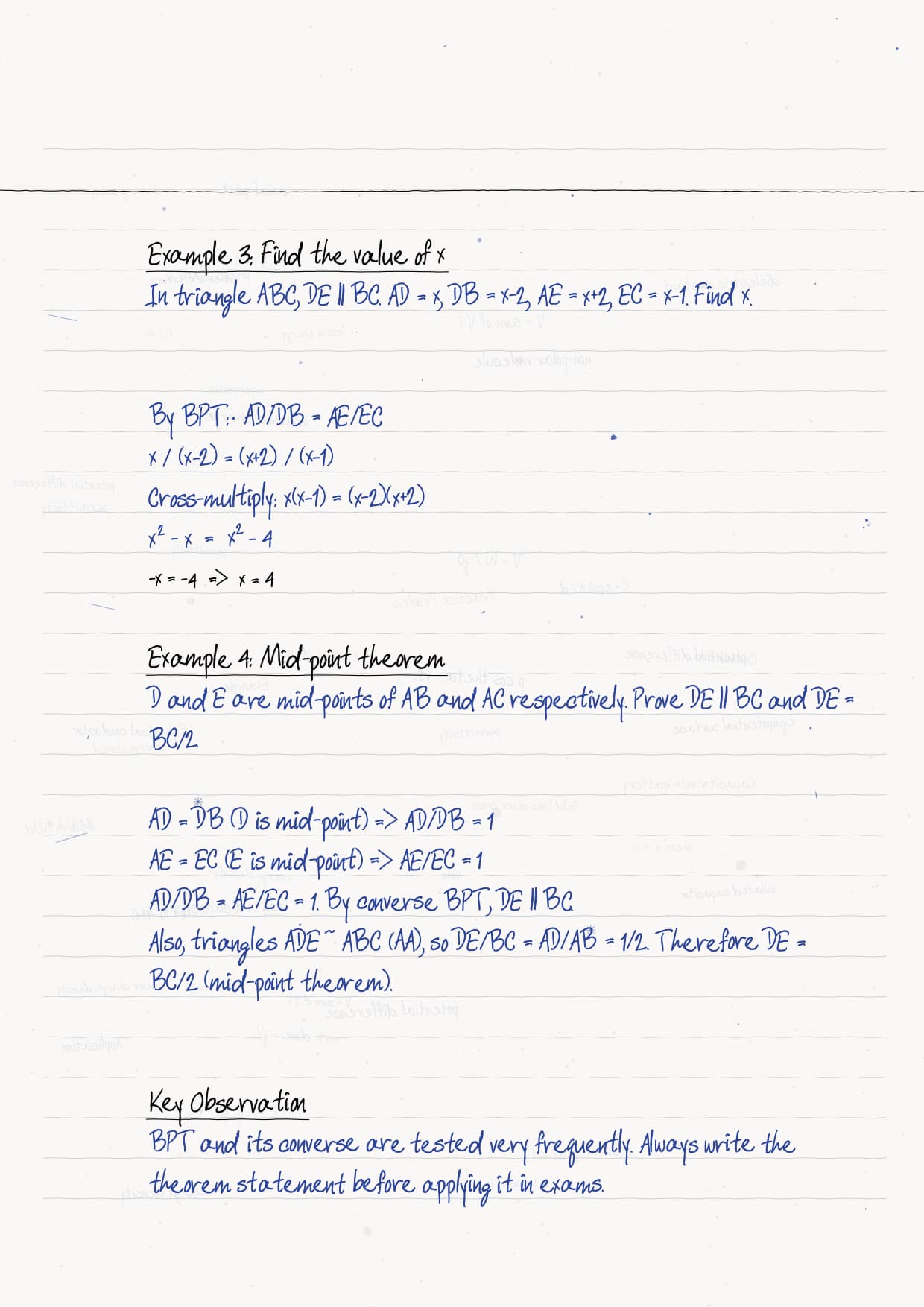
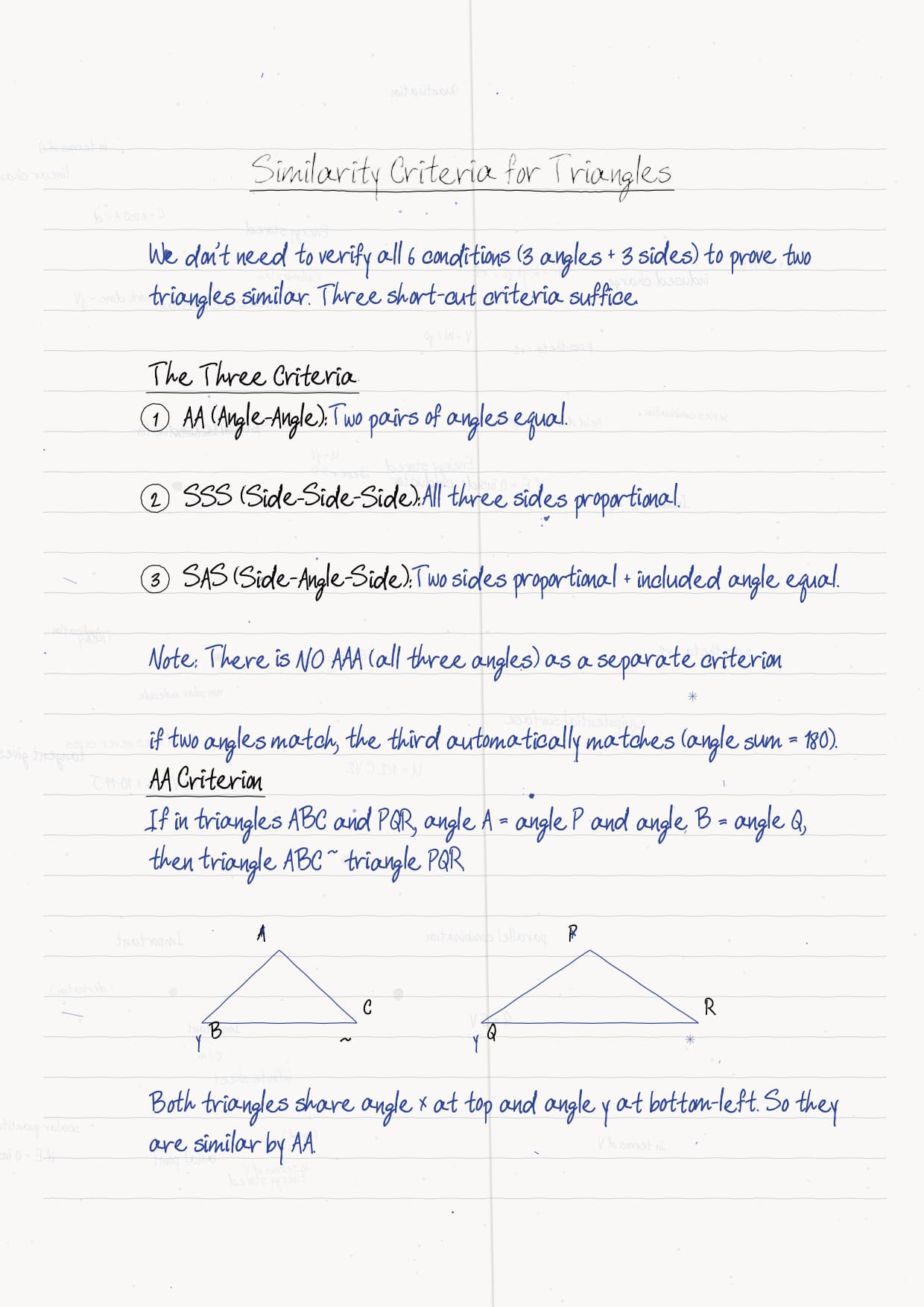
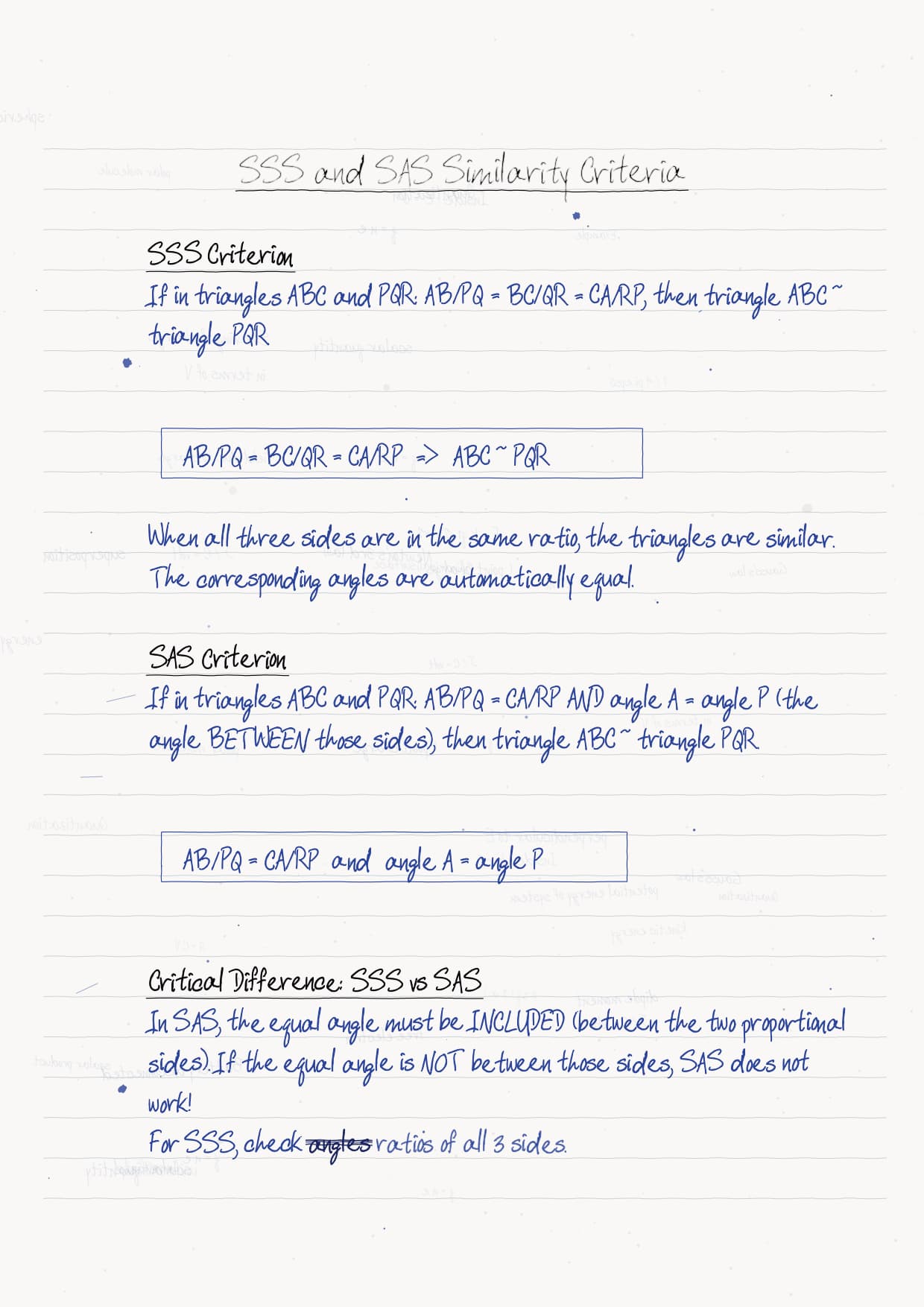
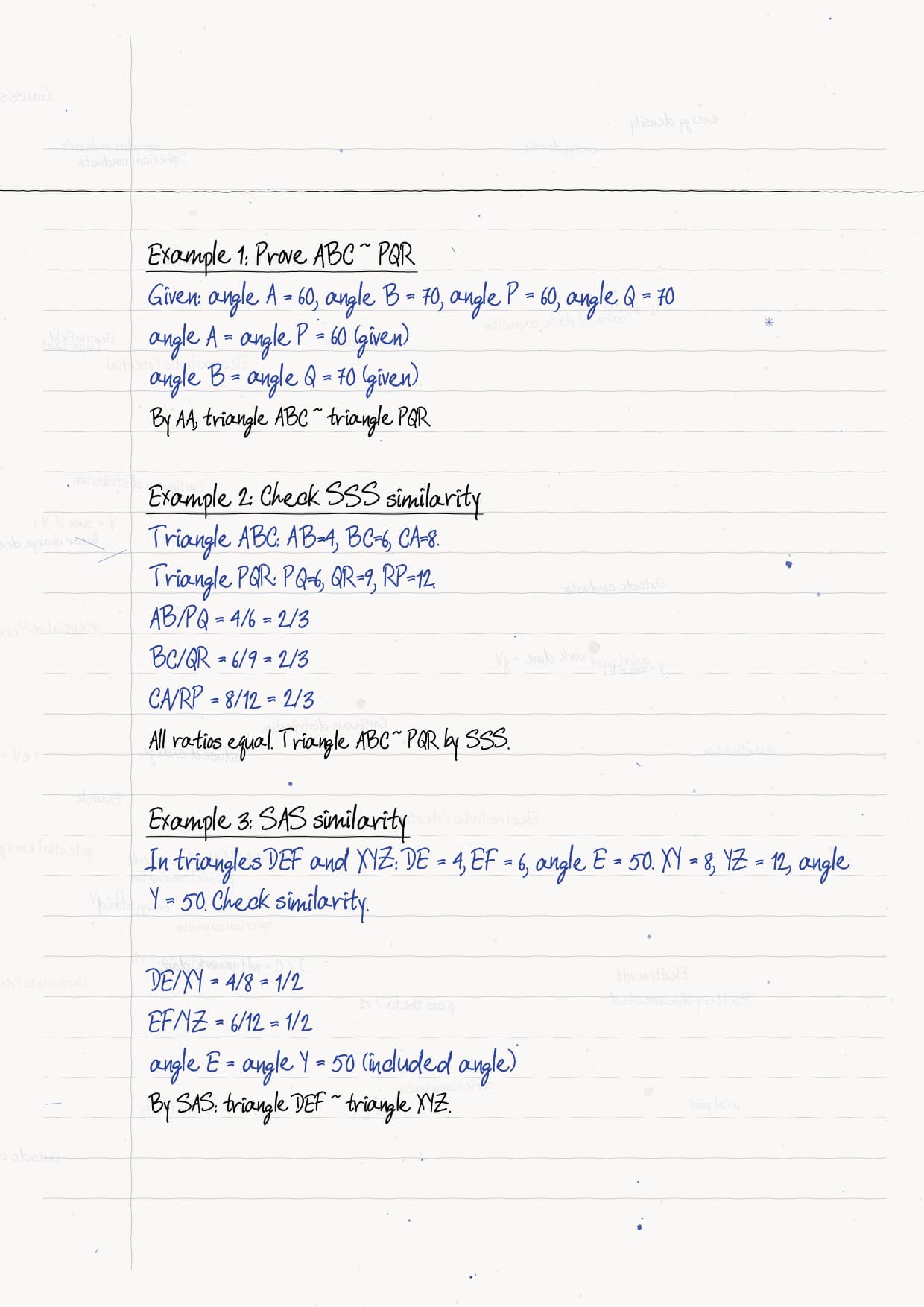
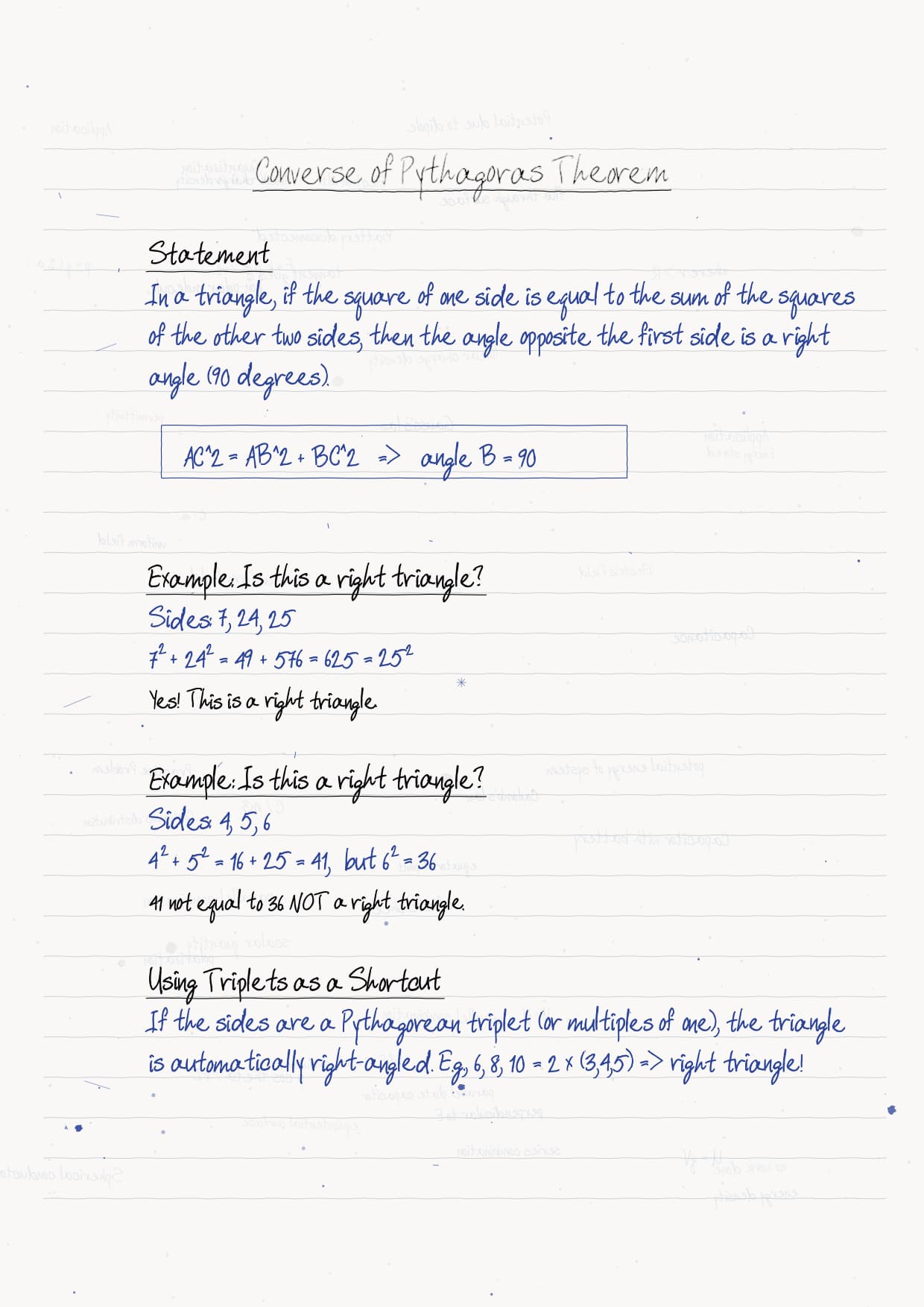
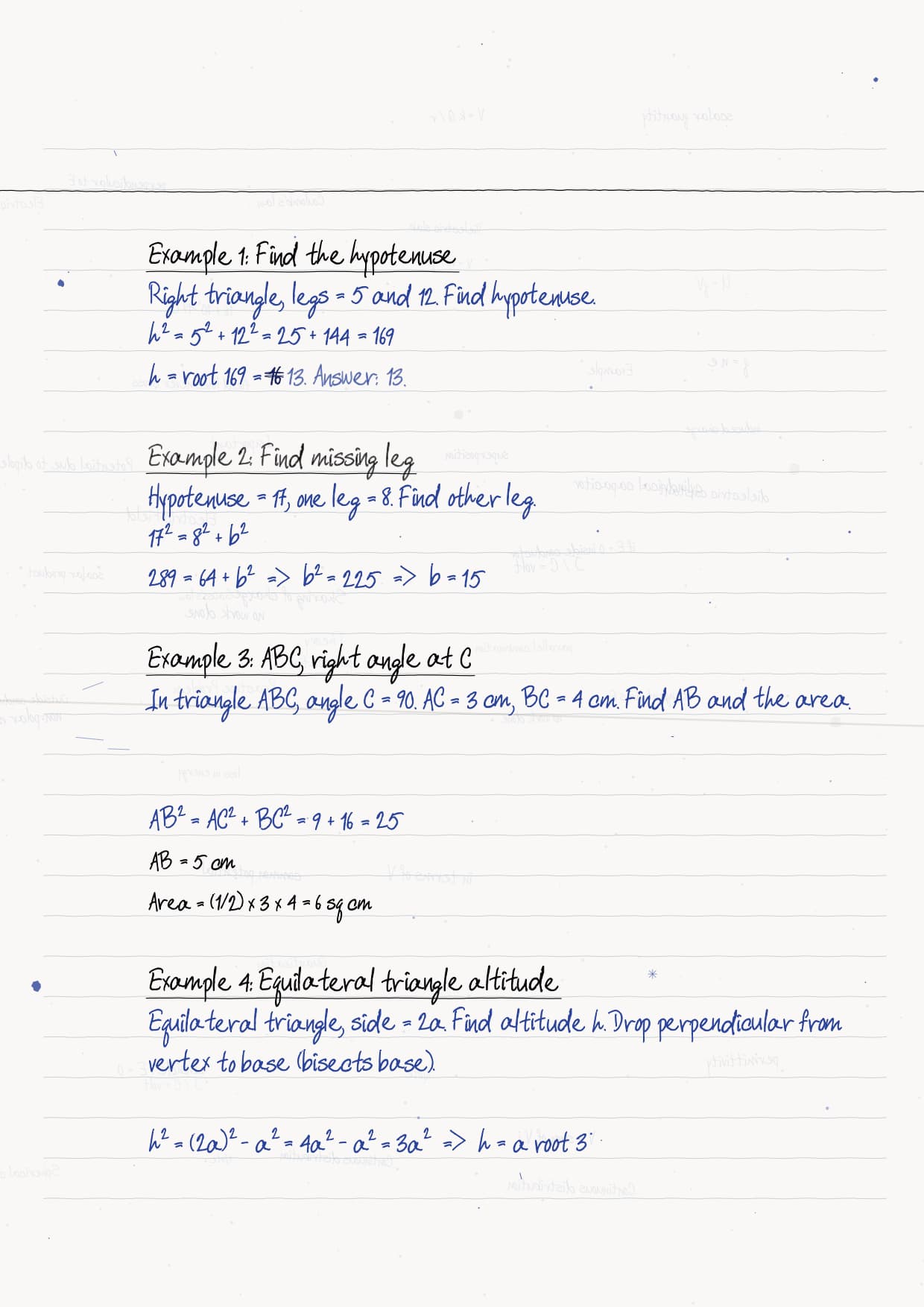
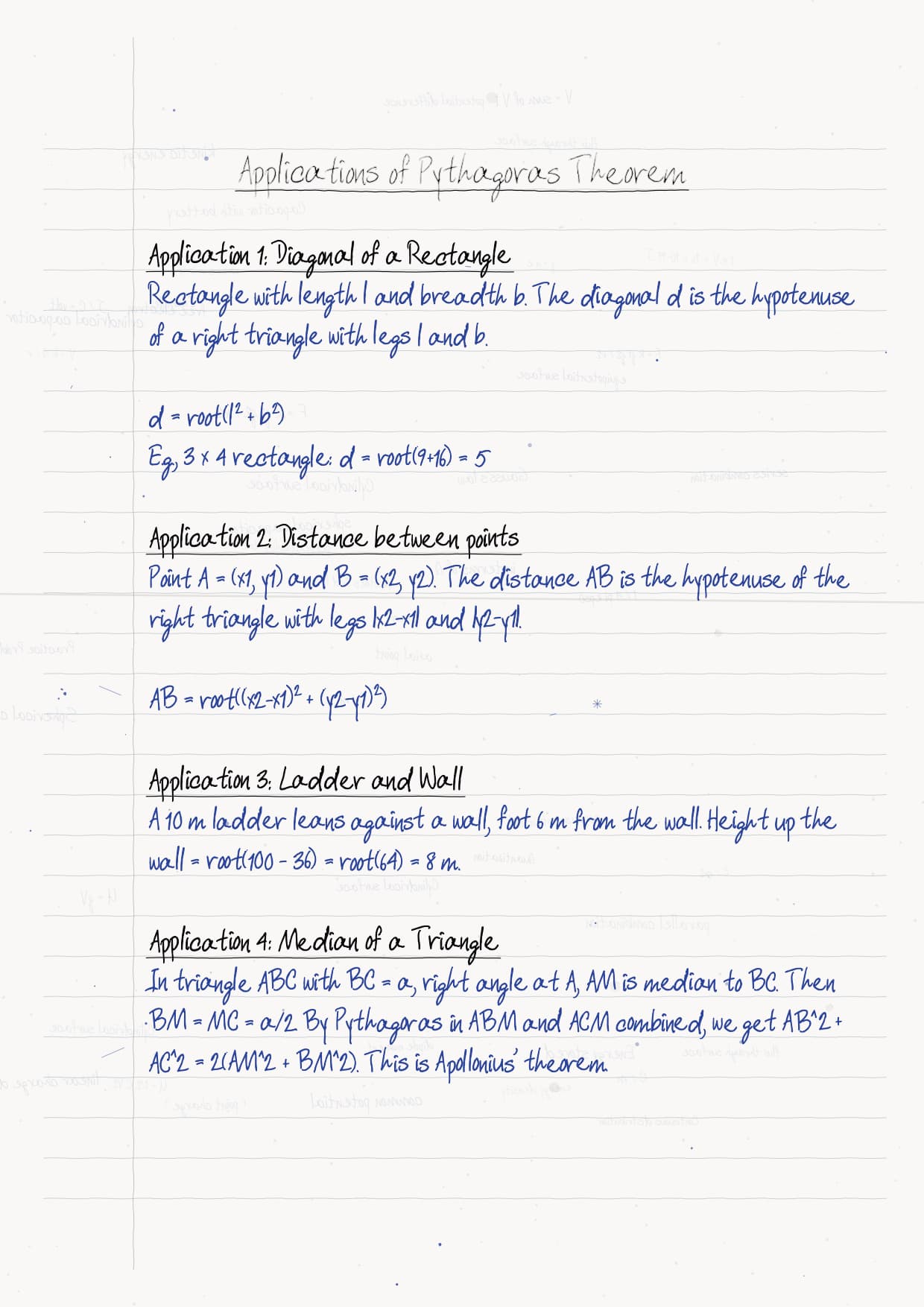
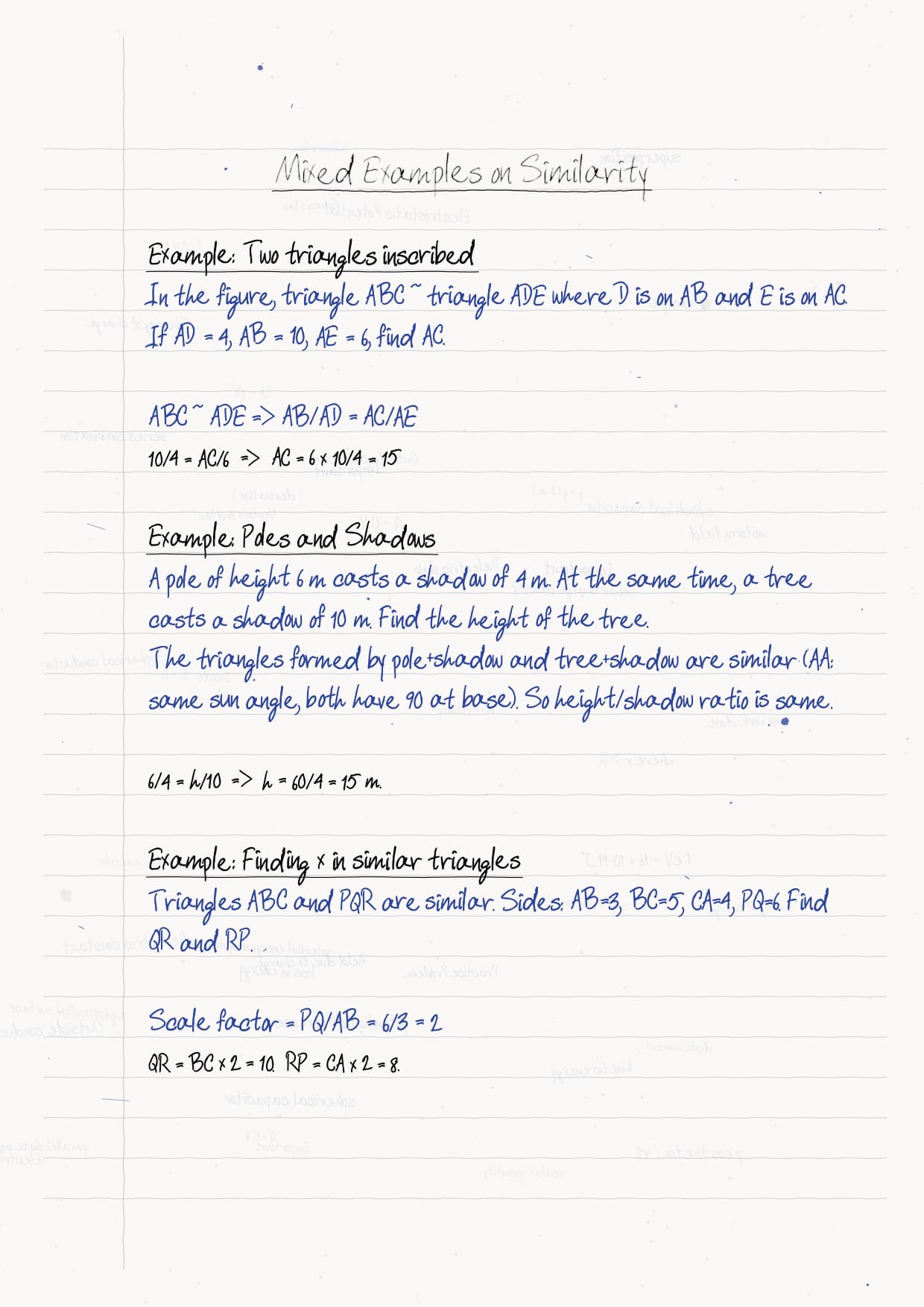
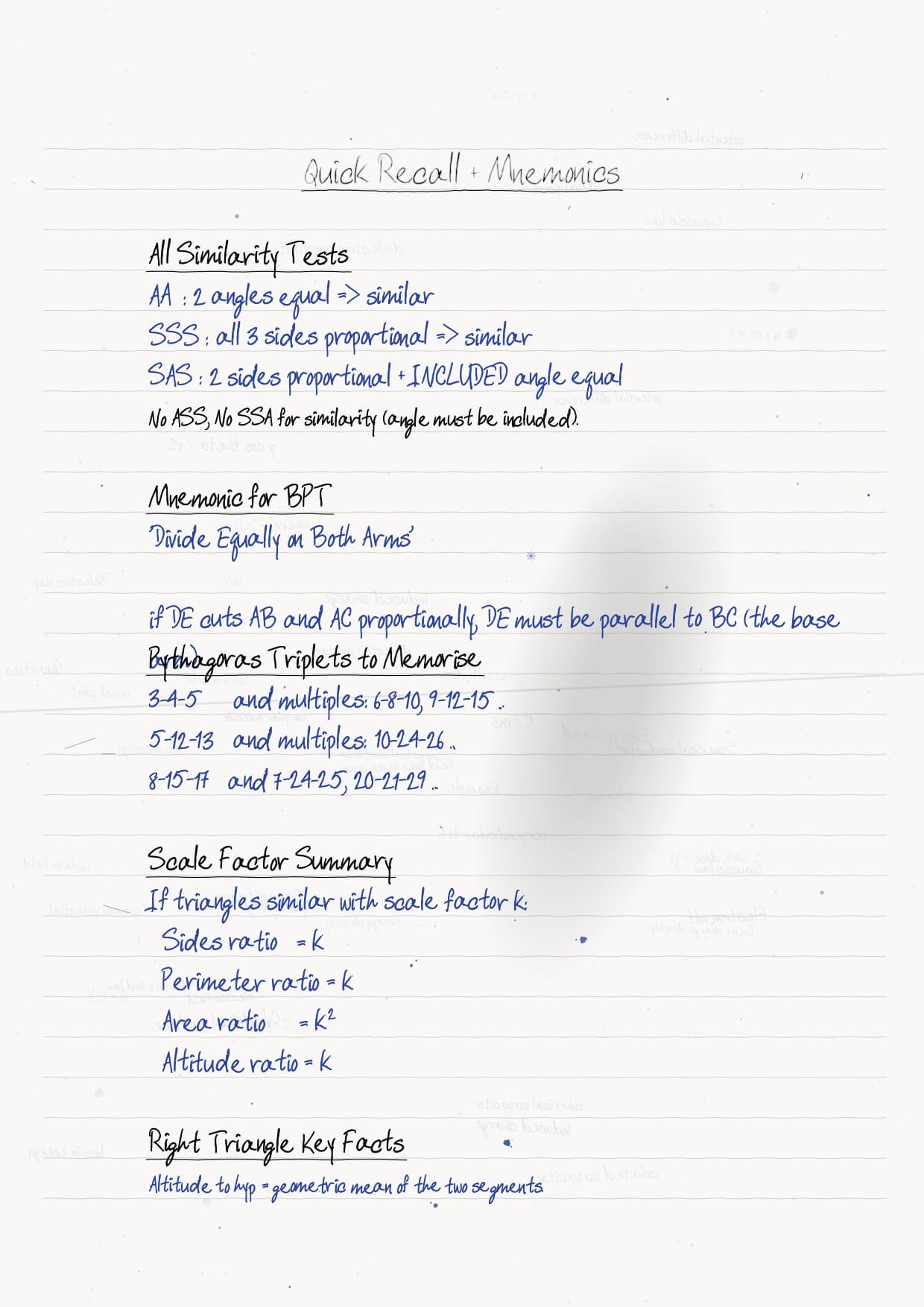
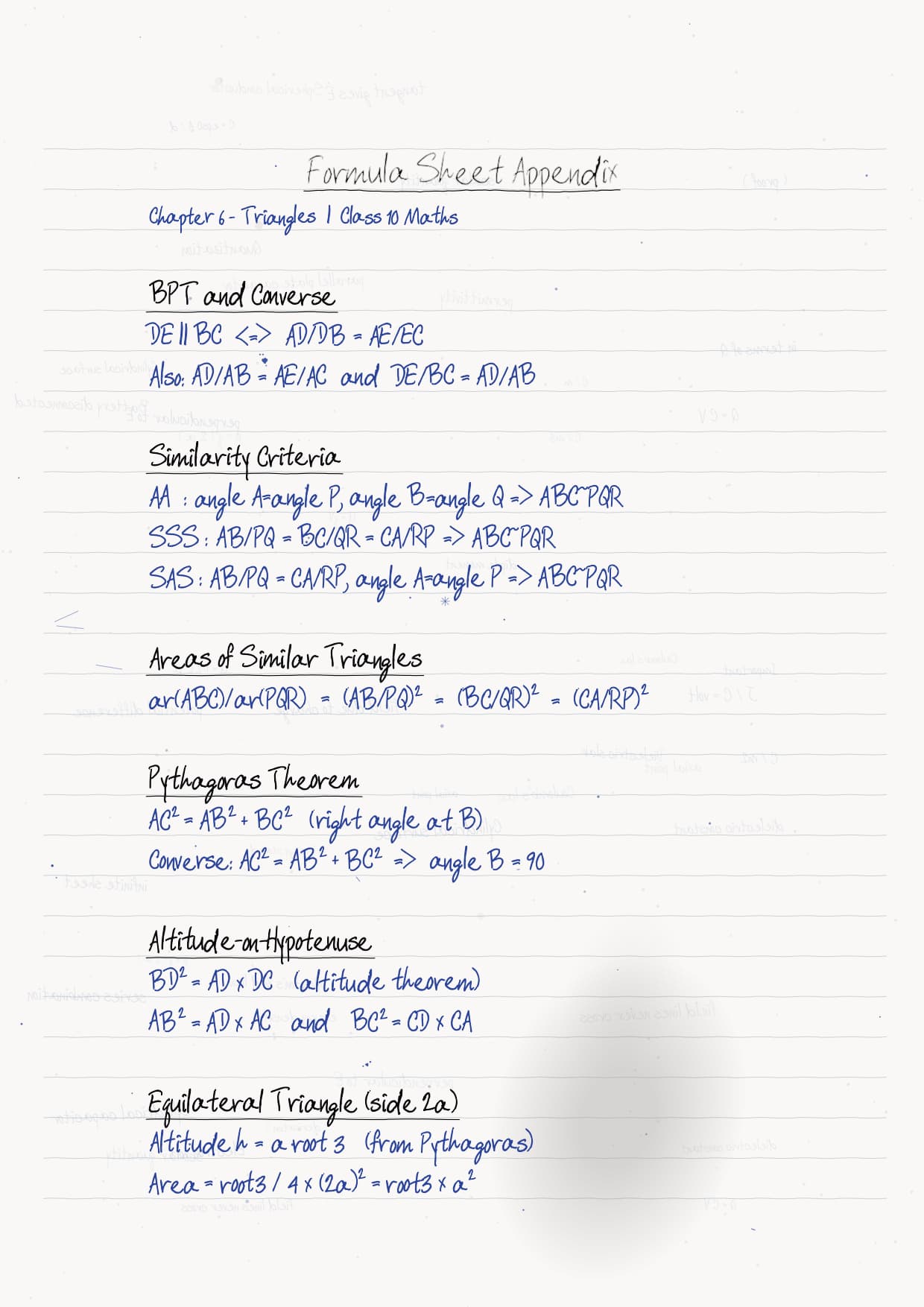
- CBSE Board: about 9 to 10 marks, usually one similarity proof plus one Basic Proportionality Theorem application
- JEE Main: rarely a direct question, but similarity ratios support coordinate geometry and mensuration shortcuts
These notes are prepared by Collegedunia subject mentors, matched to the 2026-27 NCERT print and recent CBSE Board papers.
Watch Triangles Class 10 Maths Chapter 6 Similarity Explained
Source: Magnet Brains on YouTube
Triangles Handwritten Notes: Complete Diagram List for Class 10 Maths
These notes hold 6 hand-sketched diagrams you can copy onto rough paper. The table maps each figure to its page.
| Page | Diagram | What It Shows |
|---|---|---|
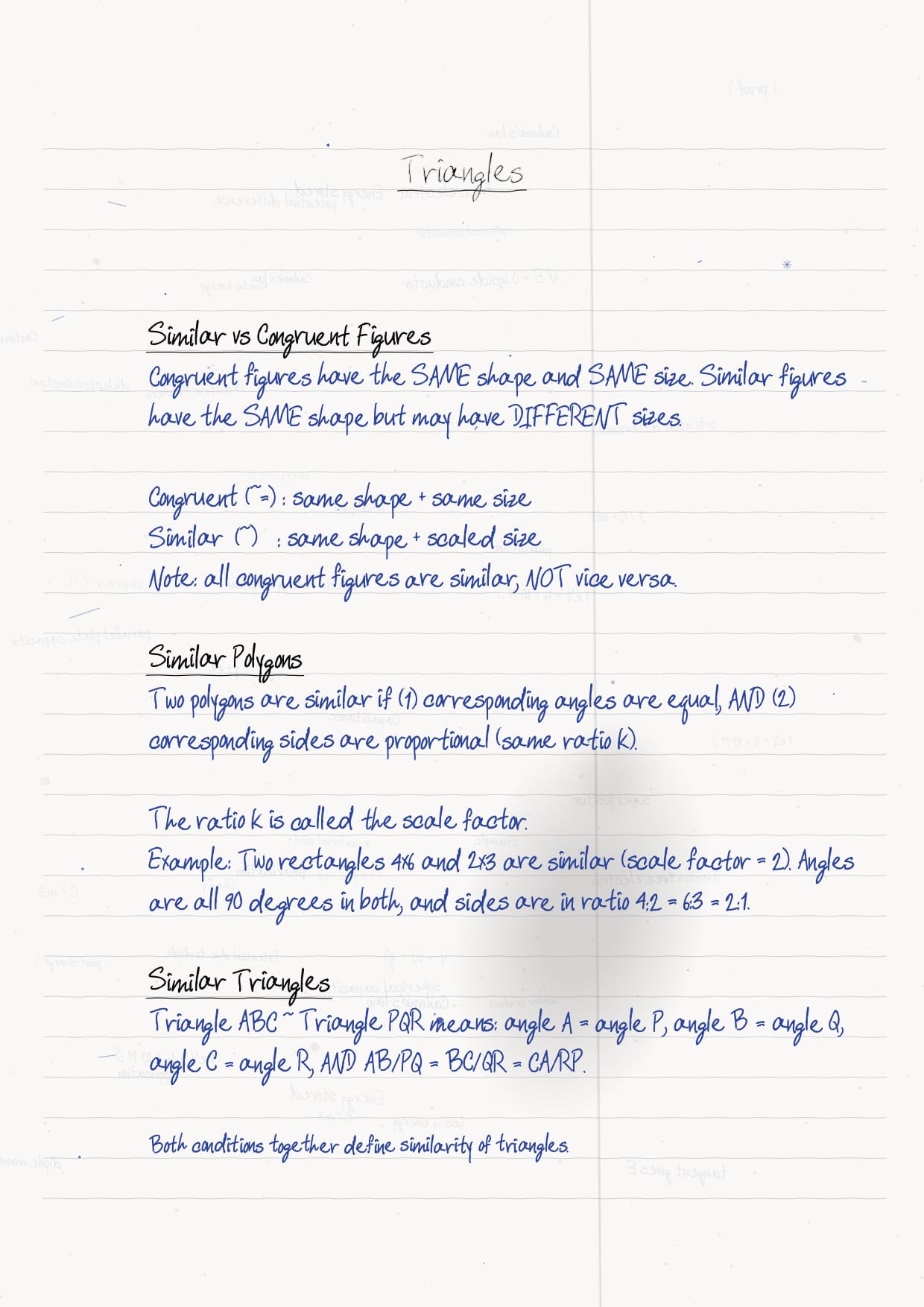
| 2 | Similar figures sketch | Two figures of the same shape but different size, with matched angles marked equal |
| 3 | Similar triangles pair | Two triangles with equal angles and sides in proportion, labelled with the AA criterion |
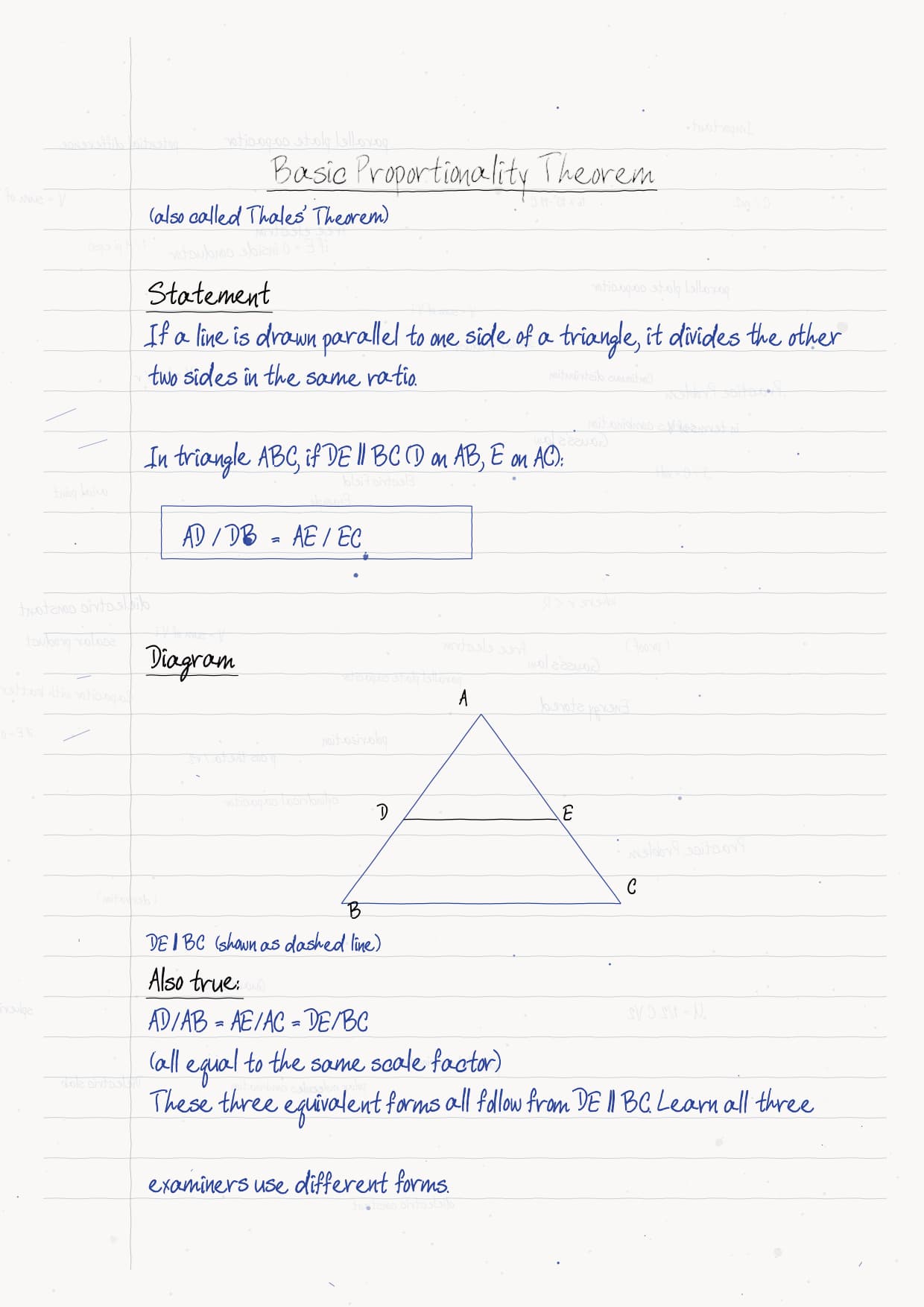
| 4 | Basic Proportionality Theorem figure | A line parallel to one side cutting the other two sides in the same ratio |
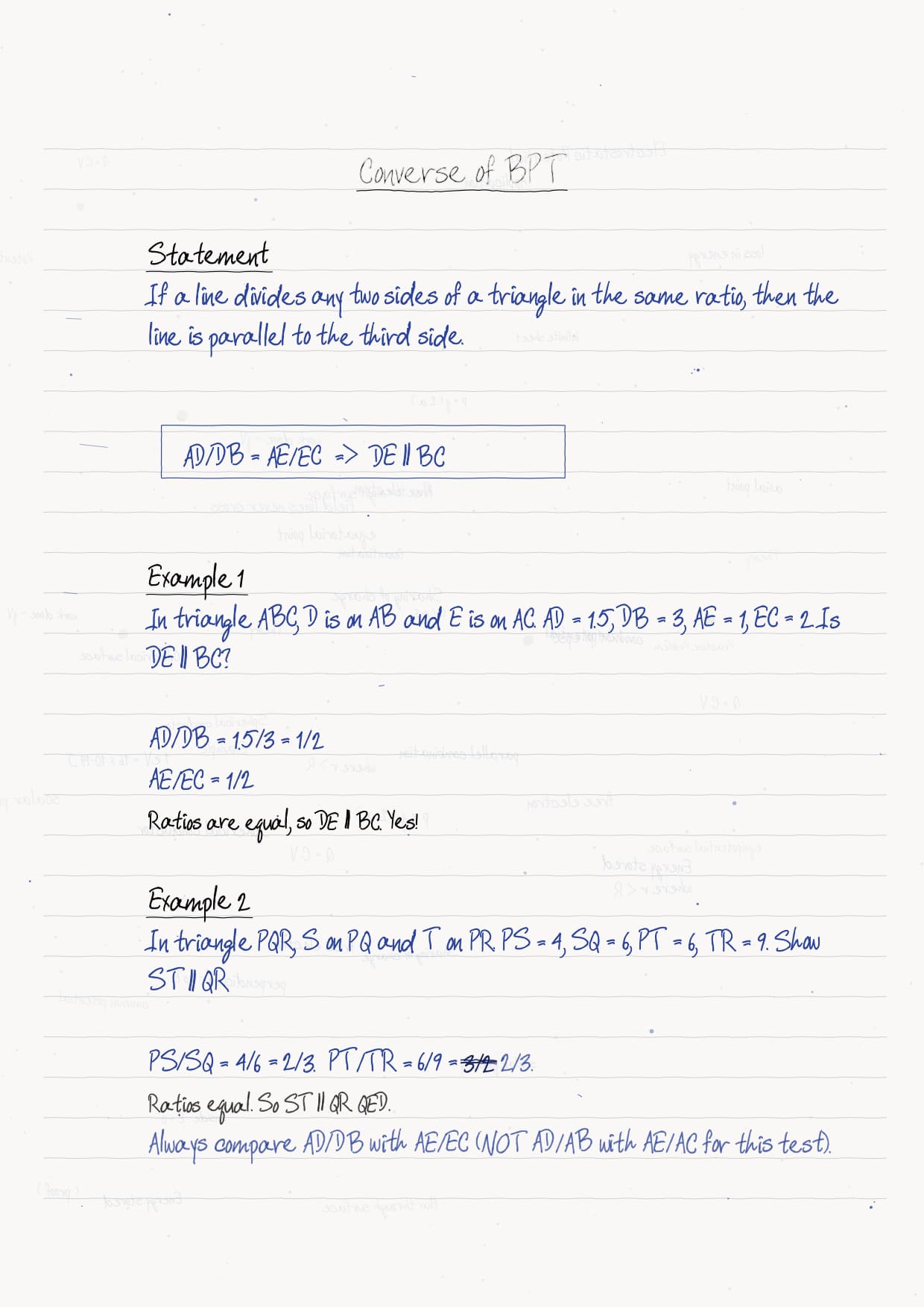
| 5 | Converse of BPT sketch | A line that divides two sides in equal ratio, shown to be parallel to the third side |
| 6 | Similarity criteria strip | AAA, SSS, and SAS pairs drawn side by side for fast comparison |
| 7 | Last-day mind map | One-page tree linking similarity criteria to BPT to the Pythagoras statement |
How will Collegedunia's Handwritten Notes Help You with Triangles?
These notes turn a proof-heavy chapter into an 11-page revision stack you can finish in one sitting.
- Hand-Sketched Visual Anchors: The similar triangles pair, the BPT figure, and the converse sketch are drawn freehand so you can redraw each from memory in under a minute.
- Colour-Coded Box Legend: Orange for definitions, blue for theorems, yellow for exam traps, red for common errors.
- 2026-27 NCERT Alignment: Every page matches the current 2026-27 print, so you revise only the rationalised core that the latest syllabus actually tests.
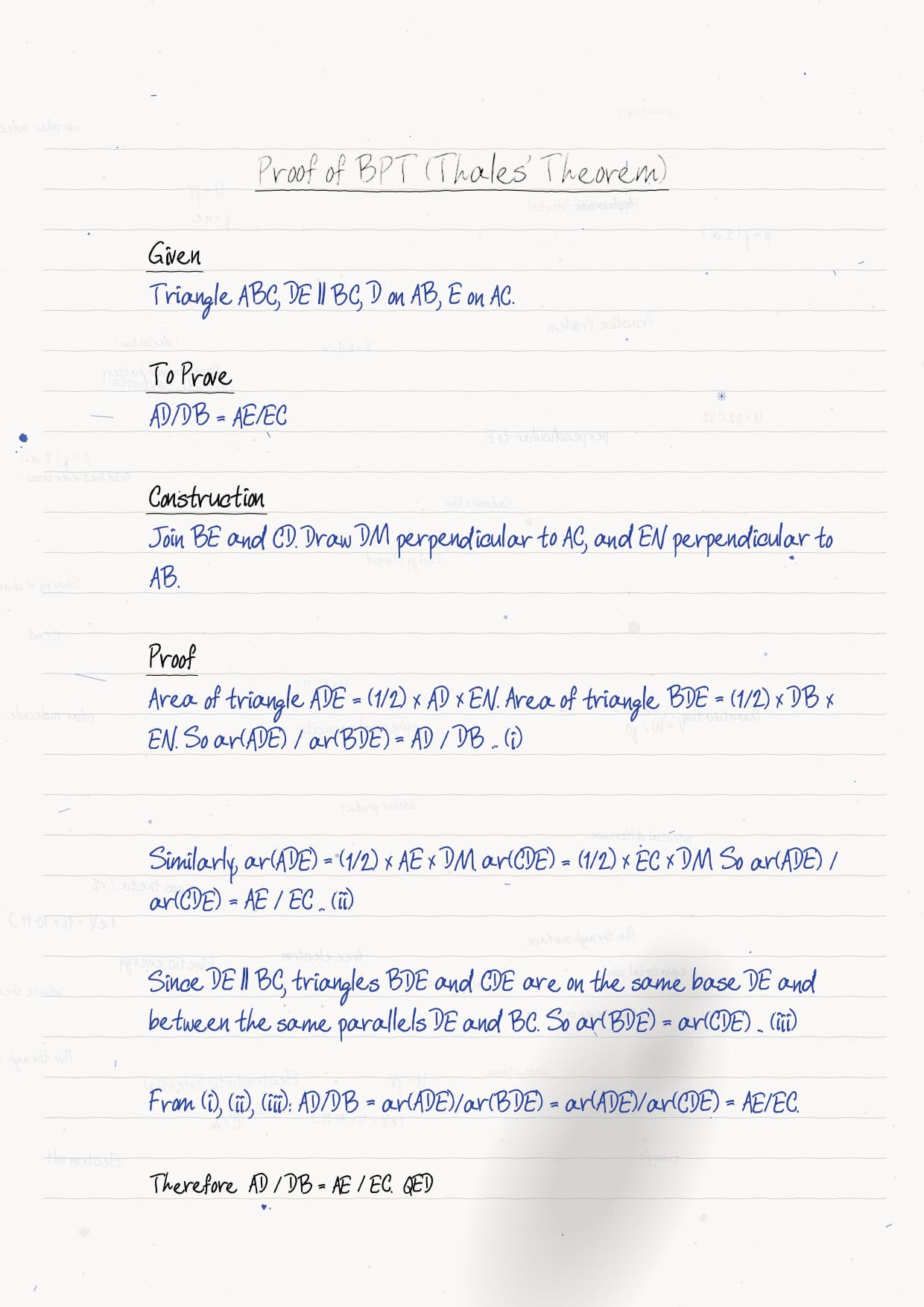
- Proof-First Layout: The similarity and BPT proofs are laid out as numbered steps, the exact form CBSE wants in the answer sheet, so you score each step.
Topics Covered in Class 10 Maths Chapter 6 Triangles Handwritten Notes
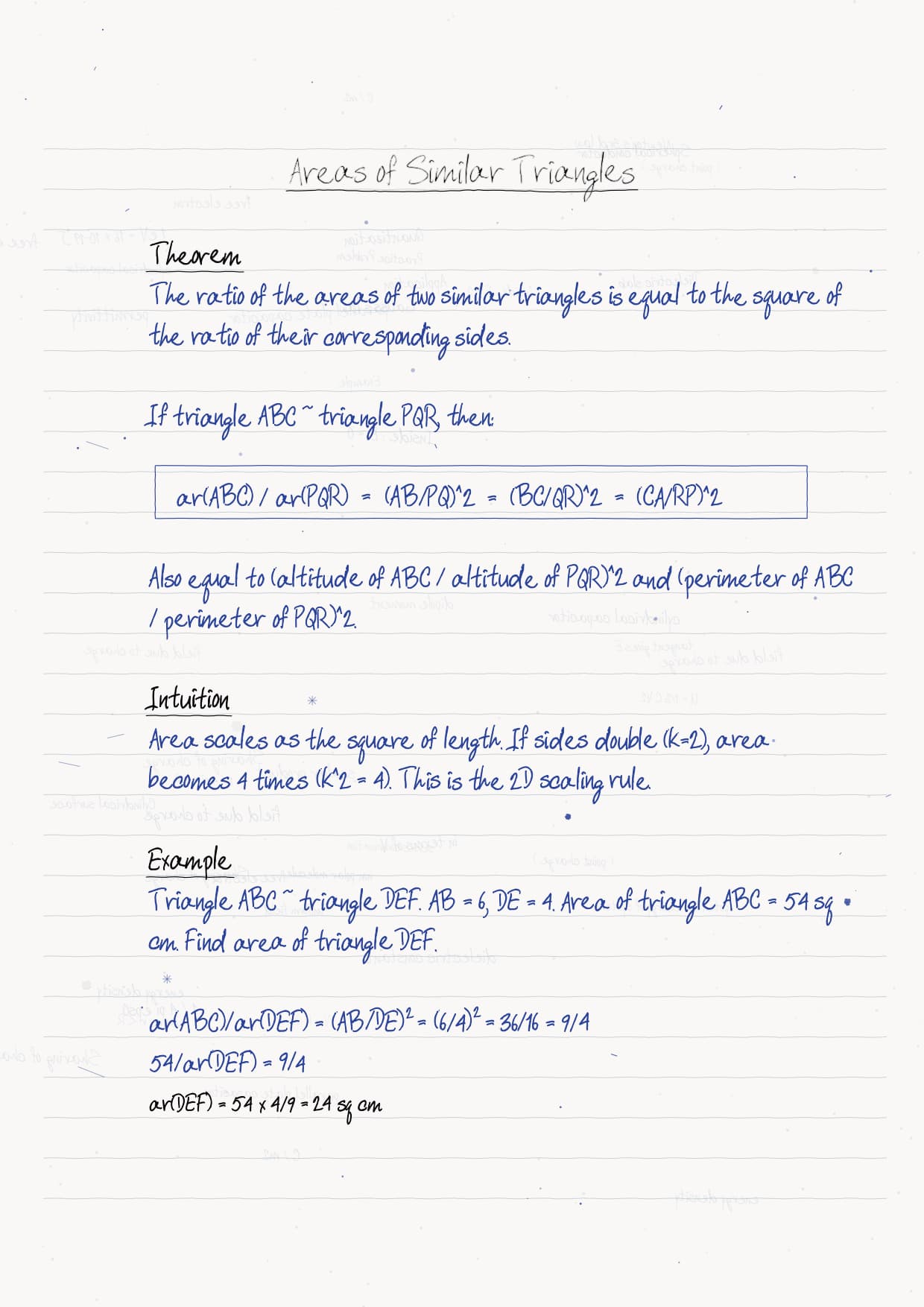
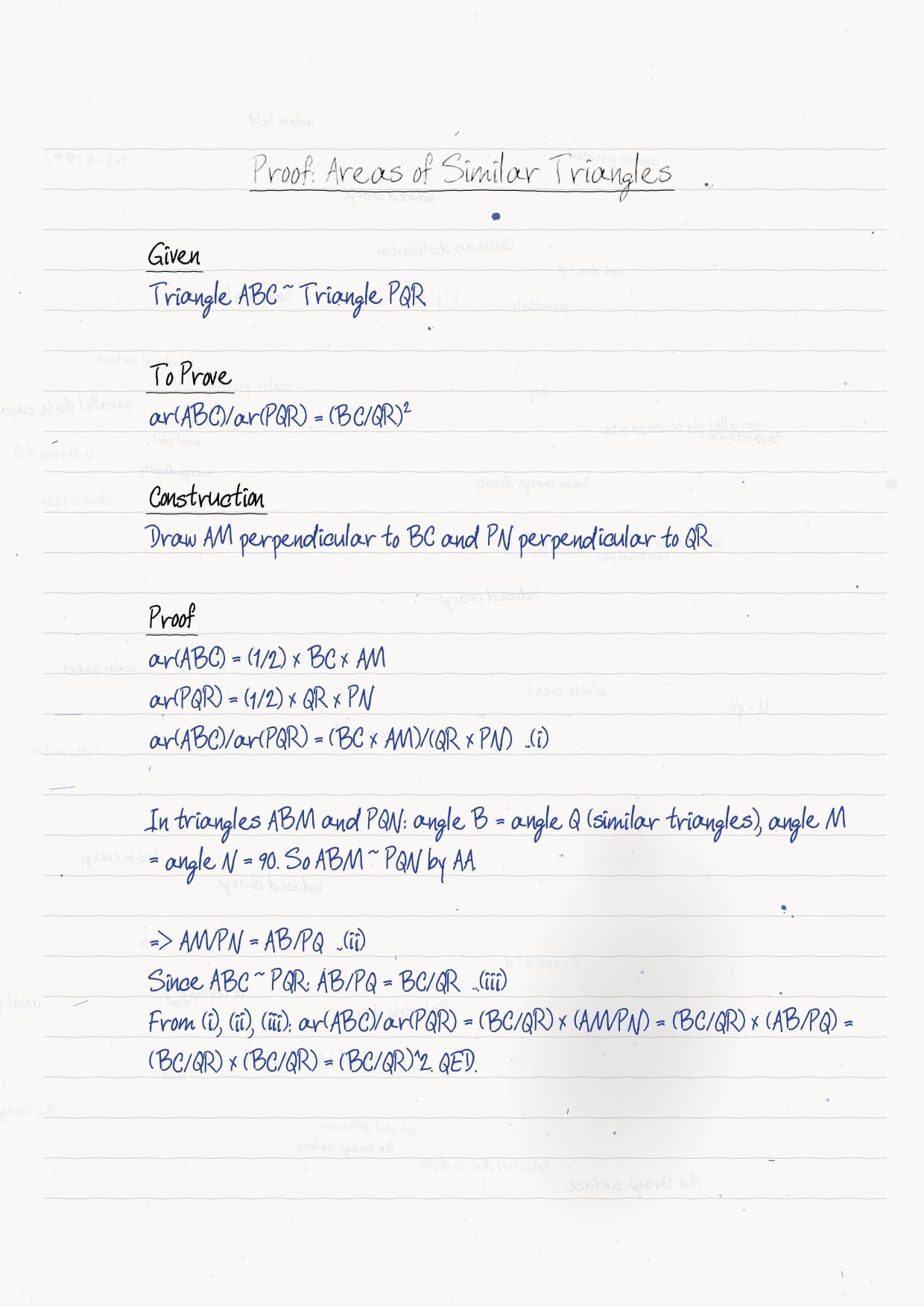
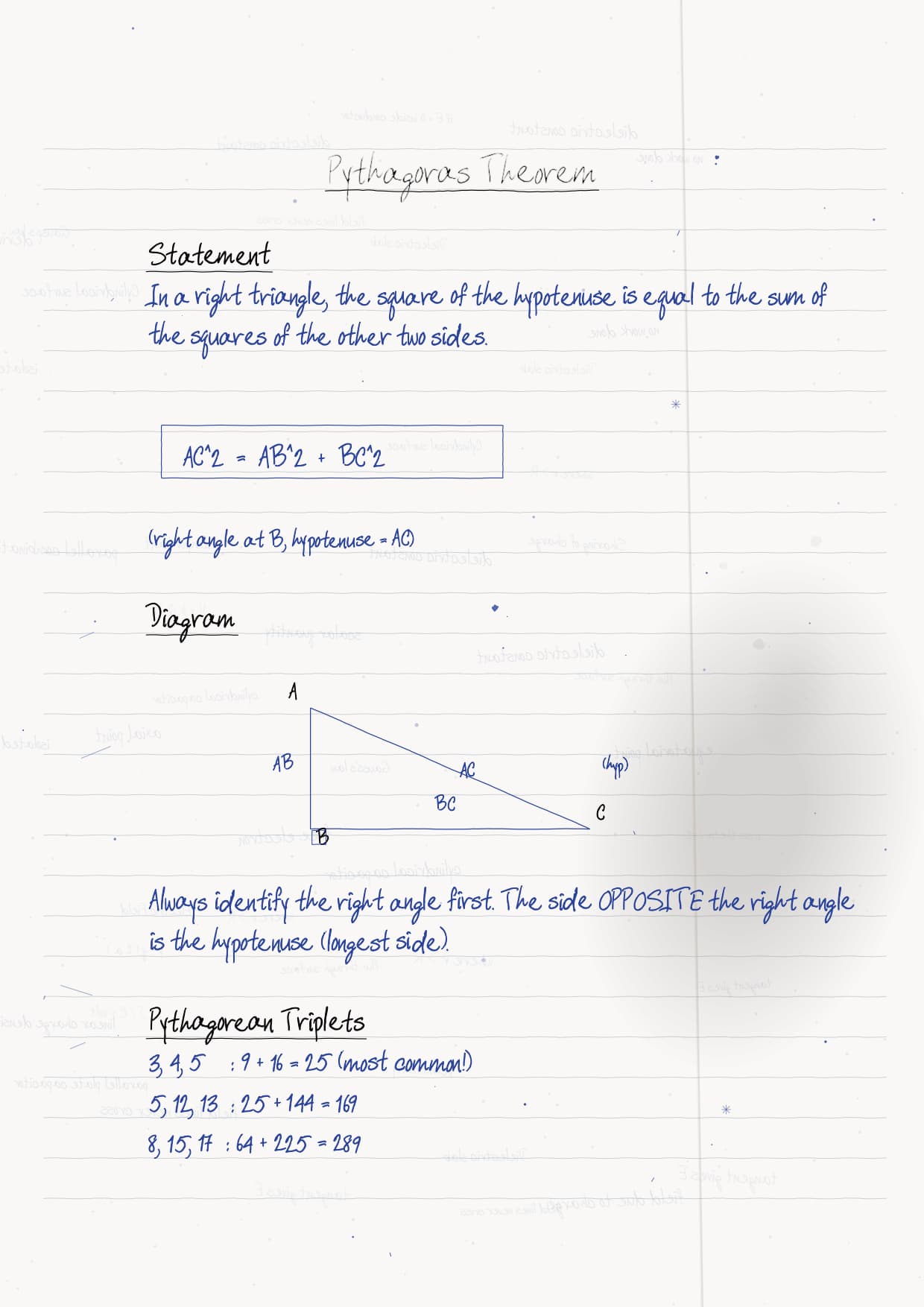
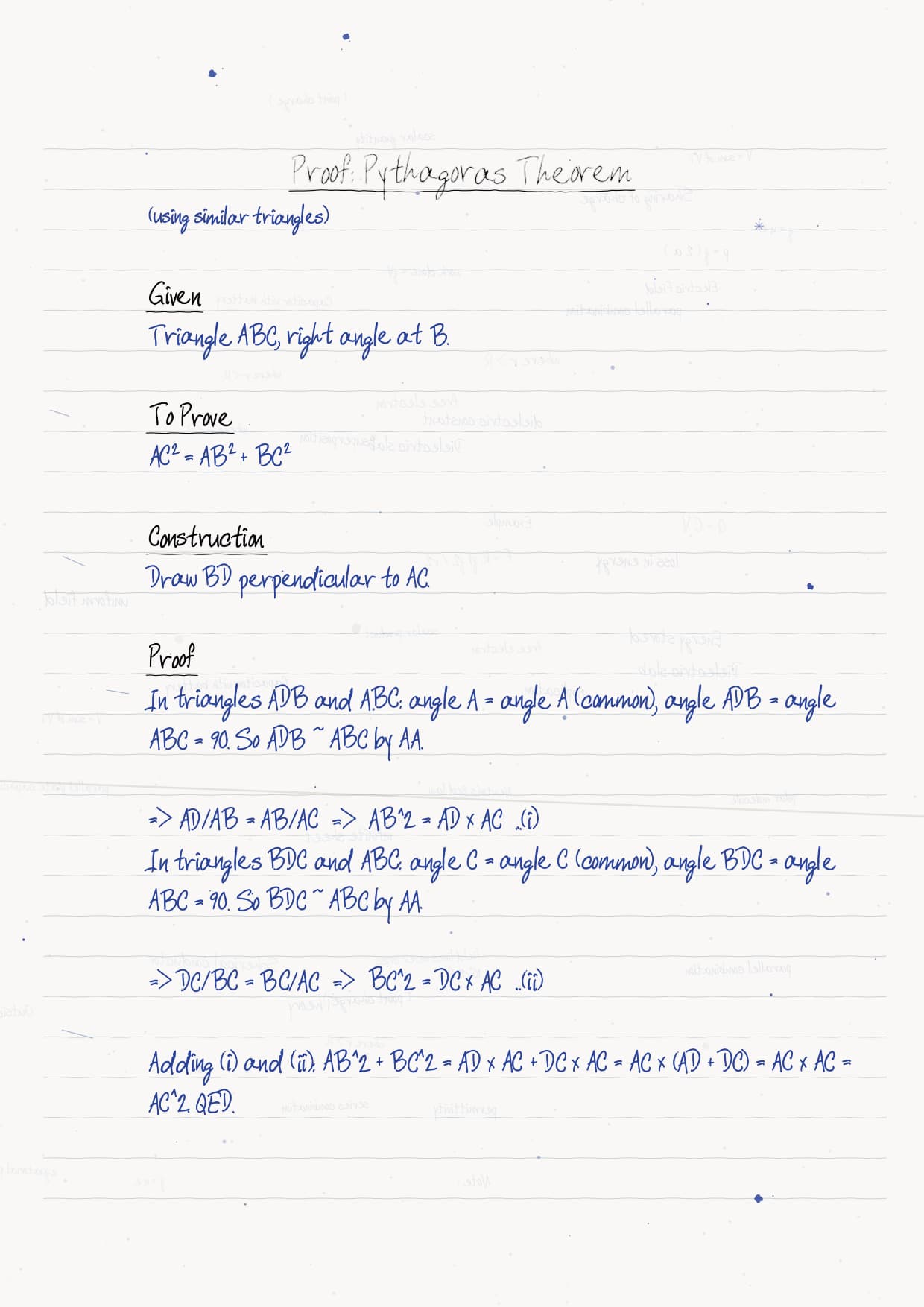
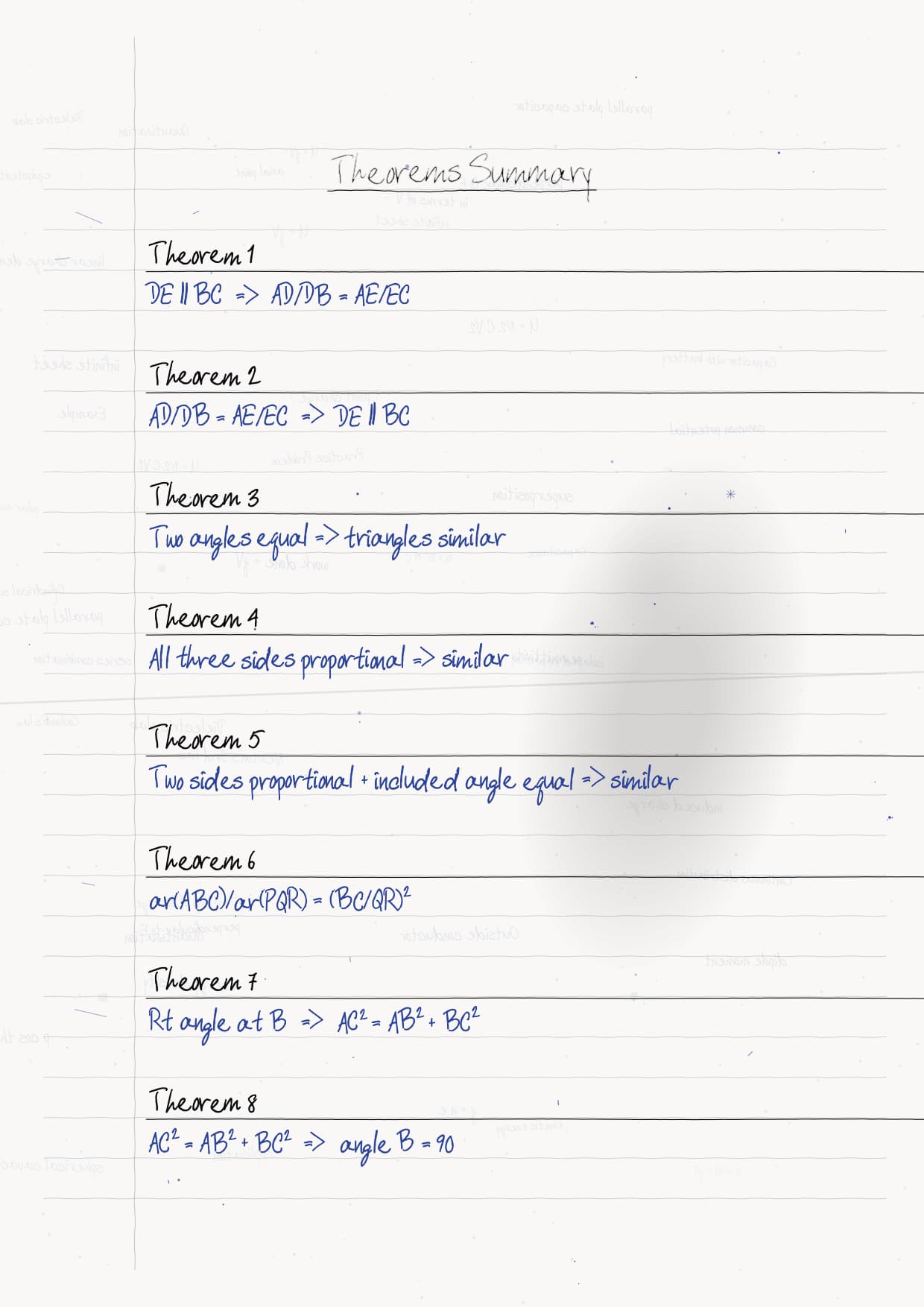
Similar figures share the same shape but not always the same size, with matching angles equal and sides in proportion. The notes build the criteria for similarity of triangles: AAA (or AA), SSS, and SAS. The Basic Proportionality Theorem (Thales' theorem) says a line parallel to one side cuts the other two sides in the same ratio. Its converse gets a matching sketch. The notebook also states the Pythagoras theorem for the link to right triangles.
Triangles Handwritten Notes: Color Legend for the Notebook
These notes use four ink colours in a fixed way, so you can skim all 11 pages in minutes.
| Colour | Box Type | What's Inside |
|---|---|---|
| Orange | Definition box | NCERT one-line definitions: similar figures, similar triangles, proportion, parallel line |
| Blue | Theorem box | The Basic Proportionality Theorem and the three similarity criteria, with a worked pair |
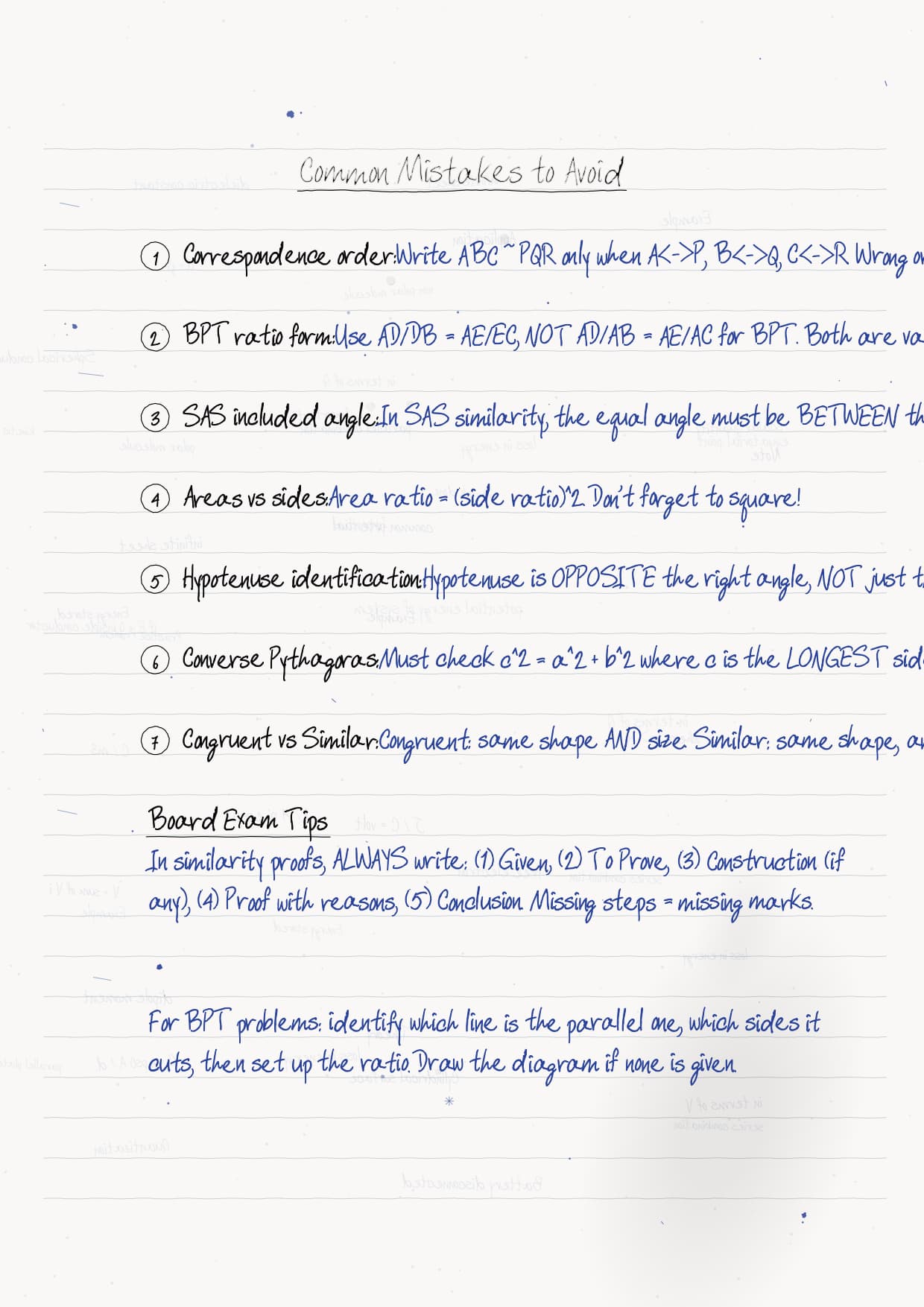
| Yellow | Exam-trap callout | Common traps, like writing the correspondence of vertices in the wrong order |
| Red | Common-mistake box | Wrong ratio steps shown next to the correct numbered form |
Triangles Handwritten Notes Concept-Flavoured Memory Mnemonics
Three mnemonics the notebook uses again and again. Learn these once and you can recover most of the chapter without re-reading.
Triangles Top Formulae for Class 10 Maths Quick Recall
These few relations cover nearly every numerical CBSE asks. The full step-by-step working sits on the Formula Sheet.
| Idea | Relation |
|---|---|
| Similar triangles ratio | If ABC ∼ PQR, then ABPQ = BCQR = CARP |
| Basic Proportionality Theorem | If DE ∥ BC in ABC, then ADDB = AEEC |
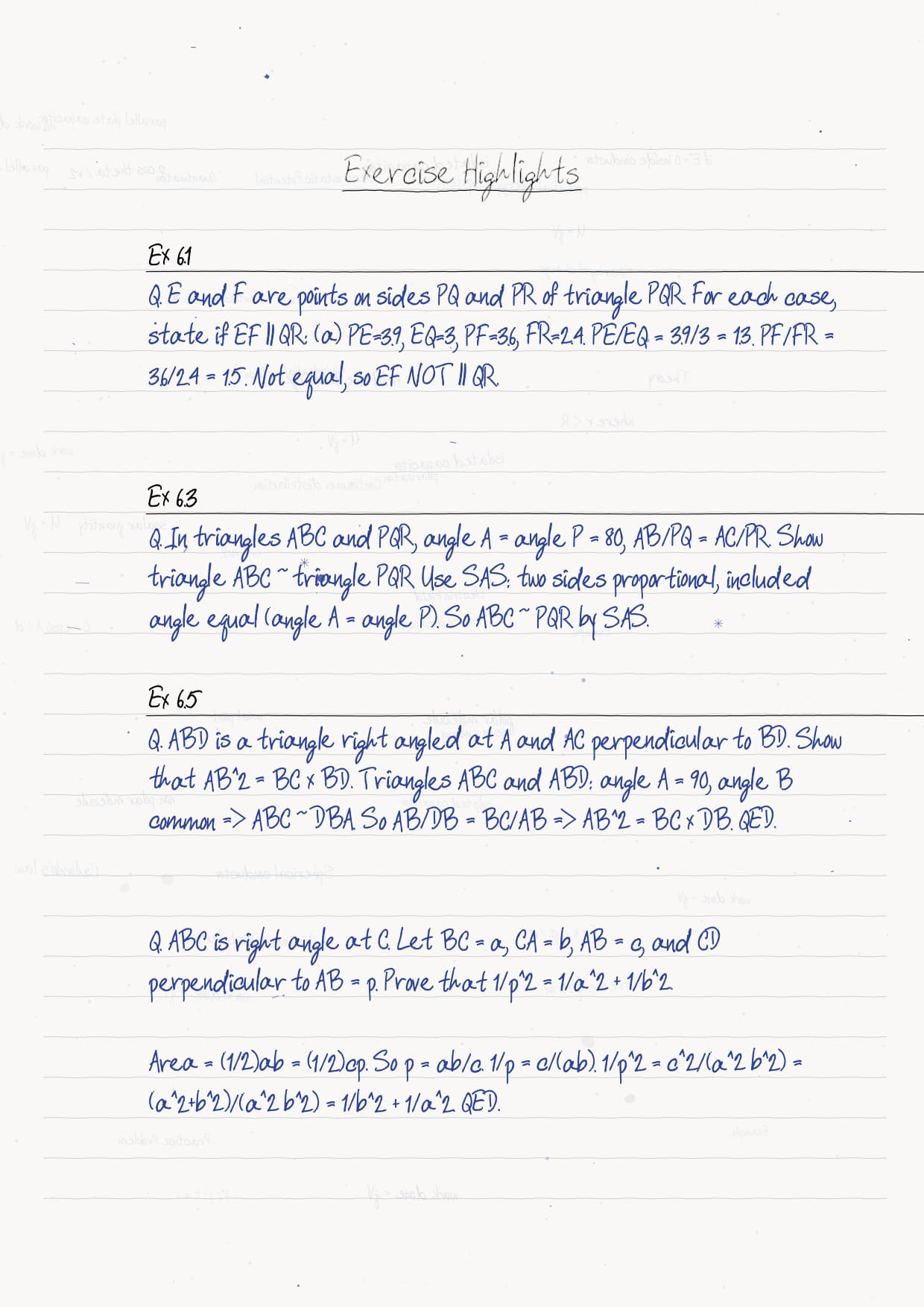
| AA similarity criterion | Two pairs of equal angles make the triangles similar |
| Pythagoras statement | In a right triangle, hypotenuse2 = base2 + height2 |
Full formula table: Triangles Class 10 Maths Formula Sheet
Triangles: Last 24-Hour Revision Card for Class 10 Maths
Scan the page below the night before the Board exam.
- Similar figures: same shape, matched angles equal, sides in one fixed ratio. This is the base for similar triangles.
- Similarity criteria: AAA (or AA), SSS, and SAS. State the matched parts in the correct vertex order.
- Basic Proportionality Theorem: a line parallel to one side cuts the other two sides in the same ratio. A favourite Board question.
- Converse of BPT: if a line divides two sides in equal ratio, it must be parallel to the third side.
- Pythagoras statement: in a right triangle, the square on the hypotenuse equals the sum of the squares on the other two sides. Use it for the side link in similar right triangles.
Triangles Class 10 Maths Self-Assessment Quick Quiz
Four MCQs in the style CBSE asks. Tap each question to reveal the answer.
Q1. Two triangles are similar if their corresponding angles are:
(a) supplementary (b) equal (c) complementary (d) unequal
Answer: (b) equal, because equal corresponding angles force the sides into the same ratio.
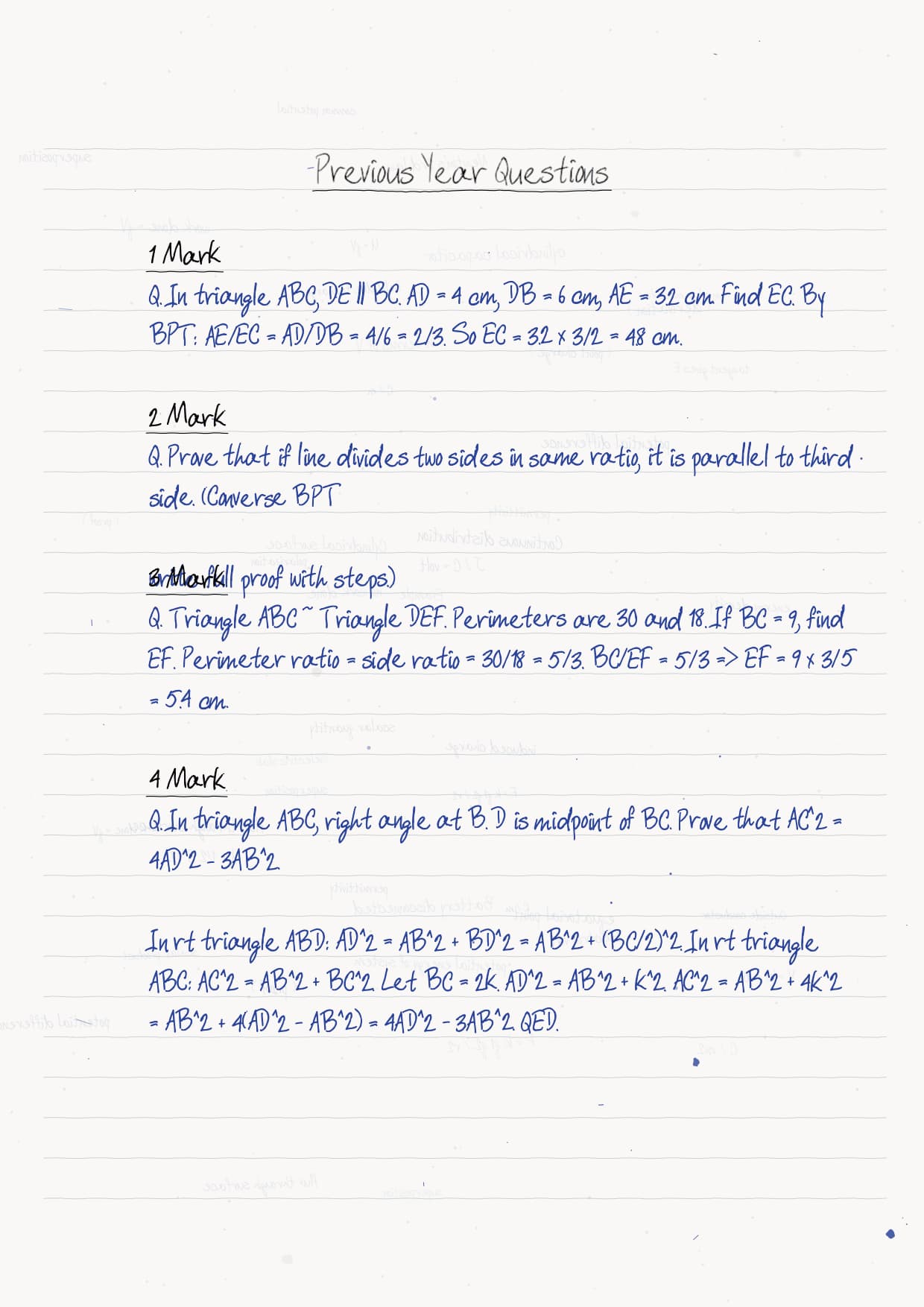
Q2. In ABC, DE ∥ BC with AD = 2, DB = 3, AE = 4. Then EC is:
(a) 5 (b) 6 (c) 7 (d) 8
Answer: (b) 6, since by BPT ADDB = AEEC, so 23 = 4EC gives EC = 6.
Q3. Which is NOT a criterion for similarity of two triangles?
(a) AAA (b) SSS (c) SAS (d) ASA
Answer: (d) ASA, which is a congruence criterion; similarity uses AAA, SSS, and SAS.
Q4. If ABC ∼ DEF with AB = 6 and DE = 9, the ratio of their sides is:
(a) 2 : 3 (b) 3 : 2 (c) 1 : 2 (d) 4 : 9
Answer: (a) 2 : 3, the ratio of any pair of corresponding sides, here 69 = 23.
Student Feedback
71% of Class 10 students told us they revise Triangles fastest from hand-drawn pages, and 4 out of 5 said the freehand similar-triangles pair made the AA criterion finally stick the night before the board exam. The most-redrawn sketch was the Basic Proportionality Theorem figure.
Students who copied the colour-coded boxes onto rough paper reported finishing the whole chapter recall in under 30 minutes, and the 24-hour revision card was rated the single most useful page by 64% of the poll.
Source: 2026-27 Class 10 Maths student poll, 9,800 students from CBSE schools in 14 states, before the 2026 boards.
Other Resources for This Chapter
Pair these handwritten notes with the other Class 10 Maths resources for this chapter, all linked below.
| Resource | Open |
|---|---|
| NCERT Solutions | Triangles Class 10 Maths NCERT Solutions |
| Notes | Triangles Class 10 Maths Notes |
| Formula Sheet | Triangles Class 10 Maths Formula Sheet |
| NCERT Book PDF | Triangles Class 10 Maths NCERT Book PDF |
| NCERT Exemplar Solutions | Triangles Class 10 Maths NCERT Exemplar Solutions |
| Handwritten Notes | Triangles Class 10 Maths Handwritten Notes |
NCERT Handwritten Notes for Class 10 Maths: All Chapters
Jump to another Class 10 Maths chapter's notes below.
| Chapter | Resource |
|---|---|
| Chapter 4 | Quadratic Equations Handwritten Notes |
| Chapter 5 | Arithmetic Progressions Handwritten Notes |
| Chapter 7 | Coordinate Geometry Handwritten Notes |
| Chapter 8 | Introduction to Trigonometry Handwritten Notes |
Triangles Class 10 Maths Handwritten Notes FAQs
Ques. Where can I download Triangles Class 10 Maths Handwritten Notes PDF?
Ans. You can download the Triangles Class 10 Maths Handwritten Notes PDF directly from this page. The notes are free and ready to print.
Ques. Are these handwritten notes aligned with the 2026-27 NCERT?
Ans. Yes. The notebook follows the current 2026-27 syllabus for Class 10 Maths. It centres on similar figures, the criteria for similarity of triangles, and the Basic Proportionality Theorem.
Ques. What are similar triangles in Class 10 Maths?
Ans. Two triangles are similar when their corresponding angles are equal and their corresponding sides are in the same ratio. They have the same shape but may differ in size. The similar triangles pair on page 3 of the notebook shows this clearly.
Ques. What is the Basic Proportionality Theorem?
Ans. The Basic Proportionality Theorem, also called Thales' theorem, states that a line drawn parallel to one side of a triangle cuts the other two sides in the same ratio. The figure on page 4 carries a solved example.
Ques. What are the criteria for similarity of triangles?
Ans. The three criteria are AAA (or AA), SSS, and SAS. The similarity criteria strip on page 6 of the notebook draws each pair side by side so you can compare them at a glance.
Ques. Is the Pythagoras theorem still in the Class 10 Triangles chapter?
Ans. The rationalised 2026-27 syllabus trimmed several Pythagoras proofs and the area-ratio theorem. The notebook keeps the Pythagoras statement for context but treats similarity criteria and the Basic Proportionality Theorem as the current core.
Ques. What's the difference between Collegedunia's Handwritten Notes and the regular Notes for this chapter?
Ans. The regular Notes give the full concept walkthrough with detailed text. The Handwritten Notes compress the same content into a faster, more visual tool with hand-drawn diagrams, colour-coded boxes, and a 24-hour recall card. Use Notes for the first read and Handwritten Notes for quick revision.



Comments