




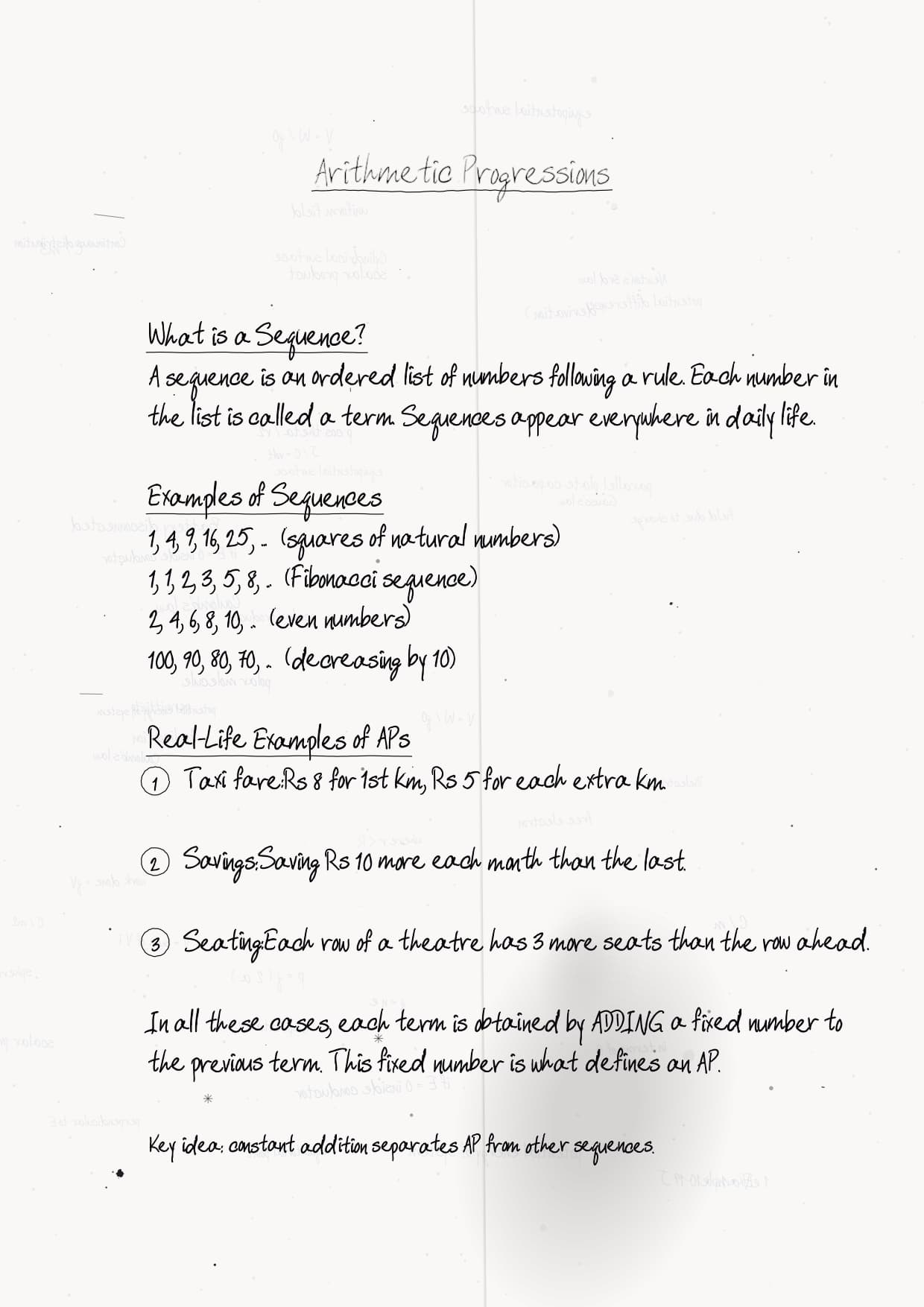
Class 10 Maths Chapter 5 Arithmetic Progressions carries about 5 to 7 marks in the CBSE Board exam and is one of the most scoring chapters in the Algebra unit. These notes cover the meaning of an AP, the nth term, the sum of n terms, and word problems, all in a hand-drawn revision style.
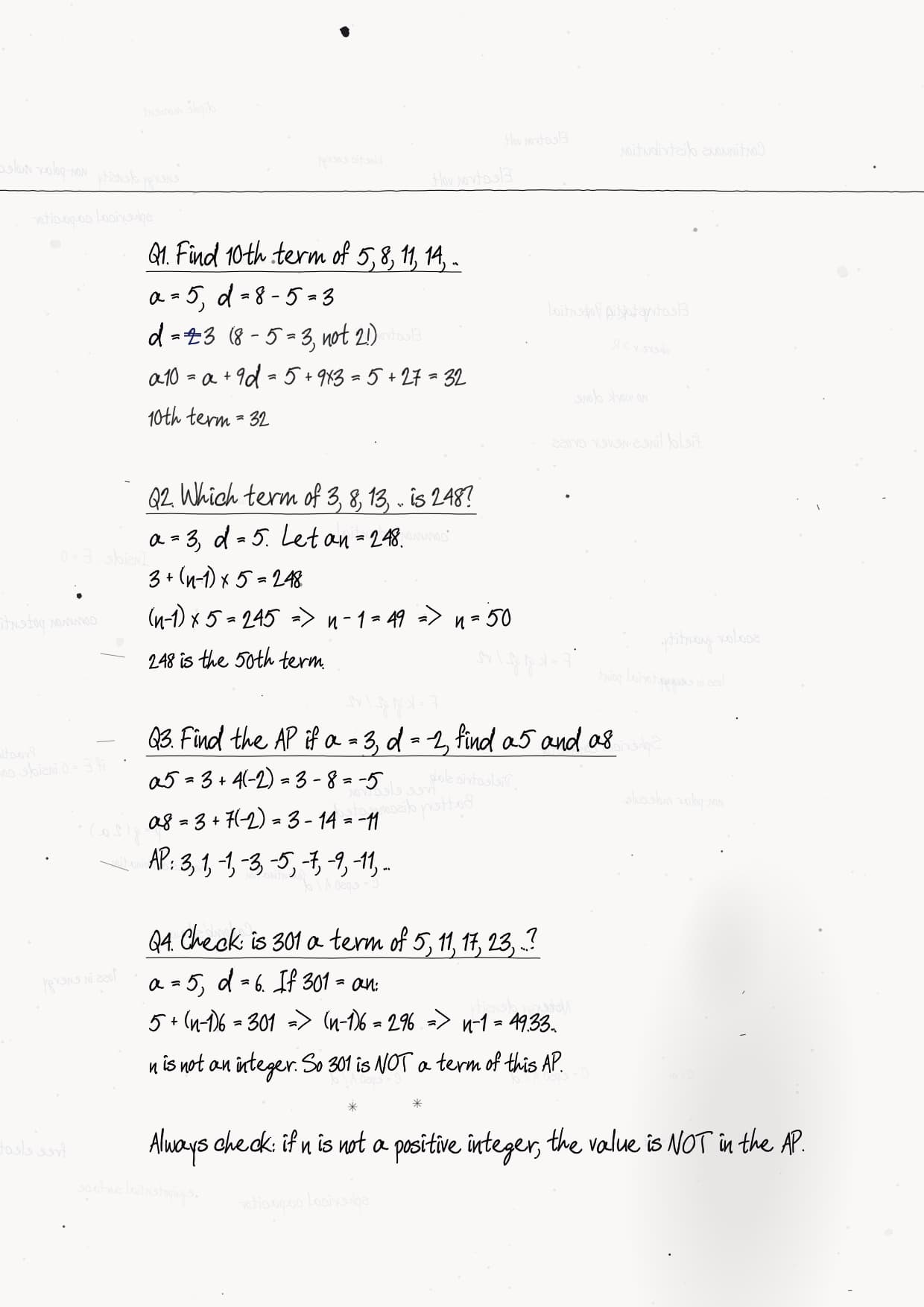
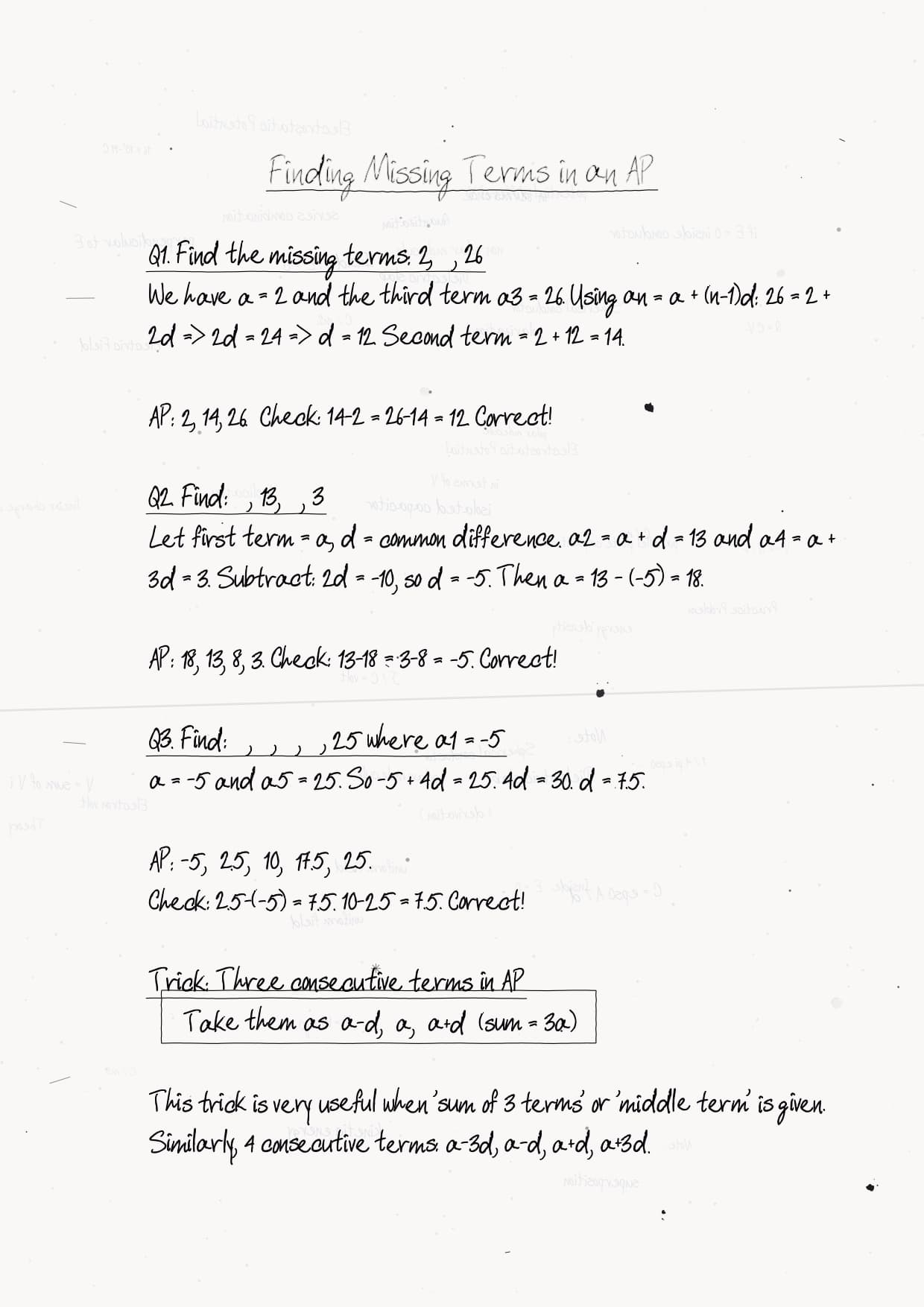
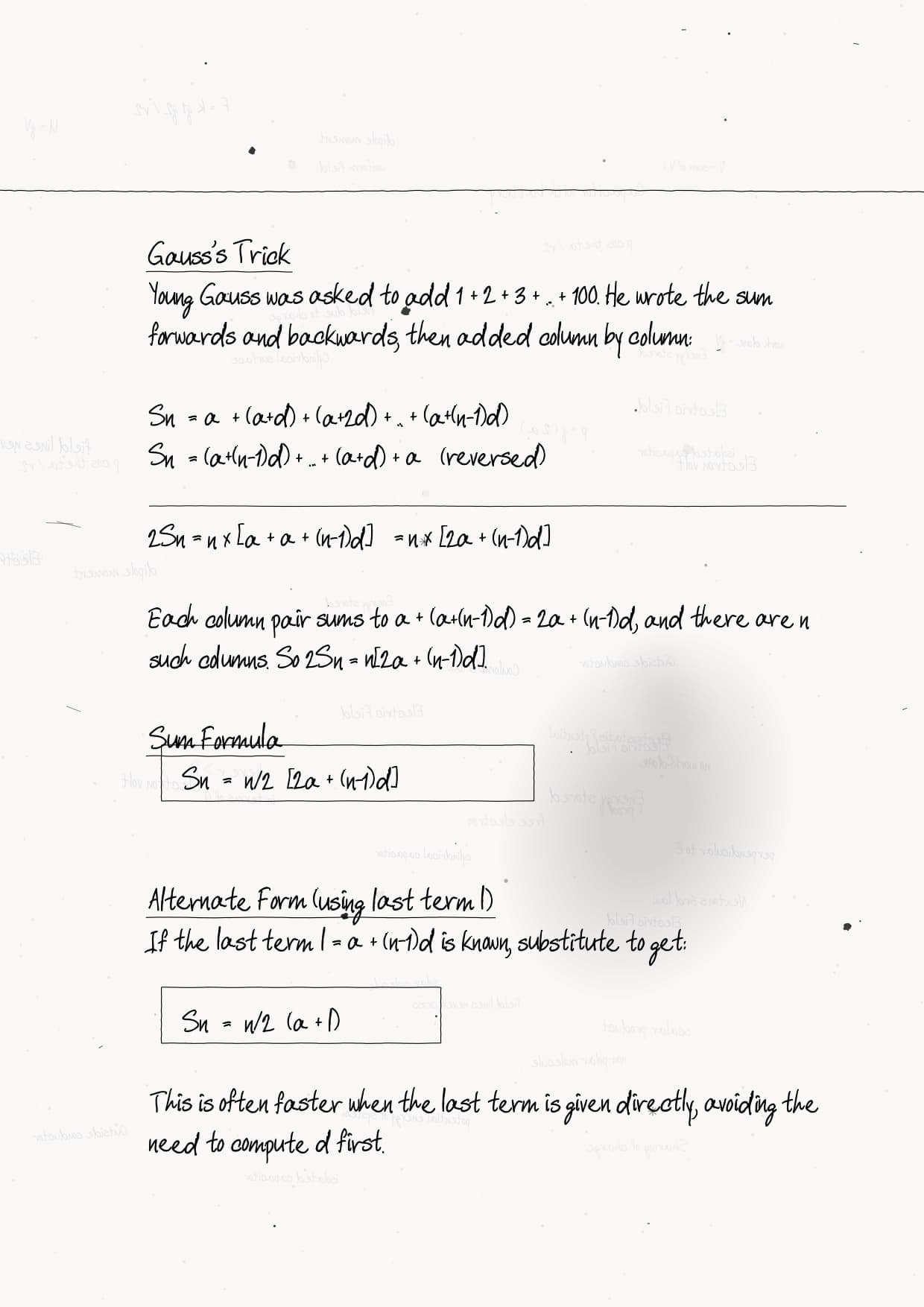
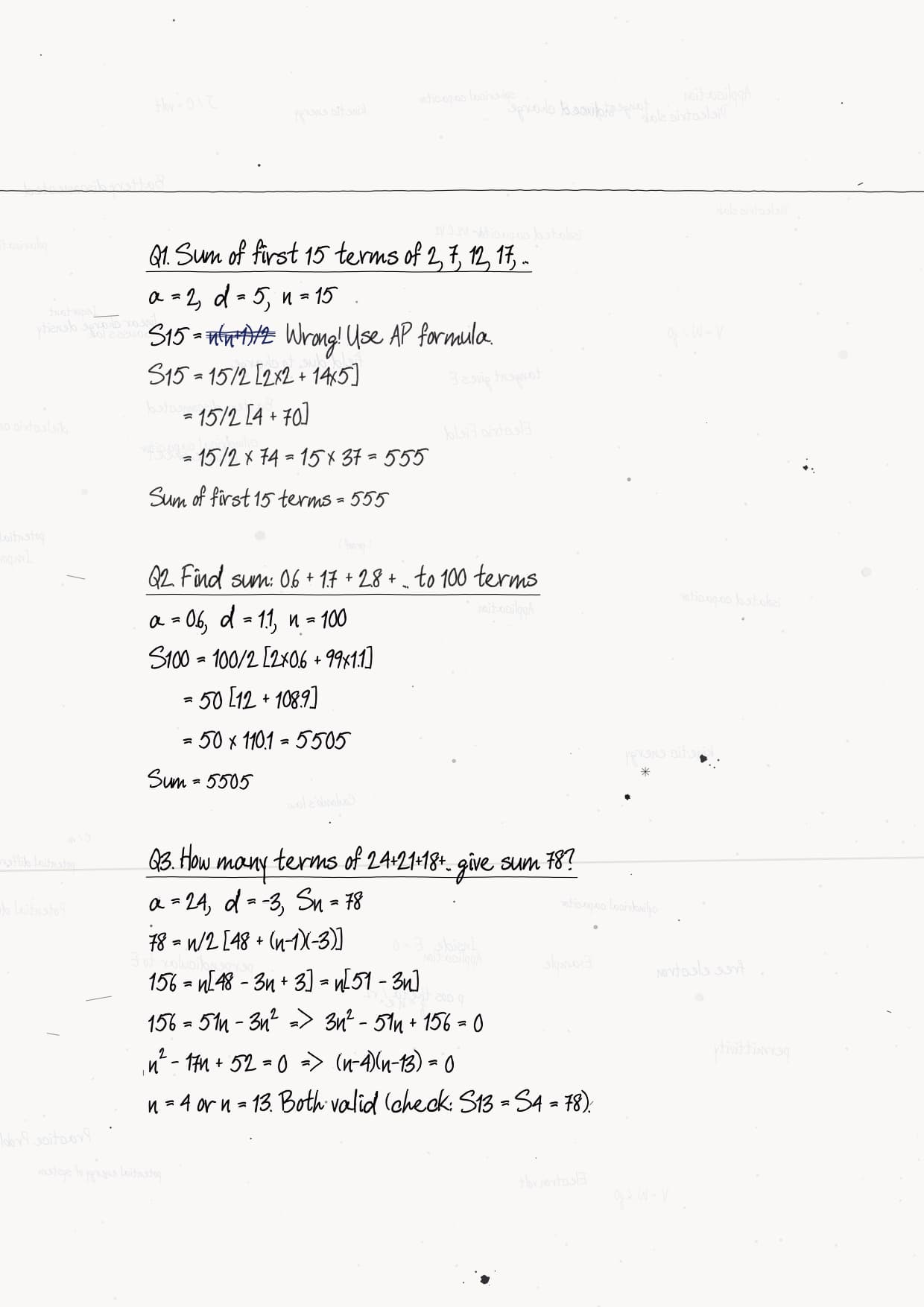
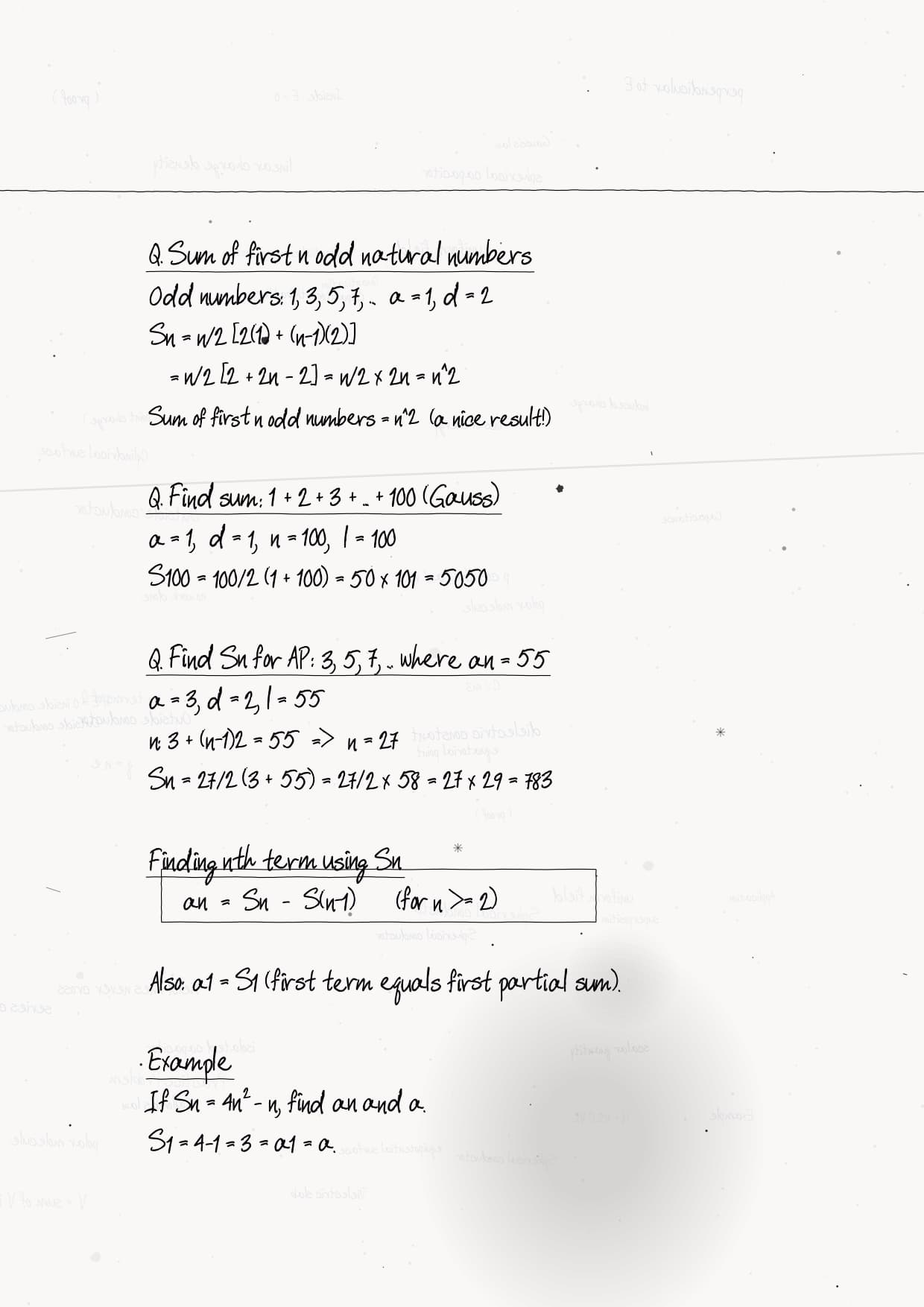
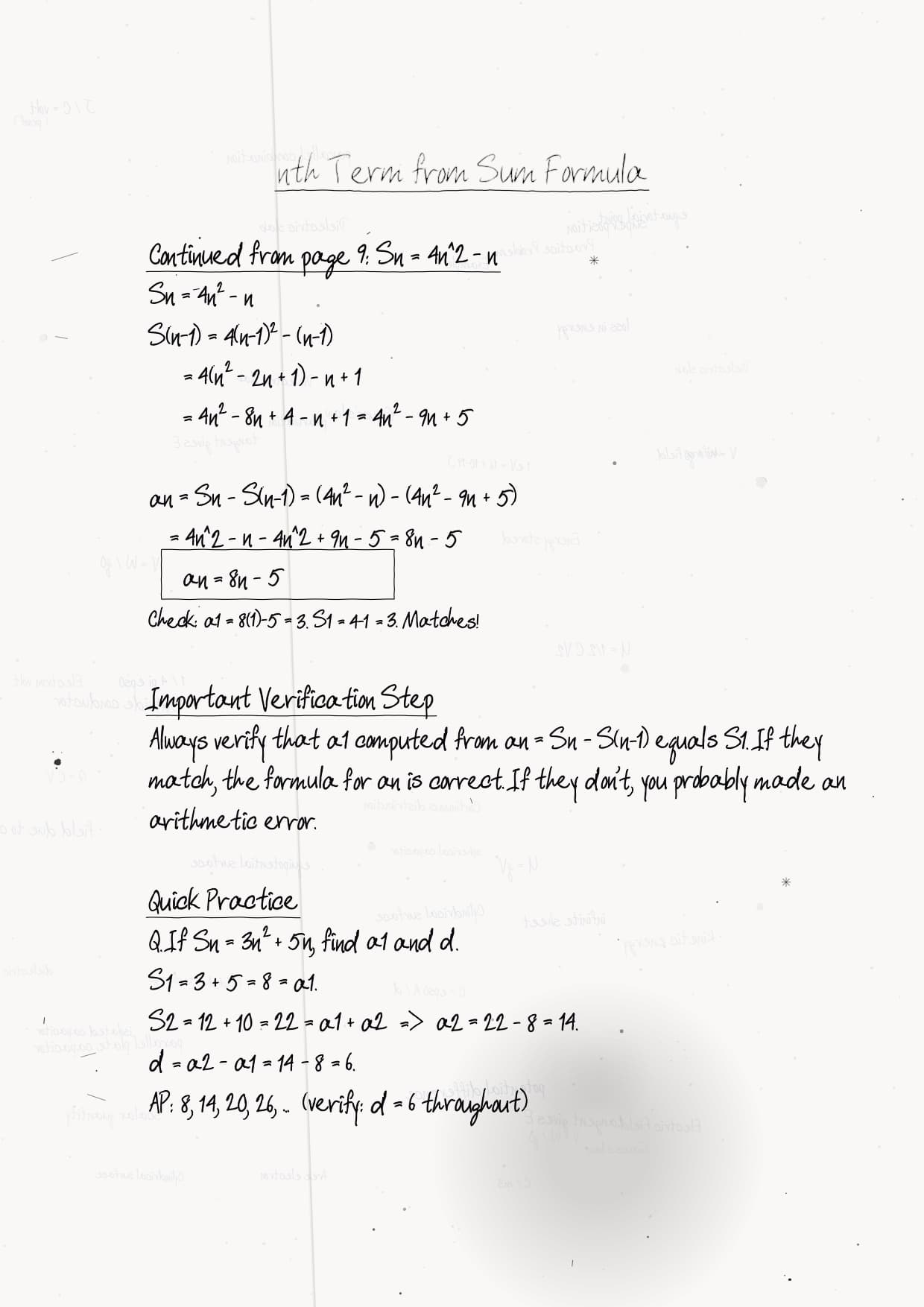
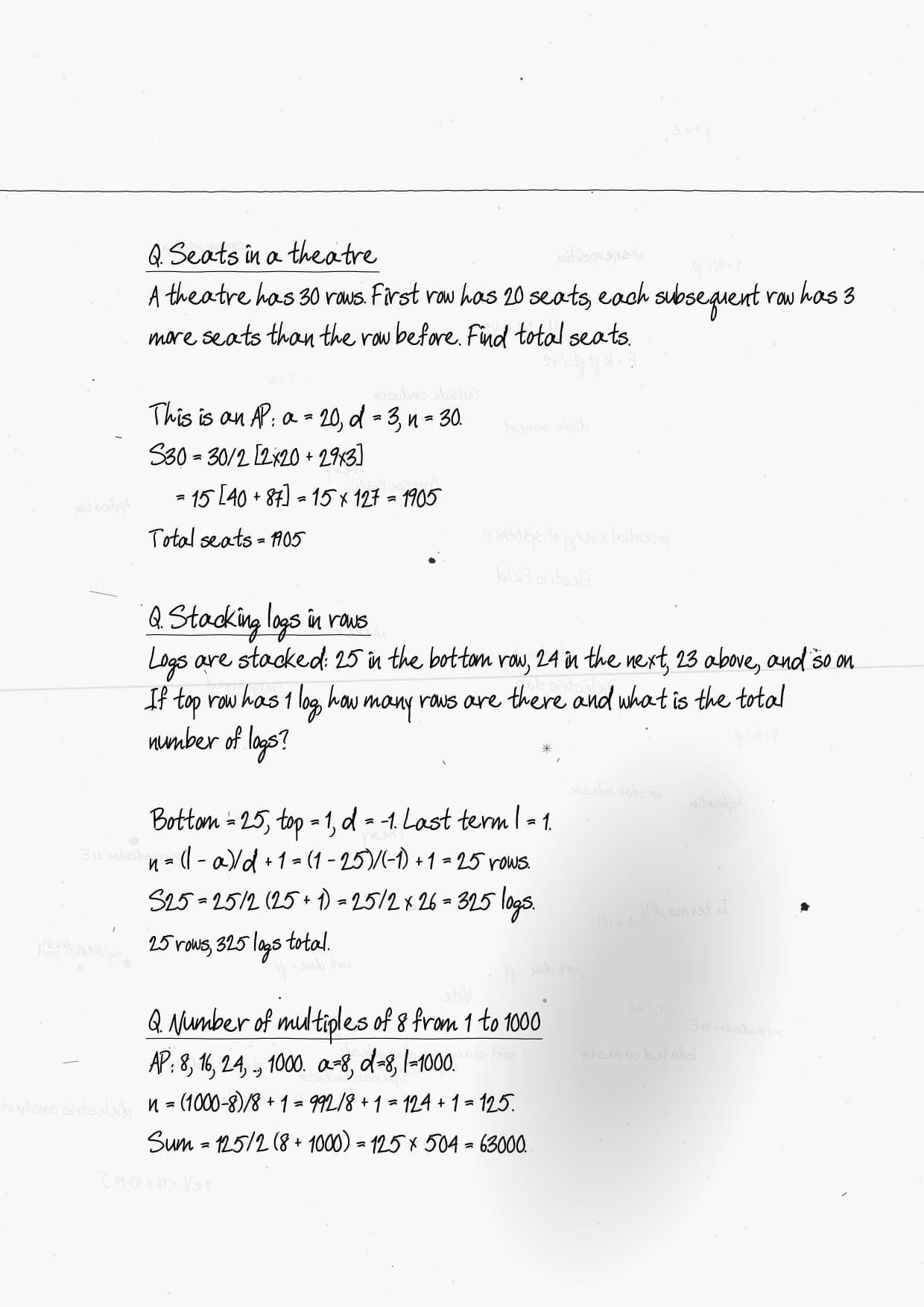
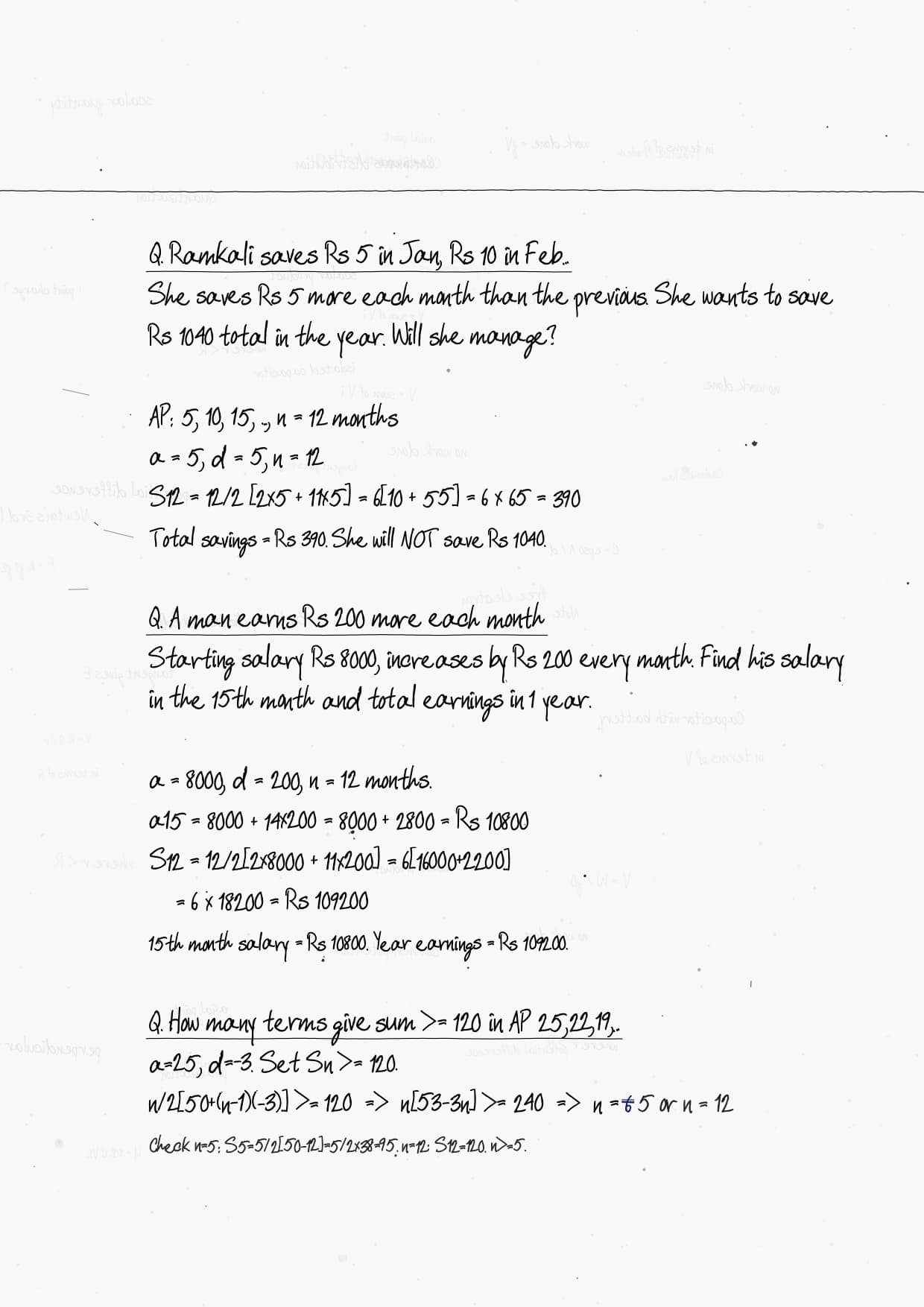
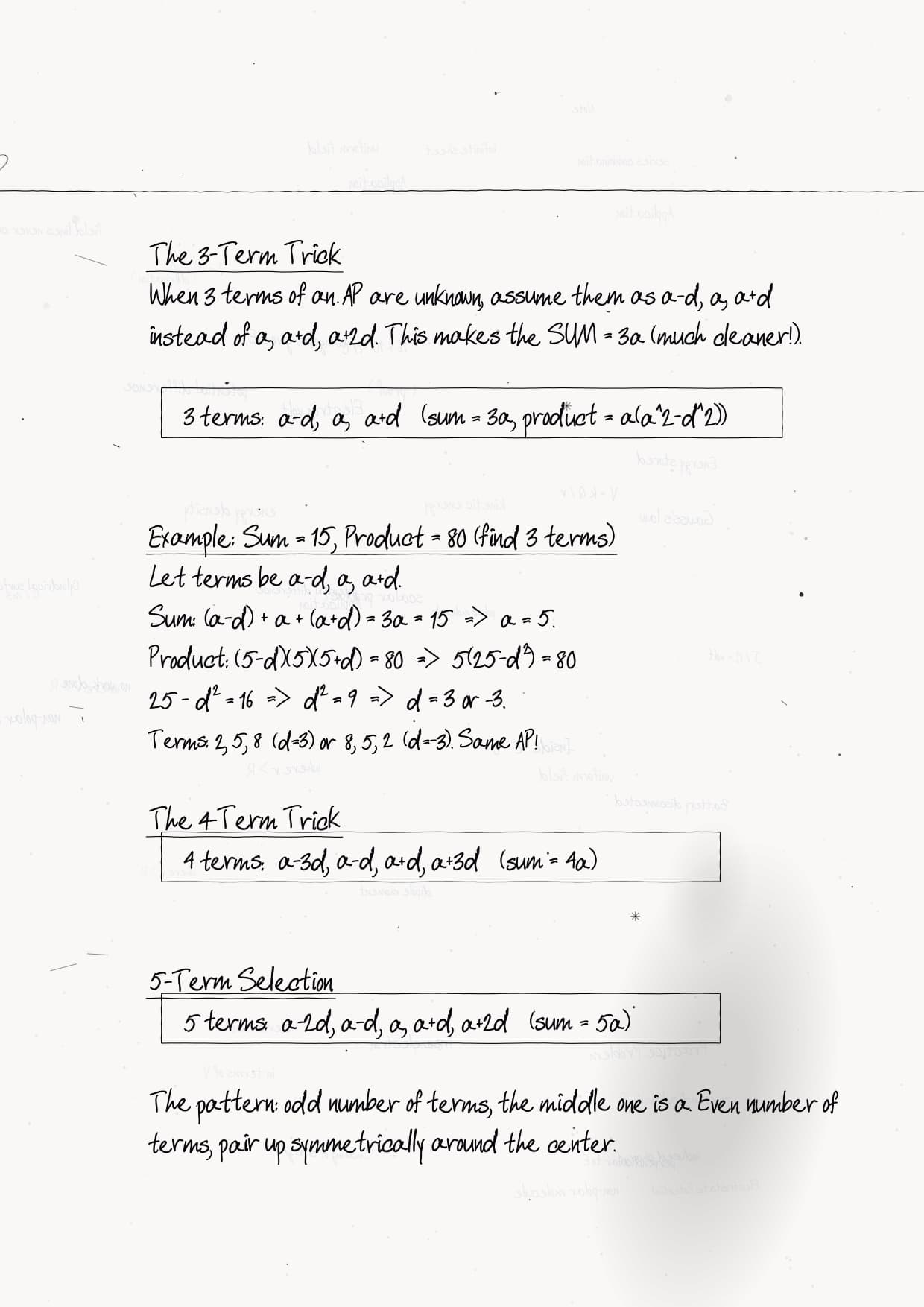
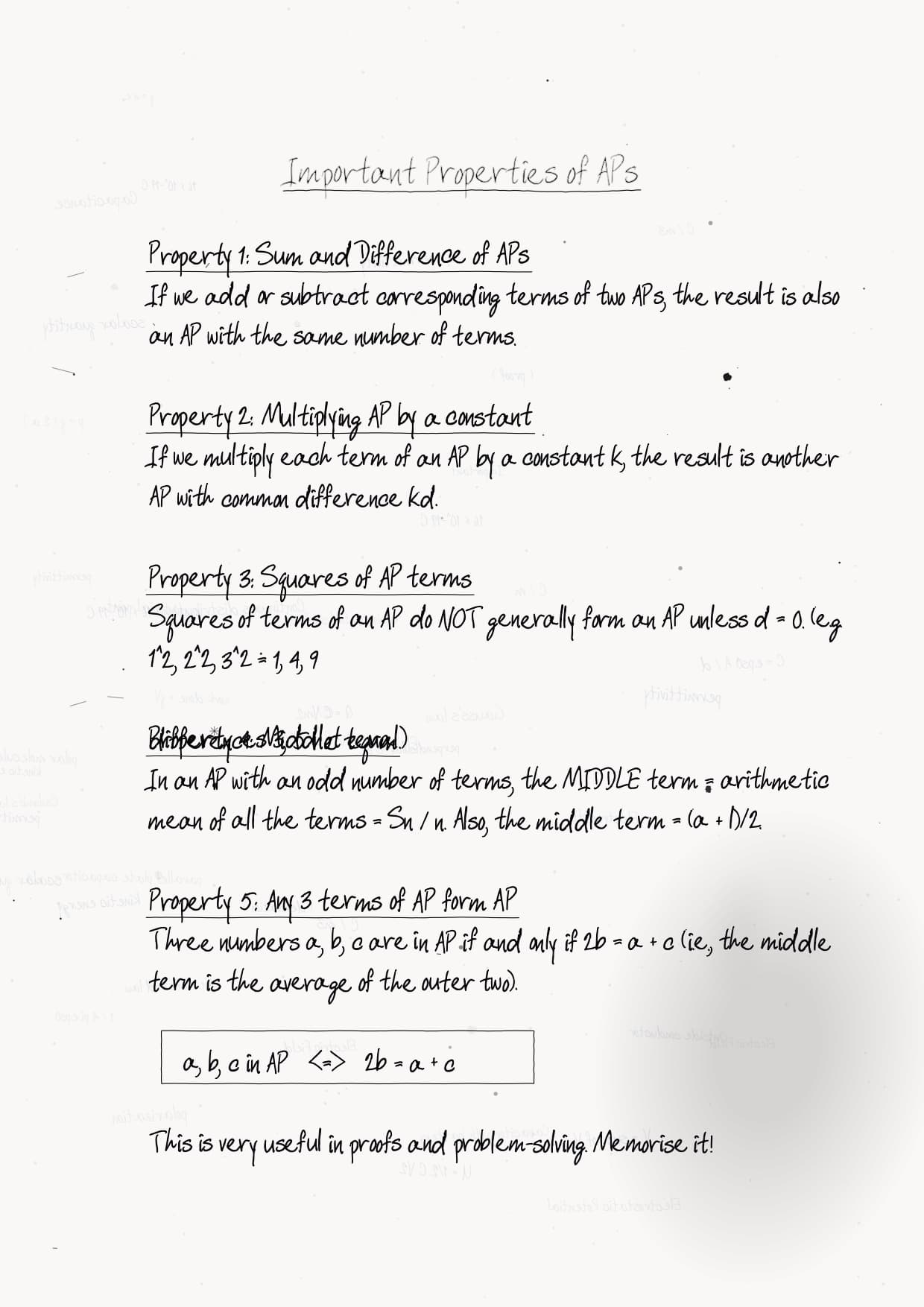
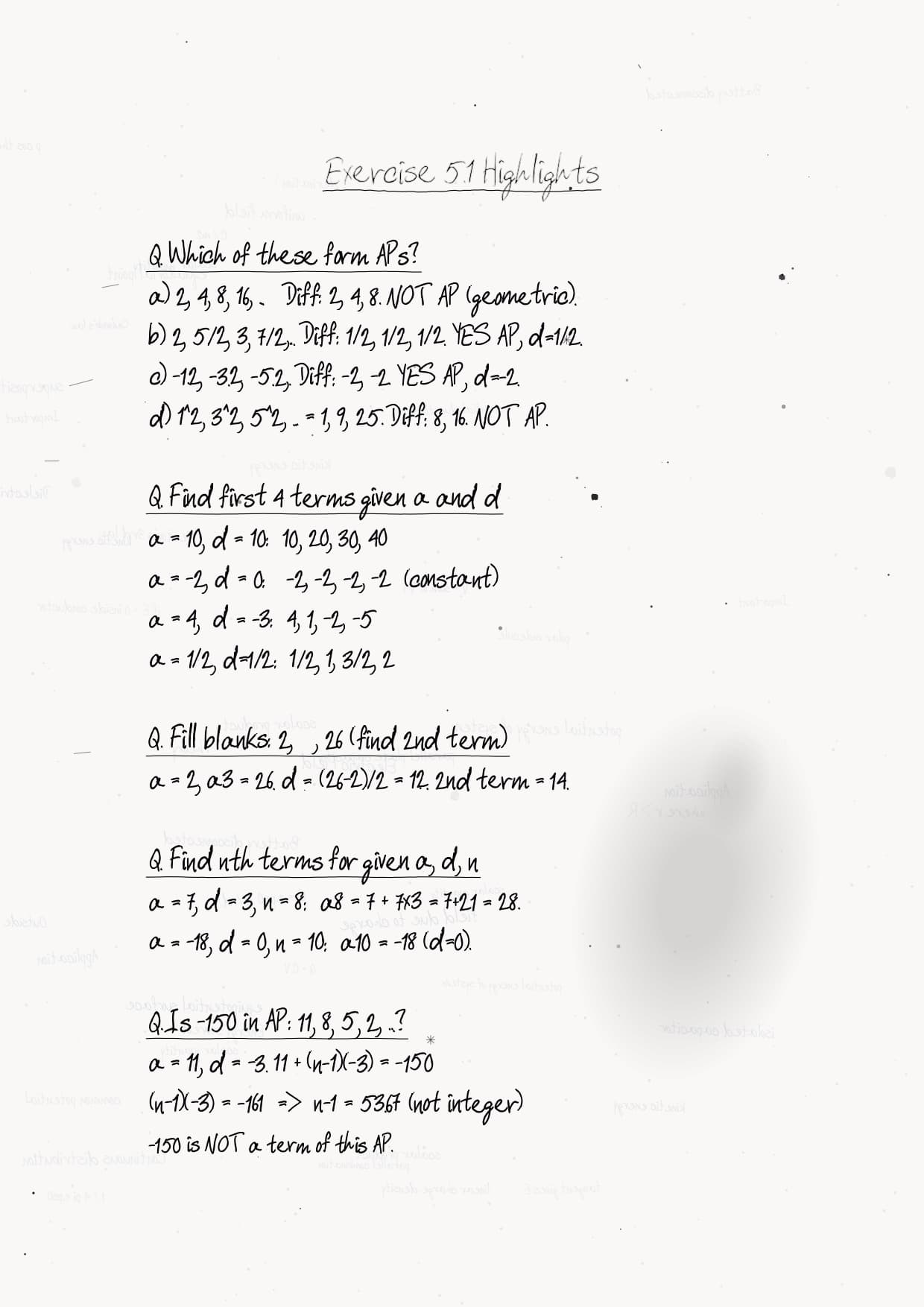
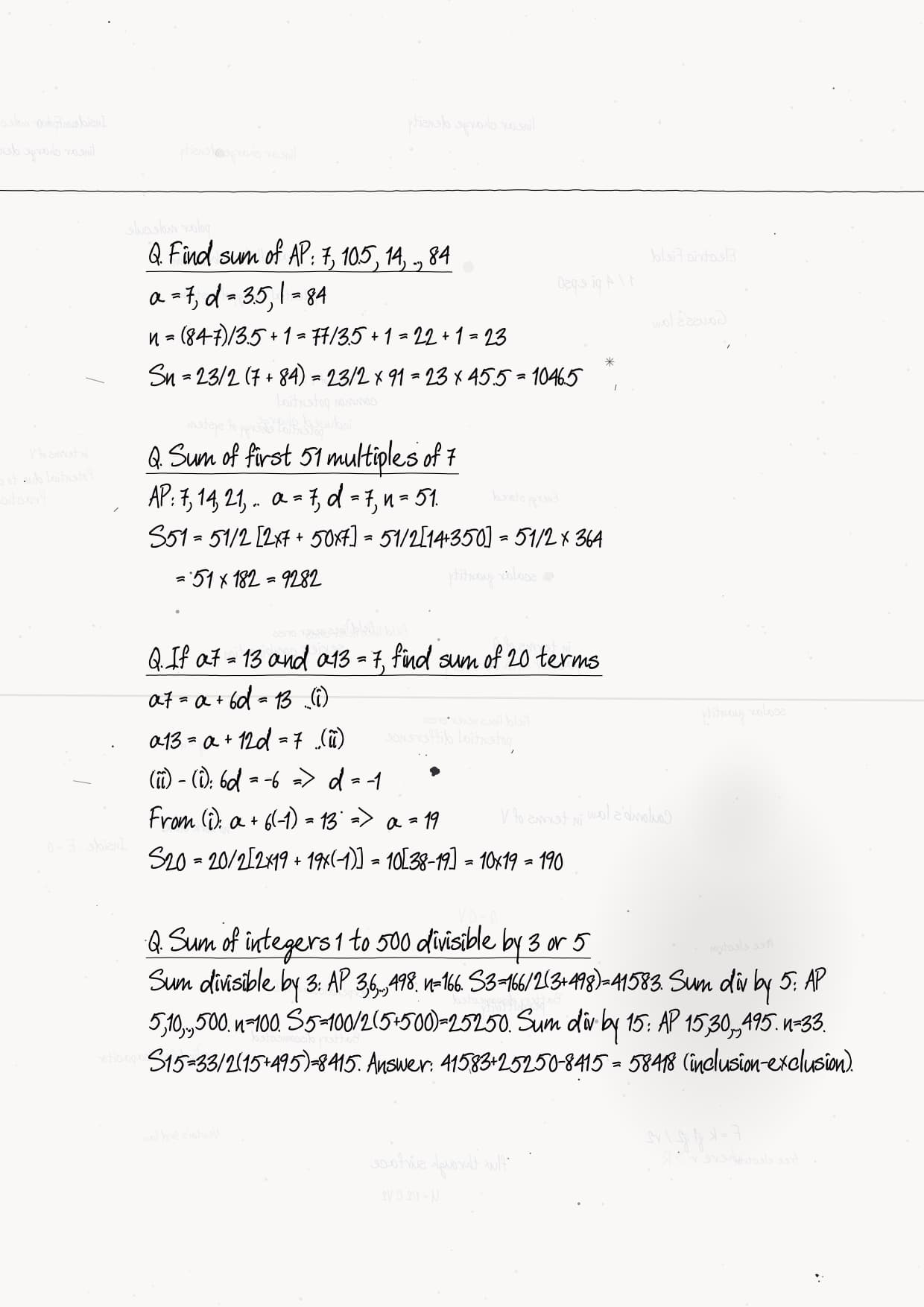
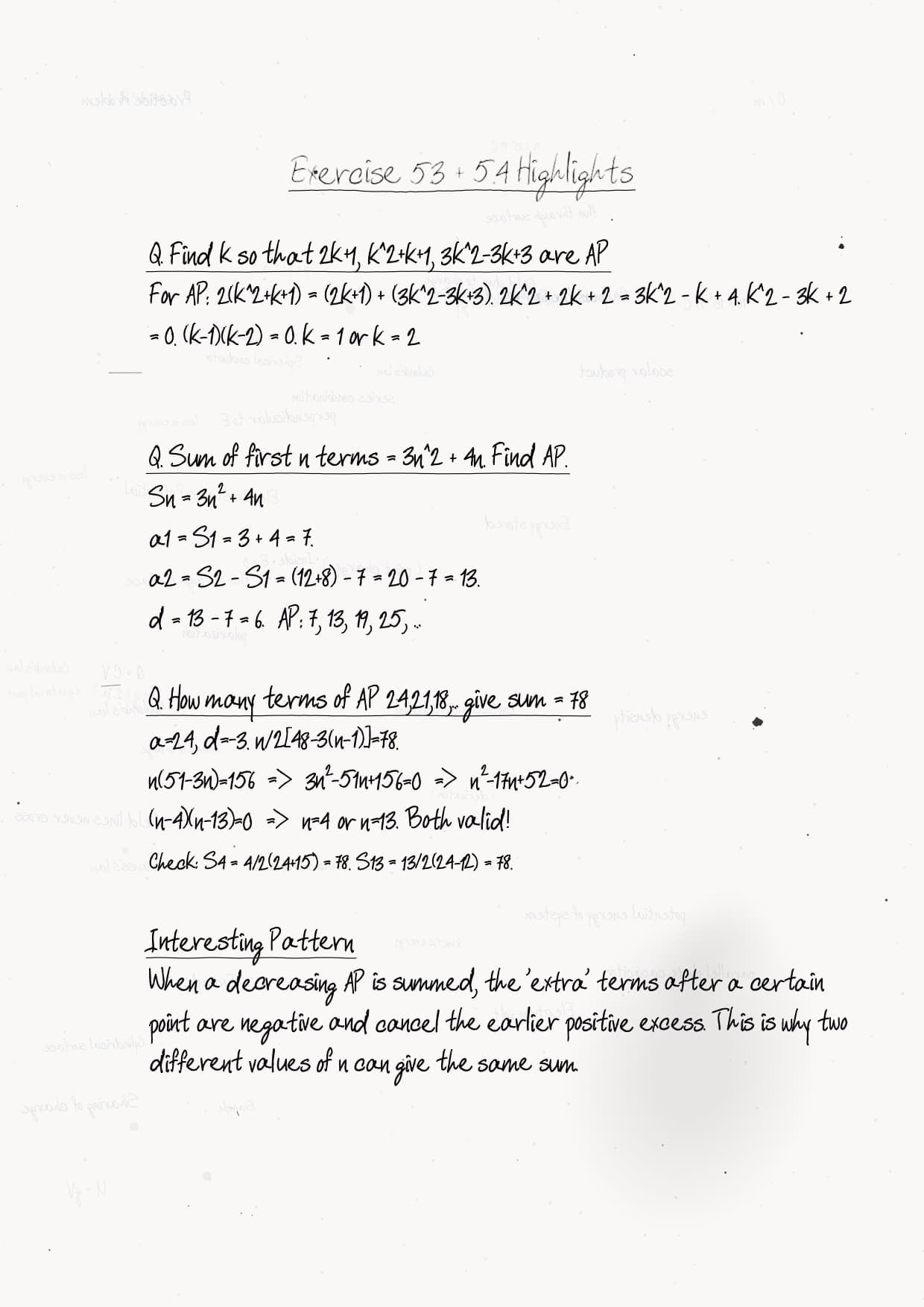
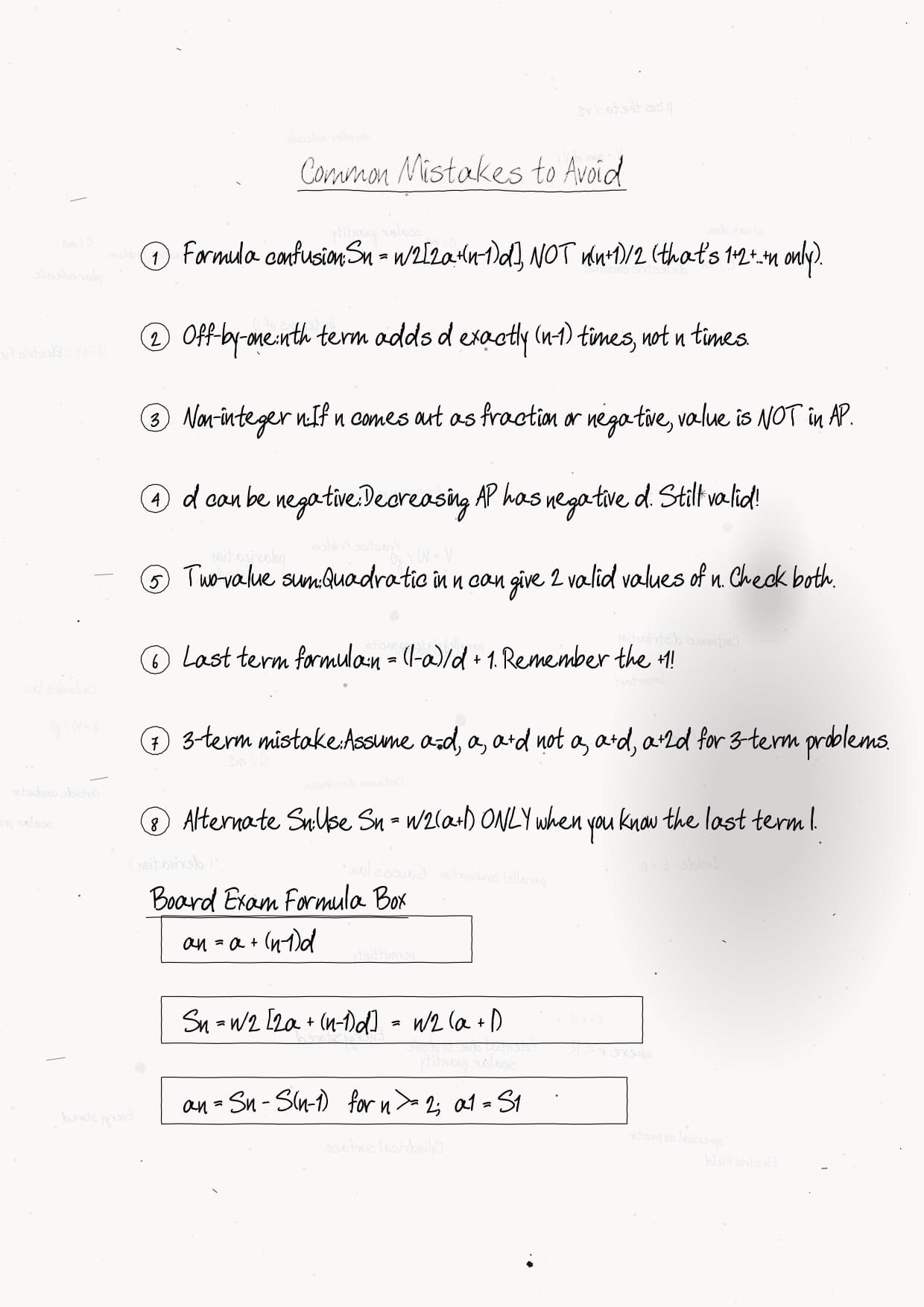
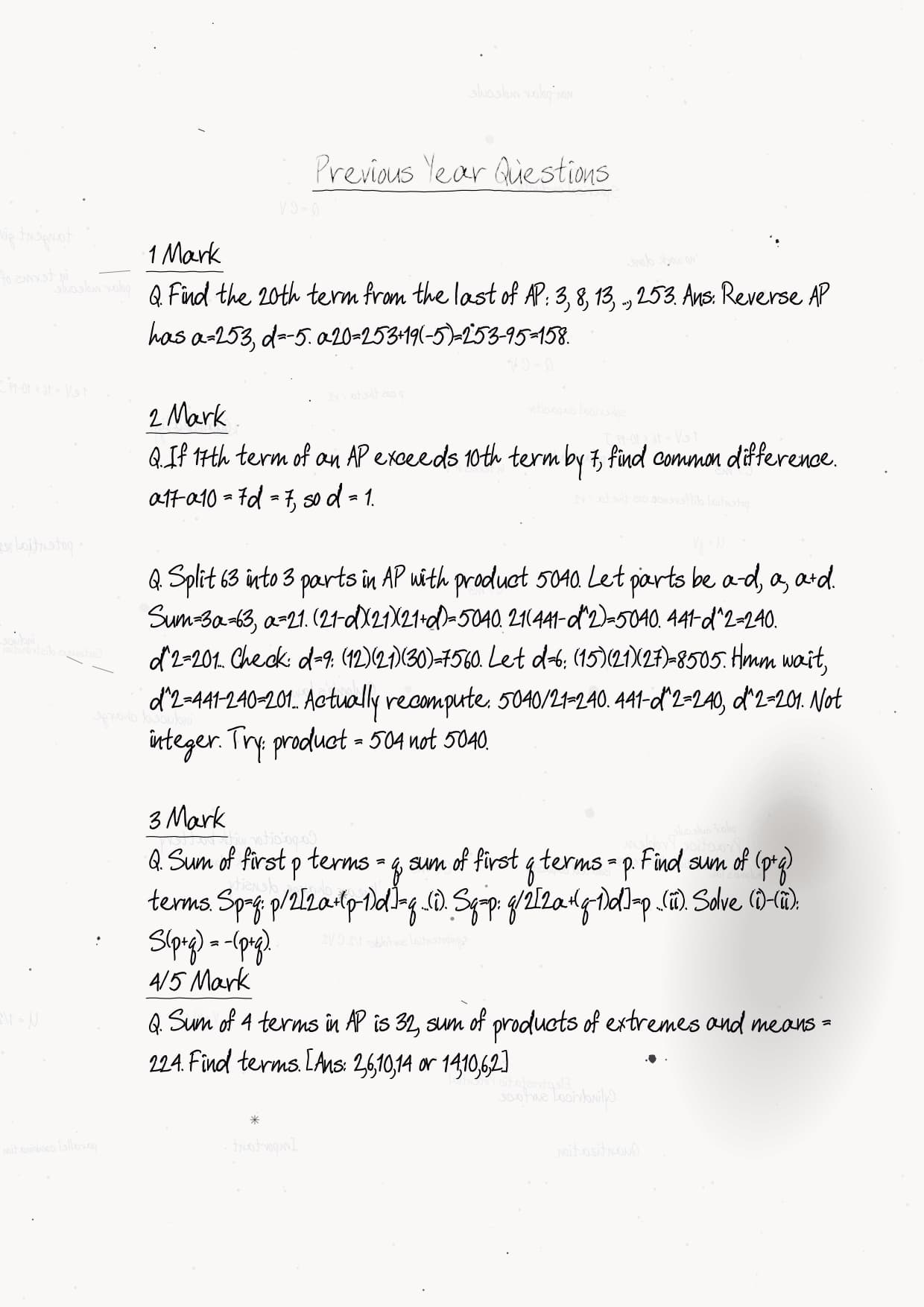
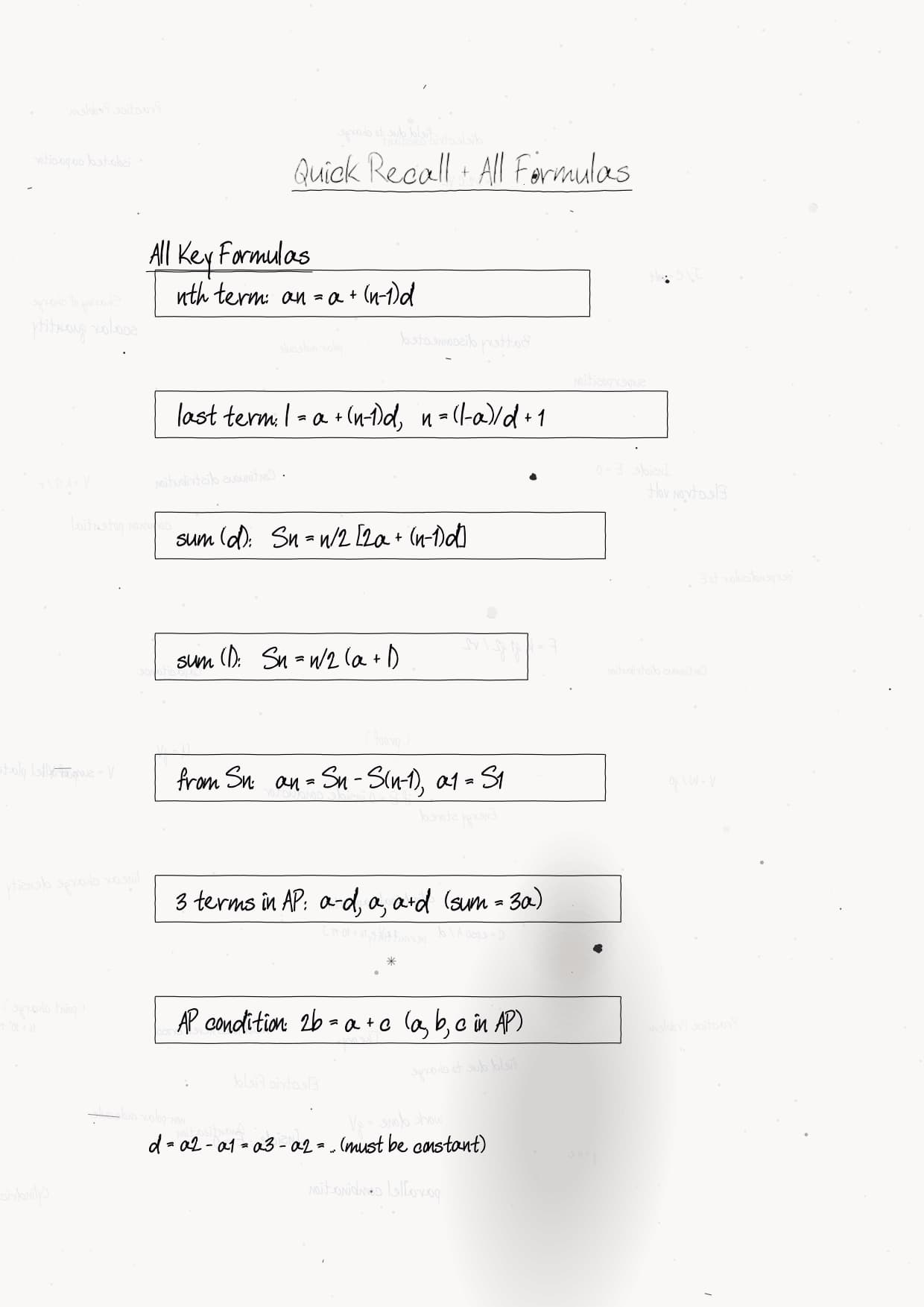
- CBSE Board: about 5 to 7 marks, usually one nth-term sum, one sum-of-terms sum, and a short word problem
- JEE Main: AP and series appear regularly, often blended with GP or mean questions
These notes are prepared by Collegedunia subject mentors, matched to the 2026-27 NCERT print and recent CBSE Board papers.
Watch Arithmetic Progressions Class 10 Maths Chapter 5 Explained
Source: Magnet Brains on YouTube
Arithmetic Progressions Handwritten Notes: Complete Diagram List for Class 10 Maths
These notes hold 6 hand-sketched diagrams. The table maps each figure to its page.
| Page | Diagram | What It Shows |
|---|---|---|
| 2 | Number-line ladder of terms | Equal jumps of size d marked from the first term a |
| 3 | Common-difference arrow sketch | Each arrow labels the gap between two terms, fixing d |
| 4 | nth-term build-up strip | How a, a+d, a+2d lead to the rule for the nth term, term by term |
| 5 | Pairing-sum visual for S_n | First and last terms paired to derive the sum of n terms by hand |
| 6 | Staircase block diagram | Stacked blocks that picture the running total as an area |
| 7 | Last-day mind map | One-page tree linking a, d, the nth term, and both sum forms |
Topics Mapped in the Class 10 Maths Chapter 5 Arithmetic Progressions Notebook
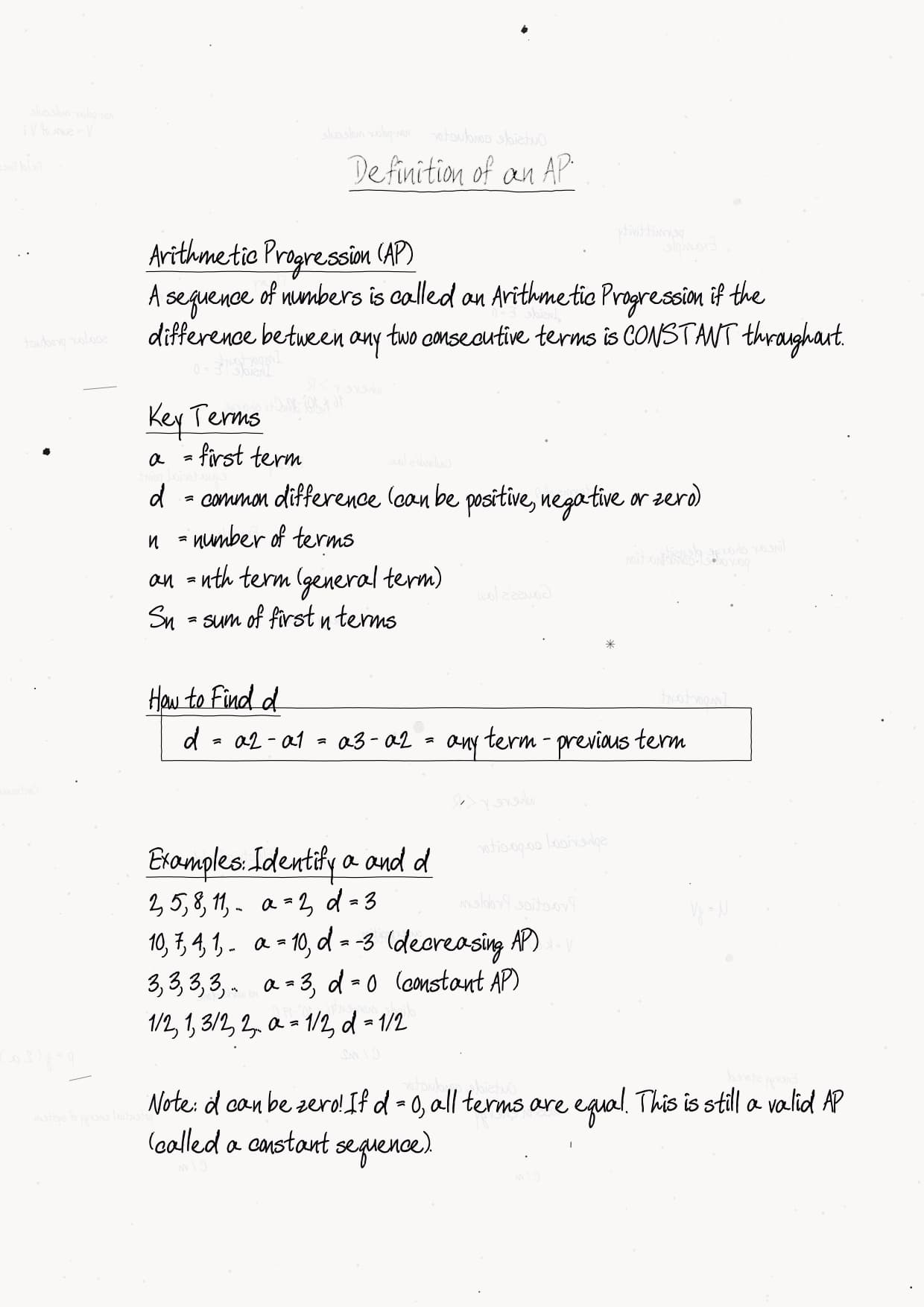
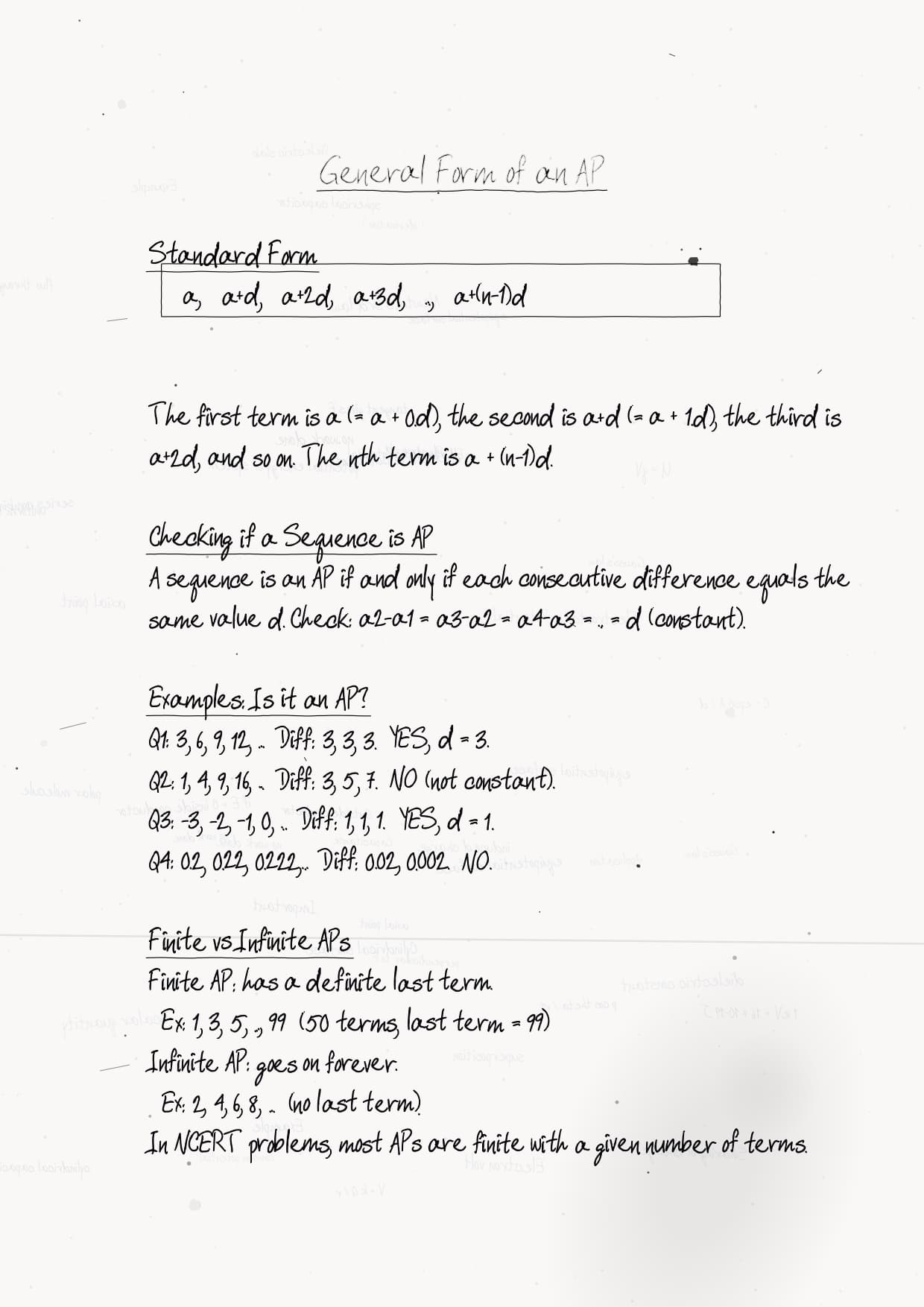
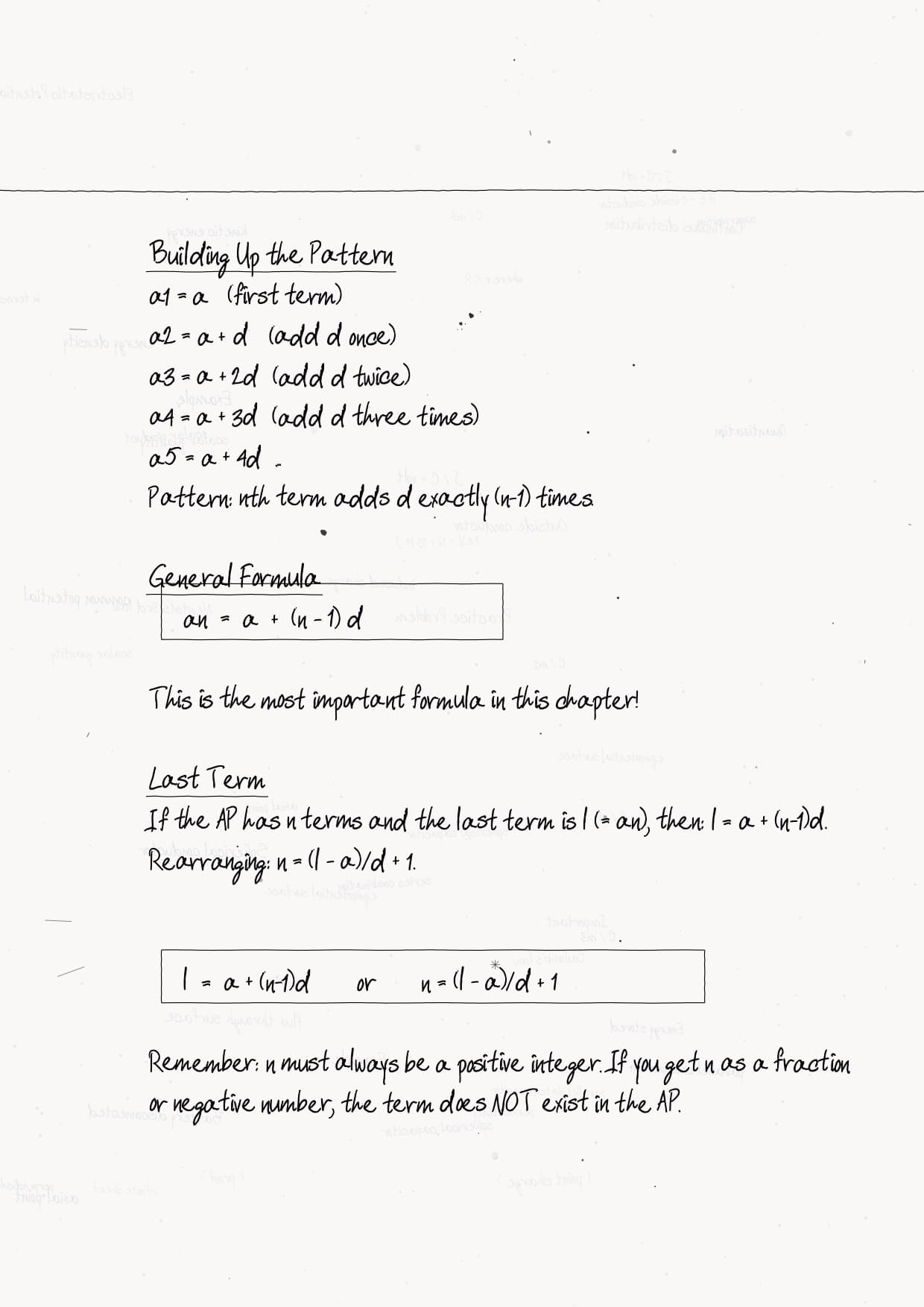
The handwritten notebook places every current topic on its own ink-coded page. An Arithmetic Progression is a list where each term differs from the one before by a fixed number. That fixed number is the common difference d, and the list starts at the first term a. From these two values the notes build the nth term, written as an = a + (n-1)d. The next page derives the sum of the first n terms, Sn = n2[2a + (n-1)d], and the short form Sn = n2(a + l) when the last term l is known. The final block applies these to simple word problems.
Arithmetic Progressions Handwritten Notes: Colour Legend for the Notebook
These notes use four ink colours in a fixed way. The legend lets you skim all 11 pages fast.
| Colour | Box Type | What's Inside |
|---|---|---|
| Orange | Definition box | NCERT one-line definitions: AP, first term, common difference, last term |
| Blue | Formula box | The nth term and both sum forms, each with a worked pair of numbers |
| Yellow | Exam-trap callout | Common traps, like using n instead of n minus 1 in the nth term |
| Red | Common-mistake box | Wrong d signs shown next to the correct working |
Arithmetic Progressions Handwritten Notes Concept-Flavoured Memory Mnemonics
Three mnemonics the notebook uses again and again. Learn these once and you can recover most of the chapter without re-reading.
Arithmetic Progressions Top Formulae for Class 10 Maths Quick Recall
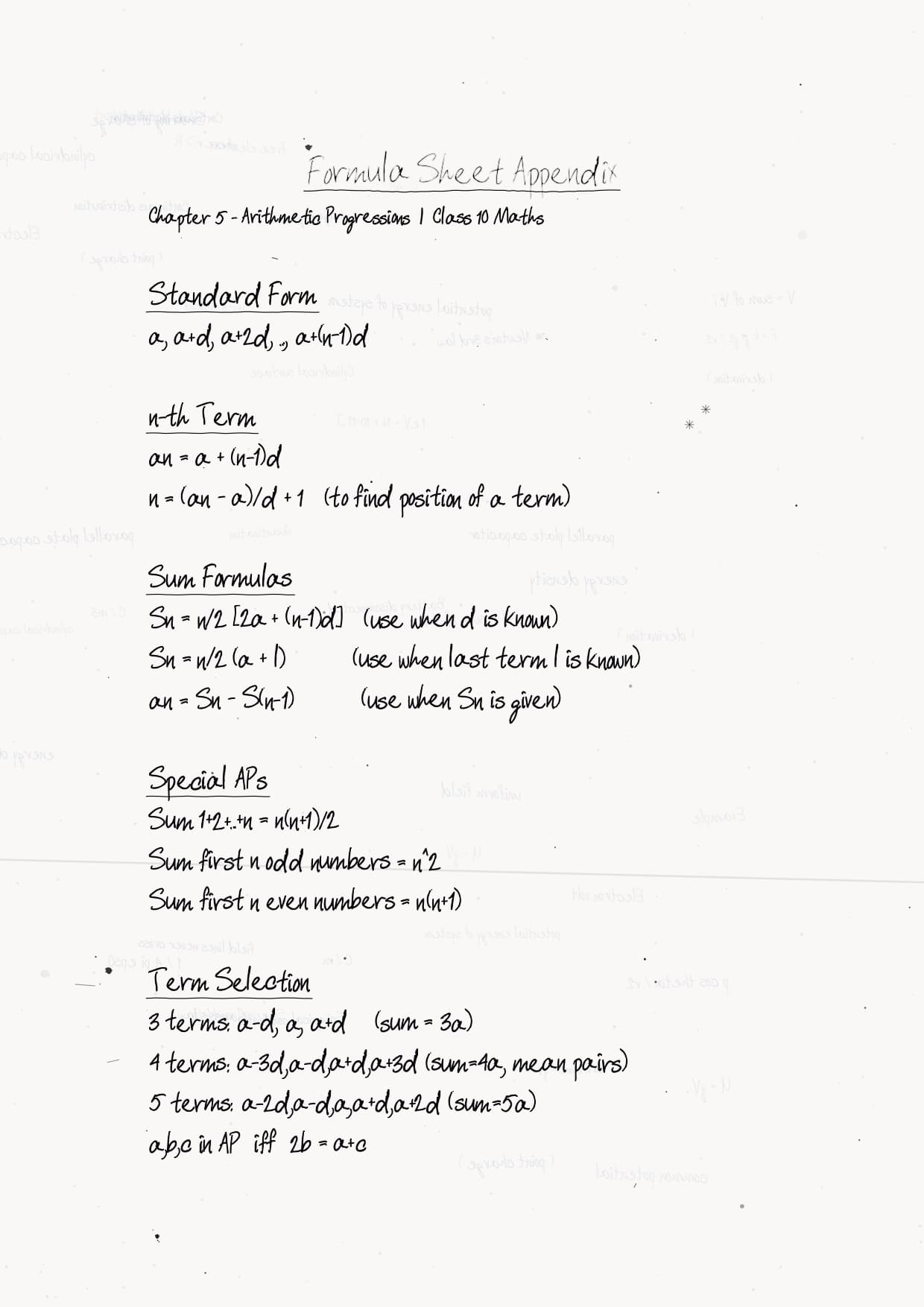
These few relations cover nearly every numerical CBSE asks. The full step-by-step working sits on the Formula Sheet.
| Idea | Relation |
|---|---|
| Common difference | d = an - an-1 |
| nth (general) term | an = a + (n-1)d |
| Sum of first n terms | Sn = n2[2a + (n-1)d] |
| Sum when last term l is known | Sn = n2(a + l) |
Full formula table: Arithmetic Progressions Class 10 Maths Formula Sheet
Arithmetic Progressions Solved Example from the Class 10 Maths Notebook
This solved example shows the page-6 method for a sum-of-terms problem. Follow the numbered steps to score each mark.
Problem: Find the sum of the first 20 terms of the AP 5, 9, 13, ...
- Write down the values: first term a = 5, common difference d = 9 - 5 = 4, number of terms n = 20.
- Use the sum rule: Sn = n2[2a + (n-1)d].
- Substitute the values: S20 = 202[2(5) + (20-1)(4)].
- Simplify inside the bracket: S20 = 10[10 + 76] = 10 × 86 = 860.
Answer: The sum of the first 20 terms is 860.
How will Collegedunia's Handwritten Notes Help You with Arithmetic Progressions?
These notes turn a formula-driven chapter into an 11-page revision stack.
- Hand-Sketched Visual Anchors: The number-line ladder and the pairing-sum visual are drawn freehand so you can redraw each from memory in under a minute.
- Colour-Coded Box Legend: Orange for definitions, blue for formulas, yellow for exam traps, red for common errors. The same legend runs through every chapter so revision stays fast.
- 2026-27 NCERT Alignment: Every page matches the current 2026-27 print, so you revise only what the latest syllabus actually tests.
- Step-Marked Sums: Each sum is laid out as numbered steps, the exact form CBSE wants, so you score each step.
Arithmetic Progressions: Last 24-Hour Revision Card for Class 10 Maths
Scan the single page below the night before the Board exam. The marks come from a clean nth-term sum plus one sum of terms.
- Meaning of an AP: a list where each term differs from the one before by a fixed common difference d.
- Common difference: subtract any term from the next, d = an - an-1. A constant value confirms the AP.
- nth term: an = a + (n-1)d. Use n minus one, not n.
- Sum of n terms: Sn = n2[2a + (n-1)d], or Sn = n2(a + l) when the last term l is known.
- Word problems: name a, d, and n first, then pick the nth-term or sum rule.
Student Feedback
71% of Class 10 students told us they revise Arithmetic Progressions fastest from hand-drawn pages, and 4 out of 5 said the freehand number-line ladder made the nth term finally stick the night before the board exam. The most-redrawn sketch was the pairing-sum visual for Sn.
Students who copied the colour-coded formula boxes onto rough paper reported finishing the whole chapter recall in under 25 minutes, and the 24-hour revision card was rated the single most useful page by 64% of the poll.
Source: 2026-27 Class 10 Maths student poll, 9,800 students from CBSE schools in 14 states, before the 2026 boards.
Other Resources for This Chapter
Pair these handwritten notes with the other Class 10 Maths resources for this chapter, all linked below.
| Resource | Open |
|---|---|
| NCERT Solutions | Arithmetic Progressions Class 10 Maths NCERT Solutions |
| Notes | Arithmetic Progressions Class 10 Maths Notes |
| Formula Sheet | Arithmetic Progressions Class 10 Maths Formula Sheet |
| NCERT Book PDF | Arithmetic Progressions Class 10 Maths NCERT Book PDF |
| NCERT Exemplar Solutions | Arithmetic Progressions Class 10 Maths NCERT Exemplar Solutions |
| Handwritten Notes | Arithmetic Progressions Class 10 Maths Handwritten Notes |
NCERT Handwritten Notes for Class 10 Maths: All Chapters
Jump to another Class 10 Maths chapter's notes below.
| Chapter | Resource |
|---|---|
| Chapter 3 | Pair of Linear Equations in Two Variables Handwritten Notes |
| Chapter 4 | Quadratic Equations Handwritten Notes |
| Chapter 6 | Triangles Handwritten Notes |
| Chapter 7 | Coordinate Geometry Handwritten Notes |
Arithmetic Progressions Class 10 Maths Handwritten Notes FAQs
Ques. Where can I download Arithmetic Progressions Class 10 Maths Handwritten Notes PDF?
Ans. You can download the Arithmetic Progressions Class 10 Maths Handwritten Notes PDF directly from this page. The notes are free and ready to print.
Ques. Are these handwritten notes aligned with the 2026-27 NCERT?
Ans. Yes. The notebook follows the current 2026-27 syllabus for Class 10 Maths. It centres on the meaning of an AP, the nth term, and the sum of n terms.
Ques. What is an Arithmetic Progression?
Ans. An Arithmetic Progression is a list of numbers where each term differs from the one before by a fixed value. That fixed value is the common difference. The number-line ladder on page 2 of the notebook shows this clearly.
Ques. What is the formula for the nth term of an AP?
Ans. The nth term is an = a + (n-1)d, where a is the first term, d is the common difference, and n is the term number. The page-4 strip builds this rule term by term.
Ques. How do you find the sum of the first n terms of an AP?
Ans. Use Sn = n2[2a + (n-1)d]. When the last term l is known, the shorter form Sn = n2(a + l) is faster. Page 5 derives both by pairing the end terms.
Ques. How do you check whether a list of numbers is an AP?
Ans. Subtract each term from the next one. If every difference is the same constant, the list is an AP. A changing difference means it is not. The page-3 arrow sketch shows this test.
Ques. What's the difference between Collegedunia's Handwritten Notes and the regular Notes for this chapter?
Ans. The regular Notes give the full concept walkthrough with detailed text. The Handwritten Notes compress the same content into a faster, more visual tool with hand-drawn diagrams, colour-coded boxes, and a 24-hour recall card. Use Notes for the first read and Handwritten Notes for quick revision.



Comments