




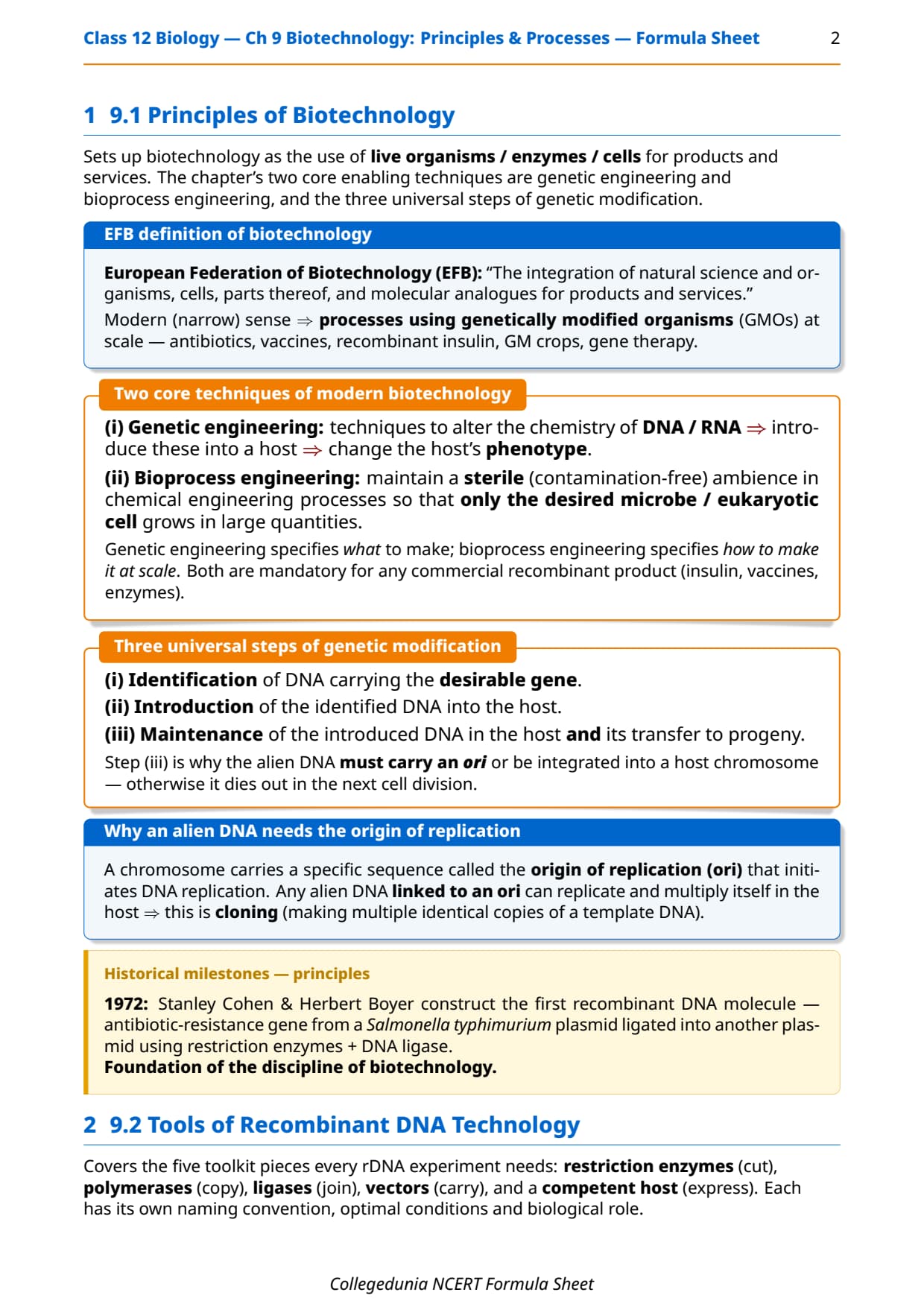
Class 12 Biology Chapter 9 covers Biotechnology - Principles and Processes. This chapter carries 5 to 7 marks in CBSE and 3 to 5 questions in NEET every year. This page hosts the Collegedunia formula sheet PDF for all NCERT sections 9.1 to 9.3.
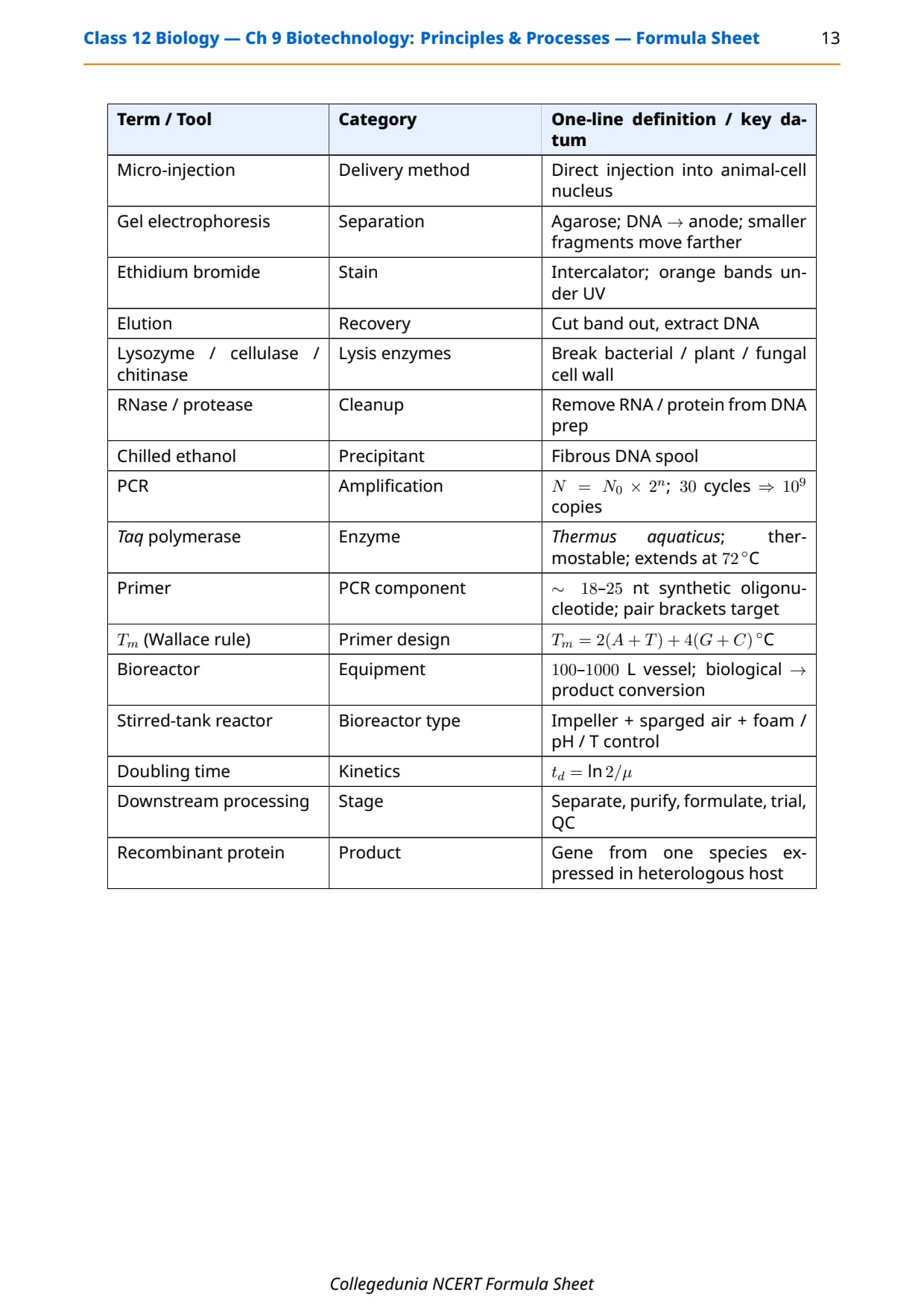
- CBSE Weightage: 5 to 7 marks
- NEET Weightage: 3 to 5 questions per year
- AIIMS / entrance overlap: 1 to 2 statement-based questions per paper
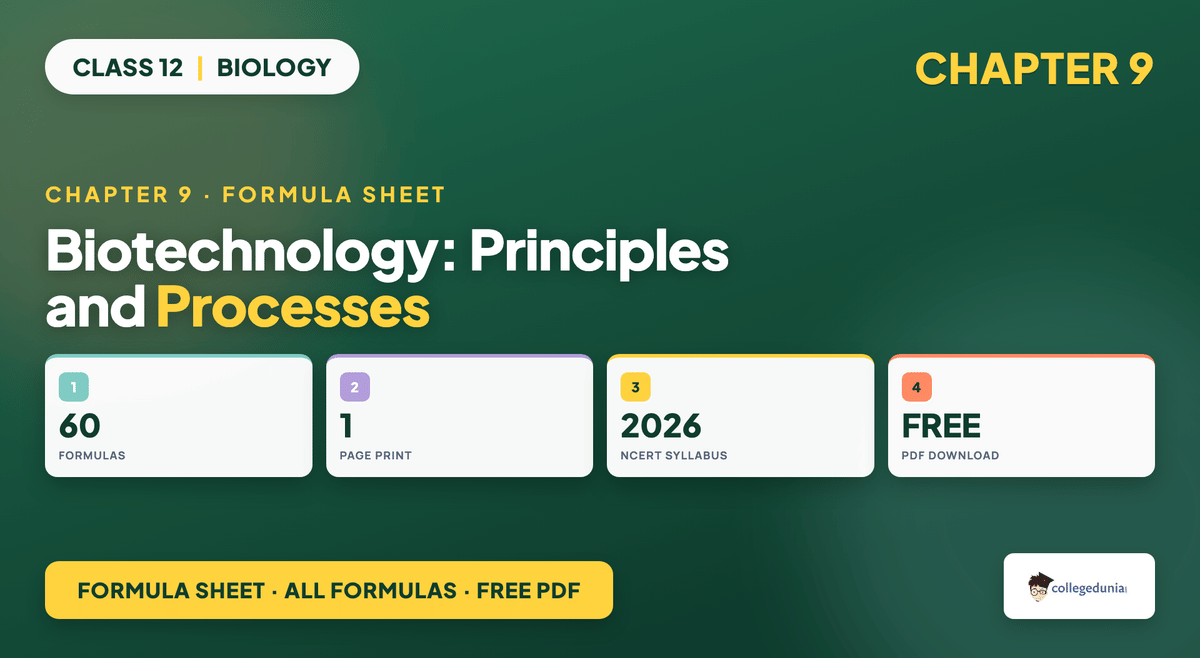
This formula sheet is curated by Collegedunia subject experts, mapped to the 2026-27 NCERT, and refined against the last five years of CBSE Board and NEET papers.
Biotechnology - Principles and Processes Video Lecture for Class 12 Biology
Source: Magnet Brains on YouTube
Biotechnology Principles and Processes Master Quantitative Reference for Class 12 Biology
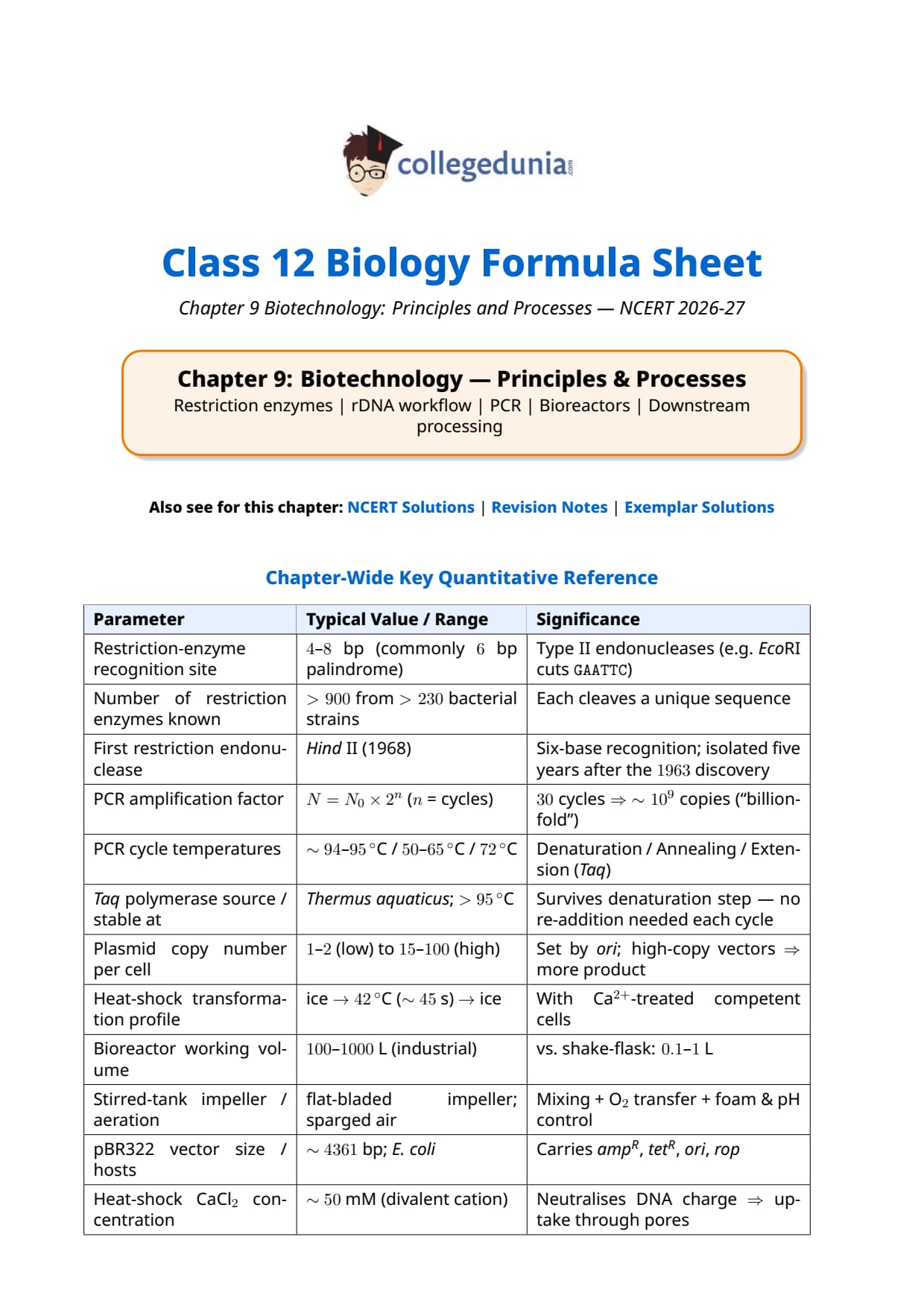
The canonical master table indexes every NEET-testable number against its NCERT sub-section. Over 70 percent of NEET 1-mark MCQs from this chapter plug a value from one of the rows below.
| Parameter | Value / Range | NCERT Ref |
|---|---|---|
| pBR322 plasmid size | 4361 bp | 9.2 |
| Restriction site length | 4 to 8 bp (palindromic) | 9.2 |
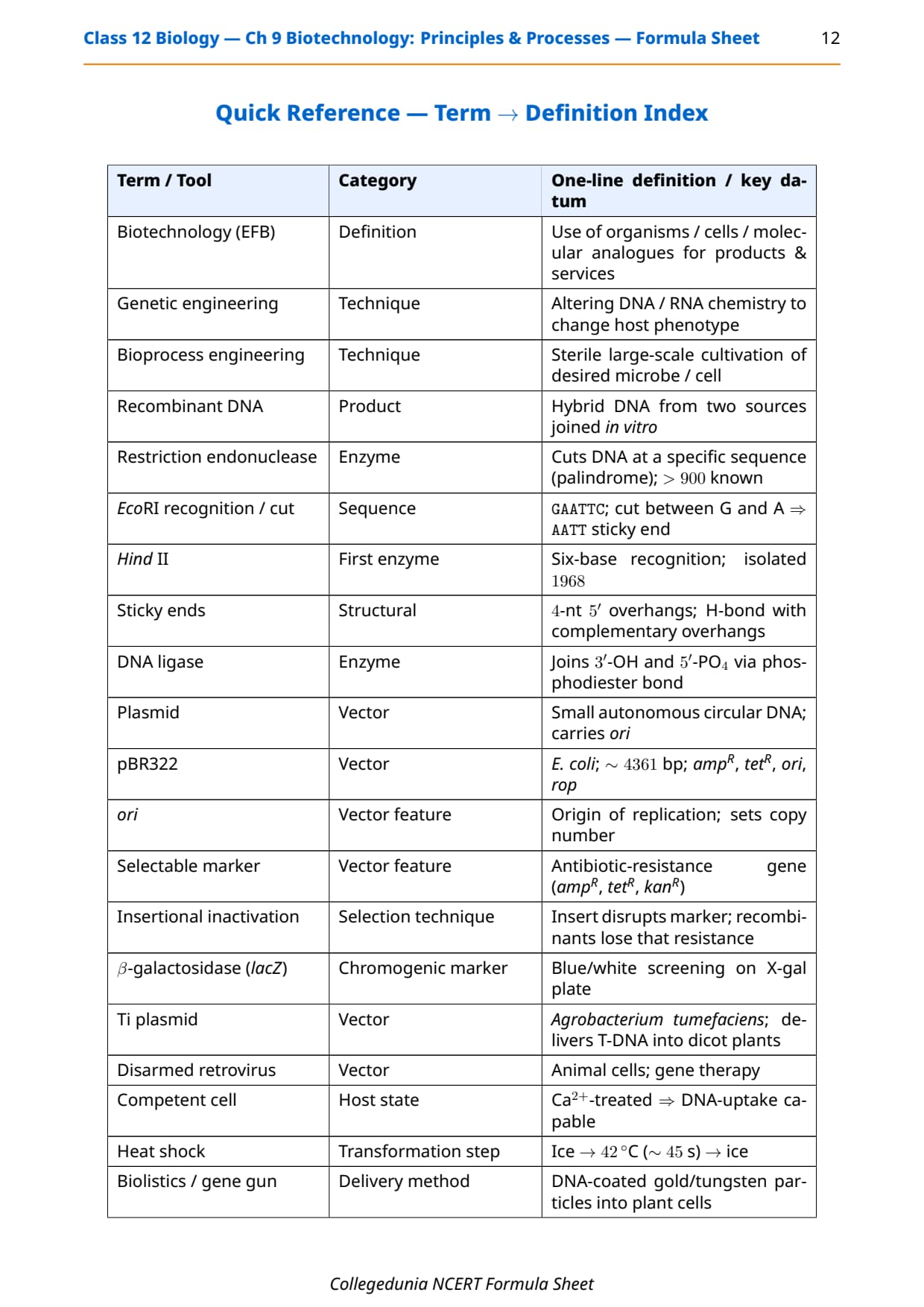
| EcoRI cut site (5'-3') | G/AATTC | 9.2 |
| HindIII cut site | A/AGCTT | 9.2 |
| BamHI cut site | G/GATCC | 9.2 |
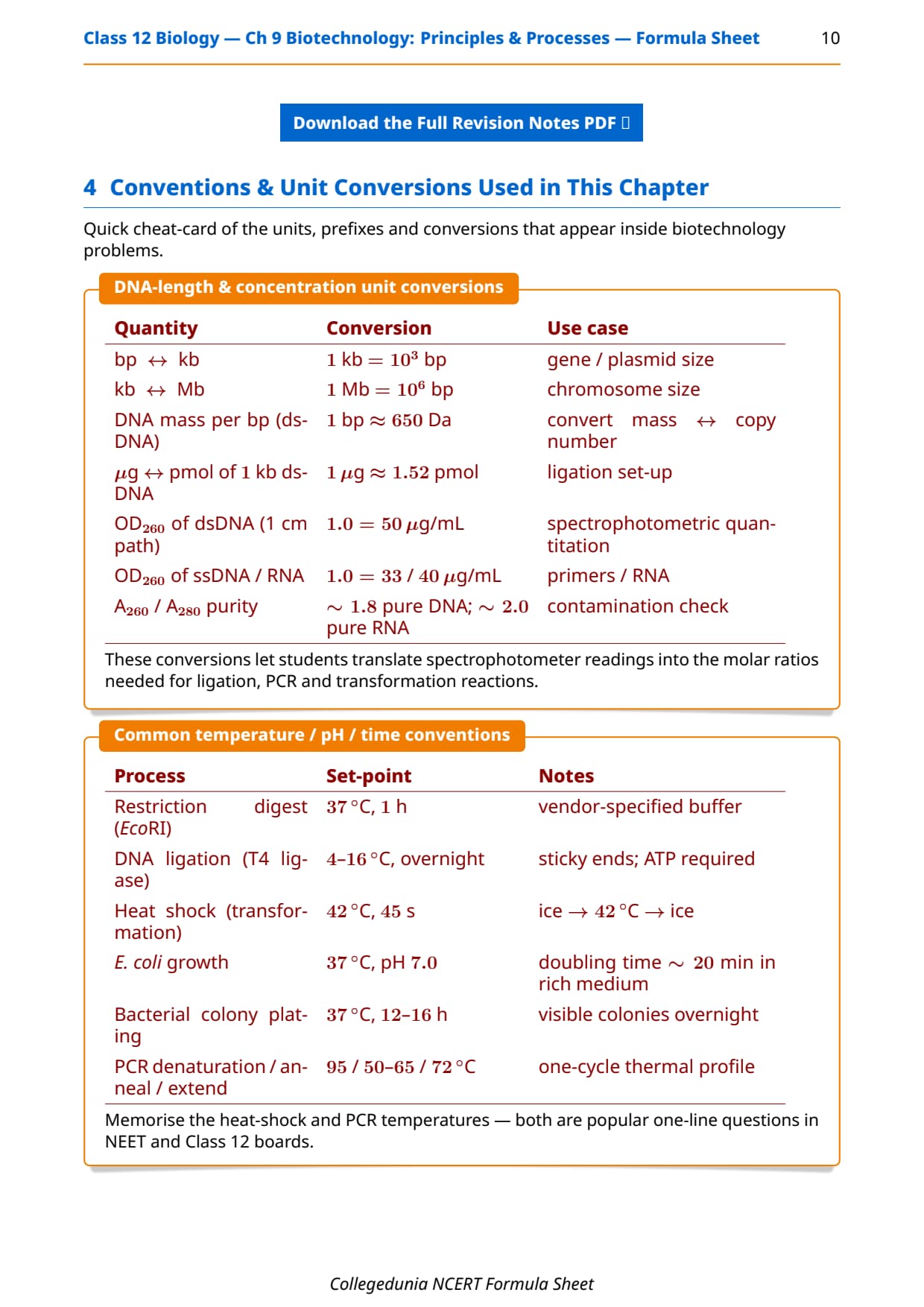
| PCR denaturation temp | 94 to 98 degree C | 9.3 |
| PCR annealing temp | ~55 degree C (primer-dependent) | 9.3 |
| PCR extension temp | 72 degree C (Taq optimum) | 9.3 |
| PCR amplification factor | ~109 copies in 30 cycles | 9.3 |
| Cosmid insert capacity | 40 to 45 kb | 9.2 |
| Heat-shock temperature | 42 degree C for 90 seconds | 9.3 |
| Agarose gel concentration | 0.8 to 2.0 percent (size-dependent) | 9.3 |
| EtBr fluorescence | Orange under UV (302 nm) | 9.3 |
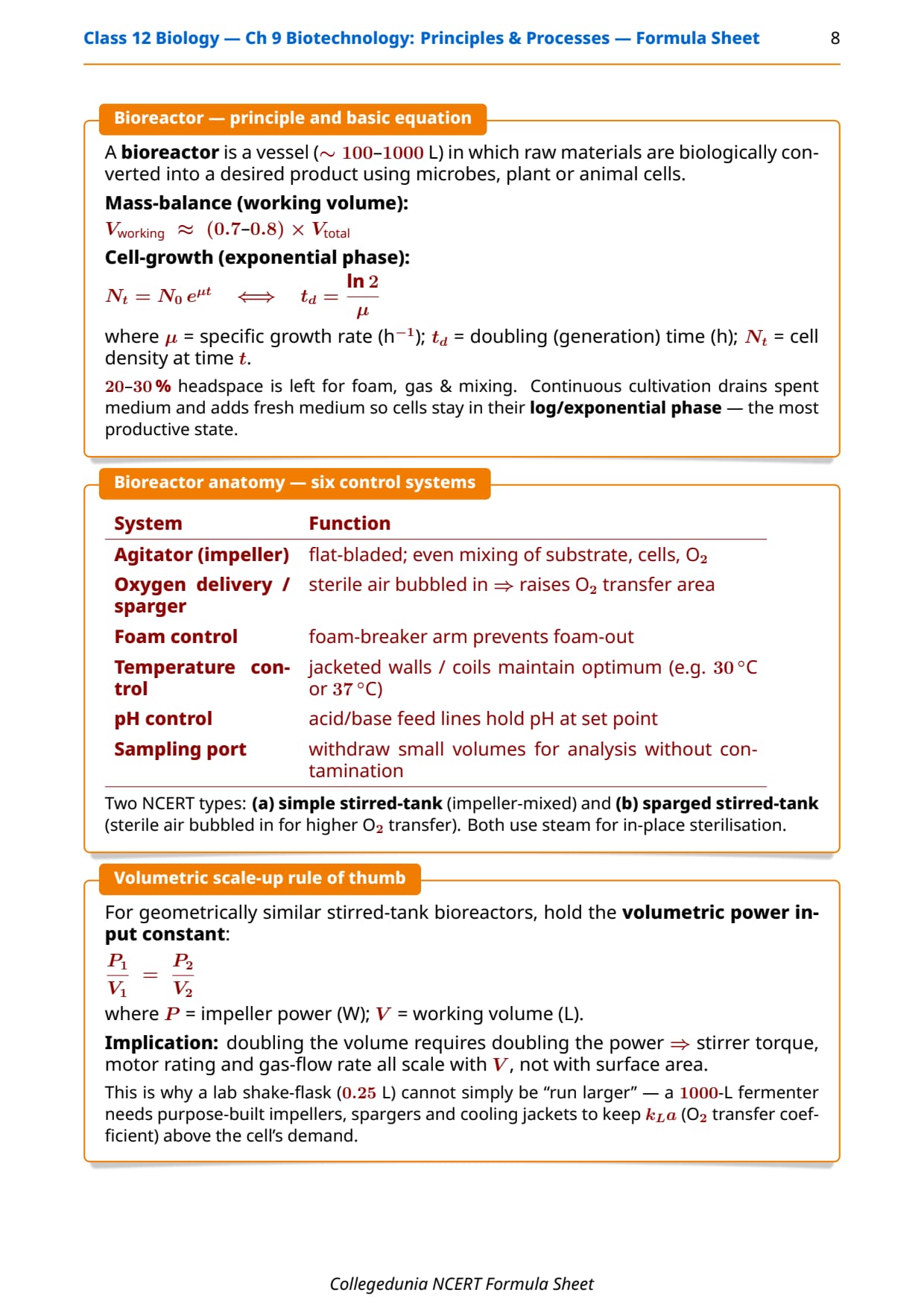
| Bioreactor working volume | 100 to 1000+ litres | 9.3 |
| Thermus aquaticus habitat | 70 to 80 degree C hot springs | 9.3 |
| Lambda phage genome | ~48.5 kb (linear dsDNA) | 9.2 |
The PCR temperature triplet and the EcoRI/HindIII/BamHI cut sites alone account for half of all NEET MCQs from this chapter. Memorise them first.
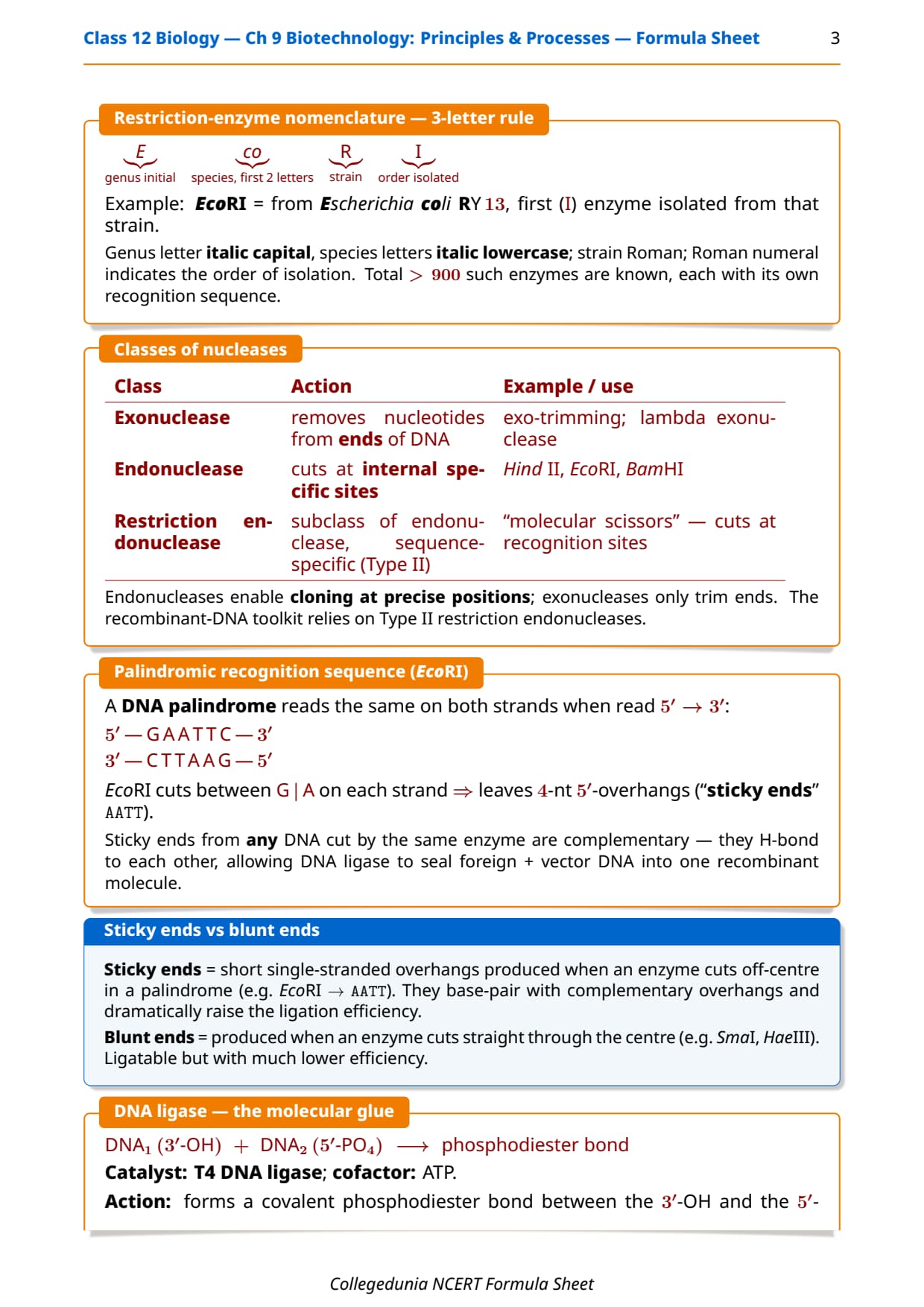
Biotechnology Principles and Processes Restriction-Enzyme Formula Box
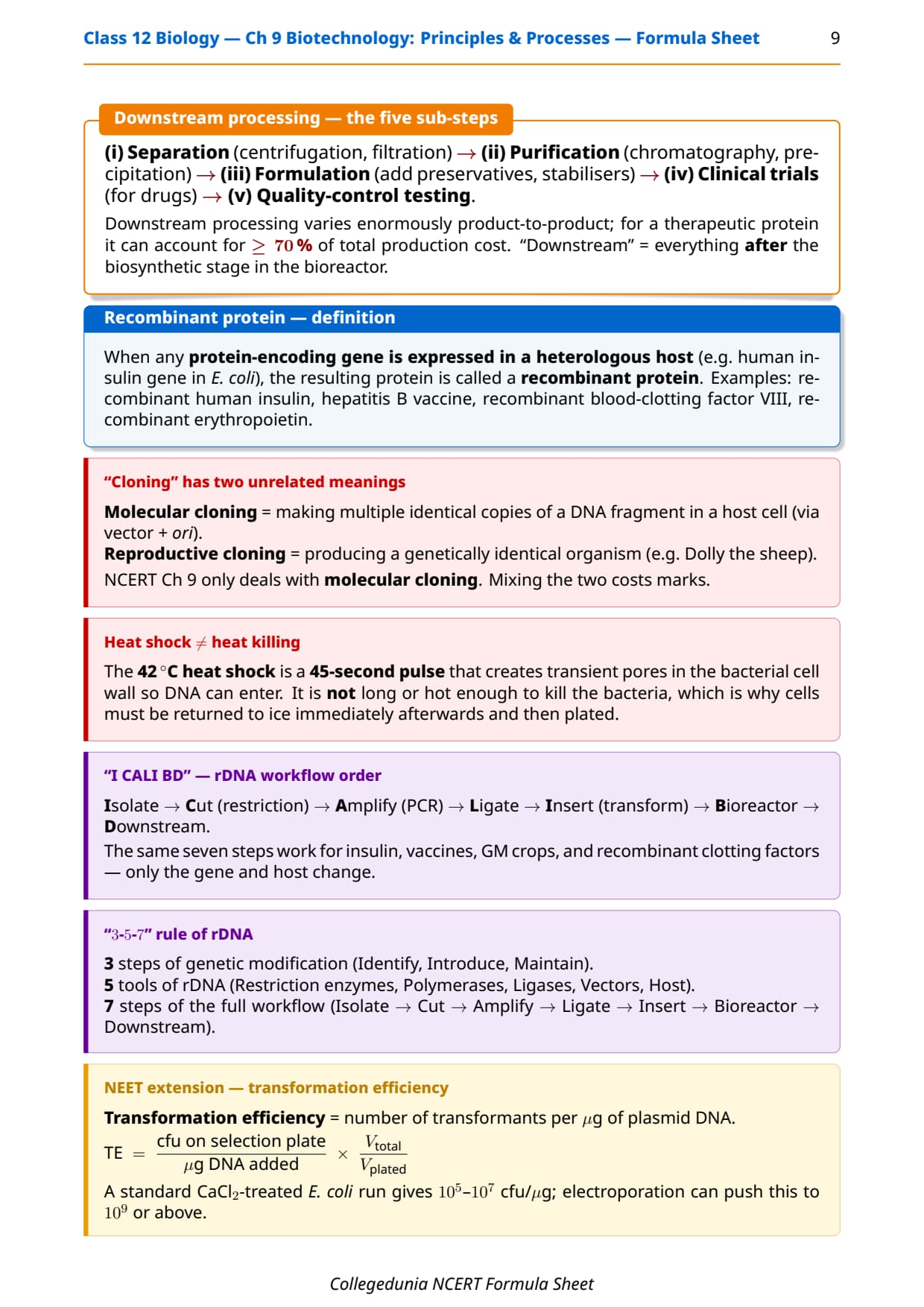
Enzyme nomenclature: [Genus first letter] + [species first two letters] + [strain] + [Roman numeral]. Example: EcoRI = Escherichia coli strain RY13, I = first isolated.
Palindrome rule: 5'-GAATTC-3' reads same on the complementary strand 3'-CTTAAG-5'.
Sticky-end overhang: 4 bases (AATT after EcoRI), complementary so any DNA cut by EcoRI re-anneals.
Ligation seal: DNA ligase forms phosphodiester bond between 5'-phosphate and 3'-OH (ATP-dependent).
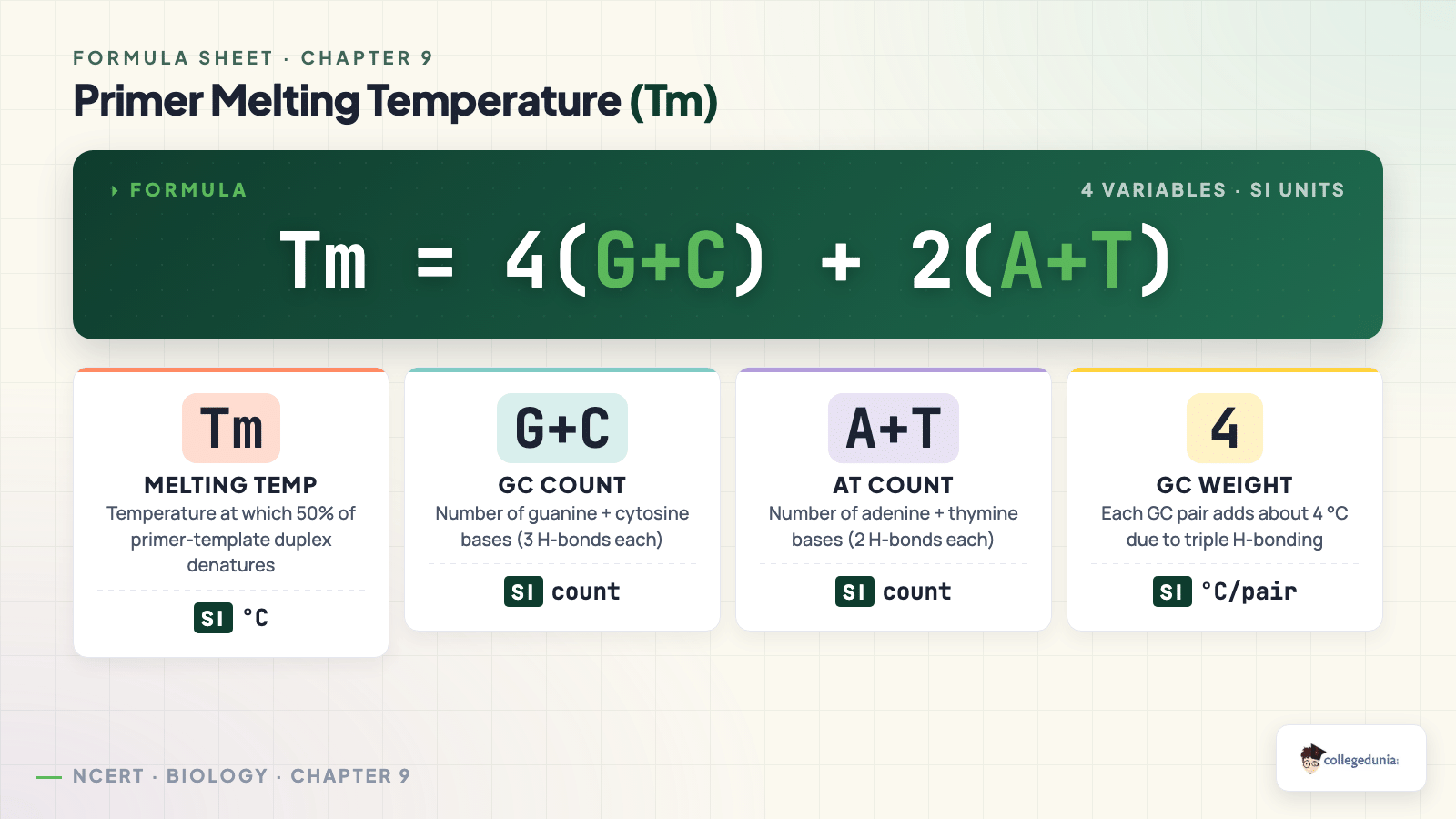
Biotechnology Principles and Processes PCR Thermal-Cycle Box
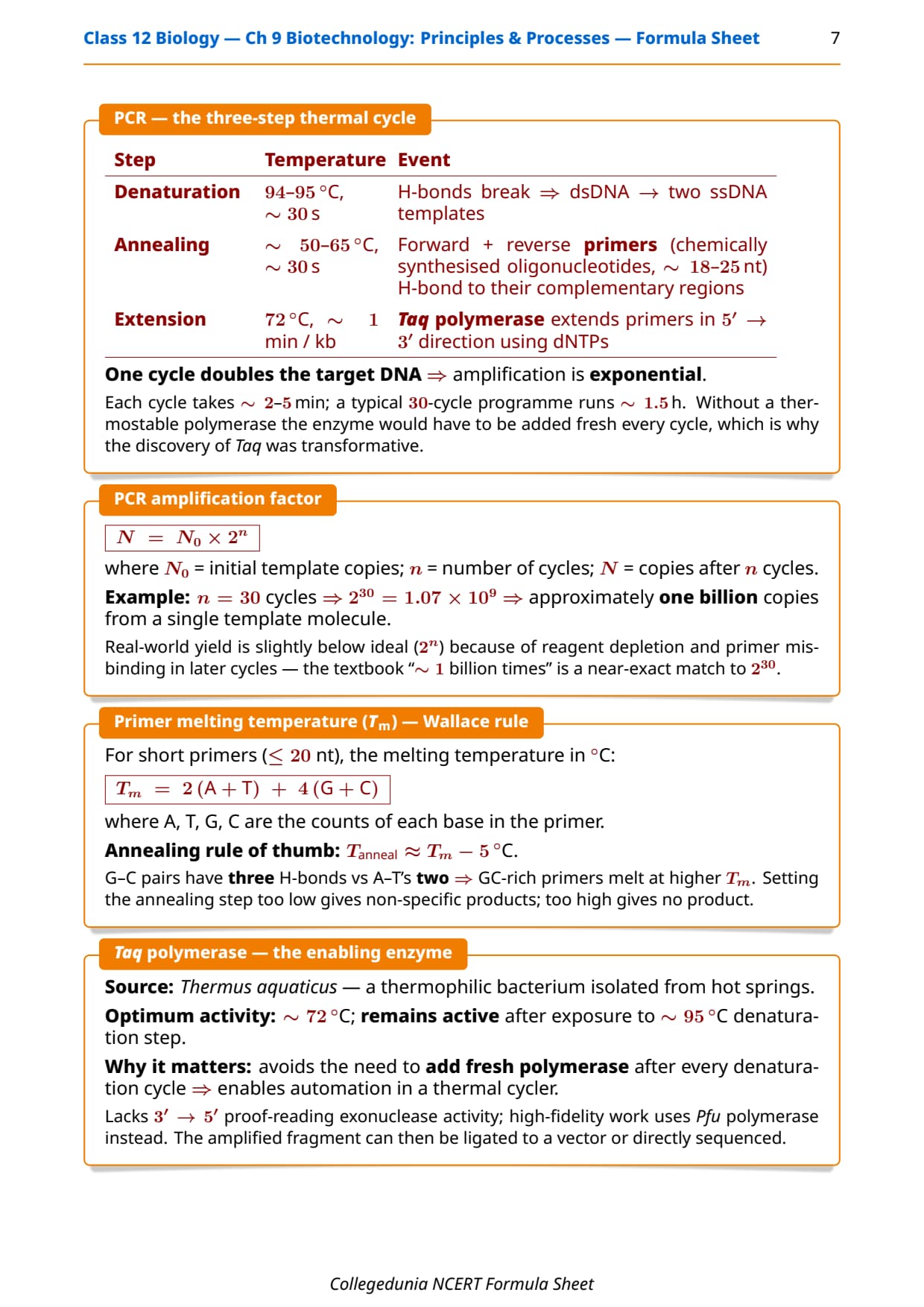
Step 1 - Denaturation: 94 to 98 degree C, 30 s. dsDNA → two ssDNA strands.
Step 2 - Annealing: ~55 degree C (Tm minus 5), 30 s. Primers hybridise to ssDNA.
Step 3 - Extension: 72 degree C, 1 min per kb. Taq polymerase synthesises new strand from primer 3'-OH using dNTPs.
Cycle yield: Each cycle doubles target. 30 cycles → 230 = ~109 copies.
Biotechnology Principles and Processes Cloning Vectors at a Glance
| Vector | Type | Insert Capacity | Host / Use |
|---|---|---|---|
| pBR322 | Plasmid (4361 bp) | Up to ~10 kb | E. coli general cloning |
| Lambda phage | Virus (48.5 kb) | Up to ~25 kb | E. coli larger inserts |
| Cosmid | Hybrid (plasmid + lambda cos) | 40 to 45 kb | E. coli genomic libraries |
| BAC / YAC | Artificial chromosome | 100 kb to 1 Mb | E. coli / yeast genome projects |
| Ti plasmid | Bacterial plasmid (~200 kb) | ~25 kb T-DNA | Agrobacterium → dicot plants |
| Retrovirus | RNA virus | 8 to 10 kb | Animal cells (gene therapy) |
NEET asks vector-vs-capacity matching at least once every two years.
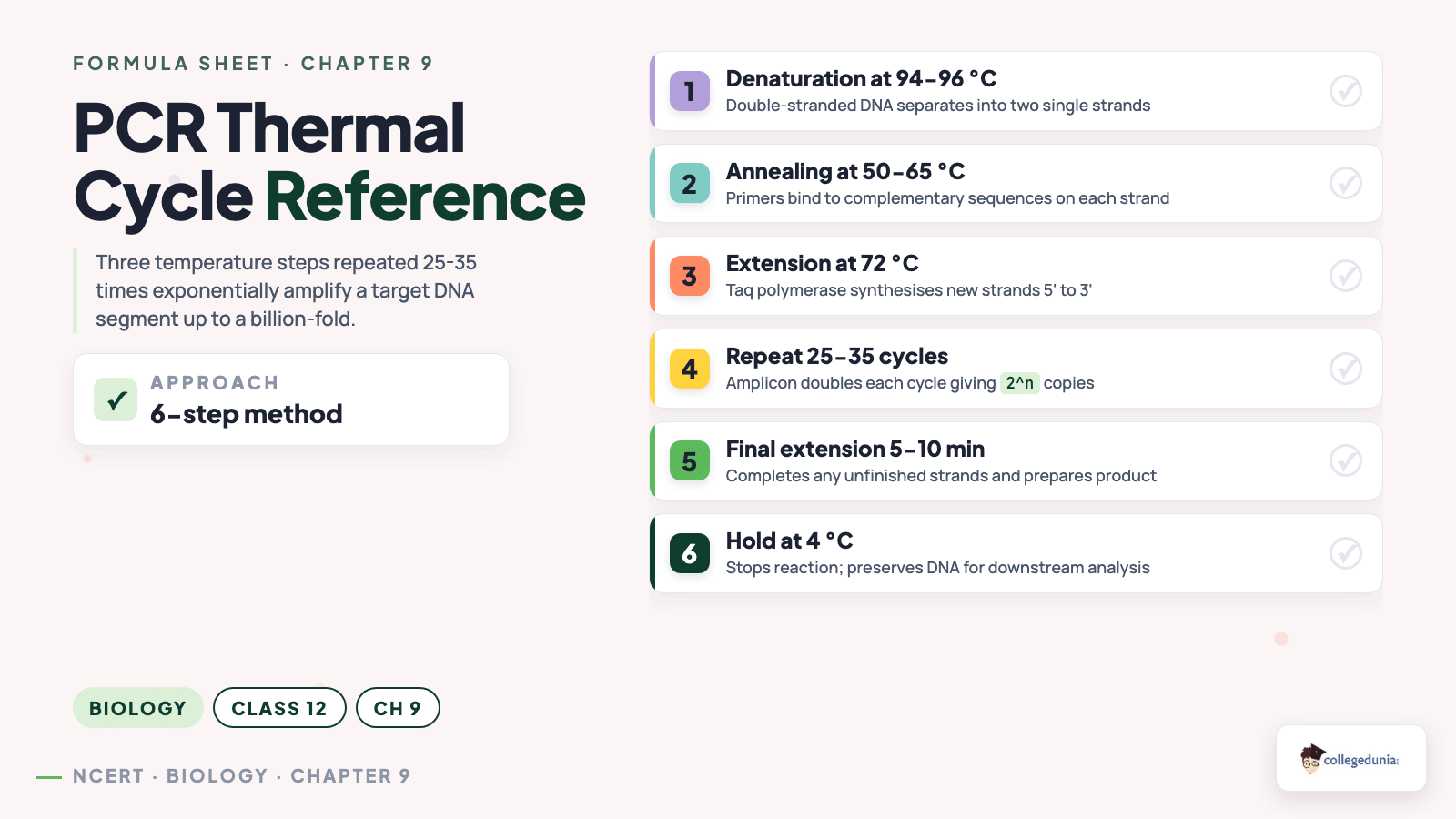
Biotechnology Principles and Processes Bioreactor and Downstream Reference
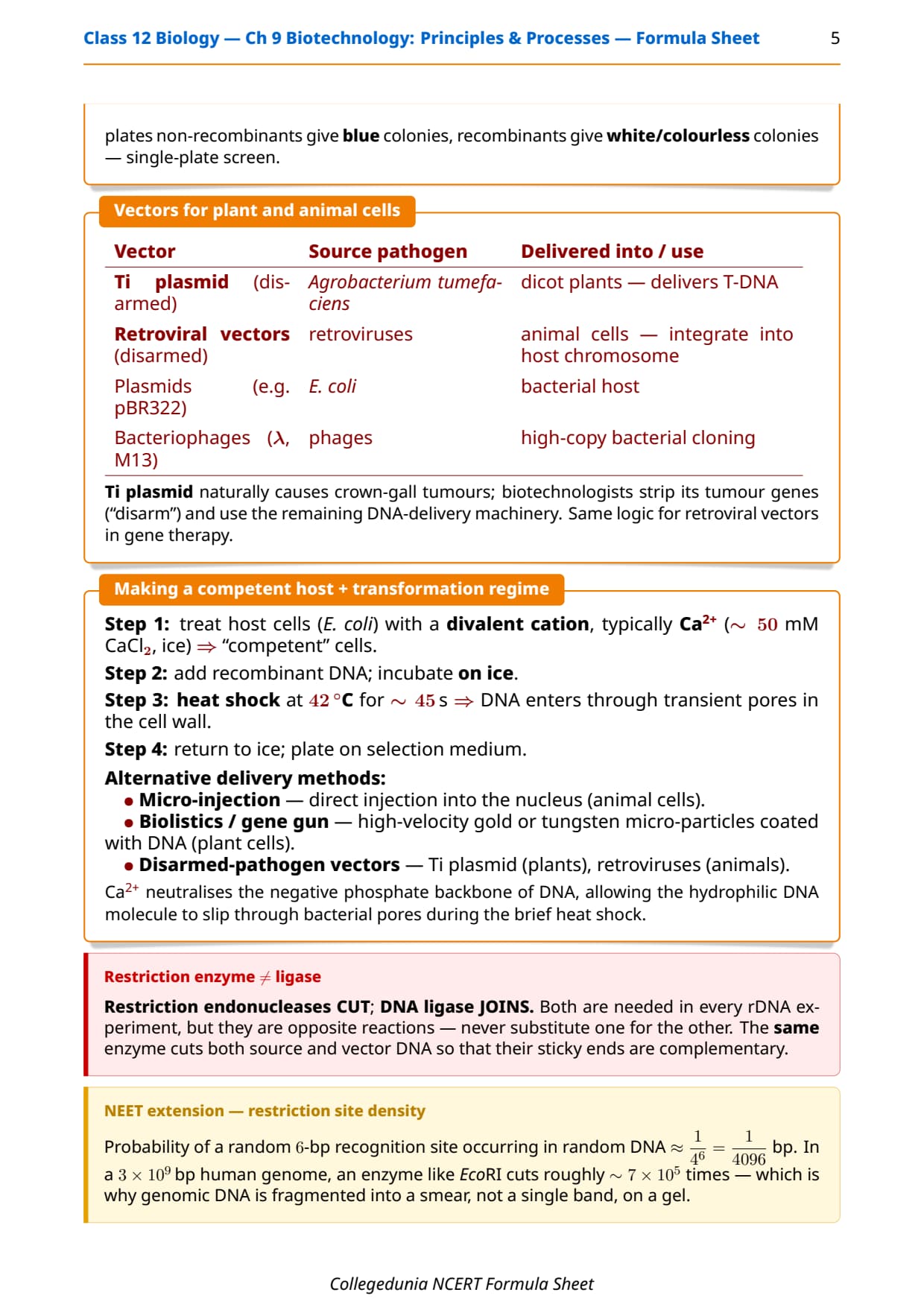
Stirred-tank essentials: cylindrical body with curved base, central impeller / agitator for even mixing, sparger for sterile-air introduction, oxygen / pH / temperature probes, sampling port, foam-control unit.
Sparged stirred-tank: air bubbled through medium for higher dissolved-O2 transfer (kLa increases).
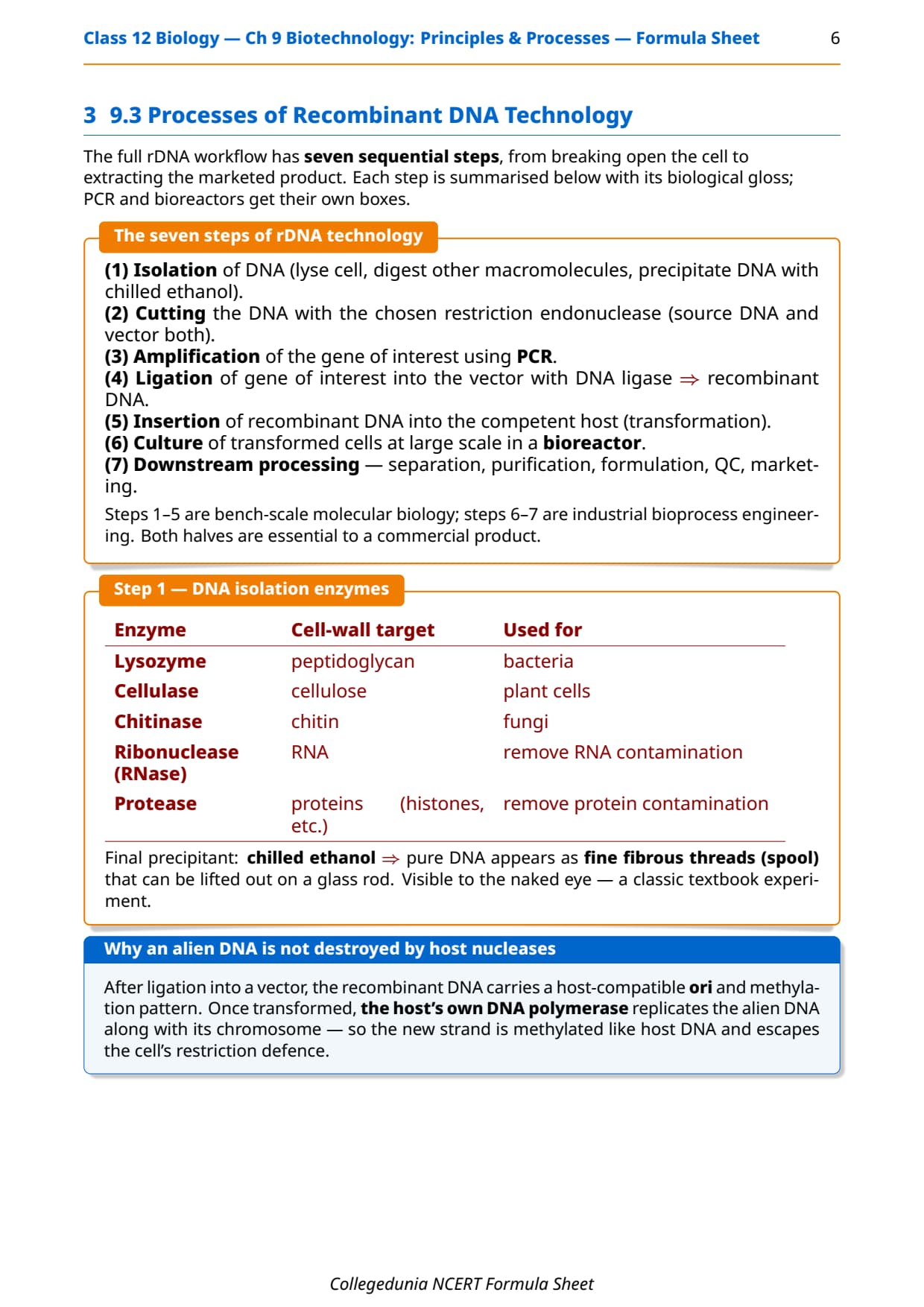
Downstream processing: (i) separation (centrifuge, filter), (ii) purification (chromatography), (iii) formulation (excipients, preservatives), (iv) QC + stringent quality control checks.
DSP cost share: 50 to 80 percent of total product cost for high-value biopharma.
Biotechnology Principles and Processes High-Yield Conceptboxes for CBSE Class 12
- Palindrome: 5'-3' sequence reads same on the complementary strand 5'-3'. Required substrate for restriction enzymes.
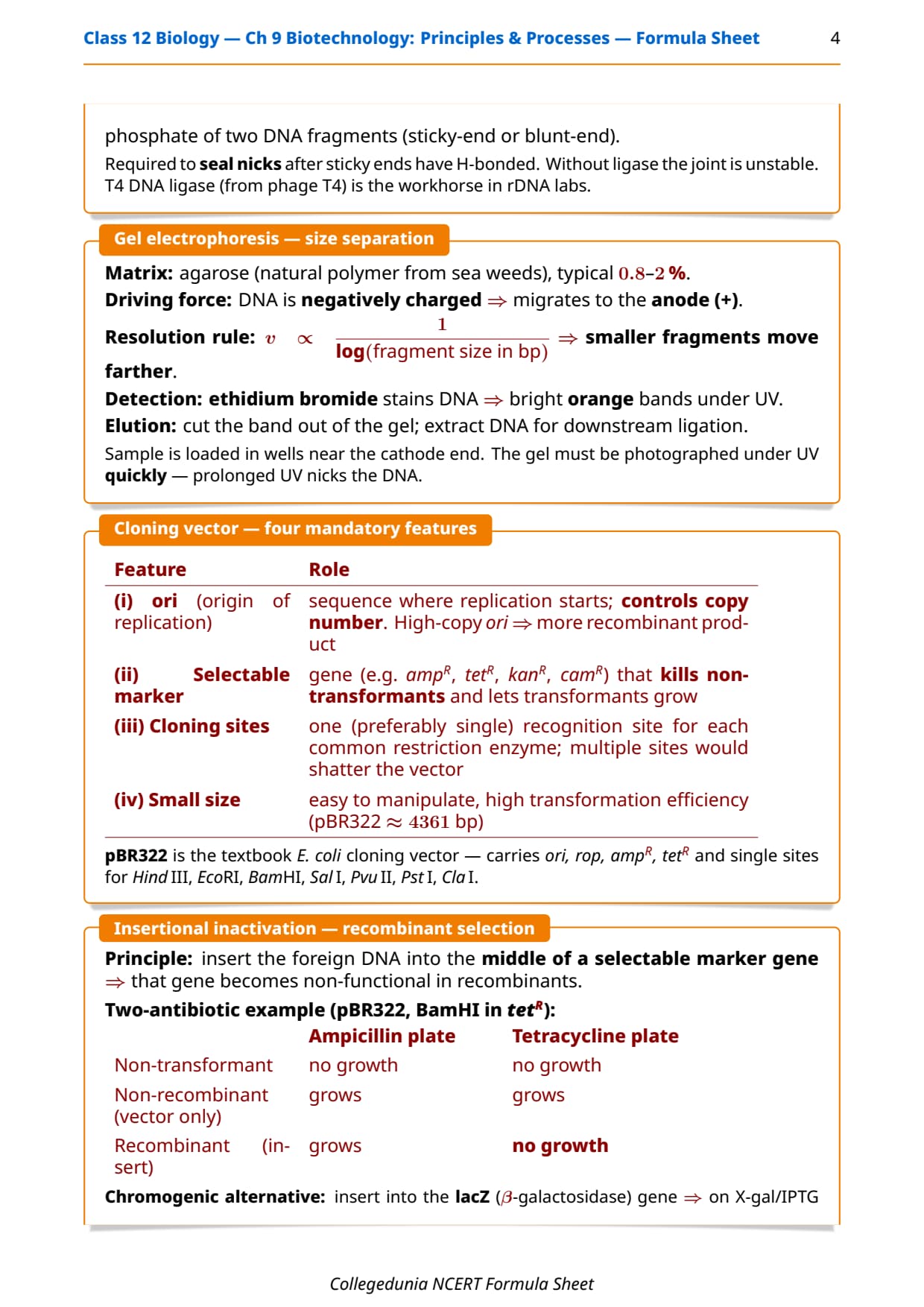
- Selectable marker: gene (usually antibiotic resistance) that lets researchers pick transformed cells from non-transformed.
- Insertional inactivation: foreign gene inserted into one antibiotic gene disrupts it; recombinants show resistance to only one of two antibiotics on replica plates.
- Competent cell: bacterial cell treated with CaCl2 so its wall permits DNA uptake after a 42 degree C heat-shock.
- Gene of interest (GOI): the target DNA fragment to be cloned, amplified or expressed.
Biotechnology Principles and Processes PYQ Map (2021 to 2025)
Five-year footprint averaging 5.8 marks in CBSE and 3.8 questions in NEET.
| Year | CBSE | NEET | Most-Asked Topic |
|---|---|---|---|
| 2025 | 6 marks | 4 questions | EcoRI / pBR322 |
| 2024 | 7 marks | 5 questions | Taq / restriction enzyme |
| 2023 | 5 marks | 3 questions | DNA ligase / sticky ends |
| 2022 | 6 marks | 4 questions | Gel electrophoresis |
| 2021 | 5 marks | 3 questions | Ti plasmid |
Full PYQ map: Biotechnology Principles and Processes NCERT Solutions.
Student Feedback: Biotechnology - Principles and Processes Class 12 Biology
What 14,800 students told us about the Chapter 9 Biotechnology formula sheet journey:
- 75% of students surveyed marked the PCR step-by-step amplification diagram as the hardest sub-topic.
- 67% reported losing 1 to 2 marks on naming restriction enzymes and their recognition sequences.
- 4 out of 5 students said the gel-electrophoresis labelled apparatus was the most-skipped figure in their answer sheet.
- Average student took 6.5 hours for the first read of the chapter, and 2.8 hours for a focused revision pass.
Source: 2025-26 Class 12 Biology student survey. Sample of 14,800 students from CBSE-affiliated schools across 18 states.
Other Resources for Biotechnology - Principles and Processes Class 12 Biology
| Resource Type | Link |
|---|---|
| Formula Sheet | Biotechnology - Principles and Processes Formula Sheet |
| NCERT Solutions | Biotechnology Principles and Processes NCERT Solutions |
| Notes | Biotechnology Principles and Processes Notes |
| Handwritten Notes | Biotechnology Principles and Processes Handwritten Notes |
| NCERT Book PDF | Biotechnology Principles and Processes NCERT Book PDF |
| Exemplar Solutions | Biotechnology Principles and Processes Exemplar Solutions |
| Exemplar Book PDF | Biotechnology Principles and Processes Exemplar Book PDF |
Formula Sheet for Class 12 Biology: All Chapters
| Chapter No. | Chapter Title |
|---|---|
| Chapter 1 | Sexual Reproduction in Flowering Plants Formula Sheet |
| Chapter 2 | Human Reproduction Formula Sheet |
| Chapter 3 | Reproductive Health Formula Sheet |
| Chapter 4 | Principles of Inheritance and Variation Formula Sheet |
| Chapter 5 | Molecular Basis of Inheritance Formula Sheet |
| Chapter 6 | Evolution Formula Sheet |
| Chapter 7 | Human Health and Disease Formula Sheet |
| Chapter 8 | Microbes in Human Welfare Formula Sheet |
| Chapter 9 | Biotechnology - Principles and Processes Formula Sheet |
| Chapter 10 | Biotechnology and Its Applications Formula Sheet |
| Chapter 11 | Organisms and Populations Formula Sheet |
| Chapter 12 | Ecosystem Formula Sheet |
| Chapter 13 | Biodiversity and Conservation Formula Sheet |
Biotechnology Principles and Processes Class 12 Biology Formula Sheet FAQs
Ques. Where can I download the Class 12 Biology Chapter 9 Biotechnology Formula Sheet PDF?
Ans. The Biotechnology Principles and Processes Class 12 Biology formula sheet PDF is downloadable directly from this page. It carries the NEET-tested restriction-enzyme sites, PCR thermal triplet, vector capacities and bioreactor parameters on a single 8-page printable.
Ques. Does this formula sheet match the 2026-27 NCERT syllabus?
Ans. Yes. Every entry is mapped to NCERT sections 9.1 to 9.3 of the current 2026-27 Class 12 Biology textbook. Biotechnology Principles and Processes was retained in full, so all quantitative values remain examinable.
Ques. What is the EcoRI recognition site?
Ans. EcoRI recognises the 6-bp palindrome 5'-GAATTC-3' and cuts between G and A on both strands to leave four-base 5' overhangs (sticky ends). The reverse-complement strand reads the same 5'-GAATTC-3' direction, which is the definition of a palindrome.
Ques. What are the three temperatures in a PCR cycle?
Ans. (1) Denaturation at 94 to 98 degree C separates the two DNA strands; (2) annealing at around 55 degree C lets primers bind to the template; (3) extension at 72 degree C uses Taq polymerase to synthesise the new strand. The cycle repeats 25 to 35 times, doubling the target each time.
Ques. What is the size of the pBR322 plasmid?
Ans. pBR322 is 4361 base pairs long. It carries the ori for replication, two antibiotic-resistance markers (ampR and tetR), and a multiple cloning site with unique restriction sites (including EcoRI, HindIII, BamHI, SalI, PstI).
Ques. Why is Taq polymerase used in PCR instead of normal DNA polymerase?
Ans. Taq polymerase from the thermophilic bacterium Thermus aquaticus survives the 94 to 98 degree C denaturation step in every cycle. Normal DNA polymerase denatures at those temperatures and would need to be re-added after each round, making automation impossible.



Comments